
Some brides walk into a fitting room and know within a minute that classic white isn’t them. That’s where I enjoy my job most. An unusual dress still has to work as a wedding dress, though: it needs to survive the ceremony, the photos, dinner and the dance floor. The gowns below play with color, texture and shape, from basque waists and dimensional lace to bubble hems, sculptural drapes and pieces that convert halfway through the night. For each one I’ve added what I’d check before buying and how I’d style it. Keep your venue, weather and dress code beside you as you read, and be honest about how much you want to move.
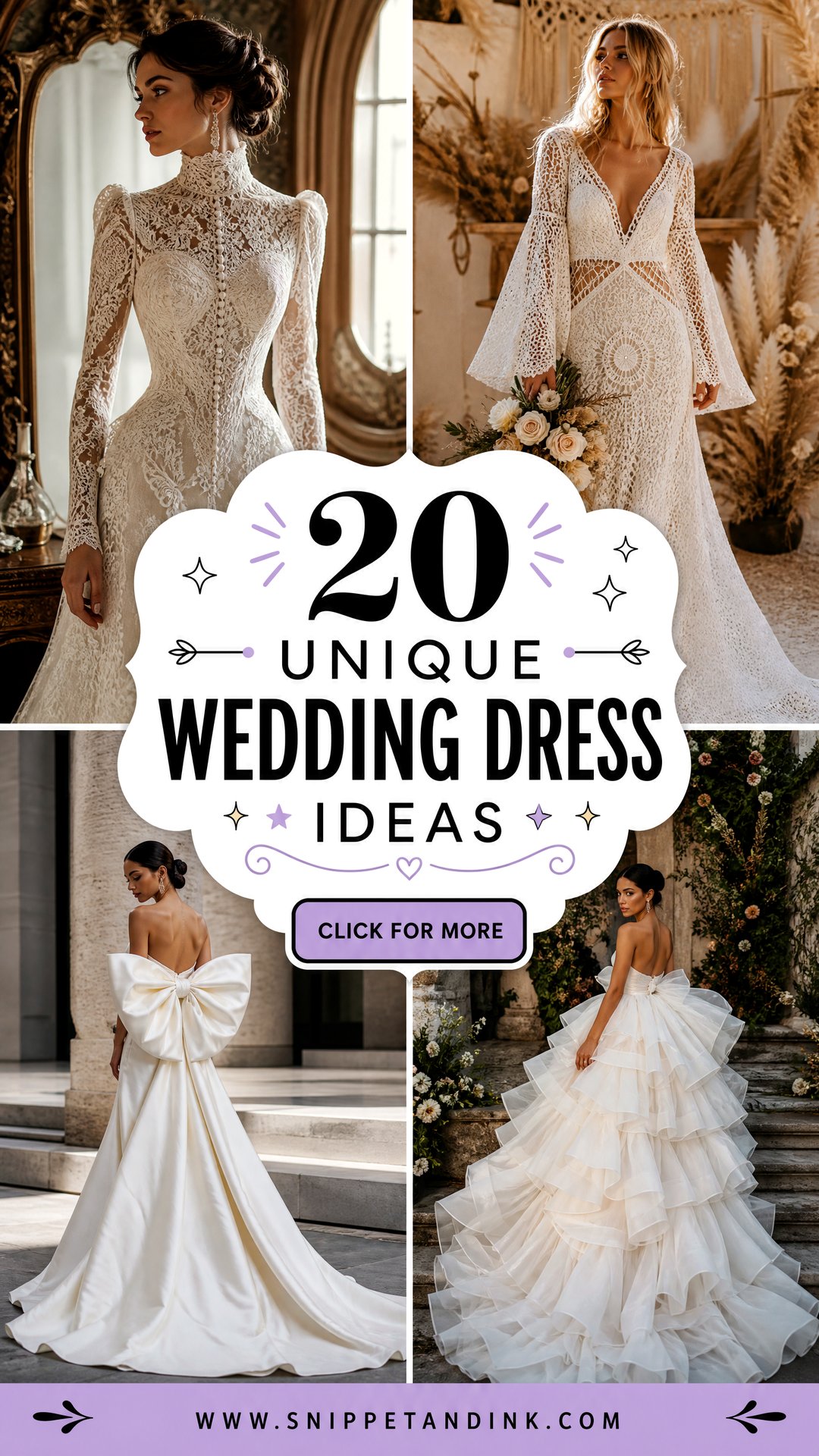
Shopping Off the Usual Bridal Rail
The dresses in this list don’t always live in a standard bridal shop. When a bride brings me a picture of a black satin column or a feathered mini, I usually send her to one of four places, and each has its own timing.
- Bridal designers with color or short collections. Most made-to-order gowns take several months to arrive, so start eight months or more ahead and ask whether alternate colors cost extra.
- Eveningwear and occasion labels. Black, blue and gold gowns often come ready to wear, which shortens the wait, but the fabric may be lighter than bridal satin.
- Vintage dealers and specialist resellers. Here you buy what exists, so be ready to fall for the dress first and fit it second.
- Independent dressmakers. A custom gown suits a very specific idea, but ask to see finished pieces in person and agree how many fittings are included.
Whichever route you take, ask for a fabric swatch to take home. Unusual colors and textures change between shop lighting, daylight and the evening, and a swatch in your hand clears up more doubts than another round of browsing.
1. Basque Waist Ball Gown Wedding Dress
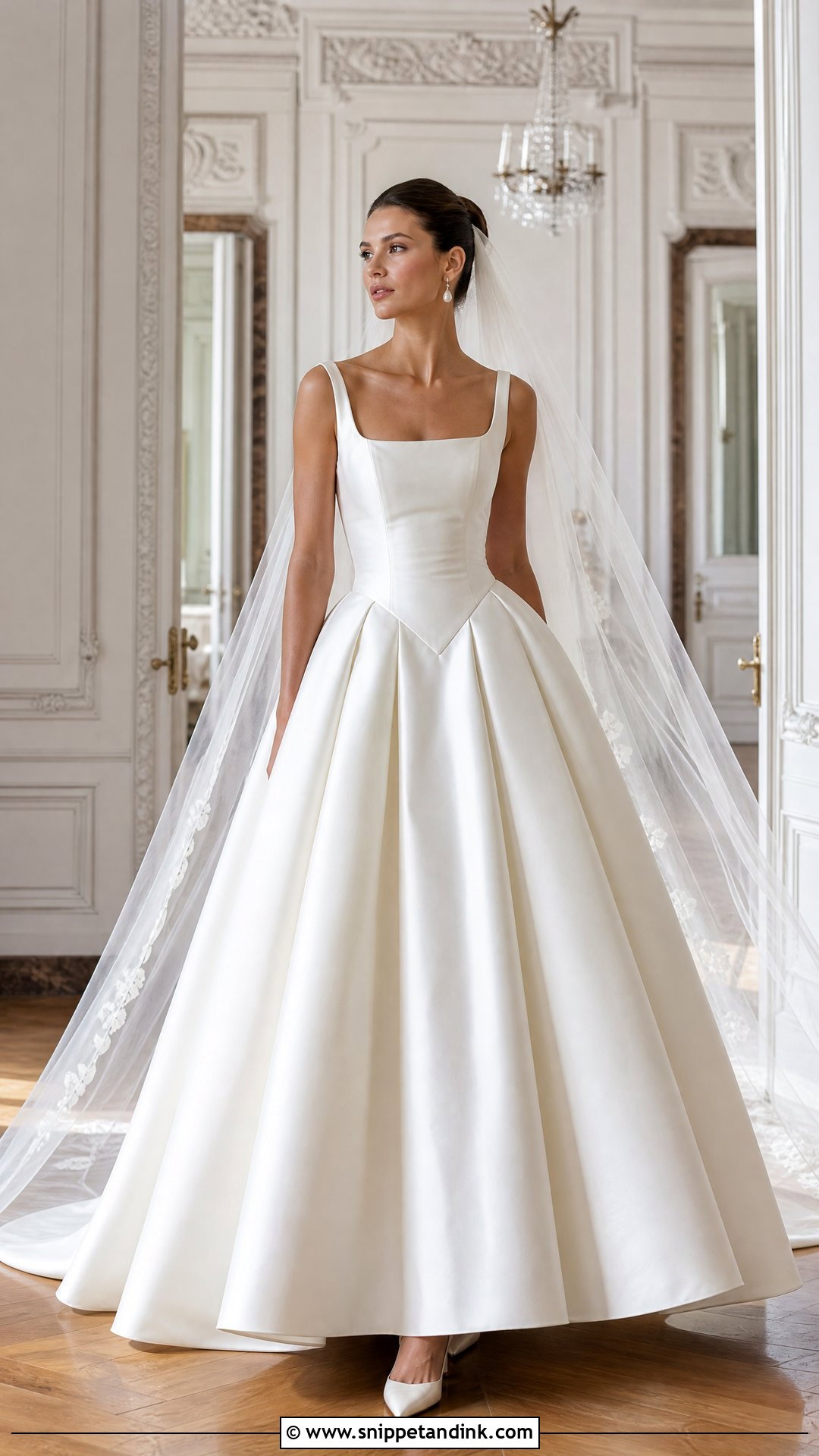
The basque waist dips into a V below the natural waistline, which lengthens the torso and makes a full skirt look even fuller. Because that point sits low, the bodice must stay put when you sit, so I always have brides perch on a chair at the fitting and watch whether the V buckles. Structured satin gives a clean finish; embroidered fabric softens it. A square or strapless neckline balances the volume below. Pearl drops, pointed ivory pumps and a plain cathedral veil fixed under a polished bun complete it, and detachable fitted sleeves add coverage. Save it for a ballroom or a large indoor venue with room for the train.
2. Floral Embroidered Tulle Wedding Dress
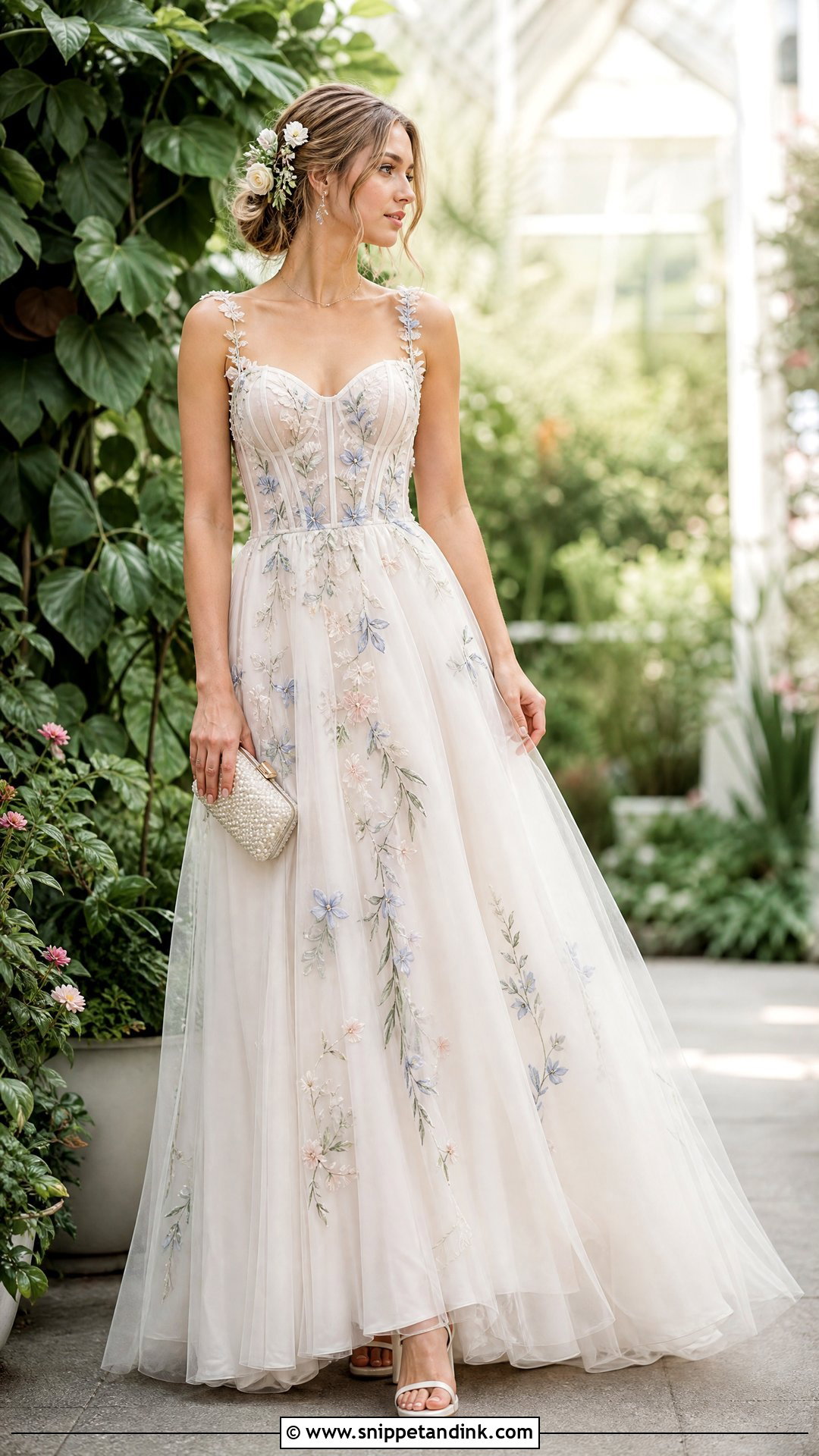
Embroidered tulle with flowers and vines climbing the skirt is one of the few ways to add color to a bridal gown and still have it read as bridal. I’d keep the silhouette classic, an A-line over a supportive corset bodice, so the embroidery is the only story. Soft blue, blush, lavender or green threadwork works best in small doses. Tulle snags easily on rough stone and brambles, so I warn garden brides to watch where they walk. Block-heel sandals, a small pearl clutch and fresh flowers in a loose updo suit it. Skip any necklace if the embroidery reaches the neckline.
3. Black Satin Wedding Dress
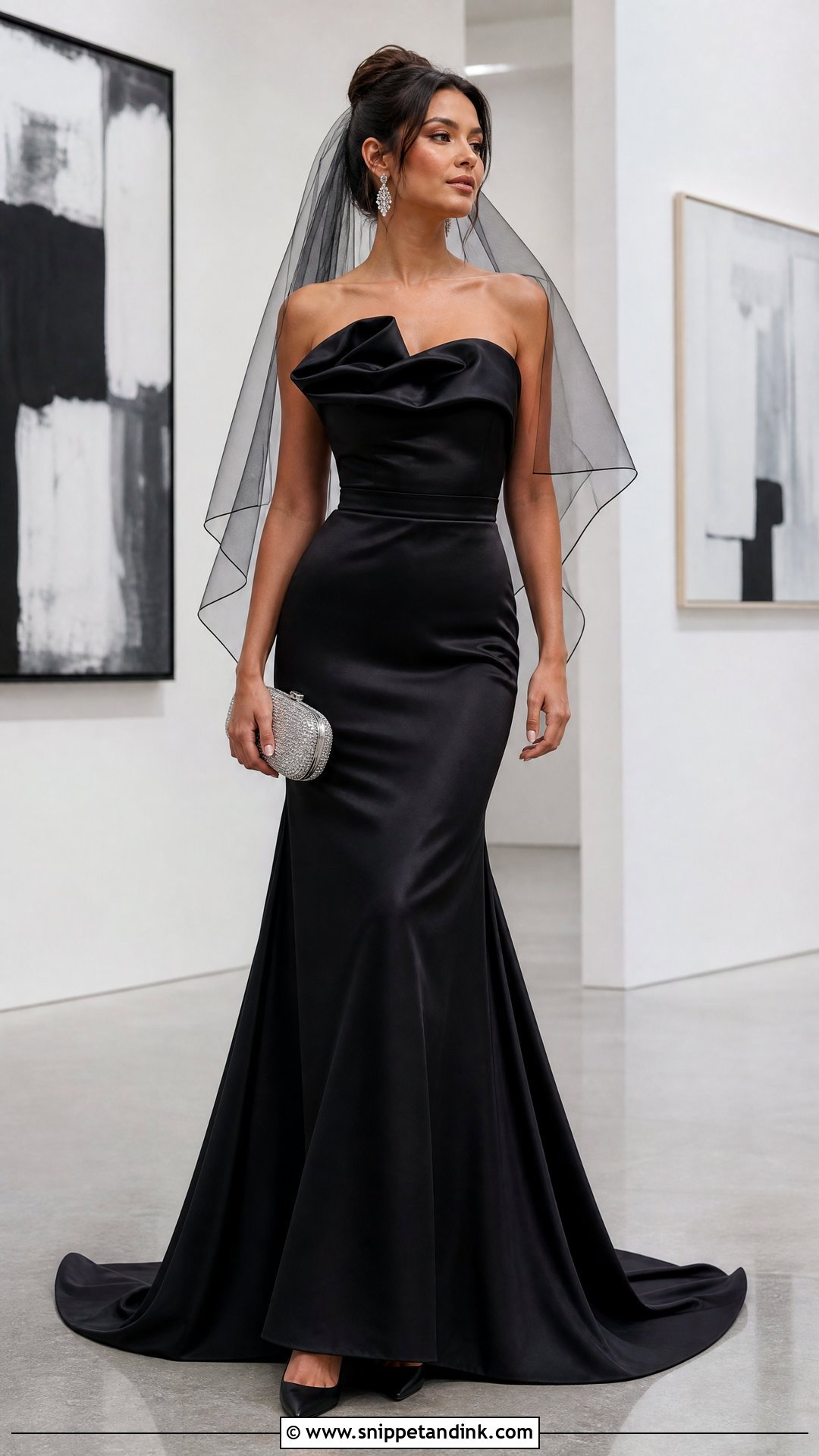
Would a white gown feel like a costume on you? Then black satin might be the honest choice. A column, A-line or gentle flare keeps it intentional and formal. Satin shows every mark, and black satin shows dust and deodorant more than any color I work with, so plan to dress last and keep a lint roller close. A sculpted neckline, a low back or a short train add the bridal drama. Crystal earrings, black pointed pumps and a silver or pearl bag finish it; choose a sheer black veil for a single statement or ivory for contrast. White flowers and greenery stop the bouquet from disappearing against the dress.
4. Blush Pink Wedding Dress
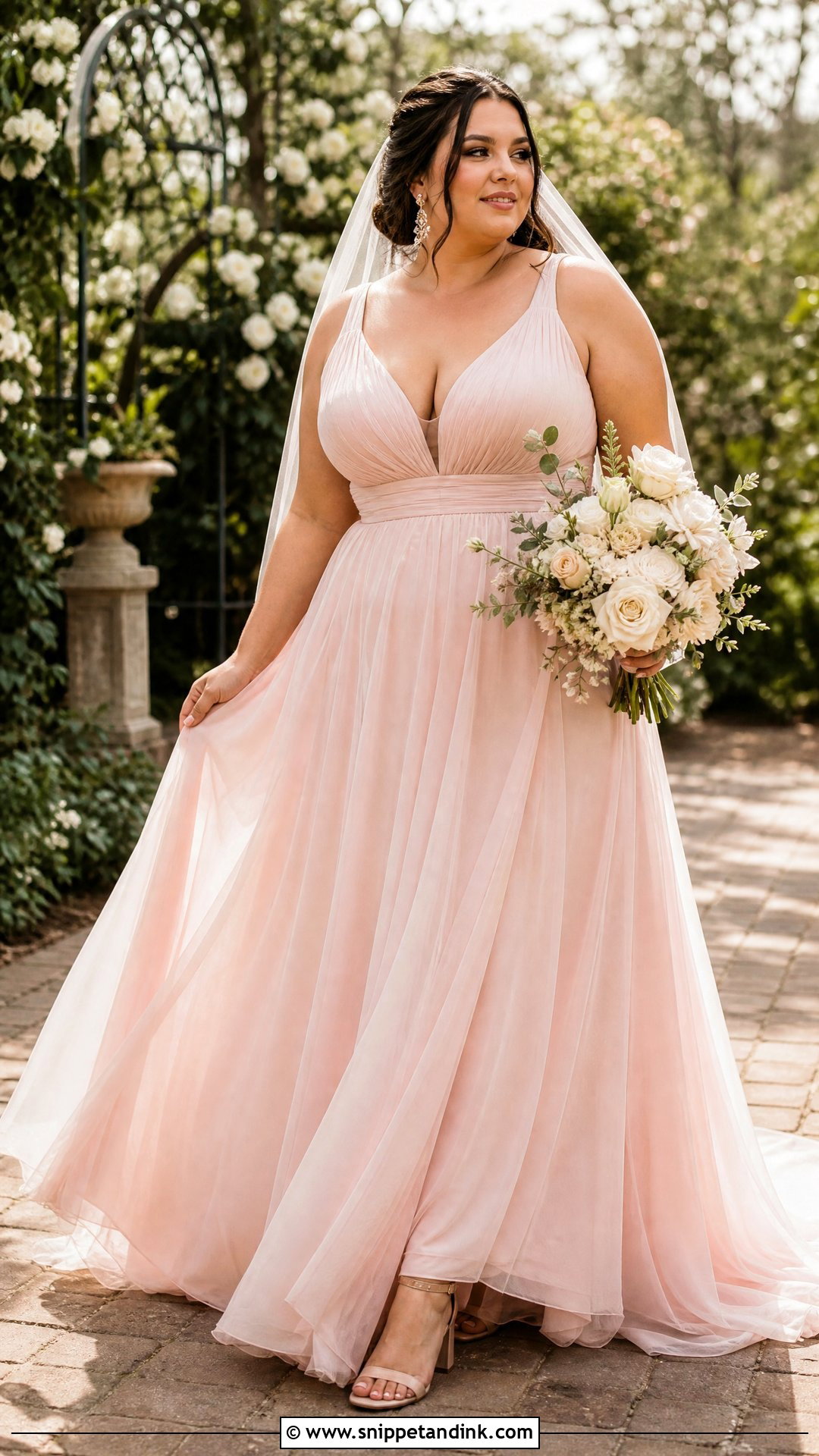
Blush ranges from pale peach to muted rose, and the shade decides everything. The wrong one makes skin look sallow, so I hold two or three swatches against a bride’s face in daylight before she orders. Chiffon, tulle and satin all suit it, with a softly draped bodice and a full A-line skirt giving movement. Champagne heels, rose-gold earrings and a light ivory veil add gentle contrast, and a bouquet of cream, dusty pink and muted greens ties it together. It works for gardens and hotel weddings from spring into early autumn.
5. Blue Organza Wedding Dress
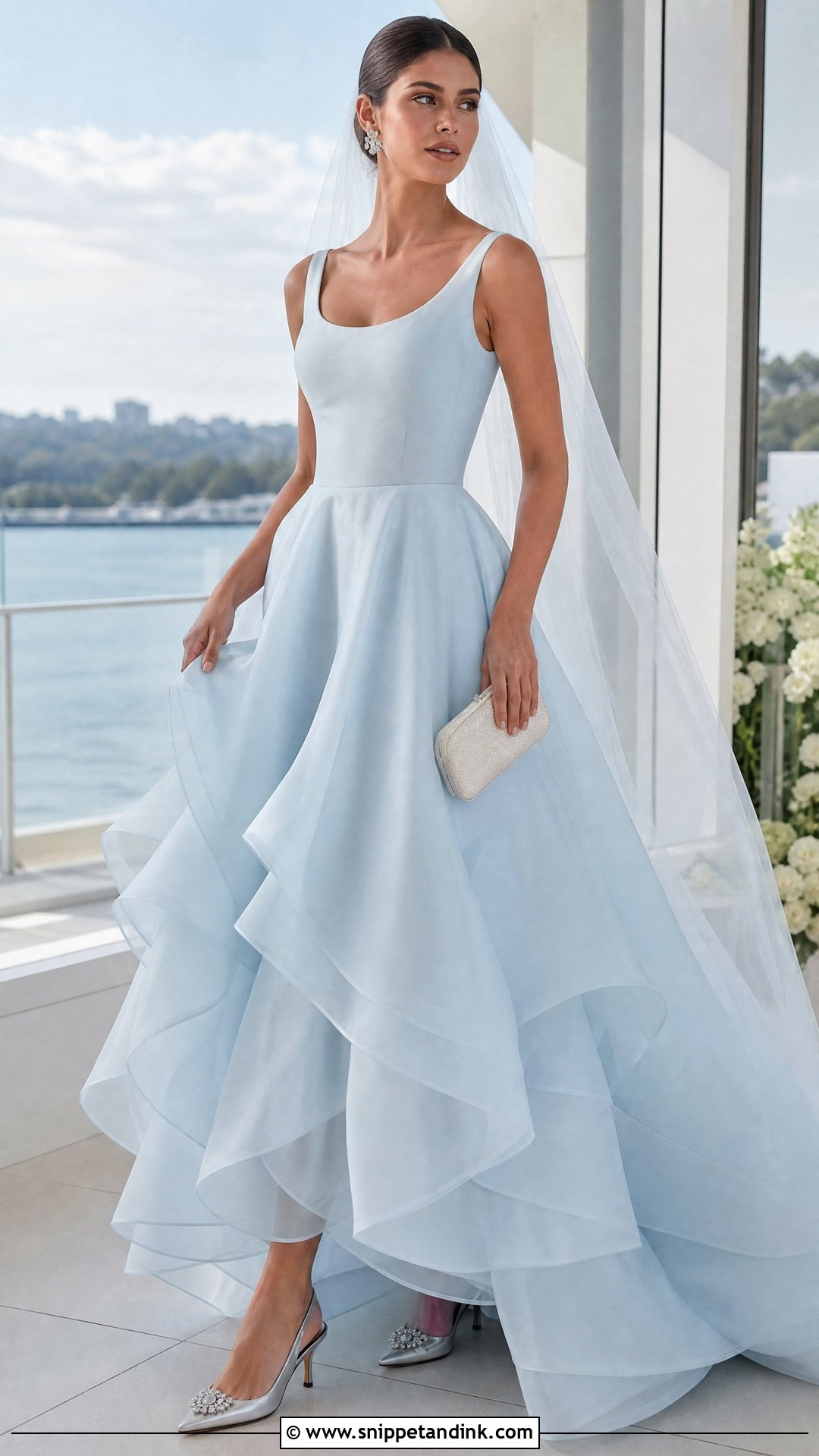
Organza is crisp and holds volume without the weight of satin, which is why a pale blue organza gown looks so airy. A fitted bodice over a layered A-line skirt in mist, powder or a barely-there icy blue stays bridal from across a room. Be aware that very pale blue can wash out entirely under a camera flash, so test a photo of the fabric before ordering. Silver slingbacks, crystal studs and a compact ivory bag keep it clean. A white veil softens the color; a matching blue one makes more of a statement. Keep accessories minimal if the dress has big sleeves. It looks lovely near water and against pale stone.
6. Short Bubble Hem Wedding Dress
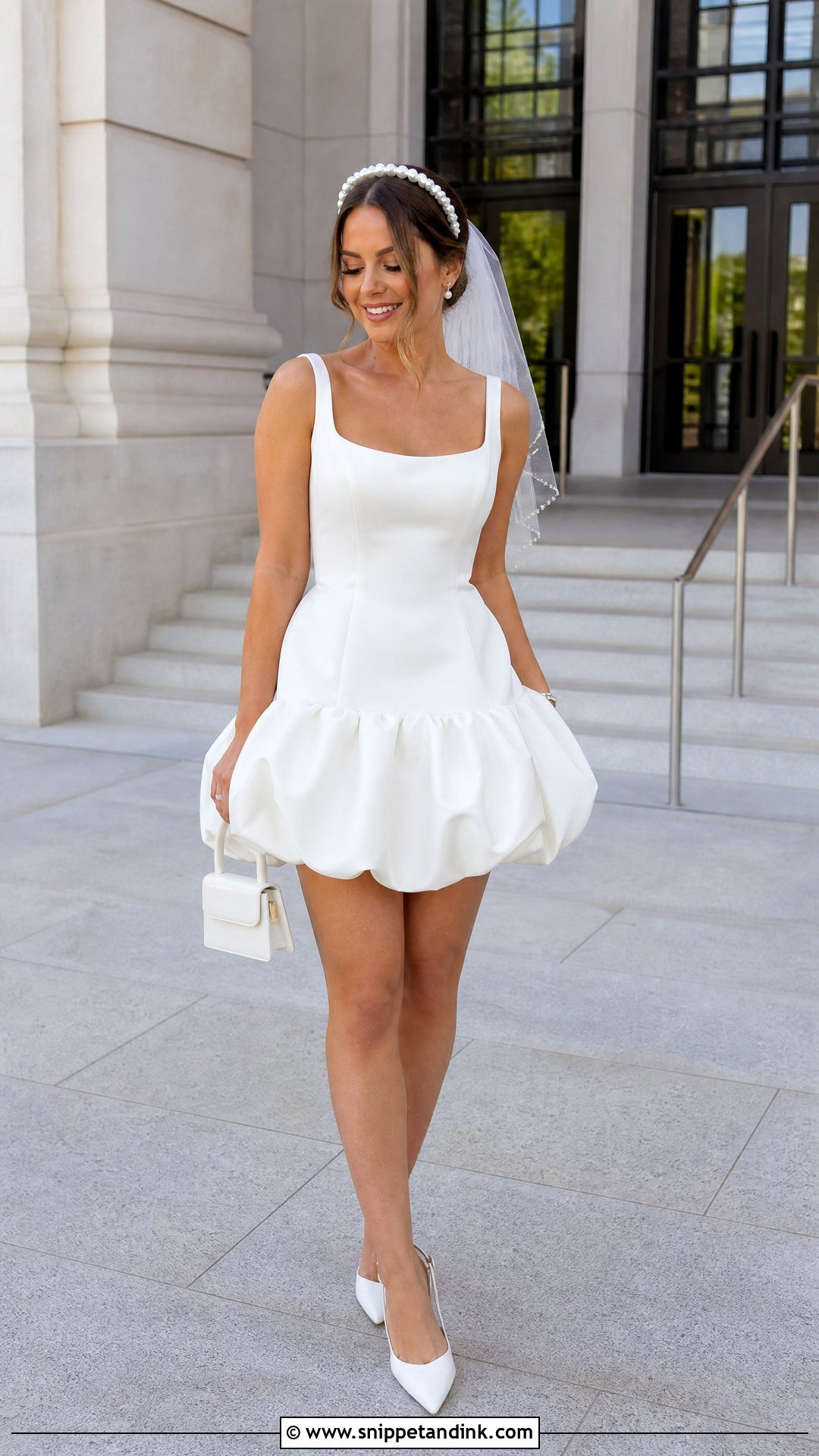
A short bubble hem is pure fun for a courthouse ceremony, a reception change or a relaxed party. The rounded skirt balloons around the legs, so the bodice must fit closely or the whole dress looks oversized. Mini or knee length depends on your comfort and the venue. Structured bubble skirts can flip up at the back when you sit, so check it in a mirror from behind and practise sitting before the wedding. Pointed slingbacks, small statement earrings and a structured top-handle bag go well with it, and a short veil, pearl headband or neat bow marks it out as bridal.
7. High-Low Wedding Dress
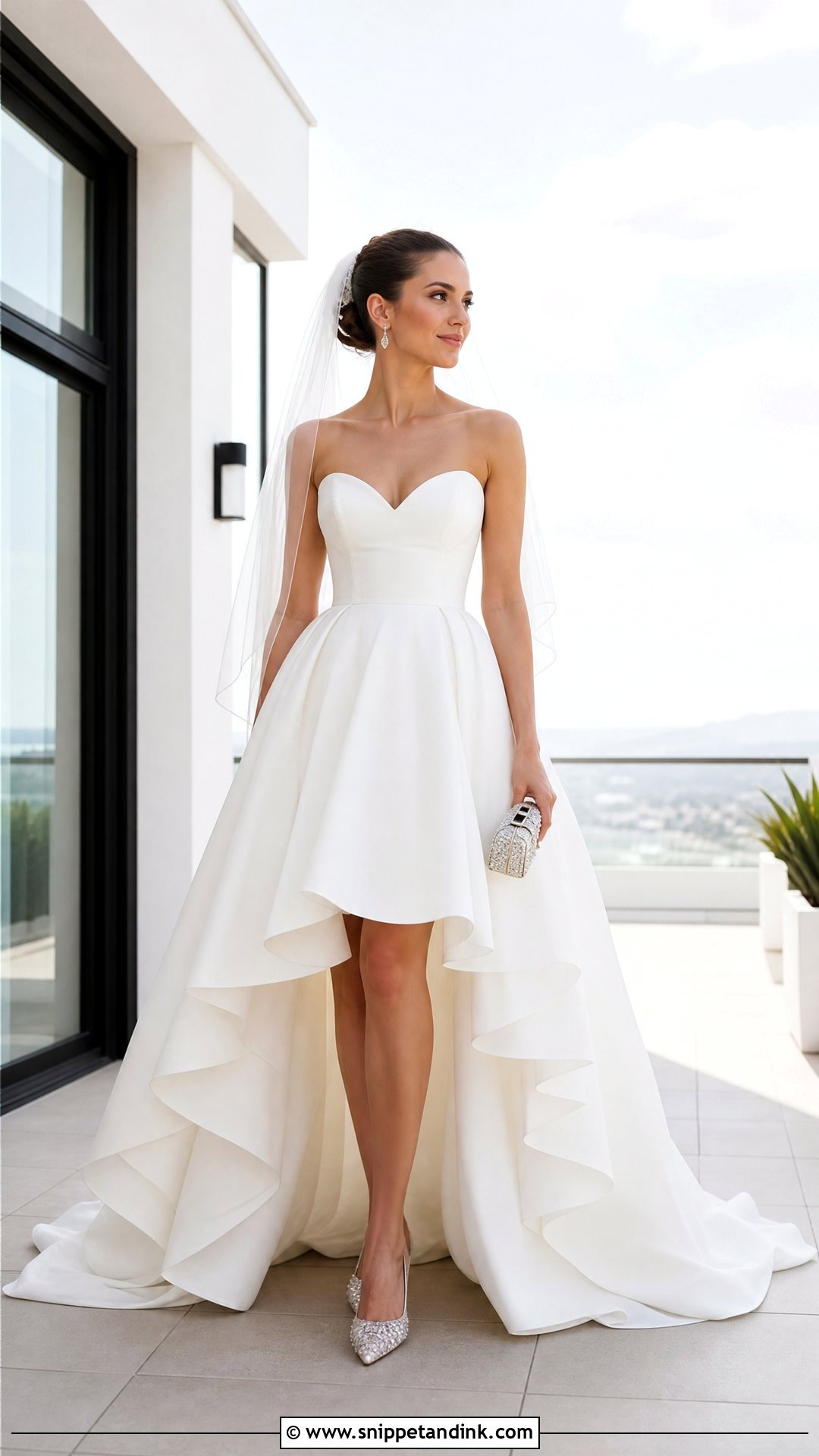
A high-low gown gives you a train at the back and freedom at the front. The shorter front shows your shoes, so pick a statement pair you can stand in: embellished pumps, metallic sandals or satin ankle-straps. Pleated organza looks romantic; structured satin looks sharper. My one exacting job here is the front hem. It should clearly reveal the shoes without looking as if it were accidentally cut short, and that needs the actual heels at the fitting. A fitted bodice, delicate earrings and a fingertip veil balance the unusual hemline. It suits destination and outdoor weddings.
8. Convertible Overskirt Wedding Dress
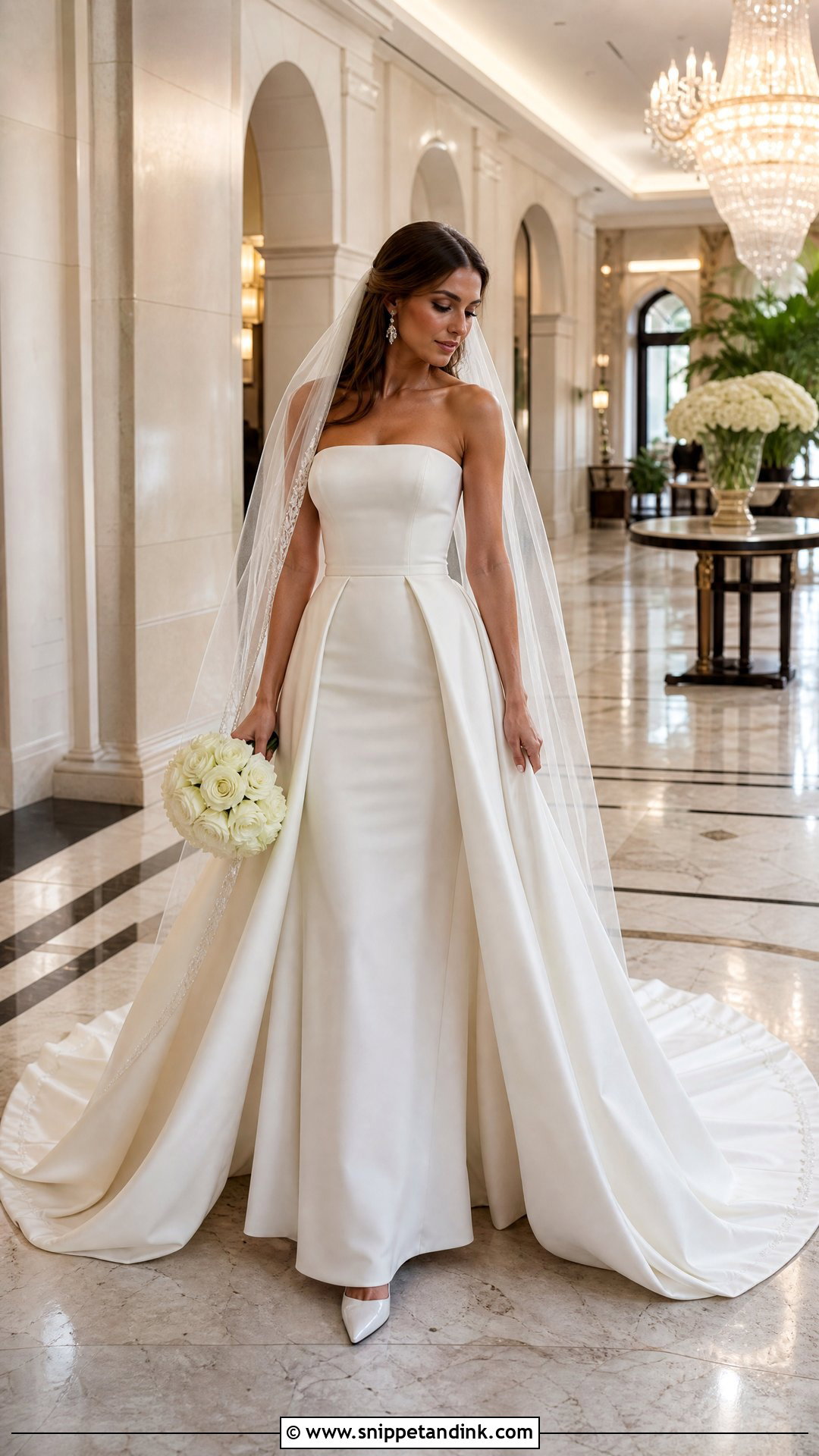
A removable overskirt gives you two looks from one gown. You start the ceremony in a fitted column or sheath topped with a sweeping satin, tulle or organza skirt, then take the outer layer off after photos. The waistband is what I examine: it has to look intentional from the back and fasten so a bridesmaid can remove it in under a minute without help from a seamstress. Pair the ceremony look with a long veil, drop earrings and classic pumps. For the reception, swap the veil for a jeweled comb and change into block heels or flats.
9. Two-Piece Wedding Dress Set
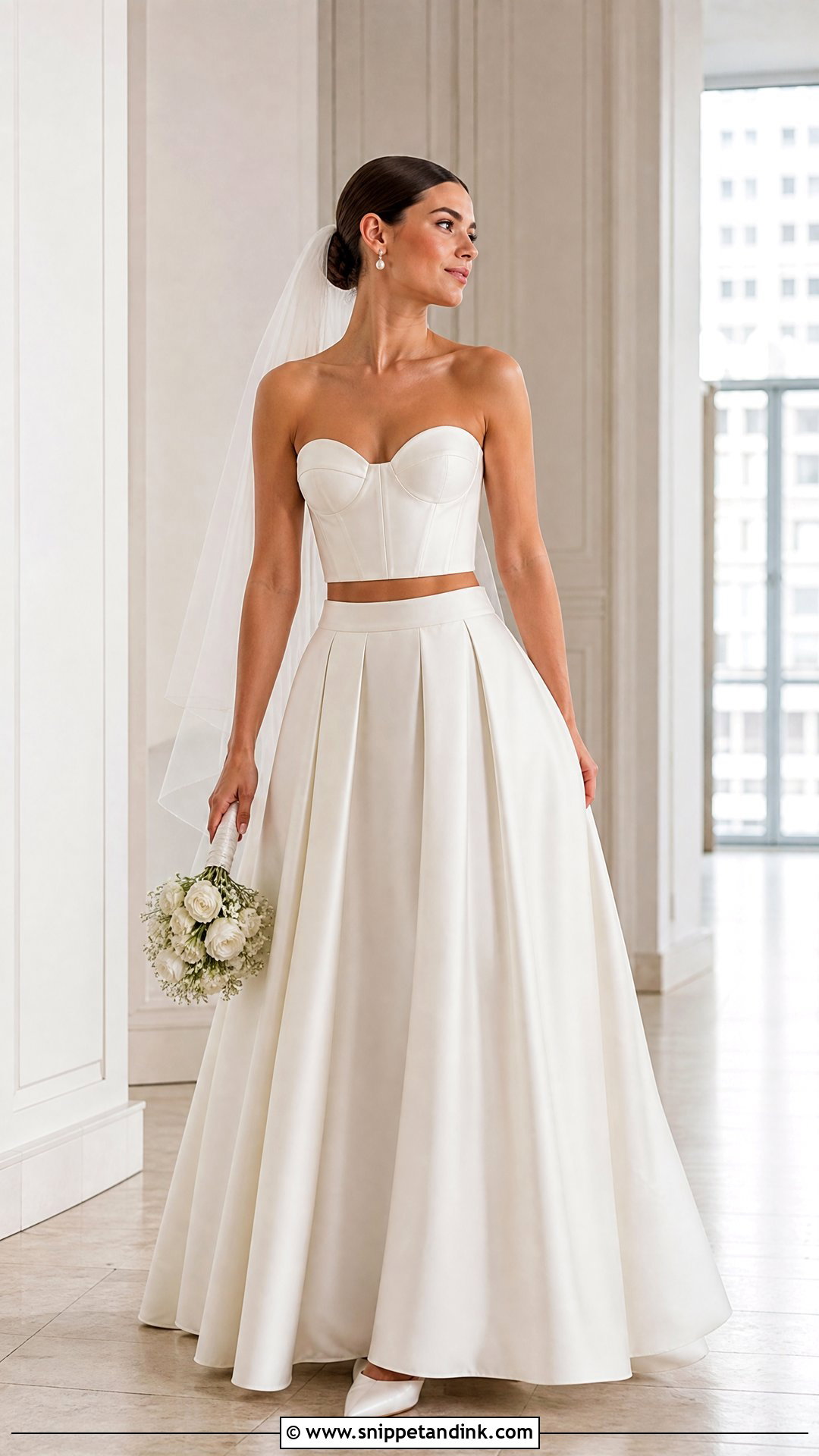
Separates suit brides who are one size on top and another on the bottom, because each piece is fitted on its own. A structured corset, a fitted lace blouse or a sleeveless bodice pairs with a floor-length skirt that can be pleated, bias-cut or full. A small gap at the waist feels young; pieces that meet give more coverage. Match the ivories carefully, since two slightly different shades become obvious in daylight. I check this by laying both pieces on a white sheet by a window. Pearl earrings, a sleek low bun, pointed heels and a light veil finish the outfit.
10. Cape Sleeve Column Wedding Dress
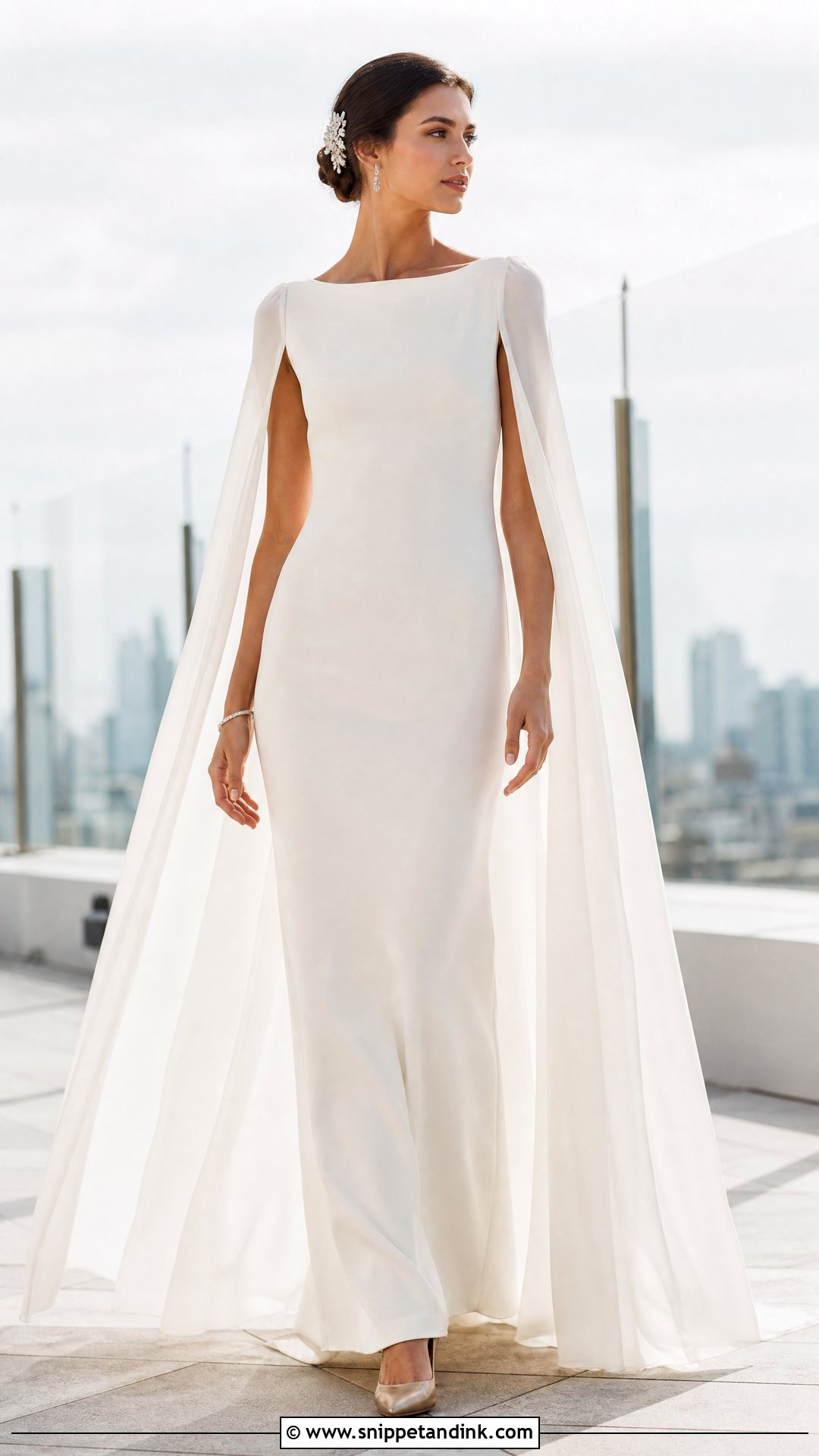
Cape sleeves give a plain column real movement as you walk. Lightweight chiffon, crepe or sheer organza fixed at the shoulders falls cleanly without trapping your arms. A bateau, round or V neckline keeps the top simple and lets the cape do the work. I usually tell brides to drop the full veil here, since two floating layers fight each other; a small comb or minimal headband is enough. Have the tailor set the cape length while you wear your actual shoes, because an inch too long and you’ll step on it at the back. Low-profile earrings, metallic pumps and a narrow bracelet complete it.
11. Sculptural One-Shoulder Wedding Dress
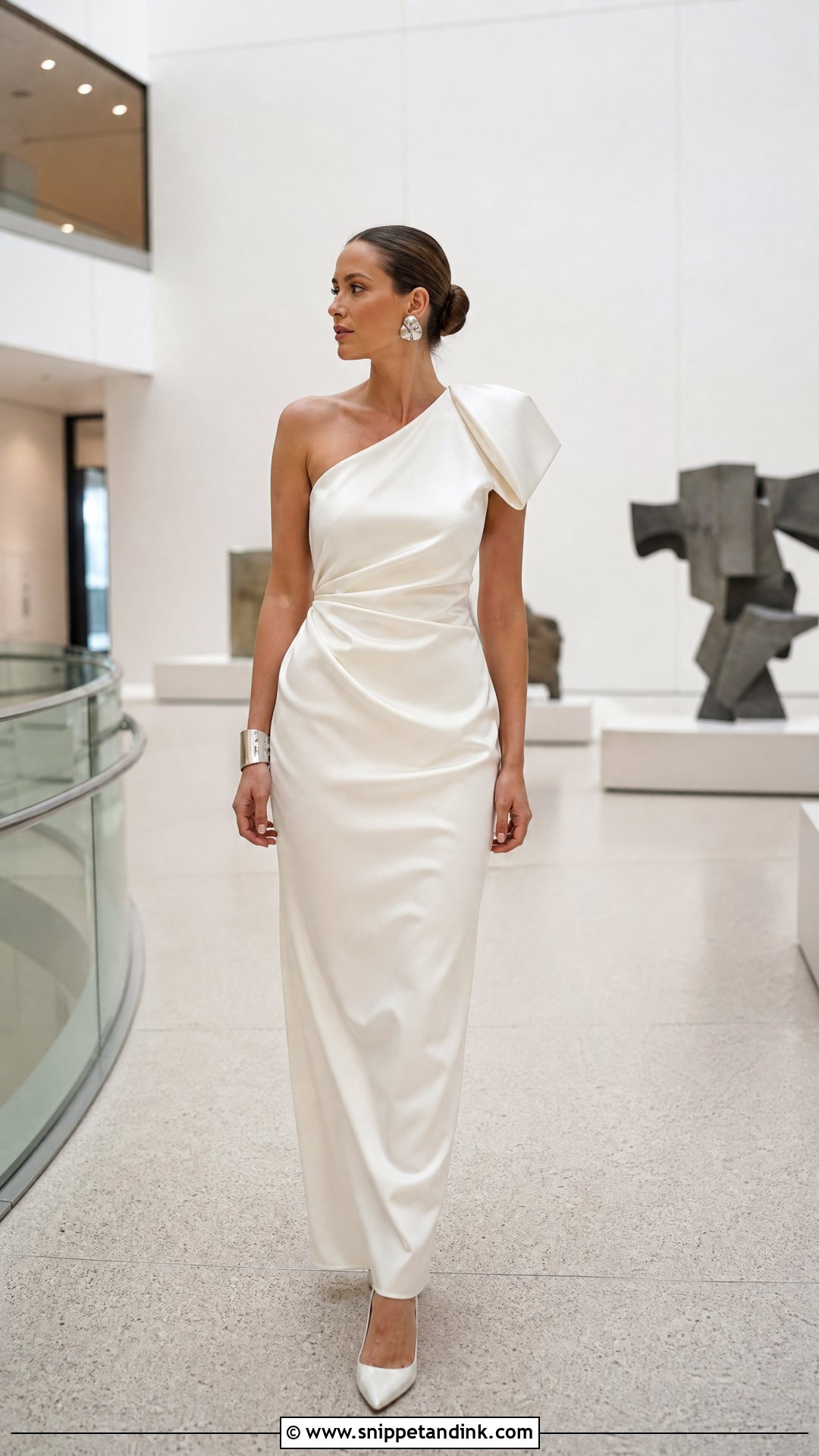
Sculptural one-shoulder gowns get their effect from shape alone. A fitted crepe column or a structured satin A-line with a folded neckline, an oversized shoulder or controlled drape across the bodice is enough. Keep the other shoulder bare. My worry with big shoulder details is arm movement, because a structured fold that looks fantastic standing still can stop you raising your arm for a hug. Test it before you fall for it. One statement earring or a small matched pair, a smooth cuff and pointed heels finish it, with a sleek bun and a short face veil or minimal hair piece.
12. High-Neck Victorian Lace Wedding Dress
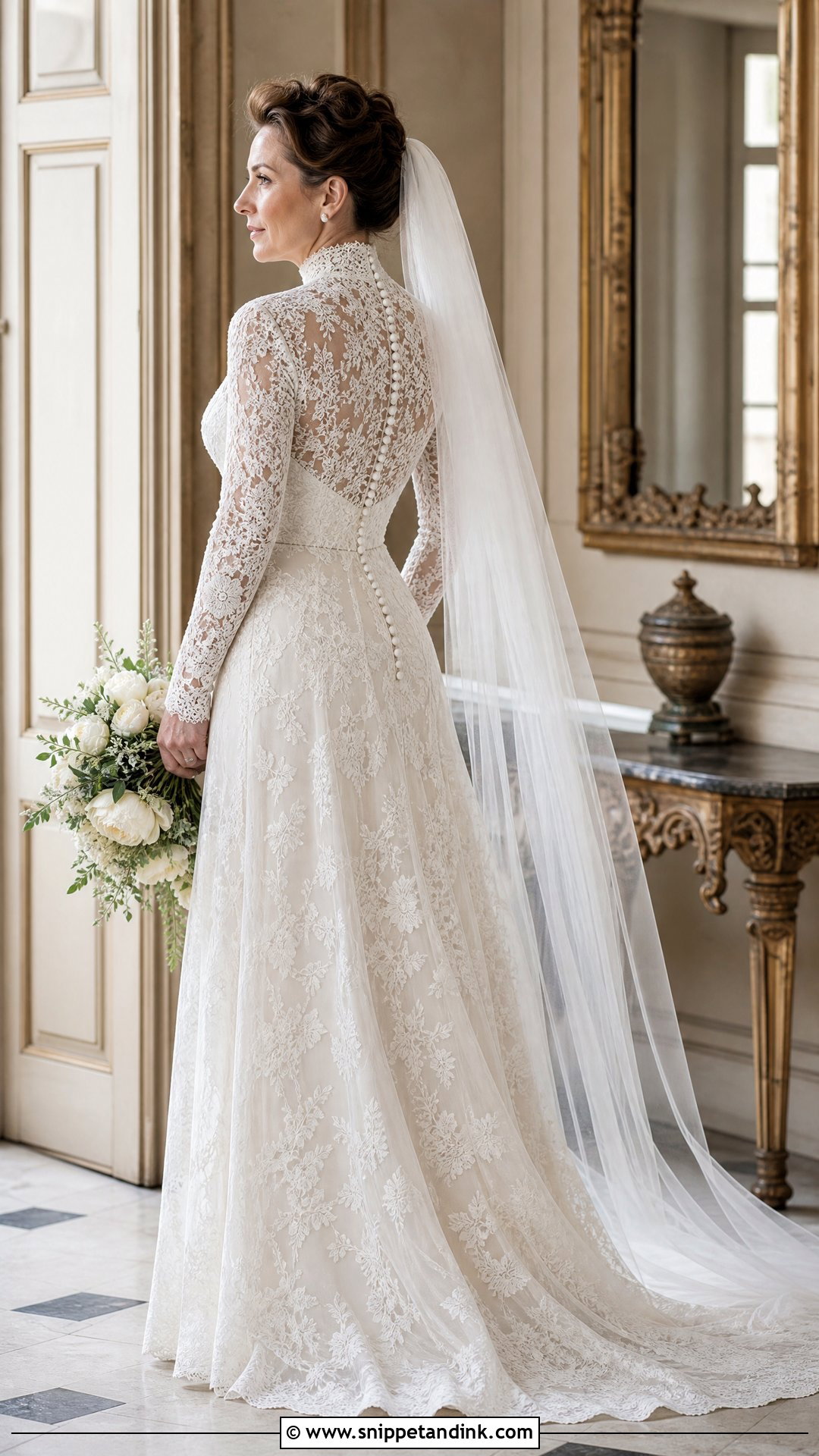
A high neck, fitted sleeves and detailed lace give a dress Victorian character, but too many historical details and it starts to look themed. I keep the waist defined and the skirt clean. Floral lace over a light lining makes the pattern show up, and covered buttons down the back finish it neatly. Allow an extra few minutes to get dressed, because thirty silk-covered buttons take longer than anyone expects; a hidden zip under the buttons is a sensible request. Pearl studs, low satin pumps and a simple veil under a soft updo suit it. Skip the necklace, since the collar already frames your face.
13. Crochet Boho Wedding Dress
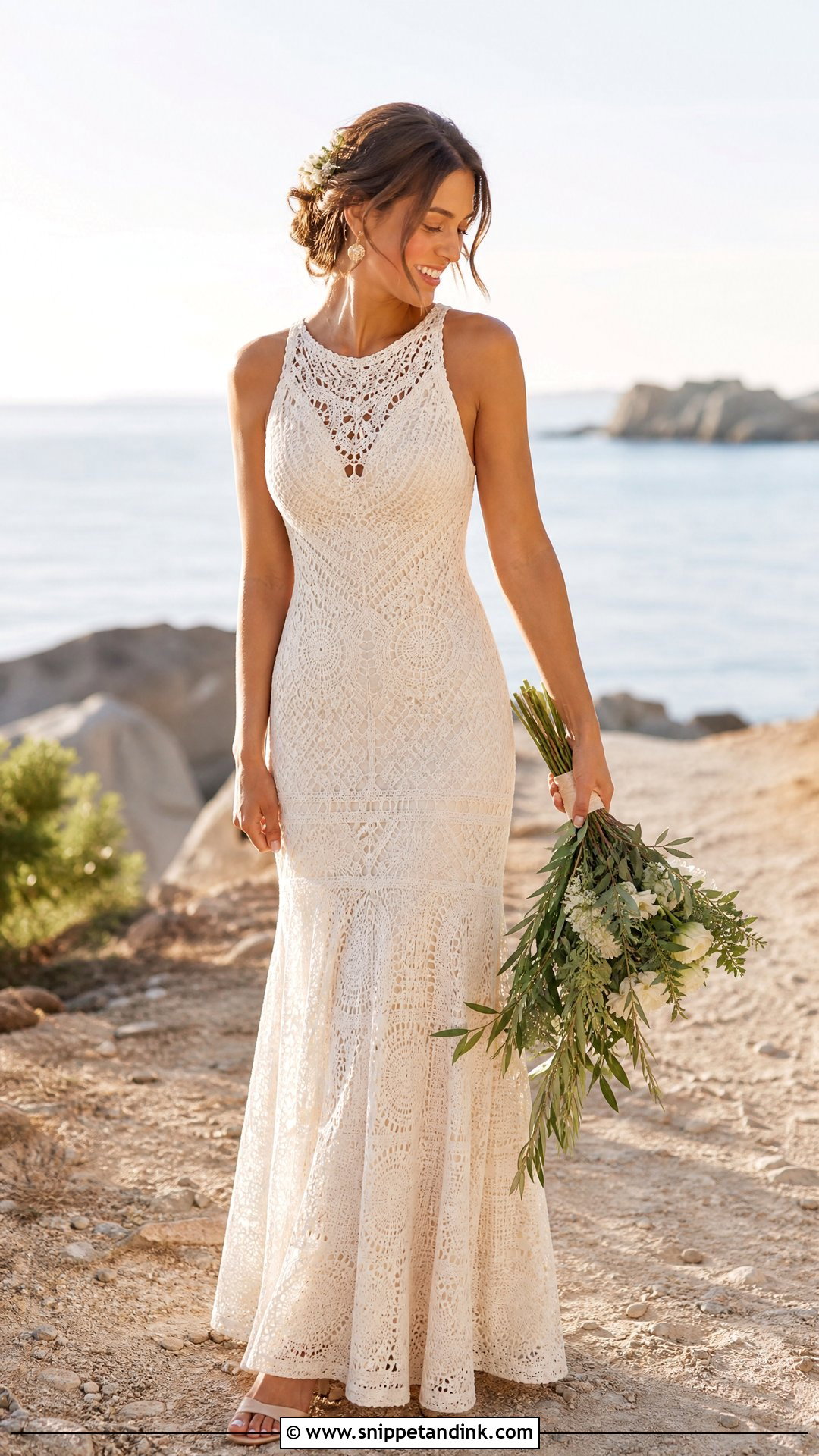
A crochet boho wedding dress has a relaxed, handmade texture that belongs on a beach, in the desert or under trees. Openwork looks very different in bright sun, so choose a lined dress and look at it outside before you buy. A fitted bodice and a gently flared skirt give shape without the weight of a ball gown. Crochet stretches when wet and catches on rough surfaces, so I keep the hem just clear of the ground on sand or grass. Low block-heel sandals, small gold earrings and a loose bouquet of greenery suit it, with a soft braid or natural curls and a plain fingertip veil.
14. Gold Jacquard Wedding Dress
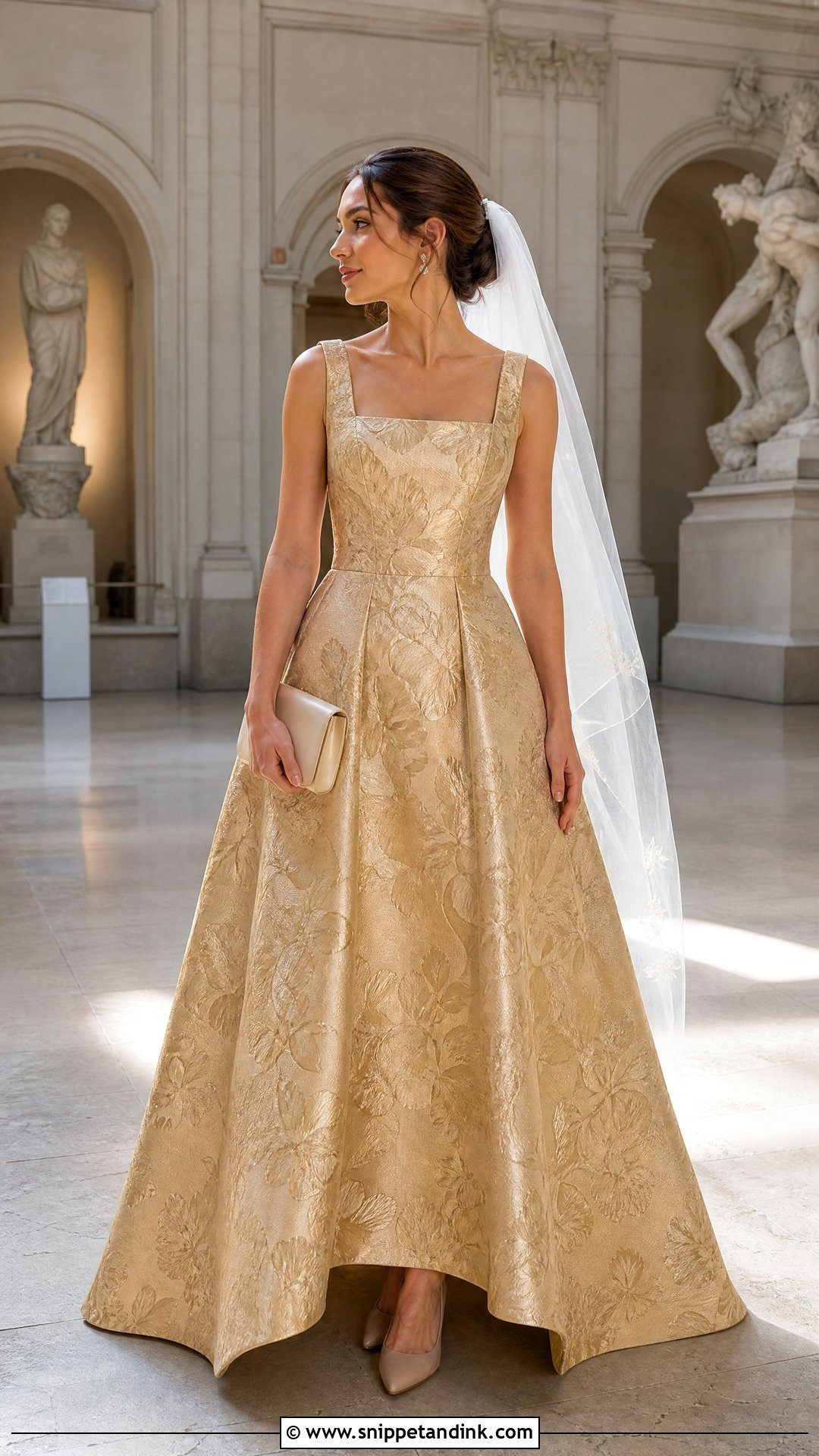
Gold jacquard takes a familiar silhouette and makes it rich. The weave is the decoration, so choose a cut with few seams, such as a square-neck ball gown, a structured A-line or a column with a detachable train, letting the pattern run unbroken. Soft champagne gold is the subtler route; antique gold is more dramatic. Jacquard is stiff and doesn’t drape, so it suits structured shapes rather than flowing ones. Neutral pumps, understated earrings and a satin bag keep it calm. An ivory veil softens the metal, while a gold headpiece leans into it. It belongs in formal hotels, museums and evening weddings.

15. Feather Trim Wedding Dress
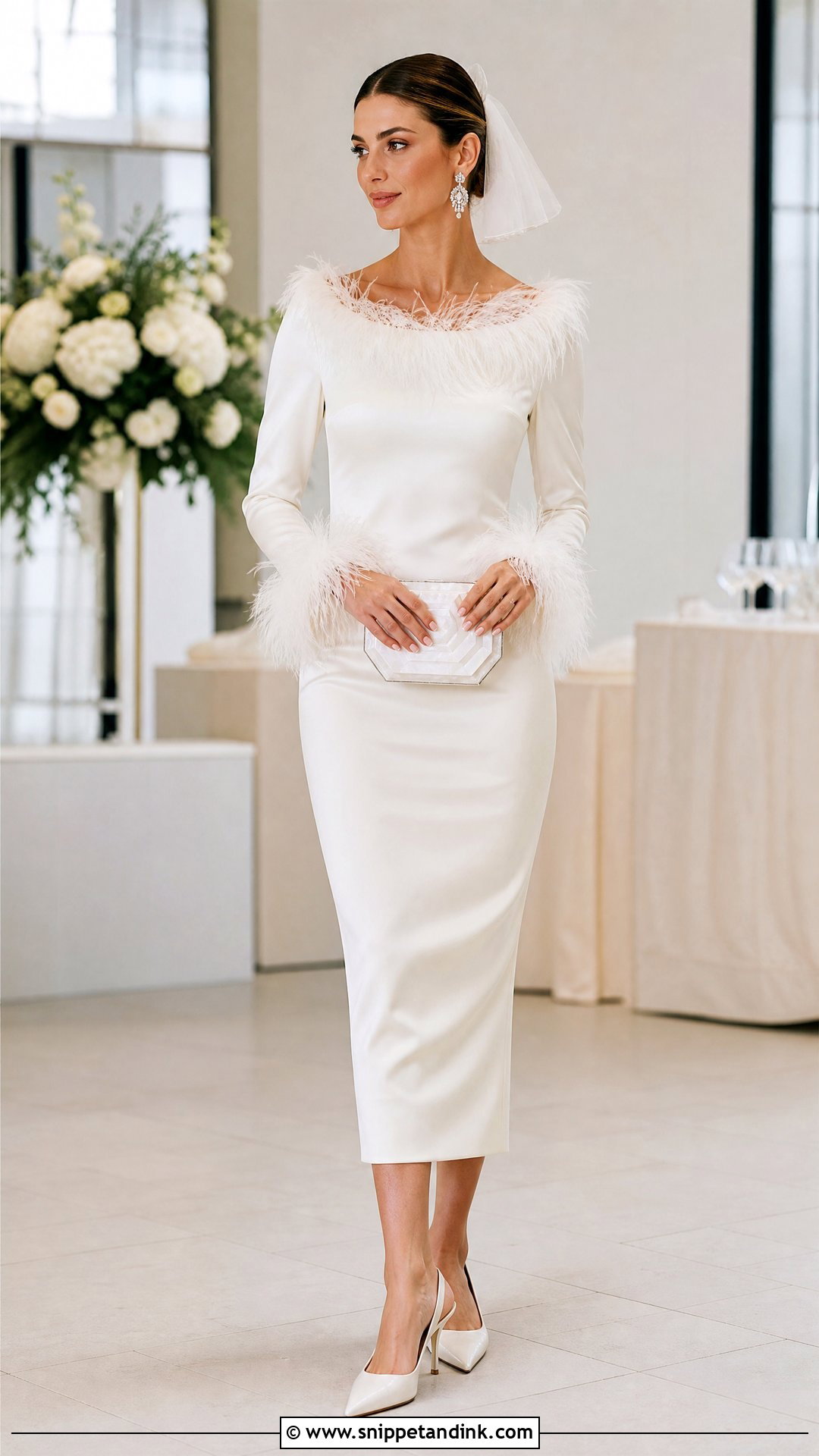
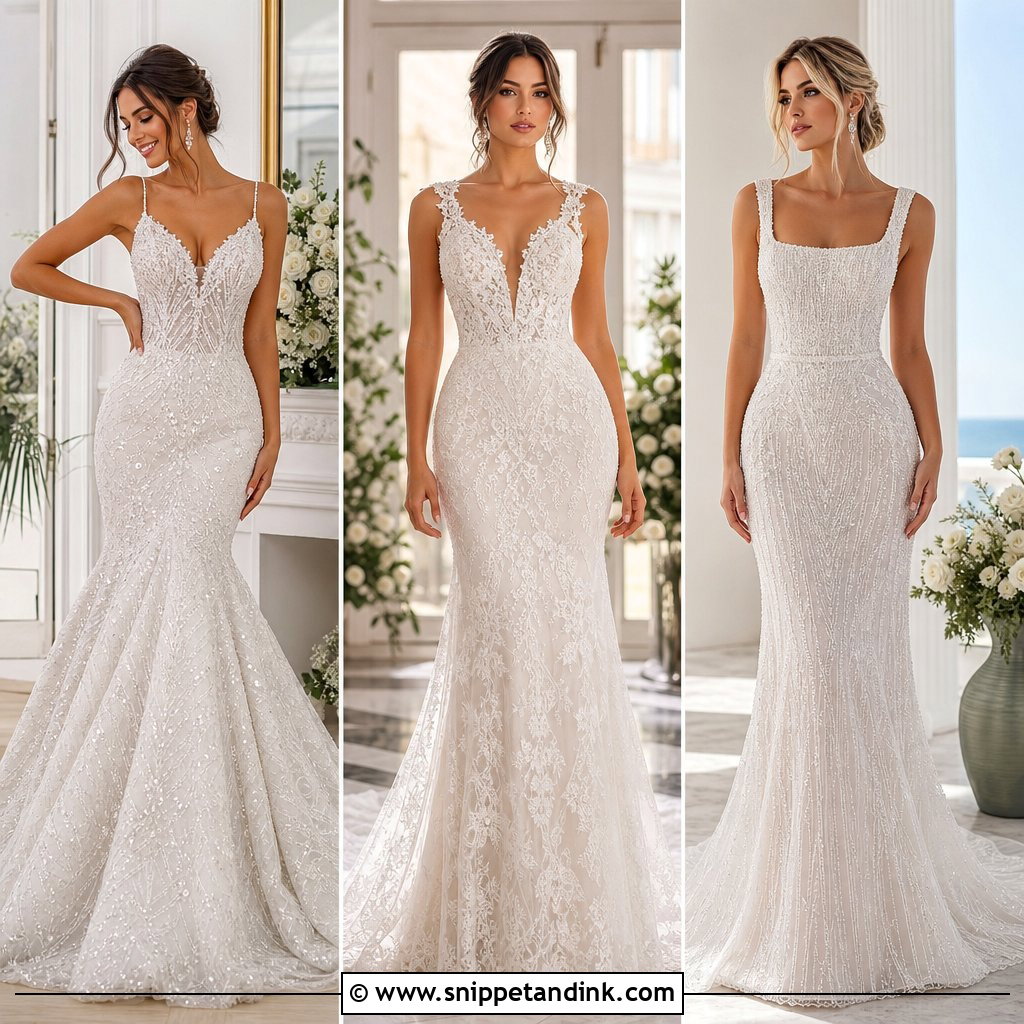
A feather trim wedding dress moves with you in a way beading never does. I’d keep the feathers to one area, such as the neckline, cuffs or hem, on a clean satin mini, a fitted midi or a column. Ask the boutique two questions: does it shed, and how should it be steamed? Ostrich feathers flatten if crushed in a garment bag and need gentle steam held well away to fluff back up. Smooth slingbacks, crystal earrings and a small clutch suit it. A short veil goes with a mini, and a sleek bun with a long gown. It’s a great reception or courthouse choice.
16. Oversized Bow Wedding Dress
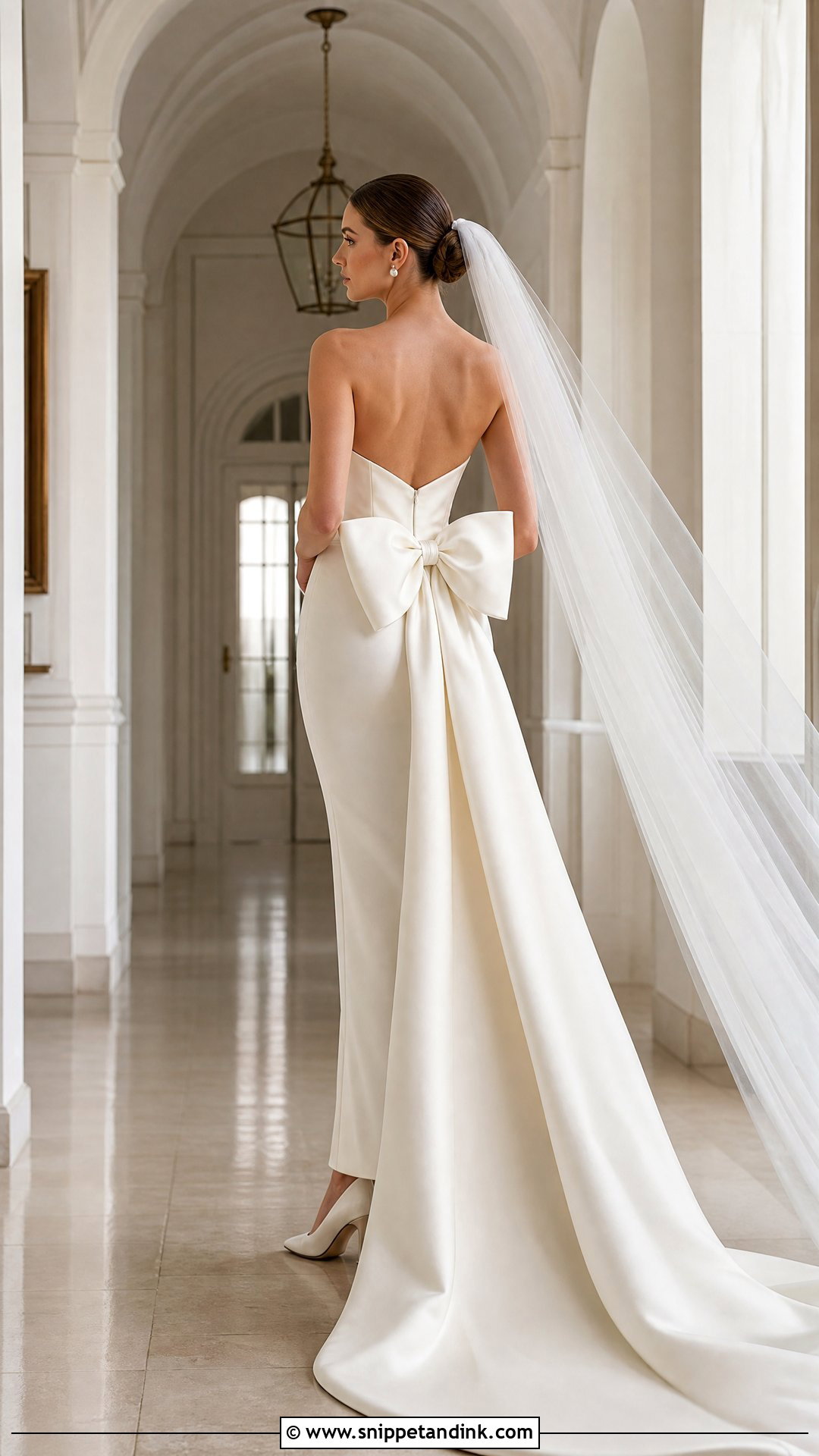
An oversized bow turns a simple gown into a statement, and placement decides where everyone looks: the back waist, across one shoulder or above a detachable train. A clean satin column or structured A-line is the best backdrop. A large bow at the back waist sits right where you lean against a chair, so I always ask brides to sit through a few minutes at the fitting to see whether it crushes or digs in. Pointed ivory pumps, pearl studs and a low bun keep the rest quiet. Choose a plain veil that ends either clearly above or below the bow so the two don’t tangle.
17. Pleated Grecian Wedding Dress
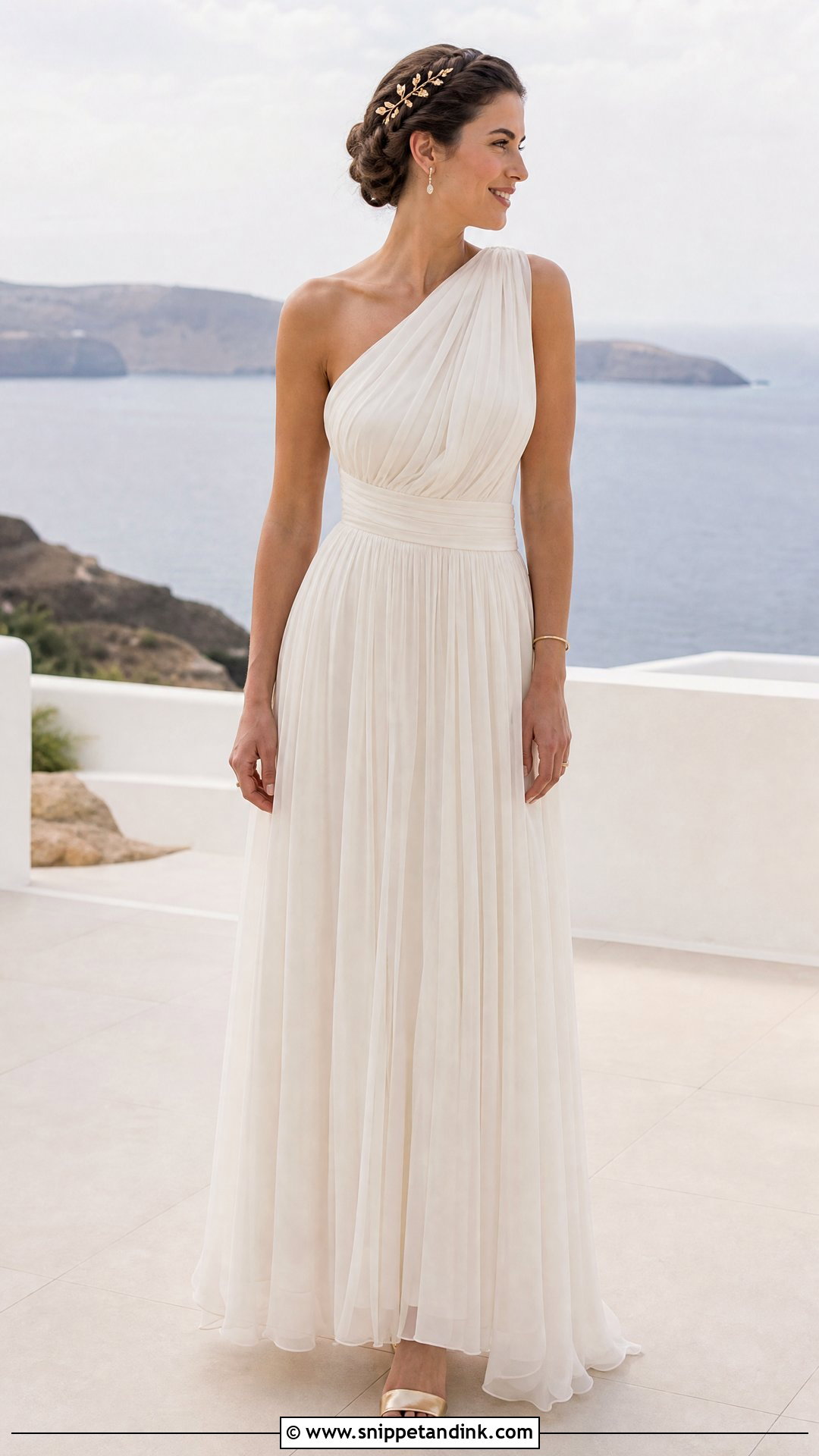
Grecian pleats move as you walk and pack well, which makes them ideal for destination weddings. Look for a draped bodice with an empire or natural waist over a chiffon or light silk skirt. A one-shoulder neck adds drama; a V is more familiar. Fine chiffon pleats can relax in humidity, so I advise against steaming them flat on the day; hang the dress in a bathroom instead. Metallic low heels, delicate drops and a slim bracelet suit it. A braided updo or a loose low bun mirrors the draping, and a simple veil or a gold hair comb finishes the look for terraces and coastal venues.
18. Upcycled Vintage Wedding Dress
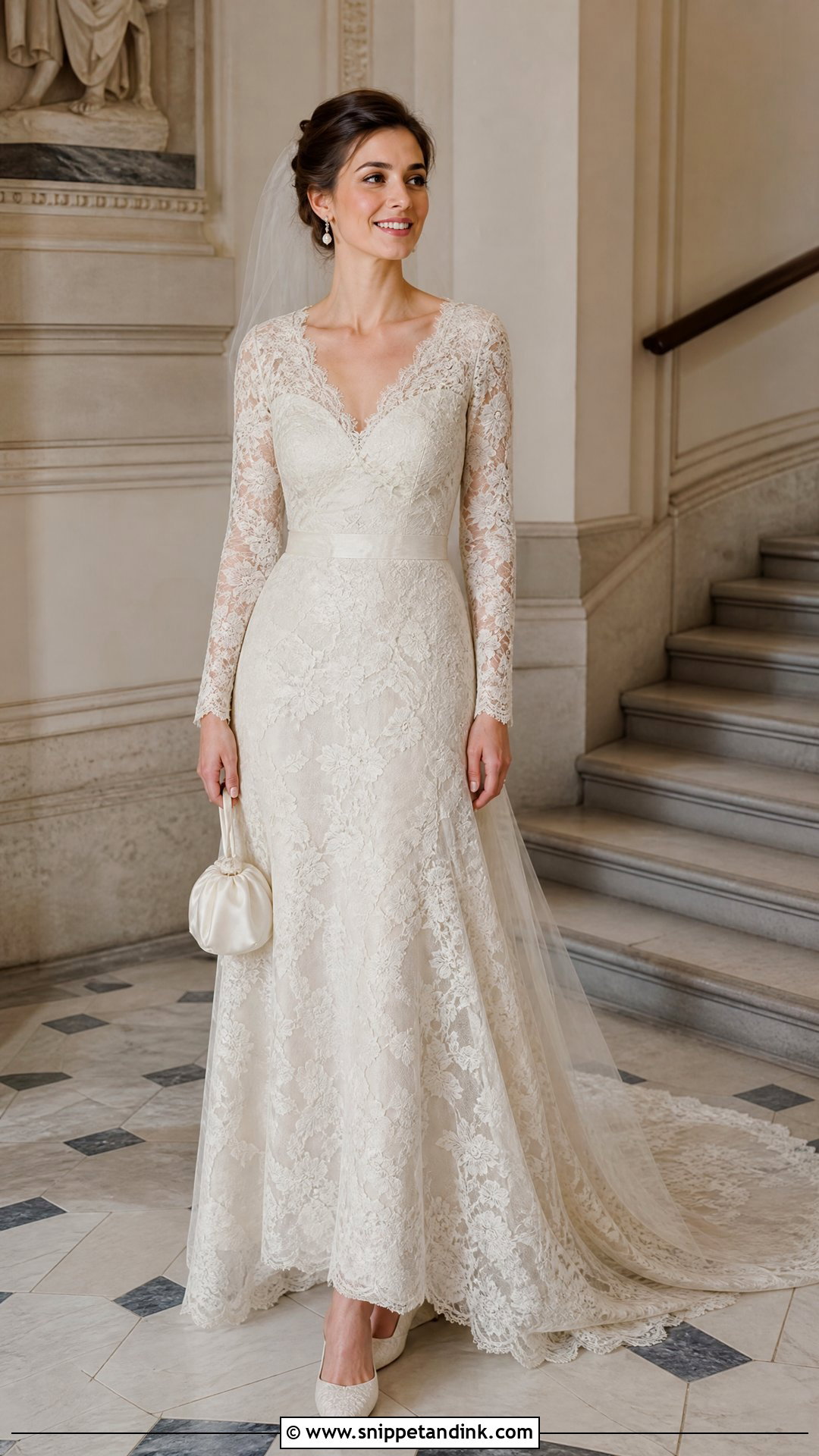
A restored vintage dress brings real history and craftsmanship to the day. Buy it because you love the silhouette, not just because it’s old. Before paying, inspect it in daylight for yellowing, weak seams and smells that won’t wash out; old silk can split along fold lines and can’t always be saved. A skilled bridal tailor can repair lace, replace lining, change the sleeves and reshape the neck while keeping the original details, but allow several extra months for hand stitching and specialist cleaning. Redesigning an older gown also gives it a second life. Modern pointed pumps, clean pearl earrings and a simple veil stop it feeling like a costume.
19. Tiered Ruffle Organza Wedding Dress
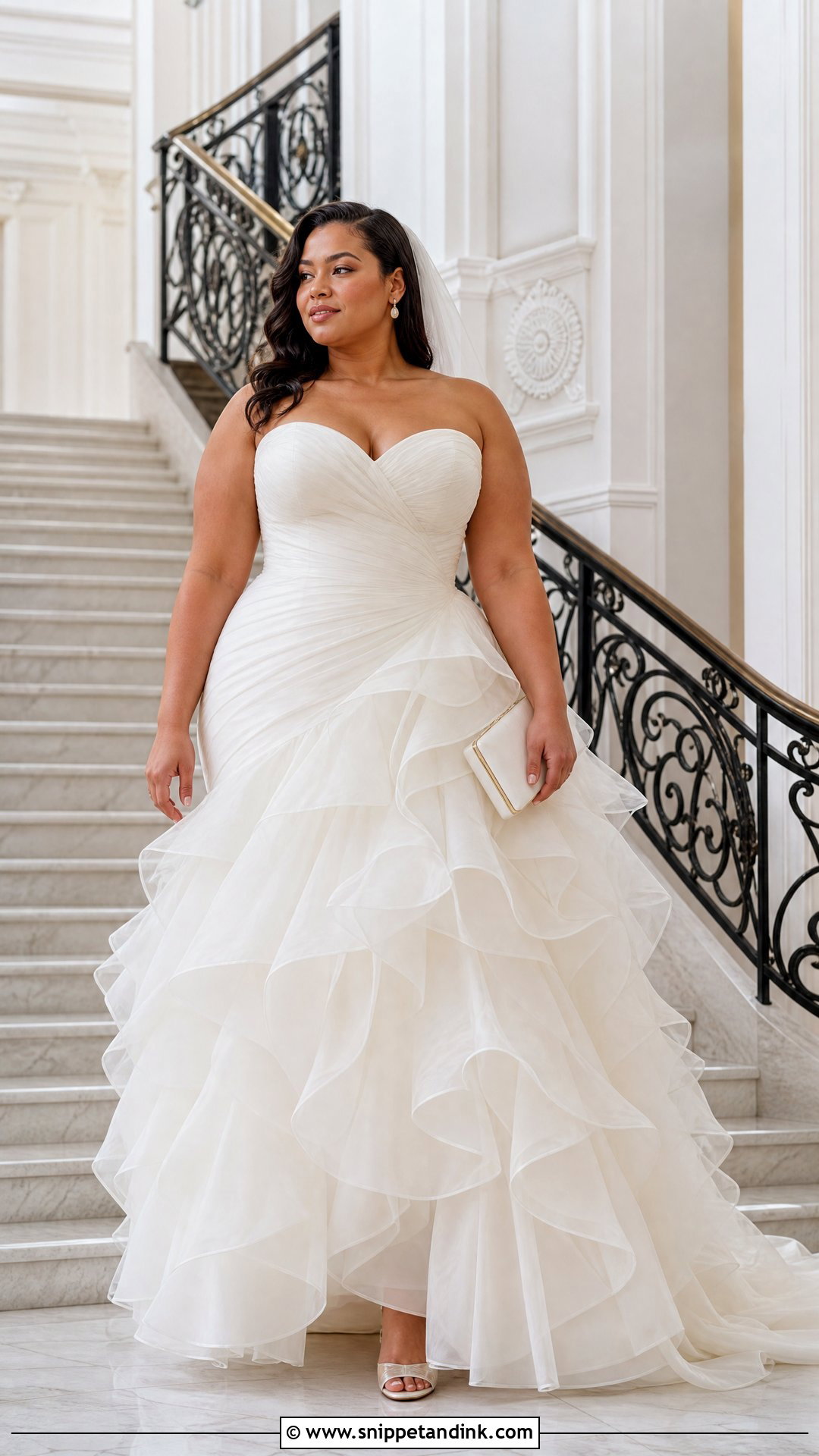
Tiered organza ruffles add volume without visual heaviness, provided the bodice is fitted and fairly plain. The tiers can fall straight or cascade on the diagonal for a softer look. Organza crushes and holds a crease, so ask the boutique how to store it; I hang ruffled skirts inside out in a long bag with tissue between the tiers. Minimal earrings, plain satin heels and a small structured bag finish it, and a narrow veil without thick lace edging keeps attention on the skirt. It needs a spacious venue such as a ballroom, a formal garden or a wide staircase to move properly.
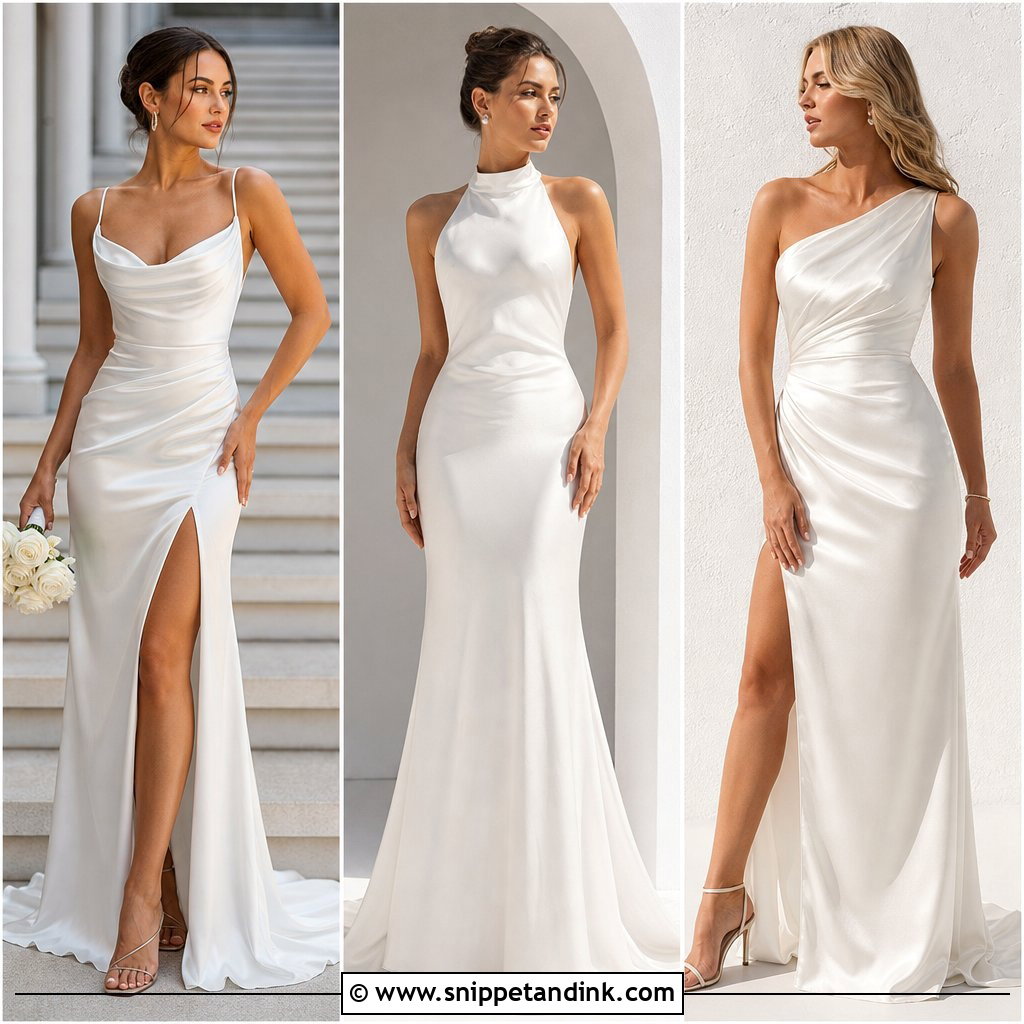

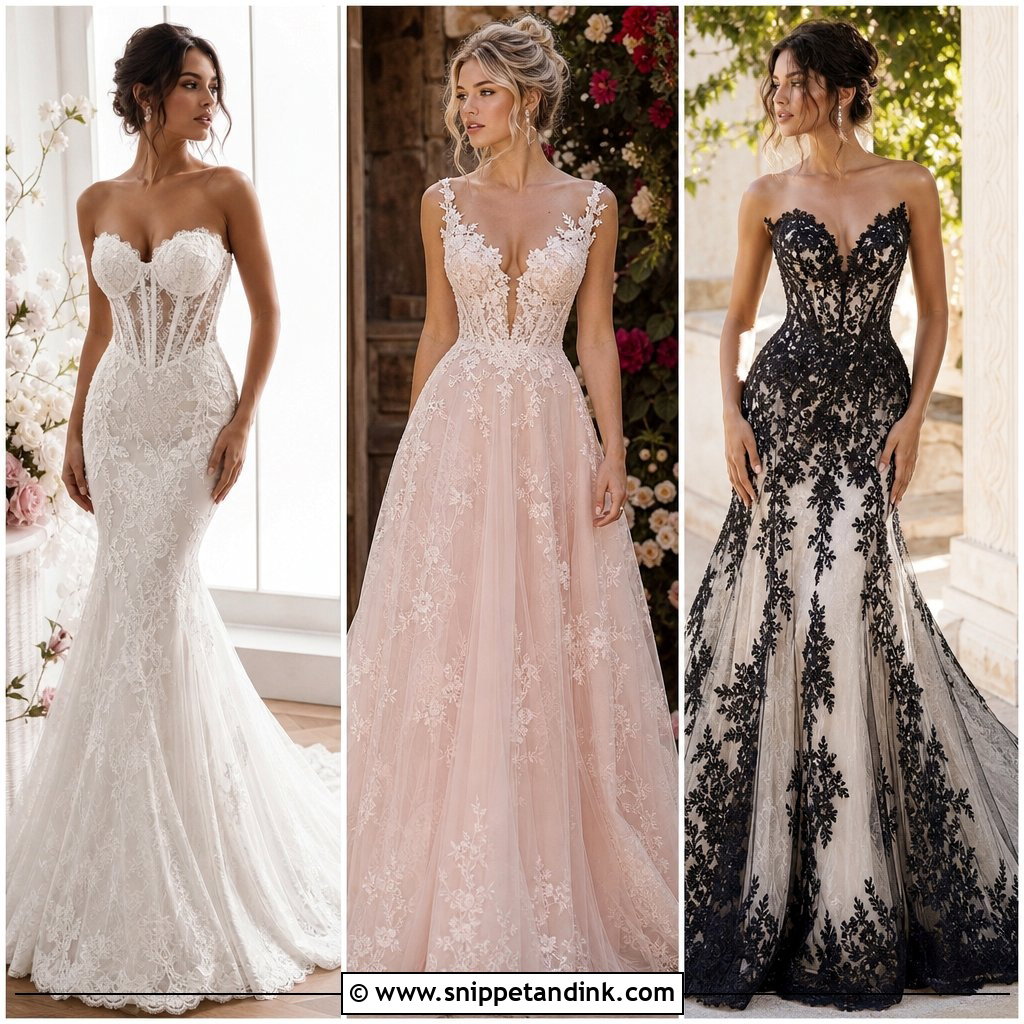
20. Detachable Sleeve Corset Wedding Dress
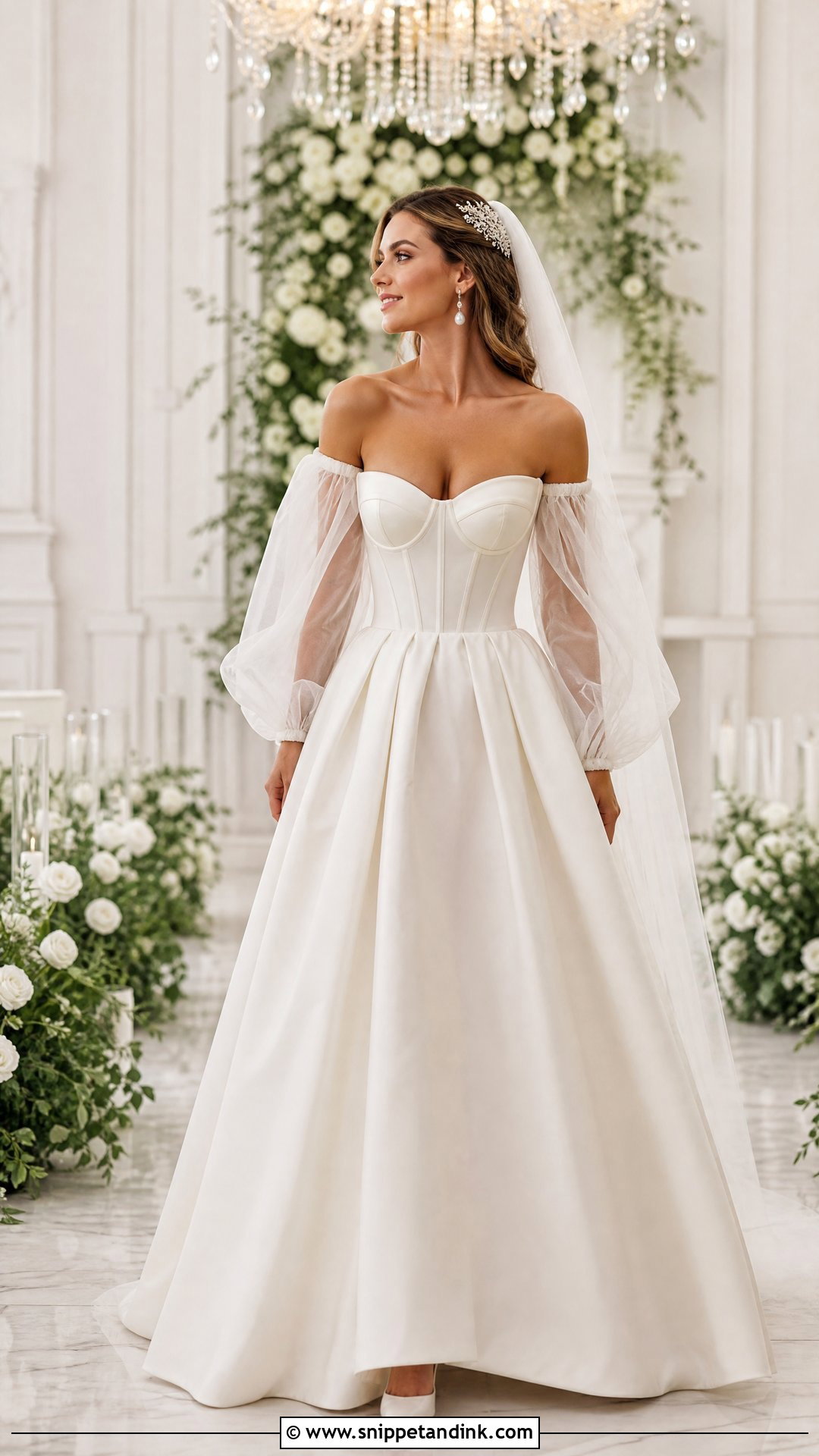
Detachable sleeves let a corset gown go from ceremony to reception without a full change. Start with a supportive bodice and an A-line, mermaid or ball gown skirt, then add sheer lace, puffed organza or fitted satin sleeves fastened under the arm. Test those fastenings during alterations by lifting your arms and dancing a little; snaps can pop open under tension, so I’d ask for hooks or buttons if you’re active. Wear a long veil, drop earrings and classic pumps for the ceremony. Later, take off the sleeves and veil, add a sparkling hair clip and switch to comfortable heels.
Which Details Will Date, and Which Hold Up
I get asked this a lot, and my honest answer is that silhouettes last while gimmicks date. A clean column, a full ball gown or a well-cut A-line looks as good in old photos as new ones. Details tied to one fashion season, like very large bows, bubble hems or a particular sleeve shape, are the parts people later point at and say, that was the year.
That isn’t a reason to avoid them. If a feather hem or an oversized bow makes you happy, wear it. I’d just suggest keeping the trend detail in one place and making the rest of the dress classic. Removable pieces help too: a detachable bow, overskirt or sleeve gives you the moment in some photos and a plainer look in the rest.
Telling family about a colored or black gown
If you’re choosing black, red, blue or gold, mention it to close family before the day. In some cultures white carries meaning, in others it is red or a different color entirely, and a quiet word in advance saves an awkward moment at the ceremony. Most people come round quickly once they see you in it.
Is It Still You After Ten Hours?
A dress that looks unusual on a hanger isn’t automatically the right one. The one to keep is the gown that holds your body comfortably, suits the venue and still feels like you after ten hours. Save your favorite shapes, then stay open at appointments, because fabric and proportion often surprise people once the dress is on. Bring your shoes and underwear to every fitting, move around and photograph yourself from every angle. With good alterations and restrained accessories, even the boldest idea here can look entirely bridal.
You'll Like These Ideas:





Leave a Reply