
I start every first appointment with three questions: where is the wedding, how long will you be in the dress, and what do you never want to feel in it? Answer those and the long list of wedding dresses for women gets short quickly, from ball gowns and lace A-lines to satin slips, courthouse minis and corset gowns. A dress that looks good on the hanger still has to move, sit, survive the weather and work with your shoes, veil, jewelry and flowers. Below are 25 bridal looks, each with the full outfit and the practical catch I’d flag at a fitting.
Let the Venue Floor and the Forecast Narrow the List
Before we look at a single silhouette, I want to know what you’ll be walking on and what the weather is likely to do. Those two things rule out more dresses than taste does.
- Sand or lawn: light fabrics and a hem that clears the ground. Long trains and stiff skirts drag and stain.
- A grand staircase or long aisle: a train shows off well here, but you’ll need a bustle for the evening.
- A small room or registry office: short, midi or slim gowns. Big skirts crowd a small space and the photos.
- Heat: chiffon, crepe and light tulle breathe, while heavy satin and full corsetry get uncomfortable fast.
- Cold or an unheated church: sleeves, heavier satin or mikado, or a cover-up you’d happily be photographed in.
Then factor in the length of the day. A dress you’ll wear for four hours can ask more of you than one you’ll wear for fourteen.
1. A Line Wedding Dress
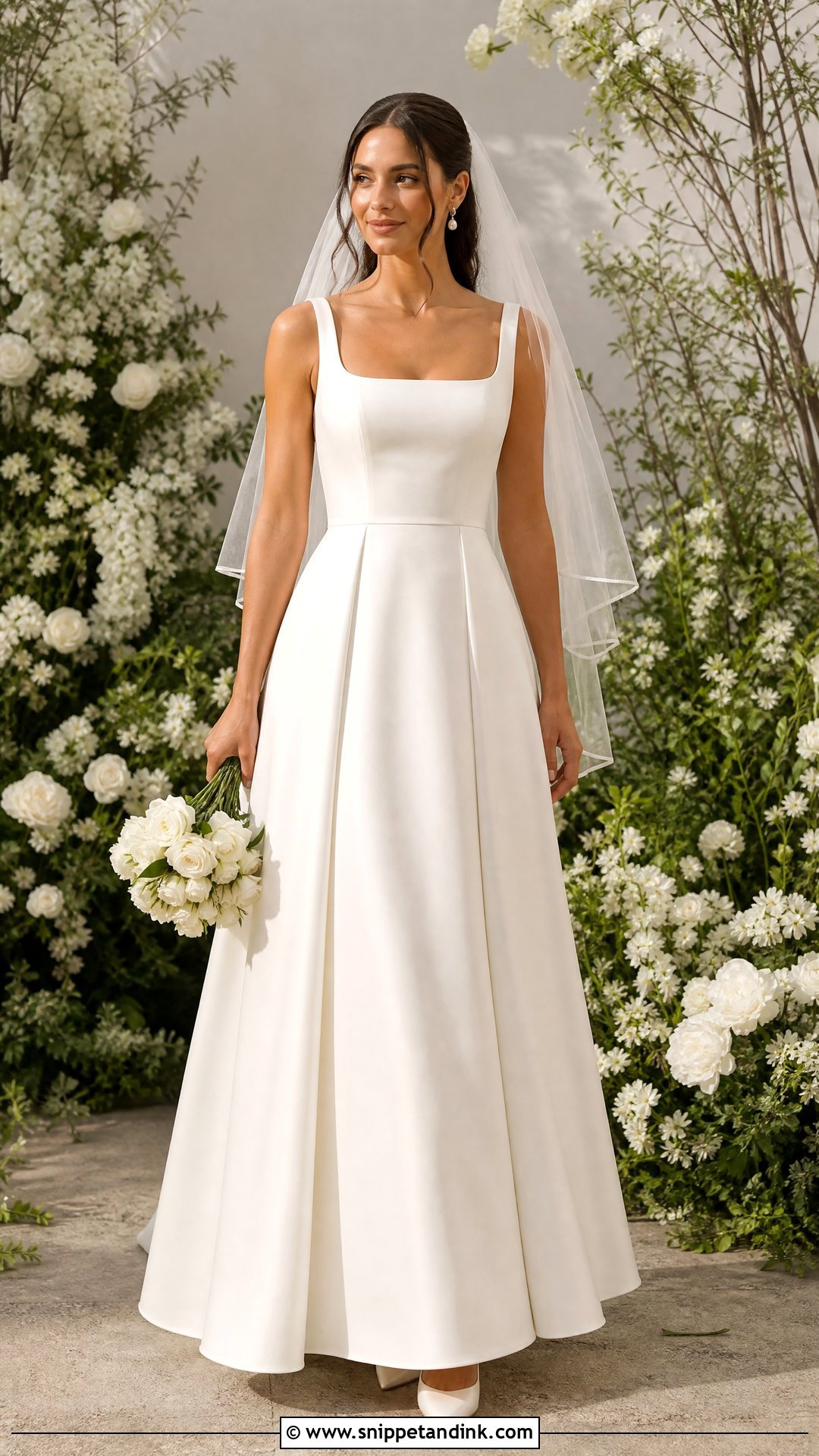
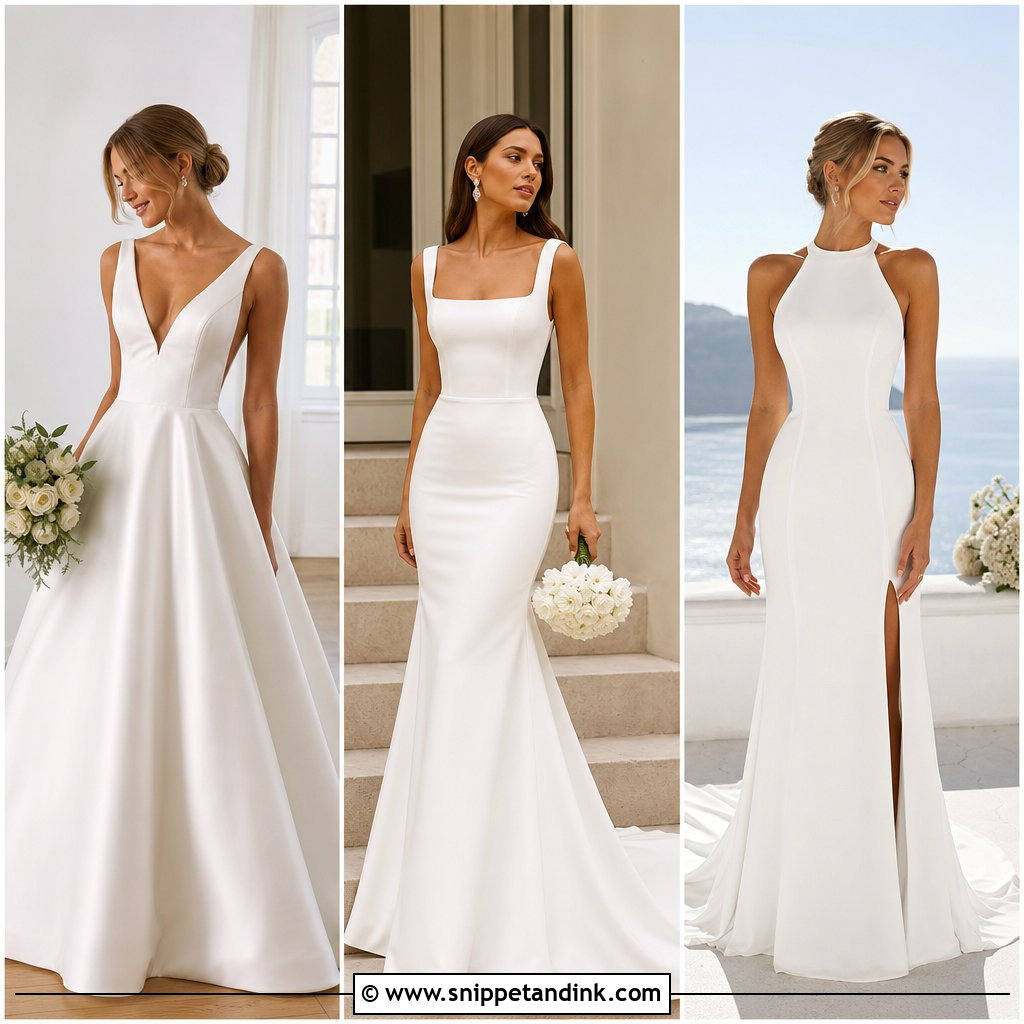
If a bride has no idea where to start, I put her in an A-line. It fits close at the waist and then falls away from the hips, which suits most bodies and most venues, so it rarely looks out of place in a garden, a ballroom or a classic church. A clean ivory version with a fitted bodice, soft skirt and short train is my baseline; pointed satin heels, pearl studs, a fingertip veil and a small bouquet balance it. Want more shape? Look for a defined waist seam or a corset-style bodice. Tulle, crepe or organza keep it light for a long day.
2. Ball Gown Wedding Dress
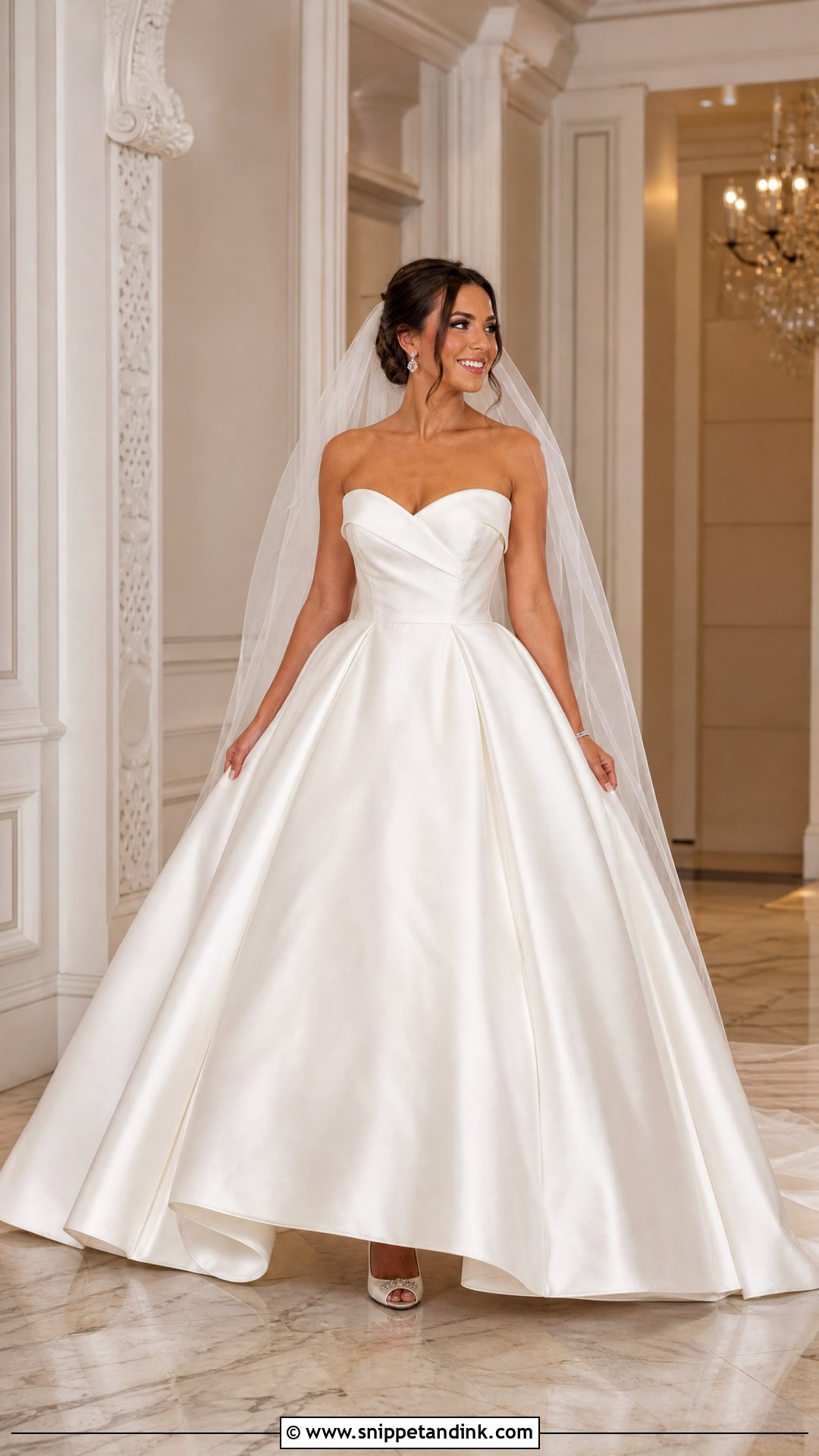
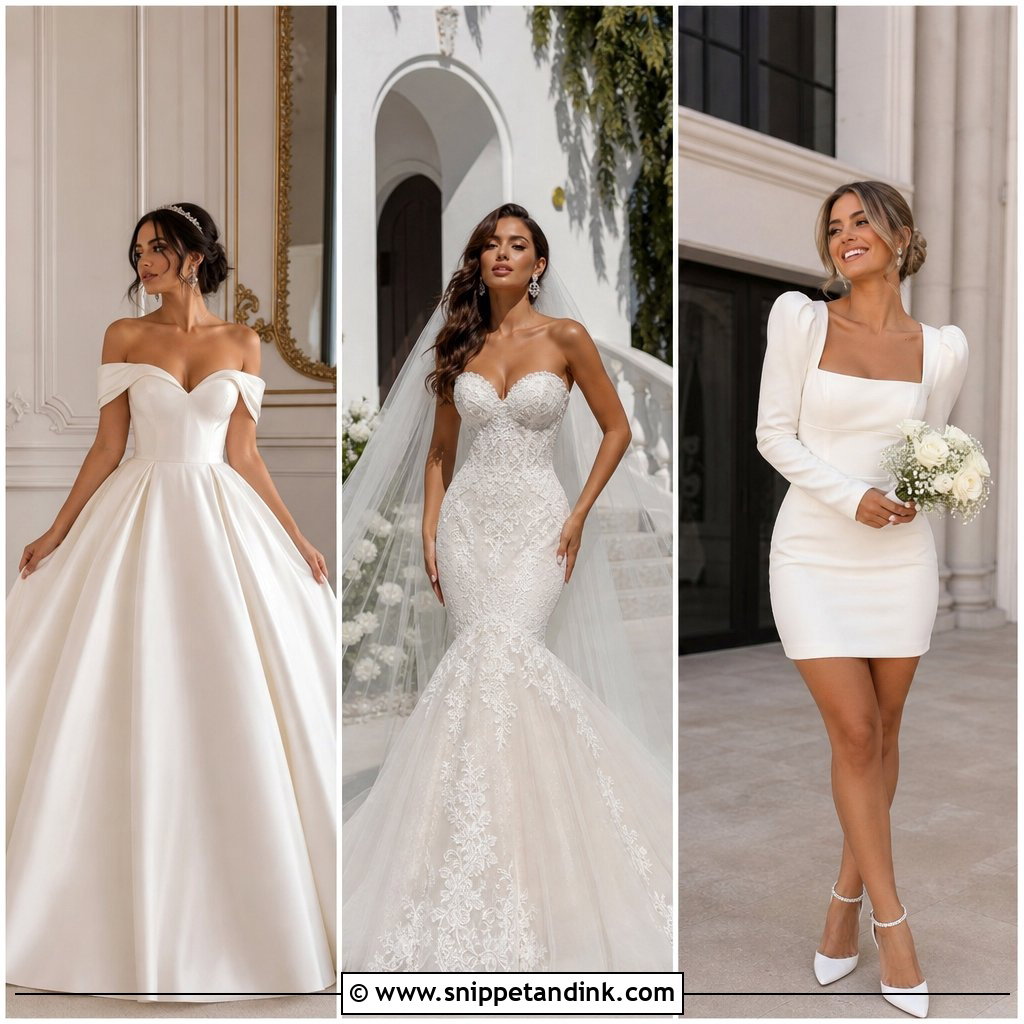
Volume does the work here, so a ball gown needs fewer extras than you’d think. The fitted bodice and wide skirt define the waist, and a satin or mikado version feels regal with a chapel veil and crystal drops; layered tulle with fine embroidery is the softer route. The shoes hide under the skirt, so choose comfort over looks, a block heel or platform pump. A structured updo, soft makeup and a small comb or tiara finish it. Check your doorways and the car before the day, because full skirts need more room to get through both than most brides expect.
3. Mermaid Wedding Dress
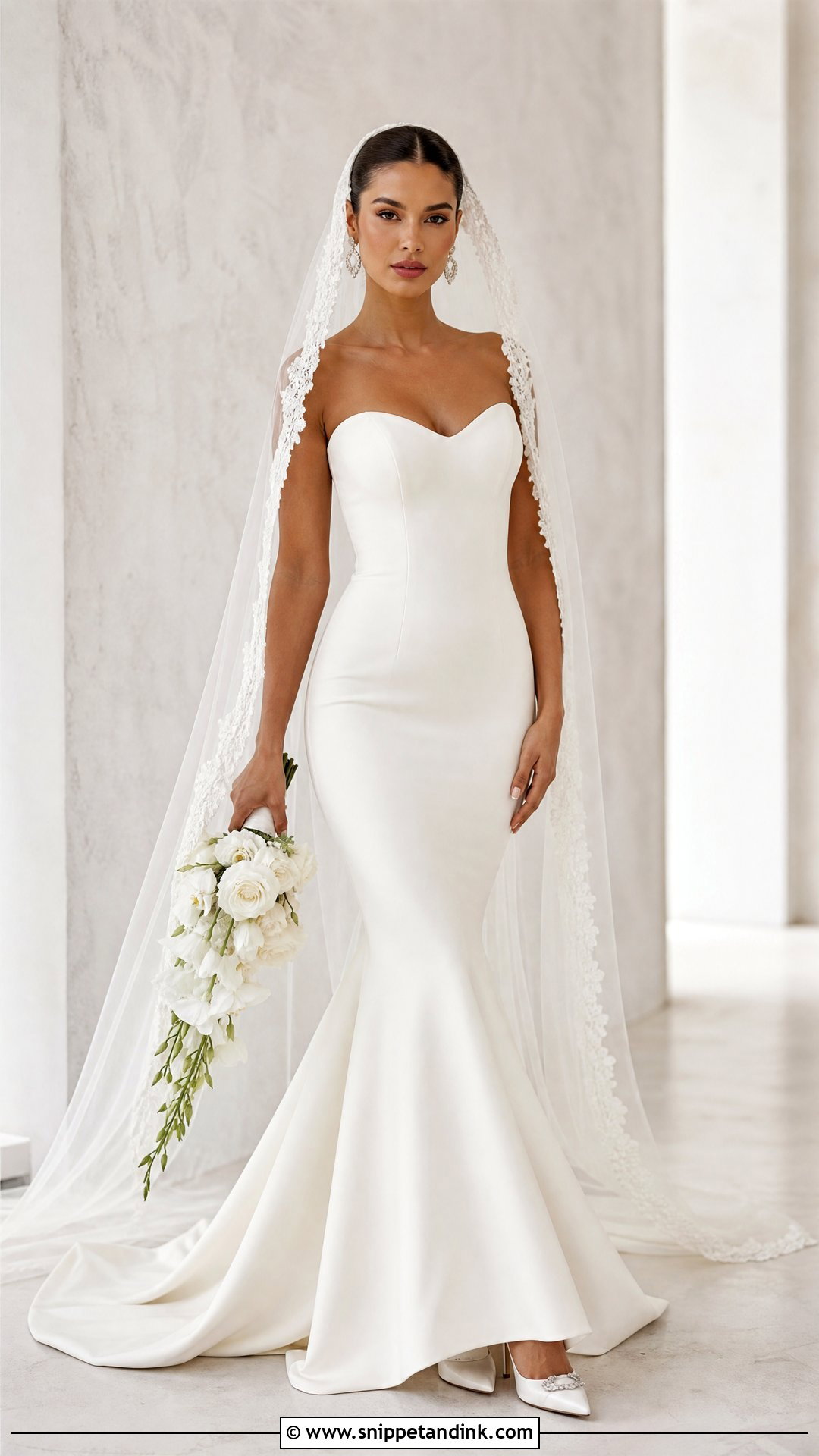
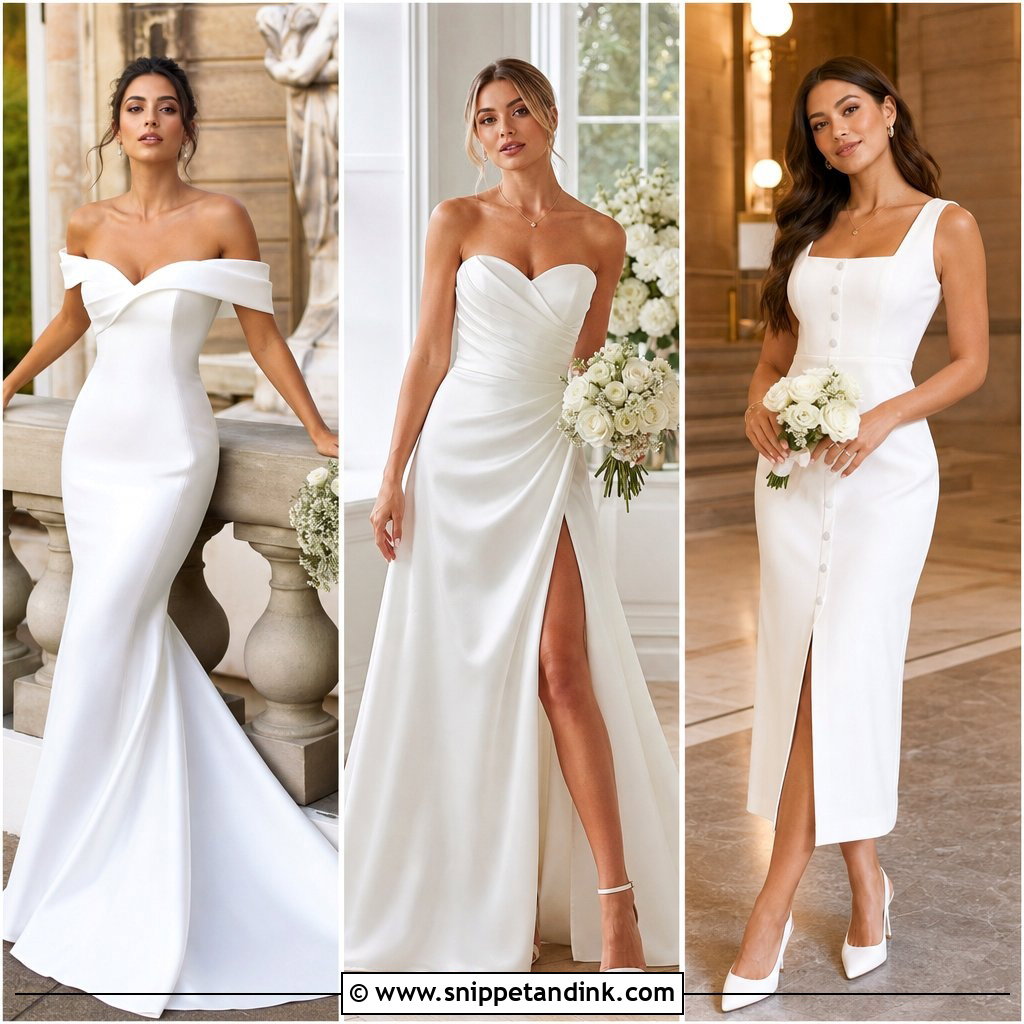
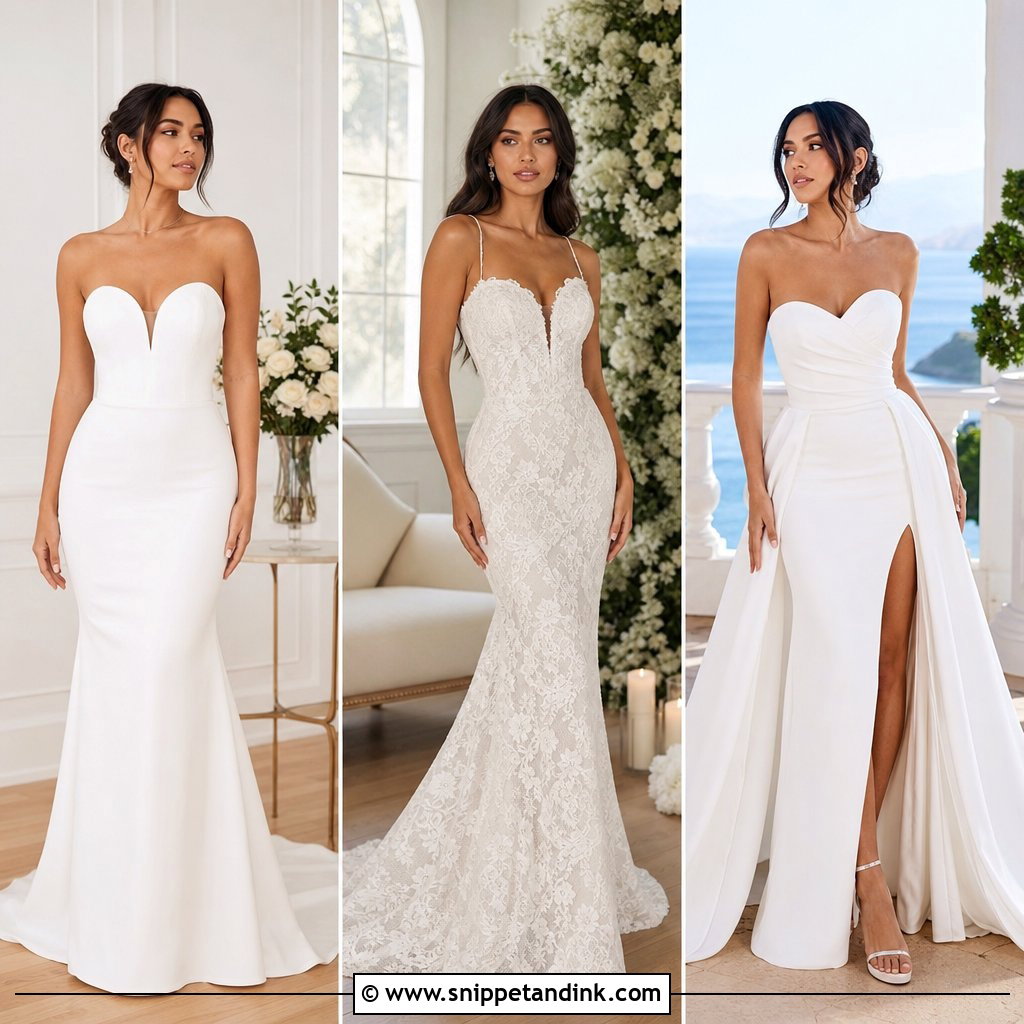
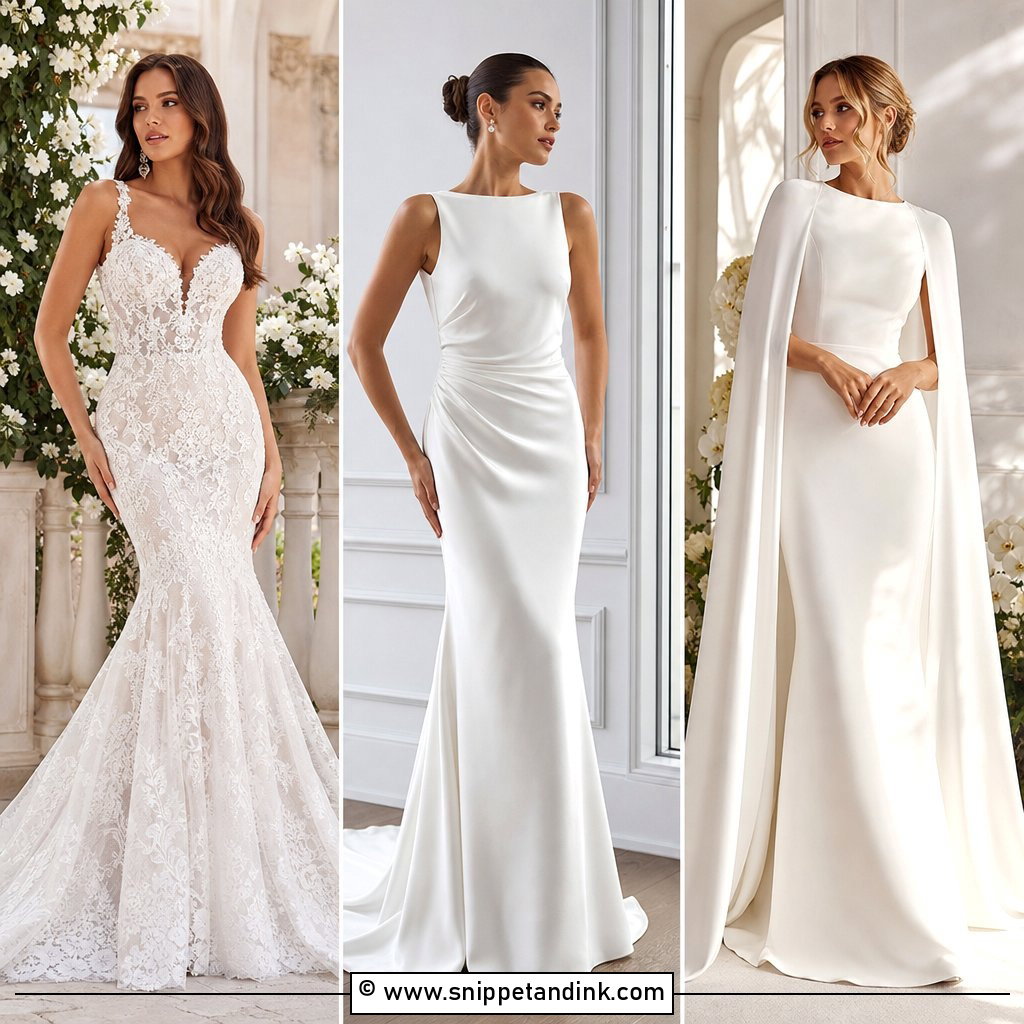
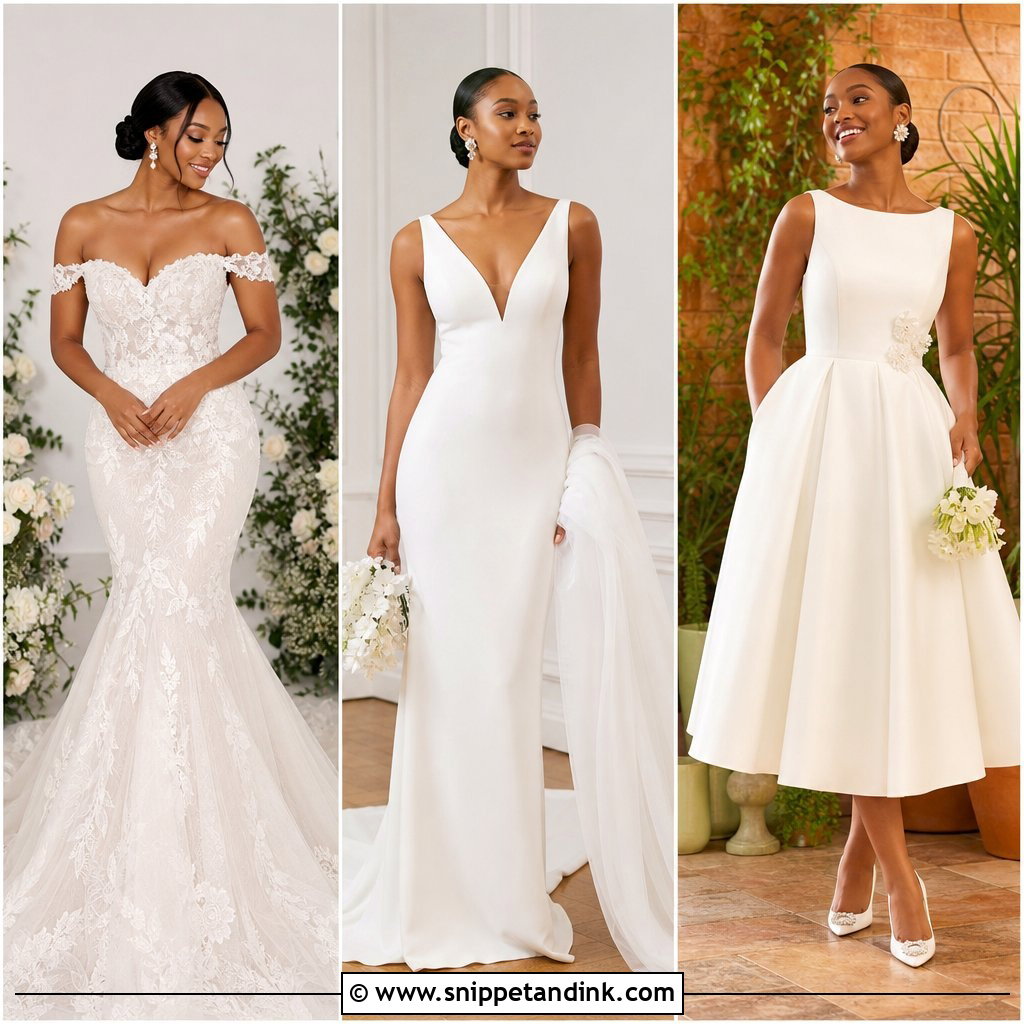
Mermaids hug the bust, waist and hips, then flare near the knee, and they hold their shape best in crepe, satin or lined lace. I’d style one with sleek heels, a cathedral veil and statement earrings, and keep the bouquet narrow so it doesn’t hide the line of the dress. The honest downside is movement. Stairs, restroom trips and dancing are all harder in a mermaid, so look for stretch lining, or ask whether a hidden slit at the back can be added for walking.
4. Lace Wedding Dress
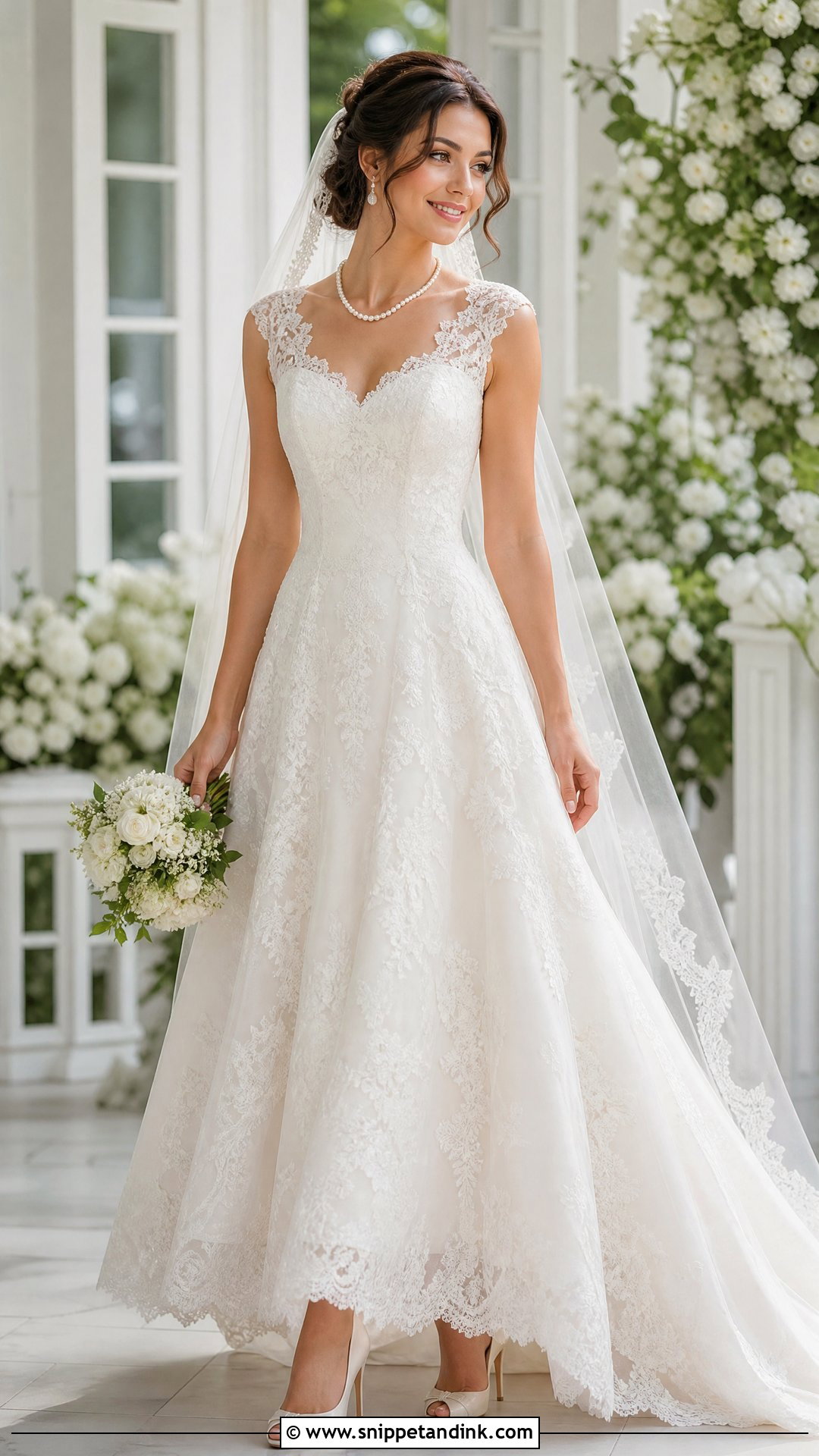
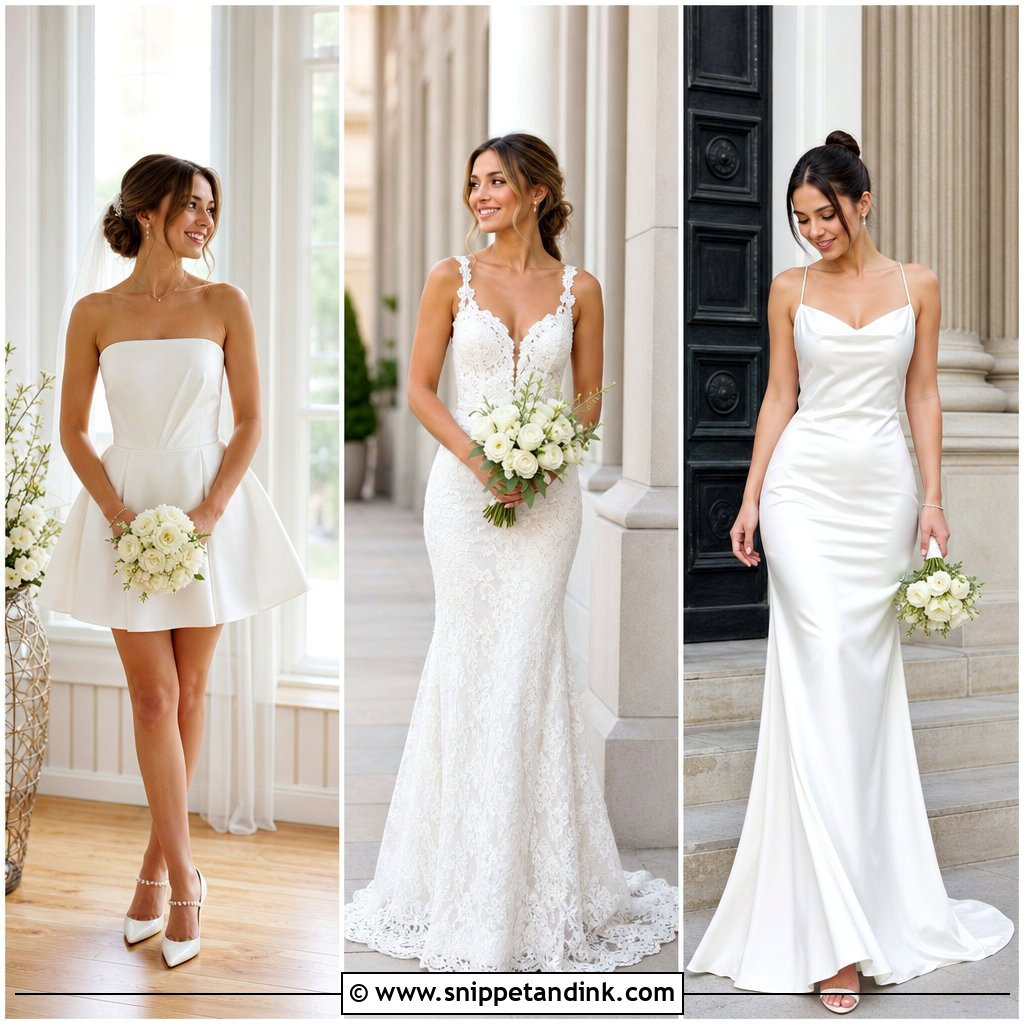
Lace changes character with its pattern. Fine floral lace feels soft and suits spring or a garden, graphic lace reads modern, and heavy corded lace looks formal. A fitted lace bodice on an A-line skirt over nude lining is the classic version, with ivory heels and a sheer veil. Long lace sleeves suit the cold months, sleeveless lace the summer. Pearls, a low bun and a simple bouquet keep the pattern in front. One practical point: lace snags on rough bouquet stems and bracelet clasps, so have the stems wrapped in ribbon.
5. Satin Wedding Dress
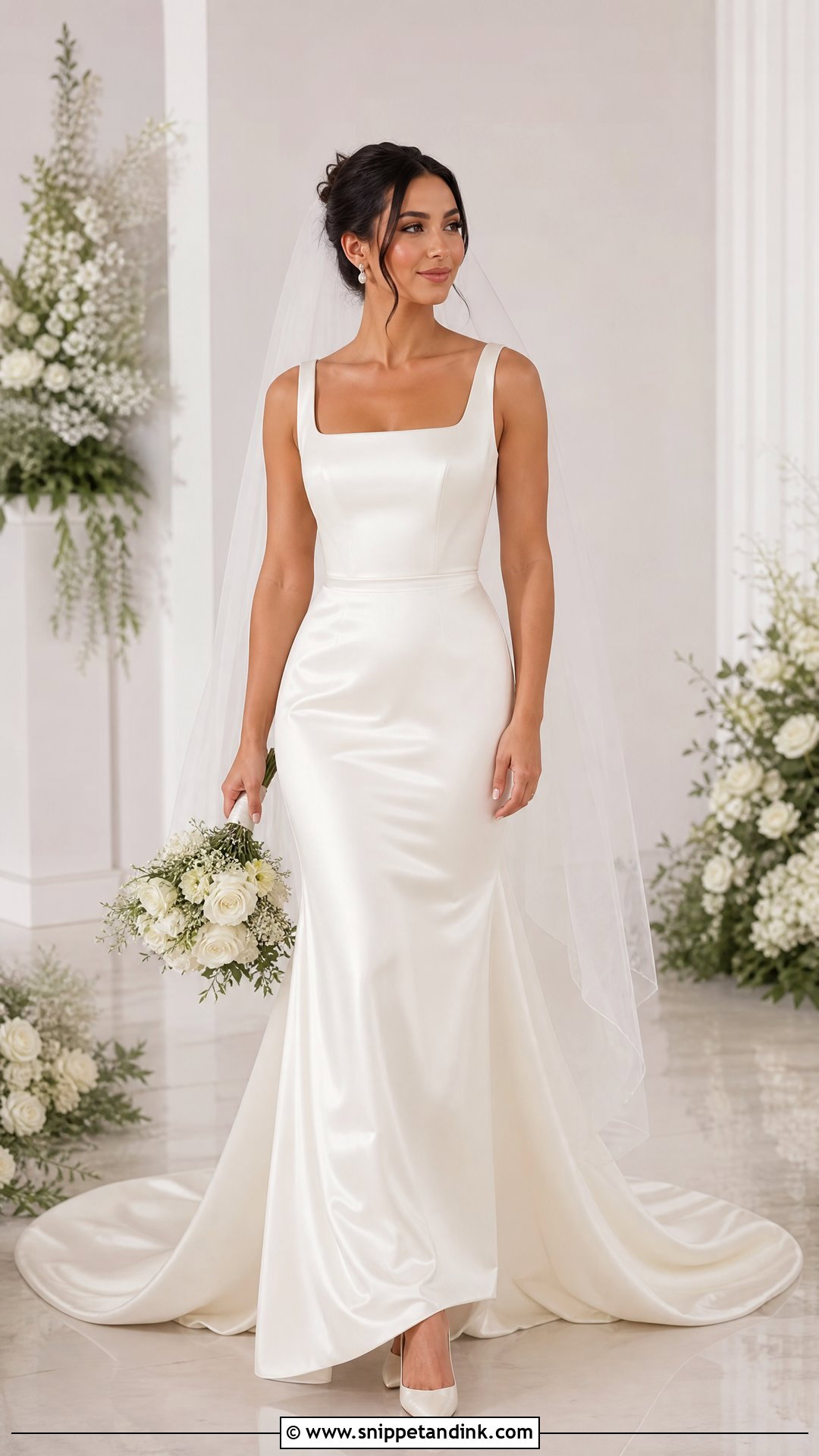
Satin catches light, so even a plain shape looks finished in it. A satin A-line with a square neck, low bun, pearl earrings and pointed heels is clean, while a satin ball gown with a structured bodice and long train is the dramatic option. The trade-off is creasing. Heavier satin creases less, and the dress should be steamed on the morning, never ironed directly, then left hanging until you step into it. Keep accessories minimal: a plain veil, white roses and a classic manicure.
6. Simple Wedding Dress
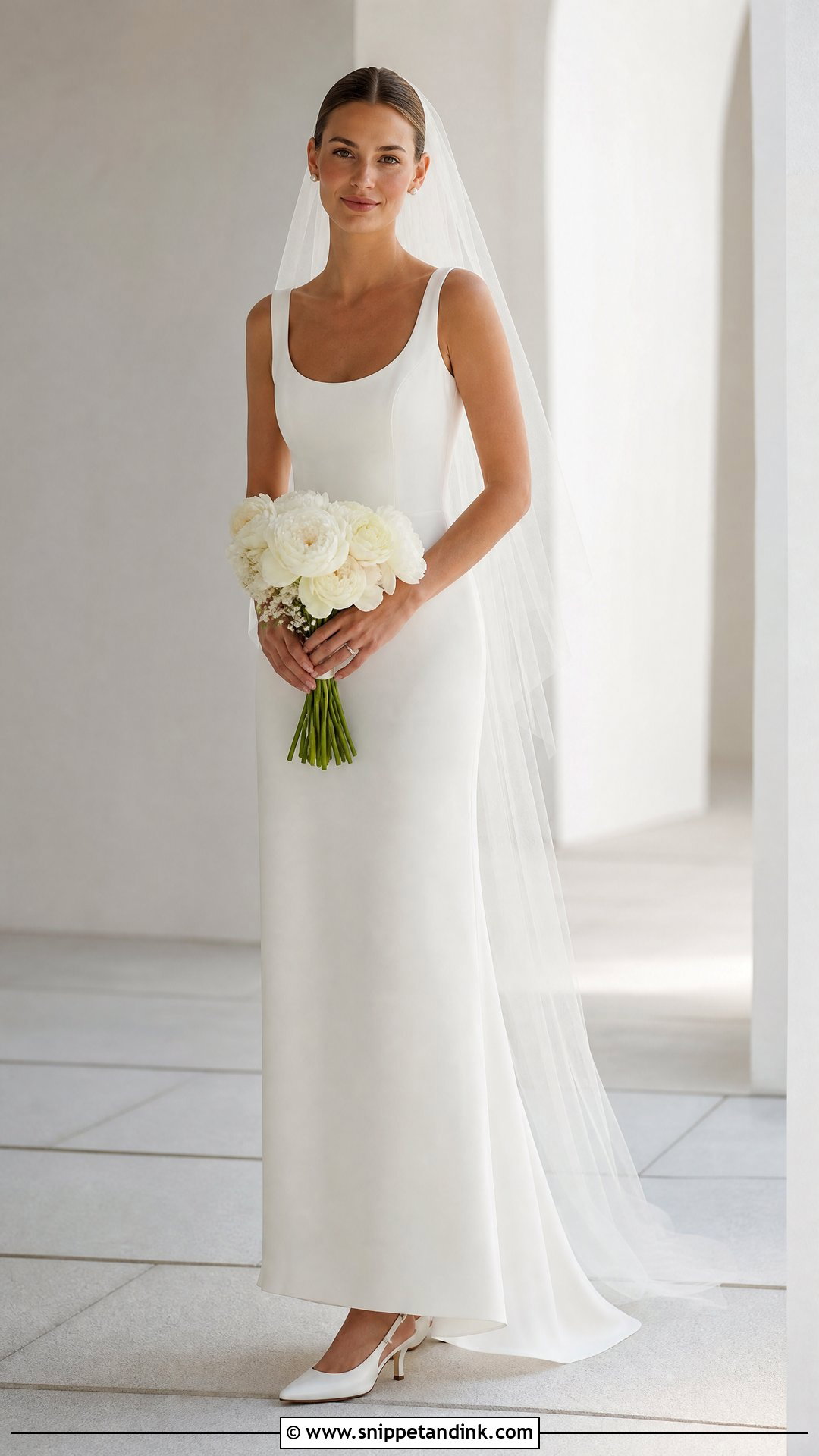
With no beading or lace, the cut and fabric carry everything, which means a plain dress has to fit perfectly. A crepe gown with a scoop neck, fitted waist and slim skirt looks modern, and pearl studs, slingback heels and a soft veil finish it. It suits courthouses, minimal venues, hotels and small celebrations. If it feels too bare, add one standout detail, such as a back bow, a long train or a square neckline. Simple isn’t boring when every detail is deliberate.
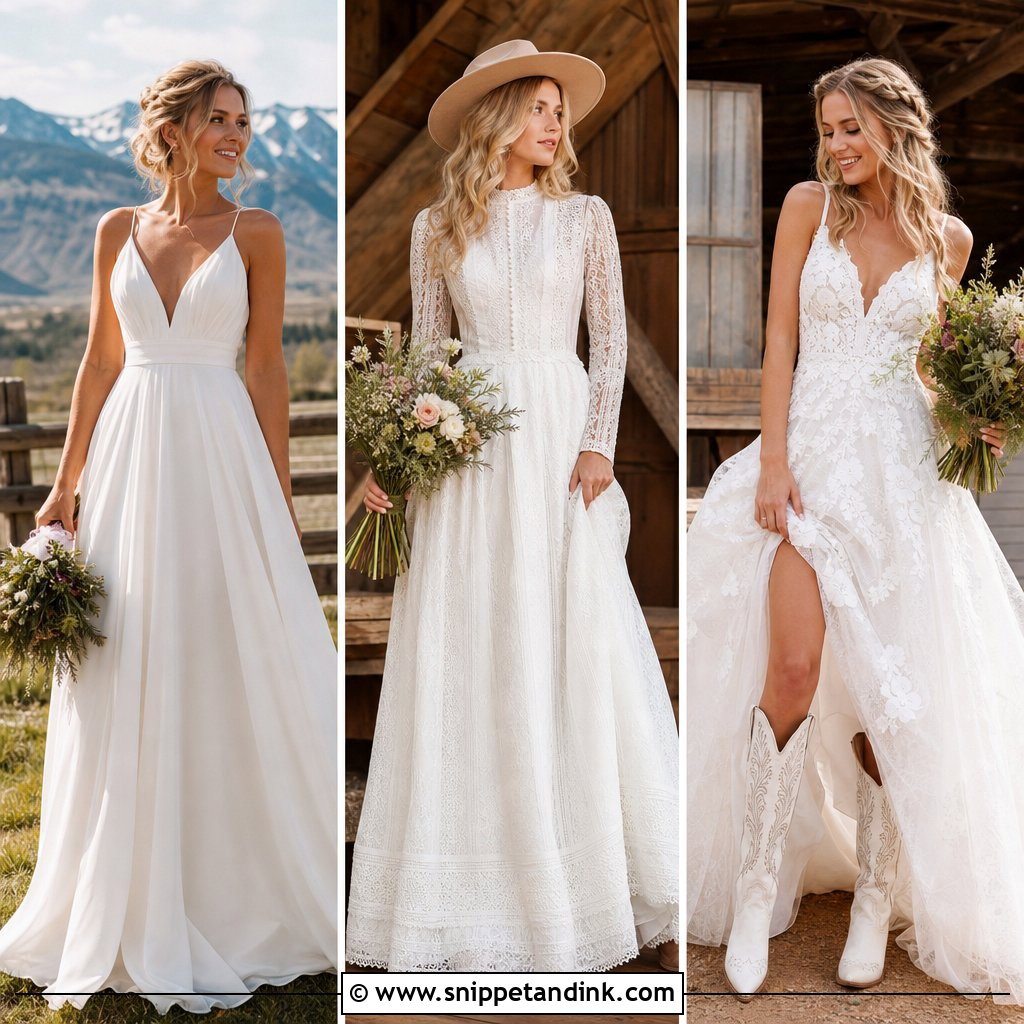
7. Boho Wedding Dress
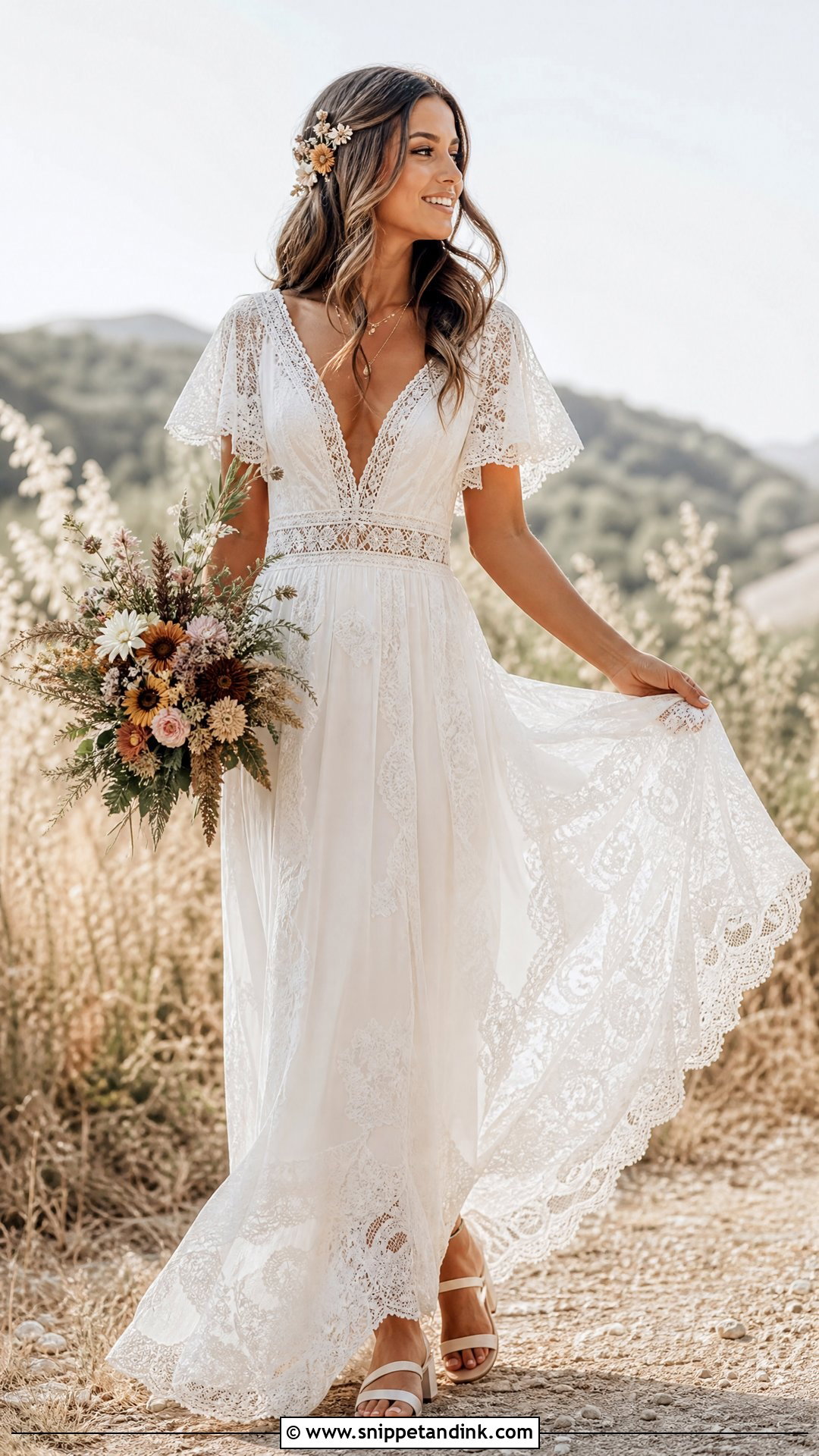
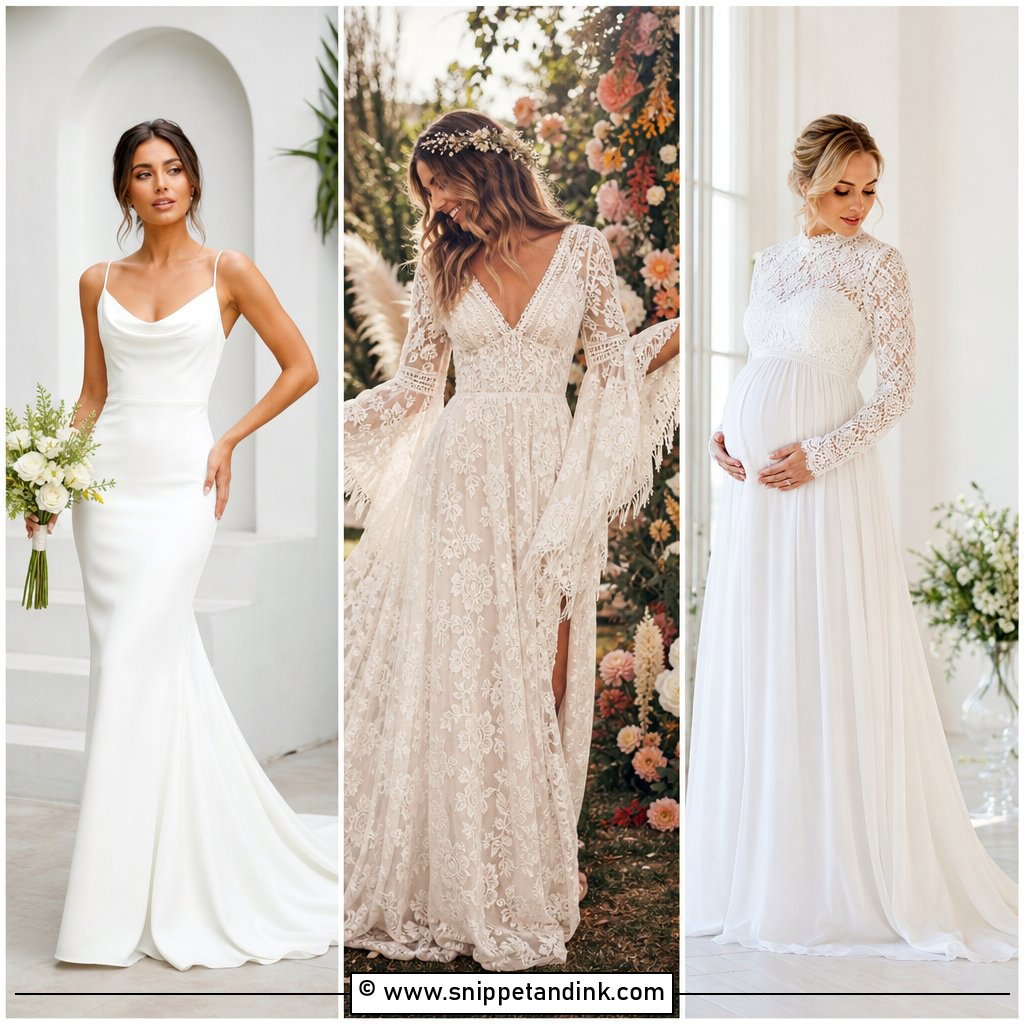
Movement is the whole point of boho, so stiff fabric works against it. Soft lace, flutter sleeves, flowing skirts and light embroidery are the language here. An ivory lace A-line with block-heel sandals, loose waves and a wildflower bouquet is the full look, with a fingertip veil or floral pins if you want a more bridal touch. It fits outdoor venues, deserts, beaches and barns, and a sheer sleeve, scalloped hem or open back keeps it personal. Plan for the ground. A long lace hem in a field picks up seeds and grass, so a bustle helps after the ceremony.
8. Beach Wedding Dress
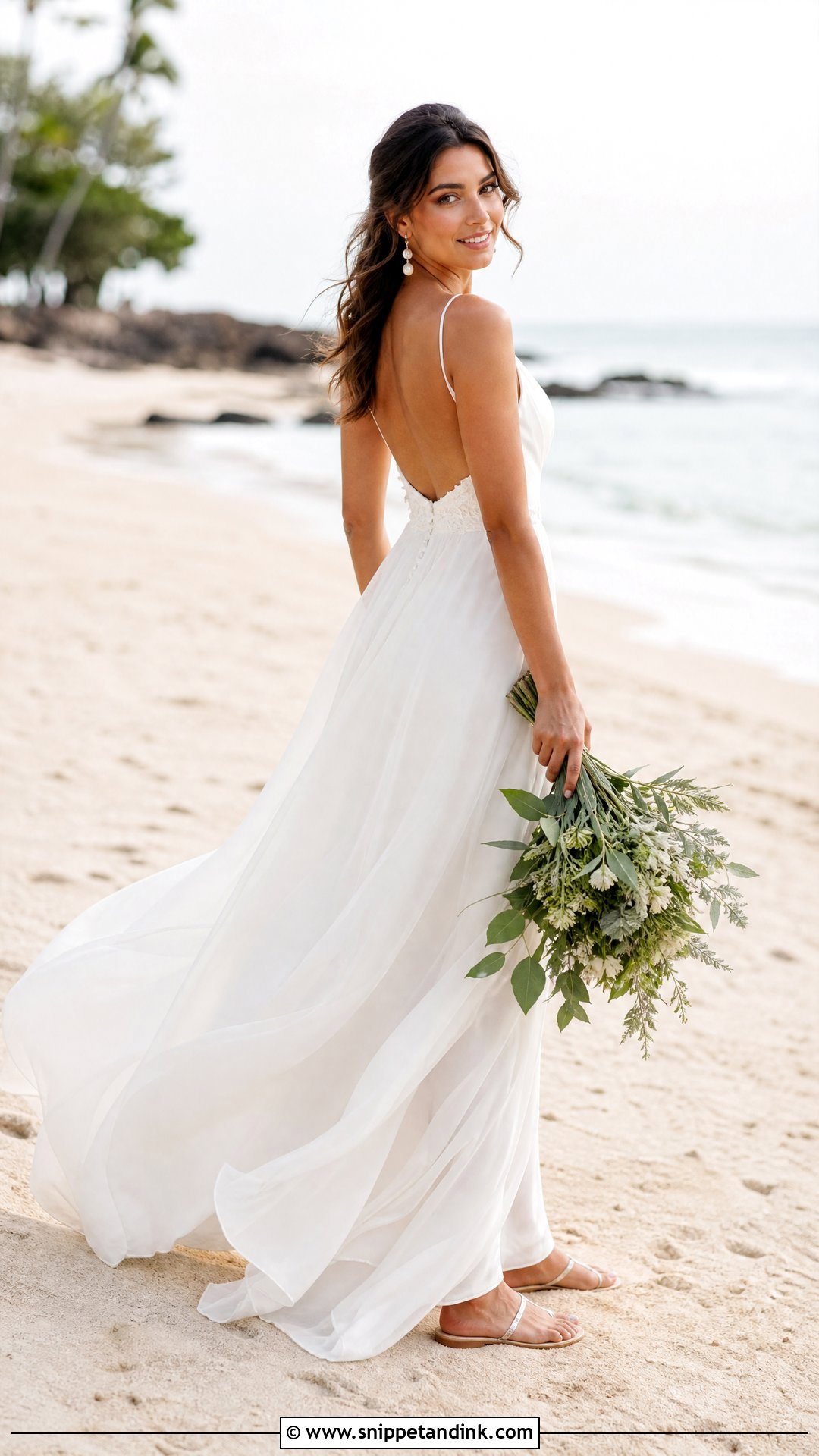
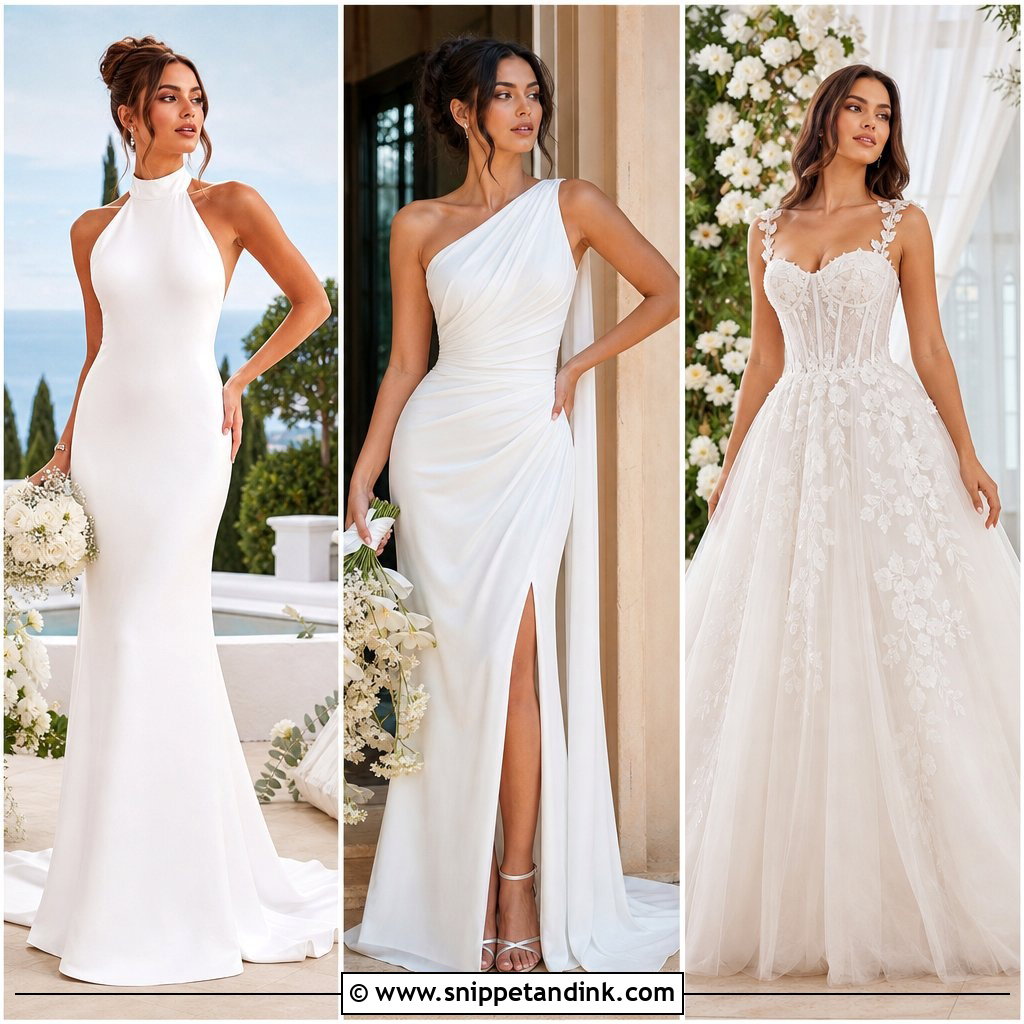
On sand, heavy trains drag and stiff fabrics fight the wind. Chiffon, crepe and soft tulle are what I’d pick, in a flowing sheath or A-line with thin straps, a low back and a simple skirt. Flat sandals, pearl drops and a loose bouquet with greenery suit the setting. Long veils turn into sails on a breezy shore, so a short veil, scarf or floral comb is easier. Keep the hem just off the ground for an uneven walk to the water.
9. Courthouse Wedding Dress
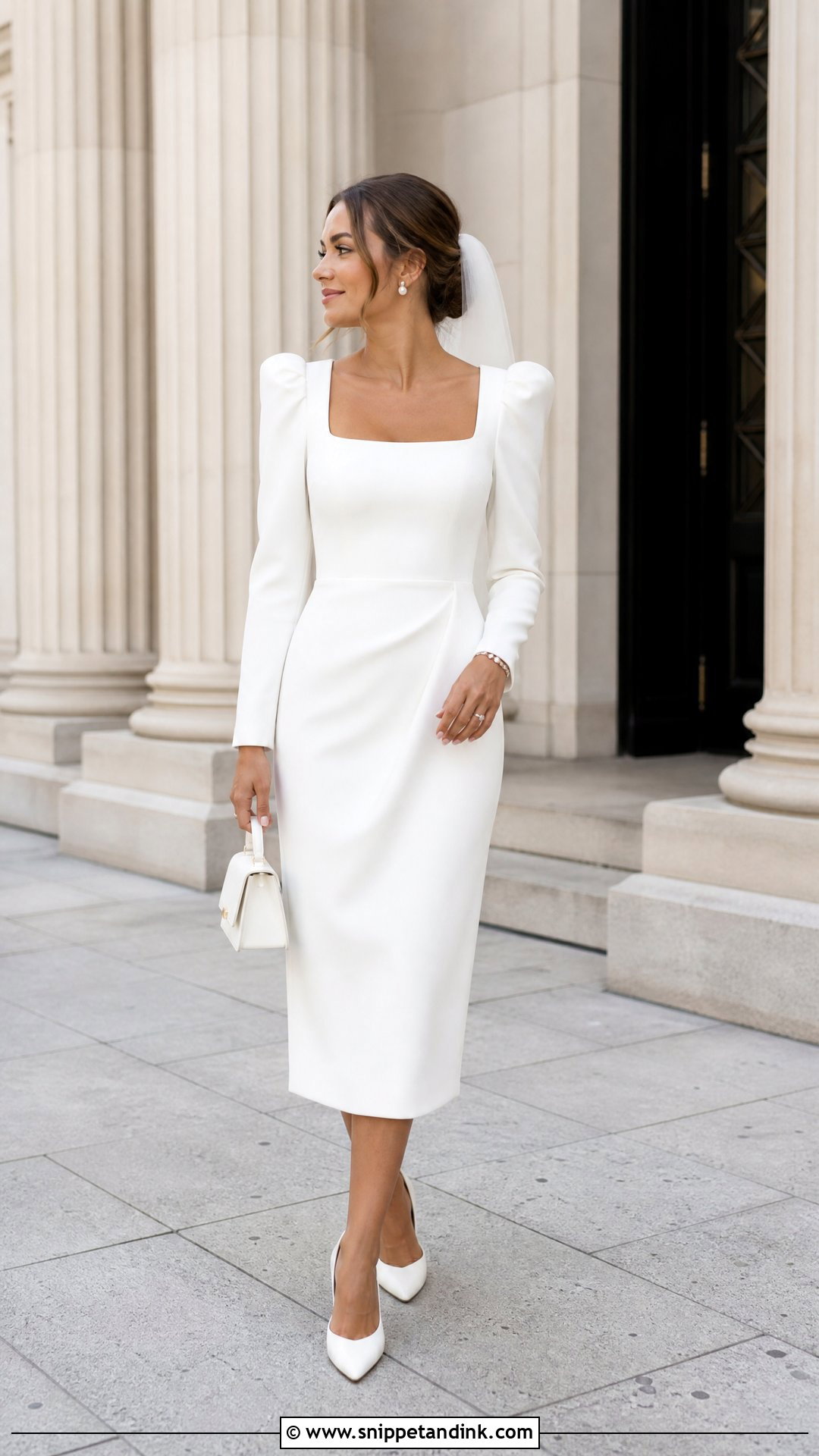
Courthouse weddings involve more walking than people plan for: security lines, stairs, photos on the street, lunch after. A white midi with a tailored bodice, clean neckline and comfortable heels makes a polished civil ceremony outfit, finished with a small veil, structured mini bag and pearl earrings. For something more fashion-led, try a blazer dress or a satin slip midi with a short cape. Whatever you choose, sit in it before you buy it, because you’ll spend time seated in waiting areas and at the meal afterward.
10. Short Wedding Dress
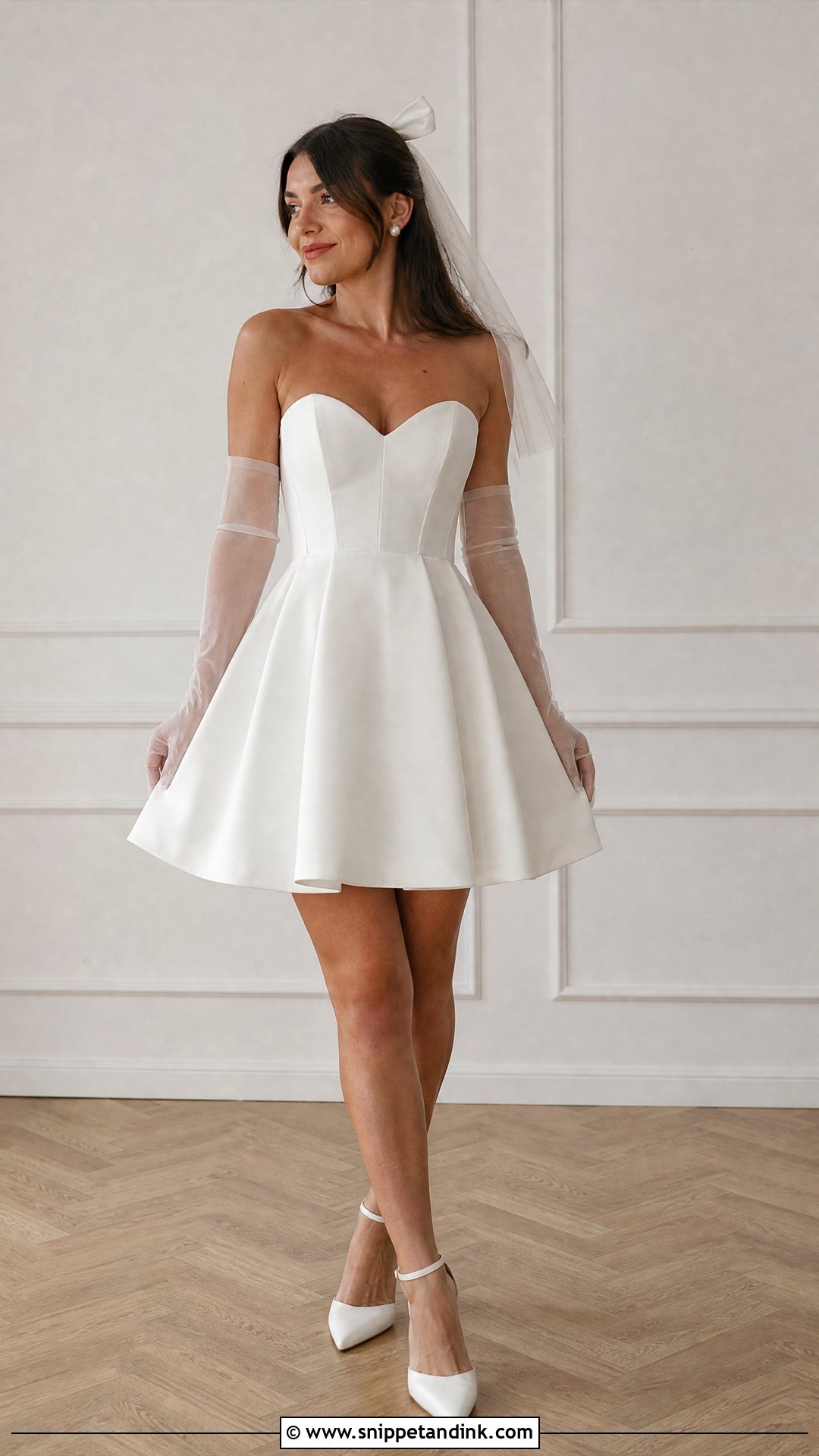
Short dresses suit second looks, receptions, courthouses and hot summer days. A structured mini with a fitted bodice, flared skirt and satin heels reads bridal without being traditional, and sheer gloves, pearls and a bow veil add charm. For more coverage, a knee-length dress with long sleeves feels modest. Your shoes are fully on show, so pick them deliberately, embellished pumps or white platforms. Keep the accessories bridal, otherwise a short white dress can look like any party outfit.
11. Long Sleeve Wedding Dress
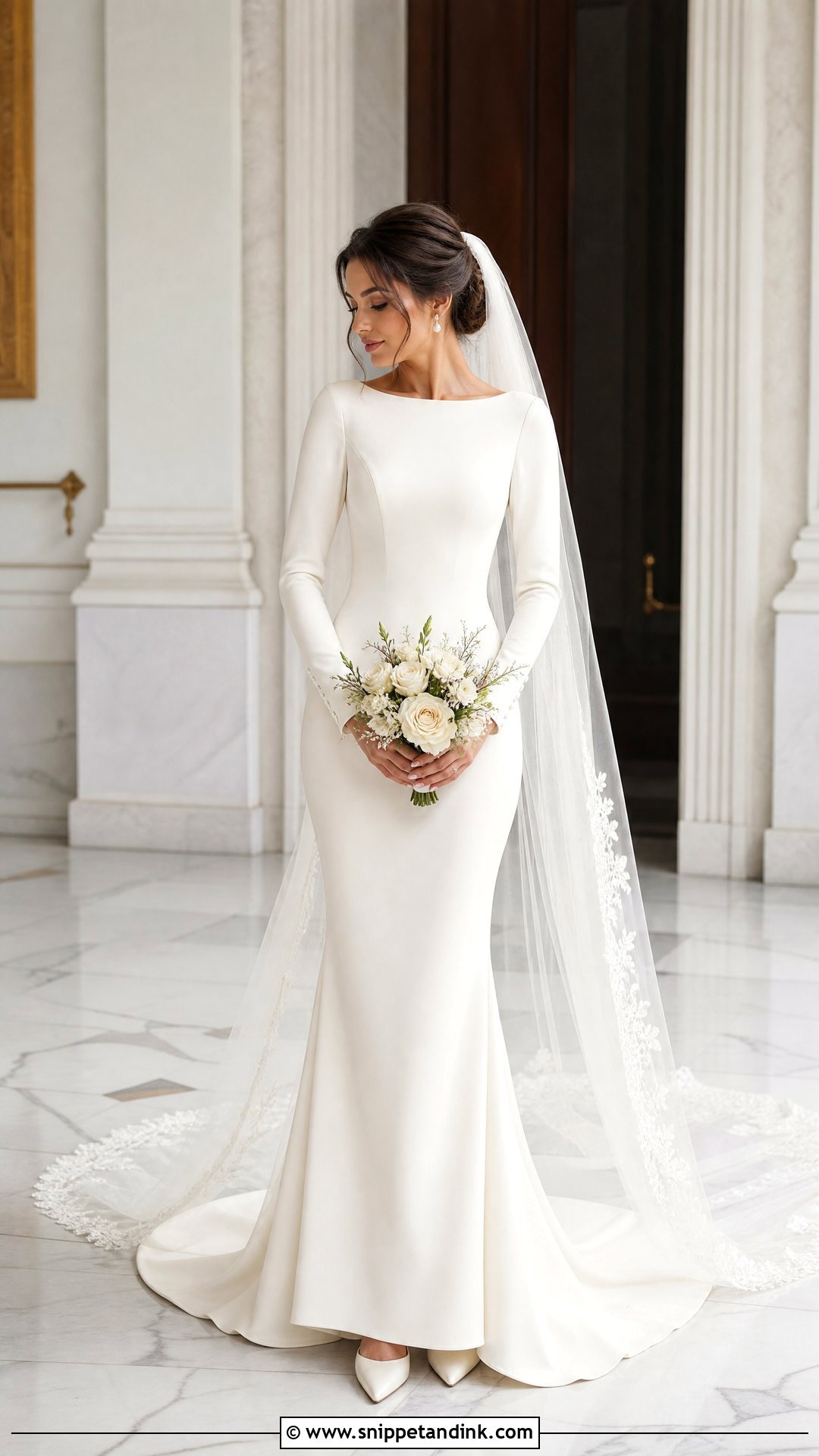
Long sleeves frame the upper body and suit fall, winter, formal venues and anyone wanting a modest feel. Lace sleeves look romantic; crepe or satin look clean. Try a fitted gown with a high neck, low bun, pearl earrings and closed-toe heels, and skip the necklace if the sleeves are busy. Sheer sleeves with appliqué or tiny wrist buttons are softer. Raise your arms at the fitting, since a tight sleeve stops you hugging, and remember that wrist buttons need a helper, so build that into your dressing time.
12. Strapless Wedding Dress
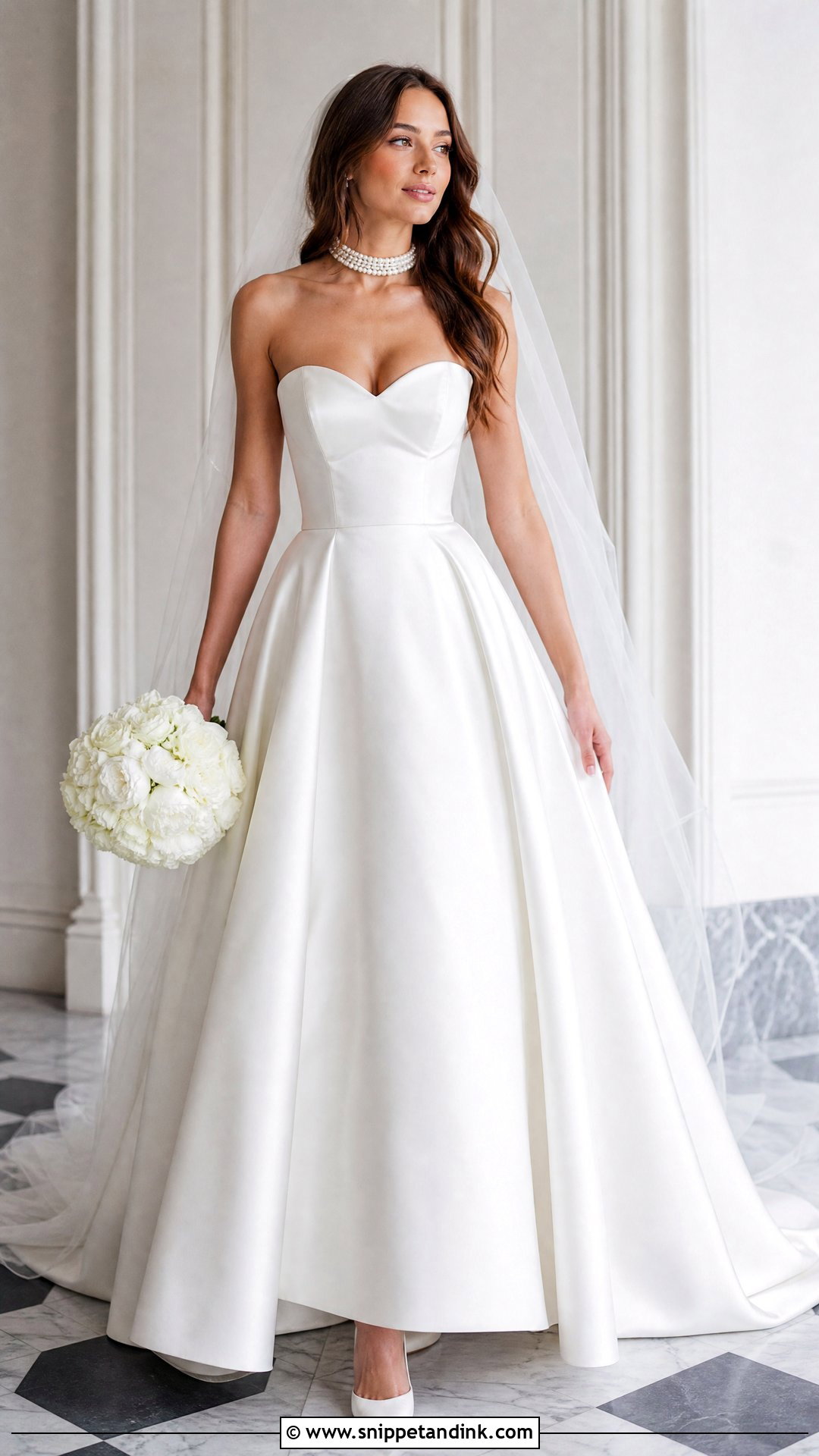
Strapless shows off the shoulders and collarbone, but it only works if the internal structure holds the dress without you hitching it up all night. Boning, a firm bodice and a waist stay are what I check. A satin A-line with pointed pumps, a pearl choker and long veil is classic; a lace gown with a sweetheart neckline and tulle skirt is softer. With so much skin on show, earrings and hair matter more: soft waves, a polished bun or a veil set low at the back. Fitted properly, it works anywhere from a ballroom to a garden.
13. Off Shoulder Wedding Dress
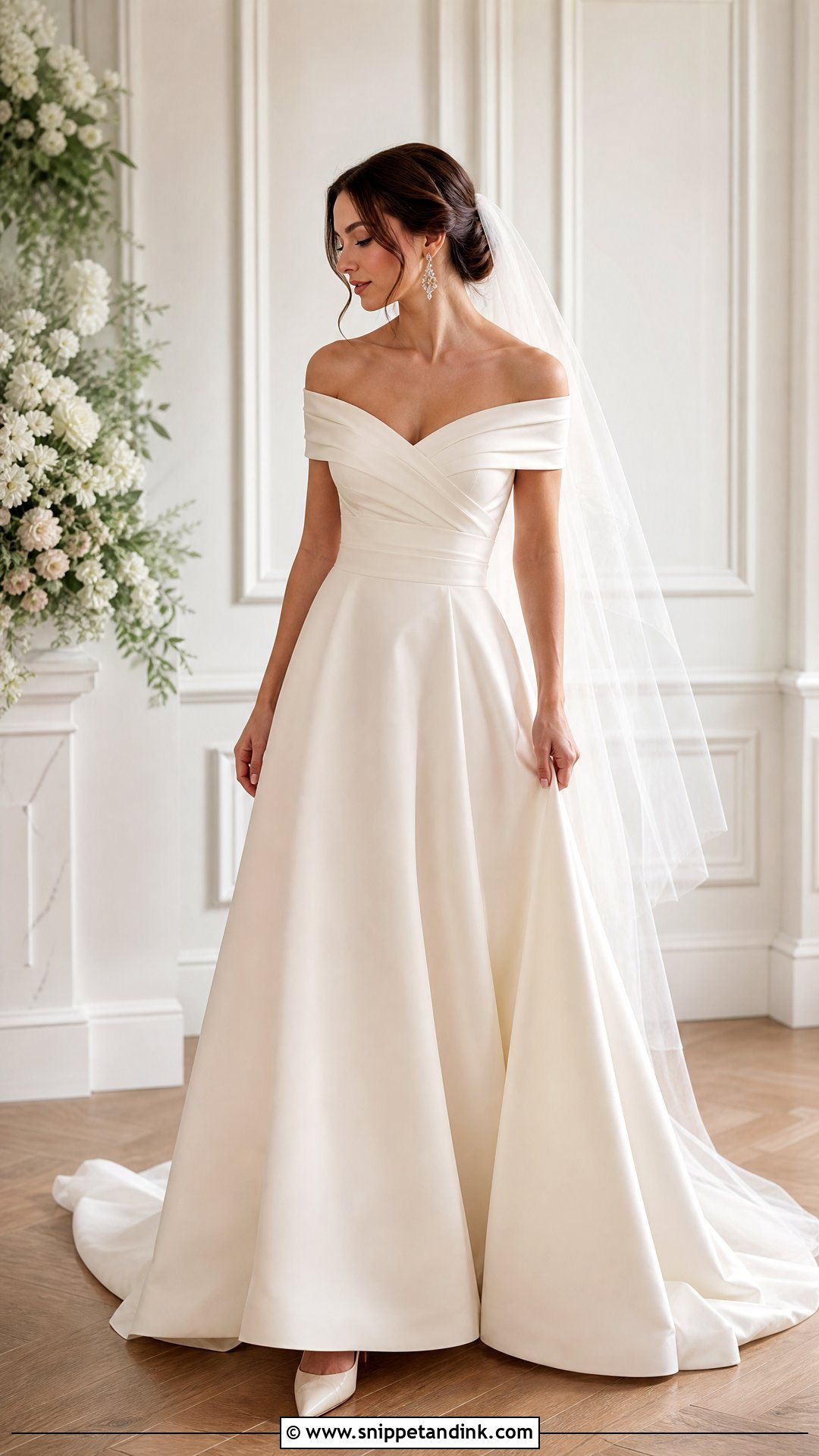
Off-shoulder bands frame the neckline while keeping a little coverage on the arms. Lace, satin, tulle and crepe all work, and a fitted bodice over an A-line suits many shapes. Drop earrings, a low bun, pointed heels and a medium veil finish it; leave heavy necklaces out, as they crowd the neck. Folded satin bands look modern, sheer lace sleeves softer. Test your reach at the fitting, because arms usually can’t rise far above shoulder height in this neckline.
14. Corset Wedding Dress
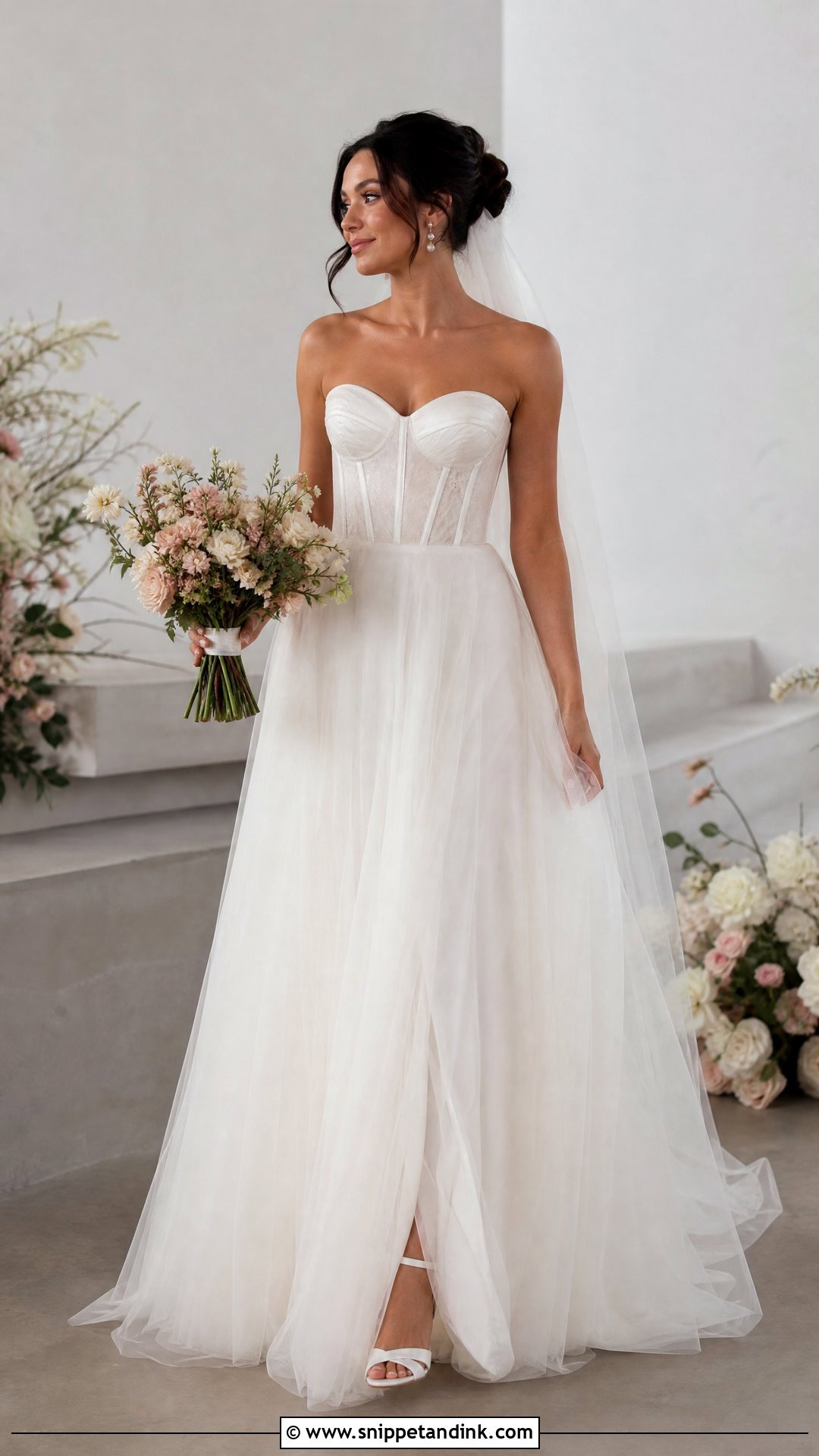
A corset adds structure and waist definition, and it reads classic or fashion-forward depending on the fabric. Over a soft tulle A-line it’s romantic; in crepe it’s sleek. Satin heels, small earrings and a simple veil keep attention on the bodice. Boning should support without digging in, so sit and breathe deeply in it before you decide. A lace-up back can be adjusted on the day, while an internal corset gives a smoother outside. Lacing takes time, though, so have someone practice it well before the morning.
15. Square Neck Wedding Dress
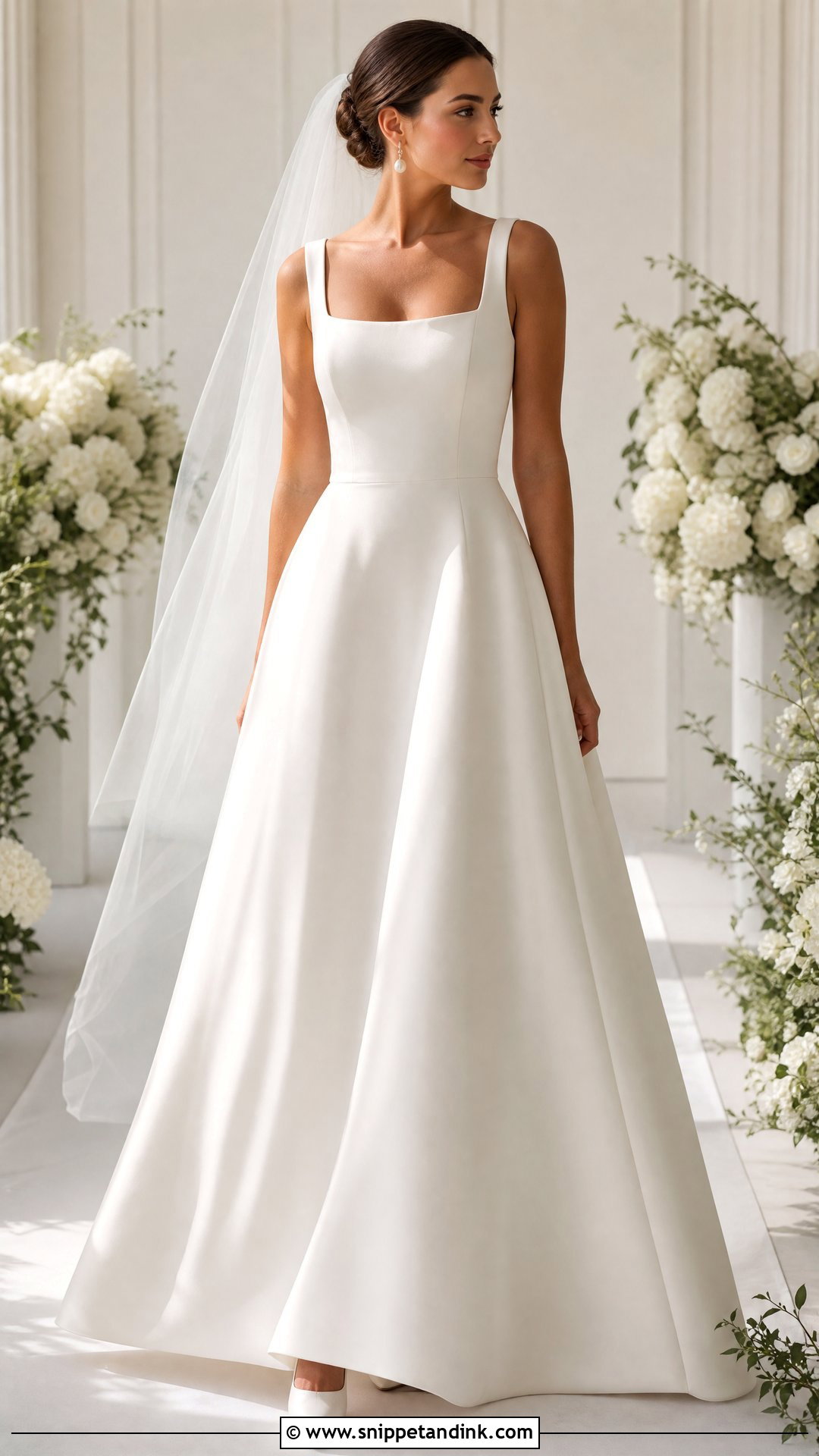
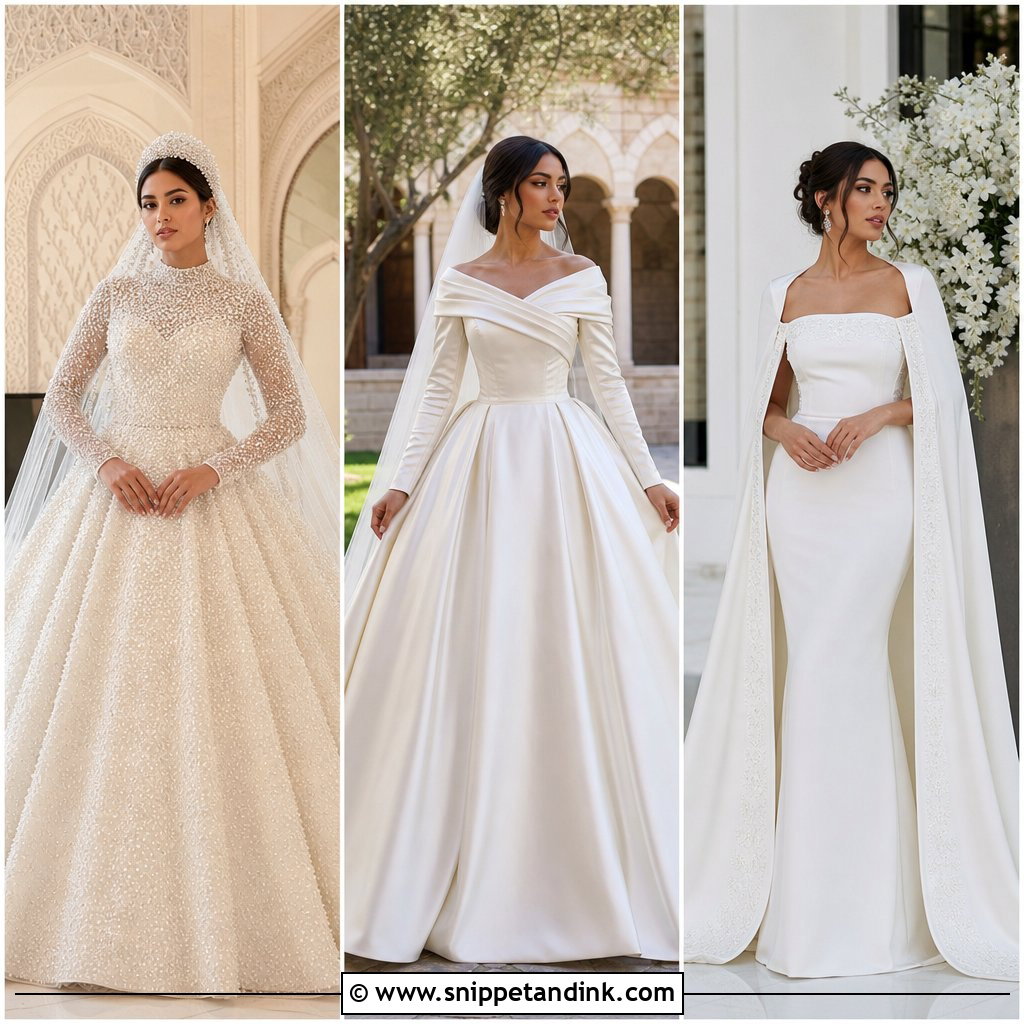
The square neck opens the chest without feeling revealing and frames jewelry neatly. It works with straps, sleeves or a fitted bodice. A satin A-line with pearl earrings, a sleek bun and white pumps is the classic option; crepe with a flowing skirt and sheer veil is softer. A short necklace or small pendant can sit inside the neckline, but nothing bulky. Check the corners at your fitting, since they’re the first spot to gape on a straight neckline.
16. High Neck Wedding Dress
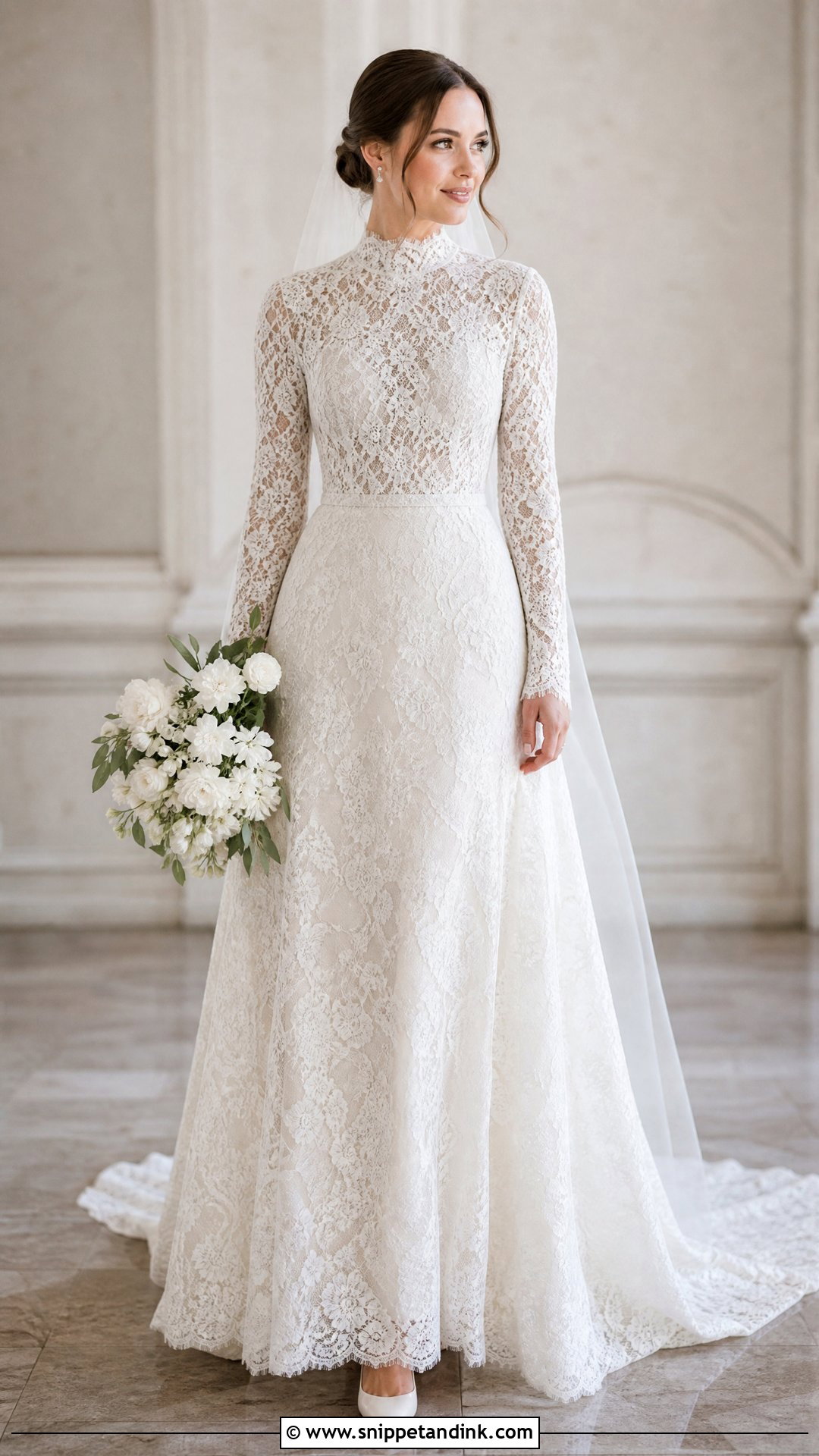
Coverage without fuss. A high neck in lace, crepe or satin, with long sleeves, a fitted waist and a flowing skirt, makes one long line from chin to hem. Small earrings, a smooth updo and closed-toe heels are all it wants, so put the attention on hair, veil and bouquet. Lace looks vintage; plain crepe looks modern. It’s a natural pick for formal venues and cool seasons. A collar that’s slightly snug at the fitting will feel tighter in a warm room, so make sure you can swallow and turn your head easily.
17. V Neck Wedding Dress
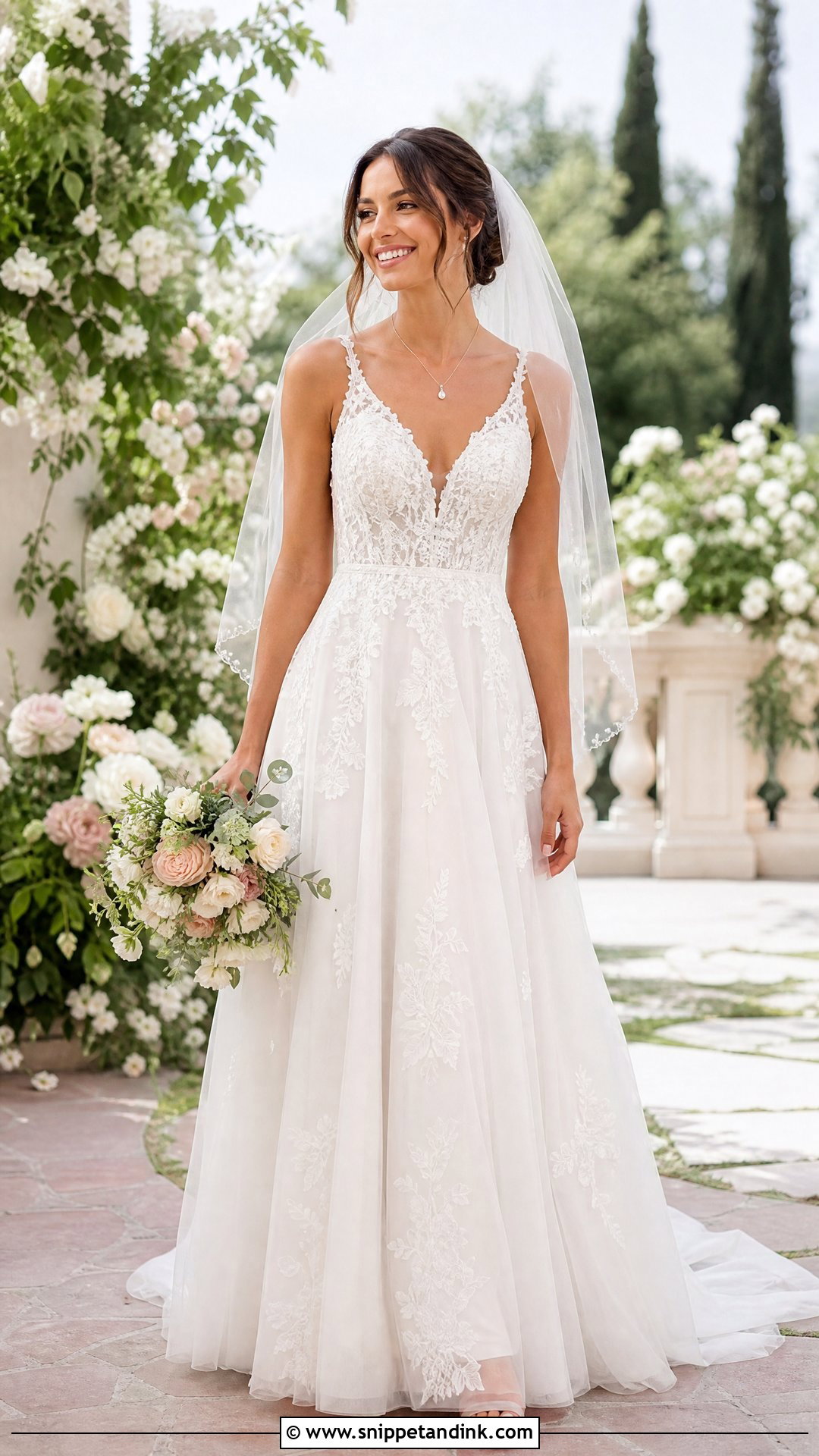
A V lengthens the upper body, and you get to set its depth. A V-neck A-line with lace straps, tulle skirt, block heels and a fingertip veil is romantic and easy to wear; a crepe V sheath with minimal jewelry and a long veil is sleeker. A delicate pendant suits the open neckline. Lean forward and hug someone at the fitting. If the neckline shifts, structured cups, illusion mesh or wider straps will steady it.
18. Sheath Wedding Dress
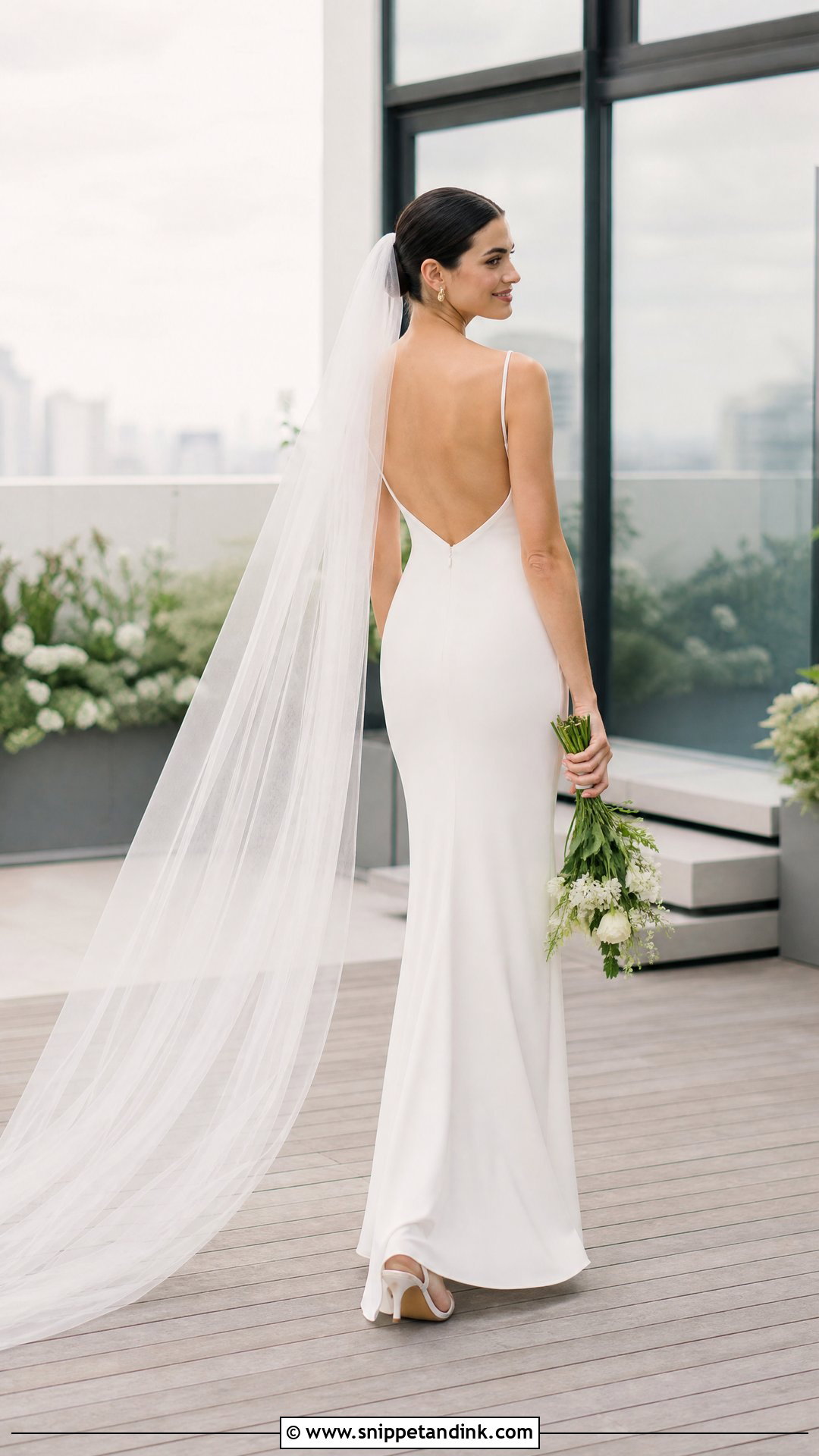
No flare, no bulk, just a soft straight line following the body. A crepe sheath with thin straps, a low back, slingbacks and a simple veil looks modern; lace leans romantic, satin sleek. It suits beaches, rooftops, courthouses and small ceremonies. Because it’s narrow, the fit has to skim rather than pull, and underwear lines show easily, so check it in good light. A slim bouquet and delicate earrings keep it clean.
19. Tea Length Wedding Dress
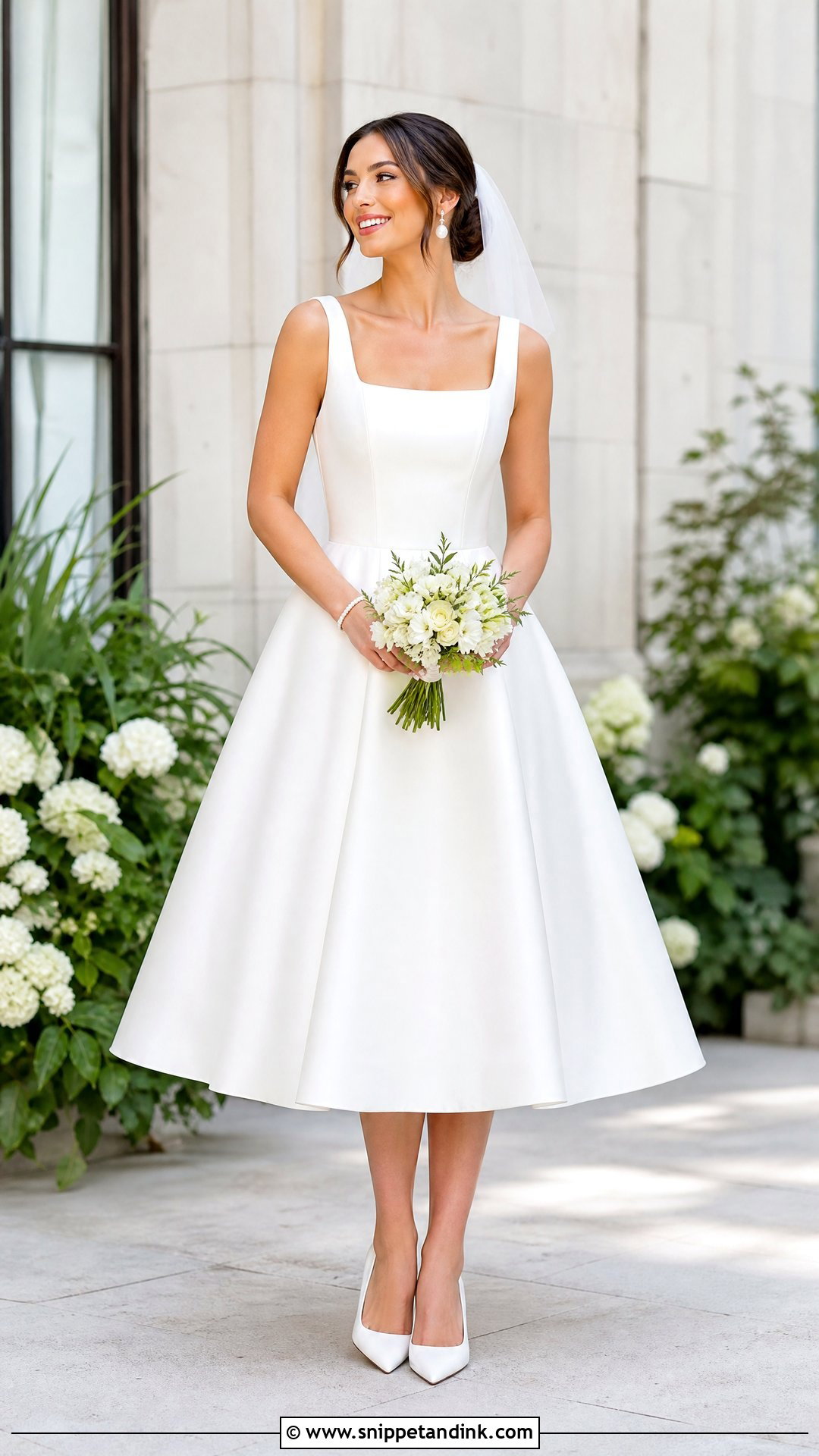
Tea length falls between knee and ankle, which makes it easy to dance in and gives it a vintage note that modern styling can update. A fitted bodice, full skirt, pointed heels and pearl earrings is the classic version, and a short veil, bow headband or satin gloves add personality. The shoes are fully visible, so choose them early and bring them to the hem fitting. It suits courthouses, gardens and daytime celebrations, and it spares you managing a train.
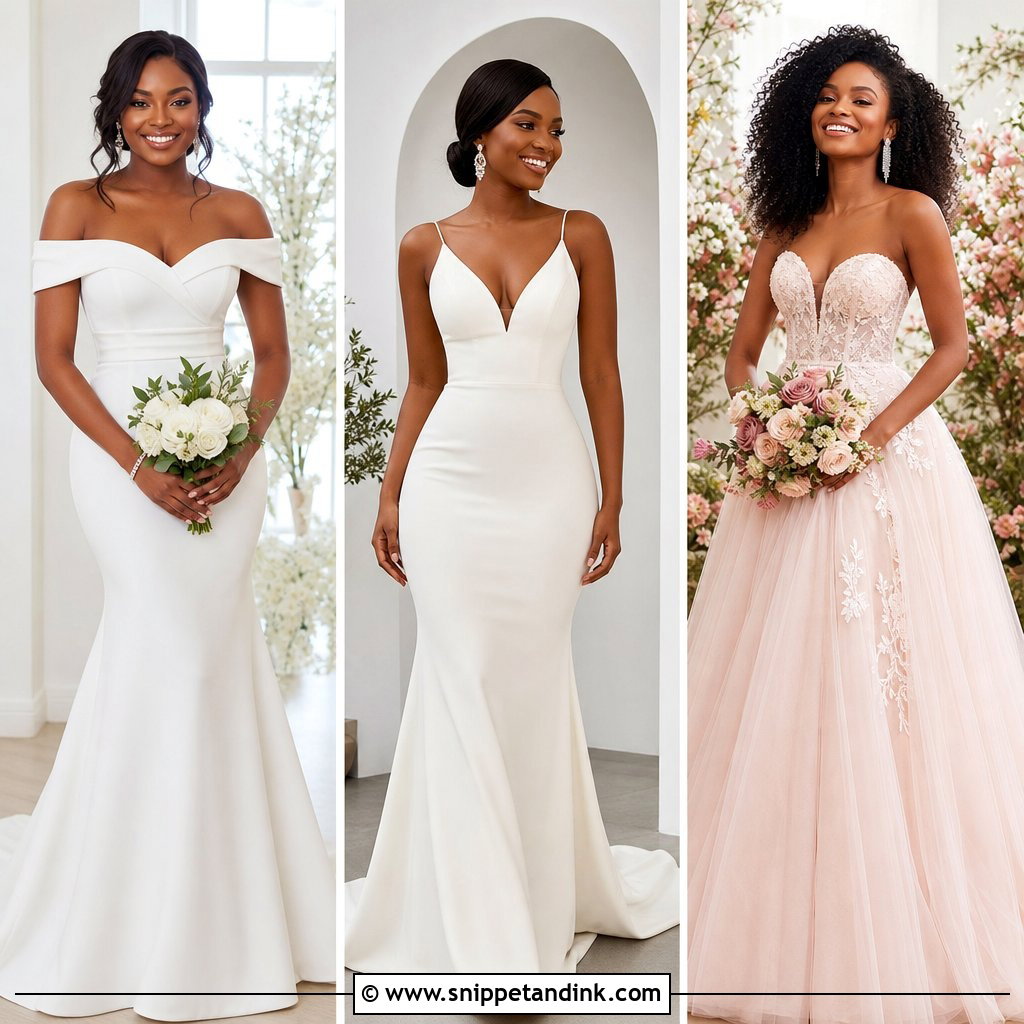
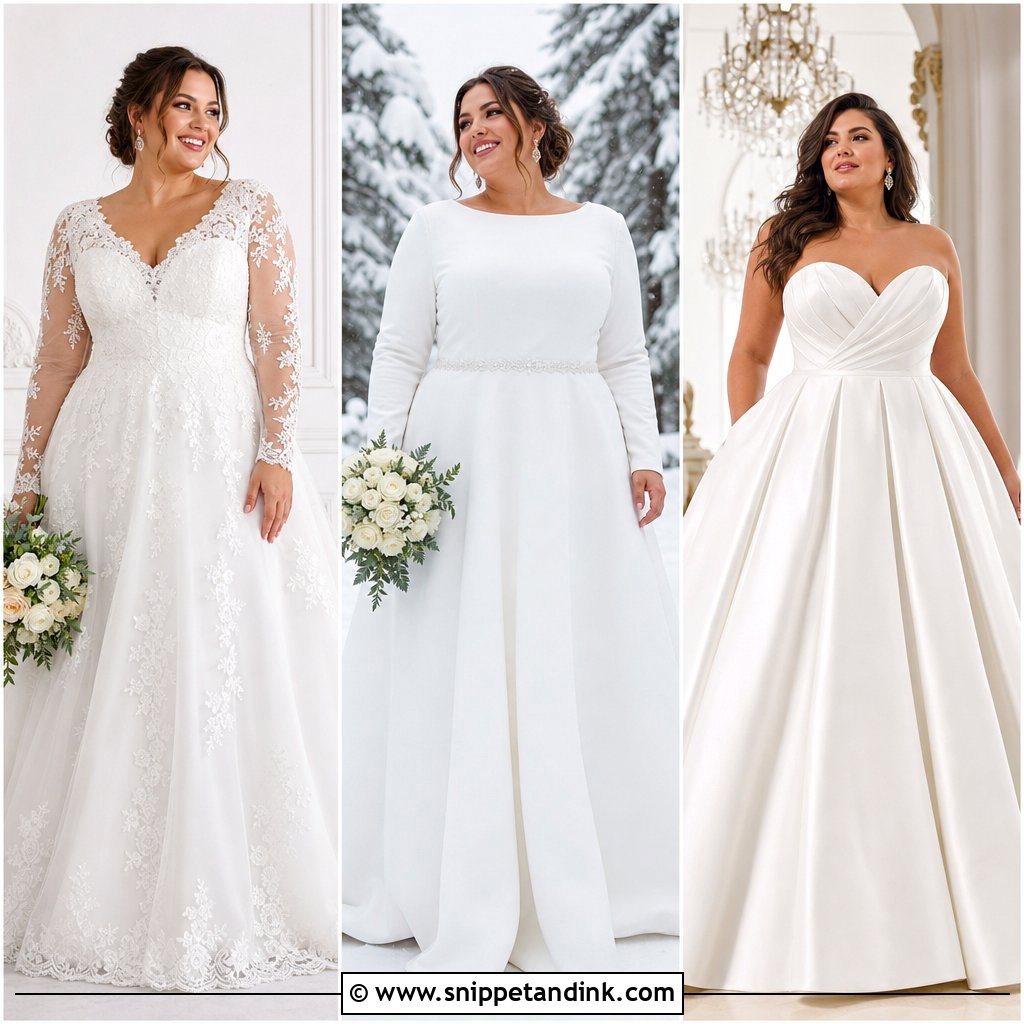
20. Plus Size Wedding Dress
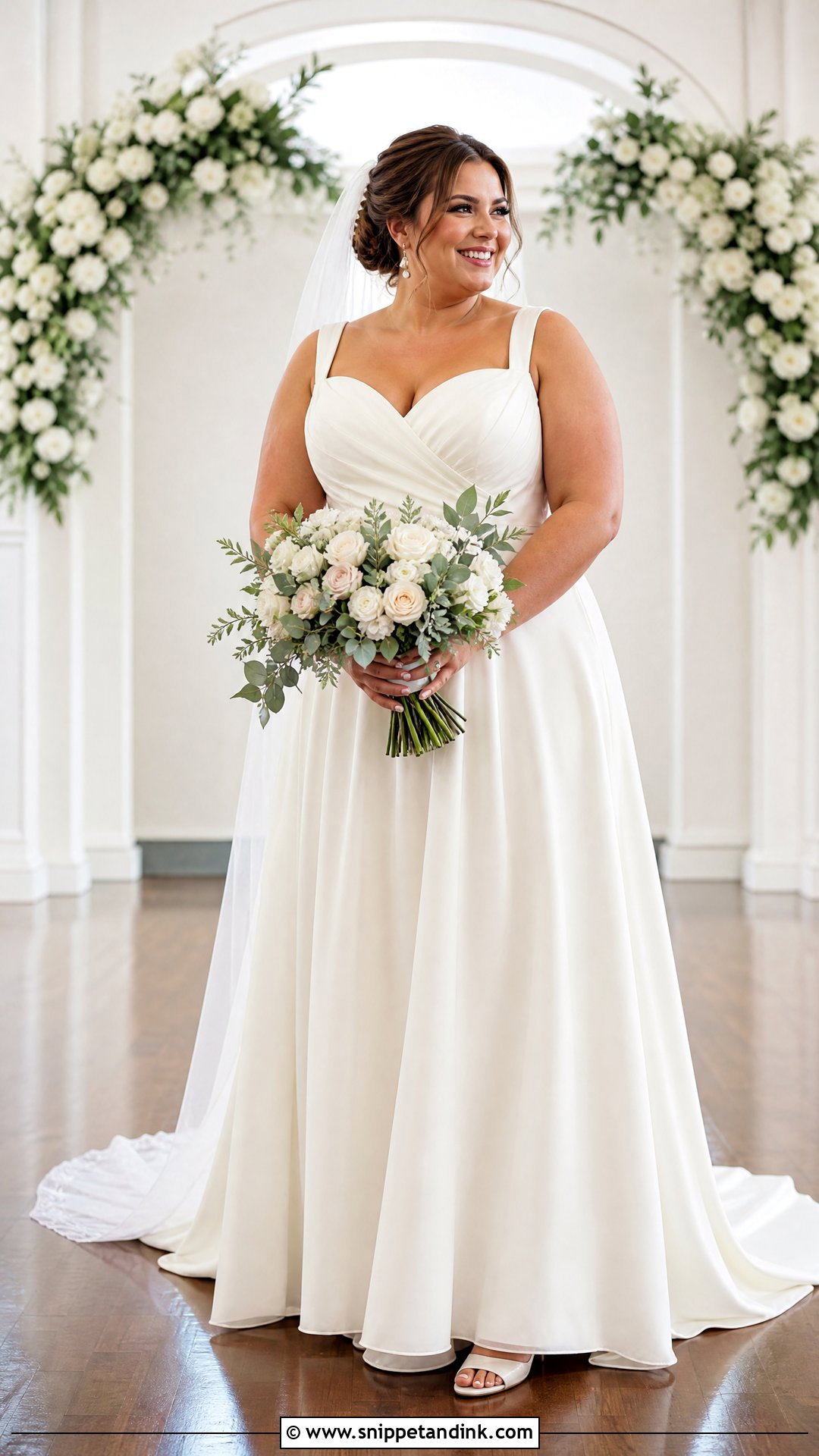
Construction comes first. Strong seams, quality lining and a well-built bodice let a plus size gown support you all day without constant adjusting. An A-line with a structured bodice, soft skirt and supportive straps is the reliable choice, but mermaid, ball gown and sheath shapes can look great too. Bridal size charts run small, so ignore the number on the label and judge the fit. Try gowns on in person where you can, since a dress ordered online without a fitting is harder to put right. Comfortable heels, a secure veil and jewelry that suits the neckline finish it.
21. Maternity Wedding Dress
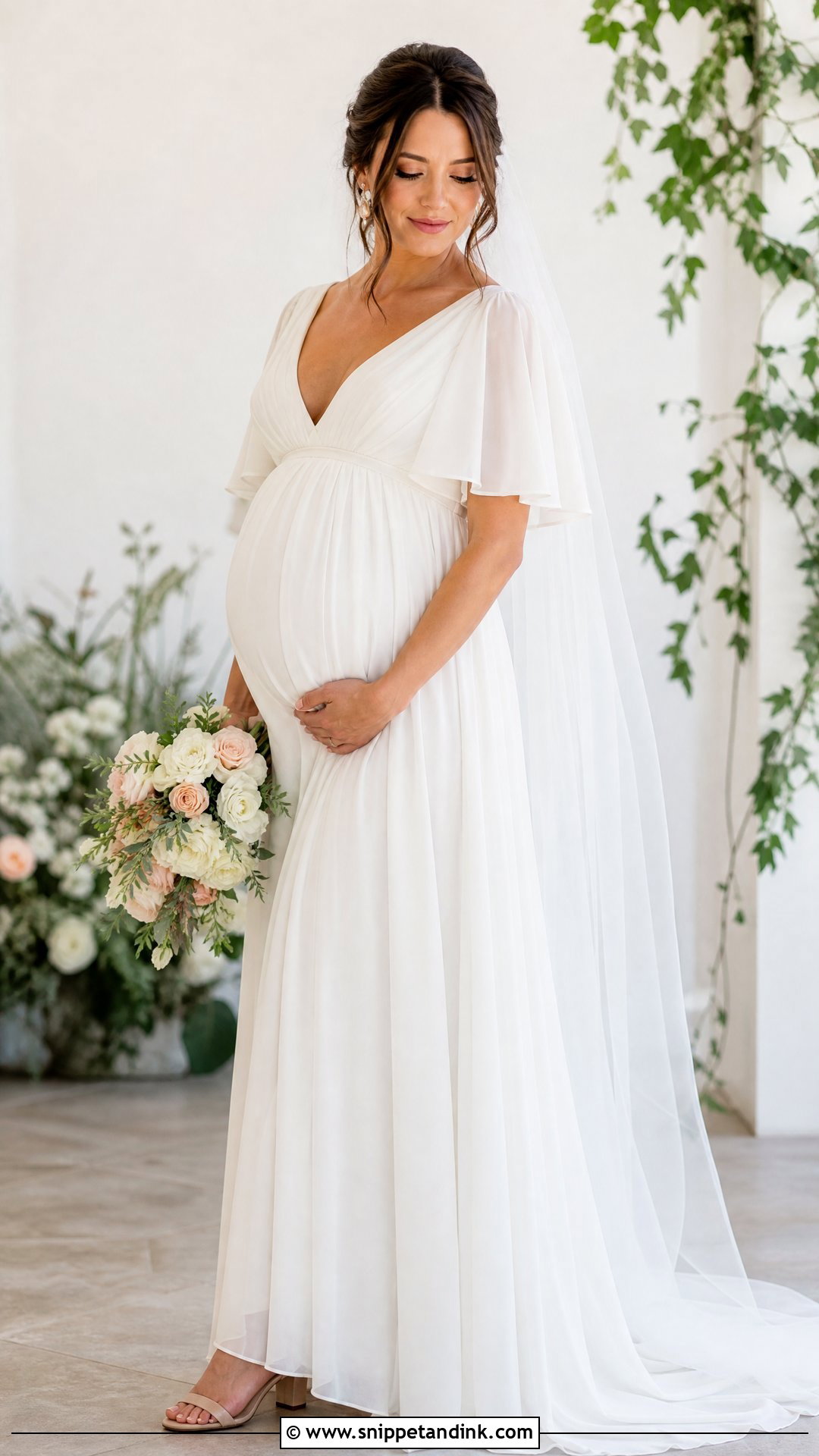
Plan the fit around your due date, not the date you shop. A maternity wedding dress needs room at the waist, and empire lines are popular for good reason: the seam sits under the bust and the skirt falls over the bump. Chiffon, soft tulle and stretch crepe are comfortable. A V neck, flutter sleeve or wrap bodice leaves room to breathe, while stiff waistbands and corsetry are best avoided. Bodies change quickly in pregnancy, so schedule the final fitting as close to the wedding as your seamstress allows. Low block heels, small earrings, a light veil and natural hair finish it.
22. Modest Wedding Dress
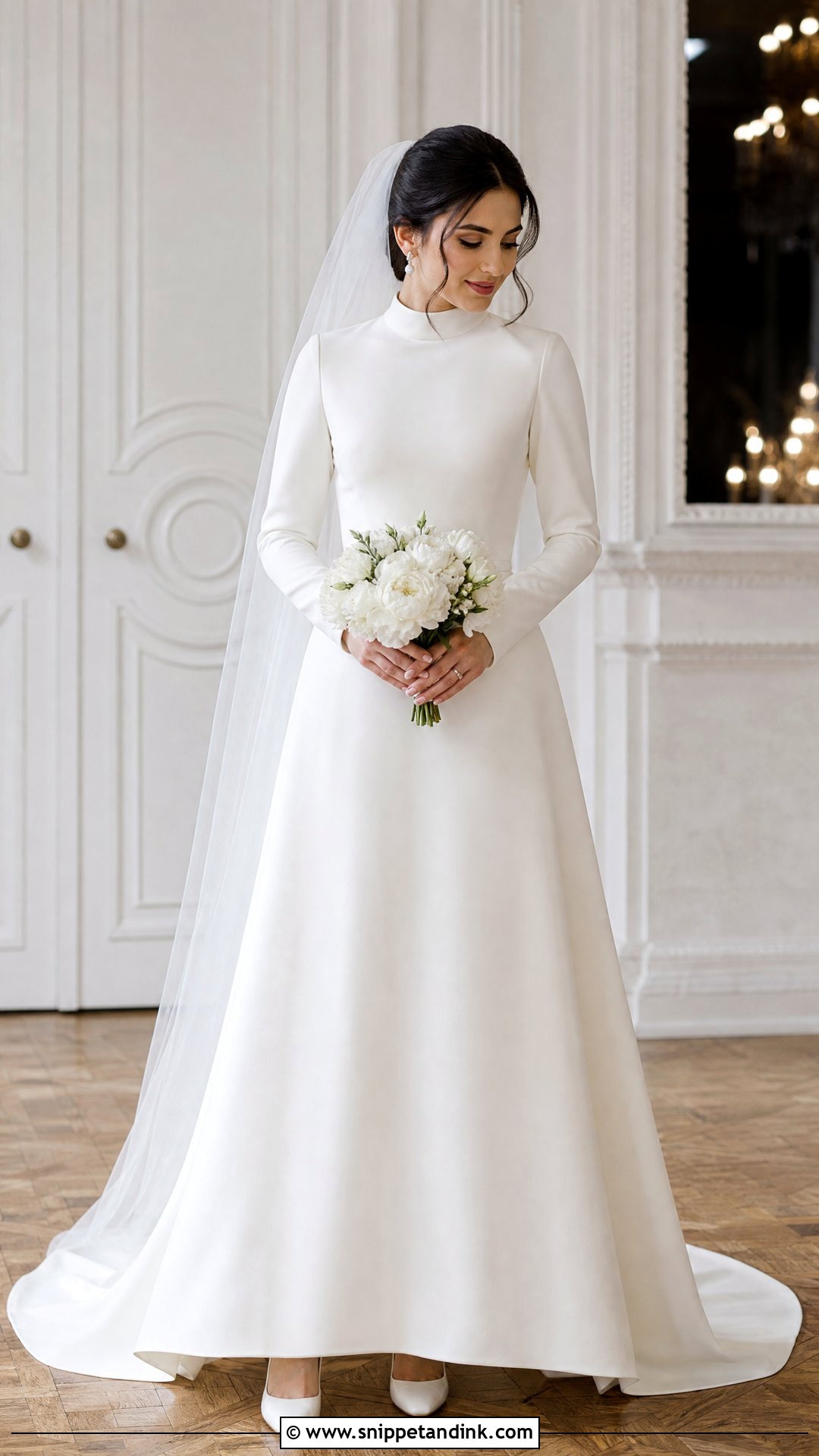
Higher necklines, longer sleeves, fuller skirts and covered backs can still look sharp. A long-sleeve crepe gown with a high neck, A-line skirt, closed-toe heels and pearls is refined, and lace overlays, satin buttons and soft veils add detail without showing skin. Sheer sleeves can be lined wherever you want coverage, and a seamstress can add lining or panels to most gowns that are almost right. Embroidery, sharp tailoring or a long train keep modest from feeling plain.
23. Floral Wedding Dress
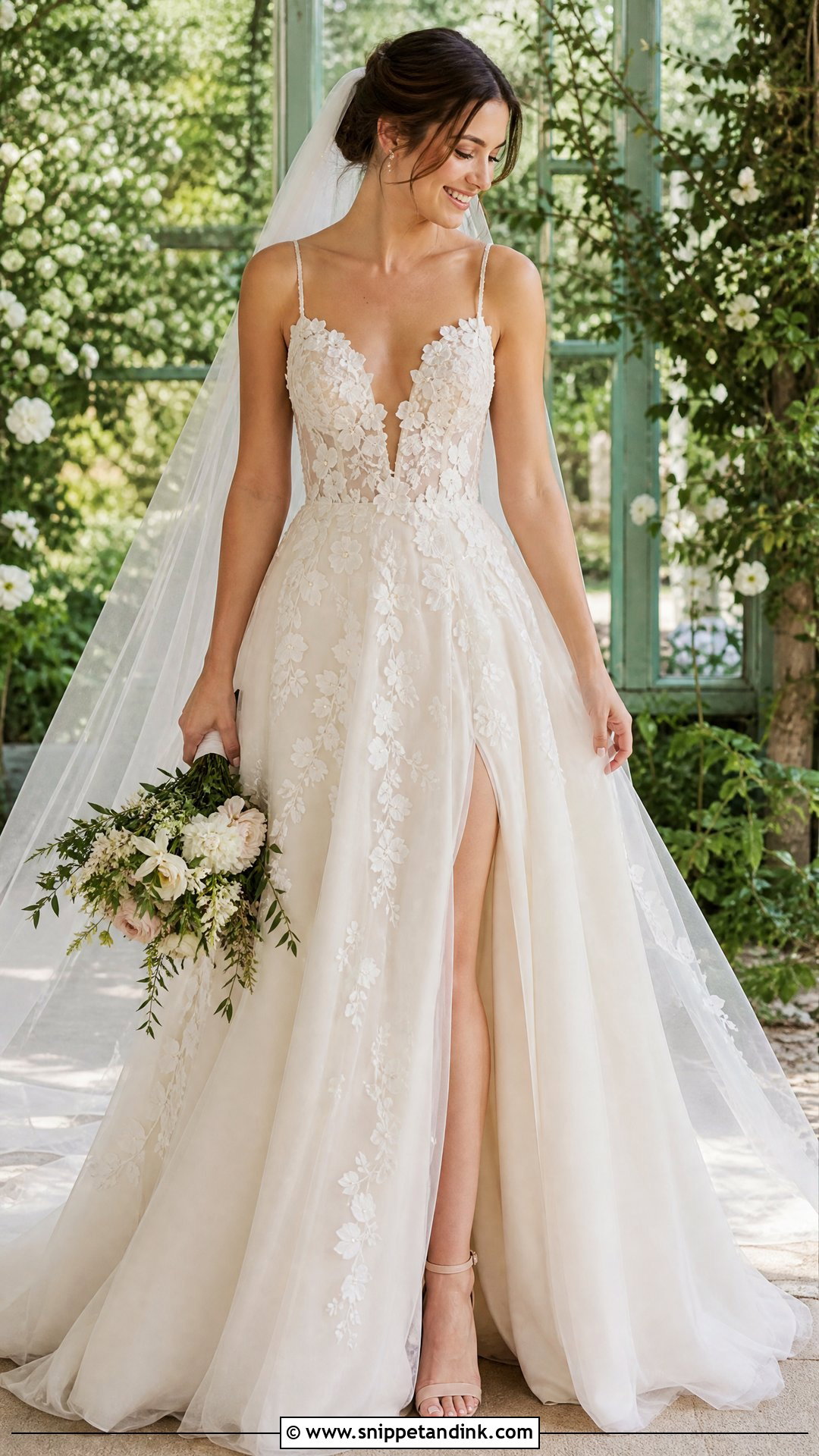
Flowers on the dress itself can be embroidered, appliquéd, printed or built up in 3D fabric. An ivory gown with soft appliqué, a flowing skirt, nude heels and a sheer veil feels made for a garden, while pastel or tone-on-tone embroidery is the more modern take. With that much going on, keep the rest simple: small earrings, soft waves and a natural bouquet. Ask about care before you buy. 3D petals flatten if the gown is packed tightly, so it needs to travel hanging or in a roomy box.
24. Beaded Wedding Dress
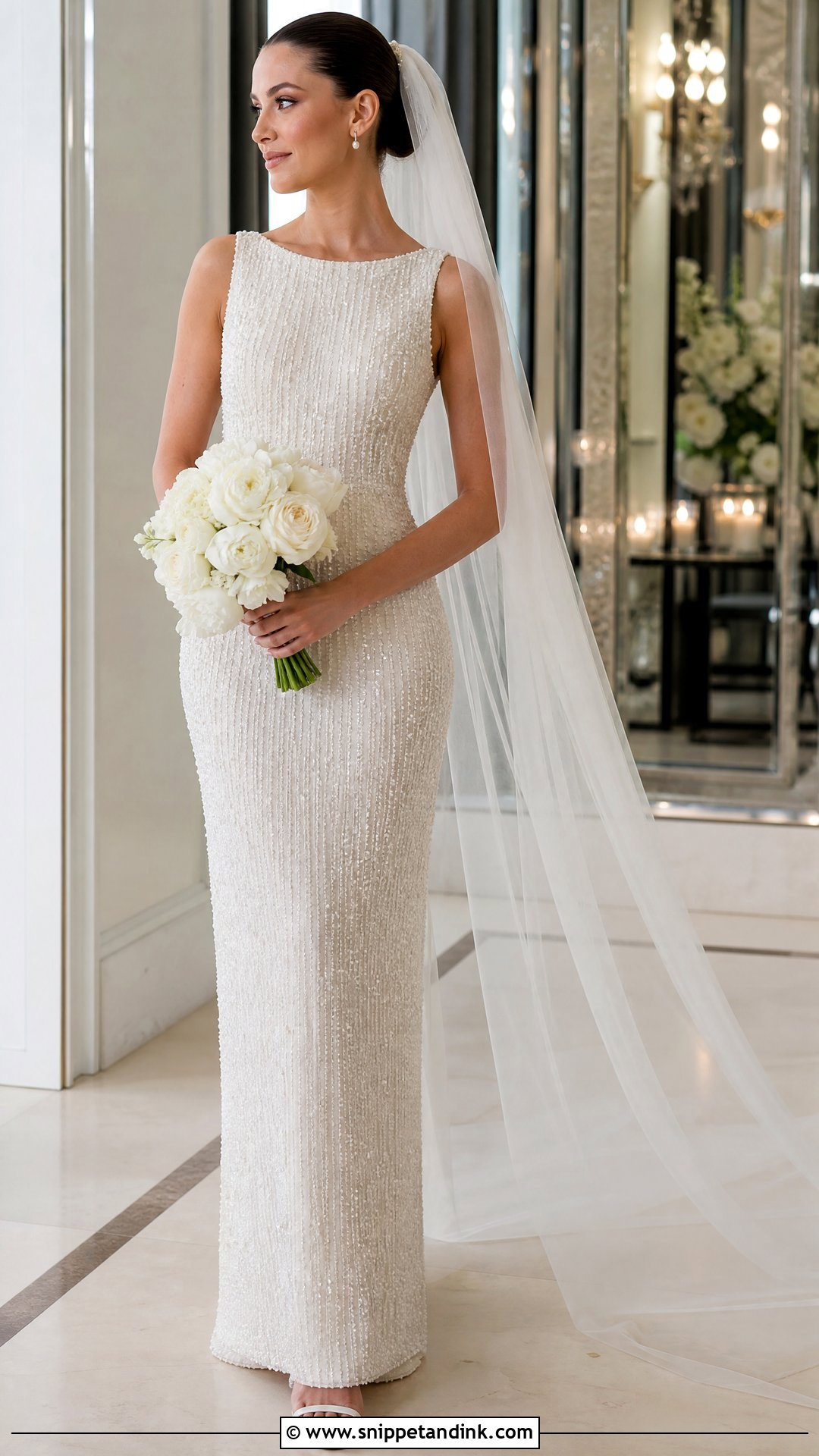
Beading shimmers, and it’s at its best at evening weddings and formal venues where the light moves. A beaded sheath or A-line with soft lining, simple heels and minimal jewelry is enough, since anything oversized fights the dress. A smooth veil, small clutch and clean hairstyle keep it refined. Lift it off the rail before you fall for it. Heavily beaded gowns can be surprisingly heavy, and that weight sits on your shoulders for hours. Beading can trace curves, make pattern or add a vintage note.

25. Reception Wedding Dress
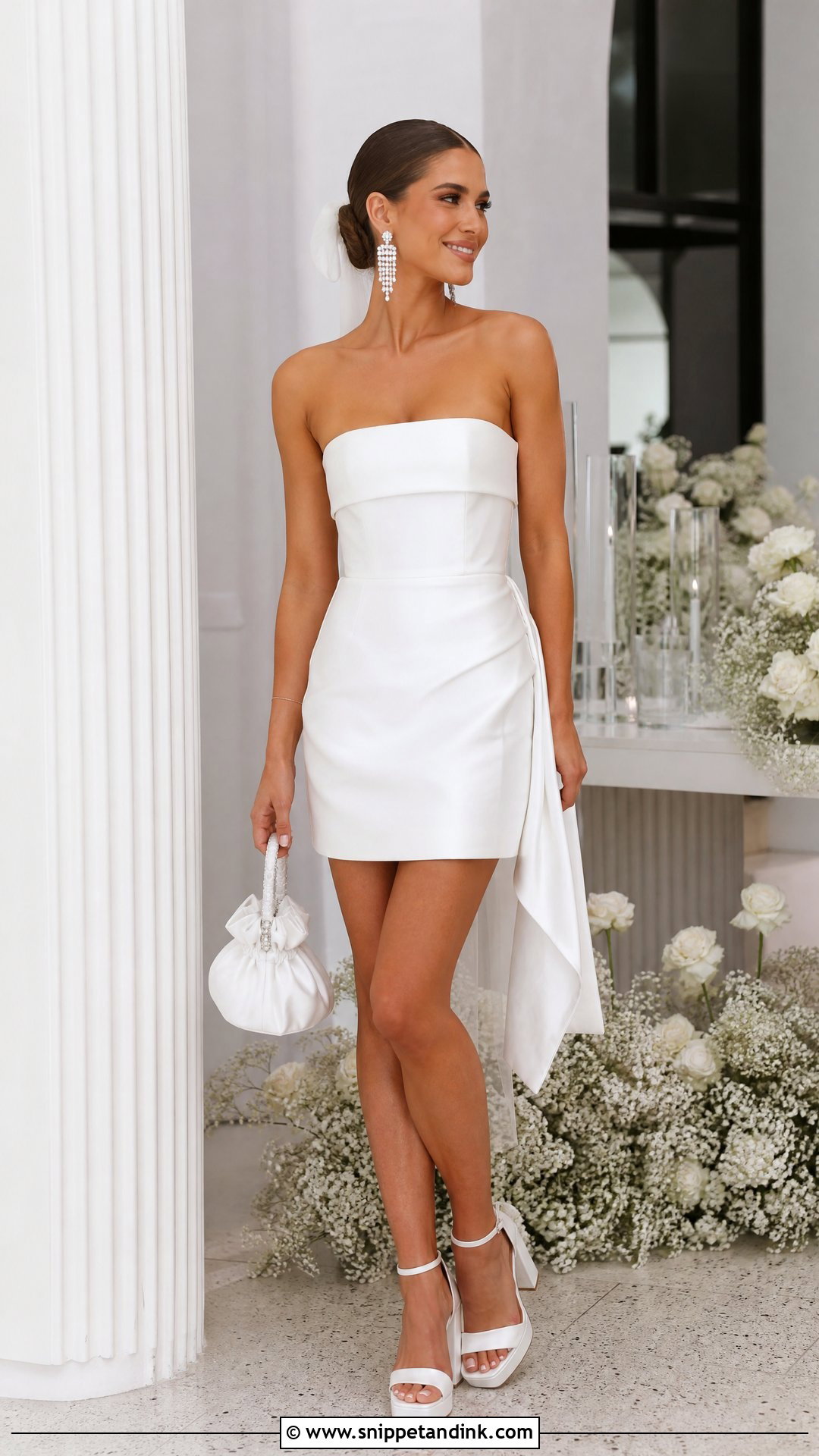
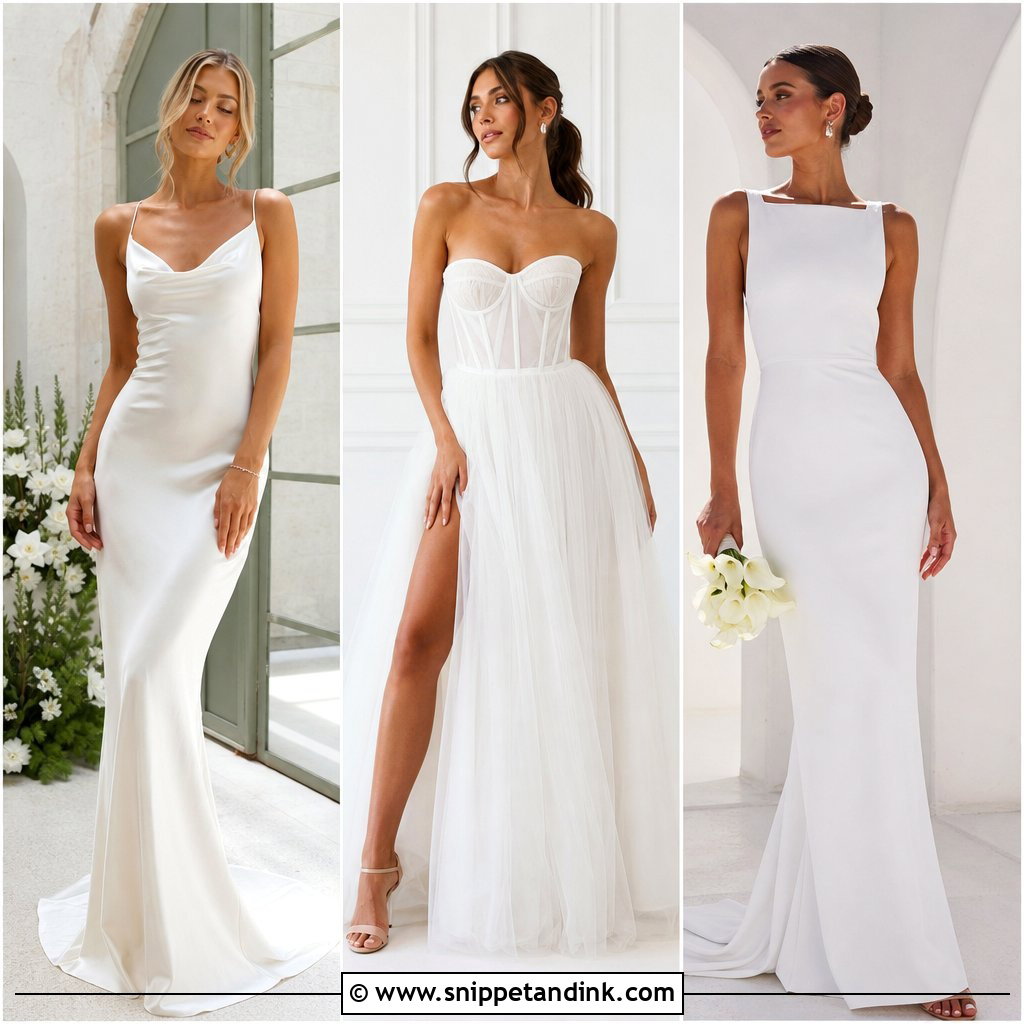
A reception dress lets you dance without a train. Popular choices are a short dress, sleek midi, feather-trimmed mini or simple satin slip. A white mini with block heels, statement earrings and a small bag feels fun yet polished, and a tea-length or fitted crepe midi gives more coverage. Link it to the ceremony look through the same pearls, shoes or hairstyle. Plan the change itself, too. Unbustling, unbuttoning and redressing usually takes longer than people expect, so bring a helper and give it its own slot in the timeline.
Order Dates, Delivery Times and Rush Fees
Most bridal gowns are made to order after you buy them, and delivery commonly takes several months, often somewhere between four and eight depending on the designer, before alterations even begin. That’s why I suggest shopping roughly nine to twelve months ahead where you can. If time is short, off-the-rack gowns, sample sales and ready-to-wear bridal lines can be ready in weeks. Rush orders exist too, but they usually cost extra and not every designer offers them.
Champagne Stains, Tissue Paper and Storing the Gown
Have the dress cleaned by a specialist within a few weeks of the wedding. Clear spills like champagne or soda can be invisible at first, but the sugar oxidizes into brown marks over time, and the longer they sit, the harder they are to lift.
For storage, use a breathable cotton garment bag, or an acid-free box with acid-free tissue in the folds. Avoid plastic dry-cleaning bags, which trap moisture, and keep the gown somewhere cool, dark and dry rather than in an attic or basement. Heavy or beaded gowns shouldn’t hang for years, since the weight stretches the shoulders; fold them loosely into a box instead.
A Dress Is Only Half the Outfit
The right gown fits your body, your venue, the season and the way you dress the rest of the year. Simple satin, romantic lace, a ball gown, modest sleeves or a reception mini can each be right for someone. Think about the full outfit as well: shoes, veil, jewelry, flowers and how long you’ll be on your feet. A good dress feels special and still lets you move naturally from the first photo to the last song.
You'll Like These Ideas:




Leave a Reply