
A Pakistani wedding can run for a week, and the guest dress code shifts with every function. The mehndi welcomes bright color and anything you can dance in, the barat is richer and more formal, and the walima usually softens into pastels. Lehengas, ghararas, shararas, sarees, long frocks, peplum sets and tailored formal suits all have a place. What decides the right one is the event, how close you are to the family, the venue, and how dressed-up the family expects its guests to be. Below are 25 outfits that work for guests, each with the details I’d check before wearing it.
New to Pakistani Weddings? Coverage and Comfort Come First
Plenty of guests at Pakistani weddings aren’t Pakistani themselves, and their outfit questions tend to be the same. This is what I tell first-timers.
- Coverage is the norm: shoulders covered, a neckline that isn’t low, and a shirt or skirt that falls well past the knee. A dupatta is expected, and at a nikkah, especially one held at a mosque or with religious elders present, keep it ready to drape over your head.
- You may sit on the floor. Mehndi and dholki functions often have floor cushions, so choose something you can sit cross-legged in.
- Shoes may come off. Some homes and prayer areas ask guests to remove footwear, so khussas or easy slip-ons save fuss at the door.
- Color carries meaning. Red usually belongs to the bride, and some older relatives associate plain white or all-black with mourning, so add embroidery or color if you wear either.
- Borrowing is common. If a Pakistani friend offers to lend you an outfit, it’s a warm gesture, not an imposition.
Renting or buying online works too, but leave time for alterations, because shalwar kameez and lehengas are cut differently from Western sizing and almost always need a nip at the shoulder or a hem adjustment.
1. Pakistani Lehenga Choli For Wedding
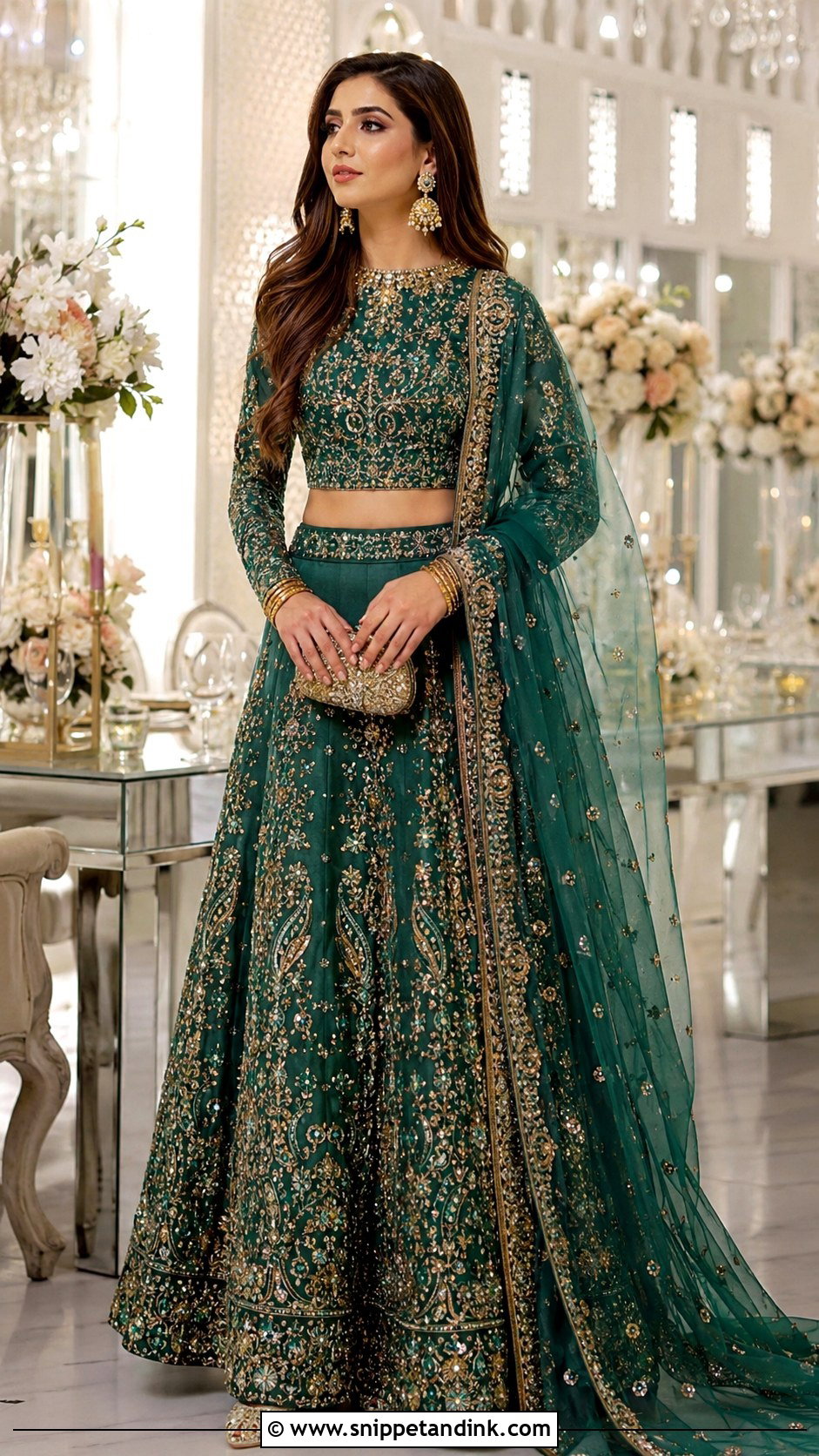
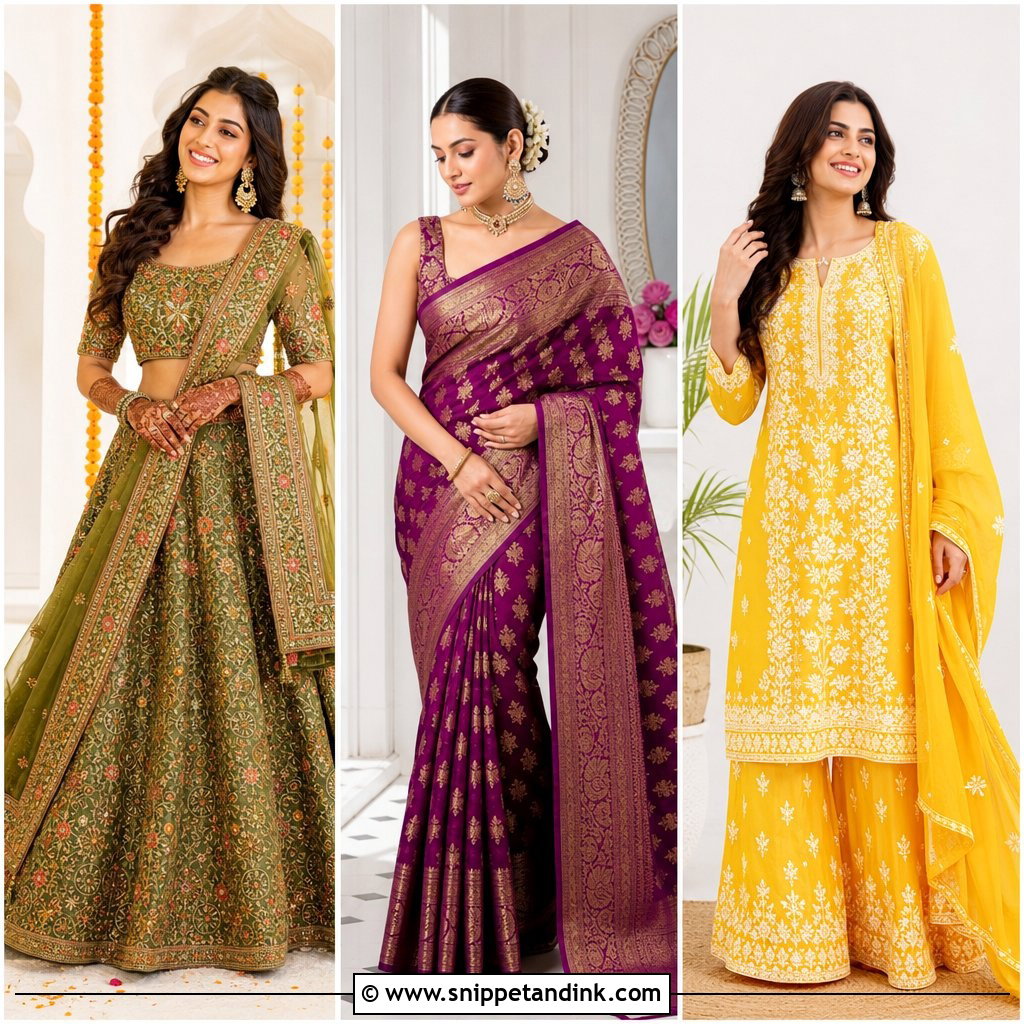
A Pakistani lehenga choli is festive and surprisingly simple to style once the three pieces are right. Choose a flared lehenga in silk, organza, chiffon or jamawar, with a fitted choli and matching dupatta. As a guest, keep the embroidery to soft gold, sequins, threadwork or gota so it doesn’t read as bridal. Emerald, rust, navy, plum and deep pink carry an evening event; yellow, orange or green suit a mehndi. The choli fit is what I’d pay a tailor for. The back should sit flat when you raise your arms, without gapping at the hooks. Jhumkas, bangles, a small clutch and block heels or embellished sandals finish it, and pin the dupatta if you plan to dance.
2. Pakistani Gharara Suit For Wedding
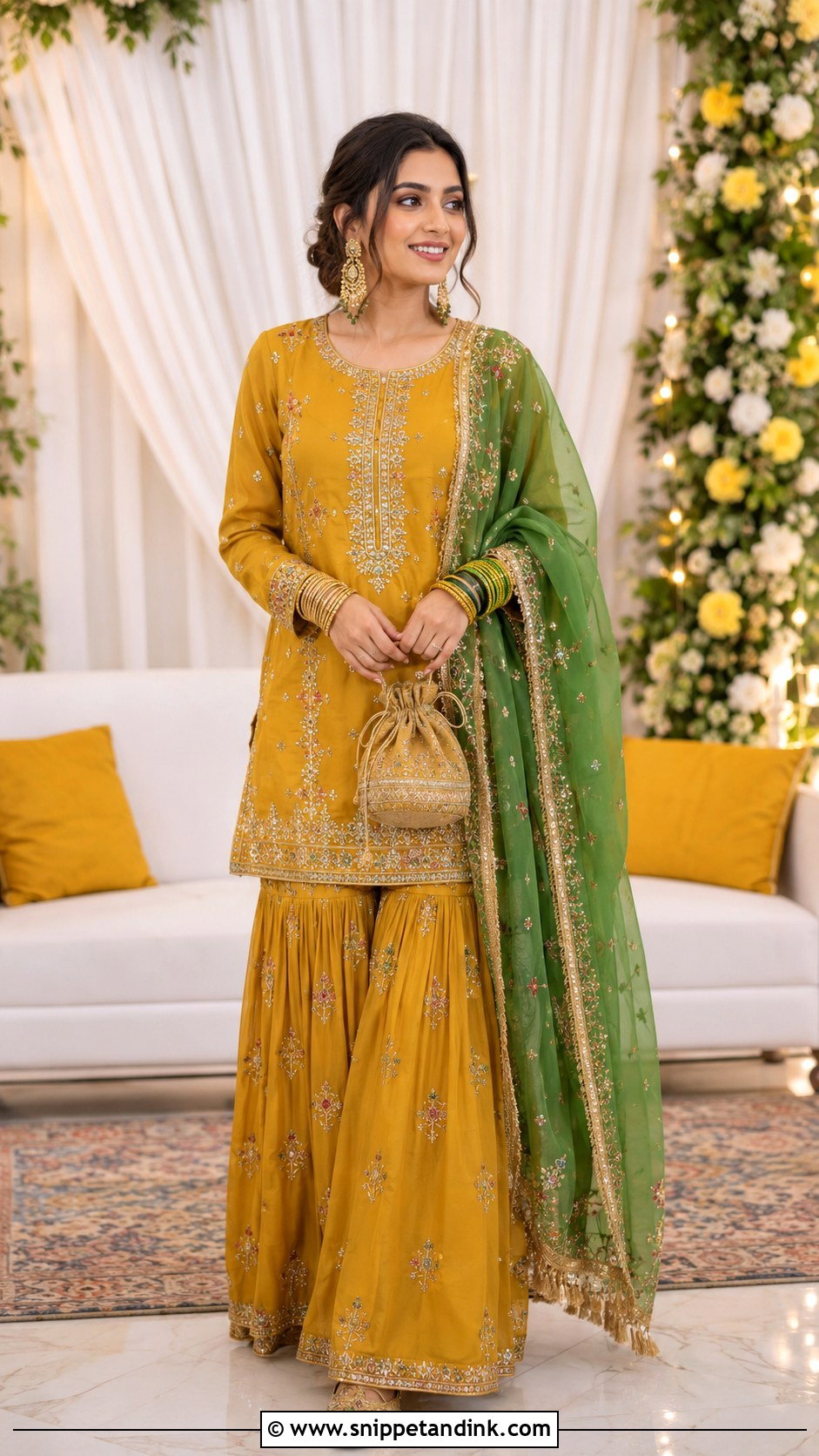
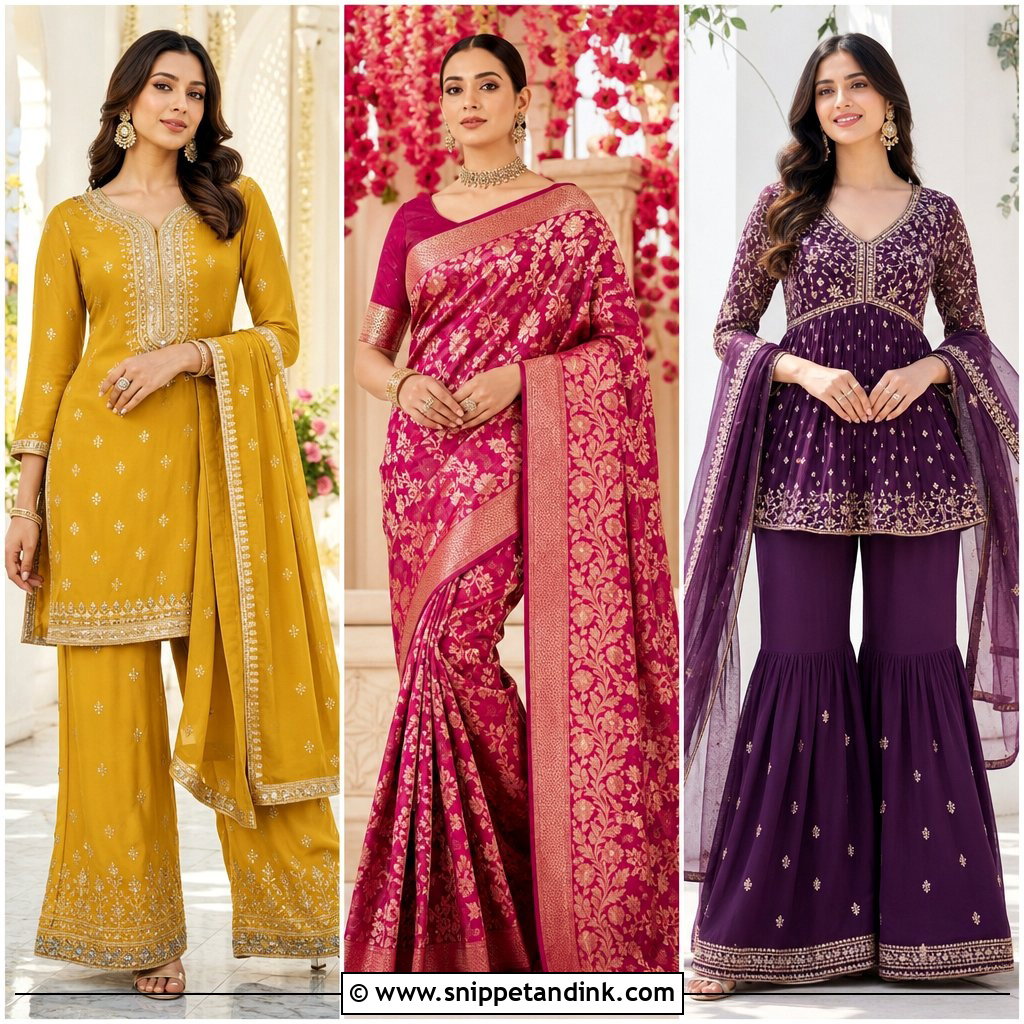
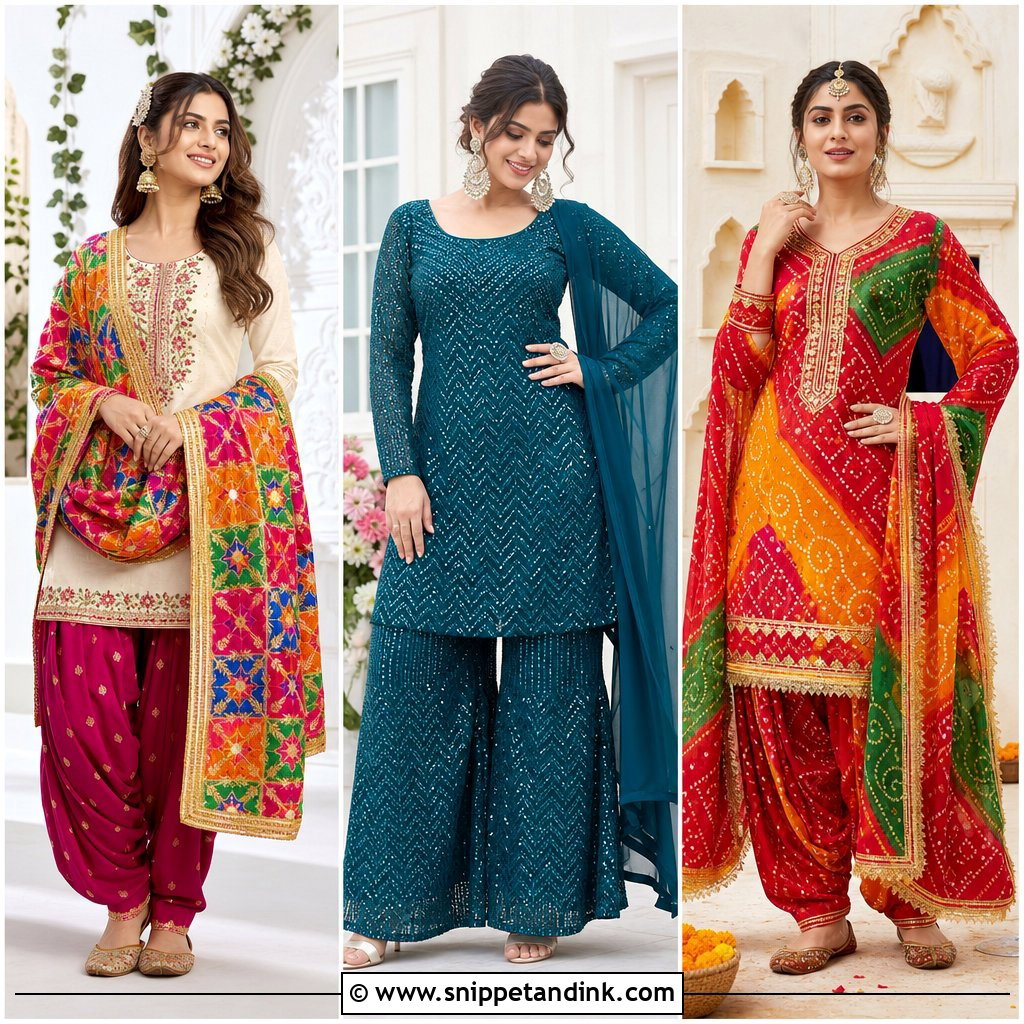
Few outfits say Pakistani wedding as quickly as a gharara. The fitted upper leg and flared lower panels hold their shape in photos. Pair a short embroidered kameez with a traditional gharara and a soft dupatta for a mehndi, dholki, nikkah or close-family function. Raw silk, tissue or jamawar suit cooler months, and chiffon suits warmer ones. A gota patti gharara in mustard, green or coral is festive, and a pastel one with pearl work suits daytime. If you’re borrowing a gharara, check where the knee joint falls on your own leg before the day, because a joint that sits too low makes walking awkward. Khussas, chandbalis, a potli bag and soft curls or a low bun complete it.
3. Pakistani Sharara Dress For Wedding
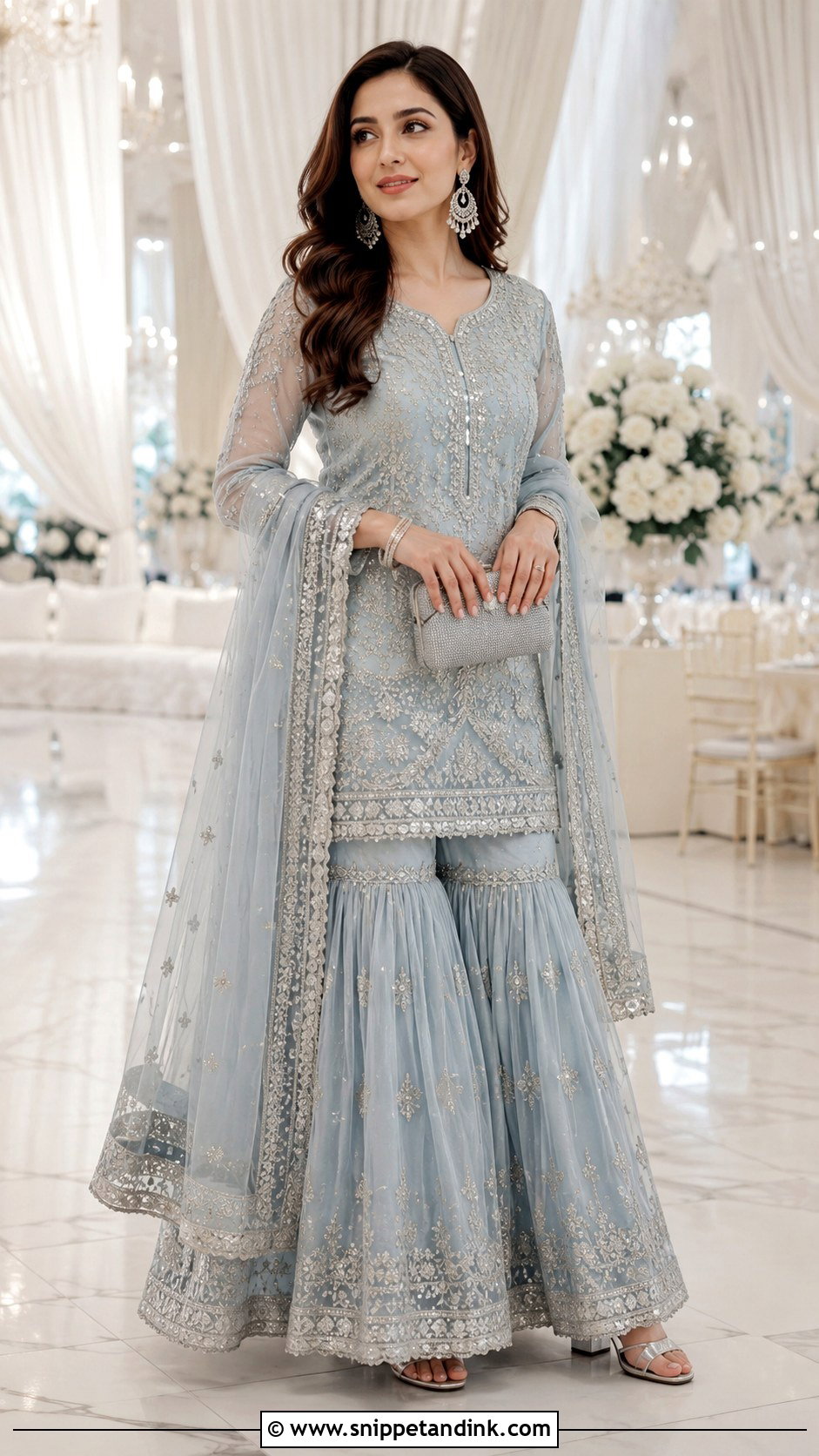
A sharara gives you movement without a lehenga’s bulk. The wide legs flare from the waist and the kameez keeps it traditional. For a guest, a medium-length shirt over a flared sharara looks polished, with embroidered borders on the sleeves, hem and dupatta. Brights suit a mehndi; champagne, powder blue, mauve and mint suit a walima. Shararas are full and long, so a little heel helps them fall properly, and they should be hemmed to the exact shoe you’ll wear. A sleek clutch, statement earrings and a center-parted hairstyle finish it.
4. Pakistani Anarkali Dress For Wedding
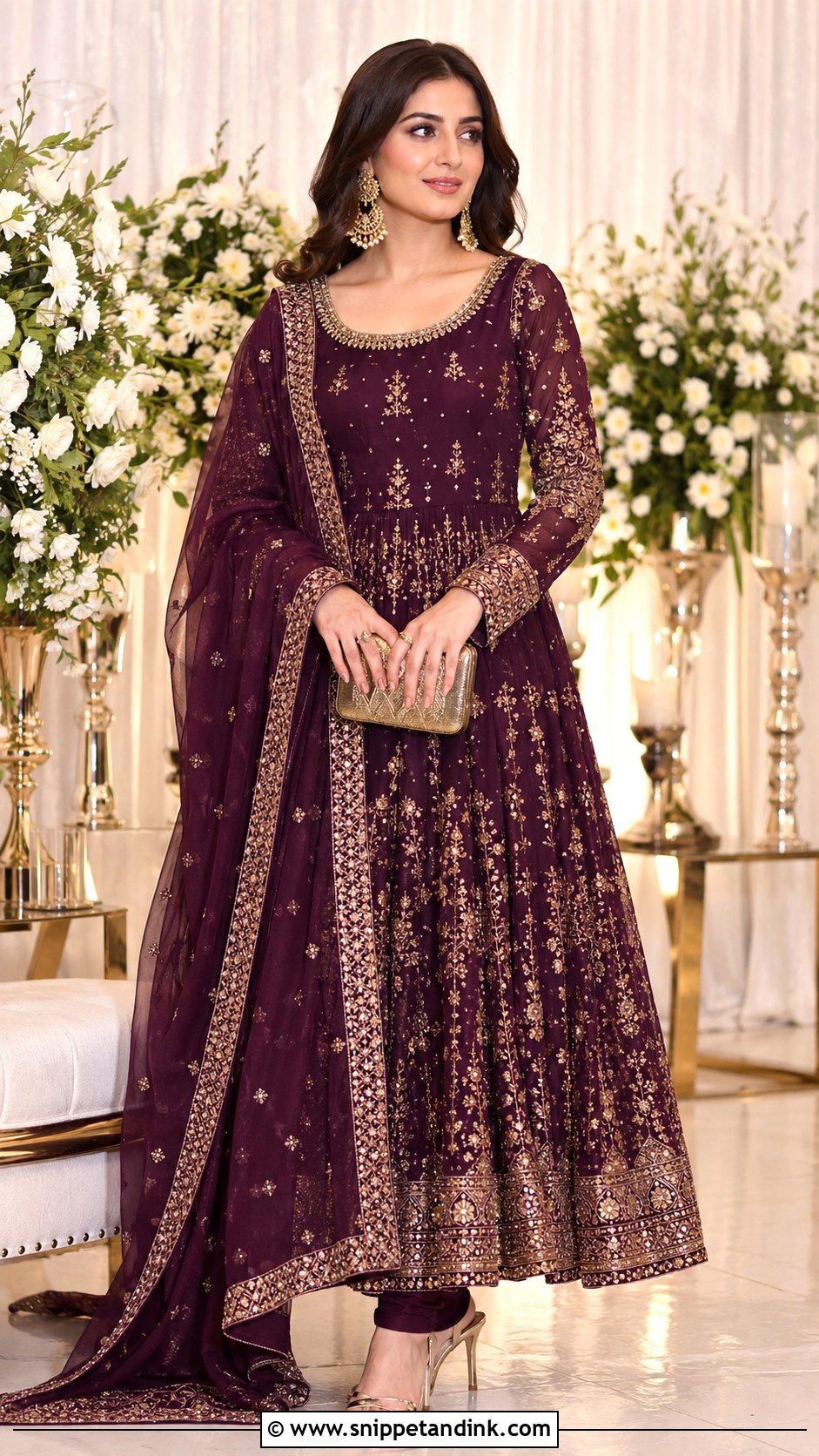
An anarkali stays comfortable all night because it’s one flared piece with nothing to keep re-adjusting at the waist. Chiffon, net, georgette or silk with embroidery at the neckline, sleeves and hem keeps it formal, and a floor-length cut with a dupatta and straight pants underneath is the classic. Lighter shades suit a nikkah or walima, deeper ones a barat. A maang tikka is fine if you’re close family, but as a more distant guest I’d skip it, since it reads as a family or bridal-party accessory. Delicate heels and a structured clutch complete it. The flare starts high and skims the hips, which is why so many body types look good in one.
5. Pakistani Maxi Dress For Wedding
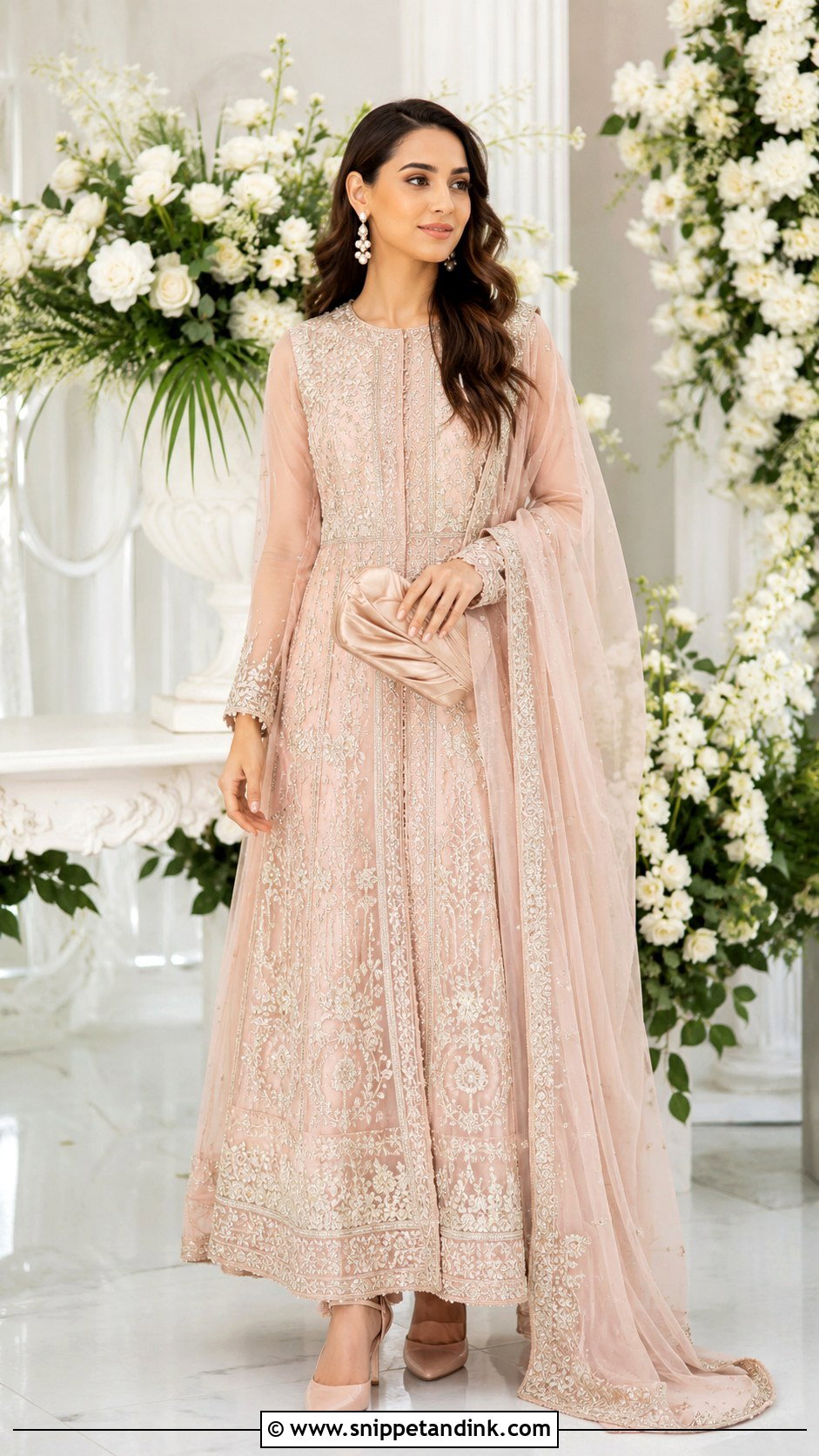
A Pakistani maxi dress gives you a gown’s ease with South Asian detail. A long embroidered maxi with a dupatta suits a nikkah, walima, reception or formal evening, and a fitted bodice with a soft flare defines the waist. Net, chiffon, organza and silk maxis look polished with zari, pearl or sequin work. As a guest, avoid bridal red and heavily encrusted designs unless you’re immediate family. Soft pink, sage, ivory with color accents, lilac, teal or champagne all suit. Maxis are cut long, and I’d rather see one a touch short than one you trip on at the stage steps. Heels, earrings and a neat hairstyle complete it.
6. Pakistani Pishwas Dress For Wedding
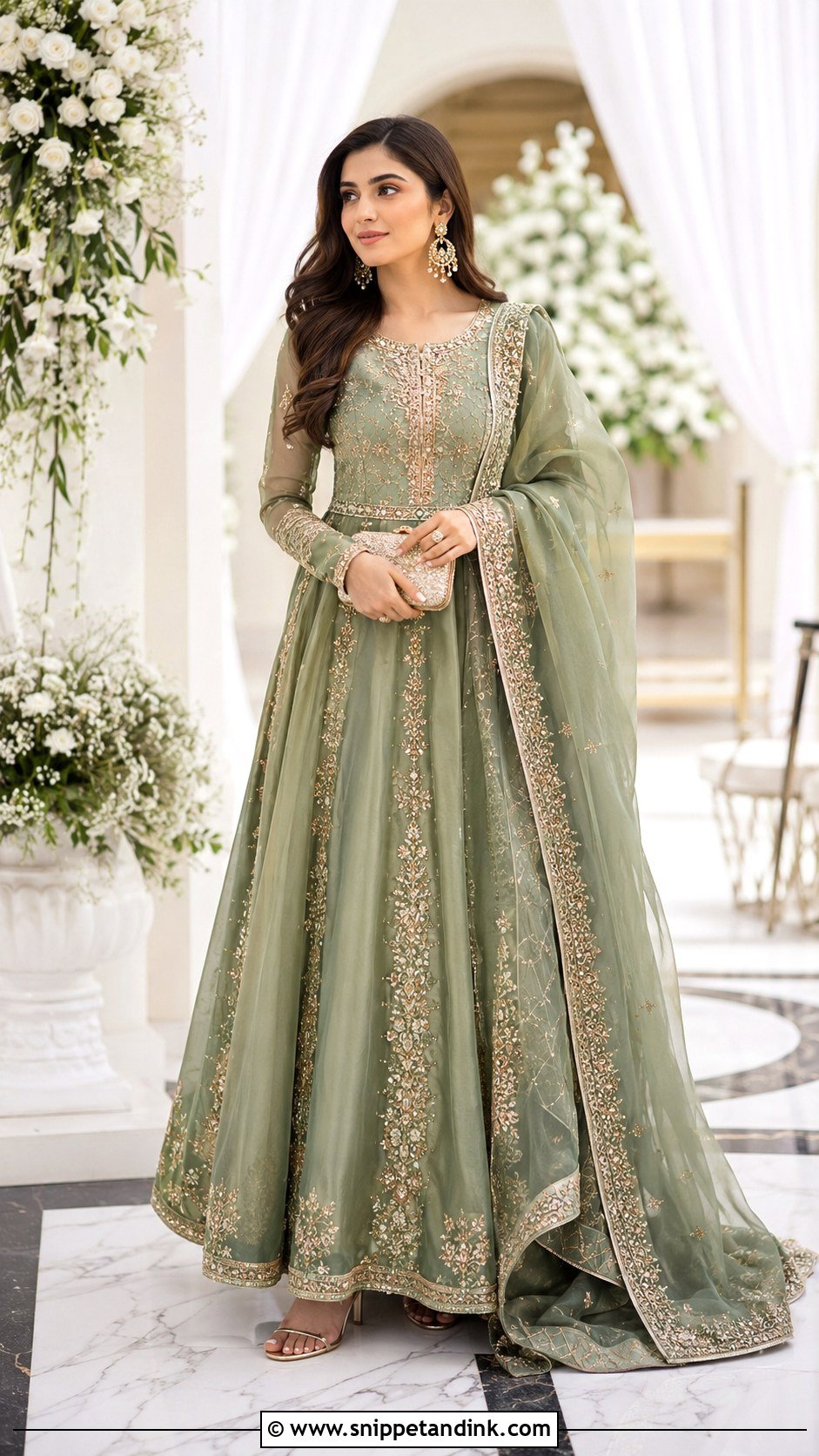
The pishwas is a long frock with a fitted bodice and flared panels, so it’s dressy without separate heavy bottoms. Organza, net, chiffon or raw silk with embroidered panels and a matching dupatta suits it. Pastels belong at a walima or nikkah, jewel tones at an evening event. The panel count changes everything: more panels mean more flare and more weight, so a guest who’ll be on her feet should look for a lighter version. Pointed heels or embellished sandals let the length fall properly. A tikka, jhumkas and a small clutch finish it.
7. Pakistani Saree For Wedding
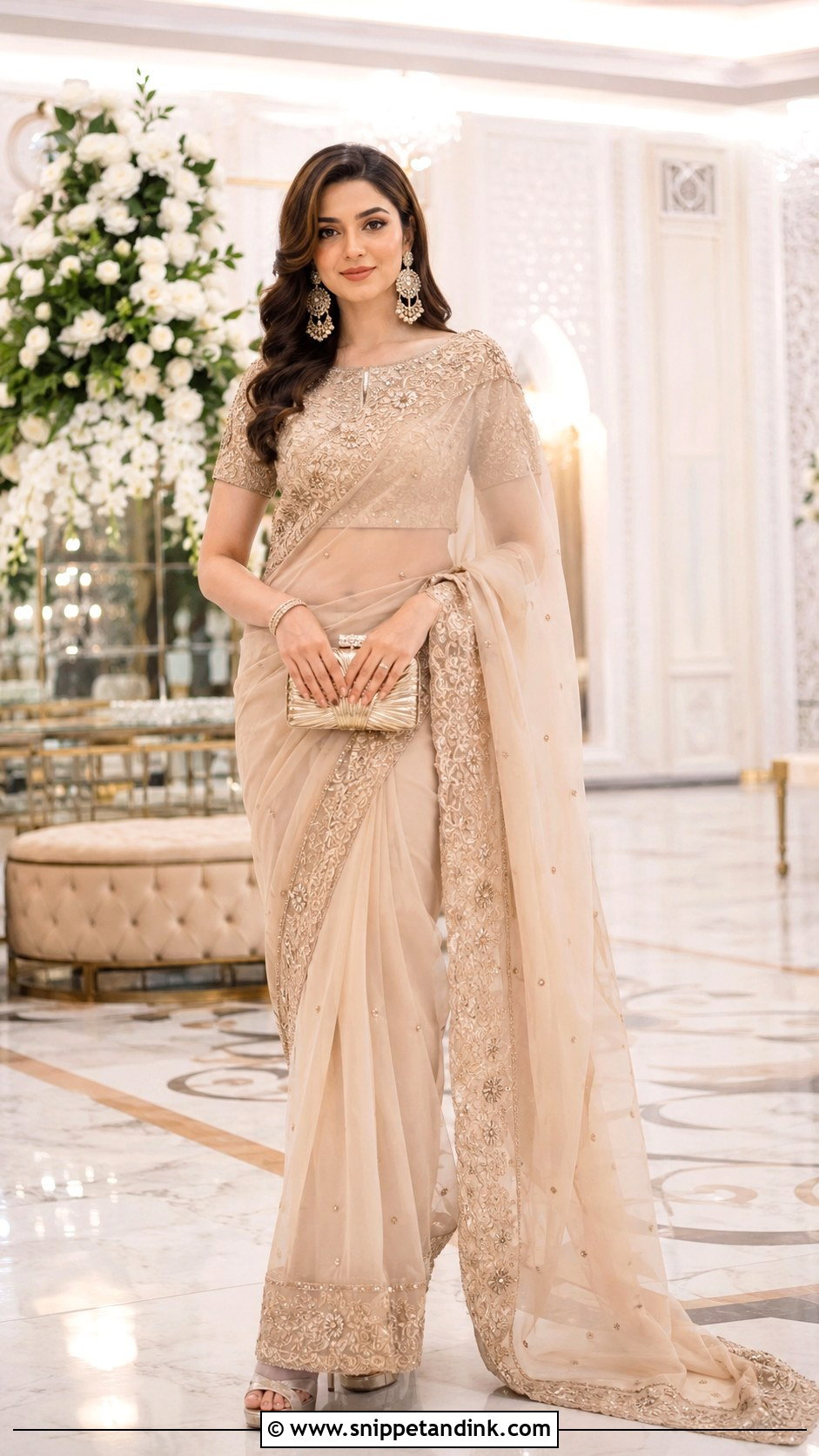
Sarees suit a walima, reception or formal barat, and they read as mature and assured. Chiffon and georgette drape softly, while silk, organza, net and tissue hold a more structured shape. Embroidered borders, sequins or a statement blouse make it festive. Pastels with pearls suit daytime; deep green, maroon, navy or gold suit evenings. If you don’t wear sarees often, pre-stitched versions take the guesswork out of the pleats. Either way, put your shoes on before draping, because the hem length is set by them. A sleek clutch, earrings and a polished bun or soft waves complete it.
8. Pakistani Peplum With Sharara For Wedding
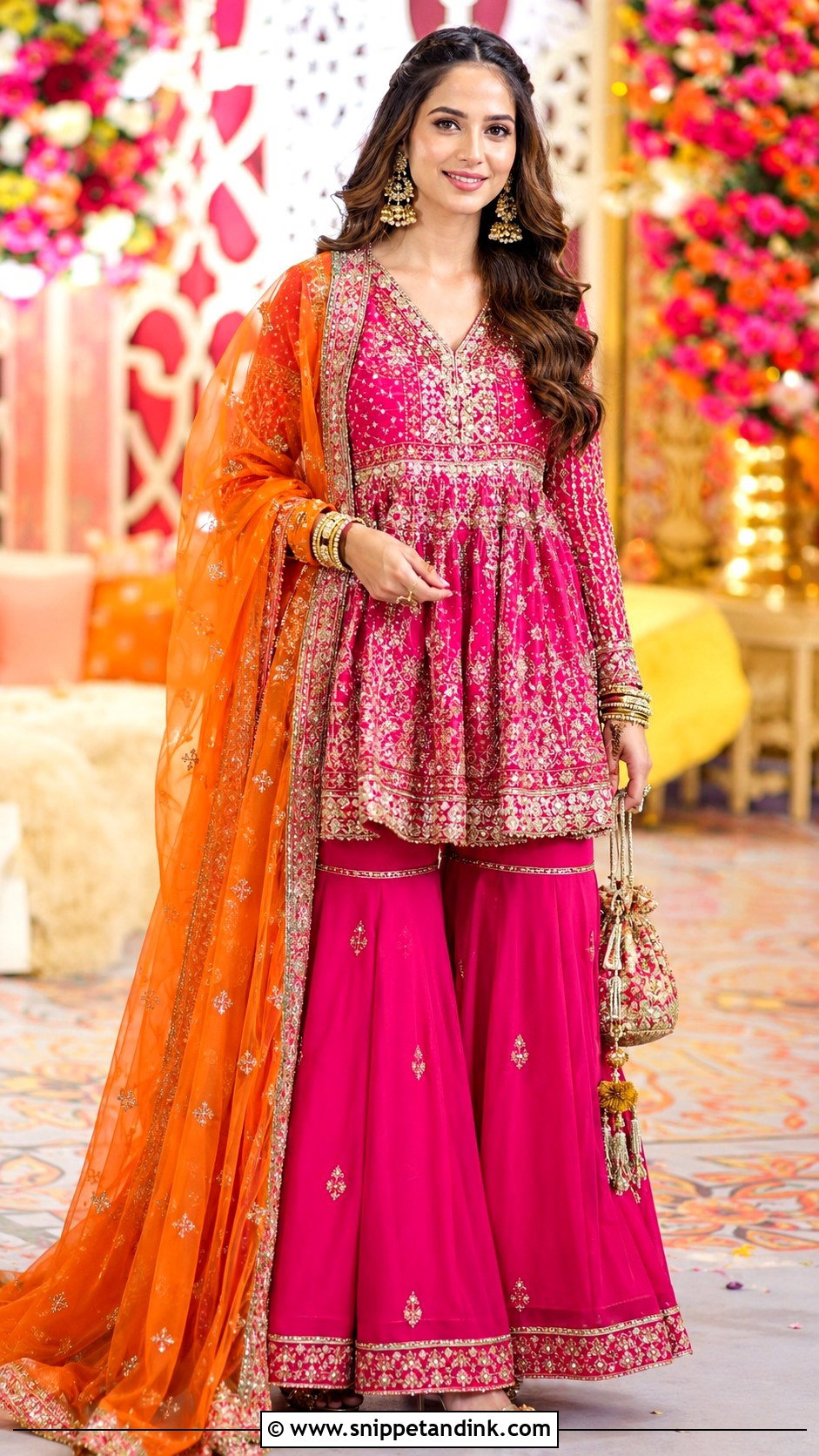
A peplum with sharara is a modern Pakistani wedding outfit that hasn’t lost its traditional roots. The peplum defines the waist while the sharara adds movement, so the silhouette reads clearly from any angle. Look for mirror work, gota, dabka or thread embroidery on the peplum, with a coordinated sharara and dupatta. Brights suit a mehndi; soft metallics or pastels suit a walima. With all that shape, keep the jewelry restrained: statement earrings, stacked bangles, a small potli. I’d choose comfortable heels here, since the sharara’s volume needs a bit of lift.
9. Pakistani Peplum With Lehenga For Wedding
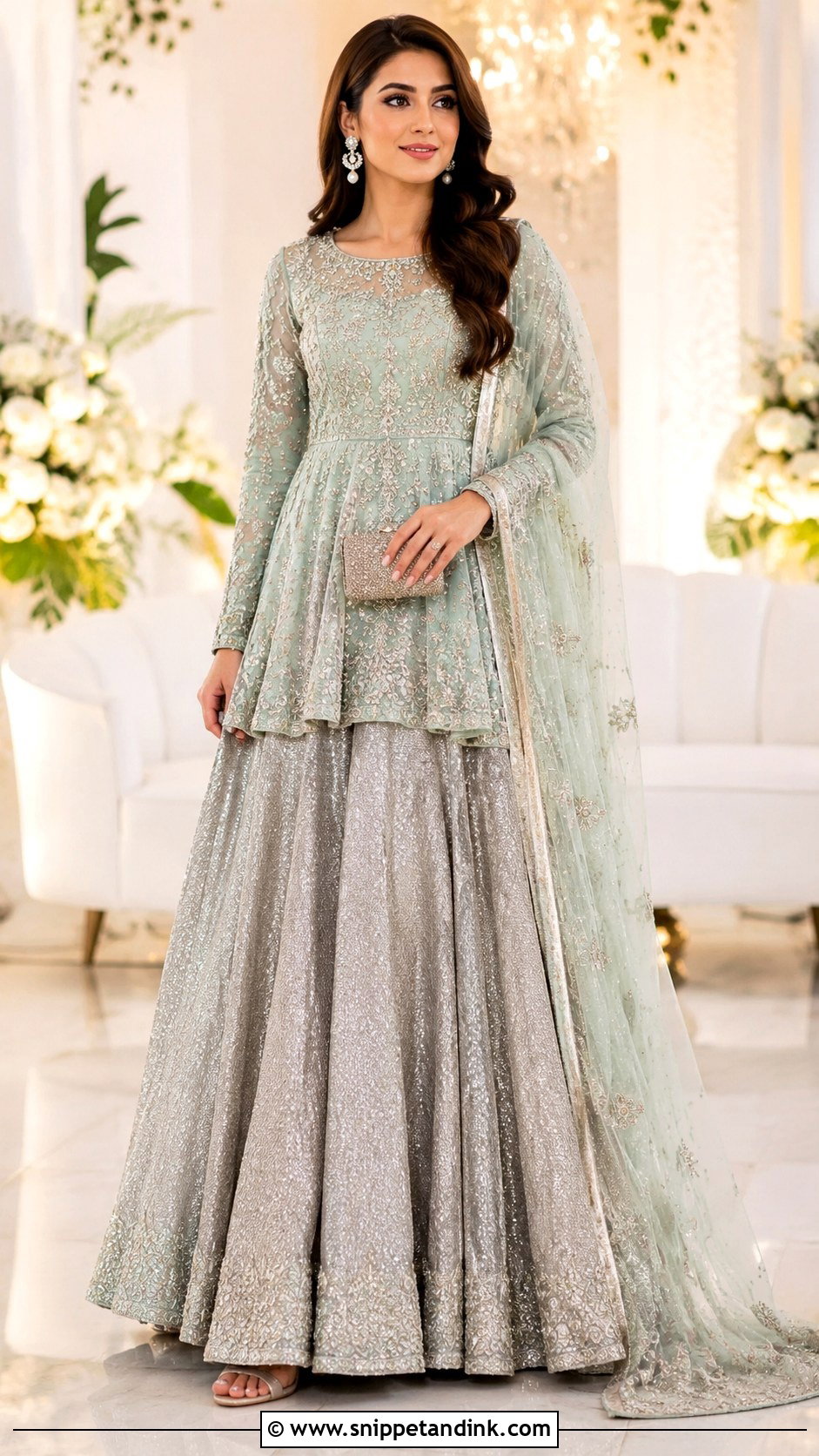
A peplum over a lehenga gives more coverage than a short choli and keeps the lehenga’s grandeur, which makes it a favorite with guests who want both. Choose a peplum worked at the neckline, sleeves, waist and hem, over a flared lehenga in matching or contrast fabric. A mint peplum with a silver lehenga suits a walima, and magenta or emerald suits a mehndi or barat. The fit point is the seam where peplum meets flare. It should land at your natural waist, or the top looks borrowed. A dupatta over one shoulder, heels, earrings and a clutch finish it.
10. Pakistani Angrakha Dress For Wedding
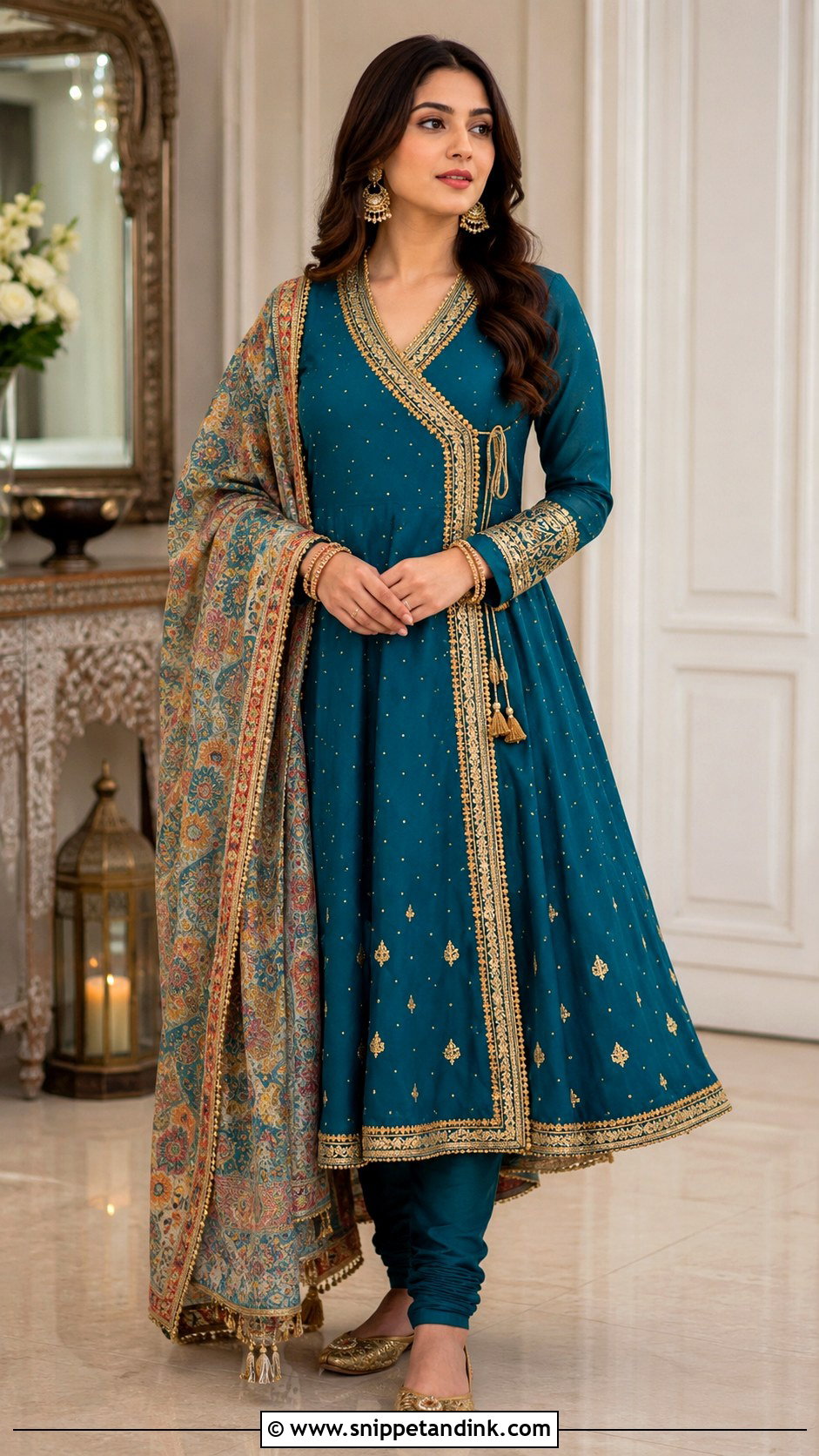
The angrakha wraps across the front, ties at the side and flares, and that wrap flatters most figures by drawing a diagonal line across the body. A long angrakha with embroidery, mirror work, gota or delicate zari suits a wedding, worn with churidar, straight trousers or a flowing sharara depending on formality. Mustard, teal, maroon, ivory and burnt orange all suit it, with a printed or embroidered dupatta for color. Ties come loose over a long evening, so I double-knot and tuck them or add a discreet hook. Khussas or heels, jhumkas and bangles complete it.
11. Pakistani Long Shirt With Lehenga For Wedding
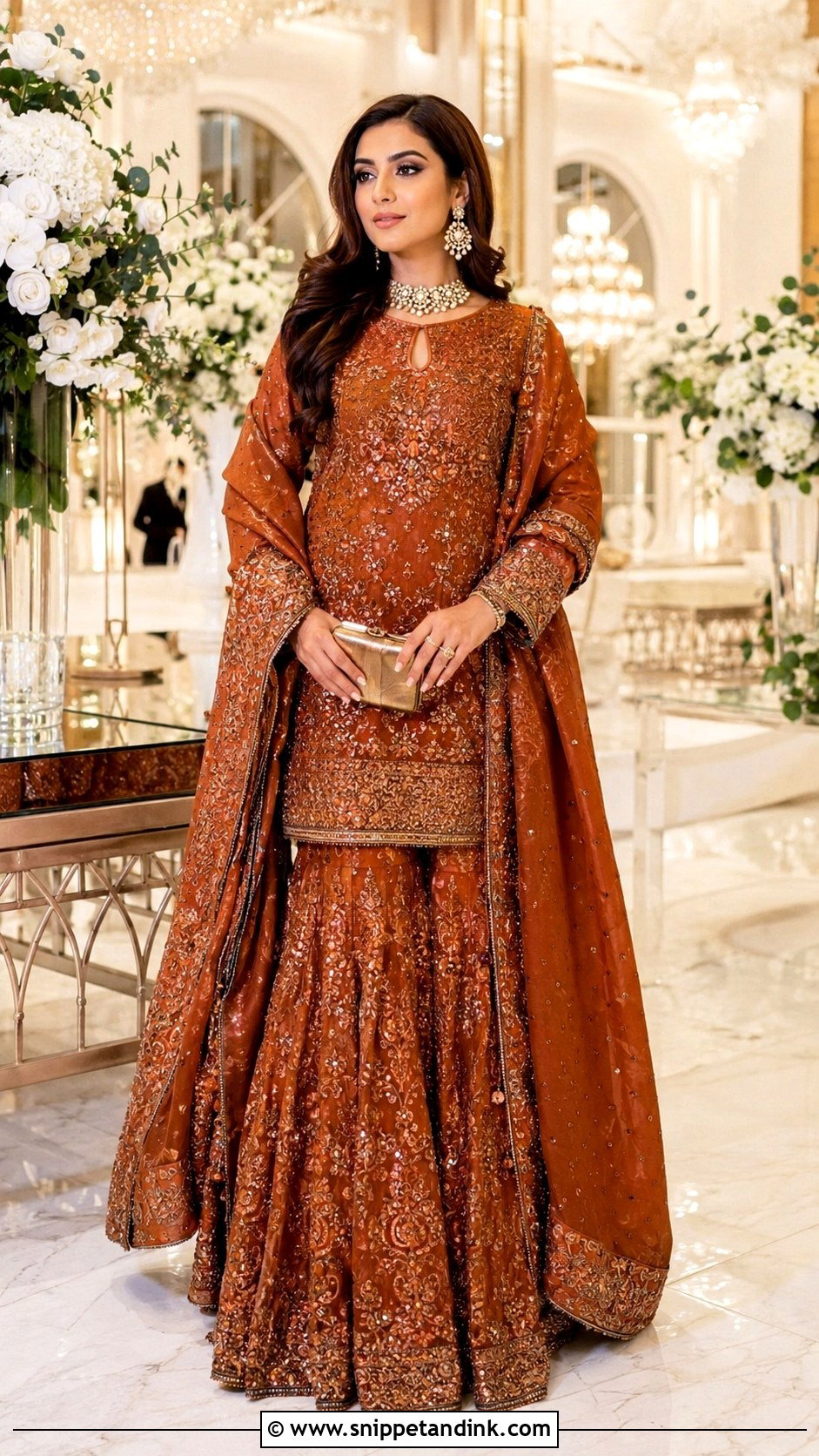
A long shirt over a lehenga is the signature modest Pakistani formal look, with the kameez drawing a long vertical line and the lehenga adding volume. It suits a barat, nikkah or close-family event. Look for embroidery at the neckline, sleeves, borders and side slits, and if the shirt is heavily worked, a plain or lightly embroidered lehenga keeps the outfit from getting heavy. Rust, olive, navy and plum feel rich; blush and champagne feel softer. Deep red works too, though as a guest I’d only wear it if you’re family. A dupatta over both shoulders, heels, a clutch and kundan-style jewelry complete it.
12. Pakistani Short Shirt With Gharara For Wedding
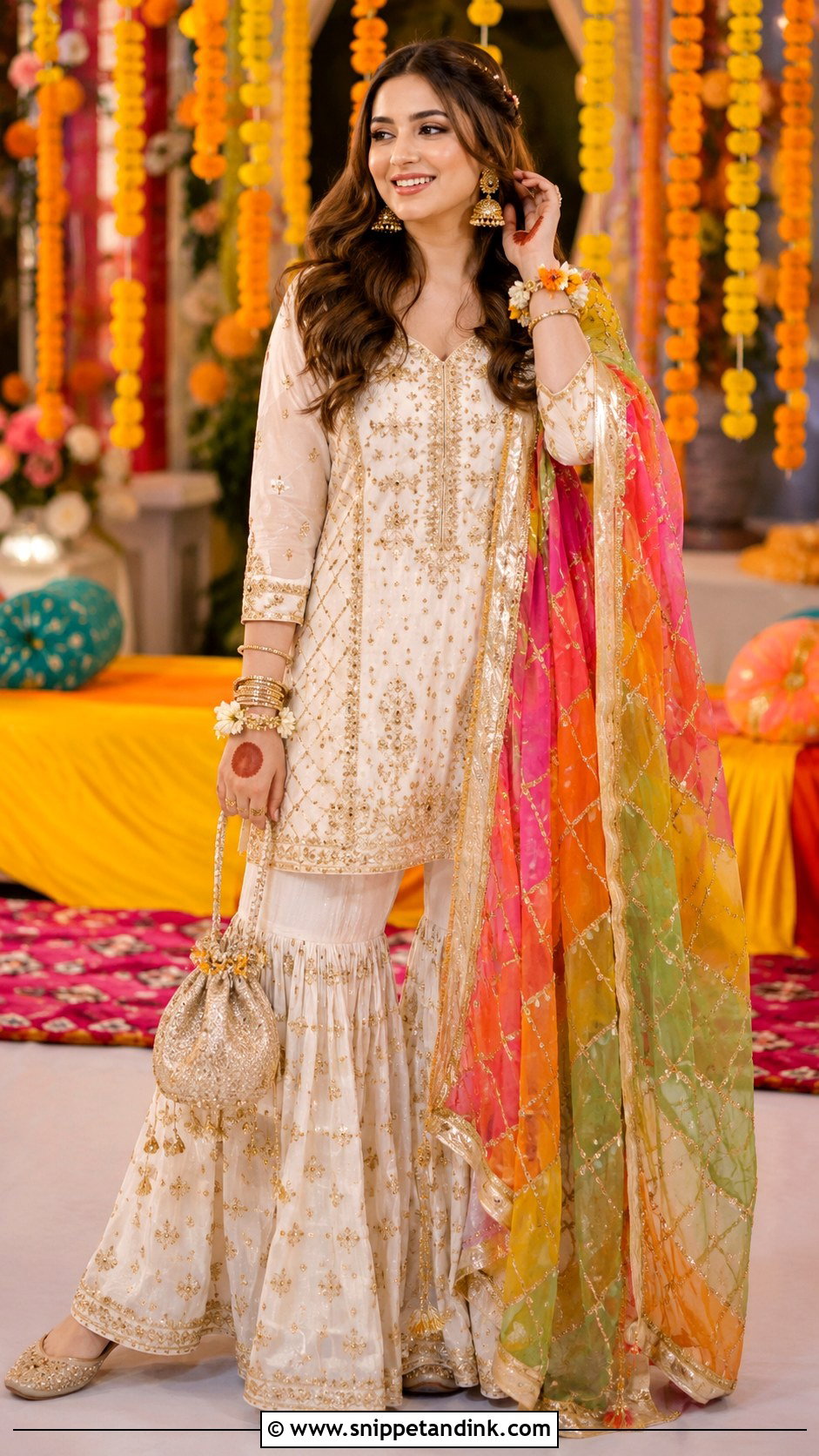
A short shirt with gharara is one of the oldest Pakistani wedding combinations and still a favorite for mehndi, mayun, dholki and daytime family events. The shorter kameez shows off the gharara’s flare. Gota patti, mirror work, resham or lace borders add detail, and yellow with green, pink with orange, or white with gold all pair well. A lightweight dupatta keeps it easy to dance in. Mayun and mehndi often mean floor seating, so check that the short shirt doesn’t ride up at the back when you sit cross-legged. Khussas, bangles, jhumkas and a small potli bag finish it.
13. Pakistani Straight Shirt With Cigarette Pants For Wedding
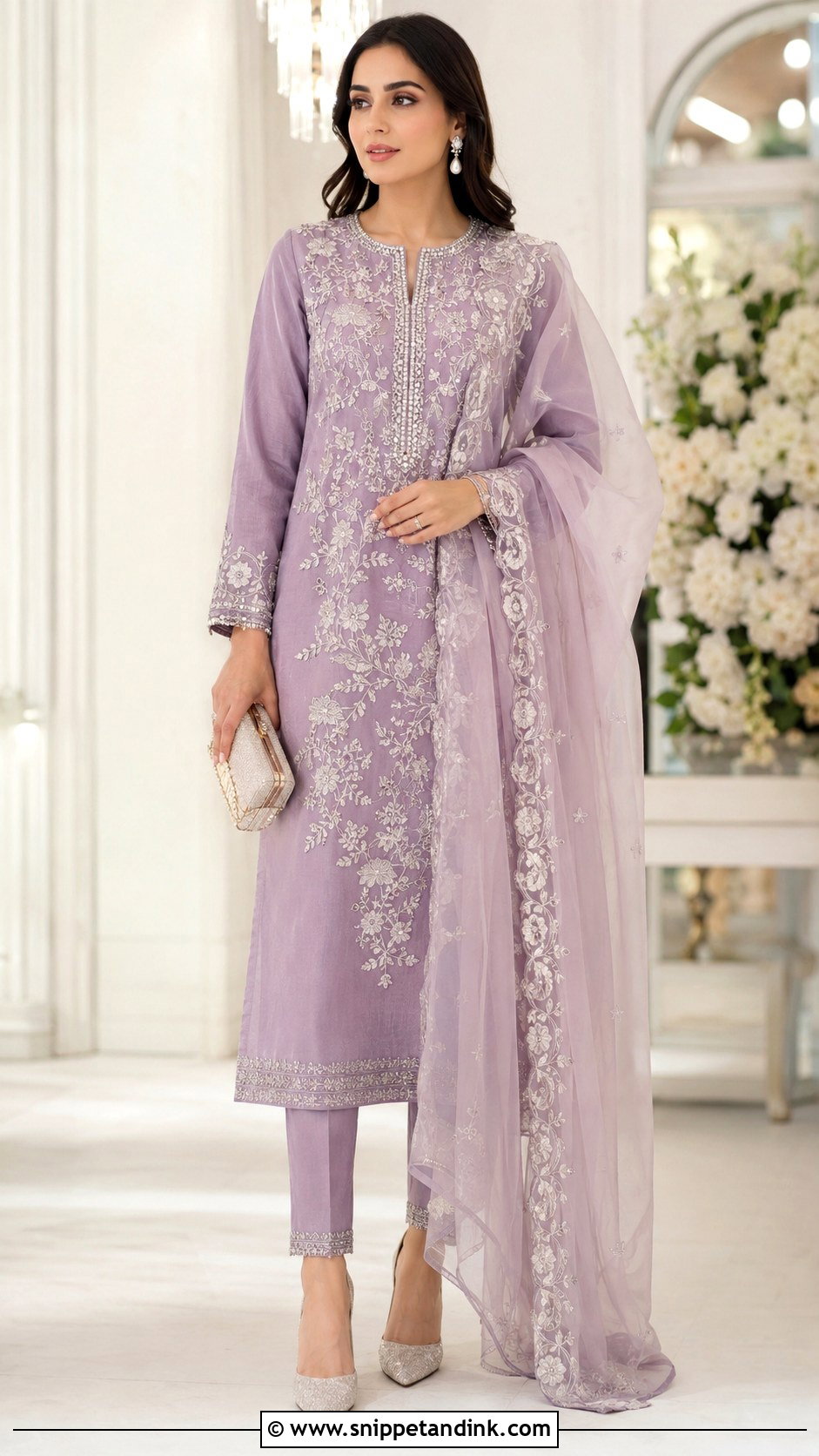
Clean lines suit a nikkah, walima, engagement dinner or smaller event, and a straight shirt with cigarette pants is the cleanest of all. Choose a long or mid-length embroidered shirt in silk, organza, chiffon or raw silk. Cigarette pants look sharp with heels, and a sheer organza dupatta with embroidered borders makes it formal. Powder blue, lavender, ivory, blush and sage suit daytime; jewel tones suit night. The pants should stop at the ankle bone, just showing the heel strap. Any longer and they bunch. Pearl earrings, a clutch and a sleek hairstyle finish it.
14. Pakistani Jacket Dress For Wedding
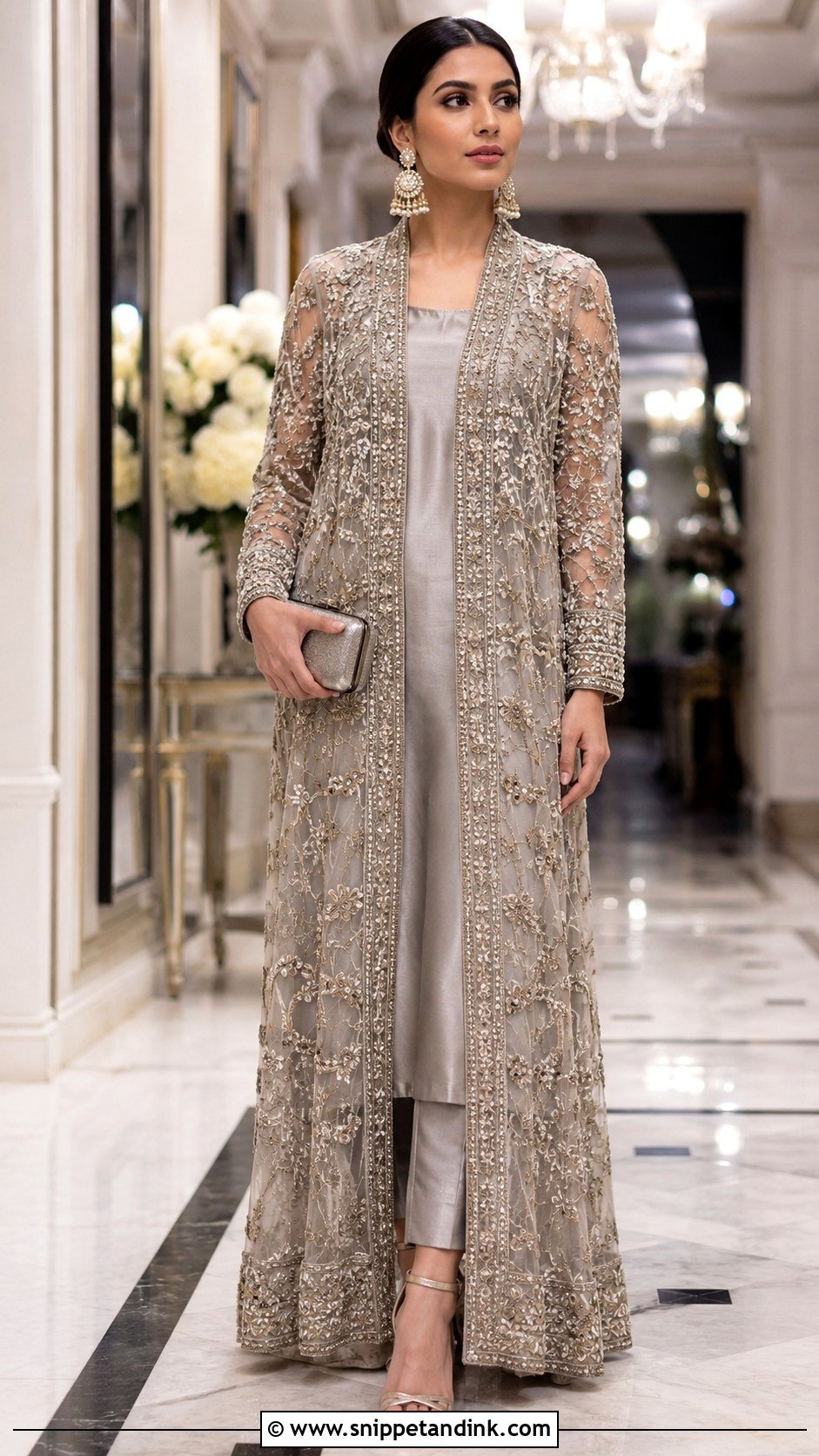
A jacket dress layers an embroidered long jacket over a sleeveless or long-sleeve inner dress, and it looks formal and current at receptions, walimas and evening weddings. Organza, velvet, silk or net jackets with zari, sequins, pearls or threadwork suit it. Over straight pants it’s sleek; over a lehenga it’s dramatic. If the jacket has heavy work, keep accessories simple. One practical point: a heavy jacket pulls on the shoulders, so its shoulder seams need to sit exactly at your shoulder point or it slides back all evening. Pointed heels, statement studs and a box clutch finish it.
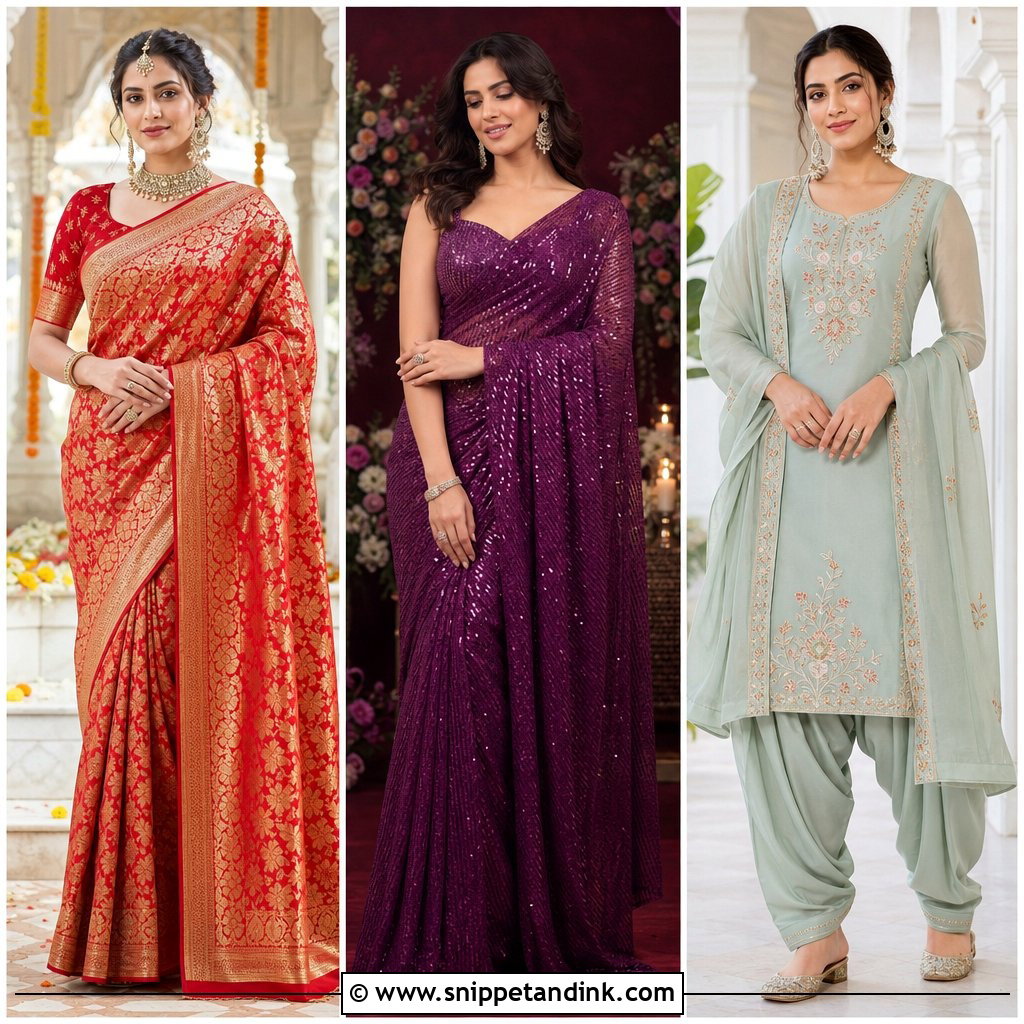
15. Pakistani Cape Dress For Wedding
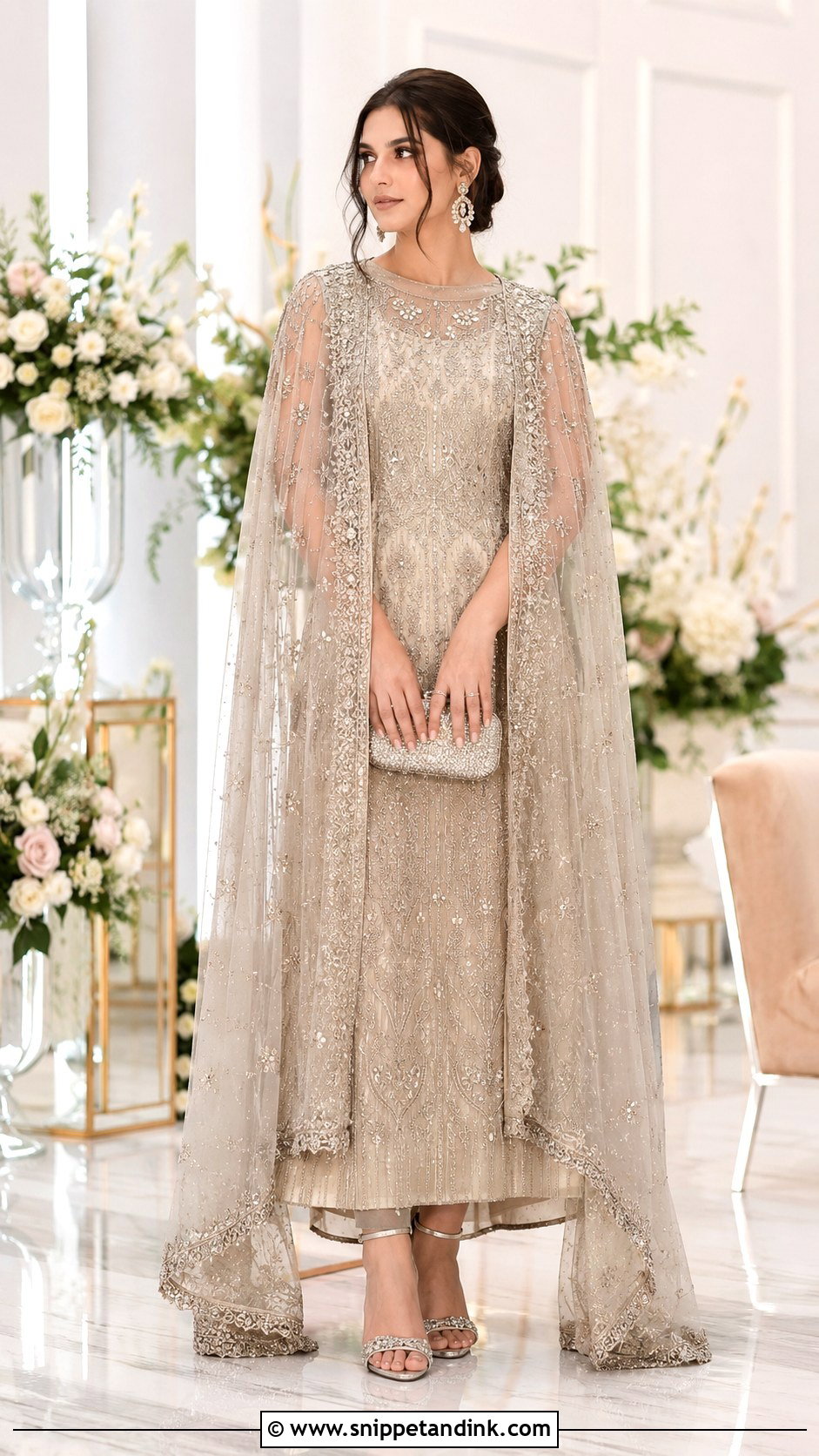
A cape gives you a dupatta’s softness without the constant adjusting. It can attach to a gown, a peplum, a jumpsuit-style suit or a lehenga blouse, and sheer organza or net with embroidered edges suits a wedding. Pastels, champagne, silver and soft gold belong at a walima, while brighter cape sets can work at a mehndi. Capes add width at the shoulder, so on a petite frame I’d keep the cape short and the rest of the outfit structured. Heels, a delicate clutch and earrings that don’t compete with the neckline finish it.
16. Pakistani Velvet Dress For Winter Wedding
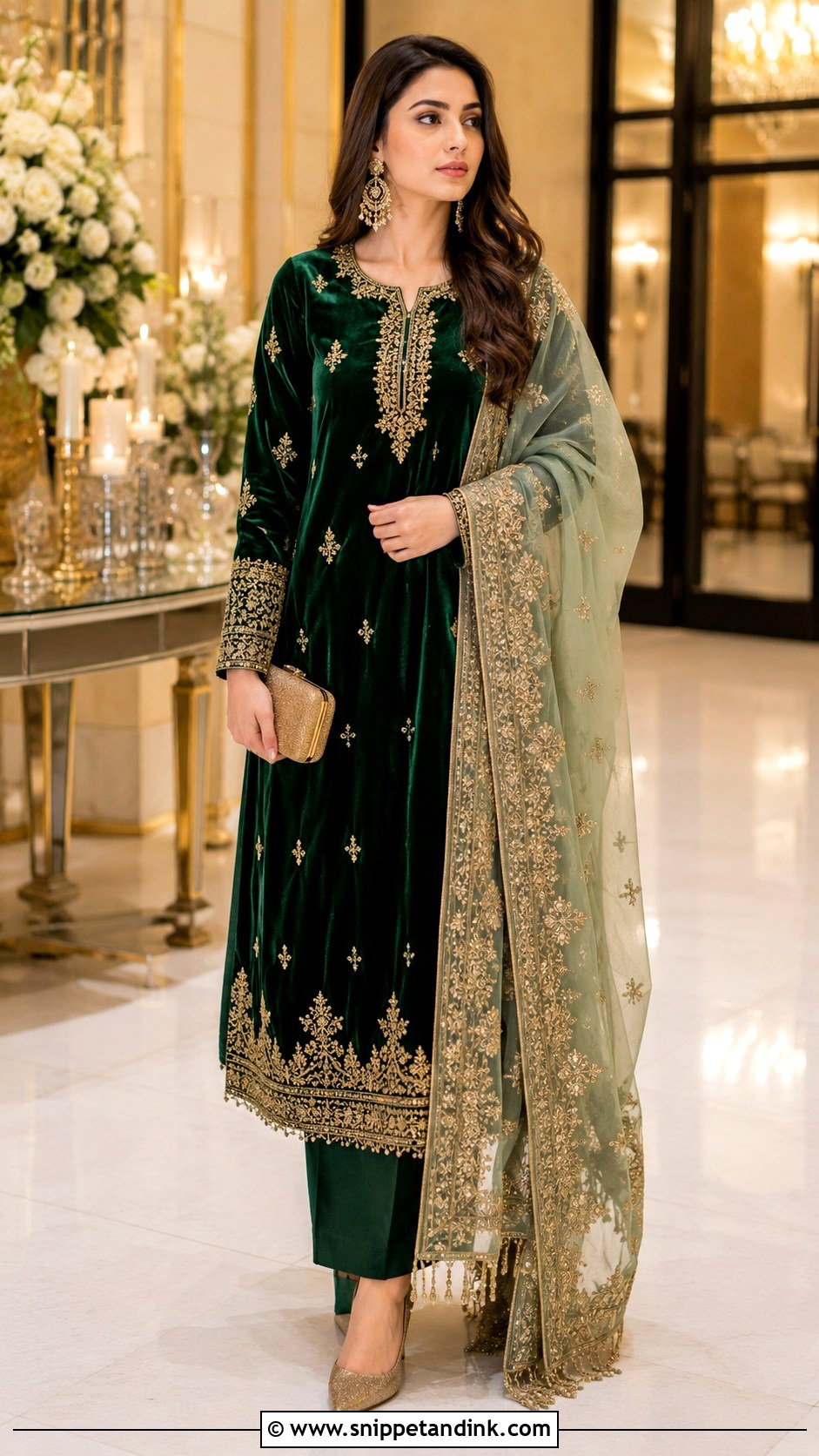
Velvet looks formal in even the simplest cut, and in winter it keeps you warm as well. A velvet long shirt with straight pants, a velvet lehenga choli or a velvet gharara suit all work. Emerald, maroon, navy, plum and blackened green look richest under evening lights, especially with gold embroidery, dabka, zardozi or antique threadwork. Velvet is heavy, so keep the dupatta in organza or chiffon. After a long sit, velvet crushes at the back of the skirt; stand up and smooth it before the group photos. Closed-toe heels, a clutch and traditional earrings finish it.
17. Pakistani Organza Suit For Wedding
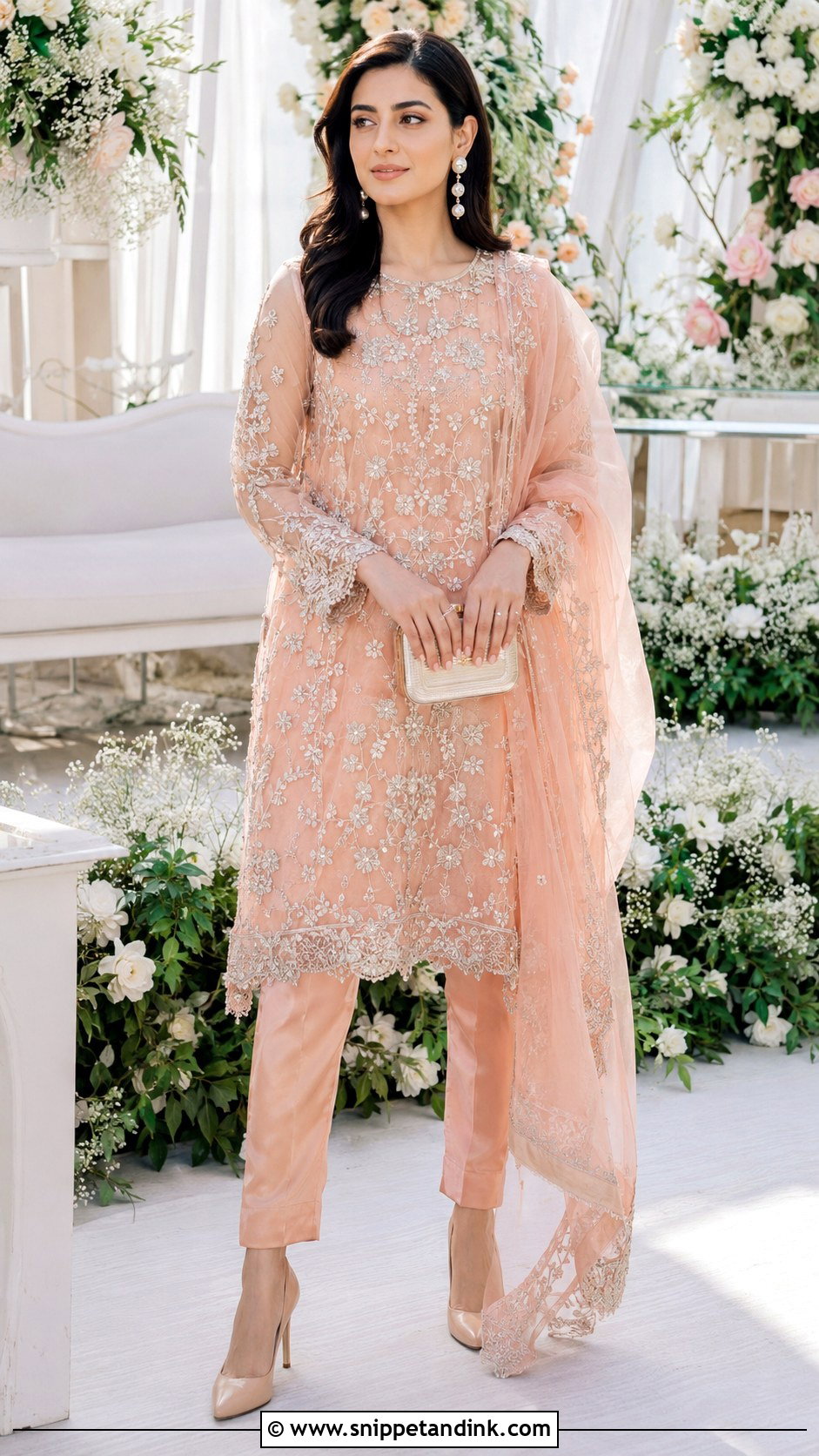
Organza is crisp and sheer, so embroidery stands out on it more than on softer fabrics. A long organza shirt with silk pants and an organza dupatta suits a nikkah, walima, daytime barat or any formal guest look, and peach, mint, lilac, powder blue and ivory suit it especially well. Because the shirt is sheer, the lining decides your comfort. It should be well fitted, soft against the skin, and long enough to cover what you want covered. Organza also crackles and creases when you sit, so expect a few lines by the end. Heels, pearl or kundan earrings and a neat clutch complete it.
18. Pakistani Chiffon Suit For Wedding
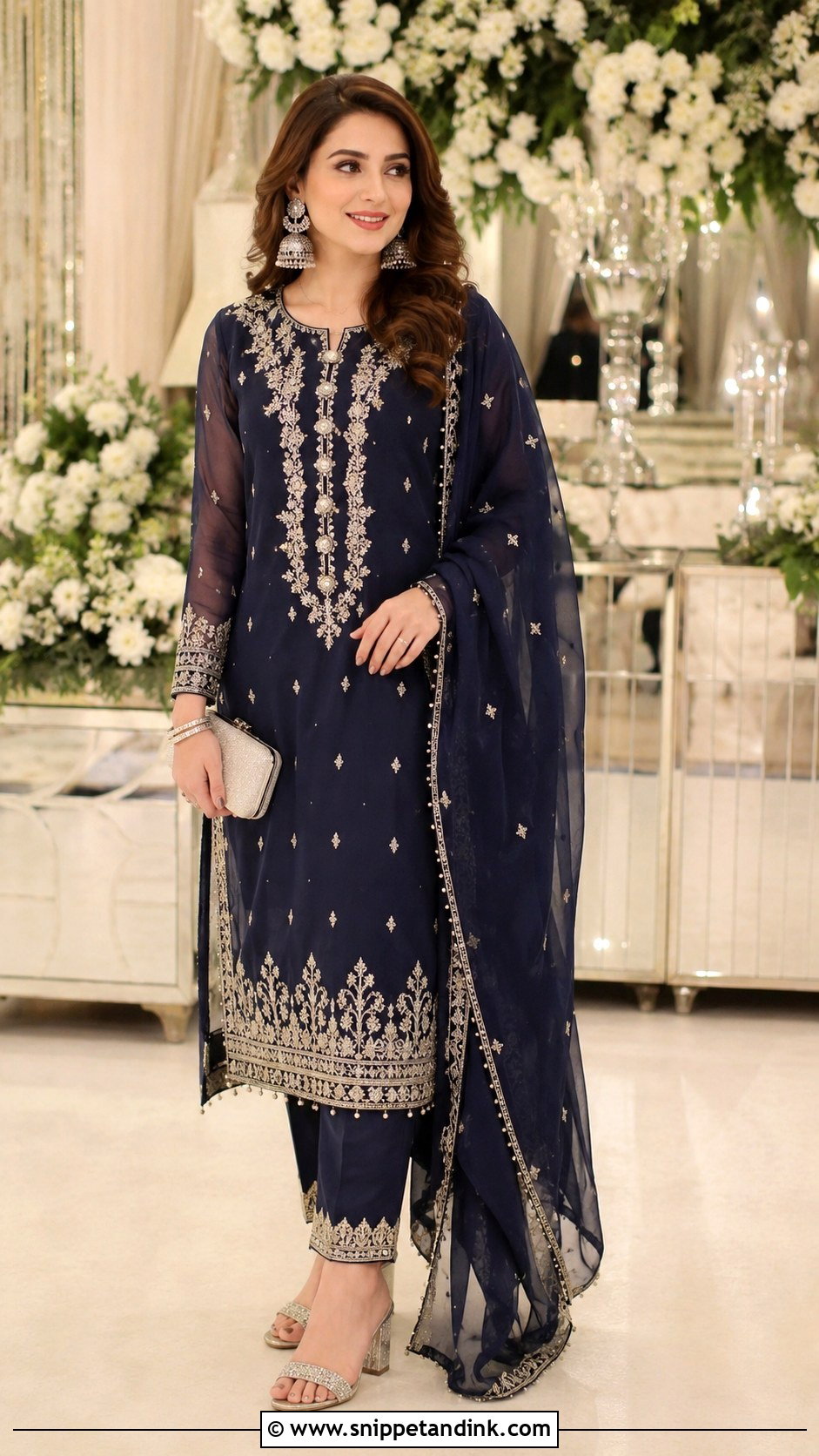
Chiffon drapes well and stays comfortable, so it’s my safest recommendation for long events. An embroidered chiffon shirt with a dupatta and trousers, a sharara or a lehenga-style bottom suits most functions, and the design and color decide whether it’s for a mehndi, barat or walima. Sequins, threadwork, zari and lace borders add festivity. Chiffon slips, so a chiffon dupatta needs a pin at the shoulder more than any other kind. If the event involves a lot of standing, choose comfortable heels or embellished flats. Earrings, bangles and a small bag complete it.
19. Pakistani Silk Suit For Wedding
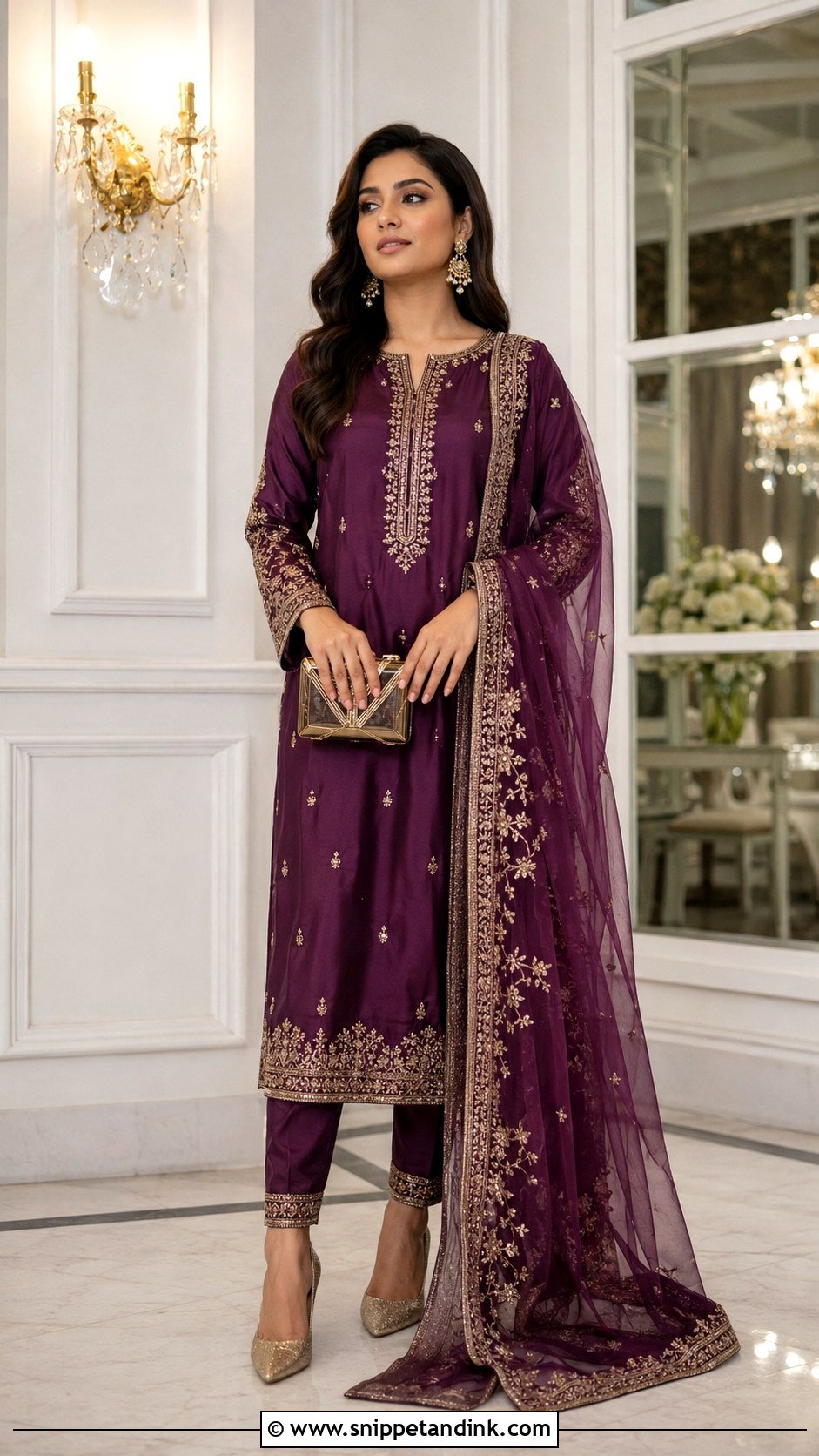
Silk suits guests who prefer quality and tailoring to heavy embroidery. A raw silk or grip silk shirt with straight pants looks formal once a detailed dupatta goes on, and for a dressier event zari borders, resham work or fine embellishment at the neckline and sleeves add more. Jewel tones look rich in silk; pastels suit daytime. Raw silk holds its structure and resists creasing better than organza, which helps on a long day. Heels, a structured clutch and polished jewelry complete it, and a silk suit is easy to wear again to dinners and festive gatherings.
20. Pakistani Banarsi Dress For Wedding
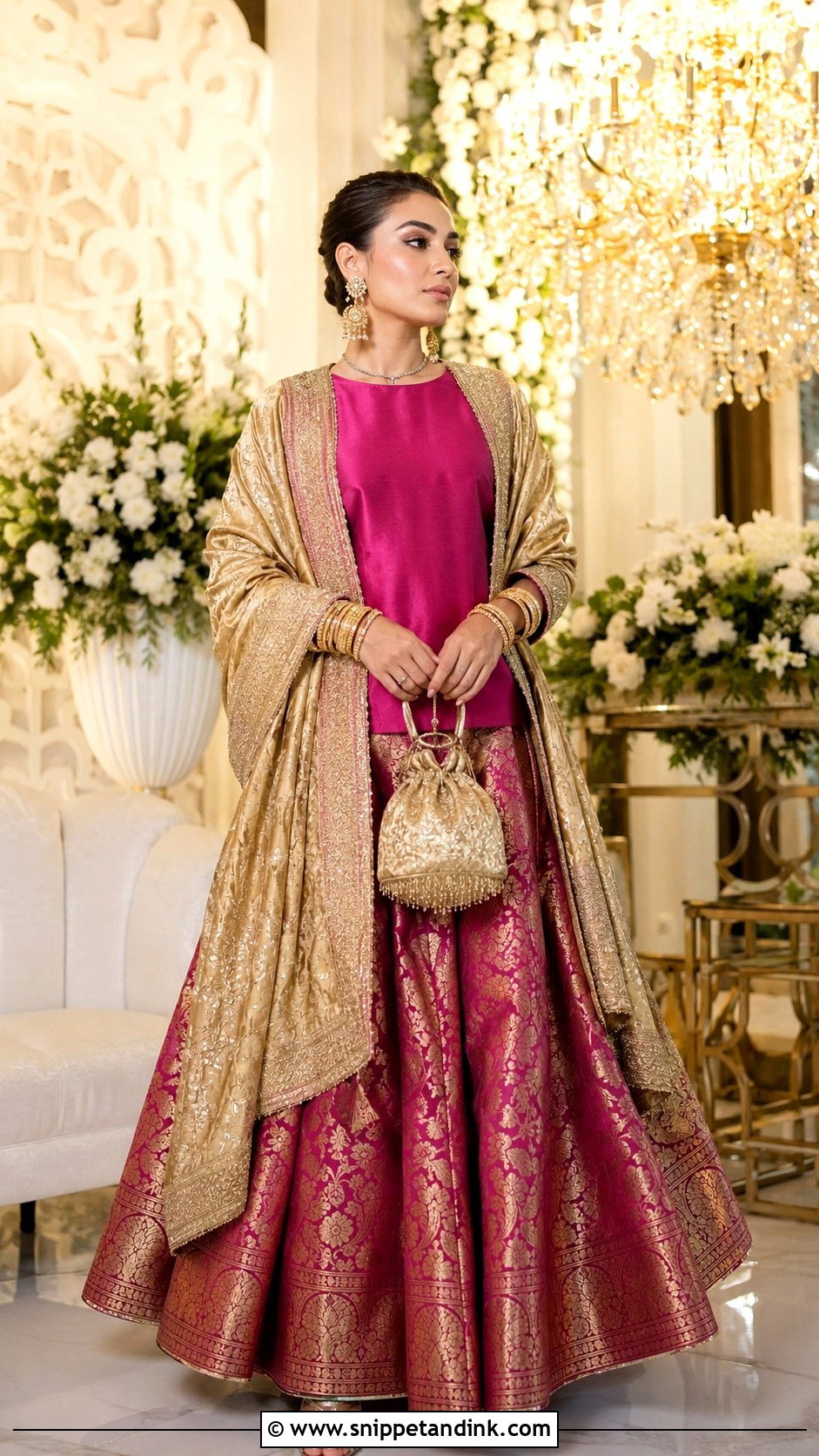
A Banarsi dress brings woven texture, so it looks festive before any embellishment is added. A Banarsi lehenga with a plain silk shirt, a Banarsi gharara suit, or a Banarsi dupatta over a simple kameez all work, in deep jewel tones, antique gold, magenta, teal or maroon. Because the fabric already shines, keep the jewelry simple and the makeup clean. A Banarsi dupatta is heavier than chiffon or net, so it sits better draped over both shoulders than over one. Barat, nikkah and traditional family events suit it. Heels, a potli bag and classic earrings complete it.
21. Pakistani Mirror Work Dress For Wedding
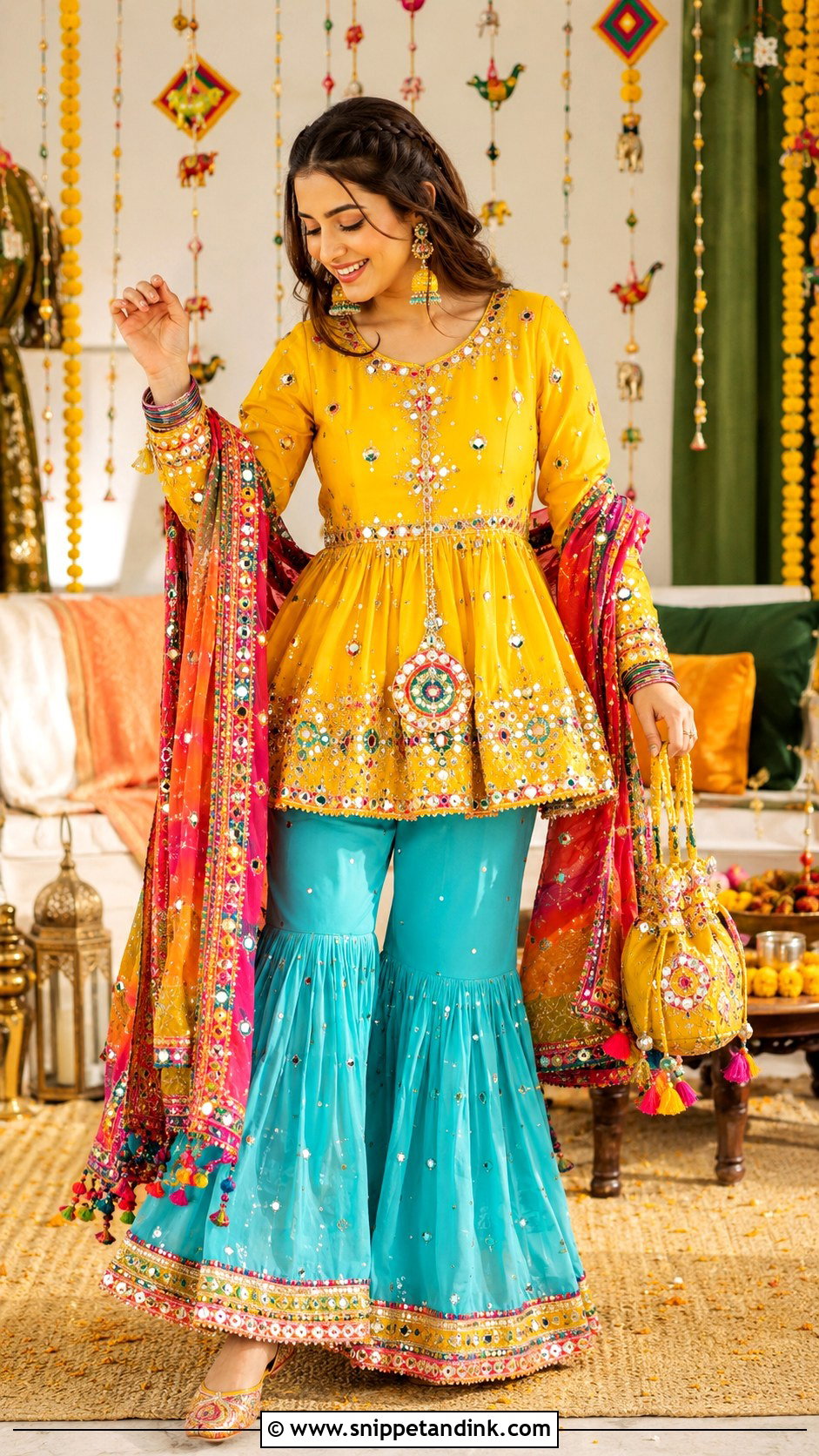
Mirror work catches every light at a mehndi or sangeet-style evening, which is exactly why it belongs there. A mirror-work short shirt with gharara, a peplum with sharara, or a lehenga choli with a colorful dupatta all work, in yellow, green, orange, turquoise or hot pink. The mirrors already sparkle, so keep the jewelry playful but light. Mirror work also adds weight and can scratch, especially at the inner arm, so check the lining before you commit to dancing in it. Khussas or block heels, bangles, loose waves and a small potli bag finish it.
22. Pakistani Gota Work Dress For Wedding
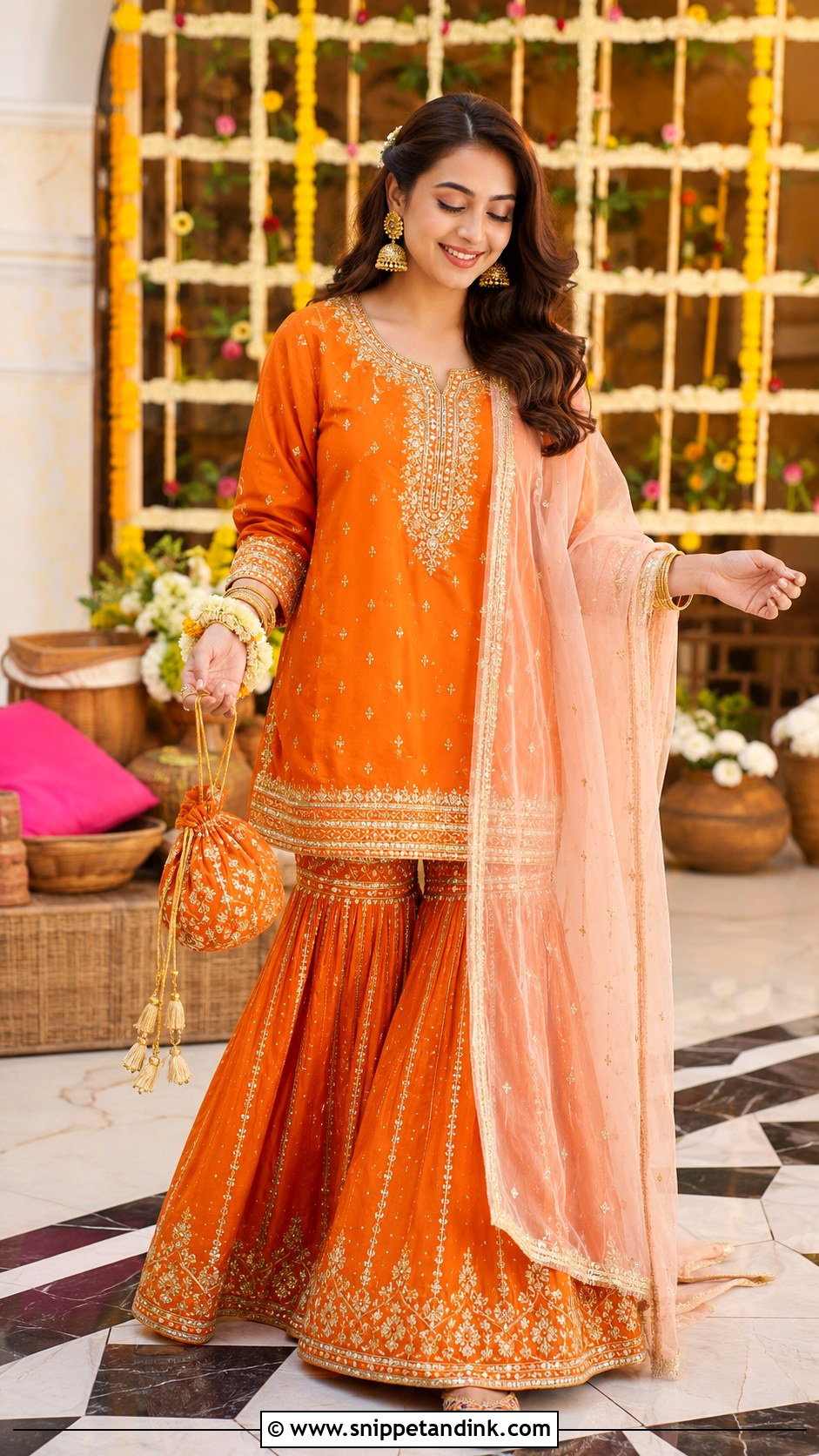
Gota is metallic ribbon stitched onto fabric, and it gives shine without the weight of stones or sequins. That’s why it’s a mehndi and mayun classic. A gota gharara, sharara or angrakha looks traditional and fun, in yellow, mehndi green, orange, coral or pink, and ivory with gold gota is a softer option. Traditional metal gota can tarnish, while most modern gota is synthetic and keeps its color better, so it’s worth asking which you’re buying. Khussas, bangles, jhumkas, a light dupatta and fresh, glowy makeup complete it.
23. Pakistani Pastel Dress For Walima
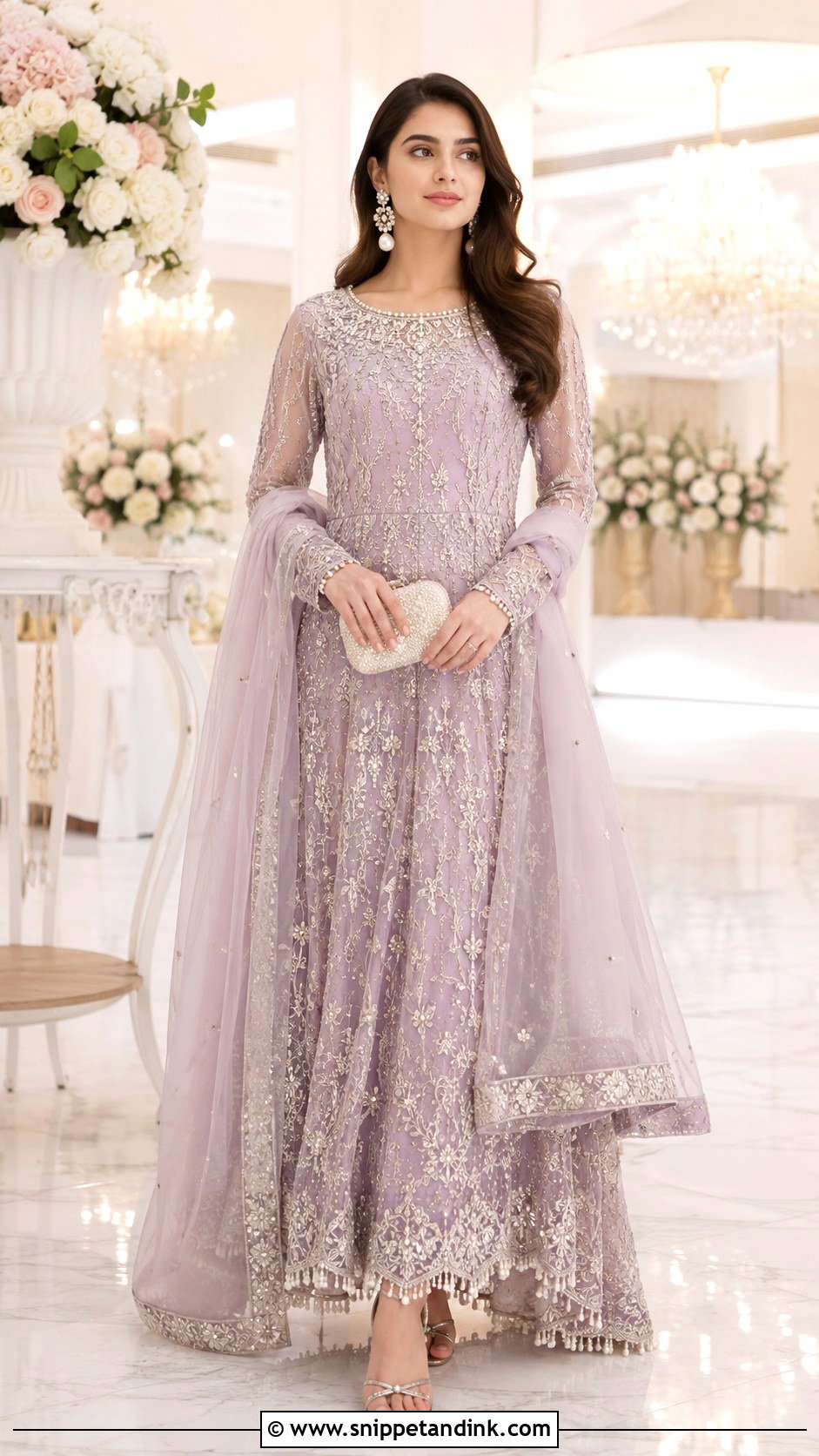
Walima usually has a calmer mood than the barat, and pastels suit it: blush, mint, champagne, powder blue, lilac, sage or soft peach. A pastel maxi, saree, pishwas, organza suit or lehenga with pearl, silver or tone-on-tone embroidery works well. If you know the bride’s color, avoid matching it closely. She’ll likely be in a pale shade too, and you don’t want to look coordinated with her in photos. Clear heels, metallic sandals, pearl earrings and a sleek clutch suit it, with soft waves or a low bun.
24. Pakistani Red Dress For Barat
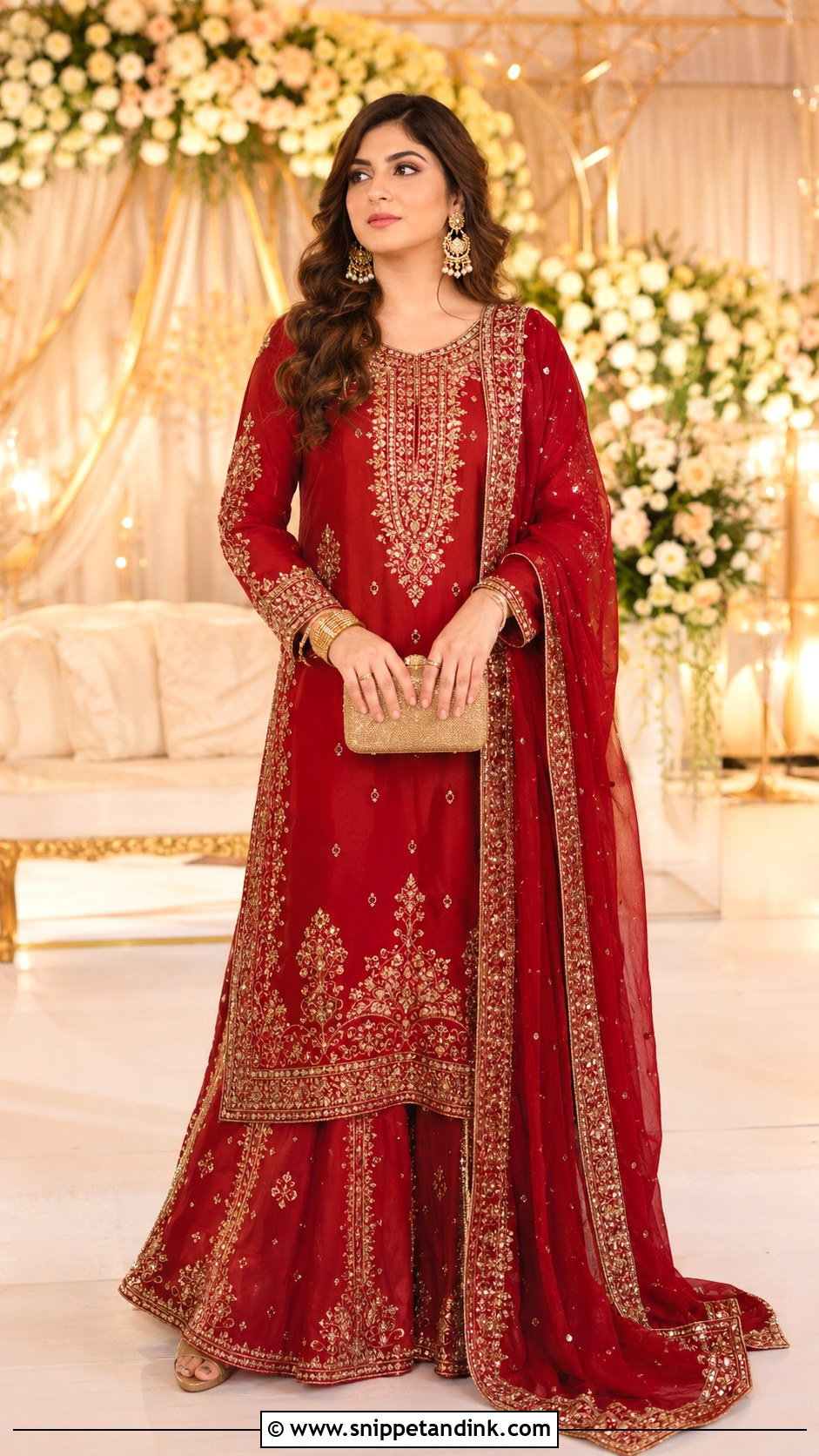
A red Pakistani dress is tied closely to the barat, and to the bride herself. If you’re the bride or very close family, a red lehenga, gharara, pishwas or long shirt with lehenga is right. Guests should be careful with heavy bridal-style red unless the family has said it’s welcome. For a guest, a deeper maroon, rust red or muted crimson with lighter embroidery is the safer route. Antique gold jewelry, a matching dupatta and elegant heels suit it. Keep the rest of the styling restrained so the color reads as rich rather than bridal.
25. Pakistani Formal Trouser Suit For Wedding
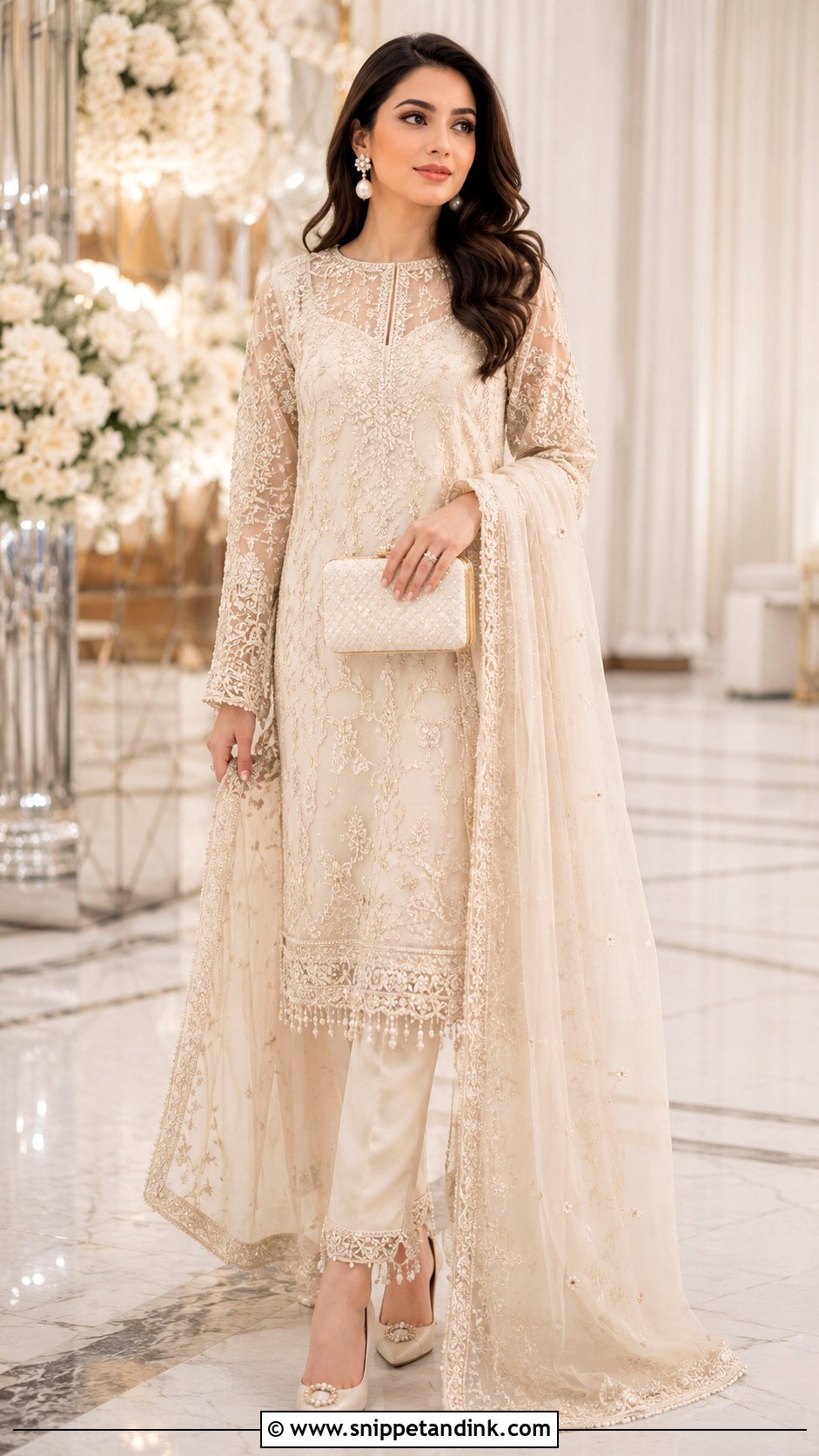
A formal trouser suit gives you a comfortable Pakistani wedding outfit with no flare to manage. Choose a long embroidered kameez with tailored trousers, culottes or flared pants. It’s practical for guests, older women and anyone heading to a smaller nikkah, walima or reception. Silk, chiffon, organza and jacquard make it feel formal, and an embroidered dupatta turns it from daywear into wedding wear in one move. Older guests often appreciate trousers with a soft elastic back at the waist, which the shirt hides completely. Soft metallic heels, pearl earrings and a structured clutch finish it, and it’s easy to wear again.
Summer Lawn Mehndis and Winter Marquees Need Different Fabric
Pakistani wedding season peaks in the cooler months, but plenty of functions happen in the heat, outdoors on lawns or under marquees. The fabric that works at one can be miserable at the other.
When it’s hot
Choose lawn, cotton silk, chiffon or organza with a cotton lining. Skip velvet, heavy jamawar and dense sequin work, which trap heat against the body. Lighter colors stay cooler in sun, and a light dupatta won’t stick to your neck. Long-wear makeup and a small hand fan help more than you’d expect.
When it’s cold
Velvet, raw silk, jamawar and Banarsi keep you warm. Outdoor marquees get chilly late at night, so bring a pashmina or embroidered shawl that suits your outfit rather than a coat that hides it. Closed-toe heels and a pair of thin thermal leggings under a gharara or sharara stay invisible and make a real difference by midnight.
Dress for the Family’s Level of Formality
Match the outfit to the event, your comfort and the family’s level of formality, and most of the decision is made. Mehndi outfits can be bright and playful, barat looks run richer and more traditional, and walima outfits lean softer and polished. Lehengas, ghararas, sarees, pishwas, chiffon suits and trouser sets all have a place, for every age and size. When in doubt, ask the family, then dress a notch below the bride and a notch above what you’d wear to a nice dinner.
You'll Like These Ideas:


Leave a Reply