
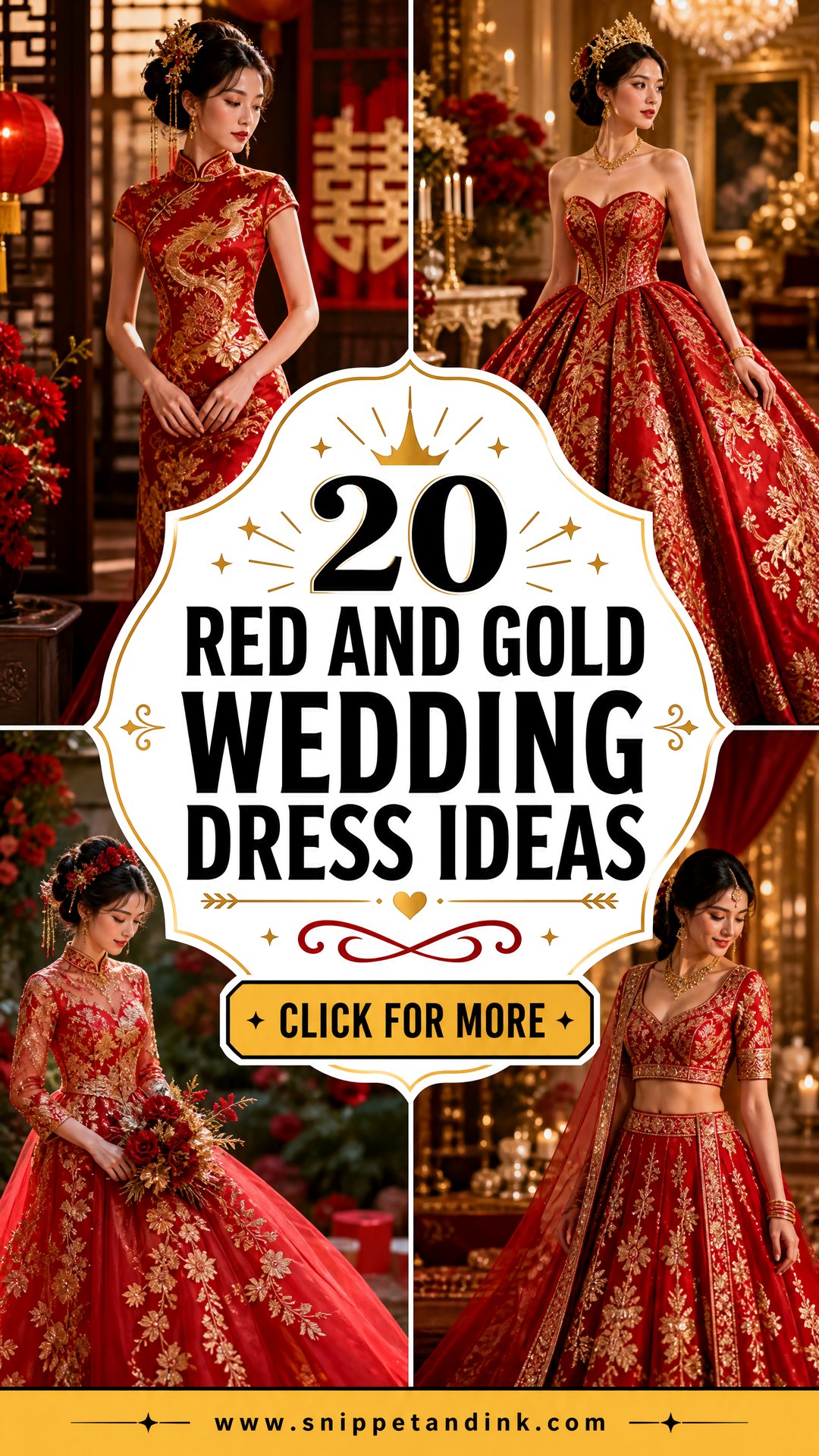
Red and gold is the pairing I see brides return to after trying everything else, because it reads as celebration from across a room. It sits just as comfortably on a lehenga or an embroidered qipao as on a ball gown. The real work is deciding which colour leads. Usually red carries the fabric and gold arrives through zari, brocade, beading or jewellery, though a pale gold gown with a few red accents can be striking too. Before you fall for a silhouette, think about your venue, your cultural traditions, how much weight you can comfortably carry, and how much embellishment you actually enjoy wearing. The twenty looks below run from heavily traditional to very pared back, with notes on how each one behaves once you’re wearing it.
Which Red Flatters You, and Which Gold Flatters the Red
Red is not one colour. Some reds lean blue, like ruby, crimson and cherry, while others lean orange, like vermilion, tomato and coral red. At a first appointment I hold both kinds of fabric under the bride’s chin in daylight before we look at a single silhouette. Cool, pink-toned skin usually brightens next to a blue red; warm, golden skin tends to glow in an orange red or a rich maroon. The wrong red makes skin look sallow or ruddy, and no amount of makeup fixes it in photos.
The gold needs the same thought. Bright yellow gold zari looks festive with a warm red. Antique or dull gold suits maroon and wine, and it photographs calmer under flash. Champagne or rose-toned gold softens a blue red. Try to match the gold in the fabric to the gold in your jewellery, or deliberately mix them with one leading, so it doesn’t look like an accident.
- Take swatches outside and into a dim room; red shifts more between light sources than most colours.
- Photograph the fabric on your phone with and without flash. Some reds go orange on camera.
- Feel the gold thread. Good zari is soft and pliable; cheap metallic yarn feels scratchy and can leave red marks on bare arms.
1. Classic Red and Gold Lehenga Wedding Dress
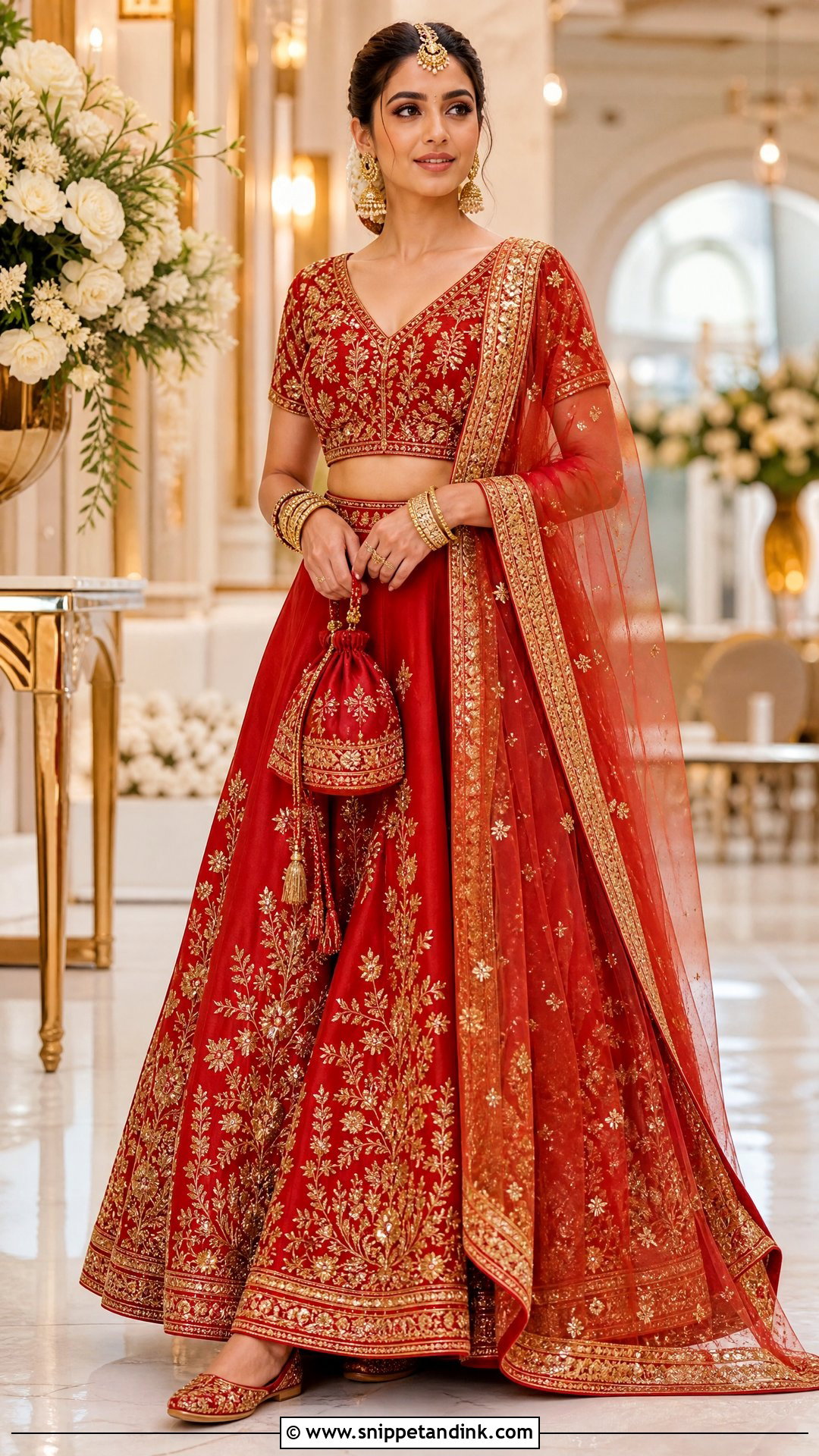
A classic red bridal lehenga in silk or raw silk, worked in zari or zardozi, is still the look most families picture first. What I check before anything else is the skirt weight: dense zardozi on a full kali skirt gets heavy, and the bride feels it by the third hour. A blouse with elbow sleeves gives the bodice support, and a sheer red dupatta with a firm gold border can go over the head for the pheras and onto one shoulder later. Jhumkas, stacked bangles and a potli keep the colour story tight. Choose cushioned heels or embellished flats you’ve already walked in. For the lip, I go a shade deeper or warmer than the fabric, since an exact match tends to flatten the face in photos.
2. Red Velvet and Gold Embroidery Wedding Dress
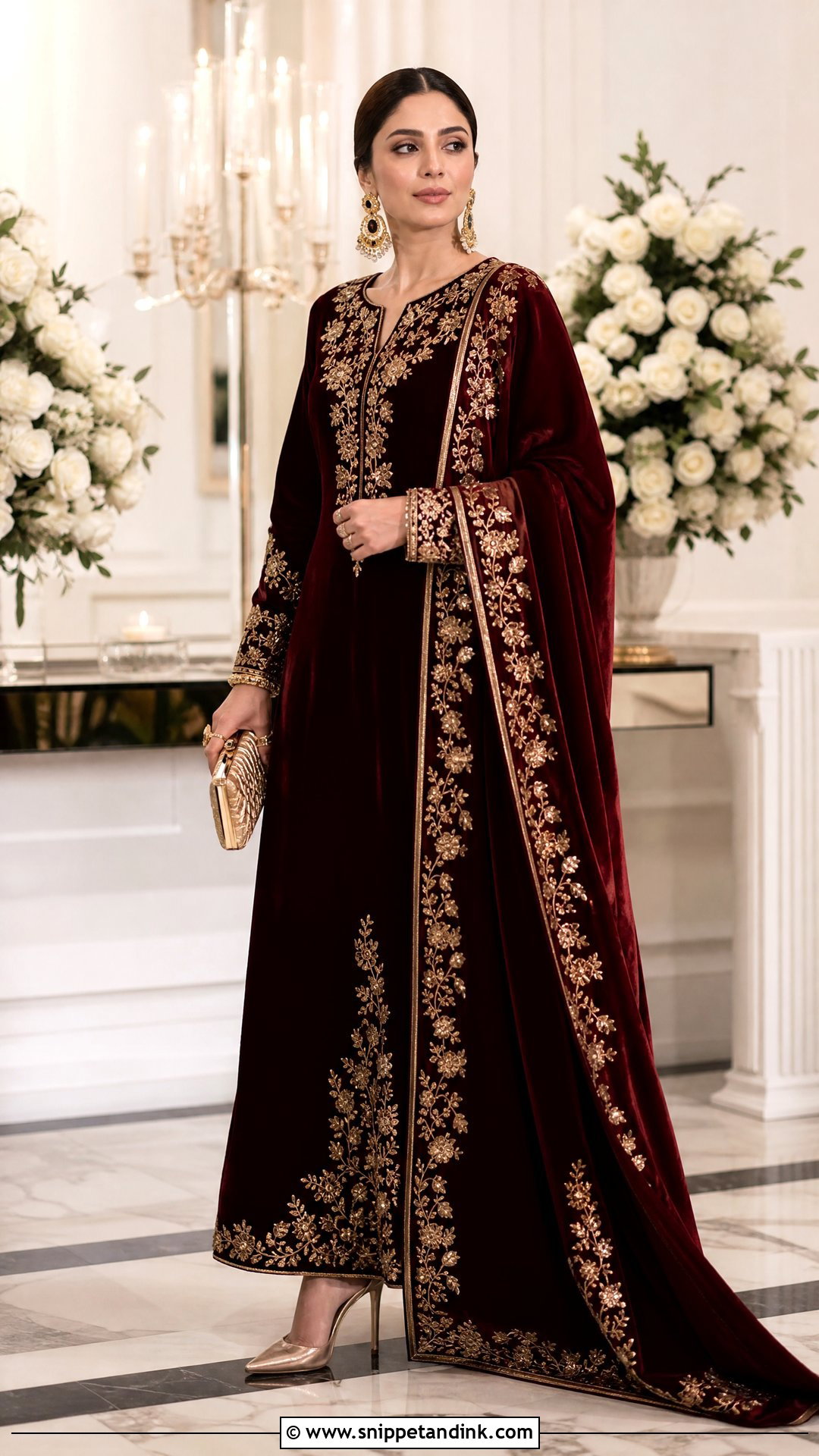
Velvet swallows light, which is exactly why it suits an evening or winter wedding indoors. A crimson or burgundy velvet gown with antique-gold embroidery at the bodice, cuffs and hem looks rich without trying hard. Keep the cut to an A-line or a soft flare; velvet is heavy and a narrow skirt fights you on every step. Long sleeves and a modest neckline leave the metalwork as the focus. Velvet also marks easily where it’s pressed, so I tell brides not to sit on the back of the skirt for long stretches before photos. A structured gold clutch, pointed metallic pumps and gold jewellery with red stones finish it, with a low bun or soft waves. The gold detailing does real work here, catching the light the pile absorbs.
3. Red and Gold Ball Gown Wedding Dress
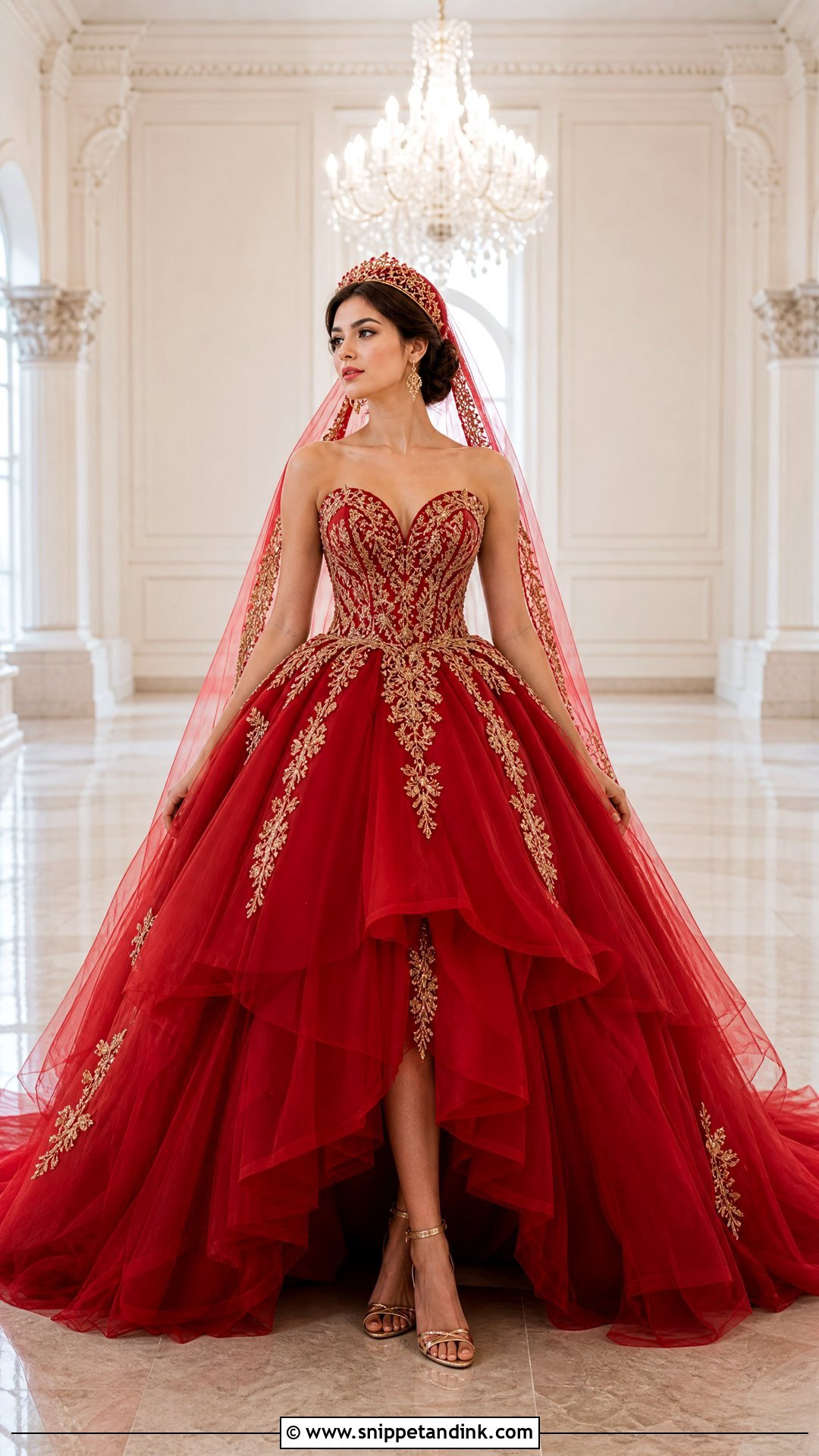
For a grand entrance, a red and gold ball gown is hard to beat. I like a structured red bodice over layered tulle, satin or organza, with gold appliqués flowing from the neckline to the waist and thinning out across the skirt. That gradient shapes the figure far better than covering every inch. One practical warning: a full ball gown skirt needs a wide aisle and a car with real back-seat space, so measure both before you commit. A delicate gold tiara, teardrop earrings and closed gold heels coordinate without crowding, and a sheer red veil with a fine metallic edge adds drama. Keep the bouquet to cream, red and greenery. Ballrooms and hotel halls give this silhouette the space it needs.
4. Red and Gold Mermaid Wedding Dress
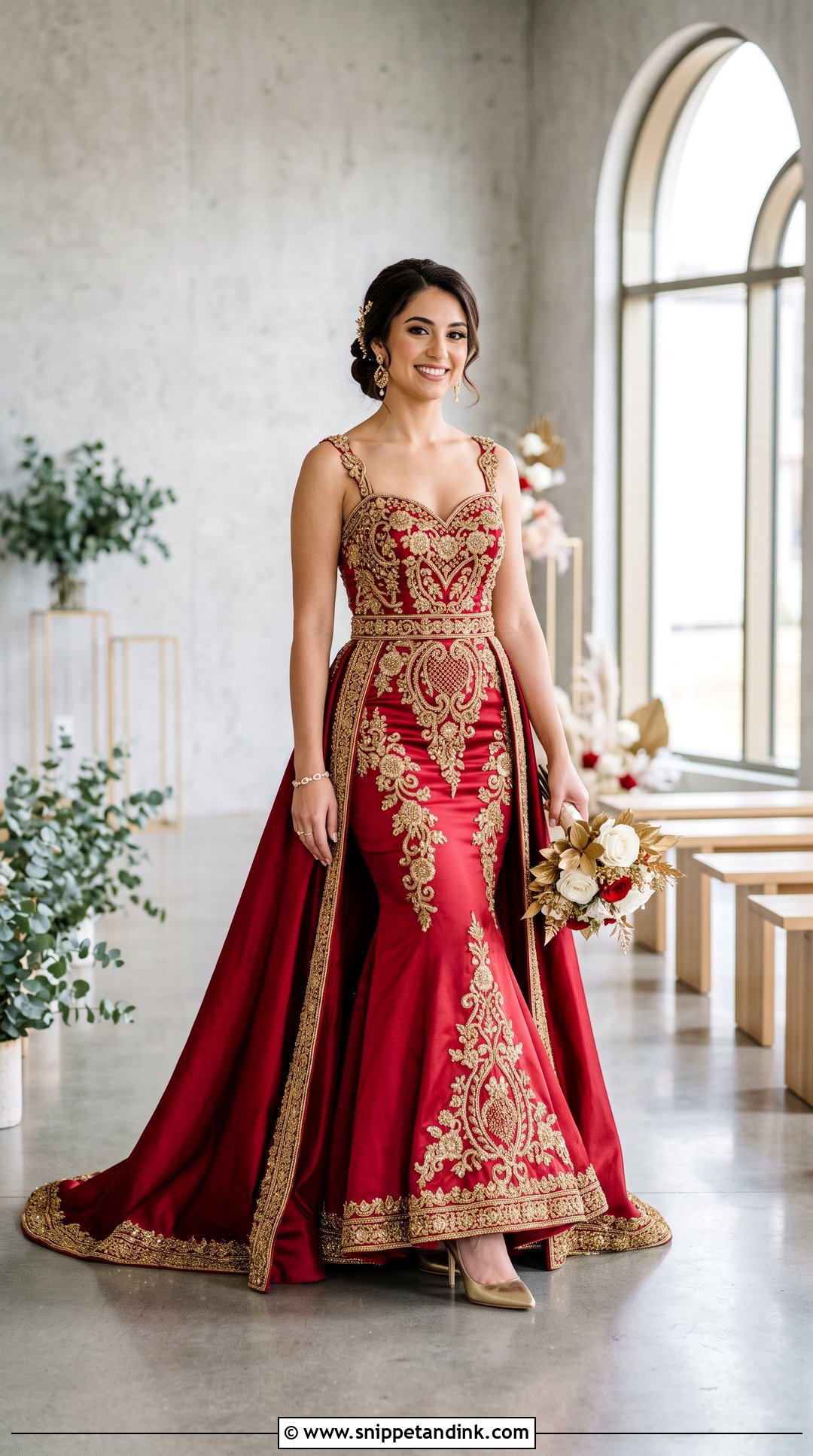
The mermaid is the least forgiving shape on this list, and the most dramatic when the fit is right. It should hug through the hips and release into the flare at or just above the knee; set the flare too low and you’ll be shuffling all night. Ruby crepe, satin or embroidered lace gives enough structure, while gold beading along the neckline and side panels traces the line of the body. A detachable overskirt is worth considering for ceremony volume that comes off before dancing. Gold drop earrings, a slim bracelet and pointed pumps are plenty. A side-parted updo shows the neckline and balances the weight of the skirt. Do a full sit, stand and stair test at your final fitting, not just a mirror check.
5. Red and Gold A-Line Wedding Dress
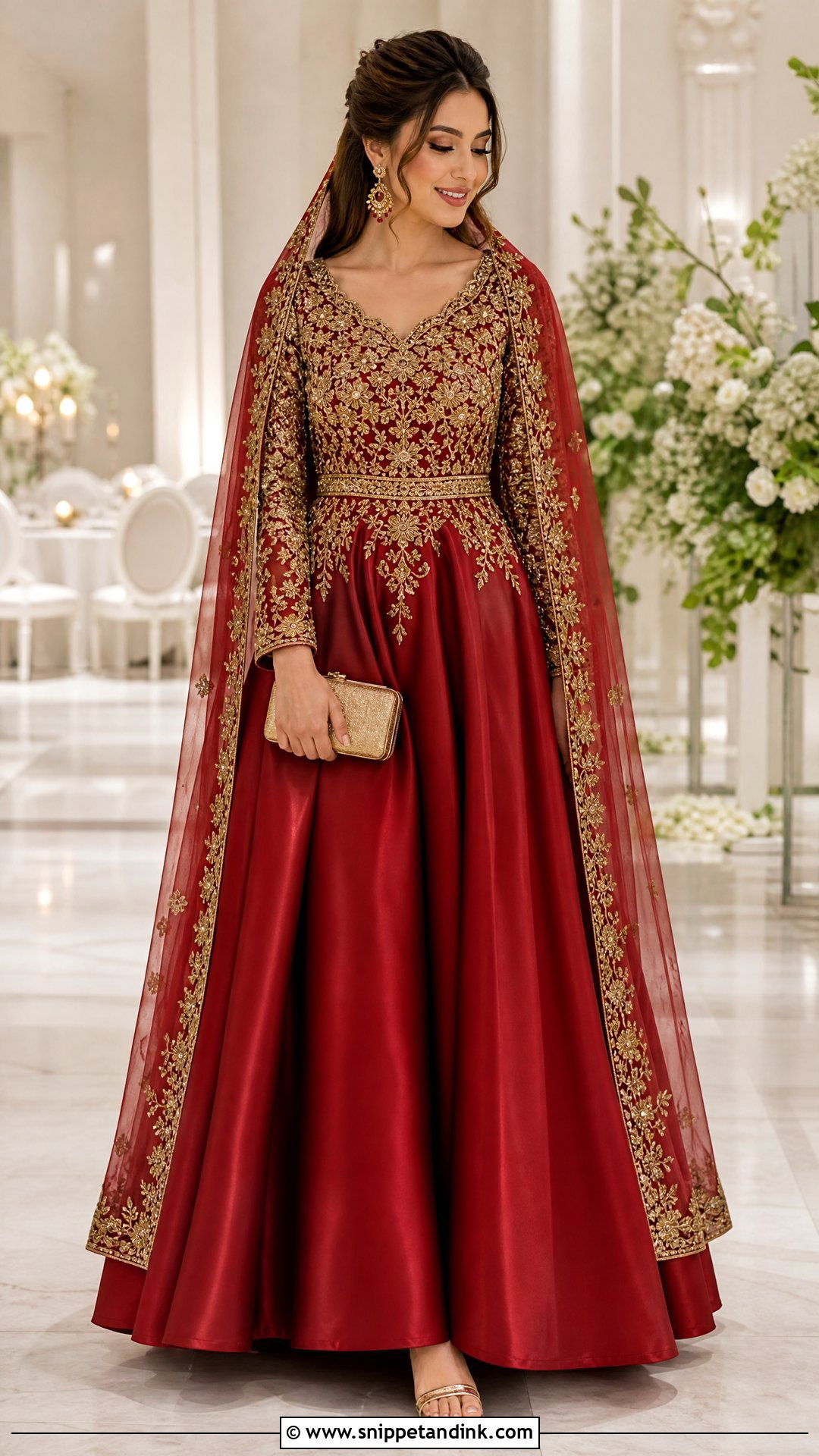
If you’re nervous about wearing bold colour, start with the A-line. It fits through the bodice and widens gradually from the natural waist, so it flatters most figures and lets you breathe. Fine gold embroidery at the neckline, waist and hem gives definition while the shape stays clean. Satin gives a polished finish; chiffon moves more softly and is kinder in summer heat. Medium-height gold sandals, a compact metallic clutch and earrings that echo the embroidery are enough. A plain veil scattered with tiny gold beads adds a bridal note without weight. Because the canvas is so simple, it’s easy to make this dress feel like yours through sleeves, neckline or the colour of the thread.
6. Red and Gold Long Sleeve Wedding Dress
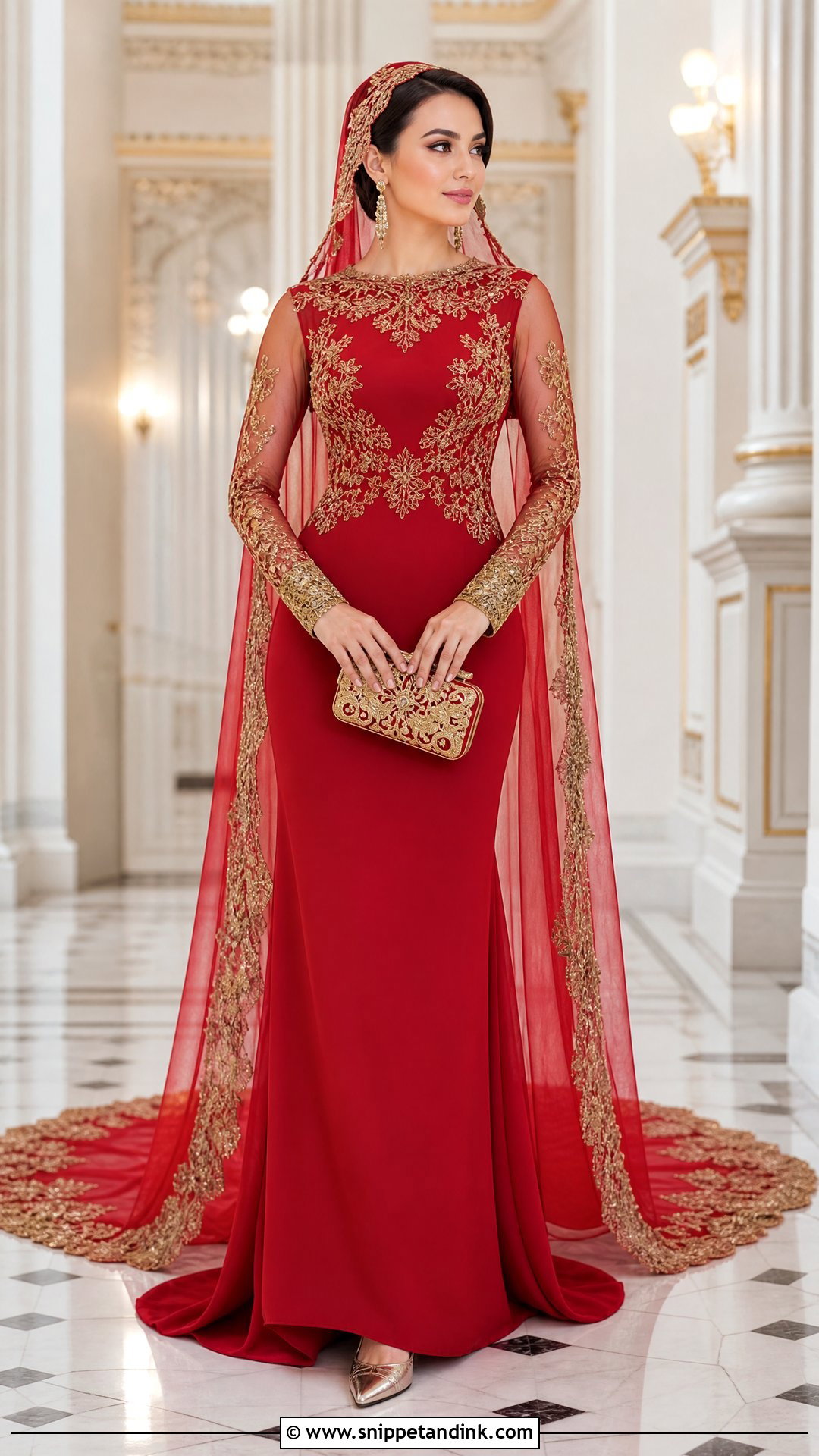
Long sleeves change a red gown more than people expect: they shift the eye to the arms and shoulders, so that’s where the gold should live. Sheer sleeves carrying gold lace, beaded cuffs or a fine vine of embroidery toward the shoulder work well, as long as the skirt stays smooth and lightly flared so the top half doesn’t overpower it. Raise your arms at the fitting. Sheer sleeves set too tight at the armhole will pull the whole bodice up when you hug someone. For a very formal ceremony, a cathedral veil with a slim gold border suits this dress. Gold pumps, a small embroidered clutch and drop earrings complete it. Lined satin or crepe sleeves give fuller coverage, and a low chignon keeps the back detail visible.
7. Red and Gold Off Shoulder Wedding Dress
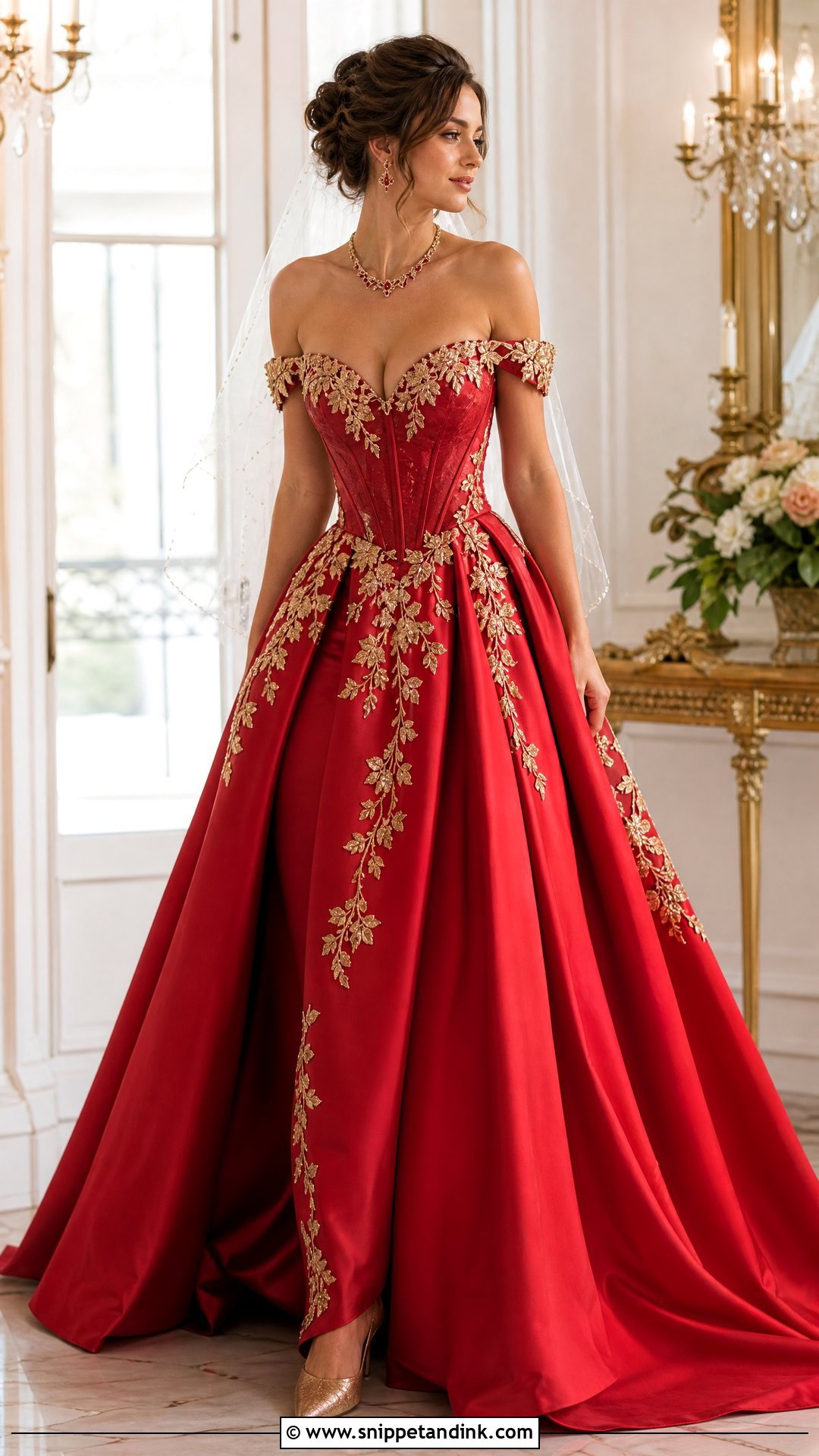
An off-shoulder neckline softens the intensity of strong red because it puts skin and collarbone between the colour and your face. Gold floral appliqués around the neckline and waist suit it, over a flowing A-line or full satin skirt. The thing I always ask about is the inner structure. A heavily beaded off-shoulder bodice with a long train needs boning and a waist stay, or you’ll spend the day hitching it up. A short gold necklace, matching earrings and metallic heels hidden under the hem keep it tidy. Pin a sheer fingertip veil beneath a softly curled updo so the neckline stays clear. Warm neutral eyes and a muted berry lip suit the shape.
8. Red and Gold Cape Wedding Dress
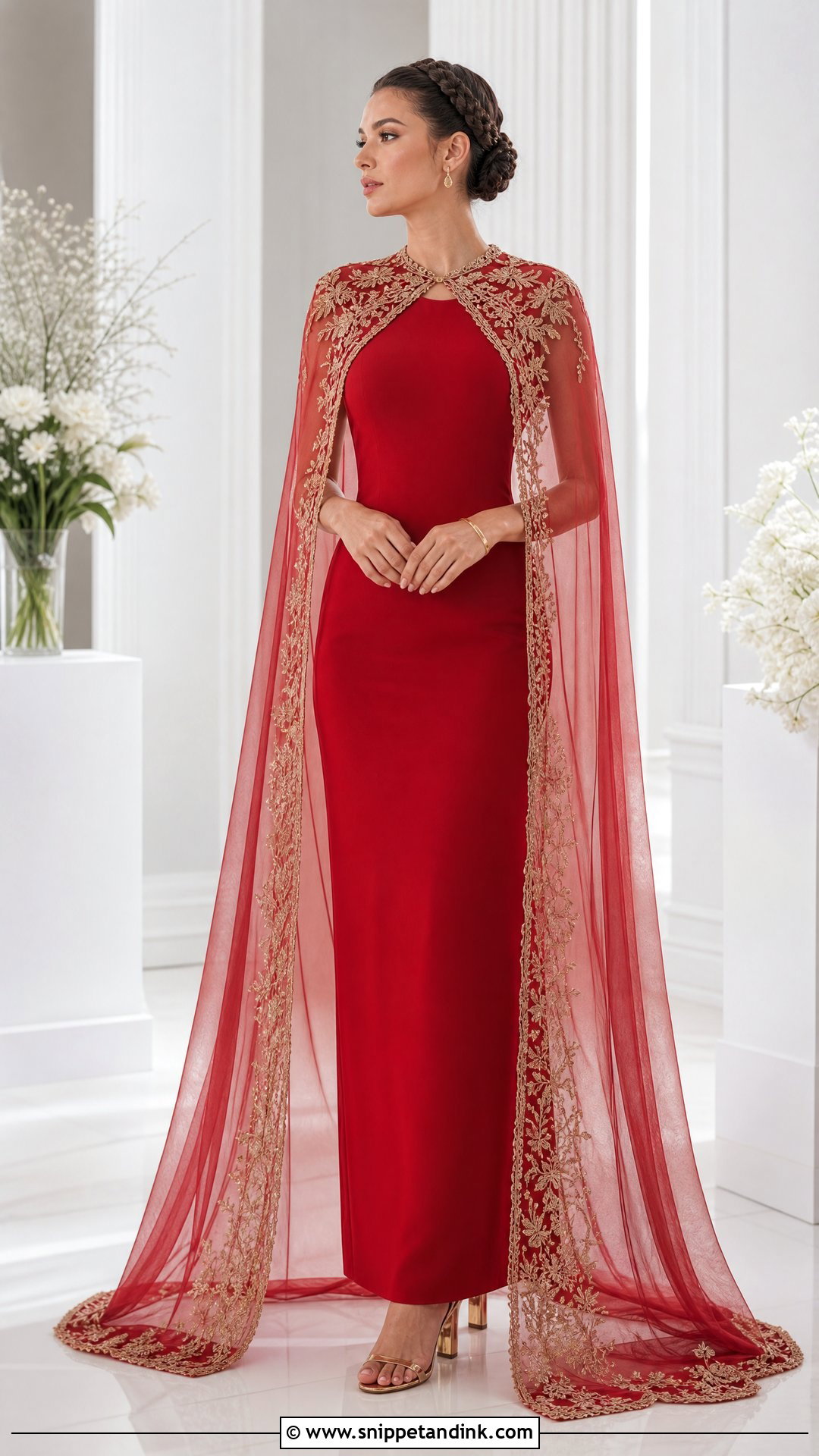
A cape gives you coverage and movement without a veil, which is why I suggest it so often. Start with a streamlined red column or A-line gown and add a sheer floor-length cape embroidered in gold around the shoulders and edges. The plain base keeps it from looking busy. Check how the cape fastens: some clip at the shoulder seams, others tie at the neck, and a heavy necklace will fight either one, so skip it. A detachable cape lets you dance freely later. Understated gold earrings, a smooth bracelet and comfortable metallic block heels are all you need, with a sleek bun or braided updo that keeps the neckline neat. It reads as dramatic and modest at once, without a wide skirt.
9. Red and Gold Qipao Wedding Dress
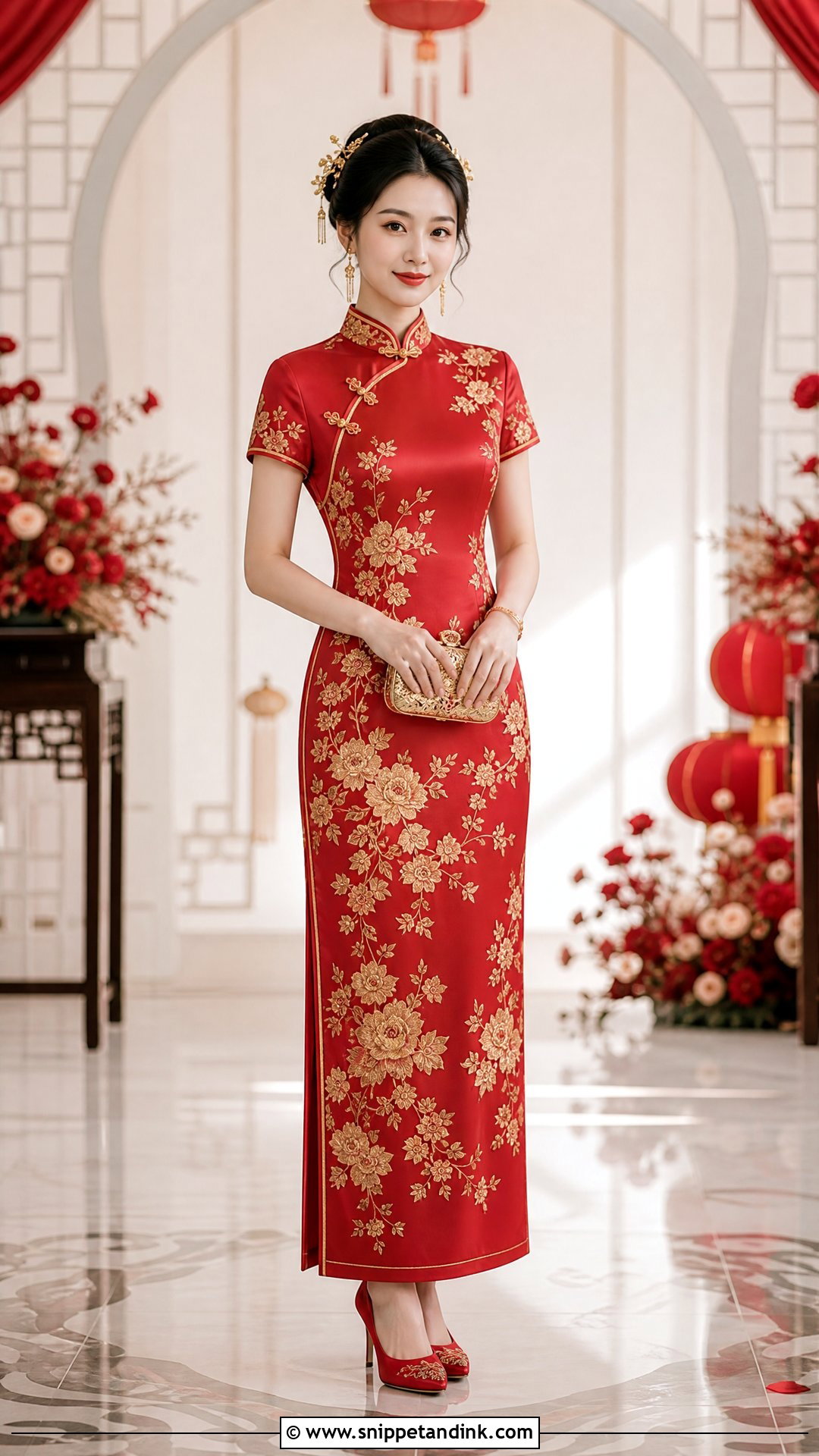
A red and gold qipao carries real tradition, so the motifs are worth choosing with care: phoenix and peony, clouds, or double happiness each carry meaning, and an older relative will often notice. Red silk or brocade, a mandarin collar and knotted pankou closures give the dress its structure. Floor length suits a formal tea ceremony; ankle length is easier at a banquet where you’ll move between tables. The fit question I always raise is the side slit. Too short and you can’t walk; too high and it gapes when you sit. Red or gold closed heels, delicate drop earrings, a small structured clutch and gold pins in a polished bun complete it.
10. Red and Gold Saree Gown Wedding Dress
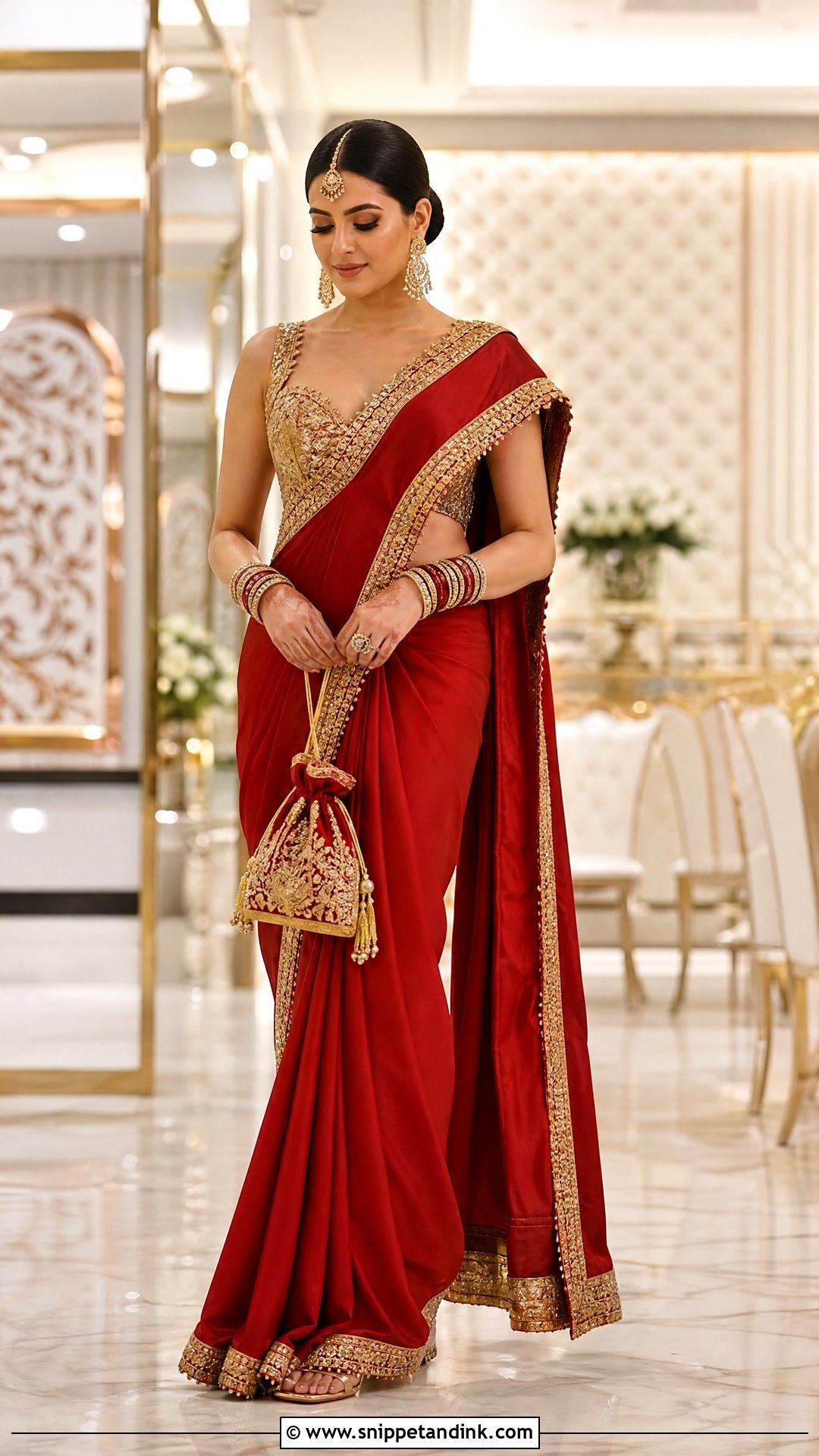
A saree gown gives you the drape of a saree without needing someone to pleat and pin you on the morning. Look for a red gown with pre-stitched pleats, a defined waist and a gold-bordered pallu falling over one shoulder. Fine beading or zari along the bodice keeps it from feeling heavy. Pair it with a fitted blouse-style top in short or elbow sleeves. The pallu is the part that slips, so I have it tacked to the blouse at the shoulder with a couple of hidden stitches, not just a brooch. Gold sandals, stacked bangles, statement earrings and a small potli finish it, with a centre-parted bun. Hem it in the shoes you’ll actually wear so the pleats don’t catch your heel.
11. Red and Gold Anarkali Wedding Dress
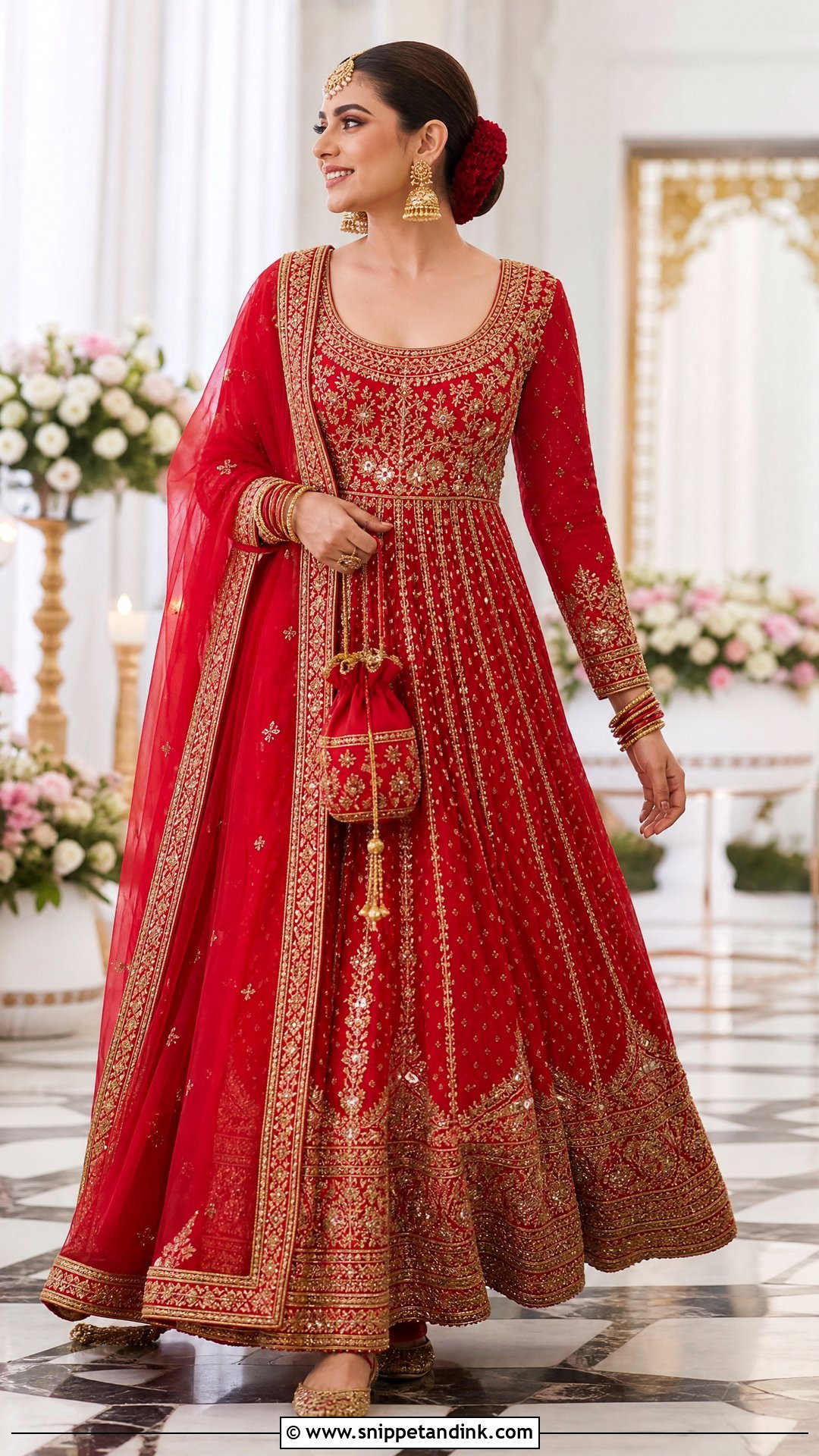
An Anarkali swings when you walk, and that movement is half its charm. A fitted red bodice opens into a deeply flared skirt with gold embroidery along the neckline, waist, cuffs and hem. Silk holds a fuller shape; georgette is lighter and moves more, and in a warm venue I’d lean toward georgette. A sheer red or soft-gold dupatta can cover the head for the ceremony and move to one shoulder after. Gold earrings, coordinating bangles and embroidered flats keep you comfortable on your feet. The skirt already has plenty of volume, so I keep the bag slim and the jewellery moderate. A braided bun or soft half-up style suits the shape.
12. Red and Gold Brocade Wedding Dress
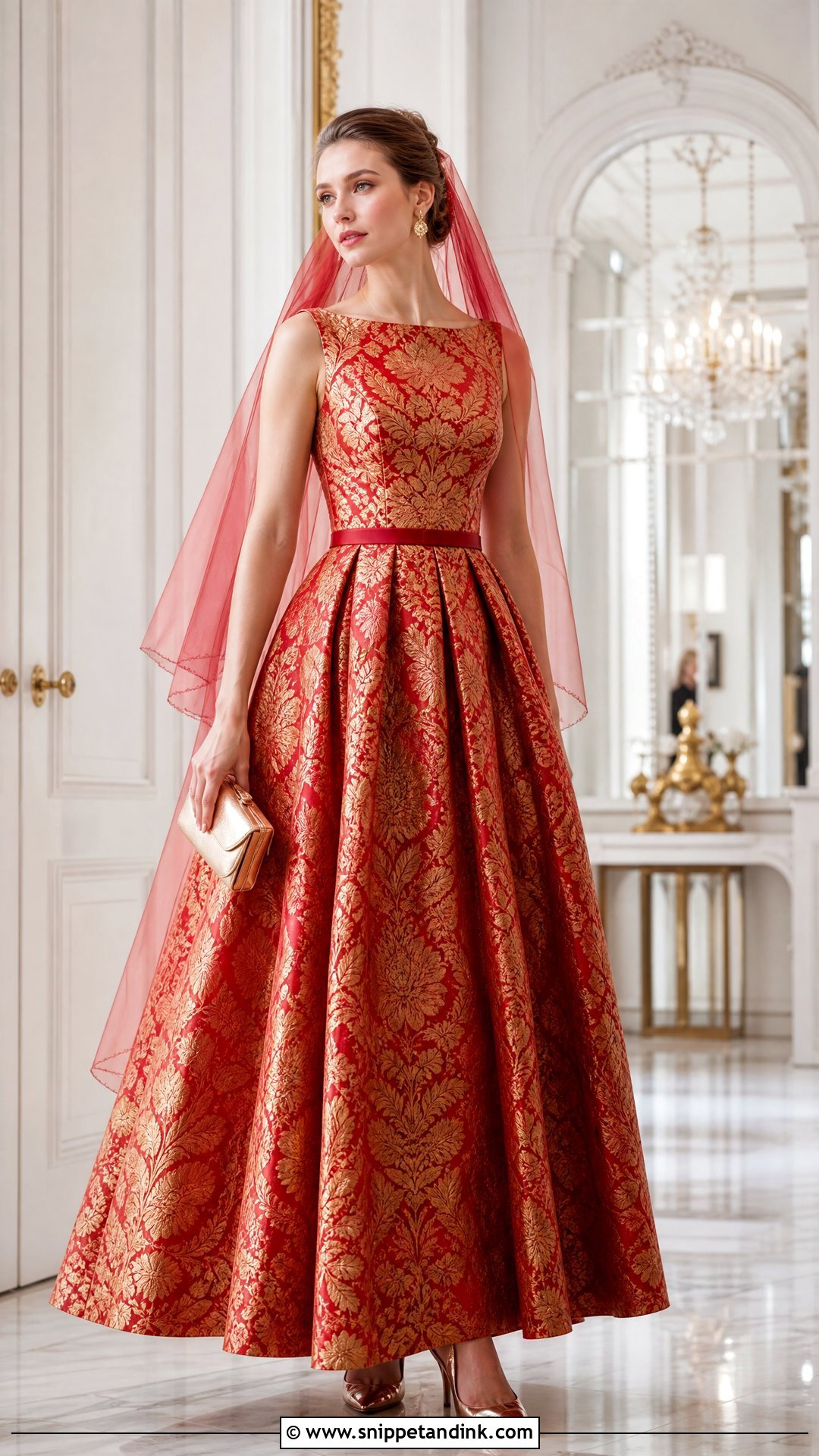
Brocade does the decorating for you, since the pattern and metallic thread are woven into the cloth. That makes it a smart choice if you dislike surface beading. A clean fitted bodice over a full pleated skirt lets the weave show, with a square, bateau or modest V-neck. A narrow red belt or plain gold band defines the waist. Brocade is stiff and can rub at the underarm and waist, so feel the lining against your skin and ask for a soft one if it scratches. Plain metallic pumps, a red satin clutch and polished gold earrings keep the rest quiet. A smooth updo and a lightweight red veil suit the formal structure without hiding the textile.
13. Red and Gold Floral Embroidery Wedding Dress
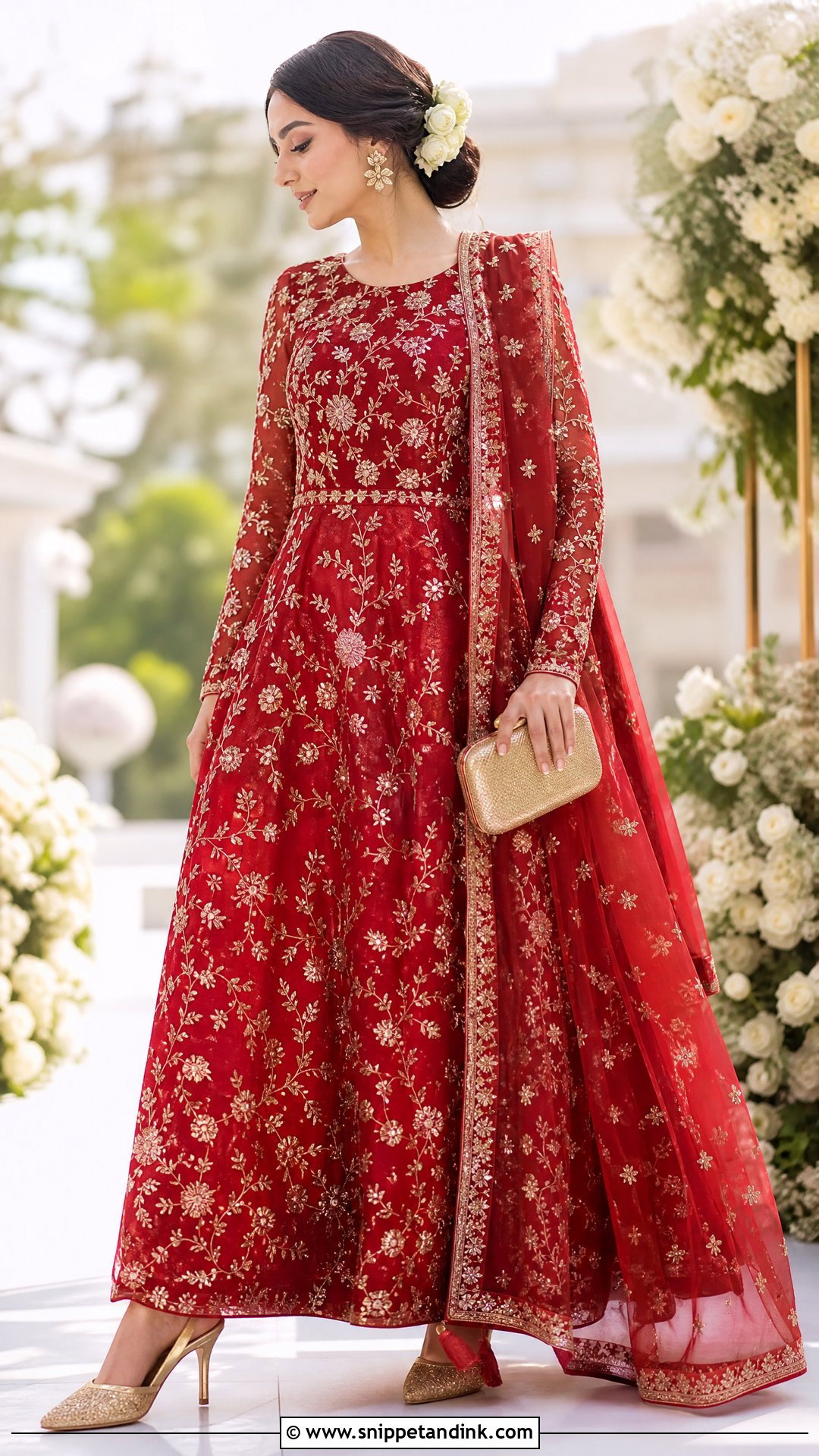
Floral embroidery is the softest way into red and gold. Vines travelling from the bodice down onto an A-line or fit-and-flare skirt look romantic, but only if the embroiderer leaves room around the motifs. When the flowers touch each other, the pattern reads as a blur in photos taken from the back of the aisle. A sheer veil with a few matching flowers on the border ties it together. Gold slingbacks, small floral earrings and a compact clutch complete the outfit. Fresh flowers in a low bun can echo the embroidery; keep them cream, red or blush. Garden ceremonies and bright indoor rooms show off the threadwork best.
14. Maroon and Antique Gold Wedding Dress
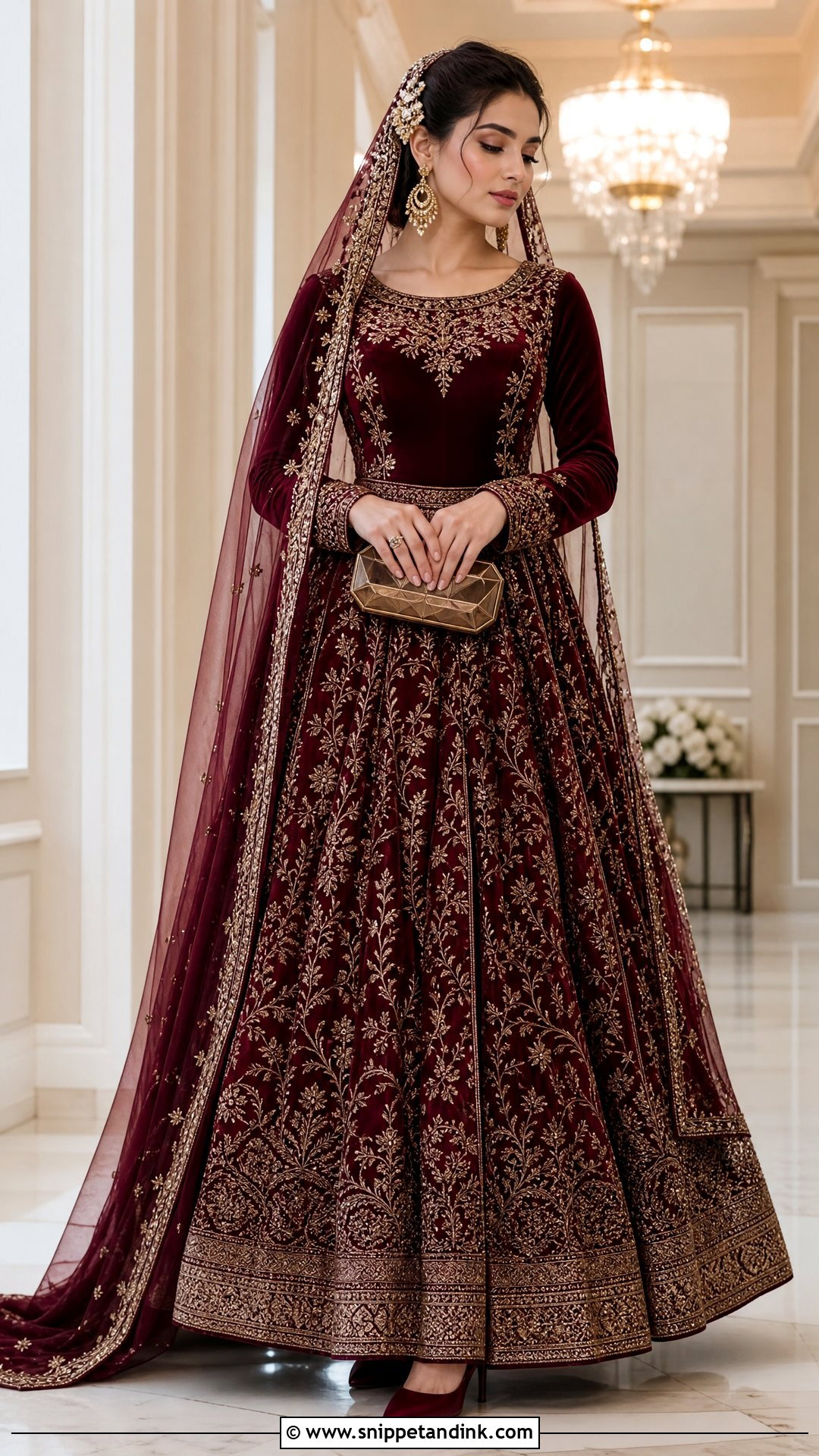
Maroon with antique gold is what I suggest to brides who find scarlet too loud. The aged metallic finish looks like heirloom work, and it doesn’t bounce flash back into the camera the way bright gold can. Silk, velvet or satin all suit it, with embroidery across the bodice and lower skirt. A high neckline, long sleeves and a full skirt push it toward formal; an open neckline lightens it. Antique-gold earrings, a matching hair comb and dark red pumps or embroidered flats keep it in one family of colour, and a maroon veil edged with fine gold lace finishes it. Bronze eyeshadow and a berry lip suit the depth. It holds its colour in daylight and indoor light alike.

15. Ruby Red and Champagne Gold Wedding Dress
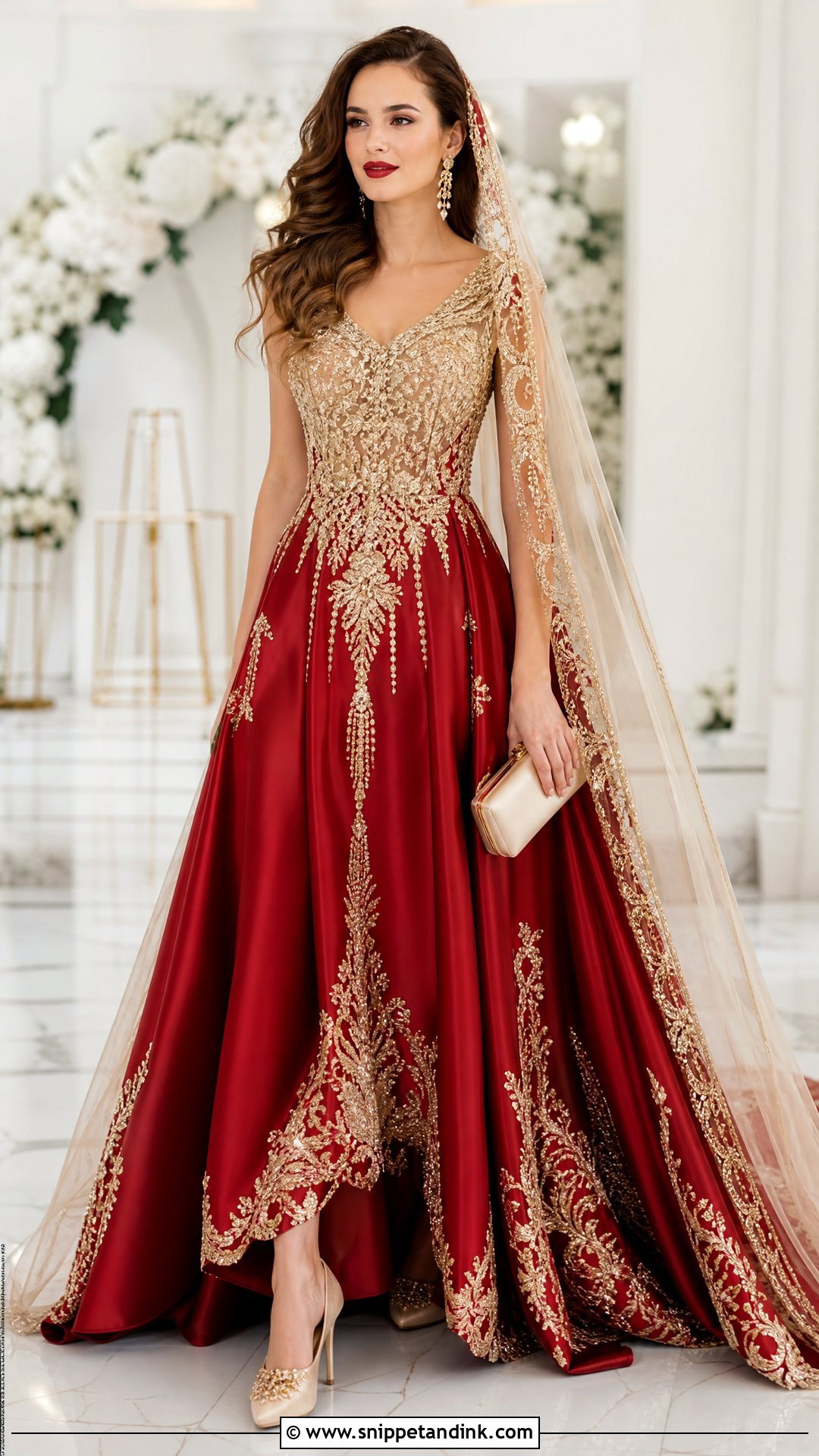
Champagne gold takes the edge off ruby. Pale gold beading around the neckline, waist and back of a ruby satin gown reads softer than bright metallic thread, and it tends to suit cooler skin tones better too. A gently fitted bodice and flowing skirt let the satin’s sheen carry the look. Satin shows every crease, so I bring a steamer to the getting-ready room and keep the bride standing once she’s dressed. Champagne heels, crystal and gold earrings and a small satin clutch coordinate quietly. A sheer red veil with a scatter of pale beads adds a little sparkle. Wear polished waves or a relaxed low bun depending on the neckline, and keep the remaining accessories fine.
16. Red and Gold Two Piece Wedding Dress
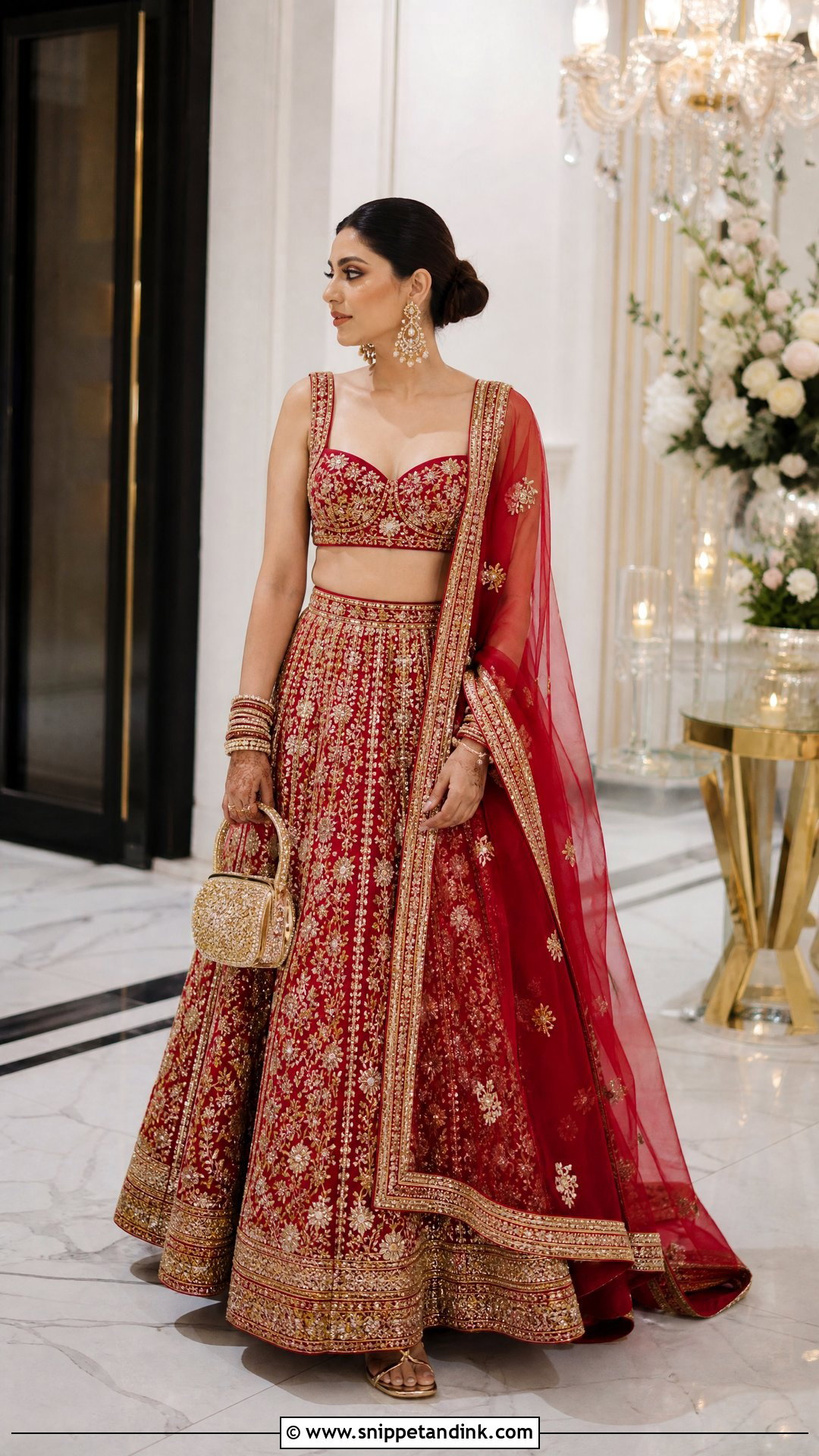
Separates are underrated. A structured red blouse over a high-waisted skirt worked in gold gives you a modern line, and because the pieces are fitted on their own, each one can be tailored exactly to you. Decide early how much waist you want visible; a sliver of skin looks modern, while pieces that meet fully read more traditional. A gold-trimmed cape, dupatta or shoulder drape adds ceremony. The two pieces need one shared detail, matching embroidery, buttons or a border, or they look borrowed from different outfits. Embellished heels, a compact gold bag, statement earrings and bangles complete it. A sleek ponytail or low bun keeps it fresh, and you can rewear the skirt later with a simpler top.
17. Red and Gold High Neck Wedding Dress
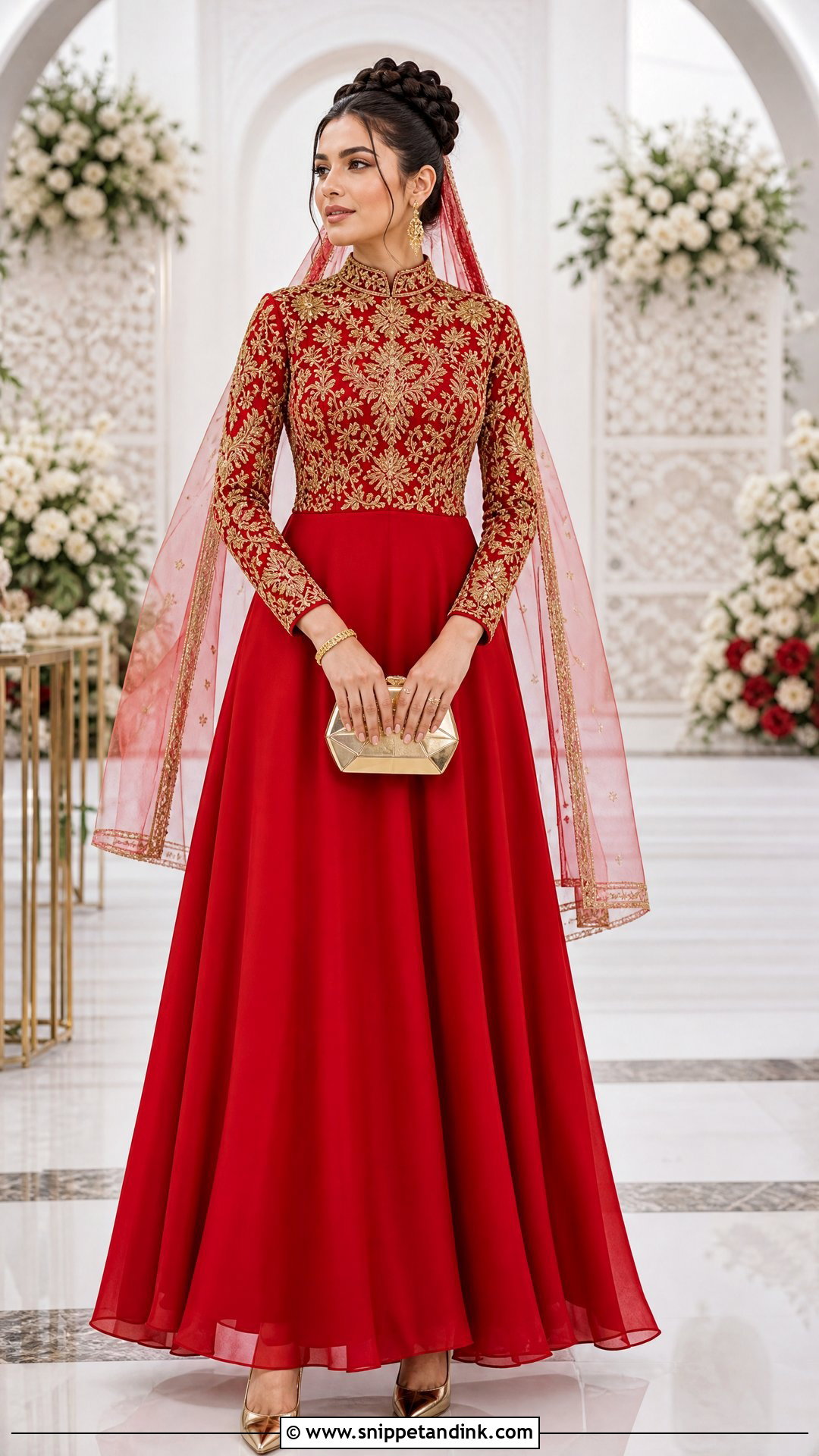
A high collar frames gold work right at eye level, so put the richest beading there and around the shoulders, then let scattered motifs carry it down into a cleaner A-line skirt. Skip the necklace; it will crowd the collar and scratch the beads. Medium-length gold earrings, a slim bracelet and metallic pumps are enough. Hair matters more with this neckline than any other. Loose curls catch on beaded collars all day, so I put brides in a smooth bun or high braided updo. If you want a veil, anchor a plain red or gold-edged one beneath the style. It gives polished coverage and suits formal ceremonies and cooler months.
18. Red and Gold Train Wedding Dress
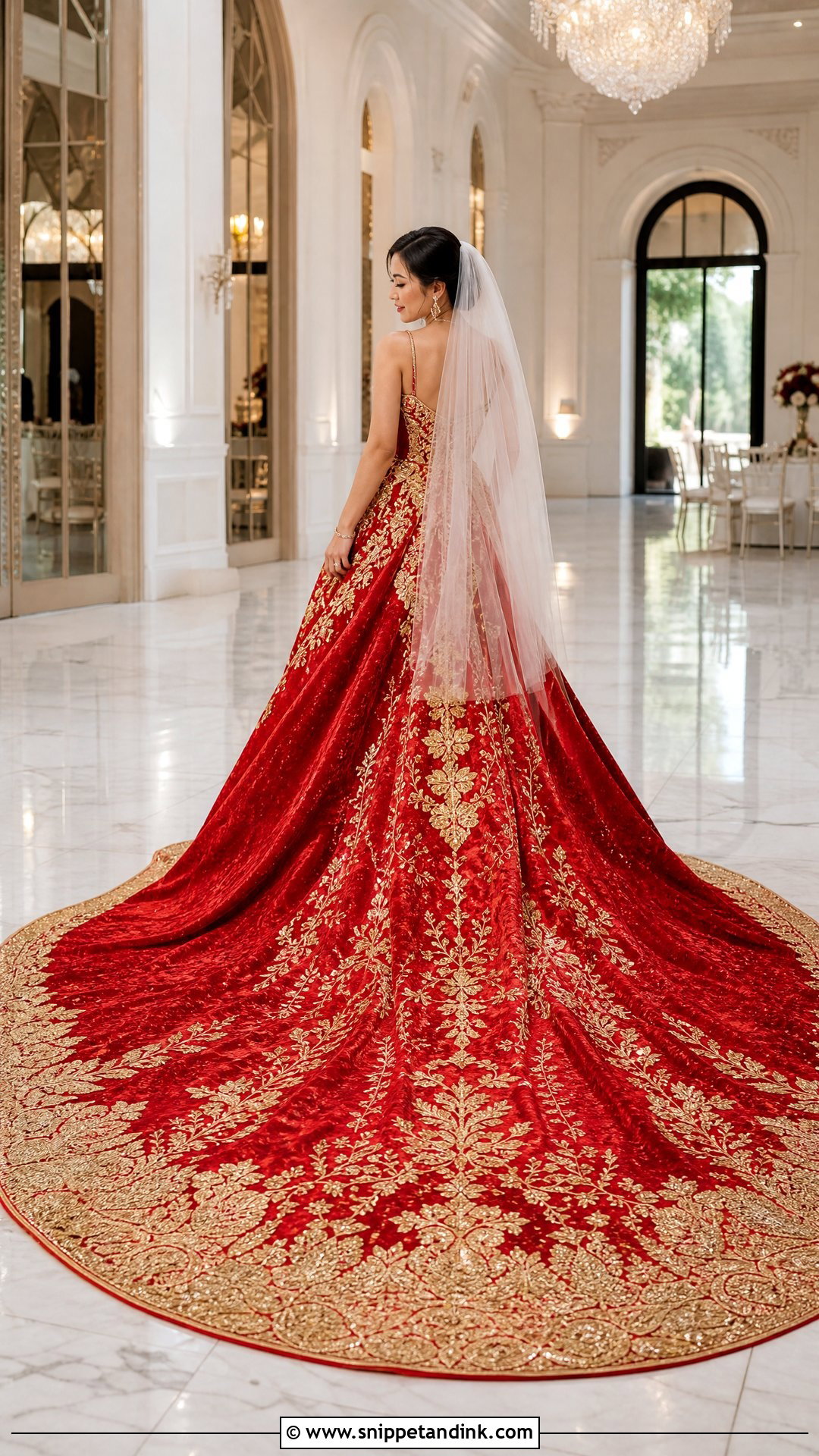
A long train turns a red gown into ceremony, but it needs planning. A fitted bodice extending into a chapel or cathedral train, edged in gold so its shape shows when it’s spread on the floor, looks wonderful at the altar. After the ceremony it becomes a trip hazard. Ask your seamstress for a bustle with clearly marked points, and have whoever will fasten it practise during the final fitting, because nobody figures out a complicated bustle in a dim corridor. A detachable train avoids the problem entirely. Stable gold heels, drop earrings and a slim bracelet are enough, and the veil should be plain so it doesn’t compete with the train.
19. Red and Gold Tea Length Wedding Dress
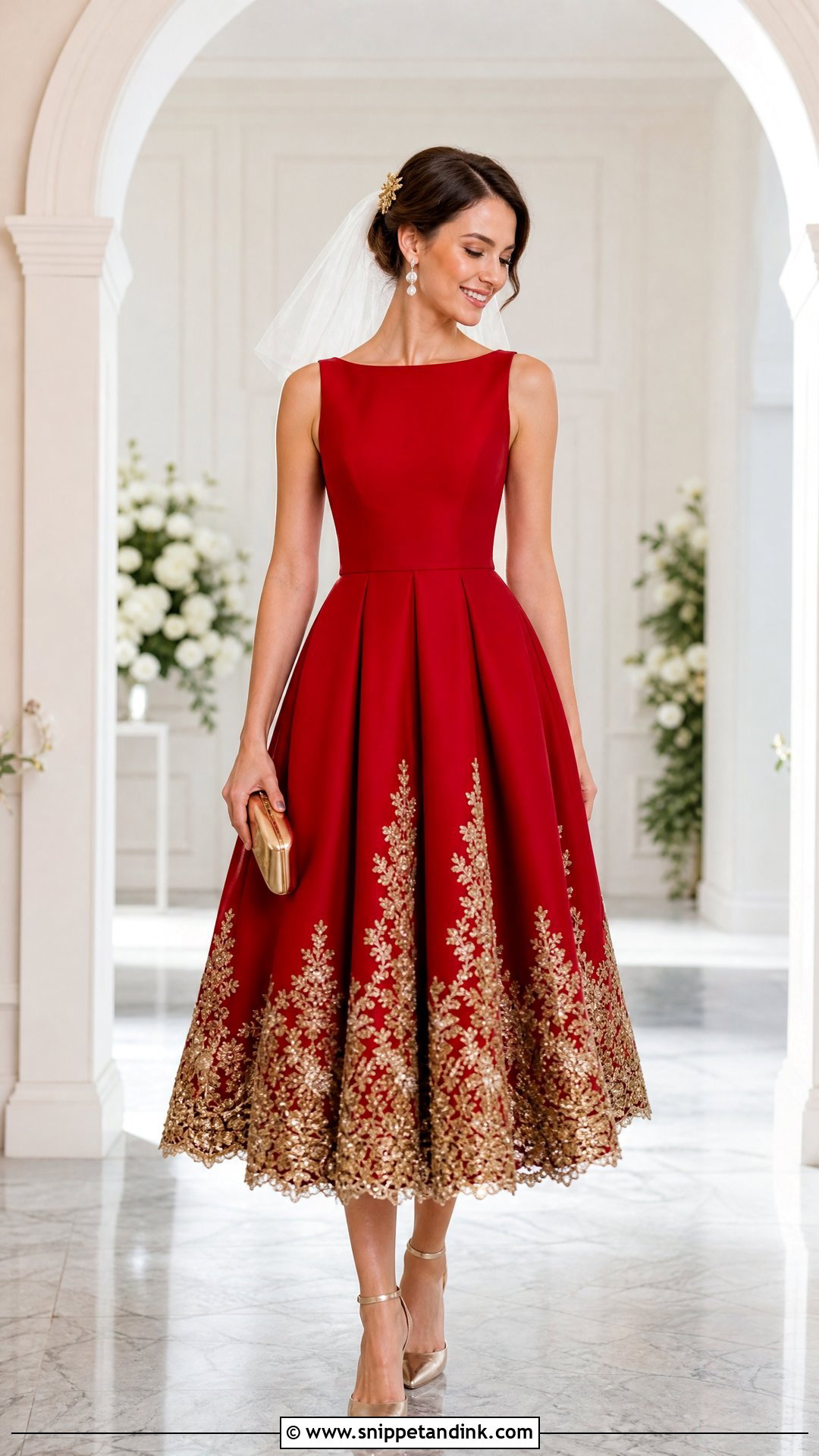
Tea length is cheerful, easy to move in, and honest about your shoes, since they’ll be seen all day. A fitted red bodice with a skirt ending between knee and ankle, gold lace at the neckline and hem, and a softly structured petticoat give a classic shape without bulk. Because the shoes show, choose them with the dress: metallic pumps or block-heel sandals you can stand in for hours. A small gold clutch, delicate earrings and a short veil or decorative comb finish it. Smooth waves or a neat updo suit the shorter line. Courthouse ceremonies, daytime venues and small receptions are where this length makes the most sense.

20. Minimal Red and Gold Wedding Dress
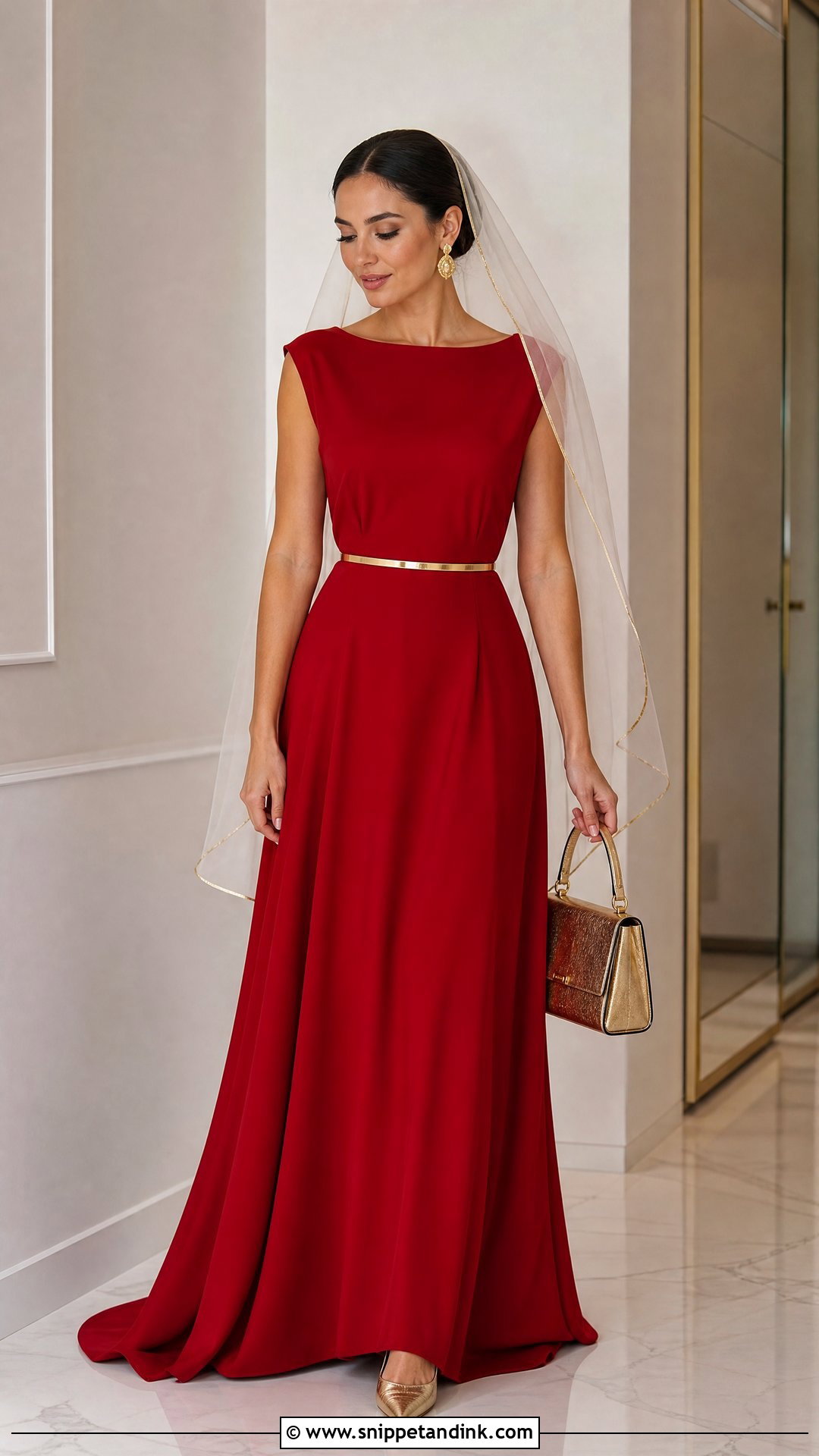
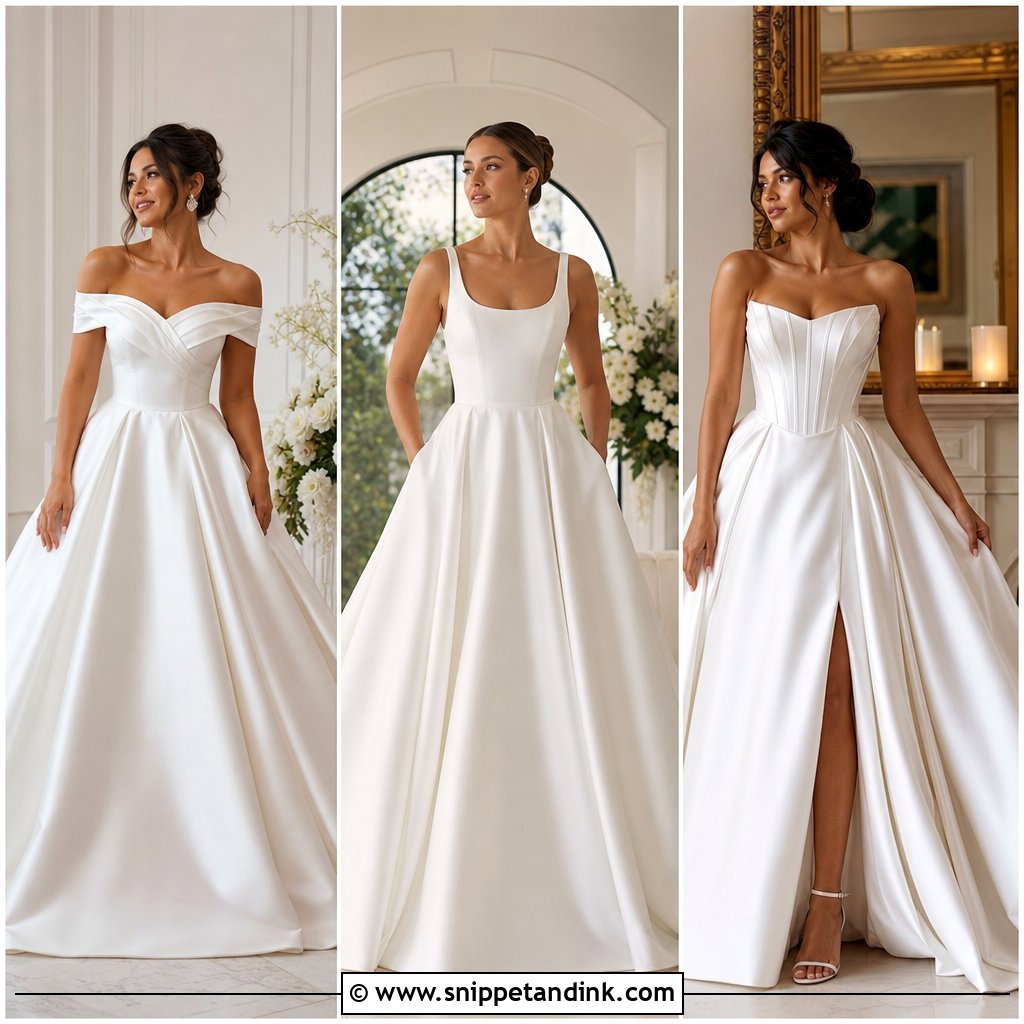
Minimal red and gold depends entirely on tailoring. A smooth crepe or satin gown with a clean neckline and a gently flowing skirt hides nothing, so every seam, dart and hem has to be right. I’d book an extra fitting for a dress like this. Bring in gold through one feature only: a metallic belt, a narrow embroidered border or a detachable shoulder drape. Sculptural gold earrings, simple pointed pumps and a small structured bag complete it. A sleek bun and fresh skin suit the restraint, and any veil should be plain red tulle or carry the finest gold edge. It’s the most modern look here, and the hardest to fake with cheap fabric.
Zari Tarnishes Faster Than Silk Fades
Red and gold outfits are usually heavily worked, and the metal is the part that ages first. Gold thread is often silver or copper wire with a gilt coating, so air, damp and perfume will dull it over time. A little care in the first week after the wedding decides whether the outfit still looks good when a daughter or niece wants to try it on.
The week after
Air the outfit inside out on a padded hanger for a day before packing it. Look for makeup on the neckline, food spots and sweat marks at the underarms, and take a heavily embroidered piece to a cleaner who handles bridal or ethnic wear. Ask before they use any solvent on zari. Never spray perfume while dressed; alcohol and oils are what tarnish metallic thread fastest.
Long-term storage
- Wrap the piece in clean undyed muslin or cotton, never a plastic garment bag, which traps moisture.
- Fold with acid-free tissue padding each fold, and lay heavy lehengas flat rather than hanging them, since the weight stretches the waistband.
- Refold along different lines every few months so the embroidery doesn’t crack at the creases.
- Keep it in a cool, dry cupboard, and never let mothballs touch the fabric directly.
Velvet is the exception to folding. Roll it with the pile facing out, or hang it in a breathable bag with plenty of room, so the pile doesn’t crush into permanent lines.
Letting One Element Lead the Red
Whichever silhouette you lean toward, the same tests apply. Stand in light close to your venue’s, walk, sit, climb a step and lift your arms over your head. Lehengas, qipaos, saree gowns and Anarkalis carry cultural craftsmanship; ball gowns, mermaids and minimal cuts offer other readings of the same palette. Build the jewellery, veil, shoes and bag as one set rather than collecting pieces one by one, and decide which single element leads. When the gold has one clear job, the red can do the rest, and the outfit ends up feeling like your own rather than a costume.
You'll Like These Ideas:







Leave a Reply