
Bridal fashion changed more within the 1960s than it did across some whole eras. The early years were all polish: structured A-line skirts, tea lengths, short veils and fitted sleeves. By the end of the decade, mod mini dresses, empire waists, plain shifts and Victorian-inspired gowns had joined them. The way I keep a sixties look from tipping into costume is to let the dress carry the period and keep everything around it quieter, with good fabric, shoes you can stand in and one headpiece that suits the neckline. Here are twenty complete looks, satin to crochet, with notes on what each one asks of you.
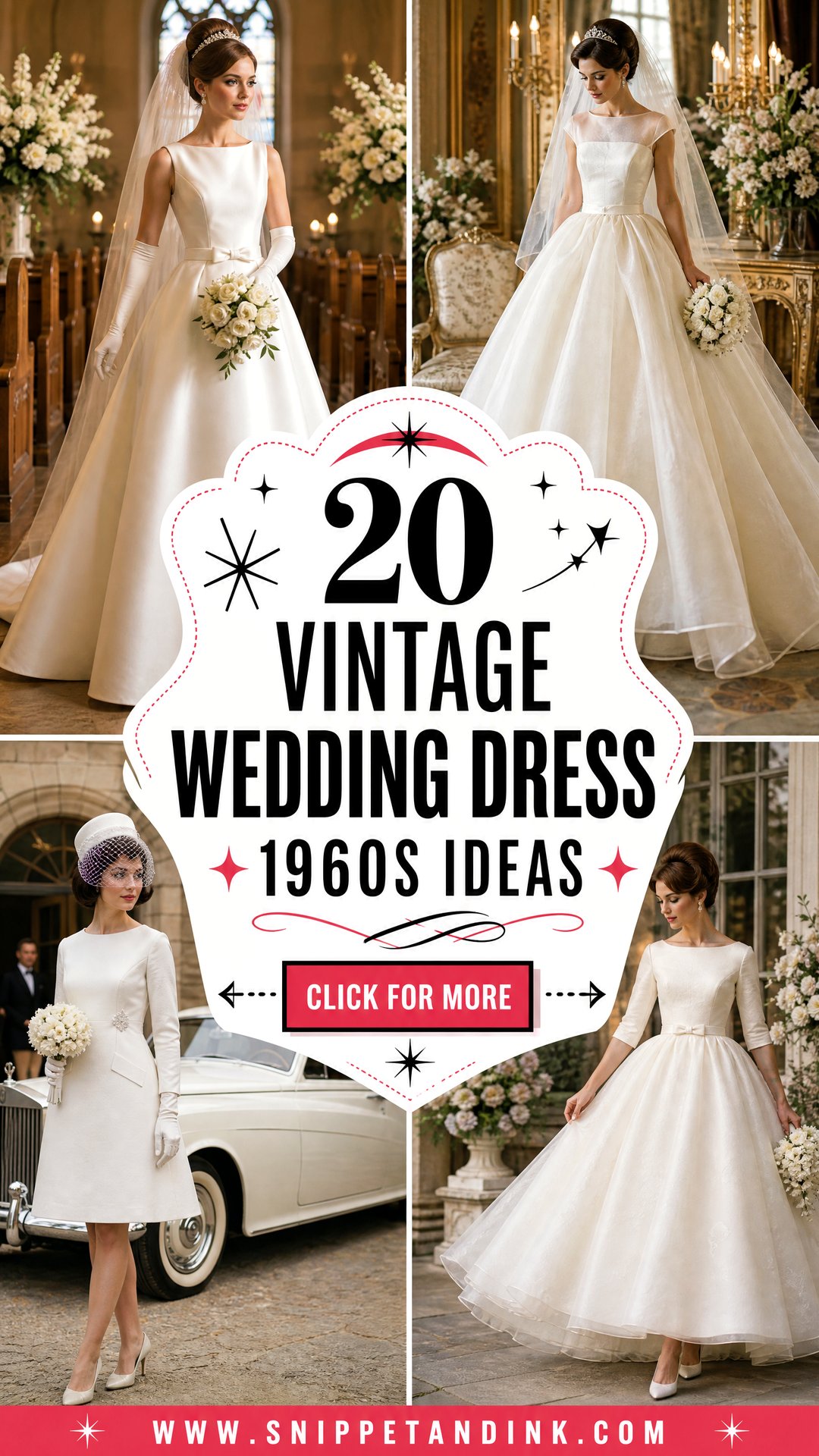
Early Sixties or Late Sixties? Settle That First
Nearly every sixties bridal look falls into one of two camps, and mixing them carelessly is what makes an outfit feel like fancy dress. Decide which half of the decade your dress belongs to, then let the accessories follow it.
Roughly 1960 to 1964
Structured and ladylike. Fitted bodices, defined waists, bateau and jewel necklines, gloves, pillbox hats and bouffant veils. The fabrics have body, like satin, shantung, brocade and taffeta, and hair is set smooth.
Roughly 1965 to 1969
Looser and younger. Minis, shifts, empire waists, bell sleeves and crochet, worn with daisies, low shoes, floral crowns and hair either long or in a sleek bob. Fabrics soften into crepe, chiffon and cotton lace.
A crochet maxi with opera gloves and a tiara sends two signals at once. Pick the camp your dress sits in, and if you borrow from the other, borrow one piece only.
1. 1960s Tea Length Lace Wedding Dress
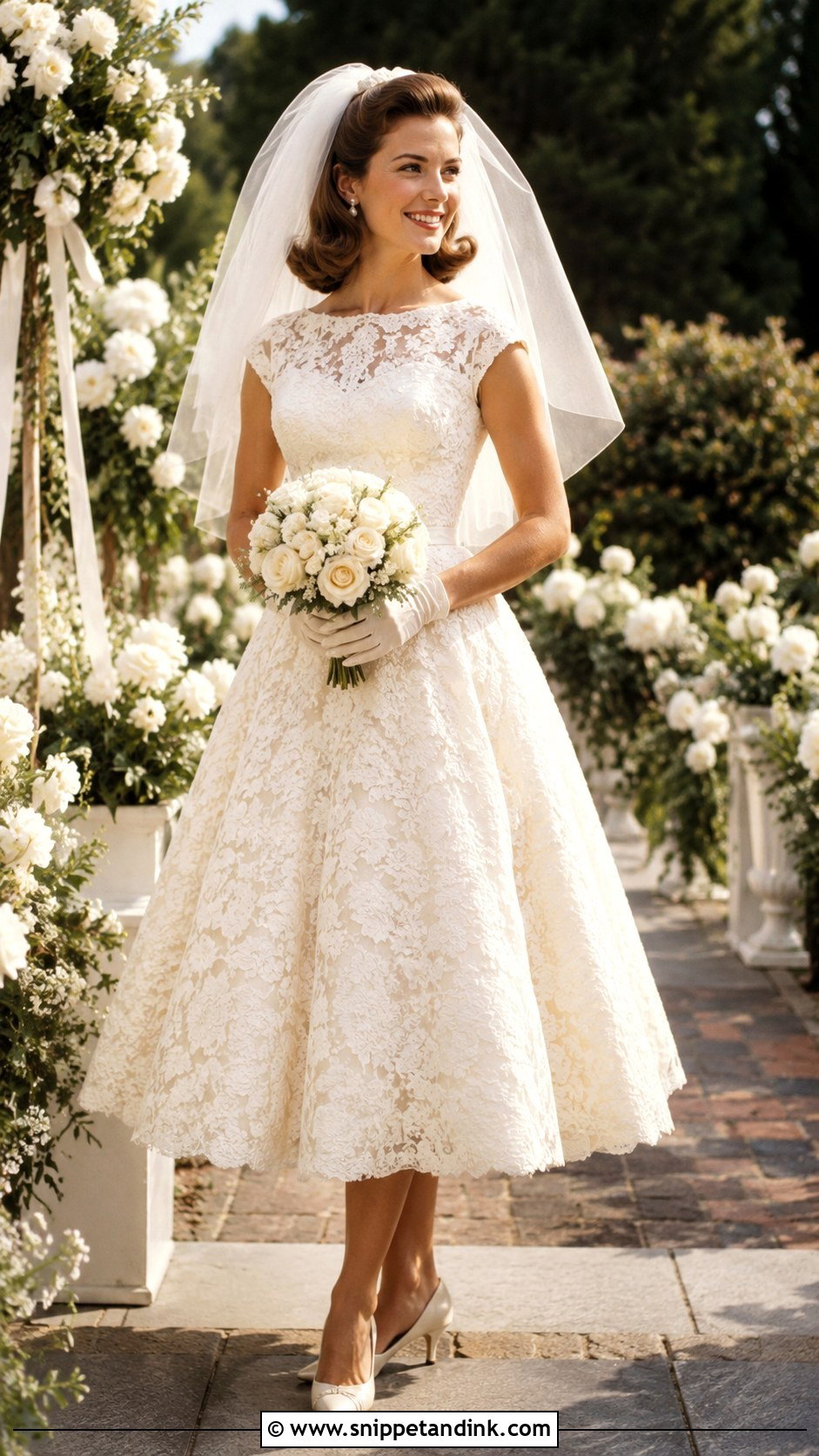
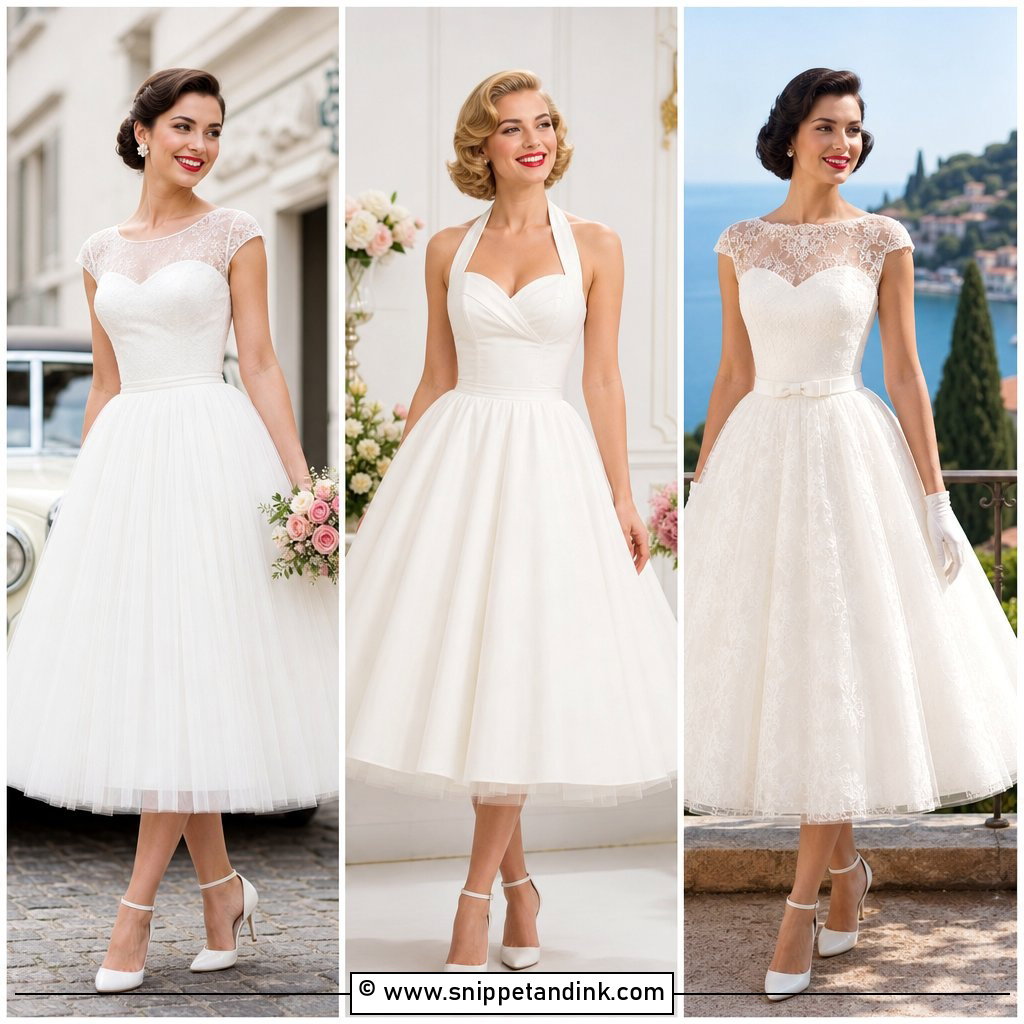
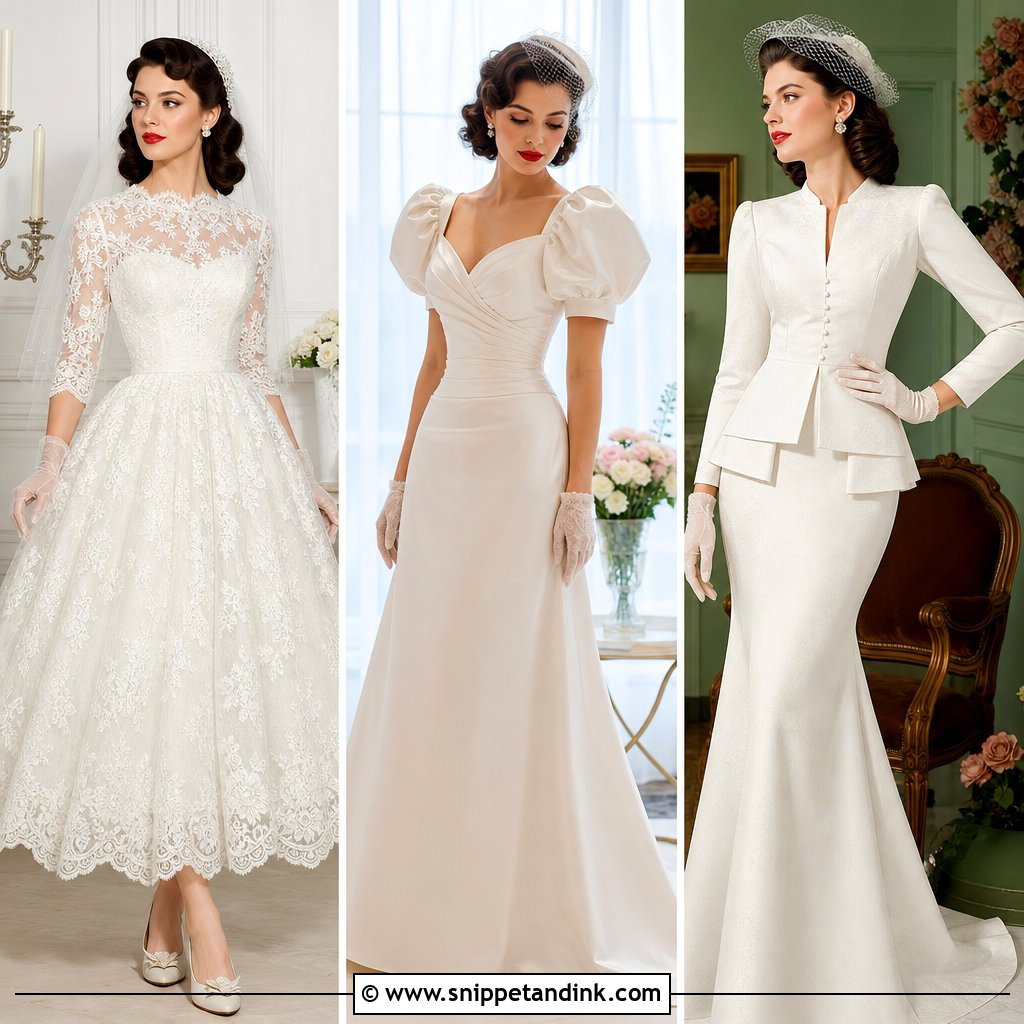
Tea length is the sixties silhouette I suggest most to brides who feel nervous about vintage, because it reads instantly as period without asking much of anyone. The hem lands between knee and ankle, so the shoes are in every photo; I’d choose ivory pointed kitten heels and wear them around the house for a week first. A fitted bodice, natural waist and flared skirt in ivory floral lace over soft satin lining give it depth. Pearl studs, wrist-length gloves, a shoulder-length veil on a small floral comb and a compact bouquet of white roses or daisies keep the proportions right. For hair, a rounded bob, soft curls or a neat low twist. Courthouses, gardens and small daytime parties suit it.
2. 1960s Satin A Line Wedding Dress
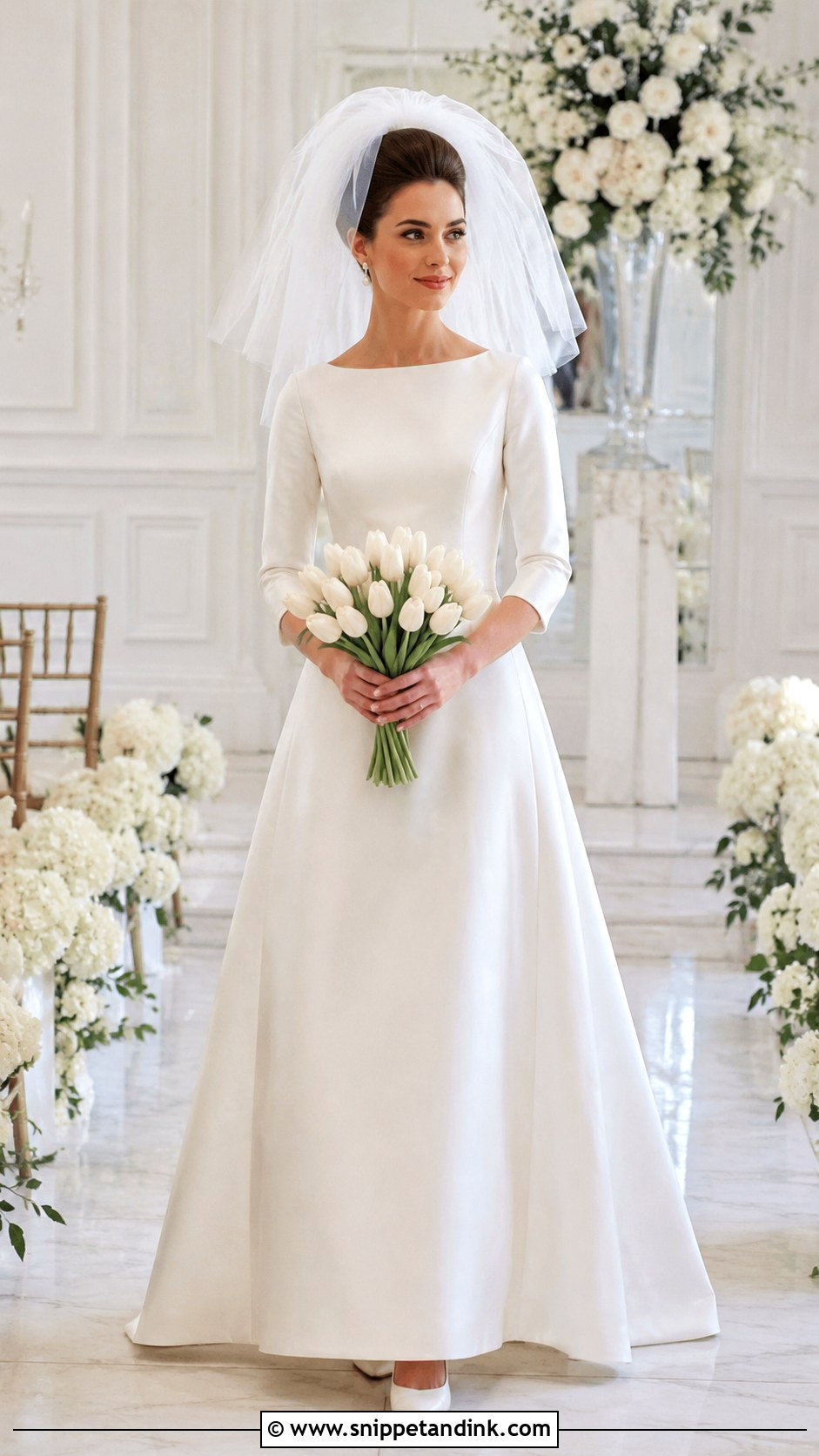
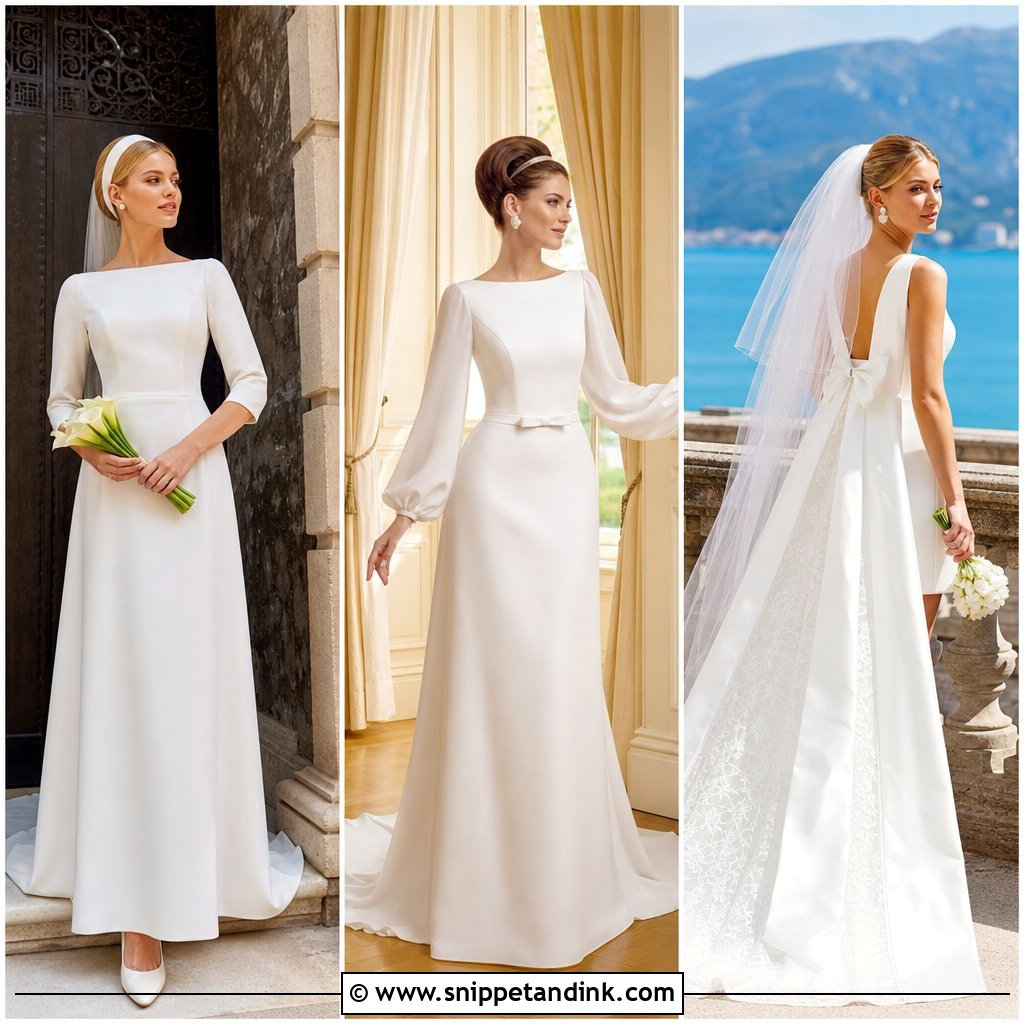
Satin shows every place a gown has been handled. On an A-line, I look for a clean, gradual widening from waist to floor with no dimpling at the seams, since those dimples catch light and look like creases in photos. A fitted upper body, softly defined waist, bateau neckline and three-quarter sleeves give it period character with no beading at all. The short bouffant veil matters more than it seems: its volume around the head balances the long hem. Low satin pumps, pearl drops, a slim bracelet and a small bouquet of white tulips with greenery stay in scale. Finish with a polished updo or curled chin-length hair, and save it for a formal indoor venue.
3. 1960s Mod Mini Wedding Dress
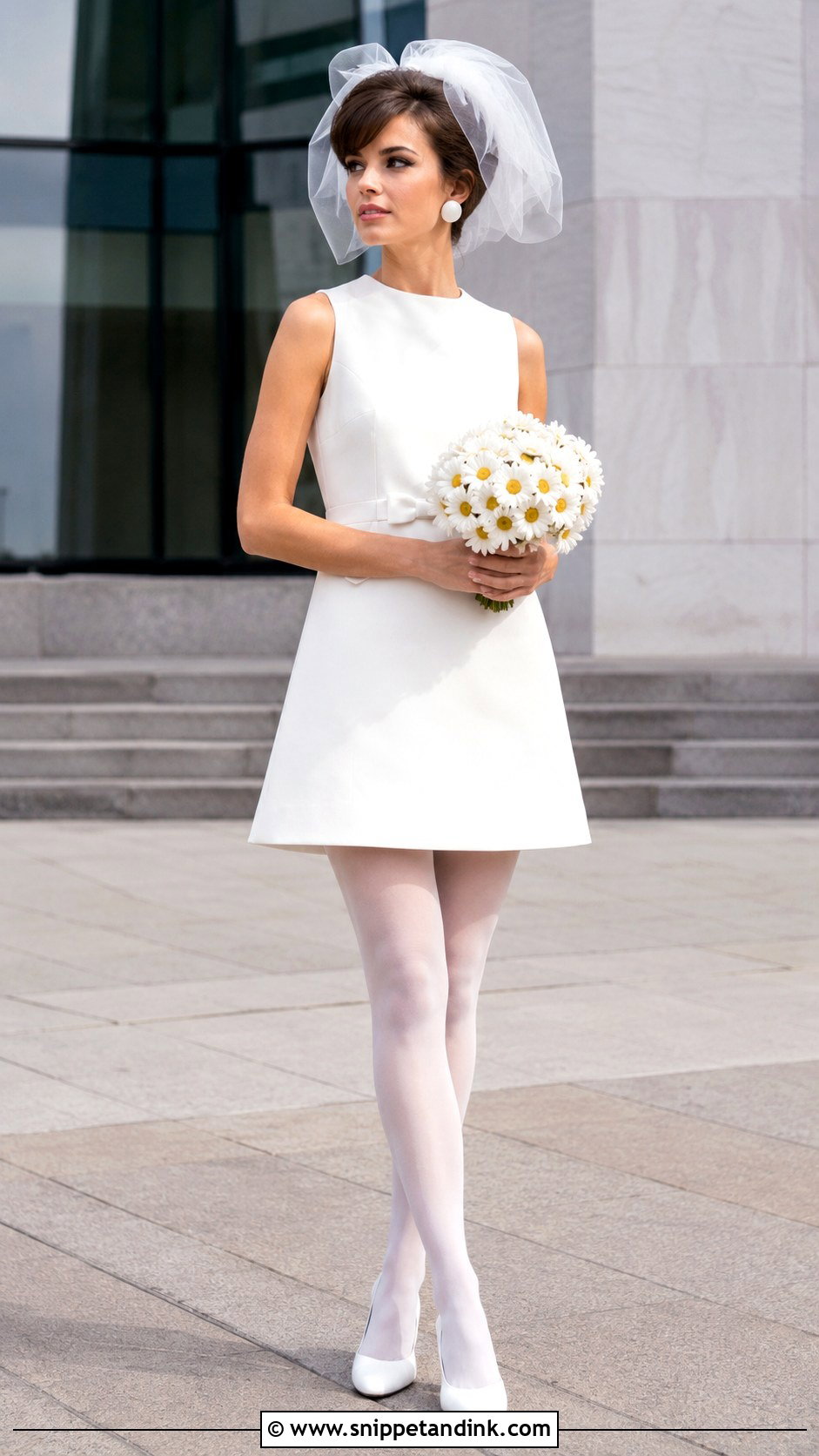
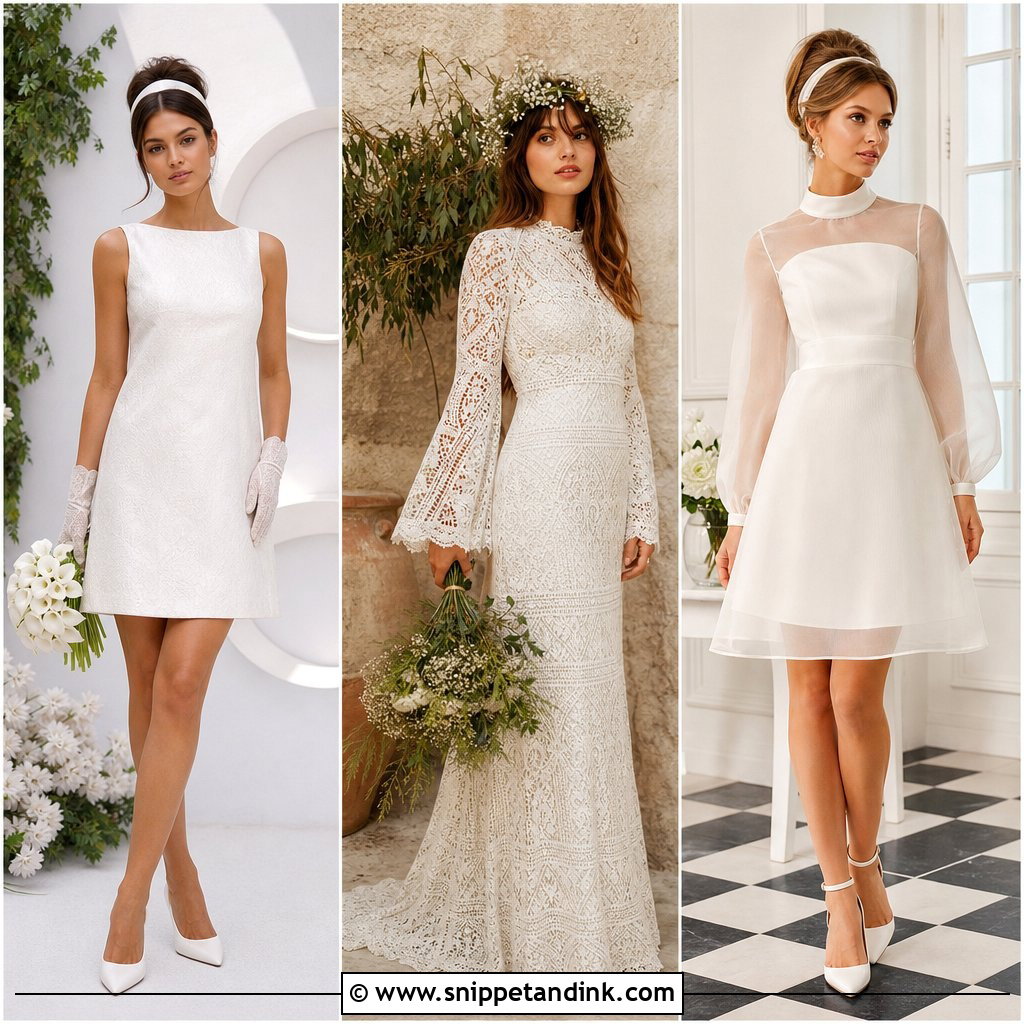
Minis are the honest risk in this list. Sit, kneel and climb a step at the fitting, because a hem several inches above the knee rises further the moment you sit, and ceremony chairs are often photographed from below. The late-sixties version is a structured A-line with a high round neckline and clean seams, in white crepe, textured cotton or medium-weight satin that holds its shape. Low block-heel pumps, sheer white tights and pearl or button earrings suit it, topped with a short bubble veil, padded headband or small pillbox hat. Short-stemmed white daisies keep the outline crisp. Wear your hair in a smooth bob or a gently lifted style for a city hall ceremony, small reception or after-party.
4. 1960s Empire Waist Wedding Dress
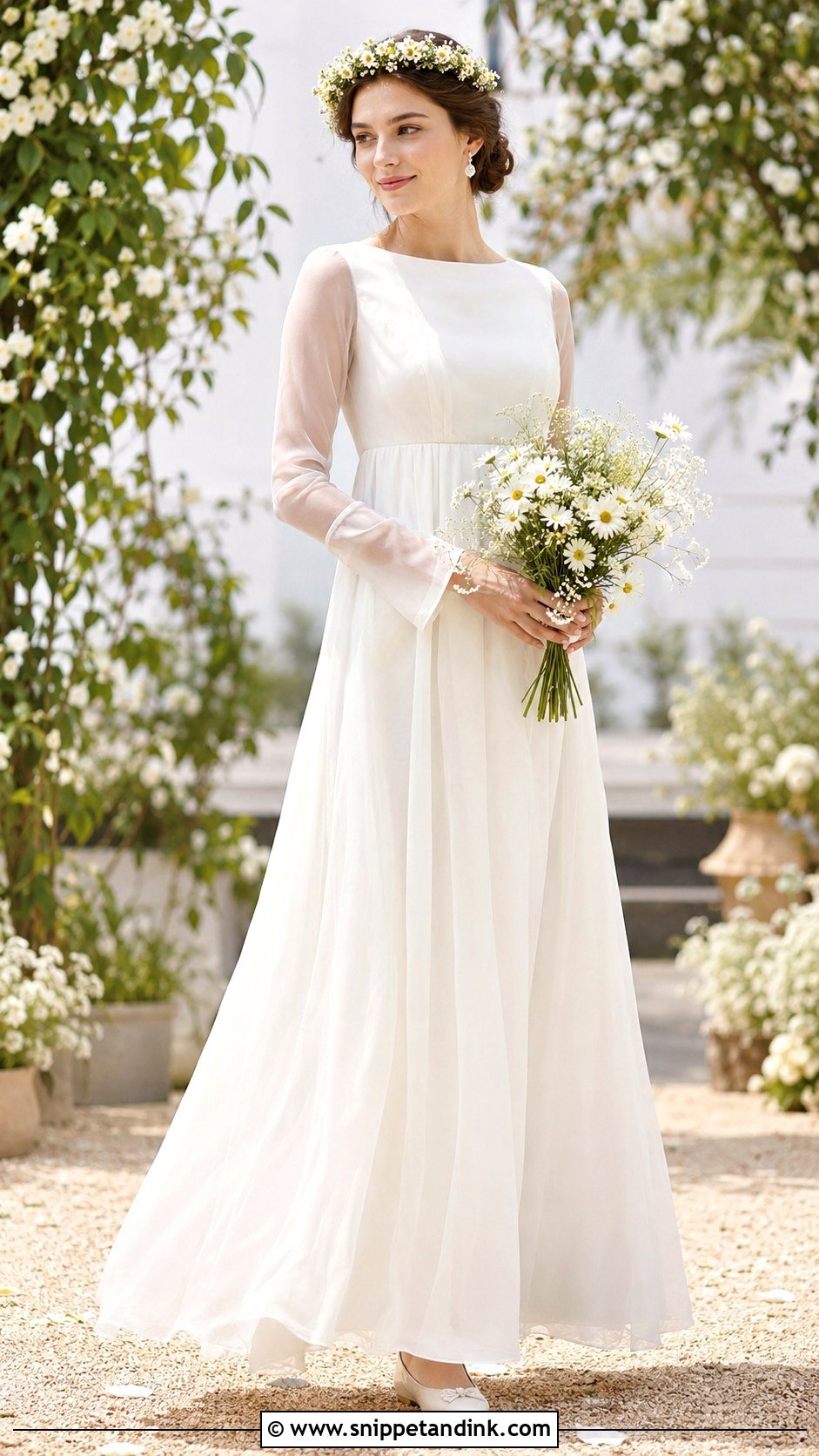
Empire waists are kind to almost every figure, and they’re the easiest sixties shape to wear for ten hours, since nothing presses on your stomach at dinner. The seam sits just below the bust, so it has to be fitted precisely; a quarter inch too low and the bodice wrinkles. Below it, chiffon, soft crepe or dotted organza falls to the floor with movement but very little bulk. Long sheer sleeves and a modest scoop neckline keep it delicate. Low ivory heels or flats, a fine pendant, small pearl earrings and a narrow floral crown or chapel veil follow the vertical line. Daisies, baby’s breath and trailing greenery with loose waves or a relaxed half-up style suit a spring or summer outdoor ceremony.
5. 1960s High Neck Lace Wedding Dress
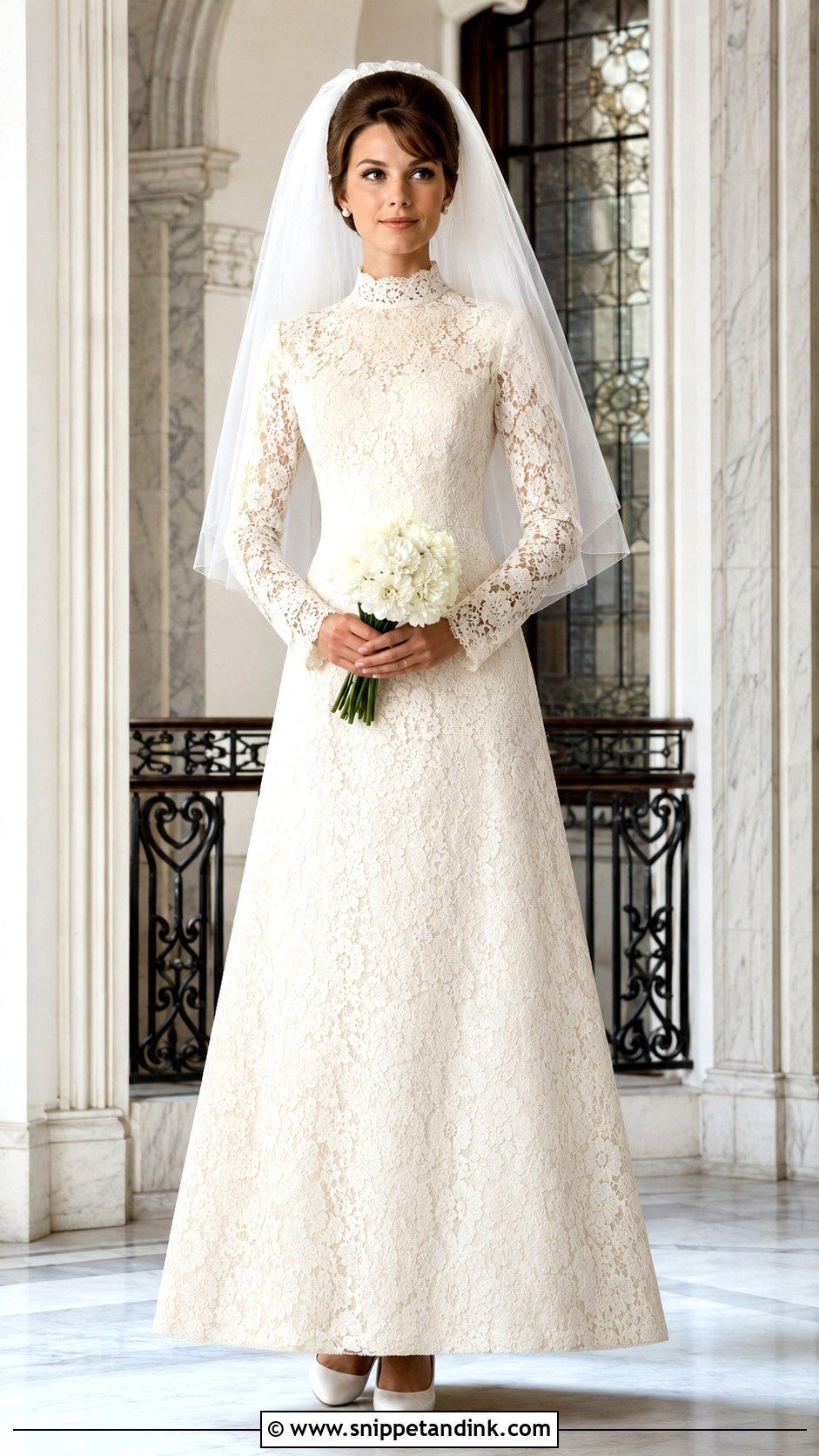
On a high-neck lace gown, the lining decides how the lace reads. Ivory satin underneath makes the pattern visible in photos, while a skin-tone lining blurs it. This design has a fitted lace bodice with a raised collar, long sleeves and covered buttons at the wrists, balanced by a plain A-line or gently gathered skirt. I always have the bride turn her head both ways at the fitting, because a stiff collar that rubs the jaw gets tugged at all night. Closed-toe pumps, pearl earrings, a small structured clutch and a fingertip veil under a smooth updo complete it. Carry white carnations or roses in a compact round shape. Fall weddings and historic venues suit the coverage.
6. 1960s Bateau Neck Wedding Dress
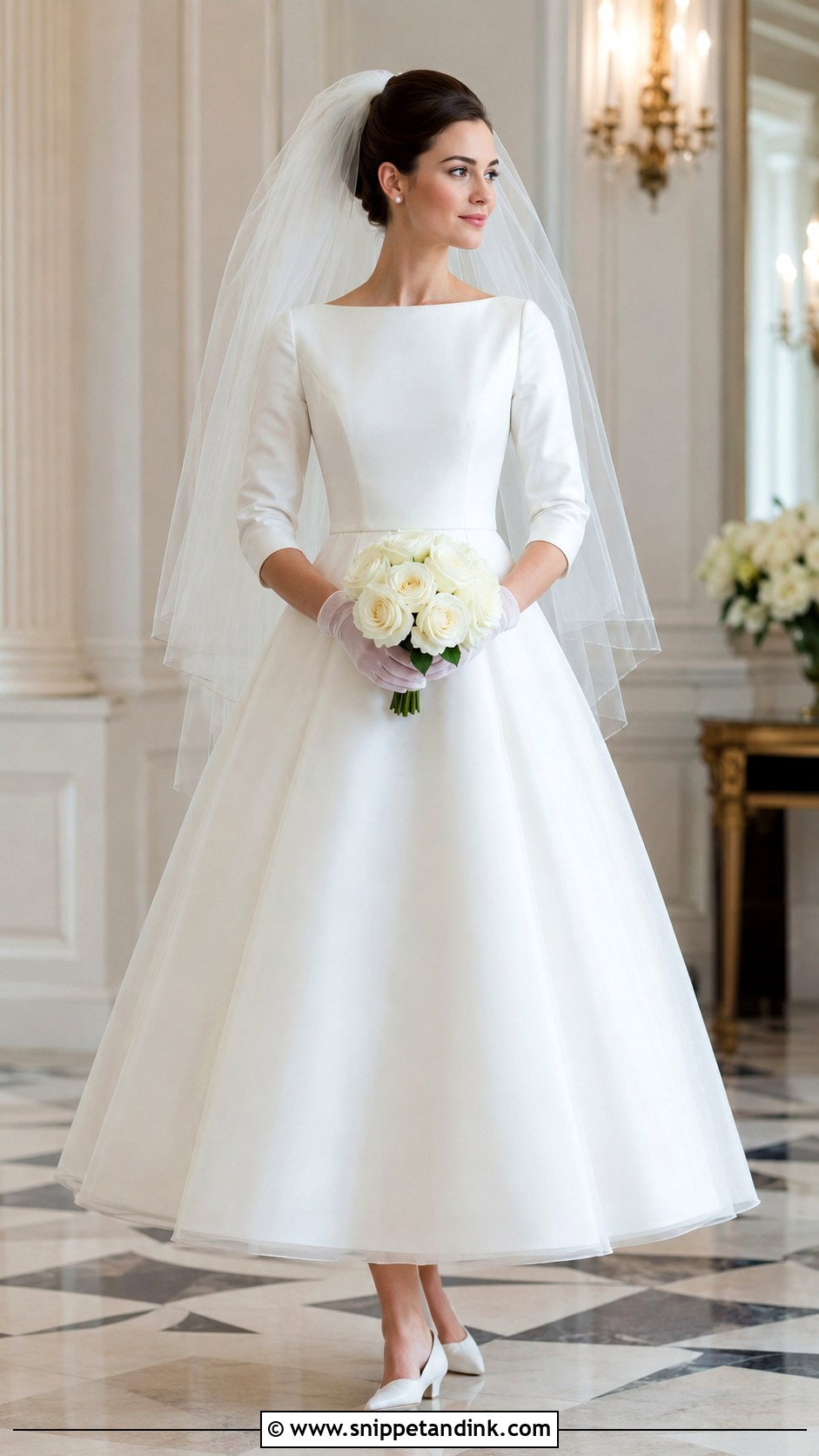
Wide and high, the bateau line sits across the collarbones like a shelf, so it’s best for brides who don’t mind their shoulders looking a little broader. Pair it with fitted three-quarter sleeves, a defined waist and a full floor-length skirt in silk organza or satin. No necklace. Pearl studs, pointed pumps and short gloves carry the formality, and a structured bouquet of white roses fits the mood. I keep the veil at waist length on a simple comb so the shoulder line stays visible from behind. A smooth French twist or rounded updo finishes the outline for a ballroom or formal daytime ceremony.
7. 1960s Silk Organza Ball Gown Wedding Dress
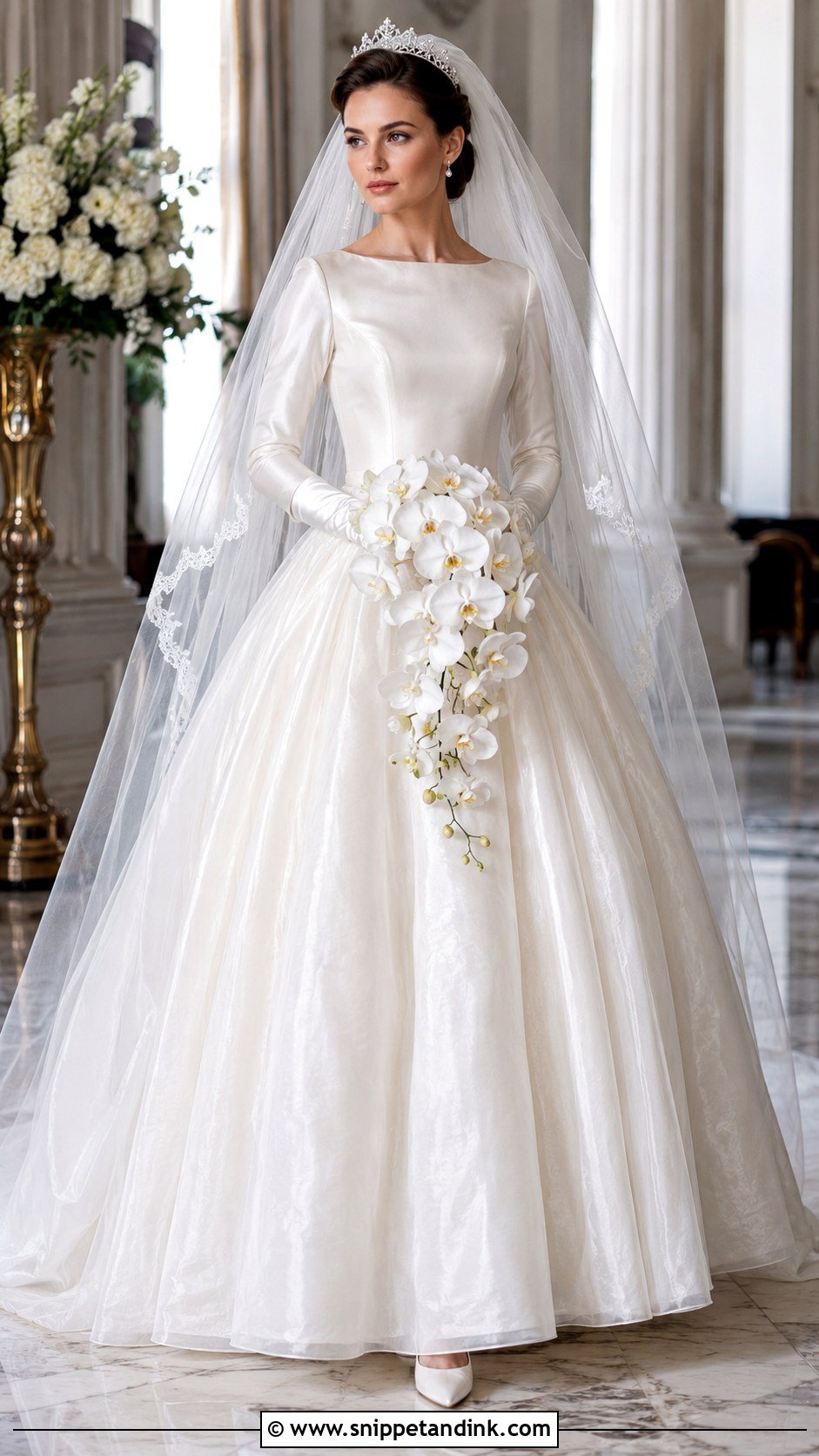
Silk organza gets its volume from layers rather than weight, which is why a full sixties ball gown in it is surprisingly easy to carry. The catch is creasing. Organza crushes in a car, so I steam it at the venue, not at home. Choose a fitted bodice with long sleeves, a modest V-neck or bateau neckline and a dramatically full skirt over light underlayers, with almost no embellishment. Ivory pumps, pearl earrings and elbow-length gloves add formality, a cathedral veil extends behind the skirt, and a small tiara or crystal comb gives height. A cascading bouquet of white orchids balances the scale. Keep the updo tidy and the makeup soft. Give this dress a venue with room; in a narrow aisle, the skirt brushes every chair.
8. 1960s Wedding Coat Dress
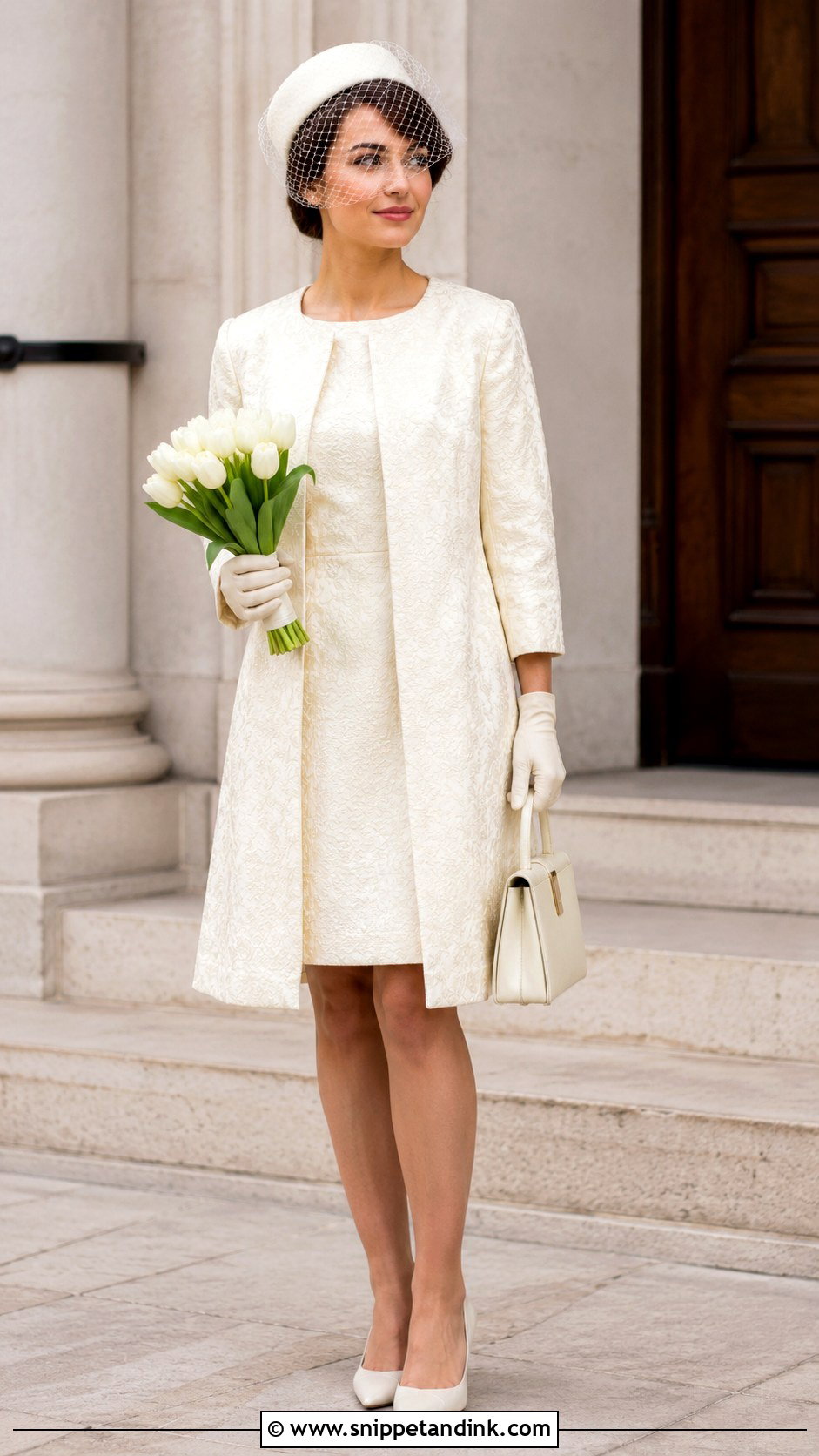
A coat dress is my favorite answer for a cold-weather courthouse wedding. It’s two pieces in the same cloth: a knee-length ivory dress with a matching collarless coat, both cut in a clean A-line. Brocade, silk shantung or textured crepe give enough body. Underneath go short sleeves and a jewel neckline; the coat gets covered buttons and bracelet-length sleeves. Have the coat fitted over the dress, never separately, since the armholes need room for the dress sleeves inside. A pillbox hat with a short net veil, low pointed pumps, short gloves, a compact top-handle bag and petite white tulips or carnations finish it, ready for a travel ceremony or a small party followed by a restaurant dinner.
9. 1960s Shift Wedding Dress With Pillbox Veil
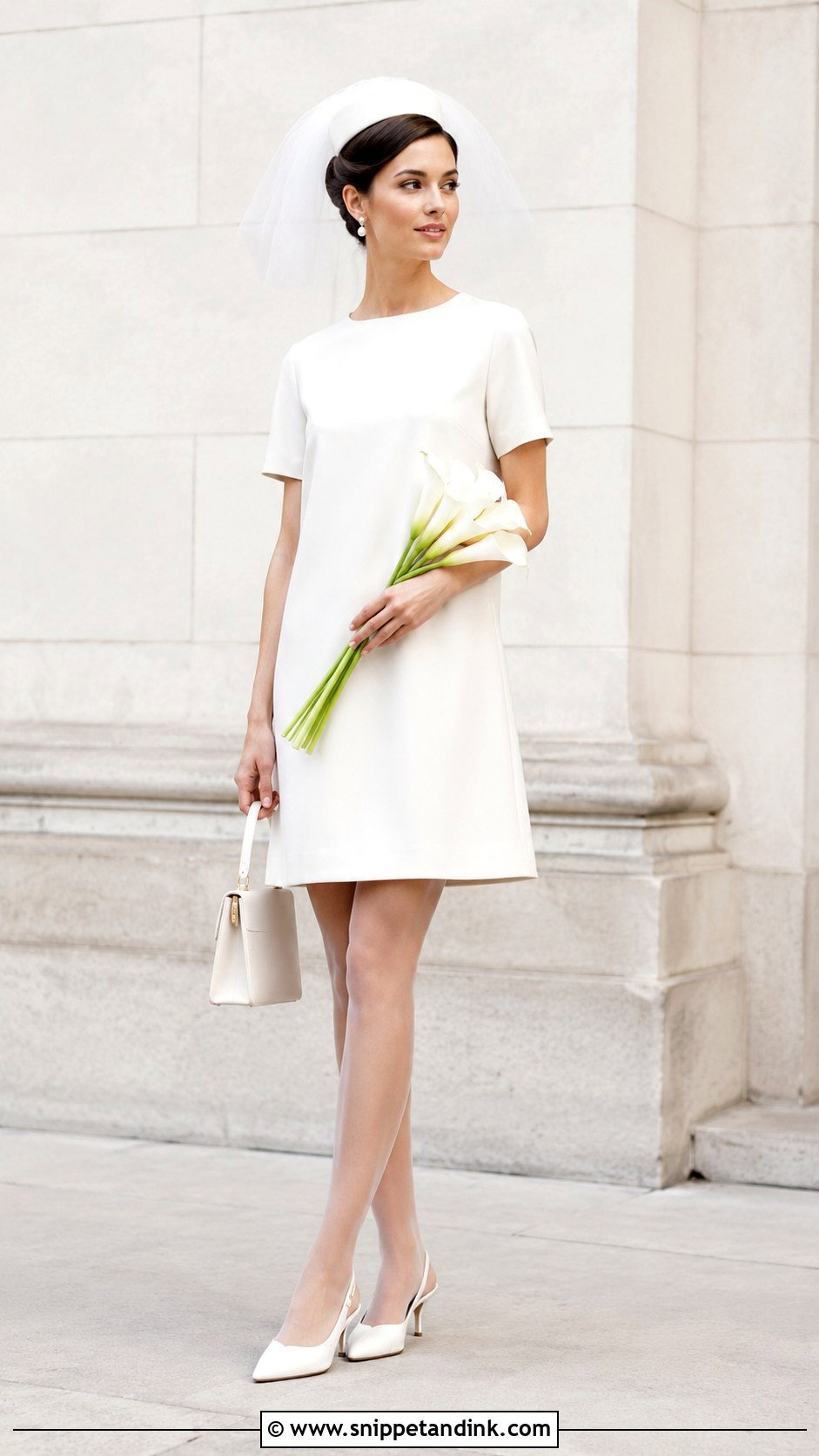
The shift is the plainest dress here and the one most dependent on fit. It falls straight from the shoulders with almost no waist shaping, so if the shoulders are wrong, nothing else rescues it. I check that the side seams hang straight while the bride stands relaxed. A knee-length cut with a jewel neckline, short sleeves and subtle seam detail keeps it interesting. Slingback kitten heels, sheer stockings, geometric pearl earrings and a small pillbox hat with a short veil carry the period, with a structured white handbag and a narrow bouquet of calla lilies. Hair goes smooth behind the ears or into a neat low roll. City ceremonies and courthouse vows suit brides who want to move freely.
10. 1960s Bell Sleeve Wedding Dress
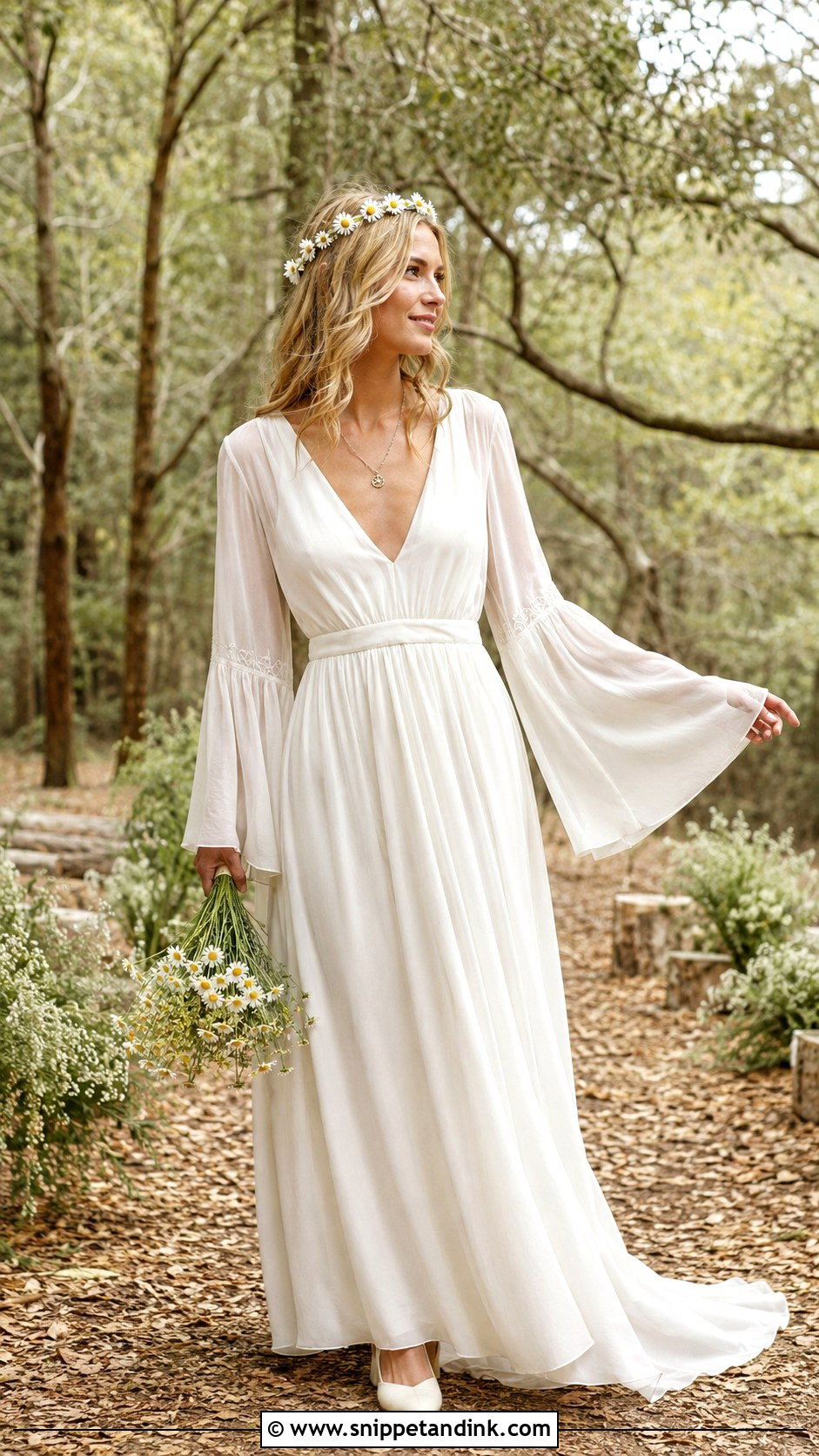
Bell sleeves look romantic and behave badly near food, candles and bouquets. At the fitting I ask brides to hold their flowers and lift a glass; the sleeve opening should clear the wrist when the arm bends. The gown itself is floor-length crepe or chiffon with a softly raised waist and sleeves that widen below the elbow, plus a modest V or rounded neckline so the top doesn’t feel heavy. Low block heels or flats let the skirt fall naturally. A delicate pendant, small drop earrings and a narrow floral headband are enough, with a loose bunch of daisies, white cosmos and greenery. Soft waves or a center-parted half-up style suit it better than a structured updo, and woodland or relaxed summer venues suit it best.
11. 1960s Crochet Lace Wedding Dress
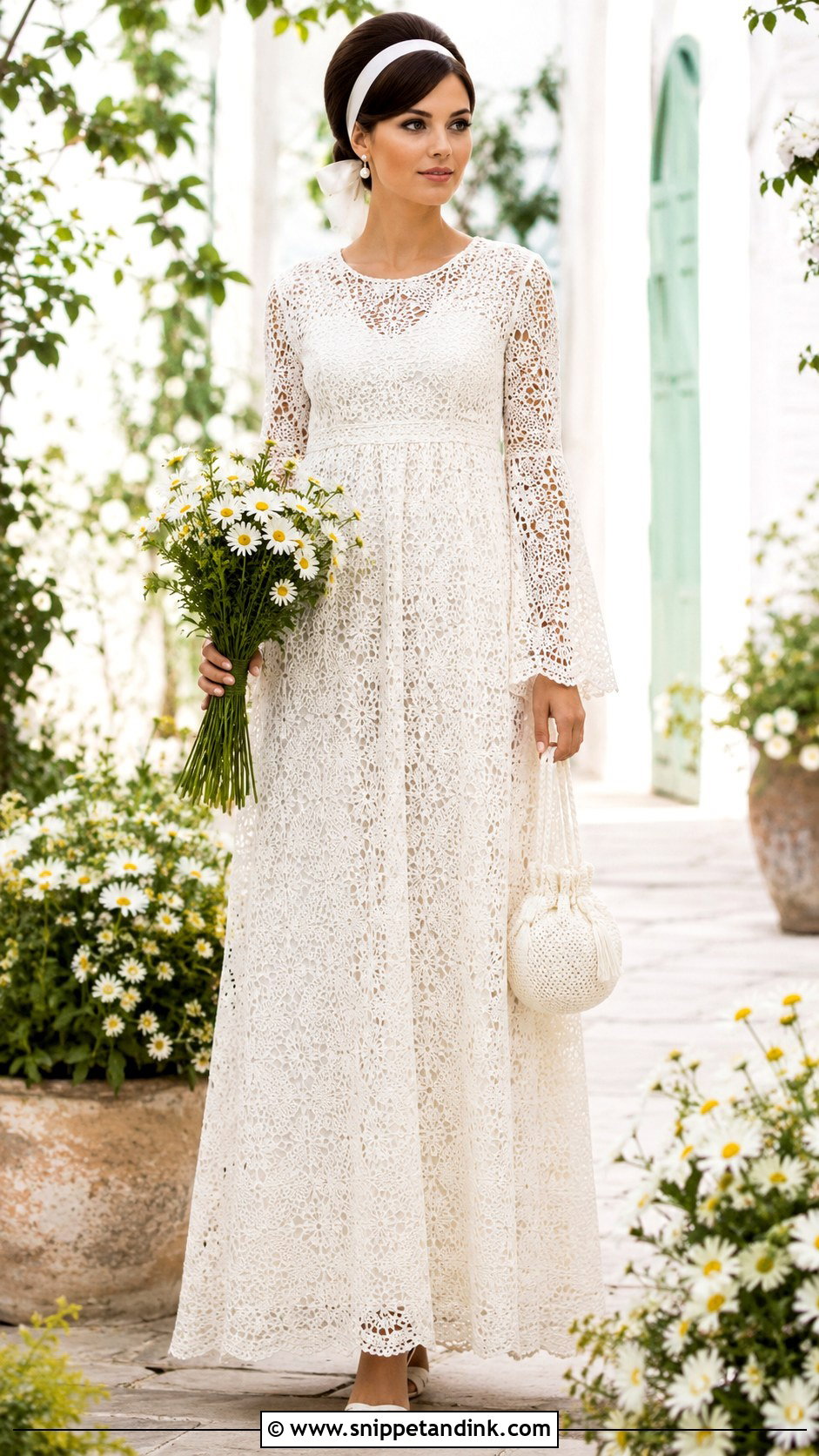
Crochet lace stretches. That’s its charm and its problem, since an unlined crochet bodice sags by evening. So the gown I’d choose has a handmade appearance outside and a firm lined structure inside: empire waist, fitted upper body, straight or gently flared skirt and long crochet sleeves, finished with a scalloped hem or cuff. Ivory leather sandals, a small drawstring bag and understated gold or pearl earrings match the craft feel, and a ribbon headband or floral comb sits better than a crystal crown. White daisies, soft greenery and loose curls or a simple low bun suit gardens, rustic properties and warm-weather ceremonies with a relaxed dress code.
12. 1960s Scalloped Lace Mini Wedding Dress
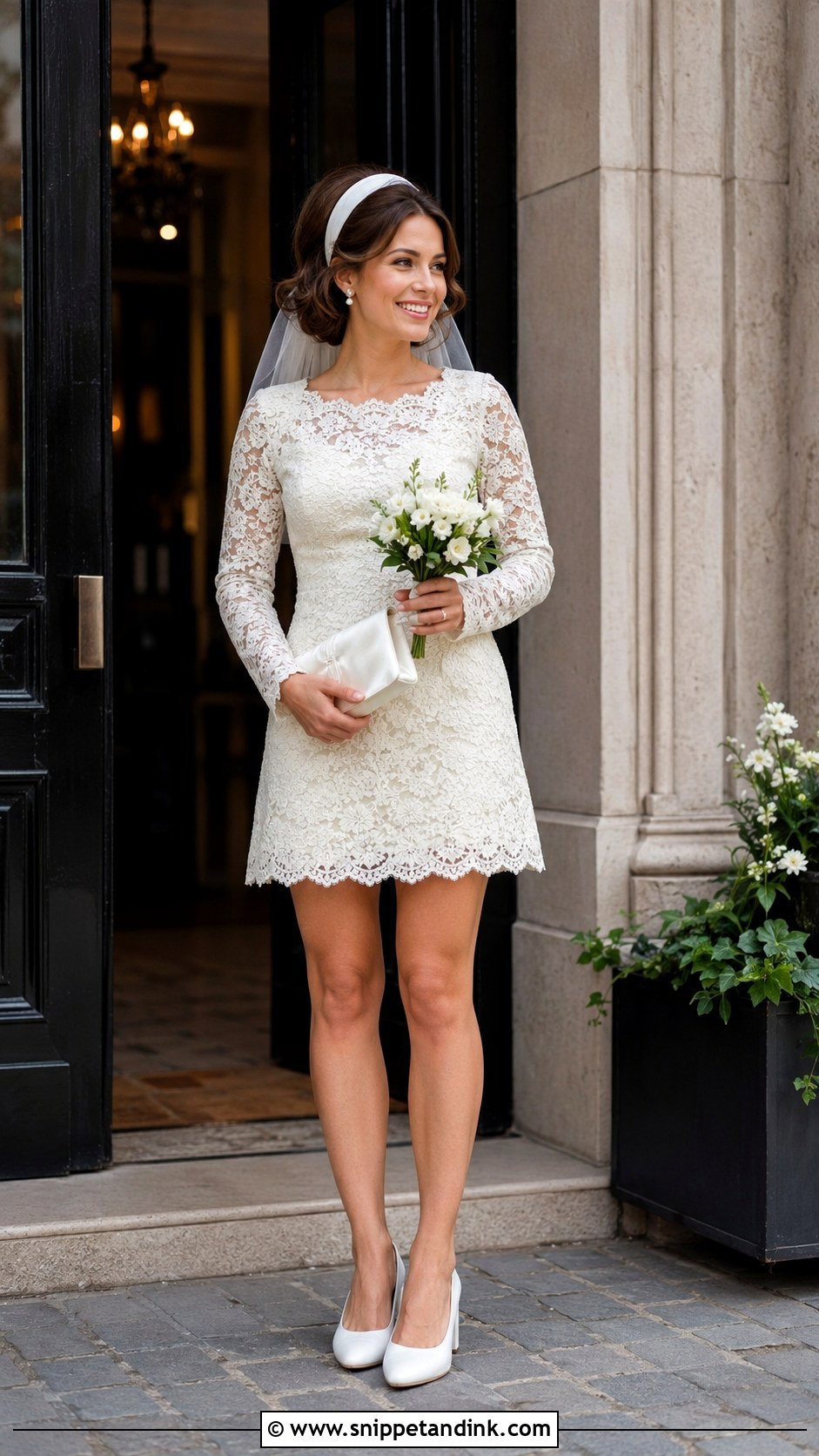
A scalloped lace mini dress works when the scallops do the decorating along the neckline, cuffs and hem, and the body stays a slightly fitted A-line. Insist on an opaque ivory lining. Lace over a thin lining can turn see-through under camera flash. Long or three-quarter sleeves, white block heels, pearl button earrings and a small satin clutch keep it neat, while a short veil on a wide headband adds the bridal note. Carry a posy of white daisies or miniature roses. A rounded bob, flipped ends or a softly lifted crown is enough. It makes a smart civil-ceremony dress or a second outfit for dancing.
13. 1960s Full Skirt Wedding Dress
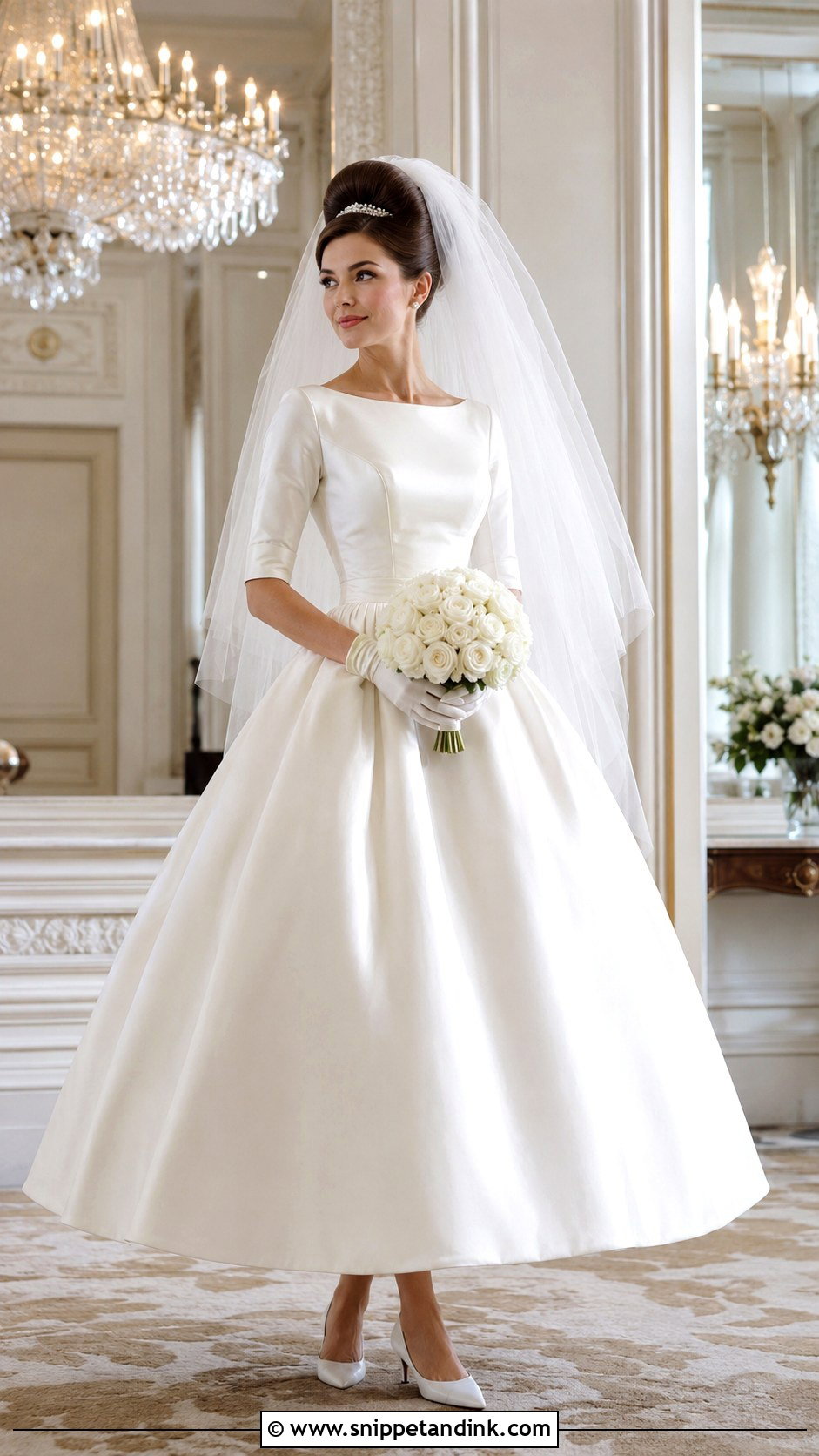
Crisp fabric is what makes a sixties full skirt stand out in rounded folds instead of collapsing. Silk shantung, satin and taffeta hold that shape; soft crepe won’t. The bodice is fitted with a natural waist and elbow-length sleeves, and the skirt reaches the ankle or floor. Taffeta rustles and creases wherever you sit, so for a long seated dinner I’d steer a bride toward shantung. Pointed kitten heels, pearl studs and short white gloves coordinate with a shoulder-length bouffant veil that adds volume without hiding the bodice. Keep the white roses in a rounded bouquet scaled to the skirt, and the hair in a low updo with a little height at the crown.
14. 1960s Column Wedding Dress With Cape
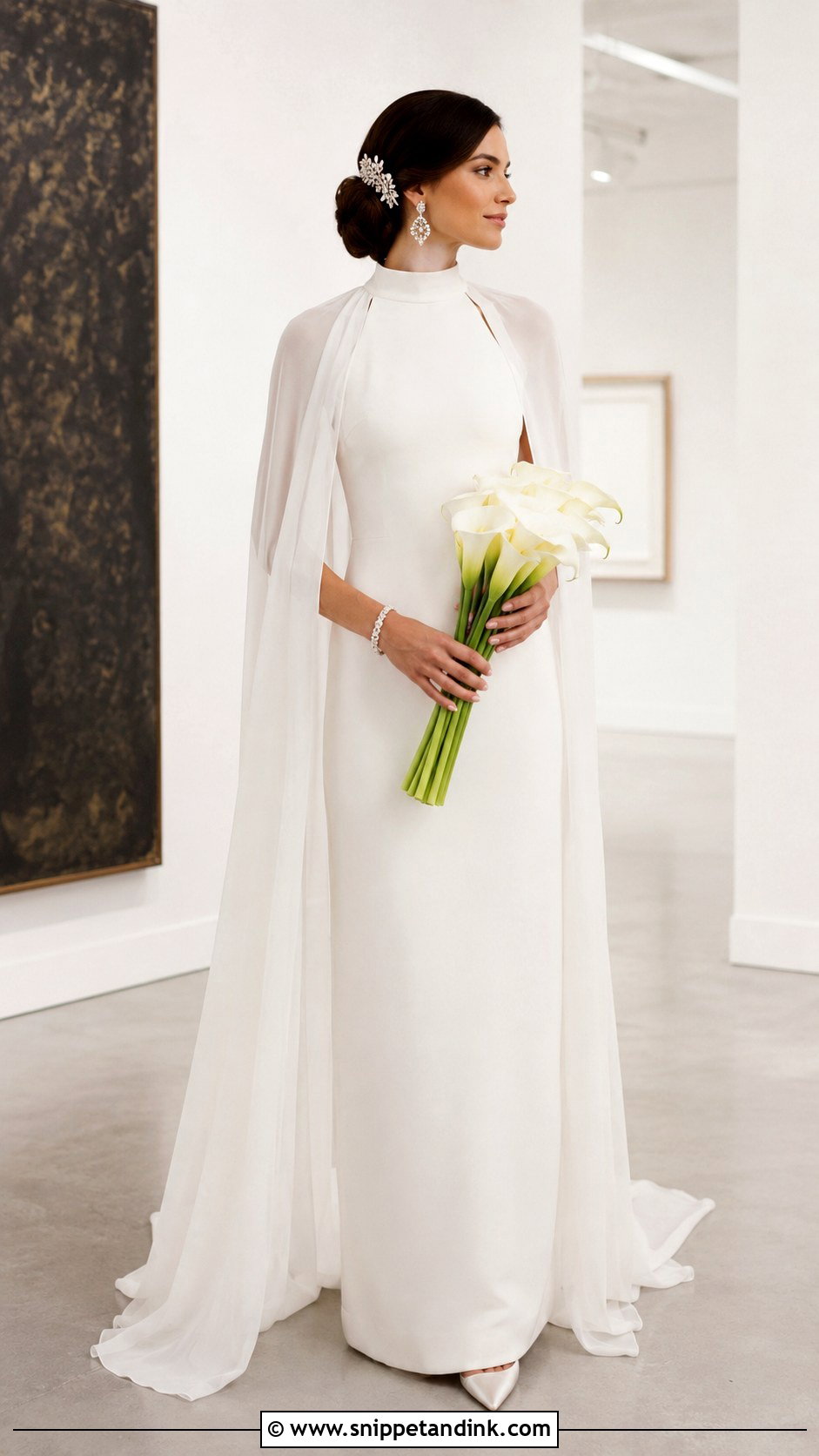
Here the cape does all the moving so the dress doesn’t have to. Start with a floor-length crepe column with a high neckline, fitted shoulders and almost no decoration, then add a sheer chiffon or organza cape from the shoulders to the hem or into a light train. I have capes attached with snaps at the shoulder seam rather than simply draped, because chiffon slides off the first time you hug someone. Skip the veil; a smooth updo with a small jeweled comb is cleaner. Pointed pumps, crystal studs, a narrow metallic bracelet and long-stemmed calla lilies keep everything vertical, which suits a gallery venue or evening reception.

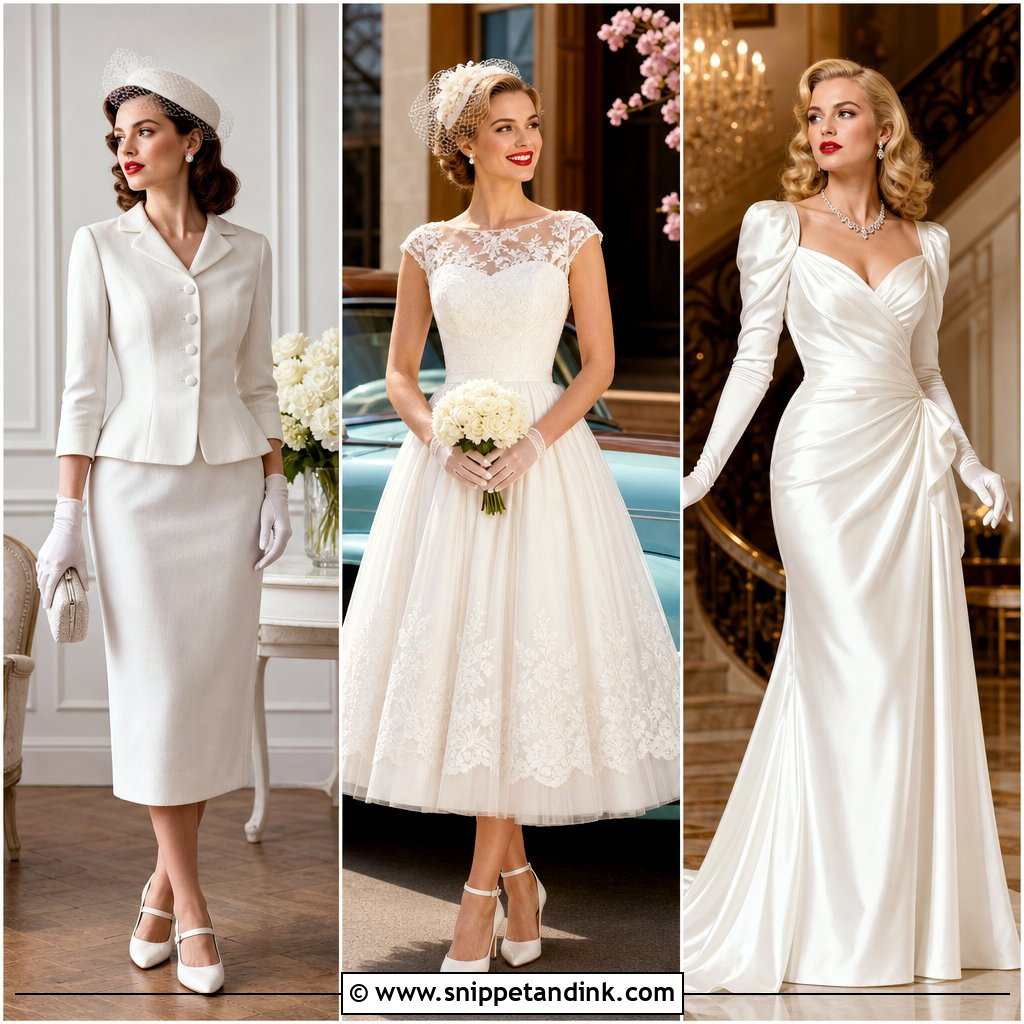
15. 1960s Brocade Wedding Dress
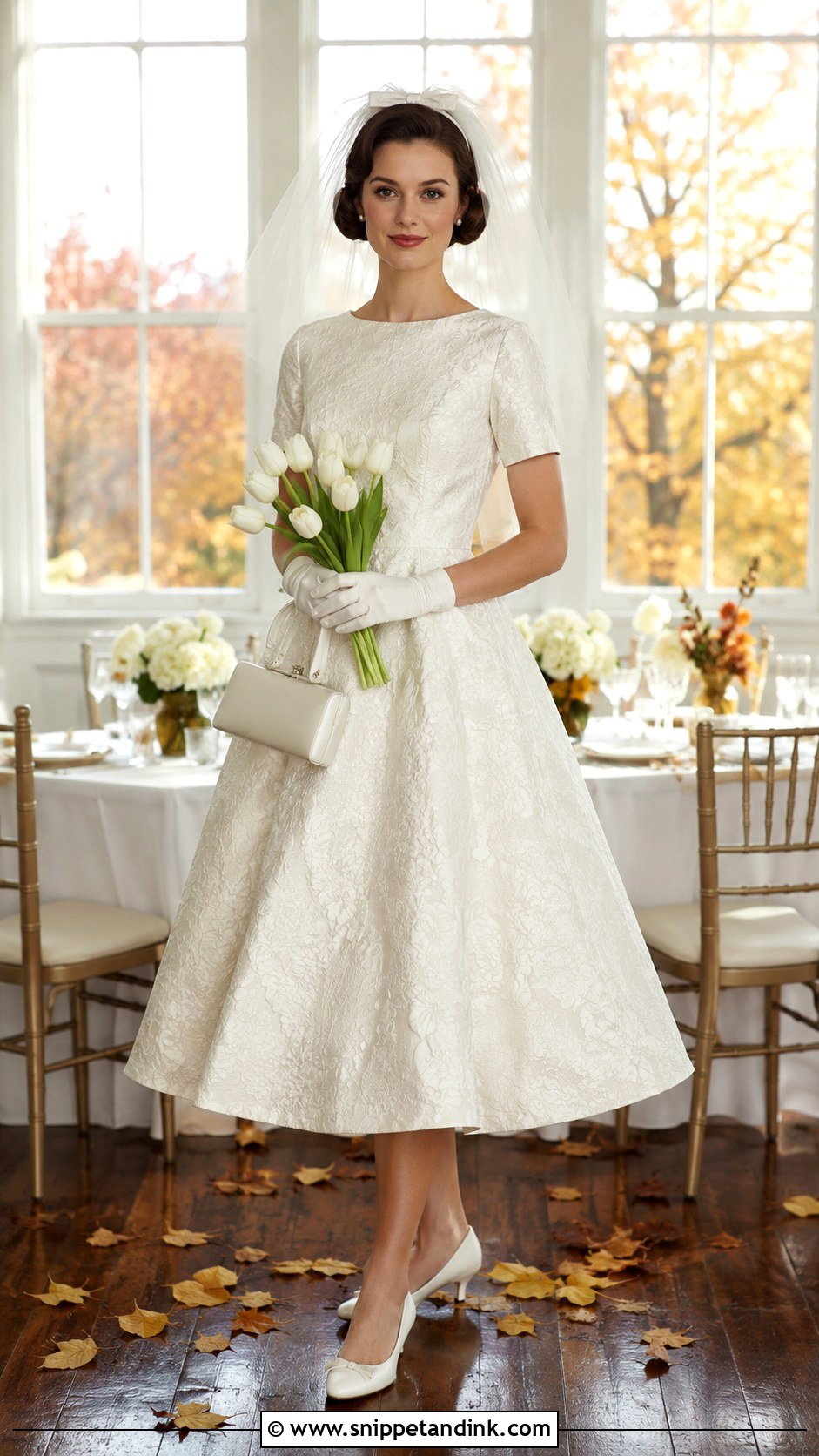
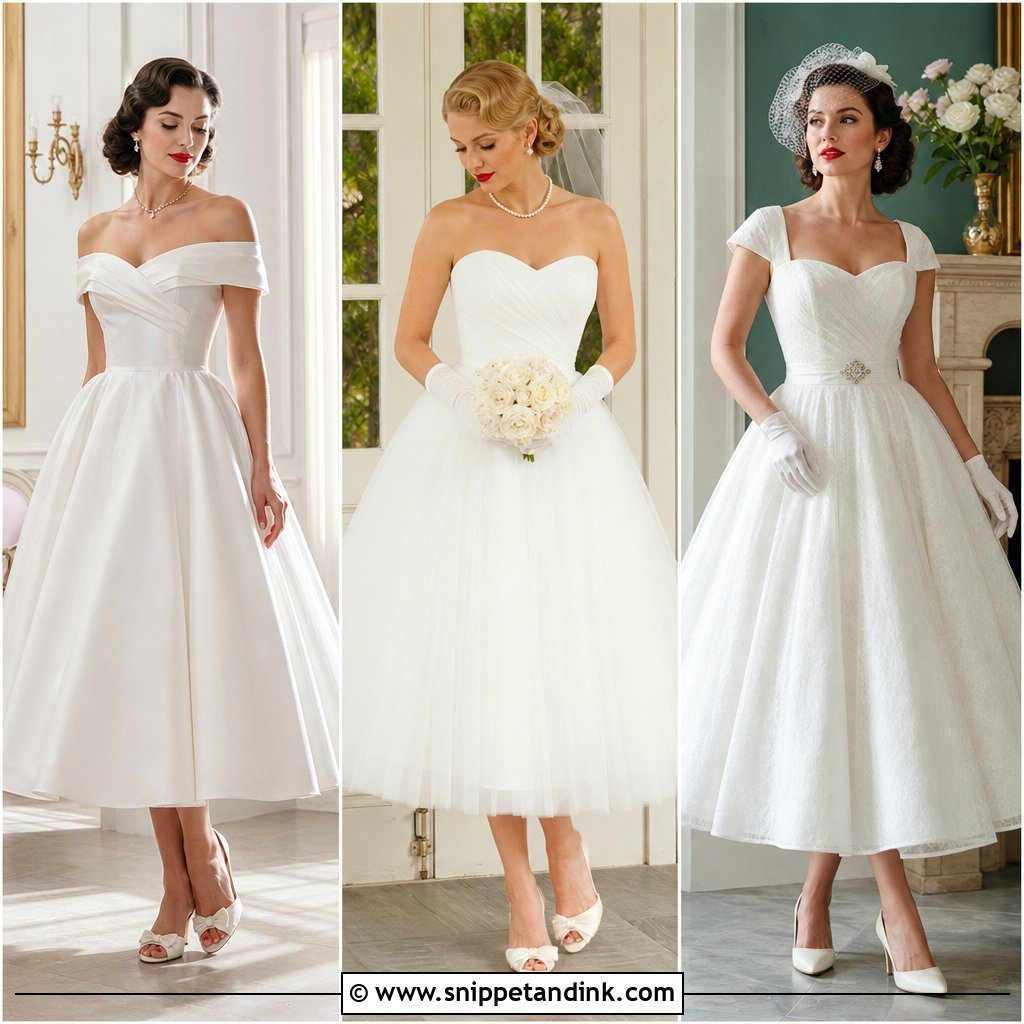
Brocade carries its decoration in the weave, so it needs no beads, sequins or lace on top. Pick a knee or tea-length A-line with a subtle woven floral, a fitted bodice, short sleeves and a plain round neckline. Heavier brocade doesn’t drape so much as hold, which is right for a structured sixties shape, but ask the tailor to finish the inner seams properly because brocade frays quickly at raw edges. Satin kitten heels, pearl earrings, wrist-length gloves and a small box bag suit it, with a short veil on a fabric bow or compact pillbox. White tulips with little greenery and a smooth bob or curled updo finish the ensemble for a fall wedding, civil ceremony or brunch reception.
16. 1960s Short Sleeve Wedding Dress
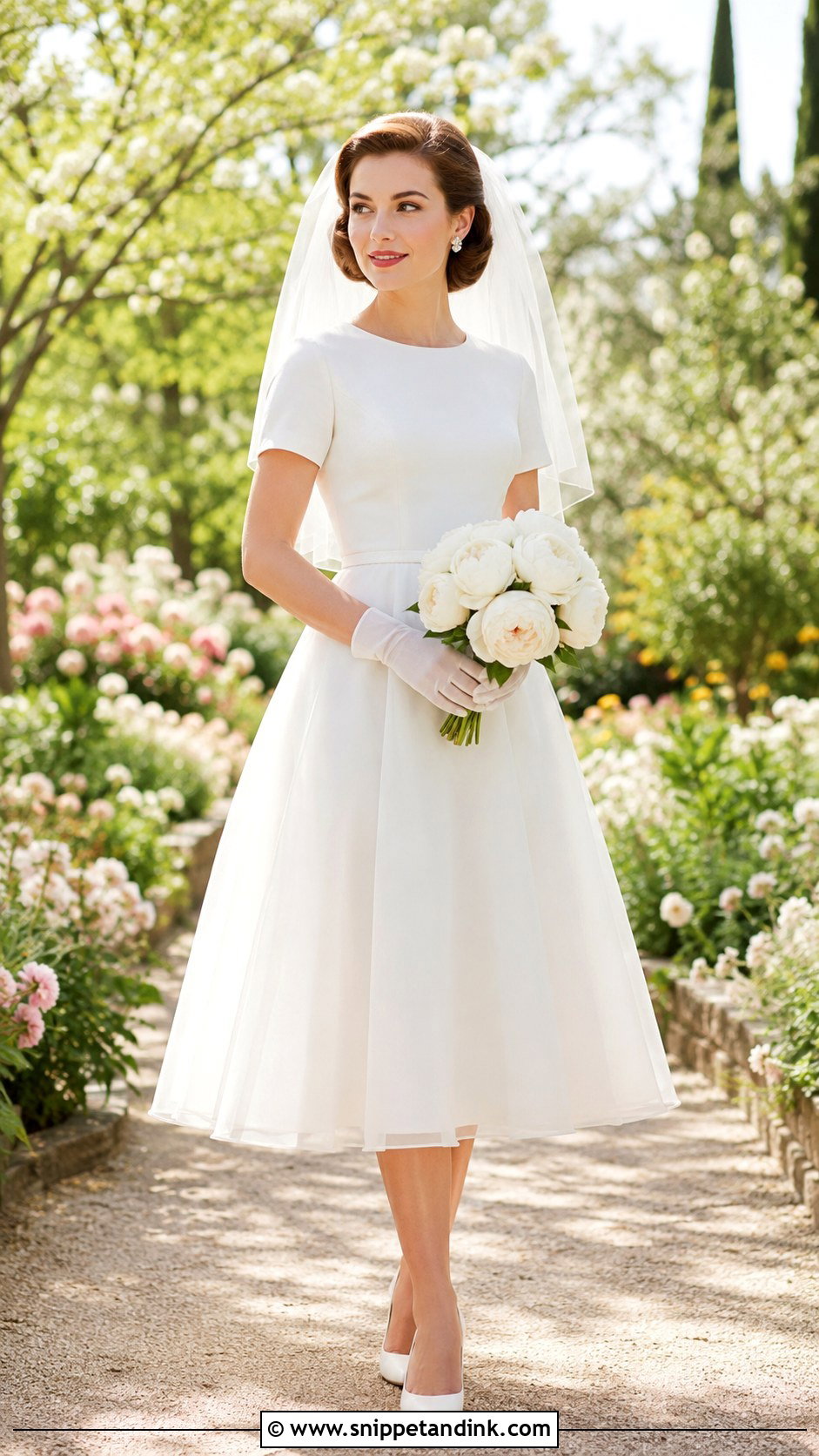
Short sleeves are the practical sixties choice for a warm day, and they let you raise your arms without the whole bodice lifting, which matters during the first dance. The dress has a jewel neckline, defined waist and softly flared tea-length skirt in lightweight satin, lace-covered cotton or crisp organza. Closed-toe kitten heels, small pearl earrings and wrist-length gloves keep it neat, and a waist-length veil adds movement while leaving the sleeves and neckline in view. White peonies, roses or seasonal daisies all work. Hair can go into soft curls, a neat bob or a low twist with some crown volume. Spring gardens and daytime receptions are its natural home.
17. 1960s Square Neck Wedding Dress
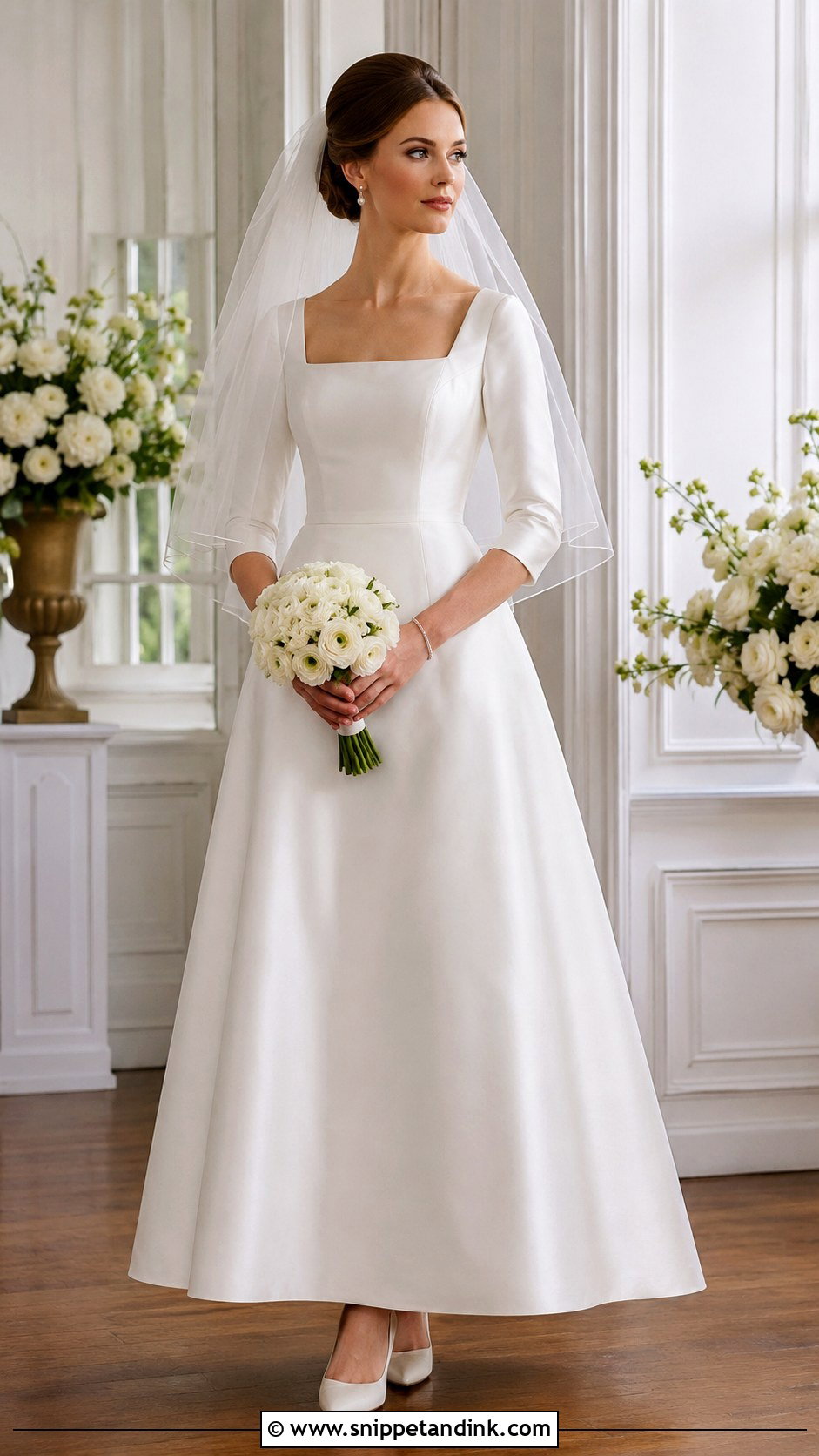
A square neckline frames the face with straight lines, which tends to suit round and heart-shaped faces. At the fitting I watch the corners: they should sit flat against the chest and stay there when you lean forward. Pair the neckline with three-quarter sleeves, a fitted bodice and a gently flared floor-length skirt in matte satin or silk faille, both of which hold clean lines. Add a narrow ribbon belt at the natural waist if the gown needs definition. Ivory pumps, pearl drops, a simple bracelet and a fingertip veil behind a rounded updo keep the neckline clear, and white ranunculus with greenery finish it. Structure on top with a skirt falling away from the hips flatters many body shapes.
18. 1960s Wedding Dress With Detachable Train
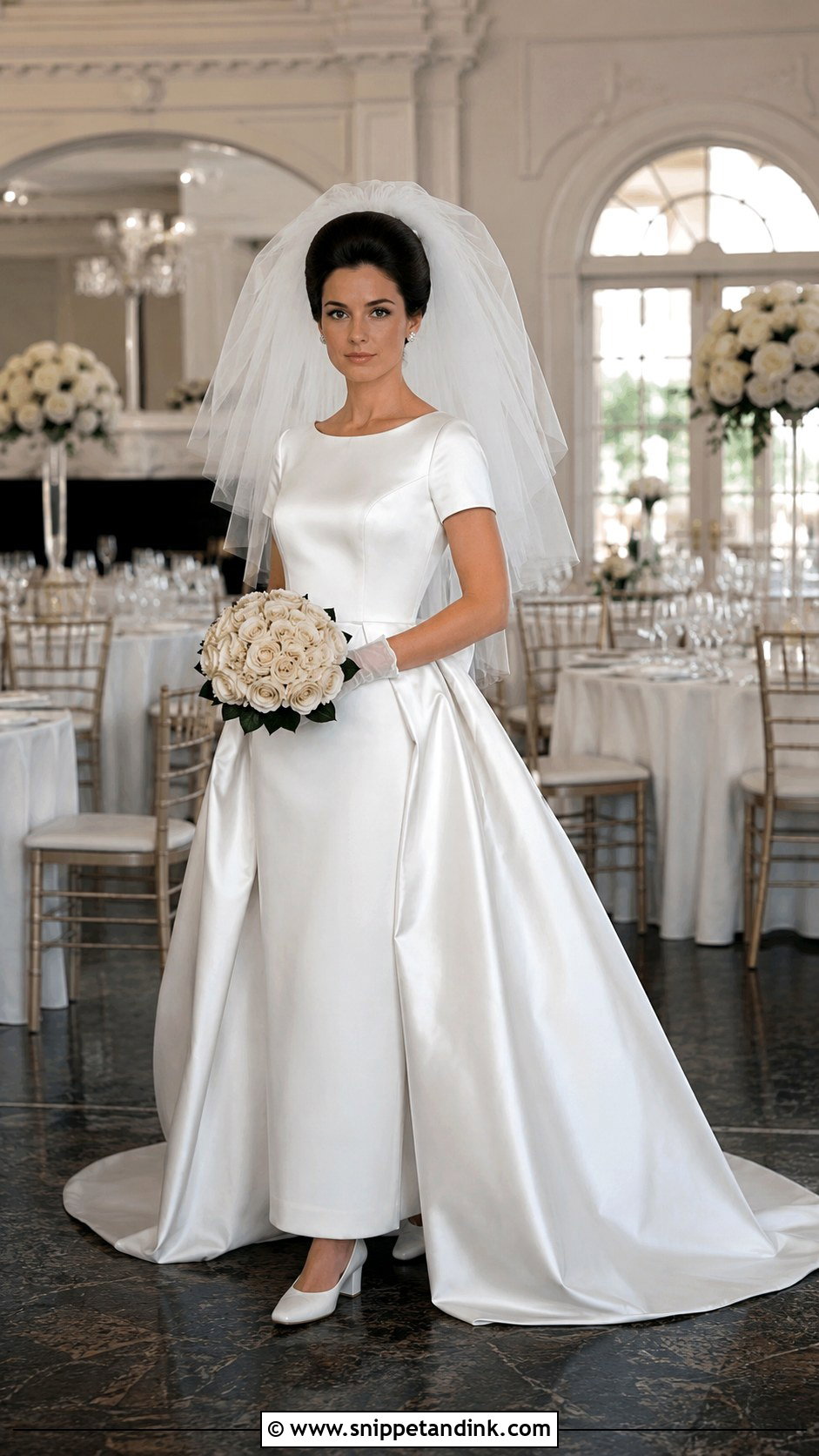
Detachable trains need a rehearsal. I have the bride and whoever is helping practice unhooking it at the final fitting, because hooks hidden at the back waist are hard to find in a dim reception room. Begin with a fitted knee-length or floor-length satin or crepe shift and attach a full overskirt or train at the back waist, so the ceremony gets drama while the front stays clean. Low block heels, pearl studs and short gloves keep the rest simple. The bouffant veil should end above the train so the layers stay separate. Carry a structured bouquet of white roses, then take off the train and veil for dancing, with a polished updo that survives the change. One dress gives you formal portraits and a comfortable reception look.
19. 1960s Pastel Wedding Dress
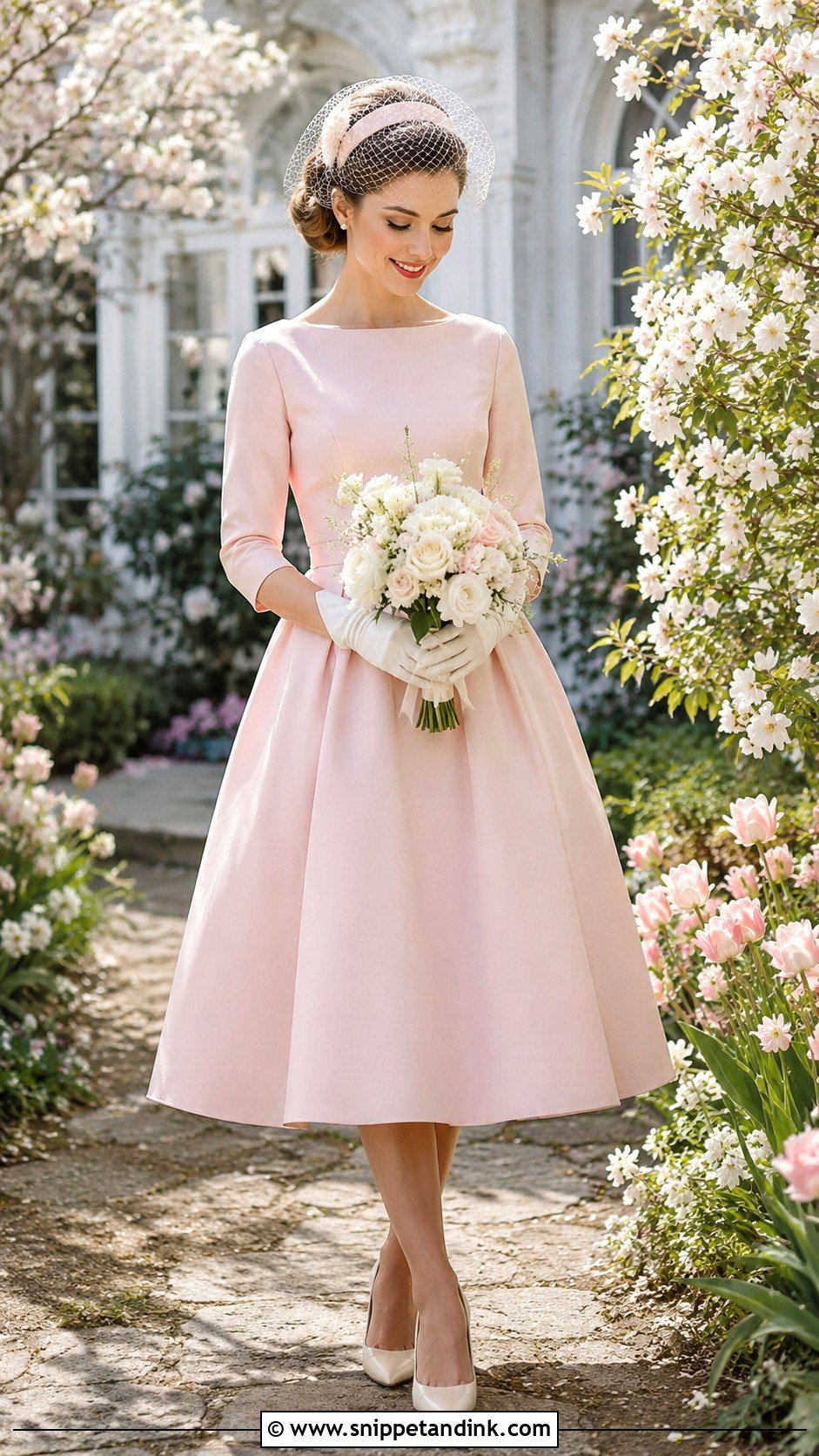
Color fits the sixties naturally, since plenty of brides in that decade married in pastels, especially for second weddings and civil ceremonies. Blush pink, powder blue, pale yellow or soft champagne all suit a tea-length A-line with a fitted bodice, elbow-length sleeves and a lightly gathered skirt. Before committing, hold the fabric against your face in daylight. Pale yellow can wash out fair skin, and powder blue can turn greyish under warm indoor lighting. Ivory kitten heels, pearl earrings and matching short gloves, plus a small net veil on a satin headband in the same color family, finish it. Carry white flowers with a few blooms that repeat the dress color, and wear a smooth bob or curled updo.




20. 1960s Floral Appliqué Wedding Dress
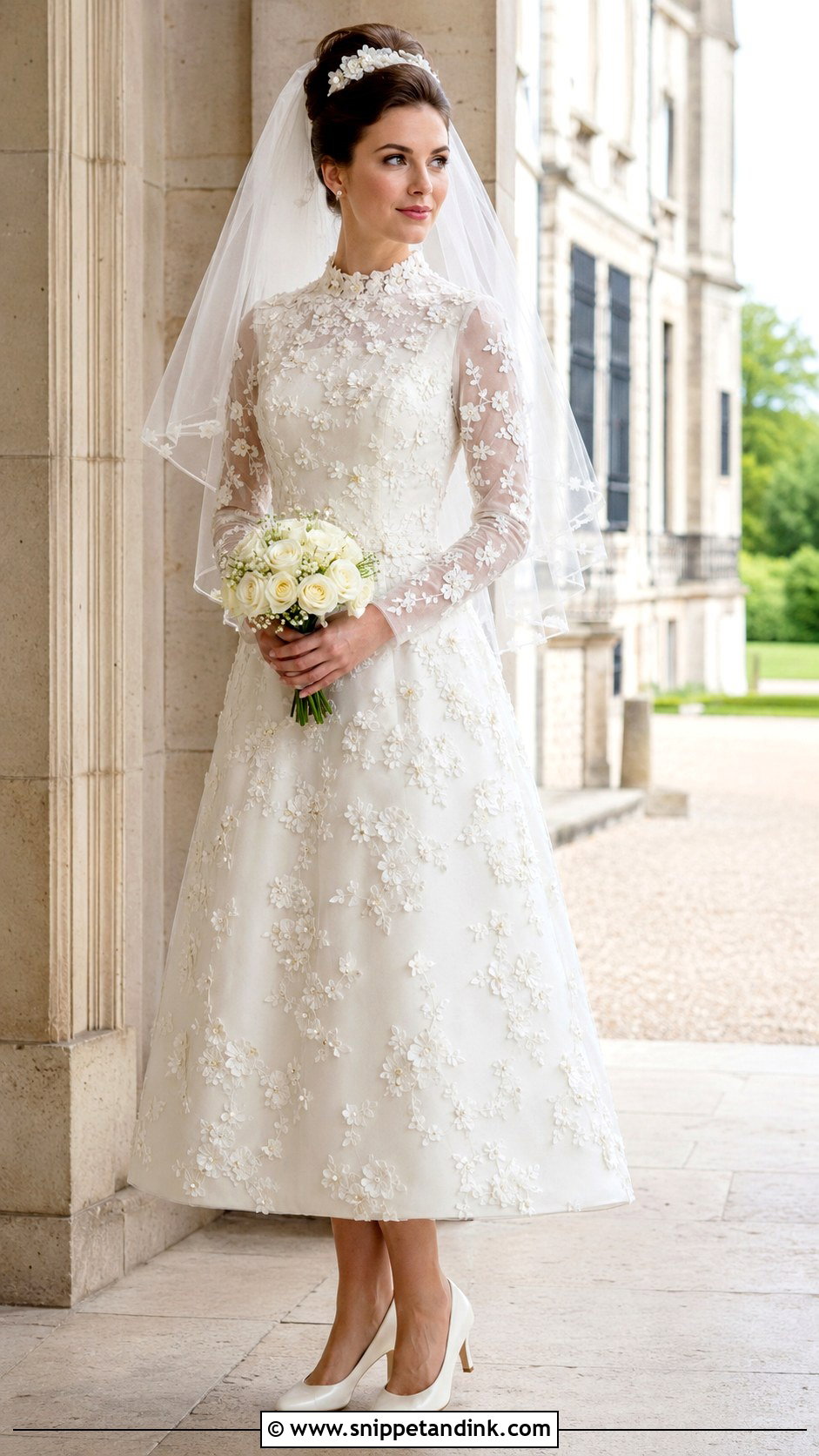
Placement decides whether floral appliqué reads sixties or modern. Concentrated across the bodice, sleeves and upper skirt, it looks period; scattered over every surface, it starts to resemble a current lace gown. A sheer yoke, raised neckline and fitted long sleeves give the flowers a framework. I always check how the appliqués are attached, because hand-stitched edges lie flat while glued ones can lift after cleaning. Ivory pumps, pearl studs and a narrow bracelet are plenty. Add a fingertip veil under a floral comb that repeats the motif, white roses with greenery, and a low bun or waved half-up style for a garden, historic estate or formal indoor party in spring or early fall.
Wearing an Original Sixties Gown Instead of a Reproduction
Genuine 1960s wedding dresses still turn up in vintage shops and family wardrobes, and plenty are wearable. They come with quirks I check for every time.
- Sizing. Labels from the decade run noticeably smaller than modern sizes, so ignore the number and compare bust, waist and hip measurements with your own.
- Fiber. Many gowns from this era were made in acetate, rayon or nylon lace rather than silk. Acetate can melt under a hot iron and water-spots easily, so it needs a cool steamer and a cleaner who knows the fabric.
- The zip. Metal zips were common for much of the decade. Run it fully up and down; a stiff old zip is better replaced by a tailor than forced on the morning.
- Seam allowances. Older dressmaking often left generous allowances inside, so a gown that looks too small may let out a little. Turn it inside out before you rule it out.
- Color. Yellowed folds and a musty smell often respond to specialist cleaning, while brown marks from old spills may never fully lift.
Hosiery, Hems and the Sitting Test for Shorter Dresses
With a mini or tea length, your legs and feet become part of the outfit. Sheer ivory or nude hosiery looks period; opaque bright white tends to read as costume. Pack a spare pair, because a ladder at the knee is the most common short-dress emergency I see. Scuff the soles of new shoes lightly so you don’t slip, and check the shoe color against the dress in daylight, since ivory satin shoes and an ivory dress rarely match exactly. Then sit down in front of a mirror. Wherever the hem lands when you’re seated is what guests will see through the speeches.
One Decade, Two Very Different Brides
Sweet tea-length lace and a bold mod mini both come from the same ten years, which shows how much room this decade gives you. Empire waists, bell sleeves, shifts, organza ball gowns and tailored coat dresses fill in the rest. The most convincing outfits borrow a few period accessories instead of every vintage detail at once: comfortable heels, a bouquet in scale, simple jewelry and a headpiece that suits the neckline. Start with the silhouette that feels natural on your body, and a 1960s bridal outfit will sit comfortably at a wedding happening today.
You'll Like These Ideas:







Leave a Reply