
Rockabilly bridal style takes 1950s shapes and adds playful pinup details, and it flatters more figures than brides usually expect. The cut does most of the work: a fitted bodice, a waist placed exactly where yours is and a skirt that stops somewhere between knee and ankle. Lace, polka-dot tulle and a flash of color come after that. Because the hem is shorter than a traditional gown, your shoes and accessories become part of the outfit in a way they rarely are with a floor-length dress. Below are twenty complete looks, from ivory swing dresses to black-and-white, with the fitting details I check for each.
The Petticoat Decides How the Skirt Behaves
Nearly every dress below mentions a petticoat, and it shapes the outfit as much as the dress itself. Brides often buy the dress, then grab any petticoat online the week before. I’d choose it as soon as the dress is ordered and bring it to every fitting, because the hem length and the fall of the skirt are set over it.
Soft net or stiff crinoline
Soft chiffon or tulle petticoats give a gentle, swaying fullness and are comfortable for a long day. Stiff crinoline net gives the classic bouncy dome but scratches bare legs and makes sitting awkward. For most brides I’d go with a soft petticoat with several tiers, or a soft one with a single stiff layer inside.
Length and fit
- The petticoat should end about two to three centimeters above the dress hem so it never peeks out when you walk.
- A fitted yoke at the top, rather than gathers right at the waistband, keeps bulk off your hips.
- Practice sitting and using the bathroom in it. A full petticoat can be gathered up and held in one arm; a stiff one will need a friend.
- Fluff it the night before by hanging it upside down. Petticoats lose volume after being packed flat.
1. Tea Length Rockabilly Wedding Dress
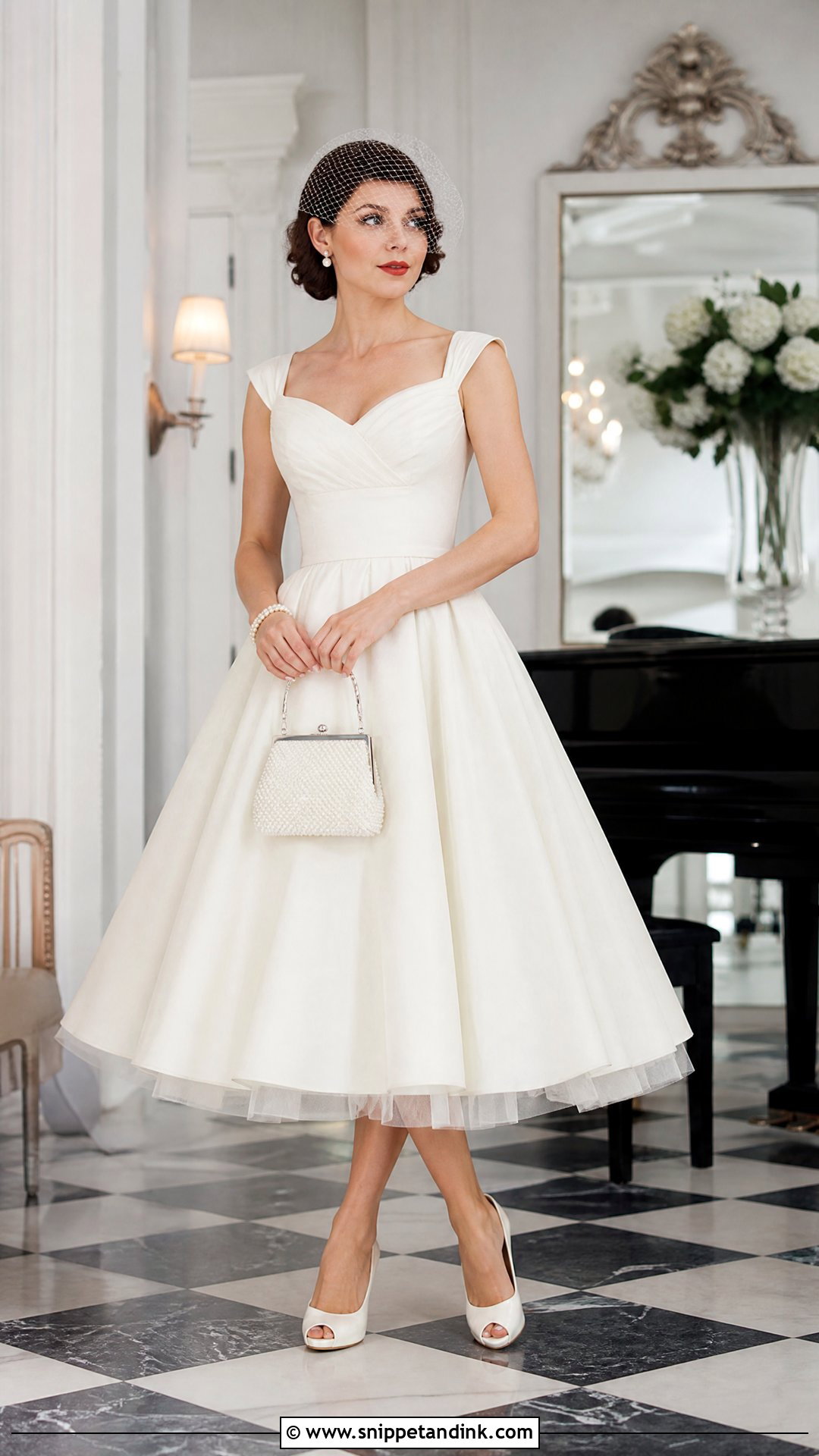
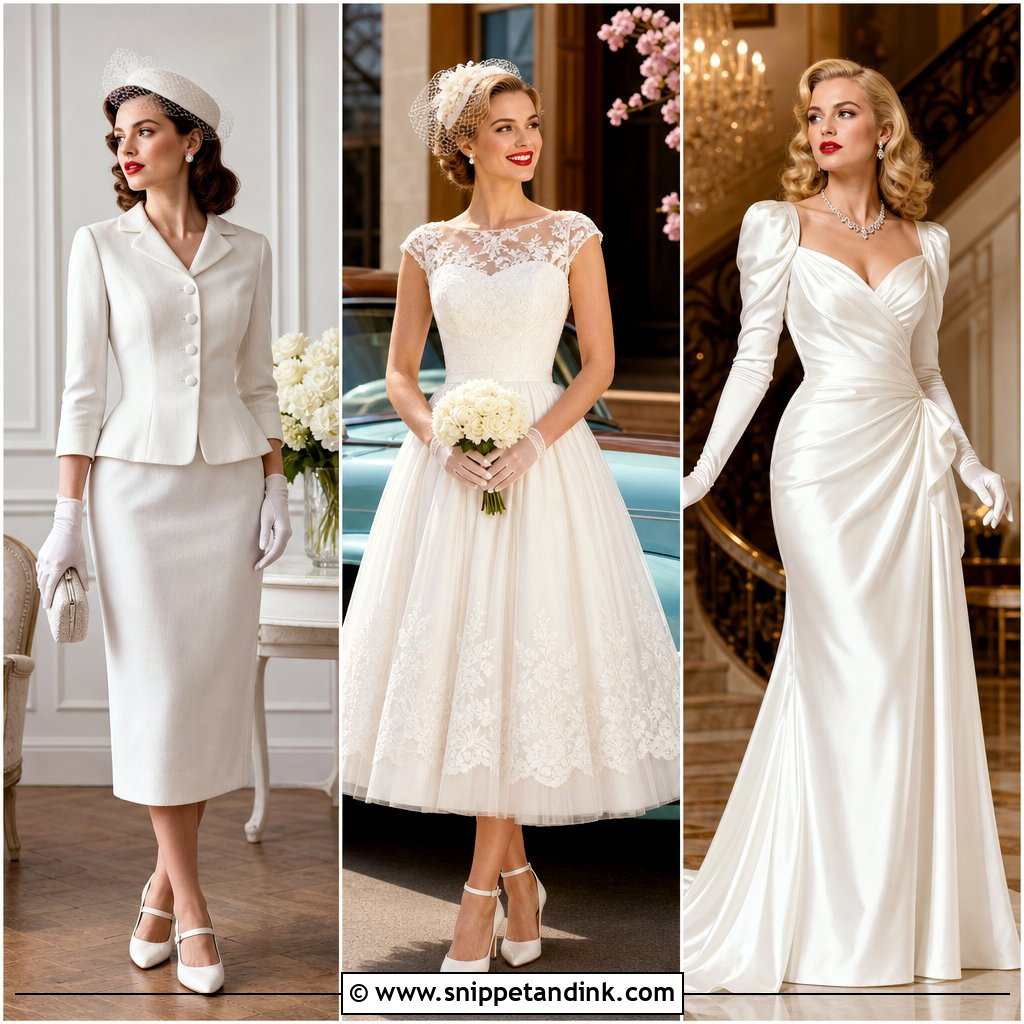
The tea-length swing dress is the shape everyone pictures. An ivory dress with a fitted bodice, a natural waist and a wide circle skirt is the core, with a light petticoat underneath for movement. White peep-toe pumps, pearl drops, a structured top-handle bag and a short birdcage veil complete it. With a full circle skirt, the waist seam has to sit exactly at your natural waist; even a couple of centimeters too low and the skirt starts to look heavy and the bodice wrinkles. Get that right at the fitting and the rest follows. It’s also one of the easiest dresses on this list to dance in.
2. Polka Dot Rockabilly Wedding Dress
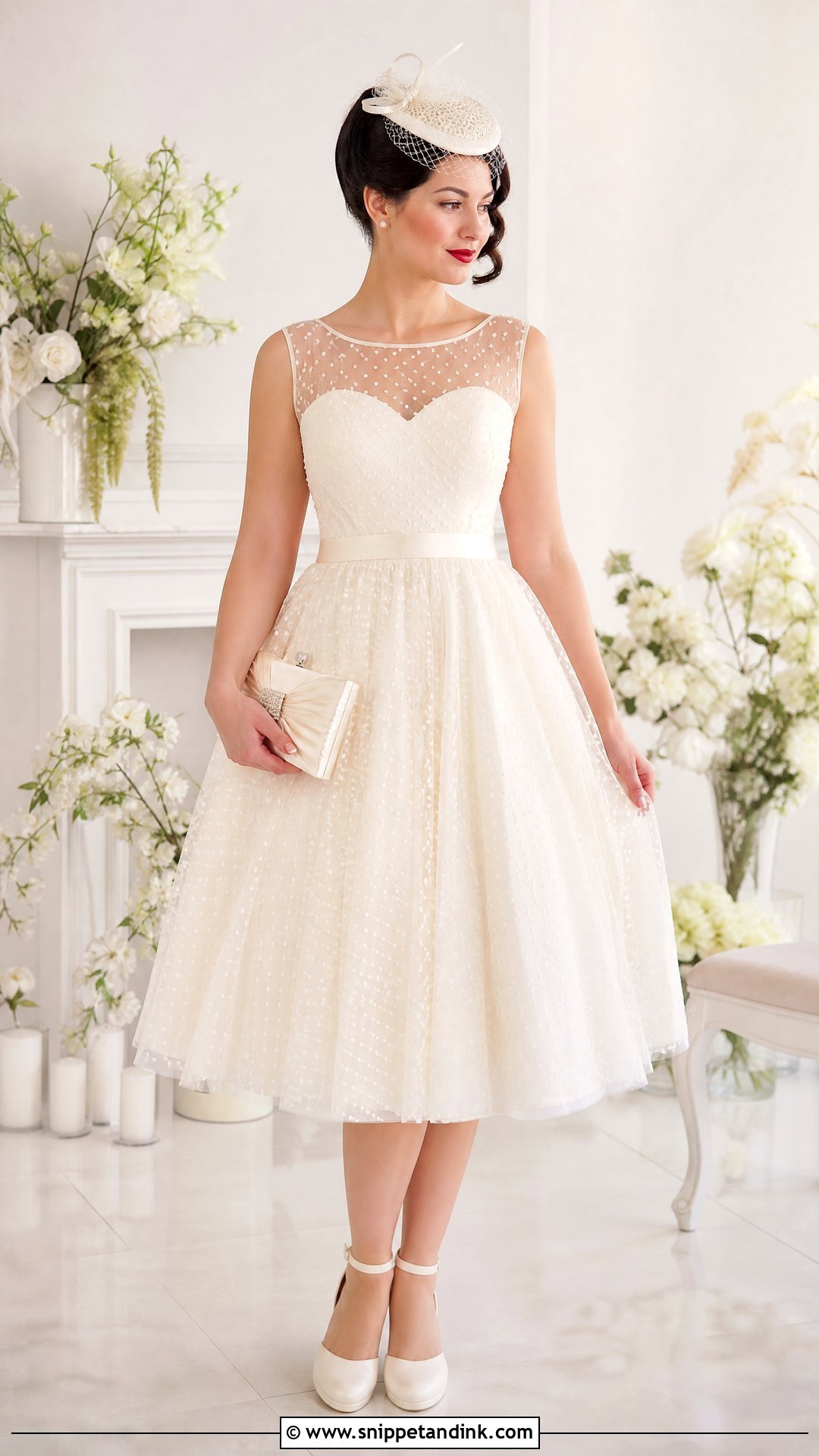
Small polka dots give personality while the palette stays white. Look for dotted tulle over a smooth lining, a defined waistband and a gently flared tea-length skirt; a sweetheart lining under an illusion neckline adds shape and comfortable coverage. Ivory ankle-strap heels, pearl studs and a small satin clutch suit it, with a tulle bow or compact fascinator in place of a long veil. Keep every other print out. The petticoat should stop a couple of centimeters above the dress hem, because a peeking net edge is the first thing that shows in a walking photo.
3. Lace Cap Sleeve Rockabilly Wedding Dress
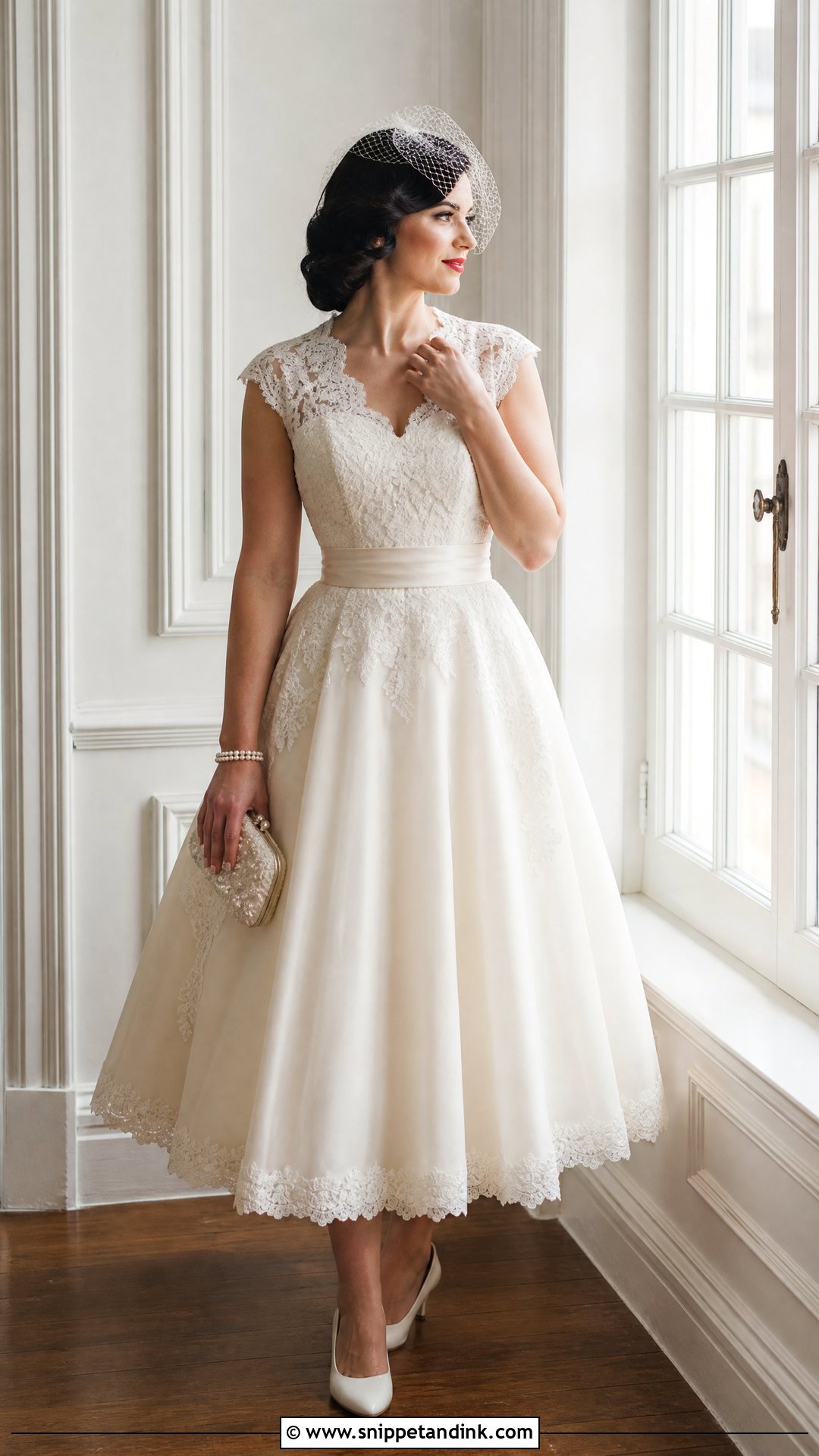
Cap sleeves and lace bring the most traditional bridal note to the rockabilly shape. A fitted lace bodice over a smooth tea-length circle skirt, with a narrow satin waistband, frames the collarbone while the sleeves balance the shoulders. Low ivory pumps, a pearl bracelet and a small beaded bag finish it. A fingertip veil suits the lace; a short net veil keeps the retro feel stronger. I’d choose a medium-scale lace, since very fine patterns turn into a plain texture on camera. If the skirt already has layers, swap a stiff petticoat for a soft one so the waist doesn’t thicken.
4. Strapless Sweetheart Rockabilly Wedding Dress
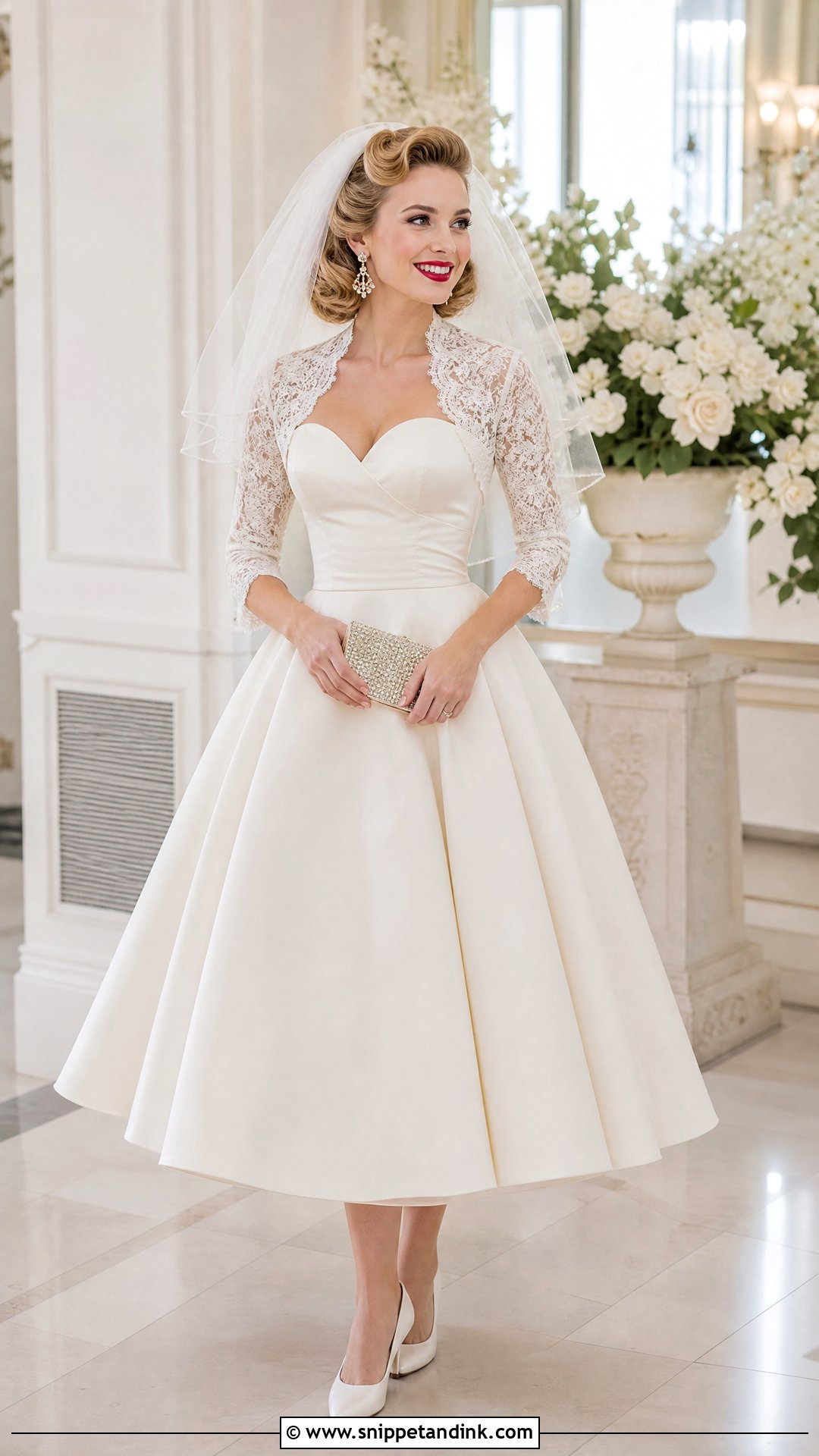
A structured sweetheart bodice is pure pinup glamour. A strapless ivory dress with light boning, a nipped waist and a full calf-length skirt gives a bold but balanced shape. Closed-toe pumps, crystal earrings and a box clutch go with it, plus a detachable lace bolero for the ceremony that comes off for dancing. A shoulder-length veil tucked under a smooth rolled updo keeps the neckline clear. Strapless only works if the bodice is fitted tightly enough at the ribs to hold itself up. At the fitting, I have the bride sit, walk and raise both arms; if she tugs the top up even once, it needs taking in.
5. Halter Neck Rockabilly Wedding Dress
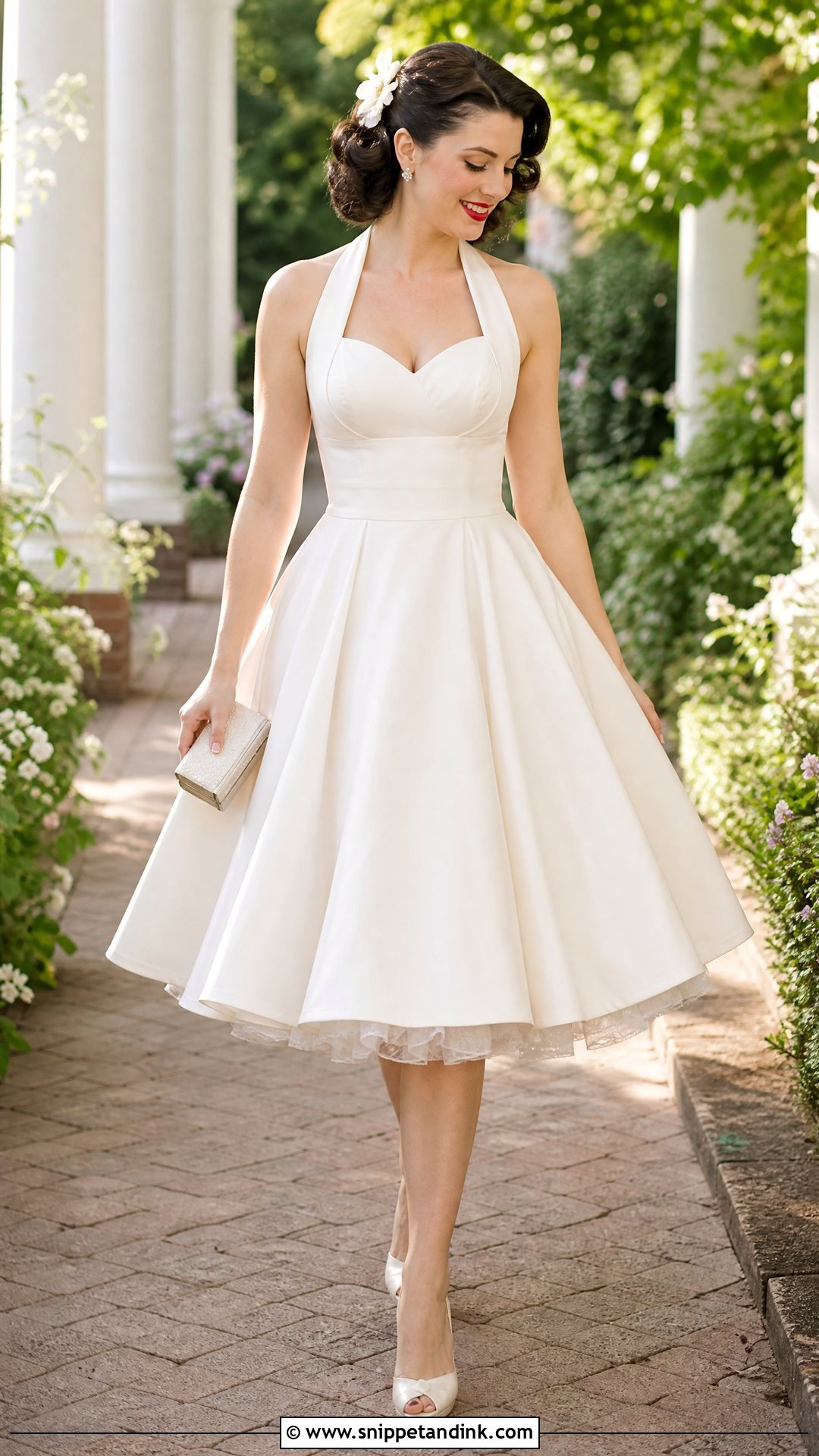
A halter-neck wedding dress draws the eye up toward your face and has strong 1950s character. Choose satin or cotton sateen with a supportive bodice, a covered back, a defined waist and a flowing tea-length skirt. The neckline is already the statement, so keep to studs and one slim bracelet, ivory slingbacks and a rounded vintage clutch. A floral hair comb sits more neatly than a veil around halter straps. The thing to watch is the neck strap: if it pulls, the weight of the skirt ends up hanging from your neck by the evening. A seamstress can shorten or widen the strap, or move the weight to a hidden waist stay.
6. Boat Neck Rockabilly Wedding Dress
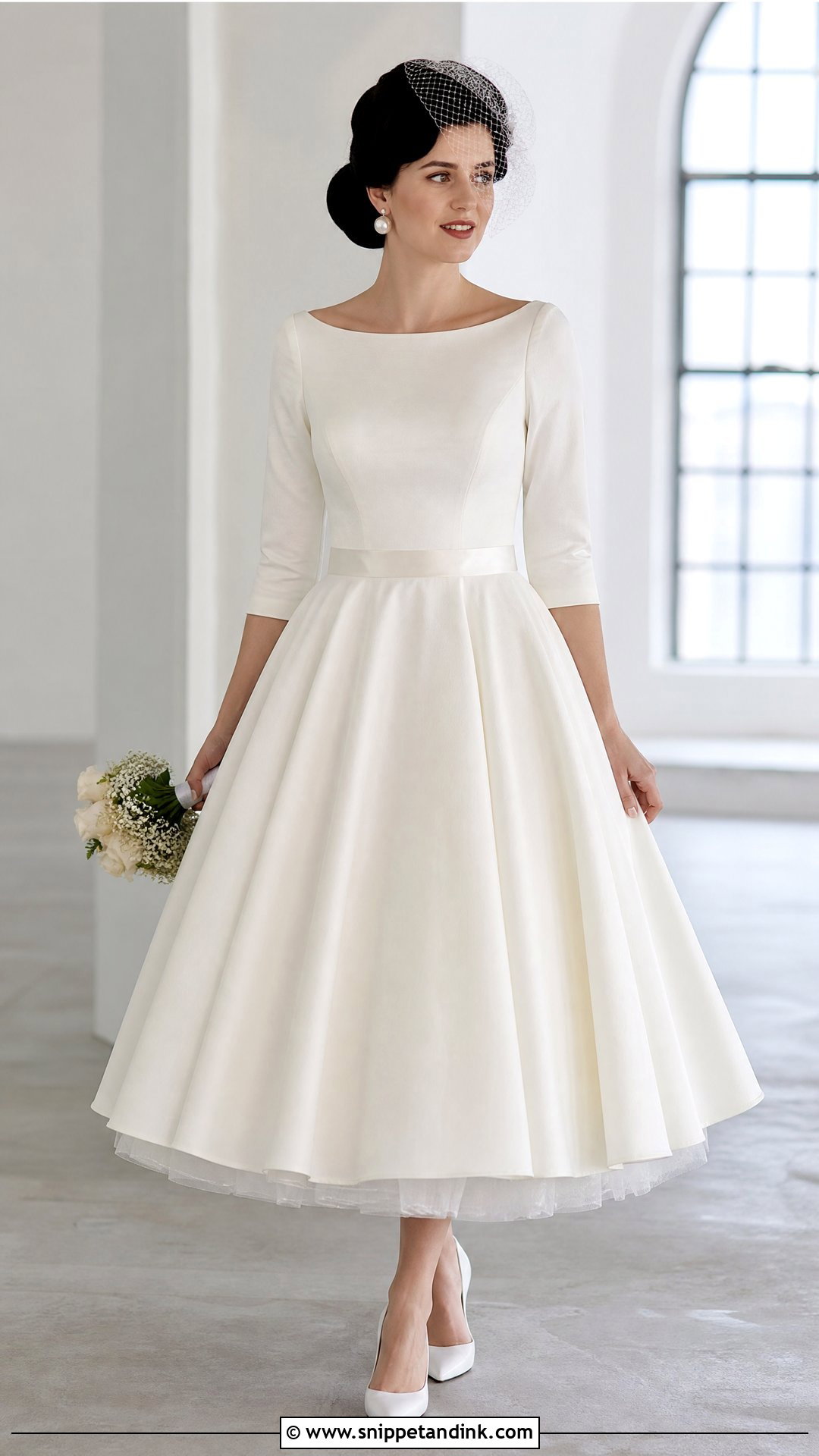
A wide boat neckline and a full skirt are a quietly polished pairing. Choose a clean ivory dress with three-quarter sleeves, a fitted waist and a tea-length circle skirt, then add pointed kitten heels, pearl earrings and a narrow satin belt. A small birdcage veil worn slightly to one side adds a period touch without hiding the neckline. It’s a good option if you want more coverage across the chest and upper arms. Boat necks can slip off one shoulder on narrow-shouldered brides, so I’d ask for small lingerie guards stitched inside. Keep the petticoat moderate.
7. Long Sleeve Lace Rockabilly Wedding Dress
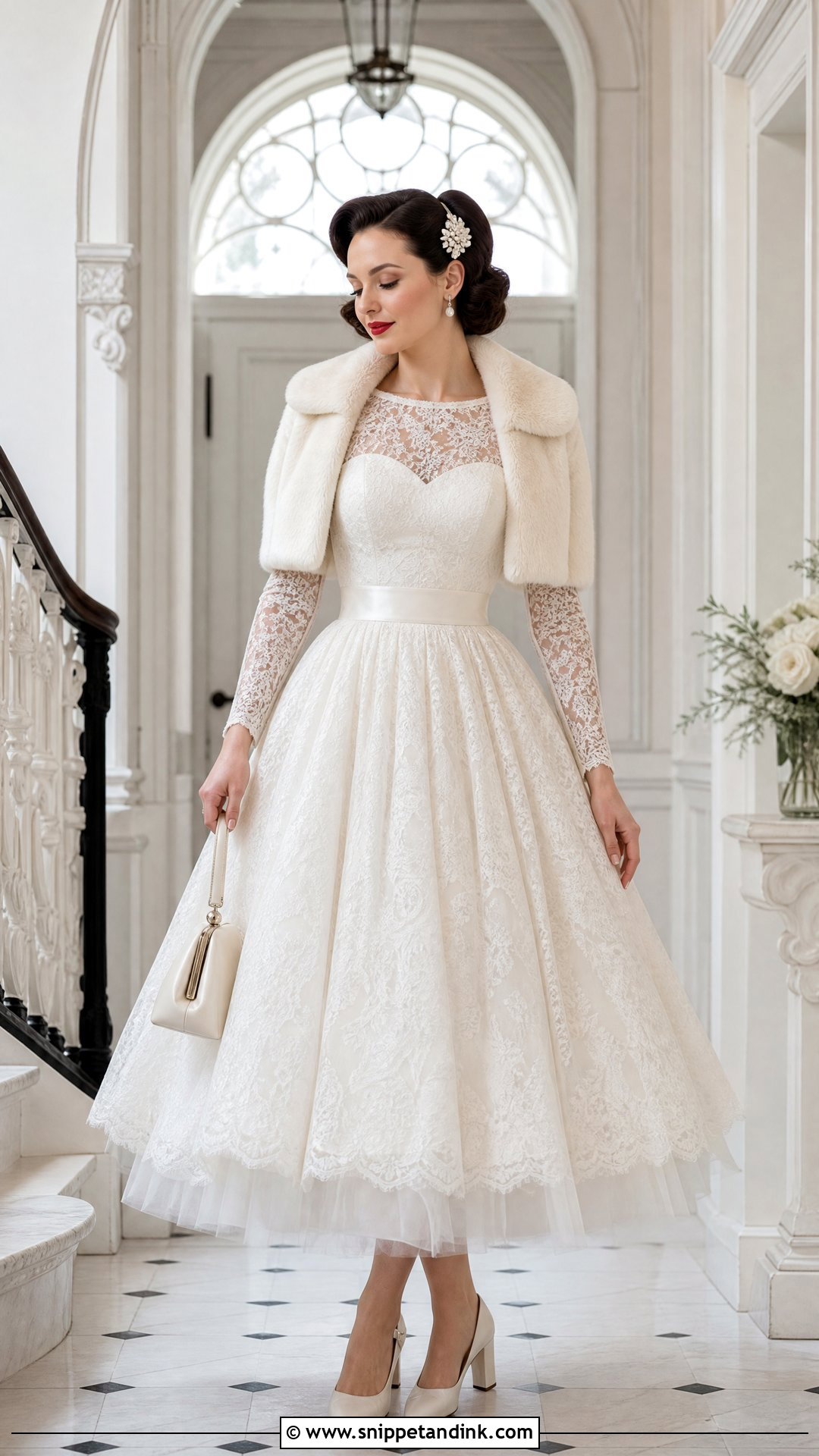
In cooler months, long lace sleeves keep the rockabilly shape and add coverage. Look for sheer lace sleeves, a lined sweetheart bodice and a full mid-calf skirt, with an ivory satin waistband separating lace from skirt. Closed-toe block heels, a pearl hair comb and a small structured bag finish it; a short faux-fur wrap works outdoors and comes off inside. Lift and cross your arms in the fitting room. Lace sleeves without any stretch tear at the underarm seam when you hug guests, so choose a lace with a little give. A layered tulle petticoat gives the skirt shape.
8. Off Shoulder Rockabilly Wedding Dress
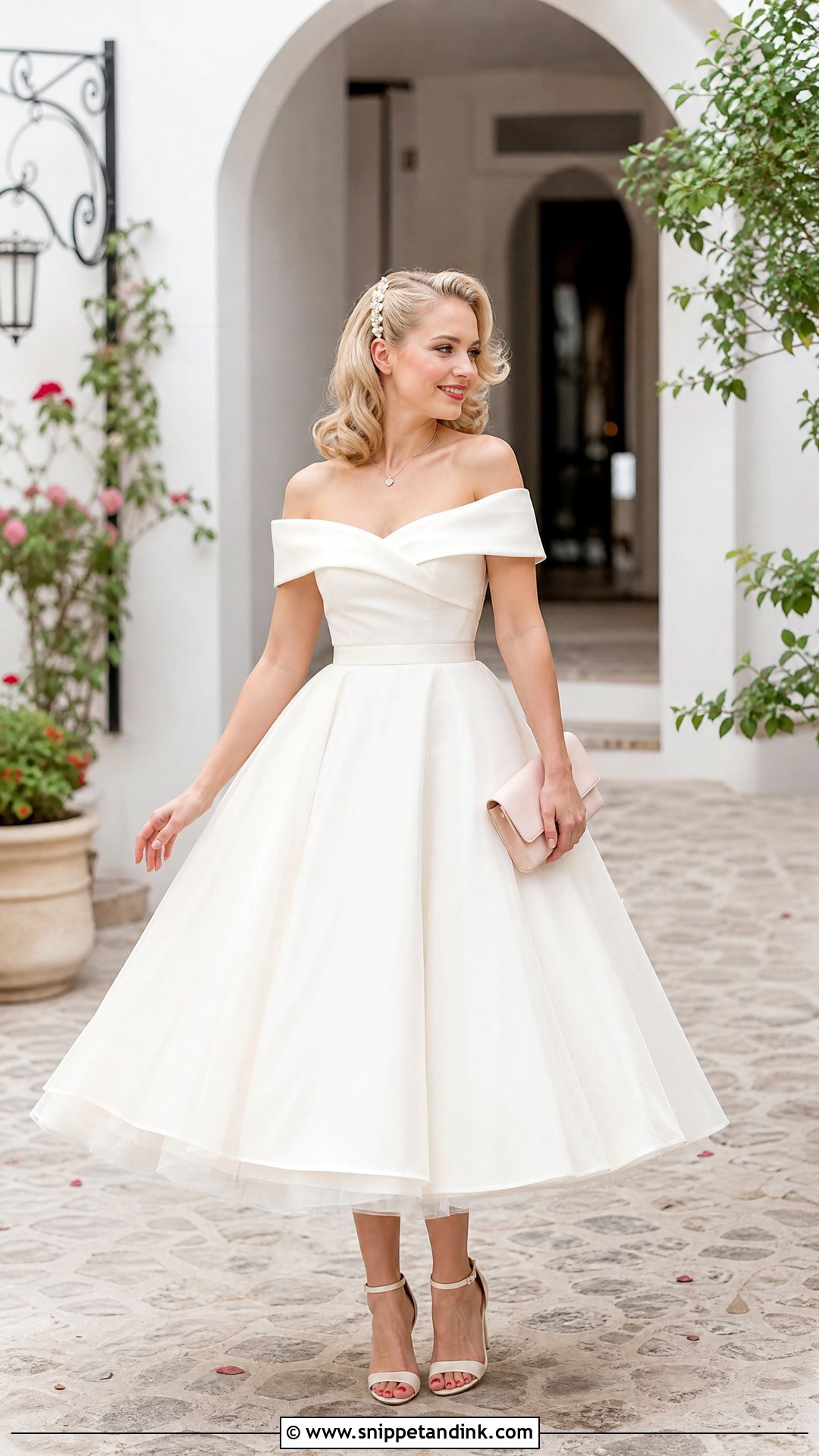
An off-the-shoulder neckline softens the structured rockabilly line. A fitted ivory bodice with fold-over sleeves over a full tea-length skirt and a smooth satin belt is the outfit, with low ankle-strap heels and pearl hairpins in soft waves. A small ivory or pale blush clutch keeps the palette gentle. If the neckline already has lace, ruching or buttons, leave the necklace off. The sleeves need enough grip to stay down when you lift your arms; an elastic or silicone strip inside the band fixes a sleeve that creeps up. A light petticoat balances the open neckline.
9. Satin Rockabilly Wedding Dress
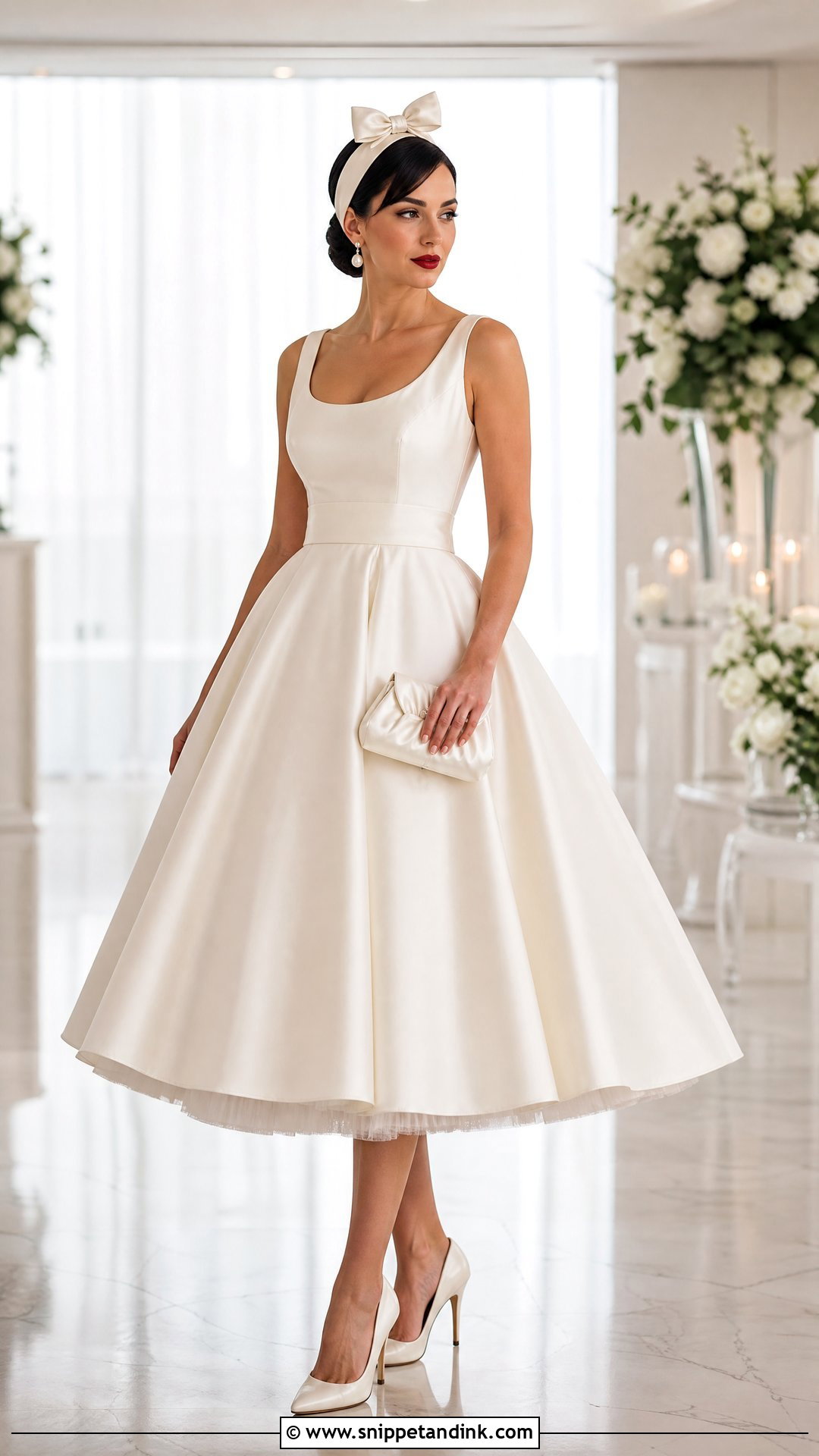
Crisp satin gives the smoothest, brightest surface in a structured dress. Think of an ivory tea-length dress with a scoop neck, fitted bodice, broad waistband and generous circle skirt. Satin already looks formal, so pearl drops, pointed pumps and a plain satin clutch are enough, with a short veil or a neat bow. The fabric shows every crease and every poor alteration, so I’d only choose satin if you have time for careful fittings. Steam it hanging, not with an iron, and choose a medium petticoat; a very stiff one pushes satin into hard ridges instead of soft folds.
10. High Low Rockabilly Wedding Dress
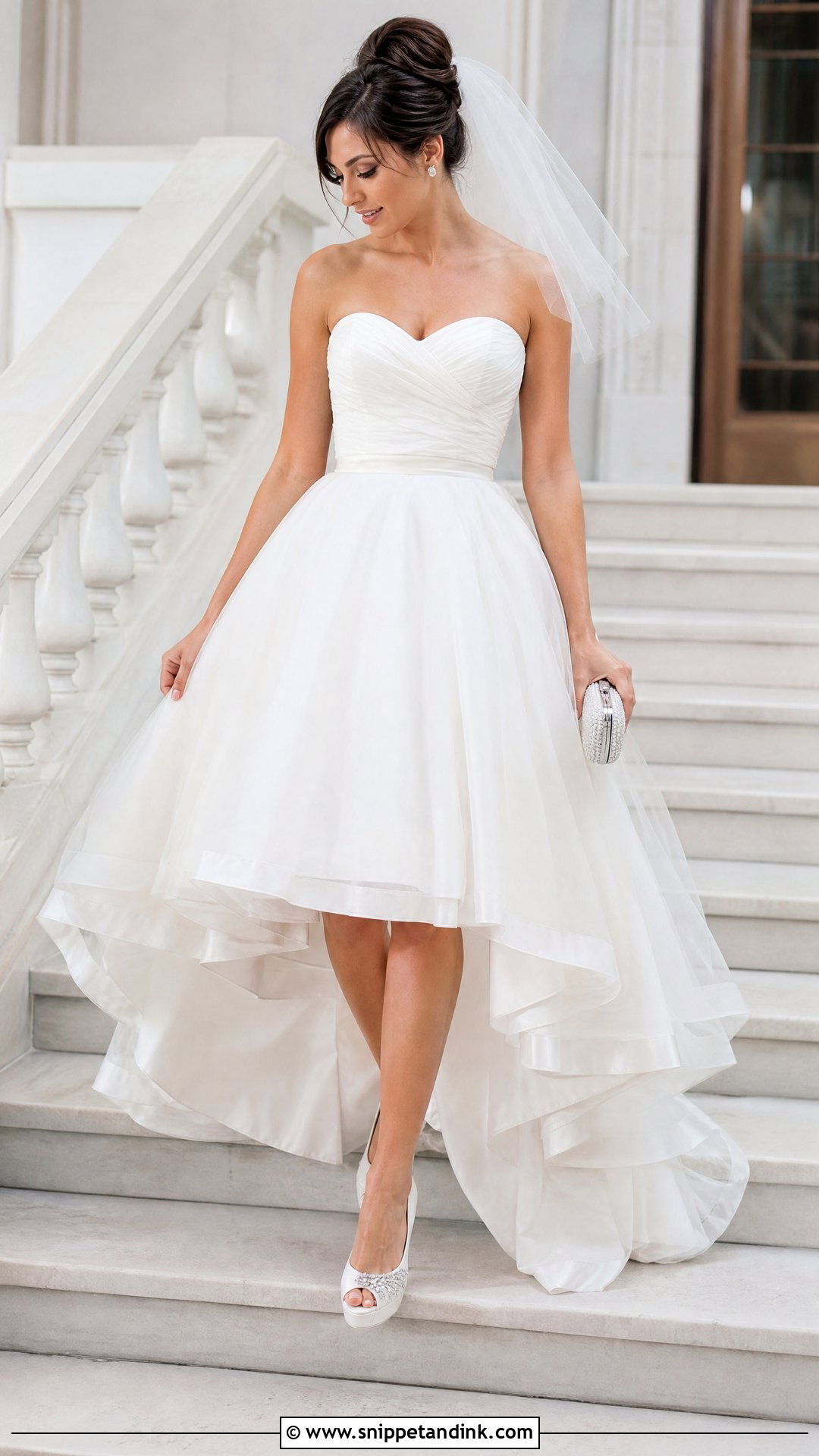
A high-low hem is a modern take on the short rockabilly dress, near the knee in front and dropping toward the ankle at the back. A fitted sweetheart bodice and a structured waistband keep the uneven hem in balance. The shoes are on full show, so peep-toes or decorative ankle straps earn their place. Crystal studs, a compact clutch and a short tulle veil complete it. A standard round petticoat will push the front up and spoil the line, so look for one cut for a high-low hem, or have yours shortened at the front.
11. Pencil Rockabilly Wedding Dress
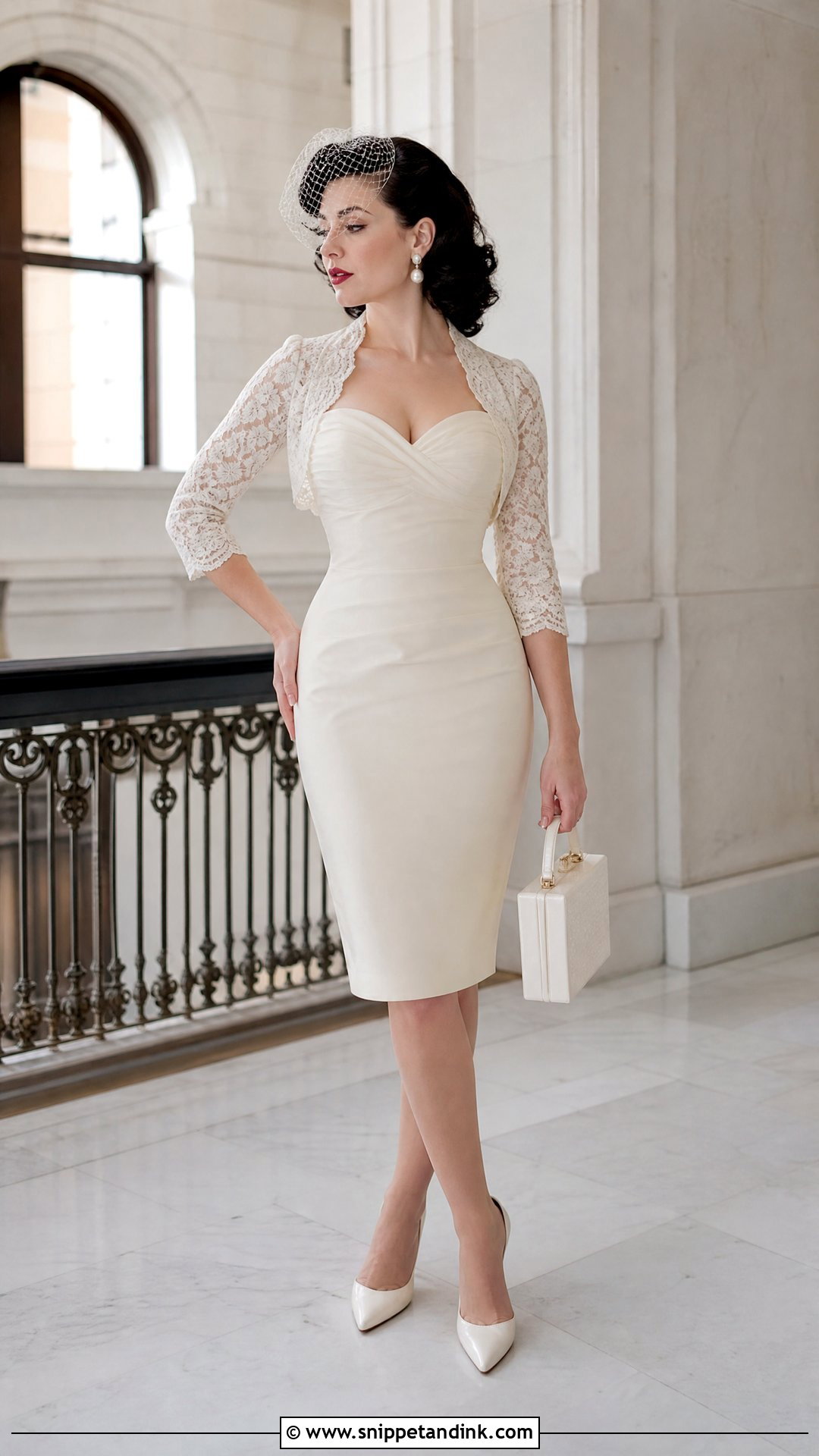
Not every rockabilly dress needs a circle skirt. A pencil or wiggle dress gives a sleek pinup shape: an ivory knee-length design with a sweetheart neckline, a defined waist and a small back slit. Pointed pumps, pearl earrings and a box bag go with it, plus a cropped lace jacket for coverage and a birdcage veil or floral clip. A wiggle dress should skim, not grip; horizontal pull lines across the hips mean it’s too tight, and you’ll be taking small steps all day. Smooth shapewear and careful tailoring matter more here than in any swing dress. It suits a small wedding, a courthouse or a second outfit.
12. Red Accent Rockabilly Wedding Dress
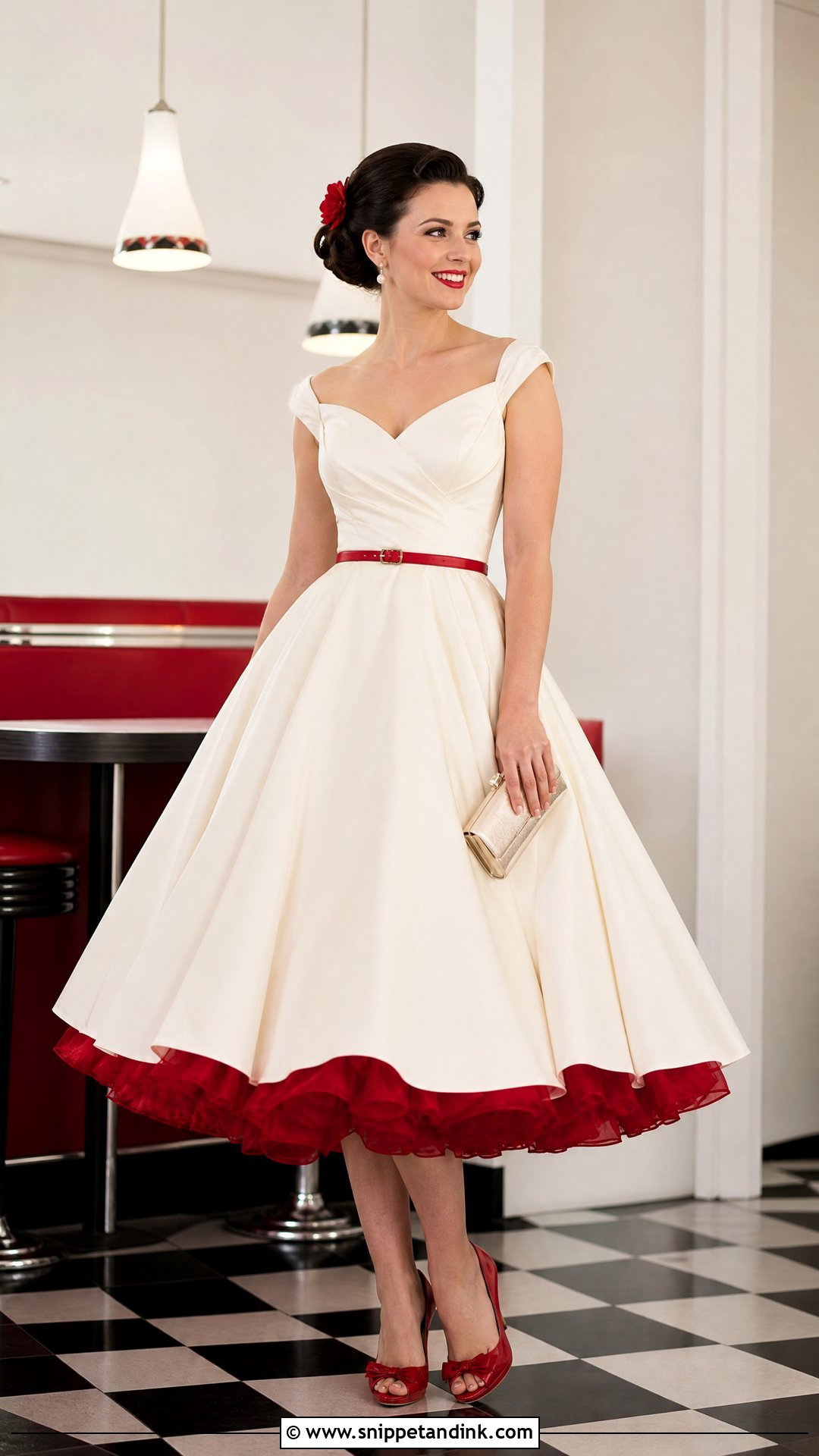
A flash of red brings classic rockabilly energy to an ivory dress. Start with a tea-length swing silhouette, then add a slim red belt, red peep-toes and a small red hair flower, keeping the bag and jewelry neutral. A white petticoat looks softer; a red one gives a reveal every time the skirt swings. Buy the red pieces together or bring each one with you when you shop for the next. Red varies hugely between cherry, tomato and blue-red, and two different reds side by side look like a mistake. One clear accent color lets you be bolder while staying recognizably bridal.
13. Black And White Rockabilly Wedding Dress
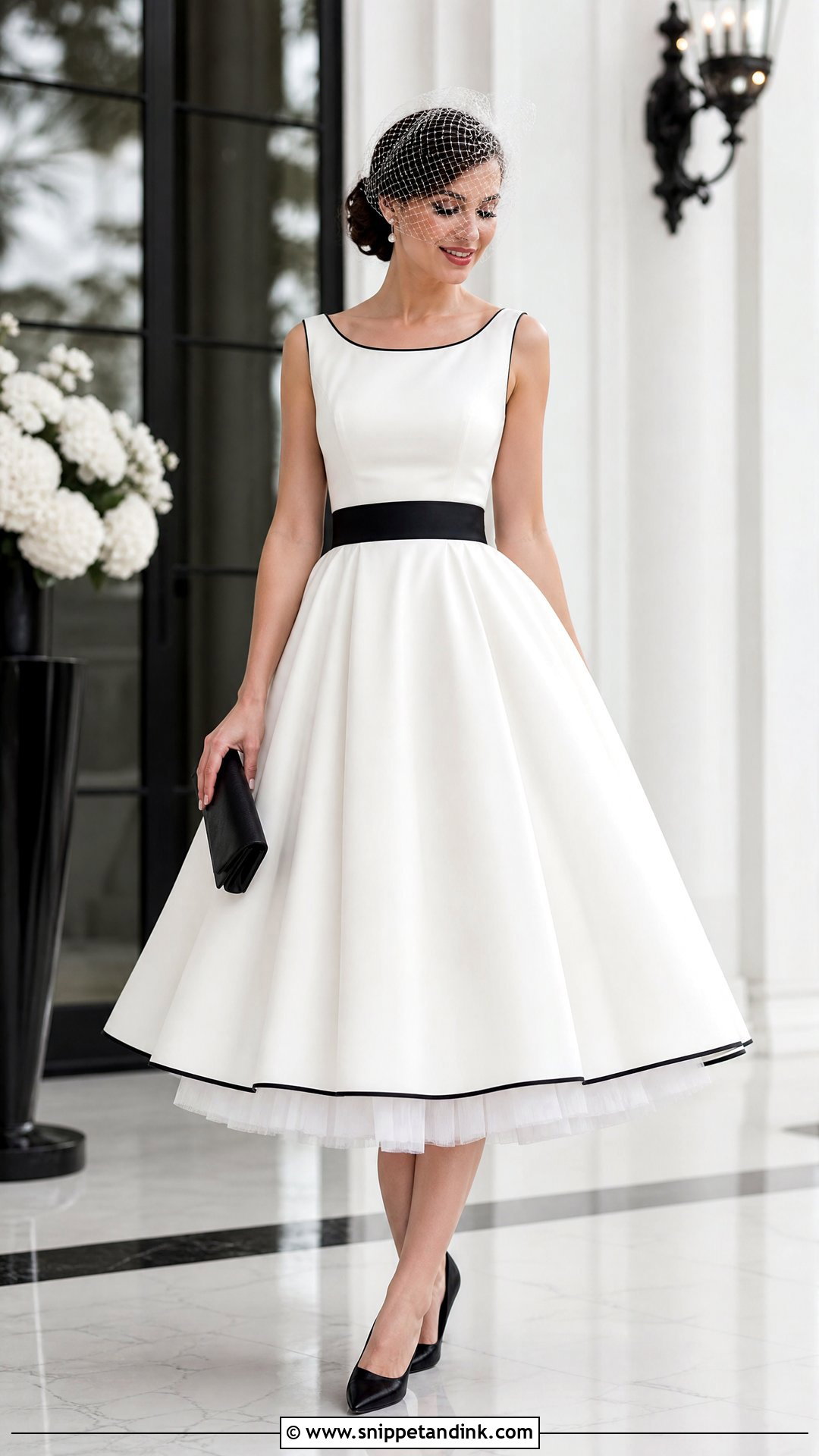
Black trim turns a white swing dress into a confident alternative look. Picture an ivory tea-length dress with a black waistband, a black-edged neckline and a narrow black band near the hem, plus black closed-toe pumps, pearl earrings and a compact black clutch. A white birdcage veil keeps the face bright. A white petticoat is subtle; a black one shows a dark flash when you spin. Limit black to a few clear areas. I’d ask the maker whether the black trim has been colorfast tested, because dark trim on ivory can bleed if it’s ever cleaned or caught in rain.
14. Blush Rockabilly Wedding Dress
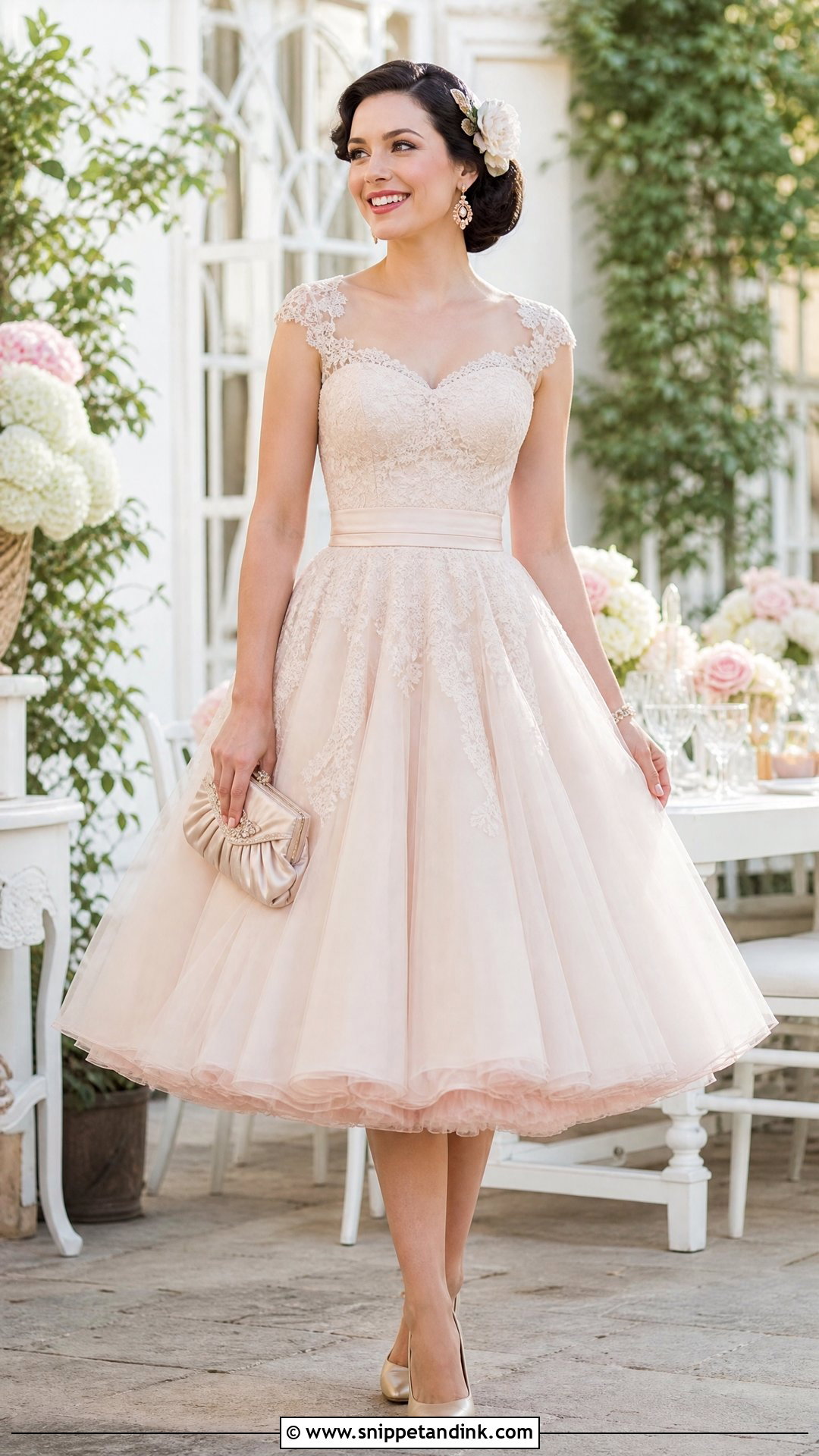
Blush suits brides who don’t want bright white or ivory. Choose a pale blush tea-length dress with a fitted lace bodice, a defined waist and a tulle or organza skirt. Nude or champagne pumps lengthen the leg, and rose-gold earrings, a small satin clutch and a cream-and-pink floral comb finish it. Match the petticoat to the dress; an ivory one can show through a light blush skirt as a pale band. Hold the fabric against your skin in daylight, because blush can read peach, pink or beige depending on your undertone. The 1950s waist and full skirt keep it firmly rockabilly.

15. Floral Rockabilly Wedding Dress
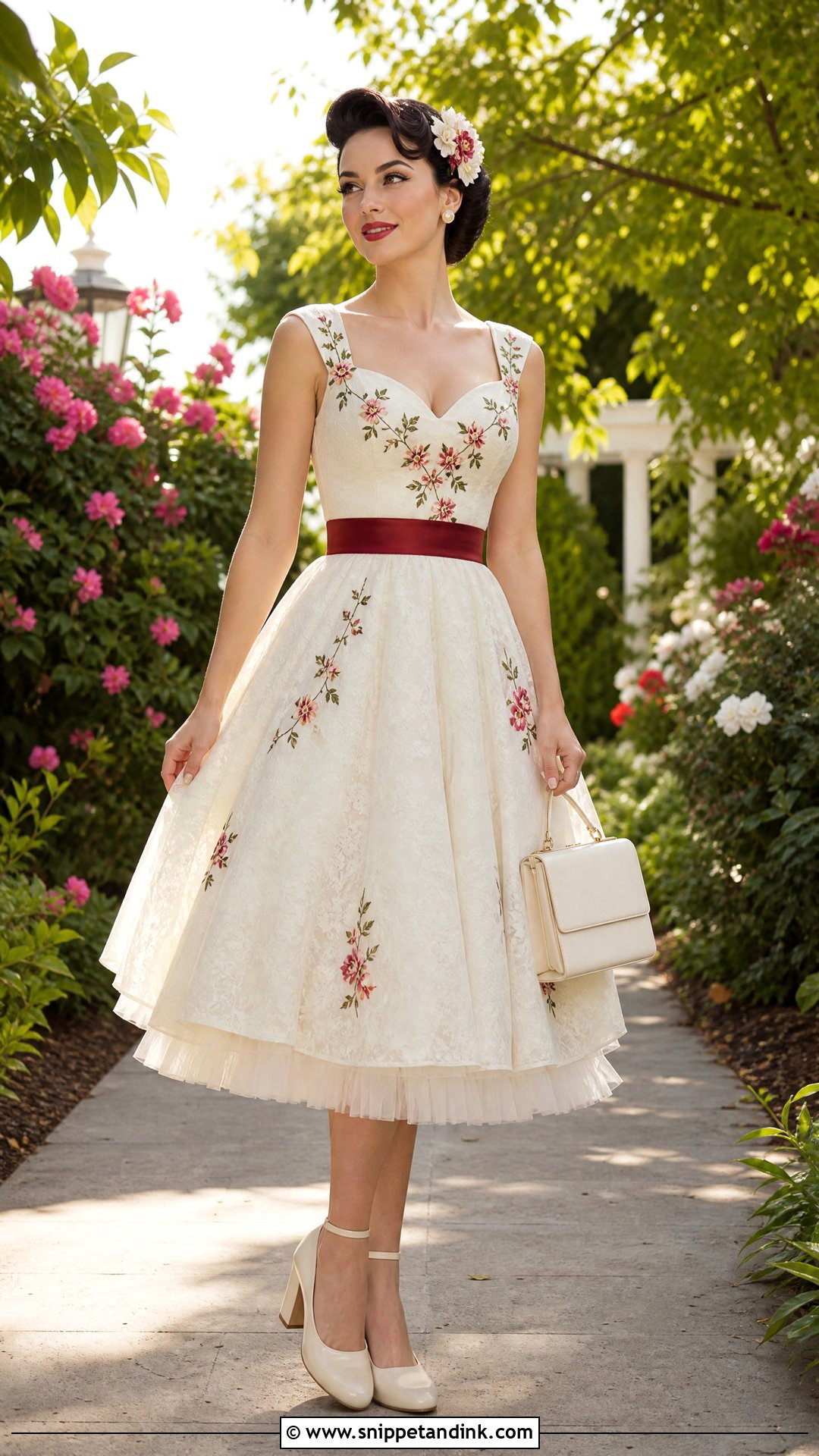
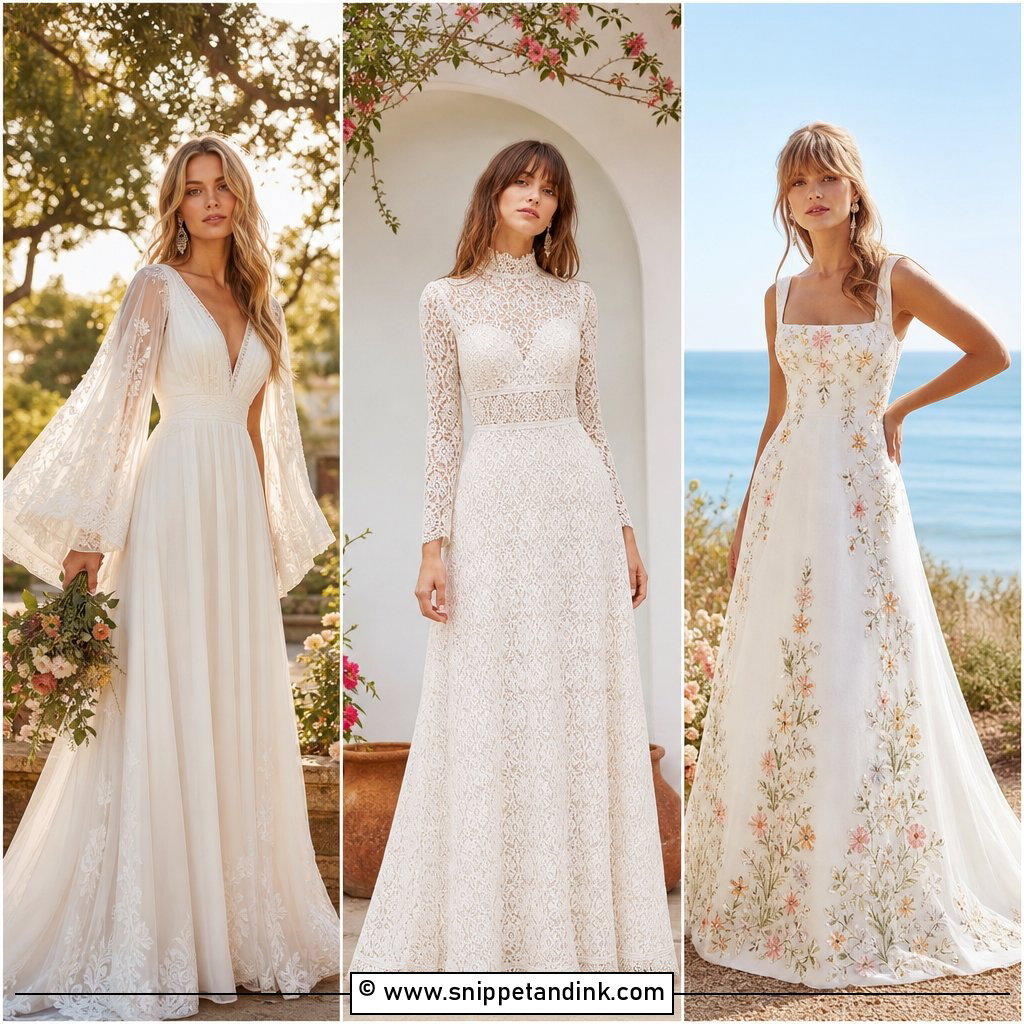
Embroidered flowers make a rockabilly dress feel personal, and they suit outdoor celebrations. Look for an ivory tea-length silhouette with flowers scattered over the bodice or skirt, kept controlled enough that it still reads as bridal. Cream block heels, simple studs and a structured bag in the lightest flower color suit it, and a narrow belt can pick out one embroidered shade. A flower comb over soft waves can replace the veil. Use a light petticoat. A heavy one fills the skirt with deep folds that hide the embroidery, which is the opposite of what you paid for.
16. Plus Size Rockabilly Wedding Dress
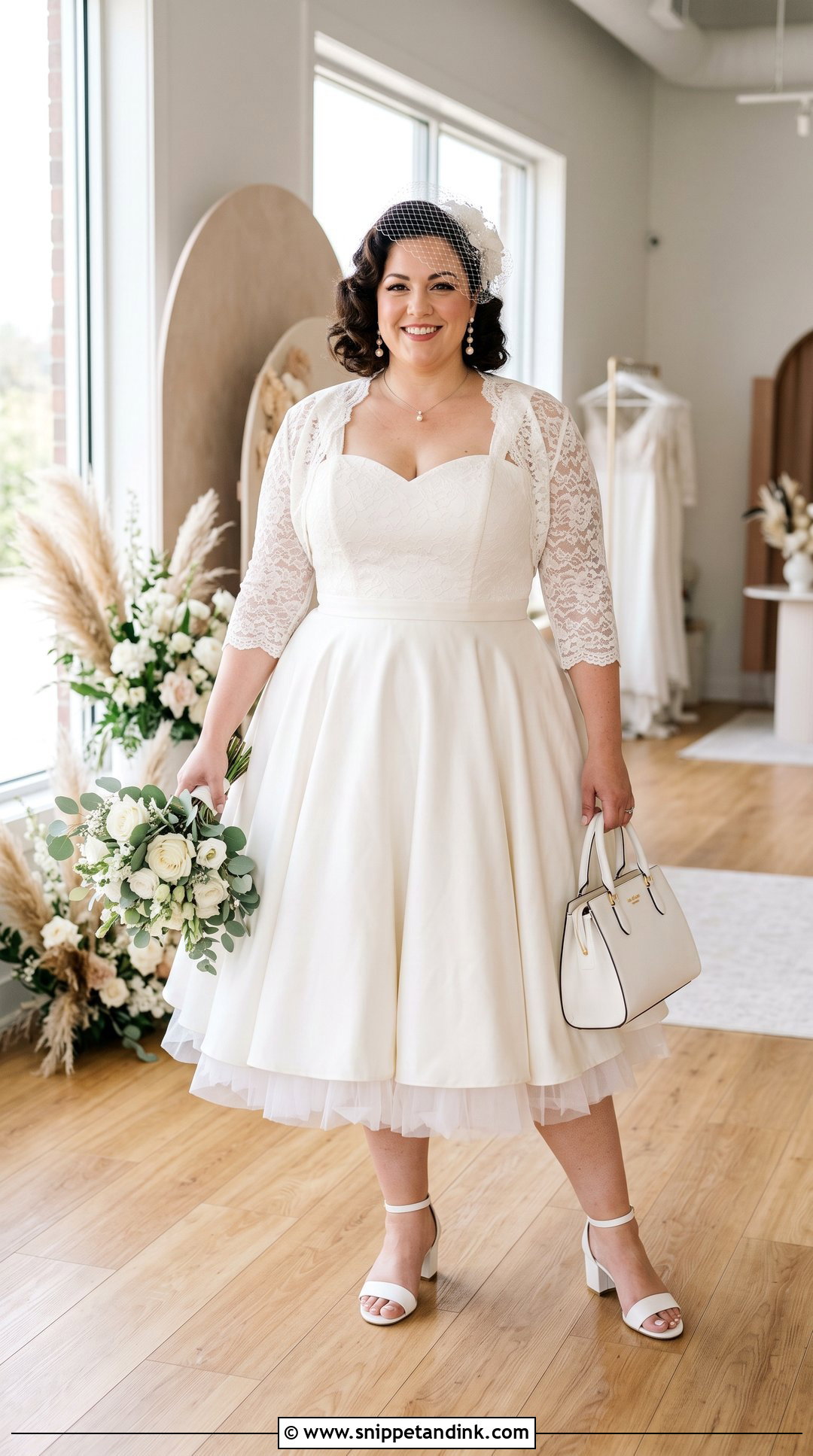
A well-fitted rockabilly dress is one of the most comfortable bridal shapes for a curvy figure, because the defined waist and full skirt do the shaping without squeezing. Choose a tea-length dress with a supportive V-neck or sweetheart bodice, secure straps and a waistband at your natural waist, with the skirt skimming the hips before it opens out. Stable block heels, pearl drops and a medium structured bag keep it in proportion, and a cropped bolero adds coverage without hiding the waist. Pick a petticoat with a yoke so the net starts below the waistband rather than adding bulk at your middle. Order by measurements, not by size label.
17. Short Rockabilly Wedding Dress
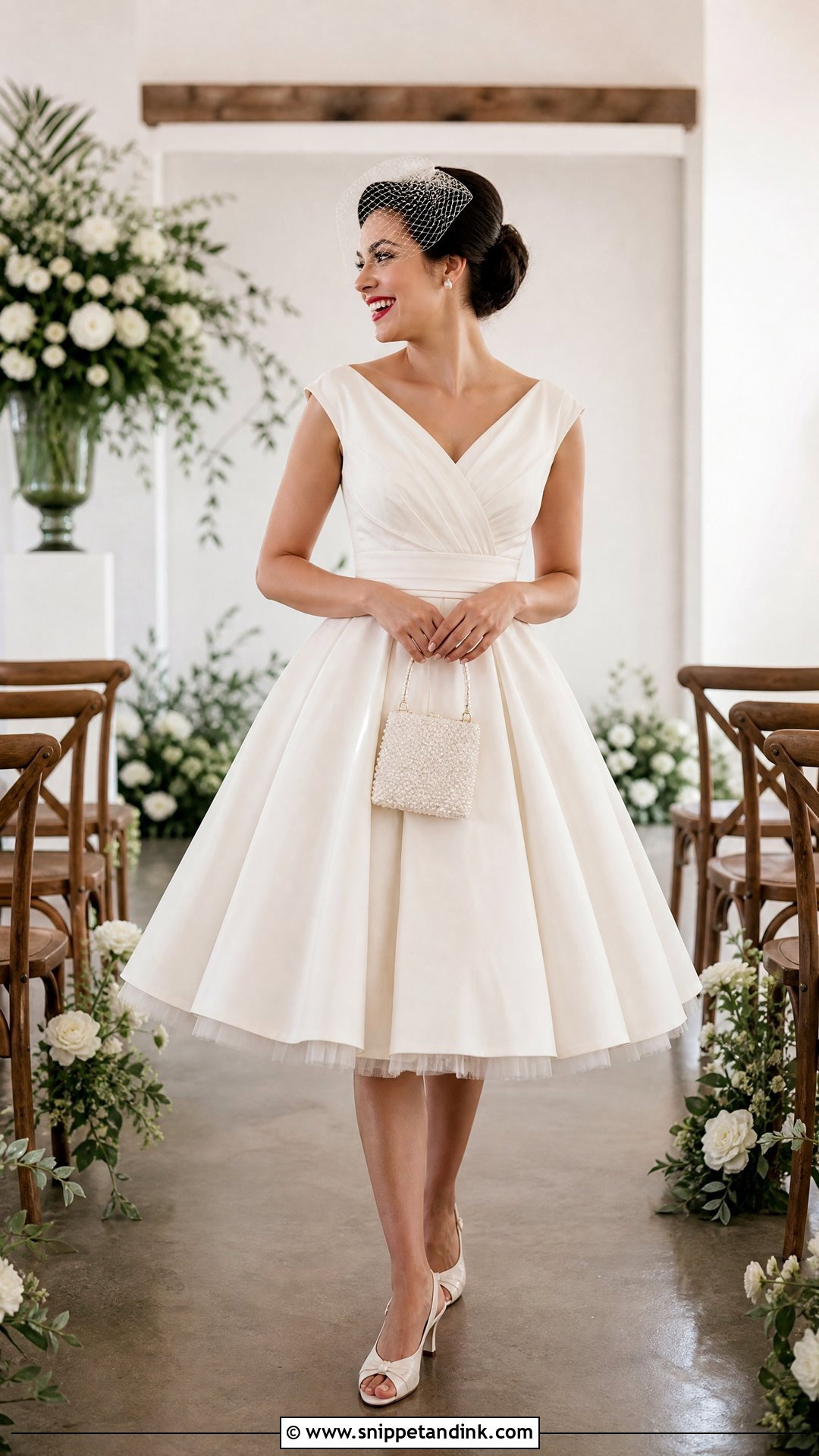
A knee-length dress feels fresh and energetic for casual venues and small ceremonies. Choose a structured fit-and-flare with a sweetheart, cap sleeves or a scoop neck, then add a soft petticoat with restrained volume so the short skirt doesn’t stand out like a lampshade. Low slingbacks, pearl studs, a small top-handle bag and a short net veil or satin bow keep the proportions right. The hem position matters more on a short dress. I usually pin it at a couple of heights at the fitting and step back to look; just below the knee suits most brides. It goes from ceremony to dancing without a change.
18. Winter Rockabilly Wedding Dress
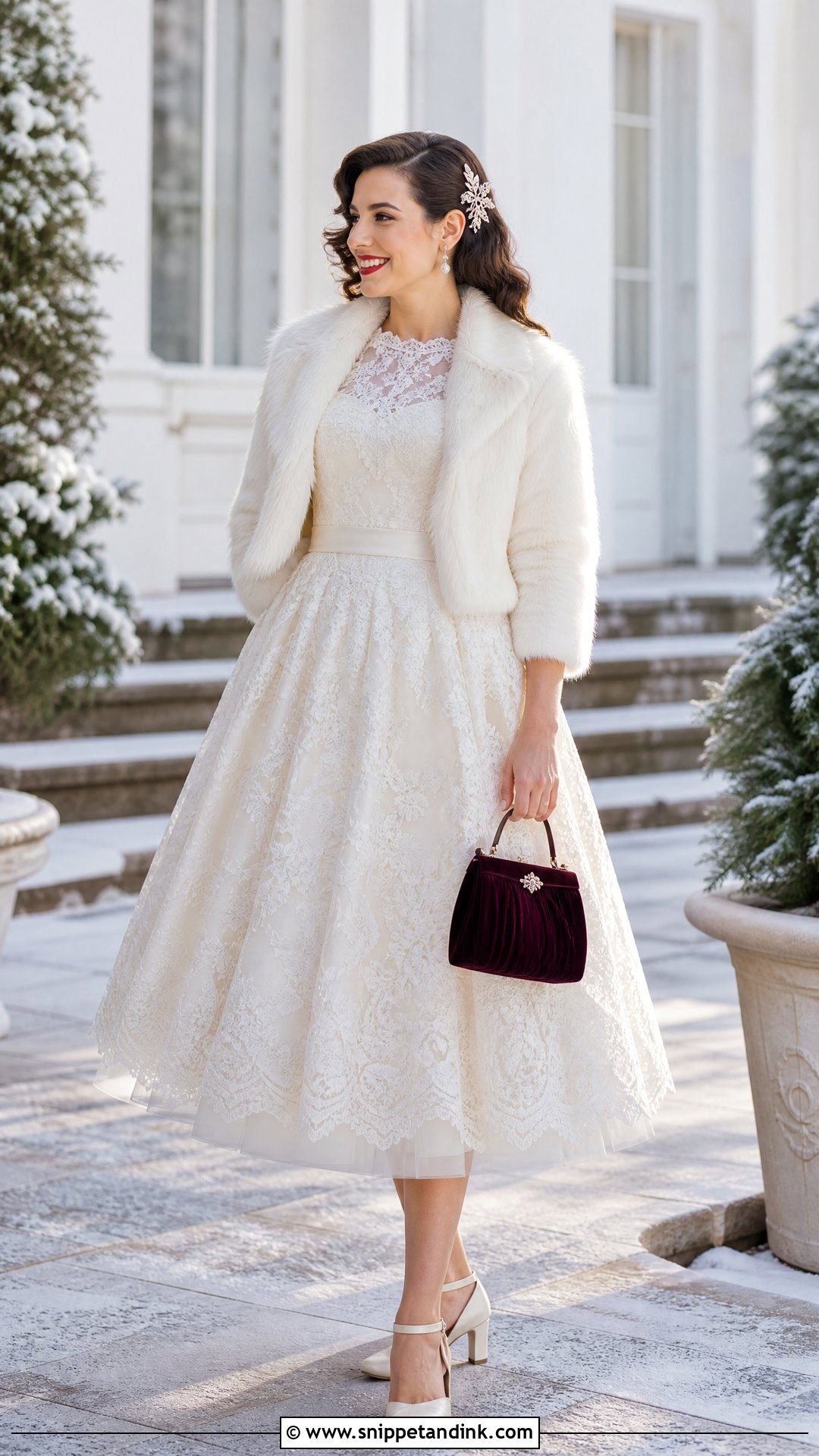
A winter rockabilly outfit keeps the tea-length shape and adds warmer textures. Start with an ivory long-sleeve dress with a lace bodice, a satin waistband and a full calf-length skirt, then add closed-toe block heels and a cropped faux-fur jacket for outdoor photos. Pearl earrings, a velvet bag and a delicate comb finish it. A slightly fuller petticoat holds the skirt and adds a little warmth, as long as it stays above the hem. Ivory tights are warmer; sheer neutral hosiery looks lighter. Keep the jacket cropped so the waist stays visible, and save the long coat for the car.
19. Summer Rockabilly Wedding Dress
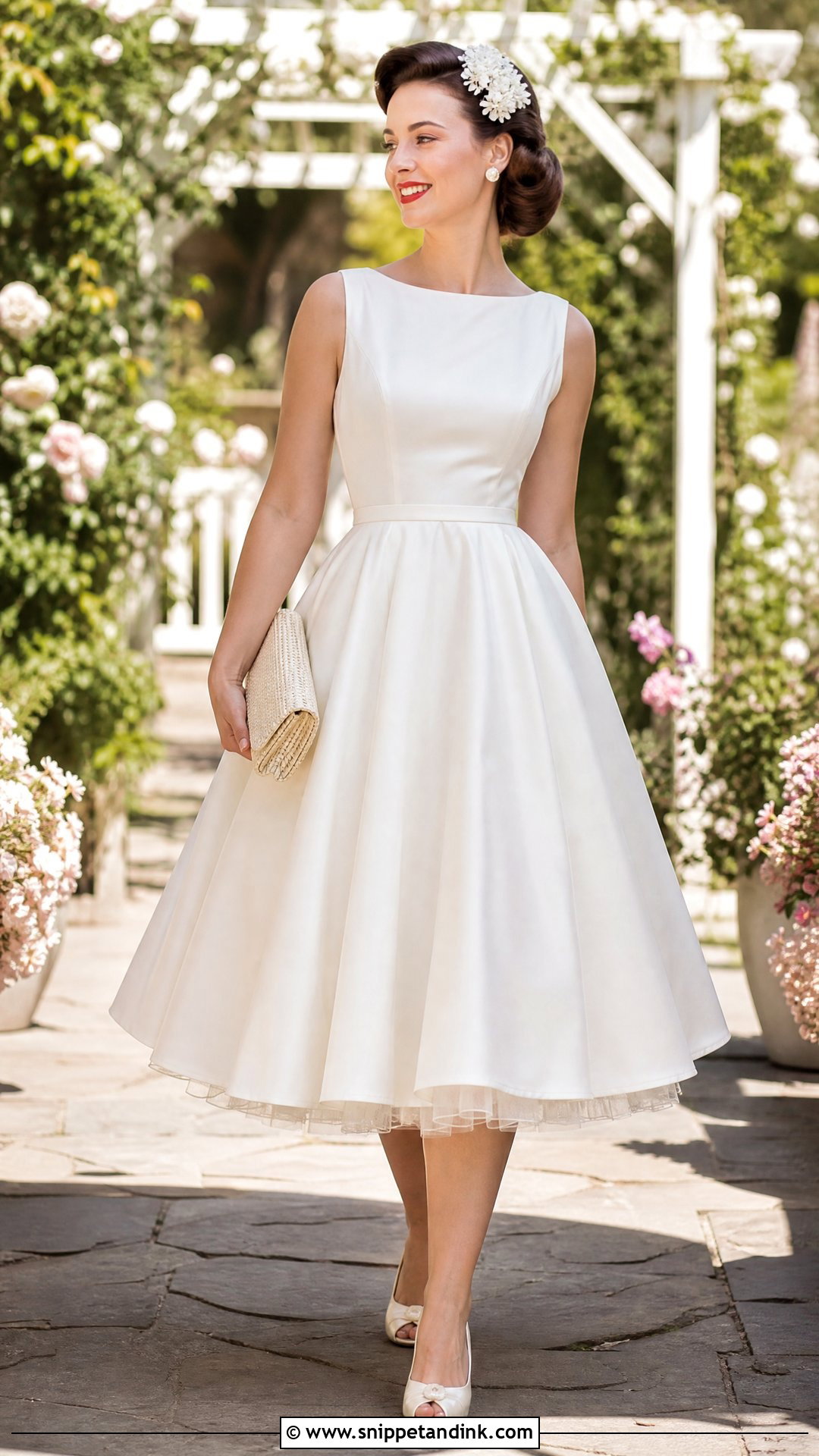
Summer heat calls for breathable fabric and less net. Try a cotton-sateen or light lace dress with a sleeveless bodice, a defined waist and a tea-length swing skirt, plus ivory sandals or low peep-toes, small pearl earrings and a pale woven clutch. A floral comb keeps things airy in place of a veil. Stiff tulle petticoats are hot and itchy against bare legs in summer; one soft chiffon underskirt is usually enough. Stand in direct sun in the dress before you buy it, and add a breathable lining if your legs show through.



20. Reception Rockabilly Wedding Dress
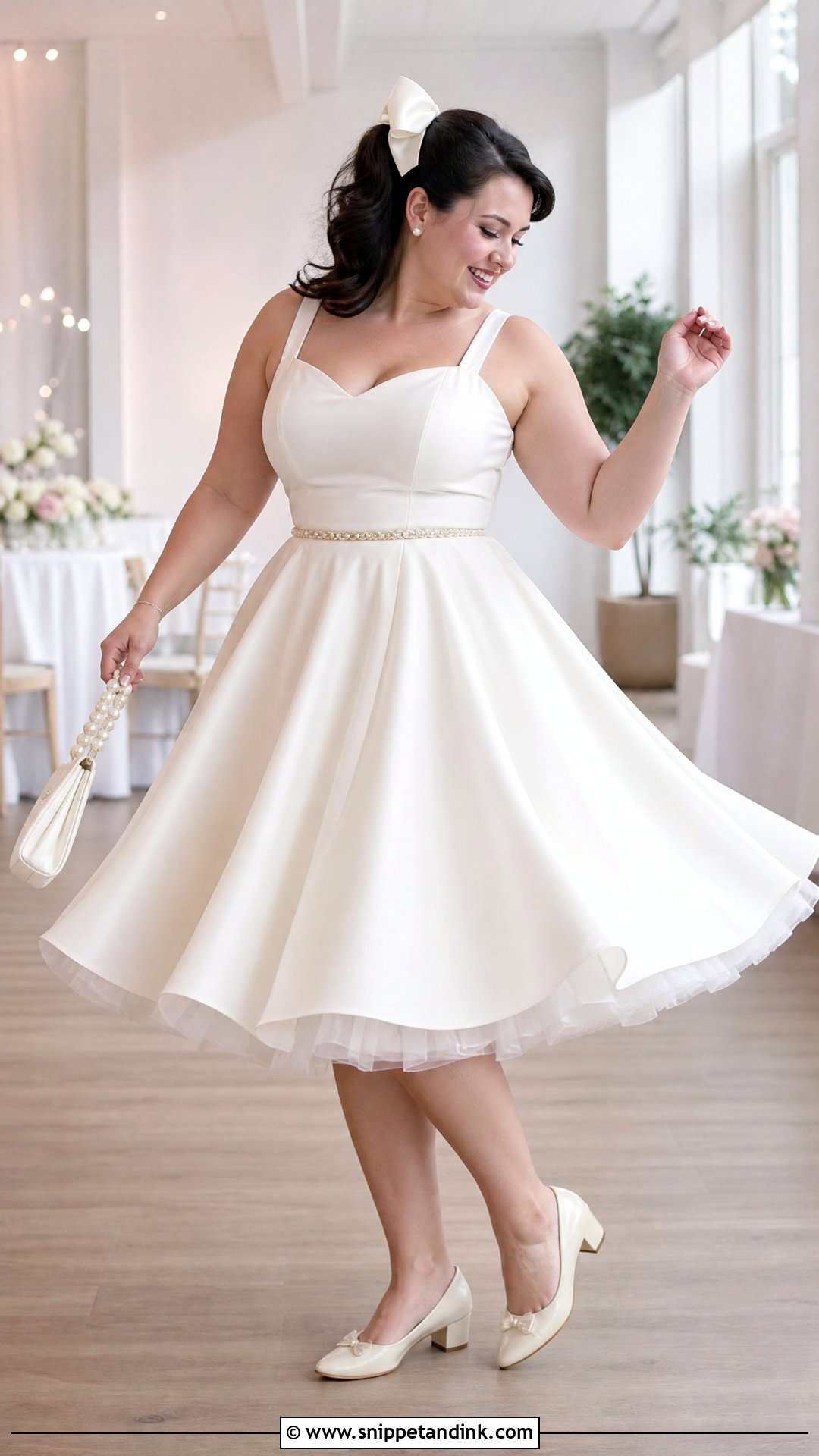
A rockabilly reception dress is made for dancing first. Choose a light knee-length or tea-length swing dress with secure straps, a fitted waist and a full skirt, and use a soft petticoat for twirl without weight. Low block heels or bridal flats are steadier than high pumps once the dancing starts. Pearl studs, a small wristlet and a bow or floral clip pinned firmly in place finish it. A removable belt can bring in an accent color. Spin in it before the day: a circle skirt lifts more than you’d think, and a pair of matching shorts or bloomers under the petticoat is a sensible, period-appropriate fix.
Wearing a Genuine 1950s Dress
Some brides want an original vintage dress instead of a reproduction. It can be wonderful, but it needs a different kind of shopping. Sizes from that era run much smaller than modern labels, so ignore the tag and measure bust, waist and the length from shoulder to waist. Waists in particular were often cut very small for corseted figures.
Before you buy, check the underarms for staining or weakened fabric, look along the seams for splits, and test the zip; old metal zips can catch or break. Yellowing on ivory can sometimes be reduced by a specialist cleaner, but it can’t always be removed, so look at the dress in daylight. Alterations are limited too. Seam allowances in older dresses can be narrow, so a dress can usually be taken in but rarely let out much. If you love an original that doesn’t quite fit, a good seamstress can sometimes add panels in matching fabric, or a reproduction can be cut from its pattern instead.
How Much 1950s Is Enough for You?
The easiest way to decide among these dresses is to settle the silhouette first, then decide how much vintage detail feels natural. Tea-length circle skirts are the classic 1950s shape; pencil dresses give a sleeker pinup line. Lace, polka dots, satin, colored belts and petticoats personalize the look without tipping into fancy dress. Plan the whole outfit together, from shoes and veil to hair accessories, bag and jacket, so it all points one way. And test it while moving. A well-fitted rockabilly dress should feel secure and fun from the first photo to the final dance.
You'll Like These Ideas:









Leave a Reply