
If I could put one silhouette in every fitting room, it would be the A-line. It fits at the waist, then releases over the hips, so it flatters almost every figure and lets you walk, sit and dance without the pull of a mermaid or the bulk of a ball gown. I dress brides, bridesmaids, mothers and formal guests in it for that reason. The fabrics people are asking for right now include soft chiffon, satin with some sheen, corseted bodices, modest sleeves and plain, clean cuts. Below are 25 versions, each with the thing I’d check before you buy it and how I’d finish the look around it.
Where an A-Line Waist Should Sit on Your Body
Every A-line has the same promise, but the seam where the bodice meets the skirt decides whether it keeps it. Too high and the skirt starts under the bust like an empire line; too low and you lose the waist entirely. I look for the narrowest part of your torso and want the seam there or just above it.
Here is how I run a try-on for this silhouette:
- Wear the bra or shapewear you plan to wear on the day, and shoes at the heel height you’ll use.
- Stand side-on to the mirror. The skirt should flare from the waist seam, not from the hip.
- Sit on a hard chair for a minute. A seam that cuts into the ribs or a skirt that bunches at the lap will be worse after a meal.
- Raise both arms and lean forward. Gaping at the neckline or a bodice that rides up needs fixing now.
- Walk a few steps toward the mirror and check the hem. The front should clear the toe of your shoe.
A dress that fails one of these isn’t automatically out. Most hems and bodice tweaks are straightforward alterations. A waist seam in the wrong place usually isn’t, so that one I treat as a reason to try another size or style.
1. Satin A Line Gown
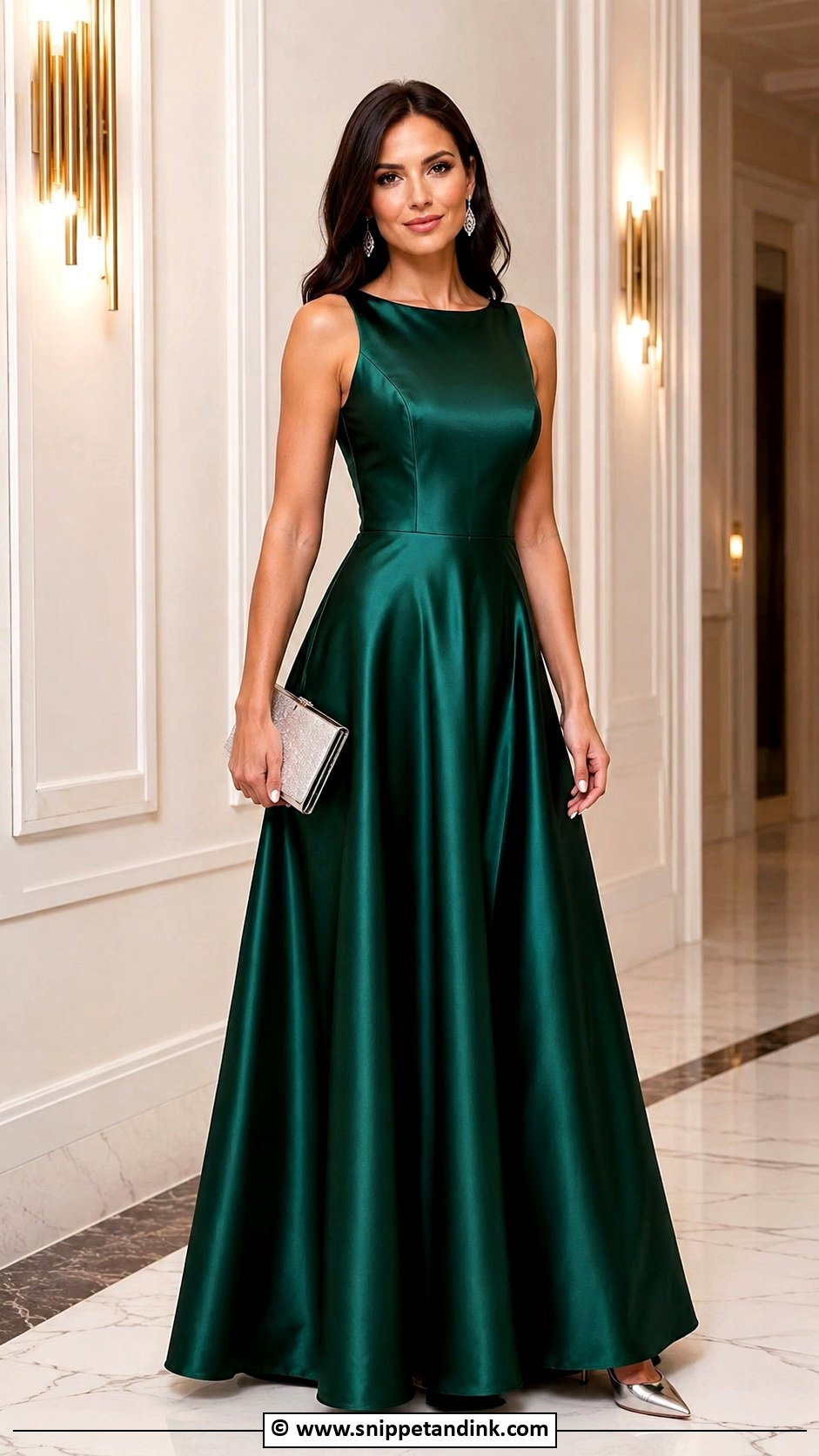
Satin is the fabric that makes a plain A-line look expensive, because the light runs down the skirt in one smooth sheet. It is also unforgiving. Heavy duchess satin hides lines underneath; thin polyester satin shows every seam of your shapewear and creases badly after a car ride. Navy, emerald, champagne, burgundy and black all look rich in it. A tennis necklace on a plain neckline, pointed heels and a slim metallic clutch are enough, with a low bun to keep the line clean.
2. Chiffon A Line Gown
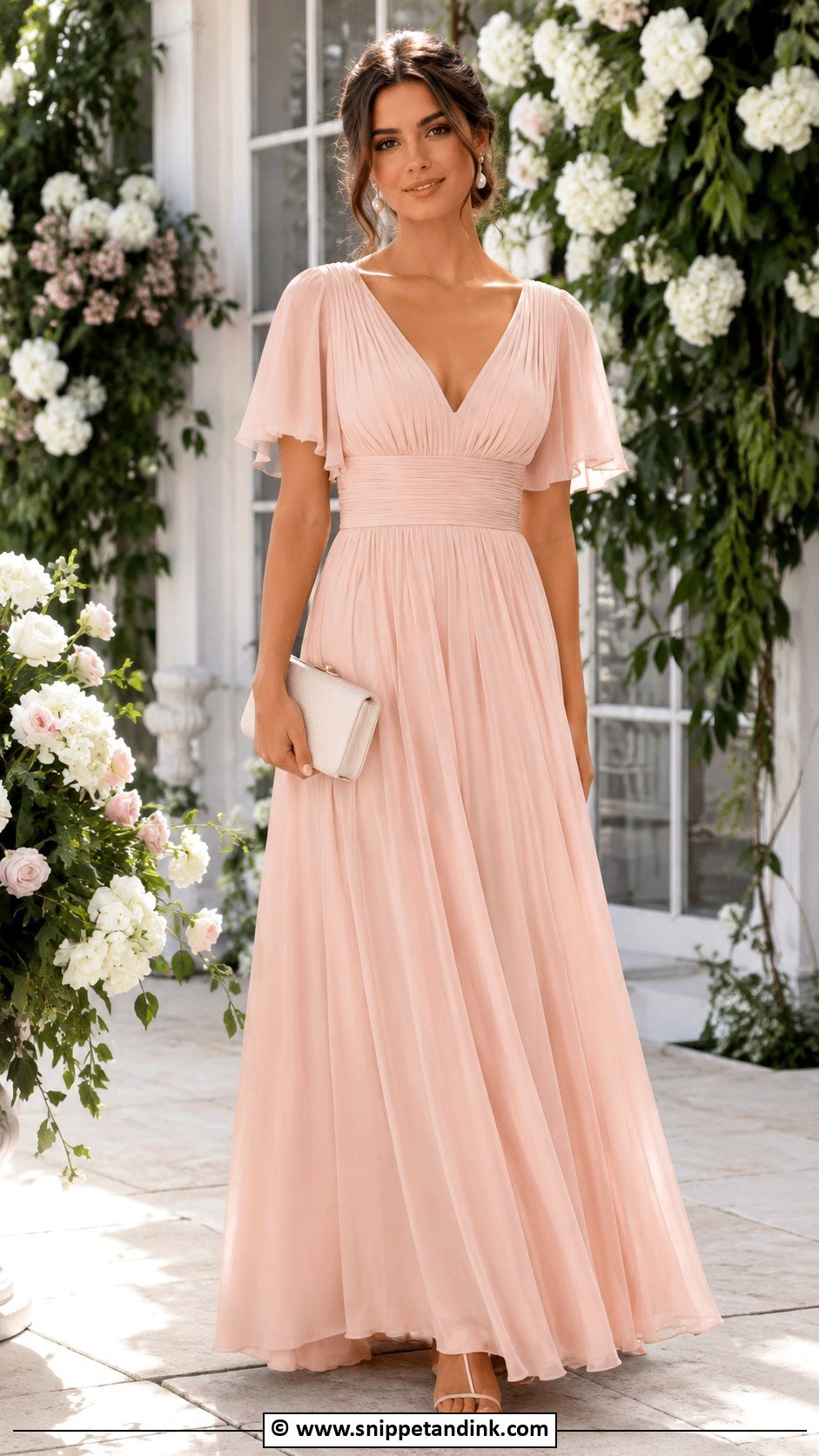
Chiffon is my spring and summer answer, because several layers float away from the body without trapping heat. Look at how many layers there are, though: a single layer of chiffon over a slip turns sheer in daylight, and you’ll want to check it in front of a window before the day. Blush, sage, dusty blue and lavender sit naturally in this fabric. A V-neck or wrap bodice lengthens the upper body. Pearl earrings, strappy heels and loose curls suit its softness.
3. Lace A Line Gown
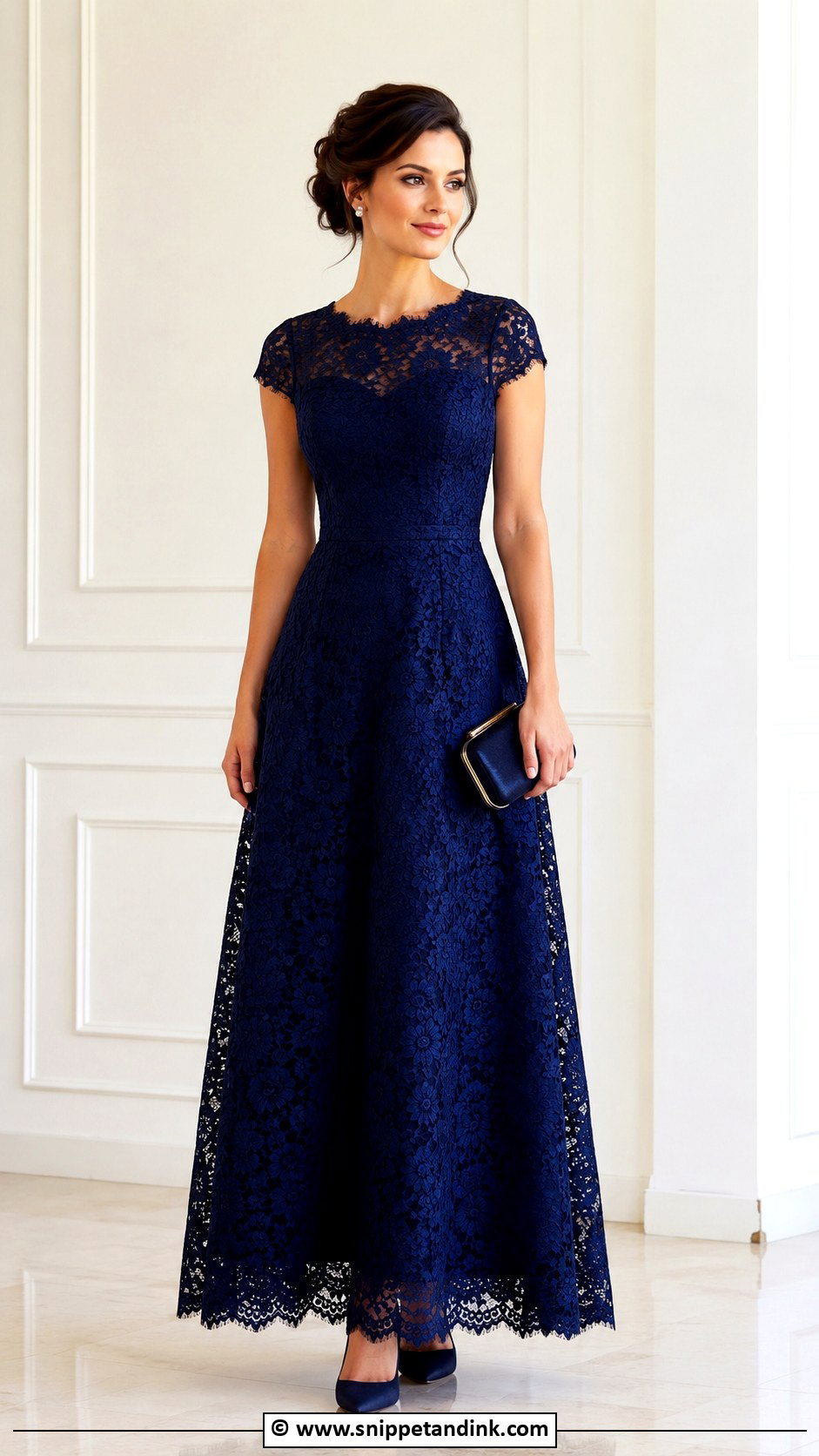
Lace brings its own detail, so the gown needs very little help. Before buying, I turn the bodice inside out and look at how the lace is joined at the seams; good lace is appliqued across the seam so the pattern doesn’t break, cheaper lace is simply stitched through. Ivory, navy, mauve, black and deep green all suit it. A bold pattern means minimal jewelry. Long lace sleeves give a covered, formal finish; a sleeveless lace bodice is lighter for a summer event.
4. Off Shoulder A Line Gown
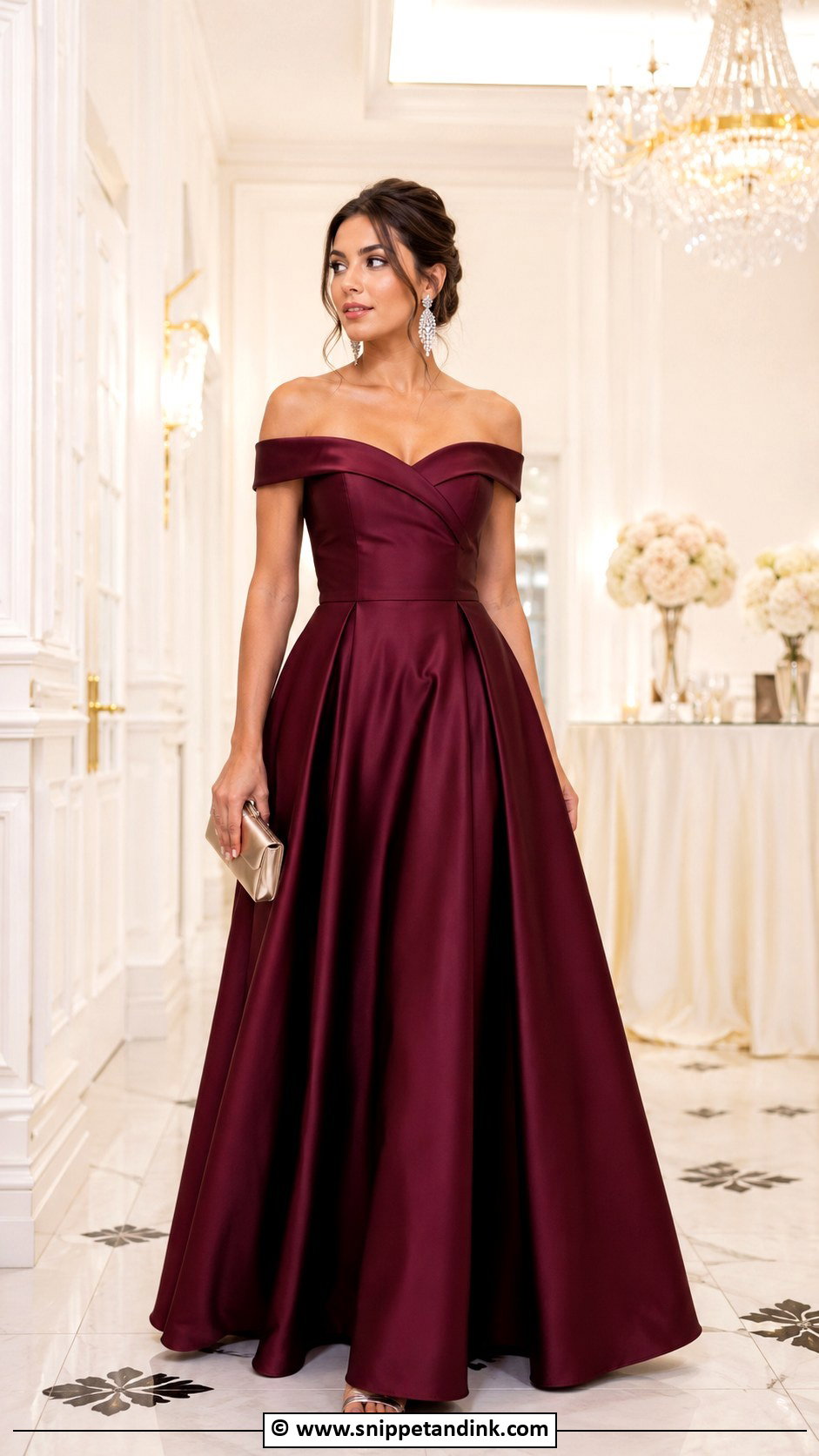
An off-shoulder neckline balances the volume of the skirt by widening the line at the top. It needs to grip. If the band sits loose on the upper arm, it creeps upward each time you lift a glass, so I check there’s elastic or silicone inside before anything else. A fitted bodice and a gently flared skirt keep it comfortable. Choose statement earrings over a necklace, since the bare collarbone is the feature.
5. Long Sleeve A Line Gown
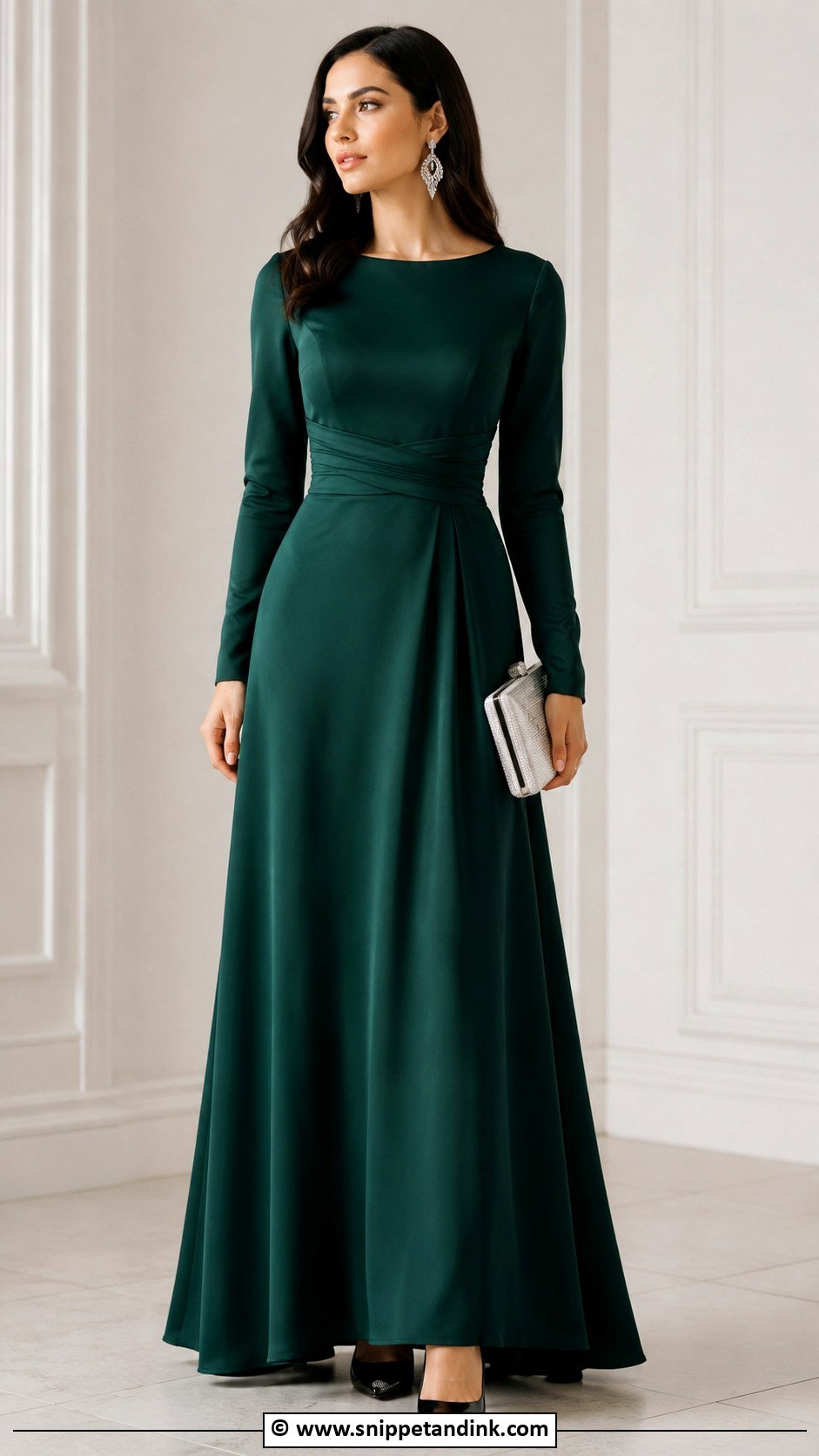
A long sleeve A-line gown covers you for cool seasons, modest dress codes or a church with a strict rule. The sleeve fabric changes everything: sheer chiffon or lace sleeves feel light, while satin or crepe looks tailored. Do the reach test in the fitting room. A tight sleeve set into a narrow armhole will stop you hugging anyone or lifting your arms on the dance floor, and a tailor can only loosen that so far. Jewel tones, black or champagne suit autumn and winter; closed-toe heels finish it.
6. Strapless A Line Gown
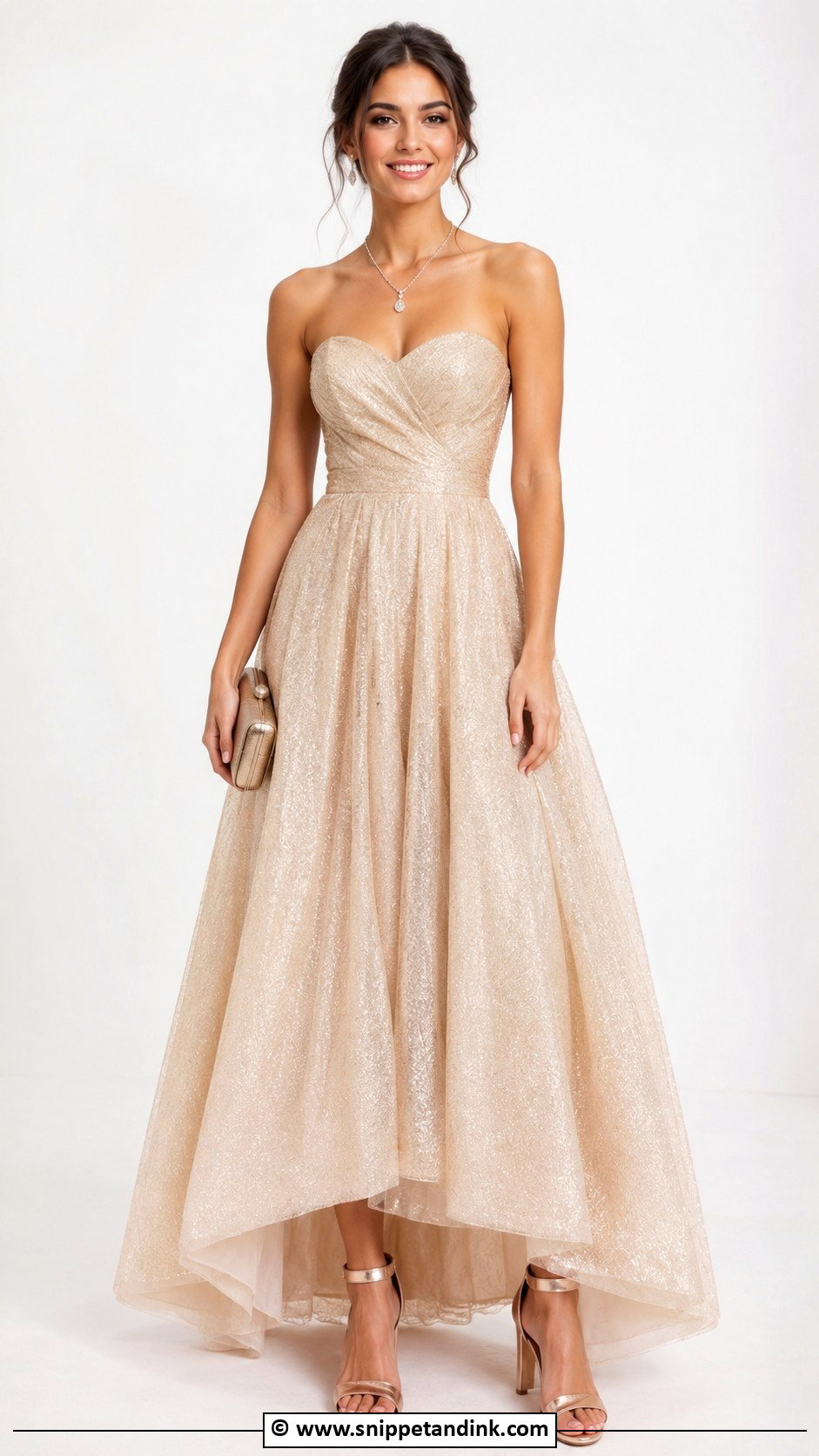
A strapless A-line gown is a classic for a reason, but it lives or dies on the bodice. It should hold up on its own, with the zip done, before you add anything to it. If you have to keep hoisting it in the fitting room, it will slip all evening. A sweetheart neckline softens the top; a straight one looks modern. Mikado and satin give structure, tulle and chiffon relax it. A tailored wrap or cropped jacket handles a cold ceremony.
7. Corset A Line Gown
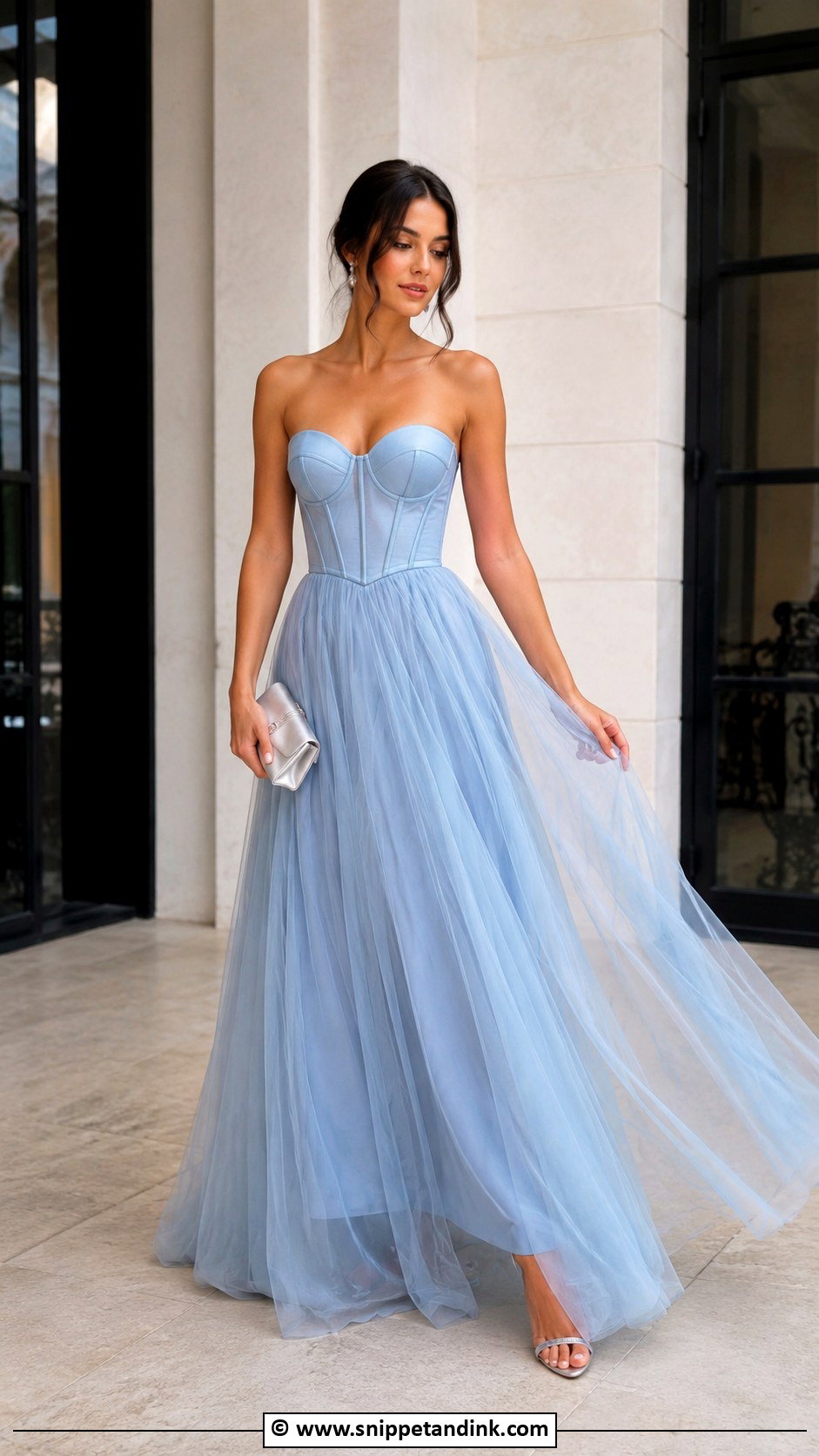
A corset A-line gown gives you a shaped waist and a skirt that stays comfortable. My advice is to sit down in it during every fitting. Boning that feels fine standing can press into the ribs when you’re seated through a long dinner, and that’s when brides start to regret a very tight lace-up. Satin, organza or lace all suit a corset. Visible boning means keeping the accessories plain.
8. Floral A Line Gown
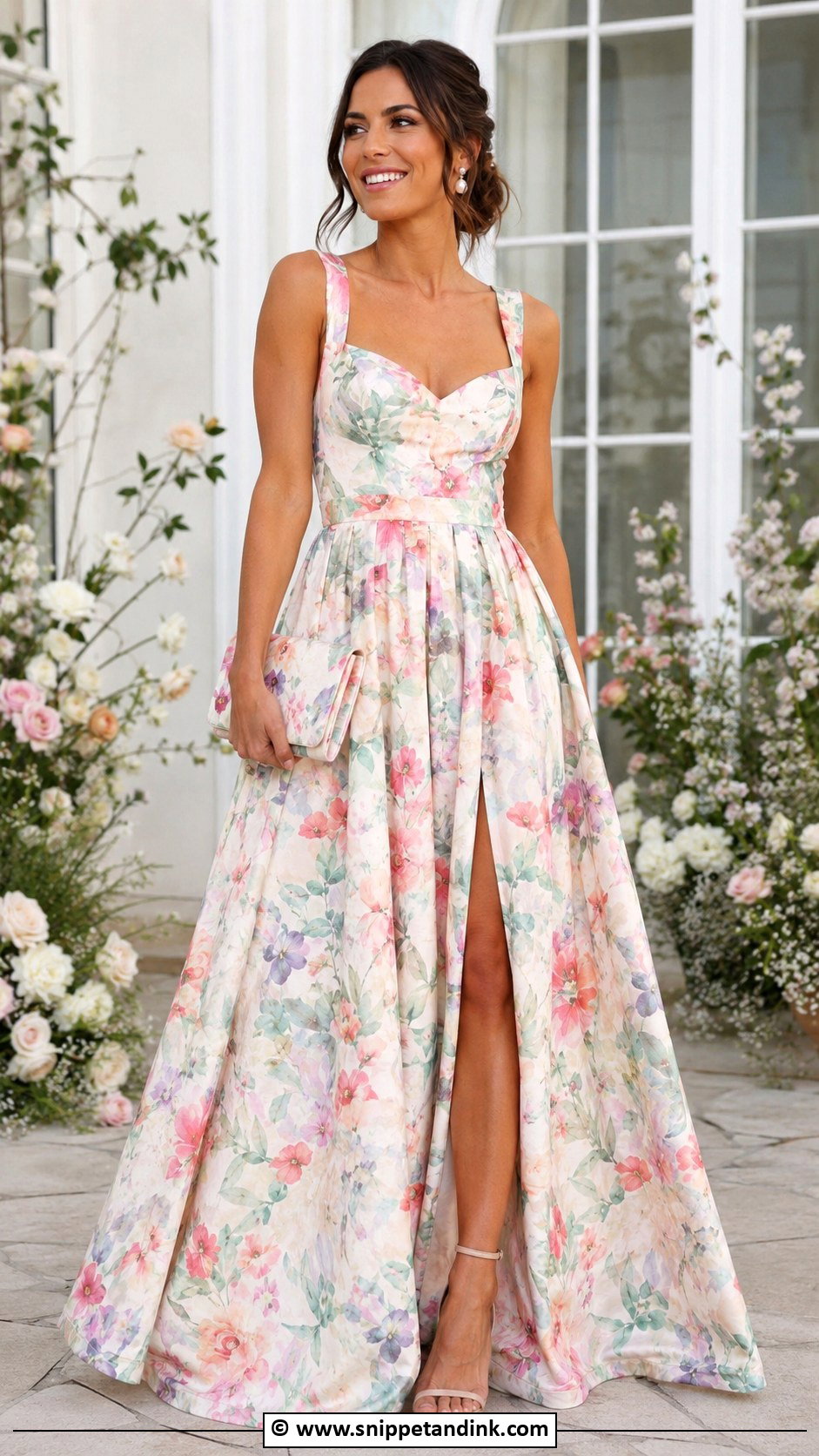
Floral prints are cheerful and hard to get wrong outdoors, but they need restraint around them. Pick one color from the print and match either your shoes or your clutch to it, not both. When the print is busy, nude, metallic or clear heels quiet it down. Watercolor prints read soft; large-scale blooms read modern and need a bit of height to carry. Pearl studs or thin hoops are enough. Spring garden parties and summer daytime weddings suit it best.
9. Beaded A Line Gown
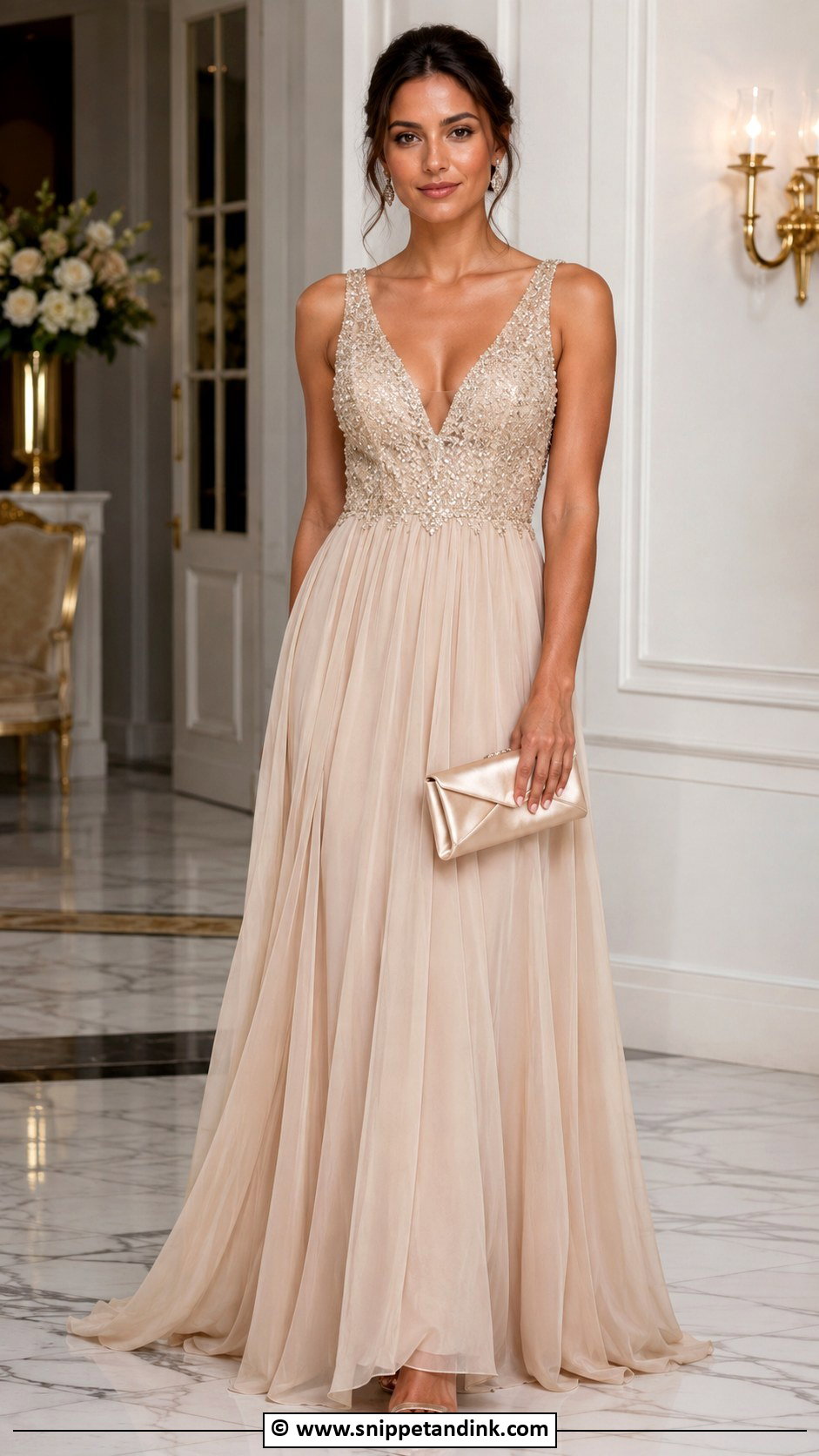
Beading on the bodice pulls the eye up while the flared skirt keeps the lower half calm, which is why so many guests reach for this shape. Check the weight and the inside. Heavy beadwork can drag the neckline forward, and rough thread ends inside the bodice will scratch by the end of the night, so a soft lining is worth paying for. Silver, champagne, navy and blush catch the light well. Let the beading lead: simple heels, a satin clutch, sleek hair.
10. Tulle A Line Gown
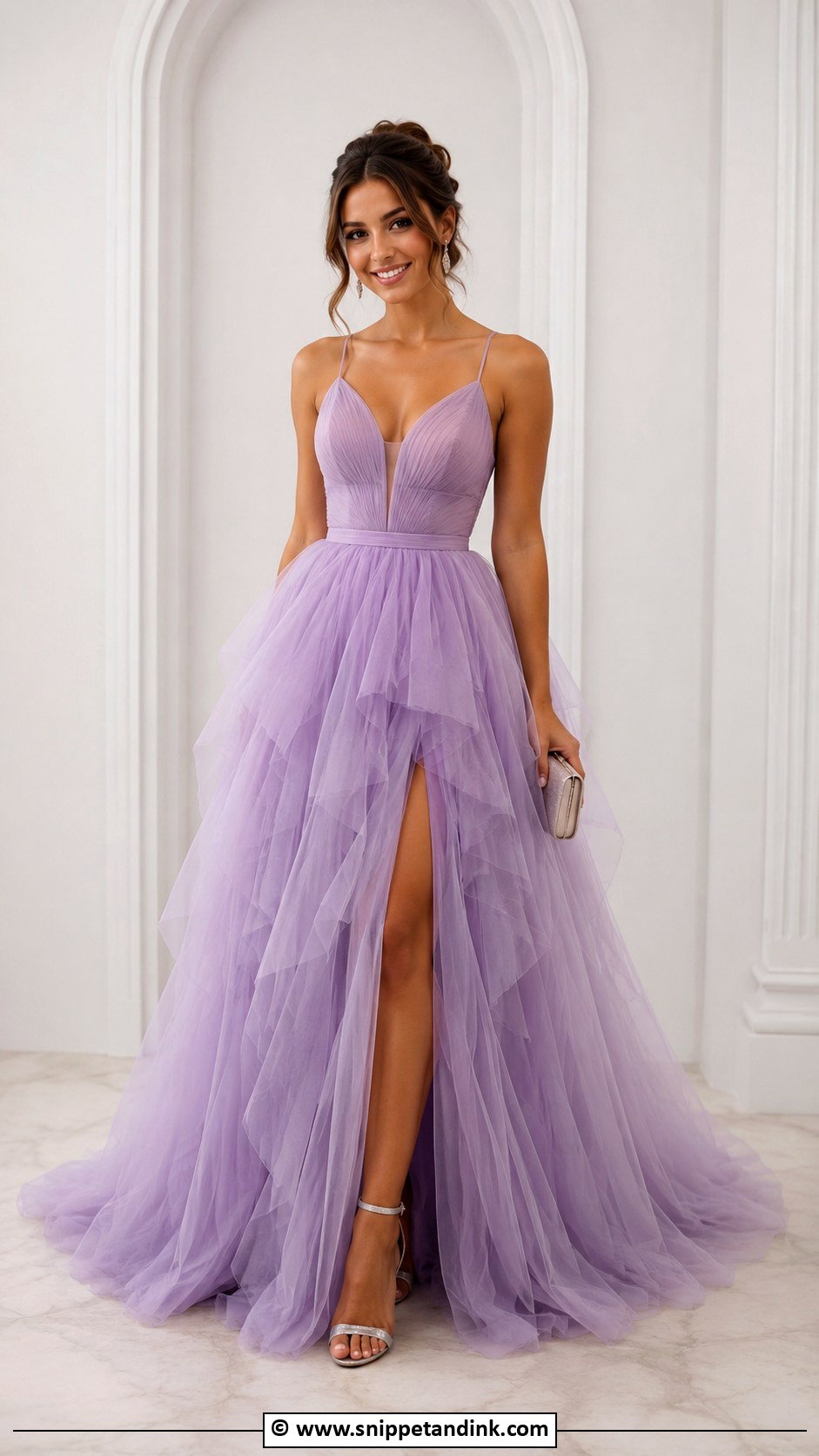
Tulle gives you volume without the weight of a full ball gown, and it hardly creases, so it survives travel better than satin. It does catch: bracelets, sequins and Velcro all snag the top layer. Blush, powder blue and lavender look soft in tulle; black or emerald turns it dramatic. A fitted bodice anchors the airy skirt and keeps the shape from swamping you. Skip bulky accessories.
11. Sequin A Line Gown
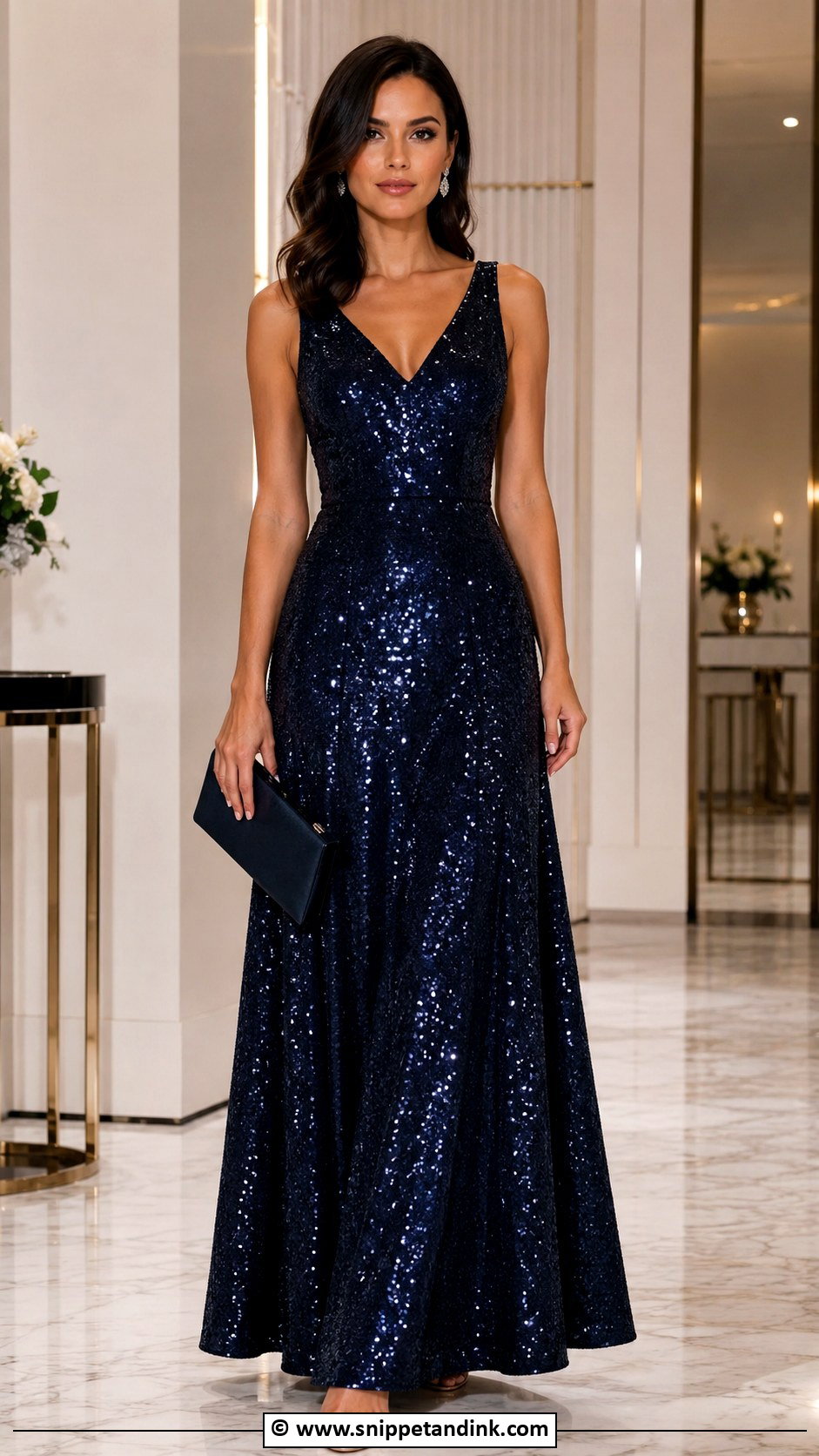
Sequins on an A-line give you shine with an easy fit around the hips, which a sequined sheath or mermaid never offers. Full sequins are high impact; a sequin bodice over a plain skirt is calmer and easier to sit in. Check the underarm seams, since sequins rub there more than anywhere else. Black, gold, silver, navy and emerald are dependable shades. Plain shoes, a plain clutch and small earrings stop the outfit from tipping over.
12. V Neck A Line Gown
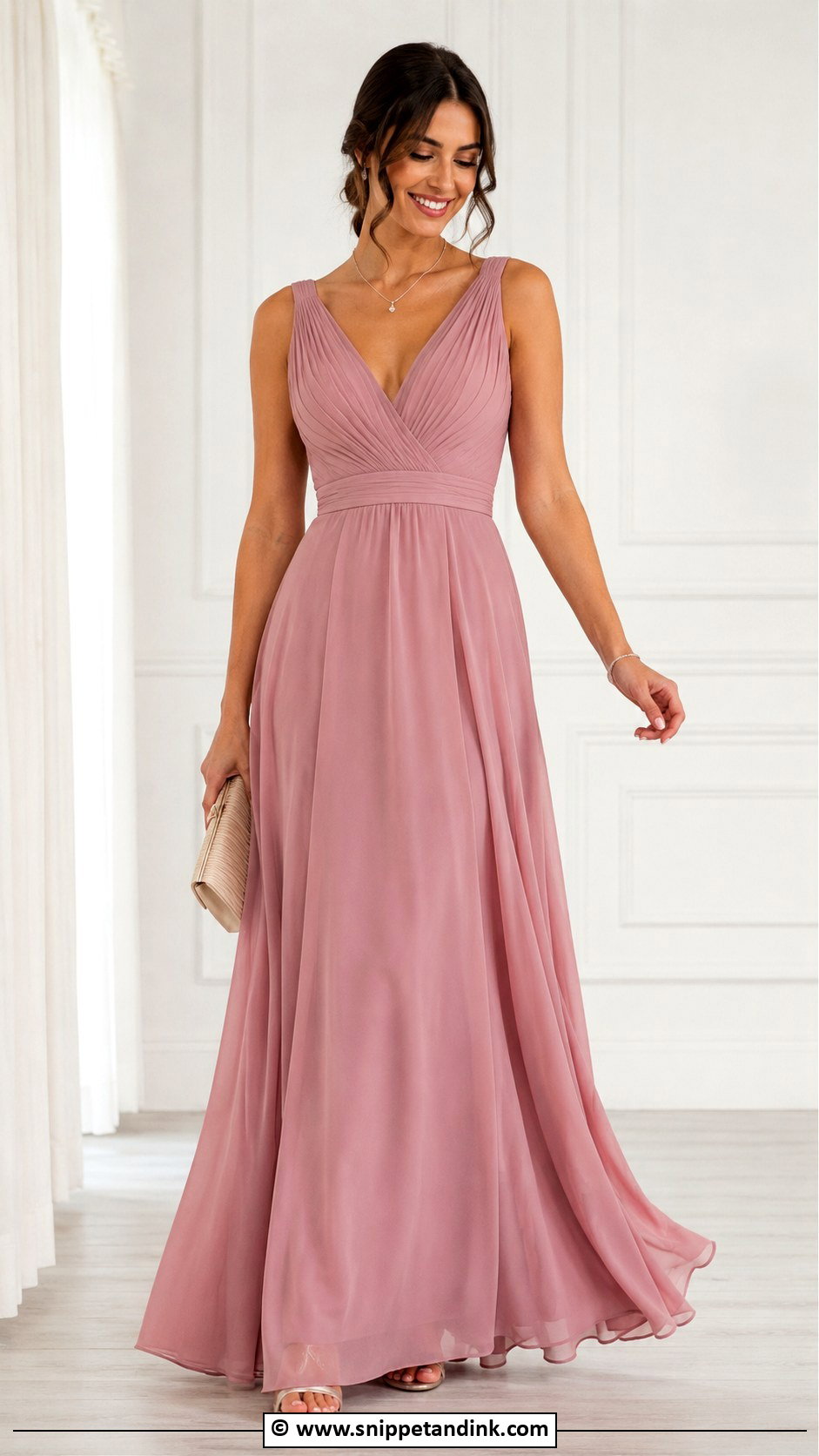
A V-neck draws the eye down the center of the body and lengthens the upper half, which suits most bust sizes when the depth is right. Too deep and it gapes the moment you lean forward. I check that by having you bend as if picking up a bag; if it opens, it needs a modesty panel, tape or built-in cups. Chiffon makes it relaxed; satin or crepe more formal. A slim pendant follows the neckline nicely.
13. Square Neck A Line Gown
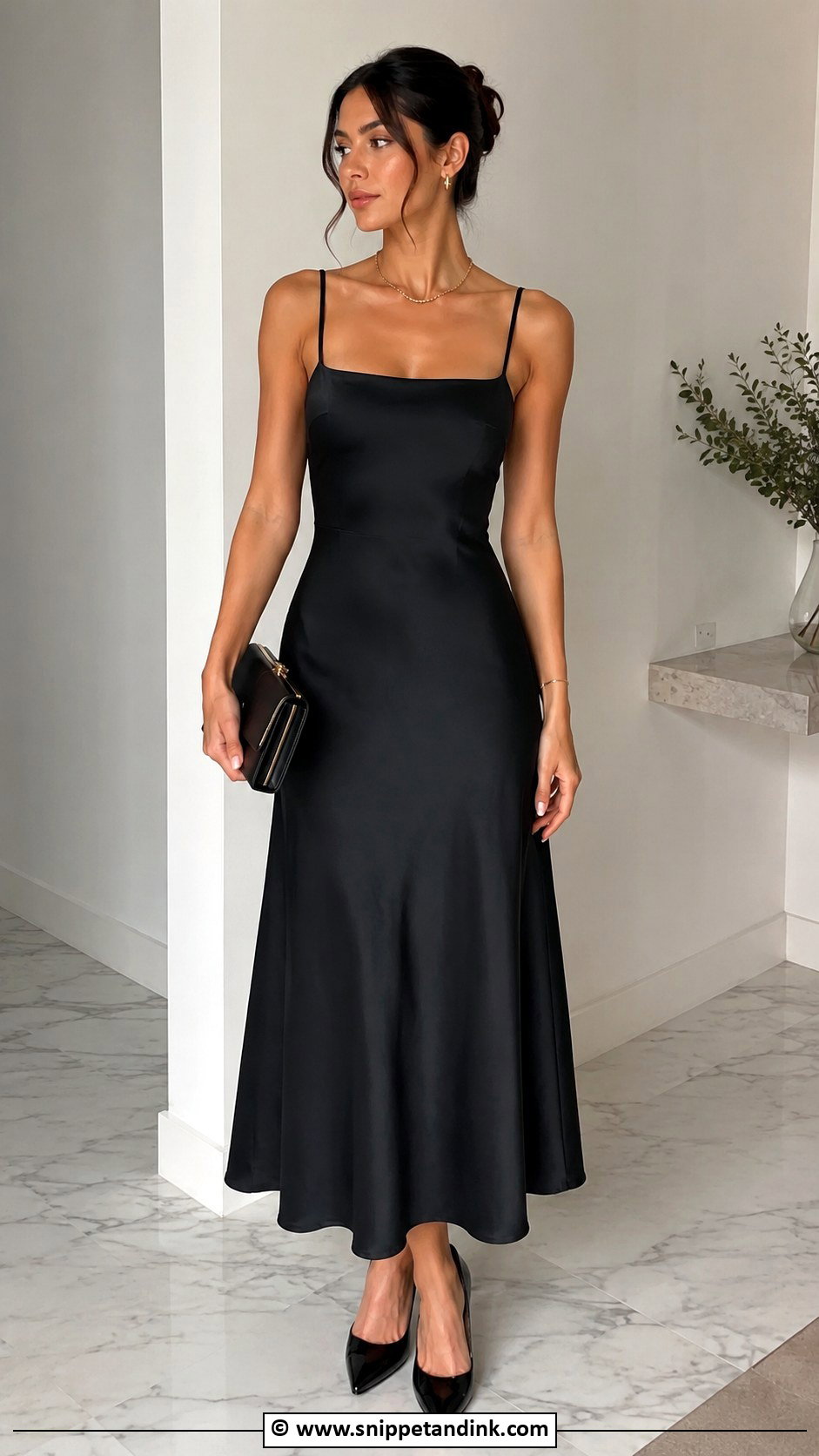
A square neckline frames the collarbones with a crisp edge and suits broad and narrow shoulders alike. The corners should sit flat; if they lift or pucker when you breathe, the bodice is too tight across the chest. Mikado or satin keep the lines sharp, and chiffon softens them. A short necklace that sits inside the square works well, as do small hoops. Block heels and a rectangular clutch echo the shape.
14. Halter A Line Gown
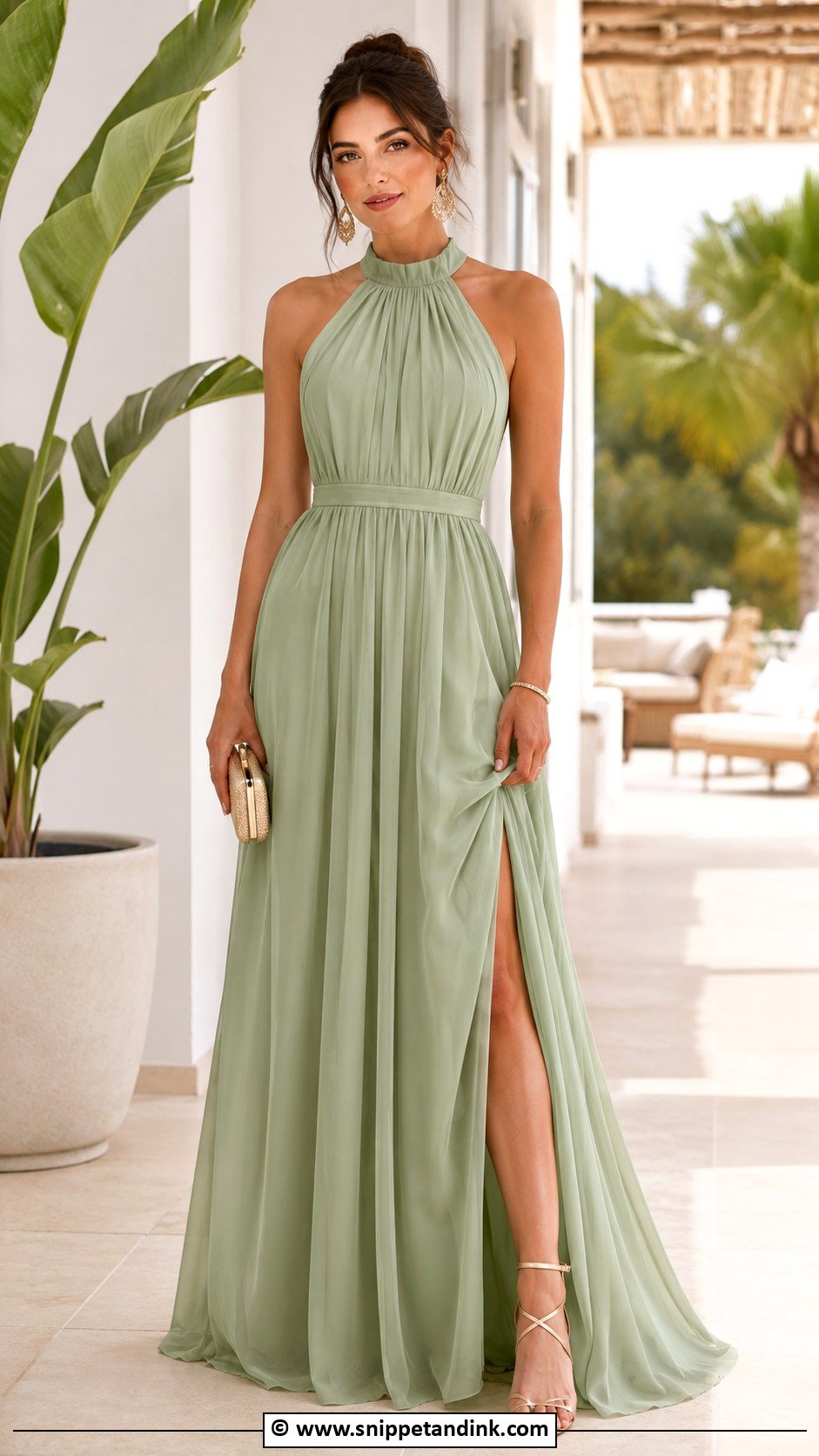
A halter carries the bodice from the neck, which feels secure and suits warm weather because the shoulders stay open. On a long day, a thin halter tie can pull on the neck, so I prefer a wider band or a clasp that spreads the weight. A high halter looks polished; a draped one moves more. Skip the necklace and wear earrings instead. Satin and chiffon are both good choices for summer formals and destination weddings.
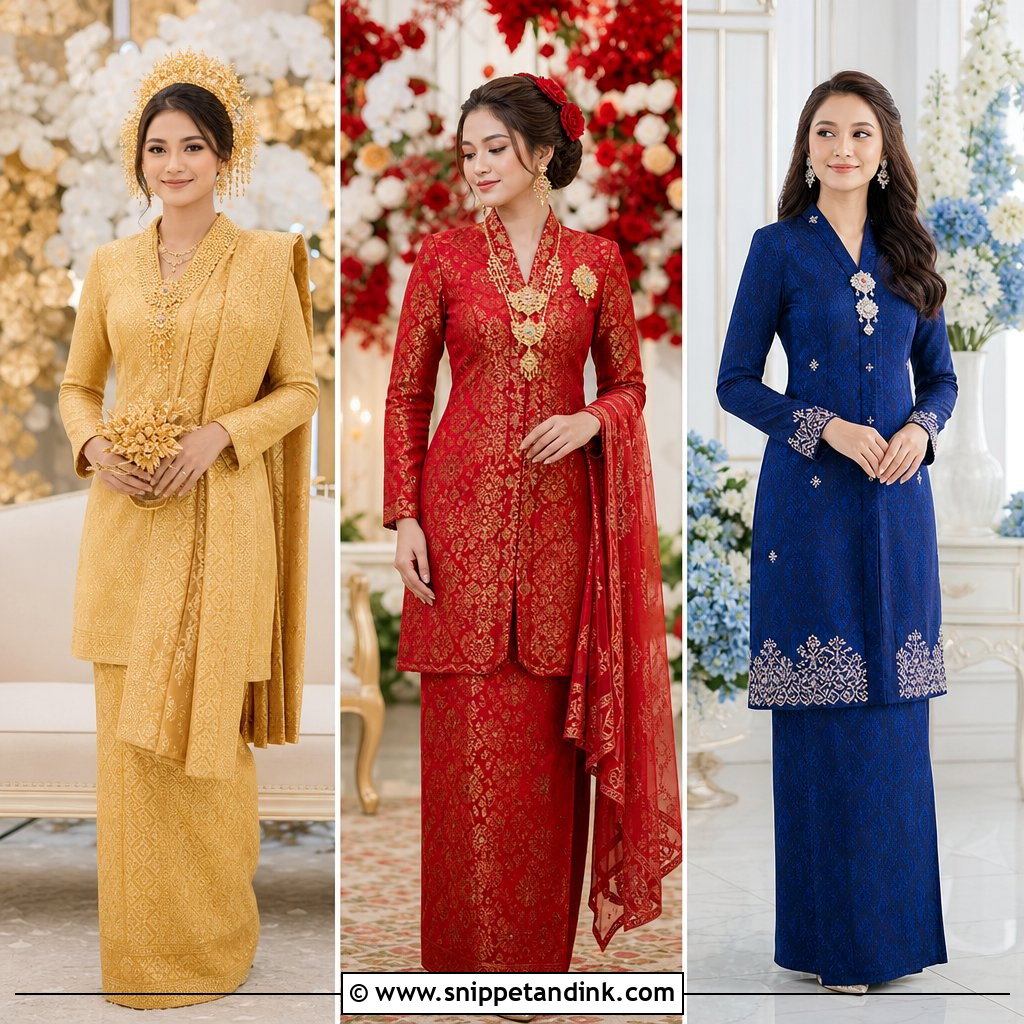
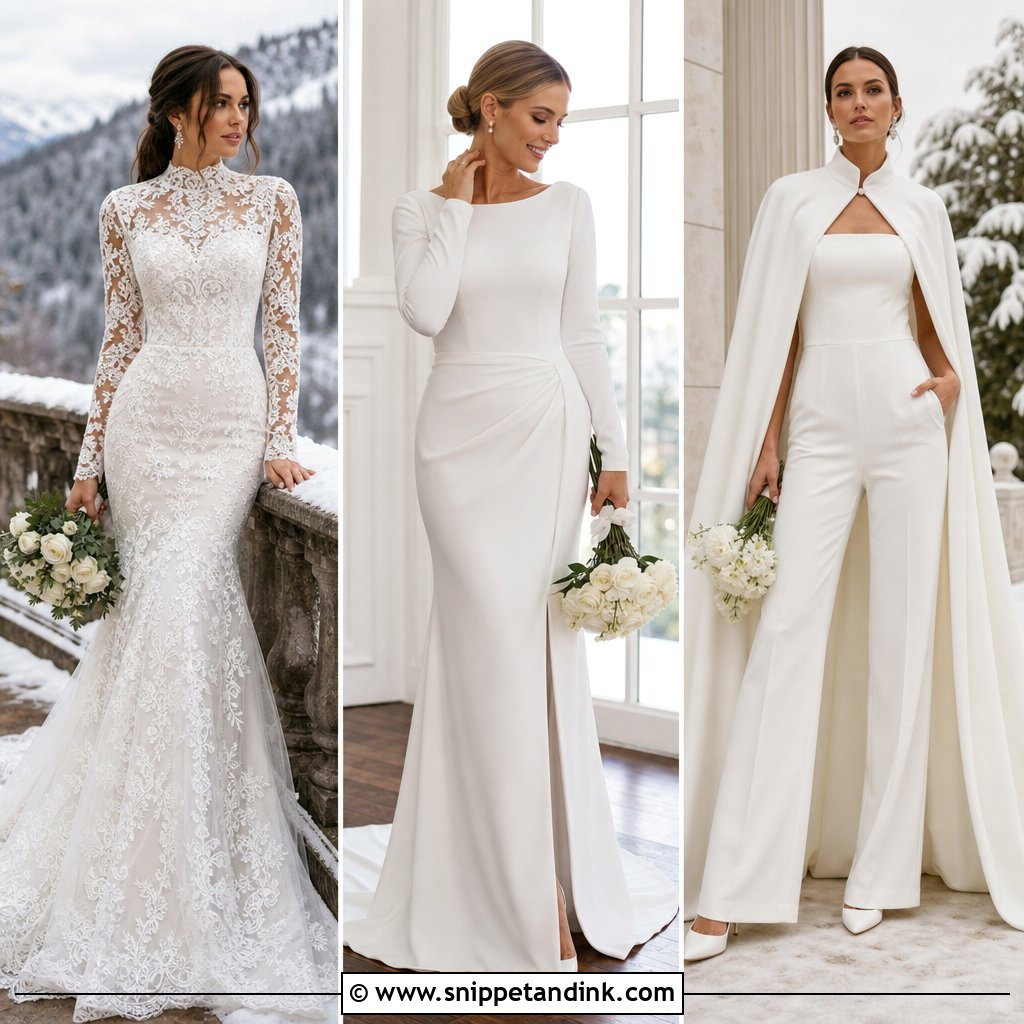
15. One Shoulder A Line Gown
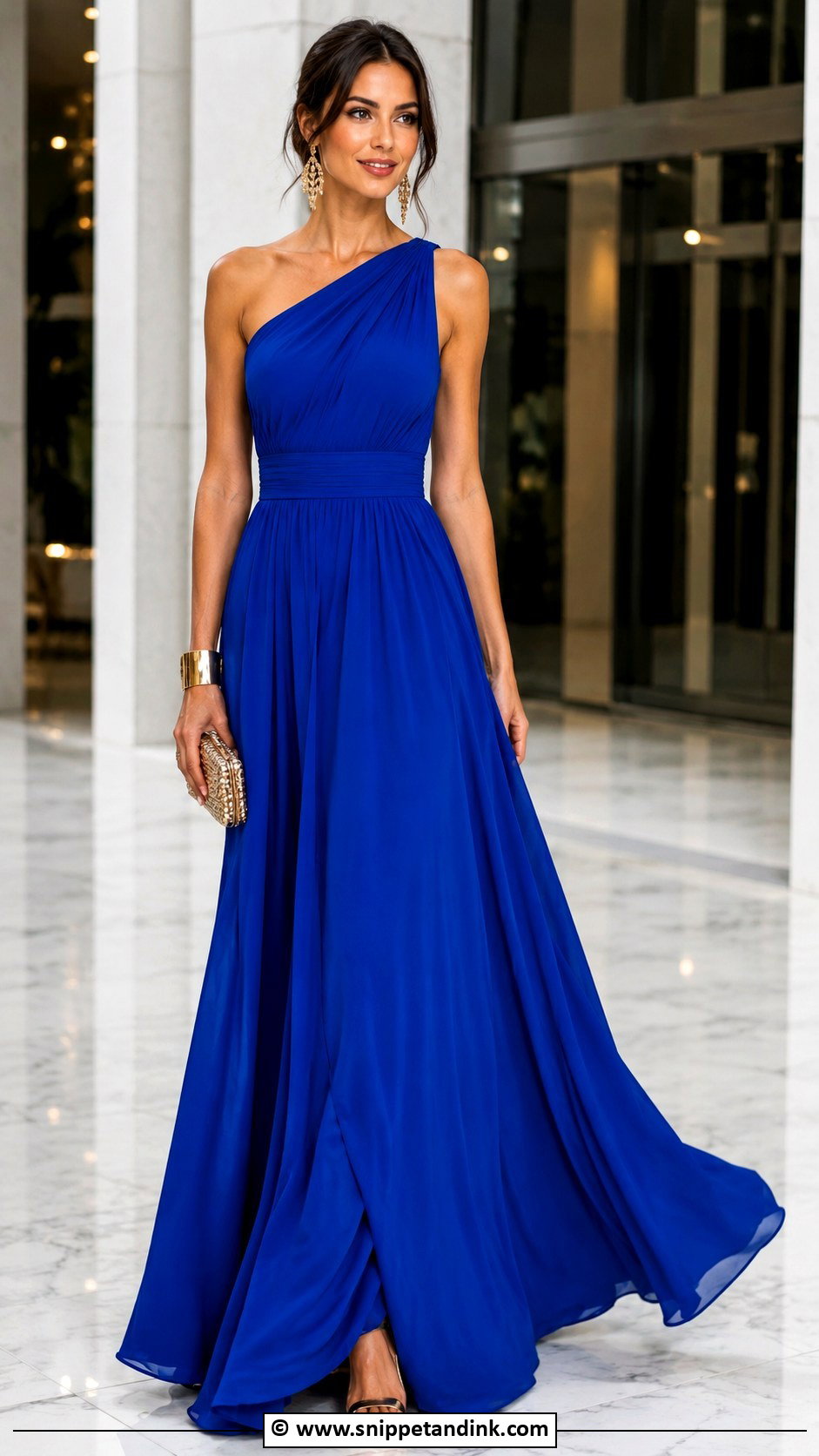
One shoulder is a small detail with real effect, and it’s an easier strapless alternative for anyone who doesn’t trust a bodice to stay up. The single strap does all the supporting, so it needs to be firm and stable. Solid colors such as cobalt, red, black, emerald and soft blush show the asymmetry best. A smooth bun or side-swept waves away from the bare shoulder, plus statement earrings and a cuff, finish it. No necklace.
16. High Low A Line Gown
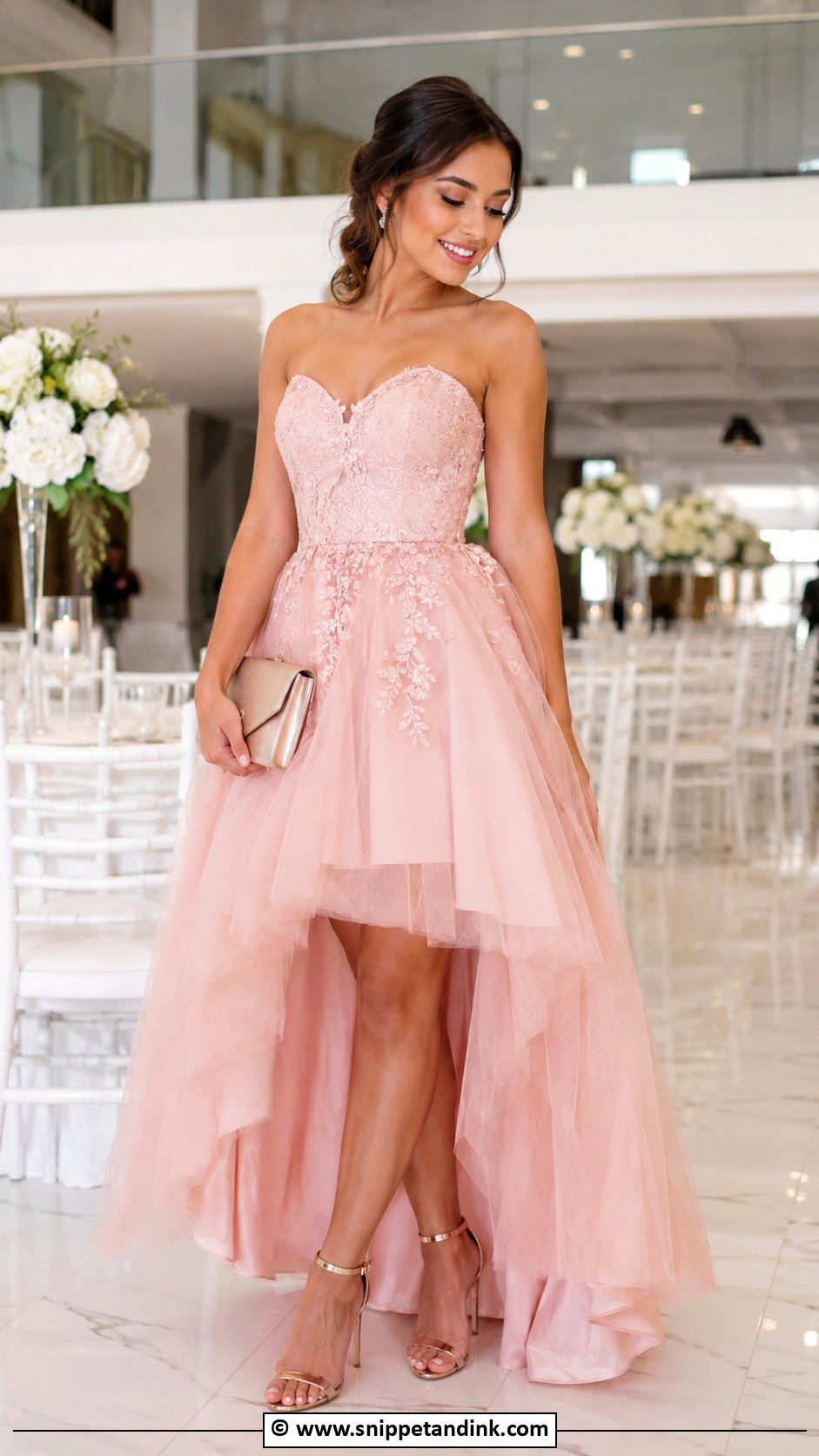
A high-low hem shows the shoes and keeps the front clear for dancing, while the back still trails like a gown. That means the shoes are part of the outfit now, so buy them first and hem the front to suit them. Metallic sandals, embellished pumps or ankle-strap heels all look deliberate. Tulle, chiffon or satin give the best movement. It reads young and fun, so it suits a prom or a relaxed outdoor wedding more than black tie.
17. Embroidered A Line Gown
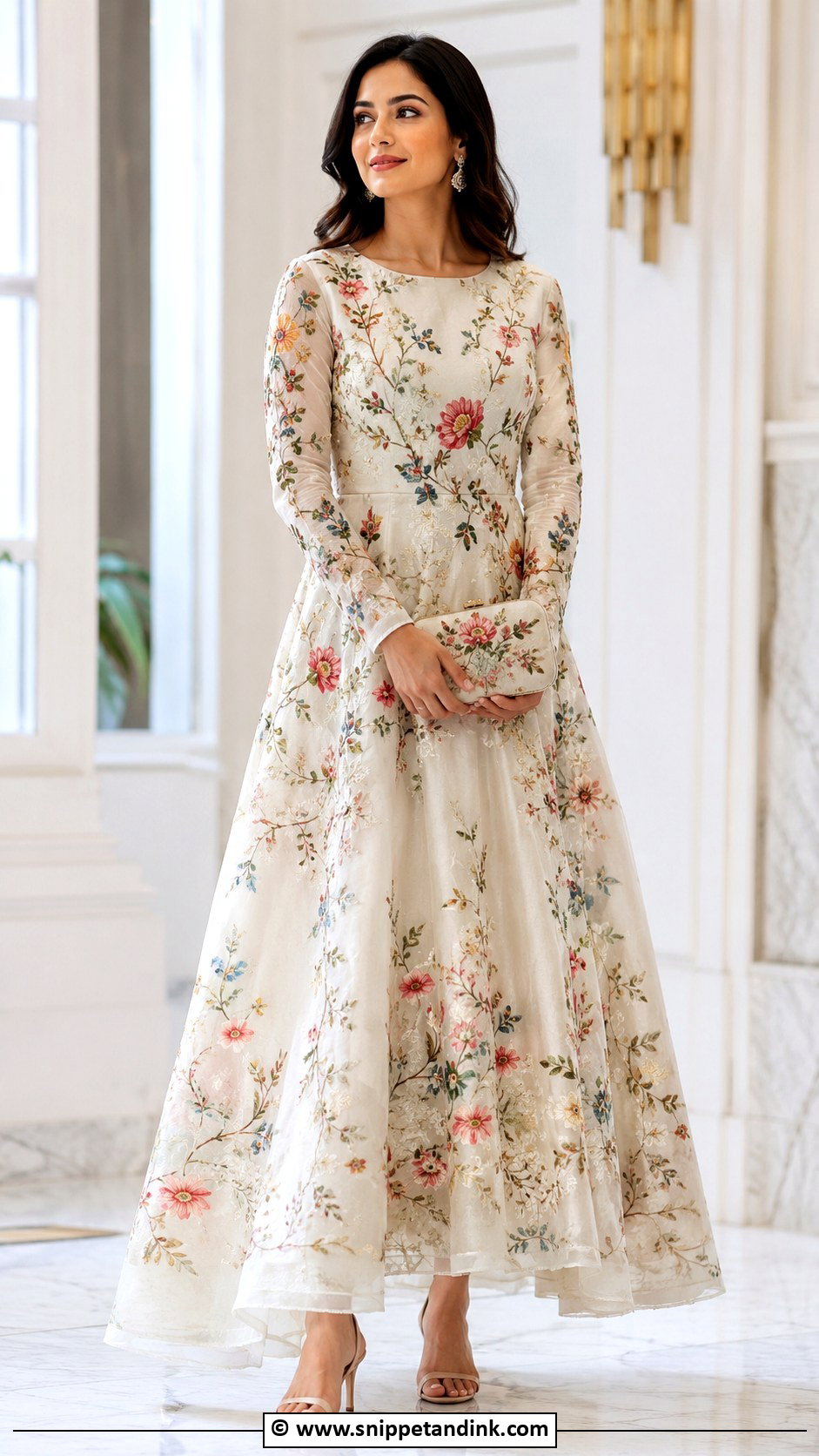
An embroidered A-line gown gives you detail and texture without sparkle. Raised embroidery photographs with shadow and depth, while tonal embroidery is a subtler texture you notice up close. Pick a clutch that matches one thread color in the design and keep jewelry delicate, especially if the work is colorful. It suits cultural celebrations and modest dress codes particularly well. Store it flat or padded with tissue, since heavy embroidery stretches the fabric on a hanger over time.
18. Pleated A Line Gown
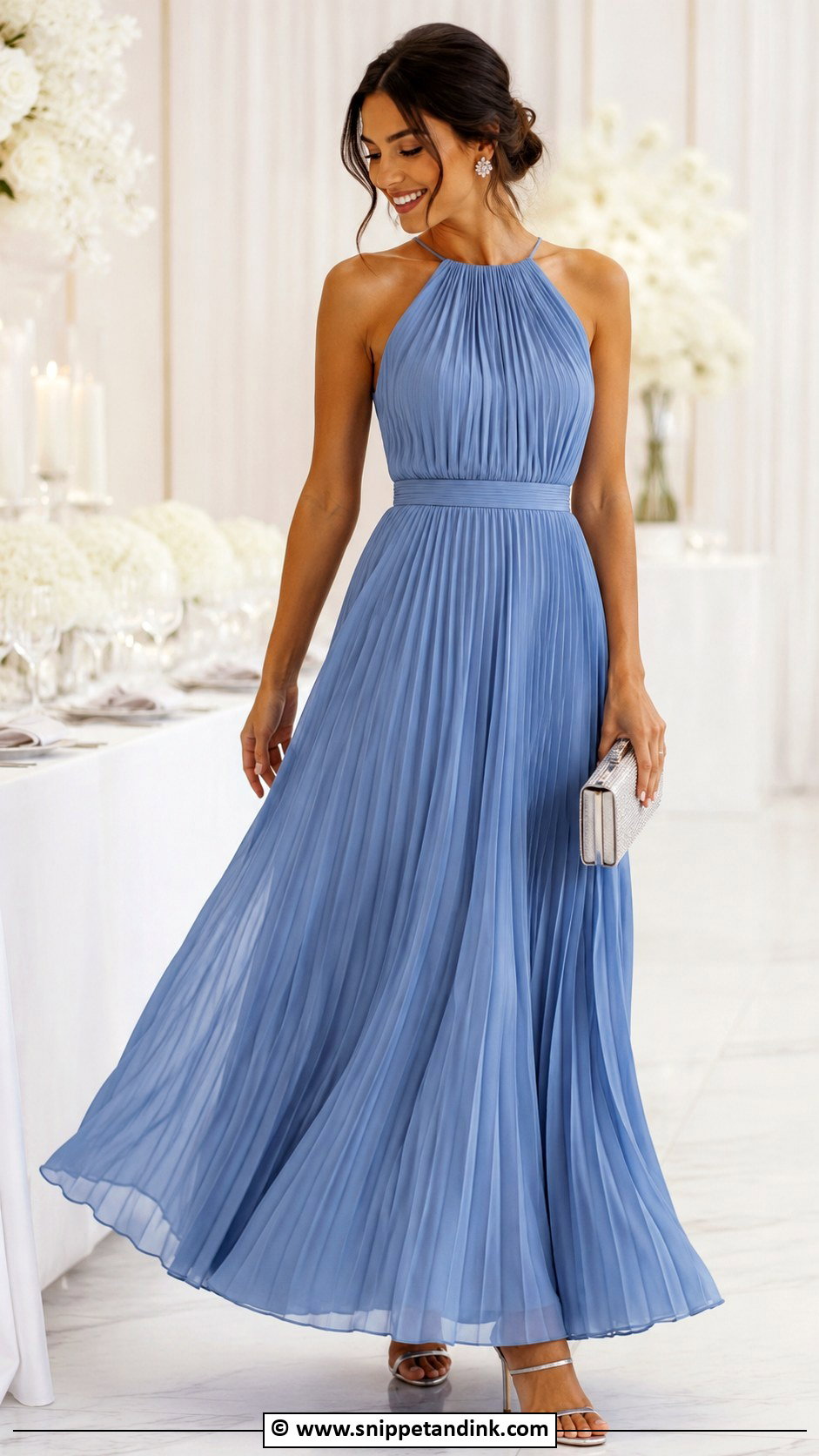
Pleats run vertically, so they lengthen the figure and move with every step. Sunray and knife pleats in chiffon are the prettiest; in satin they look sharper. Pleats do lose their crispness in humidity and with hard steaming, so ask how the gown should be pressed. Dusty rose, navy, sage, champagne and black all work. Keep the rest quiet: slim heels, small earrings. Bridesmaids often wear this shape because it suits so many body types in one line-up.
19. Tiered A Line Gown
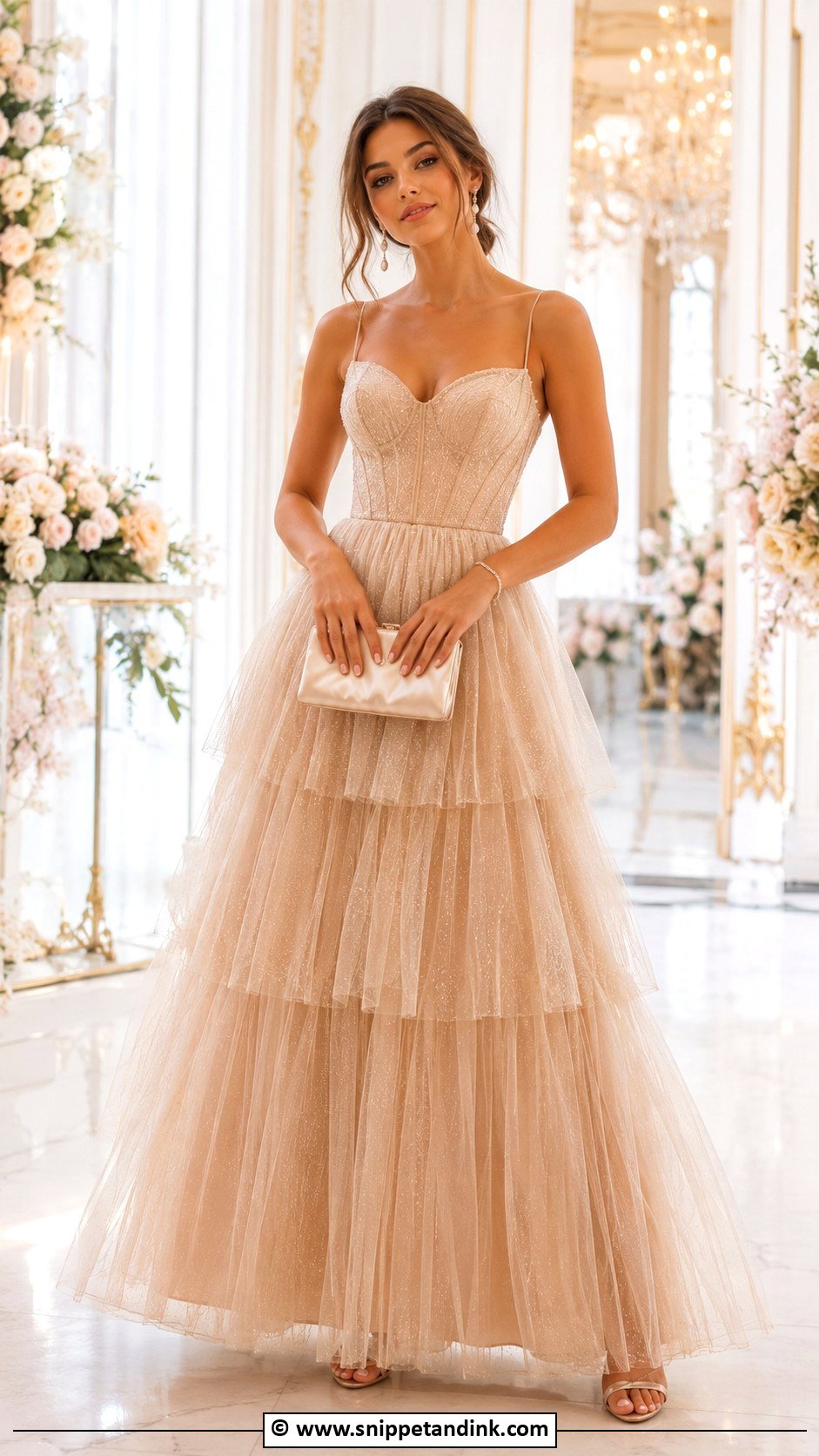
Tiers build volume in stages, which gives you shape without the full weight of a ball gown. The fabric sets the mood: tulle tiers are romantic, chiffon breezy, organza crisp and architectural. Organza tiers creak a little and crease more than you’d expect, so hang the gown the night before. Keep the shoes and clutch simple. Pearls soften it; crystals add shine.
20. Velvet A Line Gown
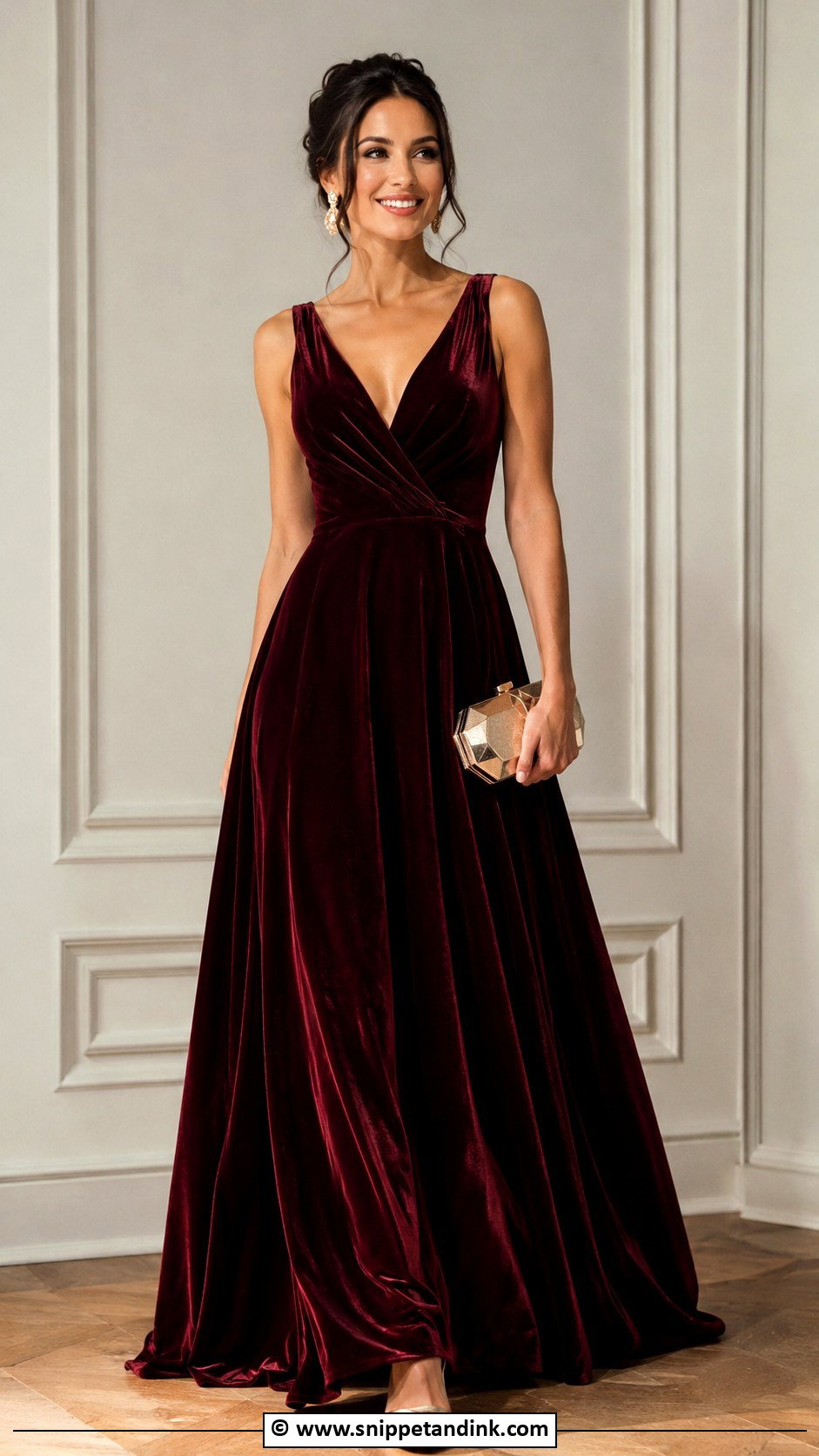
Velvet is the fabric I bring out for winter weddings and formal dinners, because the pile looks rich in low light and keeps you warm. It is also heavier and marks easily: crushing it in a bag or sitting on it for hours leaves shiny patches, so steam it from the inside and never iron it flat. Burgundy, emerald, navy, plum and black are its natural colors. Long sleeves or a wrap bodice suit it well. Use metallic heels and a few accessories, since the velvet has enough texture of its own.
21. Cape Sleeve A Line Gown
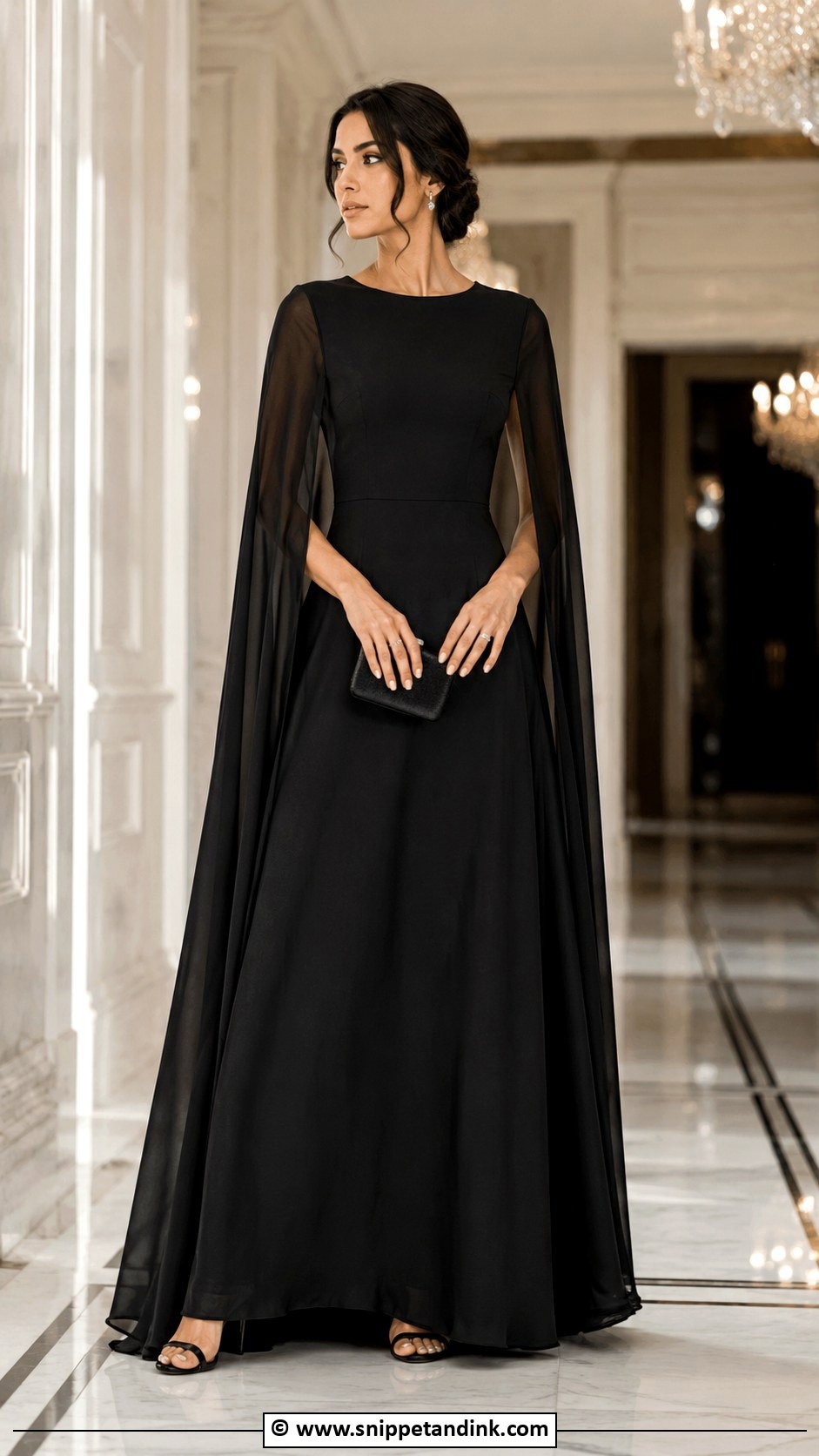
A cape sleeve gives coverage with movement, which is useful when the dress code asks for covered arms but you don’t want structured sleeves. Cape lengths vary from a short flutter to a floor-length panel. Long ones get stepped on, especially on stairs, so practise holding them before the event. Choose a solid color to show the shape. Small earrings, plain heels and no bulky necklace.
22. Wrap A Line Gown
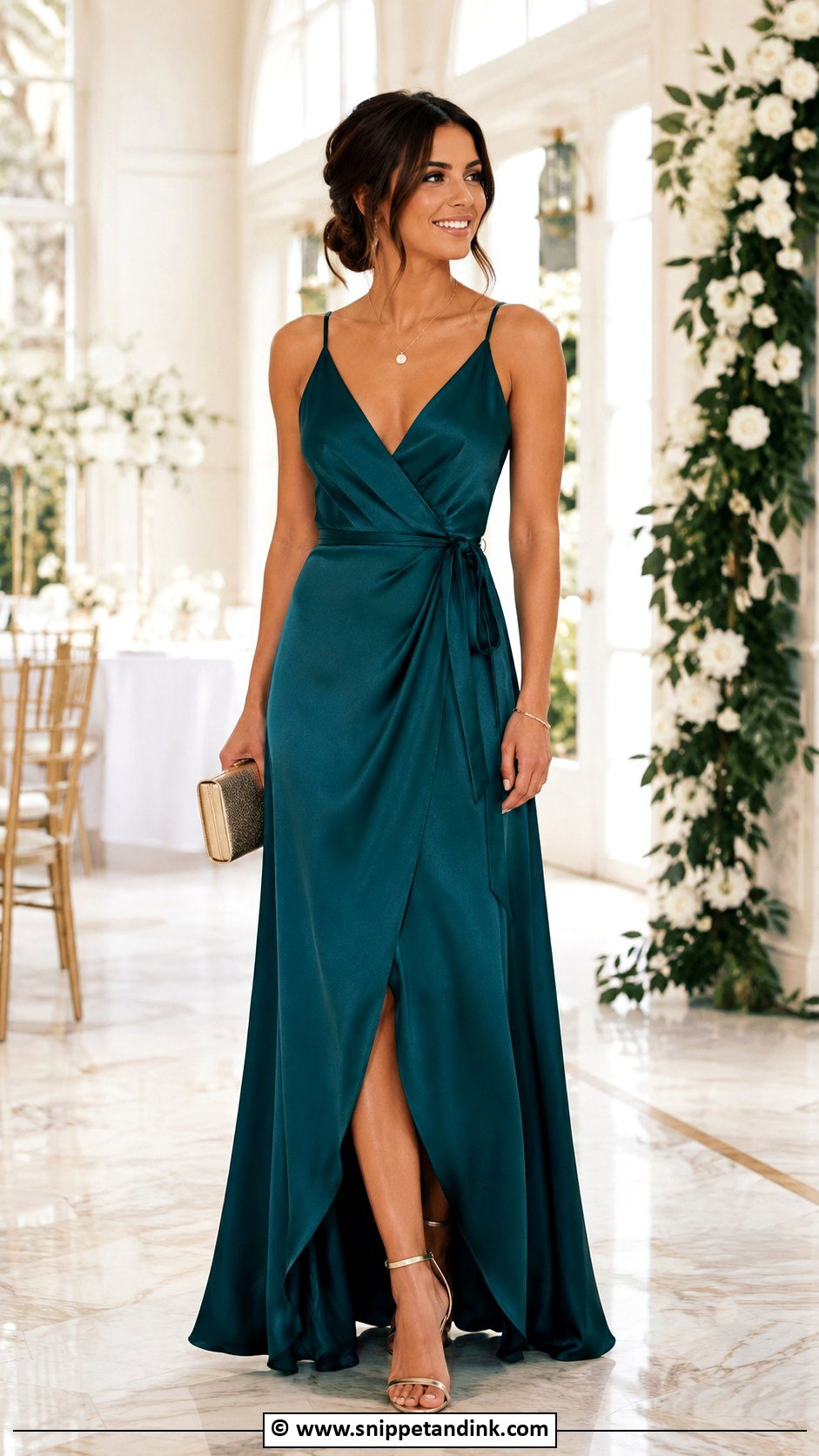
A wrap gown defines the waist with a diagonal line and adjusts as you tie it, which makes it one of the most forgiving shapes here. Let the tie sit at your natural waist, not lower. Wrap fronts can slip open when you sit, so a hidden snap at the cross point is worth adding. Chiffon versions are airy, satin ones more formal. A pendant or fine chain follows the neckline; strappy heels finish it for guests or bridesmaids.
23. Minimal A Line Gown
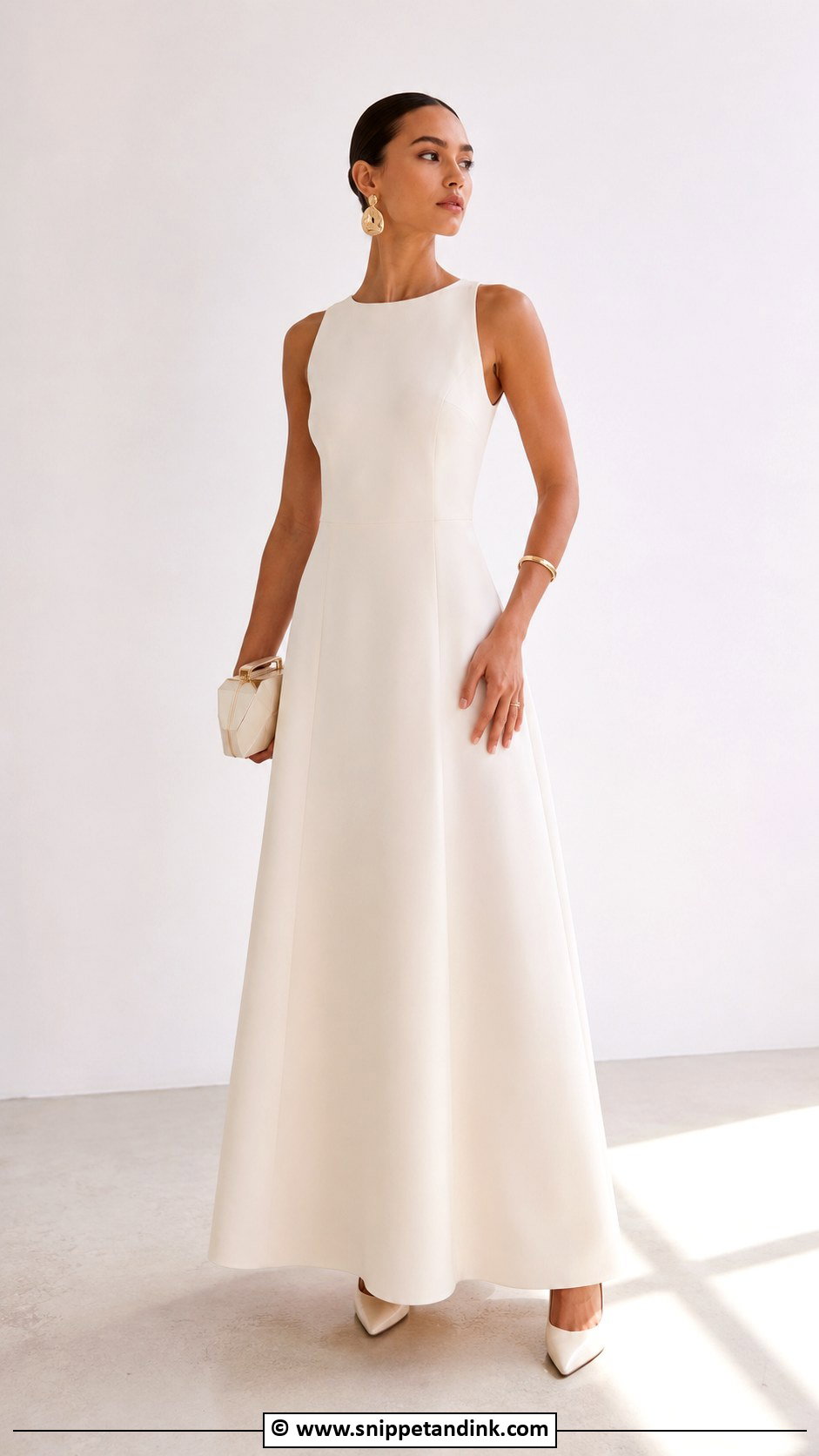
With a minimal A-line, fit and fabric are all you have, so I’m strict about both. A plain crepe or mikado gown with no detail shows every wrinkle at the waist and every pucker at the zip, and a good tailor is part of the budget. Black, ivory, navy, red and soft neutrals all look strong. One strong jewelry piece, perhaps sculptural earrings, plus pointed heels and a structured clutch. A neat bun or straight hair keeps the look clean.
24. Plus Size A Line Gown
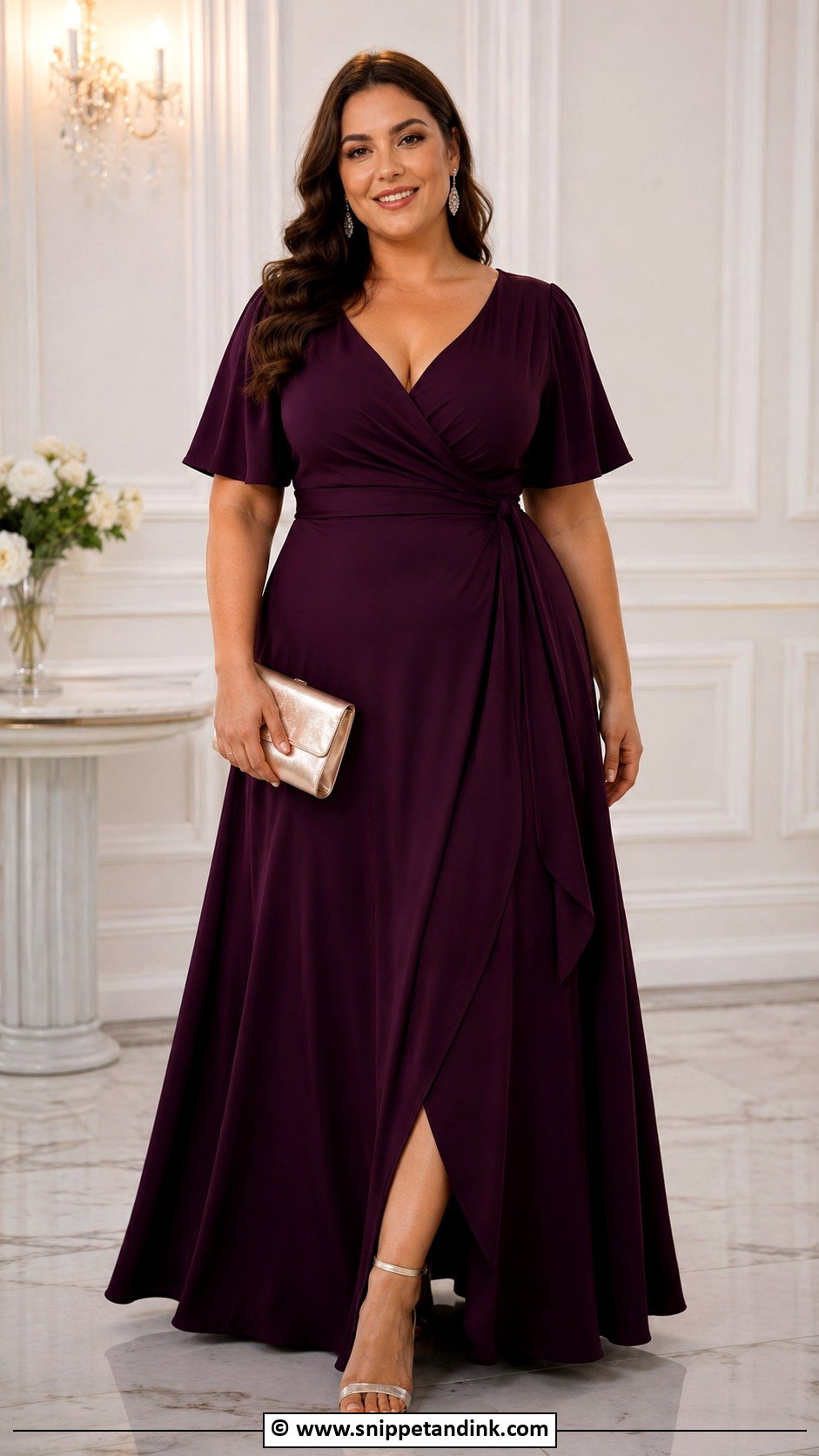
For a plus-size figure, the A-line is the shape I’d start with: it defines the waist and lets the skirt fall freely without clinging. The work happens in the bodice. Look for supportive bodices, wider straps, built-in cups or corsetry, and well-placed ruching that shapes rather than just covers. Chiffon, satin, crepe and lace all work when the bodice fits properly. Plan the undergarments before the final fitting, not after. Deep jewel tones, soft pastels and black look rich, and the point is to dress the body you have well, not to hide it.

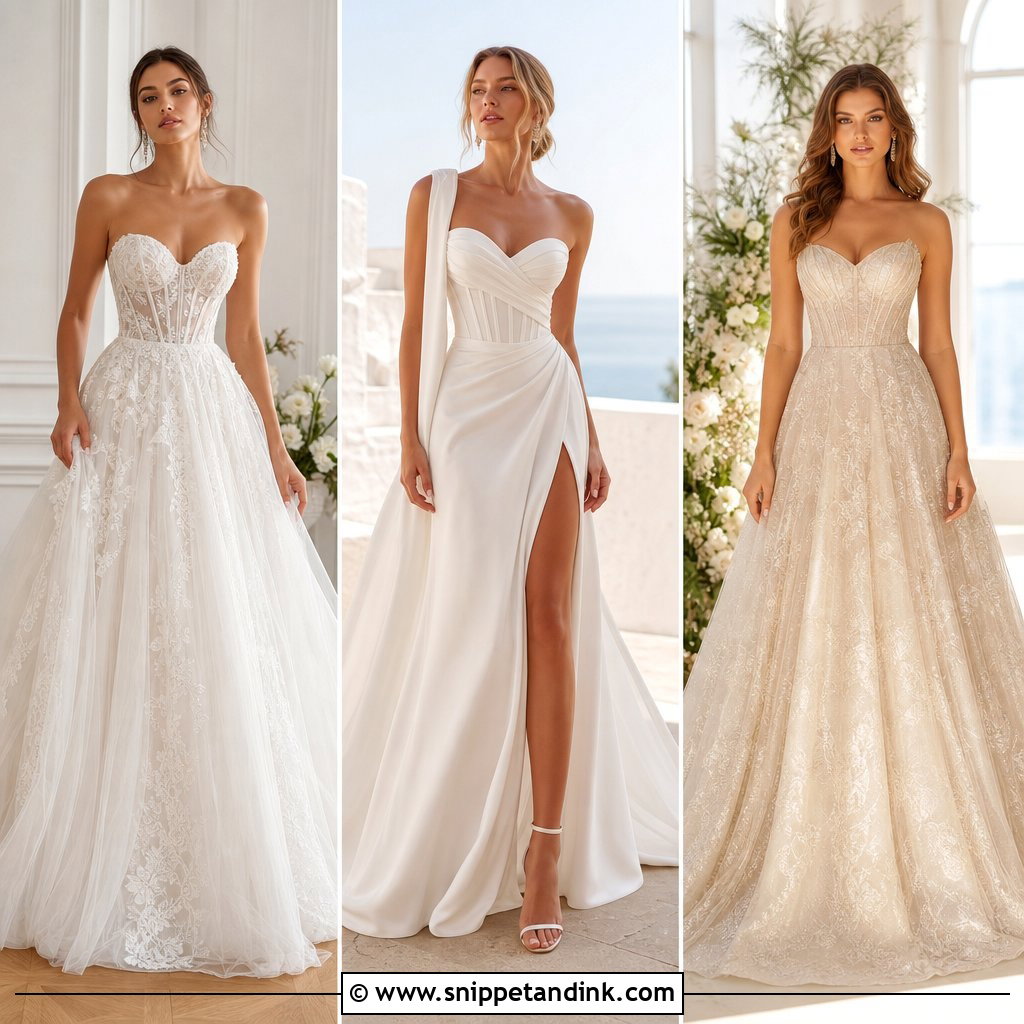
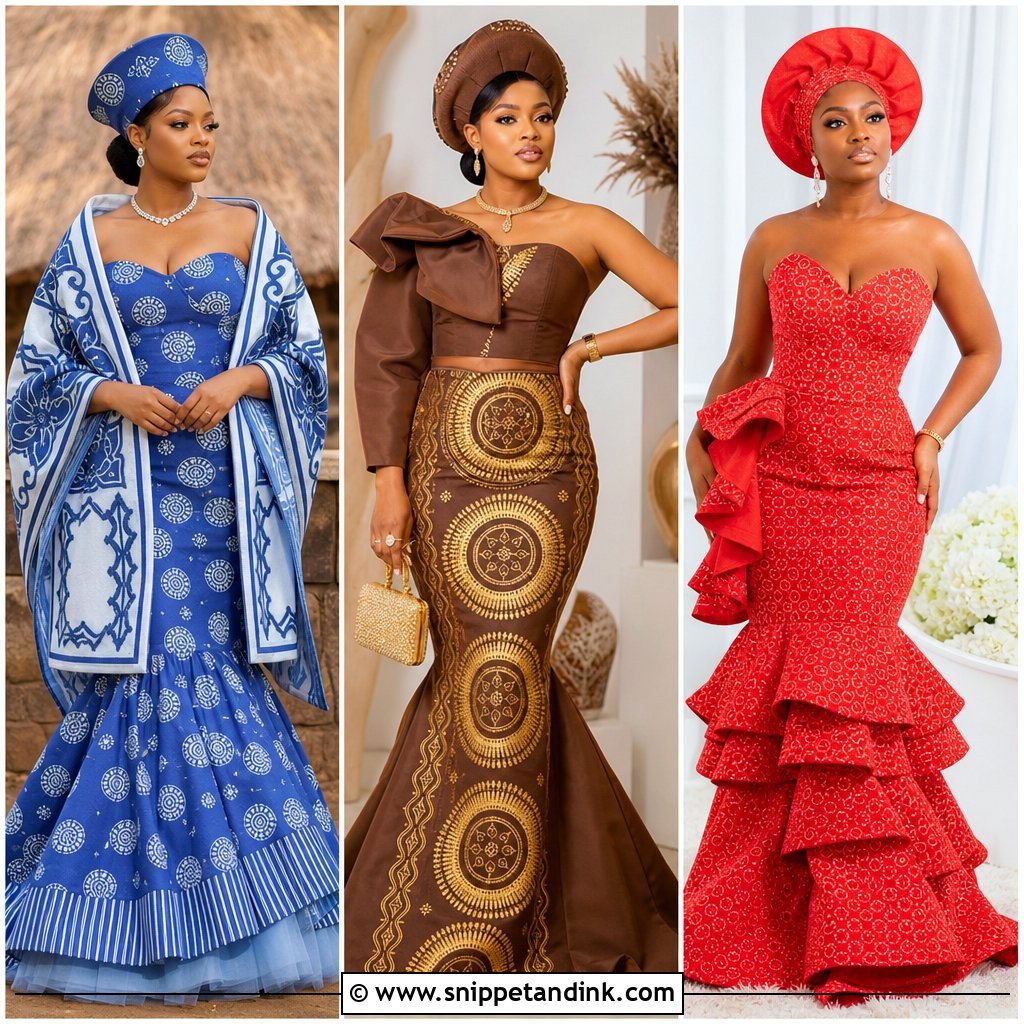
25. Short Sleeve A Line Gown
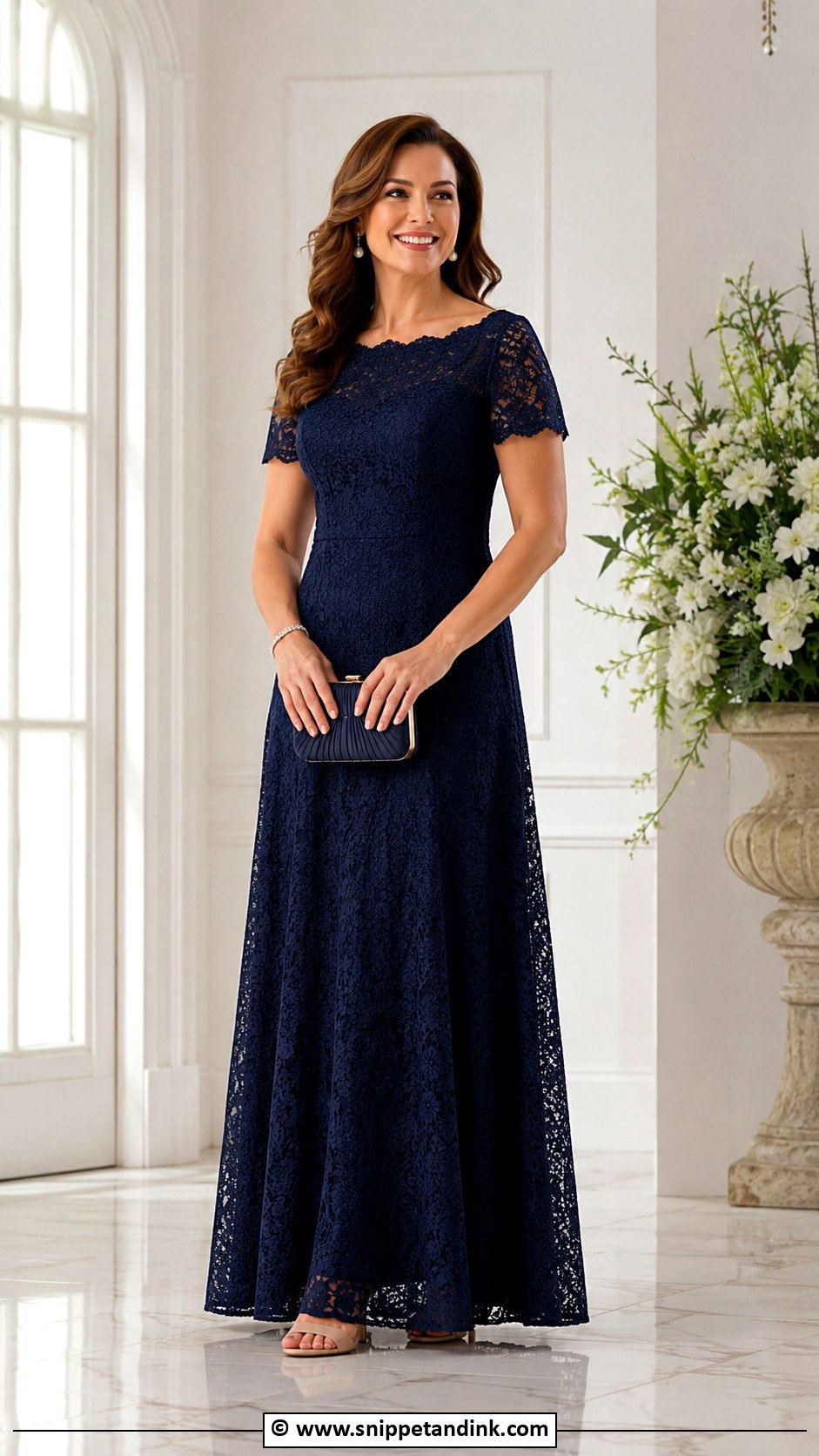
Short sleeves give some arm coverage without the warmth of long ones. Each type has a character: cap sleeves are neat, flutter sleeves soft, fitted short sleeves tailored. Fitted sleeves need room in the bicep, so raise your arms in the fitting before you agree to them. Chiffon suits summer, lace adds texture, satin polishes it. Mothers of the bride and groom often prefer this cut for a long day.
Alterations an A-Line Usually Needs, and When to Book Them
Hardly any formal gown fits straight off the rail, and the A-line is no different. The good news is that its alterations are usually simple ones. The hem is the most common, because skirt length depends entirely on your shoes, and layered tulle or chiffon takes longer to shorten since each layer is hemmed separately.
Next comes taking in the side seams of the bodice, adding cups or a strap, and shortening straps that slip. Bridal alterations shops get busy in peak season, so I suggest bringing the gown in six to eight weeks before the event, with the final fitting about two weeks out. That leaves room for a second adjustment if your weight shifts a little.
Bring your shoes and underwear to every fitting, and ask the tailor what can and can’t be changed before you buy if the gown is near your budget limit. Lace with a scalloped hem, for example, can’t simply be cut shorter; the scallop has to be lifted and re-applied, which takes time and costs more.
Fit the Waist First and the Rest of the Gown Follows
With all these fabrics and necklines, it’s tempting to shop by detail. I’d shop the other way round: start with where the waist sits and how the bodice supports you, then choose the fabric for your season and the neckline for your shoulders. Shoes, jewelry and hair come last and should support the gown rather than compete with it. Sit, walk and reach in anything you’re considering. The A-line that feels easy at the end of a long evening is the one to take home.
You'll Like These Ideas:




Leave a Reply