
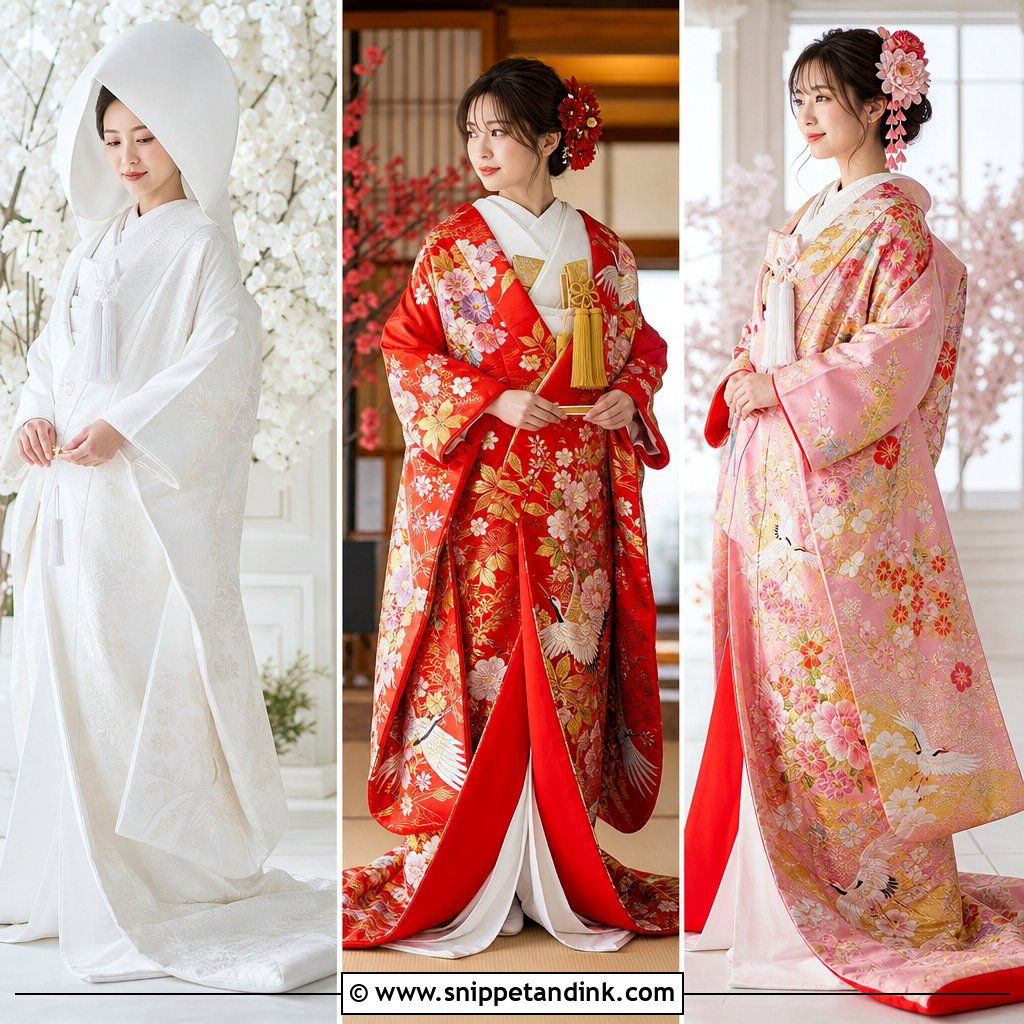
Elegance in a wedding dress has very little to do with one particular shape. I’ve seen it in a structured ball gown and in a bias-cut slip; what the elegant ones share is a fit that doesn’t fight the body and accessories that agree with the dress. Bridal design right now leans toward clean silhouettes, soft draping, refined lace, pearl work, removable layers and quieter fabrics, so there’s room for almost any taste. Below are thirty dresses, from grand to minimal to a reception mini, each with the styling I’d put with it and the practical catch I’d warn you about.
Bring Fewer Opinions to the First Salon Appointment
Most made-to-order gowns take several months to arrive, and alterations come after that, so I’d start trying on dresses roughly eight to ten months before the wedding. Earlier than that, styles change and your shortlist goes stale. Much later, and you’re limited to sample sales and off-the-rack.
A few things make the first appointment far more useful:
- Bring one to three people whose taste you trust. A larger group produces a lot of opinions and very little decision.
- Save photos of dresses you dislike as well as ones you love. What you reject tells a stylist more than what you like.
- Wear nude, smooth underwear and bring shoes near the heel height you plan to wear.
- Remember that salon samples come in a limited size range and get clipped to fit. Judge the shape and fabric, not how snug the sample is.
How many fittings to expect
Usually three. The first sets the major changes such as taking in the bodice and fixing the hem; the second checks them; the last, about two weeks out, is for small adjustments, the bustle and the person who’ll help you dress. Bring the actual shoes and undergarments to all three.
1. Satin A Line Wedding Dress
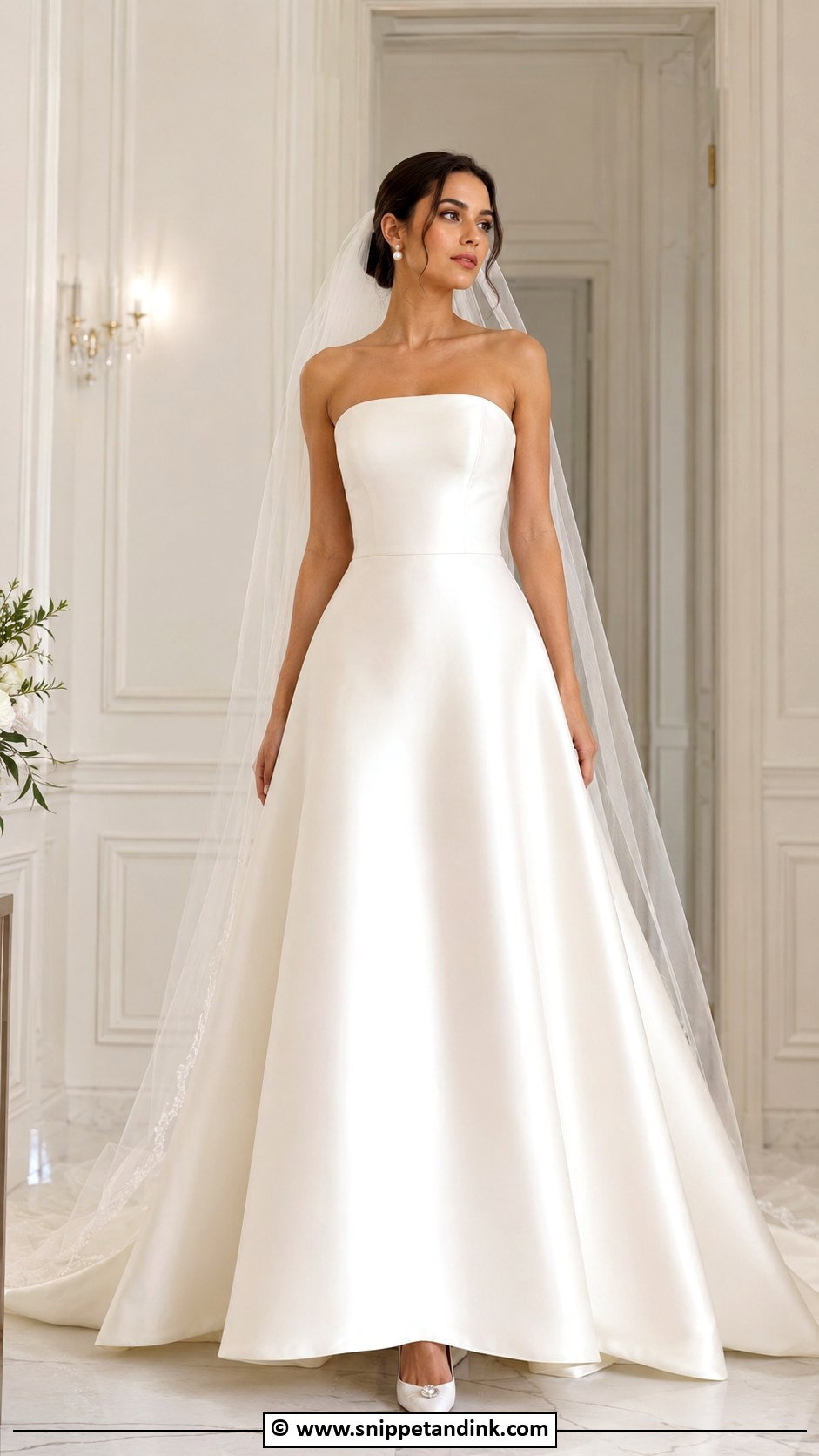
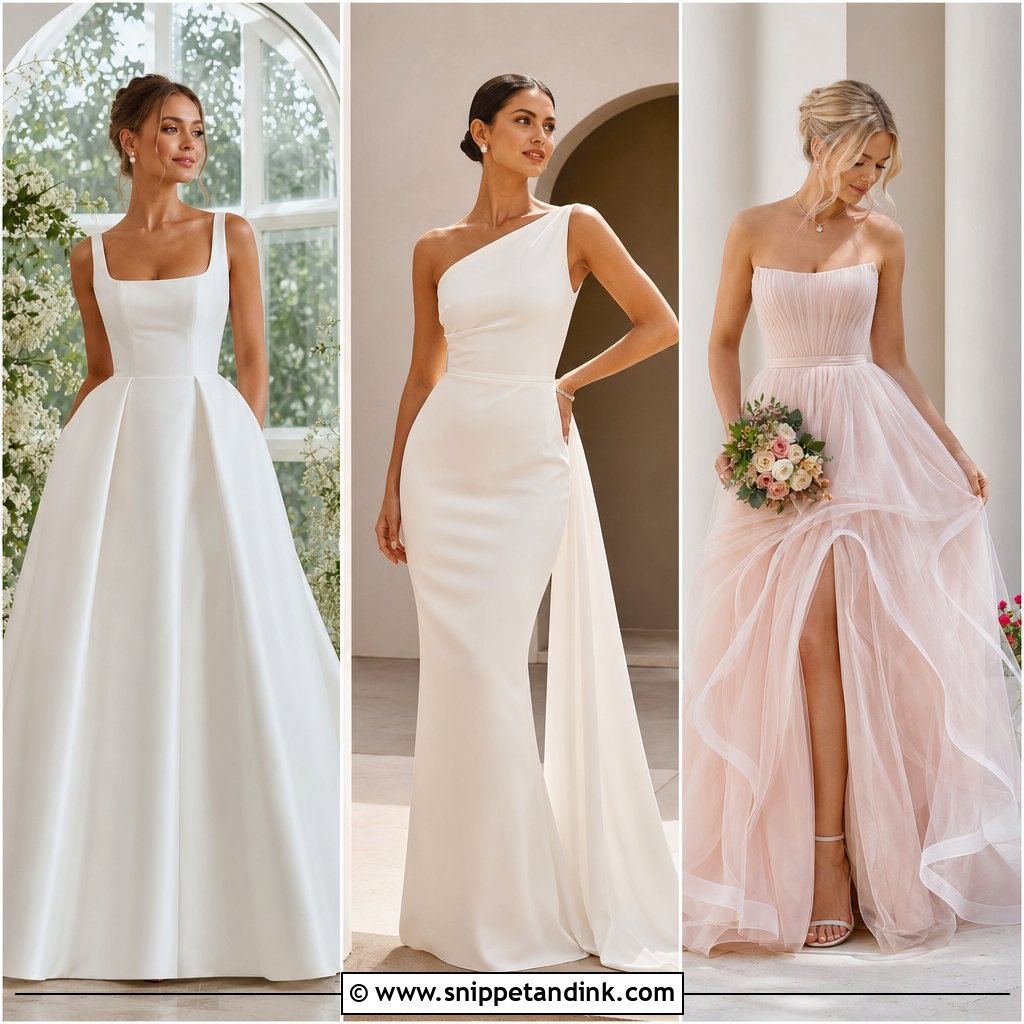
Satin A-line is the shape I’d hand a bride who can’t decide, because it works in a hotel ballroom, a garden and an estate without looking out of place. The fitted bodice holds the waist and the flared skirt lets you walk and dance properly. In a strapless version, the bodice has to be boned and fitted snugly enough that it never needs hitching. Ivory or soft white, a chapel-length veil, pearl earrings, pointed satin heels and a low bun. Satin creases where you sit, so plan a quick steam after the ceremony if photos follow.
2. Long Sleeve Lace Wedding Dress
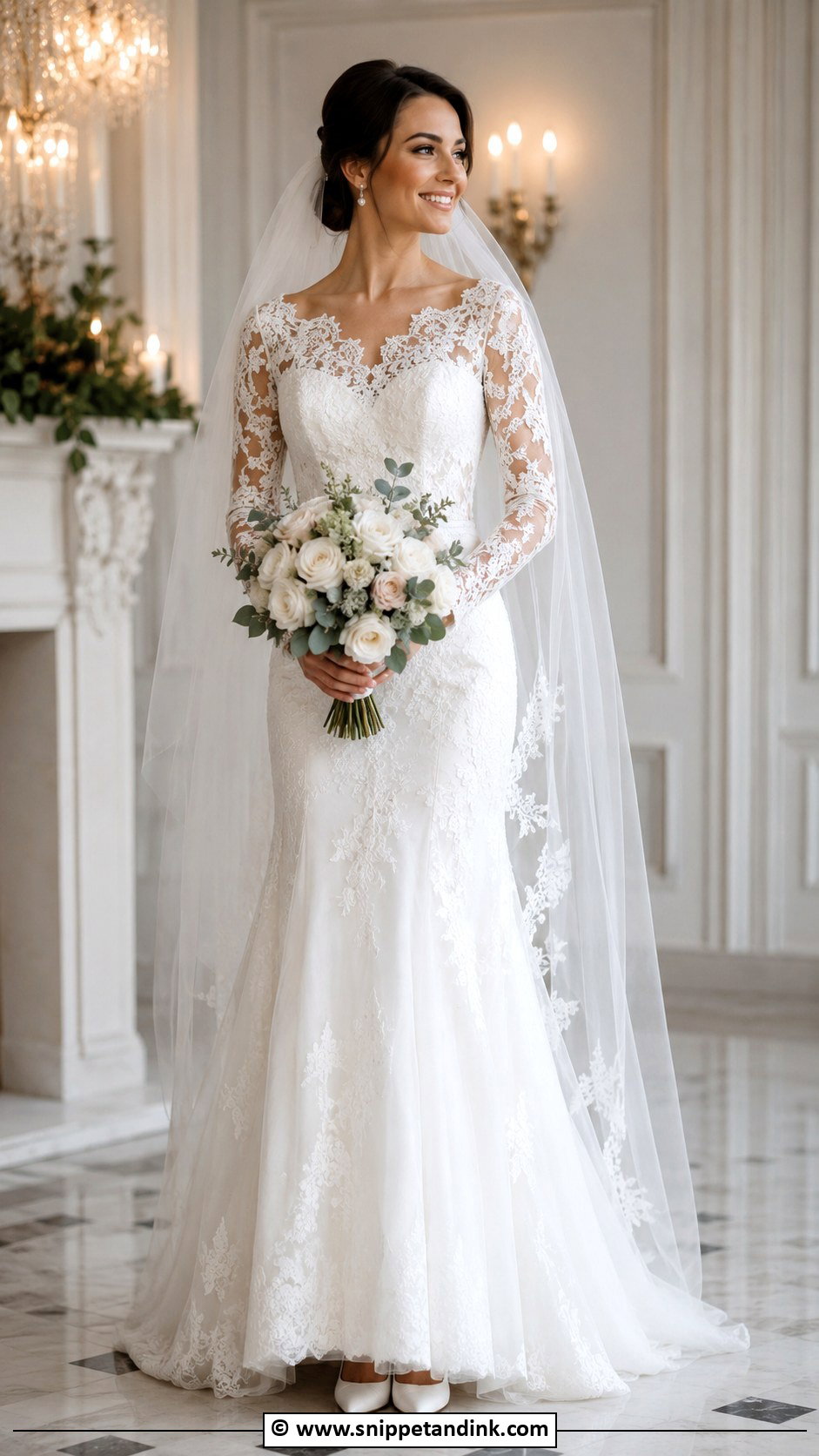
Sheer lace sleeves give coverage that still looks light, and they frame the arms in close portraits. The fit point I care about is the armhole. Lace sleeves set too tight restrict you from lifting your arms to hug or dance, and you only discover it on the day, so raise your arms fully at every fitting. Floral lace over a smooth lining, a fitted waist and a slightly flowing skirt flatter most figures. A fingertip veil, pearl drops and closed-toe heels suit autumn, winter or a traditional venue.
3. Strapless Ball Gown Wedding Dress
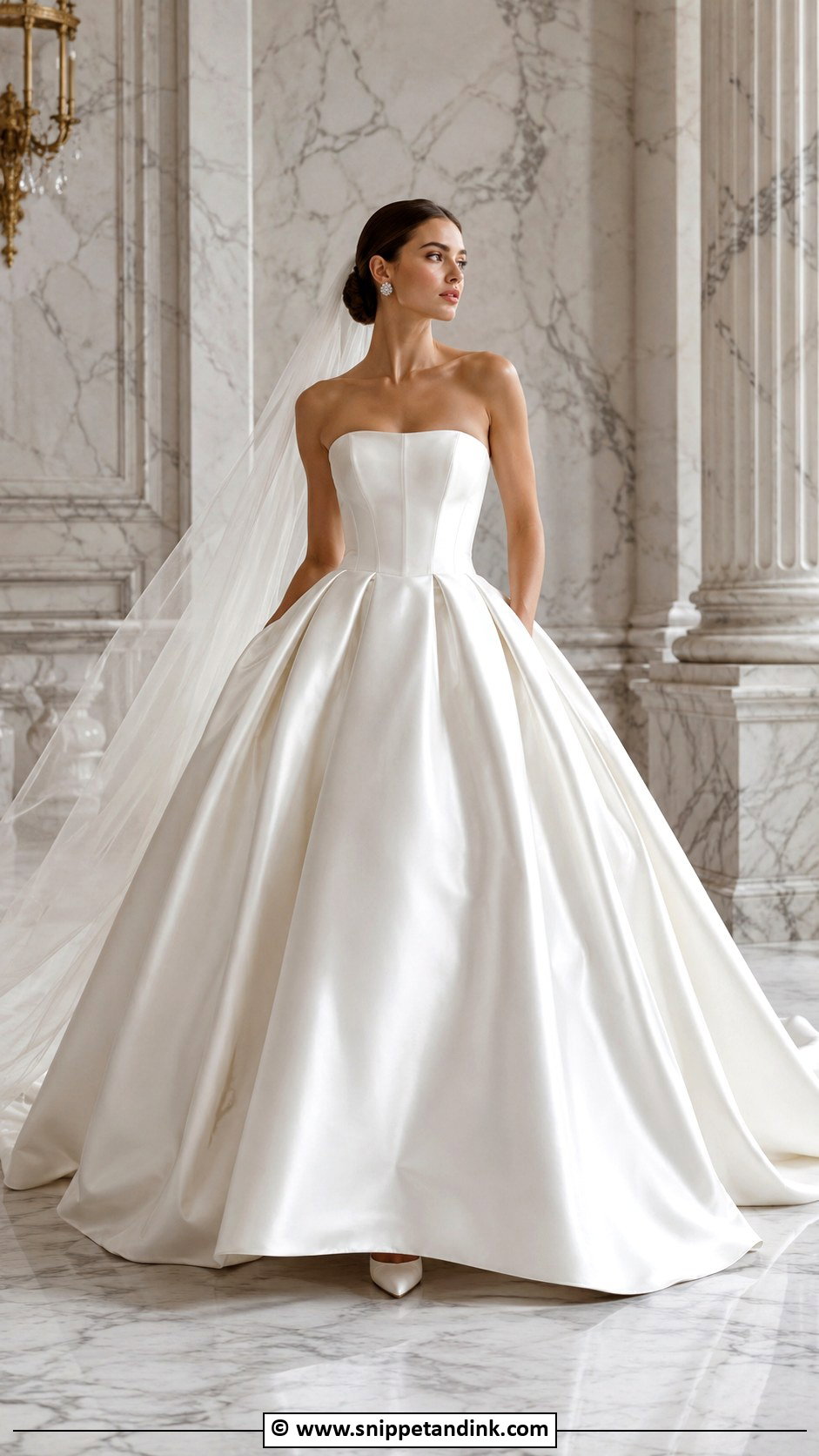
Want the grand entrance? A strapless ball gown wedding dress delivers it, with the bodice showing off the shoulders and the full skirt doing the drama. Clean satin, silk mikado or subtle jacquard keep it elegant; heavy sparkle on that much fabric can overwhelm. A structured bodice and natural waist give support, and soft pleats keep the skirt from looking stiff. Cathedral veil, crystal studs, simple satin pumps and hair swept up. Ask the salon how much the skirt weighs, since a full gown can be surprisingly heavy by evening.
4. Crepe Sheath Wedding Dress
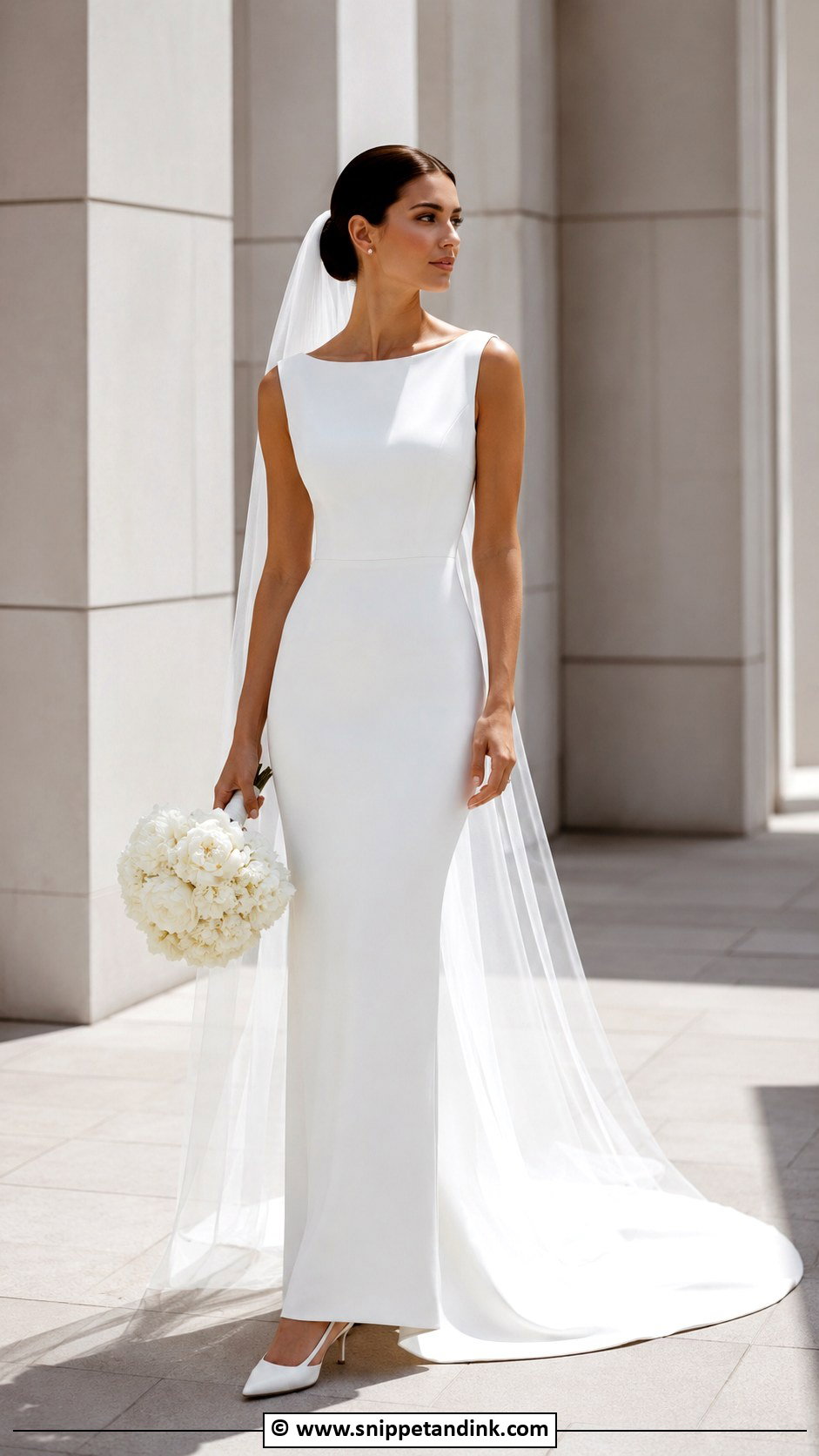
A crepe sheath wedding dress has nothing to hide behind, so this is where tailoring earns its money. The fabric skims the body without volume, which means the alterations need to follow your shape through waist, hips and hem without pulling. A bateau, square or soft scoop neck all suit it. Crepe also shows underwear lines more than people expect, a point I come back to further down. Slingback heels, diamond or pearl studs and a long plain veil give a clean finish for city, rooftop and smaller venues.
5. Off Shoulder Wedding Dress
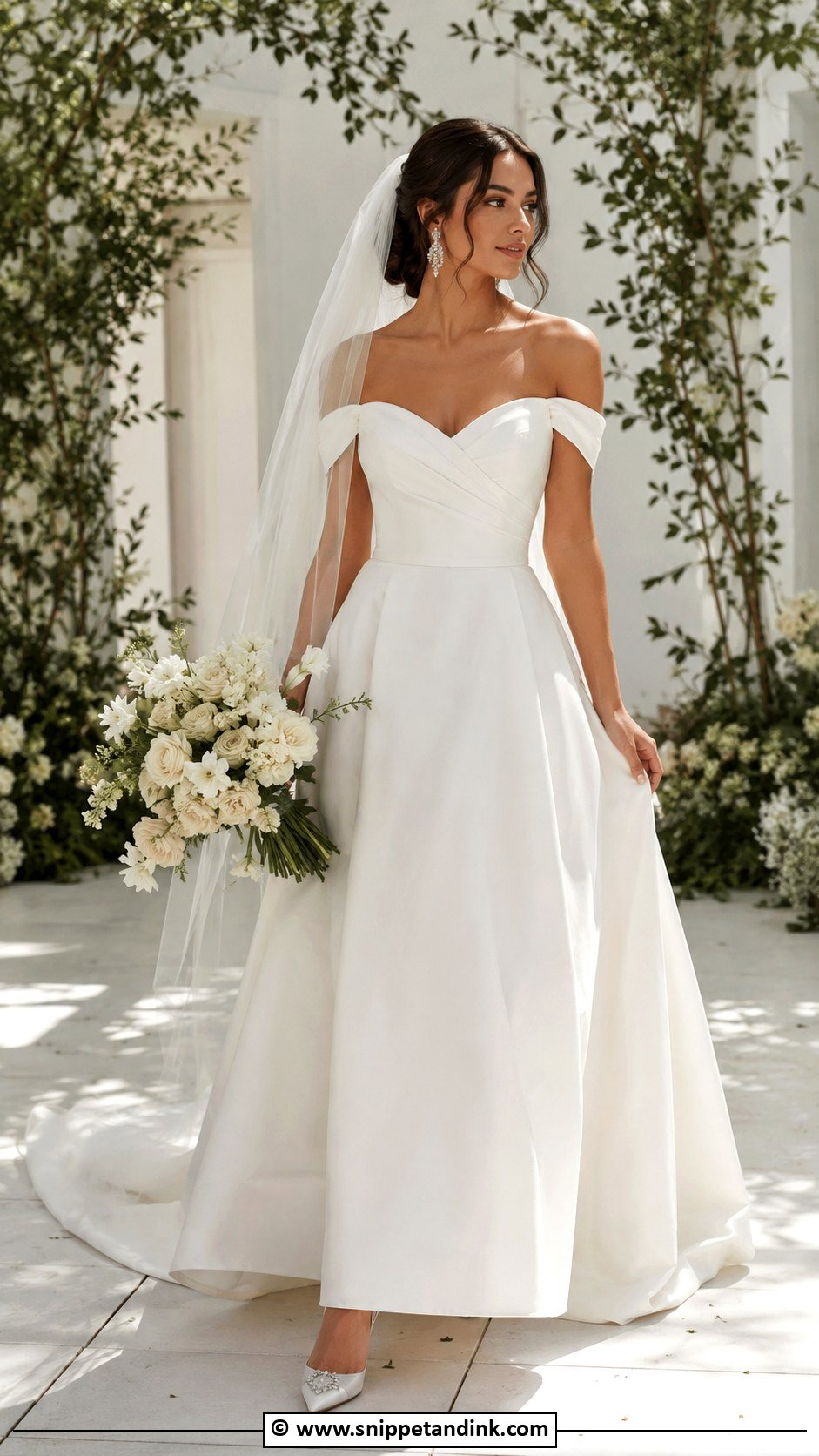
Off the shoulder frames collarbone and shoulders softly, without much effort. A fitted bodice with an A-line skirt balances it; a fitted mermaid gives a more sculpted outline. Soft satin, crepe, lace and tulle all work. Choose either a delicate necklace or statement earrings. I’d also check that you can lift your arms at least to shoulder height, since this neckline sometimes pins the upper arm. A low chignon, sheer veil and pointed heels complete it.
6. High Neck Wedding Dress
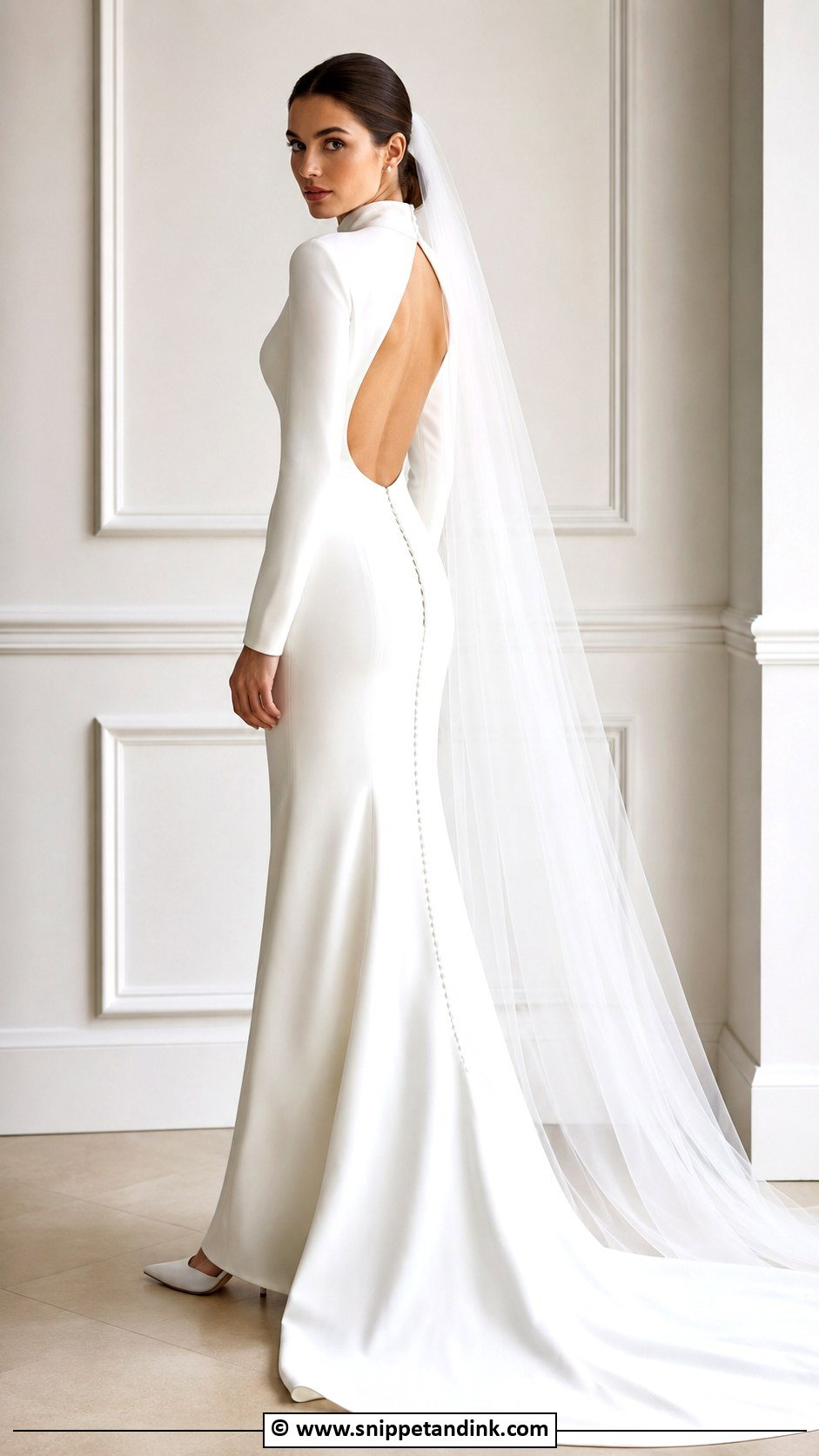
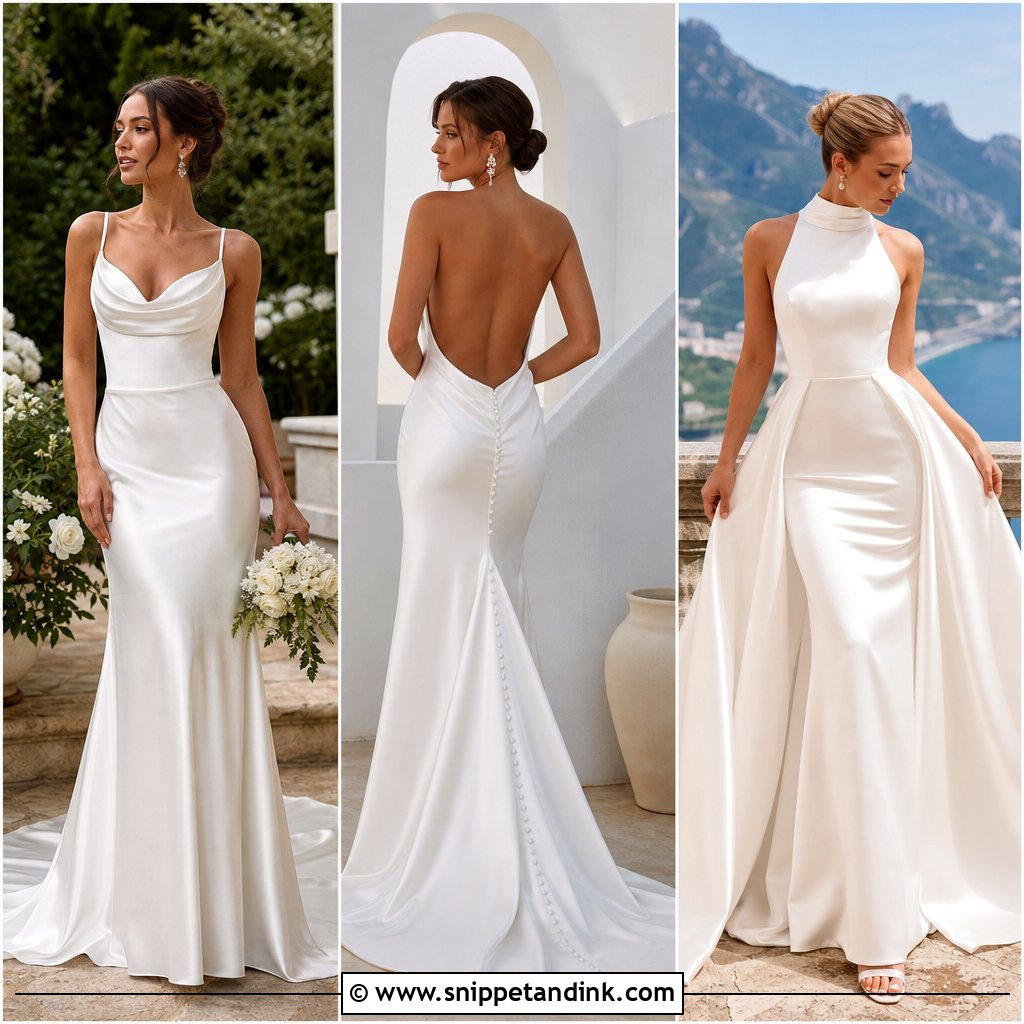
High necks look fashion-forward and intentional. A crepe column with a high neck reads modern; a lace version reads romantic. When the front is modest, the back is where you add interest, with buttons, a keyhole or embroidery, since that’s what guests see for most of the ceremony. Wear a clean updo and small earrings, with a long veil placed low at the back of the head so it doesn’t hide the back detail. No heavy necklace.
7. Pearl Wedding Dress
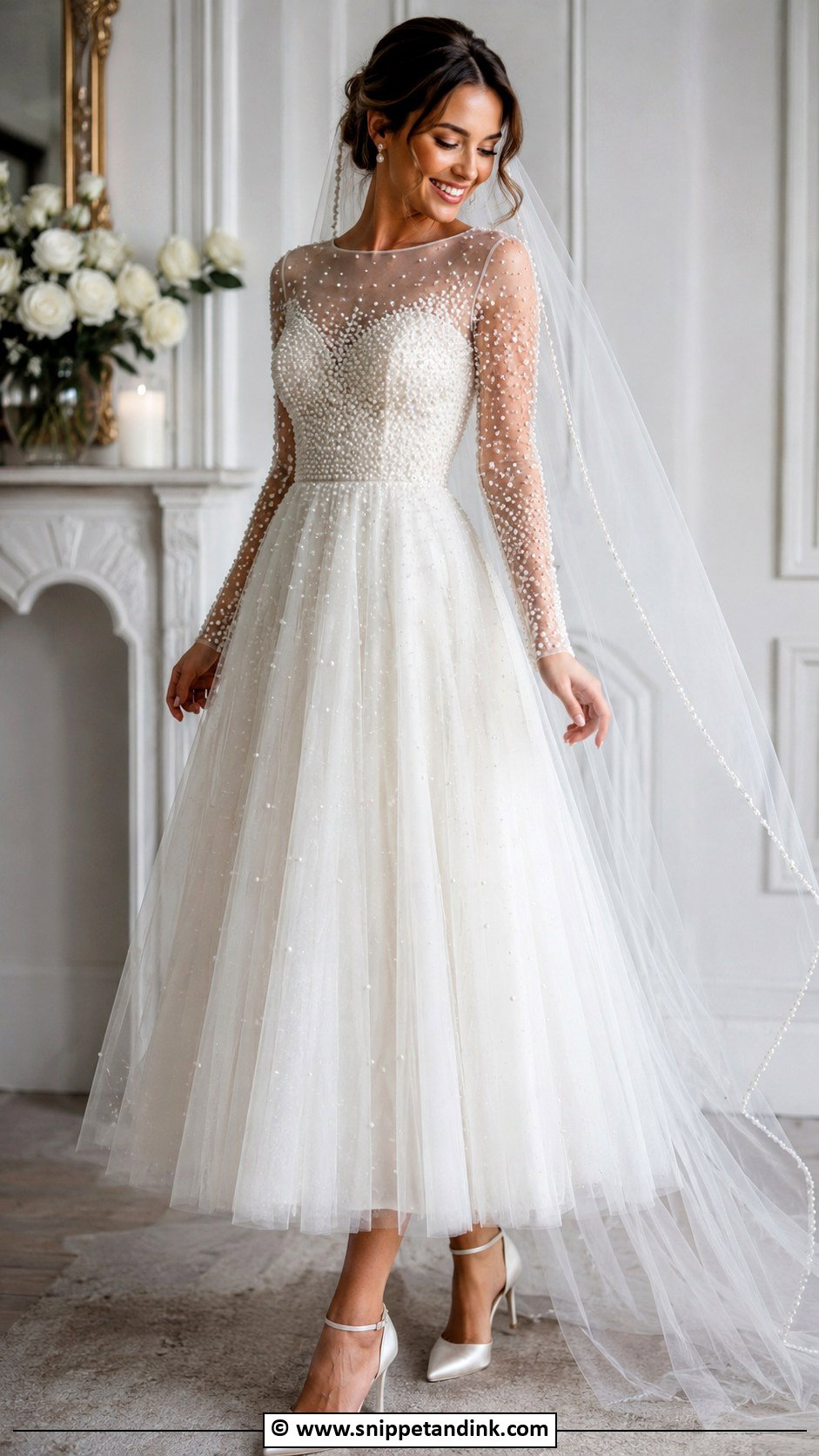
Pearls give glow without hard sparkle. They can cover sheer sleeves, decorate a bodice, trace a neckline or scatter across tulle, but I’d pick one main pearl feature rather than covering everything. A pearl-trim veil, pearl earrings and satin shoes finish it. Ivory, champagne or warm white suit pearls better than optic white, which can make them look grey. Pearl-heavy sleeves are weighty, so try sitting with your arms on a table at the fitting.
8. Square Neck Wedding Dress
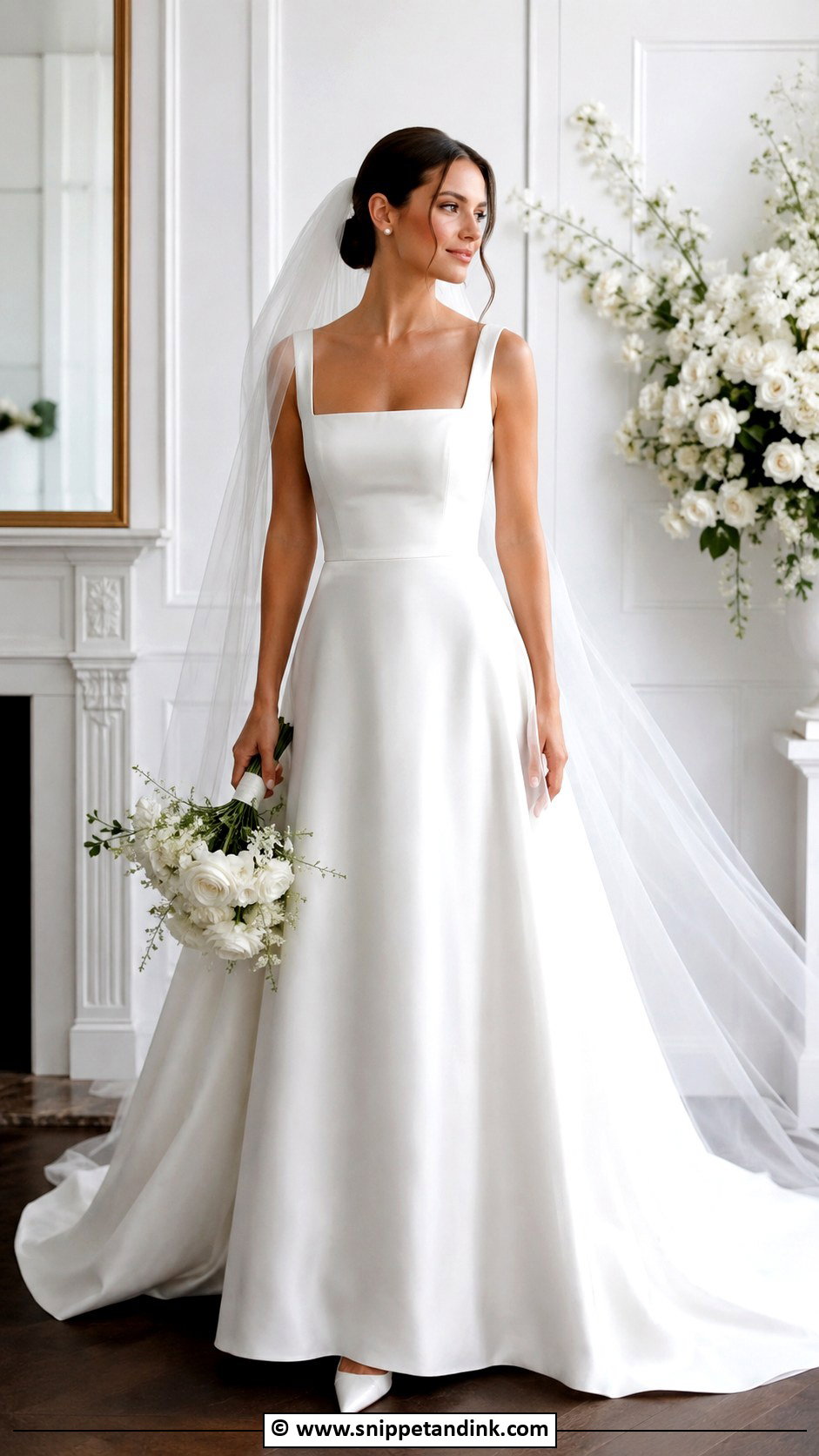
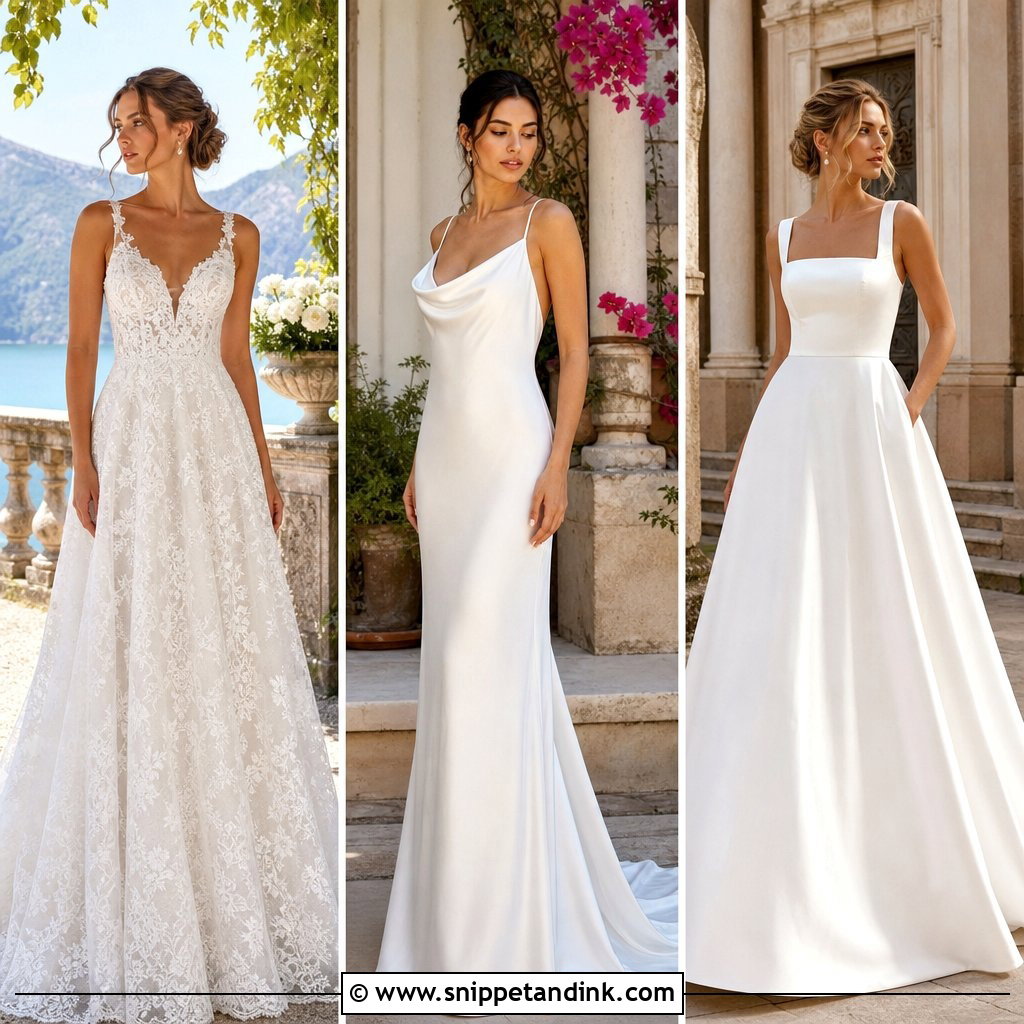
The square neckline suits a wide range of bust sizes because it structures the top without plunging. Wide straps, slim straps or long sleeves all pair with it. In satin it reads minimal; in lace, softer. A simple veil, sleek heels and pearl or crystal studs. Then pick the skirt for comfort, whether A-line, column or a full ball gown, and make sure the corners of the neckline sit flat on your chest, not gaping when you breathe out.
9. Minimalist Wedding Dress
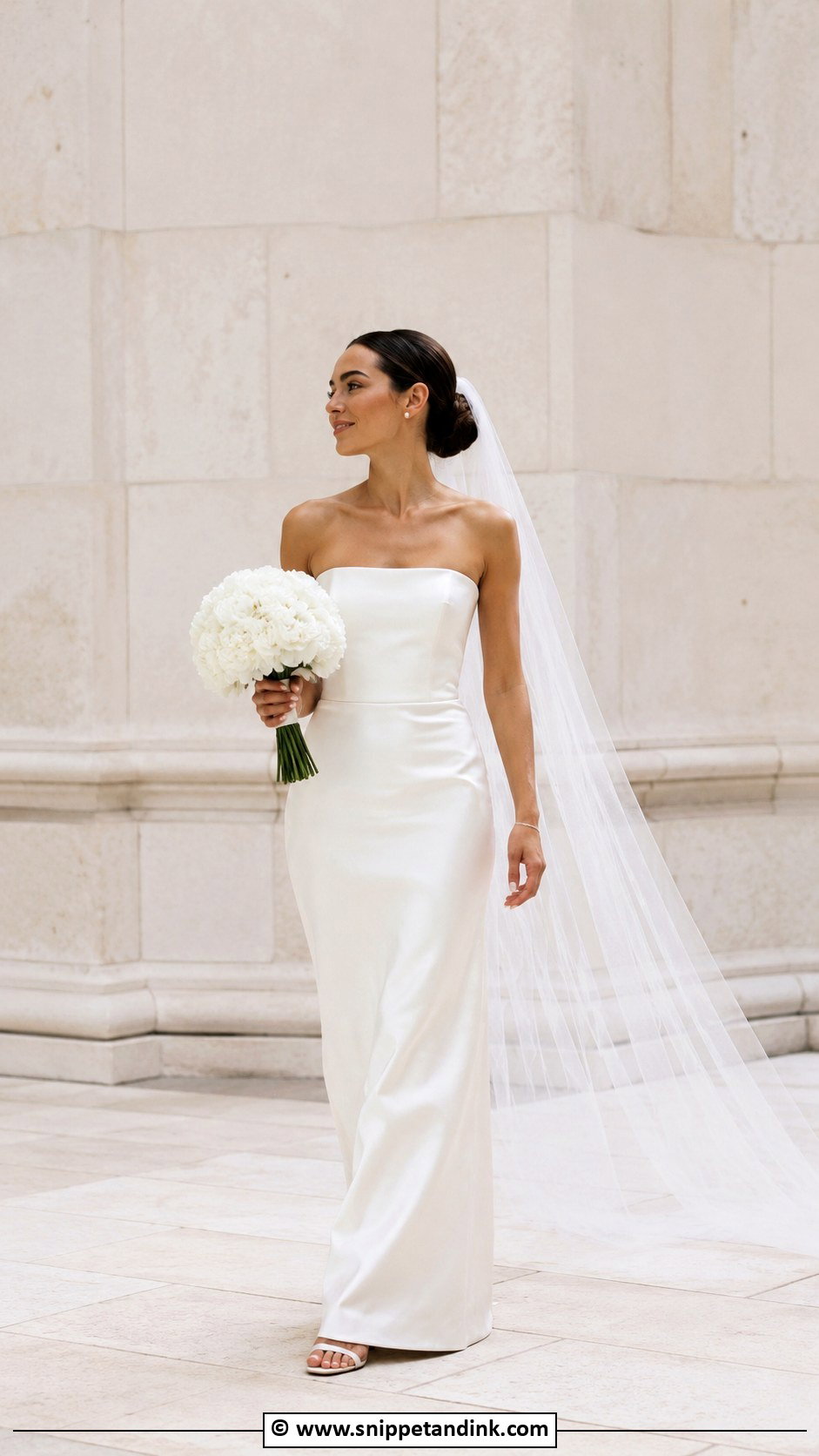
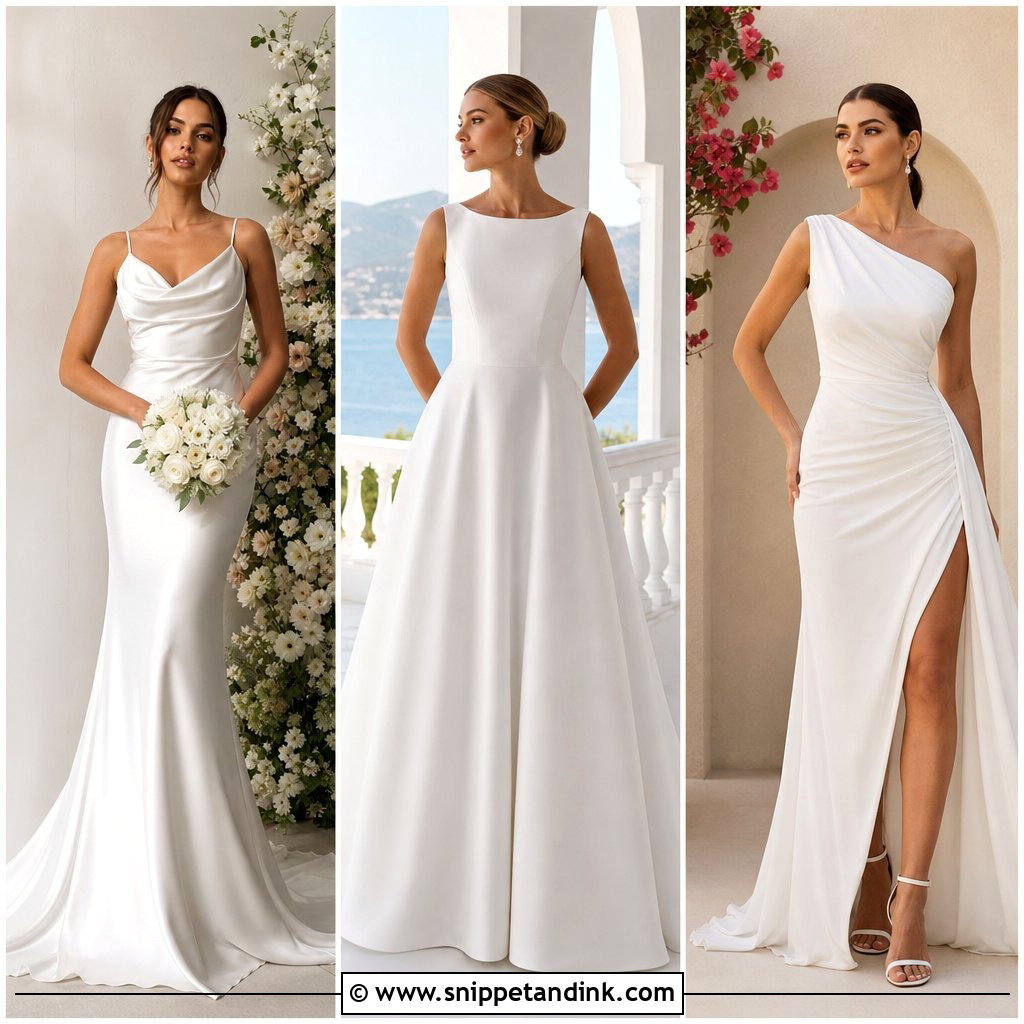
A minimalist wedding dress relies on fabric, fit and construction, so every seam is on display. Smooth satin, matte crepe, silk or mikado with a sharp neckline and a graceful skirt. Strapless column, long-sleeve sheath and simple A-line all count. Accessories stay deliberate: pearl studs, a plain veil, sleek heels and perhaps one statement ring. Minimal gowns also age well in photos, and the same dress can be styled formal or soft depending on the venue.
10. Floral Lace Wedding Dress
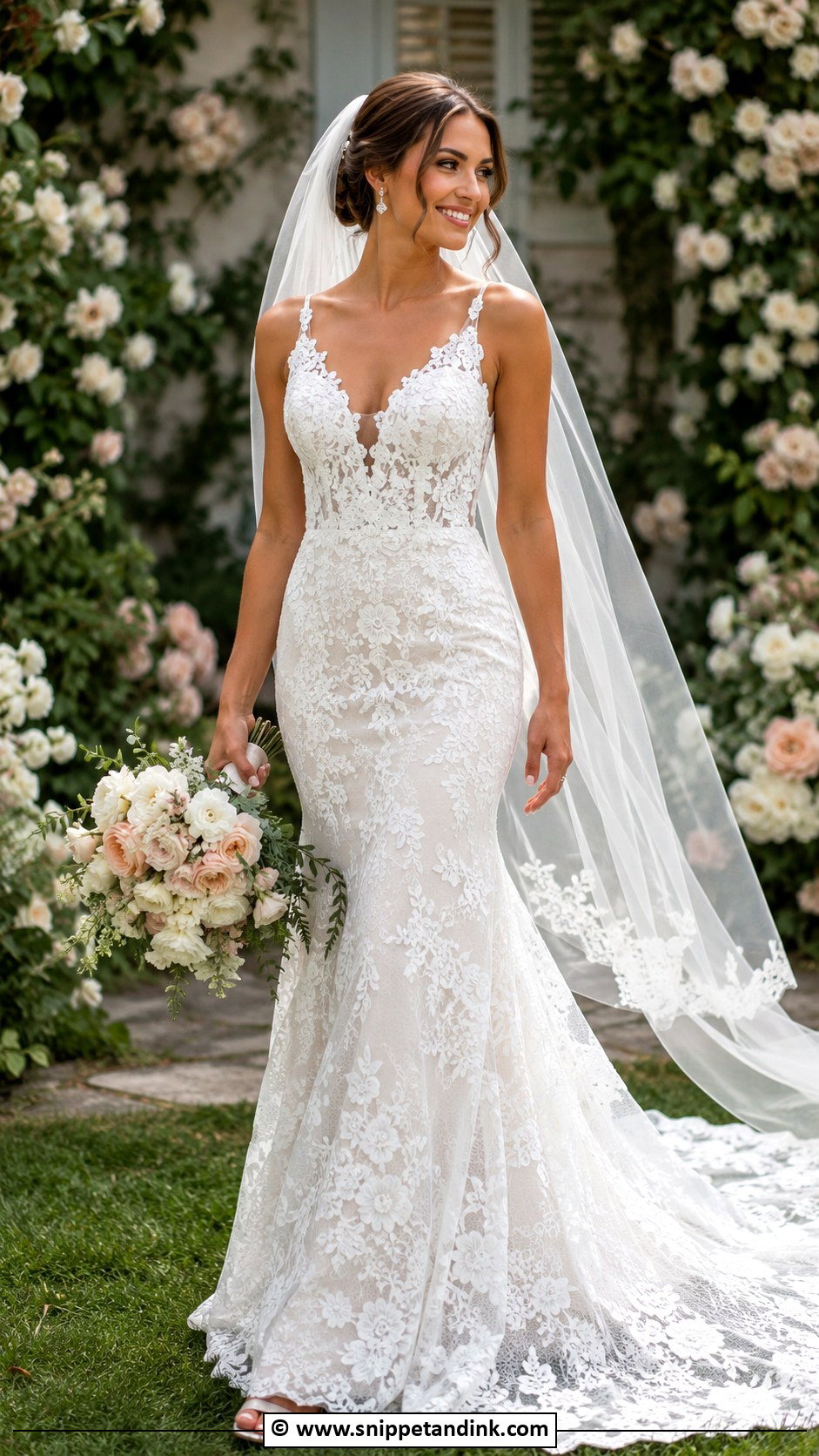
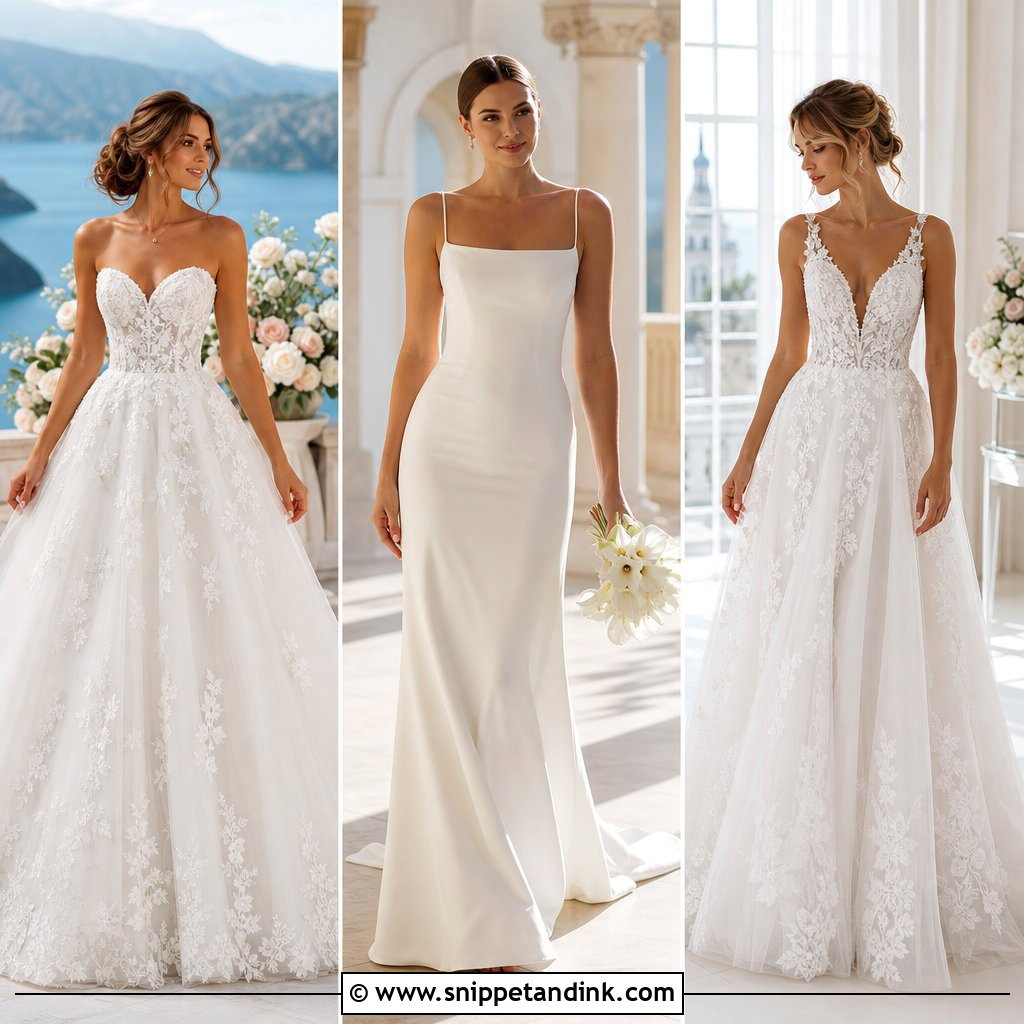
Lace scale changes the mood. Large floral lace reads modern and bold; small patterns read dainty and vintage. The placement should follow your shape, across bodice, sleeves or skirt, rather than sitting as a flat panel. A fitted waist with a flowing skirt keeps it balanced. Add a sheer veil, soft waves, pearl earrings and neutral bridal heels. Lace hides small marks well, which is a real comfort at a garden venue in spring.
11. Mermaid Wedding Dress
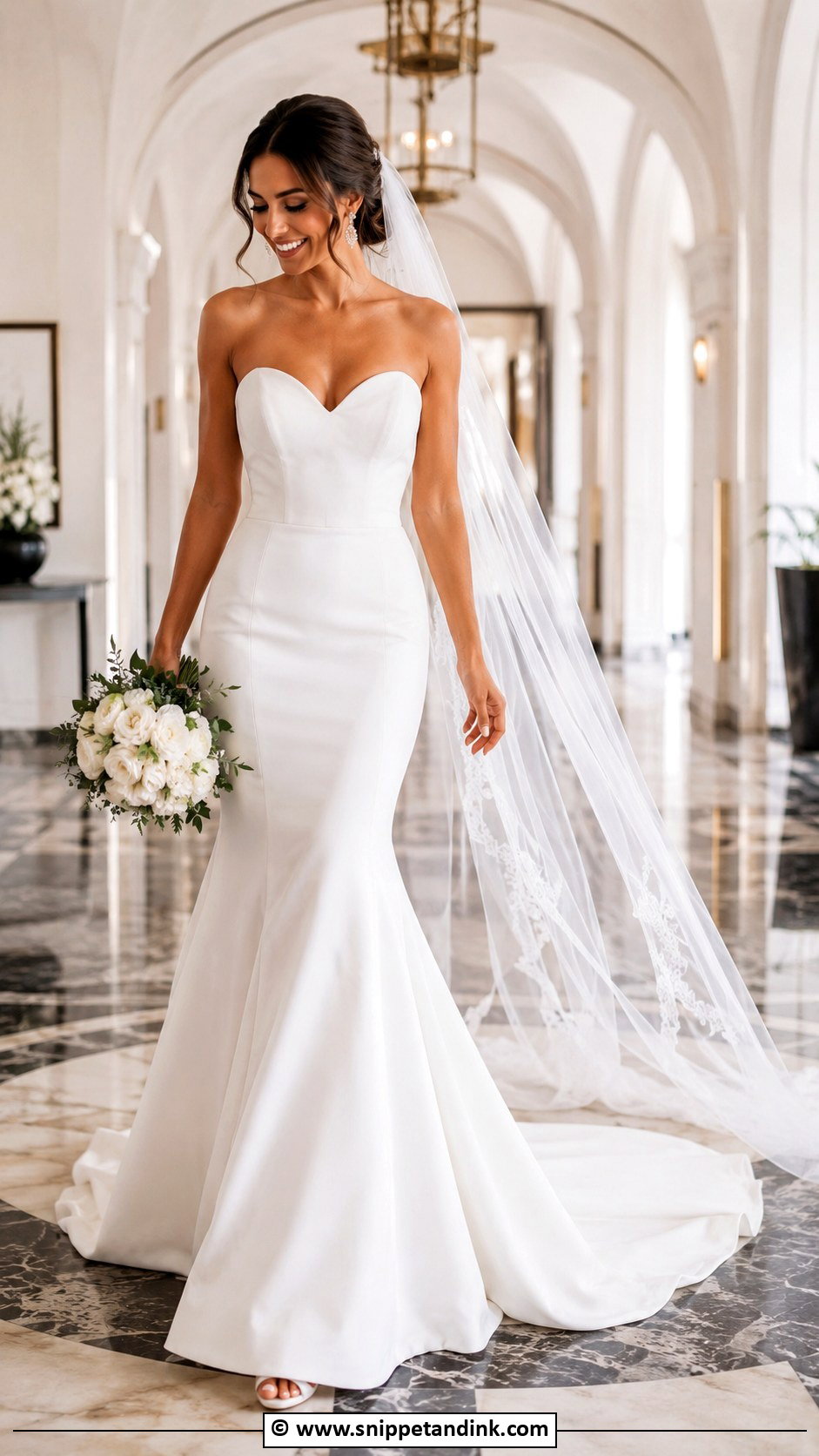
Mermaid gowns fit through bodice, waist and hips, then flare below the knee. That shape makes a strong silhouette, but only if you’re comfortable in it. Walk, sit and climb a step at every fitting; if you can’t, the flare point needs moving. Smooth crepe, satin or lace with clean lines. A sweetheart, off-shoulder or long-sleeve bodice suits it, with a long veil, delicate earrings and heels tall enough for the skirt to hang properly.
12. Tulle Wedding Dress
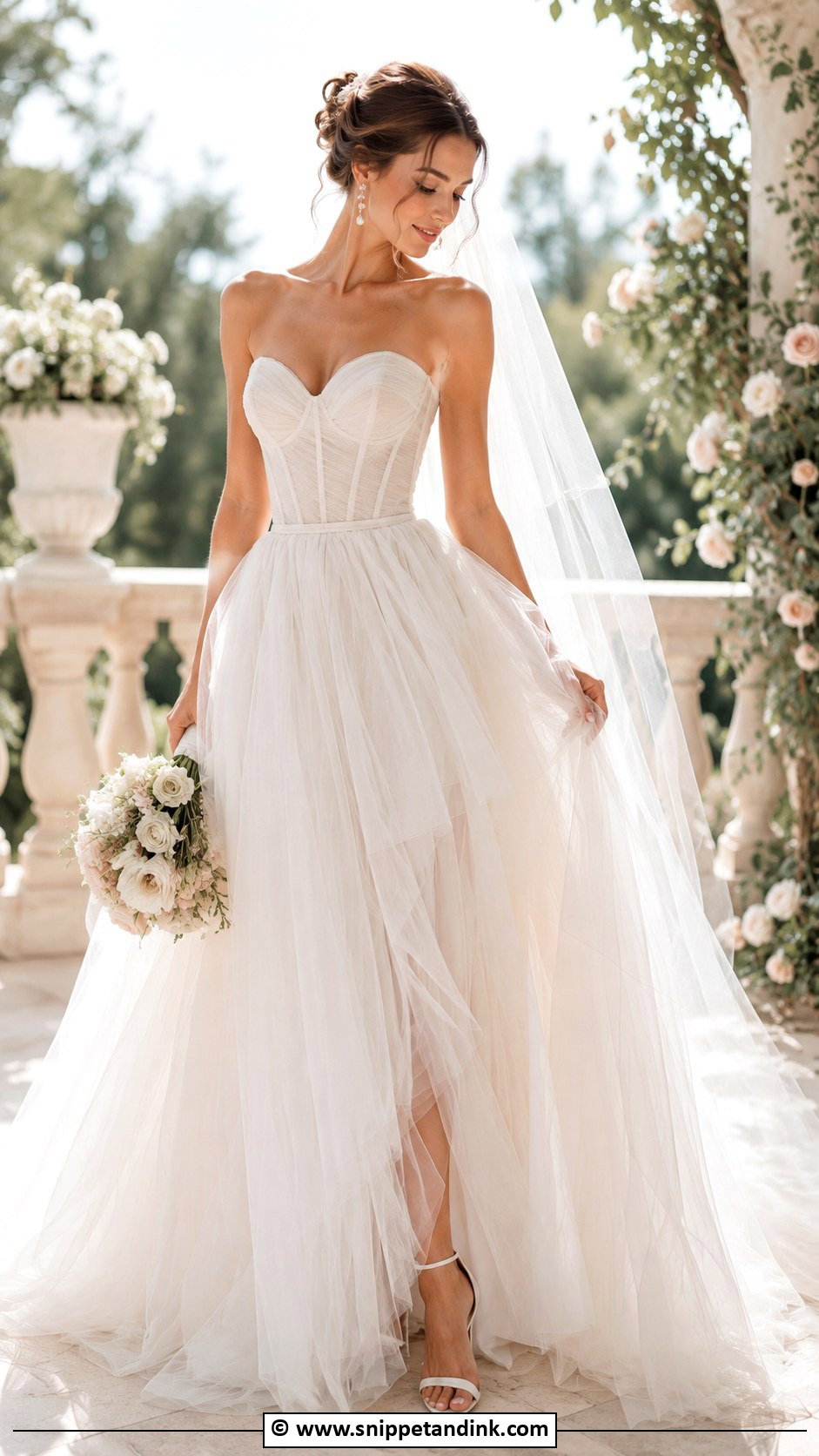
Tulle builds volume without much weight, which is why it feels light even as a ball gown. A fitted bodice over a tulle A-line or full skirt balances structure and float. Plain tulle looks clean; subtle floral applique adds detail. Sheer veil, delicate earrings and satin or mesh heels; soft makeup and a romantic updo. Tulle catches on rough brick and bracelet clasps, so do a quick check of your jewelry against the skirt.
13. Mikado Wedding Dress
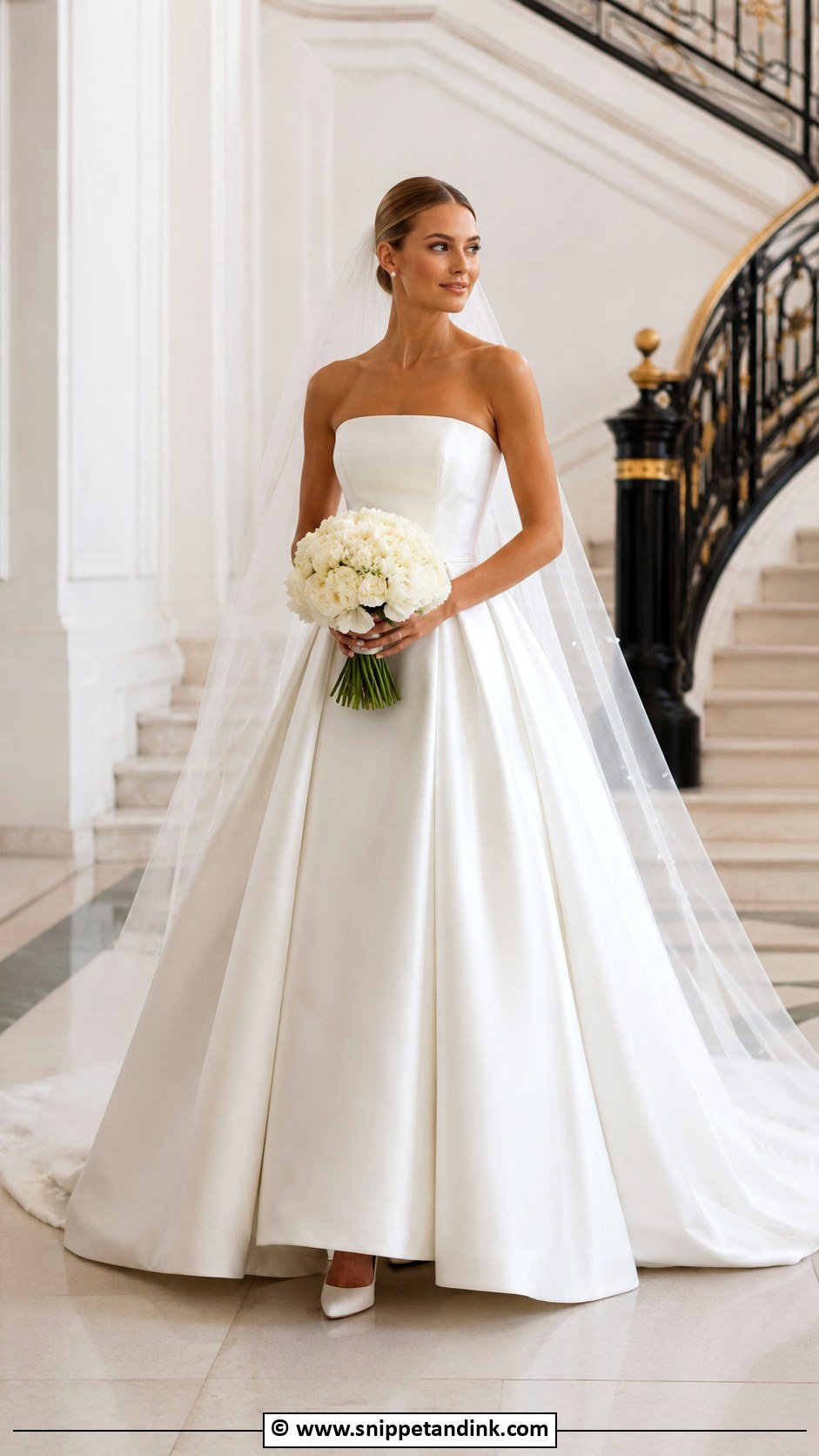
Heavy enough to hold an architectural shape, a mikado wedding dress suits ball gowns and structured A-lines especially well. It has a low sheen that reads well on camera without glare. Strapless, square or clean V-neck, with very few accessories: a long veil, pearl studs and classic pumps. Mikado is warm to wear, and I’d think twice about it for a midsummer outdoor ceremony. In a cool formal venue, it’s hard to beat.
14. Basque Waist Wedding Dress
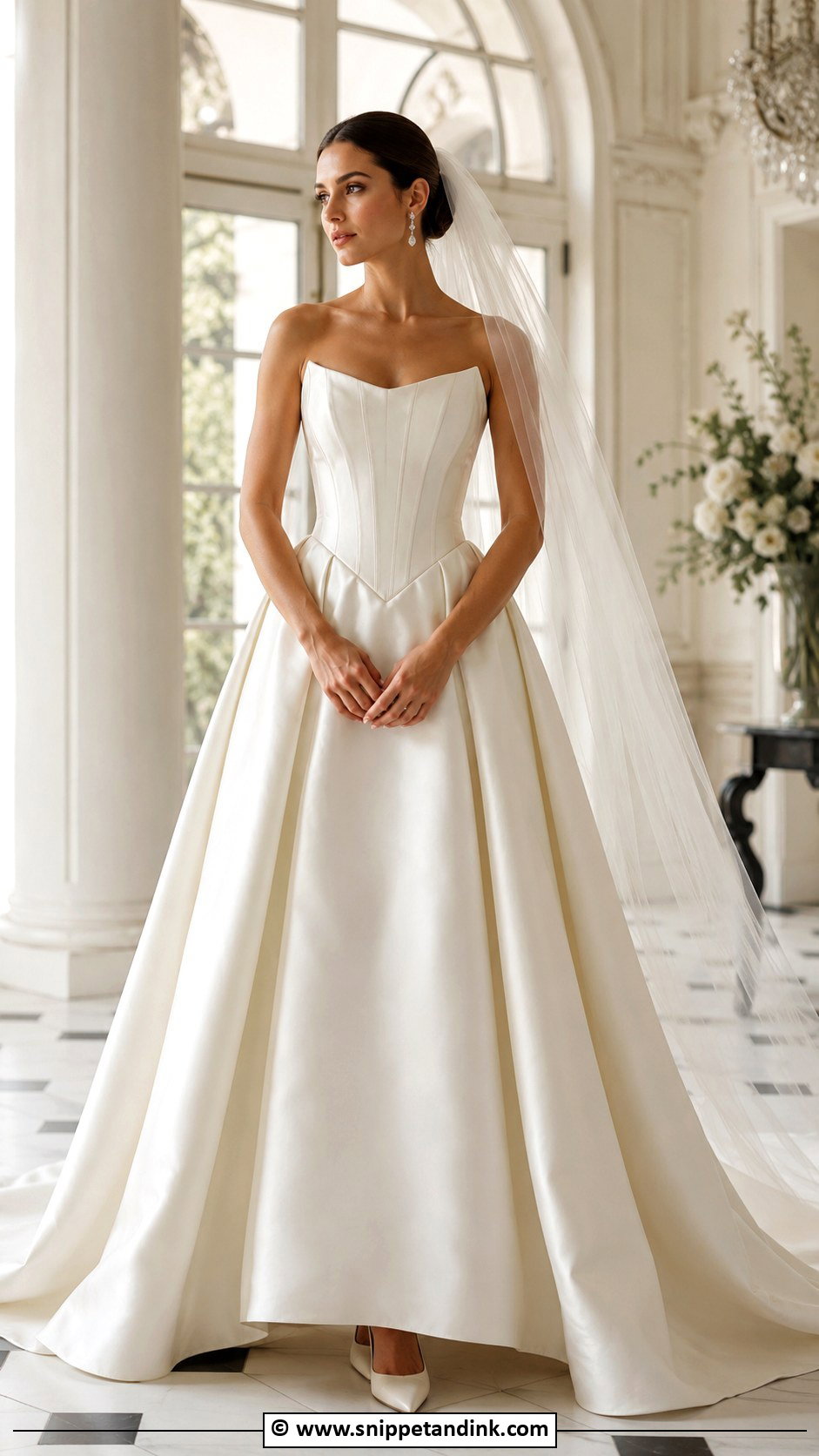
A basque waist wedding dress dips in a soft V below the natural waist, lengthening the torso. It’s very bridal and works with full skirts, soft pleats and structured fabrics like satin, mikado or organza. Keep the neckline simple, strapless, scoop or off shoulder, so the waist point stays the feature. A long veil, delicate drop earrings and clean heels finish it. On a short torso, I’d check the V doesn’t push the skirt start too low and shorten the legs.
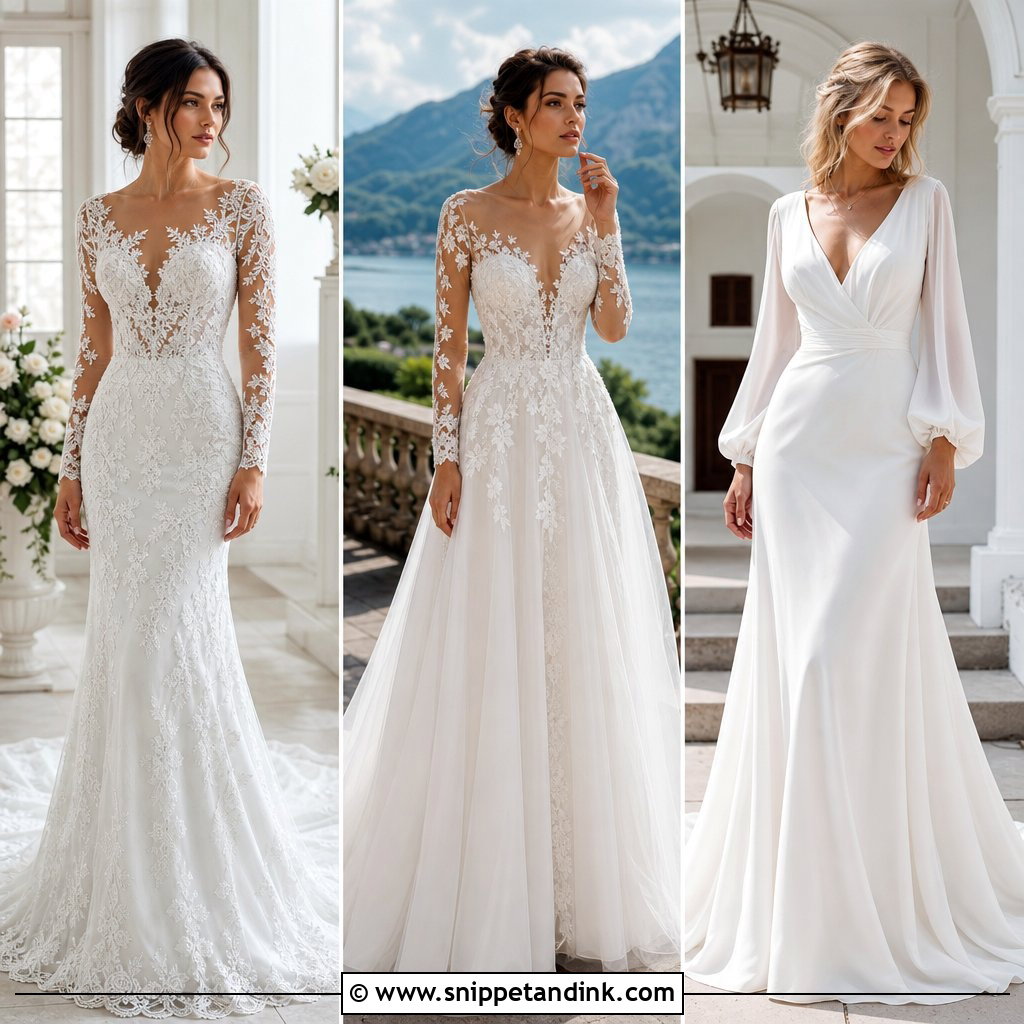

15. Drop Waist Wedding Dress
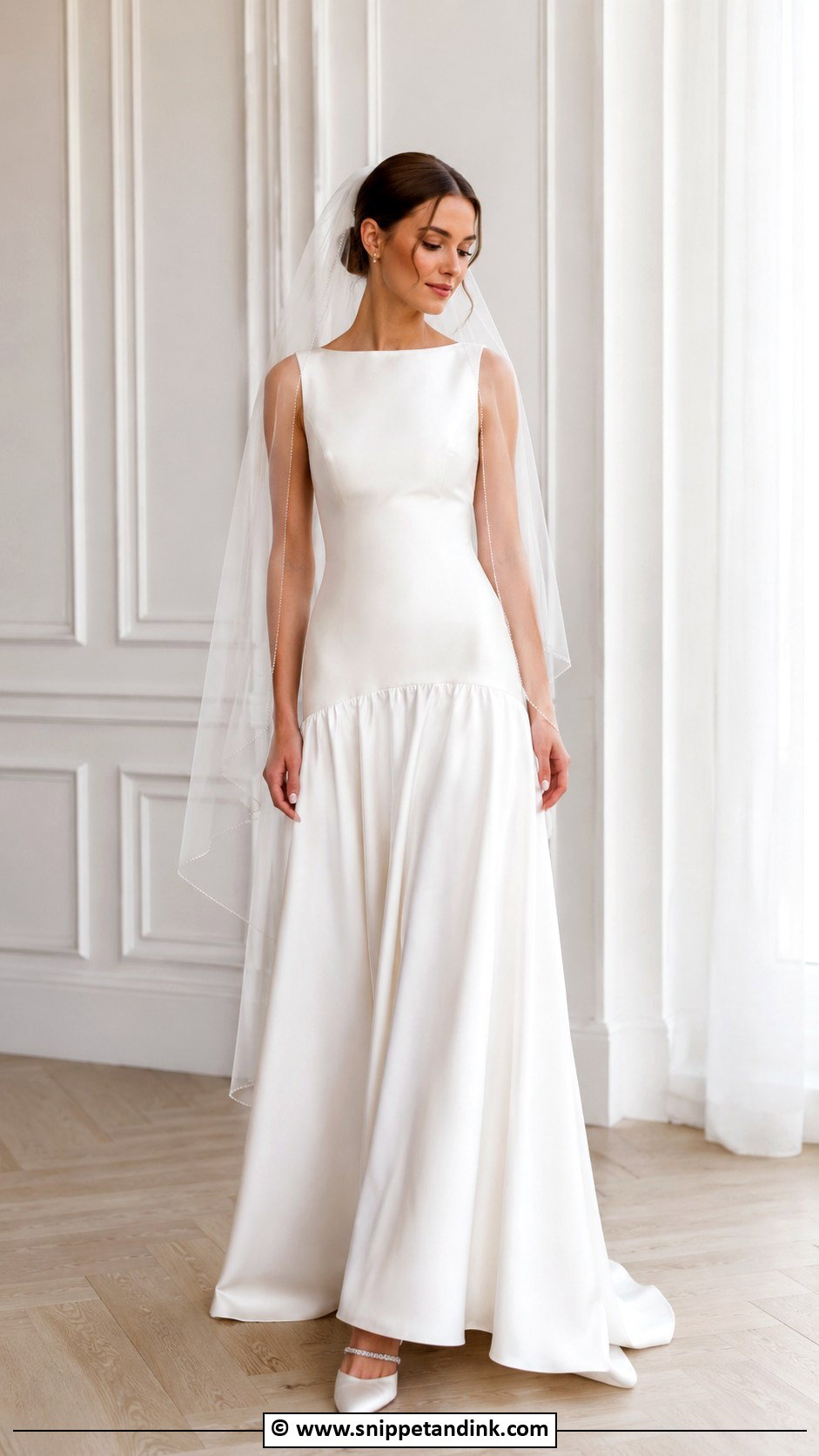
A drop waist moves the skirt seam down to the hips, lengthening the line from bust to hip. Sleek in satin, softer in lace or tulle. It photographs especially well side-on. The fit has to be close through the torso, or the bodice can look like it slipped. Keep accessories clean so the waistline leads: a fingertip veil, pointed heels and small earrings. This is a good one if you want something slightly unexpected without leaving classic bridal territory.
16. Sweetheart Neckline Wedding Dress
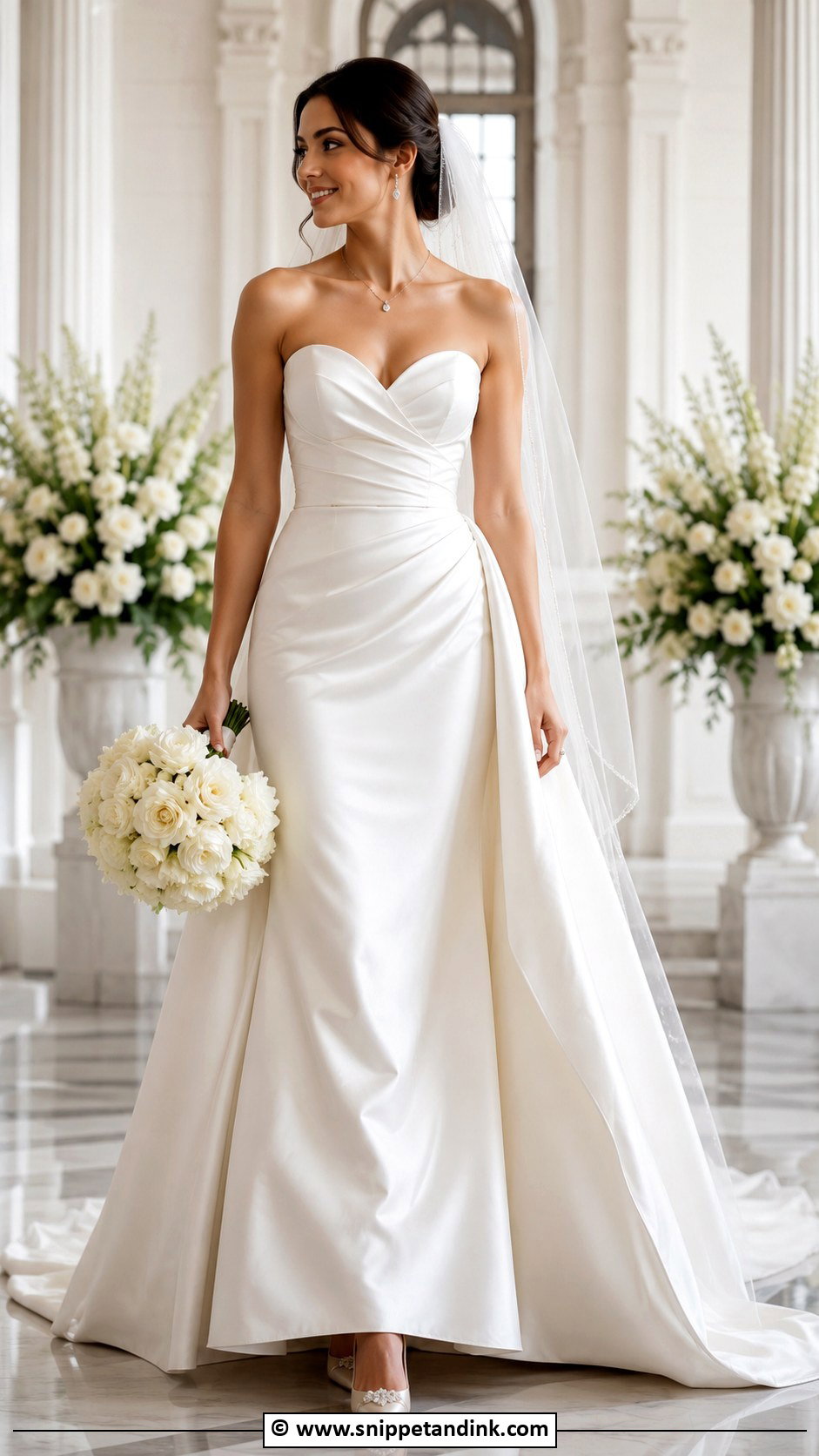
Sweetheart necklines frame the bust and collarbone, and they read classic in a satin ball gown or more dramatic on a lace mermaid. The detail that makes or breaks it is depth. A sweetheart that sits too low looks fine standing still and slips when you bend to hug a grandparent, so I check it with the bride leaning forward. A simple veil with either a delicate necklace or small drops; soft curls or a low bun.
17. V Neck Wedding Dress
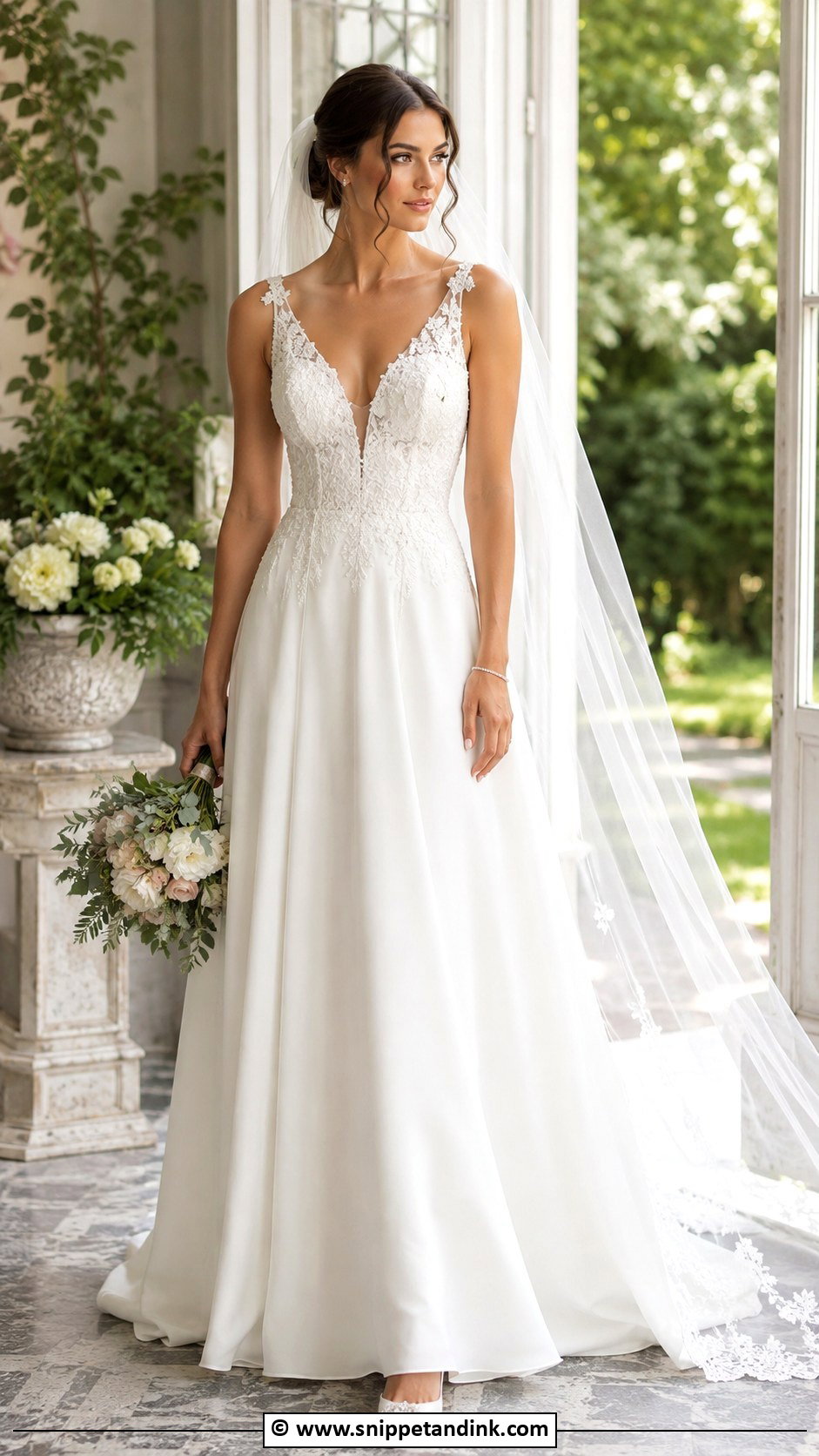
A V-neck creates a vertical line that lengthens the body. Shallow reads classic, deep reads modern and bold. Deep Vs need supportive construction, with clean edges and often a sheer panel or tape inside. A V-neck A-line with lace straps is romantic; a crepe V-neck sheath is sleek. A long veil, slim bracelet and simple heels complete it, and any necklace should be short enough to sit within the V.
18. Illusion Neckline Wedding Dress
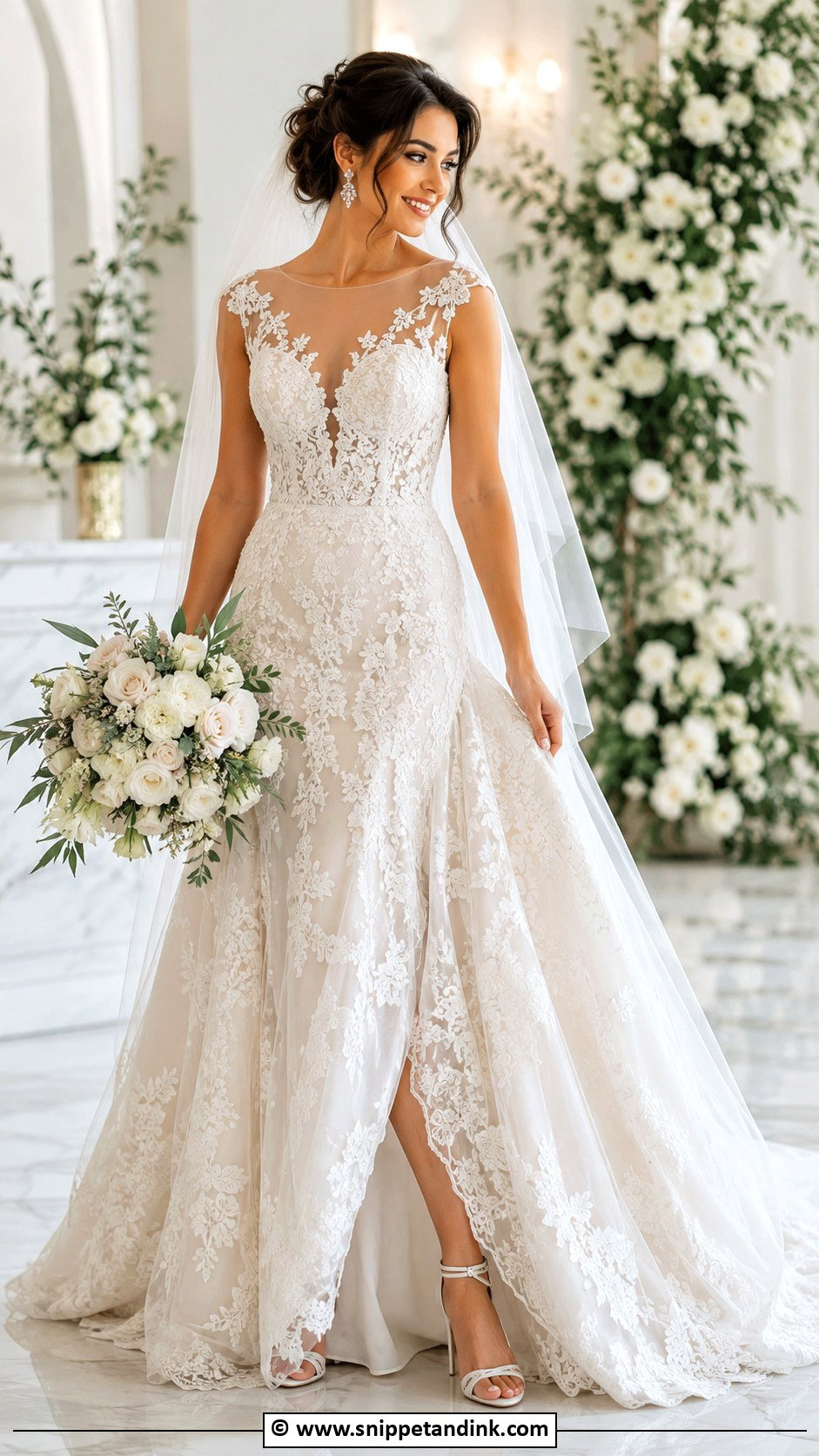
Illusion necklines put detail near the face without a heavy bodice. Lace, embroidery, pearls or beading appear to float on sheer mesh across the neckline and shoulders. The mesh should match your skin closely and lie flat; a mismatched shade looks like a film across the chest. A fitted lace bodice with a flowing skirt suits it. Earrings rather than a necklace, a soft veil and a low bun.
19. Cap Sleeve Wedding Dress
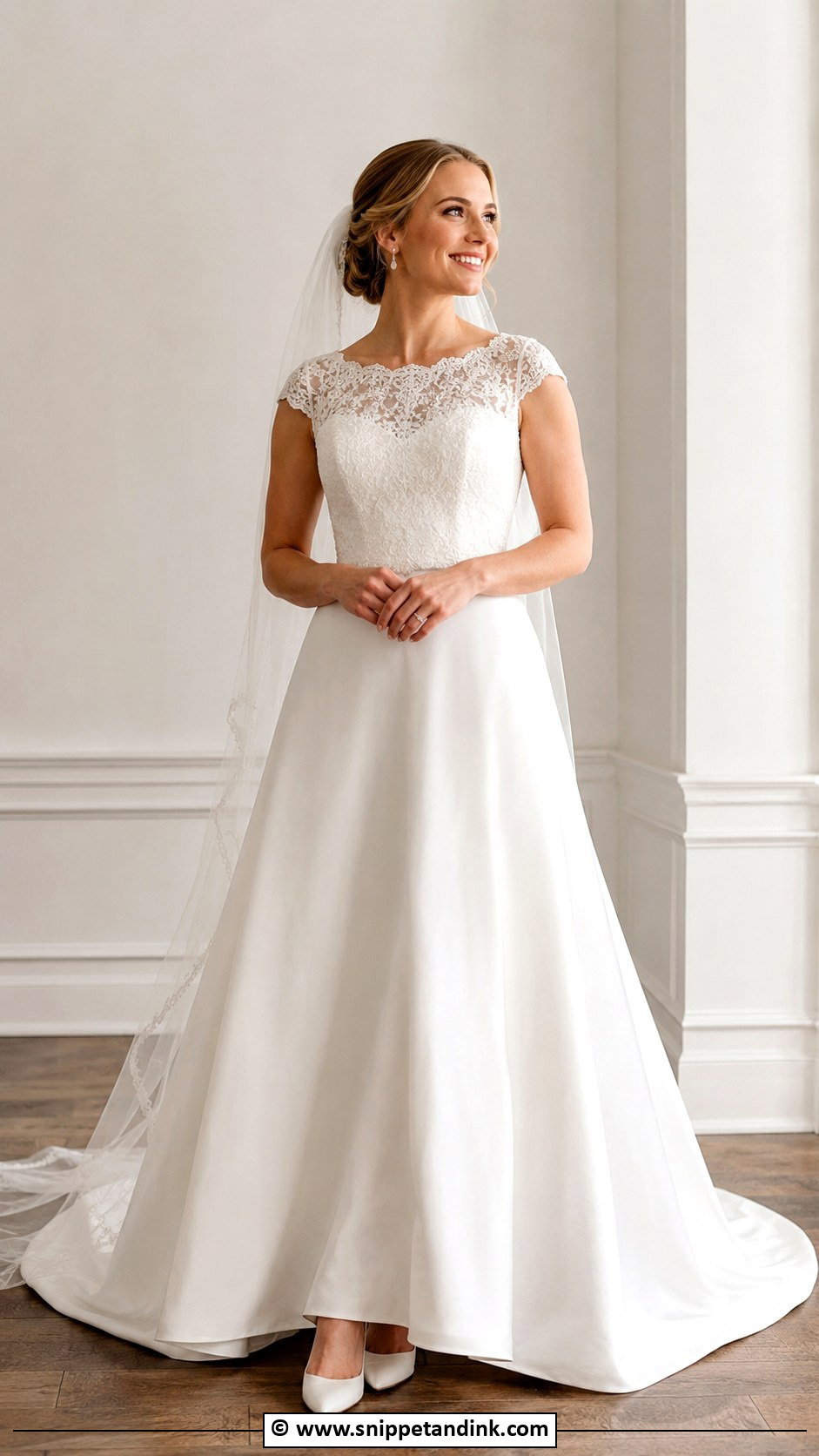
Cap sleeves sit in the space between strapless and full sleeves, covering the top of the shoulder and giving the bodice somewhere to anchor. Lace cap sleeves look romantic, while satin or crepe ones look clean. Pair with an A-line, sheath or soft fit-and-flare skirt. Small pearl earrings, a simple veil and closed-toe heels. Many brides who hate fiddling with a strapless bodice all day find this the most comfortable neckline here.



20. Long Train Wedding Dress
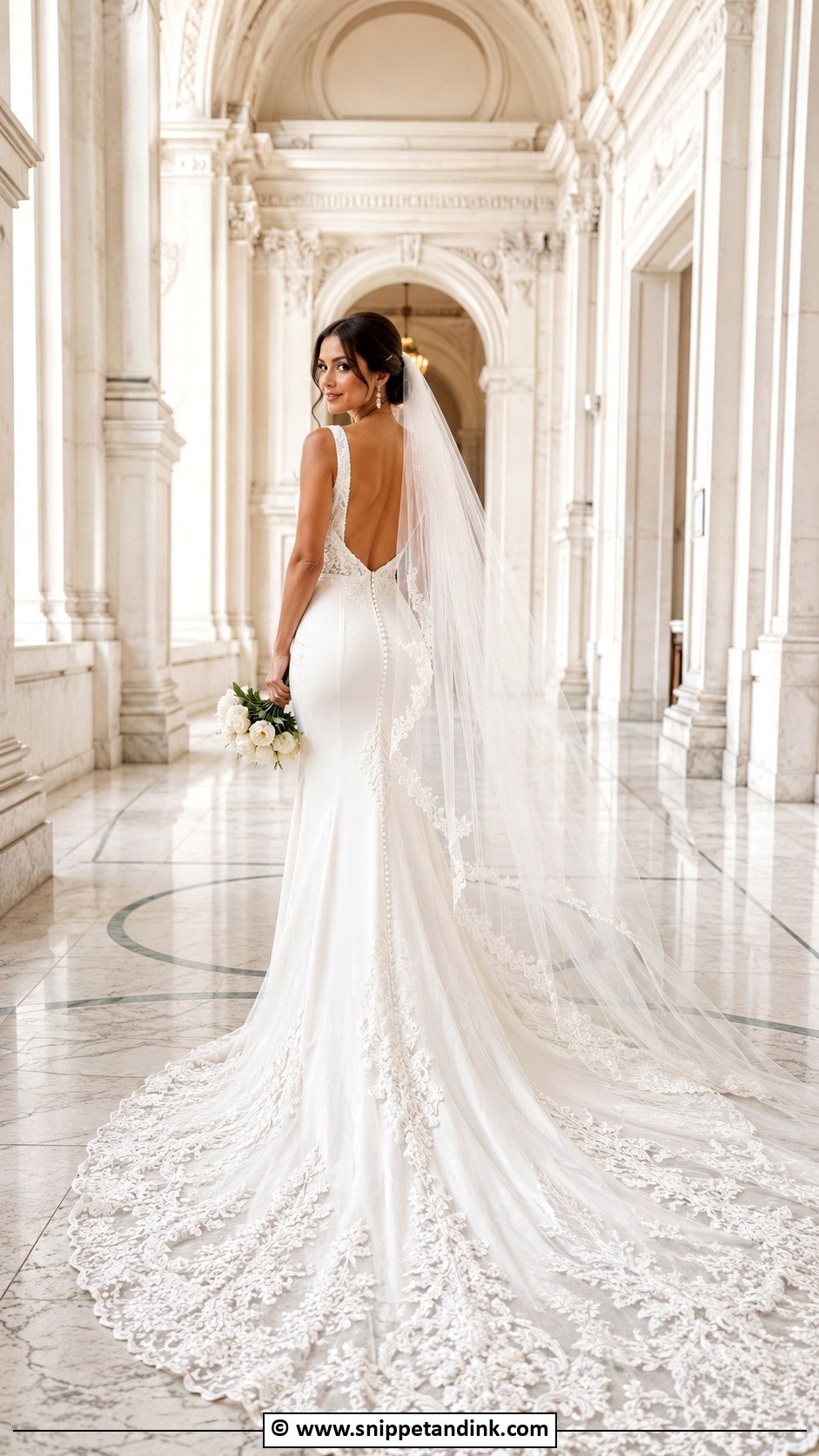
A chapel or cathedral train turns even a simple gown into a ceremonial one. Satin, mikado, lace and crepe all carry a train, but proportion matters: a long train in a small registry room just bunches. Check that the venue suits it and that the bustle is comfortable for the reception. I’d pair a long veil for the ceremony photos and remove it before the meal. Simple earrings, classic heels and polished hair keep attention on the gown.
21. Detachable Overskirt Wedding Dress
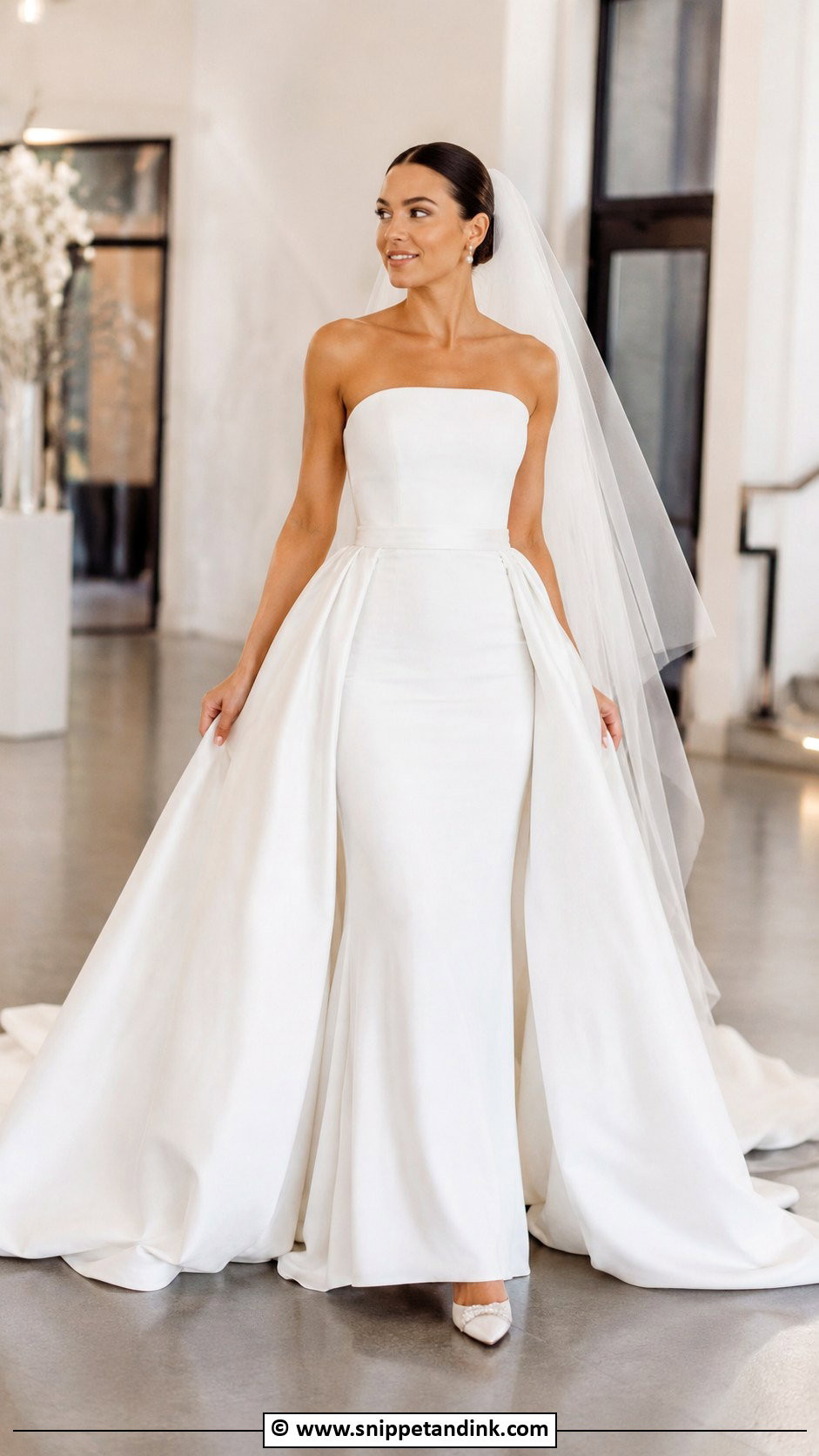
Two looks, one dress. The overskirt adds volume and formality for the ceremony, then comes off to reveal a sleeker gown for dancing. It works with crepe, satin, lace or beaded bases. The attachment is what to inspect: hooks or snaps at the waist should sit flat and invisible, and someone needs to practice unhooking it quickly. Match the overskirt fabric or tone exactly. Veil and classic heels for the ceremony, then a simpler hair accessory later.
22. Tea Length Wedding Dress
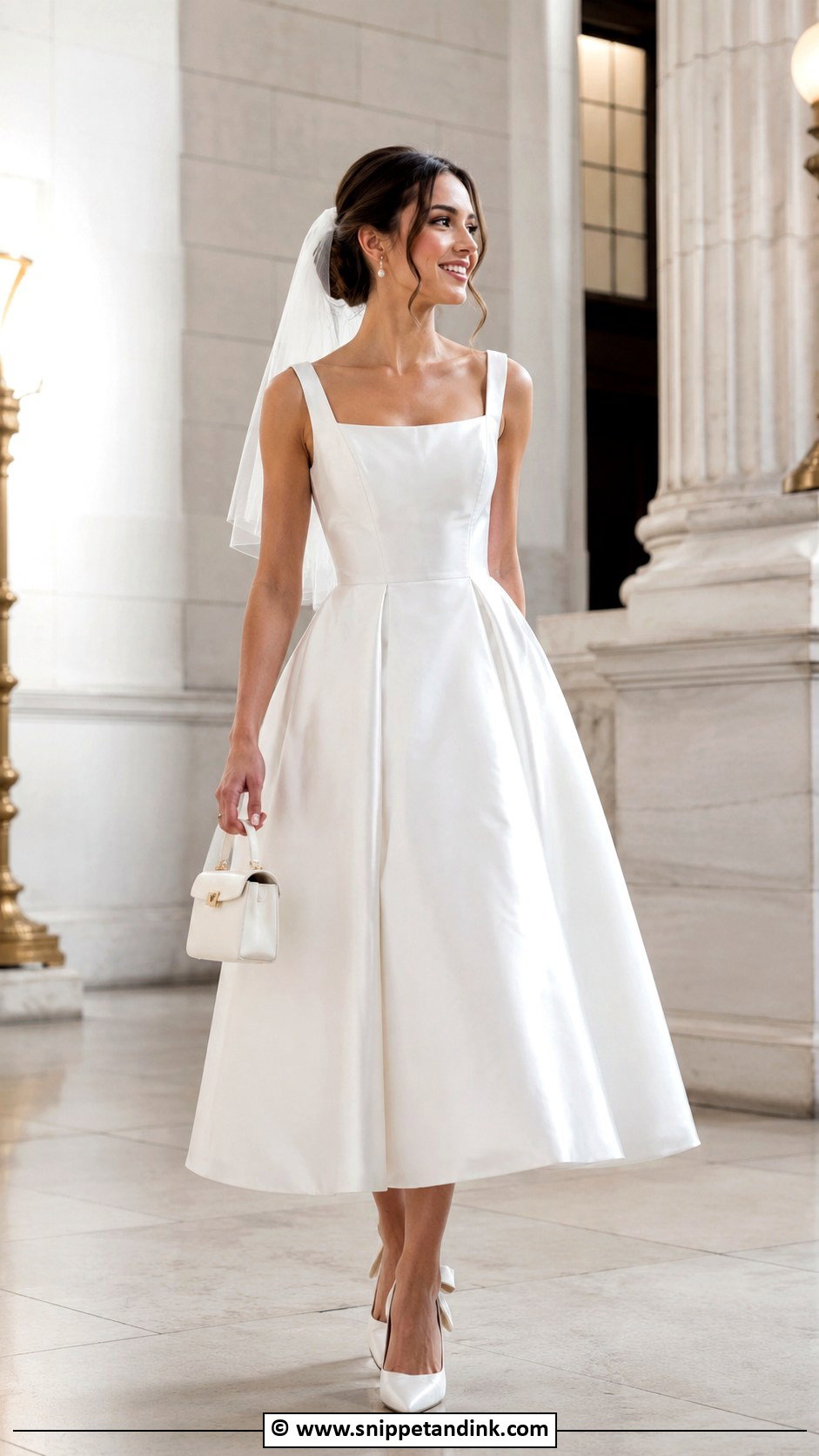
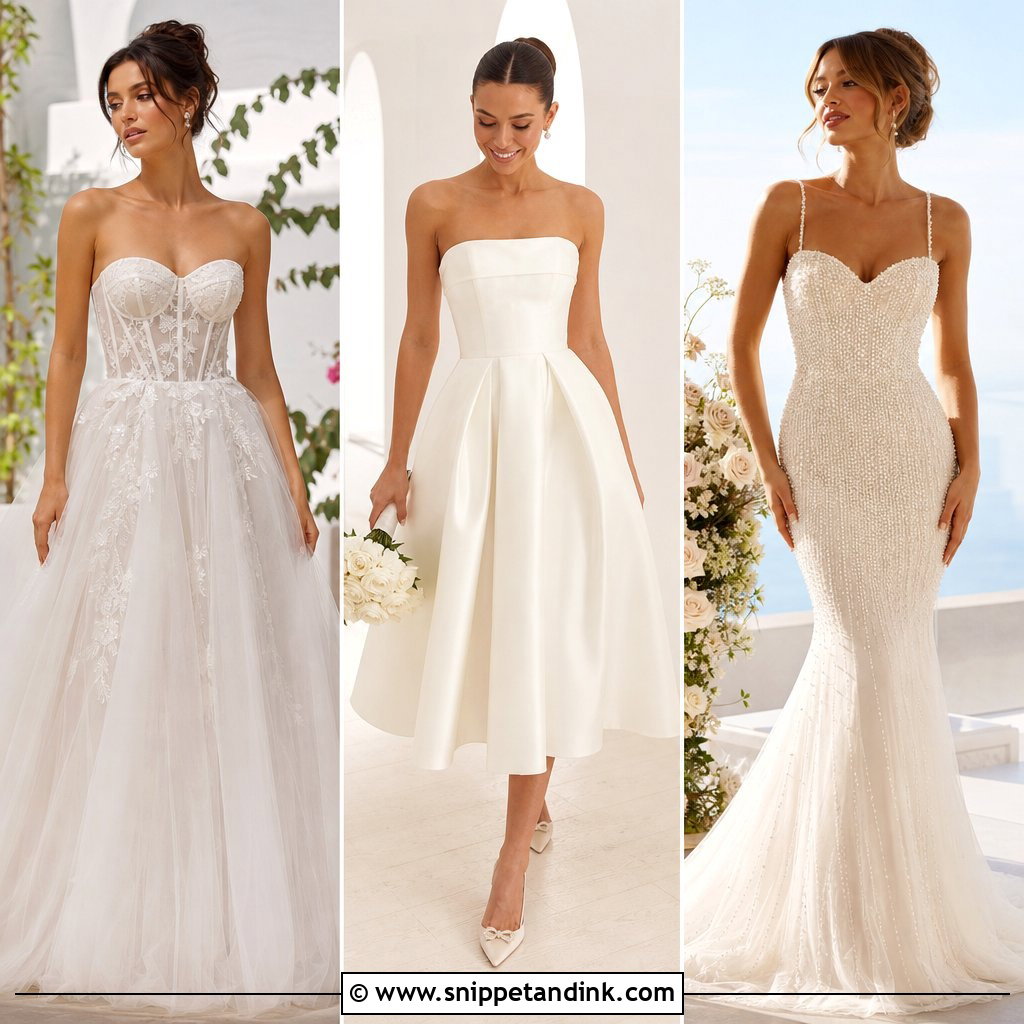
Tea length, falling between knee and ankle, shows off the shoes and moves freely. Satin, lace, tulle or organza with a fitted bodice and full skirt is the classic retro outline. Because the shoes will be seen, choose them carefully: pointed pumps, bow heels or delicate slingbacks. A short veil, pearl earrings and a structured mini bag. It suits courthouse ceremonies, gardens and smaller receptions, and anyone who wants no train at all.
23. Simple Slip Wedding Dress
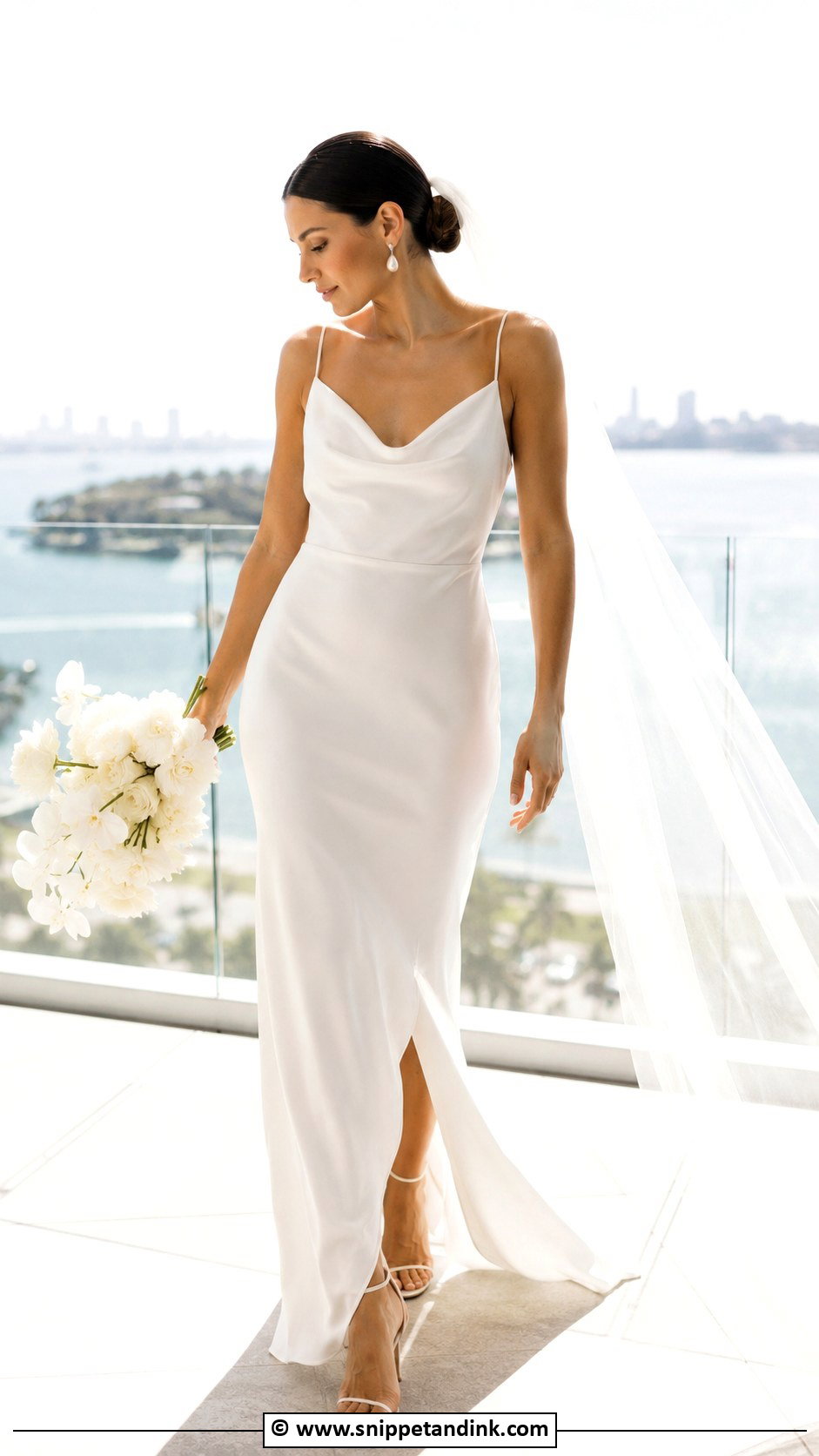
A slip dress depends on drape and fabric quality. Silk, satin or soft crepe skims rather than clings; cheap satin clings and shows every line. Cowl, scoop or slim V-neck. Undergarments and tailoring matter here more than with any structured gown. Strappy heels, a sleek veil and small pearl or diamond earrings, with a low bun or smooth waves. It suits a beach, a city wedding or any smaller, less formal celebration.
24. Beaded Wedding Dress
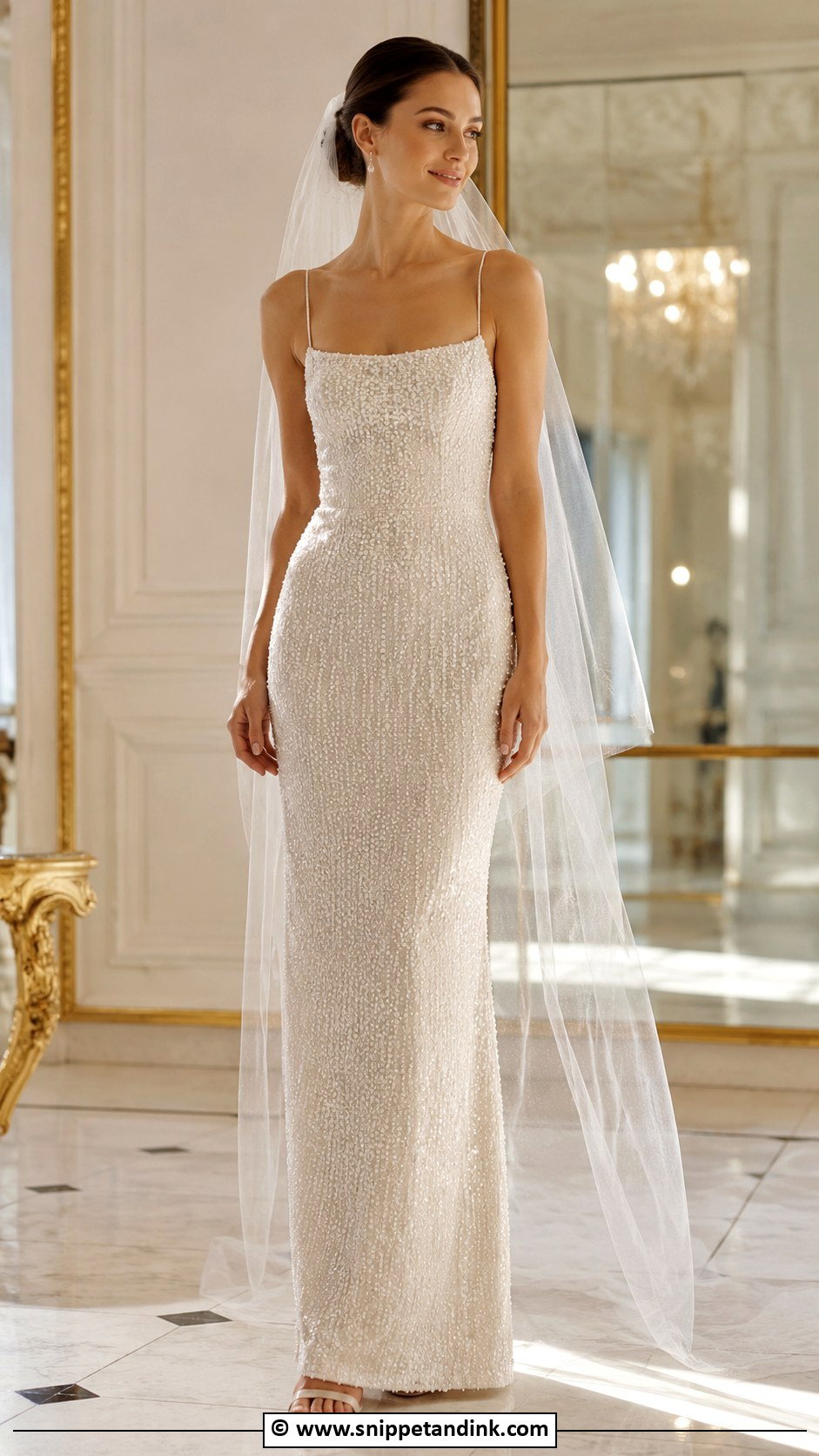
Beading brings shine and texture, and the elegant versions use it with intention: along the bodice, sleeves or neckline, or evenly over a soft column. A champagne lining under ivory beads gives depth; all-white beading looks more traditional. Simple heels, small earrings and a clean veil let the gown lead. Beaded gowns are heavier than they look on the hanger, and hand-sewn beads can loosen, so I always pack a needle and matching thread for the day.

25. Champagne Wedding Dress
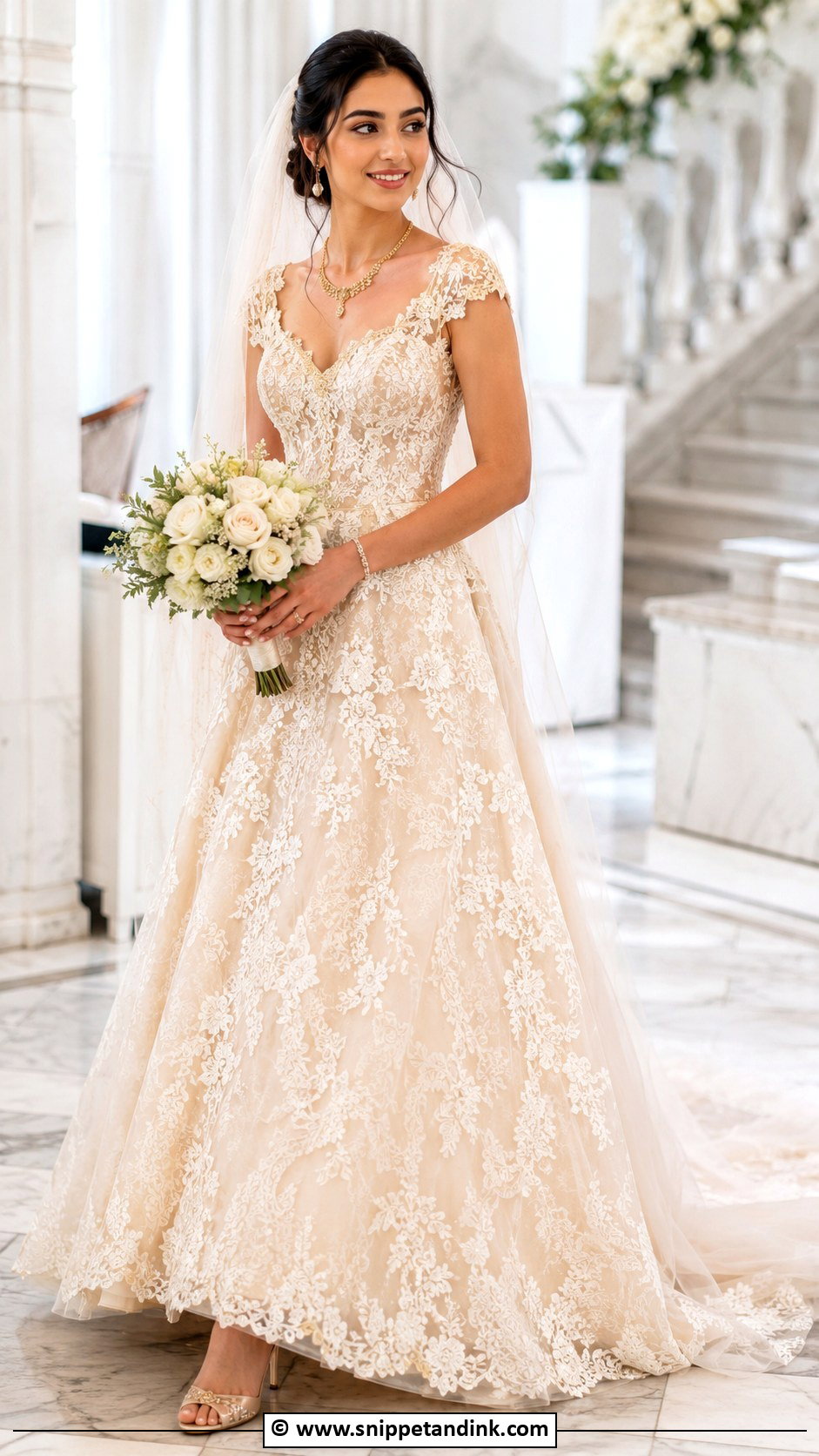
Champagne’s golden undertone looks warm and flattering, especially under lace, tulle or beaded overlays. Traditional, but softer on many skin tones than bright white. A-line, sheath or ball gown, chosen for your shape. Match accessories to ivory, never stark white, or the gown can look discolored beside them. Gold jewelry, pearl earrings and nude or champagne heels finish it. Autumn weddings and warm indoor lighting suit it particularly well.
26. Blush Wedding Dress
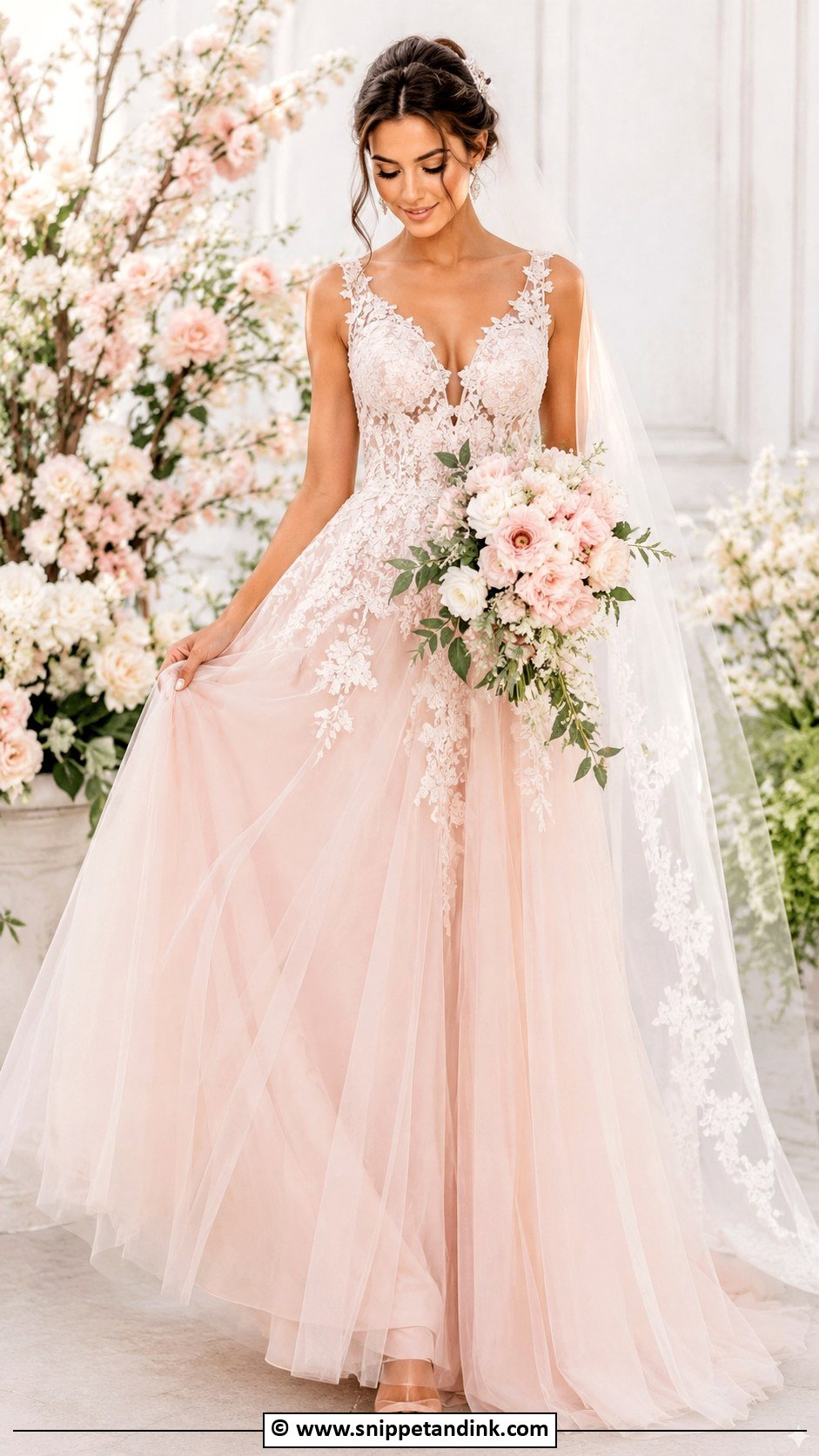
Blush ranges from barely-there pink to a rosy nude, and the right shade depends entirely on your skin. Some blushes vanish on fair skin, while others go peach on golden tones, so try several under daylight. Lace applique, layered tulle or subtle beading all show the color well. A classic shape, A-line, ball gown or fit-and-flare, keeps it bridal. Ivory or nude heels, delicate earrings and a sheer veil that doesn’t clash with the pink. Rosy makeup ties it together.
27. Floral Applique Wedding Dress
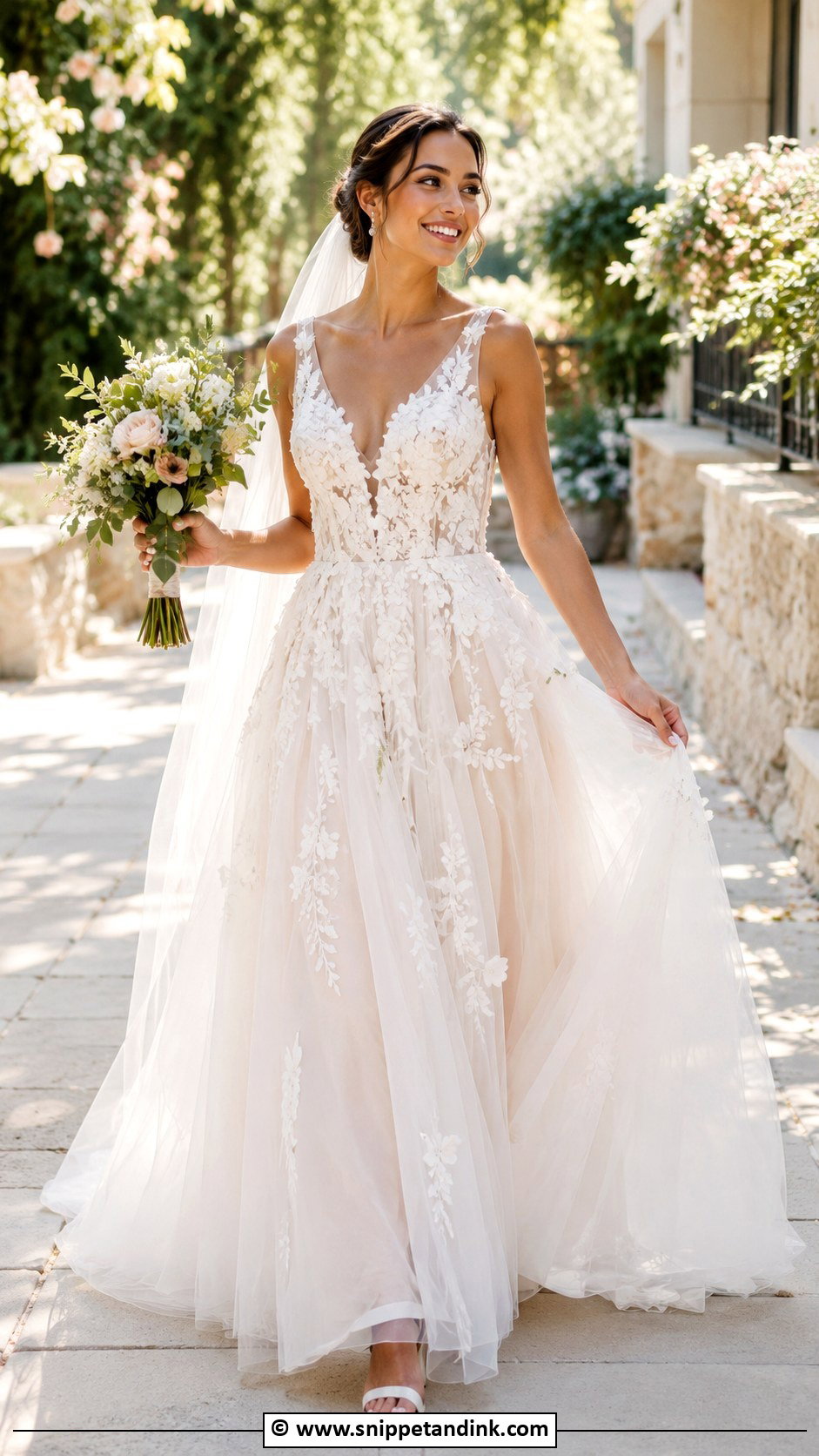
Applique gives texture you notice in photos: flowers on the bodice, sleeves, skirt or train for a garden-like feel. The appliques should follow the dress’s shape rather than cover every inch. A fitted bodice with a tulle A-line skirt is my favorite base for it. A plain veil, simple earrings and soft heels keep the flowers as the focus. It suits spring and summer outdoors, and works indoors too when the silhouette is clean.
28. Corset Bodice Wedding Dress
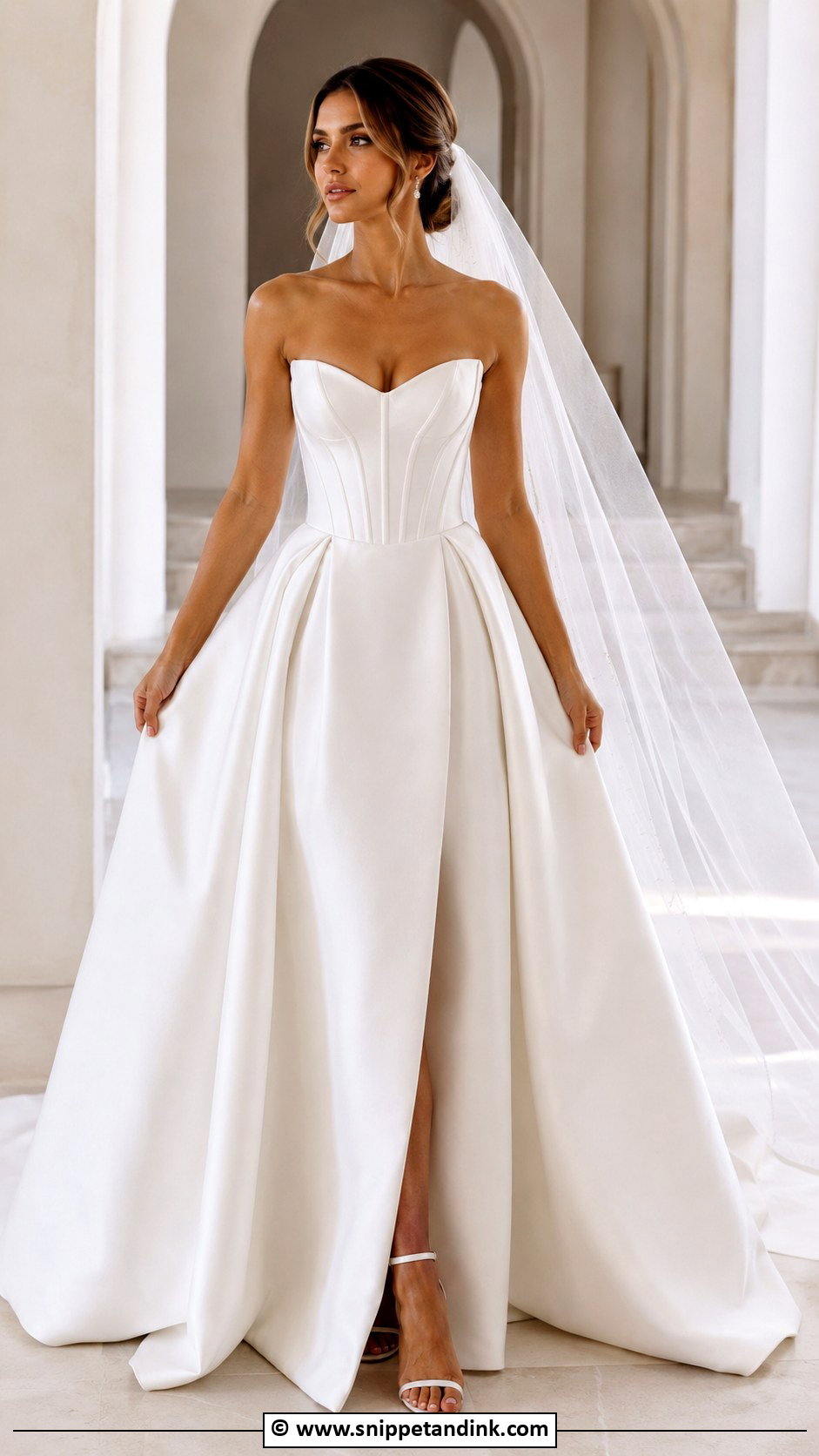
Corset bodices give structure and support, and modern ones can look soft, with satin, lace or tulle over the boning. Look for clean boning that doesn’t show through, a secure fit and a skirt that balances the structure: A-line or ball gown for classic, fitted for modern. The lacing should be done by someone who has practiced, because a corset laced too tight at noon feels very different at ten at night. Sheer veil, small earrings and classic heels.
29. Wedding Reception Mini Dress
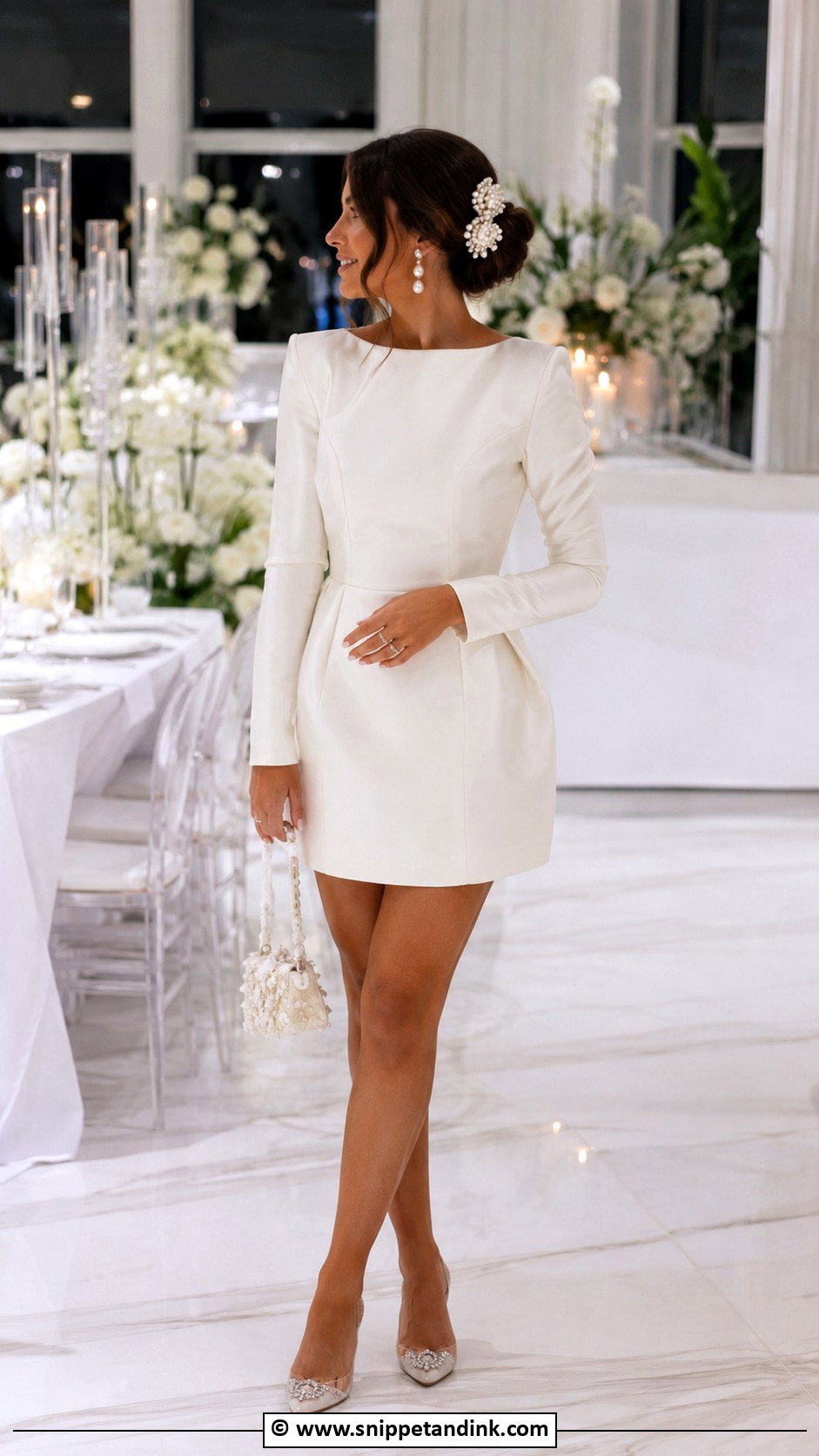
A reception mini needs to stay bridal, not casual, so I look for satin, crepe, feathers, pearls, bows or sharp tailoring in ivory or white. Long sleeves, strapless or a square neck can all look polished. Block heels or embellished pumps, a small hair bow or pearl clip, and statement earrings. Plan the change itself: fifteen to twenty minutes, a room with a mirror, and someone who knows how to unbutton the main gown.
30. Bridal Jumpsuit With Overskirt
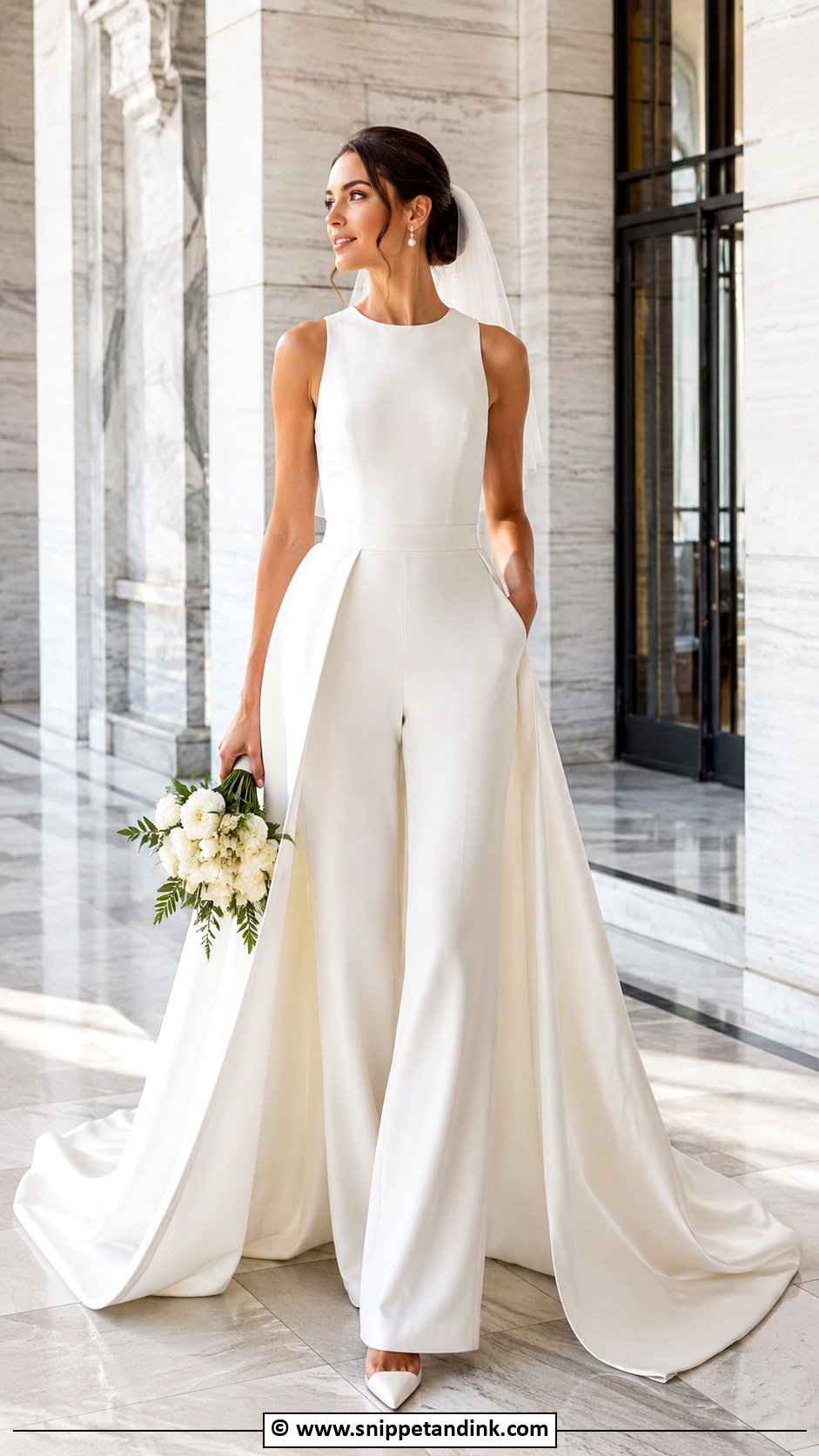
A jumpsuit with a detachable overskirt gives the look of a gown at the ceremony and the comfort of trousers afterward. A tailored white or ivory jumpsuit with a fitted bodice and wide-leg trousers, plus a satin or tulle overskirt. Make sure the trousers are hemmed for the shoes you’ll wear once the skirt comes off, since they’ll suddenly be visible. Pointed heels, pearl earrings and a polished updo, with a short veil or cape veil for the bridal note.
Bras, Slips and Shapewear Matched to Each Silhouette
Undergarments change how a gown fits, so I want them chosen before the first alteration, not the week of the wedding. A seamstress fitting a bodice over one bra and finishing it over another will get a different result.
- Structured bodices such as ball gowns, corsets and mikado often need nothing more than cups sewn into the lining, which most seamstresses can add.
- Strapless styles without enough built-in support usually call for a longline strapless bra or bustier.
- Slip, crepe and sheath gowns show every edge, so choose laser-cut, edge-free pieces close to your skin tone rather than white.
- Low backs and deep Vs may need adhesive cups or a plunge bra; try them on with the dress before deciding.
Shapewear is optional and personal. If you wear it, wear it to every fitting and for a few hours at home first, because shapewear that rolls or digs at the waist after a meal is something you’ll feel all evening.
The Gown Should Disappear When You Dance
An elegant bridal look is the one that still feels right at the last photo, not only at the first fitting. Satin, lace, crepe, pearls, tulle or a reception change can all get you there when fit, fabric and movement come first and the accessories support the dress instead of competing. A simple gown can carry a whole day. A detailed one can stay refined when everything around it is kept quiet. Shortlist by how you want to move, then by how you want to look.
You'll Like These Ideas:







Leave a Reply