
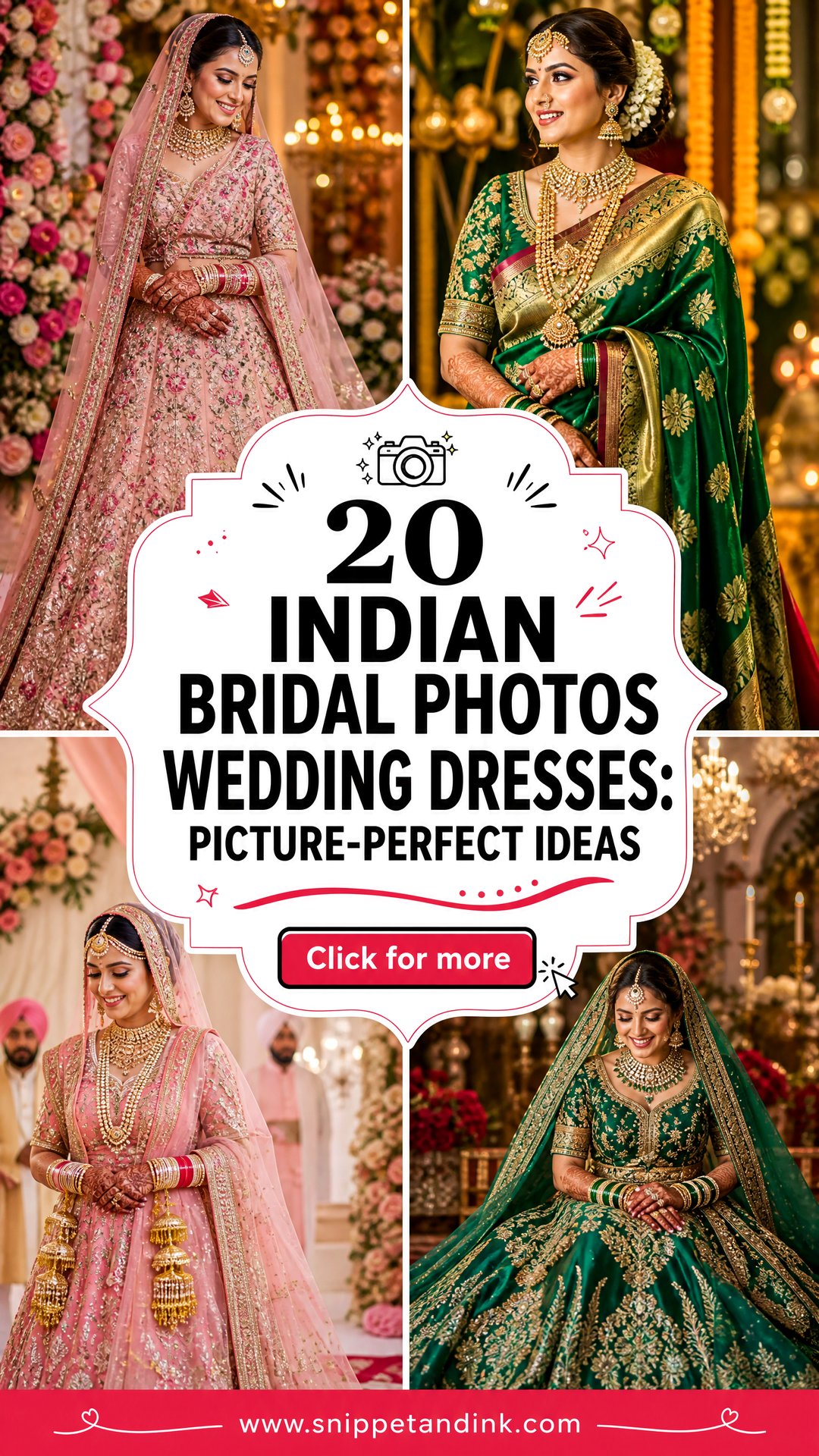
I look at bridal outfits differently from the people who make them. A stylist sees embroidery and fit; I see how a fabric reacts to window light, flash and the orange glow of a mandap at night. An Indian wedding gives you more variety than almost any other: red lehengas, regional silk sarees, pastels and reception gowns, often all for one bride. Comfort, ceremony and climate count as much as colour, and a heavy evening lehenga behaves nothing like light organza in midday sun. For each look below I’ve kept the styling notes and added what I know about photographing it well.
How Bridal Fabrics Behave in Front of a Camera
The same lehenga can look rich in one frame and flat in the next, and nearly always the cause is the fabric meeting the wrong light. If you know how your outfit reacts, you can plan your portrait time around it.
- Bright red and rani pink: saturate fast. Embroidery holds up best in soft, even light rather than hard sun.
- Velvet and dark jewel tones: absorb light. Stand nearer the window or ask for added light at night.
- White, ivory and pastels: overexpose before skin does. Open shade or late afternoon is kinder than noon.
- Sequins, mirrors, gota and tissue: throw sharp reflections under direct flash. Movement and diffused light suit them.
- Champagne, blue and lavender: shift colour under warm indoor bulbs. A daylight shot gives you a true reference.
Share a photo of your outfit with your photographer before the wedding. It costs nothing and gives them time to plan light for the fabric you’re actually wearing.
1. Red Zardozi Bridal Lehenga
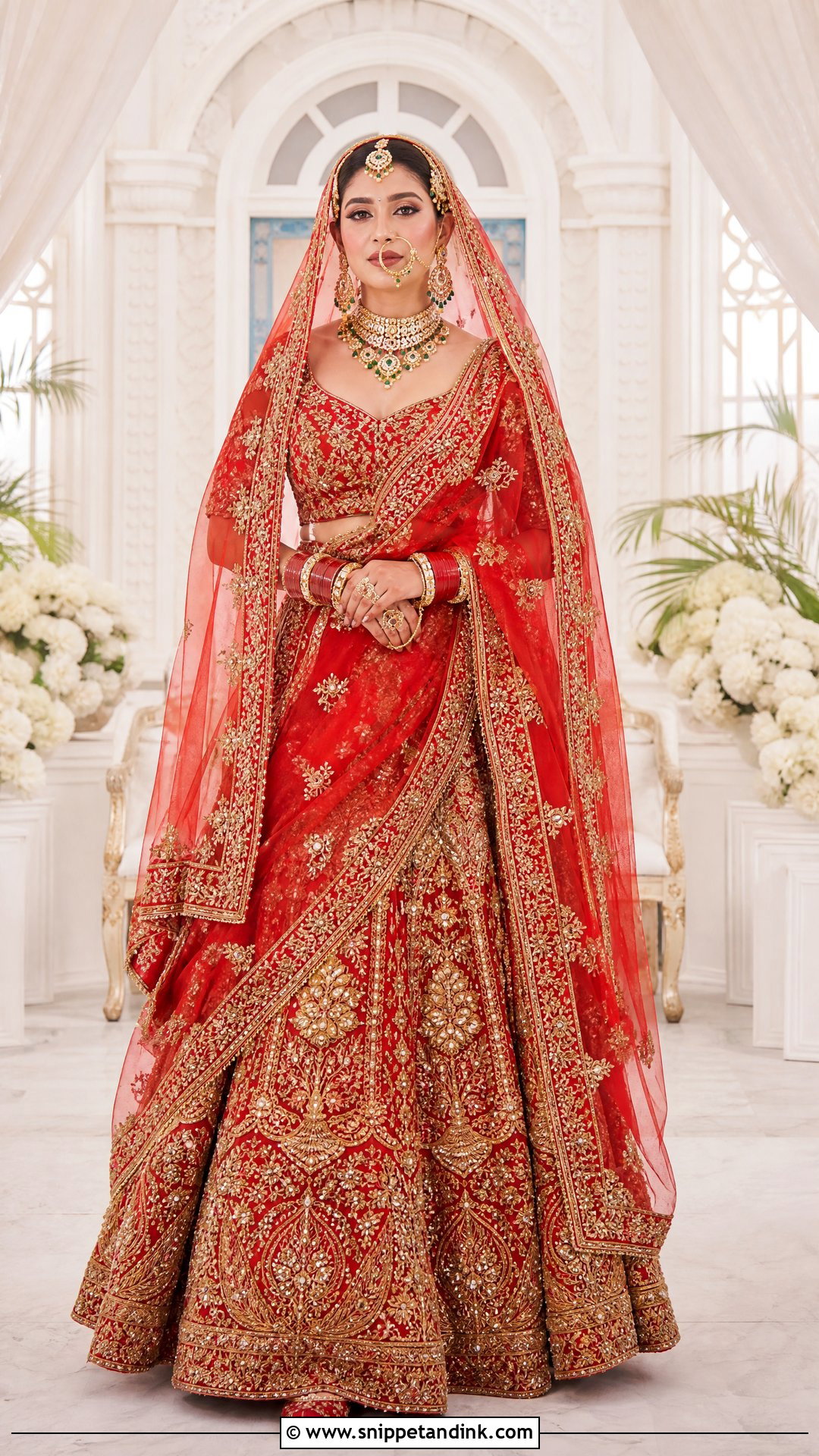
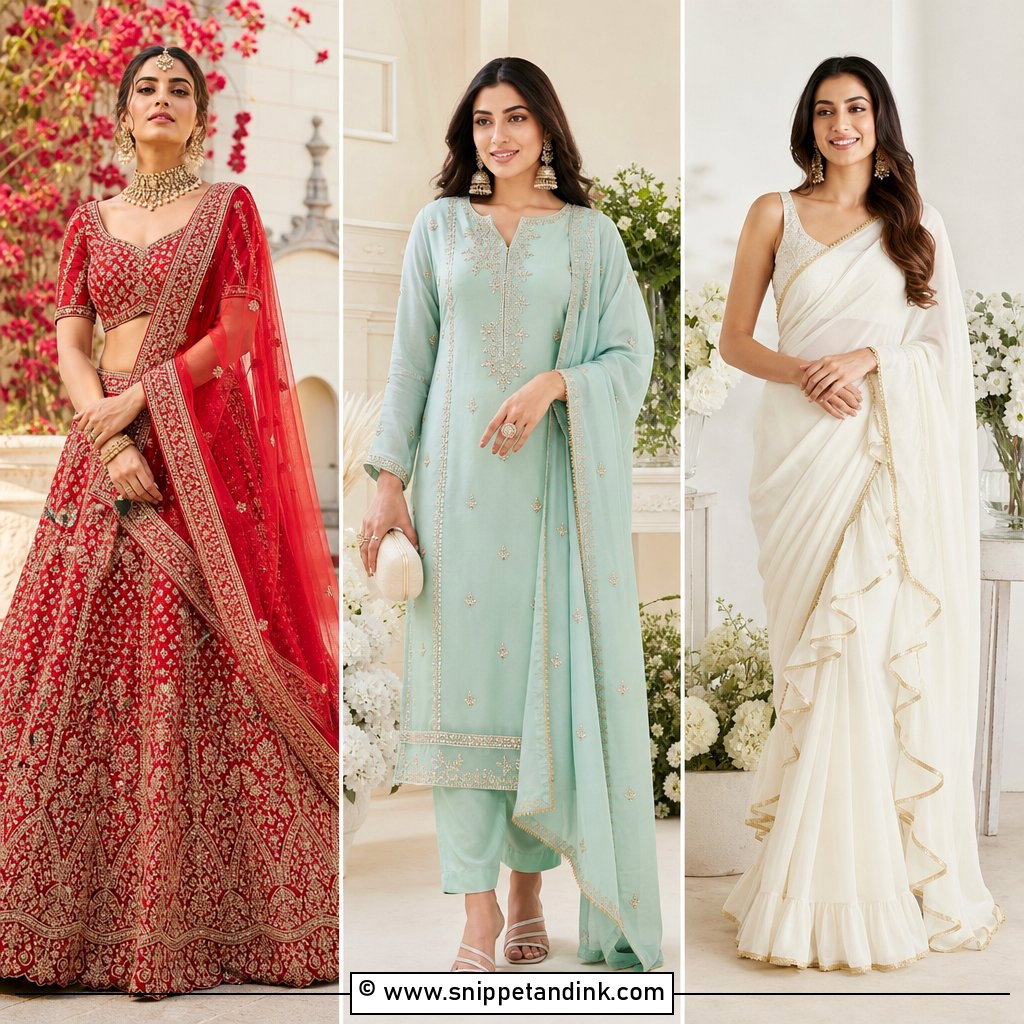
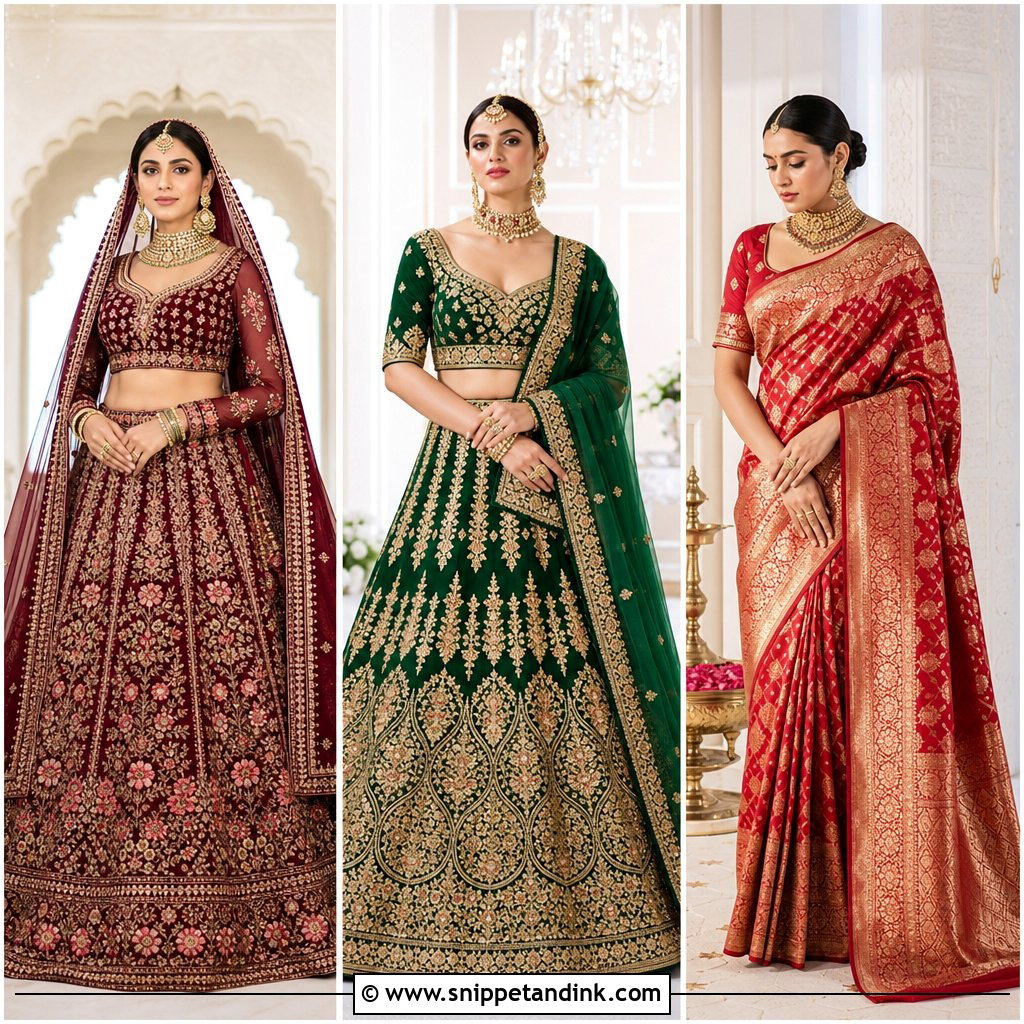
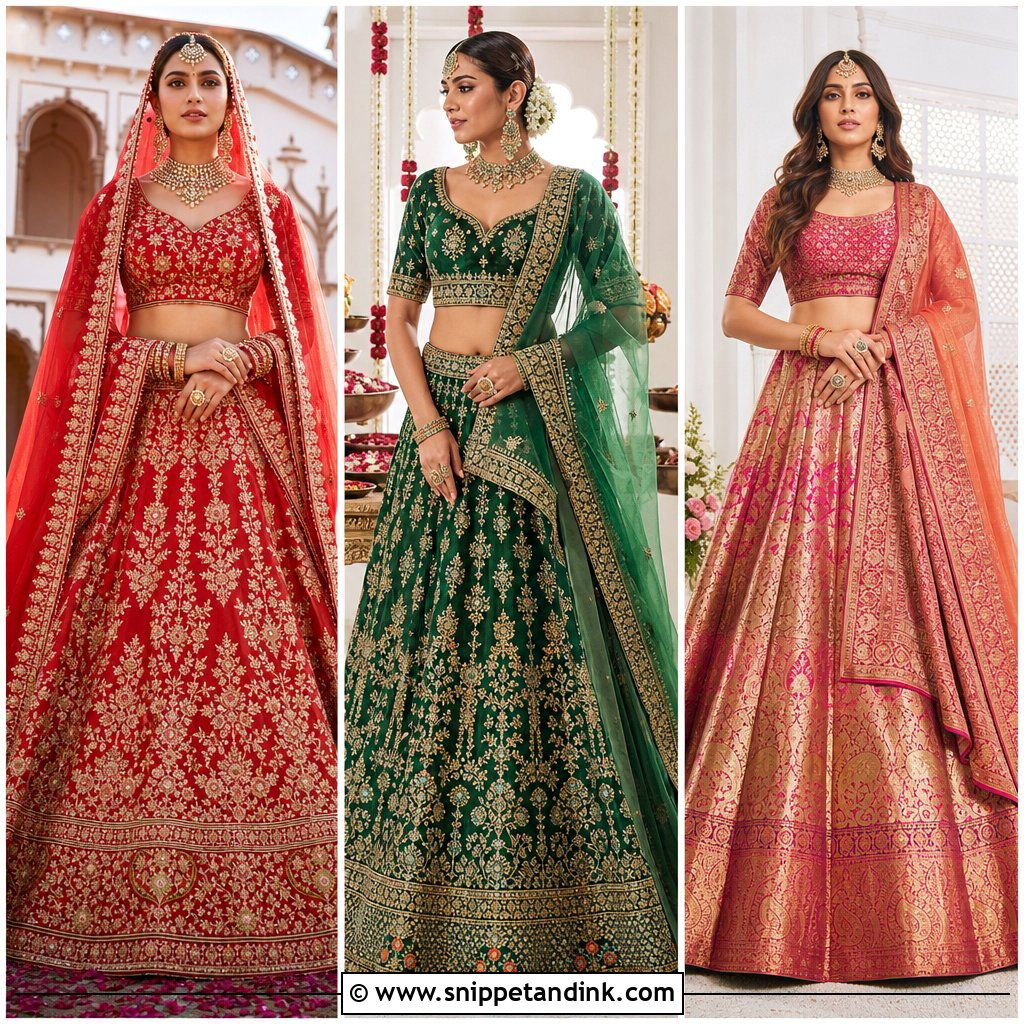
A red zardozi lehenga is still the ceremony outfit I photograph most, and red is harder than it looks. Camera sensors saturate bright red quickly, and when that happens the embroidery turns into a flat red block. I expose slightly darker for it and protect the gold work. A structured blouse, a moderately flared skirt and balanced gold embroidery help; so does a lighter net veil that frames the face instead of hiding the jewelry. Kundan choker, long necklace, bangles, juttis and a low bun complete it. Ask for one standing portrait that shows the skirt border, veil and full jewelry set together.
2. Ivory And Gold Bridal Lehenga
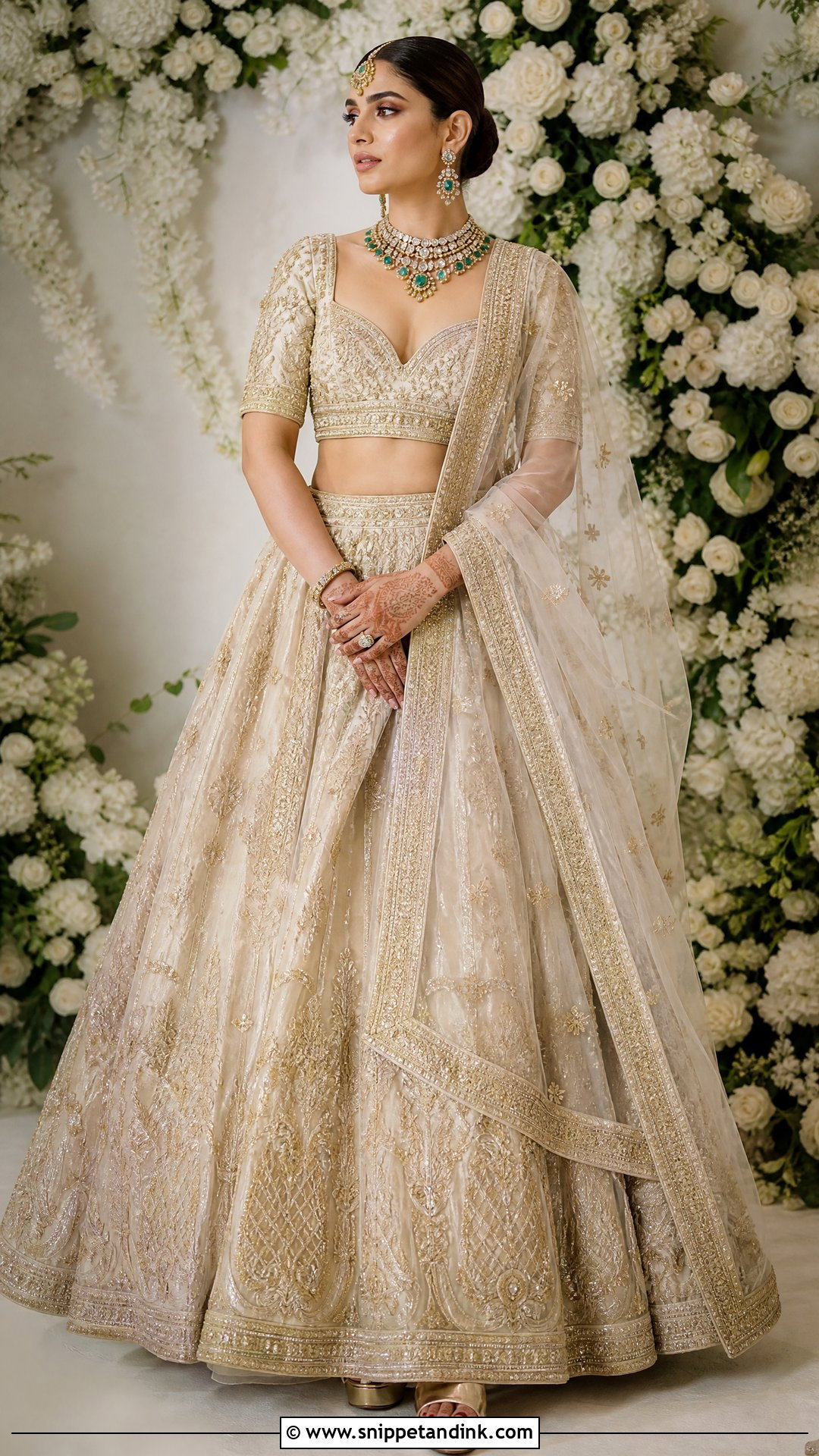
Ivory with antique gold is refined, but it’s the outfit most likely to lose detail in harsh sun. White fabric overexposes before skin does, so midday light can wipe out the embroidery entirely. Varied textures help a lot: sequins, beads, threadwork and metallic borders each catch light differently and keep the surface readable. A fitted blouse, full skirt and sheer embroidered dupatta make a clean tonal base. Add emeralds for contrast or stay tonal with polki and pearls. I like to photograph this one in open shade or soft window light, against deeper coloured flowers.
3. Blush Pink Floral Bridal Lehenga
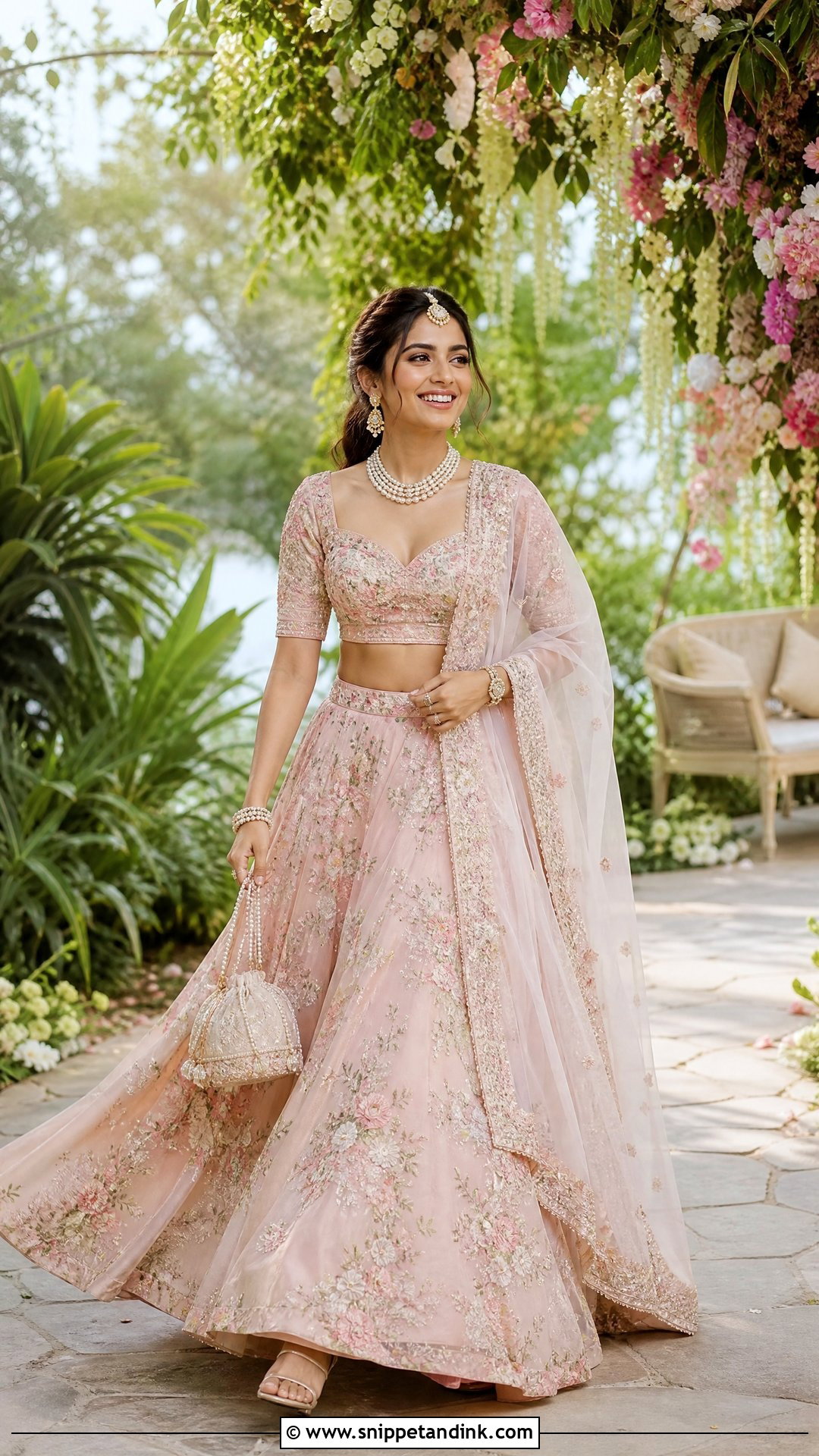
Blush pink with multicoloured flowers and pearls suits a garden ceremony or a bride who doesn’t want crimson. The colour is delicate on camera, though; under green trees it can pick up a slight green cast, and I correct for that in editing. A supportive blouse, light skirt and organza or net dupatta keep it airy. Rose-gold sandals, a pastel potli and pearl or pale green stones finish it. Tuck a few fresh flowers into a low bun and stop there. A walking shot or a slow twirl shows the skirt better than any static pose.
4. Maroon Velvet Bridal Lehenga
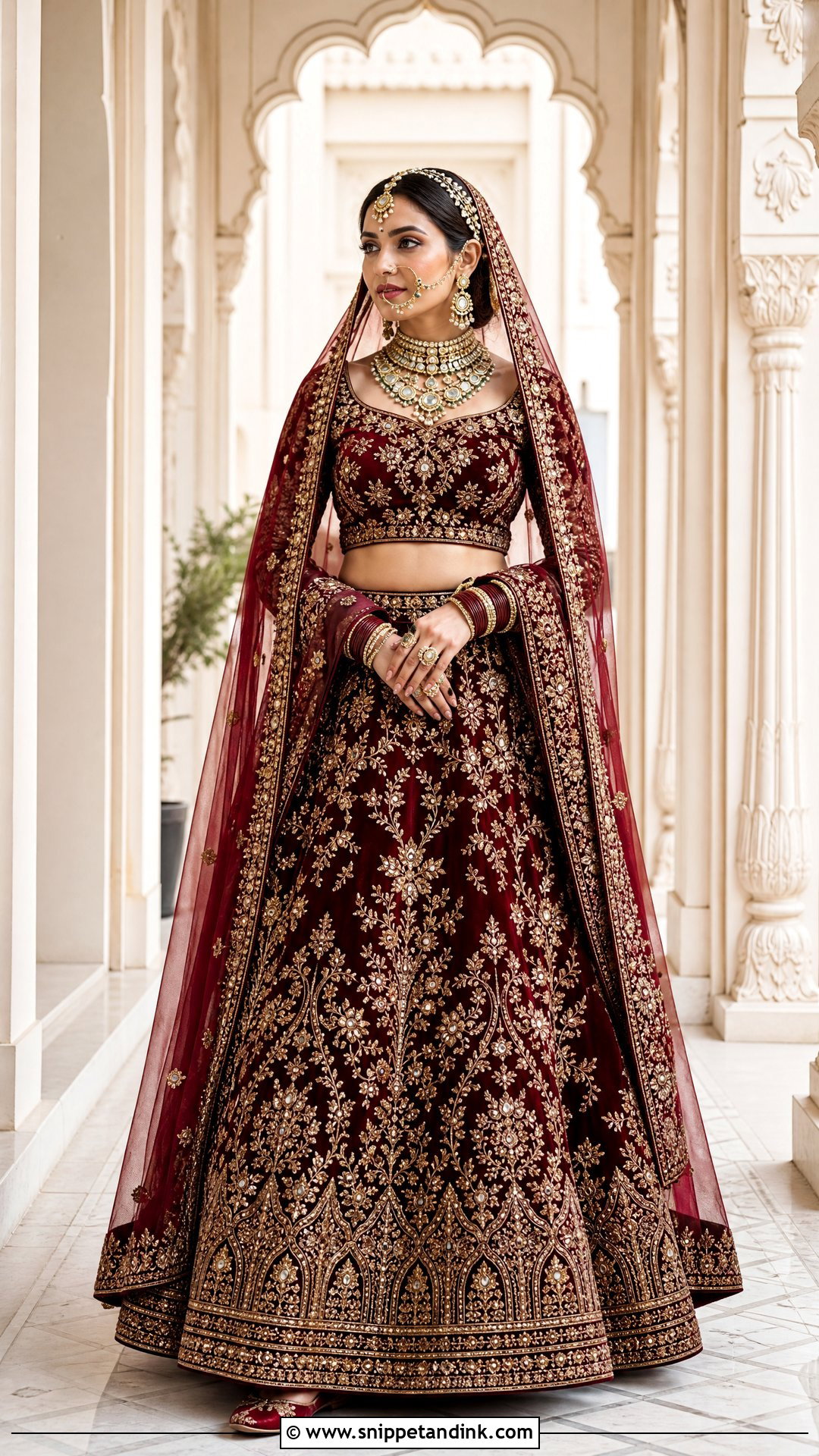
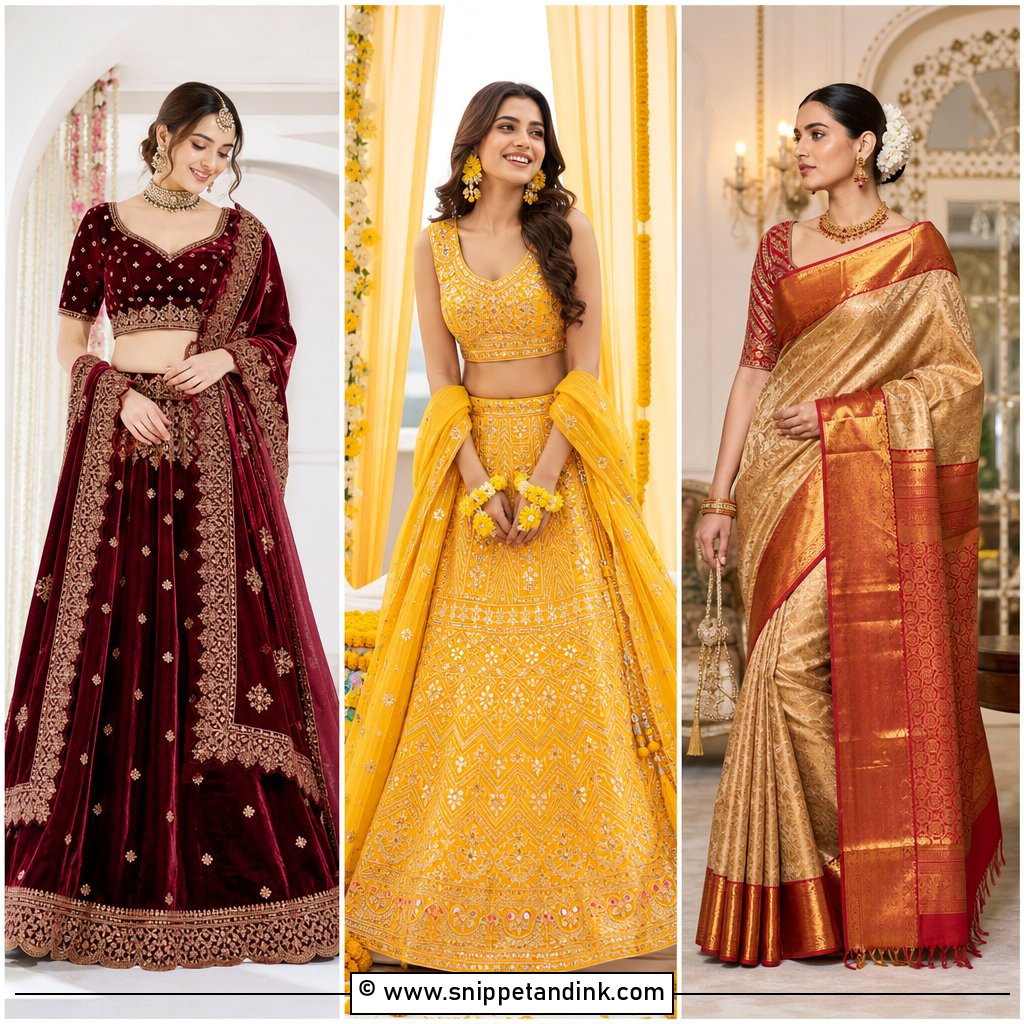
Velvet swallows light. Deep maroon velvet looks rich in person, yet on camera it can read almost black unless I add light or bring the bride close to a window. Carefully placed gold embroidery gives the lens something to hold on to. Balance the velvet blouse with a softer net dupatta on the shoulder and a light veil on the head. Polki jewelry, a statement nath, stacked bangles and maroon juttis complete it. Velvet is heavy, so sit in it before final alterations. For evening portraits, bright neutral light and an architectural background suit its formal character.
5. Red Kanjeevaram Bridal Saree
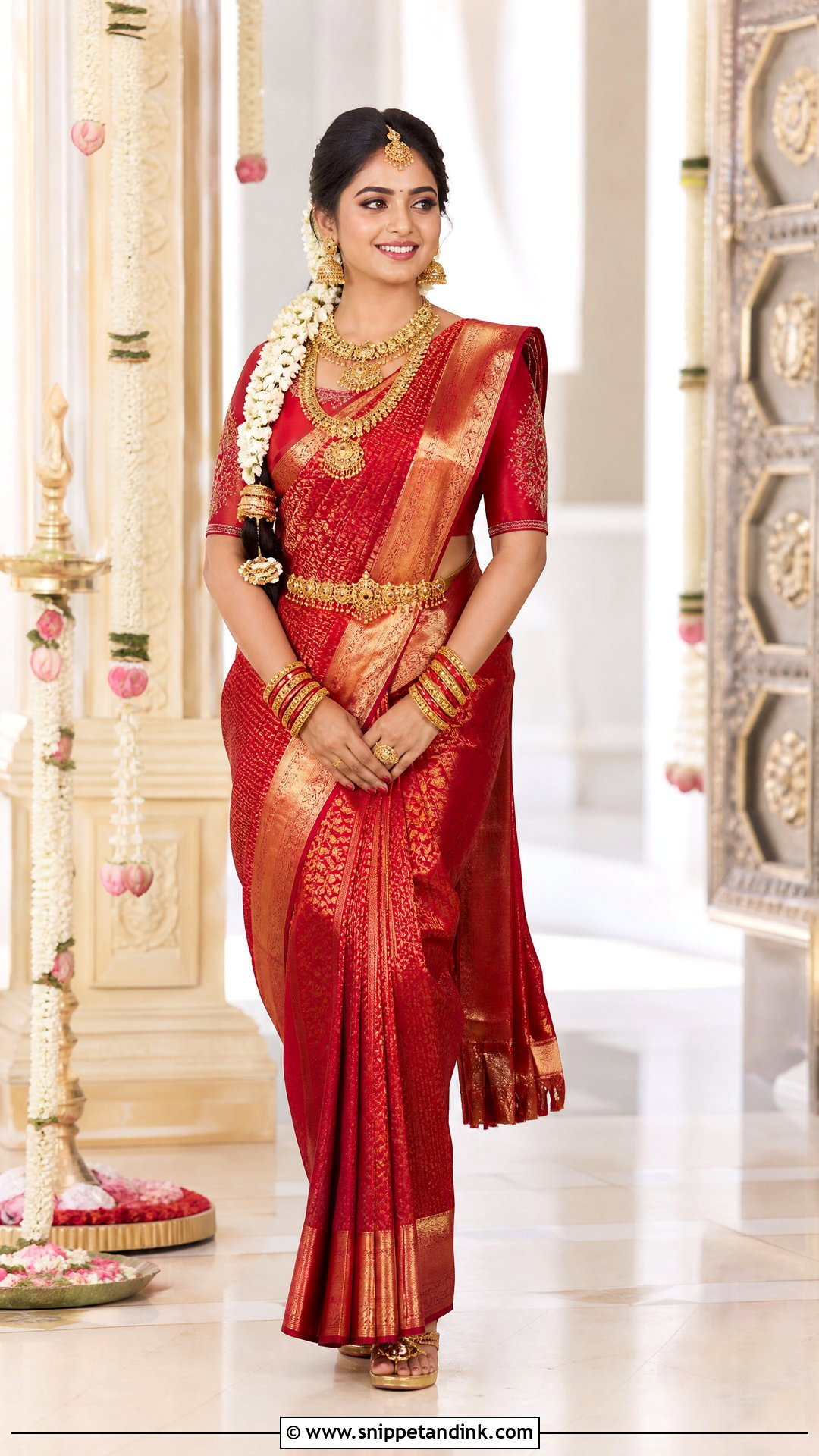
A red Kanjeevaram silk saree with a contrasting gold zari border has real weight and structure, which is good news for photos because the pleats hold their shape. A fitted blouse that lets you raise your arms matters during rituals. Temple jewelry, layered necklaces, jhumkas, a waist belt and anklets build the full look, with a jasmine-wrapped braid or bun as your family prefers. I always shoot this one front, side and seated, since the back of the braid and the waist belt are often the details a bride most wants later.
6. Red Banarasi Bridal Saree
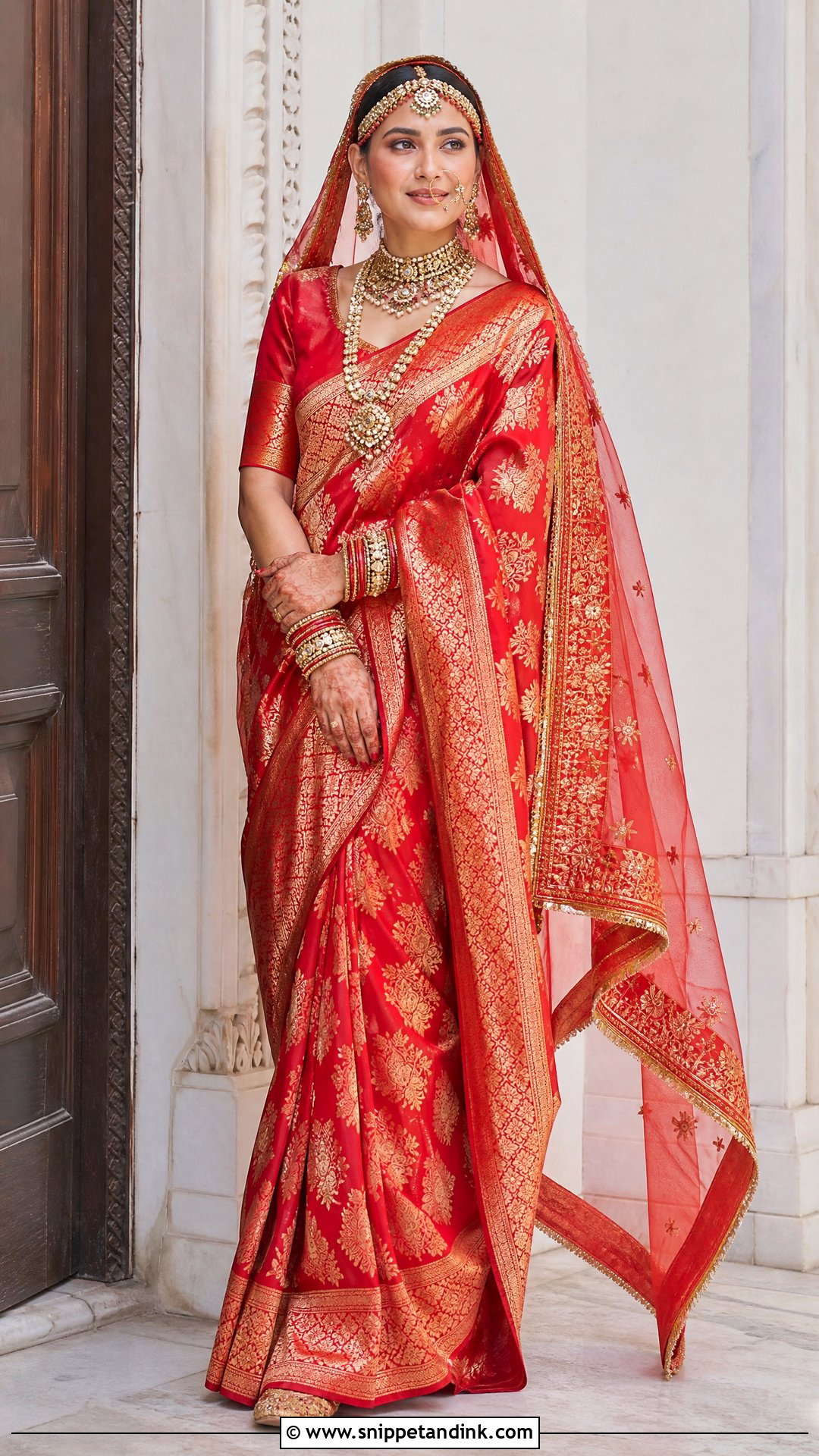
Banarasi silk is lighter to wear than a layered lehenga and photographs with a soft sheen rather than sparkle. A red saree woven with gold motifs pairs with a matching or contrasting brocade blouse depending on how traditional you want it. A sheer veil with a slim border defines the bridal silhouette. Kundan, a matha patti, nath and red bangles complete it. Reinforce the blouse, because silk feels heavier after several hours. I’ll take a tight close-up of the weave for your album and a full-length frame that shows drape, veil and shoes together.
7. Gujarati Panetar Bridal Saree
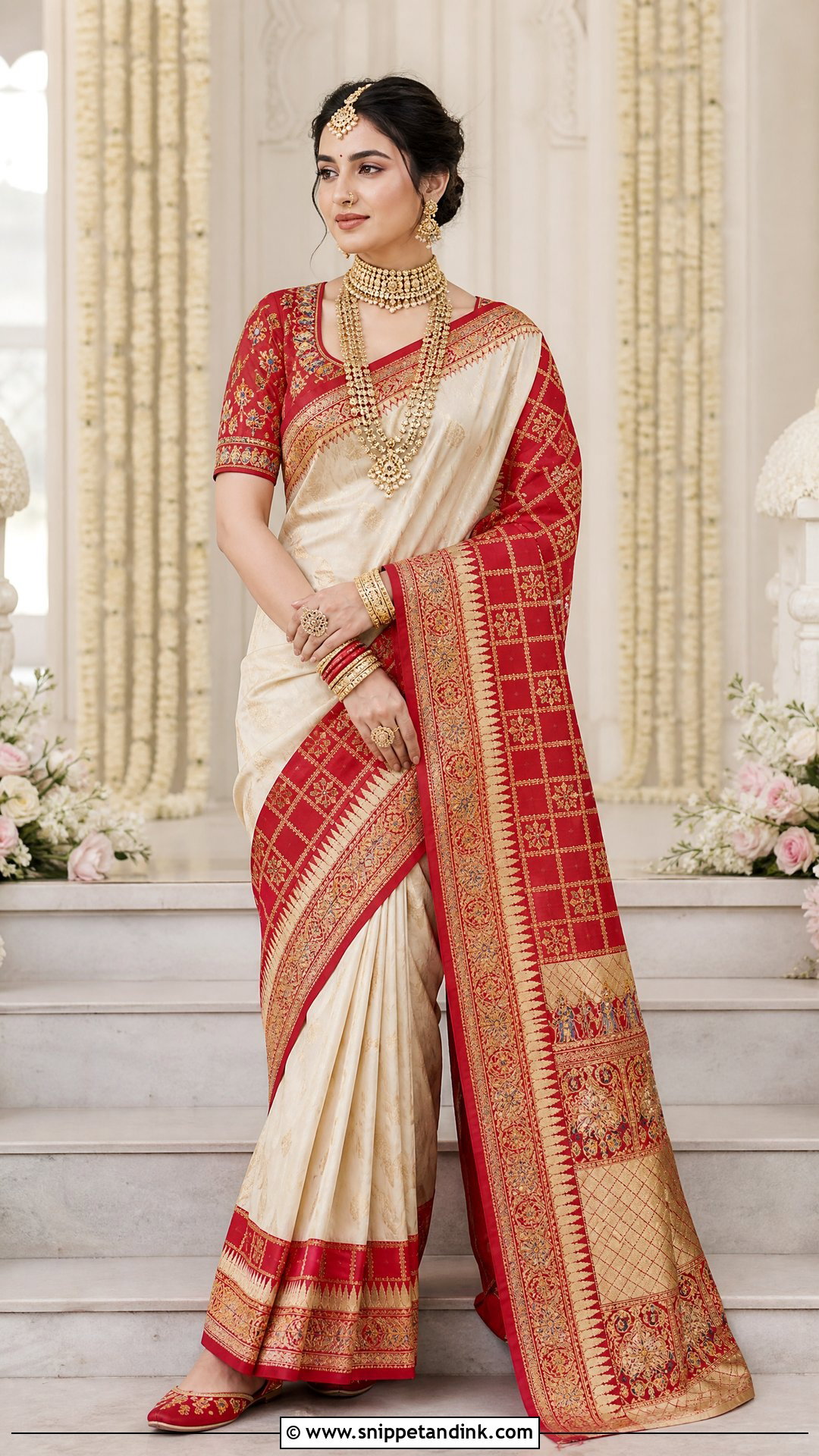
The traditional Gujarati panetar, ivory with a red border, is often layered with a red gharchola over the head during the ceremony. That second layer covers a lot of the outfit, so I ask for one unobstructed full-length portrait before the gharchola goes on. A red embroidered blouse, gold jewelry, a choker, bangles and a fine nose ring support the look, with red juttis that match the border. Keep makeup defined, because a head covering casts shadow across the face, especially under overhead lights.
8. Bengali Red And White Bridal Saree
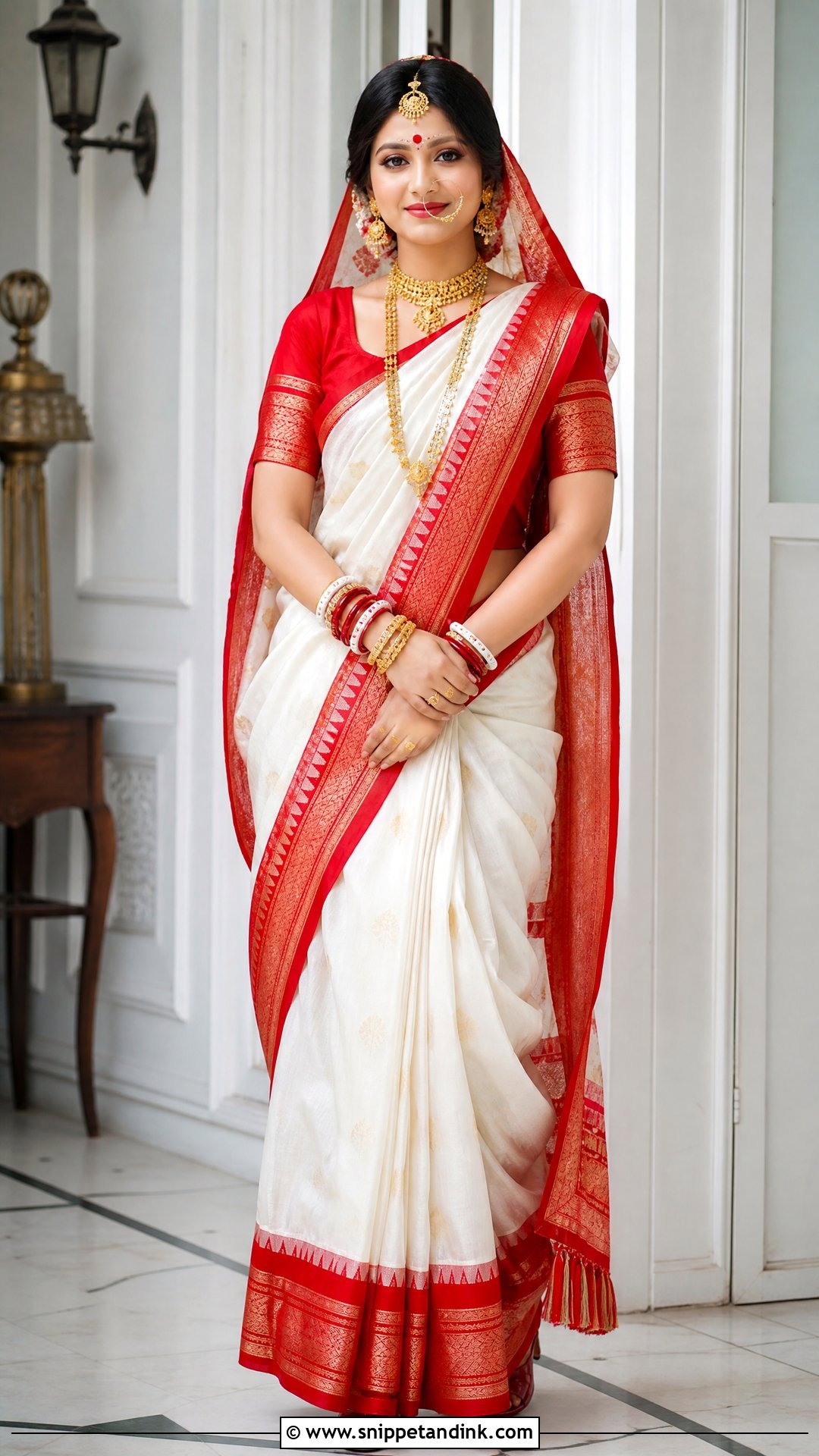
The Bengali white saree with a wide red border is one of the most graphic looks I shoot. That contrast is strong, and it also means the white sections can blow out in bright light while the red stays rich. I meter for the white. A silk saree with gold work and a fitted red blouse with comfortable sleeves sit beneath the traditional jewelry, the forehead design, the red-and-white bangles and a carefully placed veil. A smooth bun under the pallu with flowers at the back keeps the profile clean. Side angles show the border best.
9. Green Paithani Bridal Saree
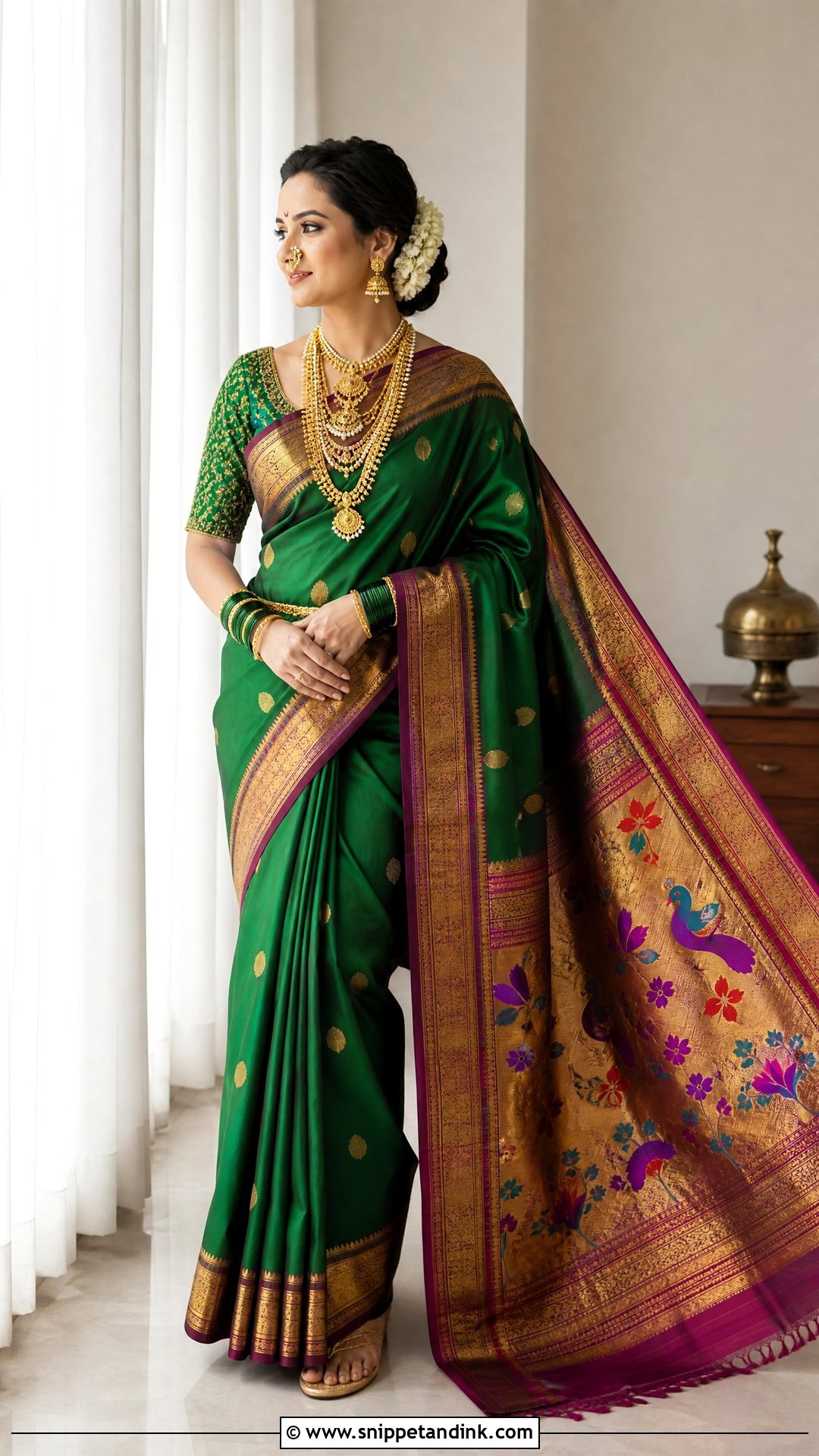
Green Paithani can look like two different colours in two rooms, because silk with a contrasting weft shifts with the angle and the light. I photograph it near a window before the ceremony so there’s at least one accurate colour reference. Pair the saree with a coordinating silk blouse and a traditional drape that lets you move. A nath, layered gold necklaces, green glass bangles, armlets and a crescent bindi are the recognisable details. A flower-wrapped bun shows the earrings. Full-length frames should include the pallu; close-ups can hold the zari motifs.
10. Pink Anand Karaj Bridal Lehenga
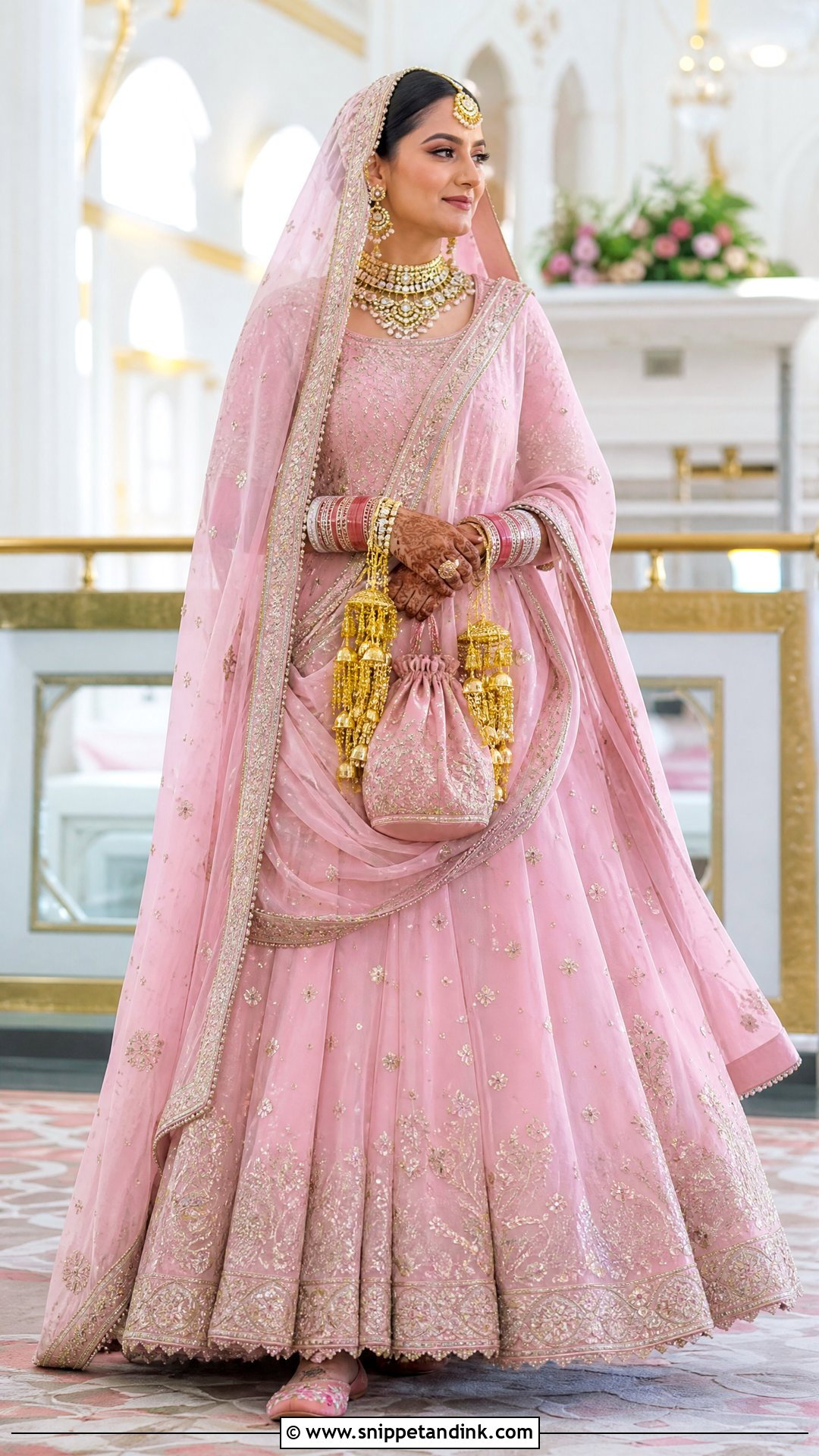
A soft pink lehenga suits an Anand Karaj ceremony, held in daylight with the head covered throughout. The dupatta has to stay on through four laavan around the Guru Granth Sahib, so secure it with hidden pins and test it while walking, sitting and bowing. From my side, a covered head means the face sits in shadow if the gurdwara light comes from above, and I’ll position myself accordingly. A modest blouse, fluid skirt and fine gold threadwork suit the occasion. Kundan, kaleere, bangles and juttis finish it, with a low bun under the dupatta.
11. Rajasthani Bandhani Bridal Lehenga
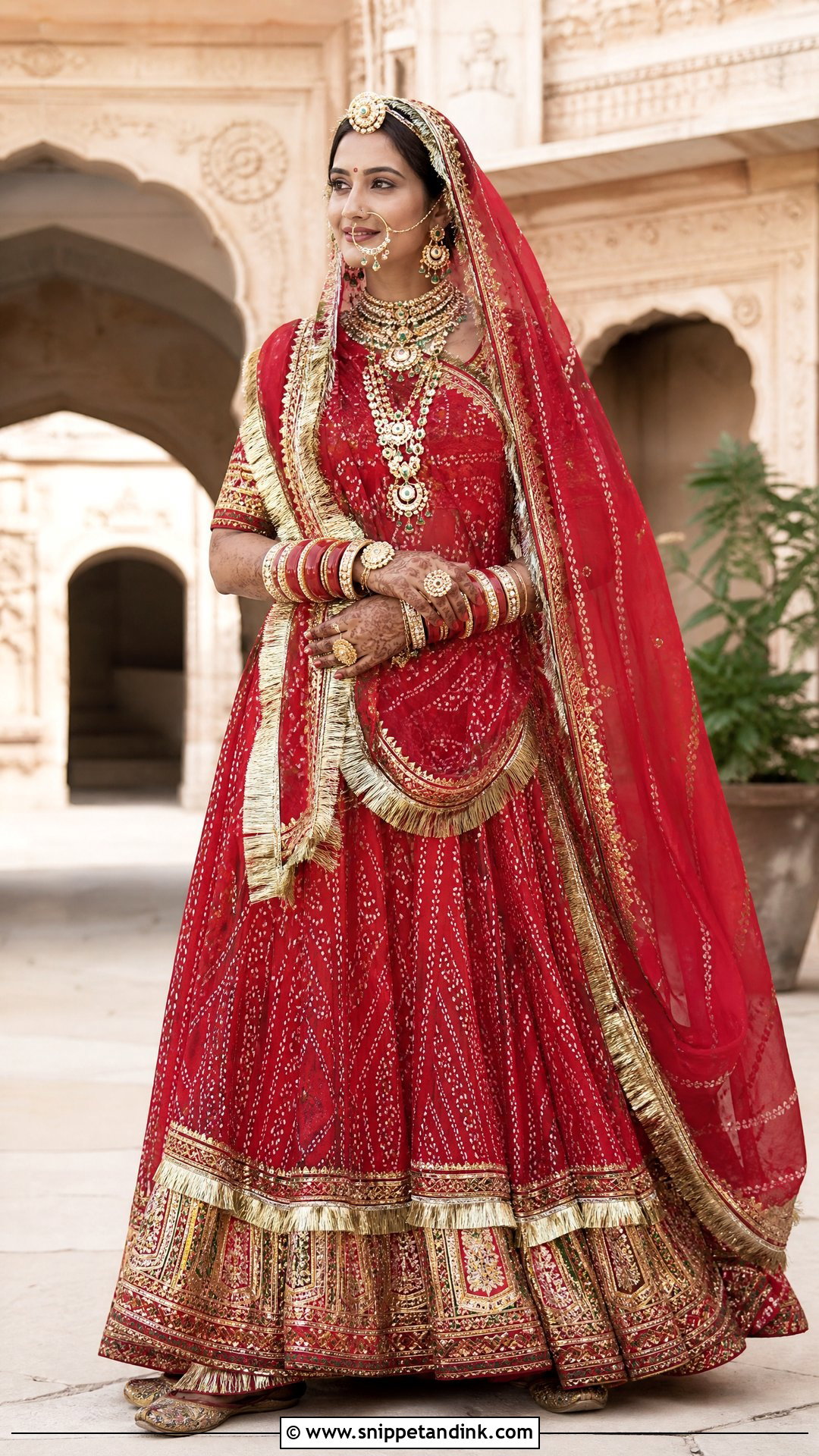
Bold red bandhani with gota patti borders gives a Rajasthani bridal ensemble pattern and colour. Pair the lehenga with an embroidered blouse and a coordinated odhani over the head. A borla, layered necklaces, large earrings and a statement nath are traditional, with gold or red juttis. Gota is metallic ribbon, and it flares hard under direct flash, so I bounce or diffuse light for this one. The textile is already busy; keep added embellishment restrained. A sandstone wall or plain courtyard lets the dots and flare read clearly.
12. Powder Blue Mirror Work Bridal Lehenga
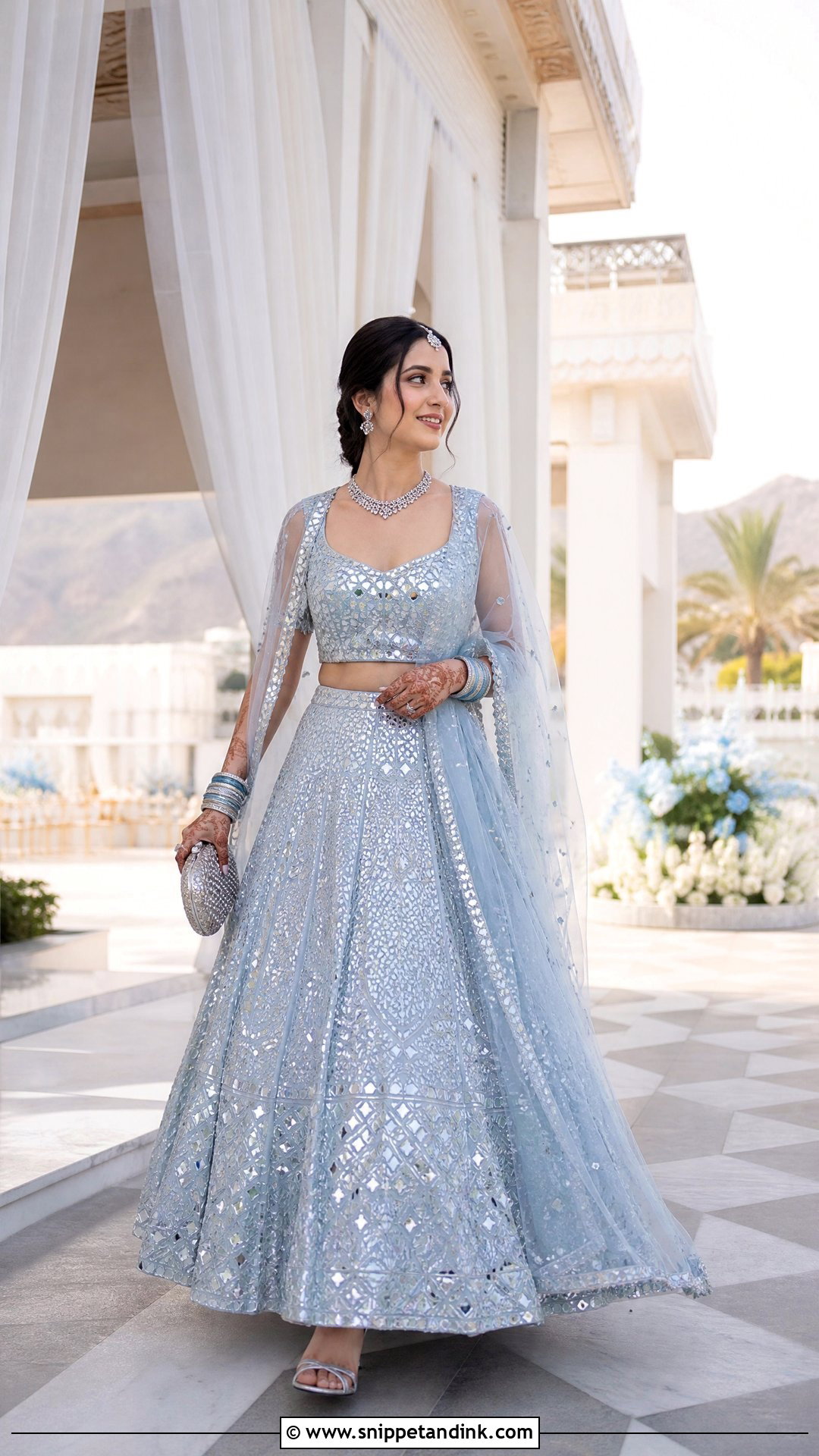
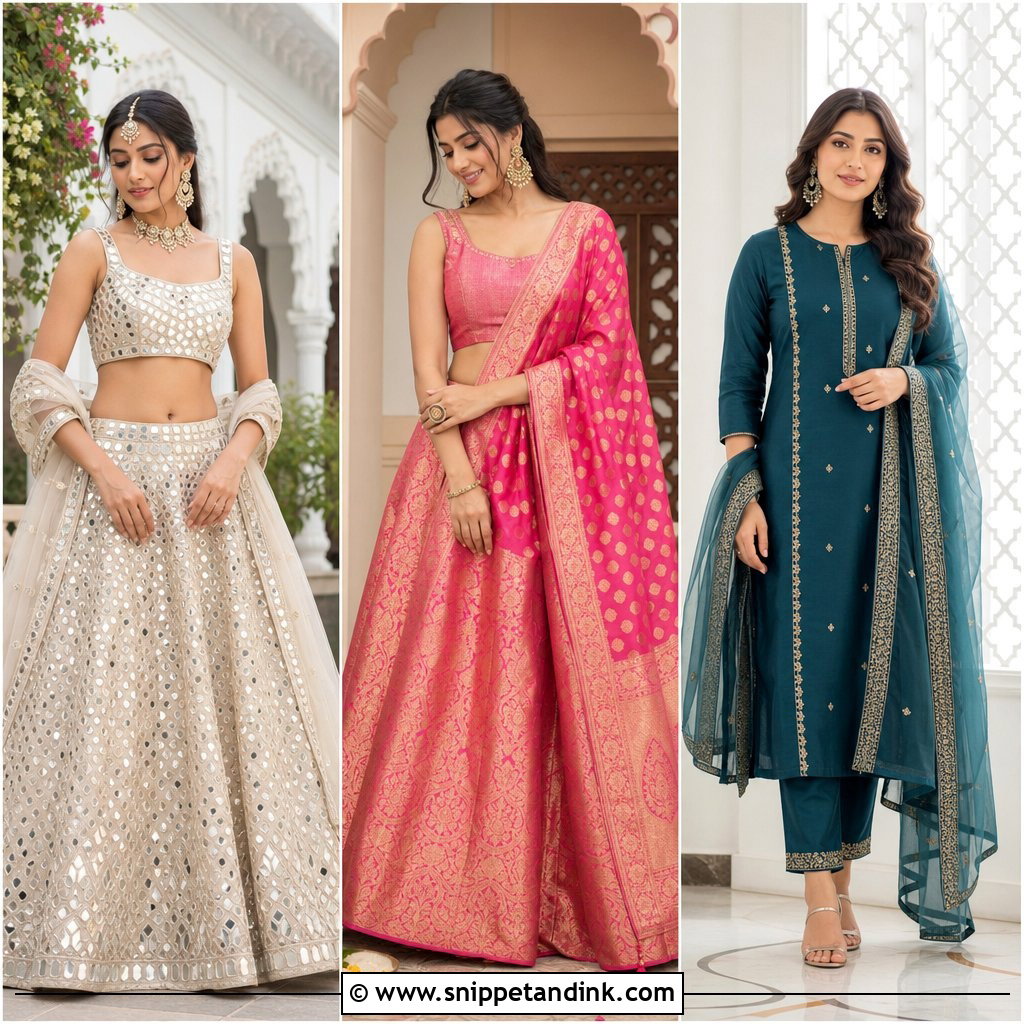
Powder blue mirror work is fresh for a daytime or destination wedding. Mirrors scatter light, which is lovely in a walking shot and distracting in a static flash portrait. A fitted, softly lined blouse matters, since mirror edges feel rough on skin. A flowing skirt and sheer dupatta with evenly spaced mirrors, silver sandals and diamond jewelry keep the cool palette. Warm tungsten light can turn pale blue a little grey, so I’ll balance colour against a neutral reference. A full-body standing pose shows the silhouette; movement brings the mirrors alive.
13. Emerald Green Bridal Lehenga
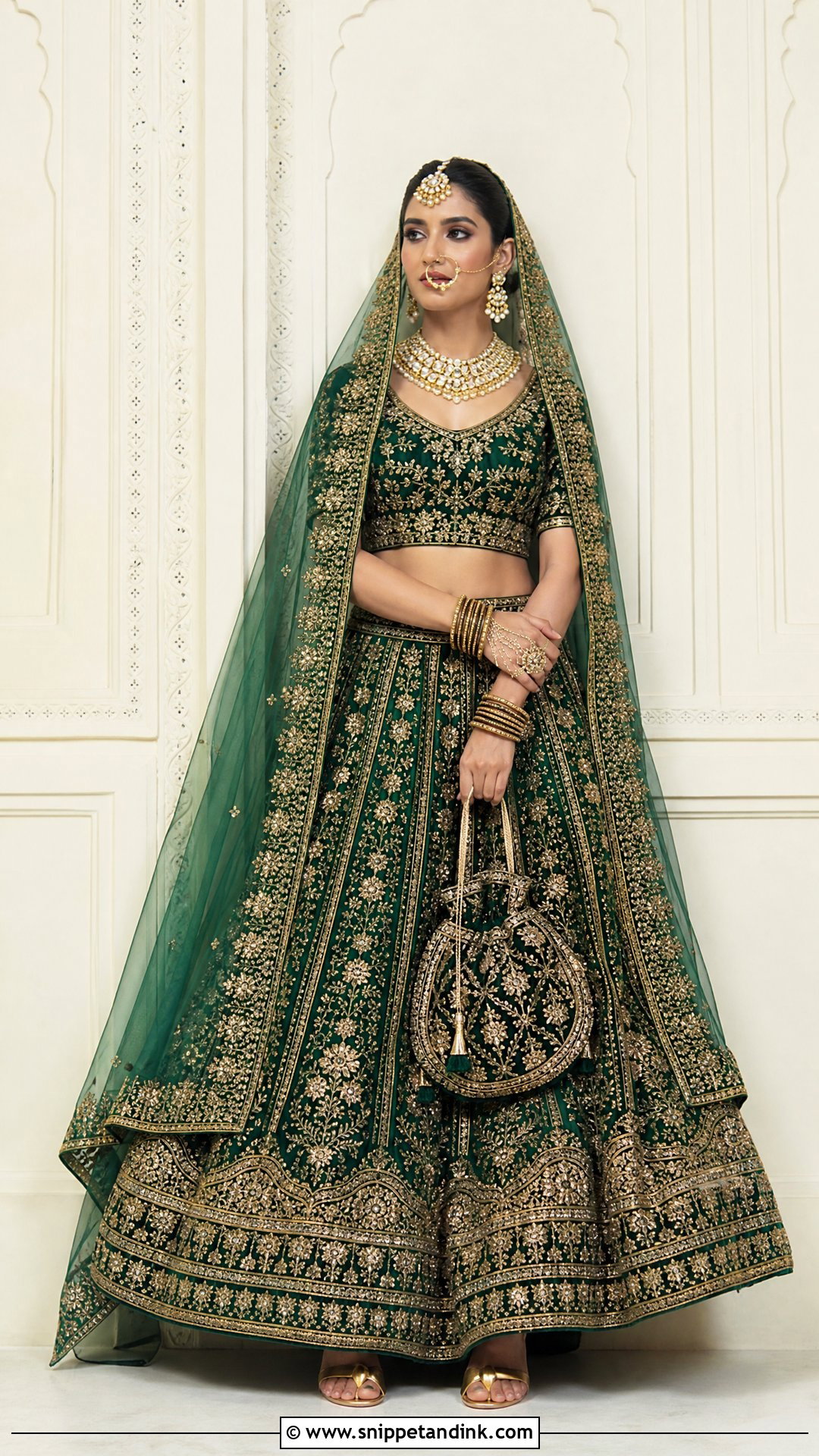
Emerald is the rich colour I suggest to brides who don’t want red. Silk or velvet with antique gold embroidery suits an evening ceremony or formal reception. Dark green needs more light than you’d guess, especially velvet, and it goes muddy against a dark background. Neutral or ivory backdrops separate it cleanly. A fitted blouse, a balanced skirt and a sheer matching dupatta that reveals the work beneath are enough. Polki with emerald accents, gold heels and a structured potli finish it. If both blouse and skirt are heavy, choose a lighter veil.
14. Gold Tissue Bridal Saree
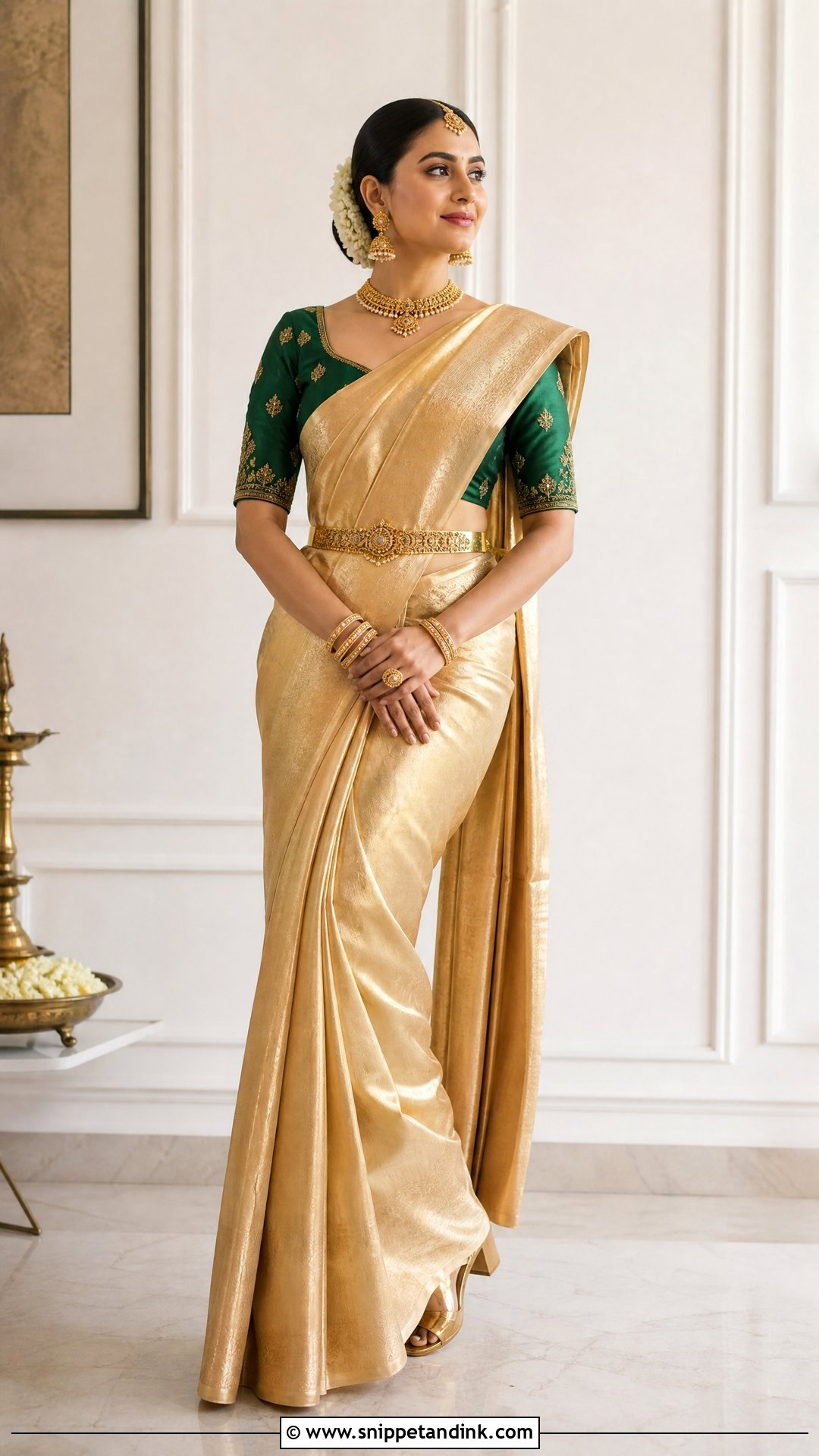
Gold tissue has metallic thread woven right through it, and it acts like a soft reflector on the face, which is flattering. The problem is creasing: tissue marks easily, and every crease catches light in a photo. Allow time for draping and steaming. A structured blouse in gold, ivory, red or green sets the contrast you want, and a slim waist belt controls the drape. Choose one jewelry direction, temple or kundan or pearl, not all three. I shoot this one in bright, even light so the border keeps its detail without hot spots.

15. Champagne Sequin Reception Lehenga
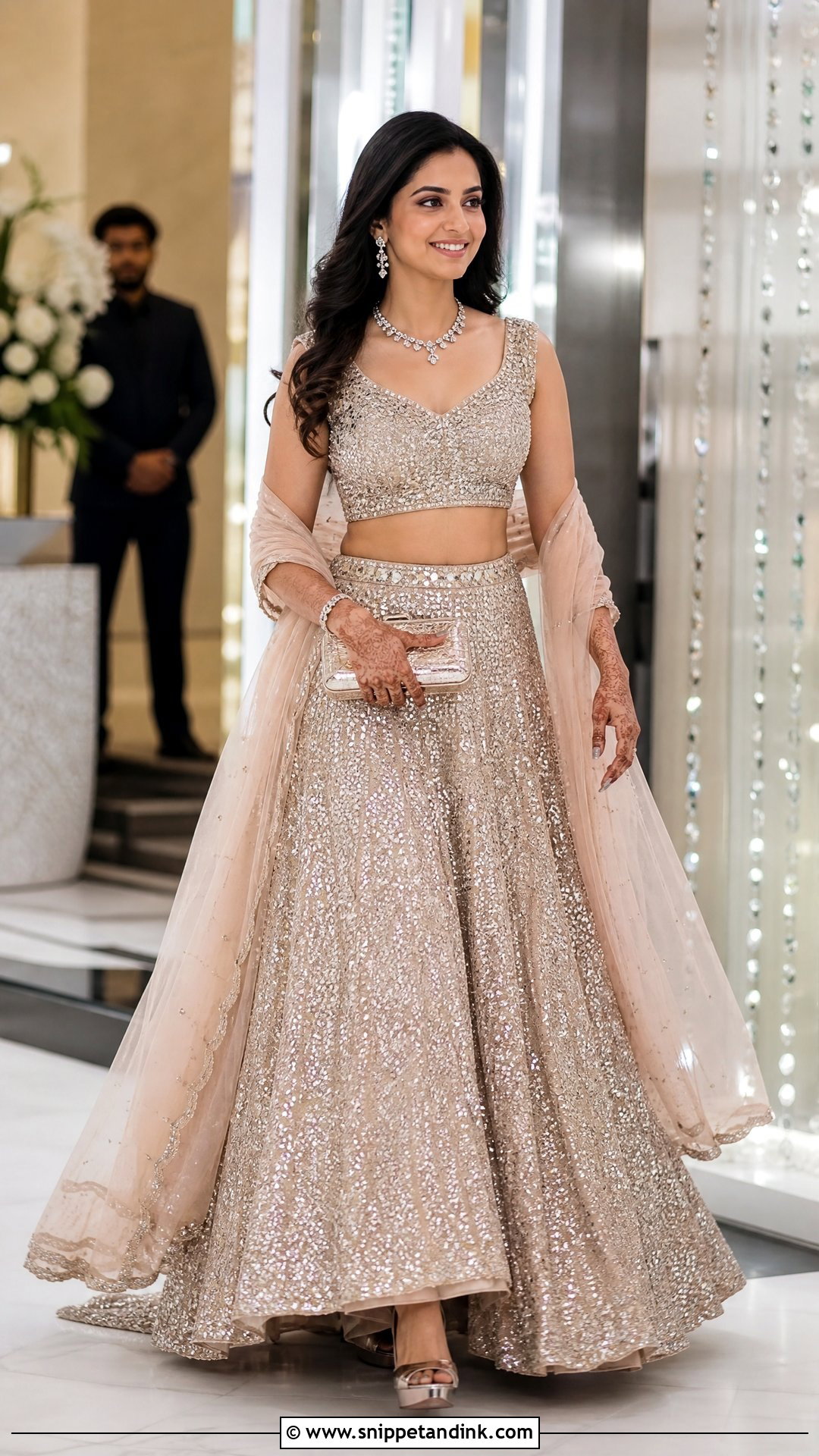
Champagne sequins are a reception favourite, and champagne is a tricky colour. Warm ballroom lighting can push it toward orange, and I’ll ask the venue to keep at least one light neutral during portraits. A supportive blouse, softly flared skirt and light dupatta make dancing easy. Crystal earrings, a delicate necklace and metallic heels keep the palette quiet. With dense sparkle, keep makeup smooth and skip extra glitter, which competes on camera. Walking portraits show how the sequins catch the light far better than a still pose does.
16. Draped Saree Bridal Gown
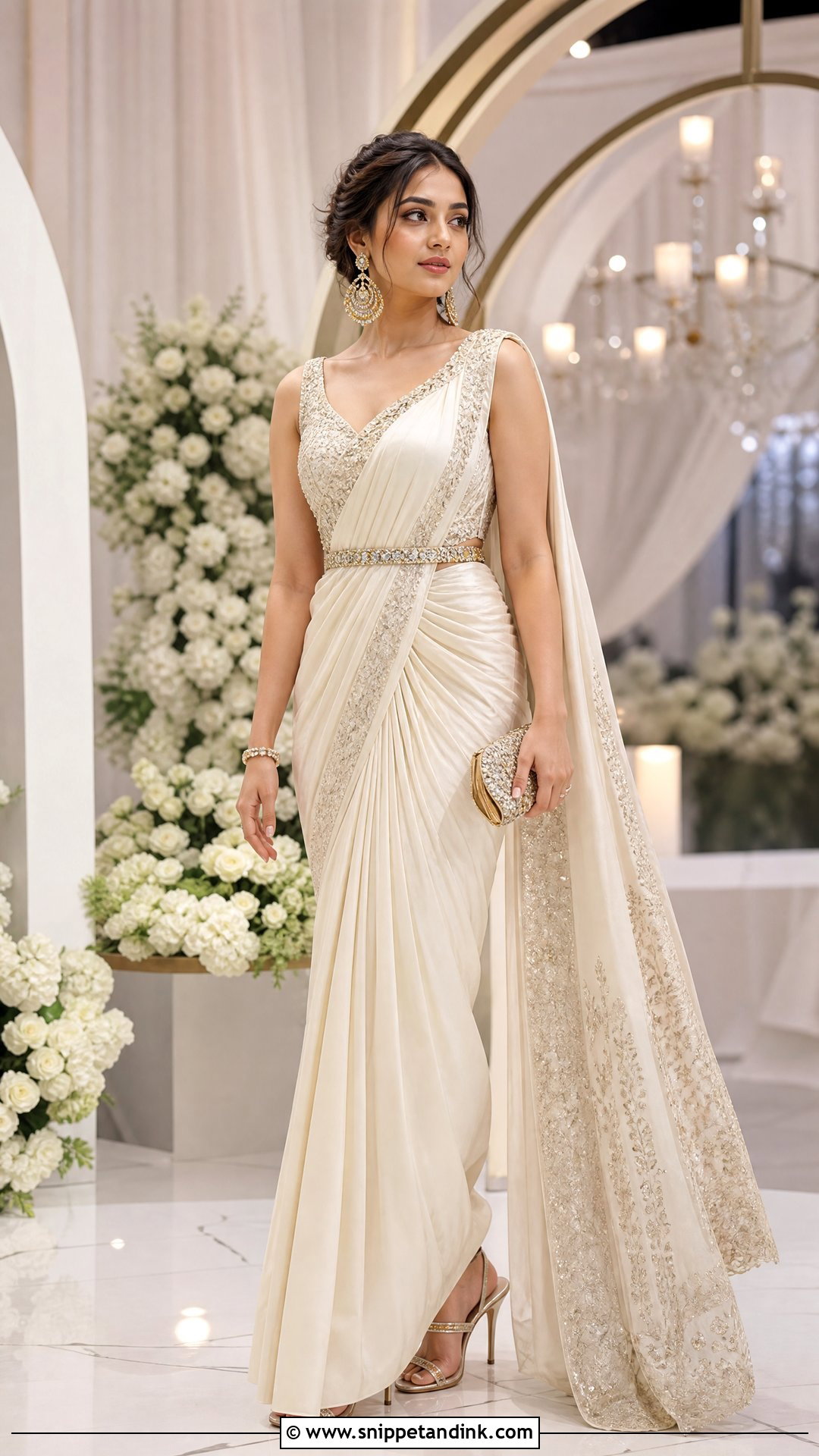
A saree gown gives the drape without the risk of pleats coming loose. I’d look for a defined waist, a comfortable bodice, stitched pleats and a pallu that falls naturally. Jewel tones, ivory, silver or deep blue with controlled beading photograph well. Statement earrings, a slim bracelet, heeled sandals and a small clutch are plenty; a busy neckline doesn’t need a necklace. Practise sitting and walking before the event. On my side, a three-quarter angle shows the diagonal of the drape better than a straight front shot, where it can look like a plain gown.
17. Cape Sleeve Bridal Lehenga
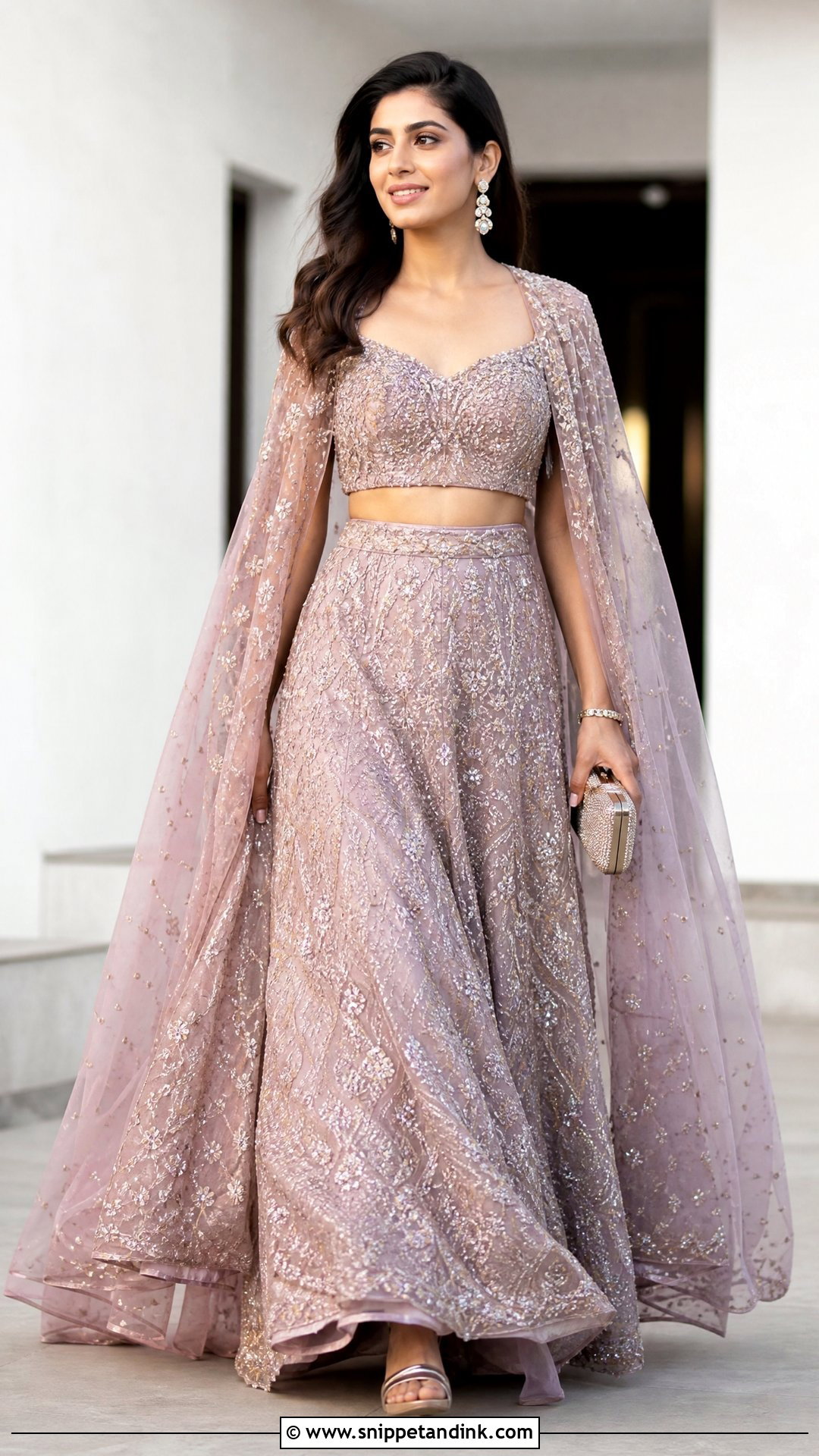
A cape sleeve lehenga replaces the dupatta with a sheer embroidered cape, from waist length to almost floor length. Match the length to your height so it doesn’t hide the lehenga border. Drop earrings, a sleek bracelet, metallic heels and a low ponytail or bun keep hair out of the embellishment. Skip the big necklace if the cape neckline is decorated. In a still portrait, a cape just hangs; I ask for a slow walk or a light breeze so it lifts away from the body and shows its shape against the skirt.
18. Bridal Sharara With Long Veil
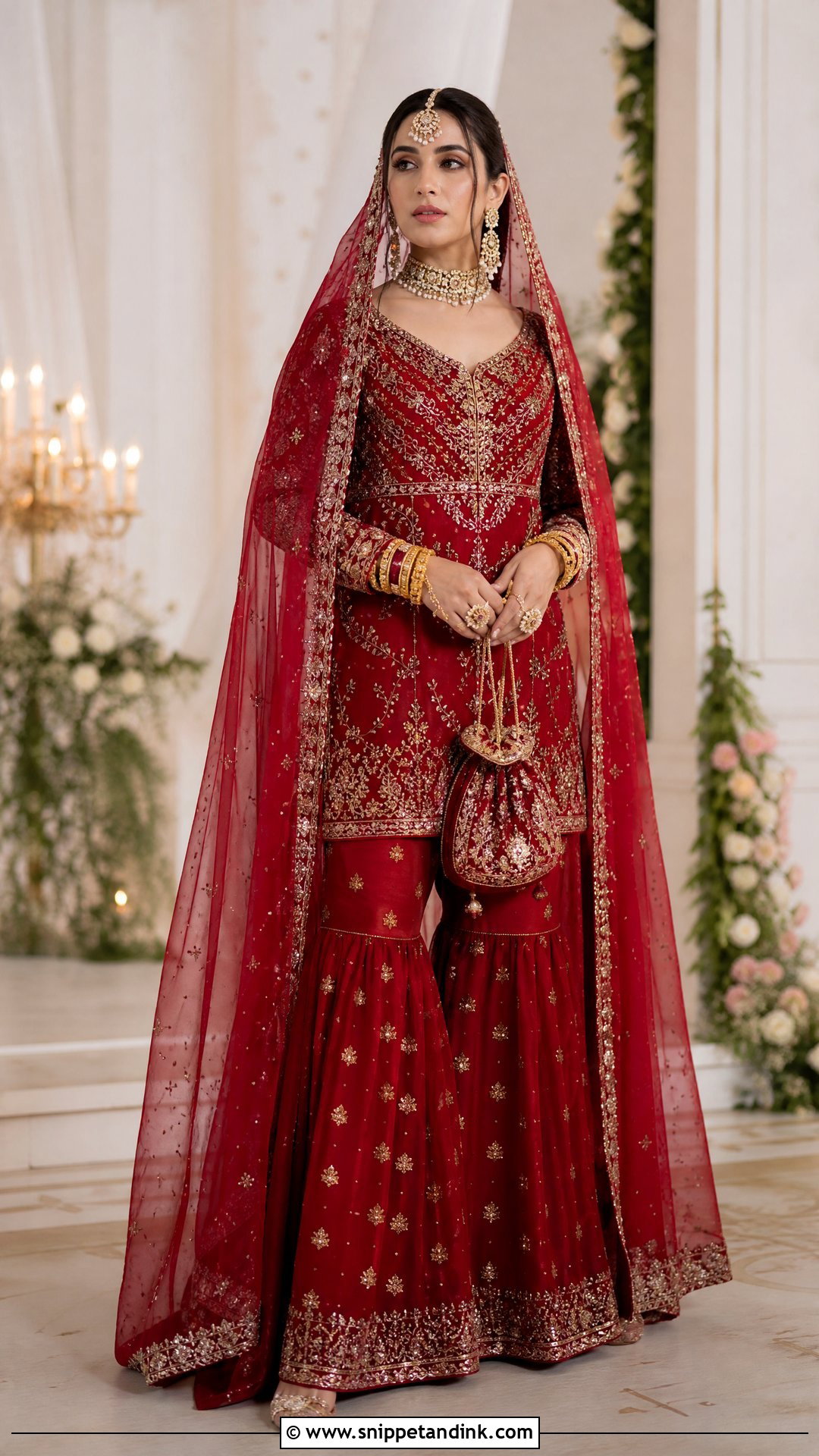
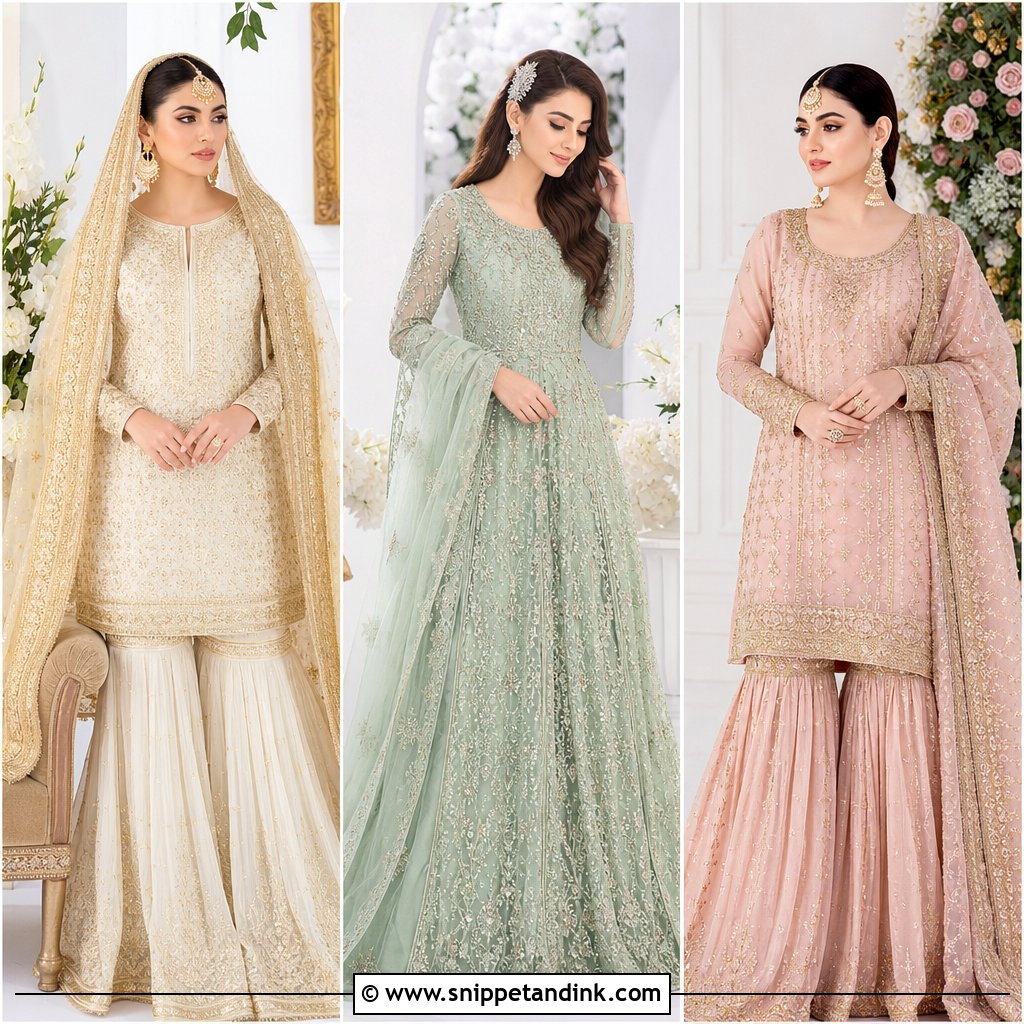
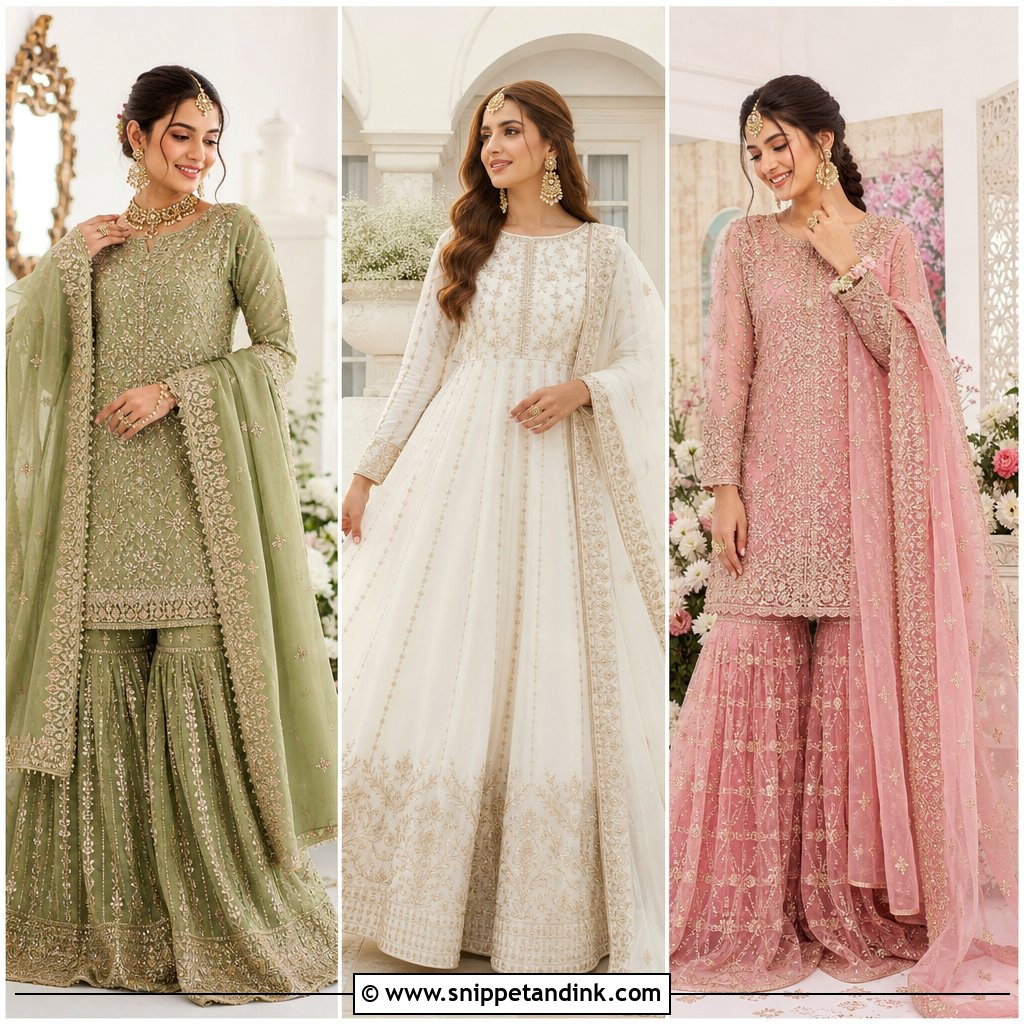
A bridal sharara gives movement without the weight of a lehenga skirt. A fitted or knee-length kurta over wide flared pants in red, ivory, blush or deep green with zari, gota or fine sequins reads bridal, especially with a long sheer veil over the head and one shoulder. Hem the pants precisely in your actual heels, since the width hides your shoes and catches underfoot. A centre-parted bun frames the veil. Shot straight on, a sharara can look like a skirt; a slight angle shows the split and the kurta shape.
19. Floor Length Anarkali Bridal Gown
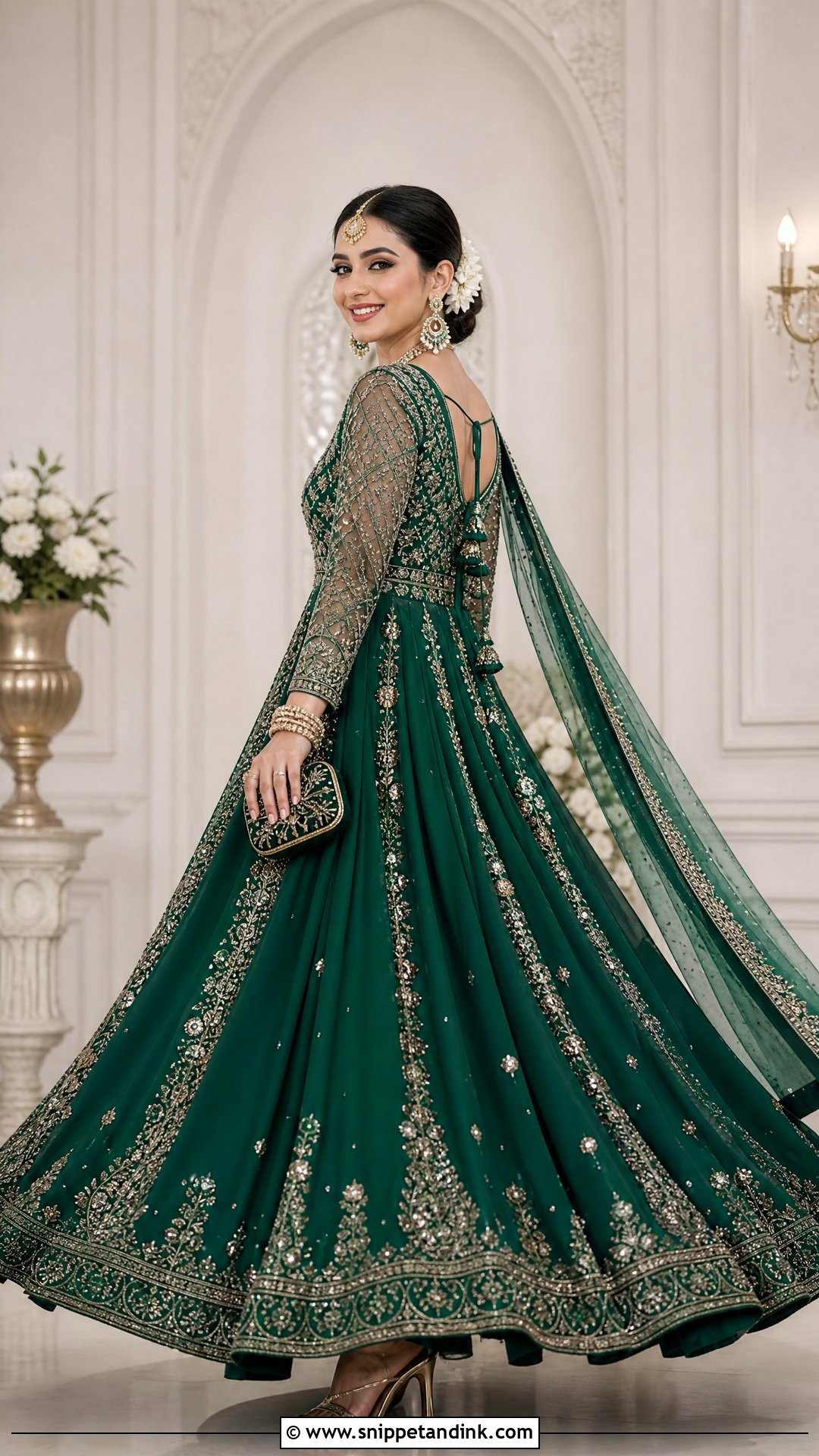
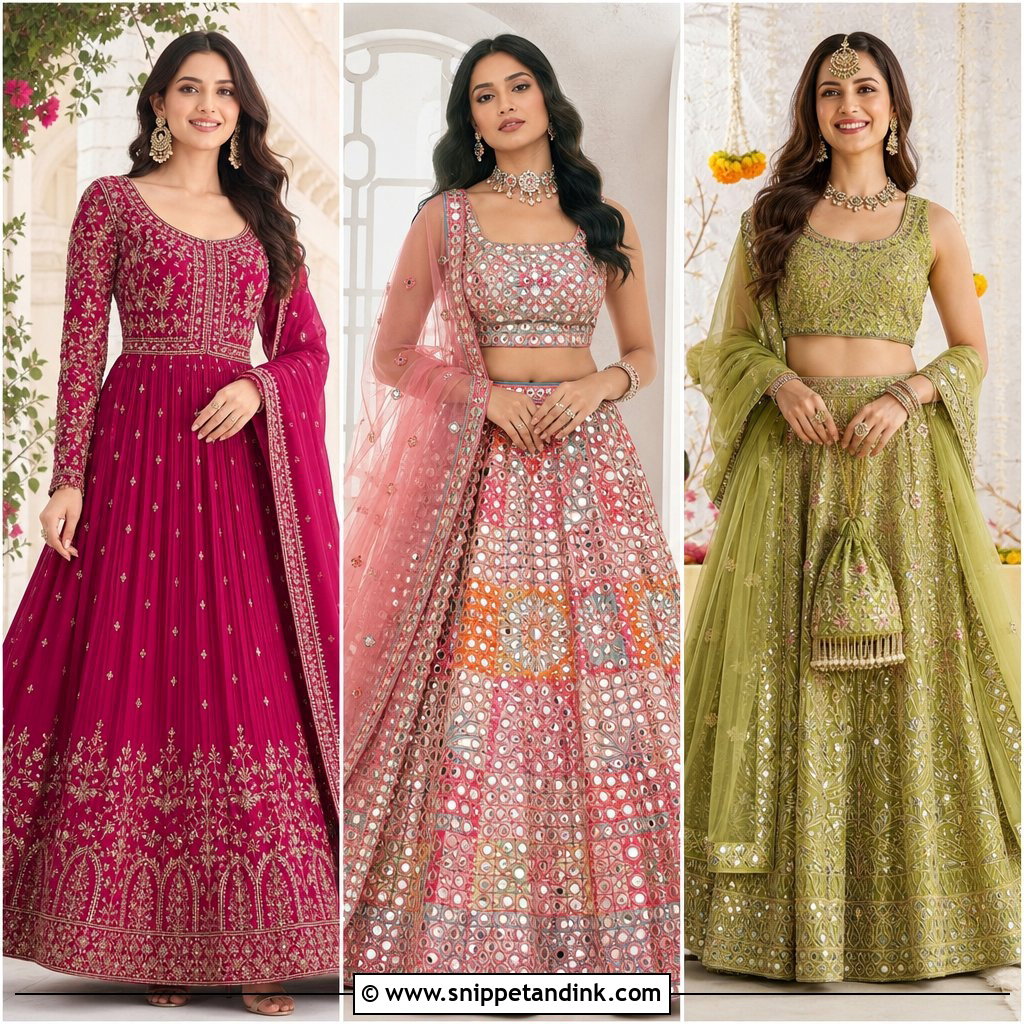
A floor-length Anarkali gives coverage and flow for an engagement, wedding or reception. A shaped bodice, secure waist and panels that open as you walk matter more than the colour, though red, royal blue, emerald, ivory and rose all read bridal. Chandelier earrings, a refined necklace, bangles and an embroidered clutch suit it. It should skim the floor, not drag, especially if you’re moving between indoors and outdoors. A centred full-length frame shows the symmetry; a slow half-turn lets the panels open, and that’s usually the shot brides keep.

20. White Indian Embroidered Wedding Gown
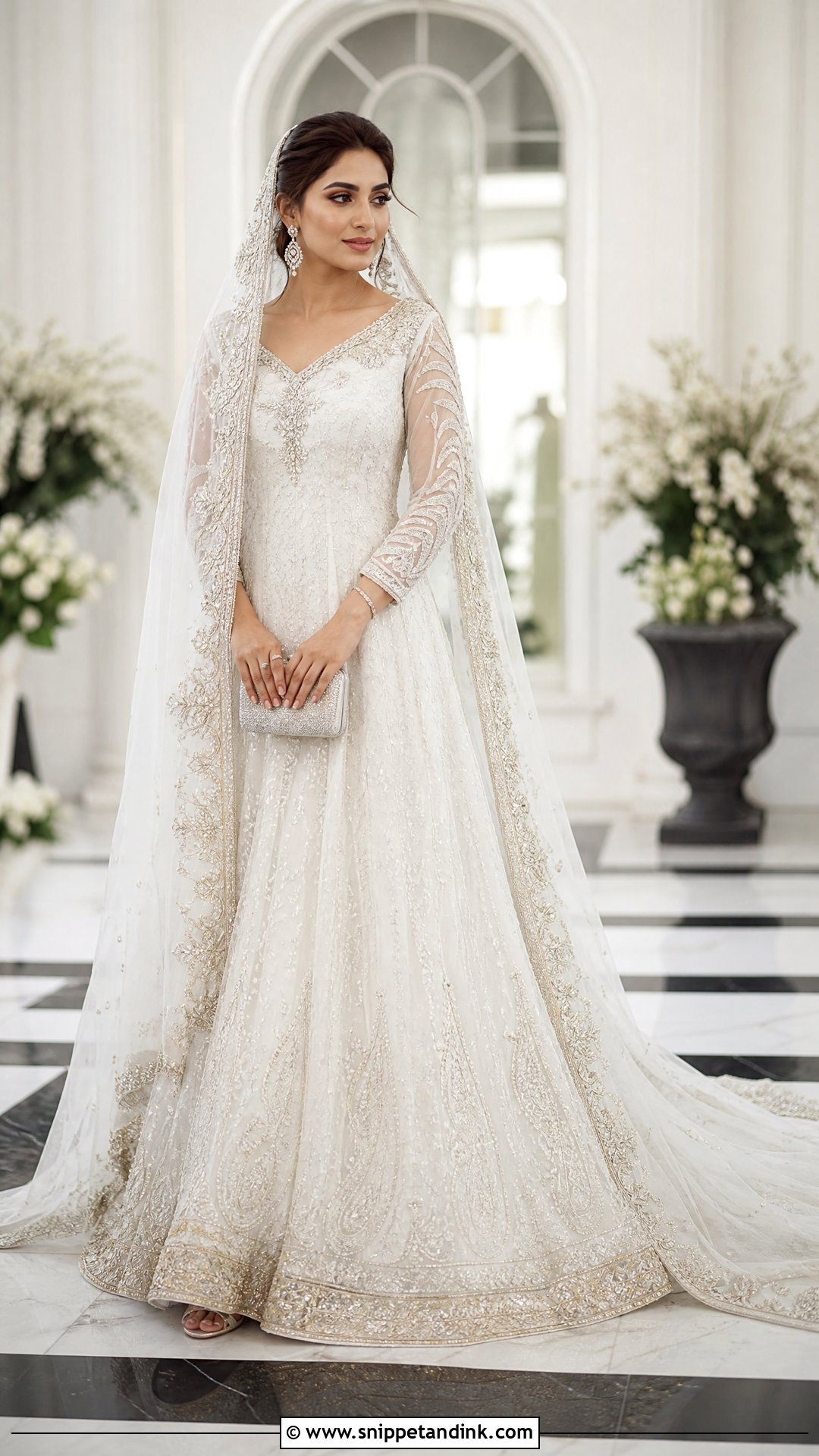
A white gown with Indian craft, zardozi borders, pearl work, paisley motifs or a dupatta-style veil, links reception fashion with traditional textile work. Choose the silhouette for the setting: ball gown, column or A-line. Pearl or diamond jewelry, white or silver heels and a compact clutch are enough. White beside skin needs defined eyes and a little more colour in the makeup than you’d wear day to day, or the face fades in photos. I photograph white against a slightly darker background, and always shoot the back, since that’s where the train and veil embroidery live.
Building a Portrait Window Into a Long Wedding Day
Indian weddings run late and rituals rarely stop for photos, so the bridal portraits that show the full outfit need their own slot in the schedule. I ask for a calm stretch of time right after dressing, while the drape is fresh and the jewelry hasn’t been adjusted twenty times.
- Put one person in charge of the outfit: someone who straightens the dupatta, fixes pins and lifts the hem between shots.
- Hang the outfit somewhere with good light before you dress, on a plain wooden hanger, for detail shots of the work.
- Lay the jewelry out on a neutral cloth so it can be photographed before it goes on.
- Plan at least one portrait in daylight if your main ceremony is at night; colours read truest then.
- If you change for the reception, budget a few minutes for a full-length shot in the new outfit before you enter.
Those few unhurried minutes usually produce the images families frame. Everything after that is candid, and candids rarely show the whole outfit. If the schedule truly has no gap, a short portrait session the next morning in the same outfit is a fair fallback, and many couples find it far more relaxed.
Ask for the Full-Length Frame
The most ornate outfit isn’t automatically the one that photographs best. Choose for your traditions, your comfort and the setting, from red zardozi and regional silks to capes and embroidered white gowns. Walk, sit and lift your arms in every outfit, and if you can, look at it under the venue’s own lighting. Keep jewelry from competing with the fabric. Then talk to your photographer about one thing in particular: an unhurried full-length portrait in each outfit, taken before the dupatta is rearranged, the veil slips or the night gets busy. It’s the picture brides most often wish they had.
You'll Like These Ideas:








Leave a Reply