
I put a lot of brides and their families into shararas for the functions around a wedding, and the reason is simple: you can dance, sit cross-legged at the mehndi and climb onto a stage without a lehenga’s weight dragging at your waist. Current sets pair traditional embroidery with lighter fabrics, pastels next to jewel tones, capes, jackets, organza dupattas and wide borders. The garment itself is forgiving, but the proportions are not. Kurta length, where the flare begins, how heavy the dupatta is and what shoes you hem it for decide whether it looks graceful or swamps you. From royal zardozi sets to breezy prints, here are the 25 designs I’d consider this season, with what I check on each.
Where the Flare Should Break, and Why Your Shoes Decide It
A sharara is fitted from the waist to the knee and flares from there, often with extra panels, called kalis, sewn in for volume. Two measurements decide how it looks: where the flare begins, and where the hem ends.
- The flare should open around the knee. Higher, and it reads like a palazzo; lower, and you walk in short steps.
- The hem should just graze the floor in the shoes you will wear. Decide the heel before the final stitch, and bring those shoes to every fitting.
- Heavy embroidery at the hem makes the flare swing beautifully but also makes it drag; ask for a slightly shorter hem with heavy borders.
- Climb a step at the fitting. The front hem must clear the stair with your hand holding the dupatta, or you will trip on stage.
Custom stitching and embroidery take time, so I’d order at least six to eight weeks ahead for a simple set, and longer for heavy handwork. Leave room for one alteration after the first fitting. Ready-made sets are faster, but the sharara length on a ready piece is set for an average height, so plan to have it hemmed either way.
1. Red Bridal Sharara Suit
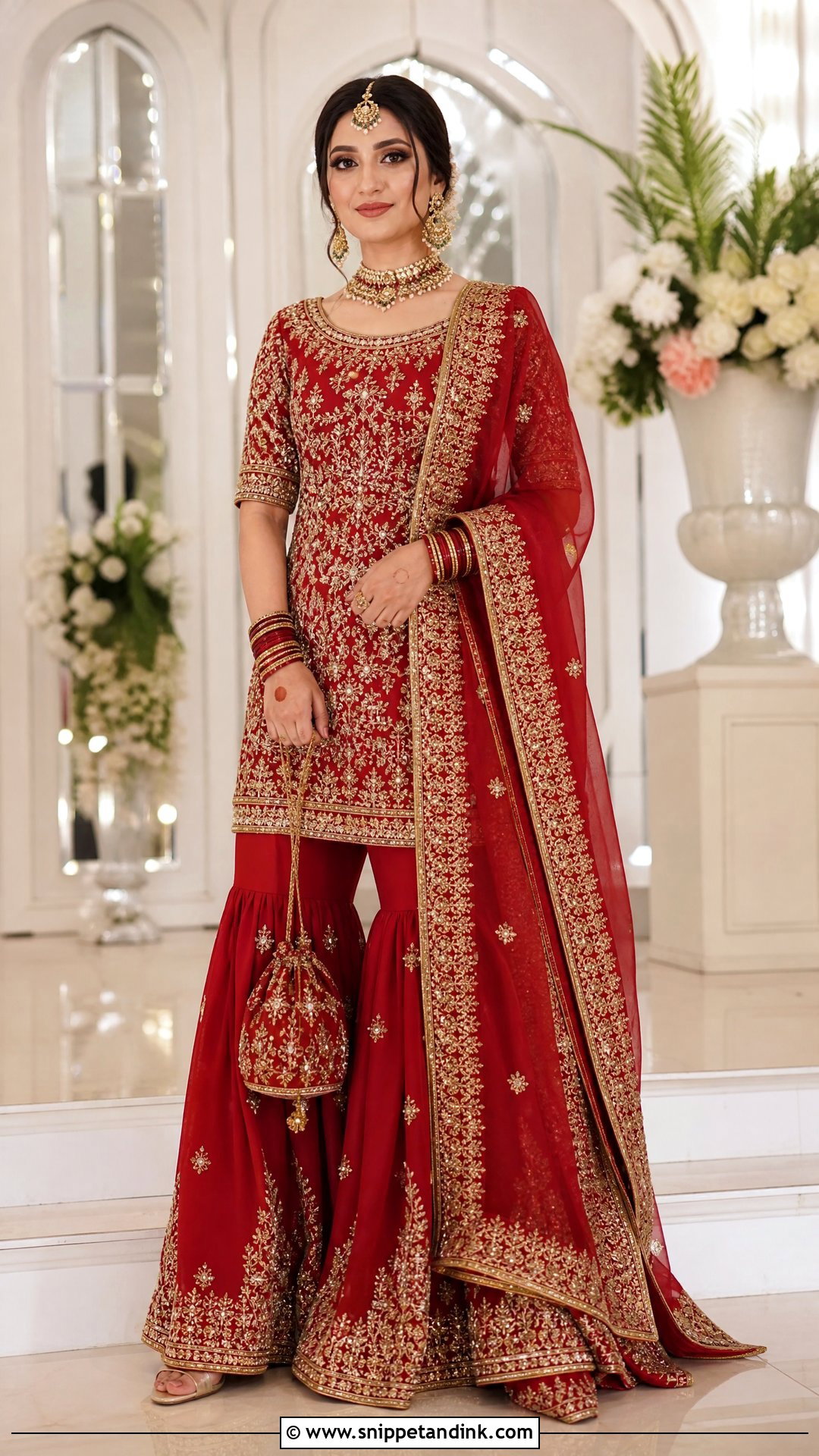
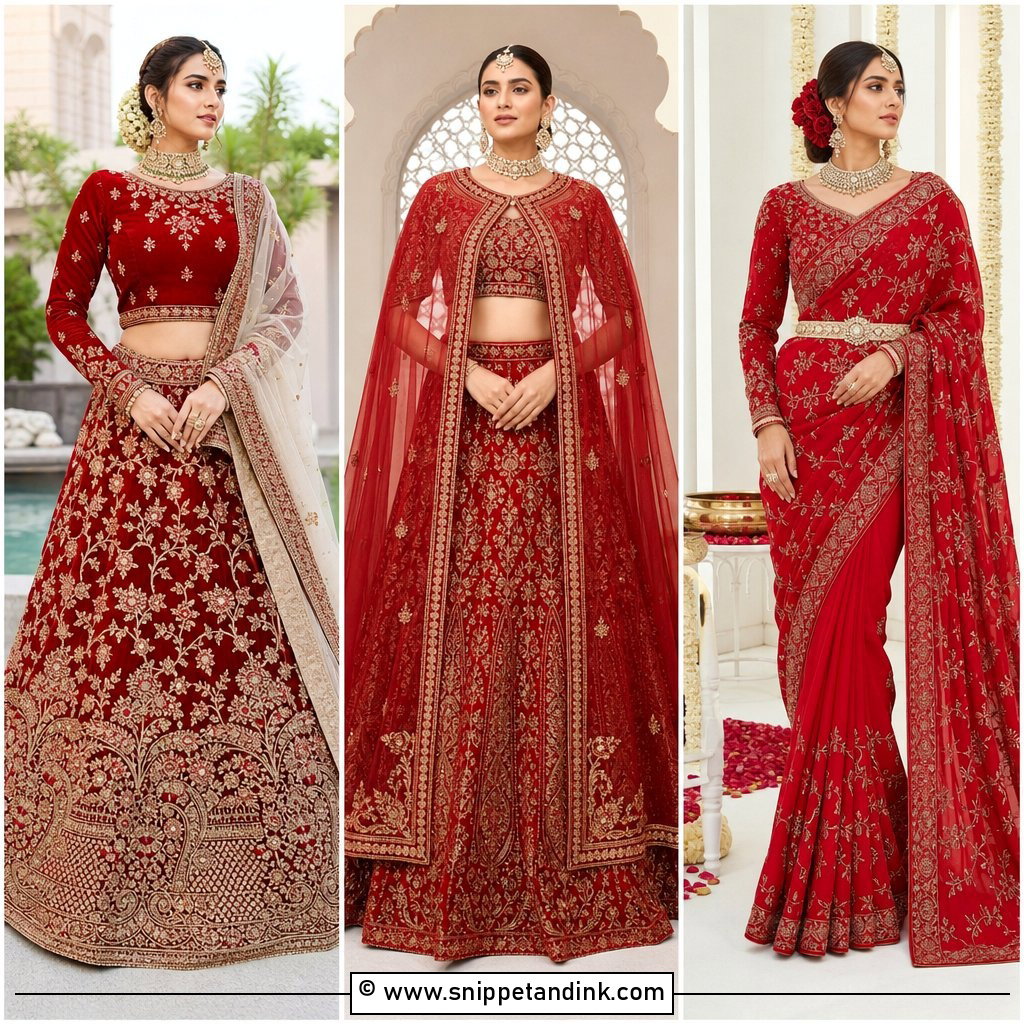
Red is still the colour most families expect for a bride’s own function, and in a sharara it feels traditional without the bulk of a lehenga. Keep the kurta short or mid-length so the flare shows; a long kurta over a red sharara hides the very part that moves. Zardozi, dabka and sequins on the kurta, then a heavily bordered dupatta, give the bridal weight. I ask brides to try the full outfit with the maang tikka and bangles on, since a heavy dupatta plus heavy jewelry can pull at the shoulder by evening. Defined eyes with a softer lip keep the face from competing with all that embroidery.
2. Ivory Sharara Suit For Wedding
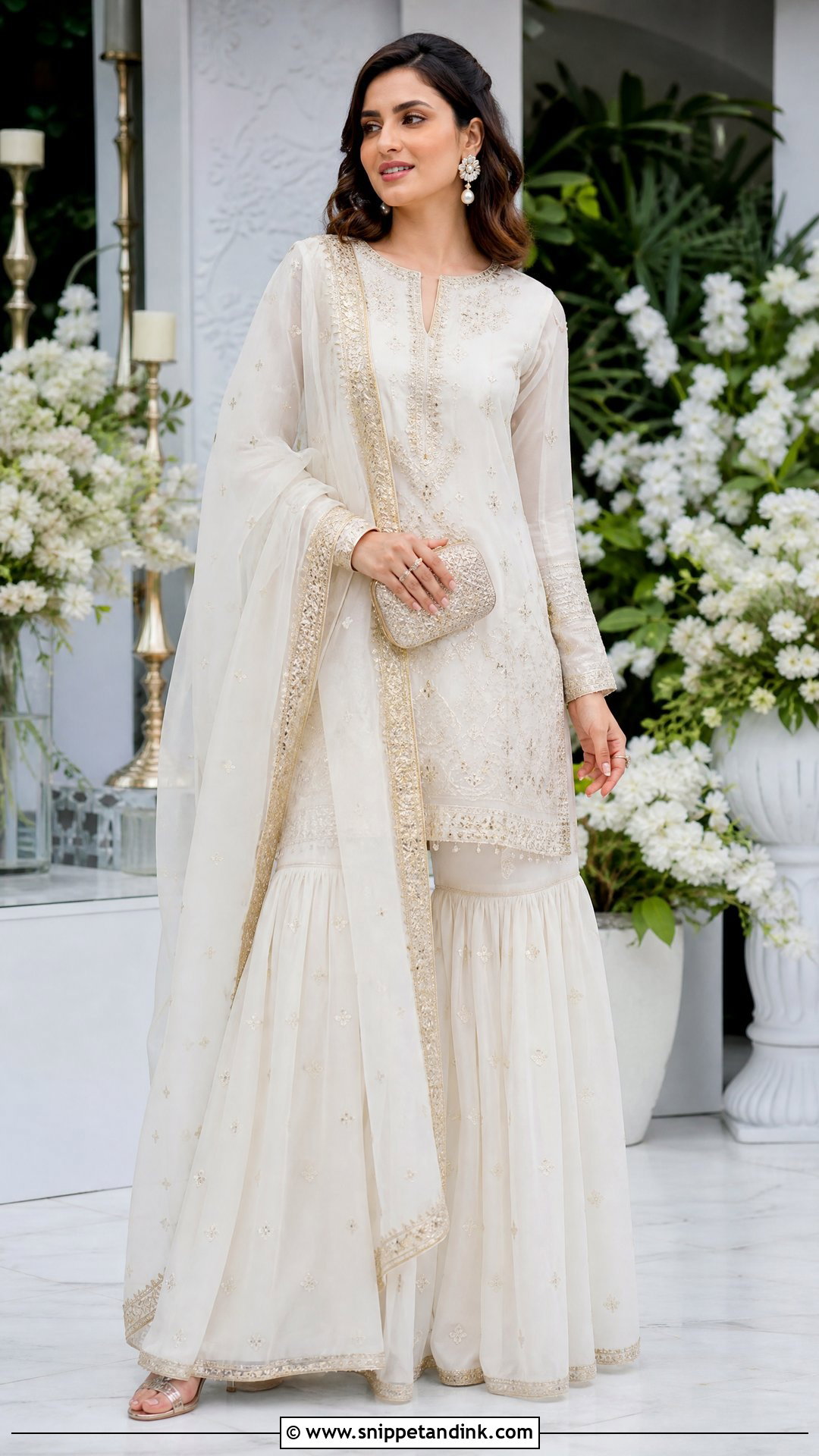
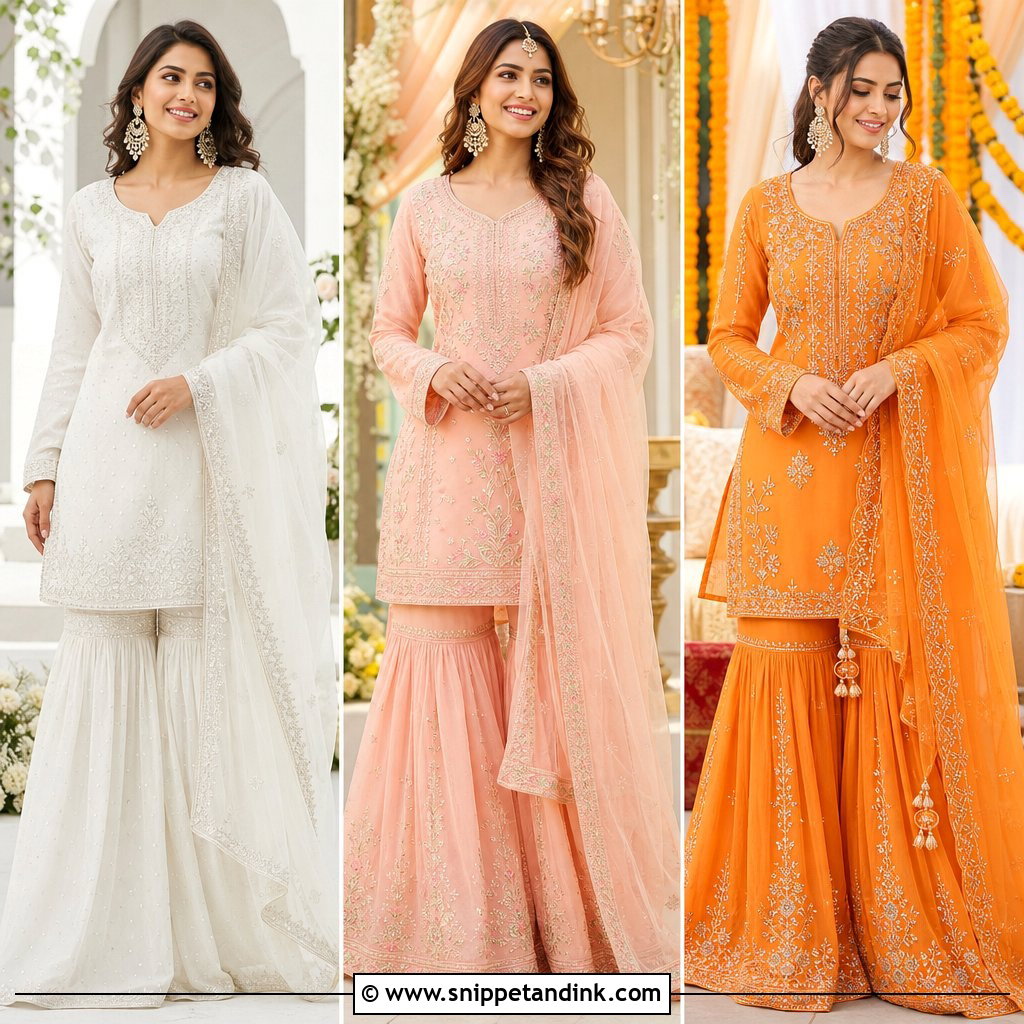
Ivory needs a daytime setting or very good lighting. In soft light it looks refined; under harsh yellow hall lights it can turn creamy-grey. Georgette, silk, organza or net with pearl, mirror or tone-on-tone work all suit it, and a short kurta with a scalloped hem over a flowing sharara gives an easy shape. If the family is traditional, check that white or ivory is welcome at a wedding function before you commit, as some families avoid it. A gold-bordered or pastel-threaded dupatta adds contrast. Metallic heels, kundan earrings and a pearl clutch finish it.
3. Pastel Pink Sharara Suit
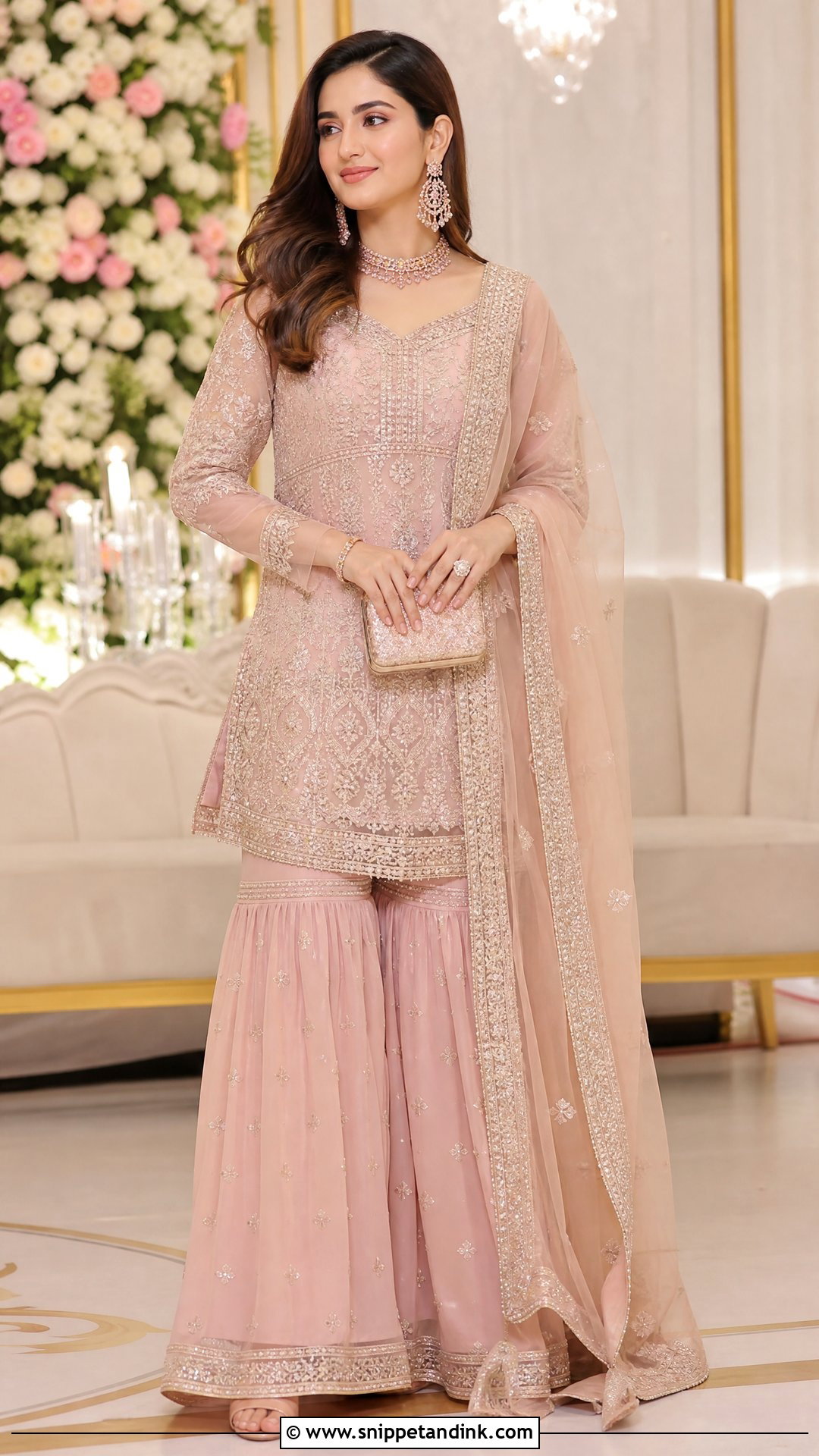
Pastel pink is gentle enough for a roka, an engagement or a daytime reception, and it flatters a wide range of ages and skin tones. Keep the embroidery light, soft sequins, pearl accents or floral thread, so the colour still reads. A blush kurta over a flared sharara with a sheer dupatta looks soft from head to toe. Rose-gold jewelry suits pink better than bright yellow gold, which can look harsh next to it. Nude heels and a small embellished clutch complete the set.
4. Green Mehndi Sharara Suit
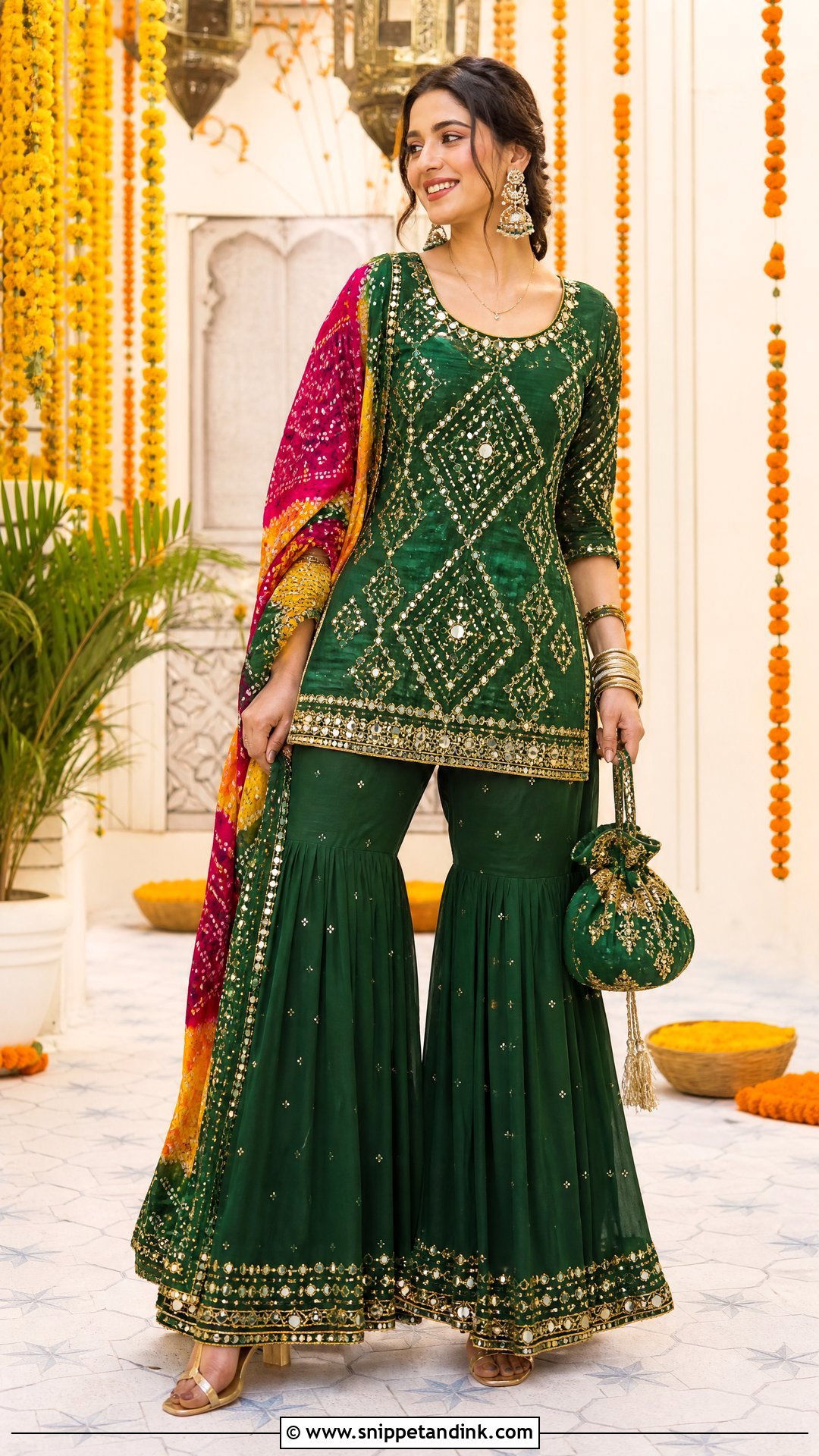
Green is the classic mehndi colour, and the shade should follow the clock. Pista and parrot green are bright and cheerful in daylight; emerald and olive hold up better at an evening function. Mirror work, gota patti and zari borders catch light nicely on green. For mehndi events, think about the henna: you will sit still with wet paste on your hands and feet for a long time, so choose breathable fabric and a sharara hem that you can lift off your feet without help. Jhumkas, bangles you can slip off before the henna goes on, block heels and a potli bag finish it.
5. Yellow Haldi Sharara Suit
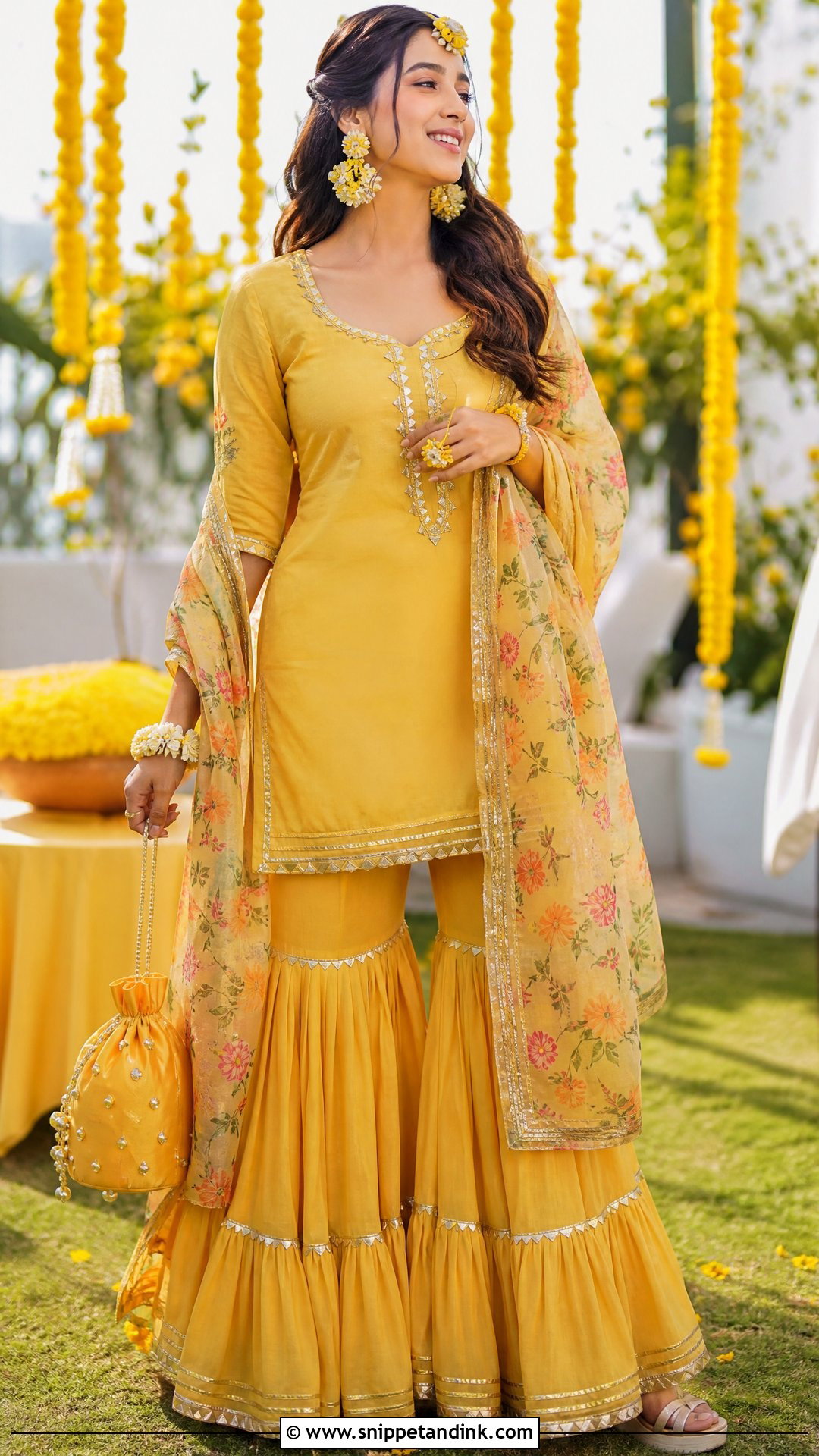
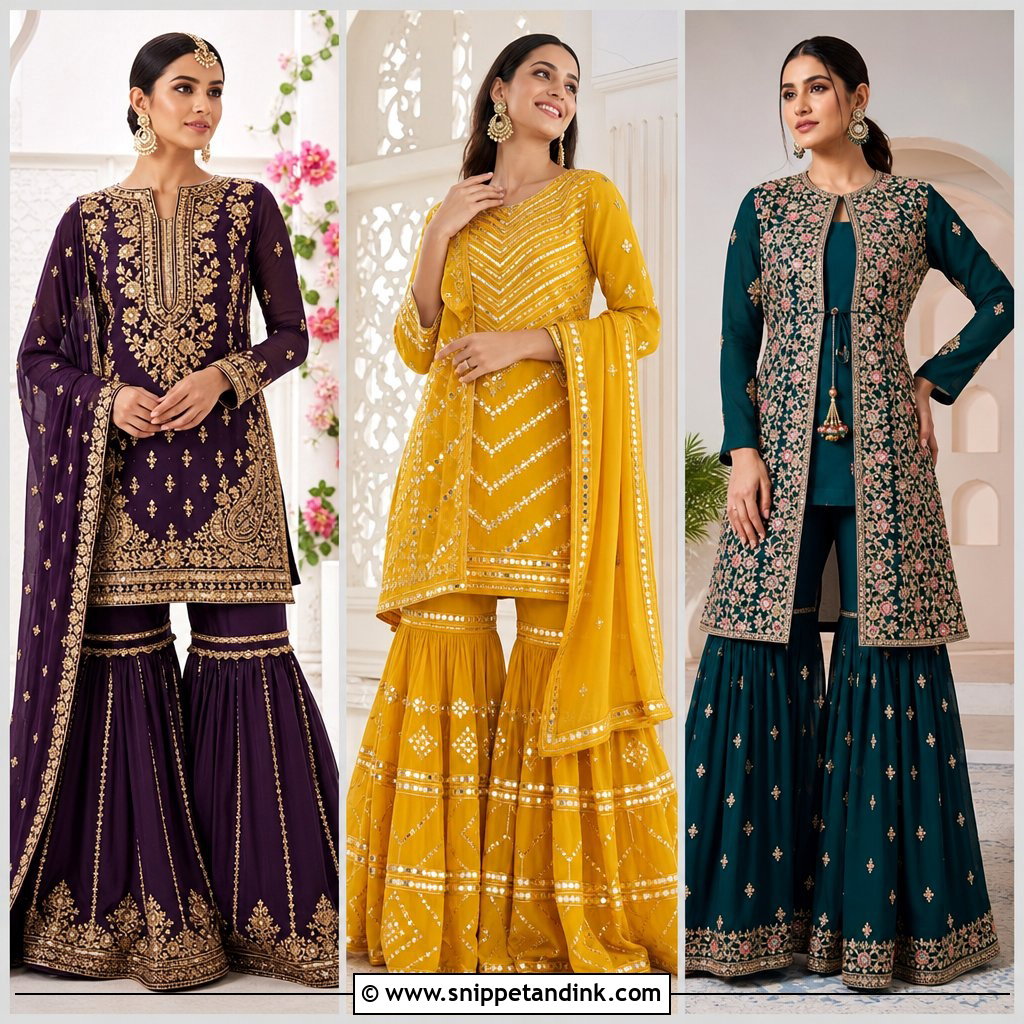
A yellow haldi sharara suit should be treated as an outfit that will get stained. Turmeric paste marks almost everything permanently, so I steer people toward washable cotton silk, muslin or printed georgette rather than an expensive embroidered piece. Keep embellishment simple: gota borders, a few mirrors, small floral motifs. Floral jewelry is traditional here and easier to clean than metal. Comfortable wedges or flats help on wet floors. Mustard, lemon, marigold and pastel yellow all work, so pick the one that flatters your skin.
6. Black Sharara Suit For Reception
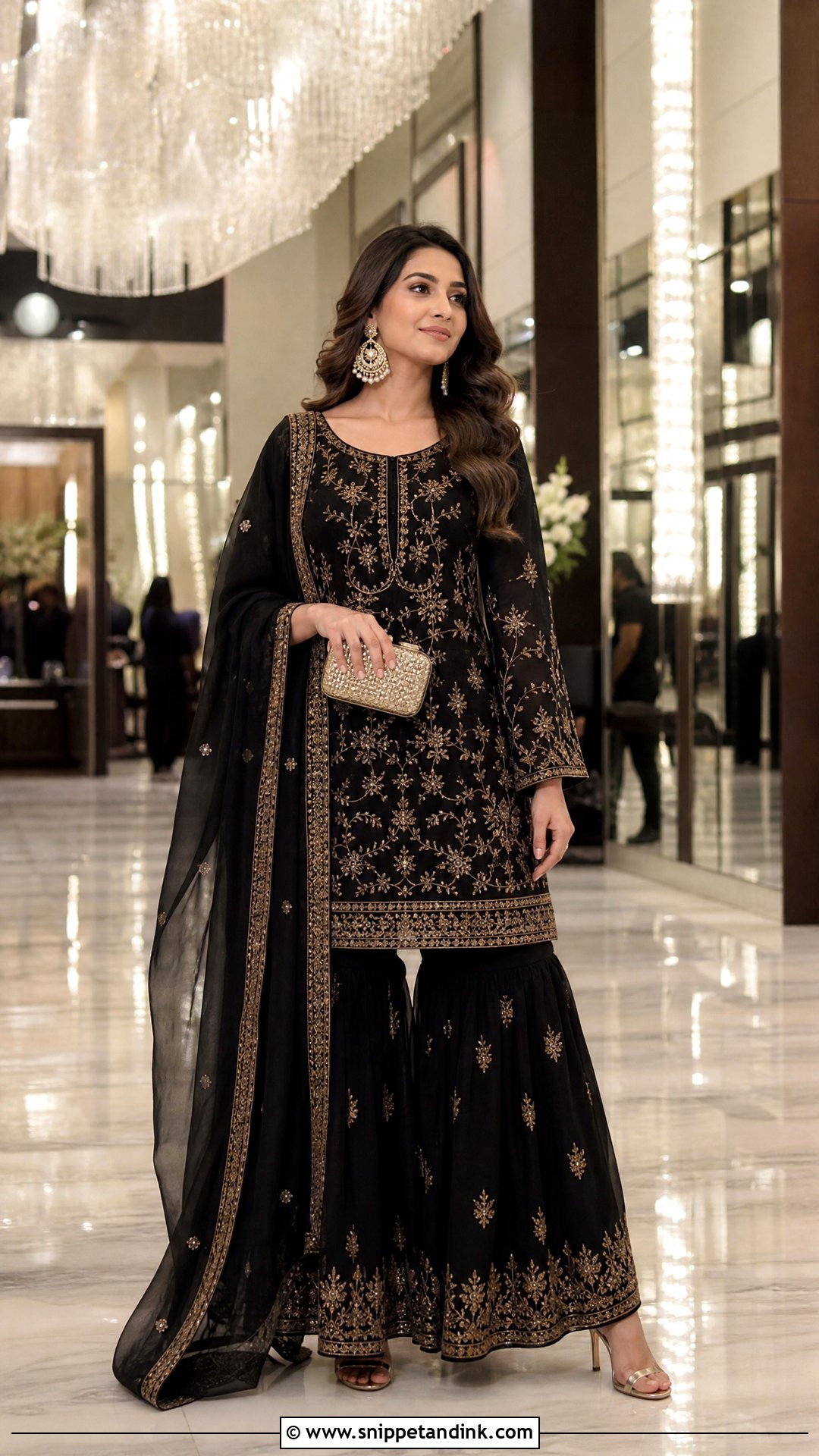
Black works well for a reception or evening event, but only when the details are rich enough to make it festive. Velvet, georgette, silk or net with gold embroidery, silver sequins or crystals carry it. Some families consider black unlucky at weddings, so check before wearing it to a close relative’s function. A fitted kurta over a wide sharara gives structure. Metallic heels, statement earrings and a sleek clutch suit it, and a sheer dupatta with an embroidered border keeps it from looking heavy. It is also easy to wear again at other formal events.
7. Golden Sharara Suit
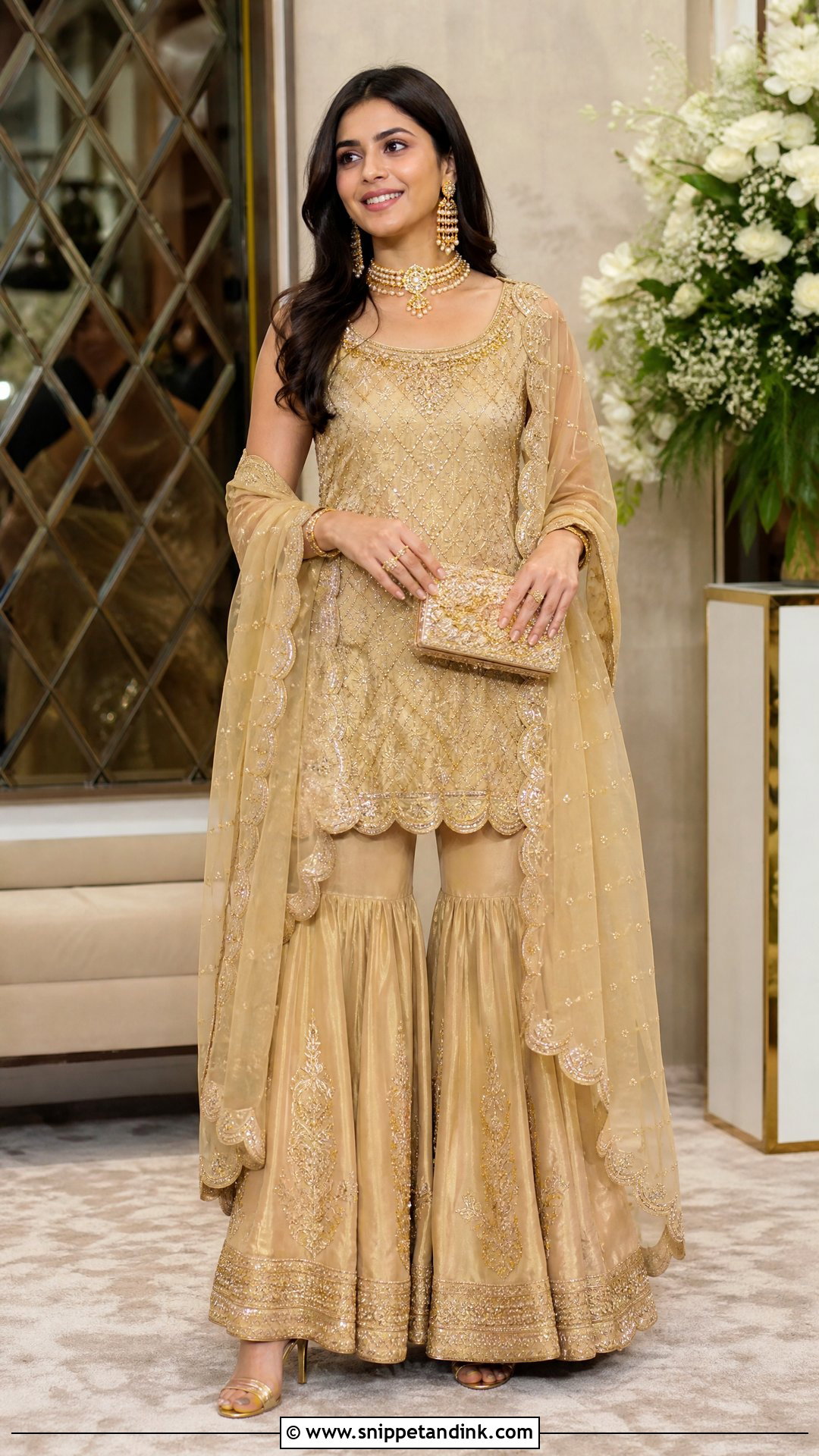
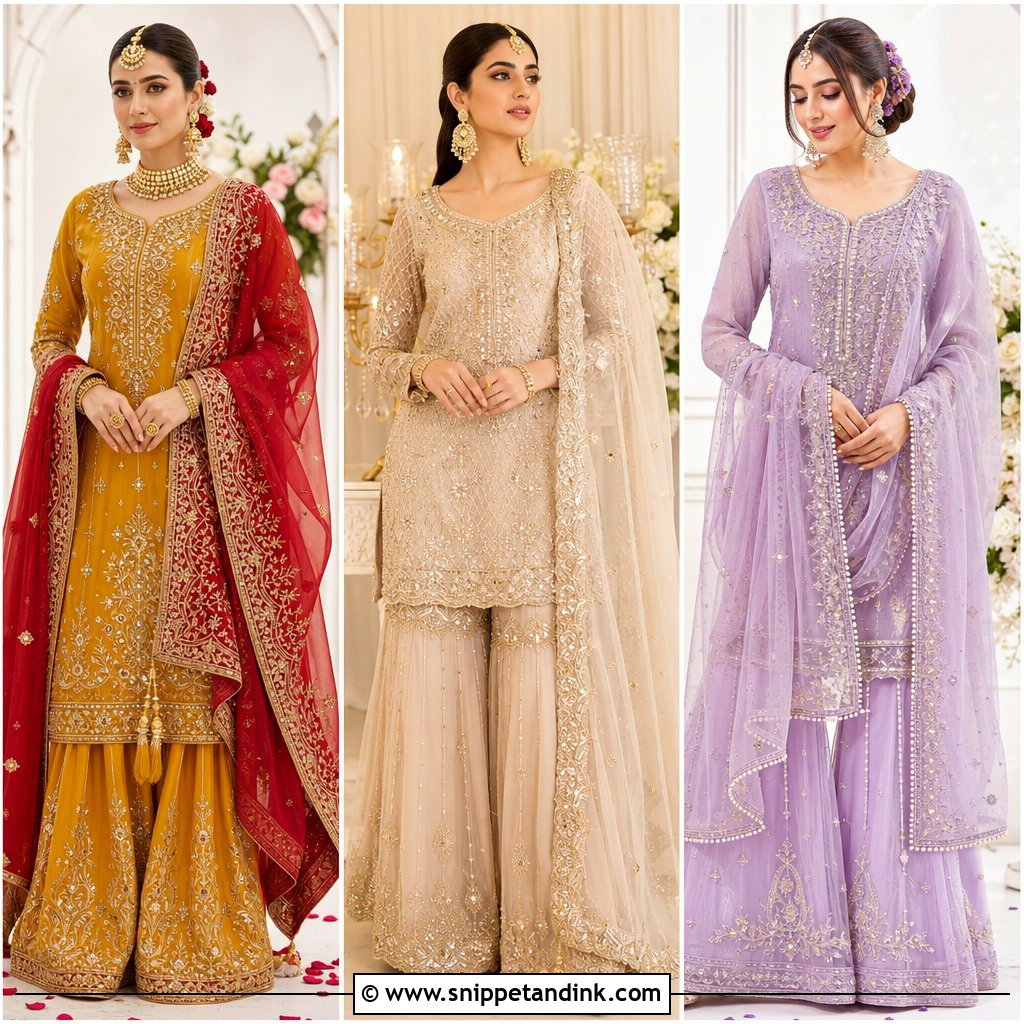
Gold catches light more than any other colour on this list, which suits grand evening functions. The shade matters: antique or dull gold suits deeper and olive skin, champagne and beige-gold flatter fair or pink-toned skin. Zari, sequins and beadwork all suit gold. A short embroidered kurta over a full sharara looks regal, but full gold fabric plus heavy kundan can look like one solid block in photos, so I keep the dupatta sheer and lighter to break it up.
8. White Sharara Suit With Dupatta
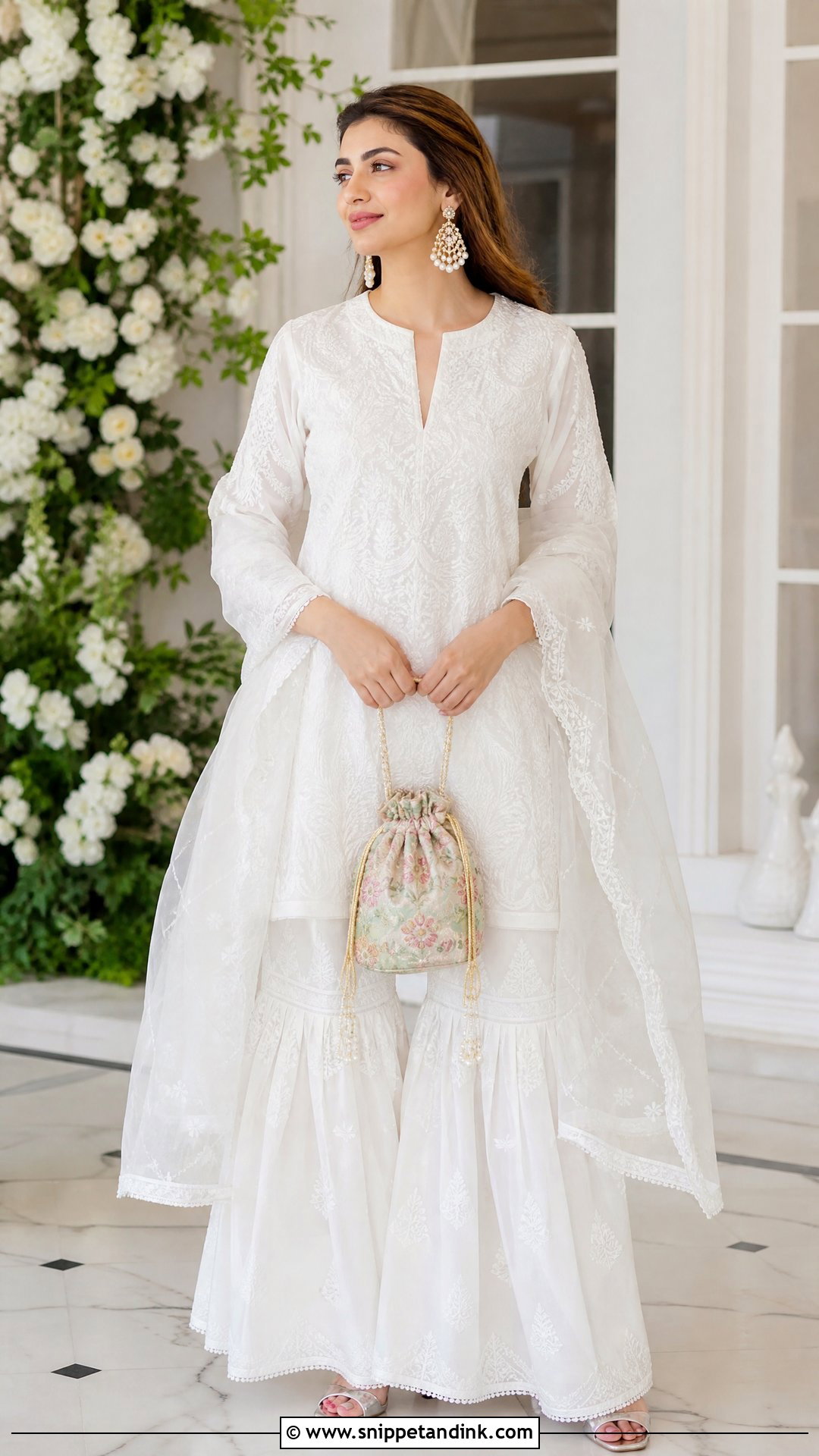
White with a dupatta works for daytime ceremonies and summer weddings. Organza, georgette, chikankari cotton or a silk blend all keep it fresh. The risk with white is how plain it can look next to heavily dressed relatives, so add white embroidery, pearls, mirrors or a pastel border. Drape the dupatta over one shoulder so it stays light. Silver heels and pearl earrings suit it; a mint, blush or powder blue potli adds a touch of colour without breaking the look.
9. Purple Sharara Suit
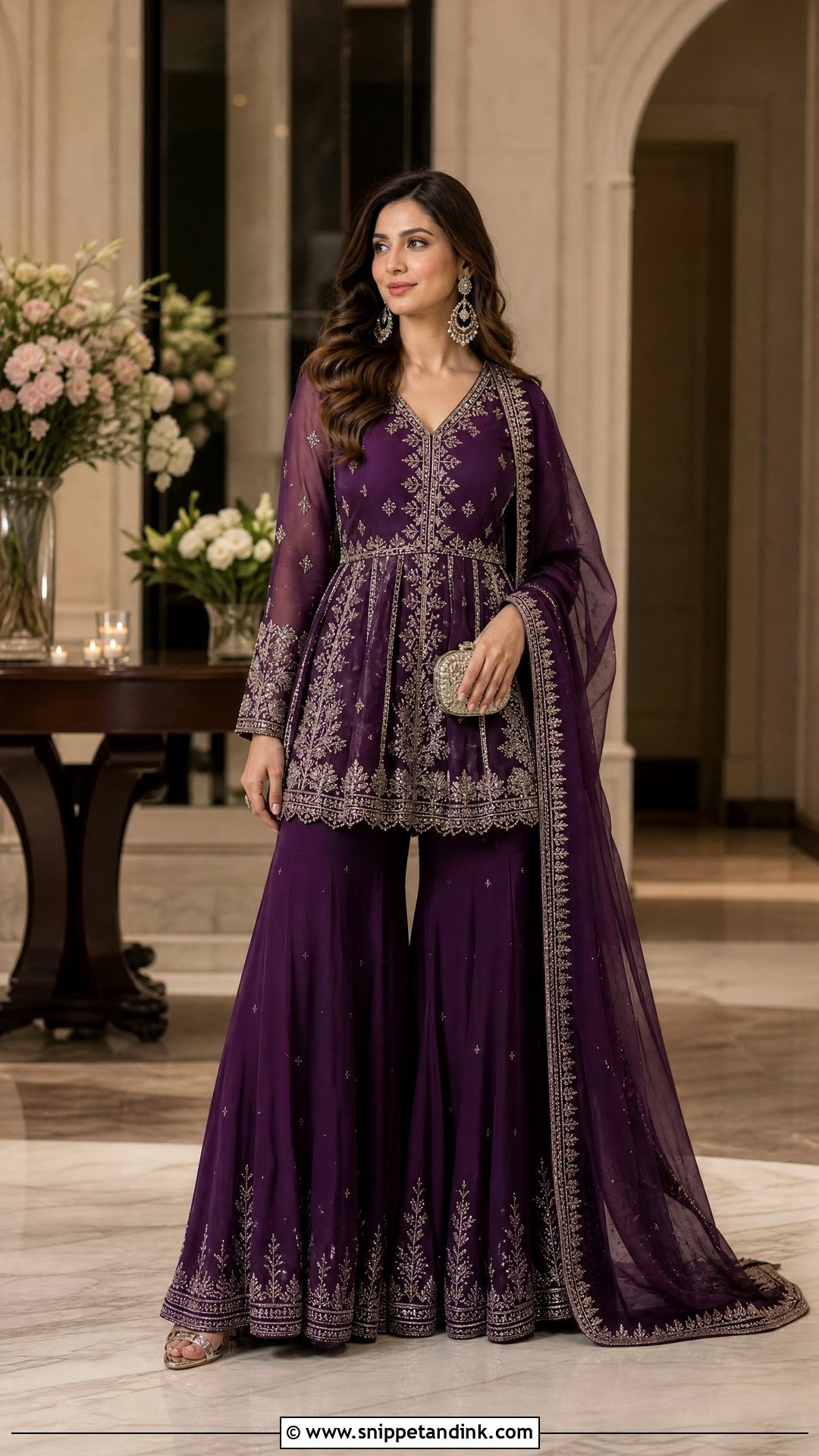
Purple shifts mood with the shade. Lavender and mauve are soft and suit daytime; deep purple and plum have a regal weight that suits evening receptions and sangeet nights. Silver embroidery cools it; gold warms it. A peplum kurta over a sharara defines the waist, which helps if the sharara is very full. Metallic heels, chandelier earrings and a matching clutch complete it.
10. Blue Sharara Suit For Wedding
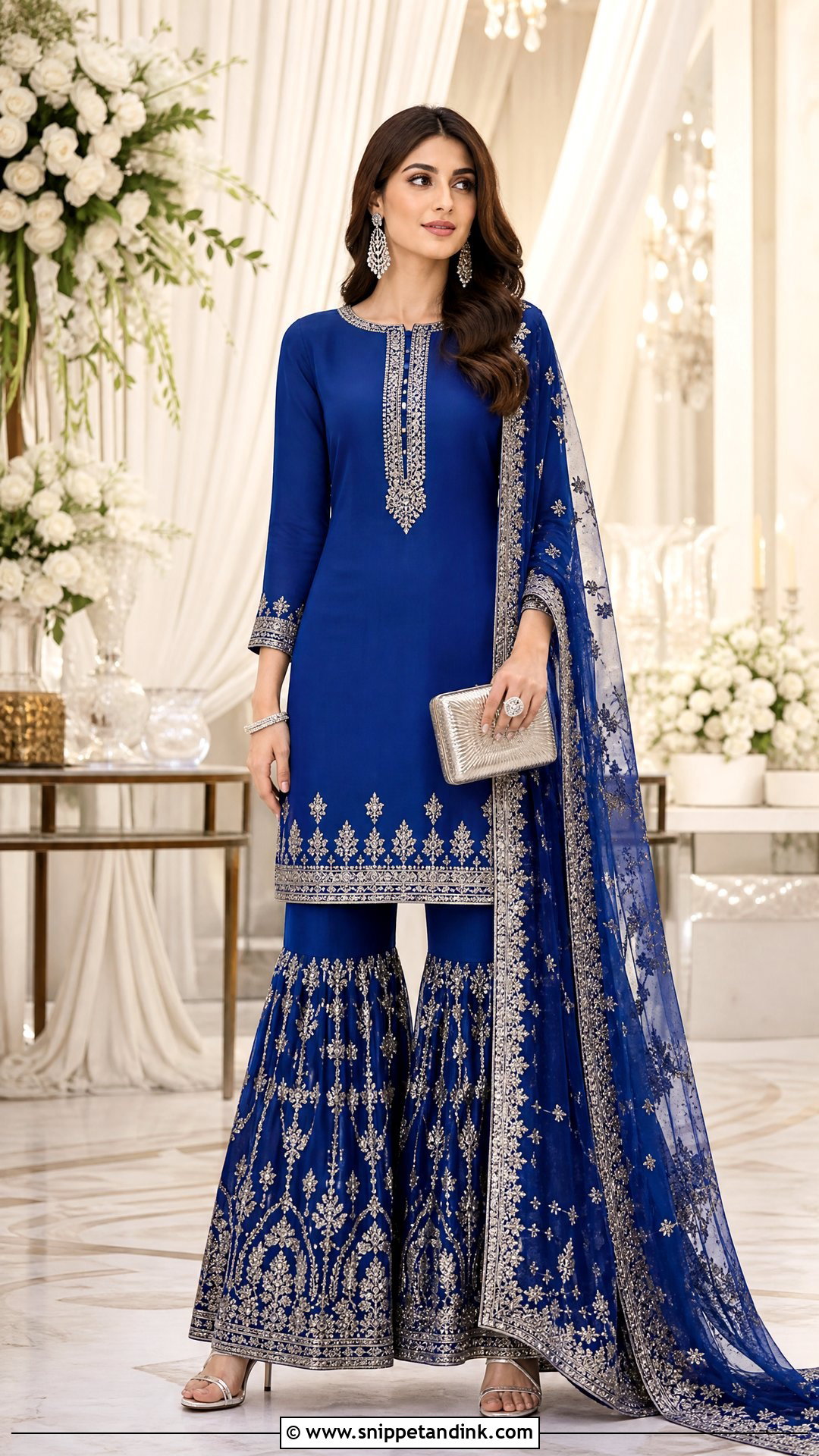
Blue is a good option for guests and family who want to look festive but not traditional. Navy and royal blue suit evening events; powder blue and teal suit daytime. Embroidered borders, sequins or zari give it occasion. A straight kurta keeps the outline clean over the flare. Silver jewelry pairs naturally with cool blues, and strappy heels with a metallic clutch finish the outfit. It’s easy to accessorize for several different events.
11. Pakistani Sharara Suit
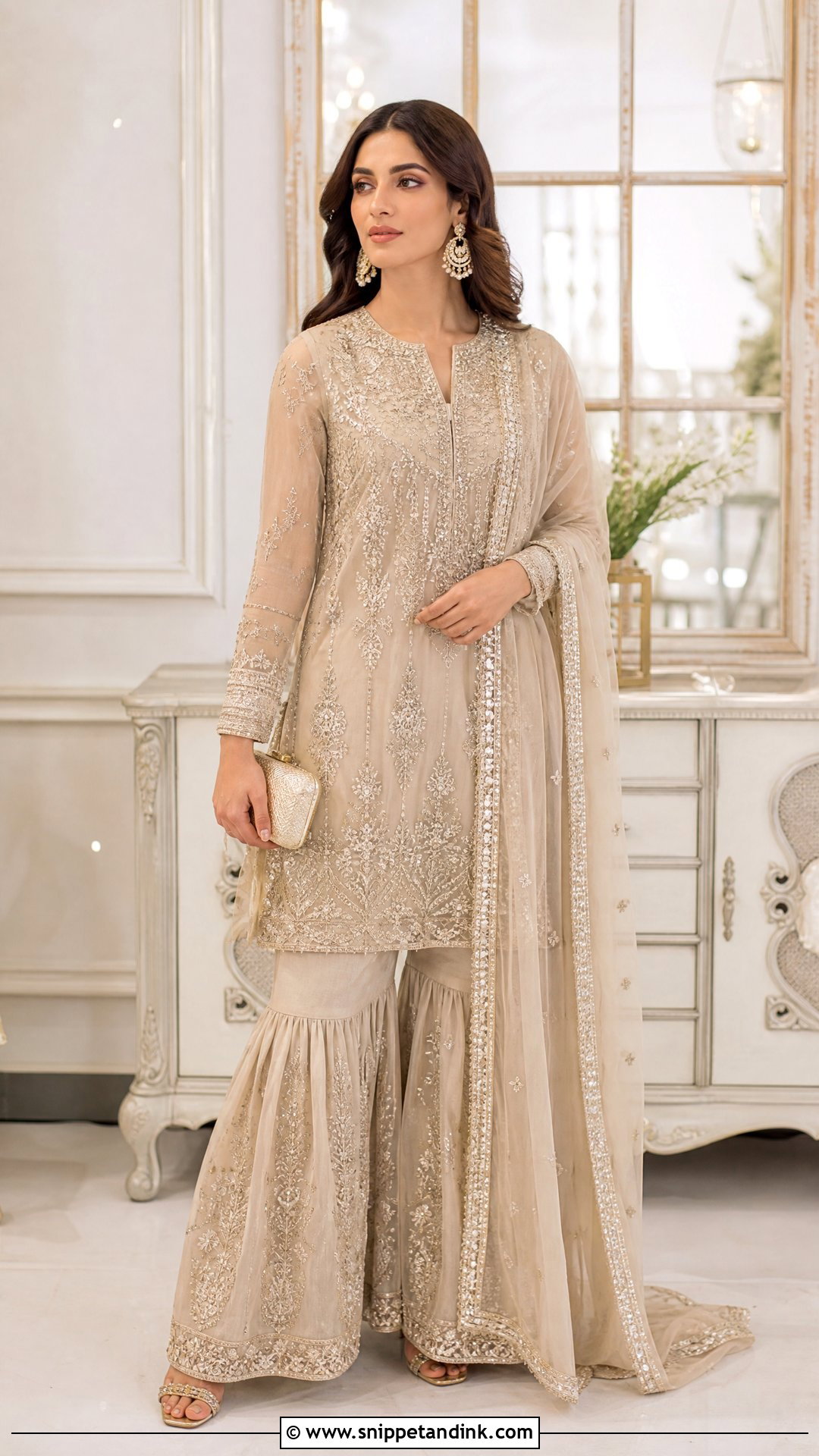
Pakistani sharara designs are usually longer in the kameez, finer in the handwork and heavier on the dupatta drape. Organza, chiffon, silk and net layers with resham, zari, pearls and sequins give a luxurious but restrained finish. A long kameez over a wide sharara needs height to carry it, so petite women may want the kameez shortened slightly. A centre parting or soft bun suits this look, and traditional earrings with embellished heels finish it. It is well suited to nikkah ceremonies, receptions and formal gatherings where modest coverage matters.
12. Short Kurti Sharara Suit
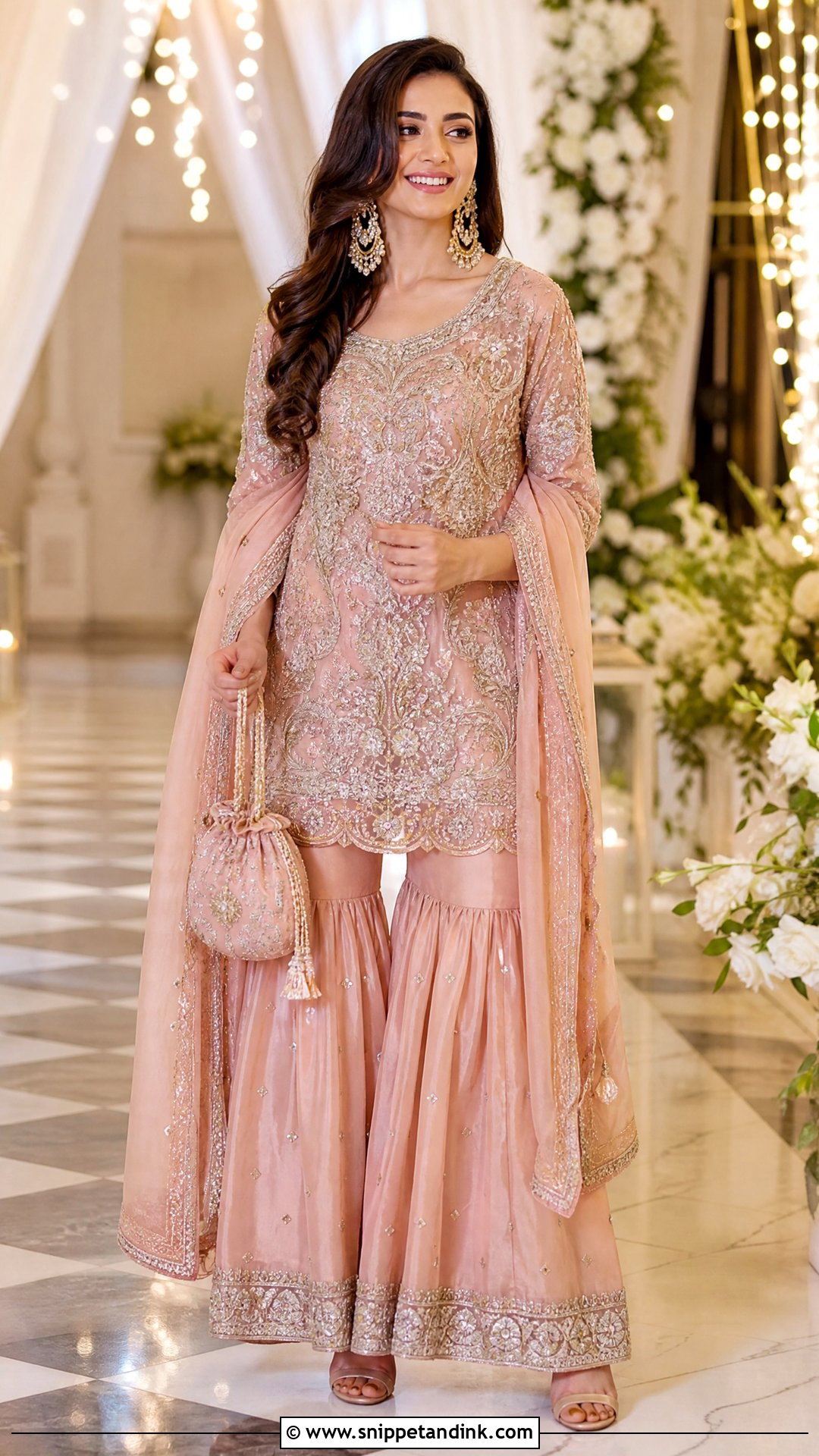
The short kurti is the most popular cut because it shows the full flare. The shorter top also makes legs look longer, which helps petite women. Put embroidery at the neckline, sleeves and hem, and choose silk, georgette, brocade, organza or net. I check one thing on this cut: the waistband. A short kurti that ends right at the sharara waist shows the join, and every tug of the dupatta can lift it, so ask for an extra inch of kurta length. Matching dupatta, statement earrings and comfortable heels finish it.
13. Long Kurta Sharara Suit
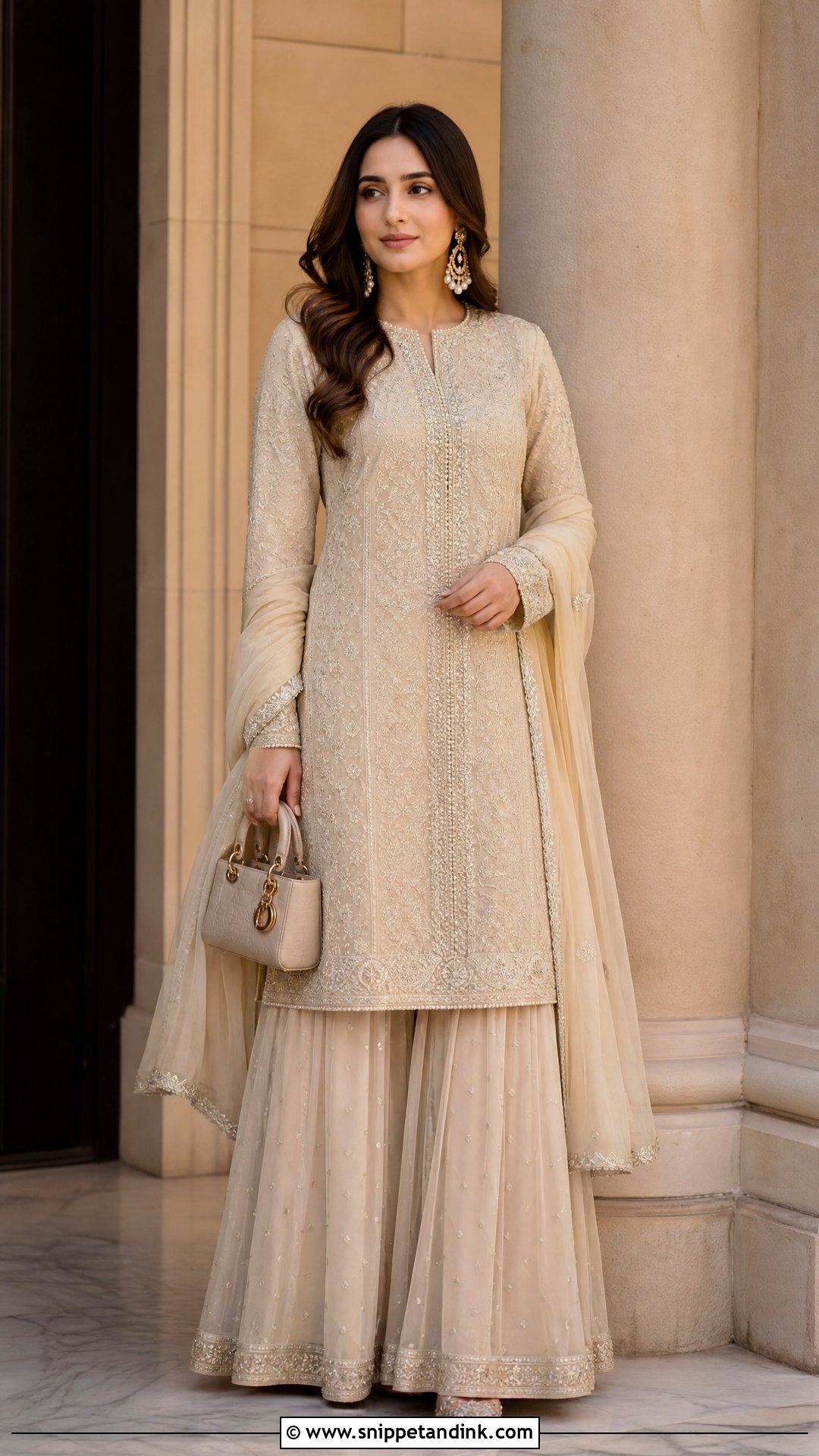
A long kurta offers more coverage while keeping the volume of the sharara. A straight or slightly flared kurta with side slits lets the sharara show as you walk. The slit height matters: too low and the flare can’t open, too high and it reads casual. Silk, chiffon, georgette or brocade give a formal finish, with embroidery at the neckline, sleeves and hem. Pointed heels lengthen the line, and a structured bag and traditional earrings complete it for a reception or formal dinner.
14. Peplum Sharara Suit
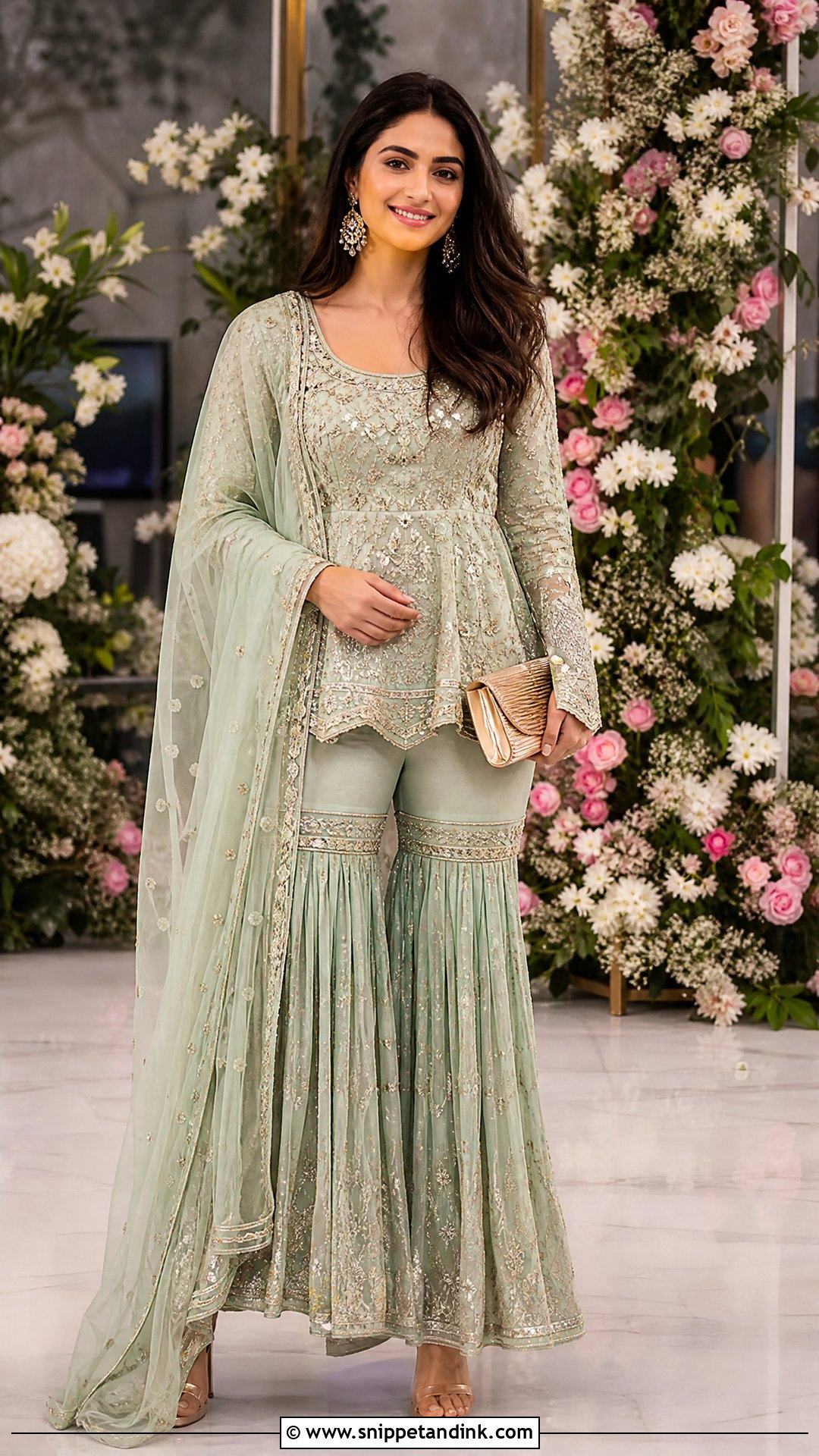
A peplum sharara suit defines the waist and then lets everything below it flare. Mirror work, sequins, threadwork or zari on the peplum top give it the festive weight. It suits sangeet, engagement and mehndi functions where you’ll be dancing. A lightweight dupatta keeps the look balanced. The peplum should end above the widest part of the hip, or it adds width instead of shape.

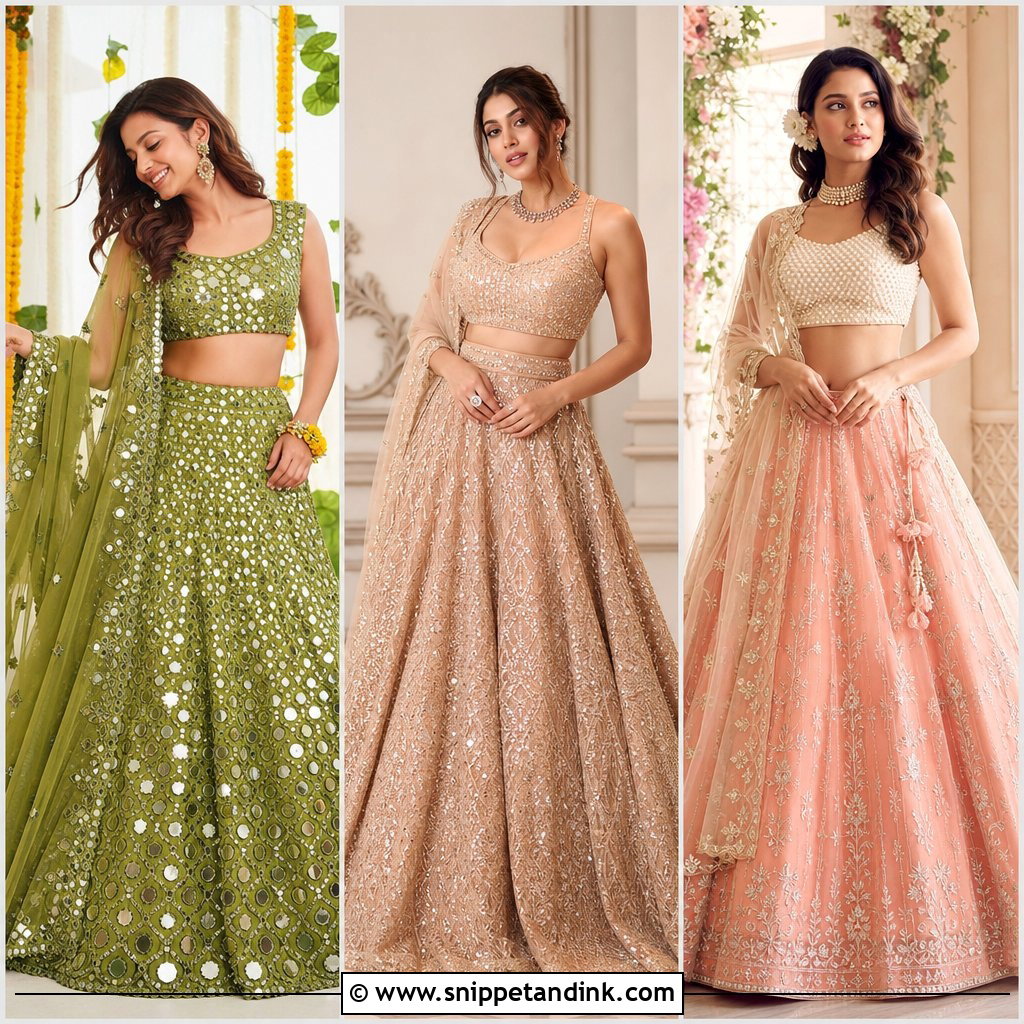

15. Jacket Sharara Suit
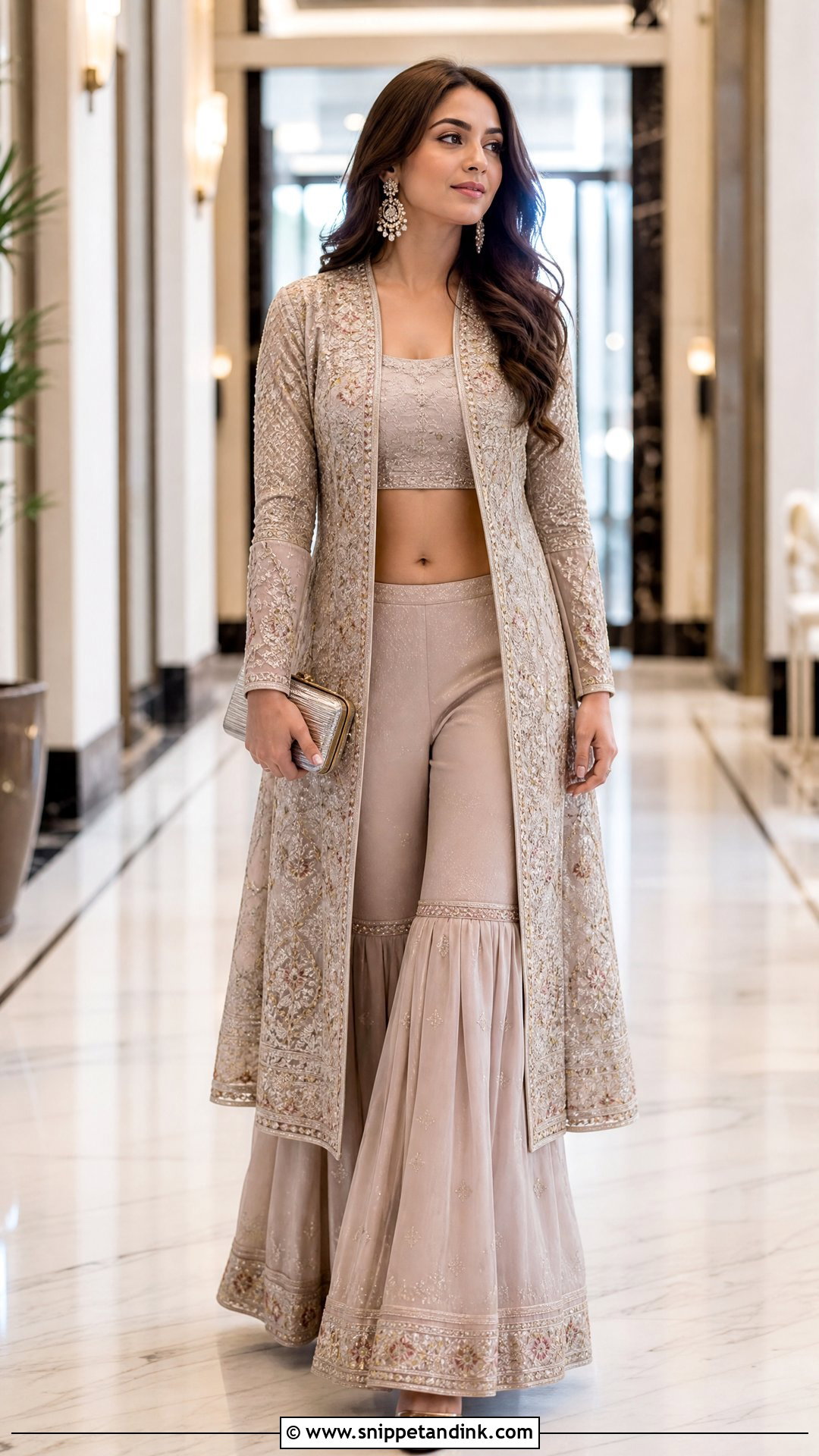
A jacket over a crop top or kurta adds a layer of drama. For a reception, a long embroidered jacket over a plain inner top looks elegant; for a mehndi or sangeet, a printed or mirror-work jacket is lighter. The jacket is the statement, so keep earrings, heels and clutch quieter. Heavy embroidered jackets get warm in a crowded hall, so make sure the inner top looks finished on its own in case you take it off.
16. Cape Sharara Suit
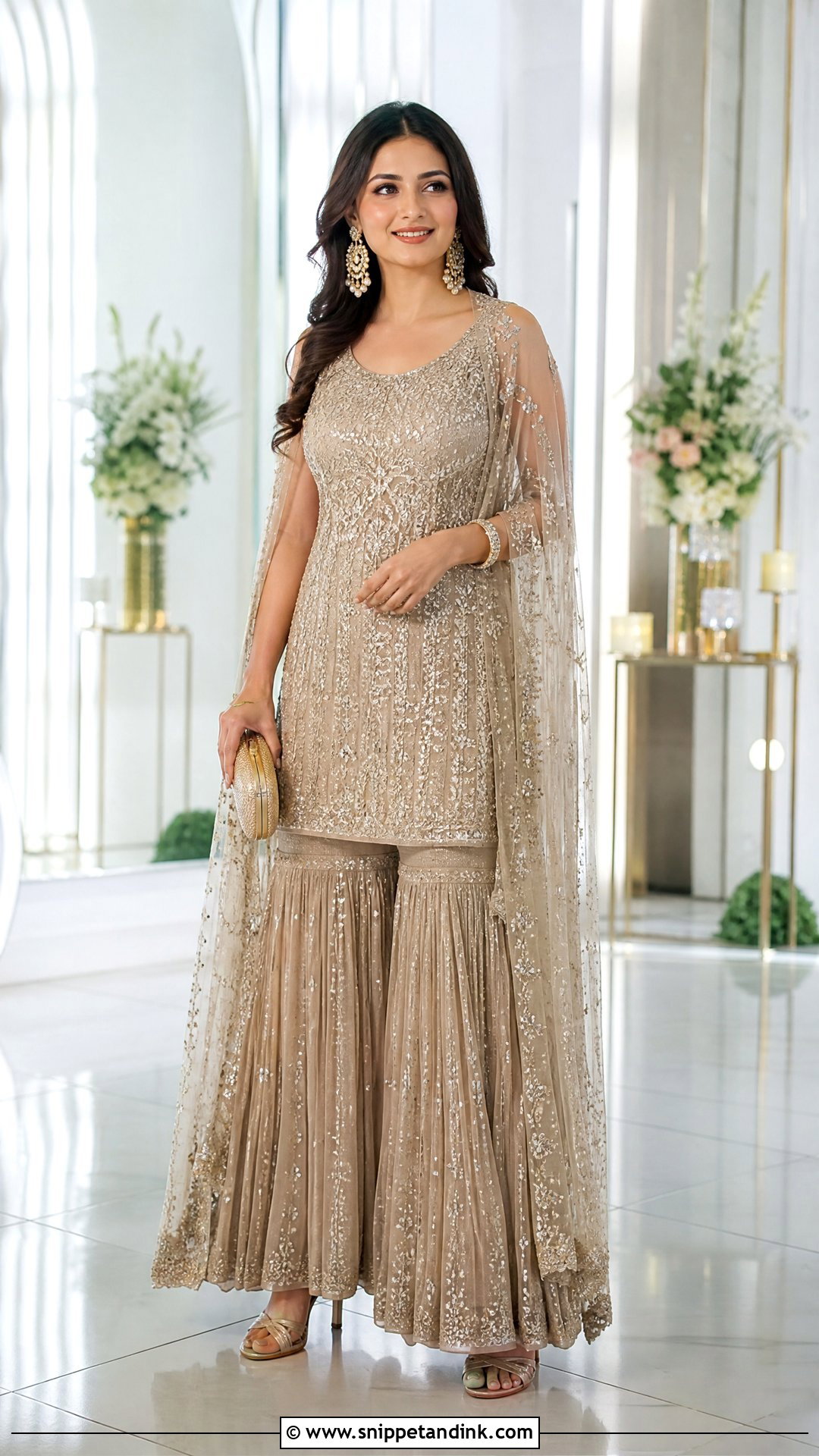
A cape replaces the dupatta, which means your hands are free all evening. A sheer embroidered cape over a fitted kurta, crop top or short blouse gives flow and coverage. Sequins, pearls or soft thread work keep it elegant. The cape moves as you do, so keep the rest of the styling clean: statement earrings, minimal bracelets, heels. It is very practical for a cocktail-style reception or sangeet, where carrying a plate and greeting guests with a dupatta is awkward.
17. Anarkali Sharara Suit
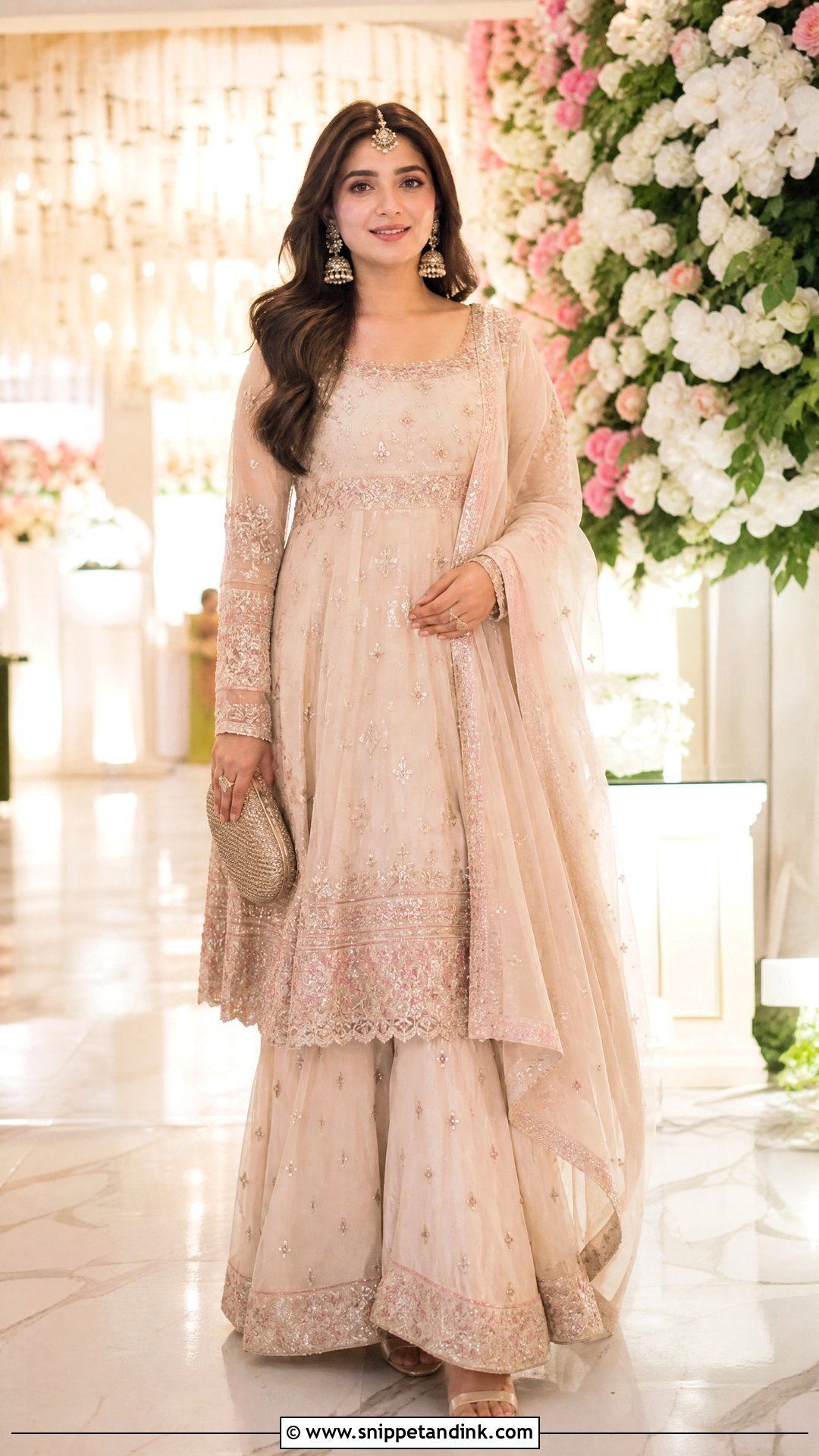
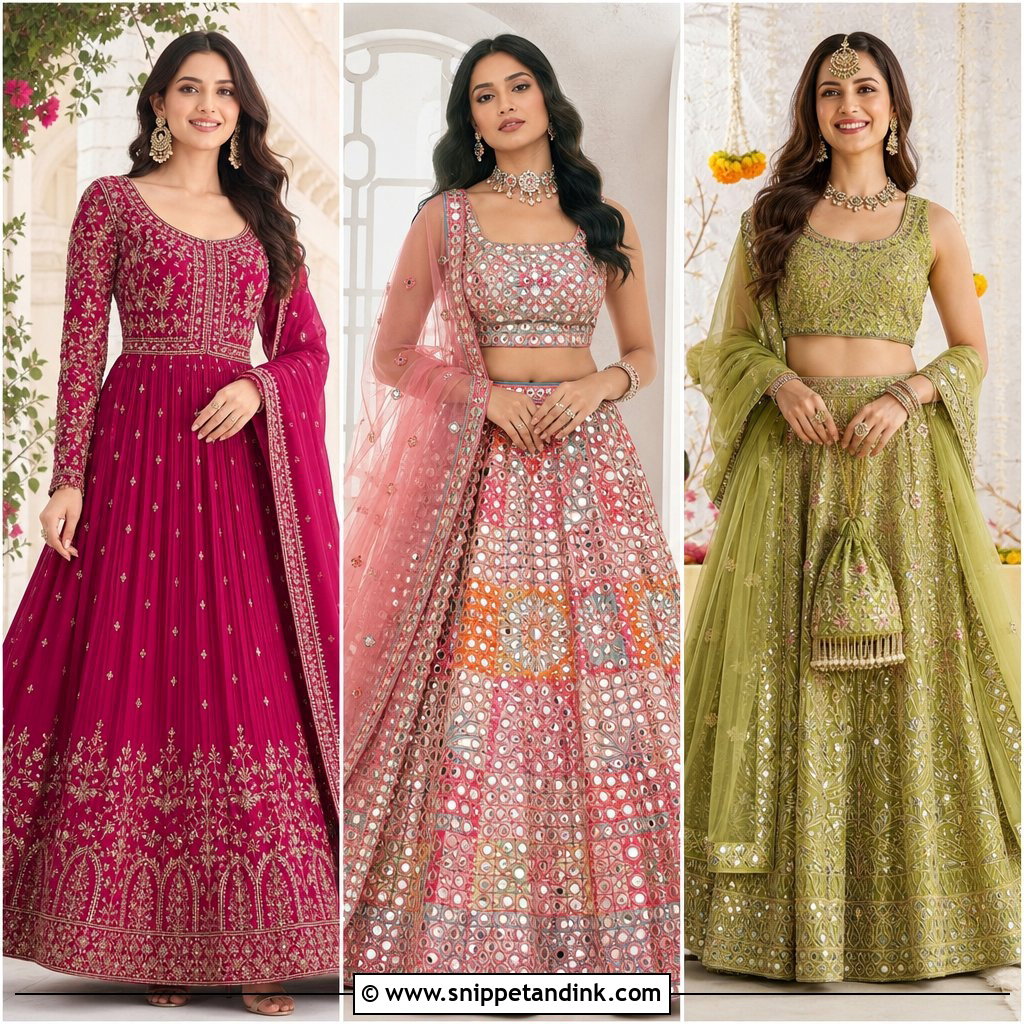
Combining an Anarkali top with a sharara puts volume both on top and below. That gives a grand look, but also doubles the fabric weight, so choose georgette, chiffon or net instead of heavy silk. Embroidery at the yoke, hem and sleeves keeps it refined. Tall frames carry this easily. Petite women can wear it with a shorter Anarkali and a more controlled flare, so the two volumes don’t swallow them.
18. Mirror Work Sharara Suit
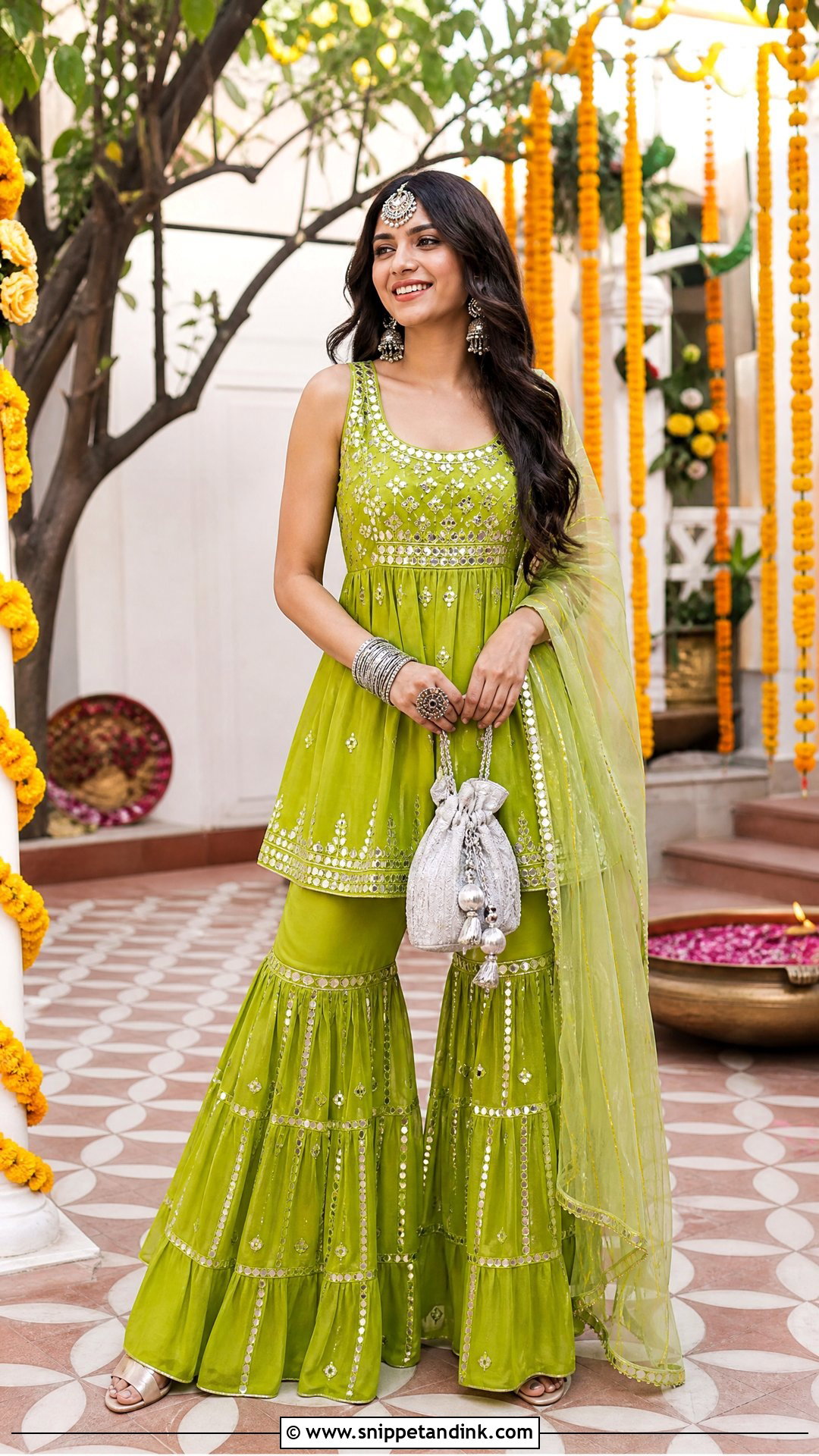
Mirror work flashes under lights and camera flash, so it reads festive in photos. It suits mehndi and sangeet, especially on bright green, yellow, orange, pink or blue. A short kurta or peplum over a flared sharara with a light dupatta stays balanced. Oxidized jewelry suits mirror work better than polished gold. One practical note: small mirrors catch on fine dupatta fabric, so choose a dupatta with a slightly denser weave.
19. Chikankari Sharara Suit
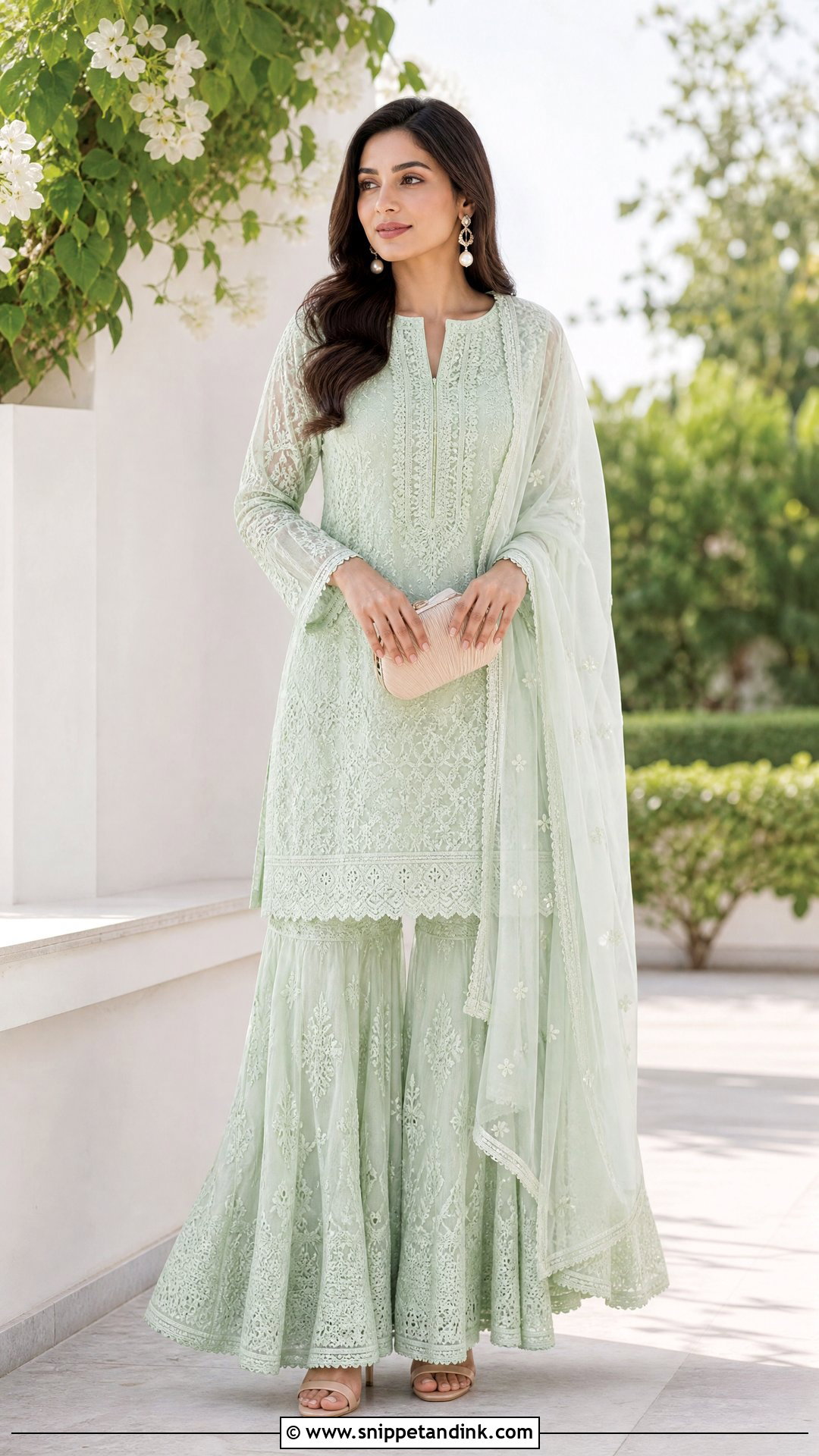
Chikankari is fine shadow embroidery on light cotton or georgette, and its charm is how understated it is. It suits daytime weddings, summer functions and pre-wedding lunches. White, ivory, pastel pink, mint, powder blue and lilac show the threadwork best. For more occasion, choose chikankari with mukaish or sequins added. Pearl earrings, nude heels and a small clutch complete it. Wash it gently by hand, since the delicate stitches pull easily.

20. Floral Sharara Suit
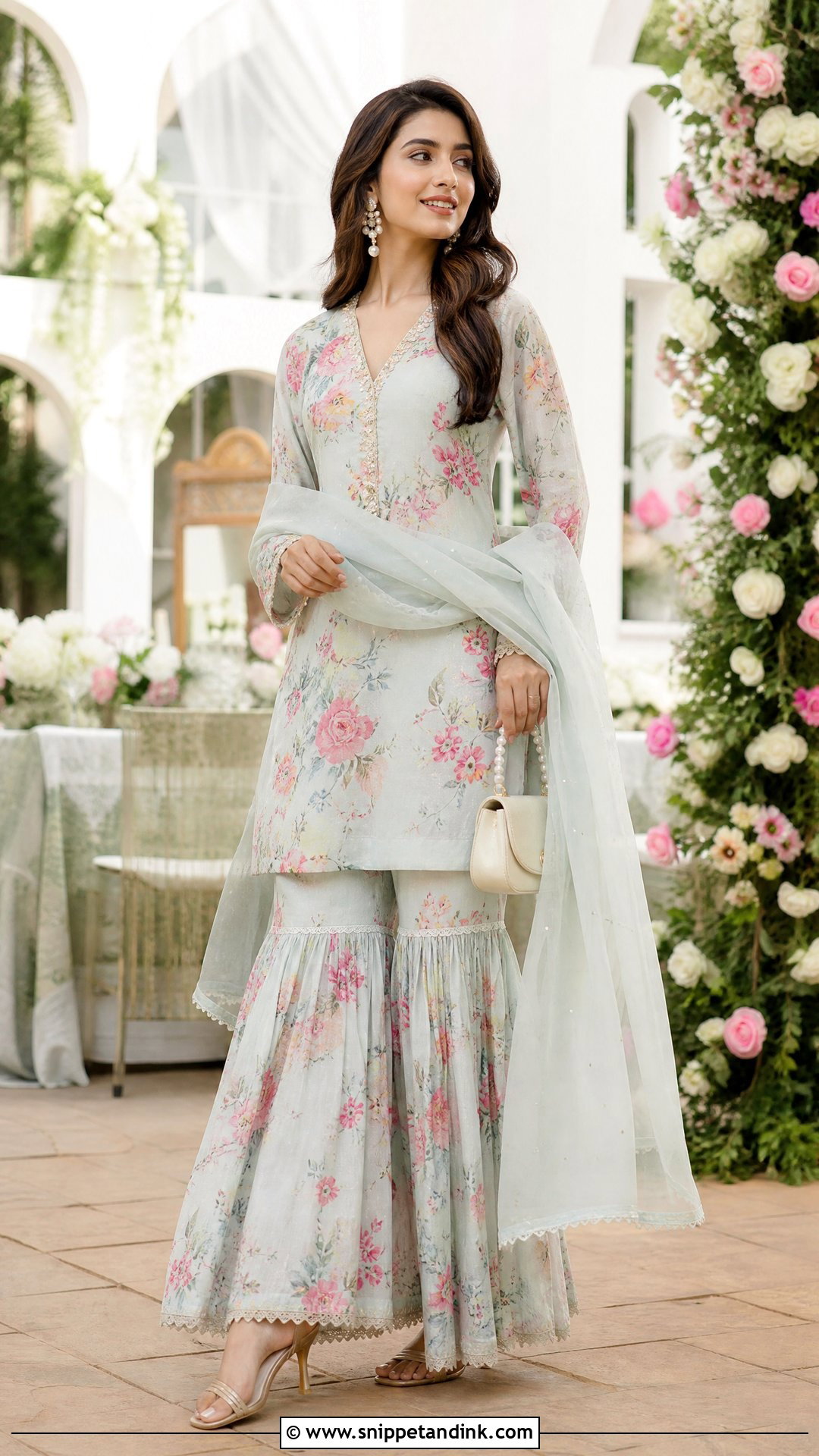
Florals suit daytime functions and garden settings. Printed, embroidered and appliquéd florals all work, depending on formality. For a mehndi or brunch, pastel florals on organza, georgette, cotton silk or chiffon feel fresh. A short kurta with a printed sharara and light dupatta is easy to wear. Balance the jewelry with the print: if the print is bold, keep accessories simple; if delicate, add a bit more.
21. Velvet Sharara Suit
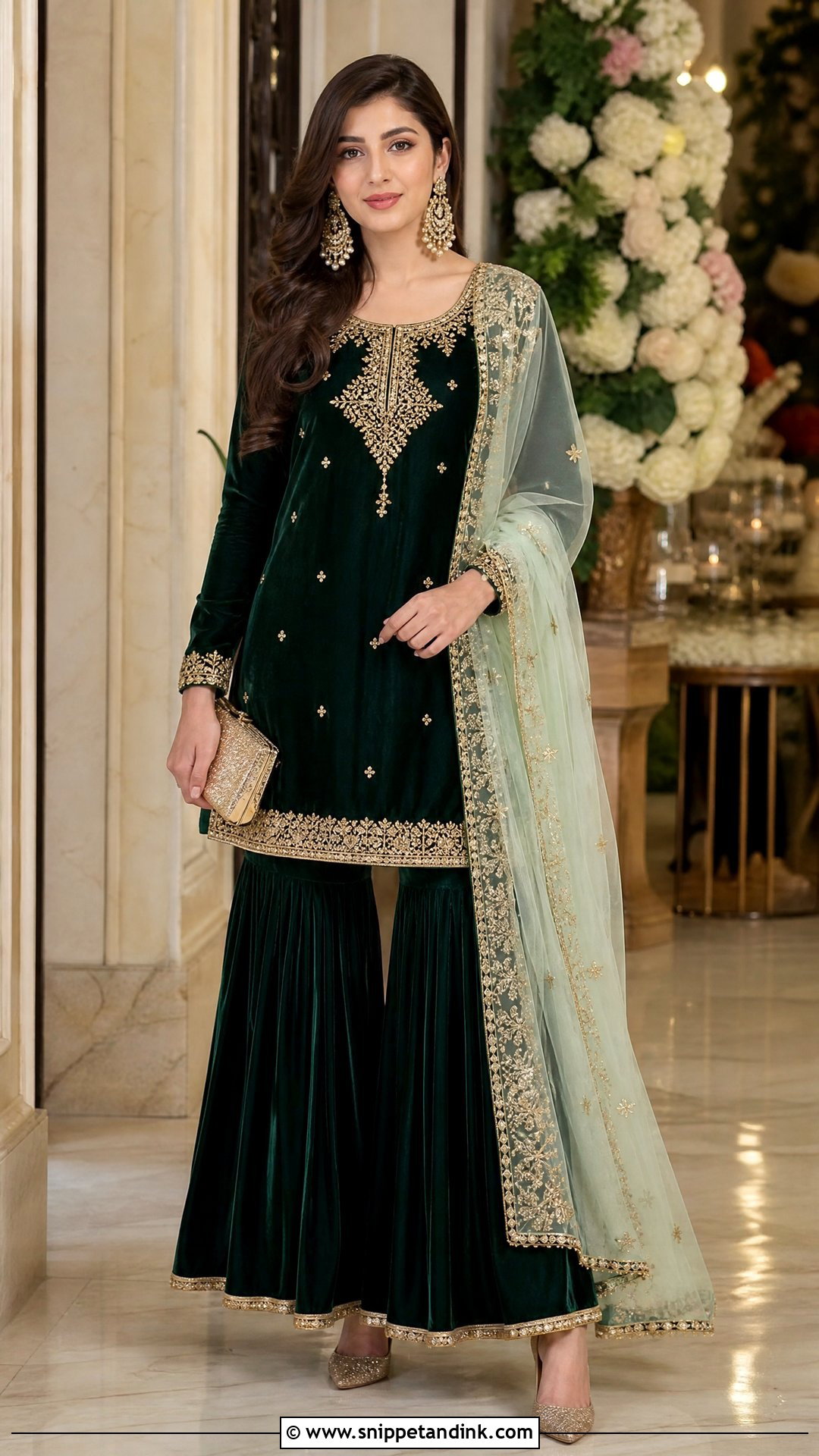
Velvet is for winter weddings and evening receptions only. In a warm room it becomes uncomfortable quickly. Maroon, emerald, navy, black, plum and chocolate look richest in velvet, with gold, antique zari, sequins or beads. Velvet is heavy, so I keep the sharara flare controlled and the dupatta in a lighter fabric like net or organza. Heels, statement earrings and a compact clutch are plenty.
22. Organza Sharara Suit
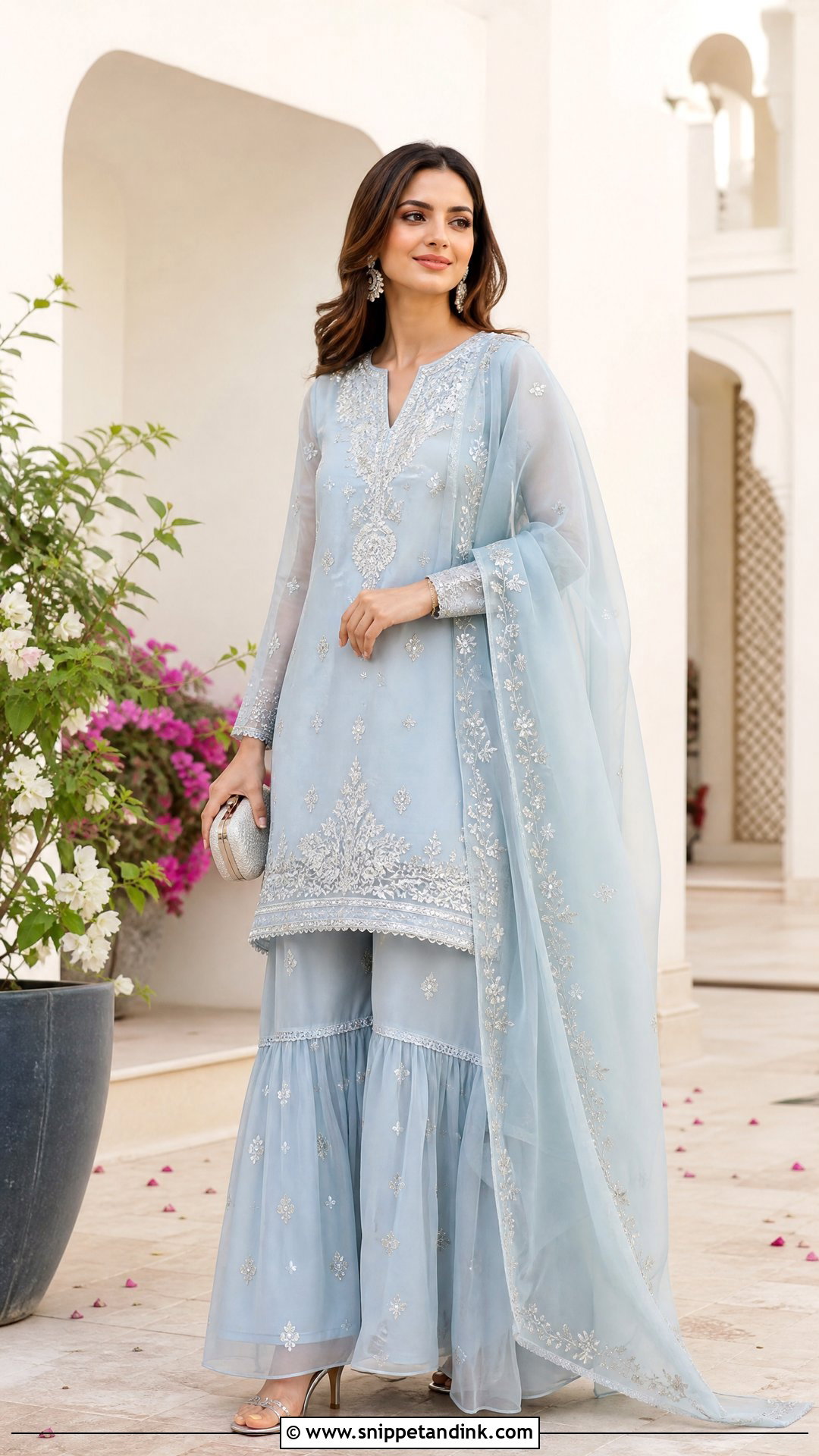
Organza has a crisp body, so the sharara holds a clean, wide flare without much weight. Pastels, ivory, peach, mint and powder blue look especially fresh in it. Floral embroidery, pearls or fine sequins add festivity. Organza creases sharply if packed tightly, so for a destination wedding I’d steam it on arrival. A short kurta, wide sharara and sheer dupatta create an airy outline. Dainty earrings, metallic heels and a small clutch finish it.
23. Heavy Embroidered Sharara Suit
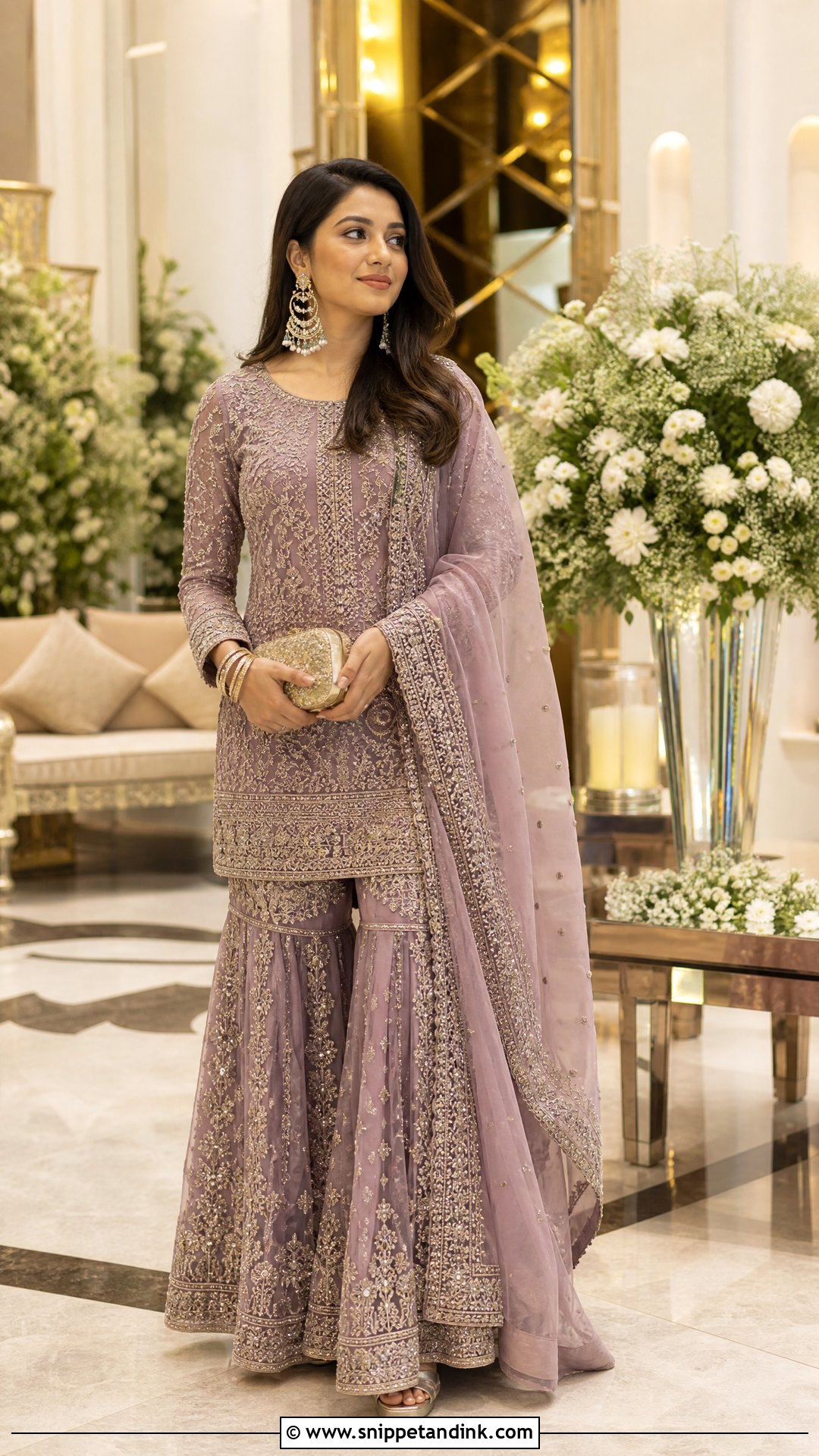
Heavy embroidery belongs at close family functions where you want presence: the bride’s or groom’s sister, the mother of the bride or a formal guest. Hand embroidery, zari, resham, sequins, pearls and beads add weight, and you should try the outfit on for at least an hour before the event to check comfort. If the neckline is heavy, choose earrings instead of a necklace. The overall effect is close to a lehenga, with more movement.
24. Printed Sharara Suit
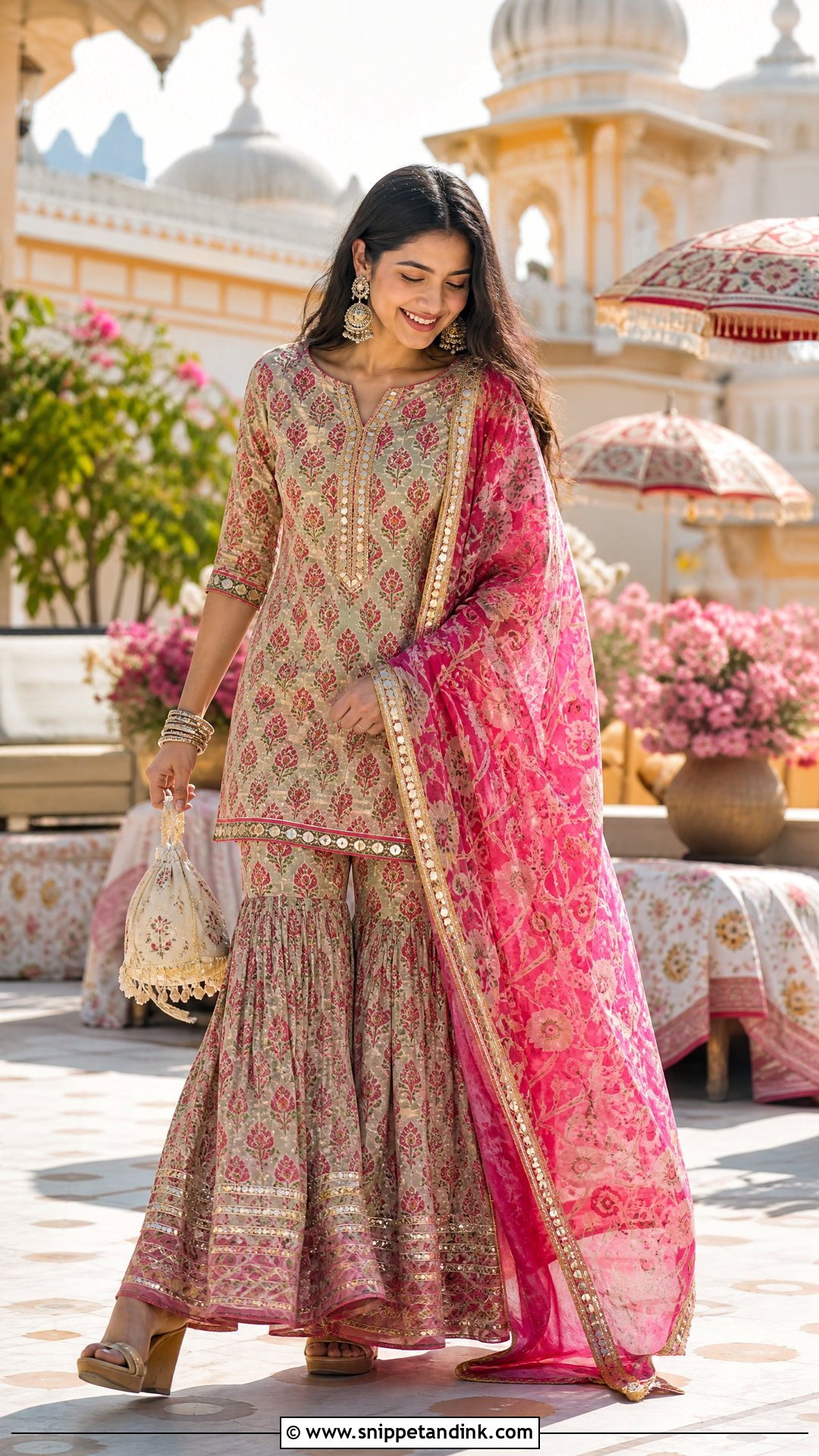
A printed sharara suit is comfortable and stylish for lighter wedding events. Block prints, leheriya, bandhani, florals or digital motifs suit mehndi, haldi, welcome lunches and destination weddings. A printed short kurta with a matching or contrast sharara feels festive without weight. Gota borders or mirror accents dress a print up. Earrings, bangles, wedges and a potli bag finish it.


25. Designer Sharara Suit
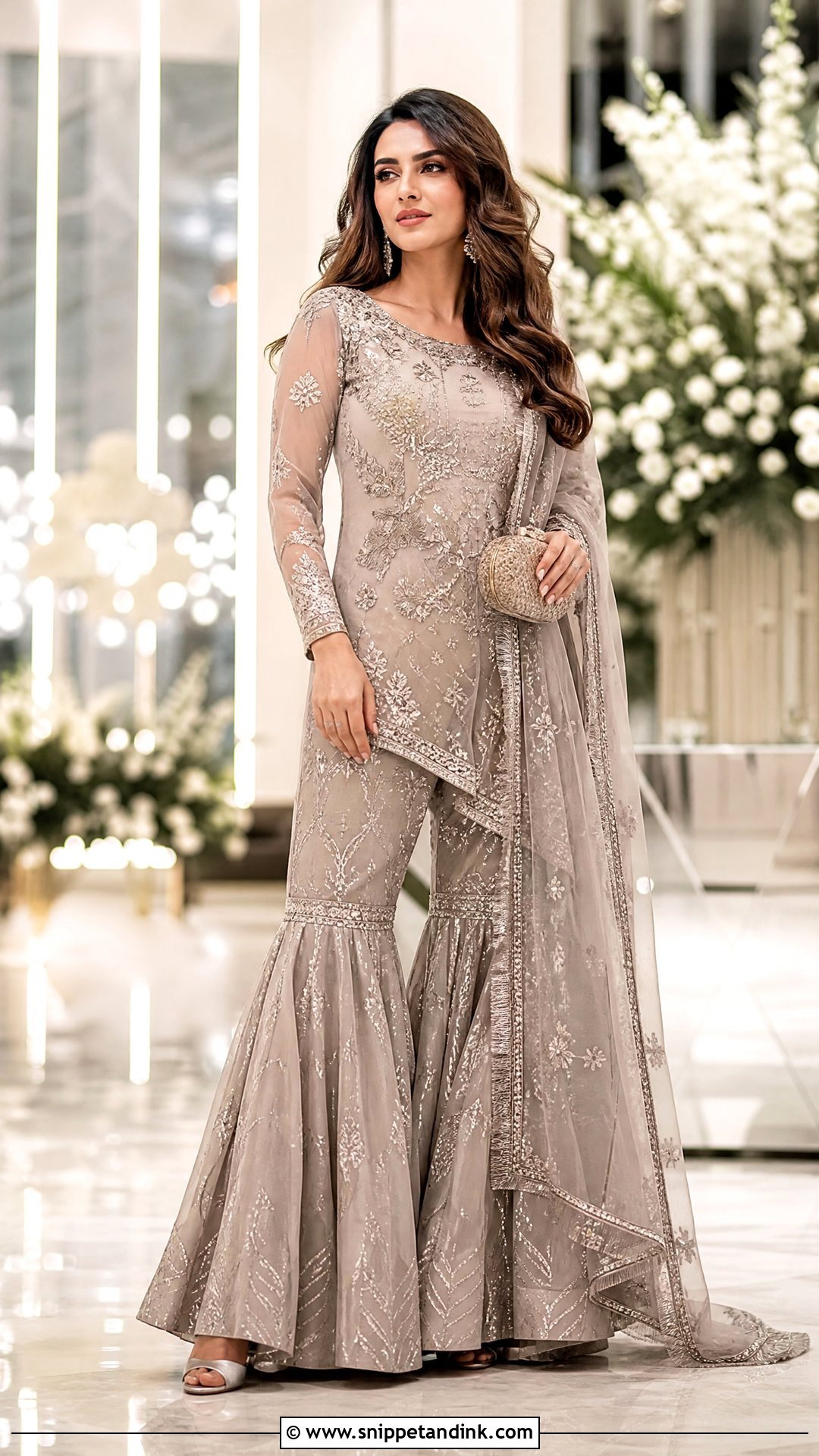
Designer pieces bring unusual details: cape sleeves, jacket layers, scalloped hems, dramatic dupattas, asymmetric kurtas, handcrafted embroidery. The question I always ask is whether you can wear it for five hours. Good designer fabric falls well and holds shape, but complicated cuts can be hard to sit, eat and dance in. Try it at the trial for a while. Polished heels, statement jewelry and a matching clutch complete it.
A Dupatta That Stays Put Through the Dancing
The dupatta is the piece that slips, so I pin it before anyone starts dancing. Choose a drape for the function, not just for the photo.
- One shoulder, pinned at the shoulder seam and tucked at the waist on the opposite side, is the most secure for sangeet.
- Over both arms looks graceful in photos but needs your hands, so keep it for the entry and switch afterwards.
- Over the head for a nikkah or puja, pin into the hair with U-pins, not just at the shoulder.
- Use small safety pins on the inside of the fabric, and test on a hidden corner first, since pins can pull threads in organza and net.
Keep a few spare pins in the potli. Heavy borders pull the dupatta down gradually during the night, and a quick re-pin in the bathroom saves the evening photos.
One Sharara for Every Function in the Week
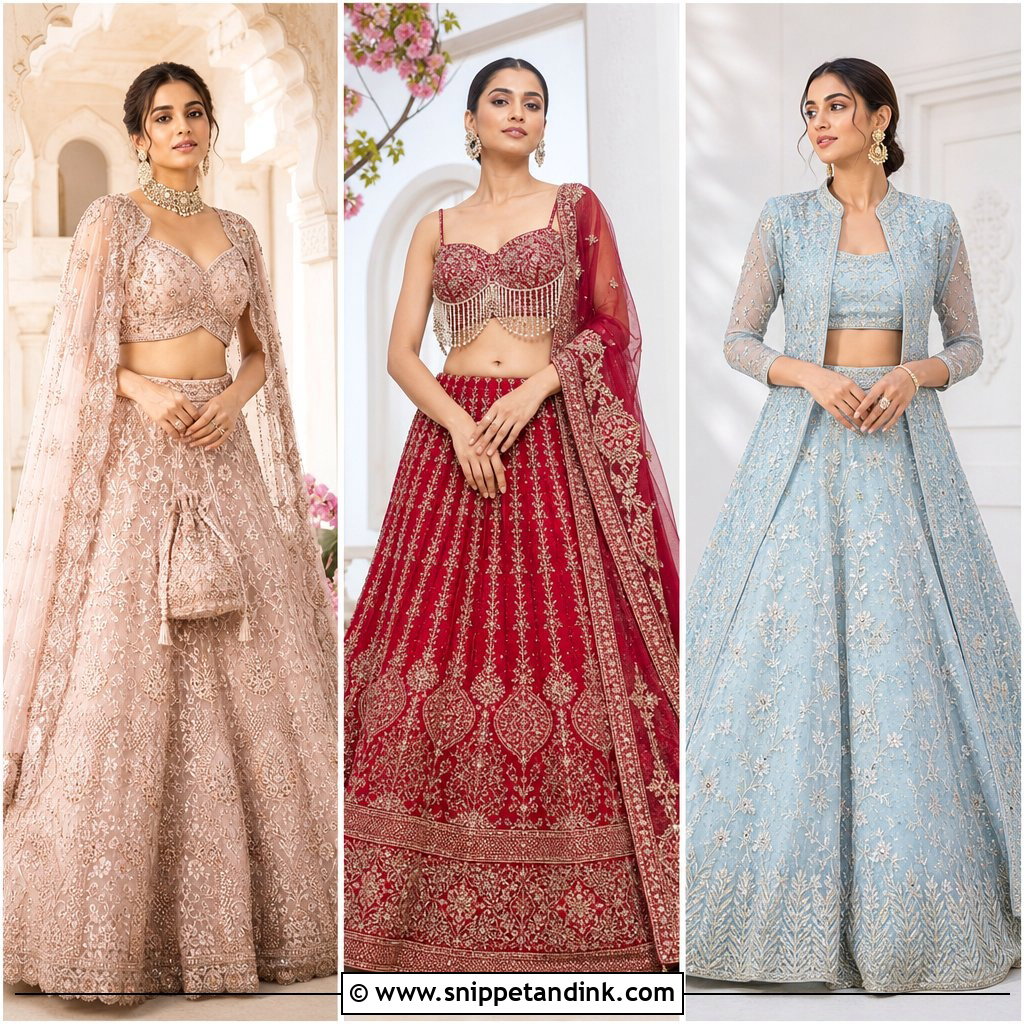
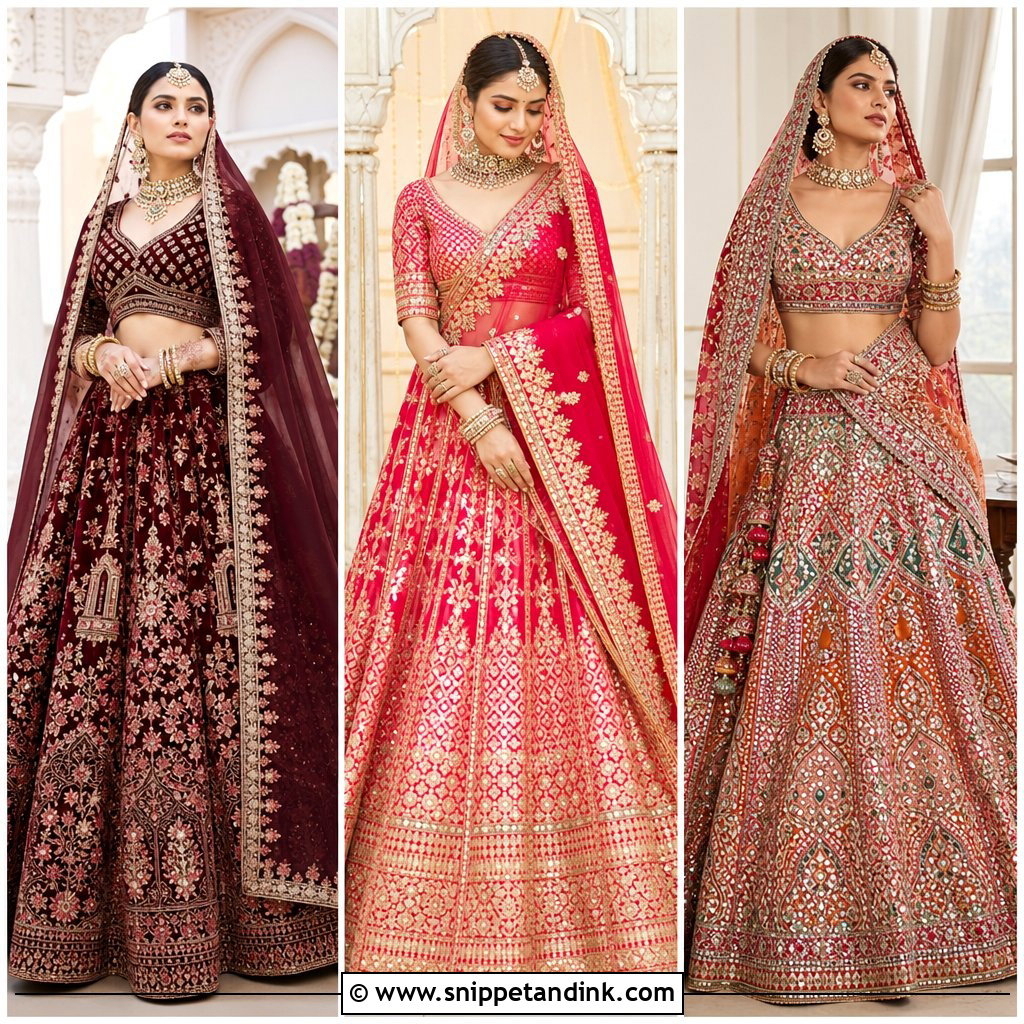
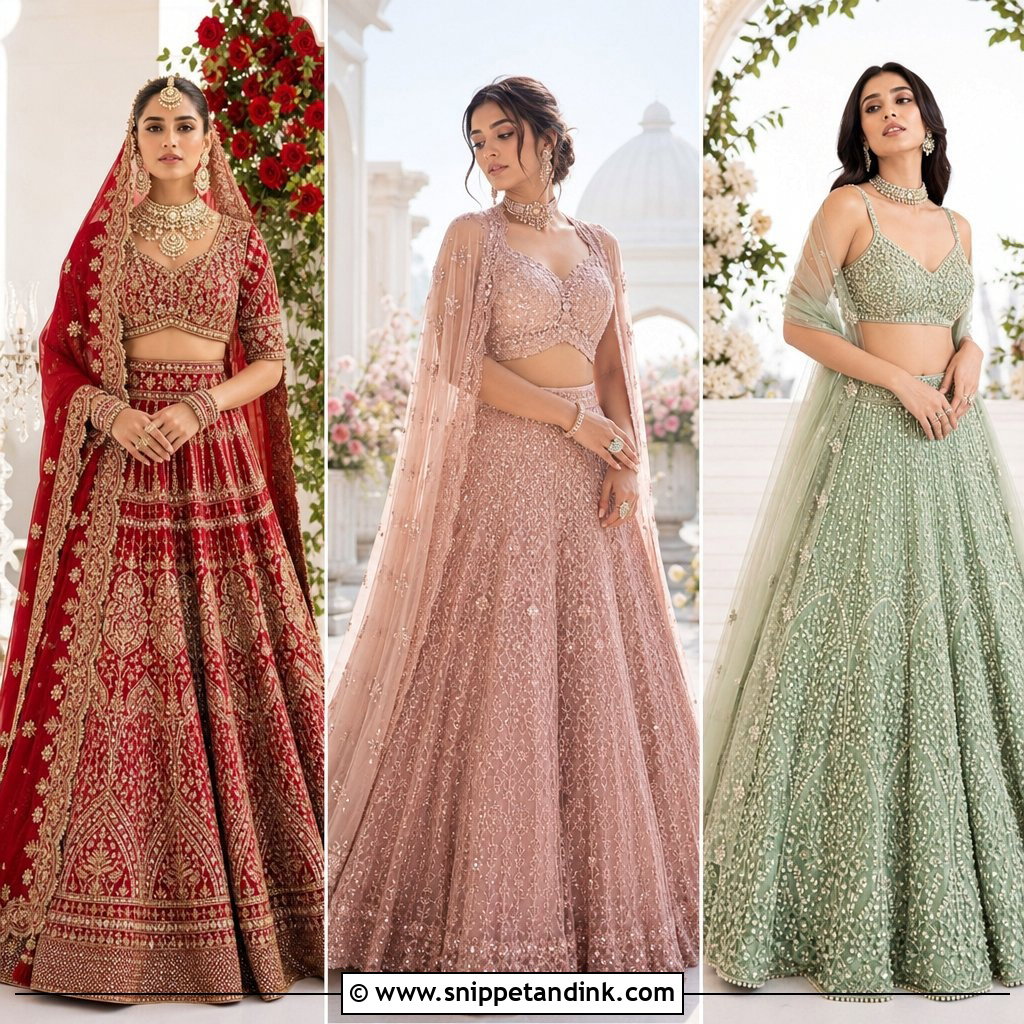
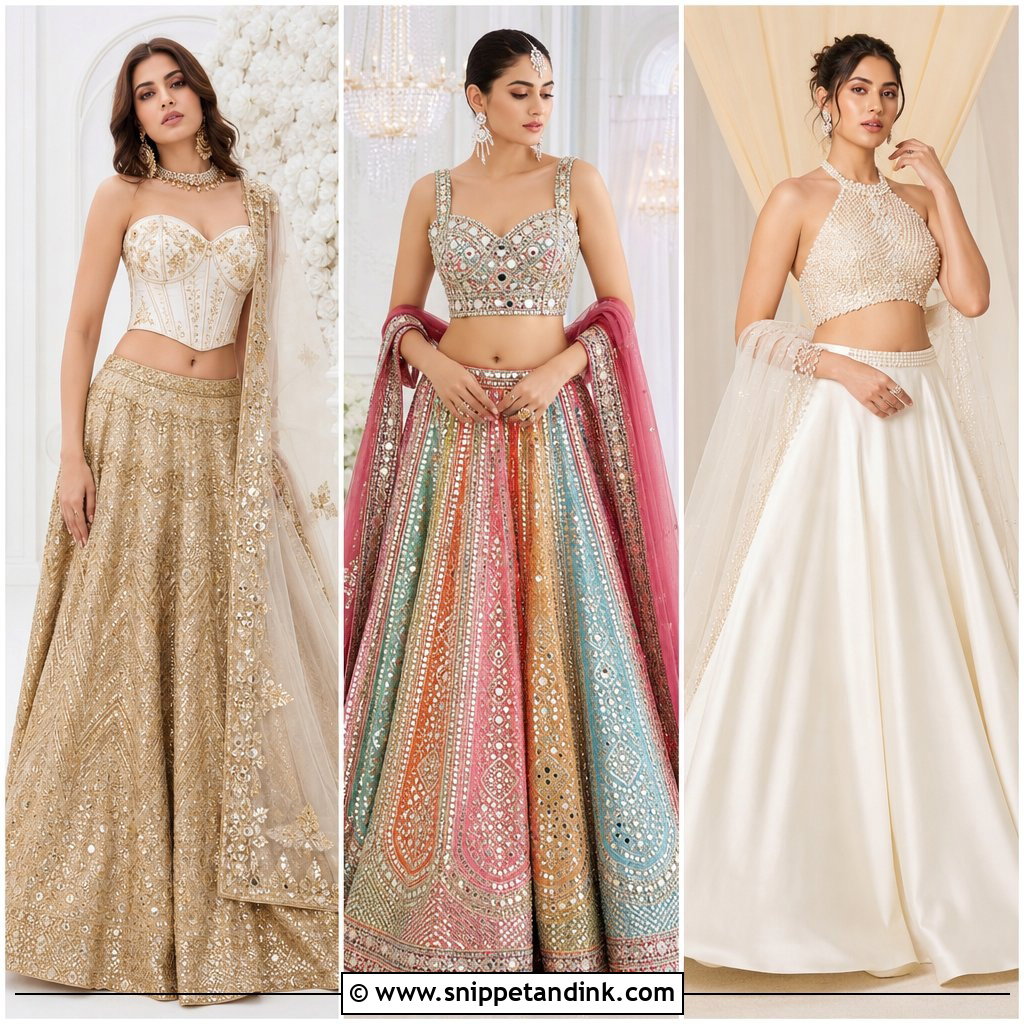
The right sharara is the one that suits the function, the season and how you like to move. Heavy embroidery belongs at receptions and formal ceremonies, while prints, pastels, mirror work and chikankari are easier in the daytime. Short kurtis feel young and lively, long kurtas feel graceful, and capes or jackets add a modern layer. Balance fabric, dupatta weight, shoes and jewelry so nothing fights. Bridal red, soft ivory, black or fresh florals: each has a place in a wedding week.
You'll Like These Ideas:


Leave a Reply