
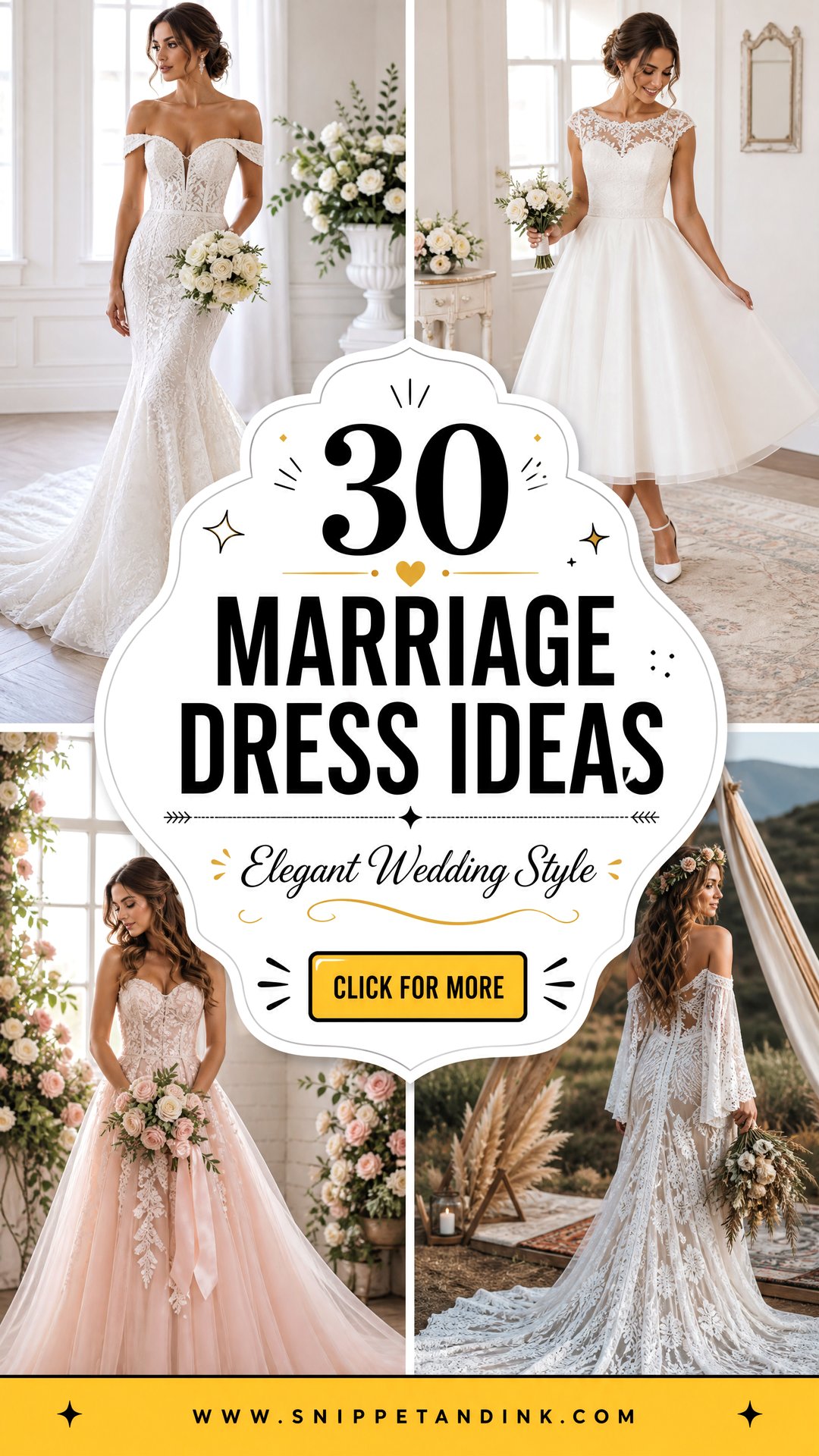
Most brides I meet arrive with a folder of screenshots and leave in something they hadn’t saved once. That’s normal. Marriage dress ideas look completely different on a hanger, in a photo and on your own body, and the gown that wins usually suits the venue, the way you move and your budget more than the trend of the year. The range is wider than it has ever been: satin and lace gowns, short civil ceremony dresses, coloured gowns, detachable skirts, suits and jumpsuits. Below are thirty I’d put in front of a bride, each with the practical note I’d give her in the fitting room.
Getting the Most From an Hour in a Bridal Salon
Most bridal appointments run about an hour to ninety minutes, and you’ll try on fewer gowns than you expect because each one takes time to get into. A little preparation means that hour is spent on real options.
- Tell the consultant your budget at the start, including alterations, which can add a meaningful amount on top of the gown price.
- Wear smooth nude underwear without visible edges and bring shoes close to the heel height you’ll wear on the day.
- Bring two or three people at most. More opinions slow everything down and usually cancel each other out.
- Try one silhouette you’re sure you’ll hate. It turns out to be the winner more often than you’d think.
- Photograph the label or style number of anything you like, since names are easy to mix up afterwards.
Shop around nine to twelve months before the wedding if you can. Many gowns are made to order and take months to arrive, and alterations usually begin two to three months out.
Ignore the number on the size chart
Bridal sizing often runs smaller than high street sizing, so the size you’re ordered in may be a size or two above what you normally buy. Gowns are ordered from your measurements against the designer’s chart, usually choosing the size that fits your largest measurement. It’s always easier to take a dress in than to let it out.
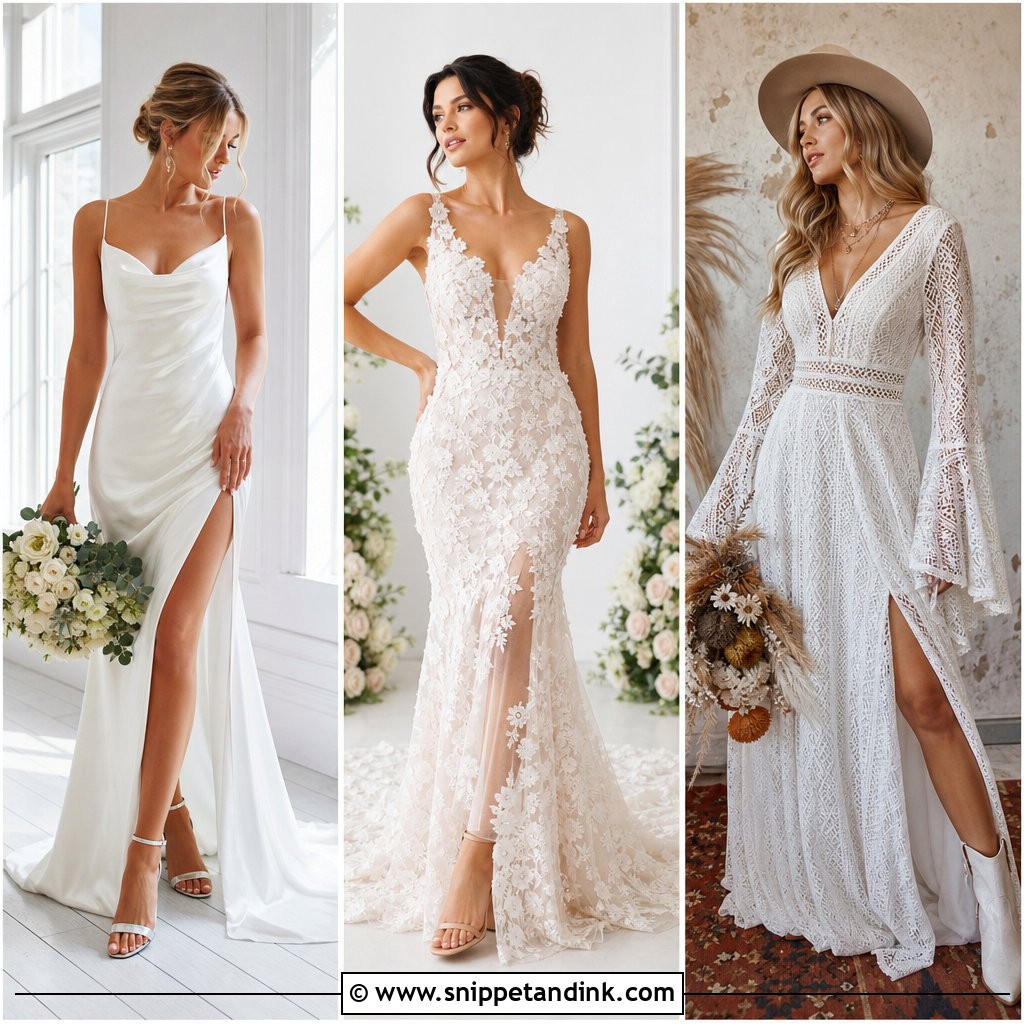
1. Satin A Line Wedding Dress
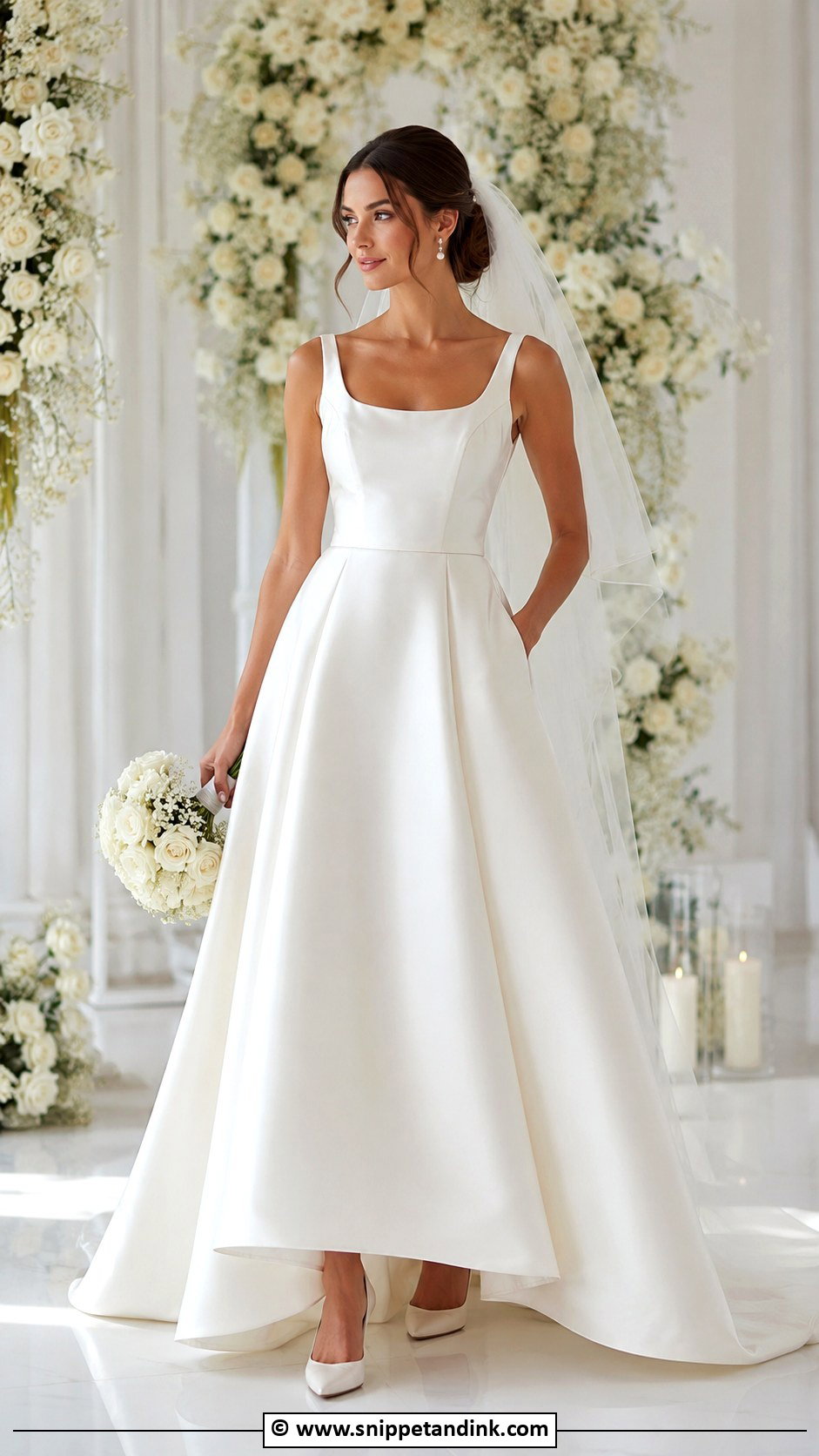
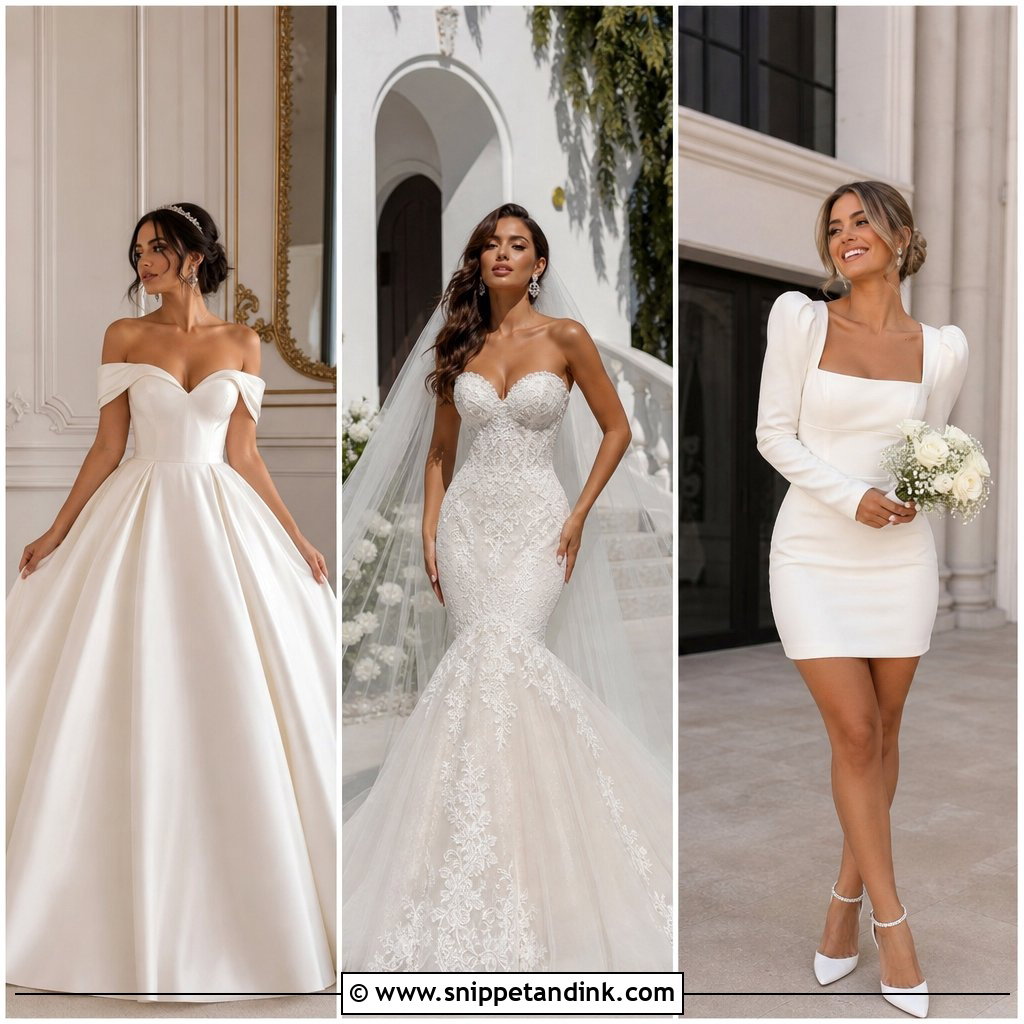
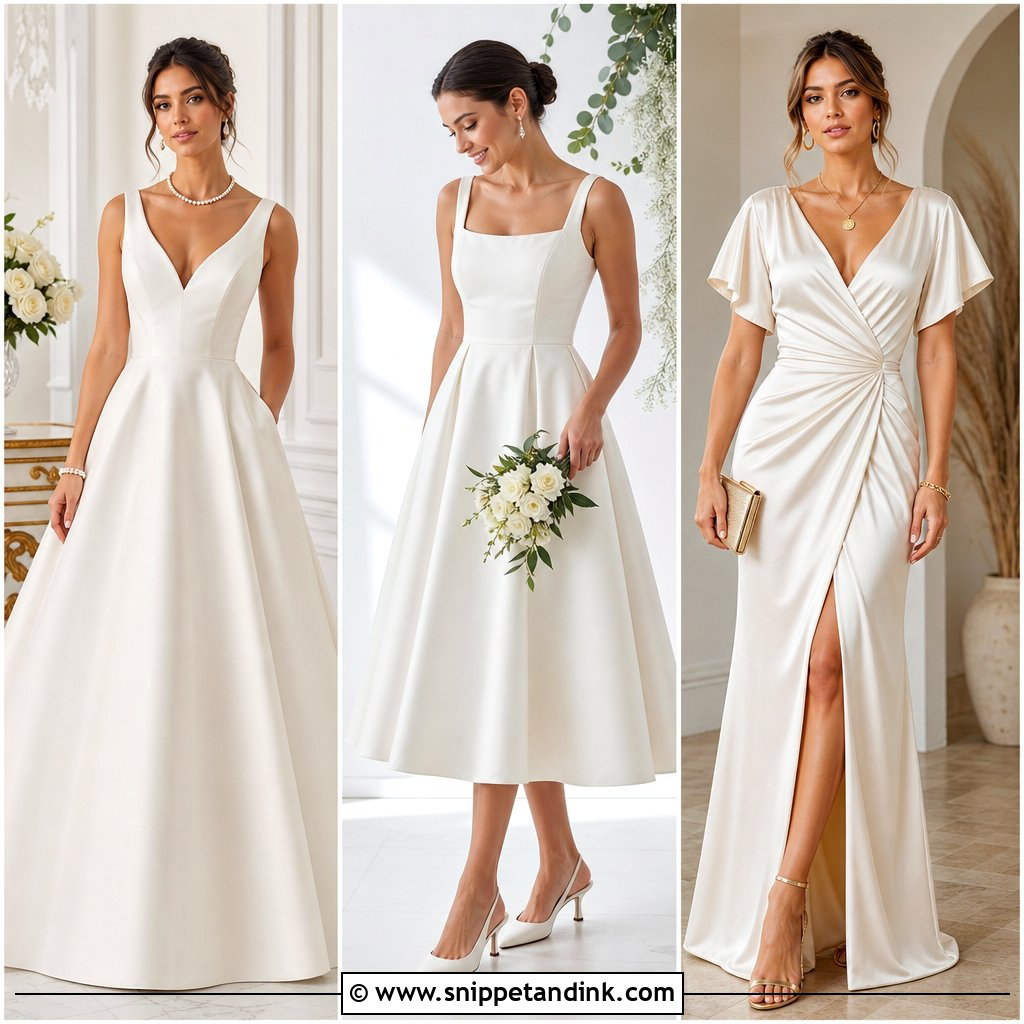
Satin A-lines are what I pull first when a bride has no idea where to start. The bodice holds the waist, the skirt skims the hips, and you can sit through a long dinner without a seam digging in. Heavy satin shows creases where you sit, so ask for a crisp duchess or a satin-faced crepe if that bothers you. A corset bodice adds structure if you want it. Pointed satin heels, pearl drops and a plain veil keep the shine as the main event.
2. Lace Ball Gown Wedding Dress
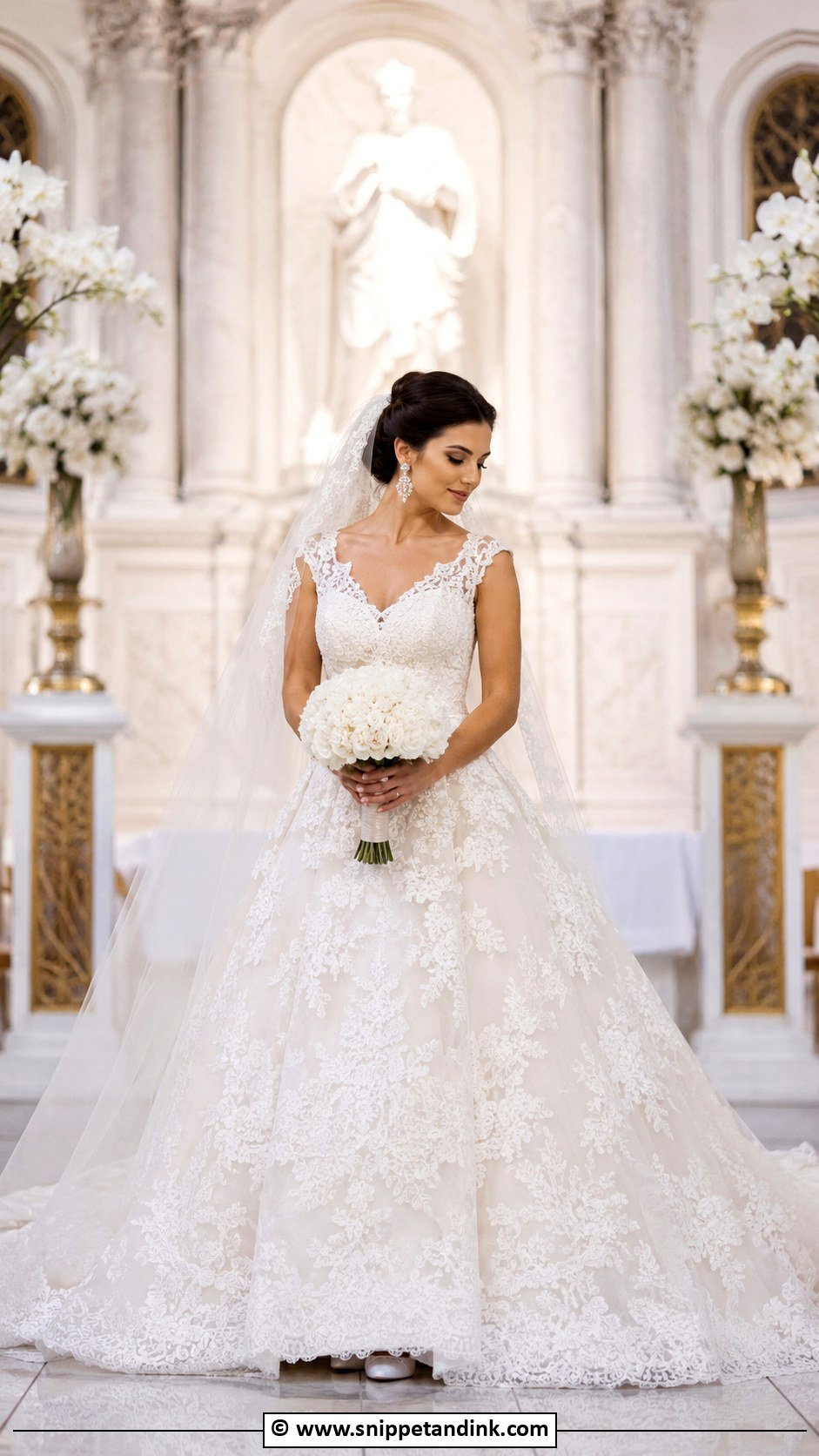
A lace ball gown gives you the full traditional entrance. Fine floral lace keeps it soft. Heavier corded lace looks grander and adds noticeable weight to an already big skirt. The fitted top and wide skirt create a defined waist on pear, hourglass and straighter figures alike. I’d check the lace at the hem after a walk across the venue floor, because corded edges catch on carpet. A cathedral veil, crystal earrings and polished hair suit a grand hall.
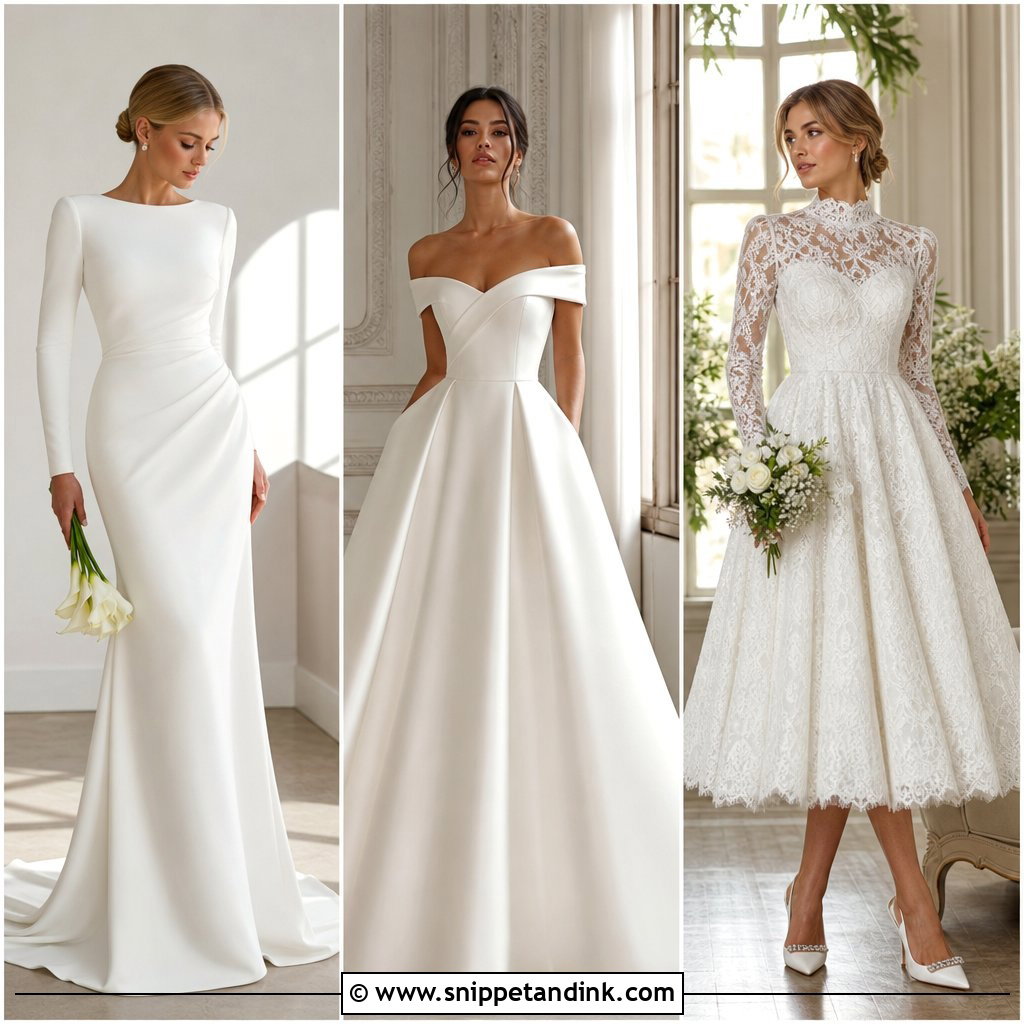
3. Long Sleeve Crepe Wedding Dress
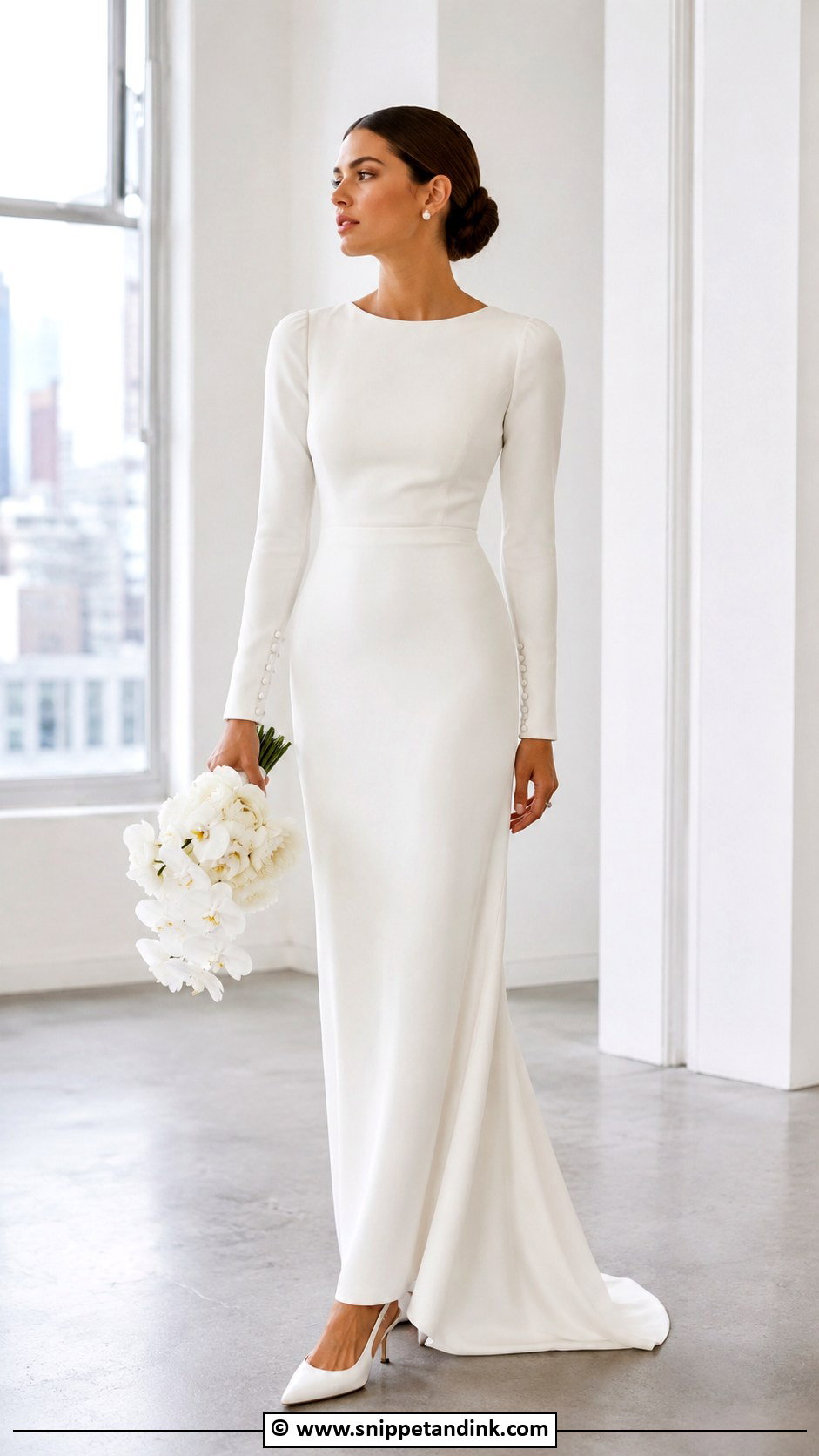
A long sleeve crepe wedding dress looks clean and quiet, with a matte surface that skims rather than shines. Sleeves on crepe have one weak spot: the armhole. Cut too low, it lifts the whole bodice when you raise your arms to hug someone. Lift your arms at every fitting. A sheath or soft mermaid shape suits it, with pearl studs, slingbacks and a low bun. Covered buttons down the back give a little detail for autumn, winter or a city ceremony.
4. Off Shoulder Mermaid Wedding Dress
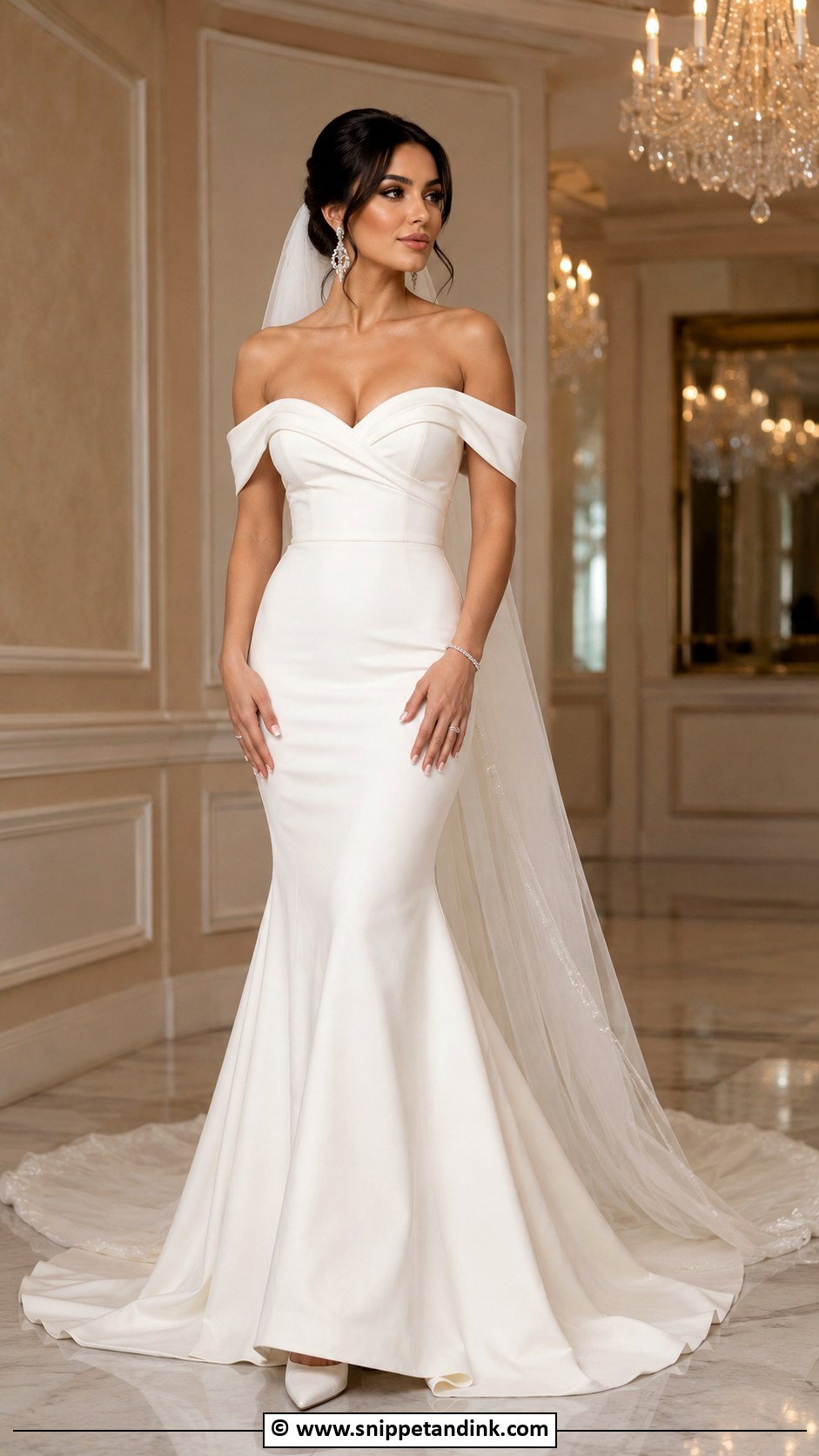
Off-shoulder mermaids are sculpted from shoulder to knee, so they’re demanding on fit. The neckline frames the collarbone, the flare gives movement at the hem, and the whole shape needs stretch crepe or a well-cut lace to let you breathe. Sit in it before the final alterations, not after. A smooth updo, drop earrings and a slim veil that follows the line of the gown suit an evening ballroom.
5. Strapless Corset Wedding Dress
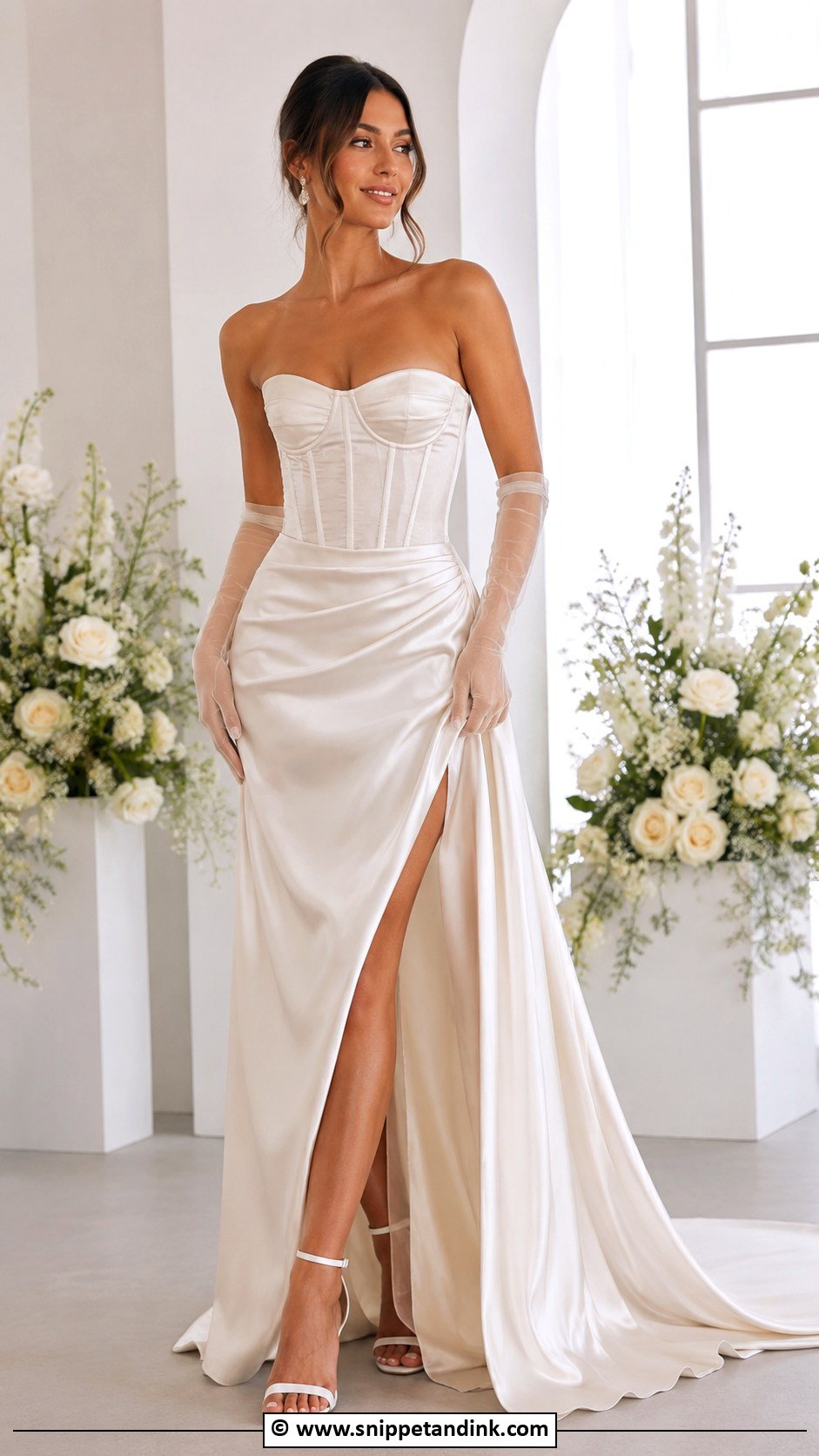
A strapless corset relies entirely on its boning to hold the bust, which is why I check it with a bride twisting, bending and raising both arms. If it shifts, it needs taking in before anything else. The skirt can be slim, A-line or full. Sheer gloves and strappy heels feel fresh with it, and the bare neckline leaves room for a chignon or soft waves. A straight neckline reads modern. A soft scoop is gentler.
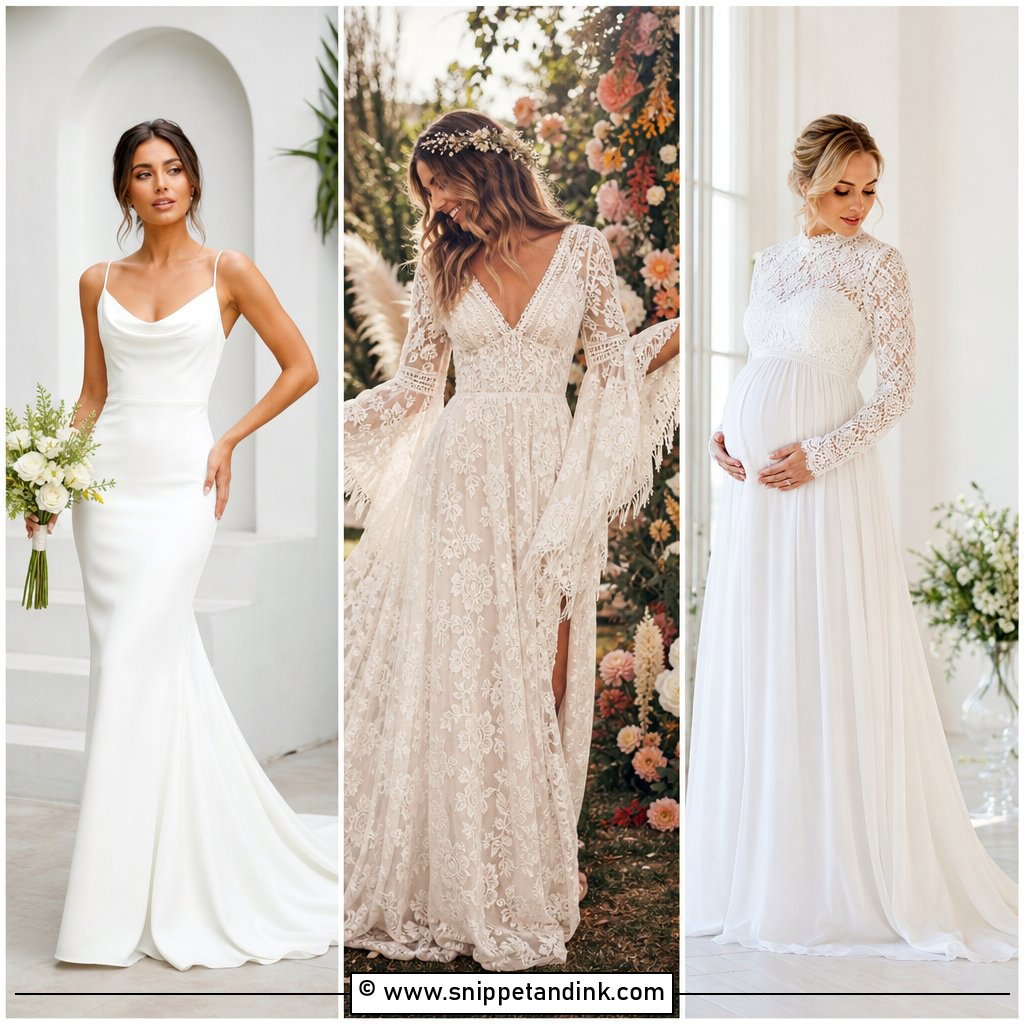
6. Simple Slip Wedding Dress
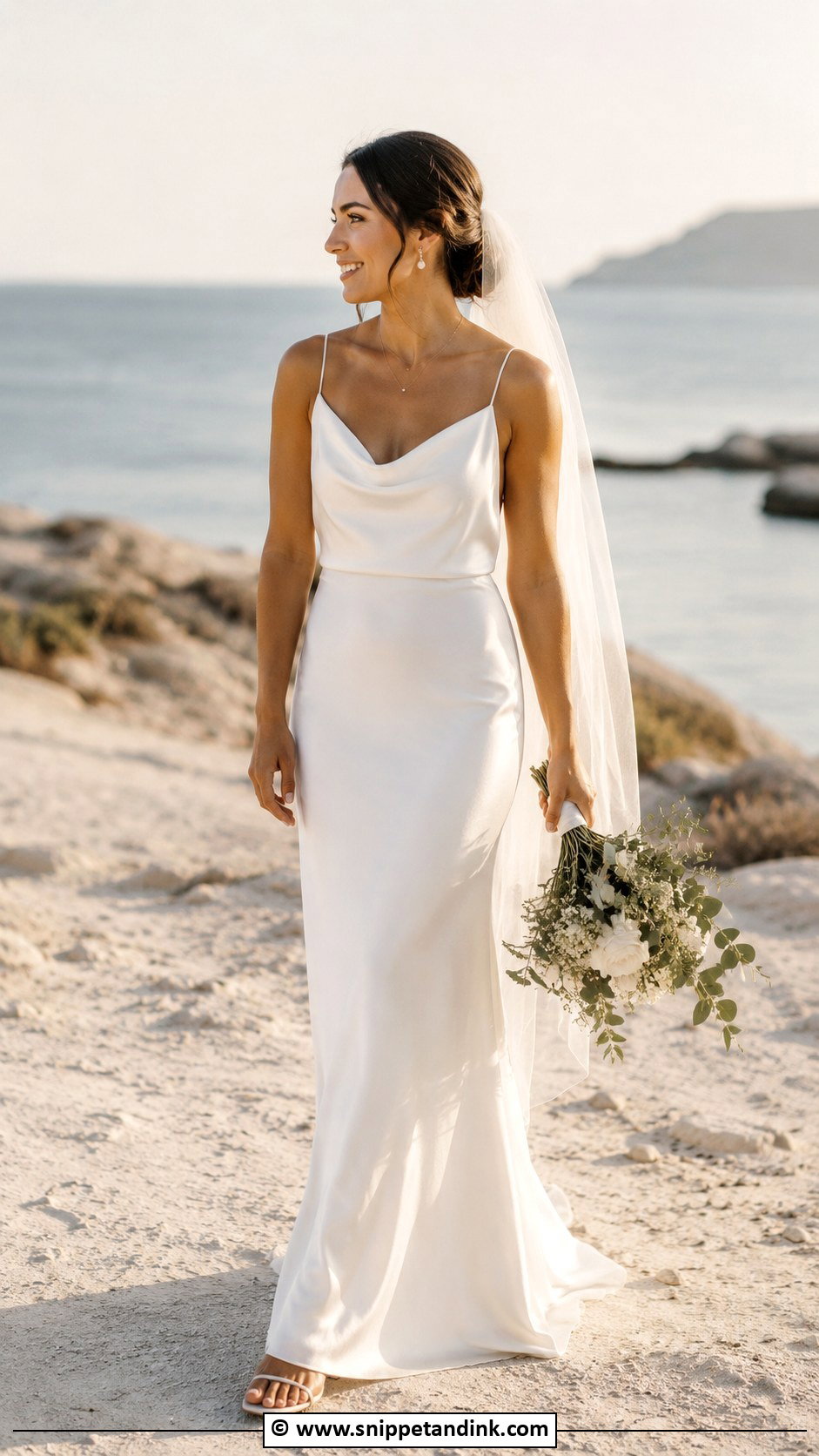
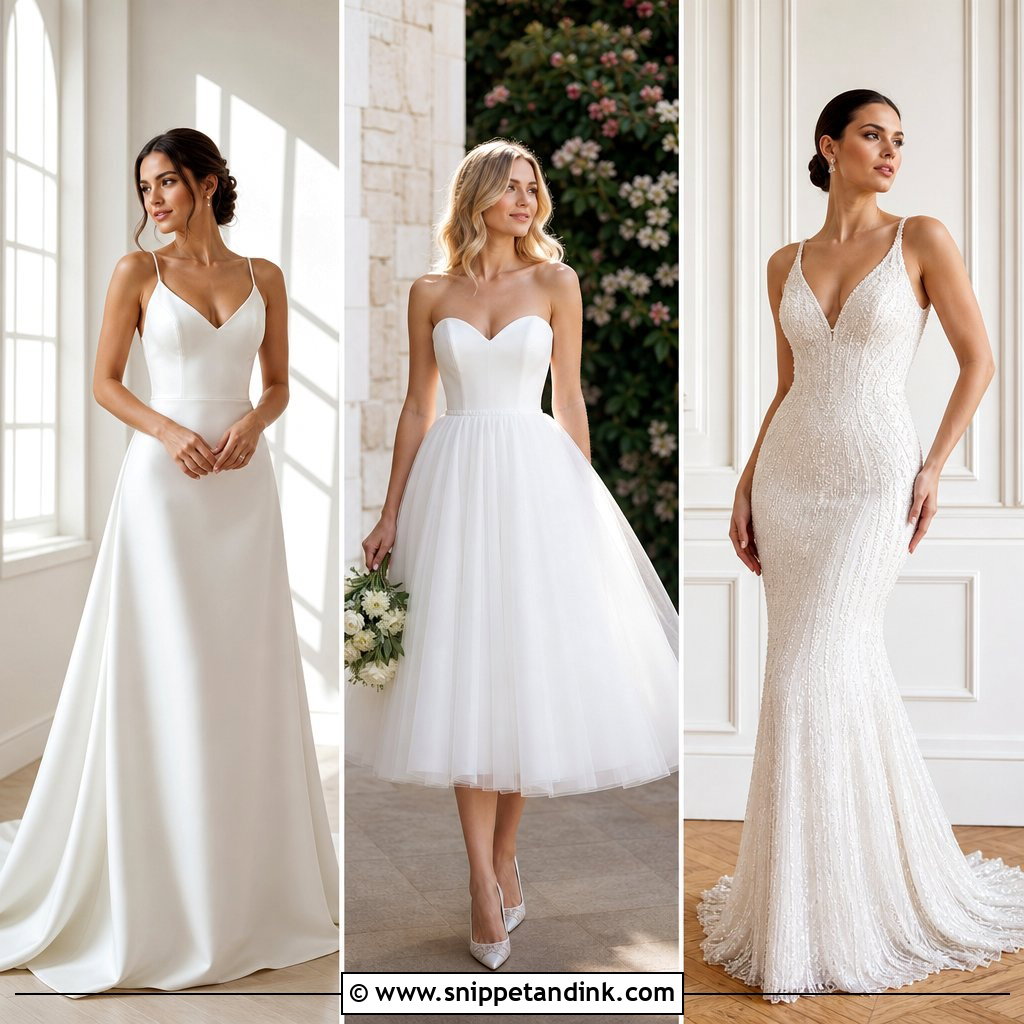
Slips look simple and are anything but. Silk, satin or charmeuse cut on the bias show every line underneath, so underwear and fit matter more here than in any other gown. They suit beach weddings, elopements and small ceremonies, with barely-there heels and small pearl earrings. A sheer cape or a cropped bridal jacket adds cover for a church or a cool evening. If you’re between sizes, size up and have it taken in.
7. Tulle Princess Wedding Dress
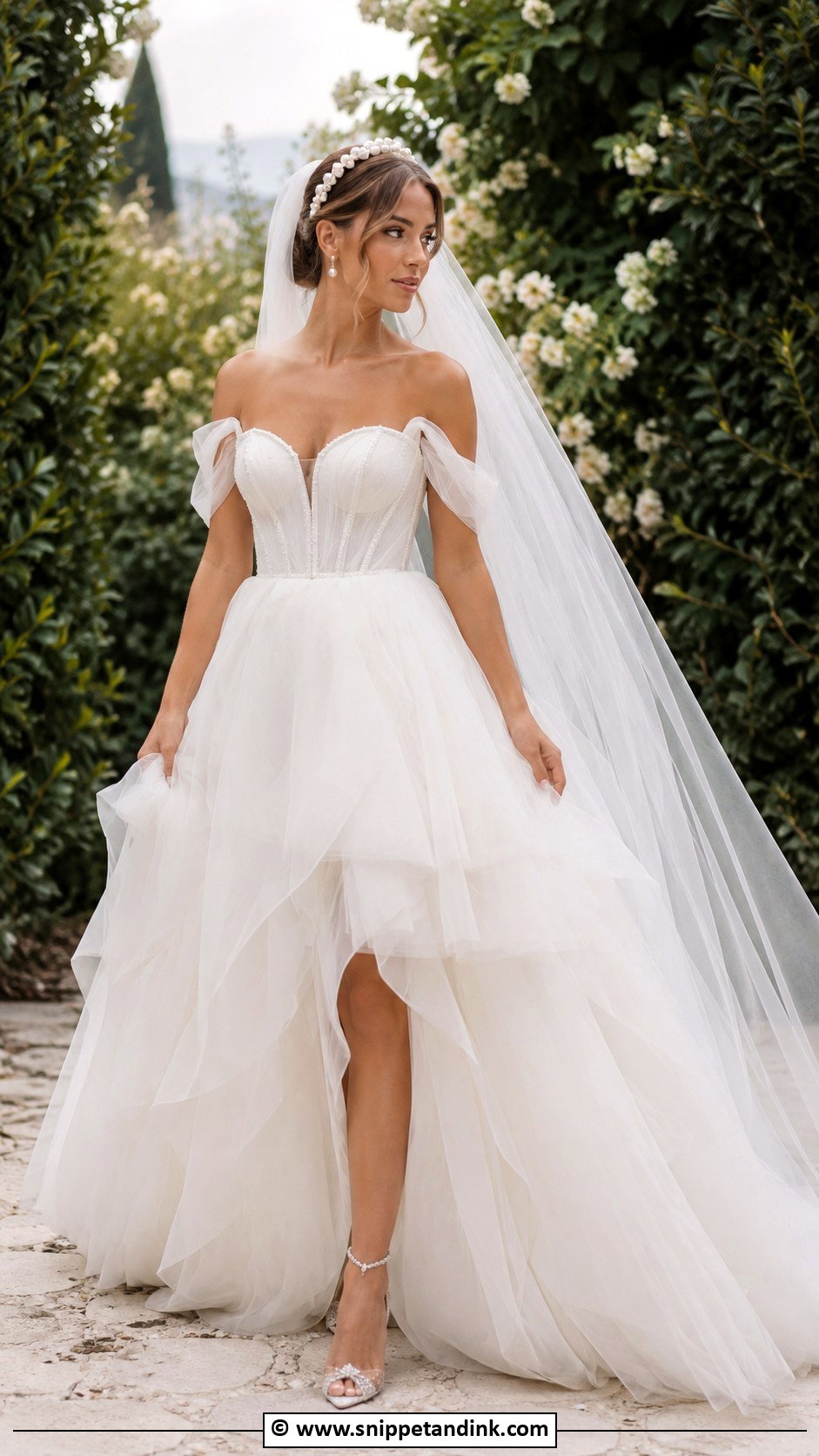
Tulle princess gowns get their volume from layers, not structure, so I watch how the skirt is supported. A hoop or a stiff petticoat keeps the shape all day. Without one, tulle flattens as you sit. Petite brides do better with fewer layers of a softer tulle, while taller brides can carry the full skirt. A sweetheart neckline or thin straps keep the top light. A pearl headband or small tiara and a long veil finish it.
8. High Neck Wedding Dress
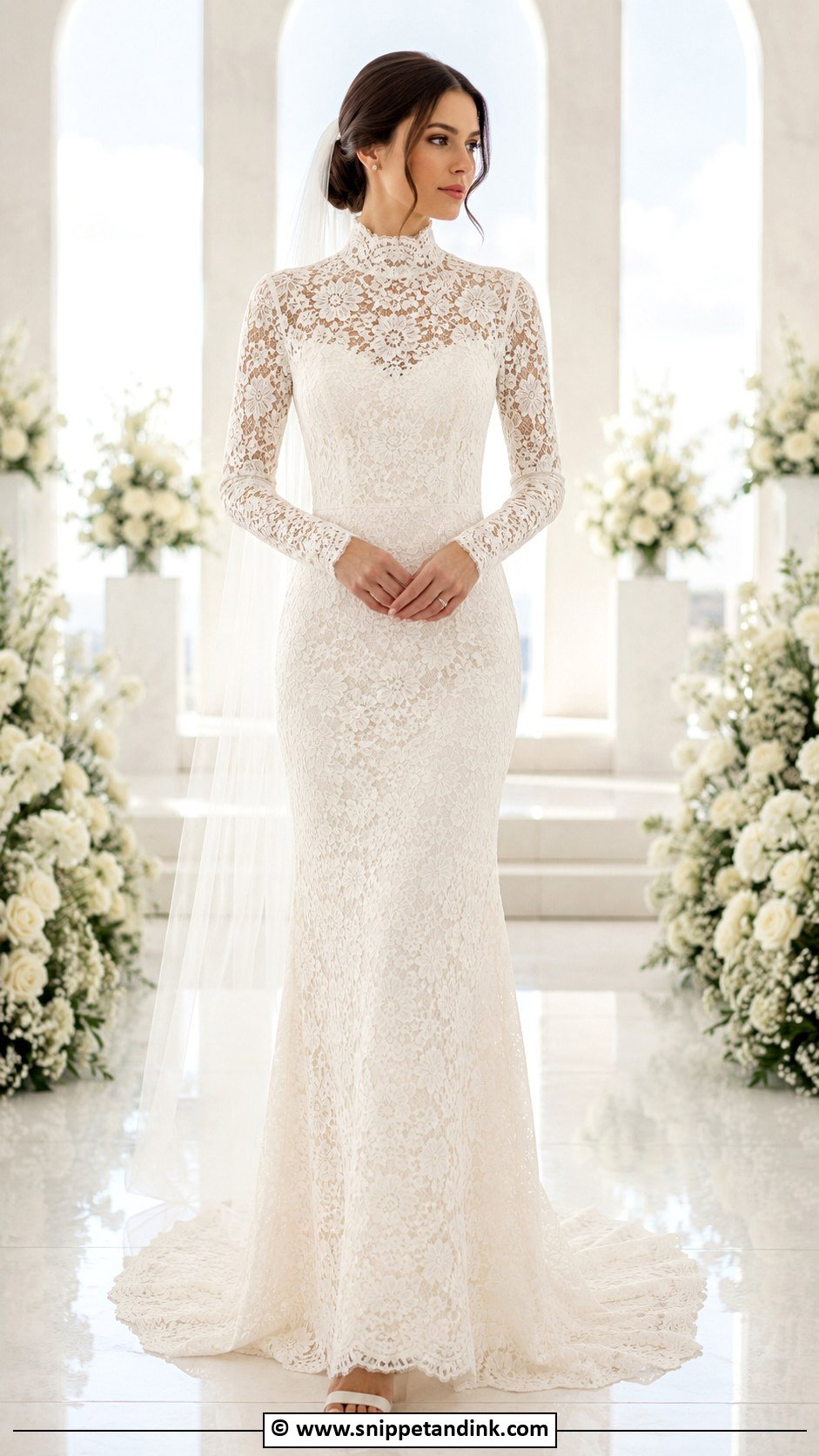
A high neck frames the face, which is useful if you’d rather people look at you than the dress. Lace, satin, crepe or illusion mesh all work. I’d check the collar while you’re seated and looking down, since a tight high neck presses on the throat. Skip the necklace and keep the earrings small, with a sleek bun and a narrow veil. A fitted skirt modernises it and an A-line softens it. Good for cool weather.
9. Square Neck Wedding Dress
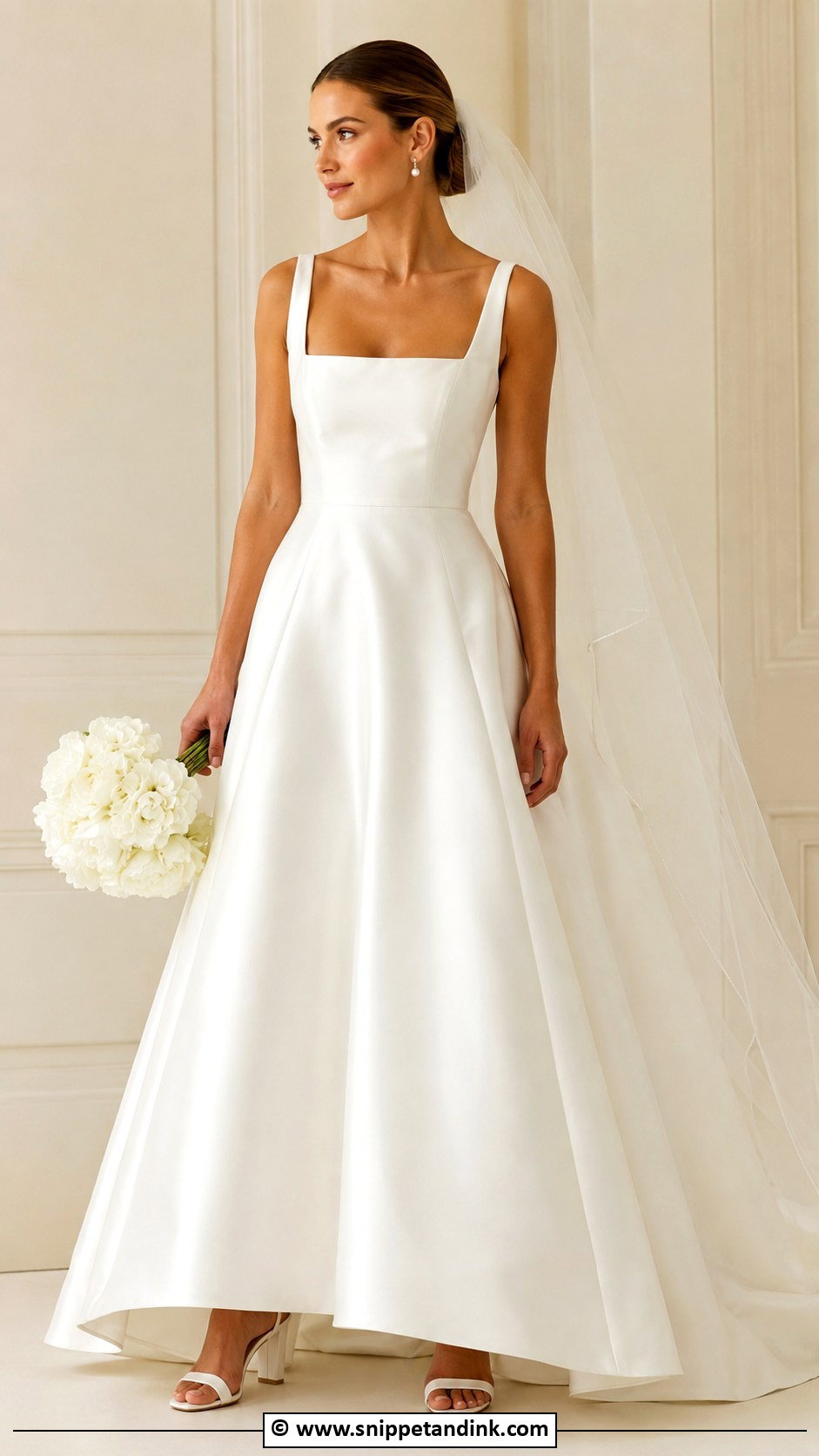
Square necks suit a wide range of bust sizes because they give both shape and coverage without much fuss. A satin A-line with a square neck looks classic. A fitted crepe version looks minimal. Pearl earrings, block heels and a soft veil work well, and so does a half-up style. One caution from fittings: the corners need to sit flat, so a square neck on a gown that’s slightly too big shows gaping at the edges first.
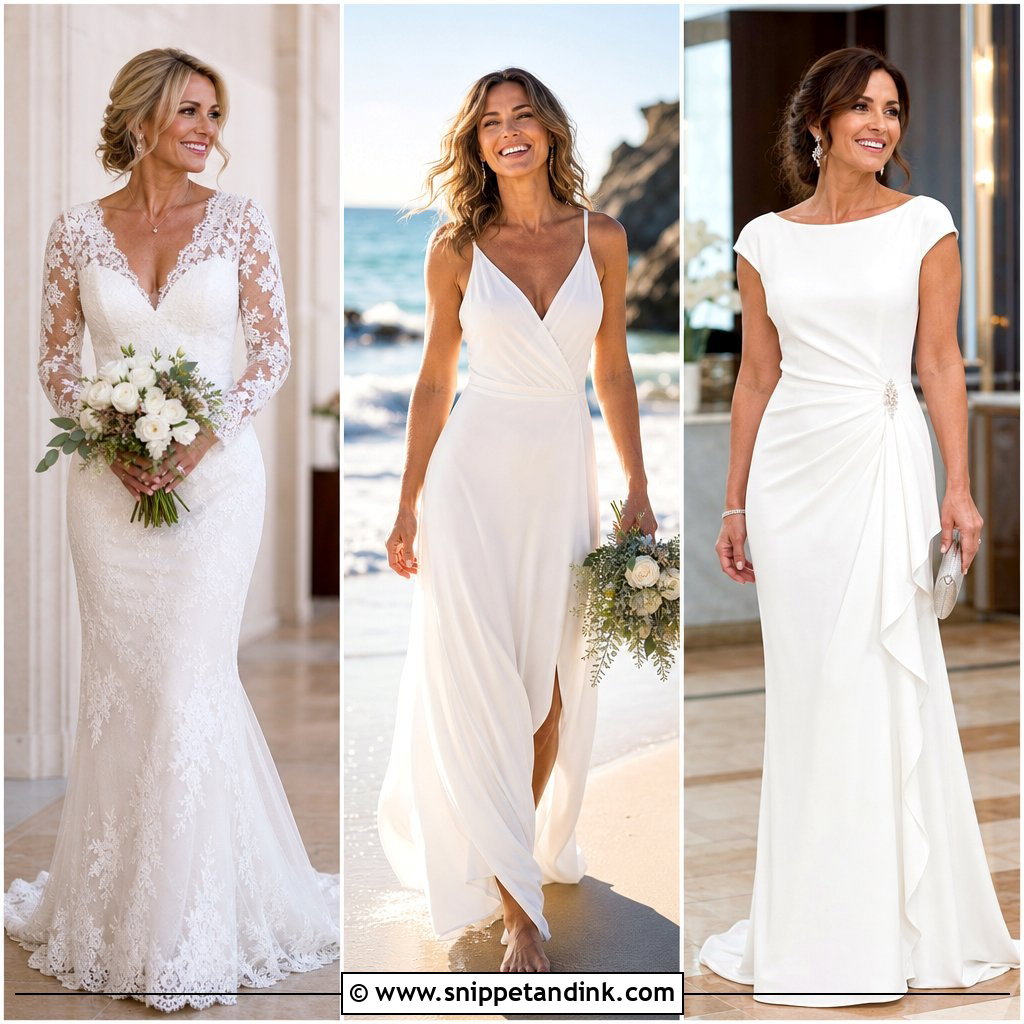
10. V Neck Wedding Dress
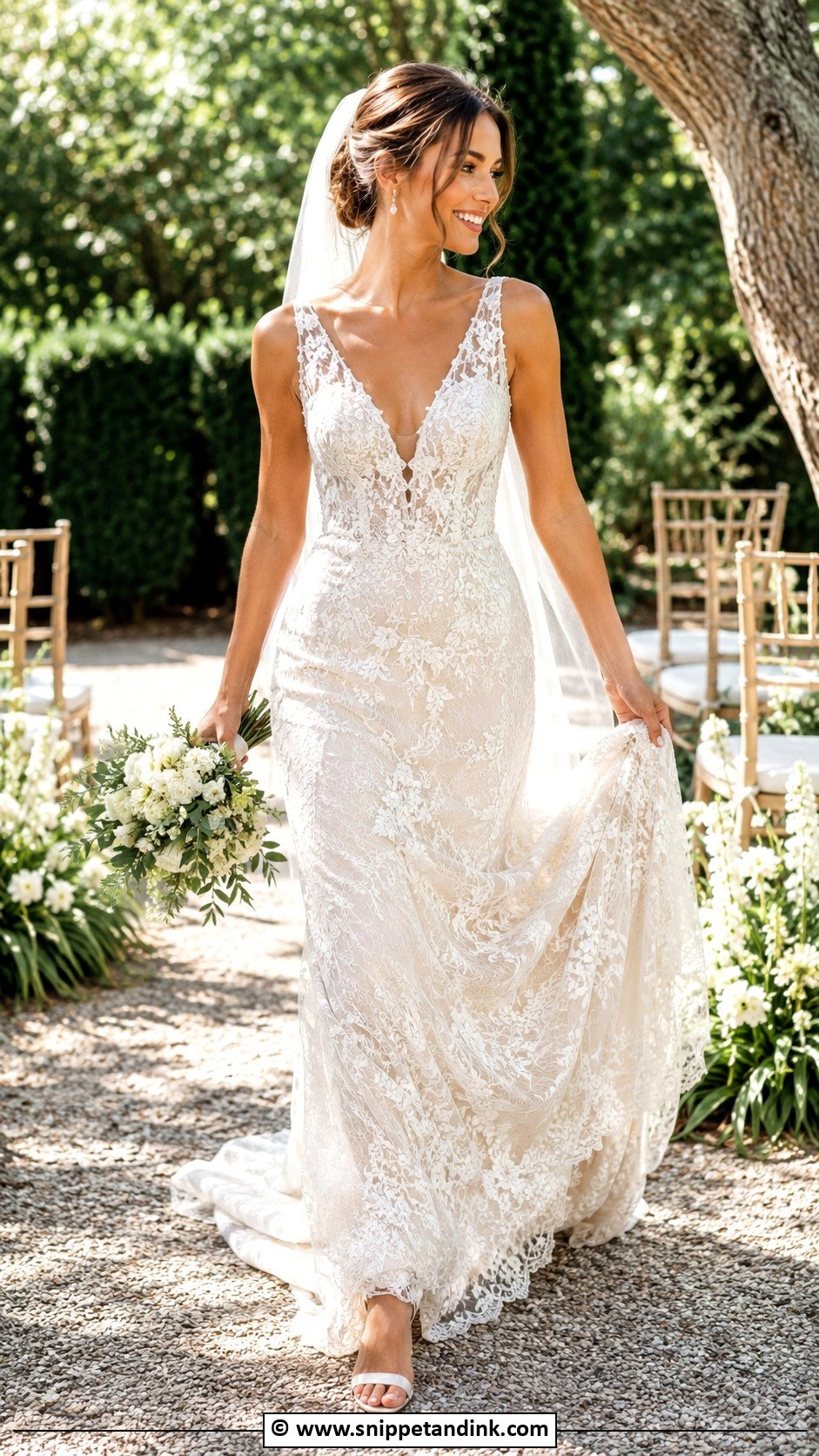
A V-neck draws a long vertical line through the upper body, and that line looks different depending on depth and fabric. Lace keeps it traditional. Satin makes it sleek. A deep V needs either a structured bodice or an illusion mesh panel, because tape alone rarely holds through a full day of hugging and dancing. Slim heels and delicate earrings suit it, and a pendant only works if the gown itself is plain.
11. Floral Embroidered Wedding Dress
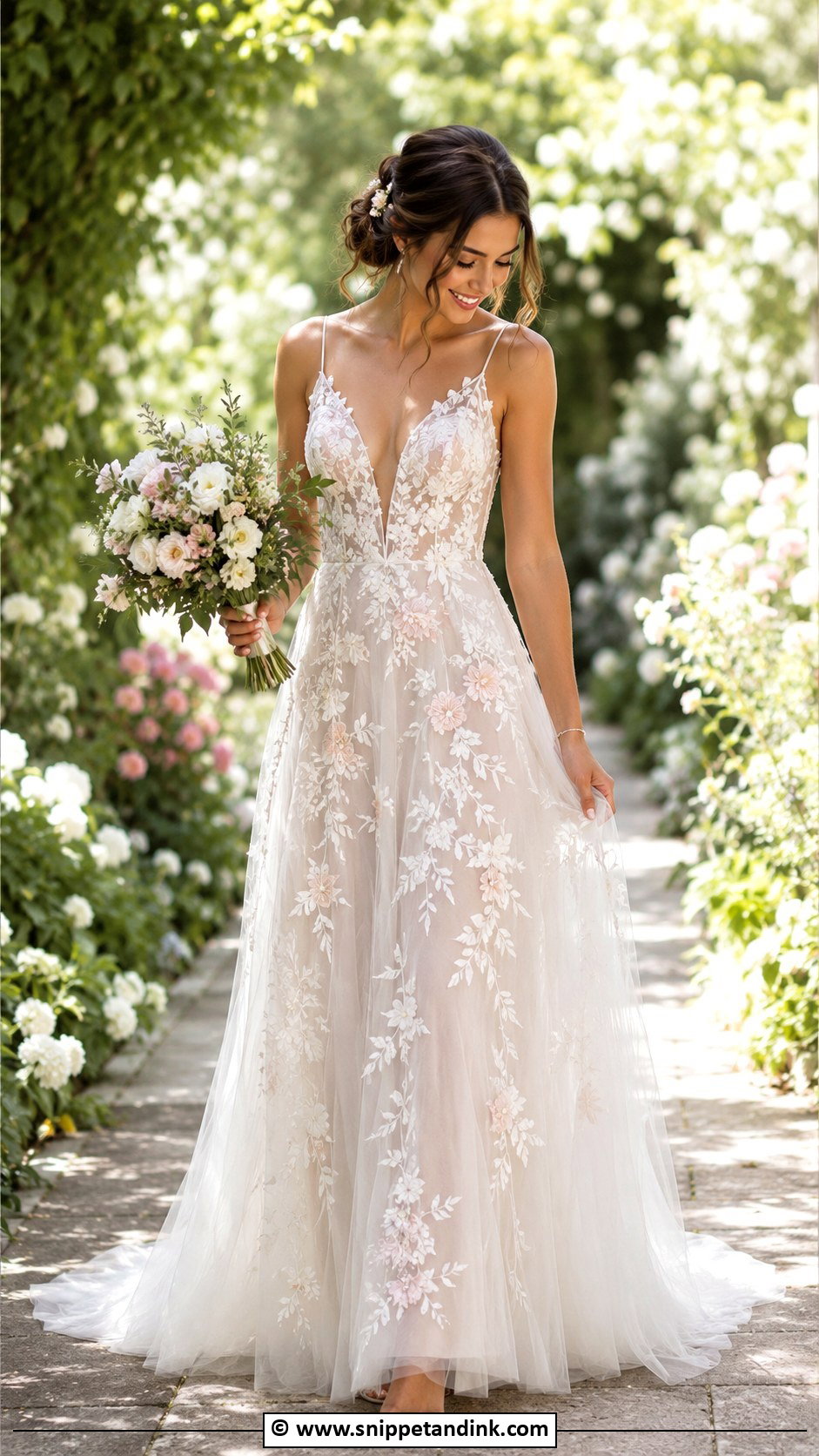
Floral embroidery can be white on white or worked in soft colours such as blush, blue or champagne thread. If the thread is coloured, I’d pull one of those shades into the bouquet so the two talk to each other. A sheer embroidered bodice or skirt gives depth without sparkle. Simple heels and a few floral hair pins finish it. Spring and garden weddings suit it best, and picking flowers that grow where you’re marrying adds a personal touch.
12. Pearl Embellished Wedding Dress
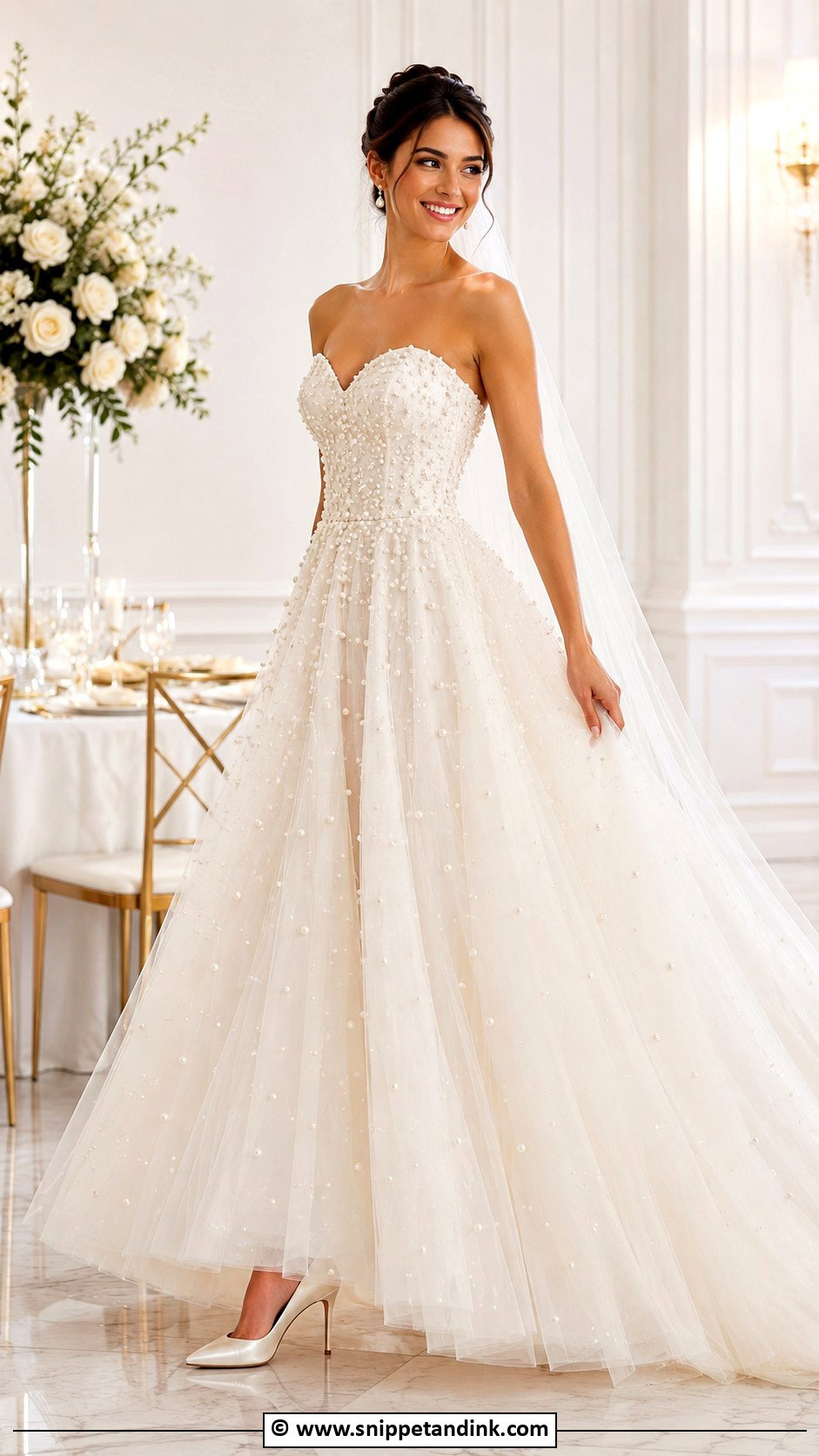
Pearls give off a soft, low shine, which suits brides who find crystals too glittery. They work scattered over tulle, lace or satin, or concentrated on the sleeves, straps or bodice for a more modern version. Each one should be sewn on individually. Glued pearls come off. Keep the veil edge plain and the earrings in pearl, and skip the statement necklace. Evening weddings and formal indoor venues show them off.
13. Bow Back Wedding Dress
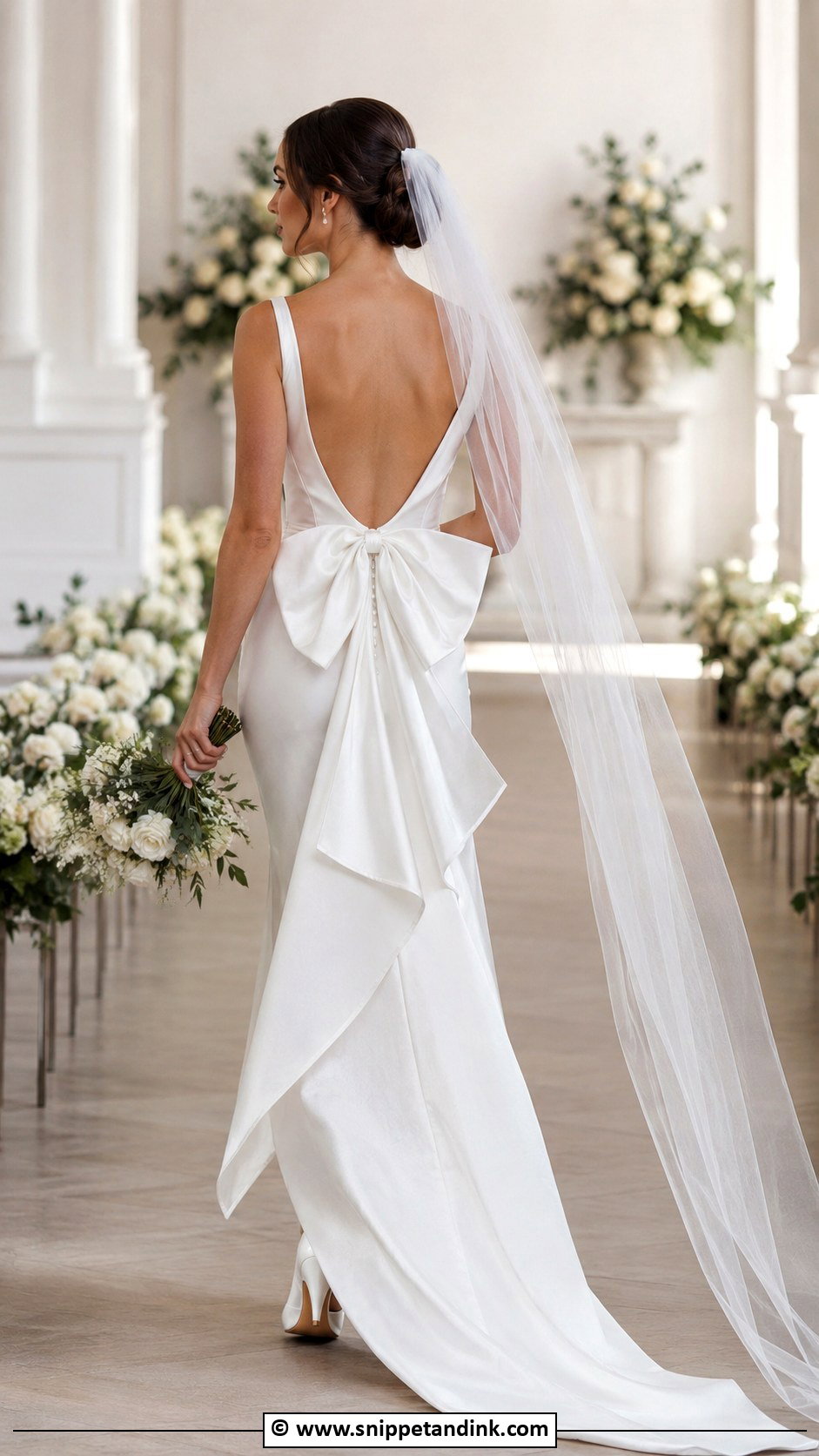
The bow is what guests see during the vows, so I place it with that in mind. Satin holds a large sculptural bow. Tulle and organza make softer, floppier ones. A bow sitting at the natural waist stays put better than one lower on the skirt, which tends to drag as you walk. Keep your hair lifted or swept to one side, and choose a veil that falls beside the bow, not on top of it.
14. Detachable Skirt Wedding Dress
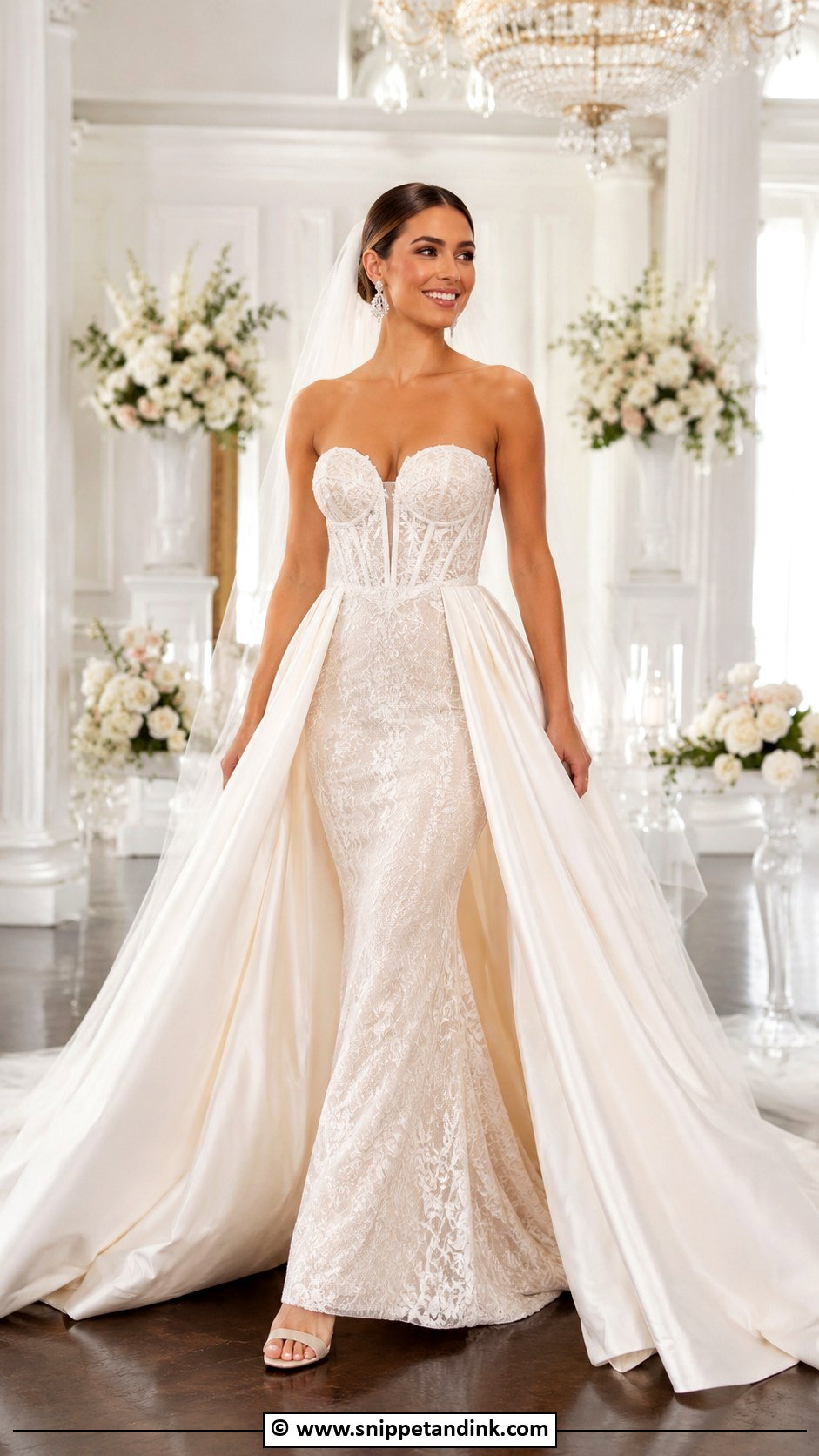
A detachable skirt wedding dress gives you two looks: a full ceremony gown and a fitted base for dancing. It pairs well with a corset, sheath or mermaid underneath. My advice is to practise the change with whoever will help you, because a skirt fastened with hooks and hidden snaps can take several minutes in a busy bridal suite. Swap the veil for a hair clip and statement earrings for the reception.
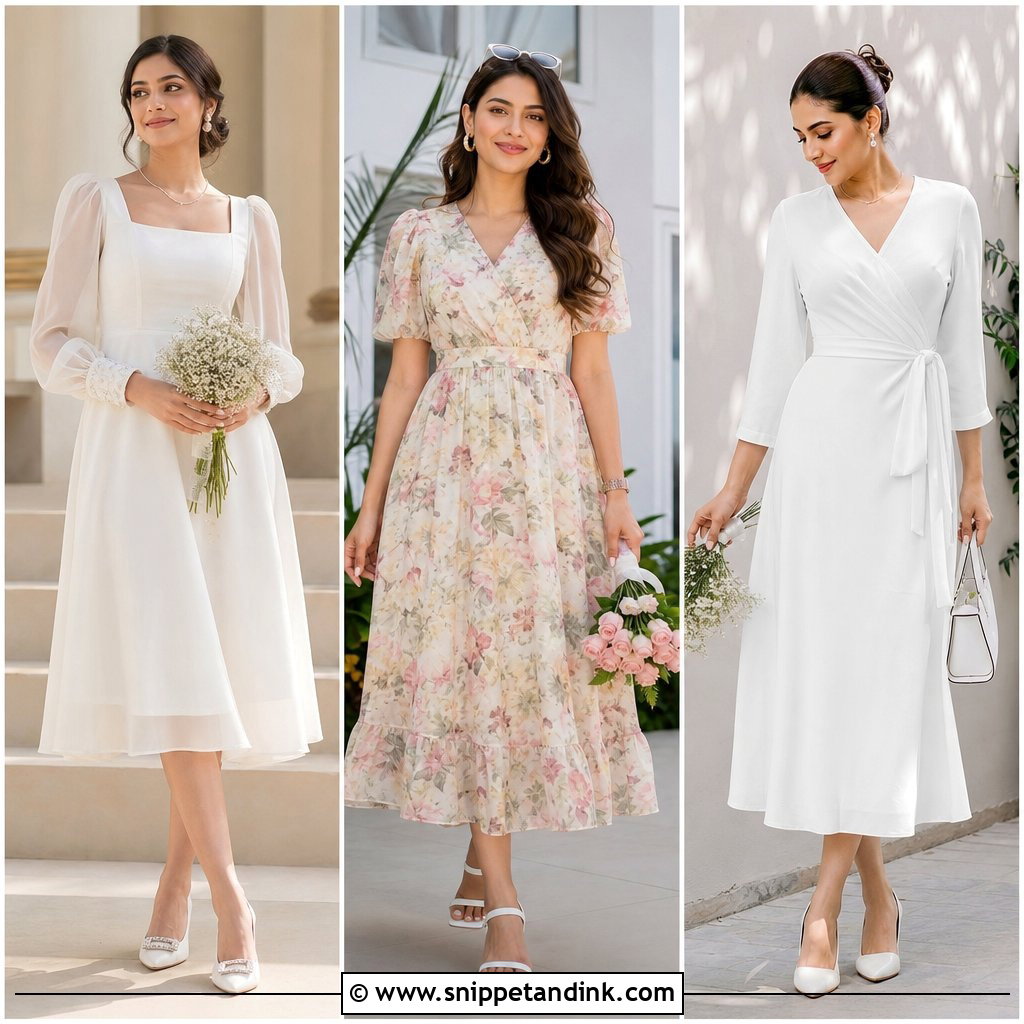
15. Tea Length Wedding Dress
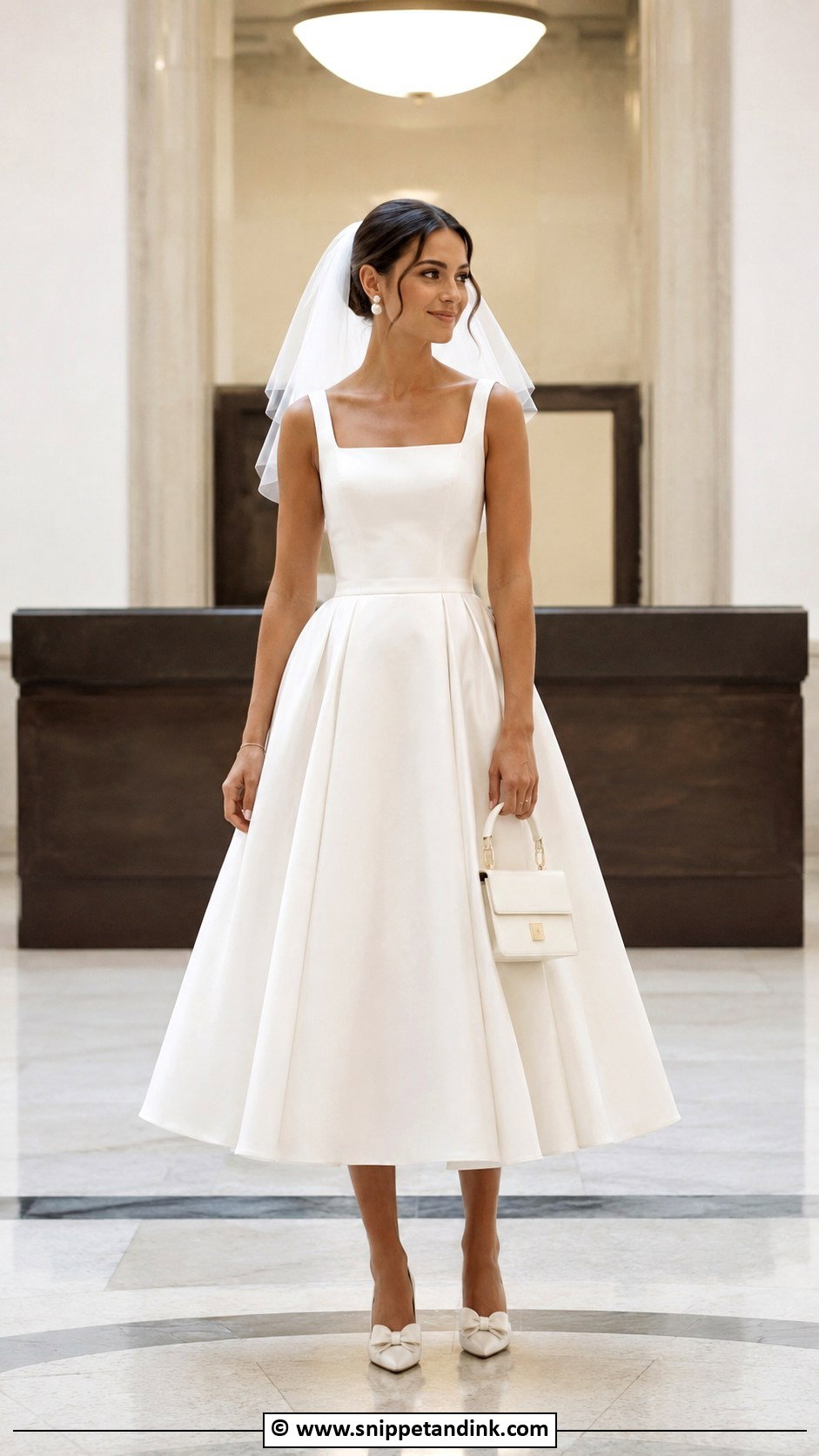
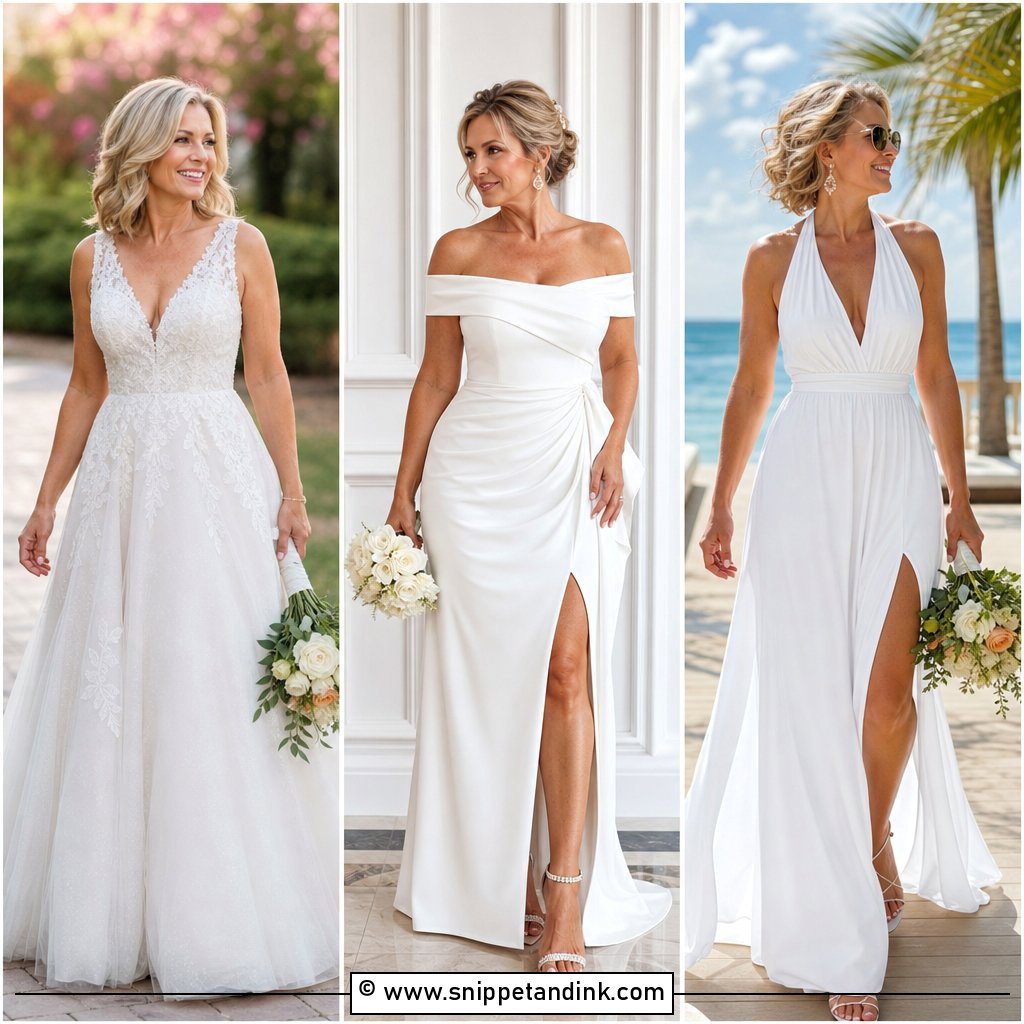
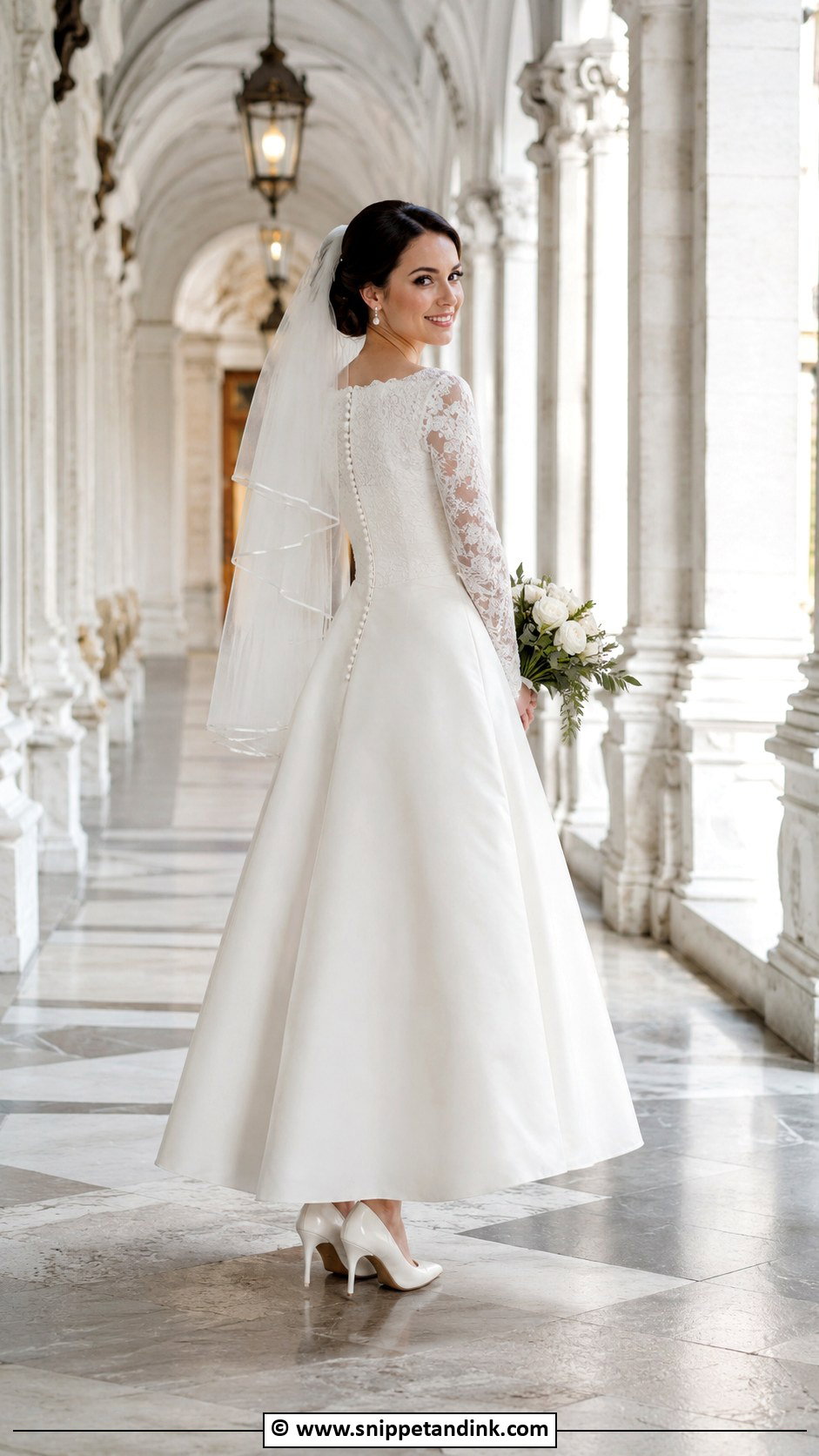
Tea length dresses suit civil ceremonies and daytime weddings, and the hem, somewhere between knee and ankle, turns your shoes into part of the outfit. Pointed pumps, bow heels or embellished flats all suit it. A fitted bodice with a full skirt leans vintage. Plain satin looks current. Petite brides often look better in it than in a full-length gown, because it shows the ankle and doesn’t swamp them.
16. Short Wedding Dress
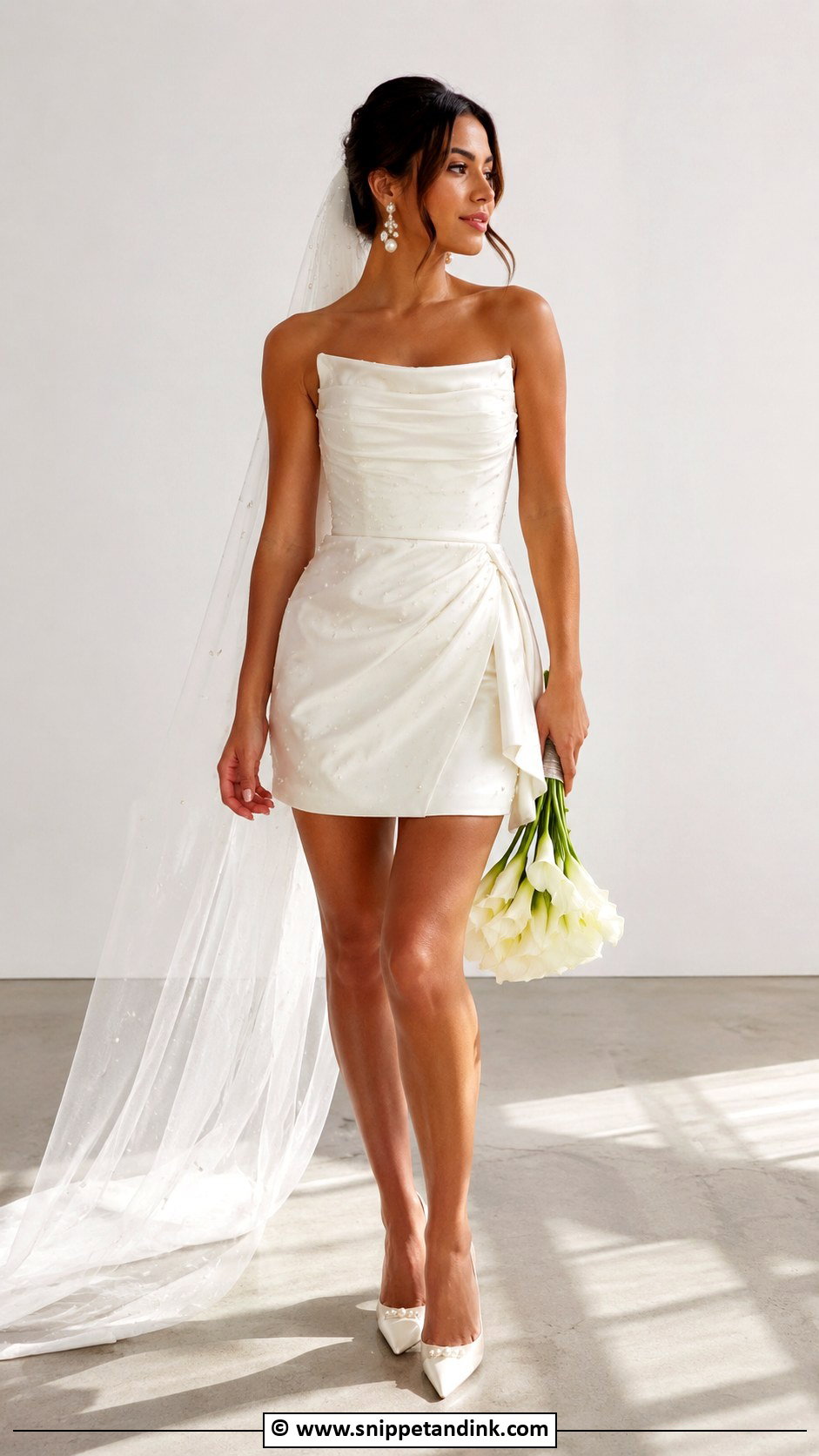
A short dress gives you freedom to walk and dance without managing a hem. Lace, satin, feathers, pearls or a bow keep it bridal. Structured fabric matters most here, since a soft short dress can read as everyday. Pointed heels, statement earrings and sheer tights if the weather calls for them. A long veil over a mini makes a good ceremony contrast, swapped for a headband at the party.
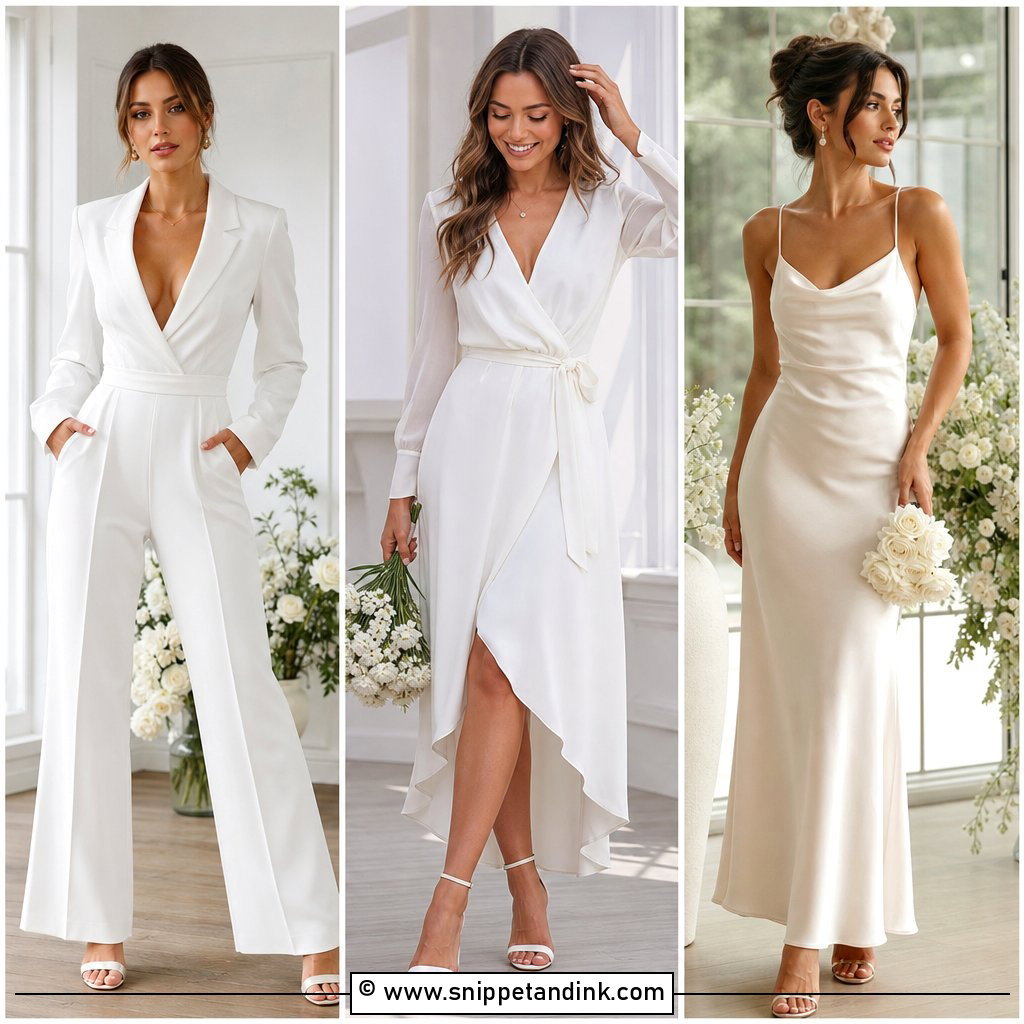
17. Bridal Jumpsuit
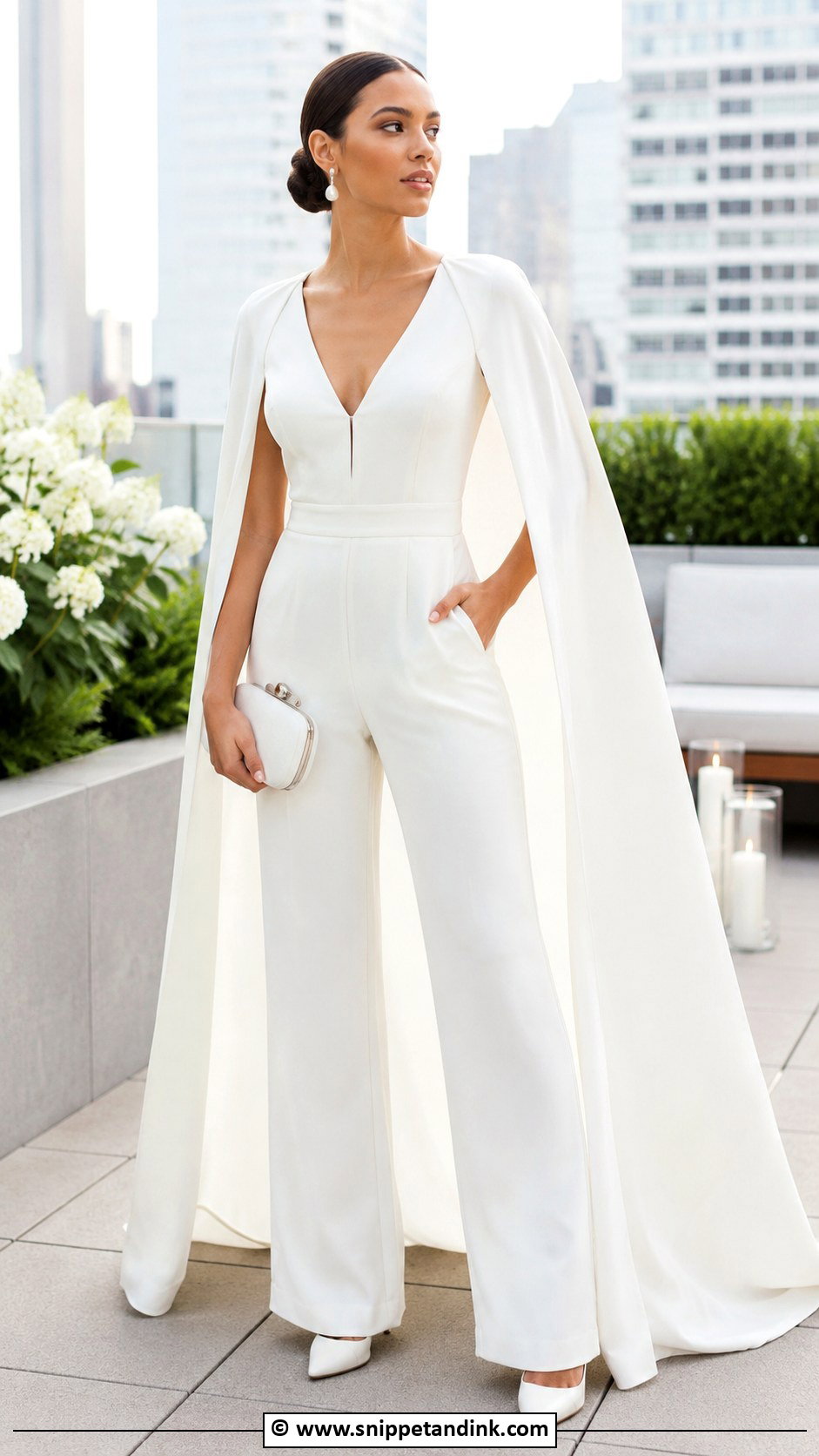
A bridal jumpsuit needs tailoring through the crotch and the hem more than anywhere else, and that’s where off-the-rack versions usually go wrong. Wide-leg ivory crepe with a fitted waist reads most bridal. Have the hem set in your exact shoes so the legs skim the floor. Pointed heels lengthen the leg, and a blazer or cape adds cover. It works for a courthouse, a rooftop or as a second look.
18. Bridal Suit
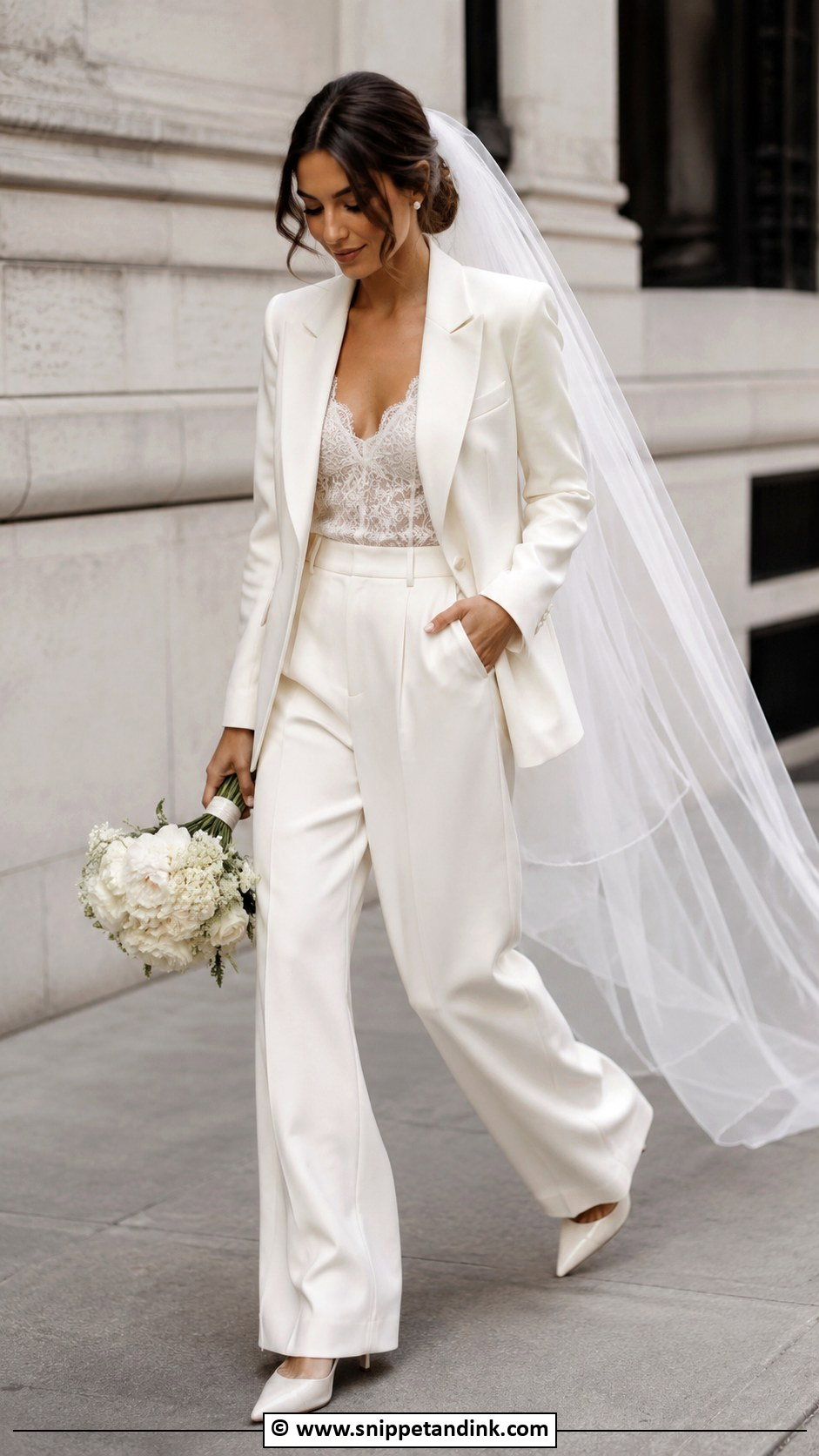
An ivory suit can feel more like you than any gown, and the details are what make it bridal: a lace camisole or a corset top under the blazer, satin lapels, pearl studs and a small bouquet. A long veil contrasts nicely with the clean tailoring. Wide trousers feel softer and slim ones sharper. I’d spend the budget on a tailor rather than a designer label, since fit at the shoulders is what makes a suit look expensive.
19. Two Piece Wedding Dress
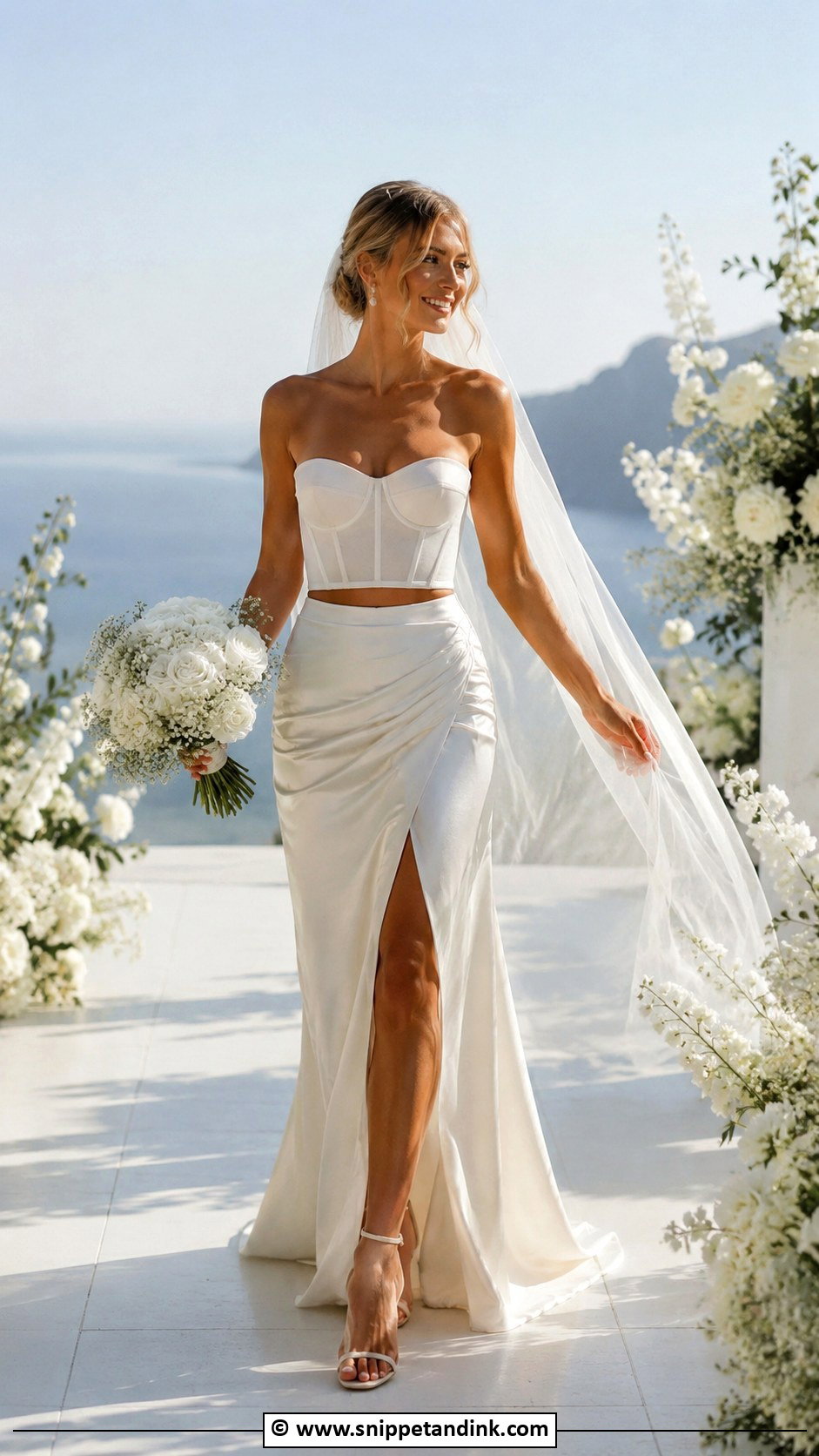
Two-piece looks suit a beach or destination ceremony and let you mix fabrics. A corset top with a flowing skirt feels romantic, while a fitted crop with a satin skirt feels sleek. The gap at the waist can be anything from a sliver of skin to none at all, so decide how much you want to show before ordering. Matching fabric keeps it cohesive. Strappy heels and a soft veil or hair bow finish it.
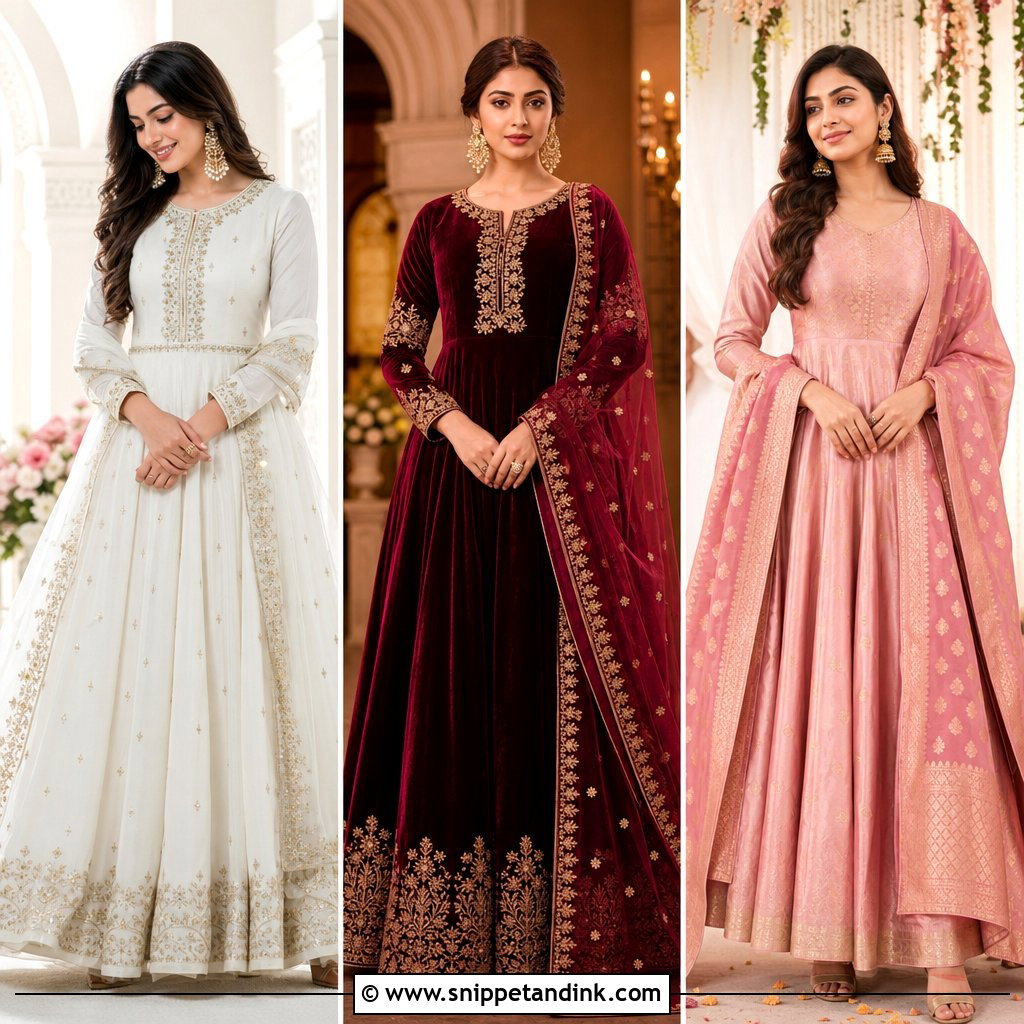
20. Colored Wedding Dress
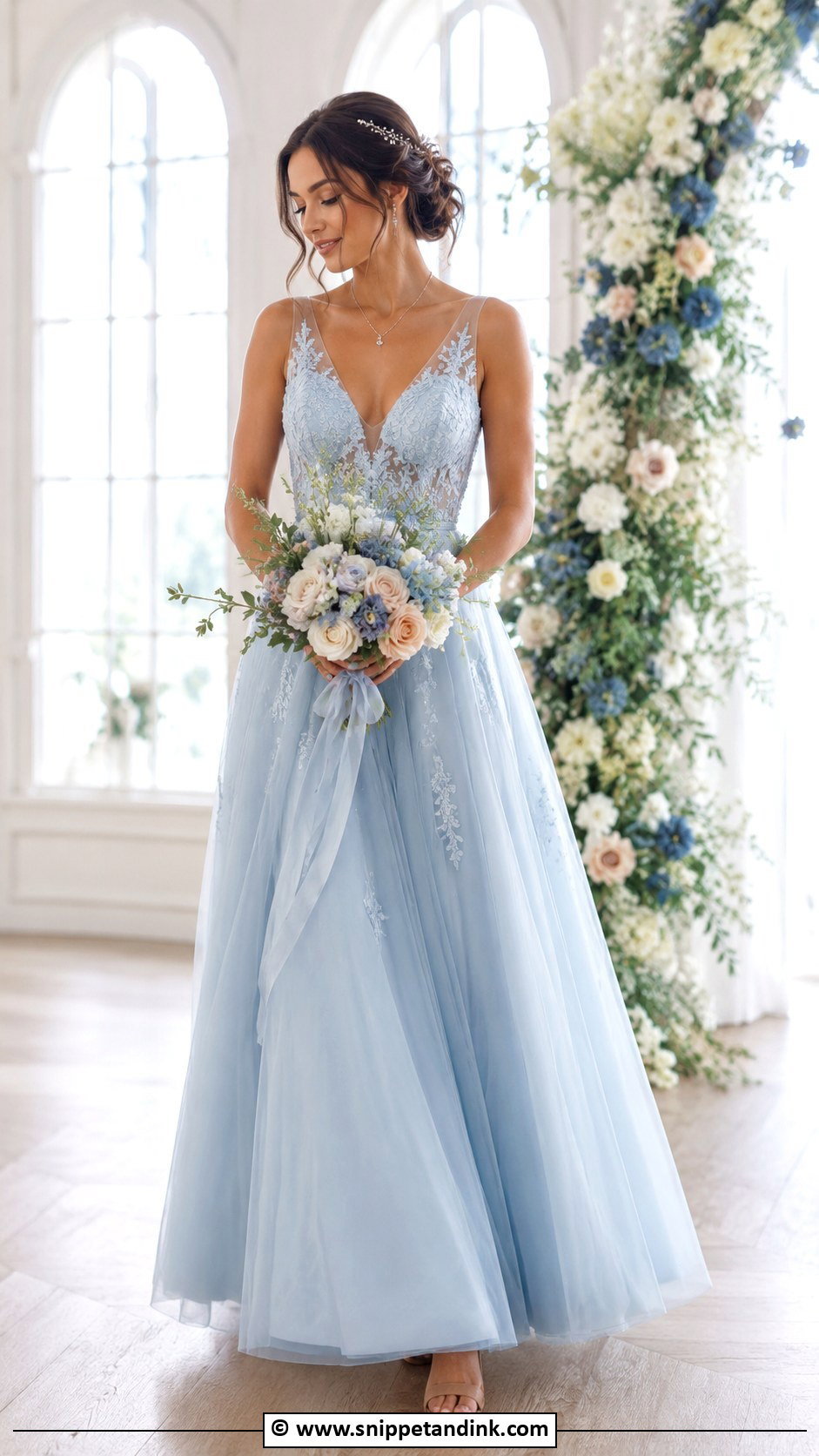
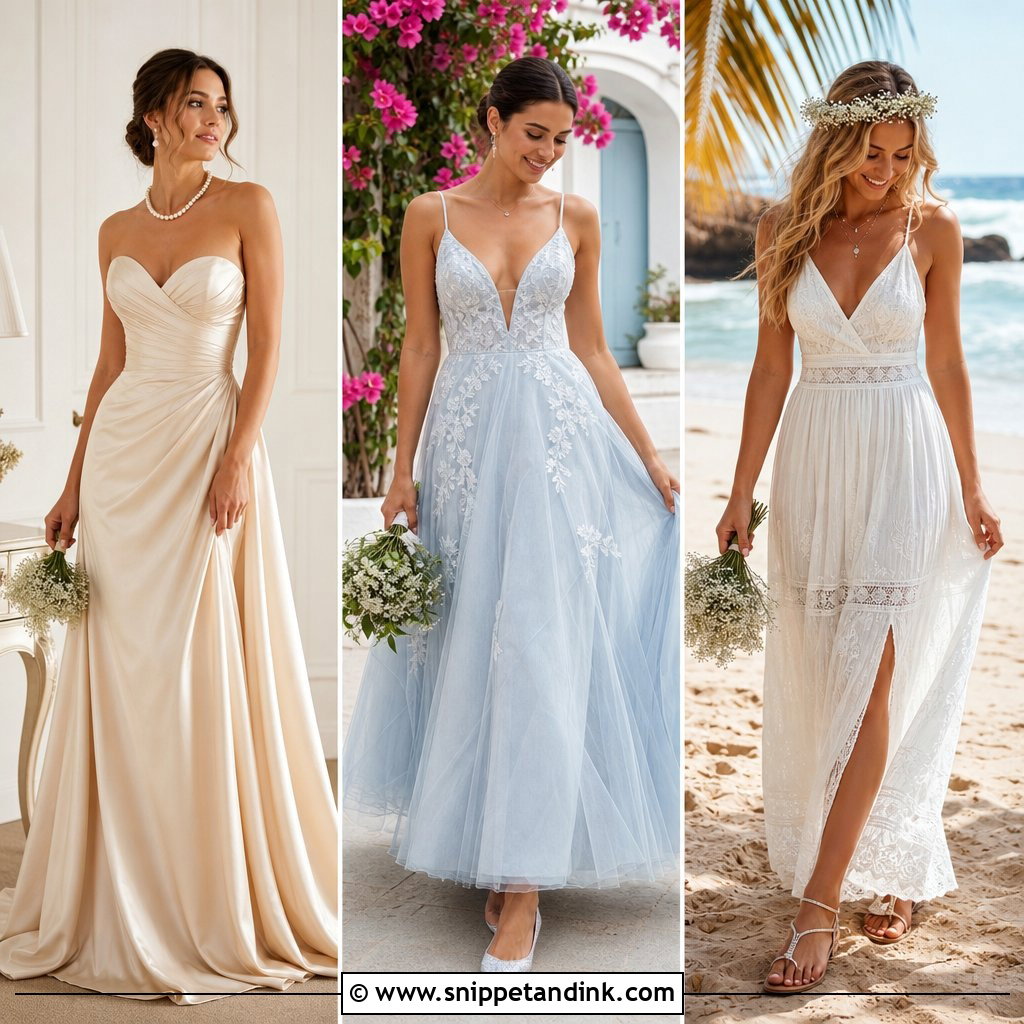
Colour suits brides who never felt like themselves in white. Blush, champagne, pale blue, lavender and warm beige still read as bridal. Test the shade against your skin in daylight, since shop lighting flatters almost everything. A blush tulle gown leans romantic, a champagne satin leans formal. Repeat the colour lightly in the bouquet and keep the jewellery neutral. It suits second weddings and garden ceremonies especially well.
21. Champagne Wedding Dress
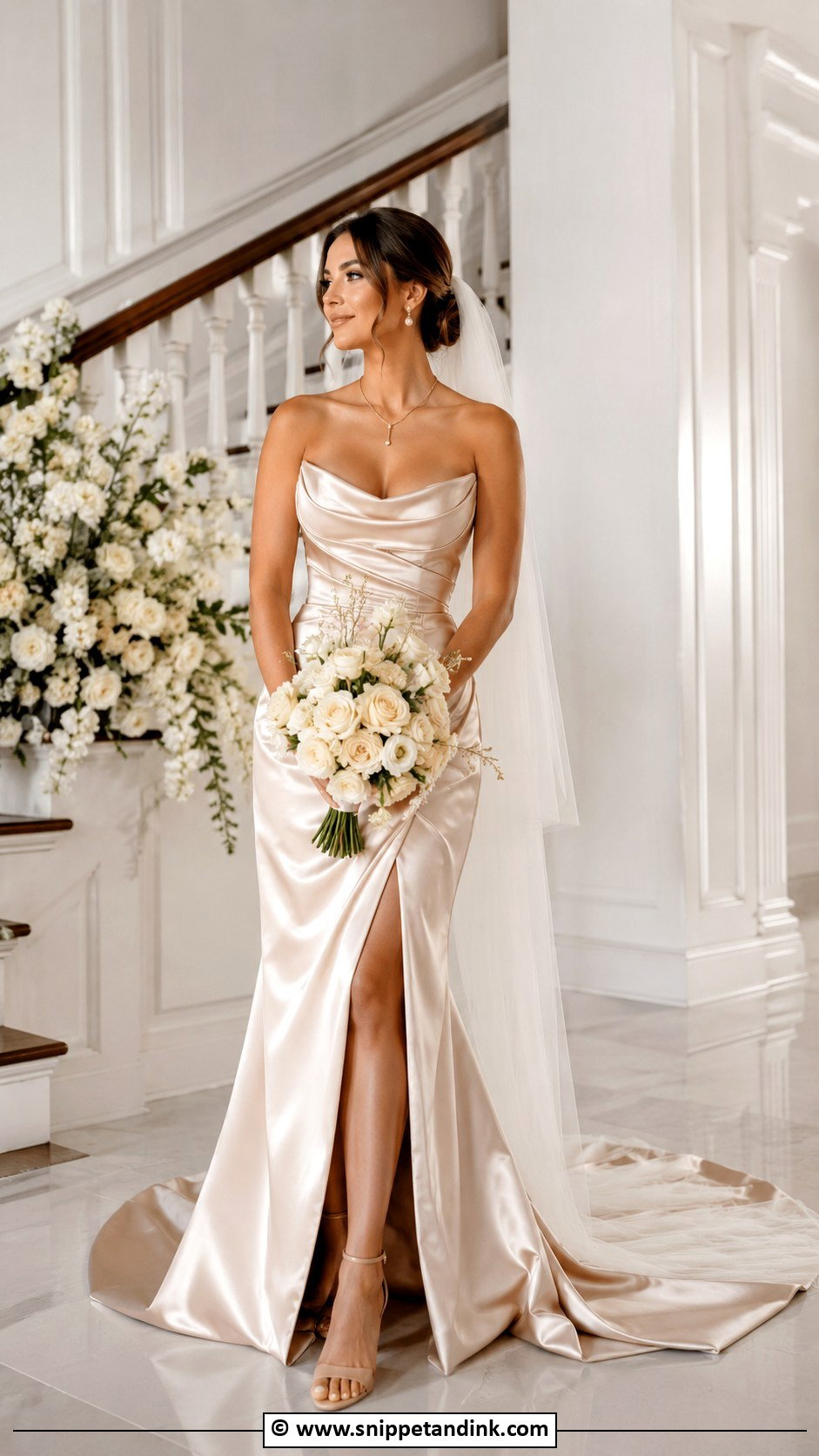
Champagne warms the skin and looks rich in satin, tulle, lace or beading. It’s my usual suggestion when bright white makes a bride look tired in photos. The thing to watch is matching: an ivory veil can look grey beside a champagne gown, so bring a fabric swatch to every accessory appointment. Gold or pearl jewellery and nude heels sit well with it. Shimmer on the dress means a plain veil, while plain satin can take a pearl veil or a jewelled comb.
22. Blush Wedding Dress
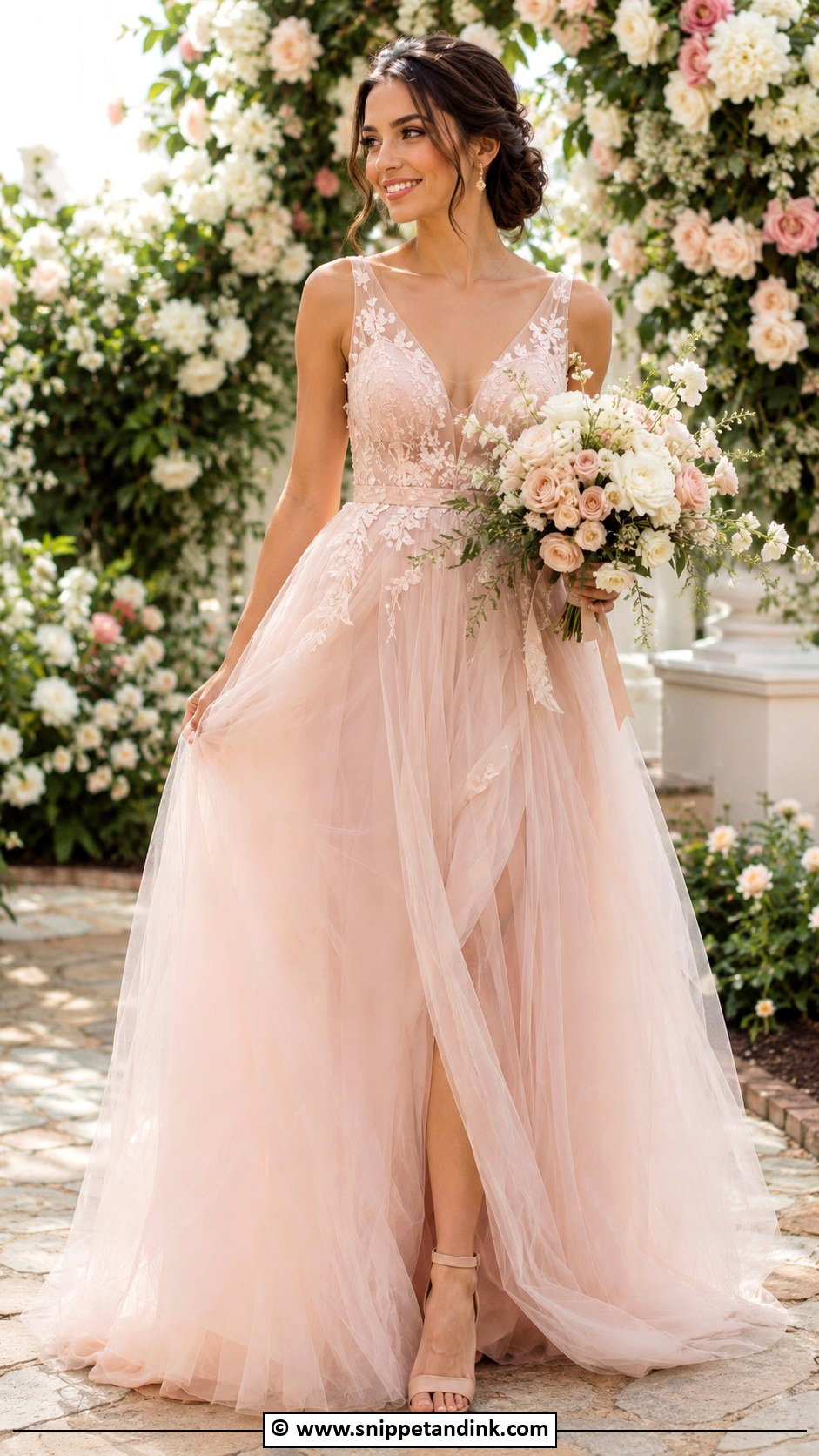
Blush covers everything from a barely-there pink to dusty rose, and the paler end reads more bridal. A blush tulle ball gown suits a garden. A blush satin slip feels modern for a small wedding. Rose-toned makeup and delicate gold jewellery tie it together, with nude or ivory heels. Keep the bouquet in cream, pale pink and soft greenery so it doesn’t fight the dress.
23. Sequin Wedding Dress
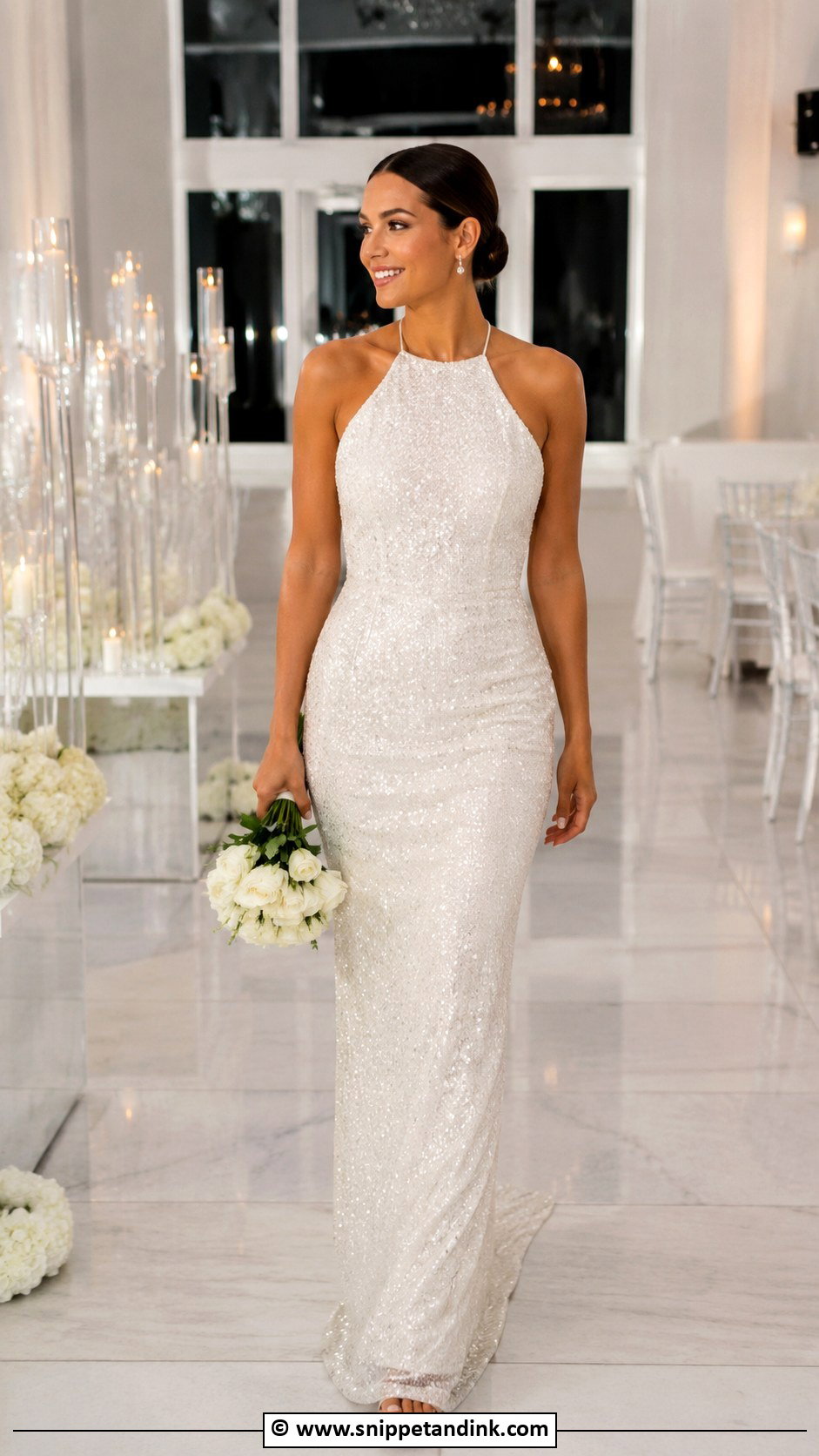
Sequins come alive under reception lighting, which is why I steer brides toward them for evening weddings. Ivory, soft silver-white or champagne sequins look bridal. Check the lining at the arms and sides, because sequin backing can scratch over a long night. Scattered sequins over tulle are gentler than full coverage. Keep hair smooth and accessories minimal, since the dress is already doing the work.
24. Minimalist Column Wedding Dress
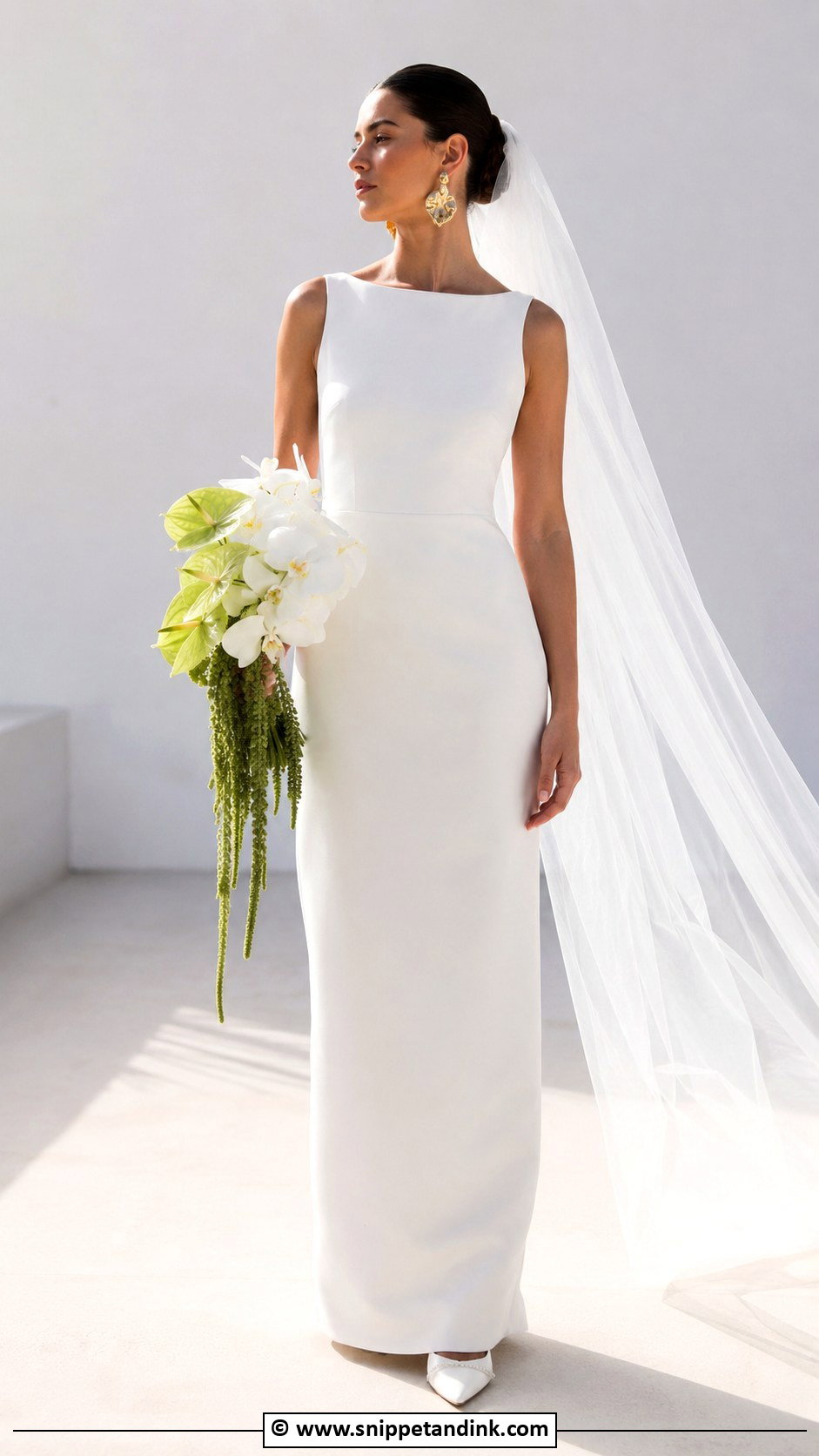
Columns fall straight with no full skirt, so the line is calm and long. Matte crepe, silk satin or mikado suit it. With nothing to distract, the hem, bodice and neckline all have to be tailored exactly, and I’d budget an extra fitting for that. Sculptural earrings, pointed heels and a sleek veil keep it modern. A bold bouquet adds contrast if the dress feels too quiet.



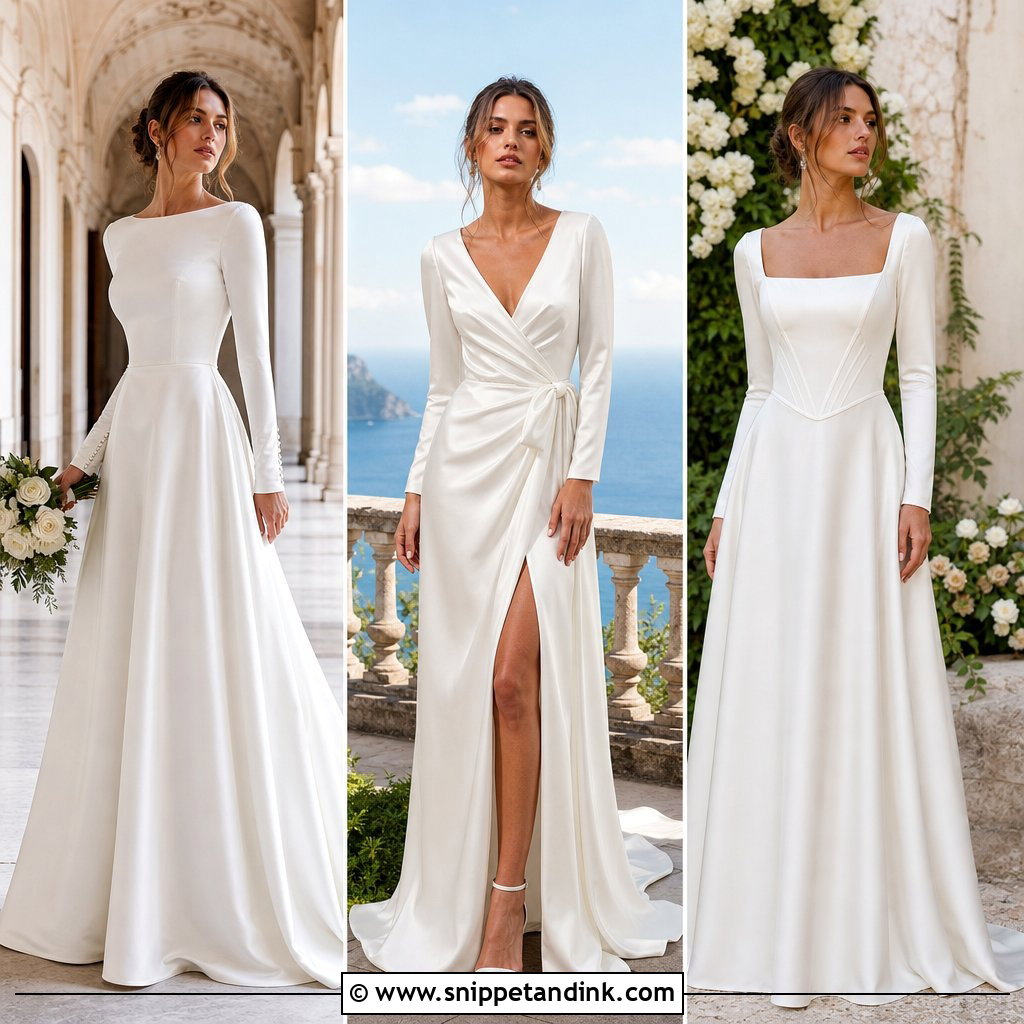

25. Vintage Inspired Wedding Dress
Vintage details work best one or two at a time: lace sleeves, covered buttons, a drop or basque waist, a high neck or soft tulle layers. You can wear a true vintage gown, remake a family dress or buy new with period details. If it’s a genuine older gown, have a seamstress inspect the seams and fabric early, since old silk can be brittle. Pearl earrings, a low bun and satin pumps finish it without tipping into costume.
26. Boho Wedding Dress
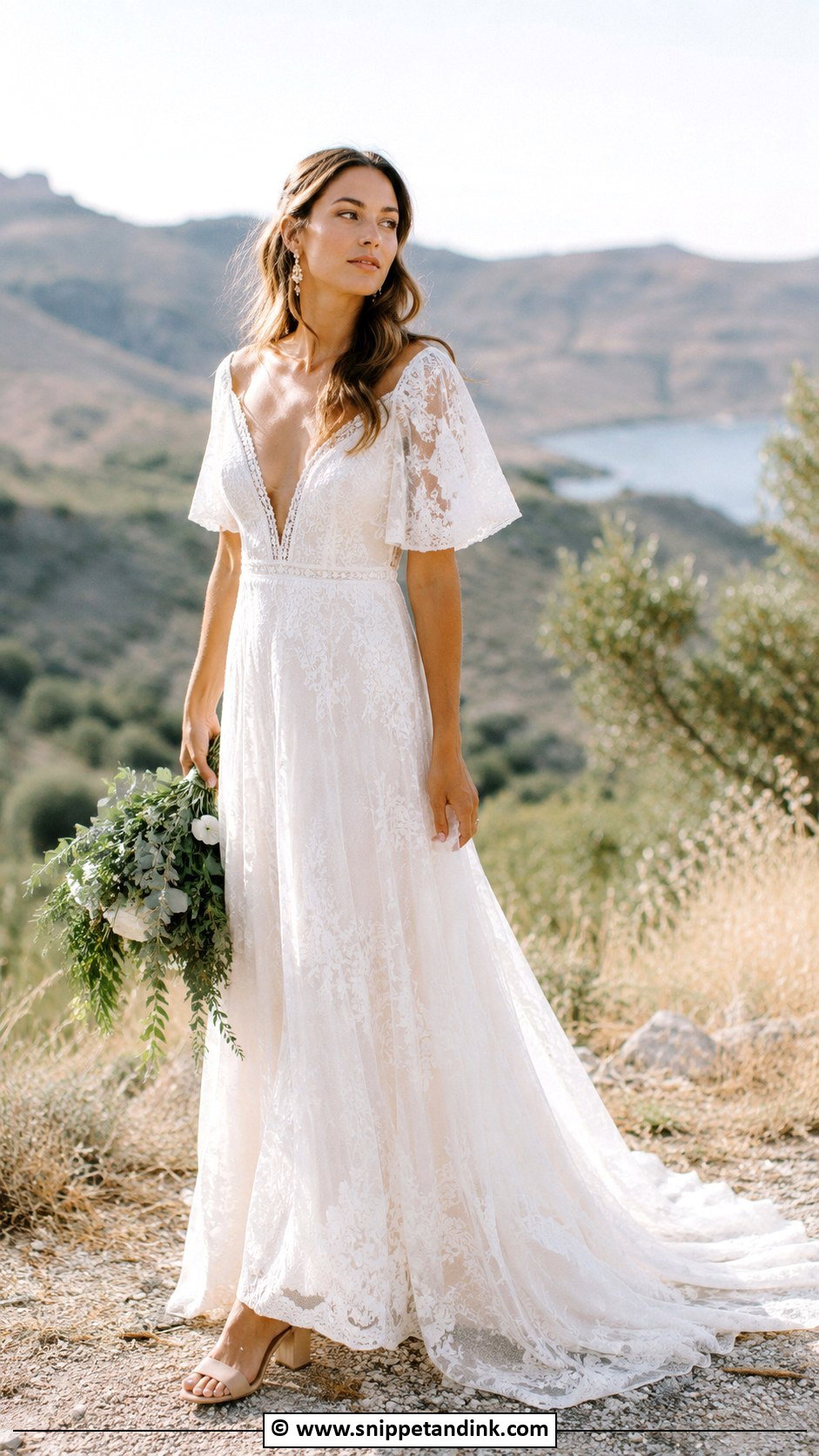
Boho gowns should move with you. Soft lace, flowing sleeves and light skirts suit outdoor, beach and desert venues. Crochet lace and loose weaves snag easily on brush, so check the hem length for rough ground. Block heels, flat sandals or ankle boots depending on the terrain. Loose waves and a bouquet heavy on greenery suit the relaxed mood. Avoid heavy layers that weigh the dress down.
27. Beach Wedding Dress
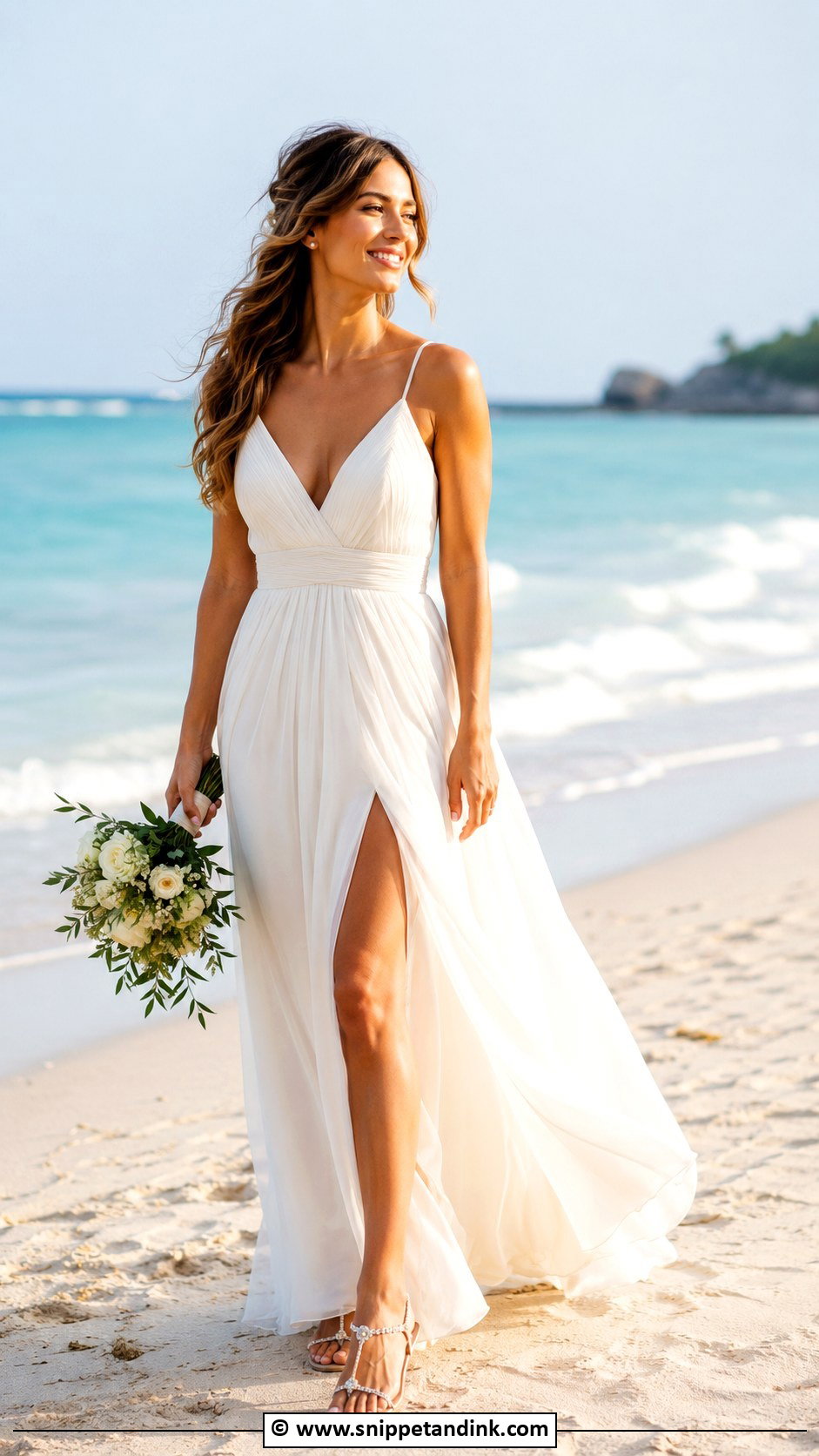
Beach gowns need to breathe and cope with wind. Chiffon, silk, crepe or soft lace move well, while heavy satin and dense beading drag in the sand and trap heat. An A-line, slip or simple V-neck works by the water. Flat sandals and a loose hairstyle that can take a breeze are practical. A long veil photographs well but can whip around in wind, so a shorter veil or a flower in the hair is safer. Ivory and champagne both sit nicely against sand.
28. Courthouse Wedding Dress
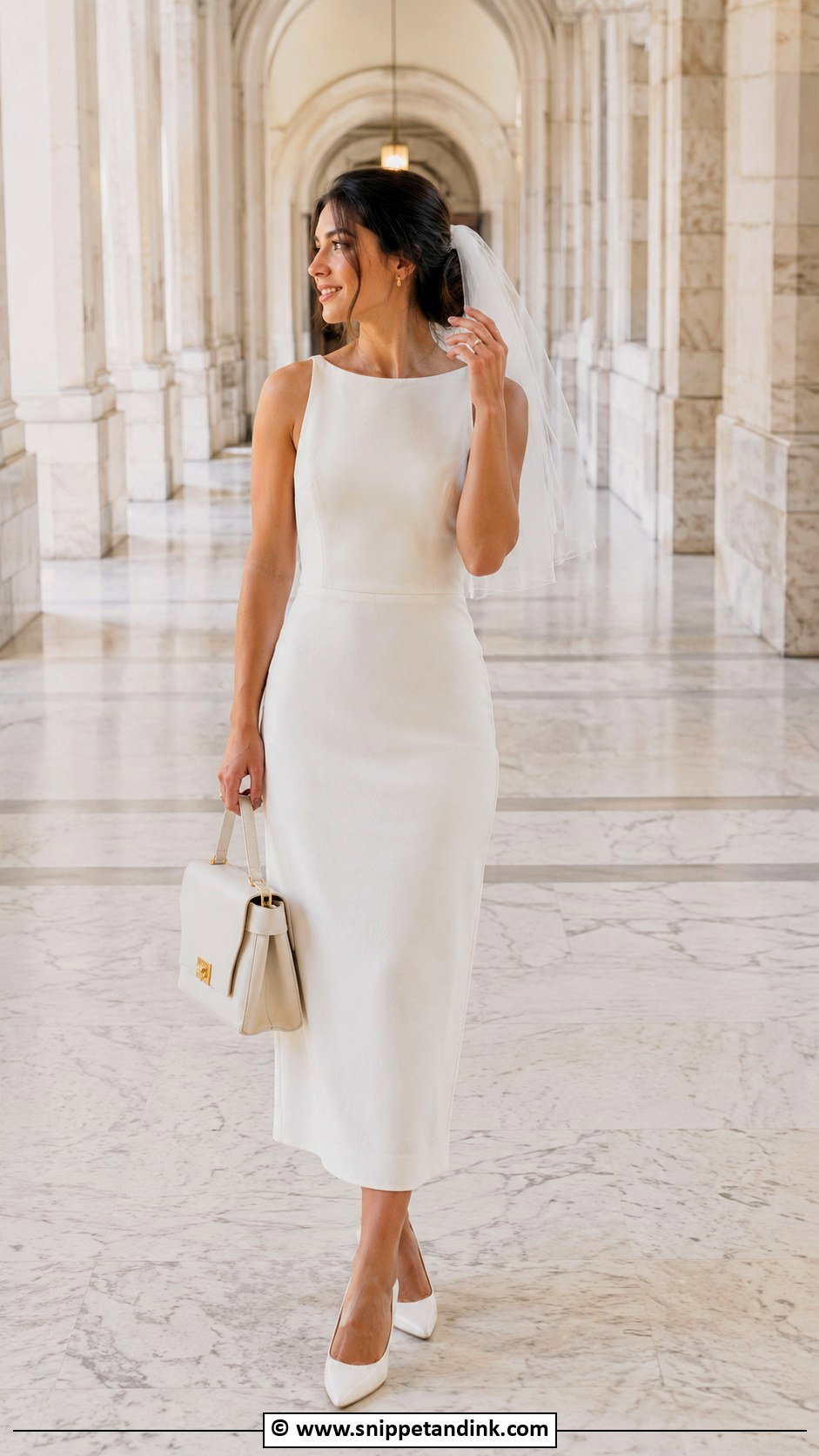
For a courthouse ceremony, the dress has to handle stairs, corridors and a short wait in a public room. A short satin dress, tailored midi, sleek column or bridal suit all suit it. Pointed pumps, a structured bag, small earrings and a simple bouquet are plenty. A short veil, hair bow or pearl headband adds a bridal note. Choose fabric that doesn’t crease badly when you sit in a waiting area.
29. Plus Size Wedding Dress
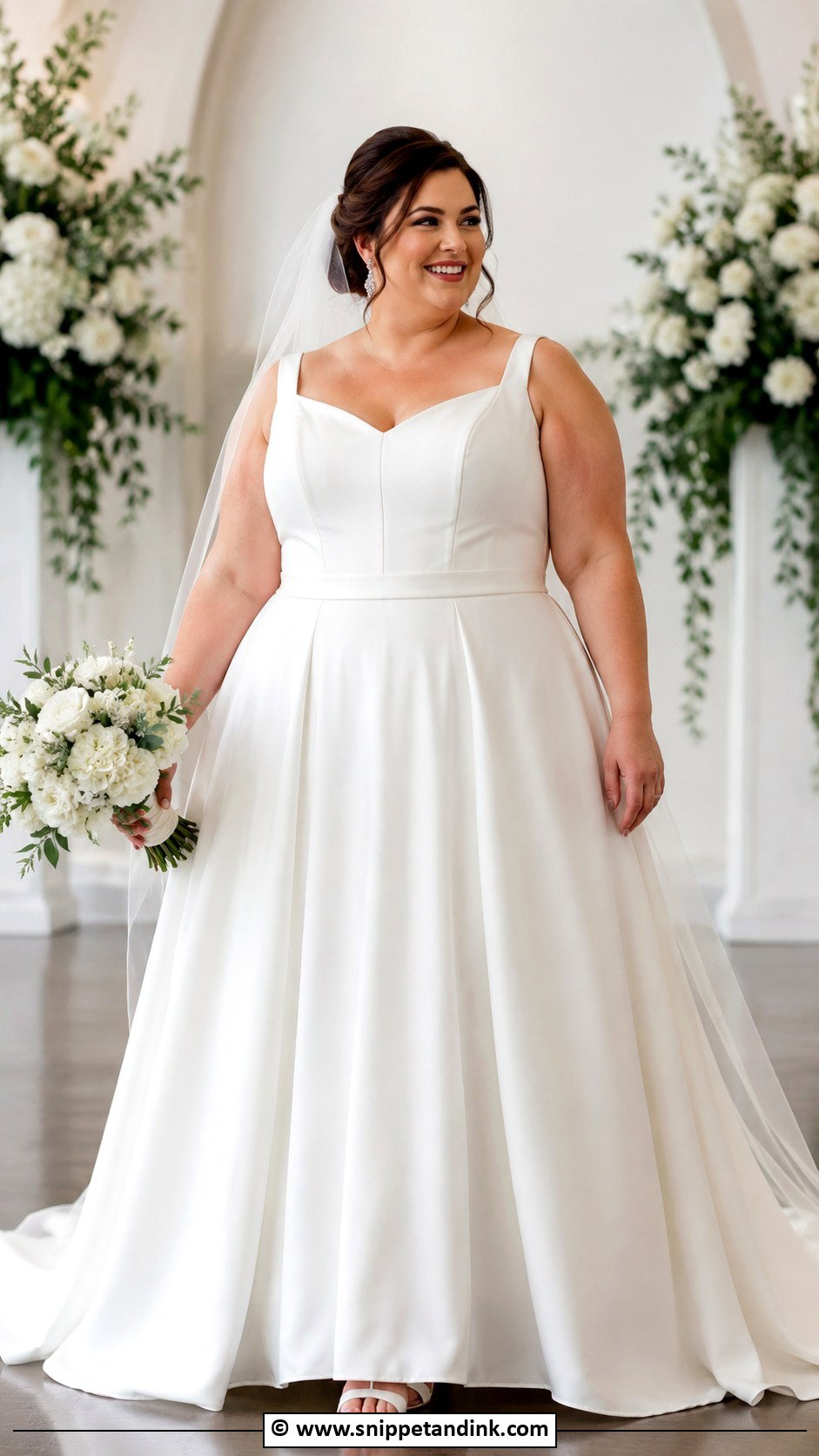
A plus size wedding dress works best when the support is built into the gown: a corseted or boned bodice, a full lining and straps or sleeves if they make you feel secure. A-line, ball gown, wrap and fit-and-flare shapes all suit curves. In fittings, I ask what a bride loves about her figure, because building the dress around that works far better than choosing one to hide behind. Shapewear is optional. Good alterations aren’t.
30. Maternity Wedding Dress
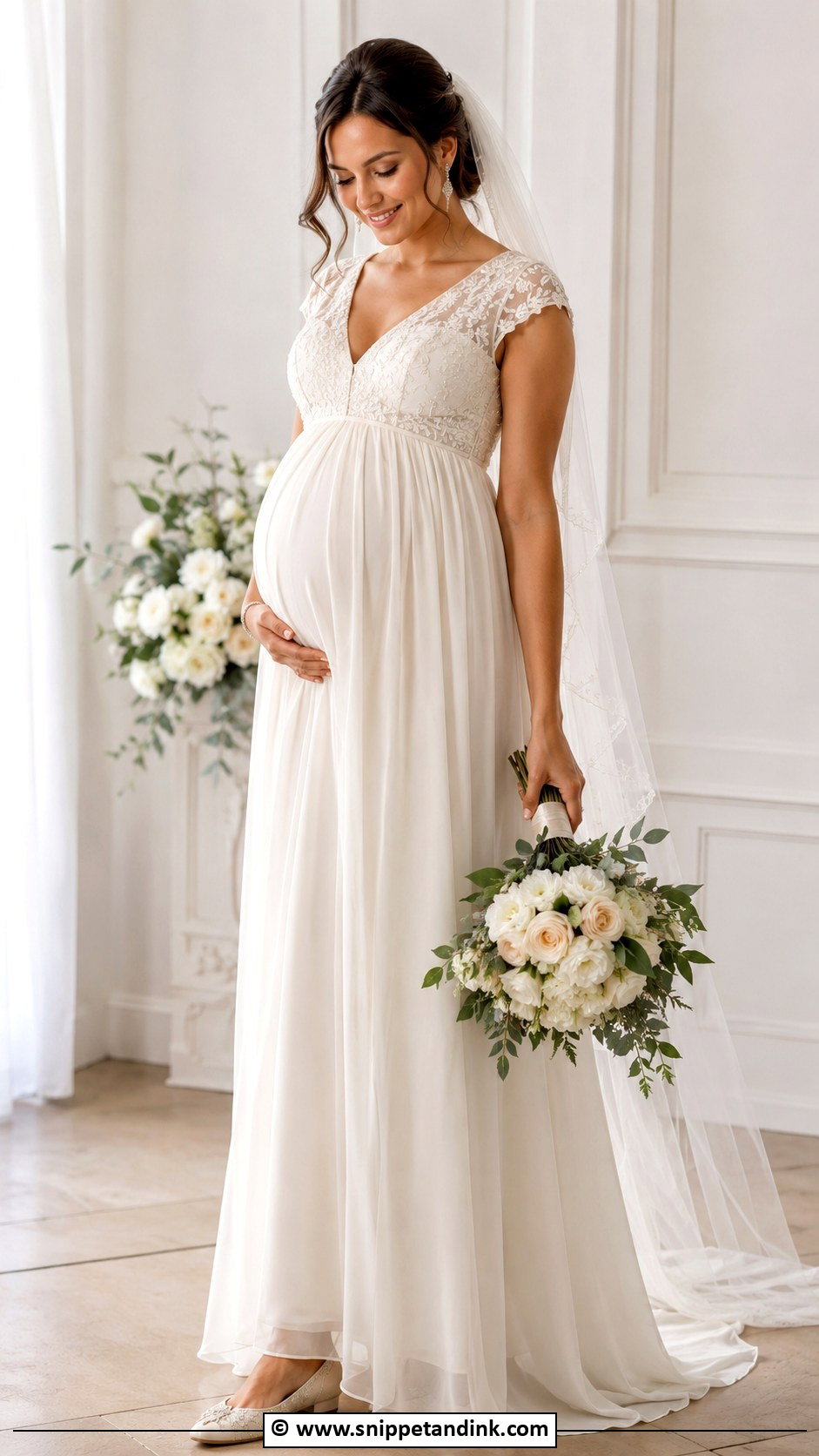
Maternity gowns have to allow for change, so I build in adjustability: a lace-up back, side panels or stretch lace. Empire waists, soft A-lines and wrap styles are the most comfortable. Leave the final fitting as close to the wedding as you safely can, since a bump can grow noticeably in a few weeks. Avoid stiff boning. Block heels or embellished flats, and a bouquet held slightly to the side so it doesn’t hide the shape.
Guests in Ivory, Blush or Champagne? Where the Line Sits
Brides now wear colour, and guests sometimes wonder whether that changes the old rule. My answer is no. White, ivory, cream and any very pale shade that reads as white in photos still belong to the bride. A champagne or pale blush dress can look ivory in a flash photograph, so if in doubt, go a shade deeper.
Read the invitation and the culture
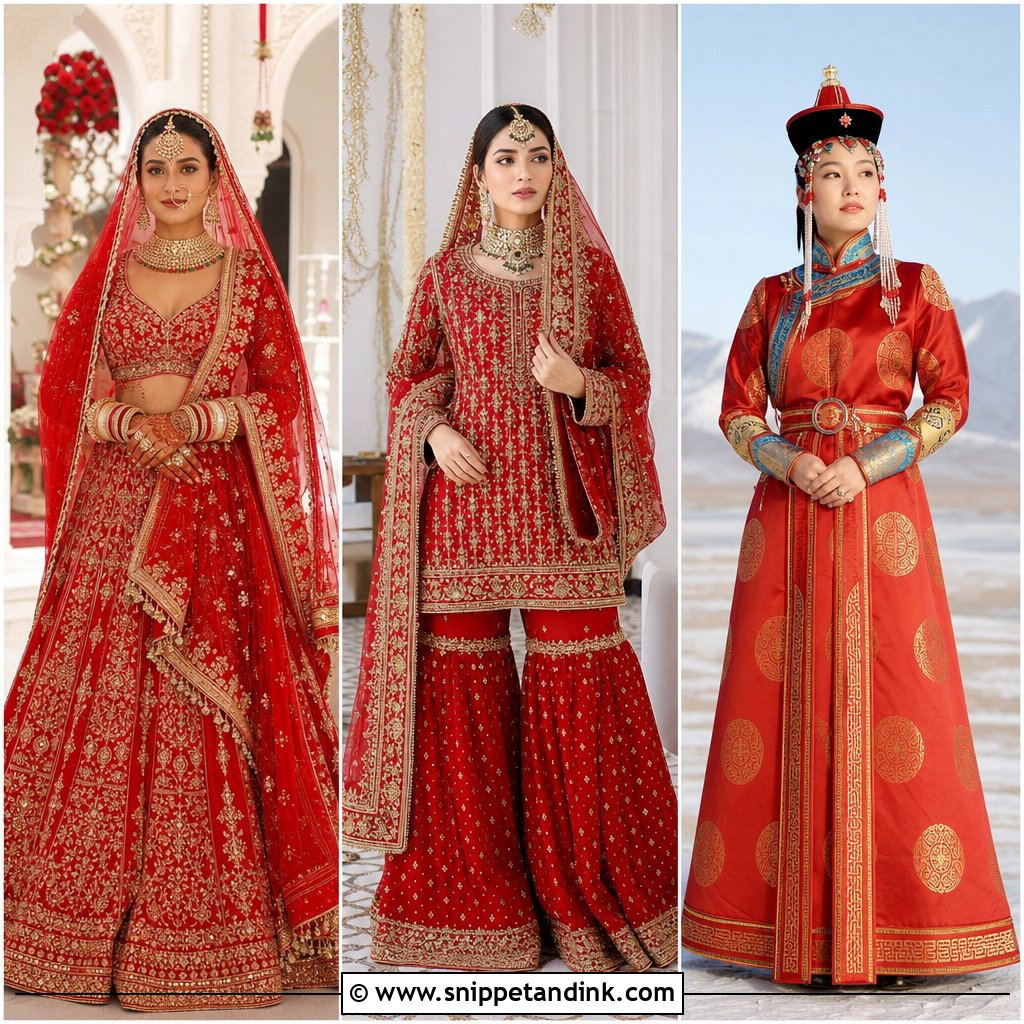
Check the dress code before buying. Black tie means a floor-length gown. Cocktail means knee to midi length. Customs vary too: at many Chinese and South Asian weddings, red belongs to the bride, while some families see all-black or all-white as mourning colours. If you’re unsure, ask the couple or a close family member. It’s a kind question, never an awkward one.
For a bride wearing a coloured gown, a quick message to the wedding party about which shade to avoid saves an awkward photo later.
The Dress You Forget You’re Wearing
The right dress is the one you stop thinking about an hour into the reception. Trends can point you somewhere, but the venue, your body and how you plan to move matter more. A plain satin gown can look just as special as a lace ball gown, and a suit can feel as bridal as either. Plan the shoes, veil, jewellery, hair and bouquet together so nothing fights. Then trust what you felt in the mirror.
You'll Like These Ideas:



Leave a Reply