
A Bengali wedding asks a lot of an outfit. You sit cross-legged for long rituals, get lifted on a pidi, walk seven circles and then stand for hours at the bou bhat or reception, often in heavy silk. When I dress a Bengali bride or her family, I plan the clothes around those movements first and the colors second. The looks below run from red Banarasi sarees and white-and-red drapes to Jamdani, sharara sets and fusion pieces for guests. For each one I’ve noted what it handles well, where it struggles and who should skip it.
Dressing a Bride for Shubho Drishti, Saat Paak and Sindoor Daan
The main Bengali ceremony puts a saree through more than most bridal outfits ever face. During shubho drishti the bride is usually carried on a low wooden seat called a pidi, with her face hidden behind betel leaves until the reveal. Saat paak means being circled around the groom while seated, and sindoor daan has her head bent forward under a cloth. Every one of those moments loosens a drape that was perfect five minutes earlier.
Here is how I prepare a bride for it:
- Fit the blouse with your arms raised. You’ll be holding paan leaves up to your face, and a tight armhole pulls the whole drape upward.
- Ask the draper for more safety pins than seems sensible: pleats at the waist, pallu at the shoulder, and the ghomta pinned to the bun so it stays put while you’re lifted.
- Wear shorts or a slip under the petticoat. If the pleats open while you sit cross-legged, nothing shows.
- Practise sitting on a low stool in the full saree a week before. If you can’t fold your legs comfortably, the draper can loosen the front pleats.
I also tell brides to have one person in the family responsible only for the saree. She carries pins, a small towel for sindoor that falls on the silk, and checks the back of the drape before every photo.
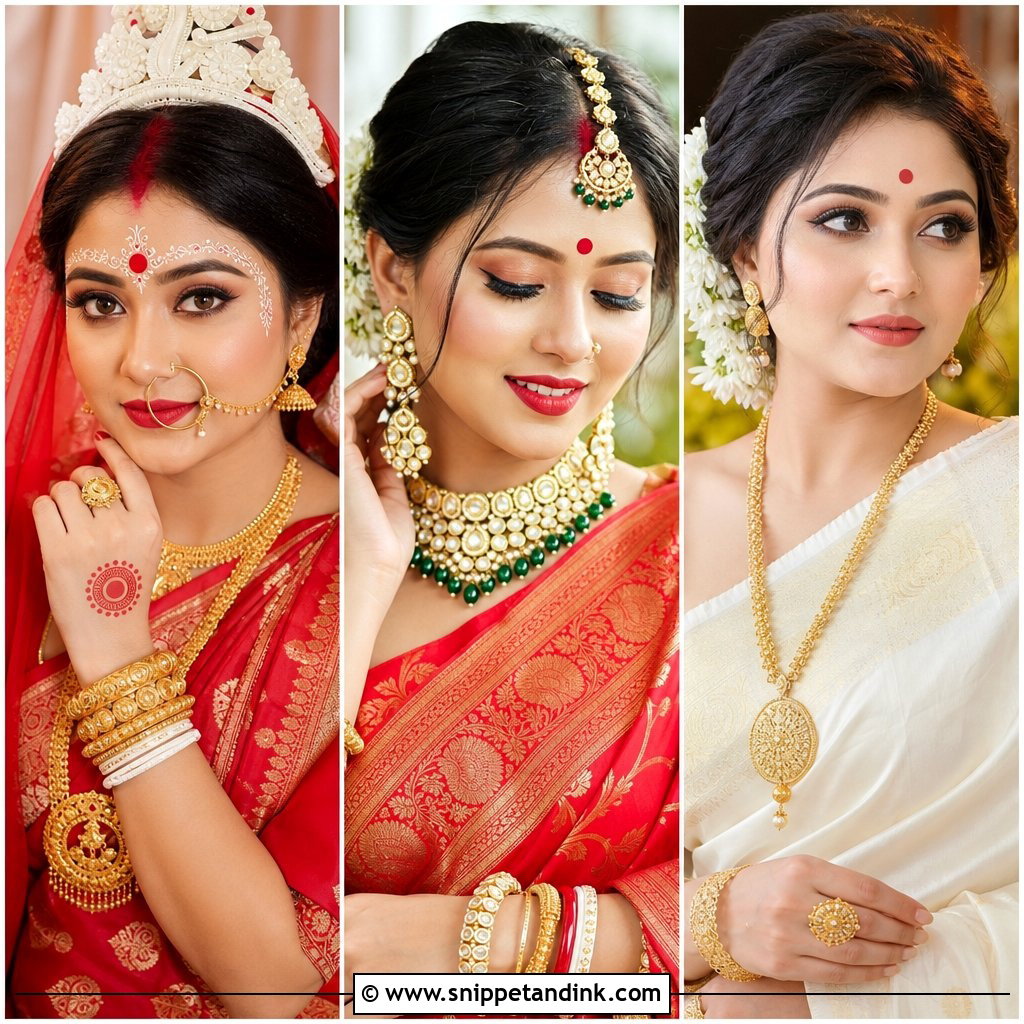
1. Bengali Bridal Red Banarasi Saree
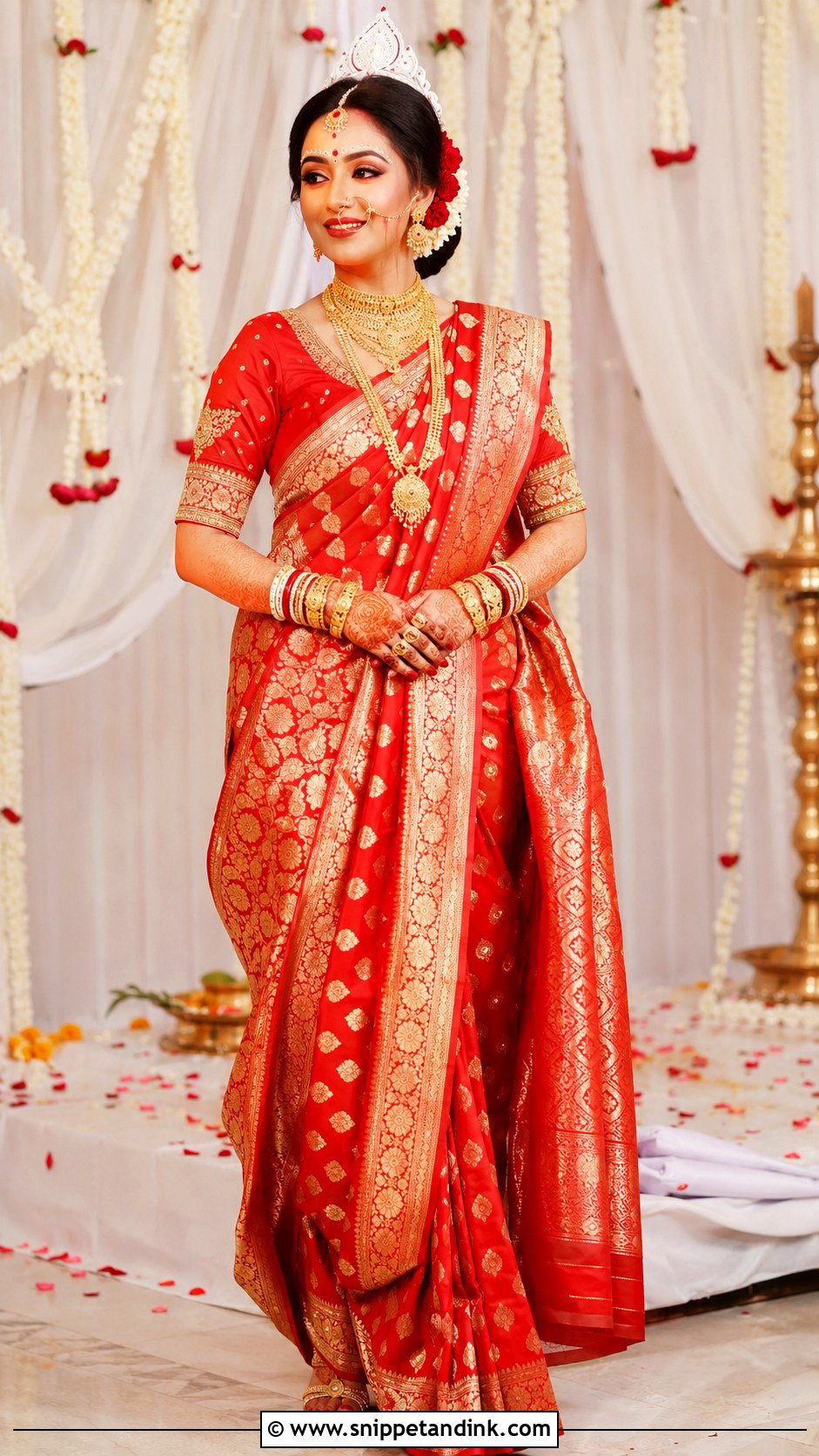
Red Banarasi is still the iconic Bengali bridal outfit for the main ceremony, and the zari carries the gold that the shankha-pola, nath and mukut pick up. The thing I check first is the weight of the weave. A stiff, heavily brocaded pallu holds pleats well but drags on the shoulder by the second hour, so I pin it in three places, not one, and ask for a cotton petticoat with a firm drawstring rather than a slippery satin one. Do a sitting test in the full drape before the day. If the pleats splay open when you kneel, they need re-folding narrower.
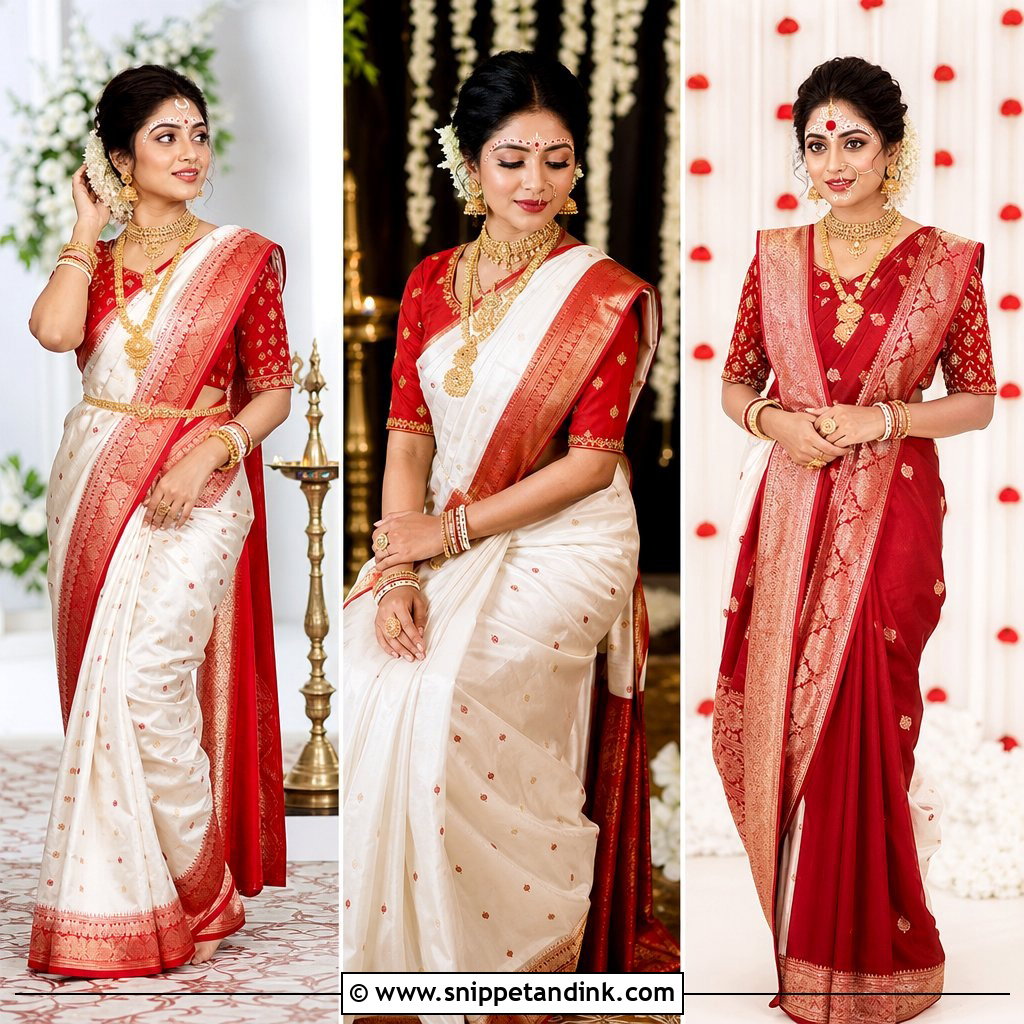
2. Bengali White And Red Saree
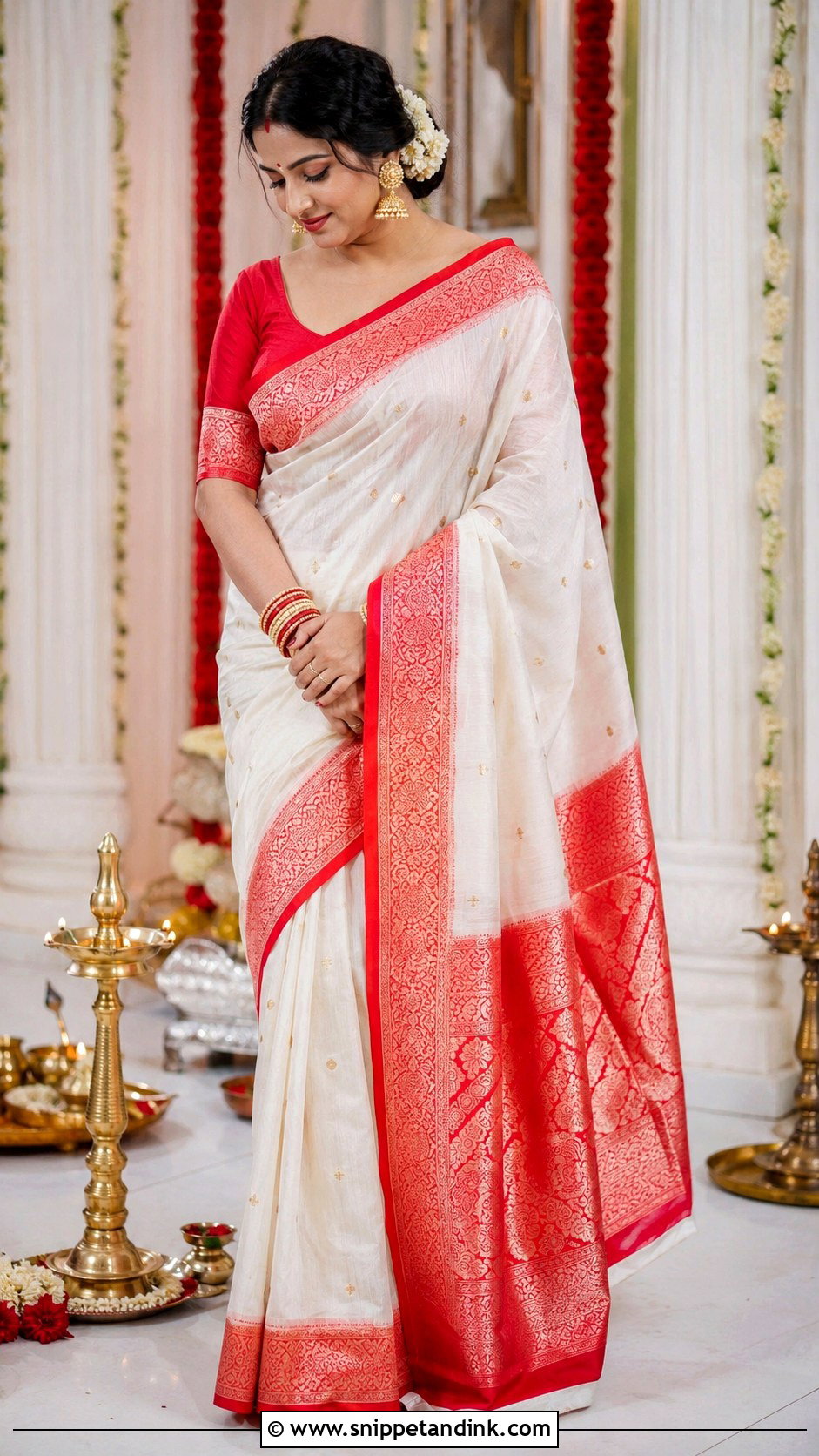
White with a red border is the drape most people picture when they think of a Bengali wedding, and it reads as family and ritual rather than glamour. Garad, Korial and festive handloom silks all carry it. My one warning is about white silk at a ceremony with fire, turmeric and sindoor: it marks easily, so I keep a cotton hanky and talc in the kit for quick blotting. Guests in this palette should keep the jewelry to jhumkas and a few bangles so nobody mistakes them for the bride.
3. Bengali Bride Gold Banarasi Saree
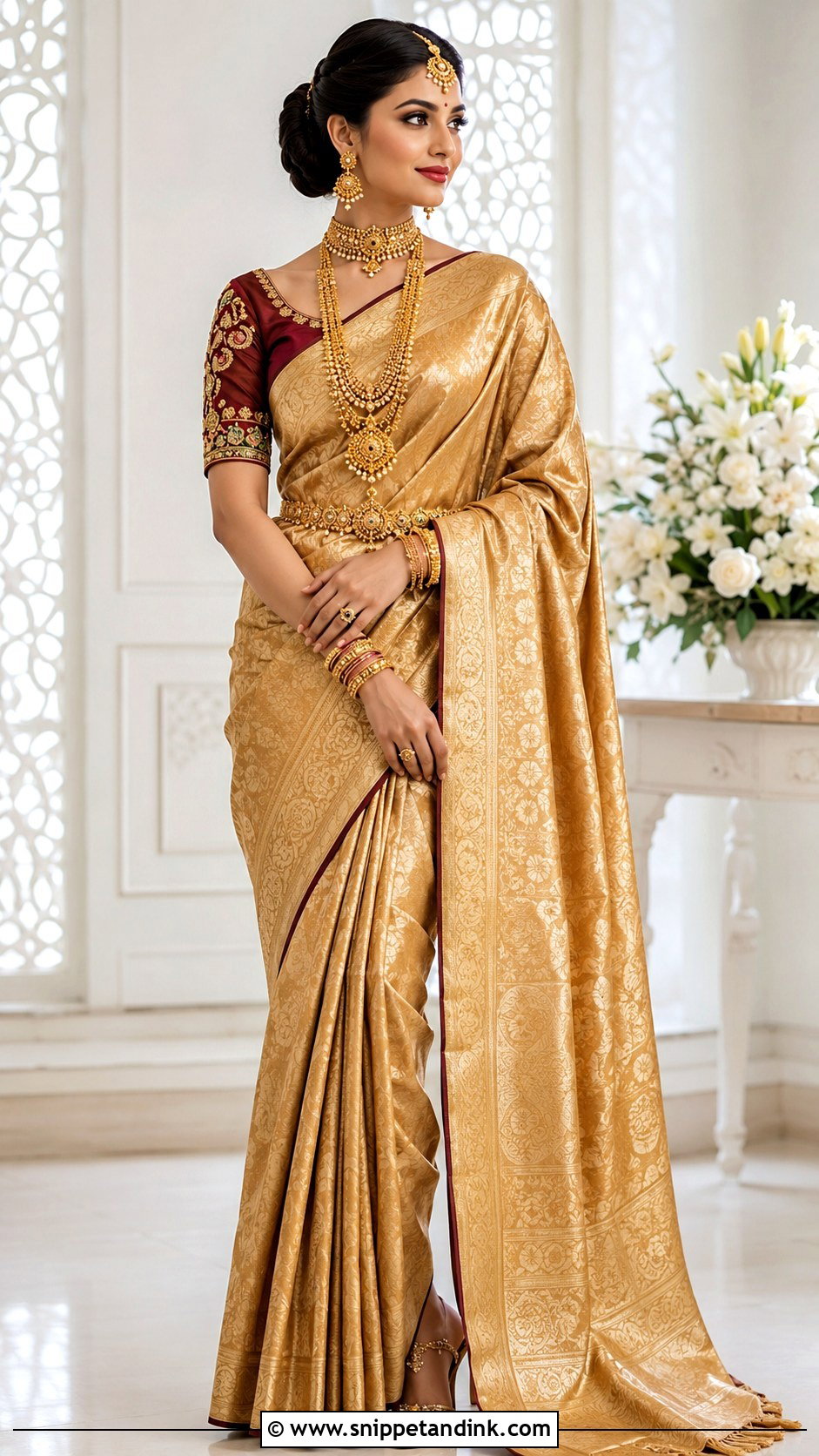
Gold Banarasi is my suggestion for brides who feel swallowed by red but still want weight and shine. Antique or champagne gold with paisley or floral butis looks rich without the brassy glare that bright yellow zari can throw under flash. A maroon or emerald blouse gives the contrast; a gold blouse on a gold saree tends to flatten into one block in photos. It also crosses over well if you wear it again for the reception.
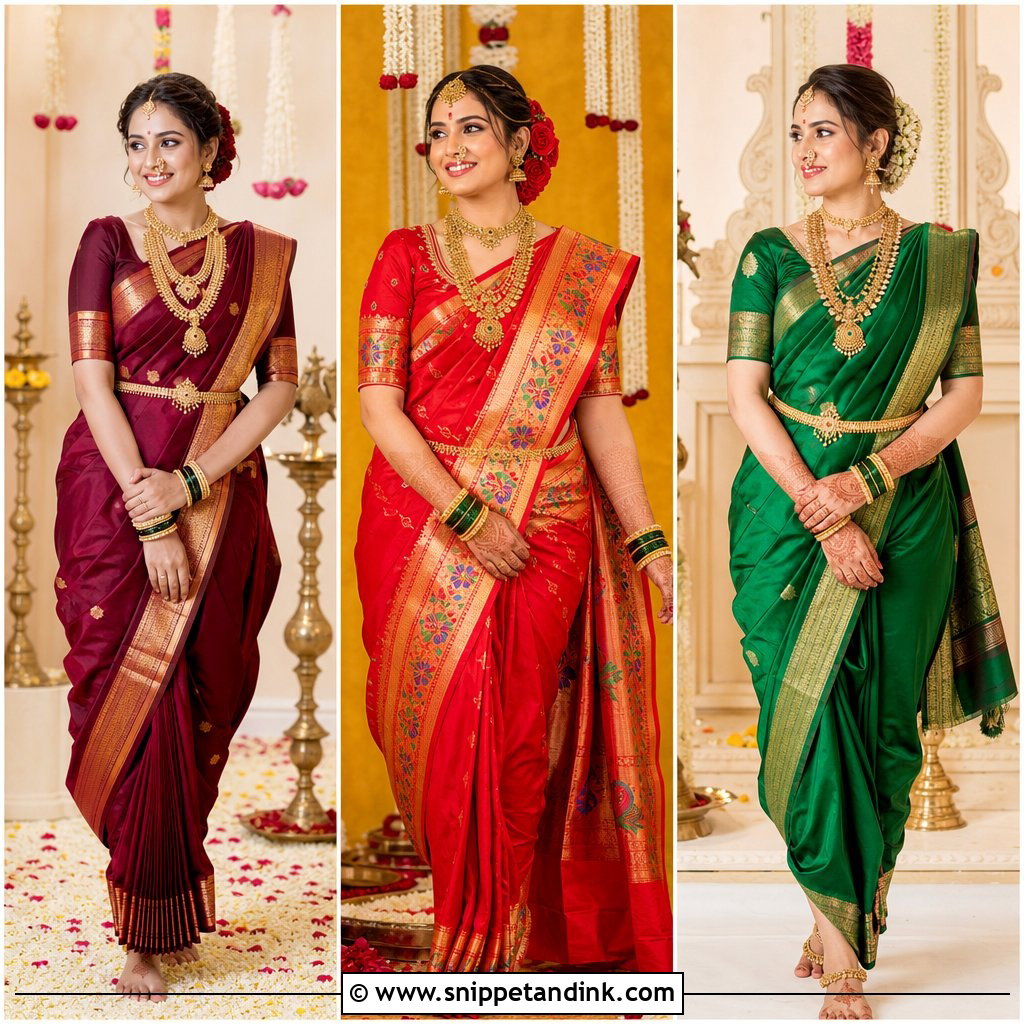
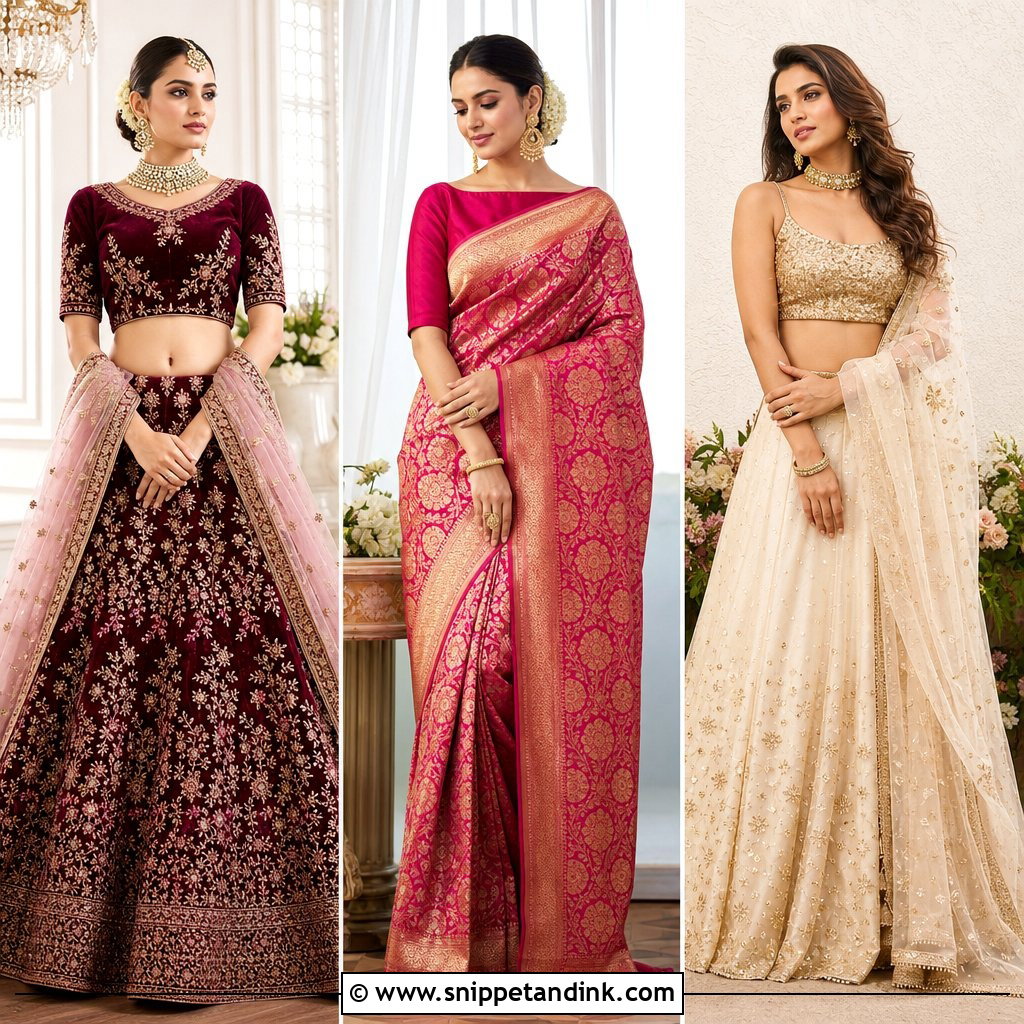
4. Bengali Bride Maroon Silk Saree
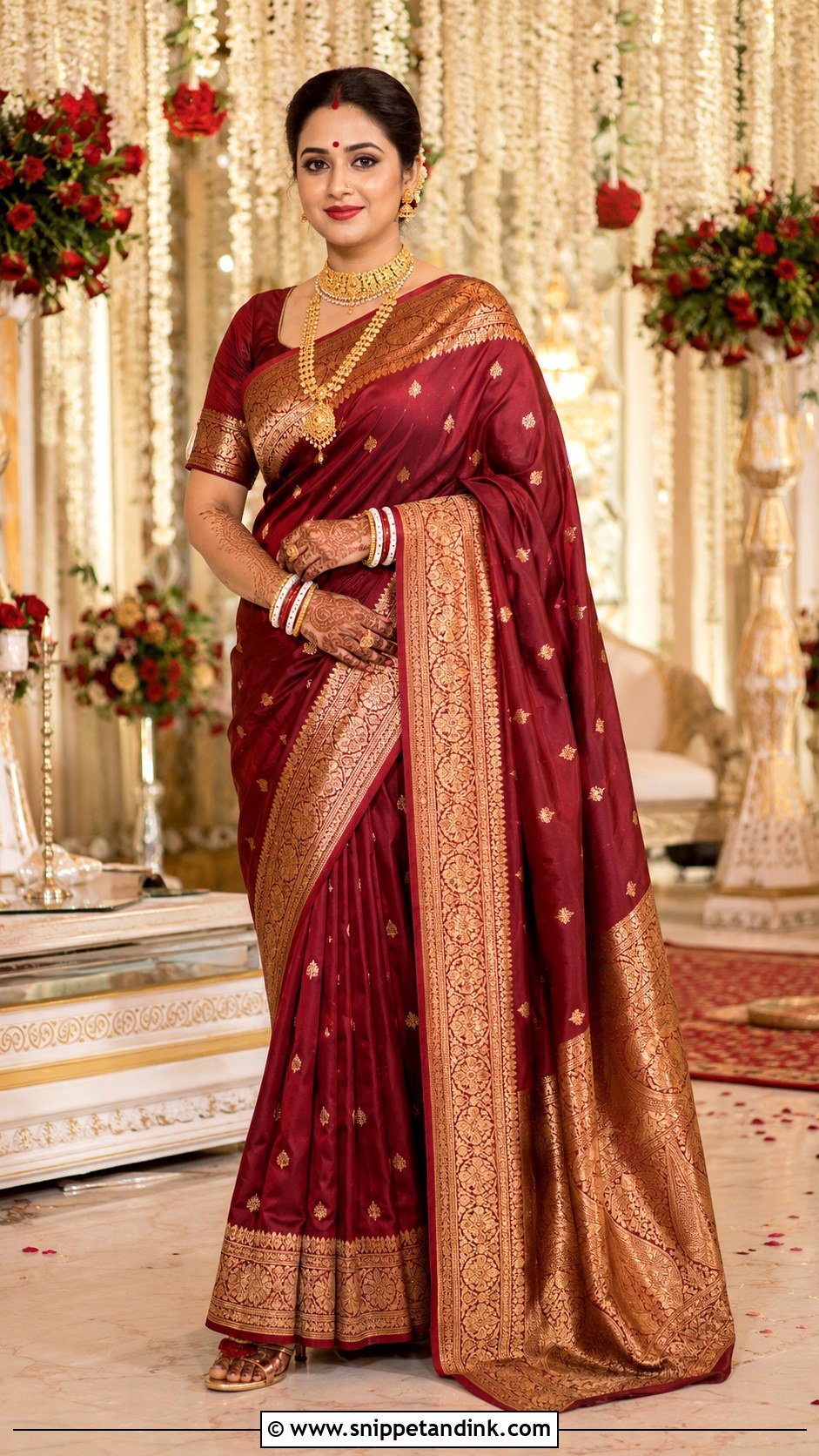
Maroon silk is the colour I steer evening and winter brides toward. It sits closer to tradition than people expect, and it forgives deep kajal and a heavy red bindi better than bright red does. A matching blouse makes the drape read as one long line, which suits shorter brides; a gold blouse breaks it up and adds festivity. Be aware that some maroon dyes look brown under warm tungsten lighting, so check the fabric under a yellow bulb before you commit.
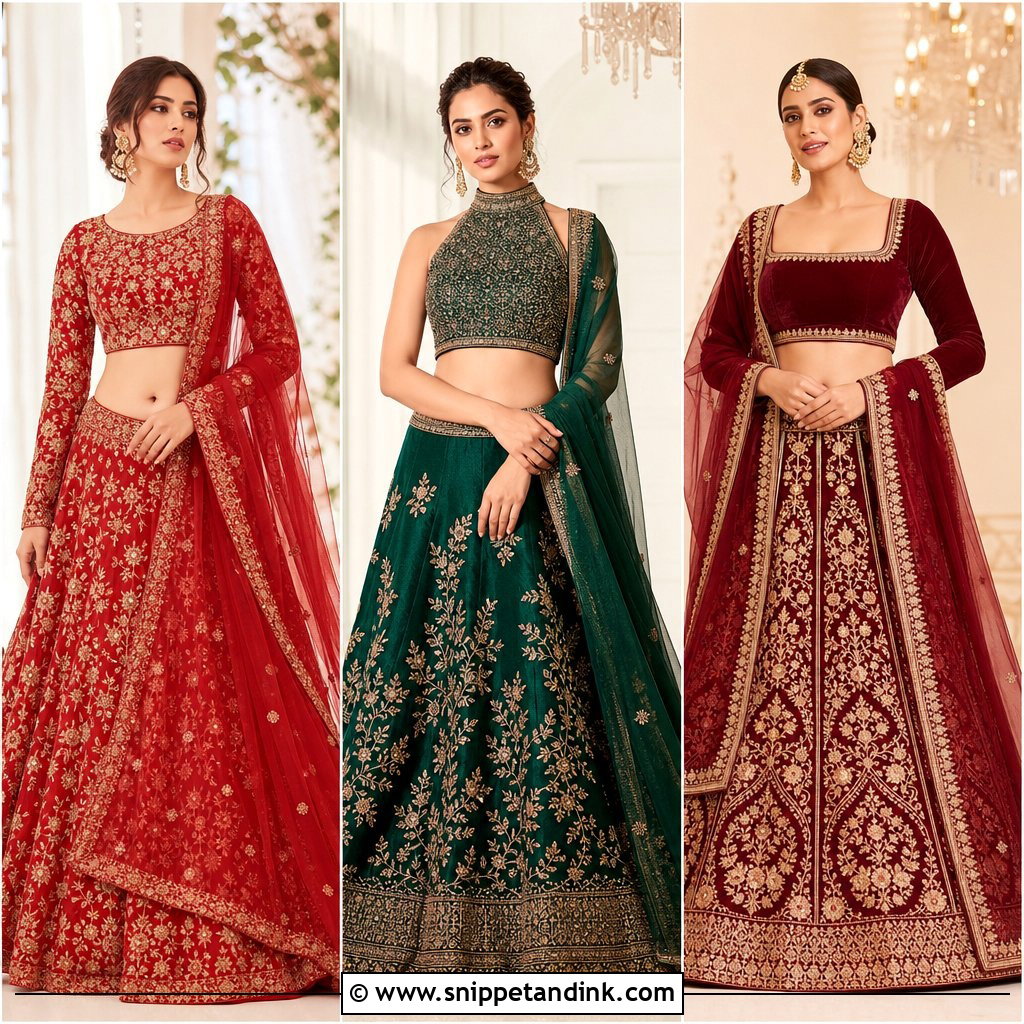
5. Bengali Bride Red Lehenga
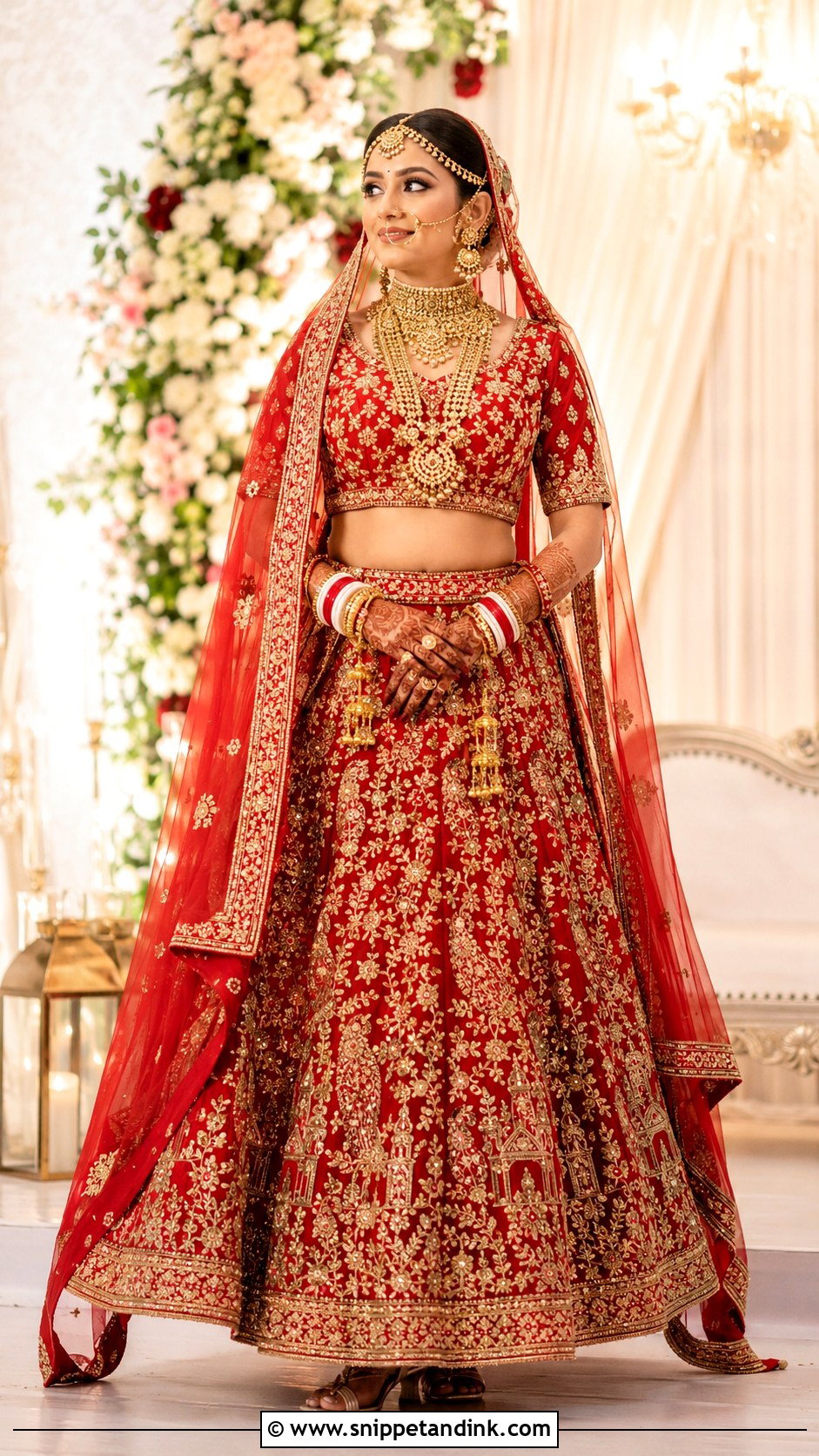
A red lehenga gives a Bengali bride movement that a nine-yard drape never will, and I find it calms brides who have never worn a saree for ten hours. The risk is that it starts to look like a North Indian bridal look. I anchor it with the details that are unmistakably Bengali: shankha-pola, a red bindi, alta on the feet and a head dupatta set the way a ghomta would sit. Pin that head dupatta to the bun, not just the hair, or it slides back during the garland exchange.
6. Bengali Bride Lehenga Saree
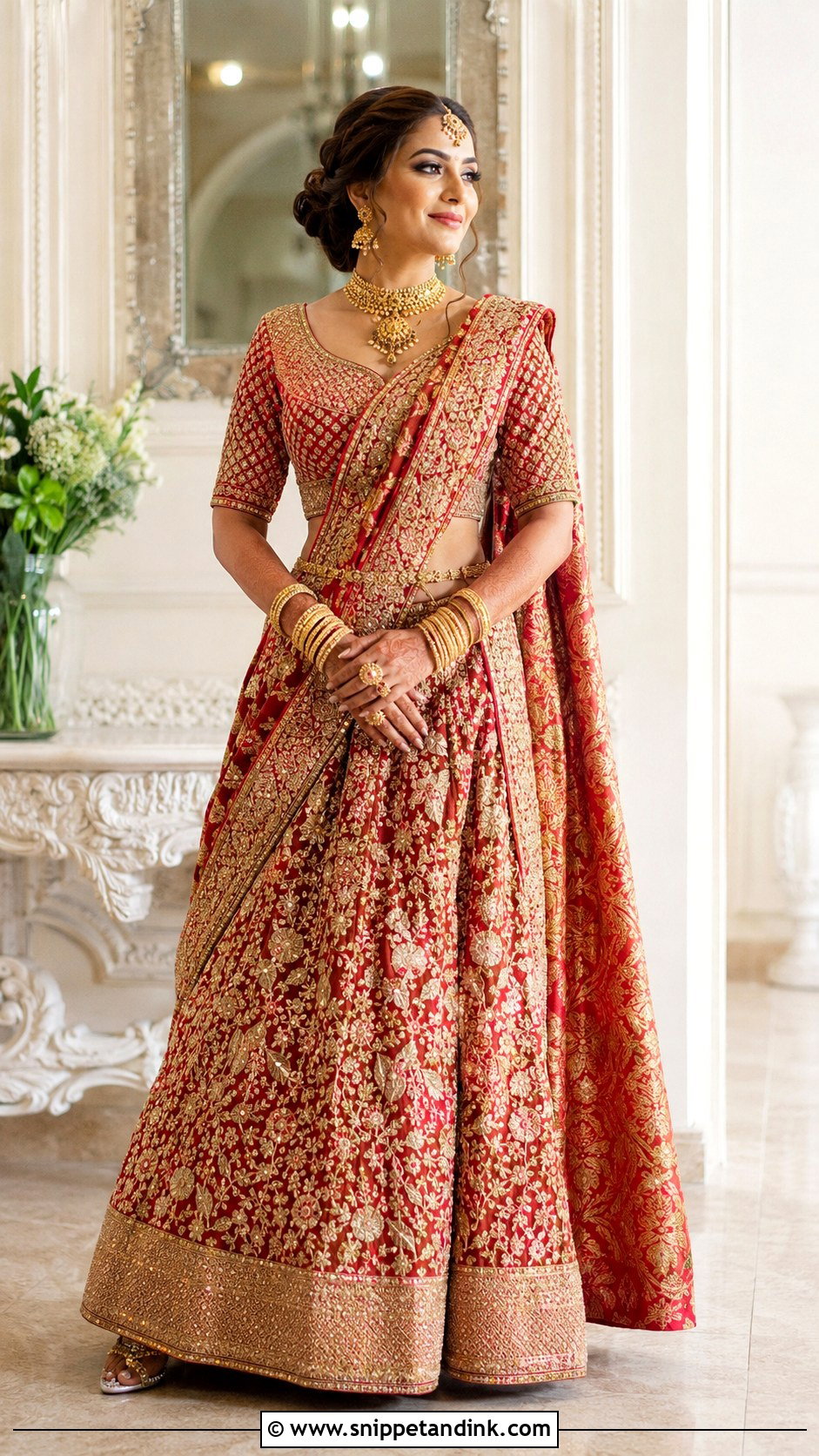
Lehenga sarees are pre-stitched: the pleats are sewn into a skirt and the pallu is attached, so there’s nothing to re-tuck after you stand up. I recommend them to brides who will be greeting guests or dancing, and to anyone whose draper can’t stay all night. The trade-off is that the pleats never fall quite as softly as a hand-draped saree, especially in stiff silk. Choose a version in a fluid fabric and add alta and shankha-pola to keep it rooted.
7. Bengali Reception Gown
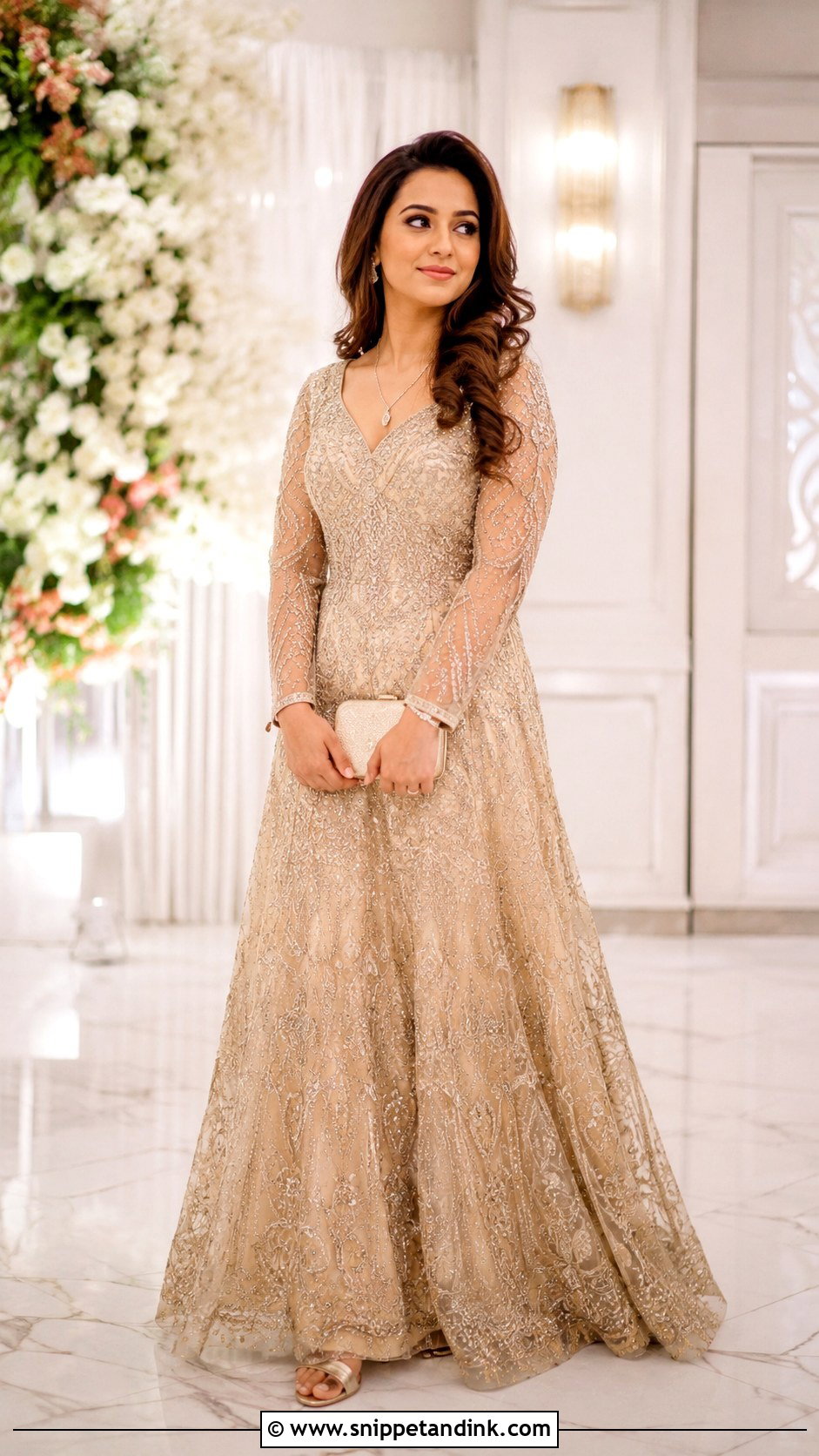
For a hotel or banquet-hall reception, a gown lets the bride change pace after the ritual-heavy day. I suggest champagne, emerald, navy or wine, with embroidery concentrated at the bodice so the skirt stays light enough to move in. Try sitting on a banquet chair in it at the fitting; a boned bodice that feels fine standing can dig in after an hour of photos. A cape inspired by a dupatta, or keeping the bridal shankha-pola on, ties it back to the morning.
8. Bengali Reception Lehenga
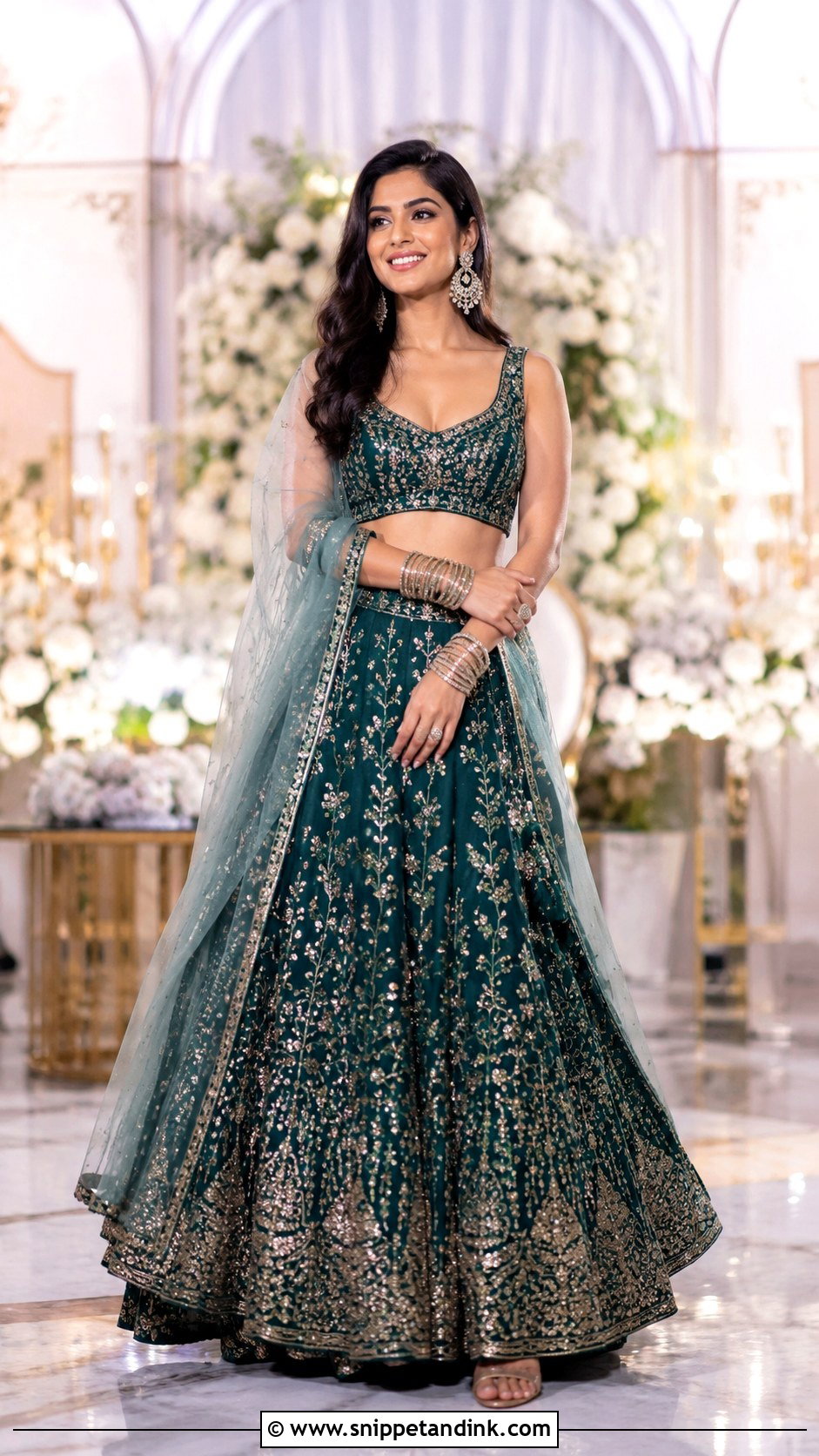
Reception lehengas give you the shine of bridal wear at about half the effort of a Banarasi. Emerald, royal blue, wine and deep purple glow under evening lighting. Watch the embroidery weight on the skirt: heavy zardozi at the hem swings into your shins when you dance, and a can-can layer adds width you may not want. Brides can wear the full jewellery set. Guests should drop a level, with statement earrings and bangles but no heavy necklace.
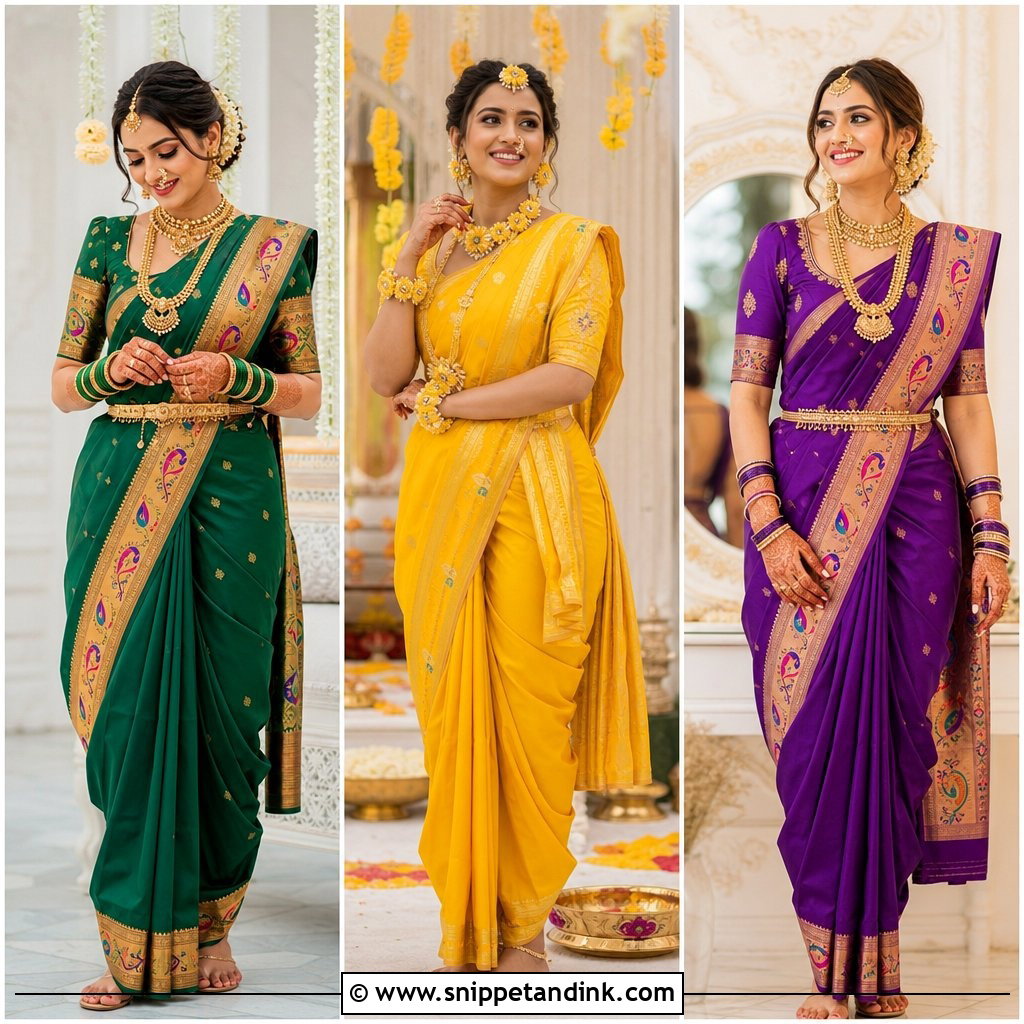
9. Bengali Gaye Holud Yellow Saree
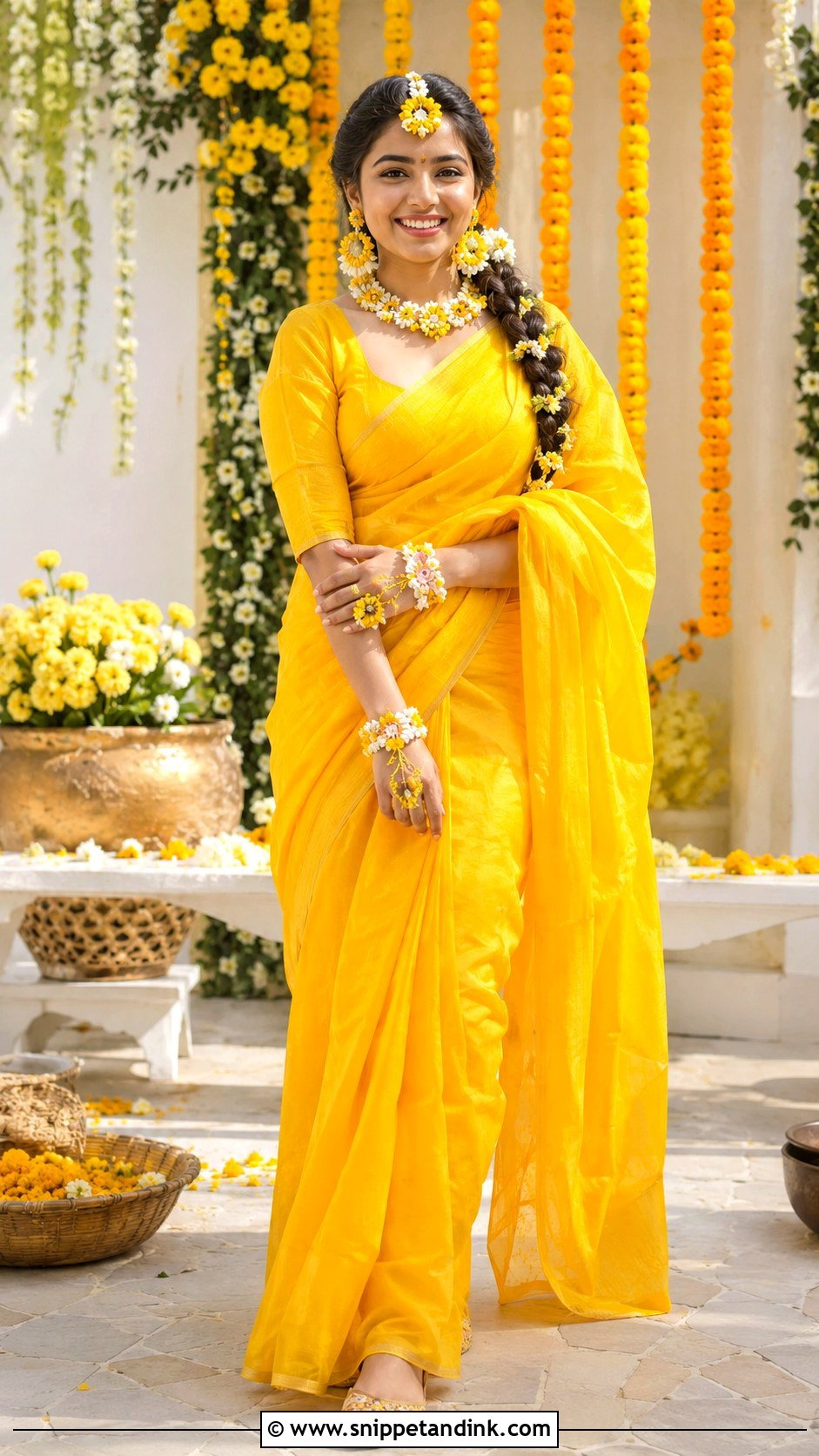
Gaye holud is wet, sticky and joyful. Turmeric paste goes on face, arms and feet, so I tell brides to treat this outfit as one that may never be fully clean again. Mustard, marigold or lemon yellow all work; pick the shade by holding it to your face in daylight, since that’s when most gaye holud photos are taken. Cotton silk and georgette survive the paste far better than organza, which shows every stain. Floral jewellery is lighter than gold and won’t tarnish from the paste.
10. Bengali Gaye Holud Yellow Lehenga
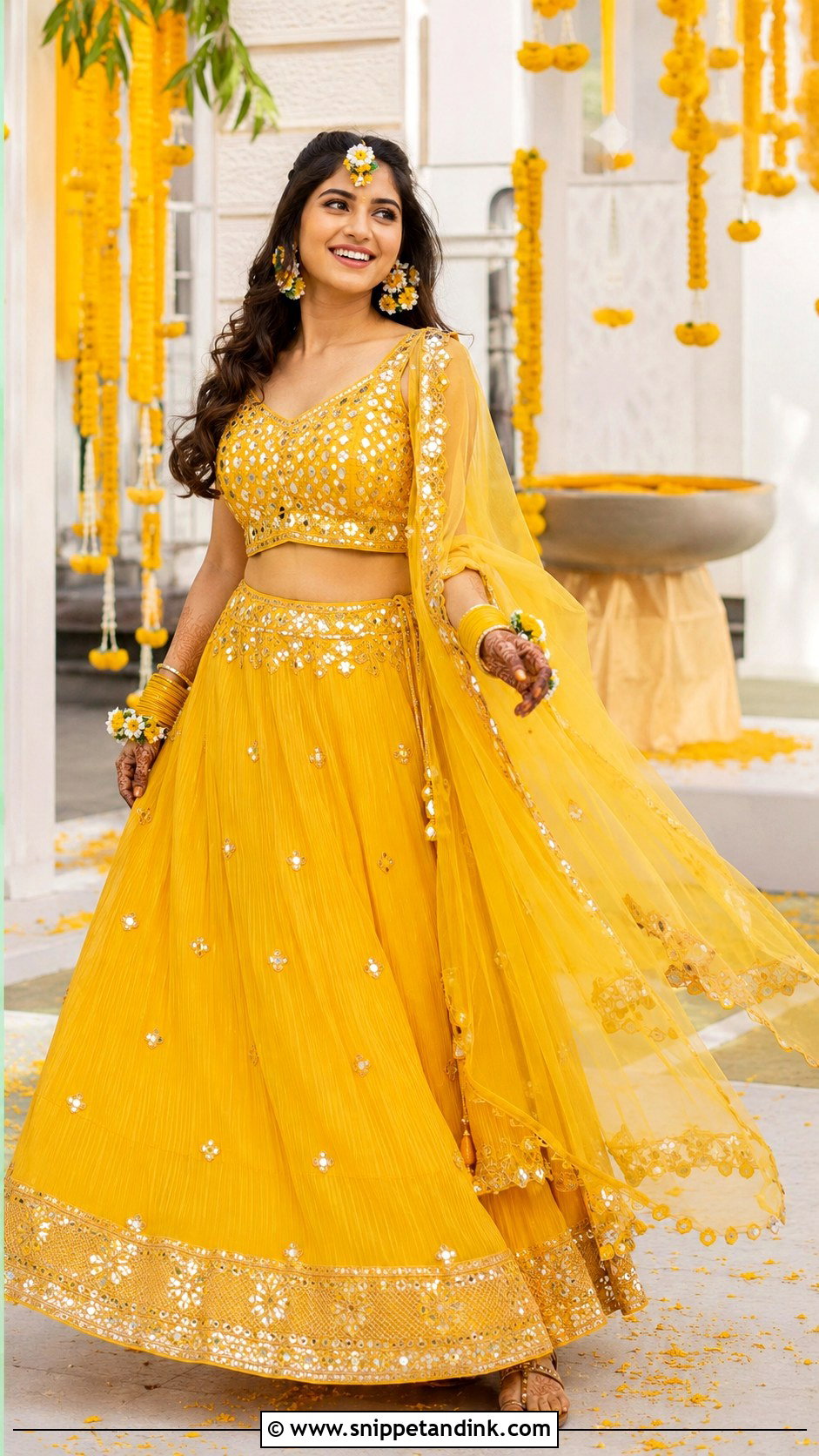
For sisters and bridesmaids, a yellow lehenga is easier to move in at a home holud than a saree, especially when everyone is crouching to apply paste. Cotton silk or light raw silk breathes; mirror work and gota catch the light without adding weight. I’d skip a long trailing dupatta at this event. It drags through the turmeric bowls, so a short one pinned at the shoulder is more practical.
11. Bengali Jamdani Saree
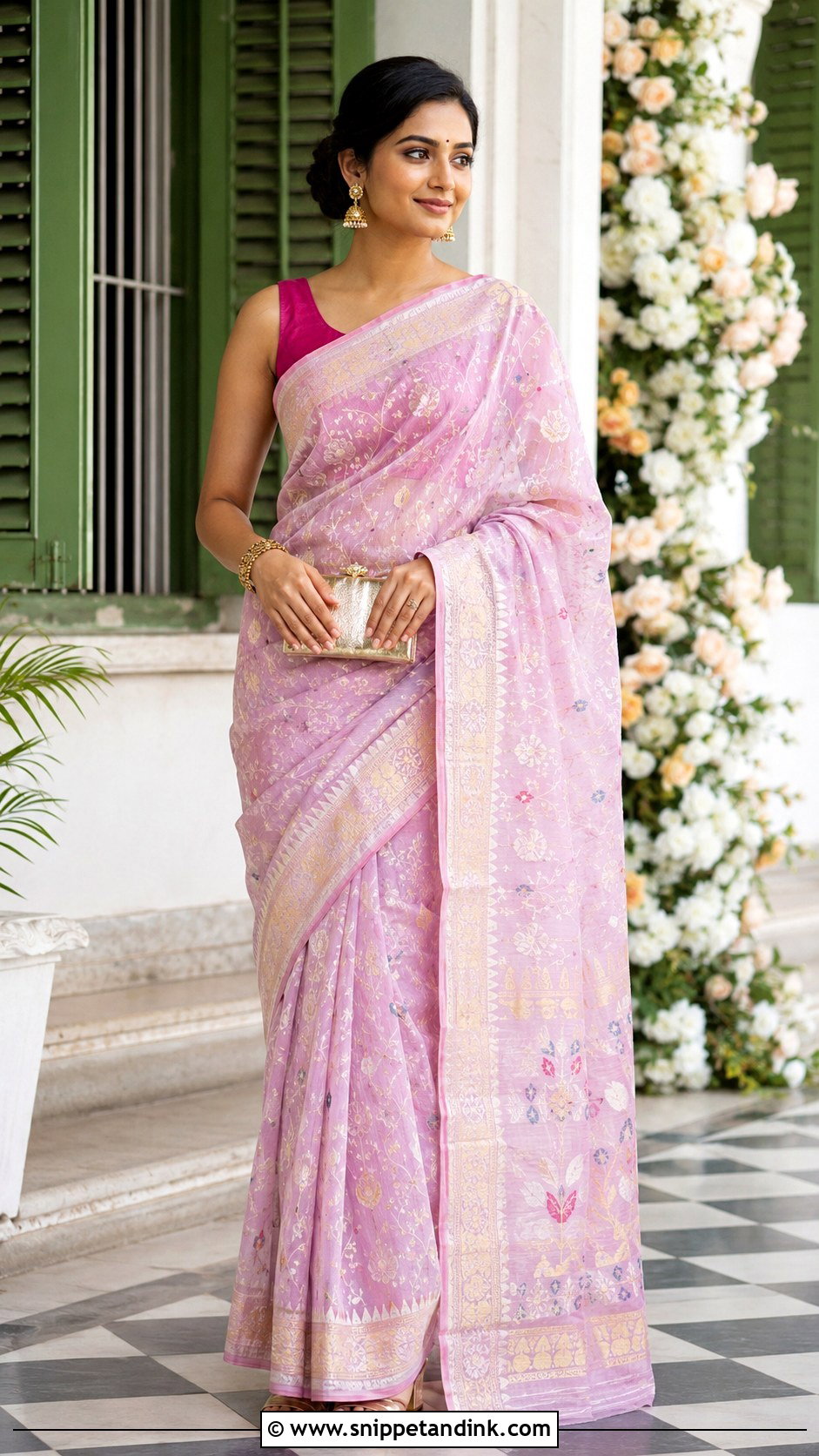
Jamdani is handwoven, and the motifs are worked into the cloth on the loom rather than embroidered on, which is why even a pale one feels special close up. Mothers, aunts and guests suit it beautifully, and a bride can wear one for the ashirbad or a smaller ceremony. It is a fine, airy weave, so it creases quickly when you sit; a contrast blouse and a low bun keep the look tidy even if the drape softens. I’d reserve the statement necklace for an evening function.
12. Bengali Dhakai Saree
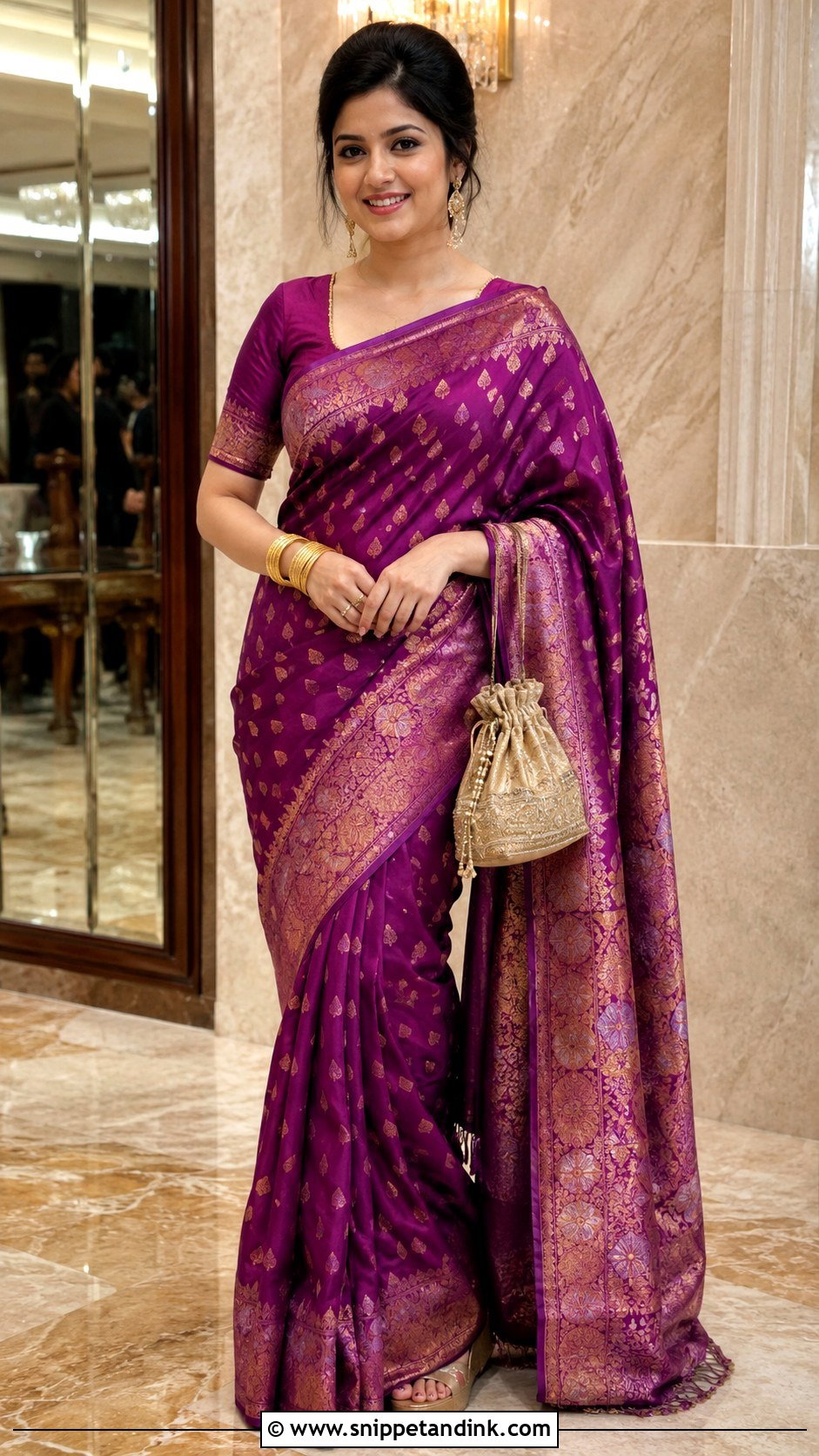
Dhakai is the guest saree I recommend most often to women who want tradition without looking bridal. Soft pastels suit daytime; deeper jewel tones work after dark. Keep the blouse plain and let the weave do the work. Many older relatives I dress prefer Dhakai because it is lighter on the shoulders than Banarasi and drapes neatly without much pinning. Wedges or flat sandals make more sense than heels if the venue has courtyards or steps.
13. Bengali Korial Saree
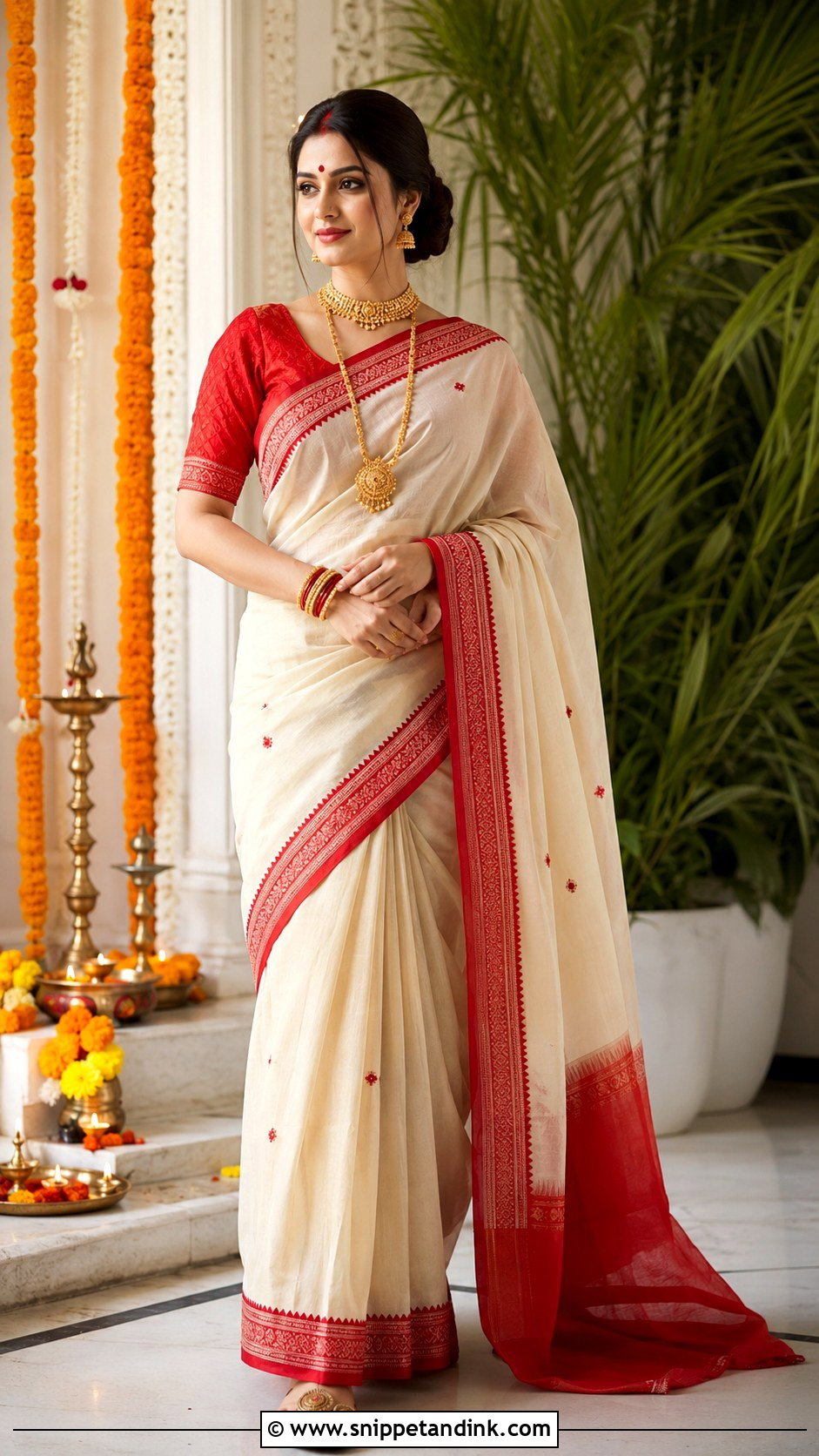
Korial is the white or cream silk with a red border that so many Bengali brides wear for rituals, and it is unmistakably cultural. The first thing I look at is where the border will fall once draped in the Bengali style: the wide pleated front and the pallu over the left shoulder should both show the red. Brides can layer gold heavily on it. Guests do better with small earrings and a simple bun, since the saree itself already carries strong ritual meaning.
14. Bengali Silk Saree
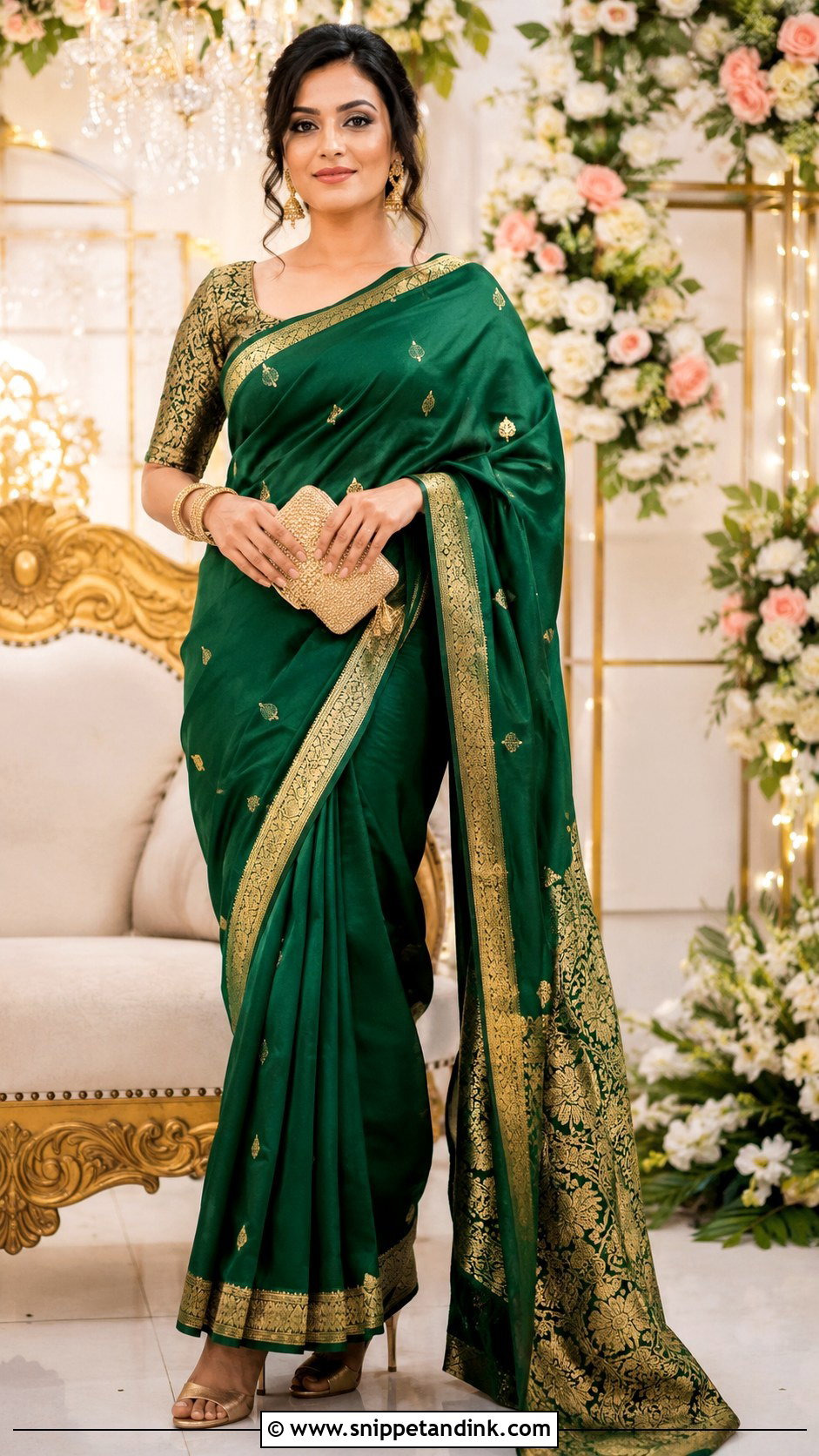
A silk saree is the safest guest choice I know for a Bengali wedding, from close family to colleagues. Kanjivaram, Tussar, Banarasi silk and raw silk each sit at a slightly different level of formality, with Tussar being the most relaxed. Rani pink, peacock blue and mustard look festive without reading as bridal red. I follow one rule here: a heavy saree gets a simple blouse, a plain saree gets a brocade blouse. Doubling up on both turns the outfit busy.
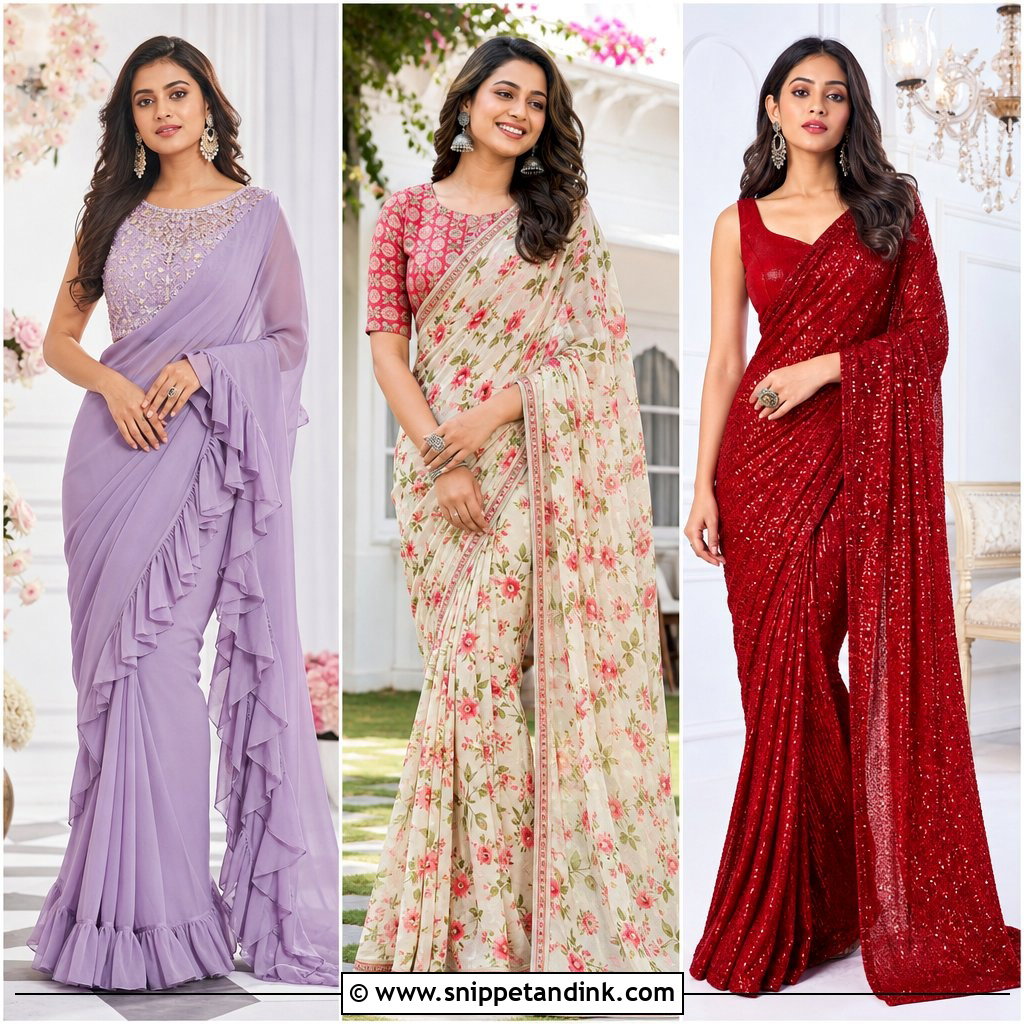
15. Bengali Organza Saree
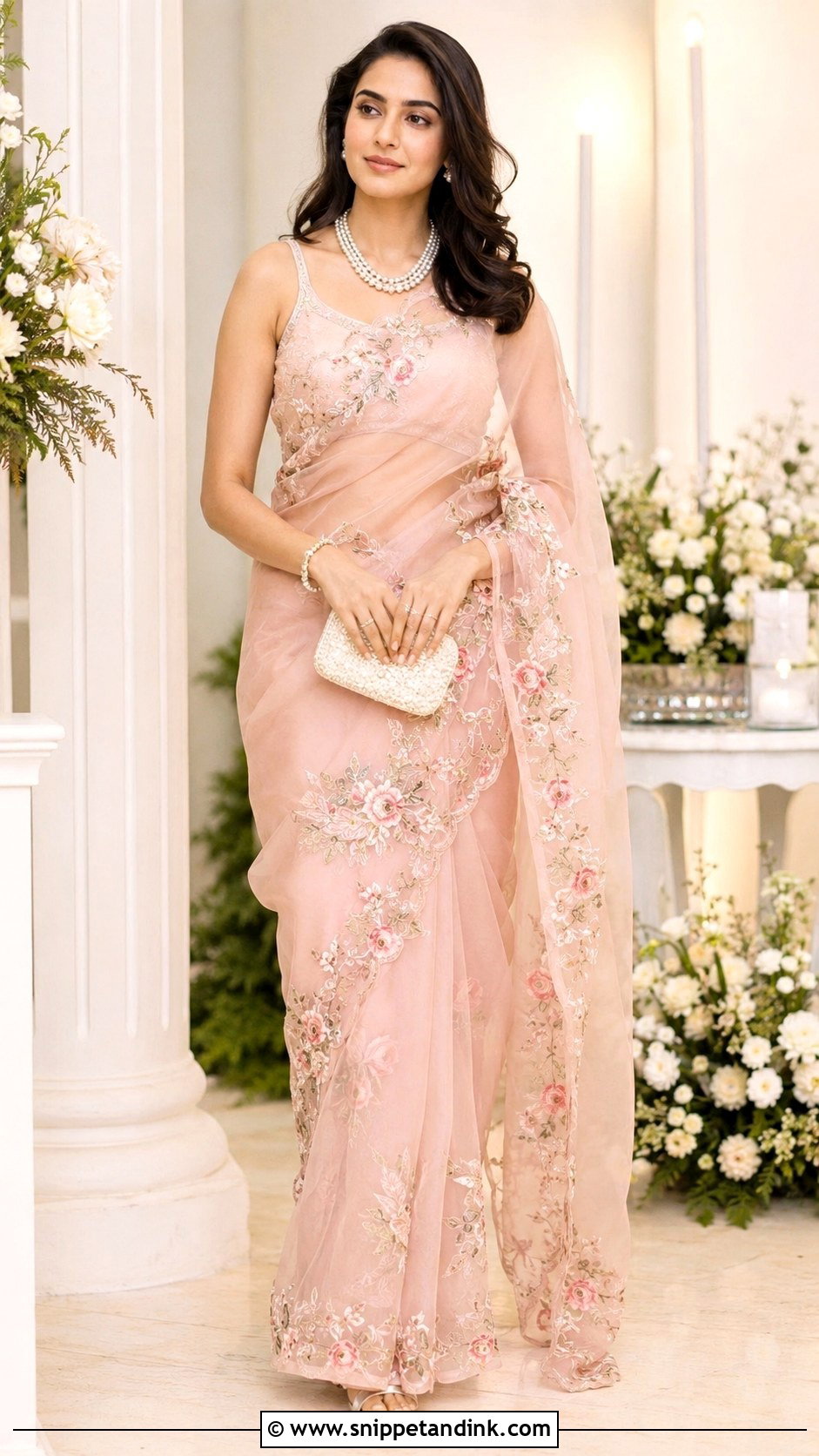
Organza is light and sheer, which is its charm and its catch. It holds volume, so the pleats stand away from the body unless you press them flat and pin them firmly at the waist. I keep accessories delicate with this fabric because a bulky potli or heavy necklace fights the airy drape. Blush, mint, lavender and ivory with a coloured border suit afternoon receptions and engagement events. Skip it for gaye holud; turmeric shows on organza immediately.
16. Bengali Sharara Suit
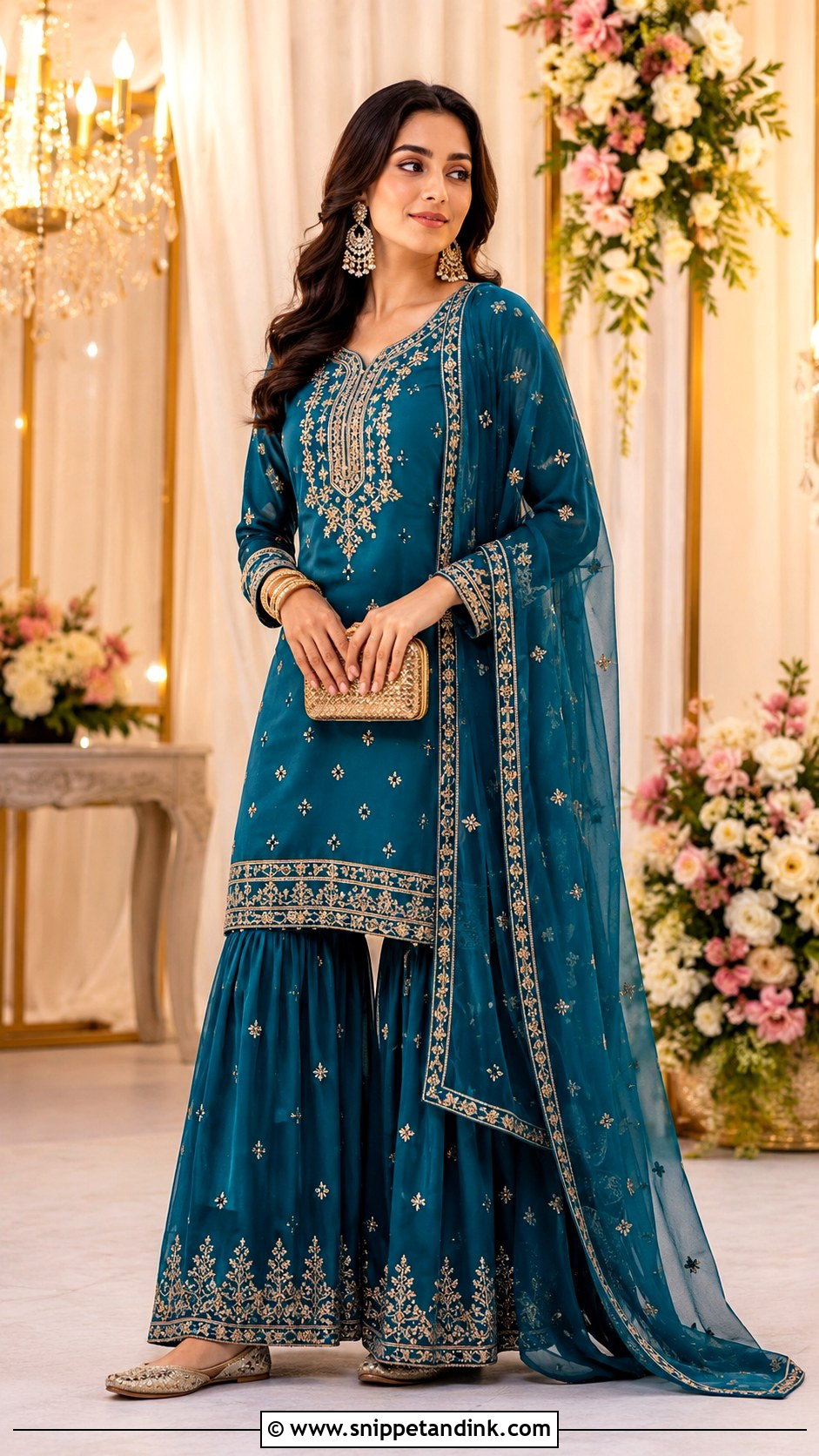
Flared pants make a sharara one of the easiest outfits to sit, kneel and dance in, which is why I suggest it for bridesmaids and younger relatives. A sharara suit in silk, georgette or brocade with embroidery at the neckline and hem looks dressed-up enough for any function. Check the flare length in the shoes you’ll actually wear. Hems that brush the floor catch on stairs and get trodden on in crowded mandaps.
17. Bengali Anarkali Suit
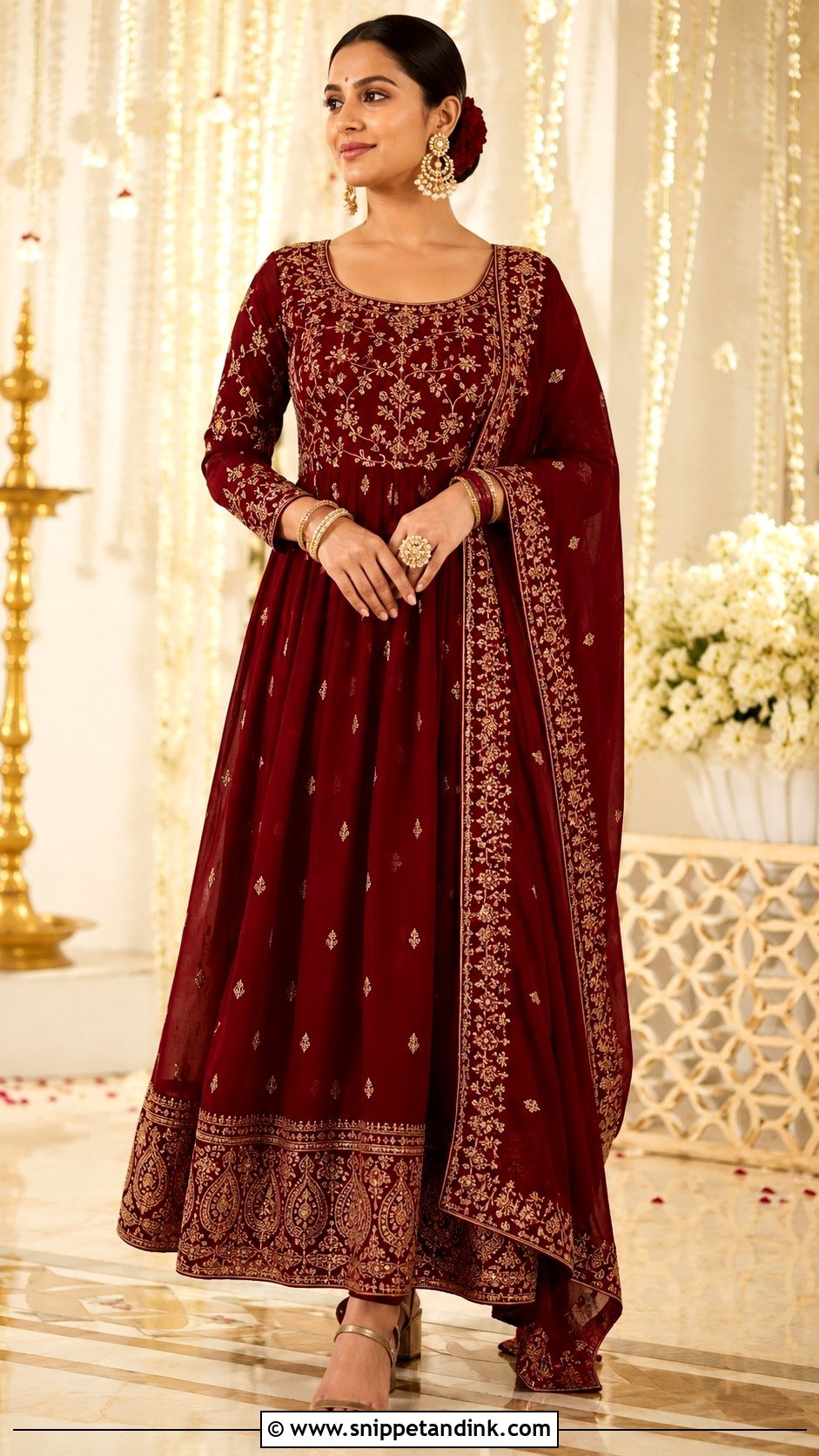
I reach for an Anarkali when someone wants a long, formal outline without managing a drape. The fitted bodice and flared skirt suit most figures, though very heavy net Anarkalis can feel hot under layers of can-can. Daytime calls for peach, mint or powder blue; evening suits wine, navy or deep pink. Pin the dupatta at one shoulder so your hands stay free for greeting and eating.
18. Bengali Salwar Kameez
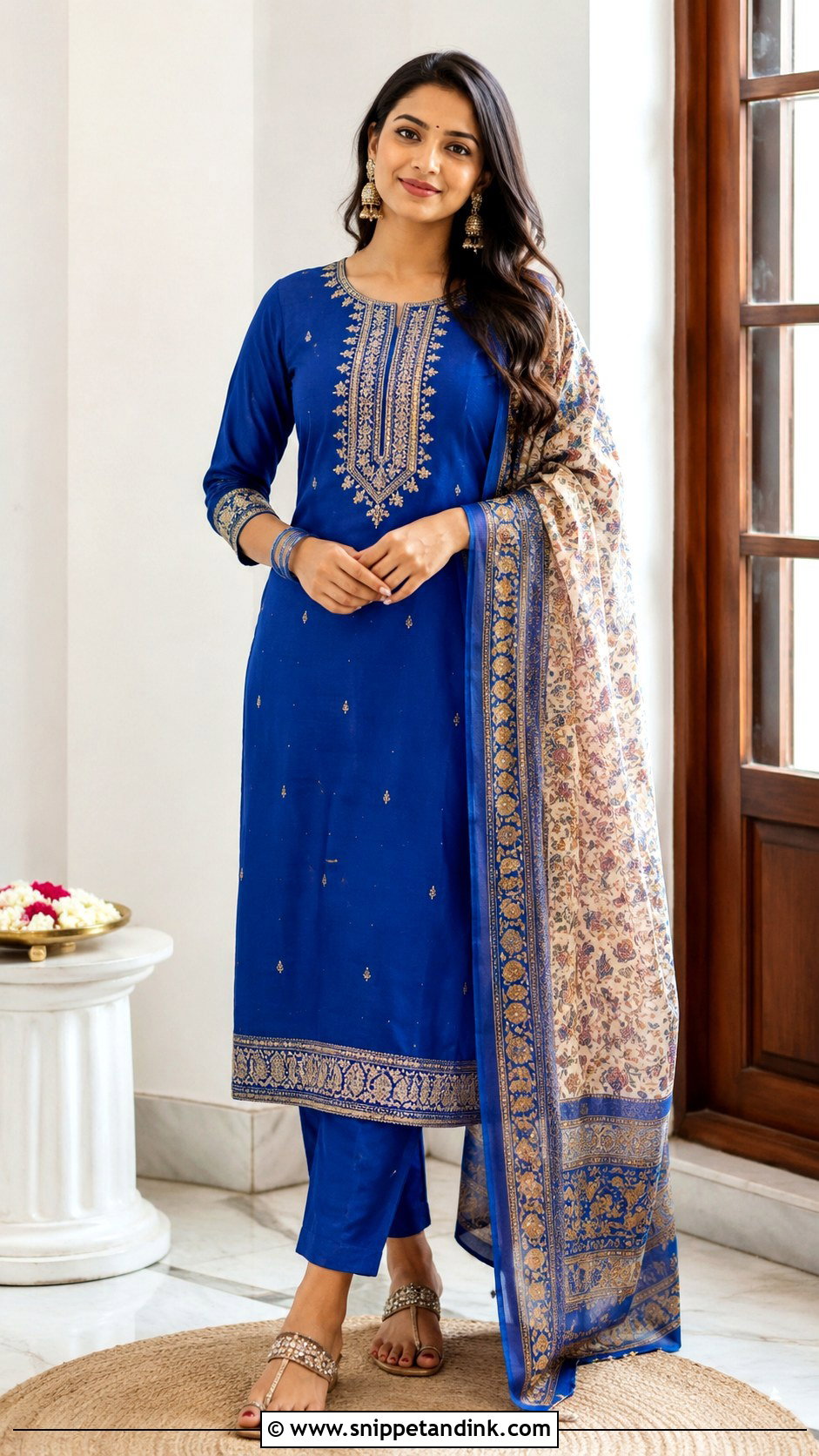
A festive salwar kameez is the honest answer for guests who are travelling between venues all day. Straight cuts, A-lines and palazzo sets all qualify once there’s silk, zari or a printed dupatta involved. Jewel tones with gold look traditional; pastels with fine thread embroidery read softer. I always tell guests to check the kameez length when seated on the floor, since short kurtas can ride up during long rituals.
19. Bengali Palazzo Suit
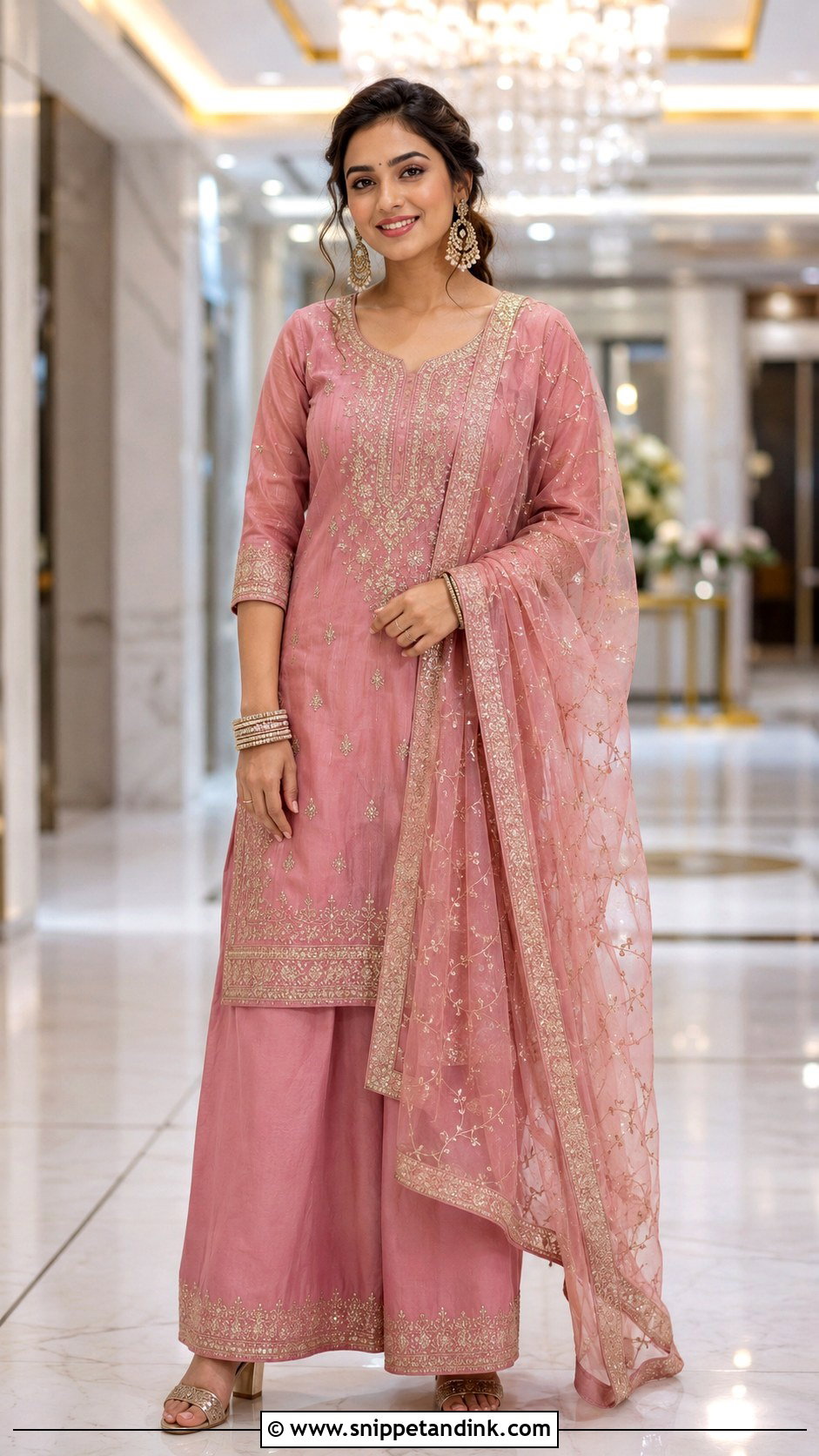
Wide-leg palazzos are comfortable through hours of sitting and they hide a crease far better than a fitted churidar. A palazzo suit with a long embroidered kurta, or a short kurti over brocade palazzos, looks festive enough for any event. Rose pink, turquoise and sage feel bright without stepping on bridal colours. For destination weddings, I like that it rolls into a suitcase with fewer wrinkles than silk sarees.
20. Bengali Bridesmaid Saree
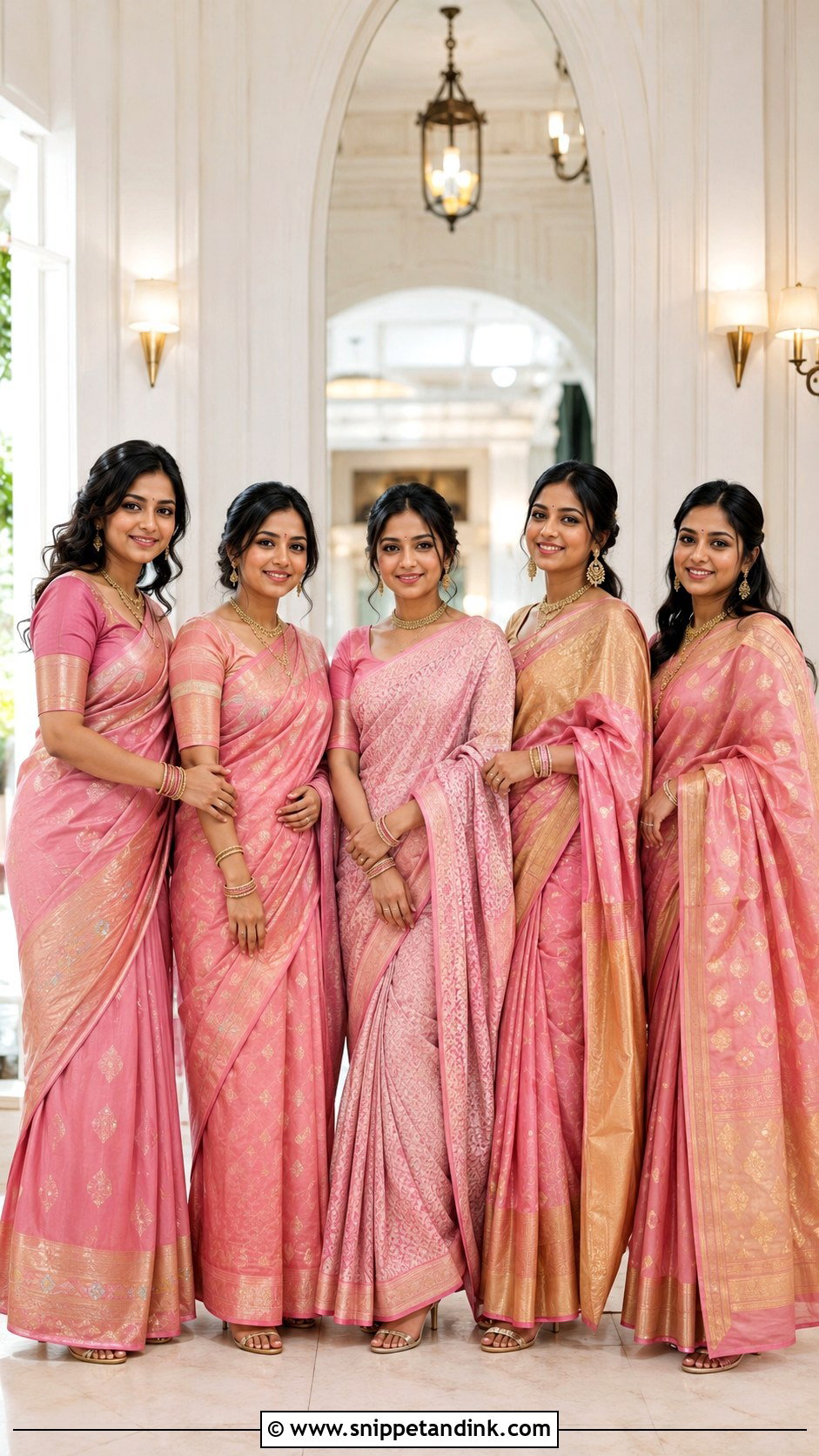
Coordinating bridesmaid sarees doesn’t require identical ones. I usually give the group a colour family per event, such as yellow for gaye holud, pinks for pre-wedding functions and jewel tones for the reception, and let each person pick her own weave. A shared blouse colour or border tone ties the photos together. Choose light silk, chiffon or georgette so nobody is wilting by the evening, and keep jewellery small so the bride stays the focus.
21. Bengali Bridesmaid Lehenga
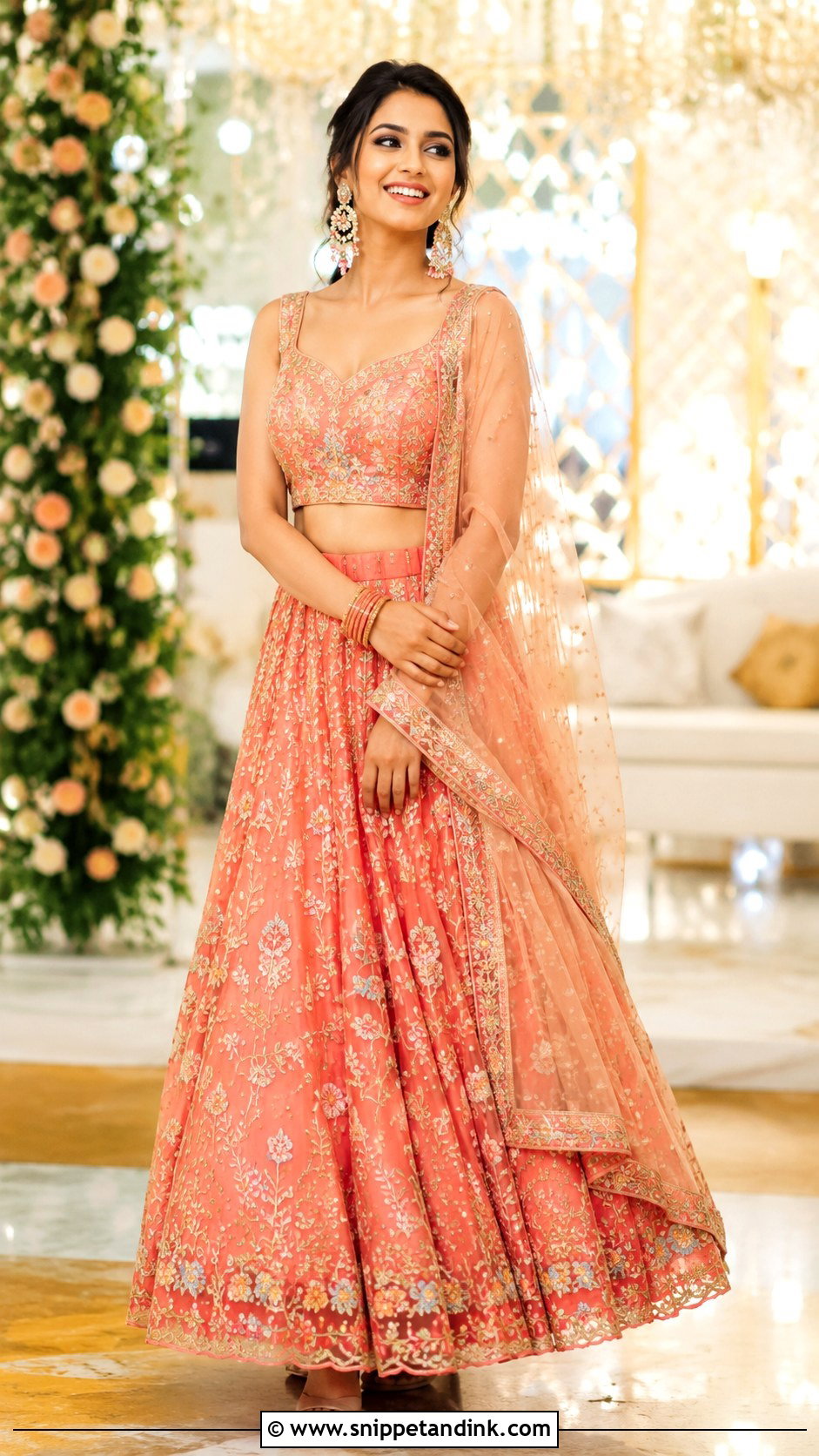
Younger wedding parties often want lehengas for dancing and group entrances. Blush, teal, lavender and coral sit well next to a red bride without competing. Mirror work and thread embroidery keep the weight manageable; heavy sequins scratch arms during group hugs. If the bride is in red, I’d steer bridesmaids away from red entirely, even in a lighter shade, because it muddies the bride in group shots.
22. Bengali Wedding Guest Saree
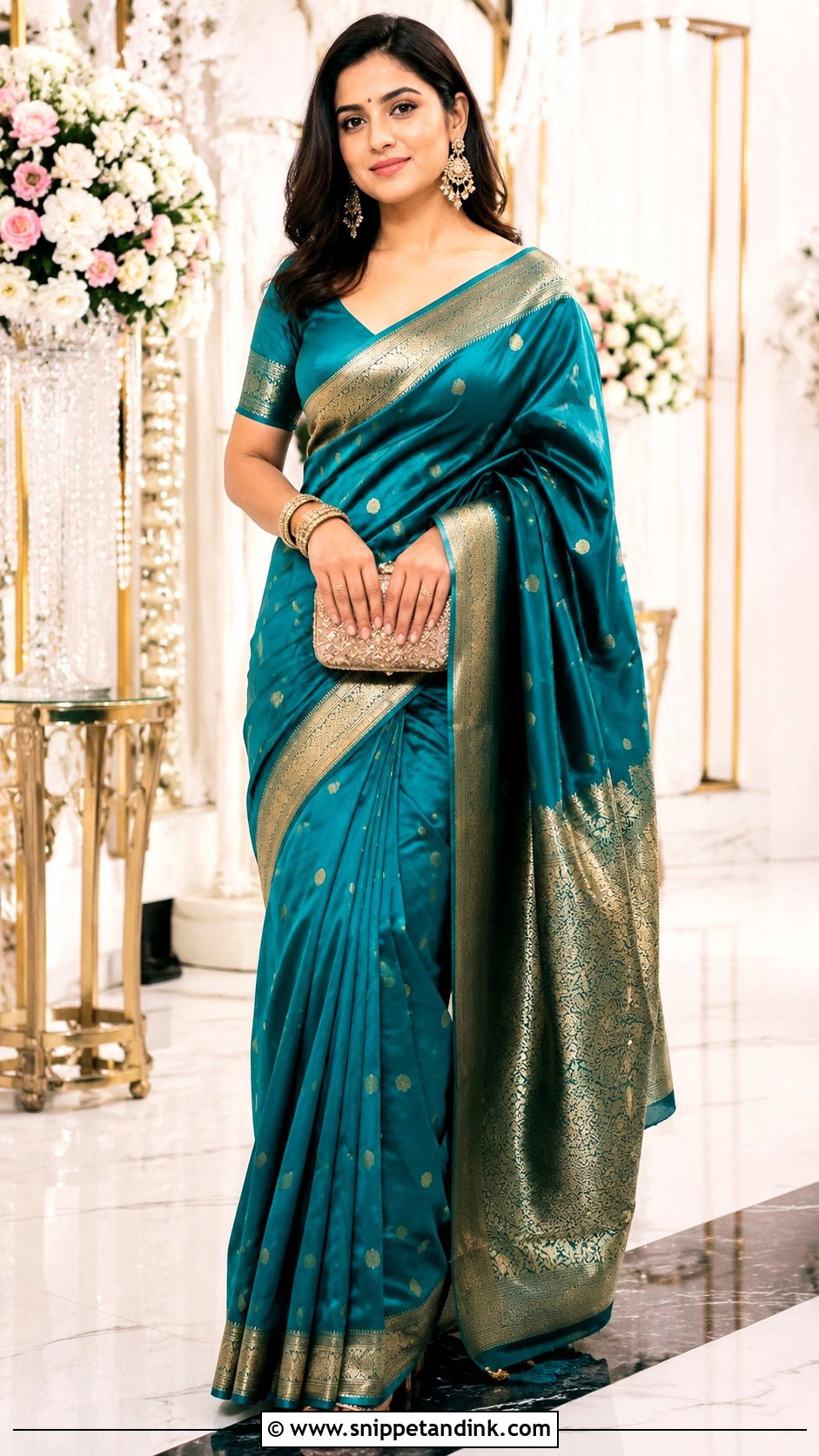
The main etiquette point for a guest saree is not looking like the bride. Skip full red-and-gold bridal styling, heavy matha pattis and anything resembling shankha-pola unless you’re married family and wearing your own. Teal, purple, green and pink are all safe. Silk, Jamdani, organza and lightweight Banarasi work for most events. Bring shoes you can slip off quickly, because many rituals happen barefoot.
23. Bengali Wedding Guest Lehenga
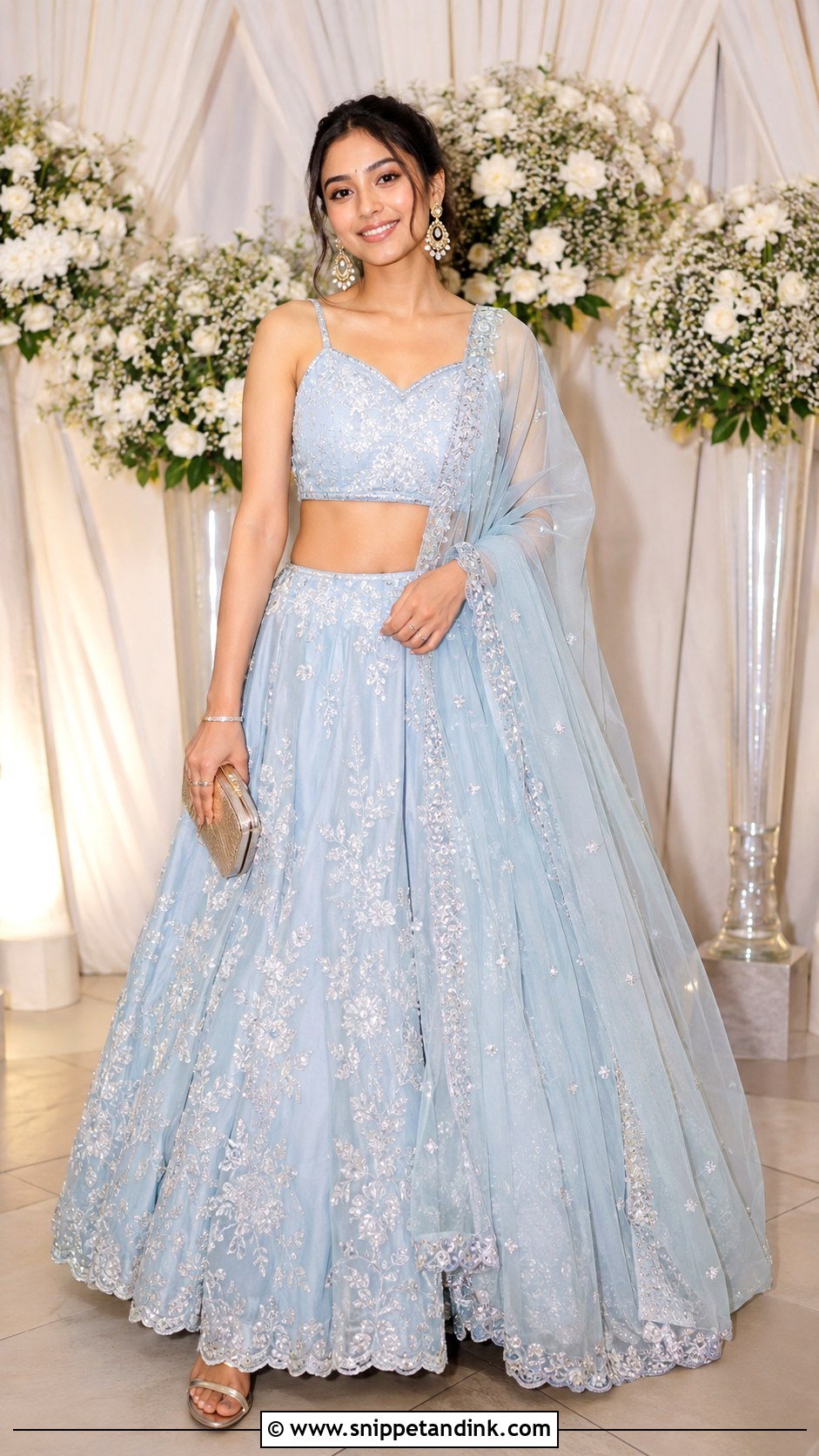
Guest lehengas suit formal evening events best. I’d look for something noticeably lighter than bridal, with printed silk, mirror work or woven borders rather than all-over zardozi. Emerald, magenta and powder blue photograph cleanly at night. A single-shoulder dupatta drape keeps it neat, and polished but not bridal makeup keeps the balance right.
24. Bengali Wedding Guest Indo Western Outfit
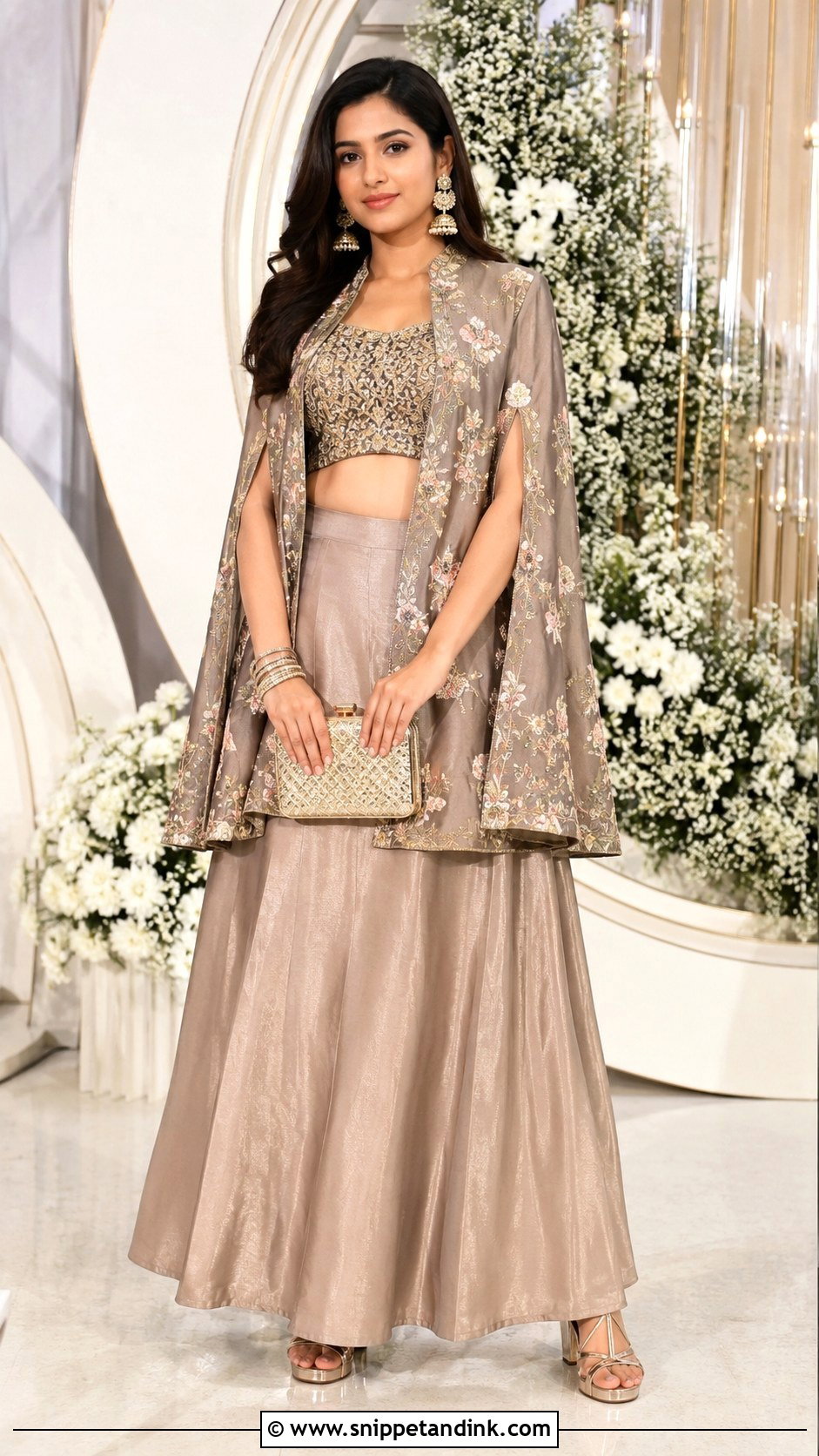
Fusion works for receptions and cocktail-style family evenings more than for the morning rituals. An Indo Western outfit such as a crop top with a long skirt, a cape set or a dhoti-pant set feels right when the fabric is festive: silk, brocade or jacquard. My rule is to keep one strong cultural element, usually the jewellery or the fabric, and let the cut stay modern. Two modern elements plus Western shoes usually tips it into party wear.
25. Bengali Wedding Plus Size Outfit
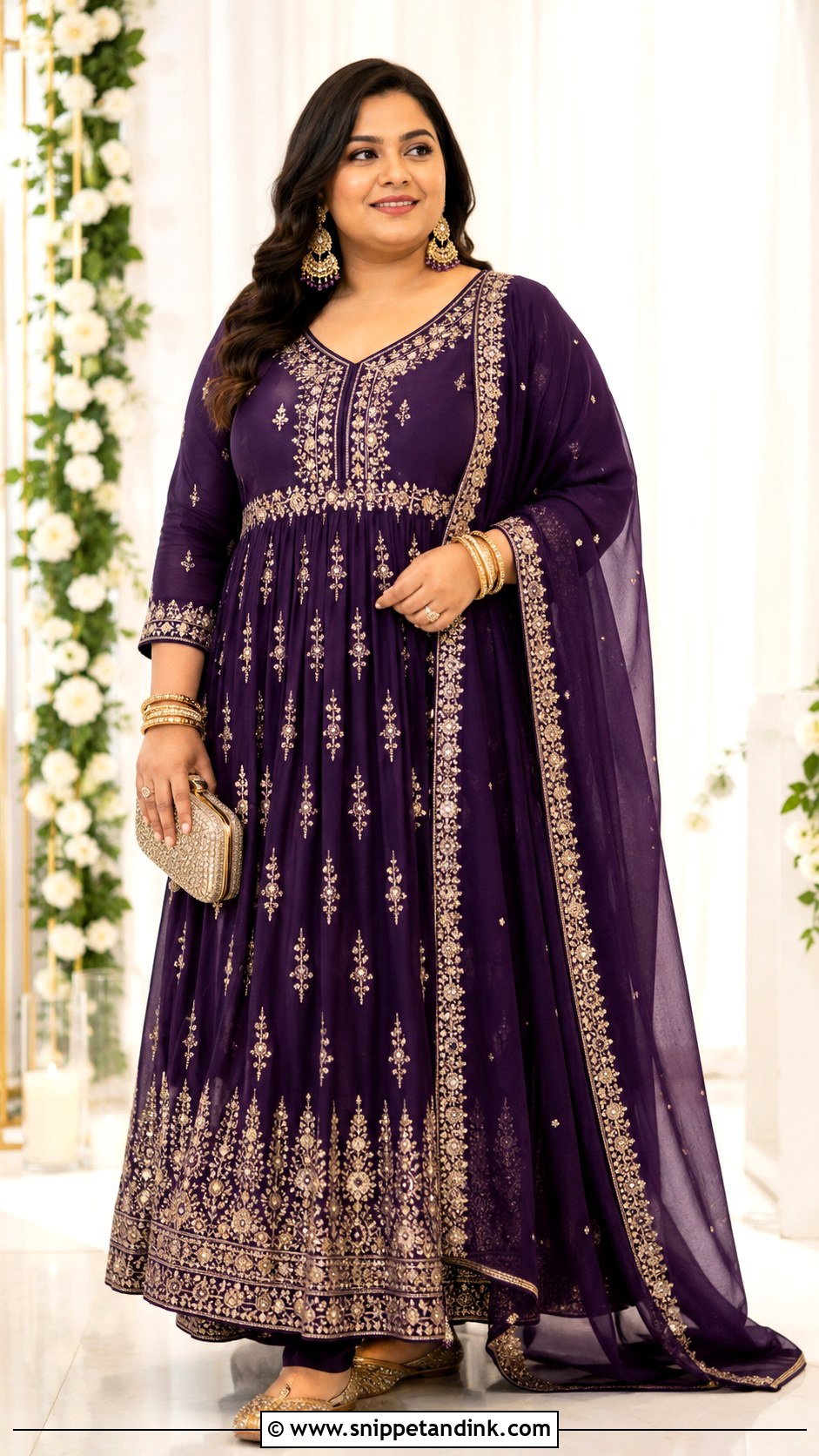
Fit matters more than the garment type for plus-size guests and brides. Sarees, Anarkalis, palazzo suits and lehengas can all look right; what I focus on is a structured blouse with proper support, a waistband that doesn’t cut in when seated, and breathable lining. Pre-pleating the saree, where the pleats are pressed and stitched in advance, saves fiddling on the day. For lehengas, choose a skirt that falls straight from the waist instead of one with heavy panels that add bulk at the hip. Vertical embroidery and a well-placed border draw the eye in a clean line.
Putting a Banarasi Away So the Zari Survives
Most Bengali bridal sarees are kept for decades and often handed down, so how you store yours in the first week matters more than people think. Silk holds sweat, turmeric and sindoor, and zari is metallic thread that tarnishes when it meets moisture or chemicals.
- Air the saree in shade for a day before folding. Never put it away damp from a long evening.
- Take it to a cleaner who handles silk and zari; do not wash it at home. Point out turmeric and sindoor marks so they’re treated before they set.
- Wrap it in soft muslin or an old cotton saree, never plastic, which traps moisture.
- Keep naphthalene balls out of the fold. If you want a moth deterrent, place dried neem leaves in a cloth pouch nearby, not touching the zari.
- Refold it along different lines every few months. Zari cracks along a crease that stays in one place for years.
Lighter silks and Jamdani need the same care minus the fuss about metal. A white Korial or Garad saree yellows faster than any colour, so I’d check on it every season and air it whenever you refold.
Matching the Drape to the Ritual You’re Dressing For
Red Banarasi will always be the bridal anchor, but a Bengali wedding wardrobe now comfortably holds lehengas, gowns, Jamdani, organza and fusion sets. Start with which ceremony you’re dressing for and how much sitting, walking and lifting it involves, then decide on fabric weight, then colour. Brides can lean into heritage silks and gold. Guests have far more freedom with colour as long as they stay clear of bridal red and ritual jewellery. Get the movement right and the rest of the outfit tends to fall into place.
You'll Like These Ideas:





Leave a Reply