
Nine yards of silk, draped in a dhoti-like shape, gives a Maharashtrian bride a presence nothing else matches, and it lets her walk, sit and climb mandap steps freely. The nath, mundavalya, chandrakor bindi, green bangles and layered necklaces make the look recognisable at a glance. Within that, there’s room to play: Paithani weaves, unexpected colours, contrasting blouses, modern makeup and personal jewellery. What I watch for as a stylist is balance, so every accessory supports the saree instead of burying it. The twenty looks below each come styled from bun to sandals, so you can match one to your ceremony and your family’s customs.
Hand-Draped Nine Yards or a Ready-Stitched Nauvari?
The first decision I go through with a Nauvari bride isn’t colour. It’s whether the saree will be hand-draped on the morning or stitched in advance into a ready-to-wear version with hooks.
A traditional hand drape uses the full nine-yard length, with the back tucked kasta-style so the legs move freely. It looks the most authentic and sits closest to the body, and a good draper can adjust it on the spot. It does need an experienced person, and the drape usually takes the better part of an hour, so I put it in the timeline before jewellery and after hair.
A stitched Nauvari is quicker and holds its shape well through a long day, which helps brides who aren’t used to wearing a saree. The trade-off is that cutting an heirloom or a costly Paithani to stitch it is permanent, so I’d only do it with a new saree, and I’d ask the tailor to leave seam allowance for later adjustments.
- Hand-drape: best for heirloom silk, a family draper, and brides who want the classic fall of the pleats.
- Stitched: best for multiple outfit changes, nervous first-time wearers, and destination weddings without a draper.
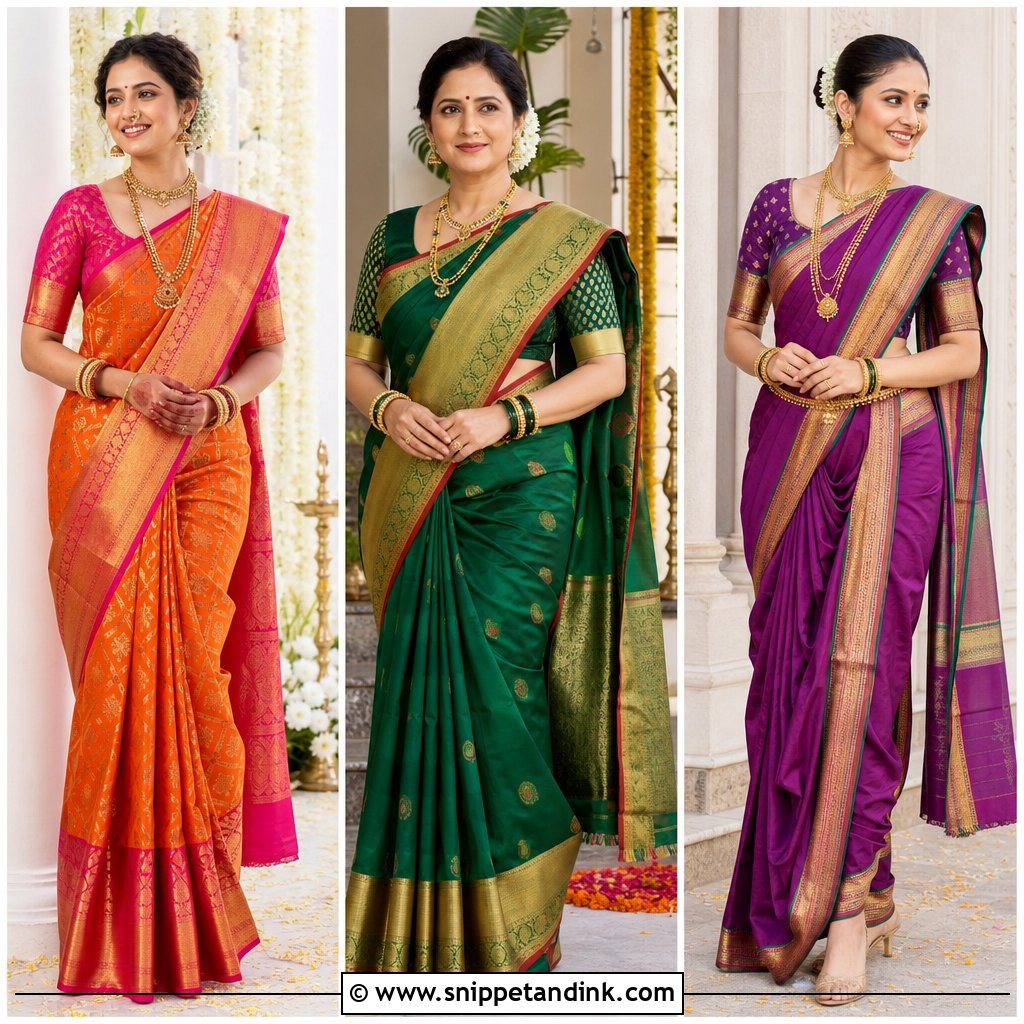
1. Green Paithani Nauvari Bride Look
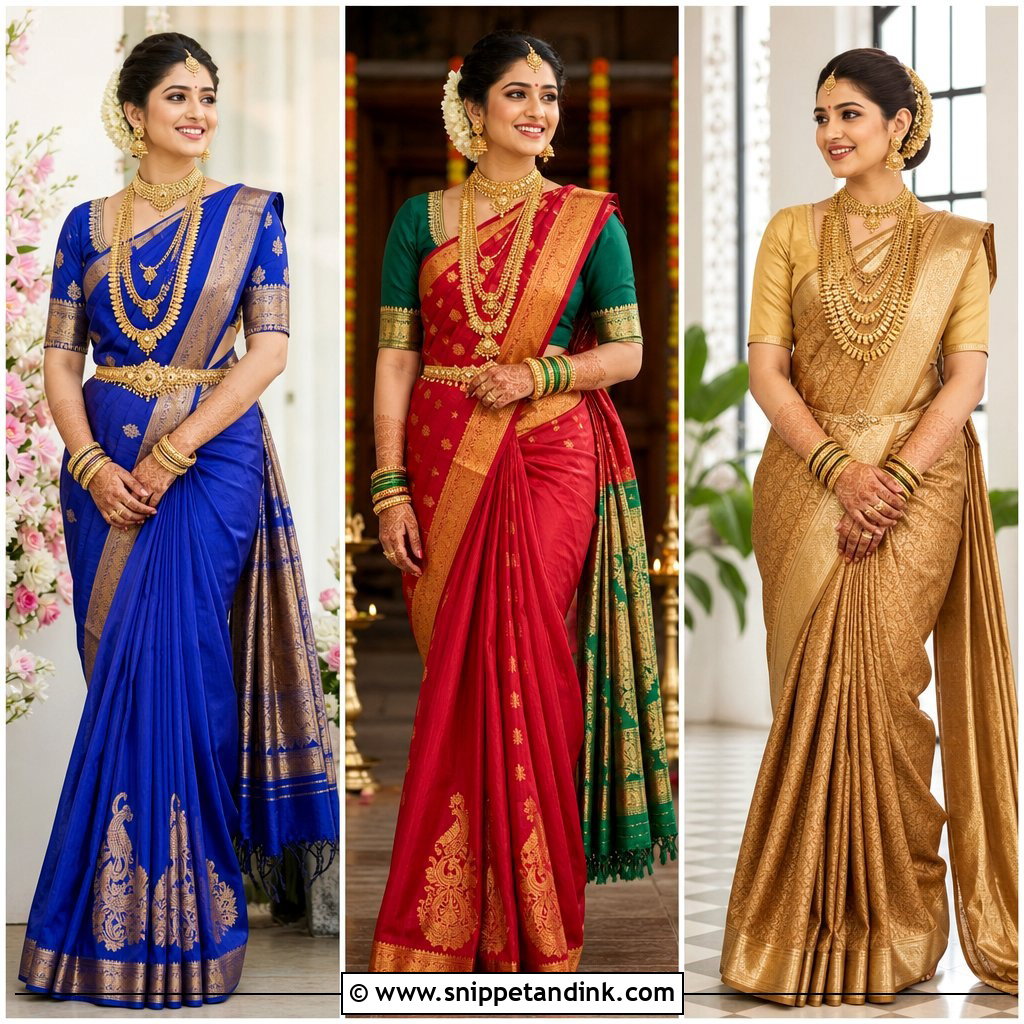
Green Paithani is the outfit most families picture first, and for good reason. Among Maharashtrian bridal outfits, a silk saree with a broad gold border and peacock or floral motifs feels the most ceremonial. A red, wine or matching green elbow-length blouse adds structure without fighting the weave. The thushi, putli haar, nath, mundavalya, green glass bangles and gold patlya complete the traditional set. I keep the bun neat and centre-parted under mogra, and suggest soft gold eyes, kajal and a red lip. Real Paithani is heavy, so I’d add a few extra safety pins at the shoulder pleats.
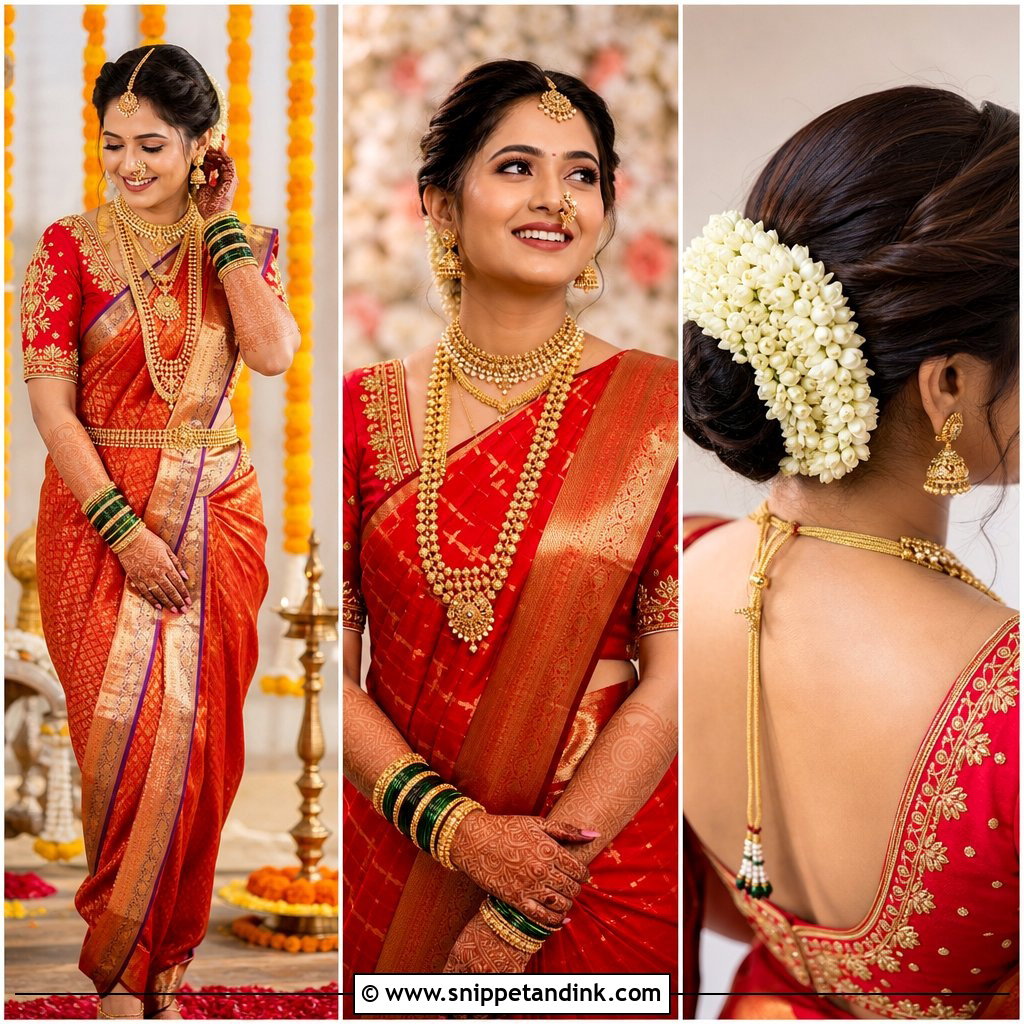
2. Red And Gold Nauvari Bride Look
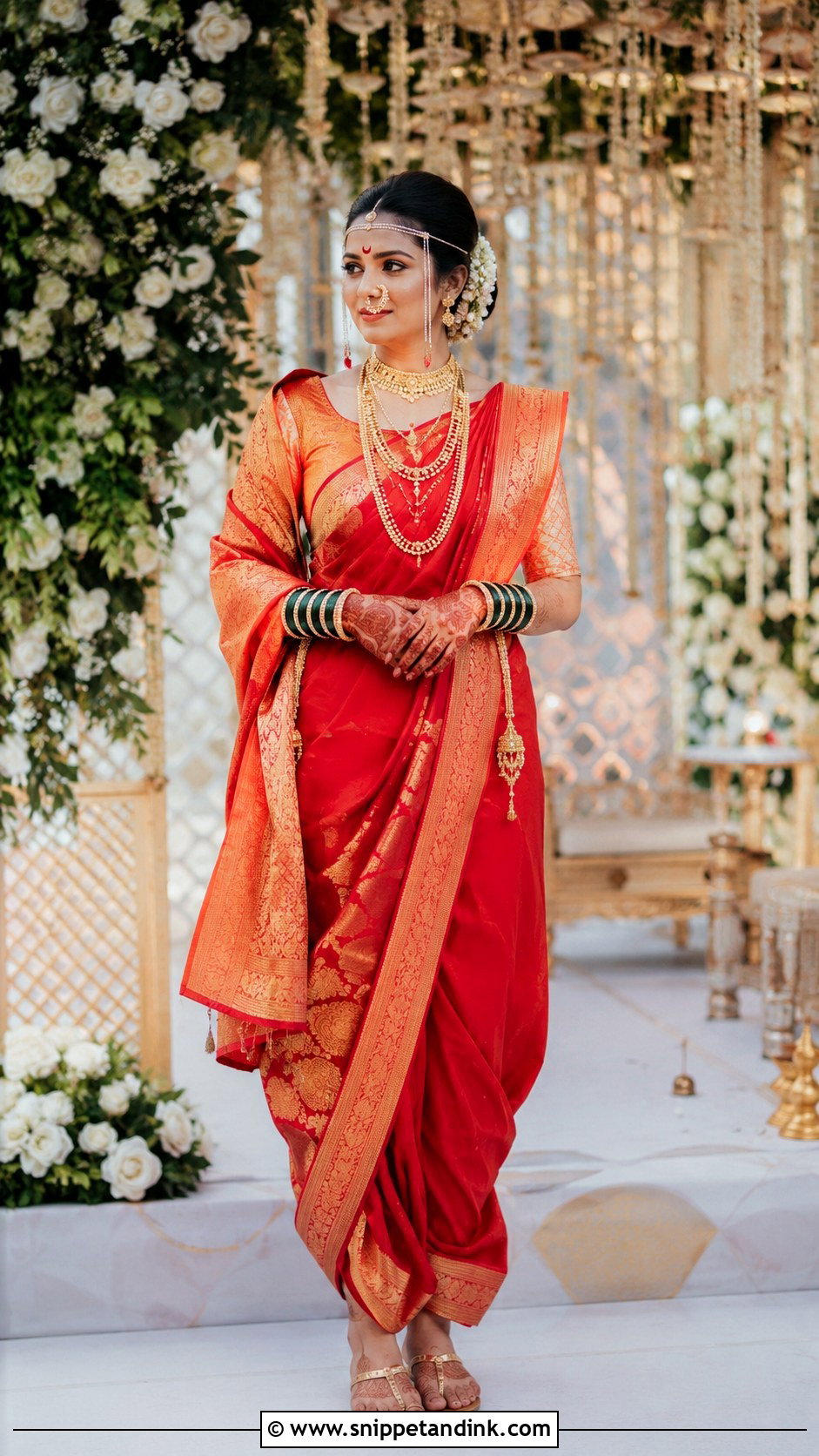
Deep red with an antique-gold border is warmth and ceremony in one piece of silk. I pair it with a fitted gold brocade blouse or a red one with traditional sleeve work. A thushi layered with a longer mohan mala or putli haar frames the upper body, and green bangles between gold patlya give contrast. The hair goes into a polished khopa bun with white flowers and gold ornaments. Add a chandrakor bindi, defined eyes and a muted red lip. With a pearl mundavalya and a statement nath, the red reads festive; I stop adding necklaces once the border starts disappearing behind them.
3. Yellow Nauvari Haldi Bride Look
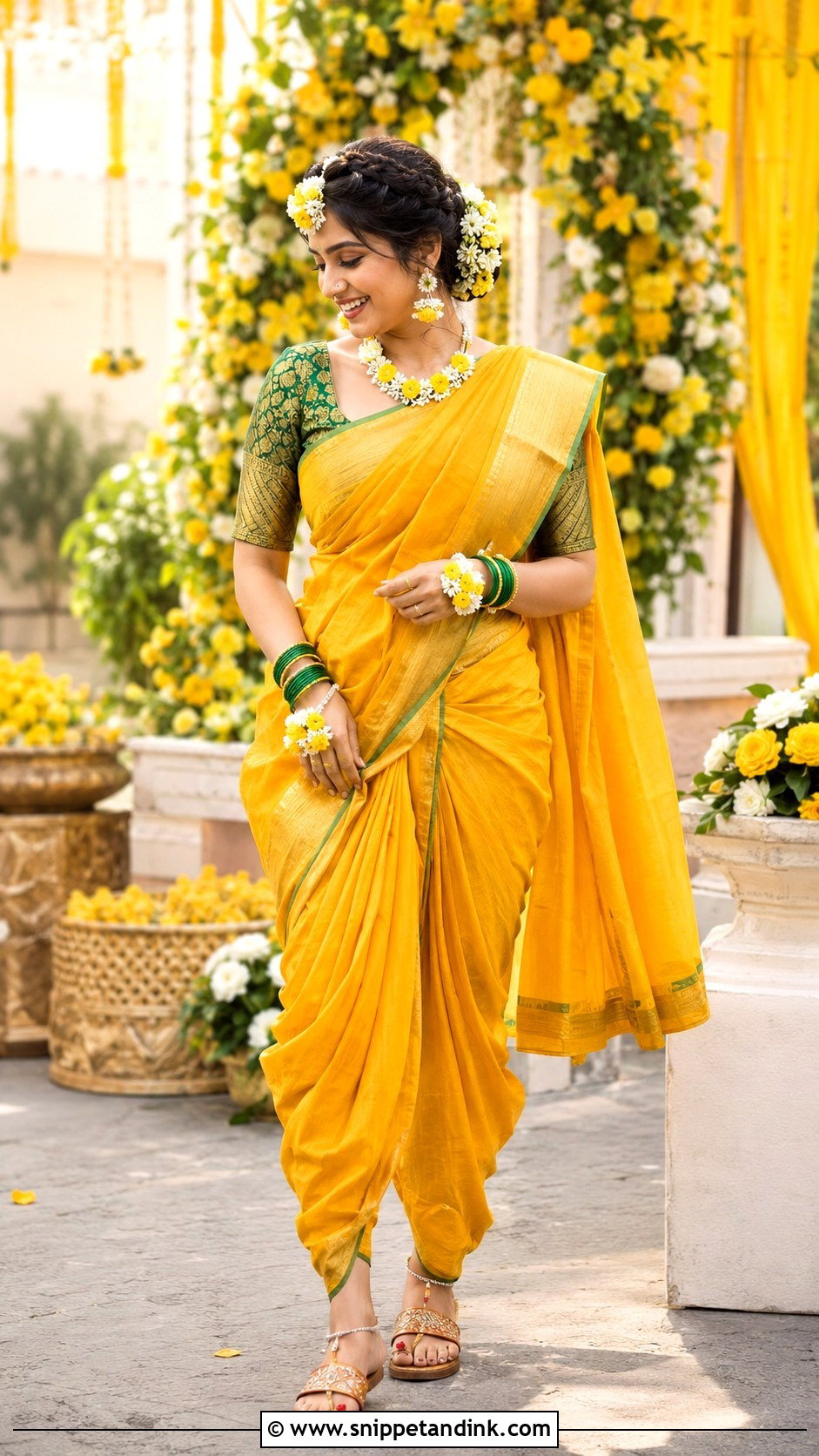
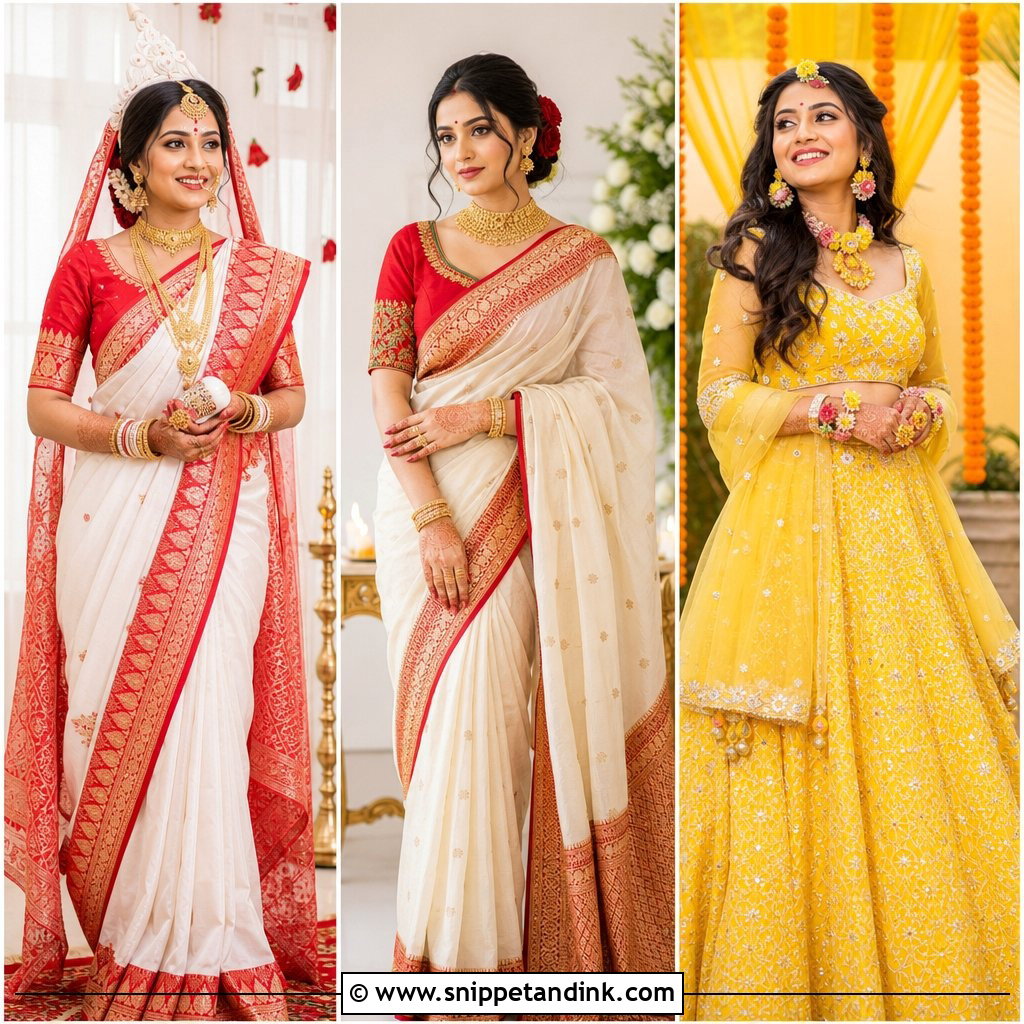
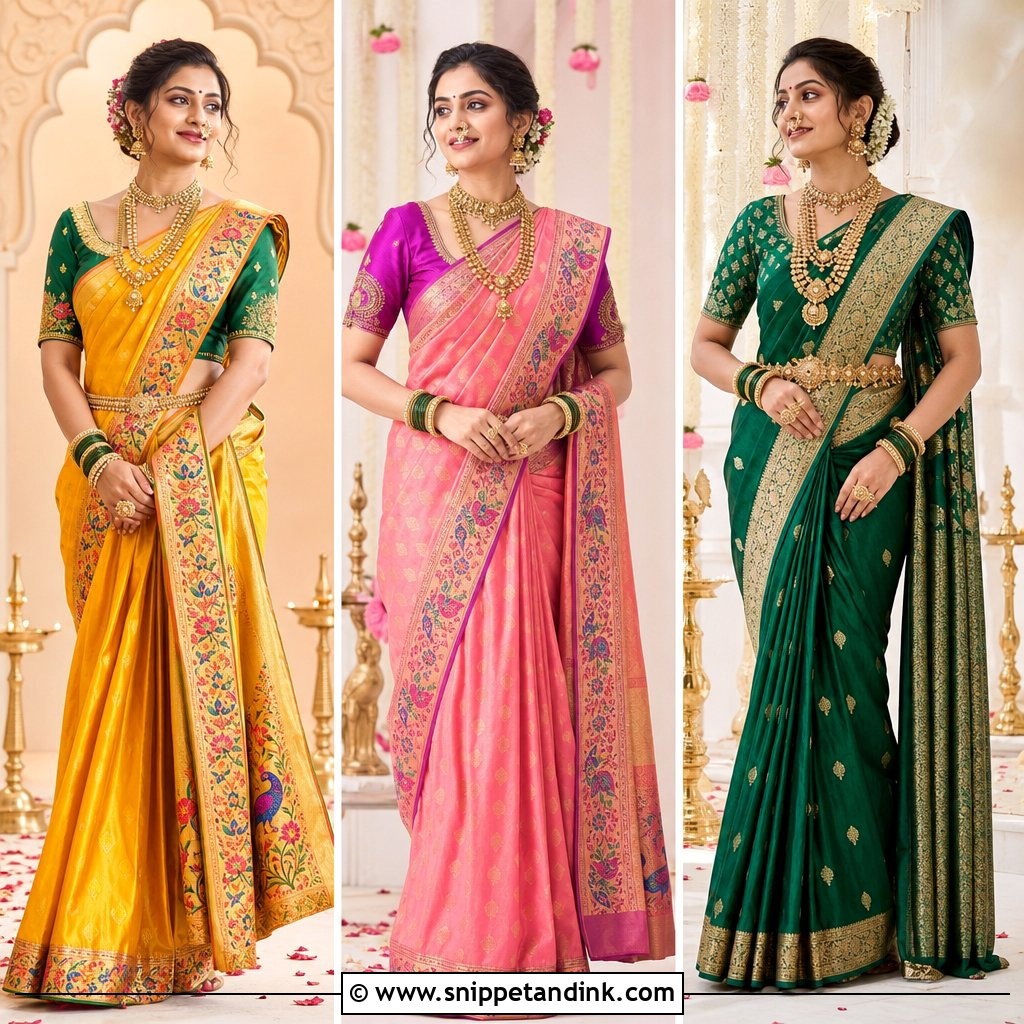
Haldi is messy, so I dress the bride for it. Sunshine yellow suits the mood, but I’d choose lightweight silk, cotton-silk or soft Paithani rather than your best saree, since turmeric paste can stain silk permanently. A green blouse gives traditional contrast; a yellow one keeps it monochrome. Floral jewellery in white and yellow blooms can stand in for heavy gold. A small nath, simple earrings, stacked green bangles and fine anklets finish it, with a flower-trimmed braid or low bun. Water-resistant makeup with a coral lip survives the ceremony, and flat Kolhapuris keep her steady on a wet floor.
4. White And Red Nauvari Bride Look
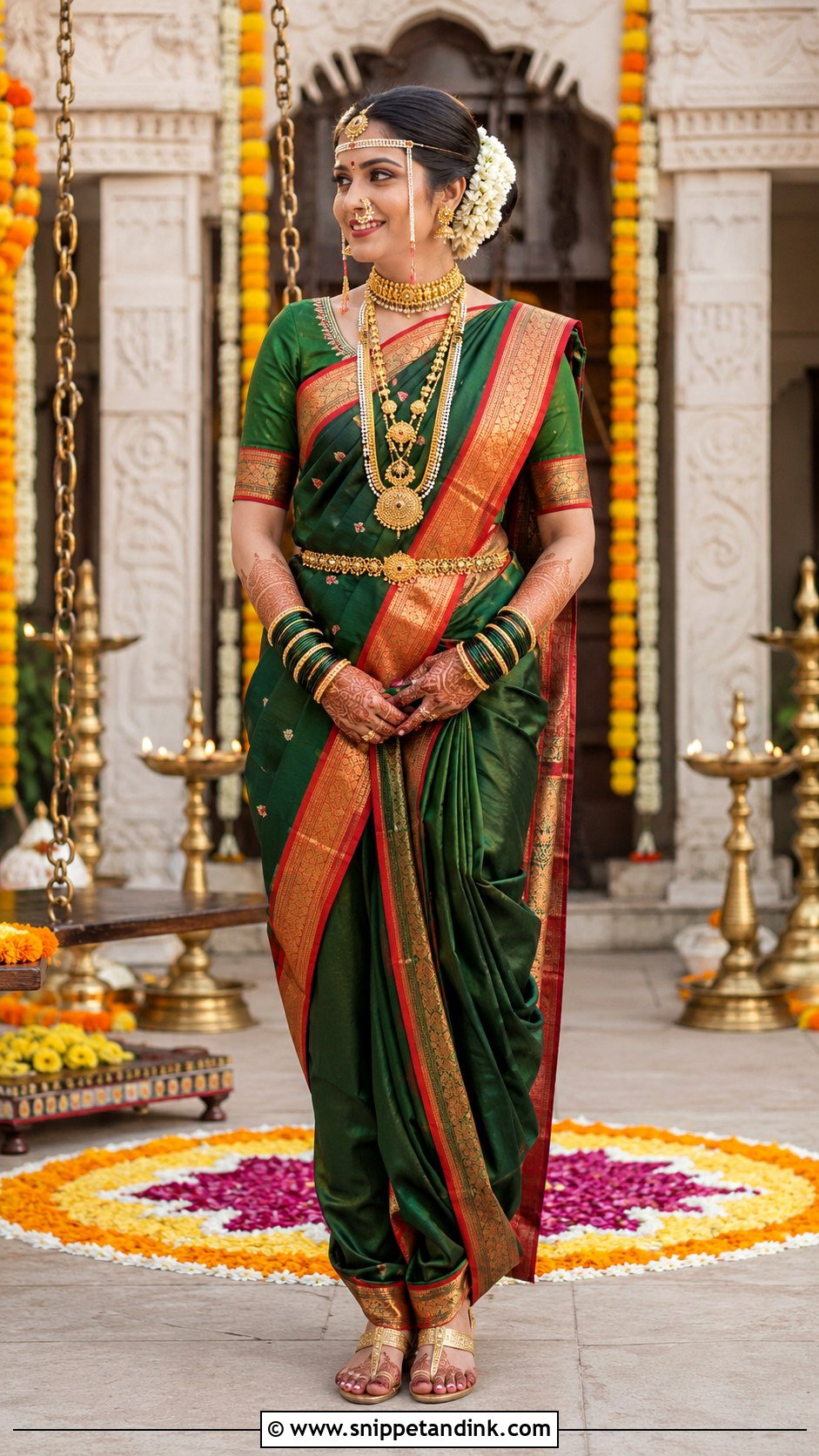
White silk with a red or rust border is crisp and striking. I pair it with a red brocade blouse with short or elbow sleeves, then bring warmth back through gold jewellery, green bangles and a pearl-detailed nath. A red shela over one shoulder adds a ceremonial layer and keeps the white central. A low bun with jasmine, or a long braid for a softer profile, both work. Red lipstick and a bold chandrakor tie the blouse, border and face together. White silk marks easily, so I keep turmeric, kumkum and mehndi well away from it until she’s dressed.
5. Royal Blue Nauvari Bride Look
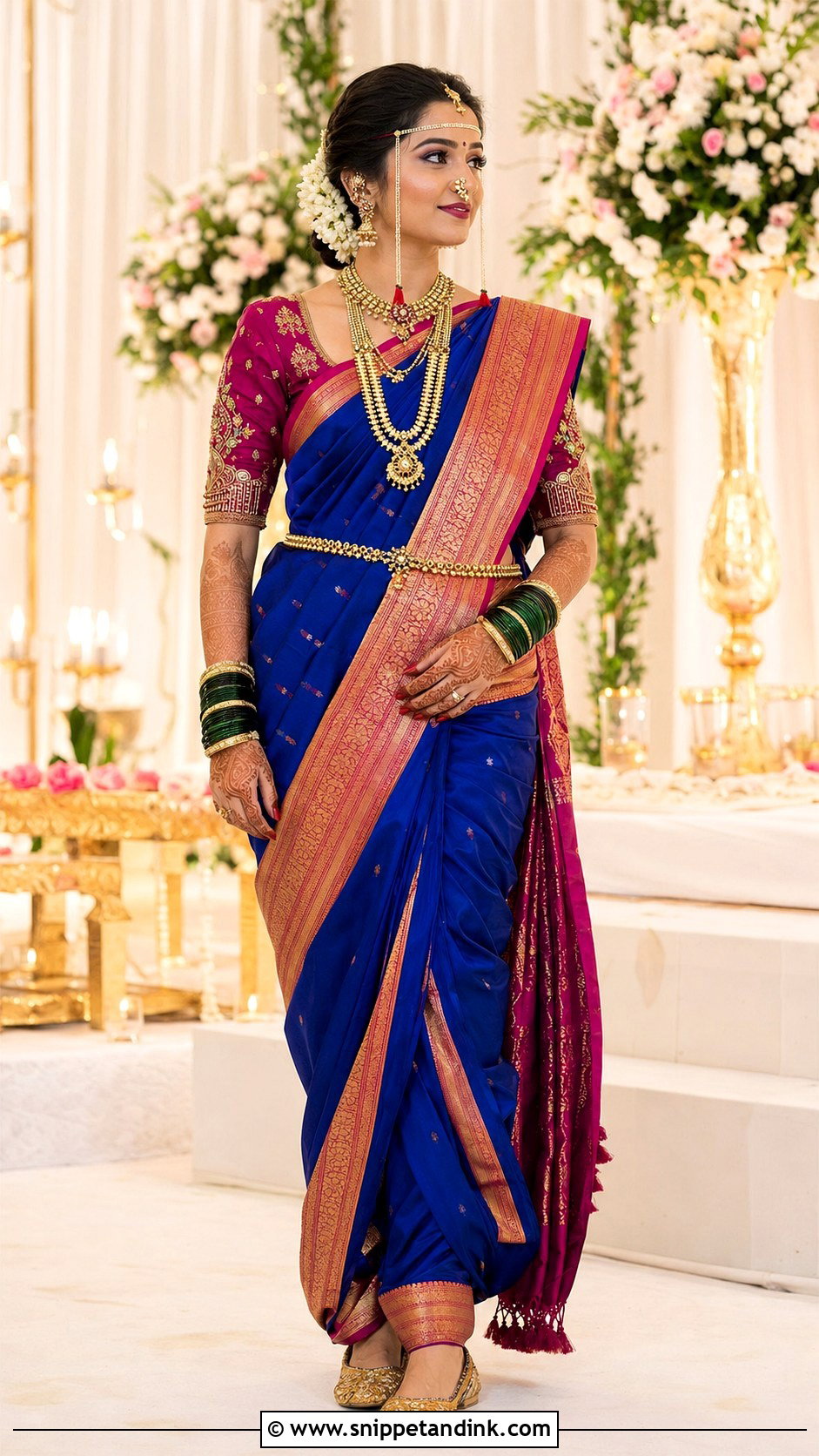
Royal blue breaks away from the familiar red and green and photographs with real depth. I’d look for a blue Paithani with a magenta, purple or gold border. A magenta brocade blouse highlights the border; a gold one gives a more uniform finish. Layered antique-gold necklaces, a traditional nath, green bangles and a pearl mundavalya complete it. Statement ear cuffs can add a modern edge if the rest of the jewellery stays coordinated. A sleek bun with mogra keeps the colour in focus. Neutral base, bronze eyes and a berry lip suit the blue, and gold embroidered juttis or flat sandals finish it.
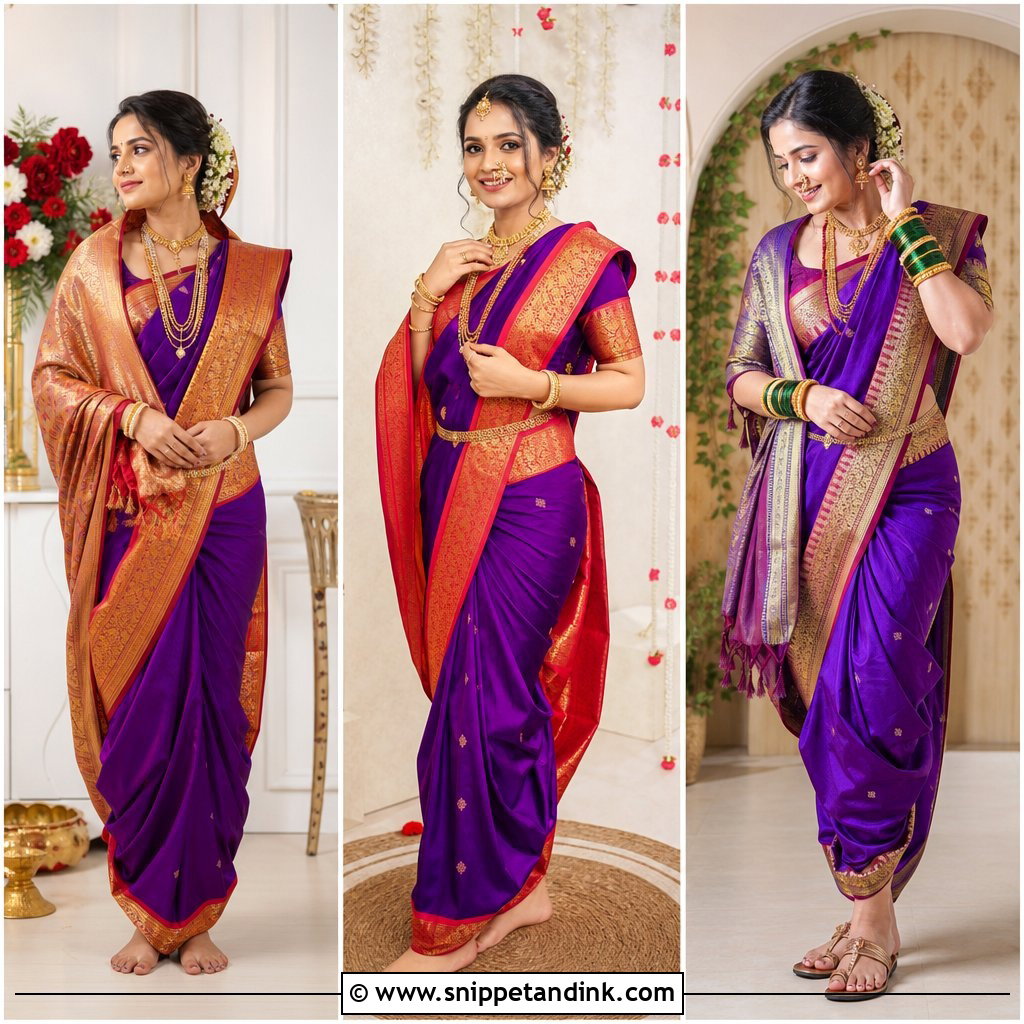
6. Purple Paithani Nauvari Bride Look
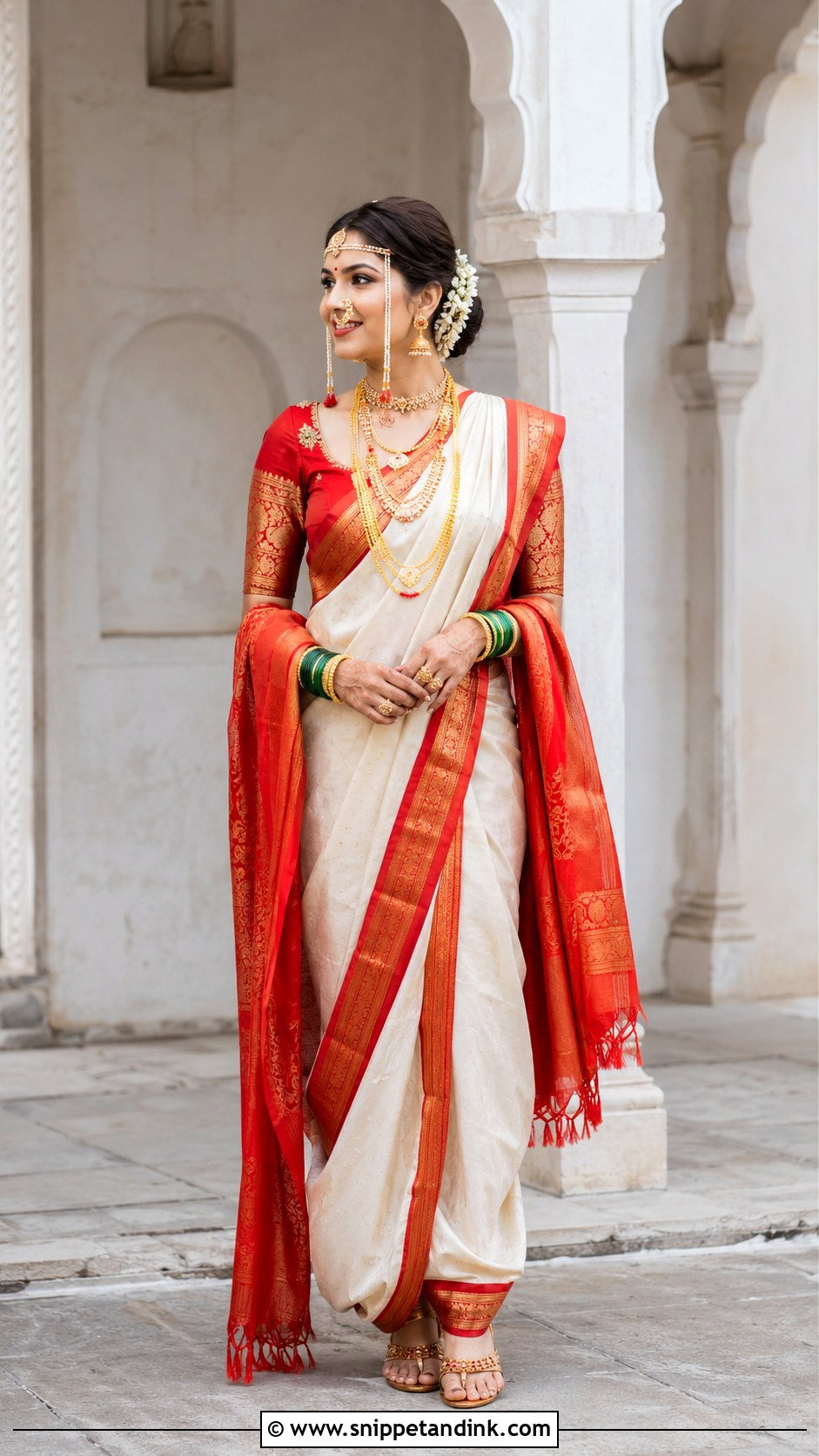
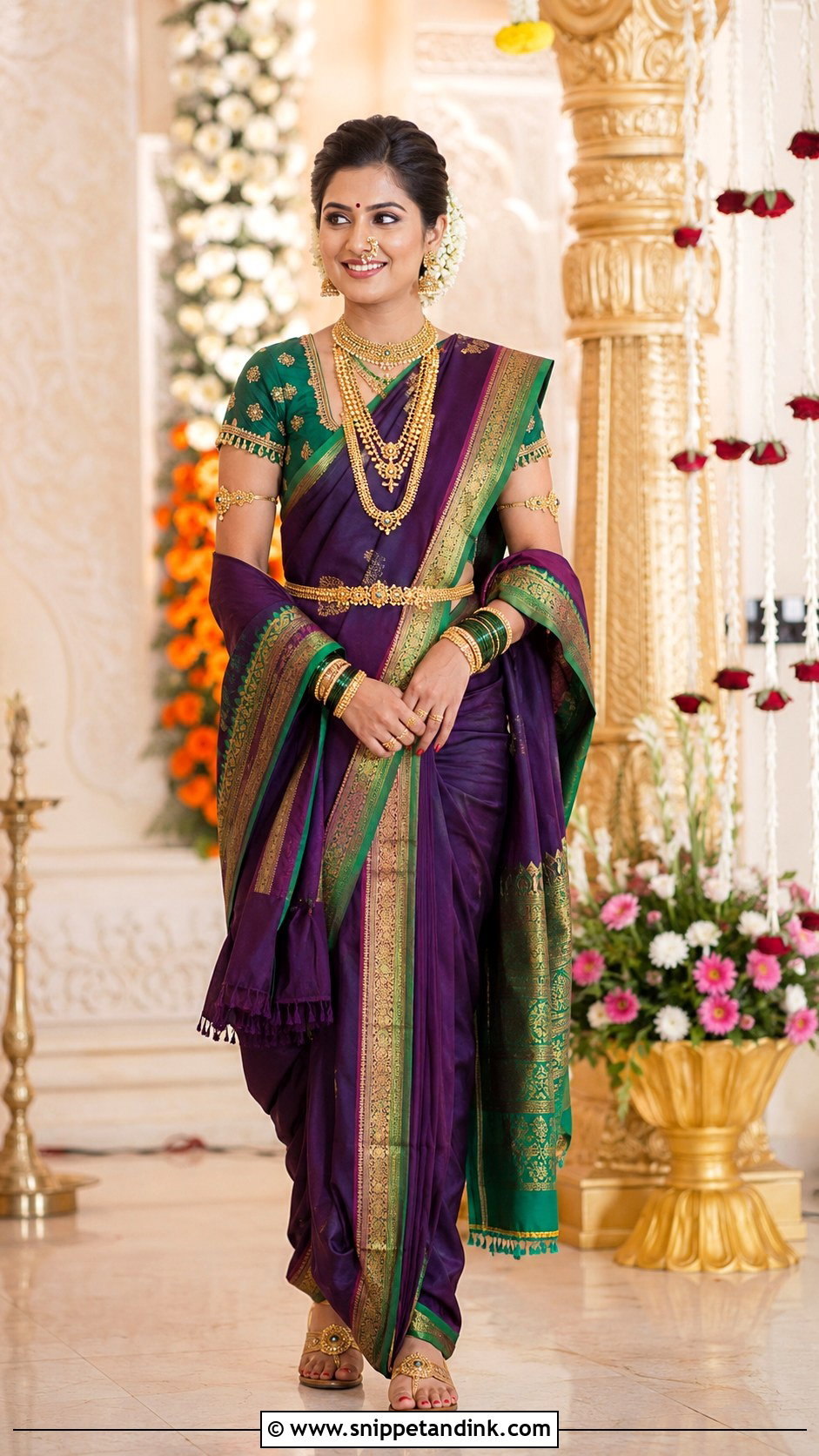
Purple Paithani silk looks regal and stays close to handloom tradition. I’d choose deep plum, aubergine or bright purple with a green and gold border. A green blouse picks out the border; a purple brocade blouse gives a single unbroken colour. The thushi, layered gold necklaces, jhumkas, a statement nath and bangles go on, with a gold kamarbandh at the waist. The kamarbandh does more than decorate: it holds the drape’s pleats flat at the front, which matters with heavy silk. A smooth centre-parted bun with a round gajra, warm gold eyes, a berry lip, gold sandals and a matching shela finish it.
7. Pink Nauvari Bride Look
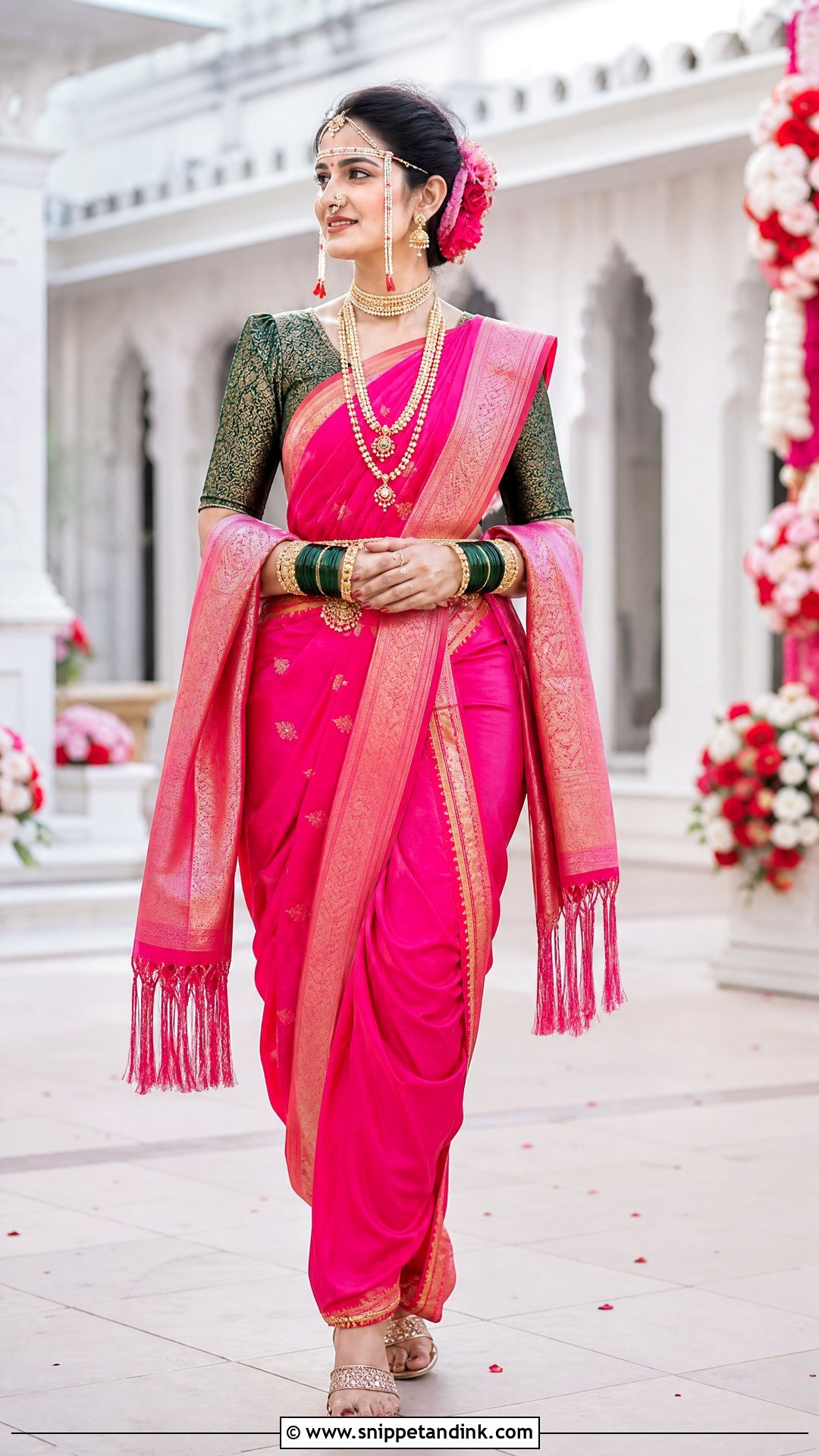
Pink adapts to almost any ceremony. Rani pink has the strength for the main wedding, while blush or dusty pink is softer by day. I’d pick the blouse from the border, contrasting green, purple or antique gold. Mixing pearl details into the traditional necklaces stops it looking heavy. Green bangles, gold patlya, a pearl mundavalya and a classic nath complete the set, with a braided bun and white flowers. Rosy makeup with kajal and a pink-red lip suits it. Very bright pink can reflect onto the skin in close-ups, so I keep blush lighter than usual.
8. Orange Nauvari Bride Look
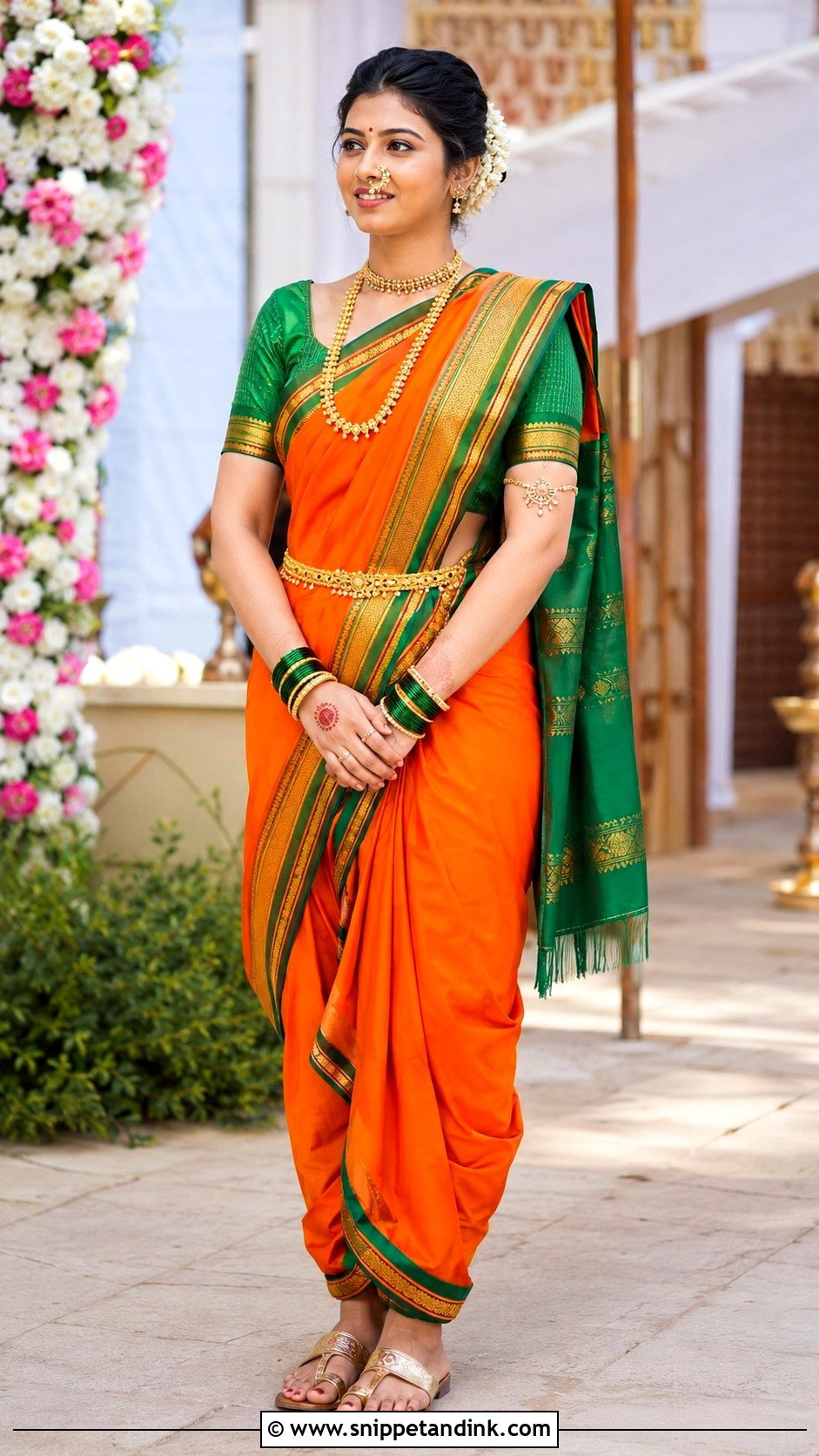
Morning rituals and orange silk go well together. Burnt orange, saffron and mango shades look best against green or magenta borders, and I repeat the border colour in the blouse so it all looks planned. Antique-gold pieces, a thushi, putli haar, jhumkas and kamarbandh, deepen the warmth, while green bangles and a white pearl mundavalya balance it. A compact mogra bun keeps the shape neat, and the nath and chandrakor complete the bridal identity. Bronze eyes, flushed cheeks and a brick-red lip work with the palette. A green shela and gold sandals finish it.
9. Teal Nauvari Bride Look
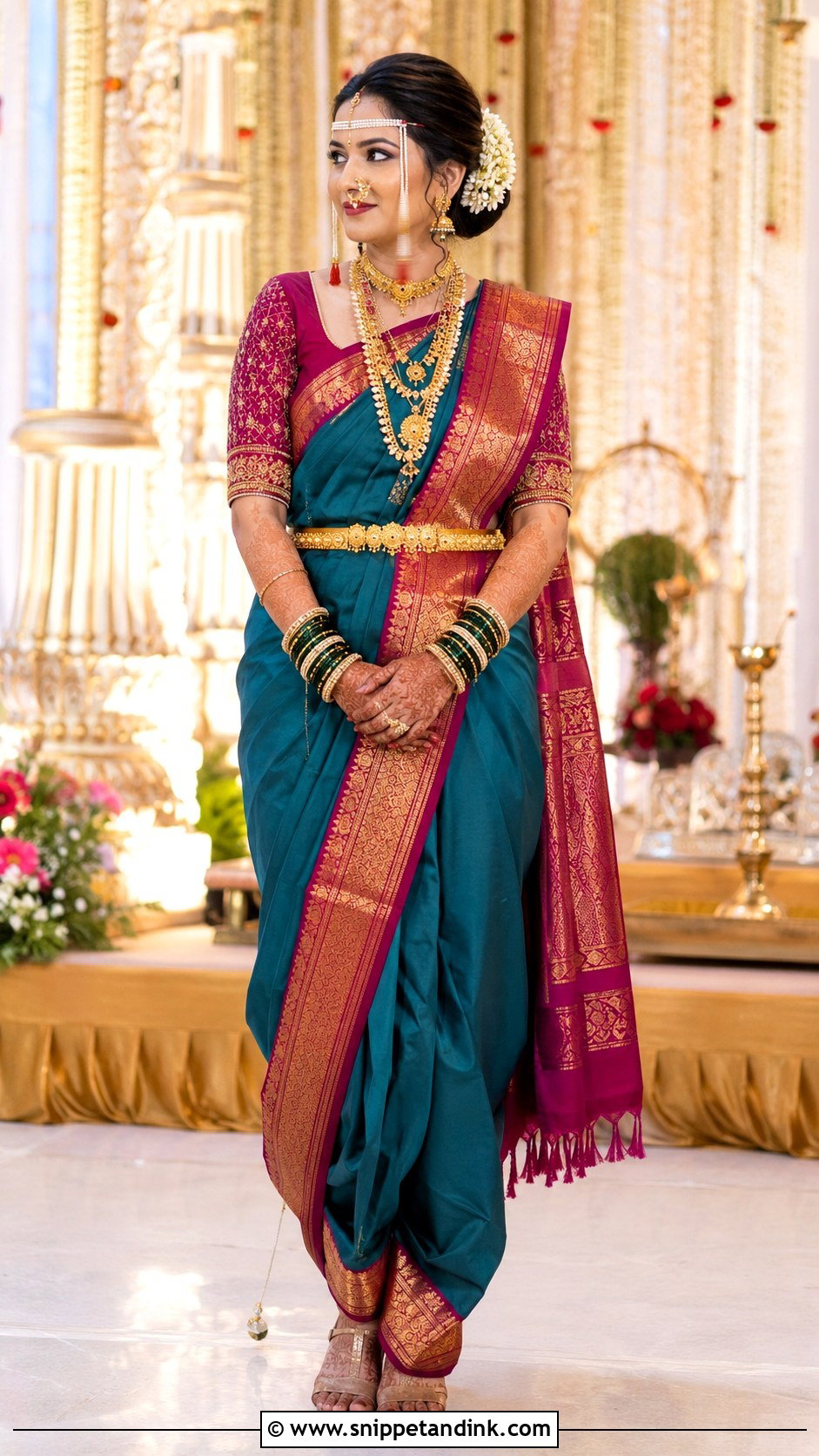
Teal updates the palette without diluting the tradition. A teal silk with a magenta, wine or gold border looks wedding-ready, and a magenta blouse photographs well against the cooler body. Antique-gold necklaces, a nath, pearl mundavalya, armlets and stacked bangles keep it traditional. If the pallu is heavily woven, I cut back on long necklaces so its design still shows. A smooth low bun with jasmine and a gold pin, berry lips, defined eyes and soft highlight finish the face. Add a magenta shela, delicate anklets and metallic flat sandals.
10. Maroon Nauvari Bride Look
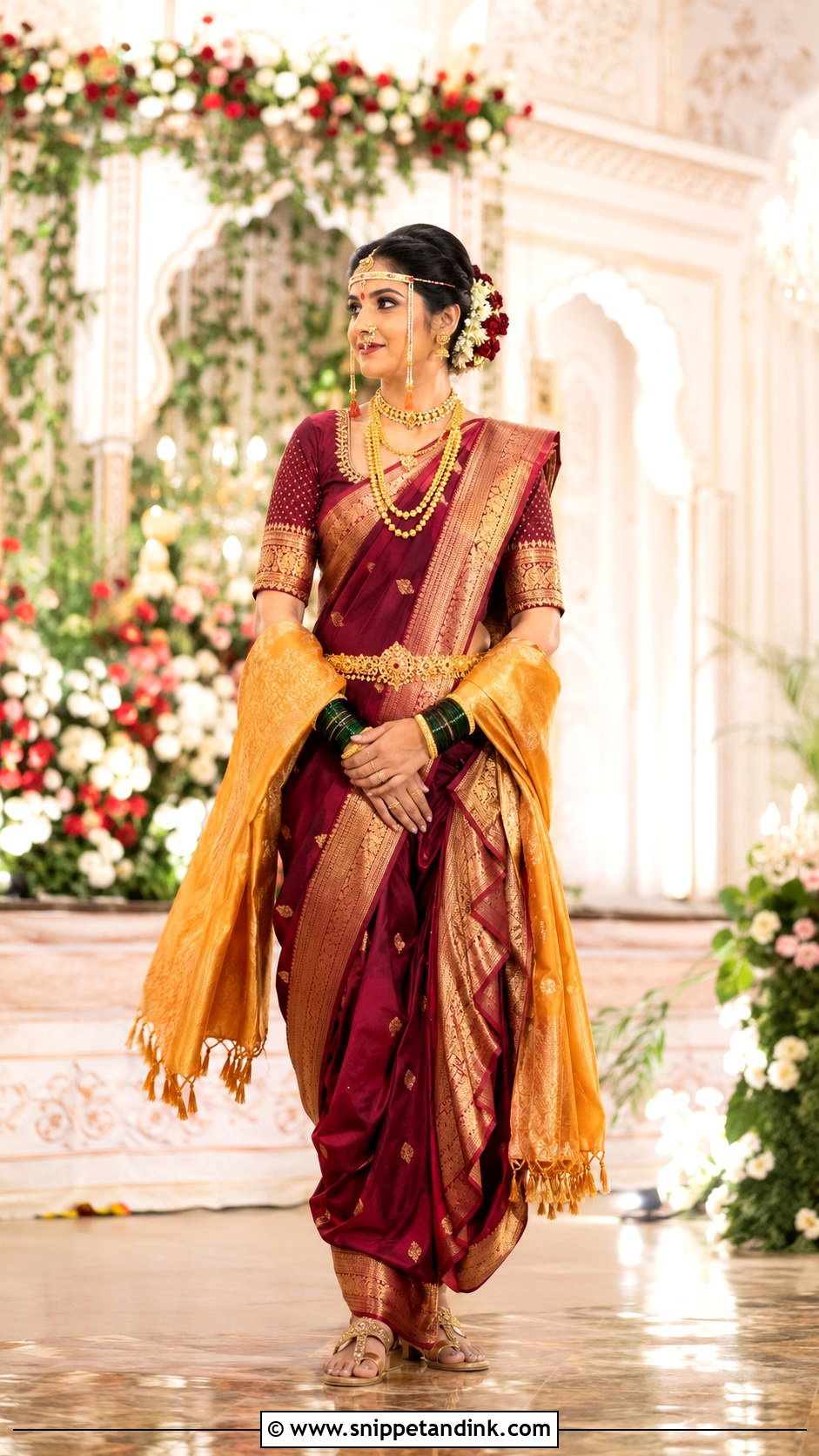
For an evening ceremony or indoor hall, I like maroon. A silk saree with an antique-gold border and a matching brocade blouse makes a rich tonal outfit, with green bangles for contrast and layered gold to keep the deep shade glowing. Include the thushi, putli haar, nath, mundavalya and waist belt, but leave space between pieces; maroon gets heavy quickly when the jewellery touches. A structured bun with jasmine or red roses suits it. Matte makeup, kohl and a maroon-red lip are cohesive, and a gold or mustard shela brightens the face. Antique-gold sandals and a little henna finish it.
11. Magenta Nauvari Bride Look
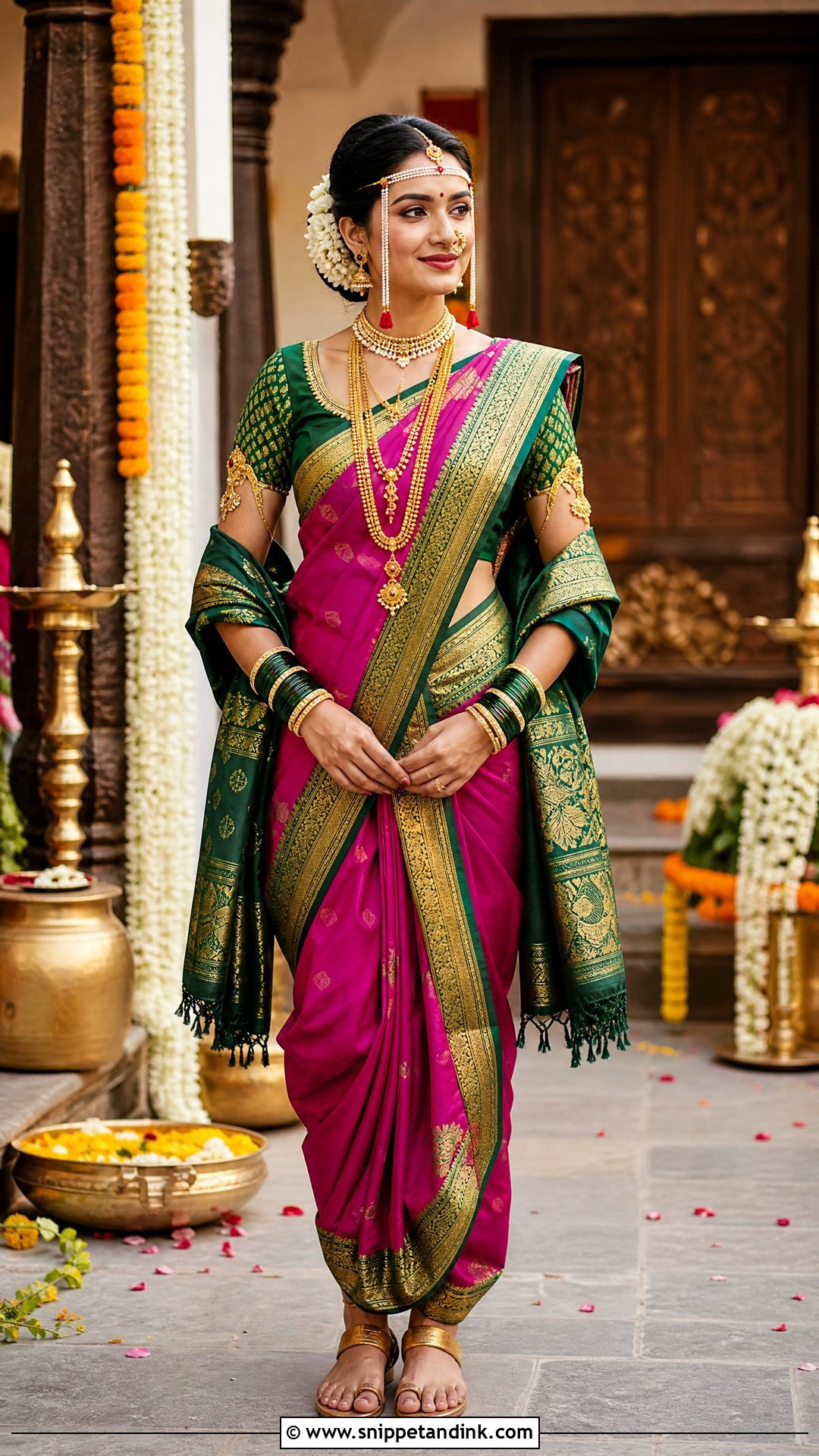
Strong colour that isn’t red is what magenta offers. A magenta Nauvari with a green Paithani border is vivid, especially in daylight. I pair it with a bottle-green blouse with woven gold motifs or quiet embroidery, then add the nath, mundavalya, thushi, layered haar, green bangles and gold armlets. A slim kamarbandh secures the drape and defines the waist. The hair is sleek at the front and gathered into a flower-covered bun. Neutral gold eyes, black kajal and a rich pink lip keep the saree in charge, with a green shela and gold sandals.
12. Cream And Gold Nauvari Bride Look
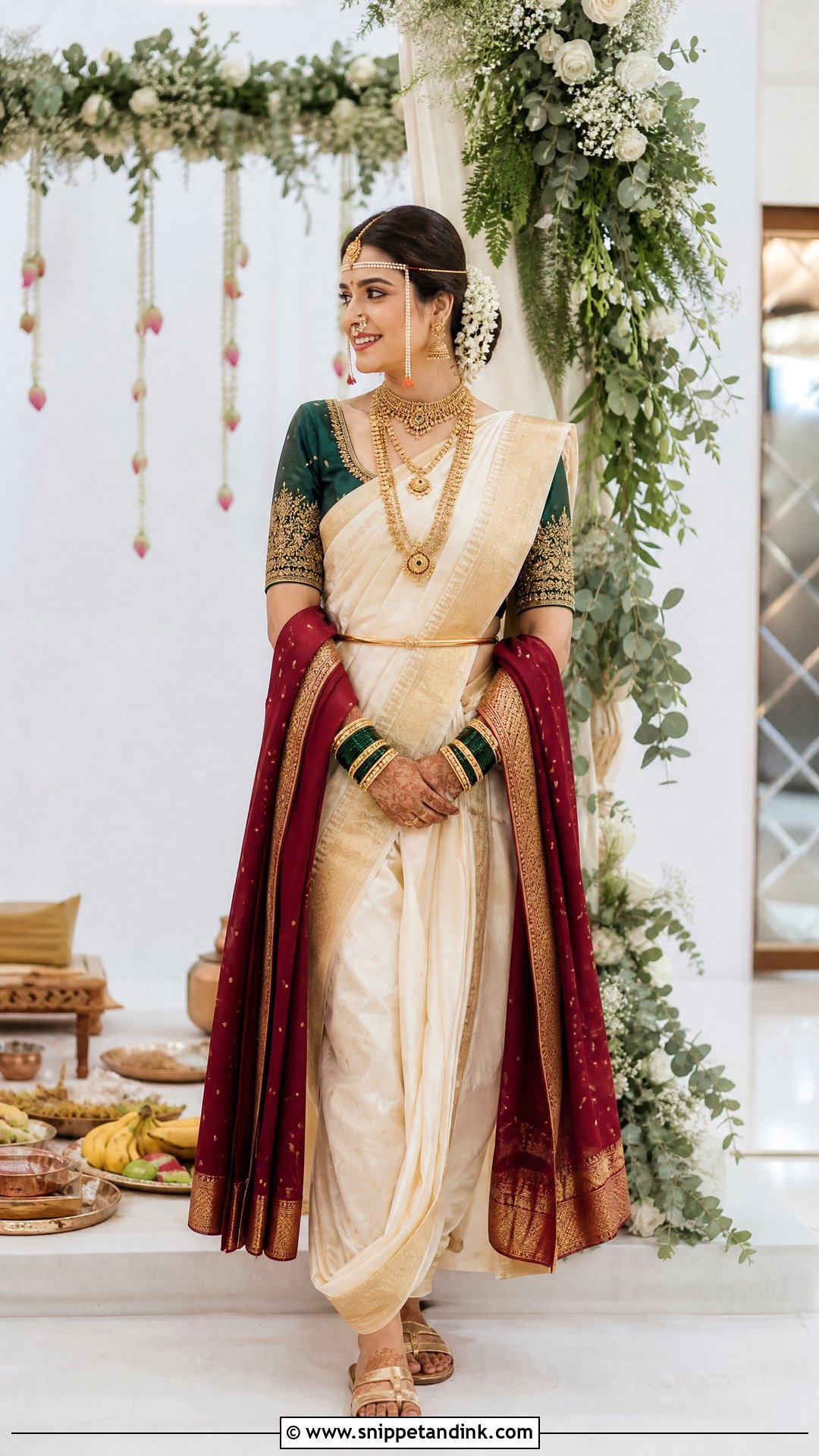
Cream and gold is the quiet option, and it relies on contrast to stay bridal. A cream Nauvari with a broad zari border takes a maroon, red or emerald blouse well. Temple or antique-gold Maharashtrian pieces give the neutral saree ceremonial weight; I keep the metal finish consistent, because mixing yellow gold and antique finishes on cream looks patchy. Add the nath, green bangles, pearl mundavalya, gold waist belt and matching earrings, with a centre-parted bun and a full white gajra. Luminous makeup, warm brown eyes, a small chandrakor and deep red lips suit it. A maroon shela and metallic sandals finish it.
13. Green And Pink Nauvari Bride Look
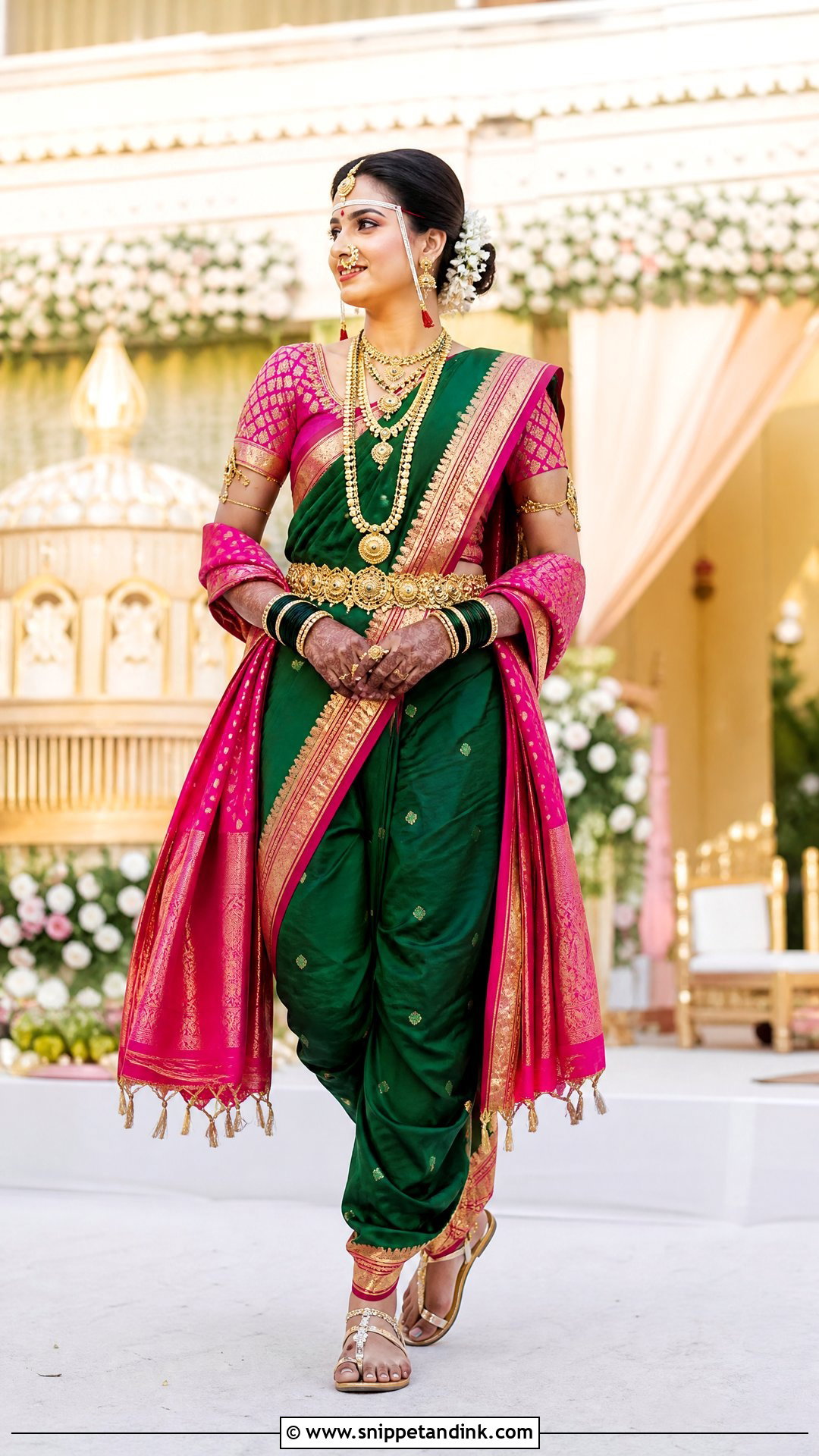
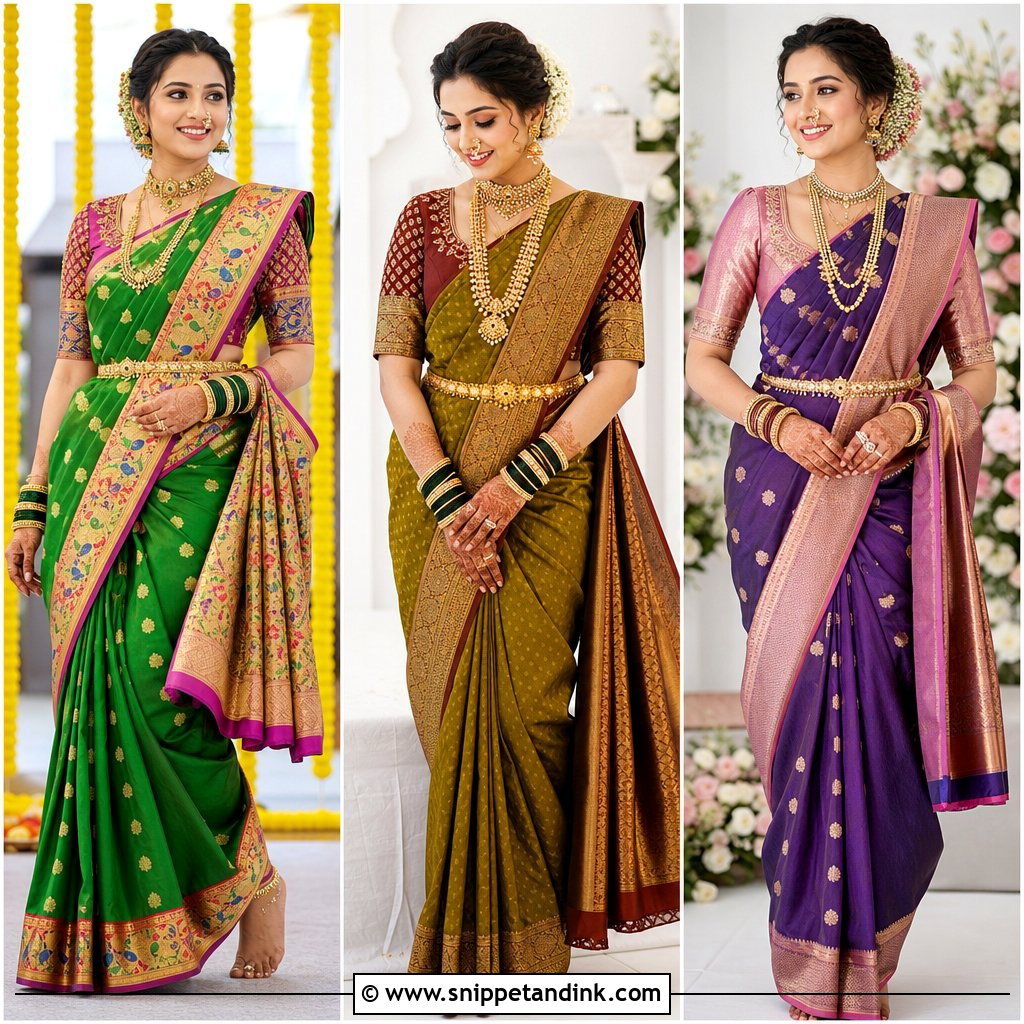
Green and pink are a natural Paithani pairing. I begin with a bottle-green Nauvari with a bright pink pallu or border and add a fitted pink brocade blouse to connect them. The jewellery includes a thushi, longer necklace, nath, earrings, armlets and a slim kamarbandh, with green glass bangles stacked between gold patlya and a pearl mundavalya. A mogra bun keeps it polished. Pink lipstick and softly blended gold eyes repeat the colours without looking theatrical. Finish with a pink shela, gold sandals and delicate anklets.
14. Peshwai Nauvari Bride Look
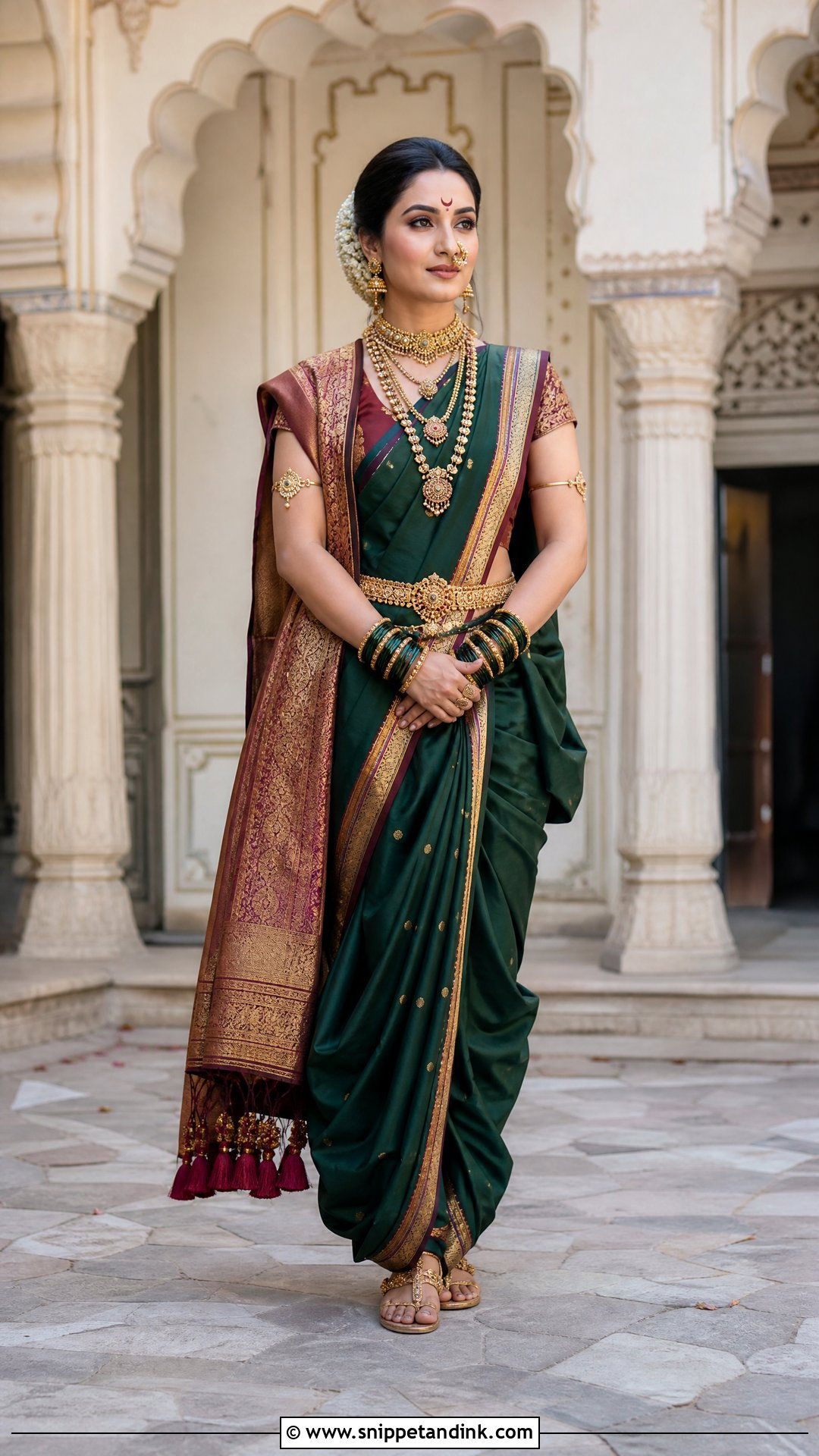
A Peshwai-inspired Nauvari outfit is all royal detail, structured draping and substantial jewellery. I’d choose green, purple, maroon or red with a broad gold border, a fitted brocade blouse and a shela draped neatly across the body. A thushi with longer necklaces, nath, chandrakor, armlets, bangles and an ornamental kamarbandh follow, all in one antique-gold finish. A high or rounded khopa with flowers and hair jewellery strengthens the historical feel. The jewellery weight adds up here, so I check at the trial that the bun can carry its ornaments without pins slipping. Kajal, a soft matte face and gold sandals complete it.
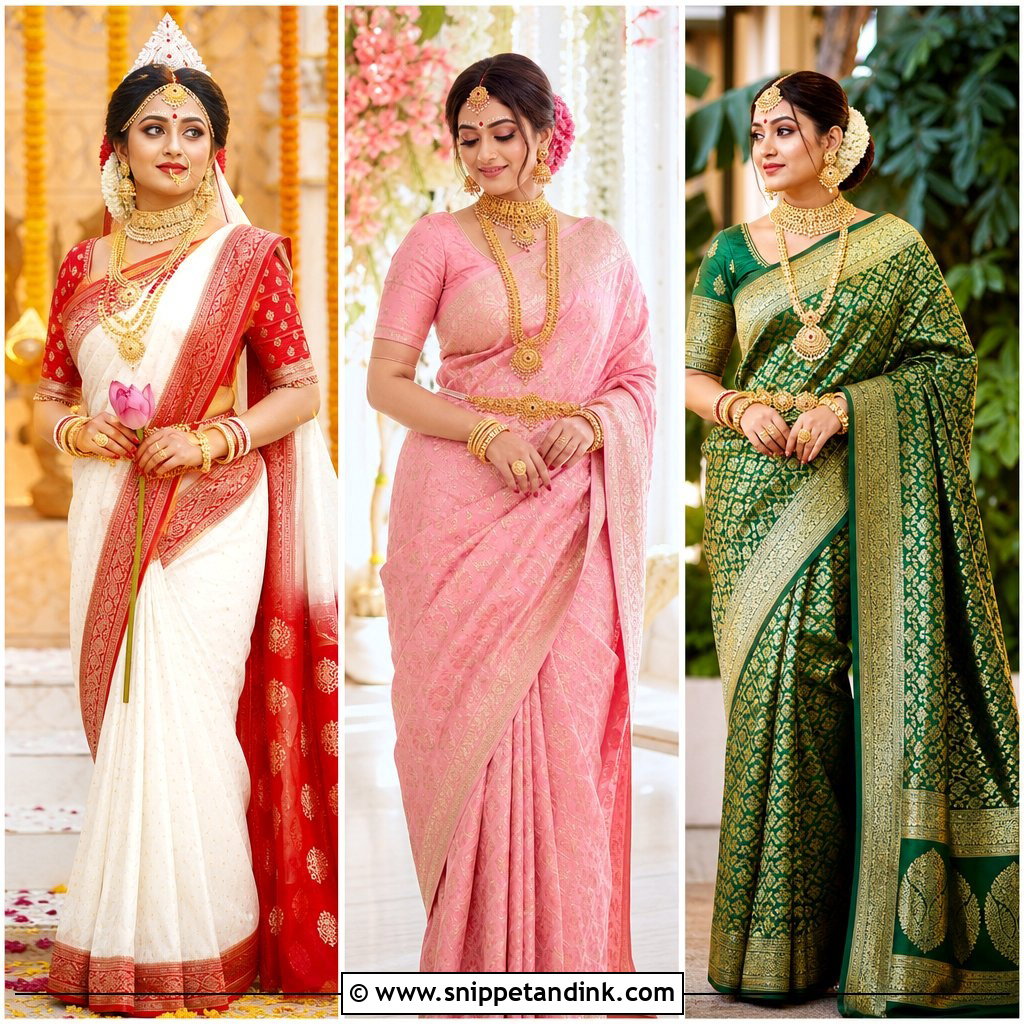

15. Temple Jewelry Nauvari Bride Look
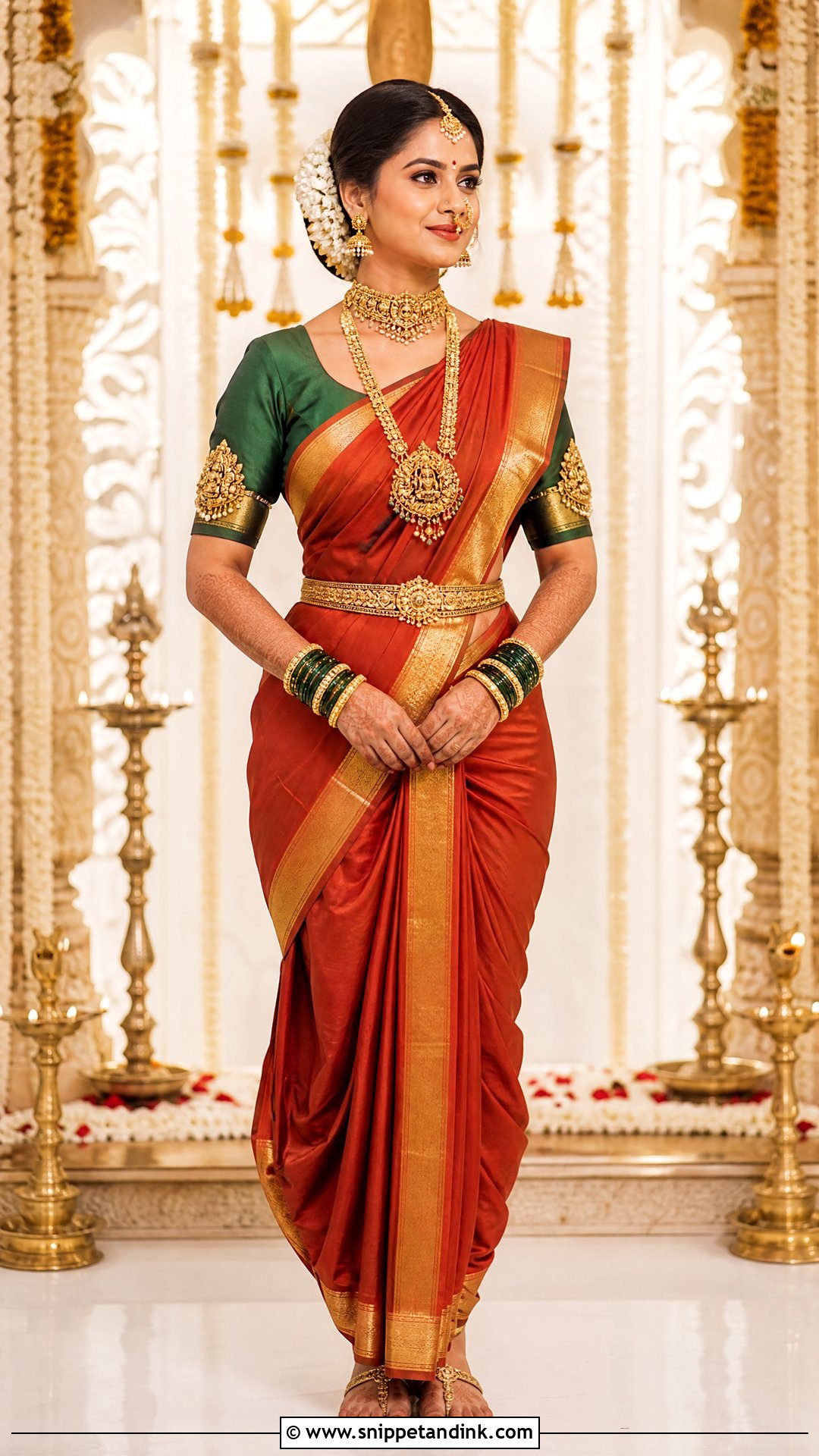
Temple jewellery adds bold, intricate detail, and it’s become a common pairing with Nauvari for brides who blend regional influences. I’d start with red, green, rust or purple silk with a clear gold border and a coordinating, plain blouse so the jewellery gets the attention. A temple-style choker, one longer necklace and matching earrings, then the nath, bangles, armlets and waist belt. I always confirm the Maharashtrian pieces, nath and mundavalya especially, still lead, so the look doesn’t turn into a different region’s bride. A smooth bun with jasmine and gold pins, warm eyes, red lips, a chandrakor and simple gold sandals finish it.
16. Pearl Jewelry Nauvari Bride Look
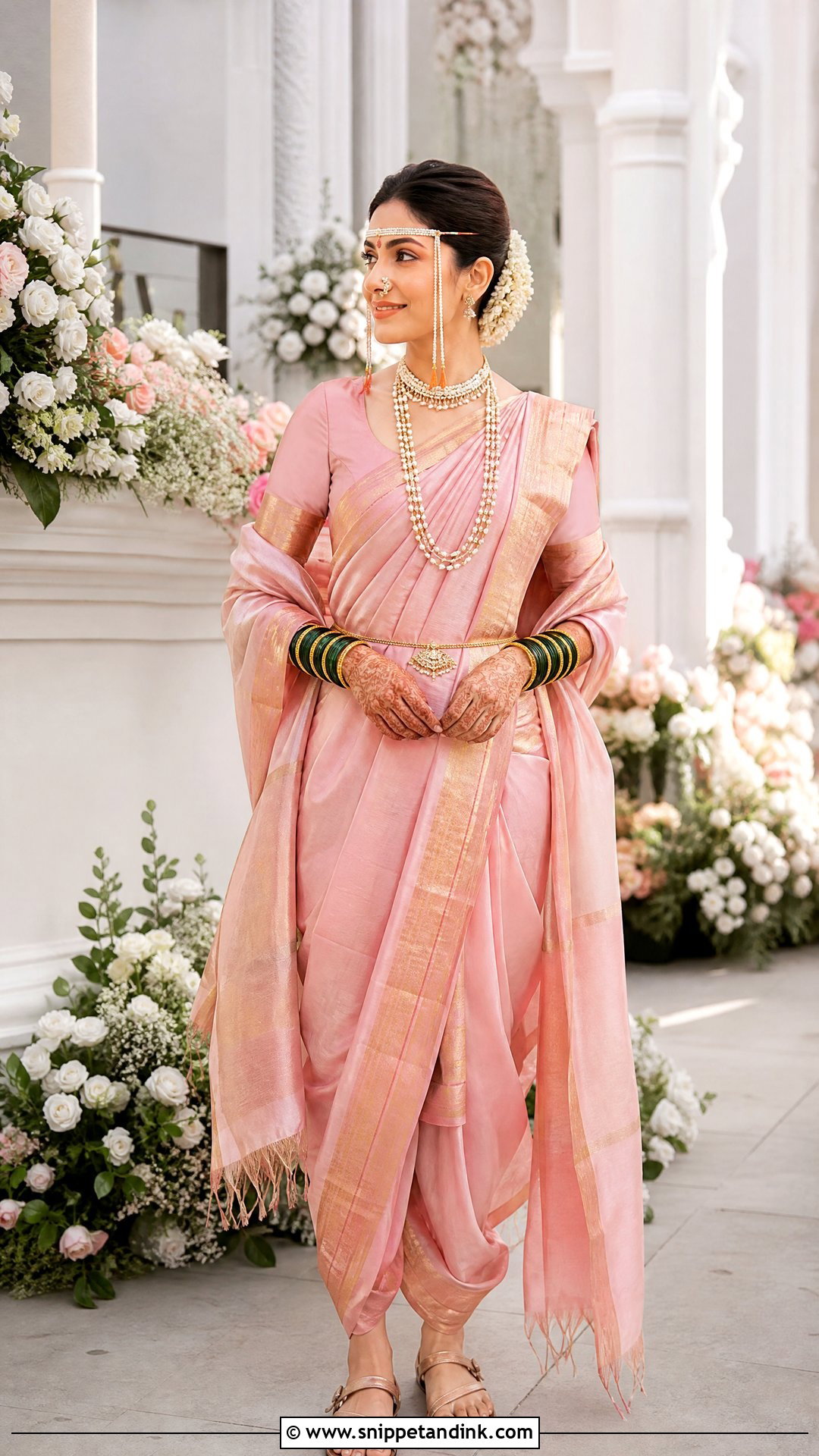
Pearls soften Nauvari silk and bring light to the face. I pair a red, pink, green or cream saree with a gold border and a blouse in one of its woven accents, then build the jewellery from a pearl nath, mundavalya, earrings, choker and long necklace. Small gold elements in the pearl pieces link them to the zari. Green bangles stack with slim pearl or gold bracelets. A low bun with white flowers, luminous skin, neutral eyes and a rose-red lip suit it. Pearls are noticeably lighter than all-gold sets, which brides with long ritual days appreciate. A light shela and gold flat sandals finish it.
17. Silver Jewelry Nauvari Bride Look
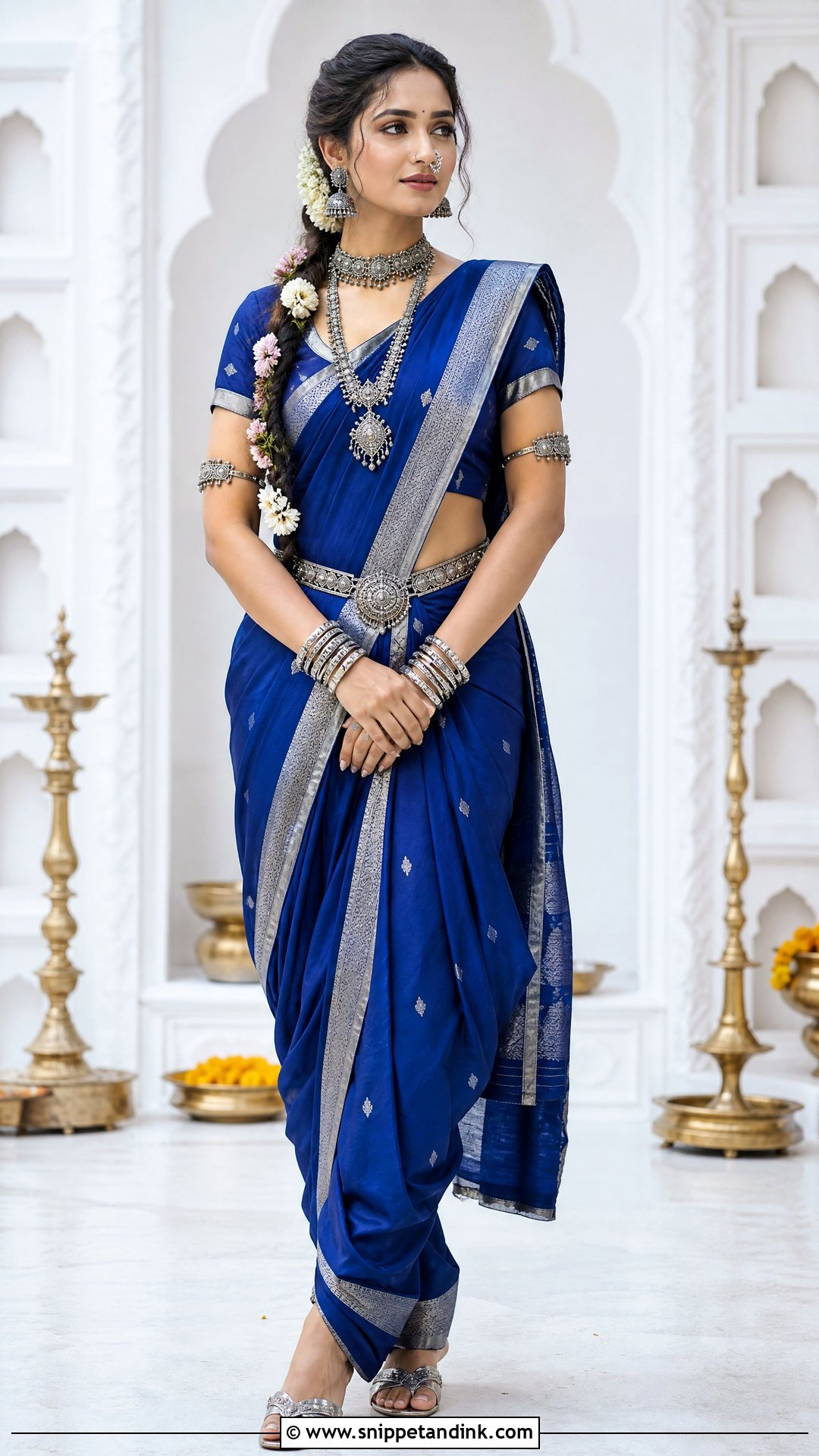
Oxidised silver gives the look an artistic, unconventional edge, and more brides now use it in place of traditional gold. It works best on solid jewel tones, royal blue, purple, deep green or magenta, with a restrained silver-toned or contrasting border. Keep the blouse simple. A substantial silver choker, long necklace, earrings, bangles, armlets and waist belt carry the look, and a silver-toned or subtle pearl nath keeps things cohesive. Some families feel strongly that a bride should wear gold, so I’d raise this one early. A textured braid or flowered low bun, kohl, muted lips, silver sandals and a minimal shela finish it.
18. Double Shela Nauvari Bride Look
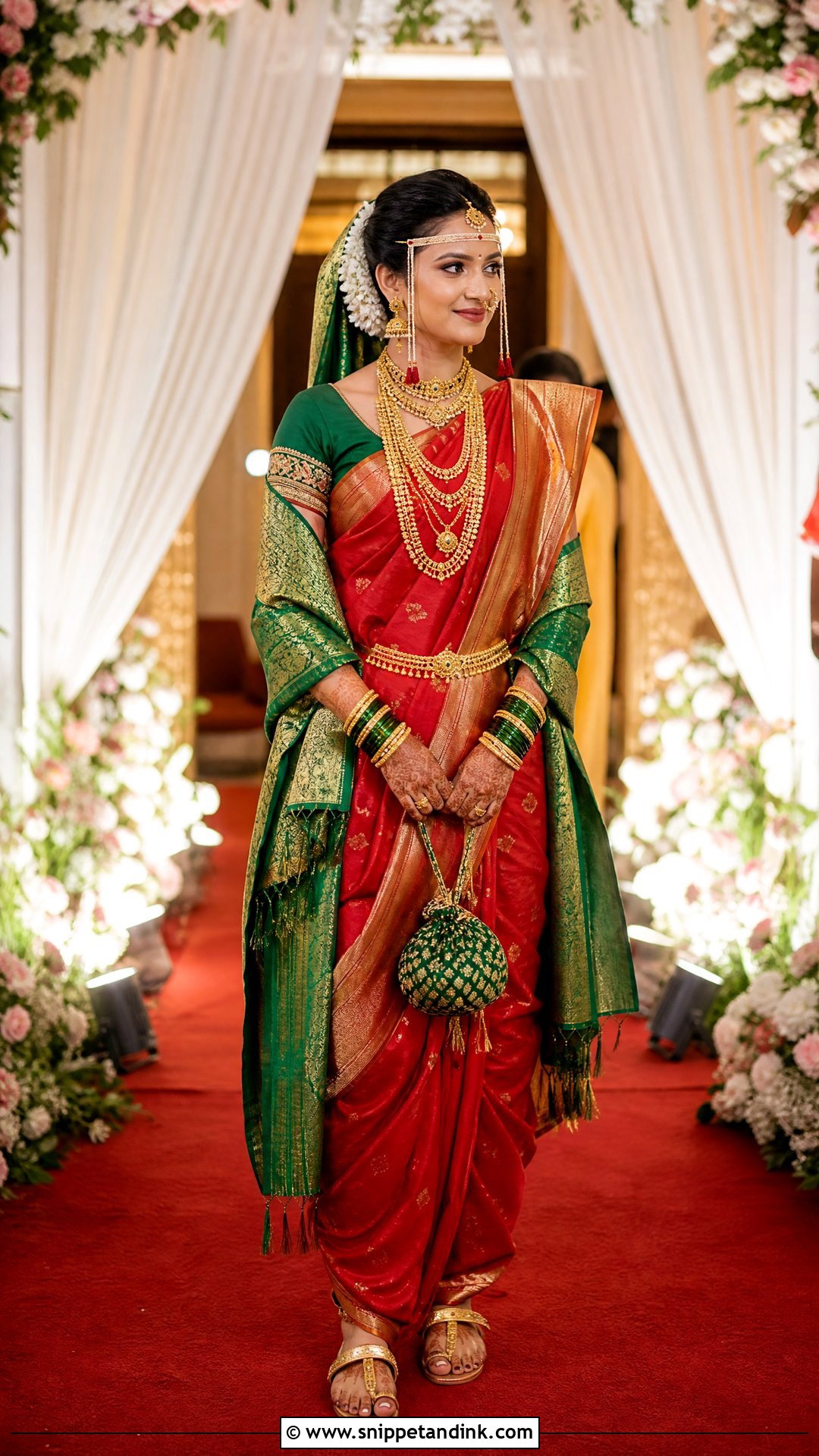
Two shelas add volume and a grand entrance. I start with rich red, green or purple, then put one light shela across the shoulder and another over the head or the opposite side. Use complementary colours and lighter fabric for the second layer, since two heavy shawls make the bride hot and hide the drape. Each layer gets concealed pins before the ceremony, and I pin through the blouse seam rather than the silk. A fitted blouse and spaced jewellery, thushi, long necklace, nath, mundavalya, bangles and kamarbandh, balance the fabric. A sleek bun supports the head covering. Gold sandals and a compact potli complete it.
19. Minimal Nauvari Bride Look
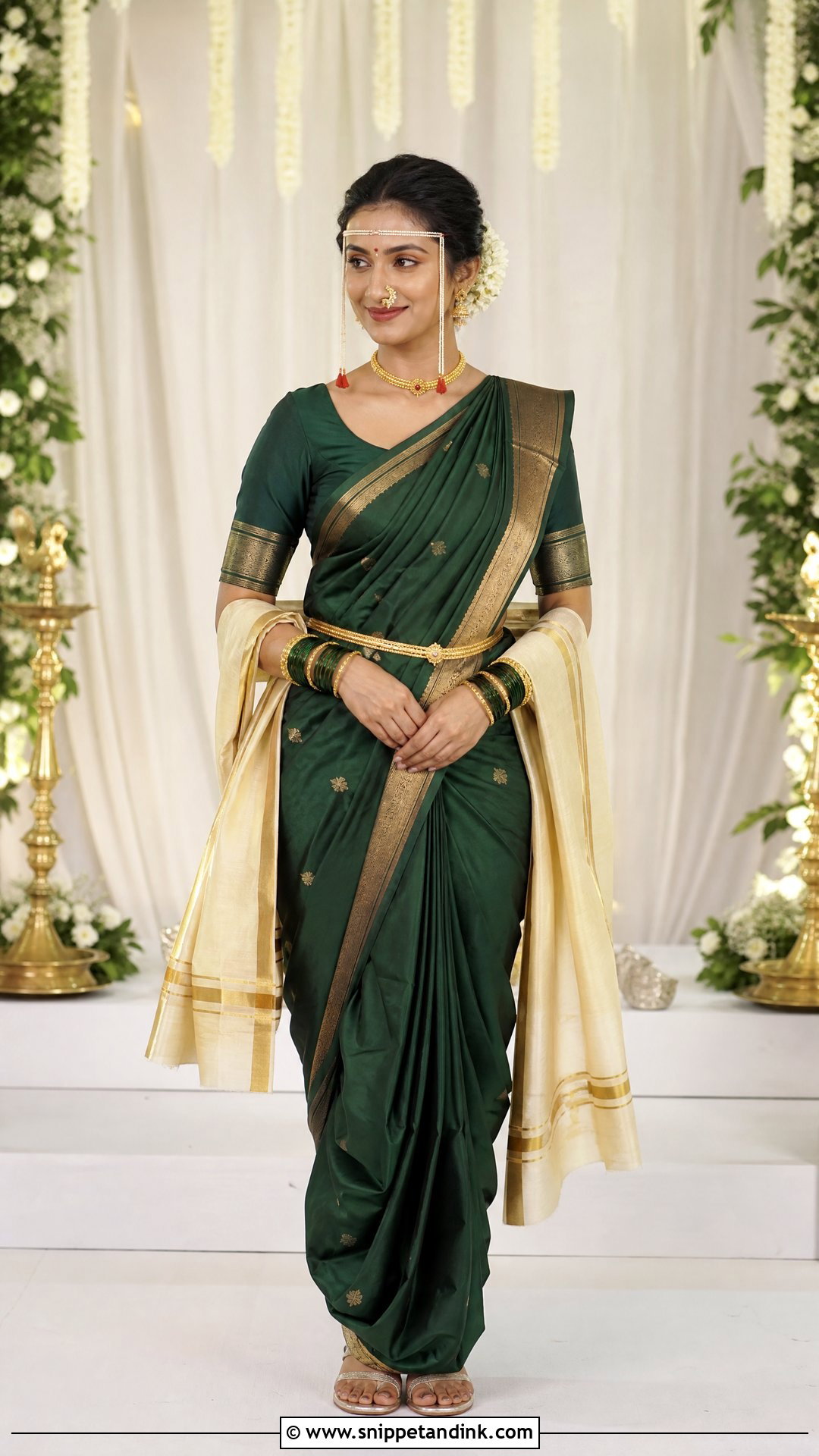
Not every bride wants three necklaces and heavy embroidery, and the Nauvari drape doesn’t need them. A well-woven saree in green, red, pink, cream or yellow with a clean, well-fitted blouse lets the border do most of the decorating. A fine thushi or short necklace, small earrings, the nath, green bangles and a simple mundavalya are enough. A light waist belt keeps the saree secure without bulk. Hair in a smooth low bun with a small gajra or a neat braid, natural makeup and a muted rose lip suit it. With flat metallic sandals and a plain shela, she’ll stay comfortable through long rituals.
20. Pastel Nauvari Bride Look
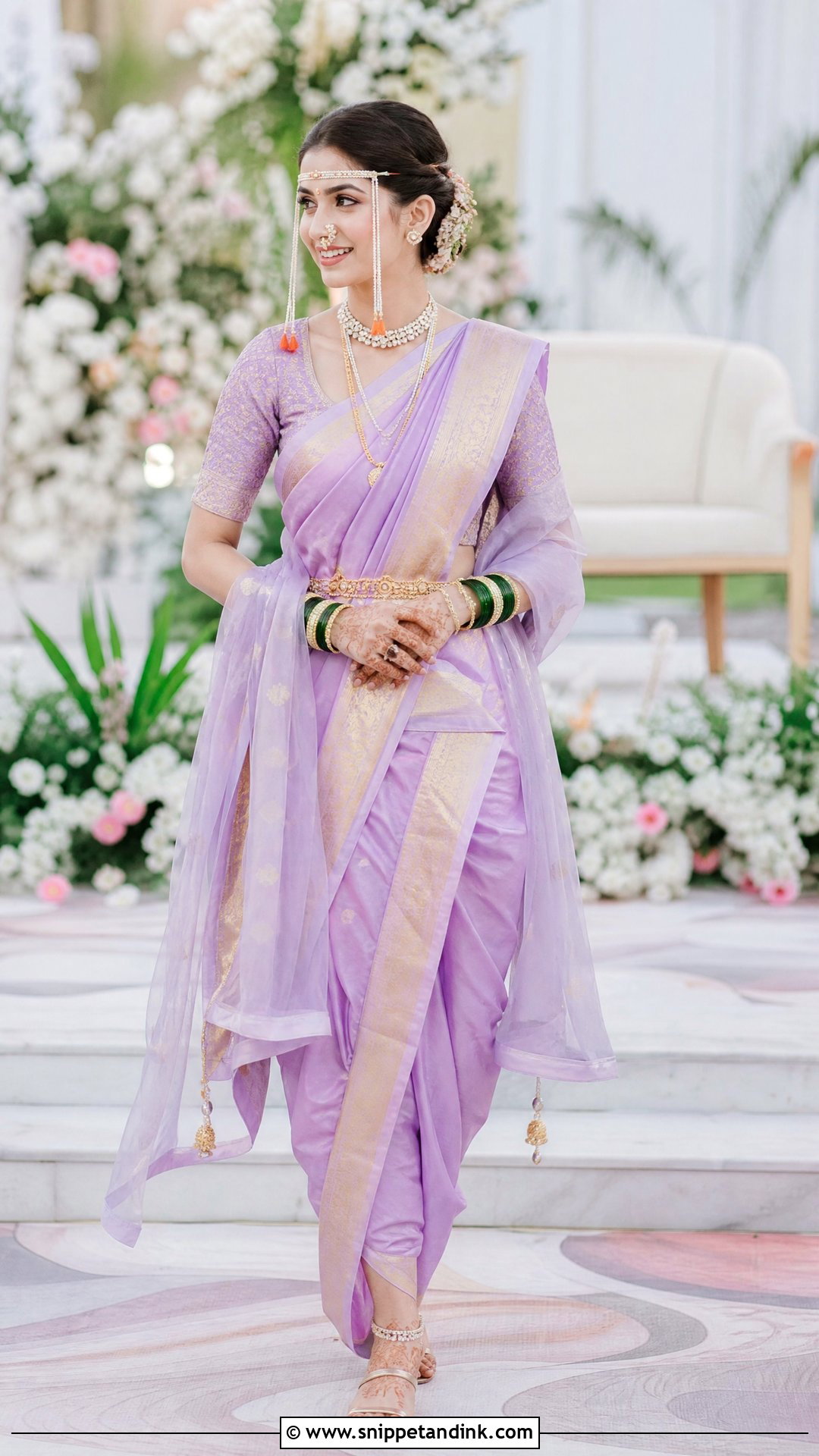
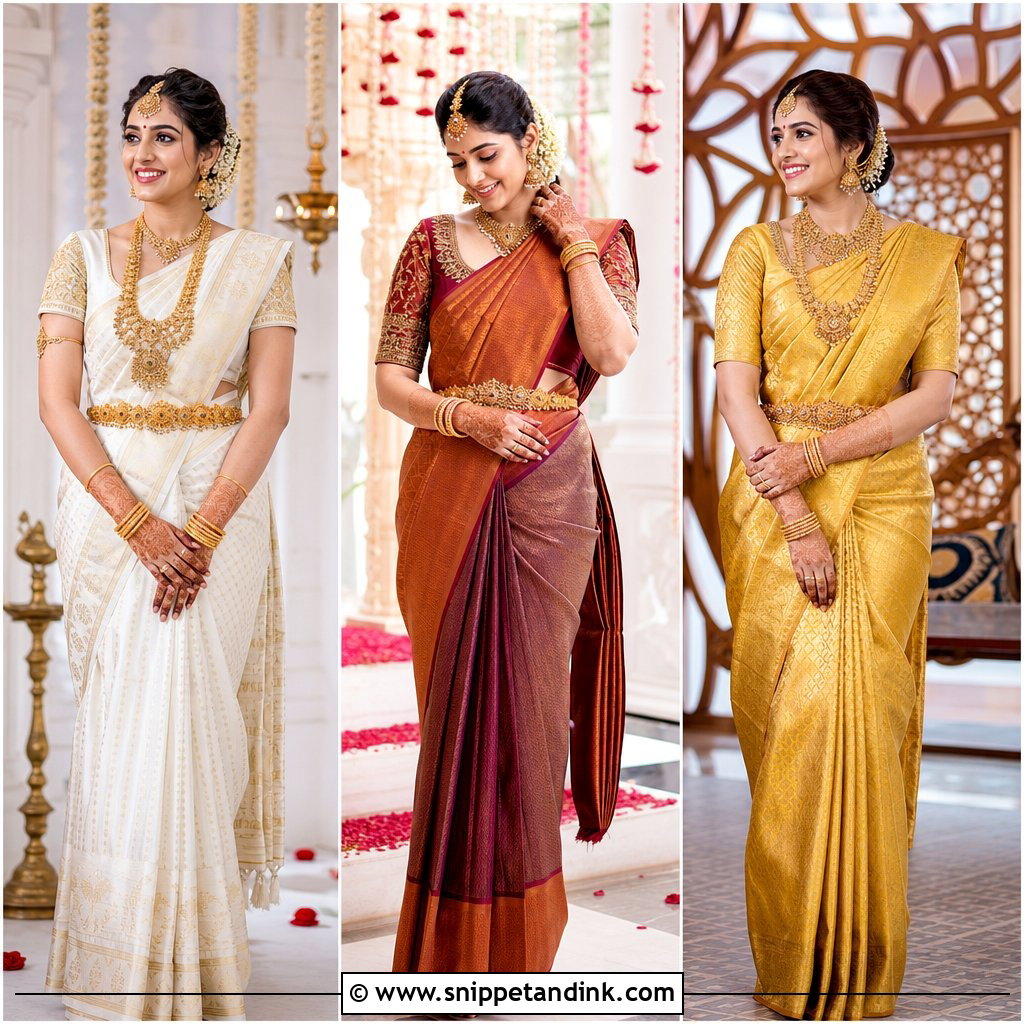
Daytime weddings suit pastel Nauvari. Powder pink, lavender, mint, peach or pale blue silk with a contrasting zari border feels fresh. A tonal brocade blouse keeps one colour throughout; a deeper blouse adds definition. Pearls, delicate gold and a medium nath suit the softness better than oversized pieces. Include green bangles if family custom calls for them, with a light mundavalya and slim waist belt. Pastels can wash out under harsh flash, so I’d keep kajal subtle but brows and lashes defined. A low floral bun, dewy makeup, a pink or peach lip, a sheer shela and metallic sandals finish it.
Sitting Cross-Legged Through Rituals in Nine Yards
Maharashtrian ceremonies involve a good deal of sitting on the floor, and that’s where a drape that looked perfect standing starts to pull. At the trial, I ask the bride to sit cross-legged and then stand up without help. If the front pleats spring loose or the back tuck tightens uncomfortably, the draper adjusts before the day.
Small things that save the day
- Put the nath on last, after makeup is finished, and take it off for meals. It sits right over the lip.
- Tie the mundavalya after the hair is set, not before, so its weight doesn’t flatten the bun.
- Plan bathroom breaks with a bridesmaid who knows how the drape is tucked. A hand-draped Nauvari is manageable but not quick.
- Keep a pin kit in the potli with spare safety pins and a few U-pins for the bun.
After the wedding, fold Paithani with soft cotton between the layers, air it every few months, and refold along different lines so the zari doesn’t crack at the creases.
Book the Draper’s Trial With the Jewellery On
Every look here balances cultural meaning, taste and comfort. Green, red and gold remain the classics, while teal, magenta, cream and pastels give real alternatives. Jewellery, makeup, flowers, footwear and the shela should all support the drape. I’d schedule a full outfit trial before the wedding so the draper can adjust the pleats, waist placement and pallu length, and wear the jewellery and hairstyle at that same appointment to make sure everything sits securely together. Then bring in the heirloom pieces and family customs, which are what make the look yours.
You'll Like These Ideas:



Leave a Reply