
Which Outfit Belongs to Which Ritual
A Bengali wedding is several days of very different events, and the outfits below make more sense once you see where each one goes. I plan makeup the same way: each ritual has its own light, heat and amount of mess.
- Aiburobhat: the last meal at home as an unmarried daughter. A light silk or handloom saree and soft makeup, since it is mostly family and daylight.
- Gaye Holud: turmeric morning. Yellow or white-and-yellow cotton, floral jewelry and waterproof everything.
- The wedding night: red Banarasi or white-and-red, sankha-pola, mukut, chandan on the forehead and the full look for Shubho Drishti, Saat Paak and Sindoor Daan.
- Bou Bhaat: the reception at the groom’s home, where the bride usually moves to a calmer color, a softer drape and lighter hair.
Families differ on details, so ask both sides early what they expect at each event. I would rather adjust a makeup plan a month ahead than at the door.
1. Red Banarasi Bengali Bride Look
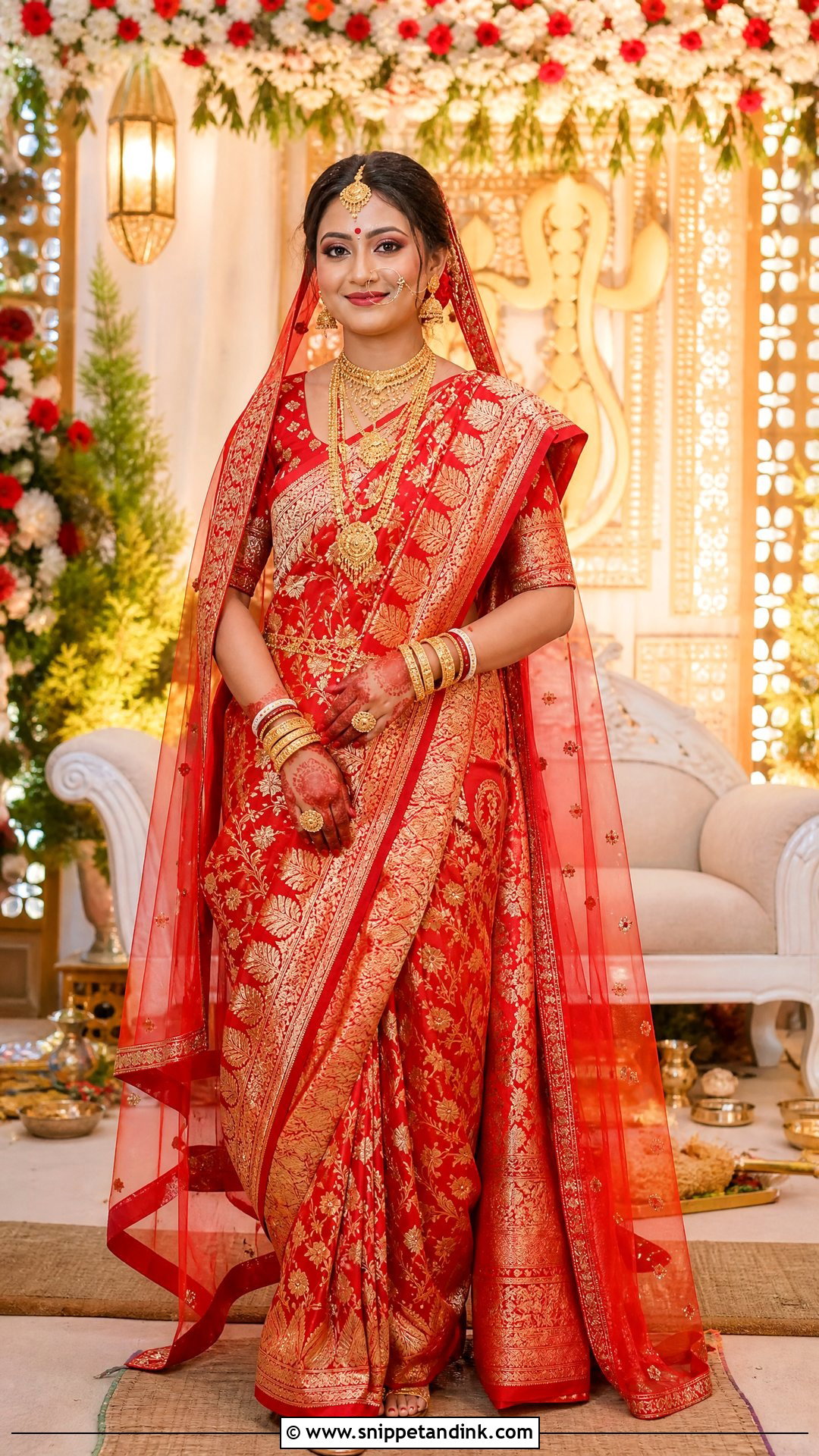
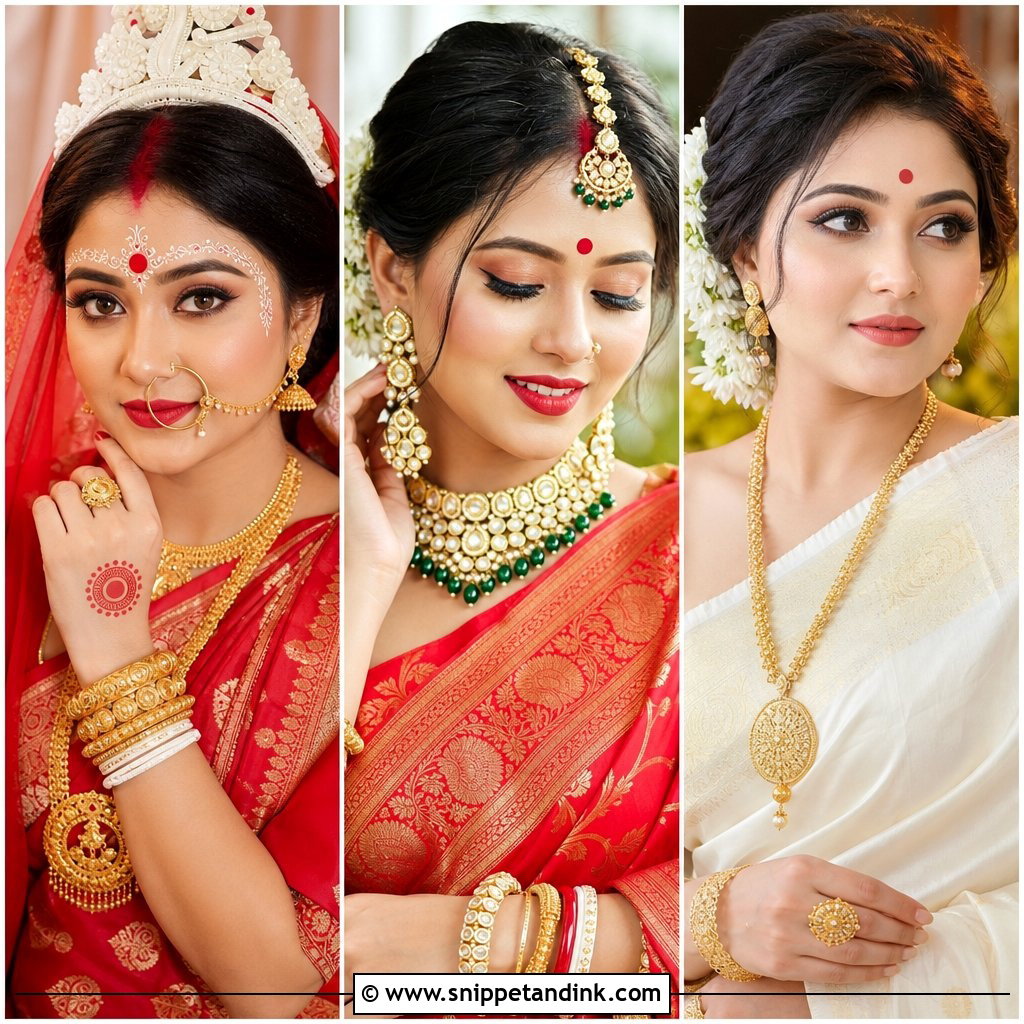
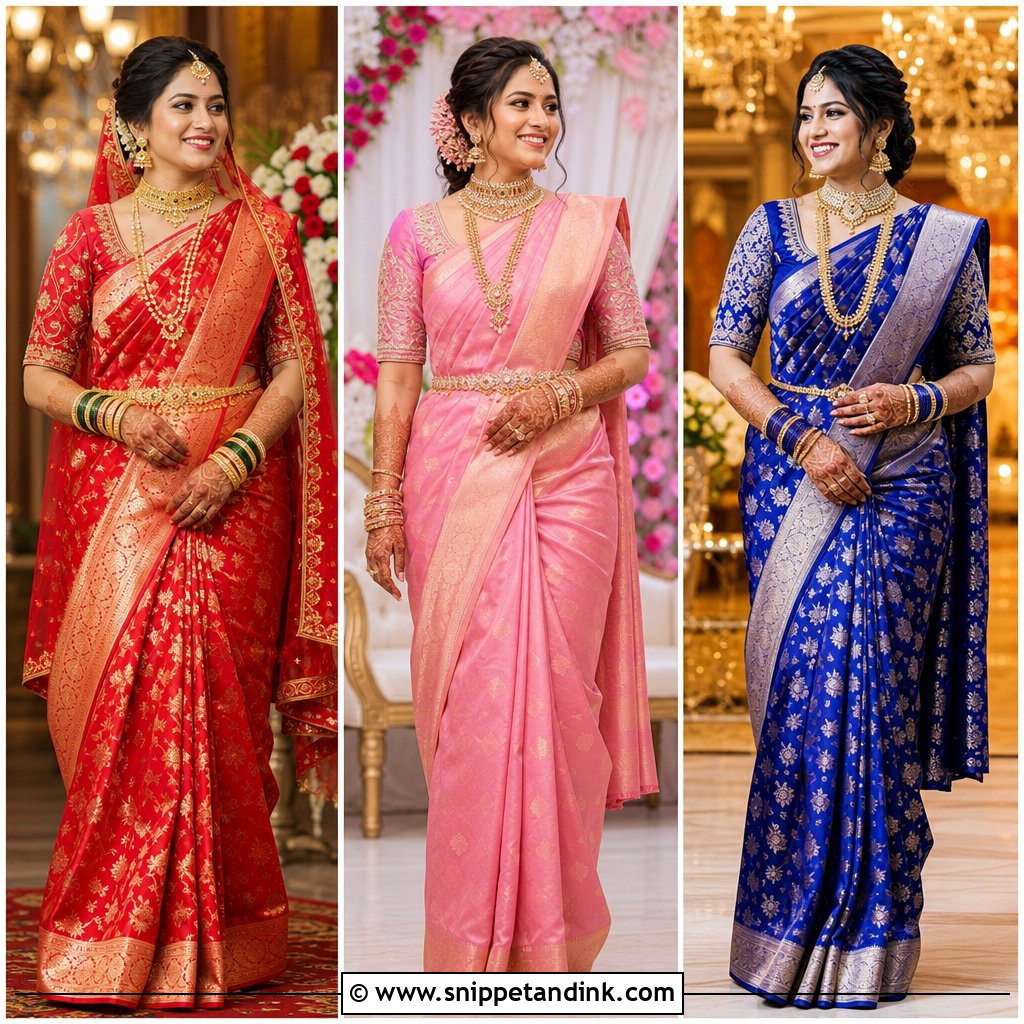
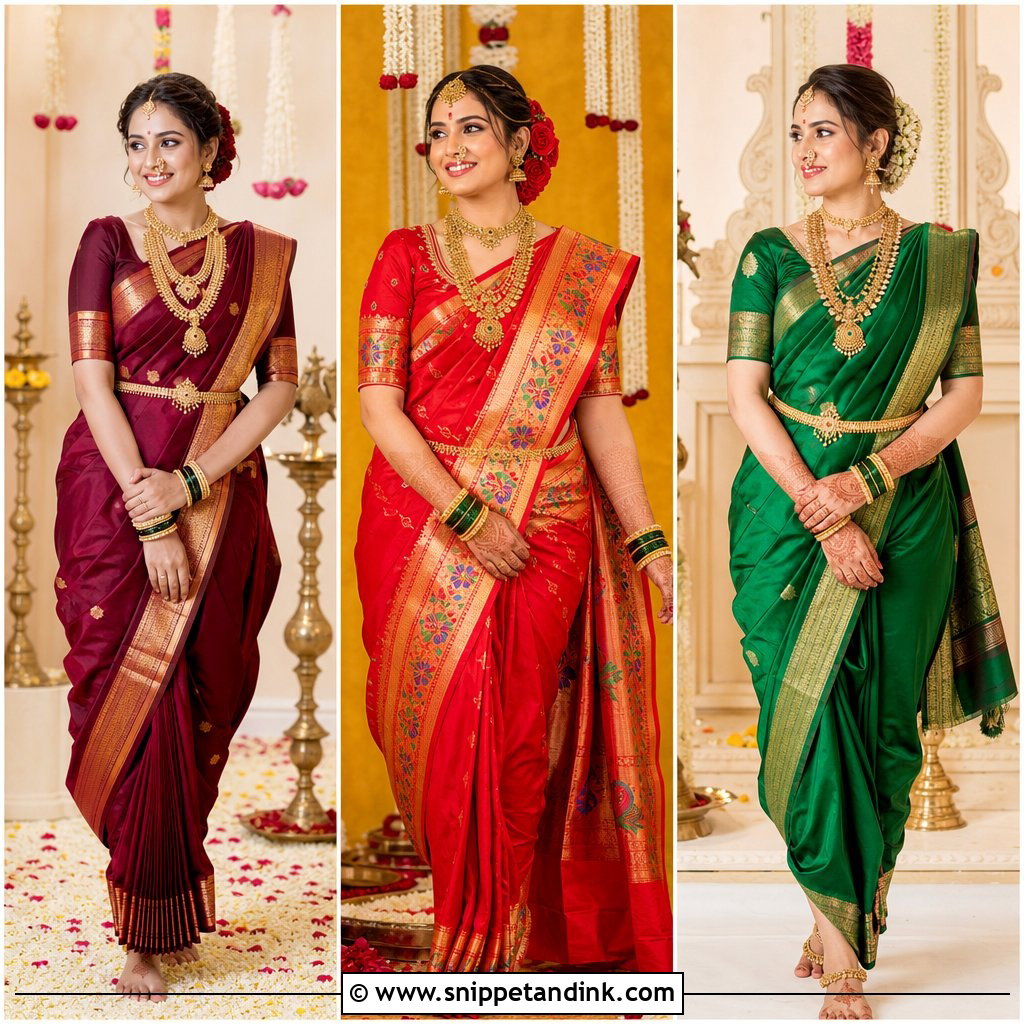
Most Bengali brides I dress still choose a red Banarasi for the wedding night, and for good reason. I’d pick one with medium-scale zari over a densely woven piece; a heavy Banarasi can weigh enough that by the Saat Paak your shoulder aches where the pallu is pinned. Pair it with a matching elbow-sleeve blouse, tidy pleats and a light red veil. A gold choker, one longer necklace, jhumkas and the traditional bangles are plenty. A low bun with white flowers, defined eyes and a classic red lip. I do the alta on hands and feet before she dresses, since it needs a few minutes to dry and smudges onto silk. Low red or gold sandals carry her through the long rituals.
2. White And Red Bengali Bride Look
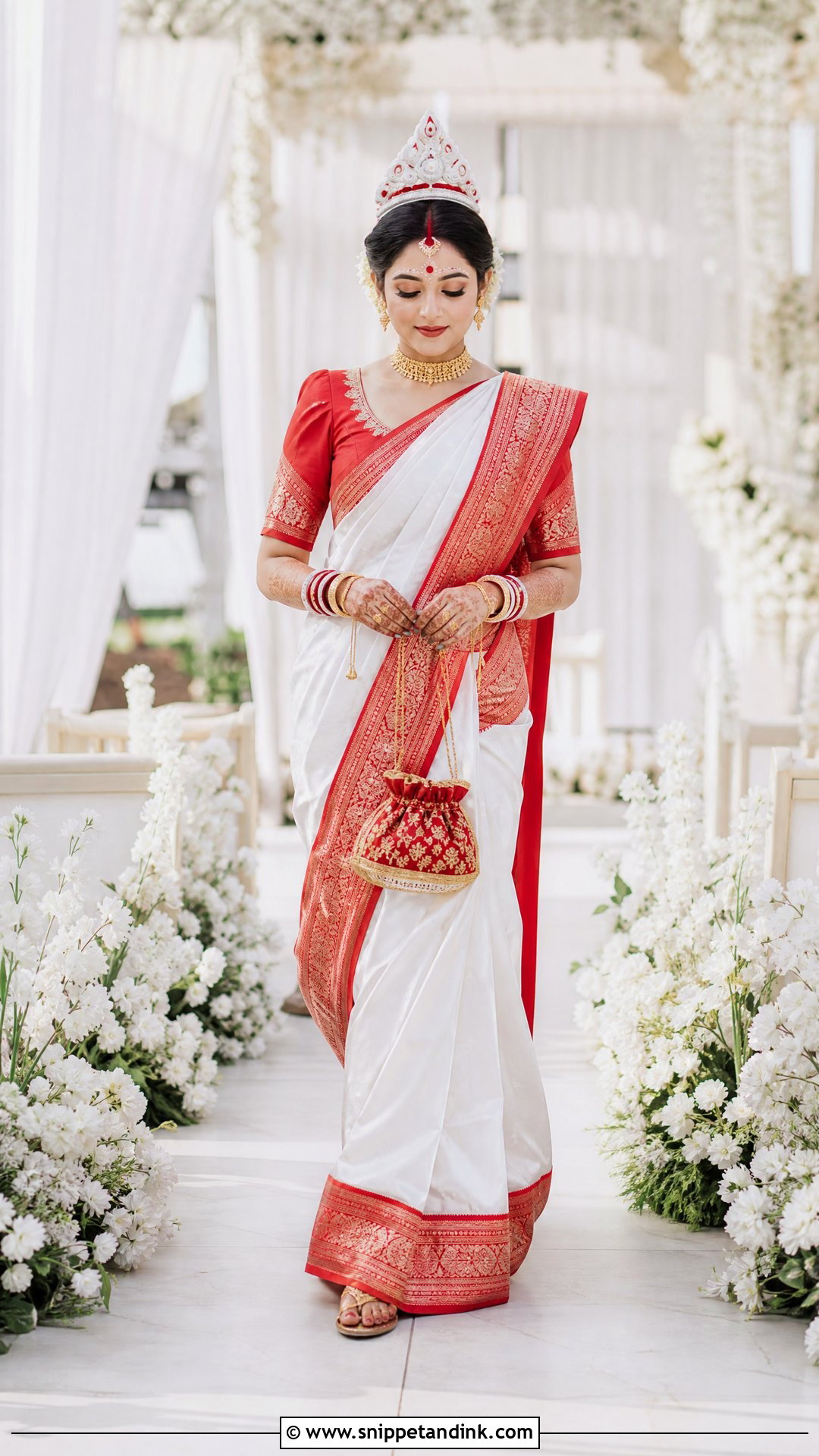
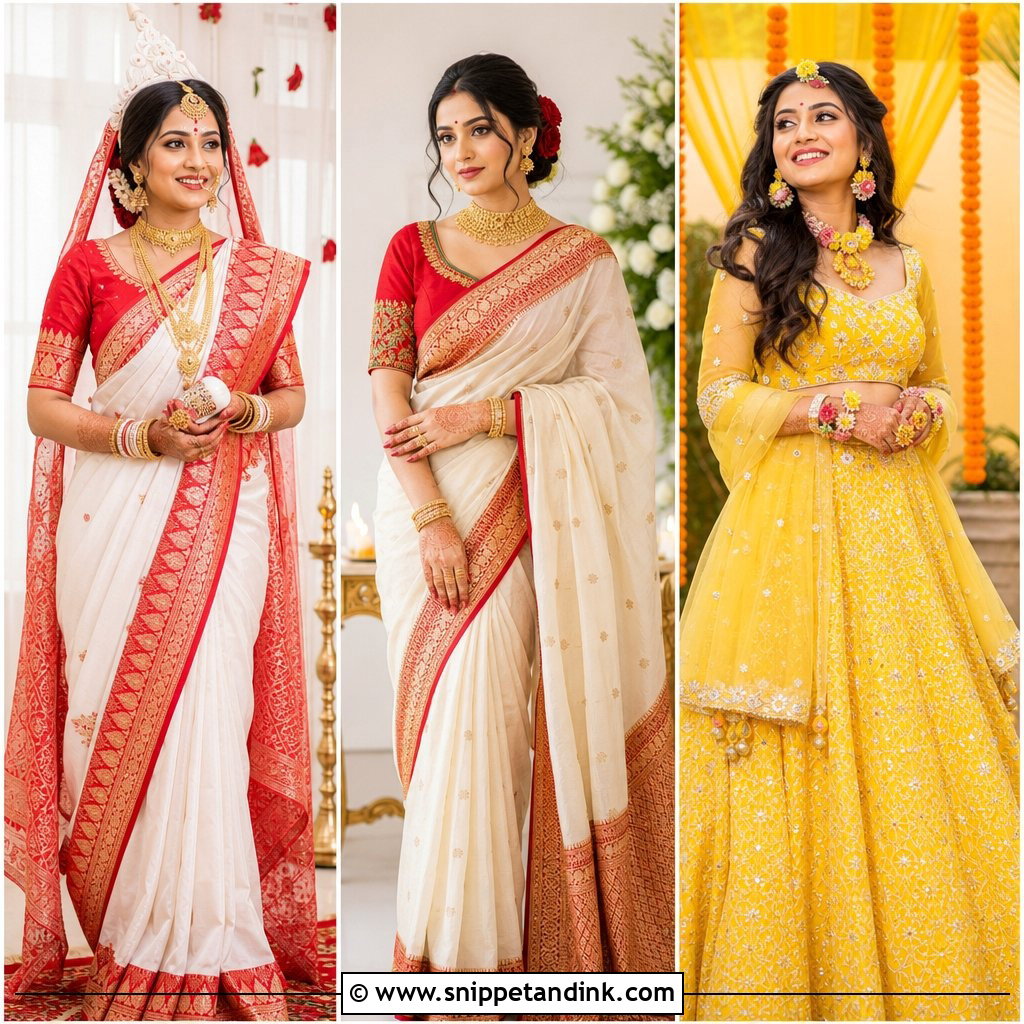
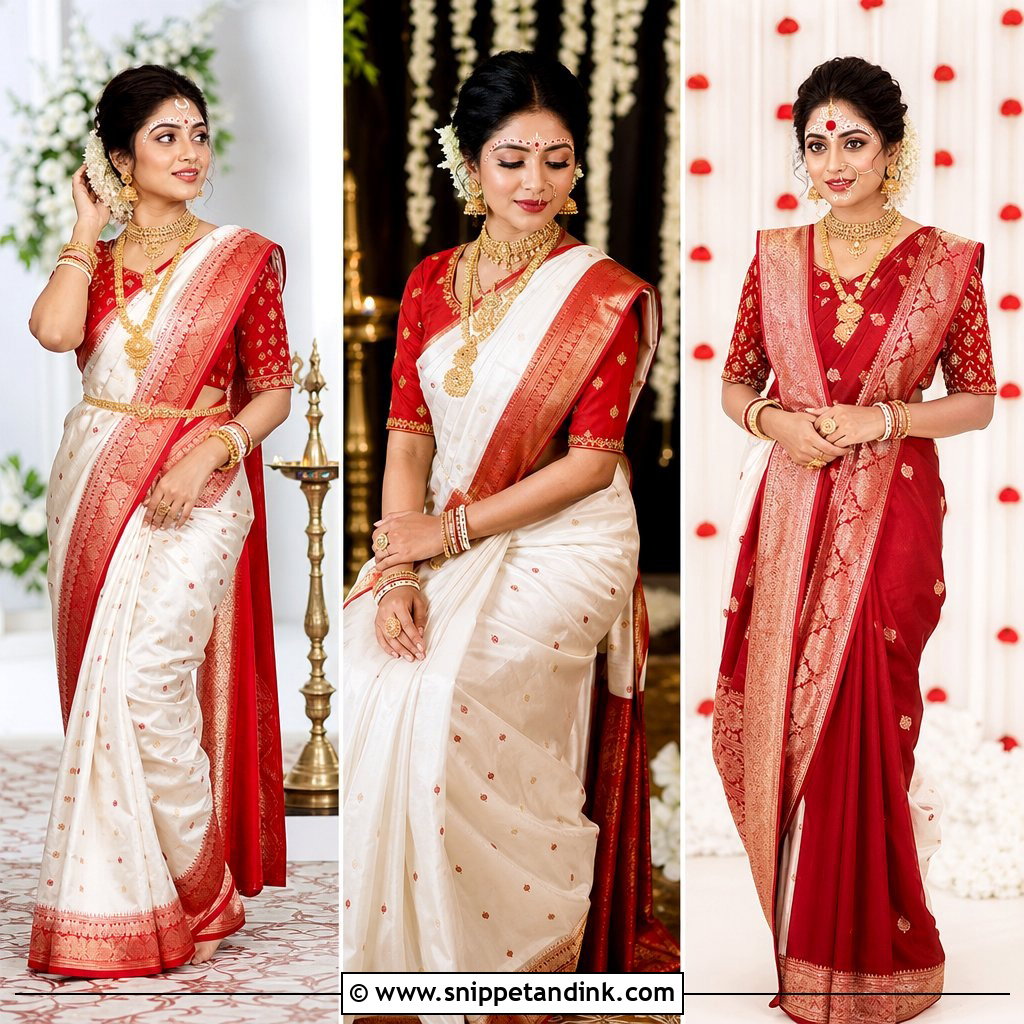
White silk with a wide red border is the other face of Bengali bridal dressing, and it reads clearly from across a courtyard. Garad, Korial or a light handloom all work. A solid red blouse with three-quarter sleeves gives it shape, and the drape should be structured so the border stays visible down the front. Small gold choker, fine earrings, sankha-pola and a simple mukut. White fabric shows every smear, so I set the base makeup with powder at the jaw and neck and keep the forehead artwork away from the hairline where it rubs onto the veil. A center-parted bun, red bindi, gold sandals and a small red potli finish it for a daytime or intimate wedding.
3. Maroon Banarasi Bengali Bride Look
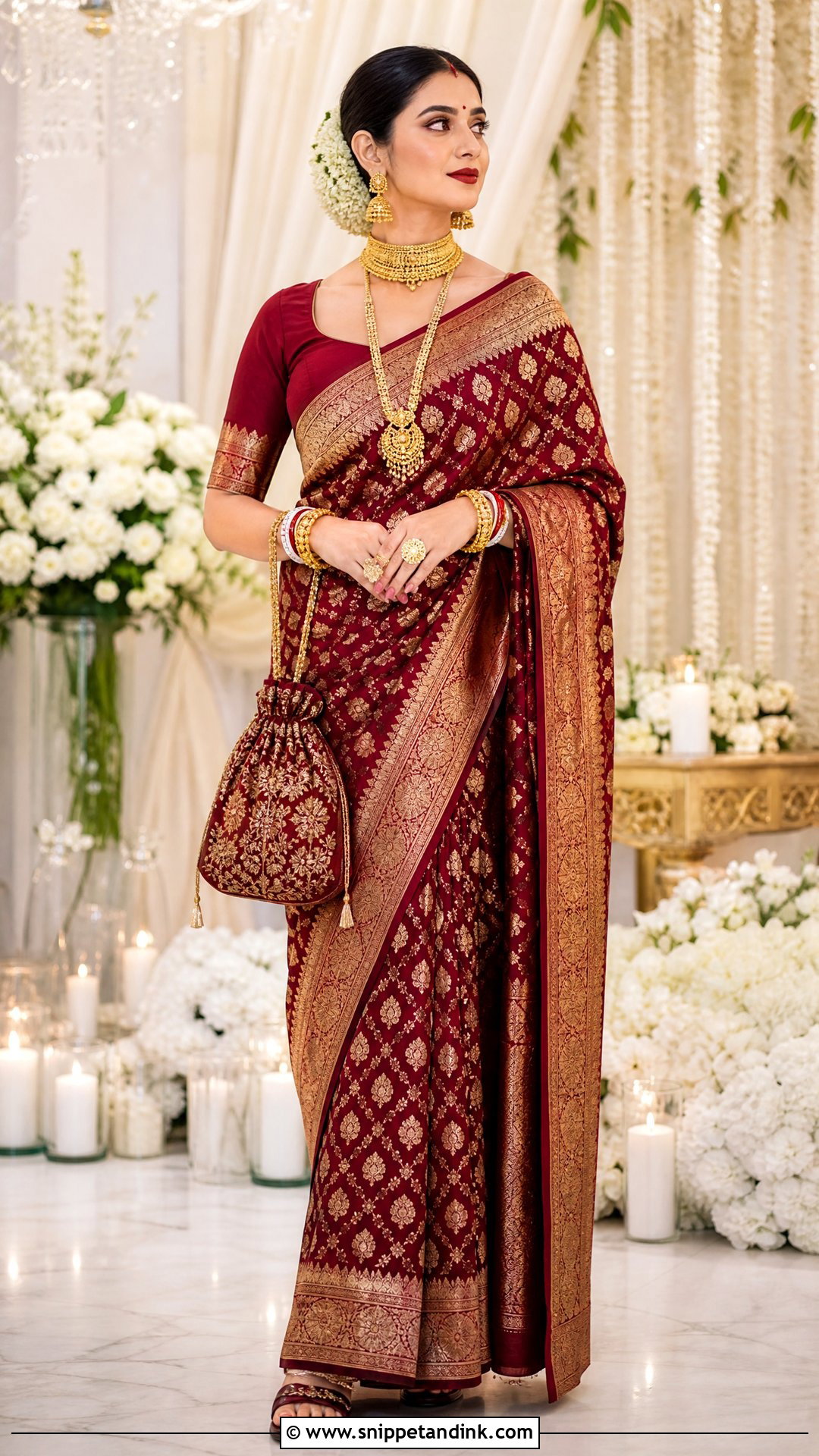
Maroon carries the richness of red in a quieter key. A maroon Banarasi with antique-gold motifs and a blouse in the same shade, perhaps with a scalloped neckline or a fine sleeve border. Antique gold suits it better than bright yellow gold: a choker, a medium necklace, jhumkas, a small tikli. In makeup, maroon can drag the face down if the lips are too dark, so I go for a deep rose lip with brown-toned eyes and a crisp red bindi to lift it. A neat bun with a ring of white flowers, maroon-and-gold sandals and an embroidered potli.
4. Ivory And Gold Bengali Bride Look
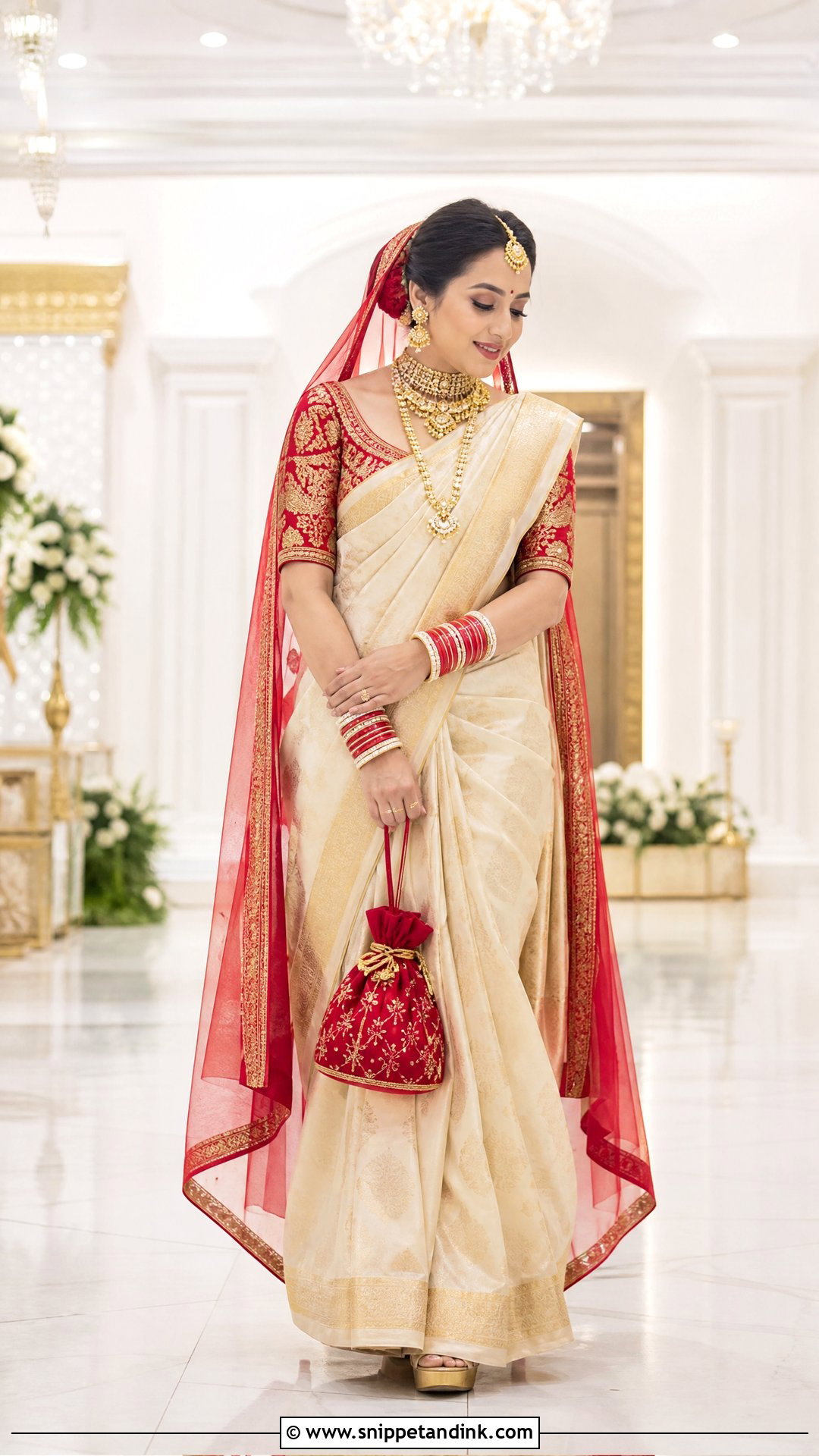
Ivory turns bridal with the right blouse. Choose a silk saree with a gold border and small woven motifs, then add a deep red Banarasi blouse; without that red, an ivory saree can look washed out in photos, especially under warm stage lights. A layered gold necklace, jhumkas, red-and-white bangles and a fine forehead ornament. Lay a red veil lightly over a sleek bun for the ceremony and remove it later. I keep the skin luminous here, with kohl-lined eyes, a soft blush and a muted red lip, because heavy contour looks harsh against pale silk. Gold block heels and a red potli.
5. Simple Red Silk Bengali Bride Look
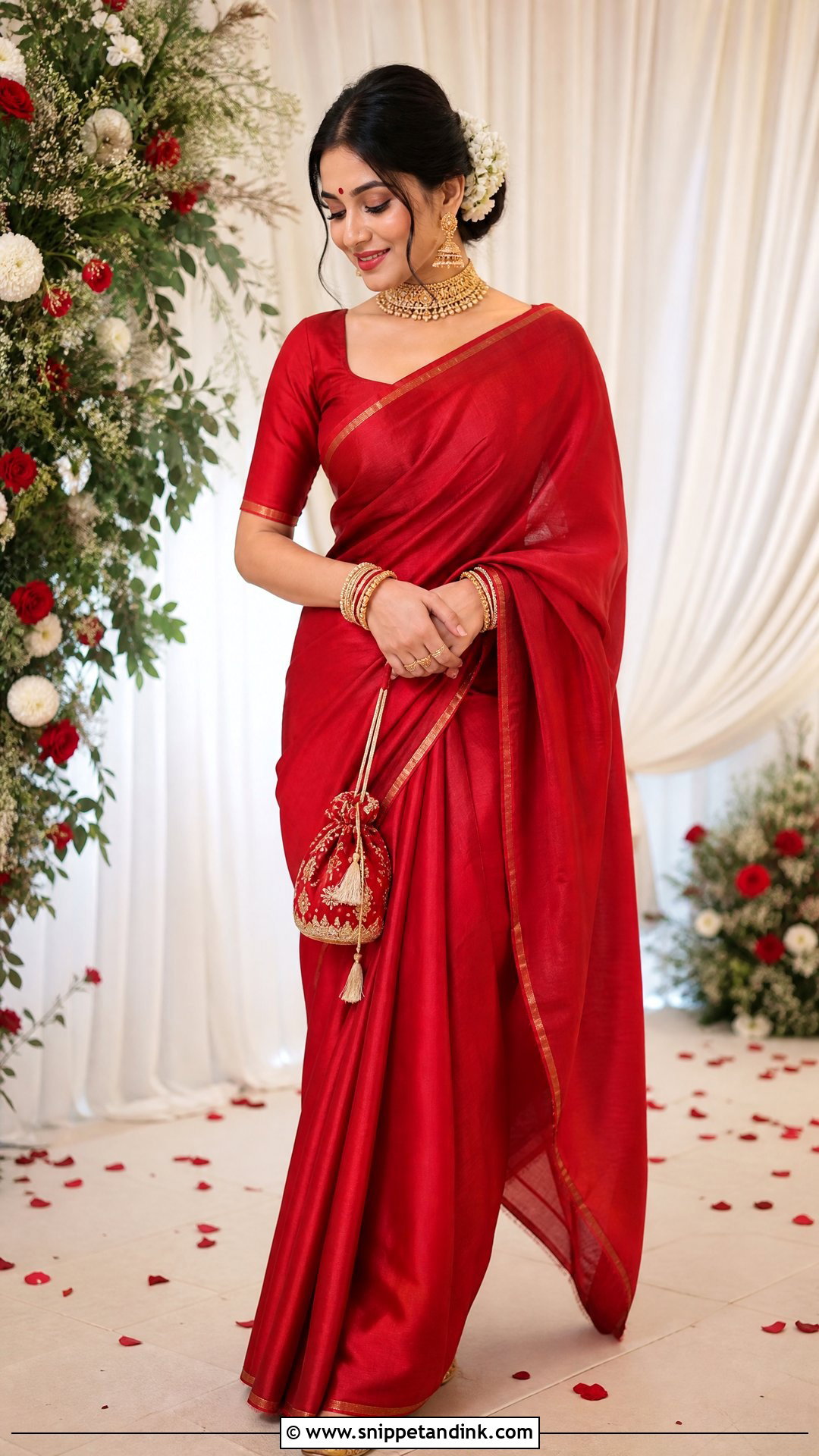
Plain red silk with a narrow gold border has nothing to hide behind, so the tailoring and pleats have to be perfect. A fitted blouse with a square or round neck. One statement choker, classic jhumkas, the bangles and a small tikli instead of layers of heavy gold. A center-parted low bun with white flowers keeps it formal. Softly smoky eyes, a small red bindi and a satin red lip, not matte; on a simple saree a satin finish looks fresher in close-up. Gold kitten heels hidden under the hem. It’s easy to wear through every ritual of a small wedding.
6. Red Jamdani Bengali Bride Look
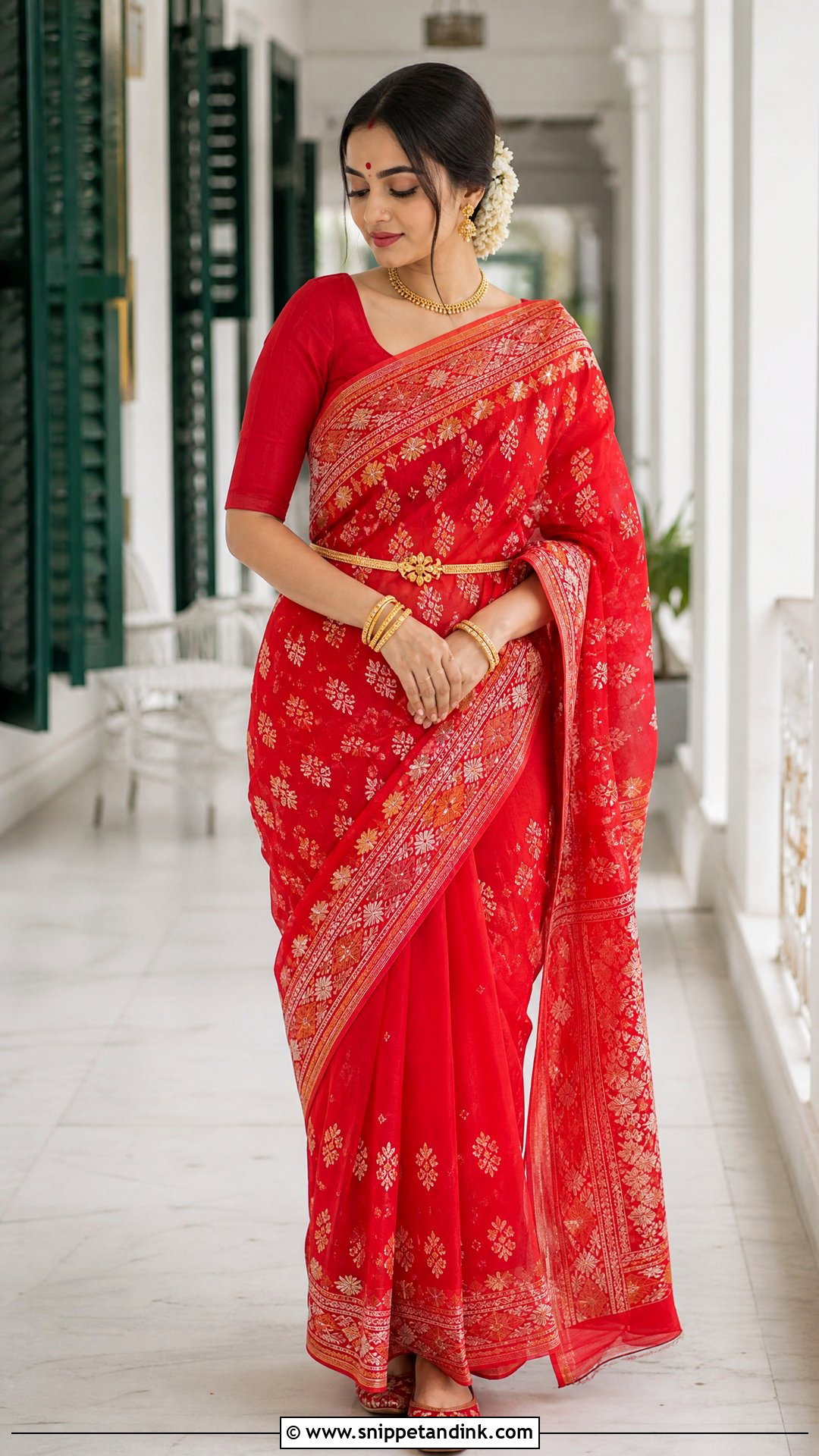
Jamdani is woven so finely that the saree feels like air, which matters in a humid wedding season. Red with gold or ivory motifs that show but aren’t crowded, and a plain red silk blouse so the weave leads. A short gold necklace, matching earrings, a slim waist belt and bangles. A low braided bun with a few white flowers. Jamdani is soft and slips at the shoulder, so I pin the pallu at two points rather than one. Defined kohl, natural skin, a red bindi and berry lipstick suit its handmade feel. Embroidered red flats or low sandals for walking around the mandap.
7. Korial Saree Bengali Bride Look
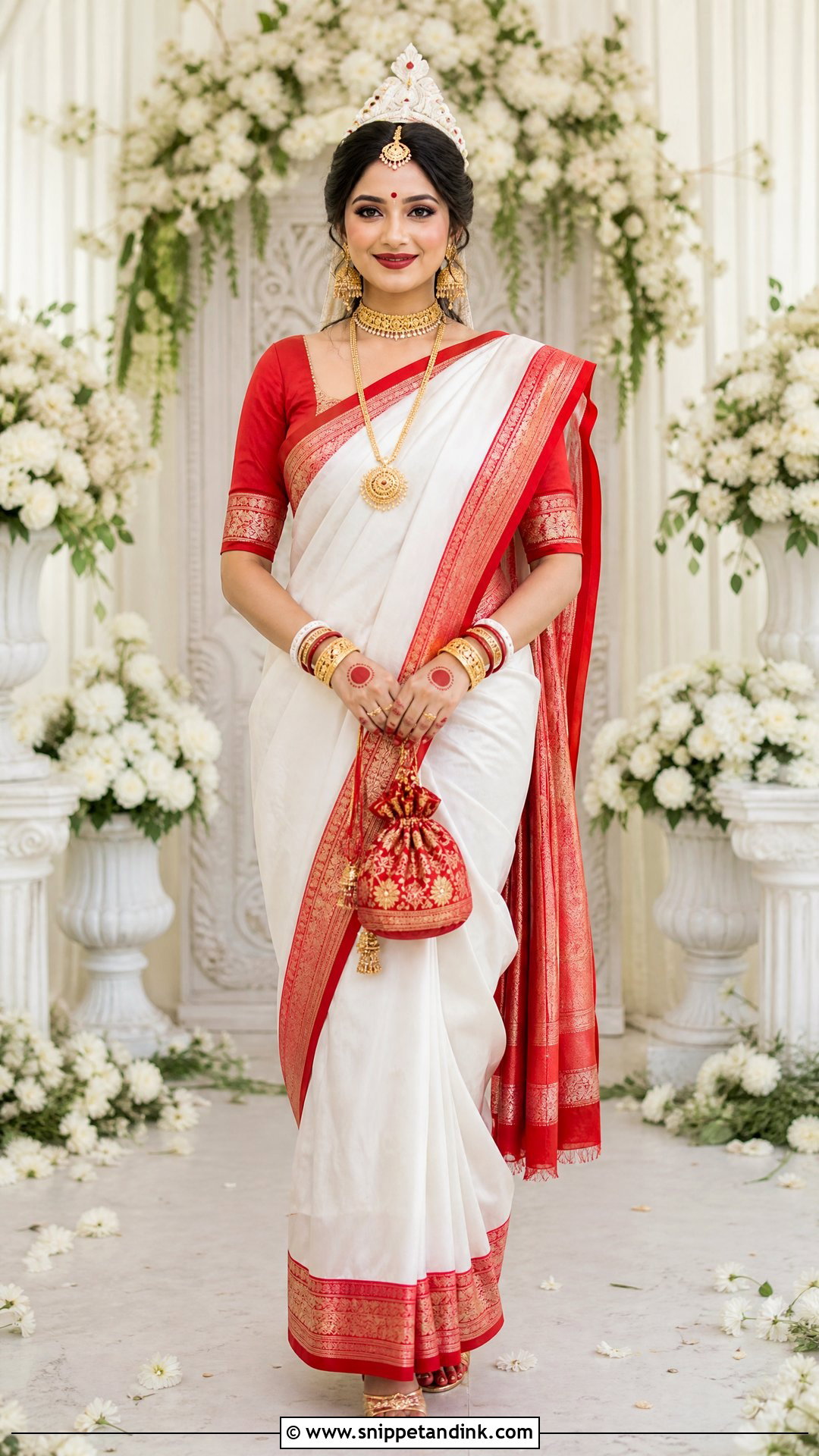
A Korial-style white saree with a bold red border is high contrast and easy to read. Let the border set the rest: red blouse, red bindi, alta on hands and feet. The traditional Bengali drape shows the border across the shoulder and down the pleats. A compact gold choker, one pendant, jhumkas and stacked sankha-pola. A light shola mukut sits better on a smooth bun than a big decorated headpiece. Keep the skin fresh and put the emphasis on black liner and kajal. Kajal on the waterline smudges within an hour in heat, so I add a waterproof liner underneath and leave a cotton bud in the touch-up pouch.
8. Red Baluchari Bengali Bride Look
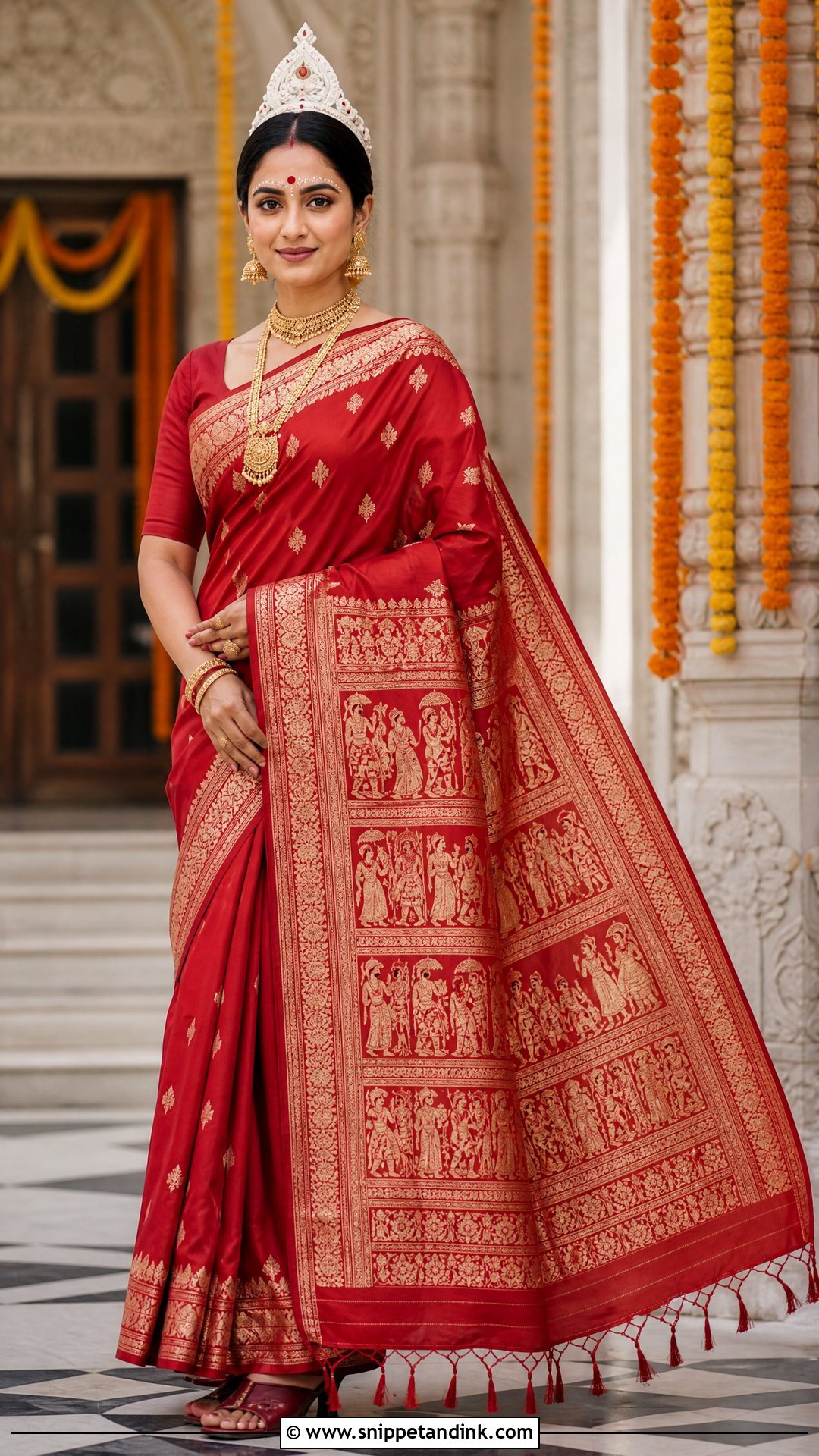
Baluchari pallus tell stories, with woven scenes running across the silk, so the blouse must stay plain: red or maroon with a modest, structured neckline. Antique-gold jewelry, a short necklace, long chain, jhumkas and slim bangles; skip an ornate waist belt that would cut across the woven figures. A center-parted bun, a shola mukut, red bindi and restrained forehead artwork keep the Bengali identity. Because the saree is busy, I keep the kolka small and spaced so the face doesn’t compete with the pallu. Matte skin, defined brows, kohl, a brick-red lip and maroon sandals.
9. Crimson Tissue Silk Bengali Bride Look
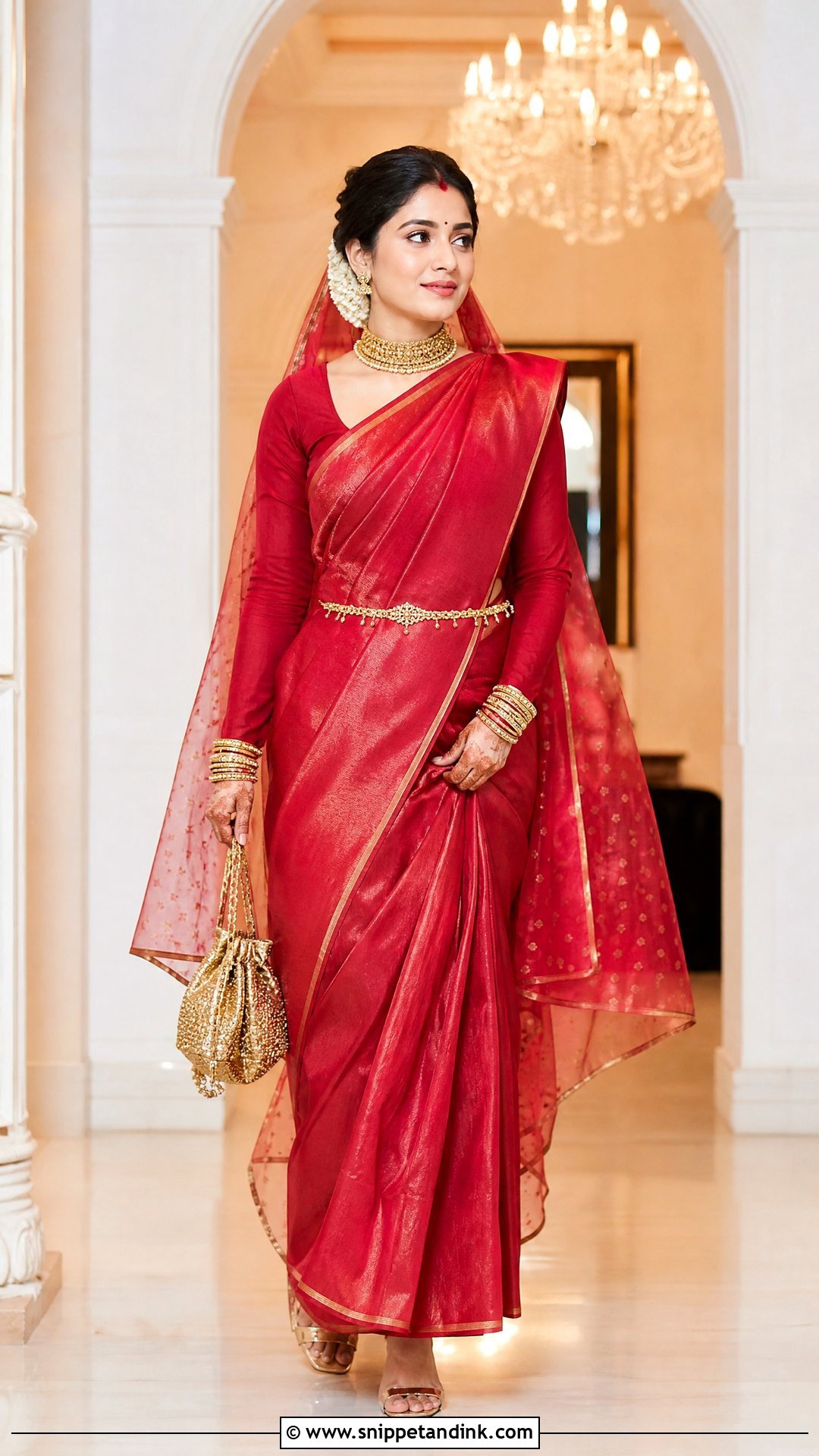
Tissue silk throws light around, which can be a gift or a problem on camera. A fluid crimson saree with a fine metallic border and a matte blouse gives gentle contrast. A gold choker, small drops, stacked bangles and a slim kamarbandh at the waist. Keep the veil sheer so it doesn’t dull the shine. Under strong flash, a shimmery highlighter on top of shiny fabric makes the whole picture look greasy, so I use a satin base and put highlight only on the cheekbones. Fine black liner, rose blush and a classic crimson lip. Metallic low heels and a gold potli for an evening wedding.
10. Pastel Pink Banarasi Bengali Bride Look
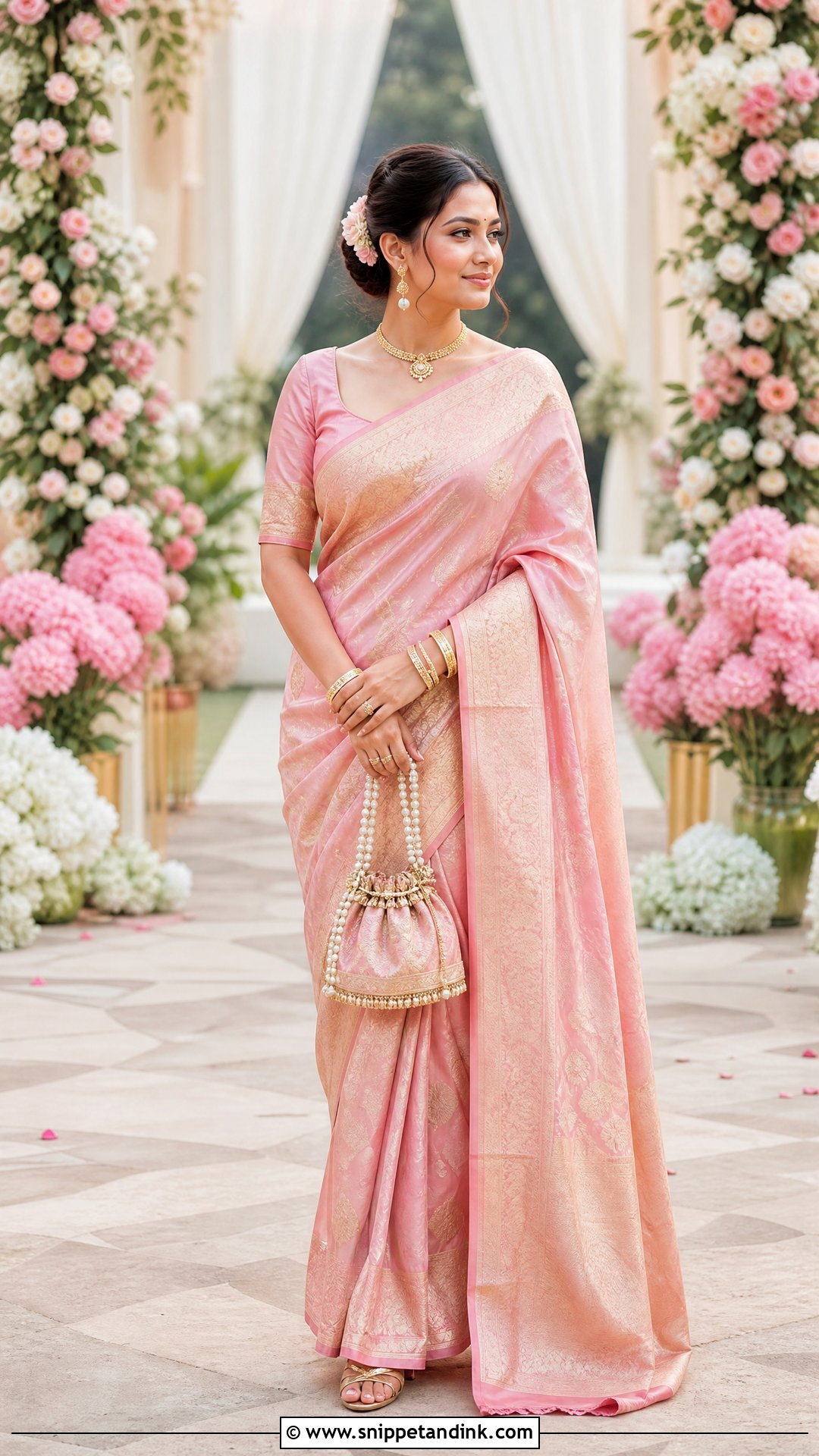
What if bridal silk came softer? Pastel pink Banarasi suits a reception, engagement or daytime wedding. Gold zari with a slightly deeper rose blouse for definition. A delicate gold choker, pearl drops, slim bangles and a small floral hair accessory; a loose low bun or polished waves. Pastels can make warmer complexions look grey if the base is too light, so I match the foundation carefully to the neck and add warmth with blush. Rosy cheeks, brown liner and a pink-red lip. Gold sandals and a pearl-trimmed potli. Sankha-pola or a red bindi ties it back to tradition.
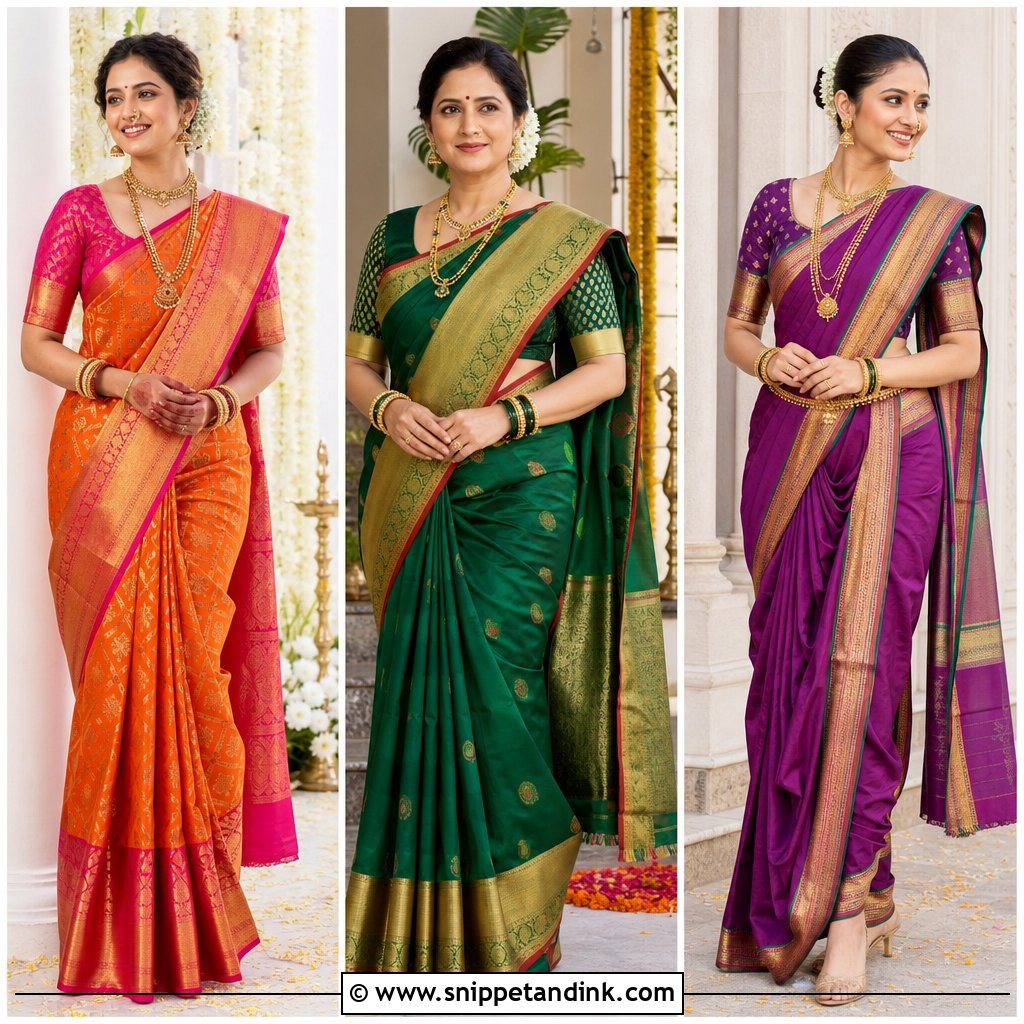
11. Green Banarasi Bengali Bride Look
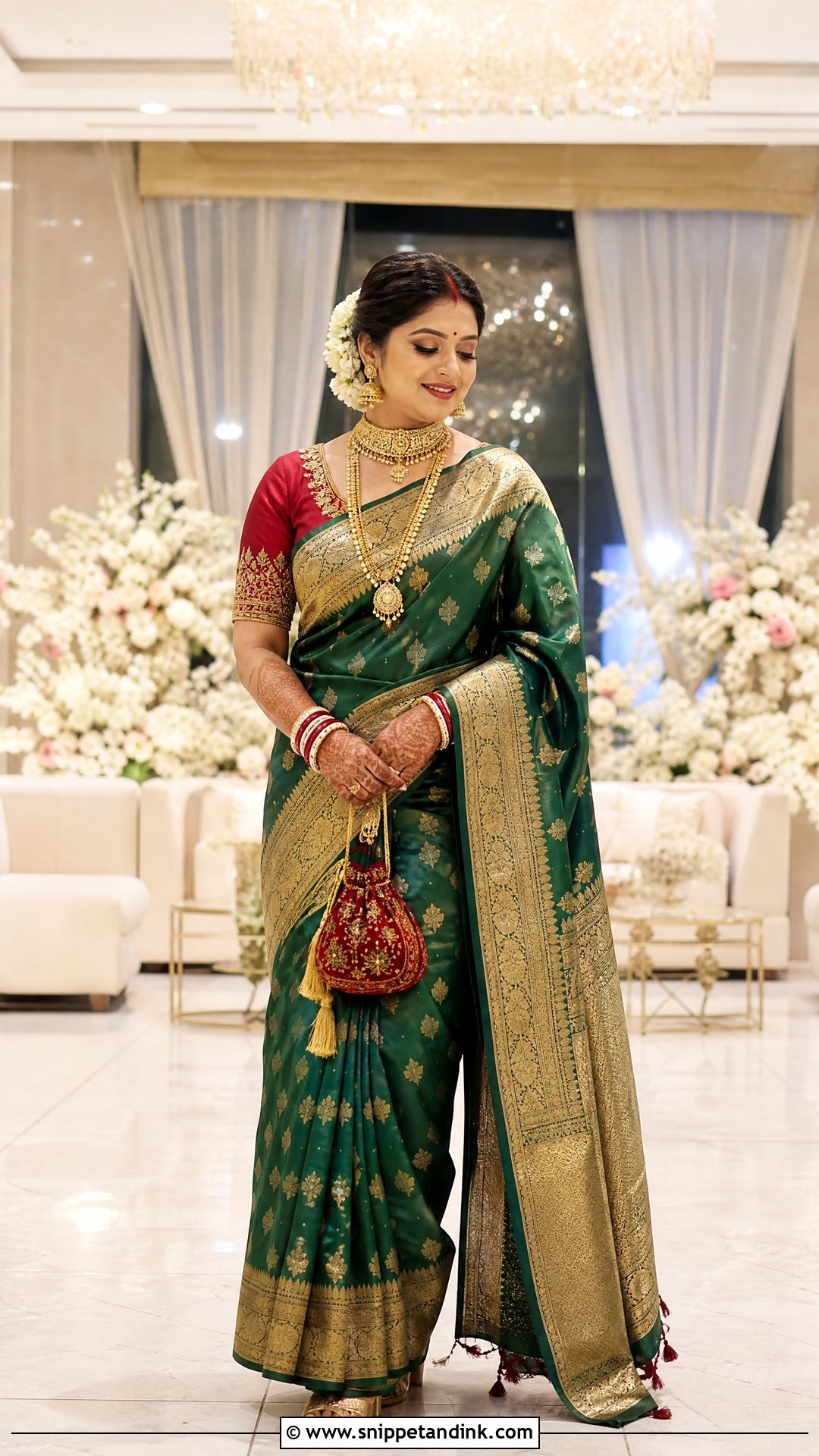
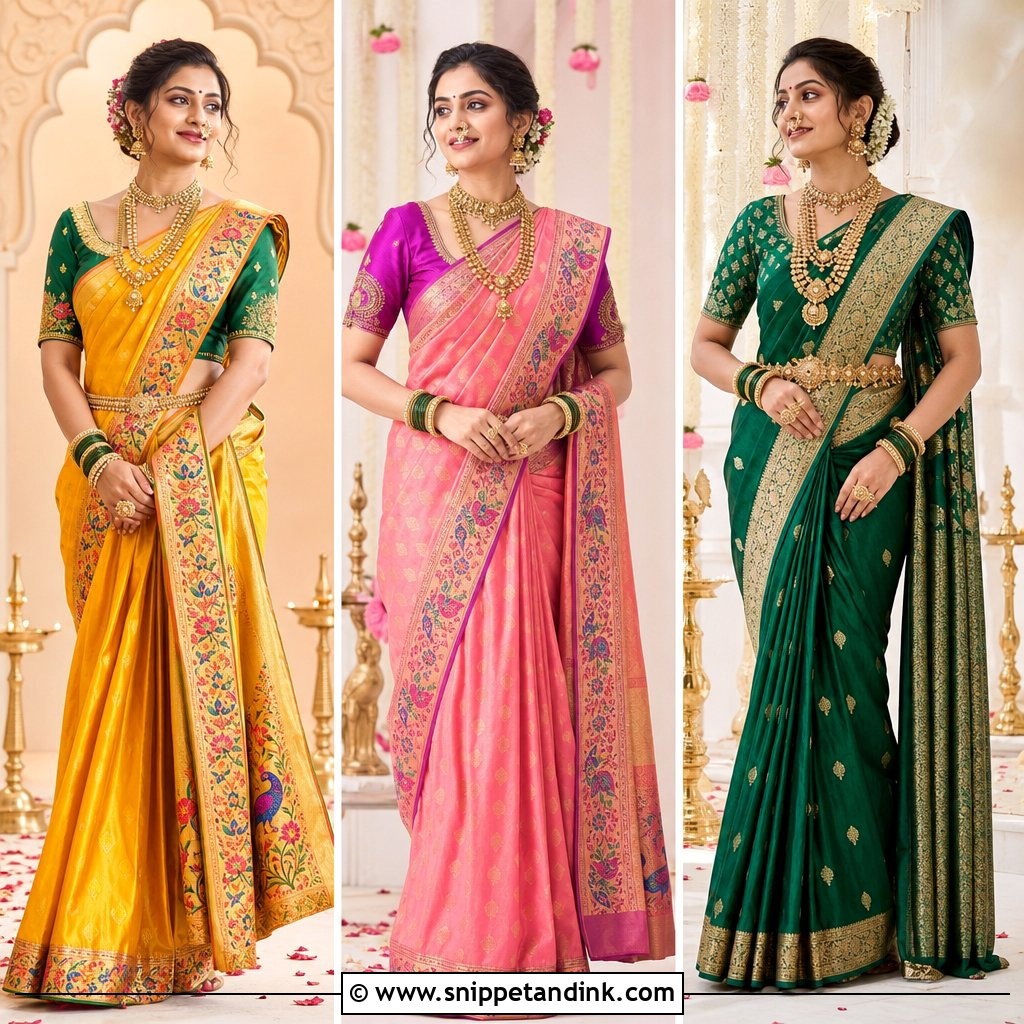
Emerald with red is a classic combination, and it looks rich at a reception or second ceremony. A green Banarasi with antique-gold weaving and a deep red blouse with only small gold edging. Antique-gold choker, long necklace, jhumkas and red-and-white bangles. A sleek bun with white flowers brightens the face. I lean on softly smoked brown eyes rather than green shadow, which tends to fight the saree, then warm blush and a deep red lip. A red bindi and light forehead detail keep it Bengali. Gold block heels and a red potli.
12. Royal Blue Bengali Bride Look
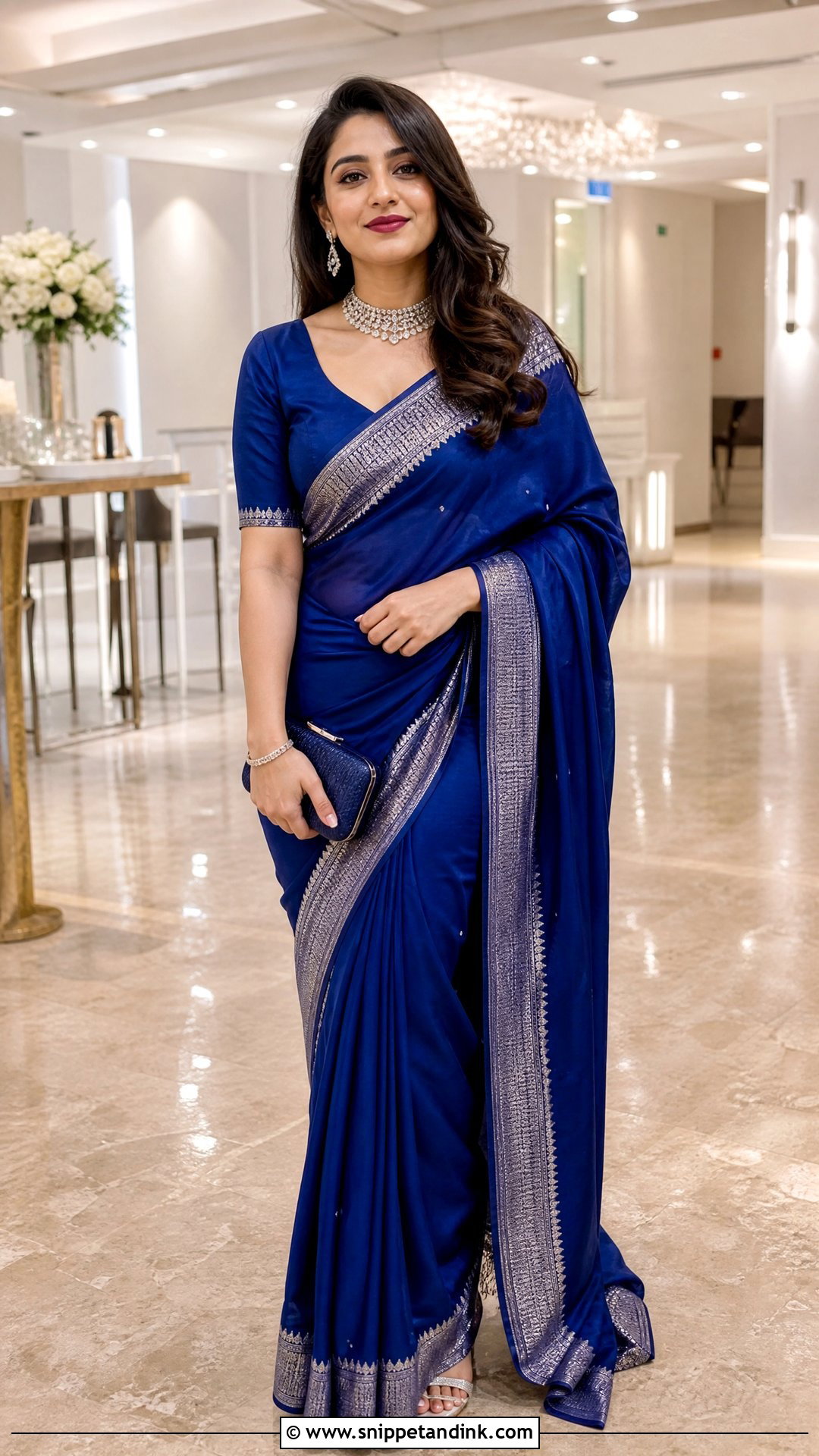
Royal blue glows under evening lights. A silk saree with silver or muted-gold border and a matching blue blouse. Diamond-style or silver-toned jewelry keeps the palette crisp: a medium choker, drop earrings, a slim bracelet and bangles if you like. A smooth low bun or side-parted waves give the wedding-day hair a rest. Blue next to the face can bring out redness, so I color-correct around the nose and chin before foundation. Clean liner, soft highlight, berry lipstick and a small bindi. Silver sandals and a blue clutch; heirloom jewelry or a red accent personalizes it.
13. Red Lehenga Bengali Bride Look
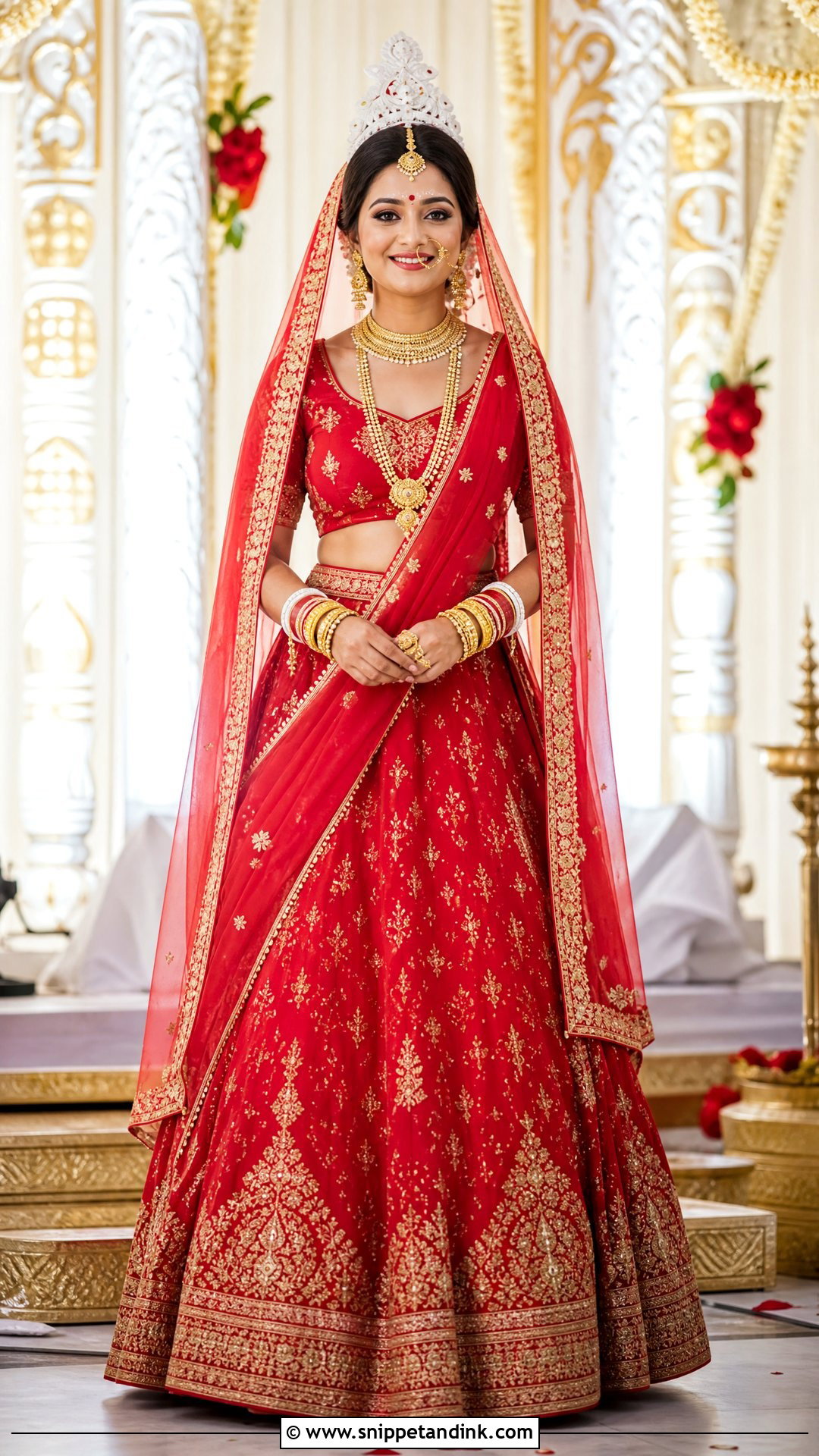
A red lehenga still reads Bengali when the accessories are chosen deliberately. A light skirt with fine gold embroidery, a fitted blouse and a sheer red dupatta draped over the head without hiding all the jewelry. Bengali-style gold choker, long necklace, jhumkas, sankha-pola and a mukut. A sleek center-parted bun is the only base I trust to hold a mukut steady; I pin it through its frame into the bun, not just the top layer of hair. Bold kohl, a red bindi, forehead details and a balanced red lip. Cushioned gold platforms under the skirt.
14. White And Red Lehenga Bengali Bride Look
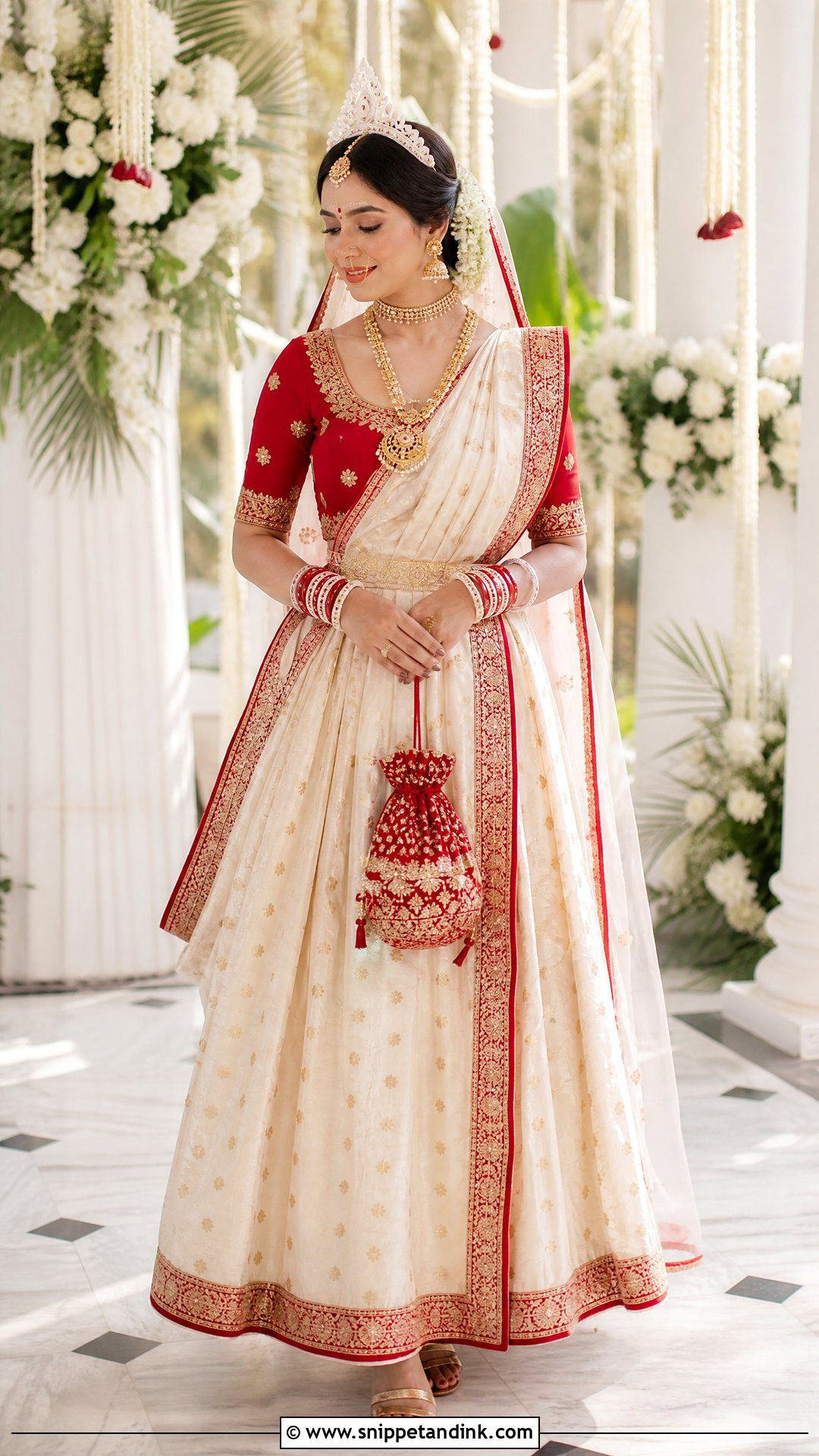
Ivory lehenga, red blouse, red-bordered dupatta: lighter and more modern, yet the red still signals bride. Keep the skirt motifs small. One gold choker, a pendant necklace, jhumkas and stacked red-and-white bangles. A low bun with white flowers and a delicate mukut bring it home. A glowing base, sharp black liner, a red bindi and soft red lipstick. On an open ivory base, foundation transfer onto the dupatta edge is the risk, so I set the neck and let the dupatta sit away from the jaw. Gold sandals and a small red potli for a summer wedding or reception.

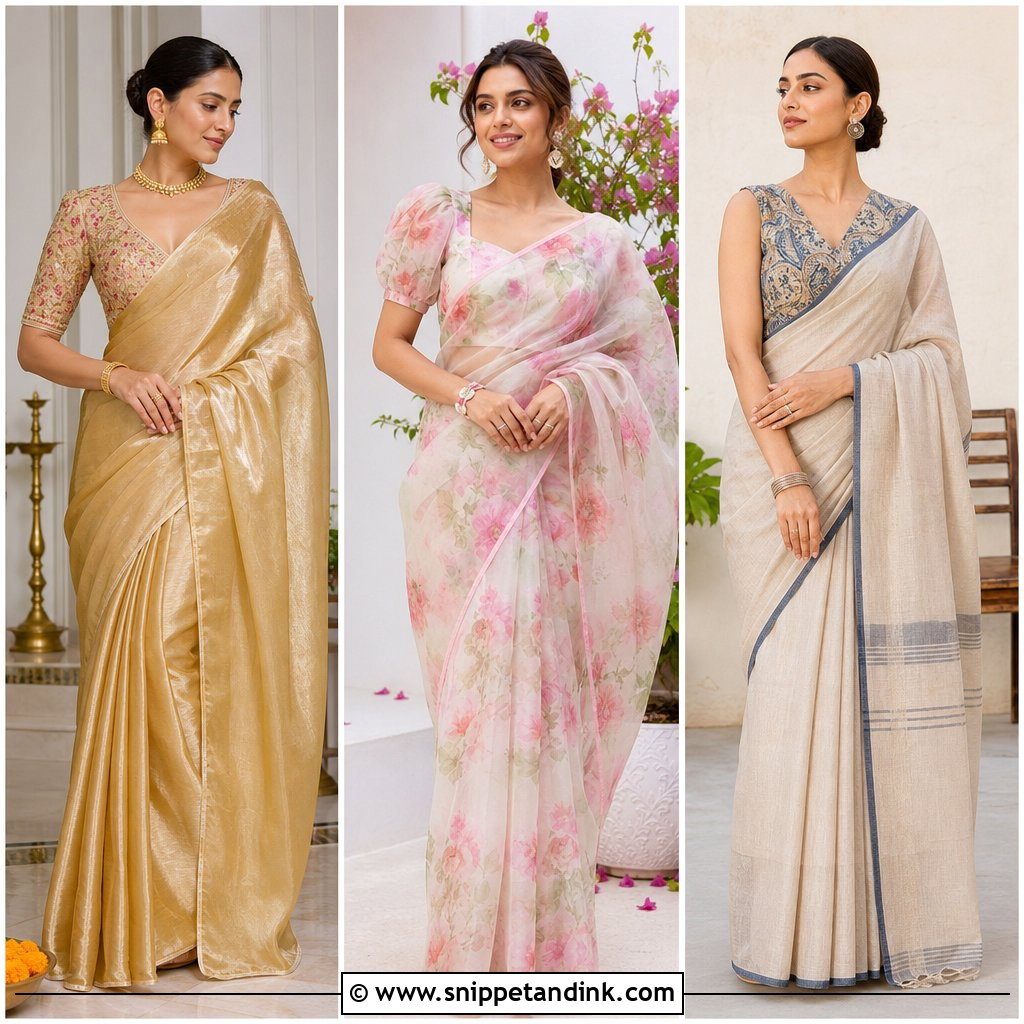
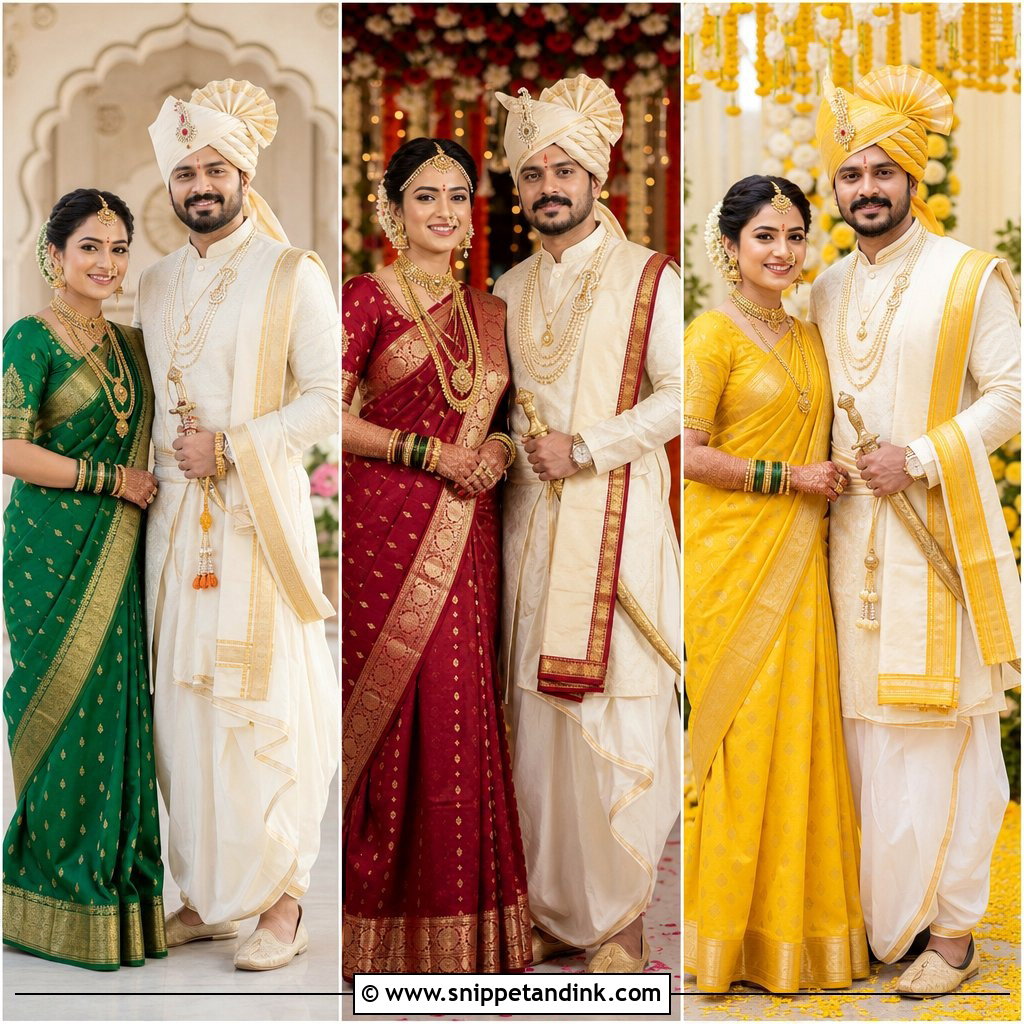
15. Yellow Gaye Holud Bengali Bride Look
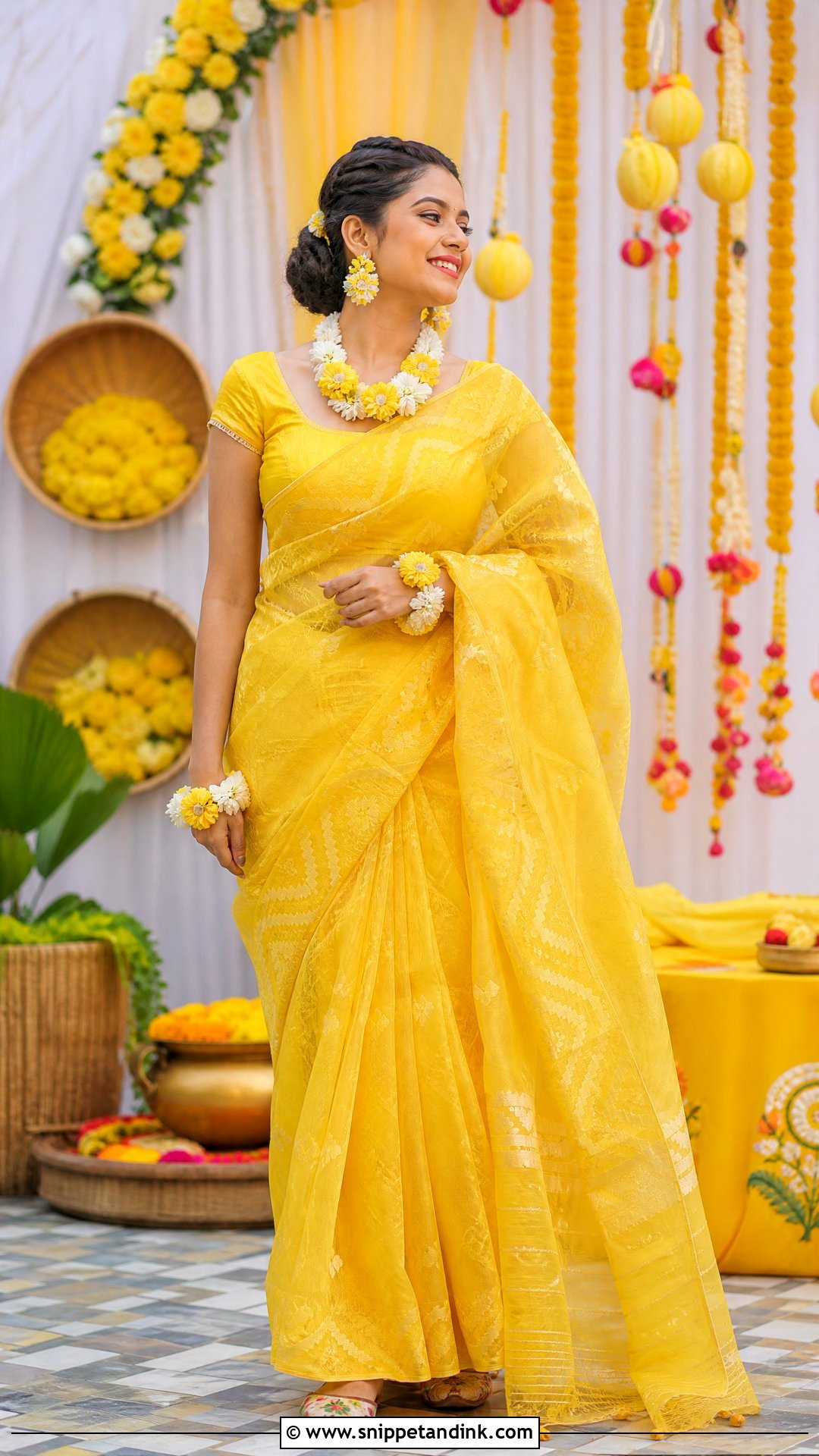
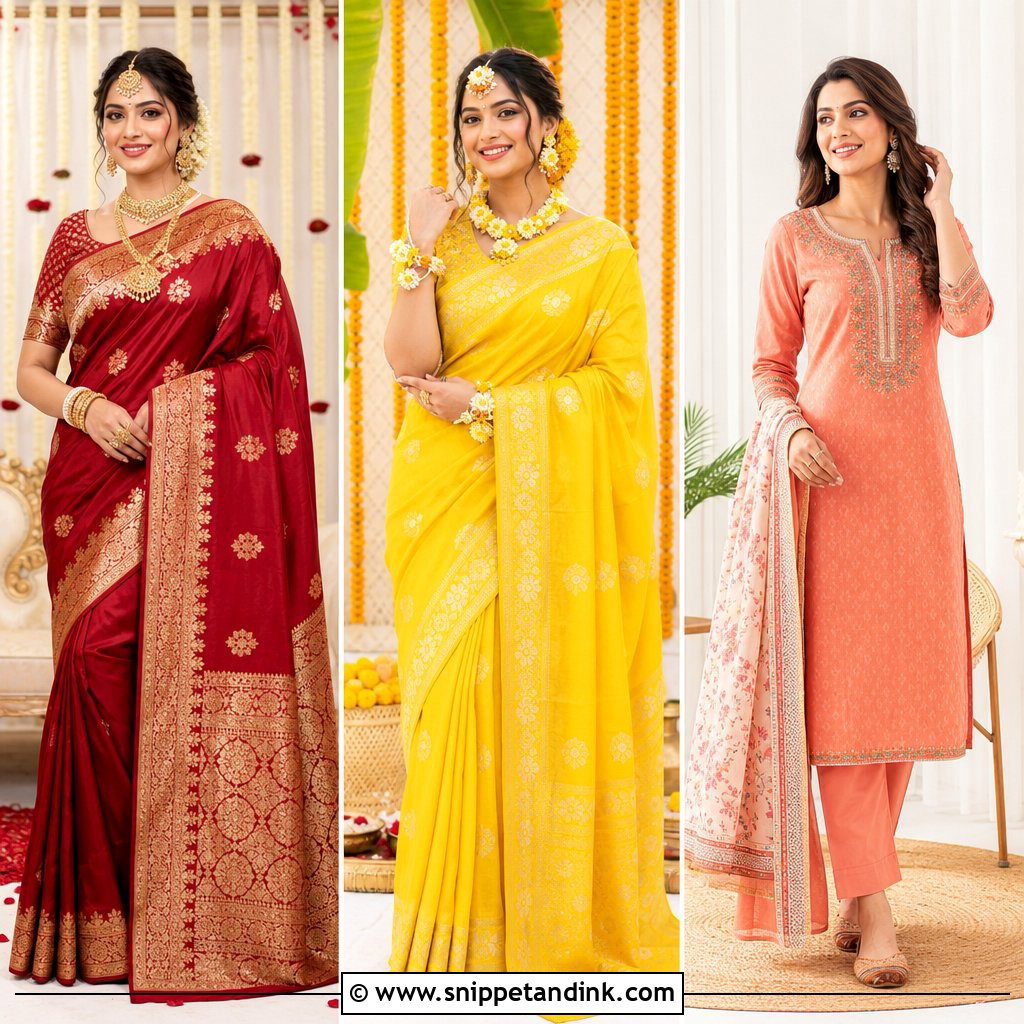
Gaye Holud is the messiest morning of the wedding, and the outfit has to accept that. A light yellow handloom, cotton-silk or Jamdani saree with a red or green border, and a short-sleeved blouse you can move in. Fresh flower earrings, necklace and wrist pieces replace gold. A secure braided bun with small white and yellow flowers. Turmeric stains, so I tell brides to wear nothing they’d be upset to ruin. Waterproof eyeliner, a thin base and a coral lip. Flat sandals, and no trailing fabric near the paste.
16. White And Yellow Gaye Holud Bride Look
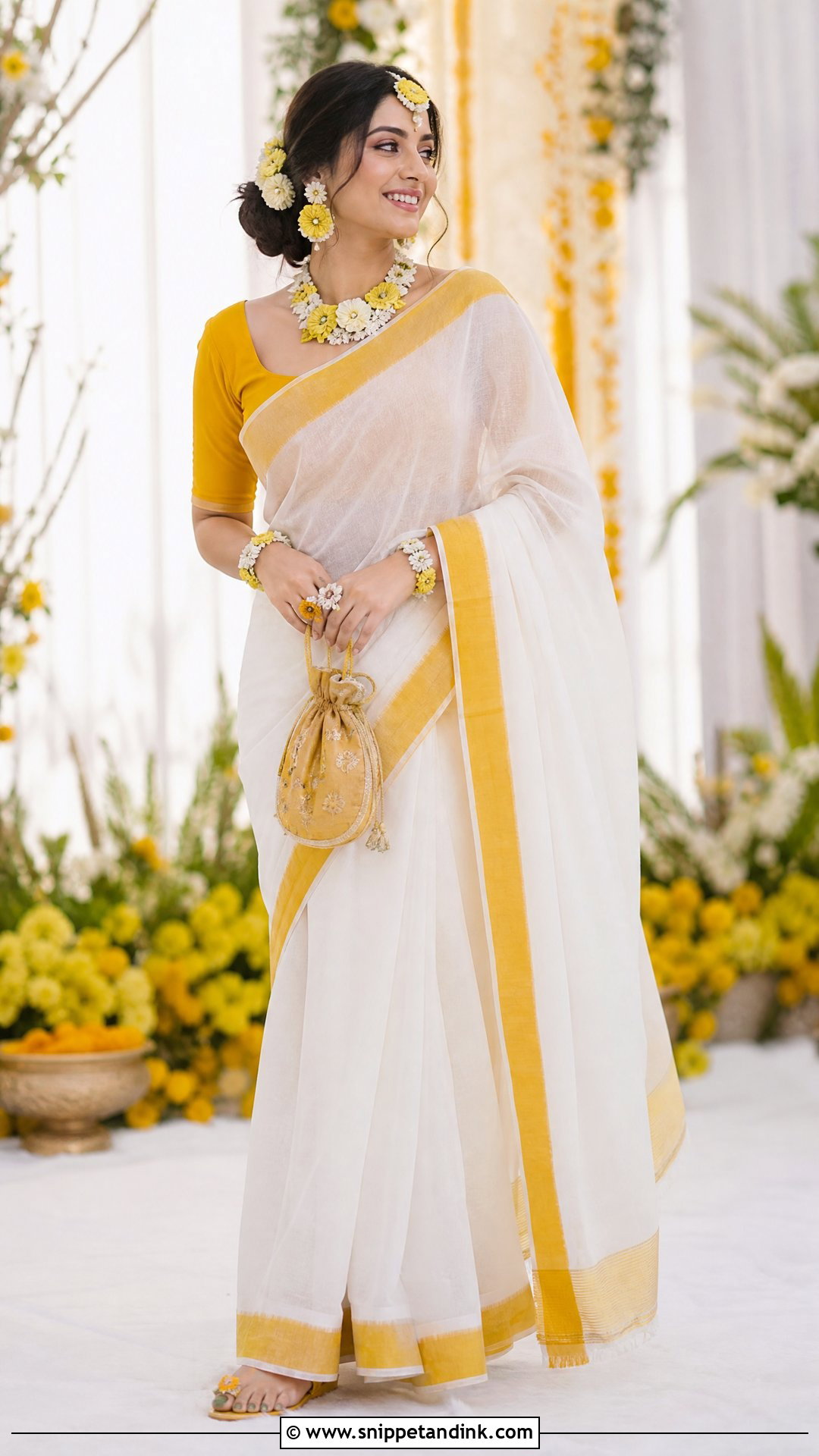
White with a yellow border stands out against bright Gaye Holud decor. A mustard or marigold blouse and a secure drape for moving around. White and yellow floral jewelry: small earrings, a short necklace, light bracelets. A few flowers around a low bun. Makeup should be almost nothing, because turmeric paste will go on the face and arms; anything heavier just mixes into it. Waterproof mascara, groomed brows and a tinted balm. I’d skip skincare actives that morning too, since turmeric on freshly exfoliated skin can sting. Flat yellow sandals and a fabric potli.
17. Pink Silk Bengali Reception Look
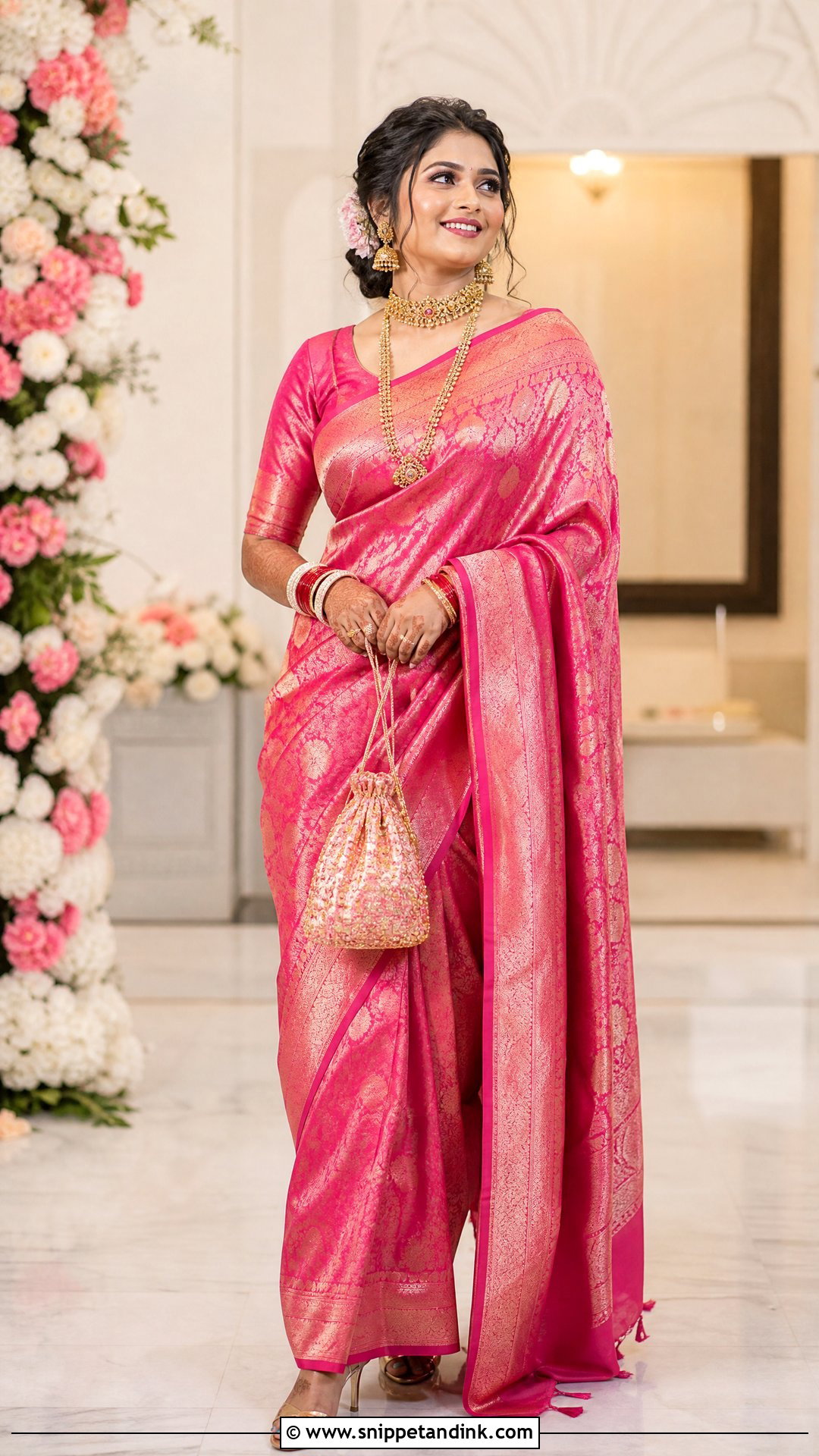
Pink silk relaxes the reception look. Raspberry, rose or fuchsia, depending on how much contrast the bride wants, with gold weaving to match the jewelry. A fitted blouse with a round neck and elbow sleeves. Gold choker, a longer necklace, jhumkas and red-and-white bangles; leave the mukut for the wedding night. Soft waves or a loose bun with a small gajra. With fuchsia, I keep the lip berry rather than bright pink so the face and saree don’t merge. Rosy cheeks and defined eyes. Gold heels and a beaded potli; comfortable enough for greeting a long line of guests.
18. Gold Silk Bengali Reception Look
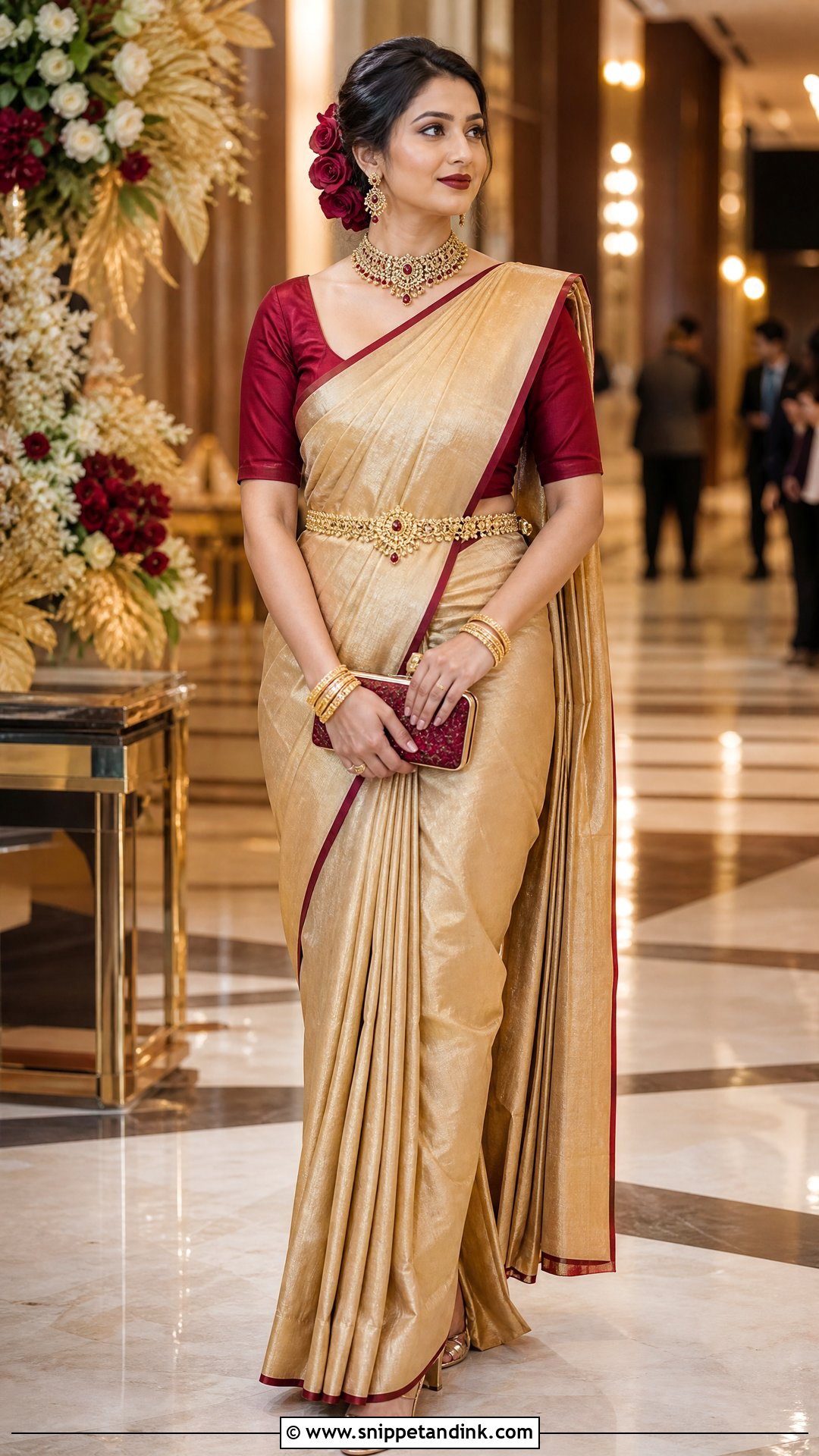
Gold, champagne or beige silk feels luxurious without loud color. Add a fine red border and a deep red blouse so photos still read as bridal. A ruby-accented choker, matching earrings, a few bangles and a delicate waist belt. A low bun with red roses echoes the blouse. Softly bronzed skin, black eyeliner, a red bindi and a warm red lip. Gold on gold can flatten the face in photos, so I add definition at the brows and lash line. This is the change I’d suggest after a bright red wedding saree, for a calmer Bou Bhaat look. Gold heels and a red clutch.
19. Red Saree With Bridal Veil Look
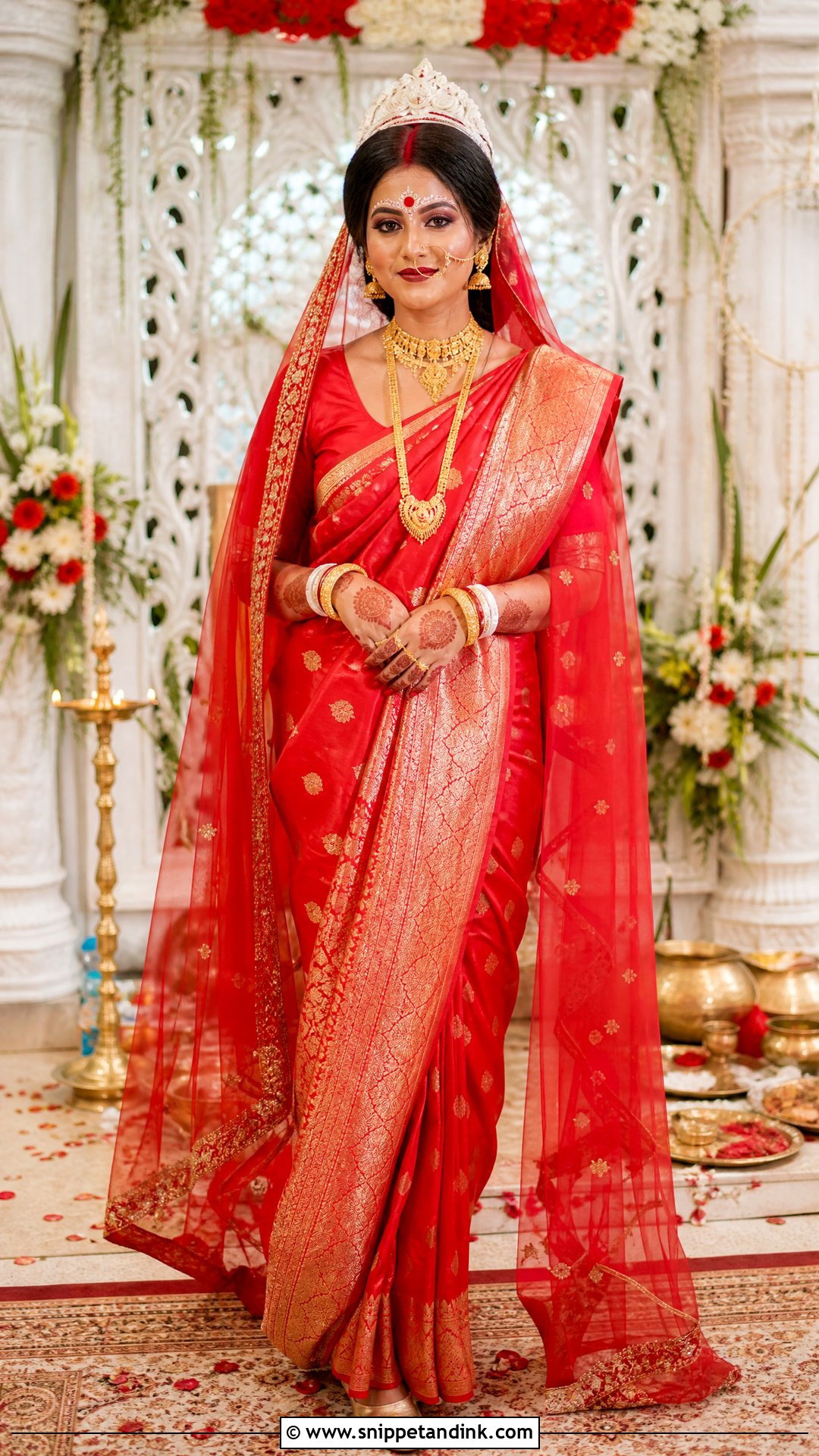
A sheer veil turns a plain red saree into a ceremony outfit. A lightly woven red Banarasi with a matching blouse, and a red net veil with a narrow gold border. I pin the veil behind the bun, never on top of it, so its weight doesn’t pull the hairstyle back when the bride bows her head. A gold choker, long necklace, jhumkas, bangles and a small mukut beneath. Defined eyes, a red bindi, fine forehead artwork and red lipstick. Gold low heels and narrow pleats make walking easier. Because the saree and jewelry stay modest, the veil does the work in portraits.

20. Simple Bengali Registry Bride Look
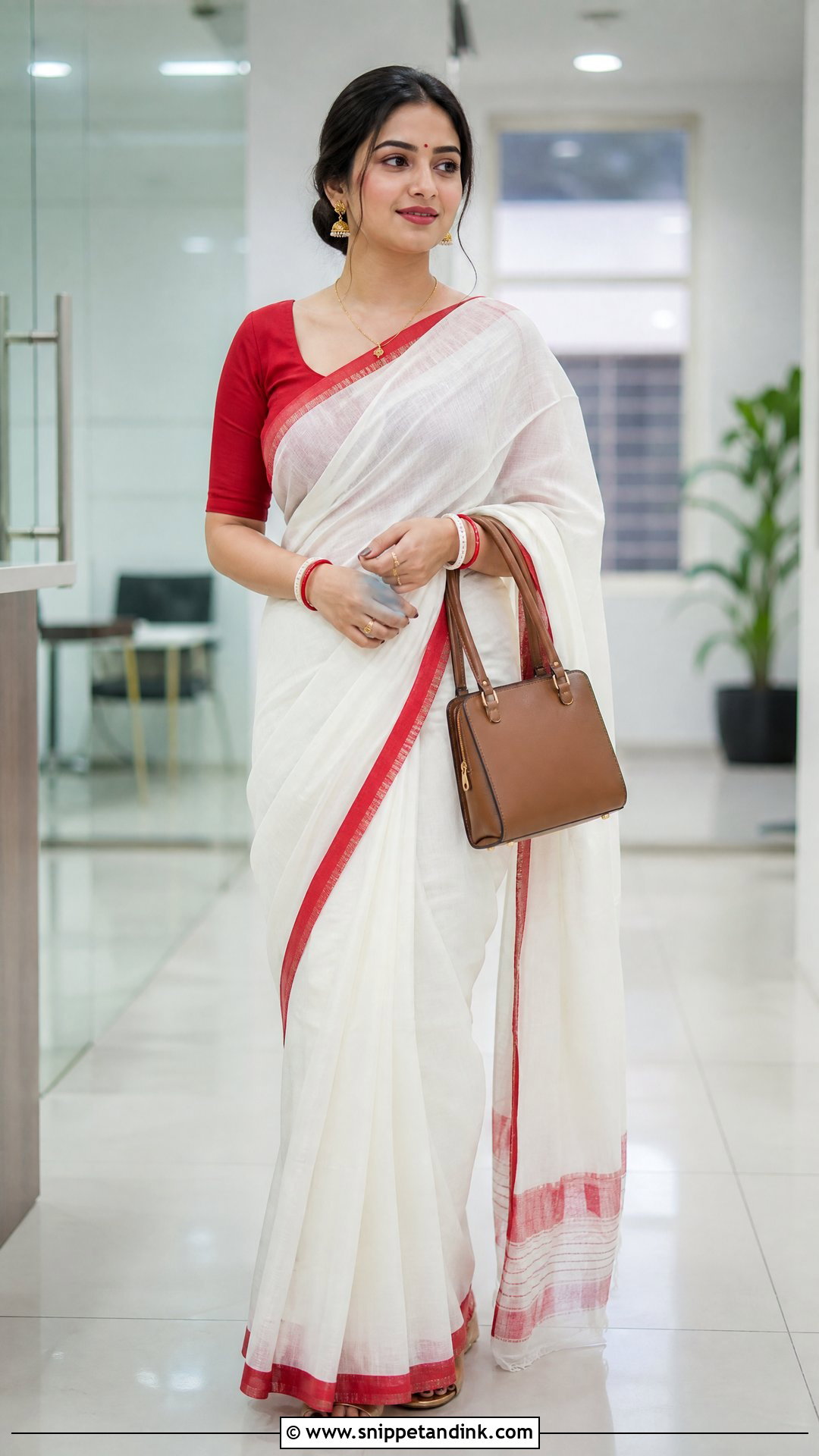
A registry morning needs something special that you can still sit in at a government office. A white-and-red handloom, light red silk or ivory with a narrow red border, with a well-fitted blouse and an easy drape. One gold necklace, small jhumkas, red-and-white bangles and a red bindi. Low bun, ponytail or polished waves. For daylight and phone cameras, I keep makeup lighter than for an evening wedding: natural skin, fine liner, soft blush and a muted red lip. Comfortable sandals and a structured bag big enough for documents, then family photos and a small meal.
Chandan Dots That Last Through Saat Paak
The kolka or chandan design over the brows is the detail I take most care with, because it sits right where the face sweats first. I apply it last, after the base and powder have set, so the paste grips skin instead of sliding on foundation.
- Keep the dots small and thin. Thick sandalwood paste cracks as it dries and flakes off by the end of the night.
- A fine brush or the end of a toothpick gives cleaner dots than a finger. Red dots in kumkum or a red liner add contrast to the white.
- Many artists now use a white cosmetic liner for the outline and chandan only for the fill, which holds better in heat.
- Pack a white liner pencil and a cotton bud in the touch-up pouch for any dot that smudges under the veil.
Pinning the Saree for the Pidi and the Pheras
During Shubho Drishti, the bride is traditionally carried in on a wooden pidi, held by her brothers or cousins, with her face hidden behind betel leaves. That means sitting on a plank, being lifted and turned, and then walking the rounds. A drape that looks fine standing can come apart in the first minute.
Ask the draper to pin the pleats at the waist from the inside, secure the pallu at the shoulder and again at the back, and fix the veil to the bun rather than to the saree. Before leaving the room, sit on a low stool and stand up a few times. If anything pulls or slips, repin it then, not under a hundred cameras.
Simple Still Means Sankha, Sindoor and a Secure Drape
The 20 Simple Bengali Bride Ideas above all balance cultural detail with comfort and the mood of each event. Red Banarasi remains the wedding-night classic; white-and-red handlooms, lighter Jamdani, colorful reception sarees and lehengas widen the choice. Simplicity comes from editing the whole look, not from dropping traditions. One good fabric, a secure drape, a few well-matched jewelry pieces, shoes you can stand in and makeup suited to your own features. Do a full trial with the saree on, because that’s where blouse fit, veil weight and mukut placement problems show up, long before the day itself.
You'll Like These Ideas:




Leave a Reply