
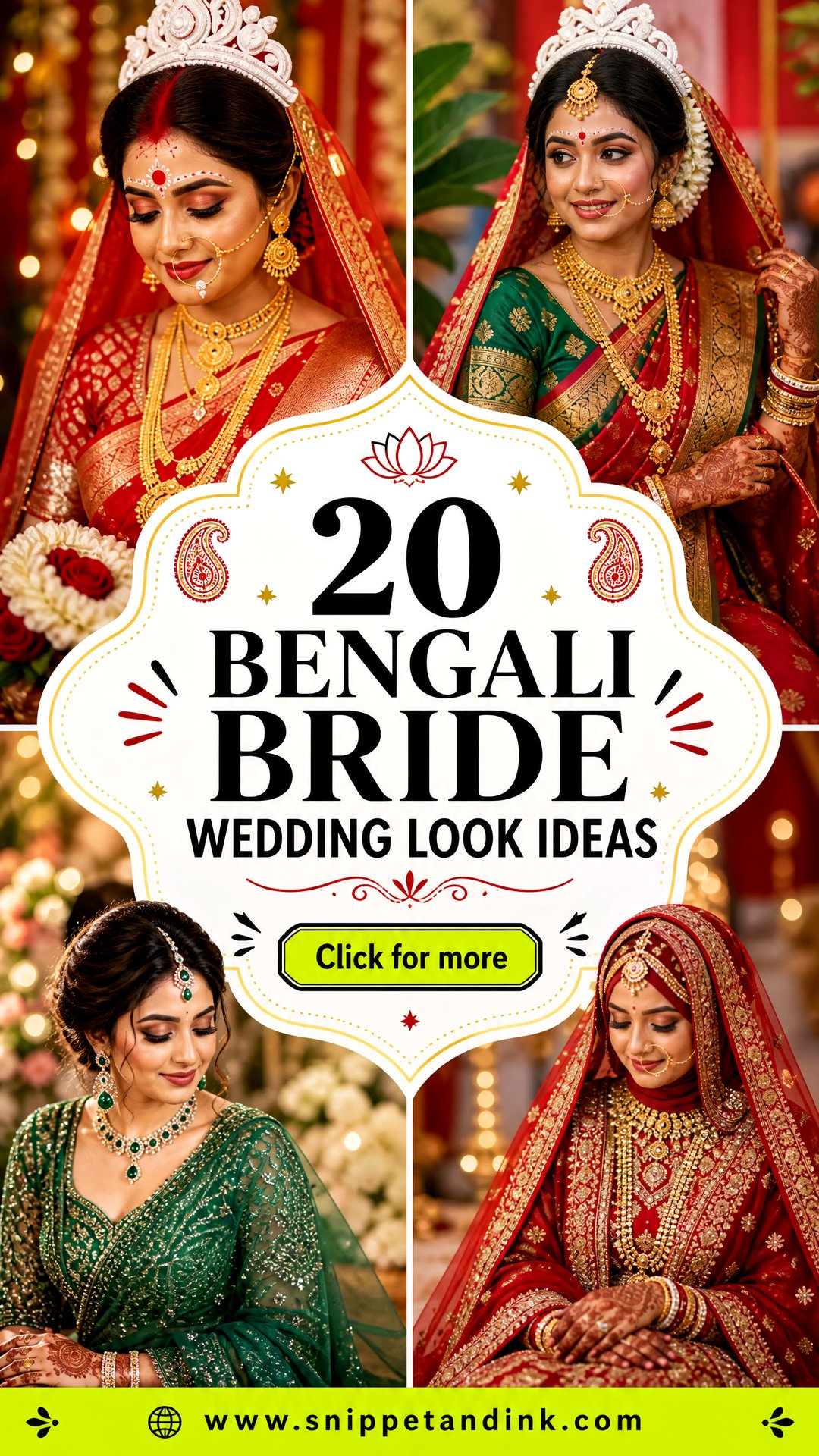
Dressing a Bengali bride means dressing for several days, not one evening. There’s the wedding saree, of course, but also outfits for pre-wedding ceremonies, a reception look and often a separate engagement outfit, and each has its own rules about color and how much gold to wear. When I style a Bengali bride, I start from the pieces that make the look unmistakable: the white sholapith mukut, chandan art, a red bindi, alta and family gold. Everything else can bend to your customs, body and comfort. The twenty looks below range from classic red Banarasi to lehengas, reception metallics and lighter pre-wedding wear, each worked out from head to toe.
The Sholapith Mukut Is Lighter Than It Looks, and More Fragile
The white crown a Bengali bride wears is carved from sholapith, the soft, spongy core of a marsh plant. It’s very light, which is why brides can wear it for hours, but it dents and crushes easily. Most of the problems I see with mukuts come from handling, not from wearing.
- Buy or collect it a few days early and keep it in its box, upright, away from anything heavy. Don’t pack it in a suitcase.
- Try it on with your hairstylist at the trial. The bun has to be the right height for the mukut to sit level.
- It usually ties or pins at the back of the head. Ask for it to be secured to the bun with U-pins, not just balanced on top.
- Keep it dry. Sholapith softens with moisture, so it shouldn’t sit near water or a sweating forehead for long.
- Add it last, after the veil is pinned, and have someone hold it during photos where you bend forward.
Many families keep the mukut afterward as a keepsake. Store it in a box with soft tissue around it, not plastic, so it doesn’t yellow or get crushed.
1. Traditional Red Banarasi Bengali Bridal Look
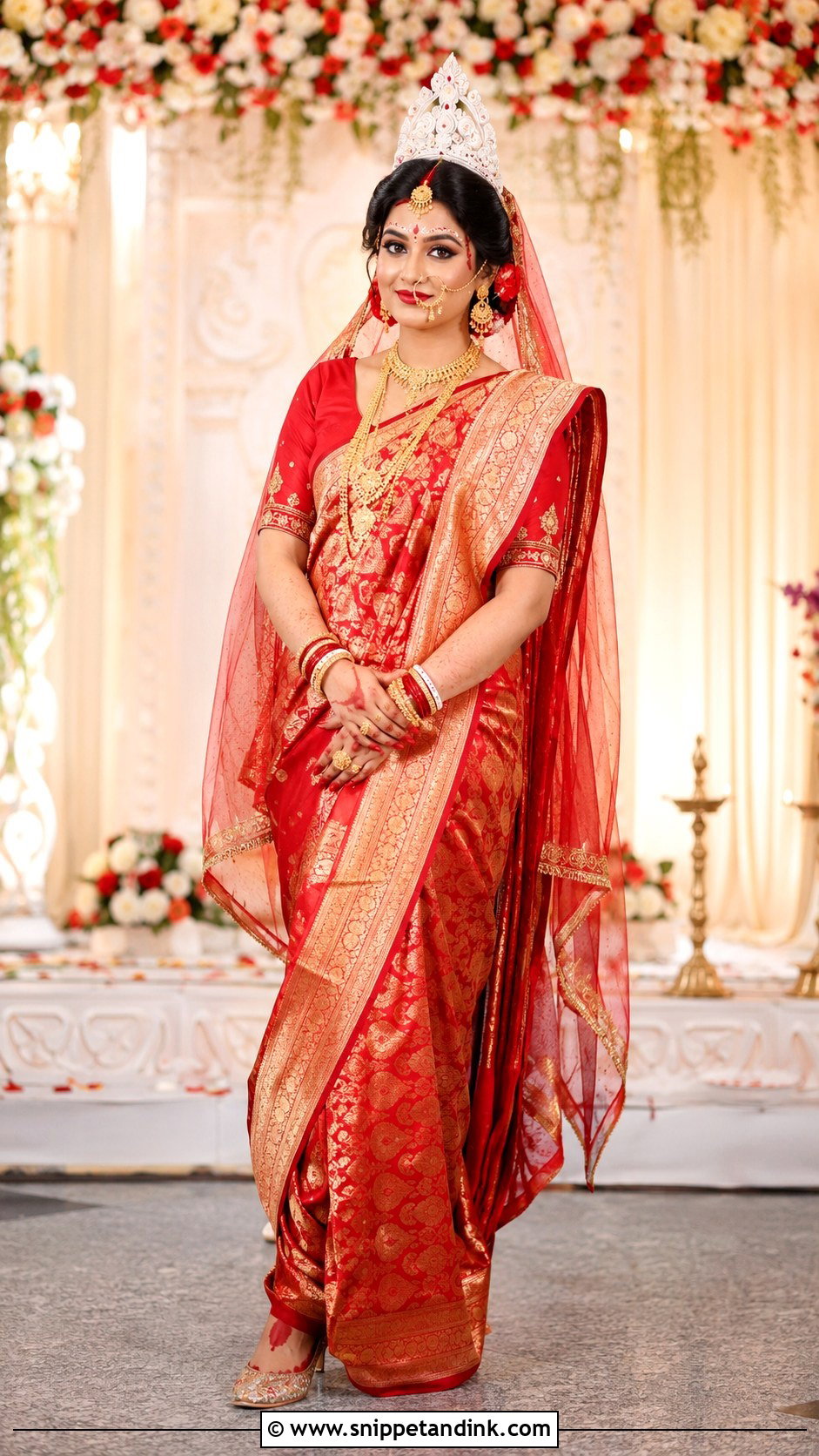
Crimson or vermilion Banarasi with heavy zari is the look the whole family expects. A fitted red blouse with elbow sleeves, a traditional Bengali drape that shows the border, then layered gold necklaces, jhumkas, bangles, nath and waist belt. The sleek center-parted bun is not decoration here; it’s the base that holds the mukut and the red veil, so I have the hairstylist build it with a firm core. Bold kajal, a red lip, chandan forehead art, a round bindi and alta finish it. Wear embroidered flats under the saree; you’ll be sitting, standing and circling for hours.
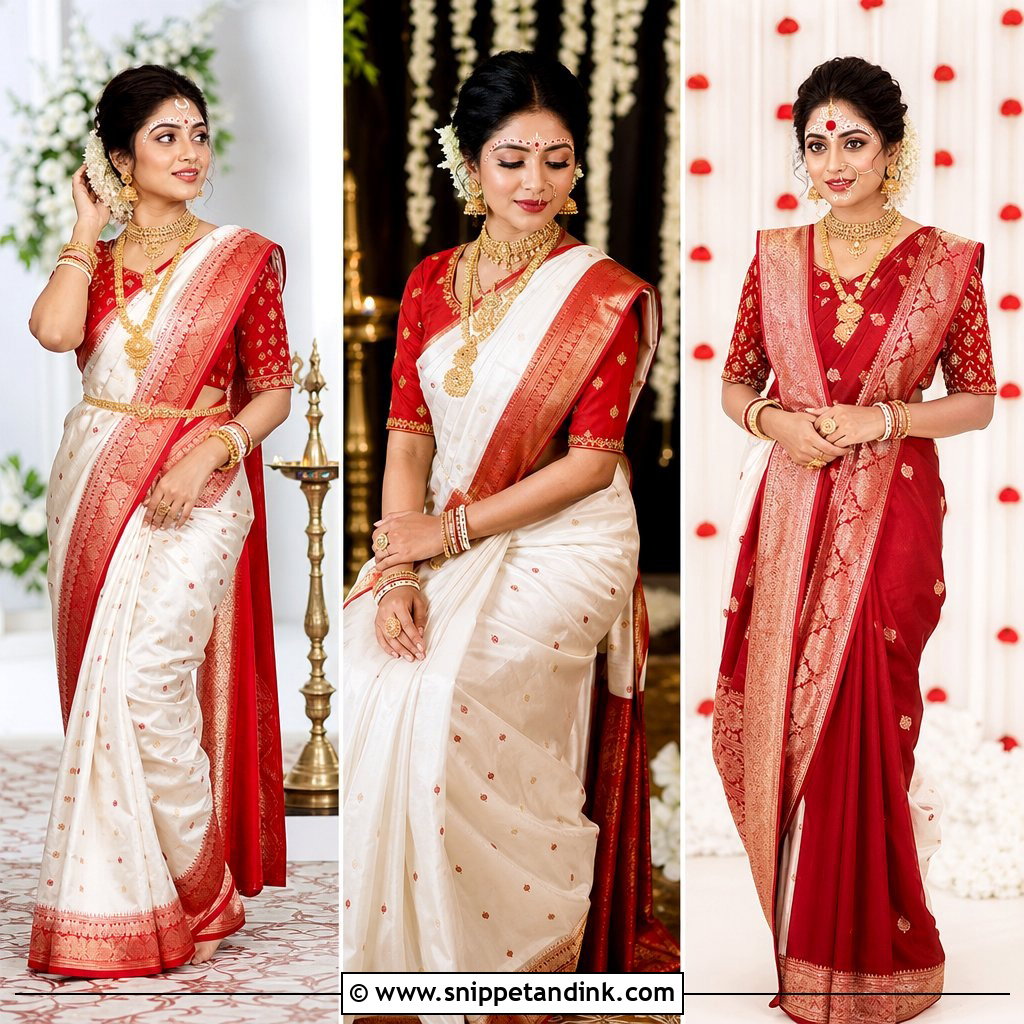
2. White And Red Banarasi Bengali Bridal Look
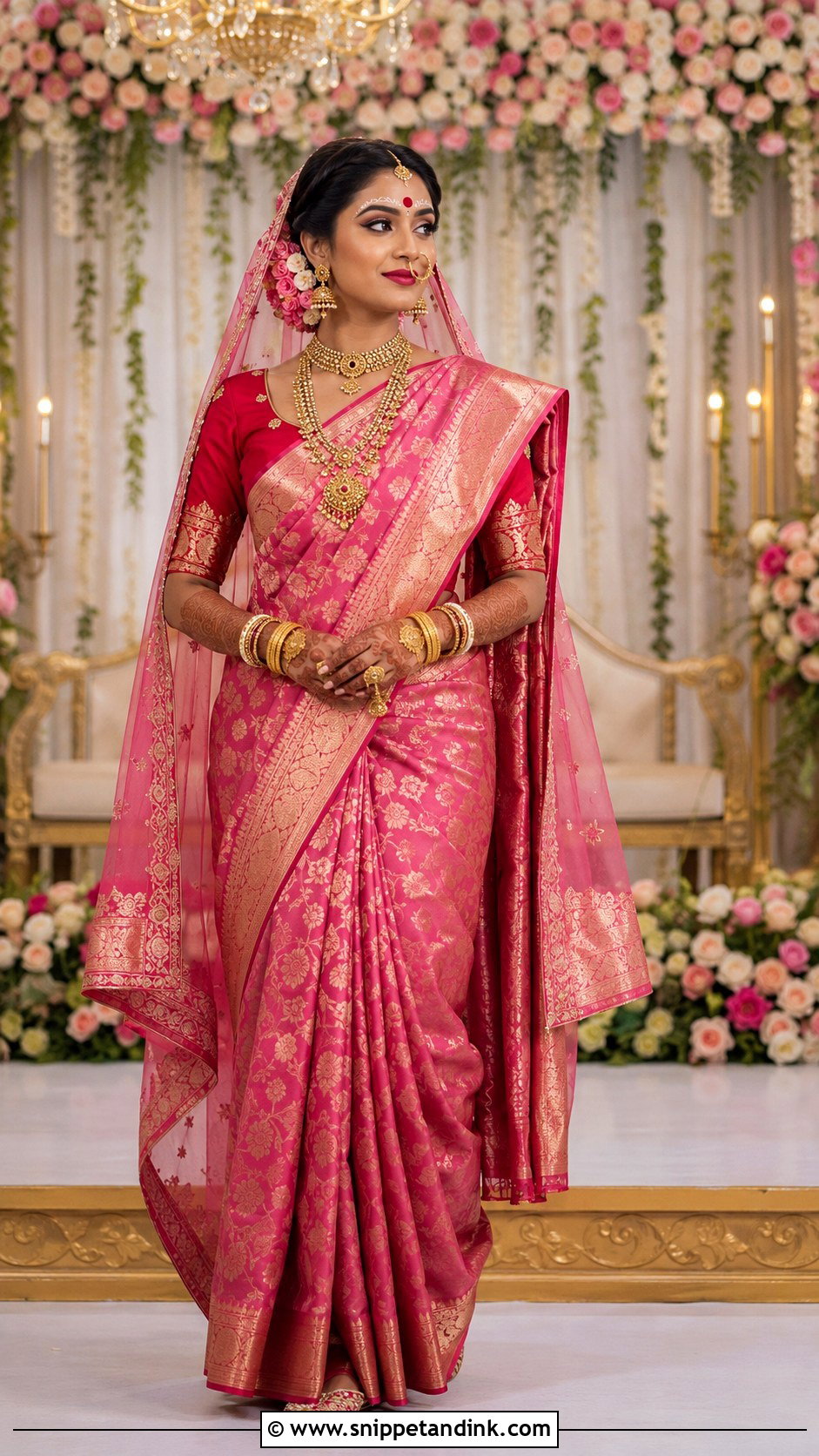
Ivory with a deep red border is about as Bengali as color gets, and the border is doing all the work. When I drape this saree, I make sure the red edge runs cleanly along every pleat and the pallu, because a border that folds under looks like a mistake. Choose white or cream Banarasi with gold motifs and a red silk blouse with a modest neck and detailed sleeves. Choker, long necklace, statement earrings, bangles and a fine headpiece, plus a low bun with white flowers under a light red veil. Defined eyes, warm red lips, chandan work, alta and gold or red flats suit it.
3. Deep Maroon Banarasi Bengali Bridal Look
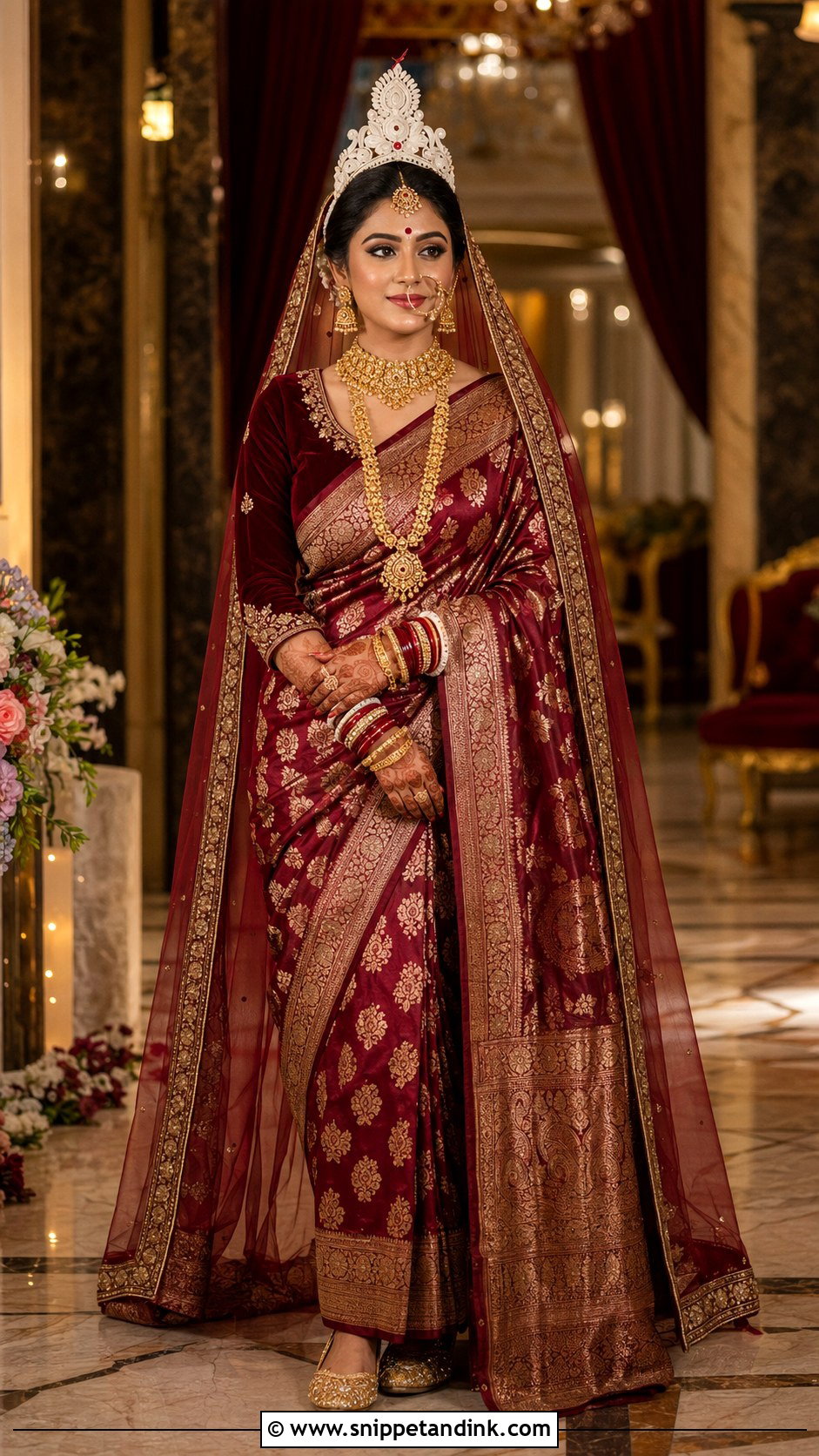
Maroon is the color I’d suggest for a winter or evening wedding. A maroon Banarasi with antique-gold zari and a woven border pairs with a matching velvet or silk blouse for one continuous, regal line. Darker sarees swallow fine jewelry, so go broader: a wide choker, chandbalis, bangles and a classic nath. A center-parted bun, the mukut and a sheer maroon veil keep the traditional shape. Bronze shadow, black kajal, a berry-red lip and soft definition at the cheeks balance the depth. Cushioned gold juttis and a small potli for essentials finish it.
4. Ivory And Gold Bengali Bridal Saree Look
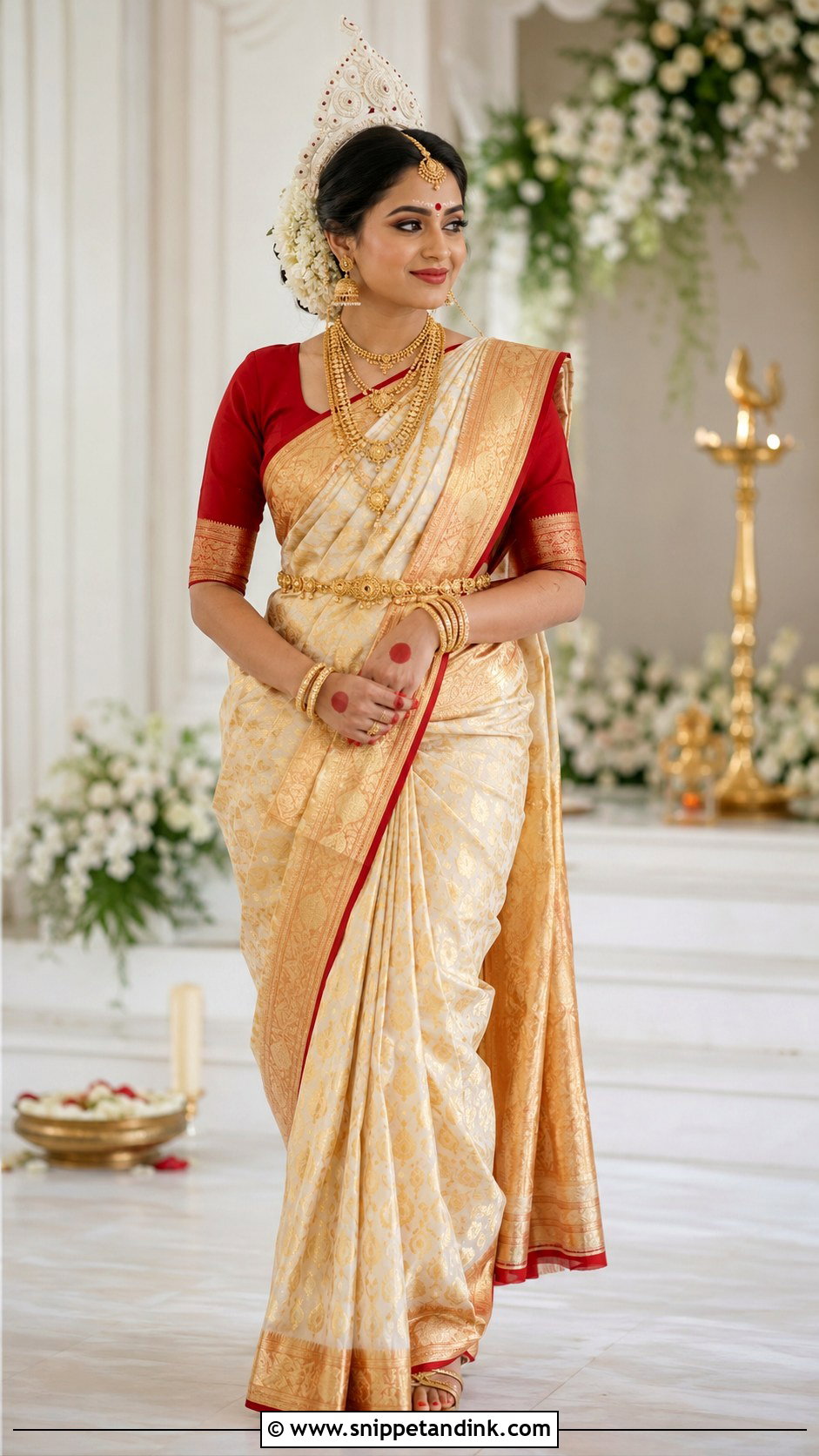
Ivory and gold suit a bride who wants light colors without losing ceremony. Ivory silk, tissue or Banarasi with gold weaving and a narrow red accent at the border pairs well with a deep red blouse. I’d use temple-style gold here; its weight and texture stand out against pale cloth. Layered necklaces, statement earrings, stacked bangles and a waist chain complete the jewelry. A center-parted low bun with white flowers is neat, and the mukut, red bindi, chandan and alta keep it Bengali for those who follow the custom. Warm neutral eyes, a soft glow and muted red lips, with gold sandals and a cream potli.
5. Red And Green Bengali Bridal Saree Look
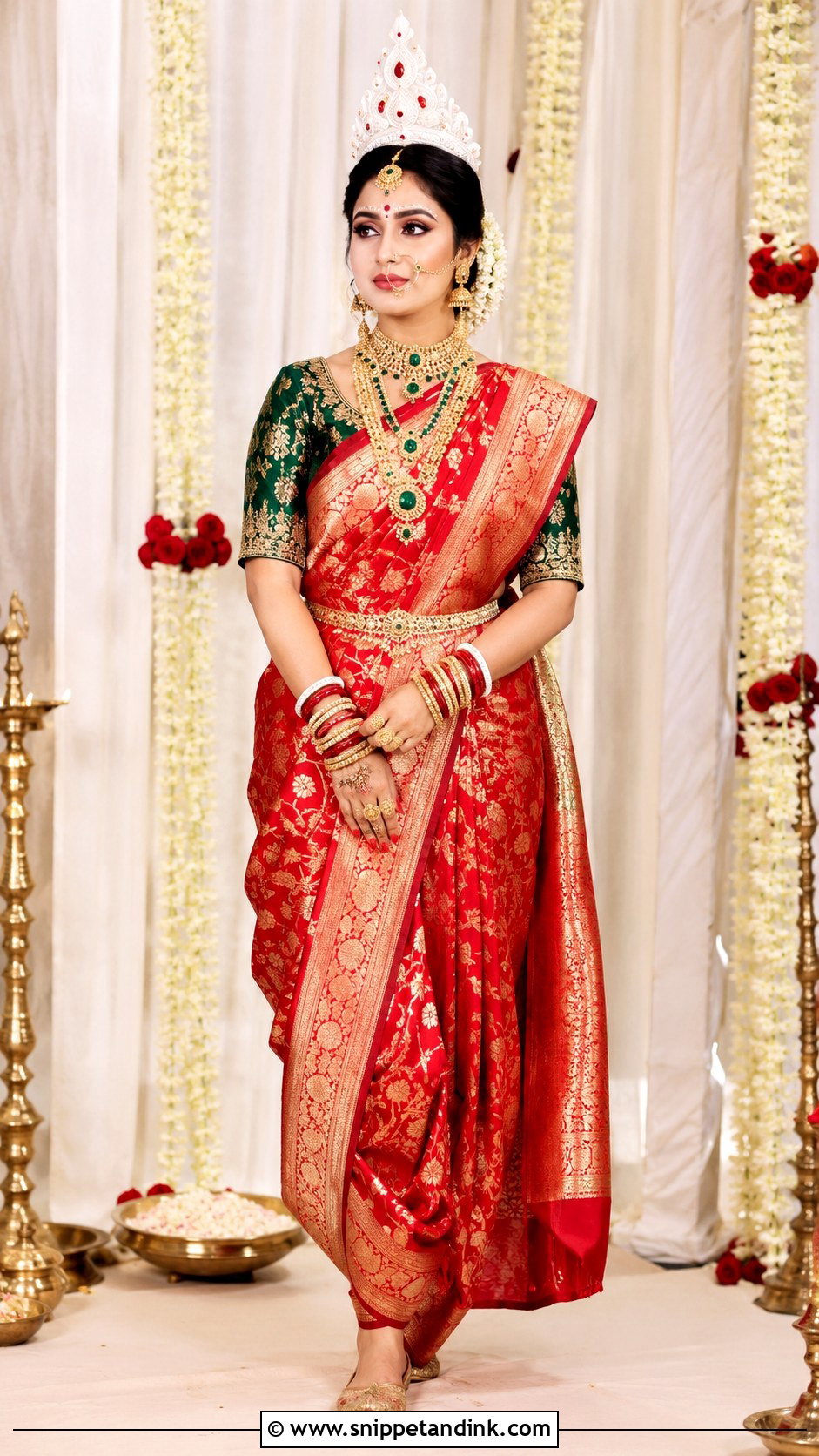
Red and bottle green is a combination you see at traditional ceremonies all the time, and it works because the green is used as an accent. Start with a red Banarasi and bring green in through a silk blouse with elbow sleeves, a veil border or emerald-colored stones. Keep it to one or two of those; all three at once turns it into a Christmas palette. Gold set with green stones, matching earrings, bangles, nath and a waist belt suit it. A smooth low bun with white flowers and the mukut, kajal, warm gold shadow, a red bindi, red lips, alta and gold juttis finish it.
6. Pink Banarasi Bengali Bridal Look
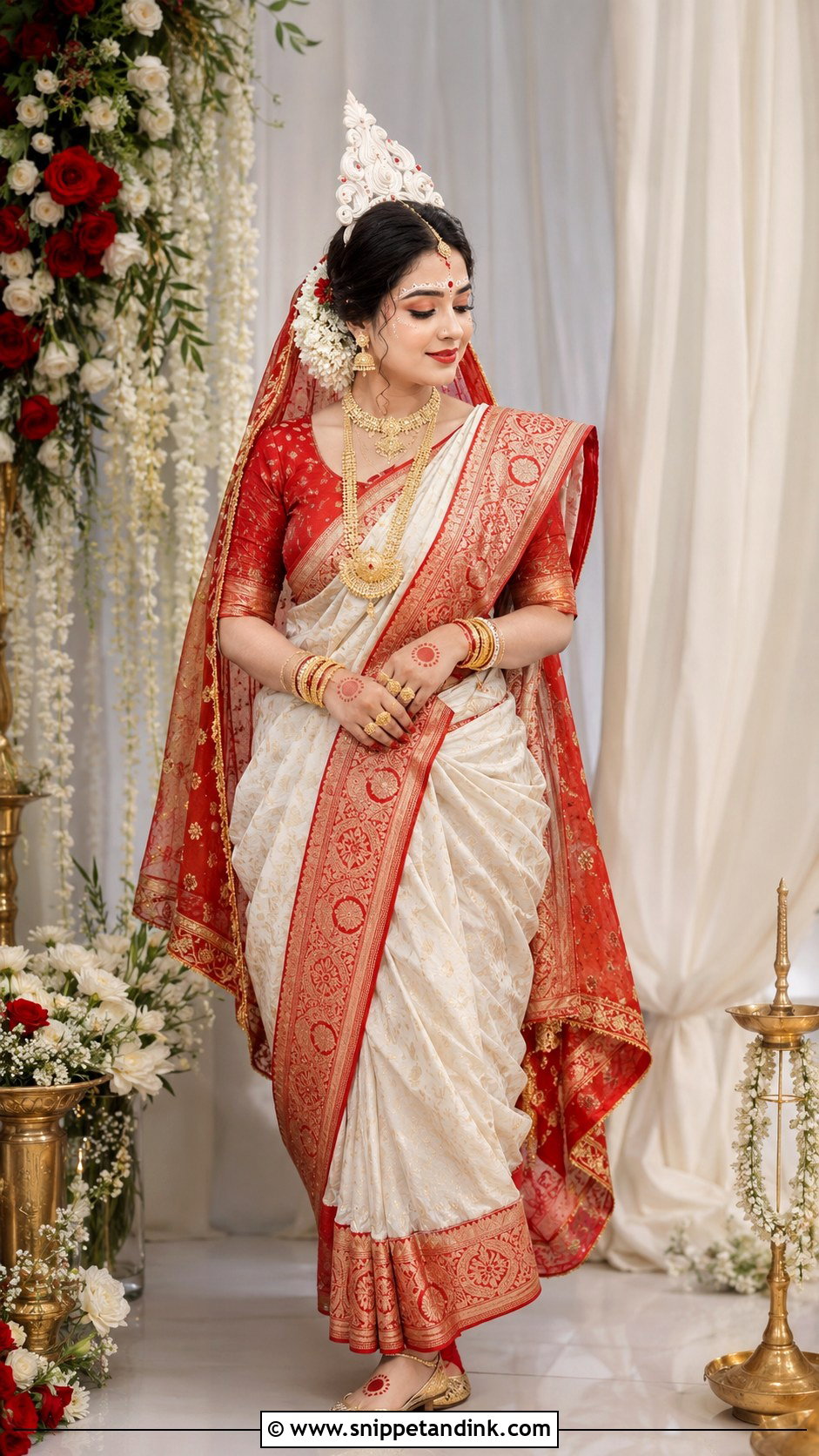
Pink Banarasi is festive and a little softer than red. Rani pink, rose or deep magenta with detailed gold weaving pairs with a matching blouse for a tonal look or a red blouse for stronger contrast. Pick polki, kundan or plain gold based on how busy the saree is: heavily woven pink takes simpler gold. Choker, long necklace, jhumkas, bangles and a fine nath are plenty. A flower-wrapped bun under a pink or red veil, rosy cheeks, kajal-lined eyes, a berry lip, chandan art and a bold bindi complete the face. Gold embroidered flats and a small pink potli keep it practical.
7. Orange And Pink Bengali Bridal Saree Look
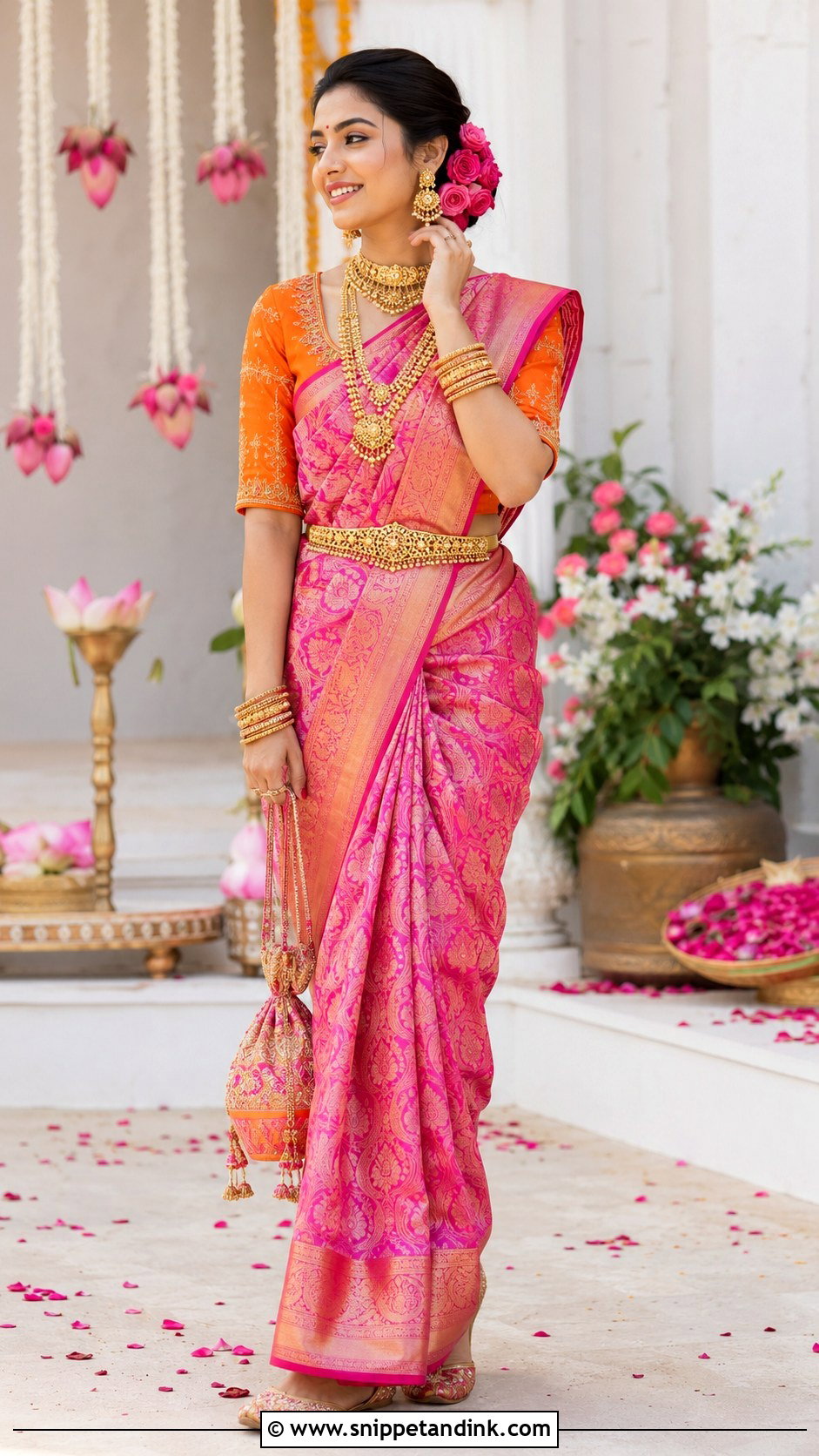
Orange and pink belong in daylight. A pink silk or Banarasi with an orange blouse, or orange with a magenta blouse, is held together by the gold borders. Bright colors already carry a lot, so I keep the jewelry to one layered necklace, jhumkas, stacked bangles, a waist belt and one hair piece. A neat bun with pink roses suits it. Warm gold shadow, black liner, coral blush and a rose-red lip keep the face fresh, and a red bindi with careful chandan details adds cultural definition. Metallic flats and a bright embroidered potli finish it.
8. Royal Blue Bengali Bride Reception Look
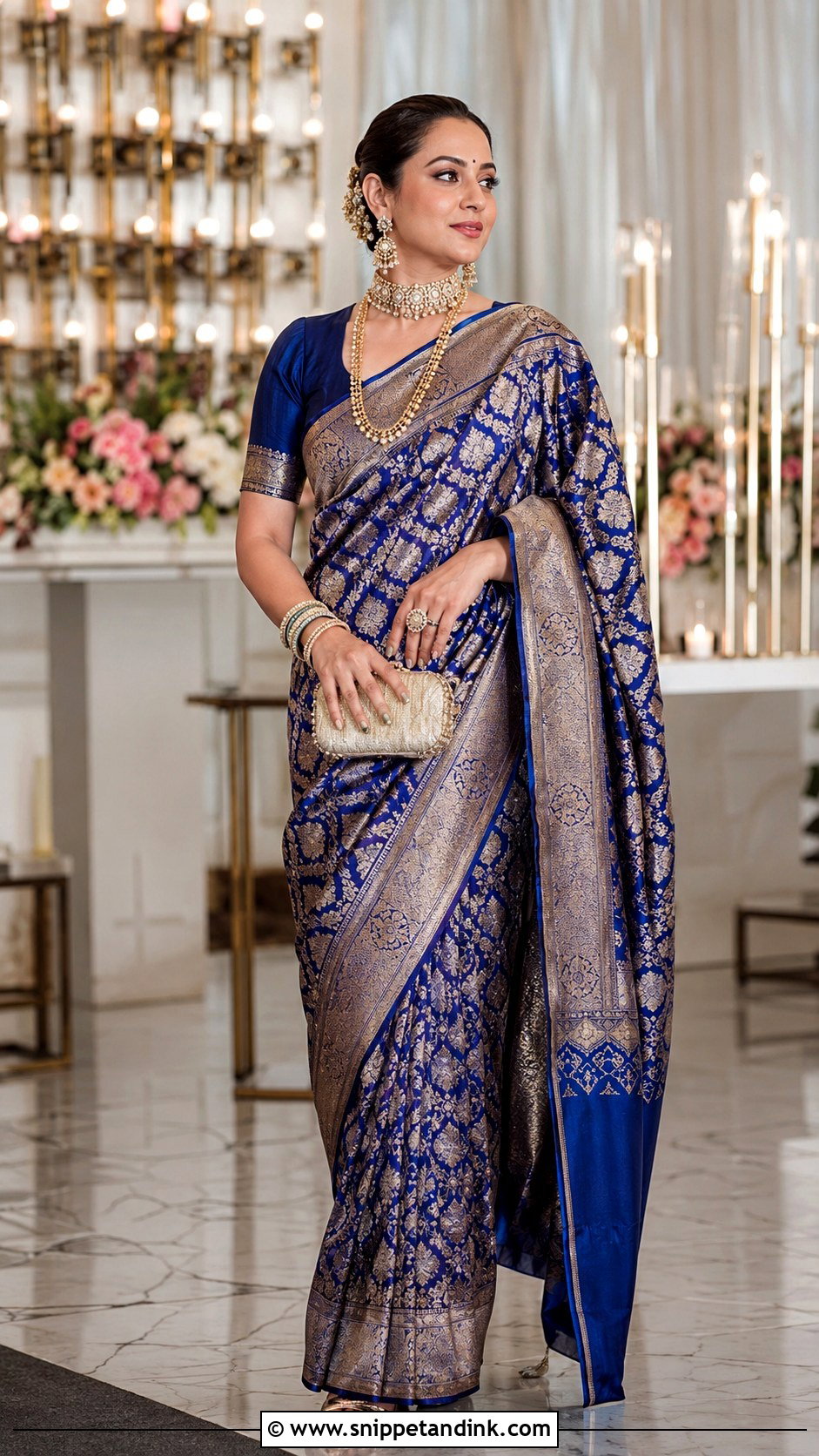
Many brides want to wear something other than red at the reception, and royal blue is one of the strongest choices. A silk, velvet or Banarasi saree with antique-gold motifs and a broad border pairs with a structured blue or contrasting gold blouse. Diamond-style pieces, polki or gold set with blue stones all work; I’d choose a statement choker, long necklace, earrings, bangles and a cocktail ring. There’s no mukut at a reception, which frees the hair for a sleek bun or side-parted waves. Luminous skin, bronze eyes, defined liner and berry lips, with gold block heels and a structured clutch.
9. Emerald Green Bengali Bride Reception Look
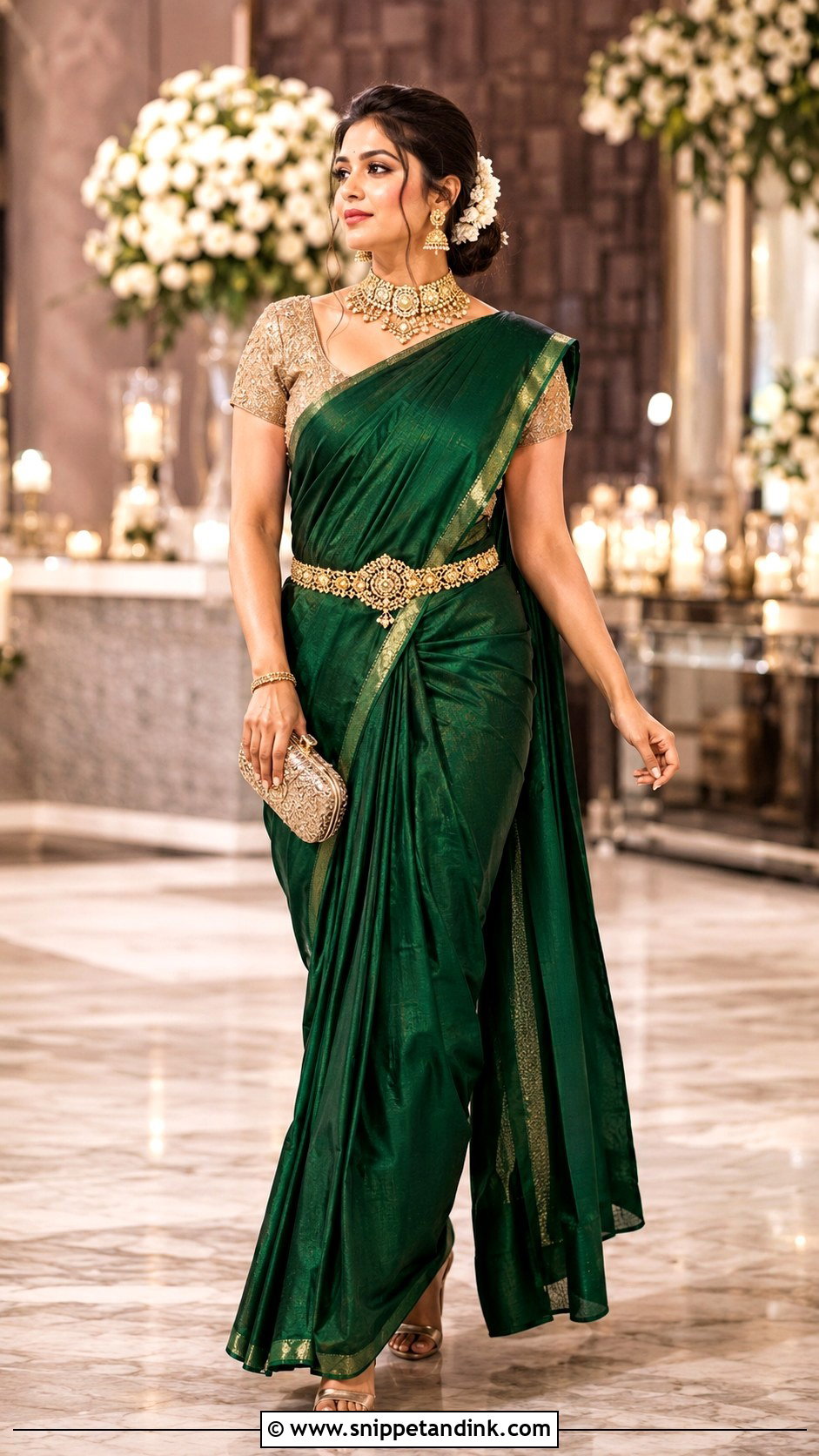
Emerald catches light beautifully as you walk in. Silk, velvet and tissue all take this color well, especially with gold or antique metallic embroidery. A matching blouse gives a long line; a champagne-gold one gives contrast. Temple jewelry leans traditional, polki or diamond-style pieces lean modern. Whichever you pick, wear one statement necklace with earrings, bangles and a jeweled belt rather than everything at once. Velvet is warm, so if your reception is indoors in summer, choose silk. Soft waves or a low bun with small white flowers, bronze shadow, soft contour, a deep rose lip, gold heels and an embellished clutch.
10. Champagne Gold Bengali Bride Reception Look
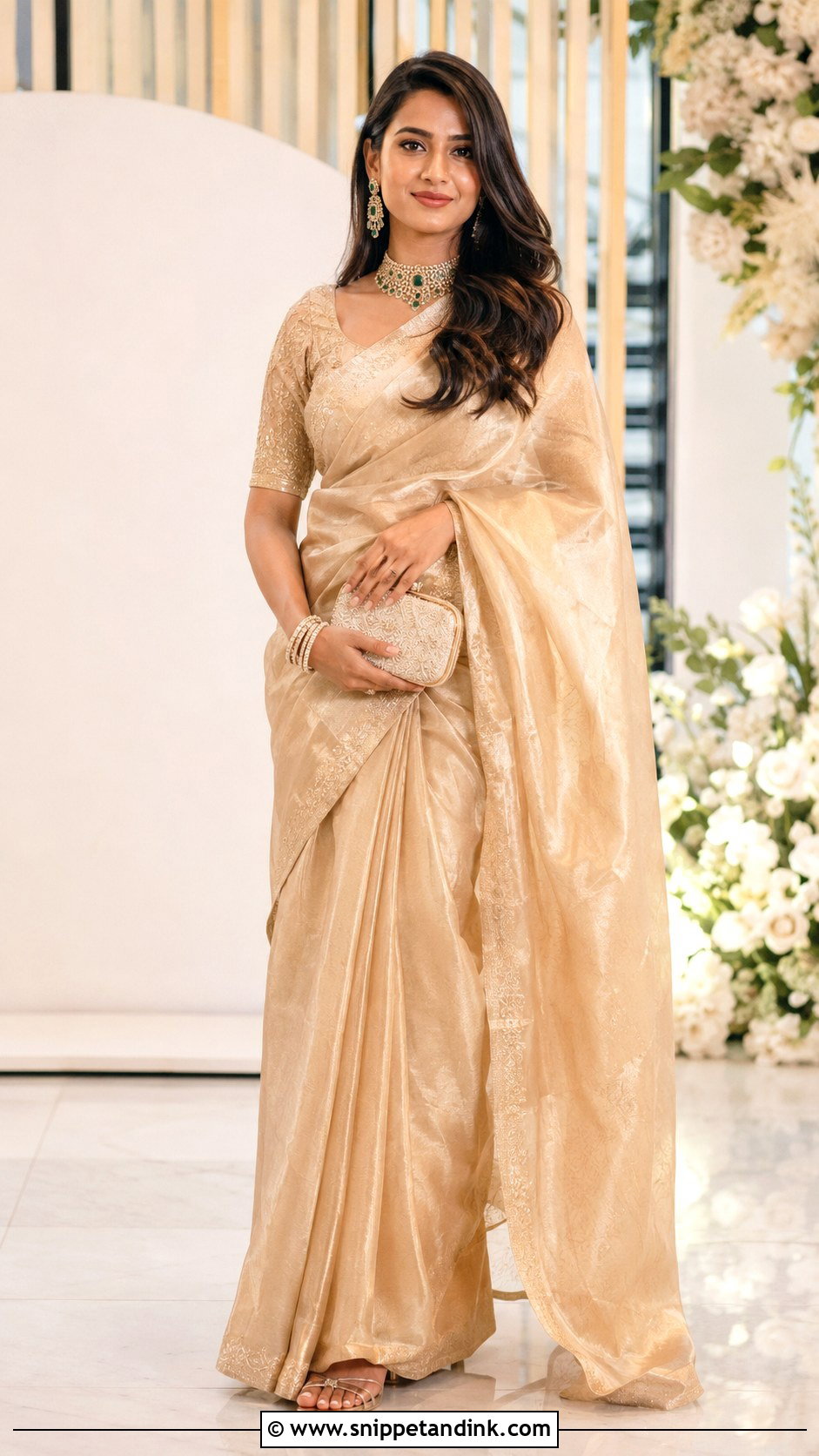
Champagne gold reads modern without losing warmth. Metallic tissue, organza, silk or a lightly embroidered Banarasi that drapes softly works best; stiff, very shiny metallics look harsh under reception lighting. A fitted blouse with tonal embroidery or fine beading suits it, and emerald, ruby or pearl accents add the contrast neutral fabric needs. A statement choker, drop earrings, slim bangles and a ring are enough. Let the blouse neckline decide the hair: open waves for a high neck, a sculpted low bun for a deep one. Soft contour, champagne shadow, defined lashes, a rose-nude lip, metallic sandals and a small clutch.
11. Red Bengali Bridal Lehenga Look
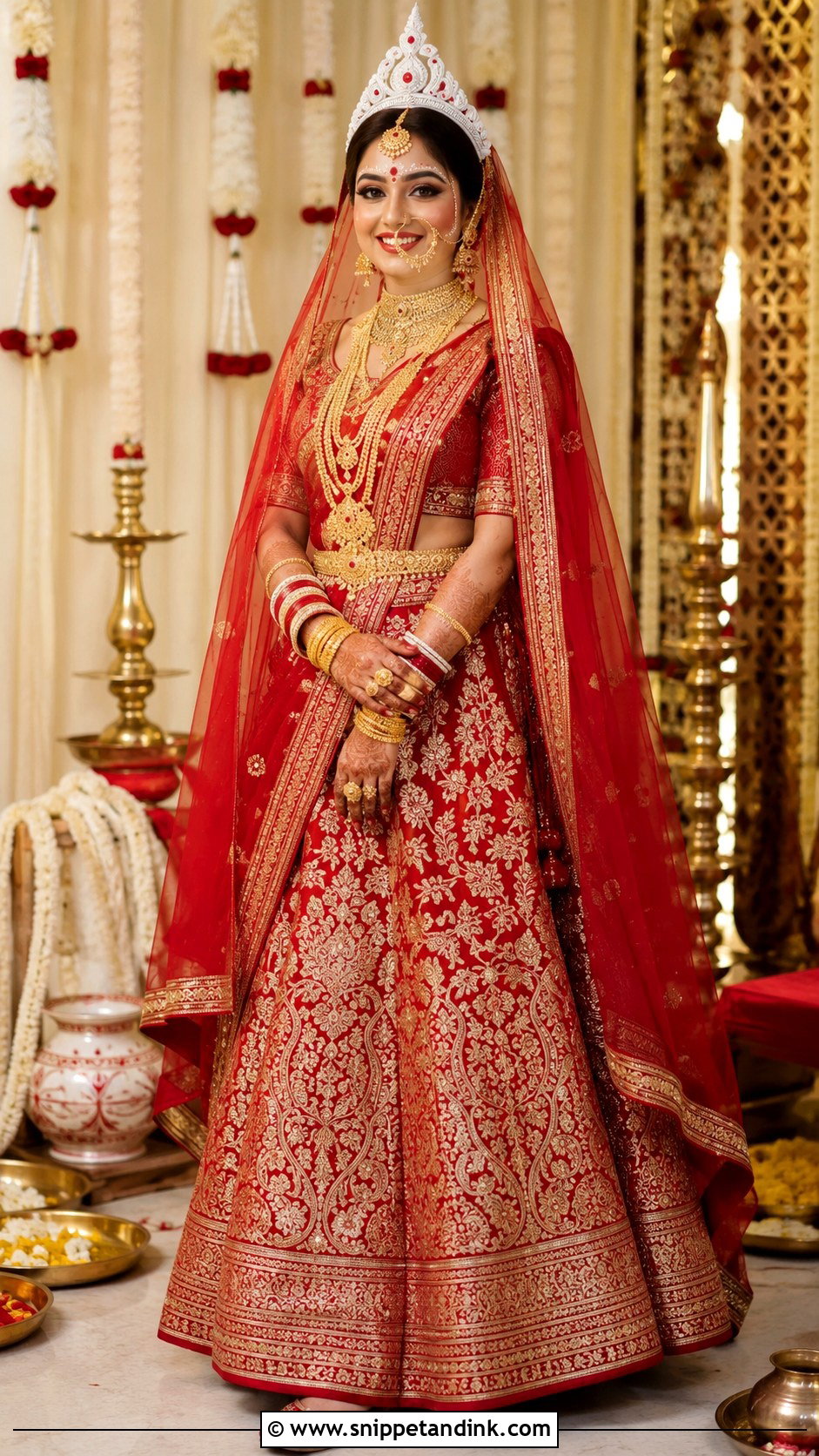
Can a lehenga feel Bengali? Yes, if the face and the jewelry stay traditional. A full red skirt with gold embroidery, a supportive blouse and a light red dupatta over the head, pinned so the front stays visible. Layer gold necklaces, a choker, jhumkas, nath, stacked bangles and a waist belt. The center-parted bun has to hold the mukut and the dupatta together, so I pin the dupatta to the bun first and set the mukut on top. Chandan, a large red bindi, kajal, red lips and alta tie it back to tradition. Cushioned juttis stay hidden under the skirt.
12. Ivory Lehenga With Red Dupatta Bengali Bridal Look
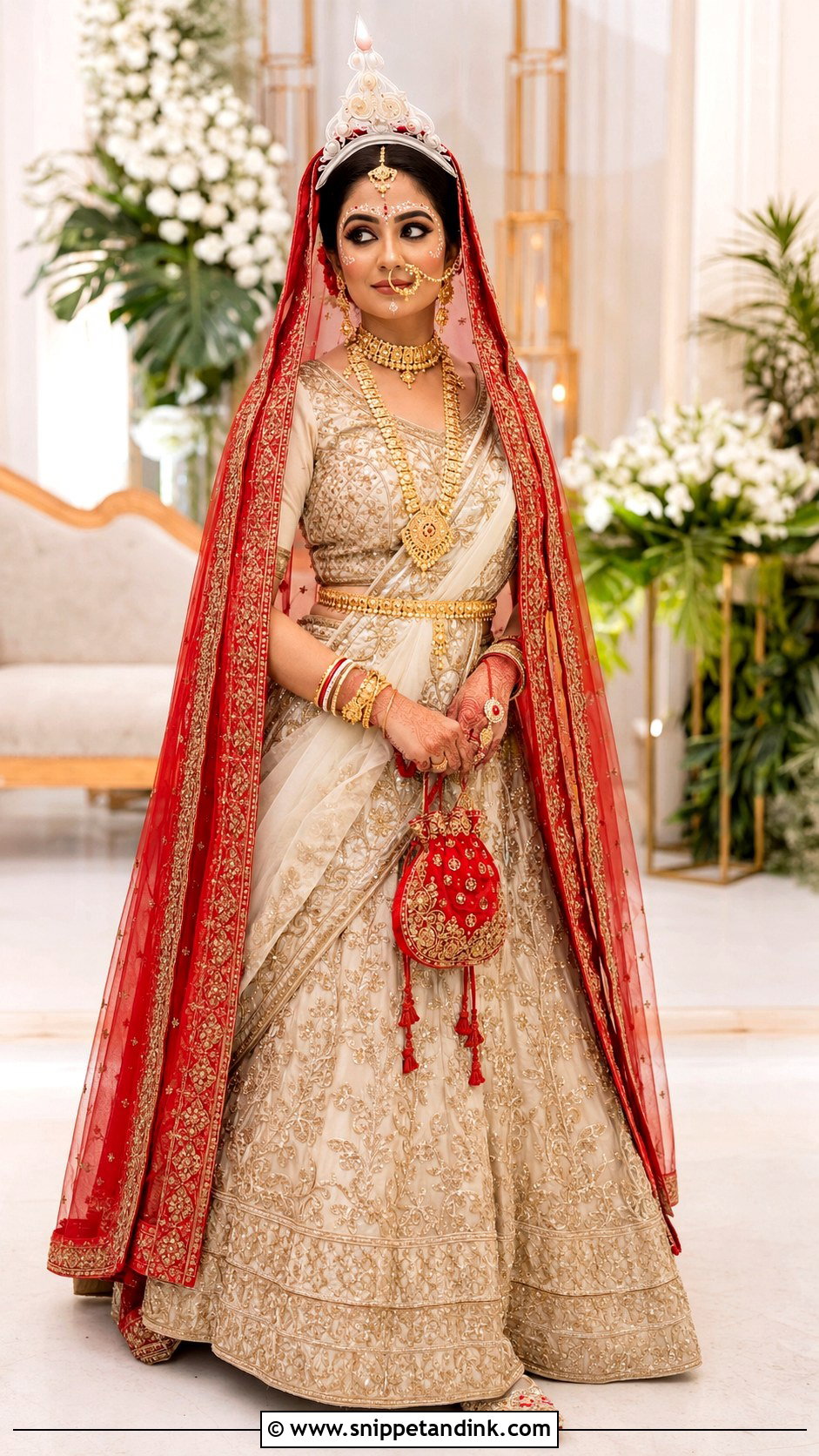
An ivory lehenga with a red dupatta keeps the palette light while the red covers the head. The skirt can carry zari, thread work or fine florals; the blouse needs enough structure to hold layered jewelry without sagging at the neckline. A second ivory dupatta across one shoulder adds depth, but two dupattas plus a mukut is a lot of fabric to manage, so I only add it for brides who are comfortable moving in layers. Antique gold or kundan, earrings, bangles, a nath and a small belt suit it. Red lips, bold kajal, a round bindi, chandan, alta, embroidered juttis and a red potli finish it.
13. Maroon Velvet Bengali Bridal Look
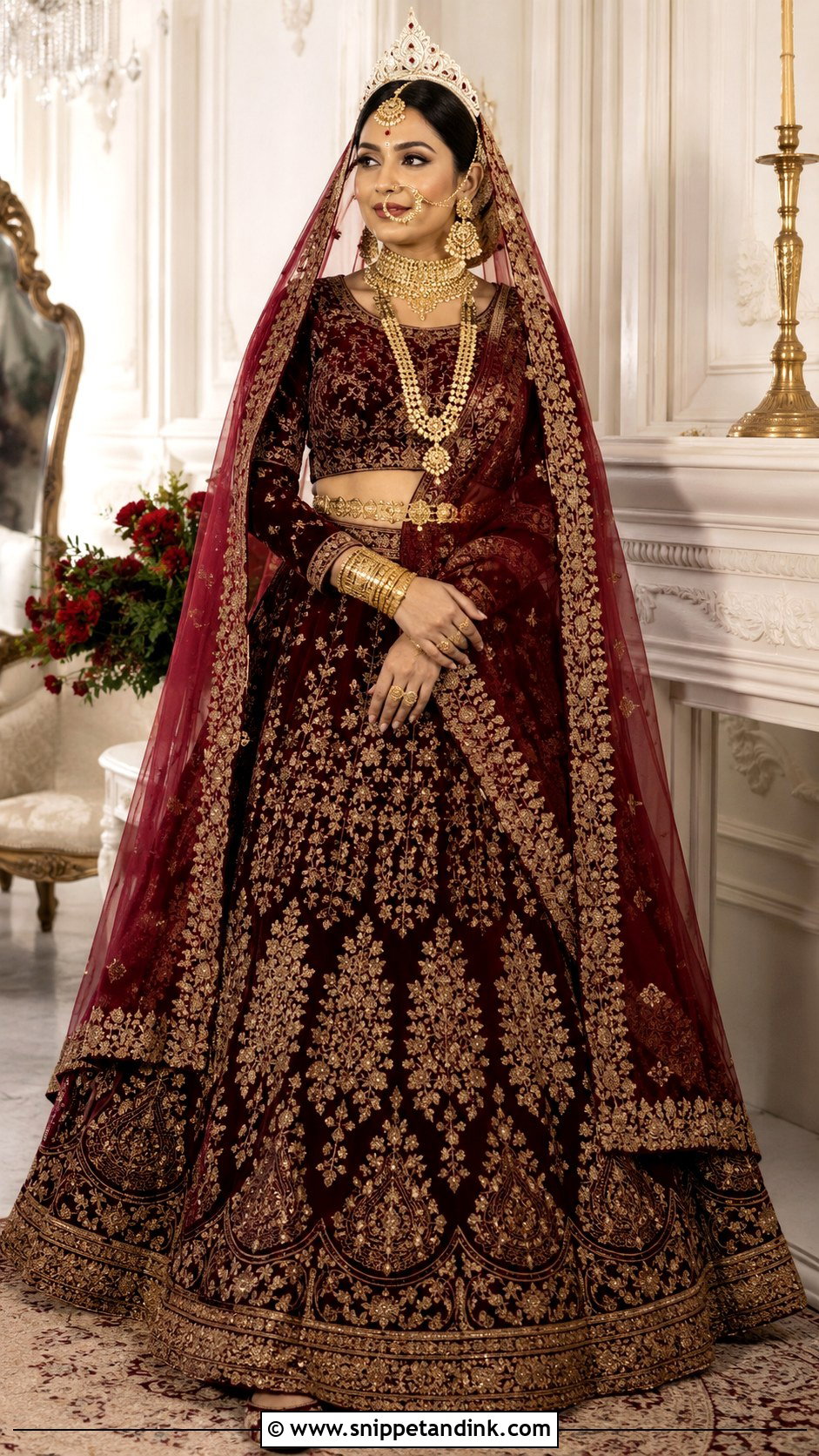
Velvet is my answer for a cold-weather wedding. A maroon velvet lehenga, or a silk saree with a fitted velvet blouse, gives warmth and grandeur, and antique-gold embroidery and zari borders stop the dense pile from looking flat in photographs. Velvet crushes where you sit, so brush the pile upward with your hand before you stand for photos. A broad choker, longer necklace, large earrings, bangles, nath and decorative belt match its weight. A light maroon veil over a center-parted bun and mukut, matte long-wear makeup with brown-gold shadow, kajal and deep red lips, alta, closed-toe juttis and a velvet potli complete it.
14. Gold Tissue Saree Bengali Bridal Look
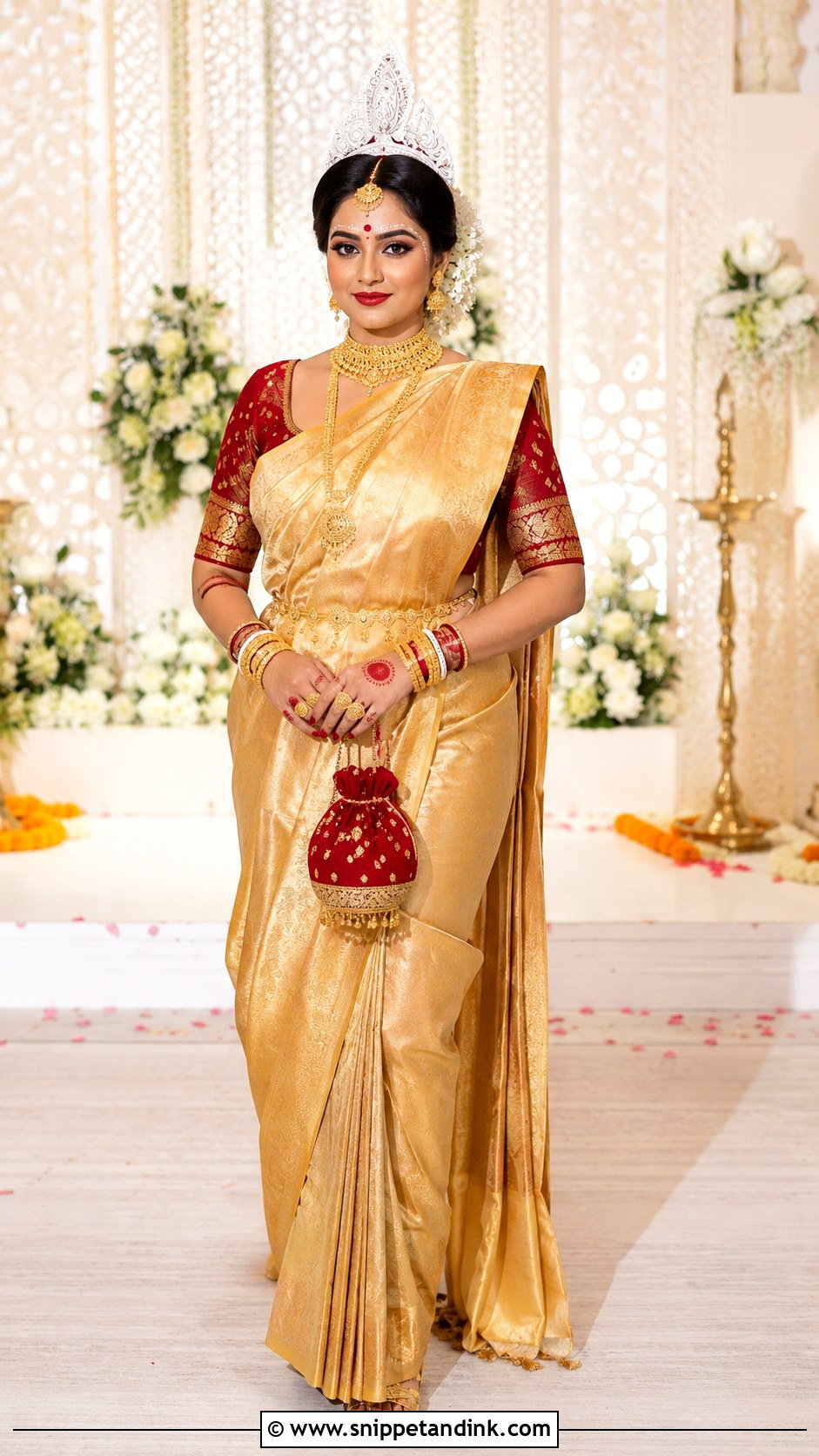
Gold tissue is airy and luminous, and it’s the most minimal saree on this list. The fabric does the shining, so pick a clean woven border rather than more embellishment. A red, maroon or emerald blouse keeps the gold from washing you out. Tissue is slippery and creases sharply, so I pin the pleats at the waist with more pins than usual and drape it close to departure. A sculpted choker, long necklace, traditional earrings, bangles and a waist chain suit it, with a sleek center-parted bun. For the wedding itself, add the bindi, delicate chandan, mukut and alta. Soft bronze makeup, a muted red lip, gold sandals and a matching potli.


15. Dhakai Jamdani Bengali Bridal Look
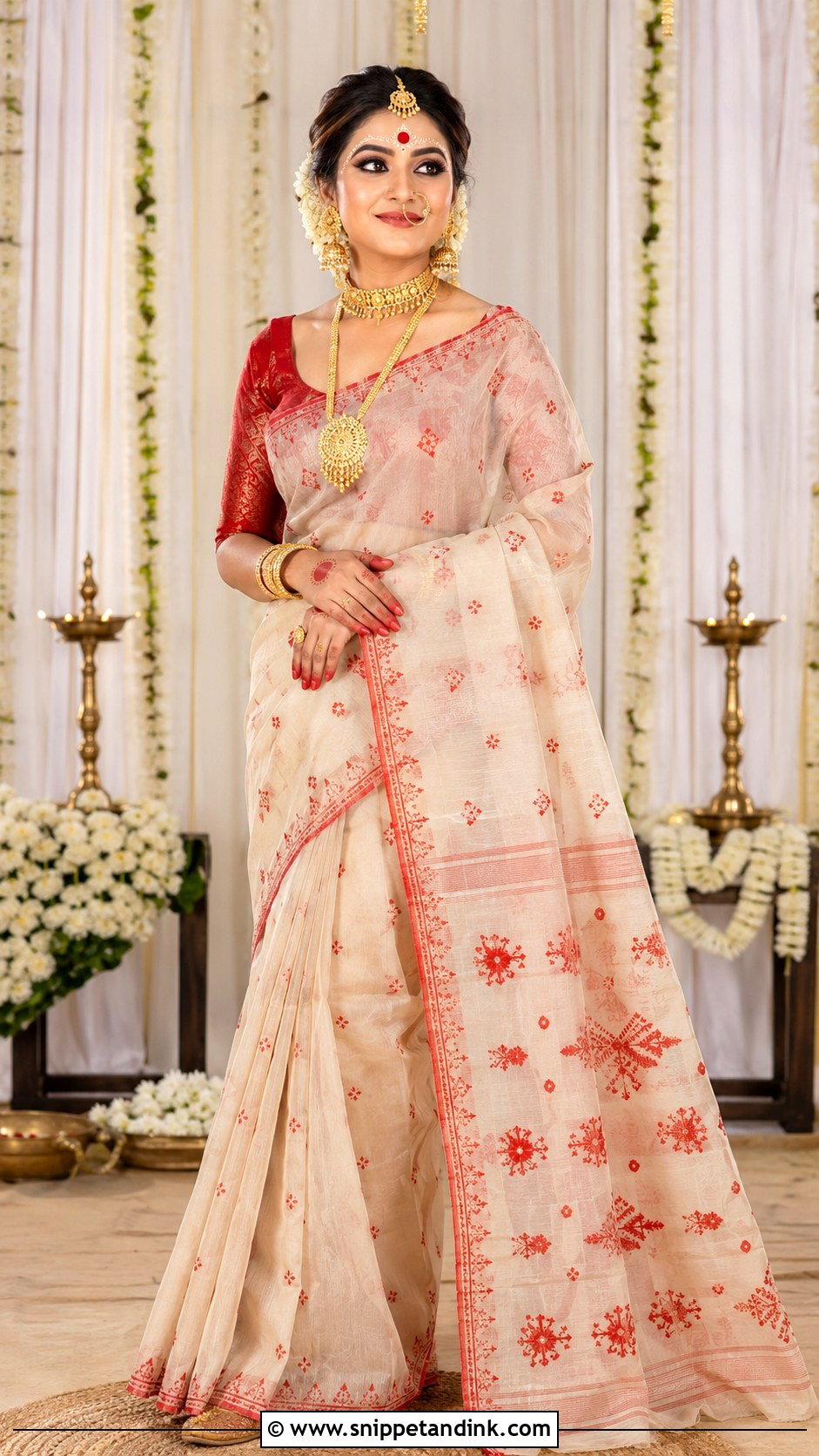
A Dhakai Jamdani saree carries real textile history, and the motifs are woven by hand straight into the cloth. Choose ivory, red, pink or gold with clear motifs and a substantial border, and pair it with a contrasting red silk blouse with elbow sleeves. Jamdani is light and crisp, so a starched drape keeps the motifs flat and visible; a soft drape lets them disappear into folds. A choker, long pendant, jhumkas, bangles and a hair ornament suit it. A low bun with white flowers, bold kajal, red lips, chandan and a bindi, plus a mukut and alta depending on custom, with gold flats.
16. Kanjeevaram Bengali Bridal Fusion Look
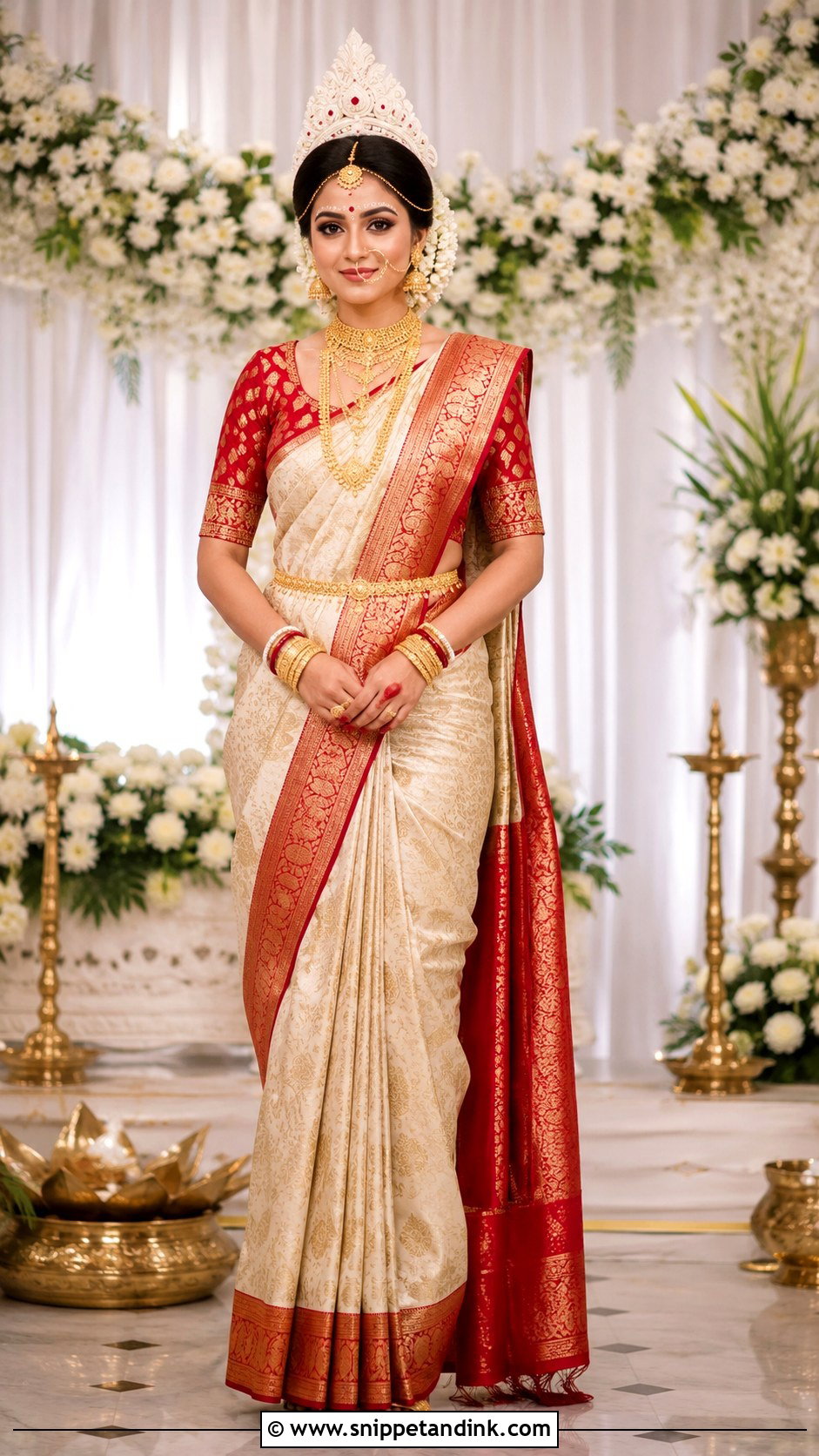
Kanjeevaram for a Bengali bride works well when the Bengali details stay in charge. Choose ivory, red or gold with a broad contrast border and pair it with a deep red Banarasi blouse; the two weaves together look rich and deliberate. Kanjeevaram silk is thick, so a traditional Bengali drape needs a skilled hand to keep the pleats from bulking at the waist. Layered gold necklaces, jhumkas, bangles, a nath and a waist belt balance its weight. The center-parted bun, white flowers and mukut set the silhouette; kajal, gold-brown shadow, a red bindi, chandan and crimson lips do the rest. Alta and gold flats finish it.
17. Yellow Bengali Bride Gaye Holud Look
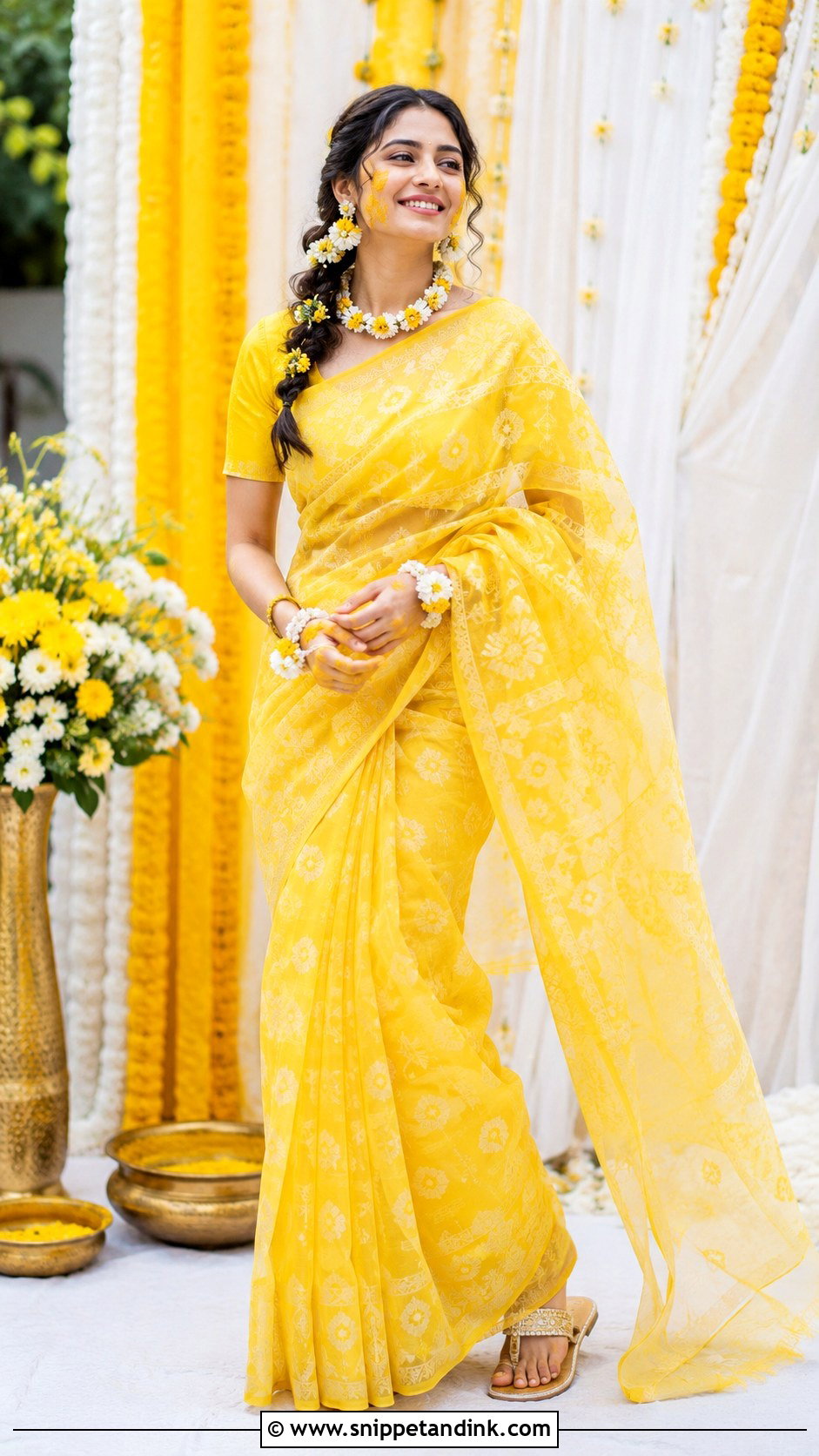
Gaye Holud asks for a cheerful yellow outfit you won’t mind ruining. Turmeric stains, so a yellow Jamdani, cotton-silk saree, light lehenga or sharara with white floral details is wiser than anything precious. A short-sleeved blouse or fitted kurta keeps you comfortable while relatives apply the paste. Floral earrings, necklace, bangles and a small hair piece replace gold for the day. A braid, loose waves or low bun with white and yellow flowers, waterproof liner, peach blush and a tinted lip are all you need. Flat sandals matter here: wet paste makes floors slippery.
18. Pastel Bengali Bride Engagement Look
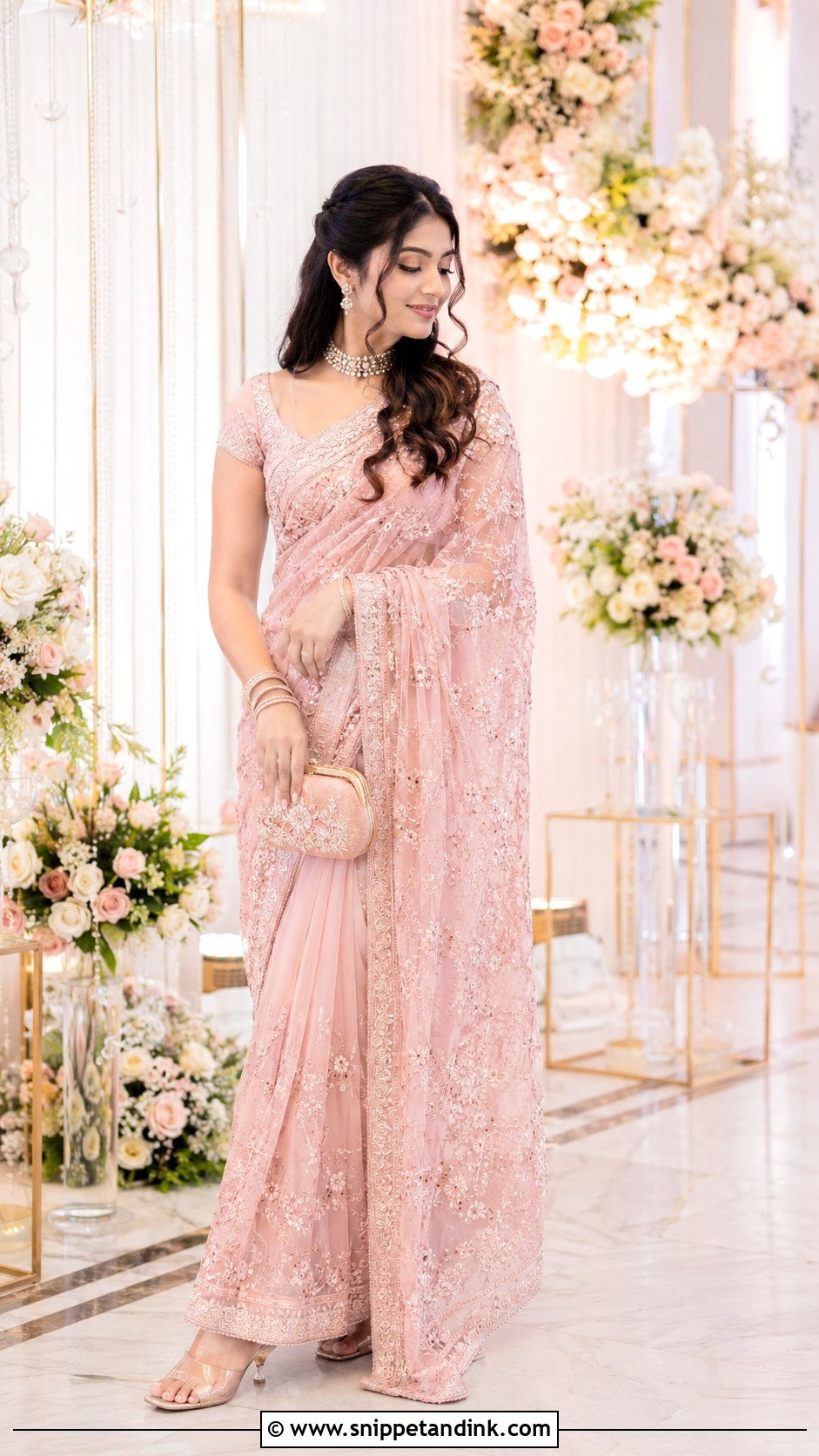
The Ashirbaad or engagement is a good place for pastels, and it keeps the wedding-day red feeling special. Blush, lavender, powder blue or sage with silver, pearl or muted-gold embroidery, and a blouse in the same color family for a long line. Pastels show makeup transfer easily at the neckline, so set foundation along the jaw before you dress. Pearls, polki or a fine gold choker add polish without weight. Soft curls, half-up or a low textured bun, rosy cheeks, defined lashes and a pink-nude lip match the palette. Metallic low heels, a small clutch and a few bangles complete it.
19. Minimal White And Red Bengali Bridal Look
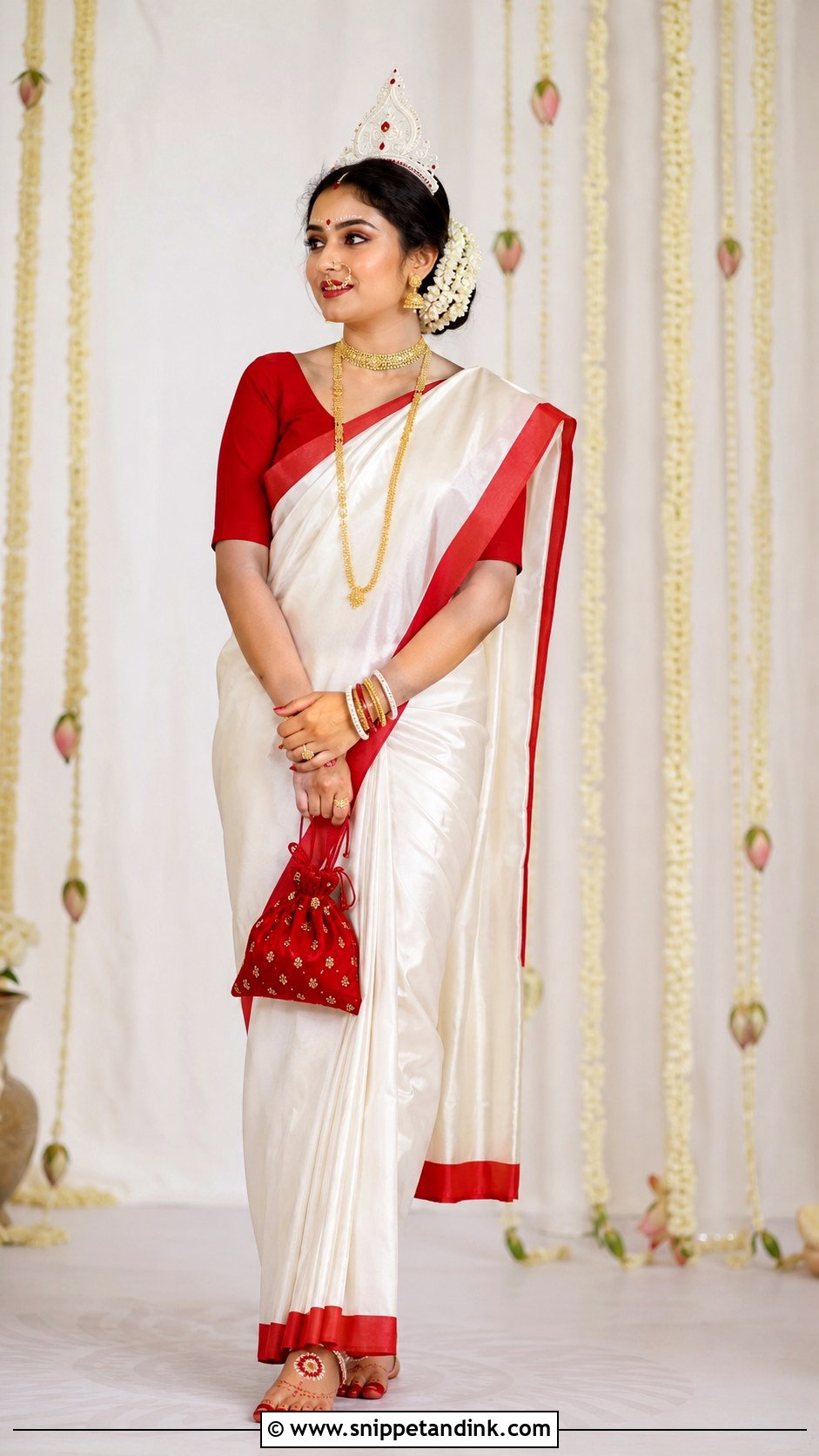
Simple doesn’t mean underdressed if every piece earns its place. A crisp silk, Garad, Jamdani or understated Banarasi with a clean red border pairs with a solid red blouse that fits perfectly and lets you raise your arms. Garad silk is traditional for rituals and has a crisp hand, so it holds a neat drape well. One gold choker, a long chain, medium jhumkas, traditional bangles and a fine nath replace heavy layers. A smooth low bun with white flowers, a light mukut if your ceremony uses one, satin-finish makeup, kajal, a red bindi, restrained chandan, alta, gold flats and a red potli.
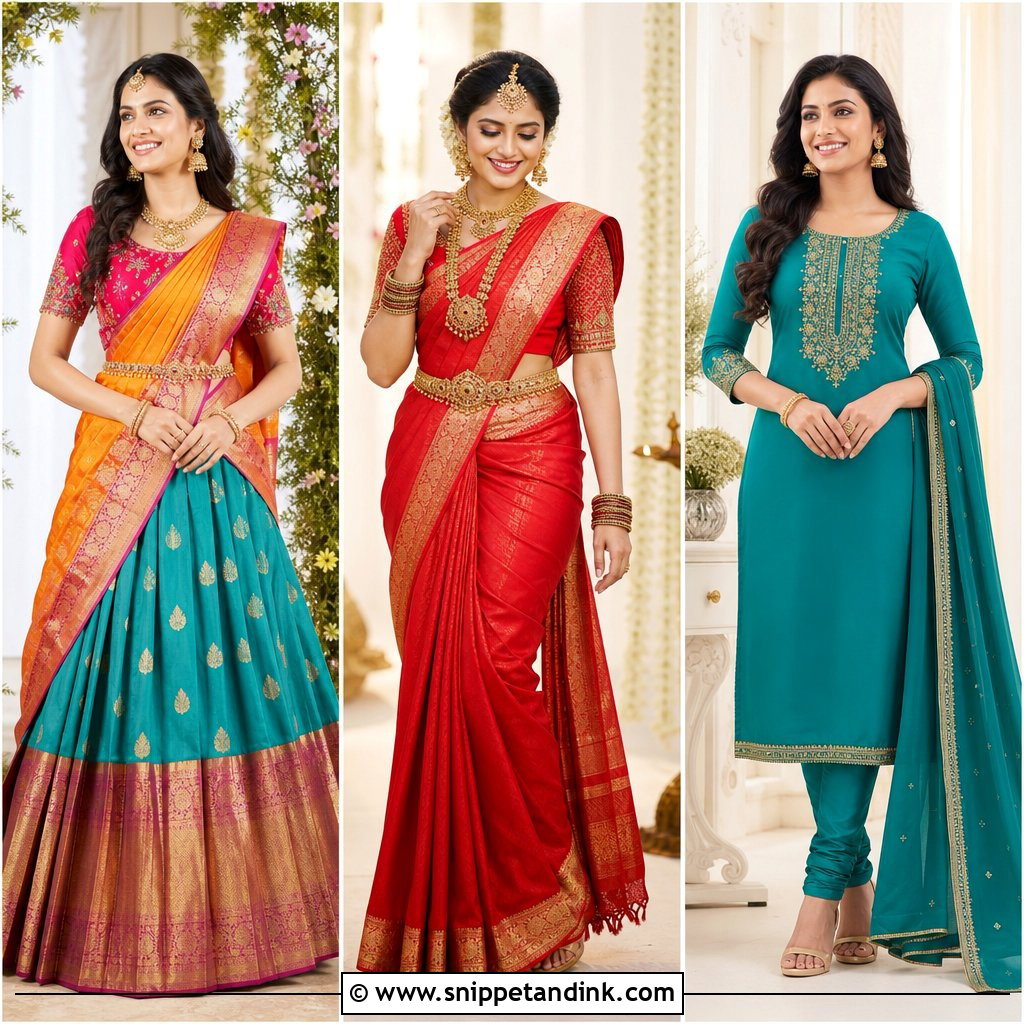
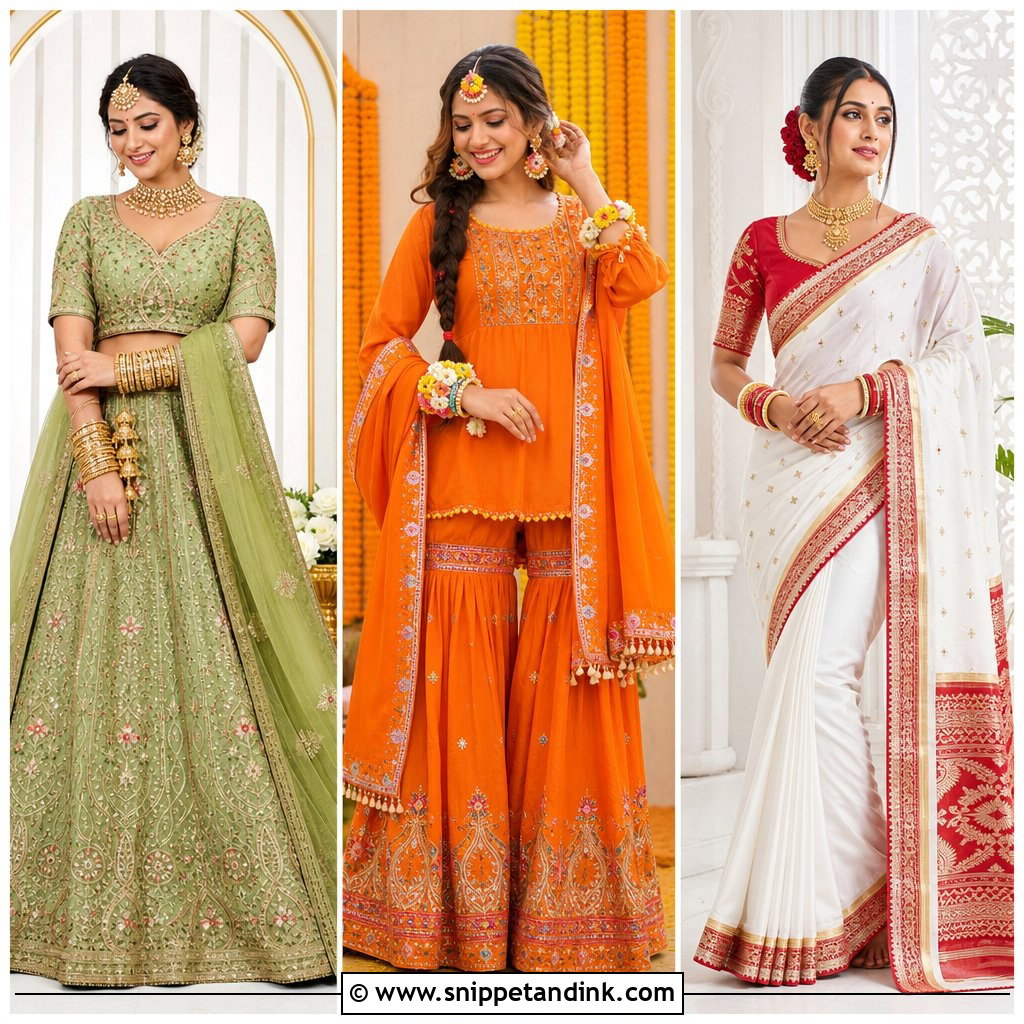
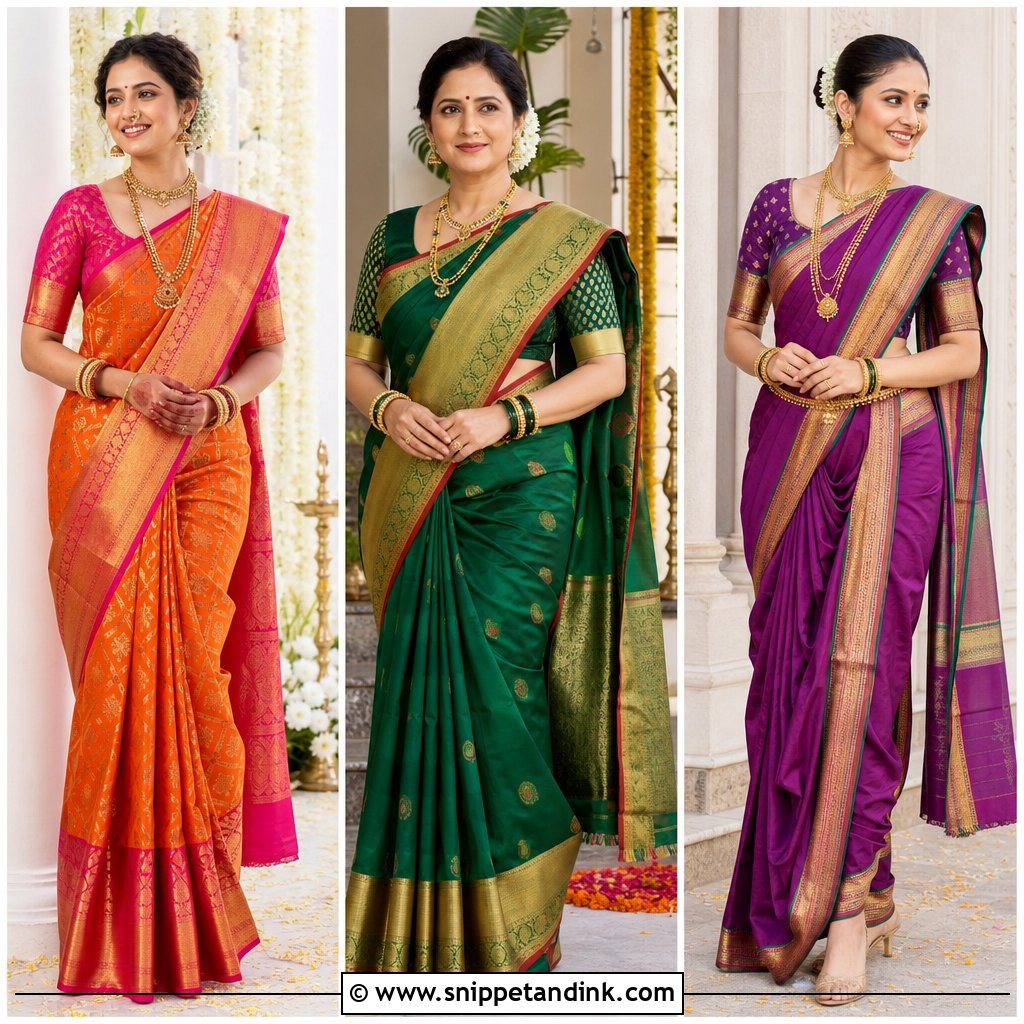
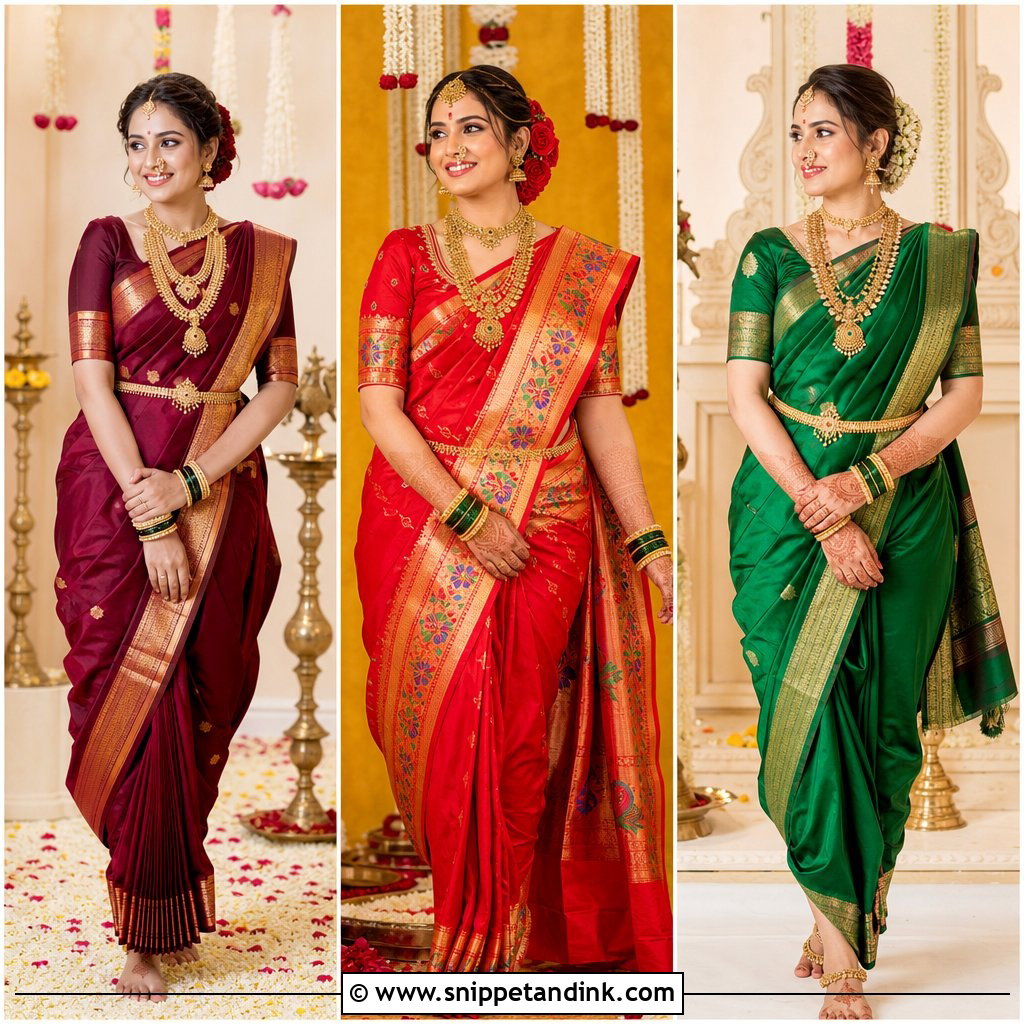
20. Red Bengali Muslim Bridal Lehenga Look
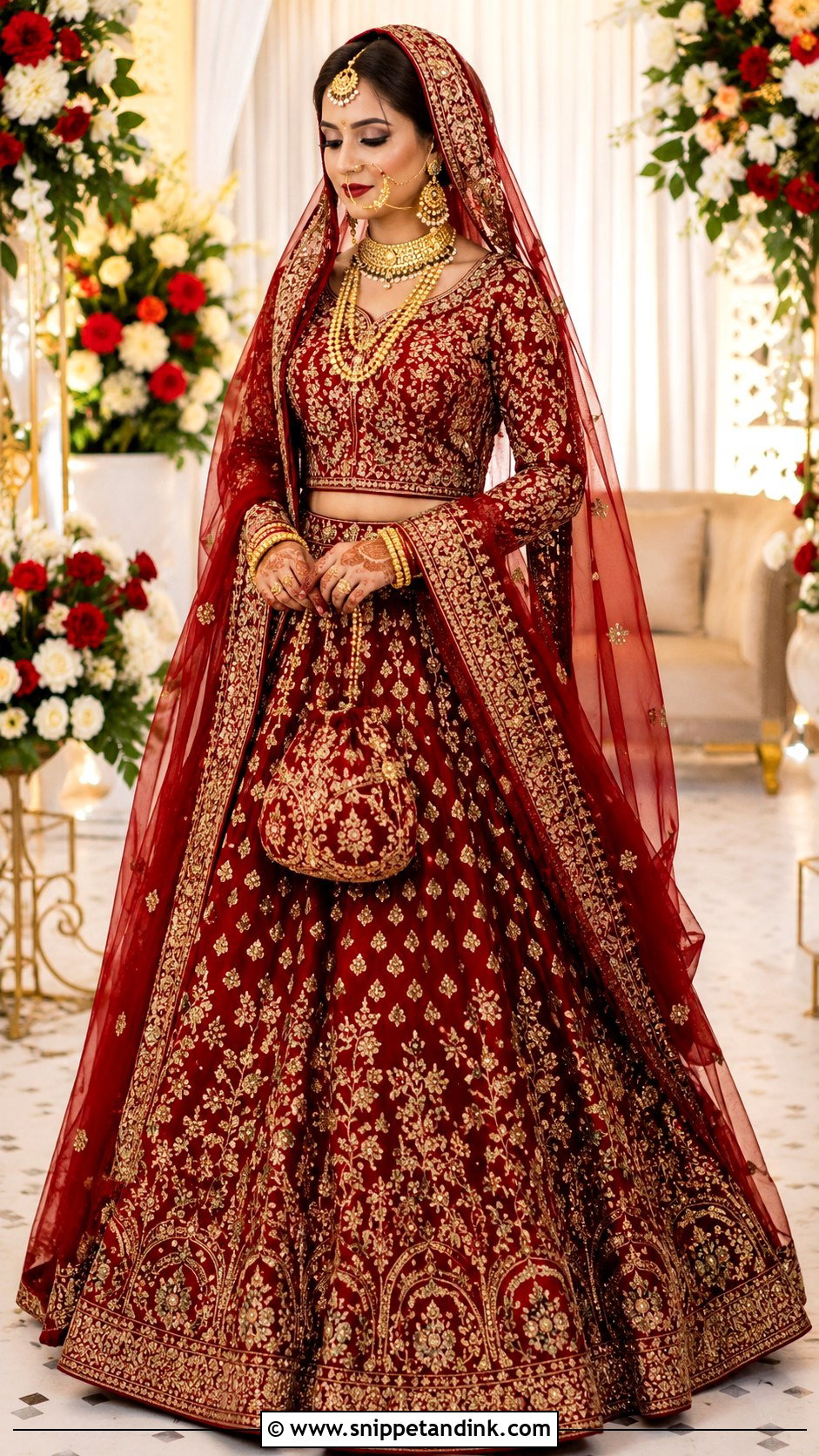
For a Bengali Muslim wedding, a red or deep maroon lehenga with a carefully draped dupatta is a classic choice. Gold embroidery, floral motifs and a blouse with a comfortable, modest neckline set the base. Pin the dupatta over the head so it frames the face but leaves the earrings and bodice visible; I usually secure it at the crown and behind each ear. A tikli or maang tikka, layered necklaces, jhumkas, a statement nath, bangles and hand jewelry complete it, with a neat bun underneath for support. Kajal, gold shadow, luminous skin and a red or berry lip, embellished juttis and a matching potli, all adjusted to family tradition.
Ashirbaad to Bou Bhaat: Planning Four Outfits That Don’t Repeat
A Bengali wedding often spans the Ashirbaad, Gaye Holud, the wedding and the Bou Bhaat reception, and each wants a different weight and color. I plan them together so the colors don’t repeat and the jewelry can be reused without anyone noticing.
- Fix the wedding saree first. Everything else is chosen to contrast with it.
- Give the Ashirbaad a soft color, the Gaye Holud something washable, and the reception a color that’s clearly not wedding red.
- Reuse the heavy gold for the wedding and reception but change how it’s layered: choker and long haar one night, single statement necklace the next.
- Try every saree draped at least once before the wedding week. Silks fall very differently, and a draper needs to know the fabric.
- Once the events are over, air each saree before folding, refold along new lines every few months and wrap zari borders in soft cotton so they don’t tarnish.
A good draper is worth booking for every event, not just the wedding. Silk pleats that look crisp at the start of the evening are usually the work of an extra fifteen minutes and a lot of pins.
Test the Whole Look Once, Mukut and All
Red Banarasi will always be the classic, but Jamdani, tissue, colorful reception sarees and embroidered lehengas give you room to move. What keeps any of them Bengali is the set of small things: chandan, bindi, mukut, alta, kajal and family gold. Adapt those to your religious customs, family practice, venue and weather. Then do one full trial before the wedding, with the actual saree draped, the jewelry on and the mukut pinned, so you know how it all feels after an hour. That trial tells you more than any photograph.
You'll Like These Ideas:




Leave a Reply