
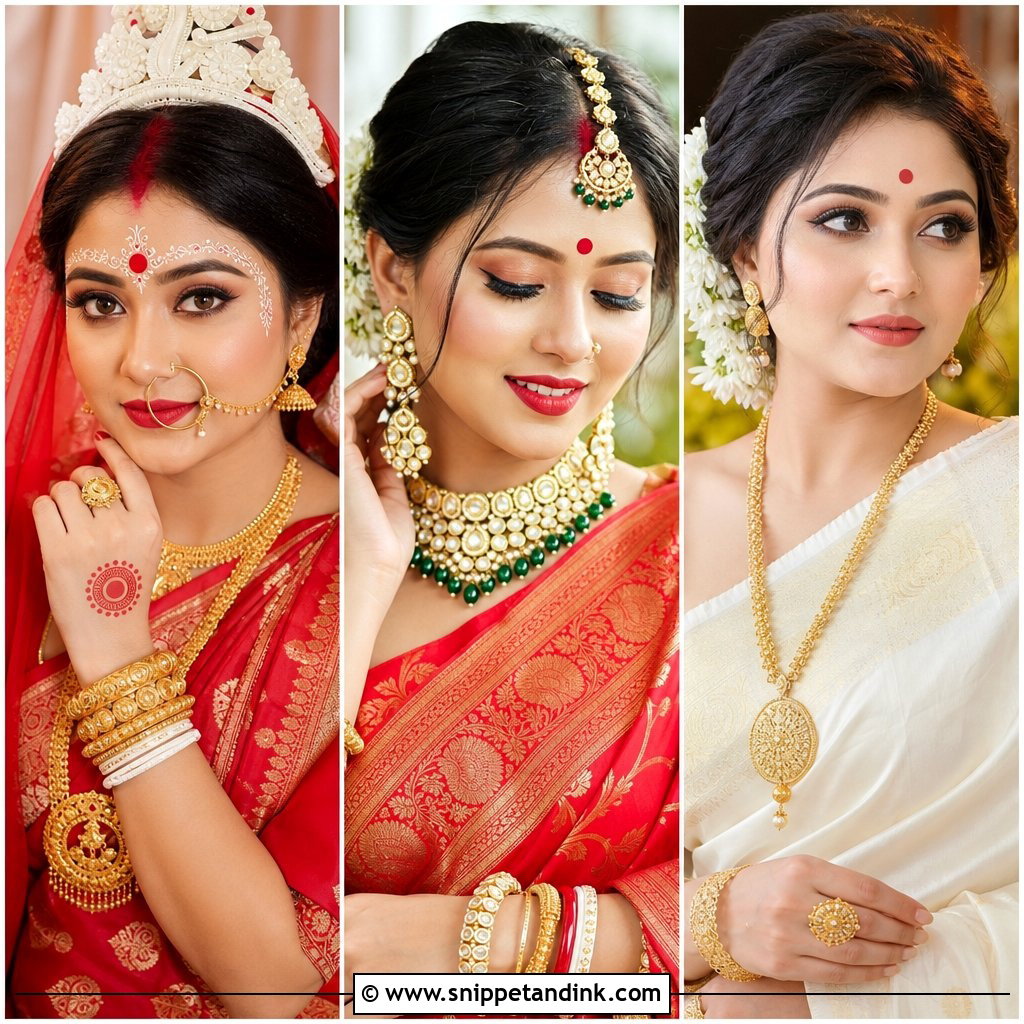
A Bengali bride is recognizable from across a room: red and gold silk, white chandan dots arching over the brows, kajal, a big red bindi and alta on the hands and feet. The red Banarasi is still the classic, though plenty of brides now wear ivory silk, colorful Jamdani, embroidered lehengas or something lighter for the reception. As a makeup artist, I plan the face around the saree, the jewelry weight and the hours of ritual ahead, because a look that photographs well at 7pm still has to hold through a late-night ceremony. The twenty looks below cover wedding sarees, color alternatives, pre-wedding outfits and reception wear, each with the jewelry, hair and makeup I’d pair with it.

How I Draw Chandan Dots on a Bengali Bride
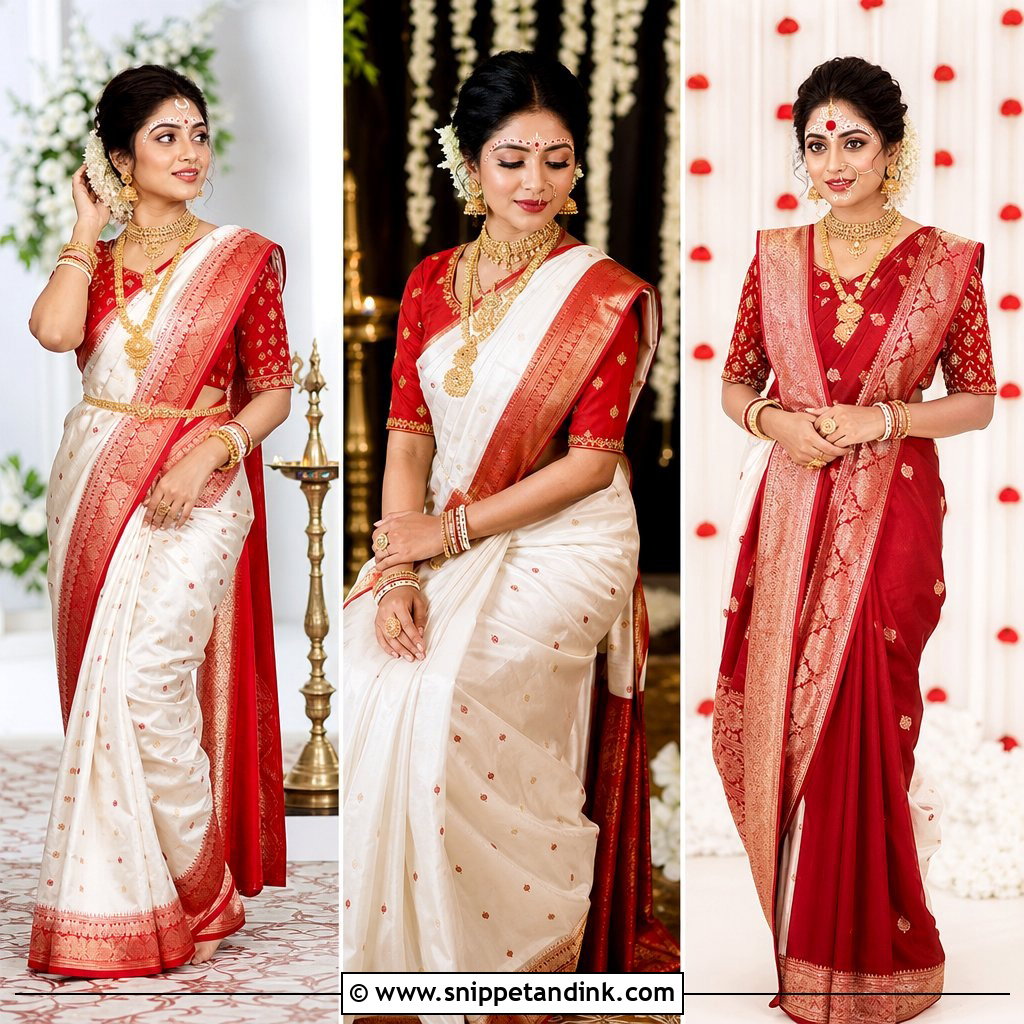
The white and red pattern over the brows, called chandan or kolka art, is the detail guests notice up close, and it’s the one that goes wrong most easily. I always do it last, after the base, eyes, brows and bindi are set, because anything applied afterward risks smudging it.
- Measure the forehead first. A high forehead takes two or three rows of dots; a short one looks crowded with more than one arc plus a few accents.
- Mark the center point above the bindi, then work outward one side at a time, mirroring each dot before moving on. Symmetry matters more than detail.
- Use a fine brush or a toothpick for dots, and keep the paste a thick, smooth consistency. Runny paste spreads into blobs.
- Leave it to dry fully before the veil or mukut goes near it. Fabric brushing wet paste is the most common cause of smears.
- Patch test whatever paste you use a few days ahead. Sandalwood paste is usually gentle, but some ready-made white paints irritate sensitive skin.
Allow at least half an hour for this step in the getting-ready schedule. Rushing it under a family deadline shows in every close-up from the shubho drishti.
1. Traditional Red Banarasi Bengali Bride
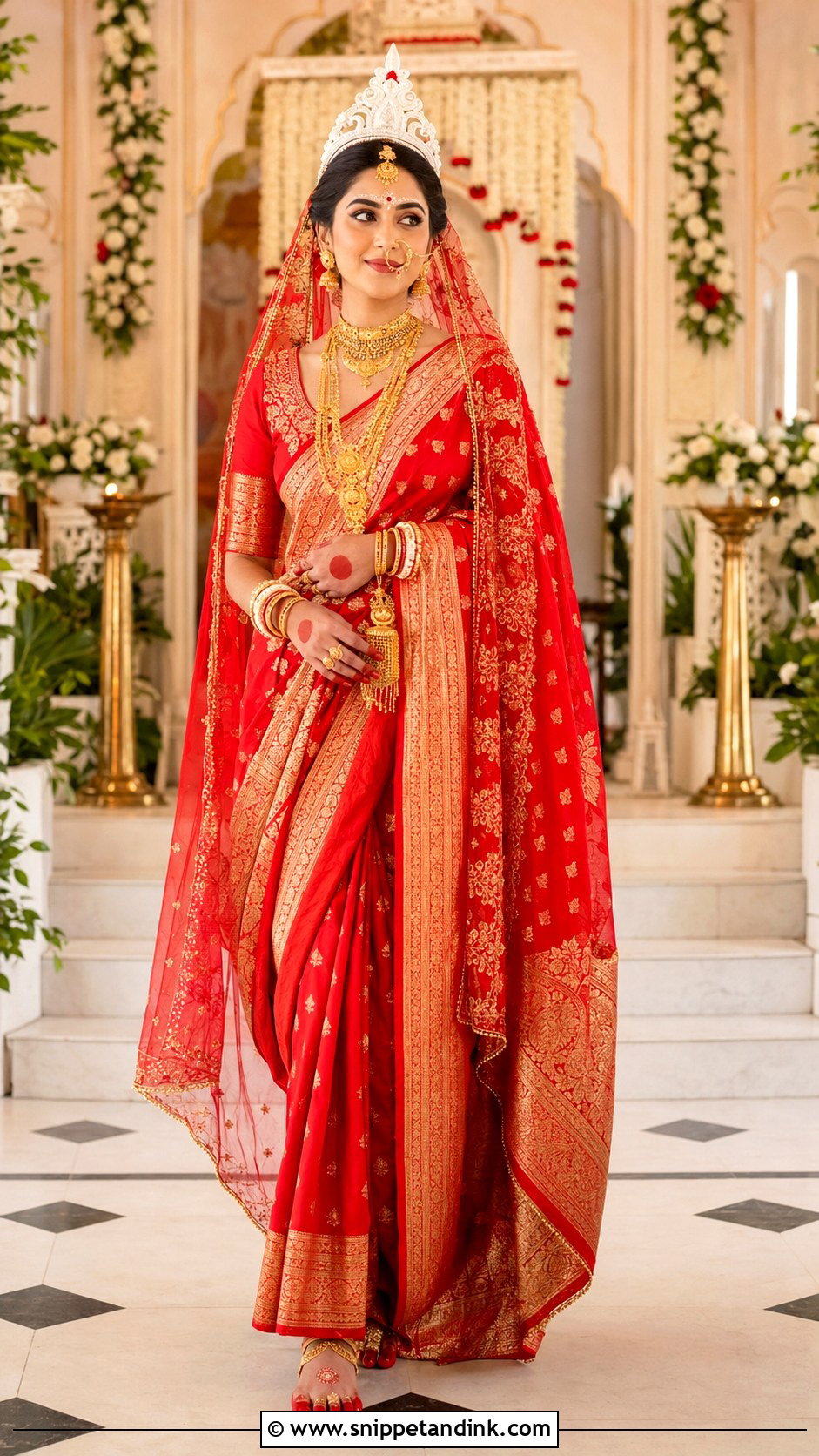
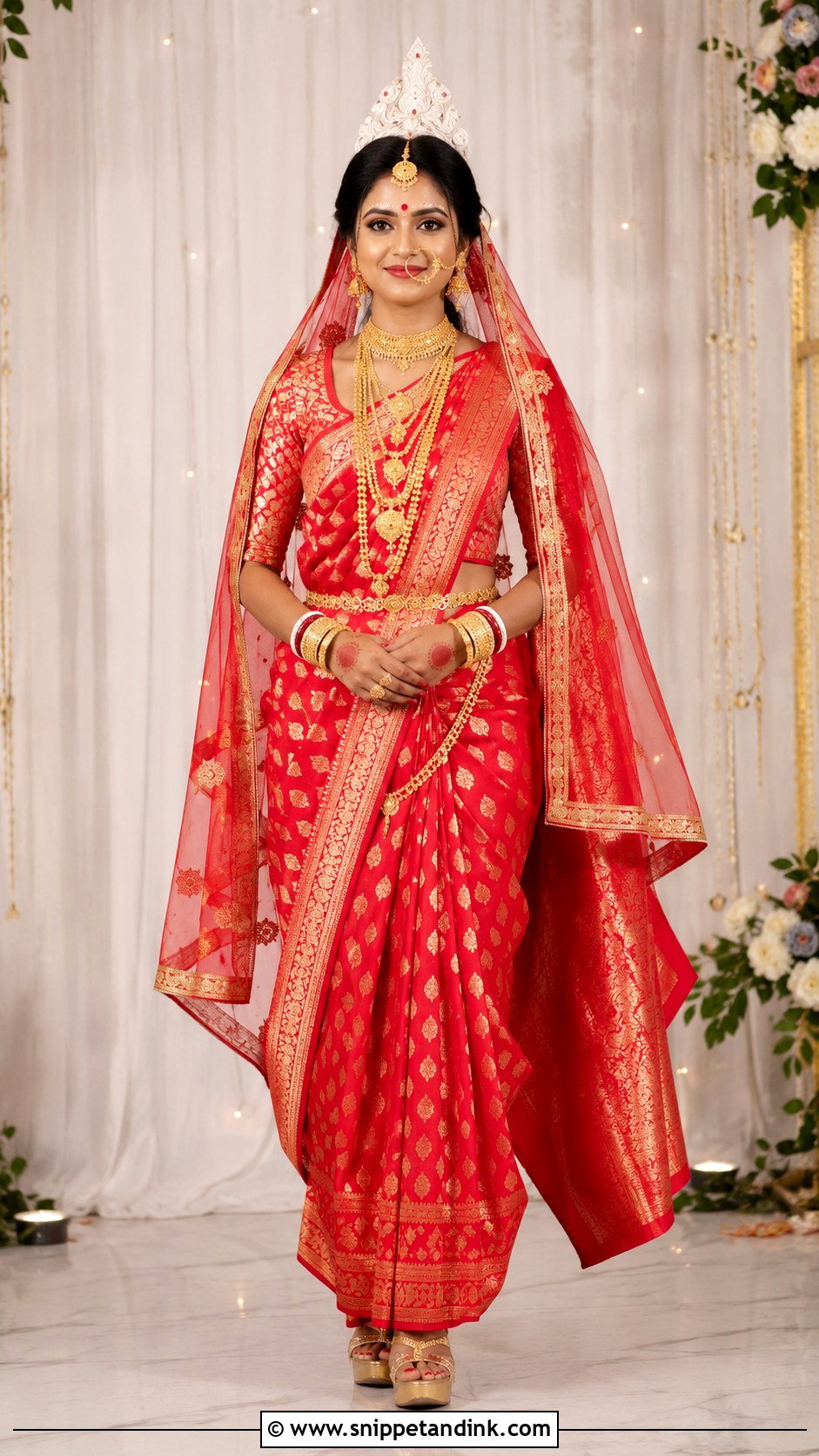
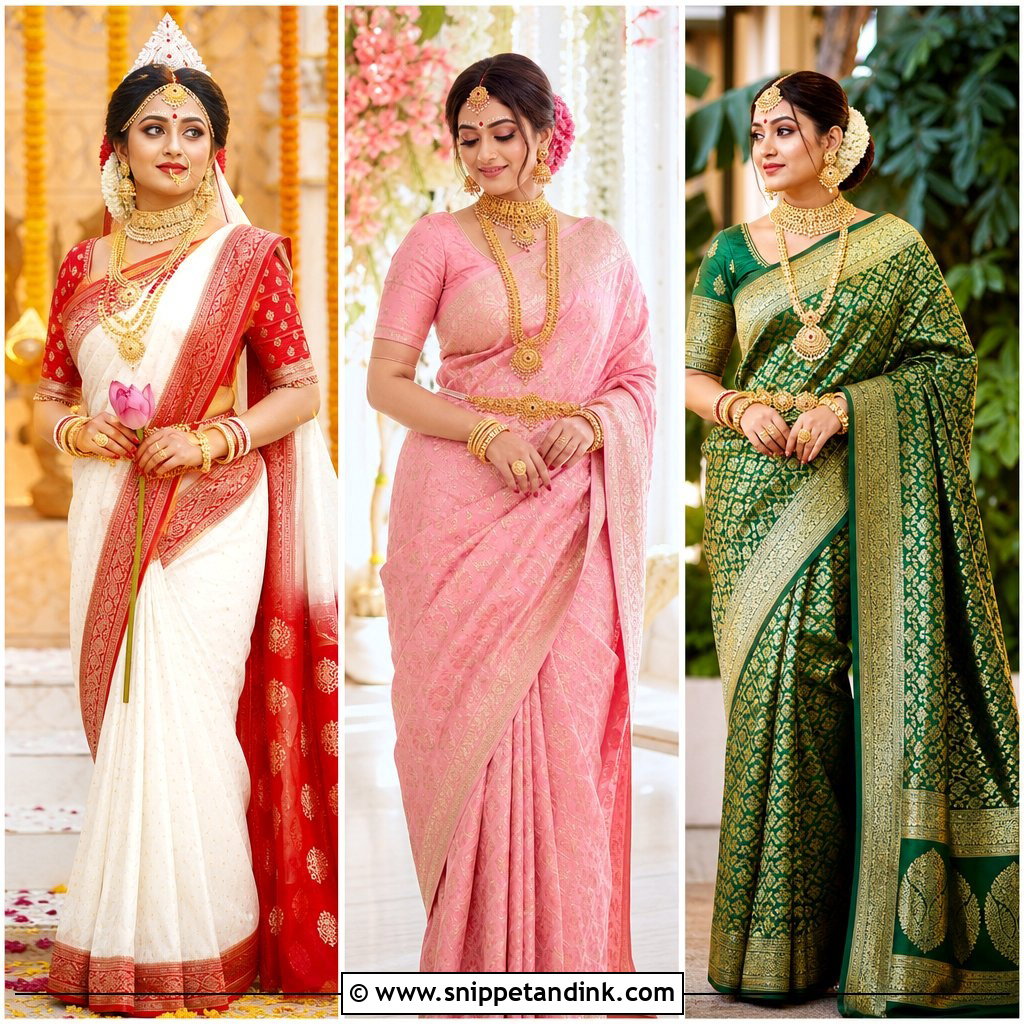
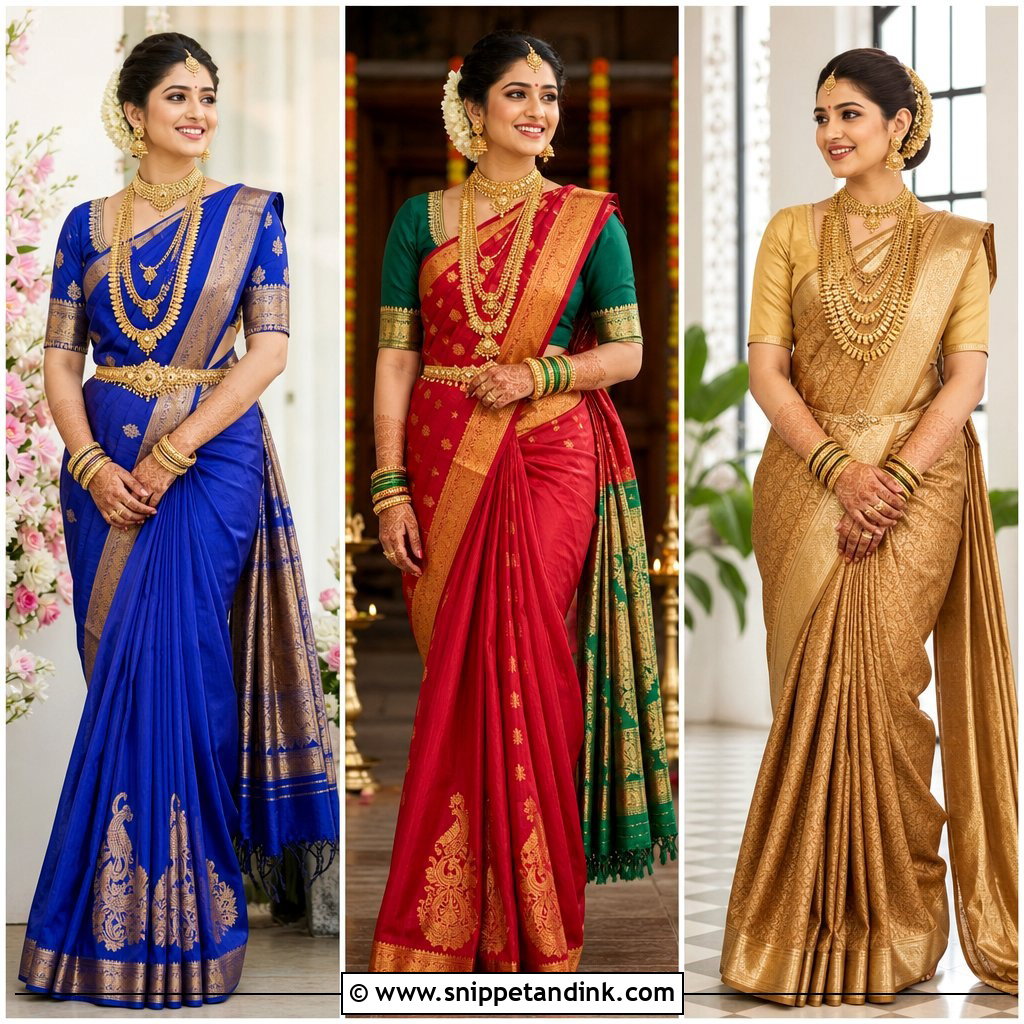
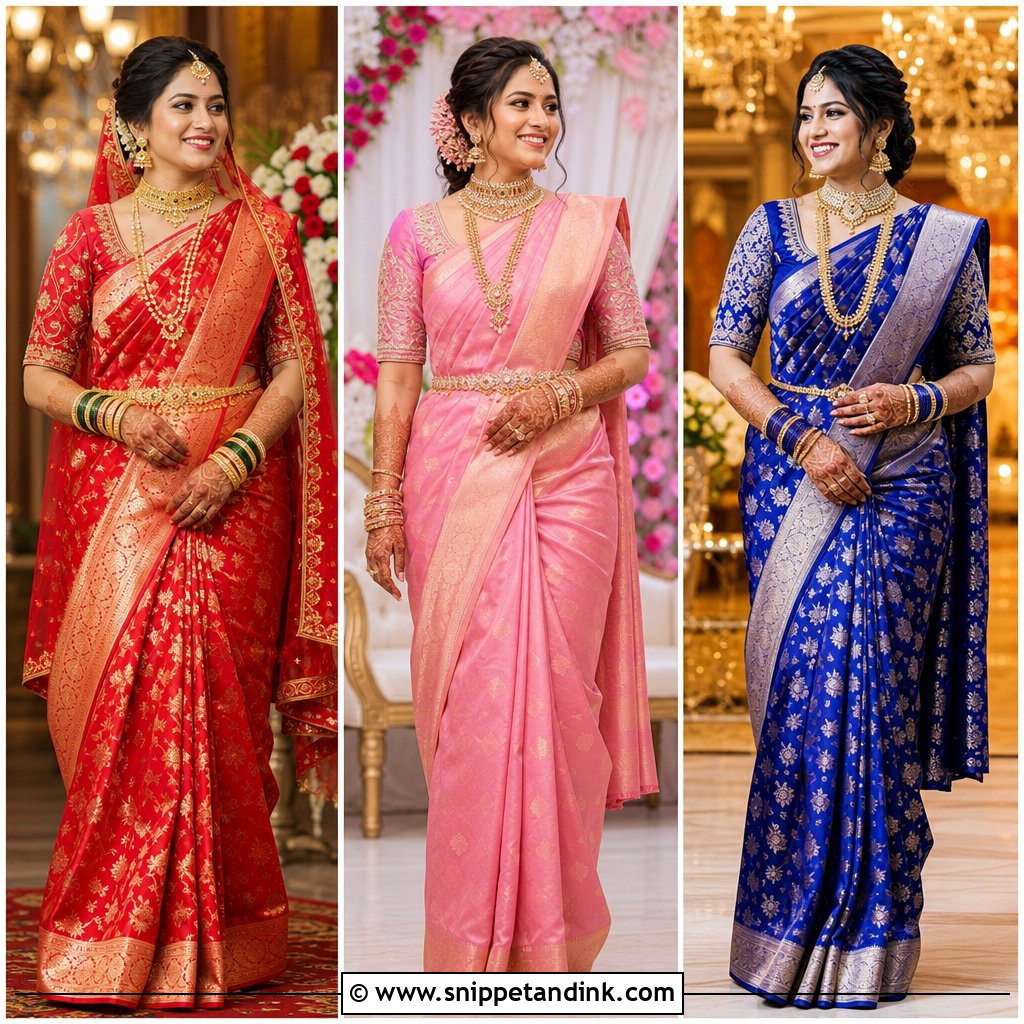
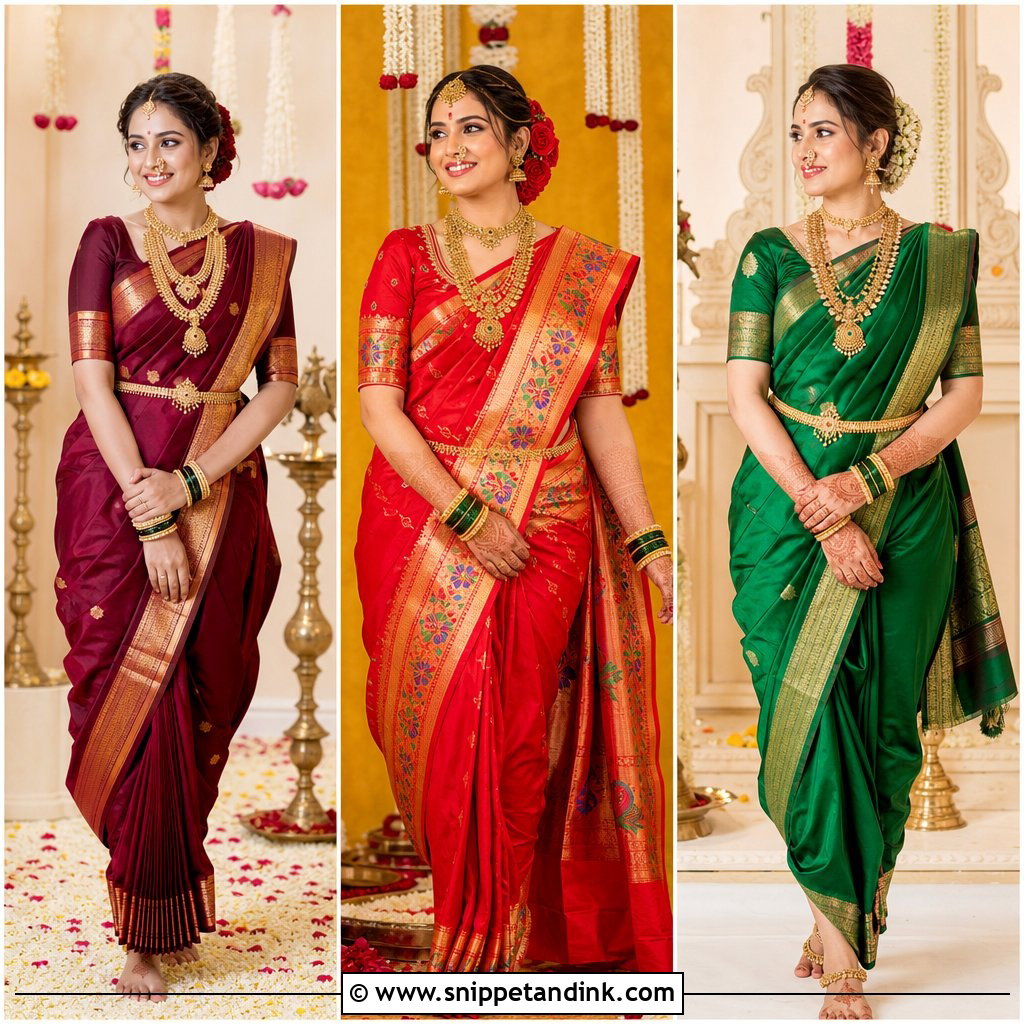
Red Banarasi with heavy gold zari is the look most families picture, and it’s the one where every detail is expected. A fitted red silk blouse with elbow sleeves and a wide gold border, neat pleats and a red veil set the frame. Jewelry layers up: choker, long necklace, jhumkas, bangles, tikli and nath. I build the bun first and pin it firmly, because it has to carry both the veil and the white mukut for hours. Kajal, red lips and a bold bindi go on before the delicate white forehead art, so I’m not drawing over wet product. Alta on hands and feet, and gold sandals that stay hidden under the hem.
2. White And Red Saree Bengali Bride
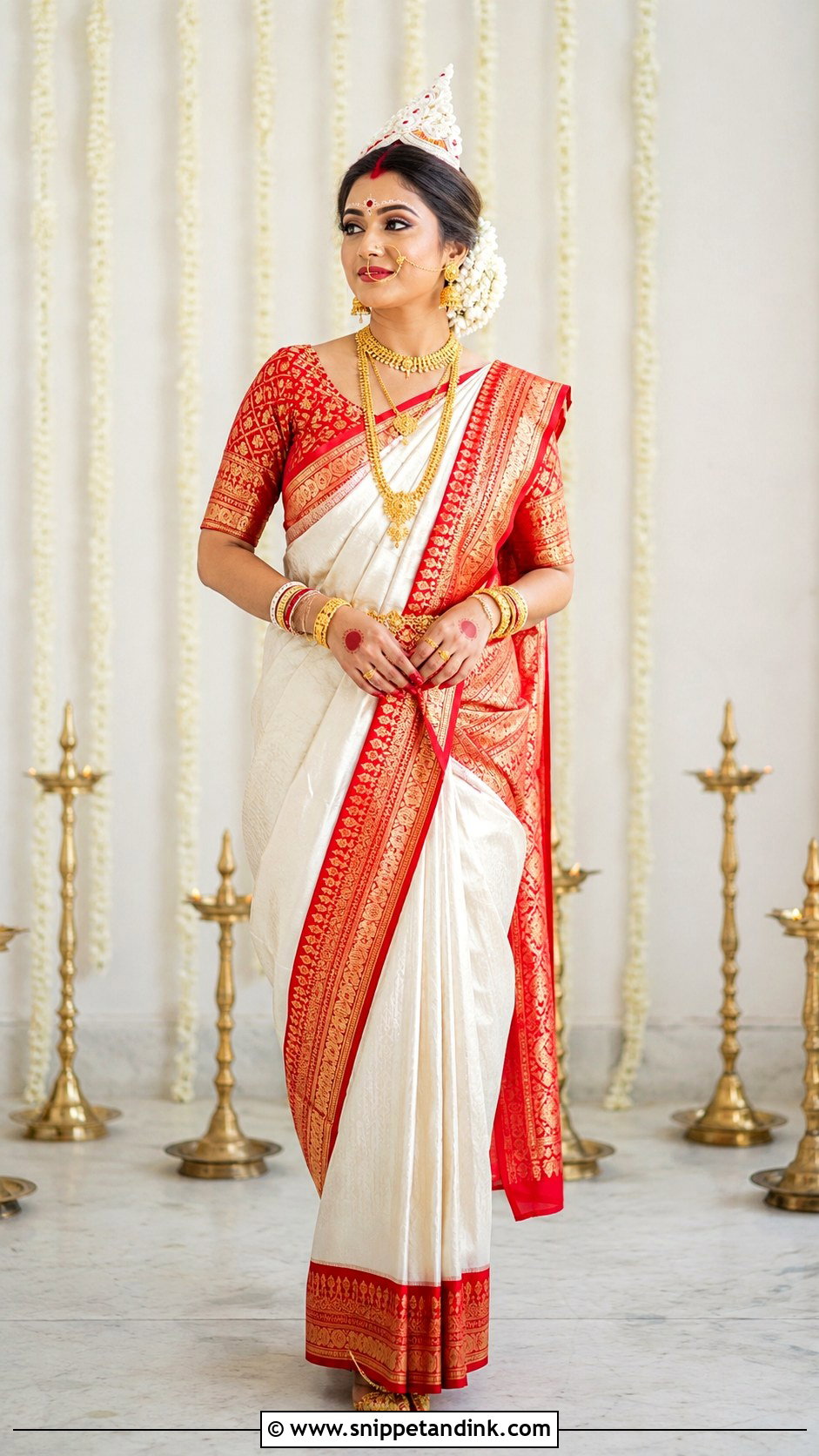
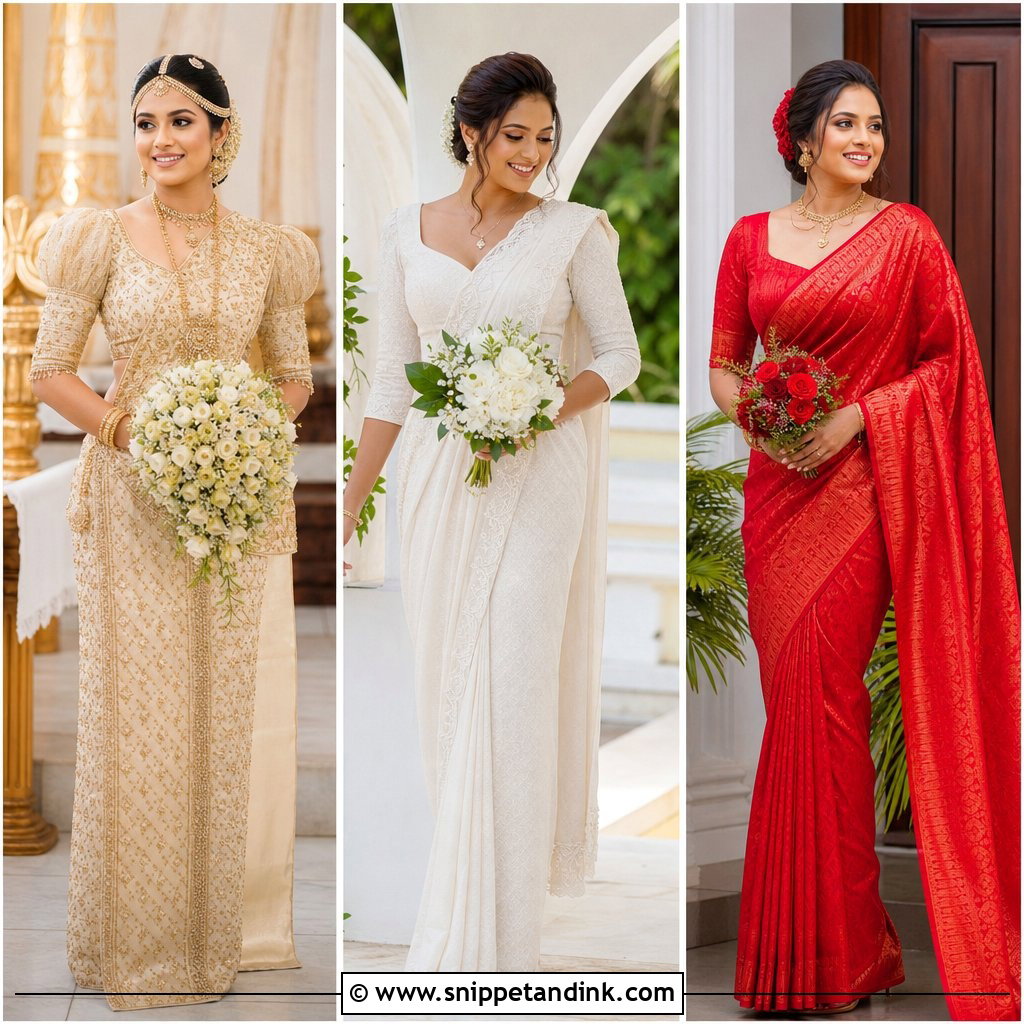
White silk with a red border is bright and very traditional, and it’s honest about one thing: it shows everything. A red brocade blouse adds formality; woven gold keeps the saree from looking busy in photos. Layer a short necklace with a longer haar, then earrings, bangles, a waist belt and a fine nose ring. With so much white near the face, I keep the base dewy but well set, since shine on the forehead reads strongly against pale silk. A center-parted low bun with white flowers, red lips, defined eyes and symmetrical forehead art suit it, plus alta and cushioned sandals.
3. Maroon Banarasi Bengali Bride
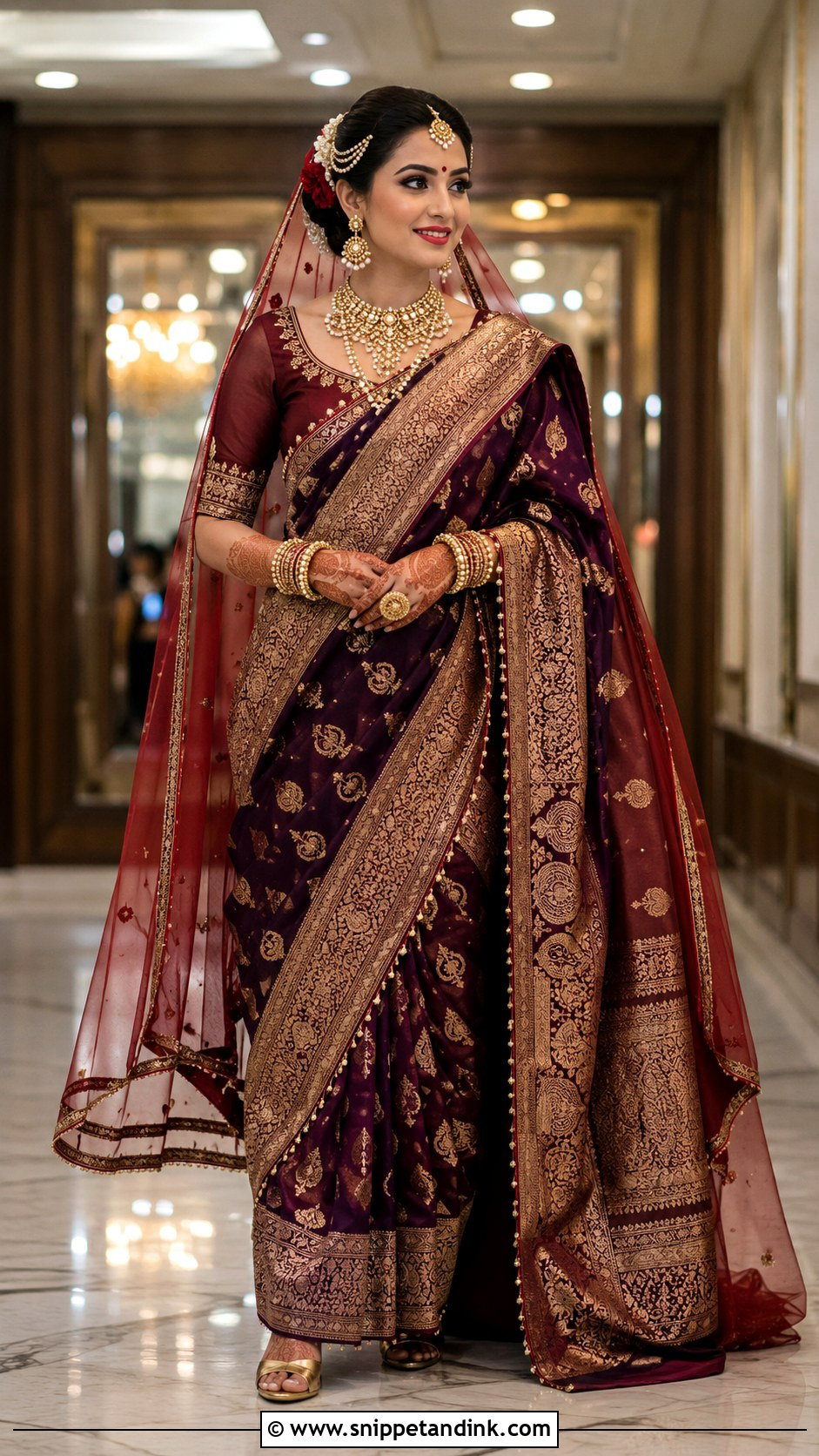
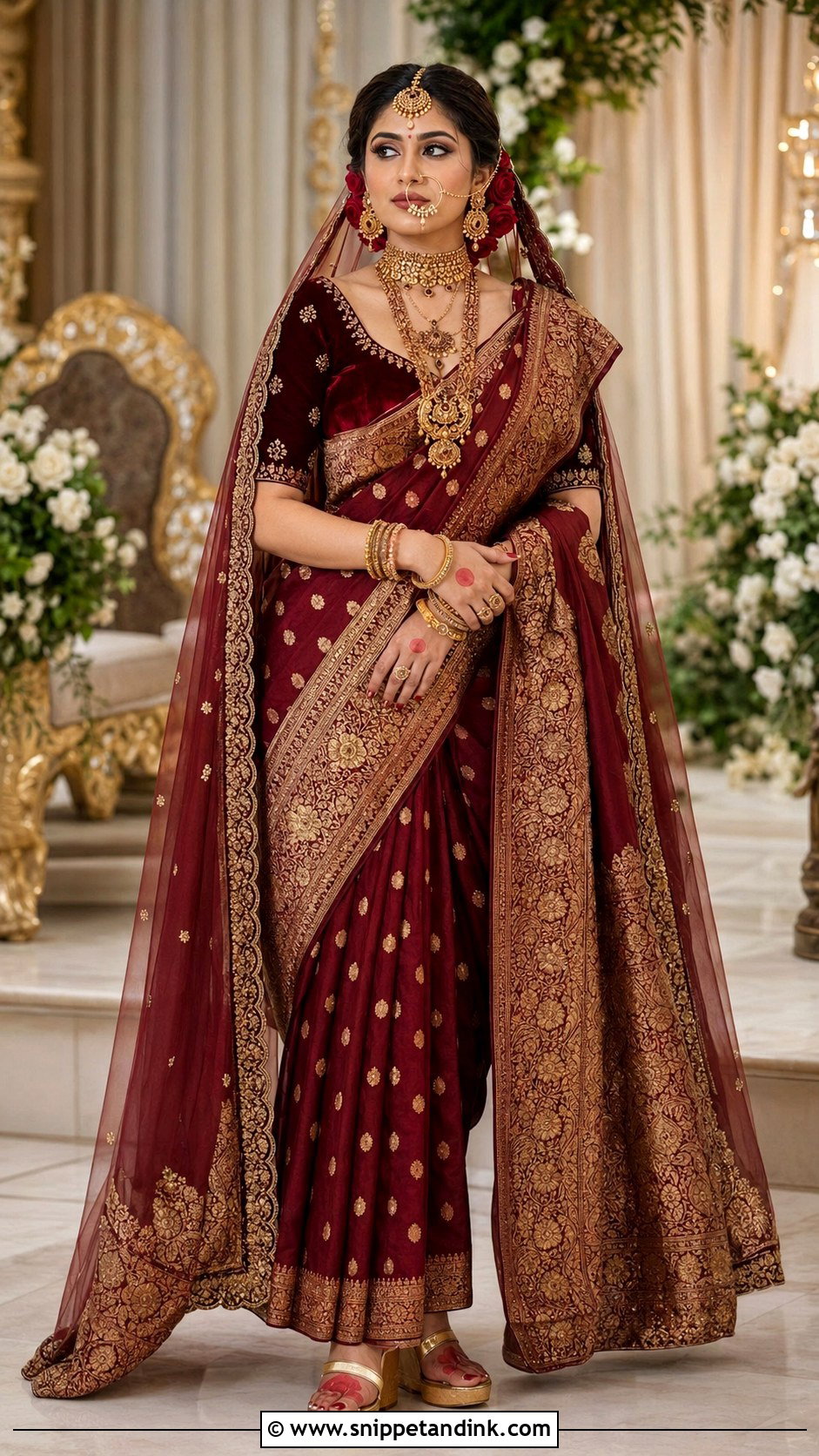
Maroon is for the bride who loves red but wants it deeper. A maroon Banarasi with antique-gold weaving, paired with a velvet, raw silk or brocade blouse, has an evening richness. Elbow sleeves and a modest neckline leave room for layered antique gold, a statement nath, ornate earrings and stacked bangles. Darker sarees can make a pale lip look washed out, so I match the depth: bronze shadow, black kajal, a maroon bindi and a berry-red lip. A structured low bun with red roses at one side, a light embroidered veil, alta and steady platform sandals finish it for the long rituals.
4. Coral Red Saree Bengali Bride
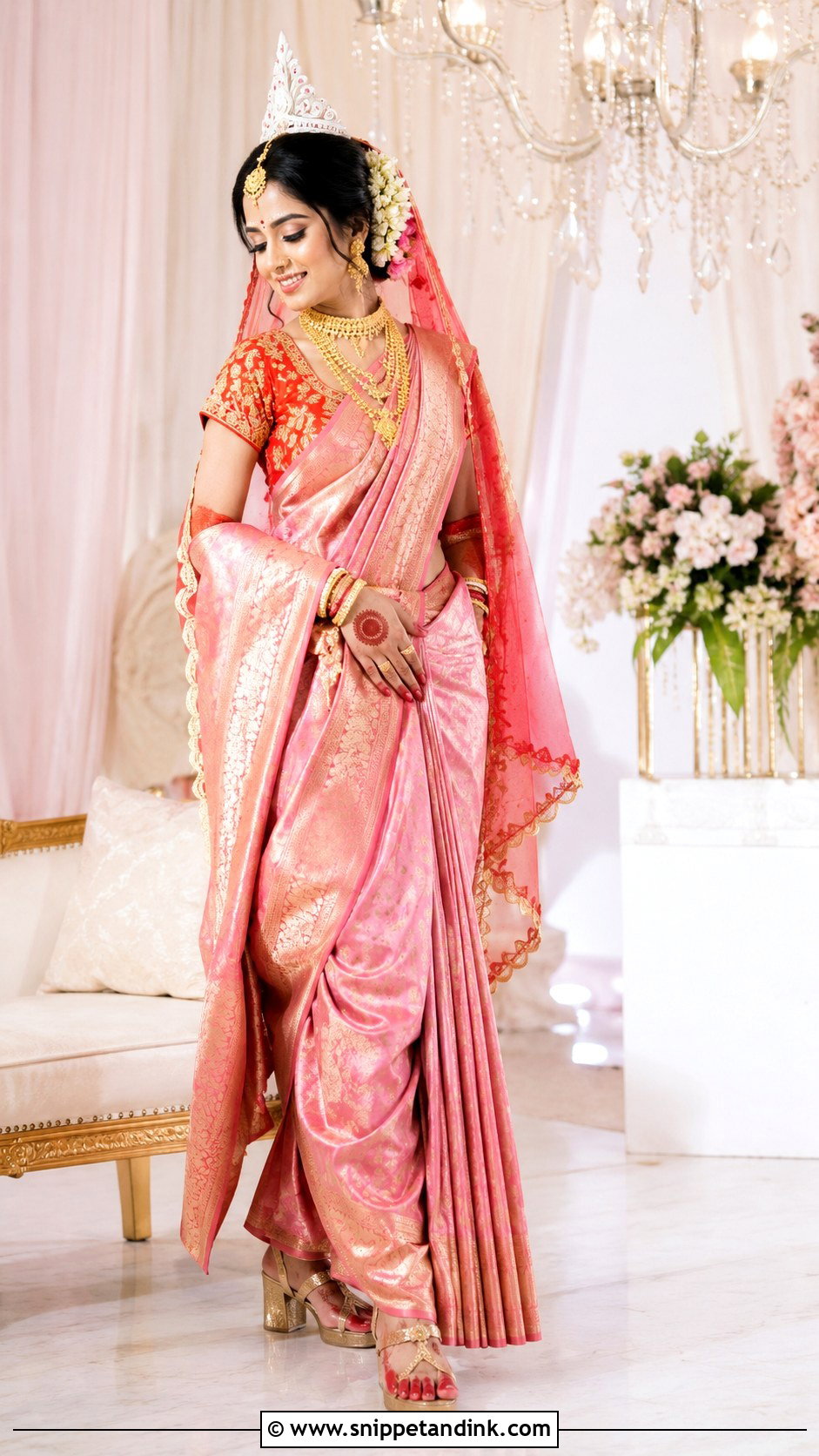
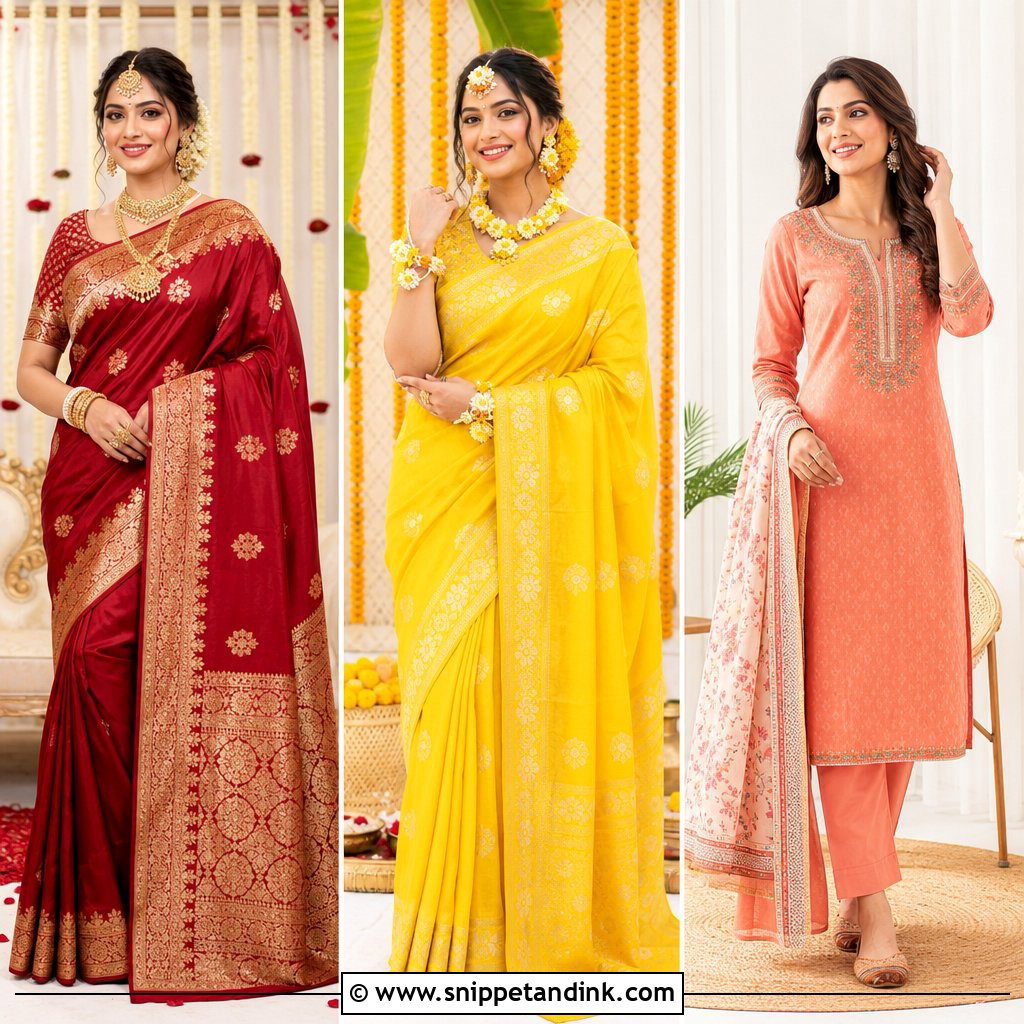
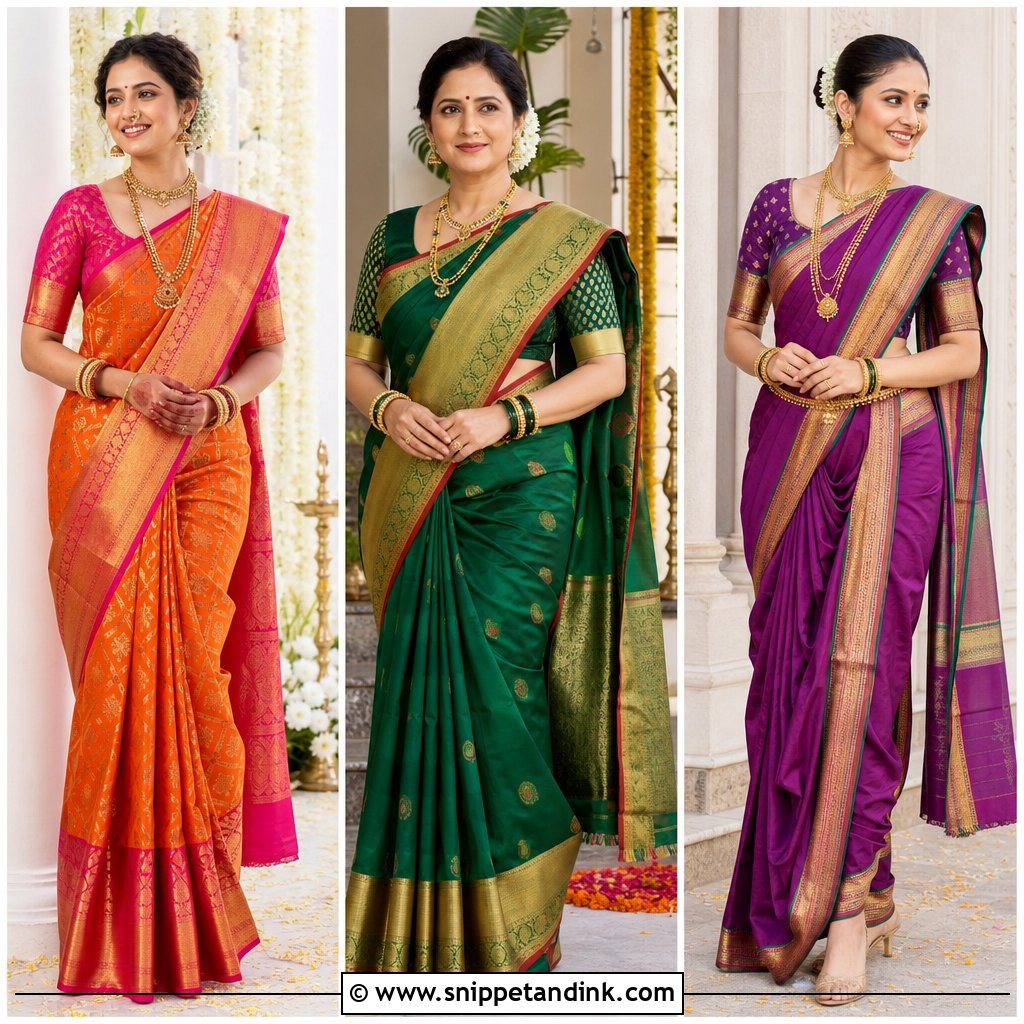
Coral is red with the heat turned down, and it looks lively in daylight. Pick a Banarasi or handwoven silk with gold florals and a defined border, and either match the blouse or go pink for contrast. With a brighter saree I’d wear one statement necklace instead of several heavy layers. A medium nath, jhumkas, bangles and a slim waist chain are enough. Coral pulls warm, so I use peach blush and warm gold eyeshadow with precise kajal and a coral-red lip, then a flower-wrapped bun, red bindi, light forehead decoration, alta and embroidered sandals.
5. Pink Banarasi Bengali Bride
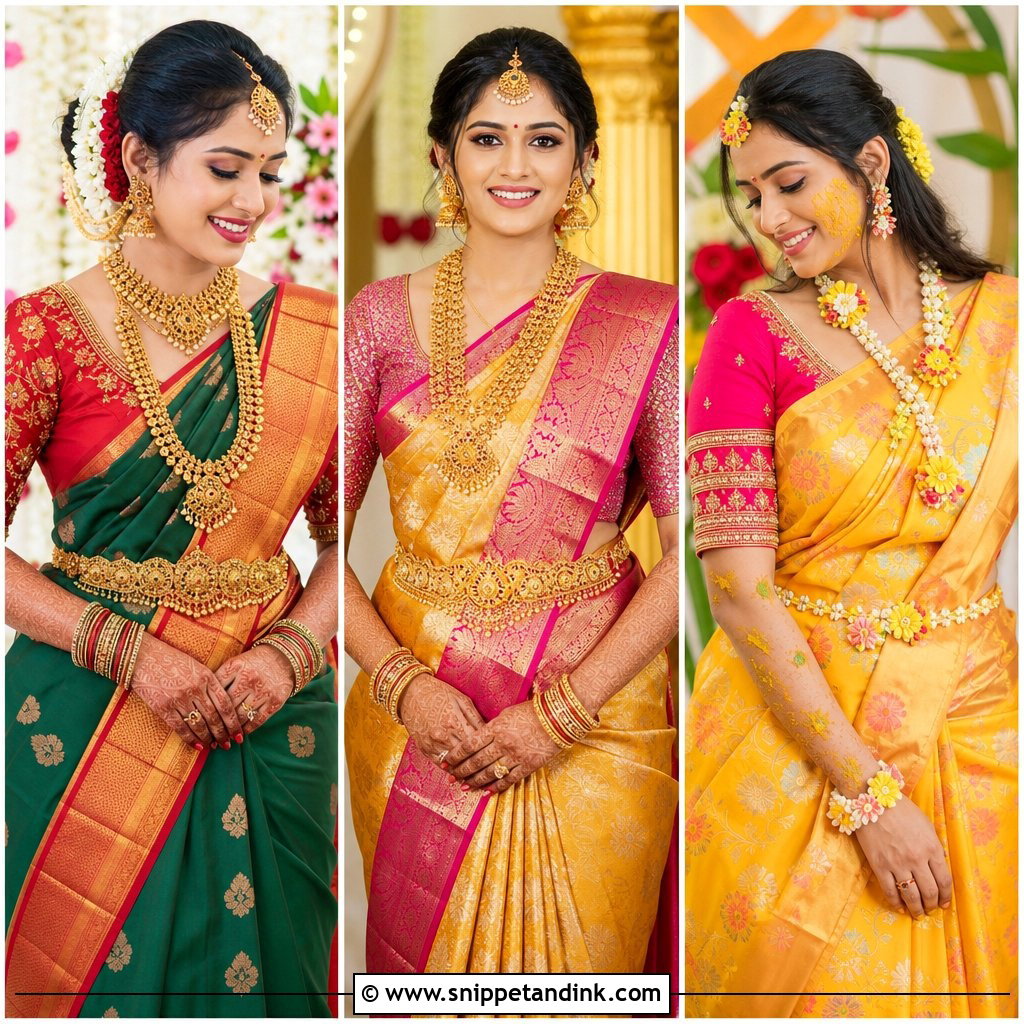
Pink is a real break from red, from soft rose to fuchsia and deep magenta. A pink Banarasi woven in gold zari still reads Bengali, especially with a matching blouse for one smooth color, or an orange-red blouse if you want punch. Traditional gold, jhumkas, bangles and a decorative tikli keep the heritage. I always check the bindi against the saree: a true red bindi can clash with cool fuchsia, so I sometimes shift it slightly deeper. A sleek bun with jasmine or pale roses, kajal, rosy blush, a berry-pink lip, subtle forehead art, alta and a light red veil complete it.
6. Ivory And Gold Bengali Bride
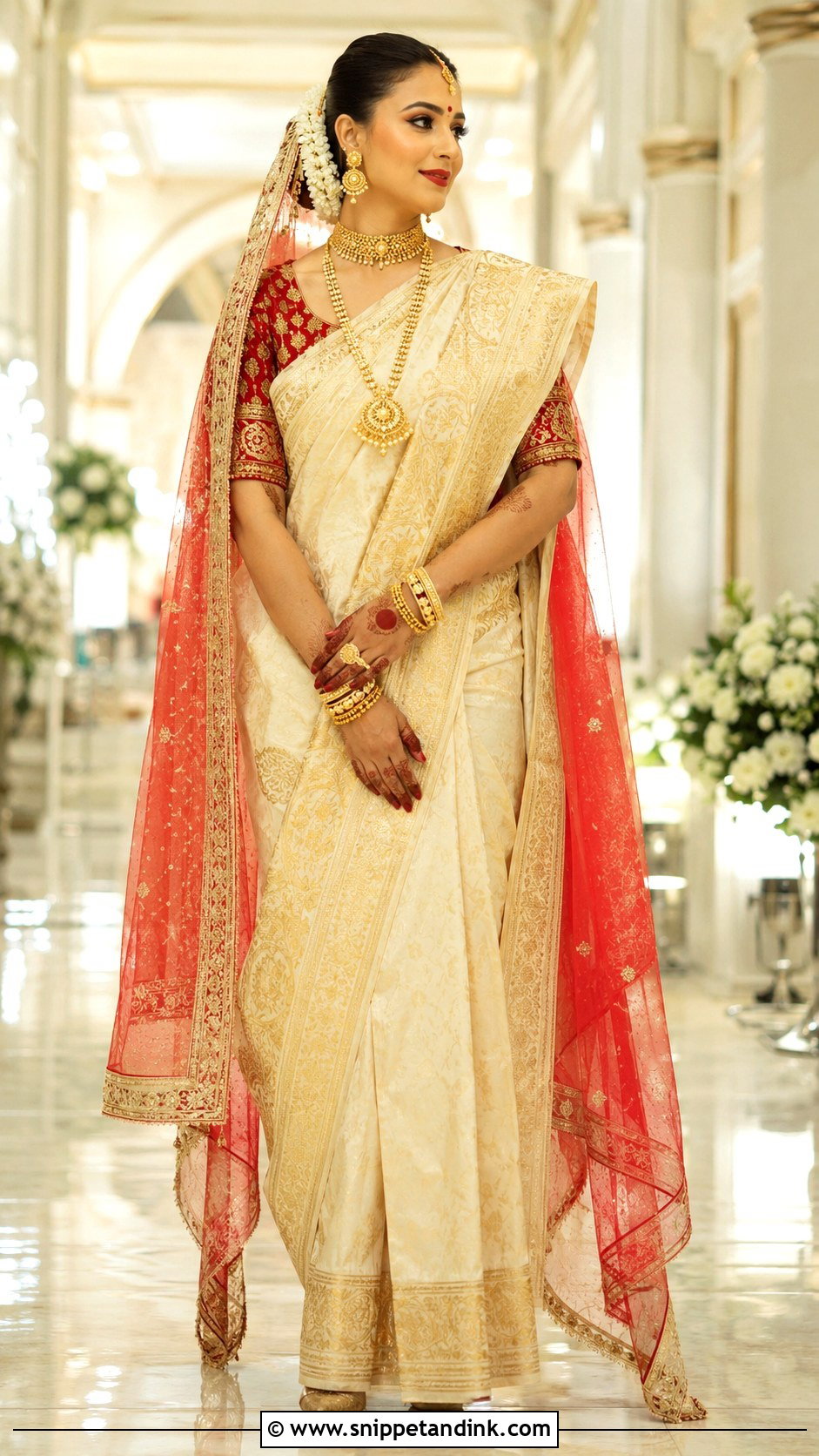
Ivory and gold keep the ceremony presence without much color. An ivory Banarasi, tissue silk or Katan silk with heavy gold borders pairs with either a gold blouse or deep red brocade for contrast. Antique gold stands out well against pale fabric. Add a sheer red veil if the palette needs more bridal weight. Tissue silk reflects a lot of light onto the face, so I go lighter on highlighter than usual or the skin looks oily in flash. A center-parted low bun with flowers, kohl, a red bindi, forehead art, a classic red lip, alta and neutral gold heels finish it.
7. Red Lehenga Bengali Bride
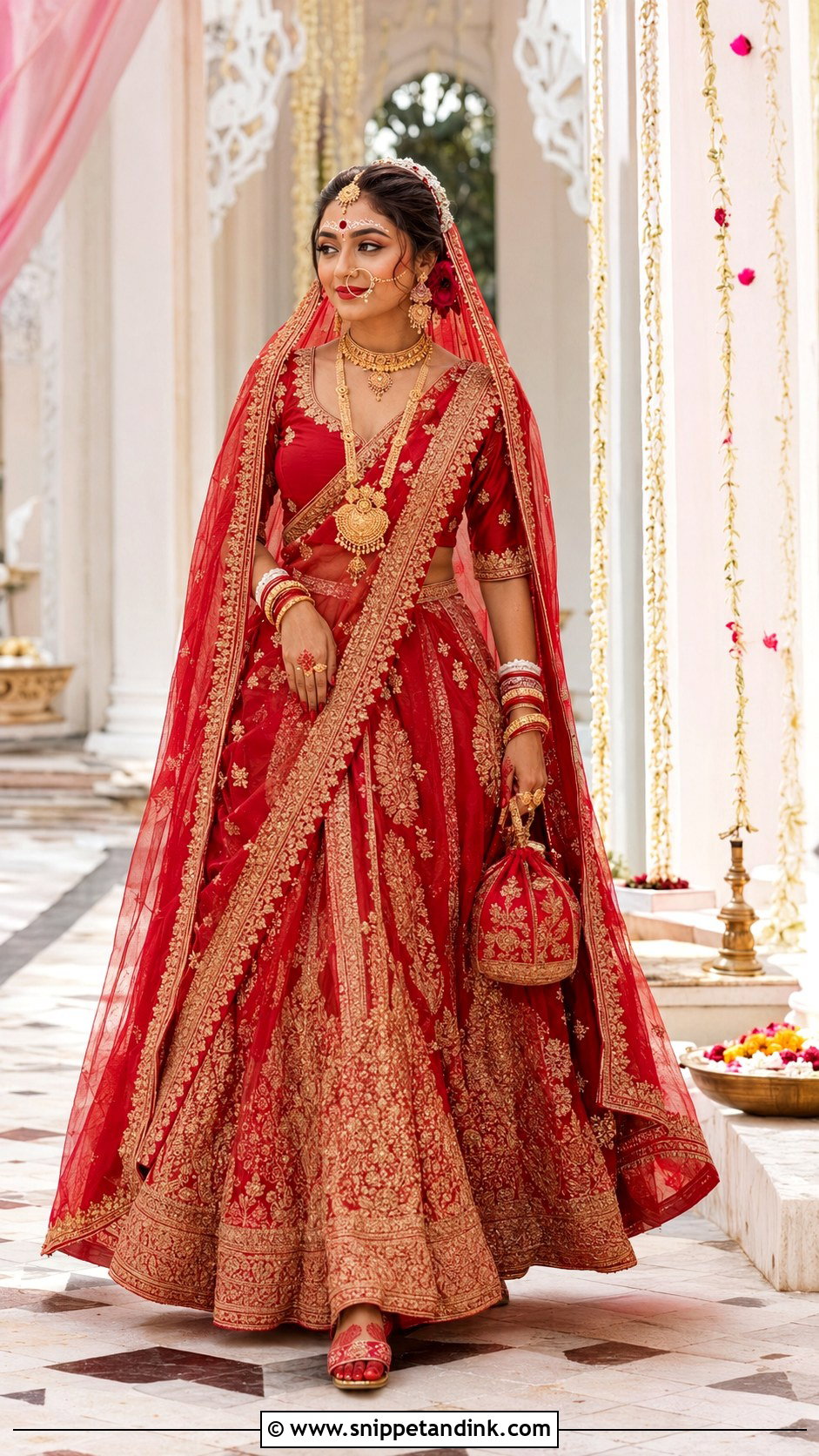
A lehenga gives you a dramatic skirt while the beauty details keep it Bengali. A high-waisted silk or velvet lehenga with gold embroidery, a structured blouse and a dupatta draped over the head and one shoulder lets the embroidery show without tying your arms down. Pin the dupatta at the bun and the shoulder; unpinned dupattas slide off during the saat paak. Layer a gold choker and long necklace with jhumkas, bangles, nath and tikli. The bold kajal, red bindi, white forehead patterns and alta do the cultural work. Block heels and a small potli finish it.
8. Red Saree With Veil Bengali Bride
The veil changes the whole silhouette of a red saree. A lightweight red net or organza veil with a narrow embroidered border frames the face without hiding the pallu or dragging the bun down. Heavy veils are the most common cause of headaches I see by the end of the night. Pair a red silk saree in gold zari with a fitted brocade blouse, a low bun with plenty of secure pins and a comfortable headpiece. Layer gold necklaces at different lengths and add earrings, bangles, nath and waist chain. Kajal, red lipstick, bindi, forehead art and alta as usual, with gold platforms for height.
9. Green Banarasi Bengali Bride
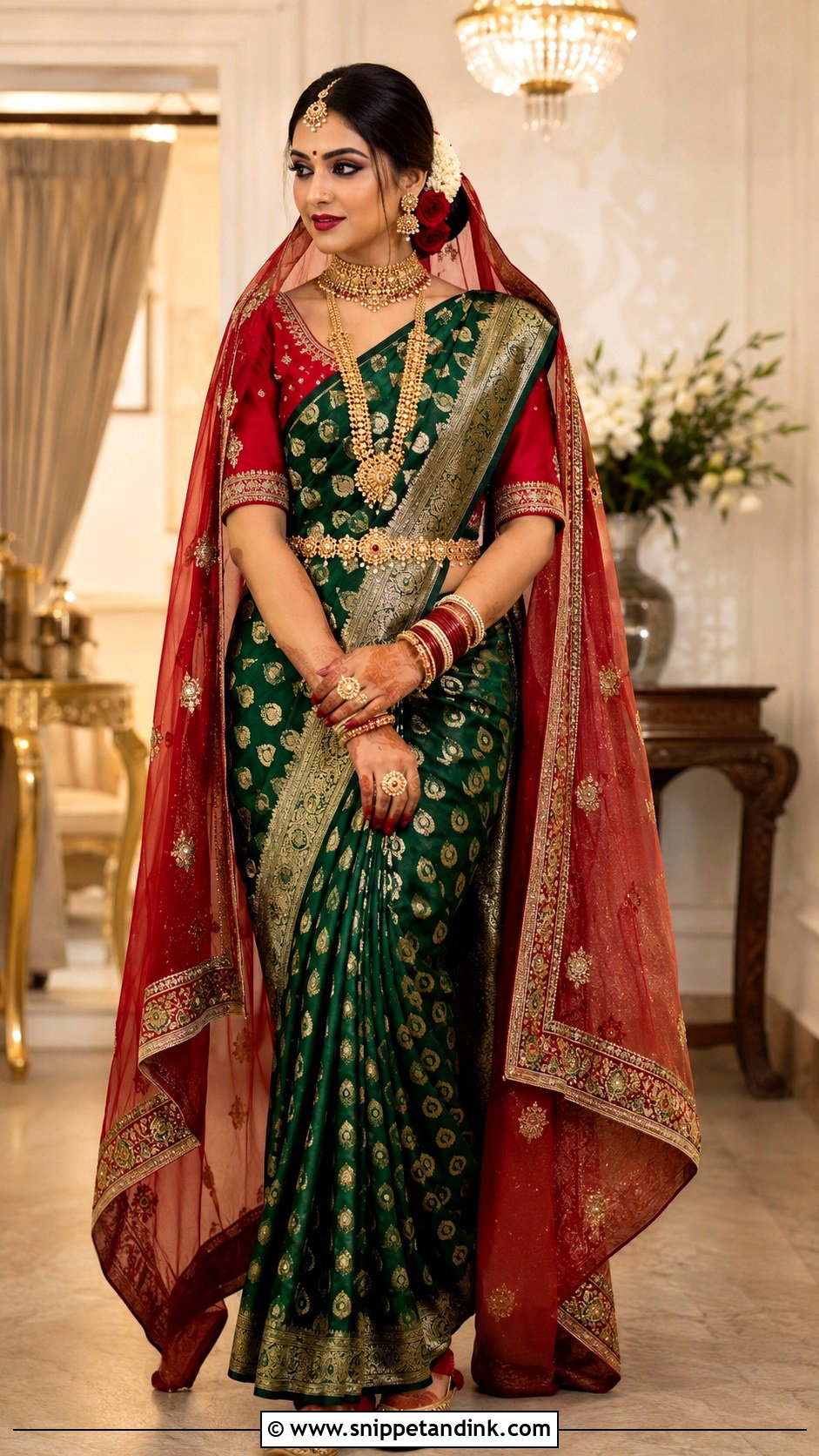
Emerald or bottle green looks regal, but it needs red nearby to stay bridal. Pair a green Banarasi with a deep red silk blouse, a red veil, red bindi and red flowers in the hair. Antique gold warms the green: a broad choker, long haar, jhumkas, bangles and a waist belt. Green next to the face can make some complexions look sallow, which is why I bring warmth back in with bronze-gold shadow and softly sculpted cheeks. Crisp kajal, a deep red lip, a polished low bun, light forehead art, alta and gold embroidered shoes suit an evening ceremony or reception.
10. Purple Silk Bengali Bride
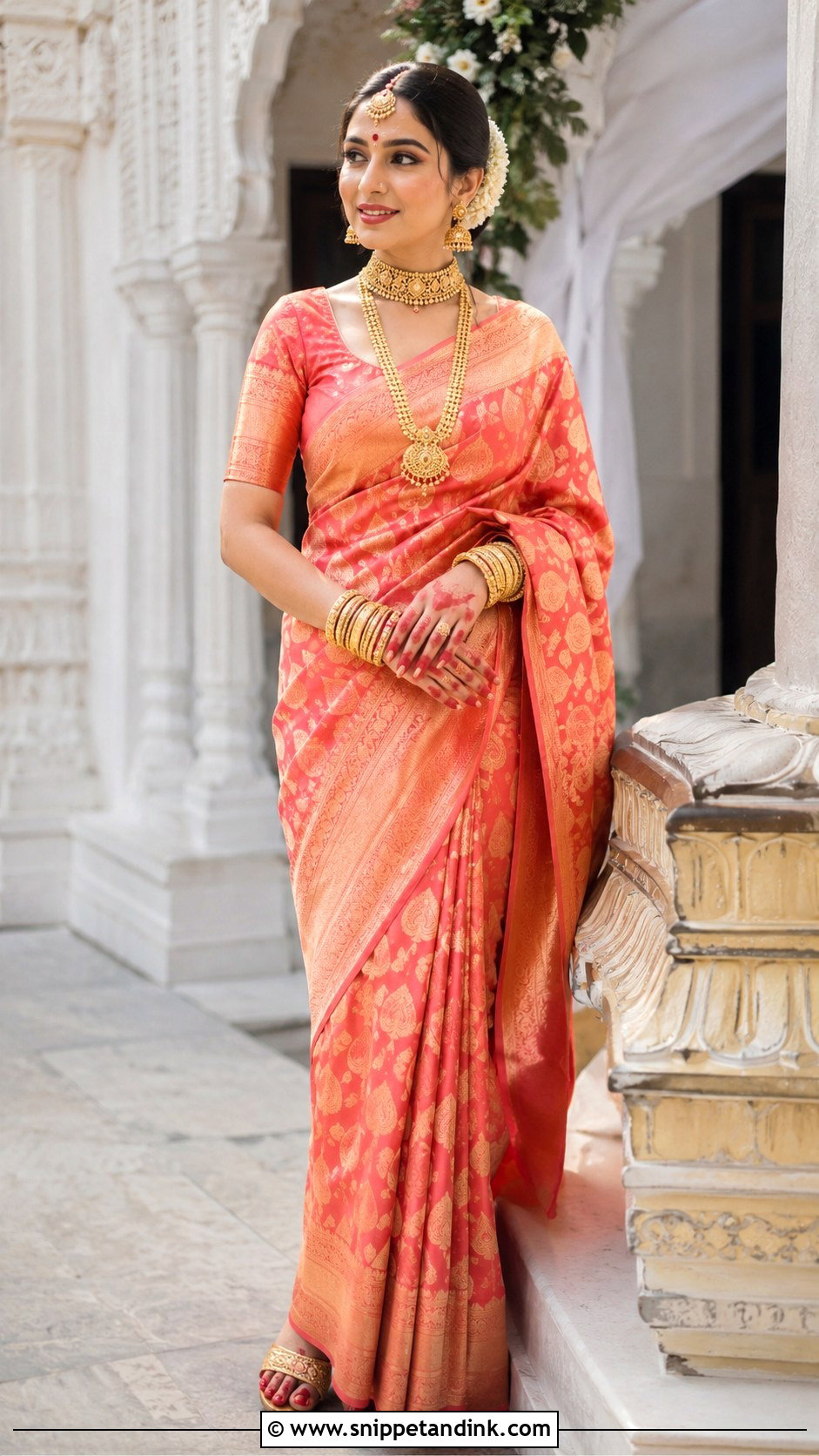
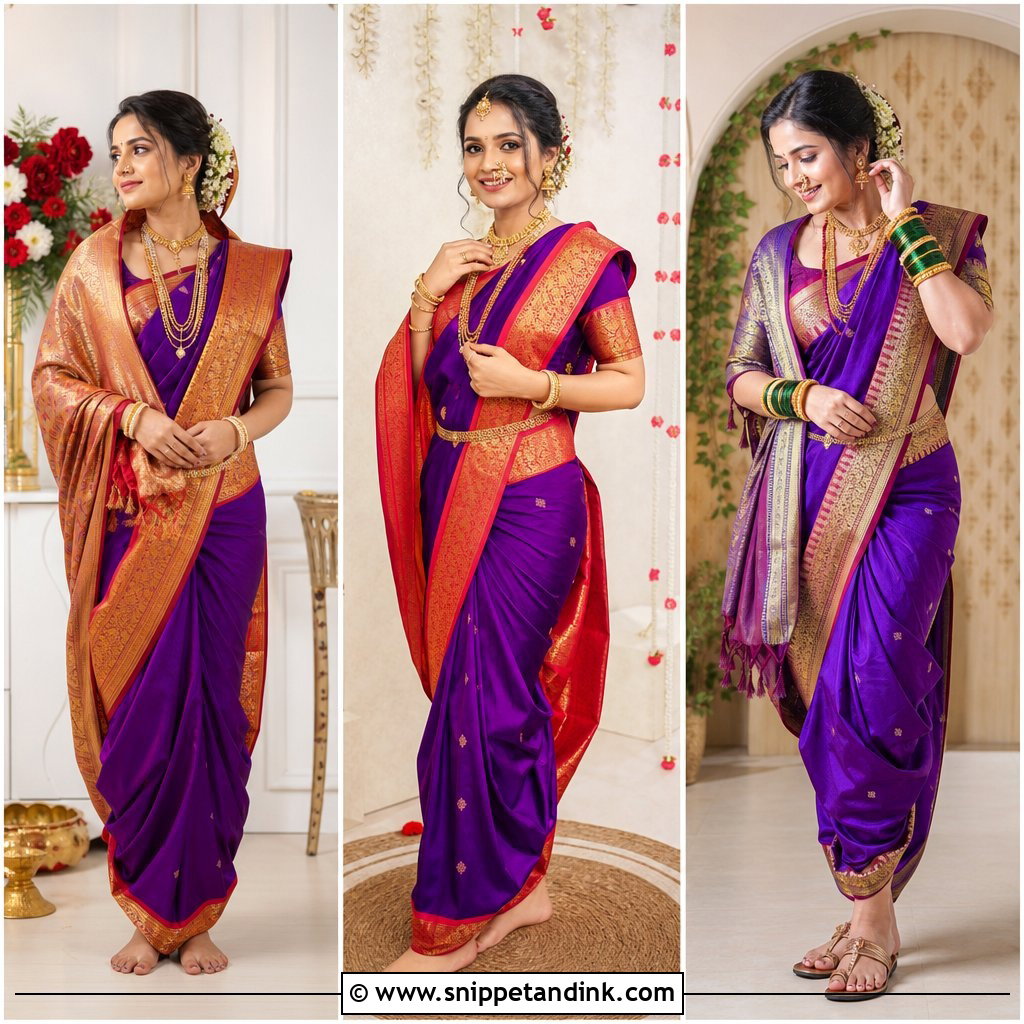
Purple is unusual for a Bengali wedding and looks modern for it. A plum, aubergine or royal purple silk with antique-gold weaving pairs with a matching or wine-red blouse. Gold with pearls or colored stones sits well: choker, one long necklace, earrings, bangles and a fine head ornament. Purple is the one saree where I tone down the eyeshadow color, so muted plum, not violet, with kajal, a deep rose lip and a red bindi. Red roses in a low bun, a sheer red veil, fine forehead decoration, alta and antique-gold heels finish it.
11. Orange And Pink Bengali Bride
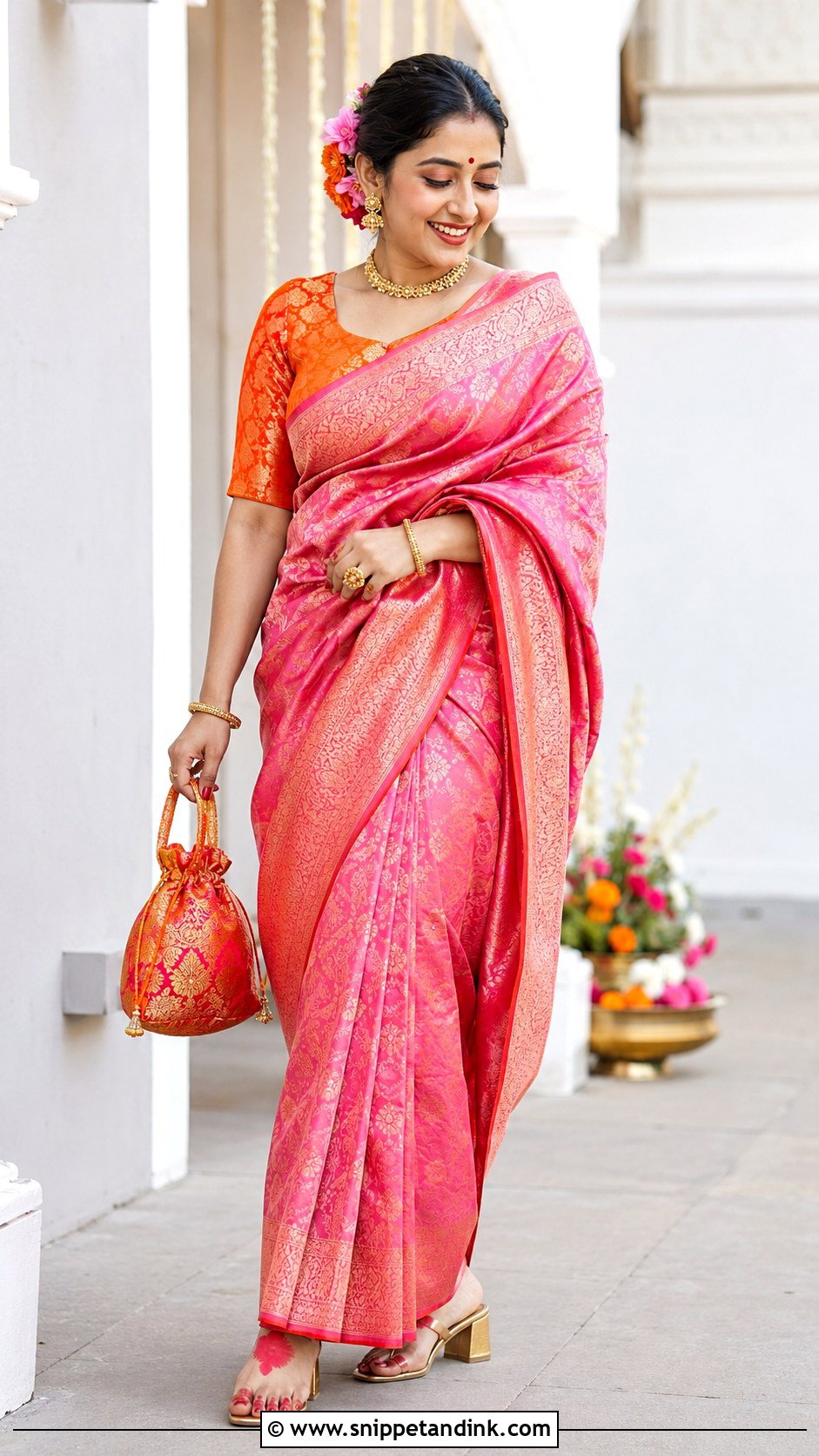
Orange and pink are made for a daytime wedding or a colorful pre-wedding event. Pink saree with orange brocade blouse, or the reverse, tied together by gold zari. Medium-weight jewelry is plenty: choker, earrings, bangles, a small tikli. Marigolds or pink roses can decorate a braided bun, but keep the flowers small so they don’t fight two loud colors. Daylight is unforgiving on heavy base, so I keep skin thin and glowy with warm blush, gold shadow, kajal and a pink-red lip. A red bindi, optional forehead art, alta, gold block heels and a matching potli complete it.
12. Gold Saree Bengali Bride
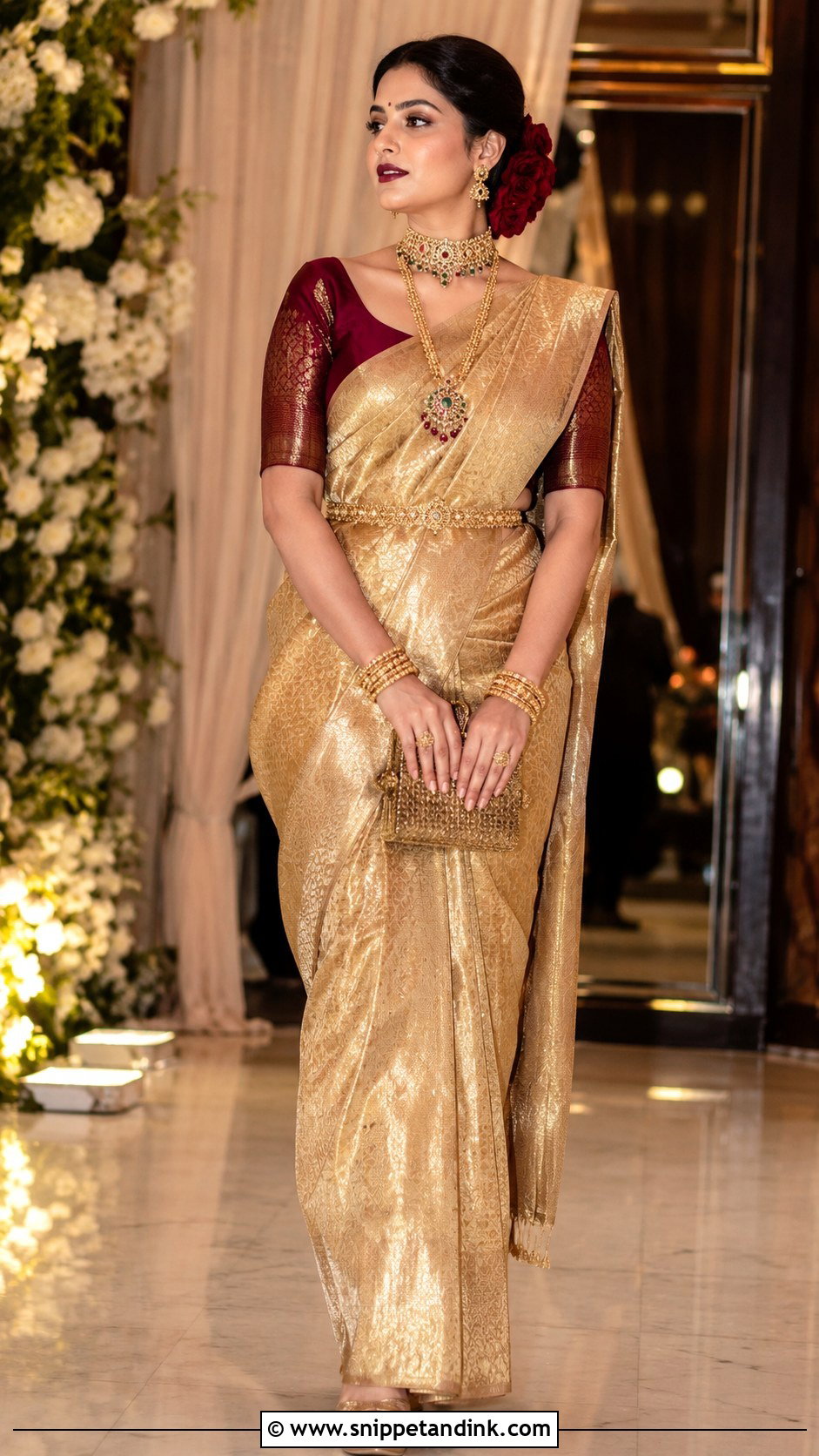
Gold on gold has one problem: the jewelry vanishes. A tissue silk, brocade or metallic Banarasi with enough body to hold pleats looks luminous at an evening reception, but antique gold sinks into it, so I’d bring in pearls, colored stones or dark enamel. A deep red, maroon or emerald blouse gives the contrast. Choker, long necklace, earrings, bangles and a waist belt define the shape. Hair goes into a low bun with red roses or smooth waves. Soft smoky eyes, a red or berry lip, a statement bindi, a compact clutch and stable gold heels finish it.
13. Dhakai Jamdani Bengali Bride
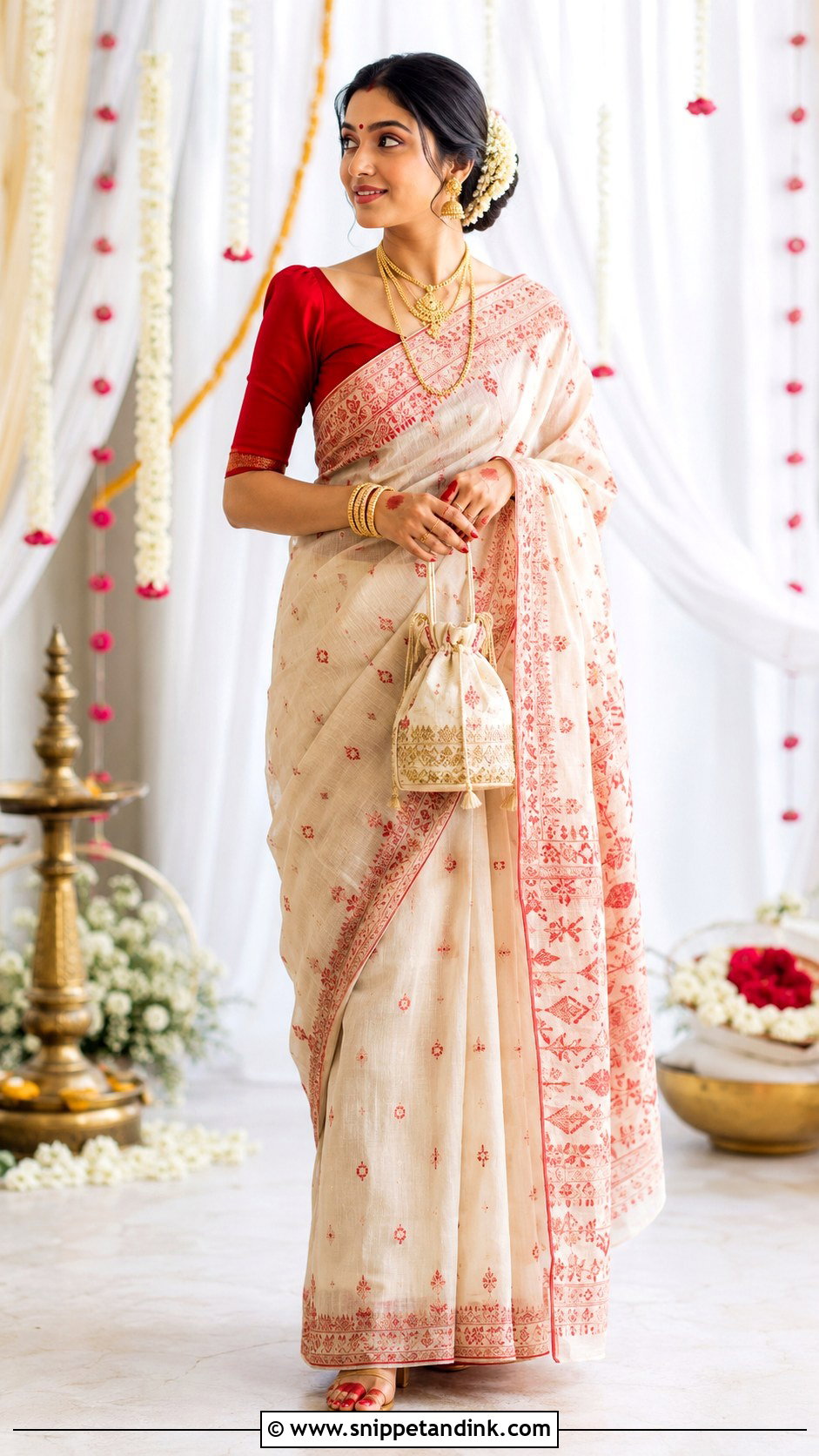
Dhakai Jamdani is light, almost sheer, with motifs woven straight into the cloth, which makes it ideal for an intimate ceremony or a pre-wedding event. Choose white, ivory, red or a pastel with clear motifs, and pick the blouse color from the border. Heavy jewelry overwhelms this fabric; a short necklace, long chain, jhumkas, bangles and a small tikli are enough. The fabric is fine enough to show sweat, so I set the neck and chest makeup as carefully as the face. A center-parted bun or long braid with fresh flowers, kajal, glowing skin, a red bindi, a soft red lip, alta, a potli and low gold sandals finish it.
14. Kanjeevaram Saree Bengali Bride
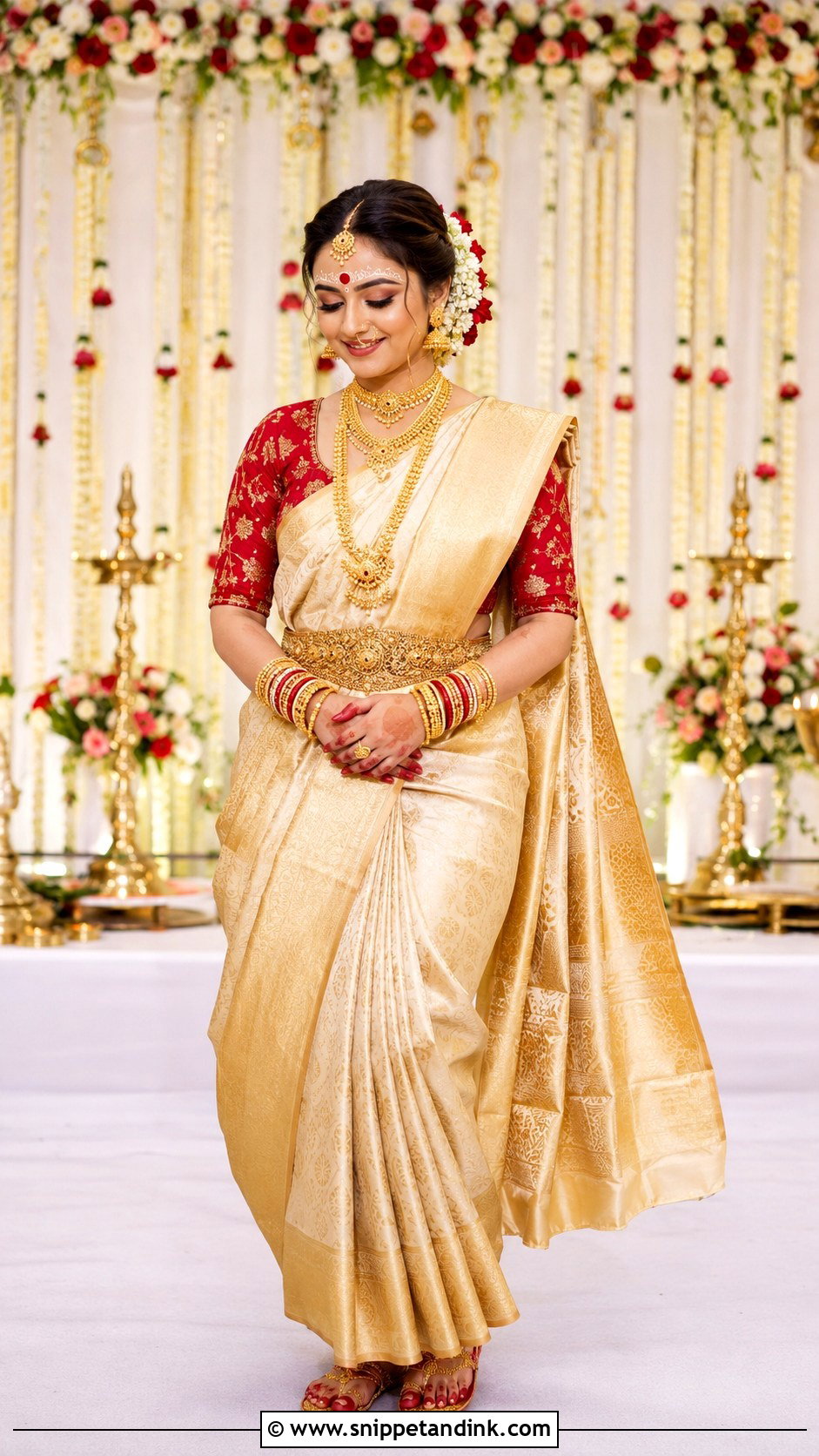
A Kanjeevaram saree brings South Indian silk into a Bengali wedding, and the mix works when one side clearly leads. Pick an ivory and gold, deep red or green Kanjeevaram with a broad contrasting border, and pair it with a red Banarasi blouse to anchor the Bengali side. Temple-style pieces can sit alongside Bengali gold if all the metal is the same tone. Kanjeevaram silk is stiff and heavy, so drape it a little higher at the waist to keep the pleats from flaring. Jasmine and red roses in a neat bun, kajal, a bold bindi, forehead art, a red lip, alta and gold sandals complete it.
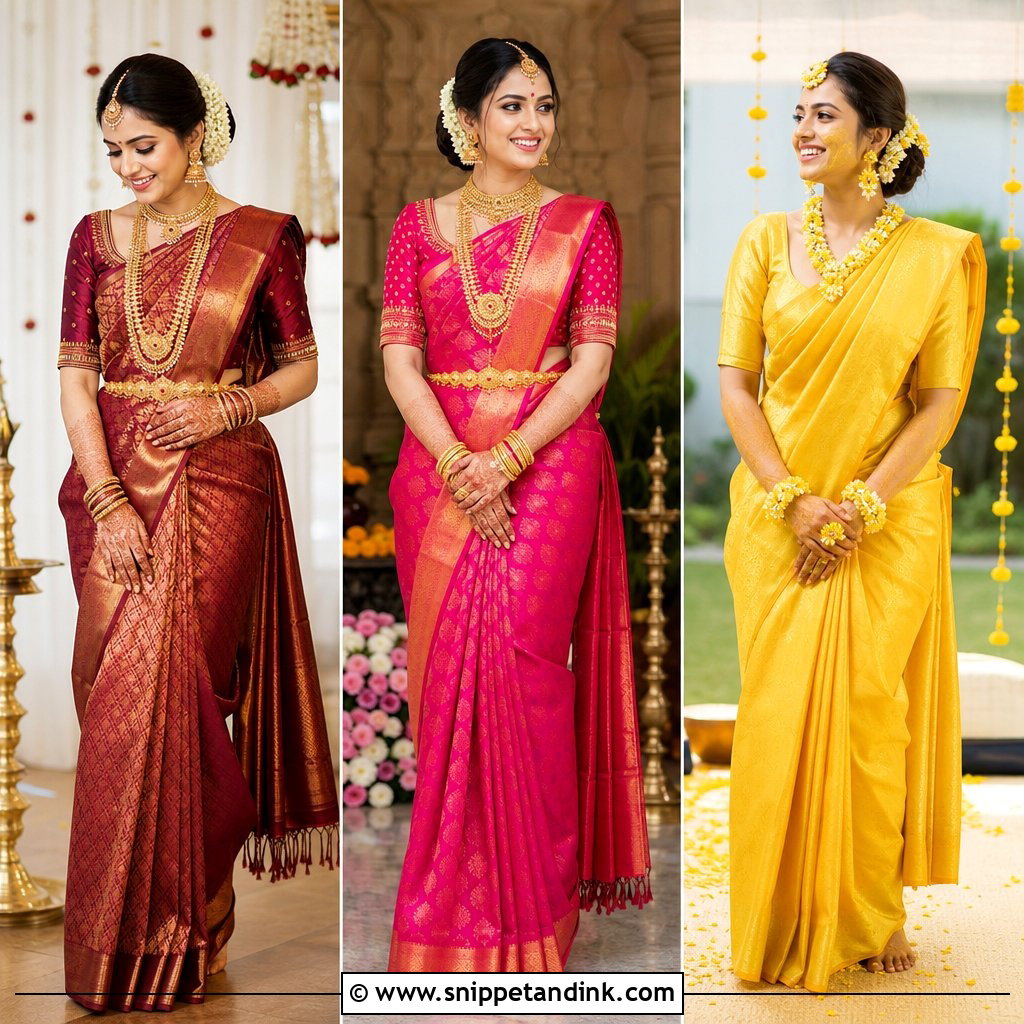
15. Minimal Bengali Bride
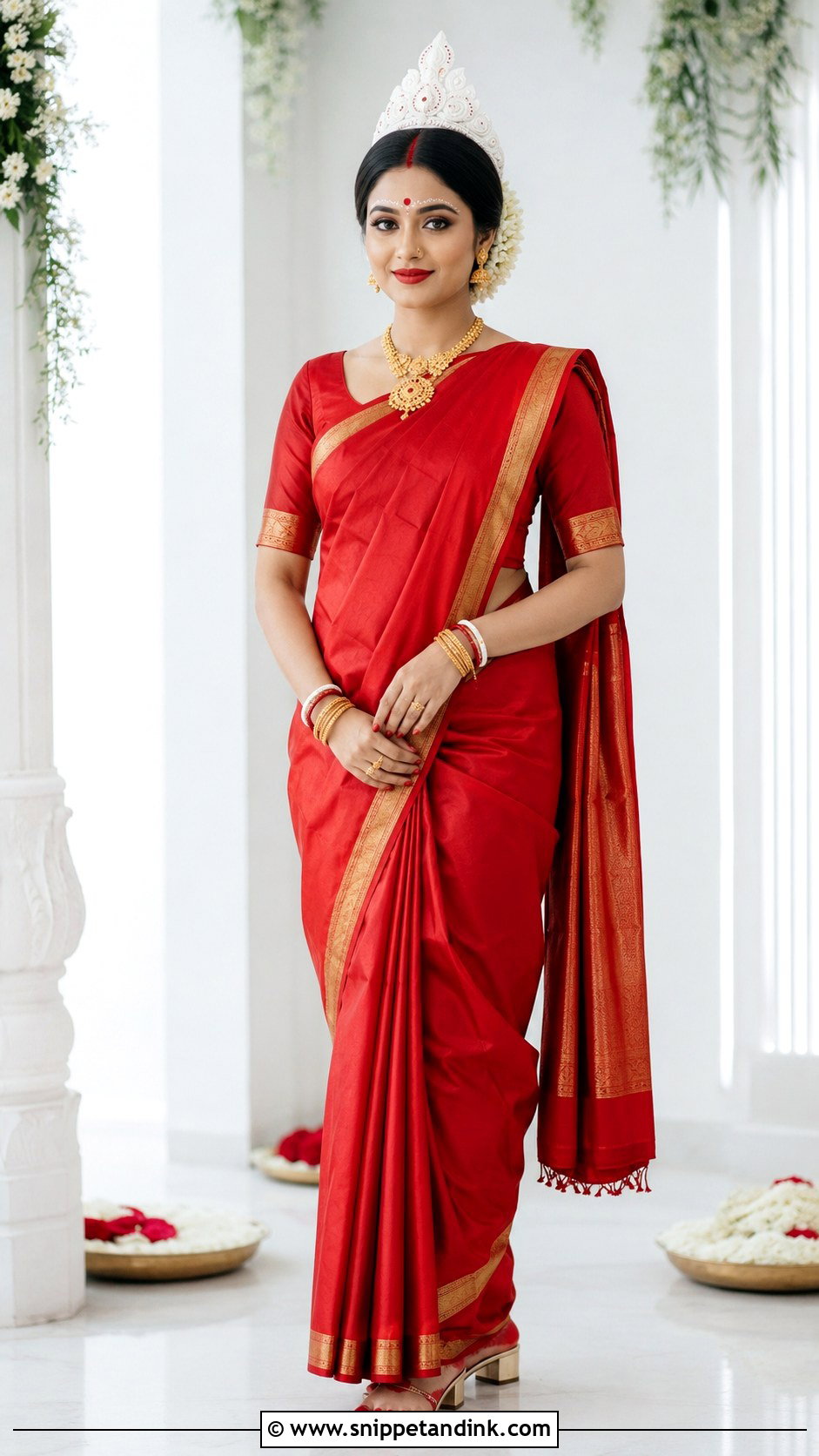
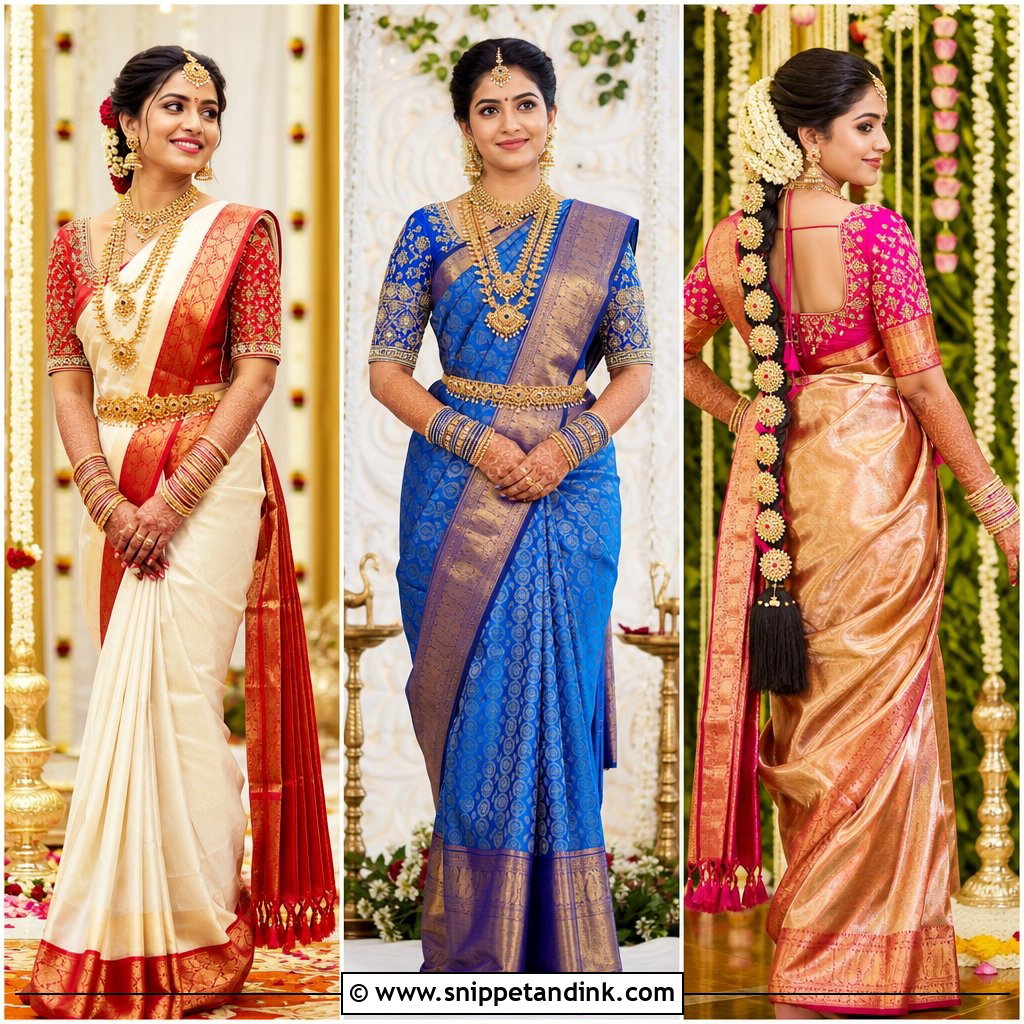
Minimal works only when every piece is chosen on purpose. A red or ivory silk with a clean border and light zari, a well-cut blouse with a comfortable sleeve, one statement necklace, matching earrings, a few bangles and a small tikli. That’s it. Less jewelry means the face carries more, so I take extra care with skin prep and brows. Long-wearing makeup with defined kajal, natural skin, a classic red lip and a bold bindi, with fine forehead art and alta, keeps the traditional character without weight. A compact flower cluster in a smooth bun, low block heels and a small bag finish it.
16. Plus Size Bengali Bride
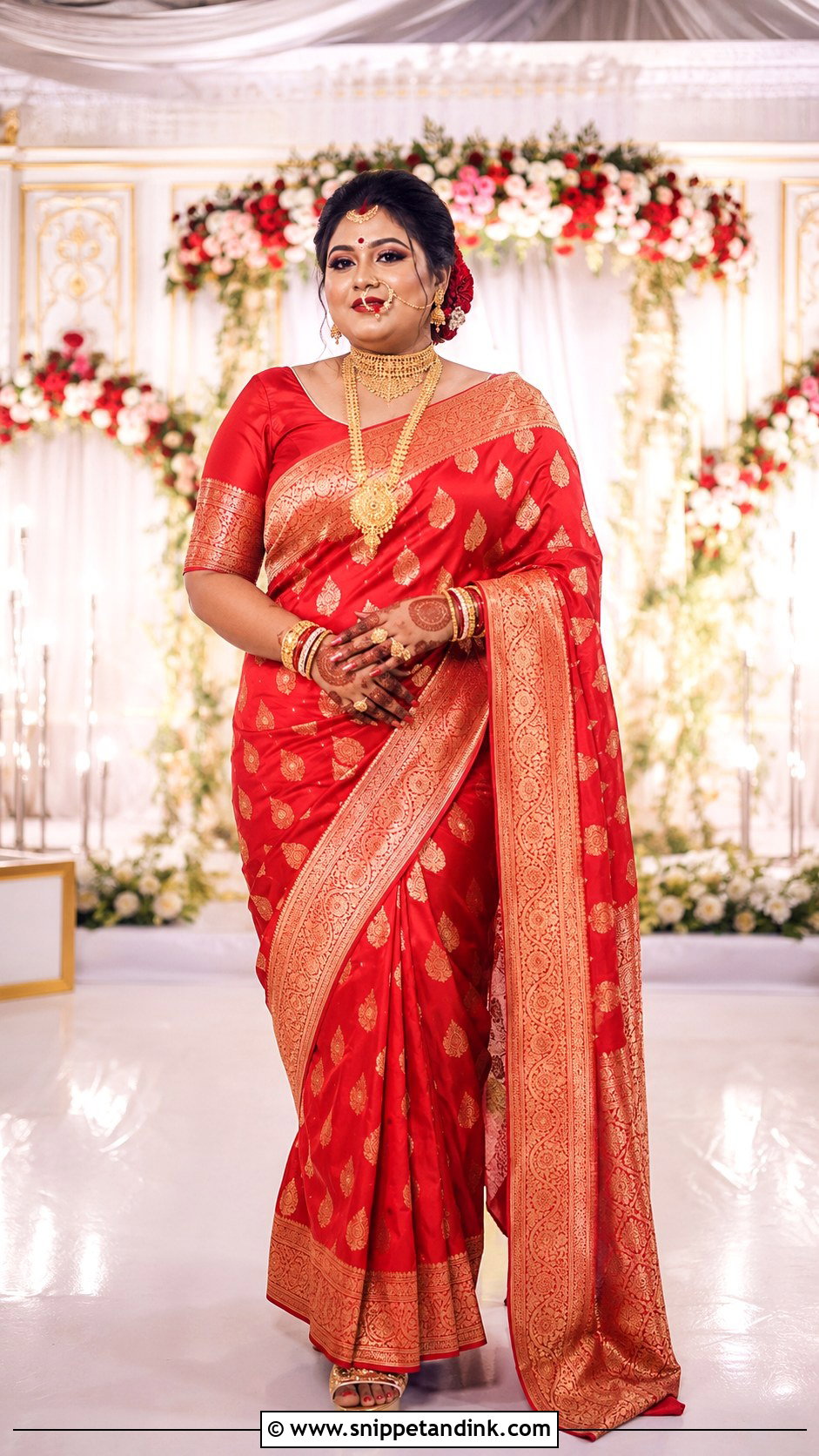
For a plus-size bride, draping makes more difference than the saree itself. A medium-weight Banarasi falls smoothly and holds pleats without bulk; very stiff silks add volume at the waist. Choose a blouse with elbow sleeves, a supportive inner structure and a neckline you can breathe in. I ask the draper to take the pallu in one long vertical line and pin it out of sight. Proportional jewelry: a defined choker, a longer necklace, earrings, bangles and a medium nath. A softly structured bun, strong kajal, a radiant base, red bindi and a rich lip, plus alta and stable platforms. Skip anything that pinches.
17. Bengali Bride Haldi Look
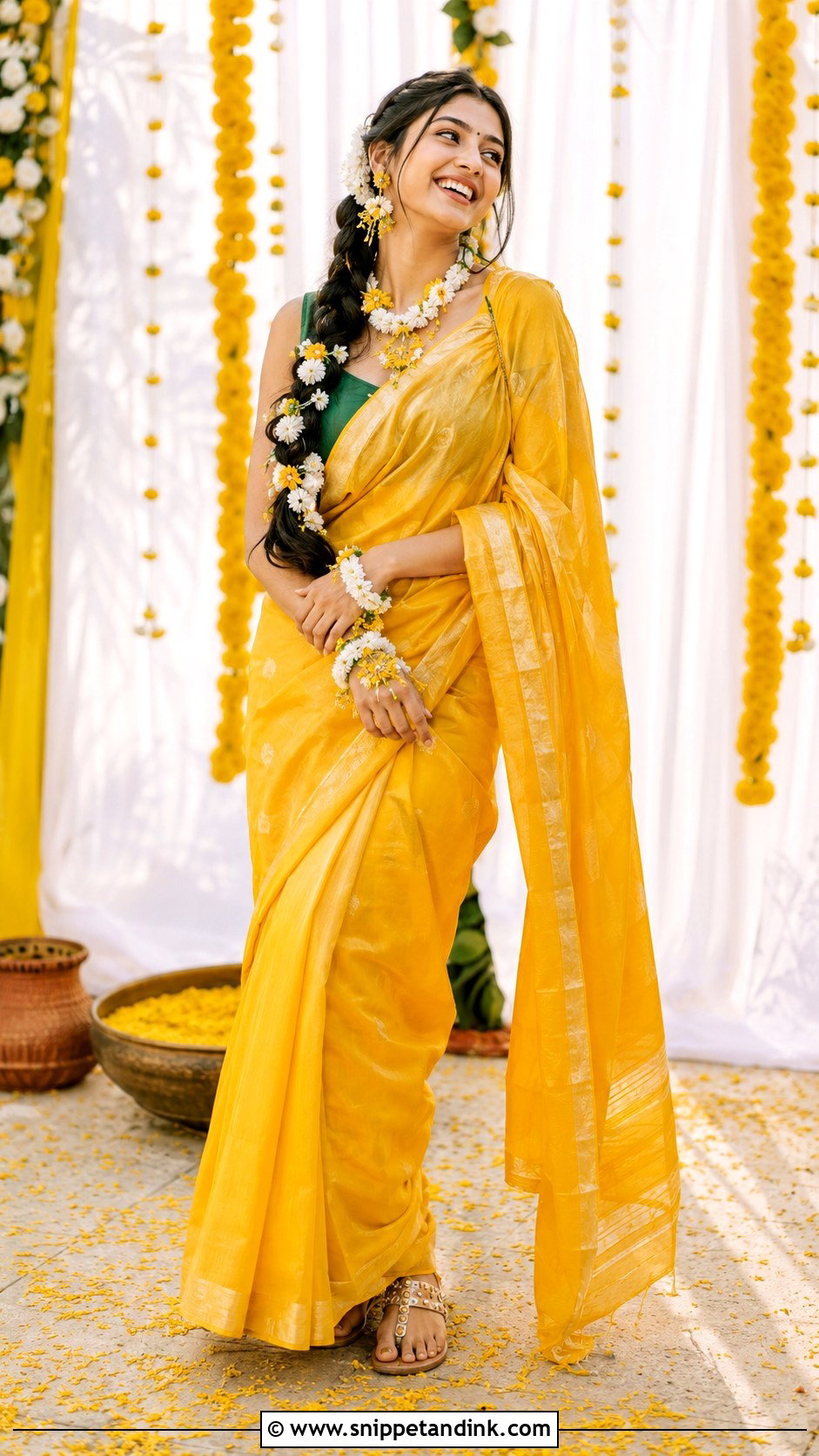
Gaye holud gets messy, and that’s the point. Turmeric paste stains fabric, so wear cotton silk, linen silk or something washable in marigold, lemon or mustard yellow, with a green, pink or orange blouse, or a crop top and flowing skirt. Floral earrings, bangles and a simple necklace suit it better than gold you’ll worry about. Keep makeup minimal, since paste and water will cover your skin: waterproof kajal, a lip tint and a small bindi are plenty. Turmeric can tint skin yellow for a day or two, so I’d hold it a few days before the wedding if possible. Flat sandals, a pinned dupatta, a flower-trimmed braid or bun.
18. Bengali Bride Mehndi Look
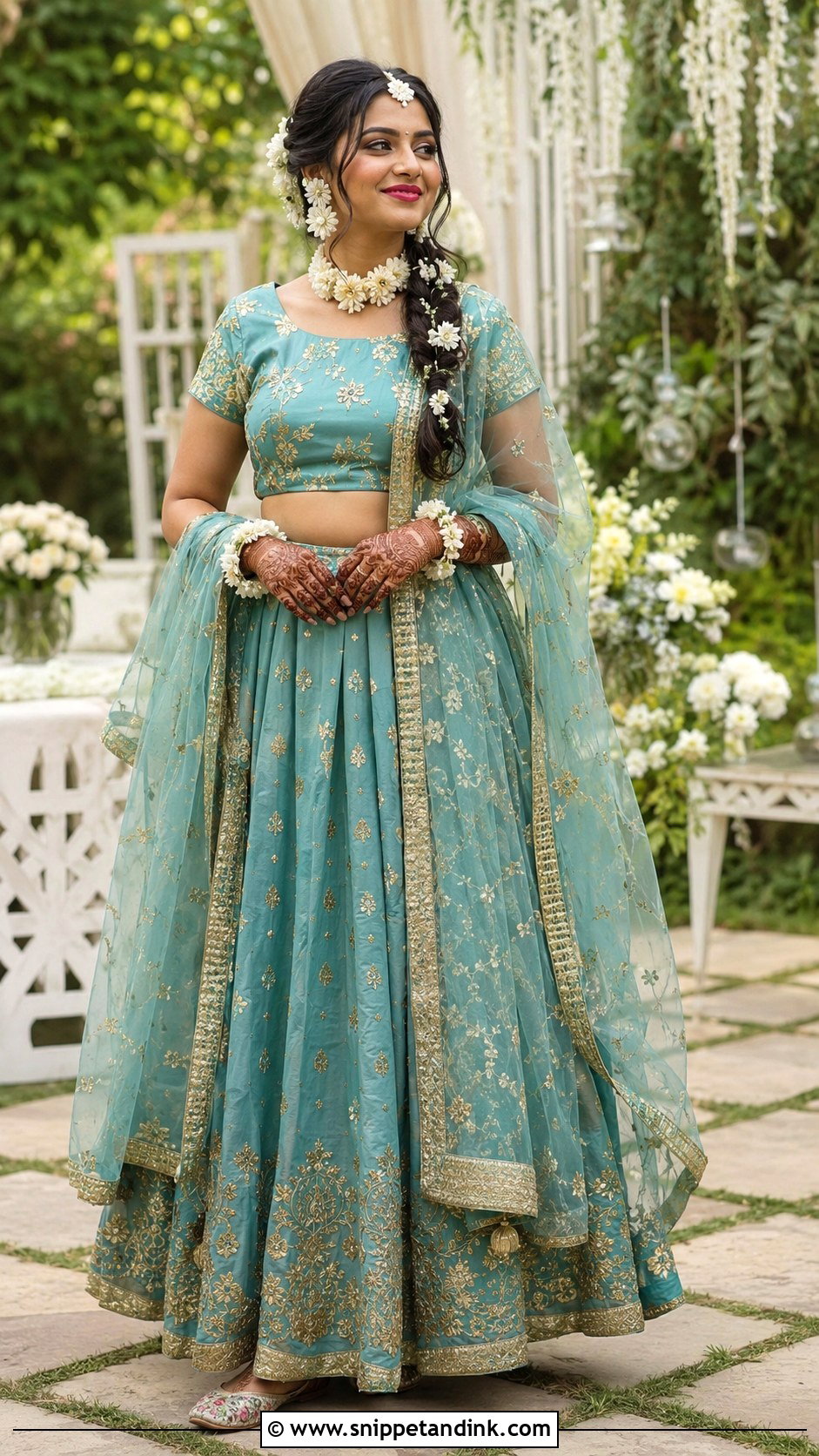
For the mehndi, plan the outfit around your arms. A lightweight lehenga with a sleeveless or short-sleeved blouse in green, teal or fuchsia keeps hands free; a printed silk saree with a simple blouse works if you prefer a drape. Skip bangles and rings until the henna has dried and been scraped off. A floral necklace, statement earrings and a maang tikka, with a side braid, half-up waves or low ponytail with flowers, work well. Waterproof kajal, peach blush and a bright pink lip photograph well in daylight. Flat embroidered shoes and a crossbody potli mean you never need your hands.
19. Bengali Bride Reception Saree
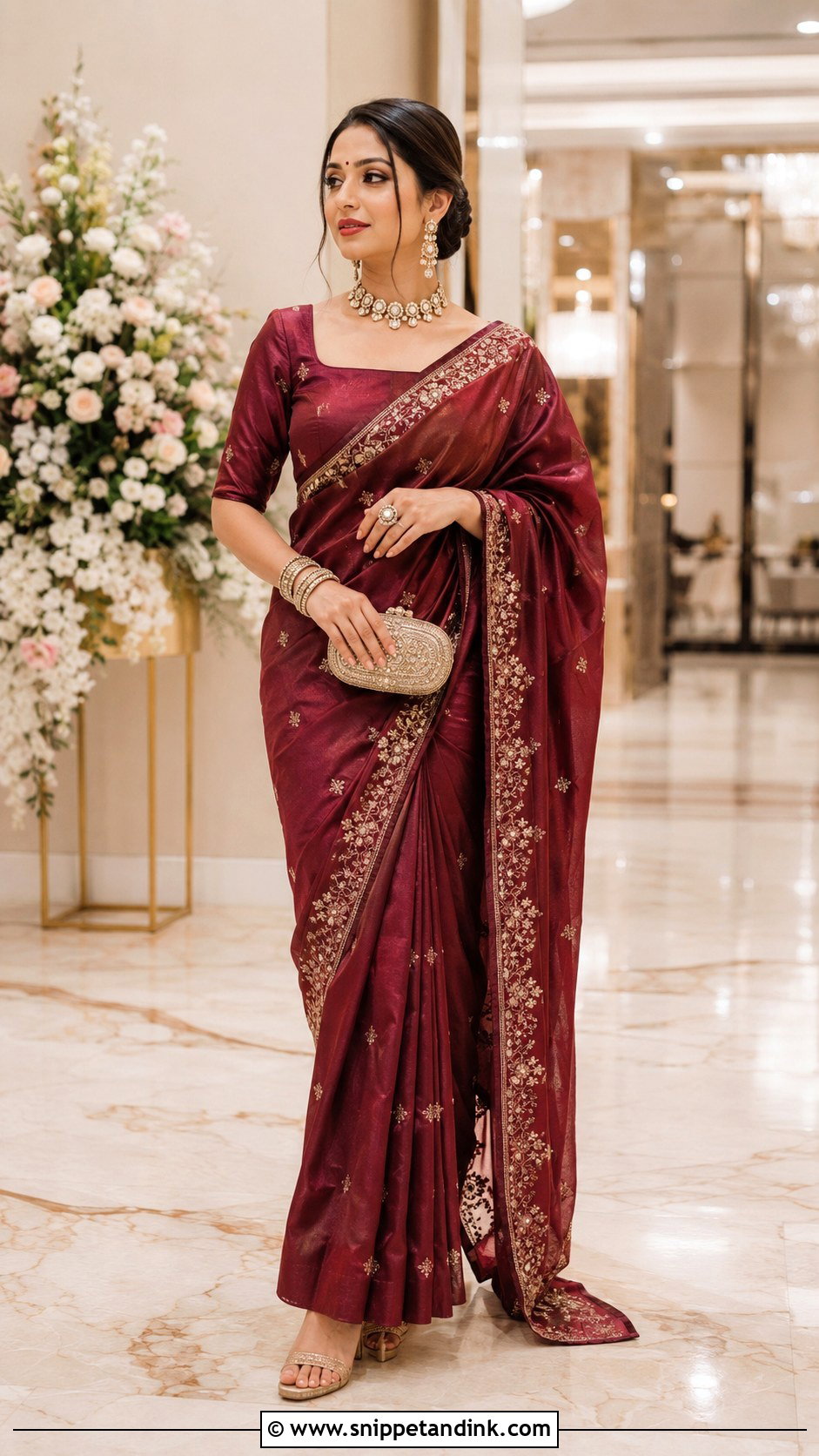
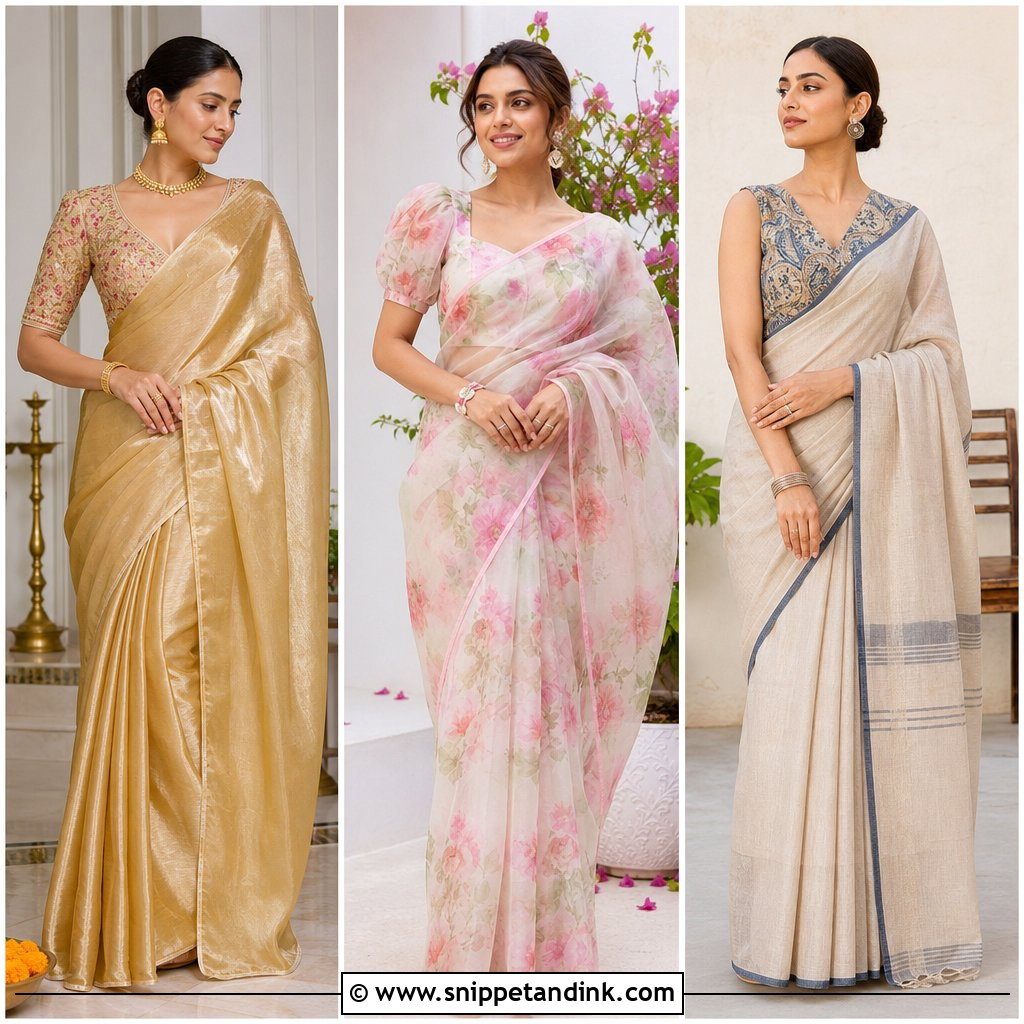
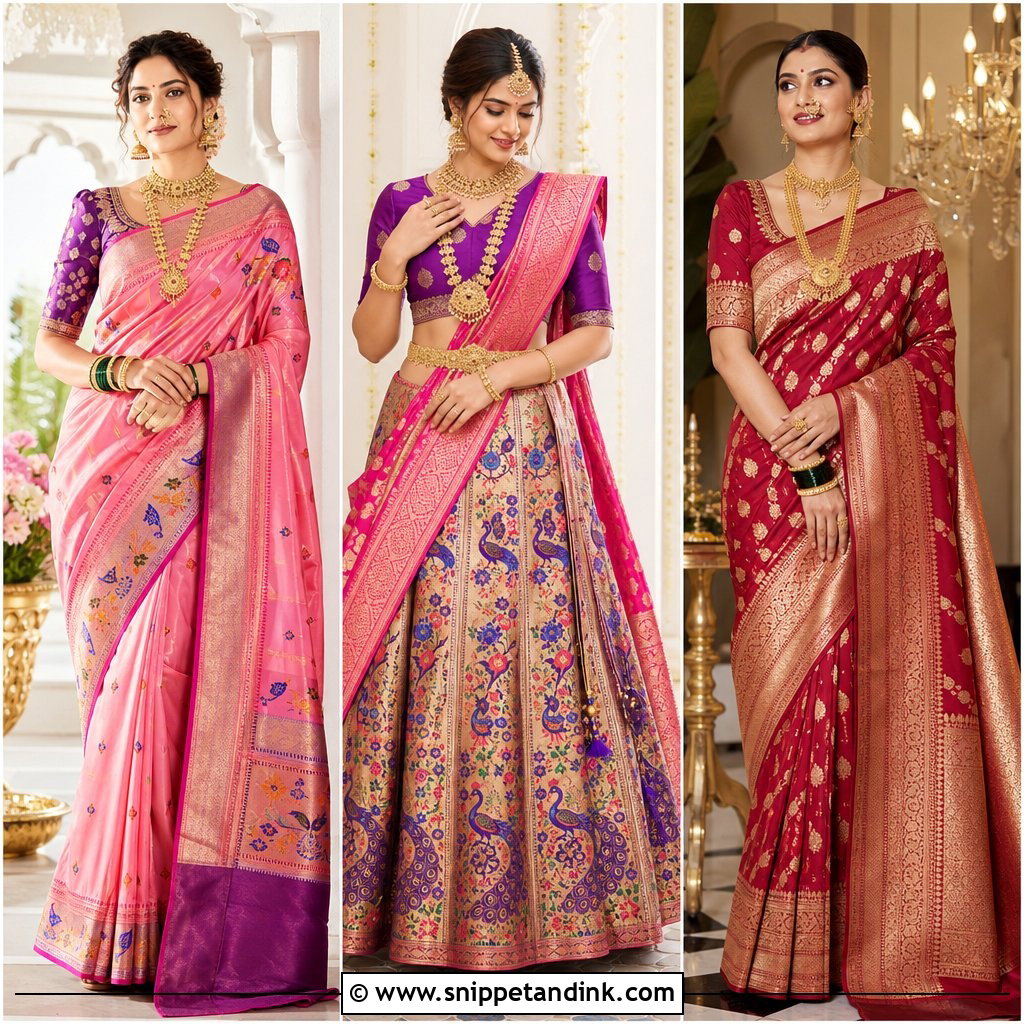
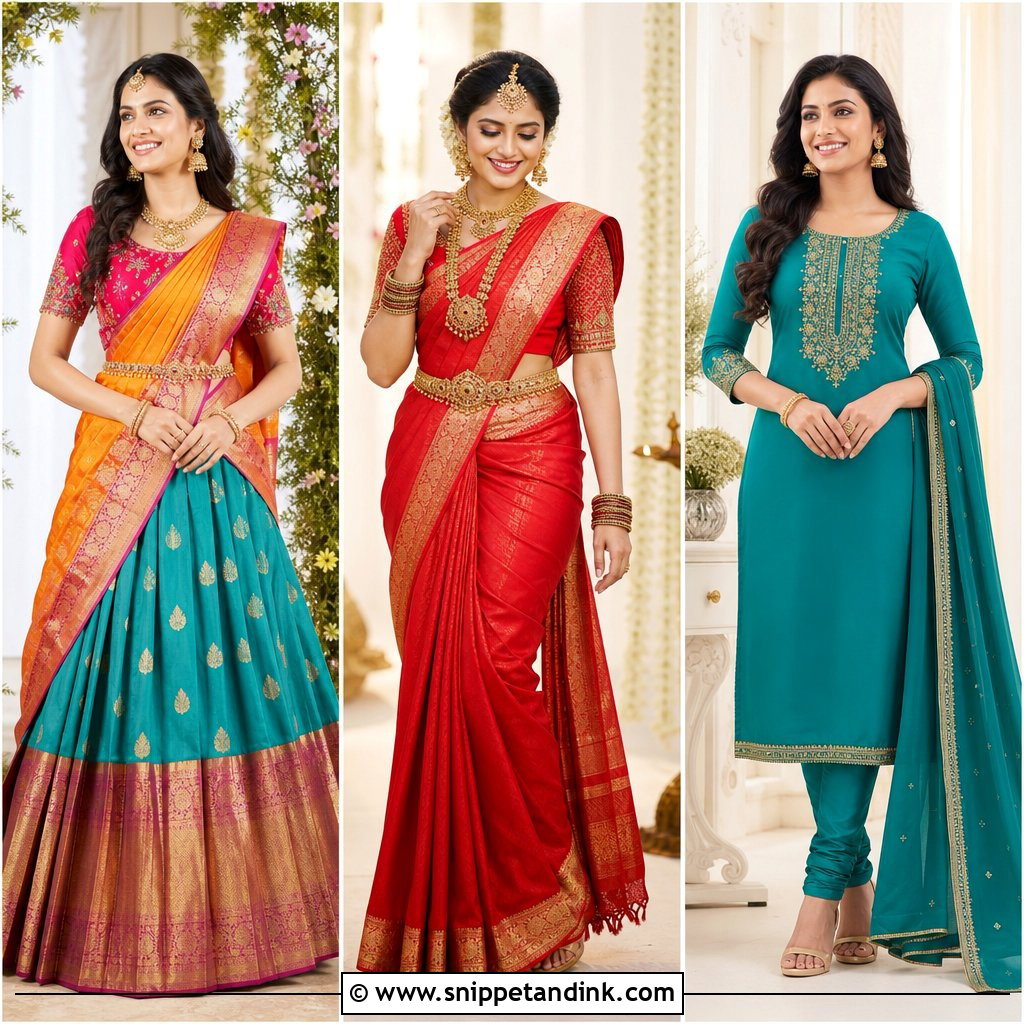
The reception is where you can loosen the rules. A velvet-bordered Banarasi, metallic tissue, embroidered silk or rich jewel-toned drape pairs with a statement blouse with tasteful beadwork, structured sleeves or a square neck. Diamond, polki, pearl or antique gold can replace the wedding-day layers; one big necklace, earrings, bangles and a cocktail ring is plenty. After a full wedding the night before, skin is often tired, so I prep with extra hydration and build the base thin. Smooth waves, a sleek bun or half-up hair, soft smoky eyes and a berry or red lip, with a bindi, clutch and block heels for hours of greeting guests.

20. Bengali Bride Reception Lehenga
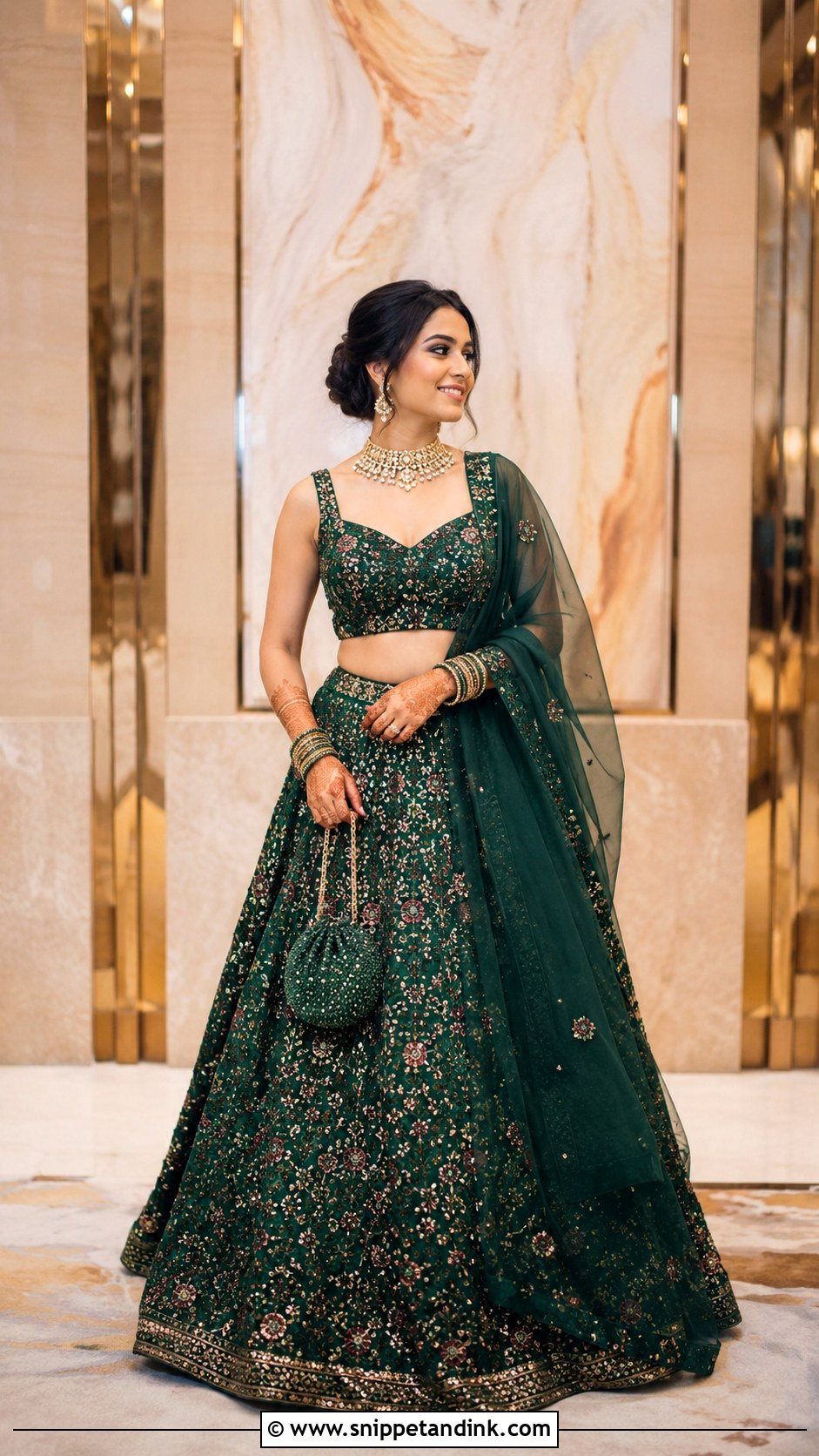
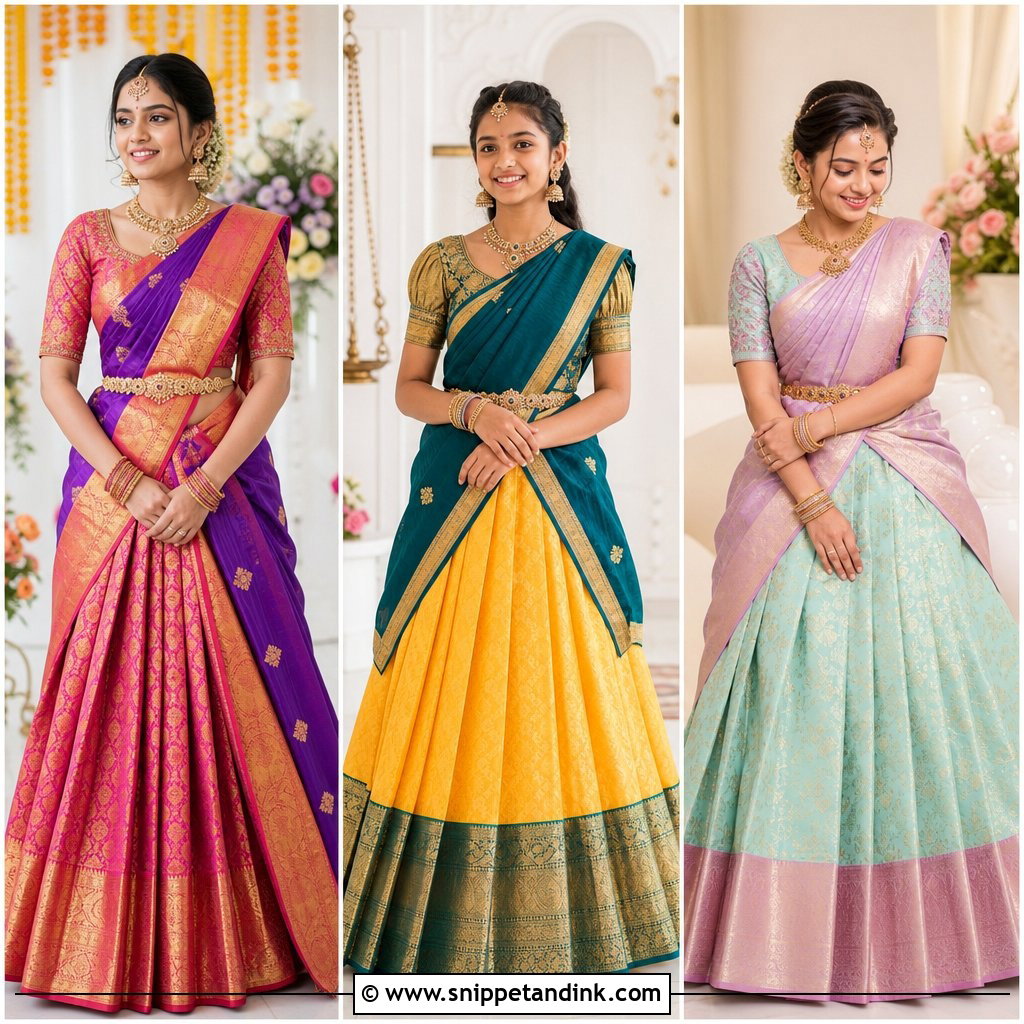
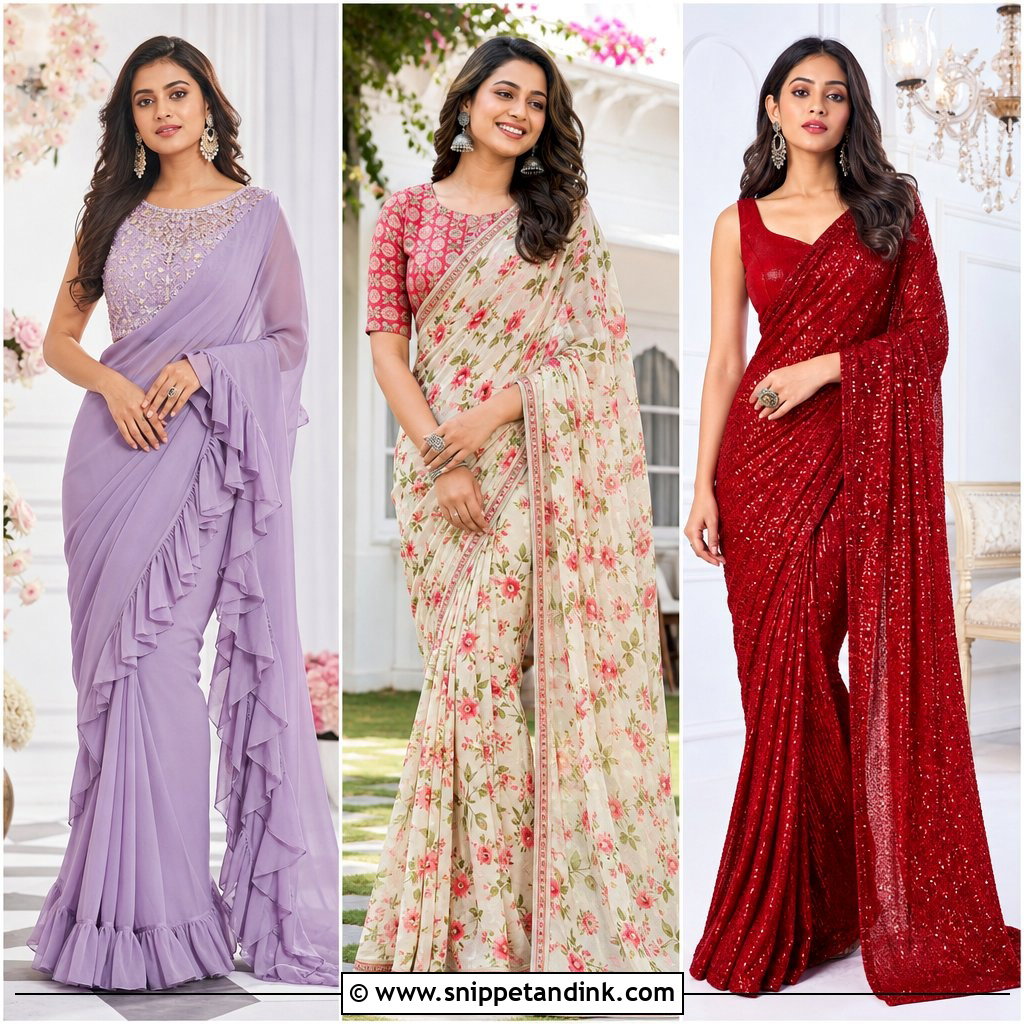
If the reception has a modern dress code, a lehenga gives you movement and a strong silhouette. Wine, emerald, navy, dusty rose or champagne with fine metallic embroidery, a structured blouse and a light dupatta over one shoulder instead of the head. Let the neckline pick the jewelry: a polki choker for a high neck, drop earrings for a deep one, bangles and one ring. Soft waves or a textured low bun, a softly smoky eye, defined lashes and balanced contour suit it. Match the lip to the lehenga’s undertone rather than its color, and finish with an embellished bag and platform heels hidden under the skirt.
A Late Lagna, a Warm Room and Kajal That Doesn’t Move
Bengali wedding rituals often run late into the night, sometimes in a warm, crowded room full of lamps, smoke from the yagna and people. That’s a long time for makeup to hold. I plan for it from the start.
Eyes and base
Line the waterline with a waterproof kajal and set the outer edge with a matching dark shadow; it stops the smudge that creeps under the eye by midnight. Keep the base thin and set in layers instead of one heavy powdering. Thick base cracks around the nose and under the eyes as the night goes on.
The rituals that touch your face
- During sindoor daan, vermilion often falls onto the nose and forehead. Have a clean makeup brush and blotting paper with your bridesmaid to lift it off without rubbing.
- The betel leaves held up for shubho drishti can transfer lipstick if they brush your lips. Blot well and use a long-wear lip formula.
- Alta stains everything it touches while wet, so apply it early, let it dry fully and keep it away from the saree hem.
- Pack a small pouch for a touch-up: lipstick, blotting paper, a cotton bud, safety pins and spare bobby pins.
The aim isn’t flawless skin at 2am. It’s a face that still looks like you in the last photographs of the night, with the kajal, bindi and forehead art where they started.
Red Banarasi or Not, Make the Face Last the Night
Tradition gives a Bengali bride a strong starting point: red Banarasi, gold, kajal, alta and forehead art. None of it is compulsory. Ivory silk, Jamdani, a Kanjeevaram blend or a reception lehenga can all read as Bengali bridal outfits when the face and the small rituals stay true. Let comfort decide the details, from blouse construction and draping to jewelry weight and shoe height, and talk to your family about which customs matter to them before you change the colors. Then make it yours.
You'll Like These Ideas:



Leave a Reply