
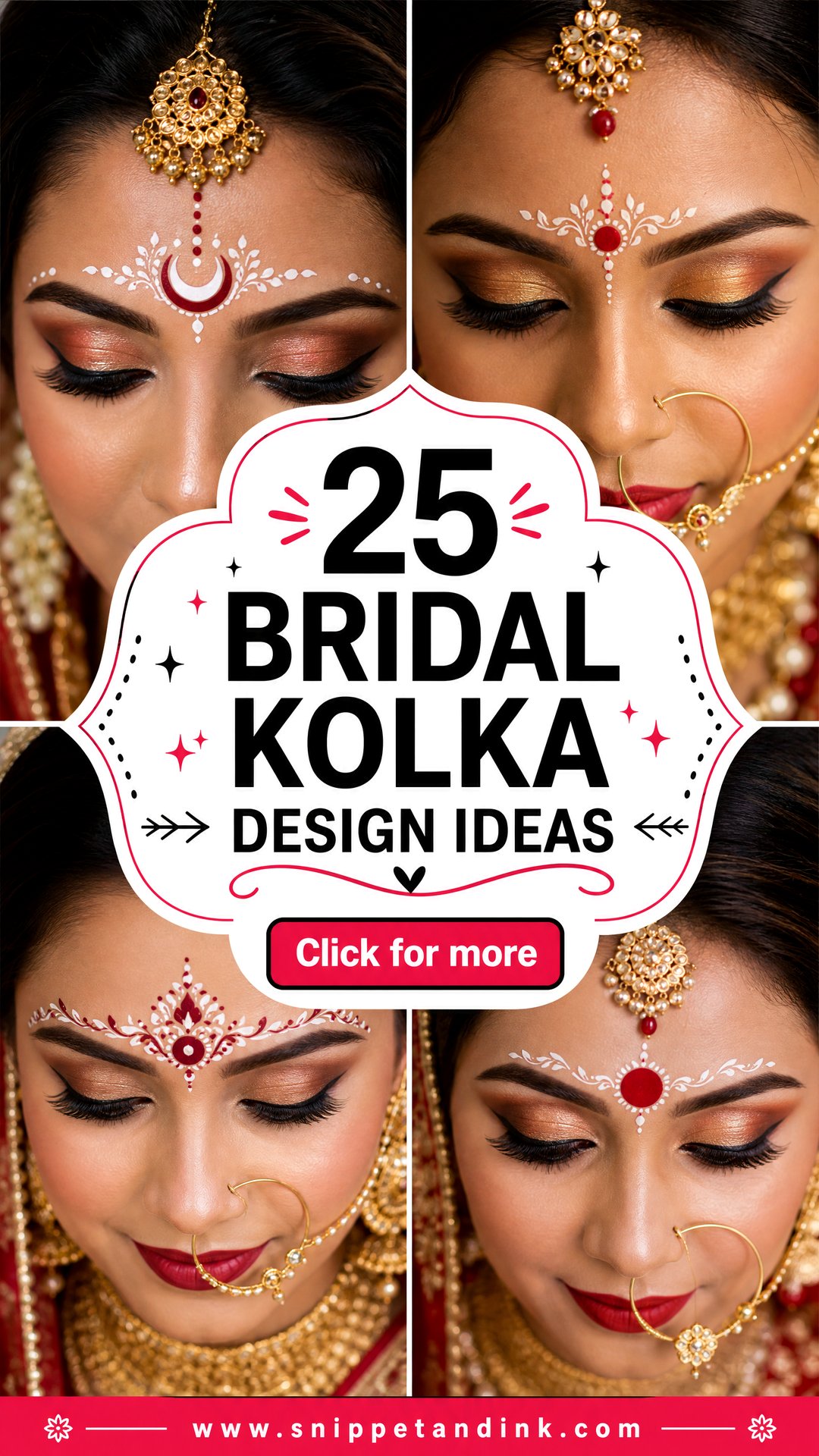
Kolka is the painted frame of dots, curves and paisleys around a Bengali bride’s brows, and it’s the part of the makeup I spend the most time planning, because it has to sit with the mukut, the tikli and the shape of her forehead. White chandan is the classic base, traditionally sandalwood paste valued for its cooling feel on the skin. Red, maroon, pink and gold accents let you personalise it. Some brides want three dots and a curve; others want the pattern running to the temples and onto the cheeks. The designs below range across that whole spectrum, and for each one I’ve noted where it sits on the face, who it suits and what I watch for when I paint it.
Sandalwood Paste or Liner? What Kolka Is Actually Painted With
Brides often ask whether I still use real chandan. Sometimes I do, and it has a scent and texture nothing else matches. But sandalwood paste dries matte, can crack as the skin moves, and flakes if it’s mixed too thick. When I use it, I mix it with a little rose water to a yoghurt-like consistency and apply thin layers.
For long ceremonies, most artists now use water-activated face paint or a long-wear white liner for the lines, with red liquid liner or kumkum for the dots. These stay sharper through sweat and hours of rituals. Traditionally, fine lines were drawn with a toothpick or matchstick; today I use a size 0 or 00 brush for lines and the back of a brush for dots, which keeps every dot the same size.
- Patch test any paint or pigment a few days before, on the inner arm or behind the ear.
- Ask for the kolka to go on after foundation and powder, never on bare or oily skin.
- Bring a photo of the mukut and tikli to the trial; the design is planned around them.
- If you’ve had a facial or threading, do it at least a few days before, so the skin isn’t red or sensitive under the paint.
1. Simple White Bridal Kolka Design
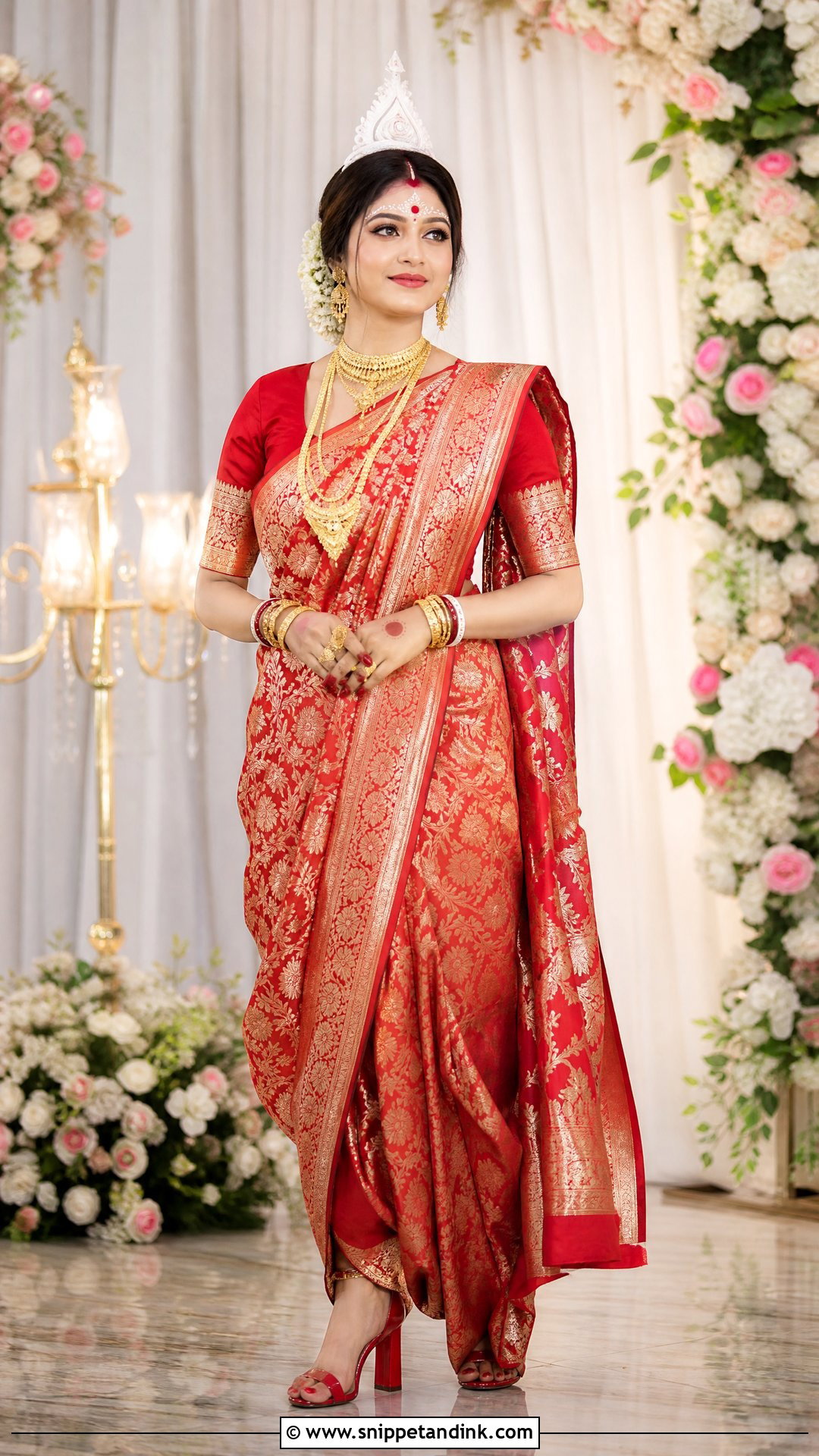
When a bride tells me she wants people to look at her eyes and jewellery first, this is where I start: a medium red bindi, two clean white curves on each side, and a short line of evenly spaced dots. I keep everything close to the brow bone so the upper forehead stays open. That restraint is why it flatters smaller foreheads; a pattern that climbs too high makes a short forehead look crowded under a mukut. It sits well with a red Banarasi, gold jewellery, a sleek bun and defined kajal. The hard part is symmetry, so I mark the outer points of both curves with a dot before drawing either line.
2. Red And White Bridal Kolka Design
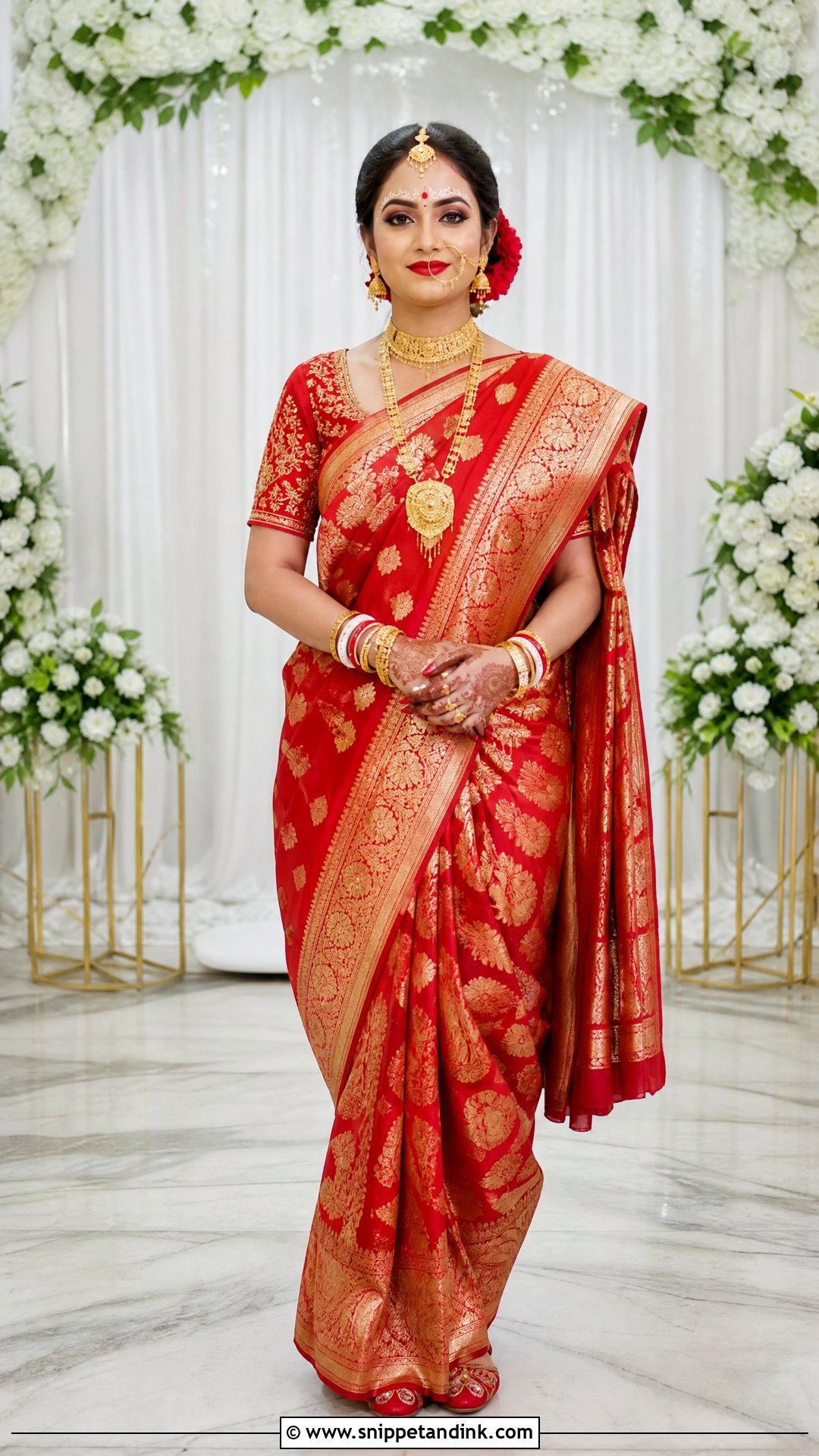
Red and white is the pairing most people picture when they hear kolka. A bold red bindi anchors the centre, white curves spread outwards, and small red dots between the lines tie the face to the saree. Base makeup matters here more than with paler designs: a dewy finish makes white lines slide, so I set the forehead with powder before painting. Gold jhumkas, layered necklaces, shakha pola bangles and a decorated bun complete it. To fit a different forehead, I change the height of the central motif rather than the width, which keeps the brow framing intact.
3. Floral Bridal Kolka Design
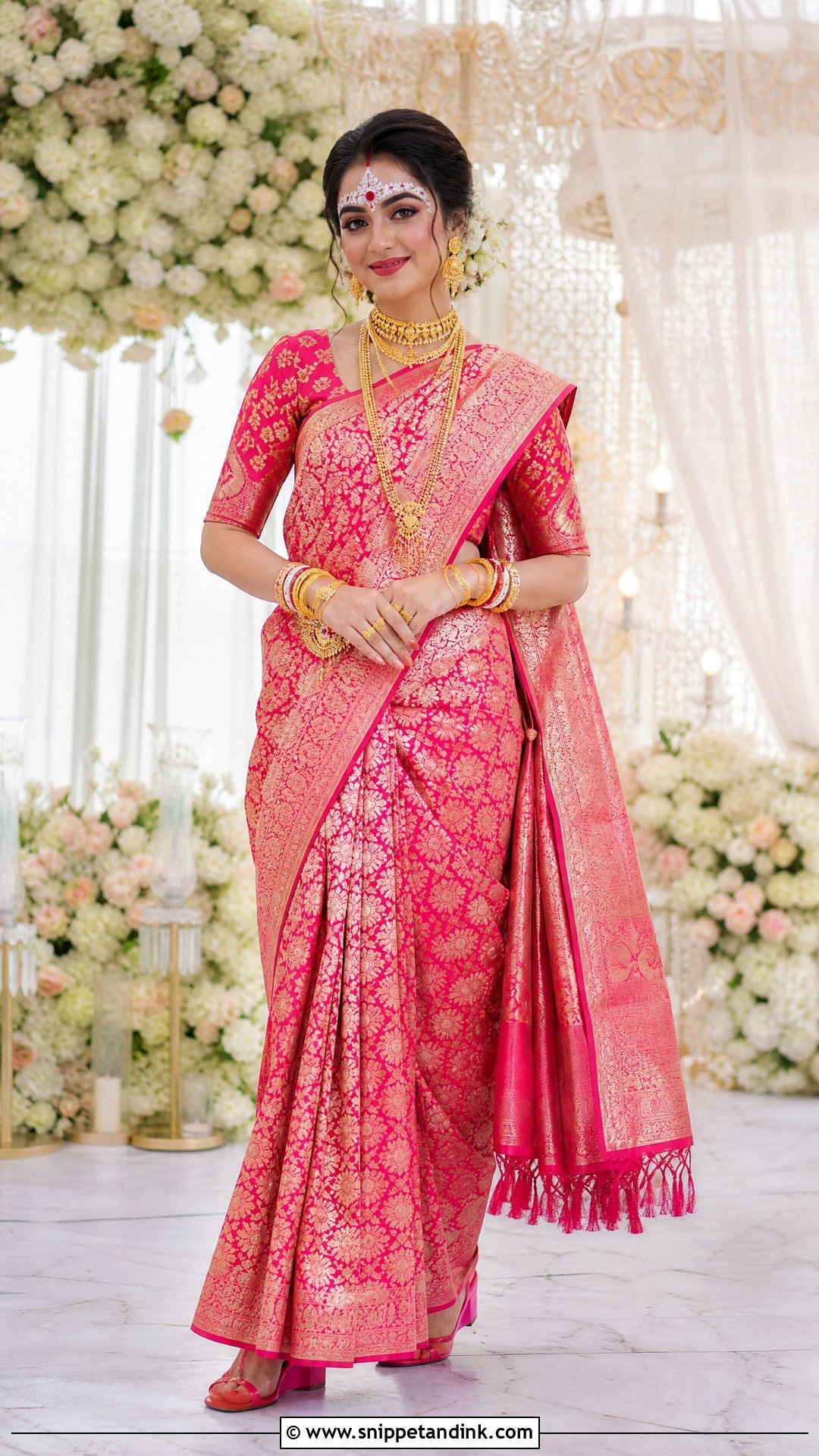
A floral kolka starts with a small white flower around the red bindi, then curved stems, tiny leaves and buds that follow the brow line. The trap is building a flat band of flowers straight across; the forehead is curved, and the design should bend with it. I’d keep the petals open rather than filled so they read from across the room. Pair it with a red or deep pink Banarasi, fresh flowers on a low bun and fine gold jewellery. If the saree already has large floral motifs, I paint fewer petals so the face and the fabric aren’t repeating each other.
4. Paisley Bridal Kolka Design
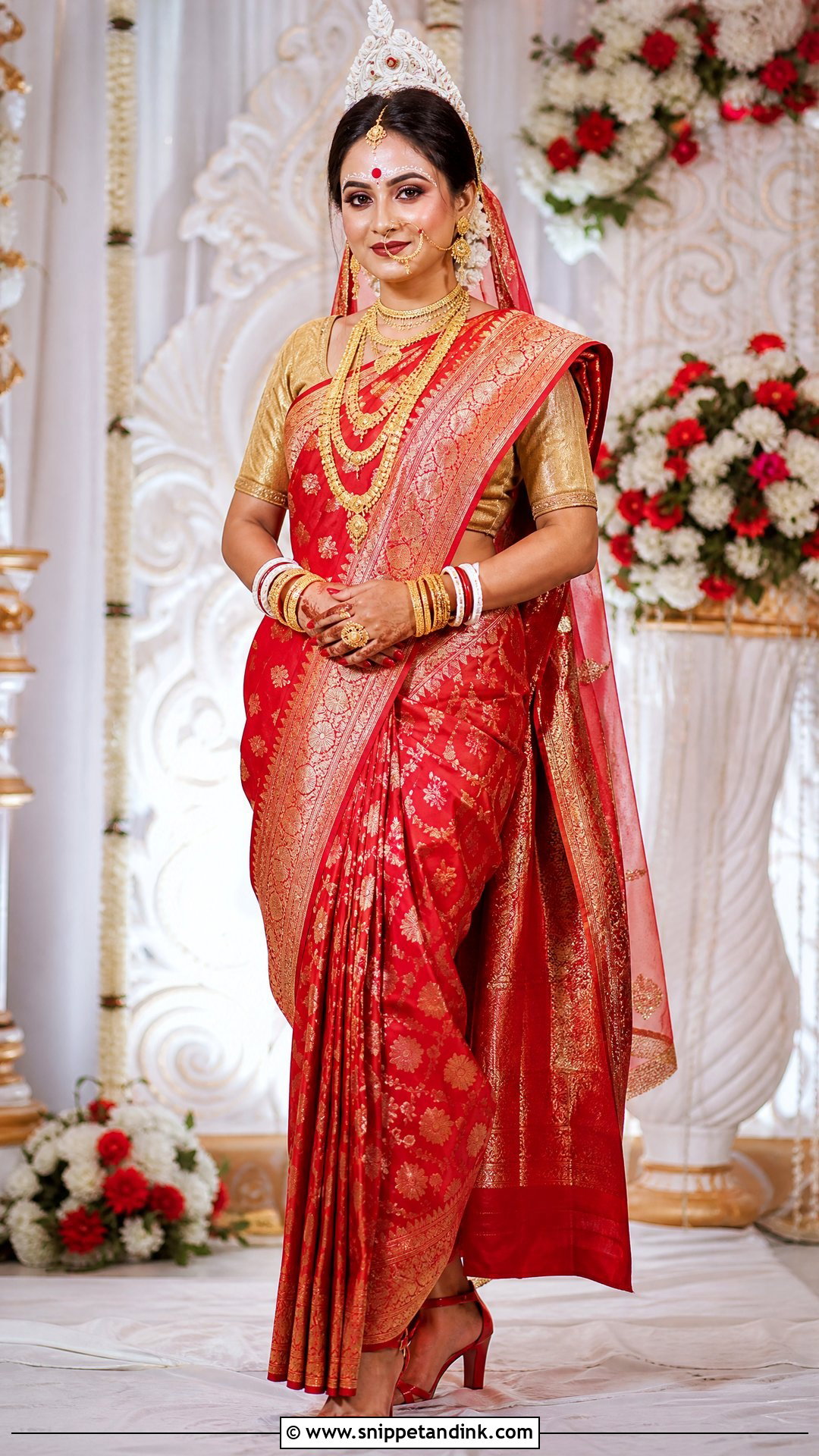
Paisley is the motif I’m most careful to space correctly. One small upright paisley above the bindi, then mirrored paisleys on each side, outlined in white and filled with tiny red details. They can travel towards the temples but should stay just above the brows. A red saree with woven gold motifs echoes the shapes. A wider forehead carries a larger central paisley; on a compact face, I shrink everything by a third. Because a paisley that tilts slightly wrong looks obviously off, I sketch the layout on paper or on the hand at the trial before touching the face.
5. Minimal Bridal Kolka Design
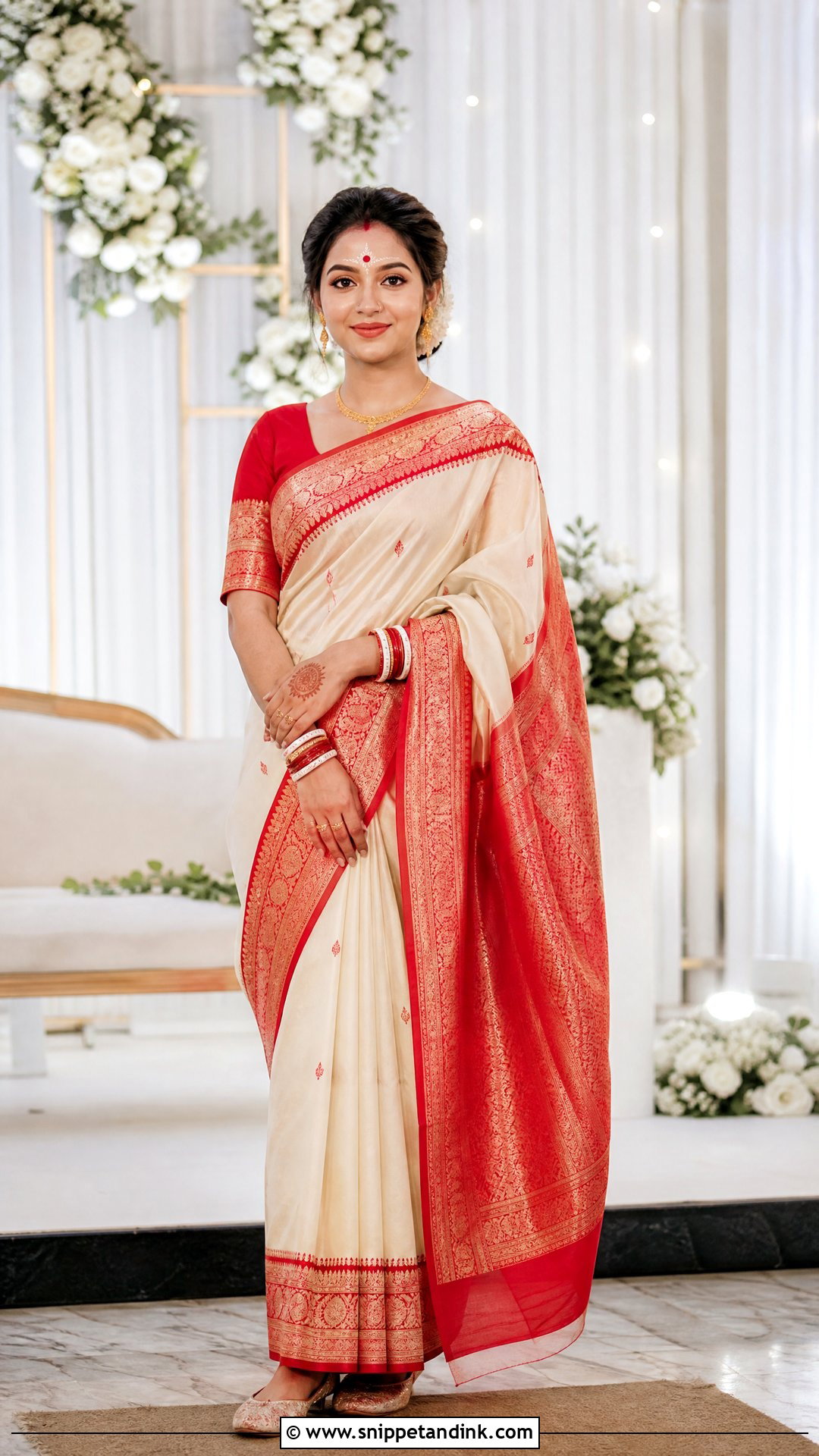
Do you want the bridal finish without paint taking over? One red bindi, two short white strokes and a small cluster of dots above each brow is enough to read as Bengali. I recommend this most to brides wearing an ornate mukut or heavy forehead jewellery, because two detailed things in the same space fight each other. It suits a red-and-ivory saree, a clean middle-parted bun, light gold jewellery and jasmine. Keep the eyes defined rather than smoky and the lip berry or soft red. With so few marks, every dot has to be the same size, so I use one tool for all of them.
6. Full Forehead Bridal Kolka Design
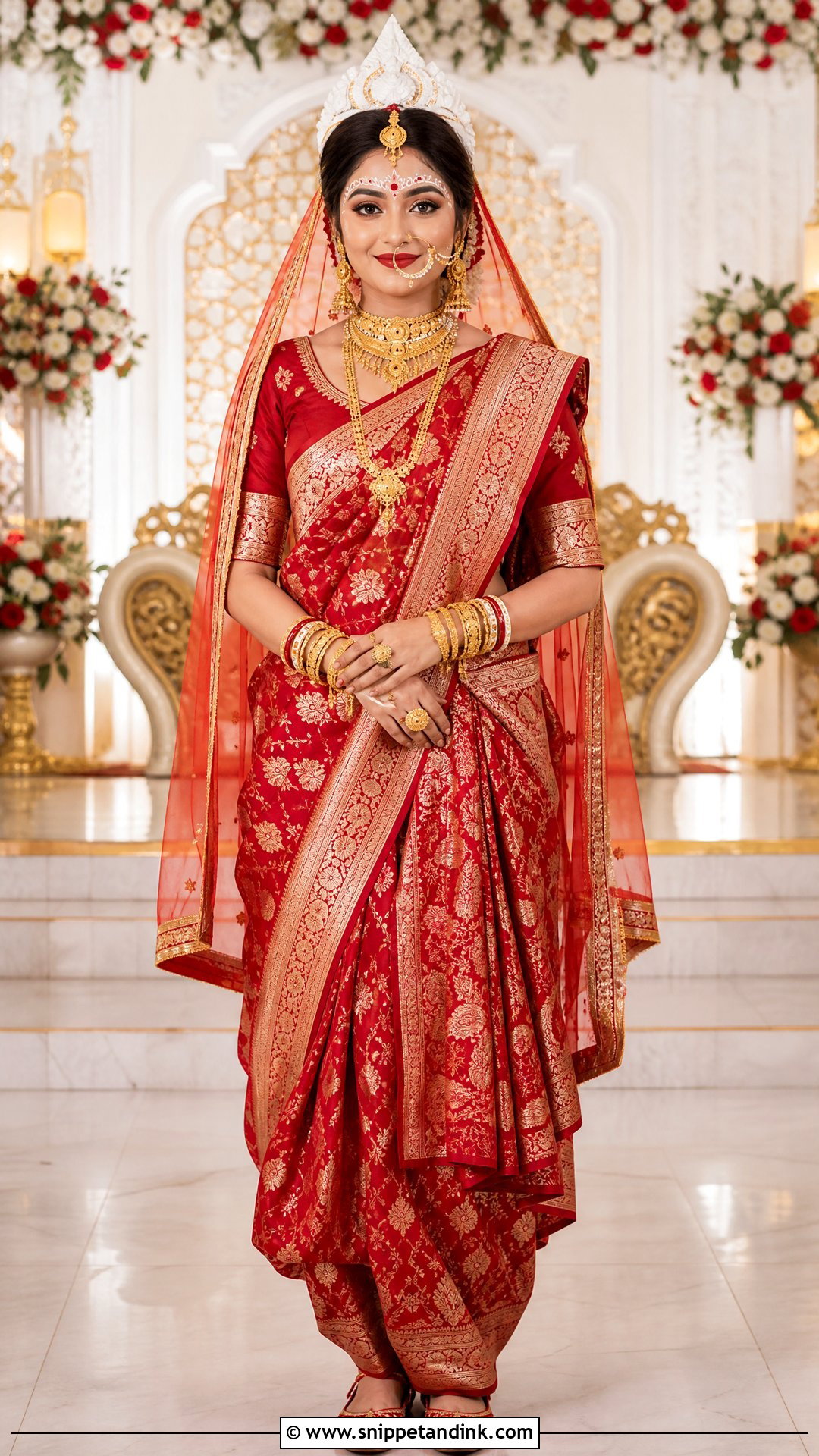
A full-forehead kolka runs temple to temple: a large red bindi, symmetrical curves, flowers, leaves and dots, with the centre rising to sit just under the mukut like a small crown. It’s grand, and it takes time. I book at least forty extra minutes for this one, because the outer ends have to match and any correction means wiping back to the base. With this much pattern, the lip needs to be strong enough to balance it. At the trial I paint it with the mukut in place, since the crown’s lower edge decides how high the centre can go.
7. Leaf Bridal Kolka Design
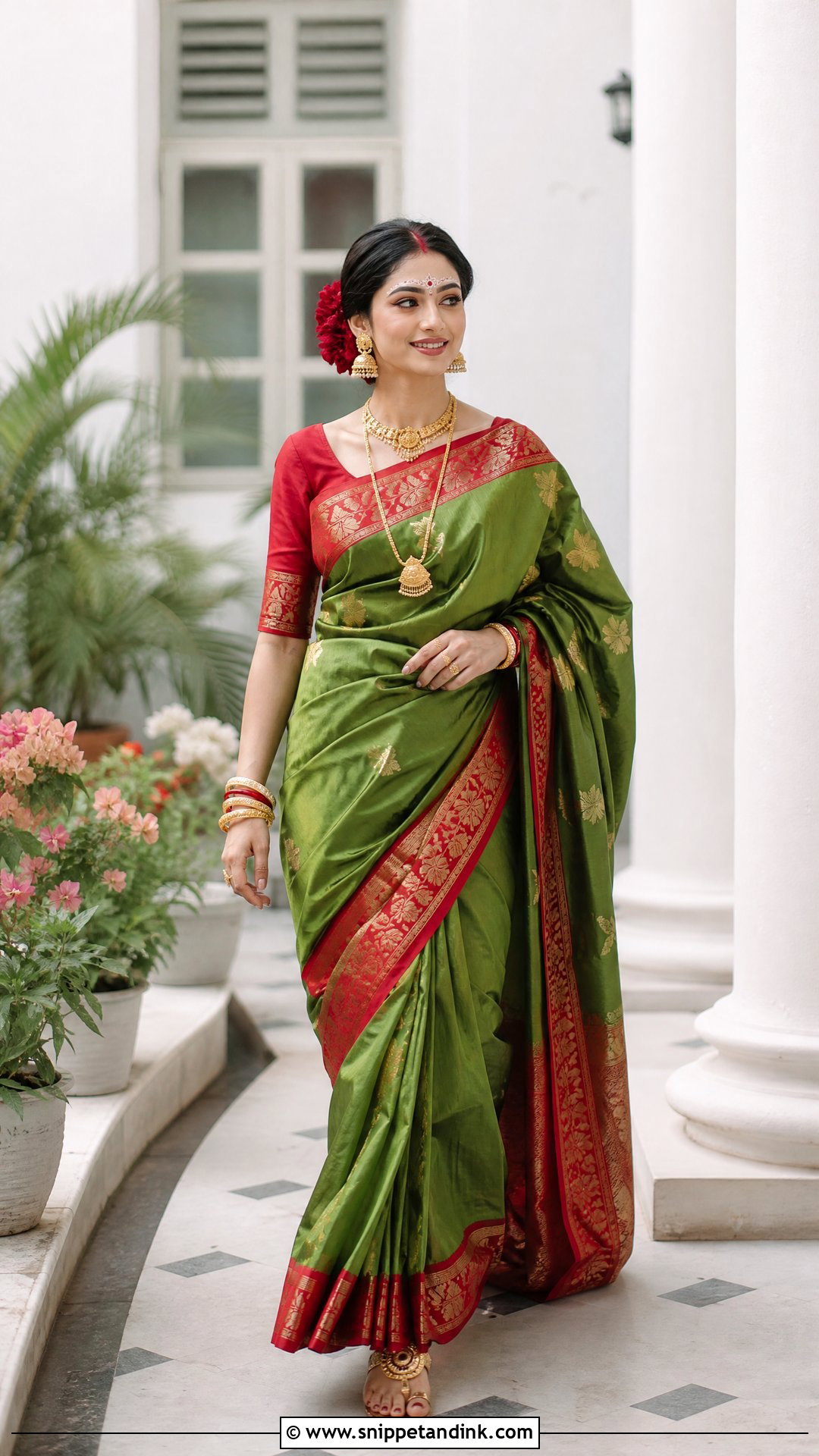
Leaf patterns give detail without one big motif. I draw a slim white branch following each brow, add small pointed leaves at regular intervals, then drop a few red dots between them. On a round face, I angle the leaves upwards; it lifts the forehead visually. One branch per side is understated; two layered branches look richer, but I stop them well short of the hairline so the bun and pins don’t smudge the tips. It pairs naturally with a green-and-red saree, temple jewellery and a red flower bun, with softly defined eyes and a deep red lip.
8. Crescent Moon Bridal Kolka Design
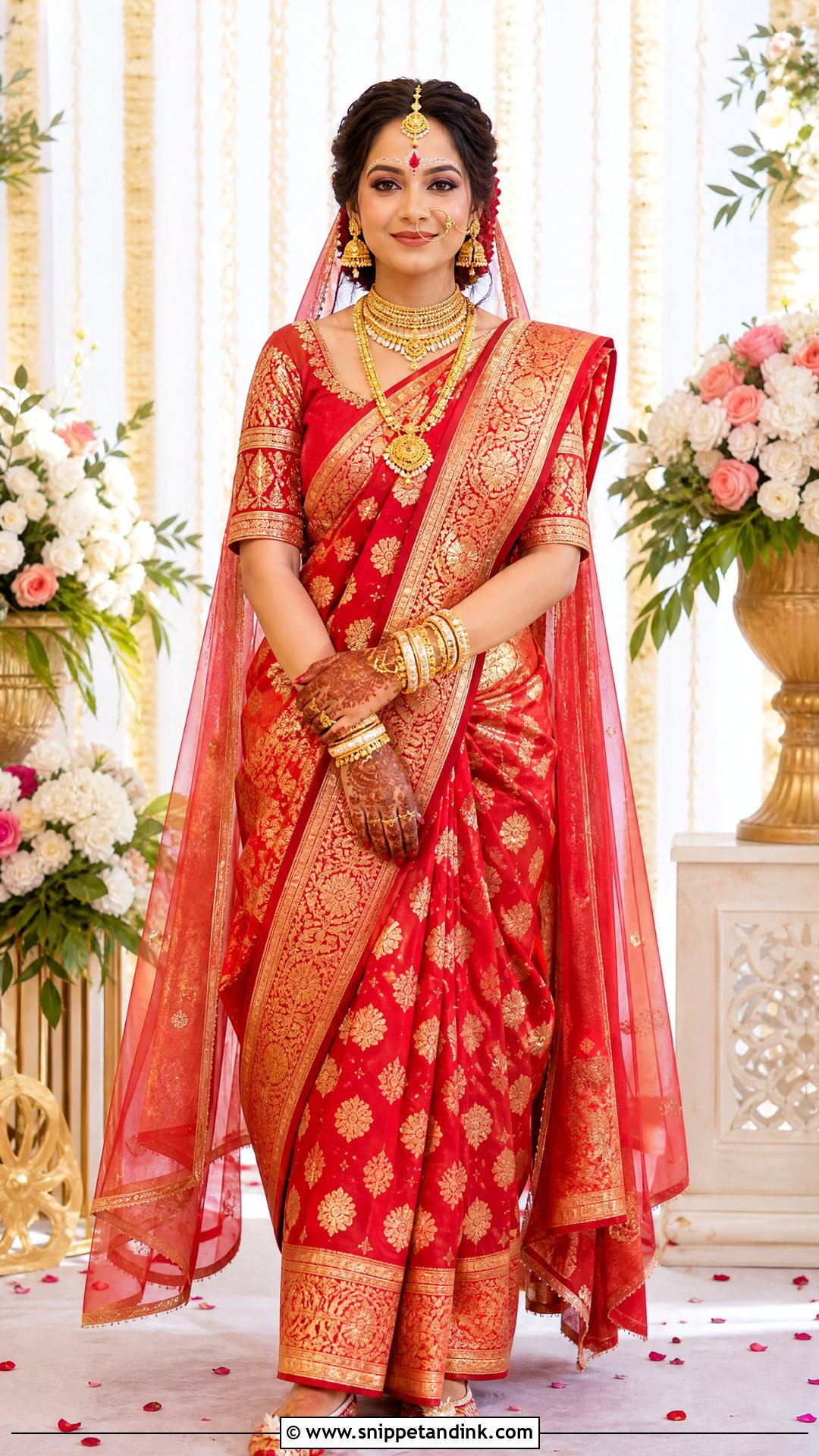
An upward-facing crescent above the bindi gives a focal point you don’t see at every wedding. White dots and curved lines extend from it, and smaller crescents near the temples keep it balanced. The common mistake is placing the main crescent where the tikli will hang over it, so I put the tikli on first, mark where its drop lands, and paint around it. Red detail inside the crescent can pick up the saree and lip colour. Keep the surrounding dots small; if they get as large as the crescent’s tips, the moon shape stops reading in group photos.
9. Lotus Bridal Kolka Design
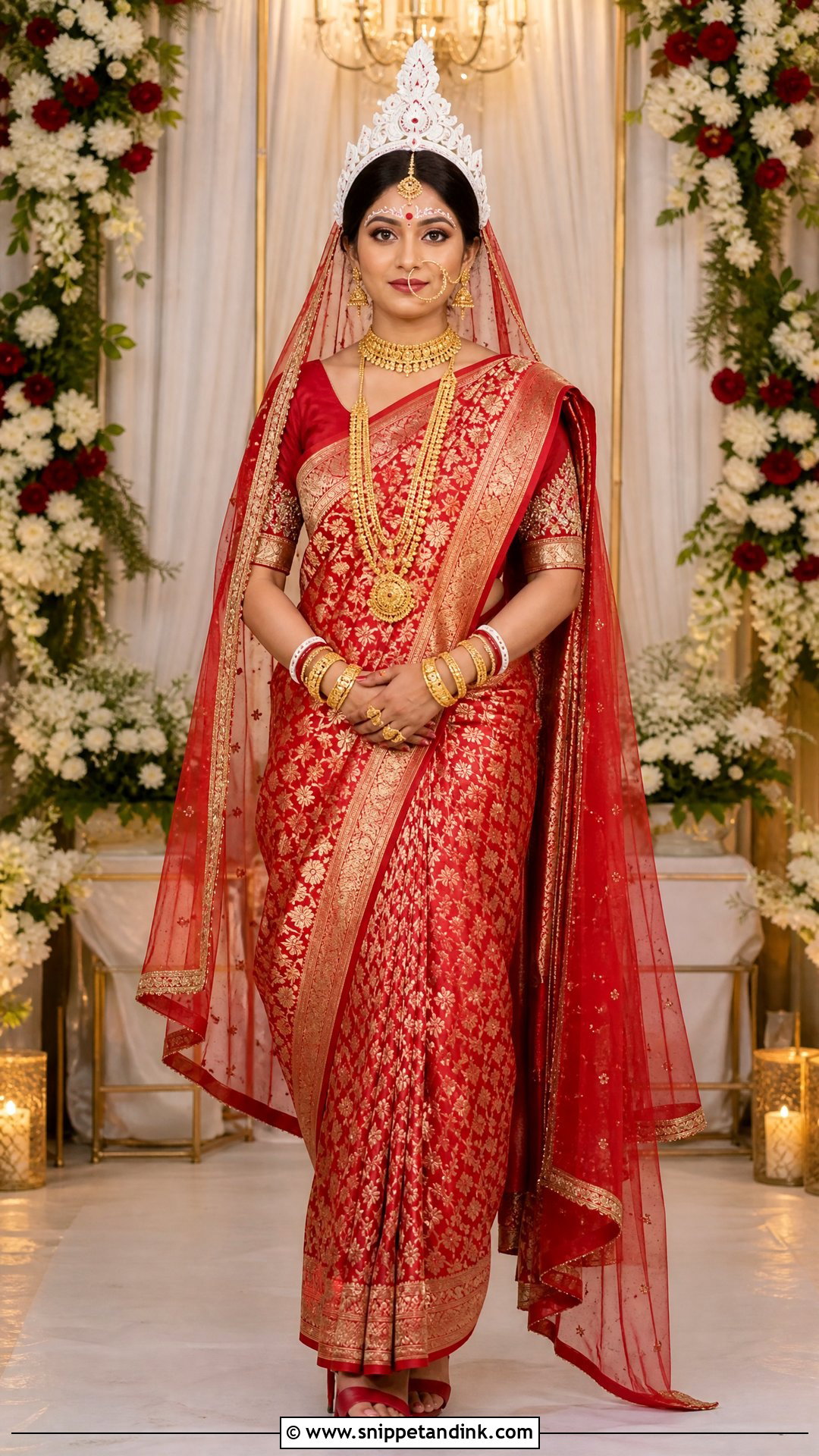
A lotus above the bindi carries meaning for many families, and it’s a motif I paint slowly. Each petal has to be a separate stroke with a hairline gap, or the flower turns into a white blob in photos. Fine curved lines can run from it to each brow and end in dots or tiny leaves. A few red touches inside the petals add depth. A closed bud suits a delicate look; an open bloom has more impact. Keep the forehead jewellery simple so it doesn’t sit on the lotus. It works with a red silk saree, gold choker, nath and a flower-covered bun.
10. Dot Bridal Kolka Design
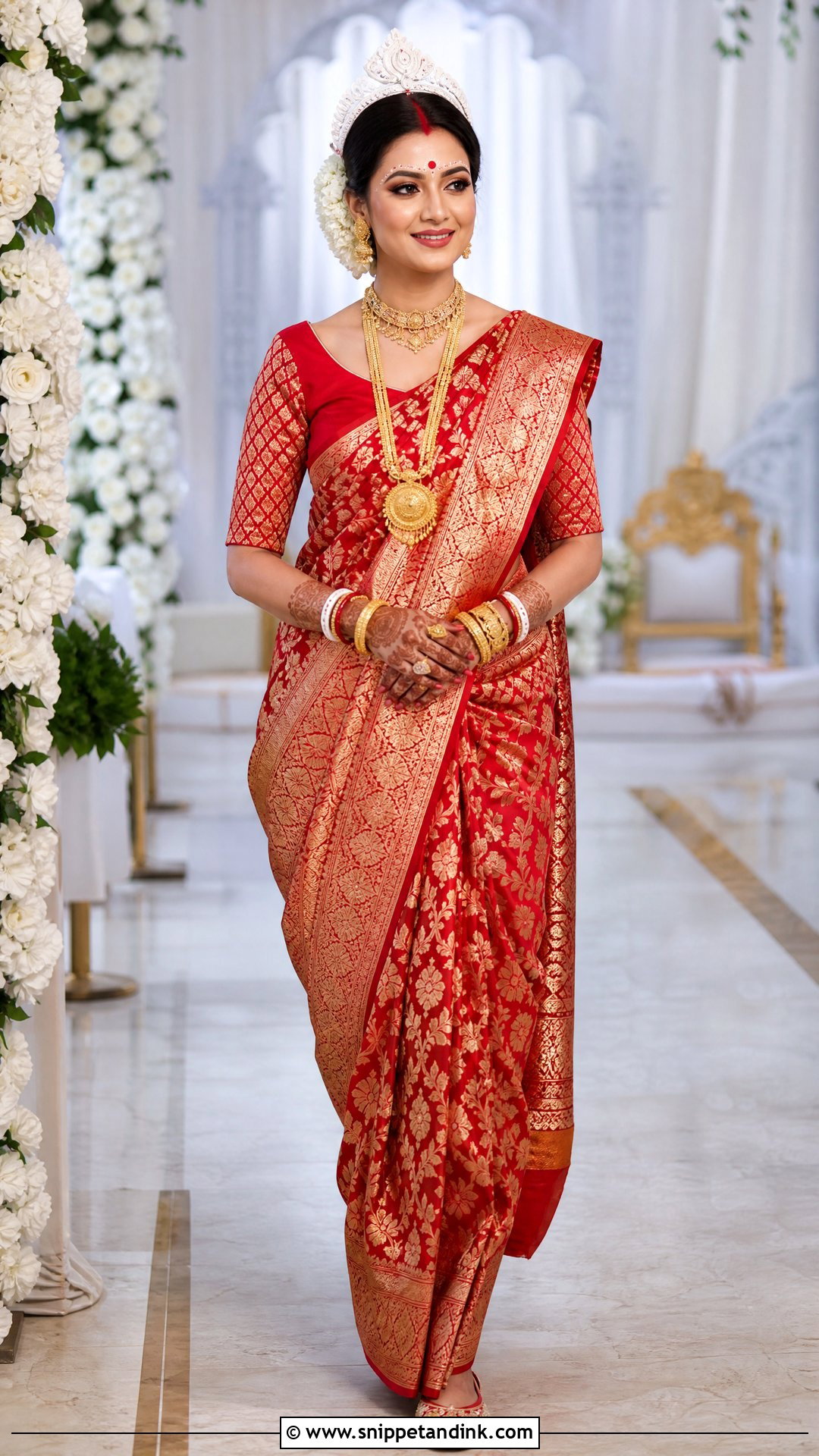
Dots alone can carry a whole kolka. A bold central bindi, then curved rows of white dots over both brows, shrinking slightly towards the temples so the pattern fades out. Add one short line or a tiny flower above the centre only if it needs more shape. Dotted designs show texture underneath more than lines do, so the base has to be smooth; on a forehead with visible pores or dry patches, I prime and powder carefully first. This is my choice for brides who dislike thick painted lines, and it leaves space around a tall mukut and statement jewellery.
11. Swirl Bridal Kolka Design
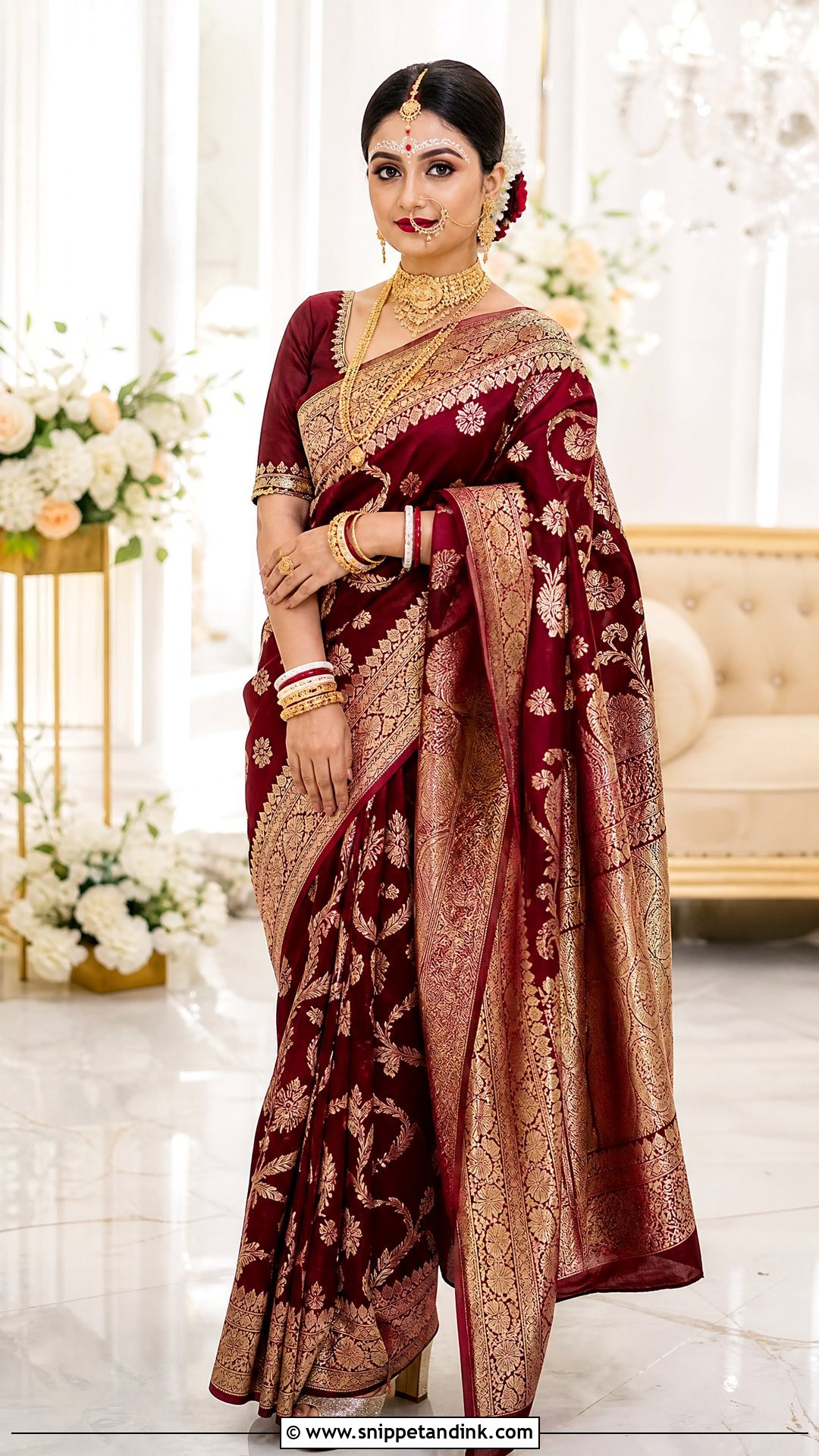
Swirls bring movement. Two white S-curves start above the bindi and turn outwards towards the brows, with smaller curls, dots and leaf tips around them. Too many shapes close together and the swirls lose their outline, so I leave more empty space here than in any other design. The rounded lines soften angular features nicely. They can continue onto the upper cheeks for a more traditional statement. A deep maroon Banarasi, antique gold jewellery, kohl-lined eyes and a sleek bun give it a rich background. I check symmetry where each swirl meets the outer brow, because that’s where the eye catches any mismatch.
12. Temple Bridal Kolka Design
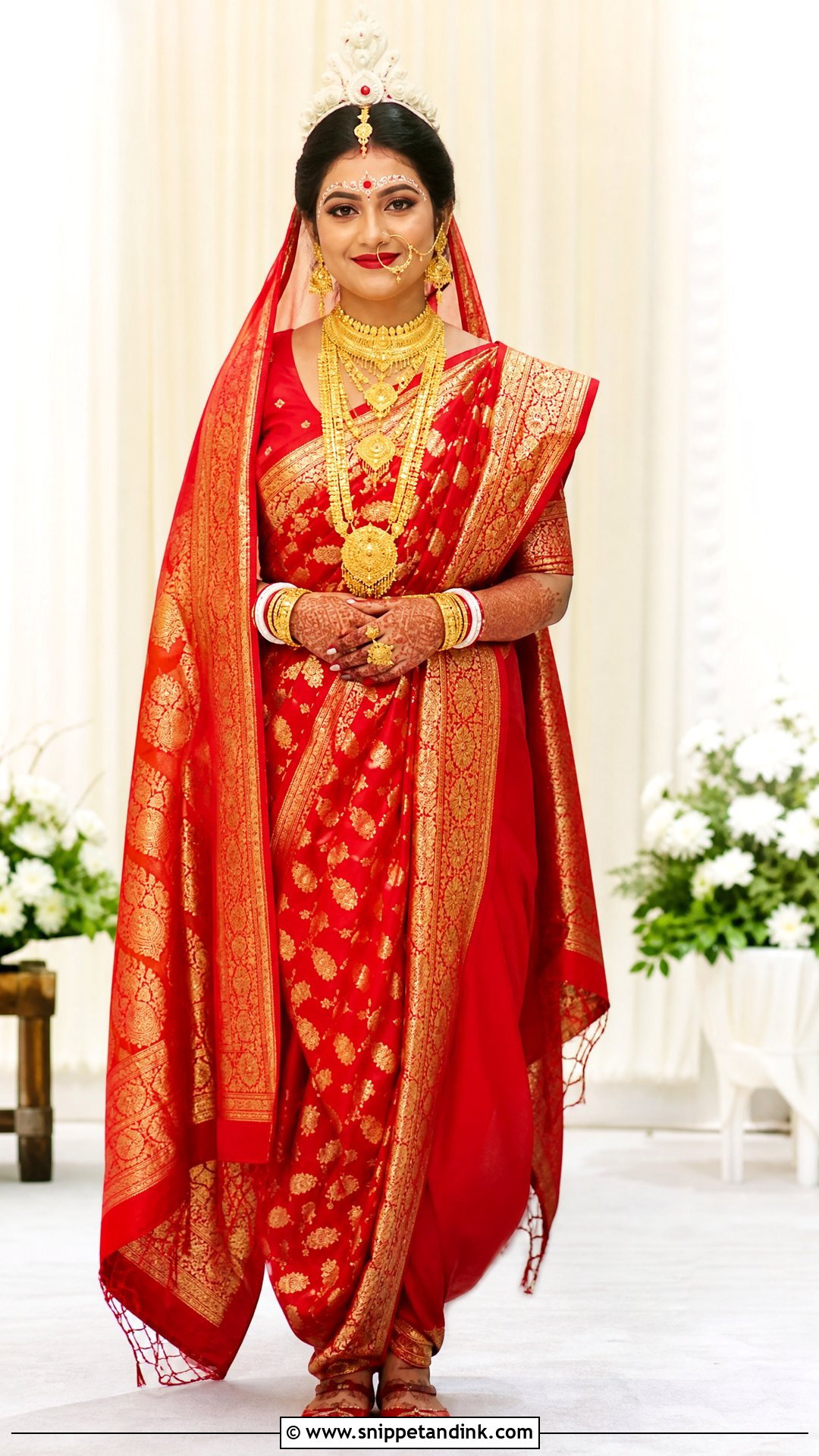
Pointed arches give this kolka a structured, regal look, and it suits a traditional mukut best because the upward points echo the crown’s edge. I paint the tall central arch first, then repeat smaller arches on each side with a dot beneath each point. The centre must stay a little taller than the rest, or the frame looks flat. On a shorter forehead, I make the arches shallow; with more space, they can rise into a crown-like row. Strong kajal, red lipstick, bold gold necklaces, a large nath and a smooth middle-parted bun support the ceremonial feel.
13. Maroon And White Bridal Kolka Design
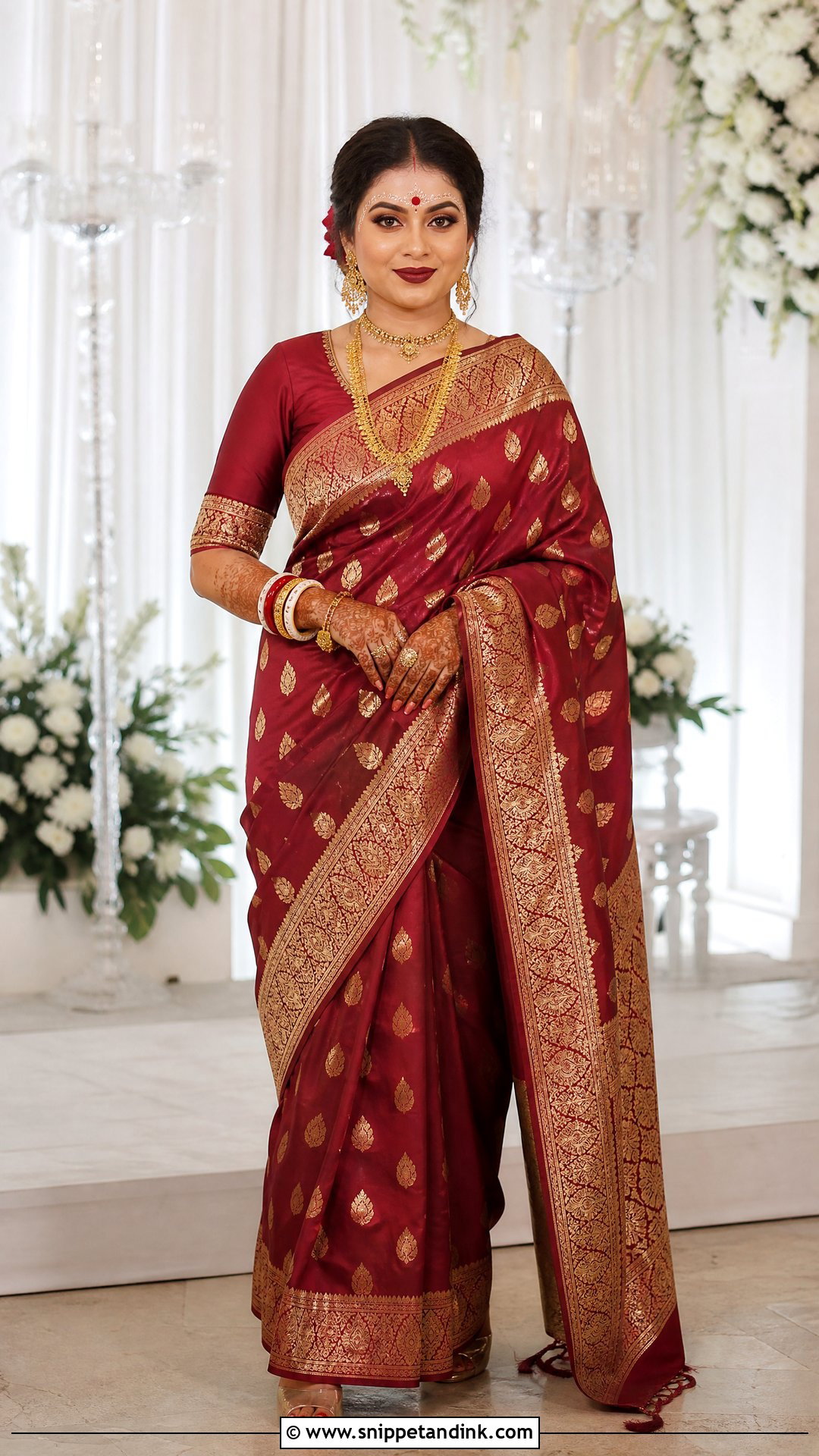
Maroon is softer than bright red and suits a burgundy, maroon or deep red Banarasi. I use a maroon bindi in the centre with white curves, small flowers and maroon dots around it. The detail I check under the mirror: maroon dots placed near the brows can blend into dark brow hair and black liner, so I keep a clear gap and choose a shade light enough to stand apart. Antique gold jewellery and a flower bun deepen the palette. A maroon lip and softly smoky eyes finish it. Keep it narrow above the brows, or extend it towards the temples for more ornament.
14. Pink And White Bridal Kolka Design
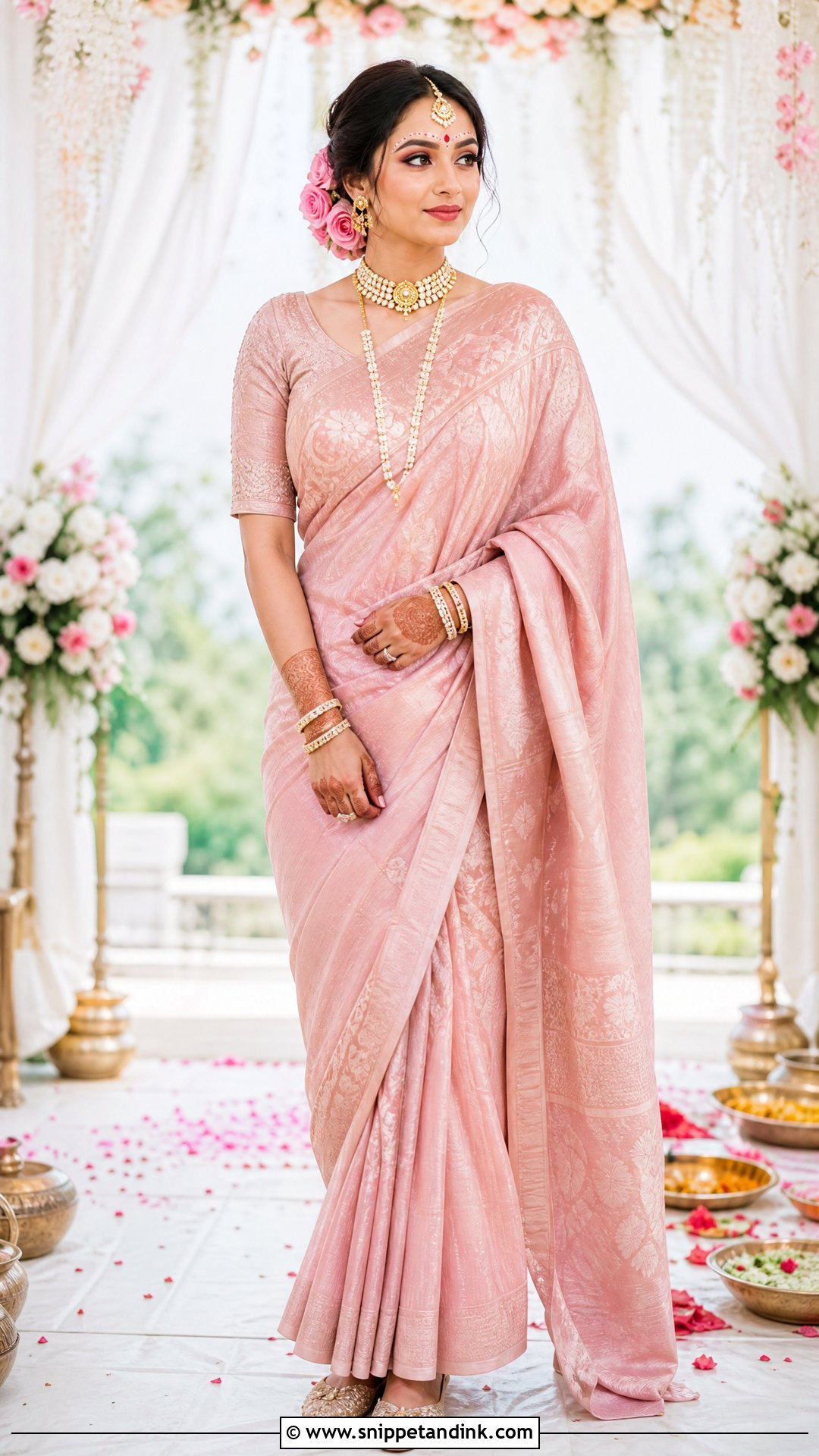
For a blush, rose, coral or pastel outfit, pink and white keeps the forehead in the same family as the clothes. A medium pink bindi, delicate white floral curves and tiny pink dots between them feel joined up rather than high-contrast. Pale designs vanish on fair skin, so I define the brows a touch more than usual to give the pattern an edge to sit against. A blush Banarasi saree or pink lehenga, pearl-and-gold jewellery and roses in the bun complete it. It reads best in daylight. If your family expects some red, one small red dot in the centre does it.
15. Gold And White Bridal Kolka Design
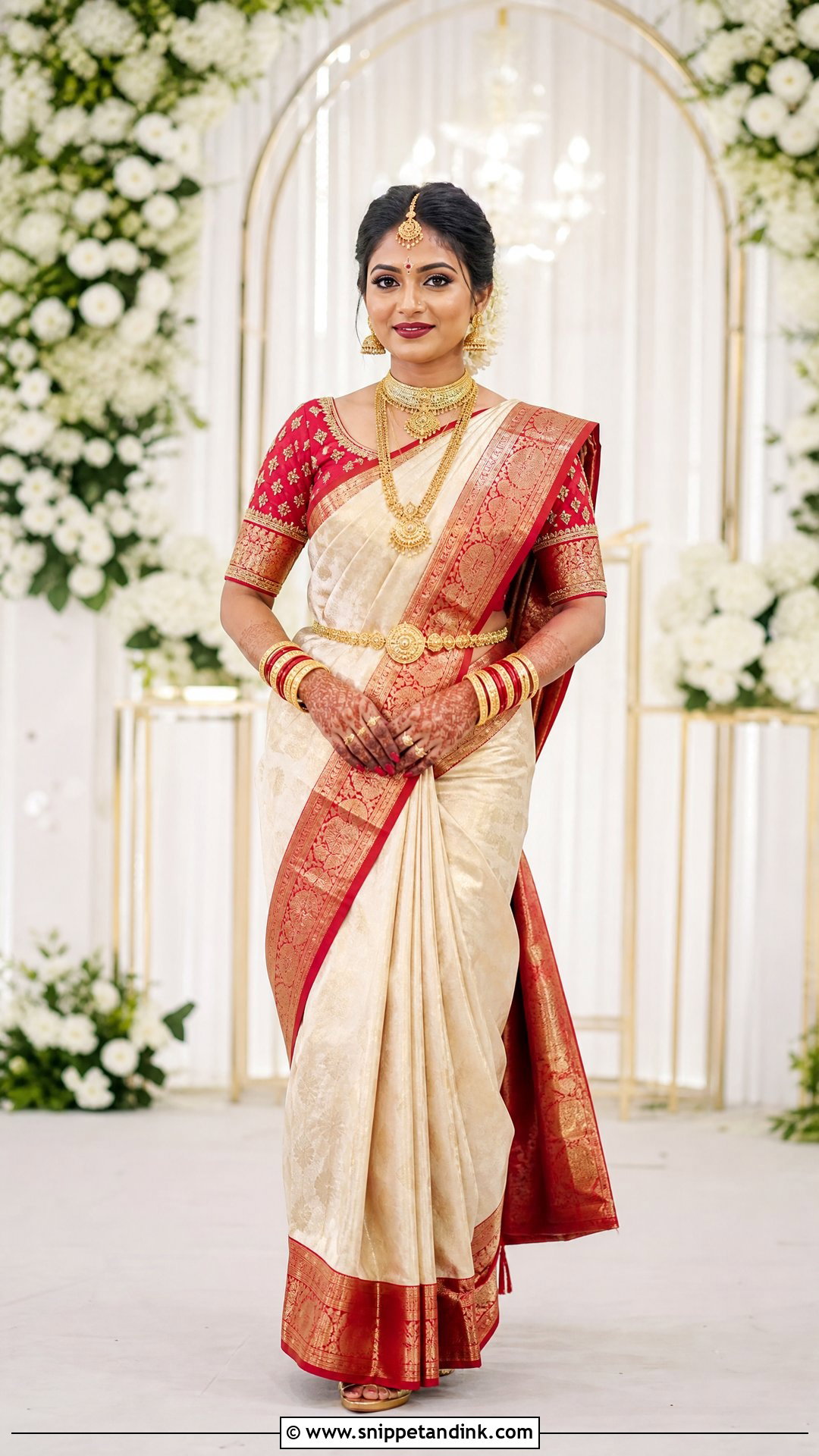
Gold and white catches light while keeping the clean look of chandan. White carries the main curves and flowers; gold comes in as a few dots or a fine outline, with a red bindi in the centre so the light colours have an anchor. I only use gold pigment sold for cosmetic use, and I patch test it before the day, because craft glitter and metallic paints aren’t made for skin. Go easy on shimmer elsewhere on the face. Under strong lights, too much gold makes small motifs merge, so I keep it to perhaps a fifth of the design.
16. Yellow Chandan Bridal Kolka Design
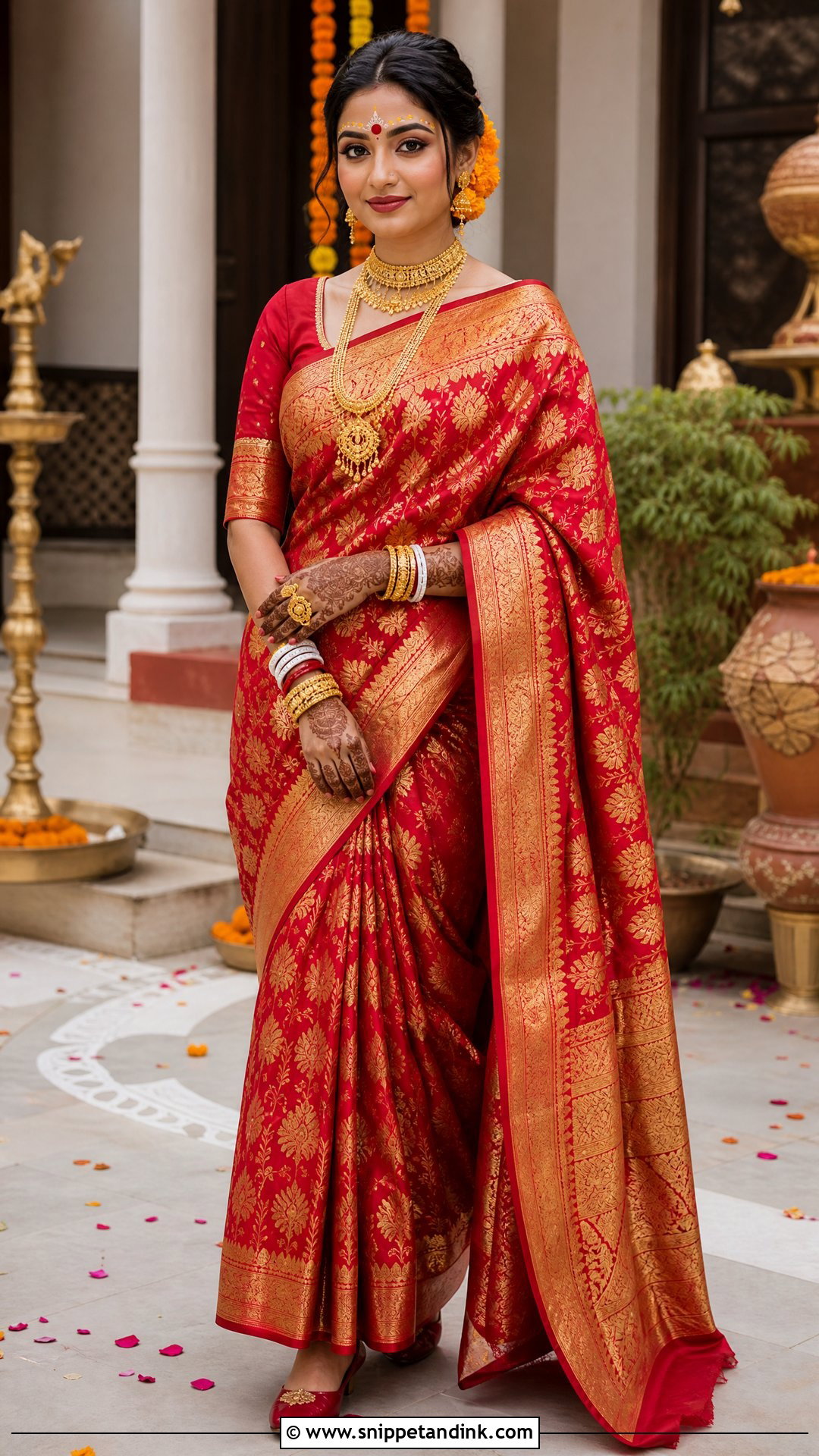
Yellow chandan gives a warm, old-fashioned feel. I paint petals, leaves or simple arches in golden yellow around a red bindi, with a few white dots for brightness. Very pale yellow can disappear against foundation, especially on warm or olive skin, so I test the shade on the forehead at the trial, in daylight and under a bulb. A slightly deeper mustard tone usually reads better on camera. It pairs naturally with a red saree woven in yellow-gold and marigolds in the bun. Keep the lip red and the eyes sharp so the soft yellow doesn’t wash out the face.
17. Bridal Kolka Design With Red Bindi
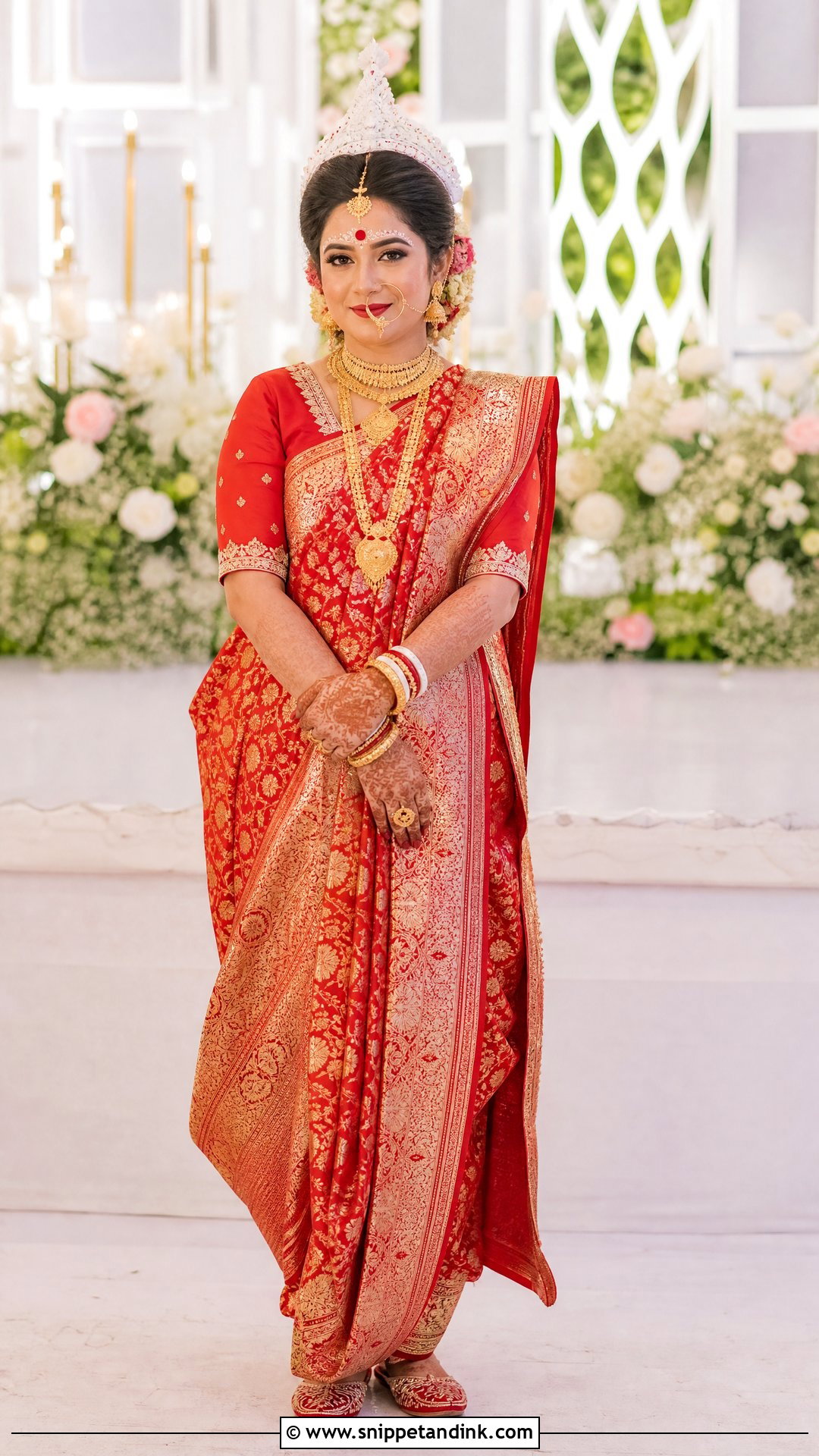
Sometimes the bindi is the point and the kolka is its frame. I choose a round bindi sized to the forehead, then build fine white lines, short petals and small dots around it, leaving a clean gap under the hairline or mukut. The balance rule I follow: a large bindi needs a narrow kolka; a small bindi can support a wider pattern. Get that wrong and the face looks top-heavy. It suits a classic red Banarasi, gold jewellery, shakha pola, red lipstick and a low bun, which is exactly the traditional picture many families want.
18. Bridal Kolka Design With Blue Bindi
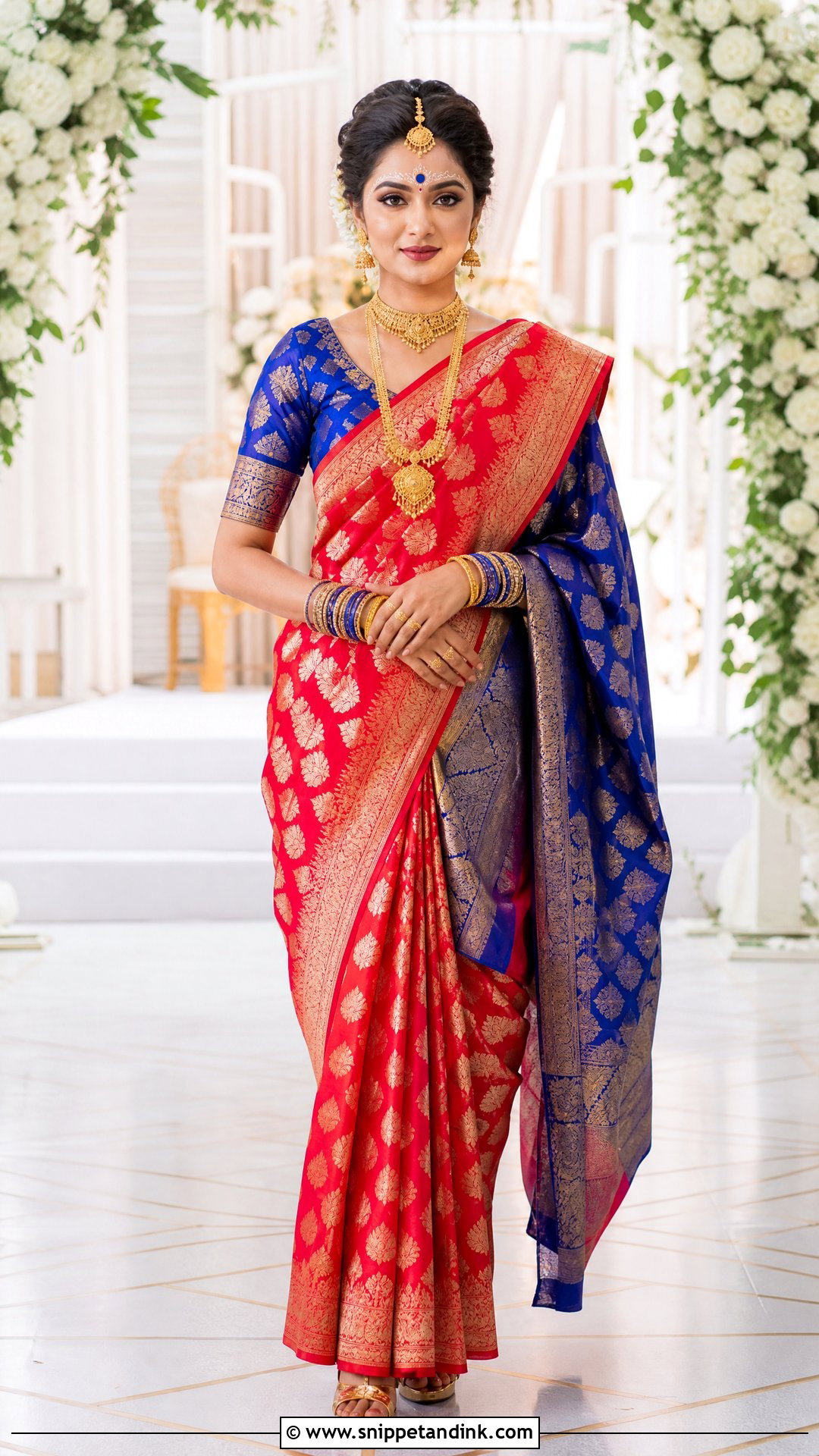
A blue bindi is unexpected, and it only looks intentional if the blue appears somewhere else too, in the saree weave, the blouse or the bangles. Navy, royal blue and teal each suit different sarees. Thin white curves and dots around the bindi keep it the clear centre, and any blue near the temples should stay small. I’d pair it with Neutral eye shadow and defined kajal so the colours don’t multiply. Some blue pigments photograph almost black in low light, which is why I test the exact shade on camera before the day.
19. Bridal Kolka Design With Cheek Detail
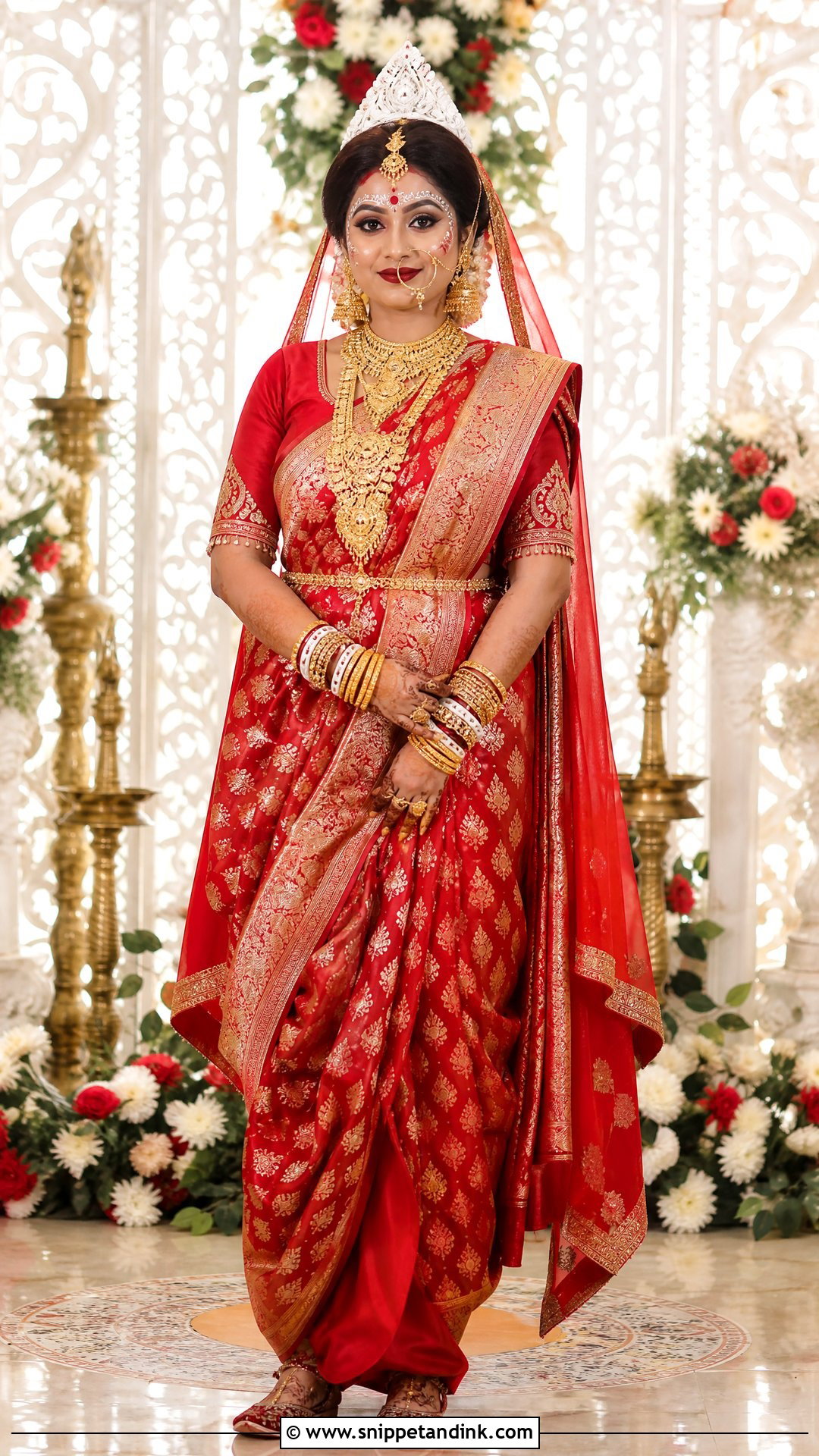
Carrying the kolka onto the cheeks is the boldest traditional choice. After the symmetrical forehead design, one slim S-curve runs past each temple onto the upper cheekbone and ends in a leaf, flower or a few dots. I keep these lines narrow so they frame the face rather than sitting over blush. At the trial I have the bride smile, talk and turn her head, because cheek work moves and creases differently from the forehead. It has to stay clear of the outer eye too; lines too close get disturbed by lashes and the natural squint of smiling.
20. Bridal Kolka Design Near The Eyebrows
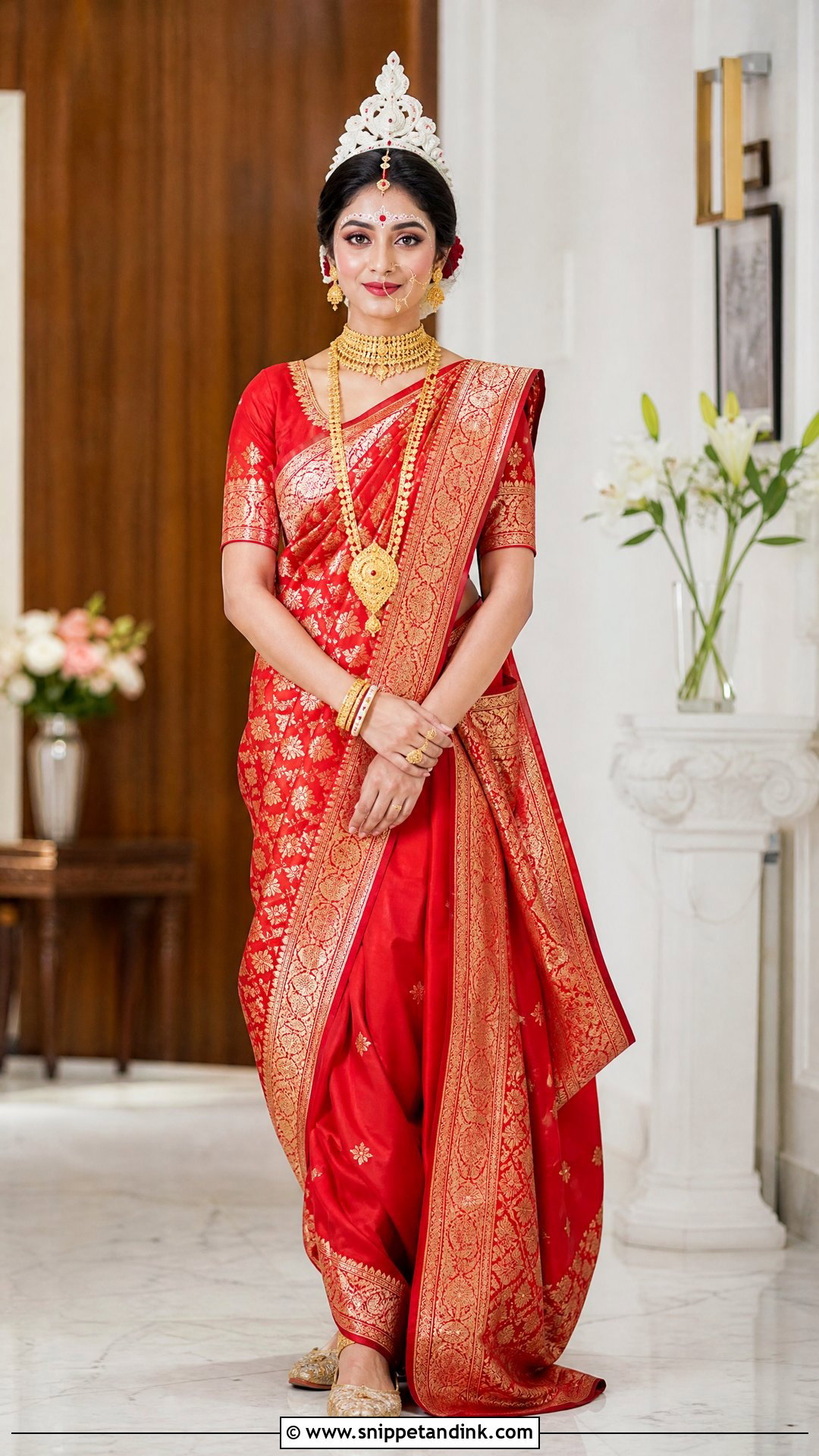
Keeping the design tight to the brows gives a framed, horizontal shape that leaves the upper forehead free for a large mukut, matha patti or forehead jewellery. I draw thin white curves along the top edge of each brow and add dots, petals or tiny leaves without climbing higher. The brows become part of the design, so I fill and shape them first. I leave a hair’s-width gap between the paint and the brow hairs, because paint dragged into the hairs looks smudged up close. A red silk saree, gold choker and smooth bun suit it.
21. Bridal Kolka Design Up To The Temples
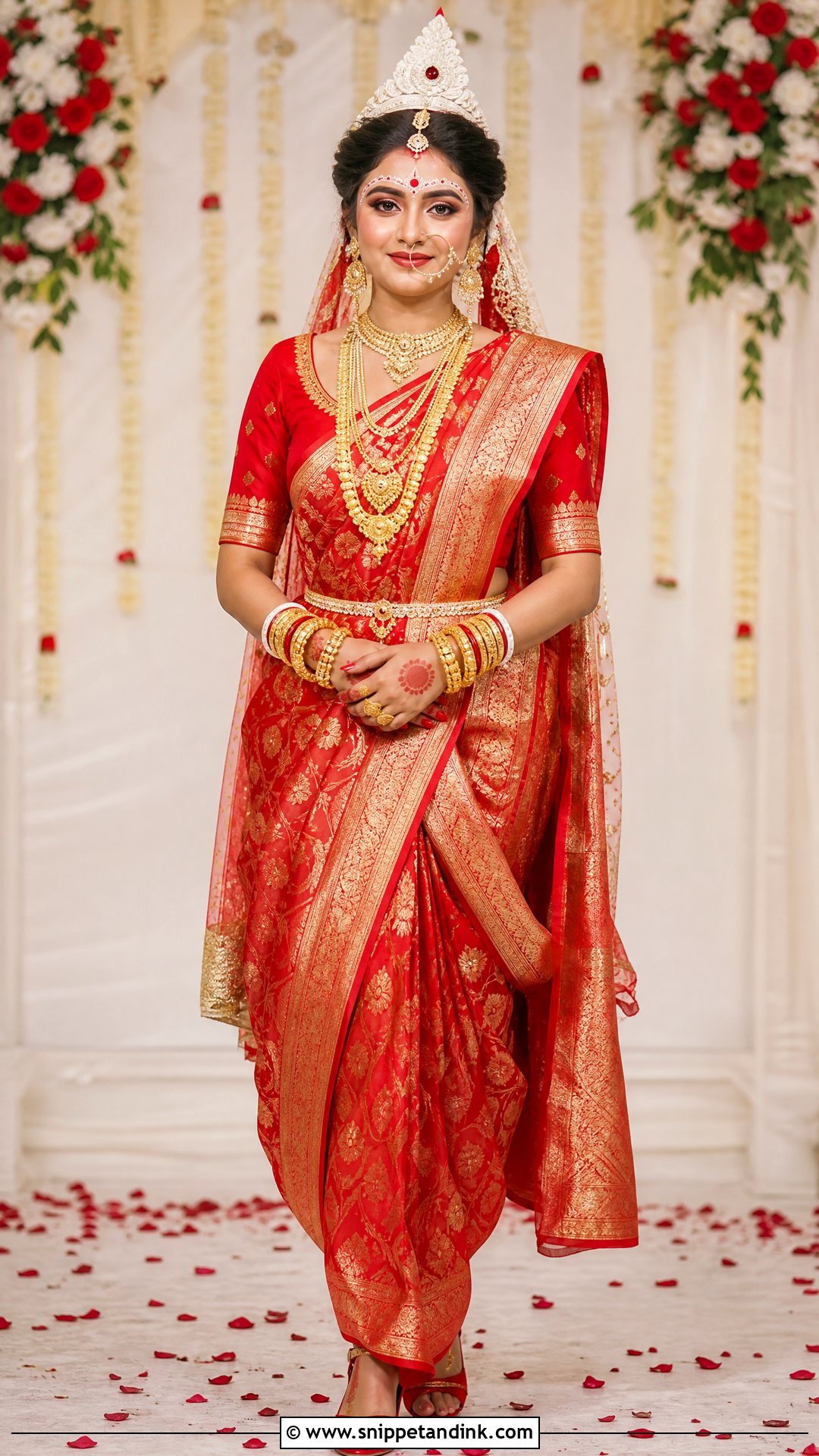
A wide design that reaches the temples frames the whole upper face. I start with a floral or paisley centre above the bindi and let thin white branches taper as they move outwards, finishing with red dots or tiny leaves. The outer lines must stop before the hairline and the ear area, where sweat collects and the saree veil rubs. With this much width, symmetry is visible in every straight-on portrait, so I measure from the centre to each end. I’d keep eyeshadow lighter here, since heavy eyes compete with a pattern this wide.
22. Bridal Kolka Design With Small Flowers
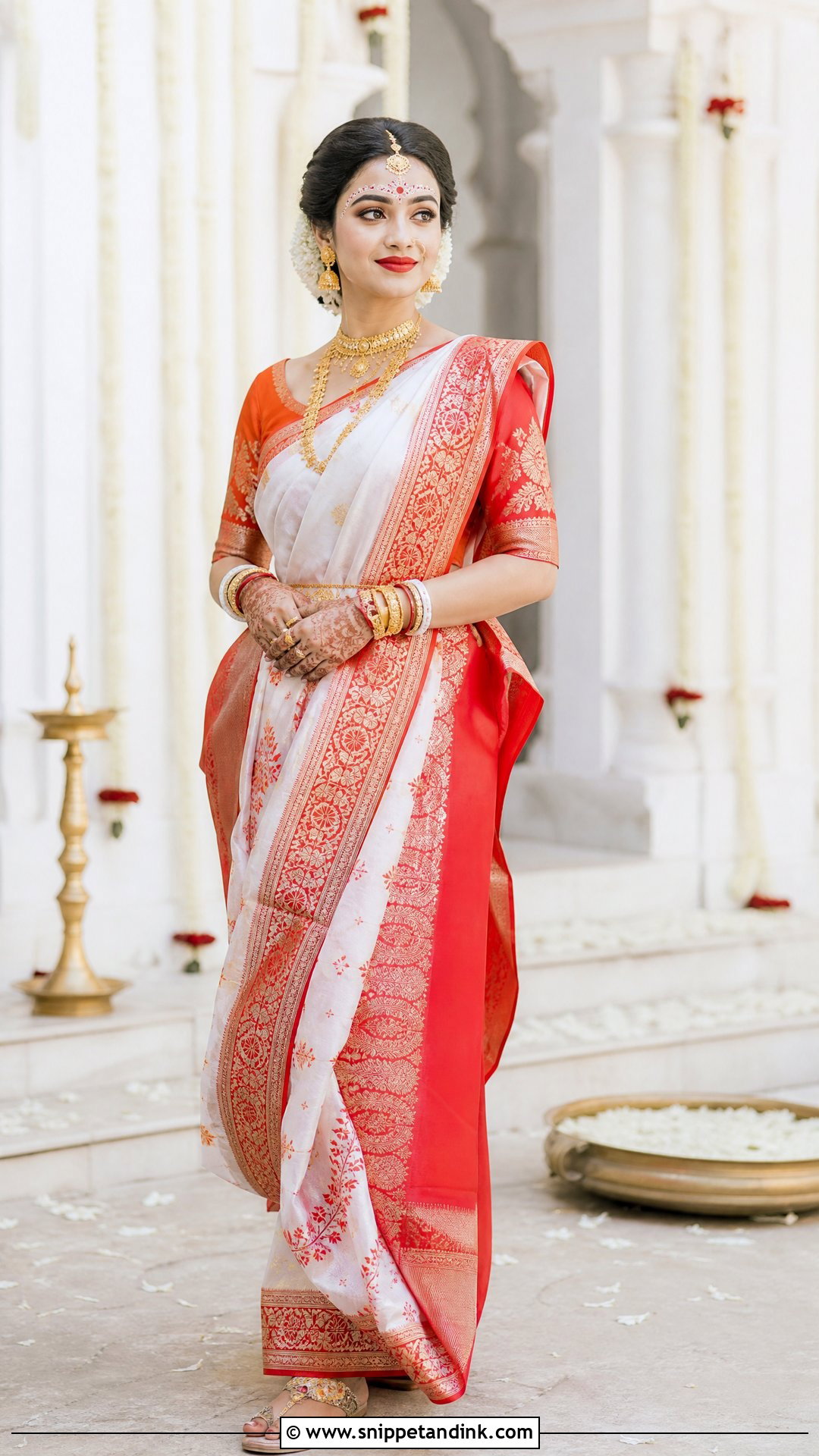
Rather than one large central flower, this design scatters small five-petal blooms across the forehead, either linked by fine stems or spaced apart. Tiny red centres help each flower show. I shrink the blooms slightly towards the temples for a natural taper. Spacing is everything: placed too close, the flowers merge into a white band in close-ups. It works with a red-and-white saree, delicate gold jewellery, white flowers around a low bun and rosy makeup, and it’s the design I’d suggest to a bride who loves floral detail but finds a big motif too much.
23. Bridal Kolka Design With Fine Lines
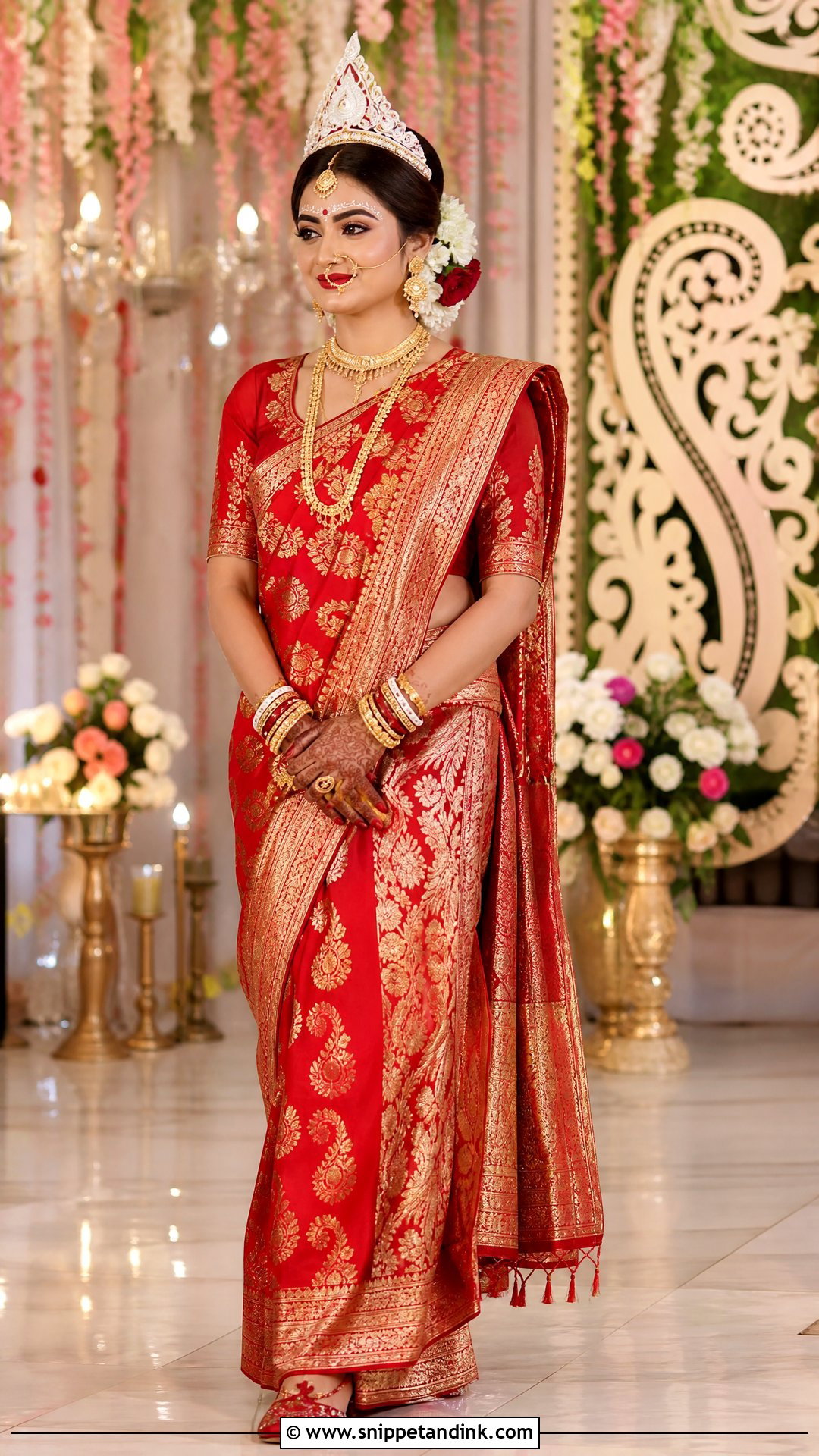
Fine-line kolka is intricate without being heavy, and it’s the one that needs the steadiest hand. I use a very narrow brush for slim paisleys, curls, leaves and arches around a red bindi, leaving clear gaps between shapes so each line stays distinct. A matte base is essential. I paint it after the base has settled, working from the centre outwards so symmetry can be corrected before I reach the temples. Add bold kajal, red lips, an ornate Banarasi, detailed gold jewellery and a nath. Budget extra time for it on the morning schedule.
24. Asymmetrical Bridal Kolka Design
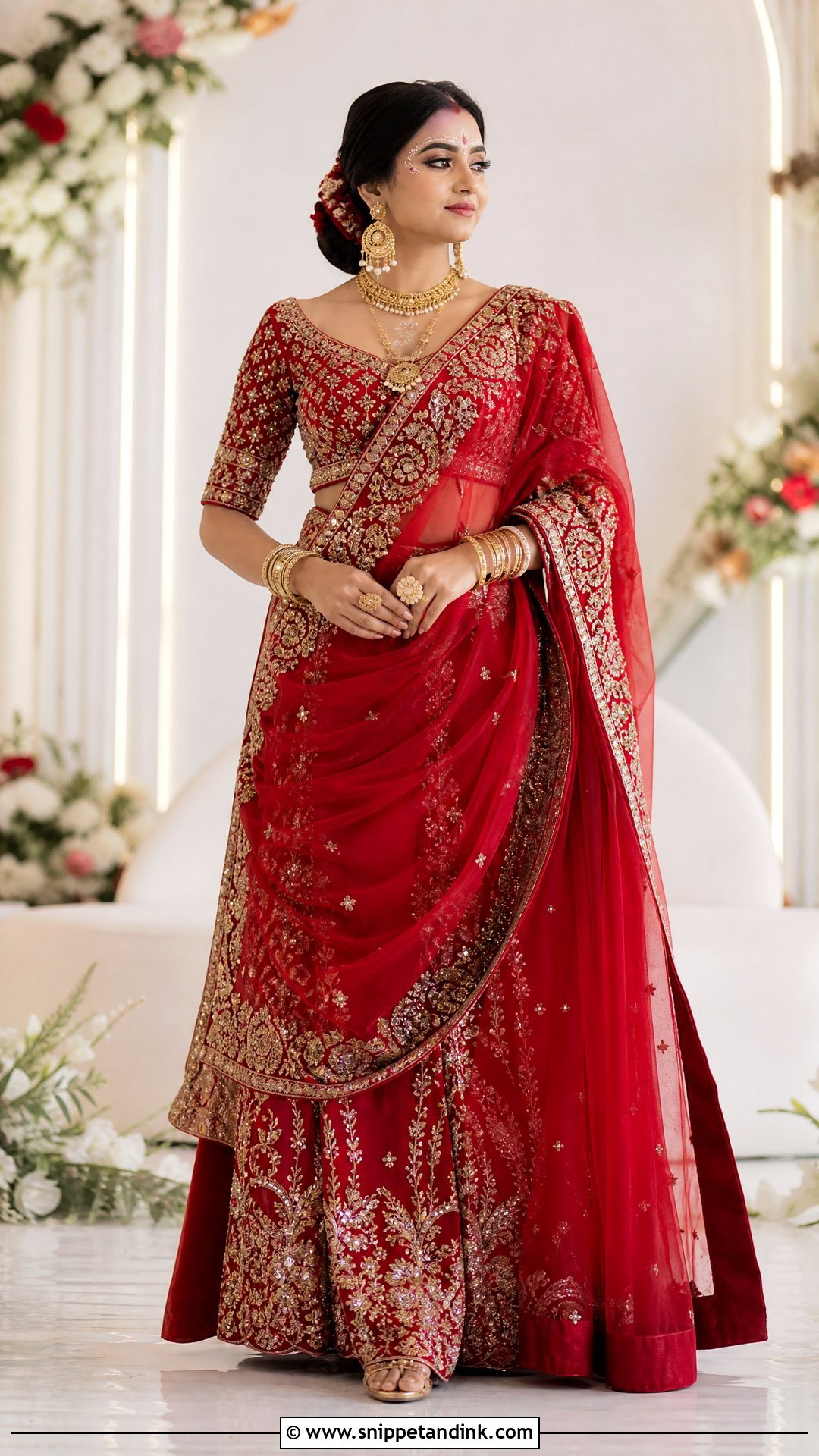
An asymmetrical kolka puts a larger floral curve on one side and a smaller group of dots or leaves on the other, with the bindi still in the centre. The two sides differ, but their visual weight must feel even; otherwise it reads as unfinished. I plan this one on paper before the trial. It suits a contemporary red lehenga, draped saree, statement earrings and a modern low bun, and the forehead jewellery should stay restrained so the unusual layout shows. Check with family first if you’re having a very traditional ceremony; some elders expect the classic mirrored pattern.
25. Traditional Bengali Bridal Kolka Design
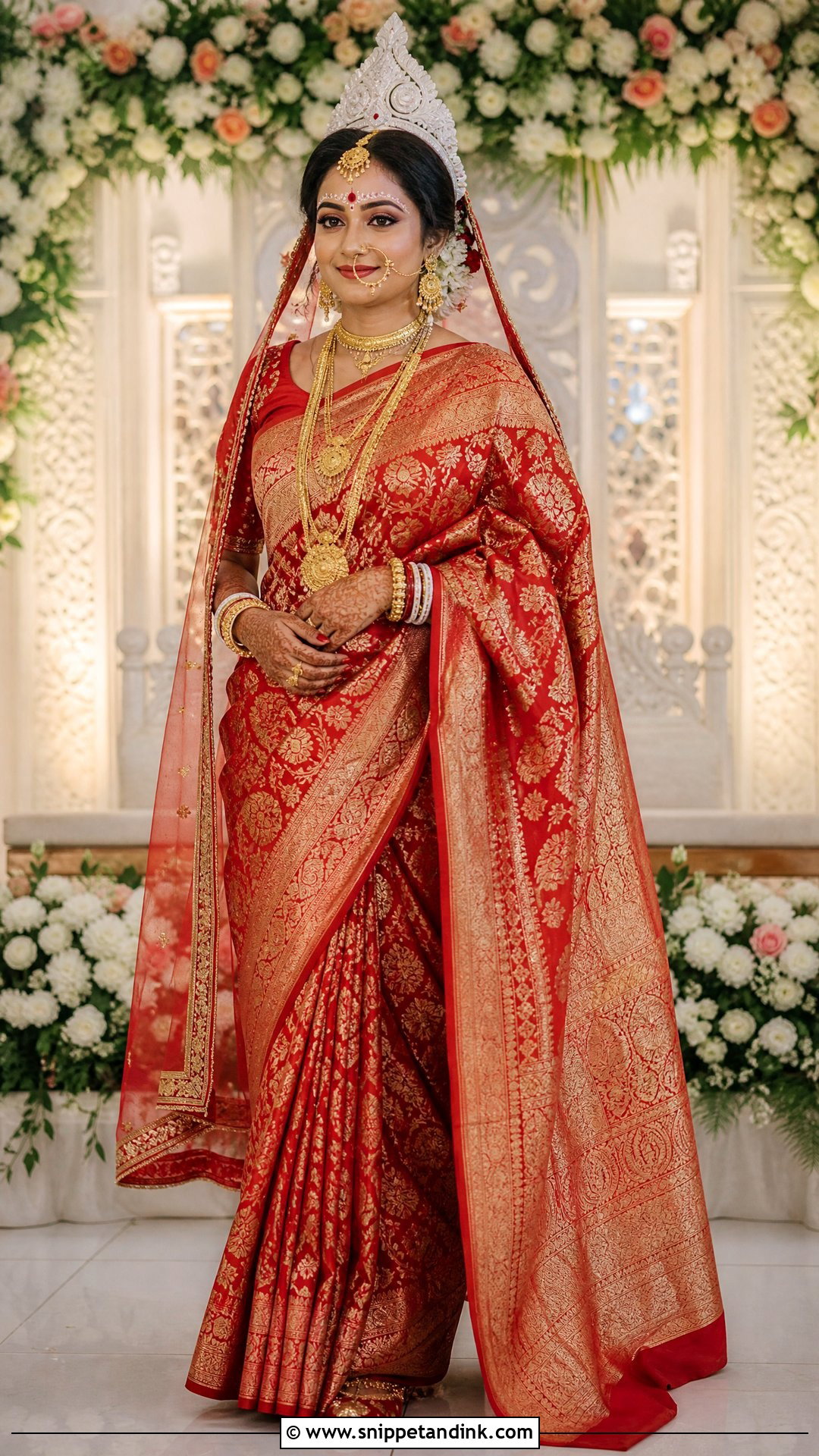
The fully traditional kolka gathers every familiar element: red bindi, white curves, paisleys, flowers and neat rows of dots, following the brows and sometimes extending to the temples or cheeks. Wear it with a red Banarasi saree, white mukut, gold tikli, layered necklaces, a nath, shakha pola and a flower-covered bun, with bold kajal and red lips. Even here, I never copy a reference picture exactly. I scale it to your forehead, hairline and jewellery. And whatever paint is used, a patch test a few days earlier avoids an itchy forehead through the ceremony.
Sindoor Daan, Sweat and a Saree Veil: Keeping the Pattern Intact
A kolka painted at noon has to survive the evening, and Bengali rituals put real pressure on the forehead. The saree drawn over the head rubs the upper edge. Sweat gathers under a mukut. During sindoor daan, loose vermilion falls on the forehead and nose, and families usually want it left there.
- I set the finished kolka with a light mist of setting spray held well back, rather than powder, which dulls the white.
- Keep the top of the pattern a finger’s width below where the veil or mukut sits.
- Blot sweat with tissue pressed flat, never wiped sideways.
- Give a bridesmaid a small kit: cotton buds, a fine brush, the white and red products used, and blotting papers.
Fixing a smudge without starting over
If a dot smears, I lift it with a cotton bud dipped in a little micellar water, let the spot dry, pat on a touch of powder and repaint just that dot. Wiping a whole side to fix one mark usually makes it worse. Removal at the end of the night is simple: an oil-based cleanser softens the paint and chandan, followed by a gentle face wash.
Let the Mukut and Your Brow Line Decide the Scale
Kolka ties the face to everything else: saree, jewellery, eyes, bindi and mukut. Minimal dots look clean and modern, while paisleys, flowers, leaves and cheek extensions build a more traditional, elaborate look. Red and white remain the classic choice, and pink, maroon, yellow, blue or gold can follow a contemporary outfit. Before settling on any pattern, I look at three things: how much forehead the crown leaves open, where the tikli falls, and how strong your brows are. Paint it at the trial with the jewellery on, take photos in daylight and flash, and you’ll know which version is yours.
You'll Like These Ideas:


Leave a Reply