
A sadi, more often spelled sari or saree, is one long length of fabric, and how good it looks depends as much on the blouse, petticoat and pinning as on the cloth itself. I dress women in saris for weddings, festivals, parties, work events and family lunches, and the fabric changes the whole approach: silk is grand and heavy, chiffon slips, cotton holds a crisp pleat, organza stands away from the body, and pre-draped designs save time. Shoes, bag and jewellery then decide whether the look feels balanced or overloaded. The twenty outfits below cover traditional and modern styling for different ages, shapes and occasions.
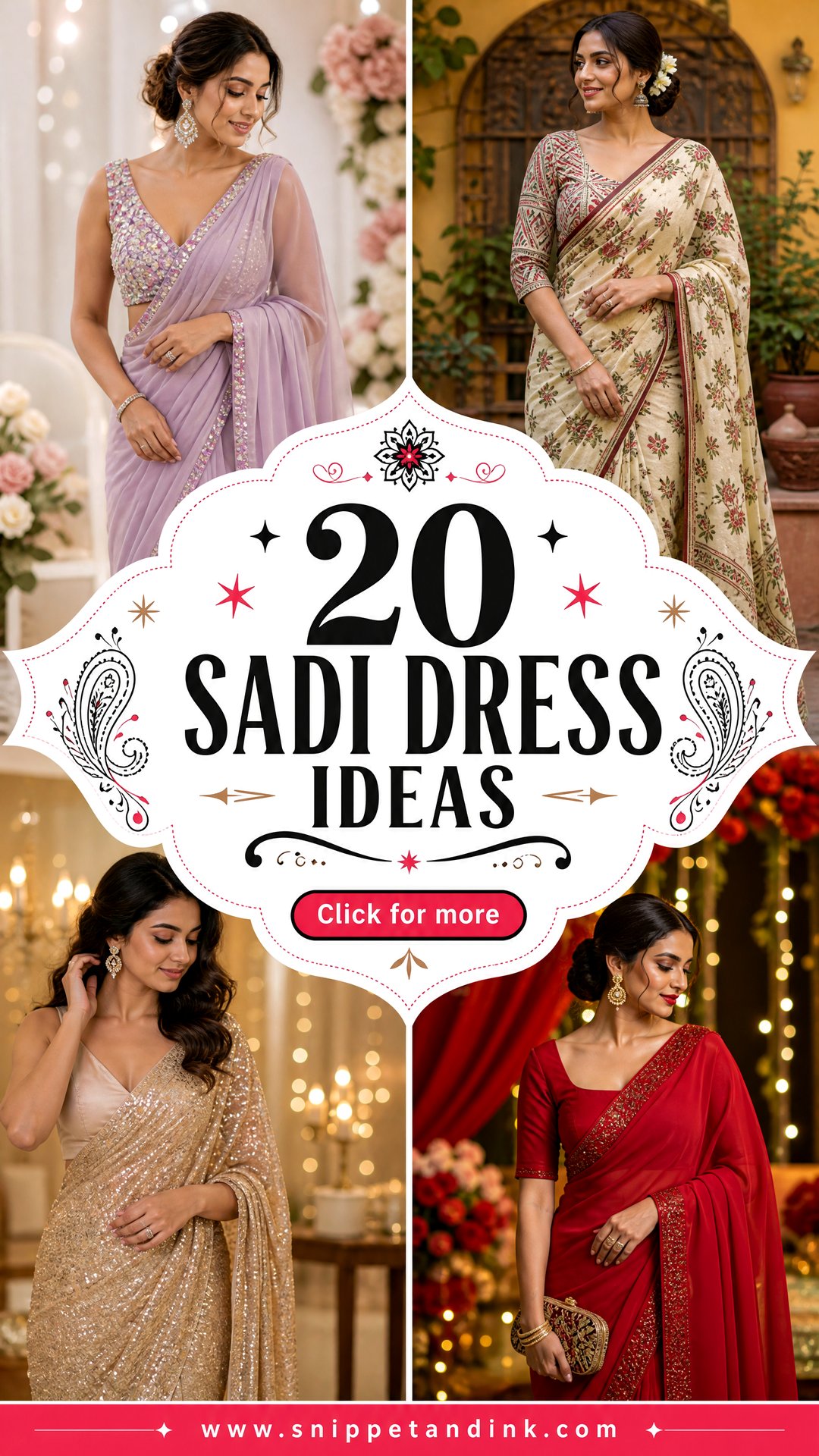
Petticoat, Pins and Pleats Hold Every Sari Up
Most draping problems I fix on the day come from the base, not the sari. Get these right and any of the looks below will stay put for hours.
- Petticoat first: a cotton underskirt in a shade close to the sari, tied firmly at the waist, since the pleats are tucked into it. Satin petticoats are slippery and let pleats slide out.
- Wear your event shoes while draping. The sari should just brush the top of your foot, and changing heel height afterwards makes it too long or too short.
- Pleat width follows fabric: narrow pleats for stiff organza and heavy silk, slightly wider for soft georgette and chiffon.
- Pin in three places: the pleats together at the top, the pleats to the petticoat, and the pallu to the blouse at the shoulder from underneath.
- Order the blouse early. Most saris come with an unstitched blouse piece, and a good tailor needs time plus a trial fitting.
1. Silk Sadi Dress With Gold Blouse
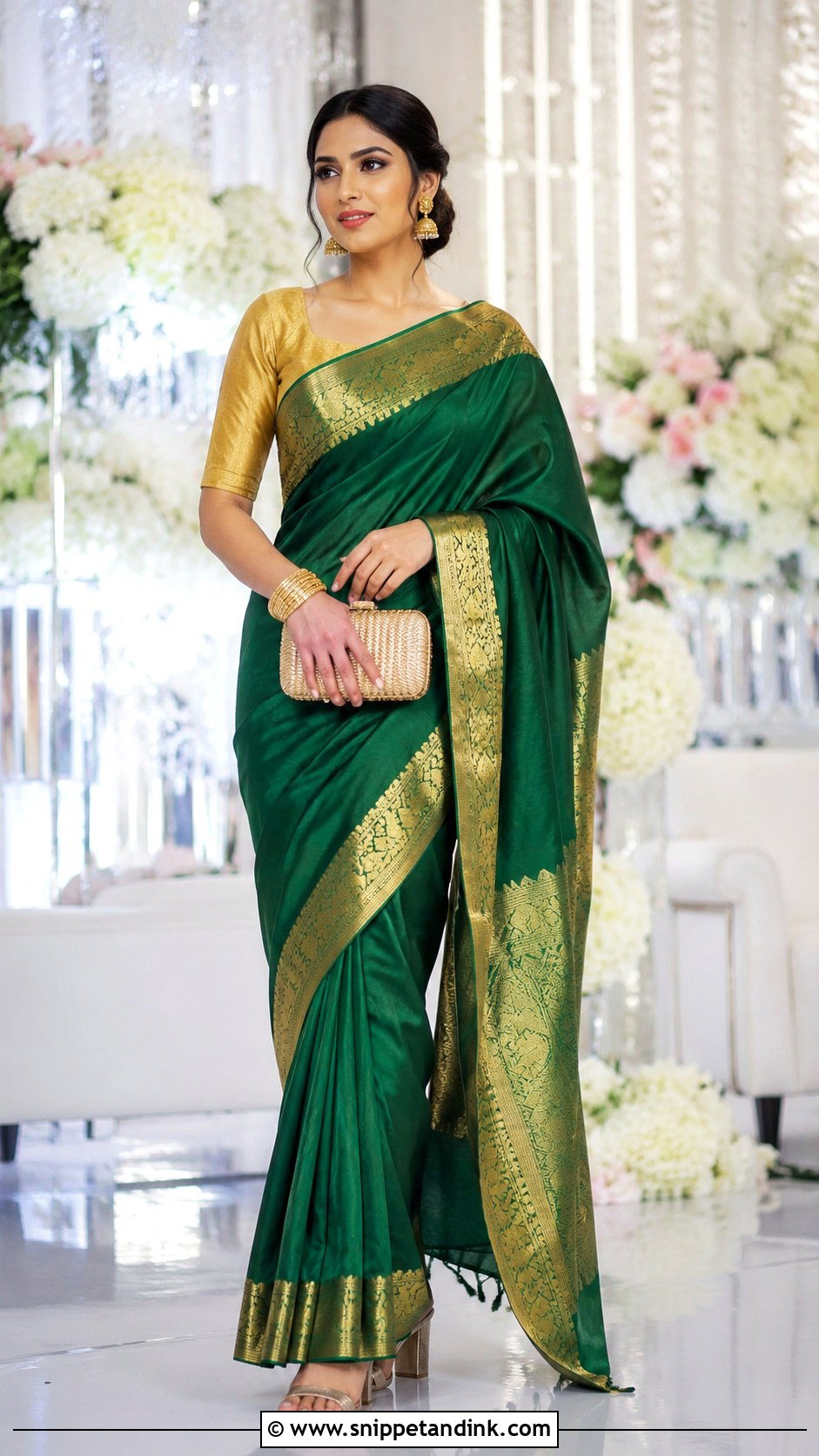
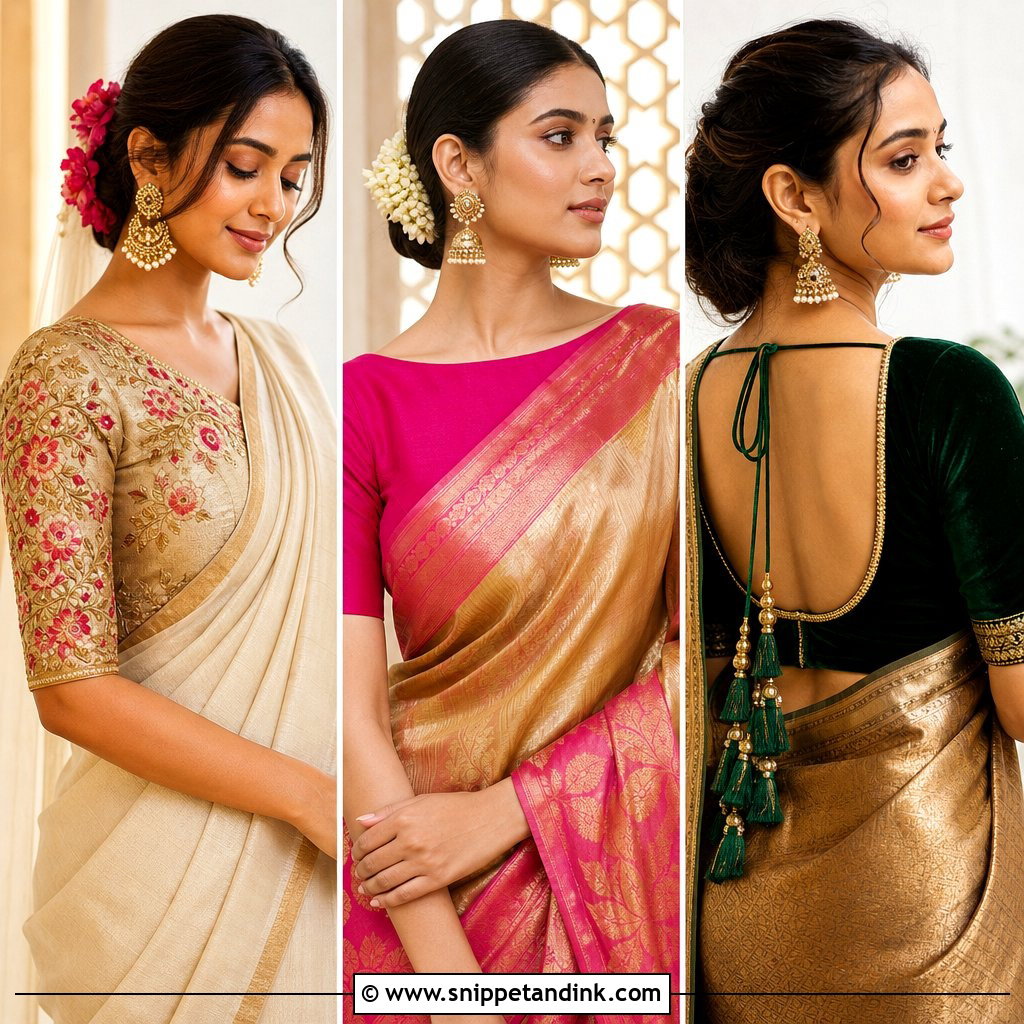
Gold blouses make jewel-toned silk look richer, as long as the sari colour is deep: emerald, ruby, royal blue or purple. An elbow-sleeve blouse balances the shine and gives coverage. Silk pleats well but is heavy, so I pin the pleats together at the top before tucking and pin the pallu to the blouse at the shoulder from underneath, where no pin shows. A structured clutch, traditional earrings, stacked bangles and low block heels finish it. A smooth bun or soft waves, glowing skin, defined eyes and a muted lip let the fabric lead. Weddings and evening events.
2. Chiffon Sadi Dress With Sleeveless Blouse
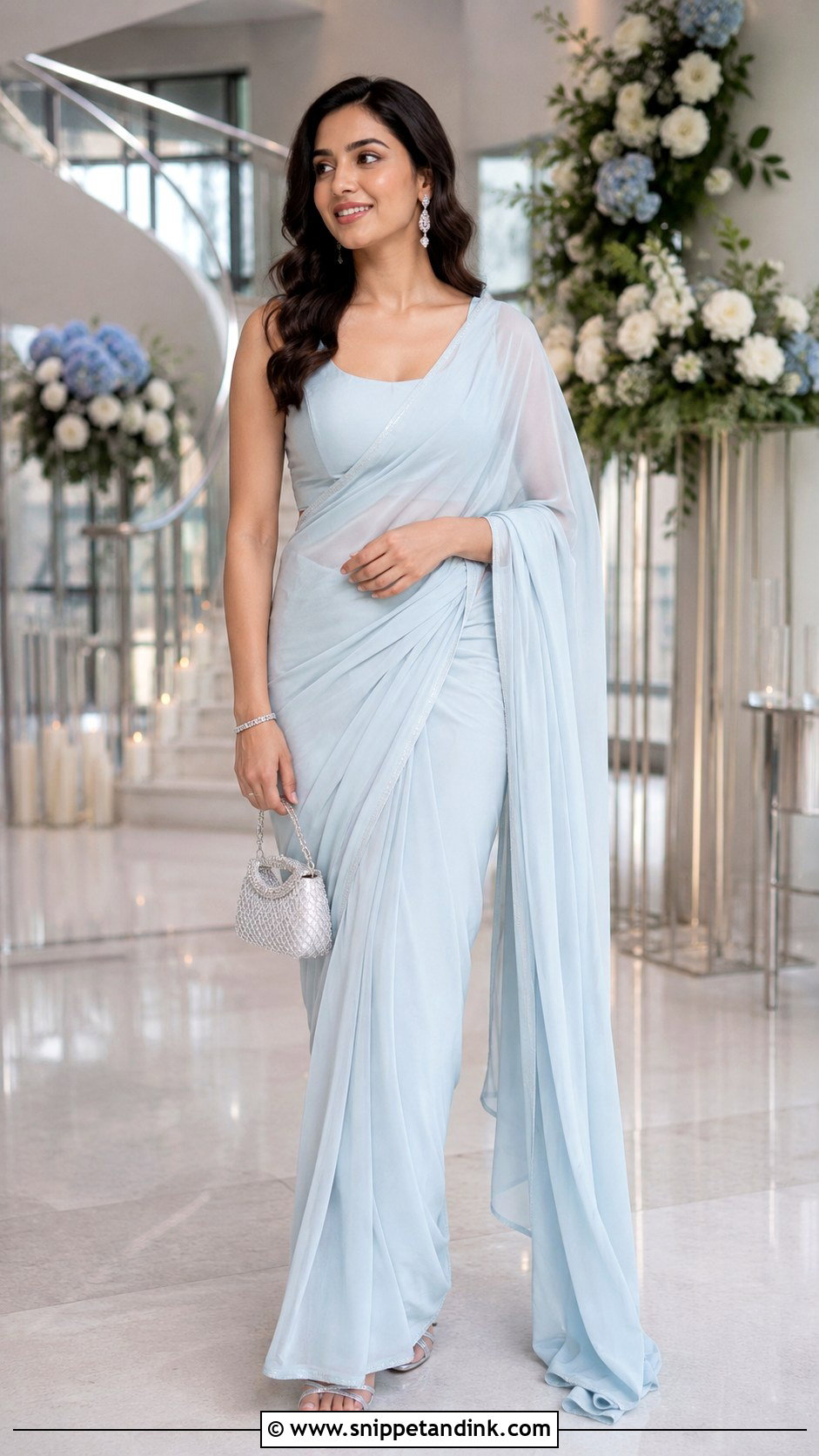
Chiffon is light and floats, and it is also the most slippery sari to keep in place. Plan on more pins than you think: at the shoulder, one at the waist where the pleats tuck in, and one holding the pleats together. A solid or lightly printed chiffon with a sleeveless blouse in the same colour family looks long and clean; choose cap or short sleeves if you want more coverage. Gather the pallu softly and keep the front pleats neat. A small embellished bag, fine drop earrings, a slim bracelet and heeled sandals. Engagements and evening parties.
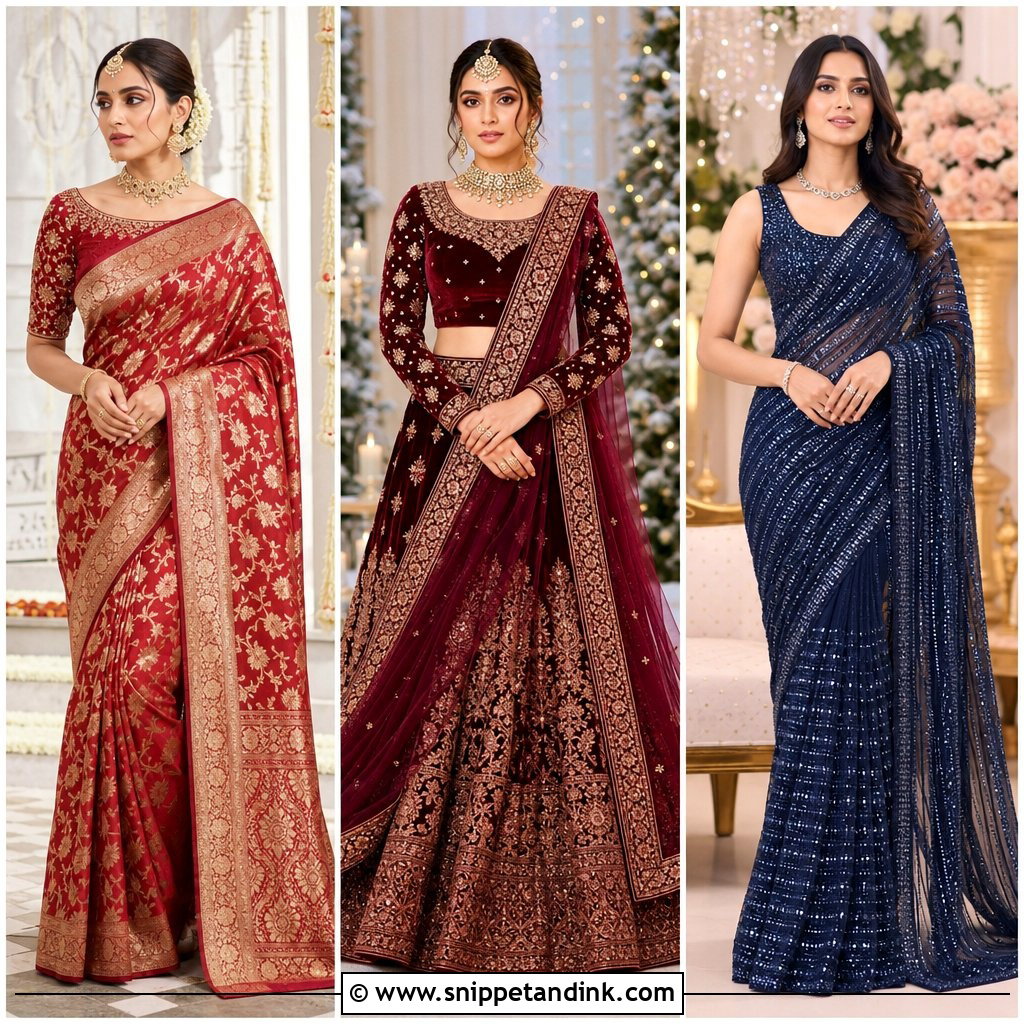
3. Georgette Sadi Dress With Embellished Blouse
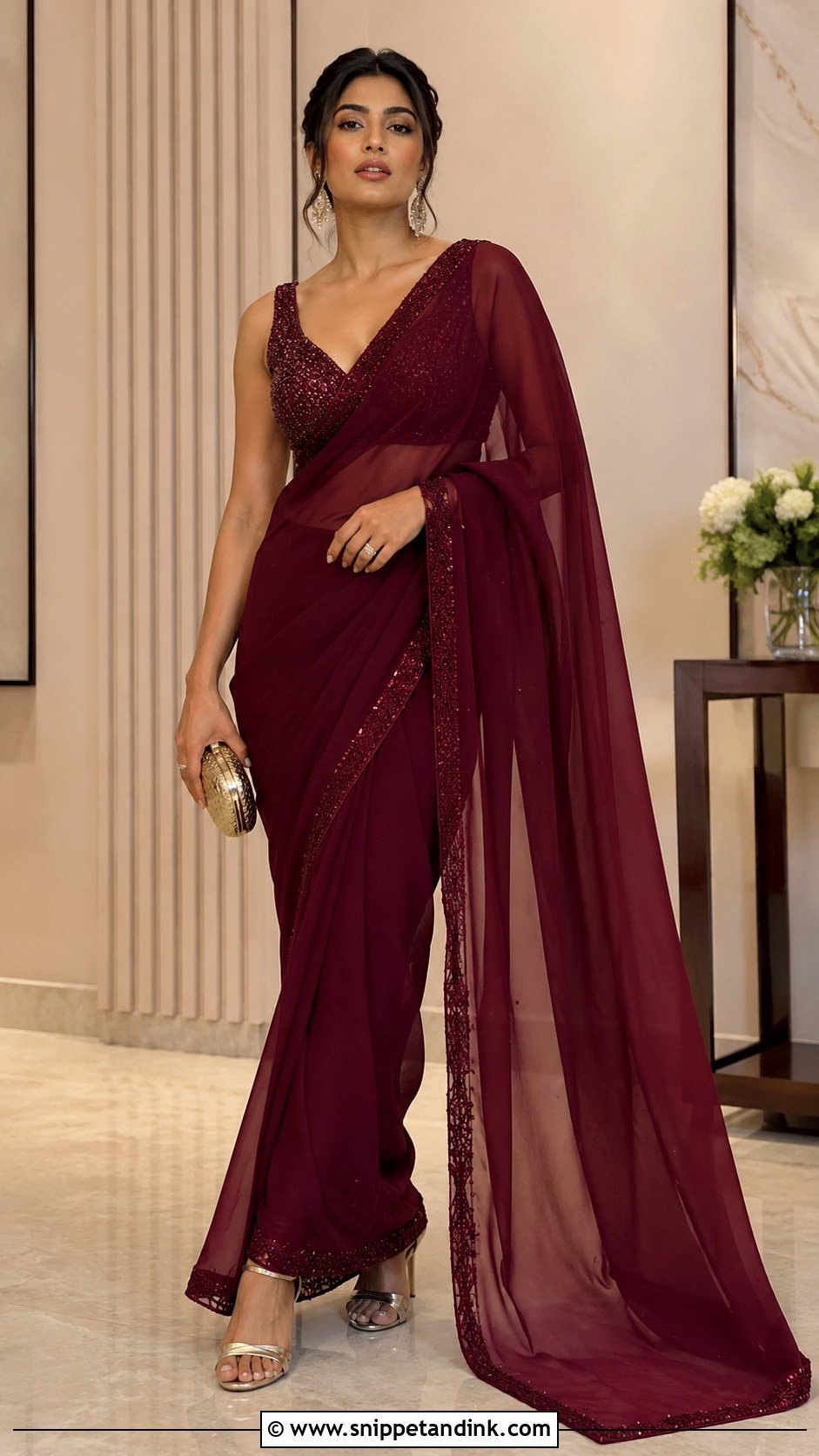
Georgette has more grip and body than chiffon, so it drapes softly but stays put better, which is why I recommend it to anyone wearing a sari for a long event. Choose one with a delicate border, small motifs or tonal embroidery, and let the blouse carry the sparkle with beads, sequins or threadwork at the neck and sleeves. Then stop: metallic heels, a compact clutch, statement earrings and one ring. A side-parted low bun is formal; loose waves are softer. The petticoat matters here, since a thick or bunched underskirt shows through the fall of georgette. Receptions and festive dinners.
4. Cotton Sadi Dress With Printed Blouse
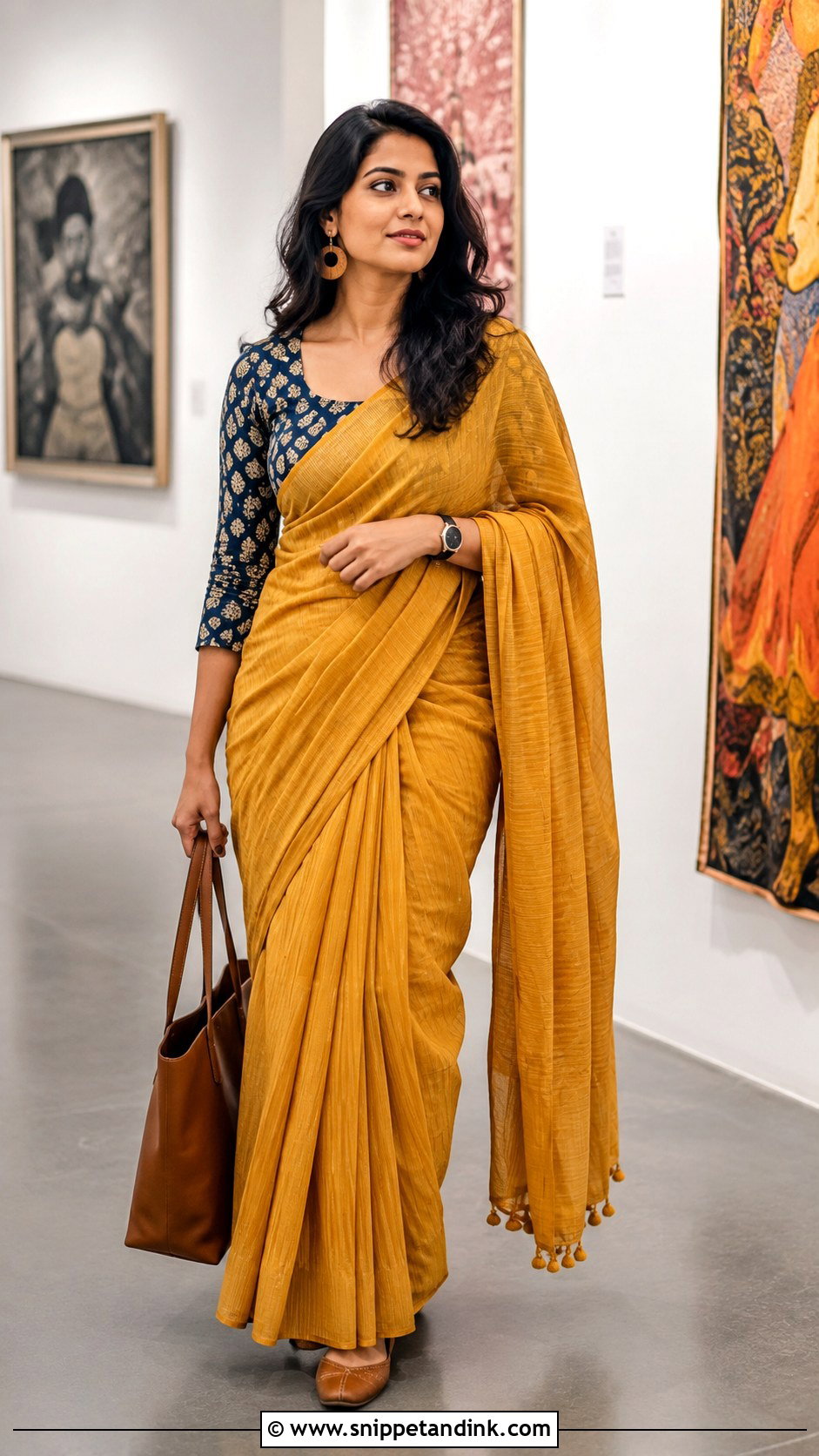
Cotton is the sari I give to anyone learning to drape, because it holds a pleat crisply and doesn’t slide. A plain sari in mustard, rust, navy, olive or cream with a printed blouse, block print, small floral, check or geometric, gives contrast without noise. Starched cotton can feel stiff at first; press it lightly and keep the pallu narrow so your arm moves freely. Leather flats, a structured tote, silver or wooden earrings and a simple watch. A low bun or ponytail. Daytime events, workplaces and casual gatherings.
5. Linen Sadi Dress With Minimal Jewelry
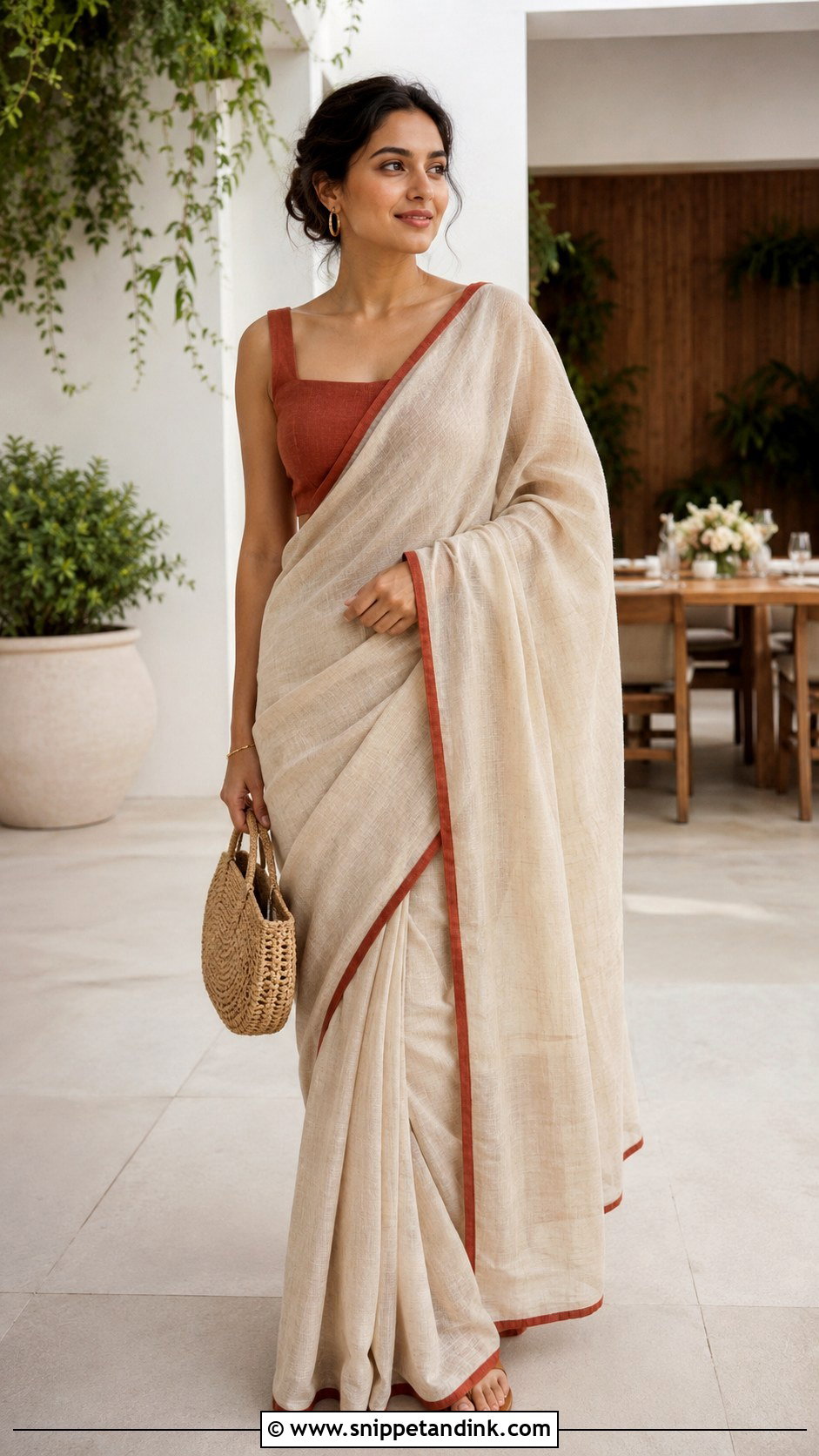
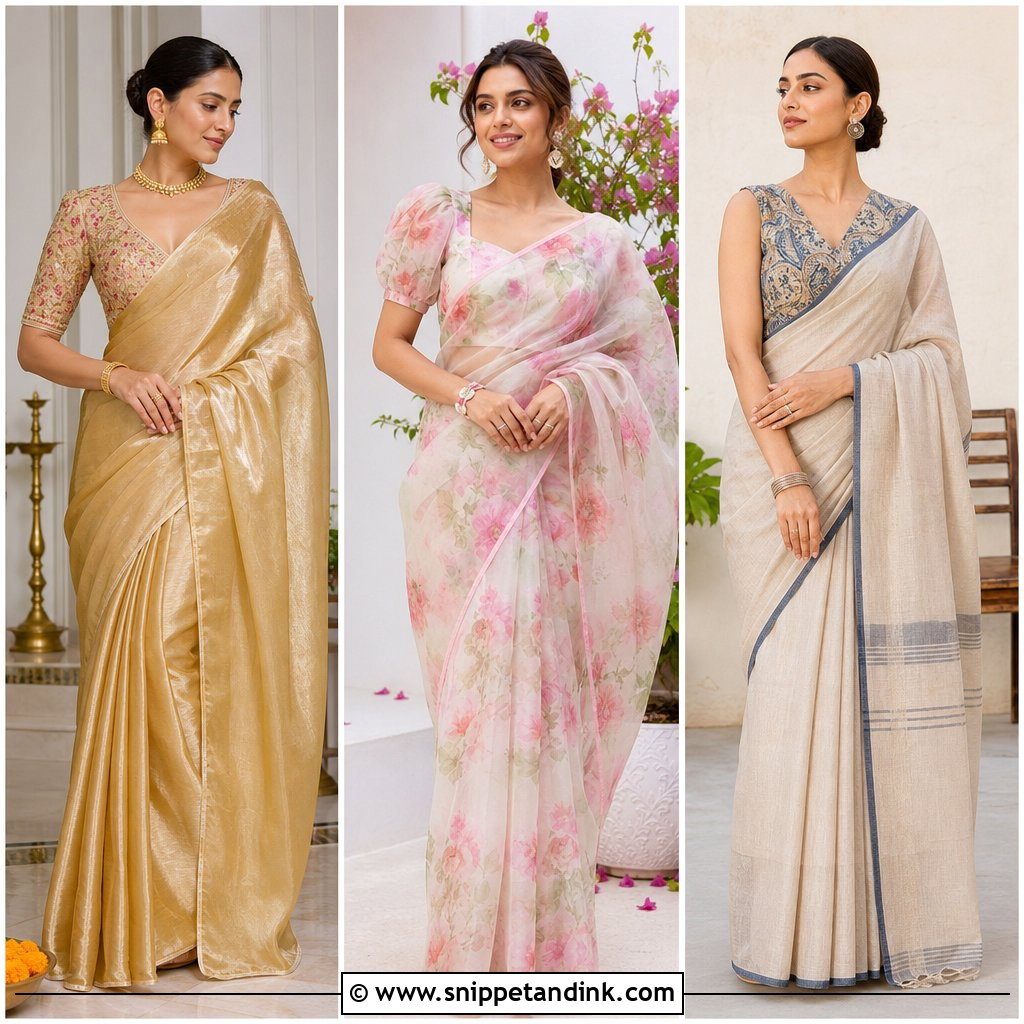
Linen creases, and I’d tell anyone who hates wrinkles to choose cotton instead. If you can enjoy those soft folds as part of the look, a linen sari in a neutral, pastel or earthy shade with a narrow woven border is fresh and modern in hot weather. Pair it with a simple boat-neck or square-neck blouse that fits close without pulling. Drape it slightly loose but pin the waist and shoulder from underneath. Flat sandals, a woven bag, small hoops and a slim metal bracelet, with natural makeup and a low ponytail. Lunches and daytime cultural events.
6. Organza Sadi Dress With Pearl Blouse
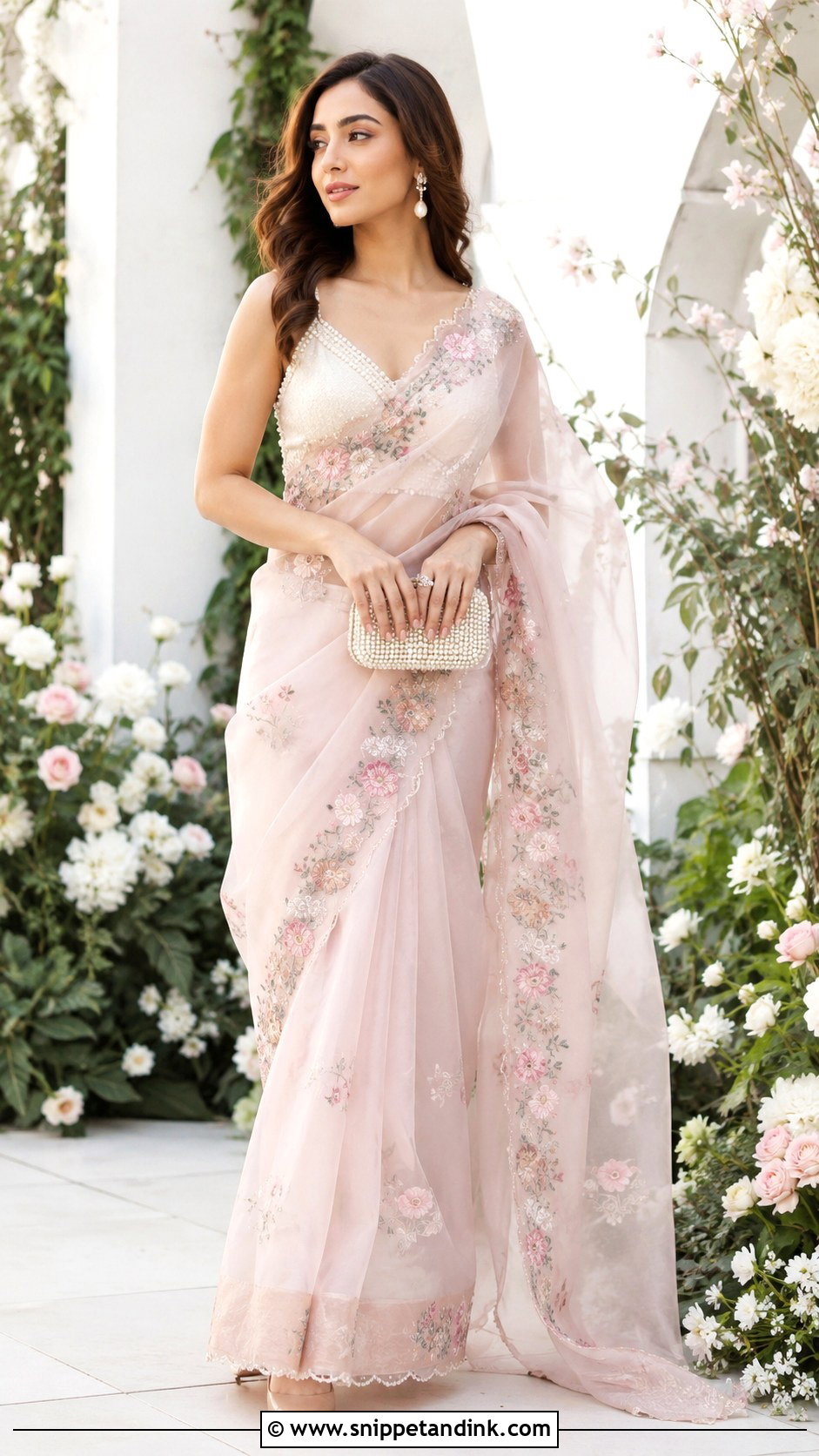
Organza is sheer but stiff, so it stands slightly away from the body and looks structured. That stiffness is why I keep the front pleats narrow; wide organza pleats balloon out at the front. A pastel organza sari with embroidered flowers, a scalloped border or small woven motifs pairs with a pearl-detailed blouse in ivory, champagne or the same pastel. A petticoat in a matching shade is essential, as organza shows everything underneath. Pointed heels, a pearl clutch, studs and one bracelet. A sleek bun or half-up style. Daytime weddings and garden events.
7. Banarasi Sadi Dress With Traditional Jewelry
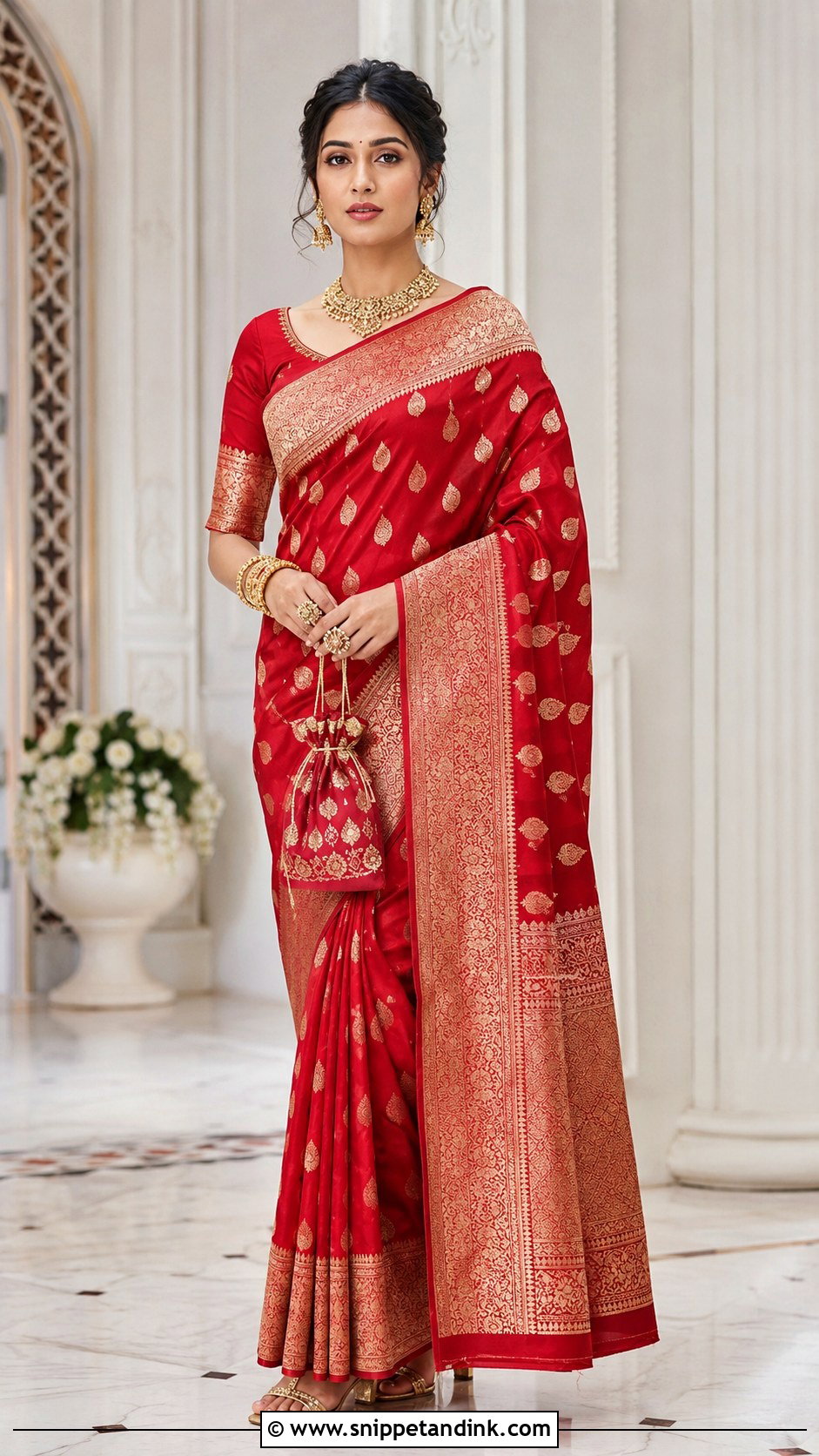
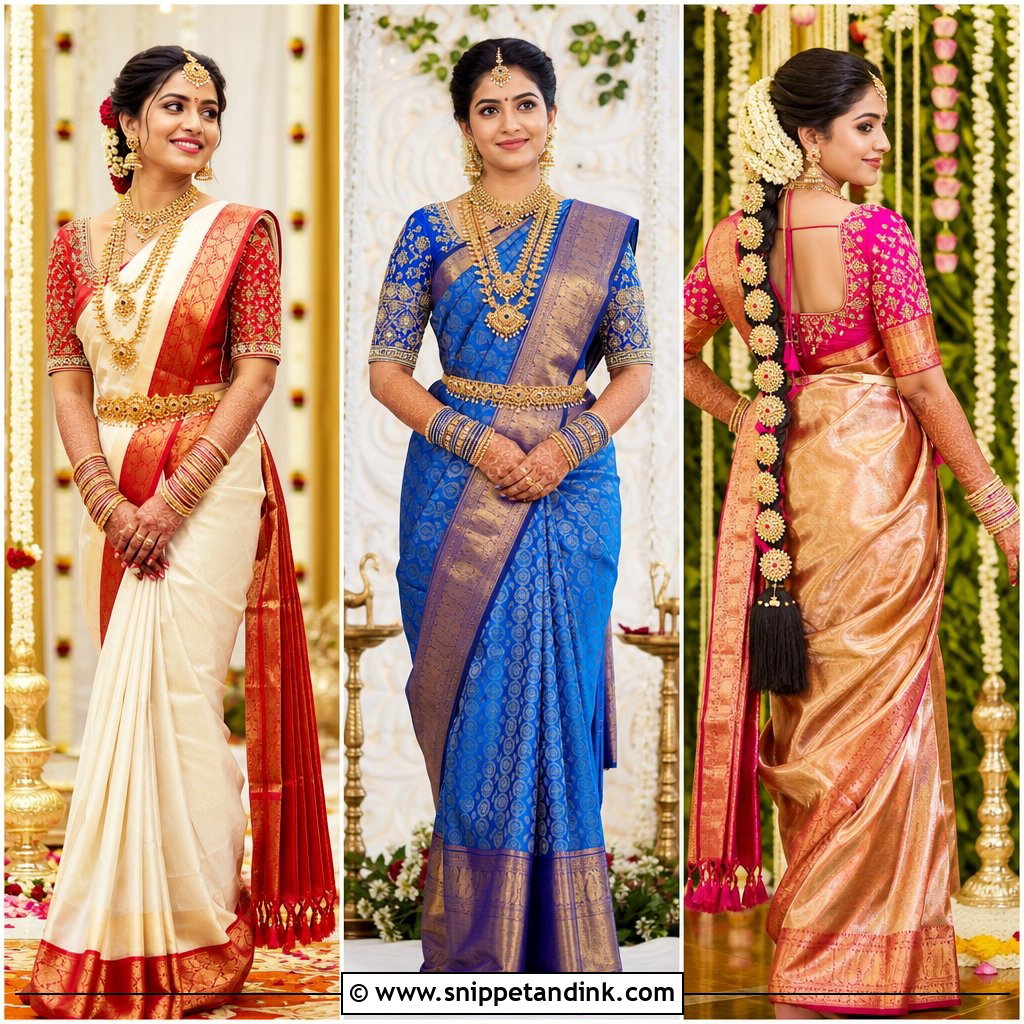
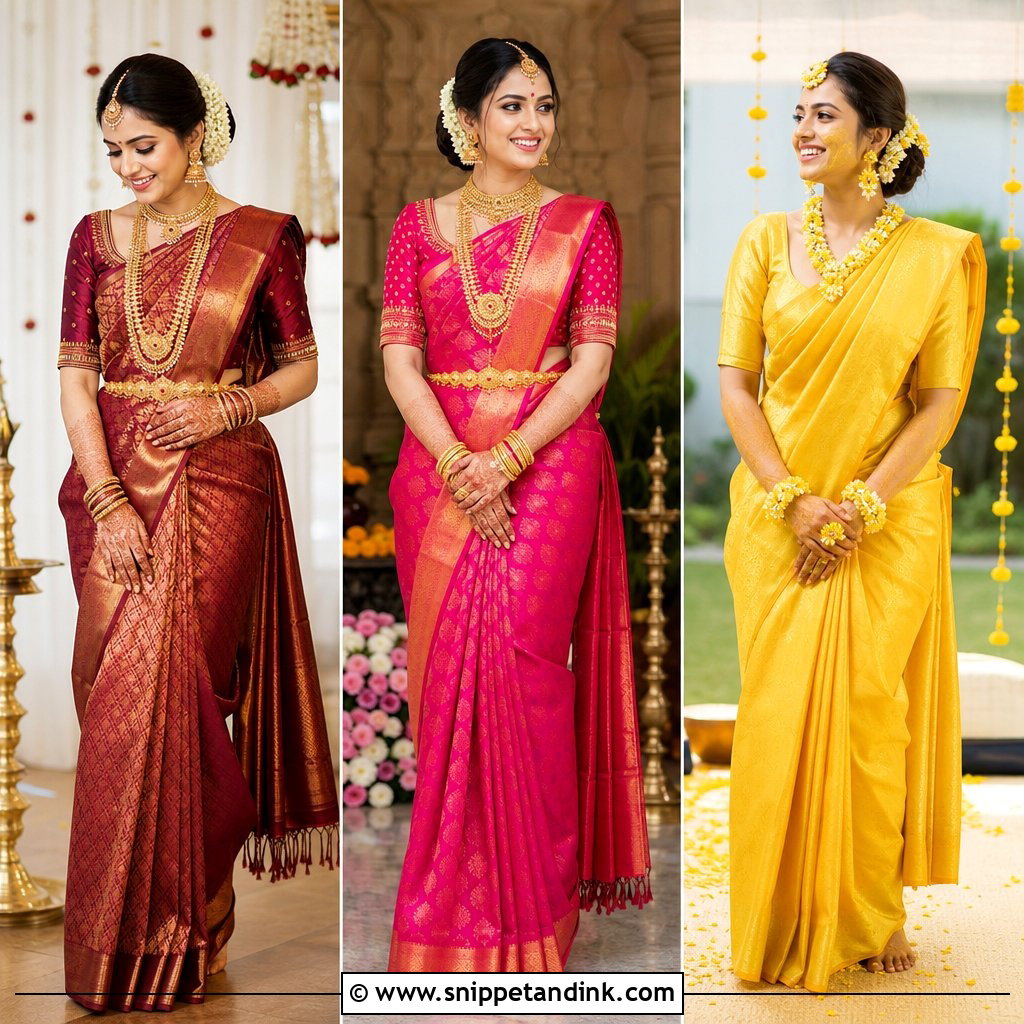
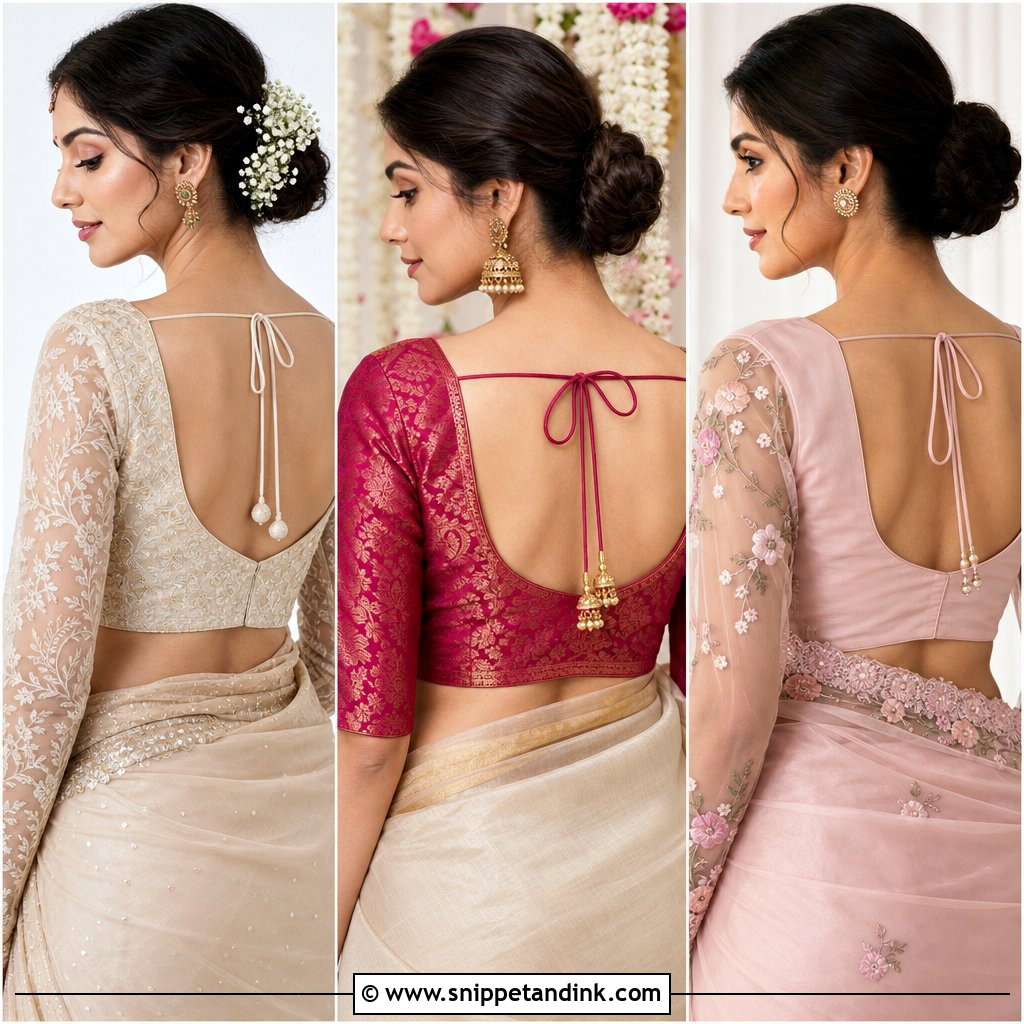
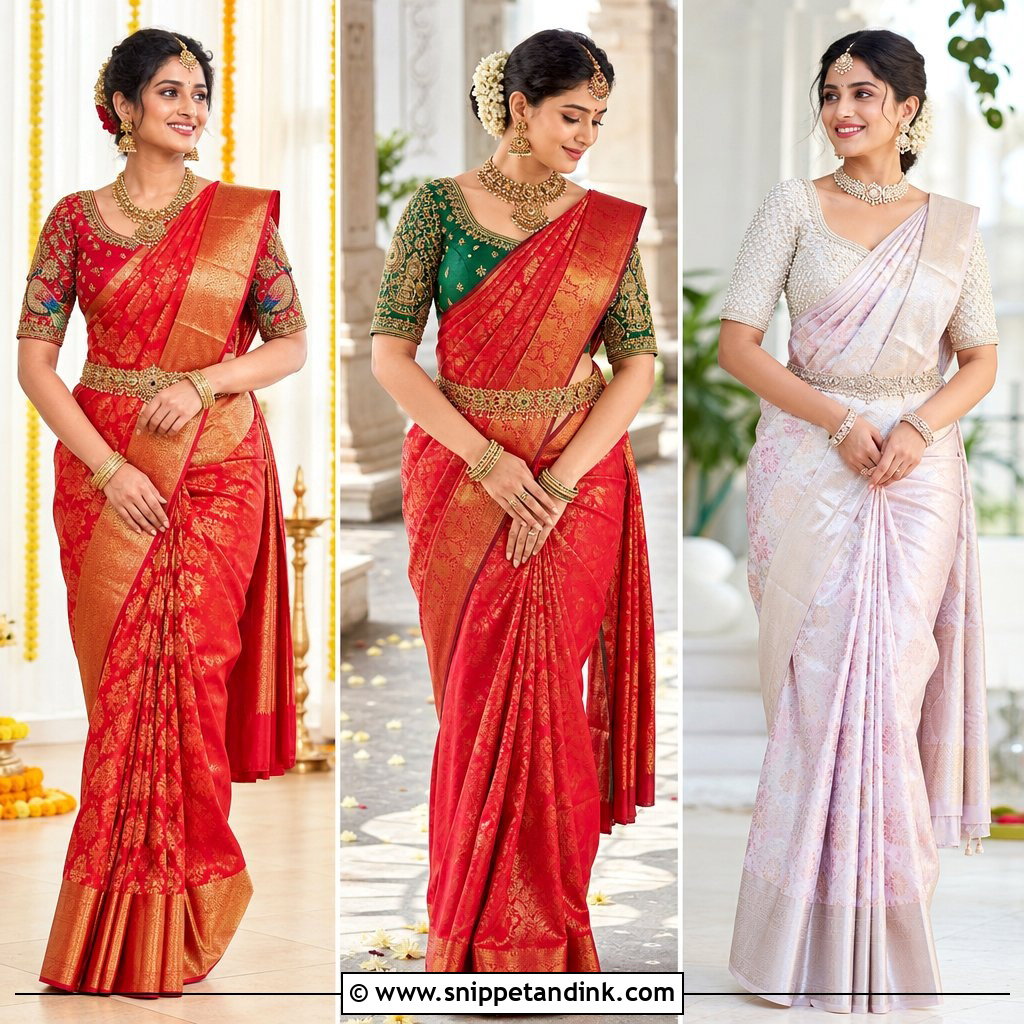
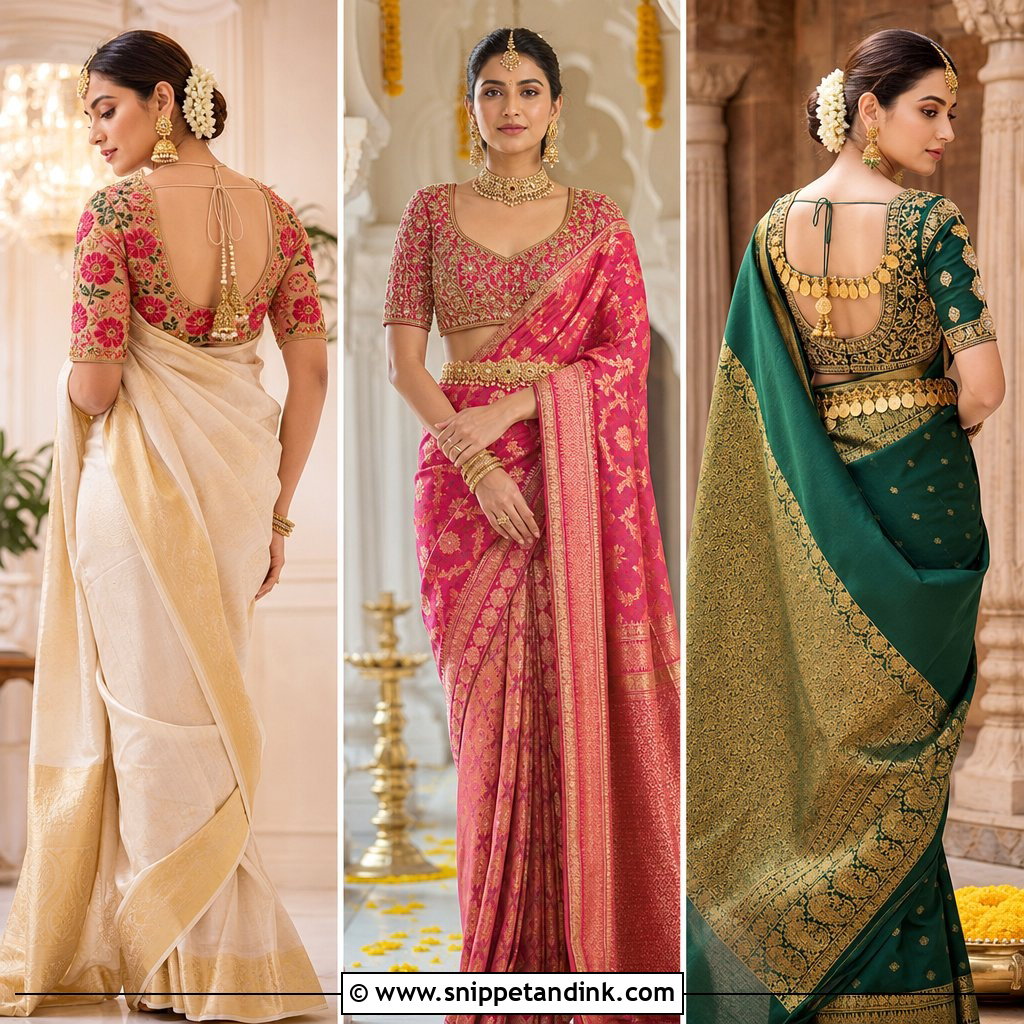
A Banarasi sadi is woven with heavy brocade, often with gold zari, so it carries plenty of detail on its own. Deep red, magenta, green and royal blue are the classic shades. A fitted silk blouse with elbow sleeves and a modest round or square neck supports it. The weight means the pleats need firm pinning and a well-tied petticoat drawstring, or the whole drape gradually slips over a long evening. Traditional earrings, bangles, one necklace and an embroidered clutch are enough. Cushioned block heels or embellished flats, depending on how long you’ll stand. A centre-parted bun shows the jewellery.
8. Kanjeevaram Sadi Dress With Contrast Blouse
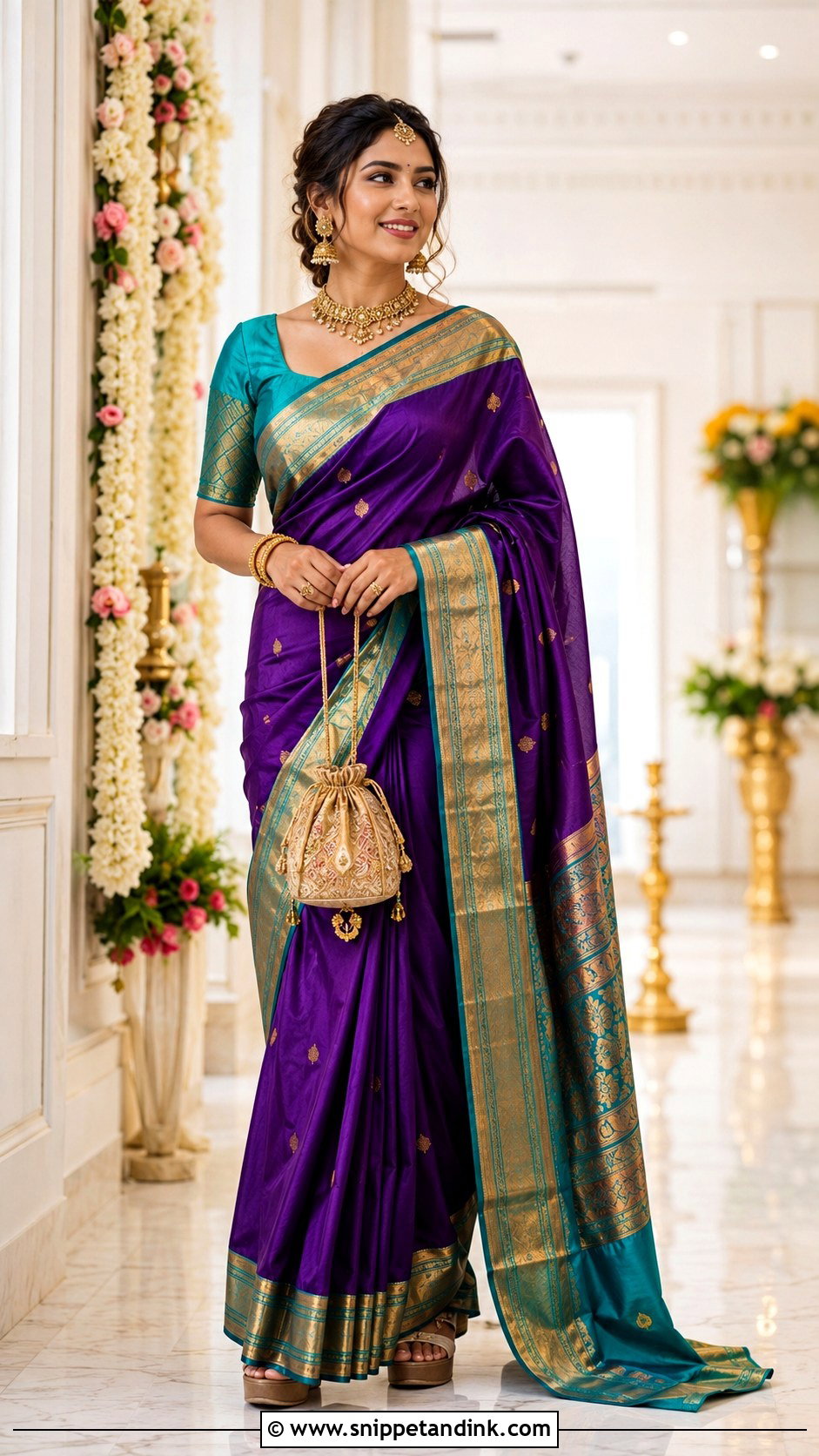
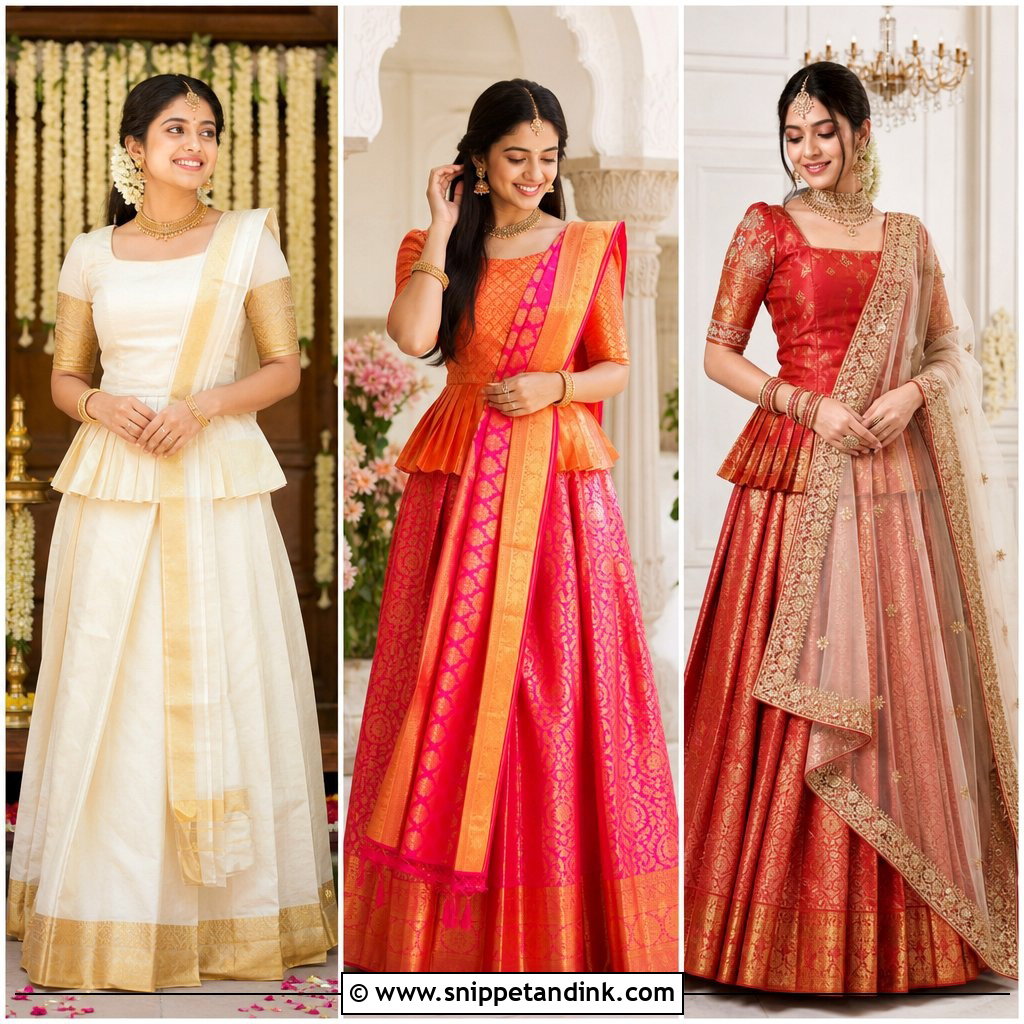
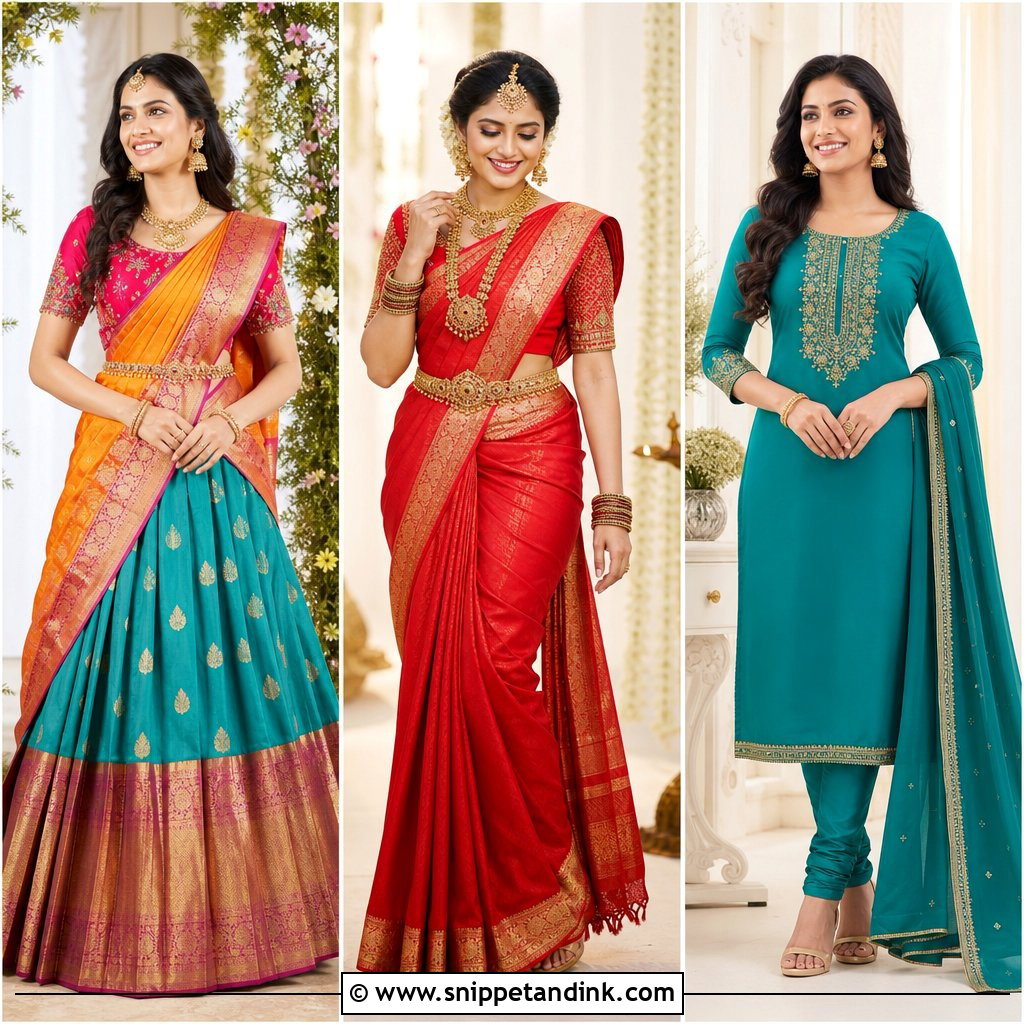
Kanjeevaram silk is thick and woven with a broad metallic border, and the classic styling uses contrast rather than matching. Pick a sari in turquoise, orange, purple, green or crimson, then choose a blouse in a colour pulled from the border or pallu. A structured elbow-sleeve blouse supports the heavier fabric. When pleating, I line the pleats up so the border shows as a clean stripe down the front; that is where a Kanjeevaram looks its best. Gold-toned jewellery, a small potli bag and comfortable platform or block sandals, with jasmine or fresh flowers around a low bun. Weddings and important ceremonies.
9. Floral Sadi Dress With Pastel Blouse
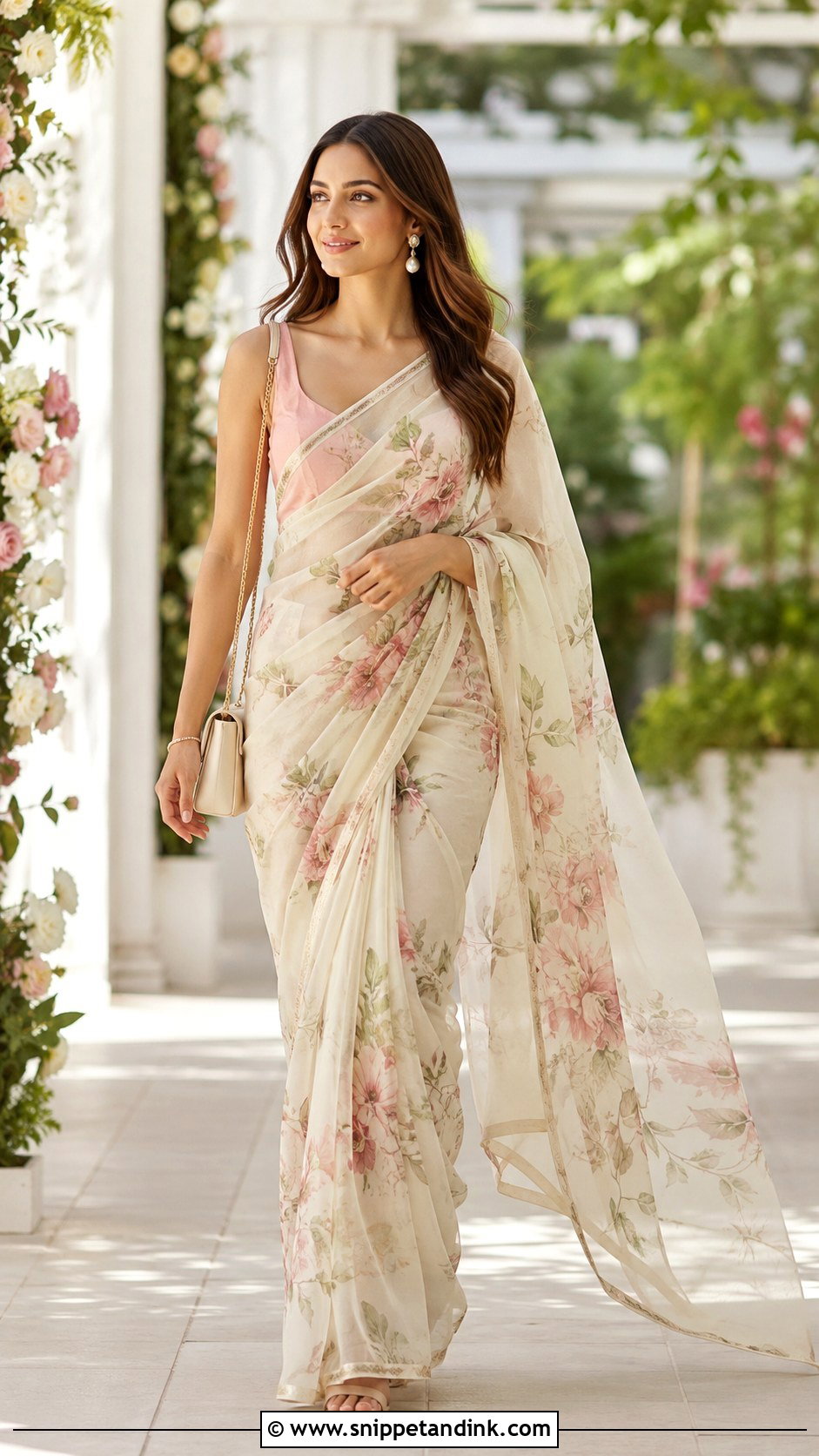
Floral prints on a pale base, blush, powder blue, mint, ivory or lavender, are the easiest sari to wear in daylight. Match a plain blouse to one shade in the print. Printed saris are usually in lighter fabrics, so the pallu can stay loose and flowing while the front pleats stay neat. Pearl earrings, a slim bracelet, a small shoulder bag and neutral heeled sandals keep it light. Soft curls, natural makeup and a rosy lip. Daytime parties, showers and family gatherings where heavy silk would look overdressed.
10. Sequin Sadi Dress With Simple Blouse

A sequin sari is already the whole statement, so everything else should be plain. Black, navy, emerald, silver or burgundy all look sophisticated. Pair it with a plain fitted blouse in satin, crepe or stretch velvet with a clean neckline. Sequinned fabric can scratch the inner arm where the pallu rubs, so a soft lining or a pallu that sits off the arm helps over a long night. Keep the pallu in narrow pleats to control the sparkle. Slender heels, a smooth metallic clutch, studs and one statement ring. Straight hair or a polished ponytail. Receptions and evening parties.
11. Black Sadi Dress With Silver Accessories
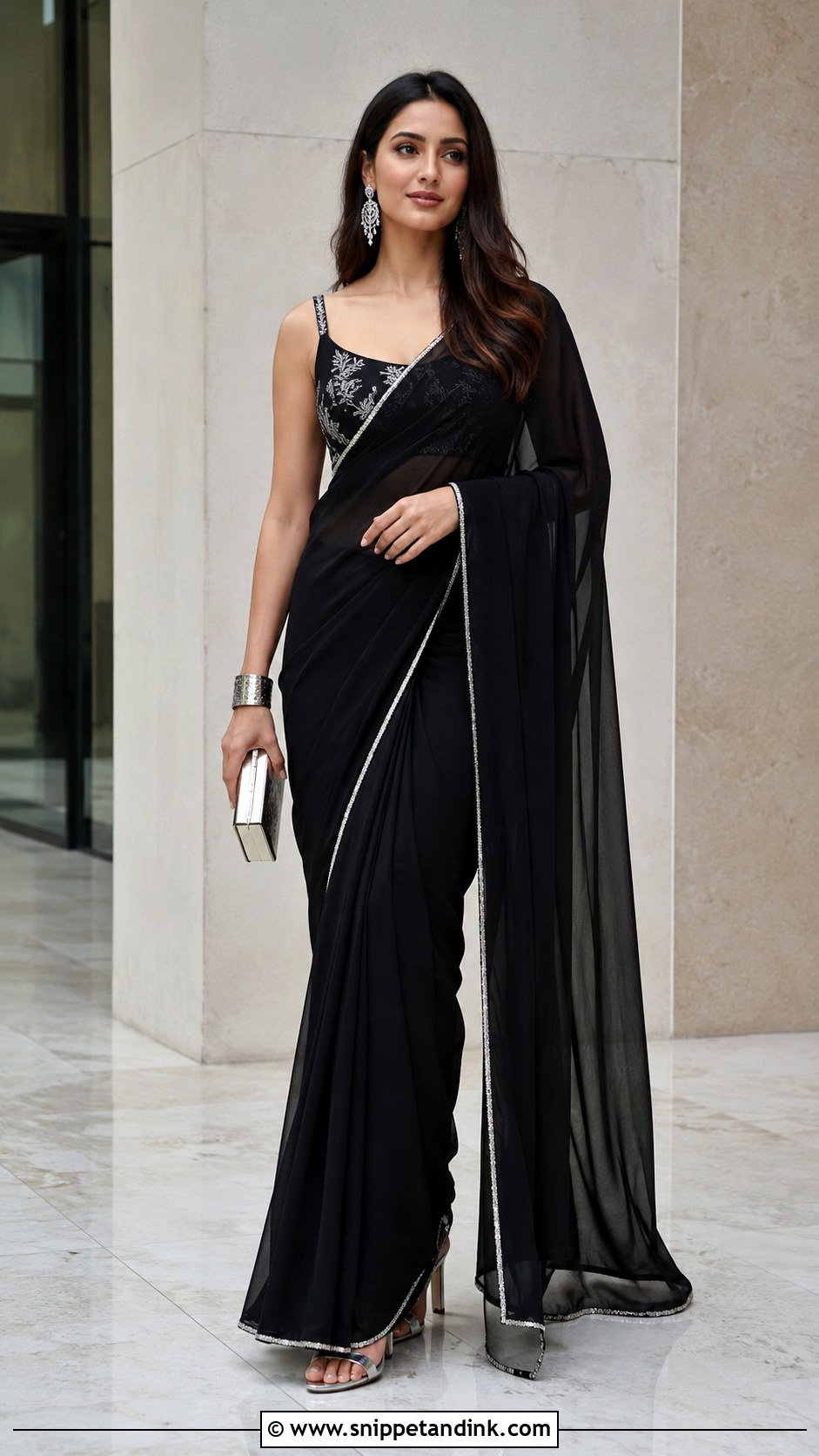
Black and silver is a sharp combination for evening events, and I’d style it with one dramatic piece, not several. Chiffon or georgette gives a fluid line; organza adds structure. A black blouse with fine silver embroidery links the two. Chandelier earrings can be that one big piece, with a metallic box clutch, a slim cuff and black or silver heels. A narrow metallic border frames the drape nicely. In some families and communities black is avoided at weddings, so check with the hosts if you’re unsure. A smoky eye, neutral lip and sleek hair.
12. Red Sadi Dress With Matching Blouse
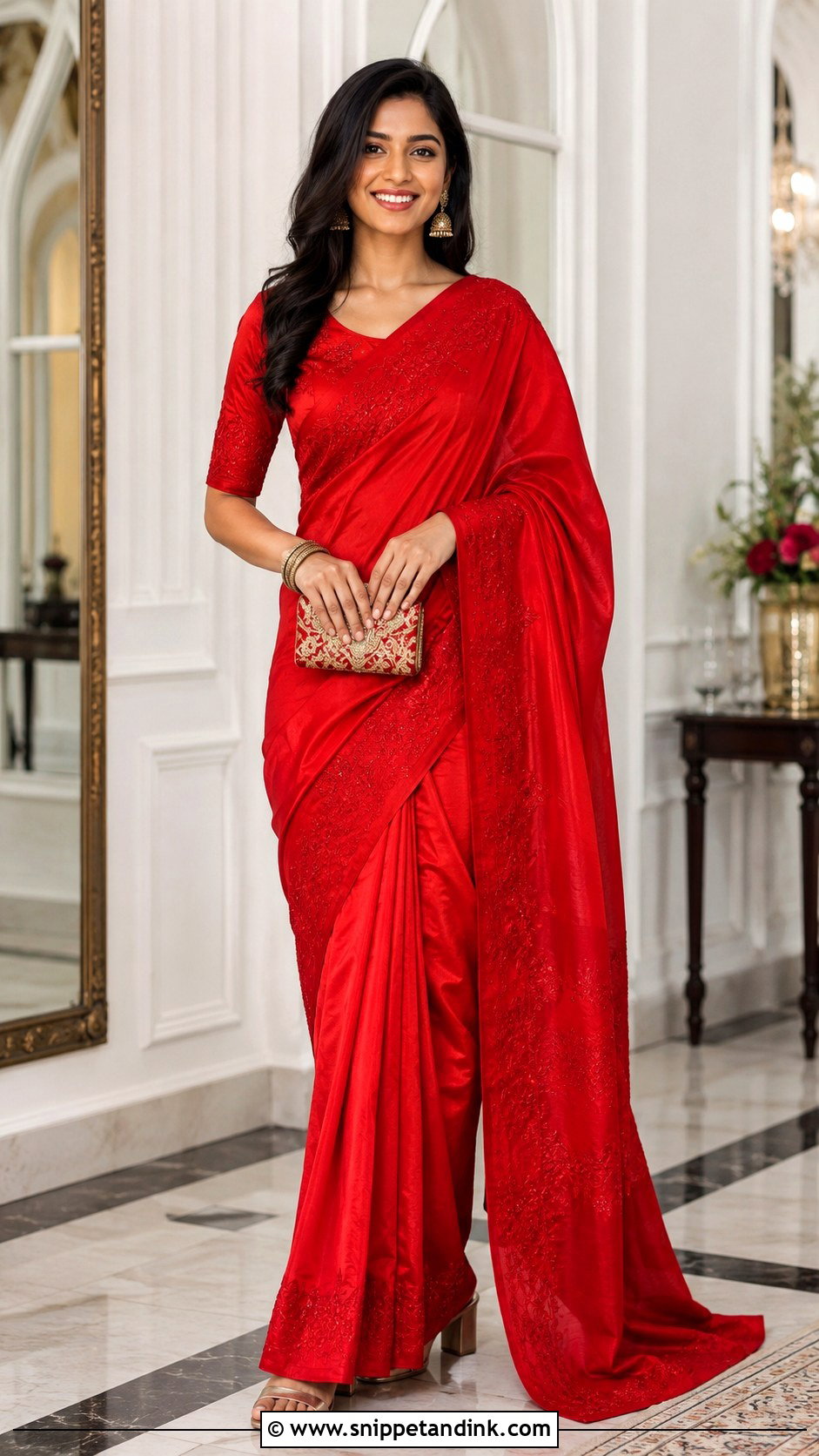
Red is confident and celebratory, and in many Indian communities it is also the traditional bridal colour, which matters if you’re a guest. Silk looks grand, georgette moves softly and chiffon is the lightest. A matching red blouse makes an unbroken line, and tonal embroidery adds texture without another colour. Gold-toned earrings, delicate bangles, a small embroidered bag and neutral or metallic heels. Pleat the pallu if the border is detailed; leave it open when the fabric is plain. The undertone matters: orange-reds flatter warm skin, while blue-reds suit cool skin. A low bun and defined eyes.
13. Pastel Sadi Dress With Pearl Accessories
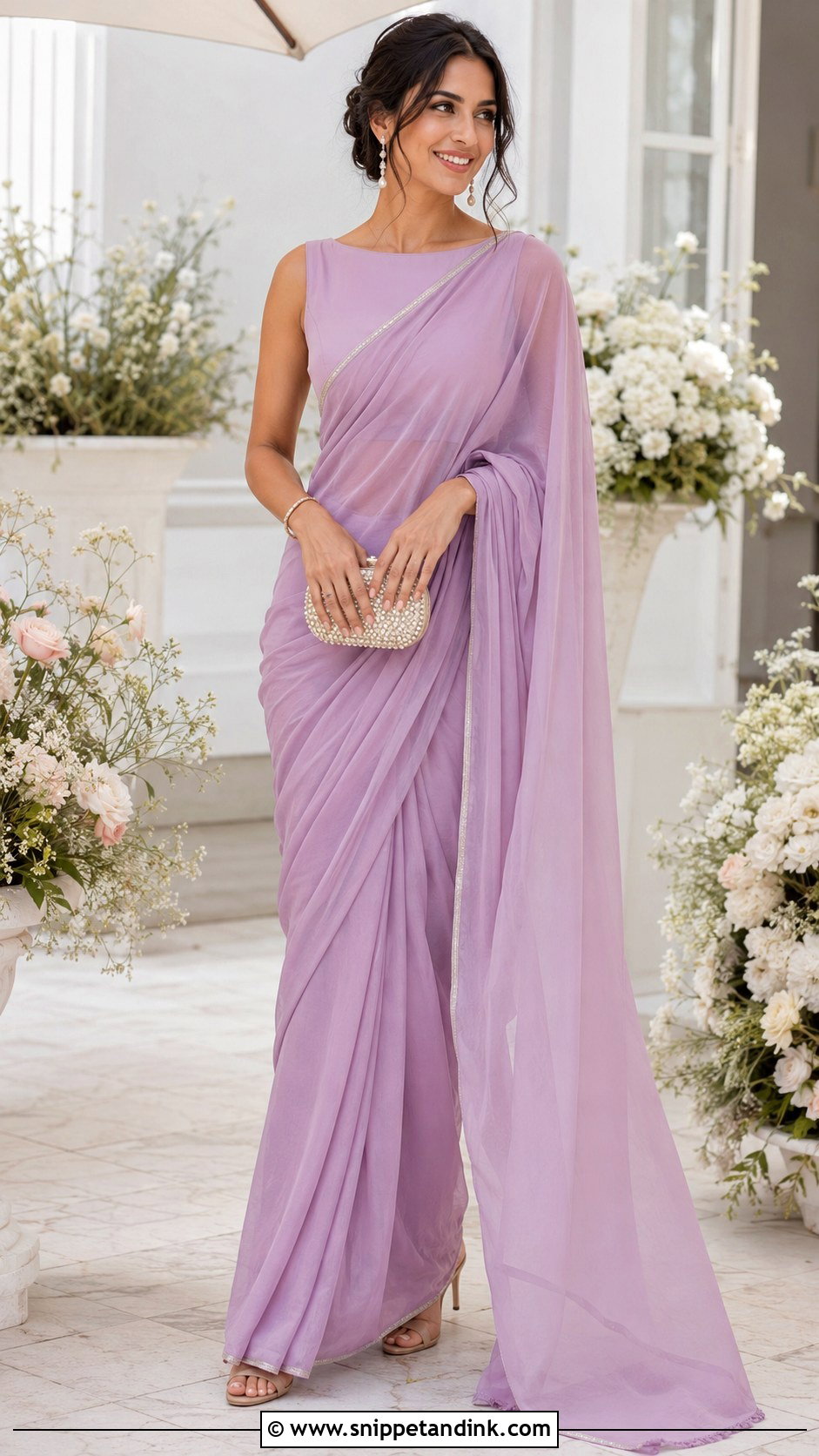
Pastels suit daytime events where heavy colour or embellishment would feel too much. Sage, peach, powder blue, dusty pink, lilac and pale yellow all work, with a tonal blouse in a boat neck, short sleeve or light embroidery. Pin the pallu neatly; a loosely draped pastel sari can look unfinished rather than relaxed. Pearl earrings, a pearl-trimmed clutch and neutral sandals keep the palette soft. A half-up style or loose waves and luminous, natural makeup. Daytime weddings, graduations and summer gatherings.
14. White Sadi Dress With Colorful Border
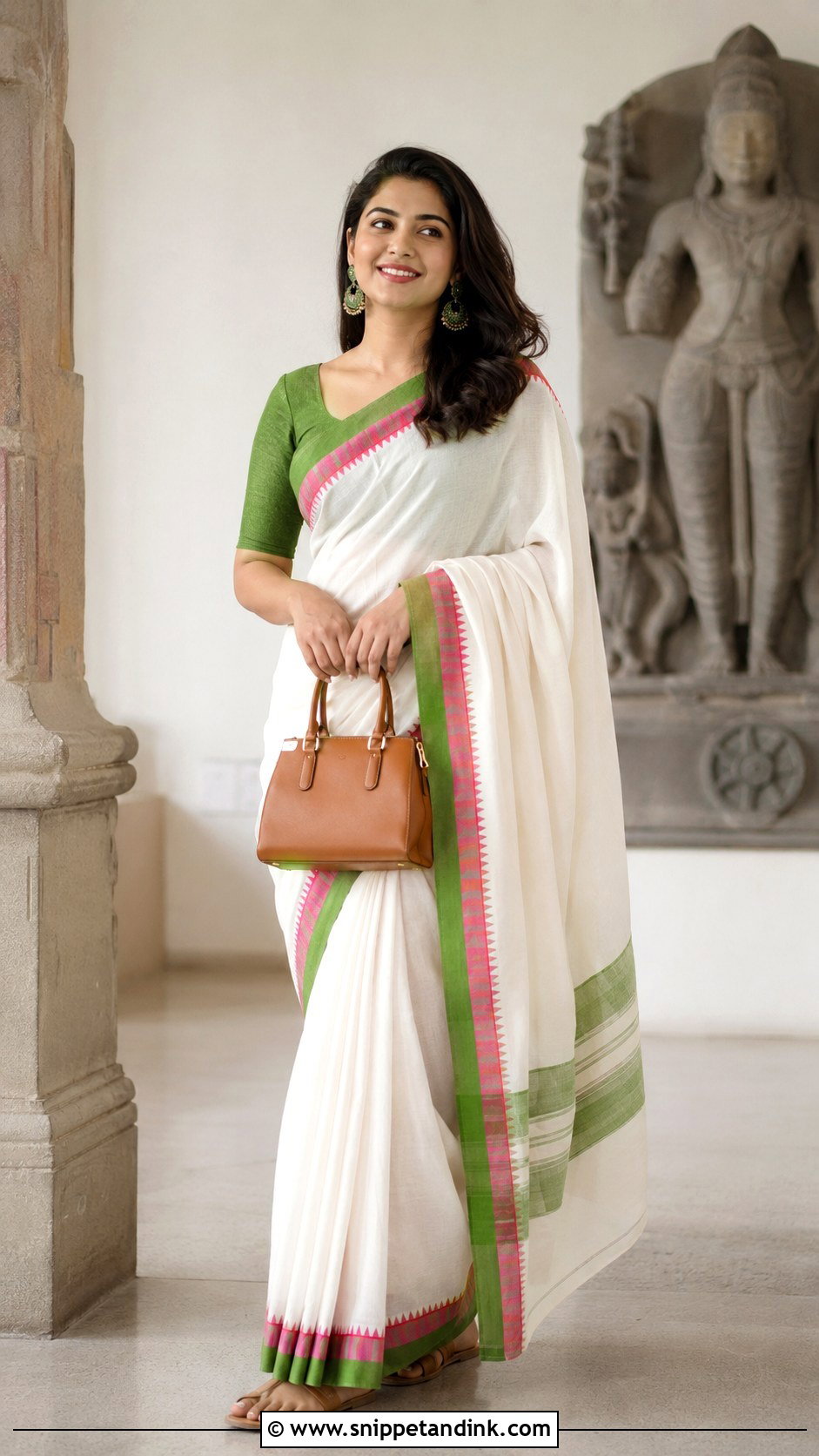
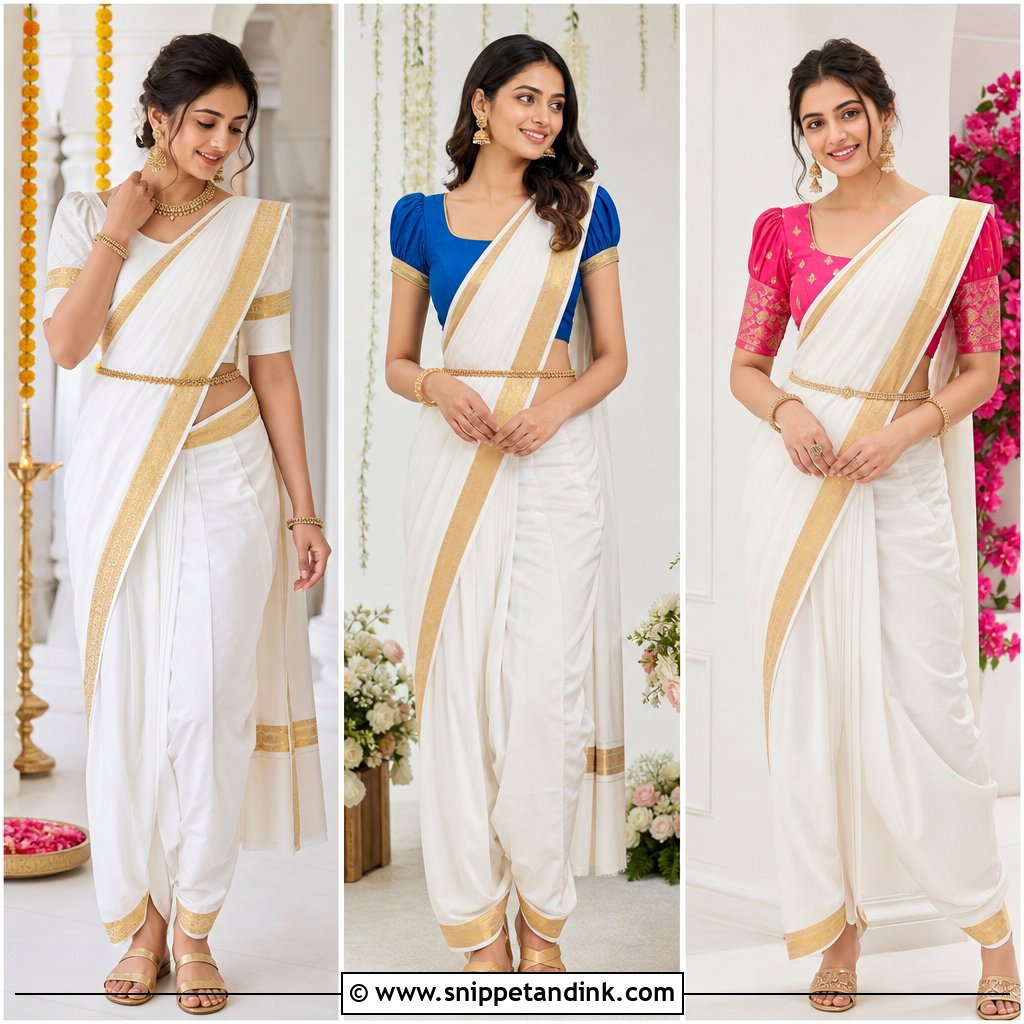
White with a coloured border is crisp and fresh, and the border does all the decorating. Green, blue, pink, red or multicolour weaves all look good. Match the blouse to the border. Pleat the front sharply so the border falls as one clean vertical line. White cotton is often slightly sheer, so a well-fitted white or nude petticoat is a must. In some traditions, an all-white sari reads as mourning, so a strongly coloured border keeps it festive. Coordinated earrings, a structured bag and comfortable sandals; a low braid, ponytail or bun. Cultural programmes and daytime functions.
15. Pre-Draped Sadi Dress With Statement Earrings
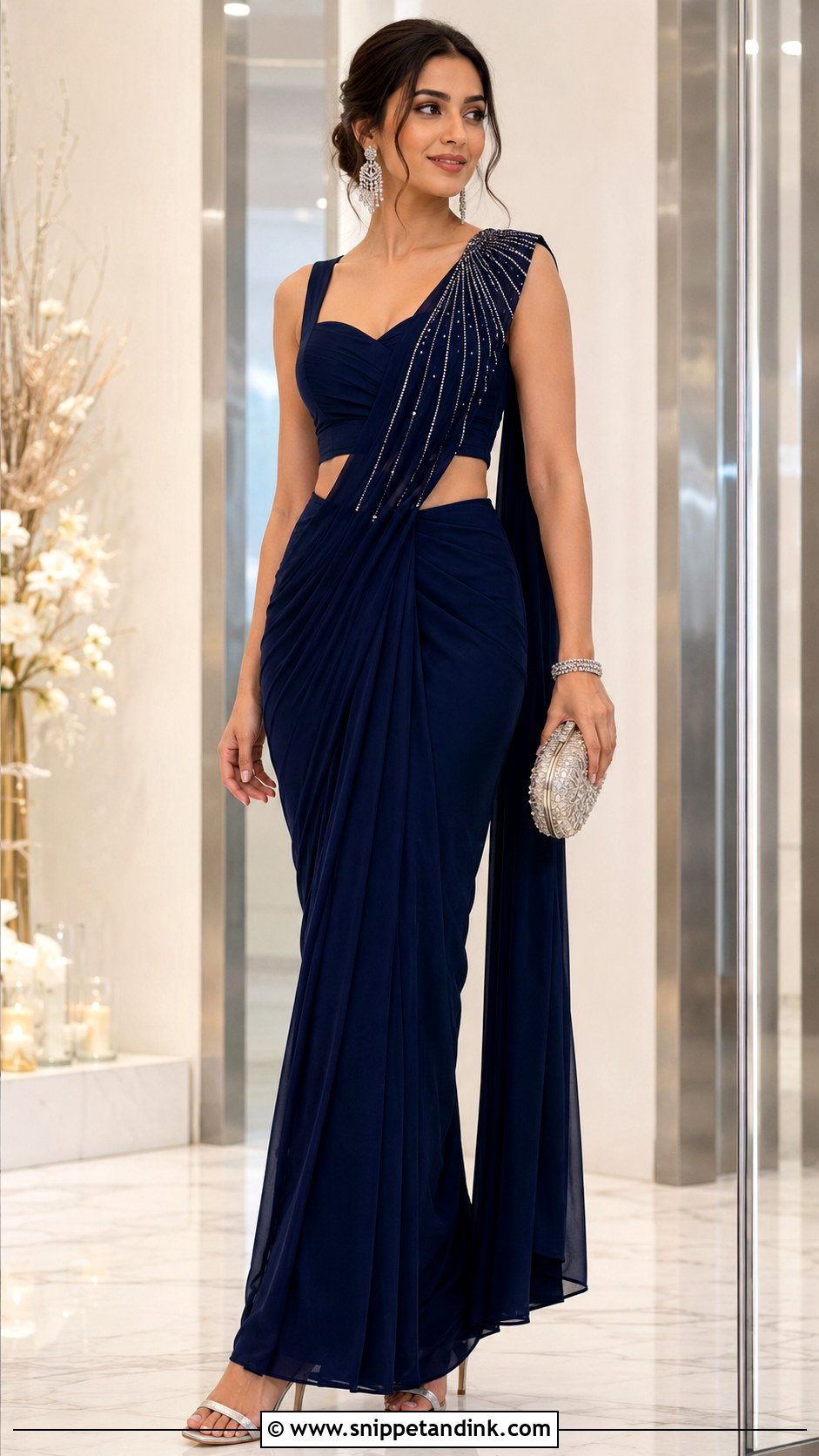
A pre-draped sadi has the pleats and pallu stitched in place and fastens like a skirt, so it takes minutes to put on. Look for a defined waist and an attached pallu that sits where you’d normally pin it. Pair it with a fitted blouse that doesn’t add bulk. Since the drape is controlled, statement earrings can lead, with a small clutch, heeled sandals and a simple bracelet. Sit down in it before the event; some stitched waists are cut snug and pinch when seated. A sleek ponytail or smooth waves. First-time wearers, travellers and long, busy days.
16. Belted Sadi Dress With Modern Blouse
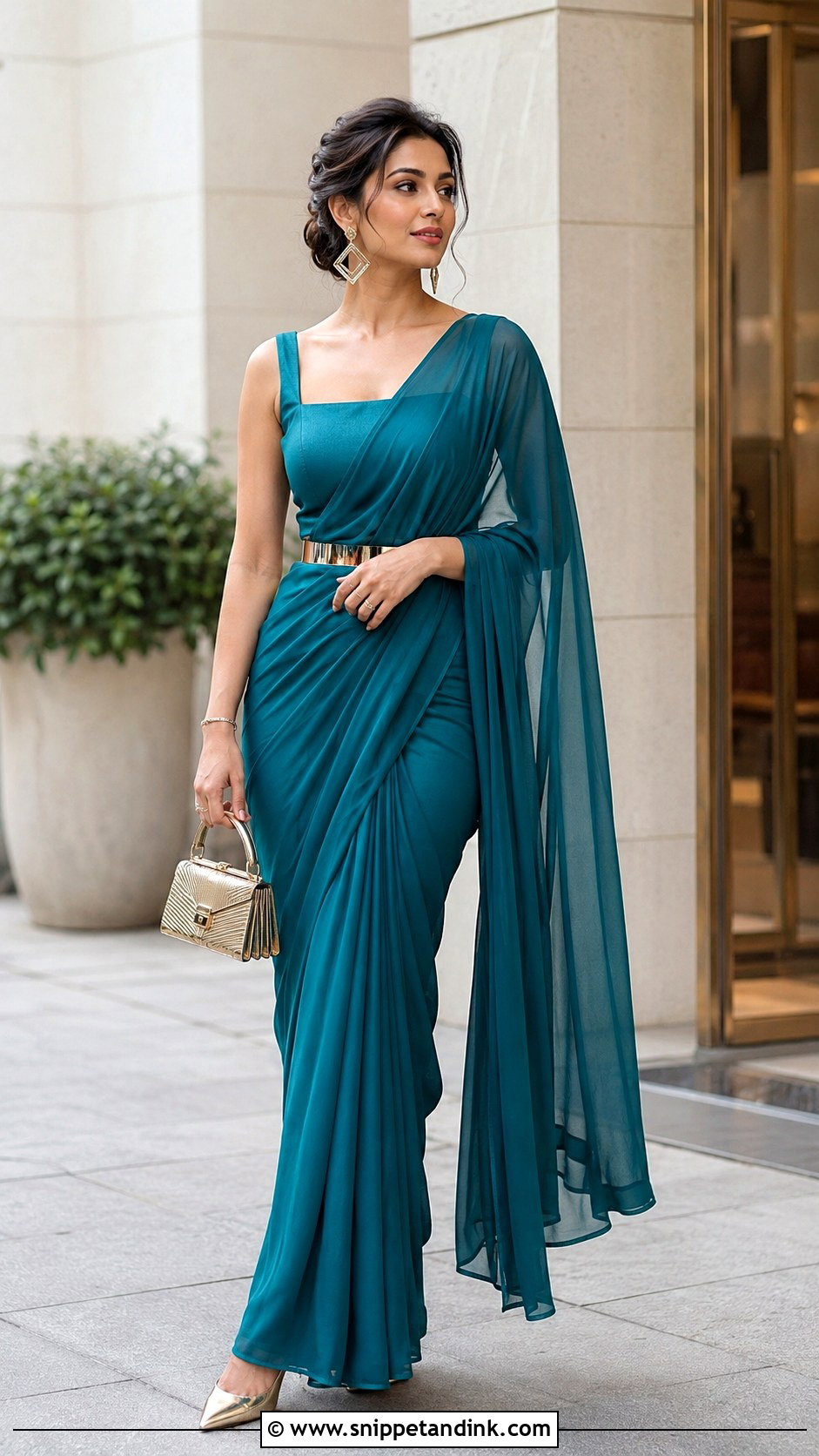
A belt sharpens a sari and keeps the pallu from drifting, which is why I like it for dancing. Use a light chiffon, crepe or georgette sari and a modern blouse with a square neck or structured sleeves. A slim metallic, embroidered or fabric-covered belt goes at the natural waist and should hold the folds, not squash them; a belt that is too tight makes the pleats bunch above and below it. Geometric earrings, a structured mini bag and pointed heels or sandals; keep other jewellery minimal. A smooth bun or straight hair. Parties and receptions.
17. Sadi Dress With Long Jacket Blouse
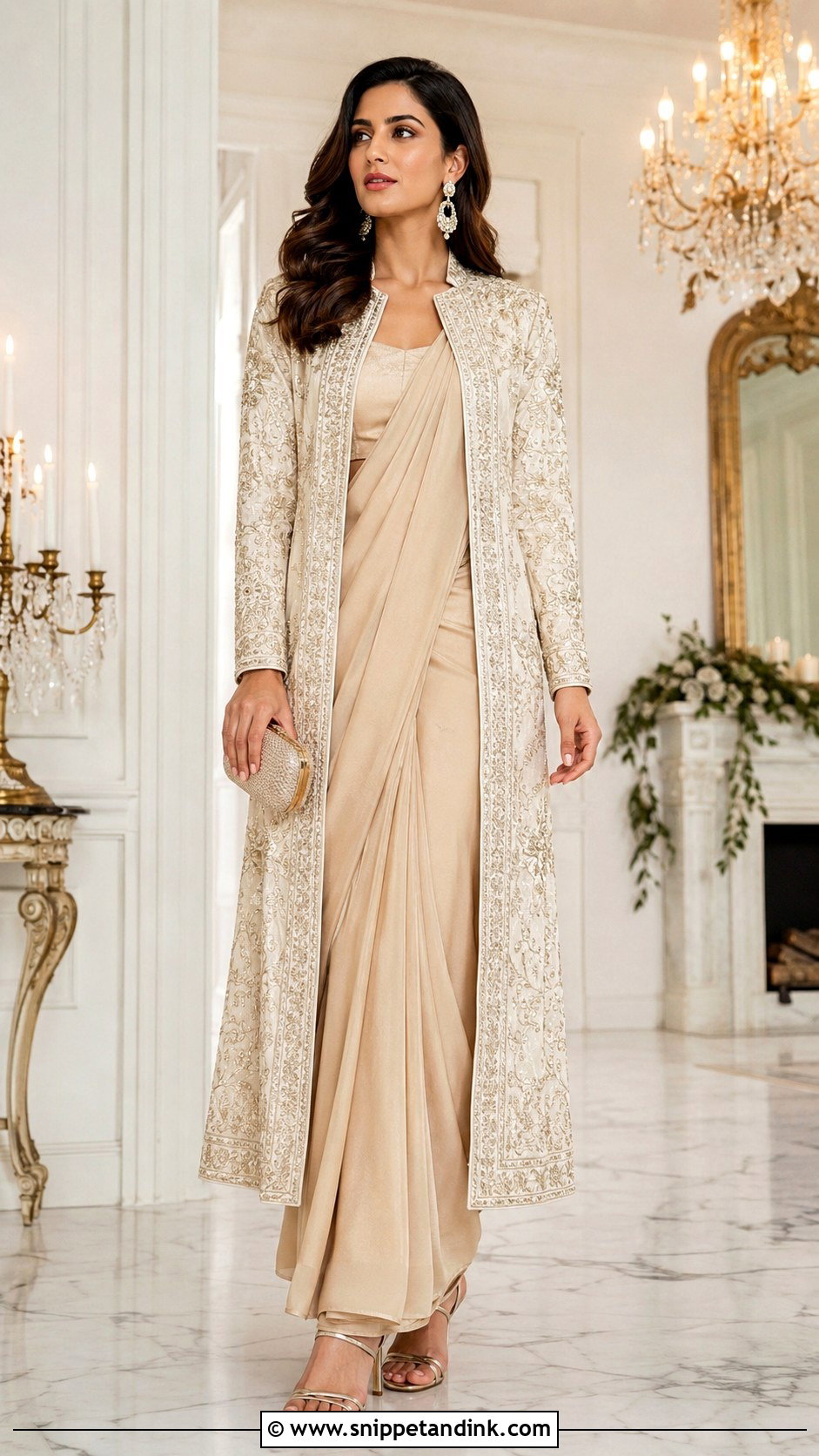
A long jacket blouse layers over the sari for coverage and movement, which is useful at cooler events. A plain crepe, satin or georgette sari works best, with an open-front jacket embroidered at the cuffs, neckline or hem. The jacket should fall over the drape without hiding it; I usually let the pallu sit inside the jacket or pin it neatly at the shoulder under it. A fitted inner blouse keeps the structure. Drop earrings, a compact clutch and heeled sandals visible below the hem. Skip the necklace. Winter celebrations and formal indoor events.
18. Sadi Dress With High-Neck Blouse
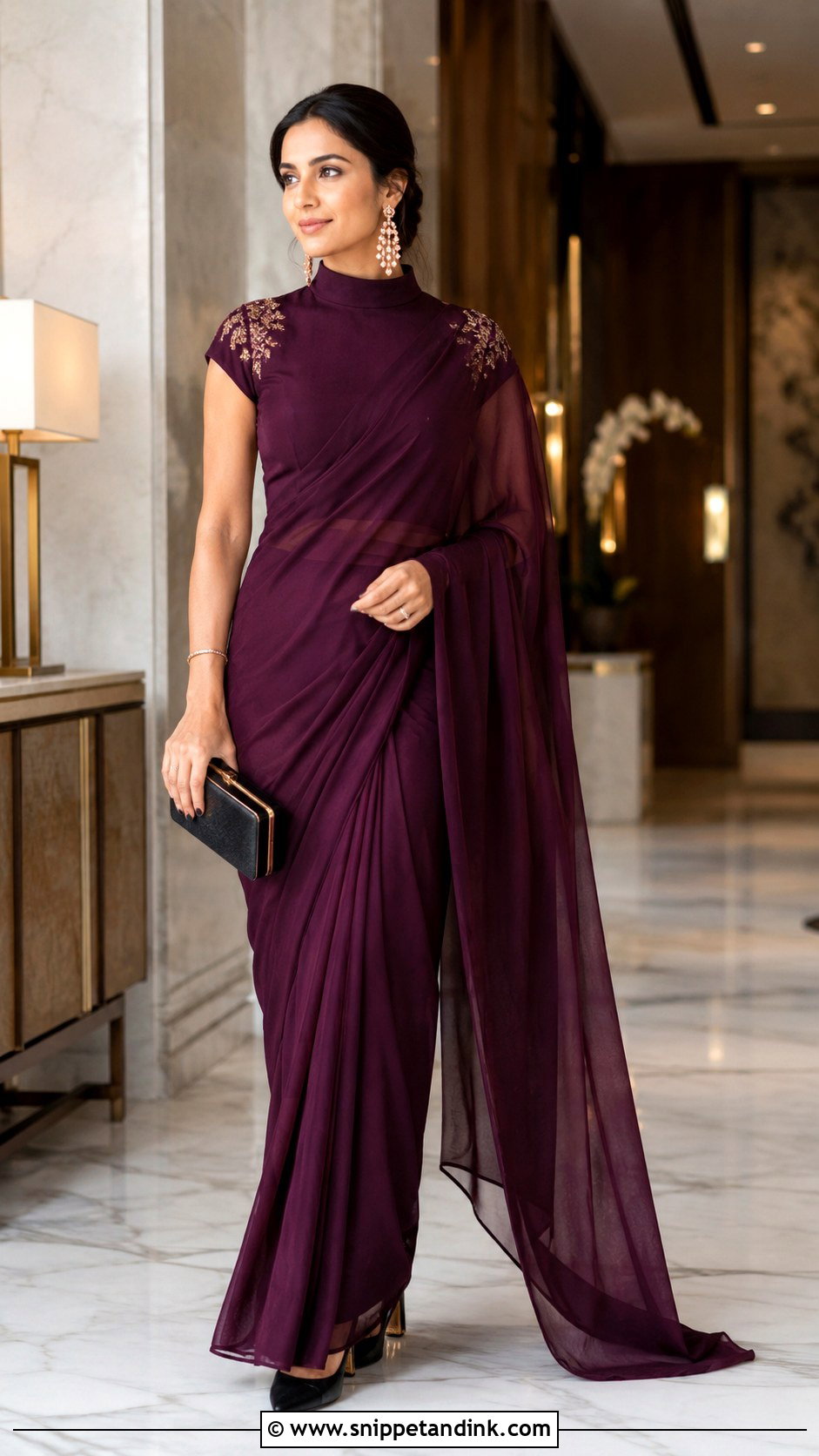
A high-neck blouse gives coverage and a sleek, upright line. A plain silk, chiffon or georgette sari works with a mock neck, band collar or raised neckline, and embroidery on the shoulders or sleeves rather than the chest. Pin the pallu narrowly so the collar stays visible. High necks are warm in summer, so I’d choose a breathable fabric and a lining that isn’t synthetic. Statement earrings instead of a necklace, a structured clutch, a slim bracelet and closed-toe heels. A high ponytail or neat bun shows off the collar. Formal dinners and modest-dress occasions.
19. Plus Size Sadi Dress With V-Neck Blouse
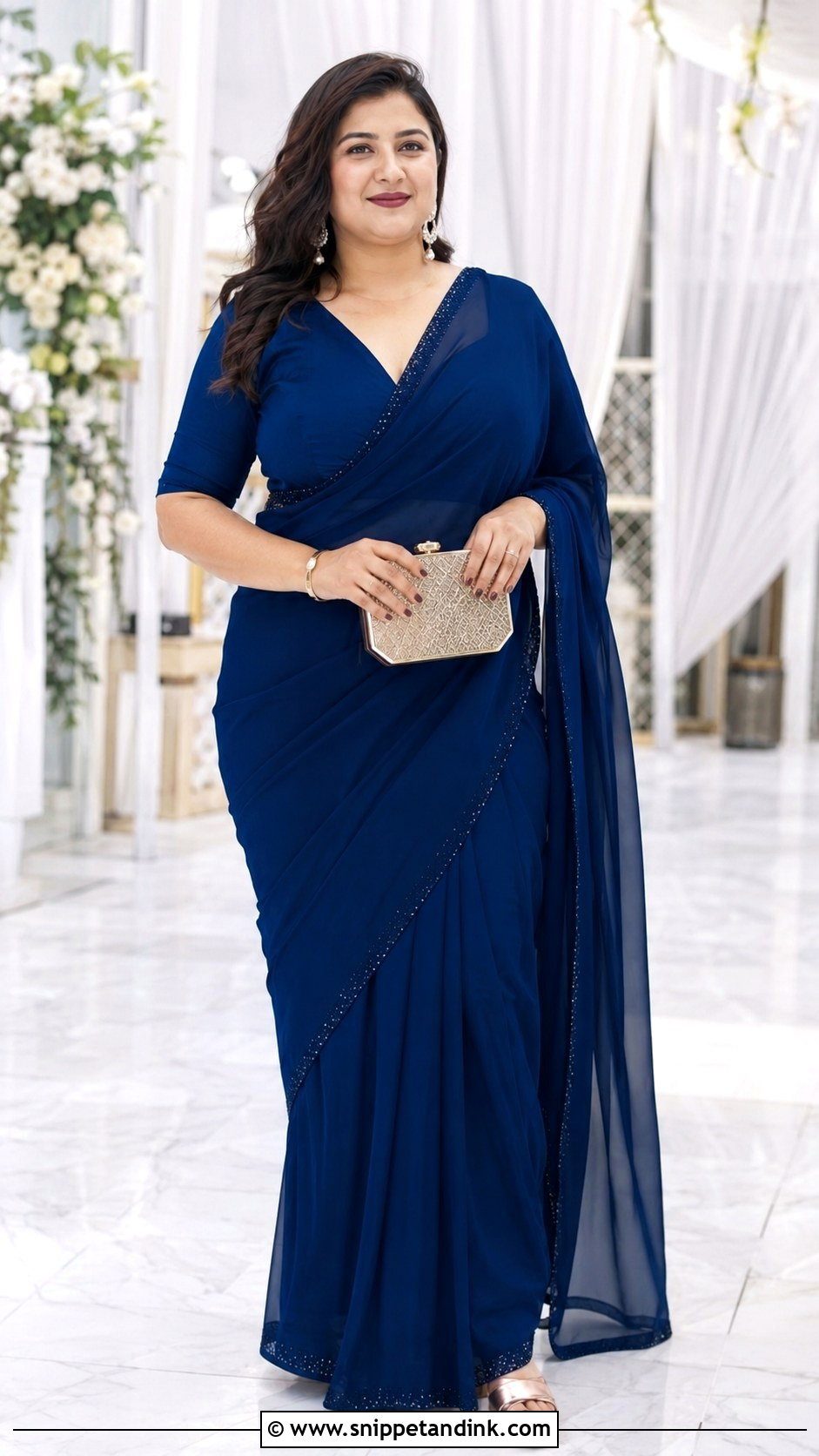
On a curvy figure, the fabric and blouse fit matter more than any shaping garment. Georgette, crepe, soft silk and chiffon drape without adding stiffness. A supportive V-neck blouse with elbow sleeves defines the upper body; never size down, as a tight blouse wrinkles across the back and armholes. I make the front pleats medium-width and tuck them slightly to one side so they fall smoothly. An open pallu creates a long vertical line. Supportive block heels, a medium clutch, drop earrings and one bracelet. Adjust length, neckline and pleating to your comfort, not to a template.
20. Sadi Dress With Crop Blouse
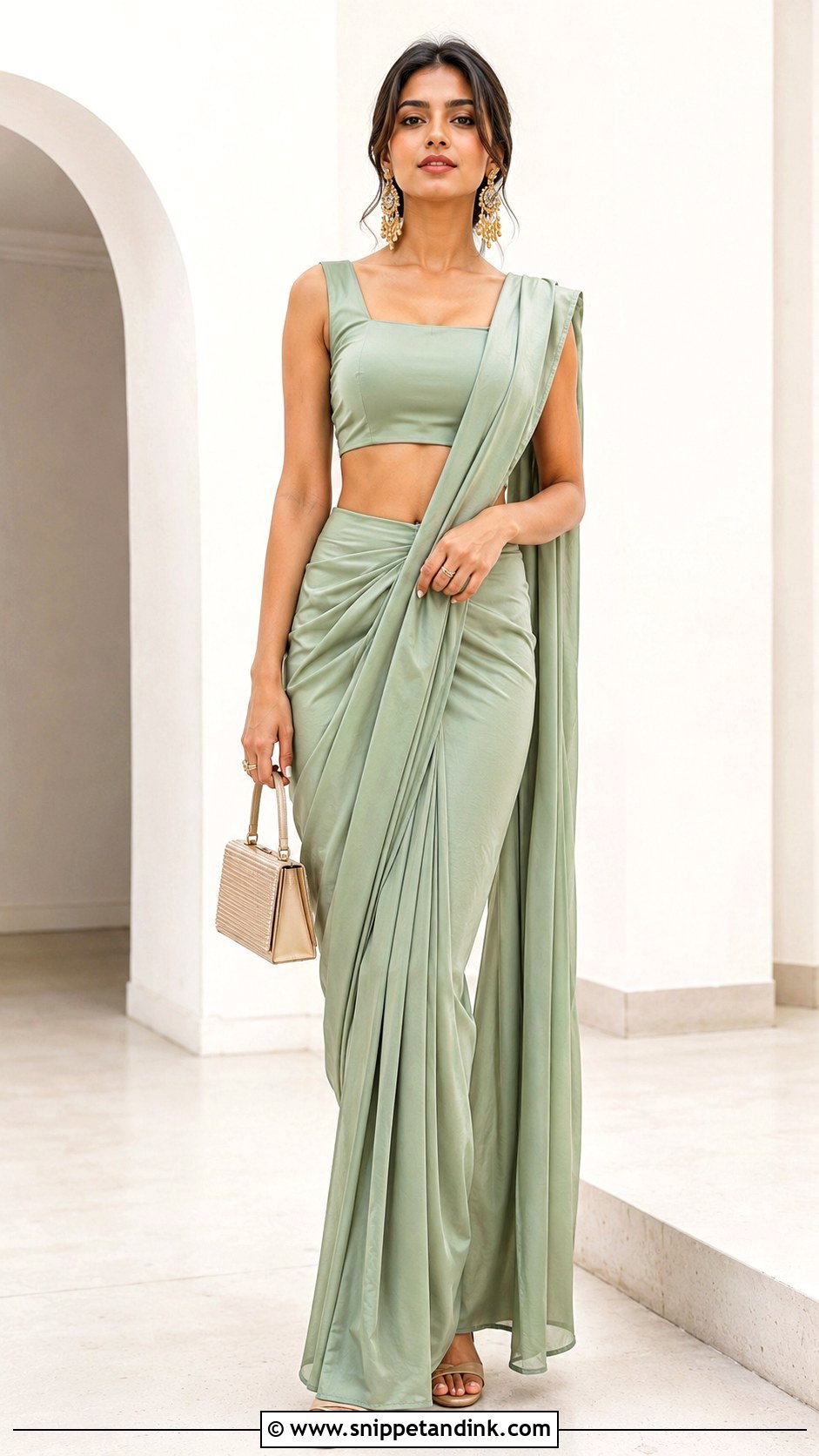
Crop blouses give the sari a youthful, fashion-led feel. Drape the sari at a higher waist and pair it with a structured crop blouse with short sleeves, a square neck or a modest boat neck. A matching colour looks sleek; contrast is more playful. If you want less midriff on show, choose a longer crop that meets the sari at the natural waist. Narrow front pleats and a secure pallu keep it balanced. Bold earrings, a small top-handle bag and clean heeled sandals; a centre-parted ponytail or soft waves.
Wearing a Sari as a Wedding Guest
Guests at Indian weddings usually dress in colour and finery, but a few habits avoid awkward moments. Red is often the bride’s colour, so I steer guests toward other shades unless the family invites otherwise. In some communities black or all-white is avoided at weddings; when you don’t know the family’s customs, a jewel tone or pastel is always safe.
Think about the event too. A daytime religious ceremony may involve sitting on the floor, so a lighter sari and a petticoat with some room is kinder than heavy brocade. An evening reception is where sequins, Banarasi and statement jewellery belong.
Caring for Silk and Zari Between Weddings
Heavy silk saris last for decades if they’re stored well, and they get ruined by a few simple mistakes.
- Dry clean silk, Banarasi and Kanjeevaram rather than washing them at home; the dyes and metallic threads react badly to water and detergent.
- Wrap each sari in plain cotton or muslin, never plastic, which traps moisture.
- Refold every few months along different lines. Zari borders can crack where they stay folded in the same place too long.
- Don’t hang a heavy silk sari for long periods; its weight stretches and marks the fabric.
- Air it in shade after wearing, and keep it away from perfume sprayed directly on the fabric, which can stain and tarnish zari.
Fabric First, Then the Pins
A sari looks its best when the fabric suits the occasion, the drape is secure, the blouse fits well, the shoes are comfortable and the accessories support rather than compete. Silk and Banarasi bring grandeur, while chiffon, linen, cotton and georgette are lighter options. Pre-draped, belted, jacket, and crop-blouse combinations make it feel modern and easier for first-timers. Weigh the occasion, weather, how much you’ll move and the coverage you want. Small changes to neckline, sleeve length, pleat width and heel height make a real difference to comfort, so treat the ideas above as a starting point and adapt them to your own taste.
You'll Like These Ideas:






Leave a Reply