
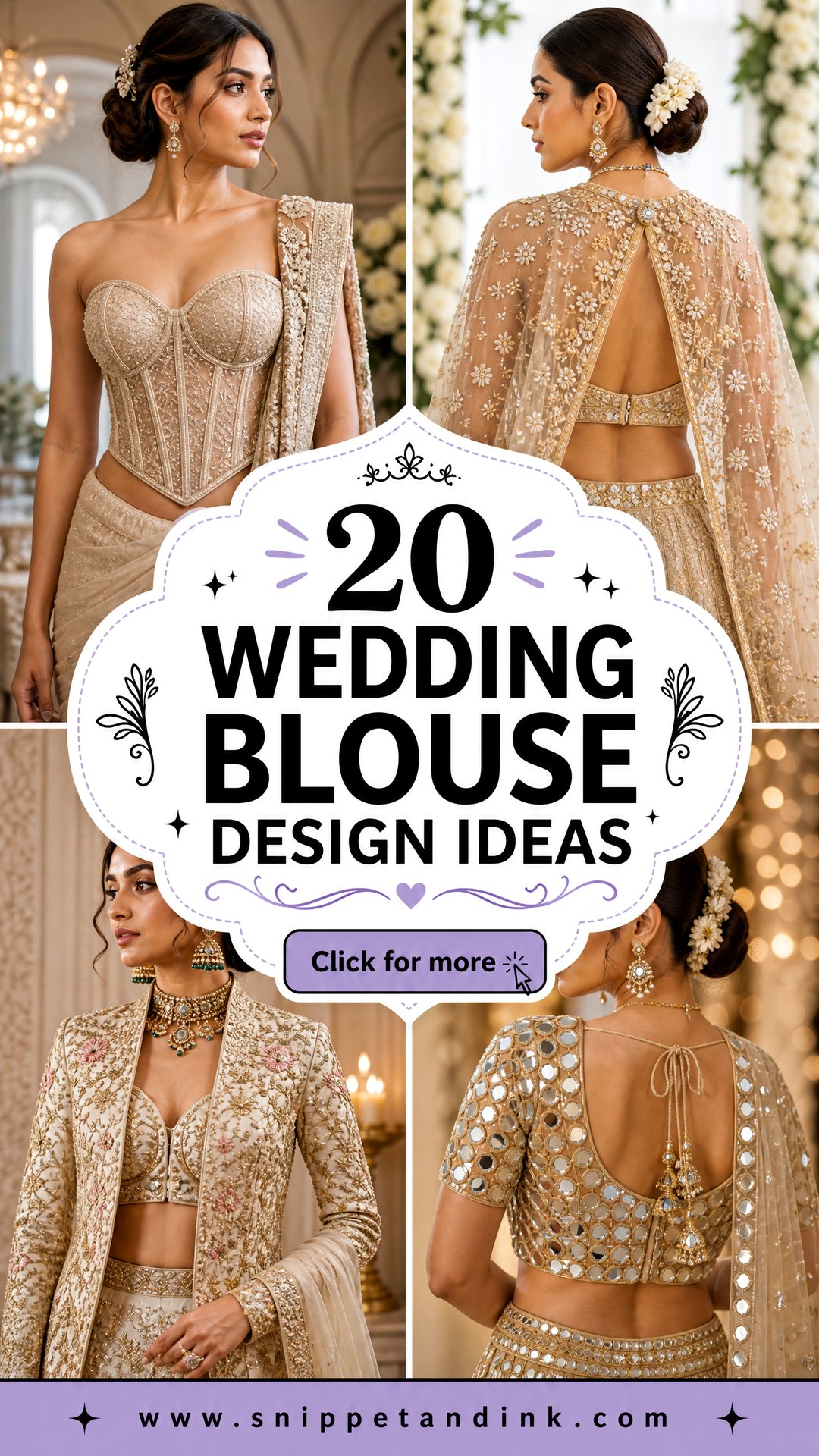
The blouse is the one part of a bridal outfit that’s made entirely for you, and it decides how the saree or lehenga sits, how the jewelry lies and how comfortable you are by the last ritual. The ideas below cover traditional handwork, modern necklines, statement sleeves, structured bodices and back details, from deep V-necks and high necks to corset shapes, full sleeves, mirror work and tie-backs. My advice before falling for any of them: think about the weight of the fabric, how much bust support you need, how freely you must move your arms, where your necklace will sit and what the weather will be. Those five things narrow the list quickly.
Using the Blouse Piece That Came With Your Saree
Many bridal silk sarees come with a matching length of fabric for the blouse, woven at one end. Brides often ask me whether they should use it or buy something separate. Both are fine; it depends on the design you want.
When the attached piece is the right choice
The attached piece matches the saree exactly, which suits classic Kanjeevaram and Banarasi looks where blouse and saree should read as one. It’s usually enough for elbow sleeves and a standard back. It may not be enough for full sleeves, a peplum or a jacket, so measure before you design.
When a separate fabric works better
A contrasting blouse in velvet, raw silk or brocade lets you add structure the saree fabric can’t give, and it’s the only route for heavy zardosi or a corset shape. Take the saree with you when you shop and compare colours in daylight. Ask whether the new fabric might bleed colour, since a dark blouse that runs onto a pale saree with sweat cannot be undone.
1. Zardosi Silk Wedding Blouse Design
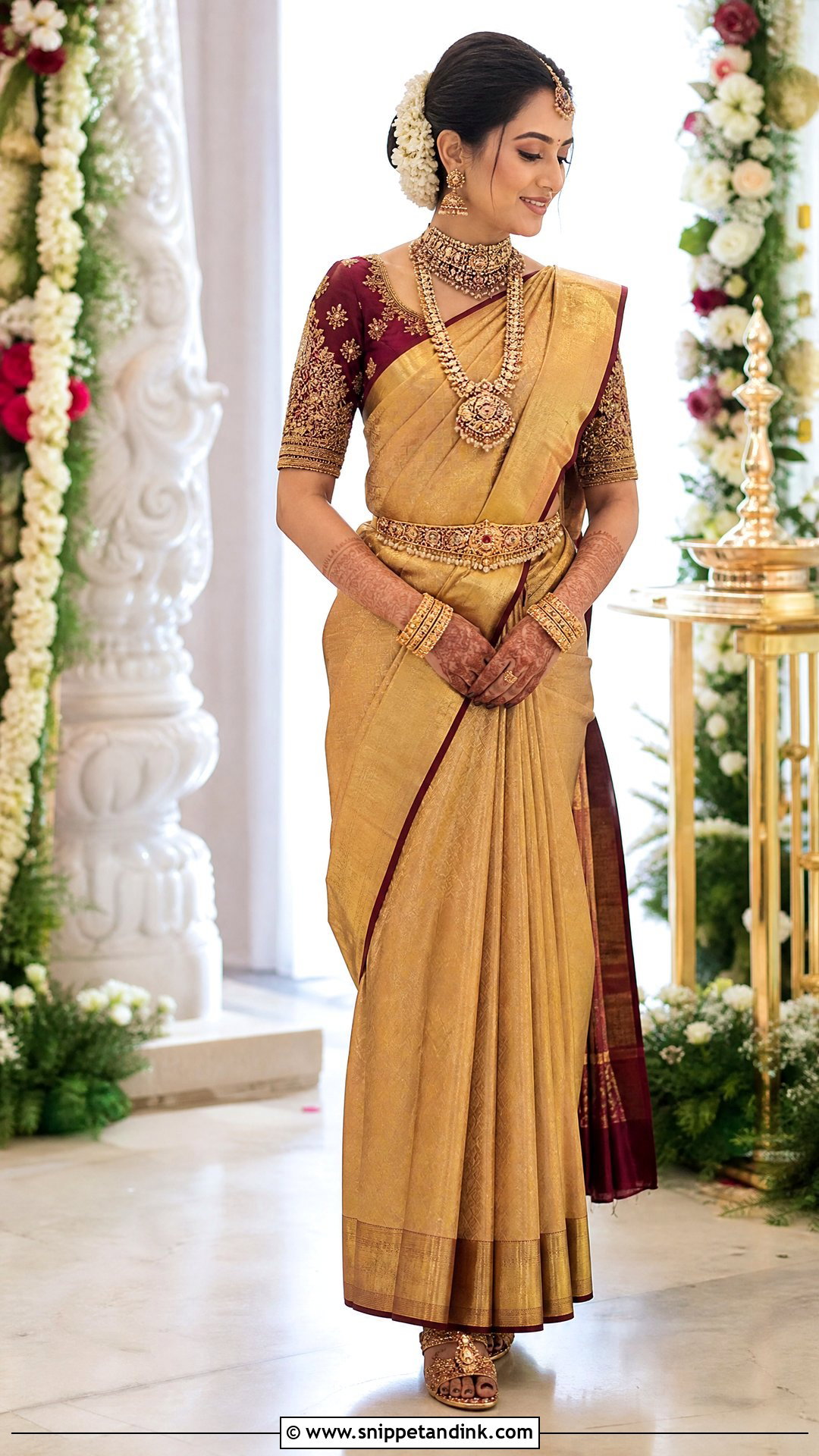
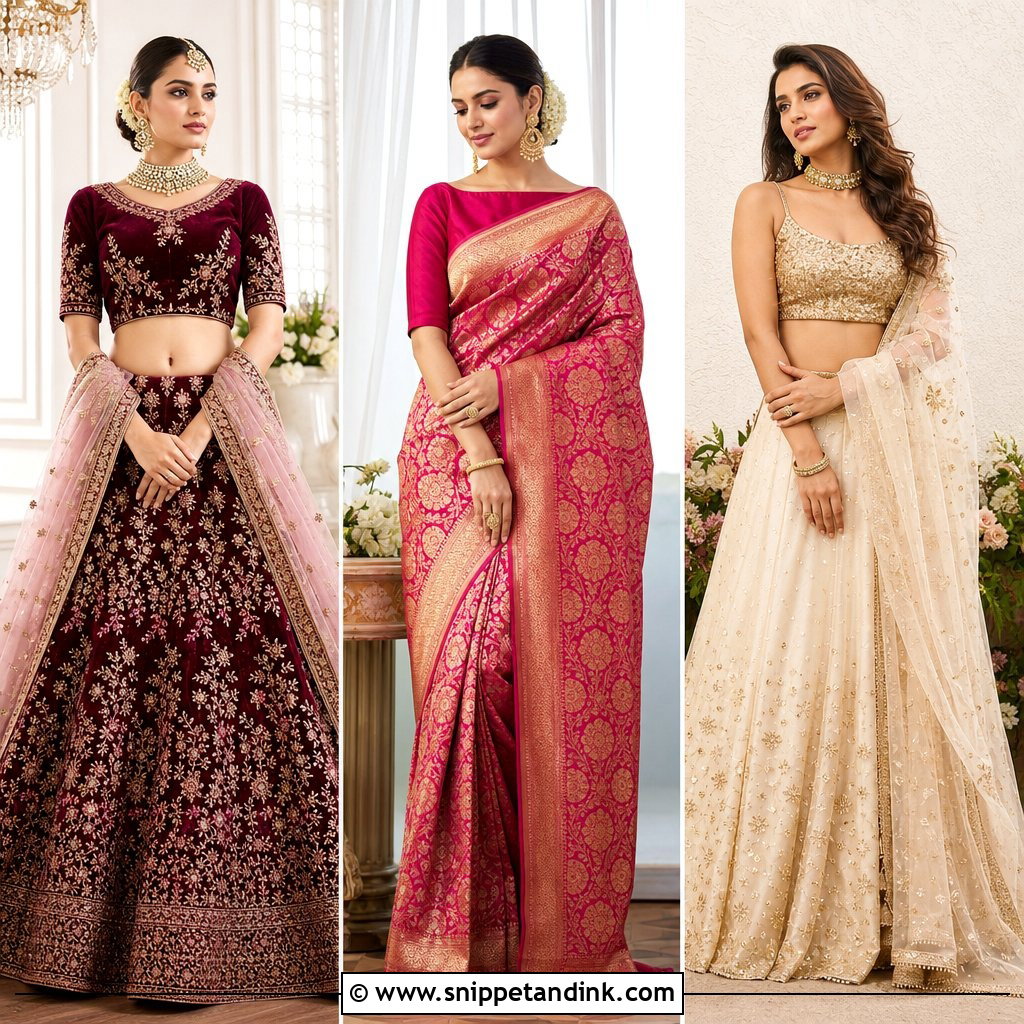
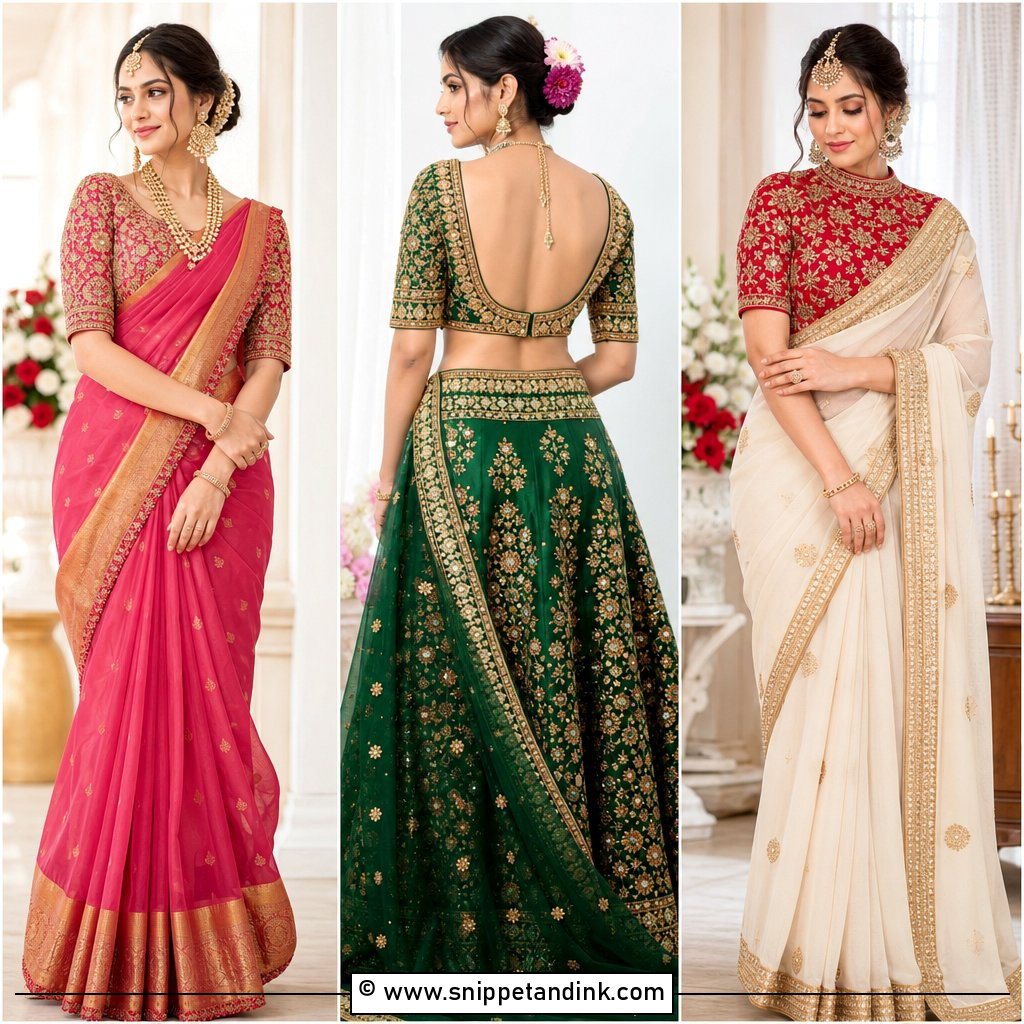
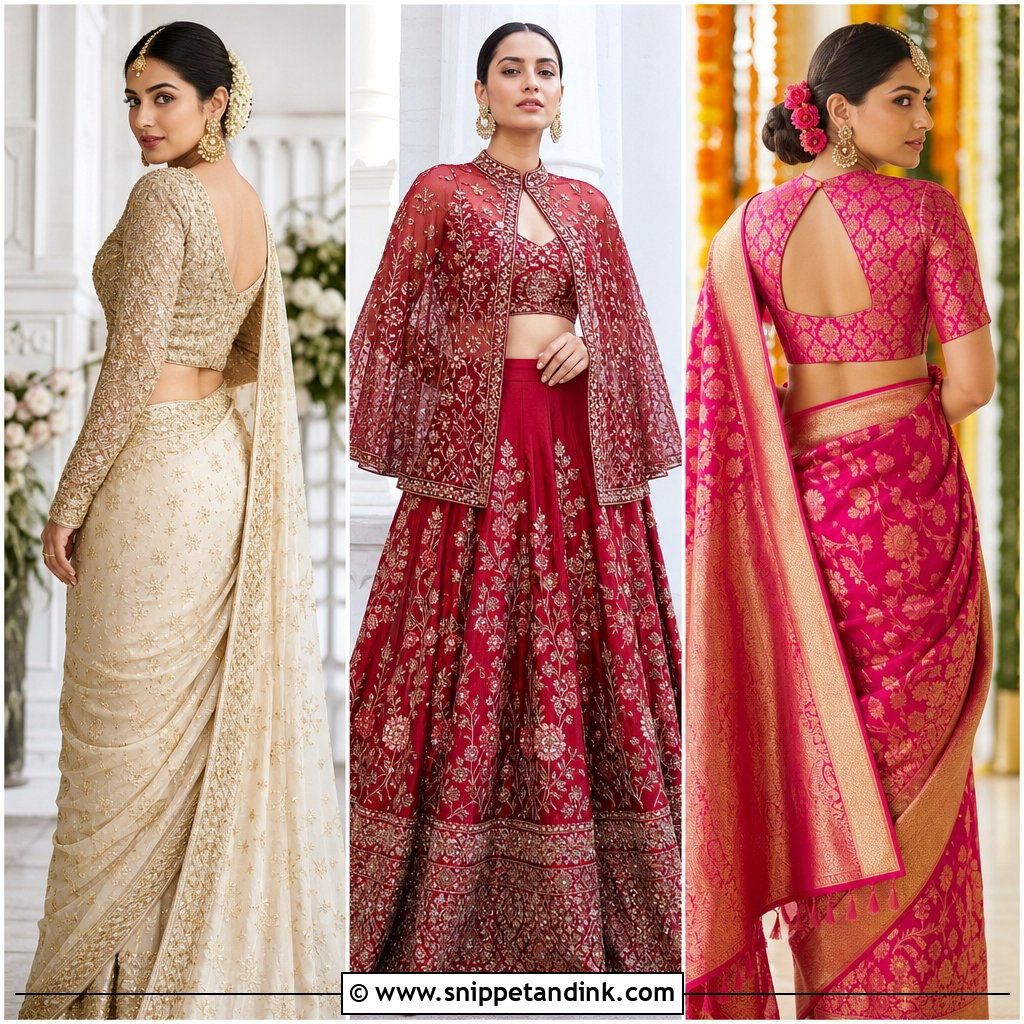
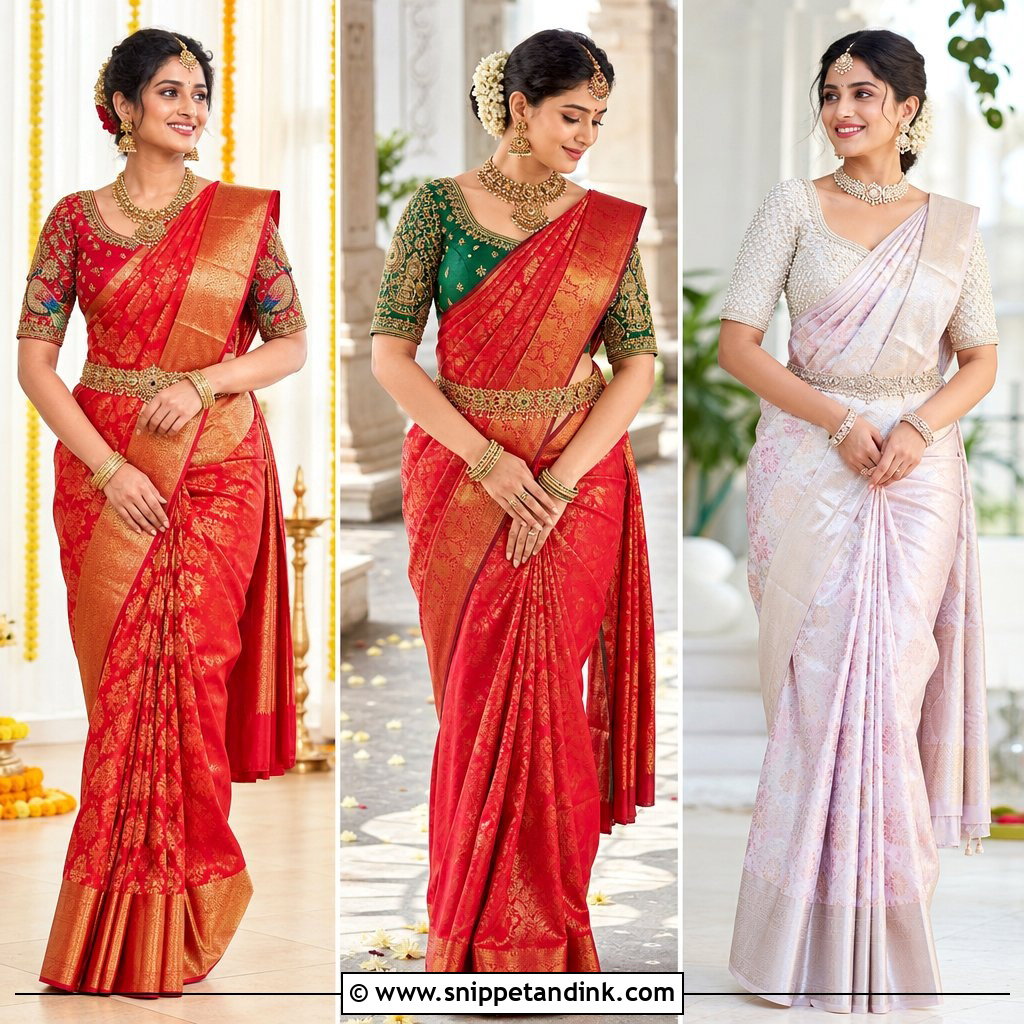
Zardosi on silk is the classic I’d never talk a bride out of, with one condition: keep the work controlled. A rich silk blouse with controlled zardosi embroidery in deep red, maroon, emerald or antique gold, with metallic thread matched to the saree border, looks rich without turning into armour. Real zardosi is metal-wrapped thread and it is heavy, especially around the sleeves. I ask the tailor for a soft cotton lining, reinforced shoulder seams and no dense work right in the underarm, where it rubs every time you move. An elbow sleeve with a rounded neckline gives the embroidery room. Kanjeevaram, temple jewelry and a flower-dressed low bun complete it.
2. Aari Work Wedding Blouse Design
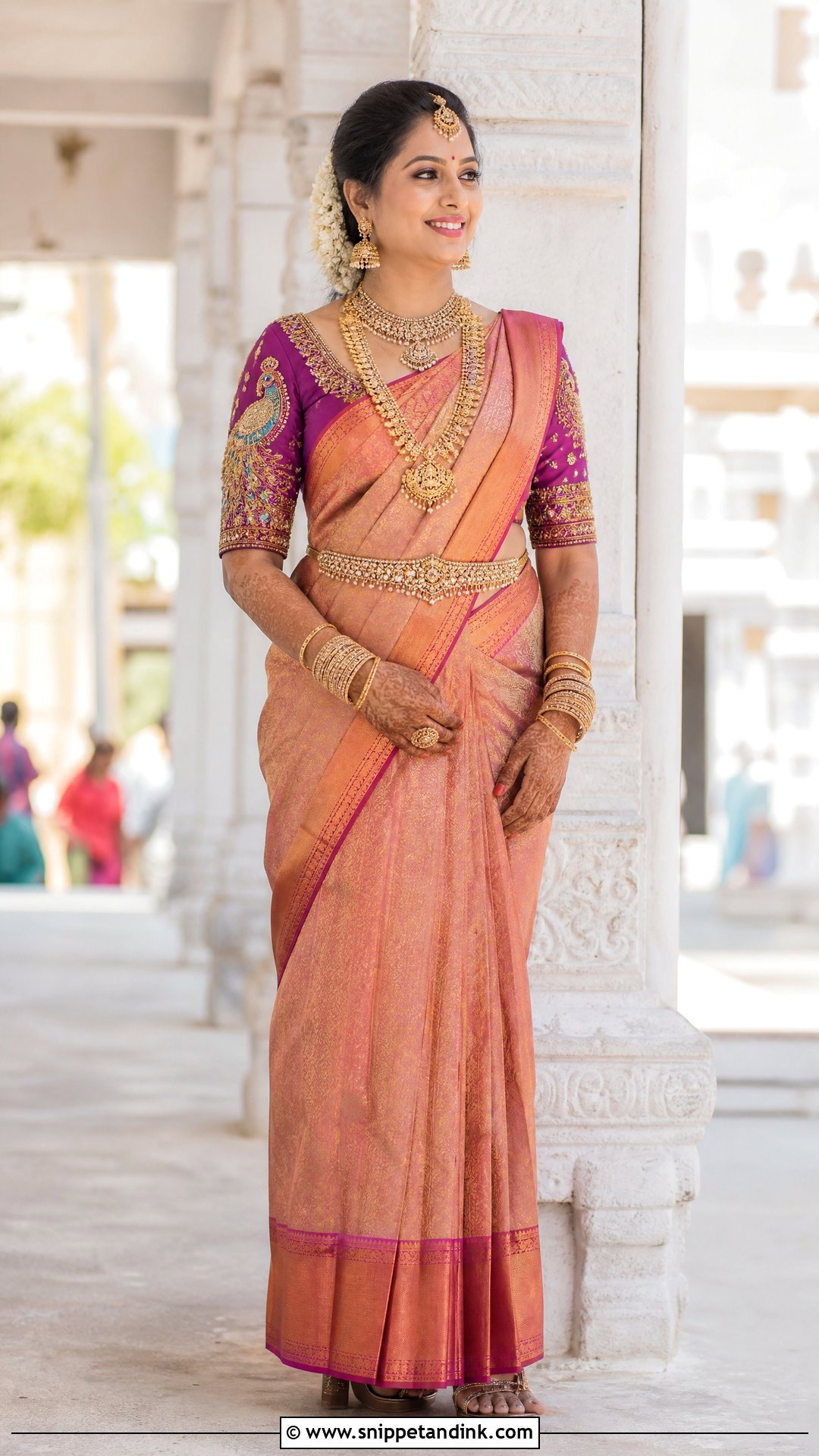
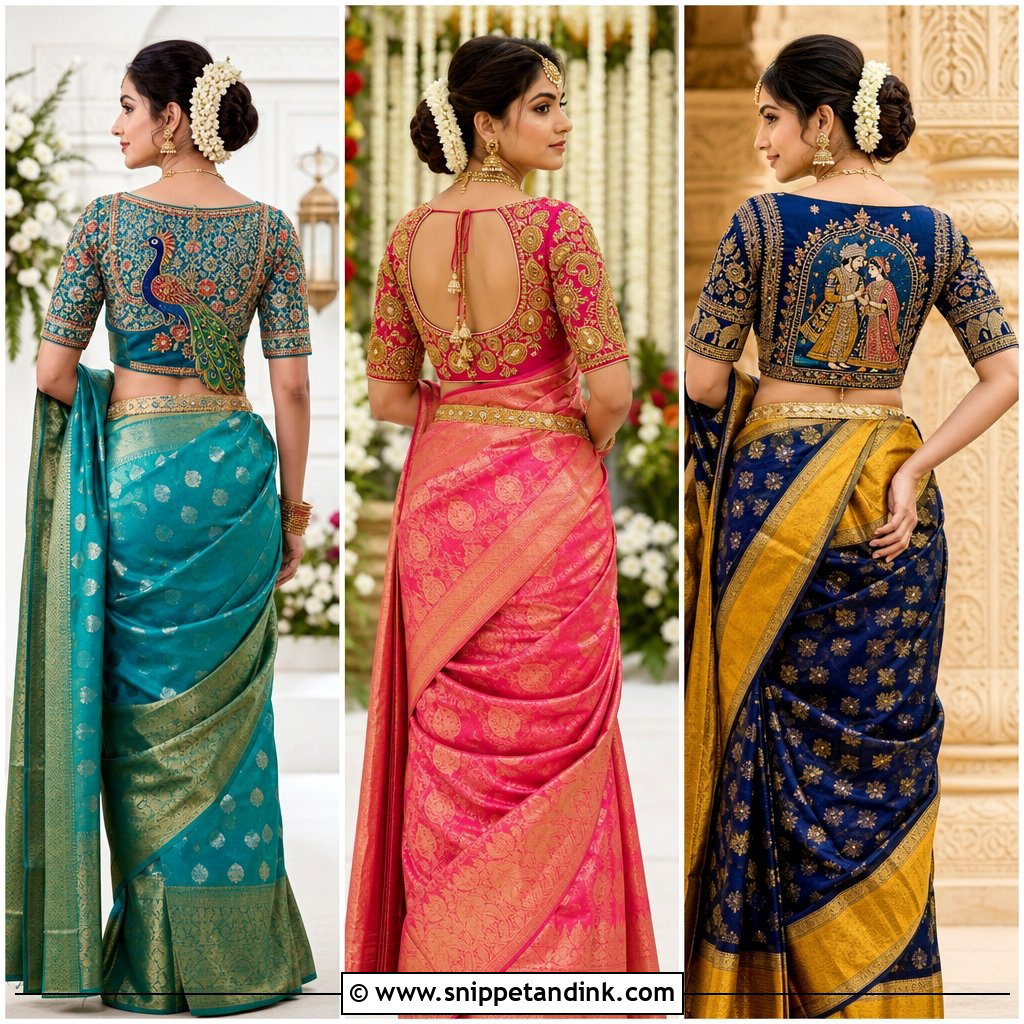
Fine Aari embroidery is done with a hooked needle on a frame, which is why it can carry such small, dense detail without bulk. Borrow motifs from the saree border, whether vines, paisleys, peacocks or small florals, so the blouse and saree feel like one design. A jewel neckline with elbow sleeves is a calm base. If the saree is heavily patterned already, I’d keep the aari to the neckline and sleeve hems. Ask for beads and raised work to stay off the spots where you’ll lean back or rest your arms. A contrasting silk saree, a waist belt, layered gold and block-heel sandals finish it.
3. Temple Jewelry Wedding Blouse Design
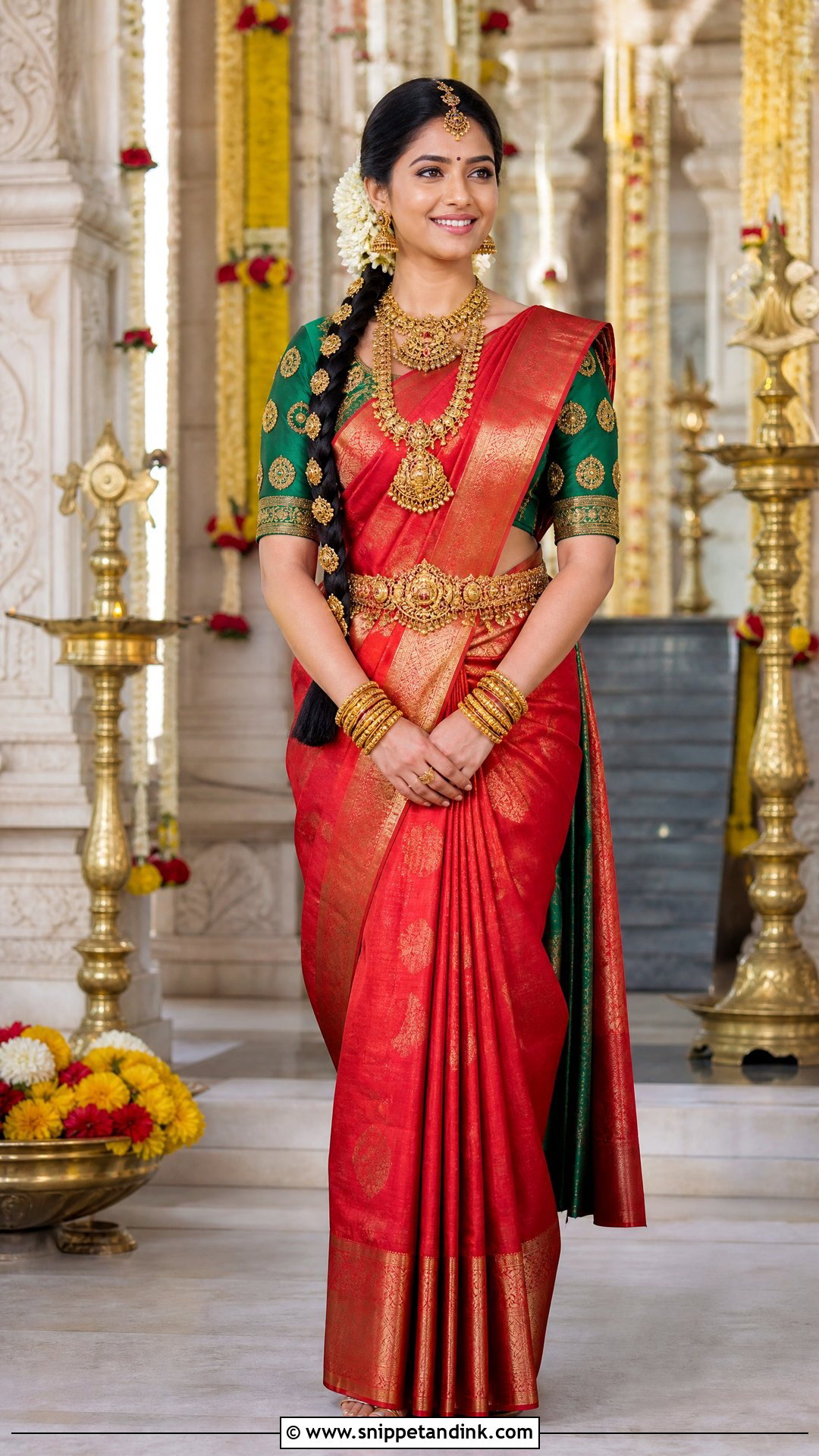
Temple-inspired embroidery uses antique gold beads, coin shapes, deity motifs and sculpted borders, and it looks right at home on red, green, mustard or purple silk. The neckline is the decision to get right. Cut it moderately open so a traditional necklace sits on skin rather than on top of the embroidery, where the two will clash and the necklace will slide around. Pin the pallu so the sleeve and shoulder work shows. With this much going on, I keep the hairstyle clean and the jewelry from one set. Jhumkas, bangles, a gold waist belt and decorated flats or low heels complete the outfit.
4. Deep V Neck Wedding Blouse Design
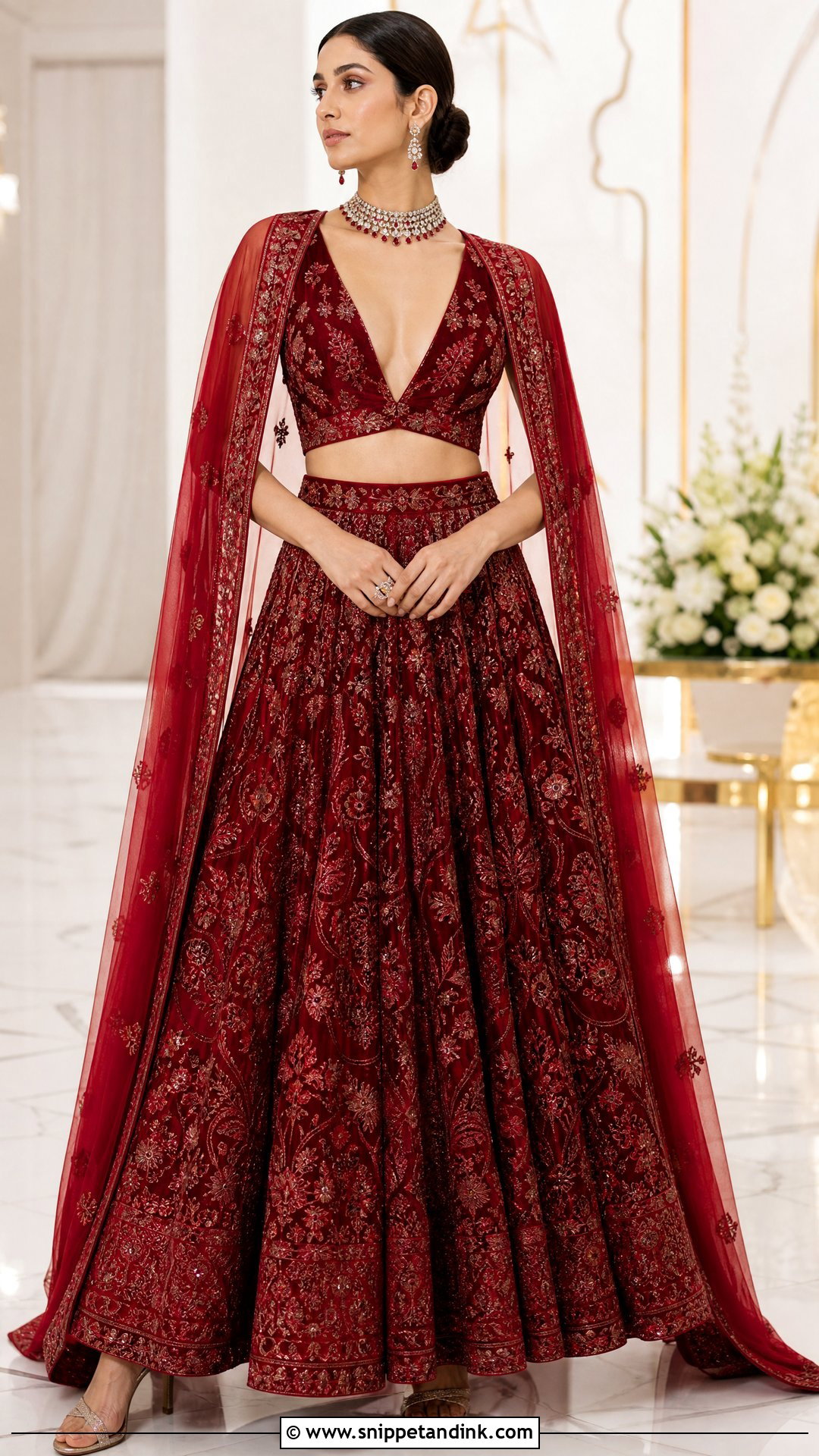
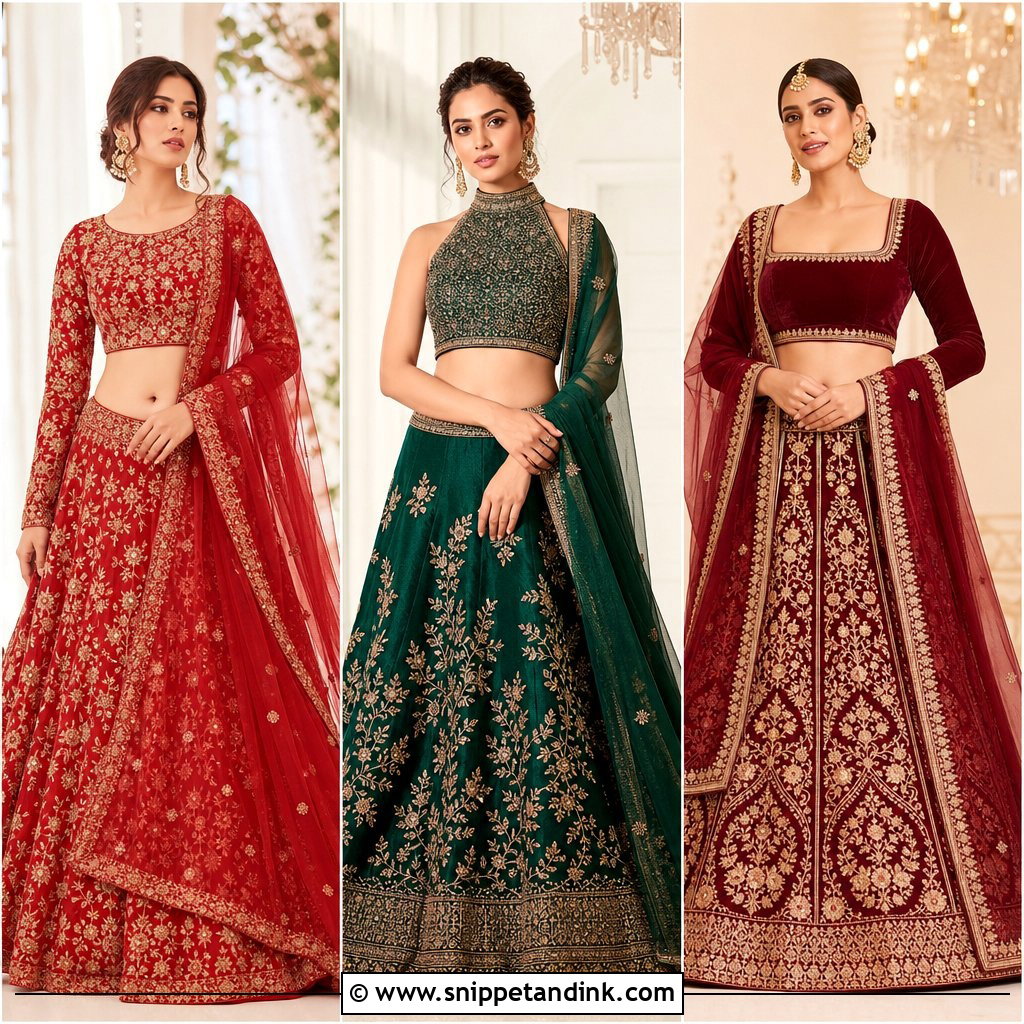
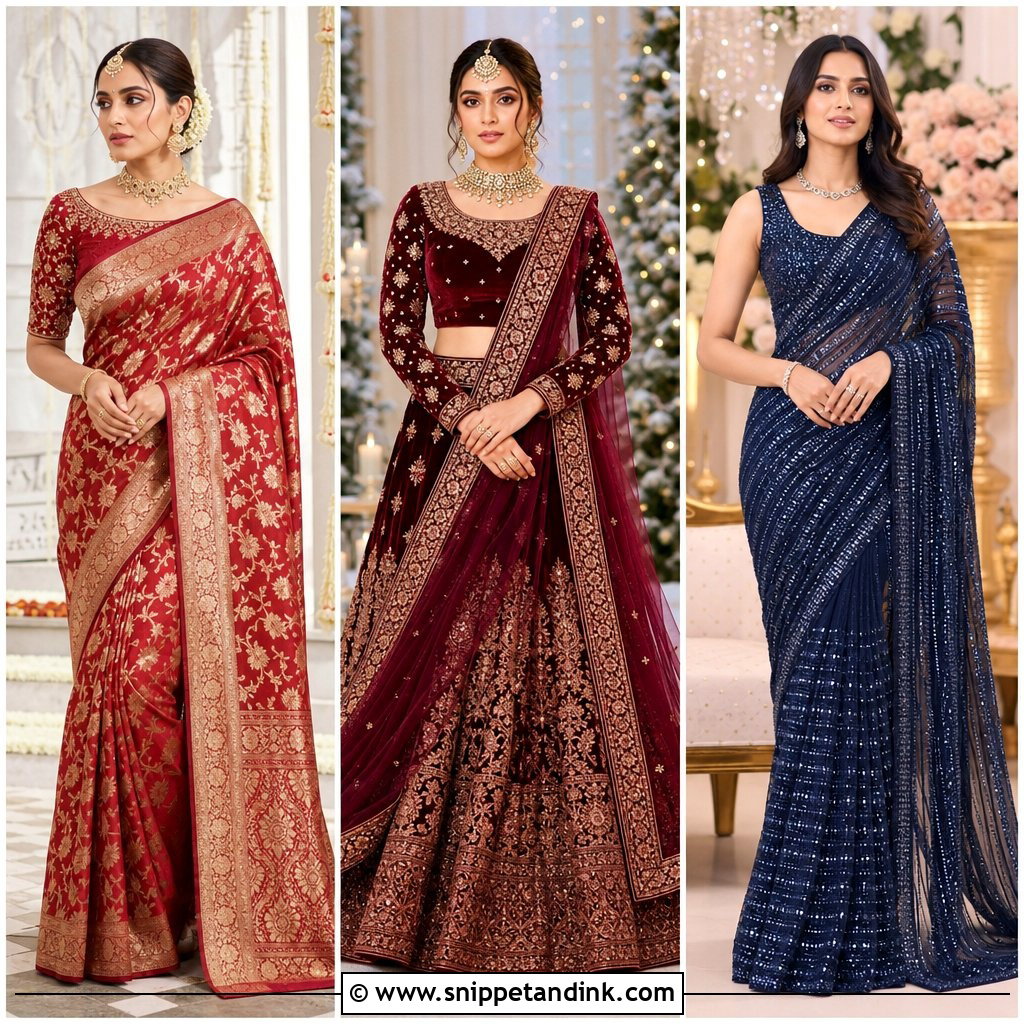
A deep V-neck gives a lehenga or saree a sharp, modern line, but it needs real construction to stay where it should. I use structured silk, brocade or velvet with built-in support, and keep fashion tape as a backup rather than the plan. Embroidery along the edge defines the shape and links it to the skirt or border. Pair it with a high-waisted lehenga, a light dupatta over one shoulder, a choker and metallic heels. If you want more coverage, a skin-toned illusion panel keeps the V’s shape. Book a fitting where you sit, bend and dance before you sign it off.
5. Sweetheart Neck Wedding Blouse Design
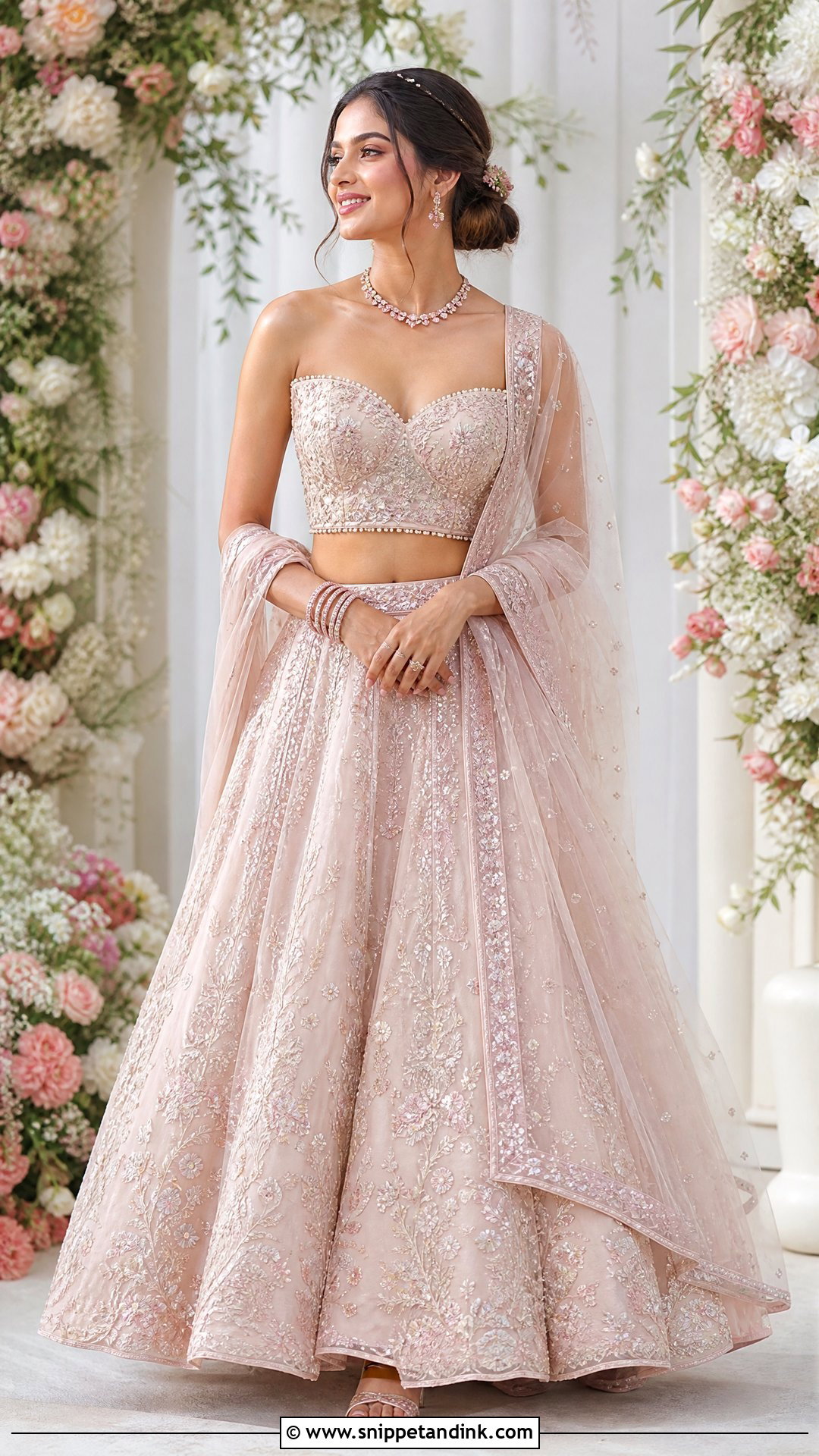
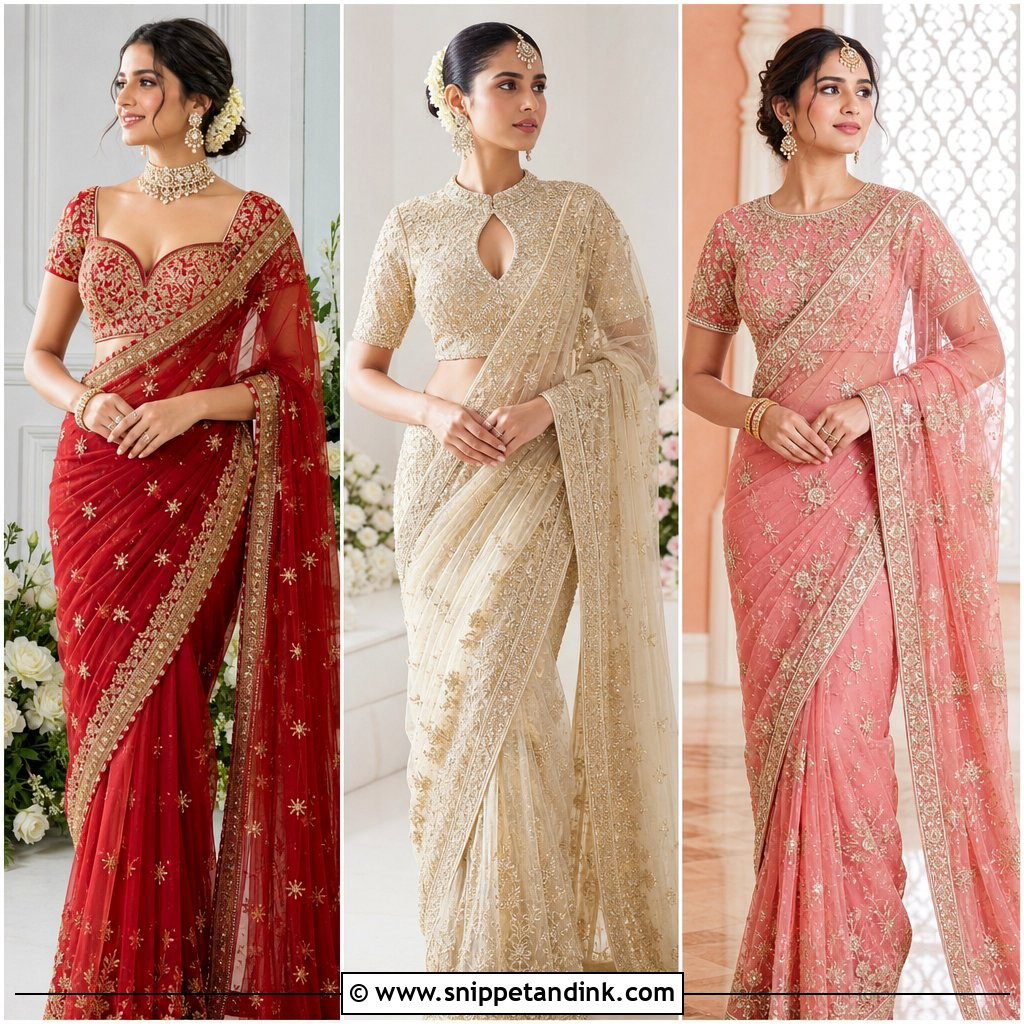
A sweetheart neckline only keeps its curve if the fabric has enough body to hold it. Raw silk and embroidered velvet do; soft georgette sags and the curve flattens. For support, I’d ask for built-in cups, slightly wider shoulder straps and a firm underbust band, since the neckline itself offers very little. Pearl edging or small floral embroidery softens it further. Keep the necklace short so it sits above the neckline instead of cutting across it, and add a sheer dupatta over the head or shoulder. A low textured bun and understated makeup let the shape lead.
6. High Neck Wedding Blouse Design
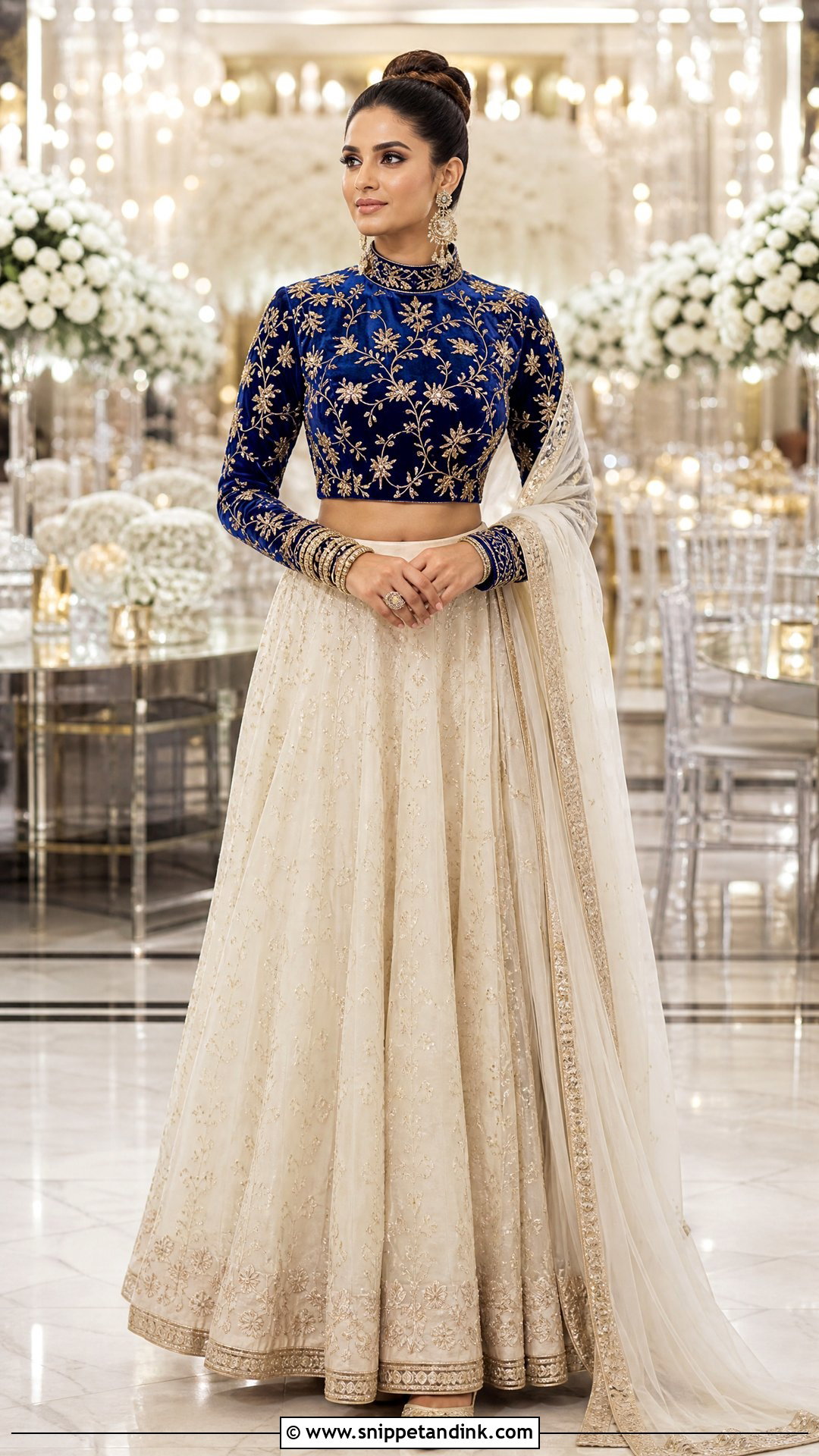
High necks cover the chest and shoulders and give a regal outline, especially in velvet, raw silk, brocade or embroidered net over a soft lining. Balance is the key: a heavily worked high neck pairs best with a plainer lehenga or a saree with a restrained border. Skip the necklace entirely and move the jewelry to earrings, bangles and a ring. The comfort problem with a high neck is the collar itself, so I leave a little ease around the throat and put a concealed zip at the back. A high bun or sleek braid keeps the neck clear. It’s at its best for winter and evening events.
7. Boat Neck Wedding Blouse Design
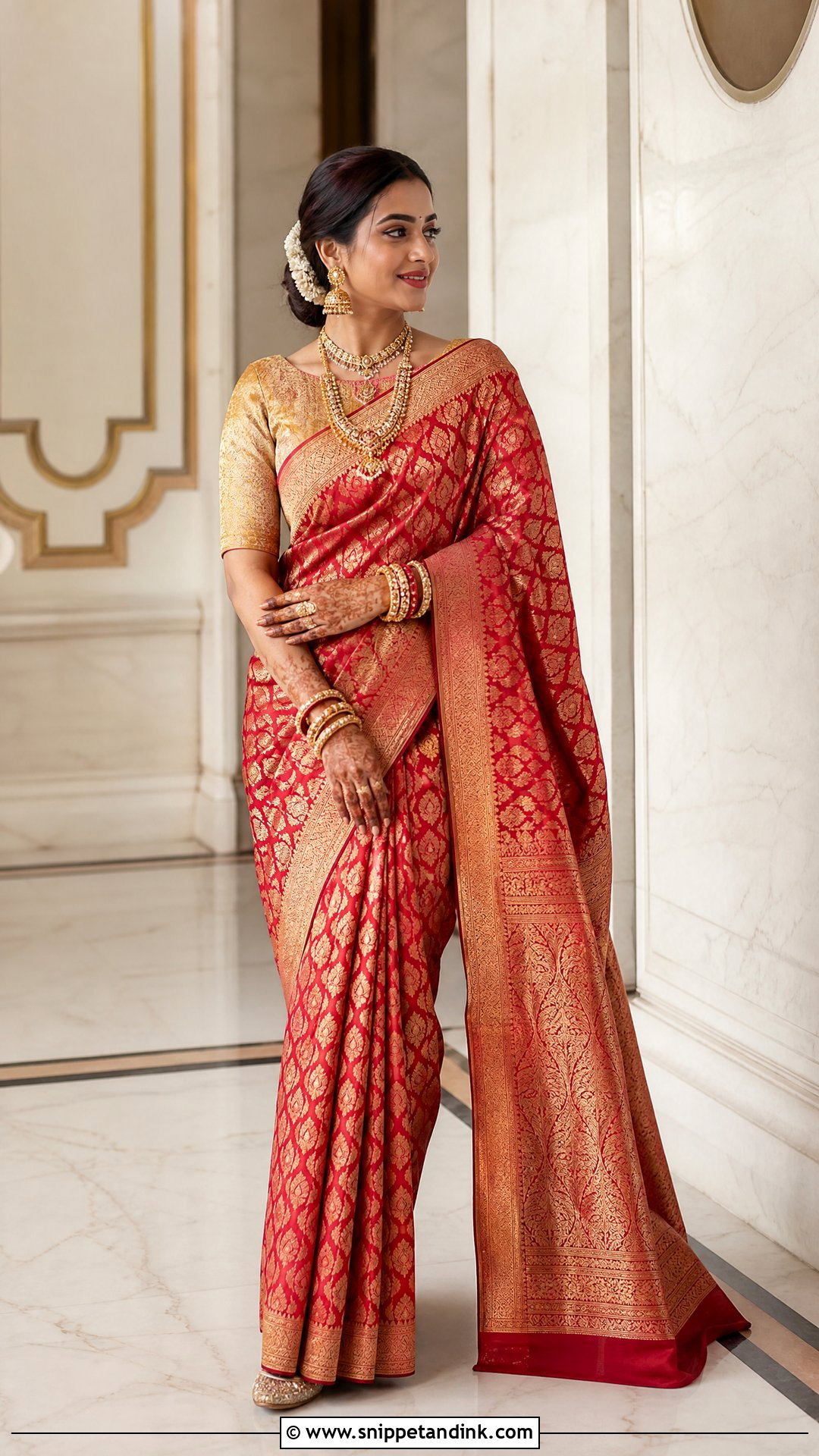
A boat-neck wedding blouse runs across the collarbones and gives a saree a clean, horizontal frame. Princess seams make a big difference in fit through the bodice, and elbow sleeves balance the width at the neck. The fitting problem I see most often with boat necks is the shoulders: if the neck is cut too wide, bra straps show and the blouse slips off one side as you move, so measure and pin it carefully. Choose a necklace that sits well below the neckline. Keep the pallu narrow at the shoulder. Banarasi or Kanjeevaram silk with low embroidered heels suits it.
8. Full Sleeve Wedding Blouse Design
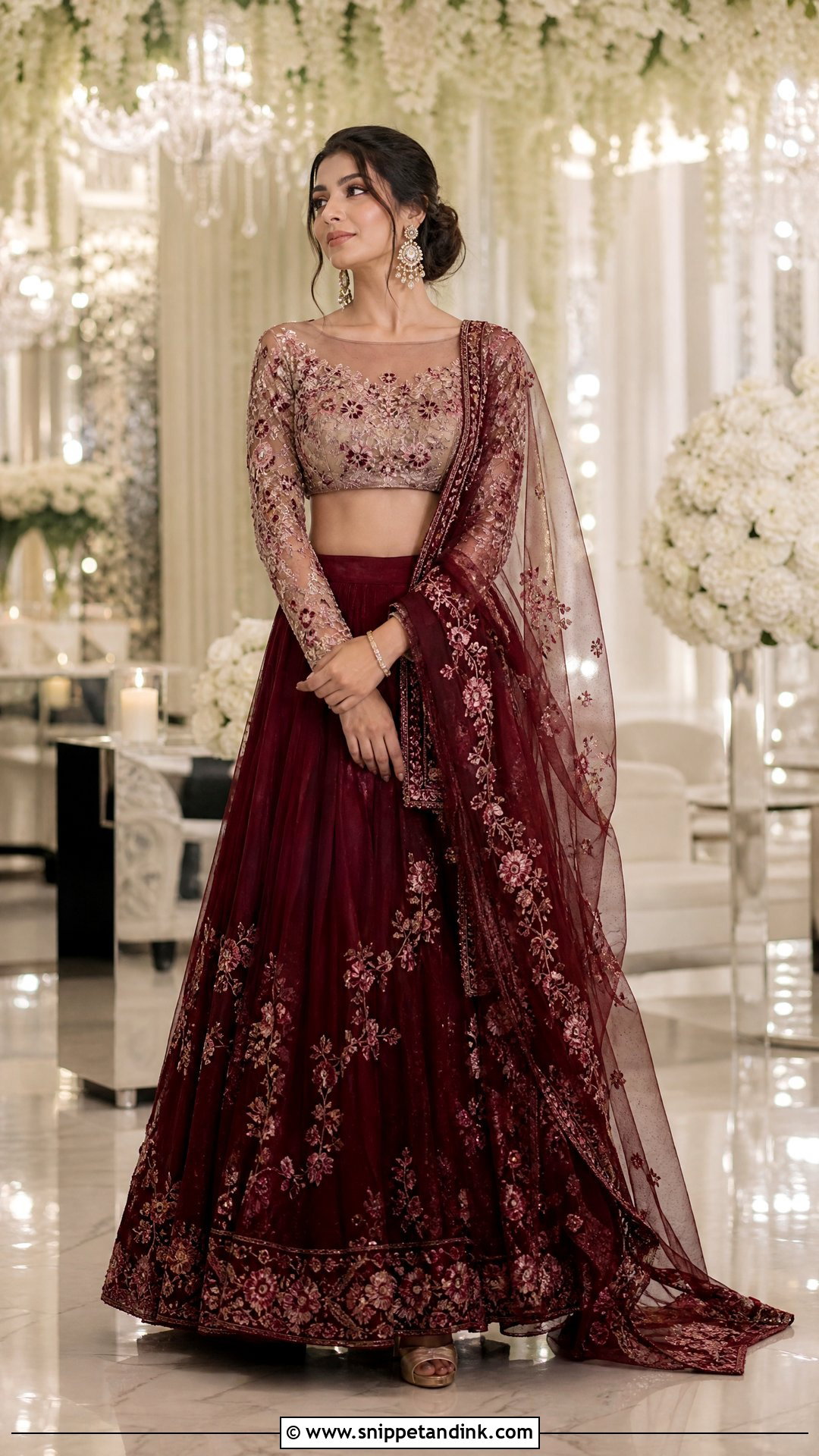
Full sleeves let embroidery run unbroken from shoulder to wrist, which turns a simple bodice into the centrepiece. Sheer net sleeves with appliqué feel light; velvet or silk feels more formal and warmer. Balance the coverage with a moderate V, scoop or square neckline. Sleeves are the part of a blouse that restricts movement most, so at the fitting I have the bride raise her arms overhead, reach forward as if for a garland and bend her elbows fully. A soft sleeve lining prevents rubbing at the elbow crease. Go easy on bangles if the cuffs are already heavily decorated.
9. Elbow Sleeve Wedding Blouse Design
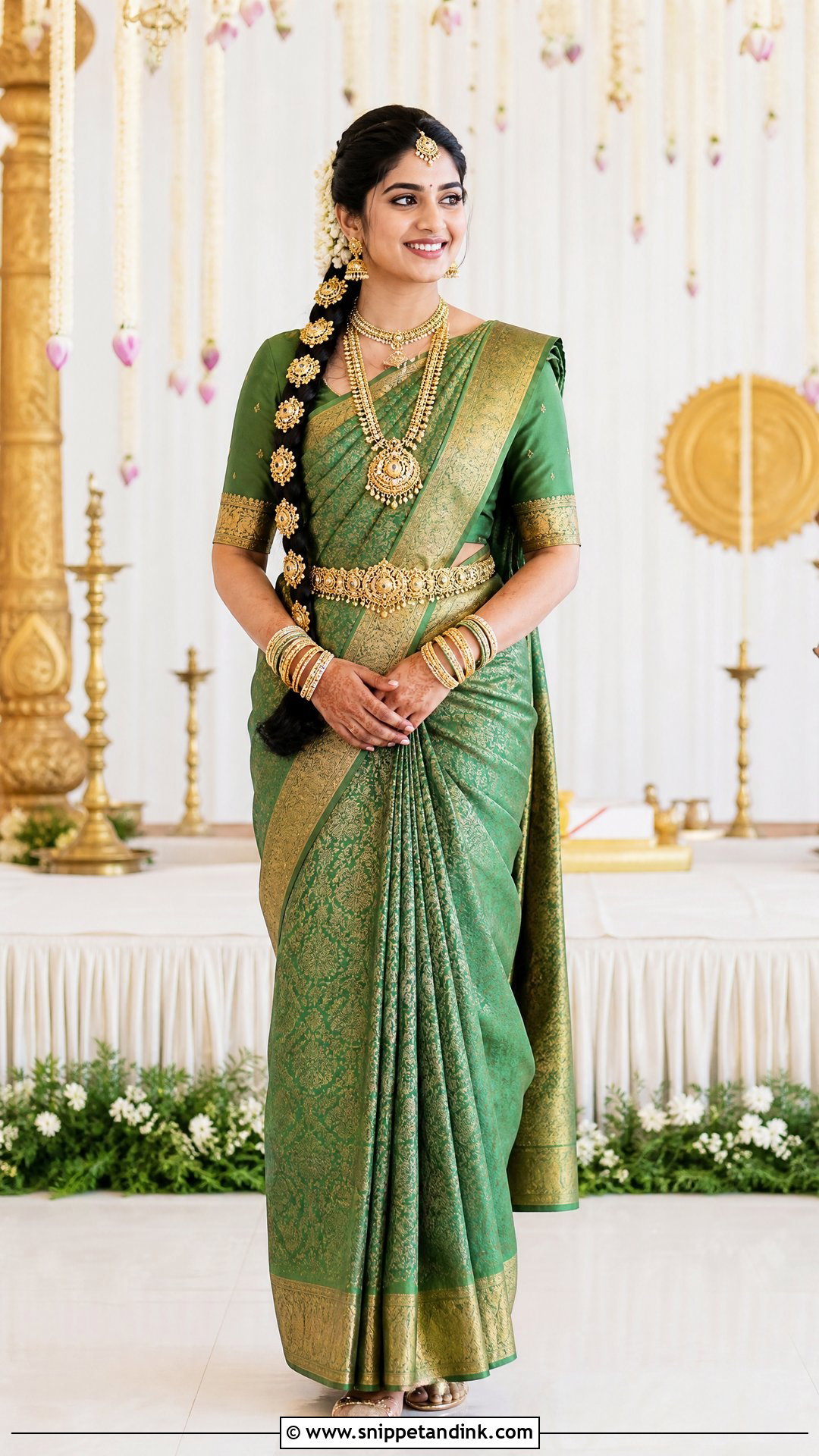
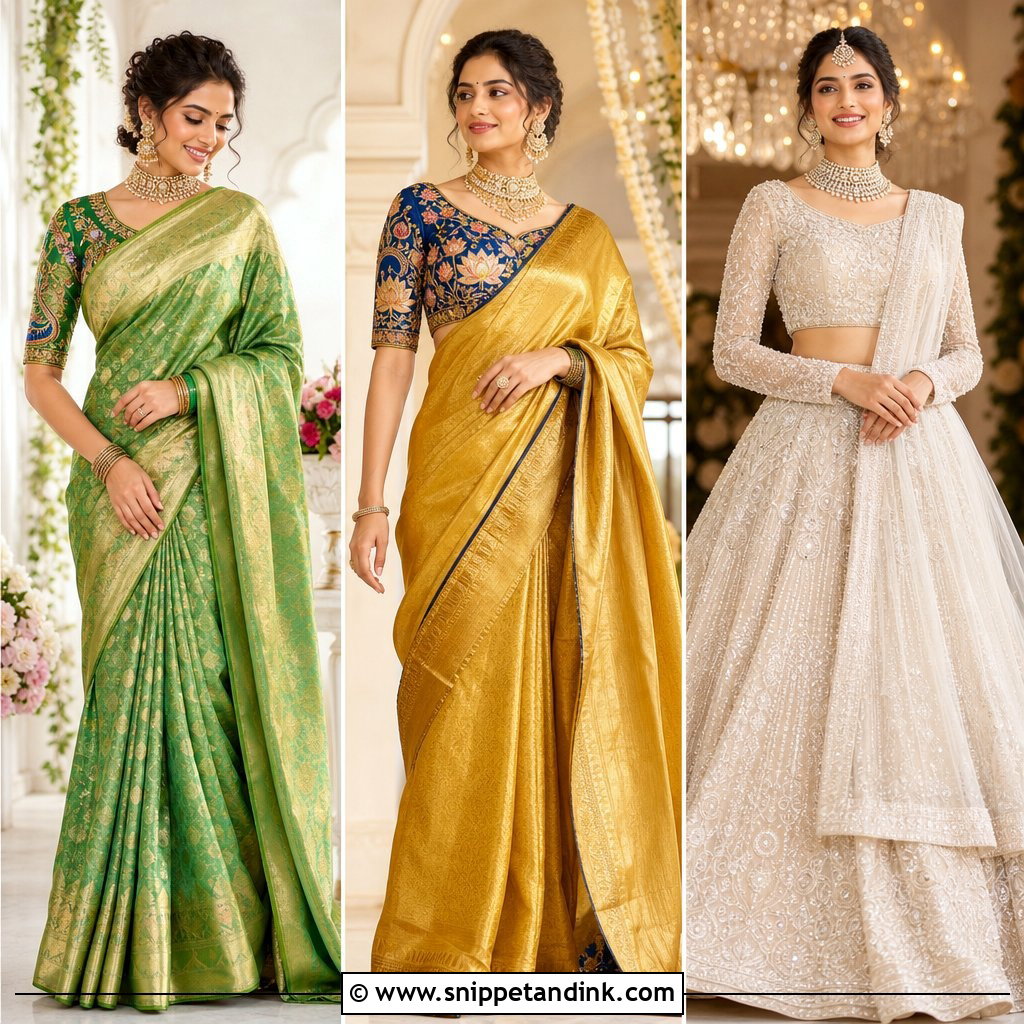
Elbow sleeves are the length I’d suggest to most brides, because they leave the forearm free for bangles, mehndi and hand jewelry while still covering the upper arm. A decorative sleeve border in beads, threadwork or motifs borrowed from the saree adds interest. I like the bodice embroidery a touch lighter than the sleeves. One check: if the fabric has no stretch, the sleeve opening must allow for the arm bending fully, or the hem cuts into the inside of the elbow over a long ceremony. A pleated silk saree, layered necklaces and a flower-dressed braid complete it.
10. Puff Sleeve Wedding Blouse Design
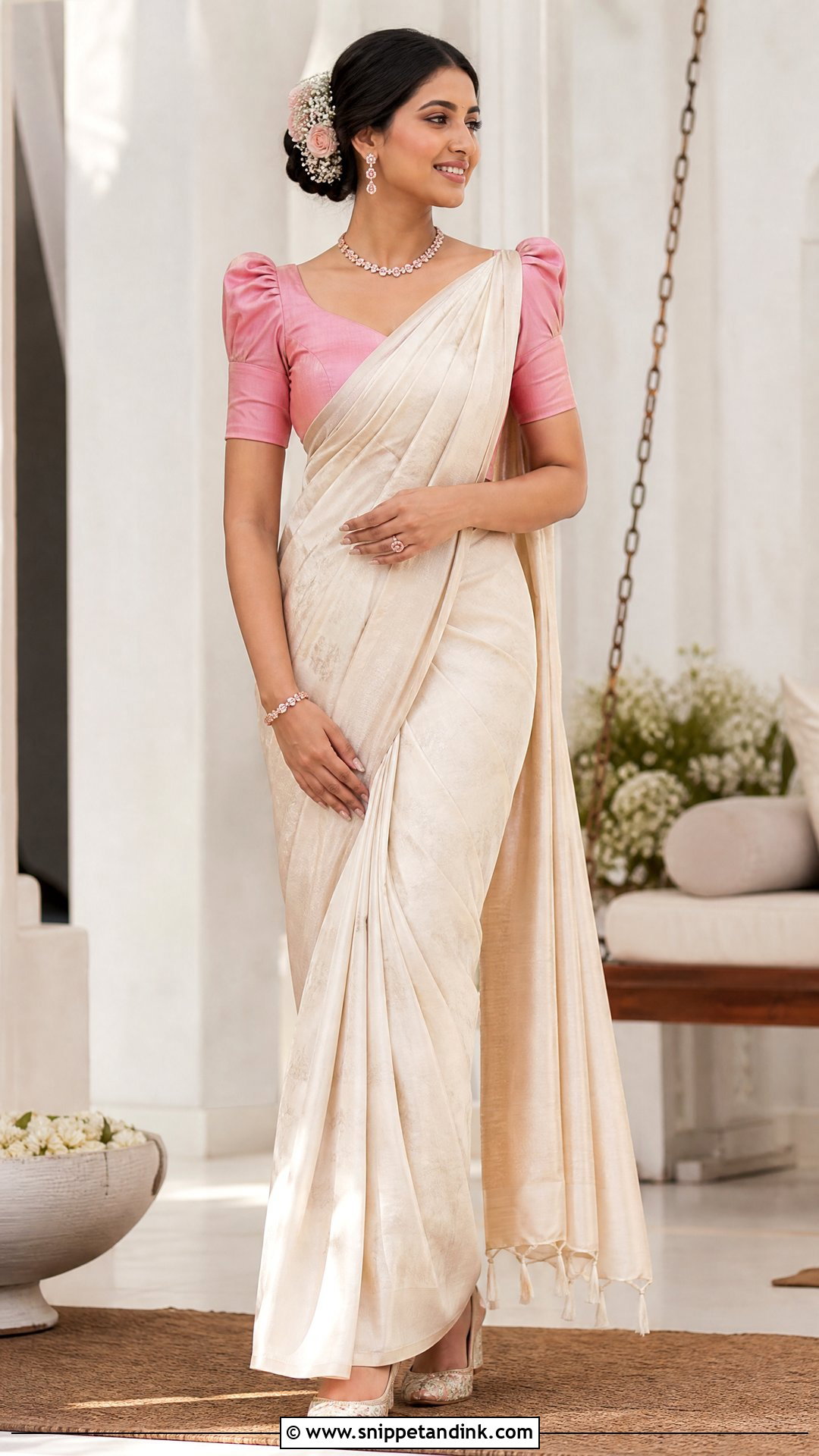
Puff sleeves add a soft vintage touch, and with formal sarees, small, structured puffs look far more refined than big ones. Silk, organza and brocade hold the shape; lightweight fabrics collapse. Keep embellishment on the puff restrained, because heavy work drags it flat. A fitted bodice with a square, scoop or sweetheart neckline balances the rounded shoulder. If you’re planning large earrings or a lot of hair ornaments, I’d keep the puff smaller so nothing competes around the face. A lightweight silk saree, a short necklace and a smooth bun with fresh flowers suit it.
11. Sheer Sleeve Wedding Blouse Design
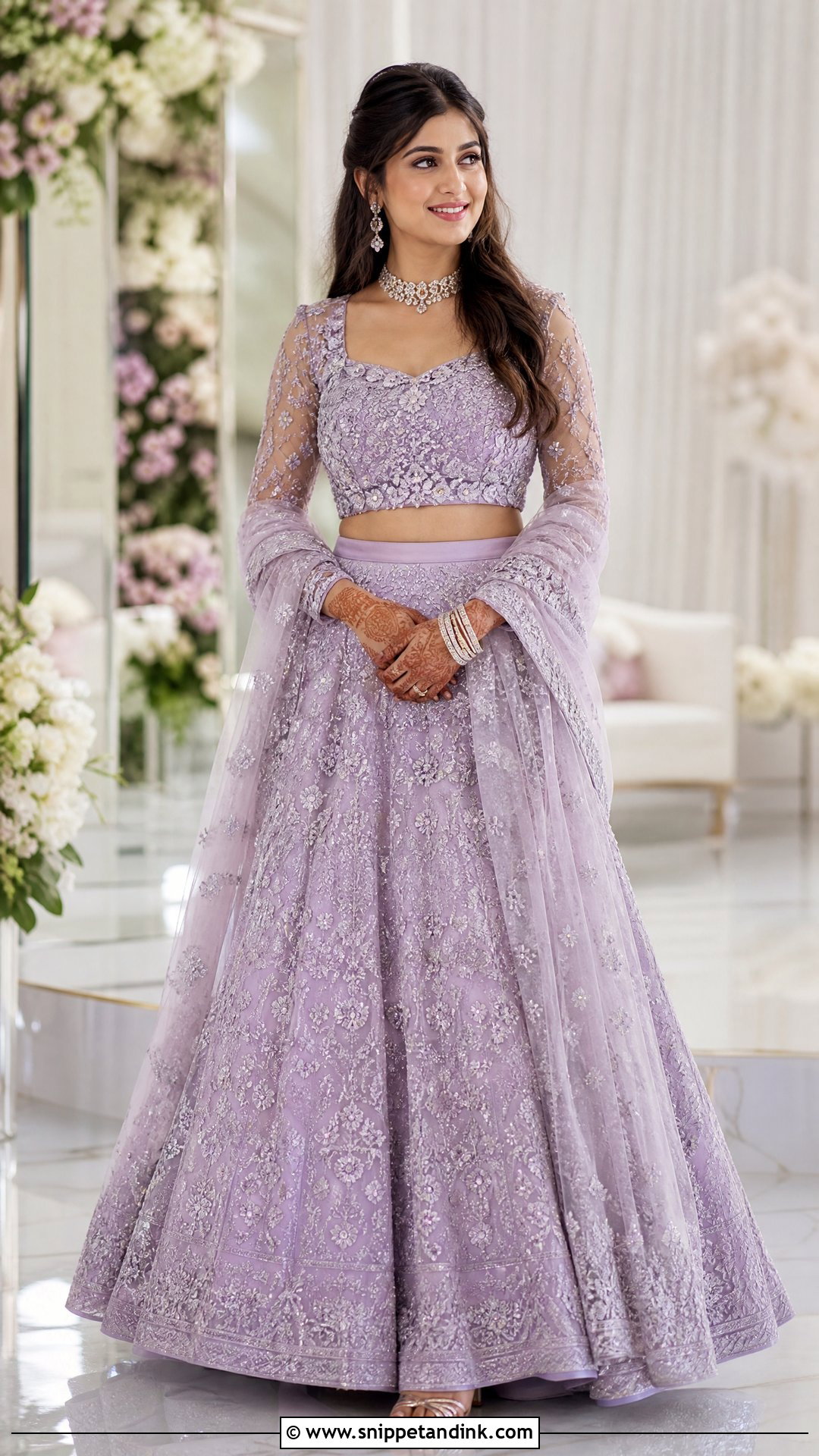
Sheer sleeves give coverage without weight, and they’re a good choice for a summer wedding where full silk sleeves would be too warm. Use good net or organza matched either to the bride’s skin tone or to the main blouse fabric, decided in daylight. Scattered appliqué, small beads or embroidered cuffs connect the sleeves to the outfit. The seam where the net meets the bodice is the weak spot: it needs to be smooth and finished cleanly, since net shows every stitch. Keep bracelets minimal if the cuffs are worked. A tonal lehenga, a light dupatta and a choker complete it.
12. Corset Wedding Blouse Design
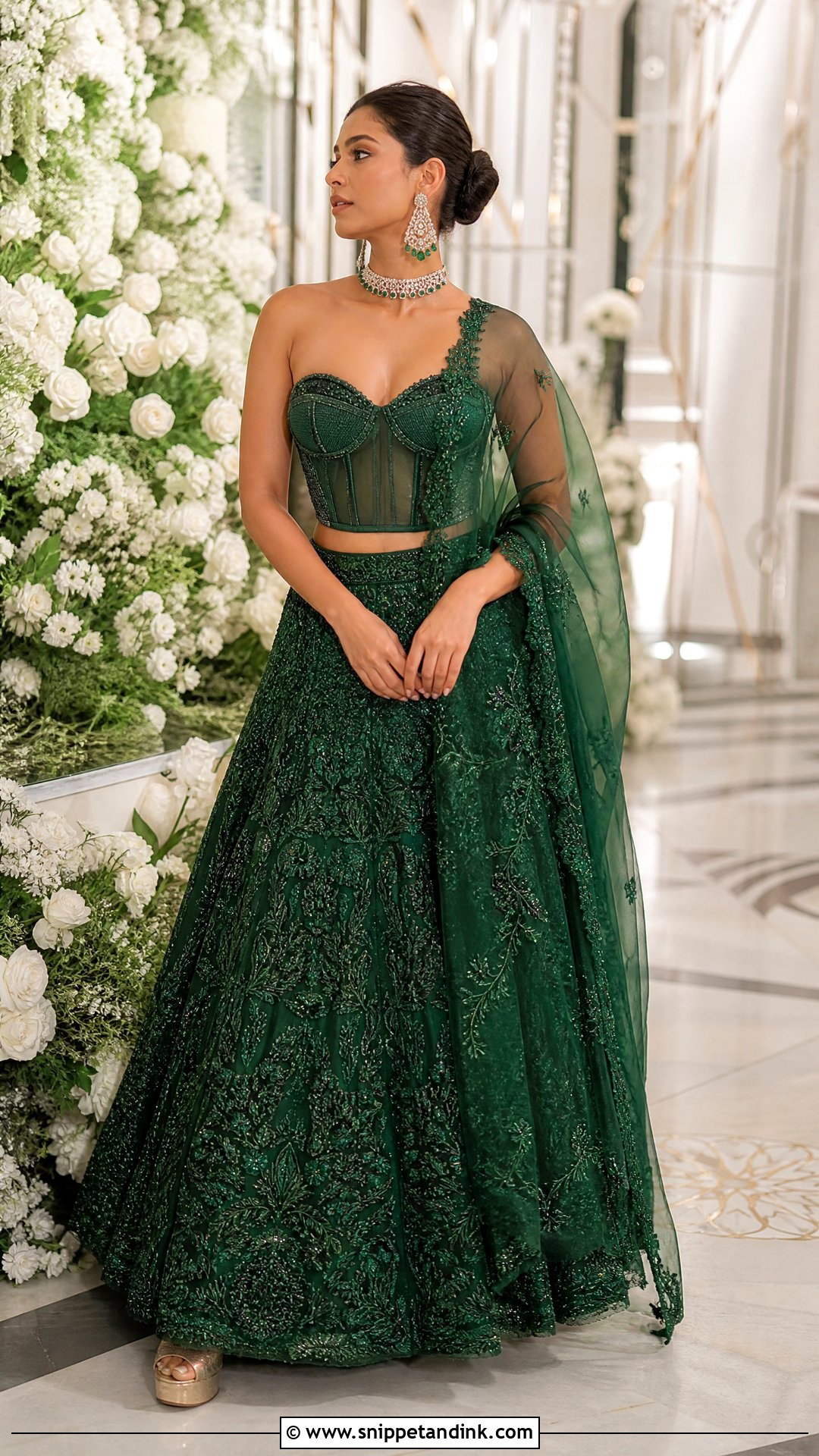
A corset-style blouse gives a lehenga a structured, fashion-led shape, and it doesn’t need rigid boning to do it. Vertical seams, a curved neckline and a defined waist create the effect, with flexible support added where the bride needs it. Embroidered silk, satin or brocade all work. The final fitting has to include a sitting test, and I mean sitting through a meal, because a corset that feels fine standing can make breathing and eating difficult once you’re seated. Coordinate the skirt embroidery with the bodice rather than repeating it. A sheer dupatta over one shoulder and a sleek ponytail or bun suit it.
13. Peplum Wedding Blouse Design
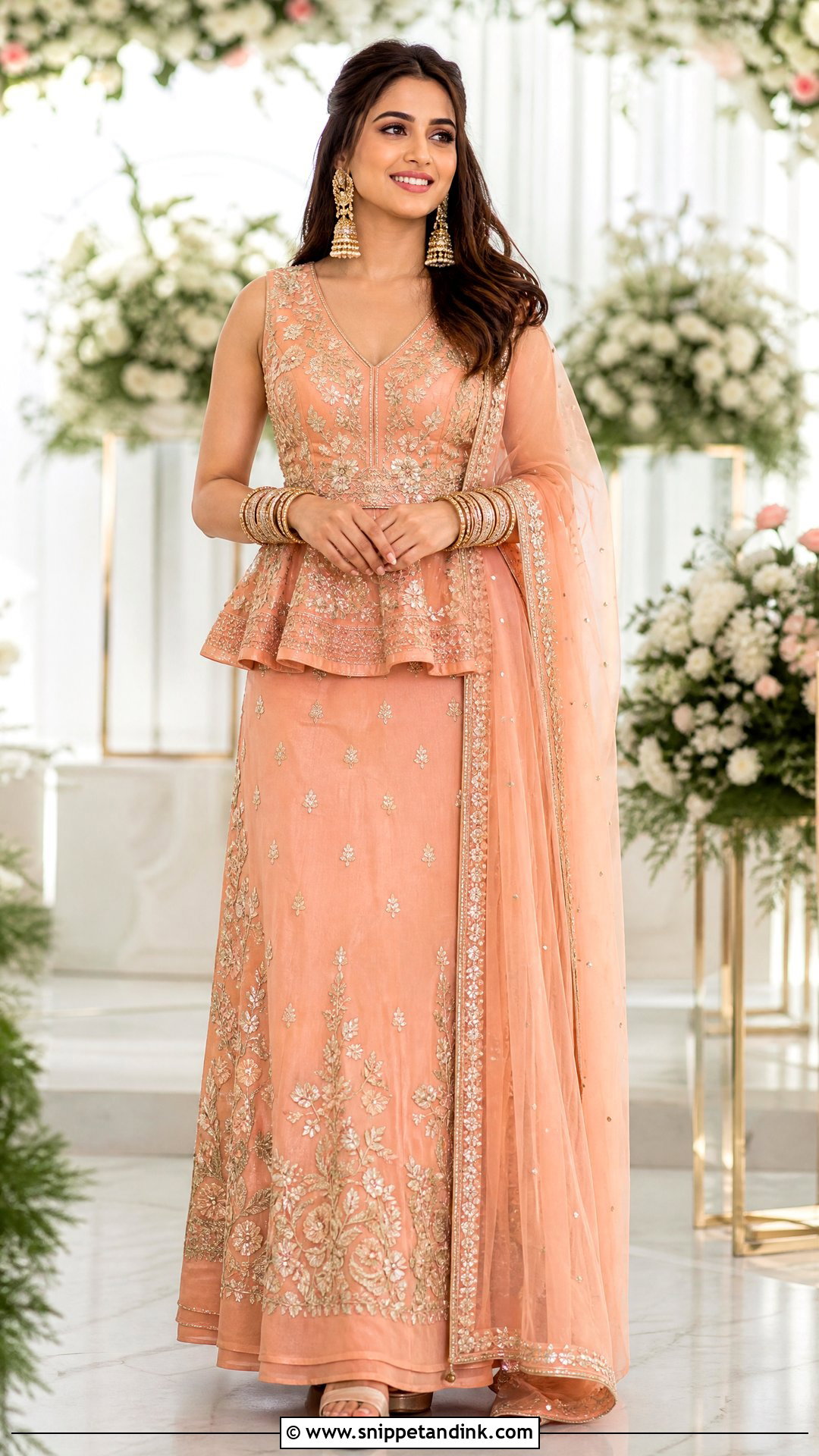
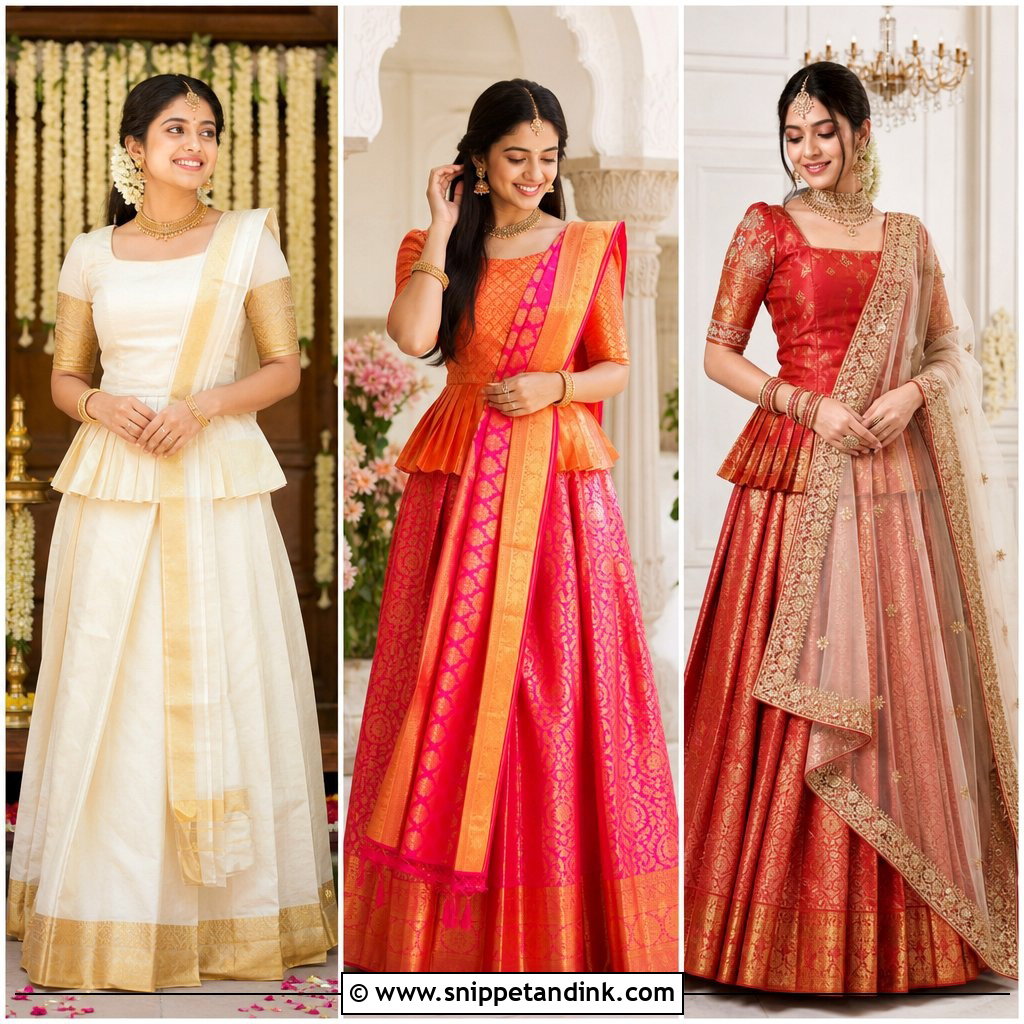
A peplum flares out at the waist, which adds movement and covers the gap between blouse and lehenga. Its volume has to be matched to the skirt: a short, structured peplum over a full skirt works, a long, frilled one over a full skirt looks bulky. Lightweight silk, georgette or organza keep it comfortable. A fitted upper bodice with a V, round or high neck and embroidery at the waist seam defines the shape. I’d pair it with a streamlined lehenga, a dupatta from one shoulder, long earrings and a half-up hairstyle for the reception.
14. Cape Wedding Blouse Design
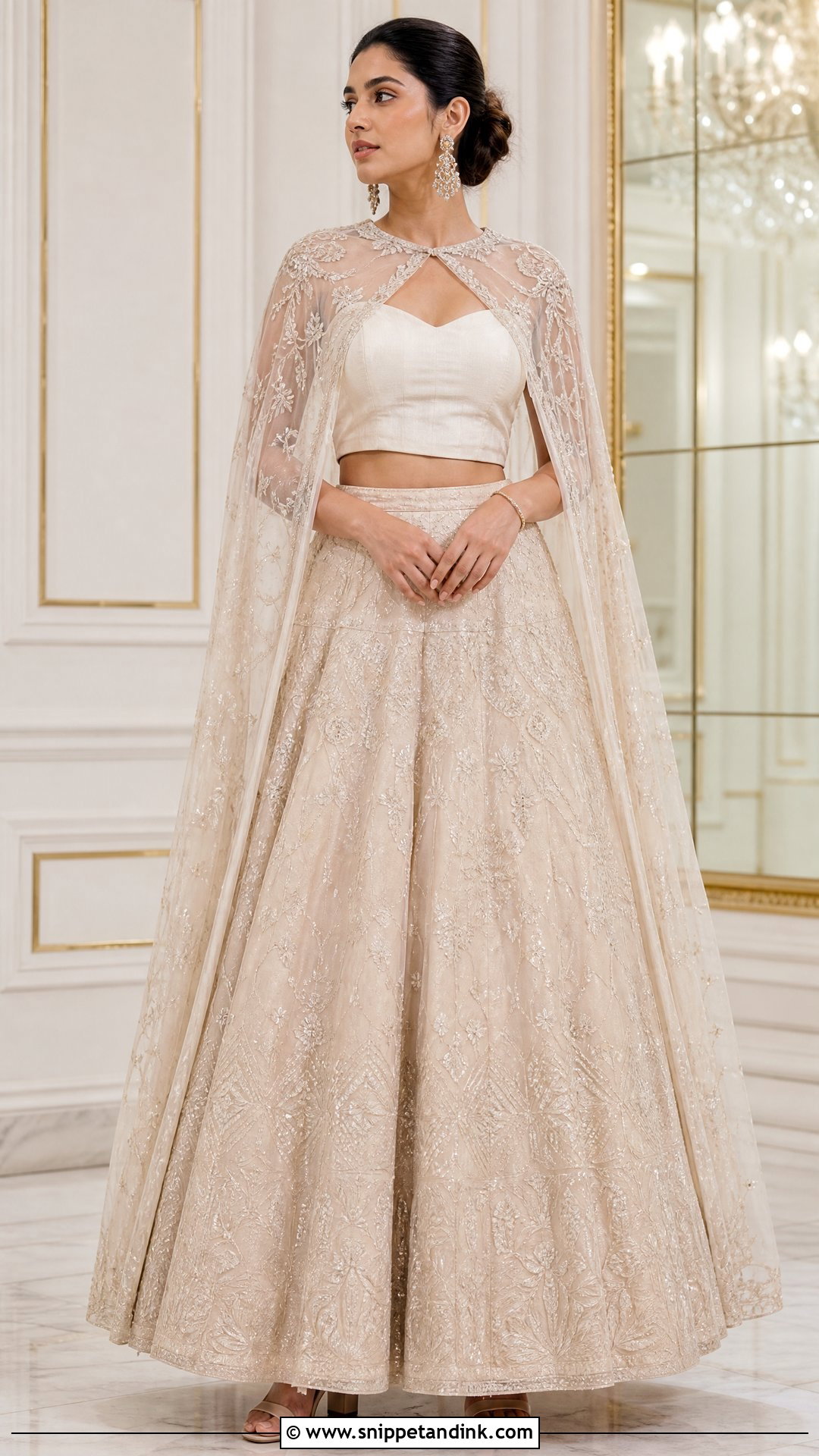
A cape blouse replaces the heavy wrapped dupatta with a light layer that moves as you walk. It can fall from the shoulders, attach at the neck or flow from the back. Sheer organza, net or chiffon with a narrow embroidered edge keeps it light. Underneath, a simple fitted blouse lets the cape lead. The attachment points are where I spend time at fittings; a cape that isn’t secured firmly at the shoulders shifts to one side as soon as you turn. Skip a bulky necklace if the cape is worked around the neck. It’s a reception look, with a low bun and high block heels.
15. Jacket Wedding Blouse Design
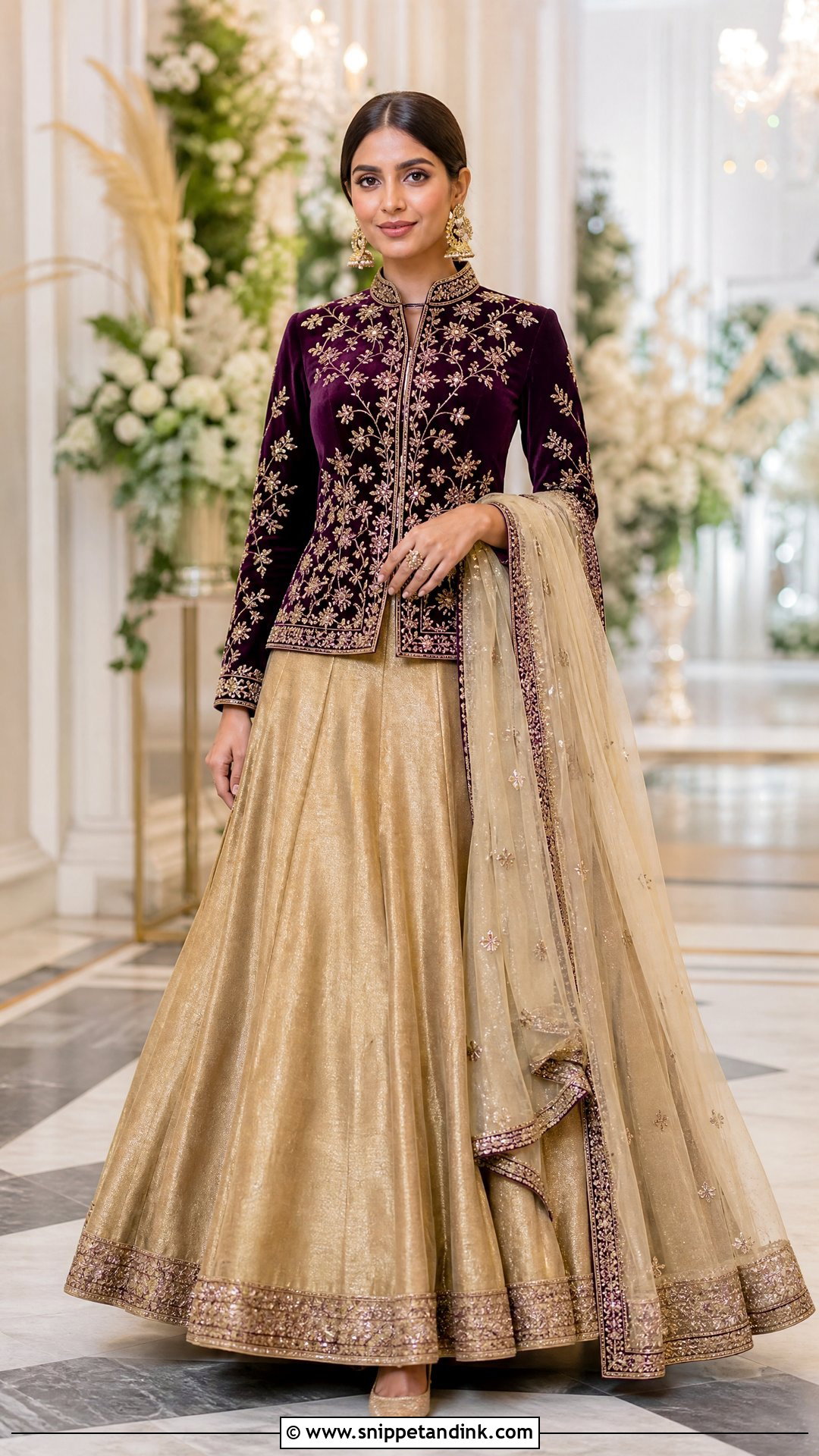
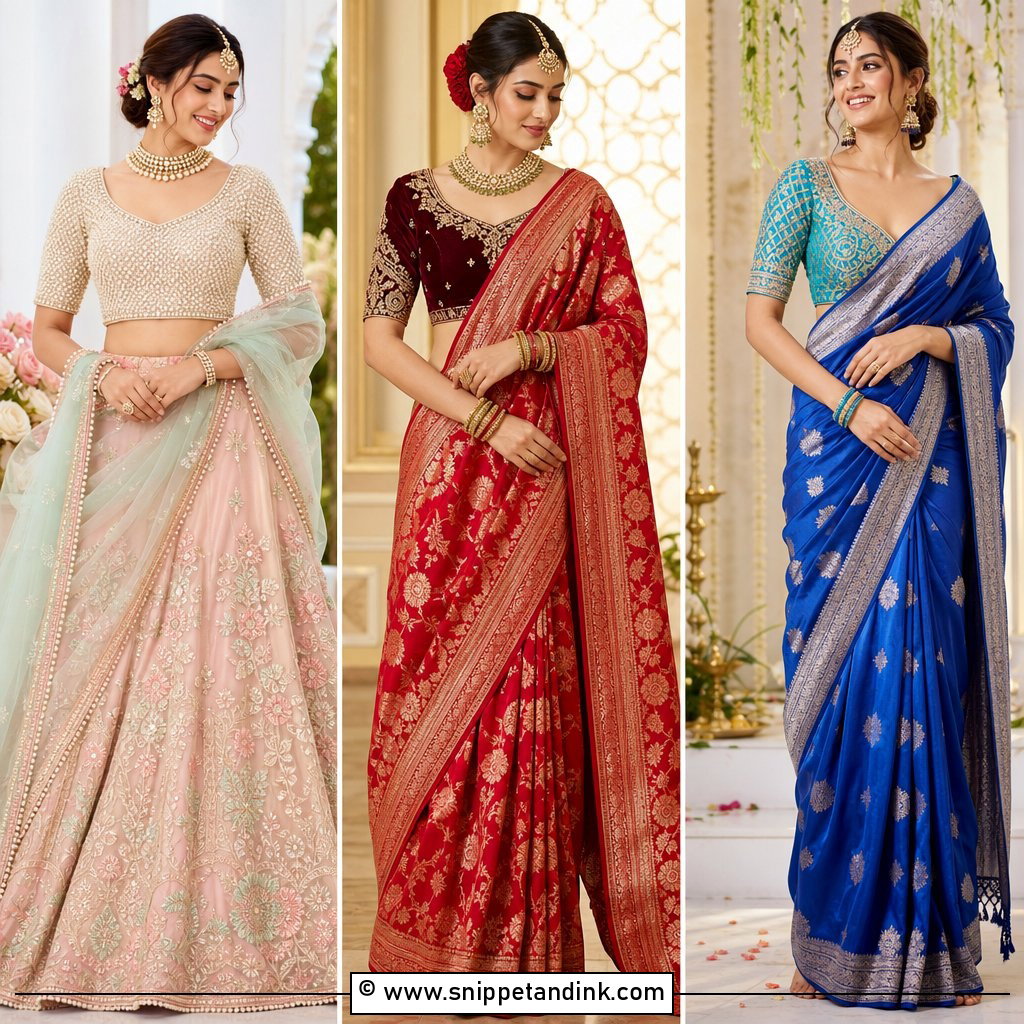
A jacket-style blouse layers embroidery over a tailored shape, cropped at the waist for a saree or longer over the hips for a lehenga. Raw silk, velvet and brocade give the structure, with a concealed front closure and a comfortable lining. Jacket blouses can get very warm, so for summer or indoor venues without good air conditioning I’d go lighter in fabric and choose a breathable cotton lining. Pair a fitted embroidered jacket with a simpler flared skirt and a light dupatta over one arm. Skip the necklace if the jacket’s neckline is detailed. A sleek bun keeps the tailored line clean.
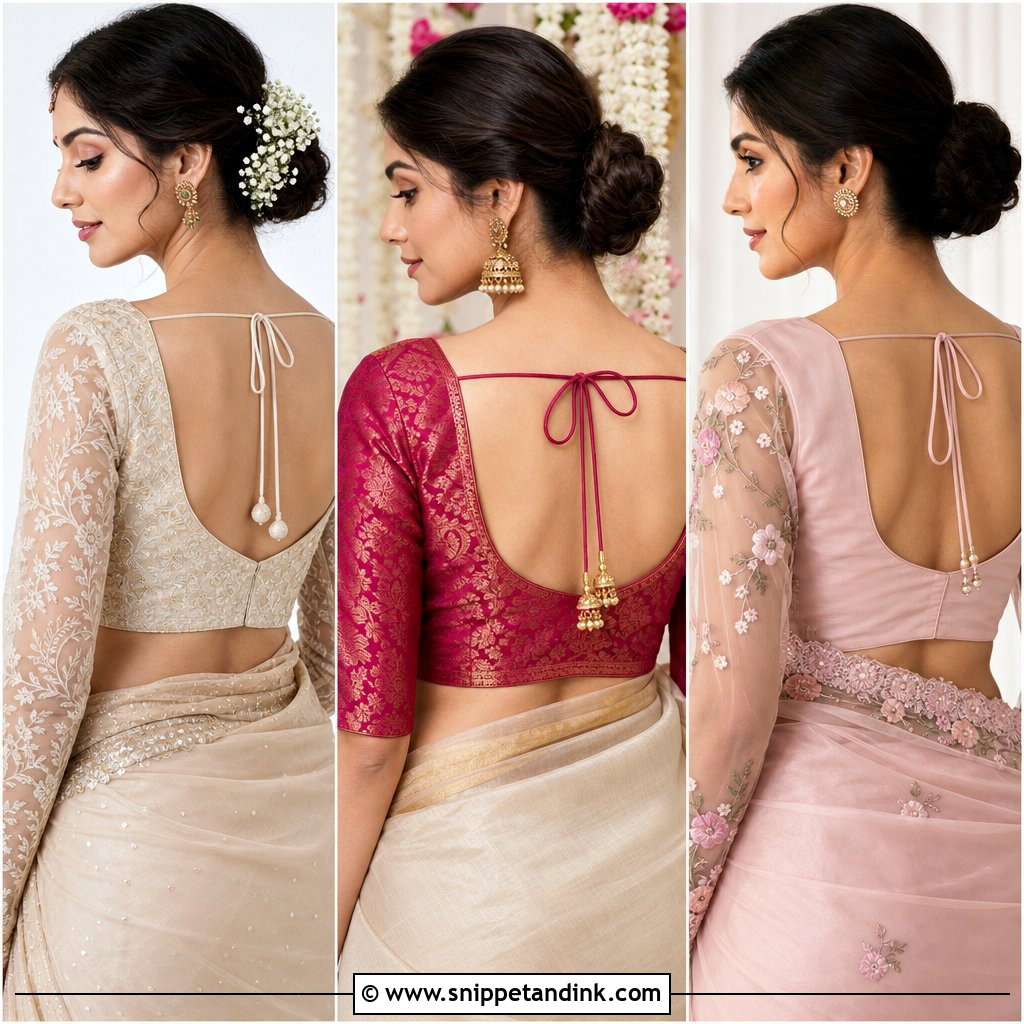
16. Backless Dori Wedding Blouse Design
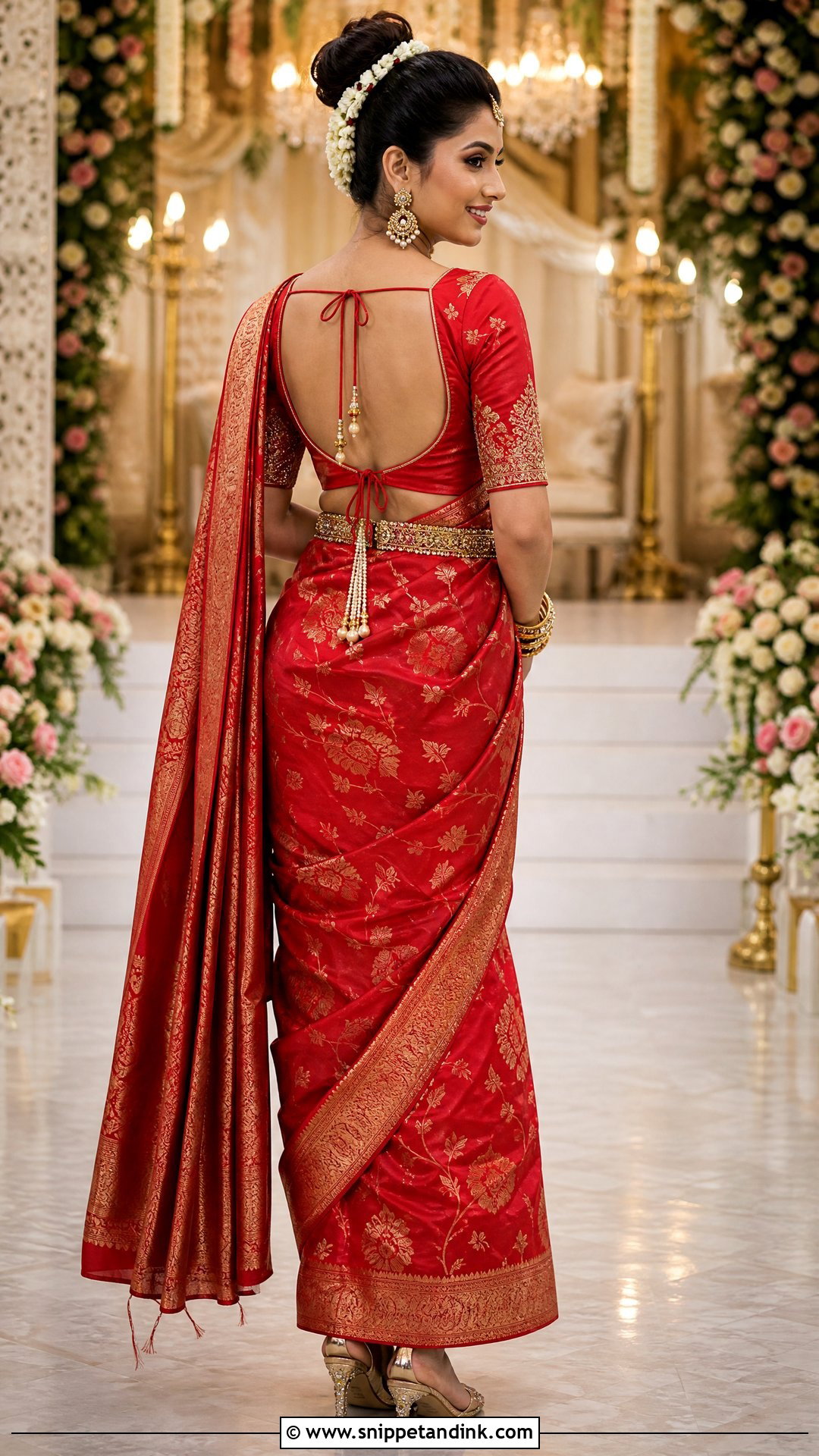
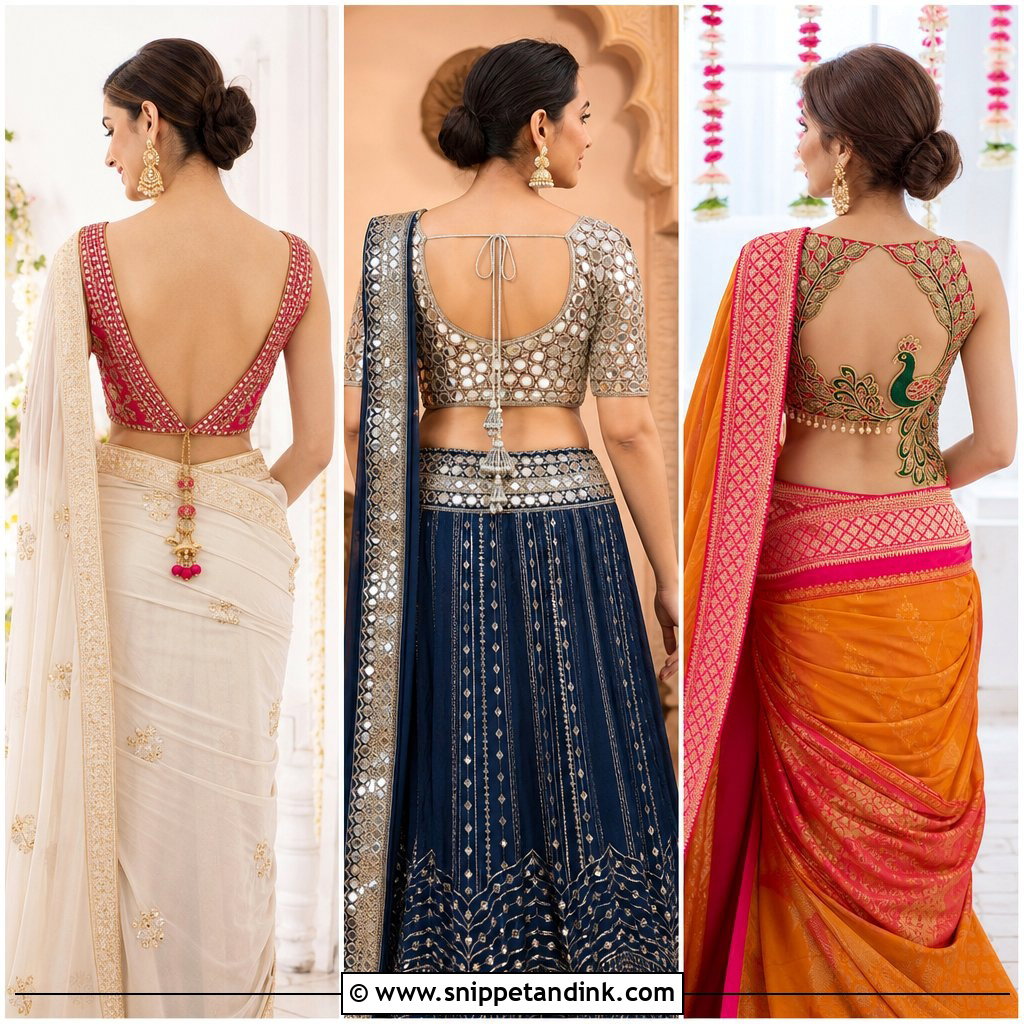
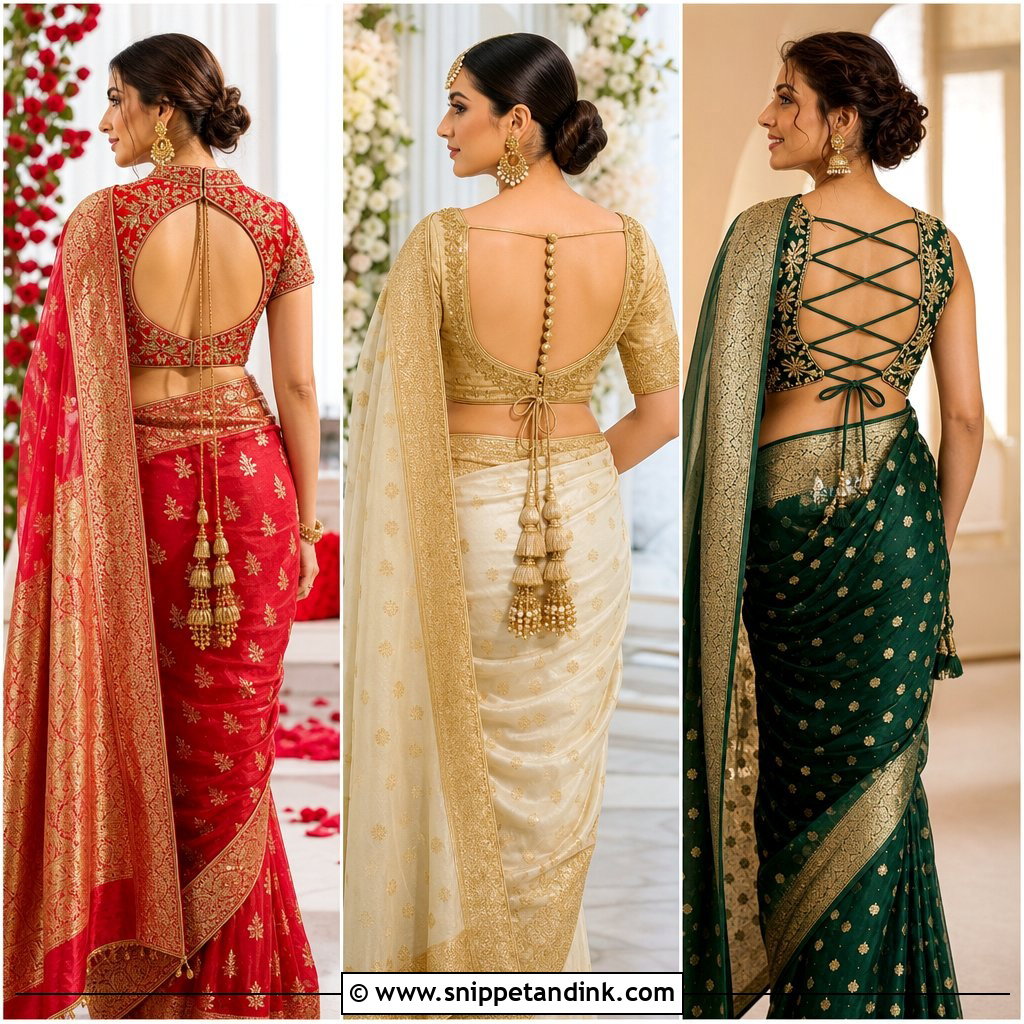
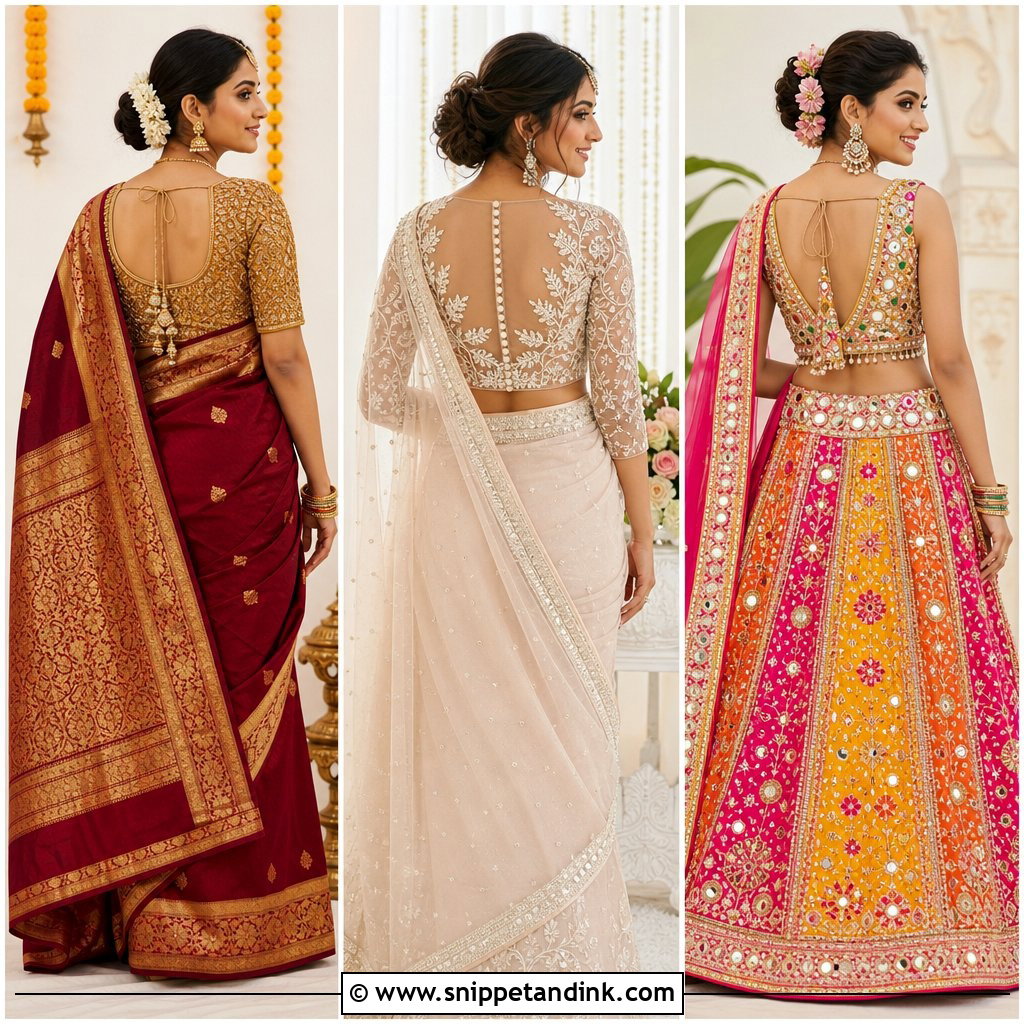
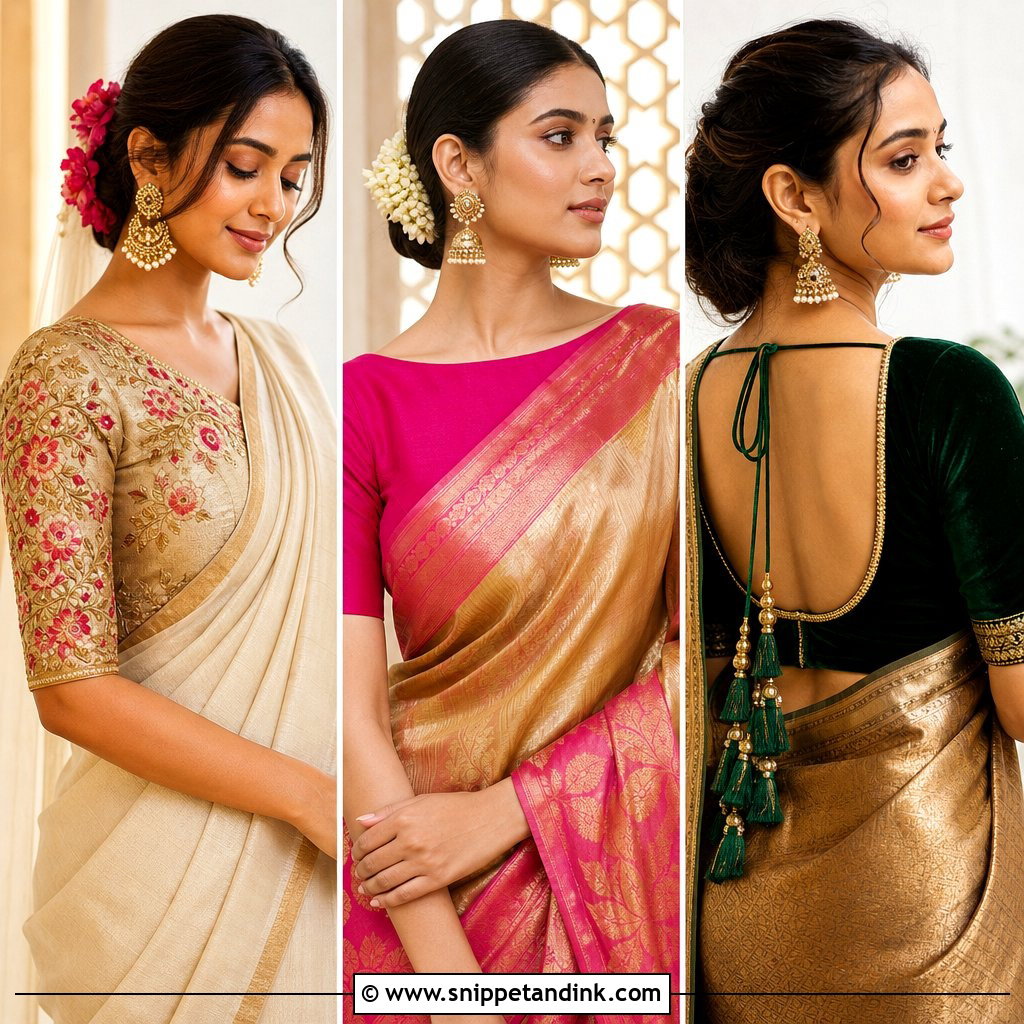
A backless blouse with dori ties leaves the back open and lets you fine-tune the fit with the cords. All the support comes from the front, so it needs secure cups, reinforced side seams and shoulders that stay put. Embellished cords, tassels, pearls or small latkans can match the saree. The thing I warn brides about is the neck tie: pulled too tight for support, it presses on the back of the neck and gives a headache by the evening. Tie it firmly at the back band instead. Drape the pallu over one arm to show the back. It suits brides who are genuinely comfortable with an open back.
17. Sheer Back Wedding Blouse Design
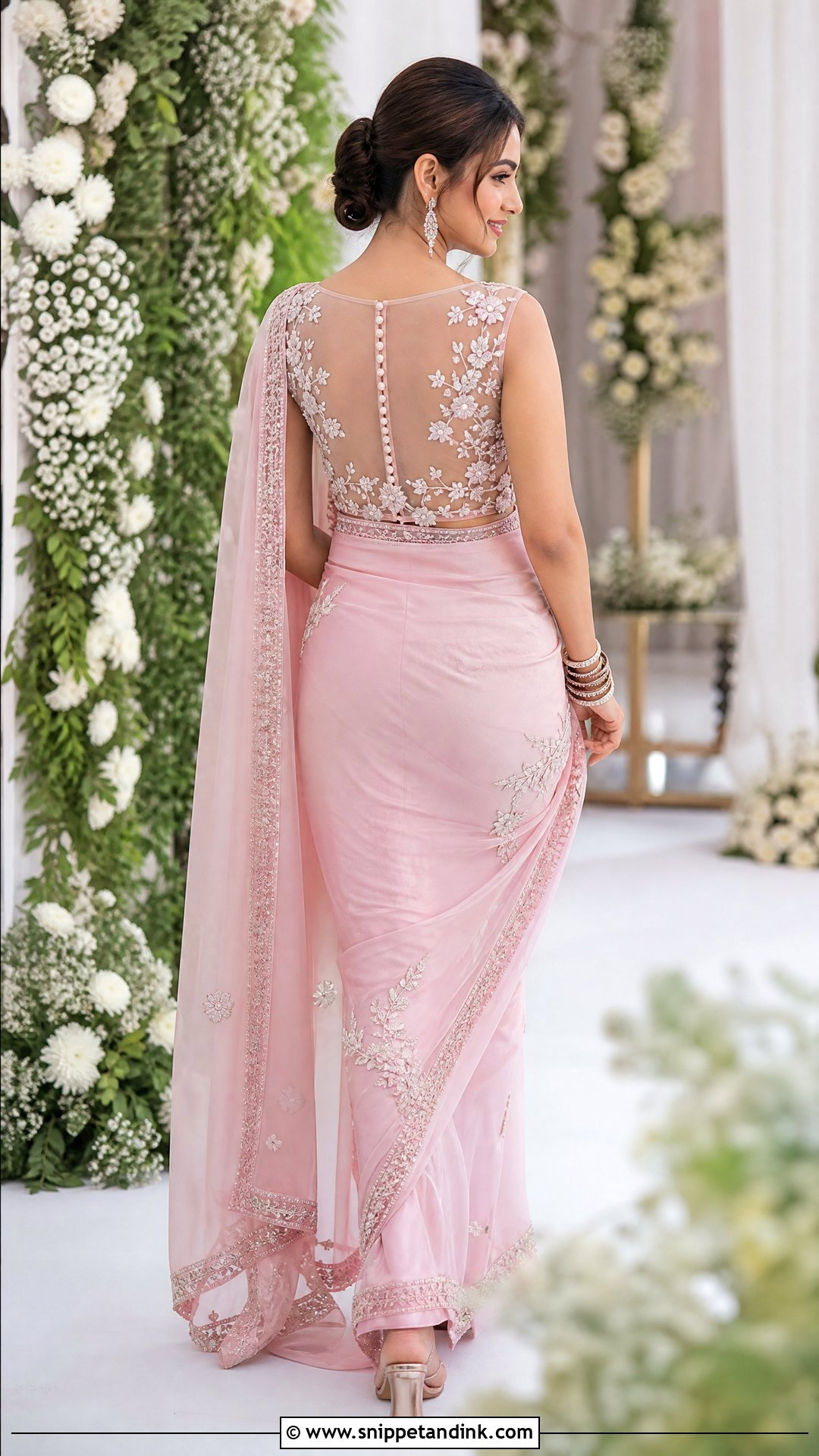
A sheer back gives the look of an open design with far more coverage and structure. Durable illusion net with embroidery placed around the shoulder blades, the neckline or the button closure can look delicate without overwhelming the back. Matching the net to the bride’s complexion is what makes it work, so we compare samples against her skin in natural light, not under a shop’s warm bulbs. The closure needs reinforcing, since net stretches where hooks pull. Keep the front neckline simple so the back stays the feature, and choose an updo that shows the embroidery.
18. Mirror Work Wedding Blouse Design
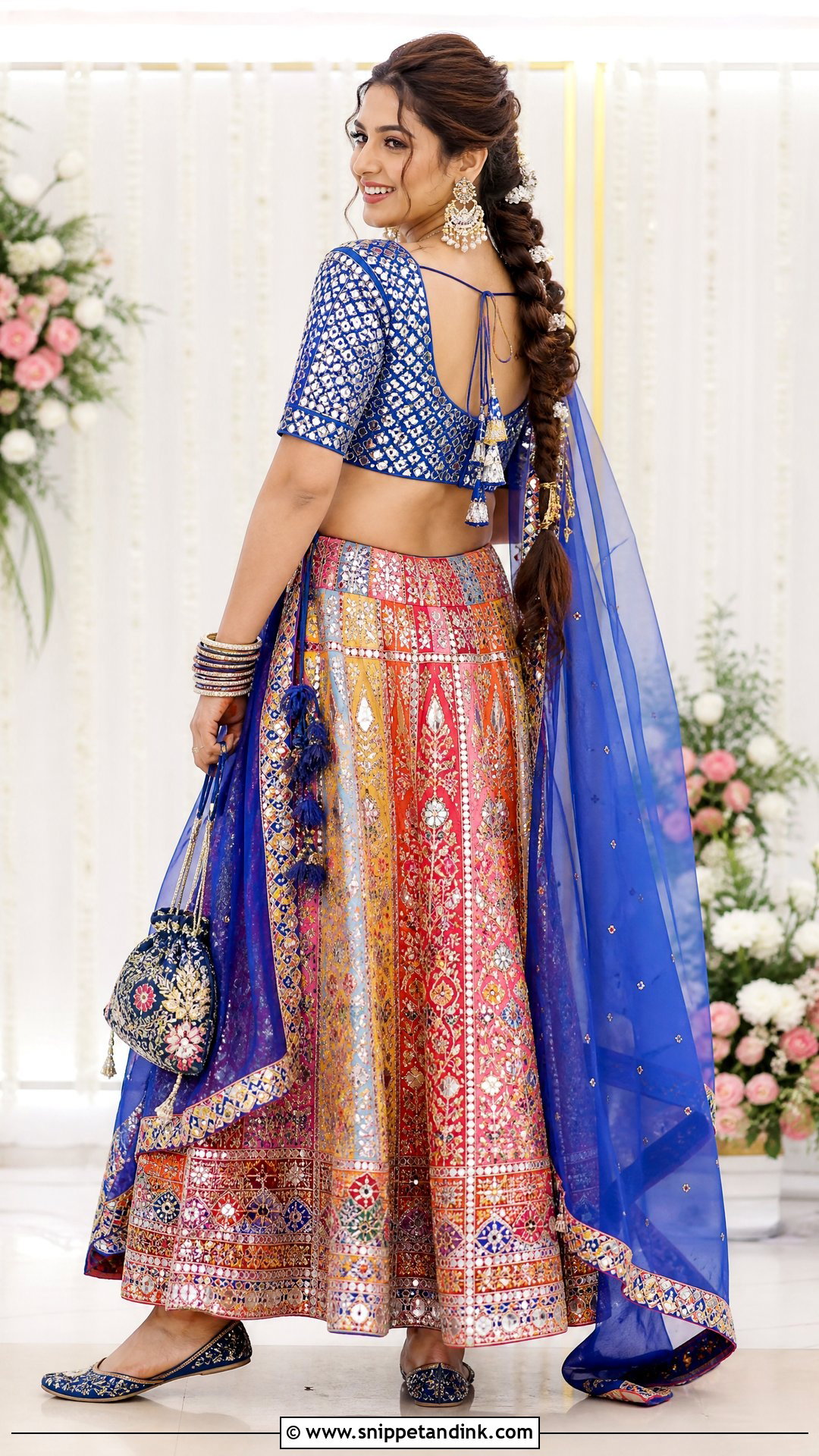
Mirror work brings light and movement to a blouse, and small mirrors set in geometric or floral patterns look more refined than oversized pieces. Fuchsia, royal blue, emerald, ivory and orange all make a strong base. Mirrors catch a lot of light, so keep sequins and jewelry restrained. The detail I check is the backing behind each mirror: it should be smooth and fully lined so the edges don’t scratch skin. Pair it with a coordinated lehenga or a simple saree, colourful earrings and comfortable juttis, and finish this energetic outfit for a sangeet with a braided ponytail.
19. Floral Embroidery Wedding Blouse Design
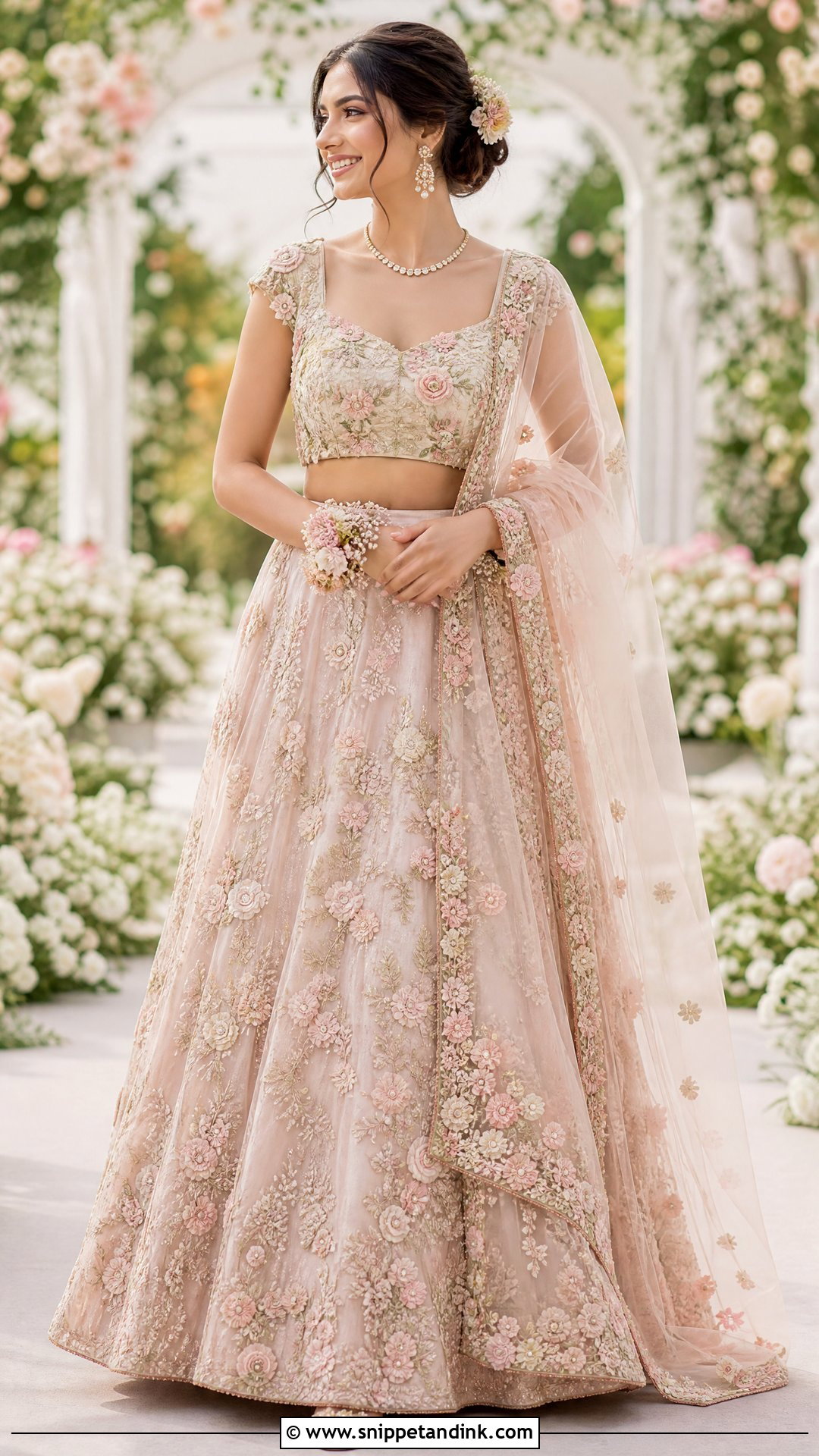
Floral embroidery softens any bridal look and works on pale or bold colours. Blush, ivory, peach, lavender and mint blouses with tonal lehengas suit daytime events, while contrasting florals on red, blue or green silk are more traditional. Choose between fine threadwork, dimensional appliqué or spaced beaded flowers, and decide on scale with the skirt in mind: large flowers on the blouse look best with smaller motifs below. Raised appliqué flattens under a heavy dupatta, so I keep the dimensional work on the sleeves. Pearl earrings and a loose bun with floral pins finish it.
20. Personalized Wedding Blouse Design
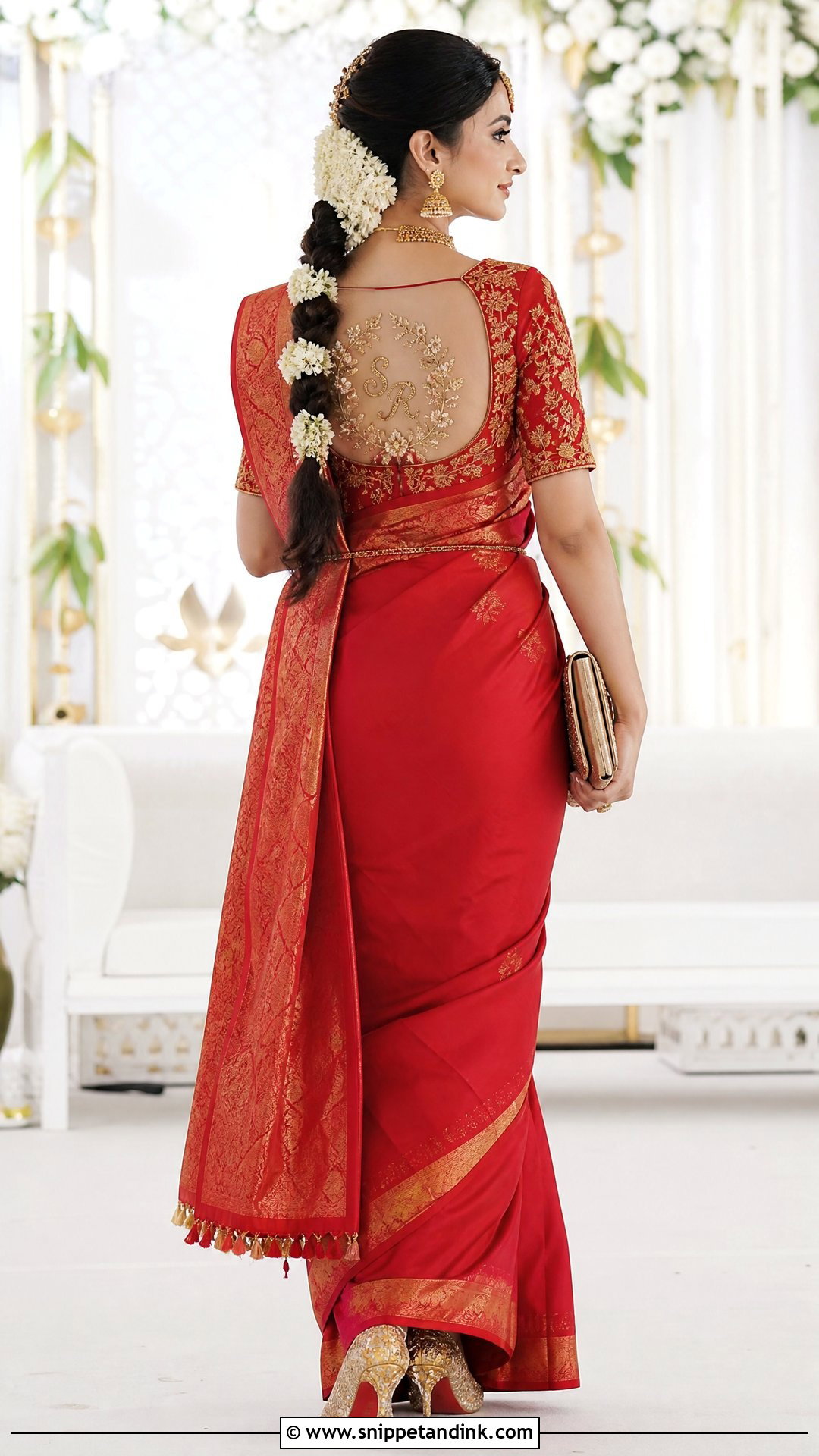
Personalised embroidery makes a blouse something you’ll keep long after the wedding. Initials, the date, symbolic flowers or a small scene can go on the sleeves or back panel, surrounded by quieter embroidery so the meaningful part isn’t lost. Sketch it full-size on paper and agree size and placement before any stitching starts, since changing embroidery afterwards is rarely possible. Plan the pallu or dupatta so it reveals the work in photos. Heirloom jewelry and a classic silk saree suit it, and secure stitching keeps the detail intact for the years you’ll want to look at it.
Once the Wedding Is Over: Caring for Heavy Embroidery
A bridal blouse is usually the most expensive piece of tailoring a bride owns, and it’s easily ruined in the first month after the wedding. Air it inside out on a flat surface for a day before putting it away, so perspiration dries completely. Then take it to a dry cleaner who handles embroidered bridal wear, and point out any stains.
- Wrap it in soft cotton or muslin. Plastic traps moisture and can dull metallic thread over time.
- Store heavy zardosi and mirror-work blouses folded flat with tissue paper, not on a hanger, which stretches the shoulders under the weight.
- Unfold and refold along different lines every few months so creases don’t set permanently in the embroidery.
- Keep it away from perfume and deodorant residue, which can discolour silk and tarnish zari.
If you hope to rewear it, ask your tailor at the start to leave a generous seam allowance at the sides. That small decision makes it possible to let the blouse out later instead of retiring it after one day.
Sketch It, Fit It Twice, Then Add the Jewelry
A blouse should support you, move with you and belong to the rest of the outfit. Neckline, sleeve length, fabric, embroidery, back coverage and jewelry placement all shape the result. Save your references, hold them next to the actual saree or lehenga, and ask for a sketch before cutting begins. Plan for at least two fittings to correct neckline movement, sleeve tightness and underbust support. At the second one, wear your necklace and earrings, sit down, raise your arms and walk around the room. That’s when small problems show, while there’s still time to fix them.
You'll Like These Ideas:


Leave a Reply