
A Haldi outfit has a harder job than anything else you’ll wear that week. It has to look bright in daylight photos, survive wet turmeric paste, and let you sit on a low stool or the floor for a long stretch without a strap digging in. Yellow is the obvious starting point, but ivory, pink, green and floral prints all work once you know how they react to the paste. The twenty outfits below run from lehengas and sarees to suits, co-ords and a maxi dress, and for each one I’ve noted what I’d actually check on a client before she commits to it.
The Fitting Test I Run on Every Haldi Outfit
A Haldi is mostly spent low to the ground. You sit on a patla, a cushion or the floor while relatives lean over you, then you get up, hug people, maybe dance, and sit down again. Outfits that look perfect on a hanger often fail at exactly these moments, so I run the same short routine at every final fitting.
- Sit cross-legged for two full minutes. If the blouse band digs in, the skirt waist rolls or a dhoti drape pulls across the seat, it needs altering now.
- Raise both arms above your head. Relatives will be applying paste to your arms and neck, and a blouse that rides up or a sleeve that binds at the armpit will annoy you all morning.
- Stand up from the floor without using your hands. You’ll catch any hem that’s long enough to kneel on.
- Turn your head to each side wearing the earrings you’ve chosen. Heavy floral or gota earrings that tug at the lobe get worse once wet paste adds weight to your hair and dupatta.
- Pin the dupatta the way you’ll wear it, then shake your shoulders. If it slides, add a second pin at the waist or switch to a lighter fabric.
I also ask brides to plan a second outfit, even a simple kurta. Most people change after the ritual for lunch or the mehndi later, and once the bridal outfit is wet with paste there’s no getting it presentable for more photos that day.
1. Yellow Mirror Work Lehenga Haldi Outfit
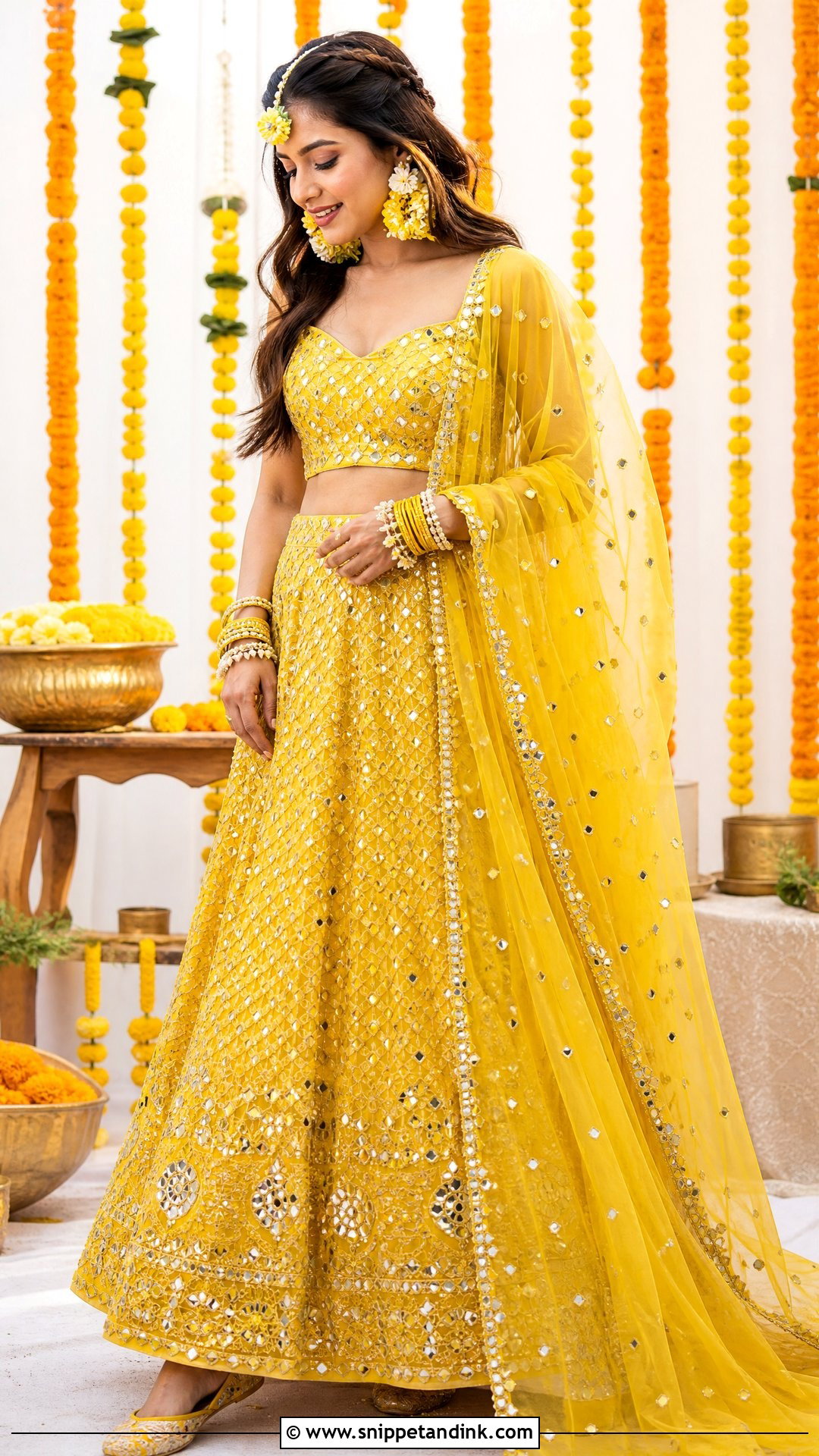
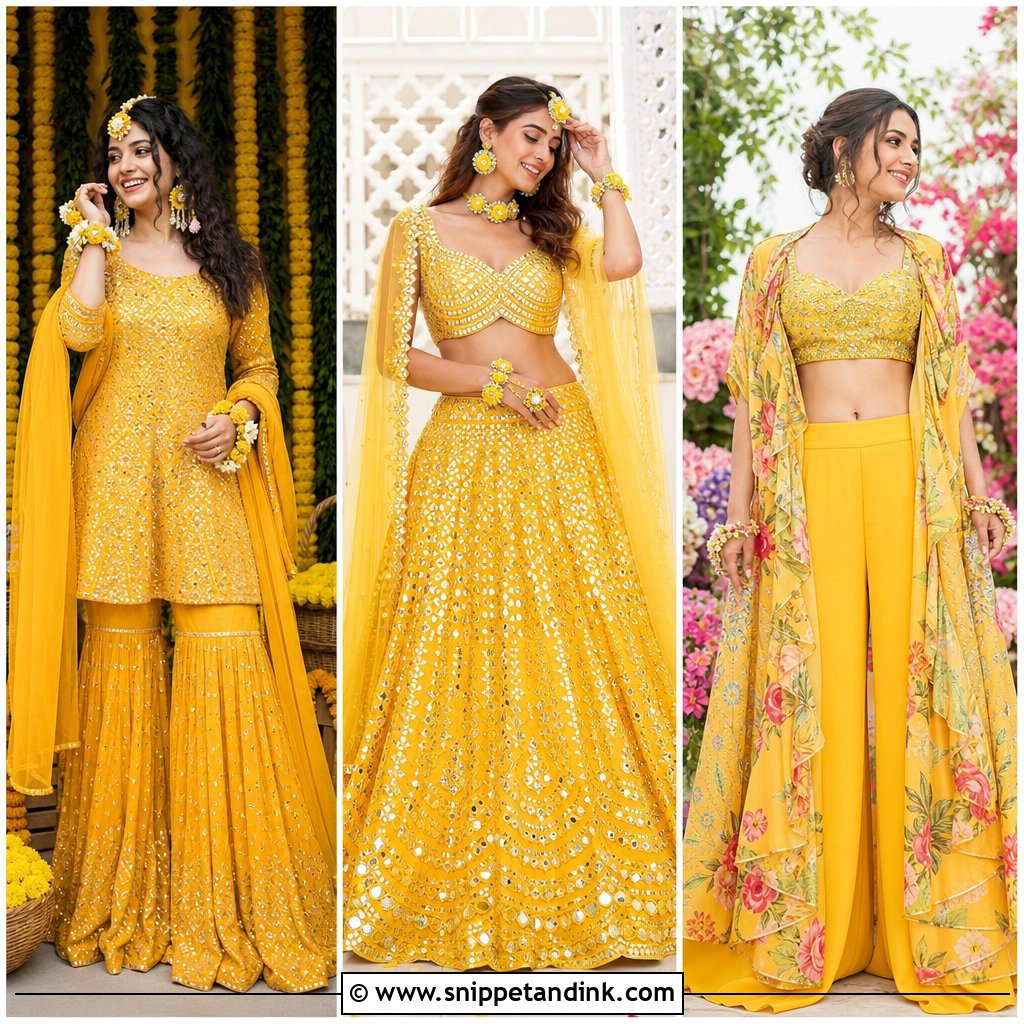
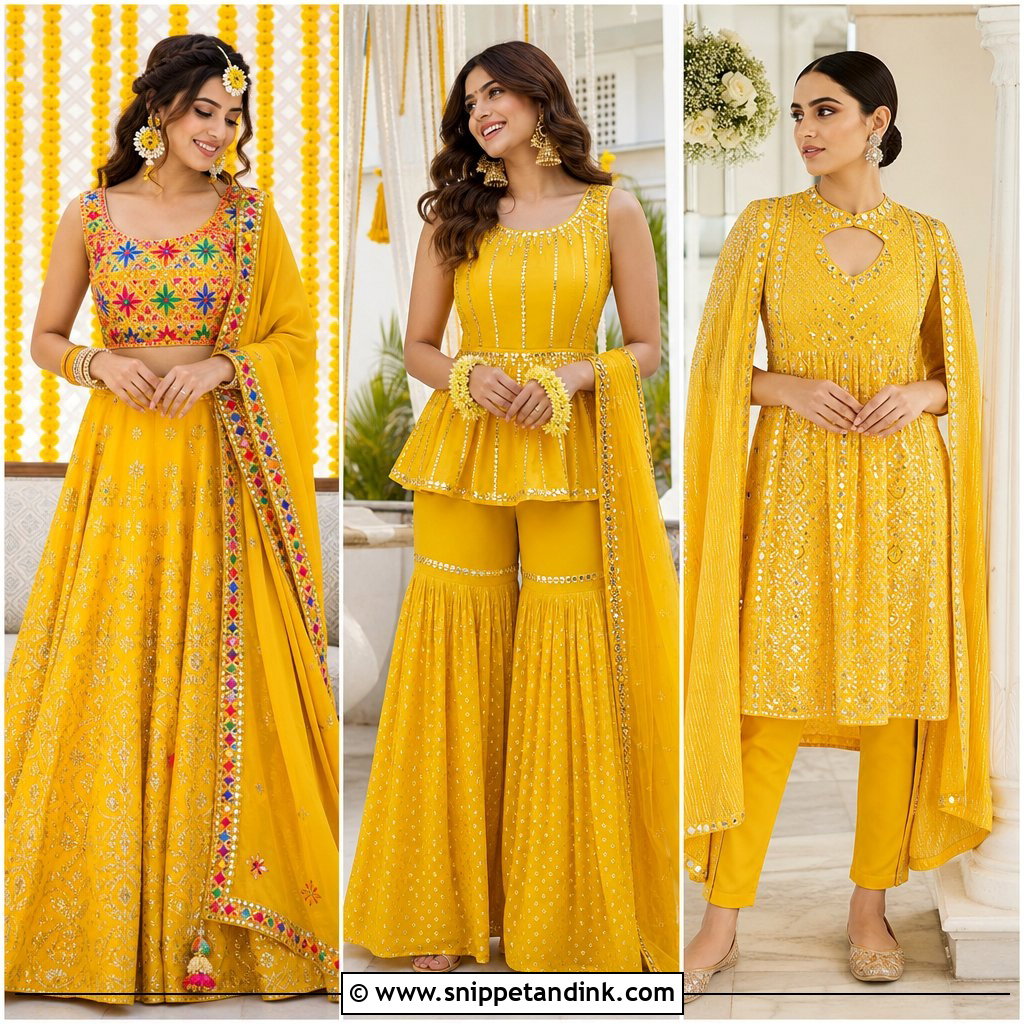
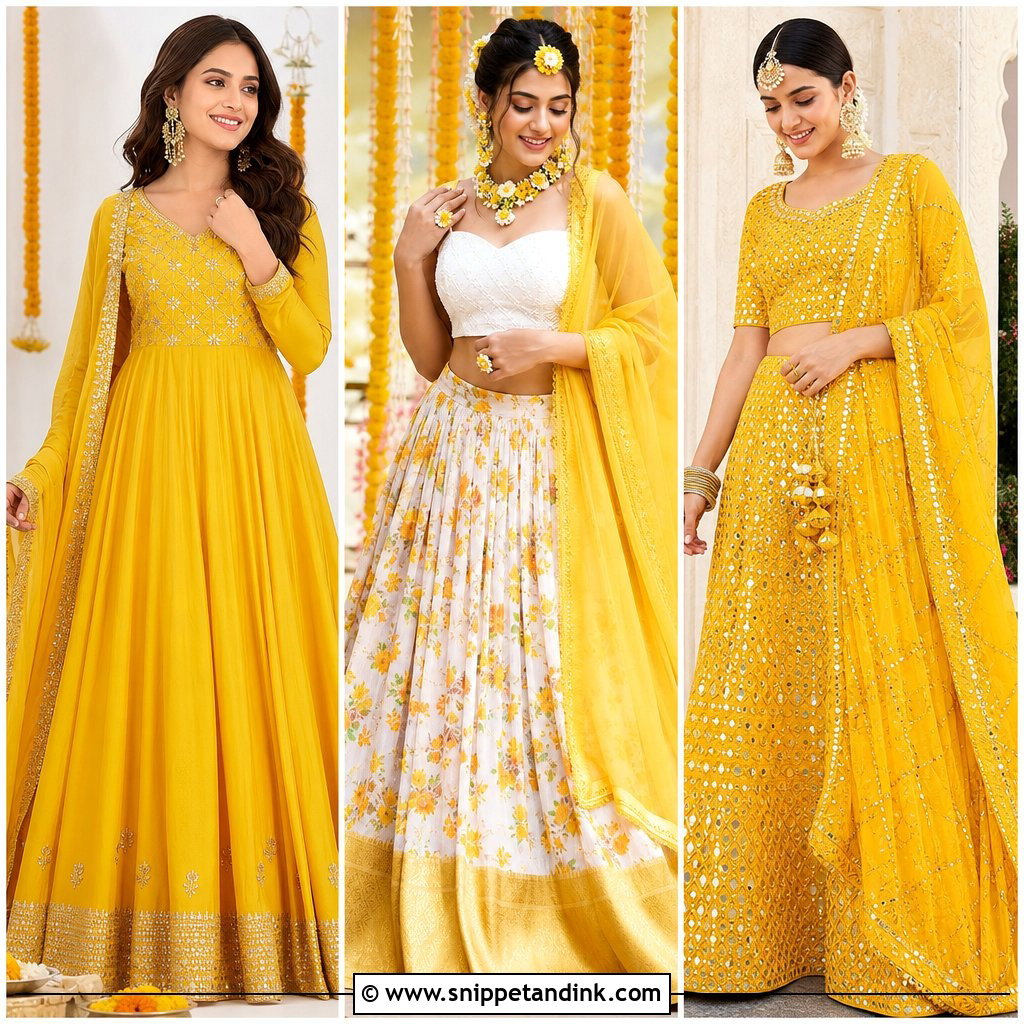
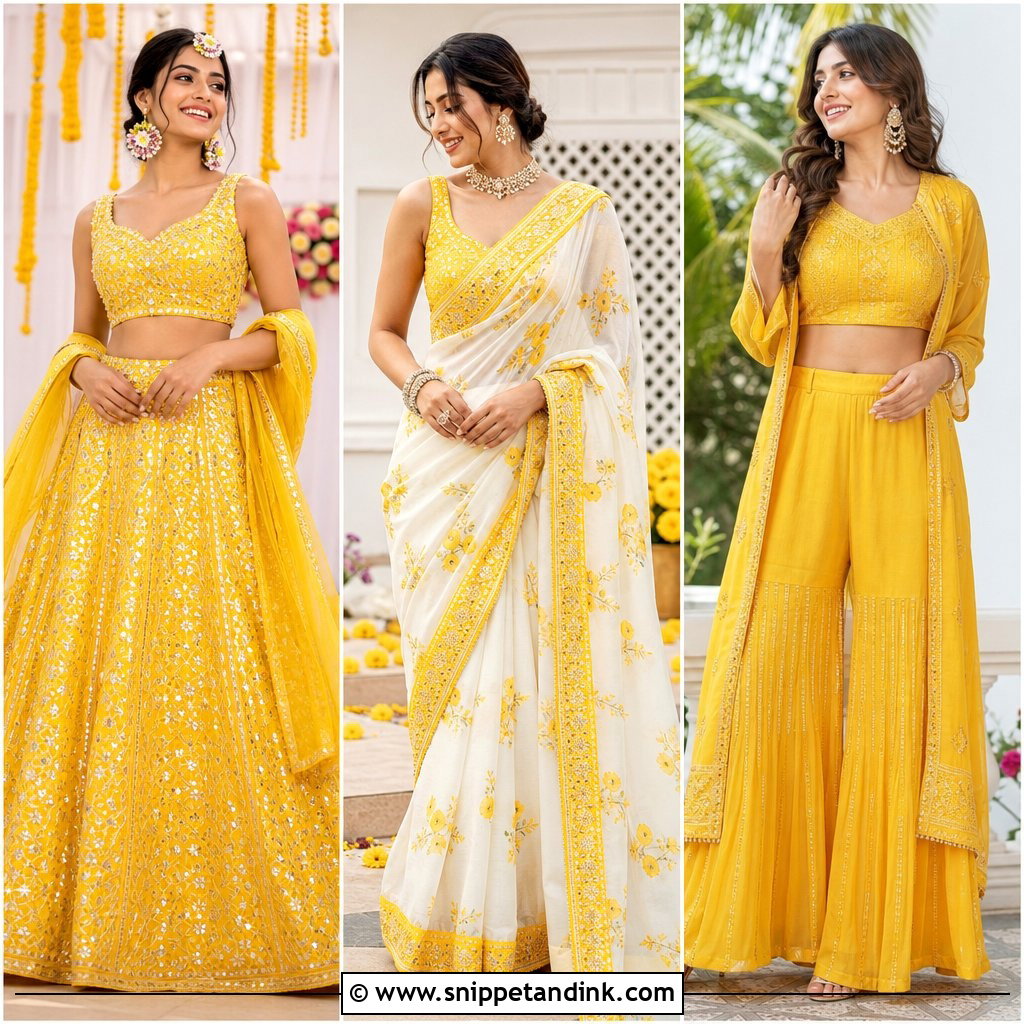
Mirror work does the sparkling for you, so the skirt itself can stay light in georgette or cotton-silk. The thing I check first is where the mirrors sit: a dense band on the waistband or blouse back scratches when you’re leaning against a cushion for an hour, so I prefer mirrors concentrated low on the hem. Pin a sheer dupatta with a narrow mirror or gota edge across one shoulder to keep both hands free, and leave the neckline a little open if a floral necklace is going on top. Floral earrings, yellow bangles and embroidered juttis are plenty. A sleek braid keeps the hair out of the paste, and marigold decor or a plain white wall shows the mirrors off well.
2. Marigold Organza Saree Haldi Outfit
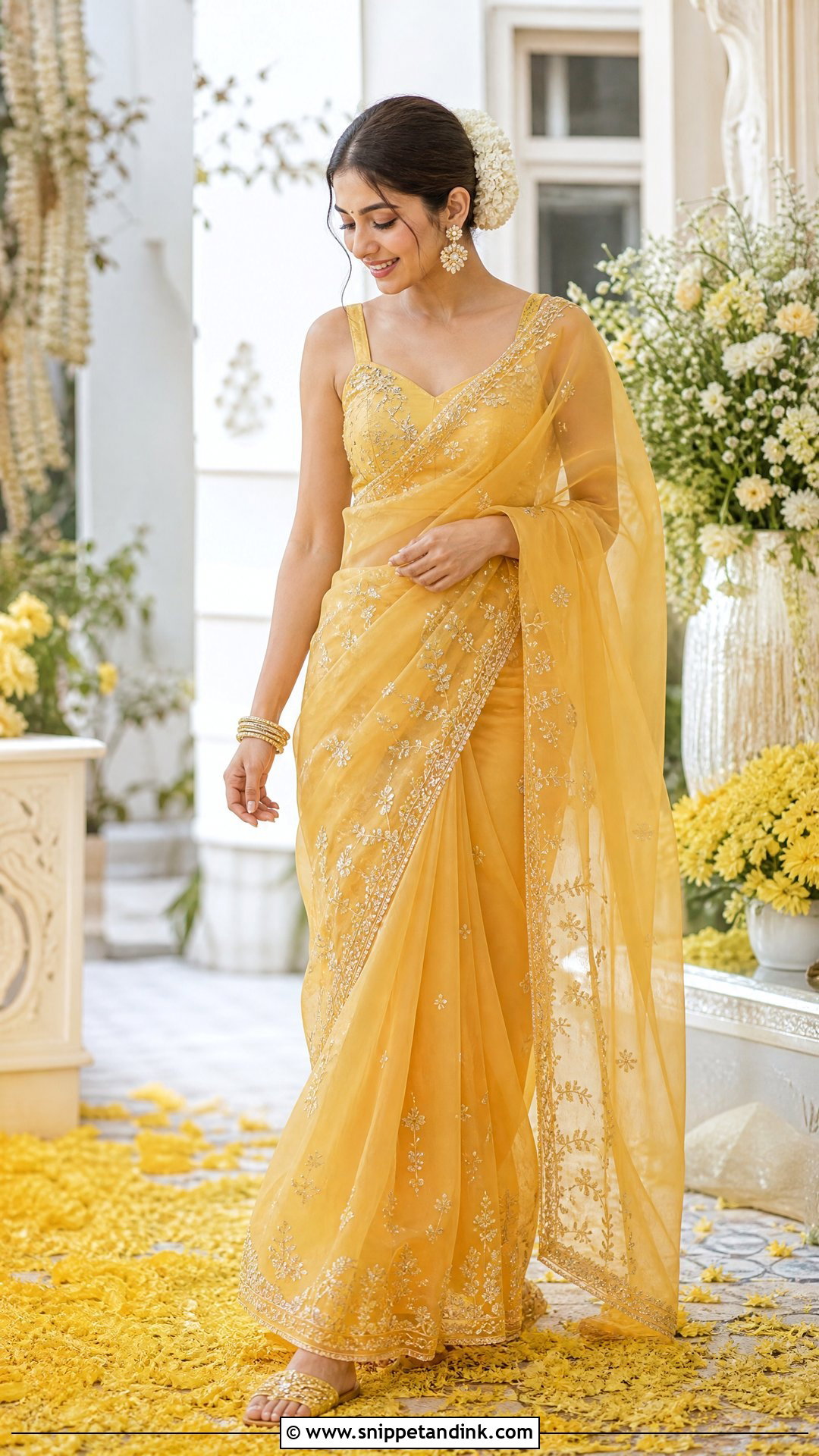
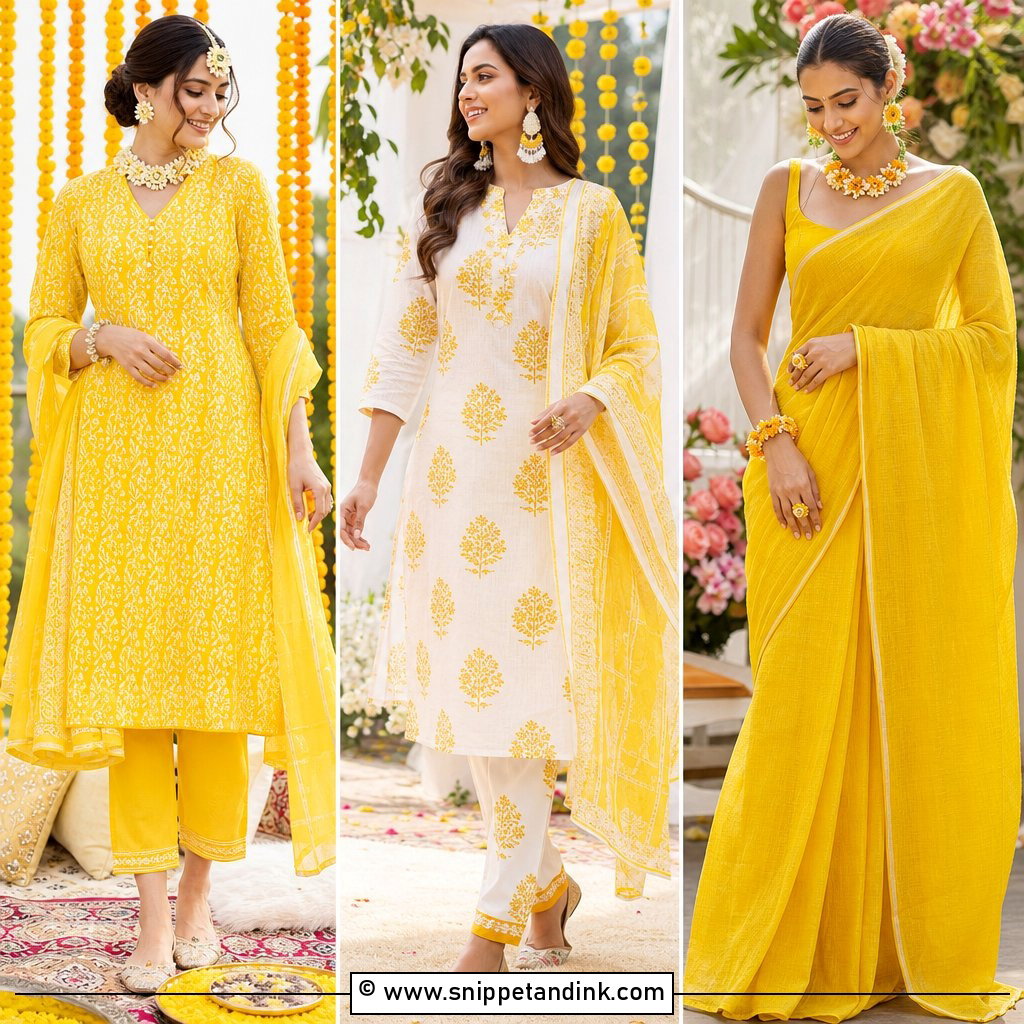
Organza is crisp and slightly transparent, which is why a marigold organza saree glows in morning light. It’s also slippery and springy, so pleats drift apart unless they’re pinned at the waist and the pallu is fixed at the shoulder with two pins, not one. Look for a fine floral border or scattered motifs rather than dense sequins, which add weight and make organza sag. A matching sleeveless or elbow-sleeve blouse keeps it tidy; an ivory blouse with yellow embroidery gives contrast. I’d add pearl-flower earrings, slim bangles, flat sandals and a low bun with white flowers. Choose it if you love a classic drape but find silk too warm.
3. Mustard Sharara Set Haldi Outfit
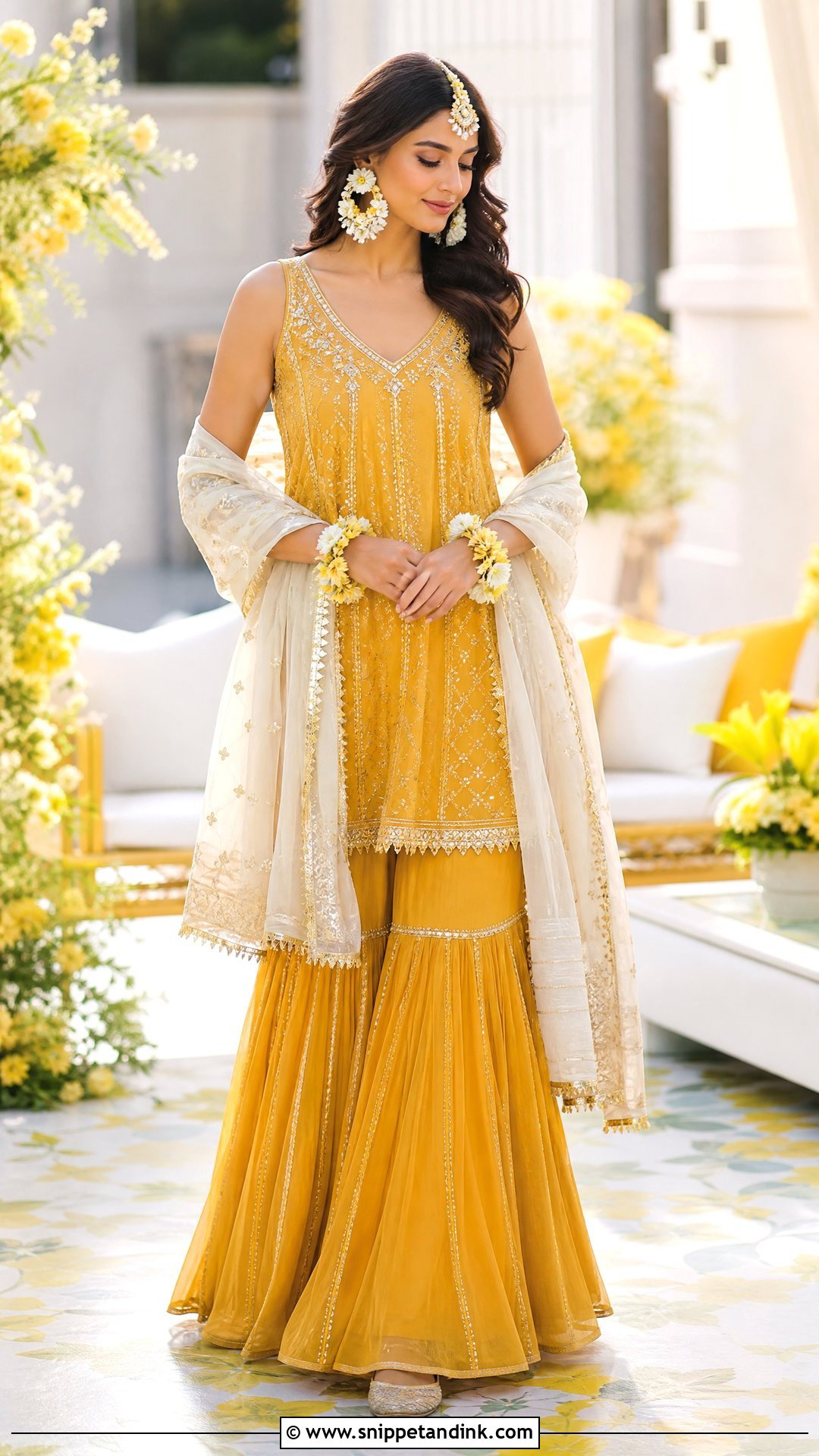
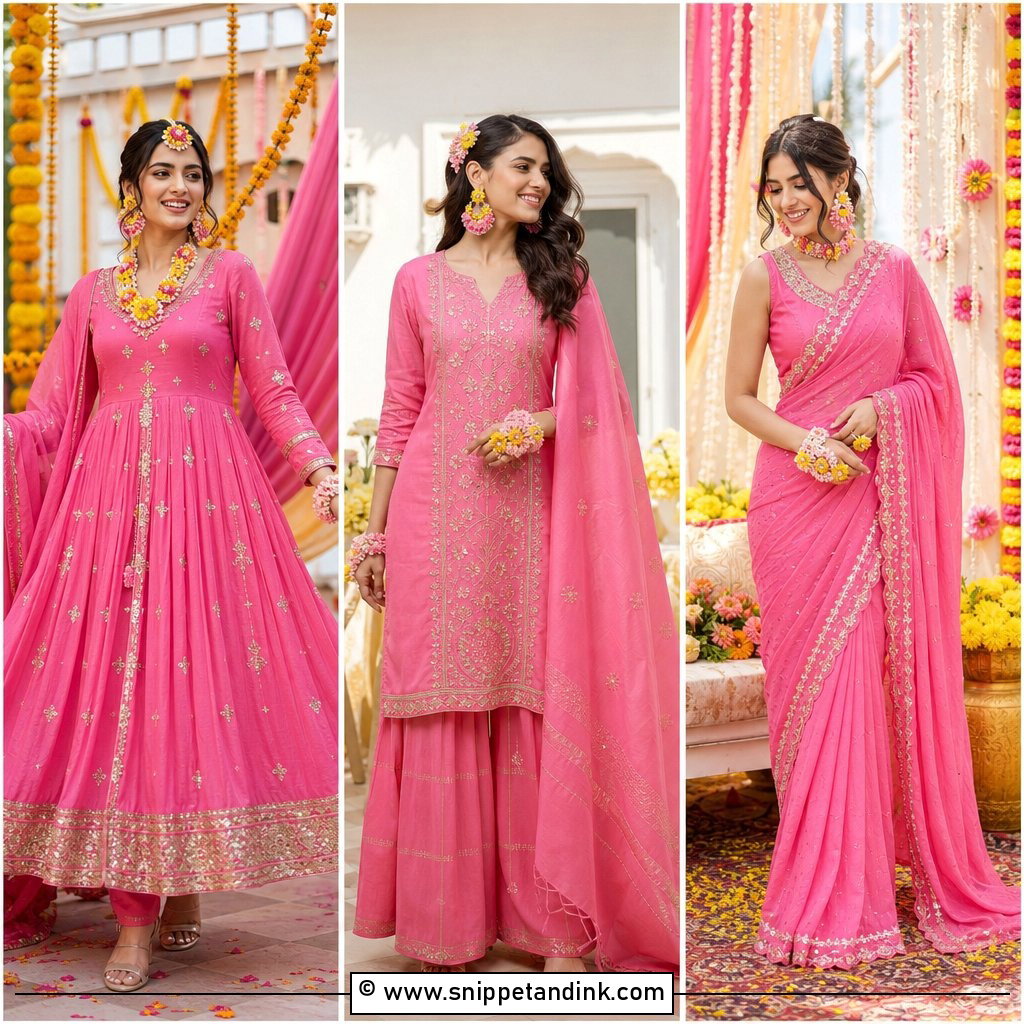
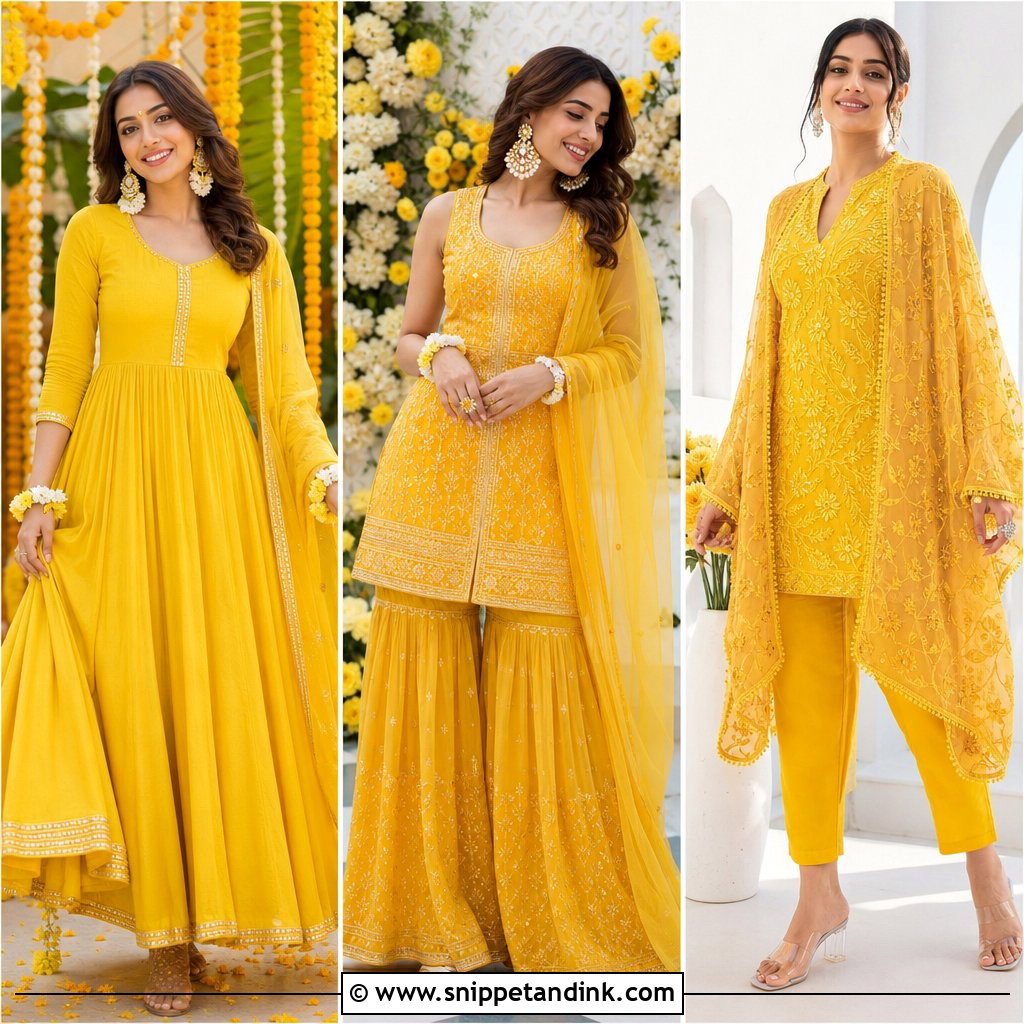
Sharara sets are the outfit I suggest most often to brides who dread sitting cross-legged in a lehenga. The wide legs split at the knee, so you can fold down onto a low seat without bunching a skirt underneath you. Pick breathable georgette, crepe or cotton-silk in mustard with gota patti at the neckline, cuffs and hem, and keep the kurti long enough to cover you when seated but short enough that the flare still shows. A light dupatta in mustard, ivory or soft pink pinned to one shoulder, floral chandbalis, a small maang tikka and embellished juttis finish it. It suits home functions and outdoor setups alike.
4. White And Yellow Floral Lehenga Haldi Outfit
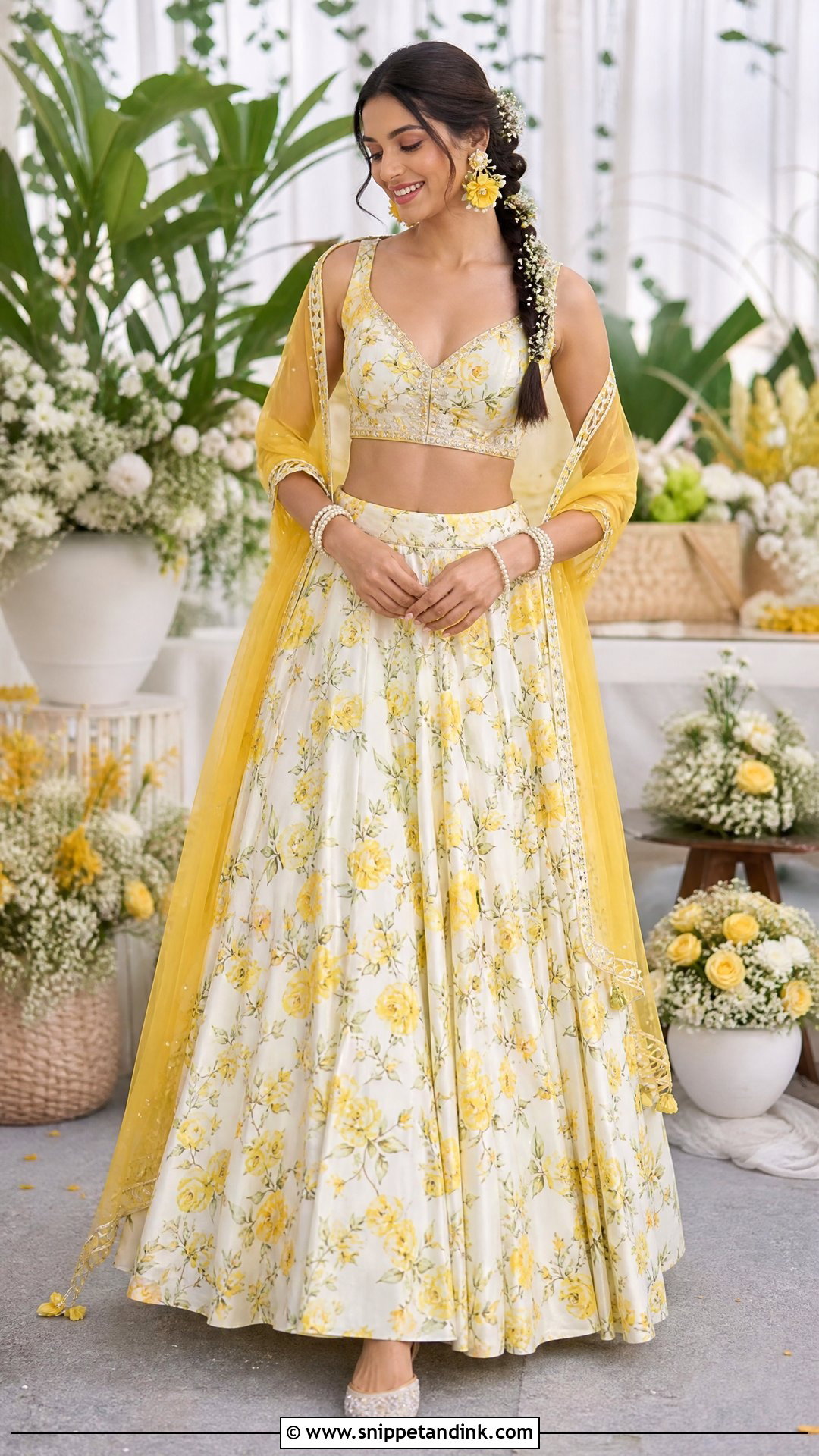
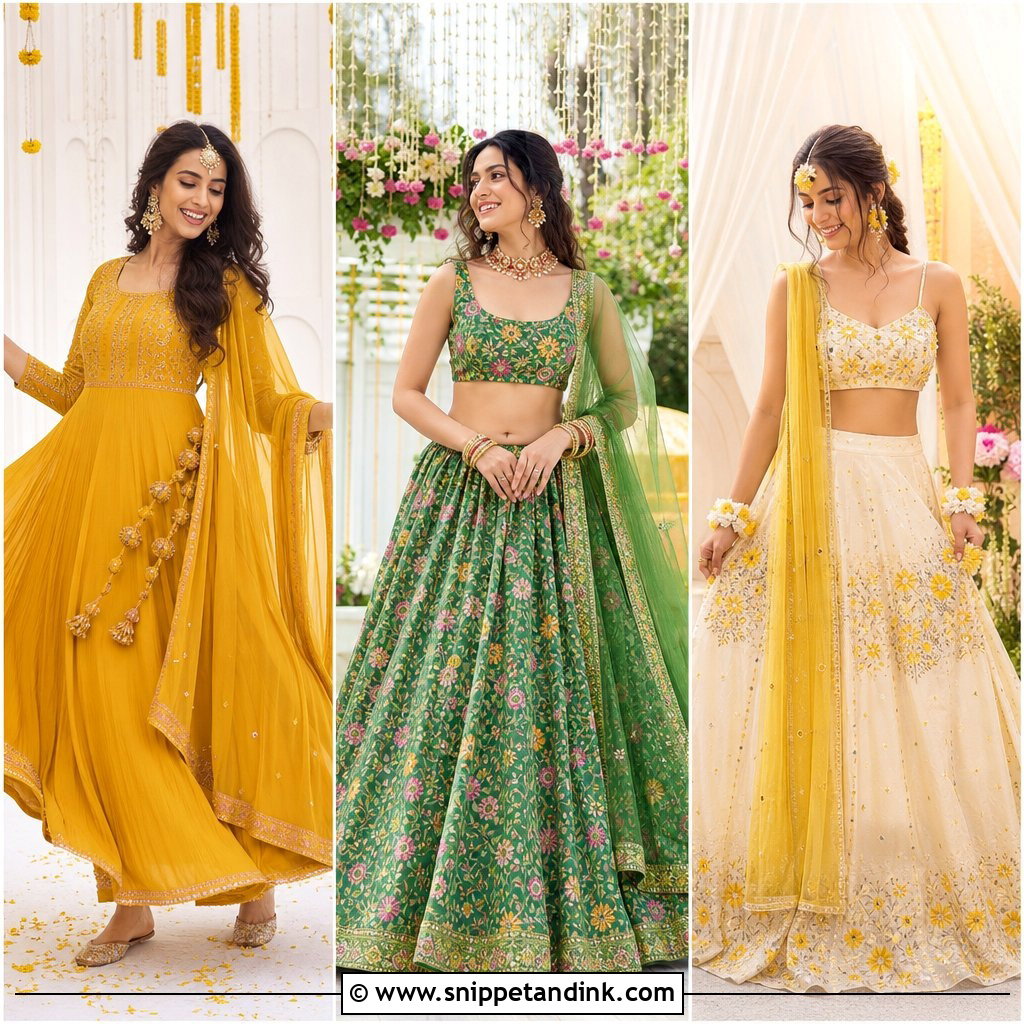
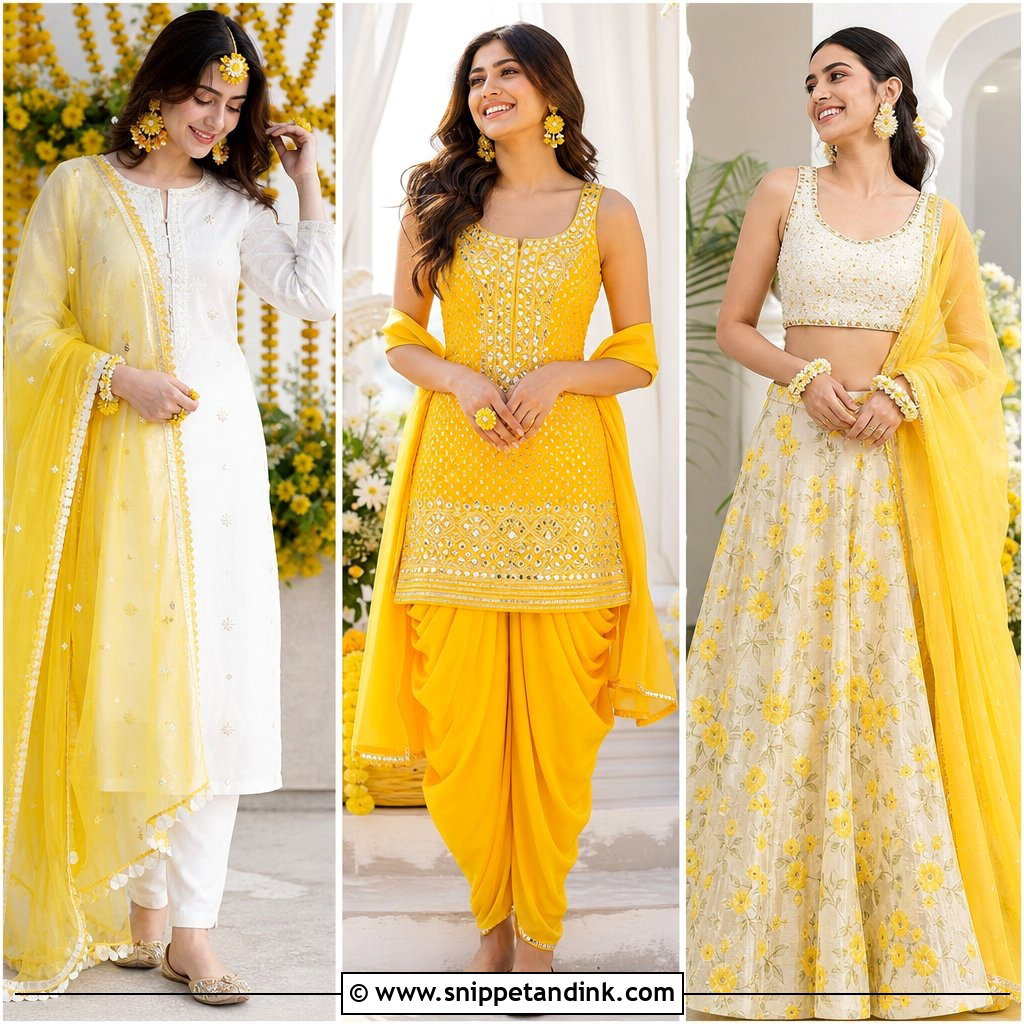
A white and yellow floral lehenga reads fresh in daylight, and the pale base makes the flowers sharp on camera. It is also the outfit most likely to stain, so I plan the day around it: formal portraits first, ritual second, and an inexpensive cover-up or old dupatta on hand once the paste comes out. Pair the ivory skirt with a matching blouse and a soft yellow dupatta. Yellow flower earrings, pearl bangles and ivory juttis keep the palette quiet, and a braided ponytail with small blooms suits the garden feel. Skip a heavily embellished bag; the print should carry the outfit.
5. Bandhani Lehenga Haldi Outfit
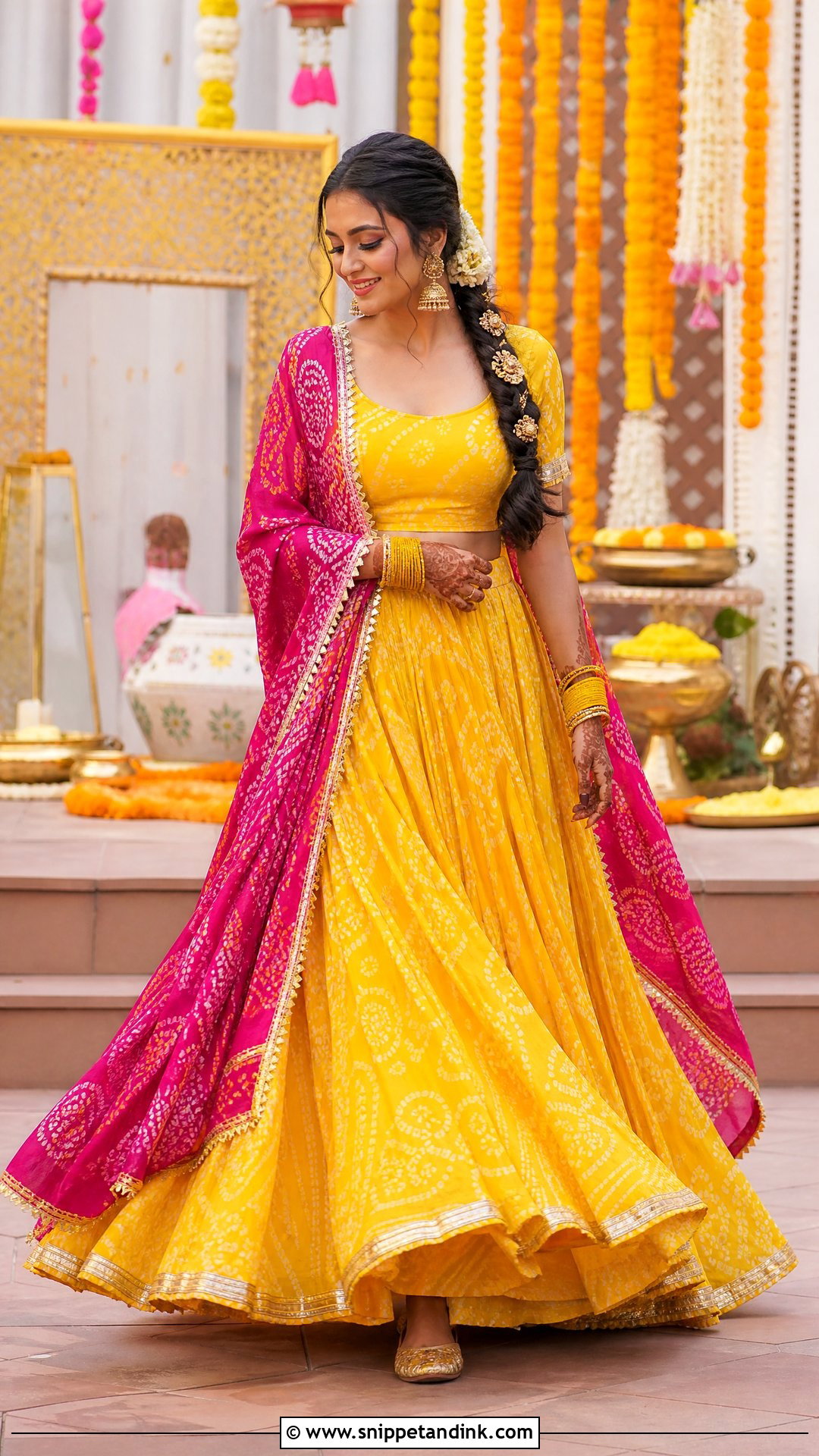
Bandhani is tie-dye done by hand, thousands of tiny pinched dots, and that pattern hides a turmeric splash far better than a plain fabric does. A yellow bandhani lehenga with red, pink or orange dots feels festive with almost no surface embroidery. Keep the blouse solid so the dots stay readable, then decide on the dupatta: a contrasting red or fuchsia bandhani dupatta sharpens the look, a yellow one softens it. Gold jhumkas, lac bangles and flat mojaris will take hours of standing and dancing. One caution: real bandhani dyes can bleed when wet, so don’t let the paste sit on it. The pieces rewear well afterwards with a plain saree or a simple crop top.
6. Yellow Anarkali Haldi Outfit
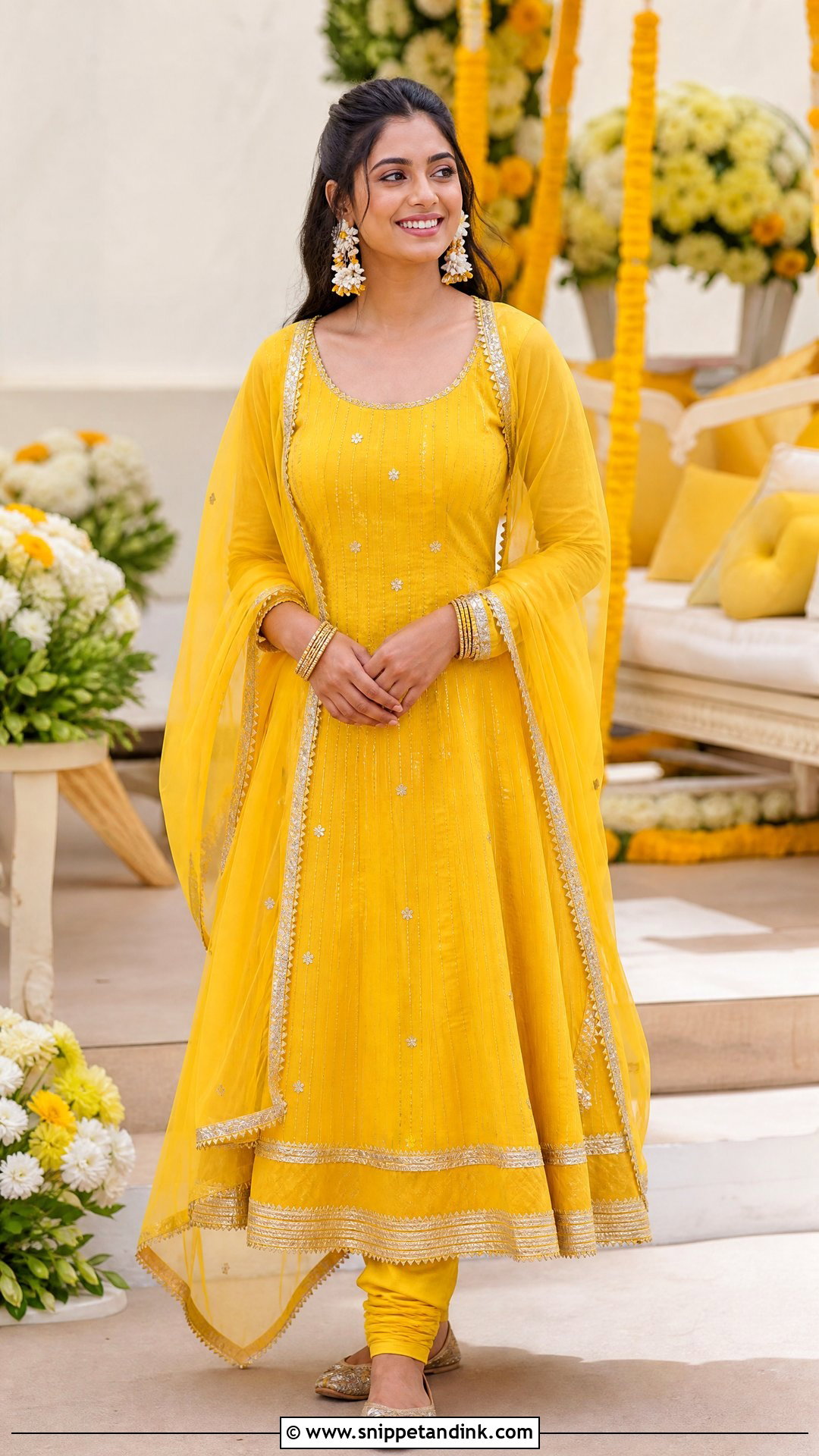
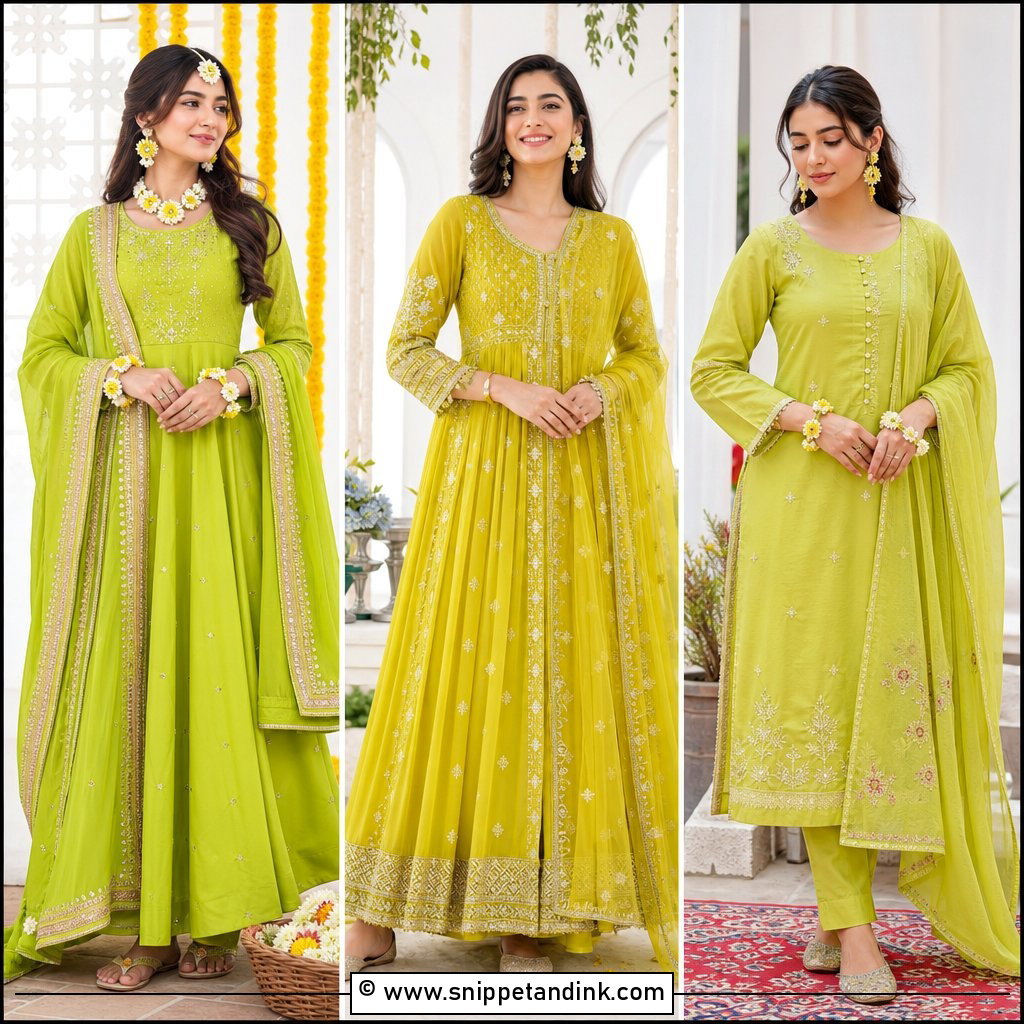
An Anarkali is one piece, and that’s its real advantage at a Haldi: nothing to tuck, re-pin or hitch up. Go ankle length in cotton silk, chiffon or lightweight chanderi so the panels swing rather than balloon, with embroidery at the neck and sleeves and a broad gota hem. When a bride sits, an Anarkali pools around her, so I always check that the hem isn’t so long she’ll kneel on it standing up. Fitted churidar, a sheer dupatta pinned at one shoulder, floral drops, slim gold bangles and low-heeled juttis complete it. A half-up style or smooth low ponytail keeps hair clear of the paste.
7. Ivory Floral Saree Haldi Outfit
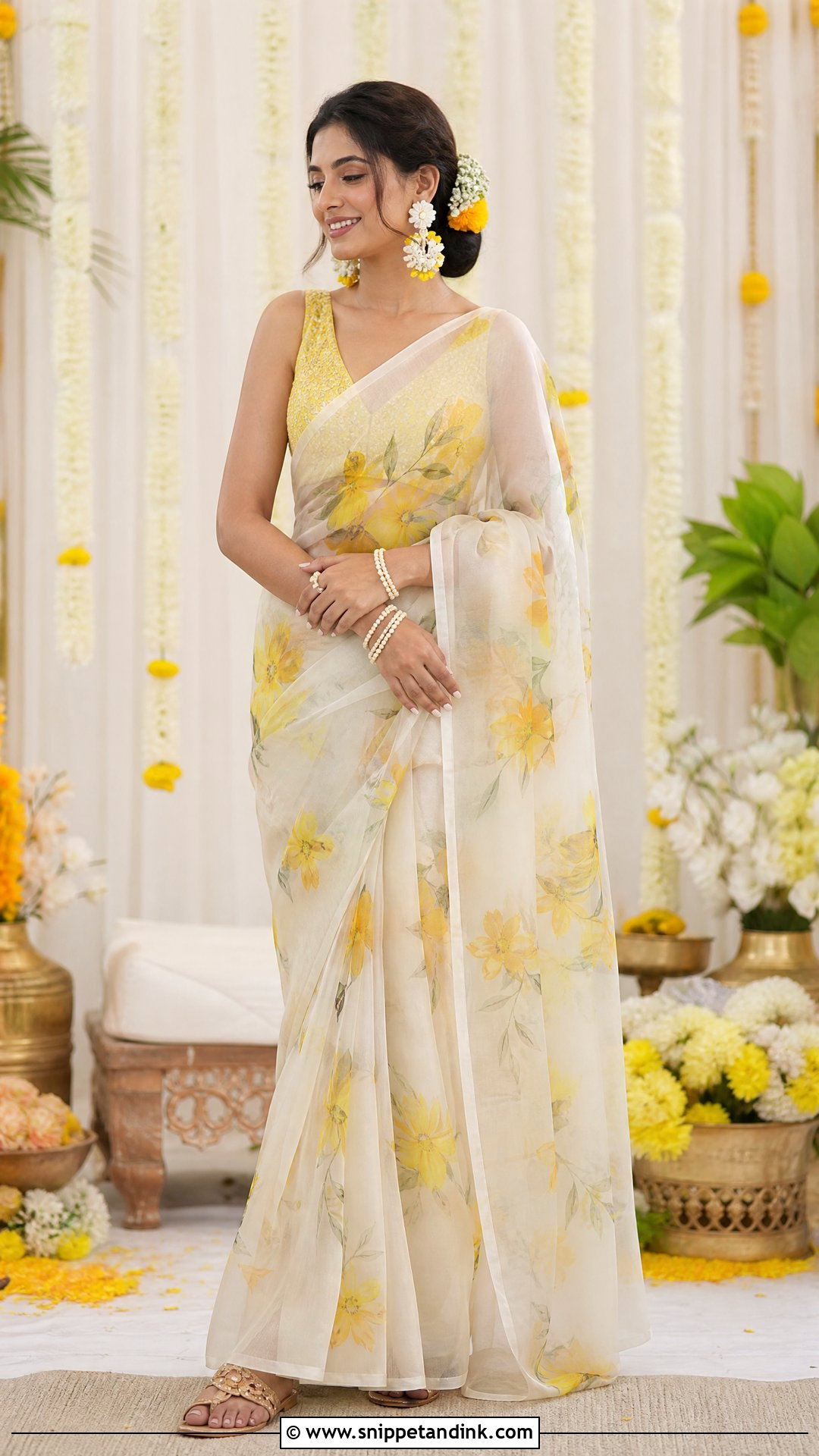
Not every bride wants to be head to toe in yellow, and an ivory floral saree is the calmest answer I know. Watercolor marigold prints, hand-painted flowers or embroidered yellow blossoms on organza or chiffon tie it to the ceremony without the full wash of color. A yellow blouse links it to the decor; an ivory one keeps it quiet. Have the pleats finished slightly shorter than usual, about at the ankle bone, because you’ll be stepping over cushions and puja items. Yellow floral earrings, pearl bracelets, gold flats, a low bun with yellow and white flowers and a small bindi are enough. It sits especially well indoors among floral installations.
8. Yellow Co-Ord Set Haldi Outfit
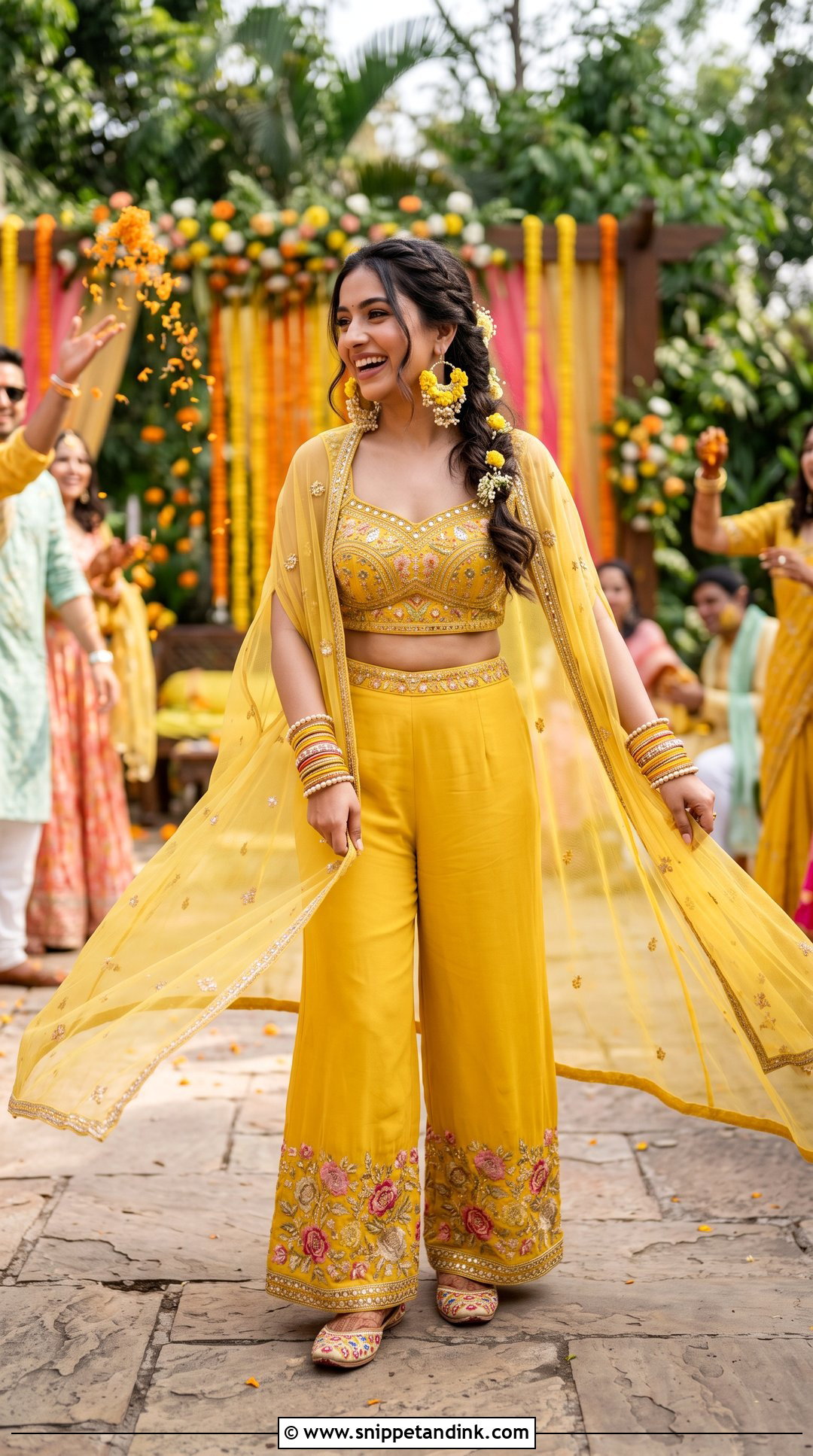
A yellow co-ord set is the modern pick, and it’s easy to wear because matching fabric makes even a plain silhouette look finished. A structured crop top or longer peplum over a flared skirt or wide-leg pants both work; just sit down in the crop top at your fitting, since it rides up more than you expect. Tonal embroidery or a scalloped edge makes it bridal without weight. My favorite trick here is a detachable cape for portraits that comes off before the turmeric starts. Statement floral earrings, stacked bangles, platform juttis and a high ponytail or textured braid suit the mood, especially if music and games are planned.
9. Peplum Gharara Haldi Outfit
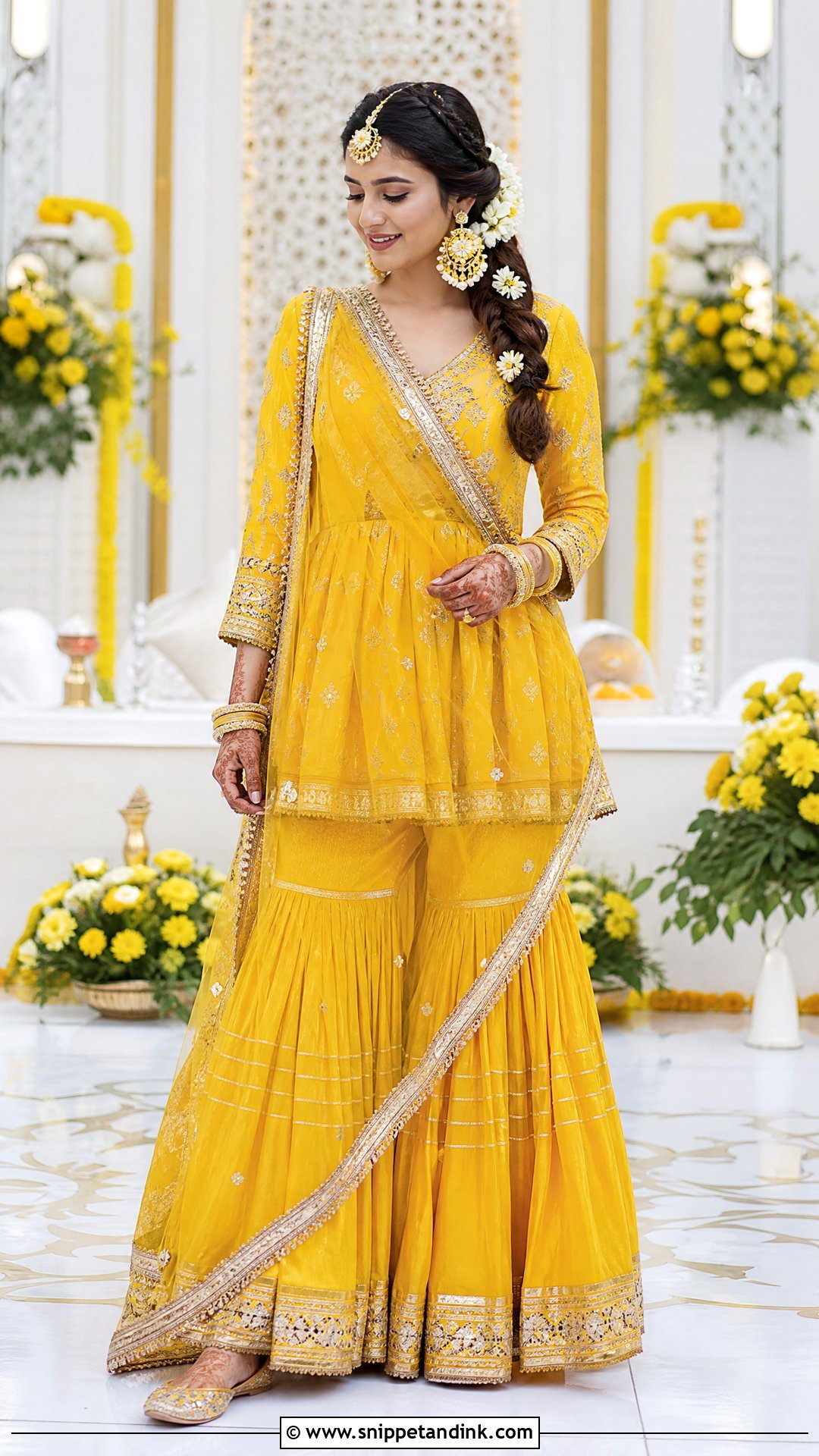
The peplum does all the shaping in this one: it nips the waist so the volume of the gharara below doesn’t swallow you in full-length photos. Ask for the peplum to end just below the natural waist, in mustard or sunflower yellow, with gota bands at the knee and hem of the gharara. Concentrating the embroidery at the neckline and sleeves draws attention up to the face. A net dupatta pinned at both the shoulder and the waist stays put far better than one pinned only at the shoulder. Floral chandbalis, a small passa, gold bangles, embellished flats and a side braid with white flowers soften the structure.
10. Leheriya Lehenga Haldi Outfit
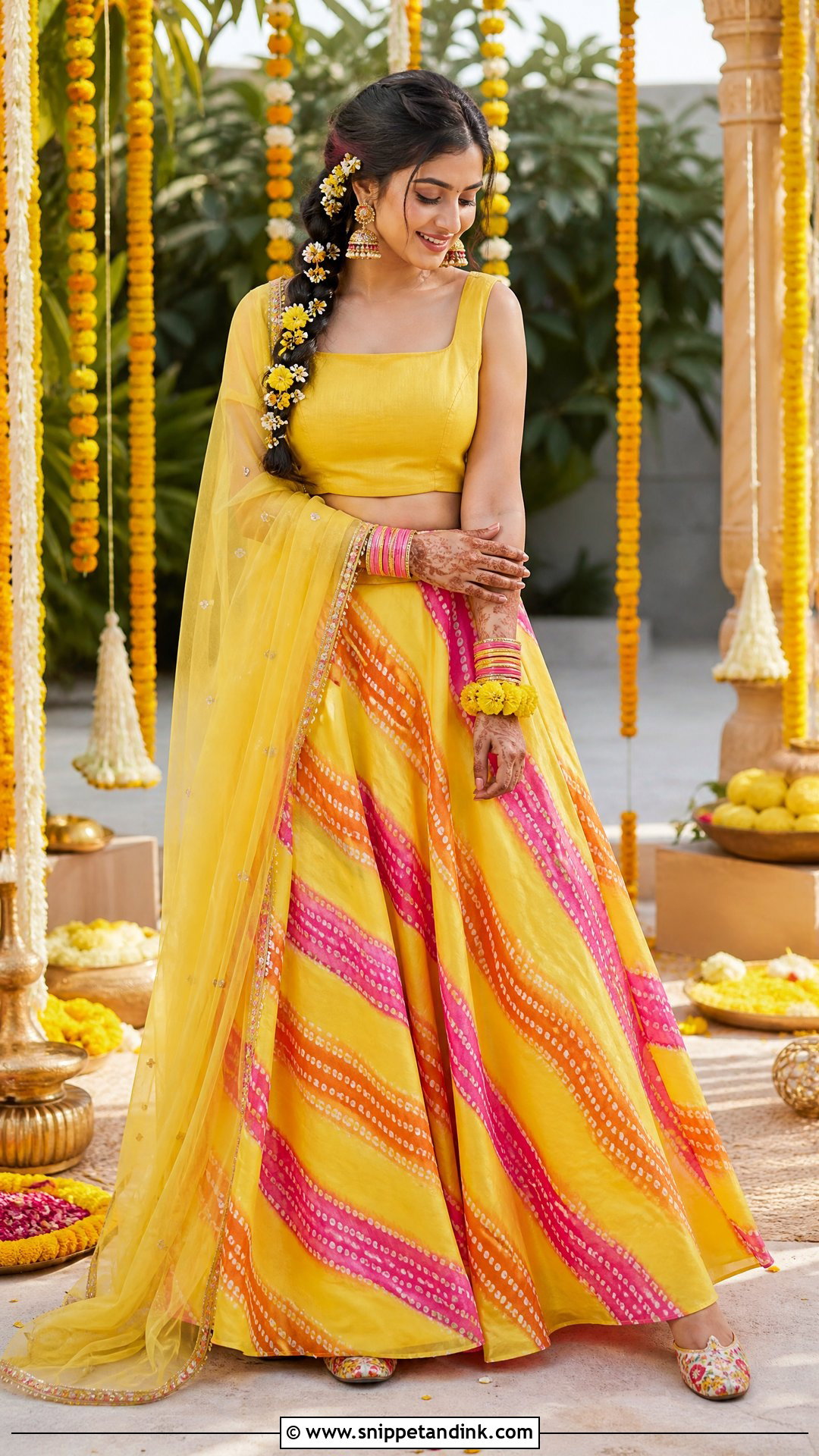
Leheriya is a Rajasthani resist-dye technique that produces diagonal waves, and in sunlight those stripes look like they’re moving even when you’re sitting still. Choose a yellow skirt with waves in orange, pink, green or white and calm it with a solid blouse, square neck or elbow sleeves. If you add a leheriya dupatta as well, the whole outfit becomes very busy on camera; a plain organza one is my usual recommendation. Jhumkas, colored bangles and embroidered juttis suit it, with a long braid finished in small flowers or fabric tassels. It’s a strong outdoor choice and catches movement in candid dancing shots.
11. Yellow Draped Saree Haldi Outfit
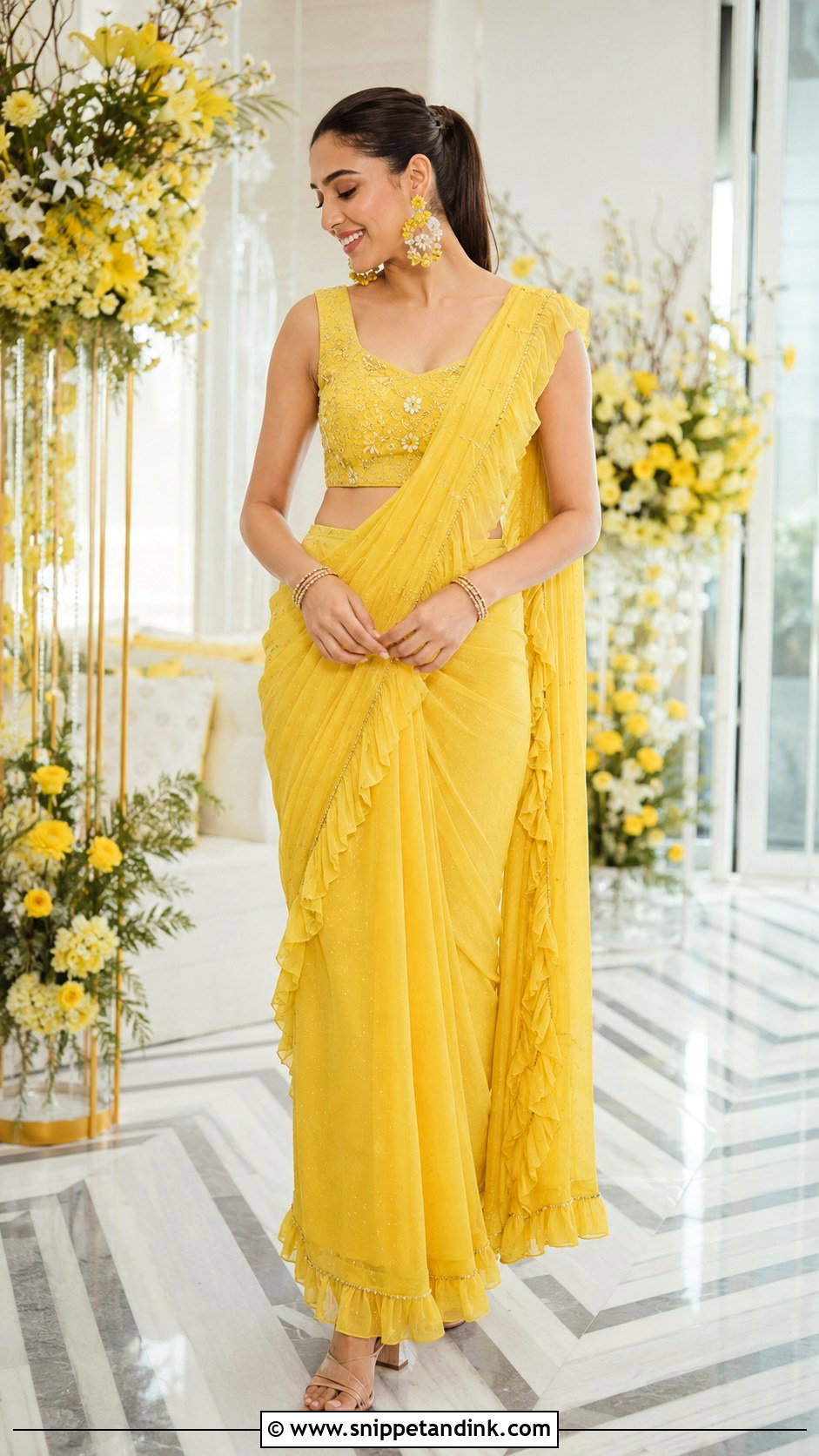
Pre-draped sarees exist precisely for days like this. The pleats are stitched, the pallu is attached, and you step into it like a skirt, so nothing unravels mid-dance. Lightweight crepe or georgette with a fitted blouse is the comfortable version; ruffles, a slim embellished border or tonal floral appliqué add interest without bulk. At the fitting I have brides walk, sit and stand back up, because a stitched hem that’s even slightly too long has no give. Shoulder-grazing floral earrings, delicate bangles, low block heels and a sleek ponytail or polished bun suit the clean line.
12. Floral Print Maxi Dress Haldi Outfit
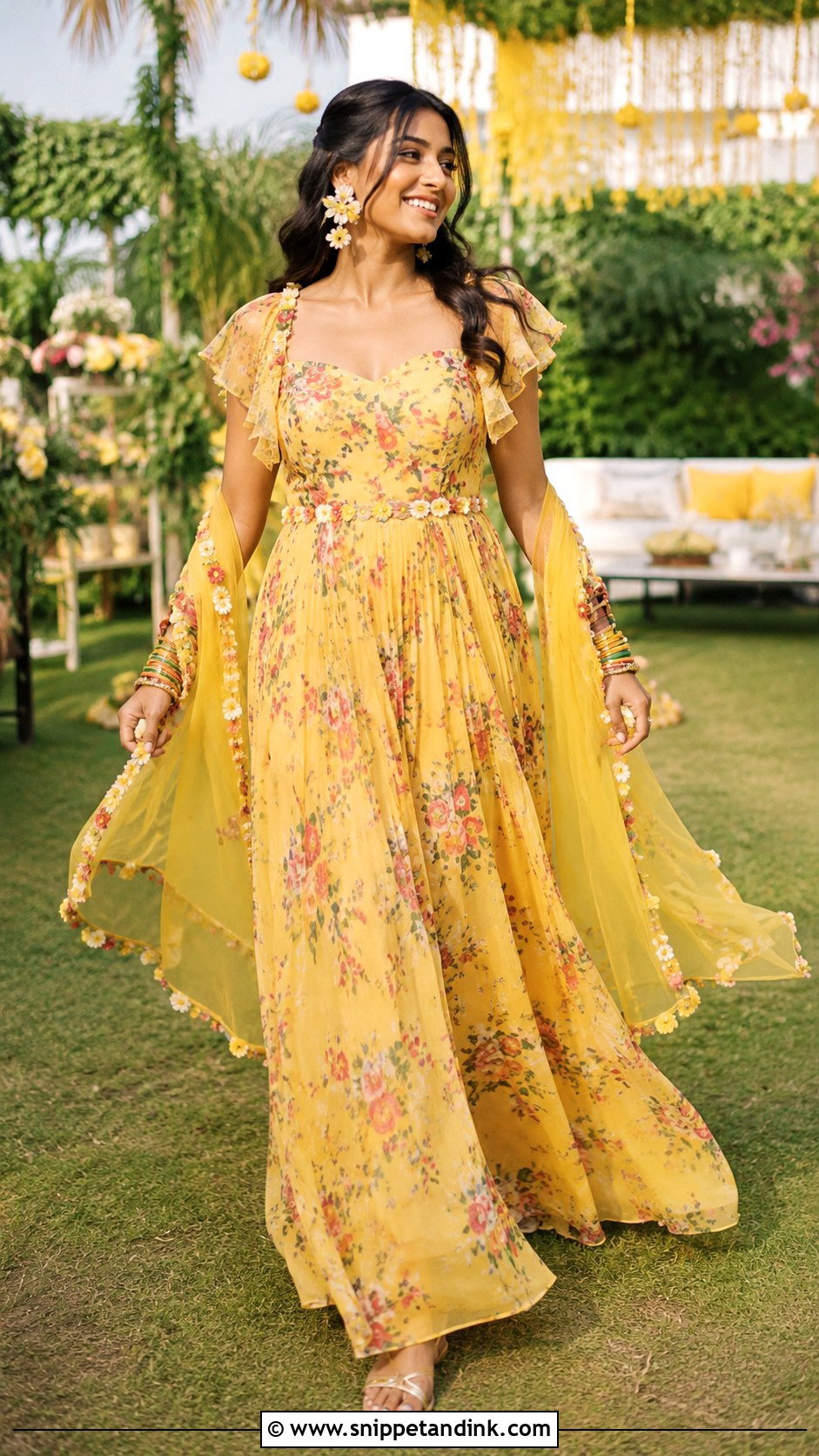
For a small Haldi at home, in a garden or by the pool, a floral maxi dress is honestly the most relaxed option. Choose a yellow-based print with pink, orange or white flowers and a waist that’s defined but not tight, since you’ll be seated a lot. Flutter sleeves or a tiered skirt make it feel celebratory, and a lightweight floral cape gives extra coverage for family portraits. Flower earrings, bright bangles, flat strappy sandals and loose waves or a soft braid keep it informal. No dupatta means nothing to manage. If guests will smear paste straight onto the dress, buy something machine washable and treat it as a one-day outfit.
13. Yellow Palazzo Suit Haldi Outfit
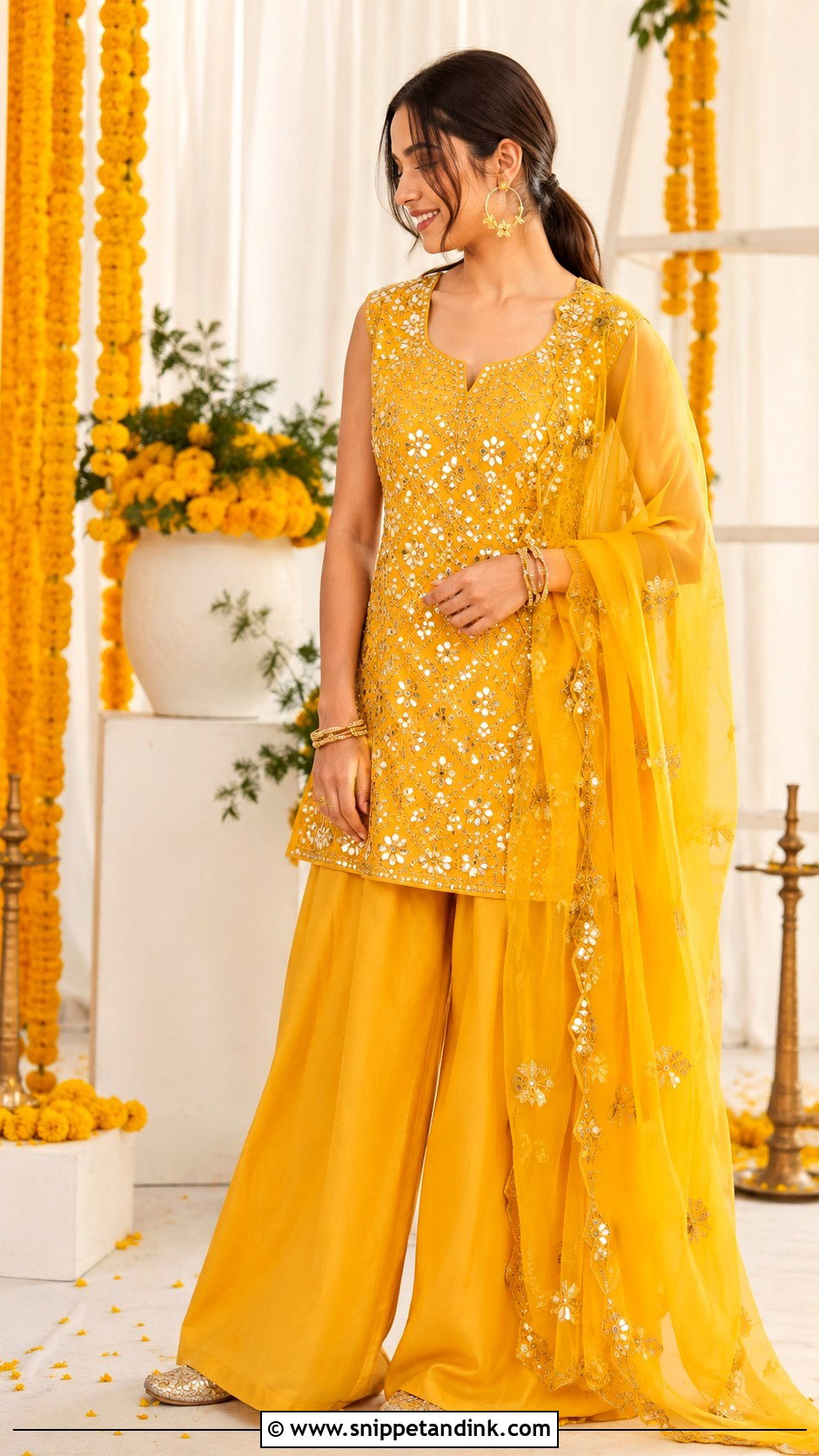
Palazzo suits suit brides who simply feel more like themselves in trousers. High-waisted palazzos under a straight or slightly flared kurta with mirror work, thread embroidery or a gota neckline still read traditional. The kurta length changes the whole look: shorter shows off the swing of the pants, knee length gives more coverage when you’re sitting on the floor. Pin a soft organza dupatta with floral edging over one shoulder and add floral-accented gold hoops, slim bangles and cushioned juttis. A low ponytail tied with a yellow ribbon is neat and practical. Every piece mixes back into your wardrobe afterwards.
14. Pink And Yellow Lehenga Haldi Outfit
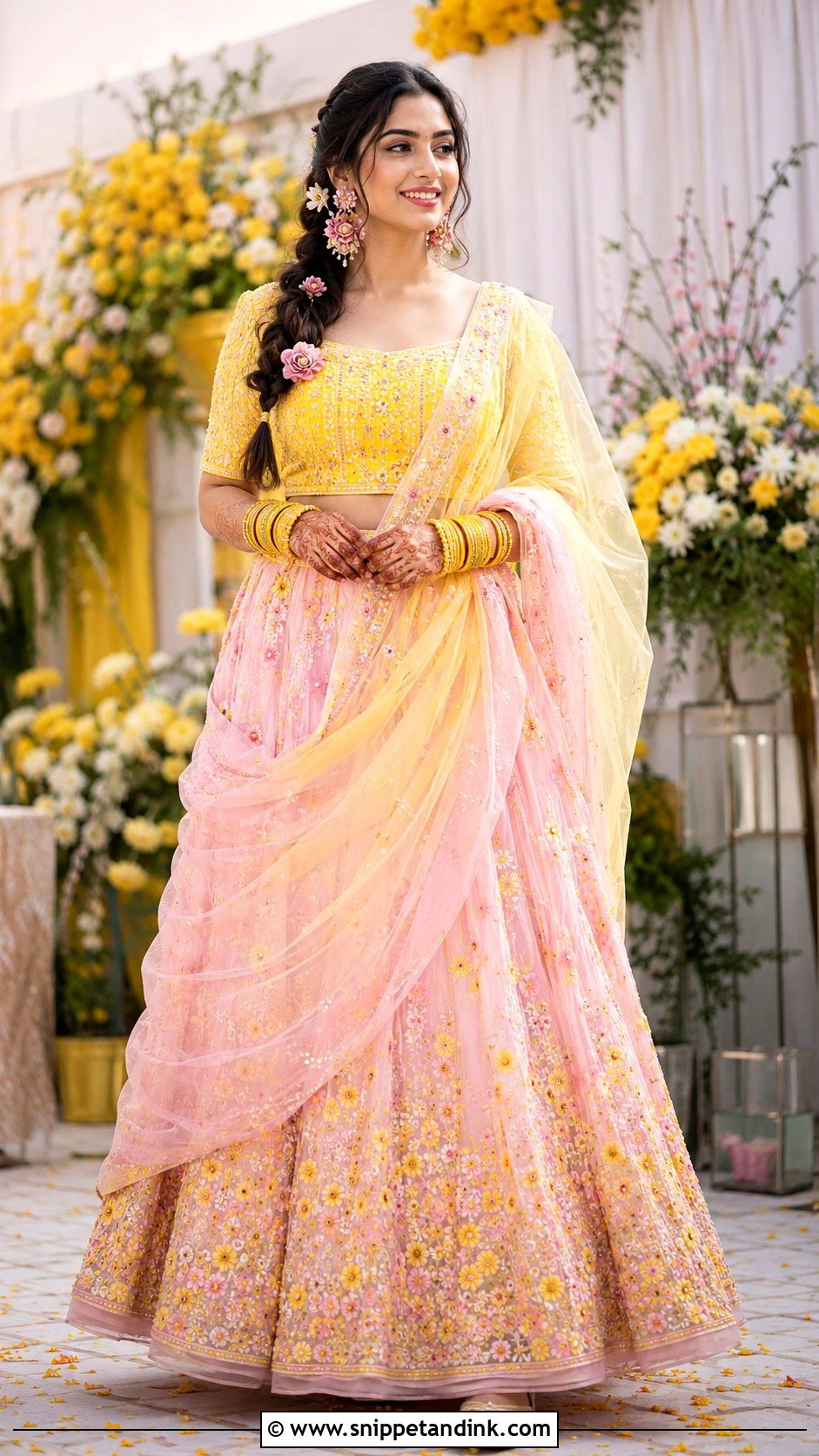
Pink and yellow solves a problem I see often: a bride in all yellow standing in front of all-yellow marigolds disappears in photos. A soft pink lehenga with yellow floral embroidery, or a yellow skirt with a bright pink blouse, gives the camera an edge to find. A dupatta that carries both colors makes the separates look planned rather than borrowed. With jewelry, stick to one color family, say pink flower earrings with yellow bangles, or it starts to look scattered. Gold juttis, a small potli and a half-up braid with matching flowers complete it, and it coordinates easily with multicolor florals.


15. Green And Yellow Fusion Haldi Outfit
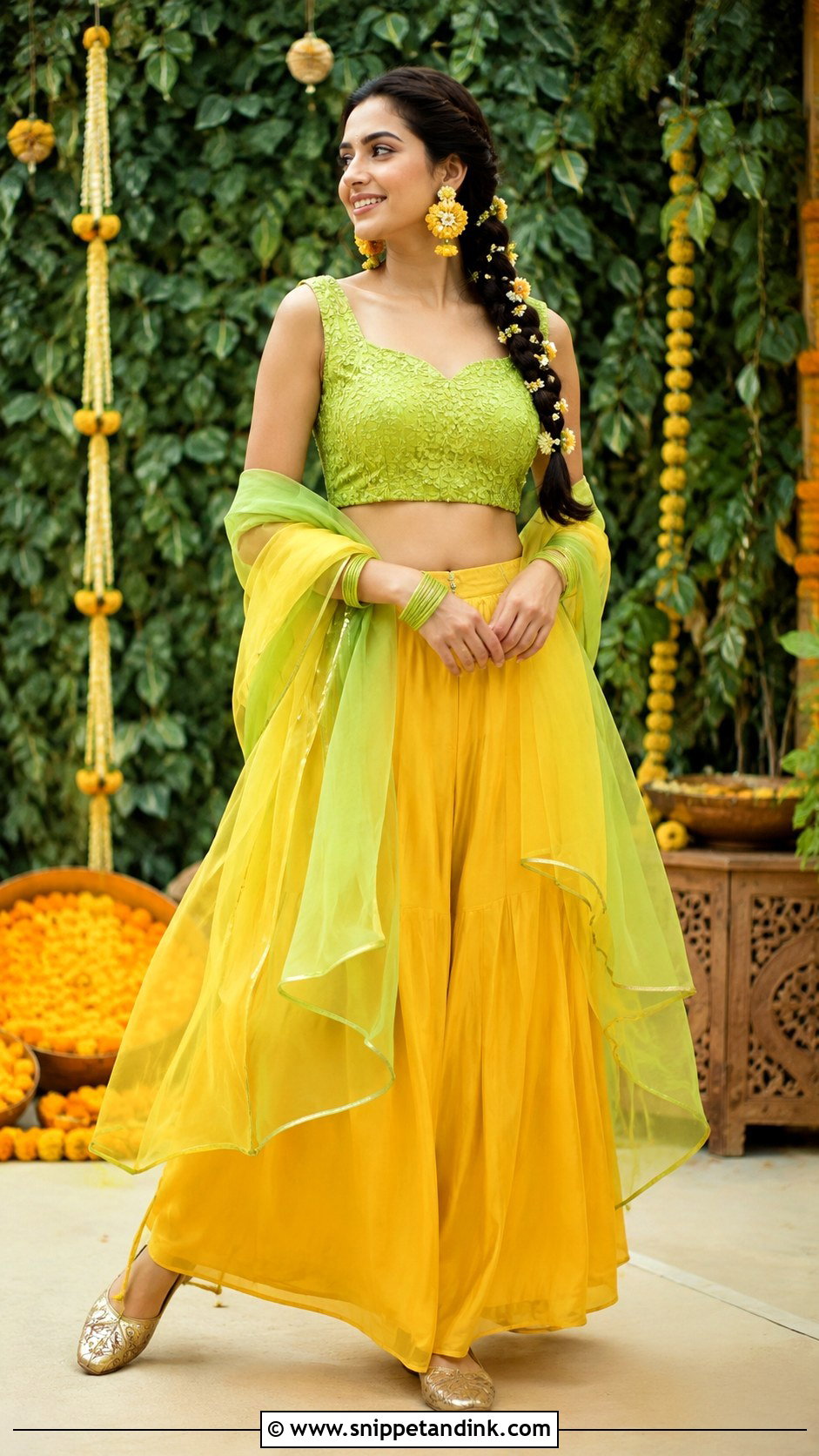
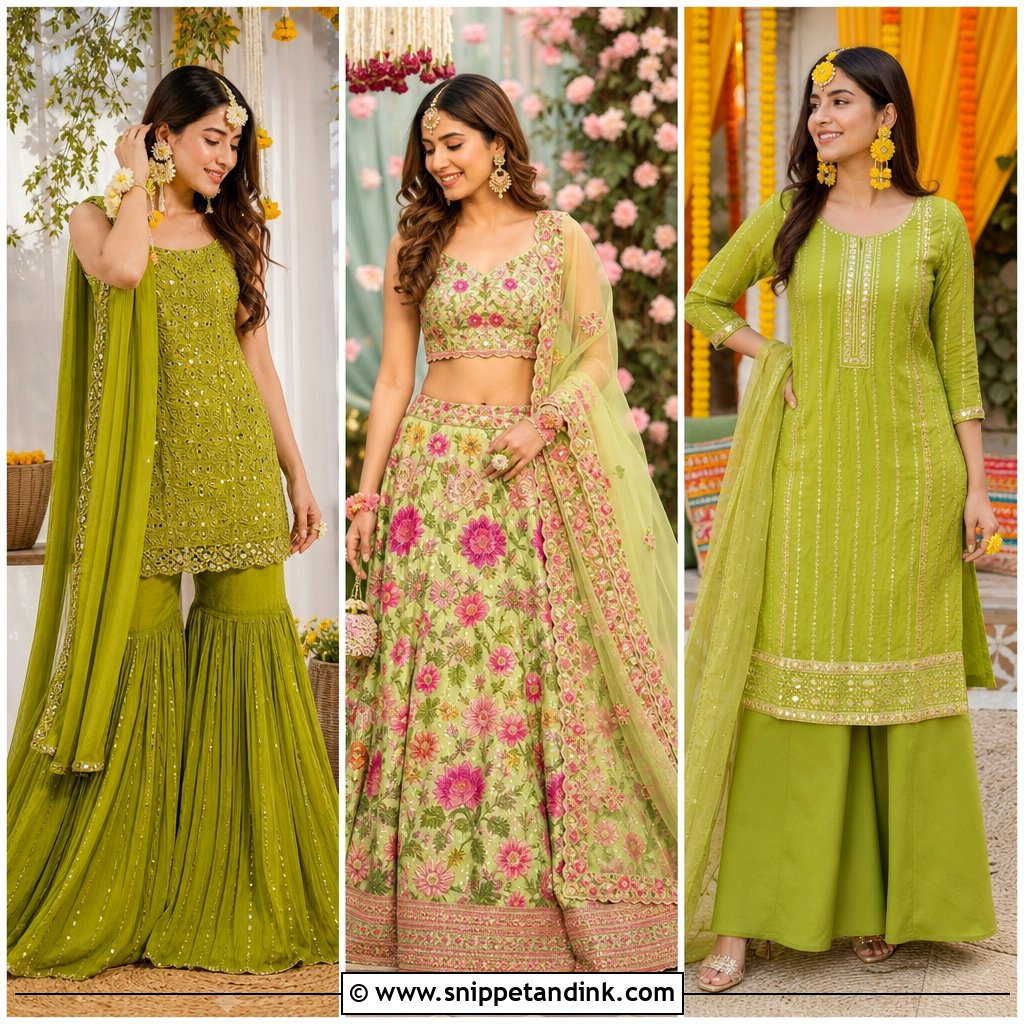
Green and yellow is the palette I reach for when the bridesmaids or cousins are all wearing yellow and the bride needs to stand out in group shots. Try a lime or emerald crop top over a yellow flared skirt with a dupatta in both colors, or flip it: yellow blouse, green draped pants and a sheer cape. Only one piece should be patterned; two prints in two colors starts to clash. Yellow flower earrings, green glass bangles and neutral gold juttis tie it together, with tiny yellow flowers in a braided ponytail. It looks especially vivid against leaves and white seating outdoors.
16. Yellow Dhoti Pant Set Haldi Outfit
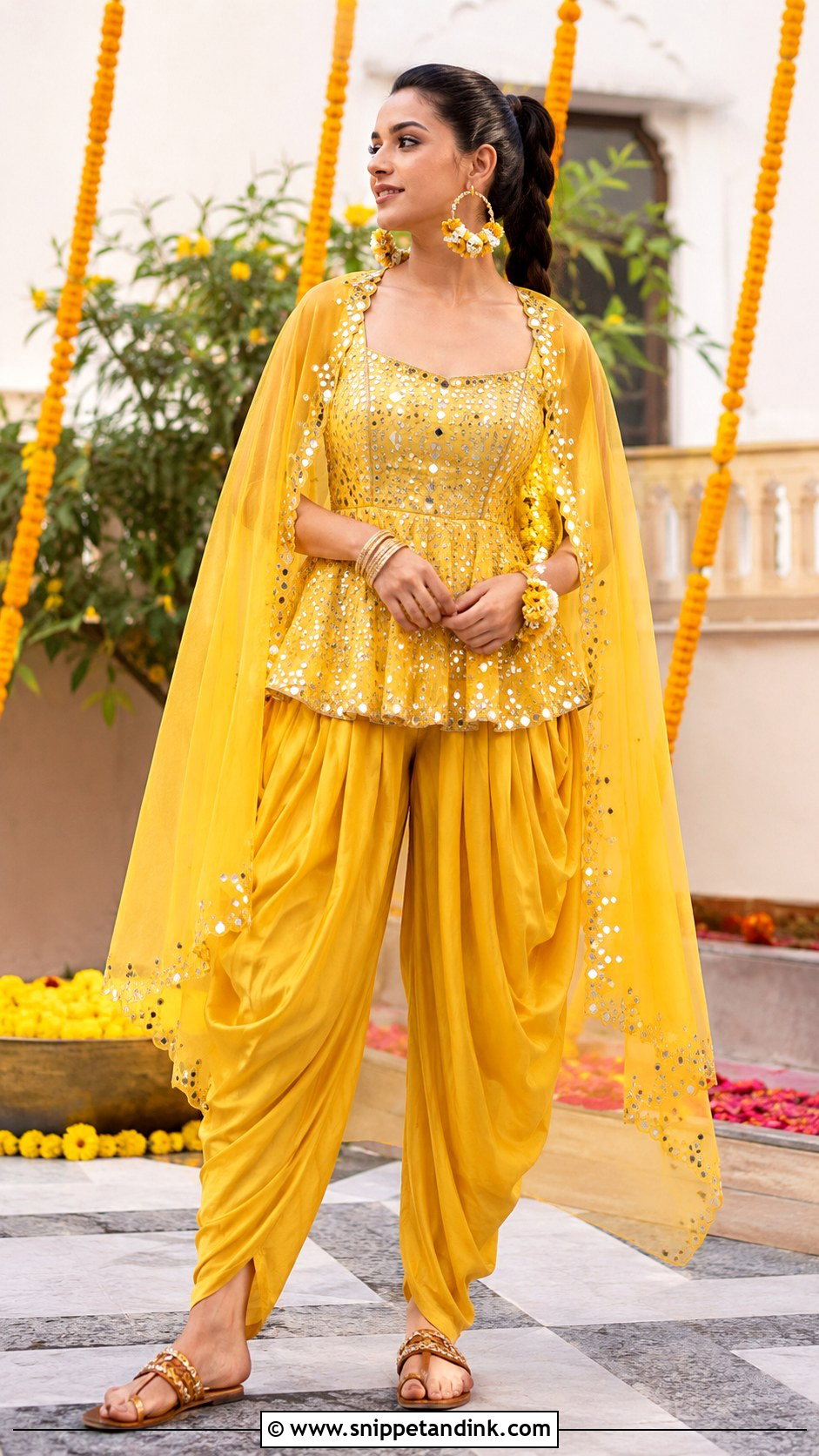
A yellow dhoti pant set gives you full freedom of movement and a shape that looks different from everyone else’s lehenga. Draped dhoti pants work under a fitted embroidered blouse, a short kurti or a structured peplum, and a light cape or shoulder dupatta adds movement in photos while leaving your arms free. Mirror, shell or small tassel details are enough decoration. The fitting test I insist on is sitting cross-legged: some dhoti drapes pull tight across the seat, and you want to find that out in the shop. Floral hoops, stacked bangles, kolhapuri flats or supportive juttis and a high braid suit the contemporary line.
17. Chanderi Silk Saree Haldi Outfit
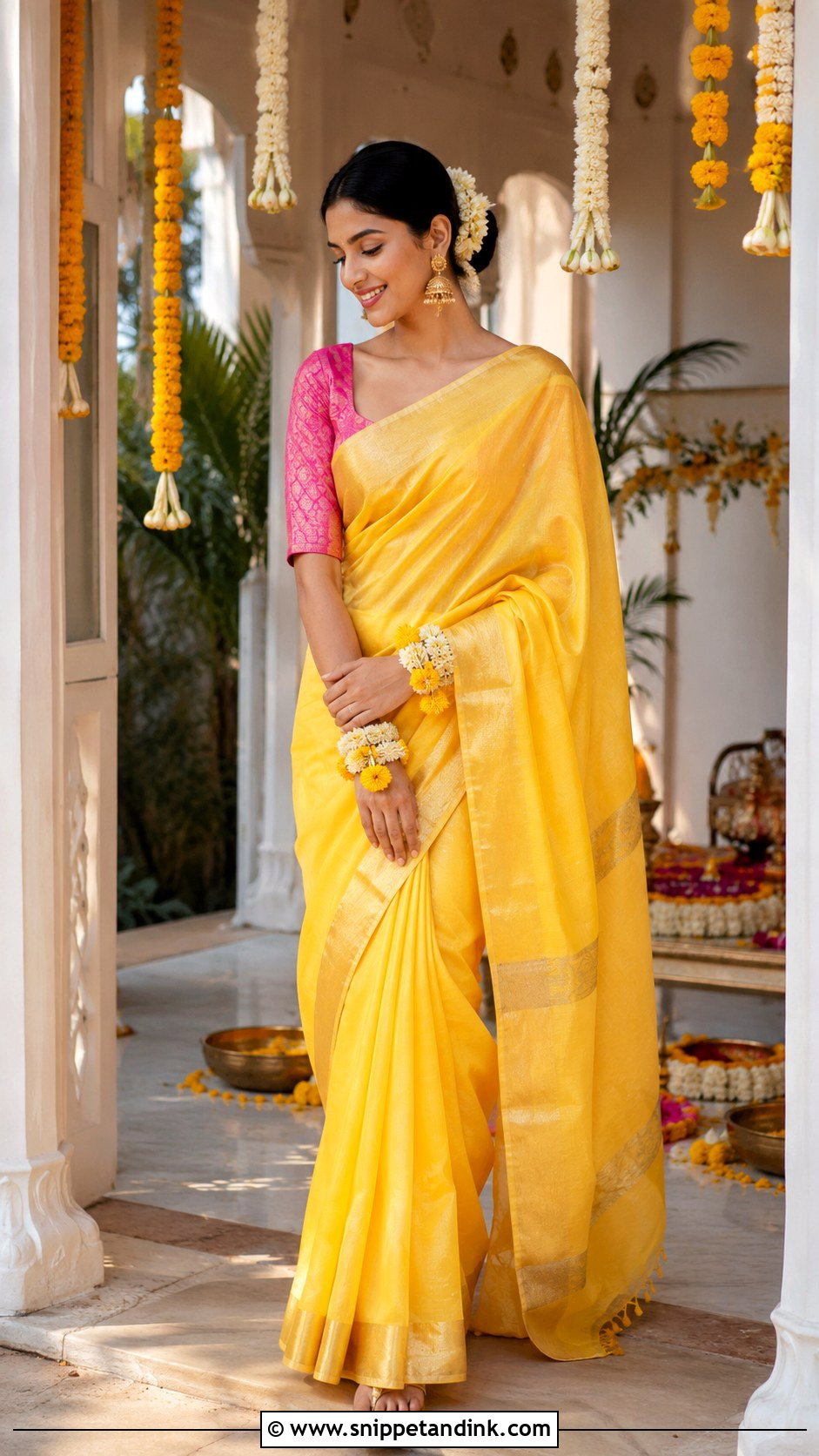
Chanderi is woven from a fine silk and cotton blend, which gives it a faint sheen and almost no weight, so it’s far cooler for a morning ceremony than heavy bridal silk. Look for a gold zari border, small woven buttis or delicate floral embroidery. A contrasting pink blouse brings color; a matching yellow one keeps it refined. Pin the pleats firmly and fix the pallu at the shoulder, because chanderi is light enough to lift in a breeze. Gold jhumkas, fresh flower bangles, flat sandals and a center-parted bun wrapped in white flowers suit families who prefer classic dress. Zari doesn’t love wet paste, so keep the border clear during the ritual if you want to wear it to festivals later.
18. Minimal Cotton Kurta Set Haldi Outfit
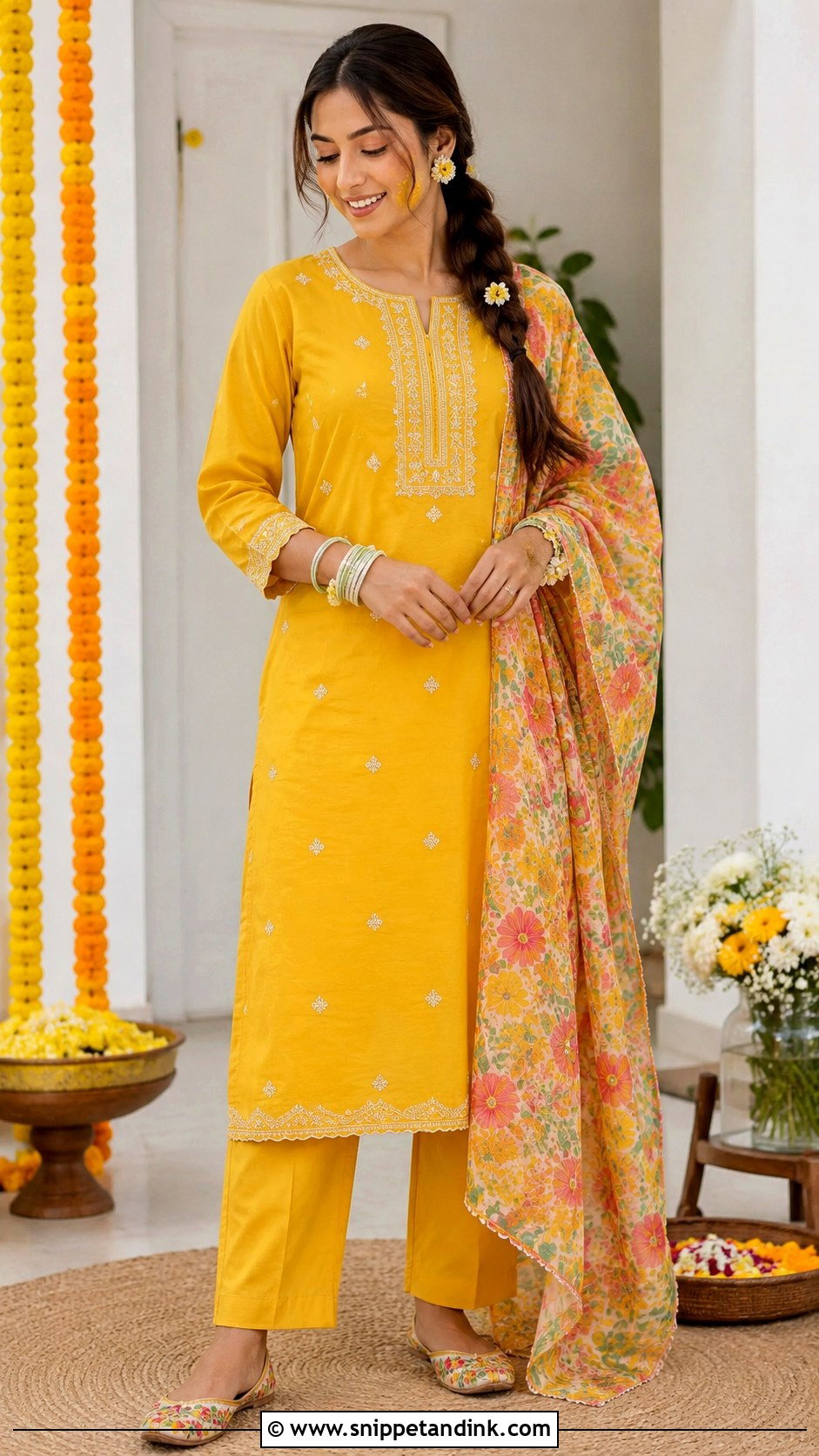
Sometimes the right Haldi outfit is the one you’ll never worry about. A bright yellow cotton kurta with straight pants breathes in the heat and goes in the washing machine afterwards. White thread embroidery, scalloped edges or a narrow gota border give it definition, and a lightweight printed dupatta in yellow, pink or green adds color. Floral studs, a few glass bangles and soft juttis keep it simple, and a loose braid or low bun stays out of the way. Add a statement maang tikka if you want it to read more bridal. For intimate home ceremonies where turmeric, oil and petals fly, this is the one I’d choose myself.
19. Yellow Ombre Lehenga Haldi Outfit
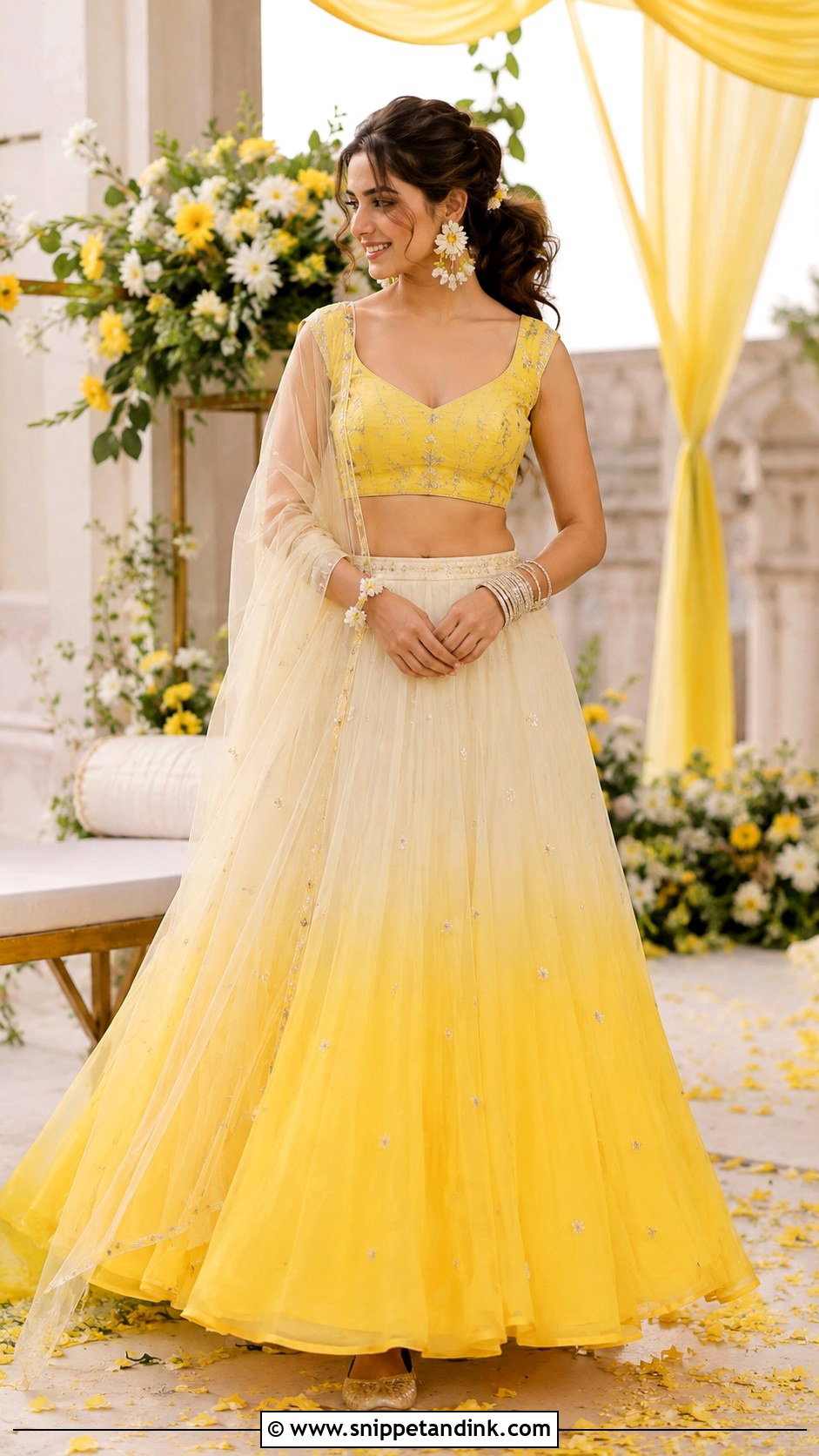
Ombre dyeing shifts the skirt from one shade to another, ivory into lemon, yellow into orange, pale yellow into pink, so the lehenga has depth without any embellishment at all. Match the blouse to either the lightest or the deepest shade in the gradient; a middle tone muddies the transition. A sheer dupatta with very little embroidery and simple accessories (floral drops, slim metallic bangles, neutral juttis) keep the color change visible. A soft curled ponytail or flower-trimmed braid suits the flow. The gradient only shows when the whole skirt is in frame, so it rewards an open space and wide shots.



20. Phulkari Dupatta Suit Haldi Outfit
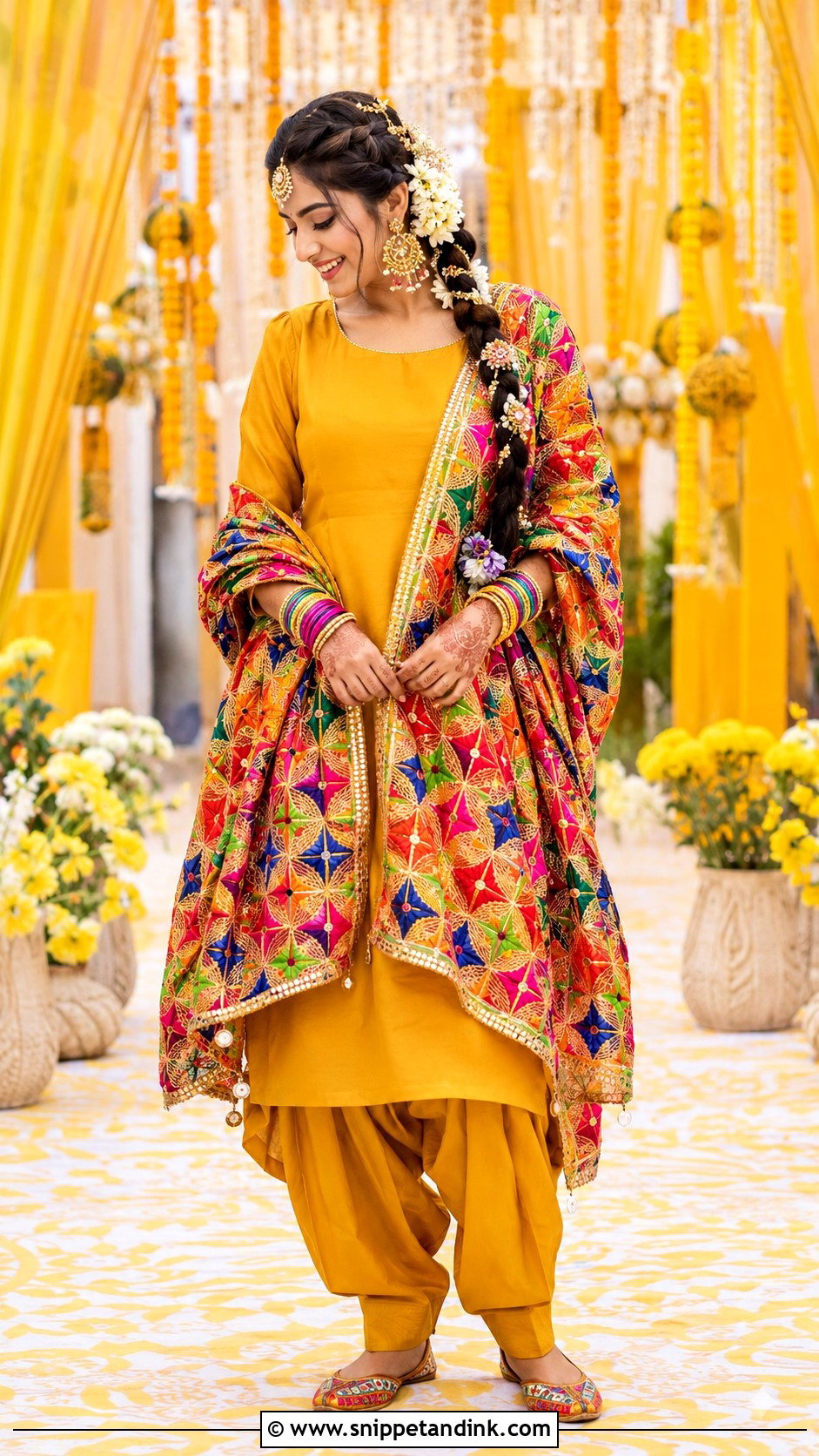
Phulkari means flower work: dense darning-stitch embroidery from Punjab, often in silk floss, and a good one can turn a plain suit into the most meaningful outfit of the week. Start with a plain mustard kurta and matching pants or a lightly flared salwar, then drape a pink, orange, green and red phulkari over one shoulder so the pattern is fully visible. Traditional gold earrings, colored bangles, Punjabi juttis and a long braid with a small paranda finish it. If the dupatta is an heirloom, take it off before the paste comes out. Silk floss stains easily and old dyes can run, so I’d wear it for portraits only.
Getting Turmeric Out Afterwards, and What Won’t Come Out
Turmeric stains because its pigment, curcumin, binds quickly to fibers, and the paste is usually mixed with oil, which helps it spread deeper into the weave. How much comes out depends far more on the fabric and how fast you act than on any product.
In the first hour
Let wet paste dry and flake it off with a blunt knife or the back of a spoon rather than wiping, which smears it wider. Rinse cotton and synthetics from the back of the fabric in cold water. Hot water sets the stain. Be careful with ordinary soap and baking soda: curcumin turns reddish brown in alkaline conditions, so a yellow mark can suddenly look orange or rusty. A mild liquid detergent and patience work better.
Sunlight helps more than you’d think
Curcumin breaks down in light. A washed cotton kurta or maxi dress with a faint yellow shadow will often fade noticeably after a day drying in direct sun. Don’t try this on bright dyed silk or bandhani, since the sun fades the garment’s own color too.
Pieces that should go straight to a specialist
- Anything with zari, gota or metallic thread. Soaking can tarnish the metal and loosen the stitching, so spot clean only and send it to a dry cleaner who handles Indian bridal wear.
- Mirror work and heavy embroidery, where water collects behind the stitching and dries as a ring.
- Heirloom phulkari or old bandhani, where the original dyes may bleed. Tell the cleaner it’s irreplaceable.
- Organza and chiffon sarees, which water-mark easily.
If an outfit matters to you beyond this one morning, the honest advice is to protect it rather than plan to rescue it: portraits first, then a cover-up or a change before the paste.
Paste, Petals and a Lot of Sitting Down
A good Haldi outfit is the one you forget you’re wearing once the ritual starts. Lehengas, sarees, suits, fusion separates and dresses can all get you there; what decides it is the setting, how much you’ll move, the decor colors and how freely your family applies the paste. Pin drapes properly, wear shoes you can stand in for hours, and leave out any accessory you’ll need to fix every ten minutes. Then pick the one that sounds like you rather than the one you think a bride is meant to wear.
You'll Like These Ideas:




Leave a Reply