
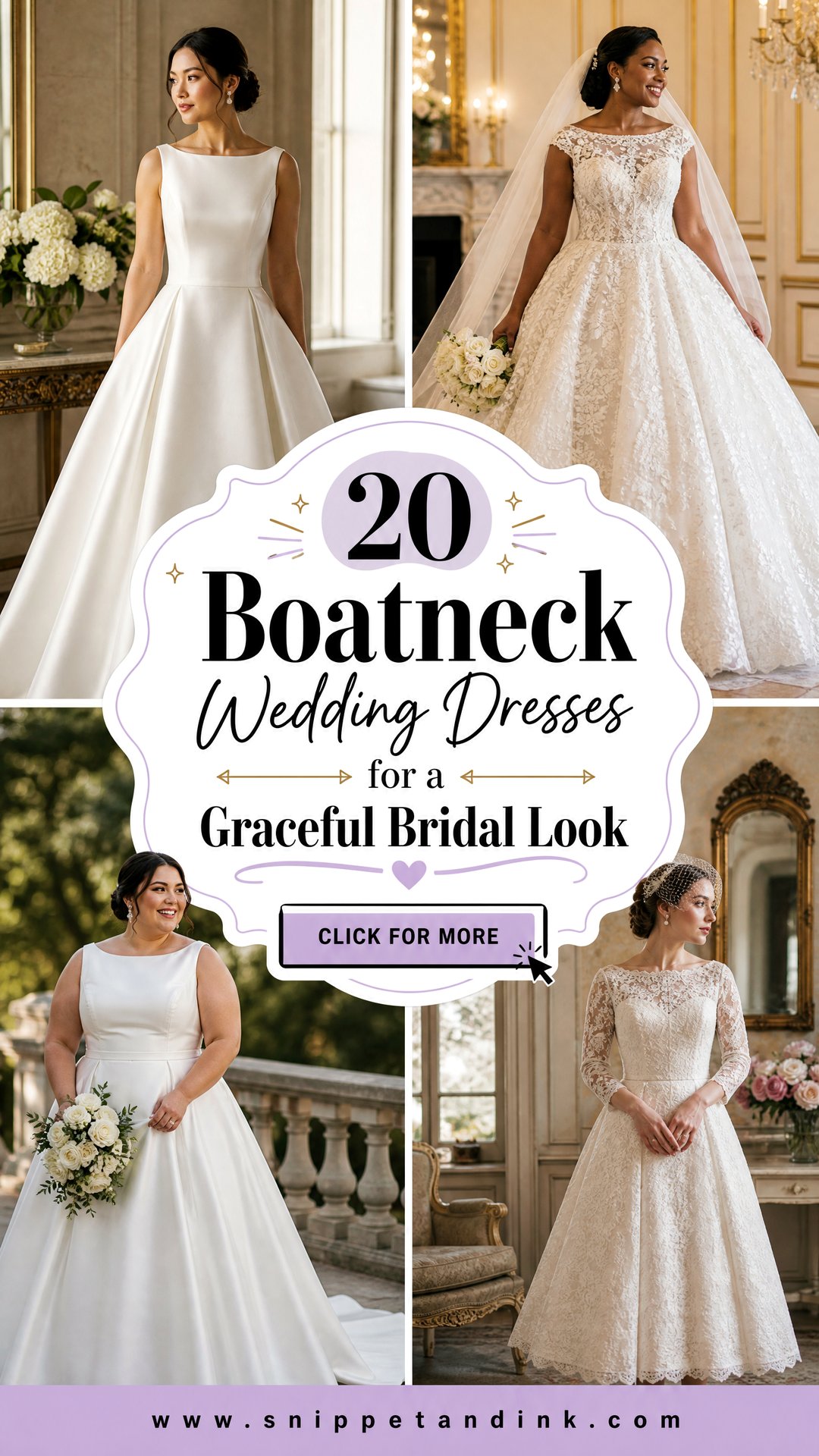
Most brides who ask me about boatnecks want two things at once: coverage, and a neckline that still shows off the collarbones. The bateau cut gives both. It runs wide and almost flat, curving gently out toward the shoulder tips, and it sits comfortably on fitted columns, A-lines, structured ball gowns and even minis. Satin, crepe, lace, chiffon and textured jacquard all hold it well. Long sleeves, open backs, light beading and plain tailoring each change its character, so there’s a version for most venues. My one rule across all of them is that accessories should frame the neckline, never sit on top of it. Here are 20 boatneck gowns and how I’d finish each one.
Earrings Over Necklaces, and Other Rules of the Bateau Line
A boatneck covers exactly the spot where a necklace would sit, so most necklaces end up either lying on the fabric or fighting its edge. I steer nearly every boatneck bride toward earrings as the main piece of jewelry. The neckline is one long horizontal, and an earring adds a vertical line that breaks it up.
Matching earrings to the neckline width
A very wide bateau that reaches the shoulder tips can take a longer drop or a linear earring. A narrower, softer curve looks better with studs or a short drop. Hold the earring up against the dress in the fitting room and turn your head; if it brushes the fabric, go shorter.
The two places a necklace still works
A back necklace on an open-back gown puts the sparkle where there’s no fabric. And a fine chain can look intentional inside an illusion neckline, sitting in the bare gap above the lace. Anything chunkier I’d save for the reception outfit.
Hair and veil around the neckline
Hair worn fully down covers the one area this neckline is meant to show, so I usually suggest an updo, a low bun or a half-up style that keeps the collarbones clear. Where the veil sits changes the side view too. Anchored just under the bun, it falls straight down the back and leaves the shoulder line alone; anchored high at the crown, the tulle spreads across the shoulders and softens that clean edge.
1. Satin A-Line Boatneck Wedding Dress
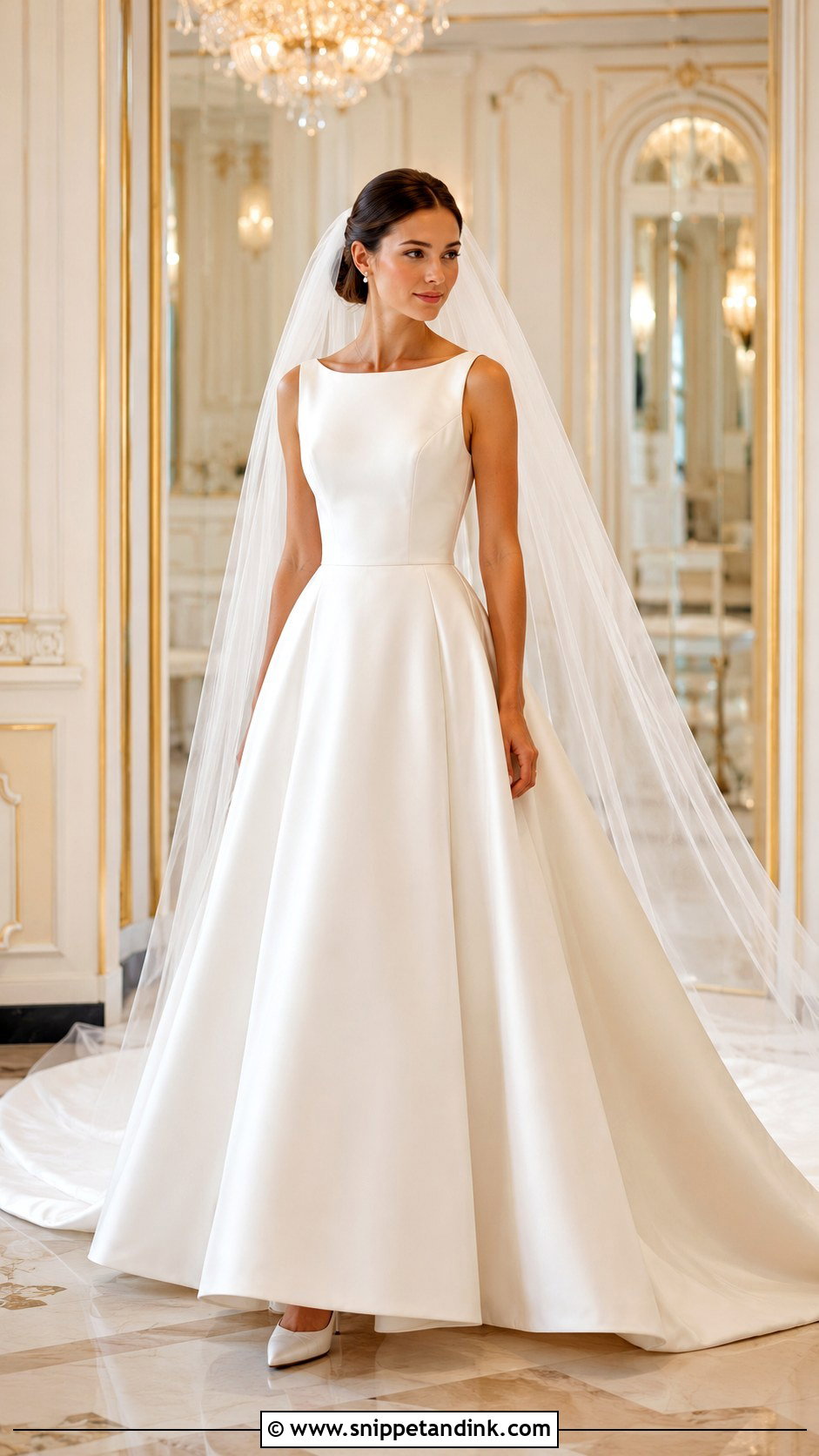
Satin on an A-line is the most classic way to wear this neckline. A fitted bodice marks the waist, the skirt opens with soft structure, and the sheen does the decorating, which is why it belongs in formal indoor venues and ballrooms. Keep the neck clear with a sleek low bun or chignon. Pearl studs, a fine bracelet and pointed ivory pumps finish it; with a long train, a cathedral veil with a clean edge keeps the line uninterrupted. Want more waist? Ask about soft pleating or a narrow waistband. Shoulder fit matters more than anything else on this gown, because satin is unforgiving and a neckline that pulls even slightly shows as diagonal drag lines toward the armpit.
2. Long Sleeve Crepe Boatneck Wedding Dress
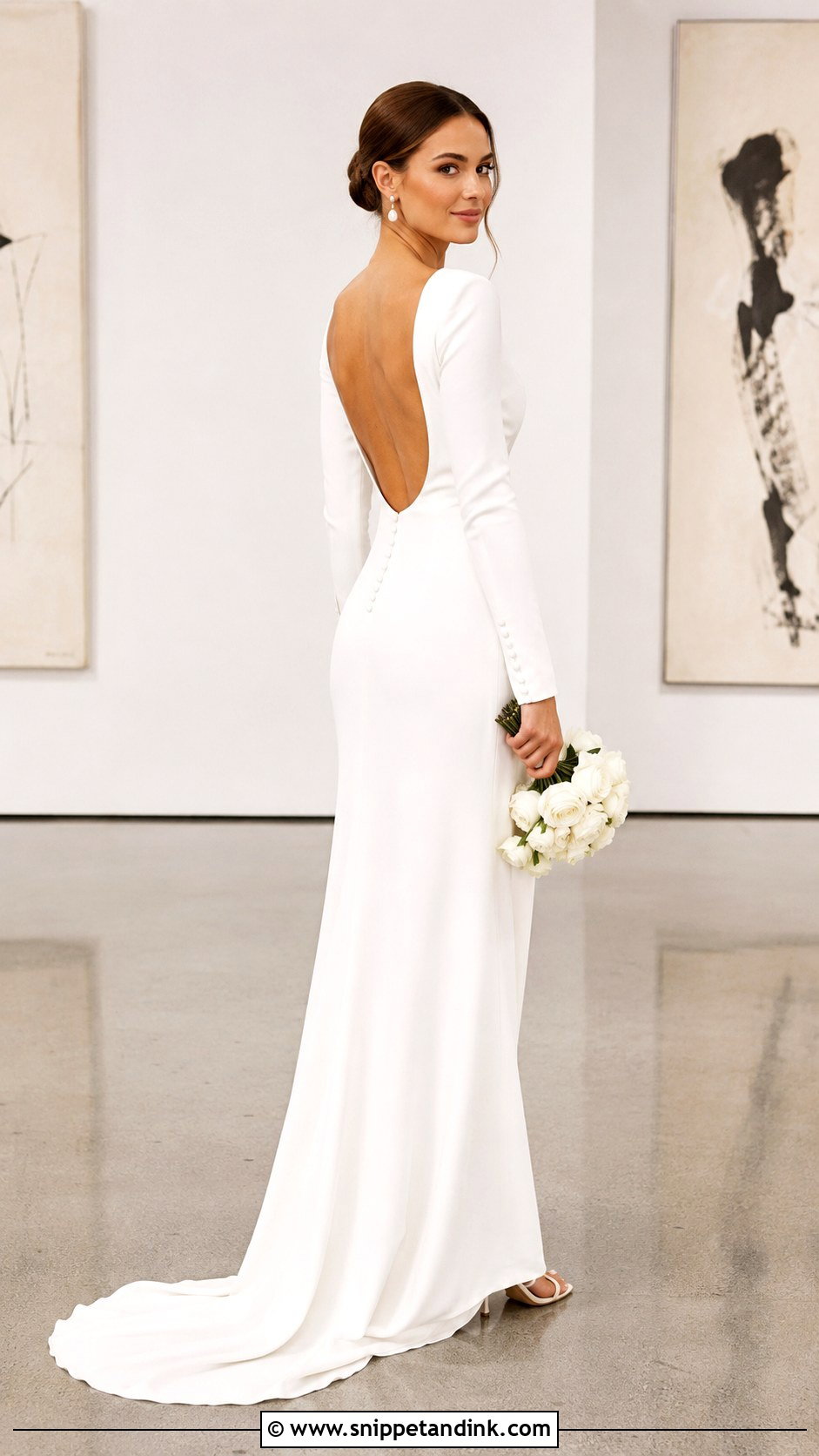
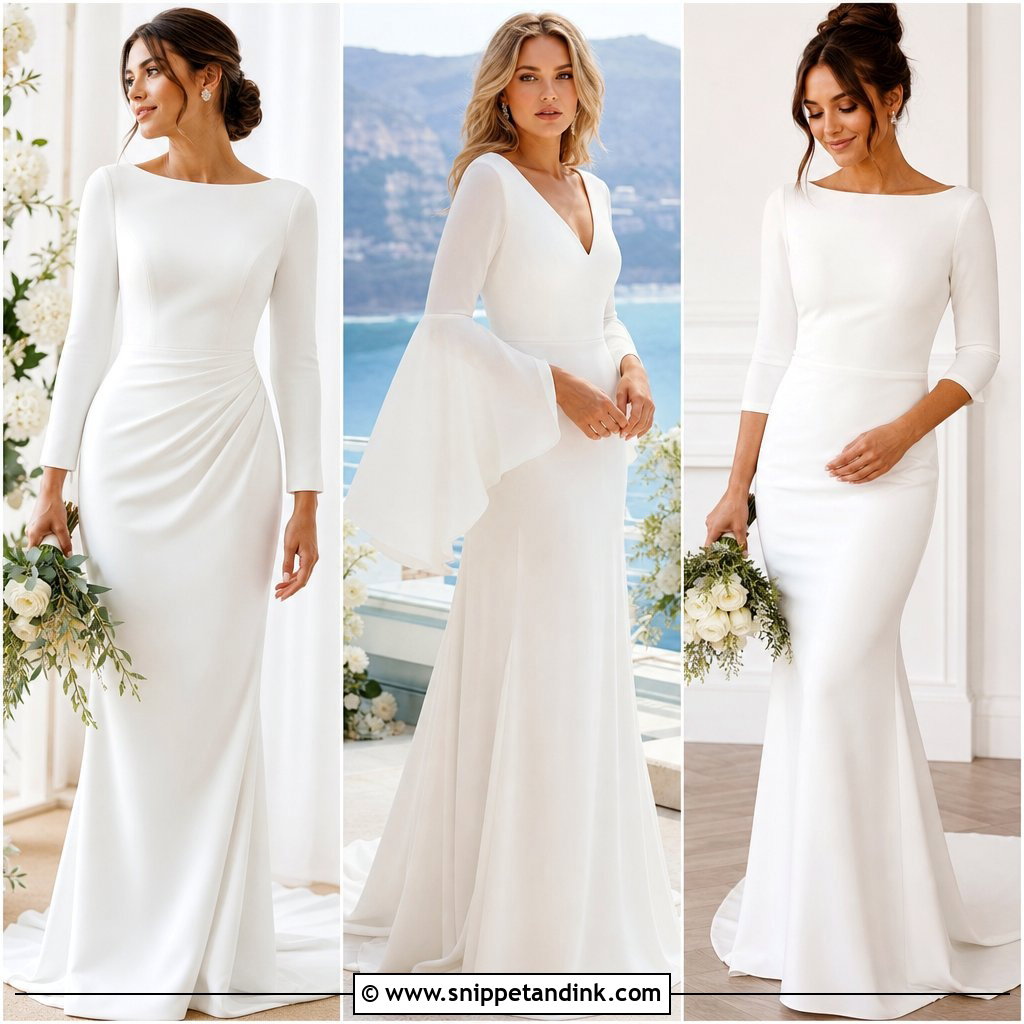
Crepe has no shine, so a long-sleeved crepe boatneck looks quieter and more modern than satin, and it photographs as one smooth surface. Fitted sleeves with covered buttons at the wrist are the detail I’d look for. Keep the skirt to a column or a relaxed fit-and-flare. Because the front and arms are covered, an open back adds contrast without changing the mood. Pearl drops, ivory slingbacks, a compact bouquet and a smooth bun that leaves the back visible complete it. The underarm is where long-sleeved crepe usually fails. A sleeve set in too tight looks sleek in the mirror, then stops you lifting your arms for a hug, so test that before you worry about sleeve length.
3. Lace Ball Gown Boatneck Wedding Dress
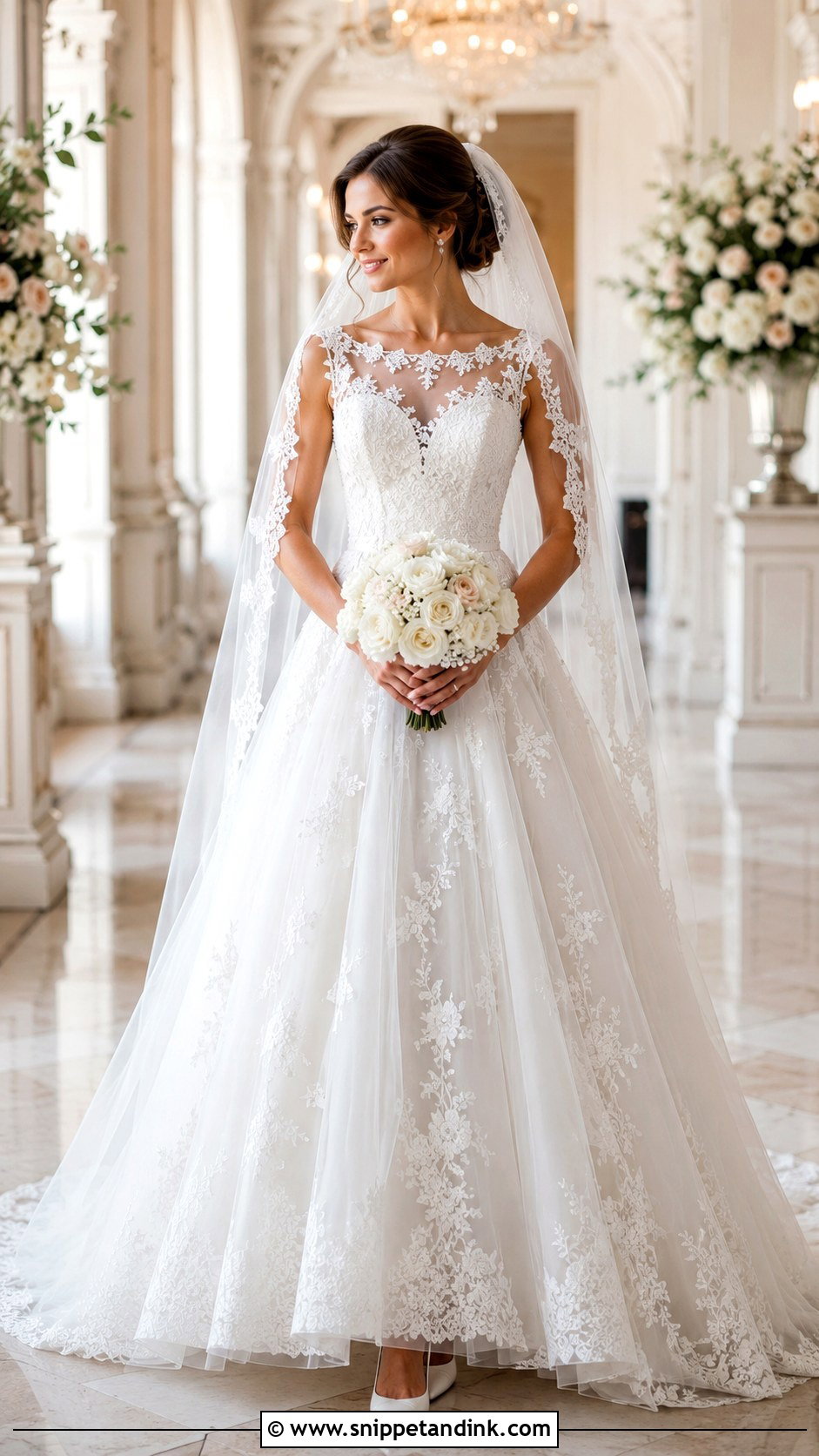
Texture, volume and coverage in one dress: a lace ball gown with a boatneck gives you all three. The fitted lace bodice sits above a full tulle or organza skirt, and the wide neckline stops the top half looking heavy against all that volume. I like appliqués that trail from the bodice down onto the skirt so the two halves feel connected. For more coverage, line the neckline; for an airier look, put illusion tulle beneath the lace. Crystal studs, satin pumps, a fingertip veil edged in matching lace and a low textured updo suit it. Full skirts weigh more than they look, especially with several tulle layers underneath, so walk, sit and turn in it before you commit.
4. Sleeveless Mikado Boatneck Wedding Dress
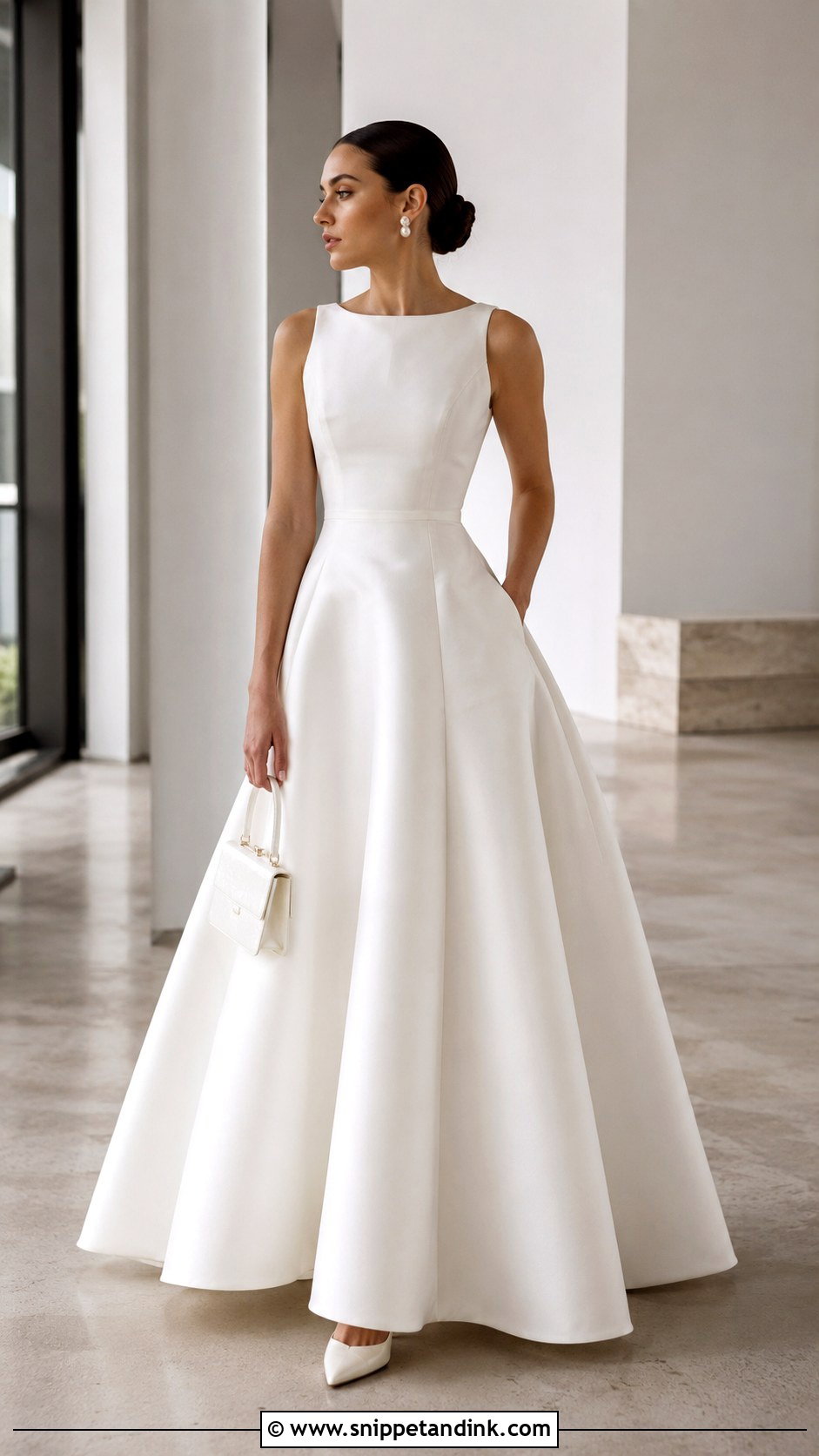
A sleeveless Mikado boatneck wedding dress is all structure and almost no decoration. Mikado holds its own shape, which suits a crisp A-line or an architectural ball gown, and the interest comes from the waist, the seam placement and the neckline itself. Sculptural pearl earrings, pointed pumps and a small structured bag are plenty, with a neat chignon or short styled hair to keep the neck clear. Pockets are worth asking for, since the fabric is stiff enough to hide them without bulging. At alterations, I check the armholes first. A stiff fabric with a tight armhole will chafe by the speeches, and the bodice should feel secure without pressing into the shoulders or chest.
5. Mermaid Boatneck Wedding Dress
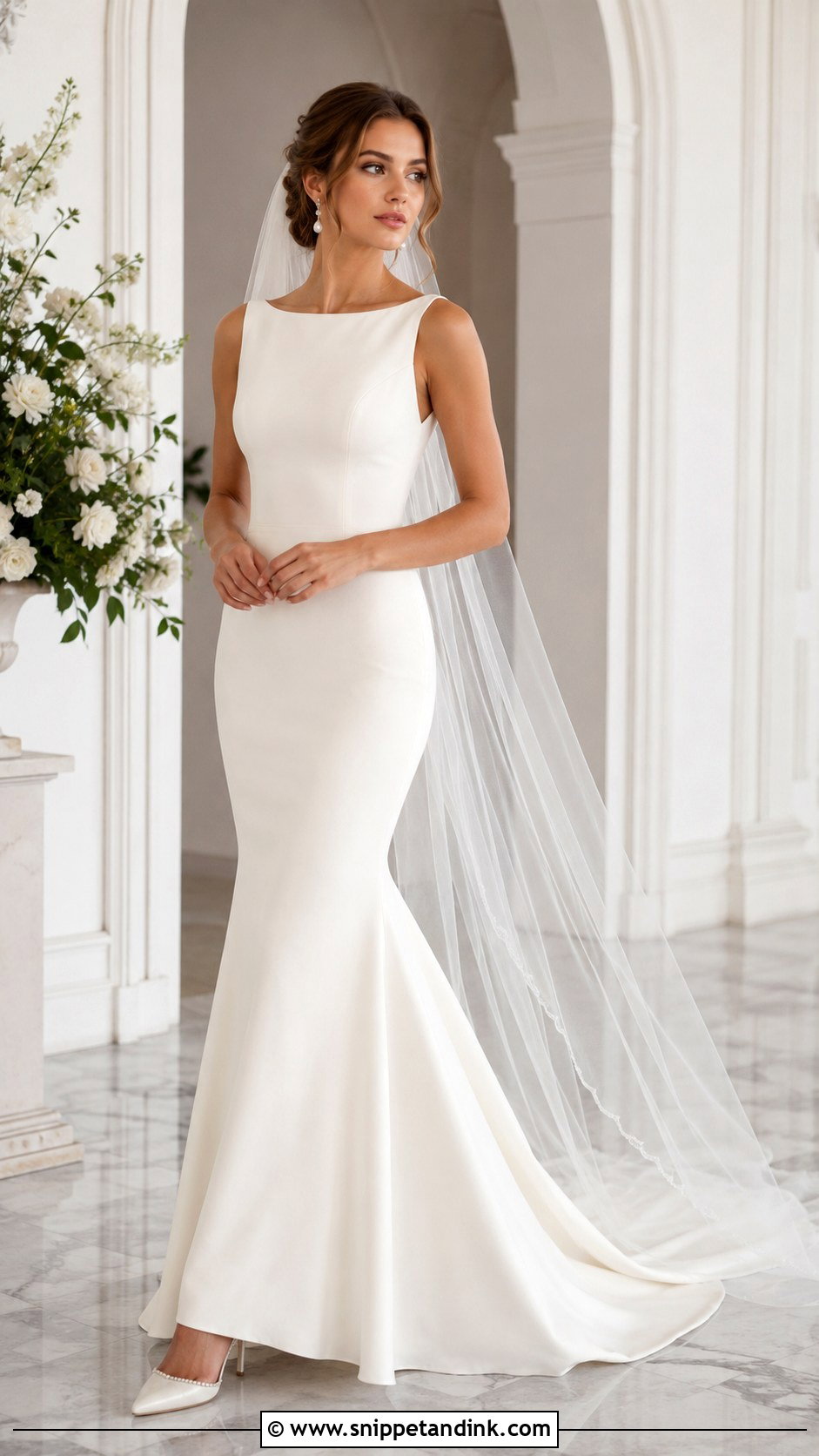
The mermaid pairs a restrained neckline with the most dramatic skirt shape there is. It follows torso, waist and hips, then flares near the knee into a clear hourglass. Stretch crepe moves more easily, while satin or another structured fabric gives a sharper, formal finish. Let the silhouette lead with a smooth updo, drop earrings and pointed heels stable enough for a narrow skirt. A chapel veil adds movement without fighting the fit. In the sample, take full strides and then sit down. If the lining twists around your legs as you walk, that’s a construction problem, and it won’t improve on the day.
6. Backless Boatneck Wedding Dress
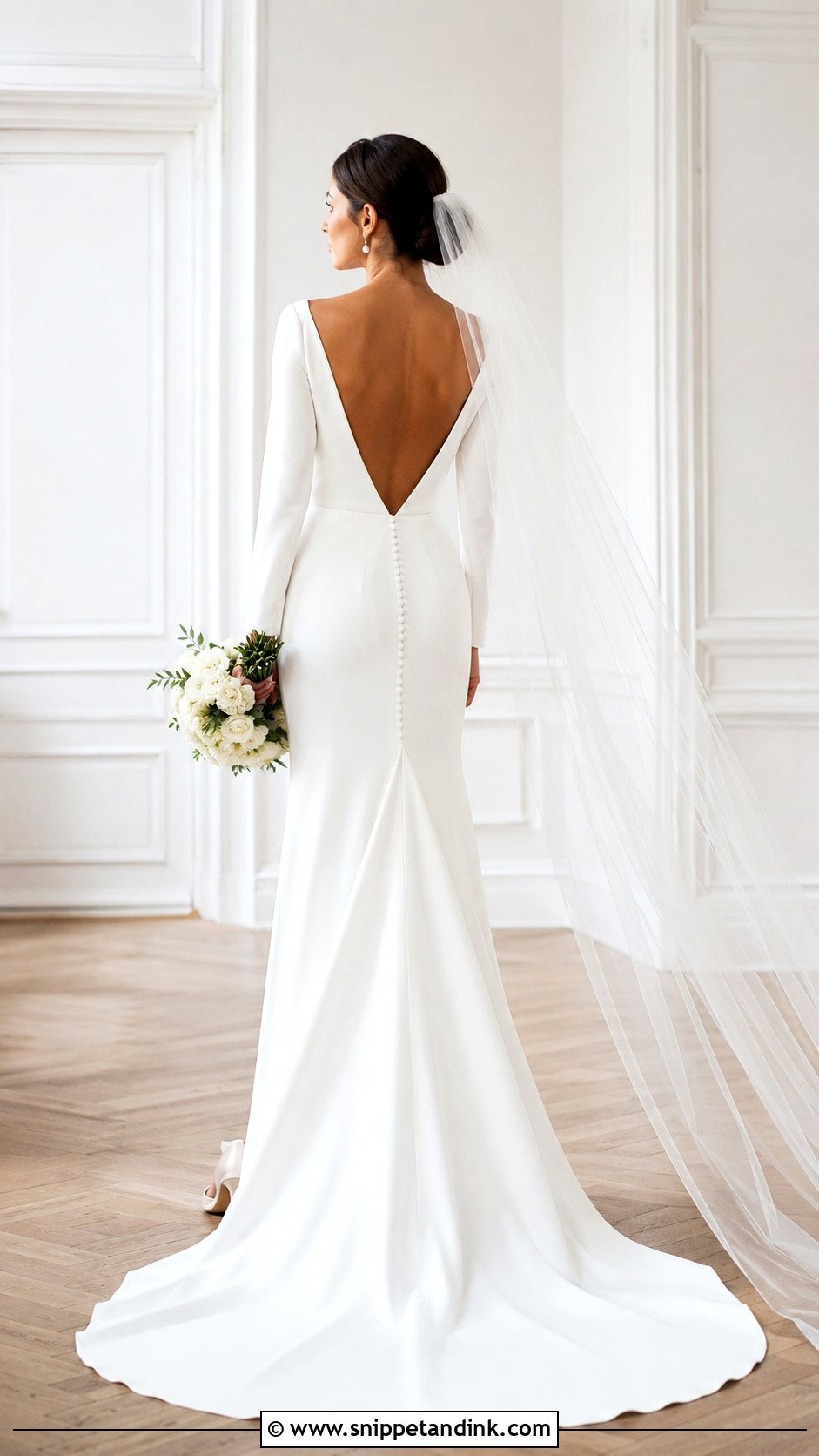
Covered front, open back. From the front it reads plain and polished; from behind there’s a deep V, a rounded scoop or a geometric cut-out. Crepe and matte satin keep it sleek. Since there’s no back to hold the neckline in place, check for internal support, firm shoulder seams and discreet fastenings. Wear your hair low or swept to one side to show the back, with pearl earrings, ivory heels and a long sheer veil you can take off after the ceremony. Raise the undergarment question at your first alteration appointment, not the last. Adhesive support, sewn-in cups and custom lining each change how the bodice is fitted, and switching late means fitting it all over again.
7. Cap Sleeve Boatneck Wedding Dress
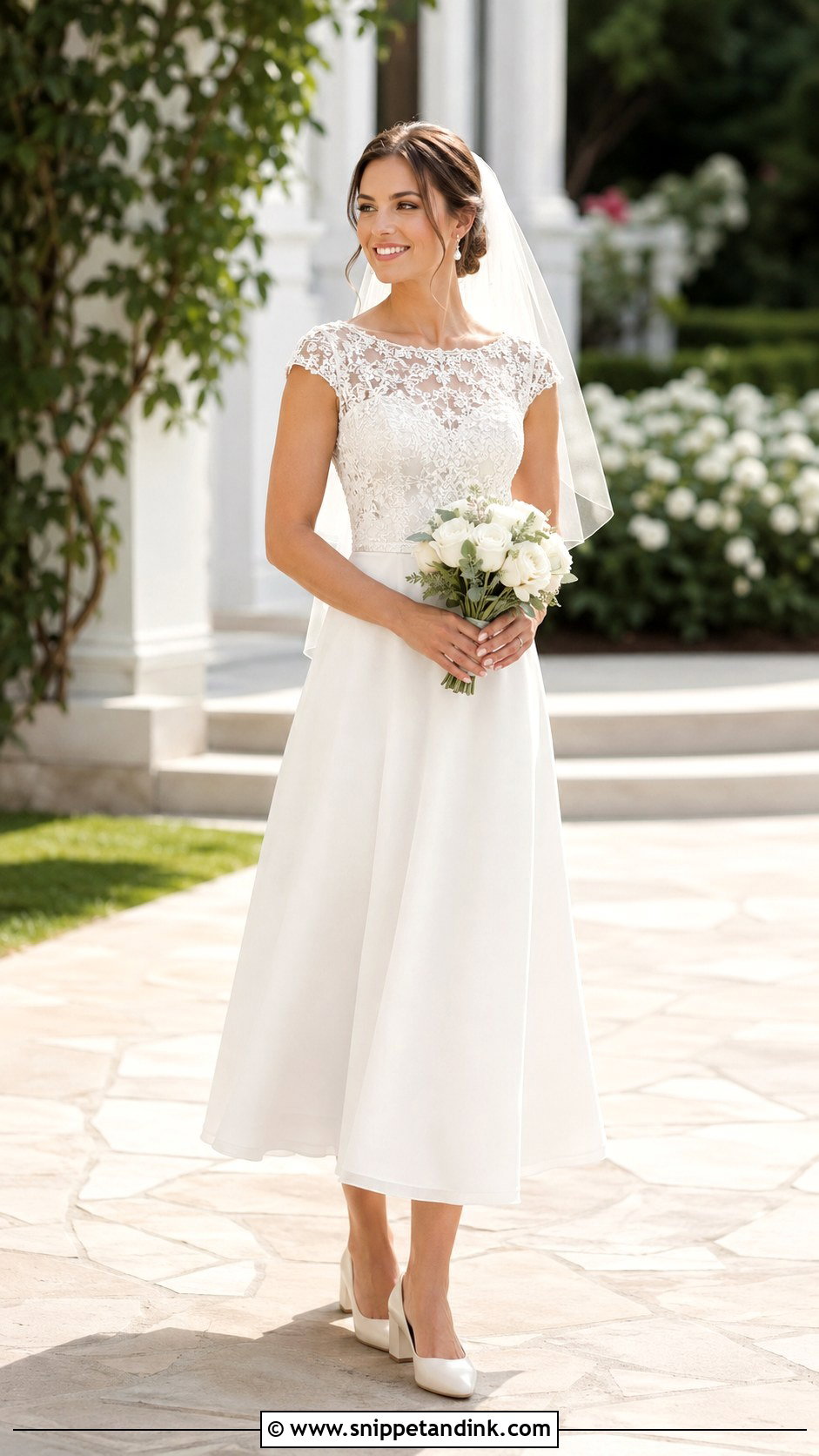
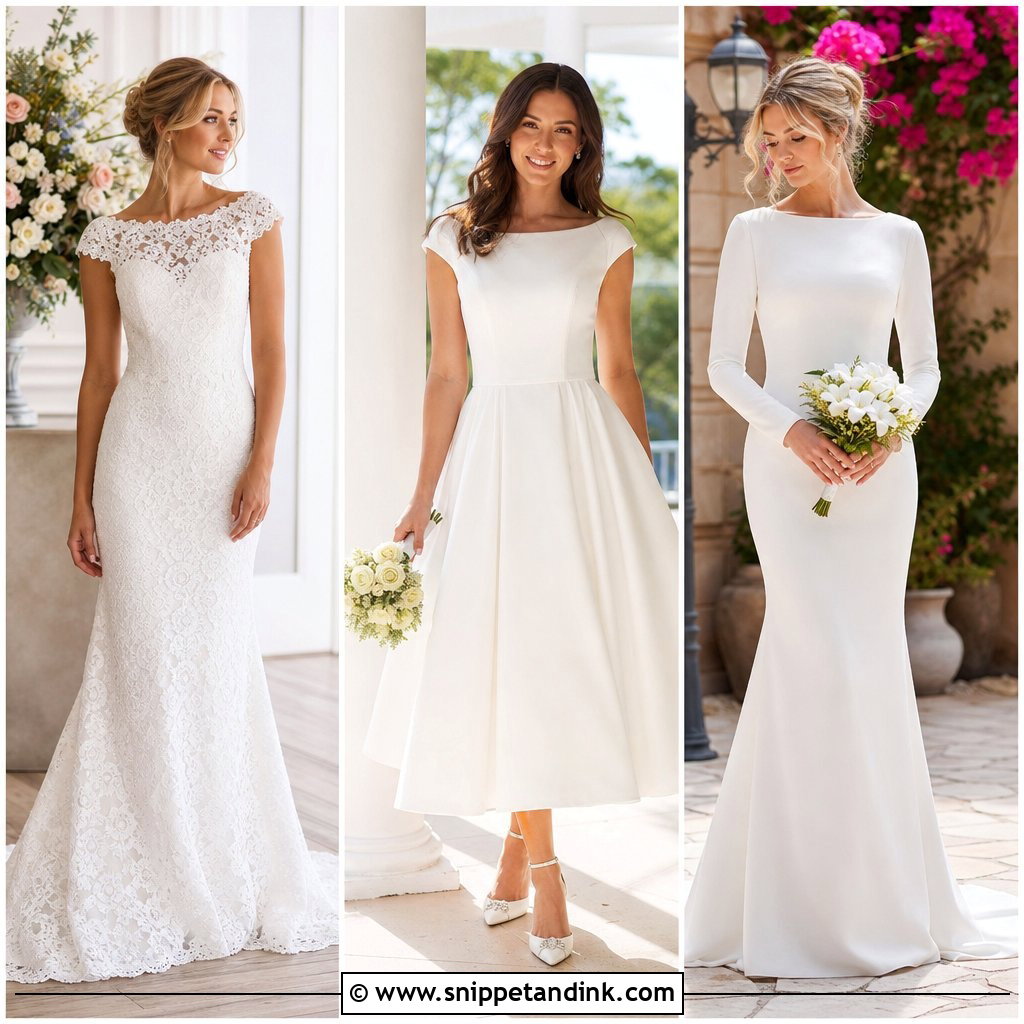
Soft cap sleeves continue the boatneck out over the shoulder, giving a little coverage without the weight of a full sleeve. They suit lace, chiffon, satin and crepe. An A-line keeps it easy, and a fitted sheath makes it sleeker. Embroidered cap sleeves over illusion tulle are a good middle ground if you want texture. Small pearl drops, a narrow bracelet, block heels and a half-up style or loose low bun are all it needs. Look closely where the sleeve meets the arm. If the edge digs in, you’ll feel it every time you reach for a glass, and heavily textured lace or beading needs a soft lining underneath so it doesn’t scratch.
8. Tea-Length Boatneck Wedding Dress
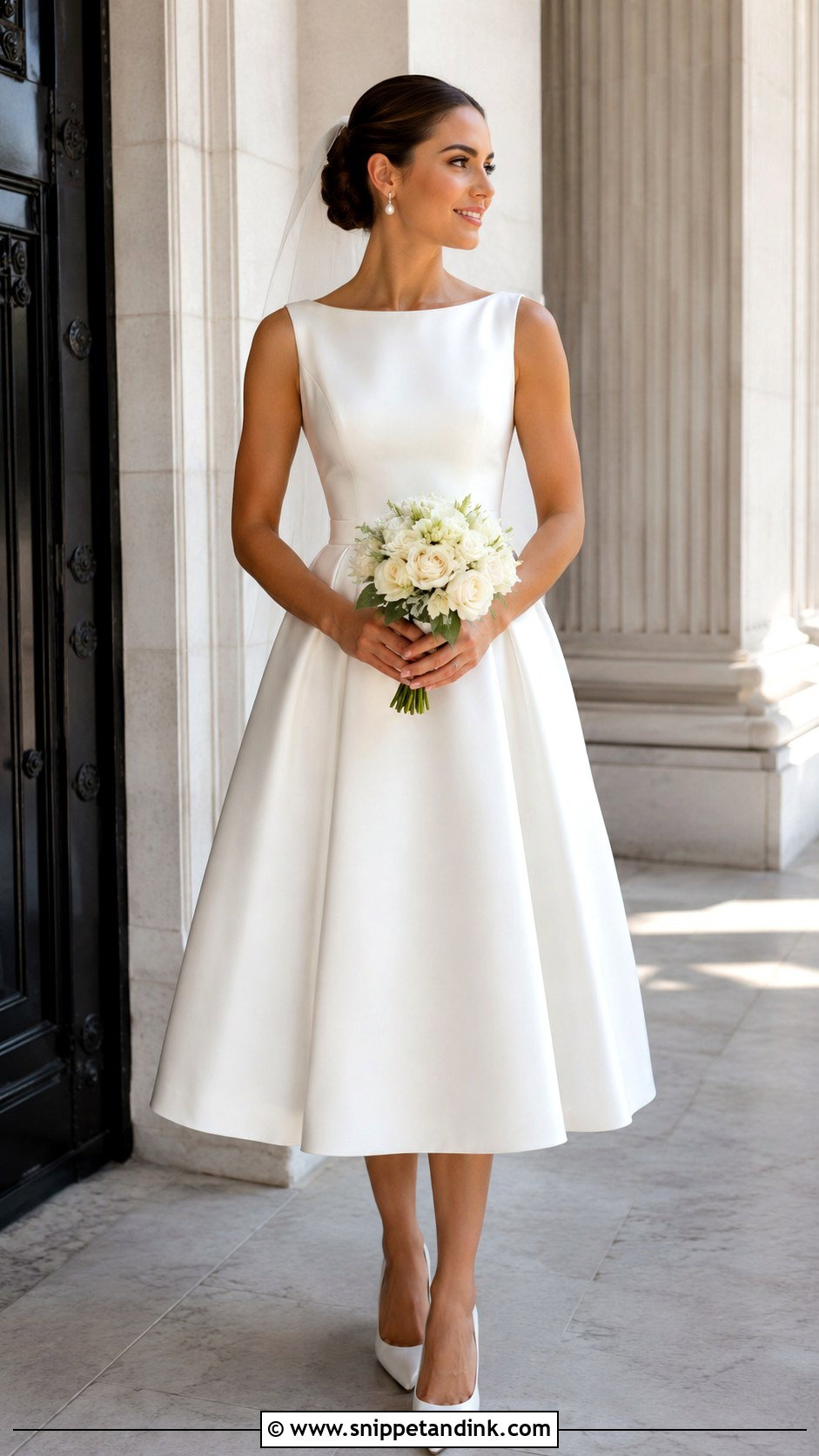
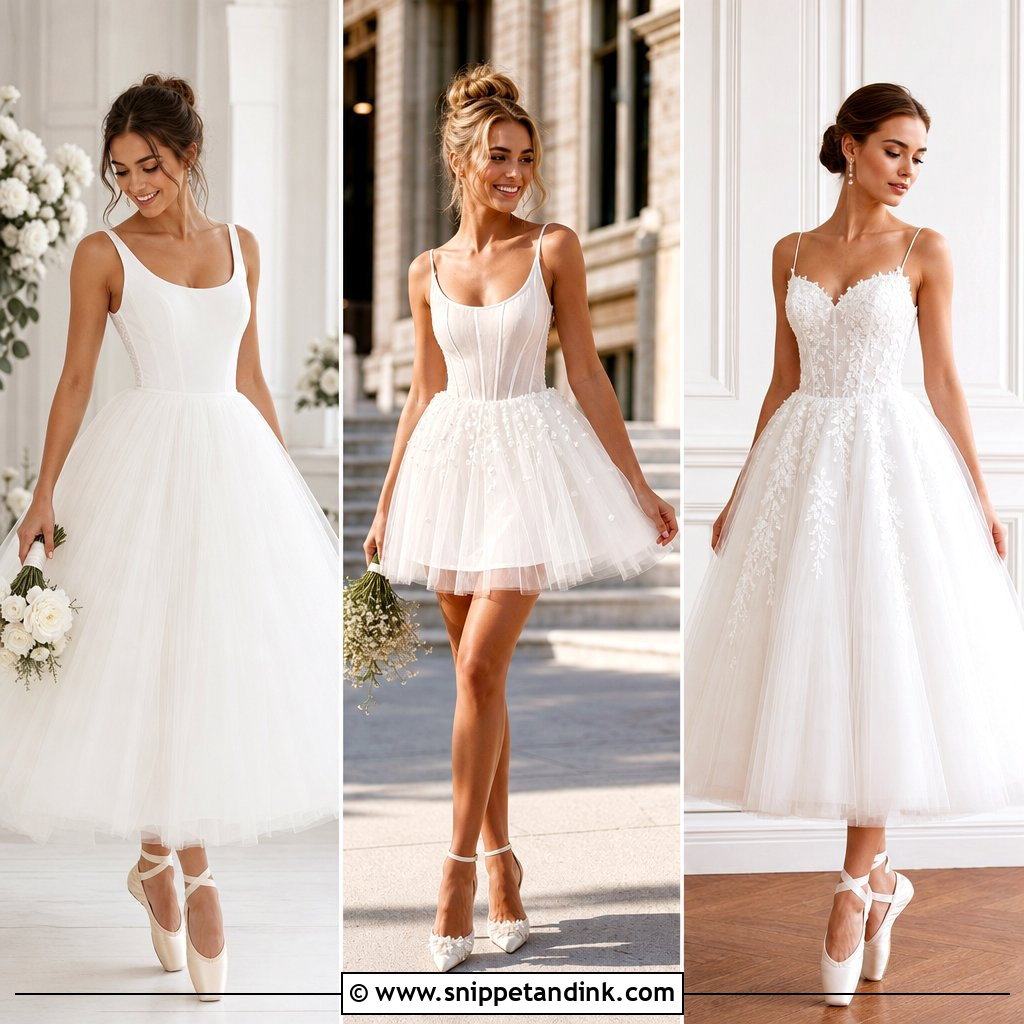
Tea length is the playful version: the skirt stops between knee and ankle, and your shoes become part of the outfit. Structured satin or Mikado gives a crisp, full skirt, while layered tulle moves more softly. Keep the bodice fitted and the waist defined to balance the shorter hem. Pointed pumps, pearl earrings and a birdcage or fingertip veil finish it, and a neat bun nods to the retro feel without becoming fancy dress. It’s a sensible length for courthouse ceremonies, gardens and smaller weddings, and nobody steps on it. Bring your actual shoes to every fitting. A hem pinned at the wrong heel height can land at mid-calf, which flatters almost nobody.
9. Minimalist Column Boatneck Wedding Dress
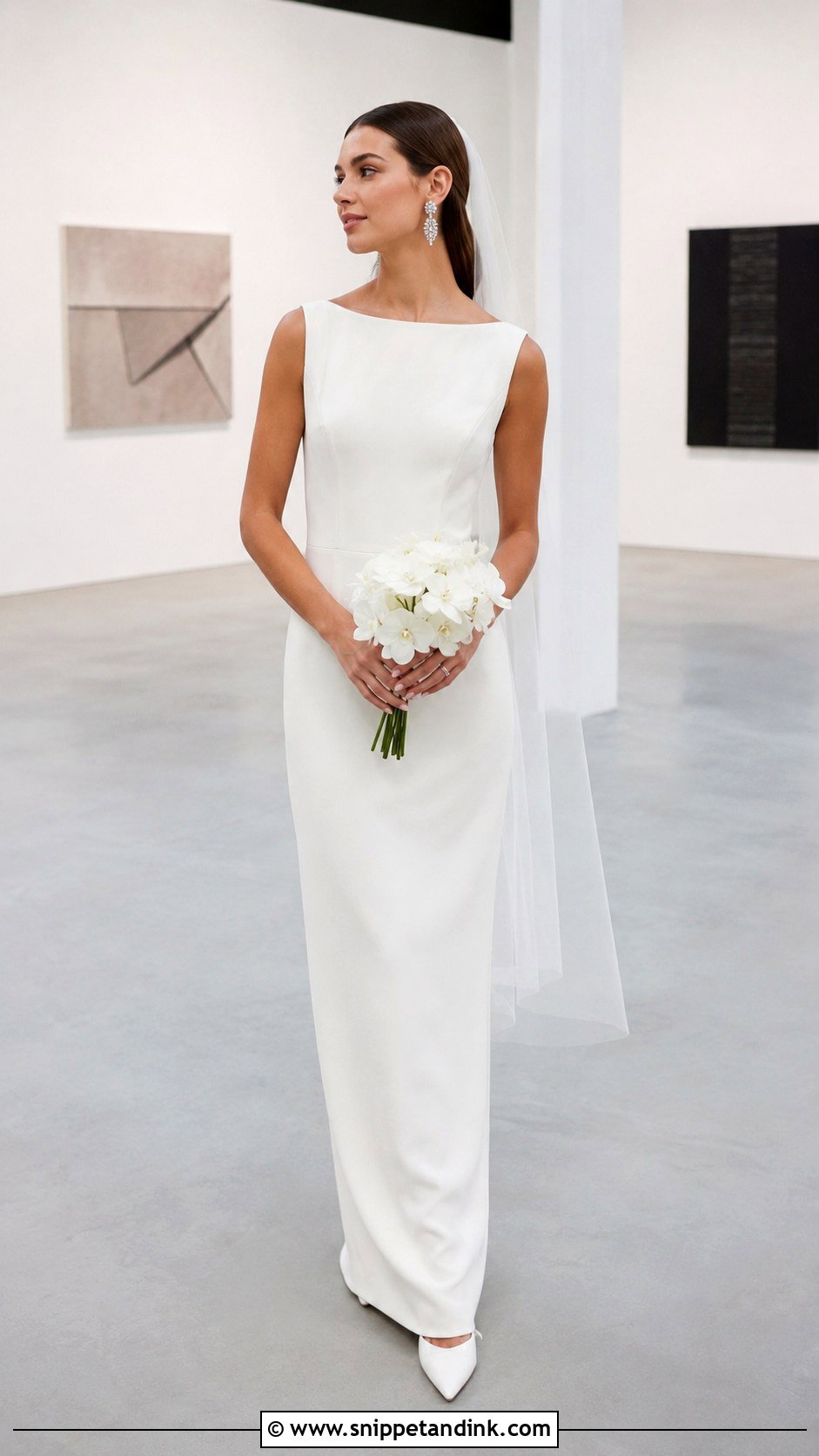
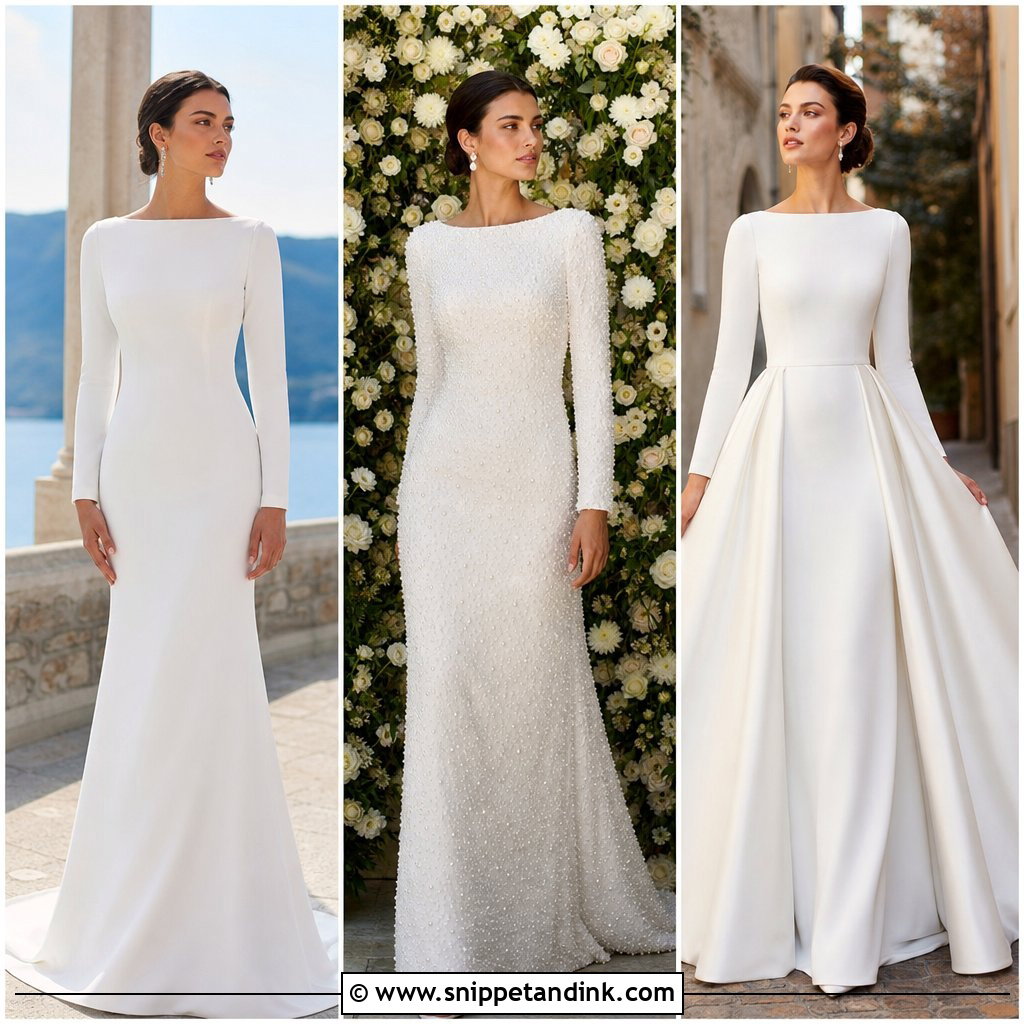
Simple doesn’t have to mean plain. A minimalist column relies on fabric, seams and tailoring, with no embellishment to hide behind. Matte crepe, silk faille or smooth satin gives a long, unbroken line from shoulder to floor, and a subtle train or covered back buttons supply the only detail. Sleek earrings, pointed ivory heels, a single-layer veil and a bouquet of one flower variety keep the mood consistent, with glossy hair tucked behind the ears or a polished bun. With nothing to distract the eye, alterations carry the whole dress. I check shoulder placement, waist shaping, hem and lining from every side, because any flaw sits in plain view.
10. Beaded Boatneck Wedding Dress
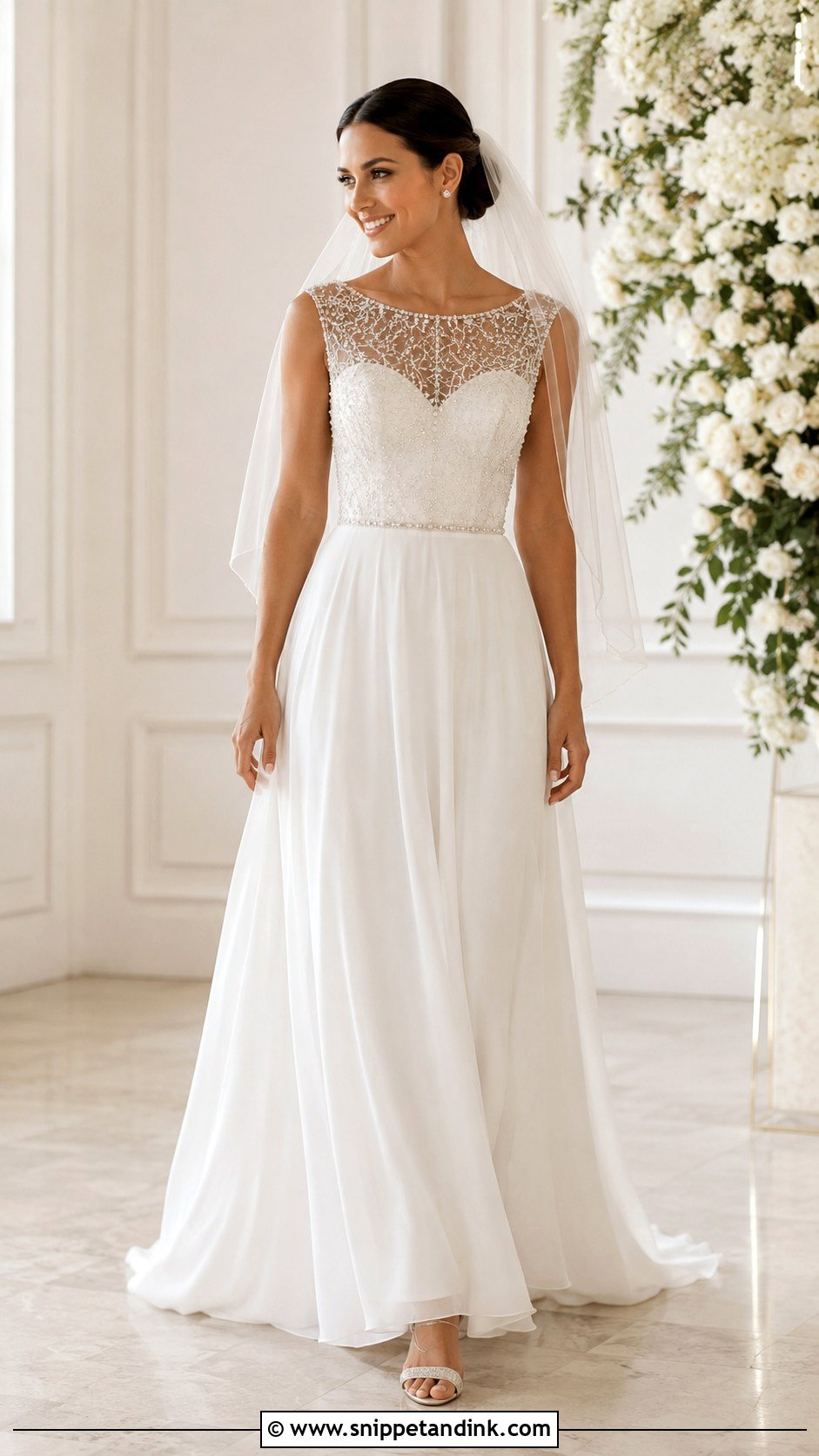
Beading on a boatneck catches the light right at the collarbones. To keep the gown feeling light, go for fine pearlwork, scattered crystals or linear beading over dense decoration; on an illusion boatneck, the beads appear to float across the shoulders. A simple chiffon, tulle or crepe skirt keeps the balance. Understated studs, metallic ivory sandals and a veil without a heavy border finish it, and a smooth low bun keeps loose strands out of the beadwork, where hair tangles surprisingly easily. Turn the bodice inside out at the appointment. The lining around the neckline and armholes should be soft enough that bead threads never touch skin, and the veil shouldn’t snag when you drag it across the beading.
11. Plus Size A-Line Boatneck Wedding Dress
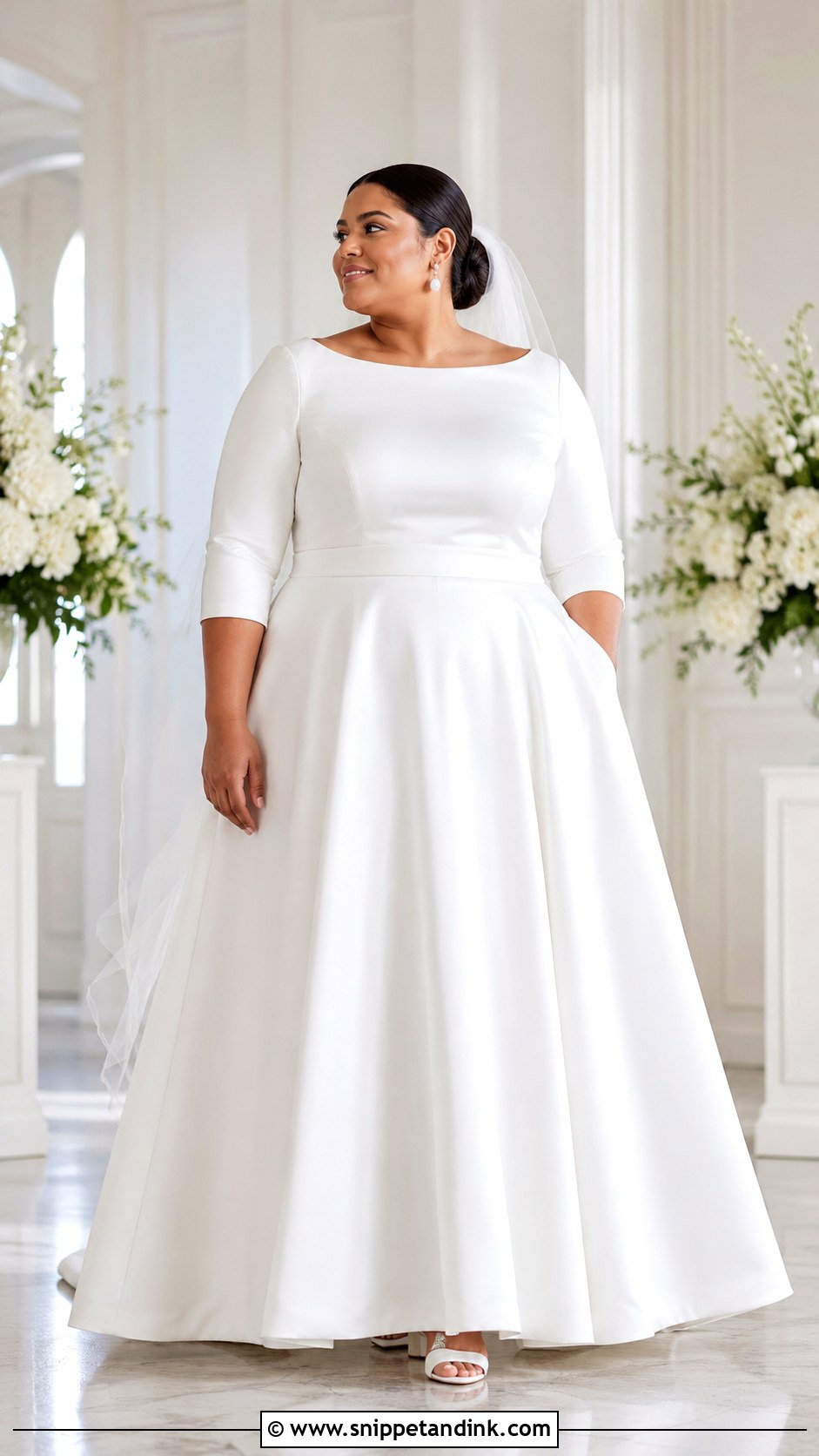
Coverage, support and a clear waist are what a plus-size A-line boatneck should deliver. I look for a structured bodice with internal boning, shoulders set slightly wider so the neckline doesn’t pinch, and a waist seam at your natural waist. The skirt should skim the hips, not add bulk. Crepe drapes, while satin and Mikado hold more shape. Block heels, drop earrings and a veil anchored under a low bun finish it, and three-quarter sleeves add coverage while leaving the wrists free. Bridal sizing runs small and varies between designers, so the number on the label means very little. Go by your current measurements and by whether you can sit, breathe, walk and dance in it.
12. Petite Sheath Boatneck Wedding Dress
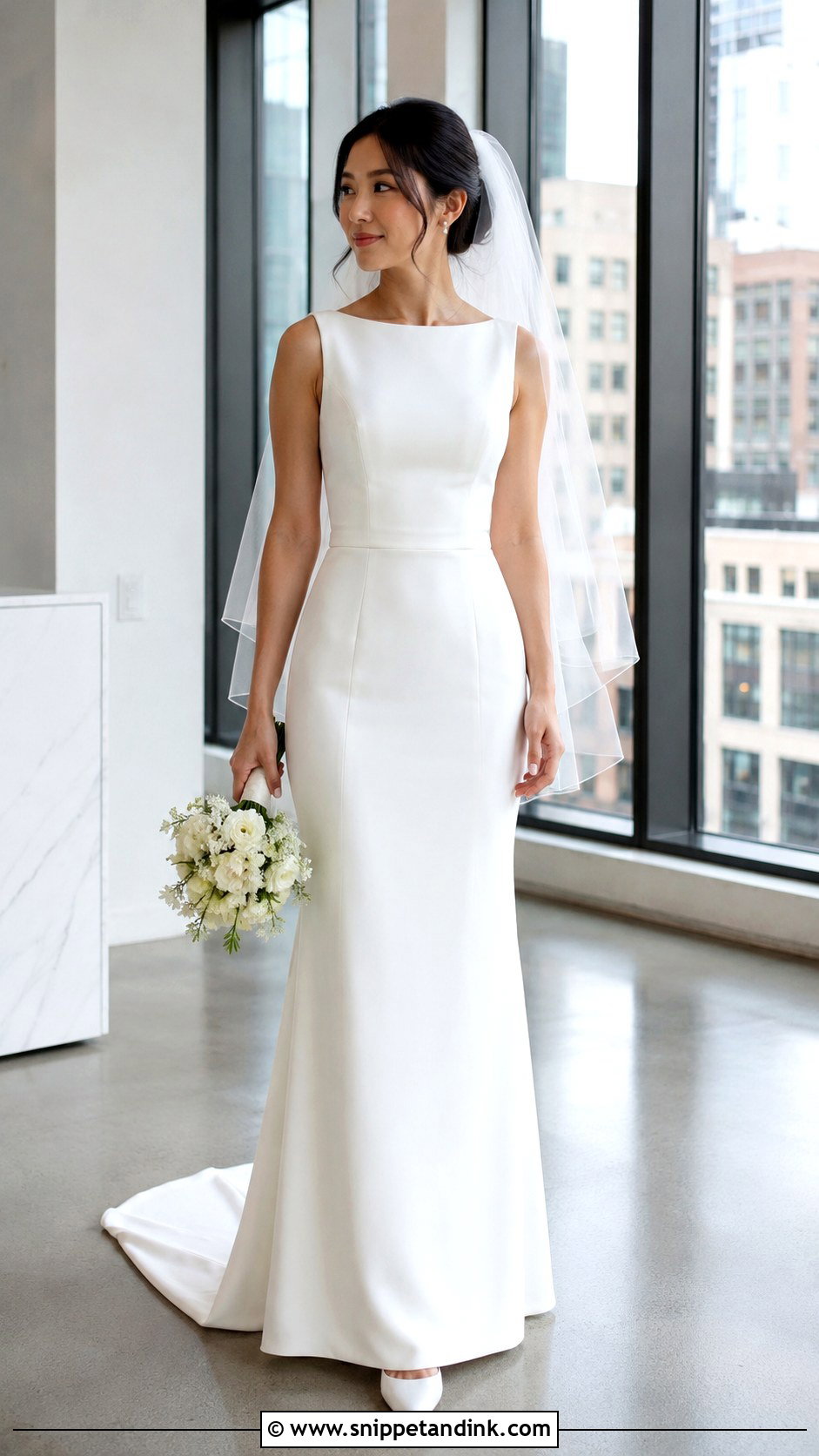
A petite sheath boatneck wedding dress keeps a long, clean line without swamping a smaller frame. The neckline should sit close to the collarbones, and the shoulder seams need to end exactly at your shoulder point; on petite brides they often overshoot. A high waist or an unbroken centre seam lengthens the body, and lightweight crepe, soft satin or a silk blend is easier to carry than heavy layers. Pointed pumps, small earrings and a narrow bouquet keep the scale right. A fingertip veil often looks more proportionate than a very wide cathedral, though either can work. Petite doesn’t mean plain, either; vertical lace placement or a slim back opening adds personality. Find a tailor who adjusts the whole proportion, not only the hem.
13. Modest Long Sleeve Boatneck Wedding Dress
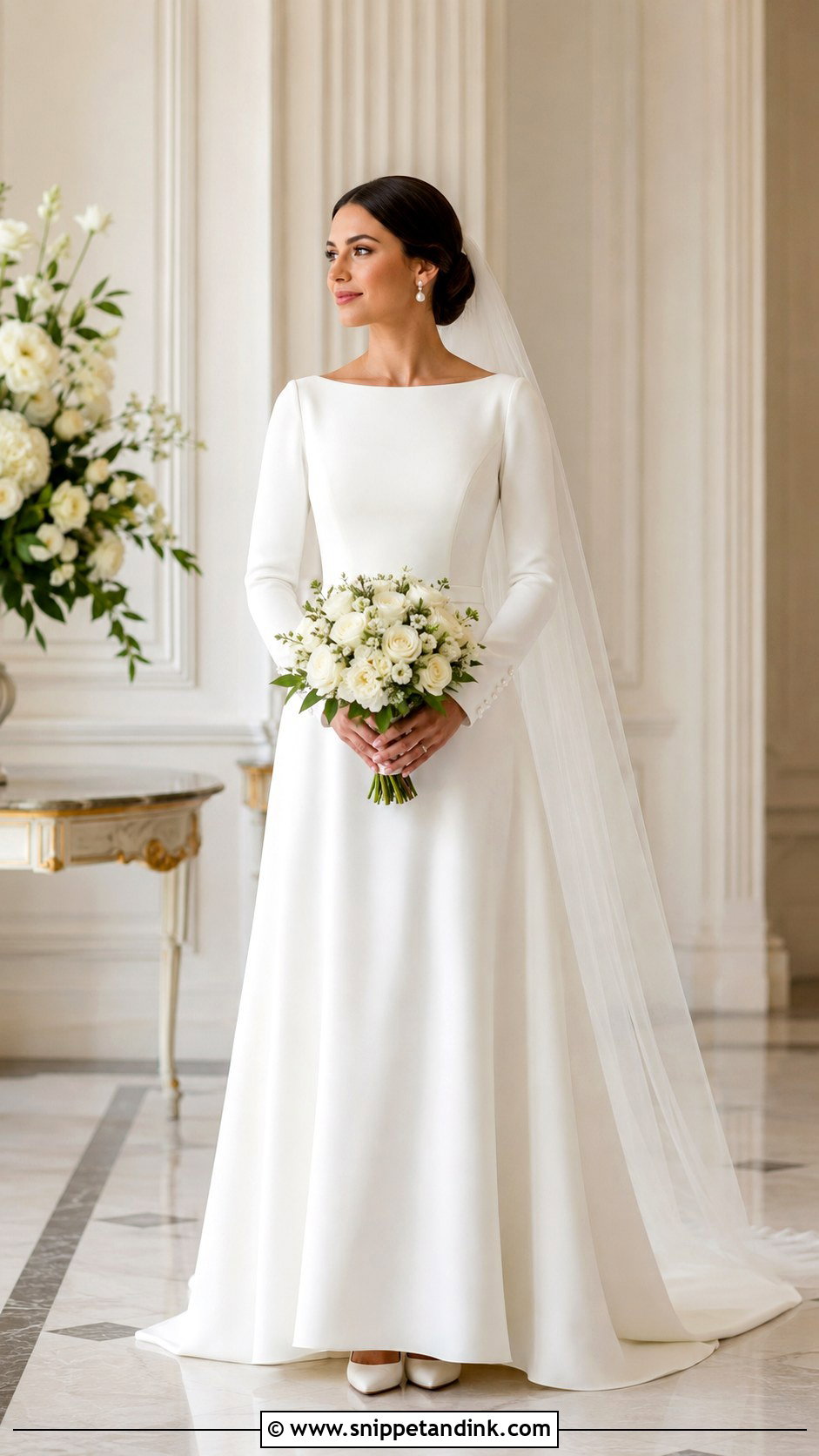
Coverage that looks designed in, rather than added on, is the point of a modest long-sleeve boatneck. Opaque crepe, satin or properly lined lace makes the bodice and sleeves feel intentional. A natural waist and a flowing A-line suit most venues and seasons, and covered buttons along the cuffs or back add quiet detail. Pearl earrings, closed-toe pumps and a light veil secured under a smooth bun finish it. With so much of the upper body covered, a breathable lining matters, especially in summer. Ask whether the sleeves have enough ease at the elbow and shoulder. I have brides hug me in the fitting room, and if the back pulls tight or the neckline slides, the sleeve needs more room.
14. Vintage Lace Boatneck Wedding Dress
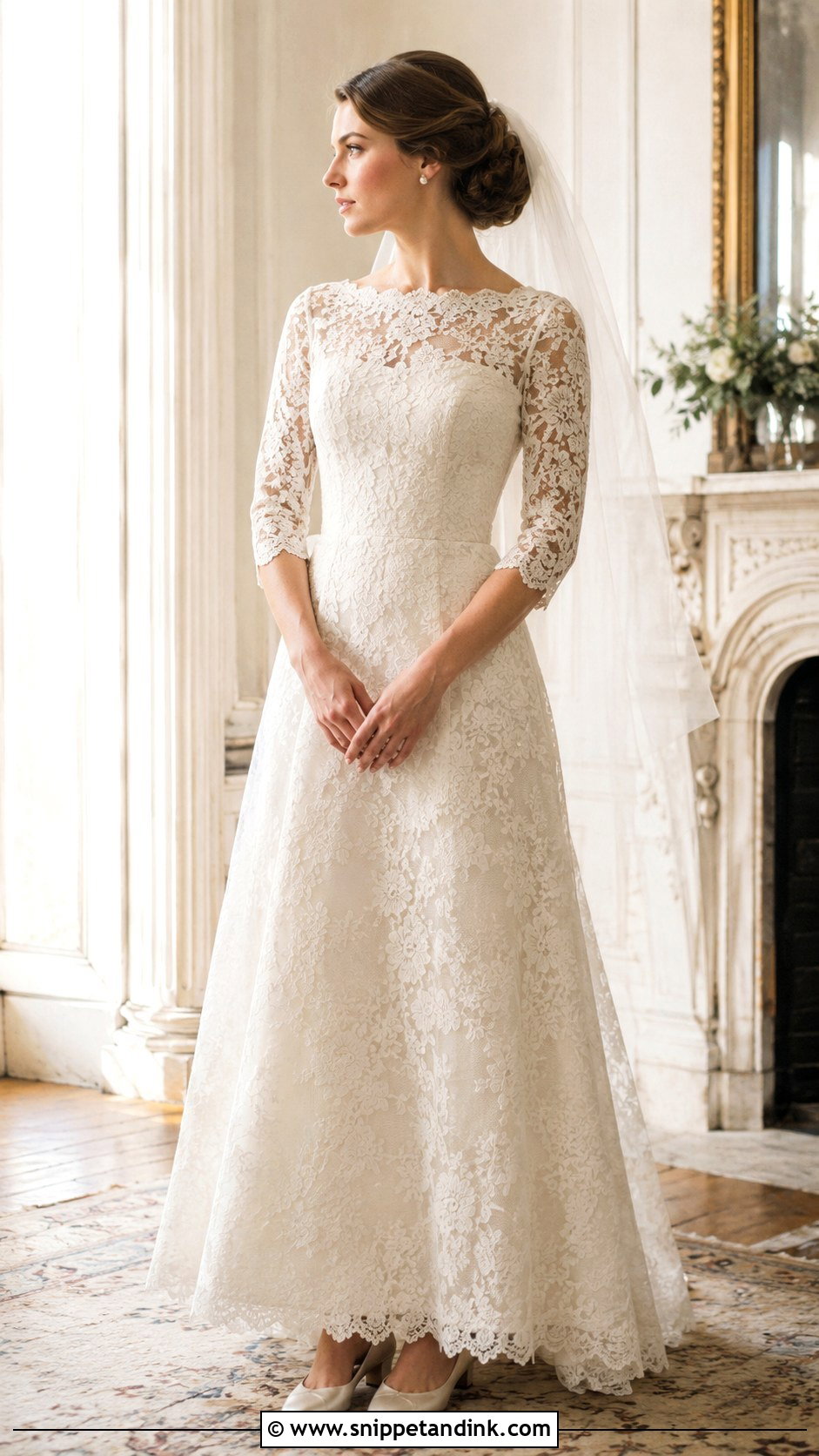
A vintage-inspired lace boatneck wedding dress pairs a classic neckline with lace you can recognise from across the room. Botanical lace reads soft, eyelash edging delicate, geometric patterns more tailored. A fitted bodice with a flowing skirt is romantic; a slim sheath feels closer to mid-century eveningwear. Three-quarter sleeves and covered buttons push the vintage feel further. Pearl studs, low satin pumps, a plain tulle veil and a waved bob, low roll or polished chignon finish it without looking theatrical. When I inspect lace, I look at how the motifs meet along the neckline and centre seams. Matched motifs mean careful cutting, and that’s often the difference between a refined dress and a cheap-looking one.
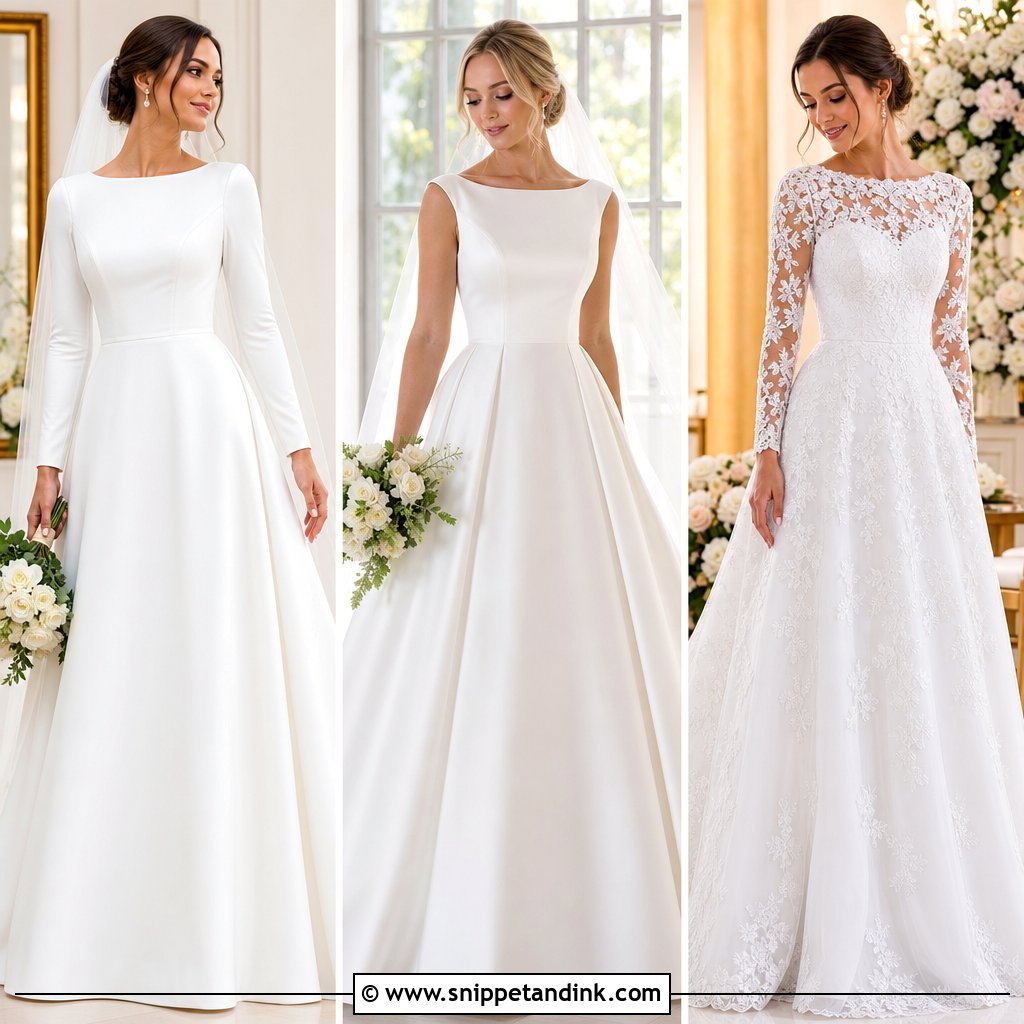
15. Basque Waist Boatneck Wedding Dress
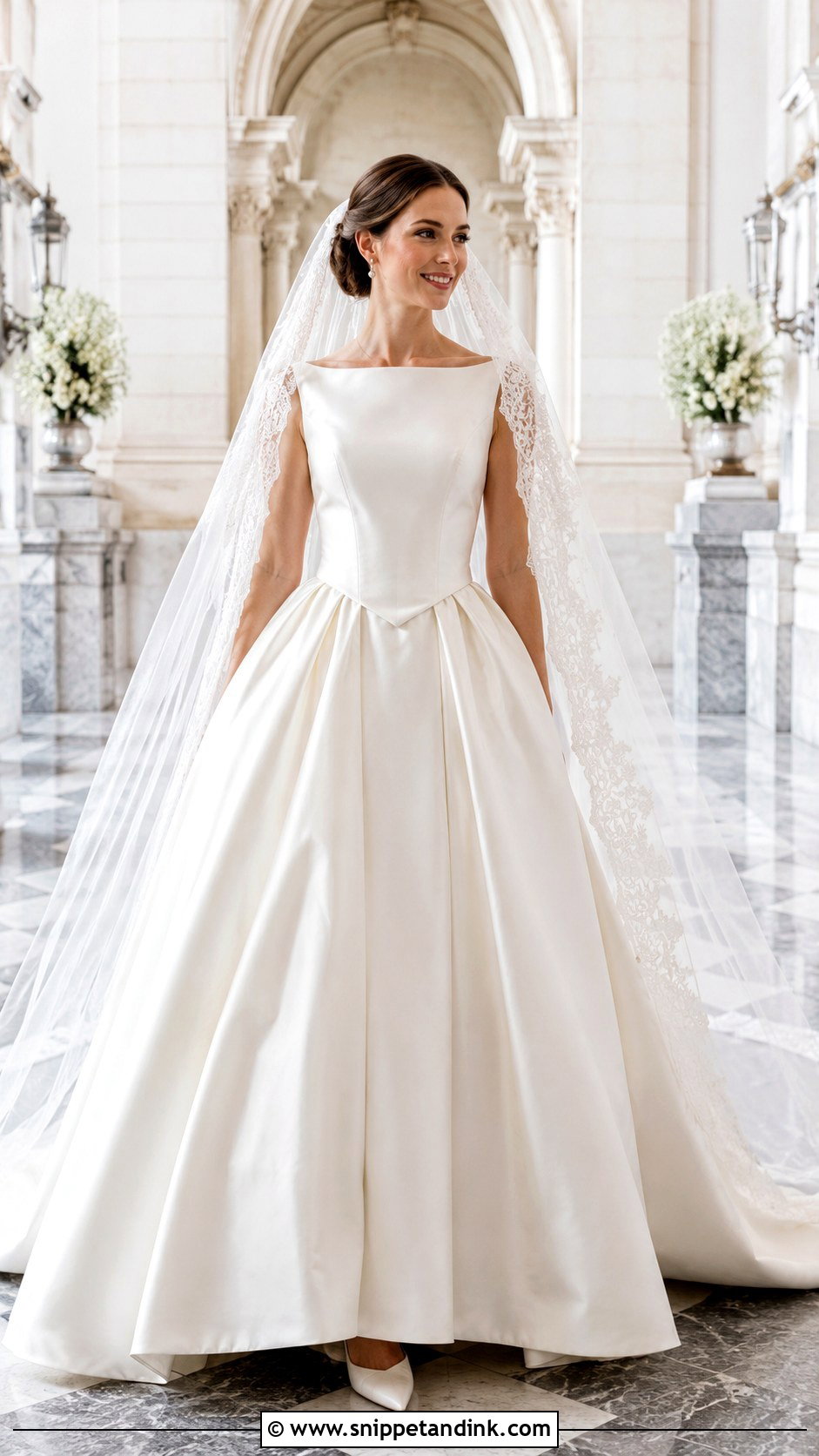
Two strong structural lines meet in a basque waist boatneck. The wide neckline draws a clean horizontal across the top, and the pointed waist pulls the bodice down into a V at the centre. Satin or Mikado gives crisp architecture and a skirt that holds volume. A full skirt suits the drama, although a controlled A-line feels lighter. Pearl drops, pointed pumps, a sheer cathedral veil and a smooth bun keep attention on the construction. At fittings, sit down and look at the point. It should stay centred and flat, and if it creases or pushes into your stomach, it’s sitting too low for your torso.
16. Detachable Overskirt Boatneck Wedding Dress
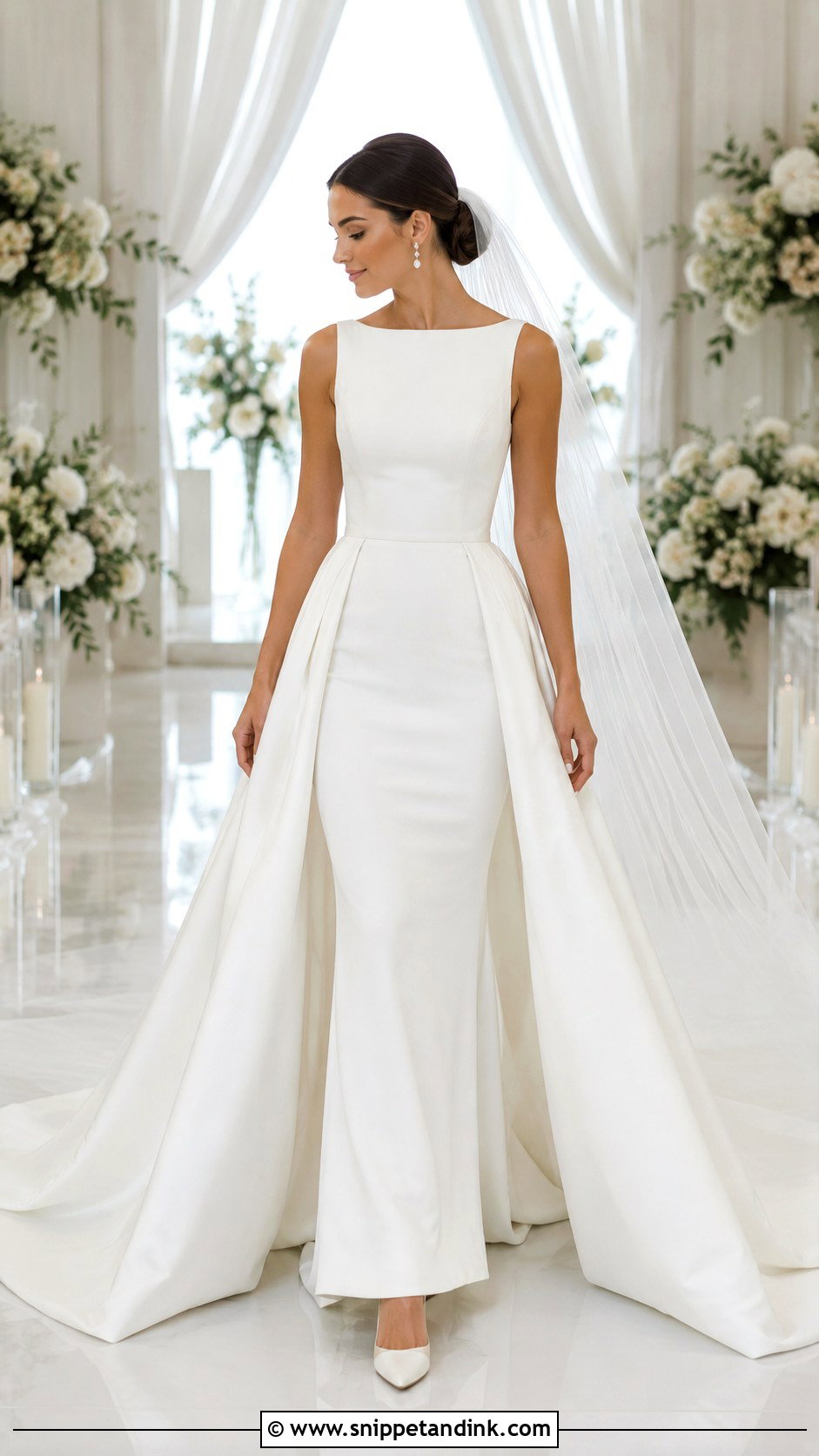
One dress, two looks. A detachable overskirt lets you start with a fitted column, sheath or mermaid base under a full satin or tulle layer for the ceremony, then reveal the slimmer shape for dancing. Match the fabrics closely so the change looks planned. Drop earrings, comfortable heels and a low bun carry through both versions; pair the long veil with the full skirt and swap to a small hair piece afterwards. Feel the waist where the overskirt attaches. Hooks, snaps or a hidden waistband should hold firmly without leaving lumps. Practice the change beforehand and give one trusted person the job of folding the overskirt away, because a crumpled layer left on a chair is how most of them get stained.
17. Chiffon Boatneck Wedding Dress
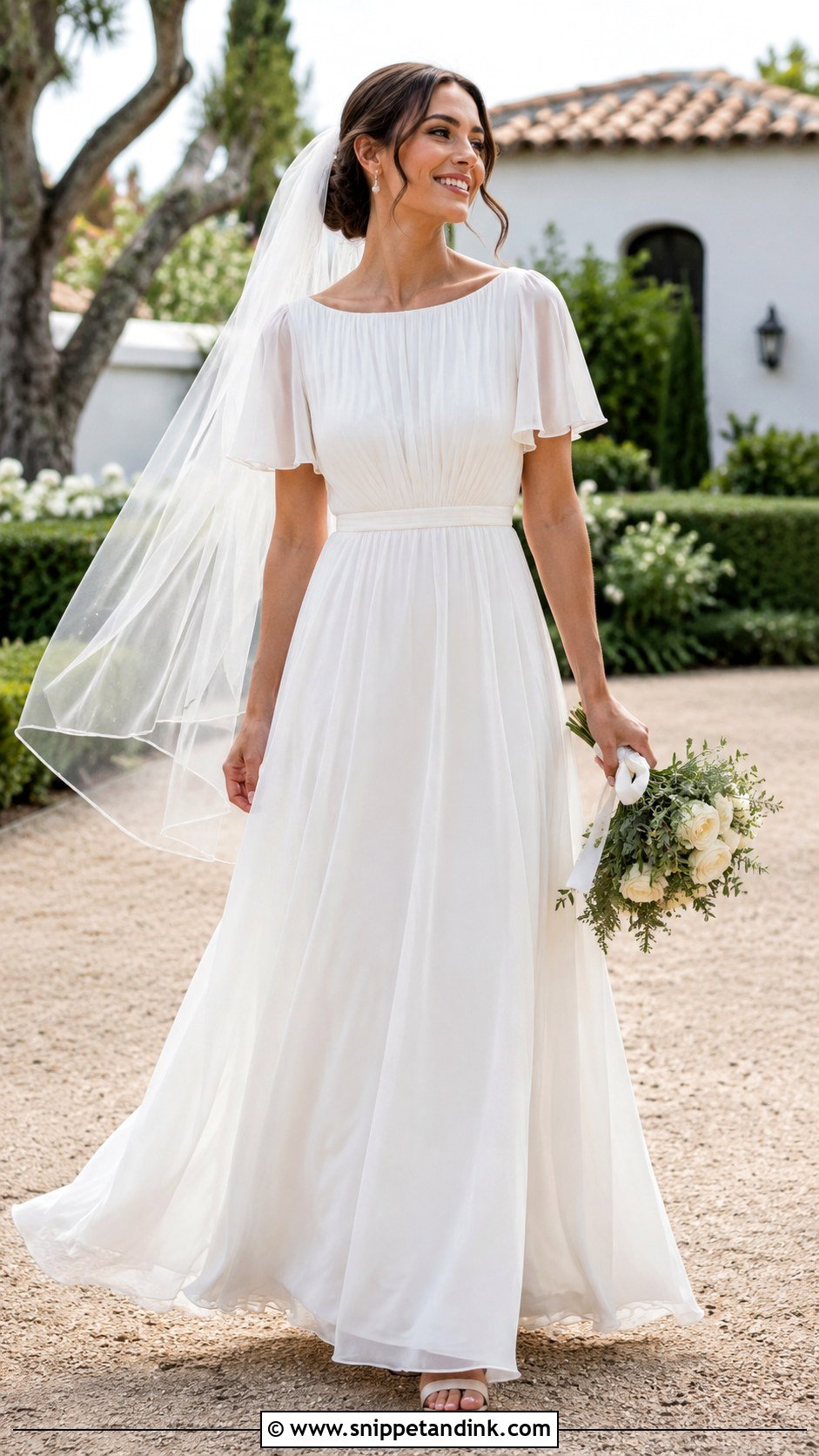
Chiffon gives a boatneck softness and movement. It suits an A-line skirt, a gathered waist and a lightly structured bodice, with a chiffon overlay floating over an opaque lining. Short flutter sleeves or sheer long sleeves add air without hiding the neckline. Delicate drops, low block-heel sandals, a loose low bun and a simple fingertip veil that moves with the skirt suit outdoor and destination ceremonies, where it feels far lighter than a structured ball gown. Chiffon does show wrinkles and catches on rough surfaces like stone steps and wicker chairs. Ask how to steam and pack it, and hem it for the actual ground, since grass, sand and flagstones each want a slightly different length.
18. Jacquard Boatneck Wedding Dress
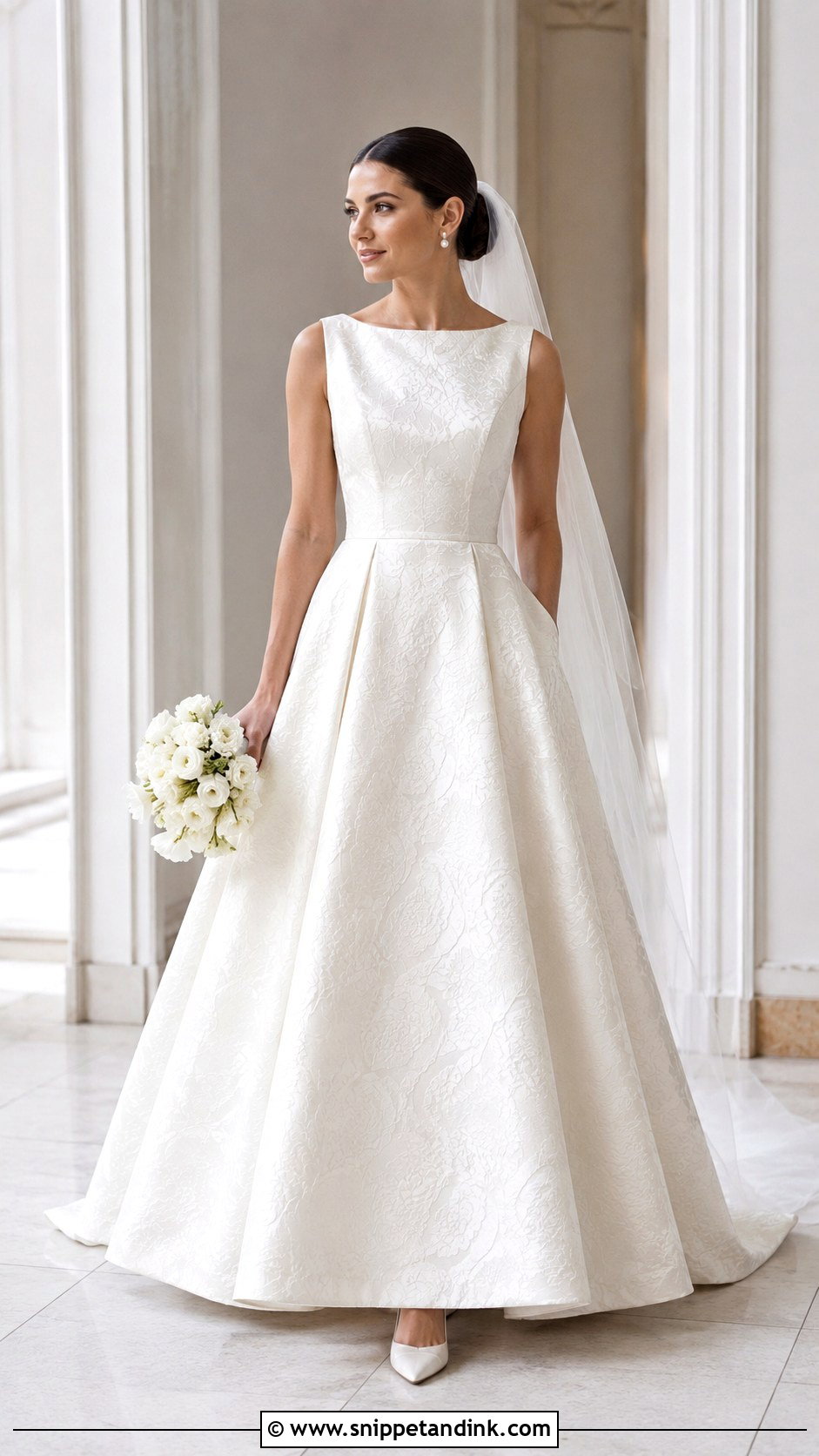
Jacquard puts the pattern into the weave itself, so the dress has texture without lace or crystals. Floral, abstract or tonal designs give it depth up close and from a distance, and it usually has enough body for a structured A-line or a full ball gown. Keep the seams simple and the waist defined so the fabric stays the focus, then add satin pumps, pearl earrings, a sleek updo and a plain veil that won’t compete with the pattern. Being heavier than chiffon or light crepe, jacquard makes sense for cooler-season weddings. View it in daylight and under indoor lighting before you decide. A tonal pattern that barely shows in the salon can jump out in photos taken with side light.
19. Pearl Boatneck Wedding Dress
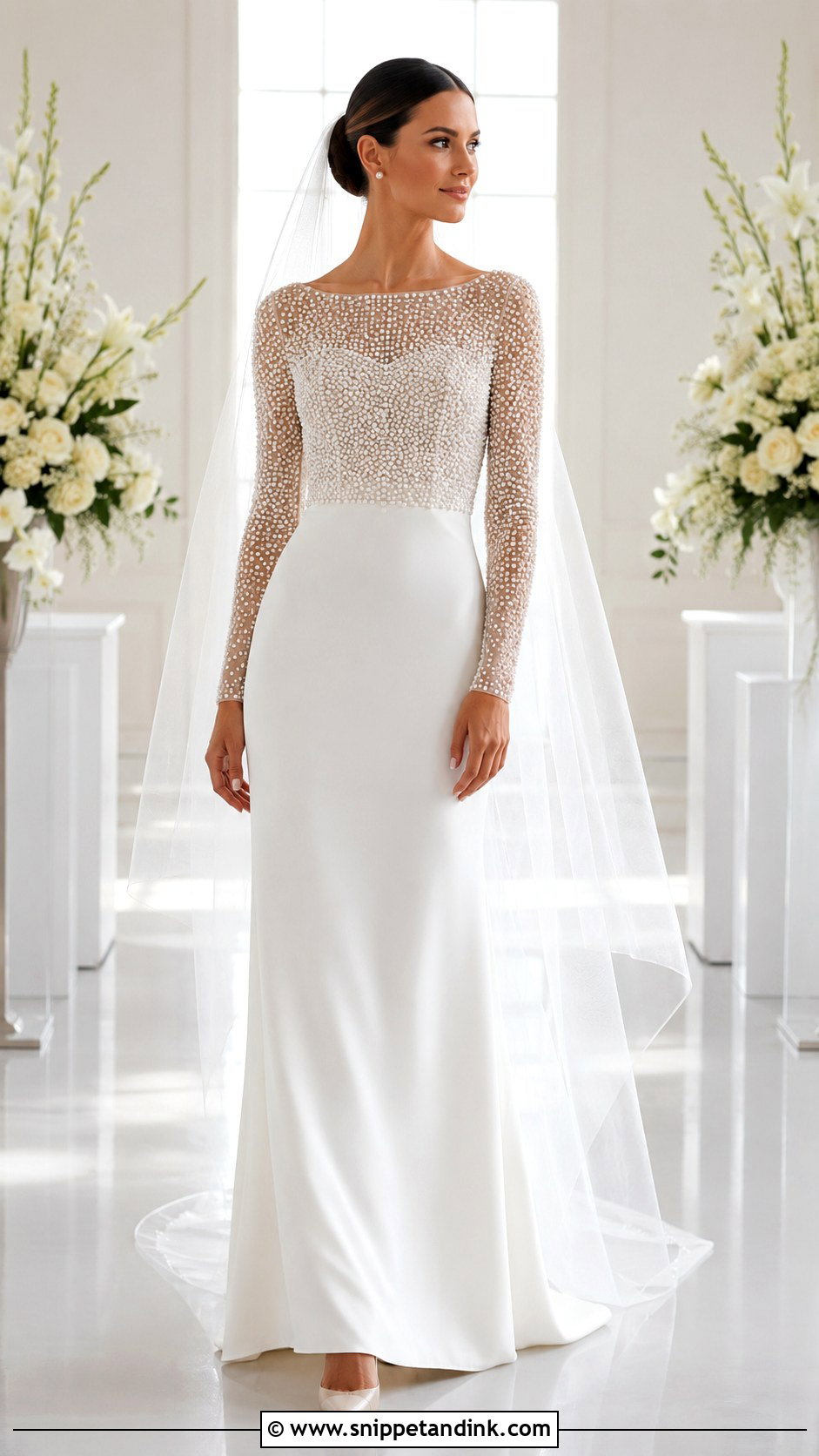
Pearls give a softer glow than crystal. They can be scattered across illusion tulle, concentrated along the neckline or spread over the bodice and sleeves. Balance a pearl-covered top with a smooth satin or crepe skirt, and if the gown is already busy, wear small studs and no necklace. Pointed ivory heels, a clean-edged veil and a polished bun finish it. Pearls add up in weight, so notice whether the shoulders feel dragged down by the end of a fitting. My quick snag test is to pull a scrap of veil tulle across the beadwork. If it catches in the salon, it will catch on the day, and a soft lining under the neckline stops rubbing through a long reception.
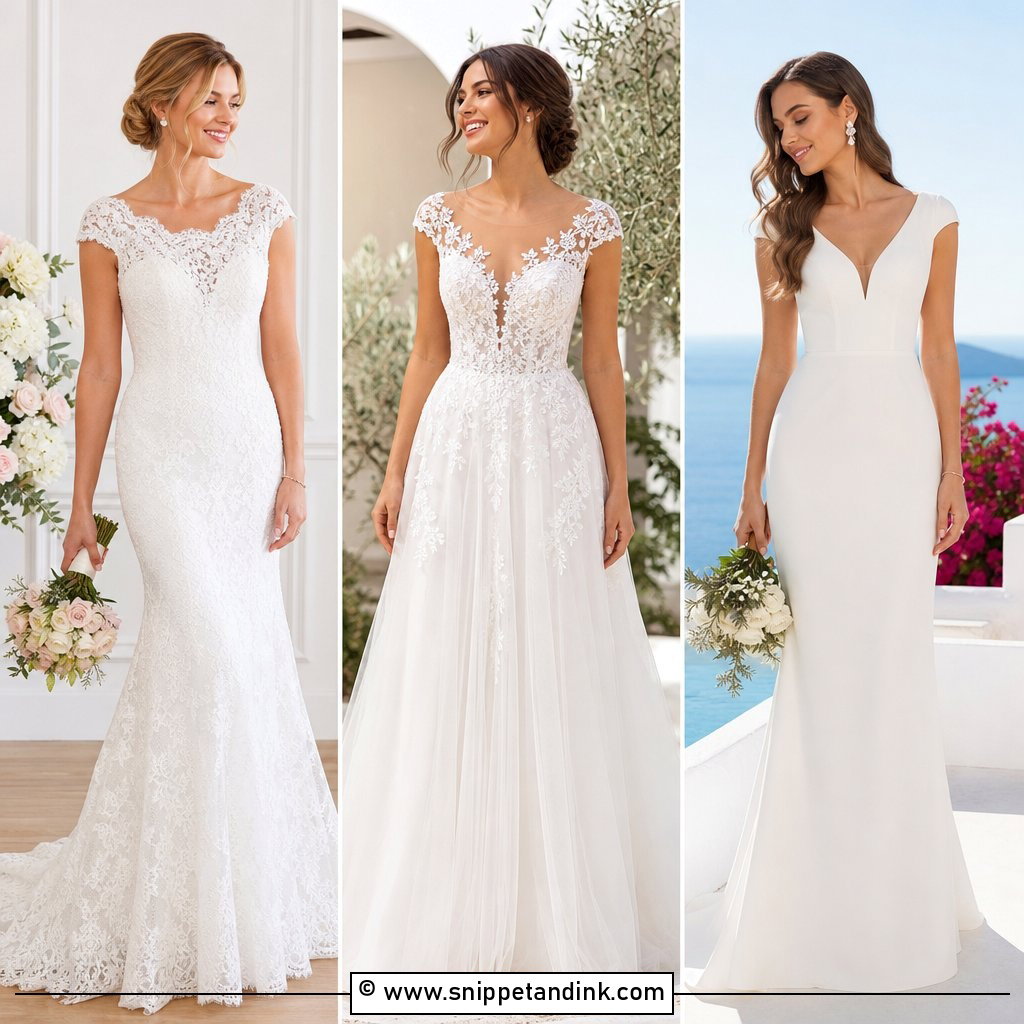
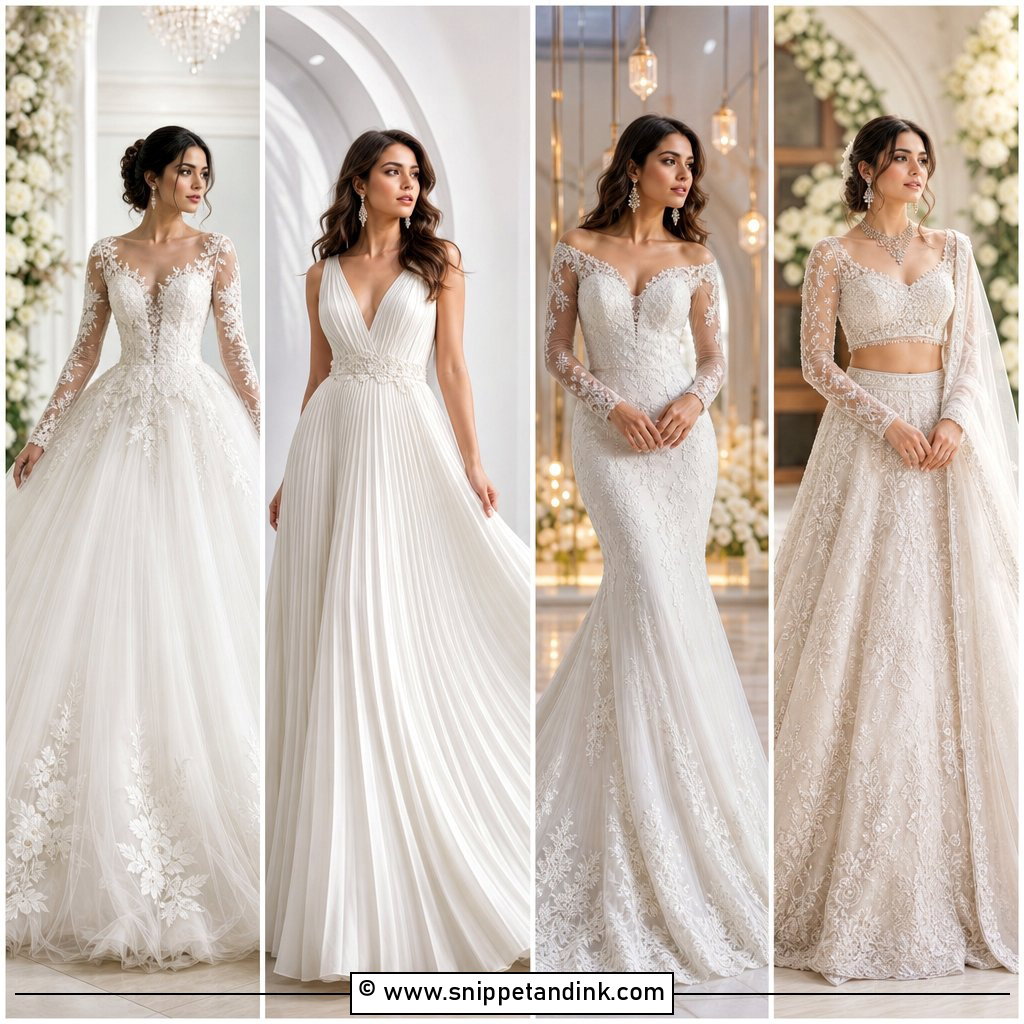

20. Short Boatneck Wedding Dress
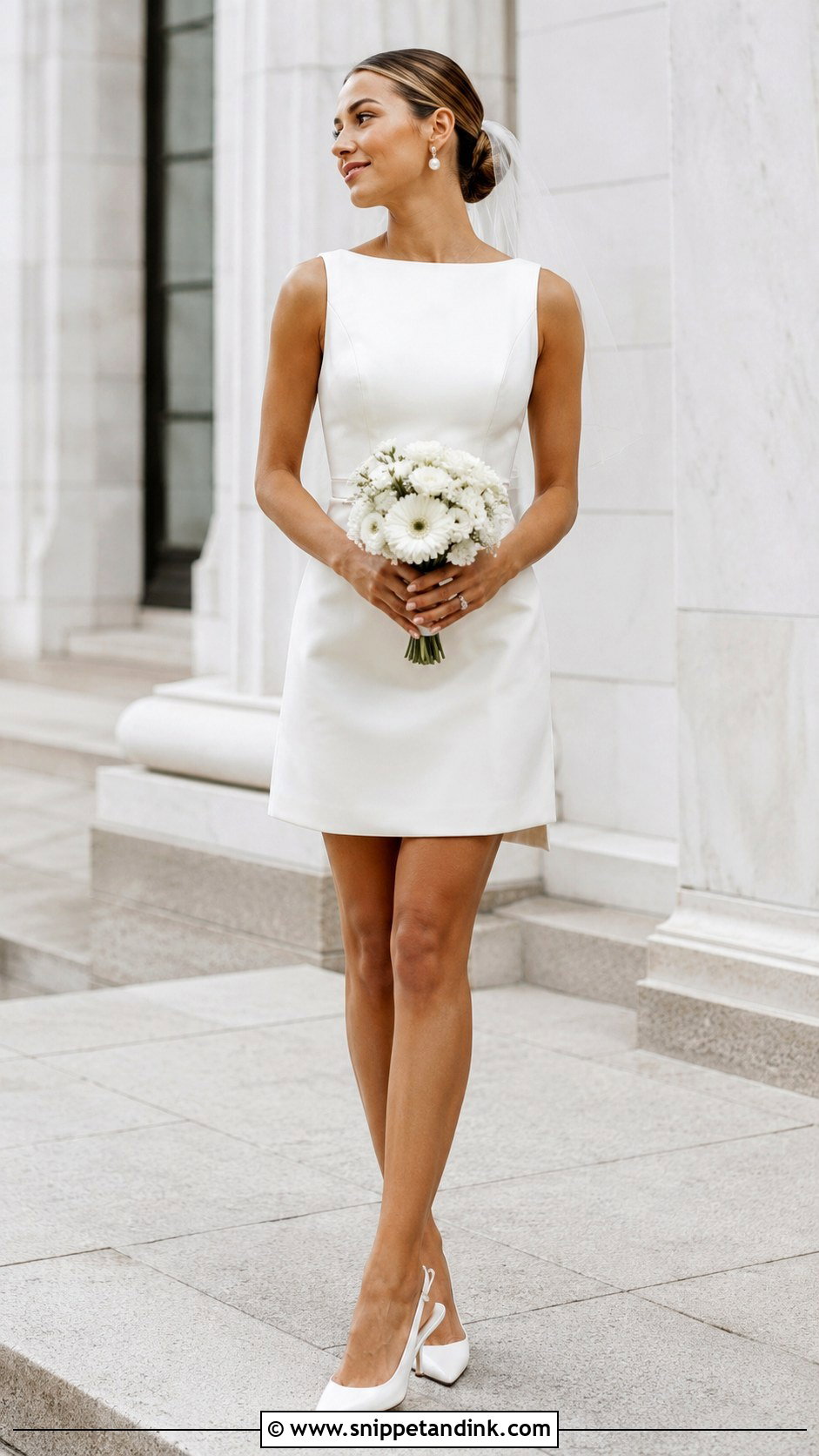
Short boatnecks make sense for courthouse ceremonies, smaller venues and a reception change. A structured mini with a fitted waist feels crisp, and a knee-length A-line gives more movement and coverage. Satin, crepe and jacquard all hold the neckline cleanly. Add pointed pumps or low slingbacks, pearl earrings, a compact bouquet and a bow, short veil or sculptural hair piece. With legs and shoes on full view, hem placement and shoe proportion matter more than on a long gown. Sit and walk before approving alterations. On a narrow skirt, a small back slit helps you move, and hidden shorts or a smooth lining save a lot of worry on the dance floor.
Wrinkles in Transit and the Morning Steam
A boatneck runs straight across the front, so any crease there sits right under your face in every portrait. How the dress gets to the venue matters more than most brides expect.
- Hang it from the internal hanger loops, not the shoulders. The loops take the skirt’s weight so the neckline doesn’t stretch out on the hanger, which happens fastest with heavy skirts.
- Pad the bodice lightly with acid-free tissue for travel, and lay the bag flat across a back seat or hang it from a hook rather than folding it into a suitcase.
- If you’re flying, ask the airline well ahead about carrying a garment bag in the cabin, and plan for the answer being no.
Steaming by fabric
Chiffon, tulle and crepe release creases quickly under a handheld steamer held a few inches away, working from inside the skirt. Satin and Mikado are where I slow down: water droplets can mark silk, so I steam from the inside or through a pressing cloth and never put an iron straight onto the face. Beaded and pearl areas get steamed from the back only, since heat and moisture can loosen the glue on some embellishments. If you’re nervous about it, many bridal shops and cleaners offer pressing a few days before the wedding.
After the wedding
Get the gown to a cleaner who handles bridal wear within a few weeks, even if it looks spotless. Champagne and sugary drinks dry clear and then turn yellow over time. Store it in a breathable cotton bag or an acid-free box, away from plastic and out of a hot attic.
Shoulder Fit Decides More Than the Fabric Does
Every gown here comes down to the same few things: how the shoulders fit, what’s holding the bodice up, how heavy the fabric is and how it looks from behind. Satin A-lines and lace ball gowns lean traditional; crepe columns and open backs feel cleaner and more modern. Sleeves, beading, basque waists and detachable skirts adapt the neckline to the season and venue. Bring shoes with the right heel height to every appointment and sit and walk in each dress. Pick the one you feel secure in and still look like yourself in, then let the tailoring and a light hand with accessories do the rest.
You'll Like These Ideas:



Leave a Reply