
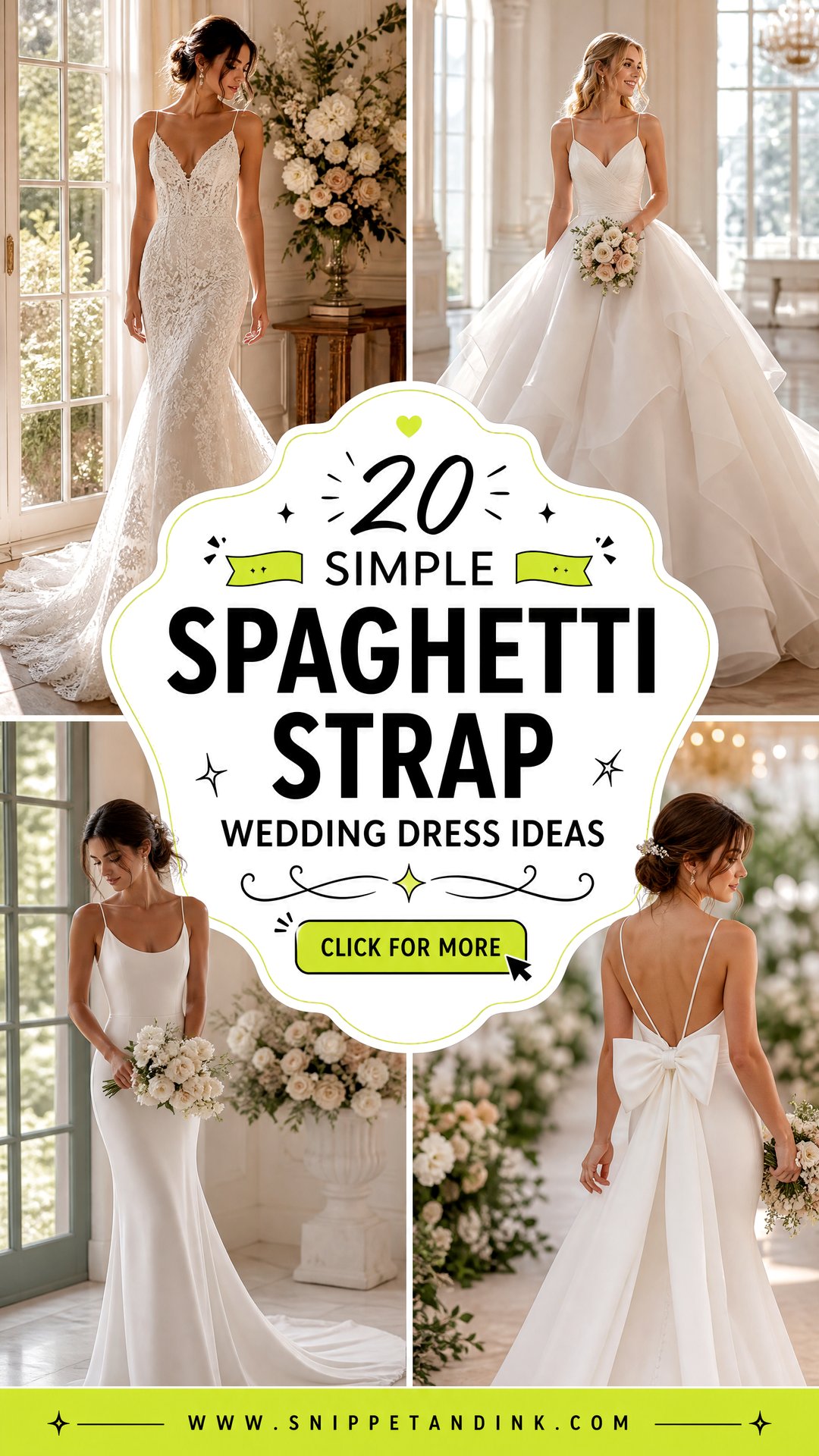
Thin straps are the quietest detail on a wedding dress, and that’s exactly why I like them. Spaghetti straps leave the shoulders and collarbone open, so the neckline, the fabric and the way the bodice is built do the talking. Bridal lines right now lean toward fluid shapes, sculpted waists and fabric with texture rather than surface decoration. Below are twenty strappy gowns, from satin slips to light ball gowns, each with shoes, veil, jewelry, hair and flowers worked out, plus the fitting checks I’d make before saying yes.
Can Spaghetti Straps Really Hold You Up?
This is the question I get most from brides with a fuller bust, and the honest answer is that the straps shouldn’t be doing that job at all. On a well-made strappy gown, the support comes from the bodice: boning, a firm inner layer, sometimes a full built-in corset. The straps just keep the neckline in place.
What I check at the first try-on
- Slip a finger under each strap while standing. If it’s tight, the bodice is too loose and the straps are compensating.
- Lean forward and lift your arms. The neckline should stay against your skin, not open away from it.
- Look at the back edge in a mirror. A bodice that drops in the back is usually leaning on the straps.
- Ask whether the straps can be adjusted or moved. Many seamstresses can reposition them closer to the neck, which stops them sliding off the shoulder.
If you’re a larger cup size and love the look, a dress with a built-in corset or sewn-in cups is the version to try. Thin straps on an unstructured slip will feel insecure all day, however good they look in the mirror.
1. Satin Spaghetti Strap Slip Wedding Dress
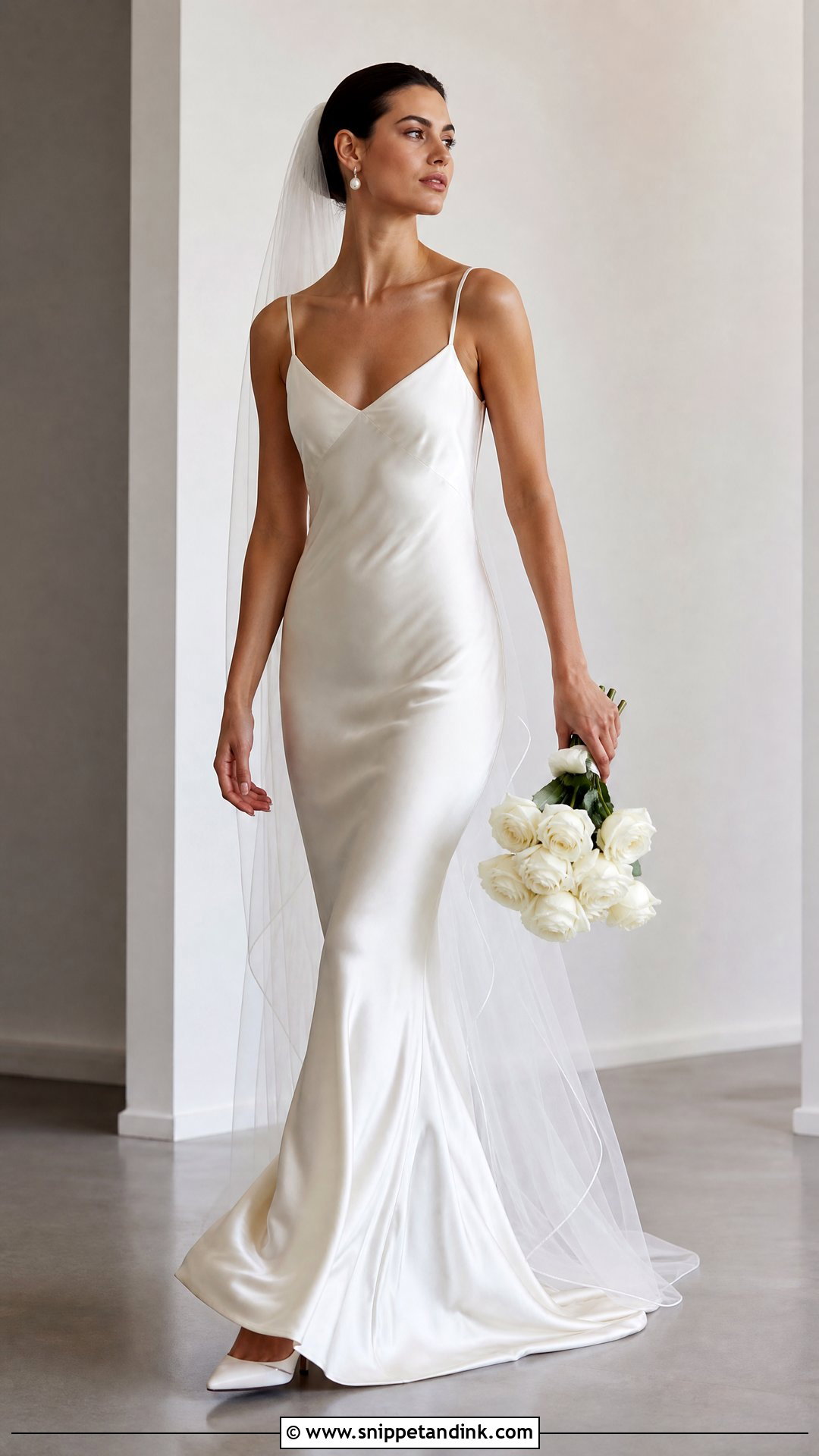
Satin slips sit at the top of most strappy wishlists, and they reward a bride who gets the cut right. I look for a bias cut that follows the body without gripping it; if the fabric pulls into diagonal lines across the stomach in the mirror, it needs a size up and taking in, not squeezing into. A straight or gently scooped front with a lower back keeps it minimal. Pointed ivory pumps, pearl drops, a plain tulle fingertip veil and a smooth low bun show the straps off, and a compact posy of roses or ranunculus won’t crowd the dress. Satin shifts color between daylight and lamplight, so view your shade in both before choosing ivory over soft white.
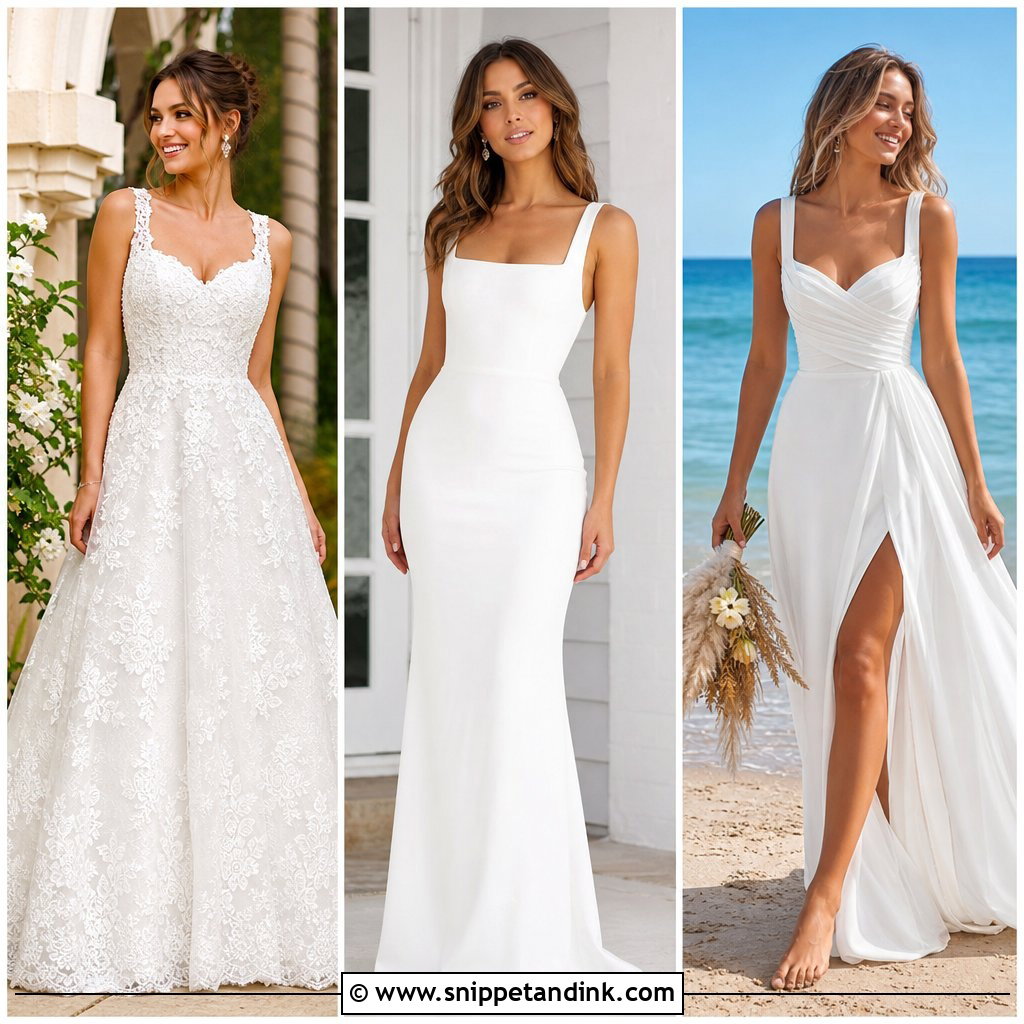
2. Square Neck Spaghetti Strap Wedding Dress
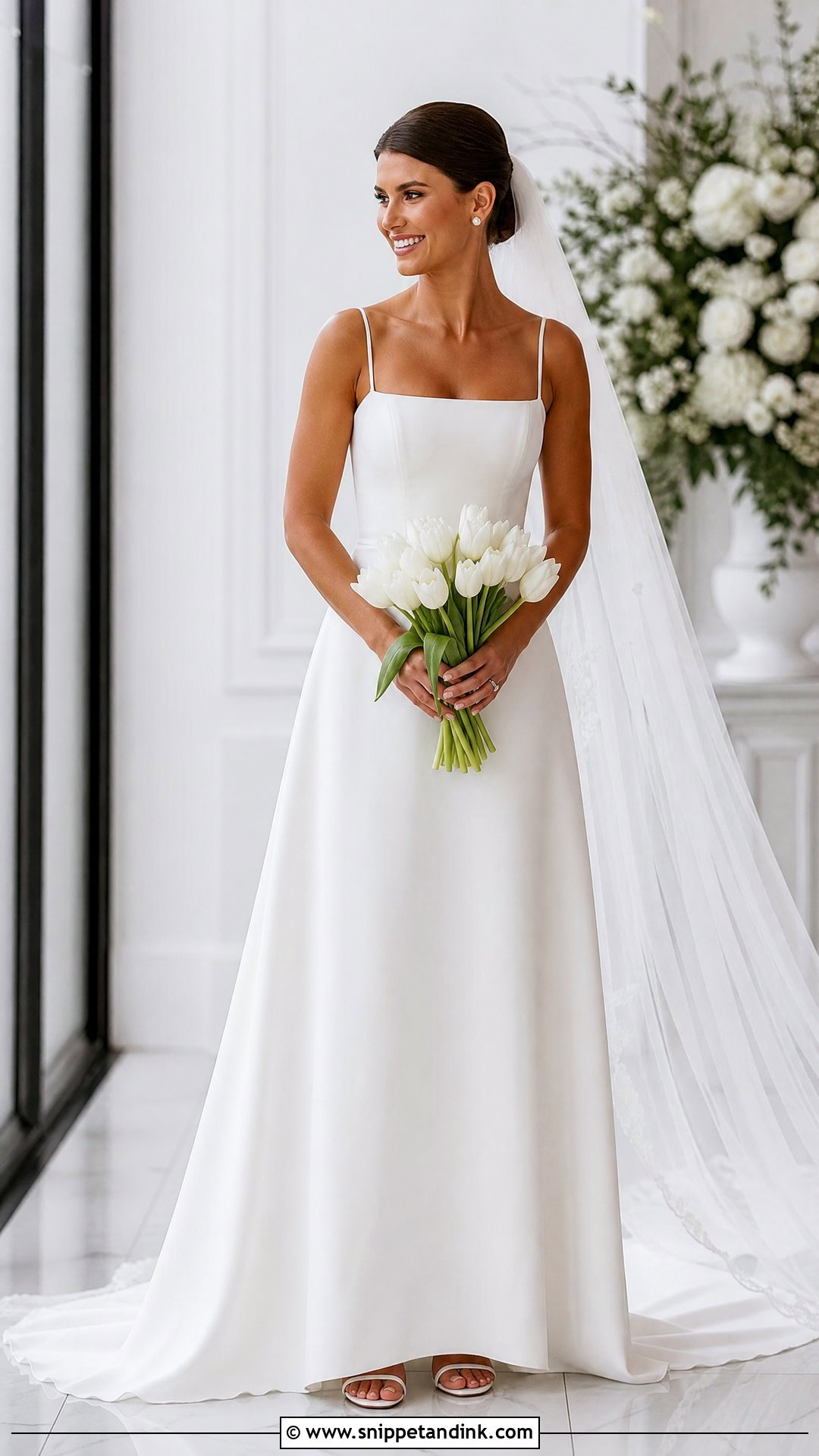
Thin straps on a square neck look sharper than you’d expect, because the corners give them somewhere to land. The neckline needs a fitted bodice with real seaming behind it, and matte crepe or mikado to keep the edges straight. Square fronts and structured waists are everywhere in bridal at the moment, and they don’t rely on embellishment. I’d pair it with low block-heel sandals, tiny pearl studs and a plain cathedral veil, plus a center-parted chignon or a sleek ponytail. A column of covered buttons down the back adds detail. Finish with a round bouquet of white tulips.
3. Cowl Neck Spaghetti Strap Wedding Dress
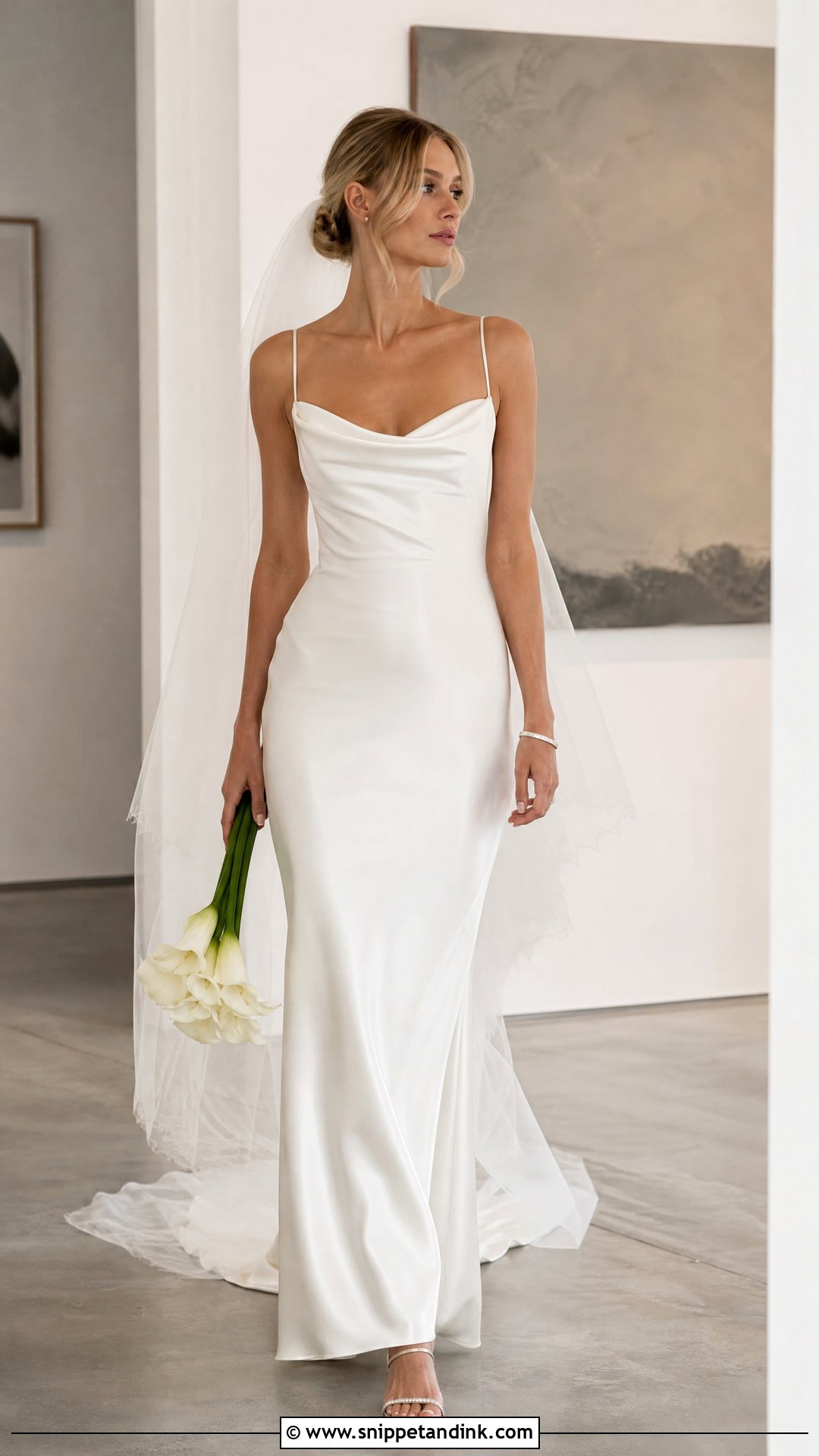
Cowls are poured, not pinned, which is why the fabric choice decides everything. A softly draped cowl neckline in silk satin or a light satin blend falls in loose folds across the bust; in a stiff fabric it just sits there. The drape can open when you lean, so I ask brides to bend forward at the fitting and we tack it if needed. Skip the necklace and let the folds stand in for one. Ankle-strap heels, crystal studs and a slim tennis bracelet give enough sparkle, with waves pushed behind the shoulders or a loose low bun, a raw-edge veil and calla lilies.
4. Crepe Spaghetti Strap A-Line Wedding Dress
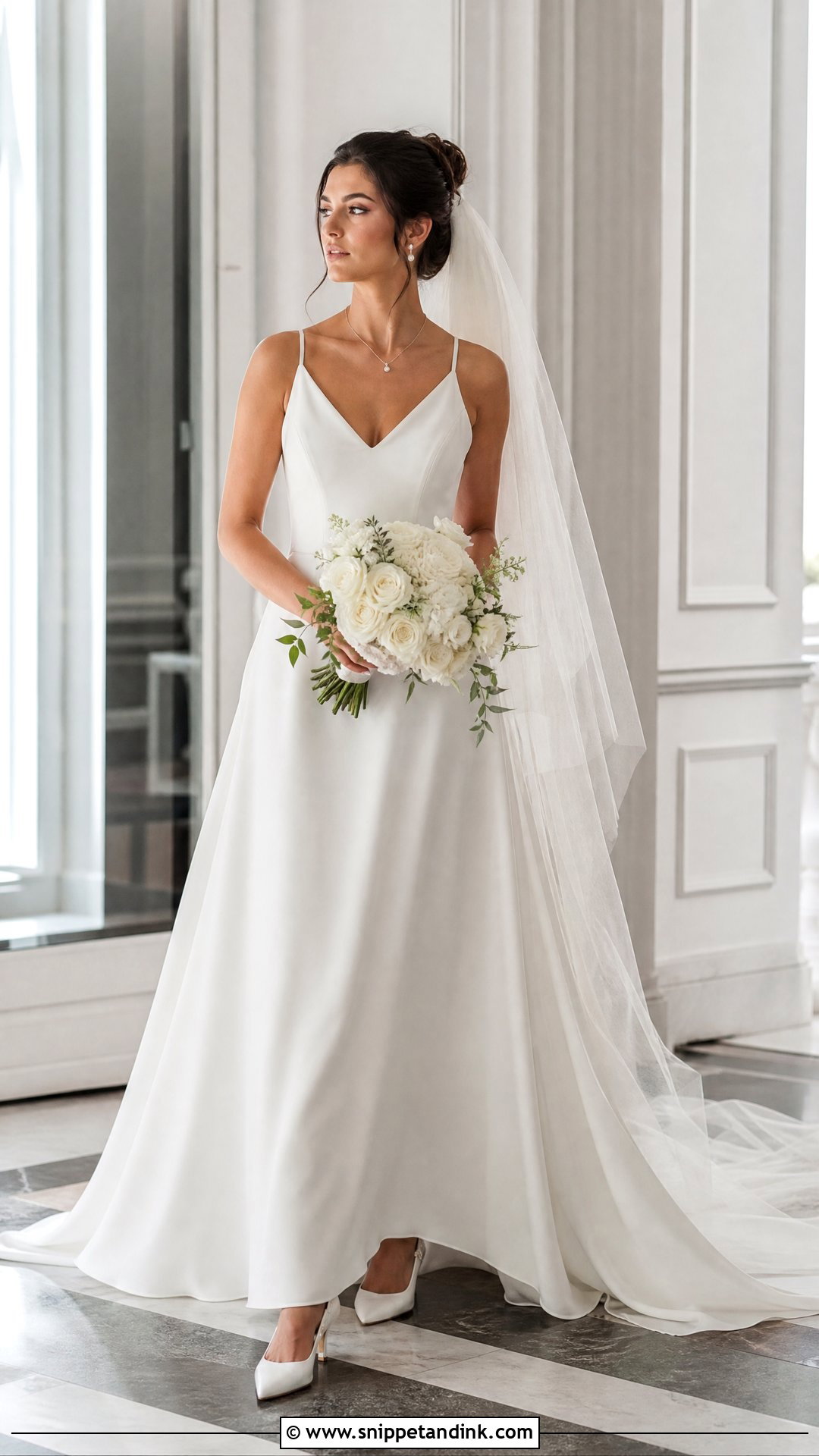
Crepe is unforgiving in the best way: it shows whether a dress was fitted properly. On a plain A-line with a natural waist, I check three things before anything else. The straps should lie flat without twisting, the waist seam should run level all the way round, and the hem should just skim the floor in your actual shoes. A modest V or scoop makes thin straps look anchored rather than fragile. Pointed slingbacks, a fine pendant and pearl earrings work here, with a chapel veil and a softly textured updo. A loose bouquet of white flowers and greenery keeps the mood relaxed.
5. Chiffon Spaghetti Strap Wedding Dress
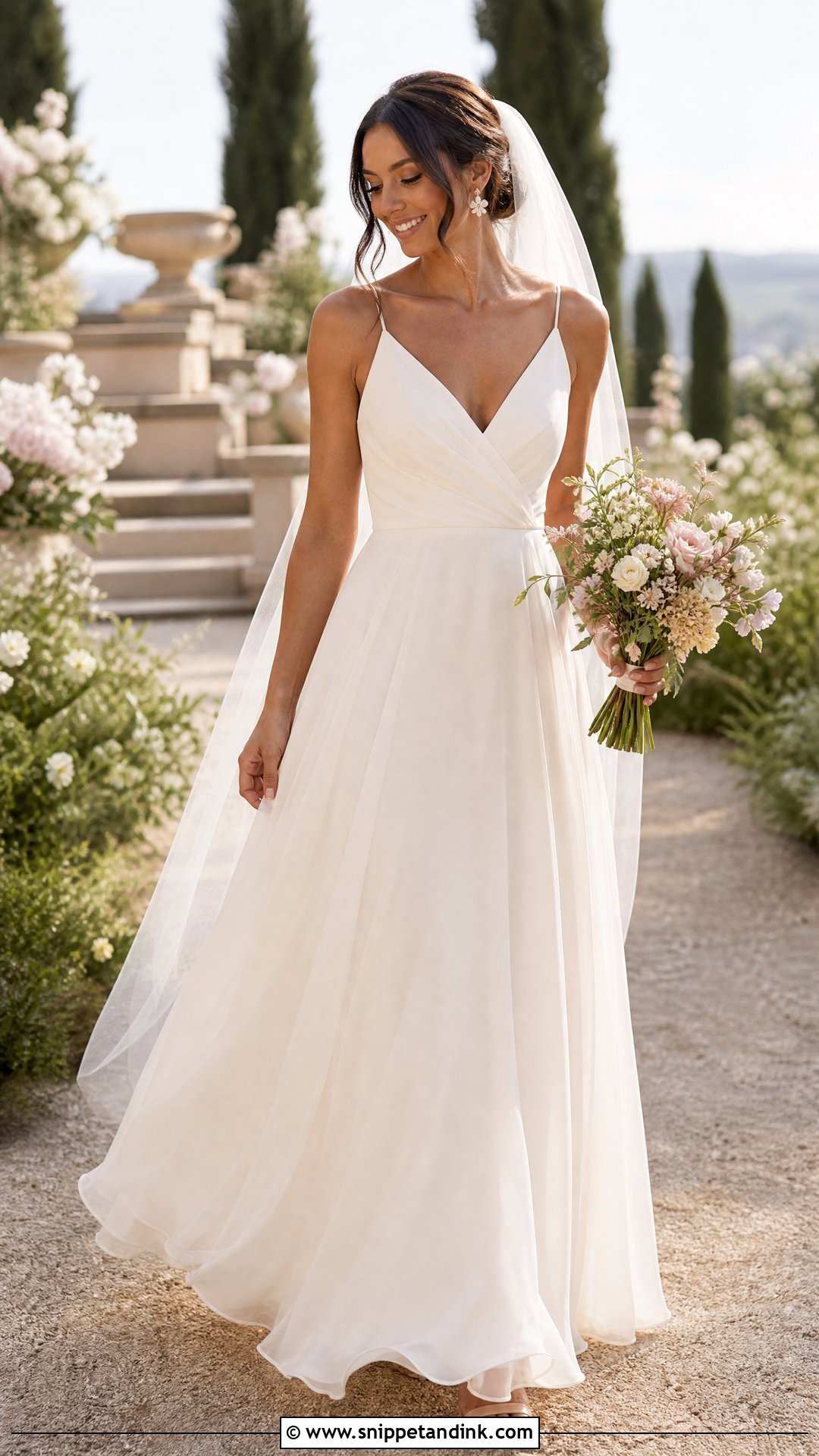
Picture the skirt moving as you walk down a garden aisle. A chiffon spaghetti strap gown does that with almost no weight, which also makes it one of the most comfortable dresses for a hot outdoor day. The catch is light. Chiffon turns see-through in strong sun, so I ask brides to stand in front of a bright window at the fitting and have someone take a photo with the flash off. An opaque lining fixes it. A lightly structured bodice and a V or wrap front hold the shape. Low sandals, small floral earrings, a single-layer veil, a loose braided bun and a bouquet of sweet peas and cosmos finish it.
6. Lace Spaghetti Strap Sheath Wedding Dress
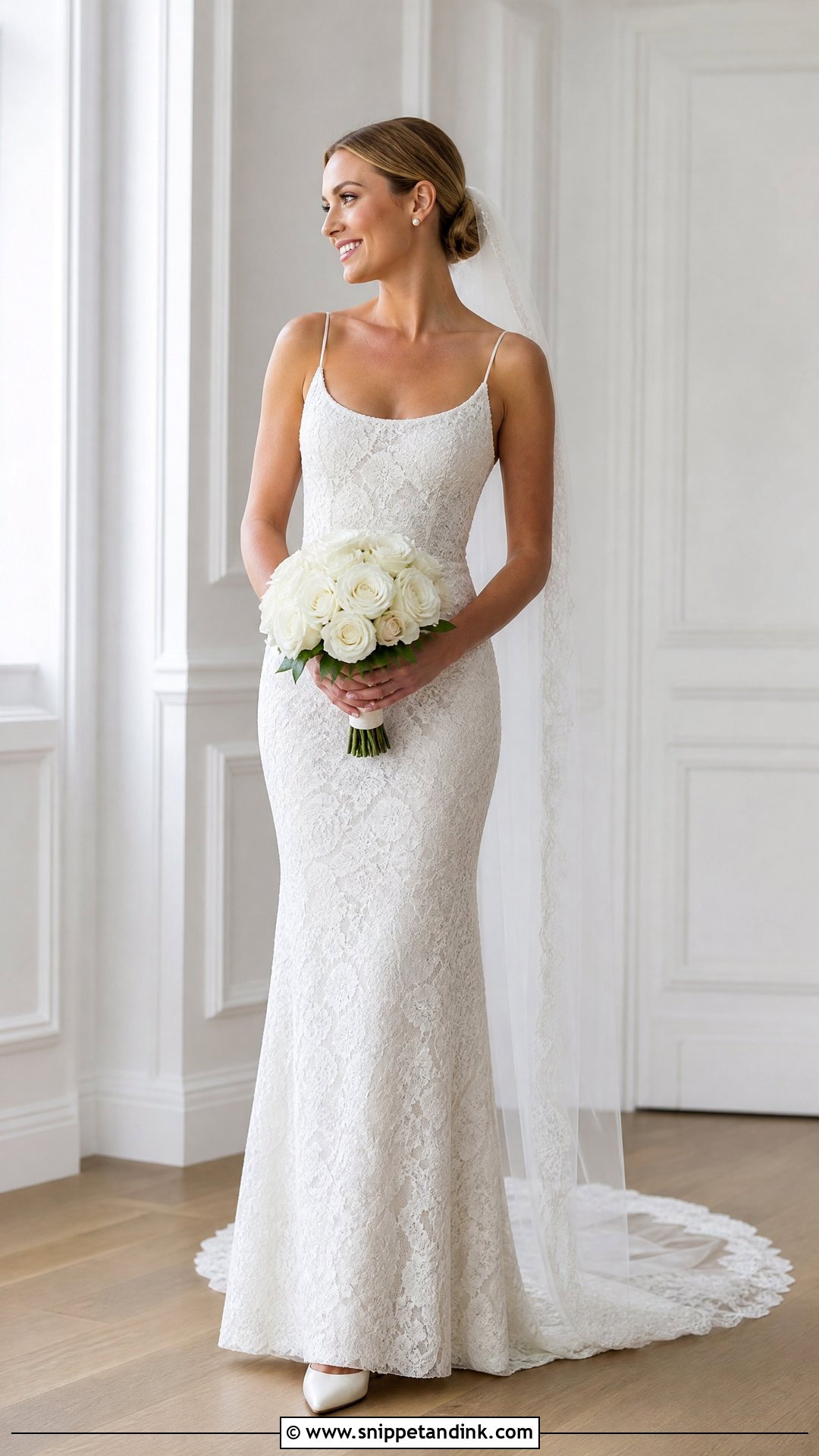
One lace pattern over a slim sheath is about as much texture as a simple dress can carry before it stops being simple. The lining is the real decision. Nude lining makes the lace pop and can read as skin from a distance; ivory lining softens it. Ask to see both. A lined bodice, soft scoop neck and small sweep train keep the line narrow. Closed-toe kitten heels, pearl studs, a narrow lace-edged veil and a neat low bun keep the straps visible. Hold white roses with trailing greenery, and resist adding ornate jewelry on top of lace; one texture is enough.
7. Fit And Flare Spaghetti Strap Wedding Dress
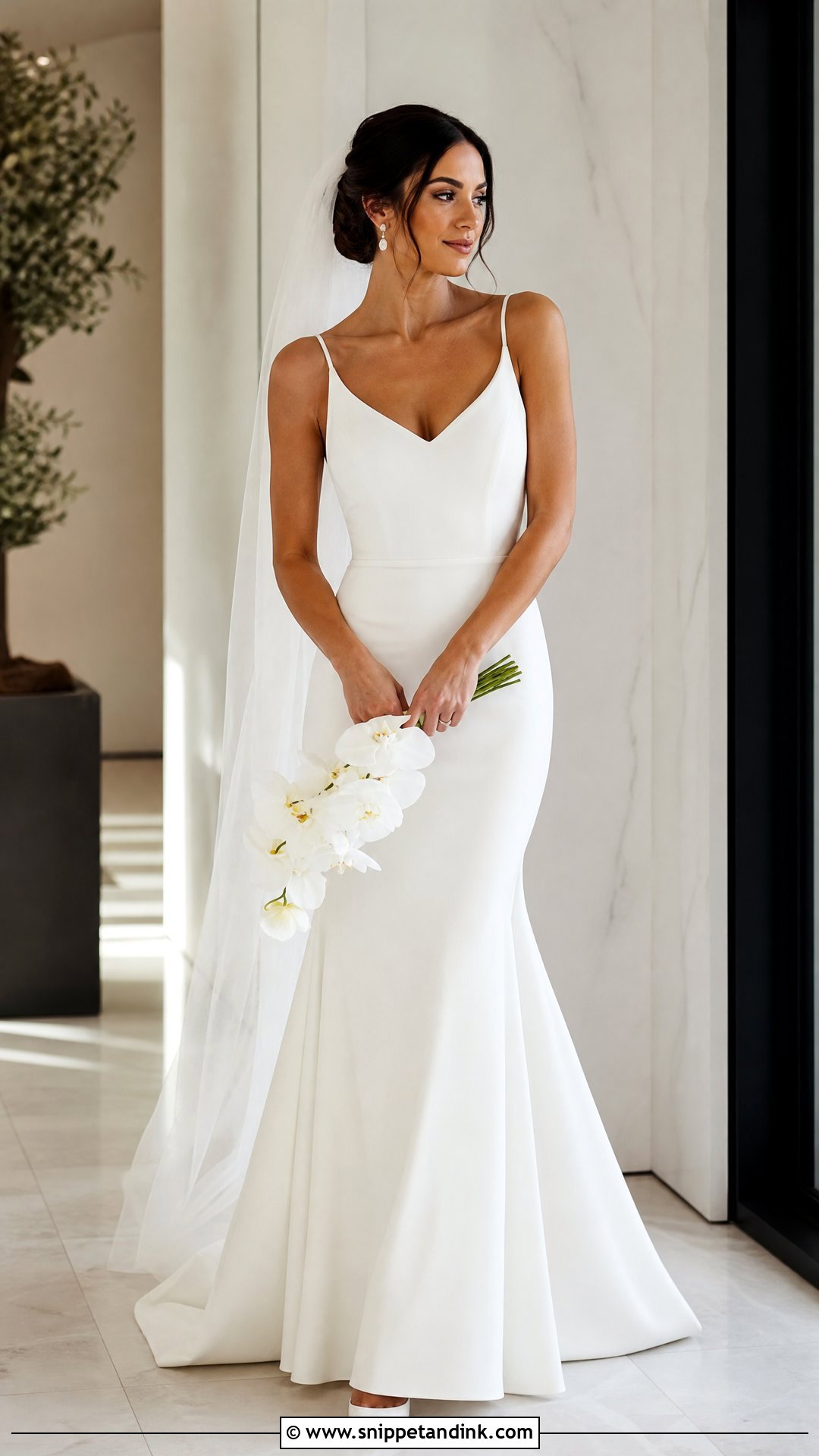
Fit-and-flare is where I spend the most time with a tape measure. The flare point is personal: the skirt should open where your proportions want it to, which might be mid-thigh on one bride and just above the knee on another. Unembellished crepe or satin keeps it clean, with a sweetheart, scoop or shallow V held by properly adjusted straps. Sit, walk and dance at every fitting, because the fitted stretch through the hips is where restriction shows up. Pointed pumps, drop earrings, a plain chapel veil, a sleek bun and a narrow bouquet of orchids or calla lilies finish it.
8. Satin Mermaid Spaghetti Strap Wedding Dress
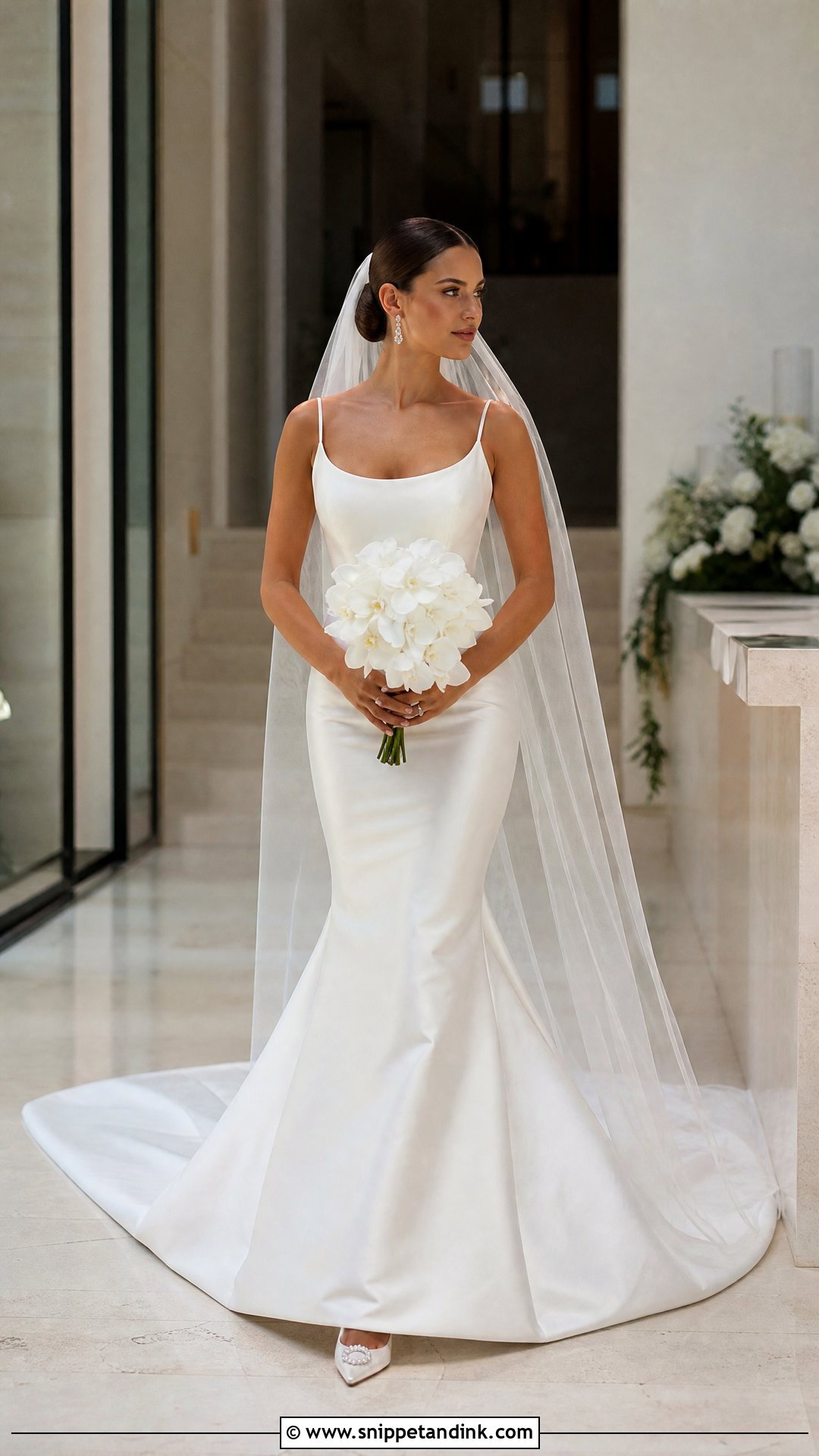
A satin mermaid is a lot of silhouette, and thin straps keep it from feeling heavy. The bodice follows the torso and hips before widening near the knees, and a scoop neckline softens the drama. Because satin reflects light, any tension at the seams shows as a ripple, so smooth undergarments and careful alterations matter more here than with almost any other dress. Ask about the bustle early; a satin train needs firm attachment points. Supportive pointed heels, understated crystal earrings, a plain long veil, a sculpted low bun and a compact orchid or rose bouquet suit it.
9. Organza Spaghetti Strap Ball Gown Wedding Dress
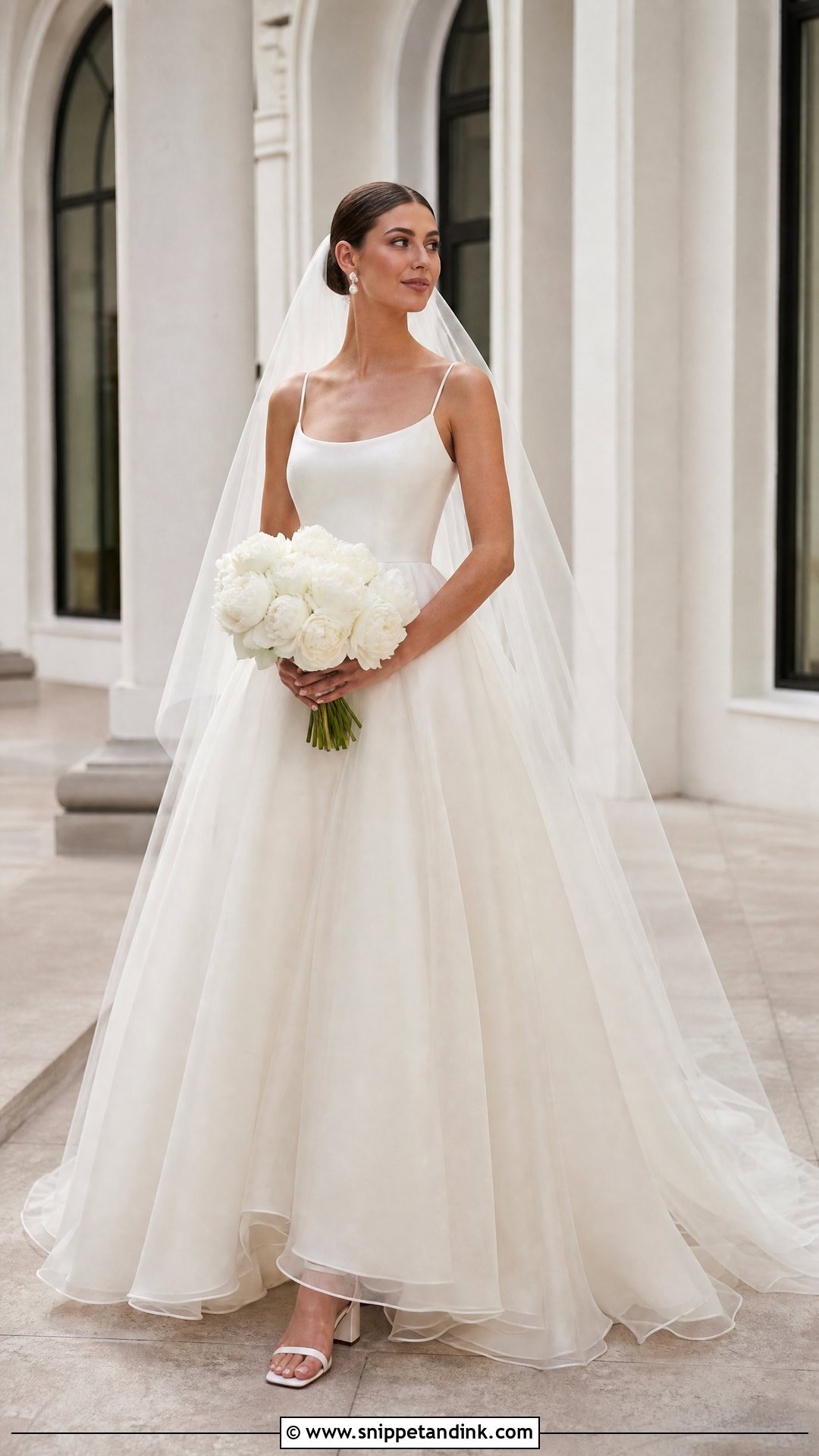
Can a ball gown stay simple? In organza, yes. The fabric is crisp but light, so the skirt gets its fullness from layered sheer panels rather than heavy petticoats, and you can actually move in it. A fitted bodice with a straight or gently curved neckline and thin straps keeps the top half clean. Volume like this is coming back in a lighter, more wearable form. Block heels make sense under all that skirt, along with pearl drops, a long plain veil and a sleek updo to balance the width. I’d check the walk before the final hem, because organza layers catch on each other if the skirt is cut too short at the front.
10. Tea Length Spaghetti Strap Wedding Dress
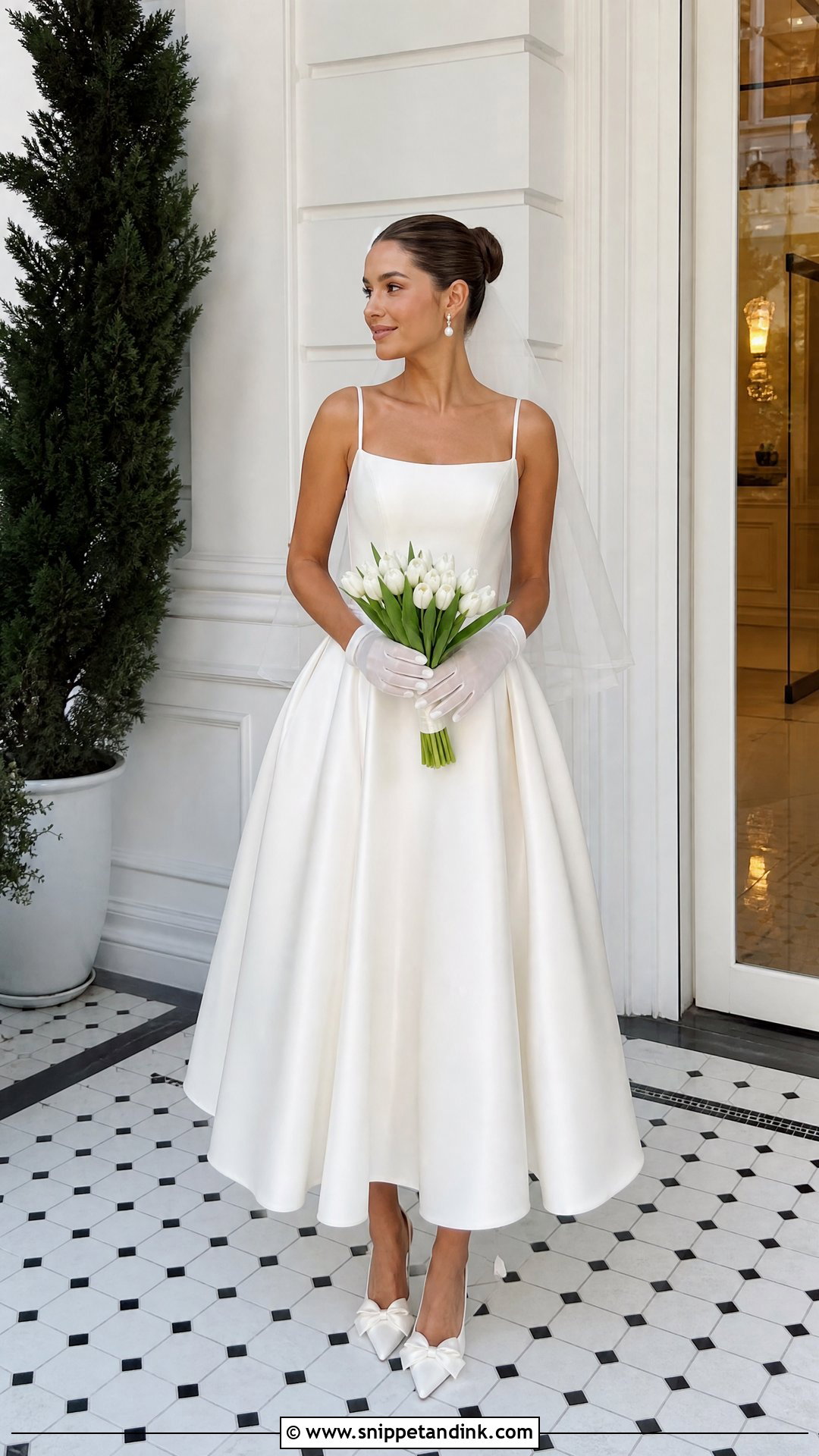
Tea length suits a daytime wedding or a second dress for the party, and it lives or dies on the hem. The most flattering point usually shows the narrowest part of the lower leg, so test it with your real shoes before anything is cut. Structured satin or mikado holds the skirt out. Since the shoes are on show, they’re part of the outfit: pointed pumps, bow heels or slim ankle straps. Pearl earrings, short gloves if you like them and a shoulder-length veil keep the proportions right. A soft bun or a smooth shoulder-length style stops the retro shape from tipping into costume. A small bouquet of tulips or roses suits it.
11. Mini Spaghetti Strap Wedding Dress
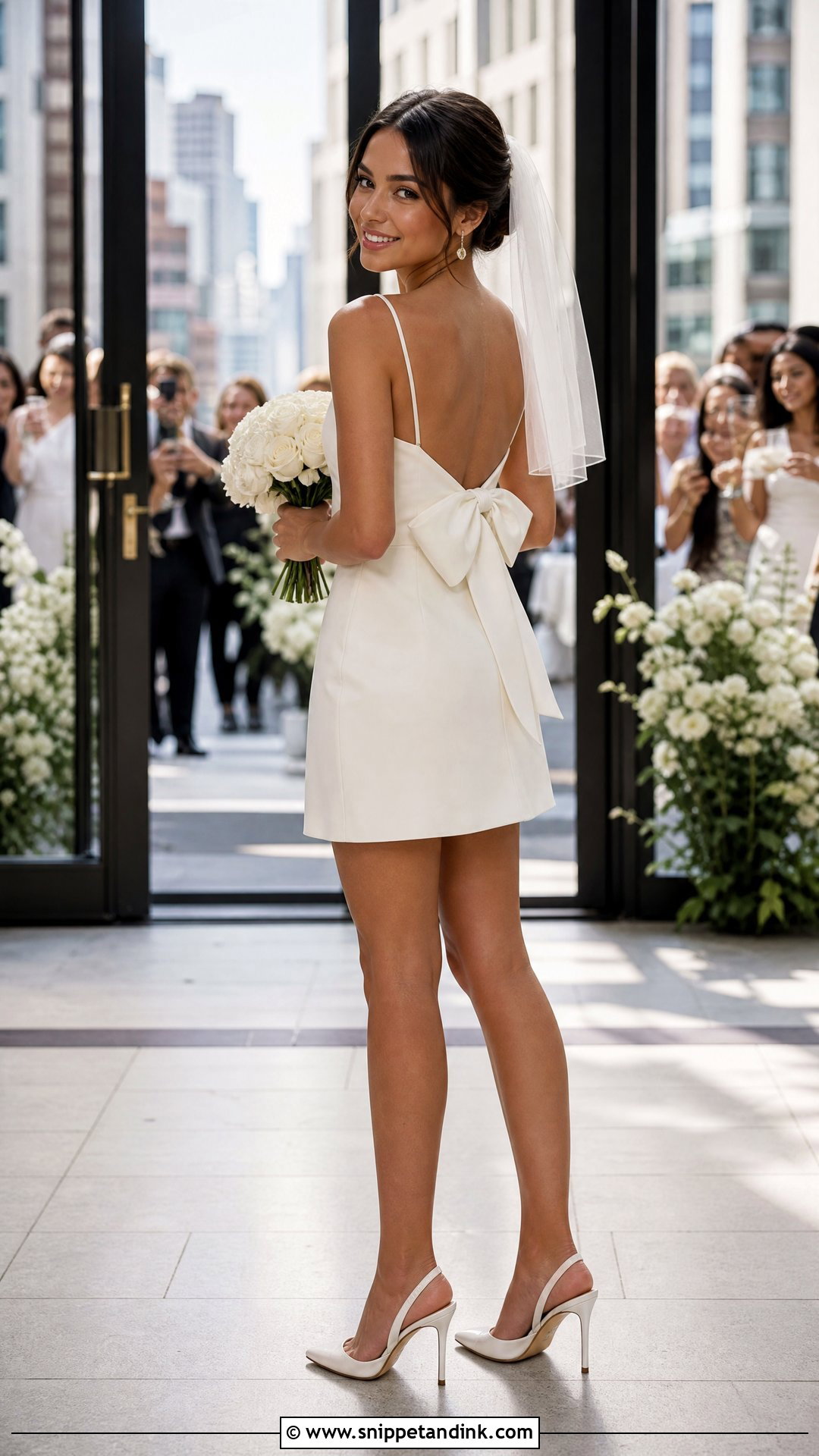
Short dresses have become a proper option for ceremonies and outfit changes, not just a nod to the party. A mini spaghetti strap dress still needs to read bridal, which means a substantial fabric, sharp tailoring and one distinct detail like a square neck, low back or small bow. Thin fabric on a mini looks like a slip, not a wedding dress. Pointed slingbacks, pearl drops, a short veil or a hair bow and a sleek ponytail are plenty, with a small posy instead of a cascade. Adjust the hem while standing, sitting and walking, because legs and shoes take center stage.
12. Empire Waist Spaghetti Strap Wedding Dress
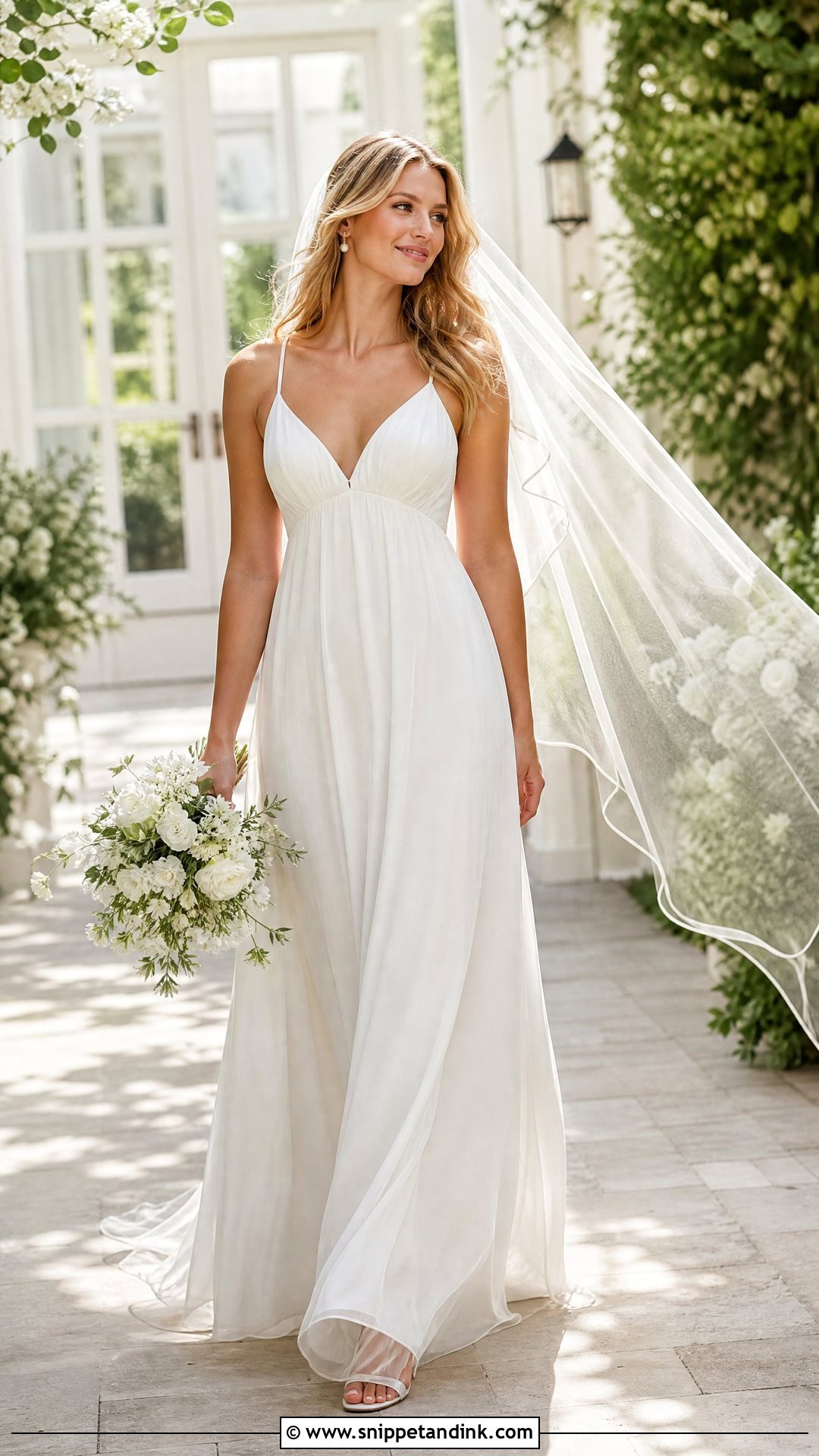
Empire waists sit just under the bust, then the skirt falls straight down in chiffon or silk. It’s one of the easiest dresses to wear for a long day, and one of the easiest to get wrong. The bodice must carry the gown’s weight, not the straps, or they’ll dig in by the first dance. I also watch the gathering under the bust: too much and the skirt balloons; a few controlled pleats keep the line clean. A shallow V, strappy flat sandals, tiny pearls, a fingertip veil, loose waves or a half-up style, and a flowing bouquet of white flowers suit it.
13. Basque Waist Spaghetti Strap Wedding Dress
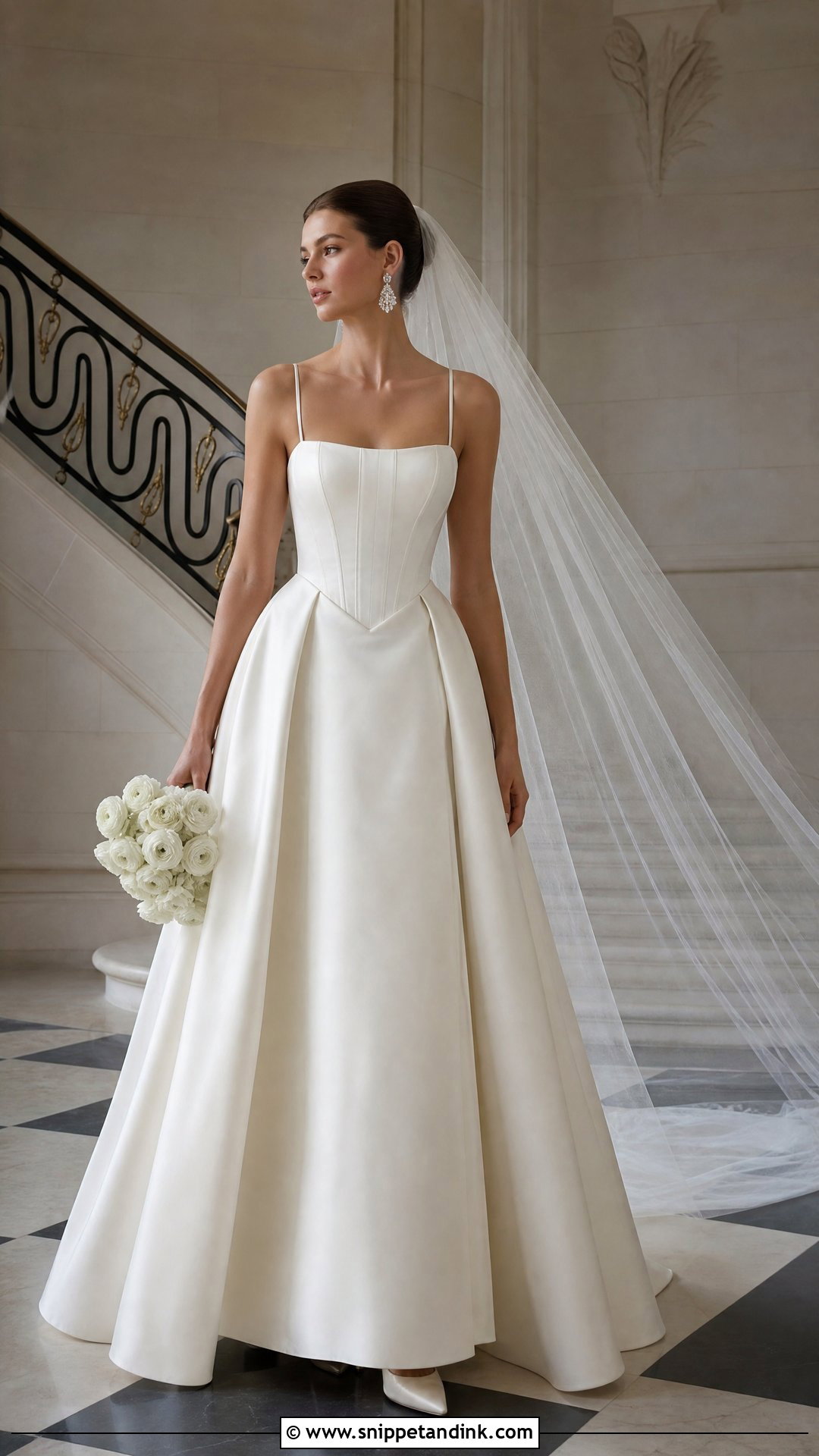
A Basque waist brings a hint of couture to a plain gown through its pointed, elongated bodice, and it’s having a real moment alongside sculpted corsetry. Plain satin or mikado keeps attention on the waistline. The point should sit flat when you sit; if it digs into your stomach or flips outward in a chair, the angle needs adjusting before the final fitting. Closed-toe ivory heels, small crystal earrings and a raw-edge cathedral veil match its precision, as does a center-parted bun. A rounded bouquet of ranunculus softens all that structure.
14. Drop Waist Spaghetti Strap Wedding Dress
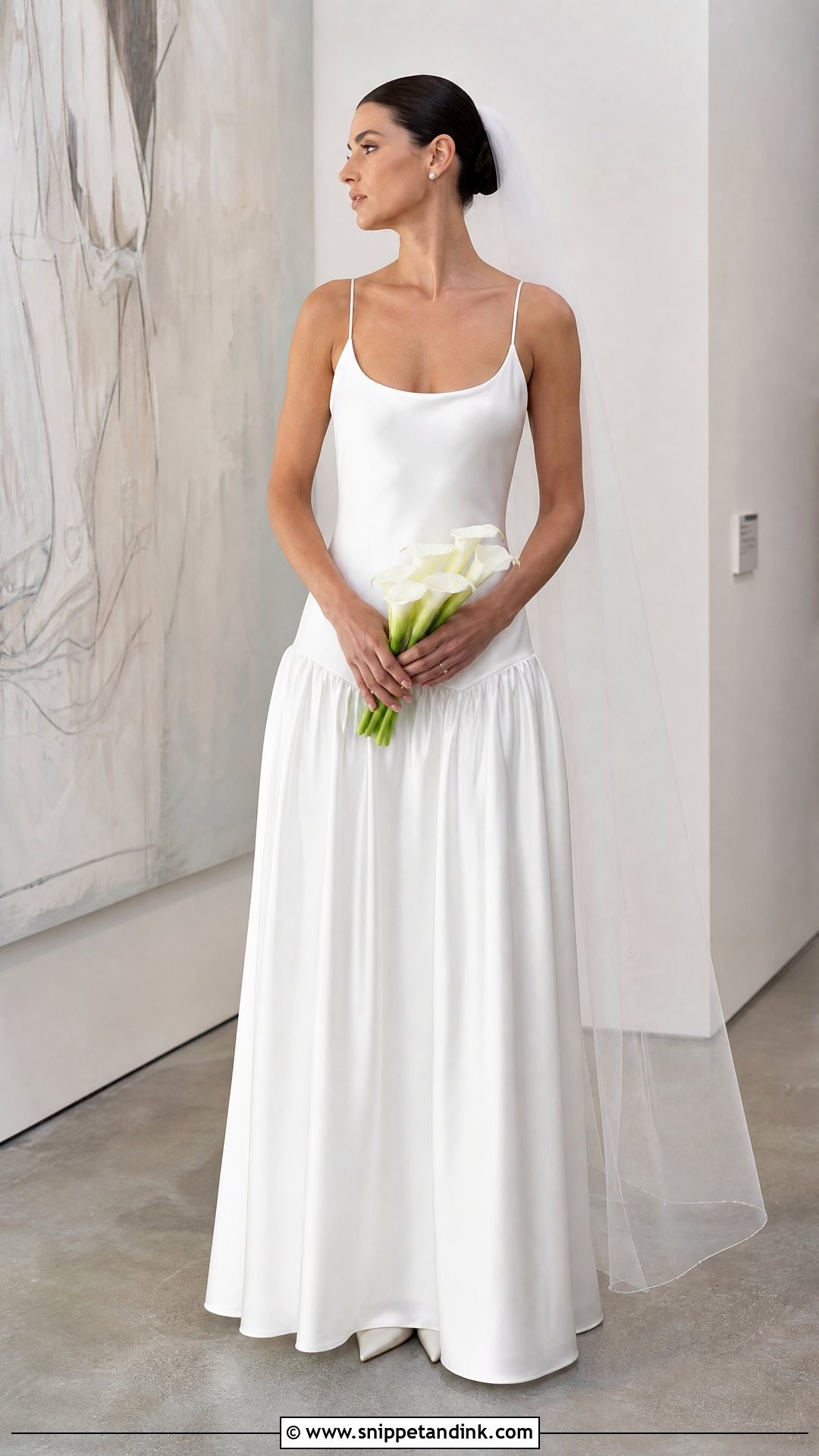
Drop waists extend the bodice past the natural waist, so the dress reads long and modern. They’re also the shape most likely to wrinkle at the hip if the fit is off. When I fit one, I look at the lower bodice from the side: any horizontal folds mean it’s either too tight at the hip or too long in the torso. A clean satin design with a scoop or square neck and thin straps, plus a softly flared skirt, keeps the volume controlled. Pointed pumps, pearl studs, a plain chapel veil and a sleek low bun suit it, with a few calla lilies to echo the line.

15. V-Neck Spaghetti Strap Wedding Dress
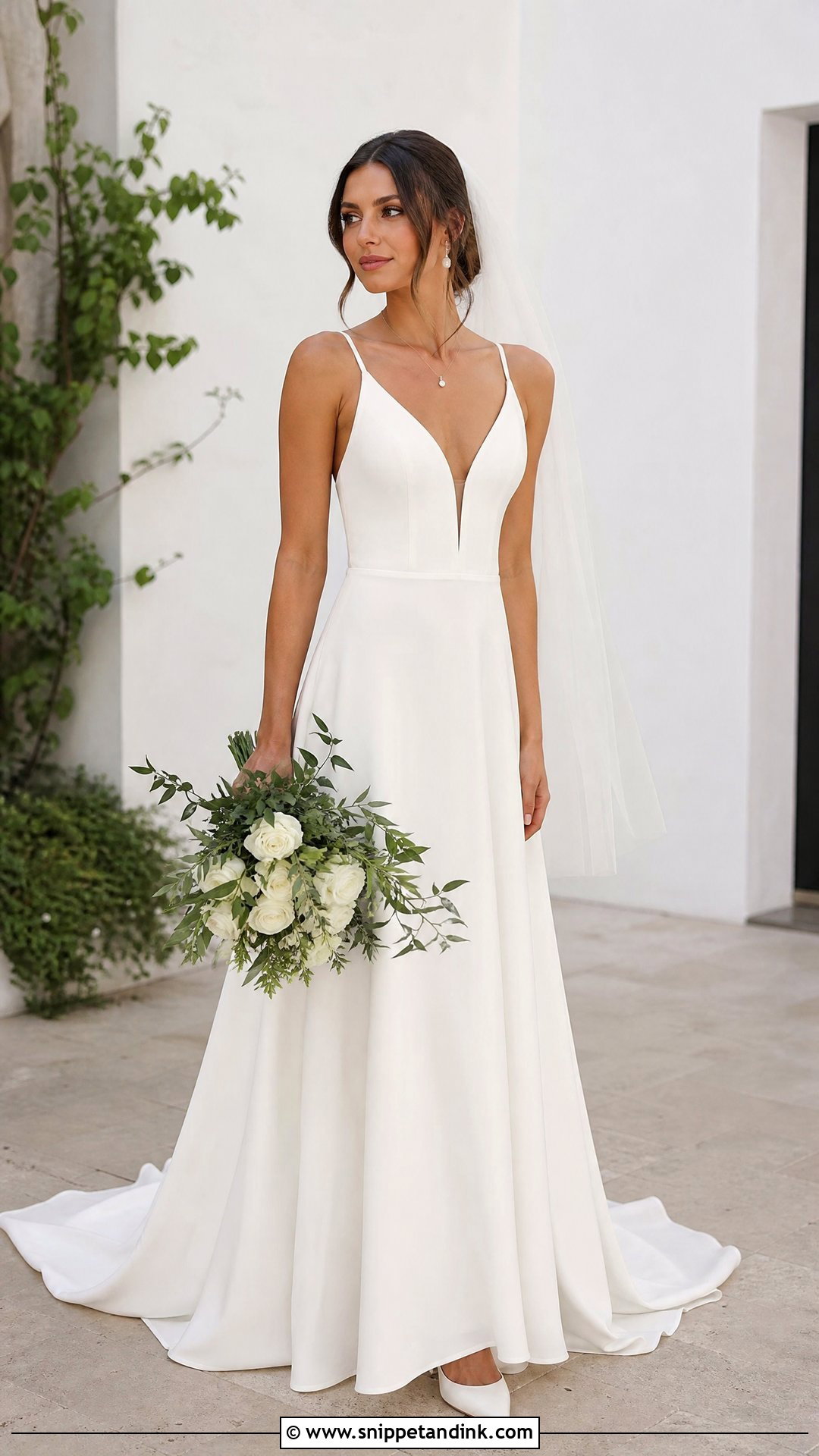
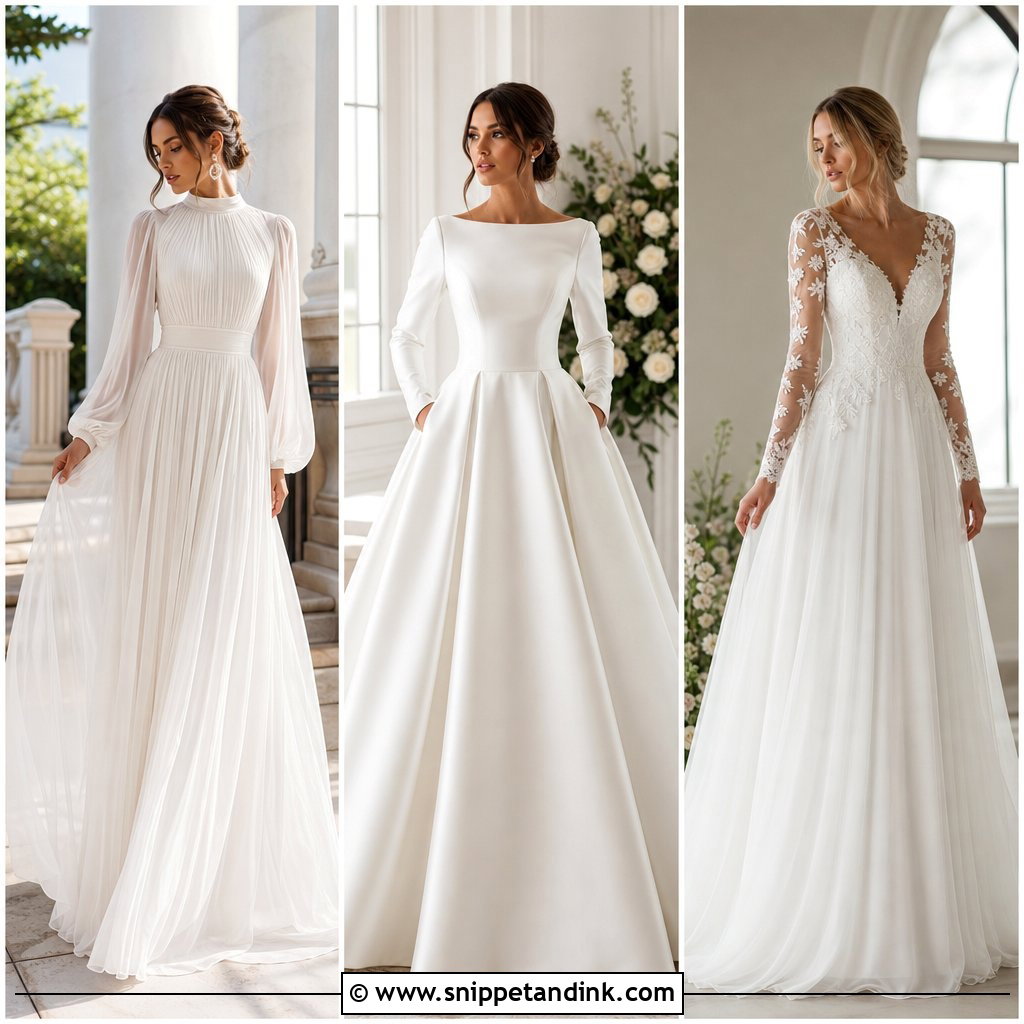
A V-neck pulls the eye up and down, which suits most skirt shapes and most heights. The depth is the decision. A moderate V with a lined, fitted bodice stays put; a deep one usually needs a strip of nude mesh or extra internal structure to stop it shifting when you lean or dance. The straps shouldn’t press into the shoulders, which usually means the bodice needs taking in. Pointed ivory heels, fine drop earrings and either no necklace or a pendant that follows the V’s angle work well. Add an understated chignon, a single-layer veil and loose white roses.
16. Scoop Neck Spaghetti Strap Wedding Dress
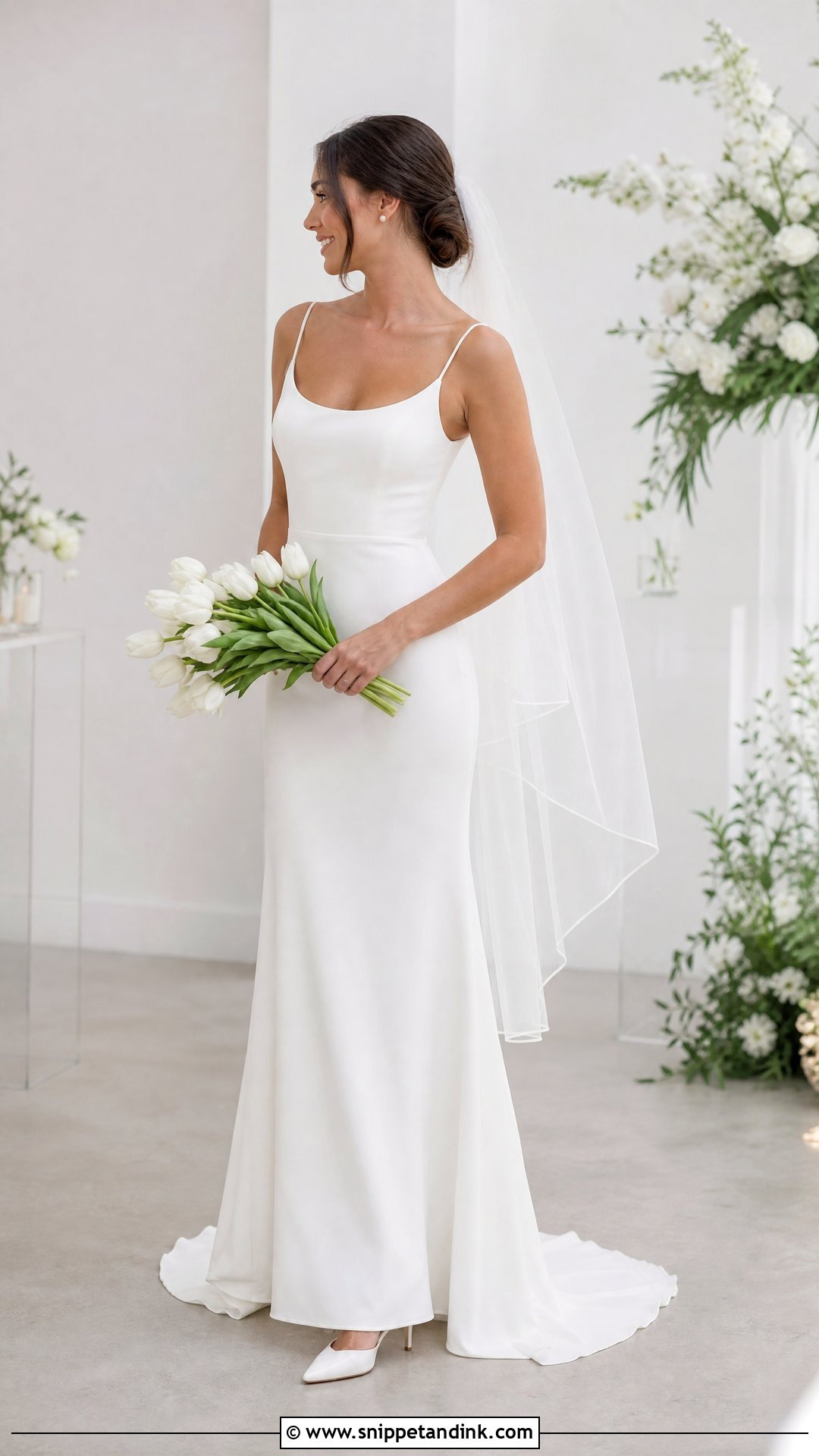
A scoop neck is my go-to when a bride asks for soft but not sugary. Look for wide-set spaghetti straps, a supportive bodice and a smooth A-line or column skirt. Matte crepe looks modern, silk satin glows. Before you commit, check the depth sitting down; a scoop that looks modest standing can gape when you lean back in a chair. Pearl studs, low pointed heels, a fingertip veil and a low twisted bun or brushed-out waves keep it gentle. If it feels too plain, covered buttons or a small train add detail without fuss.
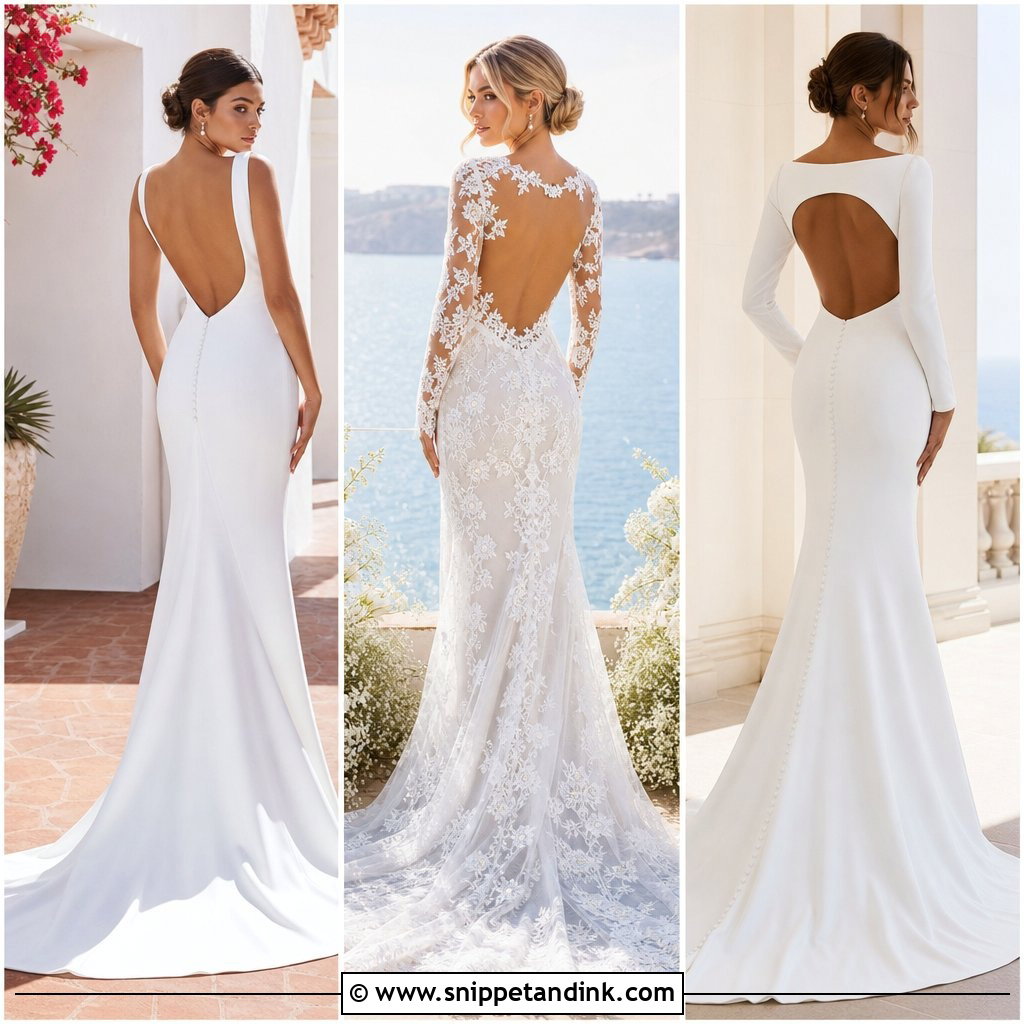
17. Backless Spaghetti Strap Wedding Dress
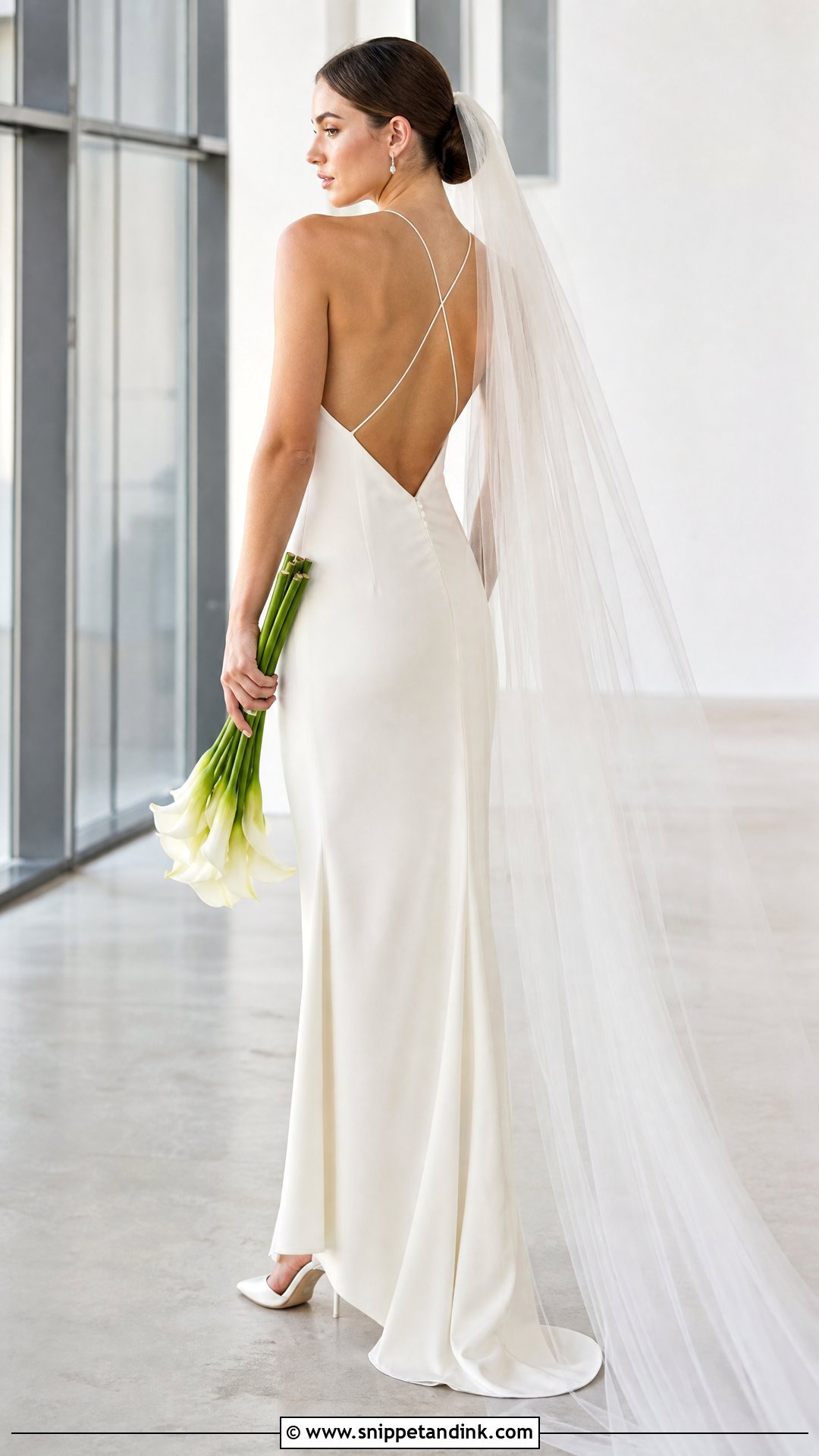
Open backs on strappy dresses are mostly an engineering problem. With a high scoop in front and nothing behind, the thin straps take more tension than usual, and the back edge has to lie flat against the skin or it gapes when you move your arms. Crossed straps spread the load. Have the undergarment conversation, including sewn-in cups, before you buy, and test sitting and reaching at every fitting. Then style it simply: sleek pumps, small drops and a veil pinned above a low bun, removed later so the back can be seen. Calla lilies keep the look narrow.
18. Bow Back Spaghetti Strap Wedding Dress
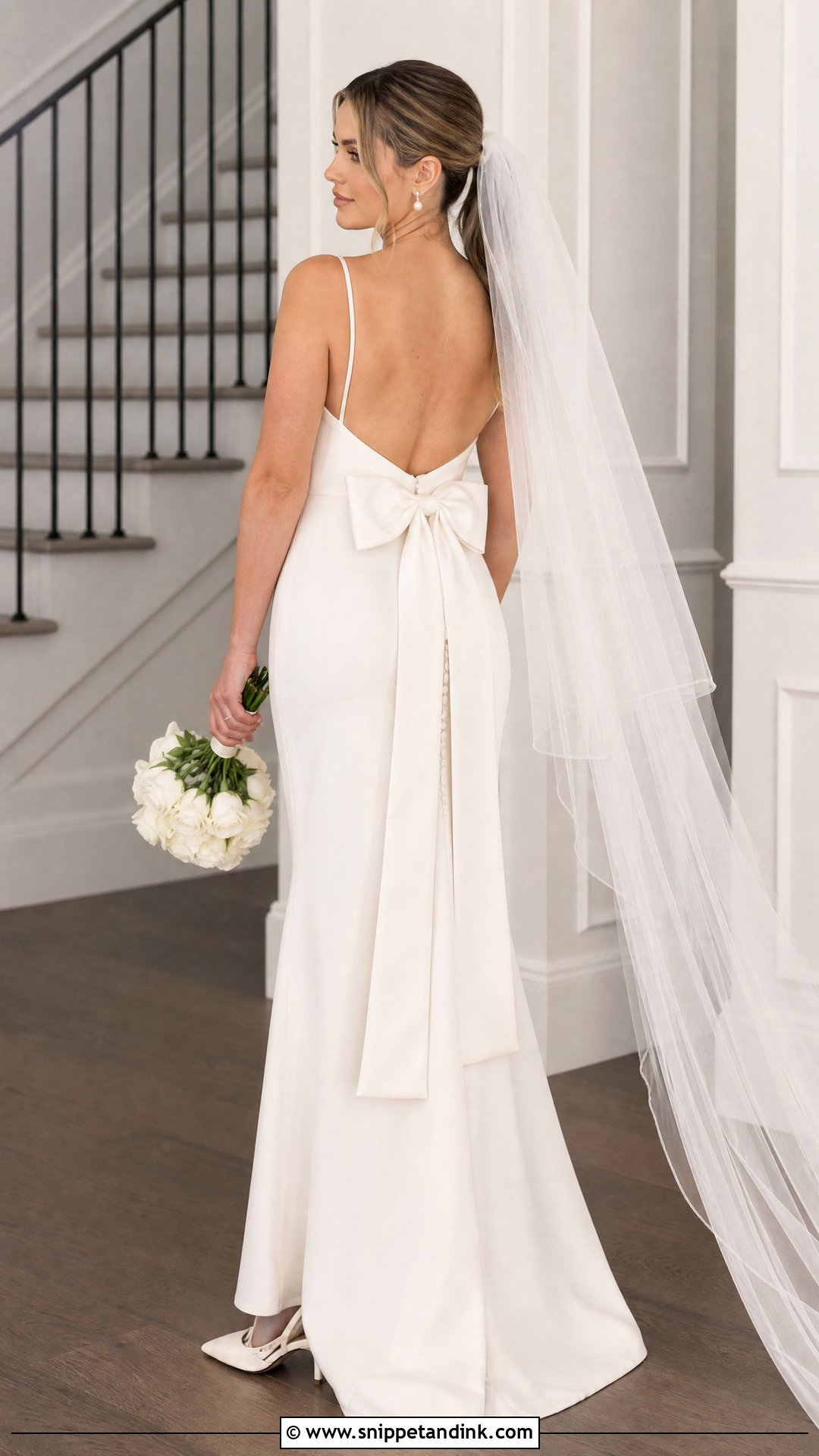
One bow can change the whole mood of a plain satin dress. Keep it in proportion to the silhouette; a bow wider than your shoulders looks like a costume from the back. A removable one, fastened at the waist or lower back with a hidden hook, gives you a second, cleaner look for the reception. Make sure that hook stays hidden when you bend. Pointed slingbacks, pearl earrings and a sheer veil that lets the bow show through suit it, along with a neat bun or polished ponytail and a simple bunch of white roses.
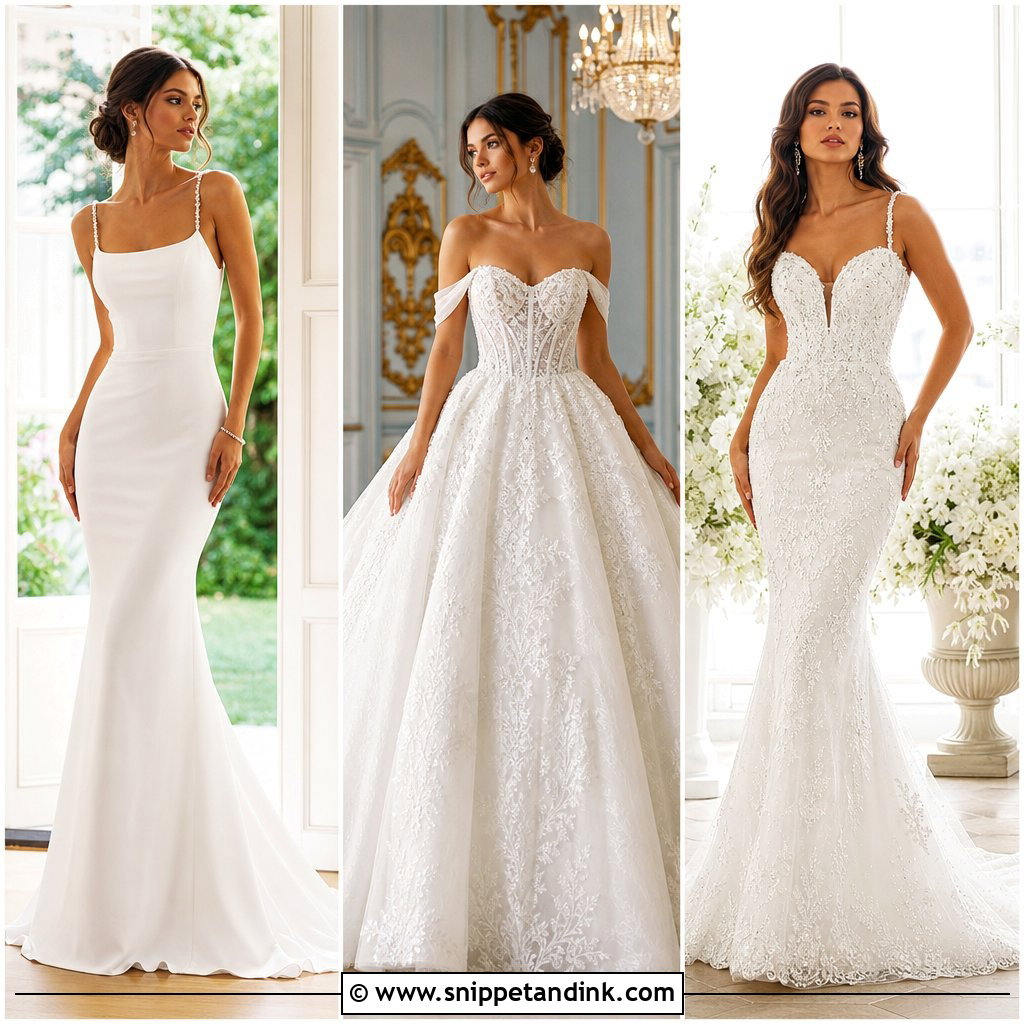
19. Pearl Strap Wedding Dress
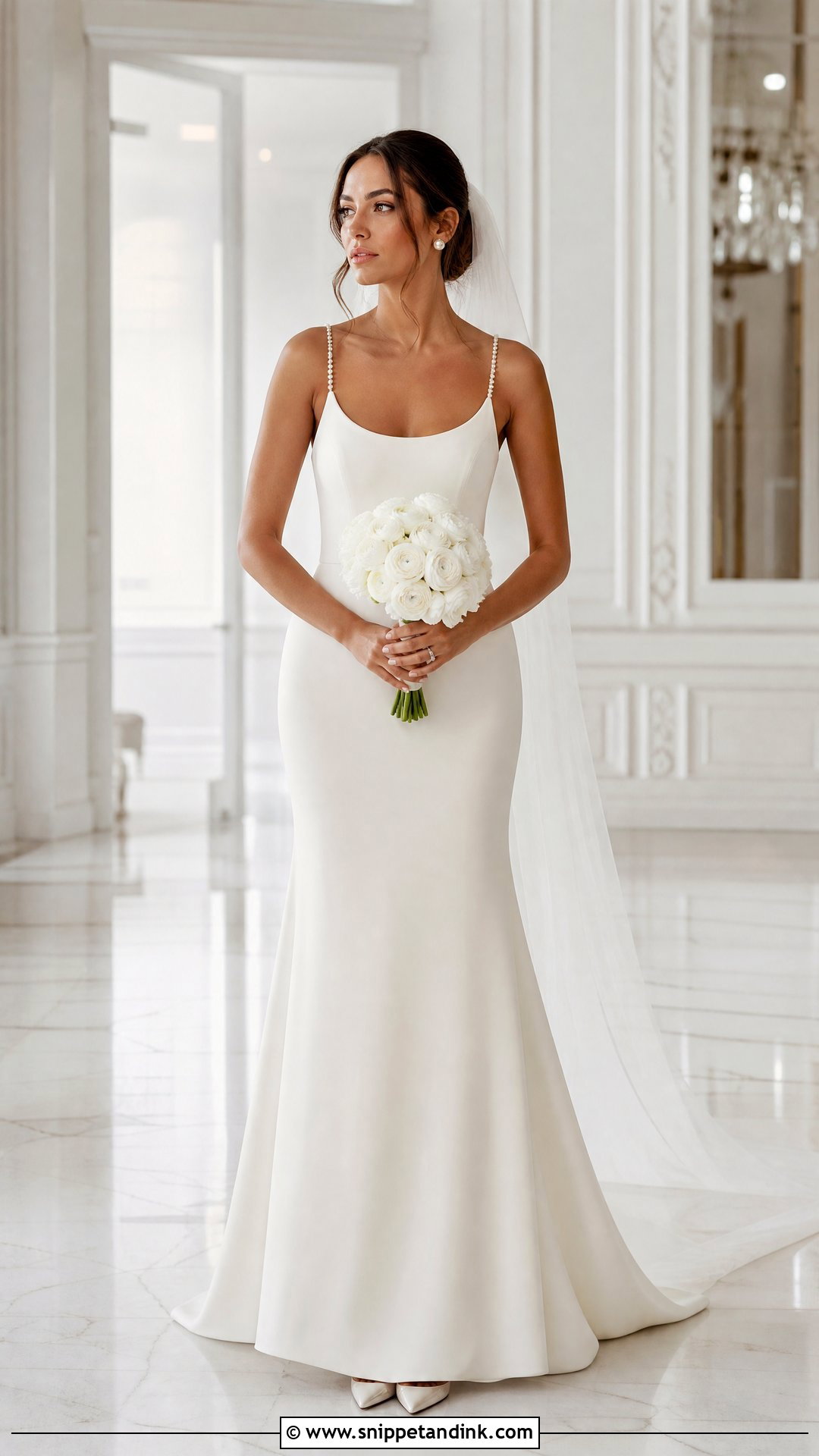
Pearl straps add weight to the part of the dress least able to carry it. I ask for the straps to be reinforced with a firm inner core and check every pearl’s stitching at each fitting, because the ones near the back catch on veils and chair backs. A plain crepe or satin dress with a fitted bodice, scoop neck and gently flared skirt lets them stand out. Keep the rest quiet: pearl studs, ivory pumps and an unbeaded veil. Wear your hair low or swept to one side so the straps show, and pack a small repair kit with matching thread for the day.
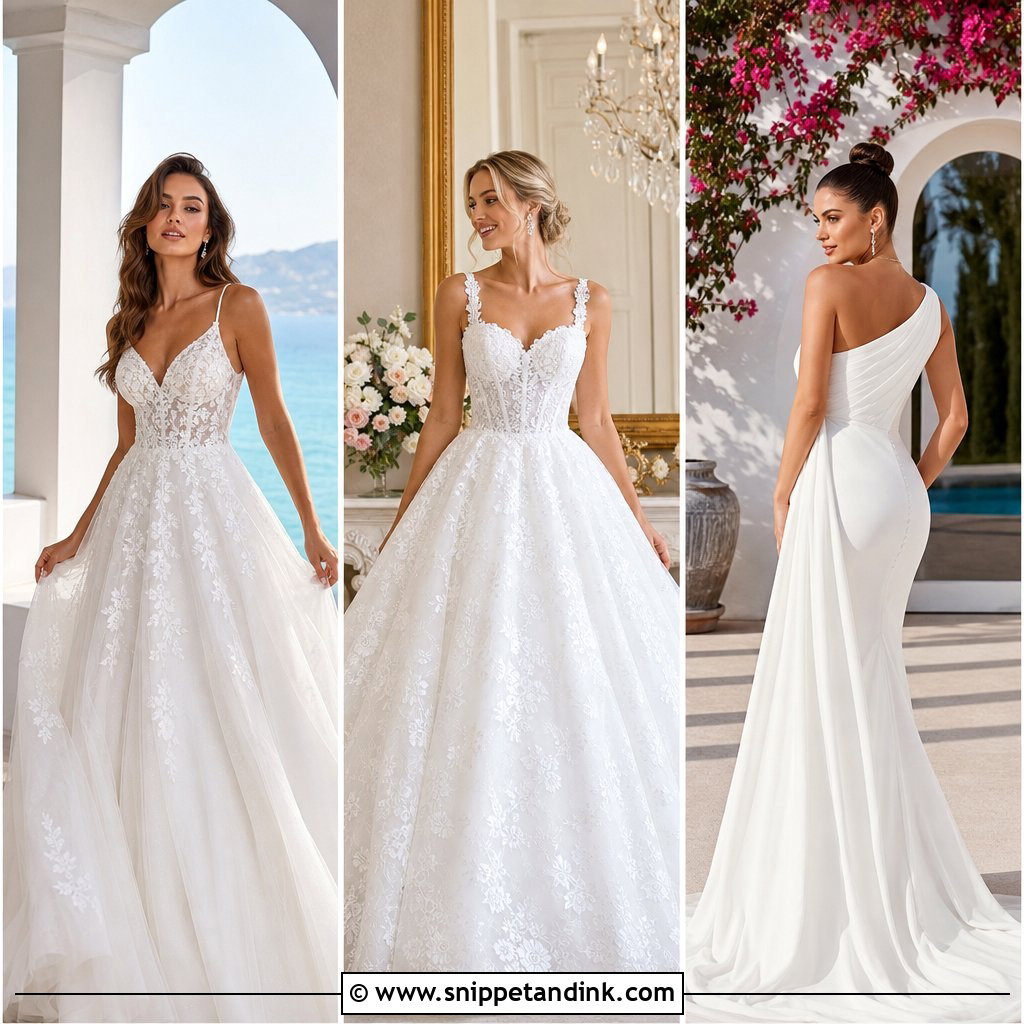

20. Floral Appliqué Spaghetti Strap Wedding Dress
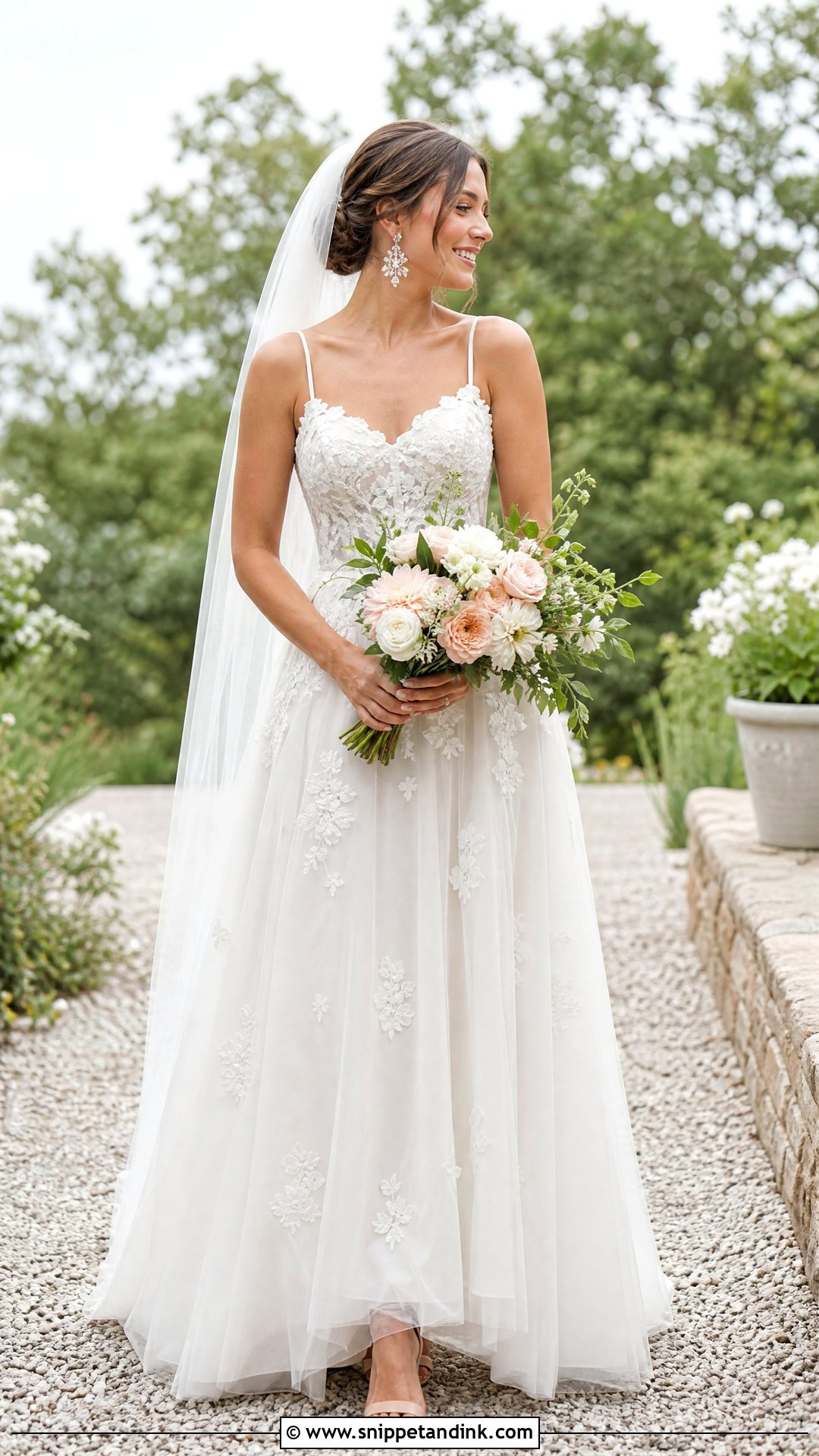
Scattered appliqués give texture without the weight of all-over lace, and they move with a tulle skirt rather than fighting it. I prefer appliqués that match the gown’s color closely, so the effect is tonal rather than patterned. A lined bodice and light tulle A-line keep it airy. Placement matters more than people expect: flowers near the inner arm or waist can rub and snag after a few hours, so I check where they sit when you move. Ankle-strap heels, tiny crystal earrings, a plain veil and a low bun or half-up style suit it, with sweet peas and roses in hand.
Covering Bare Shoulders for a Church Service or a Cold Evening
Many places of worship ask for covered shoulders during the ceremony, and a summer gown can feel very different at an outdoor reception once the sun goes down. Ask your officiant about dress rules early, so the cover-up is planned rather than borrowed on the morning.
- Detachable sleeves or a sheer bolero, made from the same or matching fabric, give full coverage for the service and come off for the party.
- A long veil worn over the shoulders works in some churches; check first, because not every officiant accepts it.
- For cold evenings, a tailored ivory jacket or a faux fur stole layered over the straps looks deliberate in photos.
- Avoid heavy capes pinned to thin straps. The weight drags the neckline backward and can loosen the stitching where the strap meets the bodice.
Take the cover-up to your final fitting. Fabric colors that match on a hanger can look a shade apart when worn together, and the seamstress can add a discreet hook so a bolero doesn’t slide.
Spend on the Bodice, and the Straps Take Care of Themselves
Thin straps work with nearly every shape on this list, from a fluid satin slip to a structured ball gown. The order I’d follow is neckline first, then waist placement, then skirt. After that, think about the venue, the season, your shoes and how much support you need, since that last one decides how the bodice has to be built. Good alterations change a strappy dress more than any added detail. Keep accessories in step with the gown, and put your budget into a bodice that holds you, so the straps only have to look pretty.
You'll Like These Ideas:







Leave a Reply