
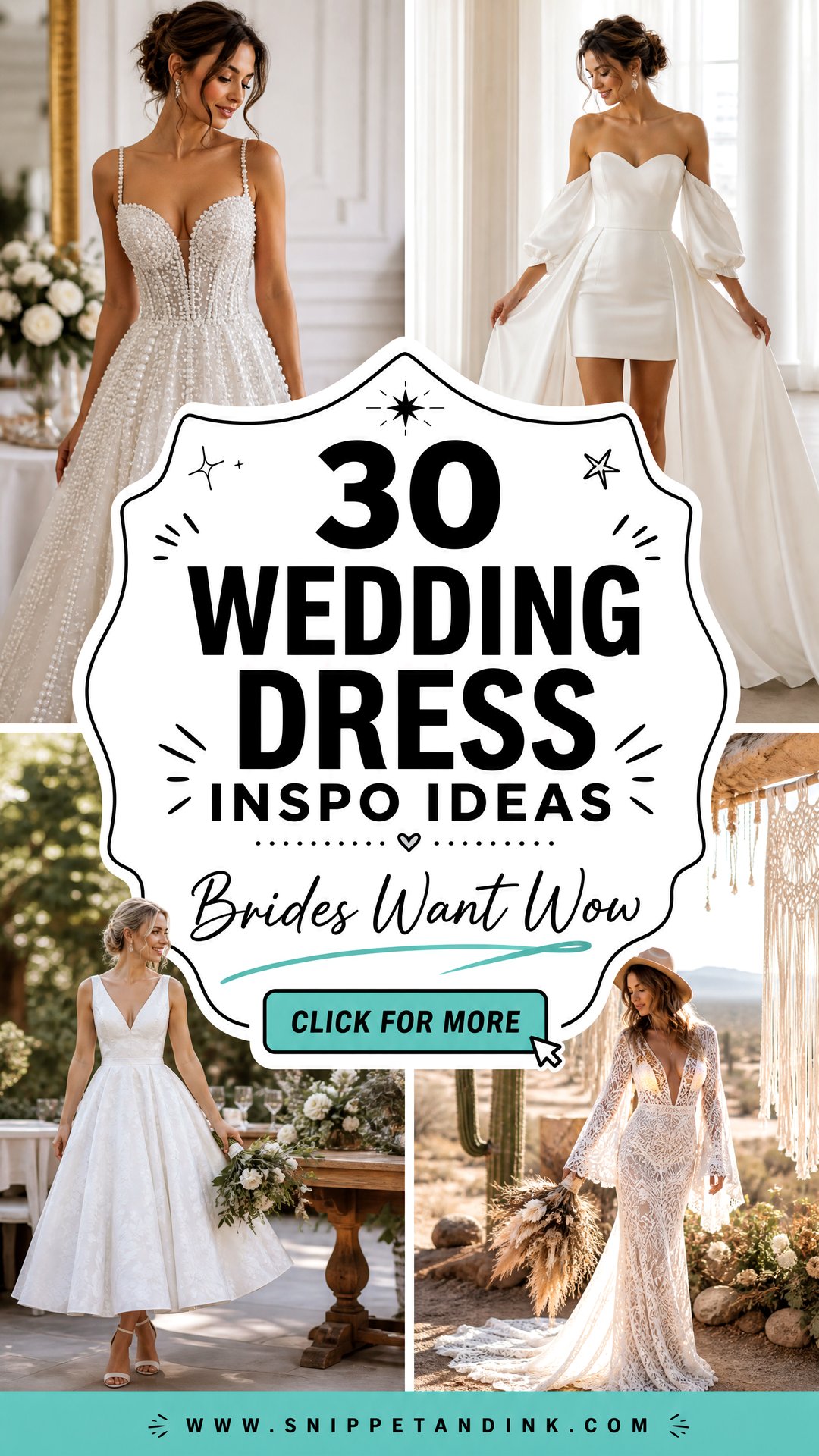
A wedding dress has two jobs: look right in the first second someone sees it, and still feel right after ten hours of hugging, sitting and dancing. Below are thirty gowns I’d pull for a bride who wants a real reaction, from satin ball gowns and lace A-lines to crepe columns, corset bodices, capes, detachable sleeves and a few short party dresses, each a different route to that dream aisle moment. With each one I’ve noted what I’d check in the fitting room, because a gown that wows on the hanger can behave very differently once you move in it.
Trying Gowns On So the Mirror Tells the Truth
A bridal fitting room is built to flatter: soft lighting, clips down the back, a little pedestal. When I take a bride shopping, I strip as much of that away as I can, because the dress has to work on a dance floor, not on a platform.
- Bring the bra or shapewear you plan to wear and shoes close to your wedding heel height. The wrong height throws off every hem you look at.
- Sit down, raise both arms and turn as if you’re hugging someone. If the bodice gaps, digs or slides, treat that as information rather than something the fitting will magically fix.
- Walk away from the mirror and back again. A fitted skirt shows how far you can stride, and a ball gown shows whether the hem kicks forward or catches your toes.
- Take one photo with flash and one without. Some satins and shimmer fabrics change colour or show sheen under flash that the shop lighting hides.
- Keep the group small. Too many opinions make it hard to hear your own.
Samples are clipped or left open to fit a range of bodies, so a gown that can’t close on you may still be the one. Before ruling a style out, I ask the consultant whether they have it, or something cut the same way, in a size that actually fits.
1. Satin Ball Gown Wedding Dress
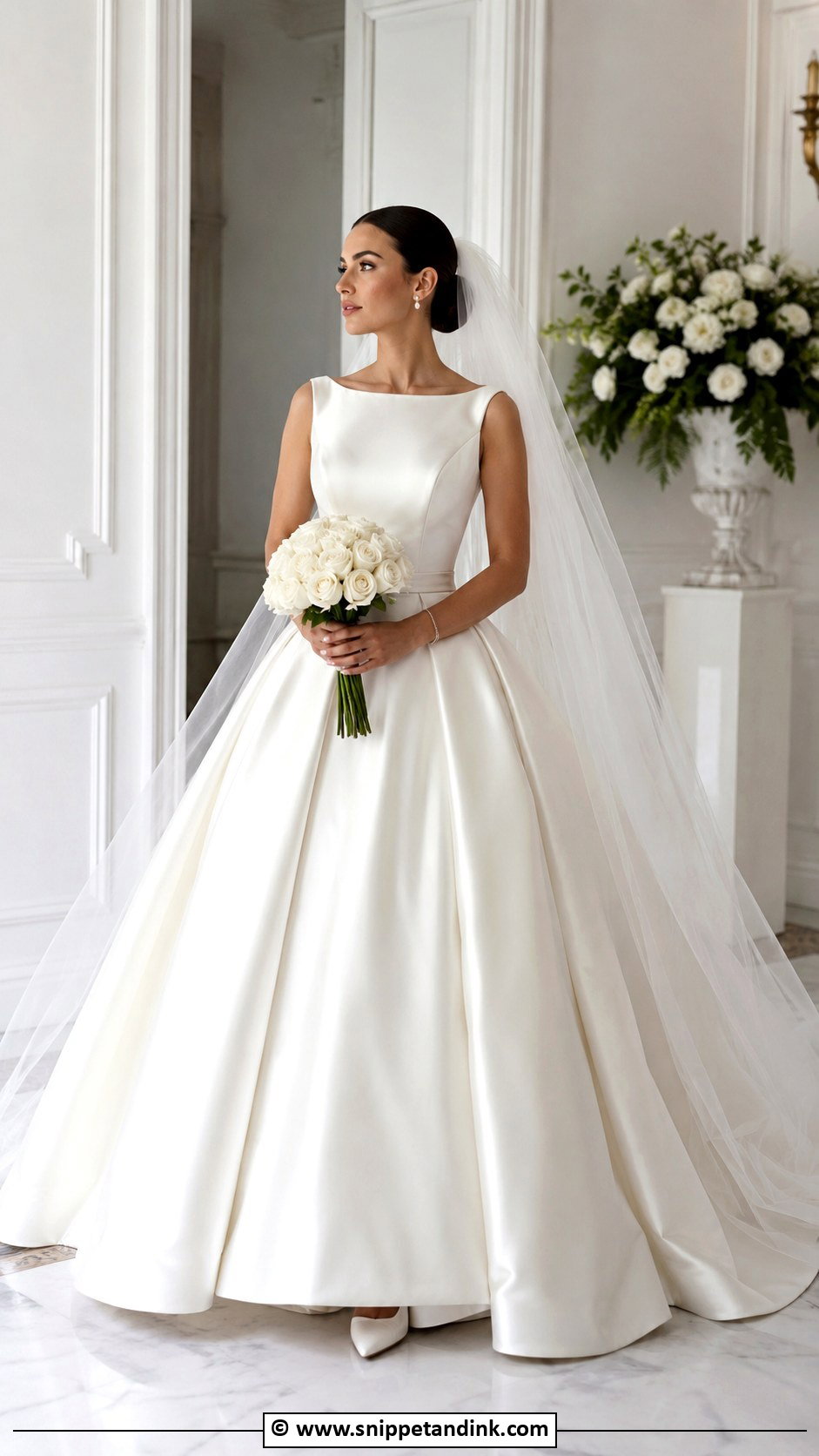
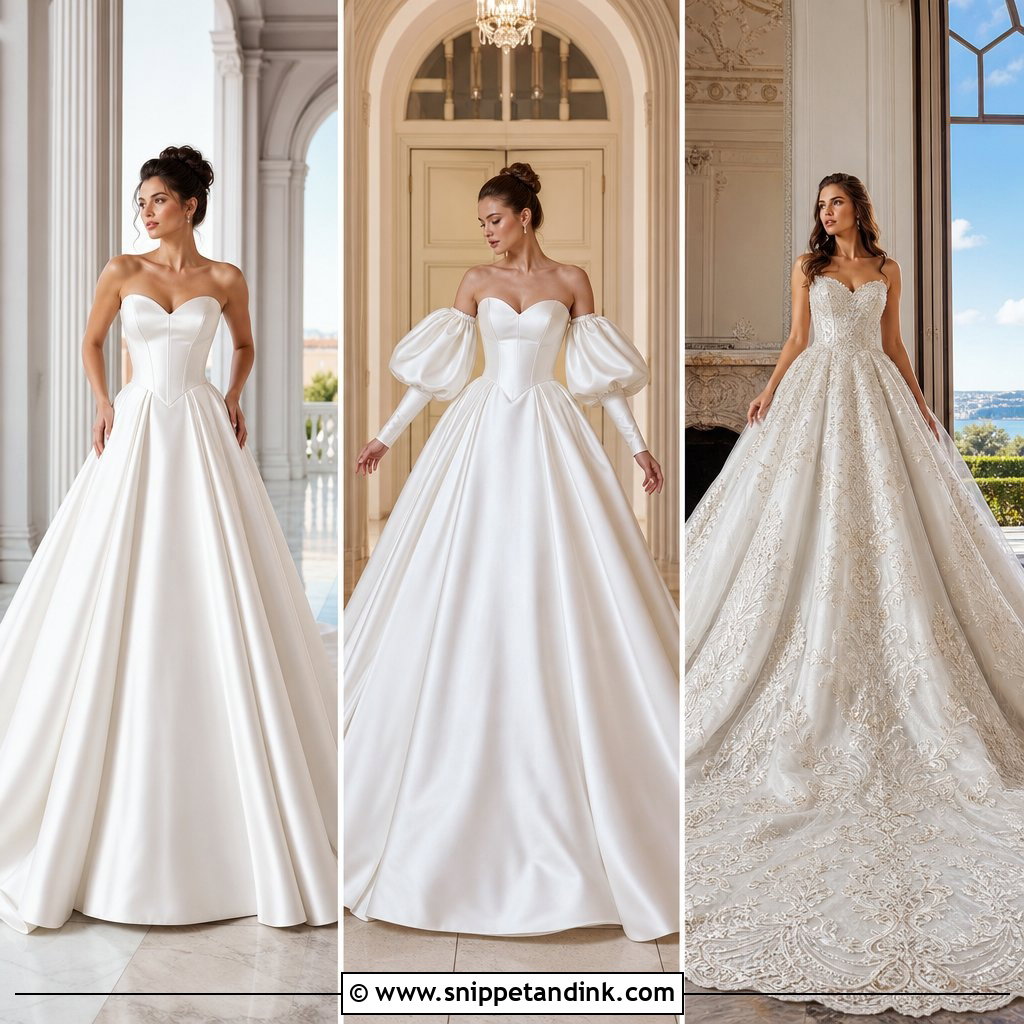
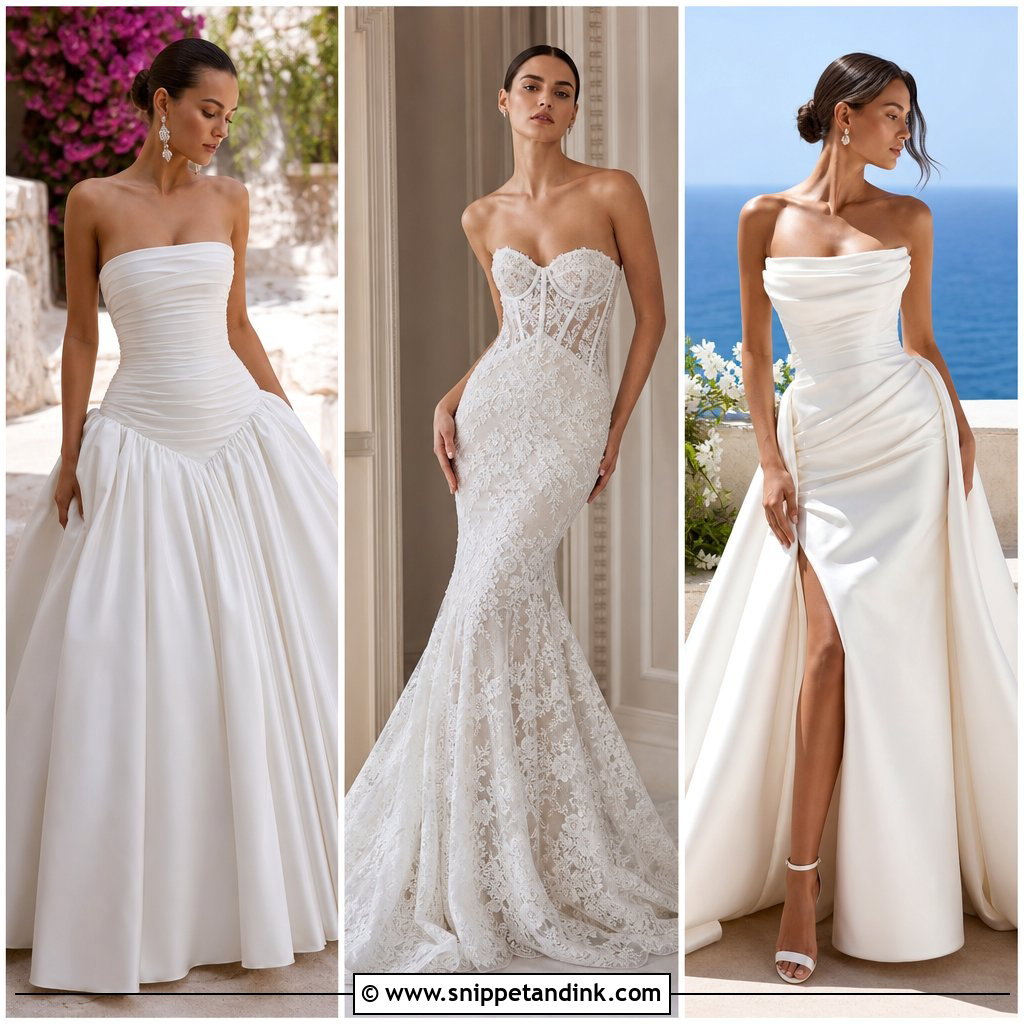
Satin is honest fabric. It shows every seam, so a ball gown in it only looks clean when the bodice is boned and fitted close to the ribs. I like a straight or sweetheart neckline here to square up the volume of the skirt, with pearl studs and a long veil and nothing else competing. Sit down in it before you commit: heavy satin creases across the lap, and you’ll be sitting through dinner. Pointed heels add height without poking out, and a tight bouquet of white roses or calla lilies keeps the silhouette tidy.
2. Lace A Line Wedding Dress
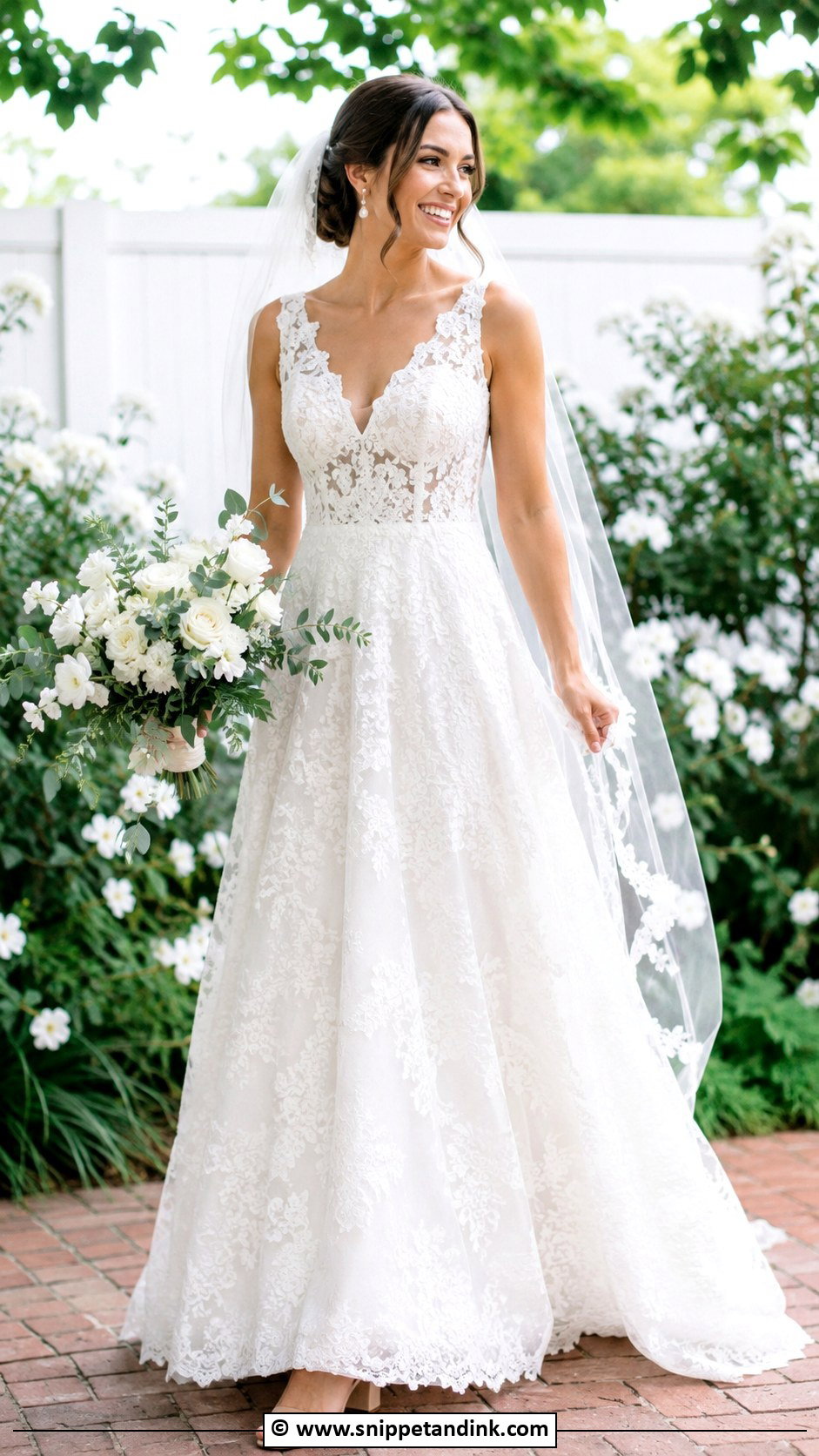
Most brides try an A-line first, and plenty end up there, because a seam at the natural waist and a gradual flare forgive a lot. Floral lace over soft tulle moves well, but look at where the lace motifs land on the bodice; a good seamstress can reposition them so a flower doesn’t sit awkwardly across the bust. A fingertip veil and pearl drops keep it light. Crossing grass? Ivory block heels stop you sinking. A loose bouquet of white blooms and greenery matches the softness of the lace.
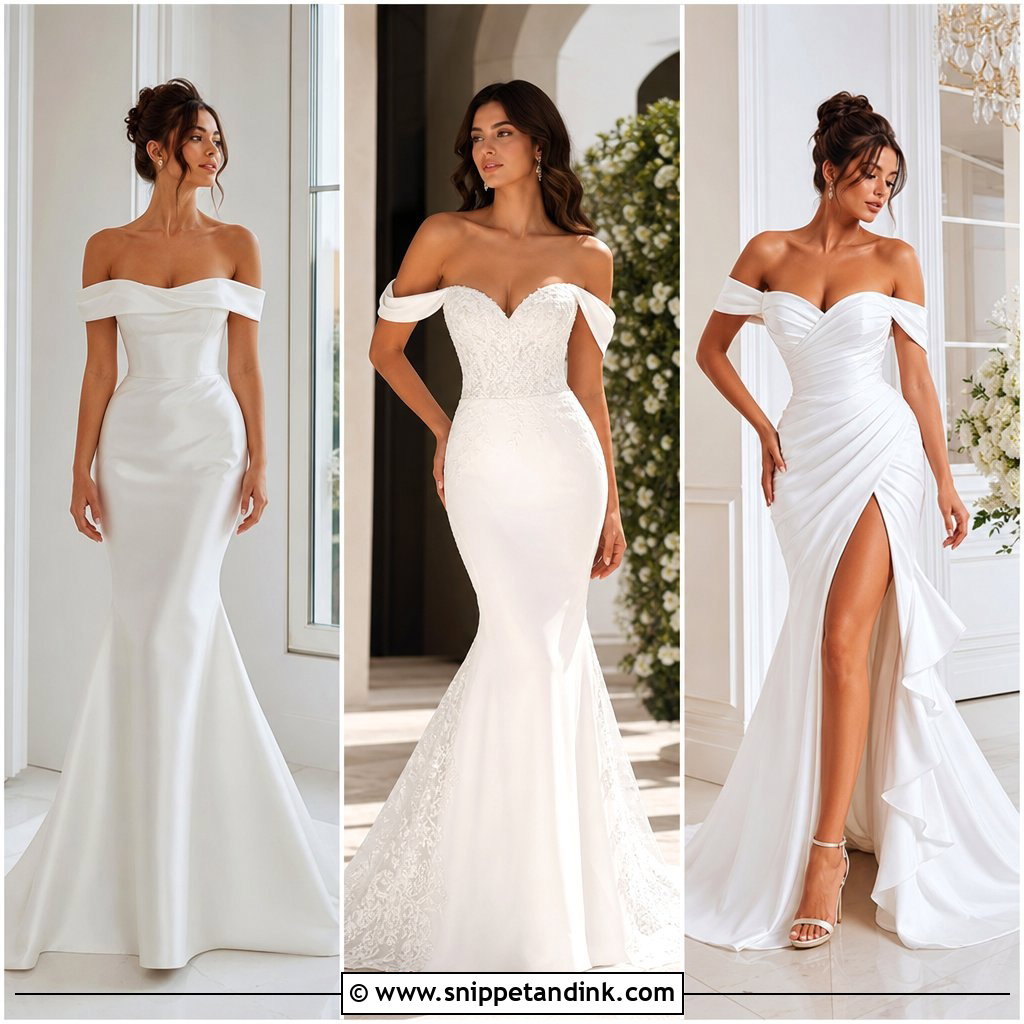
3. Minimalist Crepe Wedding Dress
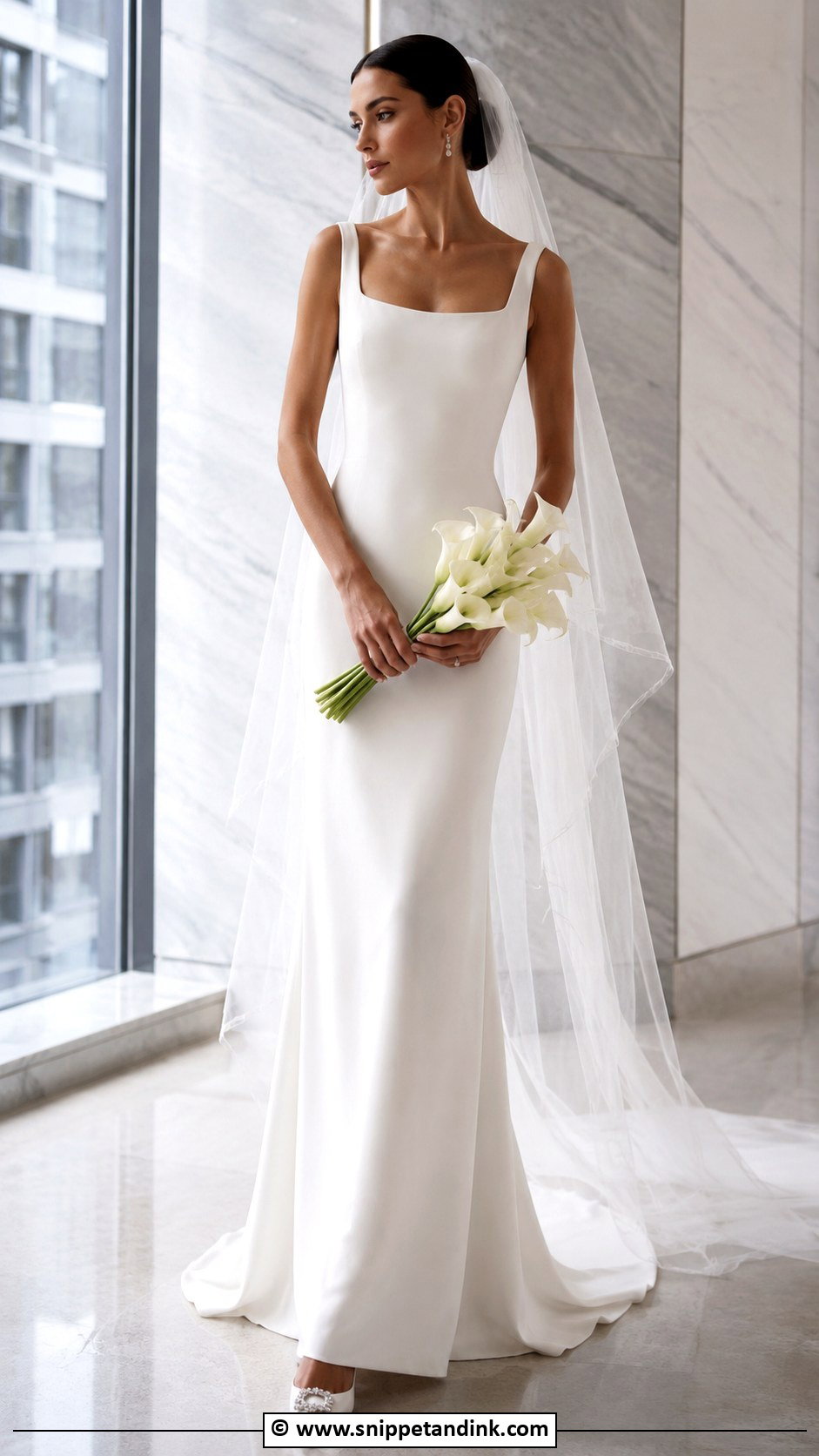
Crepe has no shine and nowhere to hide, which is exactly why I reach for it for a bride who likes clean lines. It skims rather than clings, yet it shows every undergarment edge, so bring smooth, no-line underwear to every fitting. A square neckline, slim straps or long sleeves change the mood without adding detail. Keep the hair to a smooth low bun and let a cathedral veil supply the drama. Calla lilies or orchids carry the sculptural feel into the bouquet, and a city venue or gallery suits it best.
4. Off Shoulder Wedding Dress
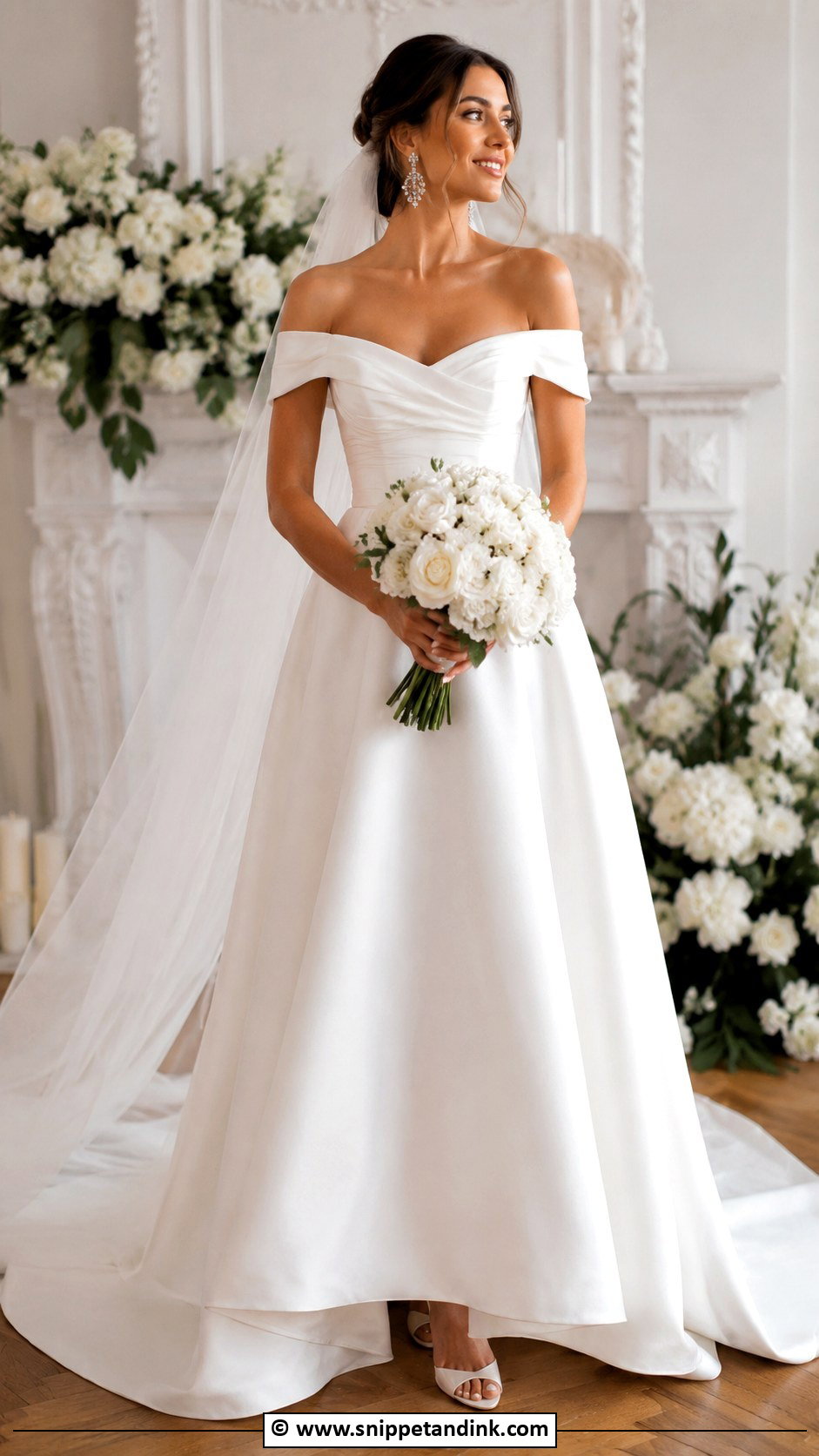
The first thing I check with an off shoulder neckline is whether you can lift your arms. Many are cut so tight across the upper arm that hugging becomes awkward, and the band creeps upward all evening. When it does fit, it frames the collarbones better than almost any other neckline. Wear a delicate necklace or statement earrings, not both. Tuck the veil low under the hair so the shoulders stay open, and finish with soft waves.
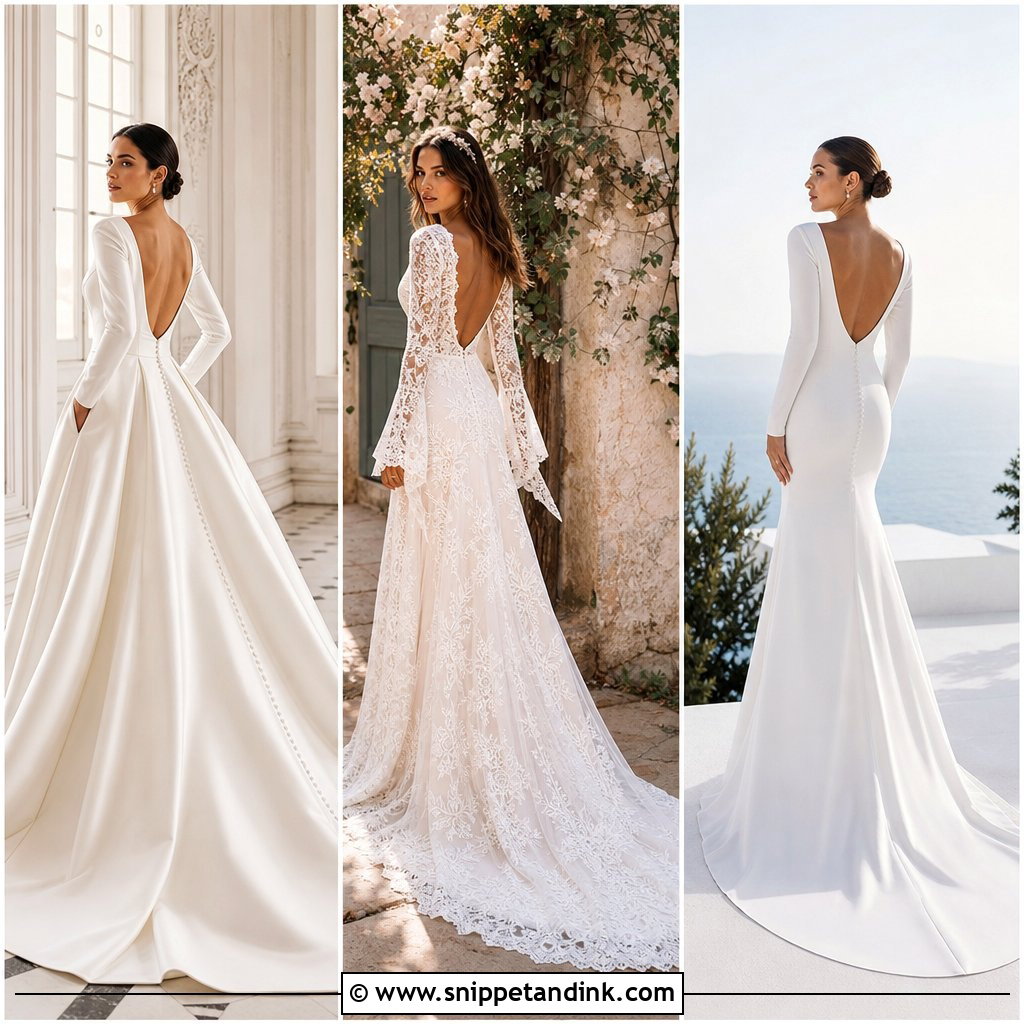
5. Long Sleeve Lace Wedding Dress
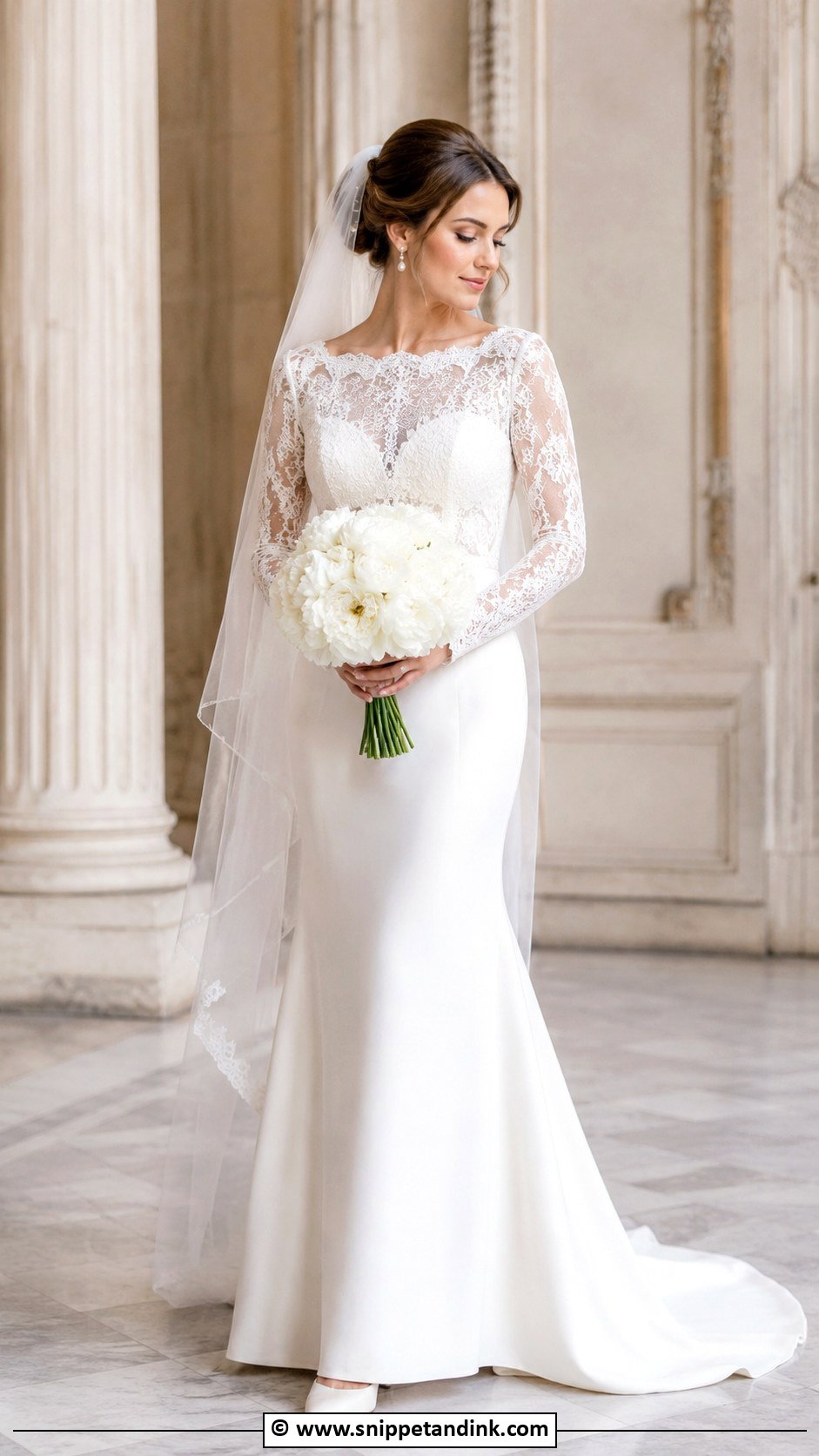
Sleeves are where lace earns its keep. Sheer ones read delicate; lined ones read traditional and give more coverage for a religious ceremony. I keep the skirt plain, in crepe, satin or tulle, so the sleeves stay the focus, and I skip necklaces entirely when the lace is dense. One fit point people miss: lace sleeves have very little give, so ask for room at the elbow to raise a glass. Peonies, roses or ranunculus suit the mood, and in autumn or winter you’ll be glad of the warmth.
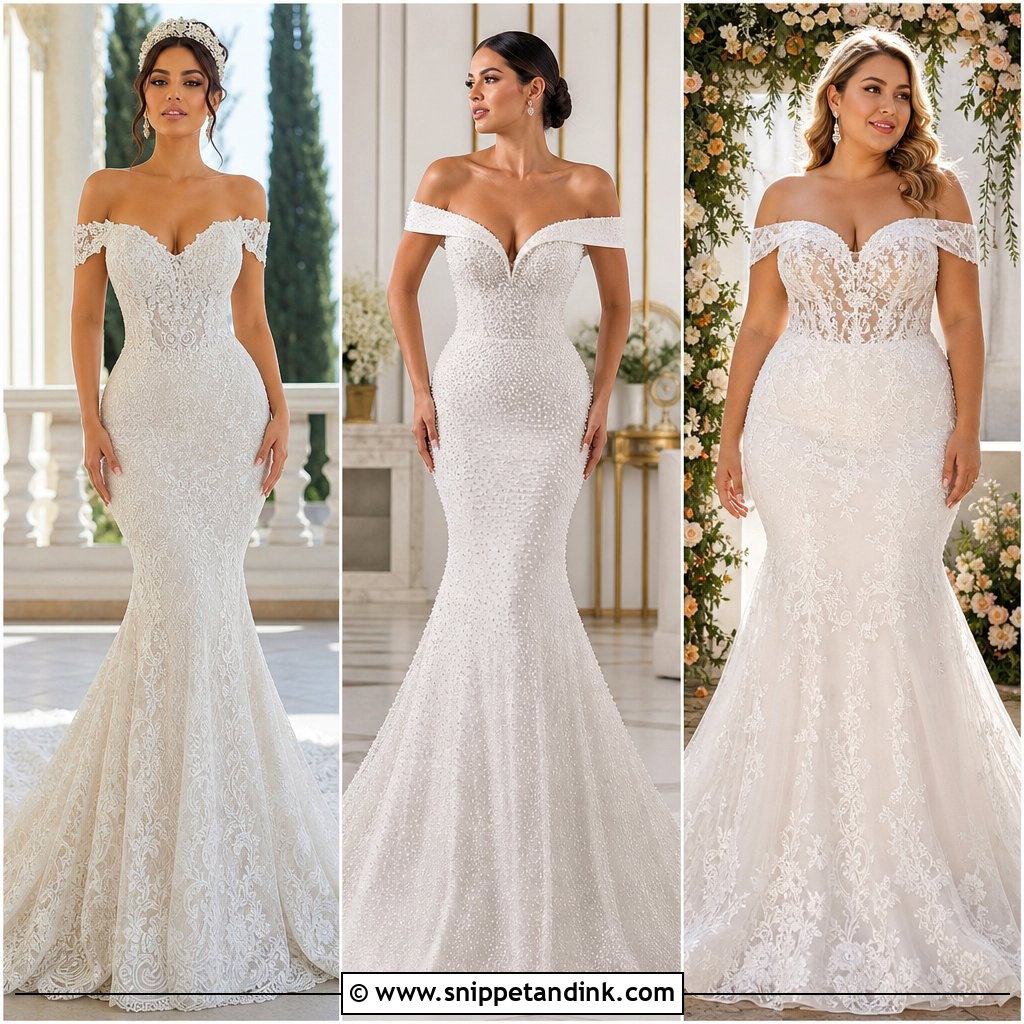
6. Strapless Mermaid Wedding Dress
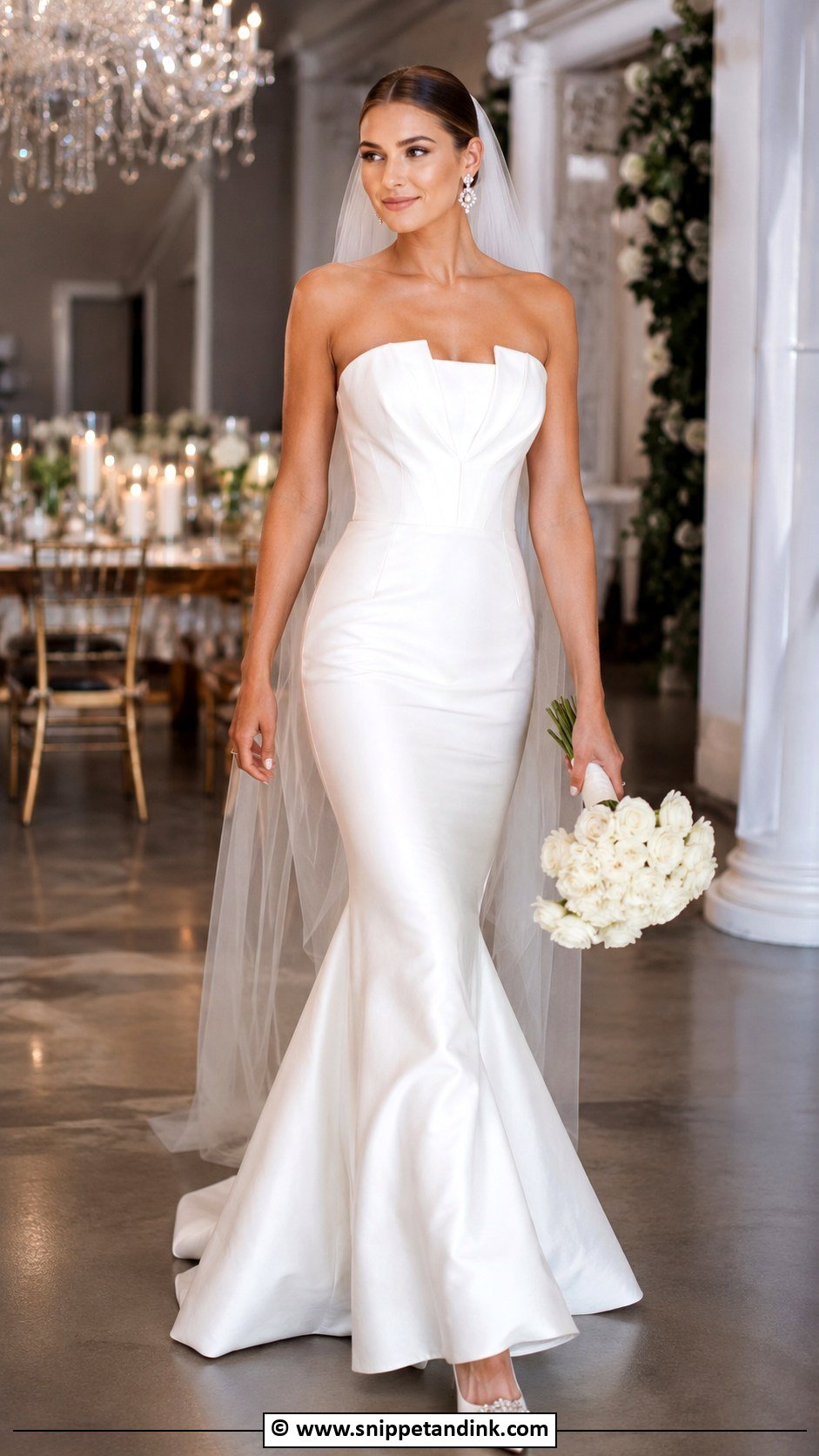
A mermaid gown is a fitting project before it is a style. The bodice has to hold itself up through boning and a waist stay, not through you tugging it all night, and the flare point, at the knee or lower thigh, decides whether you can manage stairs. I’d steer you away from it if you plan hours of dancing and don’t want a second look. Crystal earrings, pointed ivory heels and a low chignon balance the sculpted shape. Keep the bouquet simple. Evening ballrooms are its natural home.
7. Basque Waist Wedding Dress
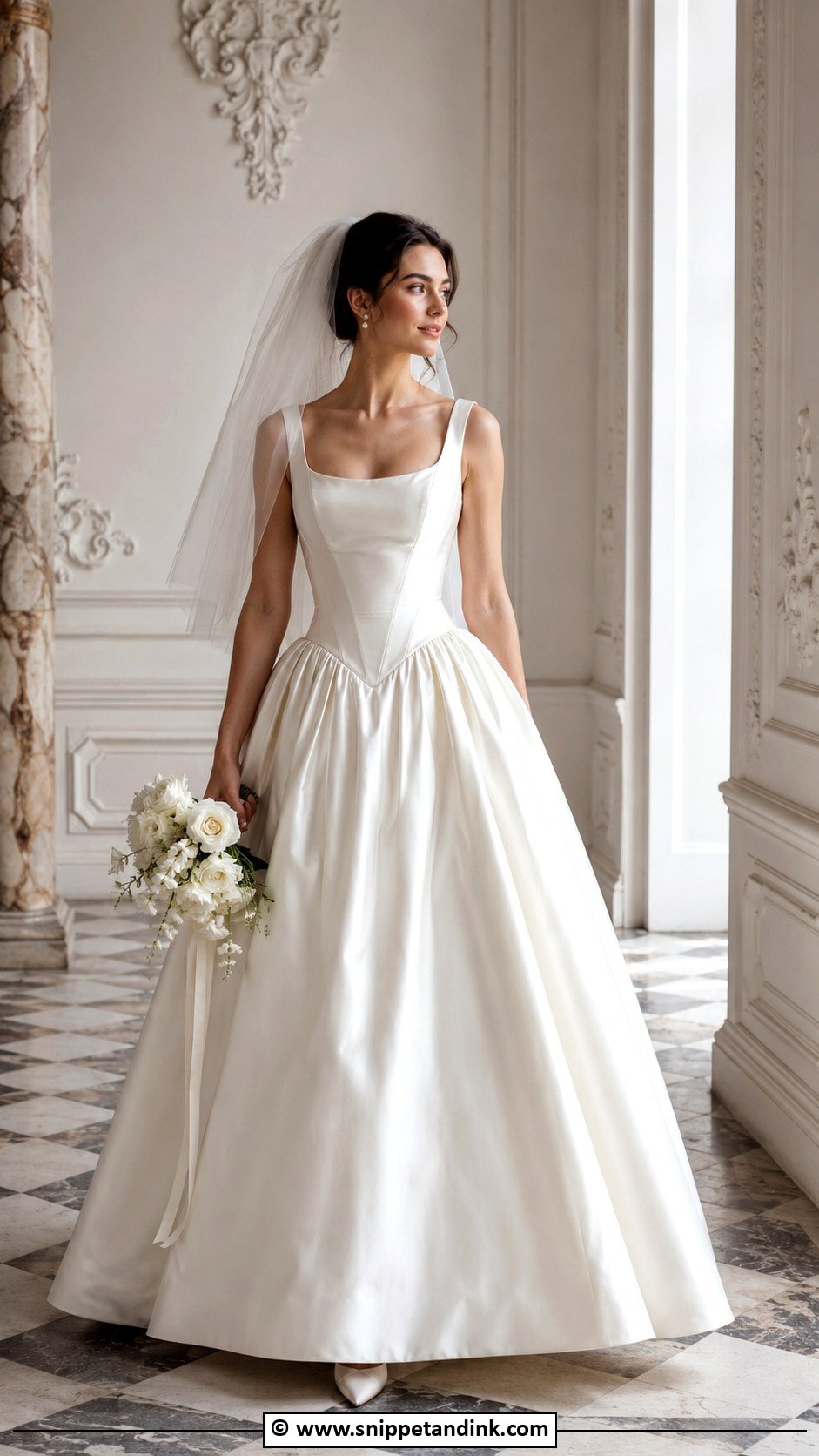
That V or U dip at the front of a basque waist pulls the eye downward and lengthens the torso, which is why it has come back so strongly. It is especially kind to a short-waisted bride. With a full skirt it turns regal; with a softer A-line it feels lighter and easier to dance in. Pearl earrings, satin pumps and a medium-length veil stay in period. I like a few trailing ribbons on the bouquet to carry the old-world mood, and very little sparkle anywhere else.
8. Drop Waist Wedding Dress
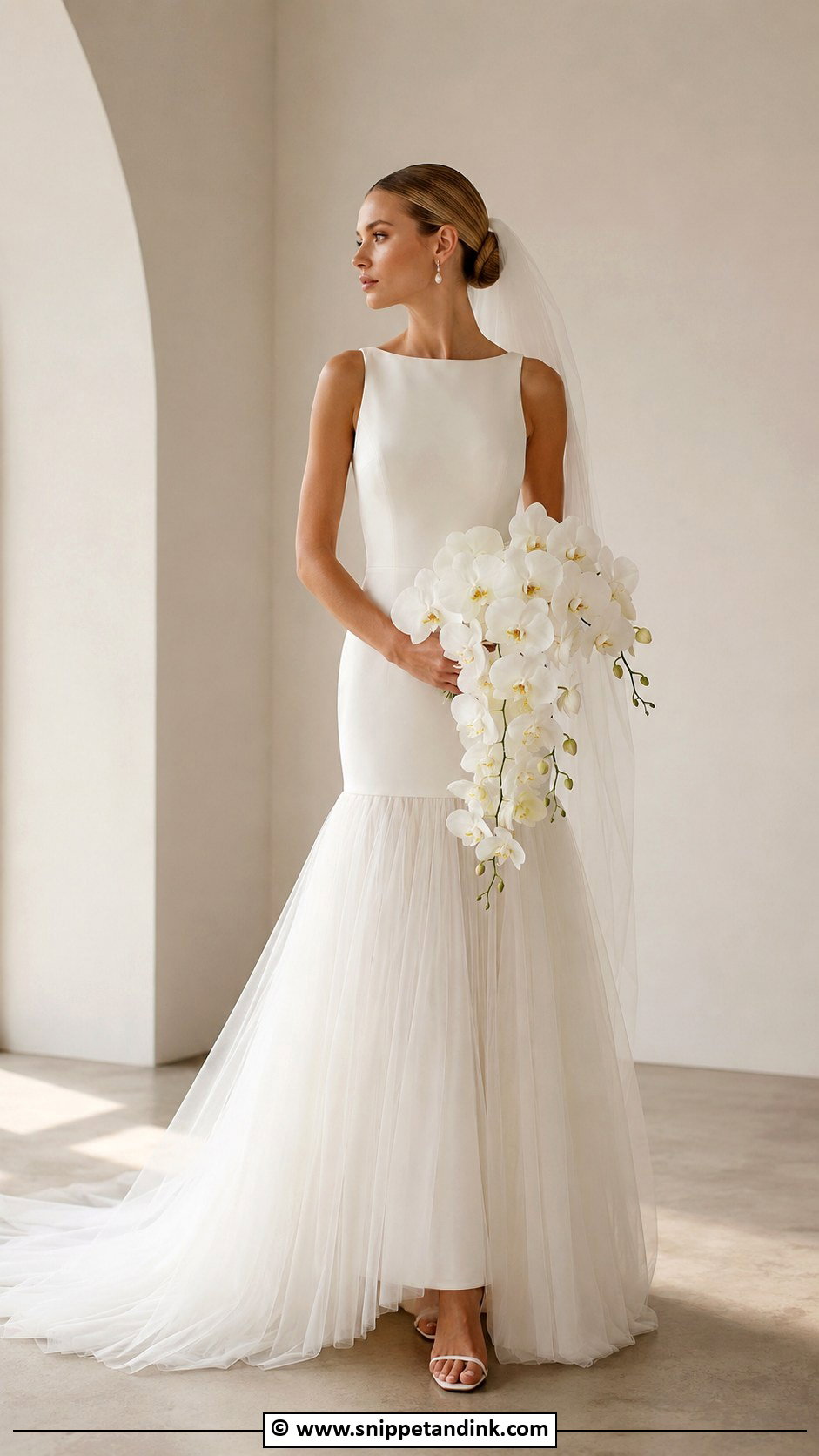
A drop waist moves the seam below your natural waist, so it looks most deliberate on long-waisted or straighter figures. On a curvy bride with a defined waist I’d still try it, but be honest in the mirror, because it can hide the shape you’d normally show. Tulle, satin and lace skirts all take the line. The silhouette is already doing the talking, so pair sleek earrings, satin heels and a clean veil, and wear a low bun or smooth waves to keep the bodice visible.
9. Pearl Beaded Wedding Dress
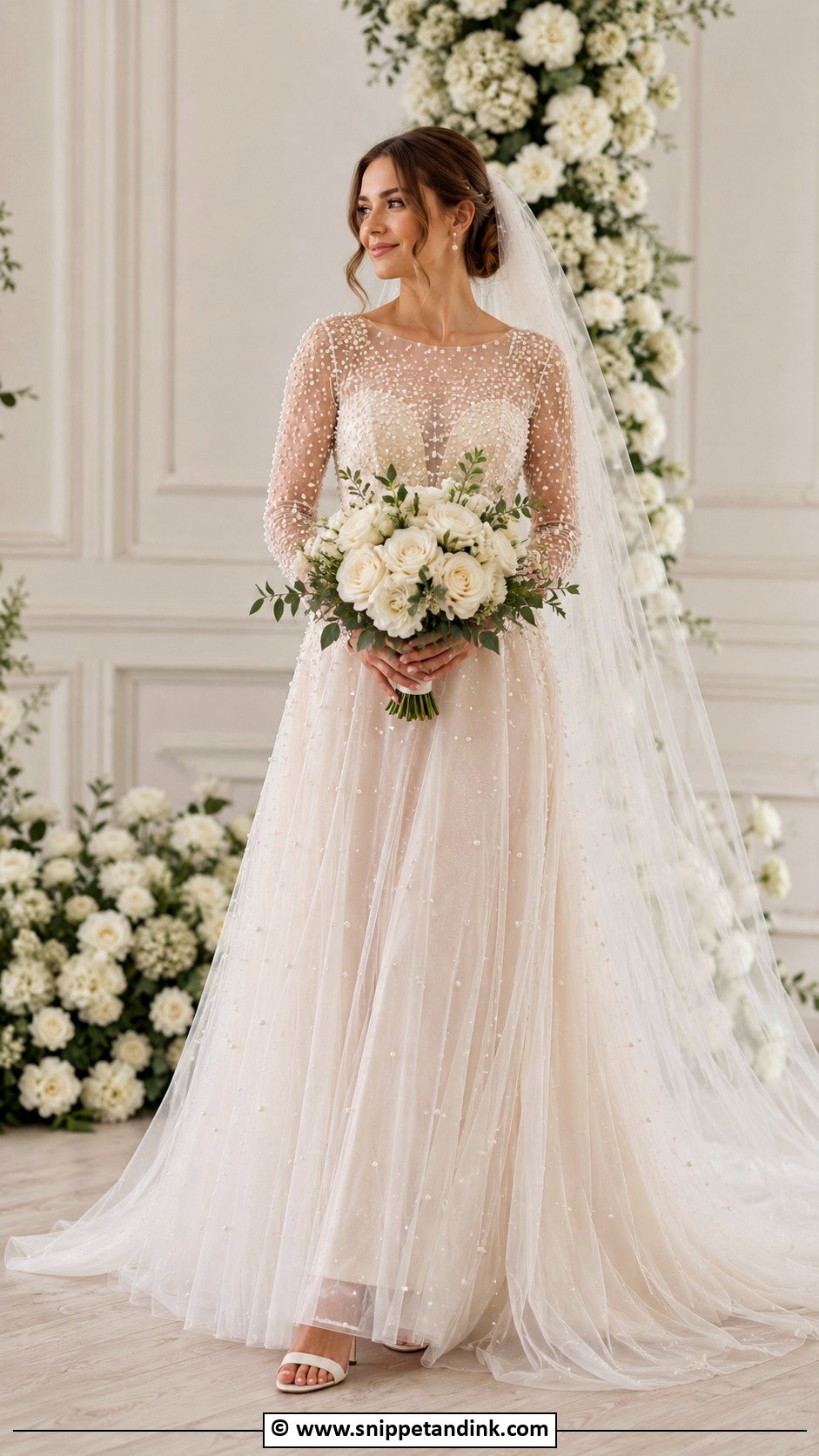
Pearls give off a soft glow rather than the sharp flash of crystals, which I find kinder in daylight. Scattered across tulle, lace or crepe they add real weight, though, so check the shoulder and waist seams for pulling at each fitting. Pearl studs or small drops are enough jewelry, and a veil with minimal trim stops the pearls being echoed twice. Satin heels or plain sandals depending on the venue, white flowers with soft greenery, and the gown does the rest. Window light is where it looks its best.
10. Floral Applique Wedding Dress
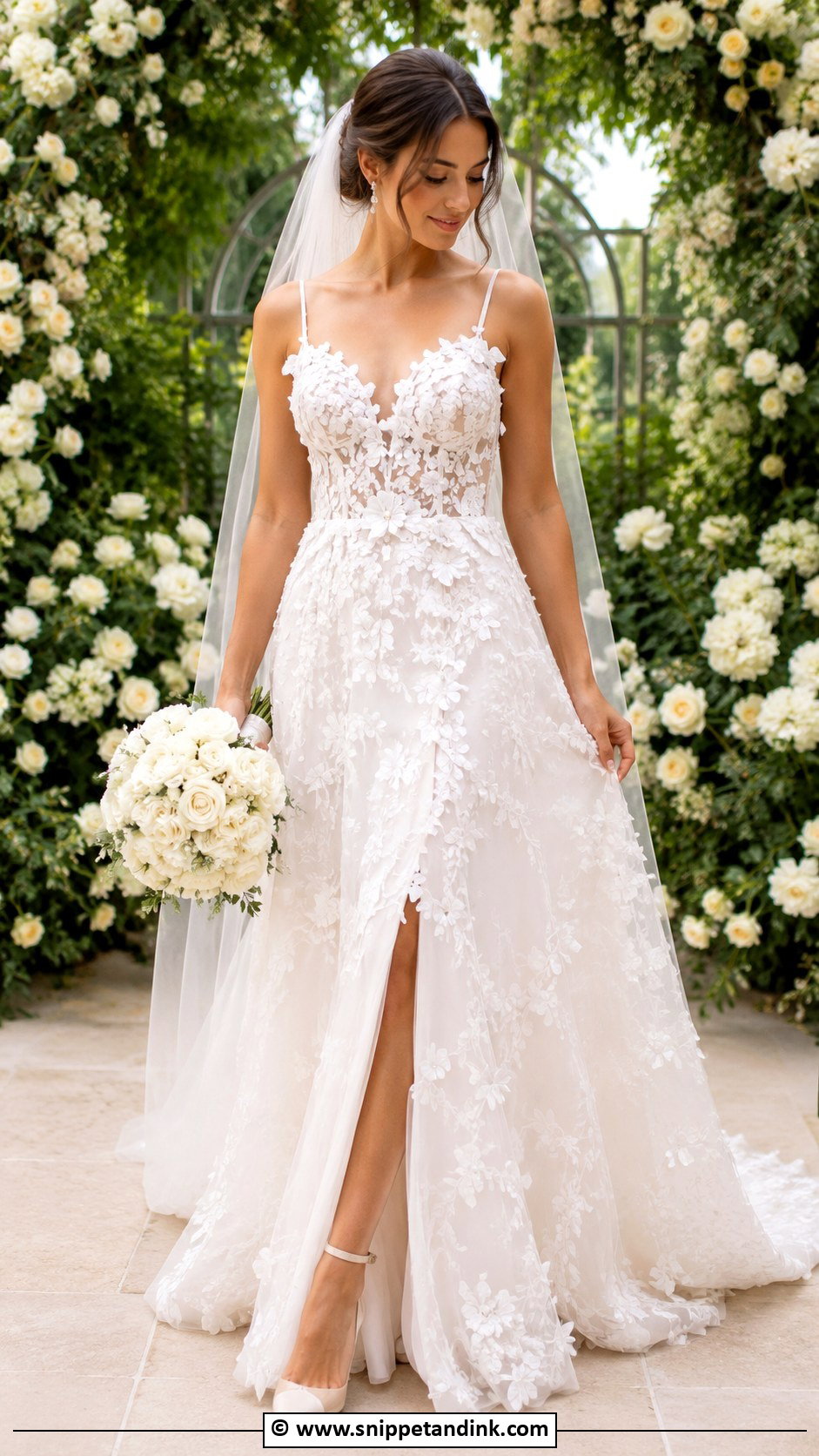
Appliques give a skirt shadow and depth that flat lace can’t. The raised flowers can be scattered sparsely or massed across the bodice and train. What usually goes wrong is the veil: a sheer one with heavy edging catches on the petals, so I pair this gown with a raw-edge tulle. Keep jewelry light and the heels ivory. In the bouquet, echo the dress rather than compete with it, using white roses, sweet peas or baby’s breath. Garden and outdoor ceremonies suit it.
11. Square Neck Wedding Dress
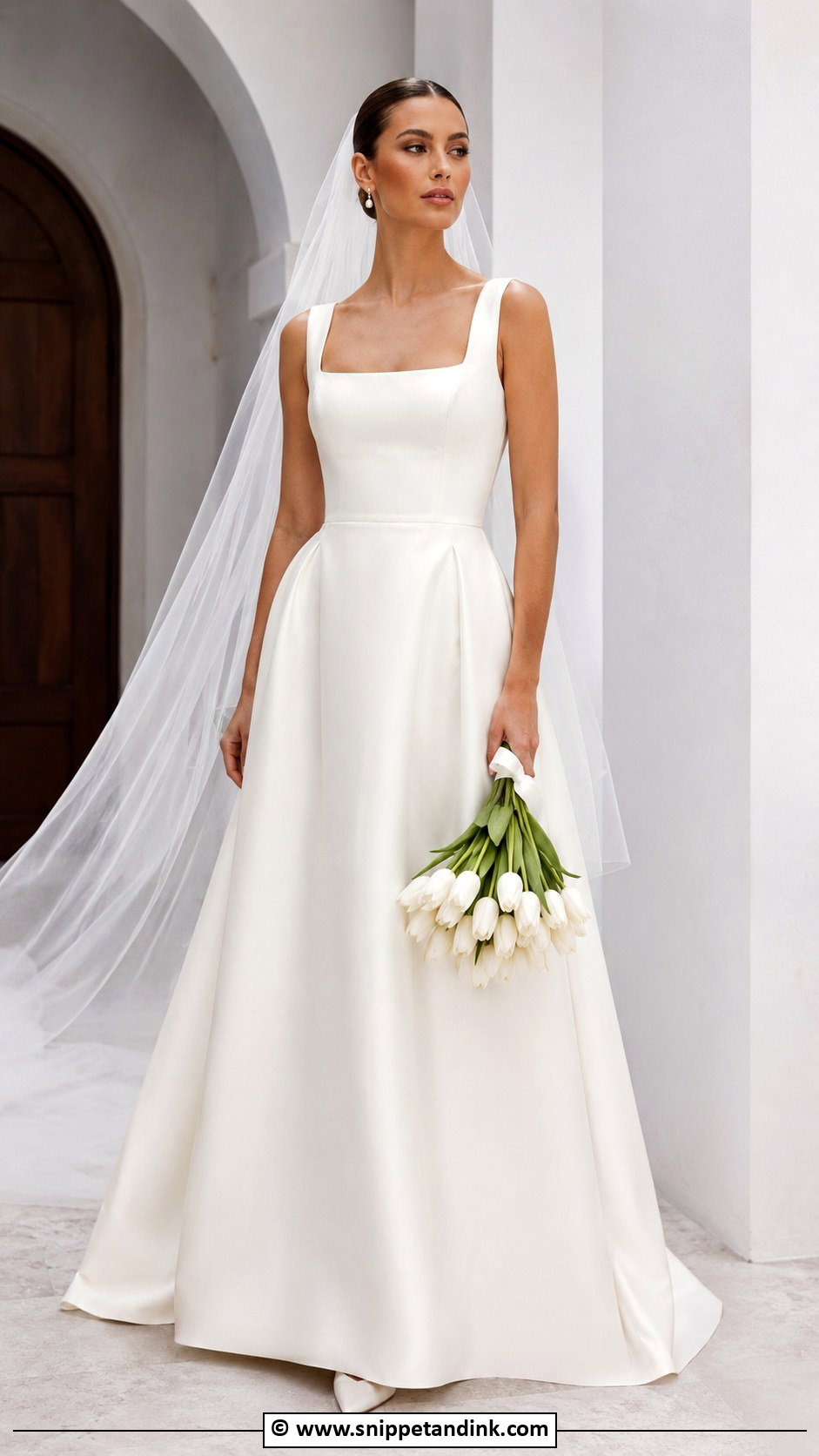
A straight square neckline turns the collarbone into the frame and has a slightly vintage edge, on fitted crepe or a soft A-line alike. The detail I watch at fittings is strap width. Thick straps want a low bun or half-up style so the neck shape stays clear; thin straps can take hair worn down. Pearl drop earrings, pointed heels and a smooth veil keep it modern, while white tulips or orchids keep the bouquet crisp. It looks finished without any beading at all.
12. High Neck Wedding Dress
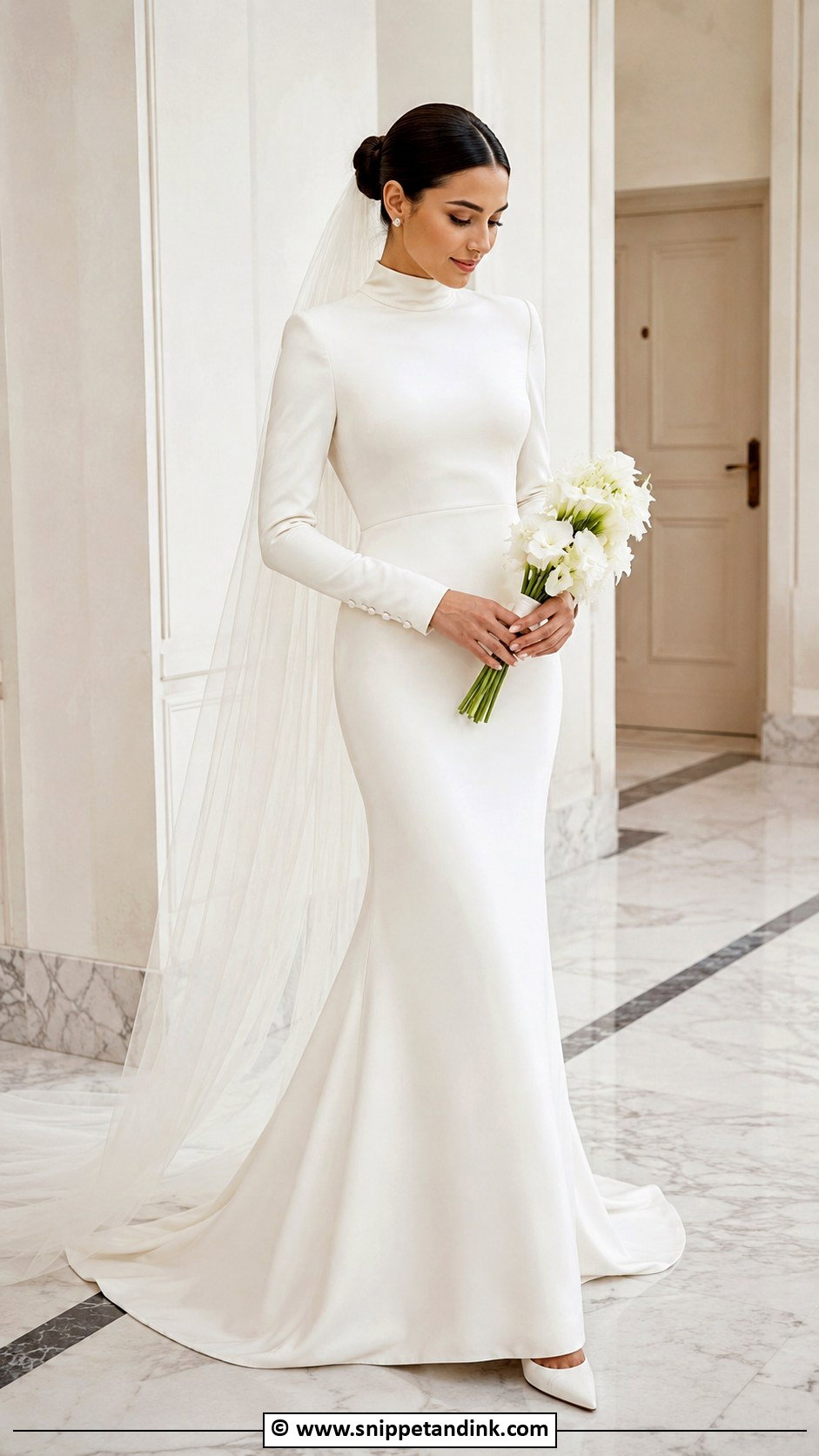
High necklines look refined, but they shorten the neck if the collar sits too high or too loose. I check that it lies flat against the skin with no gap at the back when you turn your head. Balance the coverage with an open back, a fitted waist or a flowing skirt. Skip the necklace; small earrings or a hairpin do more. A sleek bun keeps the line clean, and pointed heels with a narrow bouquet finish it.
13. Corset Bodice Wedding Dress
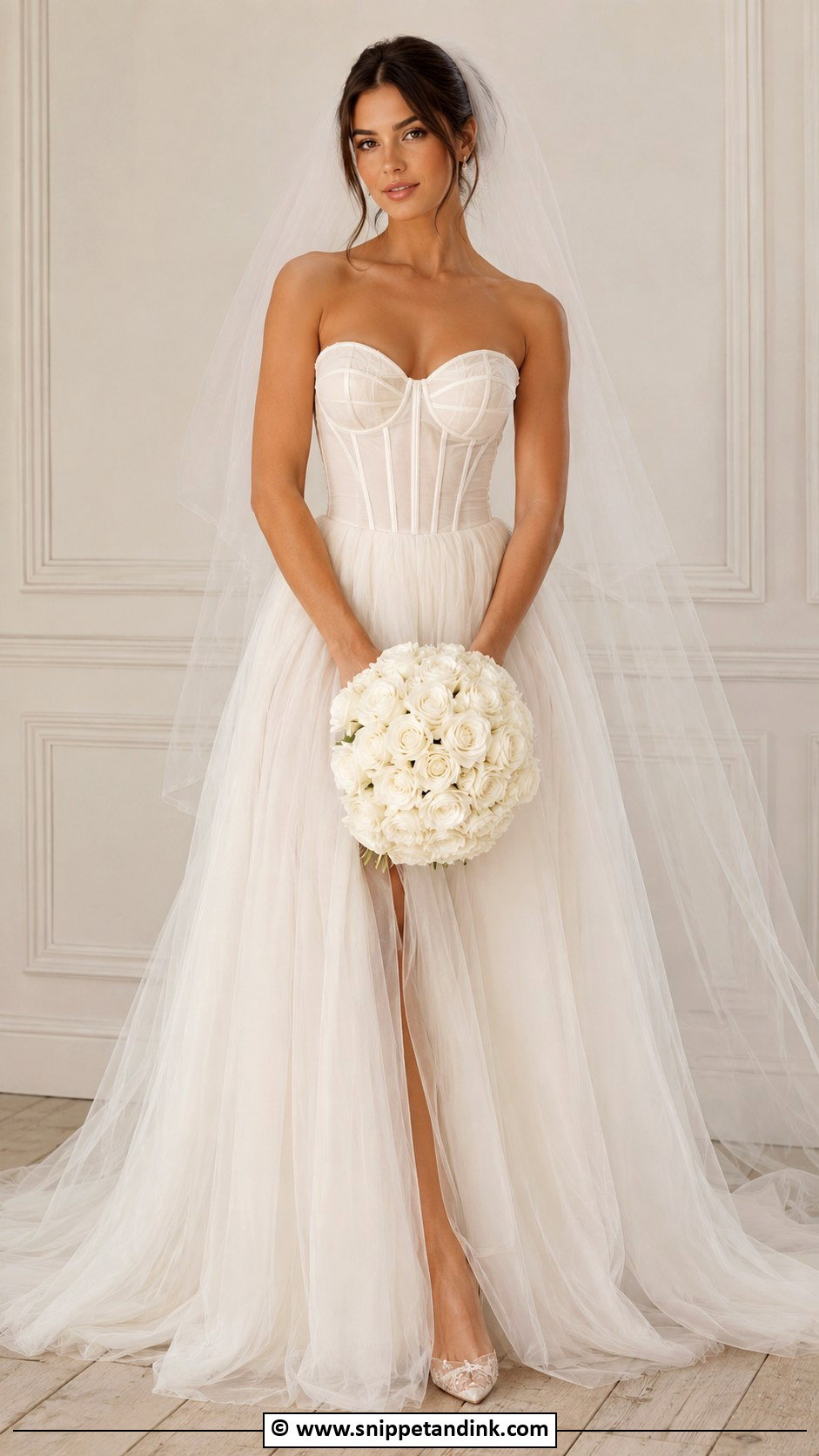
Visible seams and boning give a corset bodice its shape, and a well-built one is genuinely supportive. Boning can press after hours, though, so I ask brides to sit for a full ten minutes at a fitting and notice where it digs. Tulle softens the structure, satin makes it classic, lace adds romance. Since the bodice is the feature, keep the veil short enough not to cover it. Rounded blooms in the bouquet contrast nicely with the structured top.
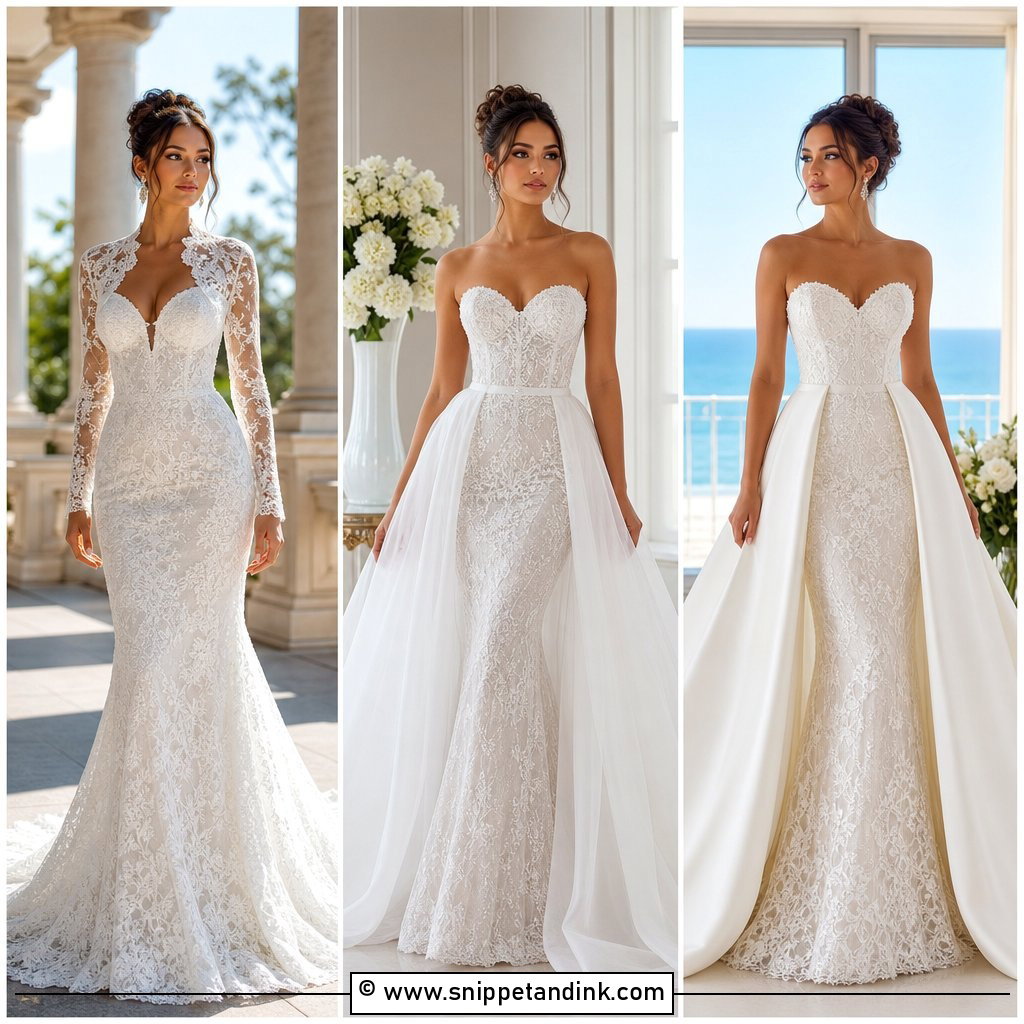
14. Convertible Wedding Dress
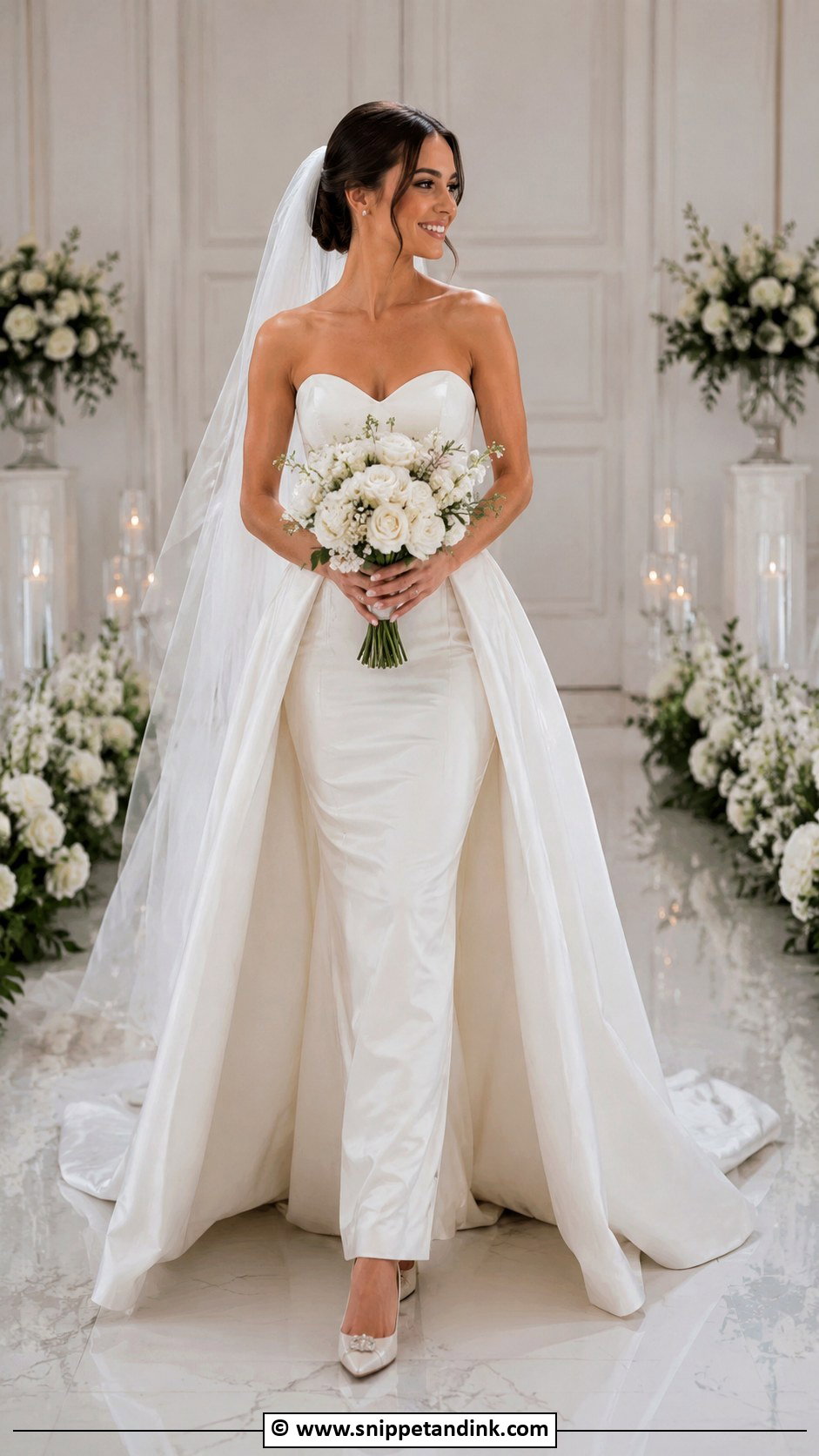
Two looks from one gown: a fitted base with a removable overskirt, cape, sleeves or train. What I always test is the swap itself. Can a bridesmaid do it in a few minutes without unpicking anything? Snaps and hooks are quick; hand-sewn attachments are not. Choose secure heels, lightweight earrings and a veil that suits both versions. A sleek bouquet keeps the ceremony layer elegant, and the lighter base frees you up for the party.
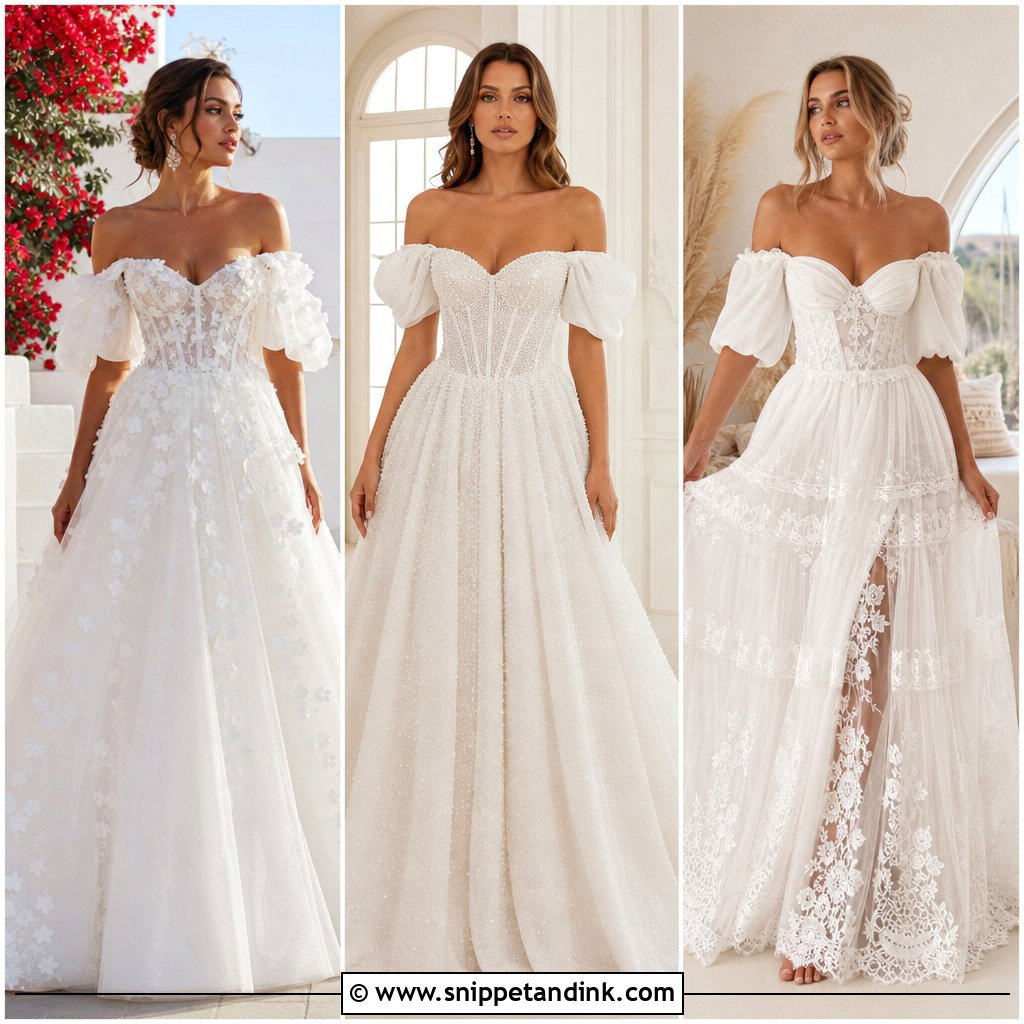
15. Wedding Dress With Detachable Sleeves
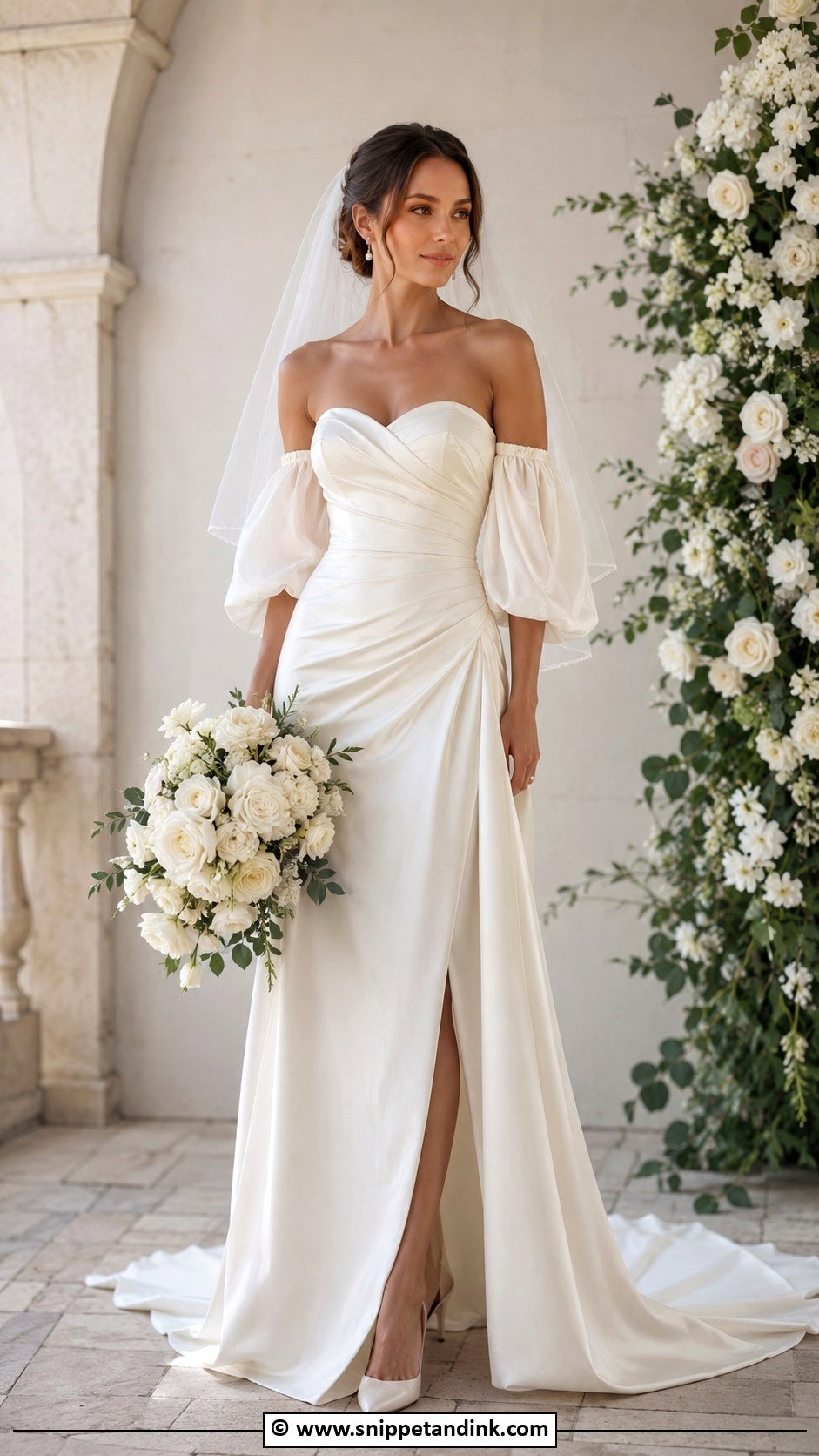
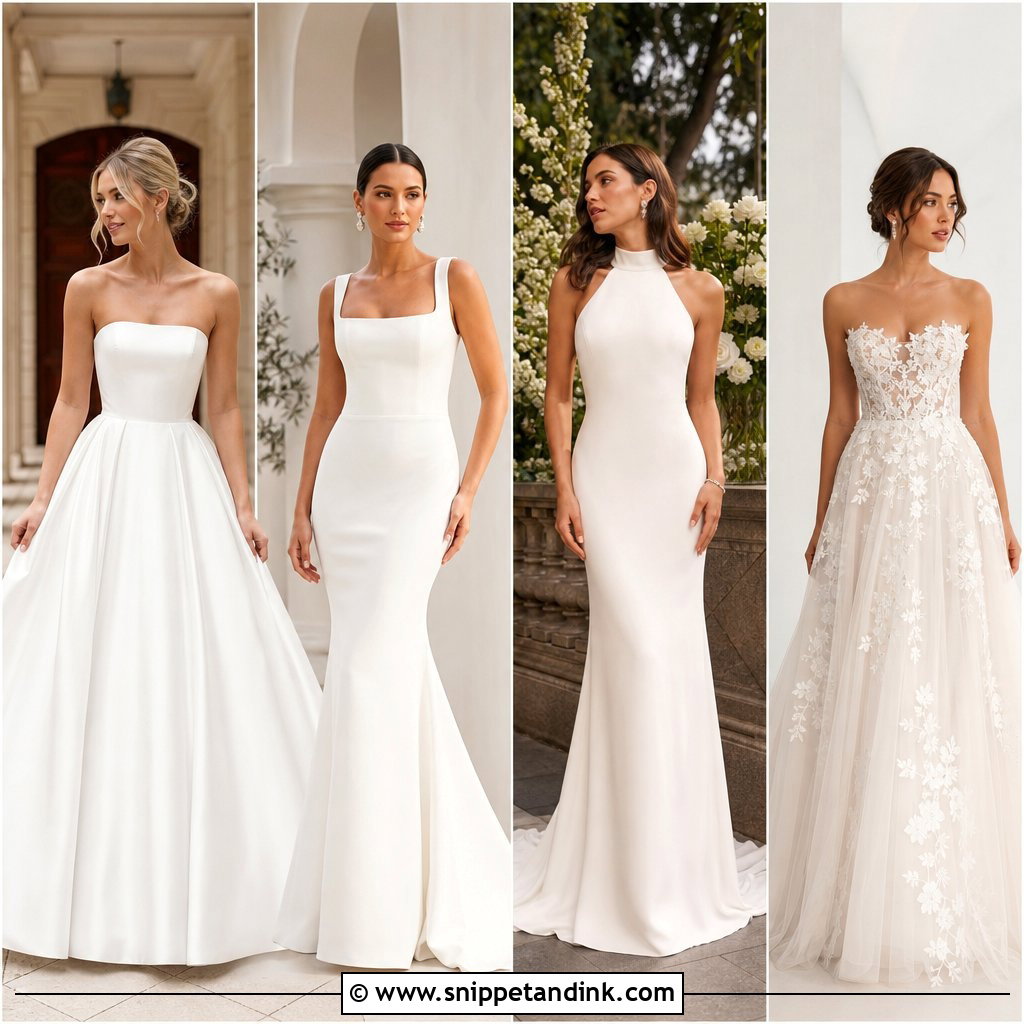
Detachable sleeves give a strapless, straight-neck or corset gown ceremony coverage, then come off for dancing. Puff, lace and satin versions all work. How they fasten matters more than how they look: elastic bands stay put but can leave a mark on the arm, while ties or buttons to the bodice are kinder over a long day. Keep accessories simple so the sleeves feel intended, with a mid-length veil, pearl earrings and ivory heels. Match the bouquet to the sleeve, roses for puffs and orchids for sleek satin.
16. Wedding Dress With Bow Back
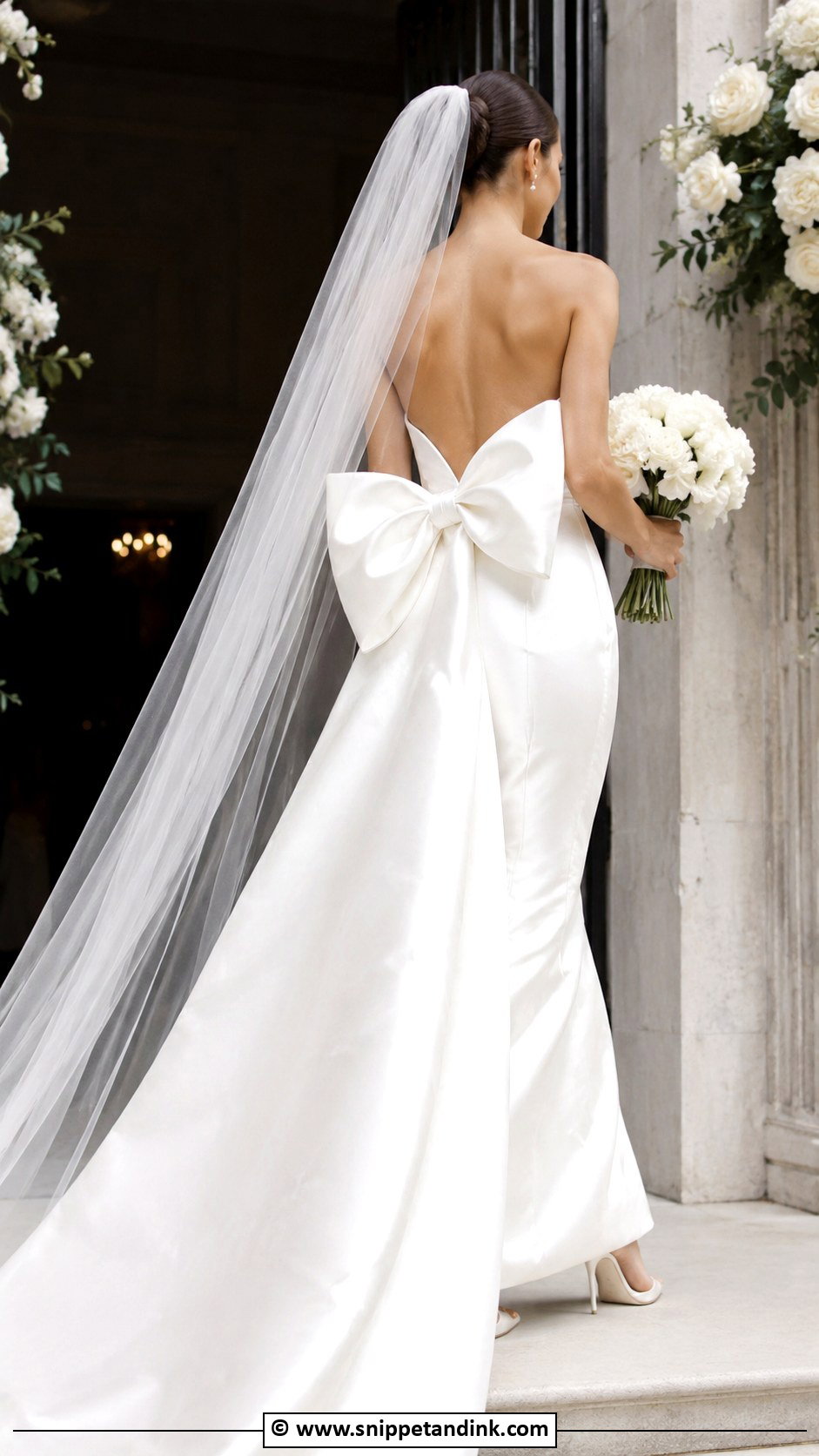
Guests spend the whole ceremony looking at your back, so a bow there earns its place. Large or small, it shows best on plain satin or mikado, fabrics that hold a crisp loop. I ask brides to lean back against a chair at the fitting, because a big bow can crush and needs a quick fluff after dinner. Wear a clean updo or pinned waves so it stays visible, and plan to remove the veil after the ceremony to reveal it. Minimal earrings, sleek heels and a structured bouquet complete it.
17. Wedding Dress With Cape
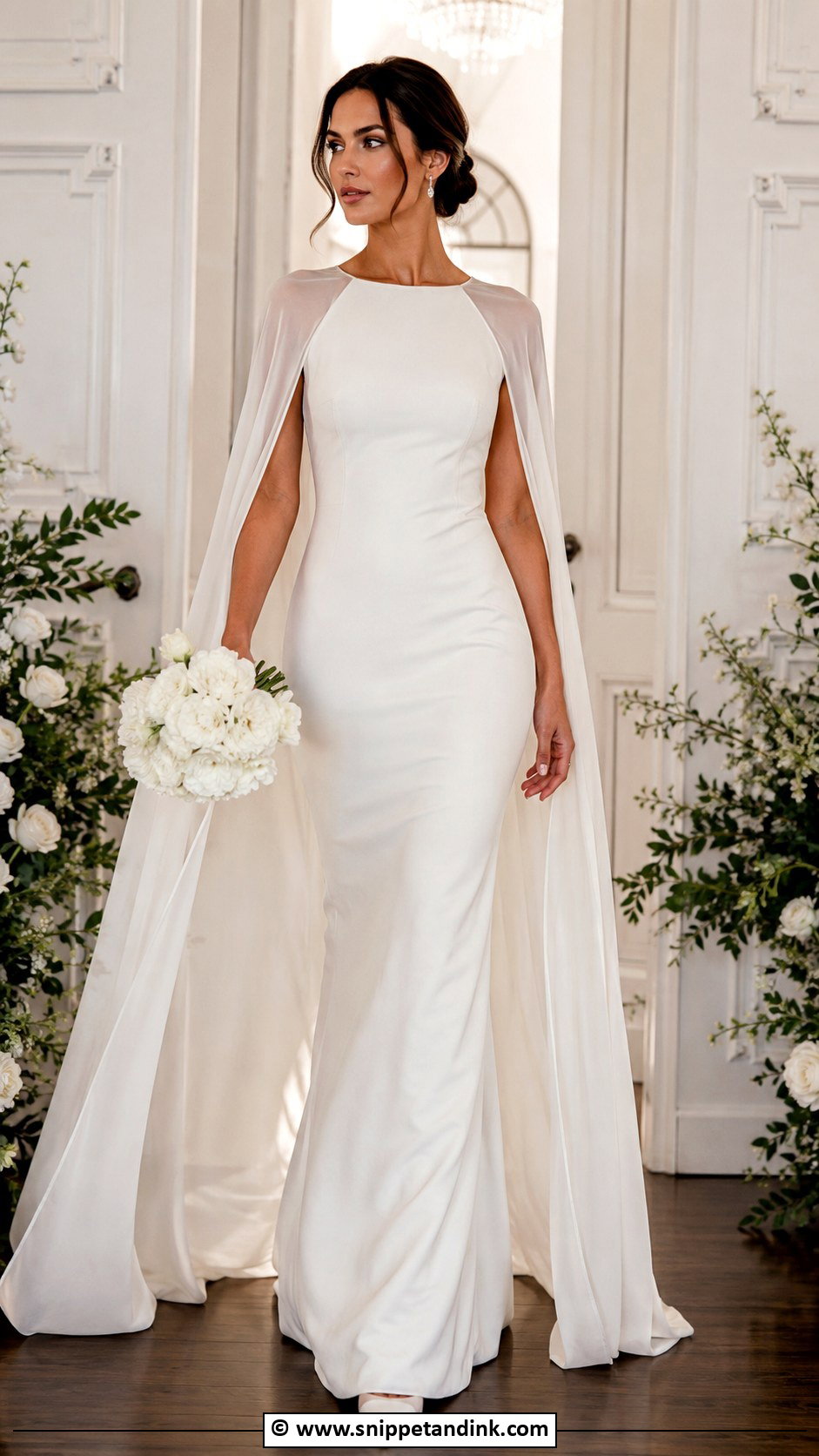
A cape brings movement and coverage and can replace the veil entirely. Sheer tulle, lace trim, pearl dots or smooth satin each change the mood. It sits best over plain column, crepe or strapless gowns, since anything busier fights it. Check how it attaches: a cape fastened at the shoulder seams drags the neckline backward when the wind catches it. Keep jewelry minimal, pick pointed heels and a clean bouquet, and if it detaches, take it off for the reception.
18. Short Wedding Dress
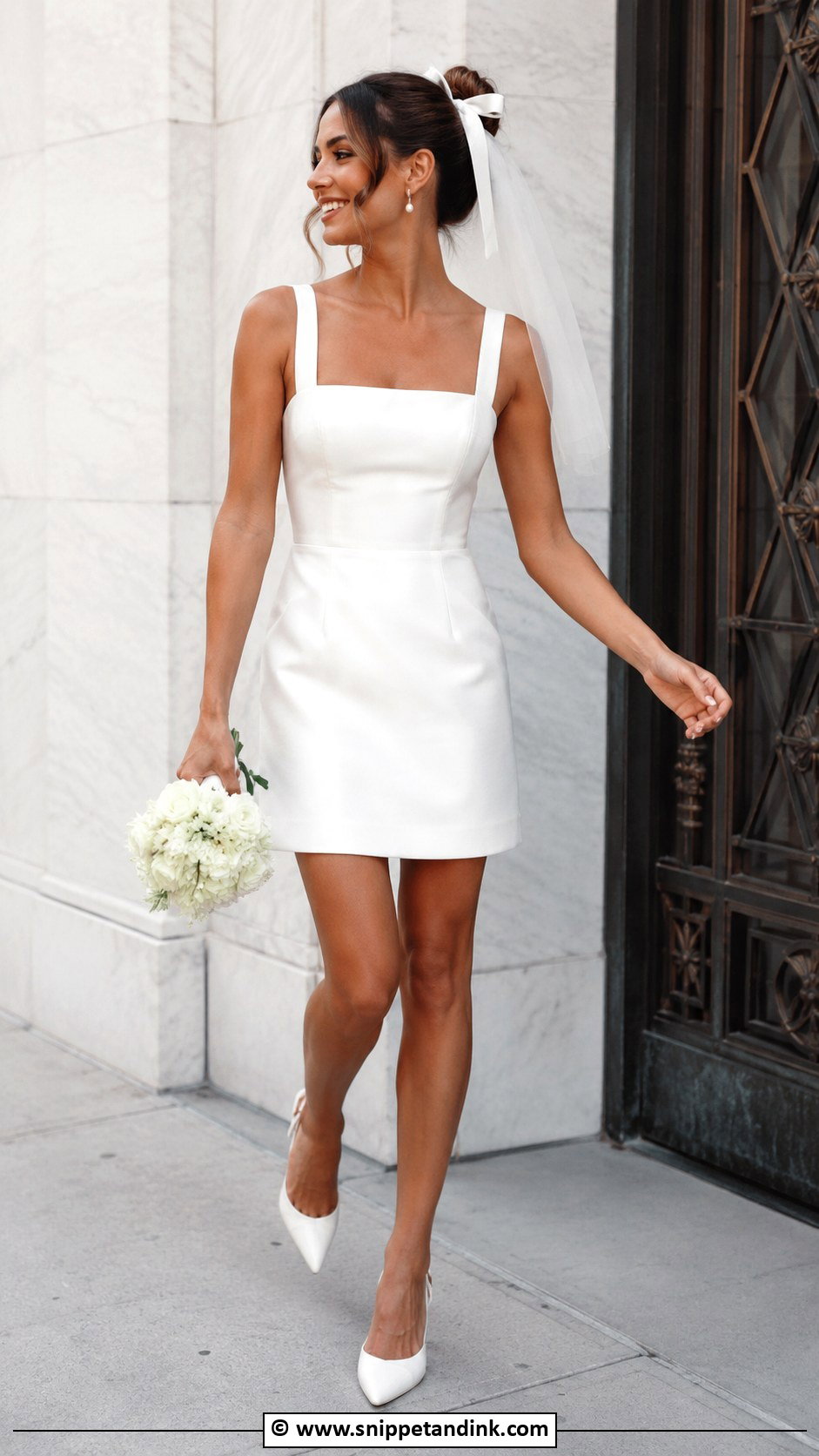
A structured mini in satin, crepe or lace feels bridal without the weight of a long gown, and suits a civil ceremony, an elopement or a second look. Proportion is everything here. The hem should end where your leg is narrowest, usually just above the knee. Slingback heels, pearl earrings and a small veil or bow headband keep it polished, and sheer gloves or a tailored blazer add something for photos. On a hot dance floor you’ll appreciate the freedom.
19. Tea Length Wedding Dress
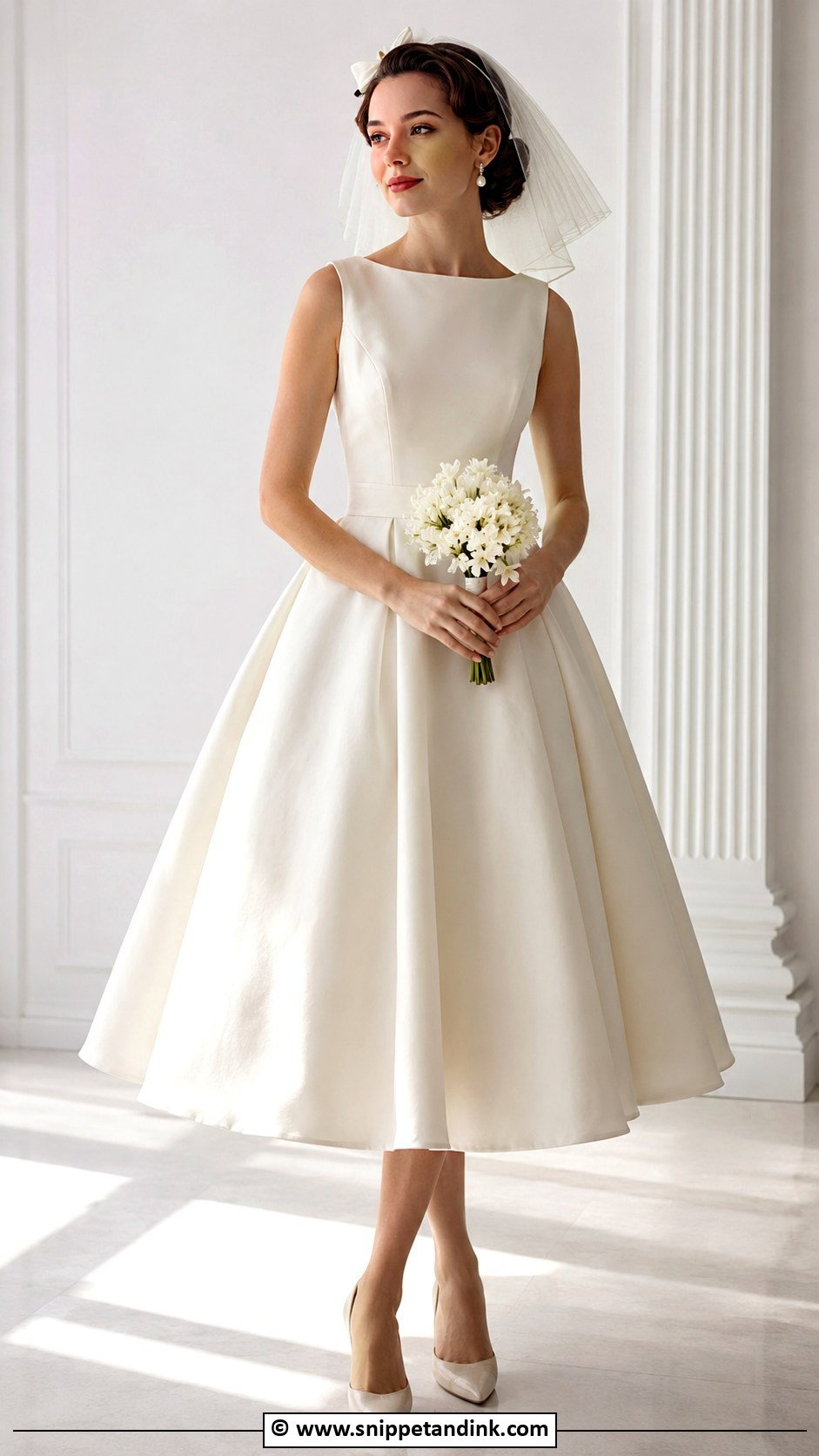
A tea length wedding dress falls between knee and ankle and shows off your shoes, so choose them as carefully as the gown. Crisp organza, tulle or satin holds a full skirt’s shape at this length; soft fabrics collapse. Have the hem marked in the actual shoes, because a small difference changes the whole proportion. Pointed pumps, pearl earrings and a short veil keep it retro, and a small bouquet keeps the scale right. Courthouse, garden and brunch weddings all suit it.
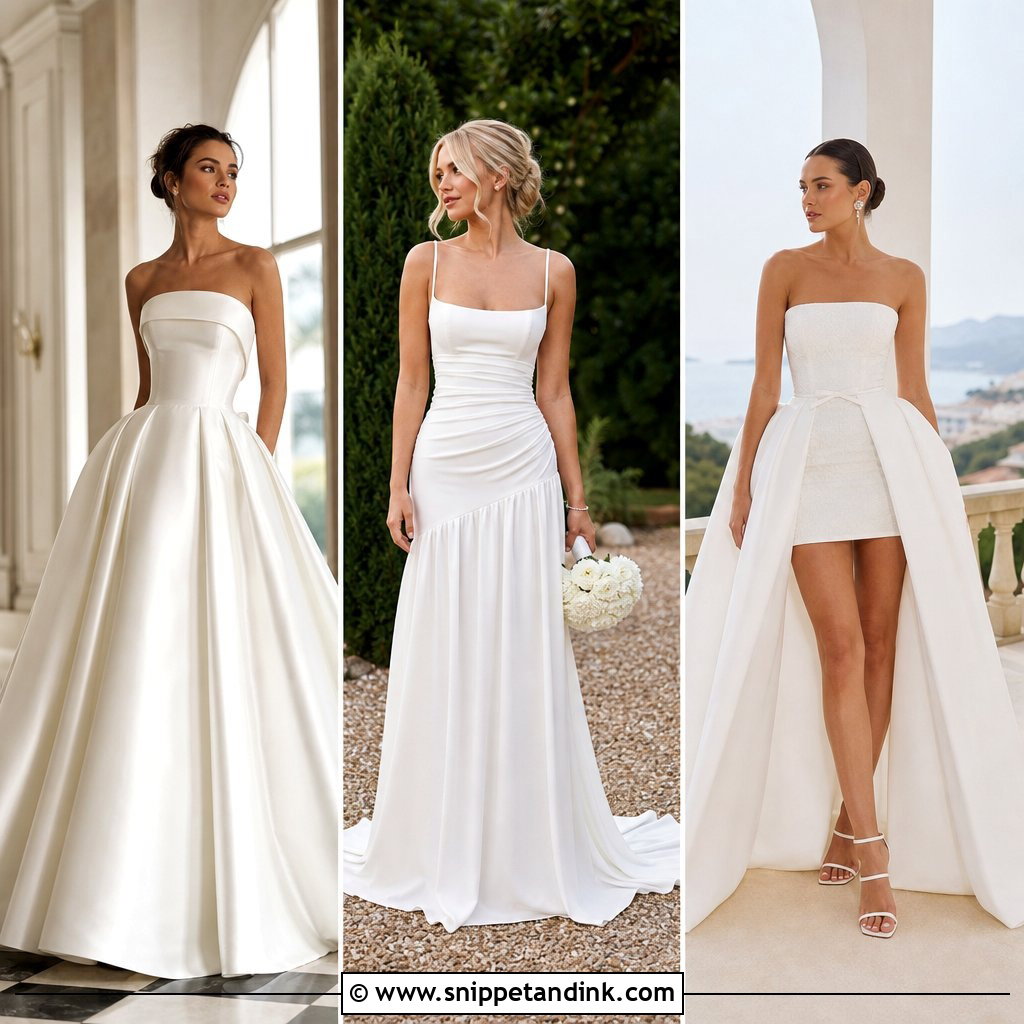



20. Slip Wedding Dress
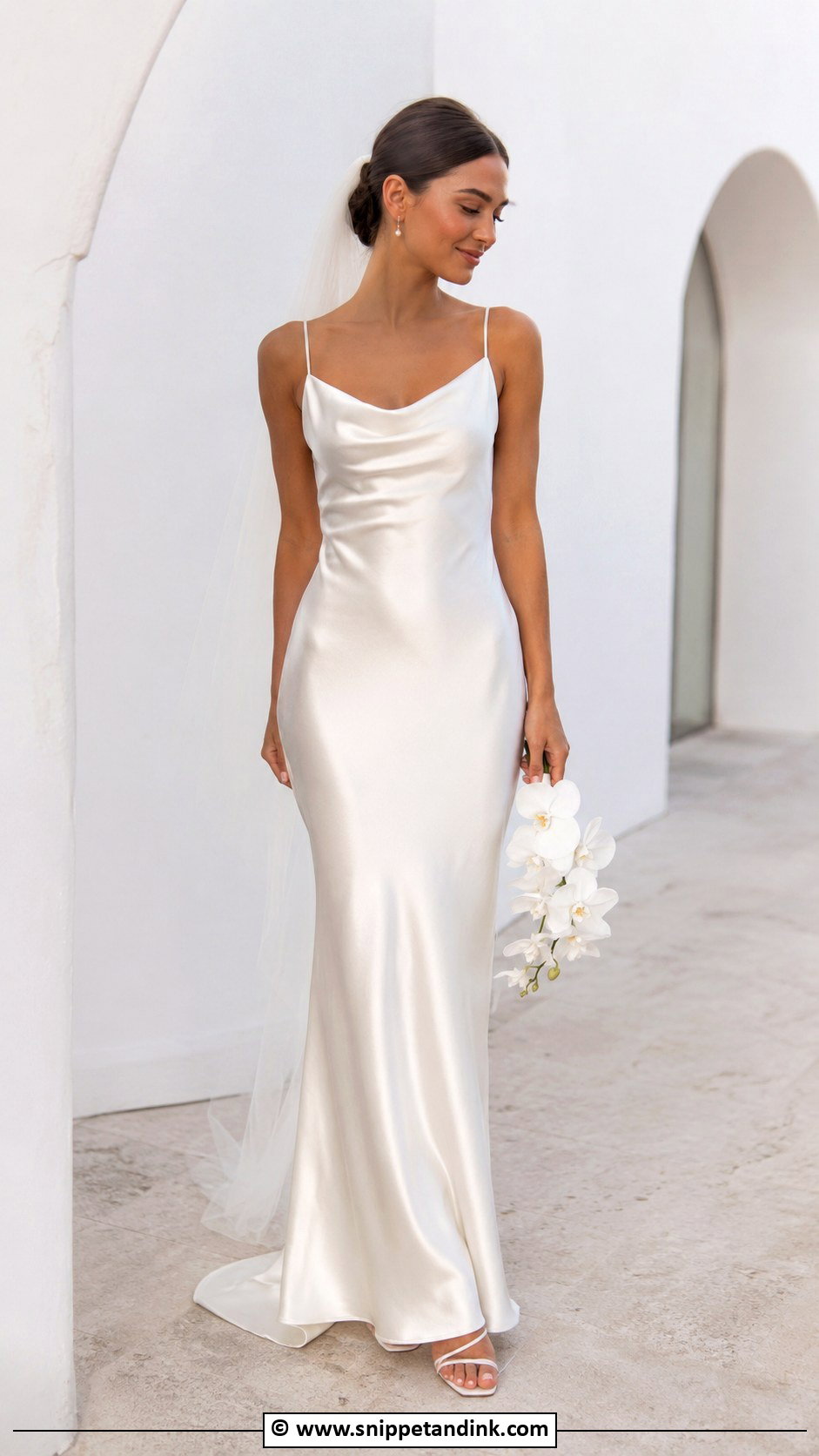
A slip dress hides nothing, which makes undergarments and fabric quality decide everything. Heavy silk or a thick satin drapes; thin polyester shows every seam and wrinkles in the car. Bias-cut slips also cling and crease when you sit, so plan a steam before photos. Strappy heels, small diamond or pearl earrings and a soft veil stop it looking underdressed, and a clean bun or silk scarf adds polish. A slim bouquet of orchids, calla lilies or white roses fits the line. Beach, city and destination weddings are its territory.
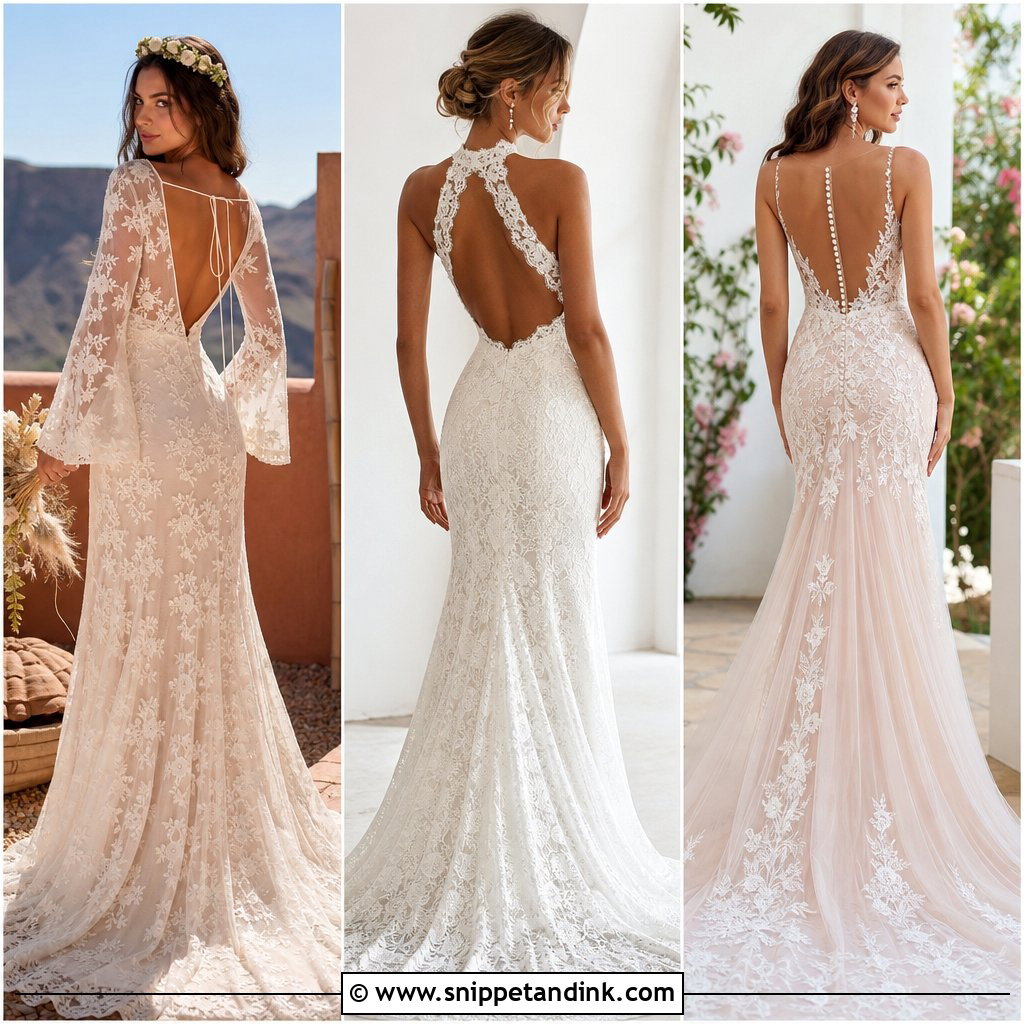
21. Boho Lace Wedding Dress
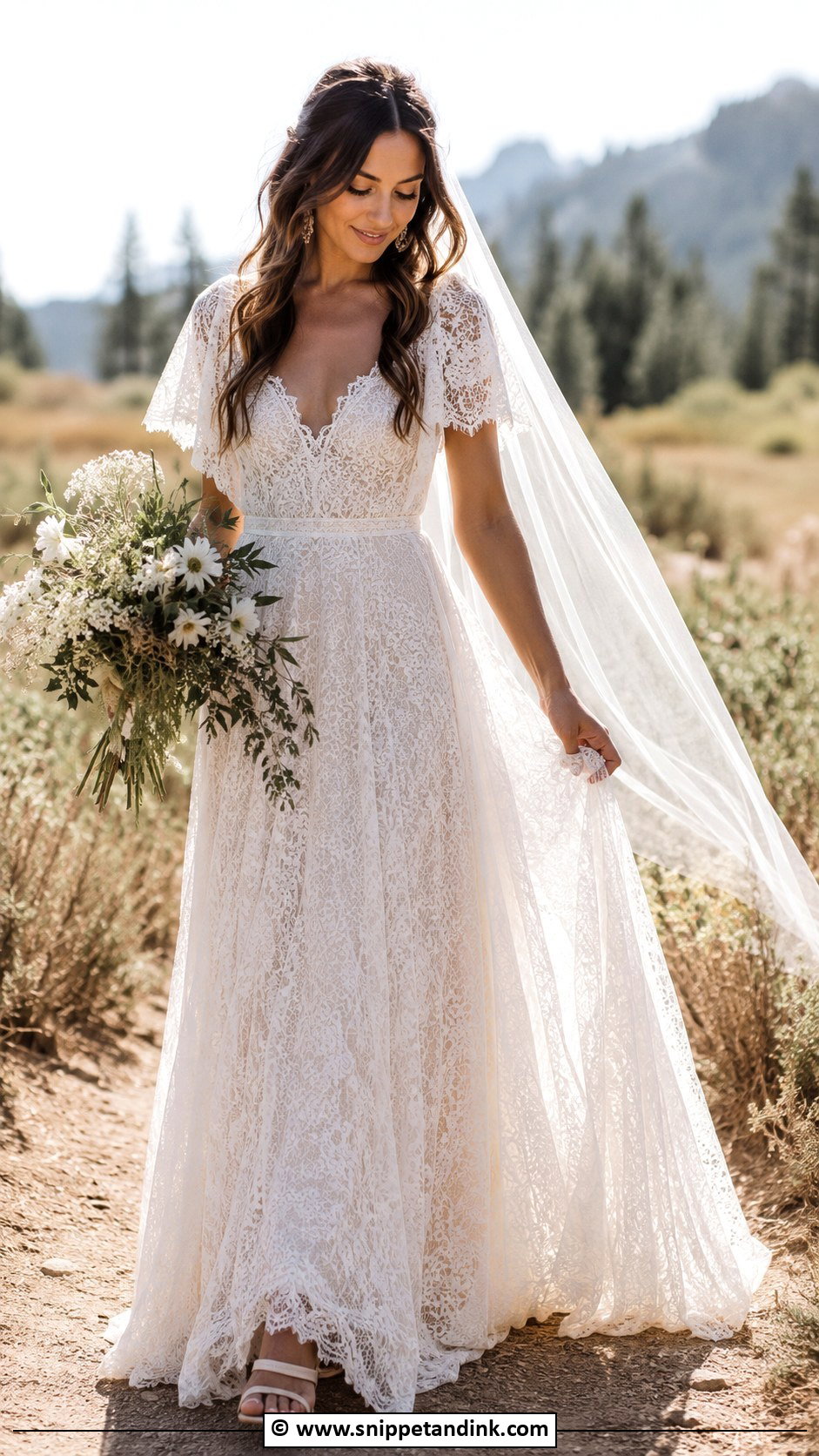
Boho is the style most likely to tip into costume if every detail is turned up at once. I keep one element strong, flutter sleeves, bell sleeves or an open back, and let the lace and skirt stay quiet. Loose waves, delicate earrings and comfortable block heels or sandals keep it natural, and a soft veil or a few flower pins is plenty. Wild greenery and white blooms suit the bouquet. On sand or gravel, a hem that clears the ground slightly saves the lace from shredding.
22. Beach Wedding Dress
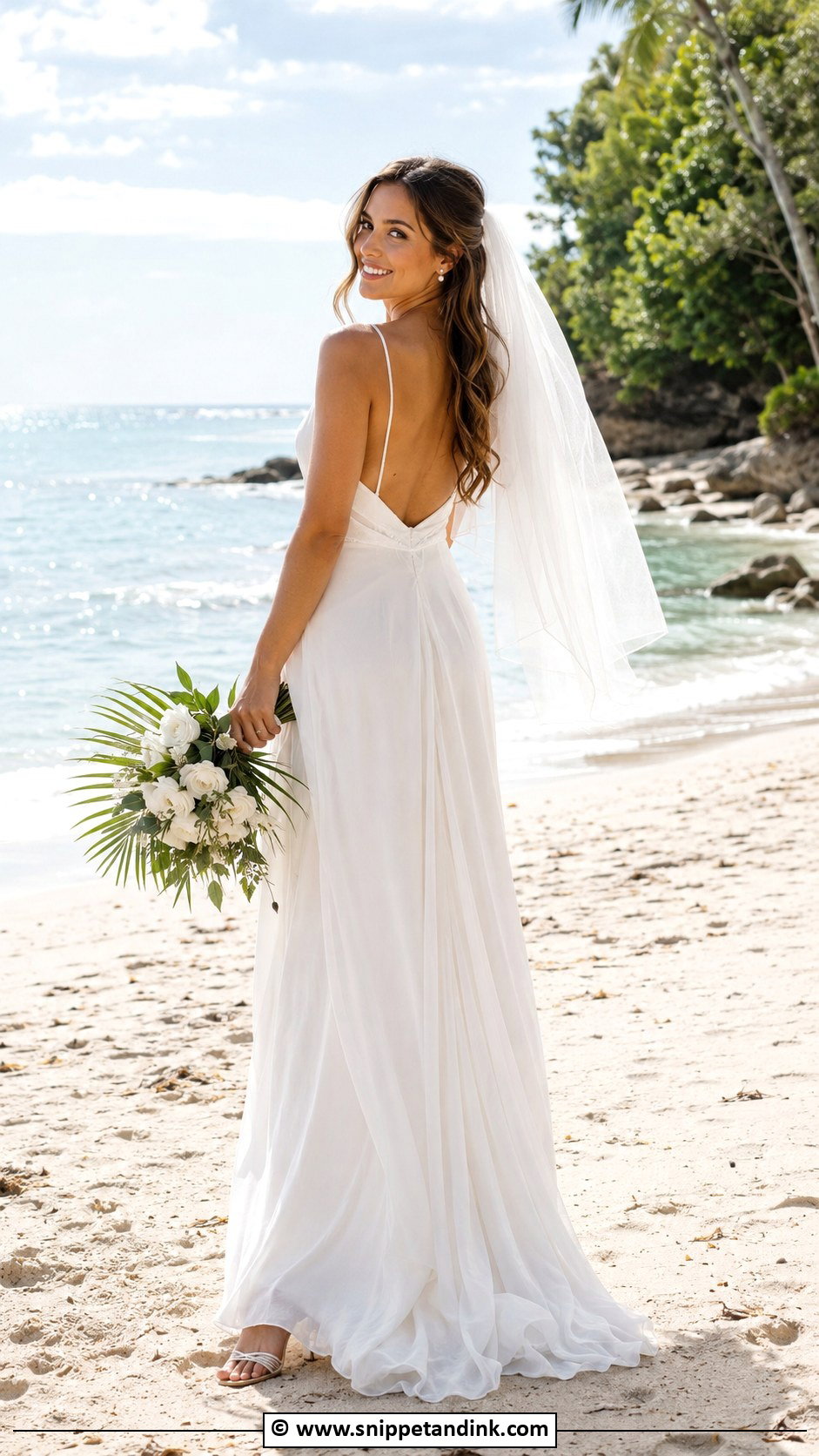
A beach wedding dress has to cope with wind, sun and sand. Chiffon, crepe, tulle and silk breathe, while heavy satin and stiff layers trap heat and drag. Flowy A-lines, slips or relaxed sheaths with simple straps work well, and I’d always have the hem taken up a touch so it doesn’t collect wet sand. Flat sandals, pearl studs and a light veil secured with more pins than you’d expect. A loose bouquet of white flowers and tropical greenery suits the setting without tipping into theme.
23. Garden Wedding Dress
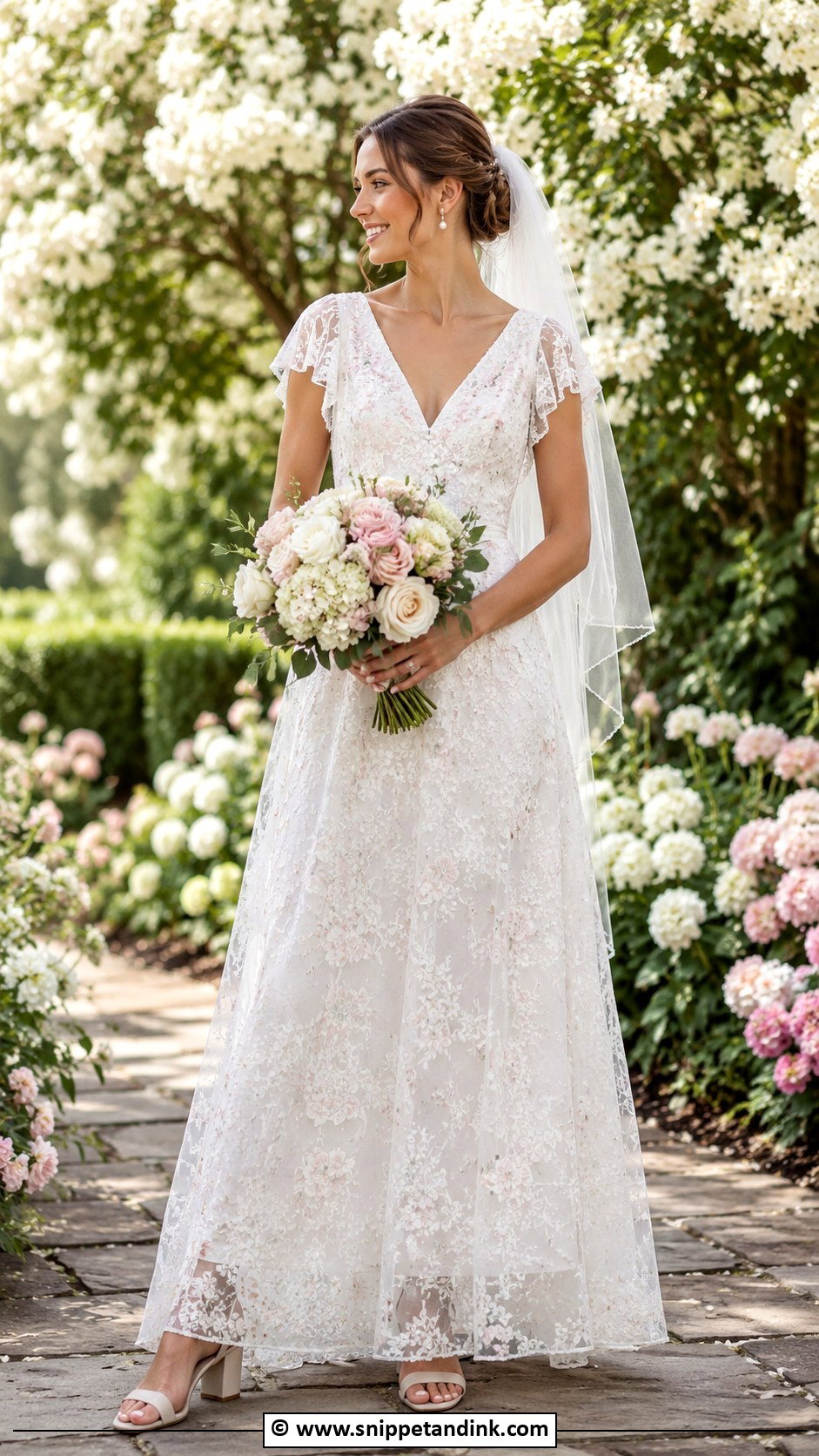
Garden gowns meet grass, pollen and shifting light. Floral lace, organza and soft tulle feel at home outdoors, in an A-line, flutter sleeve or off shoulder shape that moves with the breeze. Organza snags on rose bushes and rough bench edges, so watch where you’re placed for portraits. Block heels or wedges stop you sinking into lawns. A fingertip veil, pearl earrings and roses, sweet peas or hydrangeas finish it. Skip jewelry that turns harsh and shiny in direct sun.
24. Courthouse Wedding Dress
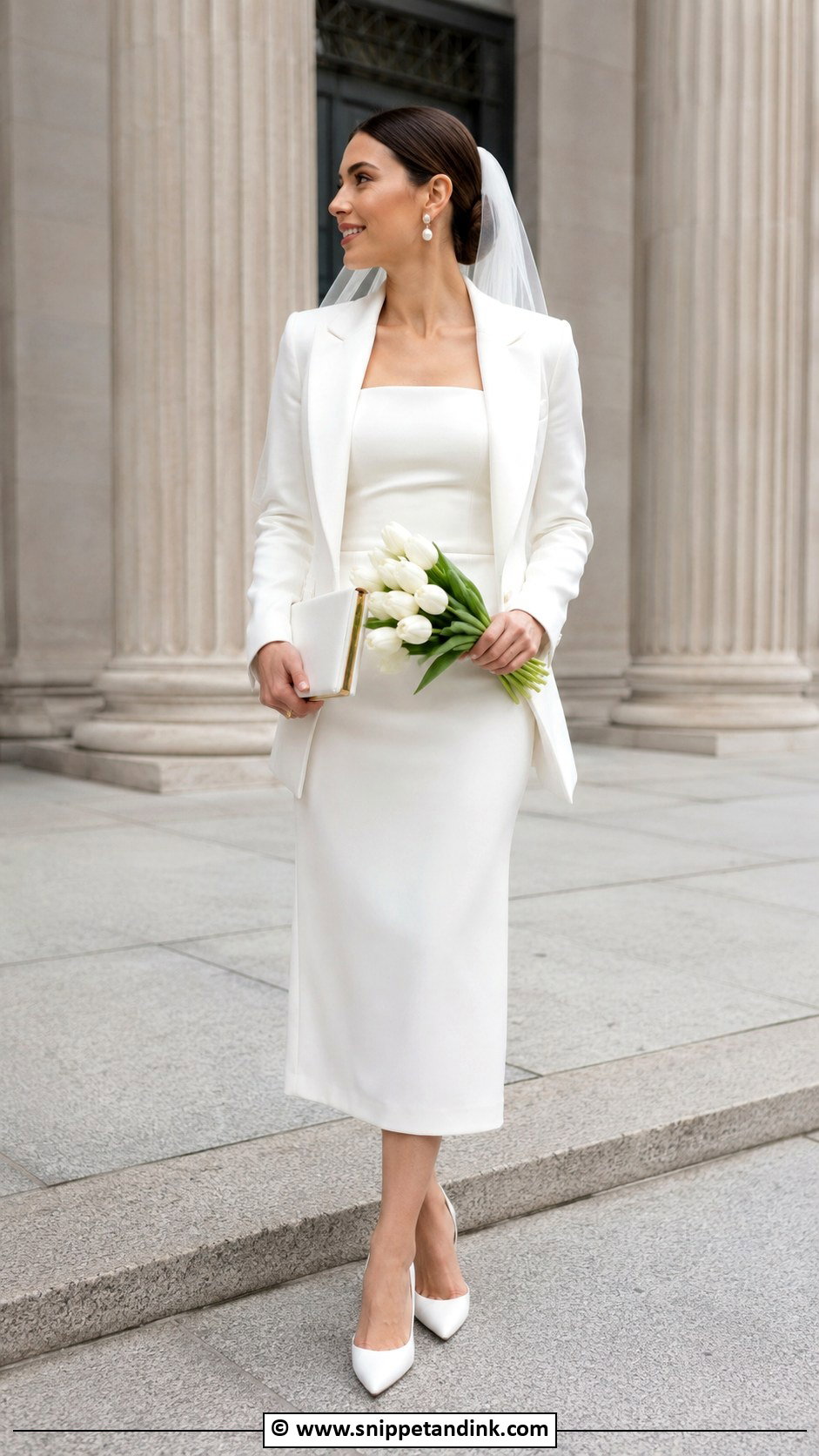
For a courthouse ceremony, the accessories are what make a dress bridal. A midi, tailored mini, sleek column or simple satin dress can all carry it once you add pointed heels, a structured clutch, pearl earrings and a short veil or hair bow. I’d also bring a white blazer: it looks sharp in arrival photos and covers you in a government building with fierce air-conditioning. A small bouquet of white roses or tulips brings ceremony without formality.
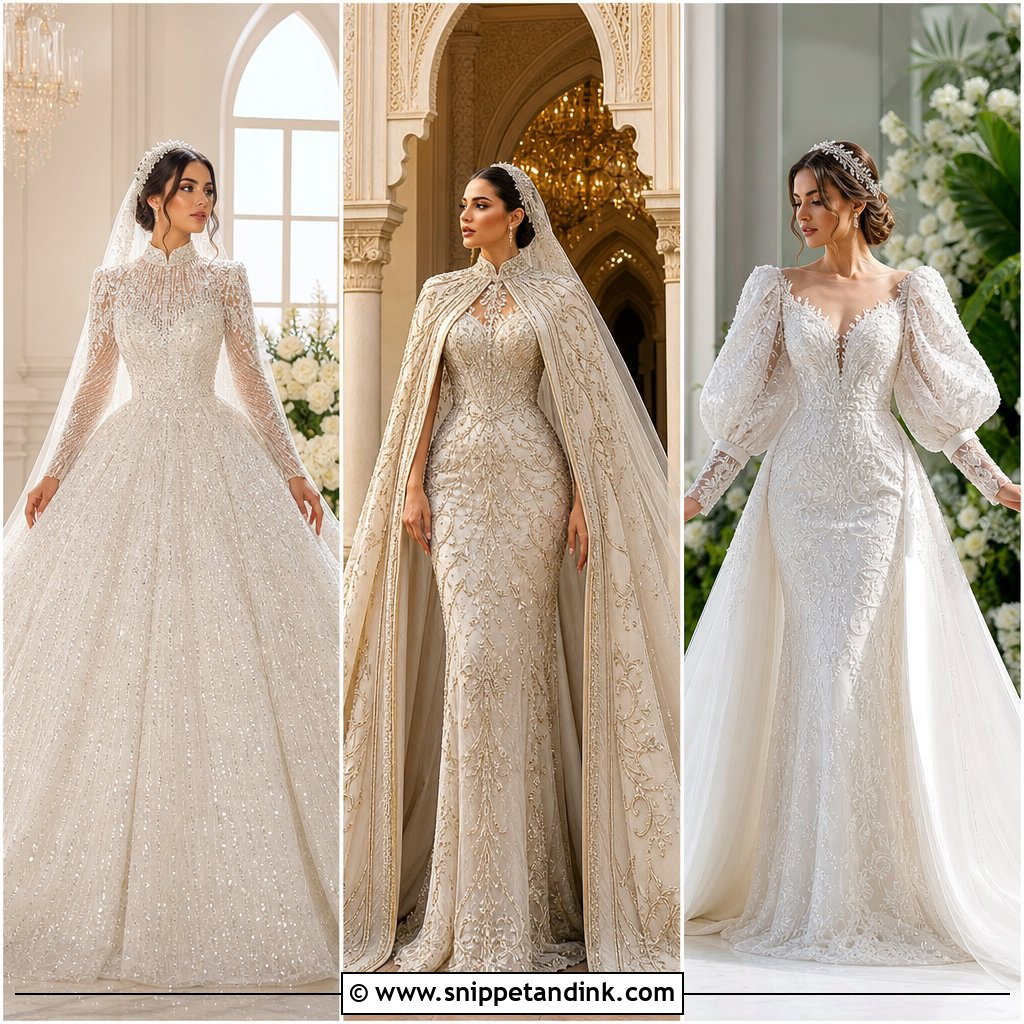



25. Plus Size Wedding Dress
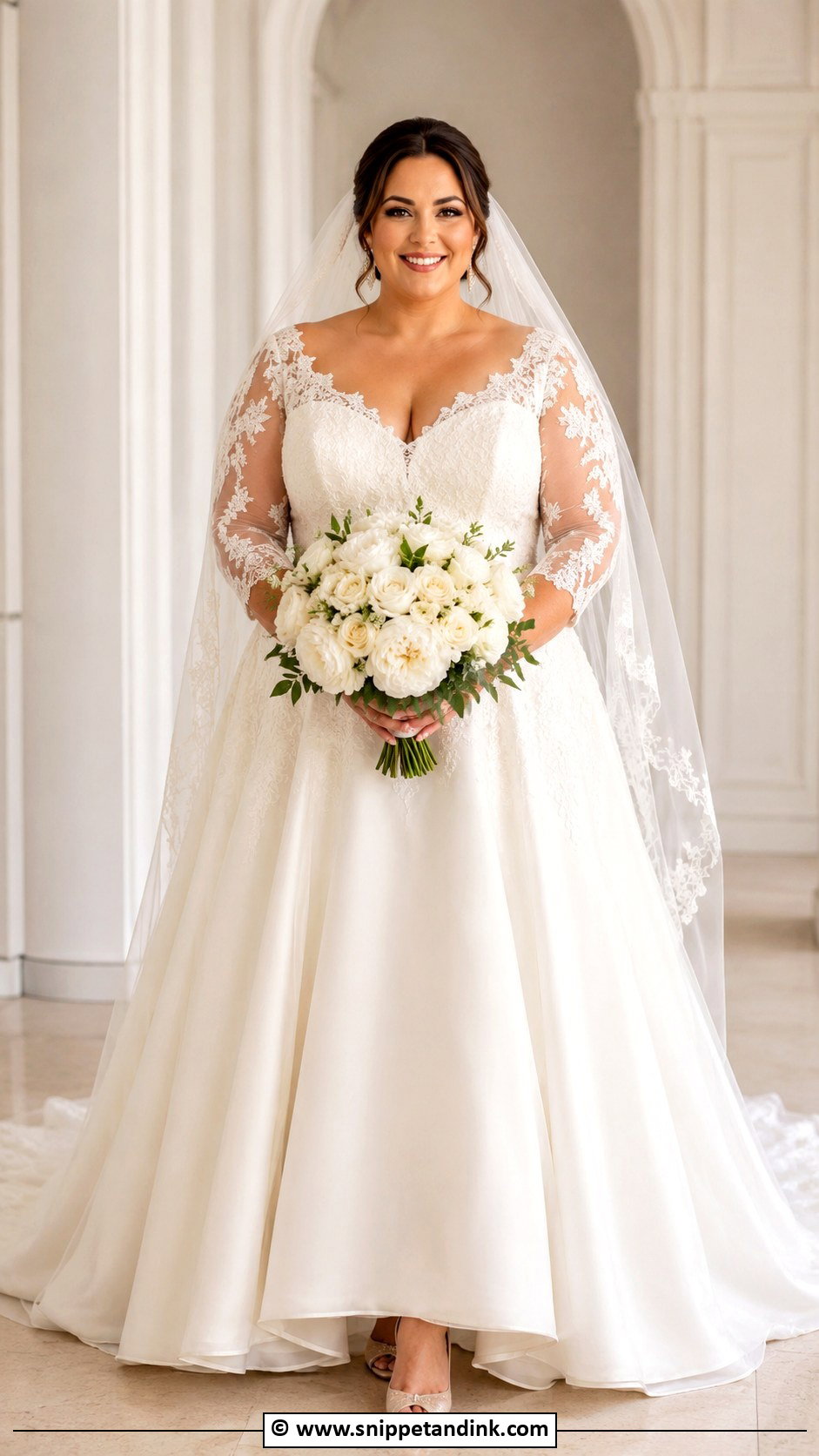
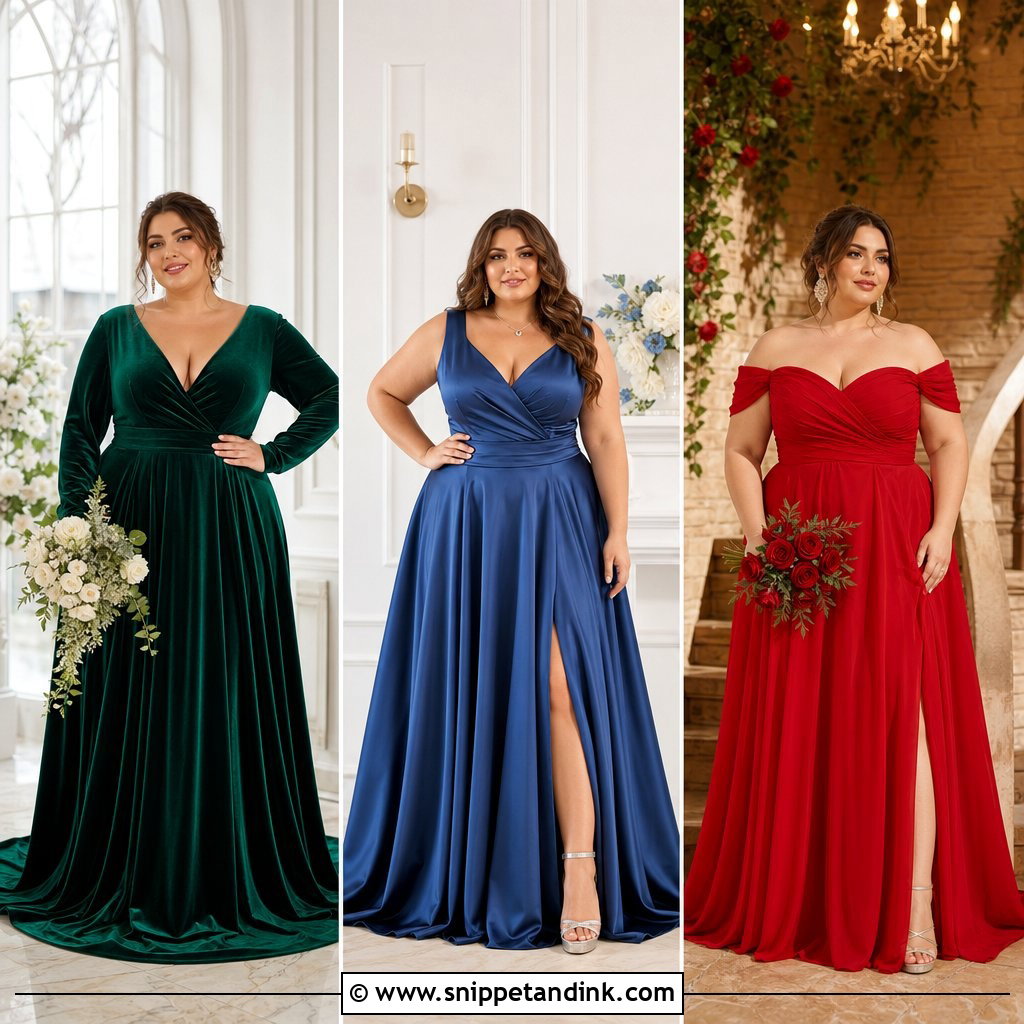
With a plus size gown, fit and support decide how you feel by the evening, so I start with undergarments and bodice construction before we talk style. A-lines, corset bodices, wrap shapes, ball gowns and fitted crepe all look great tailored well. Pick details that make you feel confident, such as supportive straps, a defined waist, soft sleeves or a dramatic train. Many shops carry samples in a narrow size range, so ask ahead which gowns they stock in your size to try properly. Comfortable heels, a veil scaled to the gown and jewelry that frames your face finish it. None of this is about hiding; it’s about shape and movement you enjoy.
26. Petite Wedding Dress
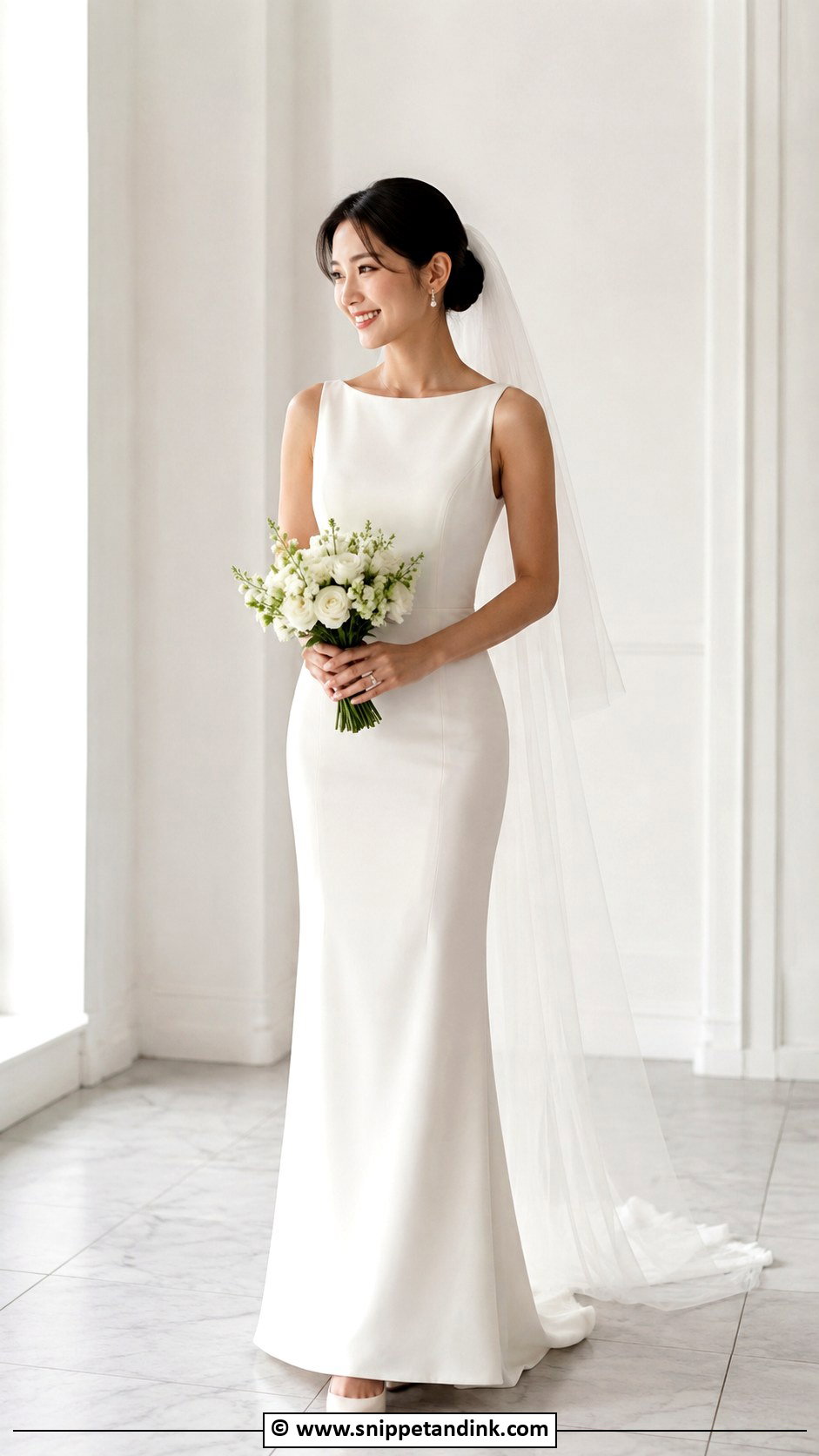
On a petite frame the risk is a gown that wears you. Clean A-lines, sheaths, slim satin and tea-length dresses keep length in the line, and a slightly raised waist, vertical seams or plain fabric add height. I’d avoid very heavy skirts and wide horizontal details. Have the hem cut to your exact shoe height. Pointed heels, delicate earrings, a veil sized to your height and a smaller bouquet keep everything in proportion.
27. Vintage Wedding Dress
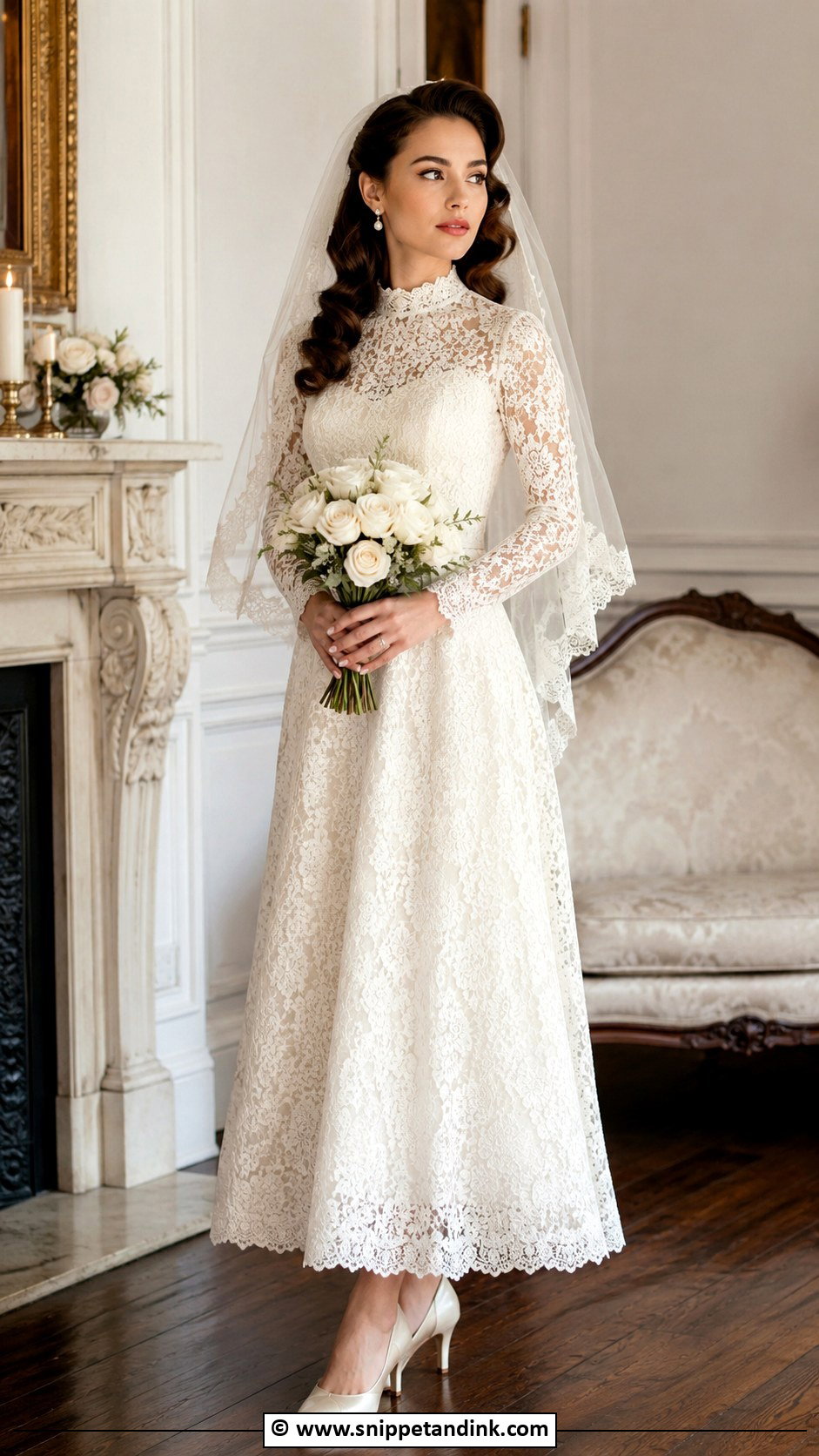
Vintage brings character, but the styling has to stay on the right side of costume. You might choose lace sleeves, a high neckline, a tea length skirt, a basque waist, or old Hollywood satin. With a genuinely old gown, I check the underarm seams and any yellowed marks first, and fragile lace may not take much alteration. Pearl earrings, classic heels, soft waves and a simple veil support the era, with white roses or lily of the valley in hand. If the lace or beading is busy, keep everything else light.
28. Black And White Wedding Dress
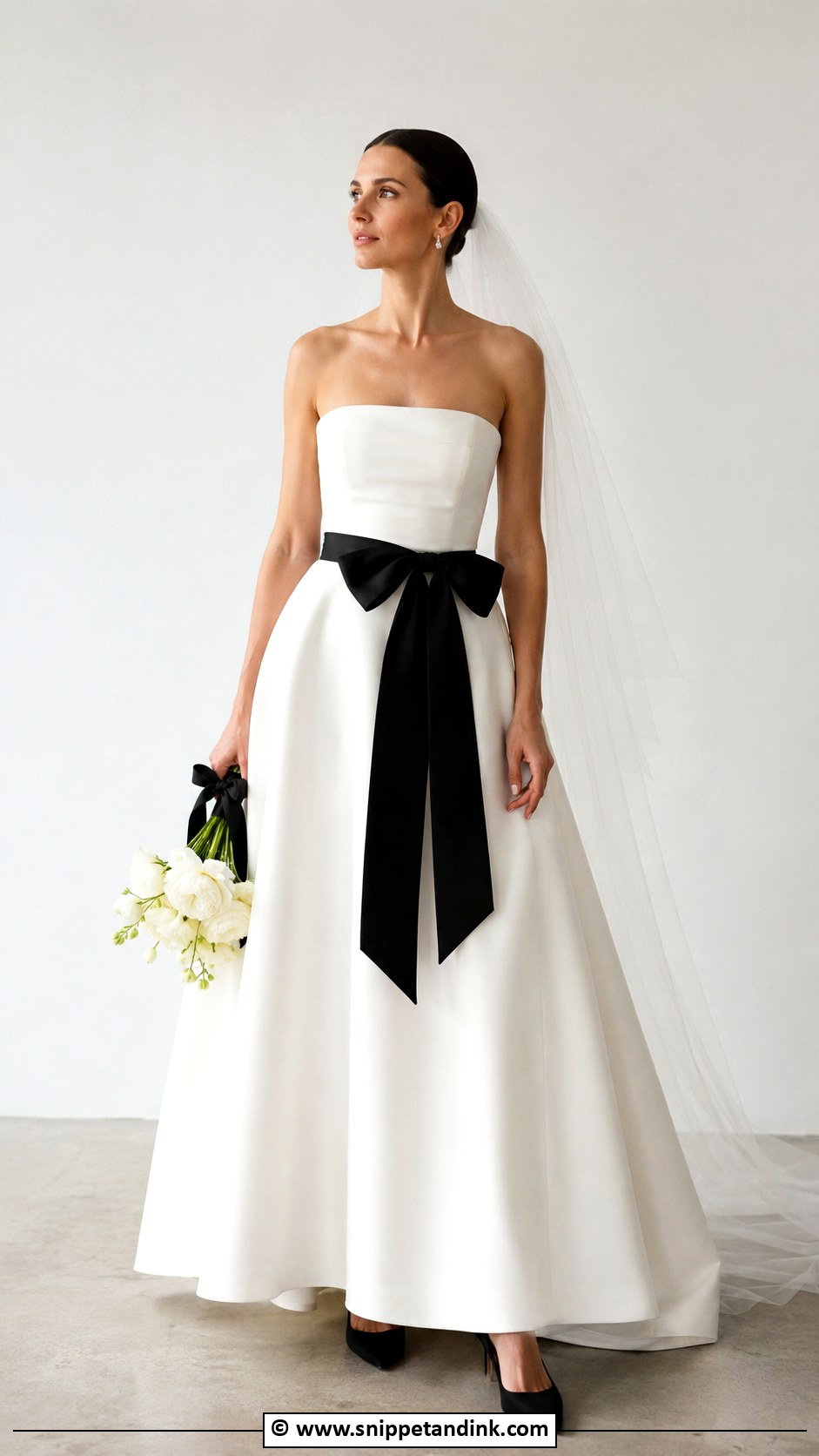
Black against white is graphic, so a little goes a long way. A bow, belt, gloves, trim, appliques or a ribbon at the waist carries the contrast while the gown itself stays white or ivory. Test the dye before the wedding: black trim on a pale gown has to be colourfast, because a humid night or a spilled drink can make it bleed. Black or ivory heels, simple earrings and a clean veil keep it sharp, and a white bouquet tied in black ribbon pulls it together.
29. Champagne Wedding Dress
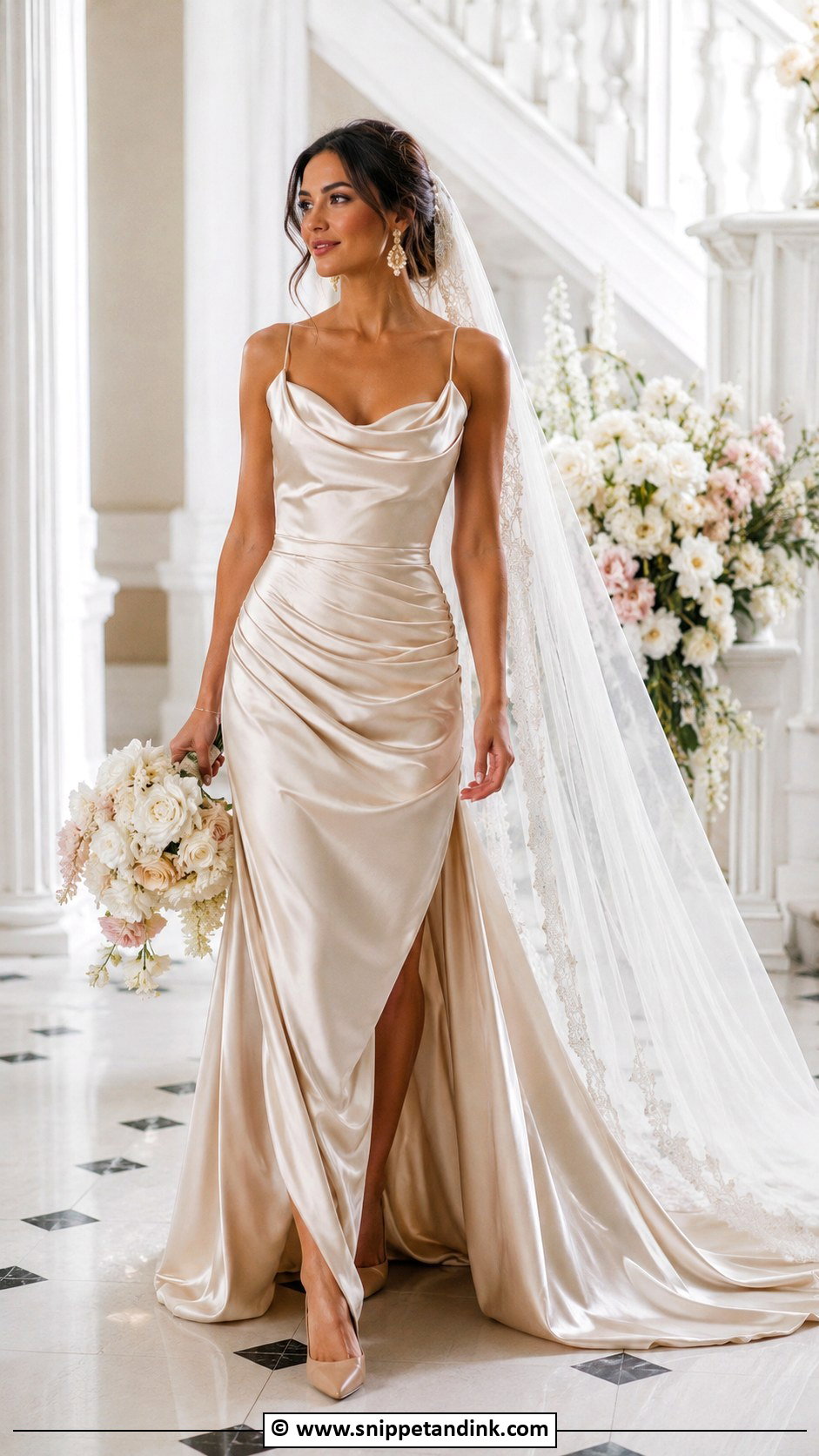
A champagne wedding dress warms the gown away from bright white, and it flatters plenty of skin tones that stark white drains. Satin, tulle, lace and shimmer fabrics all take the tone. Match the veil to the dress, because a pure white veil against champagne makes the gown look grubby. Gold or pearl earrings, nude heels and ivory flowers with pale blush accents complete it. Depending on the silhouette it reads romantic, vintage or glamorous.
30. Reception Wedding Dress
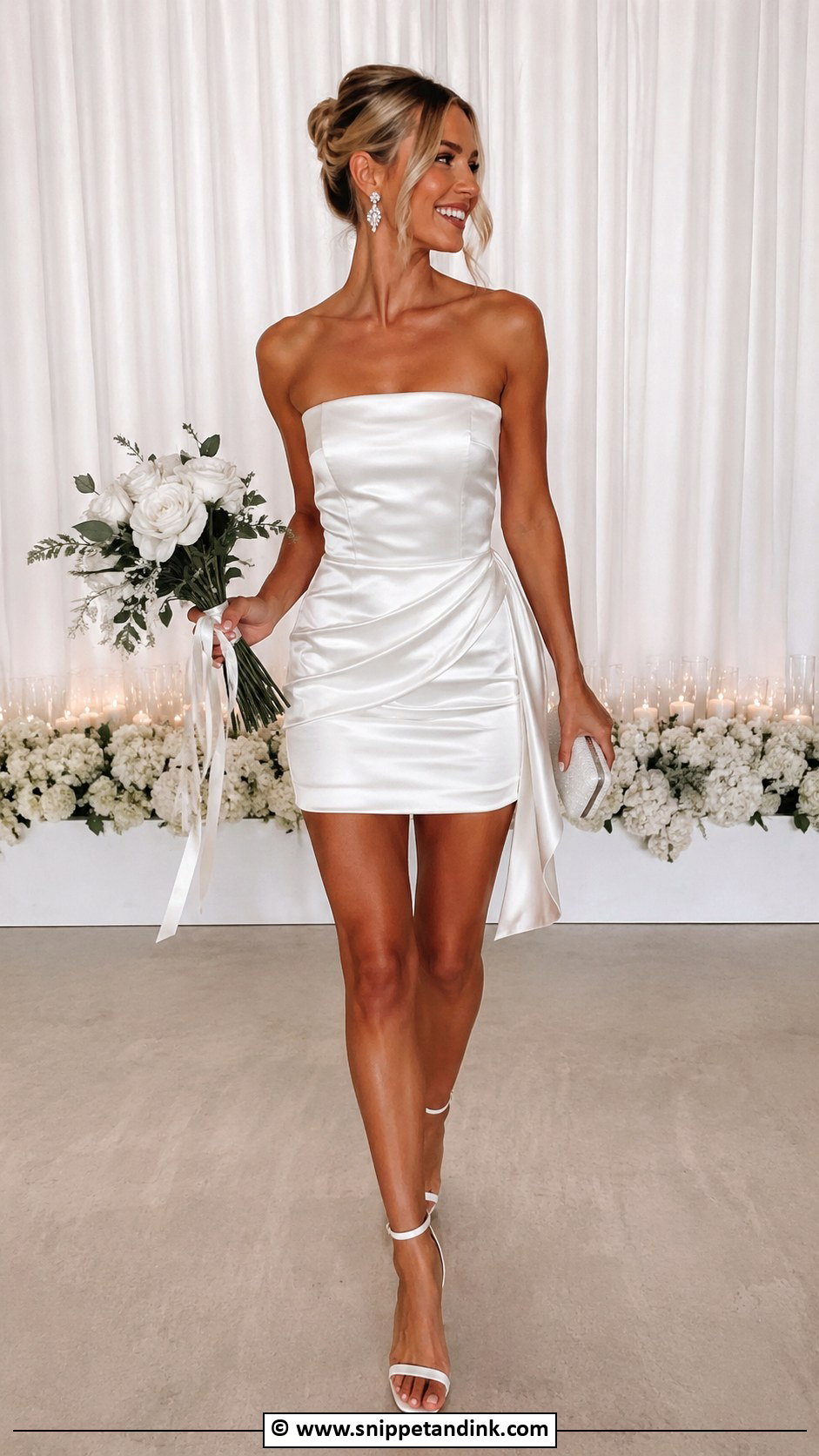
A reception dress should let you dance, sit and hug without thinking about your hem. Short dresses, feather-trim minis, satin slips, fitted midis and simple white party dresses all fit. Plan the change itself: who unbuttons the gown, where it hangs afterward, and whether hair and lipstick get a refresh, since those small details make the second look feel new. Comfortable heels, sparkly earrings and a small clutch are enough. If the ceremony gown was dramatic, let this one be lighter and more playful.
The Calendar Behind a Made-to-Order Gown
Most bridal gowns are cut once you order them, and production usually takes several months before a single alteration happens. That is why I suggest starting to shop roughly nine to twelve months out. Timelines vary by designer, so ask for the expected arrival date in writing when you pay the deposit.
- Order around eight to ten months before the wedding, earlier if you want custom changes such as added sleeves or a different neckline.
- First fitting about two to three months out, once the gown has arrived. Bring the final shoes and undergarments, or the hem will be wrong.
- Second fitting a few weeks later to check the hem, the bodice and the bustle, which is how the train gets lifted for dancing.
- Final fitting and pick-up one to two weeks before. Bring whoever will bustle you on the day so they can practise the loops and buttons.
Short on time? Ask about rush production, which many shops offer for a fee, or look at off-the-rack and sample gowns that can be altered and worn within weeks.
Sugar Stains, Steamers and the Week After
On the day itself, I give one bridesmaid a small kit: a lint roller, safety pins, a white chalk stick for tiny marks and fashion tape for a loose strap. Steam rather than iron satin and tulle, and test the steamer on the inside of the hem first in case it spits water.
Afterward, get the gown to a cleaner who handles bridal wear within a few weeks. Champagne, white wine and sweet drinks dry clear but can turn yellow-brown months later as the sugar oxidises, so point out where spills happened even if you can’t see them. For storage, skip plastic garment bags and wire hangers. A breathable cotton bag or an acid-free box, kept somewhere cool, dark and dry, protects the fabric far better than the back of a hall cupboard.
Ten Hours in the Dress You Picked
Wow doesn’t come from chasing every trend. One bride glows in plain crepe; another needs lace sleeves, a full ball gown, a short party dress or a champagne tone. Think about the venue, the season and how much you’ll move, then try shapes on rather than ruling them out from photos, because brides regularly fall for the silhouette they swore they’d never wear. Once the gown is settled, bring the veil, shoes, jewelry, bouquet and hair into line with it, and the outfit stops being a dress and starts being yours.
You'll Like These Ideas:



Leave a Reply