
Covered arms in front, bare skin behind. That contrast is the whole appeal of a long sleeve gown with a low back, and it suits almost any fabric, from plain crepe to lace to heavy satin. There’s a structural reason the pairing works too: long sleeves anchor the shoulders, which lets a back be cut lower than it could be on a strapless or thin-strap dress. Below are twenty complete looks with the silhouette, shoes, veil, jewelry and bouquet I’d put with each. As you compare them, think about season, venue, how much you want to move, train length and how deep a back you’ll actually feel relaxed in.
What Holds Up a Gown With No Back
Every low-back dress answers the same question: if there’s no fabric across your back, what keeps the front where it belongs? With long sleeves, the sleeves themselves do much of the work. They grip the shoulders and upper arms, which is why this pairing can go lower than a strapless gown ever could. The rest comes from what’s built inside.
When a bride is choosing a back depth, I mark three lines on her: the bra-band line, the bottom of the shoulder blades and the natural waist. A back that ends at the band line needs almost no special support. Between the band and the waist, you’ll want sewn-in cups and some boning at the sides. Below the waist is couture territory, and it only works with a precise fit.
What to wear underneath
- Sewn-in cups. Ask your seamstress to stitch molded cups into the bodice lining; it’s the most reliable option and nothing shows.
- Adhesive or stick-on bras. Fine for smaller busts and shorter days, but they can lose grip with heat and dancing.
- Low-back bra converters. These drop the band below the opening and suit backs that end at the waist or higher.
- Fabric-safe body tape along the back edges if they lift when you reach forward.
Bring whatever you plan to wear to every fitting. Changing the support between fittings changes how the bodice sits, and the alterations will be out by the wedding.
1. Lace A-Line Long Sleeve Low Back Wedding Dress
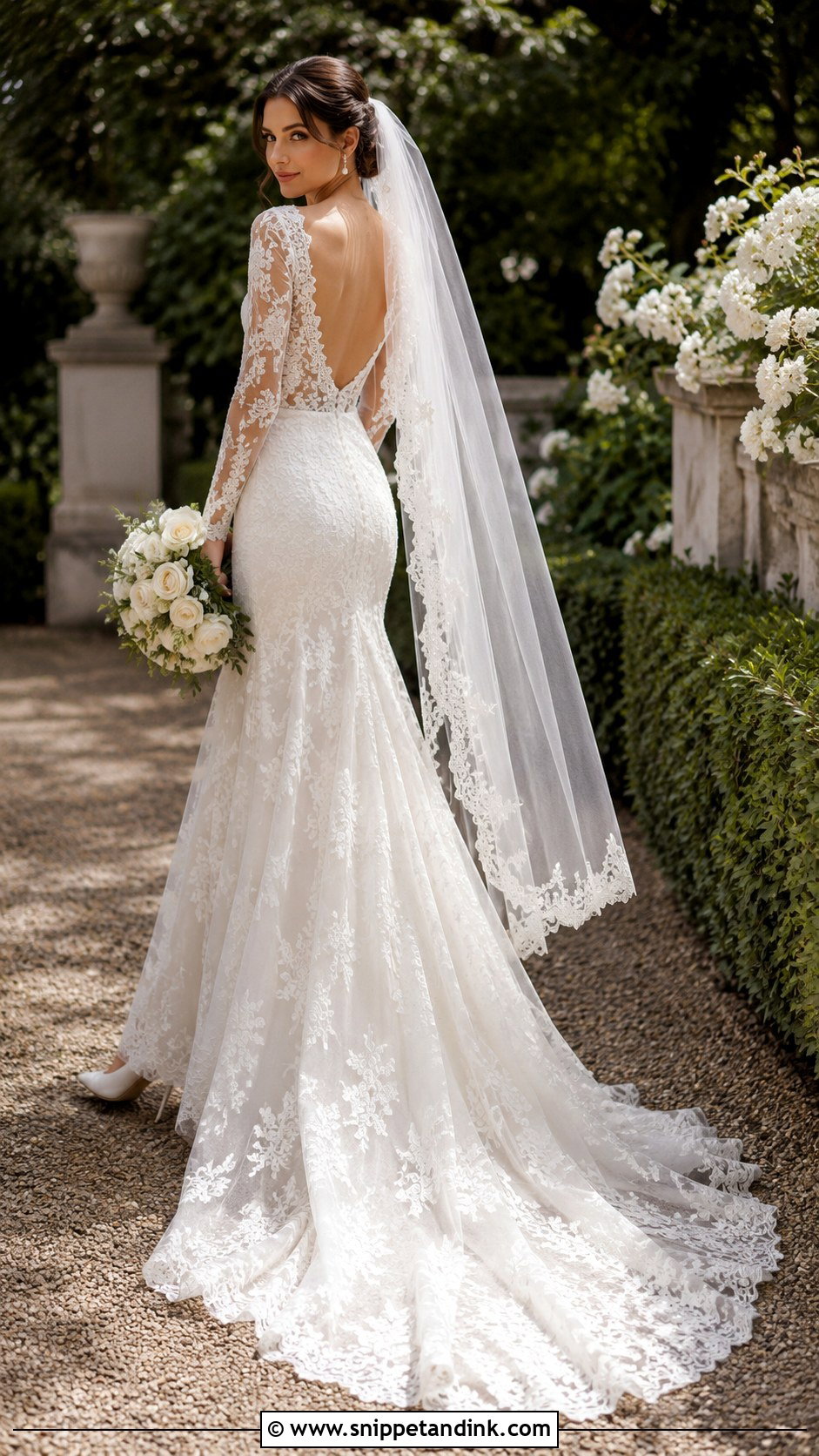
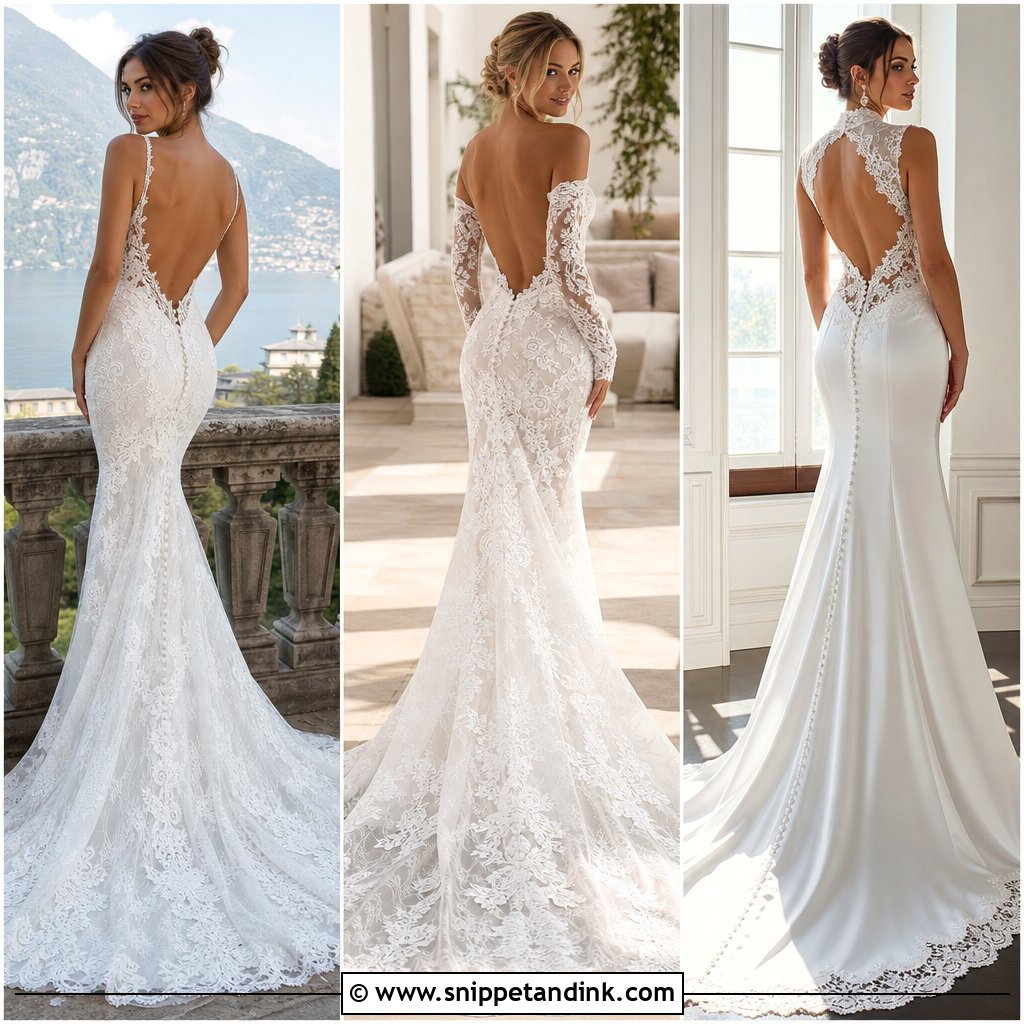
Lace A-lines are where I start most fittings for this style, because the lace hides the small adjustments a low back needs. A fitted lace bodice that drops into a V at the back, sheer sleeves and a soft flare give you shape without heavy volume. The back edge is the thing to watch: lace with a scalloped or corded border holds its line, while raw-cut lace can curl after a few hours. A chapel veil with a narrow lace edge carries the pattern without hiding the back. Pearl drops, ivory pointed pumps and a compact bouquet of white garden roses and greenery suit it. Lift your arms during alterations; if the back edge pulls away from your skin, it needs taking in.
2. Satin Ball Gown Long Sleeve Low Back Wedding Dress
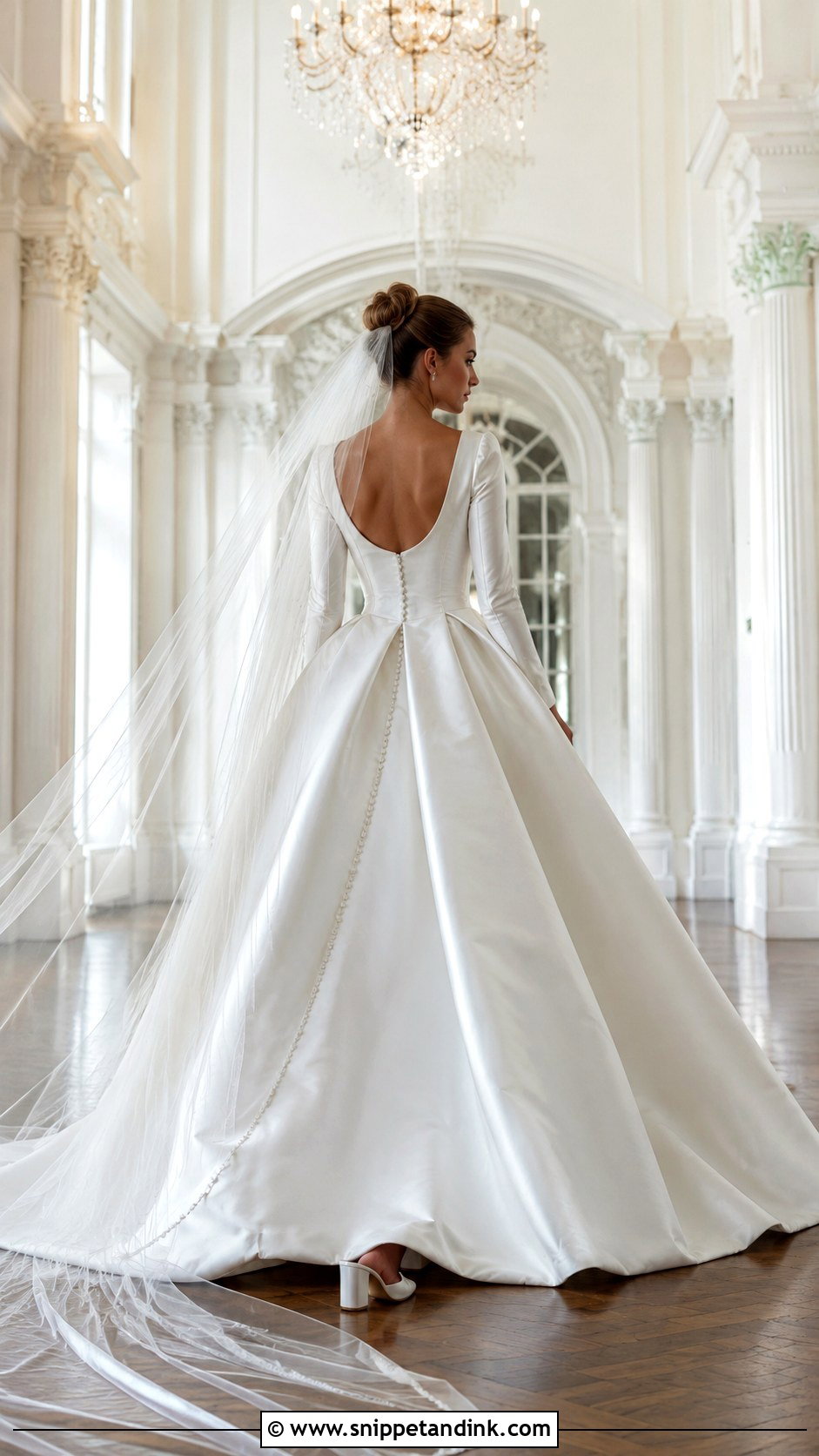
Satin shows every wrinkle and every pull, so a satin ball gown with a low back lives or dies on the bodice construction. Keep the sleeves plain and fitted and let the fabric’s sheen and the back do the work. A gently curved scoop back reads graceful; covered buttons running down toward the waist add a traditional note. Crystal studs, a low bun and a clean cathedral veil set beneath it suit the scale. I’d choose satin block-heel pumps here, because a full skirt plus a narrow heel is a wobbly combination on stone floors. A rounded bouquet of white roses, ranunculus and soft greenery finishes it for a formal venue with room for the train.
3. Crepe Mermaid Long Sleeve Low Back Wedding Dress
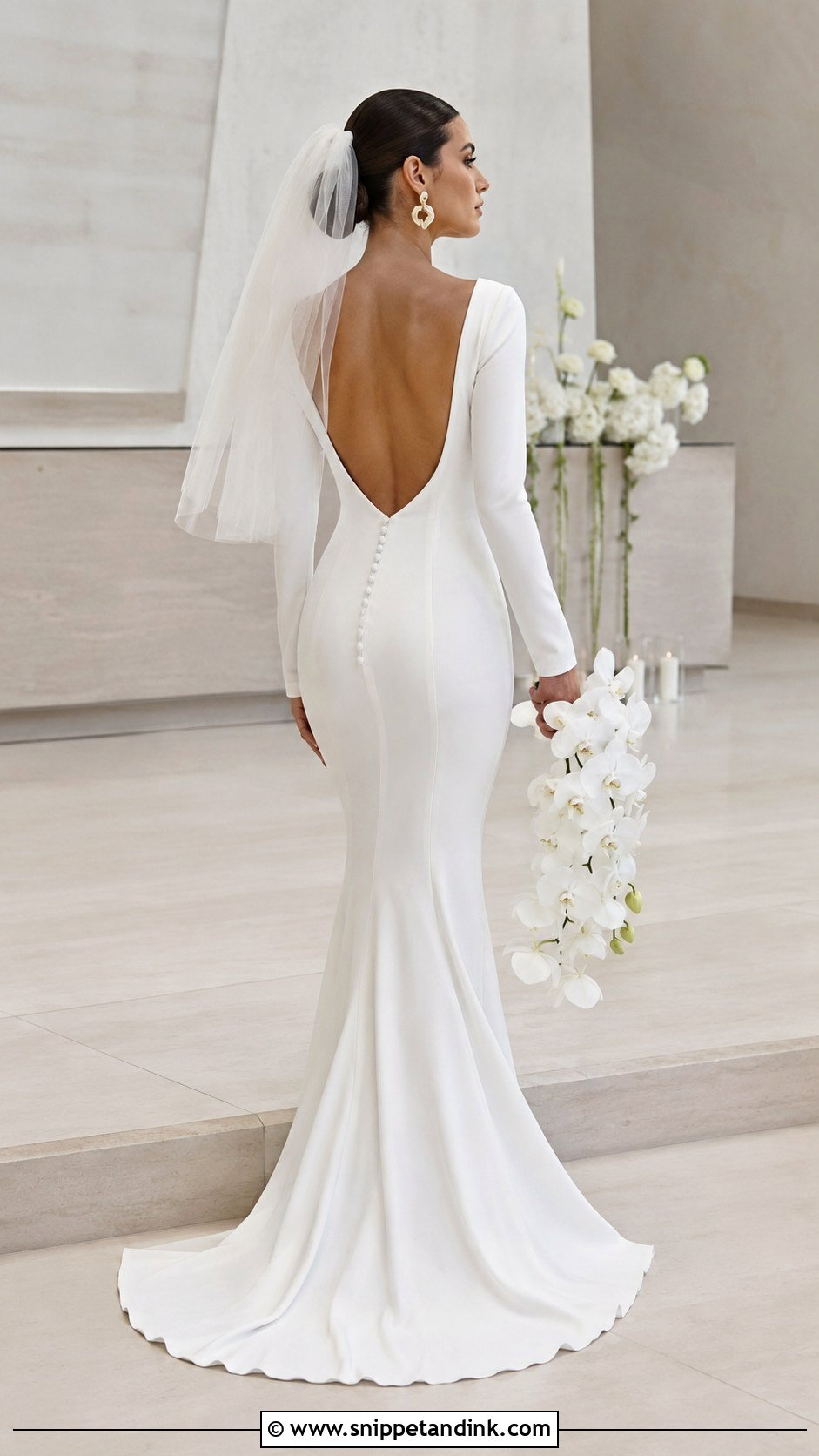
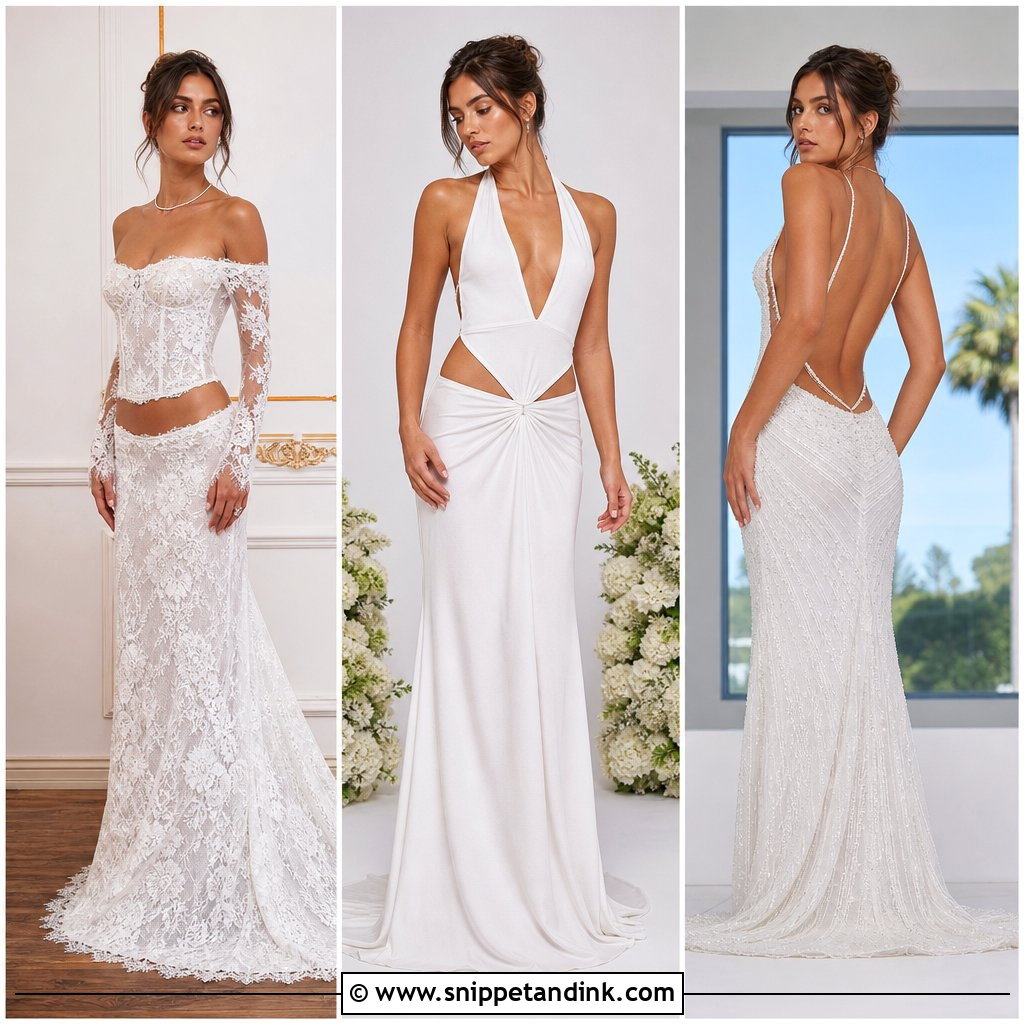
Stretch crepe is honest fabric. It skims rather than hides, which is why a crepe mermaid with a deep open back looks so clean, and also why the tailoring has to be precise. The skirt should hug through the hips and release near the knee. Fitted long sleeves frame the shoulders and balance the bare back. Sculptural gold or silver earrings, a sleek center-parted bun and pointed heels keep it modern, with a plain fingertip or chapel veil you can take off after the vows. A trailing bouquet of white orchids follows the gown’s lines. Crepe shows sitting creases across the lap, so practice sitting in fittings and ask for a bustle that won’t drag the flare sideways.
4. Square Neck Long Sleeve Low Back Wedding Dress
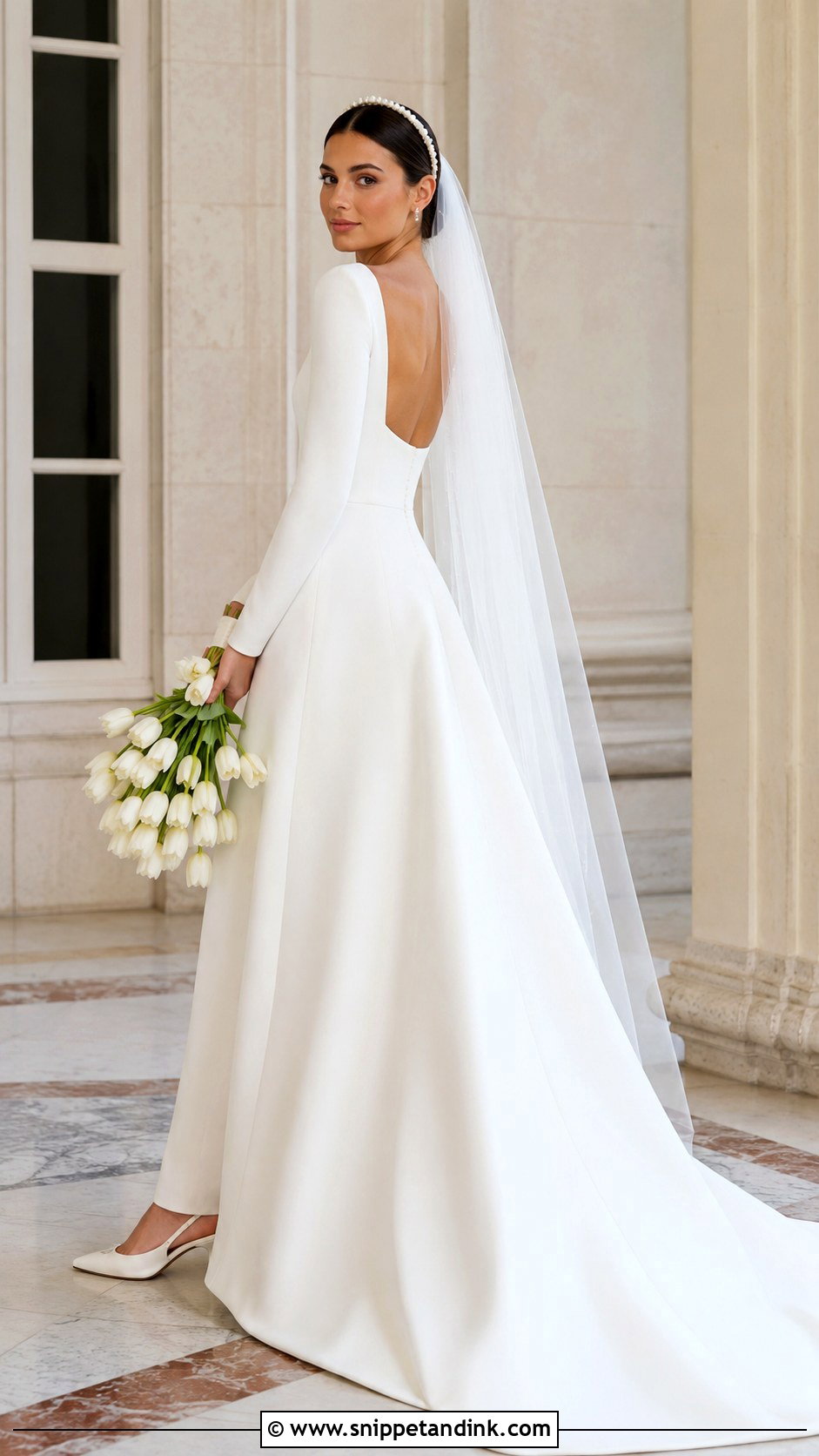
From the front, a square neck reads crisp and architectural. From behind, the low back softens everything. Matte crepe, silk or smooth satin keep both edges sharp. A gently fitted A-line skirt gives the waist definition without ball gown weight. A pearl headband, small pearl earrings, ivory slingbacks and a fine tulle veil suit it, and white tulips or calla lilies keep the bouquet streamlined. No necklace: the neckline is the jewelry. Square necks on a low-back dress need the shoulders fitted closely, because when the back is open there’s nothing else stopping the front corners from tipping forward.
5. High Neck Lace Long Sleeve Low Back Wedding Dress
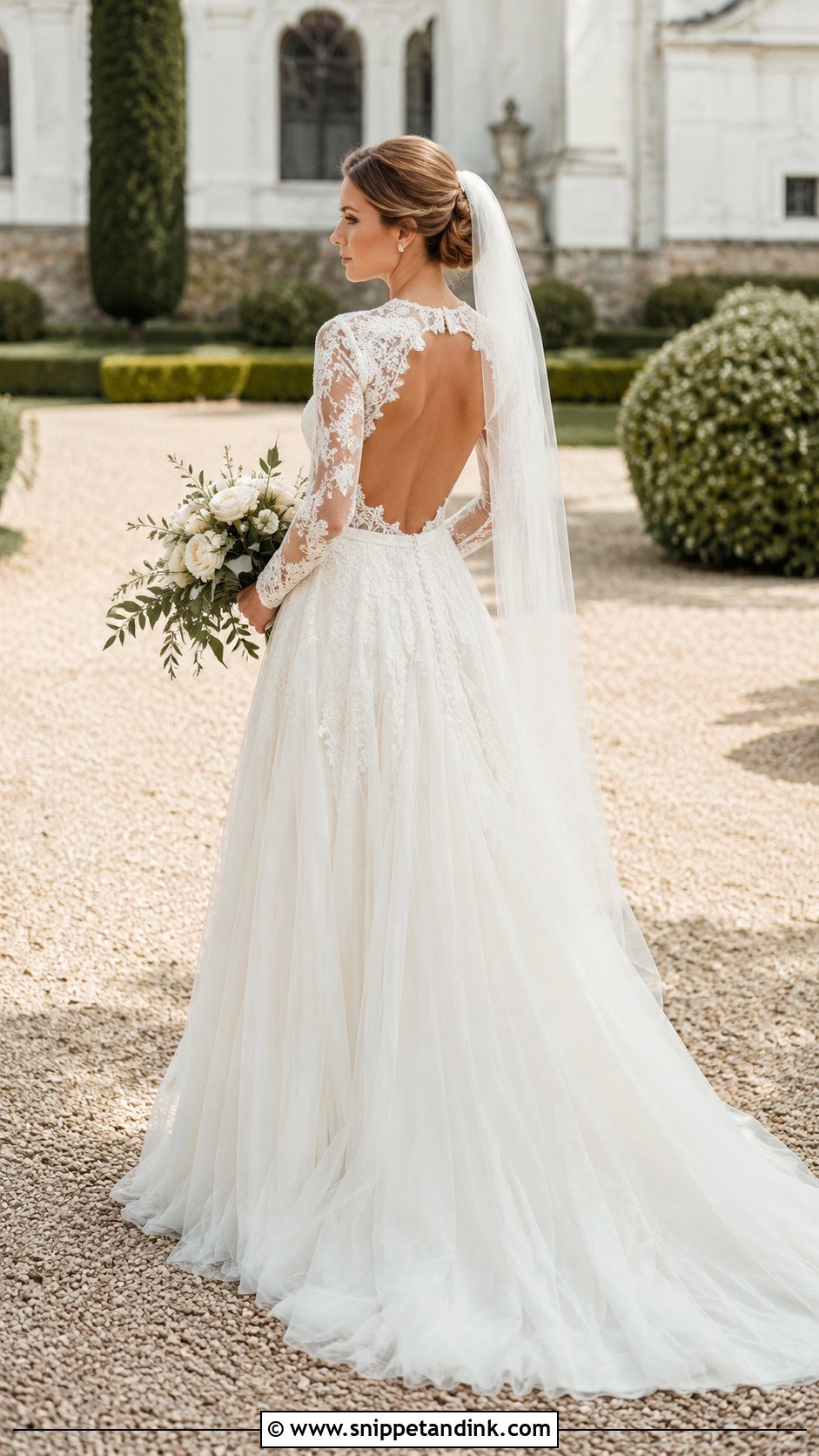
The higher the front, the more surprising the back. A lace neckline that runs up to the throat and down into fitted sleeves makes a deep oval or V opening behind read as a reveal. Look for clean, finished edging around the back opening so it doesn’t stretch. A flowing chiffon or tulle A-line skirt stops the lace bodice from looking heavy. Wear a soft twisted updo so the back stays visible, with simple studs and ivory closed-toe heels; a narrow ribbon at the waist can add definition if it matches exactly. A loose bouquet of sweet peas, roses and light greenery suits it. I’d attach the veil below the updo, never above it, so the tulle falls away from the opening instead of over it.
6. Off Shoulder Long Sleeve Low Back Wedding Dress
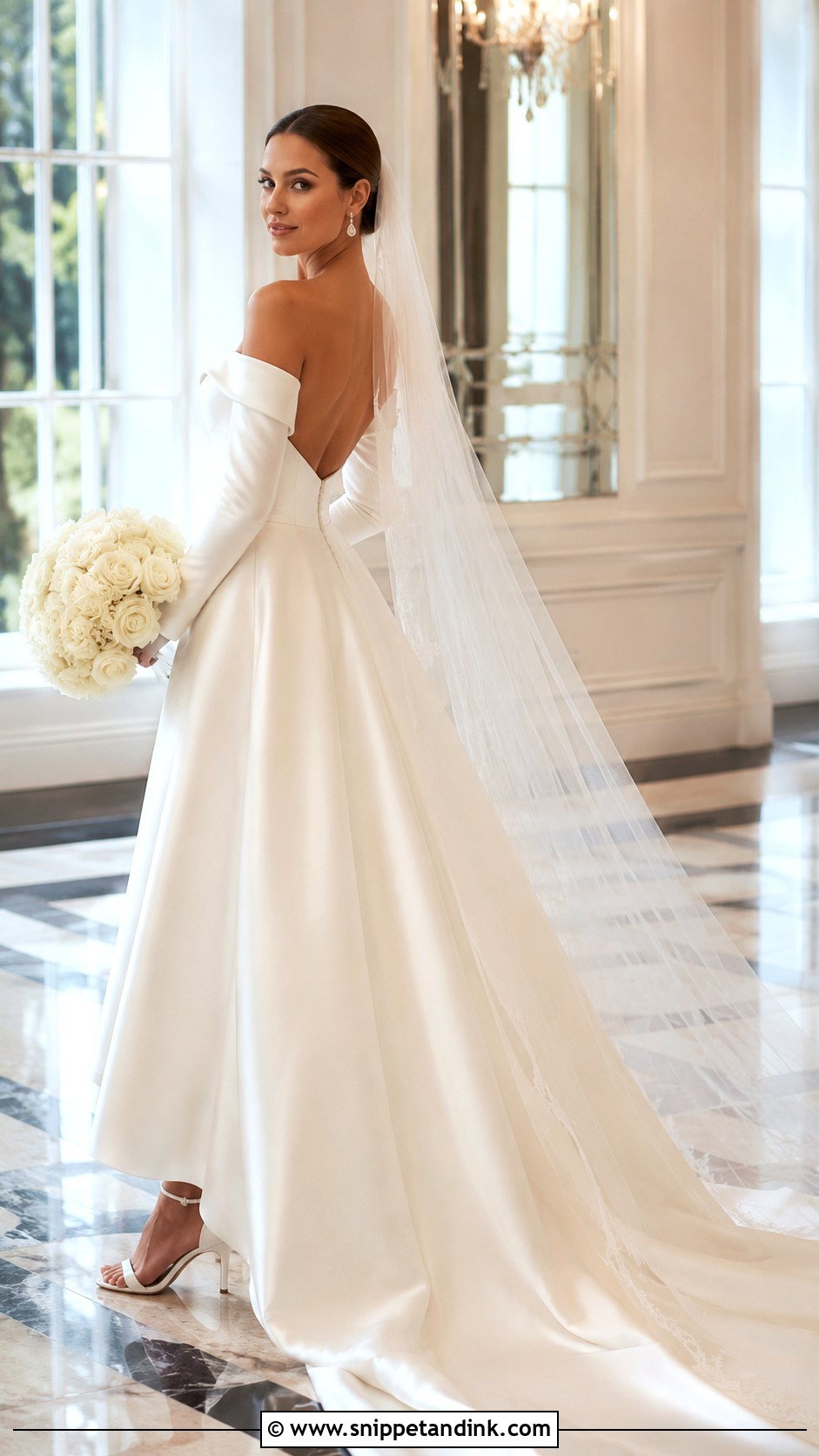
Off-shoulder sleeves and a low back together make one continuous line around the upper body, and that’s precisely what makes the cut tricky. With no shoulder seam on top and no fabric across the back, the bodice relies entirely on boning, elastic and a good fit around the ribs. Structured satin feels formal; light crepe is softer. A fitted bodice and A-line skirt keep it easy to wear for hours. Teardrop earrings, a neat low chignon, satin ankle-strap heels and a bouquet of ivory roses with pale seasonal flowers suit it. A sheer cathedral veil adds drama and comes off later. Test arm movement hard during fittings: reaching forward is when this neckline tends to slip.
7. Illusion Back Long Sleeve Wedding Dress
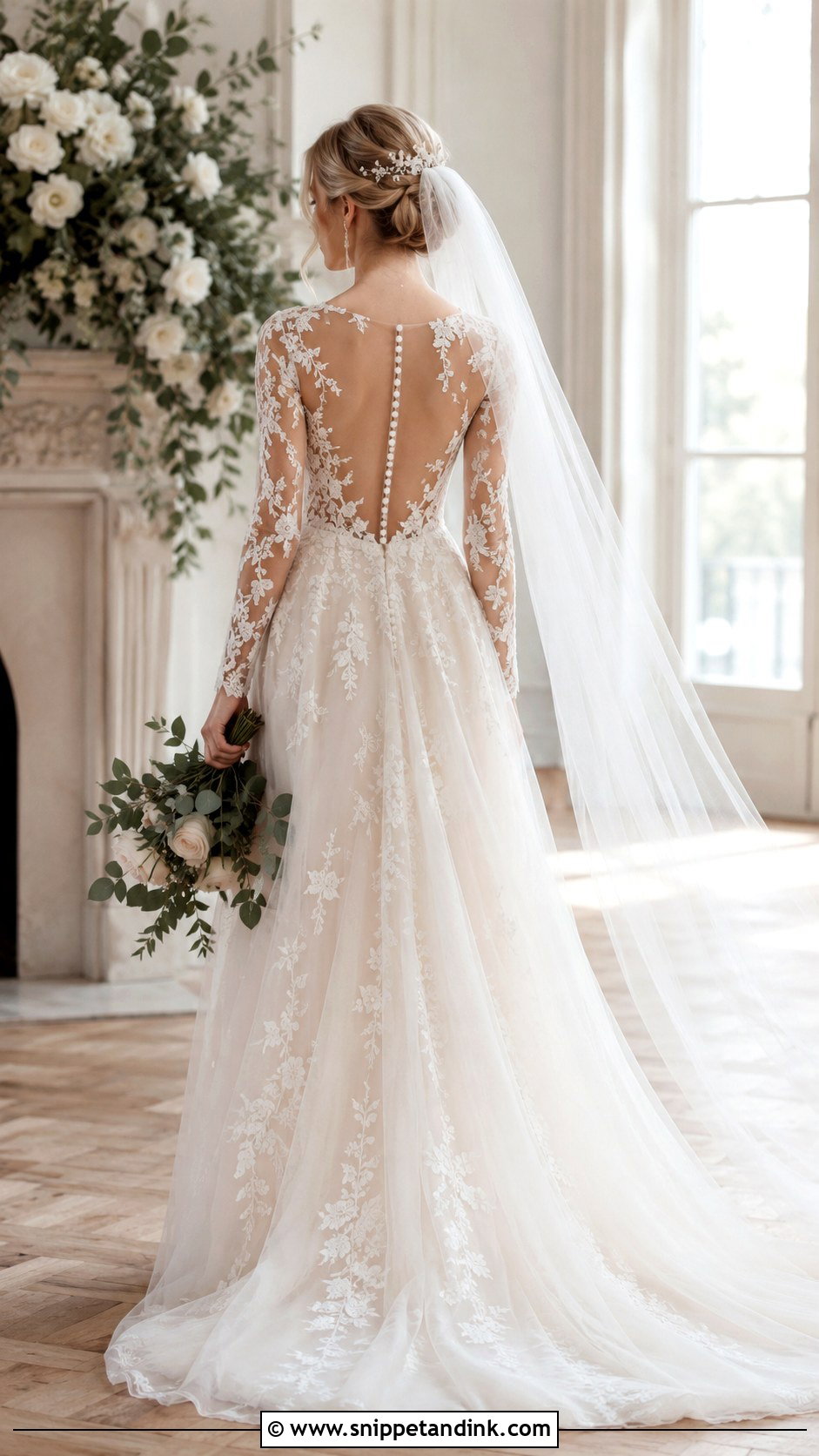
An illusion-back gown gives you the look of a bare back with a layer of mesh doing the holding. If you love the open look but worry about support, it’s the option I suggest first. Lace appliqués, tiny buttons or scattered beads placed on the panel seem to float on skin, and repeating them on sheer sleeves ties the design together. A soft A-line or fit-and-flare keeps attention on the top half. Crystal hairpins, small drop earrings, ivory pointed pumps and a plain tulle veil suit it, with white roses and eucalyptus in the bouquet. Match the mesh to your back, not your face; back skin is often a shade lighter or more olive. Check it in daylight and indoor light, and make sure it lies smooth when you sit.
8. Deep V Back Long Sleeve Wedding Dress
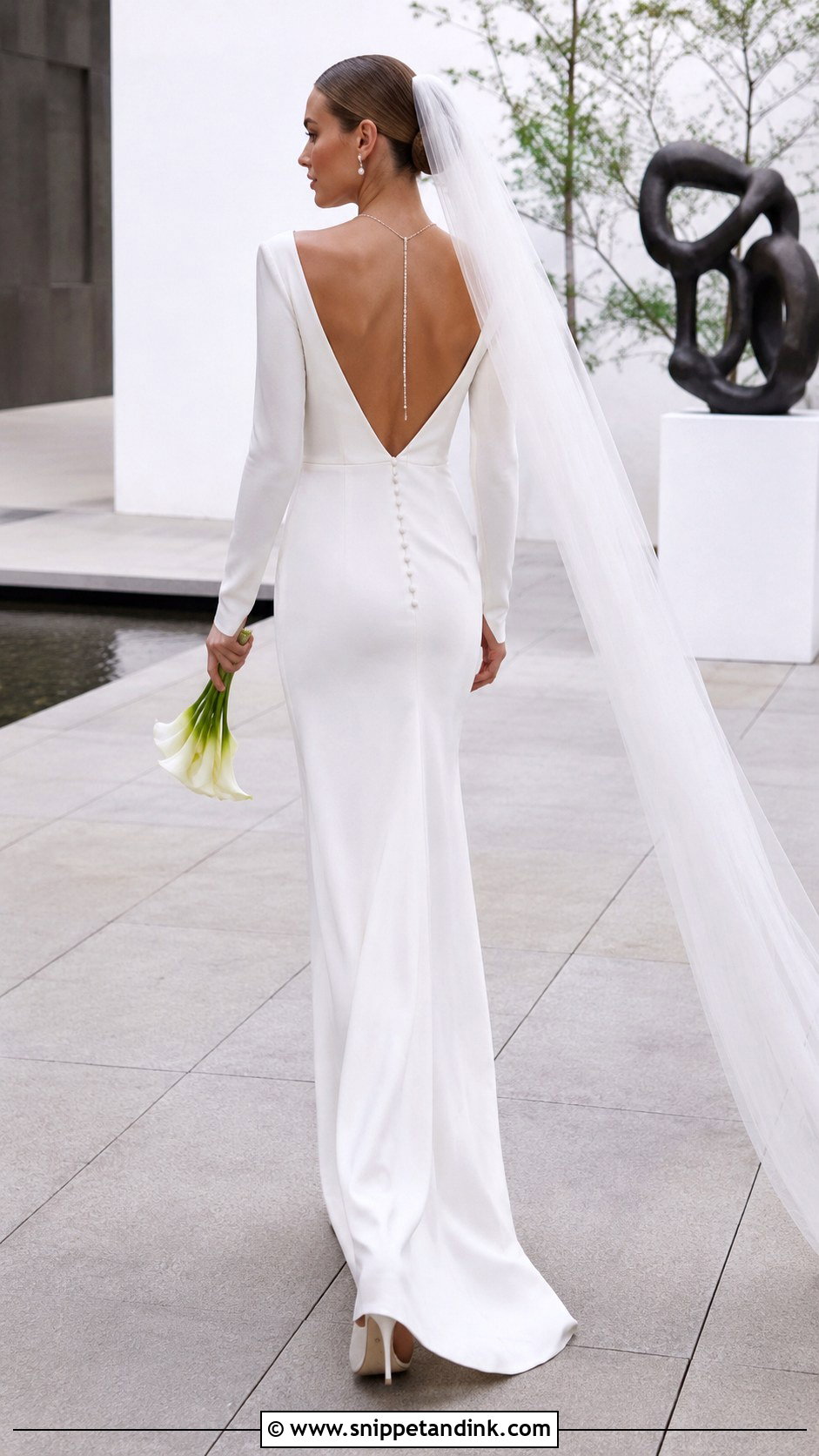
A deep V-back draws one long vertical line down the spine, and on most bodies that reads as extra height. Keep the front modest, bateau, round or a small V, so the dress stays balanced. Crepe and satin define the V cleanly. Fitted sleeves with a column or gentle fit-and-flare skirt finish it. A sleek bun, a fine back-drop chain, small earrings and ivory pointed heels suit the line; a plain chapel veil can frame it at the ceremony and come off for portraits. Long-stemmed callas or a minimal white bouquet fit. The point of the V is where fit problems show. If it gapes when you roll your shoulders forward, the seamstress needs to take in the side back seams, not just the edges.
9. Scoop Back Long Sleeve Wedding Dress
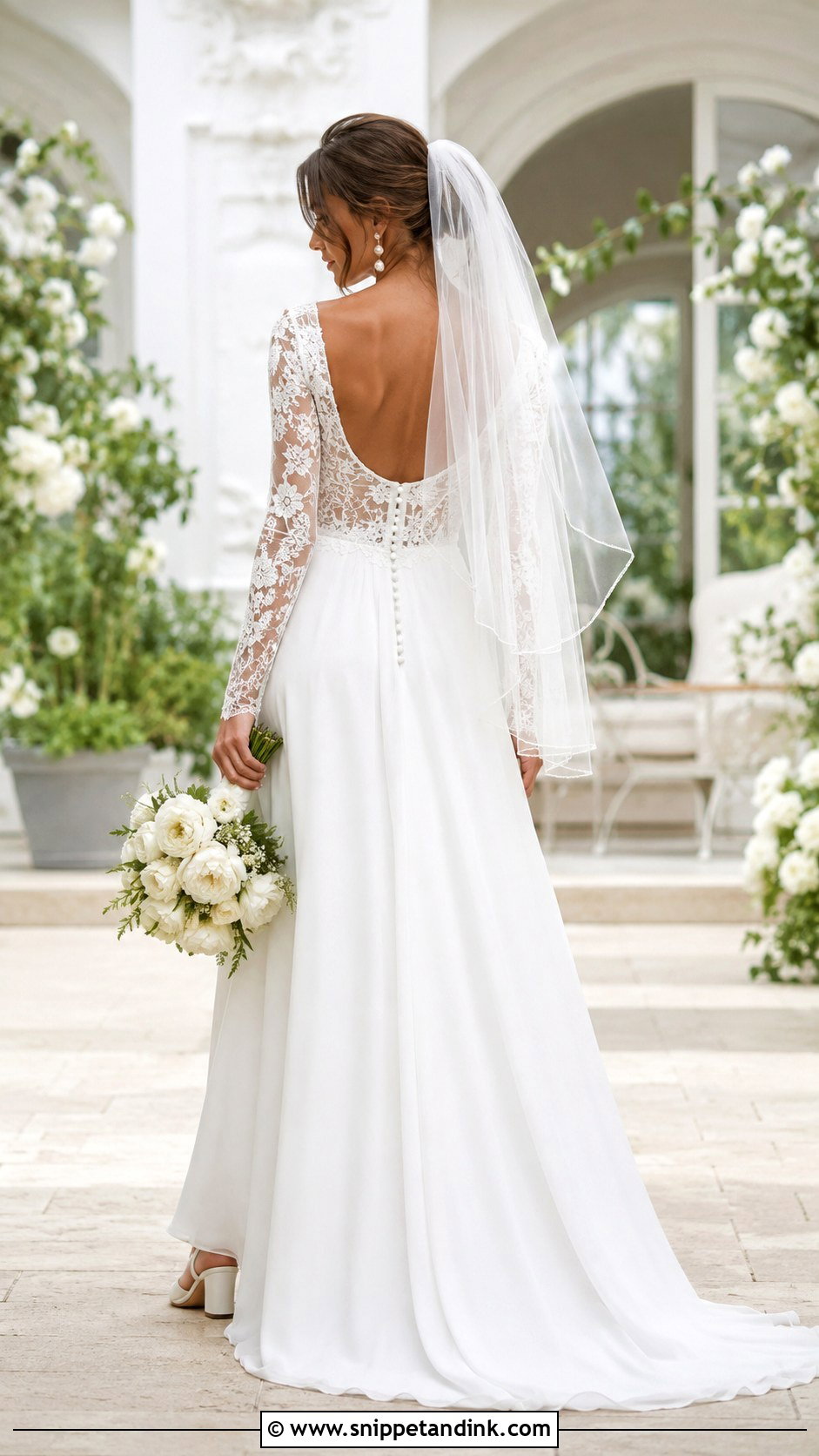
Not ready for a plunge? A scoop back is the version I’d point you to. The rounded opening sits higher, usually around the bra-band line, and stays put through hugs and dancing. It pairs well with long lace sleeves, a fitted waist and an A-line skirt. Covered buttons can follow the curve of the scoop and continue down the train. Pearl earrings, a softly waved low ponytail and comfortable block heels suit it, with a shoulder or fingertip veil so the back stays in view. White peonies, roses or hydrangeas in a rounded bouquet complete it. Bend, sit and dance a few steps at fittings to confirm the depth you picked still feels secure.
10. Cowl Back Long Sleeve Wedding Dress
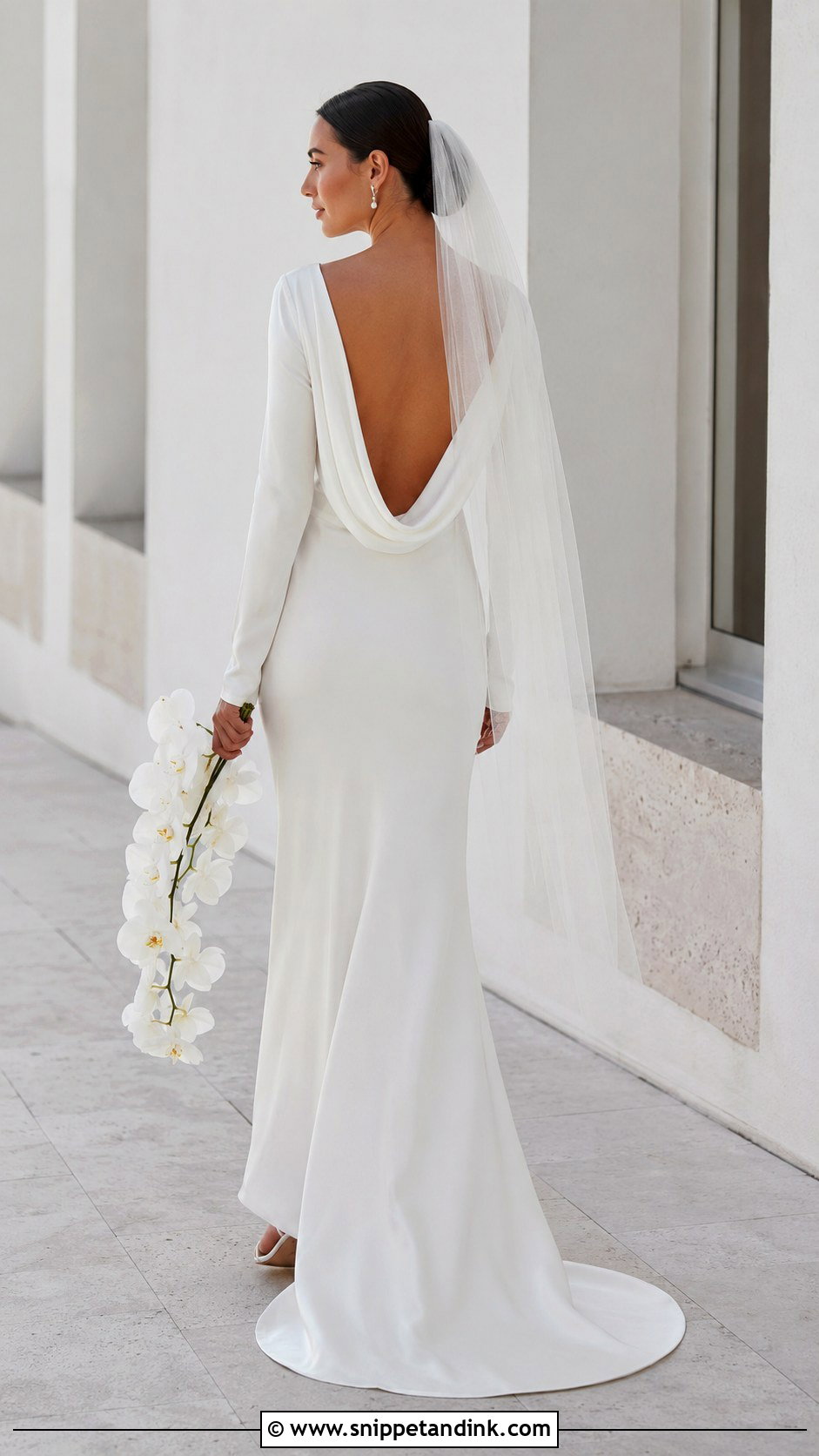
A draped cowl back only falls properly in fabric with real weight and drape, which is why silk satin and soft satin-finish crepes are the usual choice. Stiffer satins fold into hard pleats instead of a fluid curve. Keep the front clean with a boat neck and choose a bias-cut column skirt for an unbroken line. Slim drop earrings, a polished bun and metallic or ivory sandals on a stable heel suit it. Skip an embellished veil in favor of single-layer silk tulle or just a small comb, and carry a loose bunch of white orchids. Many cowls have a small weight sewn into the lowest fold. Ask your seamstress to check its position so the drape sits evenly and doesn’t swing sideways as you walk.
11. Corset Long Sleeve Low Back Wedding Dress
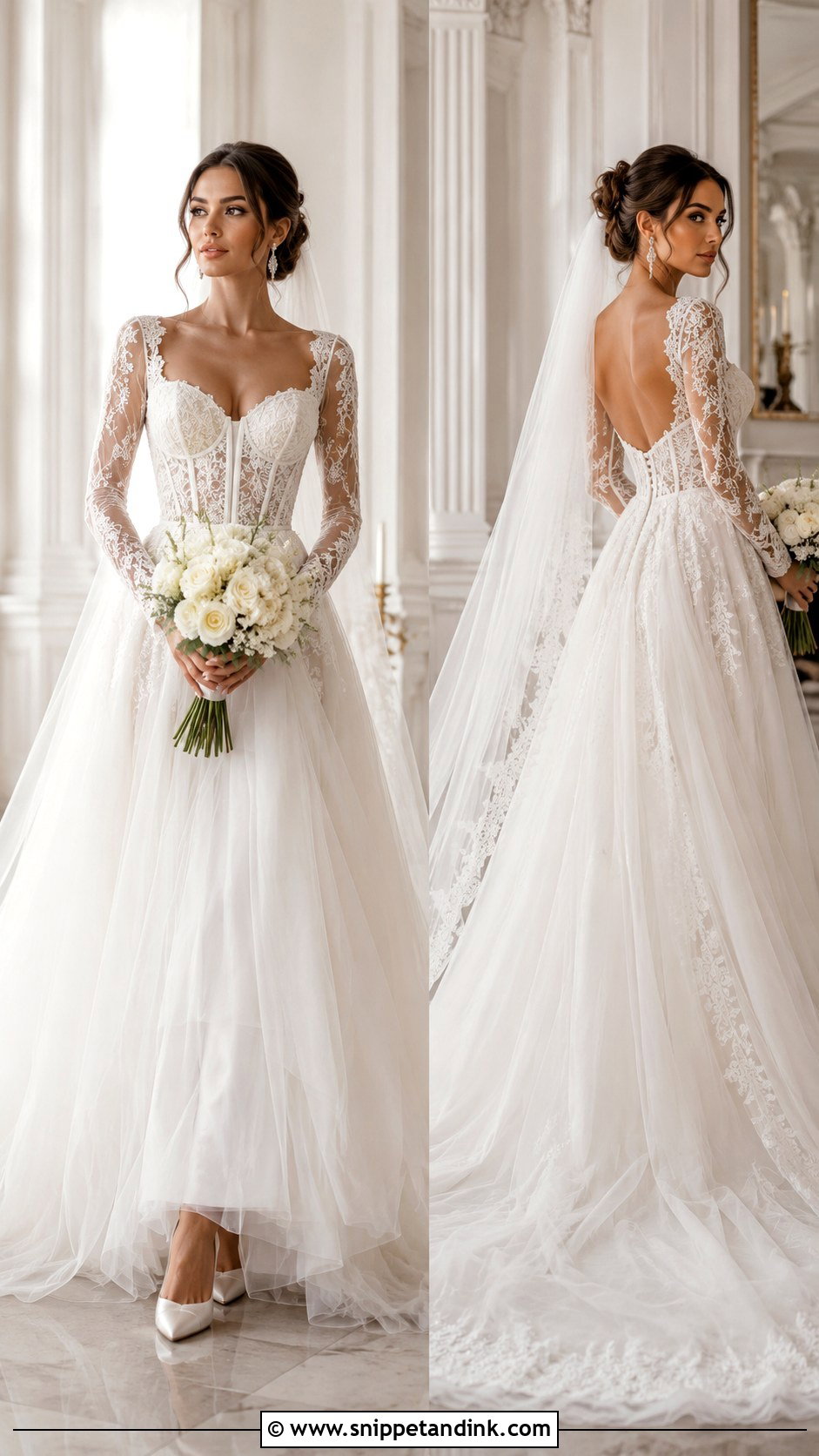
Corset construction is what makes a very low back possible without straps across it. The boning holds the bodice to your ribs, so the back can open wide and still stay in place. Look for boning covered in satin, lace or embroidered tulle rather than exposed channels. Sheer sleeves soften the structure and a layered A-line skirt adds movement. Crystal earrings, satin pumps and a cathedral veil with a narrow raw edge suit it, with white roses, lisianthus and fine greenery in the bouquet. The corset already adds detail, so keep everything else restrained. A corset should support, not squeeze. I want brides to be able to take a full breath and eat dinner, and the final fitting should happen in the exact shoes you’ll wear.
12. 3D Floral Long Sleeve Low Back Wedding Dress
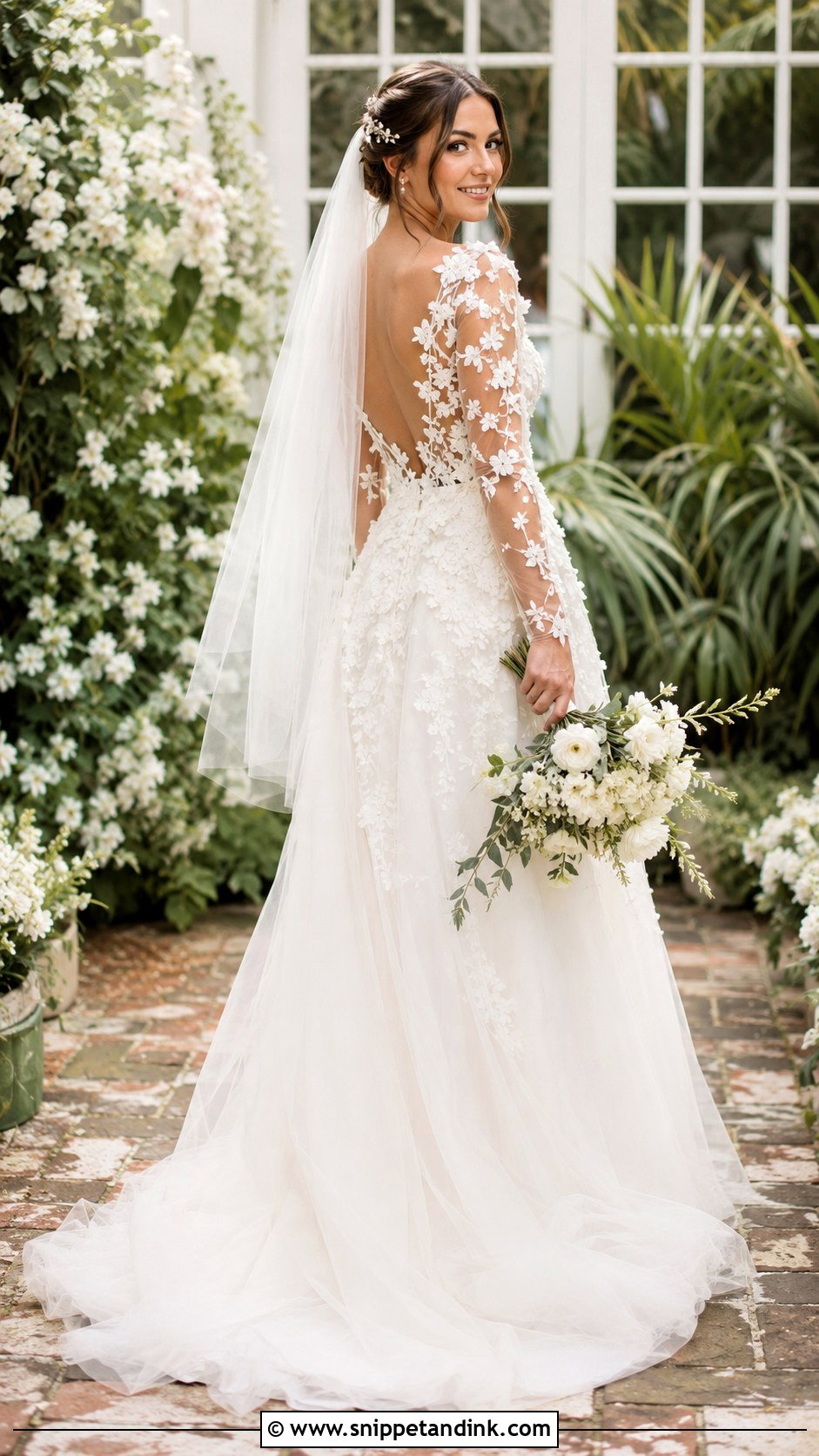
Raised 3D flowers turn a low back into the most textured part of the dress. They look best scattered across sheer sleeves and around the back opening, then thinning toward the skirt. An airy tulle A-line keeps it from getting dense. Small floral hairpins, pearl studs, ivory heels with little detailing and a plain veil suit it; an embroidered veil edge would fight the raised flowers. Choose a loose bouquet of white blossoms that echoes the gown without copying it. Watch the elbows and the back edges at try-ons. Appliqués stitched stiffly at bend points press into skin after a few hours, and flowers along the back opening can catch your hair if you wear it down.
13. Pearl Beaded Long Sleeve Low Back Wedding Dress
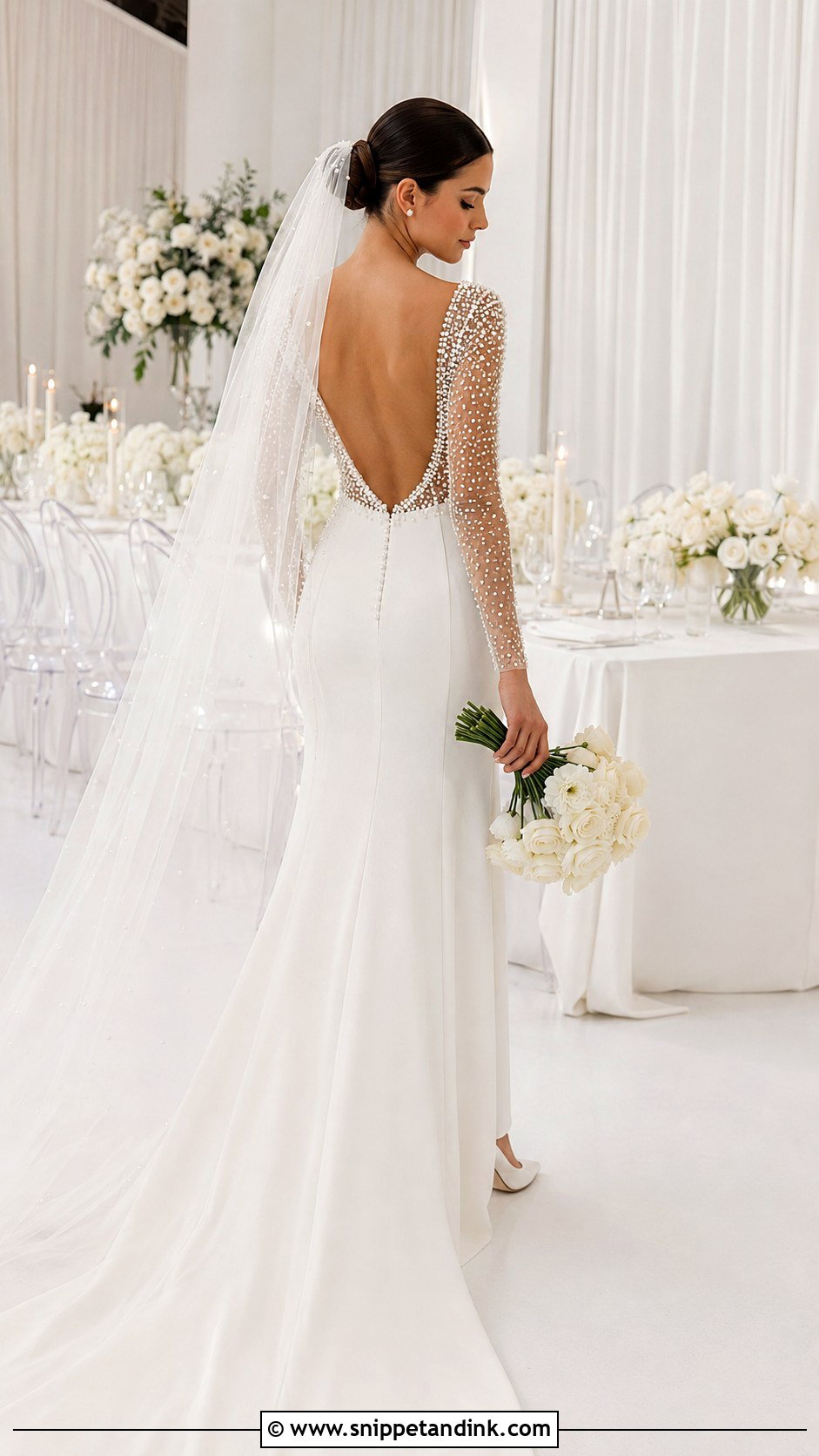
Tiny pearls on illusion tulle give sleeves and an open back a soft glow rather than sparkle. I like them most against a plain crepe or satin skirt, because the contrast stops the dress tipping into ornate. A fitted column or soft A-line keeps the beaded bodice as the main feature. Pearl studs, a sleek low bun, ivory satin pumps, a plain fingertip veil and a compact bouquet of white ranunculus and roses complete it. Pearls are heavier than sequins, so check the stitching at elbows, shoulders, waist and every button, and run your hand along the inside of the sleeves. Loose pearls on the floor at the reception usually started as one weak thread at a fitting.
14. Vintage Long Sleeve Low Back Wedding Dress
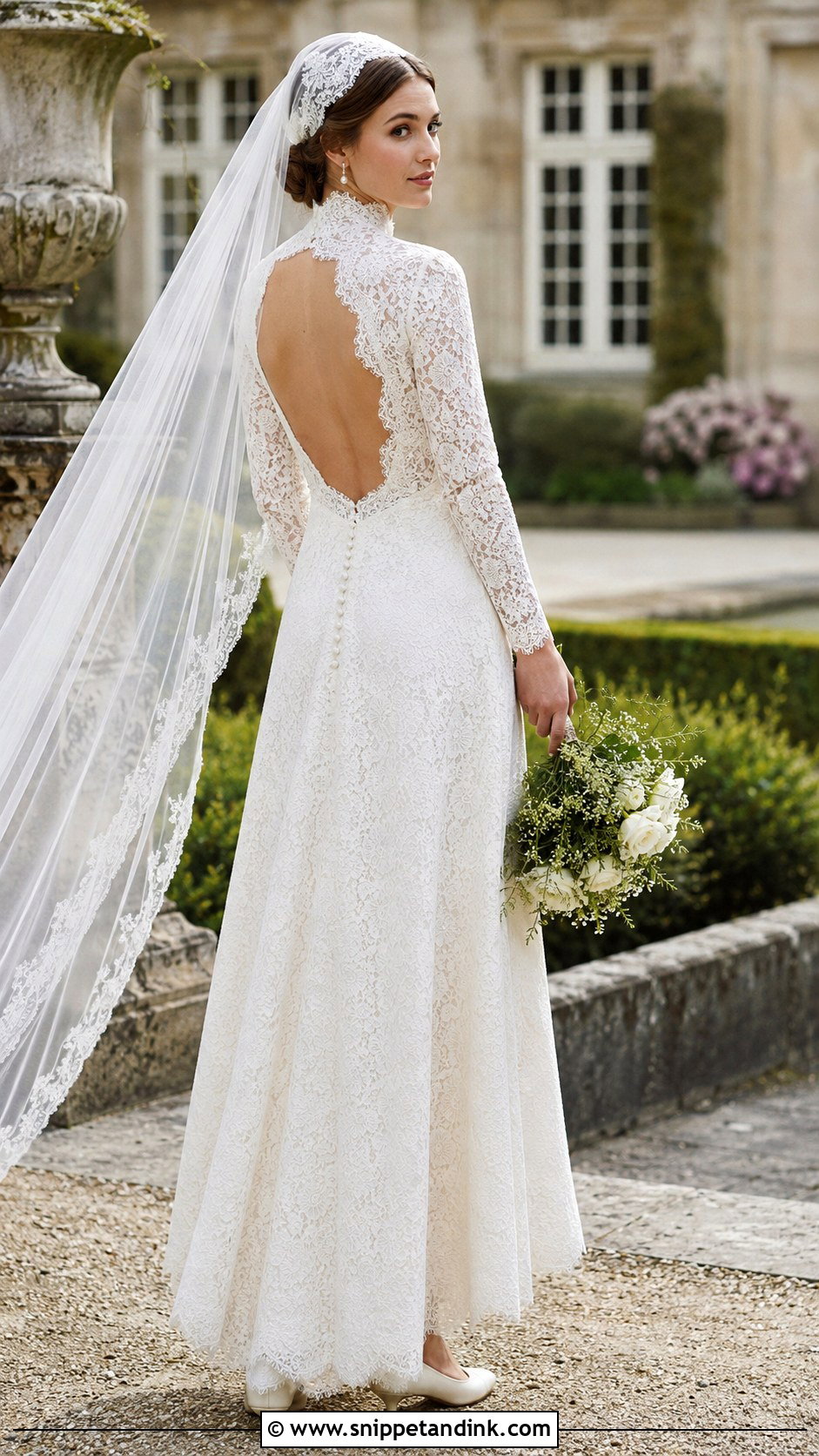
Vintage styling works with a low back when the rest of the gown stays clean. A high neckline, fitted lace sleeves and a low oval back edged in small scallops say vintage without looking like a period costume. A fluid A-line or a narrow bias-cut skirt keeps it lighter than a heavily layered historical design. A pearl comb, small drops and ivory low heels suit it. A Juliet cap veil leans fully into the era, while a simple fingertip veil keeps it modern. Carry a loose bouquet of white roses and fine foliage. Fine-patterned lace looks quieter than big motifs, and it also behaves better at a curved back edge, where large motifs have to be cut awkwardly to follow the scallop.
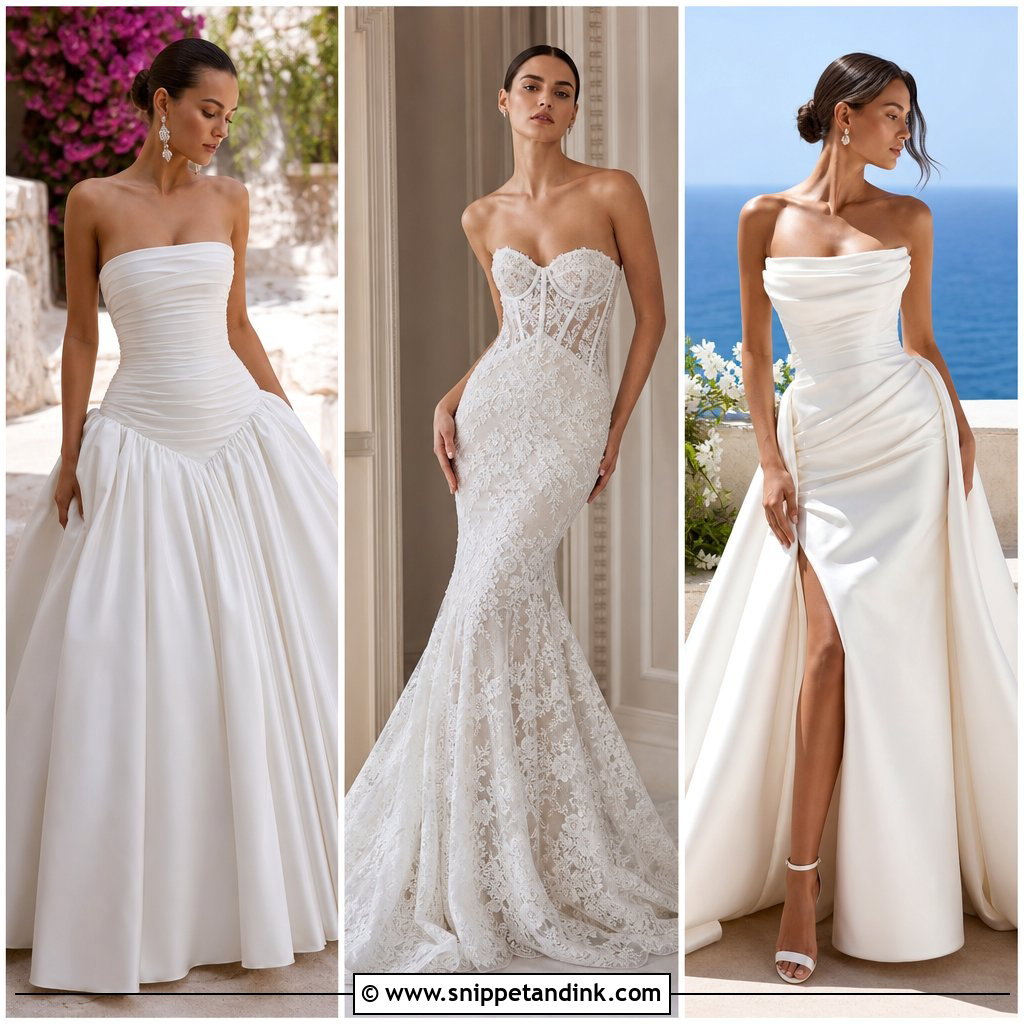
15. Boho Long Sleeve Low Back Wedding Dress
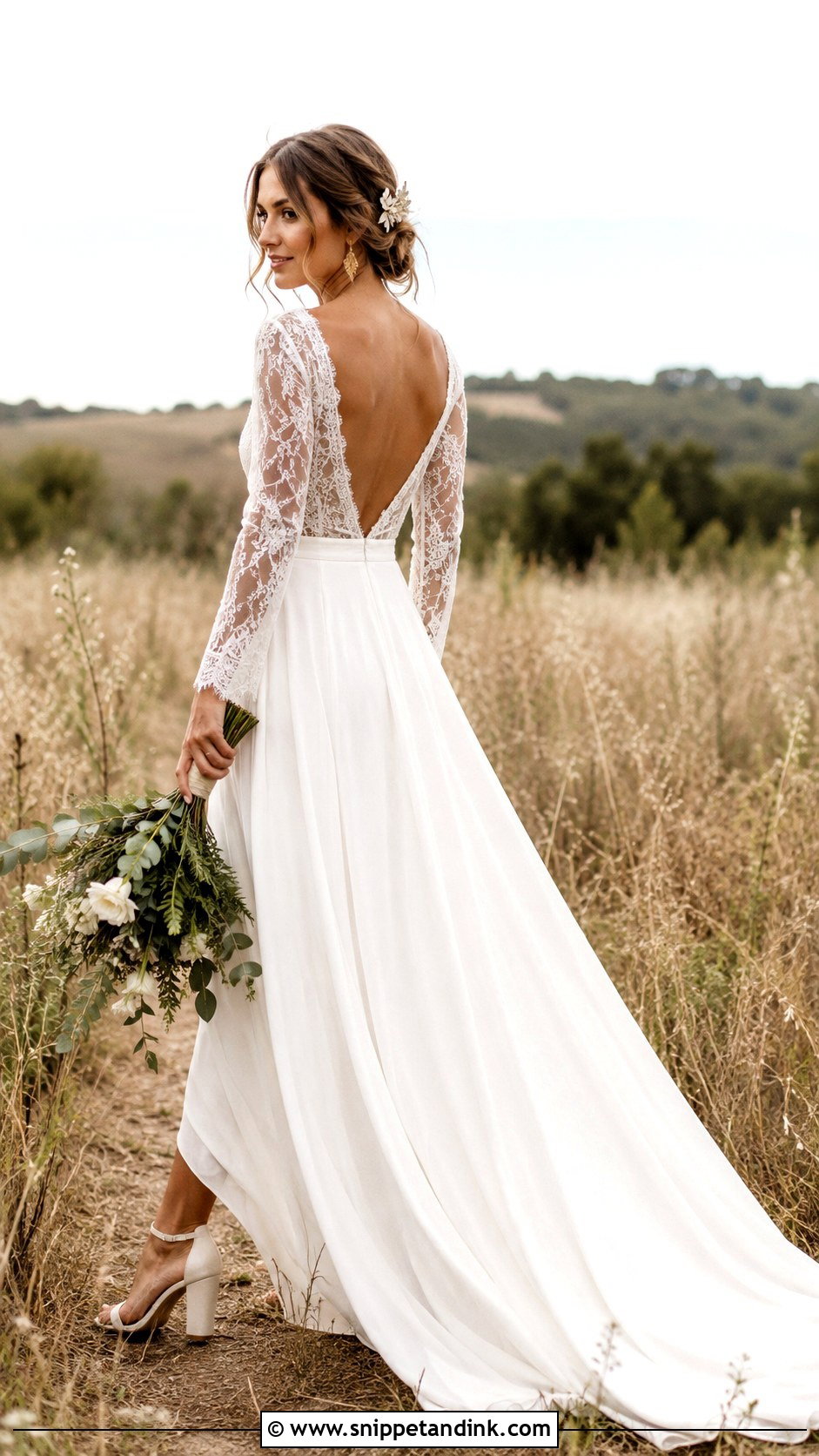
A boho low-back gown needs to move in wind and on grass, so the lightweight fabrics matter more than the details. A fitted lace bodice with a low V or rounded back over a chiffon skirt gives the right flow. Slightly flared sleeves look romantic; streamlined ones are easier to live in. Ivory block-heel sandals, loose waves or a textured low bun and fine gold earrings suit it, with a floral comb instead of a veil or a light chapel veil just for the ceremony. A natural bouquet of white flowers and green foliage fits. If you plan to wear your hair down, check that the waves don’t cover the back completely. A half-up style is the usual compromise I suggest.
16. Minimalist Long Sleeve Low Back Wedding Dress
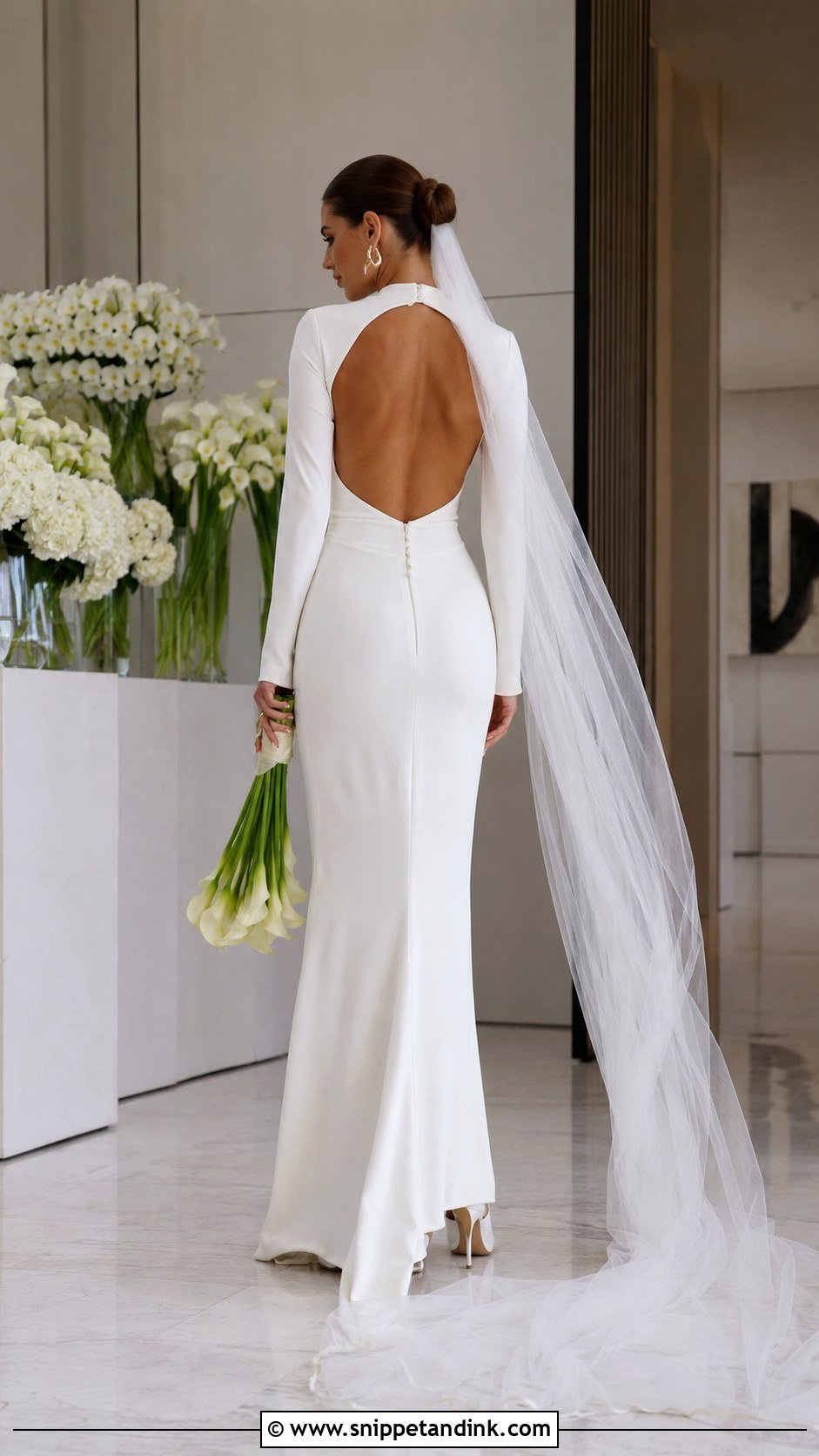
With nothing else competing, a minimalist gown makes the low back the entire design. A matte crepe sheath with fitted sleeves, a high front and a precisely cut opening is all it takes. A short row of covered buttons or a small bow at the waist can be the single extra detail. Sculptural earrings, a smooth bun, pointed ivory pumps and a single-layer cathedral veil suit it, with callas or long-stemmed white roses. Plain crepe reveals every seam, puckered zip and uneven hem, so construction quality matters more here than on any lace dress. The skirt should skim rather than cling. If you can see the outline of your underwear in the fitting-room mirror, so will the camera.
17. Basque Waist Long Sleeve Low Back Wedding Dress
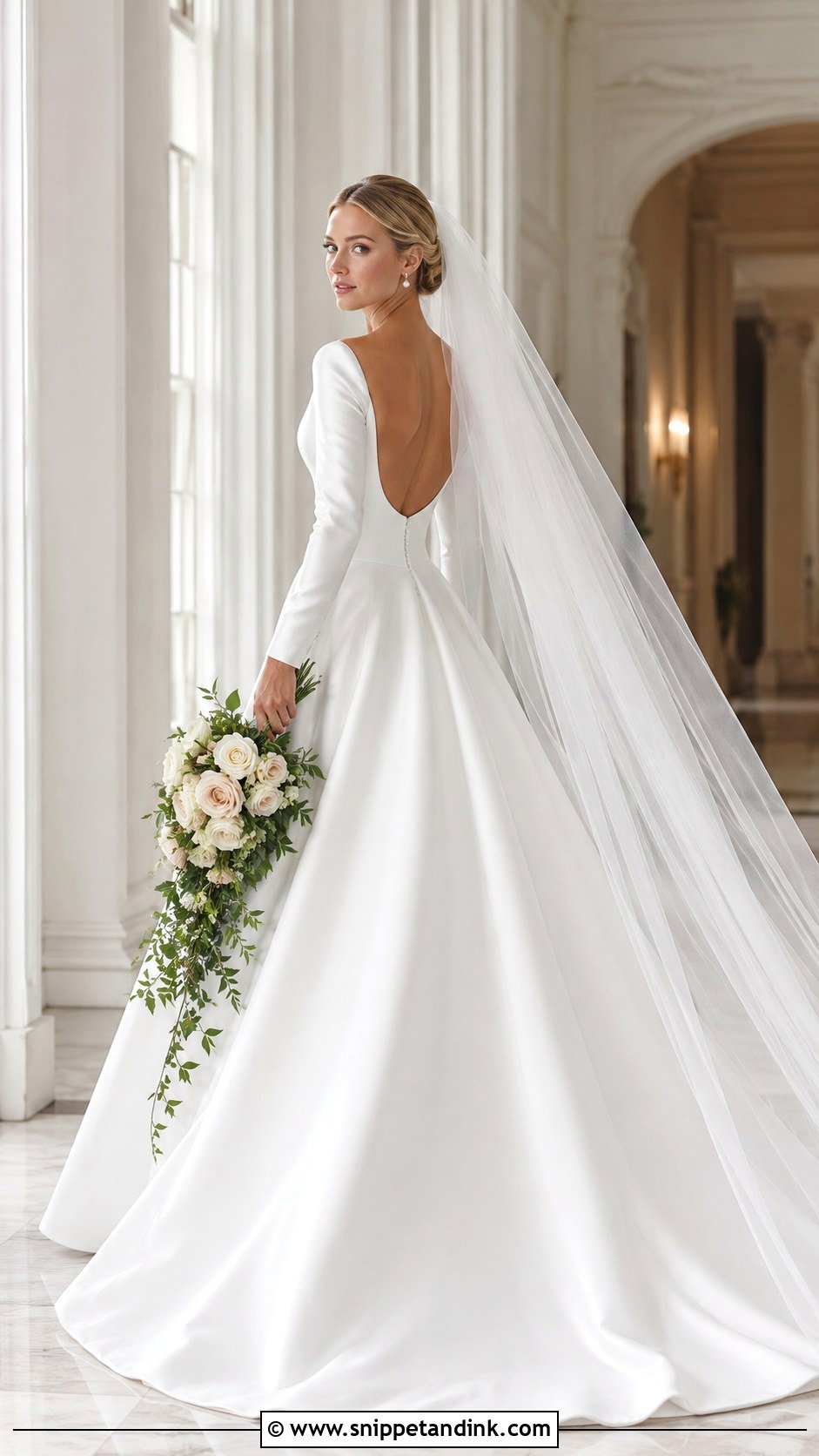
A basque waist dips into a point below your natural waist, which lengthens the torso and gives the bodice a sculpted shape. Pair it with long fitted sleeves, a low curved back and a full satin or tulle skirt. Pearl drops, satin pumps, a cathedral veil under a polished updo and a bouquet of white garden roses with trailing greenery suit it. Skip belts entirely; they flatten the point. The point should sit dead center when you sit, and it often twists slightly on a dress that’s a little loose at the waist. Have your seamstress check it with you seated, not only standing.
18. Detachable Train Long Sleeve Low Back Wedding Dress
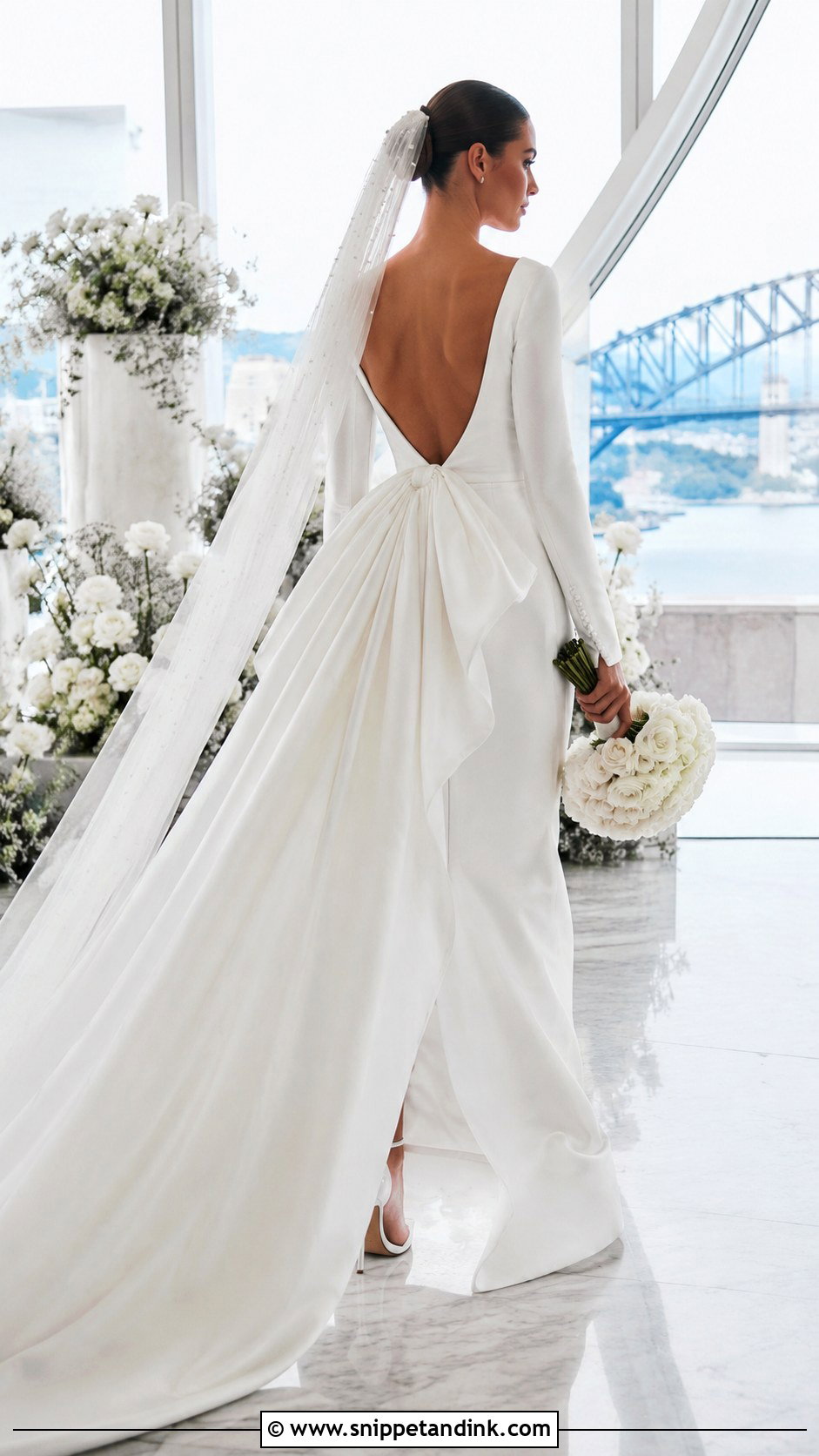
A detachable train solves the biggest complaint I hear about long trains: you love them for the aisle and resent them by the first dance. Start with a fitted long sleeve crepe gown, a low V-back and a clean column skirt, then add a satin, organza or tulle train at the waist. Hide the attachment under a narrow waistband or covered buttons. Crystal studs, ivory pointed heels, a sleek bun, a simple chapel veil and a structured bouquet of white roses suit it. Train weight hanging from the waist pulls the back of the bodice downward, which on a low-back dress can drag the edges. Practice attaching and removing it several times and check the back opening each time.
19. Plus Size A-Line Long Sleeve Low Back Wedding Dress
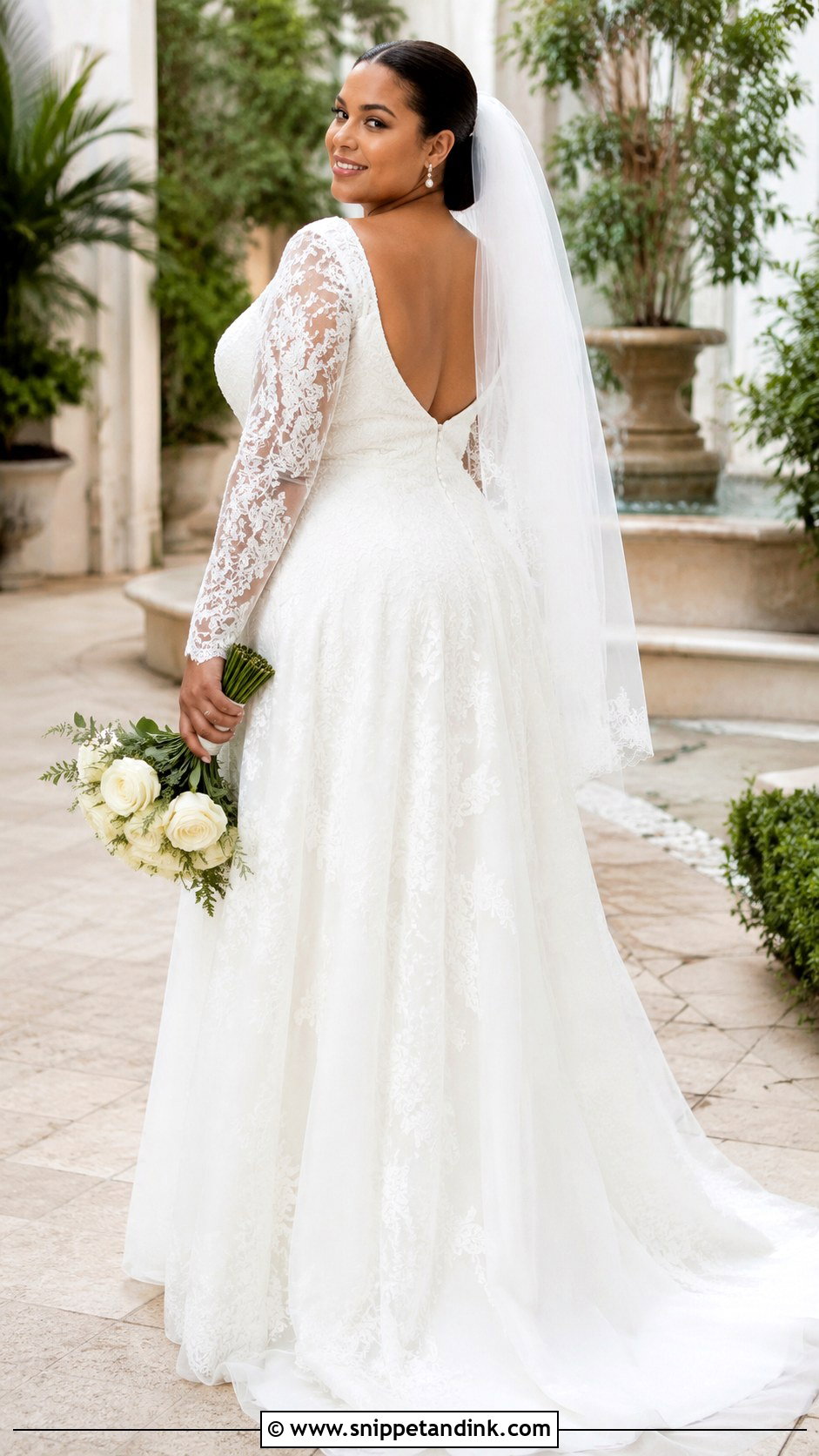
A well-built A-line gives support and movement across a wide size range. For a low back on a fuller bust, I look for a structured bodice with built-in cups and side boning, because the cups need to be supported from the sides when there’s nothing behind them. A defined waist, a low scoop back and sleeves in stretch lace or soft illusion tulle keep it comfortable. The skirt should fall smoothly from the waist without extra bulk. Supportive block heels, pearl drops, a low updo and a fingertip veil that frames the back suit it, with a medium bouquet of white roses and seasonal greenery. Shop by fit, not label size, and ask what can be customized: sleeve width, neckline and how deep the back goes.
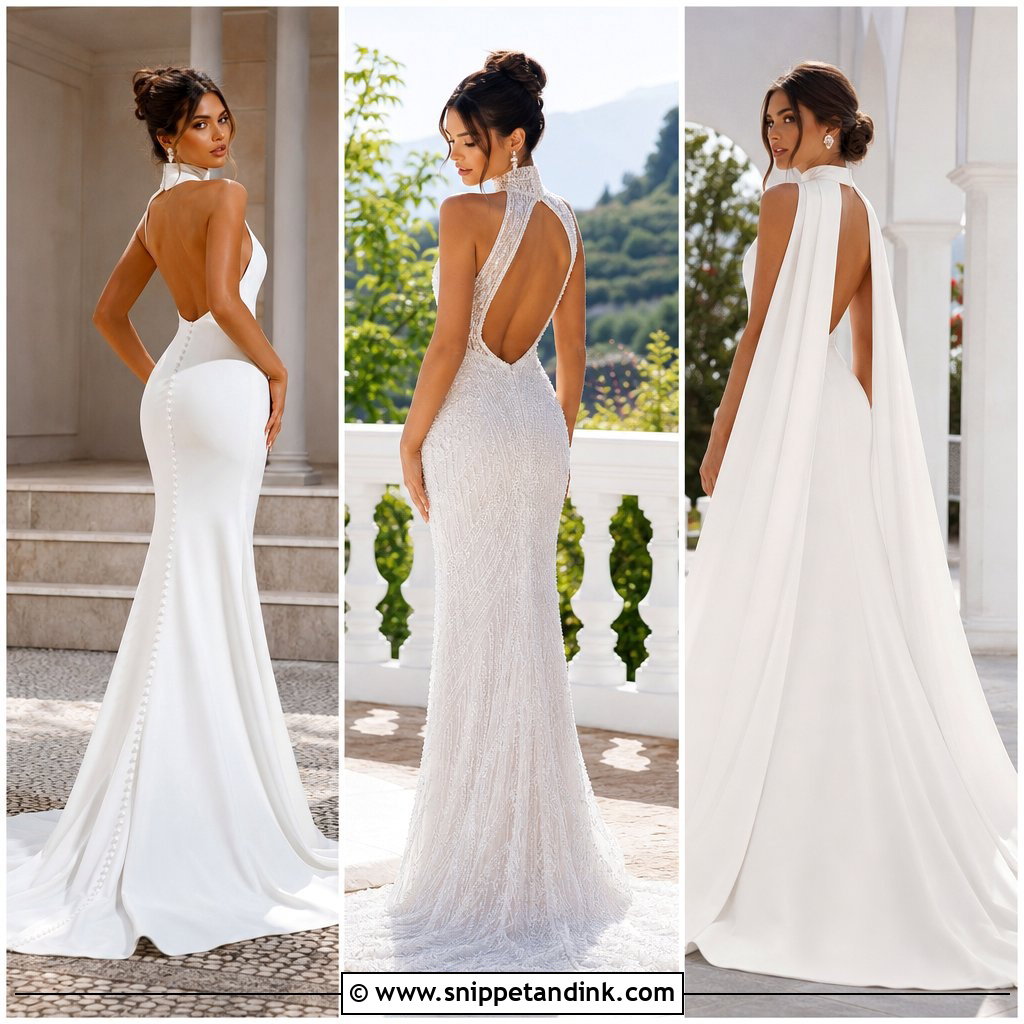
20. Petite Column Long Sleeve Low Back Wedding Dress
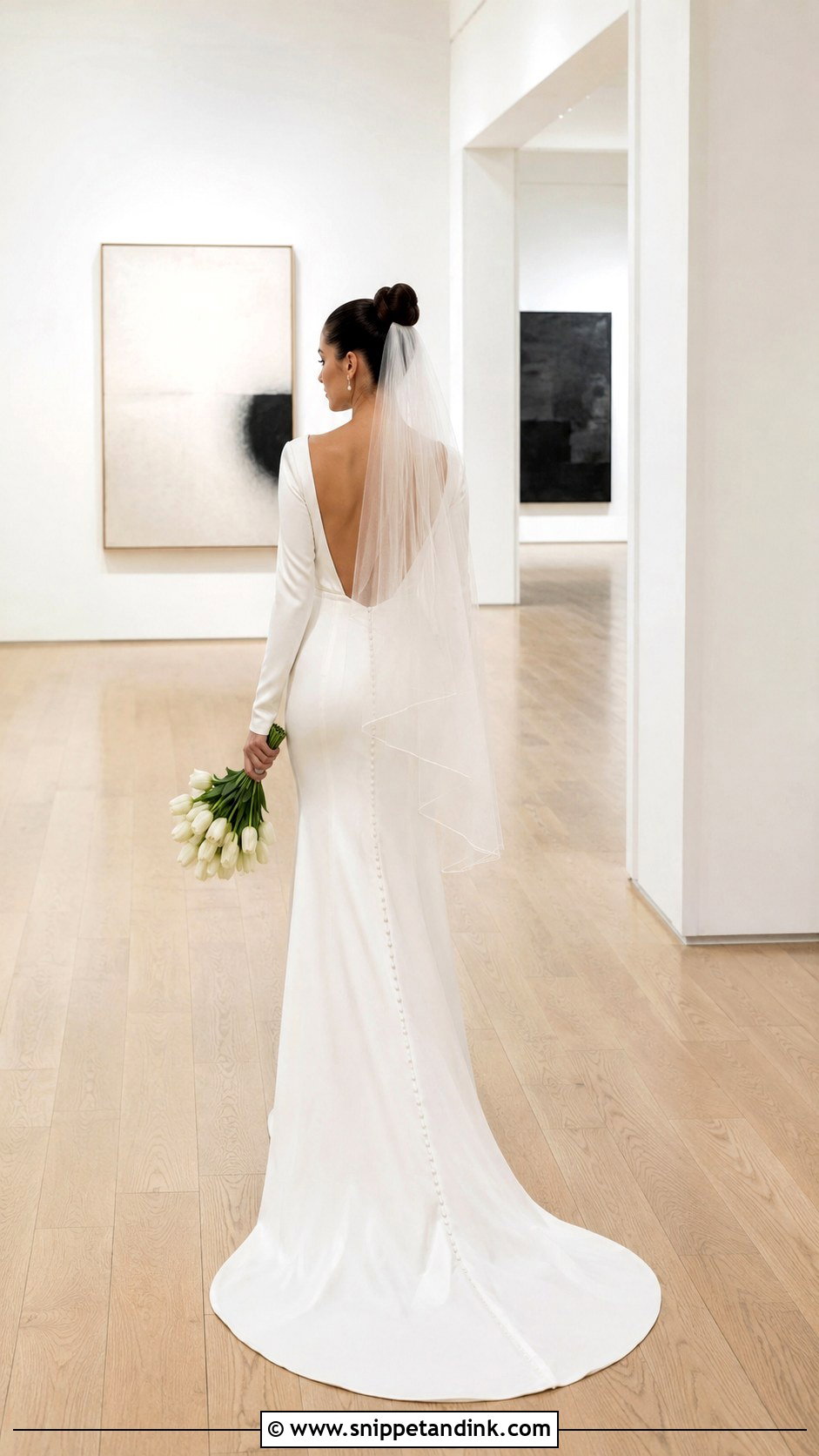
Height changes everything about a column gown. On a petite frame one smooth vertical line, crepe or silk, fitted sleeves, a low V-back and very little at the waist, adds length rather than swallowing you. A short sweep or a chapel train gives drama without overwhelming the silhouette. Pointed heels in ivory or soft metallic continue the line. Small drops, a neat high bun and a narrow single-layer veil suit it, with a compact bouquet of tulips or callas. Skip wide lace borders and heavy skirt layers. On a petite bride the back opening often lands too low, because the sample was cut for a longer torso. Have it measured from your shoulder, not just hemmed.
Your Back Is the View Guests Get All Ceremony
For the length of the vows, nearly everyone is looking at your back. That’s the point of the dress, so it’s worth giving the skin the same attention as your face.
Skin, tan lines and body makeup
Strap marks from a summer of sundresses are the classic surprise. If you tan, plan around the neckline you’ll wear, or avoid sun on your back for the last couple of months. Body makeup can even out tone, but it transfers onto ivory lining and onto a partner’s dark jacket, so let it set fully and blot before you dress. Gentle exfoliation in the weeks before helps with rough patches; leave strong peels well clear of the date.
Hair and veil around the opening
Hair worn down hides most of a low back, so an updo, a low bun or a half-up style keeps it visible. Set your comb or veil beneath the hairstyle so the tulle falls clear of the opening. A sheer, unedged veil lets the back show through for the photos taken from behind at the altar; a heavily trimmed one turns into a curtain.
Finally, think about temperature. An open back with full sleeves feels warm on the arms and cool behind. In a drafty church or an autumn evening outdoors, a light wrap for the drinks hour saves you from goosebumps in every reception photo.
How Low Is Too Low? Settle It at Your Second Fitting
A low back with long sleeves works when it’s secure enough that you forget about it. Start with the silhouette you feel most like yourself in, A-line, mermaid, sheath or ball gown, then compare lace, satin, crepe, chiffon and beaded tulle under light close to your venue’s. Pick accessories that frame the back rather than cover it. Above all, book alterations with time to spare, and test walking, sitting, hugging and dancing in the finished gown. When the back stays put from every angle, the veil, shoes, jewelry, hair and bouquet fall into place around it.
You'll Like These Ideas:



Leave a Reply