
Guests at an Indian wedding have a harder brief than people think. You’ll sit through a long ceremony, dance at the baraat or sangeet, eat, hug relatives and stay up late, and your hair has to survive all of it without competing with the bride. Most of the guests I style want two things: something that suits their outfit, and something that still looks intact at midnight. These 20 Indian wedding guest hairstyles cover braids, buns and open looks, with my notes on what each one asks of your hair.
Styles a Guest Can Do Alone and Ones Worth Booking
On a wedding morning, the bride’s family often has the hairstylist booked solid, and guests end up either squeezed into a slot at dawn or doing their own hair. Some of these styles are honestly doable yourself; others need a second pair of hands.
Realistic at home
Low and messy buns, the high ponytail, sleek straight hair and the curly half-up are all manageable alone with practice. Do a full run-through a week before, in the outfit or at least the blouse, so you know where your pins and accessories sit.
Better left to a stylist
The Dutch braid crown, rose bun, twisted updo and a long-lasting blowout all depend on working at the back of your own head, which is the hard part. If you do book, ask for a slot that finishes about an hour before you leave, not three hours. Hair styled too early starts to relax before the ceremony even begins.
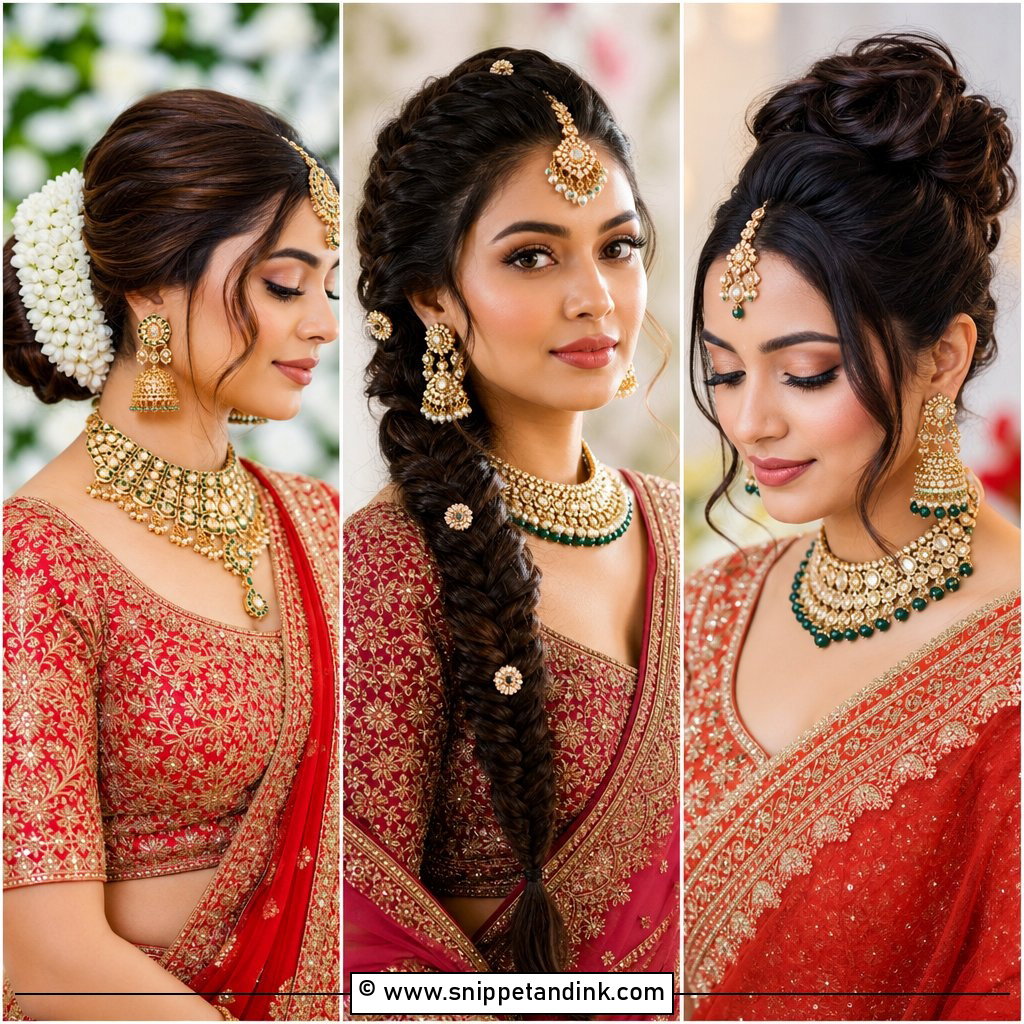
1. Floral Low Bun for Saree
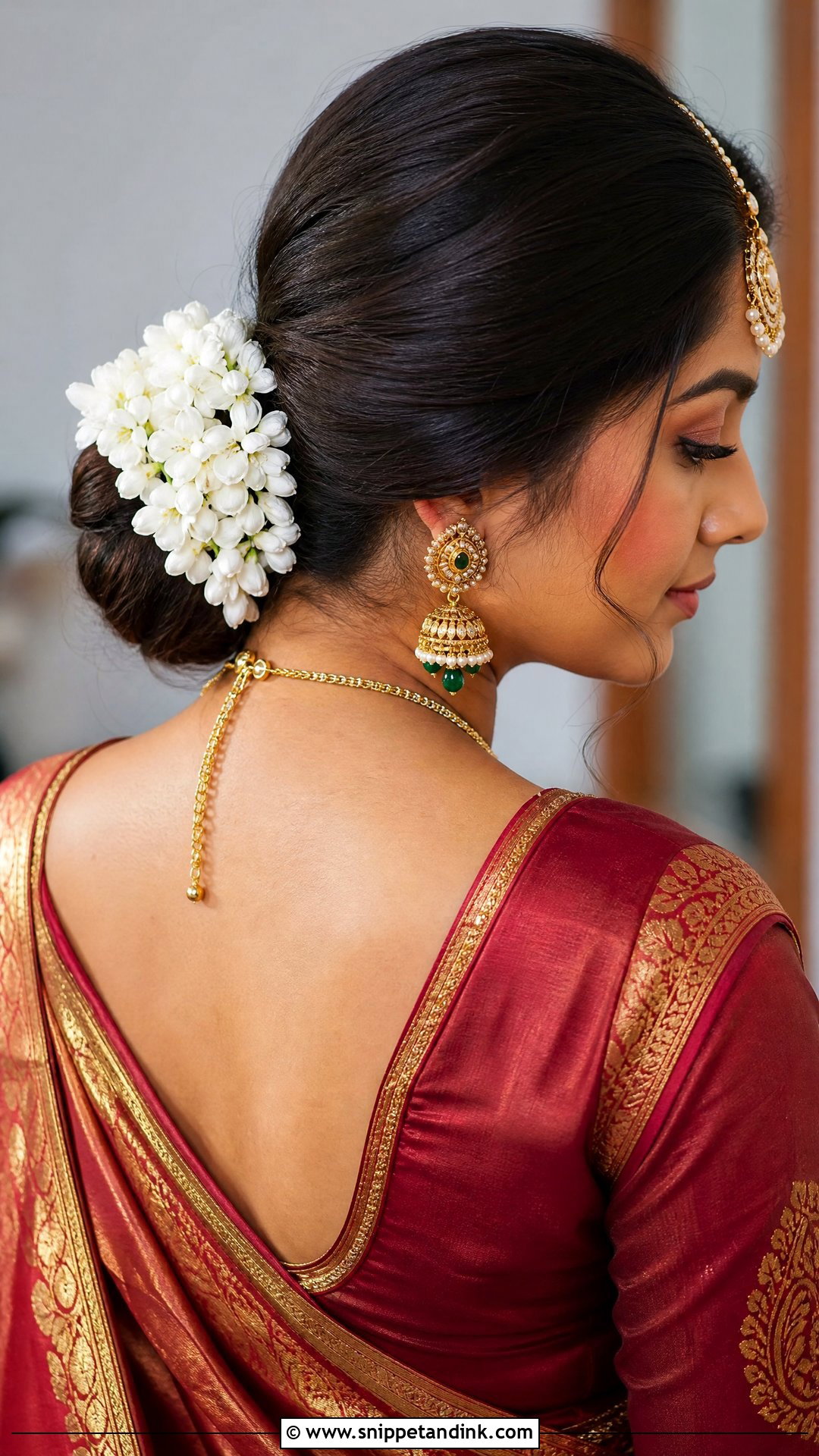
A low bun with fresh flowers is the guest style I’d recommend most with a silk saree. Twisted at the nape and wrapped with jasmine or a gajra, it sits under the pallu without catching. It’s comfortable for medium to long hair through a daytime ceremony and plenty of dancing. I keep guest buns slightly softer than a bride’s, a few loose wisps rather than a glassy finish, and a small maang tikka is fine if the bride isn’t wearing a matching one in the same colour.
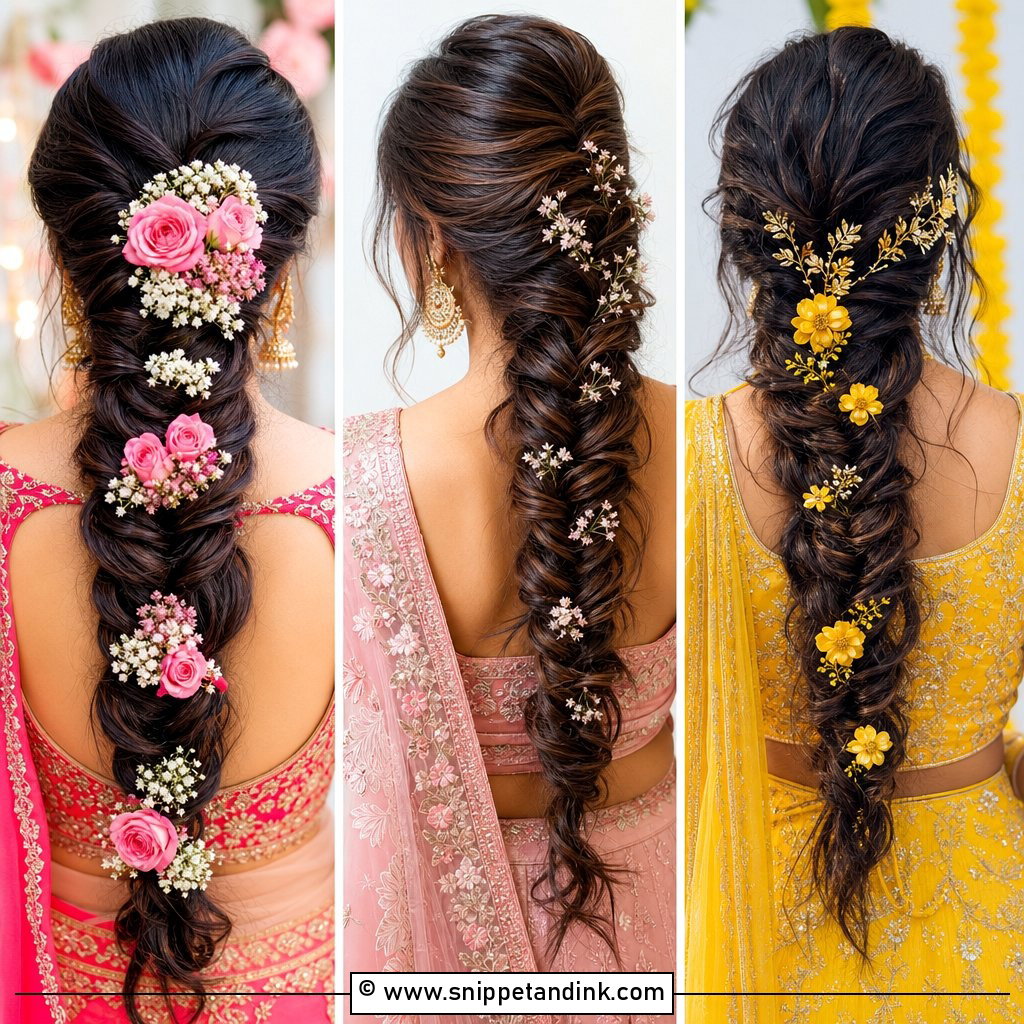
2. Fishtail Braid With Pearl Accents
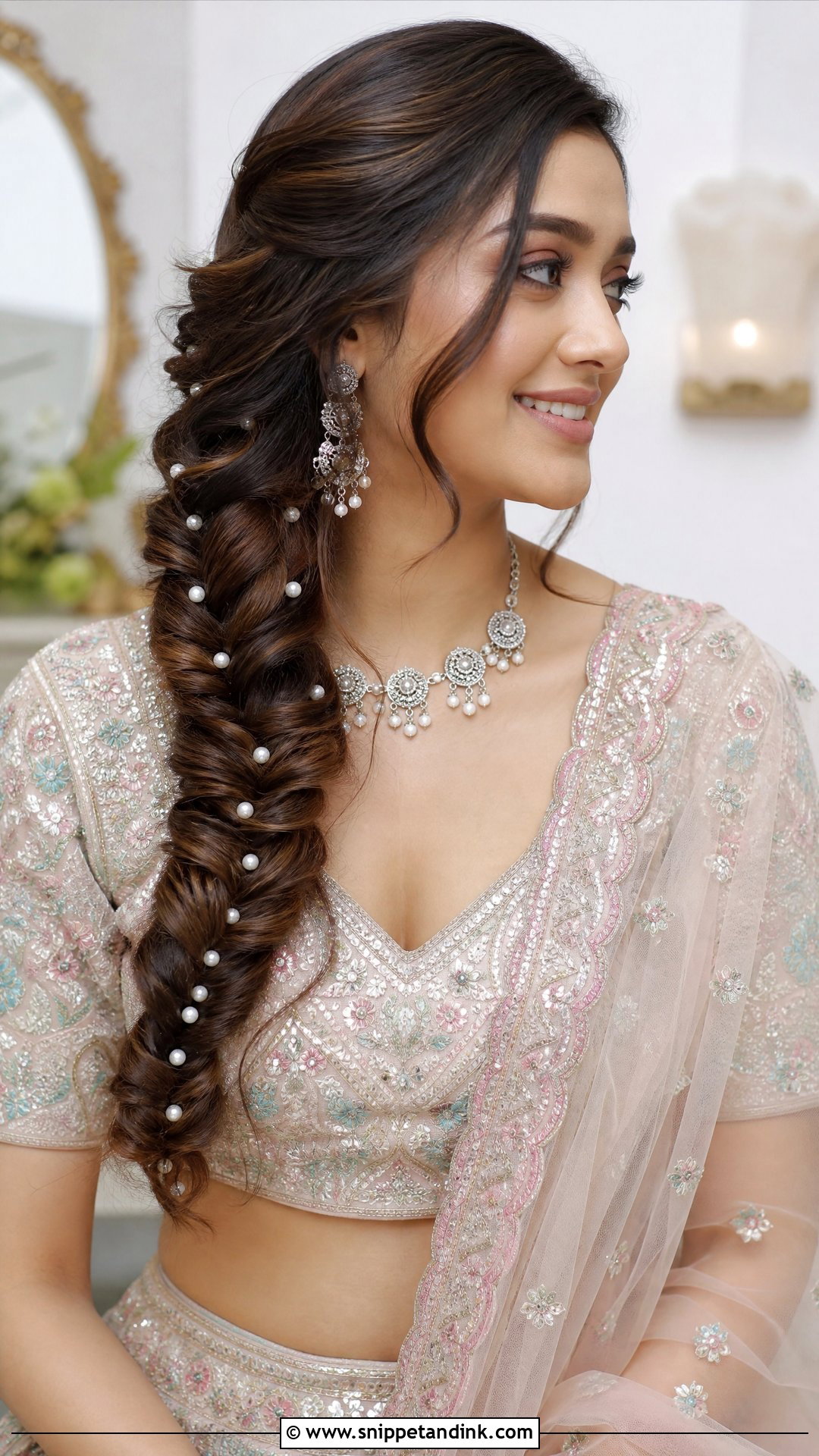
Tiny pearls threaded into a fishtail braid give a plait real polish. The weave is tight, which is why it stays put all evening, and the pearls should go in as you braid so they lock between sections. I start it off to one side and drape it over the shoulder; it looks good with lehengas and shararas in pastel shades. Fishtails need length and density to show their pattern, so on shoulder-length or fine hair I’d choose a regular three-strand braid instead.
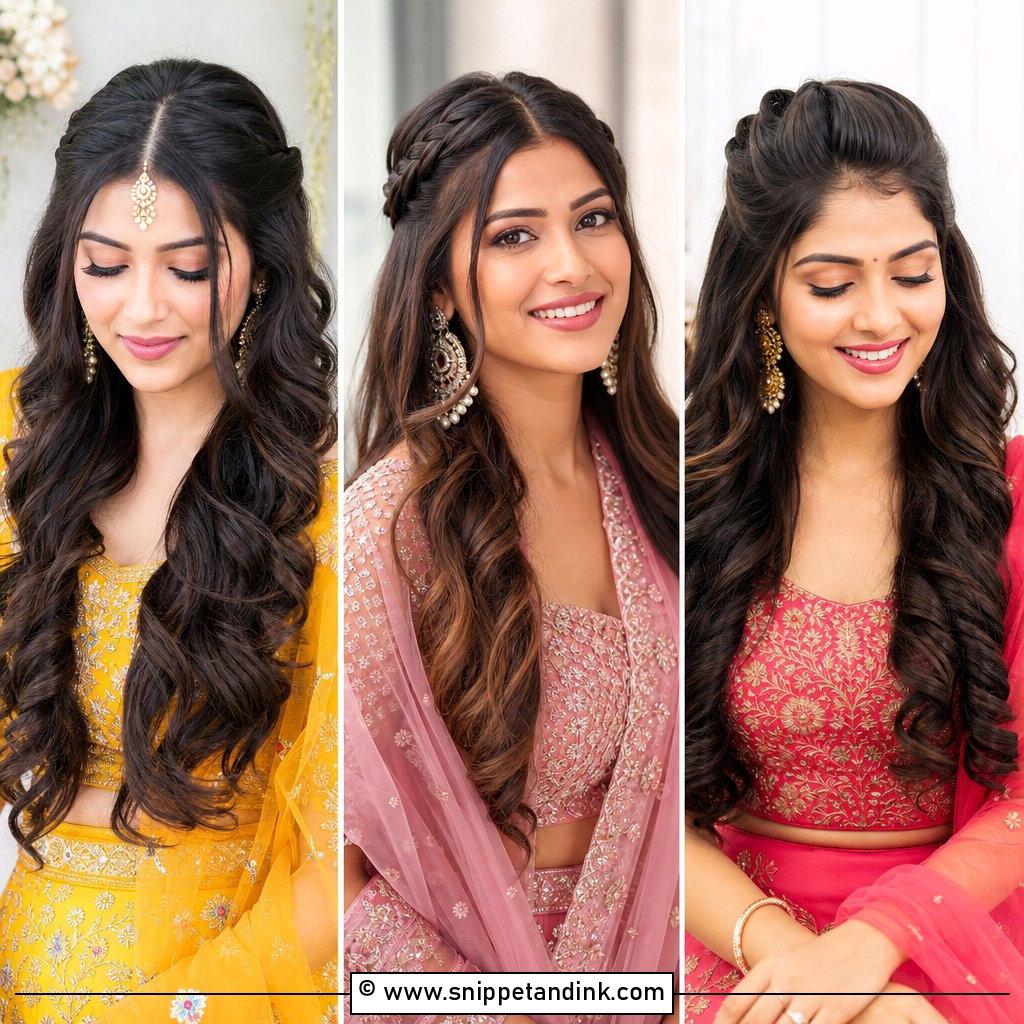
3. Half-Updo With Loose Curls
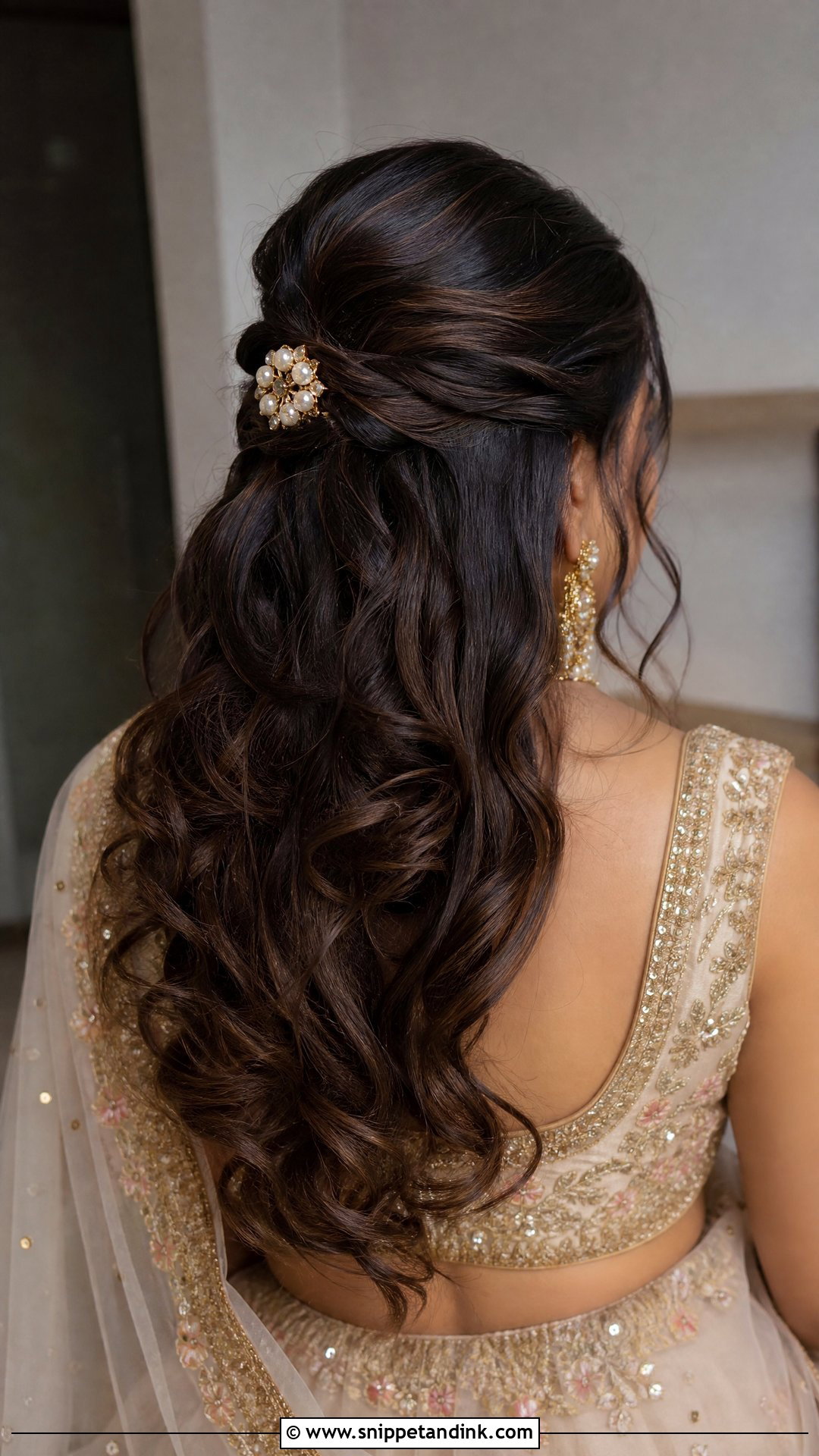
The half-updo is the style guests ask me for most often, and it earns that. The front sections are pulled back with a decorative clip and the rest falls in soft curls, so your face and earrings stay visible. The clip is the weak point: a heavy one slides down fine hair within an hour. I make a small hidden ponytail first and fix the clip over it. It suits most outfits, face shapes and hair lengths, and it lasts into a late night.
4. Sleek High Ponytail
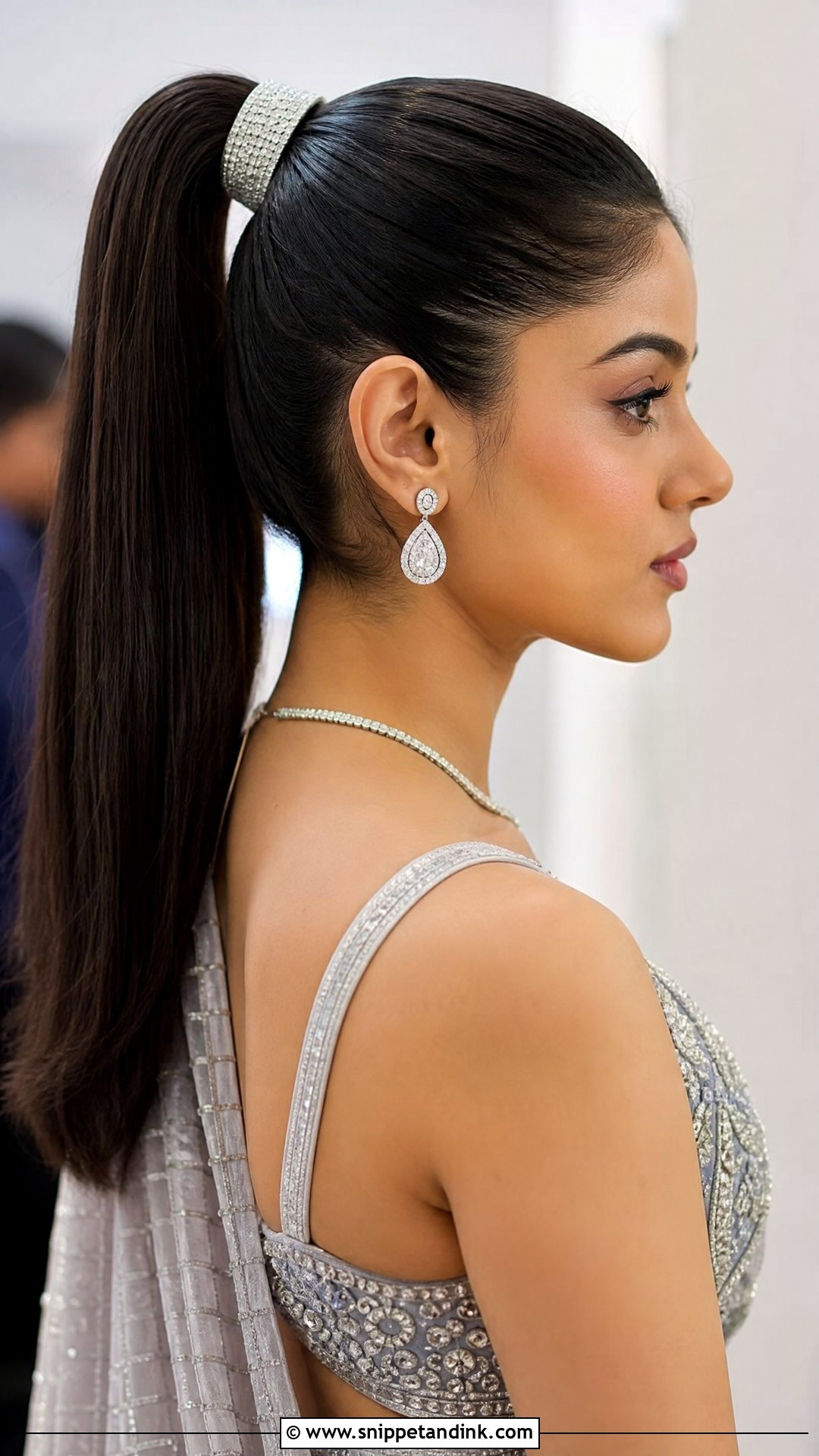
A sleek high ponytail is the modern option for contemporary lehengas and indo-western outfits. Hair is brushed back tight, flyaways smoothed, and a strand is wrapped around the base to hide the elastic. I add two bobby pins crossed under the base so the tail doesn’t drop by the end of the evening. It lifts the face and shows the jawline. It does pull on the scalp, so if you’re prone to tension headaches, set it a little lower.
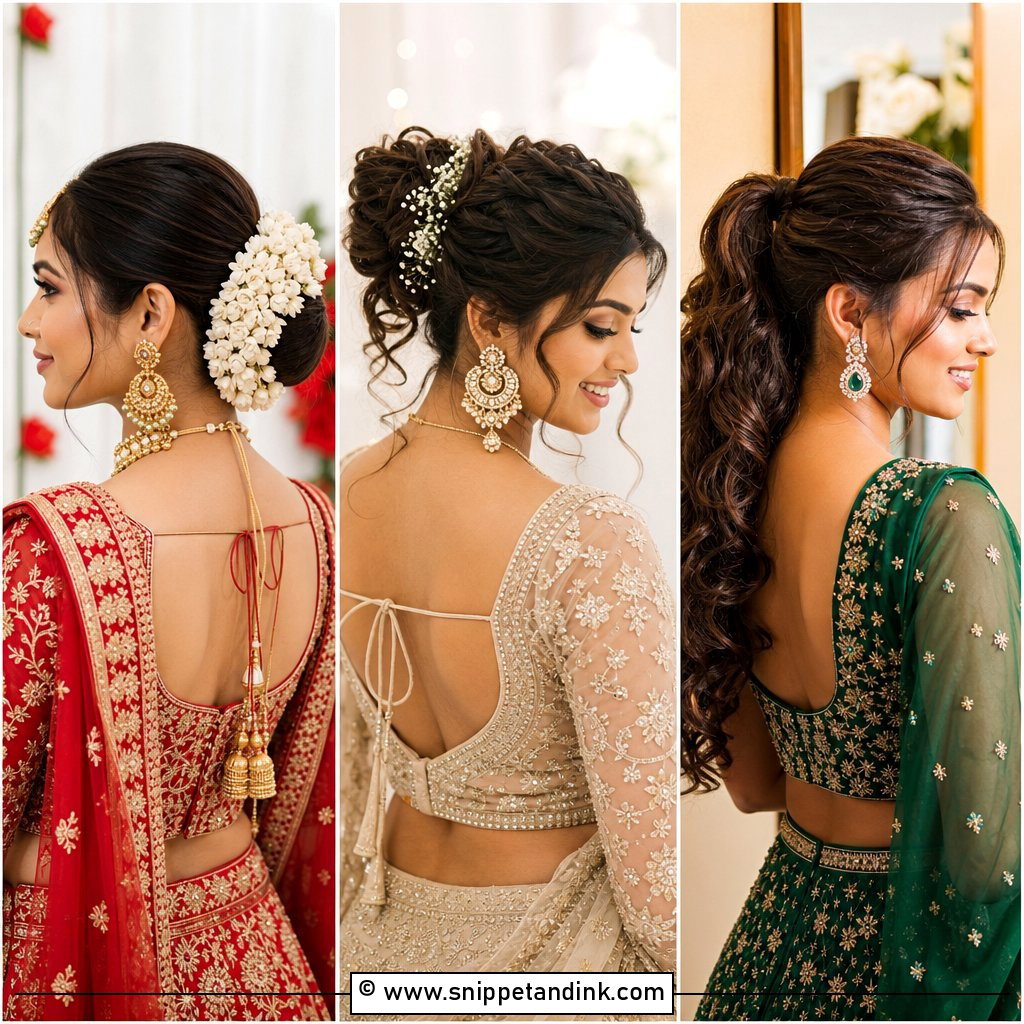
5. Messy Low Bun With Side Braid
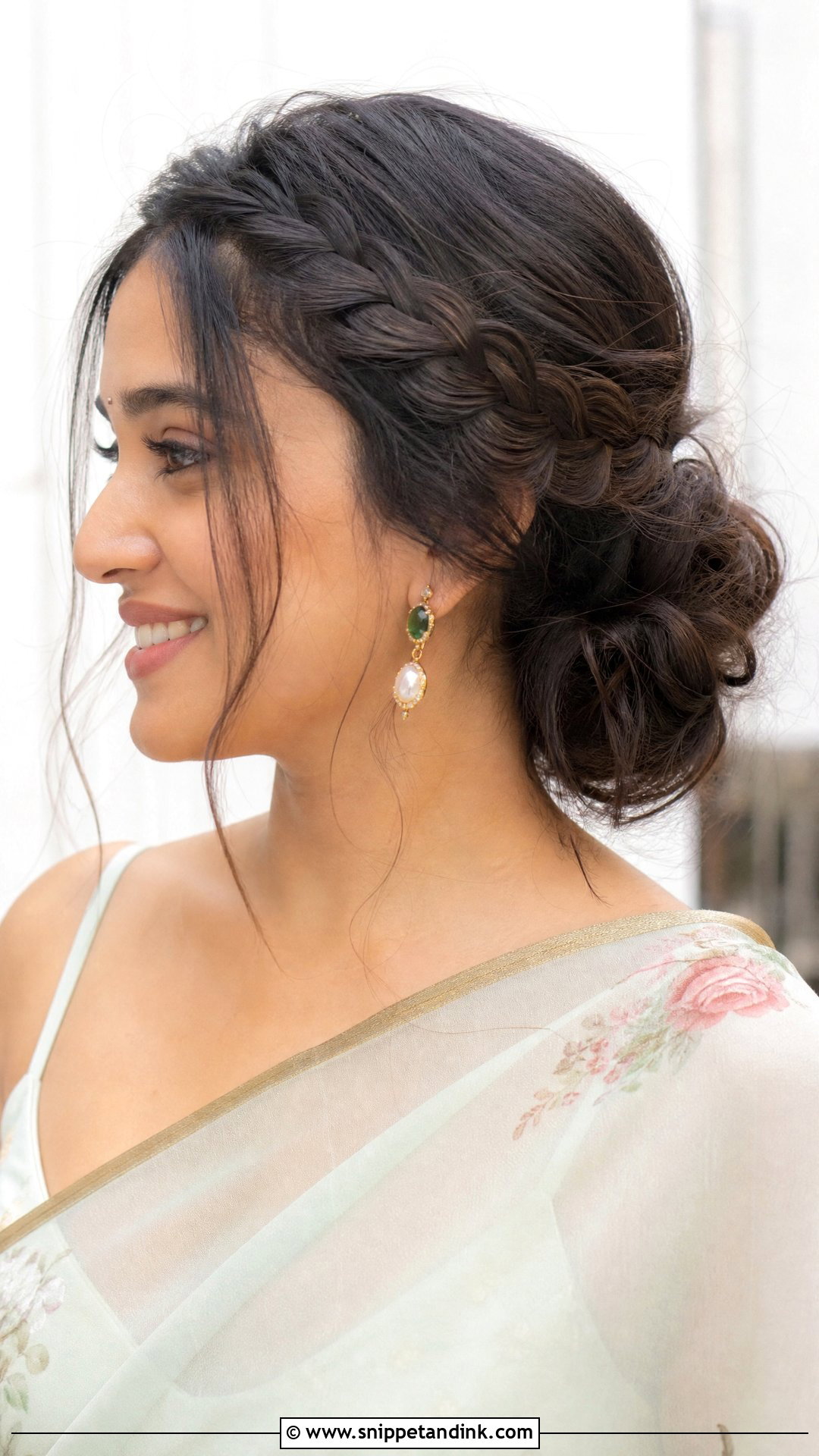
A messy low bun with a side braid looks relaxed but has more structure than it shows. I braid a small section near the parting first, gather everything loosely toward one side, then twist it into a soft bun at the nape and pull out a few strands. It’s quick, works on most hair types and is forgiving if your hair is a day or two past washing. It suits pastel lehengas and minimal sarees.
6. Side Swept Waves With Gajra
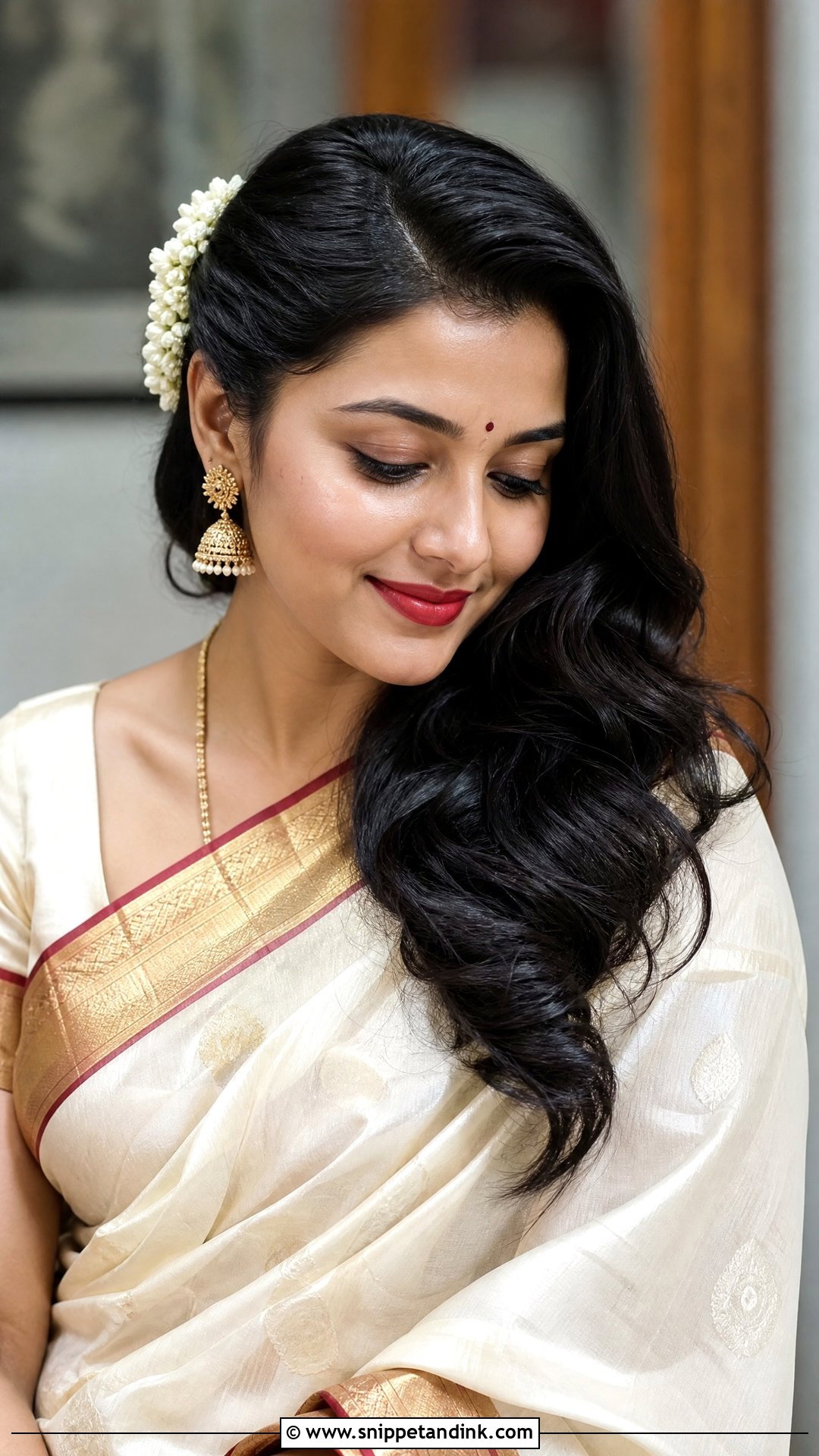
Deep side-parted waves with jasmine pinned along the part are an old-school saree look, especially with a red lip. Waves pressed with a medium curling iron fall over one shoulder while the other side tucks back, with a gajra or flowers along the parting for a South Indian feel. Long, thick hair holds these waves best. The tucked side needs three or four pins behind the ear or the whole thing slides back to centre after an hour.
7. Dutch Braid Crown
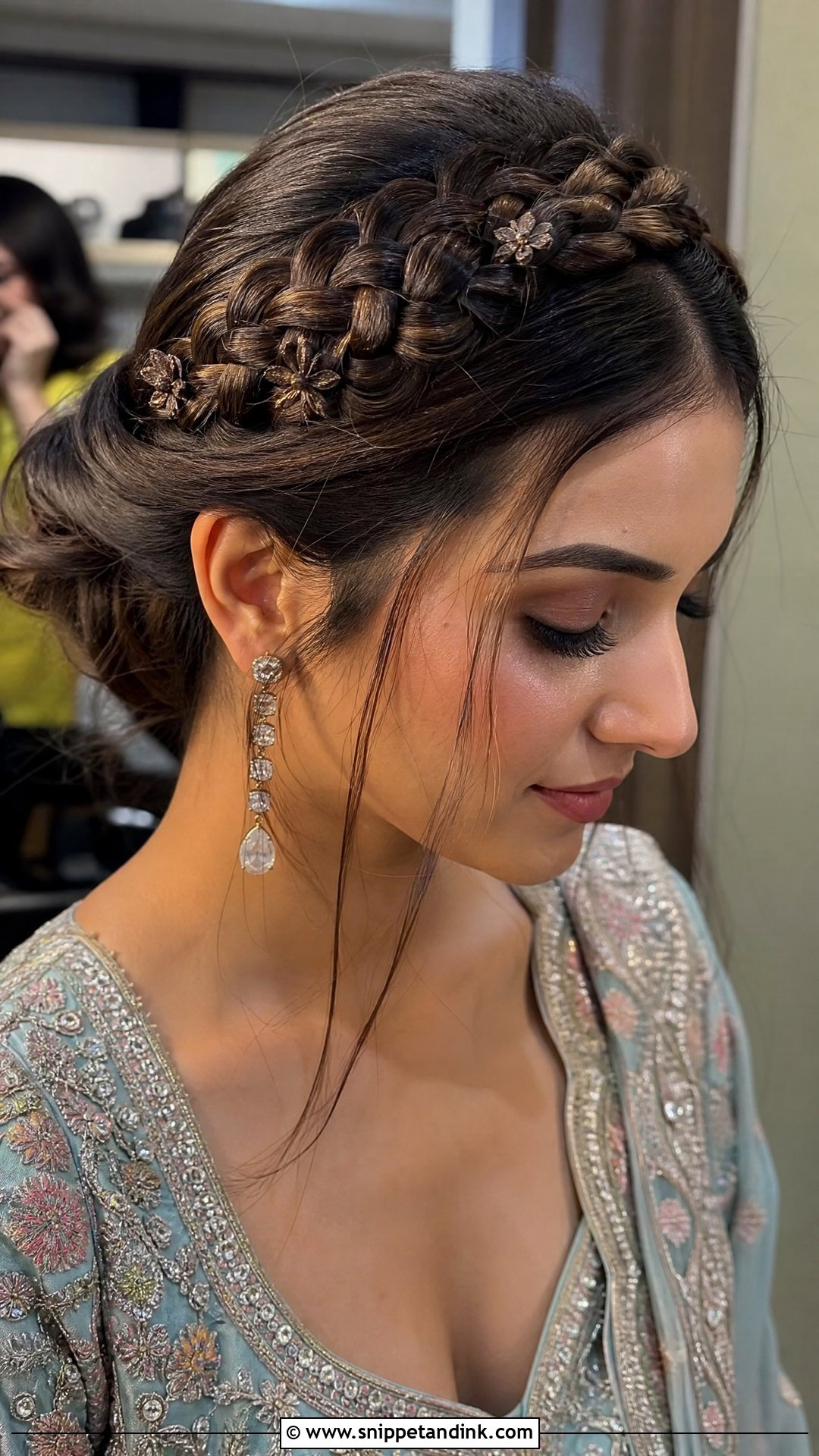
A Dutch braid crown sits raised on the head because the strands cross under rather than over. I braid it close to the scalp around the crown, meeting at the back, and weave gold thread or tiny flowers in as I go. It keeps hair off your face and neck for both daytime and evening functions and suits younger guests in lehengas. You need hair long enough to reach around the head; shorter hair can be done as two braids meeting at the back instead.
8. Braided Bun With Maang Tikka
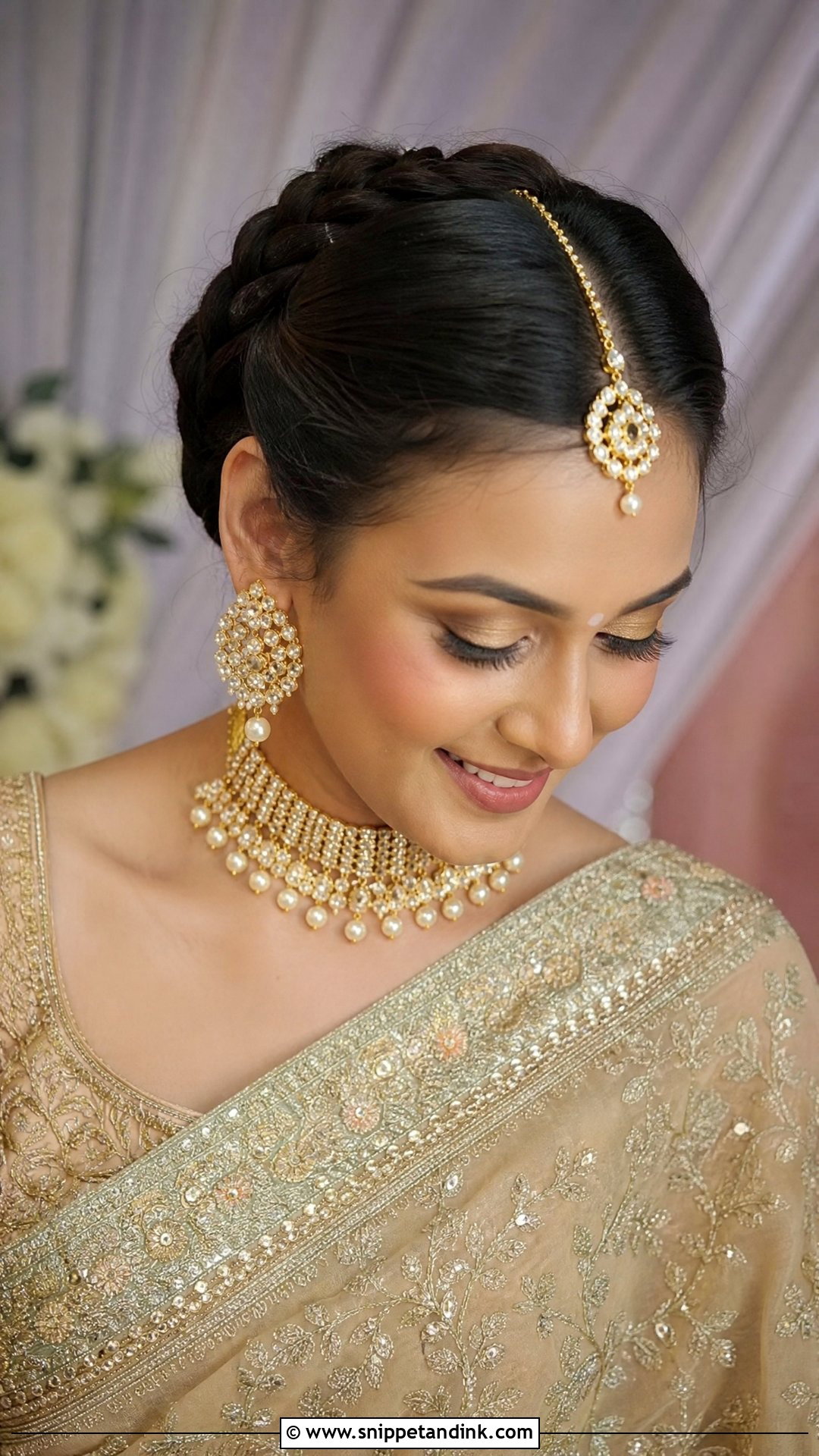
Braids coiled into a neat bun hold far better than a plain twist, so this is a sensible style for a long formal ceremony. A maang tikka along the centre parting adds the traditional touch. Medium to long hair works, and it carries heavy sarees and embellished lehengas comfortably. My one caution for guests: keep the tikka smaller than the bride’s, and avoid the full matha patti, which reads as bridal.
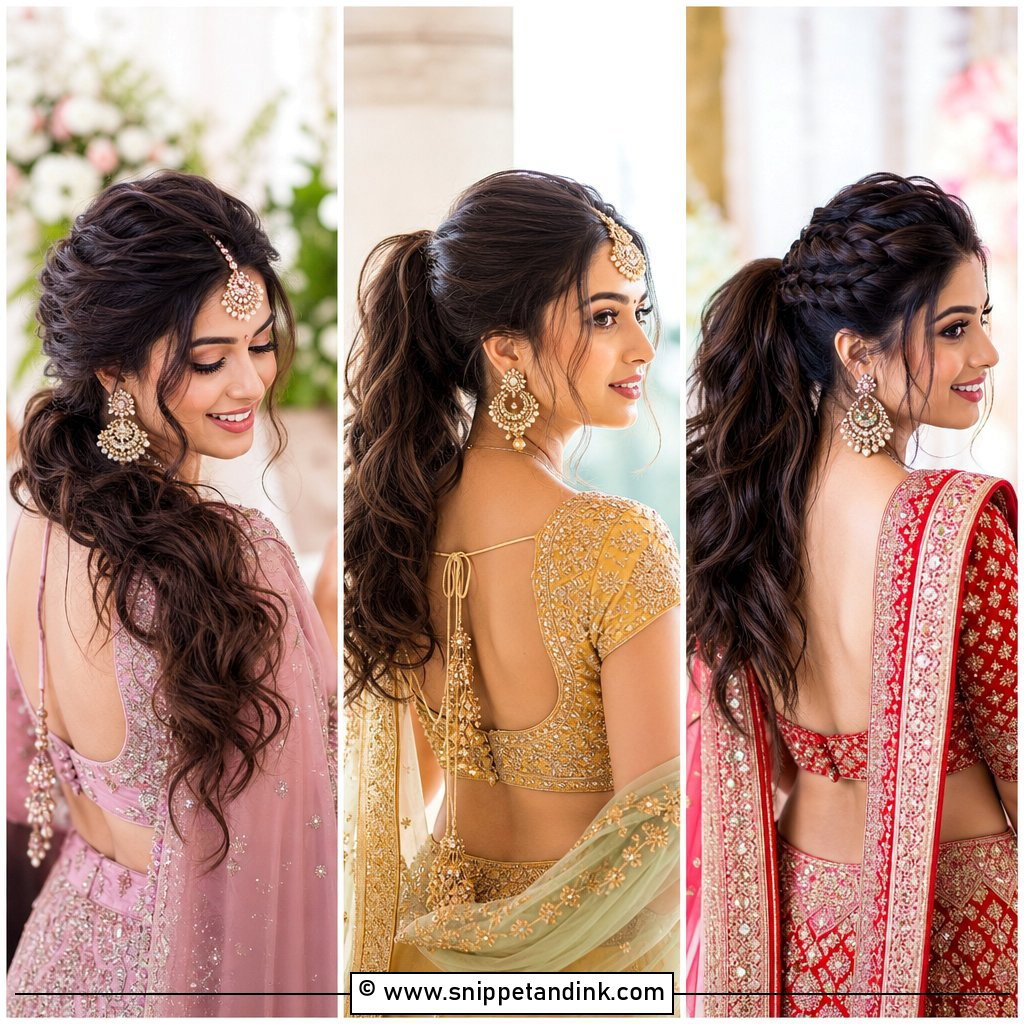
9. Open Hair With Soft Waves
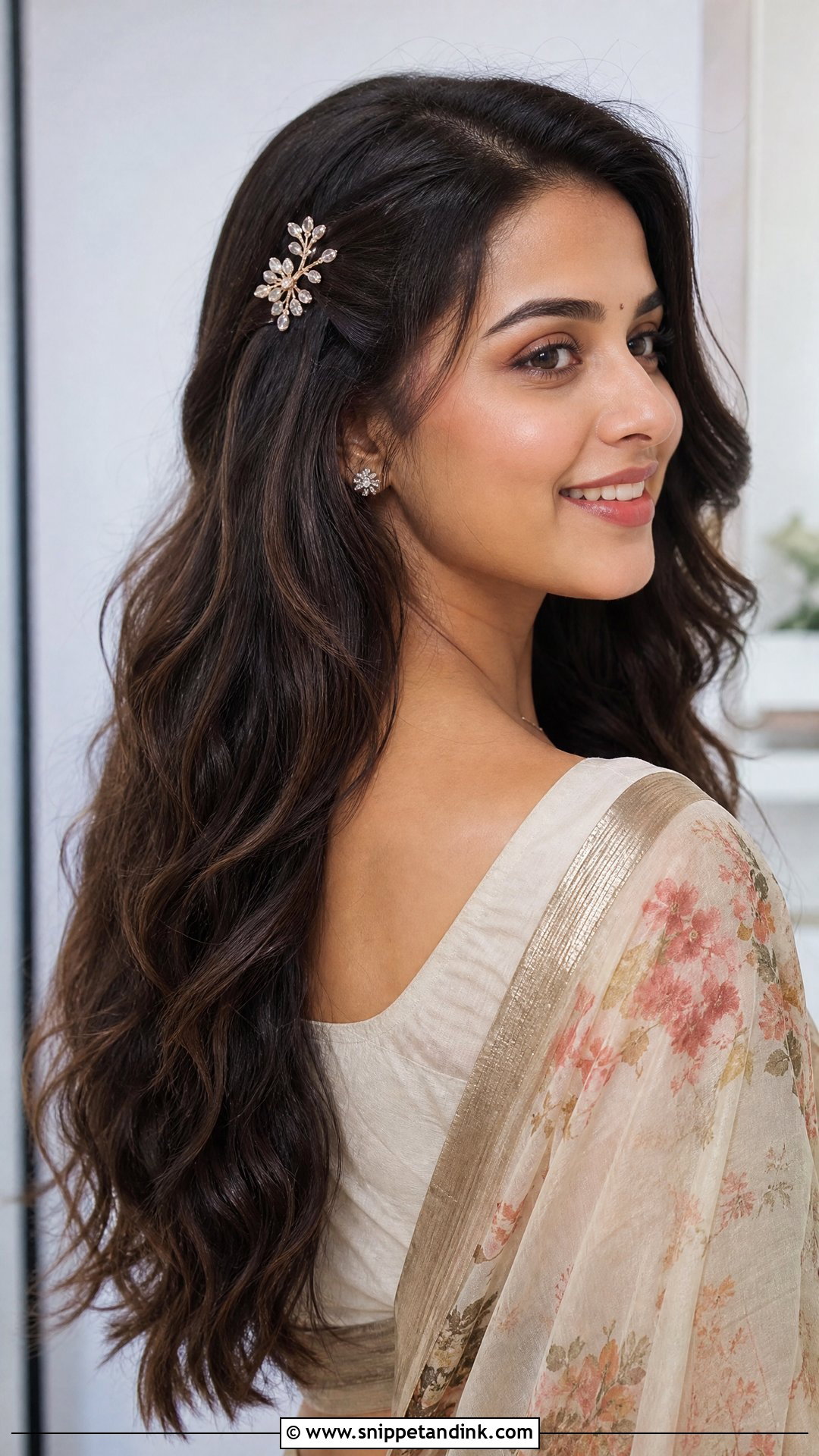
Open waves look easy, which is why people underestimate them. I curl with a large barrel, pin each section to cool, then rake through with fingers only. Without that cooling step, loose waves in a warm marquee drop to straight within the first hour. A diamond-accented pin or slim headband adds sparkle. It suits modern lehengas, indo-western outfits and lightweight sarees, and most face shapes.
10. Low Side Bun With Flowers
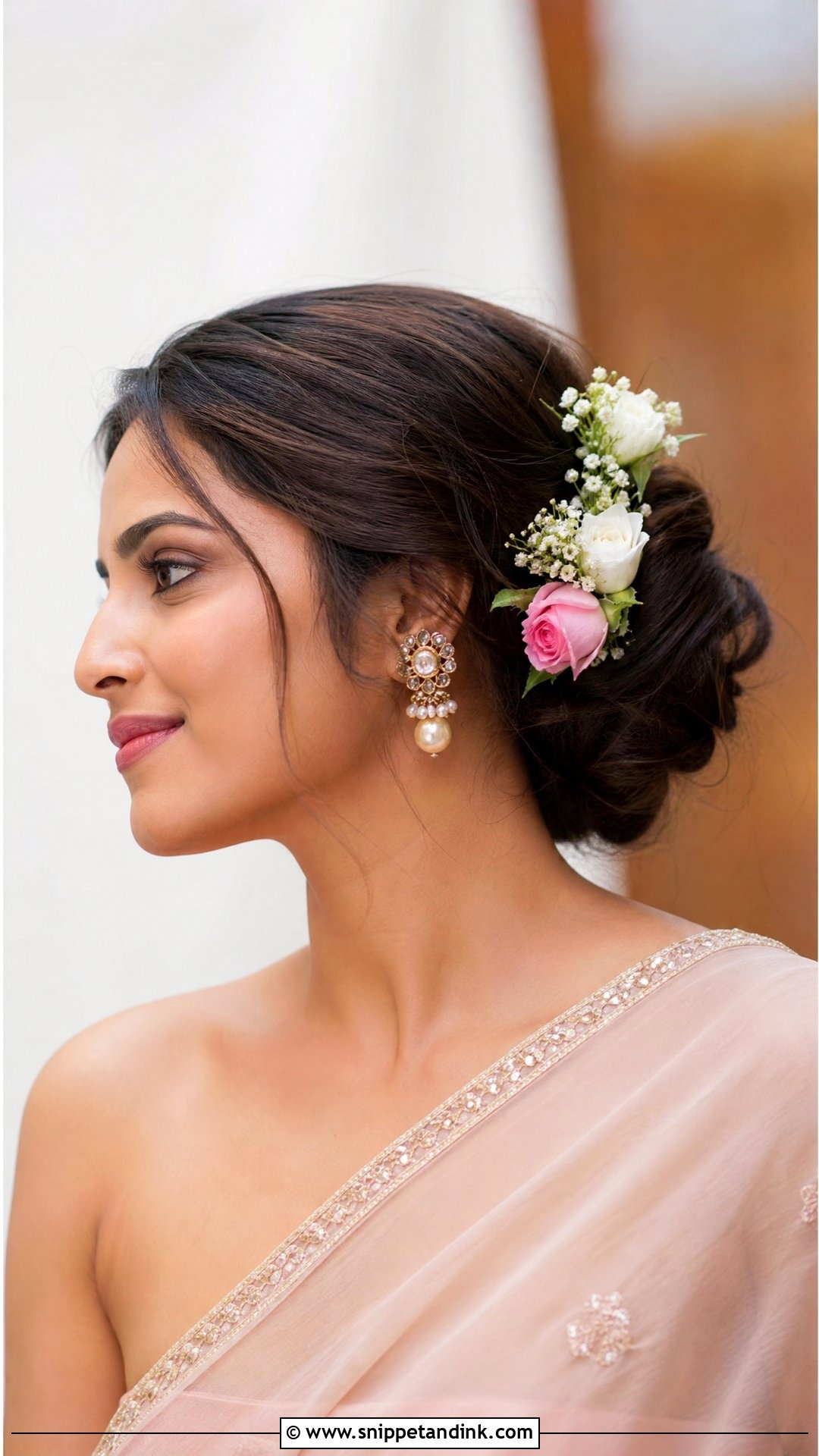
A low side bun tucked behind one ear works well with off-shoulder blouses and saree drapes over one shoulder, since it leaves the bare side clear. I sweep everything to one side, twist it into a loose knot near the neck and tuck flowers or a small floral pin along its edge. Medium to long hair is enough. Hair cut in heavy layers needs extra pins on the side the bun pulls away from.
11. Puff Hairstyle With Open Hair
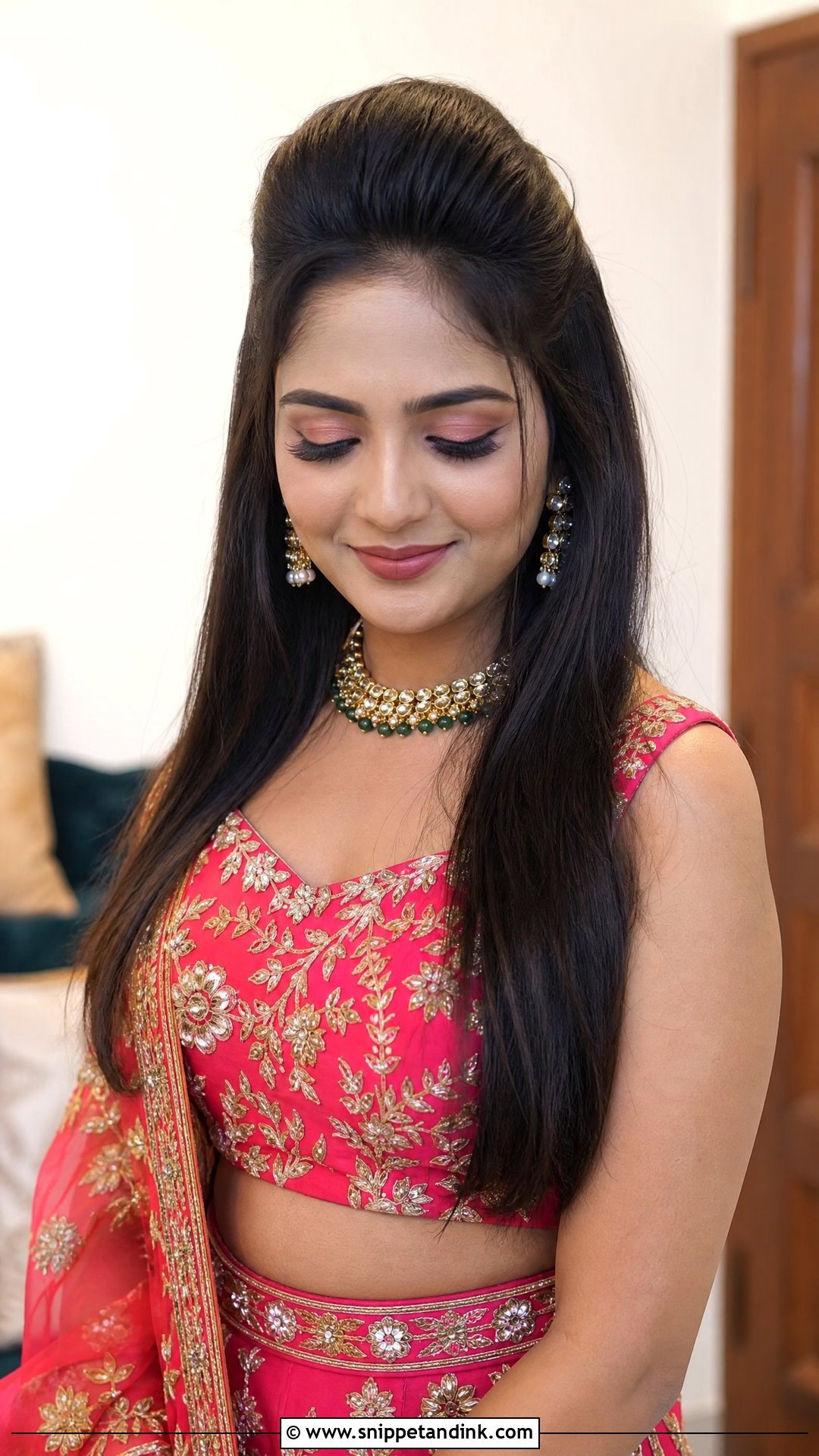
The puff lifts the front crown and leaves the rest open, straight or wavy. I tease gently at the root underneath, smooth the top layer over and pin it back, then set it with spray. It lengthens a round face and gives structure to sarees and lehengas. A puff that’s too tall looks dated quickly, so I keep the lift to about two finger widths. It’s one of the easiest classics to wear on most hair types.
12. Twisted Updo With Hair Accessories
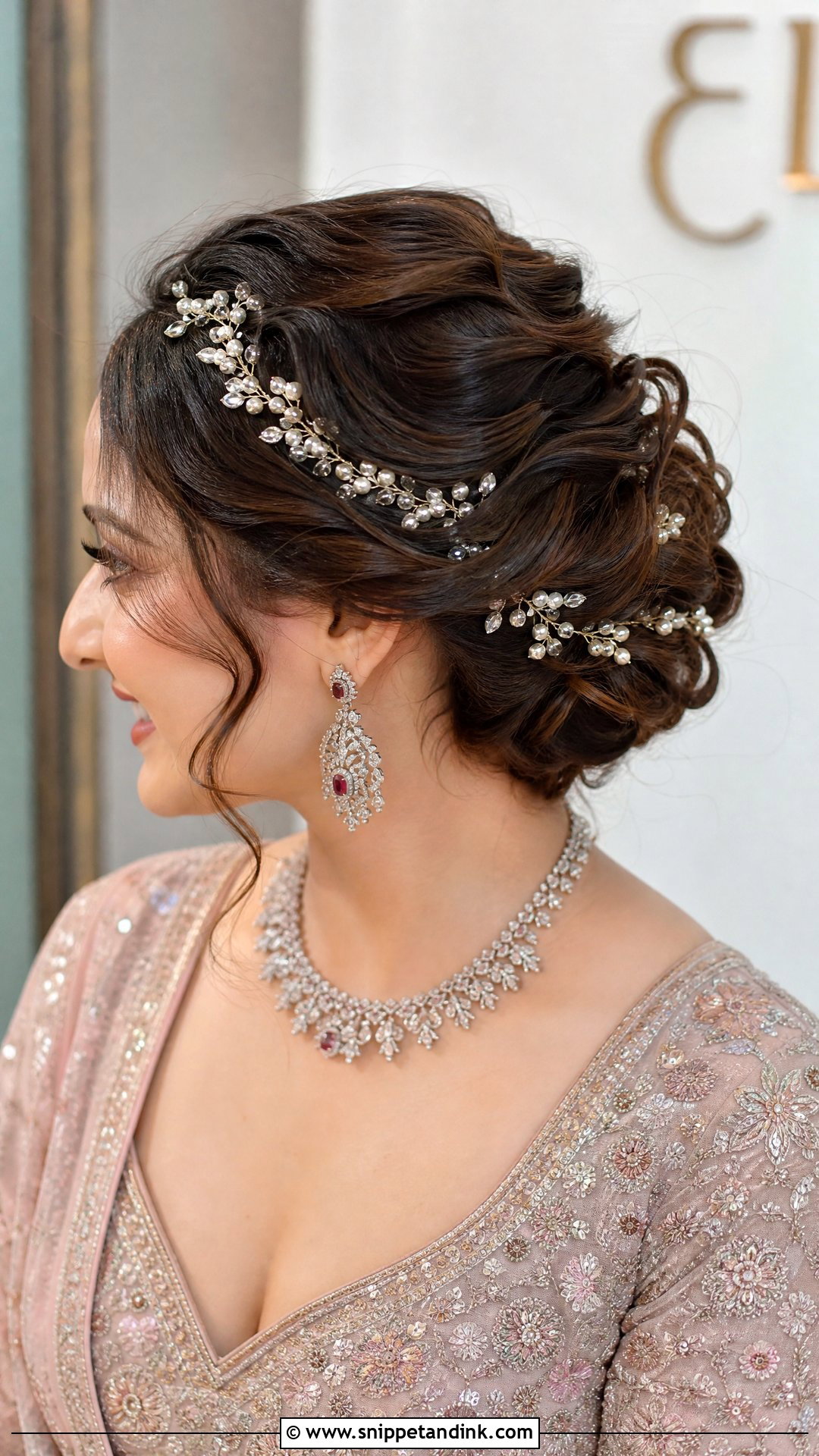
A twisted updo is simpler than it looks: small sections are twisted and pinned toward the back, one after another, until the whole head forms a soft sculpted shape. Every twist has its own pin, so it holds well through dancing. Jeweled pins, pearls or a sparkling hair vine sit nicely in the grooves. It keeps hair off the neck in warm weather and suits medium to long hair with embroidered lehengas.
13. Wavy Ponytail With Side Braid
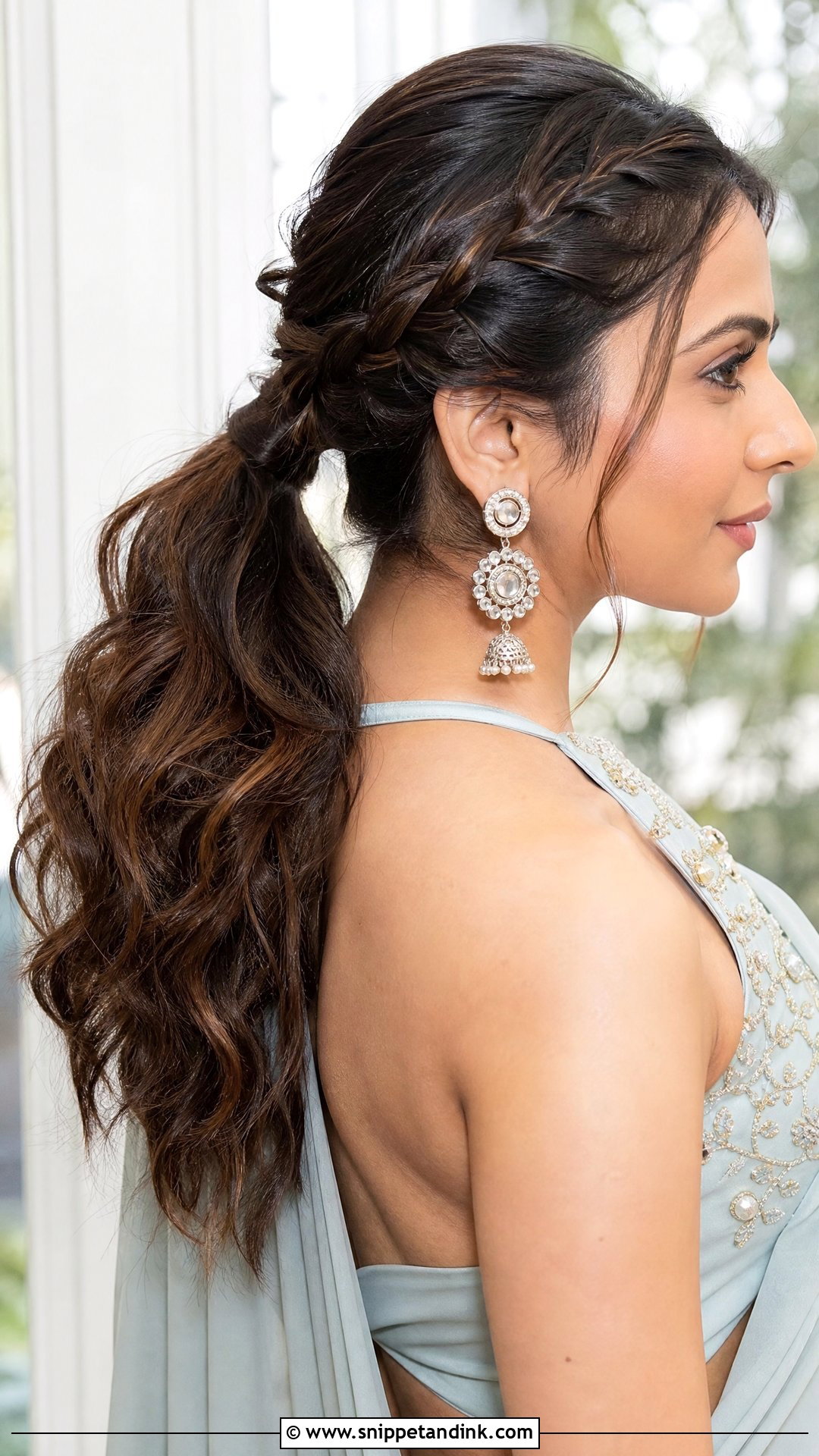
A wavy ponytail with a small side braid is my pick for guests who know they’ll dance all night. The braid runs along one side of the hairline into a ponytail at the back, and the lengths are curled for movement. It looks good with indo-western outfits and contemporary lehengas. That one braid turns an everyday ponytail into something festive. Long hair suits it, and the curls should be set with a stronger spray because swinging hair loses shape fast.
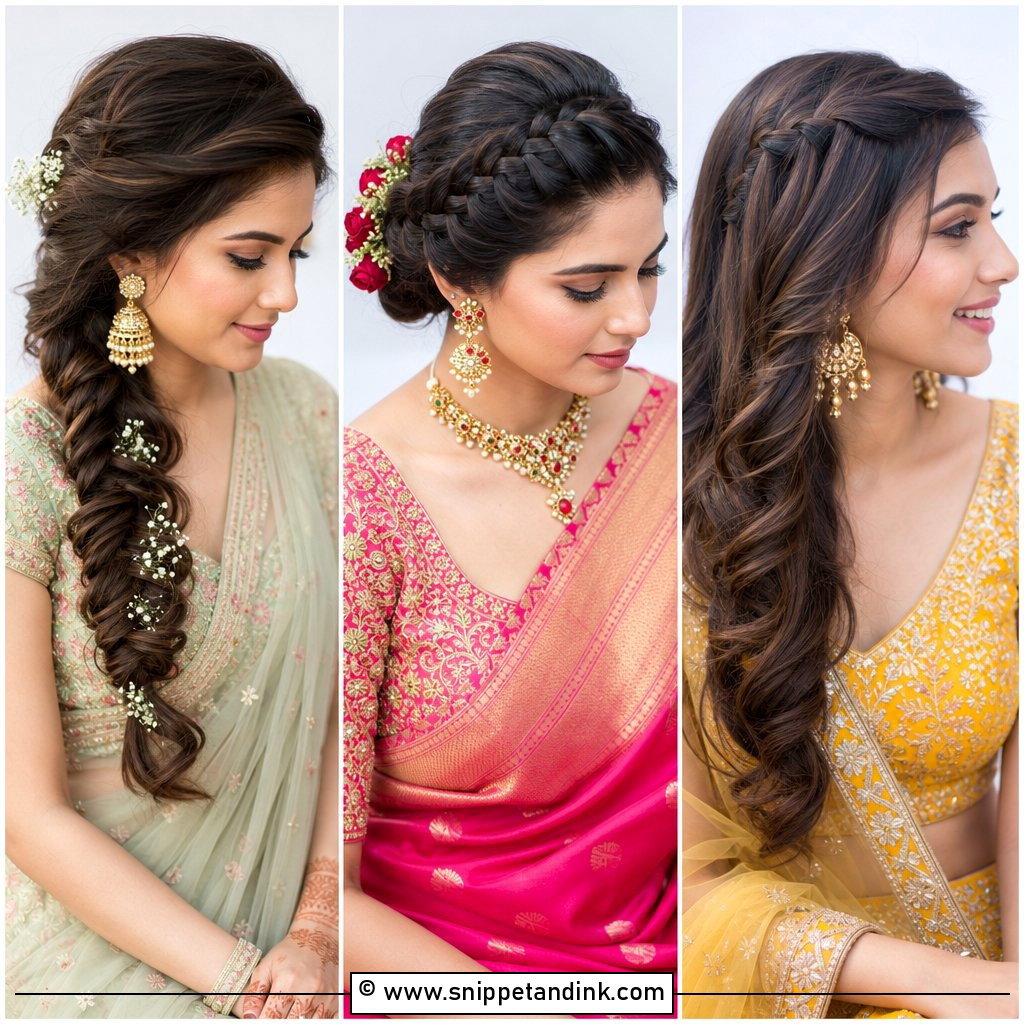
14. Bun With Statement Hair Accessory
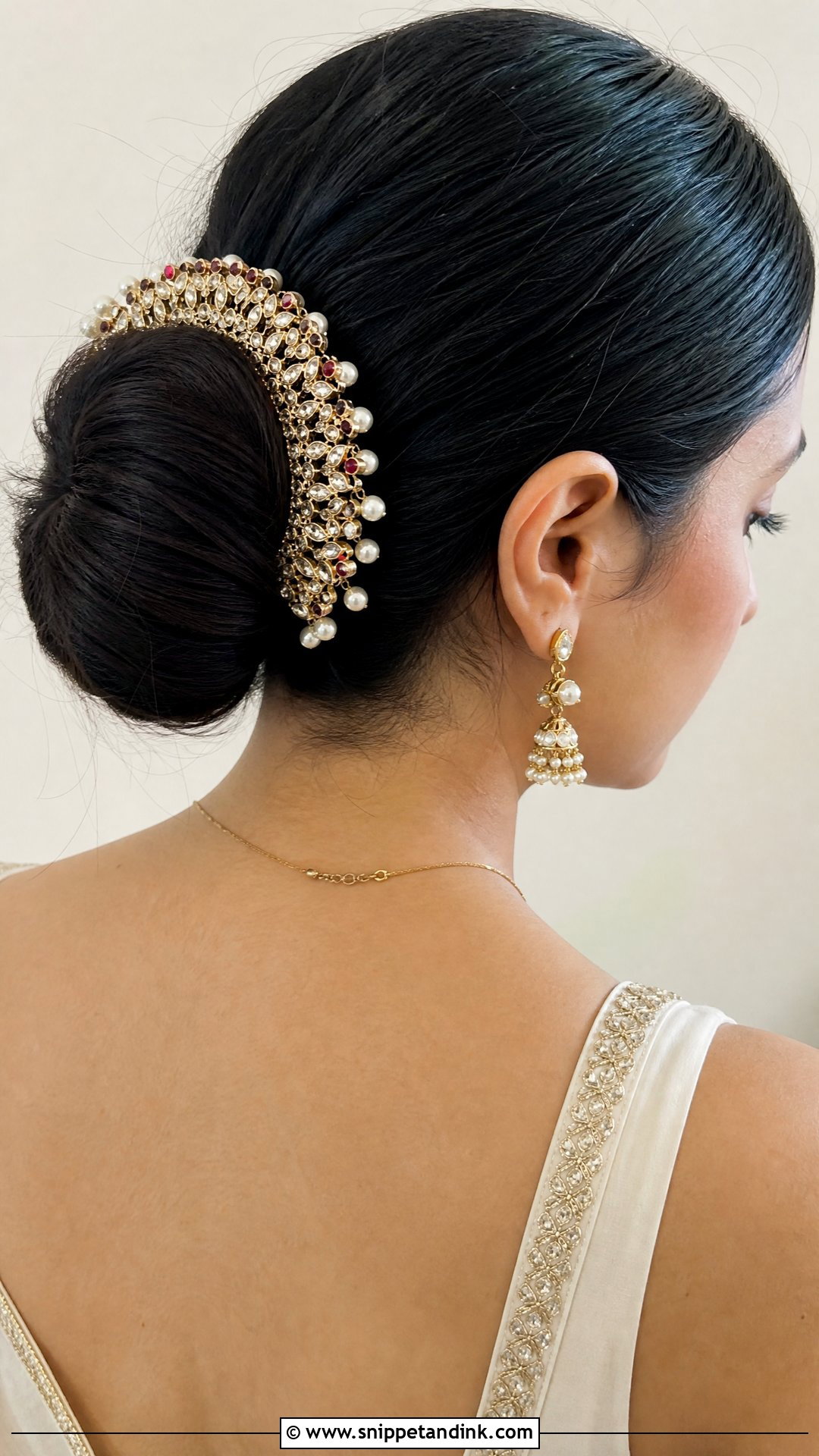
With a plain saree or minimal lehenga, the hair accessory can carry the look. The bun underneath should be smooth, at the crown or the nape, so a jeweled comb, ornate hairpin or string of pearls has a clean surface to sit on. Heavy combs need a solid base; I always build on a small elastic ponytail inside the bun. It’s a refined choice for evening receptions on medium to long hair.
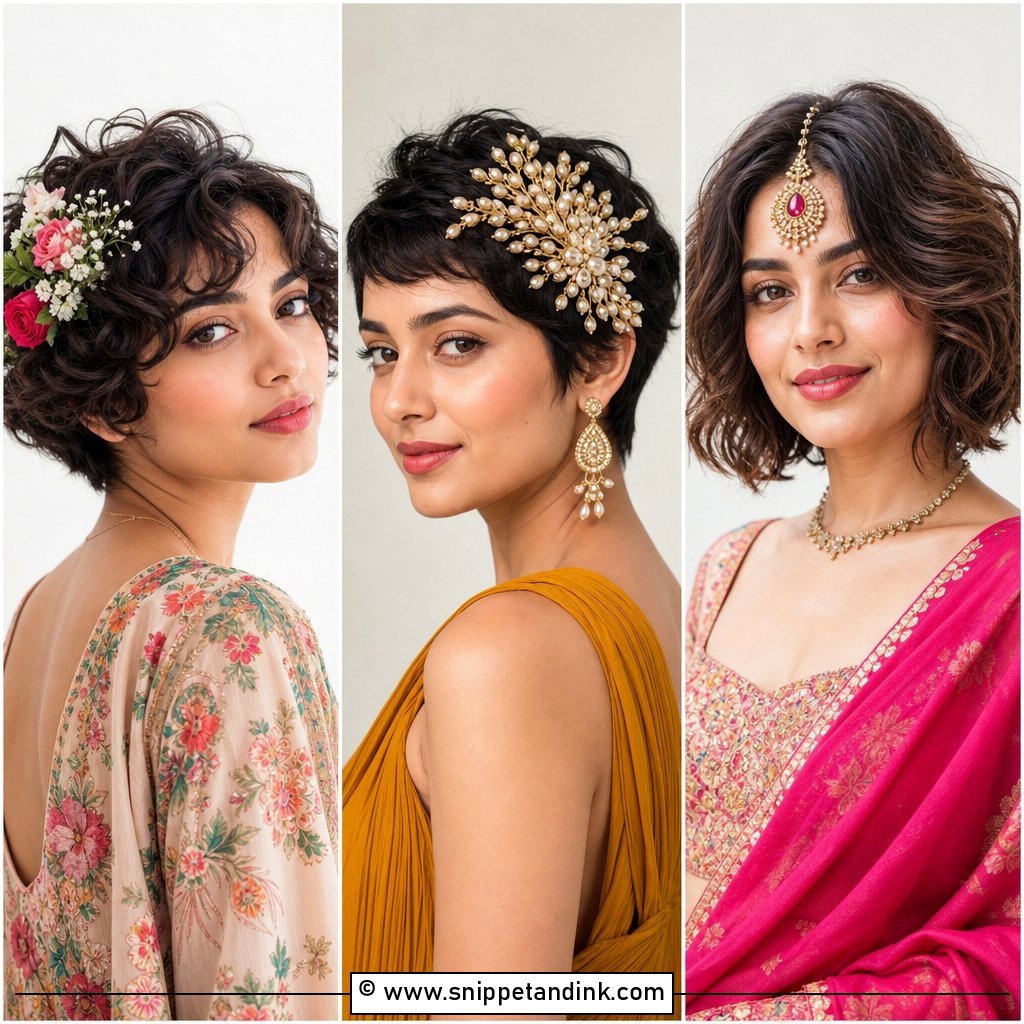
15. Curly Hair Half-Up Style
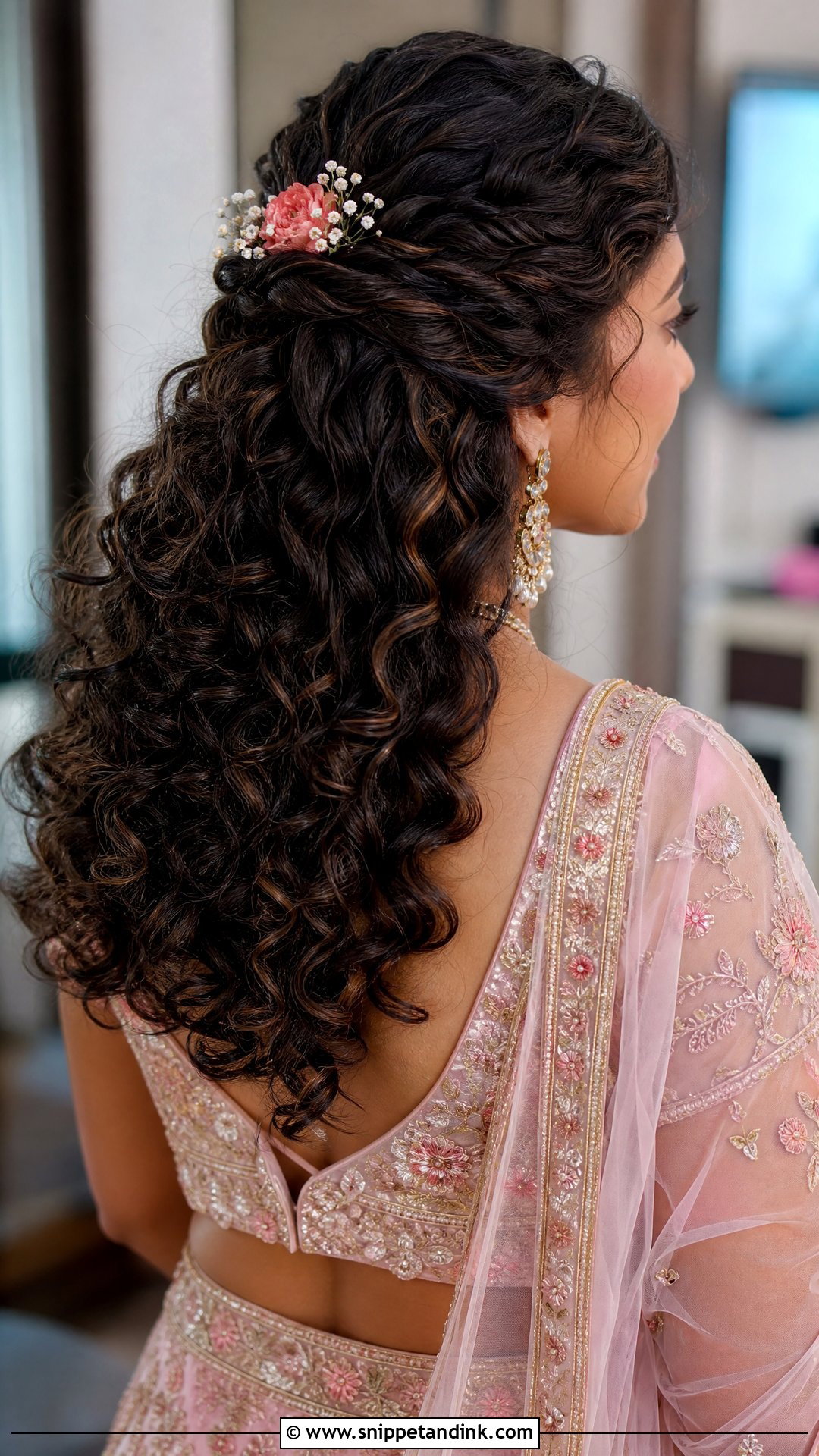
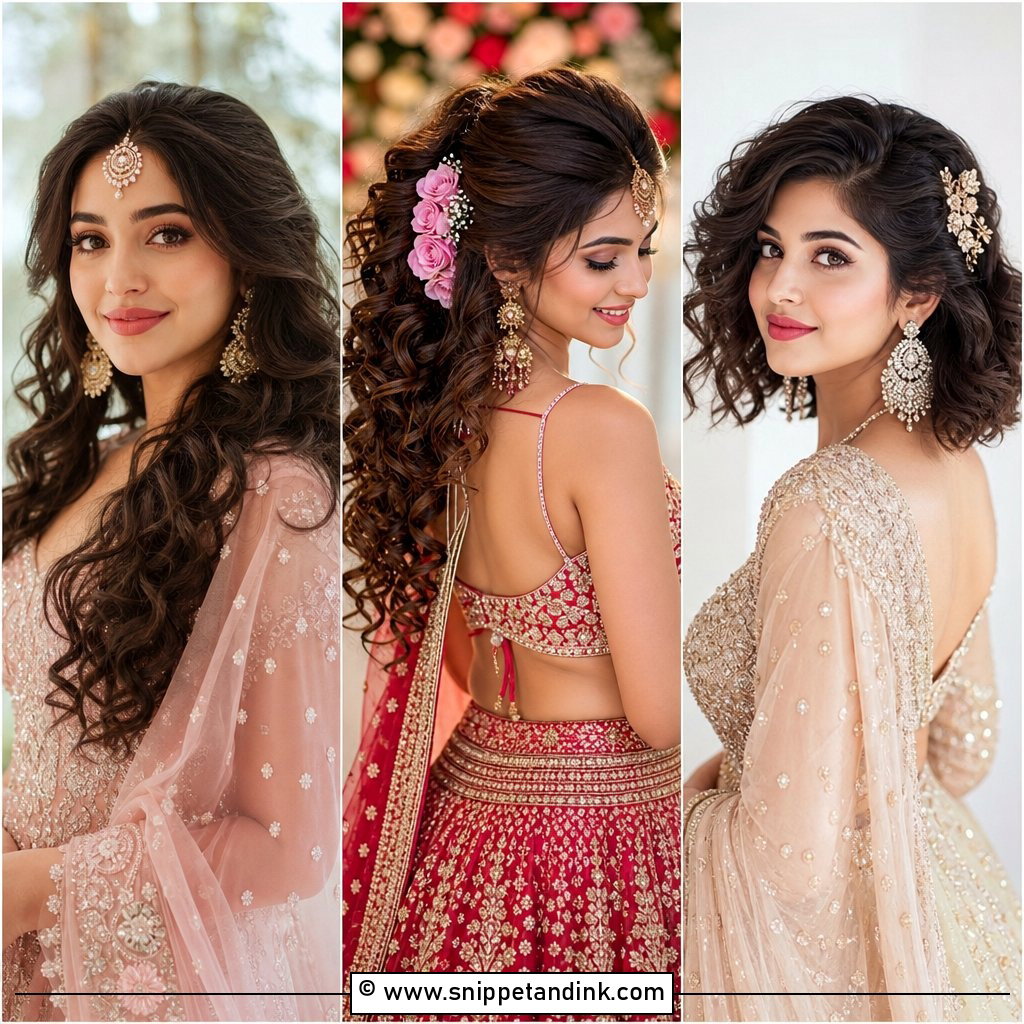
A curly half-up should keep your natural texture rather than fight it. I twist or loosely braid the front sections and clip them at the back, then let the lower curls do their own thing. Work with damp, defined curls and a curl cream on the morning, not a brush. Clip placement matters: curls shrink, so set the clip a little lower than you’d expect. A small floral pin adds festivity, and this works with lehengas and sarees alike.
16. Sleek Straight Hair With Center Part
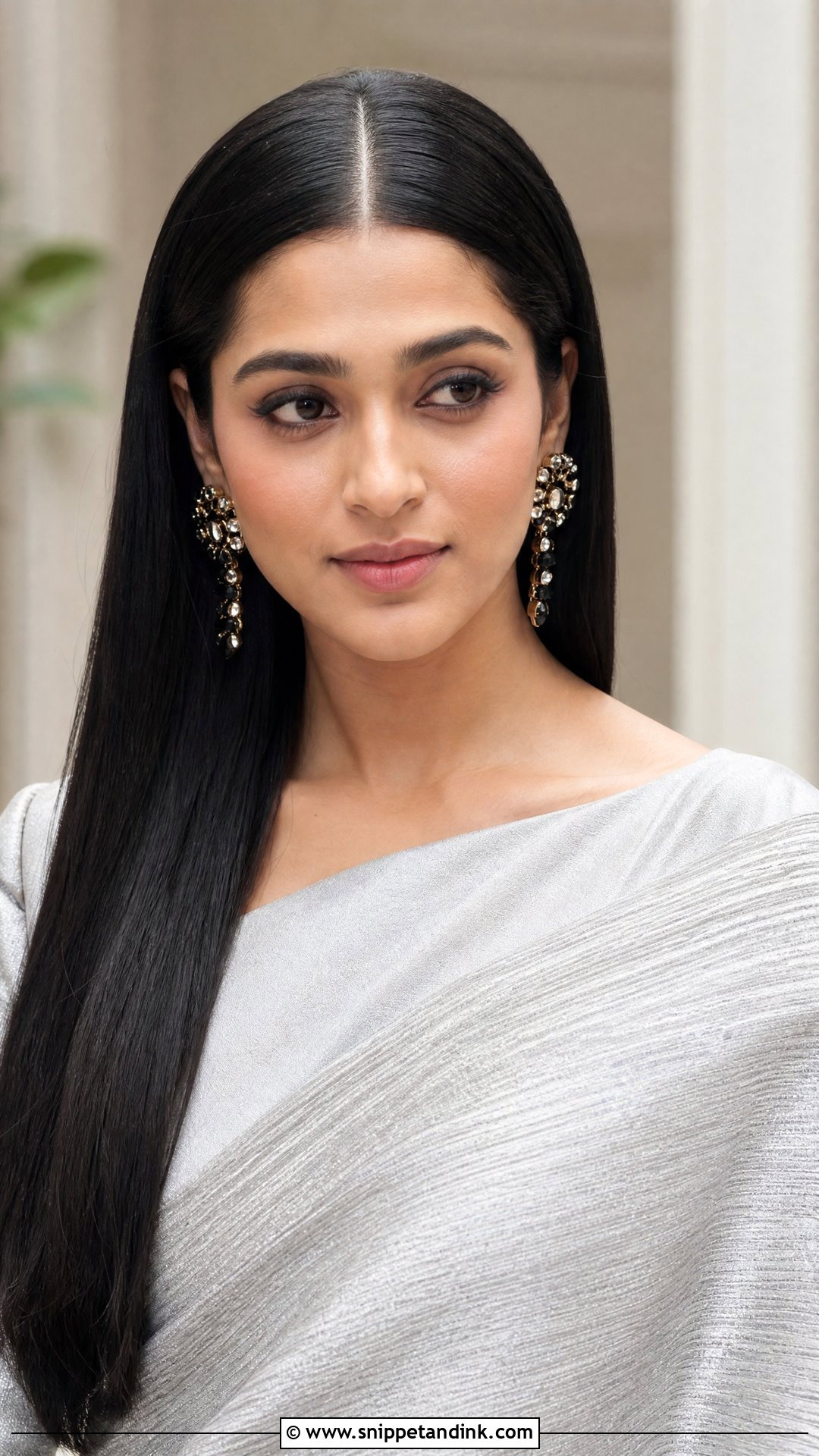
Sleek straight hair with a sharp centre part is the minimalist choice for indo-western outfits, modern sarees and structured lehengas. I flat-iron in thin sections, put a drop of serum on the ends and part with a tail comb so the line is clean. Medium to long hair works best. It shows every flyaway, though, so humid days or long dancing nights will test it. Ear cuffs or statement earrings finish the look.
17. Rose Bun With Braided Detail
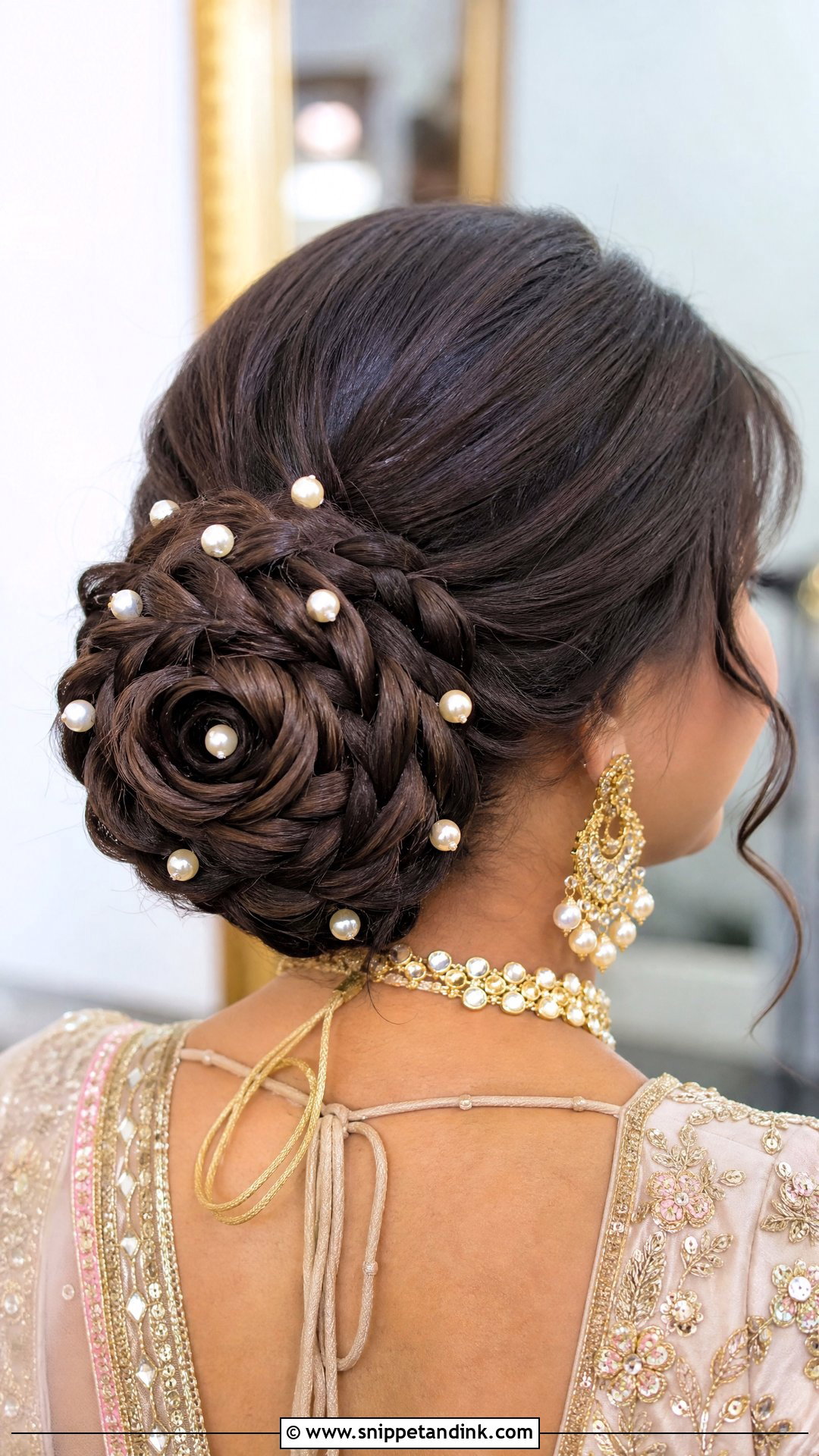
The rose bun turns a braid into a flower: a long plait is spiralled around itself into a rosette and pinned tightly at the back of the head. It needs long, thick hair, because the braid has to be long enough to coil several times. I pin through each layer of the spiral, not just the outer edge, or the centre pops out. Pearl pins add detail, and it suits heavier lehengas and traditional sarees for guests wanting something unusual.
18. Loose French Braid
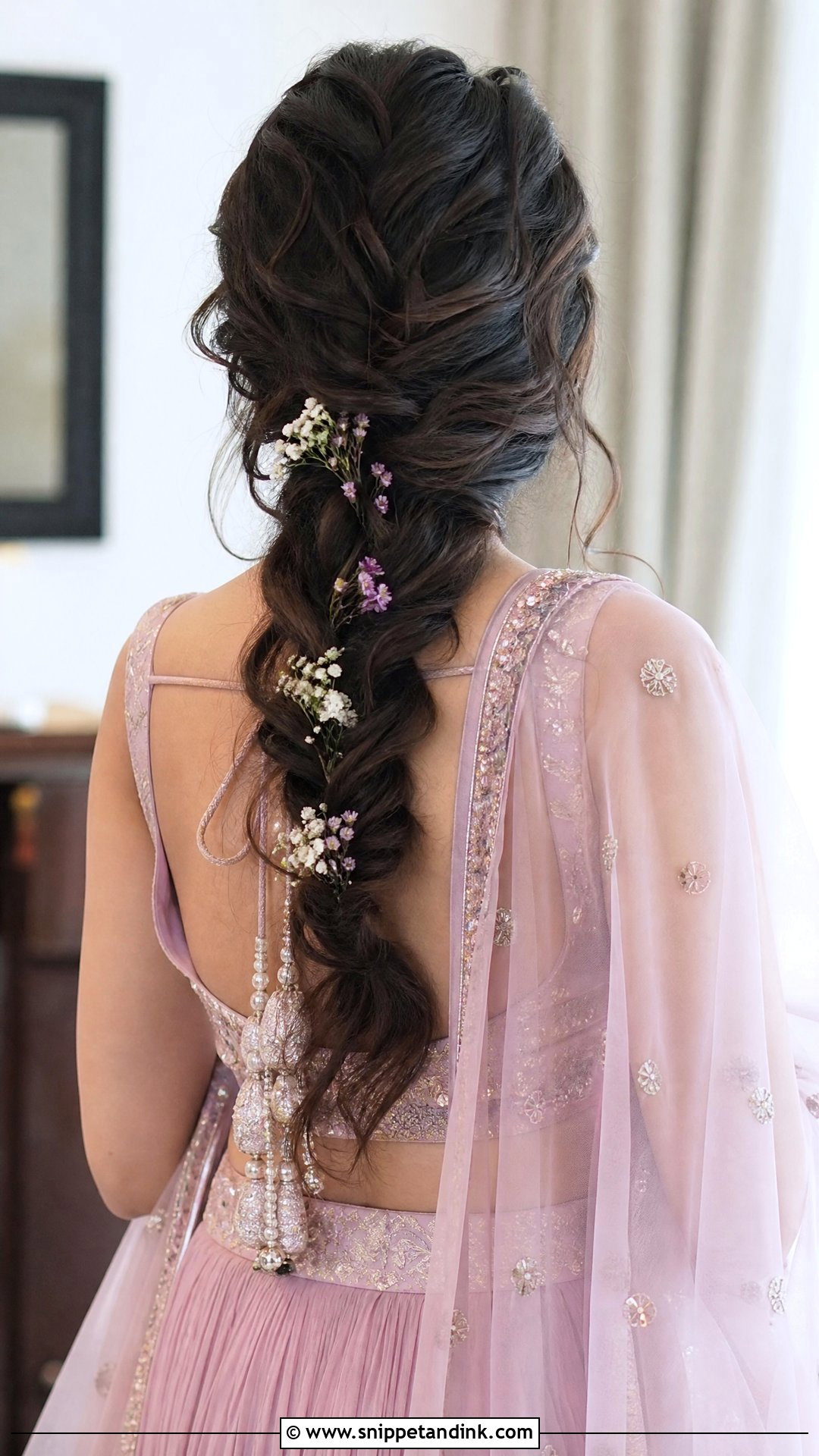
A loose French braid starts at the crown and picks up hair as it moves down to the nape, then gets pulled apart gently for fullness. Flowers or gold thread can go in for a festive touch. It suits flowy lehengas, shararas and lightweight sarees and is a good daytime choice. Short layers tend to escape near the nape, so I finish with a few pins tucked under the braid there.
19. Voluminous Blowout With Side Part
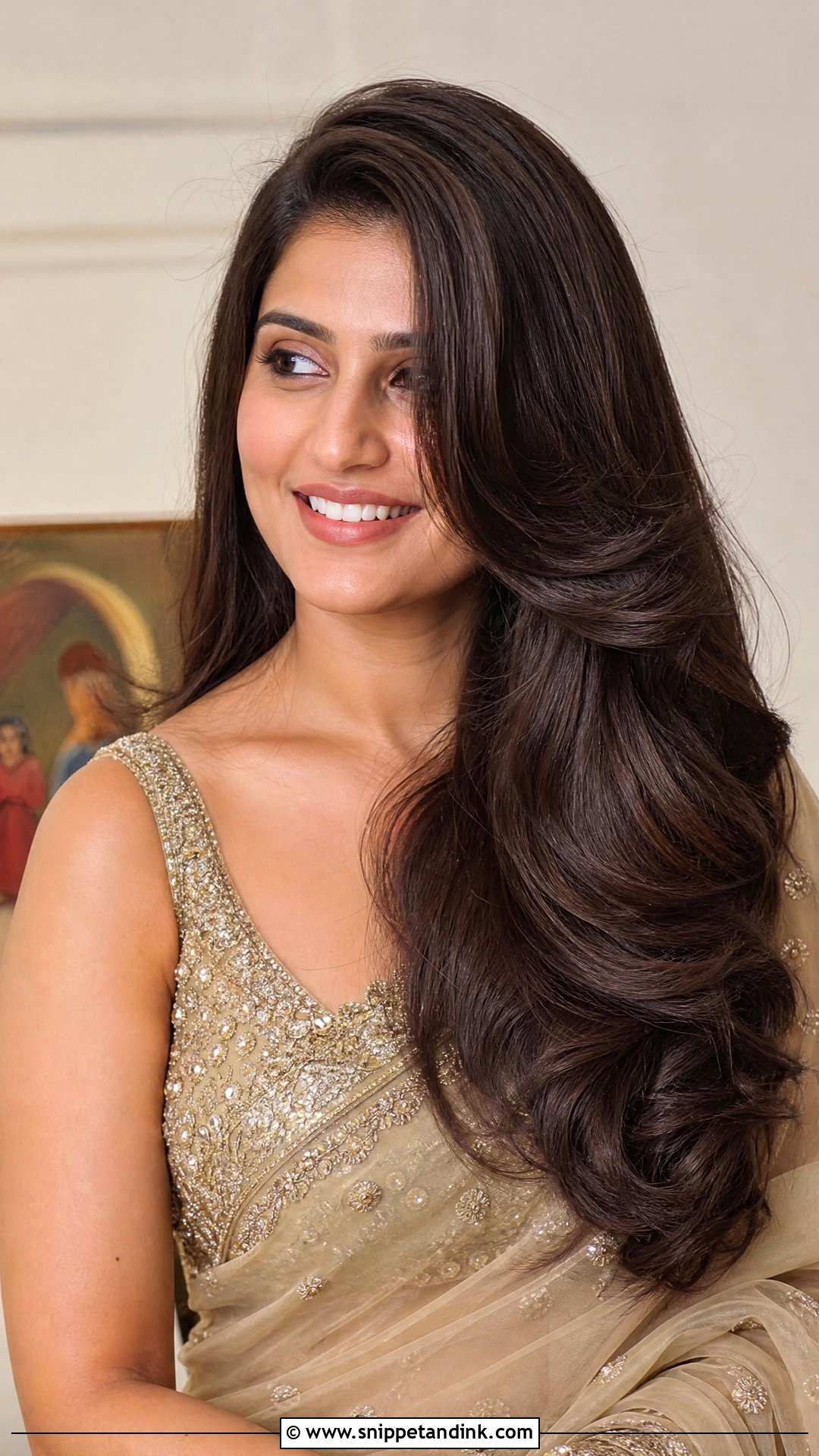
A big blowout is about root lift and soft bends at the ends, done with a round brush and a deep side part. The result is full, smooth hair with movement that suits elegant sarees and statement lehengas on medium to long hair. Fine hair loses this kind of volume fast, so I use a mousse at the root and set the crown in large velcro rollers while makeup is done. It gives that salon-fresh finish guests like for a reception.
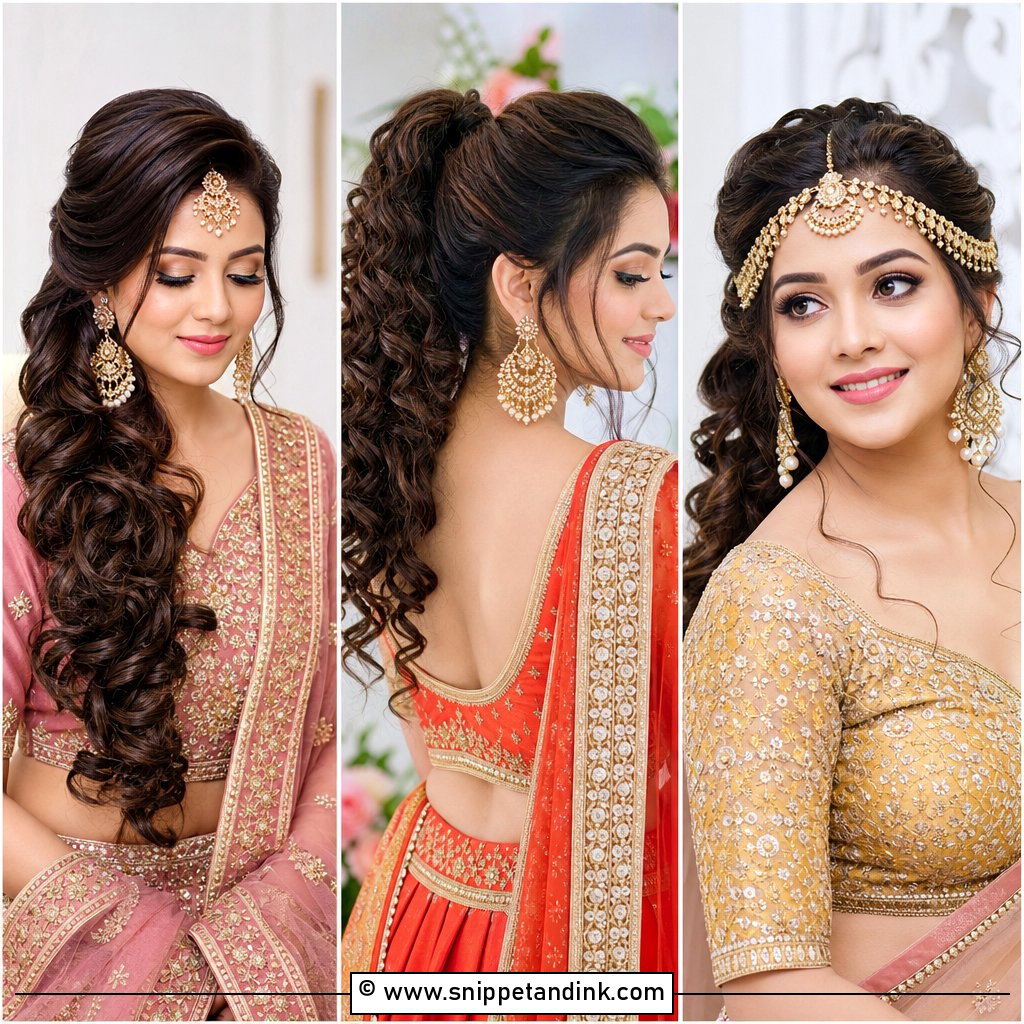
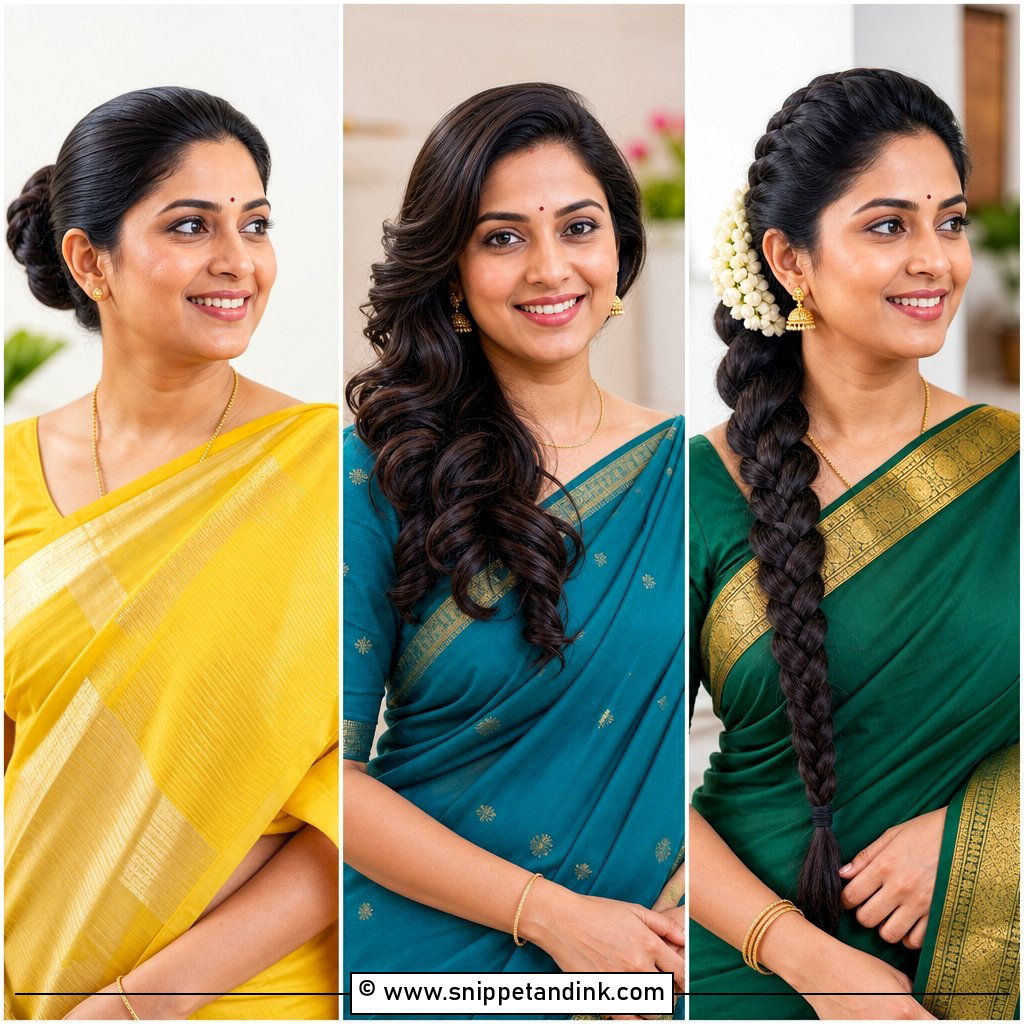
20. Braided Half-Updo With Open Curls
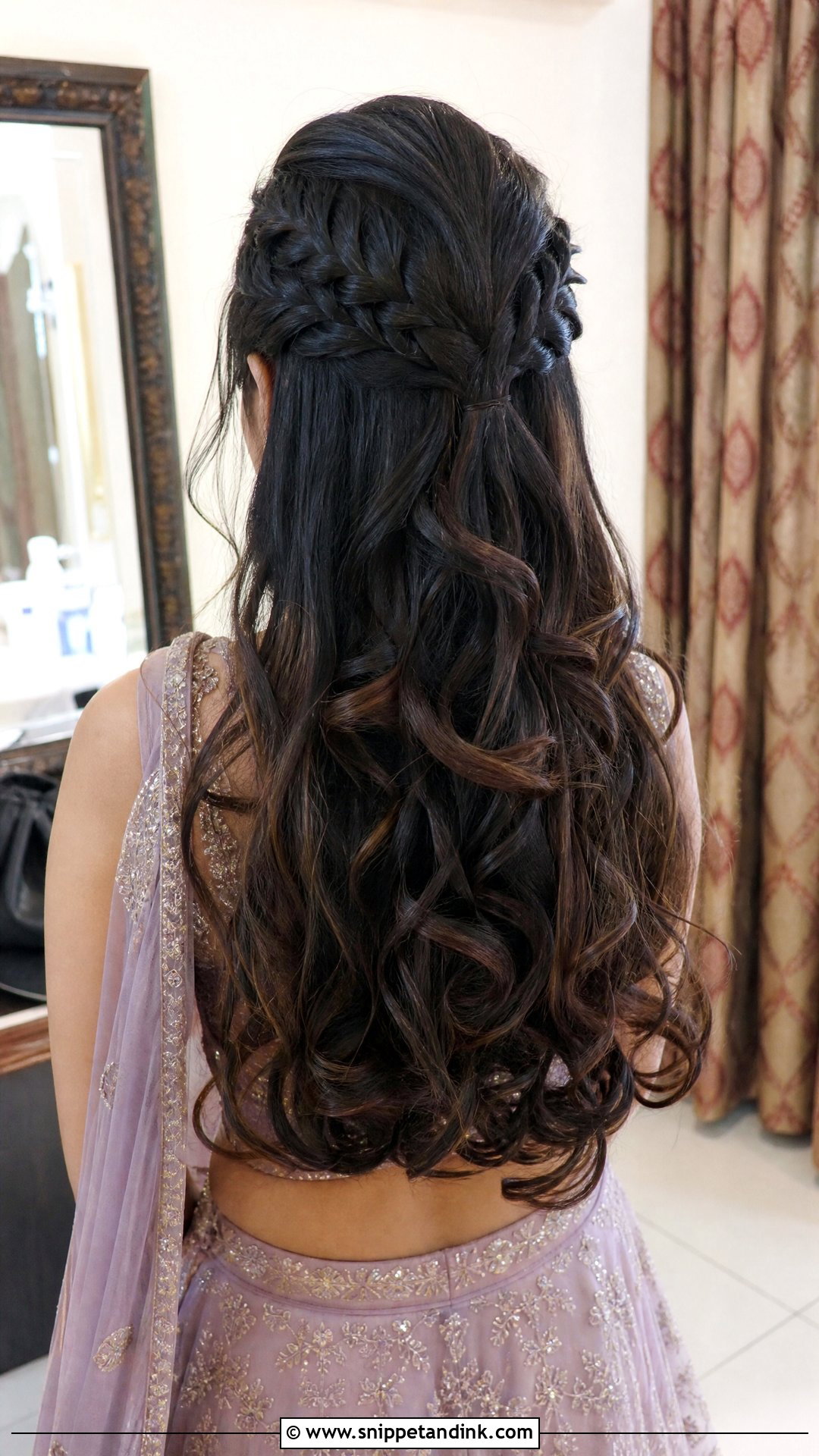
Two braids taken from either side and joined at the back make a half-updo with real detail, and the remaining hair falls in glossy curls. The braids keep hair off your face during the celebrations. It suits lehengas, sarees and indo-western outfits on long hair. I pin where the two braids meet with crossed pins hidden under the join, since that spot takes the weight of everything below it.
What a Guest’s Hair Goes Through Before Midnight
Guest hair has to handle the baraat outside, a hot hall, a dupatta being adjusted every half hour and dancing late into the night. A few habits make styles last much longer.
- Wash the day before, not the morning of. Hair with a day of natural oil holds pins and curls better.
- Use a heat protectant and let every curl cool in a pin clip before you touch it.
- Spray in layers as you build the style, not one heavy coat at the end.
- Carry a tiny kit: six bobby pins, a mini hairspray, a hair tie and a small comb.
- If you’re wearing fresh flowers, ask for them to be added last and keep spare jasmine in a damp tissue.
One etiquette point I bring up with every guest: keep the heaviest bridal signatures for the bride. A full matha patti, a huge juda pin or a red floral bun can look a little too close to her look in group photos. Something a notch quieter than the bride always reads better.
Your Outfit Picks the Style, Your Schedule Picks the Stylist
Start with what you’re wearing. A saree or lehenga with a heavy dupatta usually wants a low bun or braid, while indo-western outfits and light lehengas open the door to ponytails, waves and blowouts. Then think about how long you’ll be on your feet and dancing, and whether it’s a daytime or evening function. Gajras, maang tikkas and pearl pins work with almost all of these styles, so you can choose the shape first and the sparkle second.
You'll Like These Ideas:




Leave a Reply