
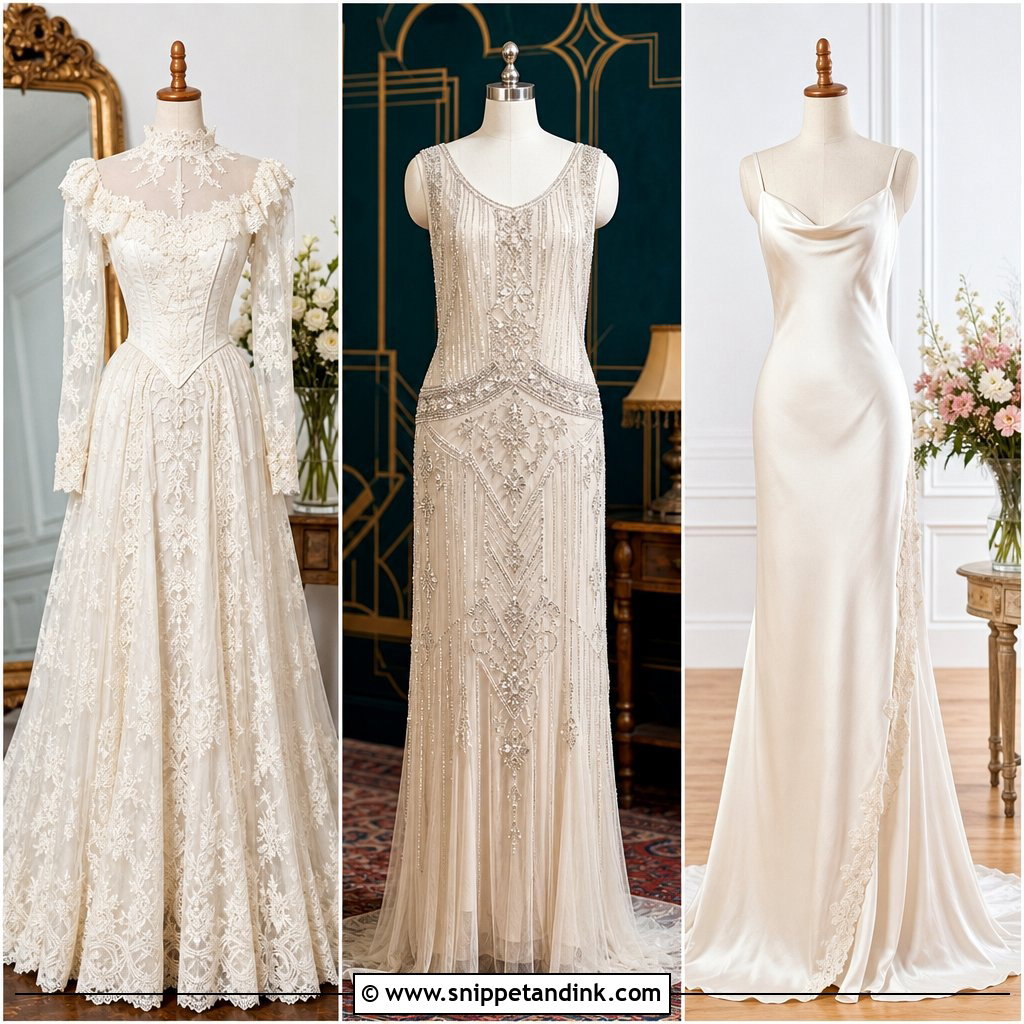
A mother’s wedding dress usually reaches my fitting table folded in a box, a little yellow at the creases, and carrying more feeling than any new gown could. Redoing one is among the most meaningful jobs I take on, because the fabric already has a story and my work is to give it a shape you’ll actually wear. That might be a ceremony dress, a rehearsal outfit, a reception change or a small keepsake styled into your look. Lace, satin, sleeves, trains, buttons and appliqués can all be reused. Whether the original is classic, 1980s dramatic or heavily beaded, the ideas below start from what the fabric can realistically do.

What I Check on an Old Gown Before Agreeing to Recut It
Every redesign starts with the gown laid flat on a clean table in good daylight. Fabric that has spent decades in a box can look perfect folded and fail once it’s handled, so I test it before anyone talks about necklines or hem lengths.
- Fold lines and yellowing. Creases that have turned brown are usually oxidation, and they don’t always lift with cleaning. I map where they sit so the new pattern pieces can avoid them.
- Brittle silk. I give a hidden seam allowance a gentle tug. If the fabric splits or shreds instead of giving slightly, it won’t survive a fitted garment, and I’ll steer you toward a veil, clutch or bow.
- Usable yardage. A full skirt and train can hold several yards of fabric, while a slim sheath offers very little. Expect to lose some to stains and worn underarms.
- Seam allowances. Older gowns were often sewn with generous allowances, which helps if your measurements differ from your mom’s.
- Beading. Glass beads are heavy and the thread holding them weakens with age, so anything I keep gets restitched.
Clean it before the first fitting, not after
Have the gown cleaned by someone who handles vintage textiles before the redesign begins. Some stains shift or set during cleaning, and I’d rather pattern around the fabric as it really is. Ask for a spot test on a hidden area first, since the glue behind older appliqués and some dyes can react badly to solvents.
1. Mom Wedding Dress Mini Dress
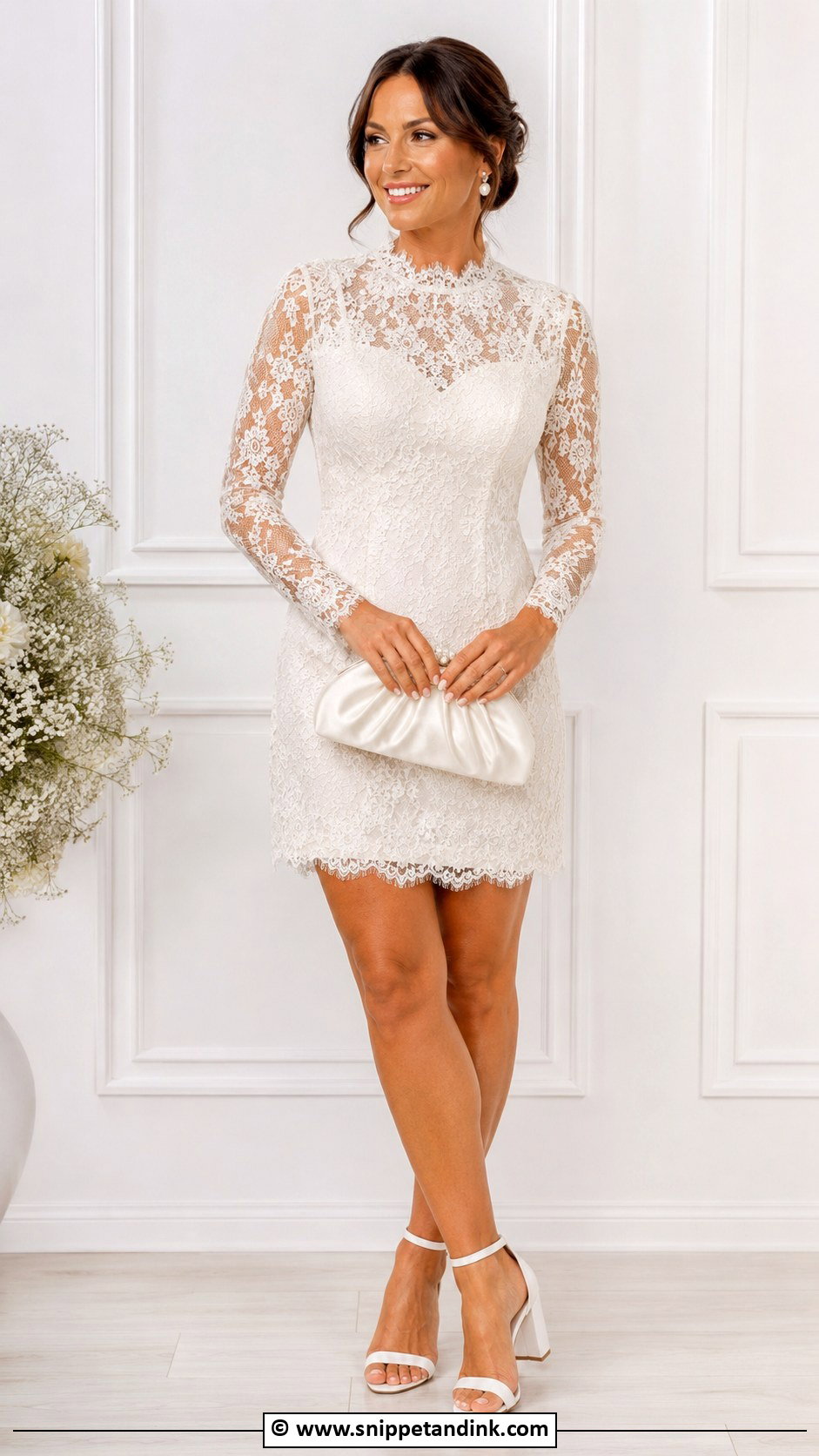
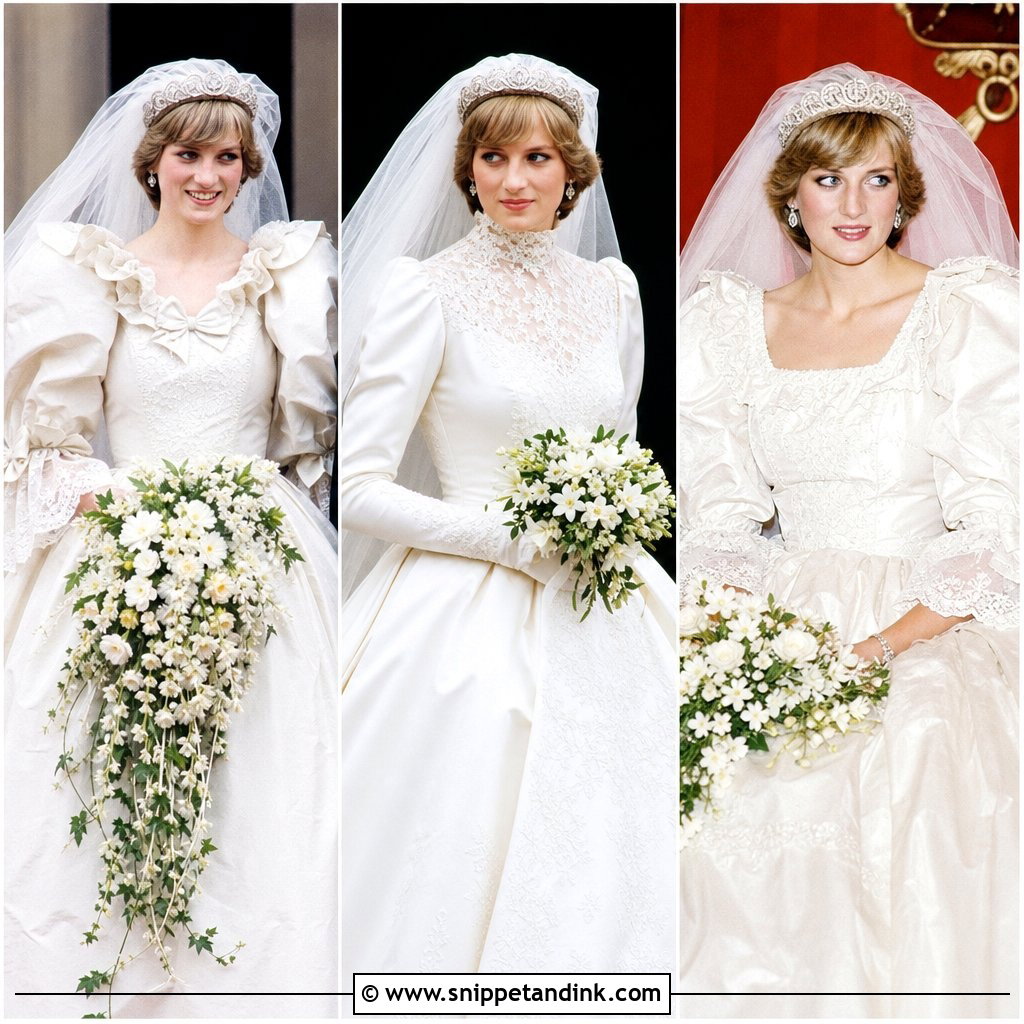
Shortening is the redesign I’m asked for most, and it’s often the easiest to do well because a long skirt gives up plenty of fabric for a new fitted bodice or an A-line mini. The catch is the hem. Satin shows every wobble at mini length, so I cut it on grain and finish it with a narrow faced hem rather than a quick overlock. Big sleeves can stay for a vintage nod or come off for a strapless line. White block heels, pearl earrings and a small clutch carry it from shower to reception. It suits a gown with lovely fabric and a dated silhouette, which describes most of the dresses I see.
2. Mom Wedding Dress Rehearsal Dinner Outfit
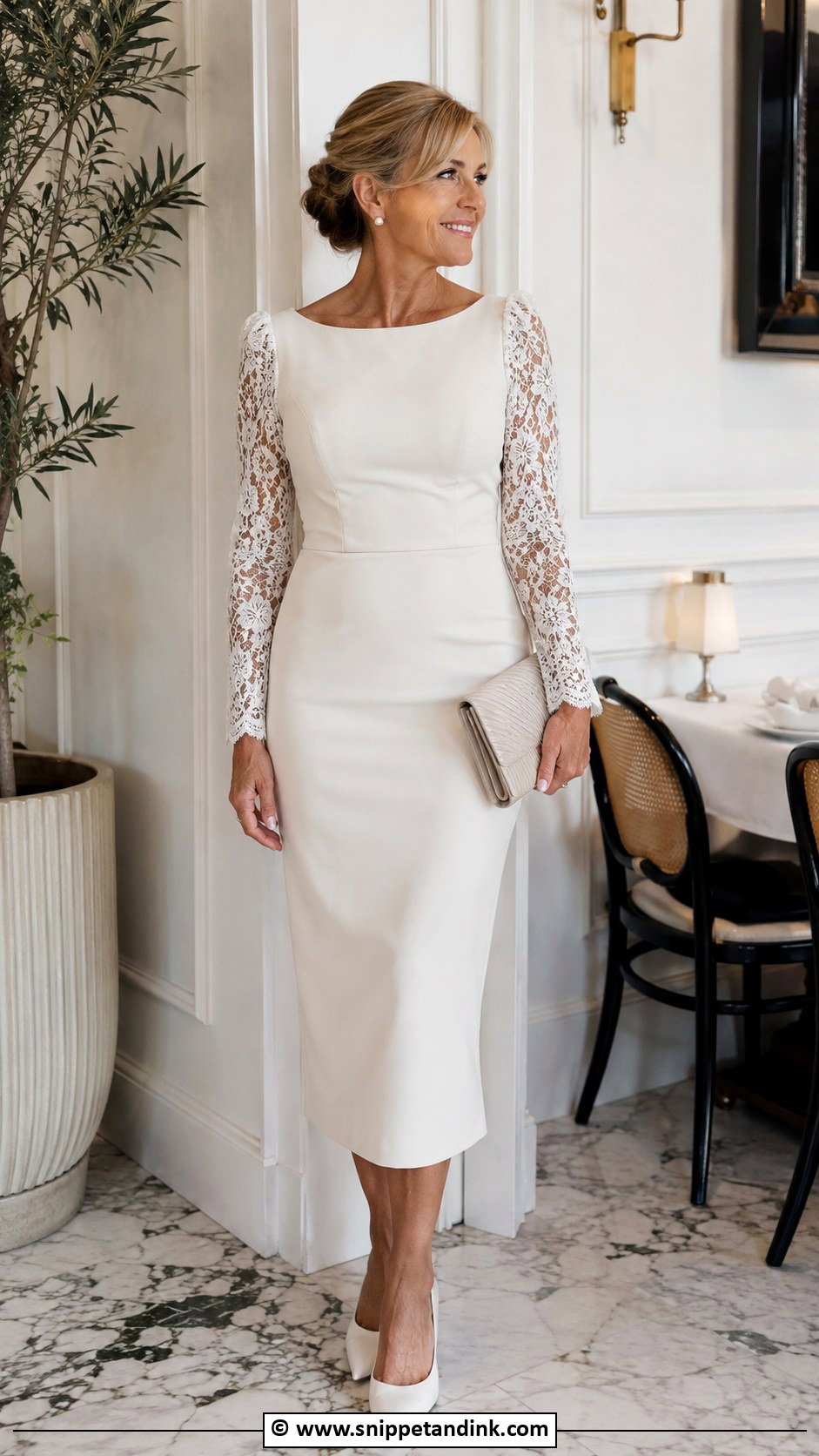
A redone rehearsal dinner outfit gives the heirloom a visible role without asking it to carry the ceremony, which takes pressure off both you and the fabric. I usually suggest a knee-length sheath, a midi, or a structured top with trousers, then pull forward one detail your mom will recognize at a glance: the lace trim, the covered buttons or a strip of the old train worked into a sash. Pointed heels and soft waves keep it dinner-appropriate. If you’ve already bought your wedding gown, this is the redesign I’d point you toward first.
3. Mom Wedding Dress Reception Dress
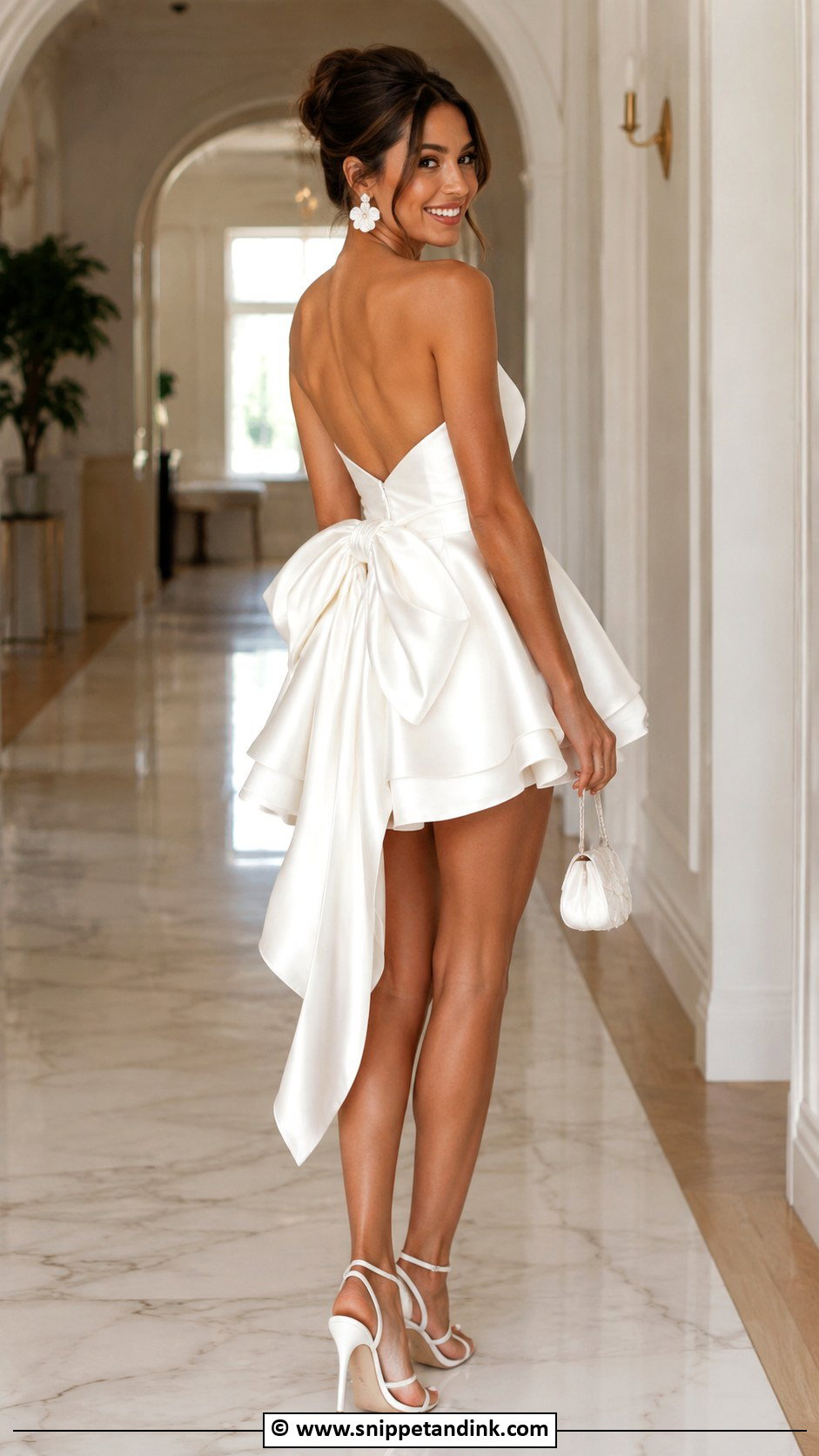
For a reception dress the brief is simple. You need to dance, sit and hug people for hours, so I lighten the gown rather than copy it. A fitted midi, a flippy mini or a high-low slip shape all work, and a heavy train is useful here because it can become a bow or a detachable overskirt for your entrance. Check the original zipper before you commit to keeping it; metal zips from older gowns often catch or split on a dance floor, and I replace them as a matter of habit. Strappy heels and statement earrings finish it.
4. Mom Wedding Dress Bridal Shower Outfit
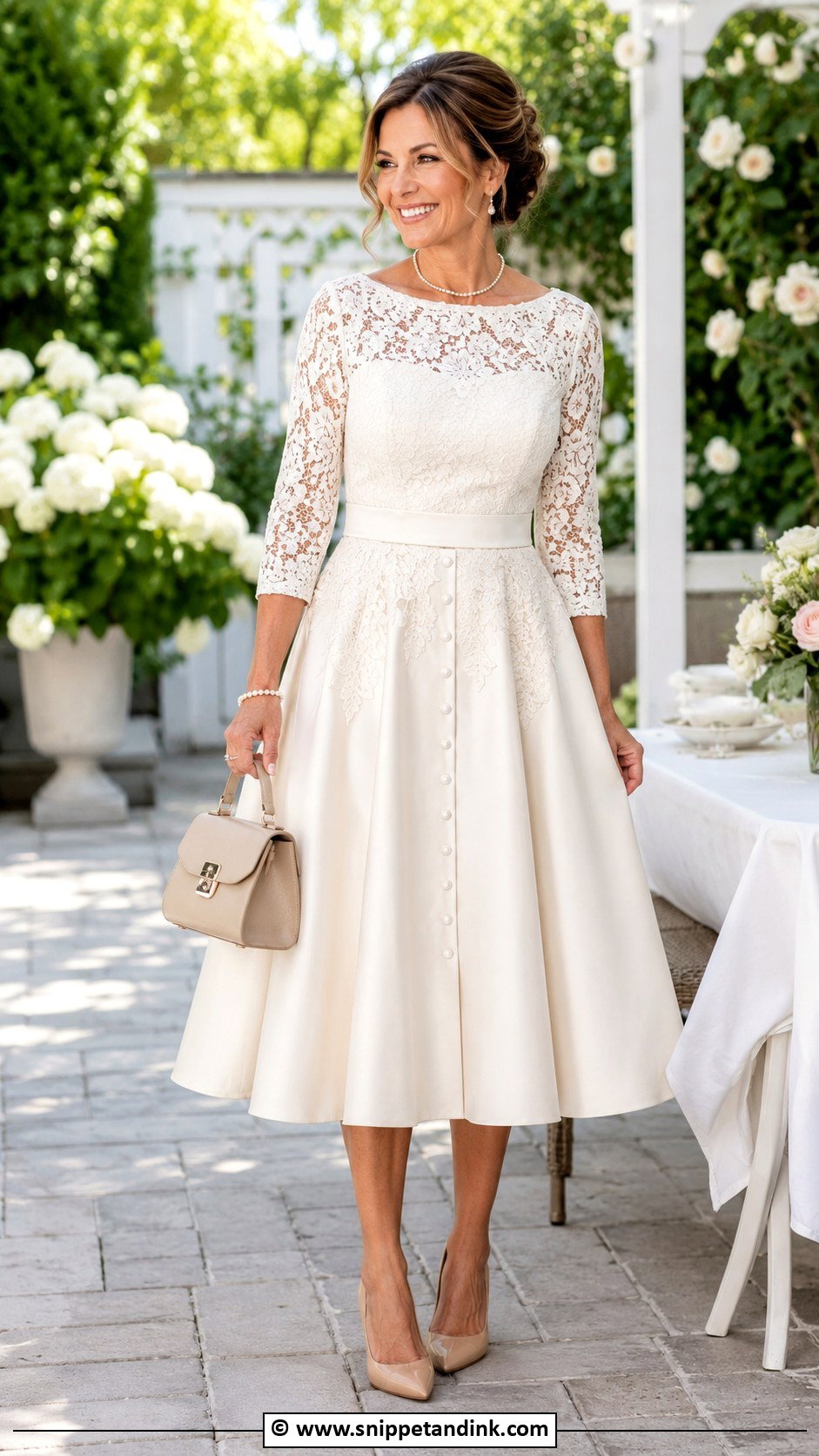
Daylight is unforgiving with old fabric. Before turning soft lace and pearl buttons into a shower outfit, I look at the gown beside a window, because yellowing that disappears under indoor bulbs shows clearly in outdoor photos. If the ivory has deepened, I lean into it with a warmer lining instead of fighting it. A tea-length dress, a lace blouse with a new skirt or a simple midi all suit a shower. Nude heels and plain pearls keep the attention on the lace your guests will want to ask about.
5. Mom Wedding Dress Bridal Pantsuit
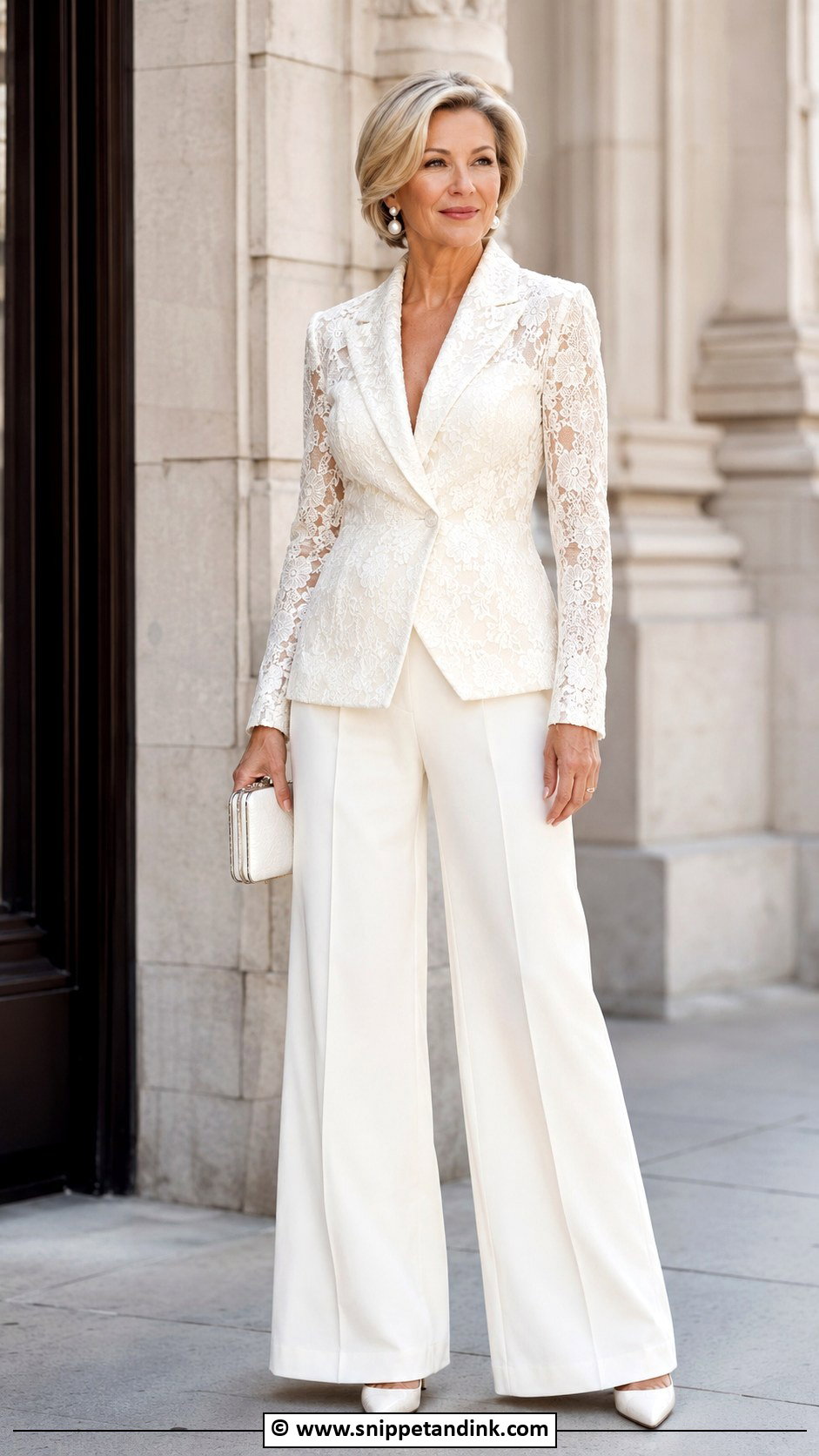
Turning a gown into a bridal pantsuit takes more fabric planning than people expect. Wide-leg trousers eat yardage, so I usually cut them from the skirt panels and save the lace or beading for a fitted blazer, corset or vest. Satin trousers also bag at the knees after a long day, so a full lining helps them hold their shape. Keep the color in one soft family and add pointed pumps. It’s my first suggestion for a courthouse ceremony or an after-party when a bride has told me, plainly, that she doesn’t want another dress.
6. Mom Wedding Dress Two Piece Set
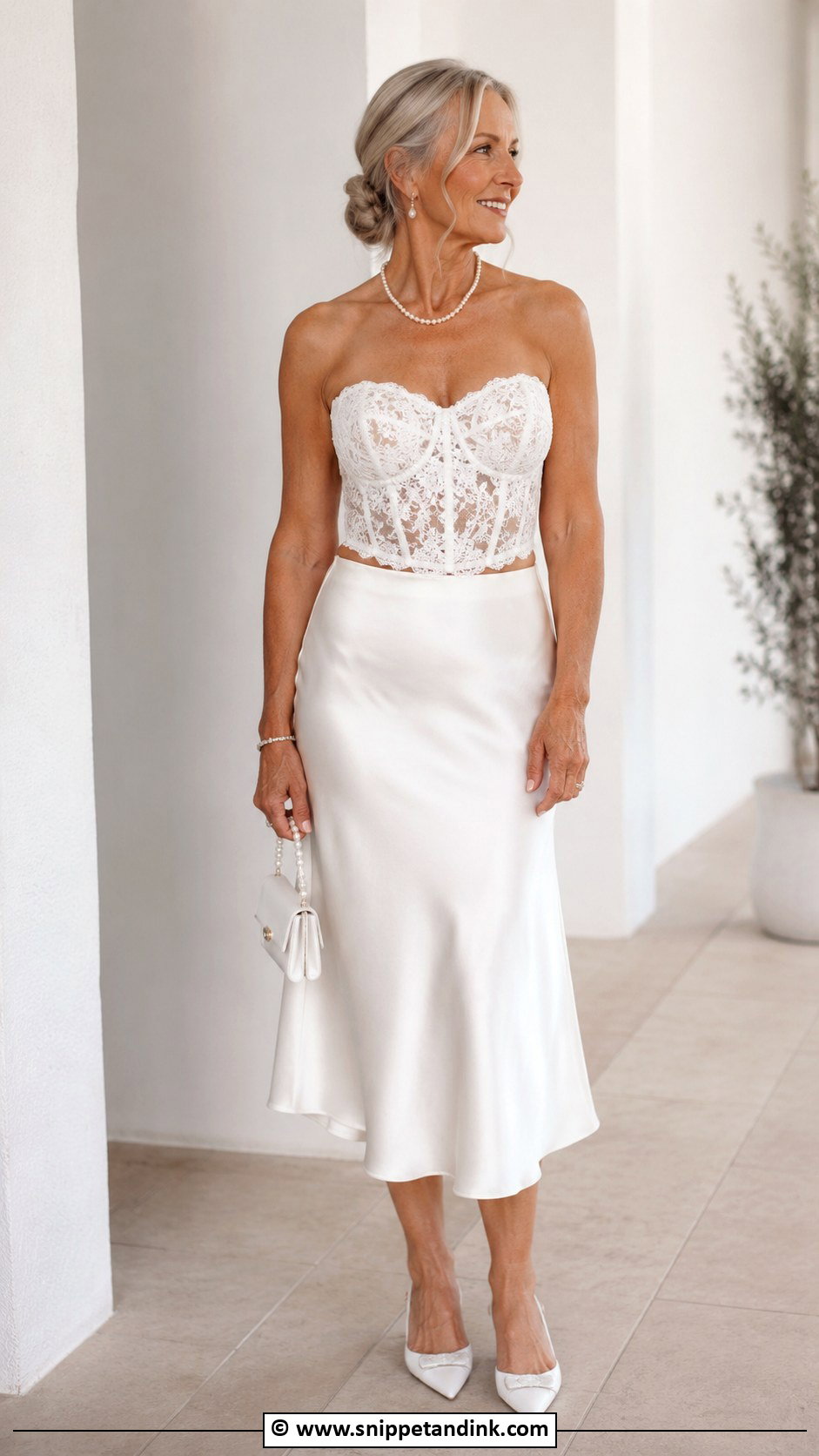
Two separate pieces solve a common problem: the gown doesn’t fit as a whole, but there’s plenty of usable material. The bodice becomes a lace crop top or a boned corset, and the skirt is recut to midi or mini depending on what survives once stains and worn areas are cut away. Lining up the waistband with the crop top is the fiddly part, since a small gap reads very differently sitting versus standing, so I fit both pieces together at every appointment. You can also wear each piece again long after the wedding.
7. Mom Wedding Dress Corset Top Outfit
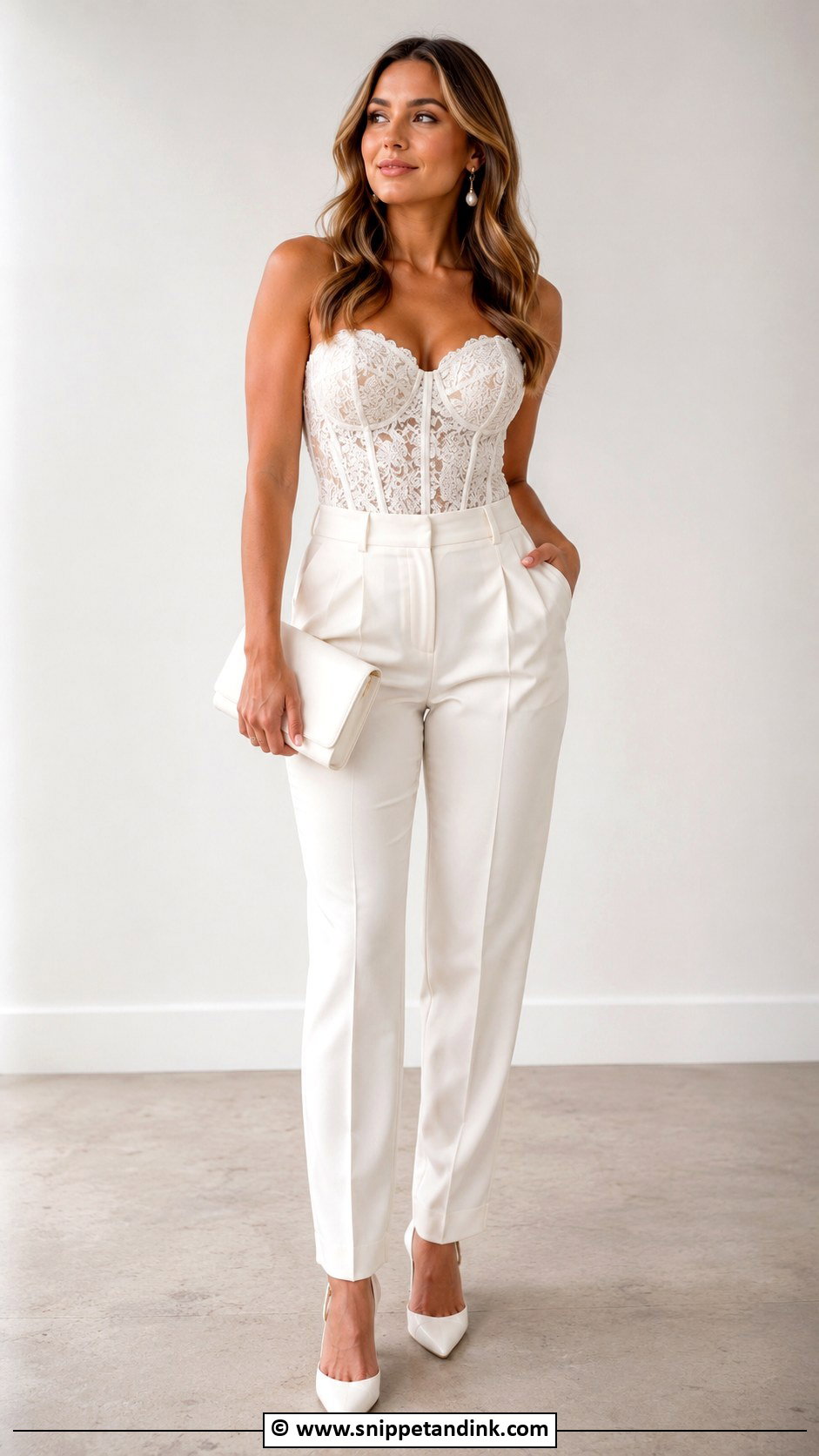
If the original bodice already has boning, it’s often the strongest part of the dress, and I’ll rebuild around it rather than cut new. Older plastic boning can kink or warp after decades in storage, so I swap it for spiral steel where it has lost its shape. With tailored ivory trousers a corset reads modern; over a satin midi skirt it softens. Slingback heels and a clean updo suit the neckline. I’d skip this one if you dislike feeling held in, because a properly fitted corset doesn’t loosen as the evening goes on.
8. Mom Wedding Dress Midi Dress
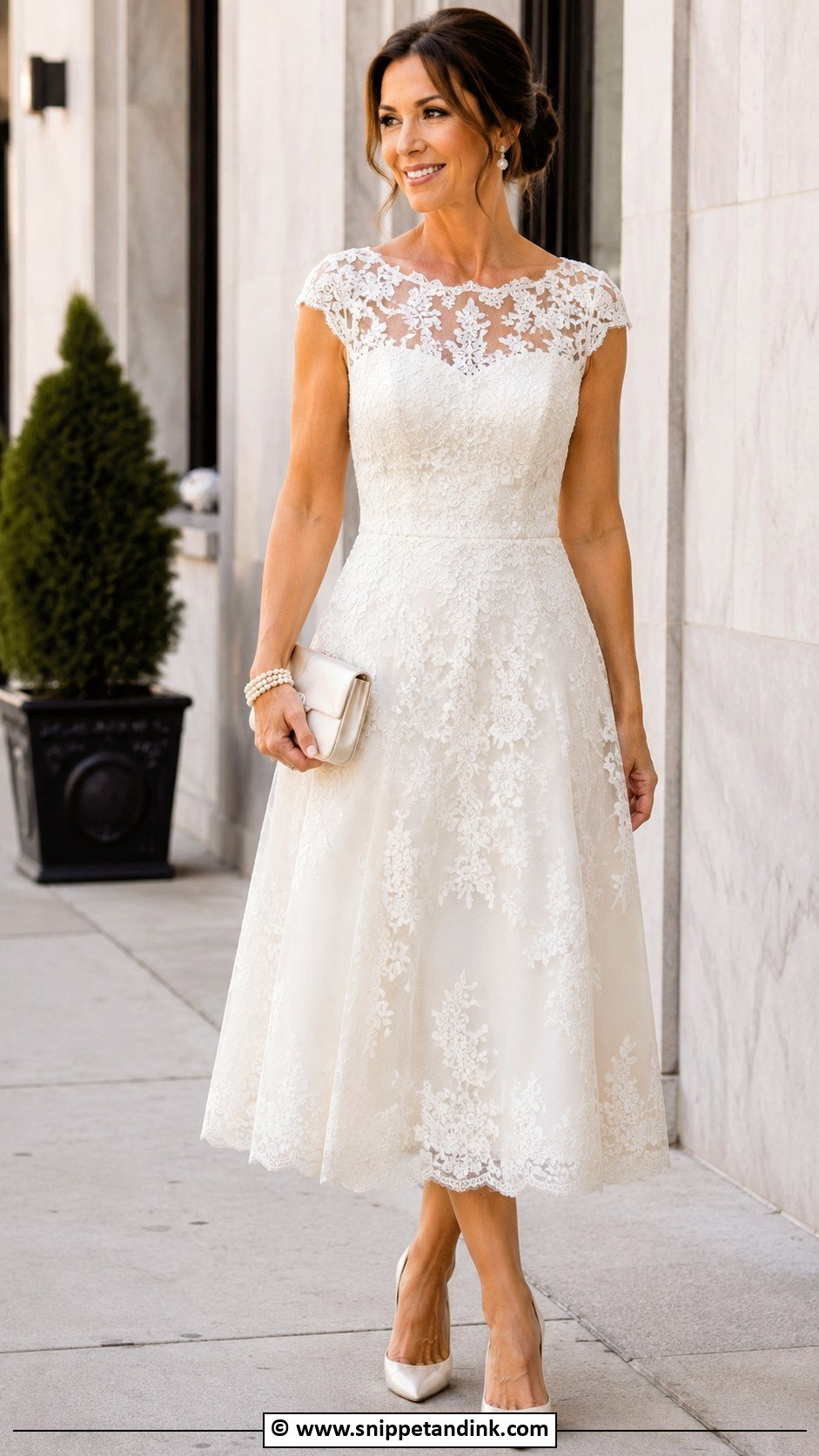
Full skirts reshape well into tea or calf length, and the extra fabric means I can balance the volume instead of simply chopping the hem. Original lace sleeves or appliqués placed back on the new bodice keep it recognizable to your mom without tipping into costume. My one warning: a calf-length hem can cut the leg at its widest point. I pin a few different lengths at the fitting and let you see each one in the mirror with your actual shoes on before anything is trimmed.
9. Mom Wedding Dress Slip Dress
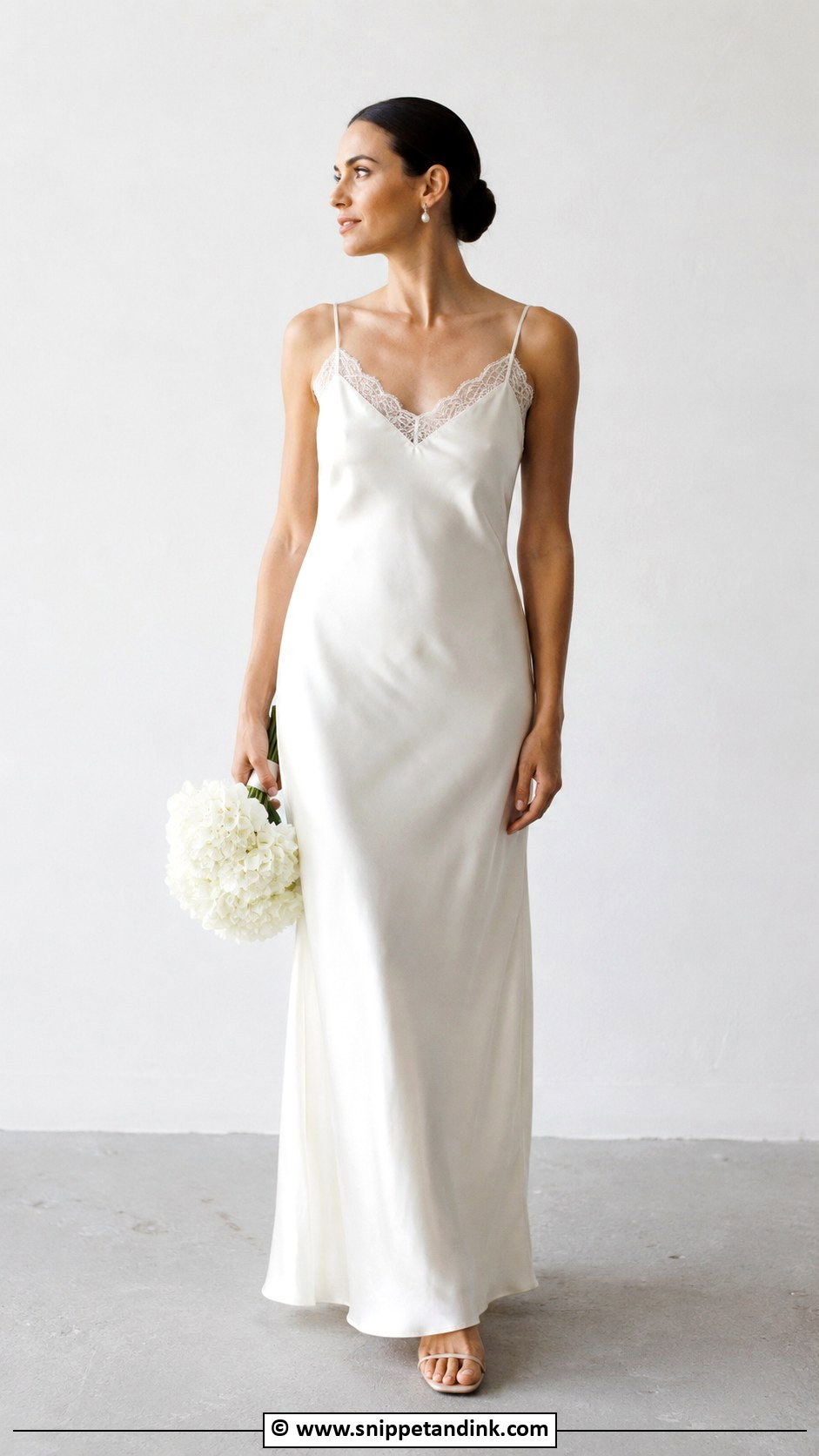
Smooth satin, charmeuse or even the old lining can become a slip dress, but only if it’s cut on the bias, and bias needs a lot of fabric because the pattern pieces sit diagonally. I check the yardage before promising it. Thin straps or a soft cowl suit the drape, and any lace can trim the neckline or become a matching shawl. Bias satin clings and shows what’s underneath, so smooth skin-tone underwear and a steam just before you dress aren’t optional. A sleek low bun keeps the whole thing quiet.
10. Mom Wedding Dress Lace Overlay Dress
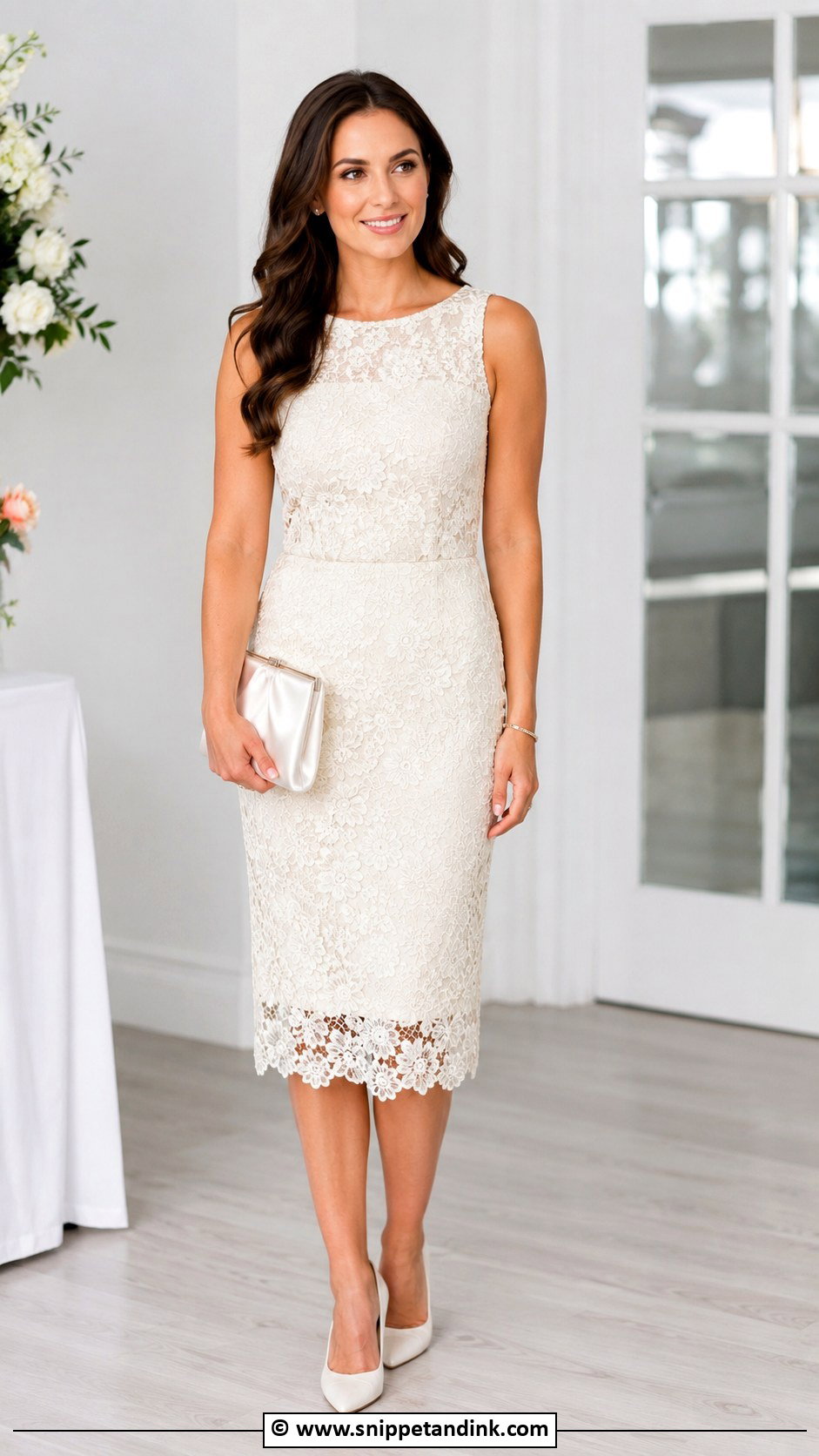
When the lace is the treasure, I unpick it by hand from the old dress and float it over a new lining. It’s slow work. Motifs often have to be cut apart and re-appliquéd along the new seams so the pattern doesn’t break awkwardly at the side. The reward is that fit and shape become entirely new while the part your mom remembers stays intact. A nude or soft ivory lining makes the pattern read clearly, and minimal jewelry lets it carry the outfit.
11. Mom Wedding Dress High Low Dress
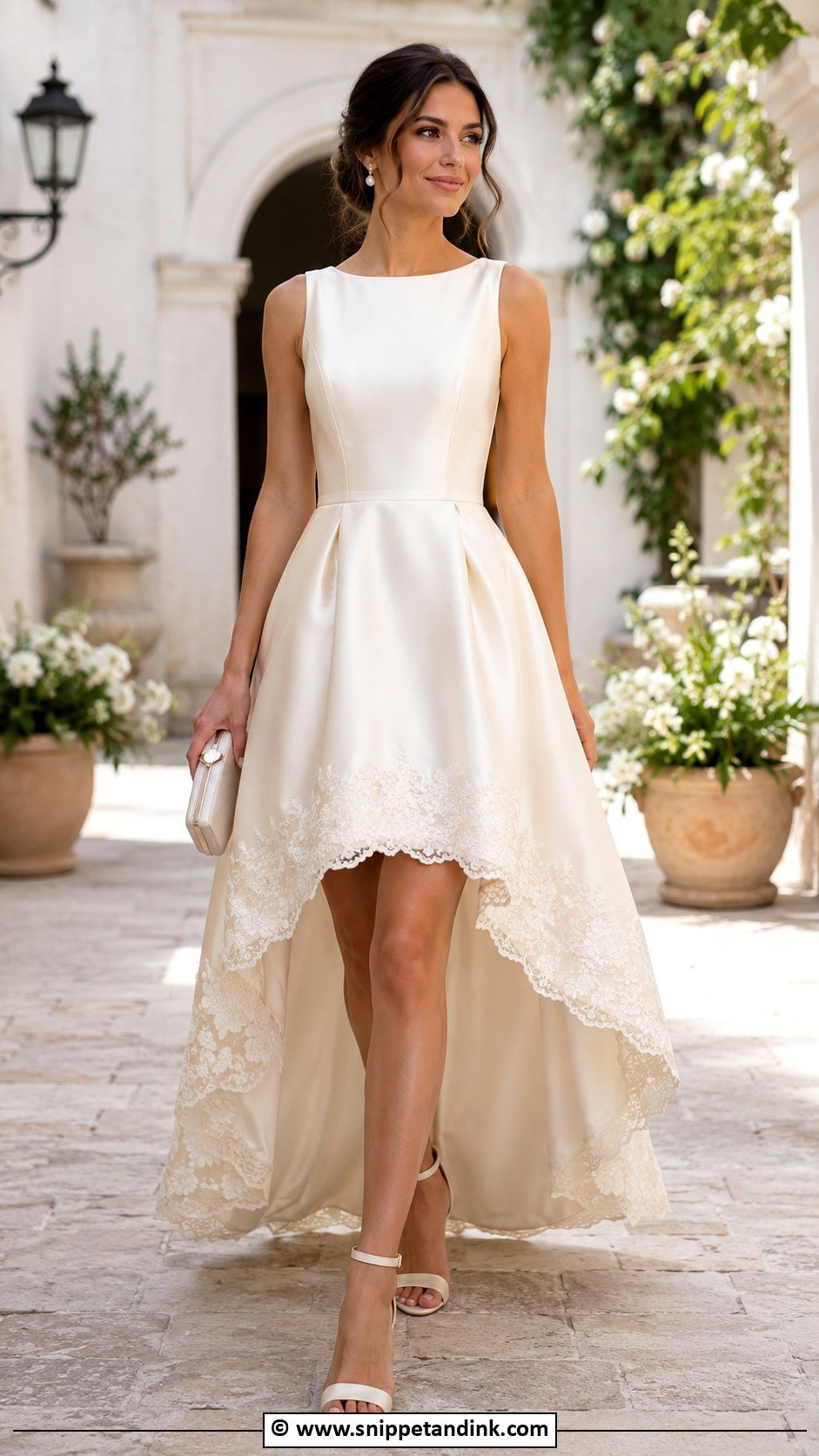
A detailed hemline or a long train makes a strong high-low dress, since the front can rise to show your shoes while the back keeps some of the old sweep. I’m careful with the curve between the two. Too steep and it looks theatrical; too gentle and it reads as an uneven hem. Ankle-strap heels help on grass, which is why I often suggest this cut for outdoor events. You get the movement of a long gown without the hem collecting mud.
12. Mom Wedding Dress Courthouse Outfit
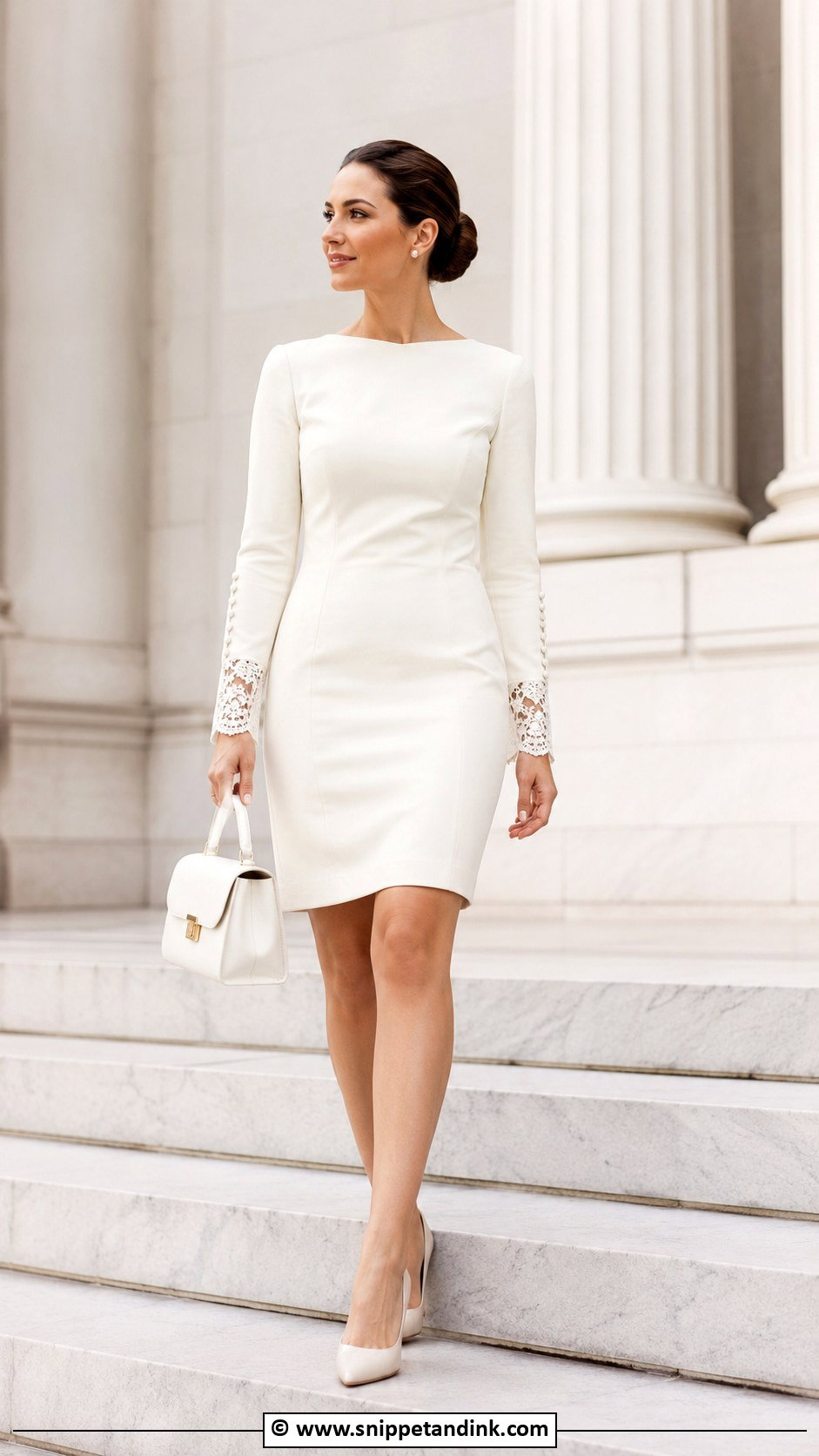
For a courthouse wedding, less volume is better. A short sheath, a lace midi or a satin top with trousers keeps the lines clean, and the heirloom can appear in small, precise places like lace cuffs or a bow at the back. Covered buttons are worth saving even if nothing else is. On older gowns they’re often hand-covered in the dress fabric, and I can move them onto almost any new garment. Closed-toe heels and a structured bag suit a civil ceremony.
13. Mom Wedding Dress Blazer Dress
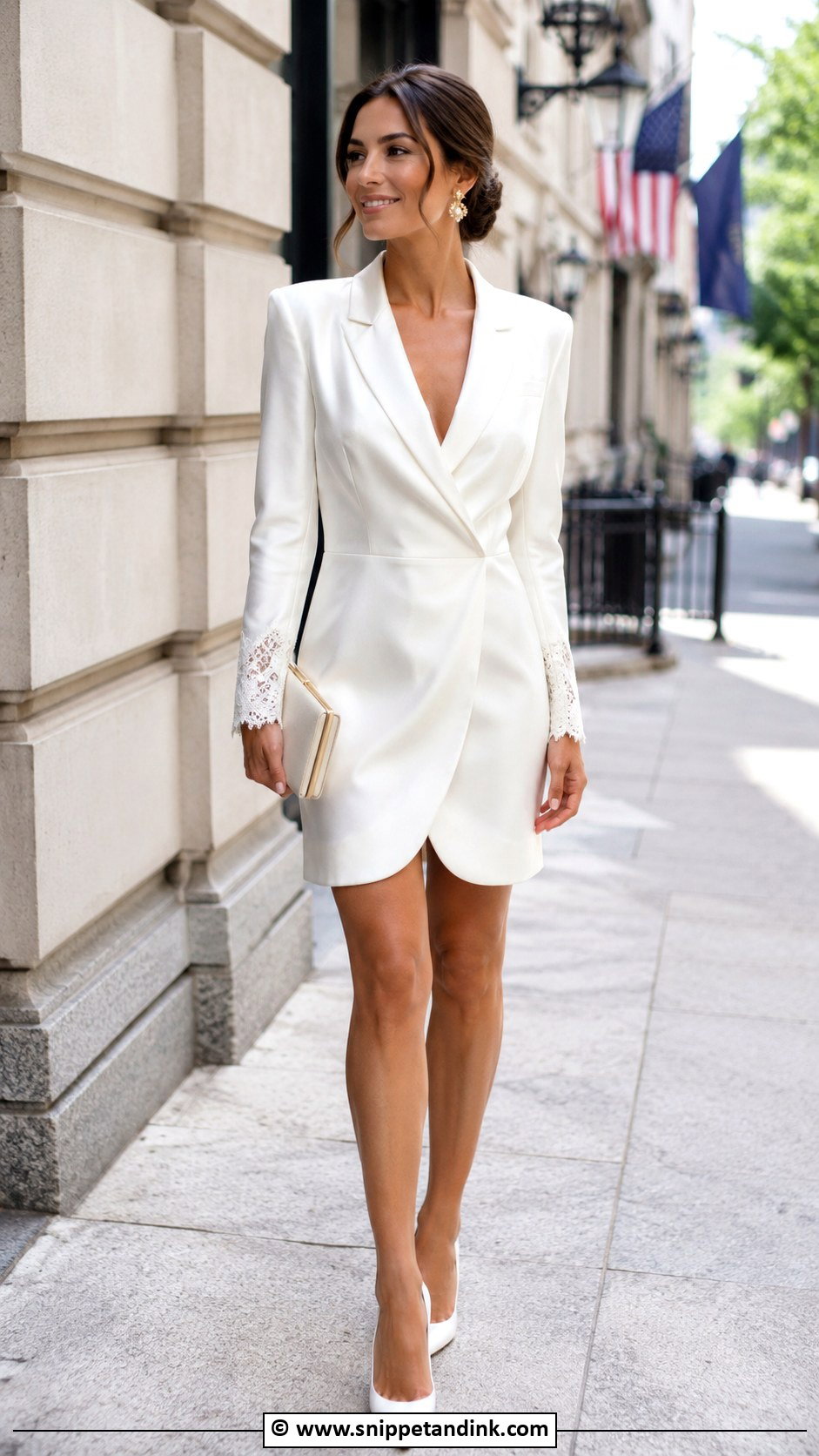
A blazer dress needs structure, which old satin rarely has after decades folded in a box. I back it with interfacing or a canvas front and use the original lace only at the cuffs, collar or hem, where it won’t have to hold shape. Mini or knee length works; anything longer starts to feel like a coat. Pointed pumps and small statement earrings suit a rehearsal dinner or a reception entrance. It’s a confident, crisp choice, though not the one for you if you want to feel soft and floaty.
14. Mom Wedding Dress Jumpsuit
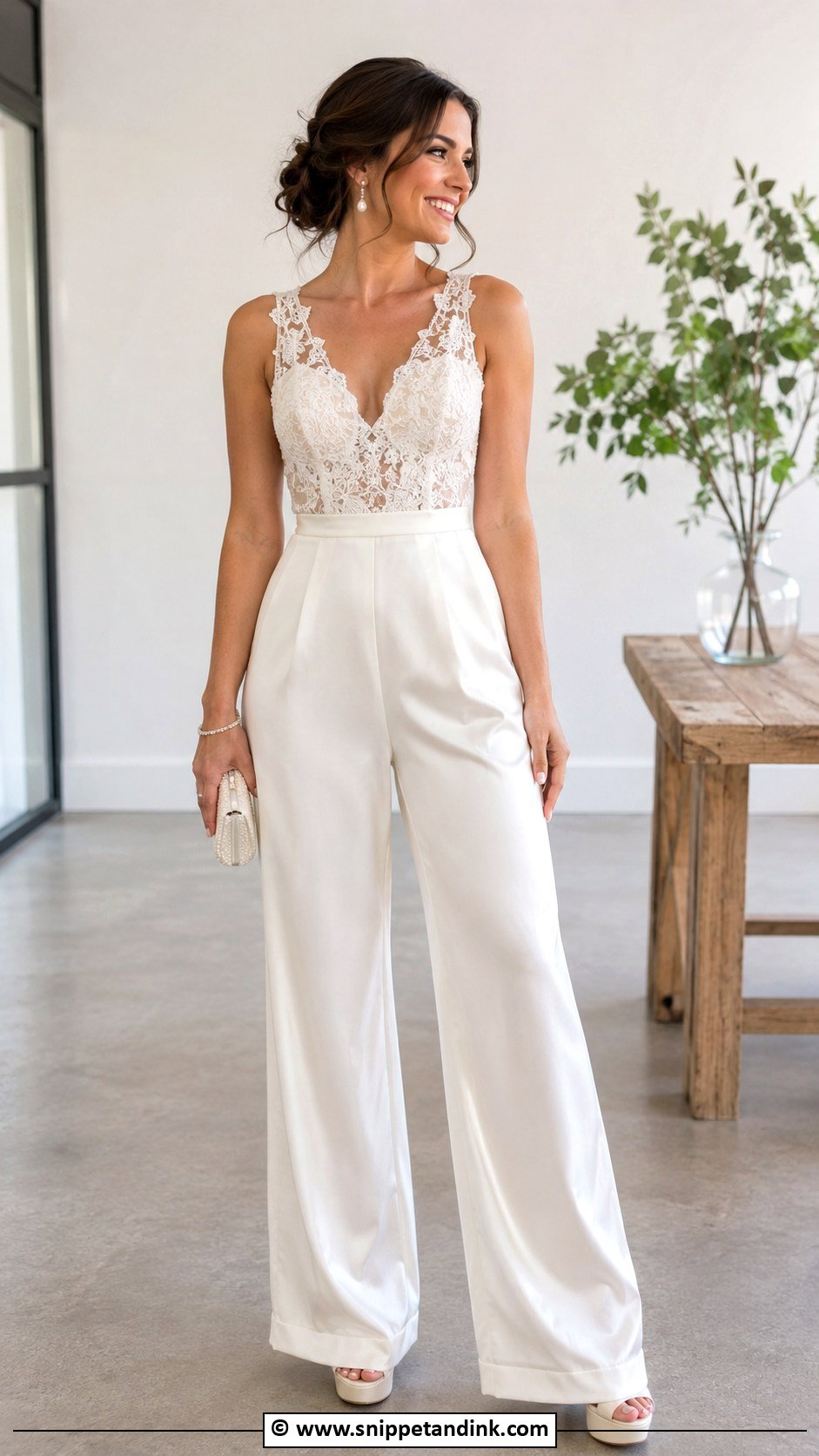
Jumpsuits are comfortable to wear and tricky to fit, because the body length from shoulder to crotch has to be right or you’ll feel it every time you sit. I always make a mock-up in inexpensive fabric before cutting any heirloom satin. Bodice lace, buttons or beading go up top; the wide legs come from the skirt or lining. A belt or removable bow adds waist definition. Plan the bathroom question too, because a back zip you can reach yourself makes a long reception far easier.
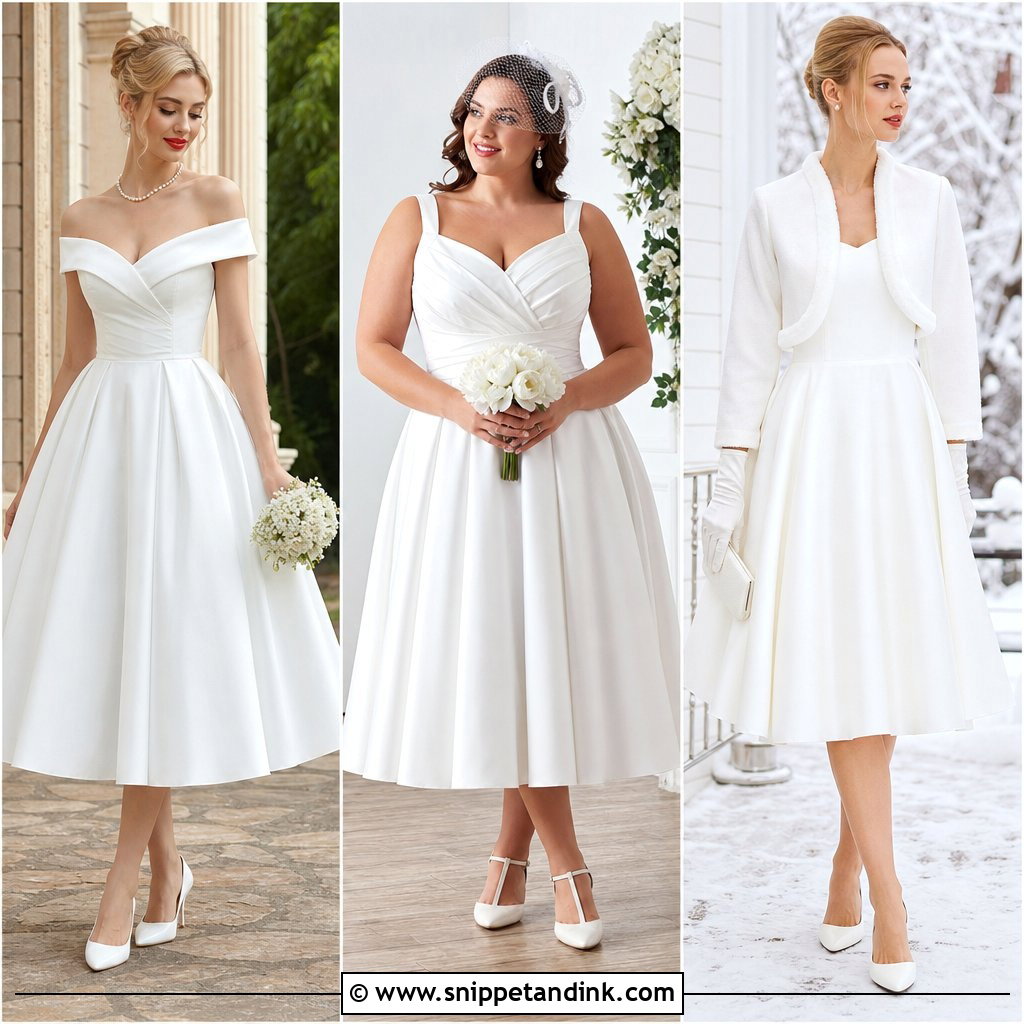
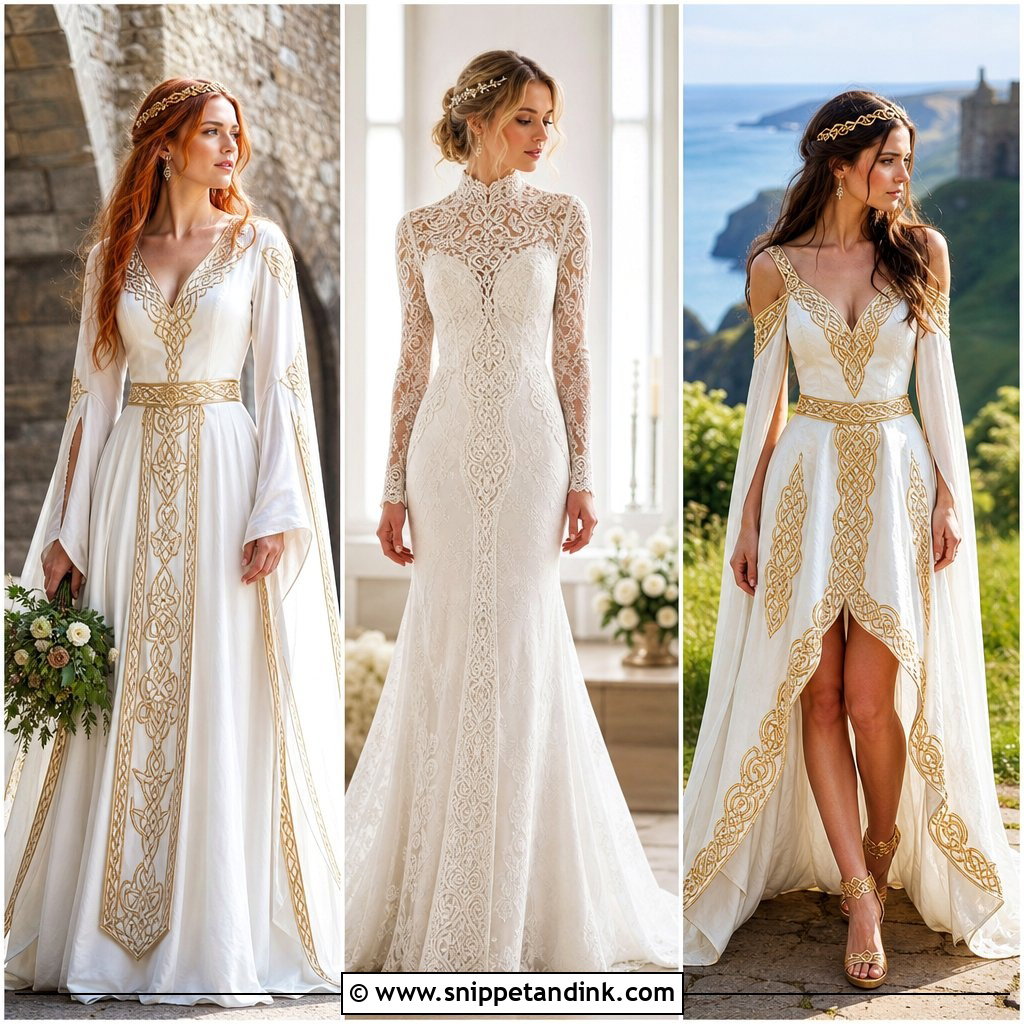
15. Mom Wedding Dress Bridal Robe Outfit
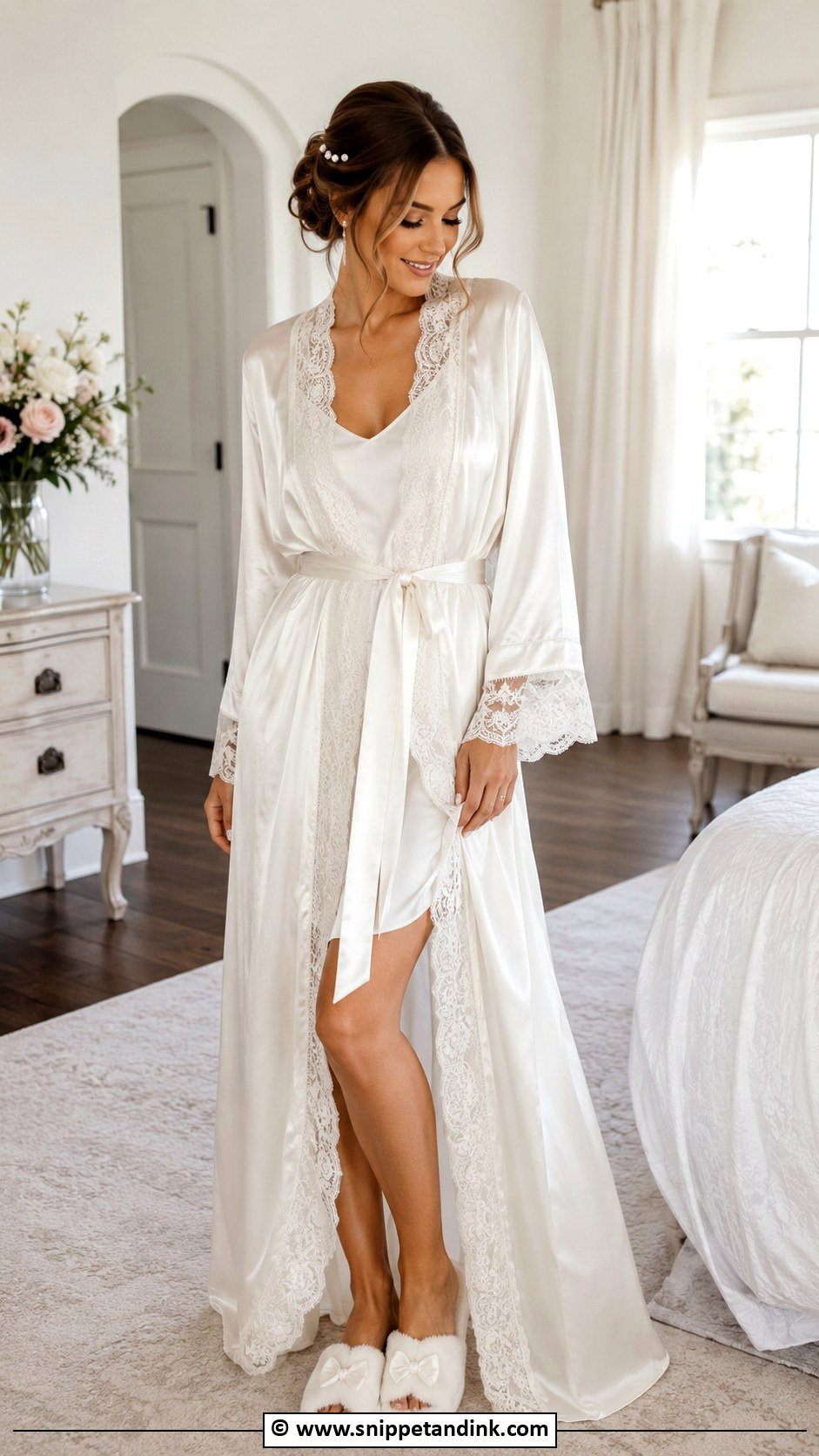
A bridal robe is my favorite answer for a gown too fragile to wear for twelve hours. Satin and sheer sleeves become a wrap robe with a soft tie, worn over a white slip or a cami and shorts while hair and makeup happen. Because it’s only worn for a morning, delicate lace survives it well. One practical note: ask your makeup artist to cape you anyway, since foundation on vintage satin rarely comes out cleanly.
16. Mom Wedding Dress Getting Ready Set
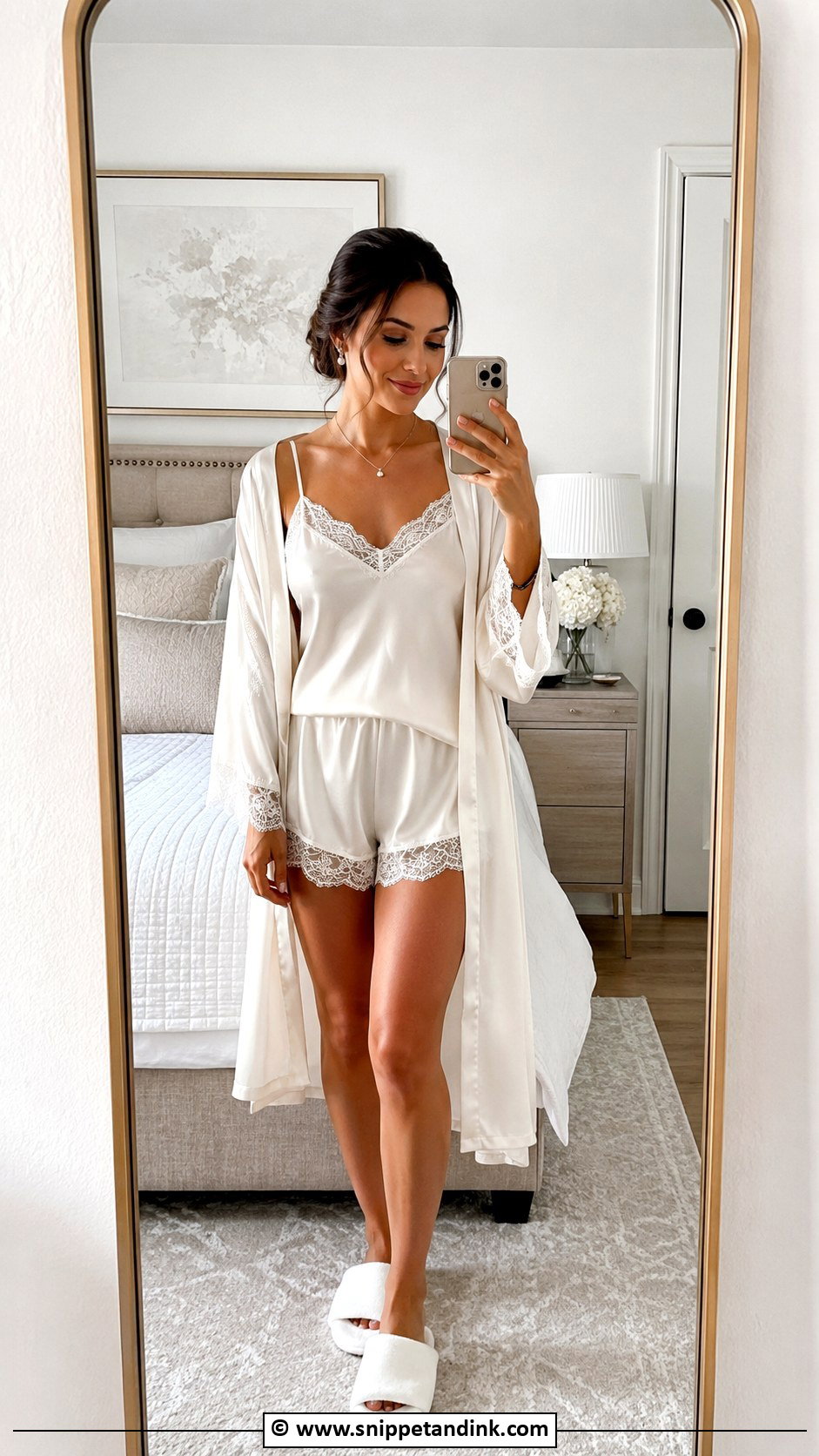
A cami-and-shorts set or a button-front lounge outfit works when the fabric is soft enough to sit in for a few hours. Stiff satin and scratchy beaded lace don’t qualify; I test by rubbing a swatch on the inside of the wrist. Keep any special lace on the neckline or hem, where it shows in photos without rubbing against the chair. It’s a gentle use of the gown that doesn’t commit you to a full redesign, and white slippers are all it needs.
17. Mom Wedding Dress Veil Outfit
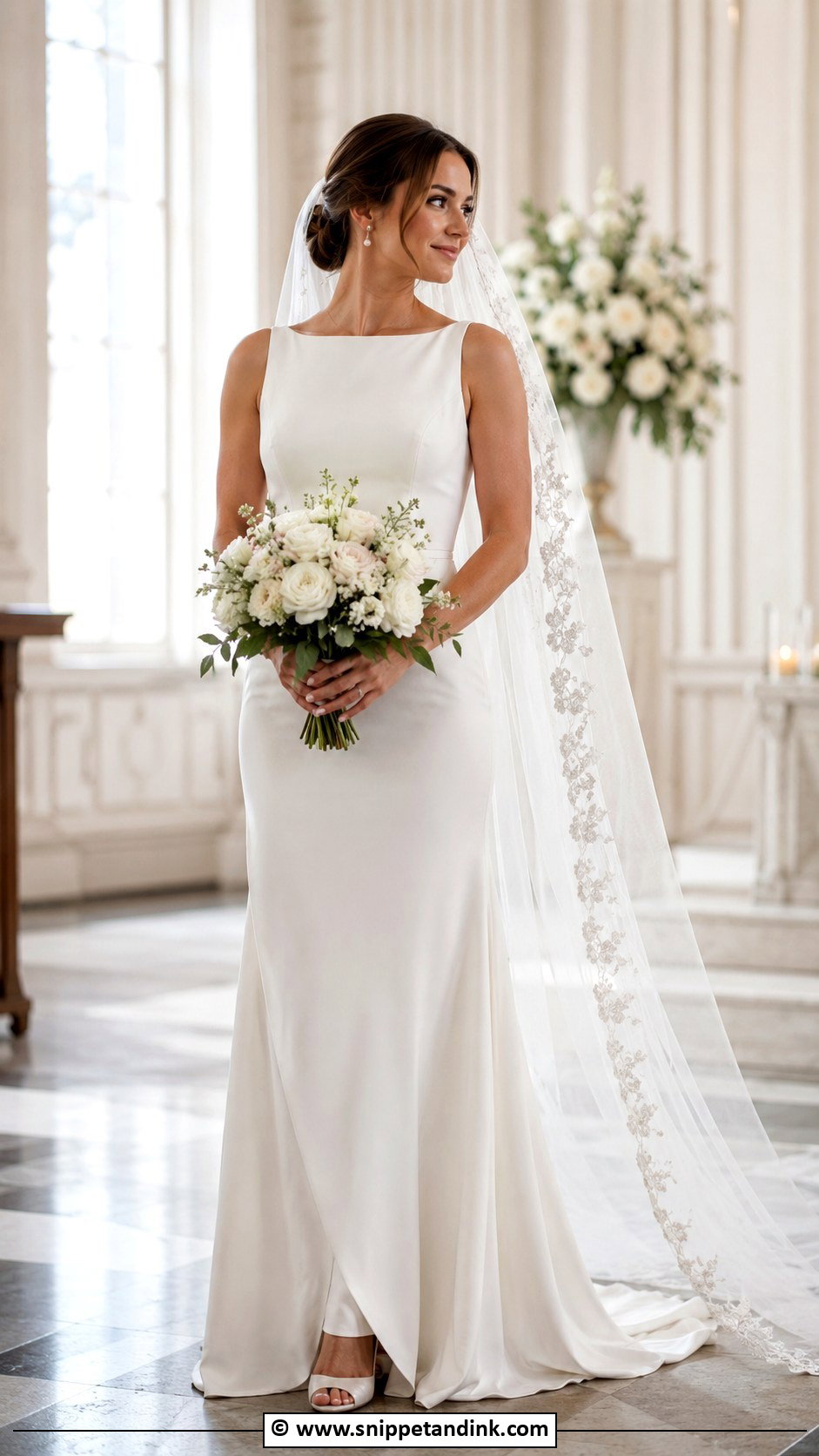
Not every bride wants to cut her mother’s gown, and you don’t have to. Lace from the sleeves, bodice or hem can edge a new veil or be scattered as appliqués across the tulle. I place the motifs more densely near the face and lighter toward the hem so the veil still falls straight instead of dragging to one side. Pair it with a simple gown so the heirloom detail is what people notice. Hand-stitched appliqués take time, so allow several weeks rather than asking for a rush job.
18. Mom Wedding Dress Cape Outfit
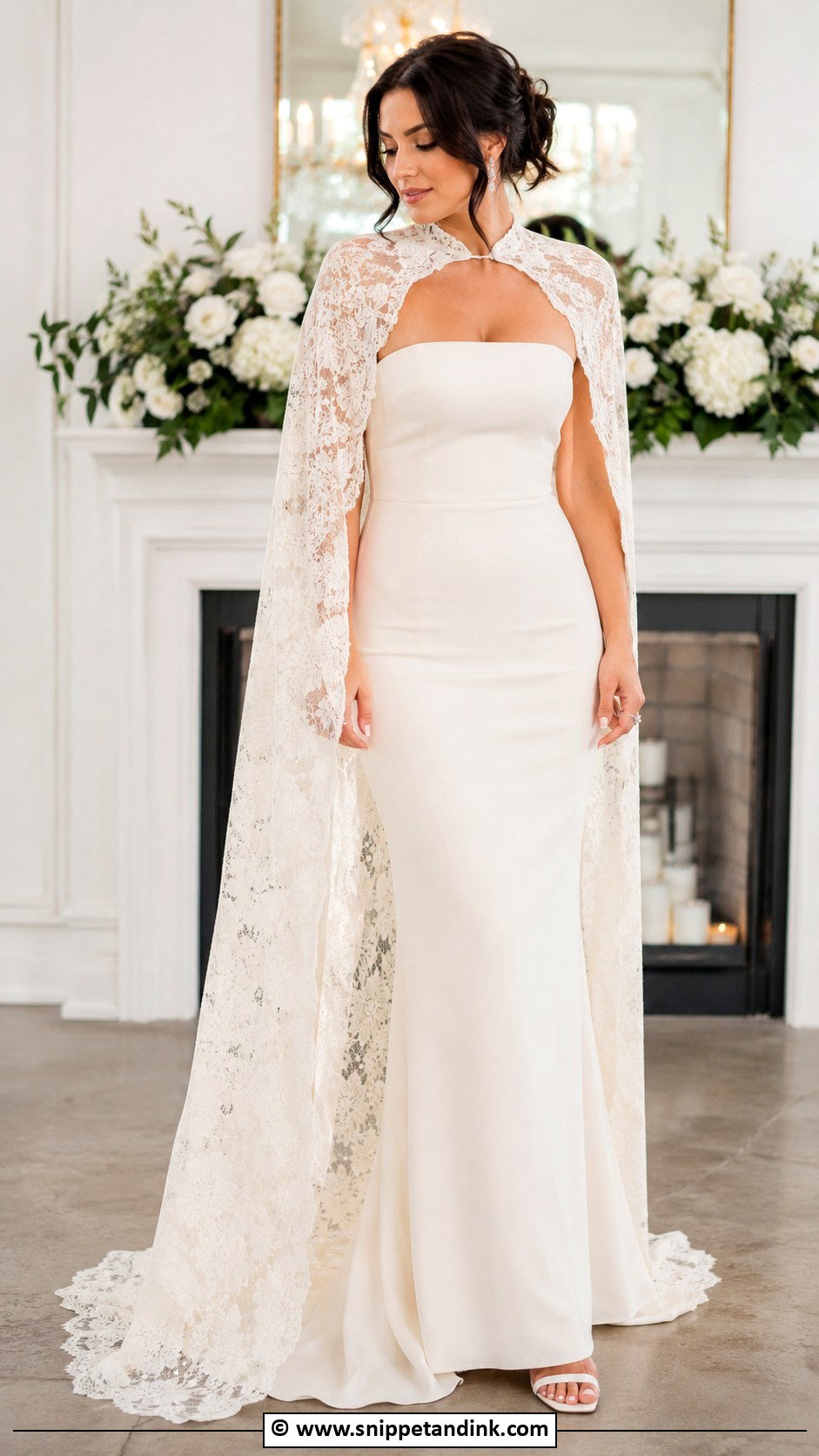
A bridal cape lets a long train or sheer panel stay dramatic without changing the outfit underneath. Tulle and light lace become a shoulder capelet or a long overlay worn over a strapless gown or a sleek jumpsuit. Weight matters here. A heavy satin train pulls a cape backward and presses on your throat, so I add hidden loops at the shoulders or use only the lightest fabric. It comes off for dancing and stays on for the portraits.
19. Mom Wedding Dress Detachable Overskirt Outfit
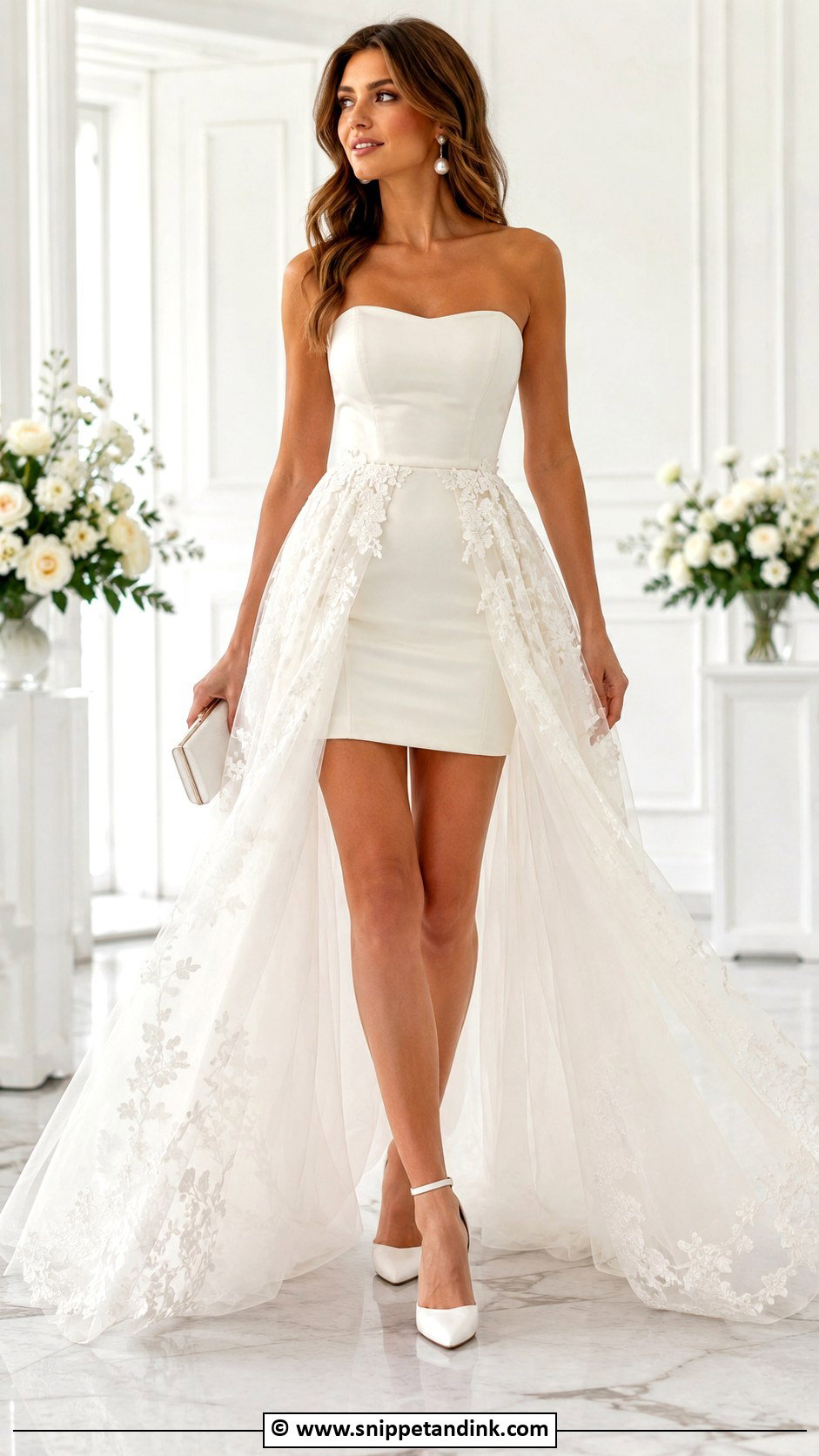
An overskirt gives you two looks from one outfit, and it’s an excellent home for a big tulle, organza or satin train. It fastens over a fitted gown, mini or jumpsuit for the ceremony and portraits, then comes off for the reception. The fastening is where these fail: snaps pop under the weight of satin, so I use hooks and a hidden waistband with a button. Practice taking it off once with whoever will help you, because rushing it is when fabric tears.

20. Mom Wedding Dress Bolero Outfit
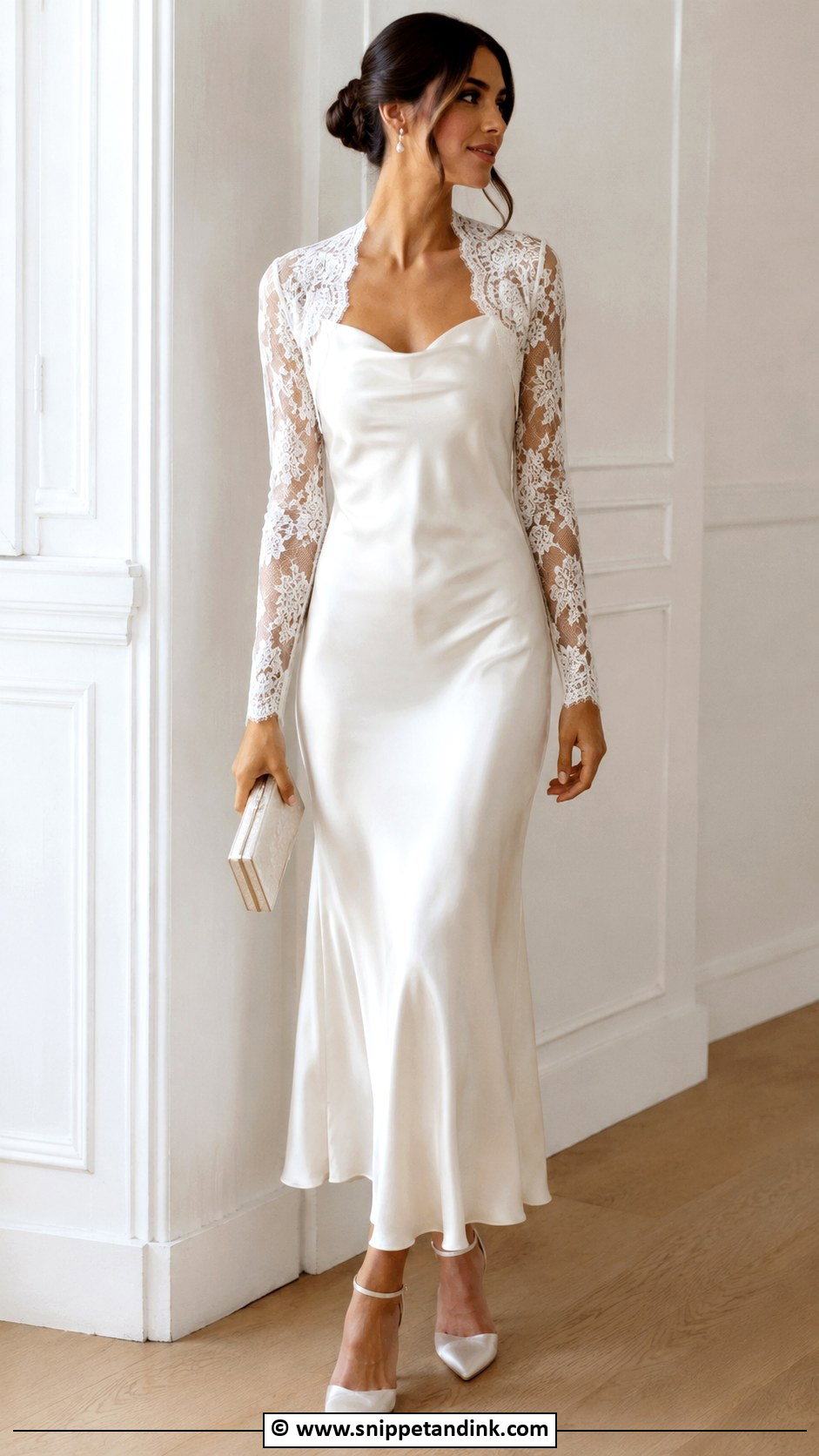
Sleeves and beaded lace are often the most usable fabric in an older gown, and a cropped bolero is a neat way to keep them. It goes over a strapless gown, slip dress or jumpsuit and adds coverage for a church ceremony or cooler weather. I keep the fit close through the shoulders, since a bolero that’s even slightly loose looks borrowed rather than made. Wear it for the vows, take it off later, and you have a second look in the photos.
21. Mom Wedding Dress Bridal Skirt Outfit
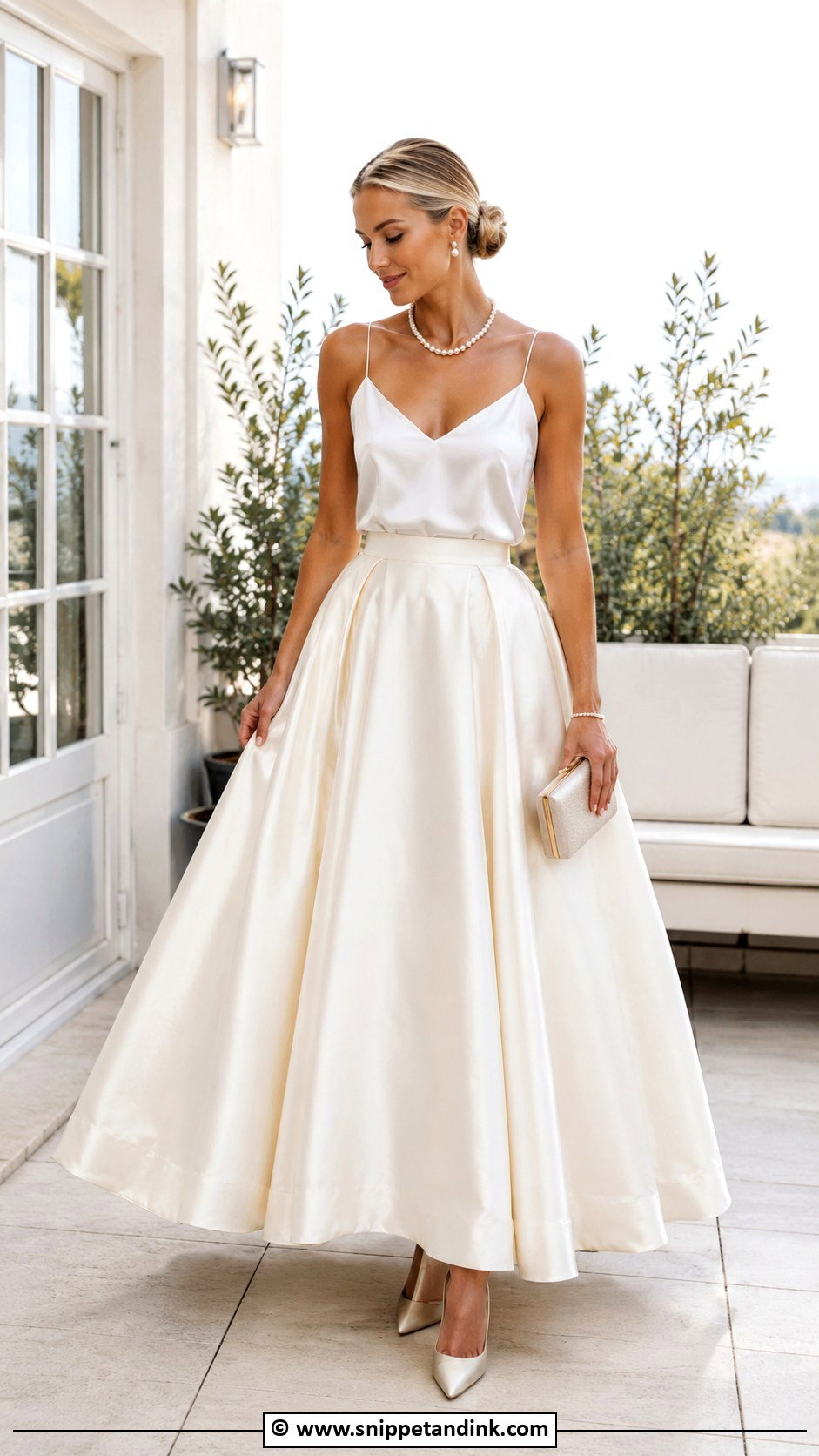
If the bodice has stains or underarm wear but the skirt is sound, the skirt alone can lead a whole outfit. Full satin, lace or tea-length tulle all pair well with a fitted top. I prefer a bodysuit under a full skirt because it stays tucked when you raise your arms to hug people. Heels and pearl jewelry keep it polished. It’s a practical route for gowns that aged unevenly, which is common when a dress was stored folded with the bodice on top.
22. Mom Wedding Dress Bridal Top Outfit
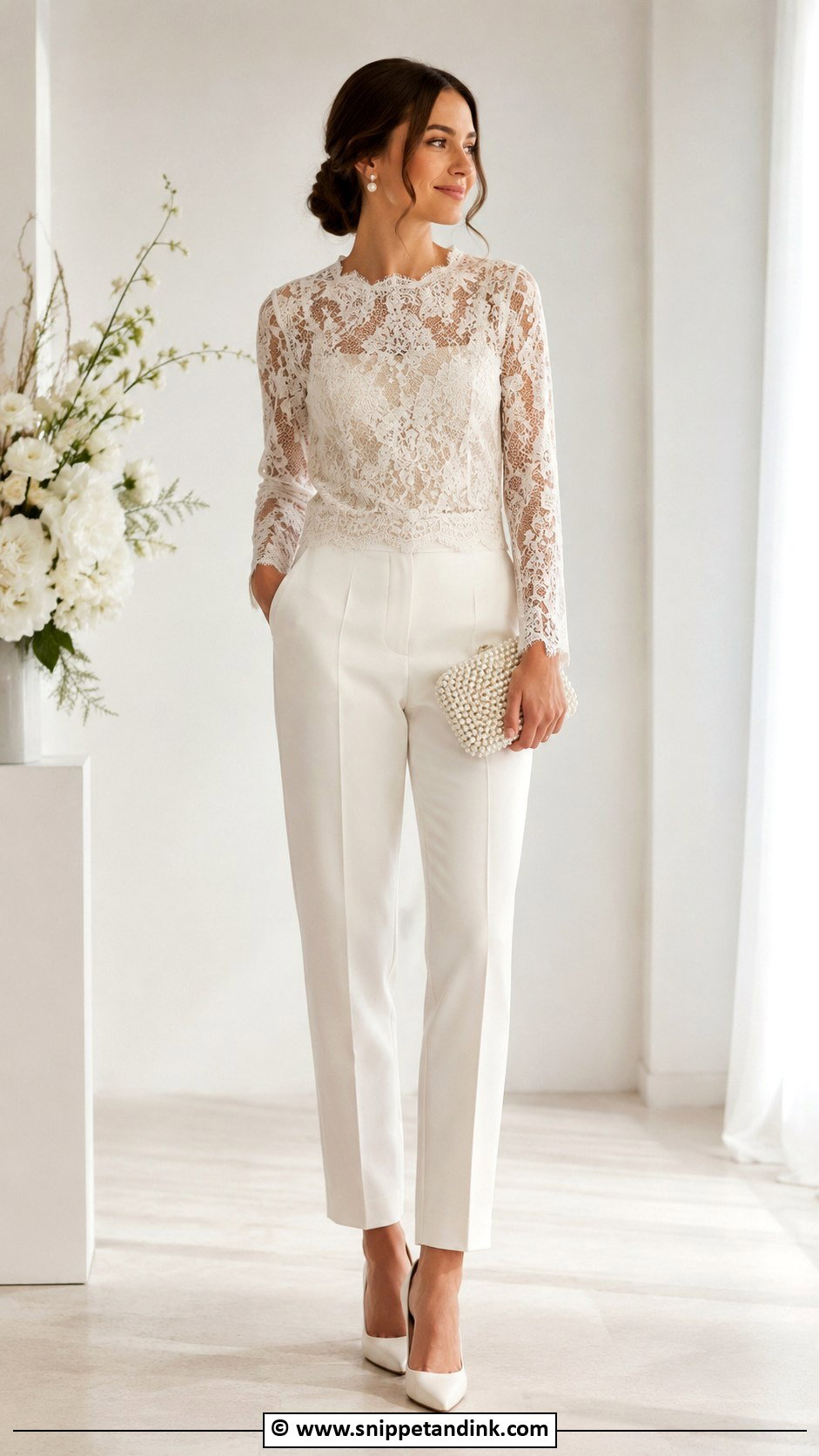
Sometimes the silhouette is beyond saving but the fabric isn’t. A lace blouse, satin shell, peplum or sleeveless button-back top needs very little yardage and gives you full control over fit. Wear it with ivory trousers or a simple skirt and pointed heels. I suggest this when only one section of the gown is usable, since a top can be cut around damage that would rule out a full dress.
23. Mom Wedding Dress Flower Girl Outfit
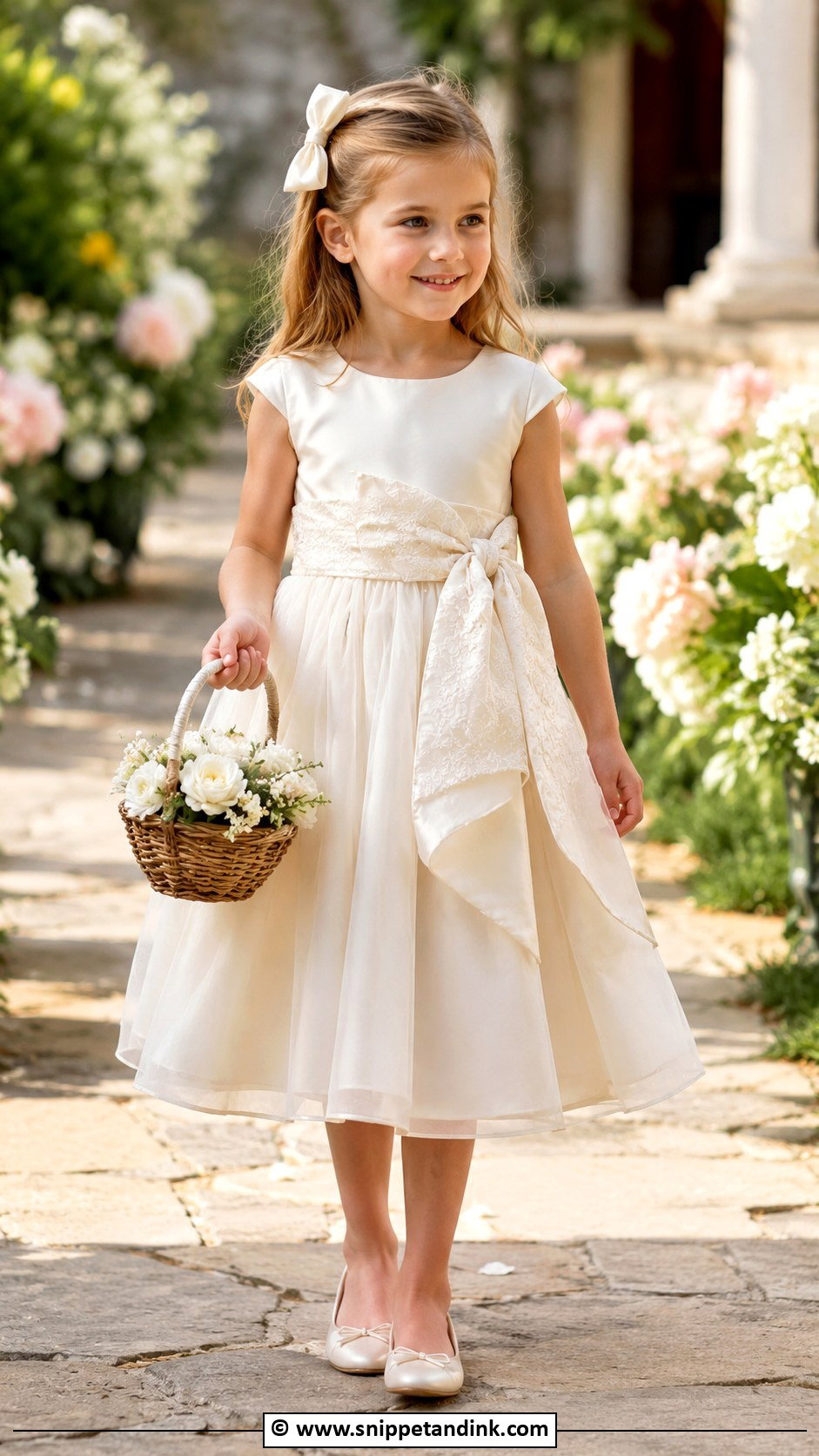
Children wriggle, so a flower girl dress from your mom’s gown has to be built for comfort first. I line it in soft cotton, keep beading away from the underarms and neckline where it scratches, and leave a deep hem so it can be let down if the fitting happens months ahead. Satin can become a little white dress, a sash or a bow; lace works as a capelet or skirt overlay. Ballet flats and a simple hair bow suit it. It brings the gown into the ceremony without the bride wearing it, which some families prefer.
24. Mom Wedding Dress Bridal Clutch Outfit
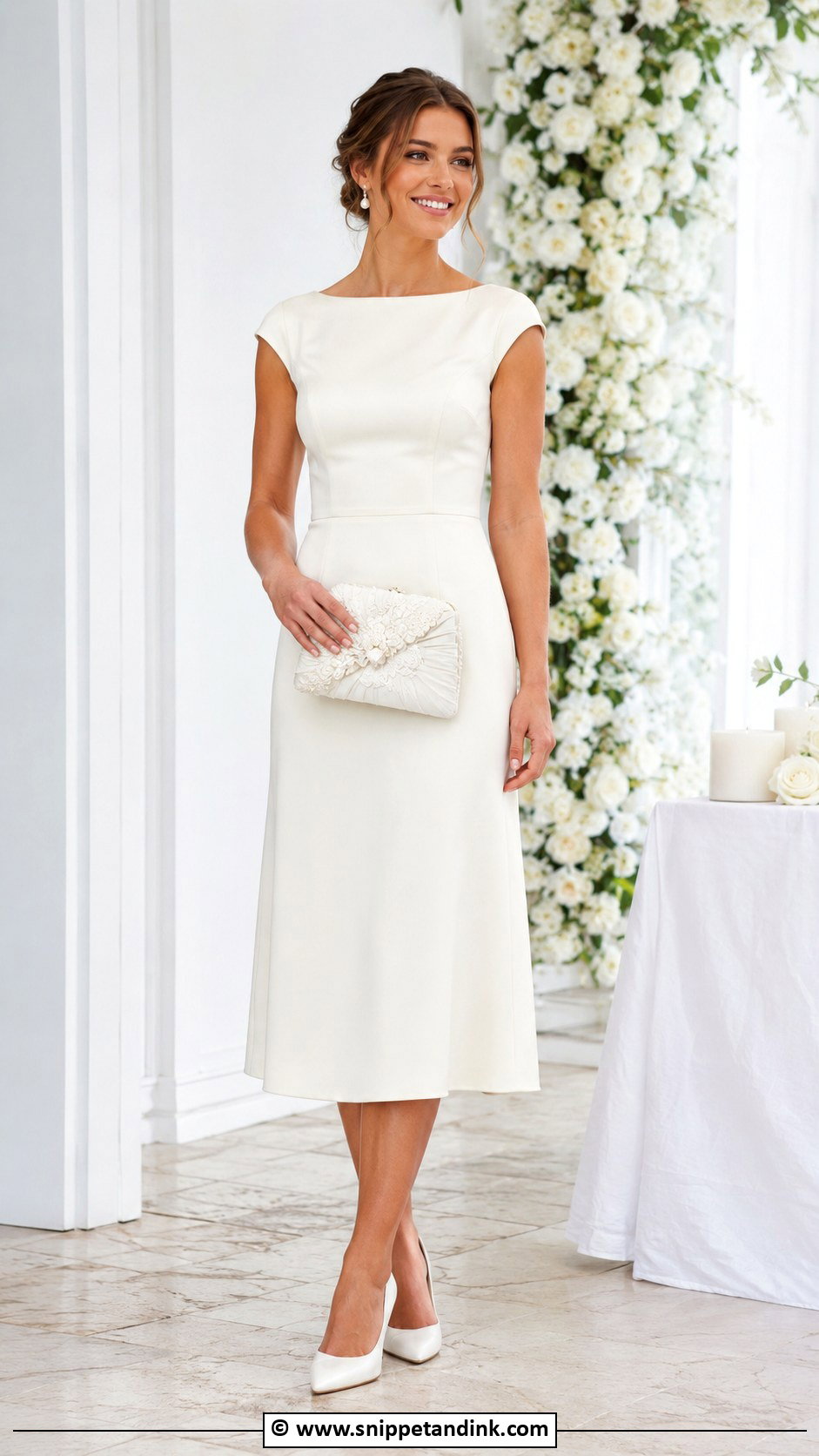
A clutch is the gentlest redesign, and the one I recommend when a gown is badly damaged or the family wants to keep most of it intact. Satin, lace, buttons or a single appliqué can cover a small frame bag, and the piece needed is so small it can often come from inside the hem. Carry it with your ceremony gown or reception outfit, then bring it out again at anniversaries and family events. A small piece can still carry a lot of feeling.
25. Mom Wedding Dress Hair Bow Outfit
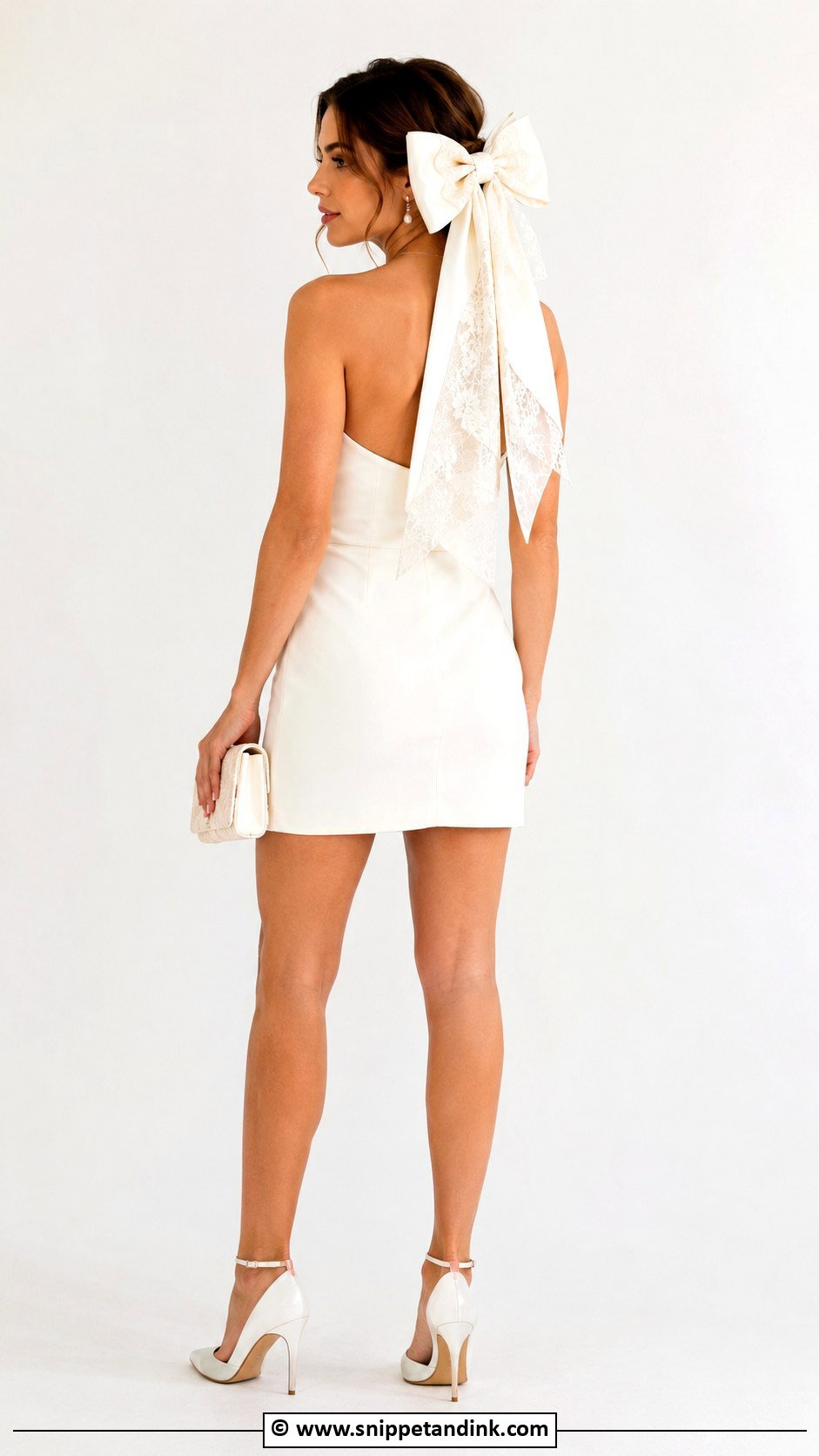
A bow uses very little fabric and sits right where guests look during the ceremony. Satin makes a clean oversized bow, and lace layered over it adds texture. I stiffen it with interfacing and stitch it to a clip or comb, because a soft satin bow wilts by the end of the night. It sits well at the back of a low ponytail, a half-up style or a soft bun. Ask your hairstylist to test the clip at your trial so it’s anchored into the style, not just slid in.
A Realistic Timeline for Remaking a Family Gown
For a full dress, start four to six months out, and longer if lace has to be moved by hand. The sequence I work through looks like this:
- Consultation and fabric assessment, ideally with your mom in the room.
- Cleaning and stain treatment, which can take a few weeks on its own.
- A mock-up in inexpensive fabric, so the shape is settled before any heirloom fabric is cut.
- Cutting and construction, followed by two or three fittings.
- A final fitting about two weeks before the event, in your real shoes and underwear.
Smaller pieces move faster. A clutch, a bow or veil trim can often be finished within a few weeks, which makes them a good fallback if the bigger plan runs short on time. Costs vary widely by region and by how much hand work is involved, and moving lace by hand is usually where the bill grows.
What Happens to the Leftover Fabric
Ask your tailor to return every scrap, bagged and labeled. Leftover lace can mend the new garment later, trim a christening gown, or be framed beside a photo of your mom in the original. Store the finished piece and the offcuts in acid-free tissue inside a breathable cotton bag or archival box. Keep them away from plastic, attics and basements, where heat and damp do the most harm, and refold the tissue every year or so to stop permanent creases settling in the same place.
Your Mom Should See the Plan Before the Scissors Do
A redone gown can be dramatic or almost invisible. The whole dress can become a new dress, a pantsuit or a robe, and smaller pieces can become a veil, a clutch or a bow. What decides it is the condition of the fabric, the events you’re dressing for and how much of the original your mom hopes to recognize. Bring her to the first consultation if you can. A skilled bridal tailor will protect the delicate parts, but only the two of you can decide which parts matter most.
You'll Like These Ideas:


Leave a Reply