
A Rajwadi bride is dressed in layers, and every layer has a job: the ghagra carries the volume, the kanchli and kurti hold the shape, the odhni frames the face, and the jewelry sits where the drape leaves room for it. The looks below cover the wedding ceremony, palace receptions and the functions before them, from classic red poshaks and velvet lehengas to Bandhani, Leheriya, pastels and sarees. For each one I’ve noted the jewelry, veil, hair, makeup and footwear I’d pair with it, because the borla, aad, nath, bajuband and hathphool only look authentic when they’re planned around the neckline and the veil rather than added at the end. Traditional or a little modern, you should find a look here you can actually wear for six hours.
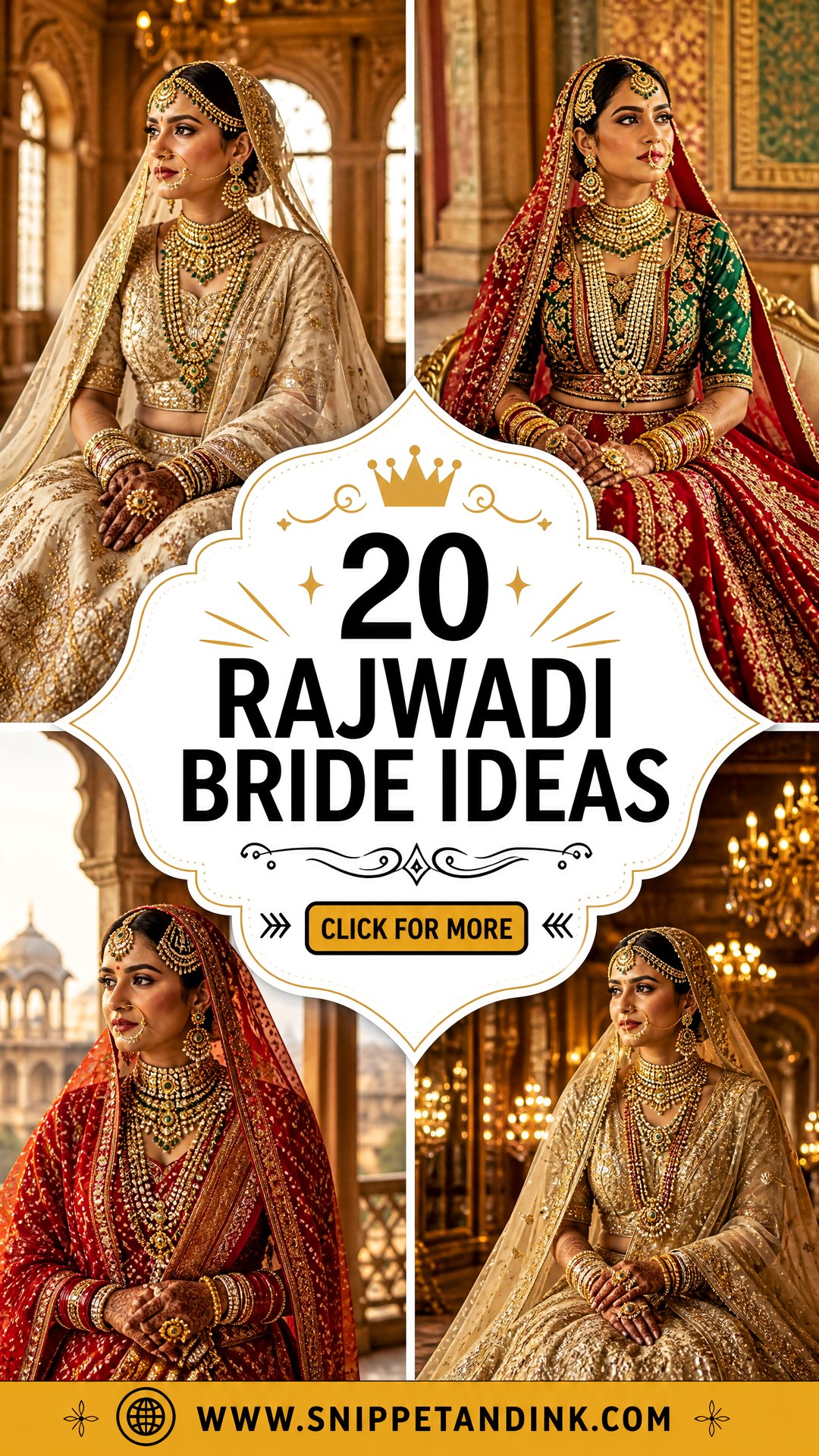
Poshak, Lehenga or Saree? Sorting Out the Pieces Before the First Fitting
Brides often arrive at my first appointment calling everything a lehenga, so here is how I separate them. A Rajputi poshak has four parts: the kurti, a short fitted top; the kanchli, a bodice worn under it; the ghagra, a wide pleated skirt; and the odhni, a long veil that is tucked into the ghagra at the front waist and carried over the head. A lehenga set is three pieces, blouse, skirt and dupatta. A saree is one draped length with a blouse. All three can be dressed in a Rajwadi way. The difference is how much fabric you’re managing and where the weight sits.
Weight is the question I ask about first. A ghagra cut from many panels with full Gota Patti or zardozi can be several kilos before you add jewelry, and it all hangs from your waist. If you have a long phera ceremony or a lot of standing, I’d steer you toward lighter base fabric with the heavy work kept to the hem and borders.
What I bring to the fittings
- The actual juttis or heels, so the ghagra length is set at the right height
- The borla, or one the same size, so the hairstylist and I can plan the parting
- The heaviest necklace, to see whether the blouse neckline lets it lie flat
- Safety pins and a few long hairpins, because the odhni is always tested pinned, never loose
1. Red Rajputi Poshak Bridal Look
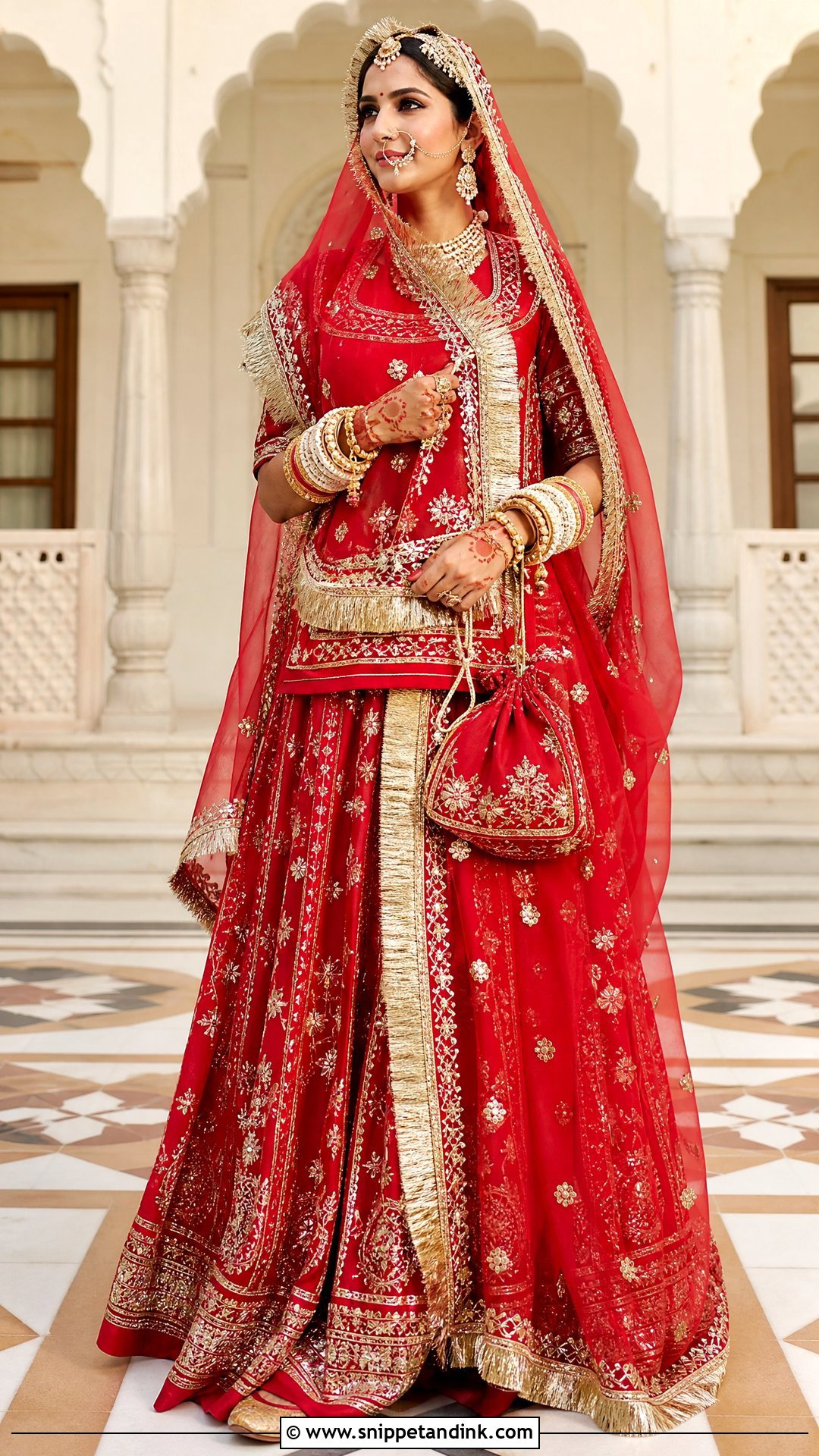
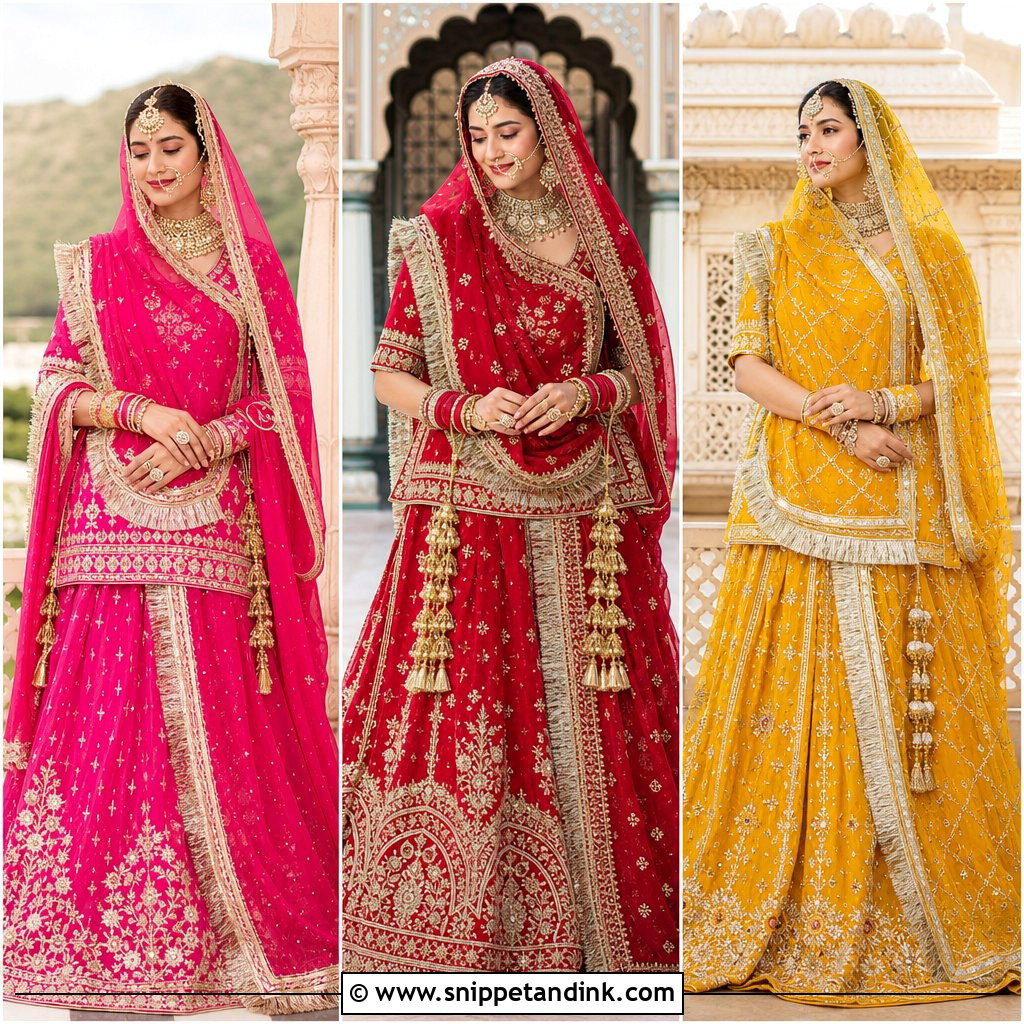
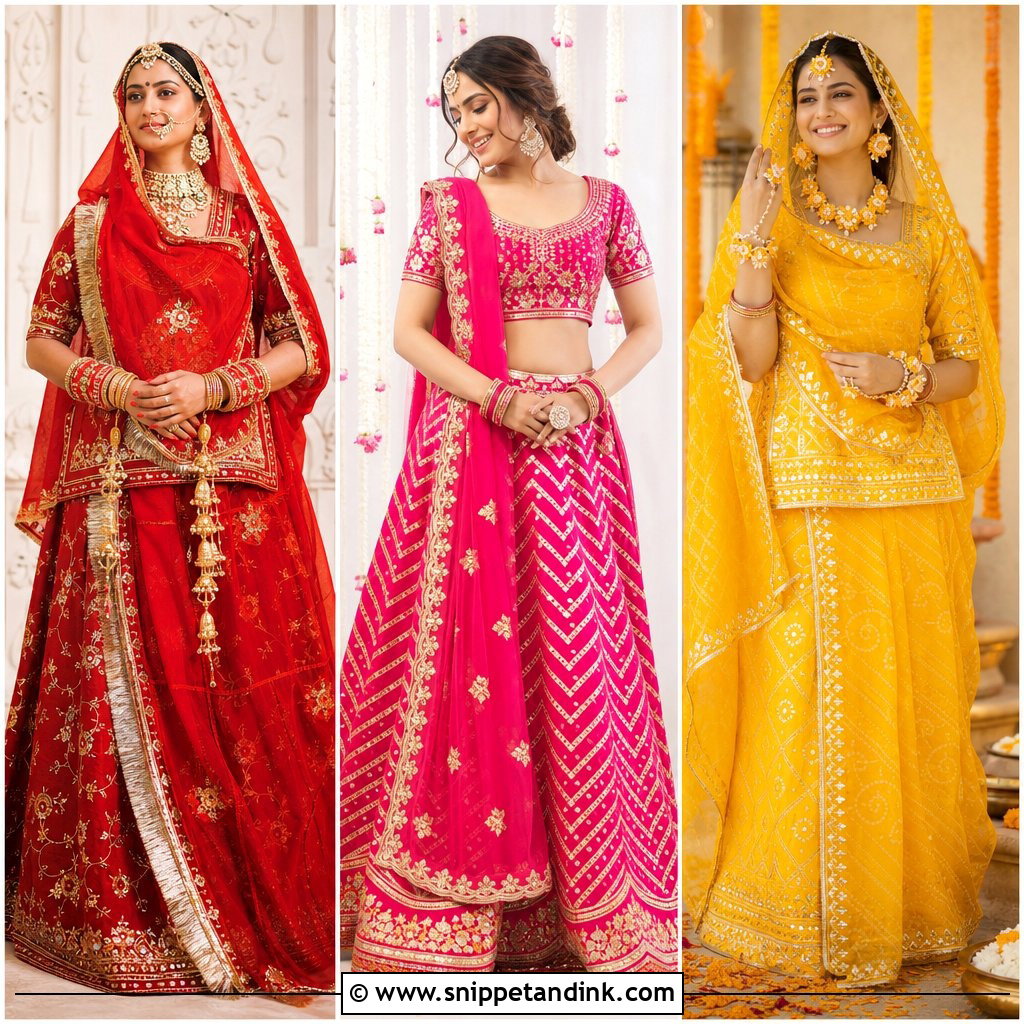
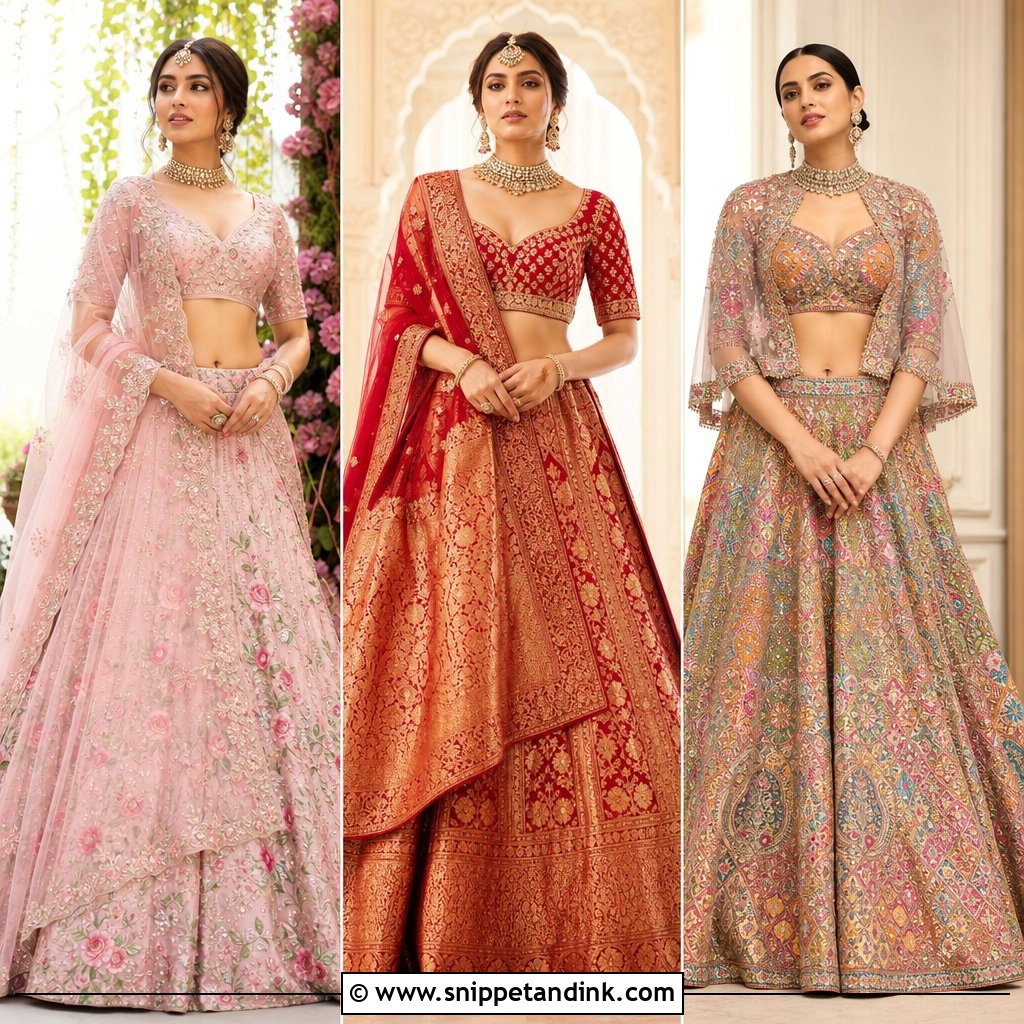
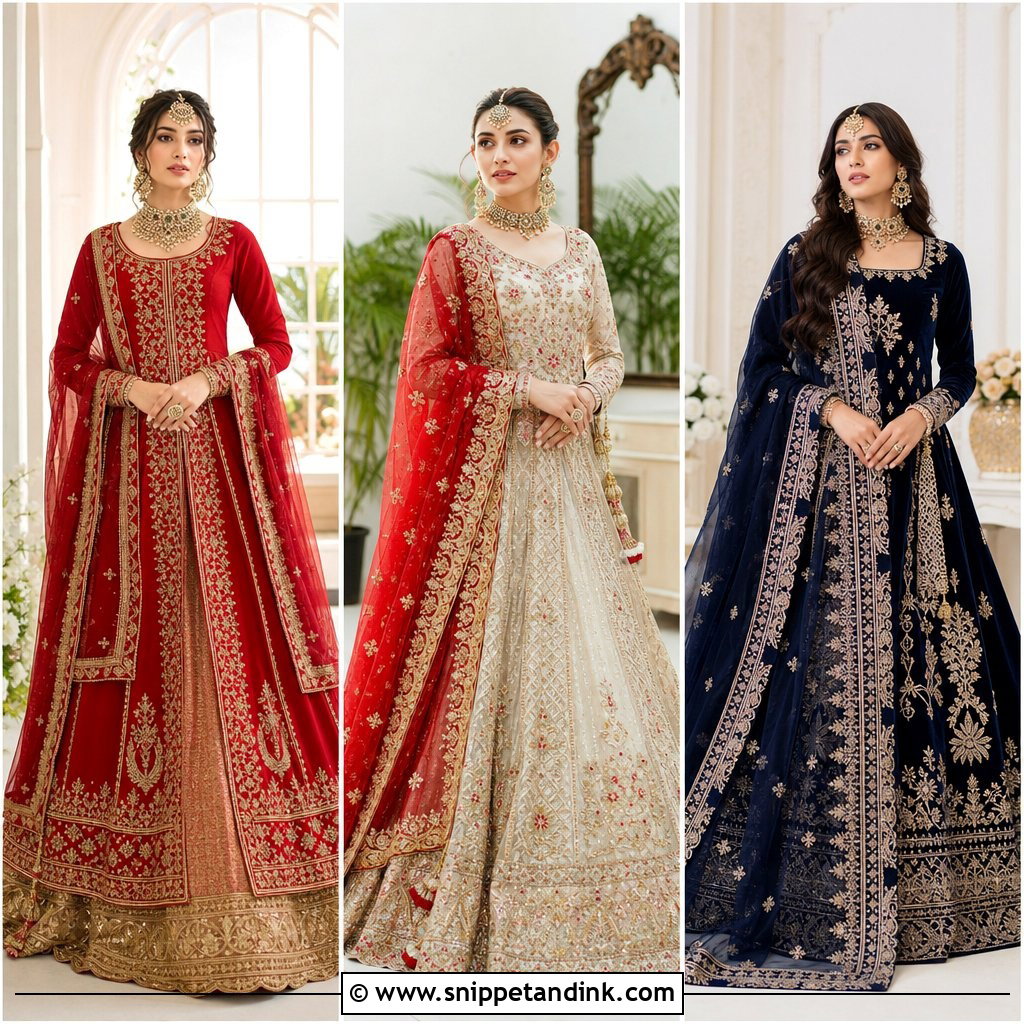
A traditional red Rajputi poshak is the outfit I’d reach for first for the main ceremony, because the four pieces were designed to work together: a flared ghagra, the kurti, the kanchli underneath and a richly bordered odhni. Gota Patti, zari or hand embroidery adds grandeur, but I always ask the maker to keep the densest work on the hem and odhni border so the red still shows. Pair it with an aad necklace, borla, a large nath, earrings, bajuband and stacked bangles. A sleek center-parted bun gives the borla something solid to pin against, and soft gold eyes with a deep red lip hold up next to all that metal. Embroidered gold juttis under the ghagra will see you through a long ceremony far better than heels.
2. Maroon Velvet Rajwadi Bridal Lehenga
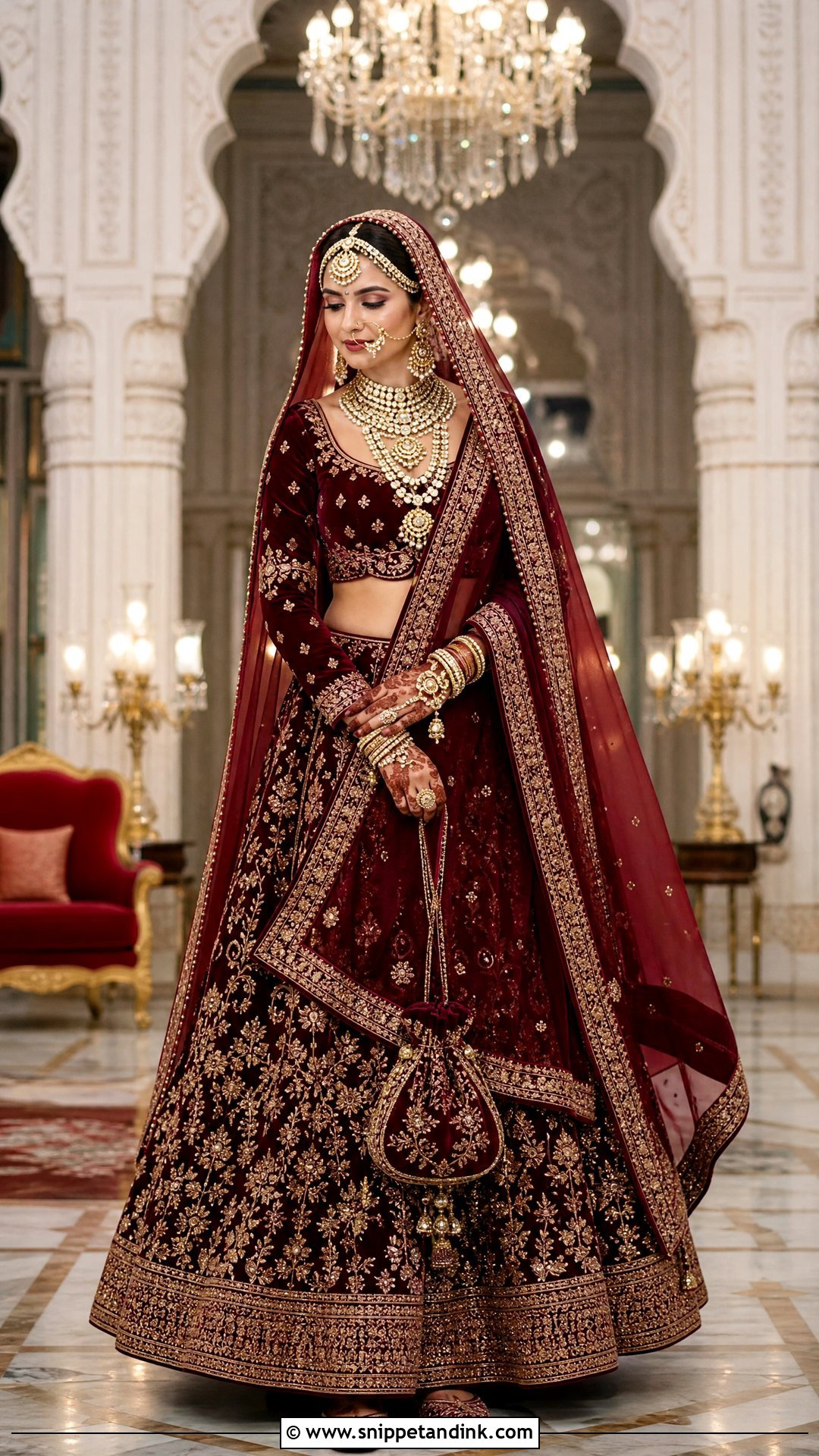
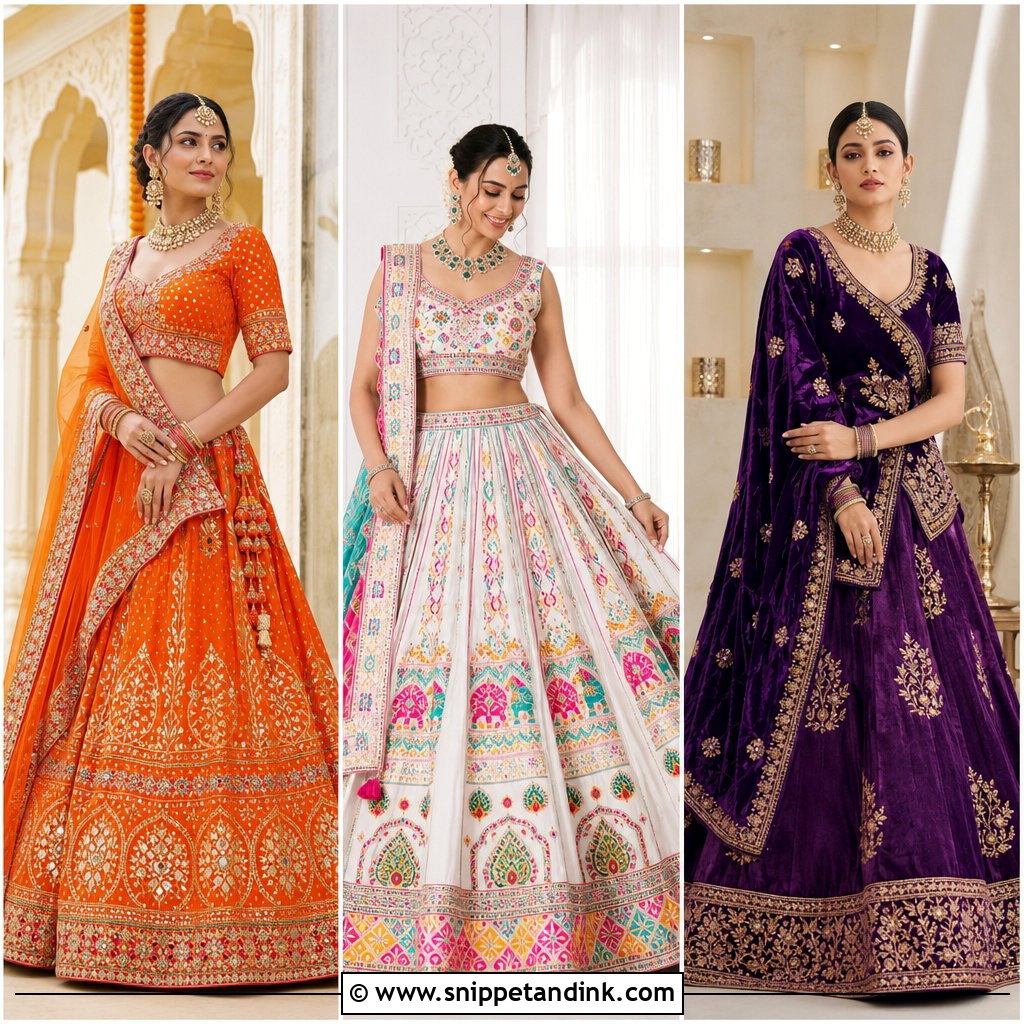
Maroon velvet glows under evening lights, but it is warm and heavy, so I only suggest it for winter or air-conditioned venues. Look for antique-gold zardozi with some beadwork and a structured blouse that can take the pull of the skirt; velvet drops and stretches if the waistband is cut loose. A sheer maroon or muted red veil keeps the layers from turning bulky. Add a polki choker, a long rani haar, borla, a statement nath and matching earrings. I pin the hair into a low bun with a clean center part so the veil and forehead piece have space. Bronze eyes, defined lashes and a berry lip sit well against the deep color, and velvet juttis with a small embroidered potli finish it.
3. Rani Pink Gota Patti Rajwadi Bride
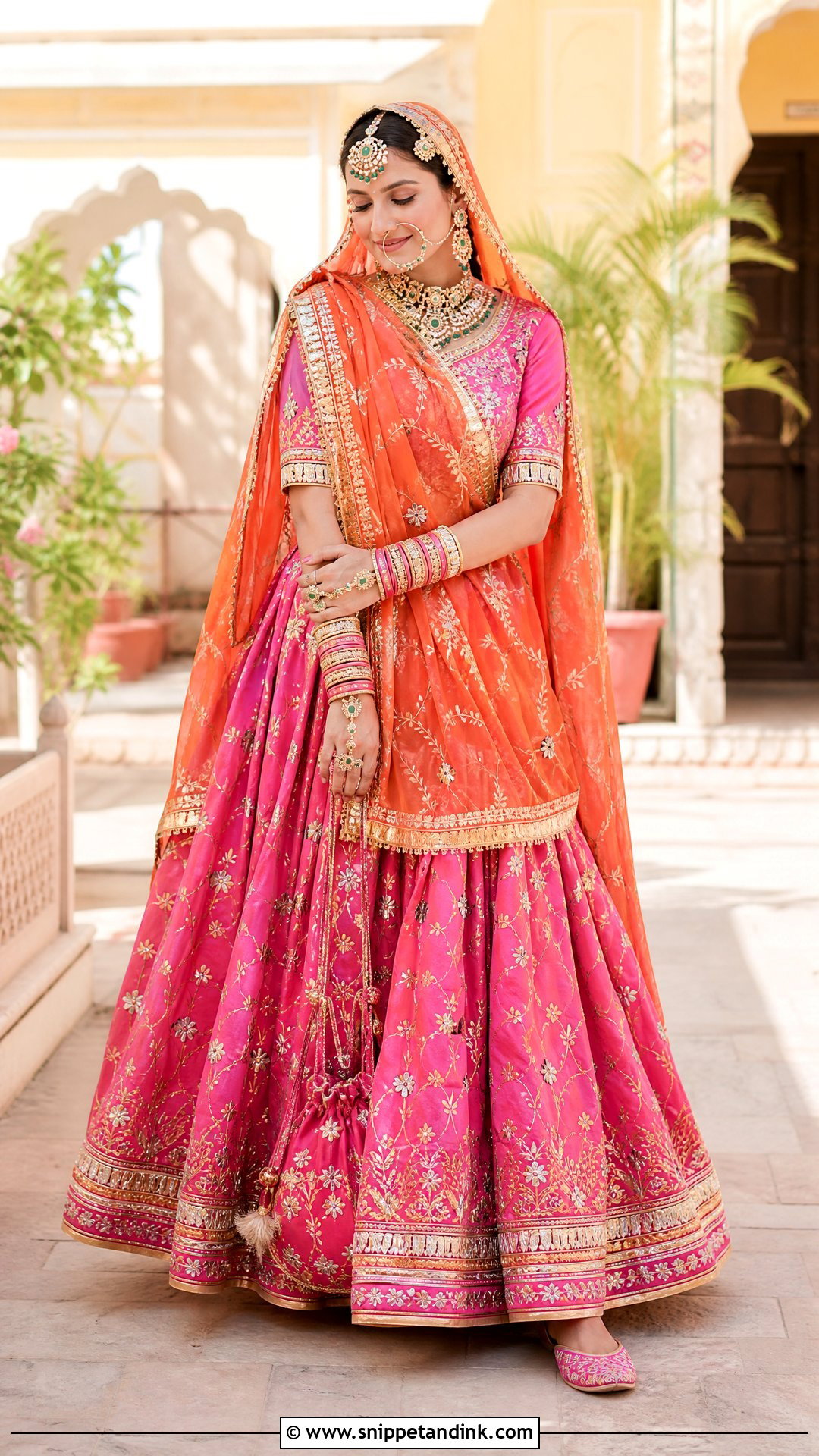
Rani pink is bright enough to feel festive and still formal enough for the rituals. Wide Gota Patti borders on the lehenga or poshak, with smaller motifs scattered across the skirt, keep it traditional. Rajasthani textiles have always mixed strong colors, so a contrasting orange, red or green odhni is true to the dress rather than a gimmick. I’d keep the jewelry kundan with green or pearl accents: a borla, layered necklaces, jhumkas, hathphool and bangles. Wear the hair in a neat bun or a long decorated braid. Bright pink fabric reflects onto the skin in photos, so I ask for rosy makeup and a pink-red lip that matches the outfit’s temperature instead of fighting it. Pink juttis and a Gota Patti potli complete it.
4. Ivory And Gold Rajwadi Bridal Lehenga
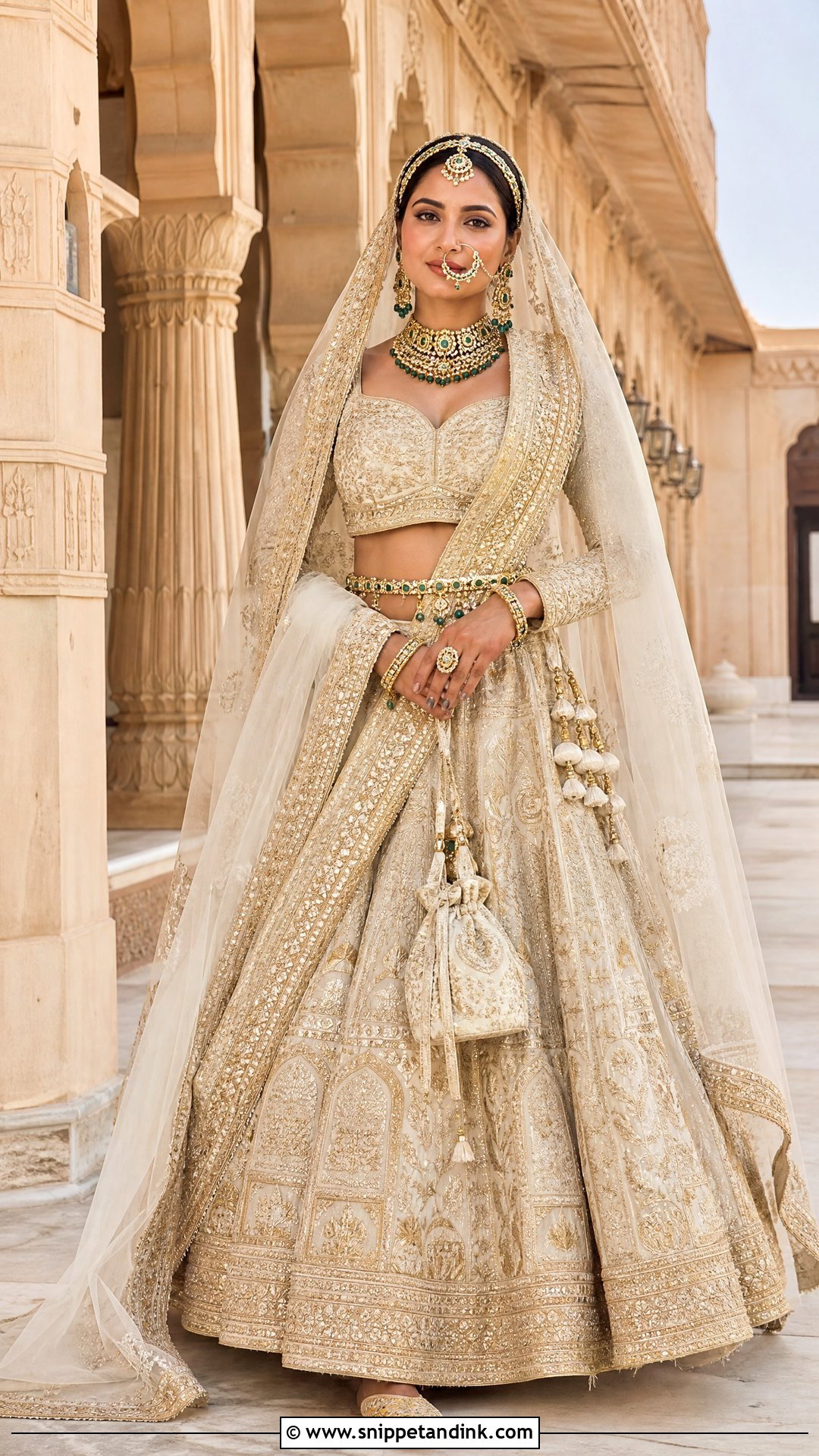
Not every Rajwadi bride wants red. An ivory lehenga with antique-gold embroidery works for a palace wedding or daytime ceremony, with a modest blouse, a flowing skirt and an ivory veil with a firm gold edge. The risk with ivory is that it reads as plain in group photos, so I build contrast through emerald beads in the jewelry and a kamarband at the waist. A polki choker, long necklace, borla, nath and bangles make the pale base unmistakably bridal. A smooth low bun with white flowers tucked beneath the veil, champagne eyes and a rose lip keep the face fresh. Plan for gold juttis and an ivory embroidered potli, and keep a stain pen in that potli, because ivory shows everything.
5. Emerald Green Rajwadi Bridal Lehenga
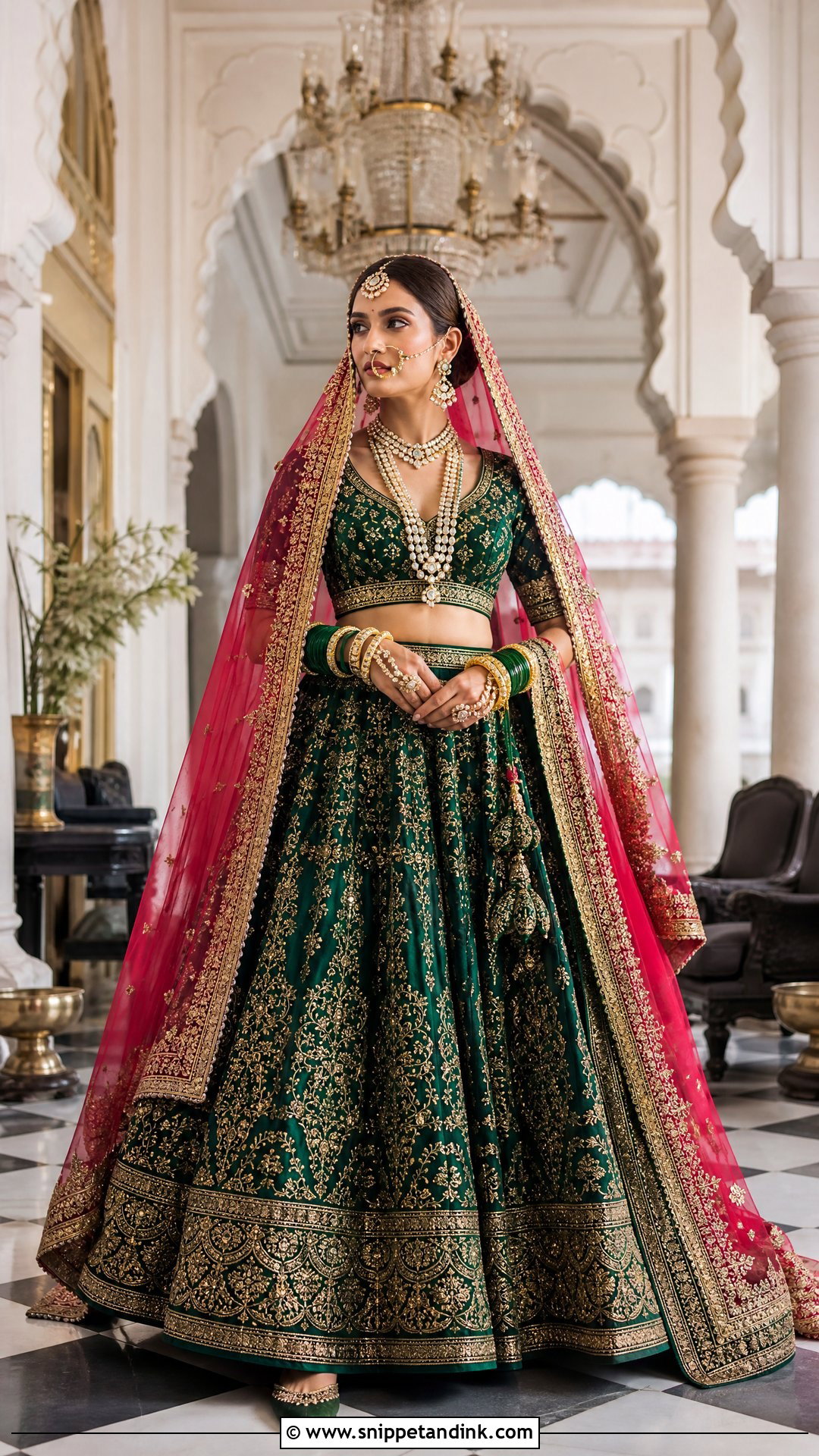
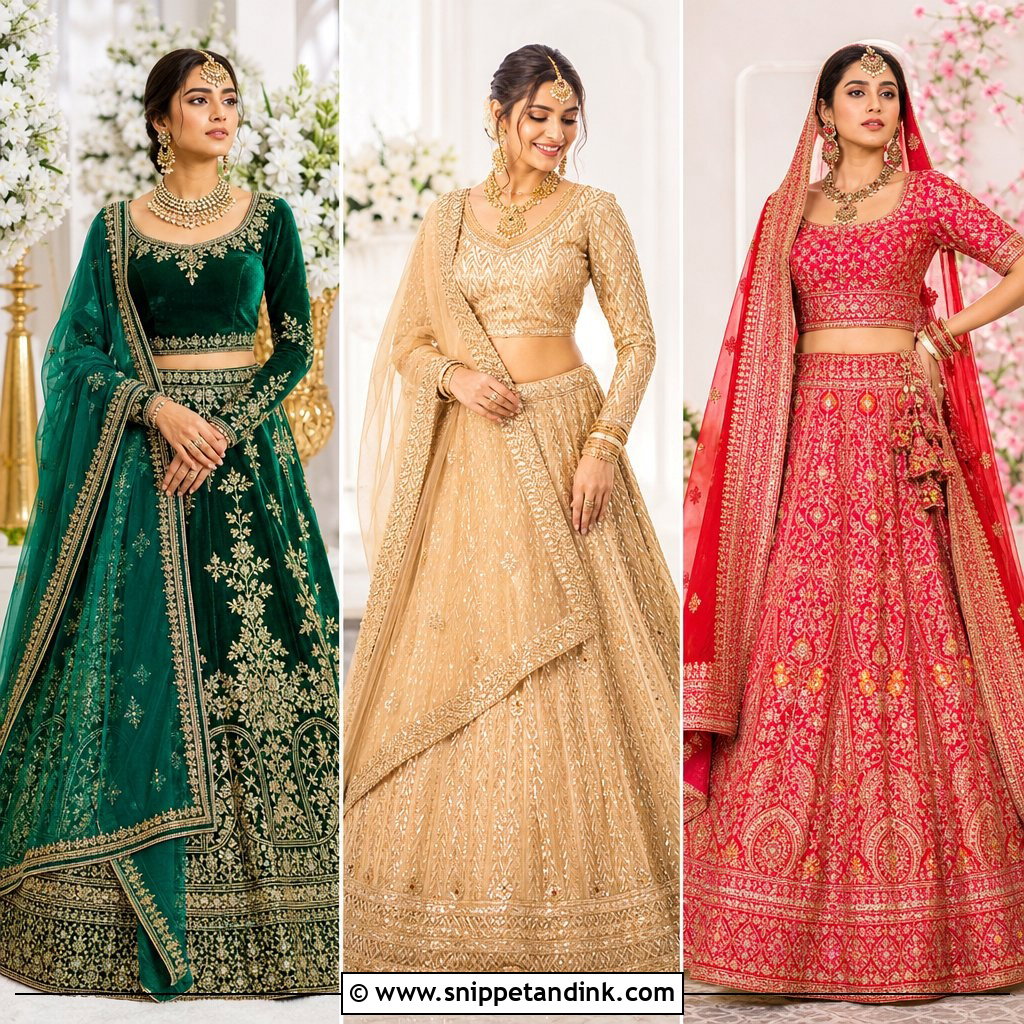
Emerald green is a dramatic choice that still reads as royal. Look for dense gold embroidery or zardozi across a full skirt and fitted blouse. My favorite trick here is the two-color drape: a green dupatta over one shoulder and a lighter red or pink veil over the head, which gives the face warmth that green alone can drain. Uncut polki or kundan with pearl drops stays visible against the dark fabric, where plain gold can sink into it. A borla, choker, long haar, nath, hathphool and gold bangles complete the set. Wear a center-parted bun, warm bronze makeup and a muted red lip, then green velvet juttis.
6. Royal Blue Rajwadi Bridal Lehenga
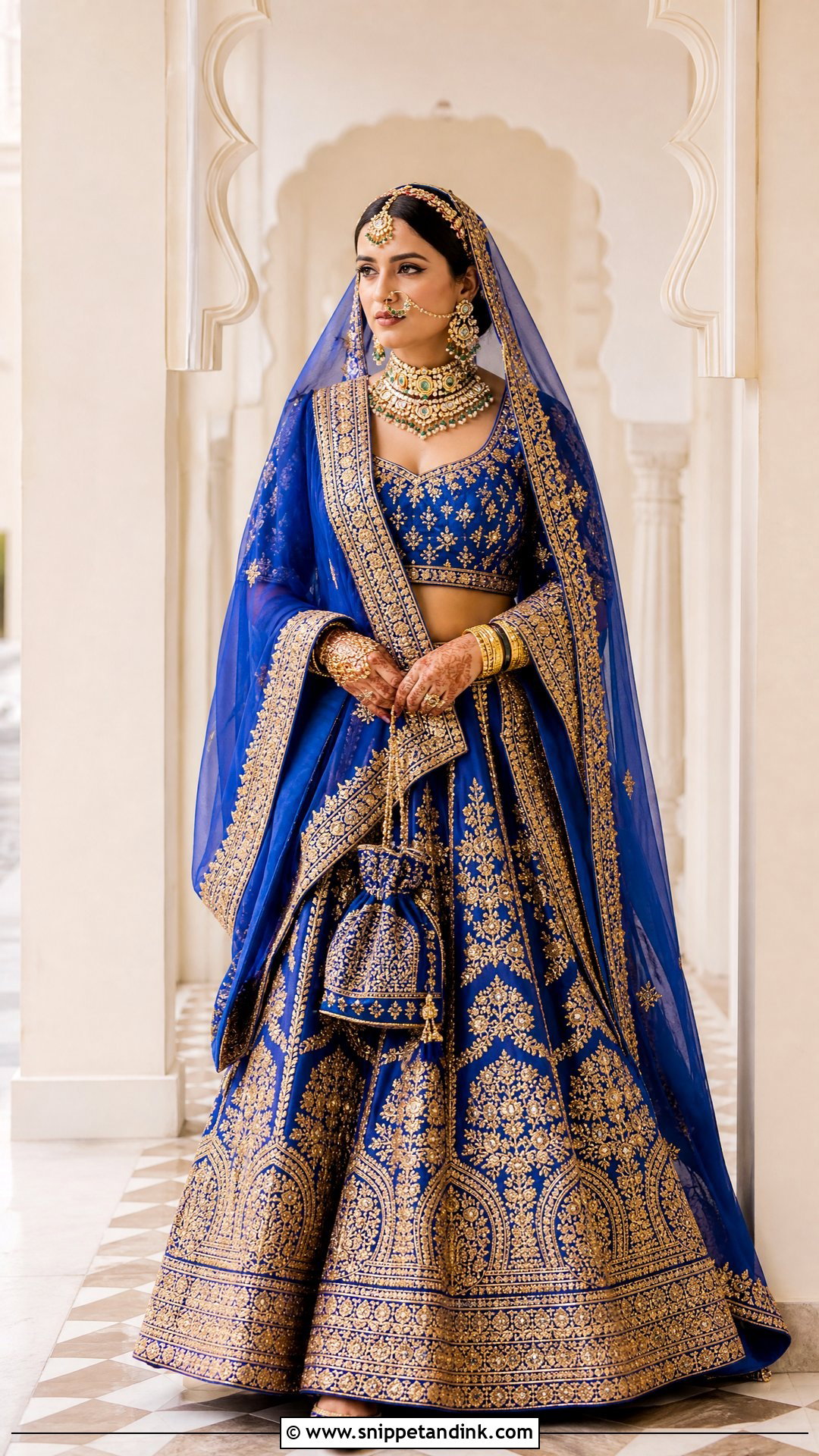
Royal blue with antique gold suits a grand indoor venue, where the cool color doesn’t compete with harsh daylight. Choose a silk or velvet lehenga with architectural borders and a blouse with comfortable sleeves, since you’ll raise your arms for rituals more often than you think. A sheer blue veil with a detailed gold edge frames the face without hiding the jewelry. I break up the cool fabric with kundan pieces carrying red, green or pearl details. Layer an aad-inspired choker with a longer necklace, then add a borla, jhumkas, nath, bangles and hathphool. A polished bun lets the veil fall evenly down the back. Keep the skin luminous, line the eyes with kohl and use a soft berry lip. Gold juttis and a structured blue potli finish it.
7. Orange Bandhani Rajwadi Bridal Poshak
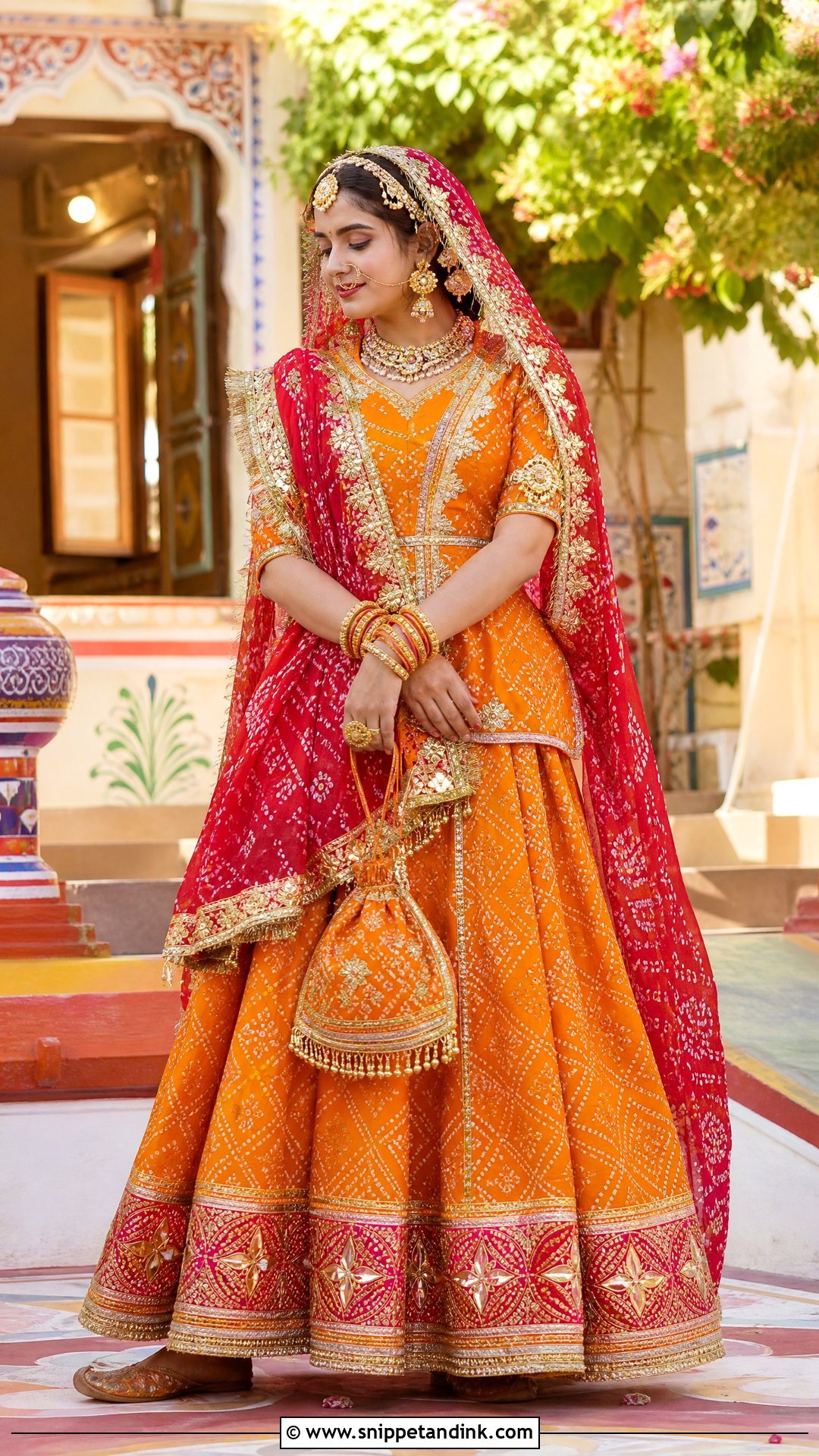
Bandhani is tie-dye done by hand, and those tiny dots give an orange poshak texture you can see from across a courtyard. A saffron or burnt-orange ghagra with a fitted kurti and kanchli, topped by a red Bandhani odhni edged in Gota Patti, suits daytime rituals and family ceremonies. One thing I warn every bride about: real Bandhani is dyed, not printed, so the red can bleed onto the orange if the odhni gets damp, and I’d never let it be sprayed with water during games. Style it with warm gold kundan, a borla, aad necklace, earrings, bajuband and layered bangles. A long braid with small gold accessories is a practical alternative to a bun. Warm peach makeup, brown kohl, a coral-red lip and embroidered orange juttis keep everything in one family.
8. Yellow Rajwadi Pithi Bride Look
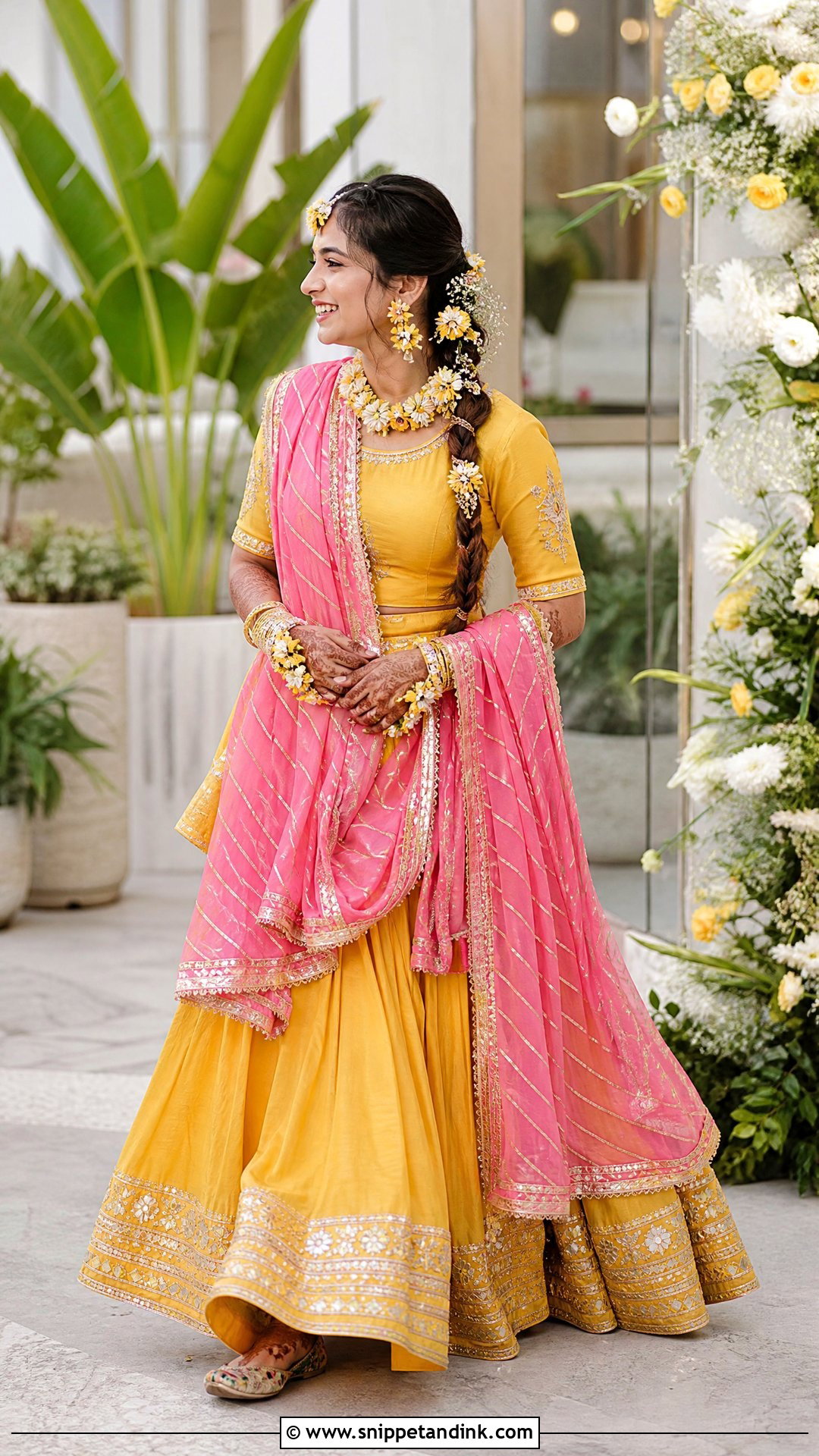
Yellow is the color of the Pithi or Haldi celebration in Rajasthani families, so a yellow Rajwadi outfit fits that morning naturally. Keep the poshak or lehenga light with restrained Gota Patti, because turmeric paste will land on it and you’ll be sitting on the floor. I tell brides to wear something they’d be content to see stained; heavy zari and turmeric don’t mix. A pink or orange odhni brightens the photographs. Floral jewelry with a small borla, delicate earrings and a few gold bangles is plenty. Wear the hair in a soft braid or low bun with fresh white and yellow flowers, then waterproof kohl, dewy skin and a peach lip. Simple embroidered juttis you can slip off easily are the right footwear.
9. Pastel Pink Rajwadi Bridal Lehenga
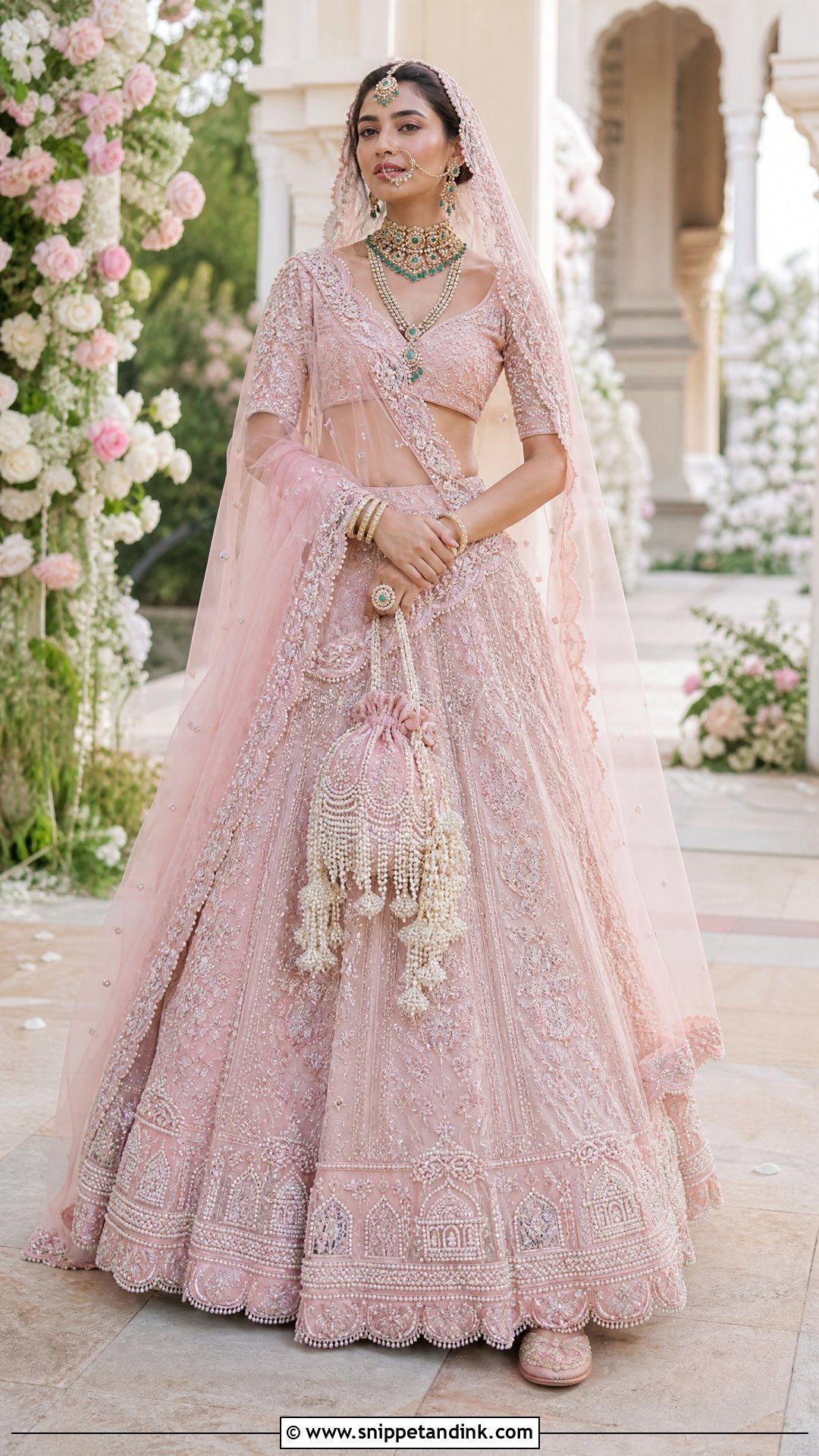
Pastel pink suits a daytime wedding or garden venue, where natural light flatters soft color. Choose a generously flared lehenga with silver-gold embroidery, pearls or delicate Gota Patti rather than dense embellishment, because heavy work on a pale base can look grey from a distance. A matching sheer veil with a crisp embroidered border keeps it ceremonial. I add polki with emerald beads for gentle contrast: a choker, long necklace, borla, earrings, nath and slim bangles. Style the hair in a neat textured bun with small white flowers. Rosy cheeks, softly defined eyes and a mauve-pink lip suit the palette, and blush juttis with a pearl potli finish it.
10. Peach Rajwadi Bride With Kundan Jewelry
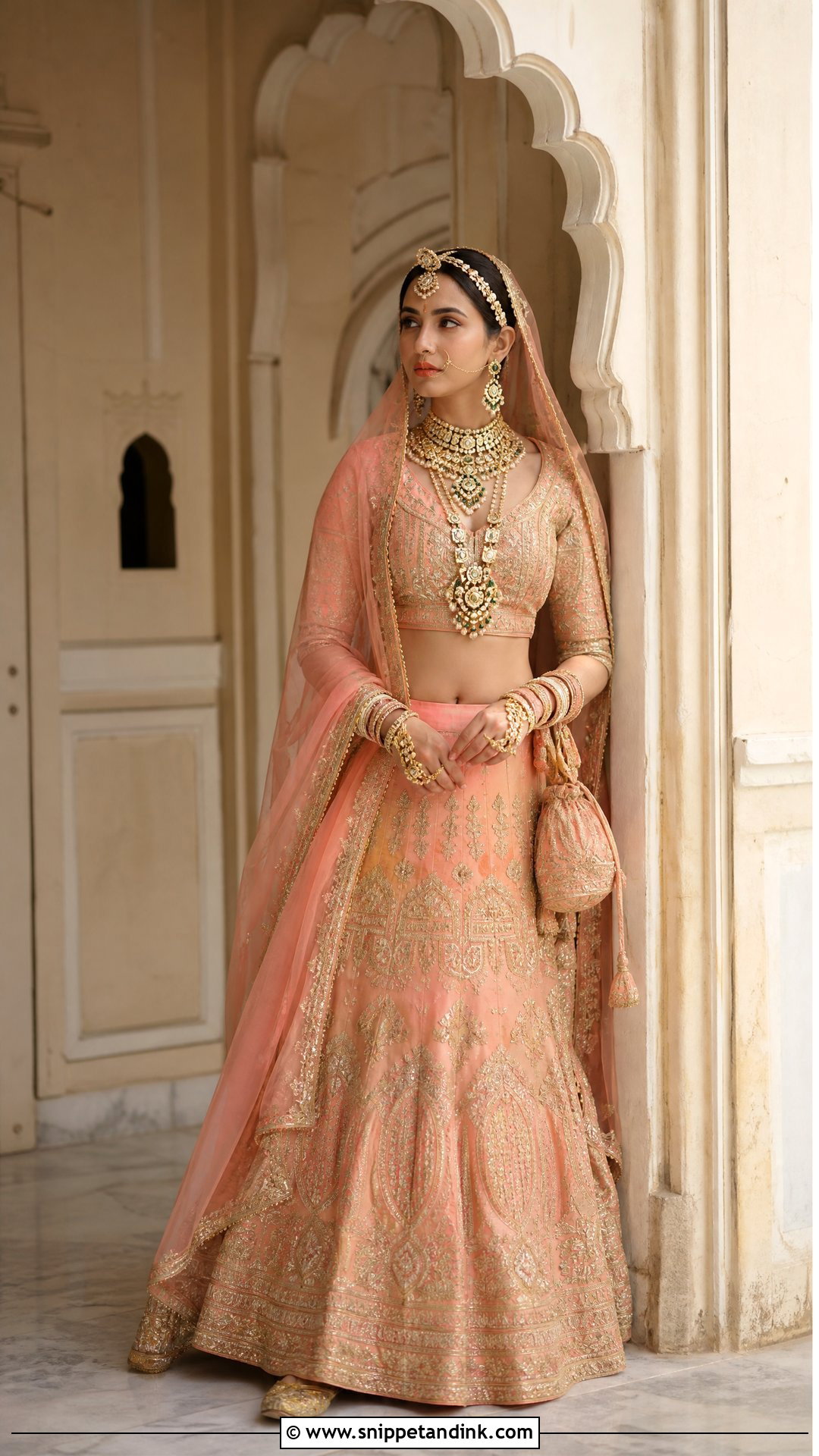
Peach gives you warmth without the intensity of red, and it is kind to most skin tones in daylight. I’d build it around a peach silk lehenga with gold threadwork, a fitted blouse and a lightweight embroidered veil. Peach can look washed out under evening lights, which is exactly why layered kundan matters here; warm-toned stones put the richness back. Choose a kundan borla, a broad choker, a longer haar, drop earrings, hathphool and a medium nath. A low bun with a smooth center part supports the veil. Luminous makeup with bronze lids, peach blush and a warm rose lip, plus gold or peach juttis and a compact Gota Patti potli, complete it.
11. Red And Green Rajwadi Bridal Poshak
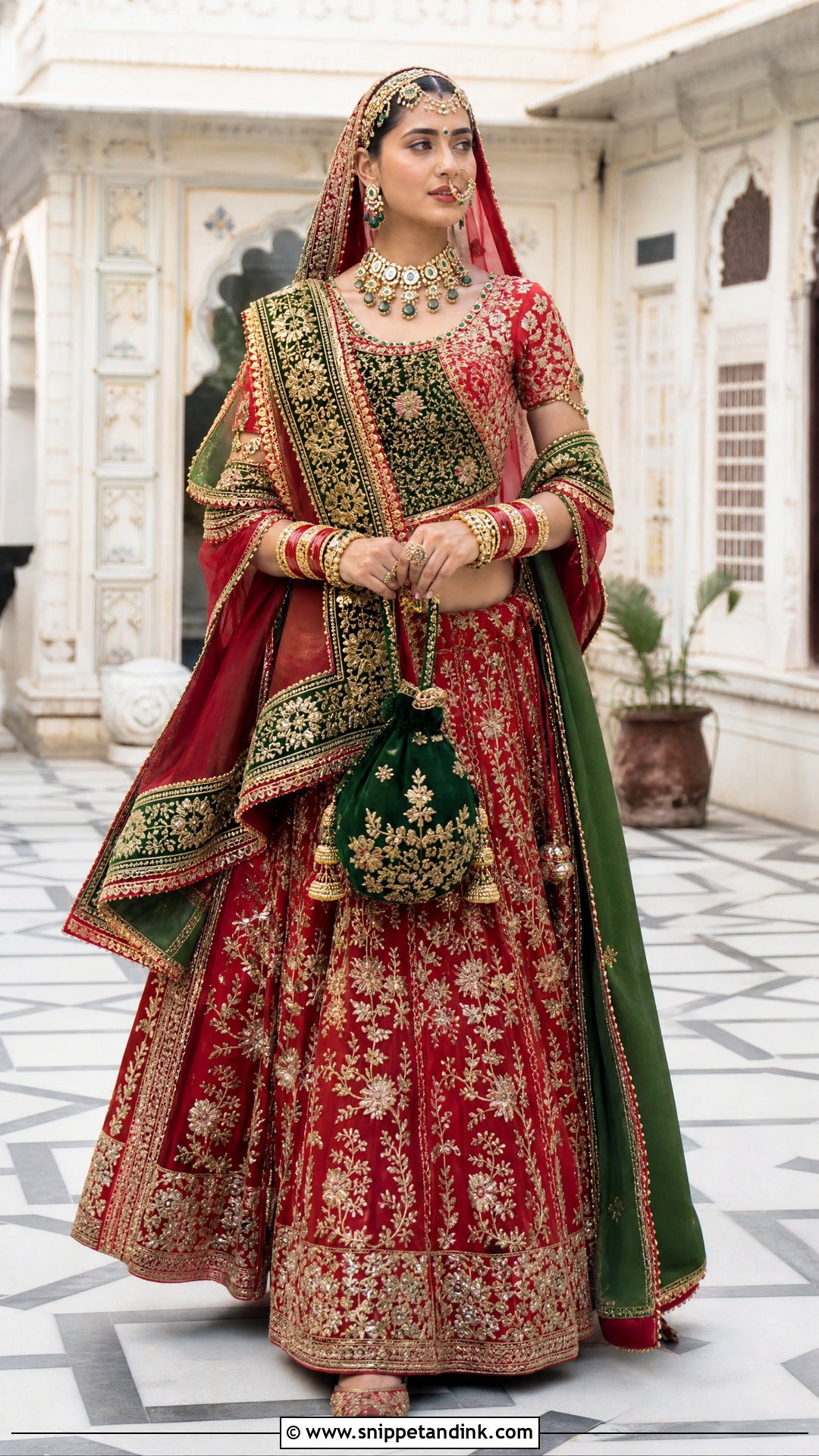
Red and green together is the oldest pairing in Rajasthani bridal dress, and it looks right in a palace or courtyard. Start with a red ghagra and kurti in gold work, then bring green in through the kanchli, the odhni border or a second veil. The mistake I see most is using green once; repeat both colors in small details, a bangle here, a potli there, so it looks planned. Gold kundan with emerald-colored stones ties it together: borla, aad necklace, long rani haar, earrings, nath, bajuband, hathphool and red-and-gold bangles. A sleek bun keeps a clean shape under the odhni. Defined kohl, warm skin, a classic red lip, red juttis and a green potli finish the outfit.
12. Double Dupatta Rajwadi Bridal Lehenga
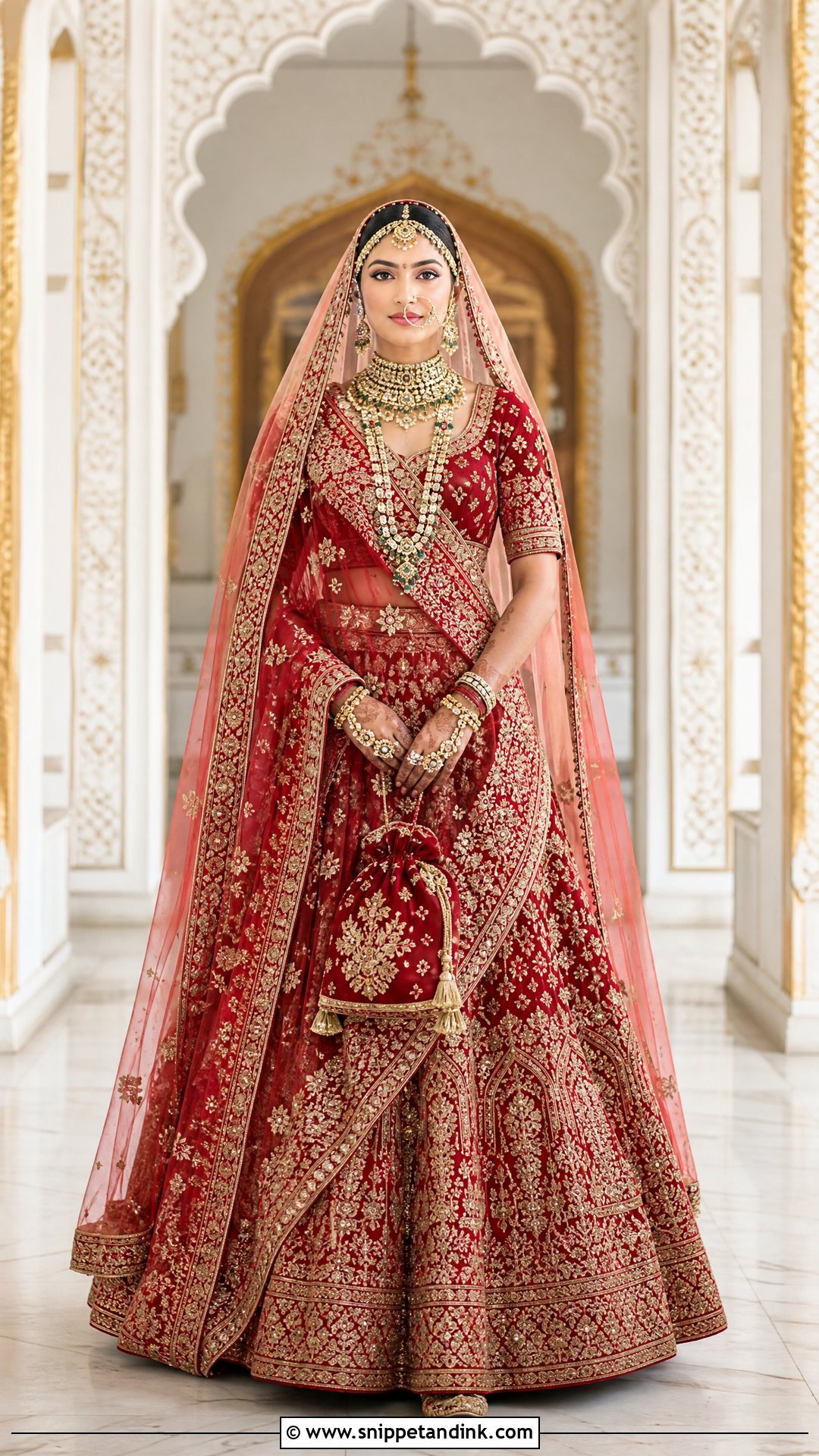
Two dupattas give a Rajwadi lehenga coverage and depth, but they need planning. Start with a rich red, maroon, or pink lehenga and drape one coordinated dupatta across the torso, then place a lighter veil over the head so its border frames the face and jewelry. I pin the body dupatta at the shoulder and the waist before the head veil goes on, otherwise the two layers slide against each other every time you stand. A borla, aad-style choker, long necklace, nath, earrings and hathphool suit the formal draping. Set the necklaces at different lengths so the blouse neckline still shows. A center-parted low bun anchors the veil. Glowing makeup, a red-rose lip, embroidered juttis and a potli matching the lehenga border complete it.
13. Bandhani Saree Rajwadi Bride Look
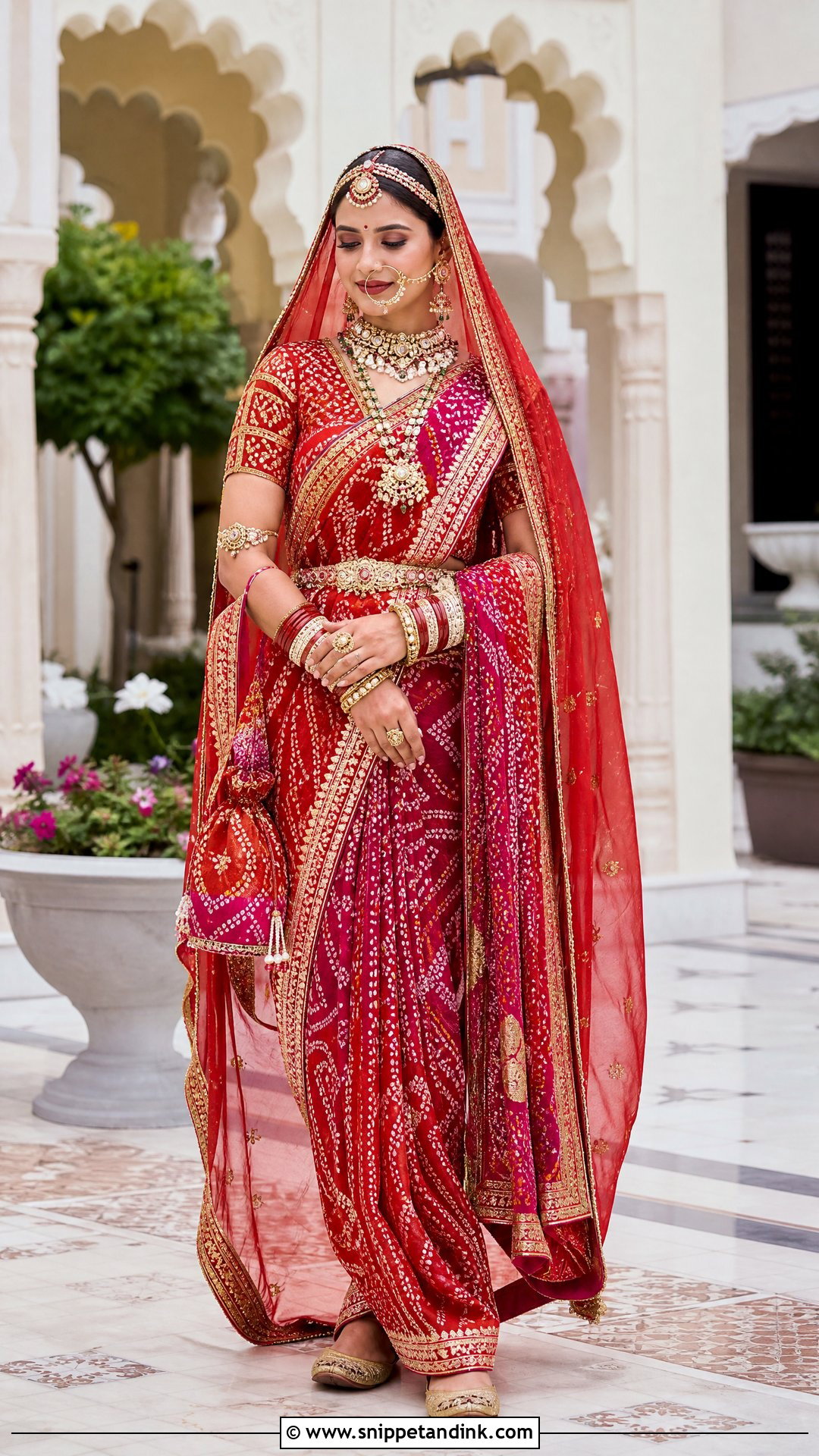
A red or magenta Bandhani saree becomes a full Rajwadi bridal look once you add traditional jewelry and a formal veil. Choose silk Bandhani with an ornate zari or Gota Patti border and a fitted gold, green or matching blouse. Silk Bandhani is springy and the pleats like to open, so I pin them in two places and set the hem length while you’re wearing the actual juttis, not barefoot. A sheer odhni over the head gives a more ceremonial outline. Style it with an aad necklace, borla, nath, jhumkas, bajuband, bangles and a waist belt, plus a smooth bun. Gold eyes, kohl, a deep pink lip, gold juttis and a Bandhani potli finish it.
14. Leheriya Rajwadi Mehndi Bride
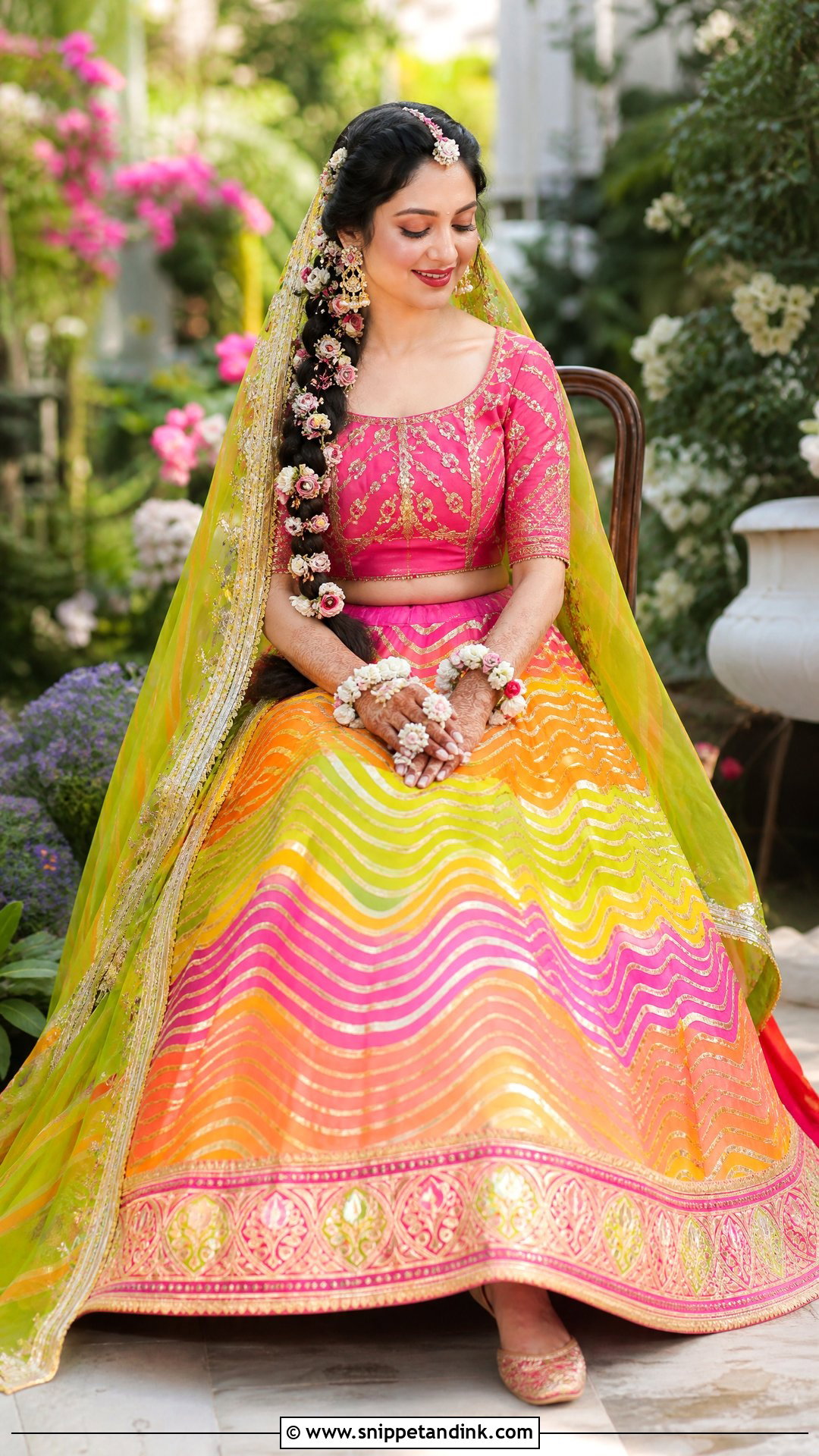
Leheriya, the wave-dyed Rajasthani fabric, is made for a Mehndi day. A flowing pink, green, yellow or multicolored Leheriya lehenga with a fitted blouse and a light Gota Patti dupatta already has plenty of movement, so the rest of the embroidery can stay quiet. For an outdoor function I’d pick a cropped or sleeveless blouse, and roll nothing tight around the wrists. Your hands will be covered in wet henna for hours, so keep the jewelry to a small borla, kundan earrings, a light necklace and floral bangles, and leave the rings for later. A long braid with tiny flowers or gold pins and fresh pink makeup suit the mood. Embroidered juttis you can step into without using your hands are worth finding.

15. White And Red Rajwadi Bridal Saree
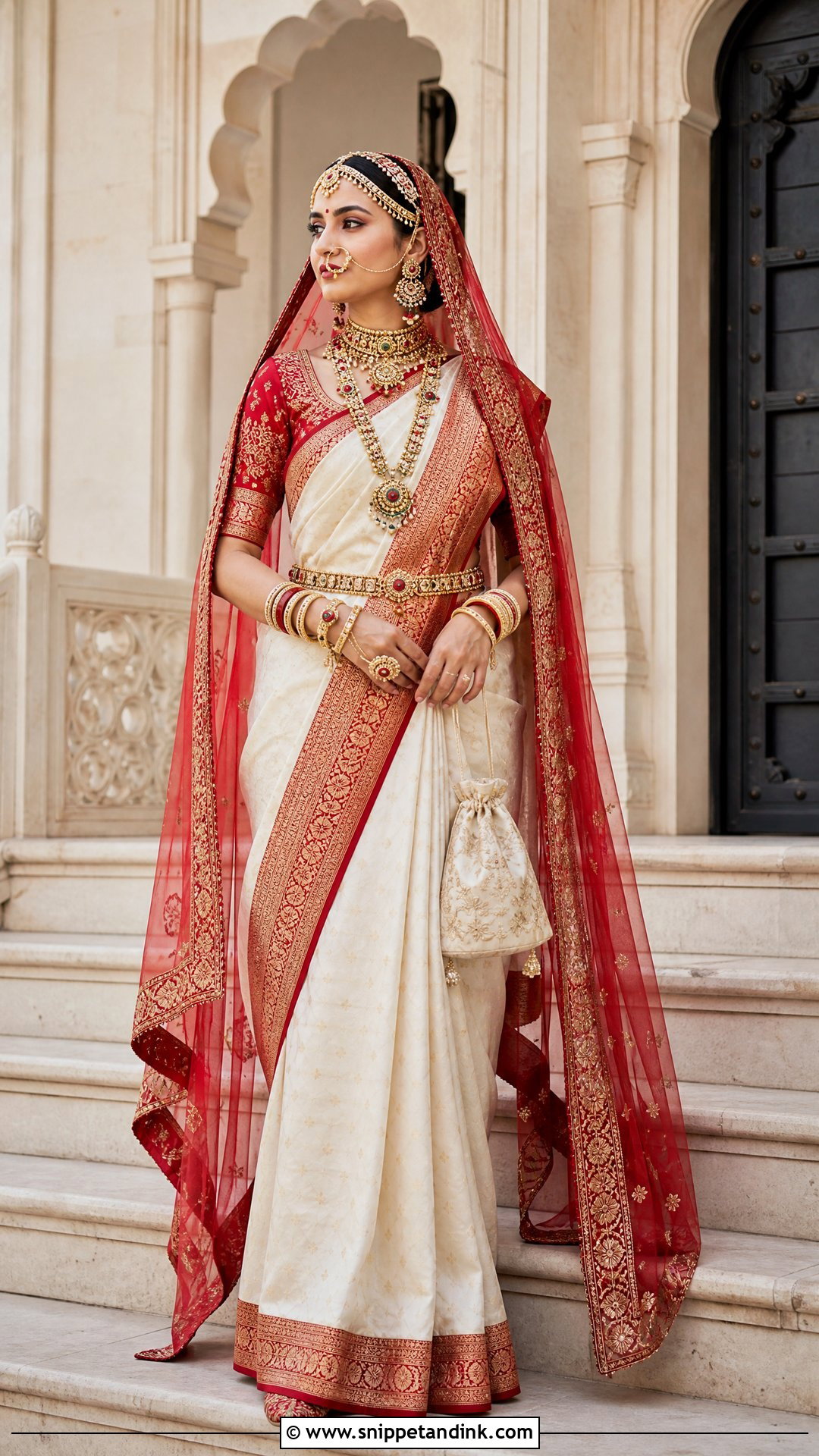
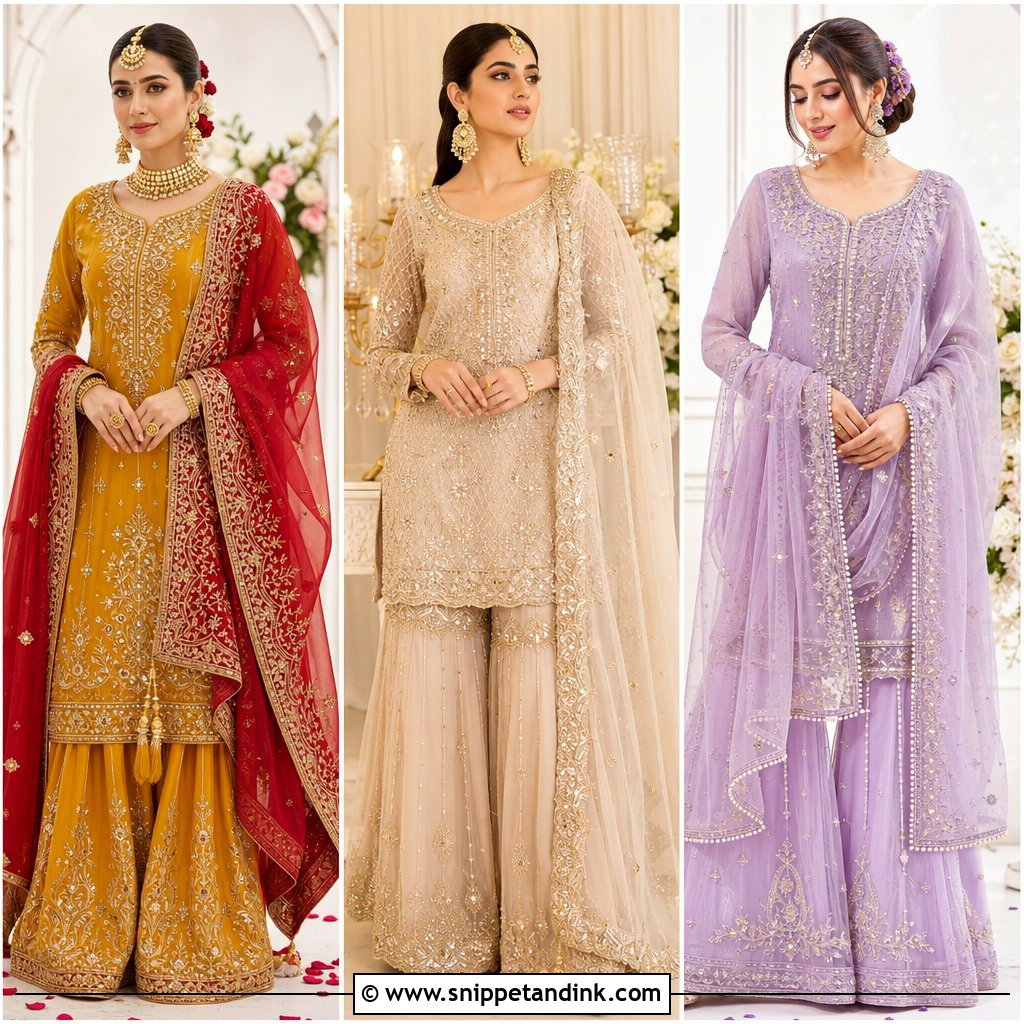
A cream or white saree with a bold red border is a refined way to wear Rajwadi, and the border does most of the work. Choose silk with gold zari, a red brocade blouse and a sheer red veil, so the bride still stands out even with restrained embroidery. I’d go with antique-gold or kundan pieces carrying red and green stones: an aad-inspired necklace, a longer haar, borla, earrings, nath, bangles and a kamarband to hold the pallu in place. A low bun with white flowers at the base, soft gold eyes, defined kohl and a classic red lip complete the face. Red embroidered juttis and a cream potli finish it.
16. Burgundy Rajwadi Reception Bride
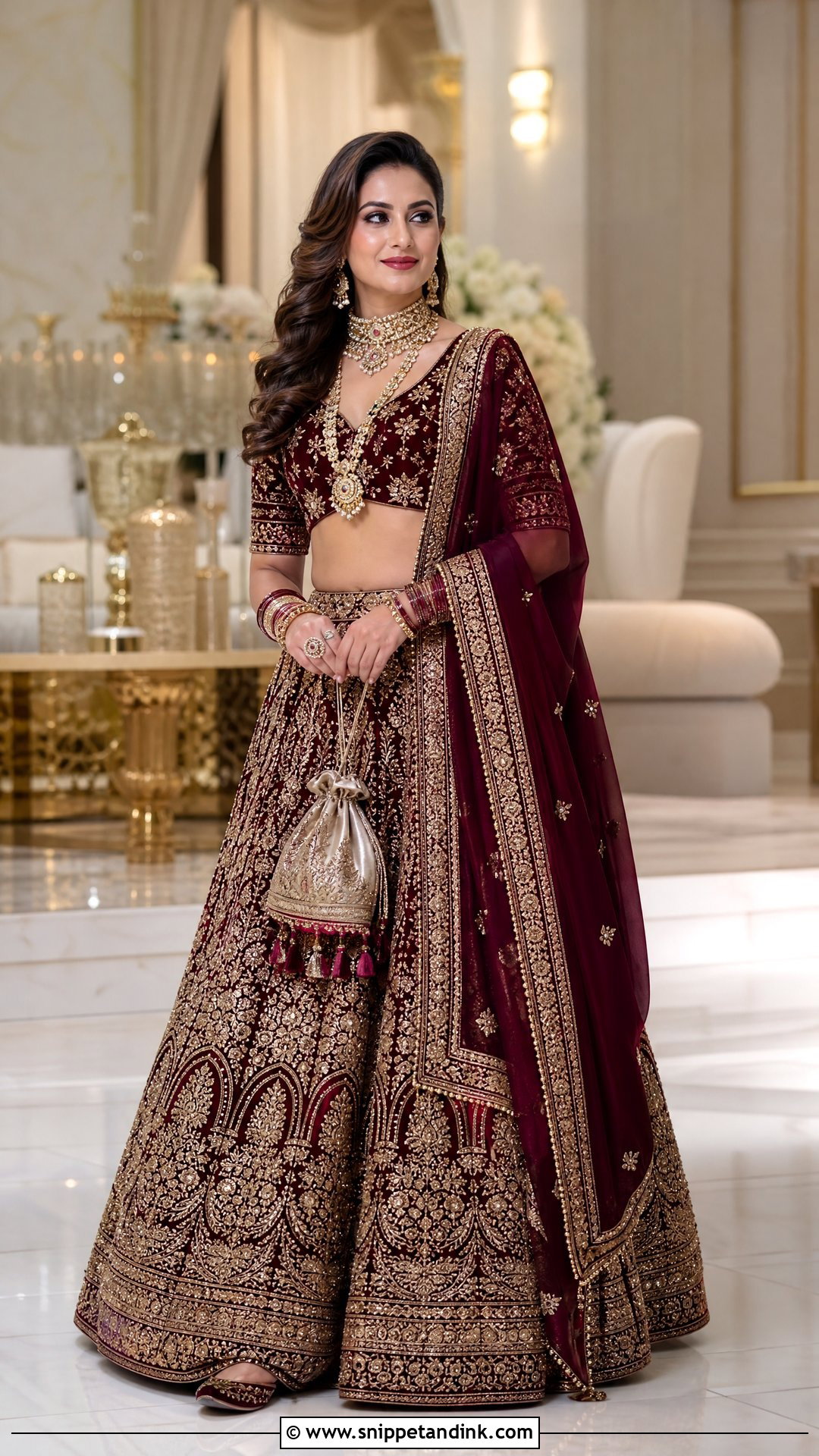
Burgundy gives you evening drama at the reception without repeating your red wedding outfit. Choose a structured lehenga with antique-gold embroidery, a contemporary blouse and a light dupatta over one shoulder. A reception doesn’t need a head veil, which frees you to switch to a polished hairstyle and statement jewelry: a broad polki choker, long necklace, earrings, bangles and a jeweled ring. I only add a small borla if you want to keep the Rajwadi link visible. Brushed-out waves are an option here, since there’s no veil to flatten them. Softly smoked eyes, luminous skin, a deep berry lip and burgundy juttis or low heels with a metallic potli finish it.
17. Gold Rajwadi Palace Wedding Bride
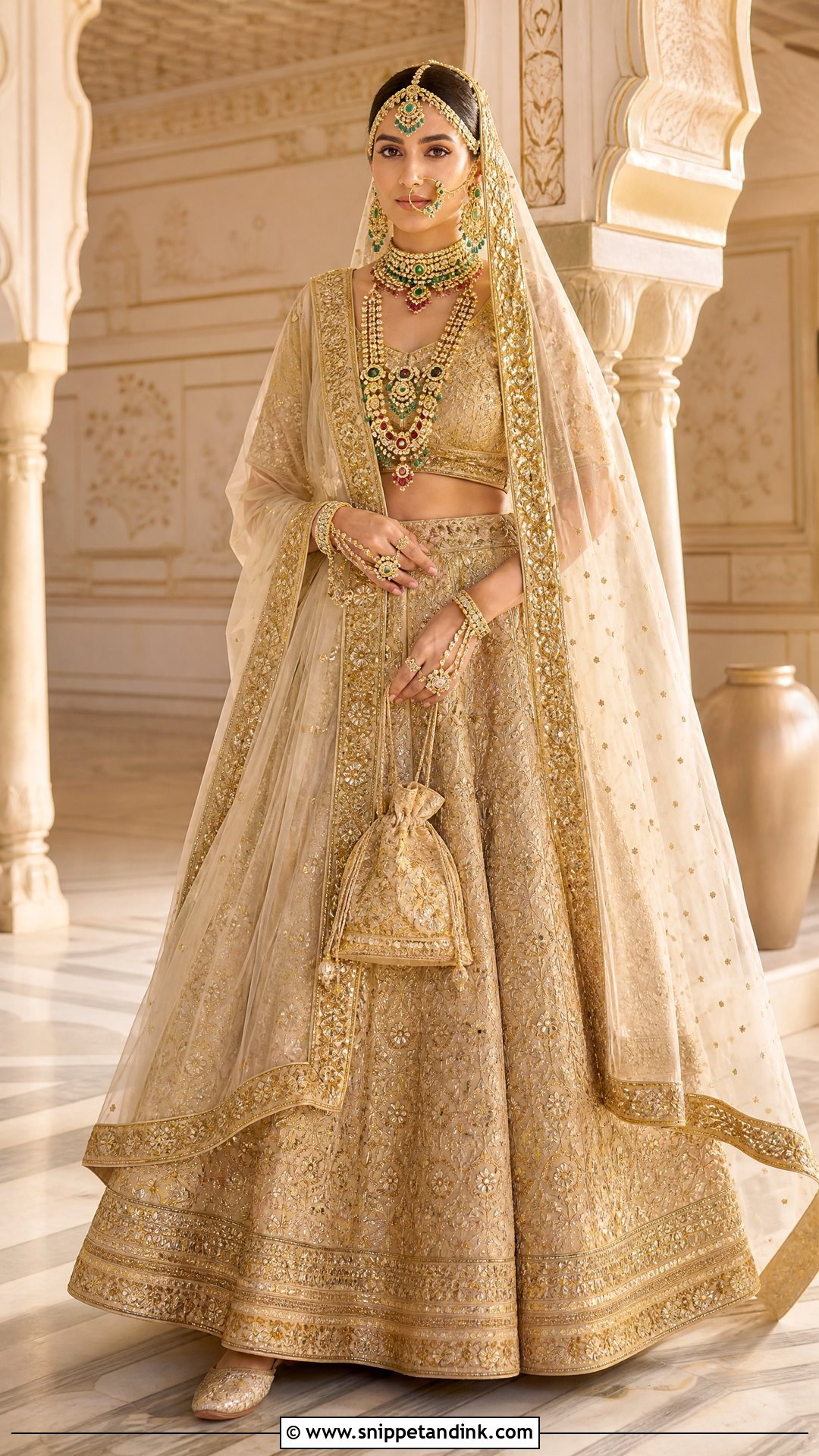
All gold works in an ornate palace, where the walls already supply color. Choose a champagne-gold lehenga with tonal zardozi and metallic threadwork, an ivory-gold dupatta across the body and a lighter veil over the head. Gold on gold can flatten in photographs, so I insist on color in the jewelry: emerald, ruby or pearl. A statement aad, long polki haar, borla, nath, earrings, bangles and hathphool give definition. Keep the hair sleek. Bronze eyes, sculpted cheeks and a muted red lip stop the face from looking washed out against so much shine. Metallic juttis and a gold embroidered potli finish it.
18. Minimal Rajwadi Bridal Lehenga
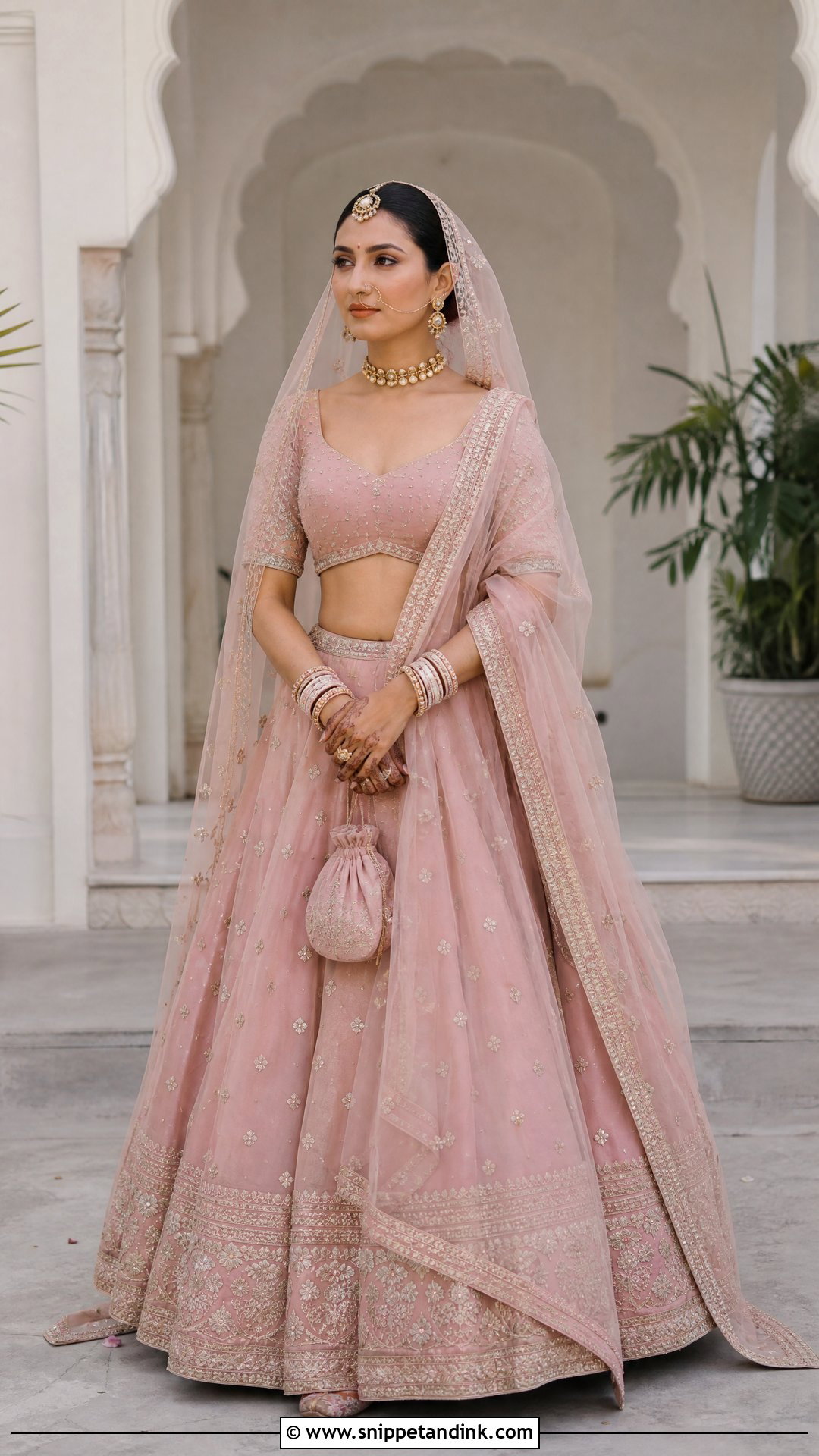
You don’t need the heaviest embroidery on every piece to look regal. A red, dusty pink or ivory lehenga with one wide border and small motifs across the skirt, a cleanly tailored blouse and a sheer veil with a single strong edge is enough. I’d rather see one focused jewelry set than competing layers: a borla, a medium kundan choker, matching earrings, a slim nath and coordinated bangles. This is the look I suggest to brides who want to dance at their own wedding, because it often weighs a few kilos less than a fully worked lehenga. A simple low bun with the veil pinned securely, natural luminous makeup, brown kohl, a rose-red lip, light juttis and a potli in the lehenga fabric complete it.
19. Plus Size Rajwadi Bridal Poshak
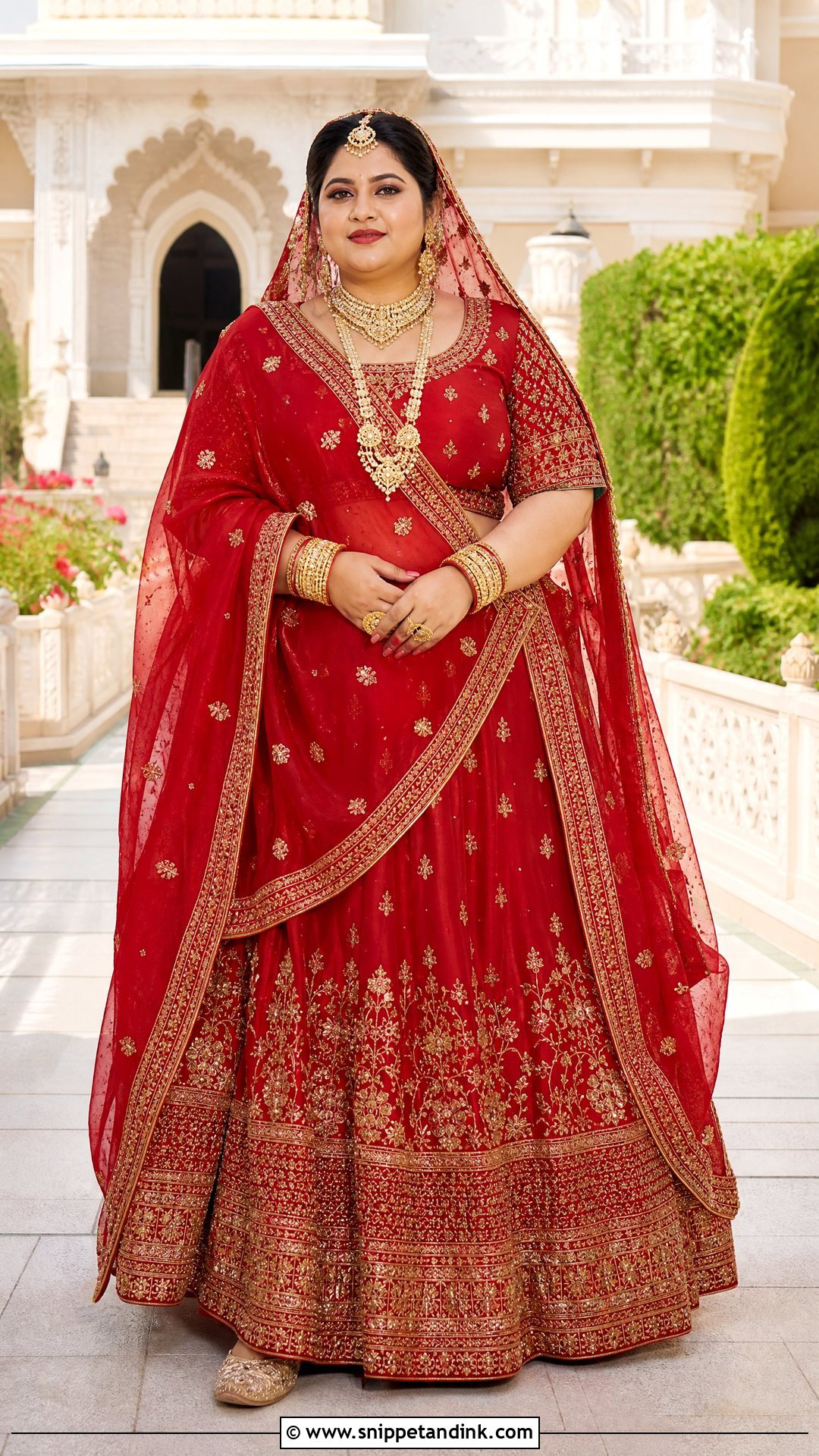
A well-fitted Rajwadi poshak flatters curves and still lets you move. I start with the kanchli; it has to be properly supportive, because everything else hangs from that fit. Embroidery that runs smoothly from kurti into a full ghagra lengthens the line. Don’t accept a stiff outfit just because it looks structured on a hanger. A softer silk blend or a georgette layer cuts bulk without losing flow. I drape the odhni diagonally or over the head and adjust the pleats until it sits without pulling. A borla, aad necklace, longer haar, earrings, bangles and comfortable juttis complete it, with a well-supported low bun under the veil. Defined eyes, glowing skin and a lip matched to the poshak keep the face in proportion.
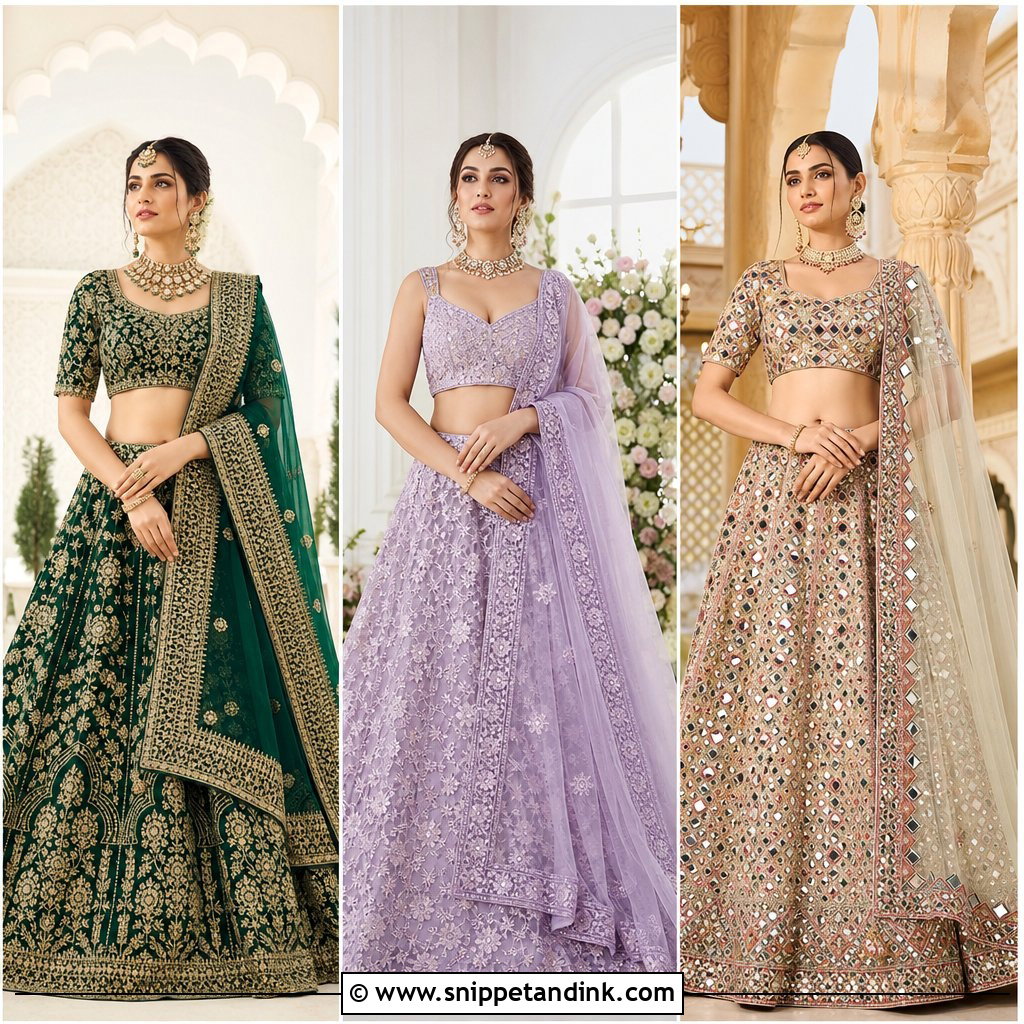



20. Modern Rajwadi Bride With Pastel Poshak
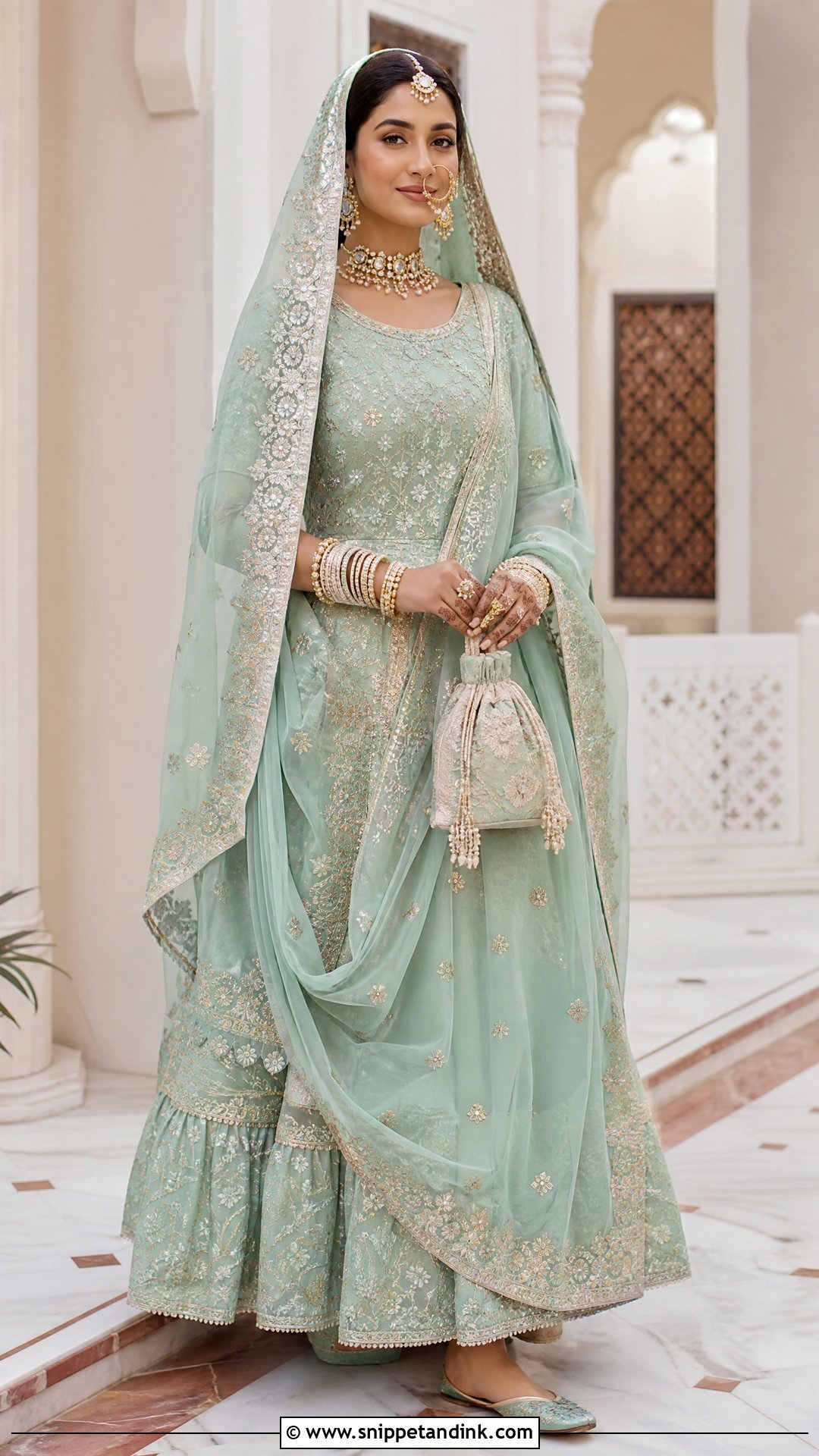
A modern pastel poshak keeps the Rajwadi silhouette and changes only the palette. Mint, lavender, powder blue or blush work for the ghagra, kurti and kanchli, with tonal embroidery, delicate Gota Patti and a sheer odhni with a defined border. The update comes from restraint: a polki choker, small borla, pearl-drop earrings, a slim nath and a few chosen bangles. Pastel Gota Patti can tarnish to a dull brass if the ribbon is a cheap metallic polyester, so I check the work under daylight before buying. Wear a sleek bun or soft braid depending on the veil, radiant skin, softly lined eyes and a pink lip. Embroidered juttis and a pearl potli finish it.
Pinning the Odhni and Borla So Nothing Shifts Through the Pheras
The borla sits right on the center parting, so the hair underneath has to be built for it. I ask the hairstylist for a firm base just behind the hairline, often a small backcombed section or a hidden pin cross, so the borla’s thread can be anchored rather than resting on smooth hair. If the borla tips forward during the ceremony, it’s almost always because it was pinned to the surface and not into that base.
The odhni comes next. I tuck the front corner into the ghagra waist first, take it across the body and then over the head, and only then pin it at the crown, behind each ear and at the shoulder. Those pins should catch the hairstyle, not just the fabric. A heavy zari border pulls backward, so the crown pin carries most of the load.
Sitting is where the outfit gets tested. A full ghagra spreads when you sit cross-legged by the fire, and the odhni pulls down at the head when you do. I have every bride sit, stand and bend during the last fitting, wearing the jewelry, so we can see where it drags.
Caring for Gota Patti, Zari and Velvet After the Wedding
Real zari and good Gota Patti contain metal, and metal tarnishes when it meets moisture and air. Once the wedding is over, I air the outfit for a day away from sunlight, spot-check for makeup or turmeric marks and send it to a cleaner who handles bridal embroidery, rather than washing it at home. Bandhani and Leheriya in particular can bleed if they’re soaked.
- Wrap embroidered pieces in soft cotton or muslin, never plastic, which traps moisture
- Fold with tissue between the layers of embroidery so the metal threads don’t rub
- Roll velvet rather than folding it, since crease lines can stay in the pile
- Unfold and refold along new lines every few months so the zari doesn’t crack at the same fold
Put Every Layer On Together at Least Once Before the Wedding
The right Rajwadi look is the one that respects the ceremony and that you can wear comfortably for hours. Red poshaks and velvet lehengas give traditional grandeur; Bandhani sarees, Leheriya and pastels offer fresher routes. Let the jewelry support the outfit, so settle the metal tone, stones, neckline and veil together, not one at a time. My firm rule is a full dress rehearsal: outfit, juttis, hairstyle and draping all at once, sitting and standing, because that’s where a sliding odhni or a hem that’s too long shows up. Start from your venue and your own taste, and the rest of these choices get much easier.
You'll Like These Ideas:







Leave a Reply