
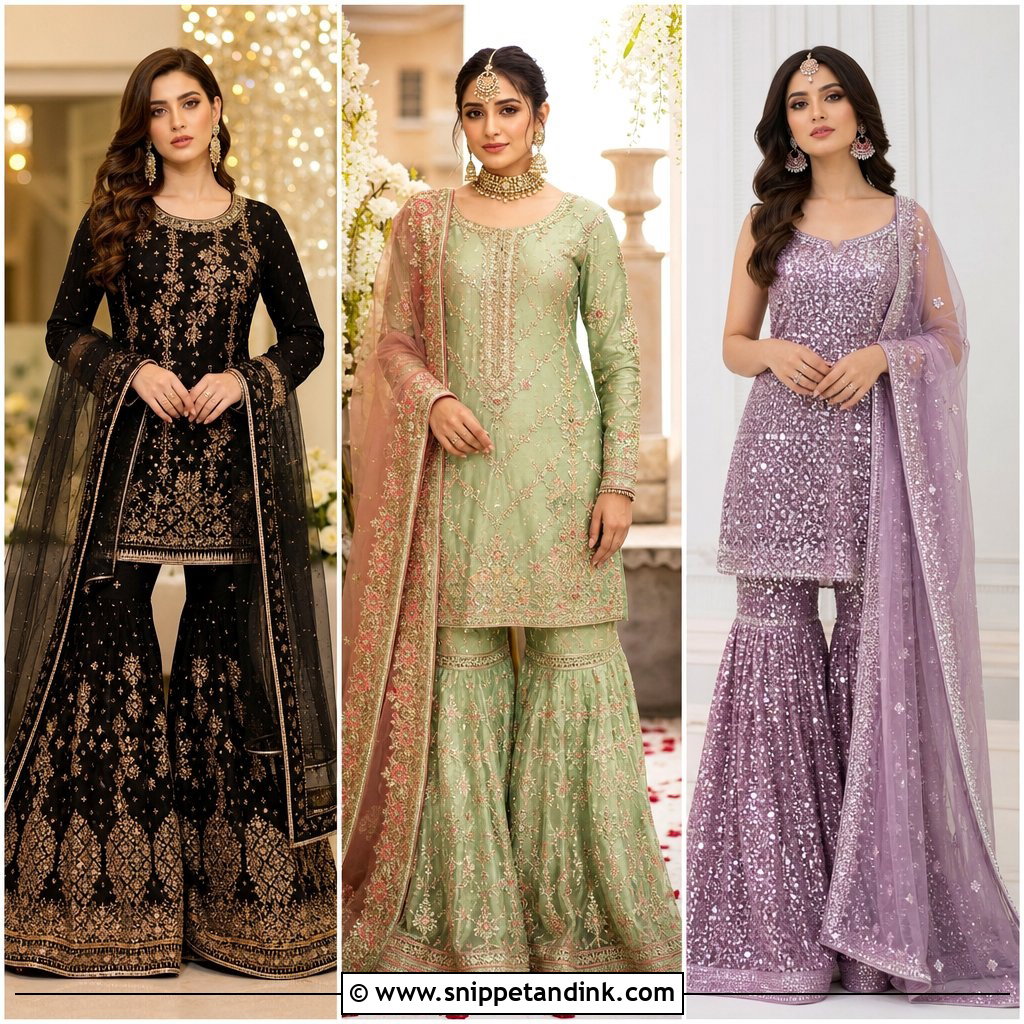
A sharara is really two very wide skirts, one per leg, flaring out from the hip or just below it. That flare is why brides love it: it moves when you walk and pools when you sit, and you can still dance without a lehenga’s weight around your waist. The twenty sets below pair a kurta with sharara pants and a dupatta, from traditional red and jamawar to pastels, black and bright mehndi colors. The proportions are the hard part. A short kurta shows off the flare; a long one hides it, so the length is something I settle at the very first fitting.
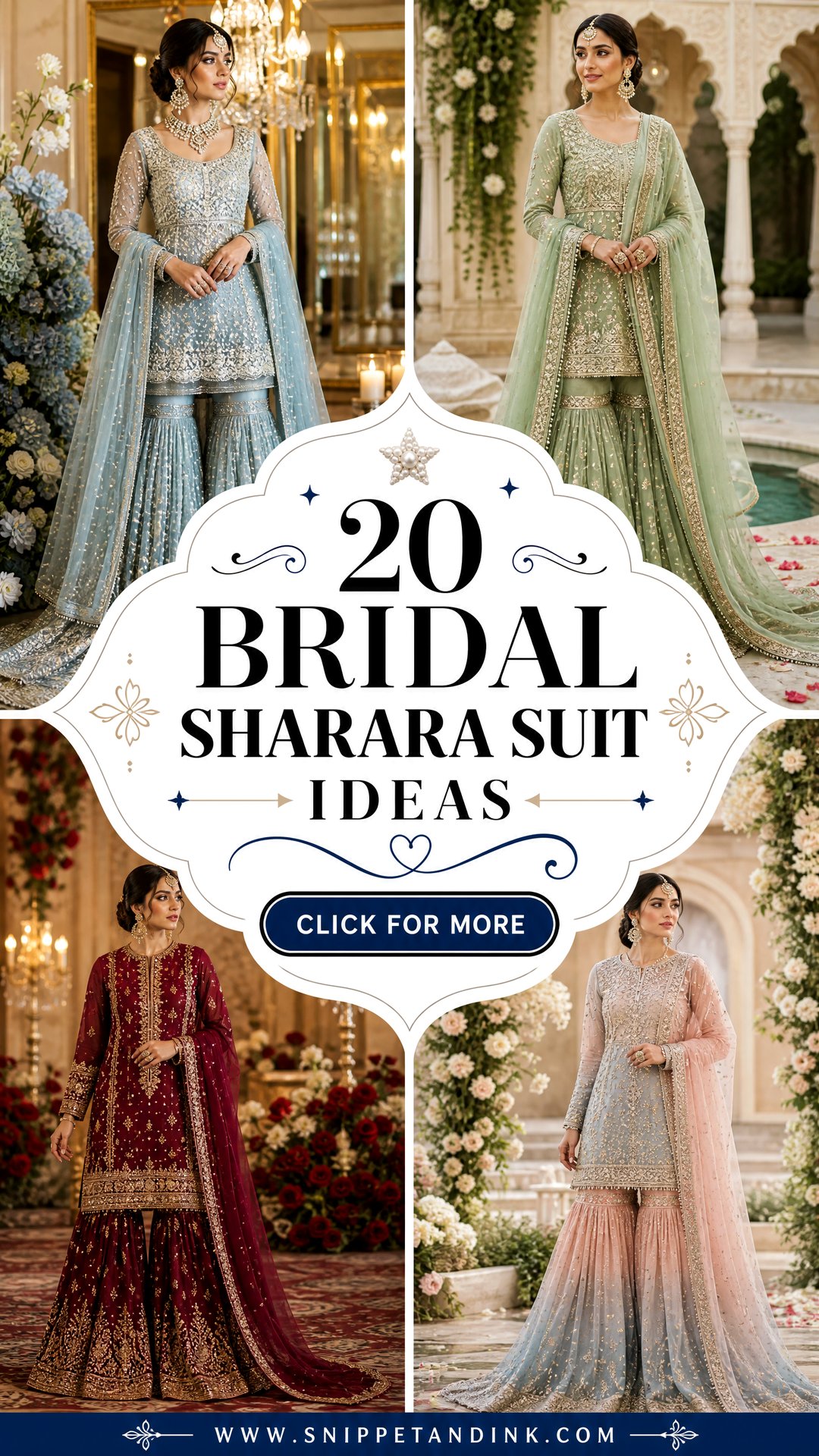
Sharara or Gharara? Telling Them Apart in a Shop
Shop assistants use the two words loosely, and the difference matters for fit and comfort. A sharara flares from the hip or upper thigh, so each leg looks like a wide skirt from top to bottom. A gharara is fitted down to the knee, where a joint (often covered by a gota or embroidered band) releases the flare.
- Sharara: easier to fit, forgiving at the thigh, flowing from the start.
- Gharara: needs exact measurements at the knee, gives a sharper, more traditional shape.
- Both pair with short kurtas; very long kurtas hide most of the flare on either.
Ask how many panels (kalis) the sharara has. More panels mean more swing and more fabric, which is great for dancing but heavier to carry around all day.
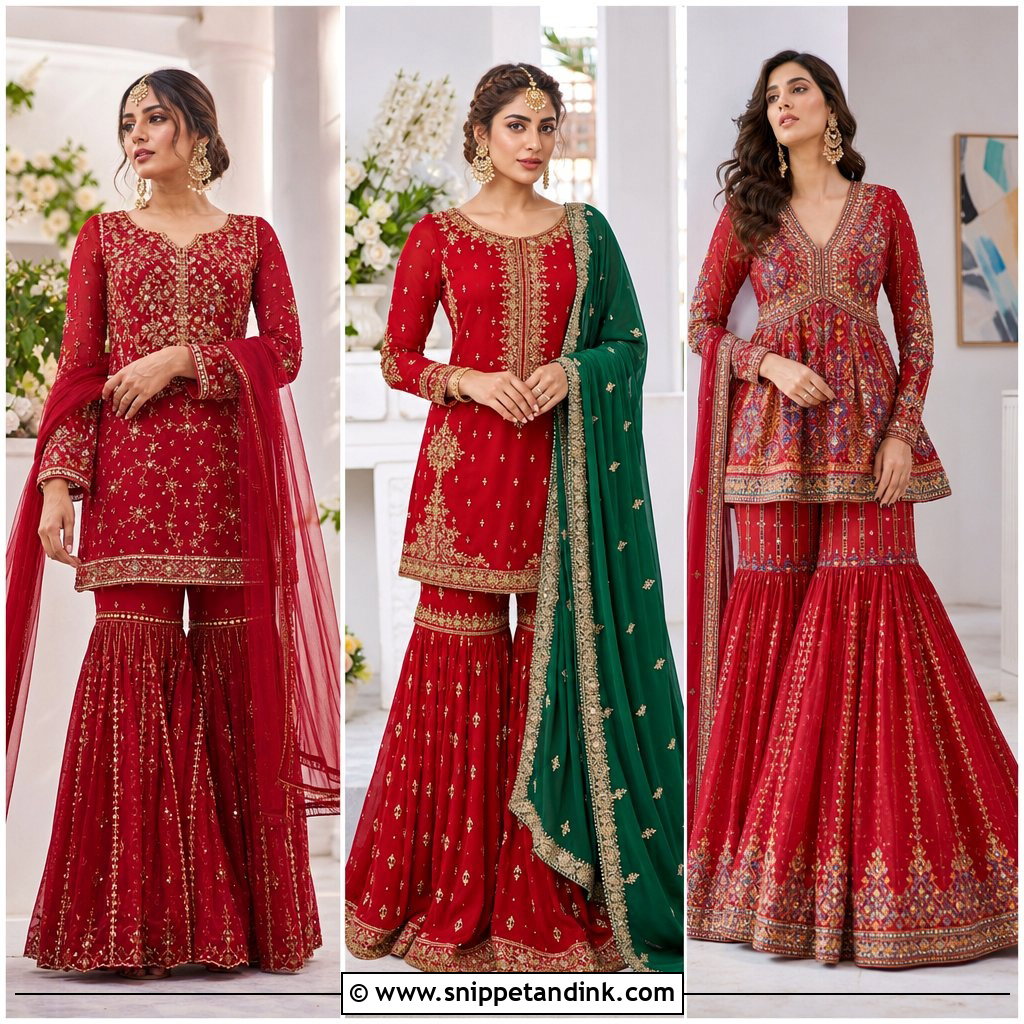
1. Red Zardozi Bridal Sharara Suit
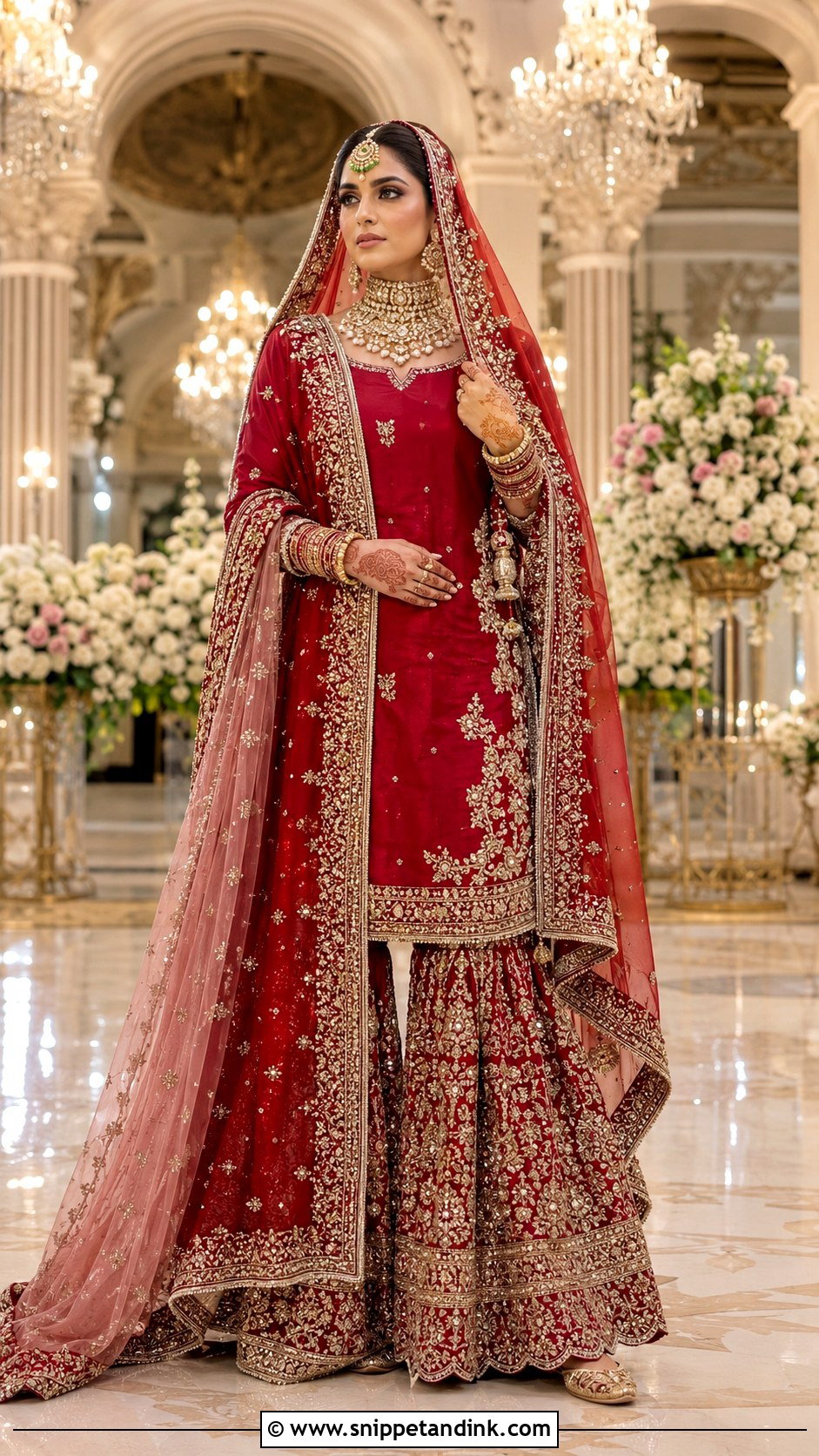
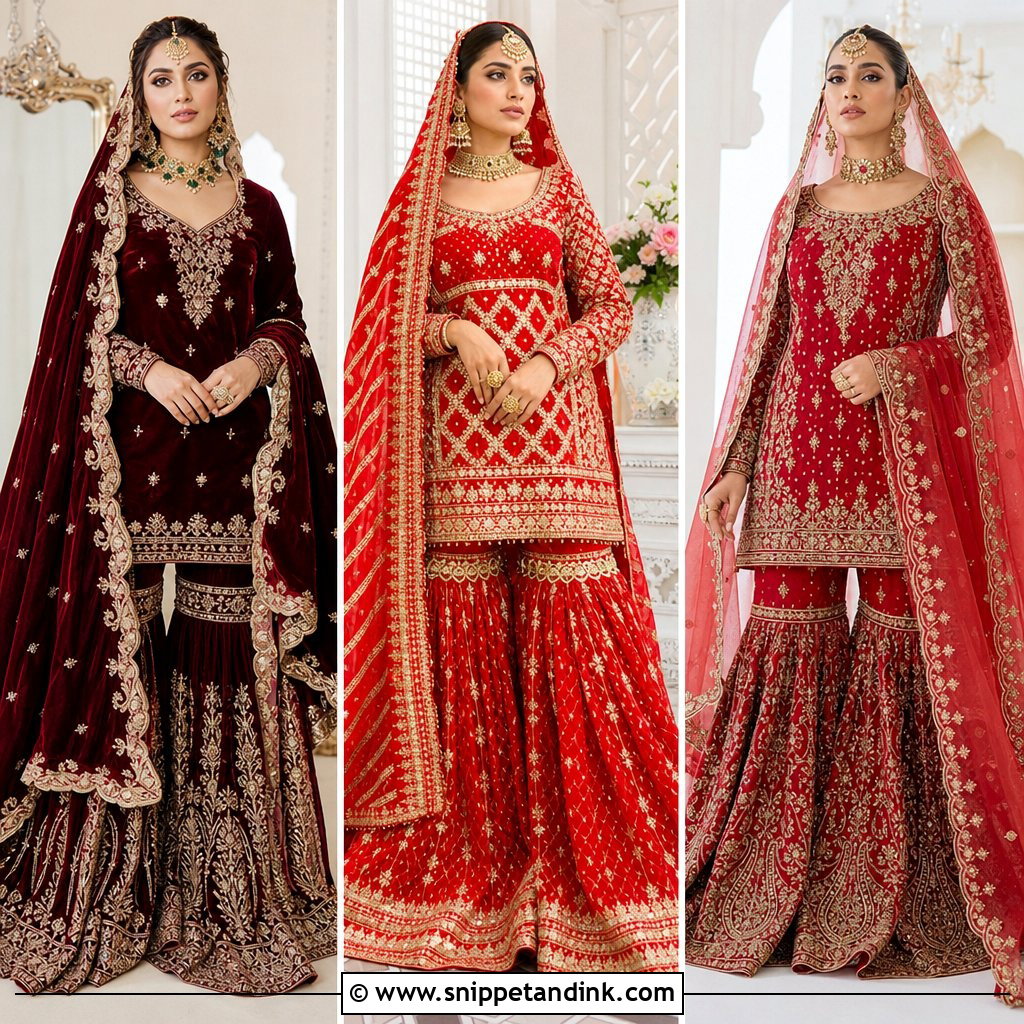
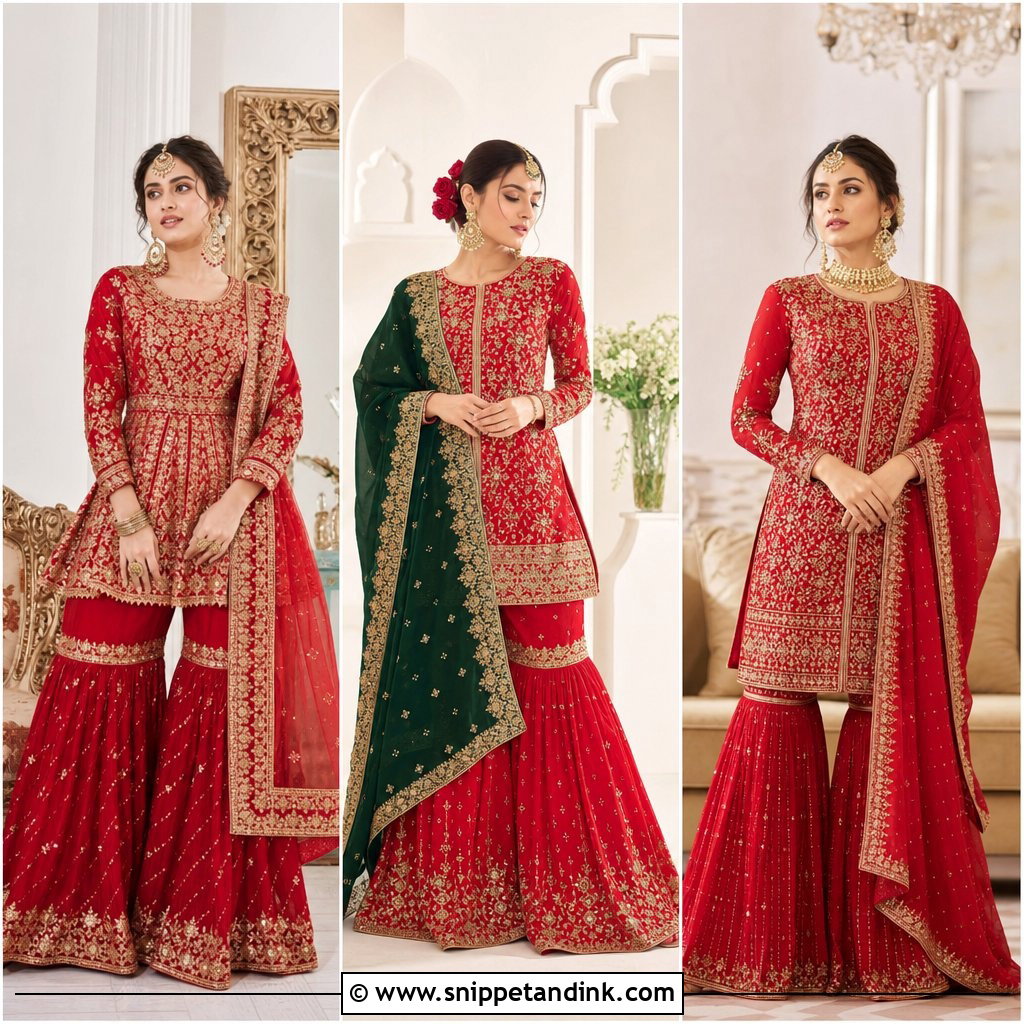
Red raw silk with antique gold zardozi is still the outfit most families picture for the main ceremony. I keep the kurta hip-length and fitted, with a sweetheart or round neck, and load the heaviest embroidery onto the sharara hem, where weight helps the flare hang straight. Two dupattas are common here: a sheer red one with a scalloped gold border over the head and a lighter one across a shoulder. Red varies more than any other shade, so try the fabric against your face in daylight; brick reds, tomato reds and blue-reds suit different undertones. A kundan choker, maang tikka, juttis and a small structured bag finish it.
2. Ivory And Gold Bridal Sharara Suit
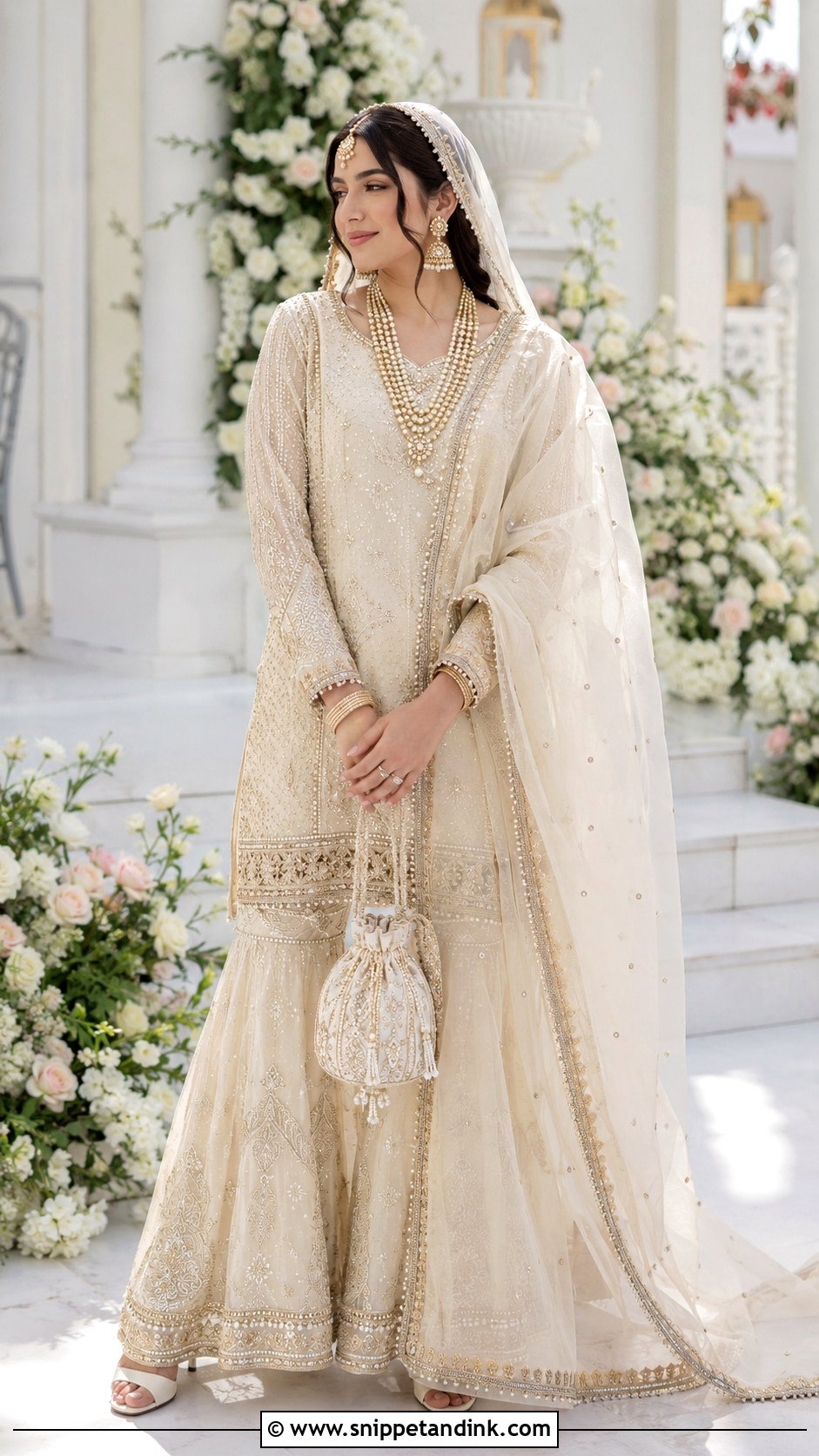
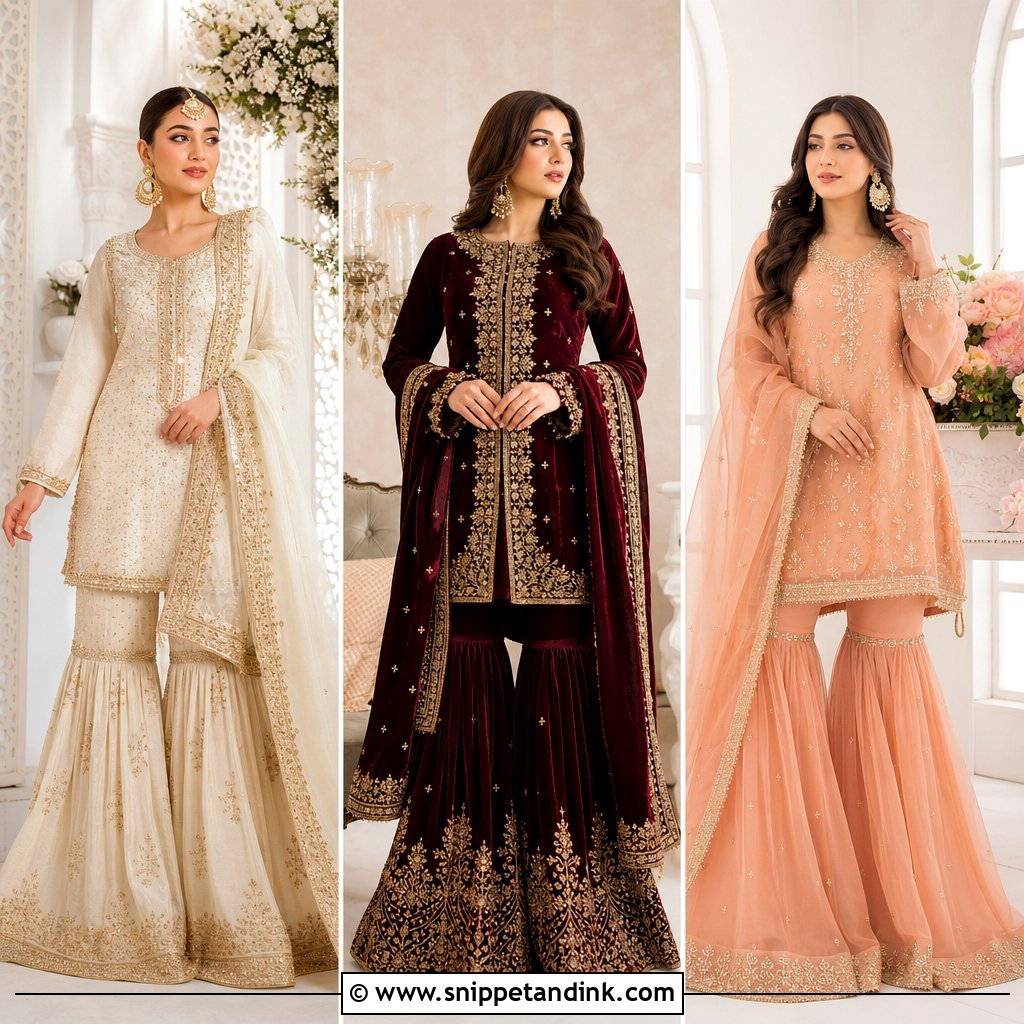
Ivory and gold suit a nikah or a daytime ceremony, and they’re the colors where kurta length changes the mood most. Short shows the sharara and reads younger; longer gives more coverage and looks more formal. Dabka, pearls and metallic thread on the silk kurta, with gold borders around the lower flare, keep the set light. A passa on one side of the head is a lovely detail with this outfit, but it needs pinning into a firm base, so tell your hairstylist in advance. Gold jhumkas, layered necklaces, ivory embroidered heels and a pearl potli complete the look.
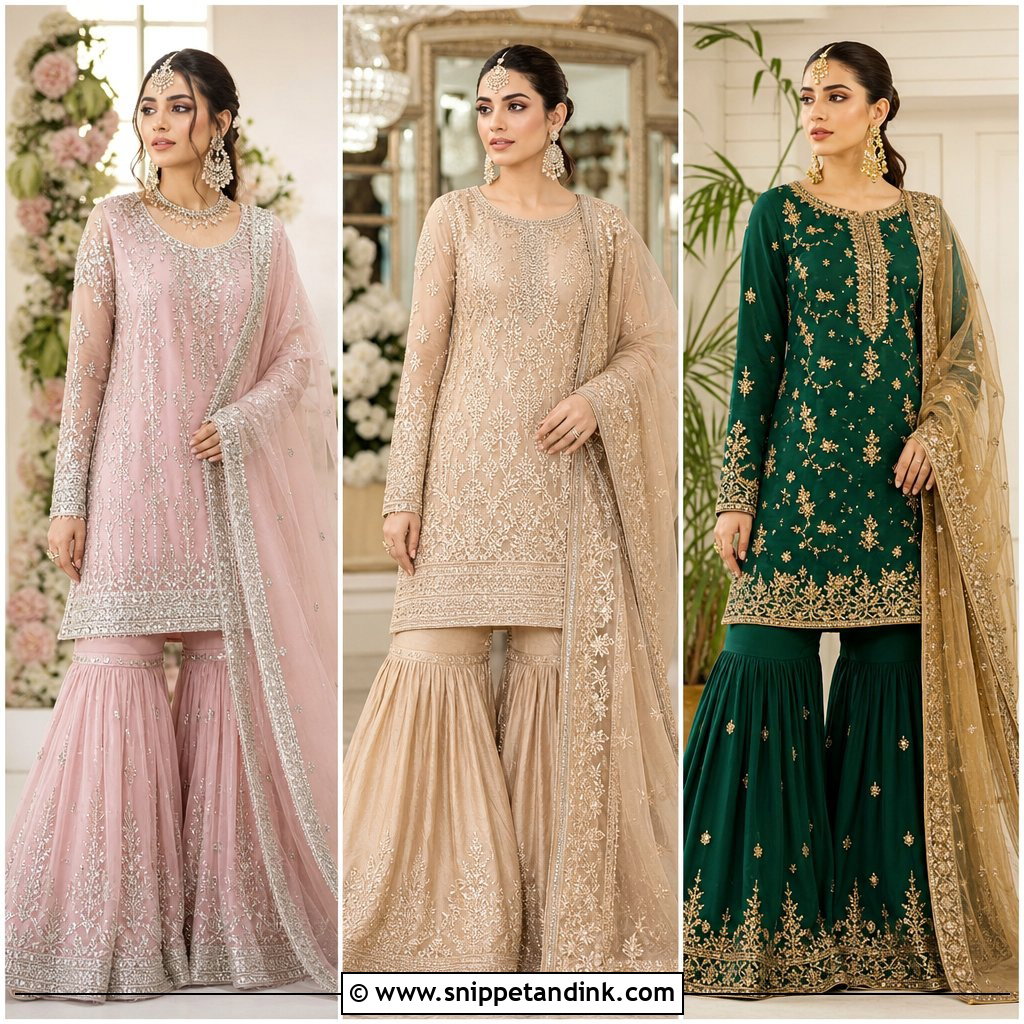
3. Emerald Green Velvet Bridal Sharara Suit
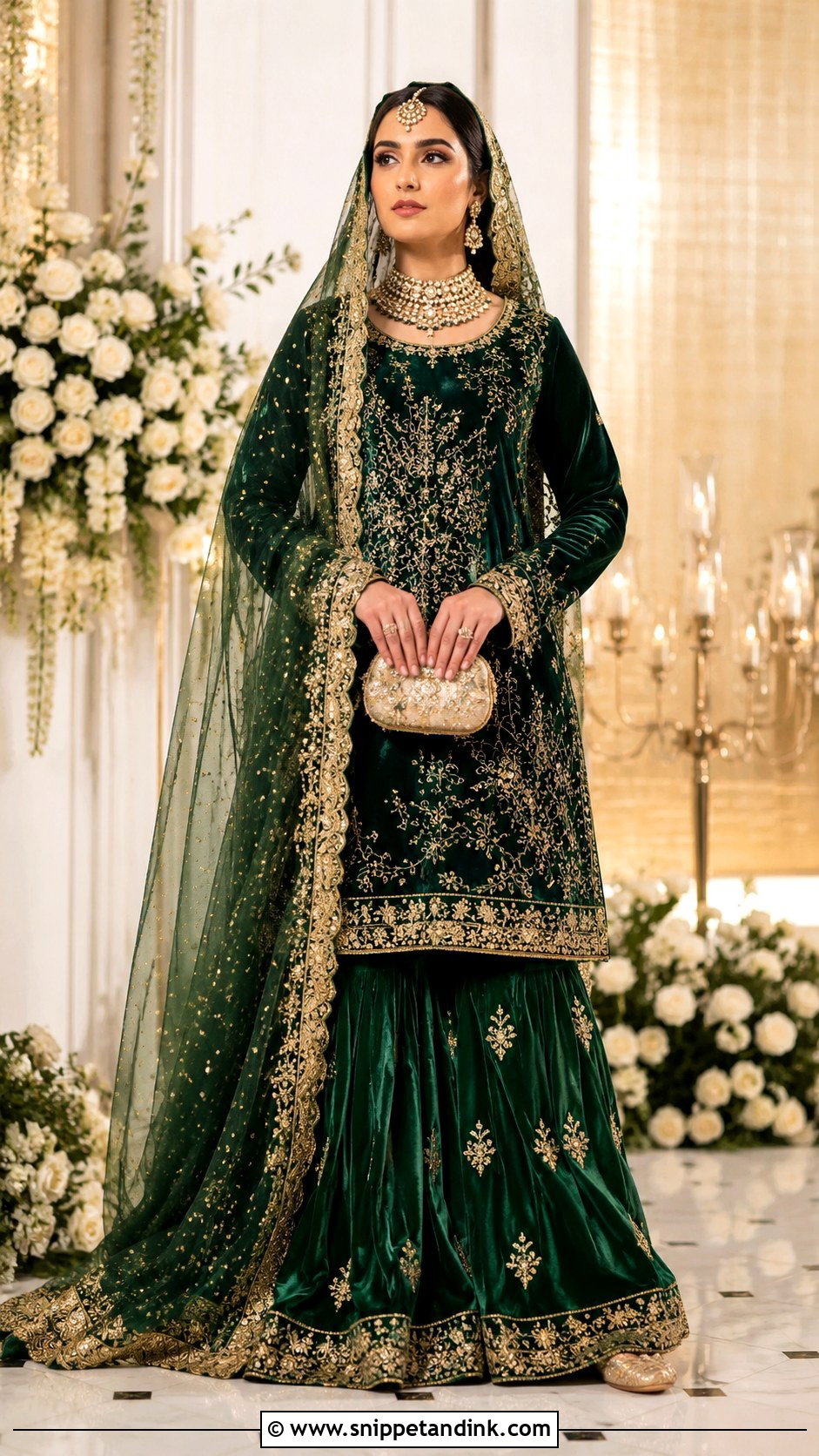
Velvet only belongs on the top half. An emerald velvet kurta with full sleeves keeps you warm at a winter wedding, but velvet sharara pants would be heavy and stiff, so the trousers here are silk and move freely. Keep gold or antique bronze embroidery to the neckline, cuffs and hem, and let the pile of the velvet show. A sheer emerald or muted gold dupatta softens it. Polki jewelry, a statement ring, metallic juttis and an embroidered clutch go well, with a low bun and fresh flowers or jeweled pins.
4. Blush Pink Organza Bridal Sharara Suit
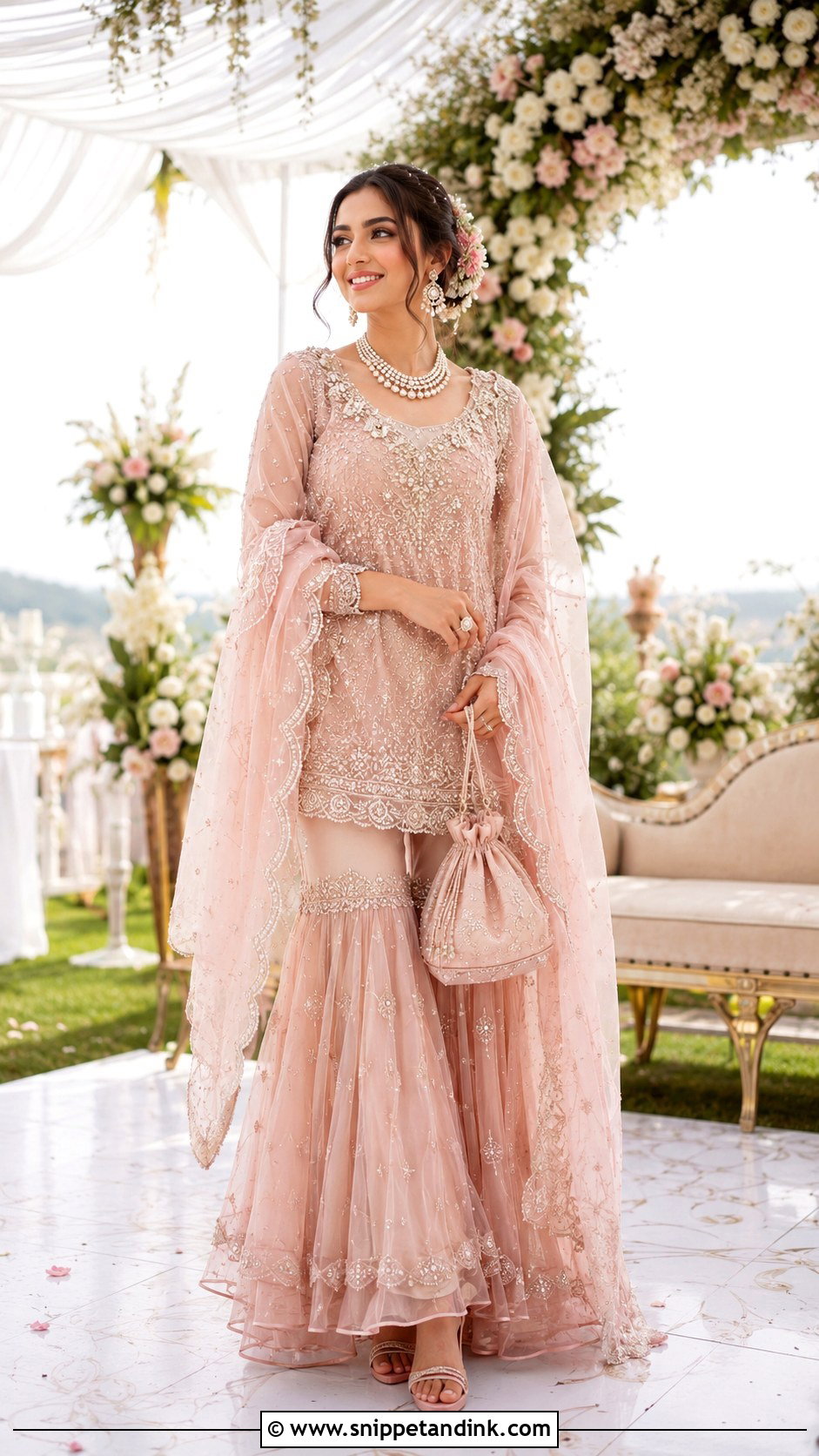
Organza against bare skin itches, so before I’d suggest a blush organza kurta, I’d check it’s lined in soft silk all the way through the sleeves. A short kurta with pearls, tiny sequins and floral threadwork sits over a high-waisted sharara with several panels and a worked hem. Pale pink can look washed out next to fair skin in strong sun, which is why deeper rose blush tones often photograph better outdoors. A sheer matching dupatta with pearl accents, rose gold heels, a pearl choker and a braided bun keep it soft for an engagement or garden nikah.
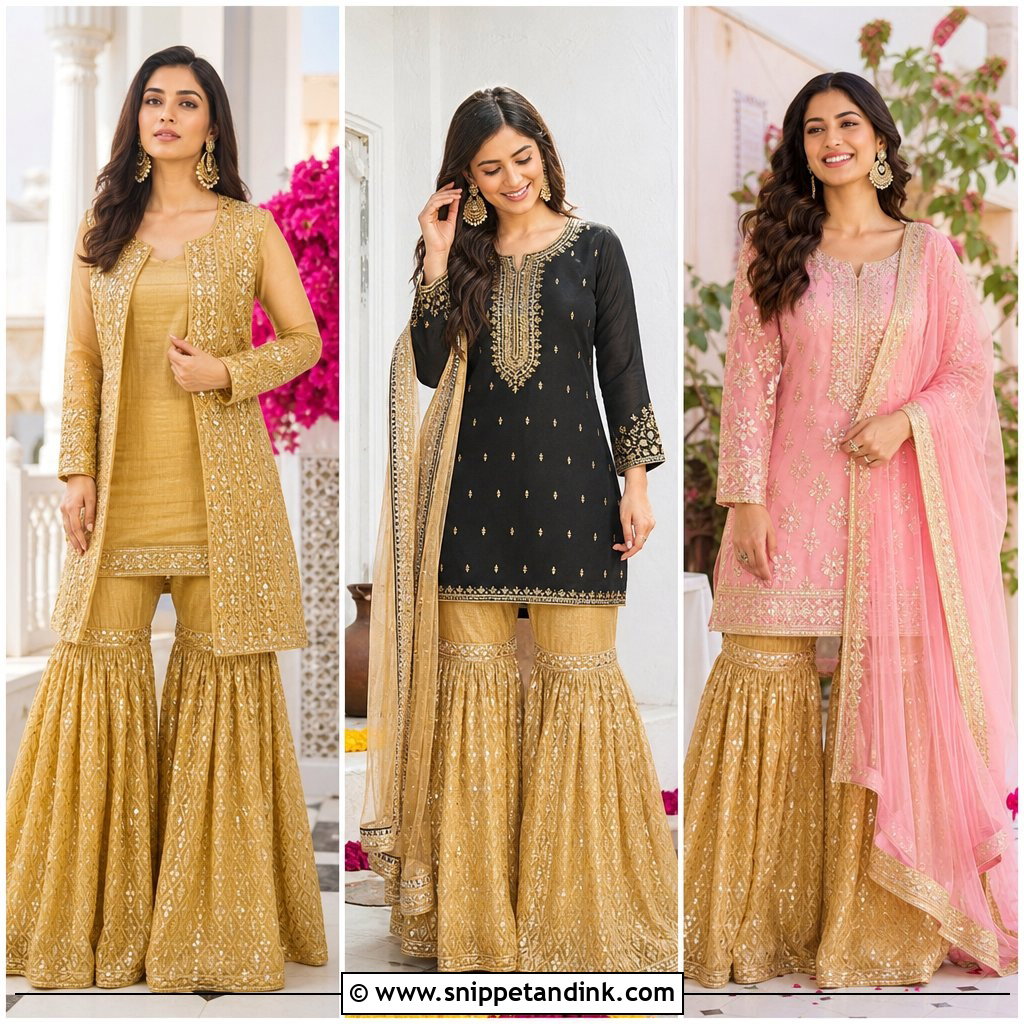
5. Mustard Gota Bridal Sharara Suit
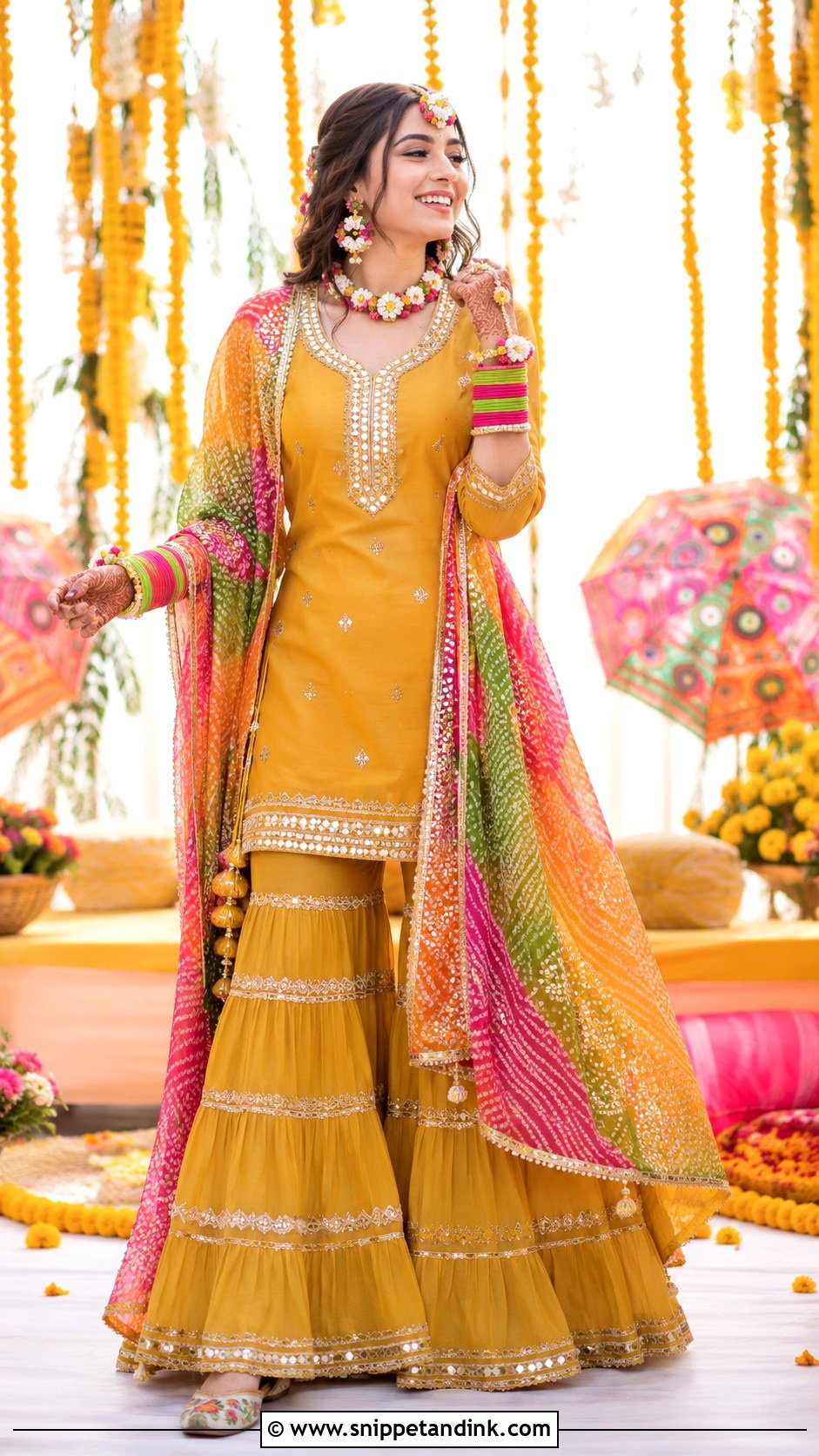
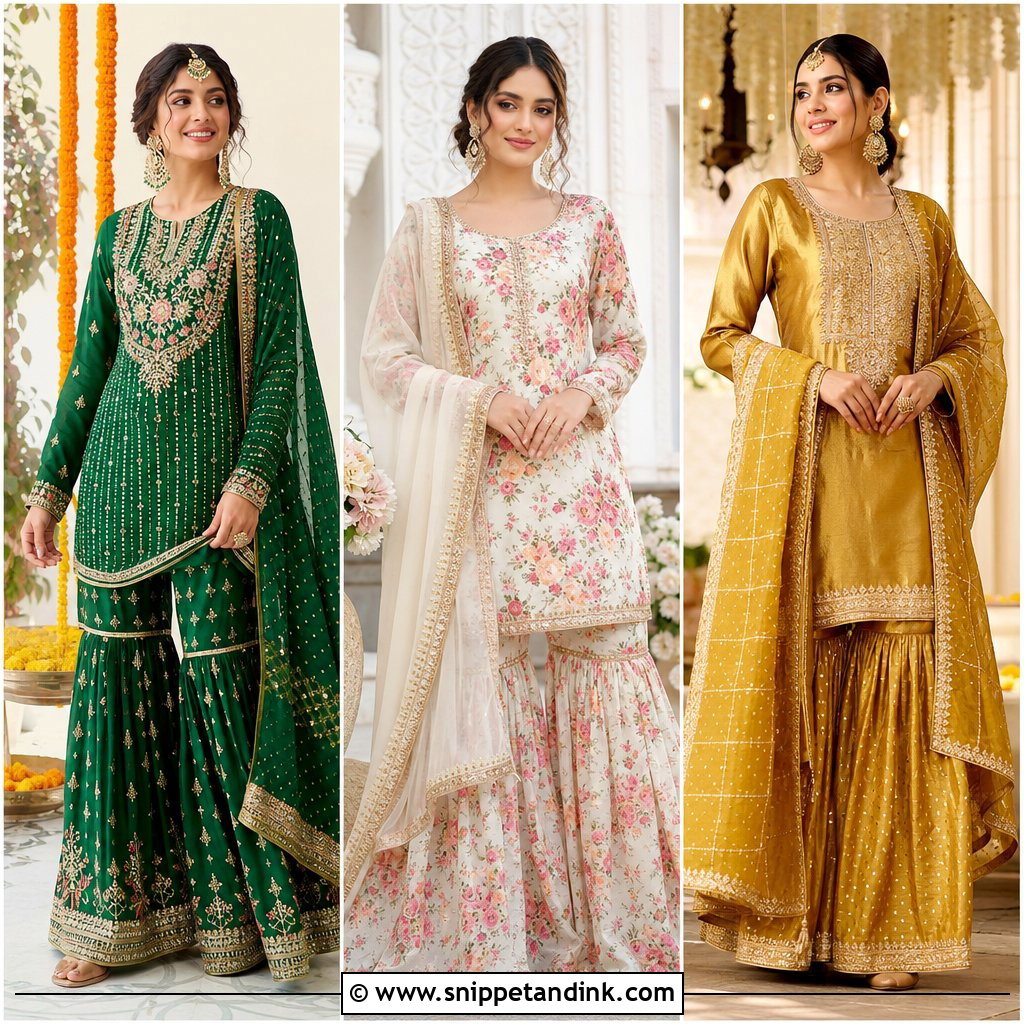
At a haldi, expect the outfit to come home stained, so a bright mustard sharara in georgette or light silk is the sensible pick. Gota borders, floral motifs and small mirrors decorate the kurta, and tiered flares with narrow metallic ribbon give the pants bounce when you dance. A bandhani or leheriya dupatta brings in pink, green and orange. Fit the kurta closely at the shoulders, or the wide trousers will make the whole shape look bottom-heavy. Floral earrings, colored bangles, a light tikka, embellished juttis and a braid with fresh flowers finish it.
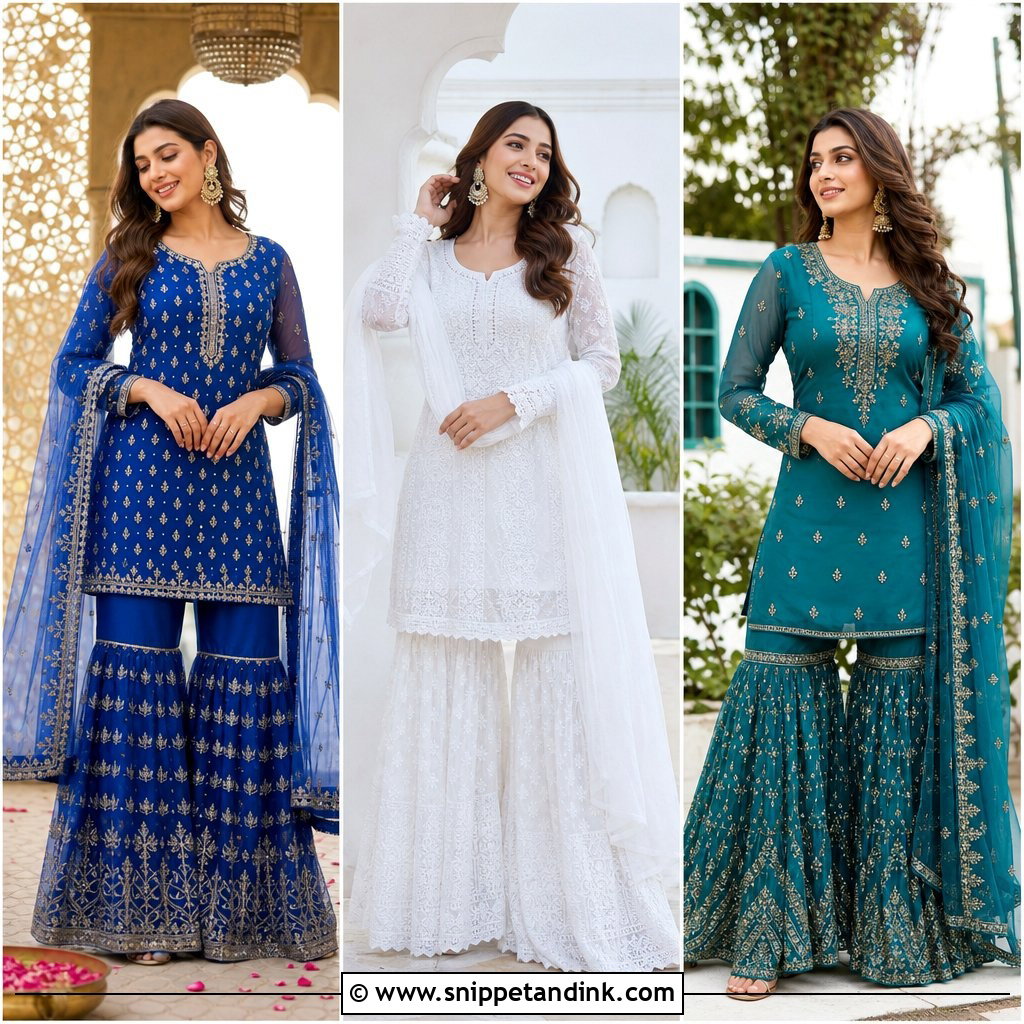
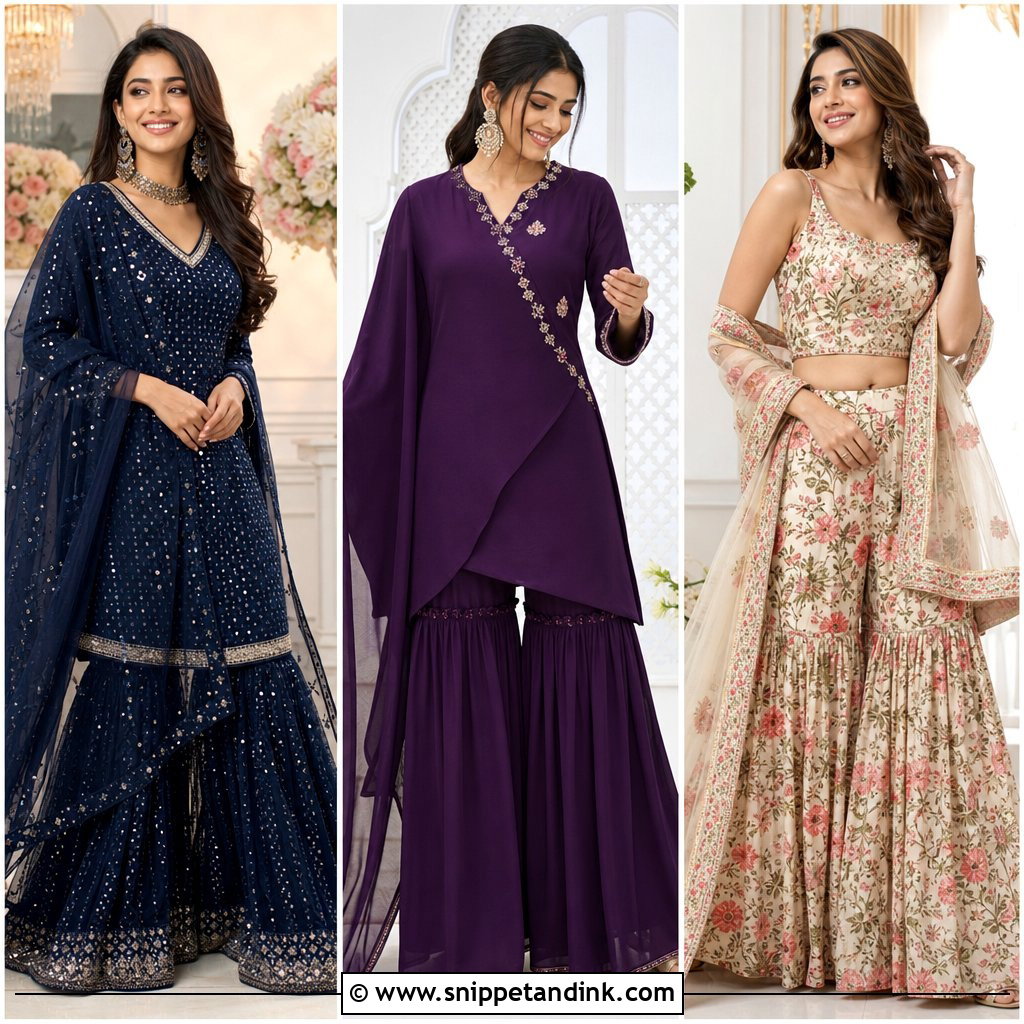
6. Royal Blue Embroidered Bridal Sharara Suit
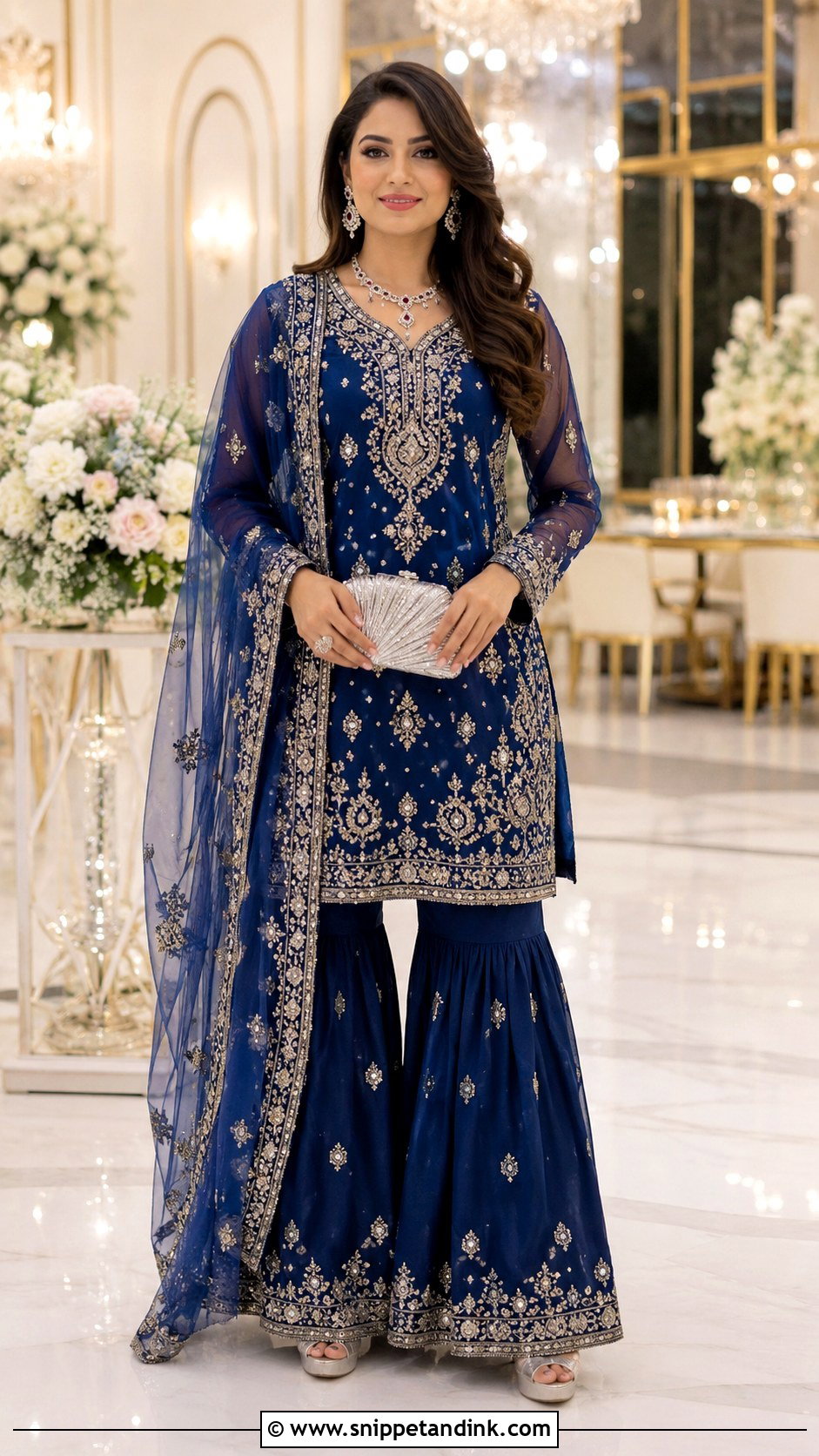
Under warm evening lights, royal blue holds its color better than most pastels. The short silk kurta carries silver zardozi, crystals or sequins at the neckline and borders, and the sharara stays plain on top with work only on the lower flare. That placement keeps the hips slim and puts the sparkle where it moves. Drape the sheer blue dupatta over one shoulder so the kurta stays visible. Silver work can tarnish next to perfume, so spray before you dress, not after. Diamond-style jewelry, silver heels, a crystal clutch and a sleek bun suit a reception or sangeet.
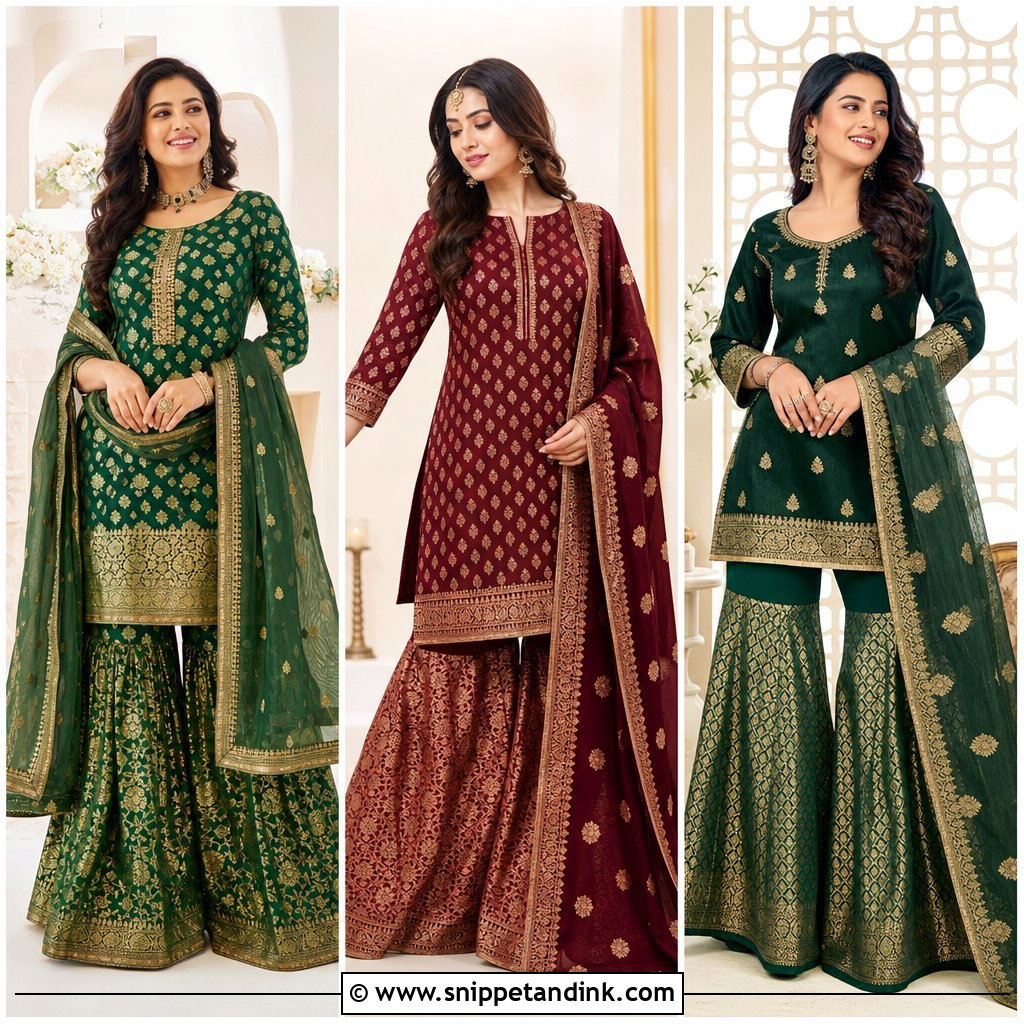
7. Maroon Jamawar Bridal Sharara Suit
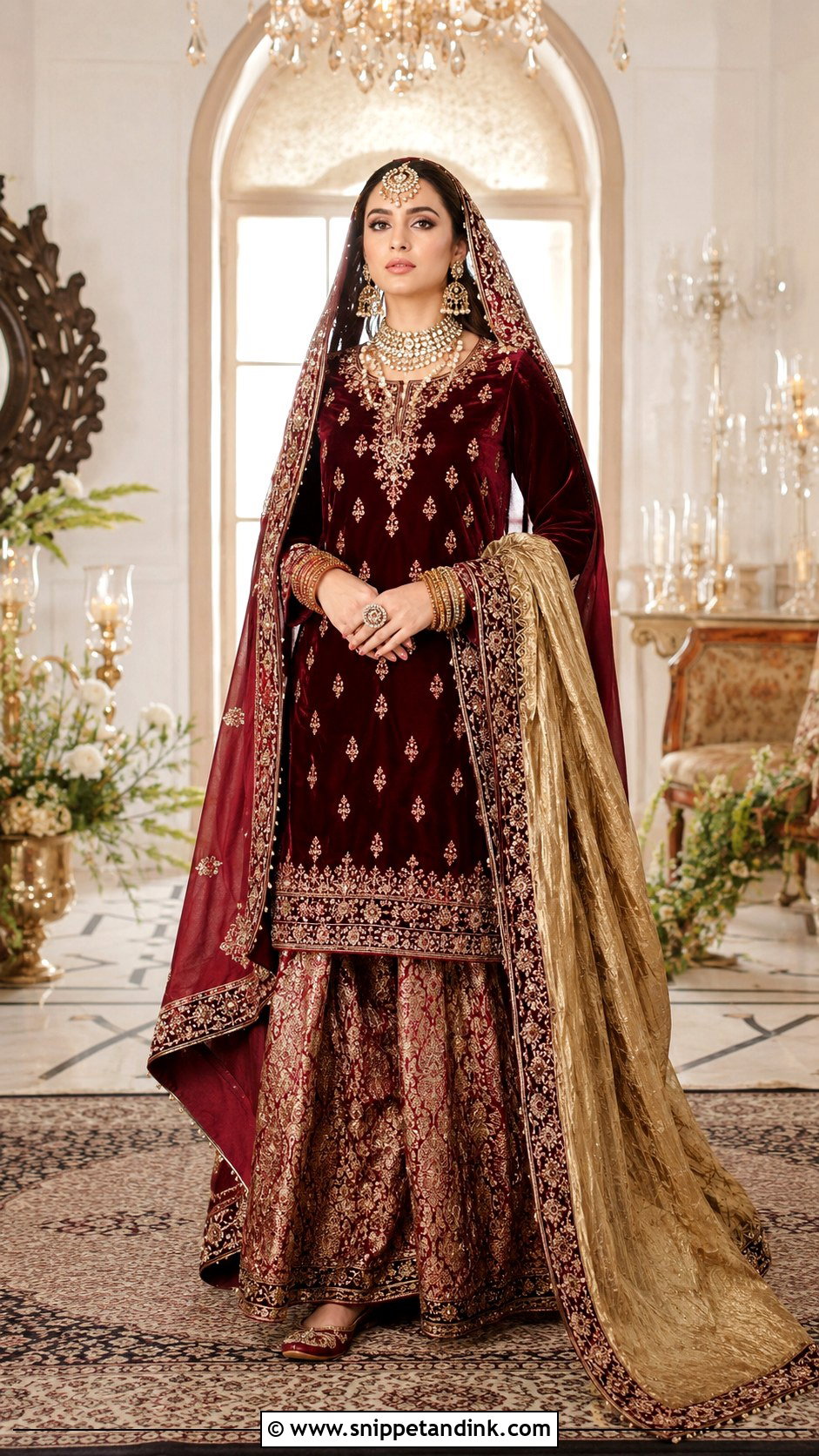
Jamawar is a woven pattern, so it already does the decorating; pairing it with an embroidered kurta in another busy pattern is the mistake I see most. Here the jamawar goes on the sharara, and the kurta stays solid maroon velvet or raw silk, linked by antique gold embroidery at the neck, sleeves and hem. A maroon net dupatta covers the head while a gold tissue dupatta sits on the shoulder. Heavier fabrics add bulk, so the waist and shoulders must be precisely fitted. Polki, a passa, stacked bangles and maroon khussas finish it; break khussas in at home, as new leather rubs at the heel.
8. Lavender Silver Bridal Sharara Suit
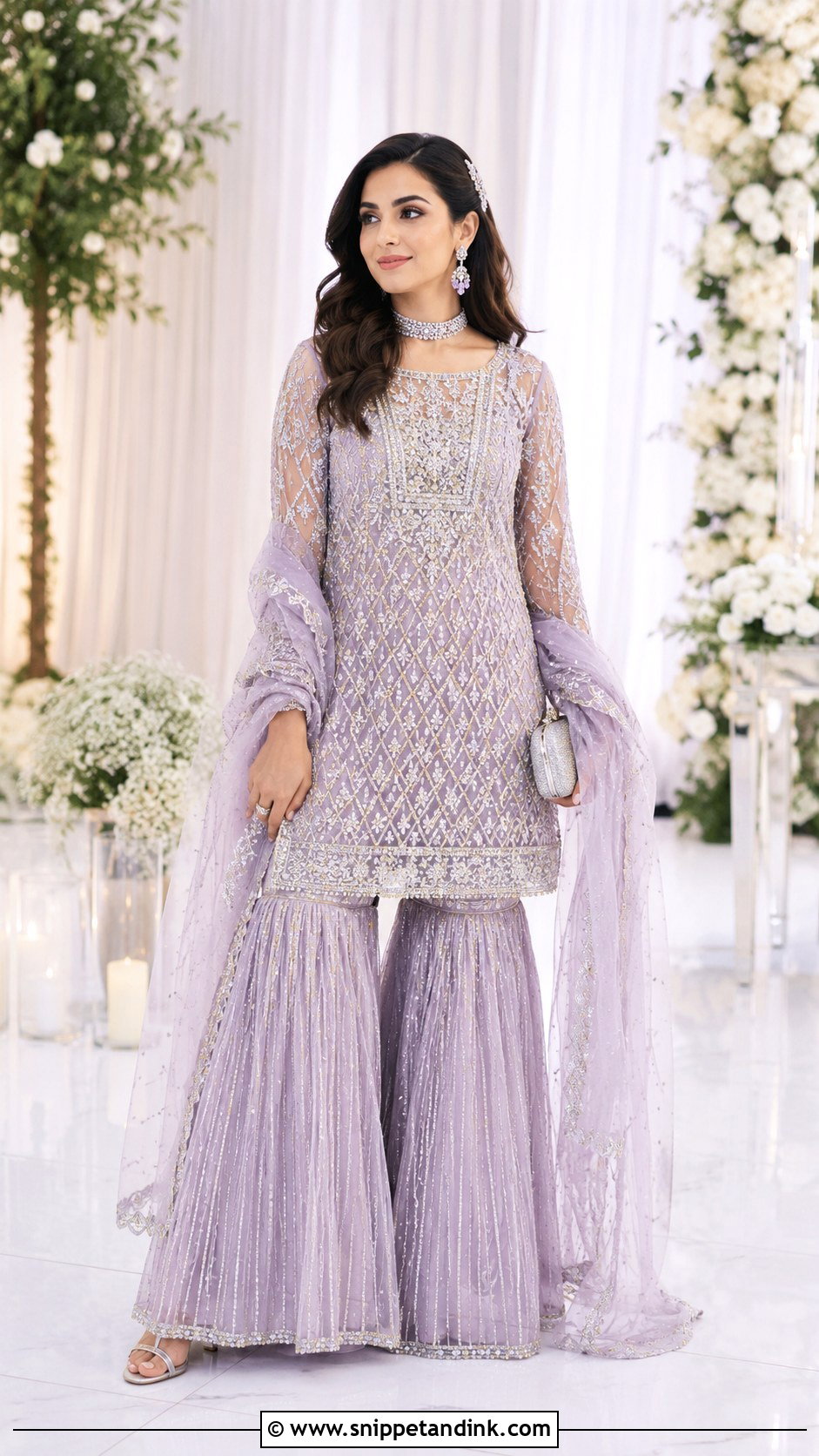
Lavender and silver look fresh in daylight and cool at night. The fitted net or organza kurta carries silver thread, clear crystals, pearls and a few sequins, and should stop above the knee so the wide sharara gets its full length. A tulle dupatta is light enough to wear over the head for hours without pulling the hair. Ask to see the lavender beside your skin under warm light, because some lavenders turn gray indoors. A diamond-style choker, lavender stone earrings, silver sandals, a crystal clutch and a low bun complete it.
9. Peach Floral Bridal Sharara Suit
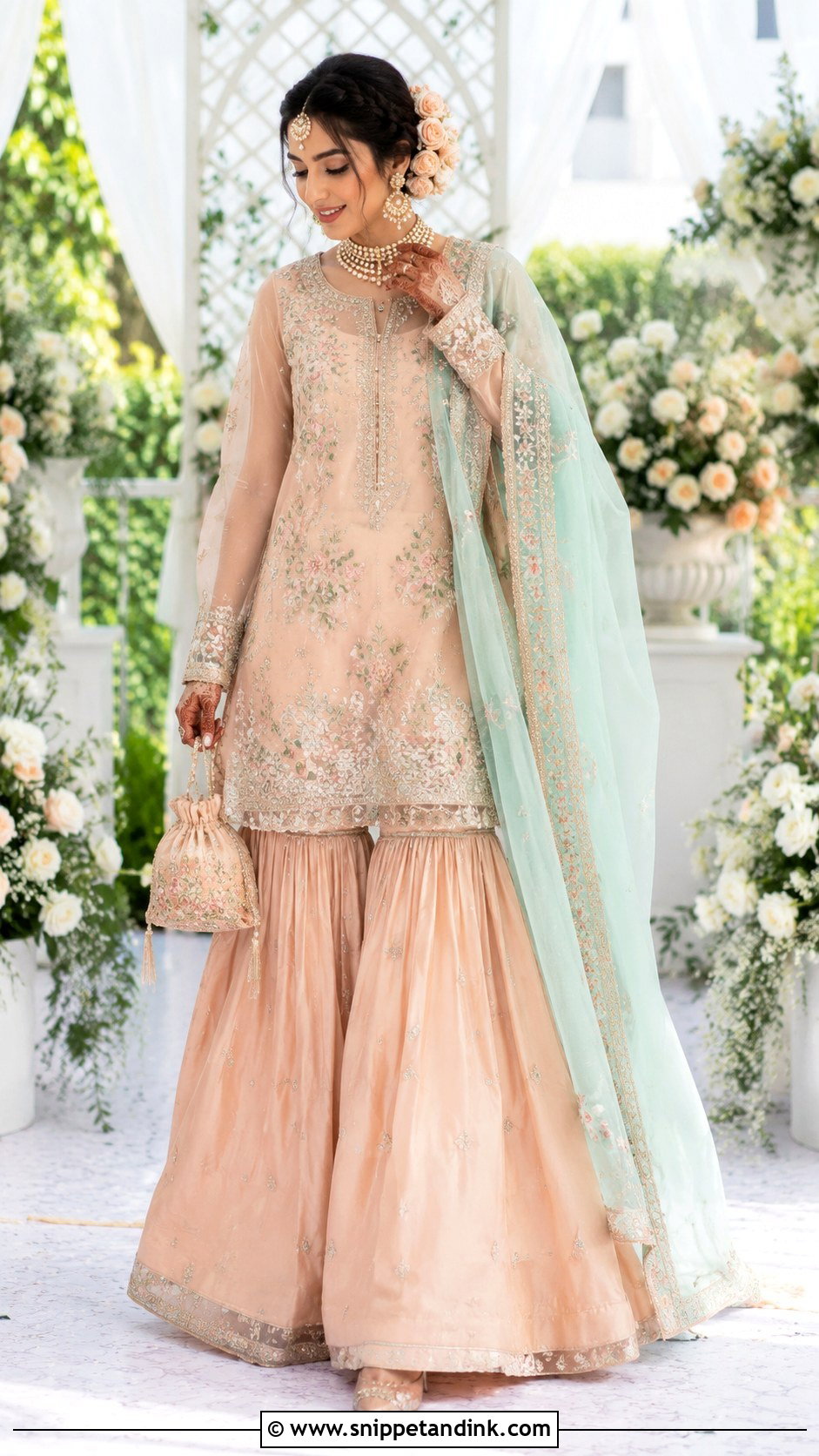
Peach organza with pink, mint, ivory and soft gold threadwork is a good outdoor choice, provided the embroidery stays light. Heavy work on organza makes it sag, and in heat you’ll feel every gram. Pair it with silk or georgette sharara pants with flowers along the lower panels, and a mint or peach dupatta with a floral border. Fresh flowers wound round a braided bun repeat the motifs. Keep blooms small, since big flowers wilt in sun by mid-afternoon. A pearl necklace, floral earrings, champagne heels and an embroidered potli finish it.
10. Teal Jacket Bridal Sharara Suit
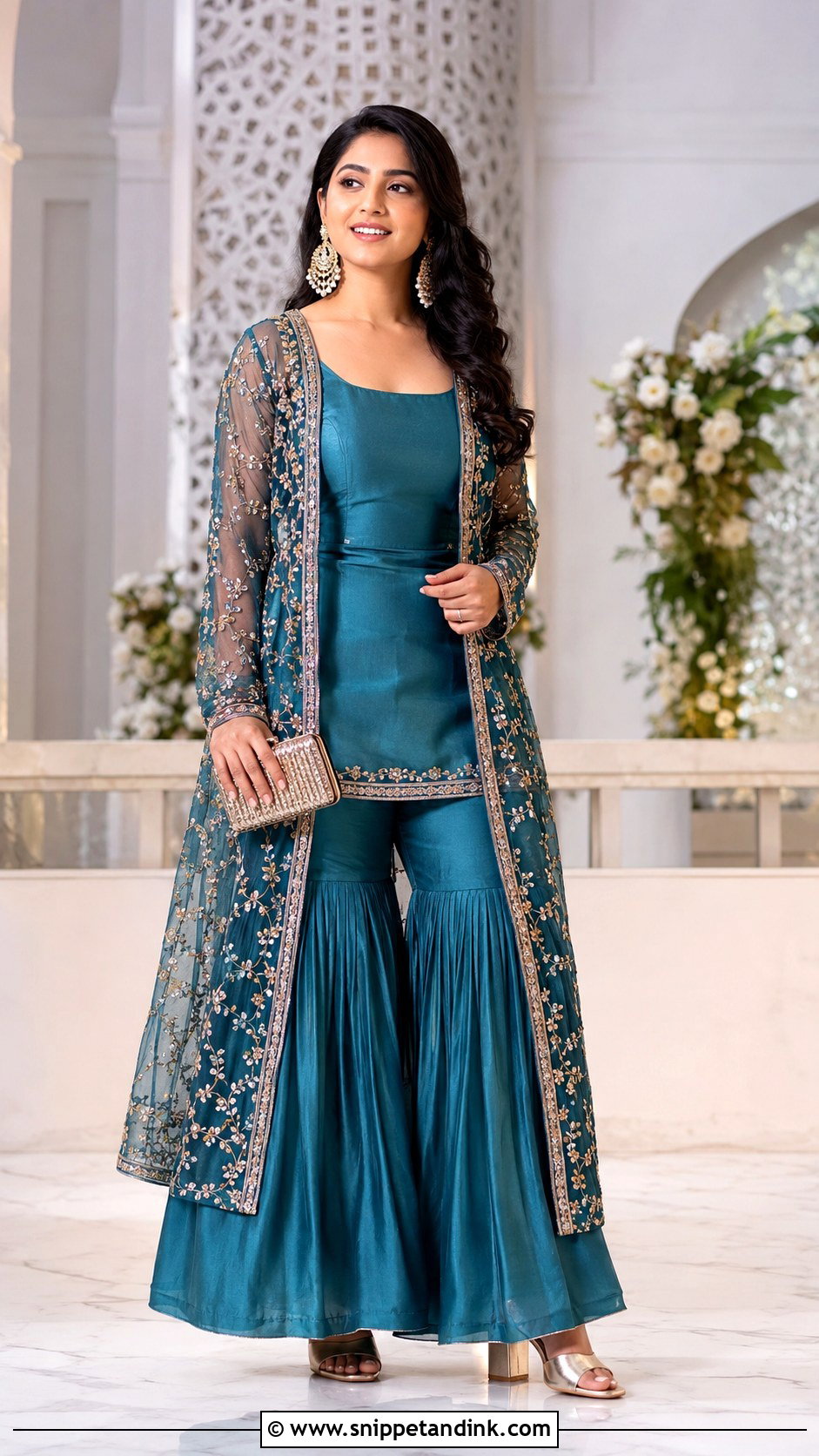
With a long jacket, the sharara becomes the quiet layer and the jacket does the talking. A fitted sleeveless silk kurta and high-waisted teal sharara go underneath, with a sheer knee or calf-length jacket over the top, embroidered along the opening, cuffs and hem. Wear the jacket open; buttoned, it hides the flare and shortens your legs. Where family custom allows, you can skip the dupatta or carry it over one arm. Have the jacket fitted over the kurta, never on its own. Statement earrings, a fine choker, metallic block heels and a structured clutch finish it.
11. Champagne Cape Bridal Sharara Suit
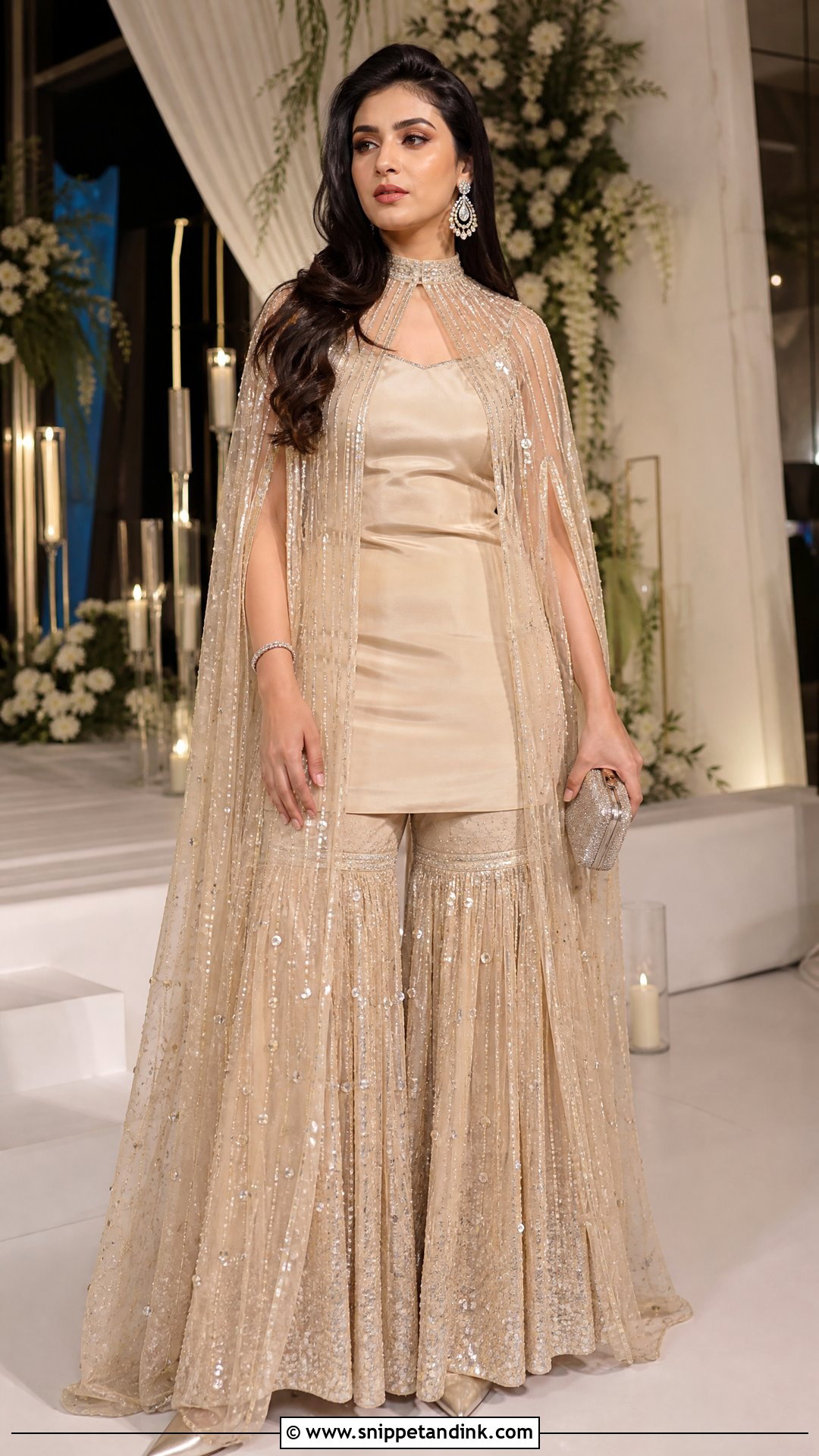
A cape replaces the dupatta, which suits a reception bride who doesn’t want to manage fabric all night. The satin or silk kurta should fit closely and end near the hips, over a dramatic sharara with fine sequins or metallic embroidery at the hem. A sheer shoulder-length cape with crystals, pearls or small florals completes it. Ask for the cape to be tacked at the shoulder seams, otherwise it slides back each time you lift your arms. Crystal earrings, pointed metallic heels, a slim bracelet and a polished ponytail keep the neckline clear.
12. White Chikankari Bridal Sharara Suit
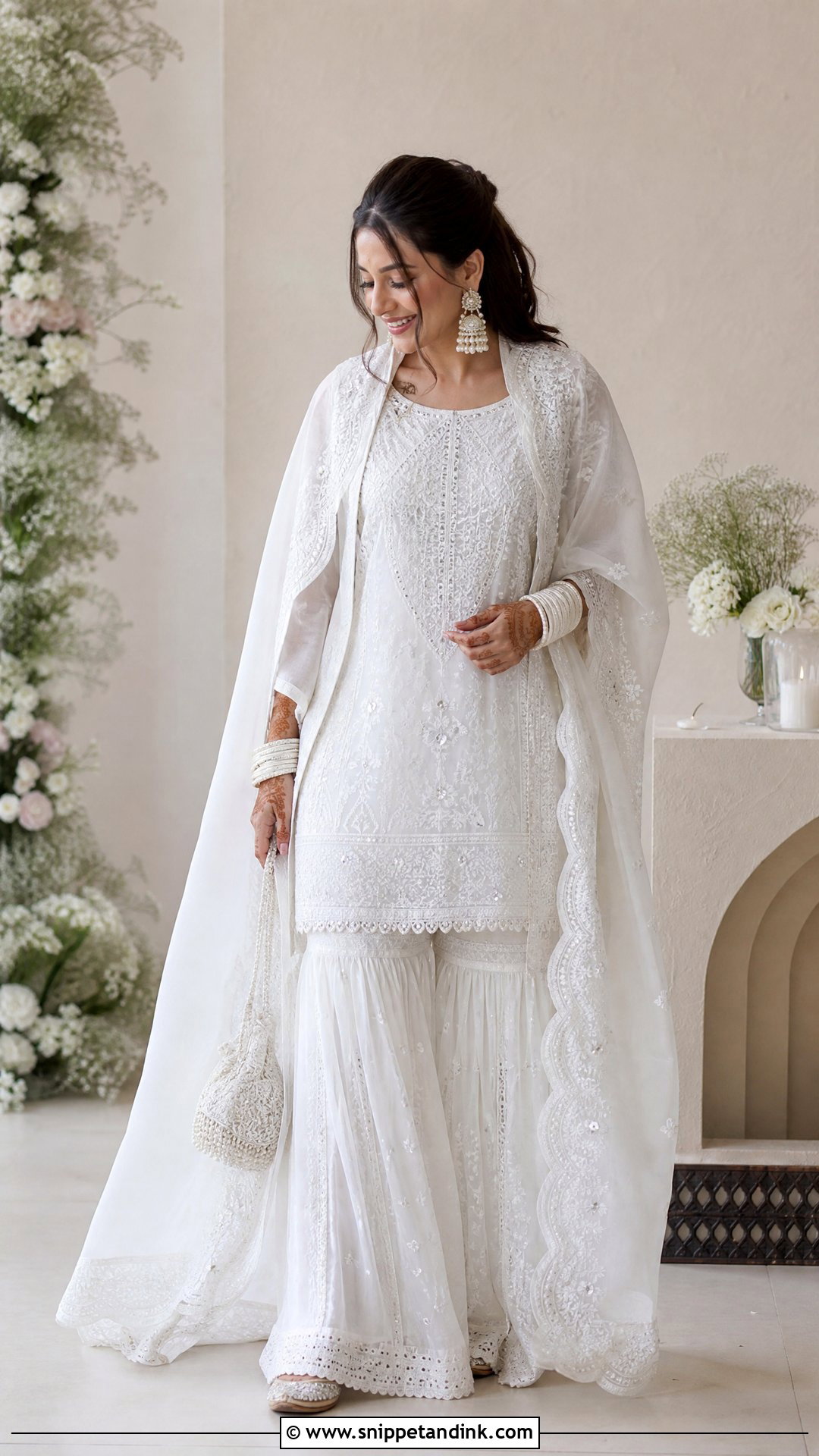
Chikankari is traditionally hand embroidery in white thread on fine fabric, and the beauty is in its shadow work, which only shows in good light. A short white kurta with dense chikankari, a few pearls and subtle silver sequins goes over soft cotton-silk or georgette shararas that stay light. A sheer organza dupatta with a scalloped border adds polish. Fine chikan work snags on rough jewelry backs, so check the clasps on your necklace. Pearl jewelry, silver juttis, white bangles, a beaded potli, a small maang tikka and a rosy lip suit a nikah or small daytime wedding.
13. Black Sequin Bridal Sharara Suit
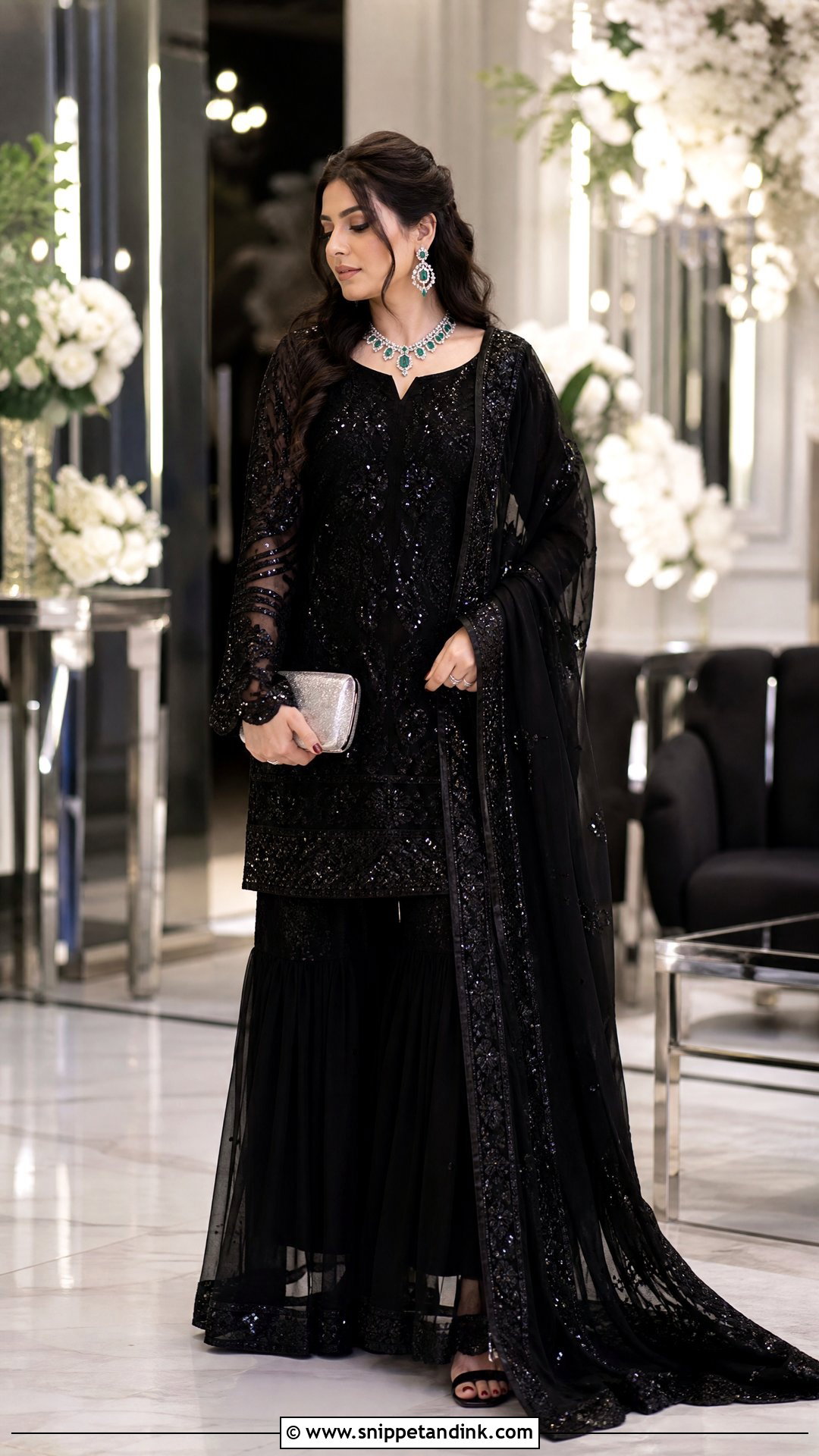
Before anything else, ask your family about black. In some households it’s considered inauspicious for a bride, while others are happy with it for a reception. If it’s welcome, a fitted black velvet or crepe kurta with tonal sequins, silver beads or antique metallic embroidery over fluid georgette shararas looks dramatic at night. Black velvet swallows detail in photos, so metallic work is what keeps it readable. A black net dupatta with an embellished border, emerald or diamond-style jewelry, black embellished heels and a sleek bun finish it, with luminous skin and one defined feature.
14. Rust Mirror Work Bridal Sharara Suit
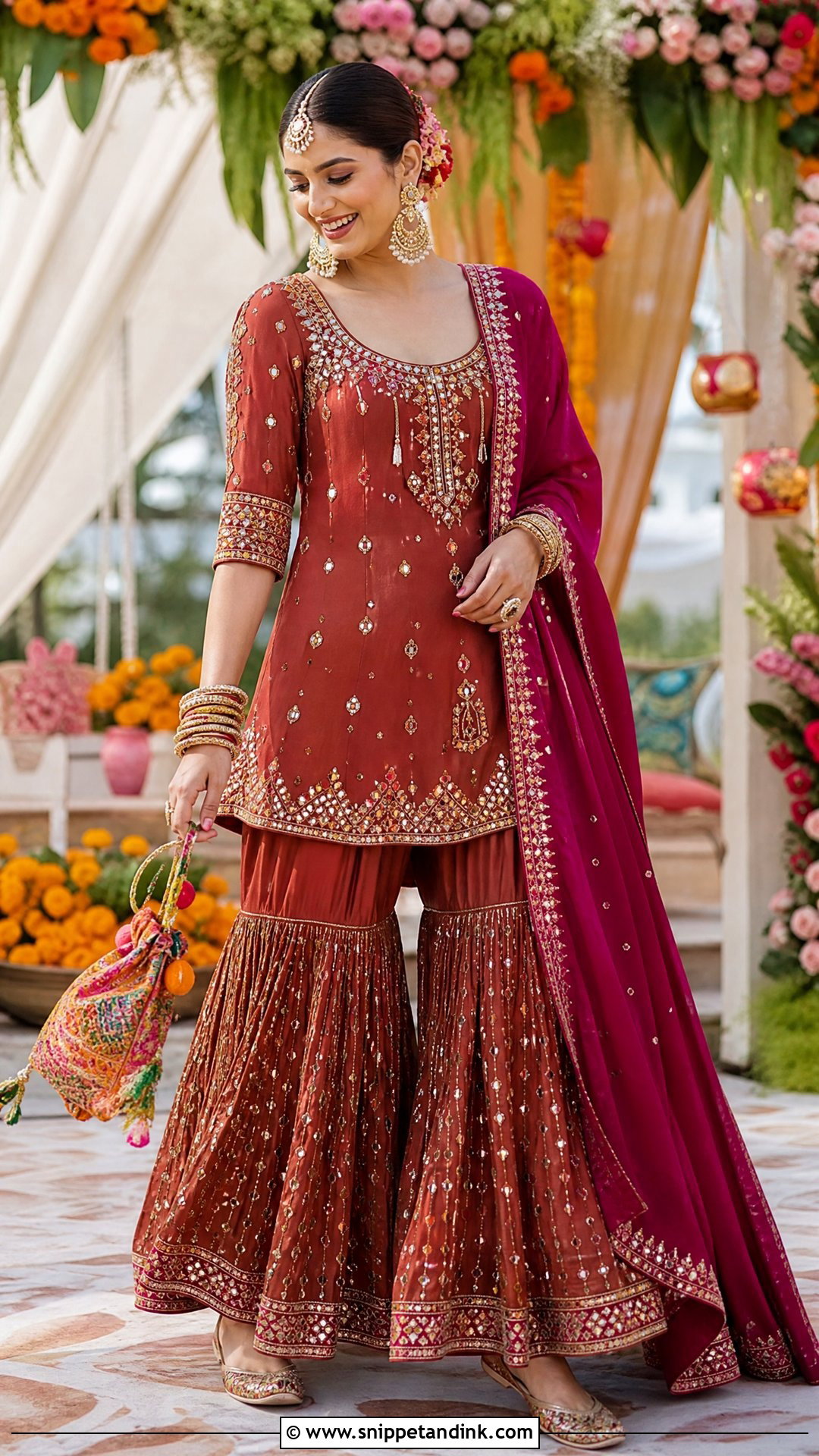
Rust is a warm base that makes mirror work glow. Small mirrors around the neckline, sleeves and hem of a short silk kurta pair with sharara pants carrying wider embroidered panels near the flare. Bring in magenta, coral or multicolor through the dupatta, with a narrow gota edge. If the kurta has dense mirror work, lighten the jewelry so the two don’t compete, and check the mirrors are flush, since raised edges scratch. A loose braid with floral pins stays comfortable while you dance. This bridal sharara suit suits a mehndi, sangeet or outdoor pre-wedding event.
15. Powder Blue Pearl Bridal Sharara Suit
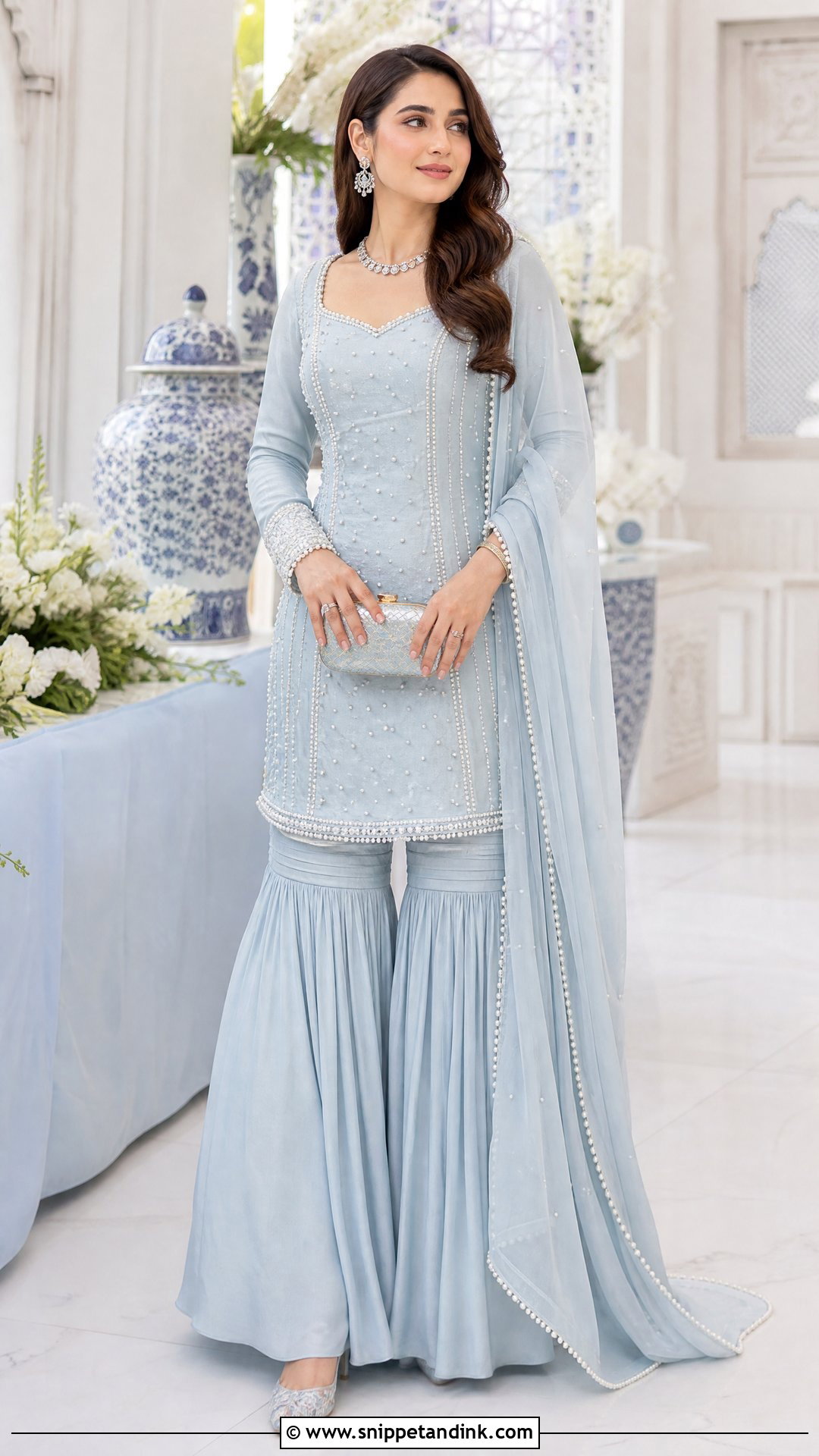
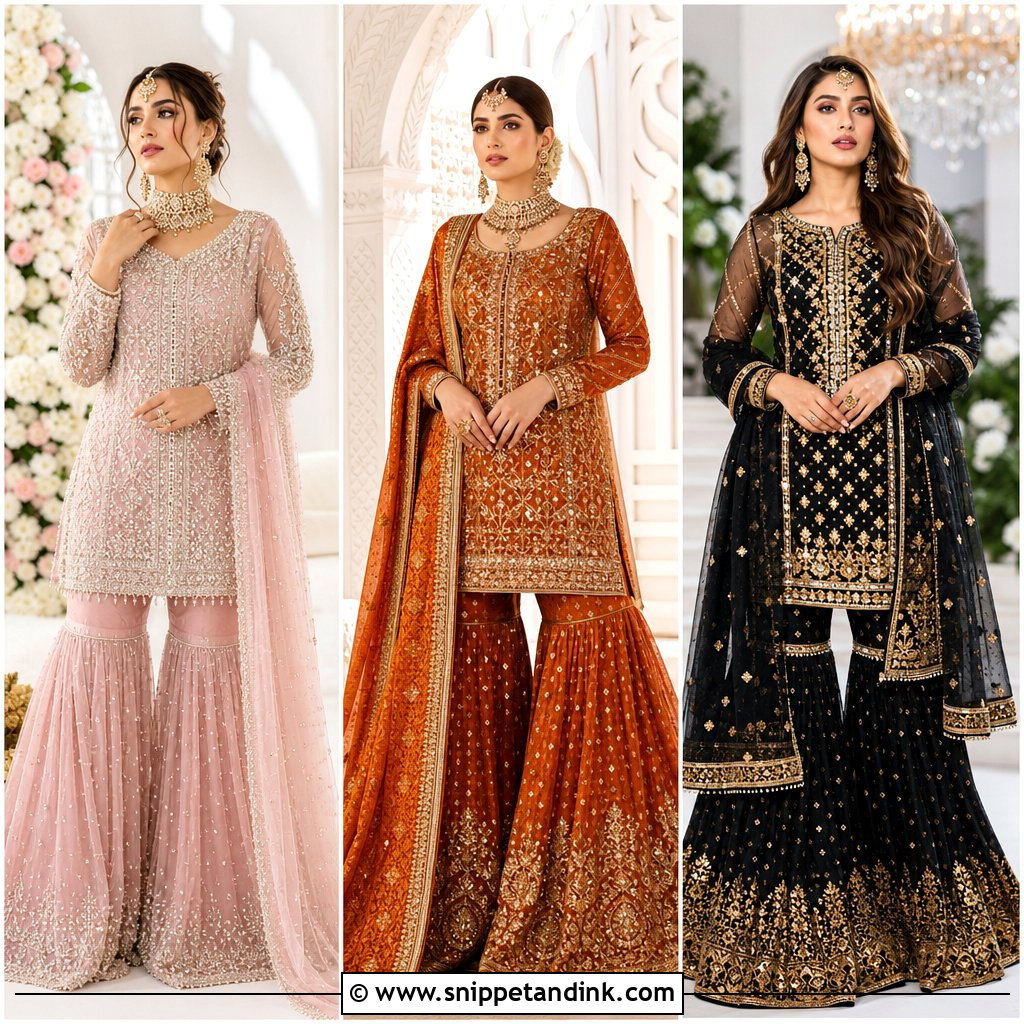
Powder blue is the color where a mismatched lining ruins everything. A white or off-tone lining behind a pale silk changes the shade, so I’d ask for a lining dyed to match. The structured kurta carries pearl clusters at the neck and scattered work across the bodice, with soft multi-panel shararas below. A sheer dupatta edged with pearls goes over the head or pins across both shoulders. Pearl edges are heavy at the hem of a dupatta, which actually helps it stay in place. Pearl drops, a silver choker, embroidered heels and soft waves complete it.
16. Magenta Bandhani Bridal Sharara Suit
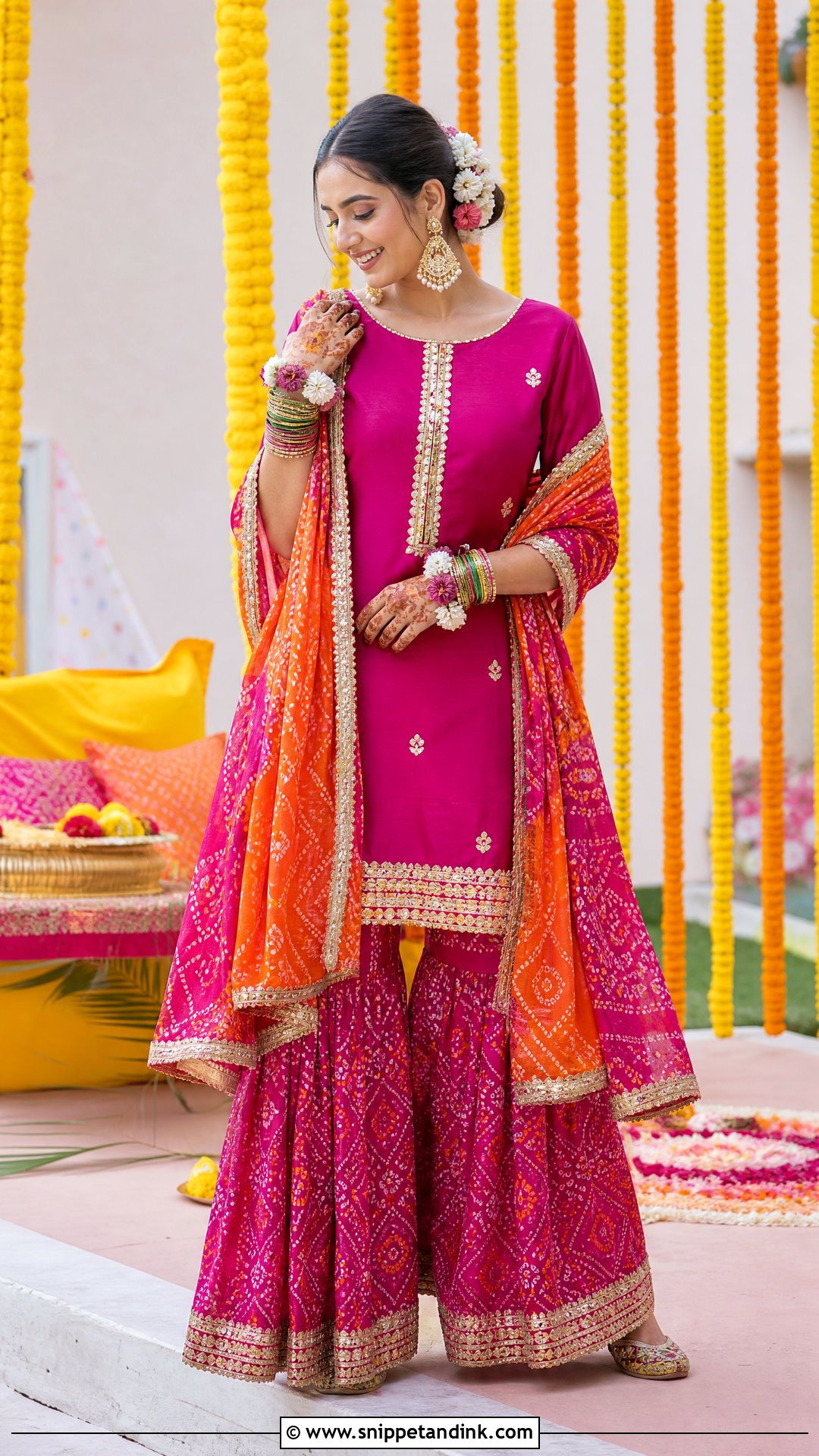
Bandhani is tie-dyed in tiny resist dots, and the pattern is busy enough that it should only appear in one or two places. Here the bandhani sharara pants carry the print under a solid magenta silk kurta with gota, zari or mirror work. Choose a shorter kurta to show off the trousers, and add an orange or red bandhani dupatta with metallic edging if you want more color. Hand-dyed bandhani can bleed when damp, so keep it away from wet henna. Gold chandbalis, a small tikka, colored bangles and a flower-trimmed braid finish it.
17. Sage Green Bridal Sharara Suit
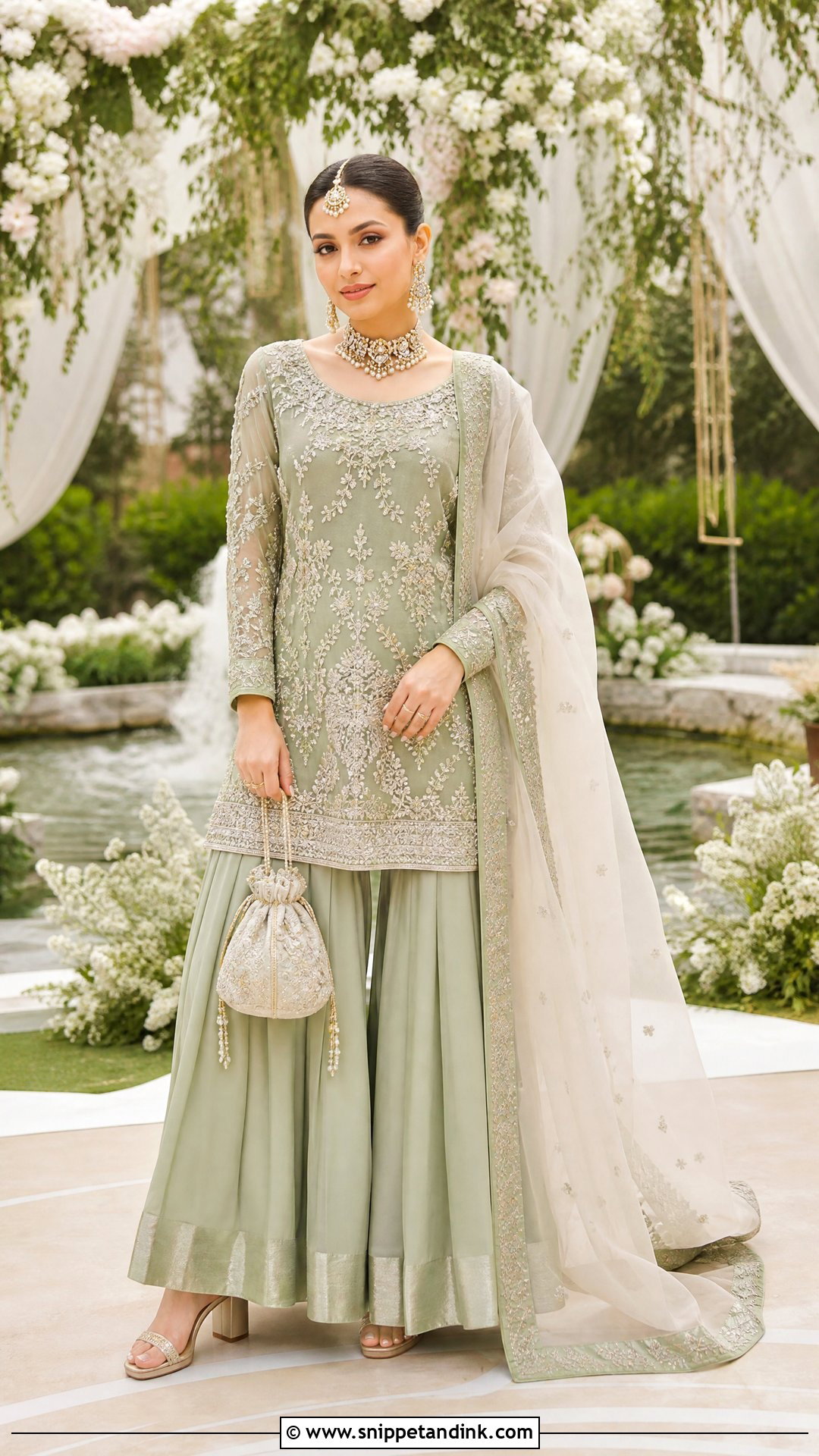
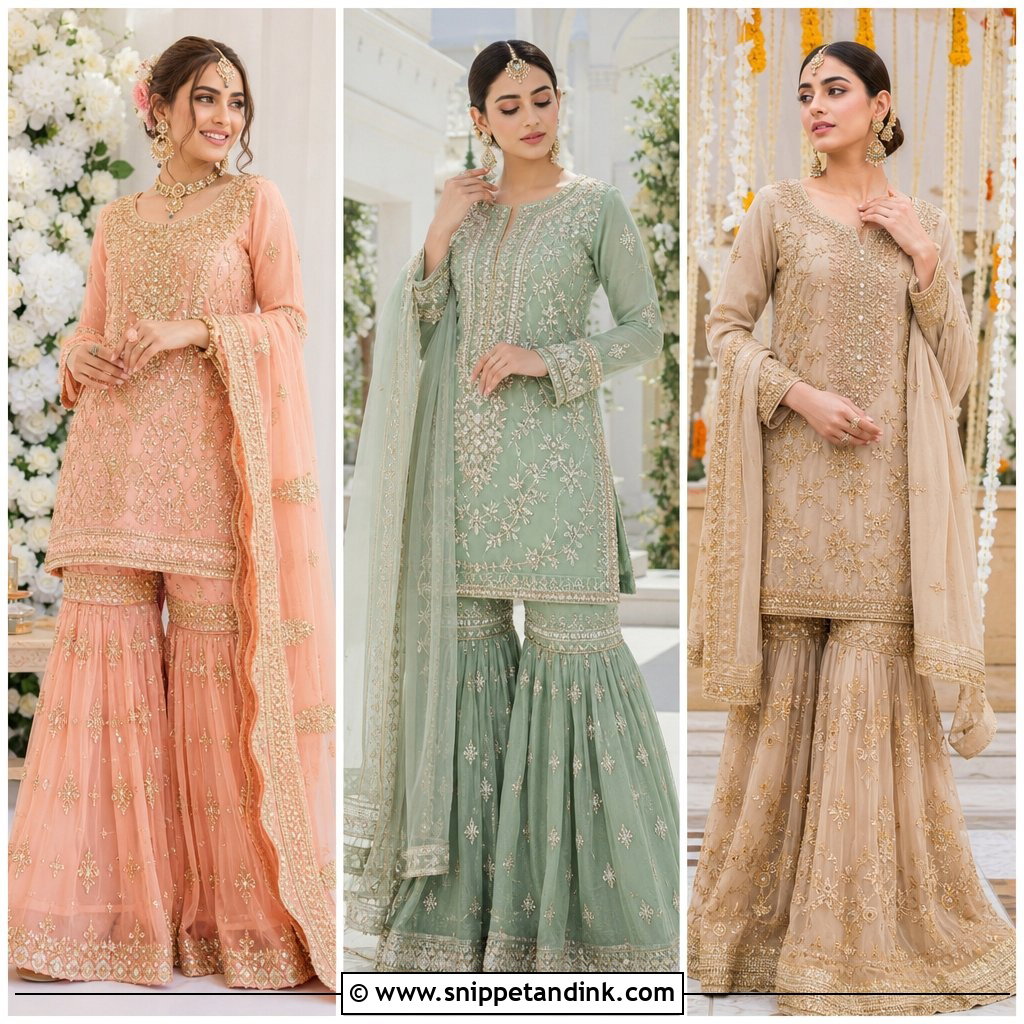
Sage works best in daylight, where the green reads clearly; under yellow lighting it can drift toward gray. A short tissue or organza kurta with ivory threadwork, gold accents and small pearls sits over silk shararas in the same shade, embroidered only at the hem. Tissue has a metallic sheen and a crisp, slightly scratchy handle, so a soft lining matters. An ivory dupatta with a sage border lifts the whole set. Pearl and kundan jewelry, champagne block heels, an ivory potli and a low bun with white flowers suit a garden wedding.
18. Orange And Pink Bridal Sharara Suit
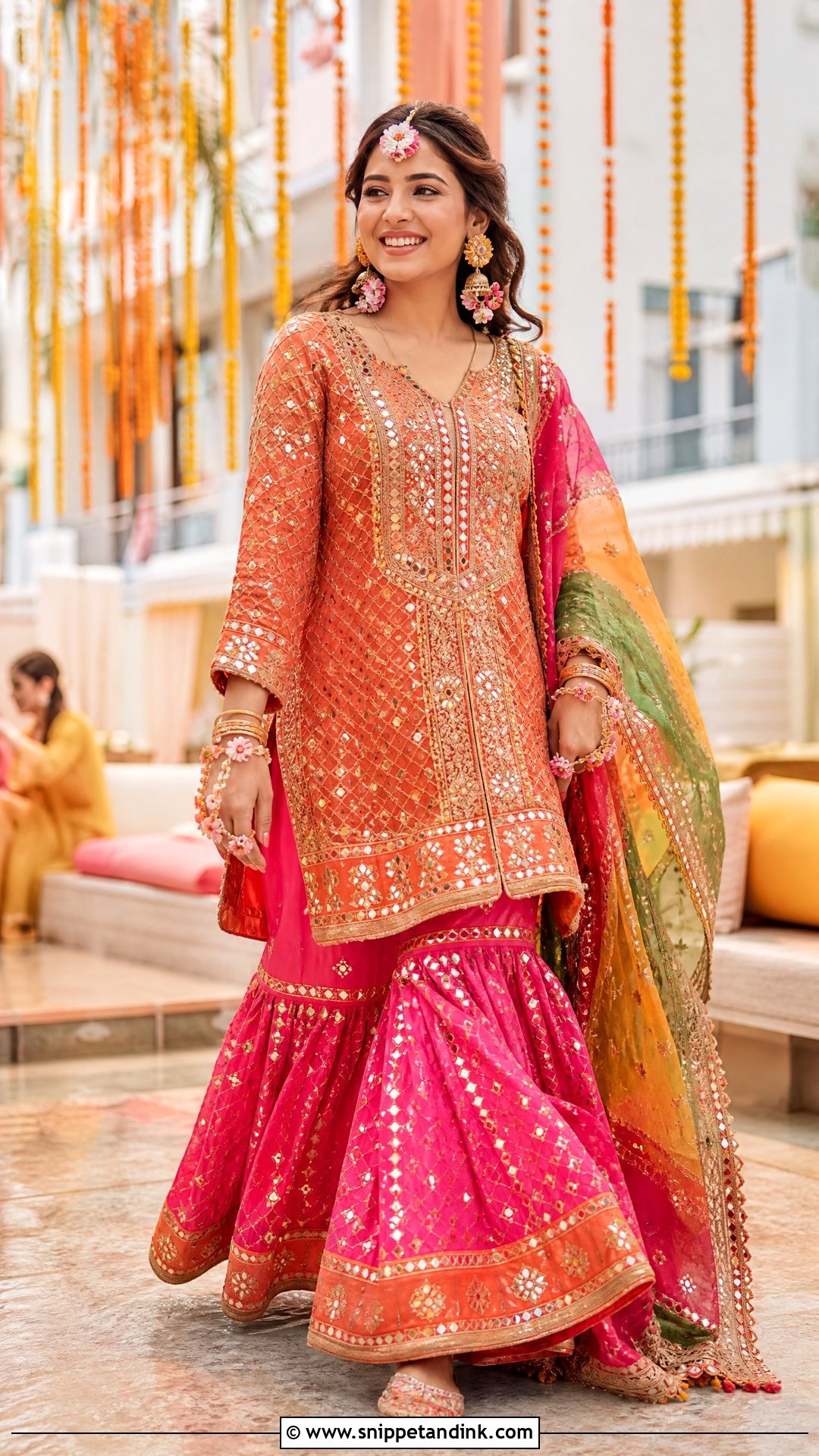
Two bright colors work when one leads. With a coral-orange kurta carrying pink florals, mirrors and gold gota, the pink sharara pants with orange borders are the support act. A multicolor dupatta can tie both together with touches of green or yellow. For a mehndi, keep sleeves above the wrist so wet henna doesn’t smear on them. Floral jewelry, gold jhumkas, colored bangles, flat juttis for dancing and a braid with flowers keep it practical for a long, busy day.
19. Burgundy Long Kurta Bridal Sharara Suit
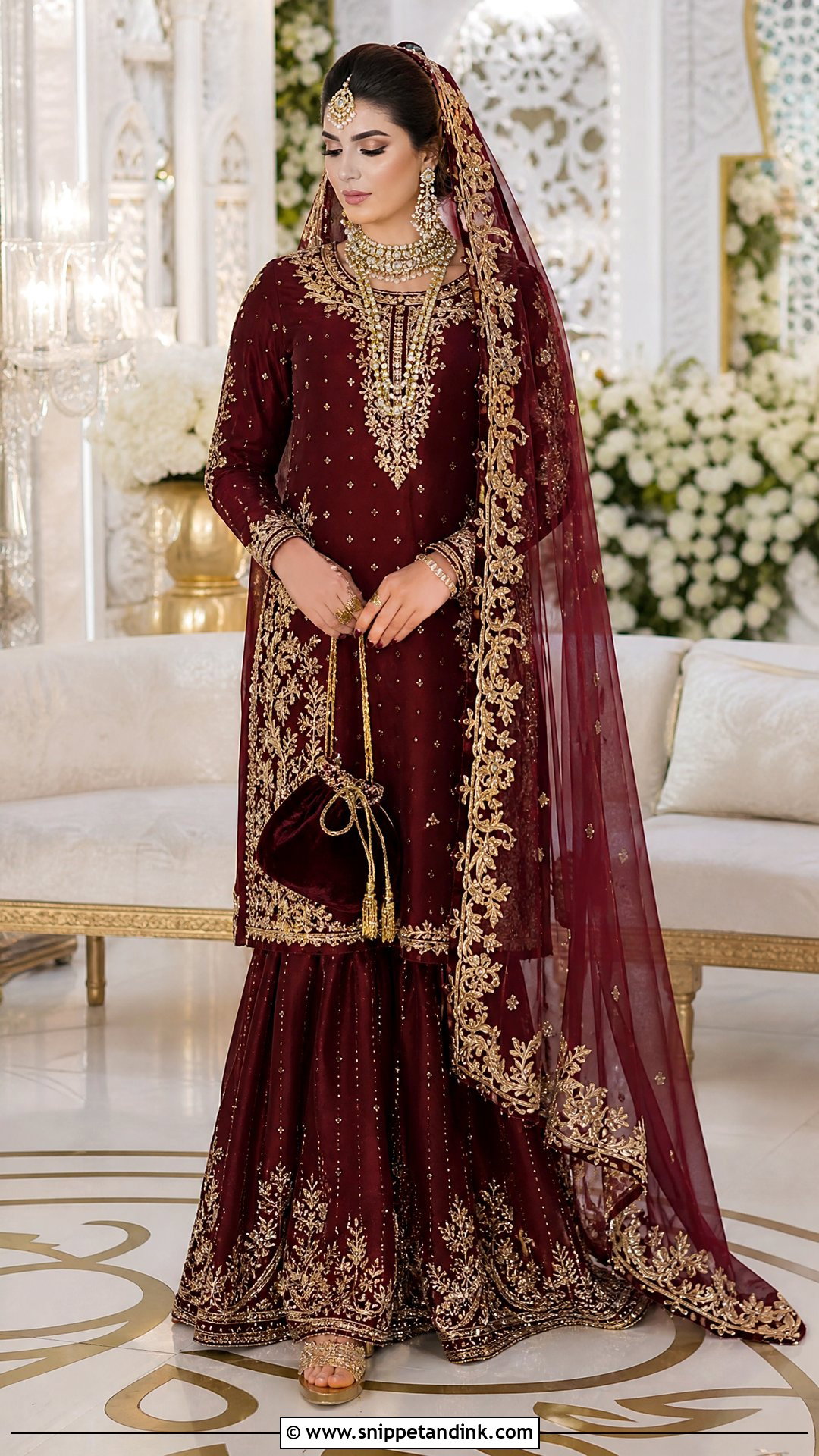
A knee-length kurta gives a longer, more formal line and more coverage, with only the lower flare of the sharara showing. That means the trousers need a softer fabric than the kurta so the visible part still moves. Choose silk with side slits and antique gold embroidery, and sit down at the fitting: long kurtas crease badly across the lap if the slits are too short. A burgundy net dupatta with an ornate border, a layered kundan necklace, gold heels, a velvet potli and a center-parted bun suit a winter ceremony or reception.
20. Ombre Bridal Sharara Suit
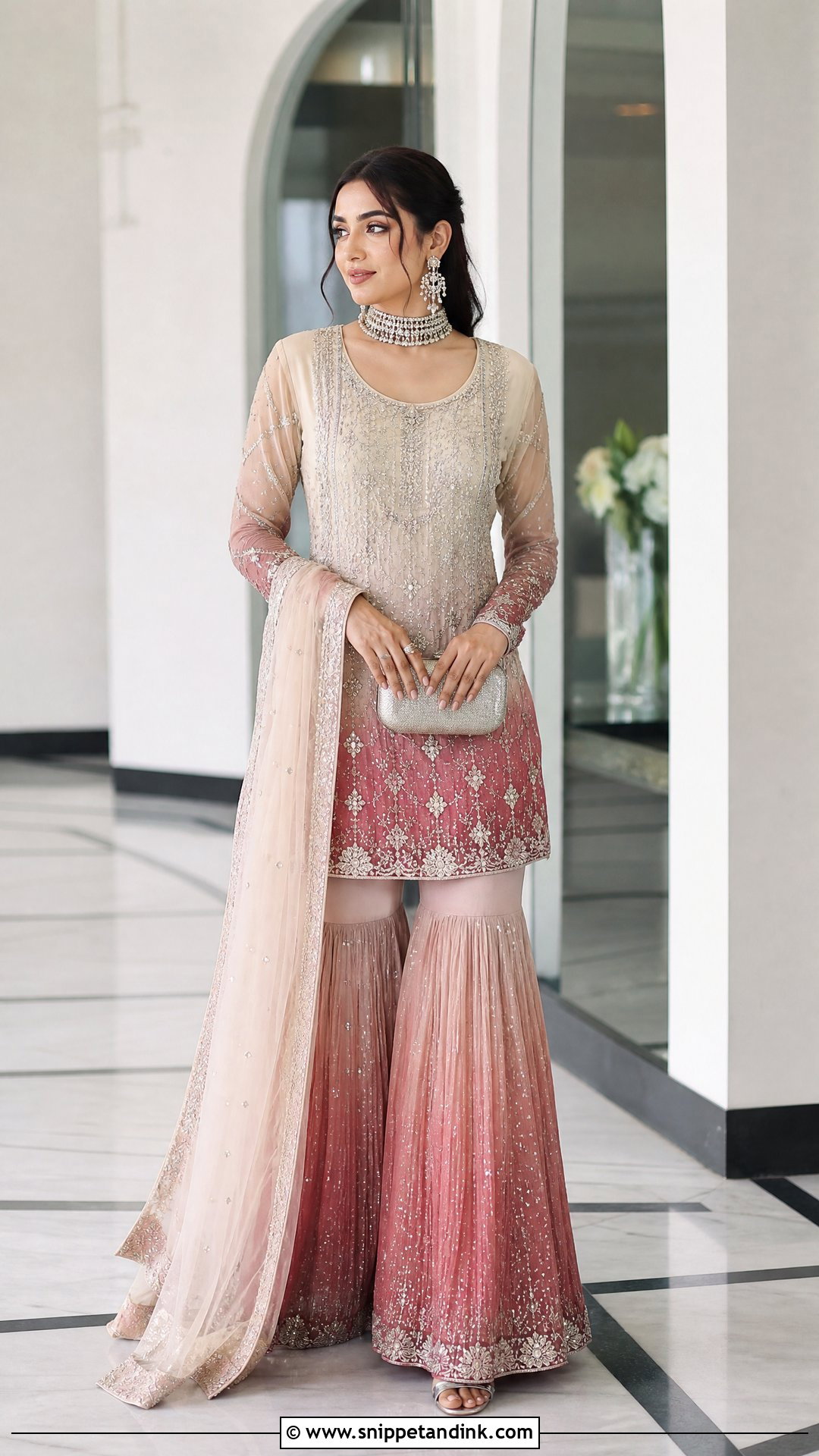
Ombre dye means the color does the work, so the embroidery can be light. The kurta moves from blush or ivory at the shoulders to deeper rose at the hem, and the sharara continues the gradient down to its darkest shade at the flare. Hold the two pieces together in daylight before buying, because the kurta’s darkest point should meet the trousers’ lightest without a visible jump. Silver, pearl or tonal threadwork, a sheer dupatta in the palest shade, crystal jewelry, neutral metallic heels and polished waves keep it modern.
Stairs, Stages and Car Doors in a Wide Flare
Sharara hems catch under heels more often than lehenga hems, because each leg moves separately. Practise the movements you’ll actually make, in your wedding shoes, before the day.
- On stairs, gather the front of both legs in one hand at knee height and lift slightly.
- On a stage or mandap step, look down once: the back hem catches on step edges more than the front.
- Sit down by sweeping the flare to the sides, otherwise you’ll crush the front panels.
- Getting into a car, sit first, then lift both legs in together with the fabric gathered.
Ask the tailor to hem the sharara with your actual wedding shoes on, leaving it just off the floor. A hem that touches the ground in flats will be trodden on all night if you switch to heels, and one cut for heels drags once you change into juttis for dancing.
What Two Dupattas Need From Your Hair and Pins
Many bridal sharara sets come with a head dupatta and a shoulder dupatta. The head dupatta needs a firm base: a low bun or a braided anchor where pins can grip. The shoulder dupatta is best tacked with a small brooch or safety pin under the fold on the kurta, so it doesn’t slide when you hug guests. Do a full pinning run at your hair trial, with the actual dupattas, so your stylist knows how much weight the style has to hold.
Your Kurta Length Sets the Proportions for Everything Else
Every sharara on this list comes back to the same balance: kurta length against the volume of the flare. Pick the color and fabric for the event first, a nikah, mehndi, sangeet or reception, and then the kurta length that suits your height. Keep embroidery where it photographs well and doesn’t weigh you down. Jewelry, shoes, the potli and the dupatta should support the main piece rather than compete with it. Book fittings early and wear the full outfit for an hour of walking, sitting and climbing stairs before the wedding.
You'll Like These Ideas:


Leave a Reply