
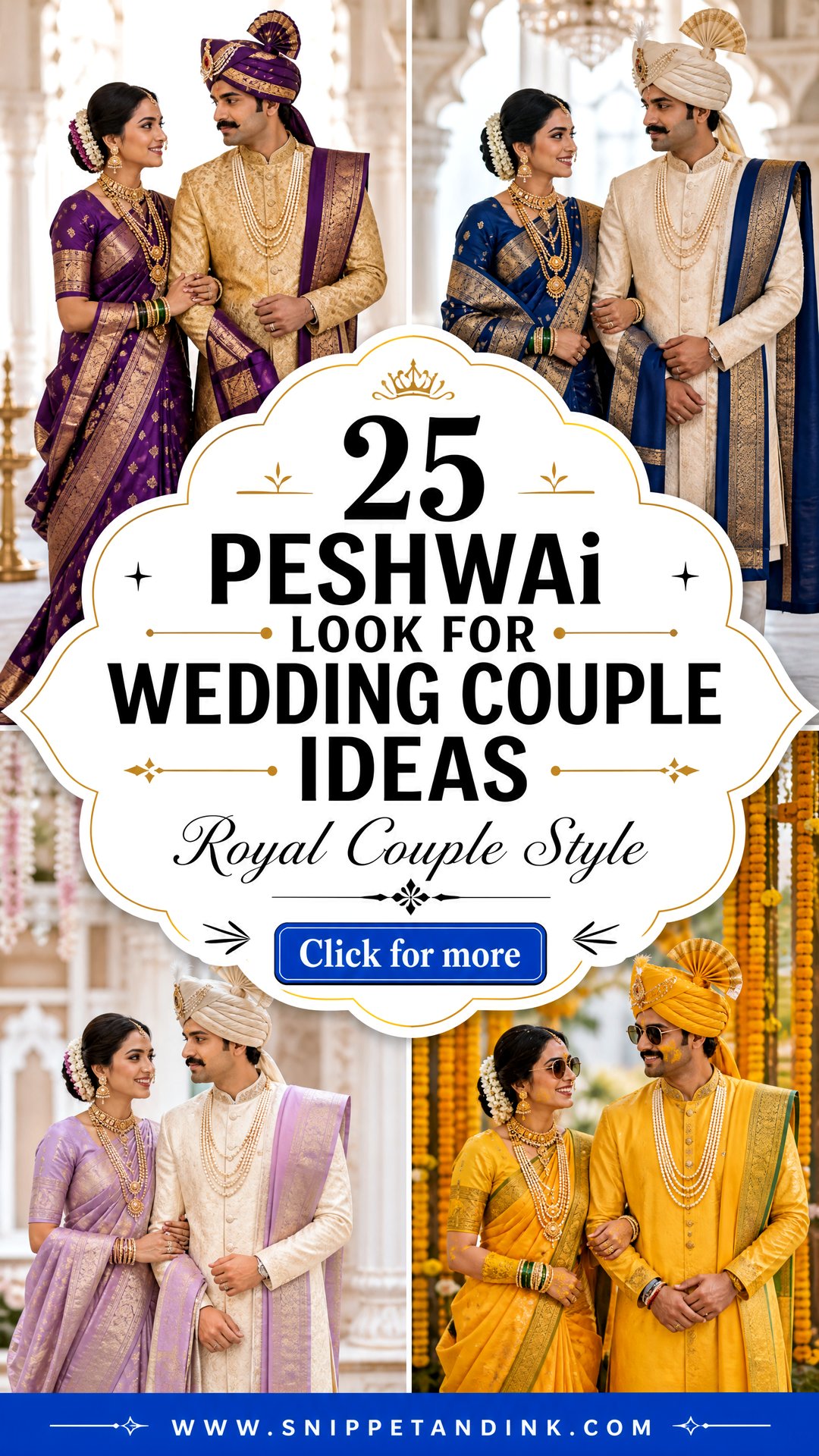
Peshwai styling borrows from the Maratha court: Paithani silk, the nine-yard Nauvari drape, dhoti-kurta sets, the pheta turban, heavy gold, and the mundavalya strings tied across the forehead for the ceremony. When I style a couple in it, my job is mostly about balance. The bride’s saree leads, and the groom’s outfit picks up one or two of its colours without copying it. The 25 pairings below run from the main wedding rituals to haldi, engagement, reception and heritage pre-wedding shoots, some strictly traditional and some lighter for couples who want the look without the full weight of it.
Nine Yards or Stitched? Getting the Nauvari and Pheta Tied Right
A traditional Nauvari is a single nine-yard length draped kashta style, with part of the fabric passed between the legs and tucked at the back, which is why the bride can sit cross-legged and move freely through the rituals. Draping it well takes practice, and on a wedding morning I’d never leave it to a relative who has only done it once. Book a drapist for the bride and allow time for her to redo it if the pleats sit wrong.
Readymade, stitched Nauvaris are now common and make sense if you’d like the silhouette without the risk. They’re quicker to wear and stay put, though a stitched version can’t be unwrapped and reworn as a regular saree later. If you want to keep your Paithani in its original form, ask for an unstitched drape.
For the groom’s pheta
- Measure head circumference before buying a ready-tied pheta, and try it on with the hair as it will be on the day.
- If the pheta is being tied fresh, book the person who ties it and give them a quiet corner and a mirror.
- Practice walking and bowing in it; a loose pheta tilts forward when the groom leans down for the rituals.
1. Green Paithani Saree And Ivory Peshwai Groom Look
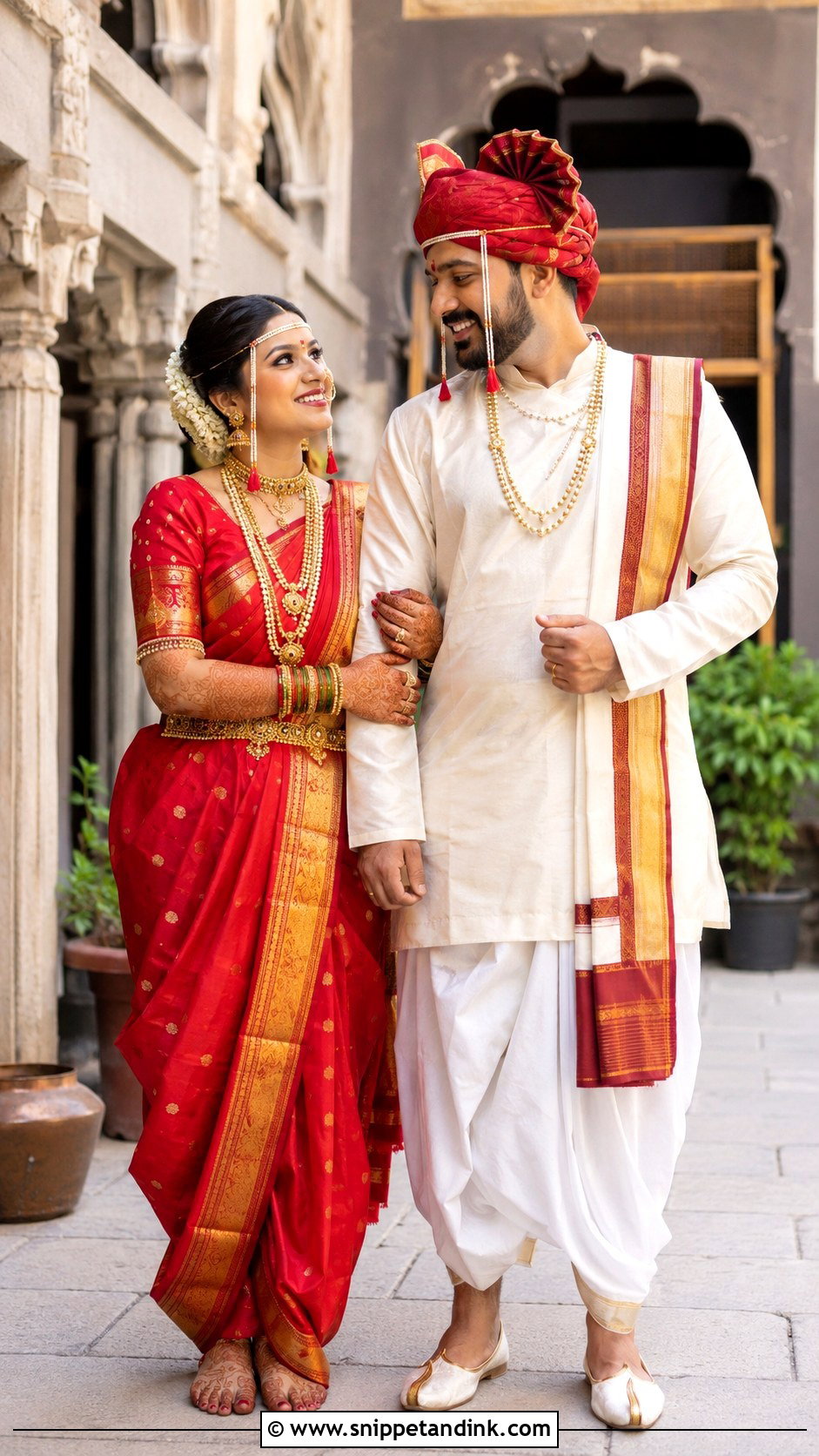
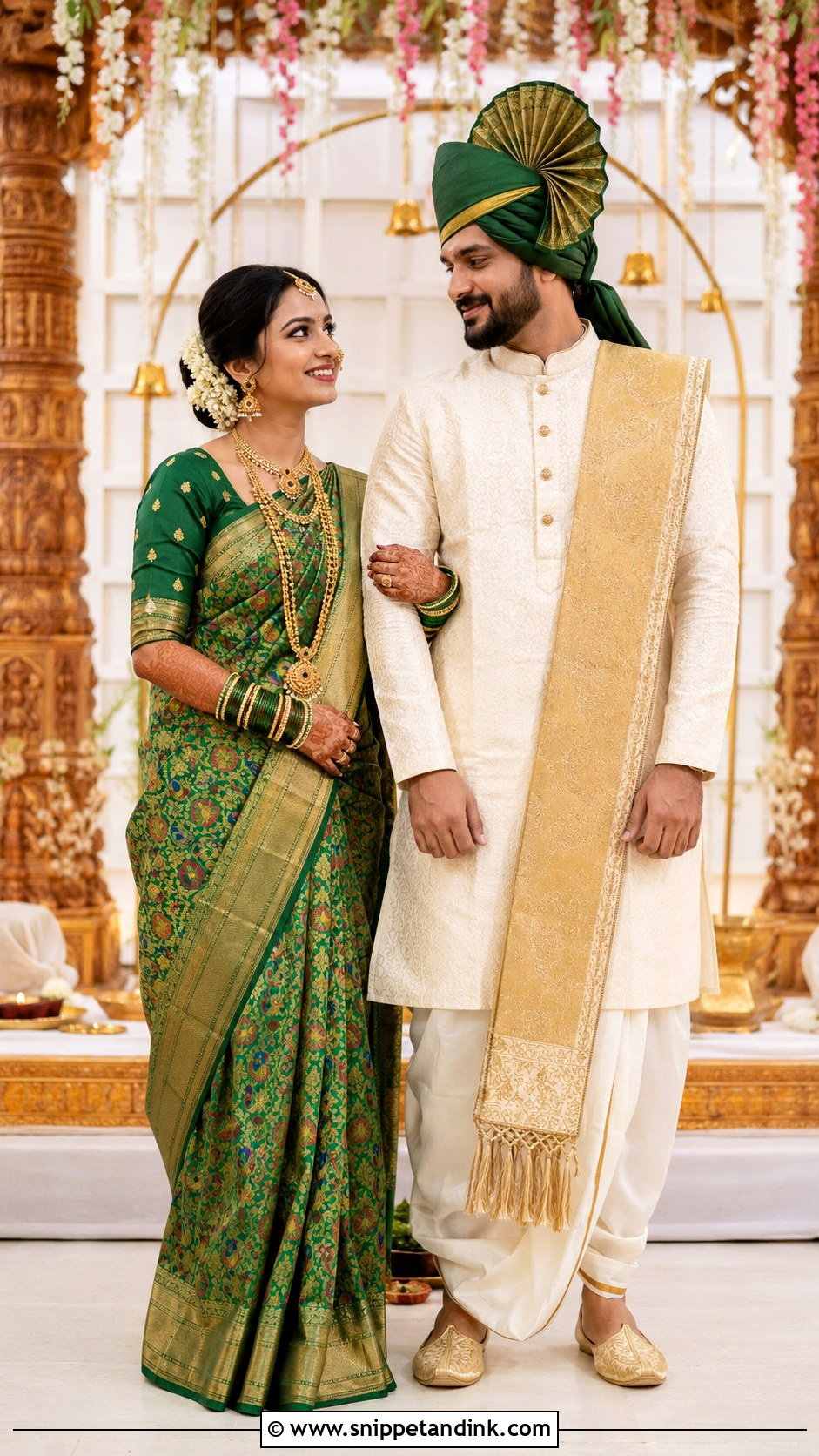
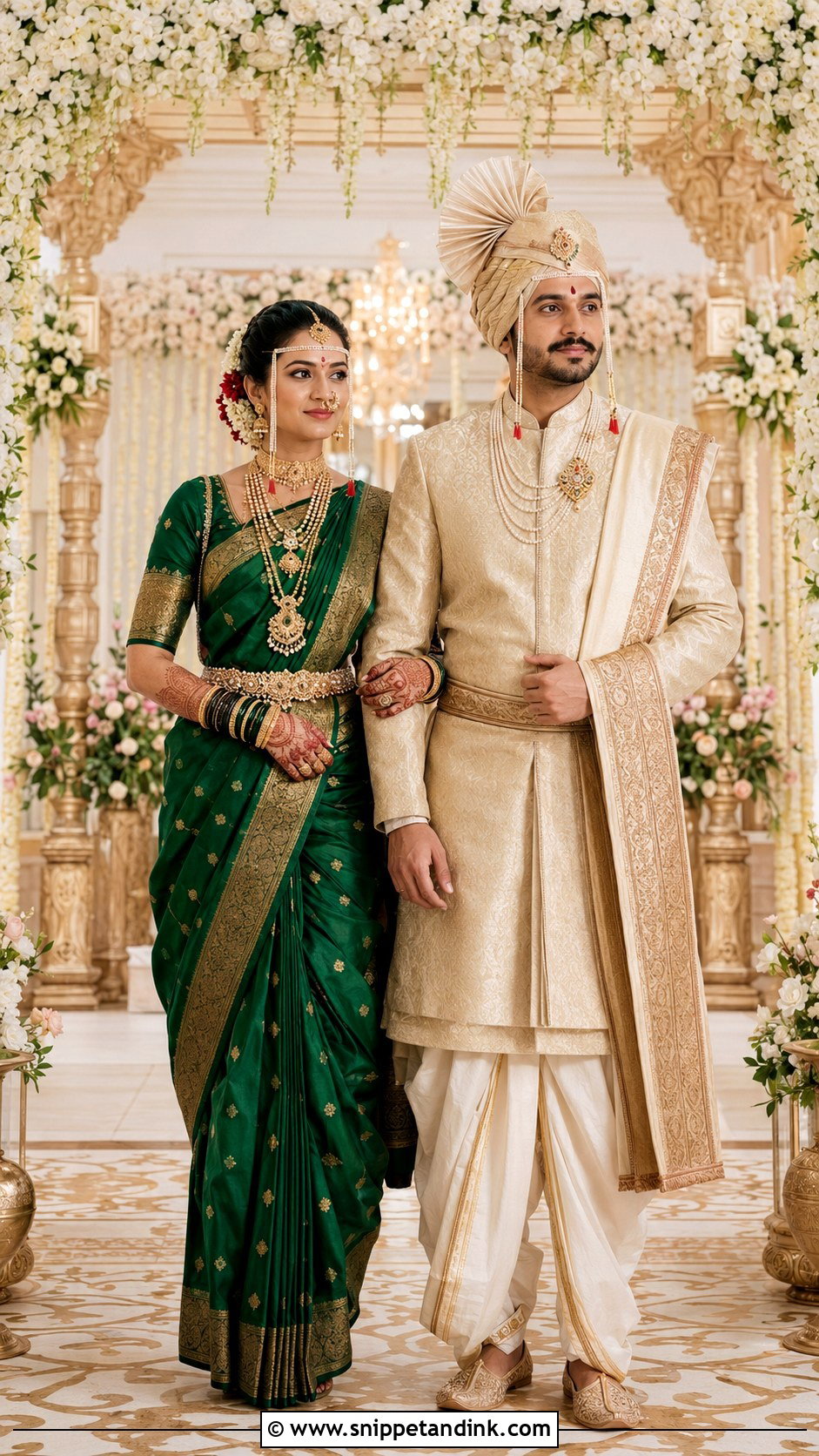
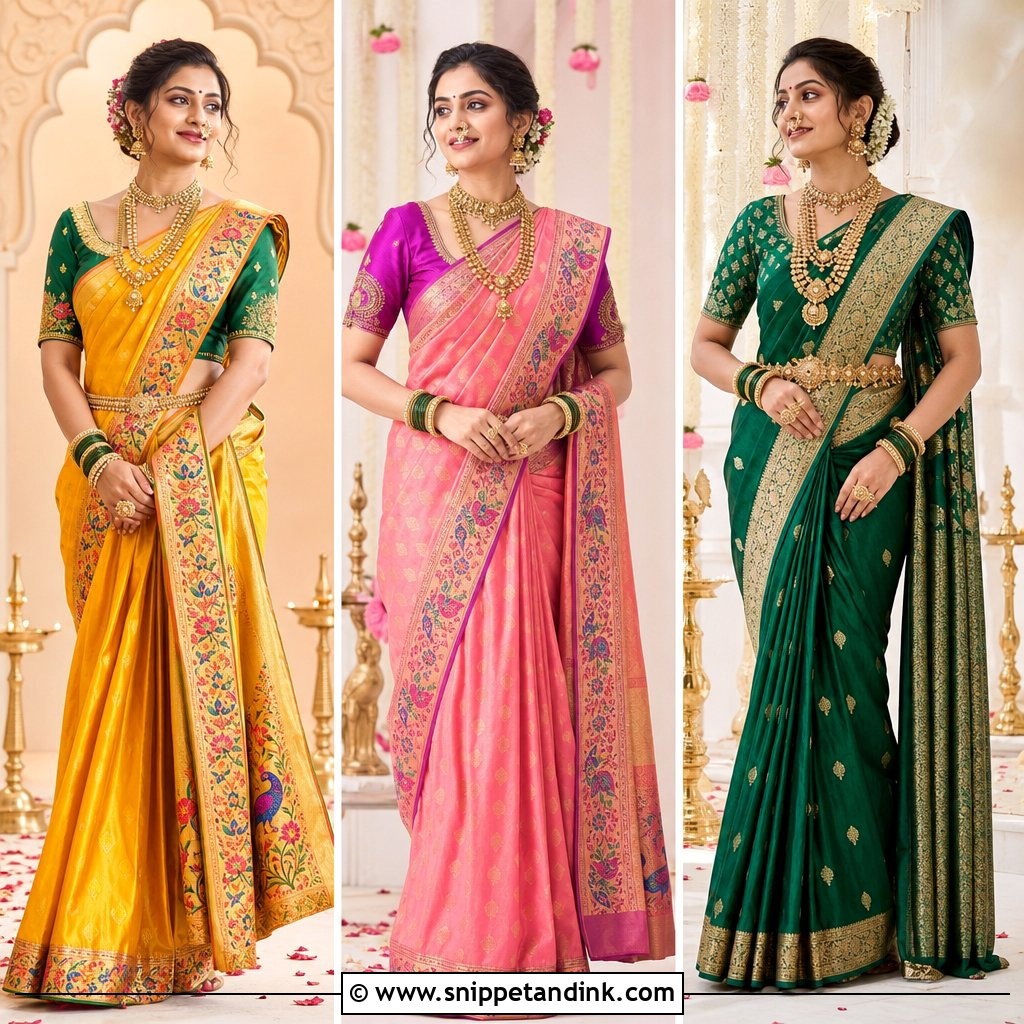
Green Paithani with a gold zari border is the pairing I’d call the Maharashtrian default, and for good reason: green is associated with prosperity and married life, and it holds up in every light. Style it with a fitted silk blouse, layered gold necklaces, a nath, green glass bangles and a bun with gajra. For the groom, an ivory silk kurta, white dhoti, gold-bordered shela and green pheta tie him to her saree without competing. Mojaris finish it. The thing I check with green Paithani is the border colour, since many have a contrasting pink or purple border, and the groom’s pheta should usually pick up the body colour rather than the border.
2. Red Paithani Nauvari And Cream Dhoti Kurta Look
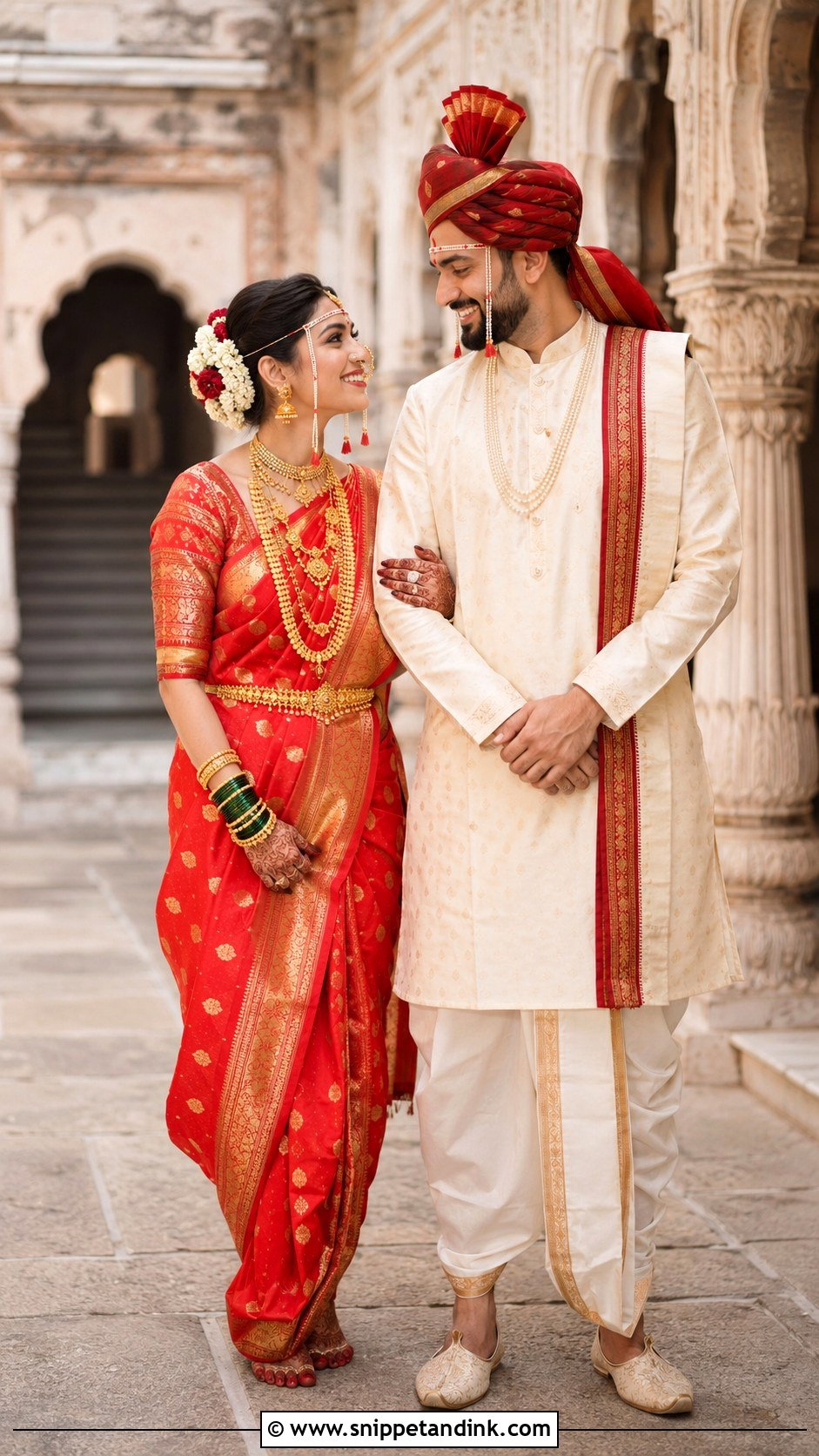
A red Paithani Nauvari is bold and festive, and the nine-yard drape gives the bride a strong, structured silhouette, especially with a kamarpatta at the waist and layered gold. A crescent bindi, nath, mundavalya and flower bun complete her. The groom in a cream dhoti kurta with a red-bordered shela and red pheta stays clearly second in the frame, which is how this pairing should read. Red silk on a Nauvari is heavy around the hips, so I always ask the bride to sit cross-legged after draping to check the pleats don’t pull open.
3. Yellow Paithani Bride And White Peshwai Groom Look
Yellow Paithani belongs to a morning ceremony, where daylight makes it glow. A bright yellow silk with a pink or gold border, in Nauvari or the regular drape, pairs with gold thushi, Kolhapuri saaj, green bangles, a nath and a floral bun. The groom in a white kurta and dhoti with a yellow pheta or shela keeps it soft. My one caution: yellow and turmeric are inseparable at Maharashtrian weddings, so keep this saree away from any haldi residue the morning of.
4. Purple Paithani Saree And Gold Sherwani Peshwai Look
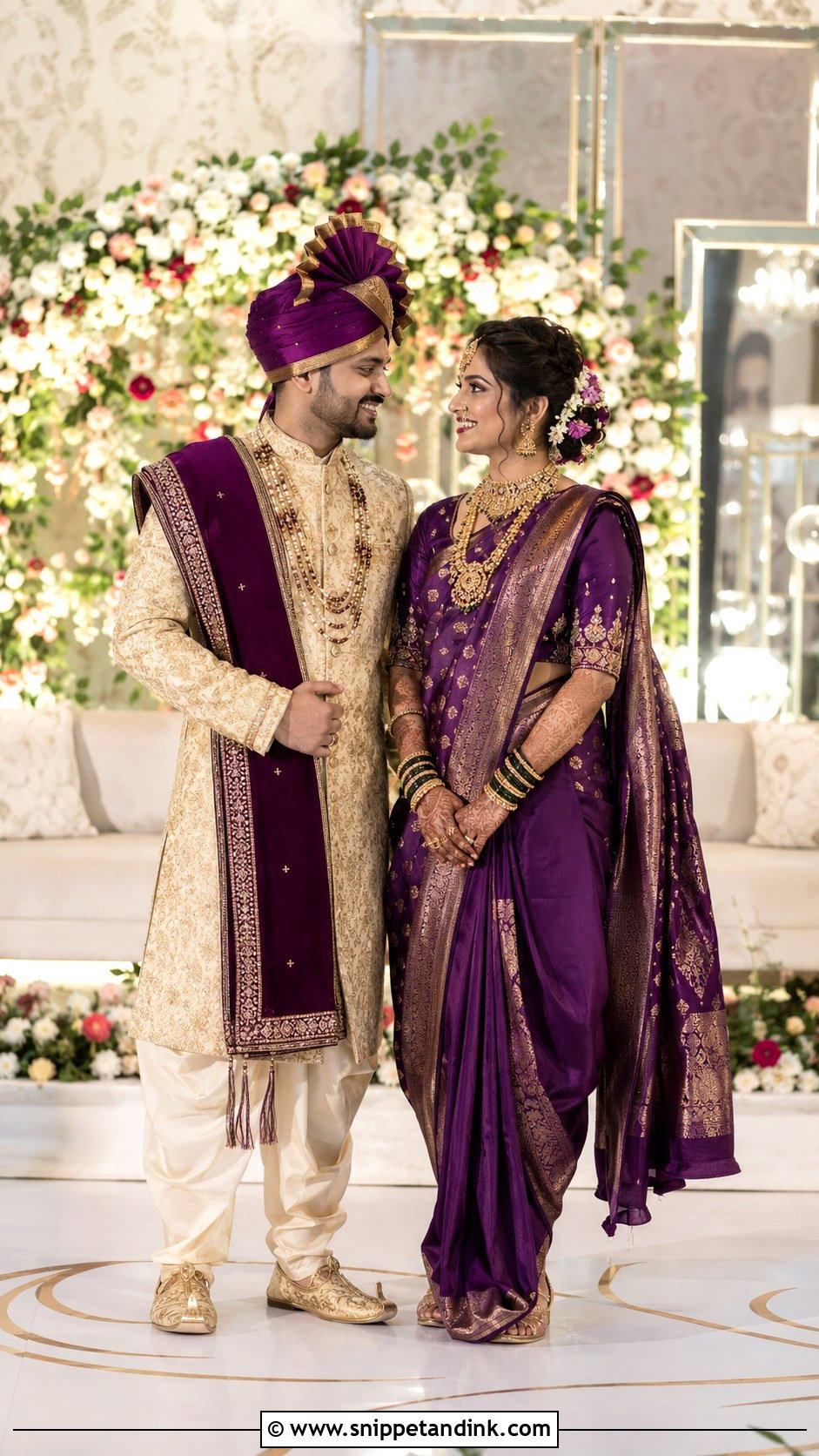
Purple Paithani looks rich and slightly more modern, especially with gold peacock or floral motifs on a deep purple base. Antique gold jewelry, a traditional nath, stacked bangles and a sleek bun suit it. The groom in a gold sherwani or silk kurta set with a purple stole over cream churidar or dhoti, plus a matching pheta, carries the connection. Purple shifts under warm and cool lighting, so for evening rituals I’d look at the saree under the venue’s lights before choosing the groom’s purple; matching shades in daylight can look a world apart at night.
5. Pink Paithani Bride And Beige Peshwai Groom Look
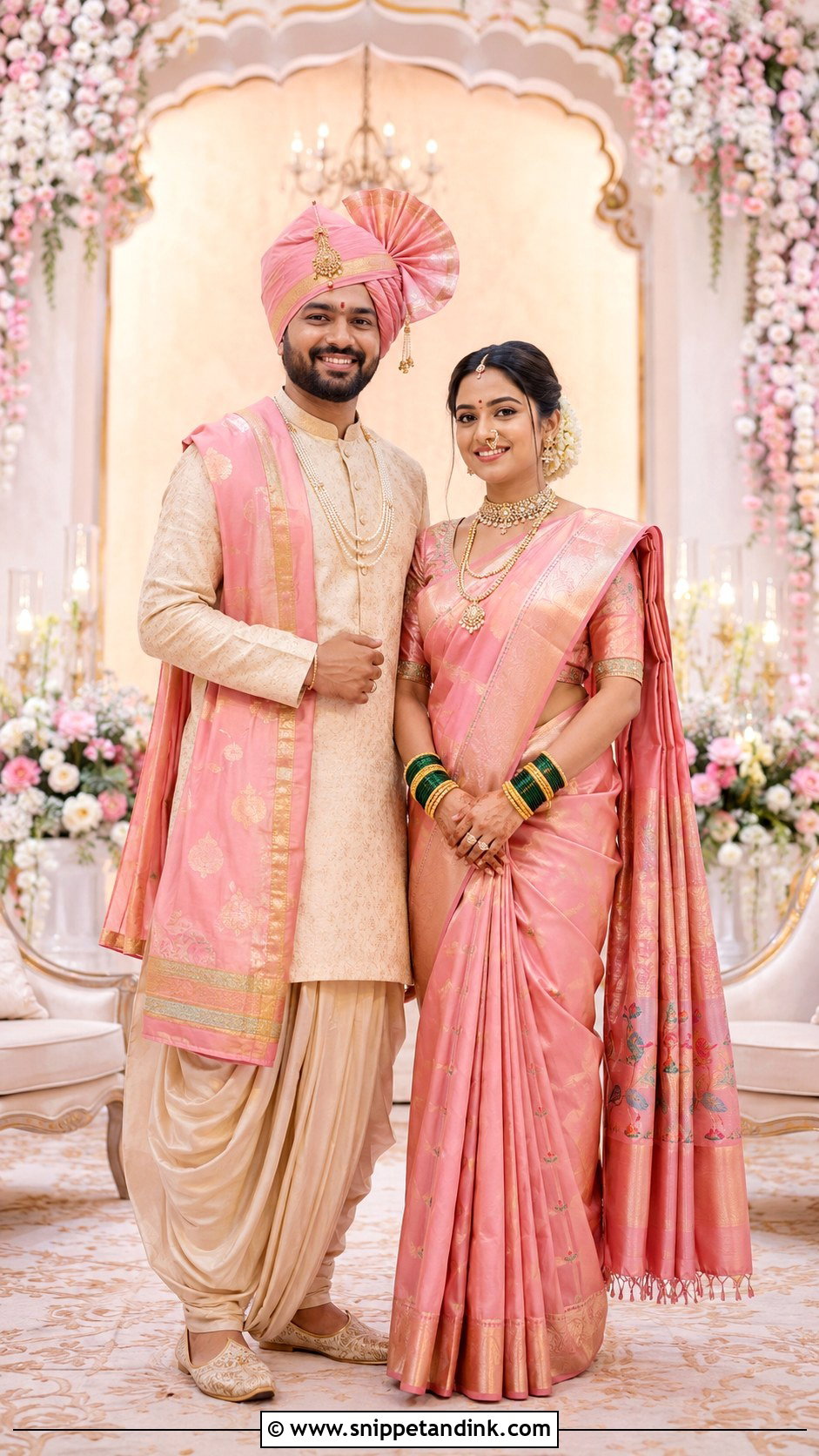
Soft pink Paithani is gentler than red or green but still fully festive. With gold zari, it suits gold jewelry, pearl accents, a nath and green bangles. Put the groom in a beige kurta-dhoti with a pink shela or pheta. The key is keeping his base neutral so her saree stays the highlight. Pale pink can look washed out against very fair skin in harsh noon light, so a pink with a touch more depth tends to read better for daytime rituals and pastel decor.
6. Orange Paithani Nauvari And White Dhoti Groom Look
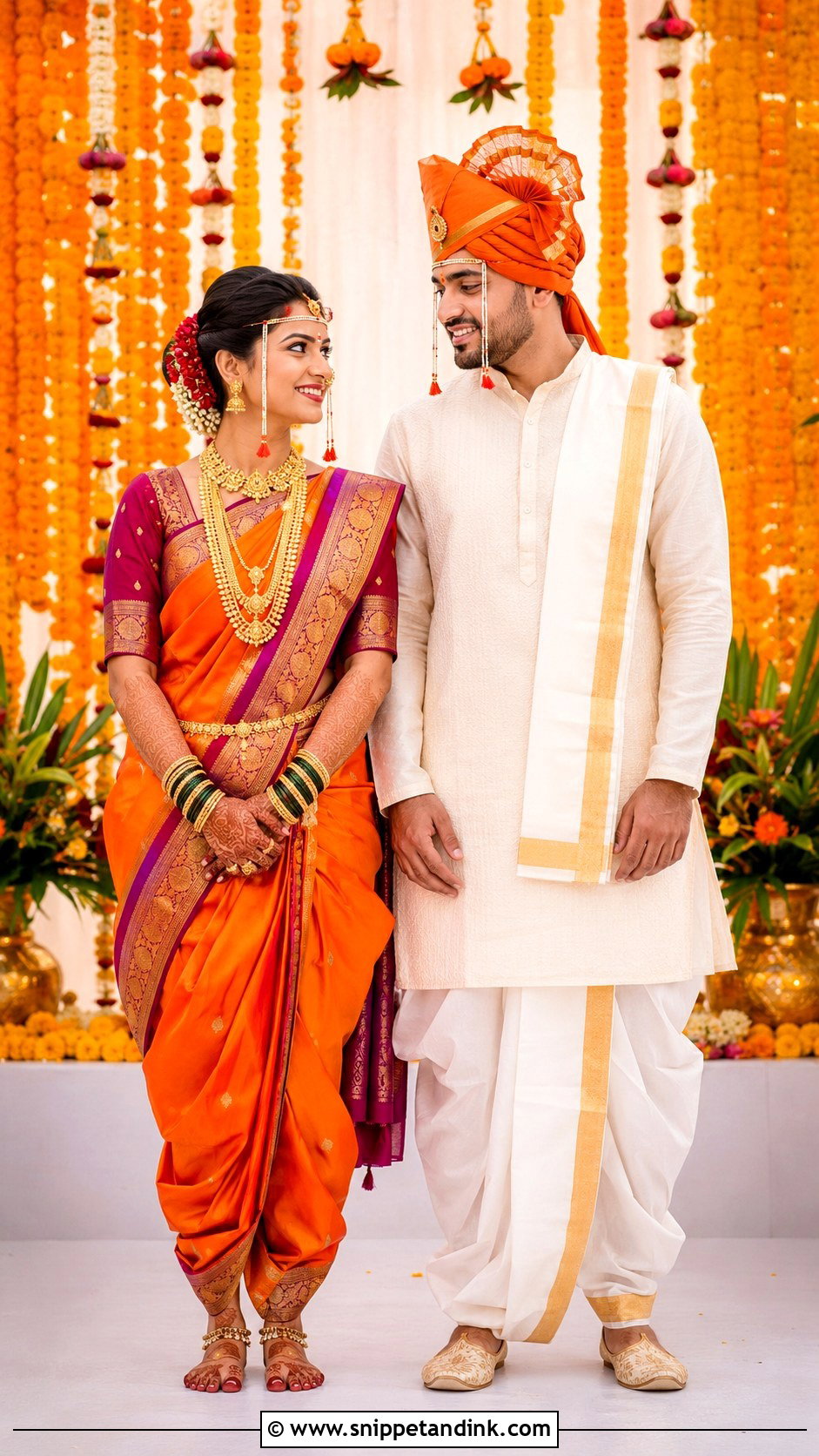
Orange Paithani brings warmth and energy. The bride in an orange Nauvari with a magenta or green border, temple jewelry, nath, mundavalya and fresh flowers looks festive without trying. The groom in a white dhoti, cream kurta, orange pheta and a simple gold-bordered shela keeps it traditional. Orange sits naturally against marigold decor, which is a gift for daytime rituals. Orange silk also reflects colour onto the face, so the bride’s makeup should lean warm and not too heavy.
7. Royal Blue Paithani And Ivory Sherwani Peshwai Look
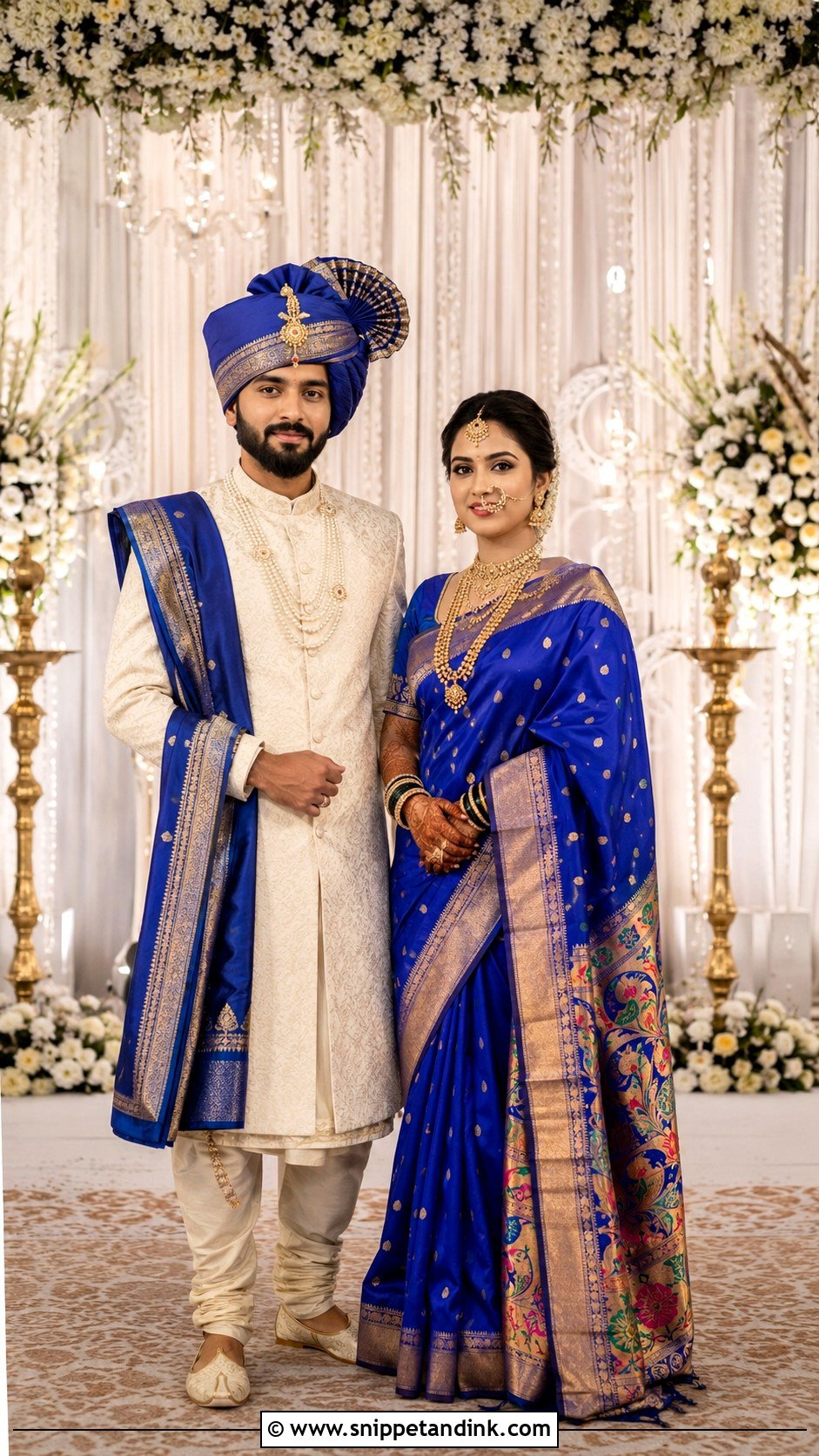
Royal blue Paithani is bold yet refined. The bride with gold jewelry, a traditional nose ring, bangles and a flower-trimmed bun contrasts sharply with a groom in an ivory sherwani or kurta and a royal blue stole and pheta. That contrast works best at evening ceremonies, receptions and grand mandaps. For the rituals, add mundavalya for both of them, otherwise the blue can start to read as reception wear rather than ceremony wear.
8. White And Gold Peshwai Wedding Couple Look
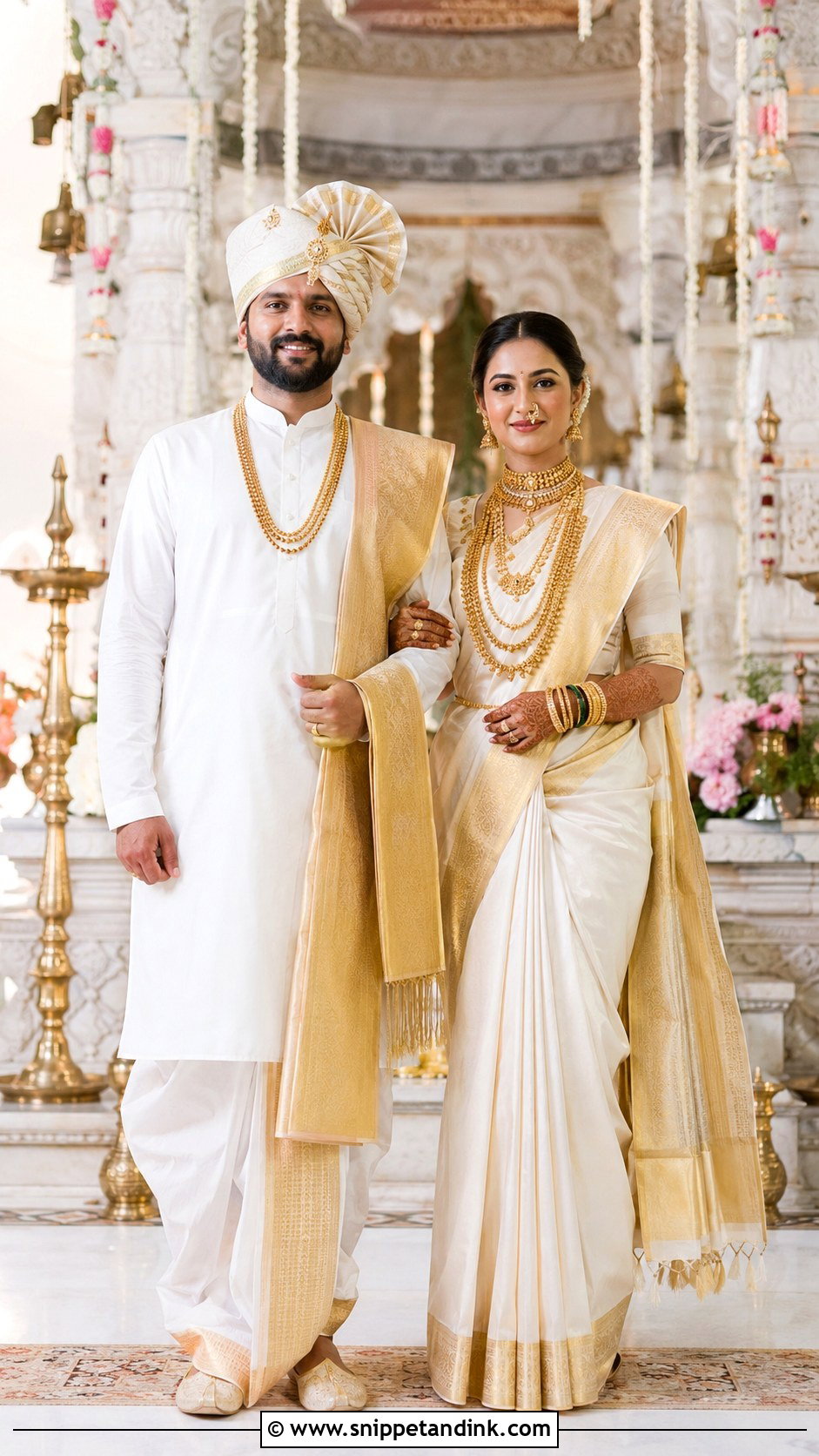
Off-white and gold is the quietest Peshwai pairing. The bride in an off-white silk with a gold border, traditional gold, pearl details, a nath and a clean bun; the groom in a white dhoti-kurta, gold-bordered shela, cream pheta and mojaris. It suits temple-style venues, heritage halls and outdoor mandaps in soft daylight. Off-white silk shows every mark, from a smudge of sindoor to a turmeric-stained fingertip, so I keep a white handkerchief in the bride’s hand through the rituals.
9. Maroon Paithani Bride And Cream Groom Peshwai Look
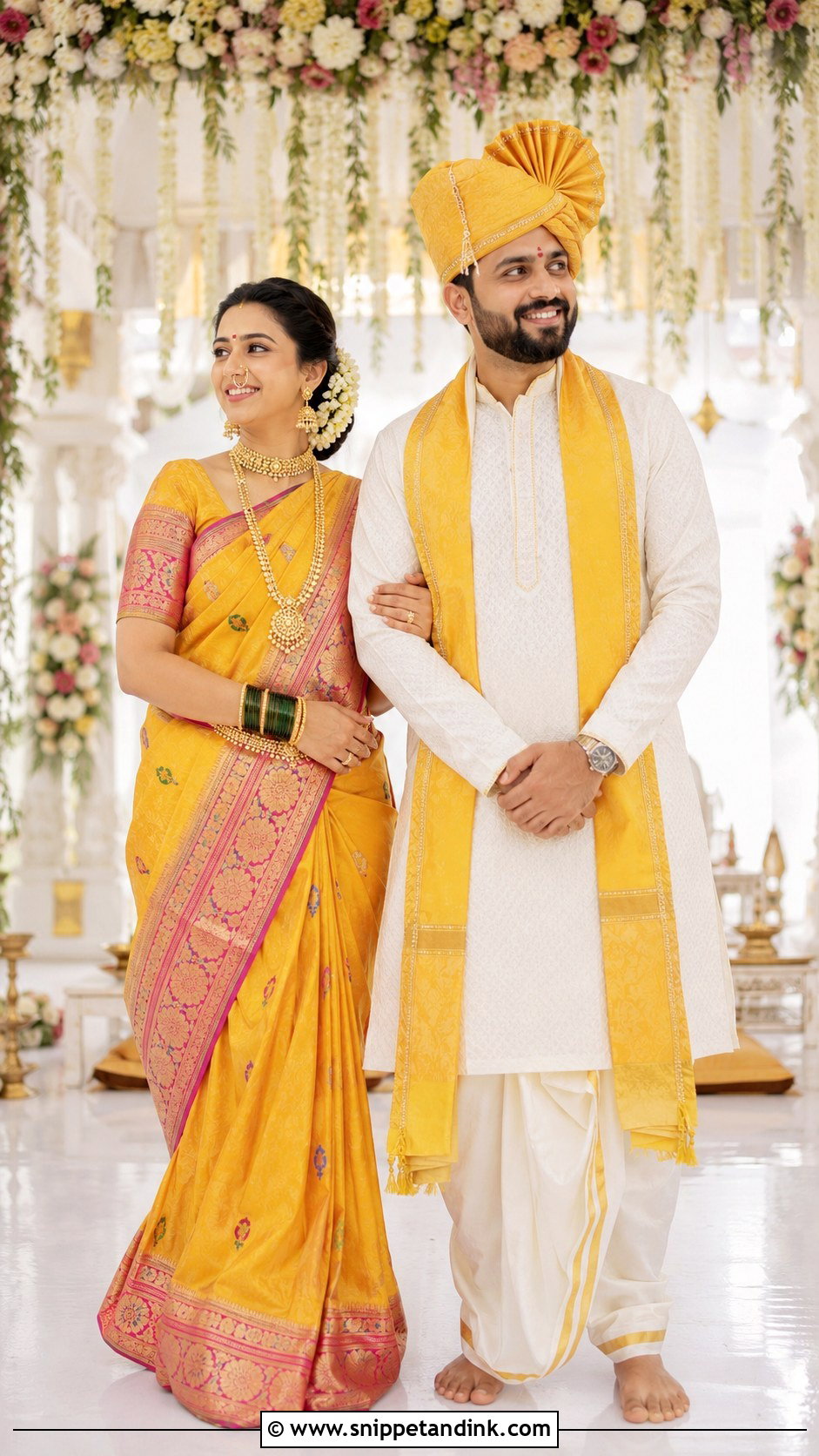
Maroon reads mature and regal. A maroon Paithani with gold zari suits both the Nauvari and the regular drape, with layered gold necklaces, a waist belt, nath, green bangles and mundavalya. Keep the groom light in a cream kurta and white dhoti with a maroon pheta or stole echoing her colour. Maroon sits well against gold mandap decor and warm florals. It also forgives a long day, since it hides small marks that would show on lighter silk.
10. Peacock Green Paithani And Mustard Peshwai Groom Look
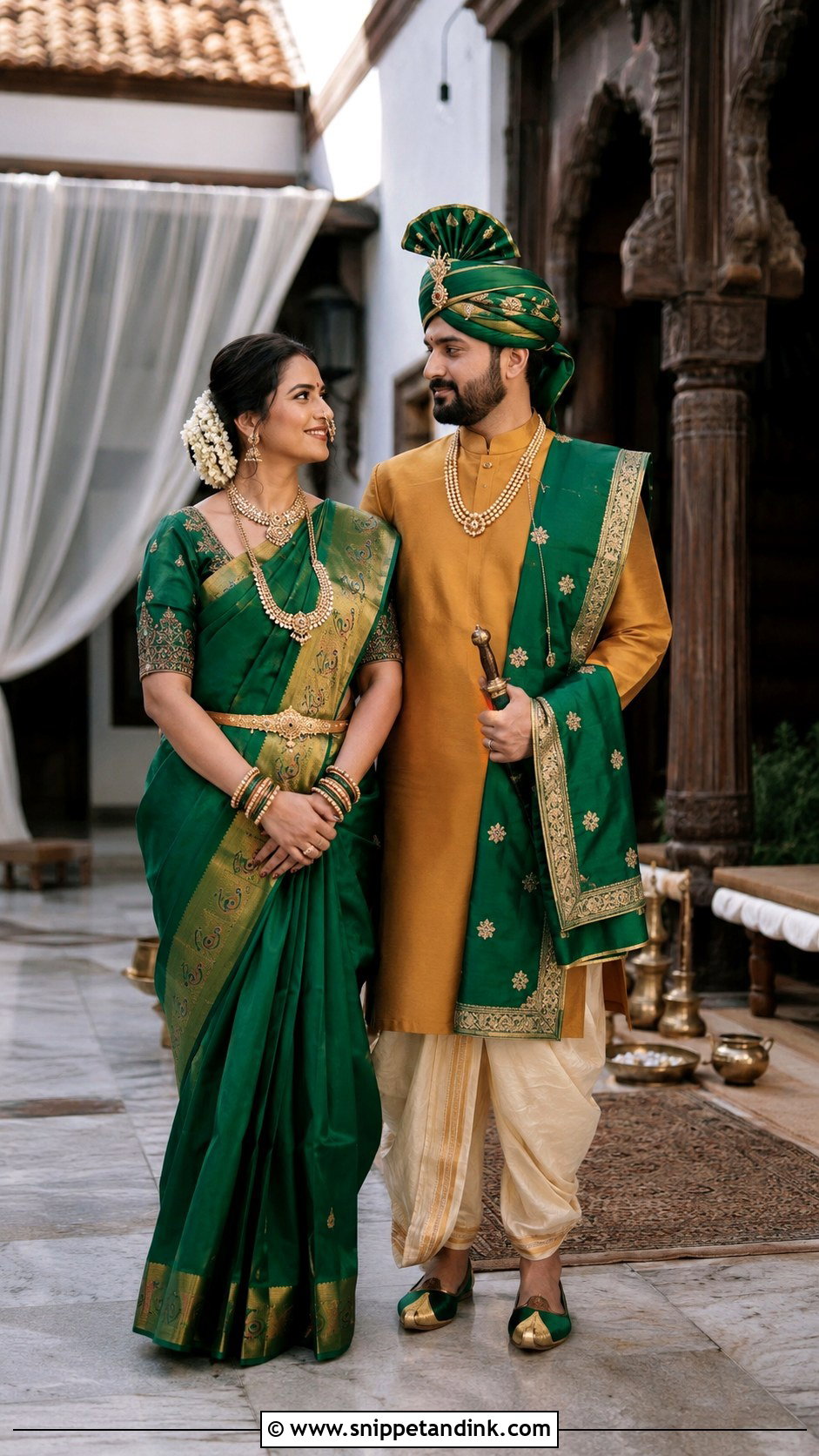
Peacock green is a jewel tone with a particular glow, partly because many Paithanis in this shade are woven with contrasting warp and weft that shimmer as the bride moves. A saree with purple, pink or gold borders, antique gold, a nath, bangles and a flowered bun suits it. The groom in mustard silk with a cream dhoti and a peacock green shela or pheta makes a confident, unmatched pairing. Keep accessories classic so the weaving stays central.
11. Lavender Paithani Bride And Ivory Groom Peshwai Look
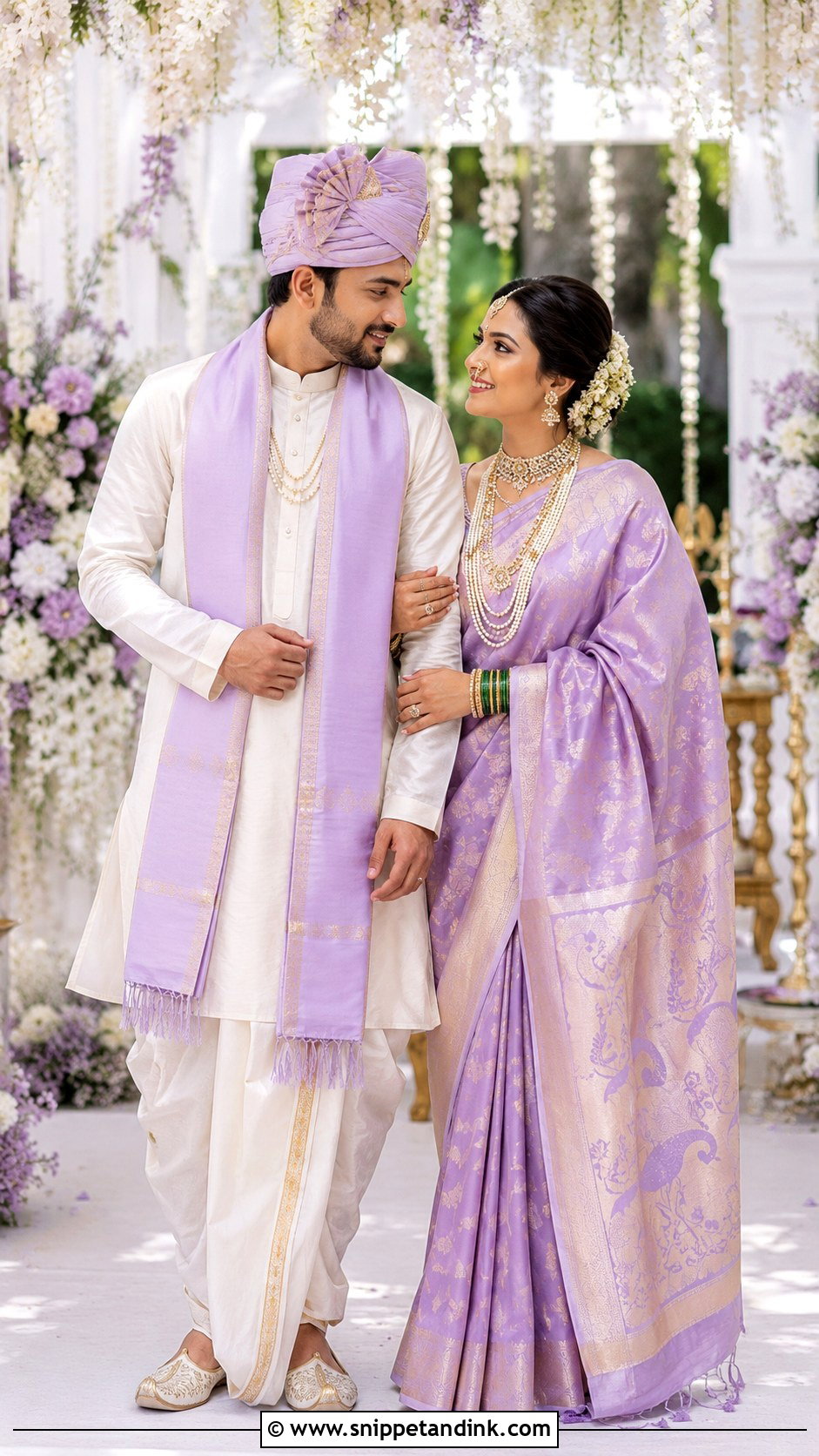
Lavender Paithani gives a pastel-loving bride a Maharashtrian base. With a gold border, pearl-gold jewelry, a nath, soft makeup and a neat bun, it reads fresh and calm. The groom in an ivory dhoti-kurta with a lavender stole or pheta keeps the couple coordinated. Pastels can look less traditional, so mundavalya during the ceremony pulls the look back into ritual wear. It suits an engagement, an intimate wedding or a daytime ritual.
12. Black Paithani And Gold Peshwai Reception Look
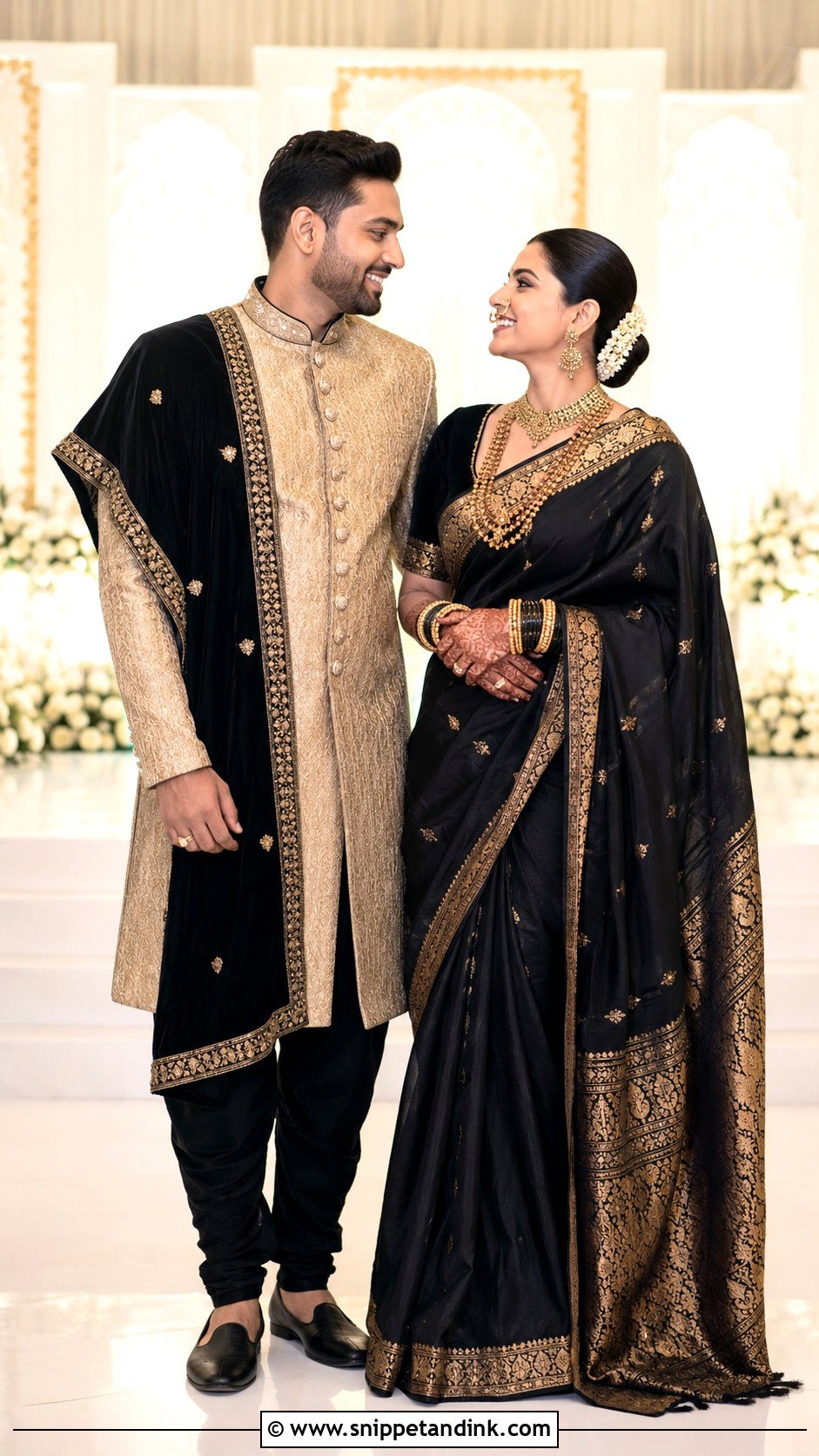
Black Paithani with gold zari is dramatic, and many families still avoid black at the main ceremony, so I only suggest it for a reception or later portrait session when the couple is sure. Antique gold jewelry, a statement nath, bangles and a sleek bun suit the bride; a gold or beige sherwani with a black stole and black mojaris suits the groom. The jewelry, drape and accessories keep the Peshwai feel while the colour turns it toward evening.
13. Peshwai Bride Lehenga And Dhoti Kurta Groom Look
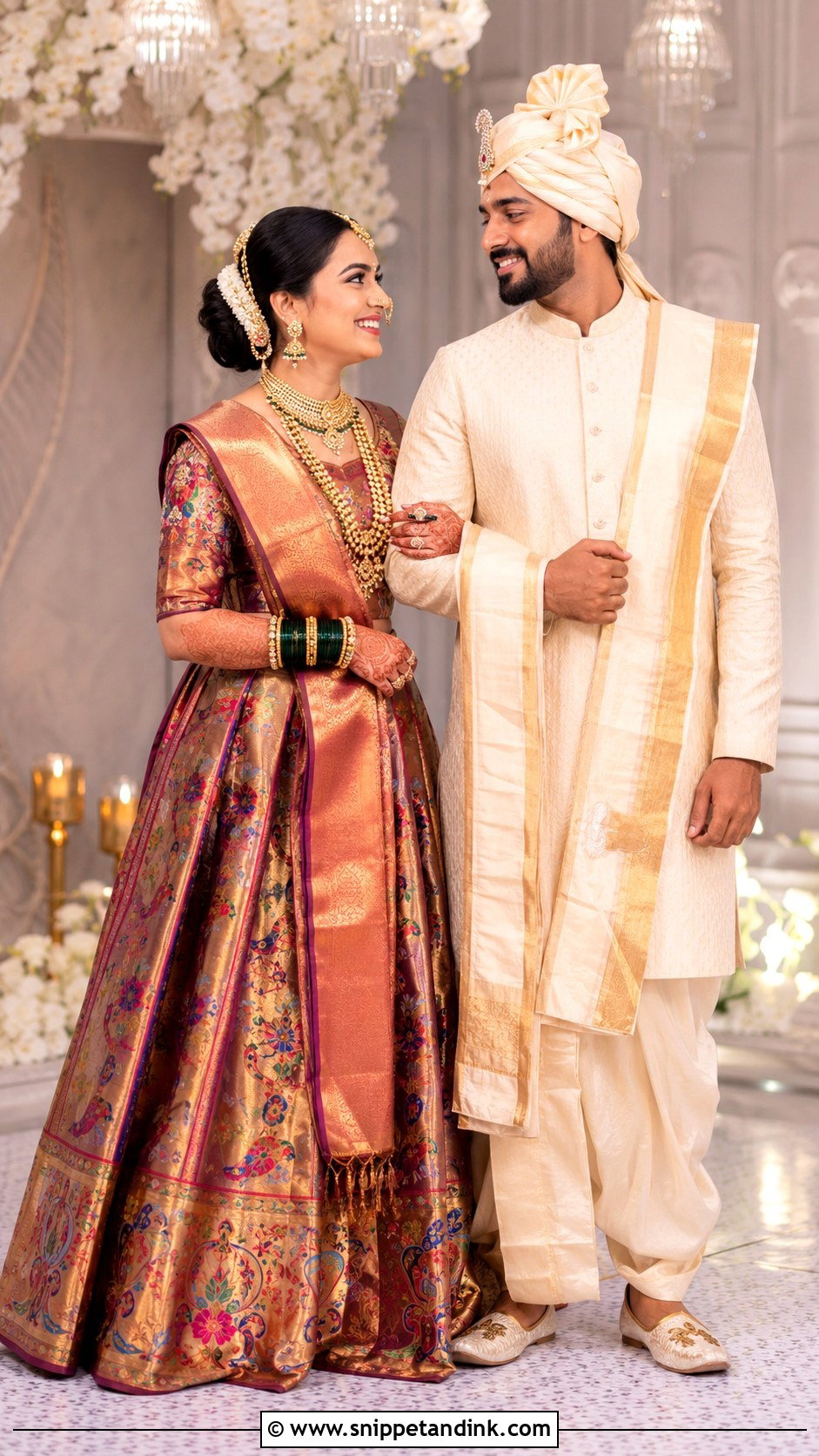
A Paithani-inspired lehenga gives easier movement while keeping the Peshwai mood. Look for silk with traditional zari borders, a fitted blouse and a dupatta draped like a saree pallu. A nath, thushi, Kolhapuri saaj, green bangles and a traditional bun anchor it culturally. The groom in a dhoti kurta with a coordinated pheta and shela completes the pair. It’s a good answer for a bride who wants the visual language of Maharashtrian wedding style without managing nine yards, and it suits a sangeet, reception or second function well.
14. Paithani Dupatta Sherwani And Nauvari Bride Look
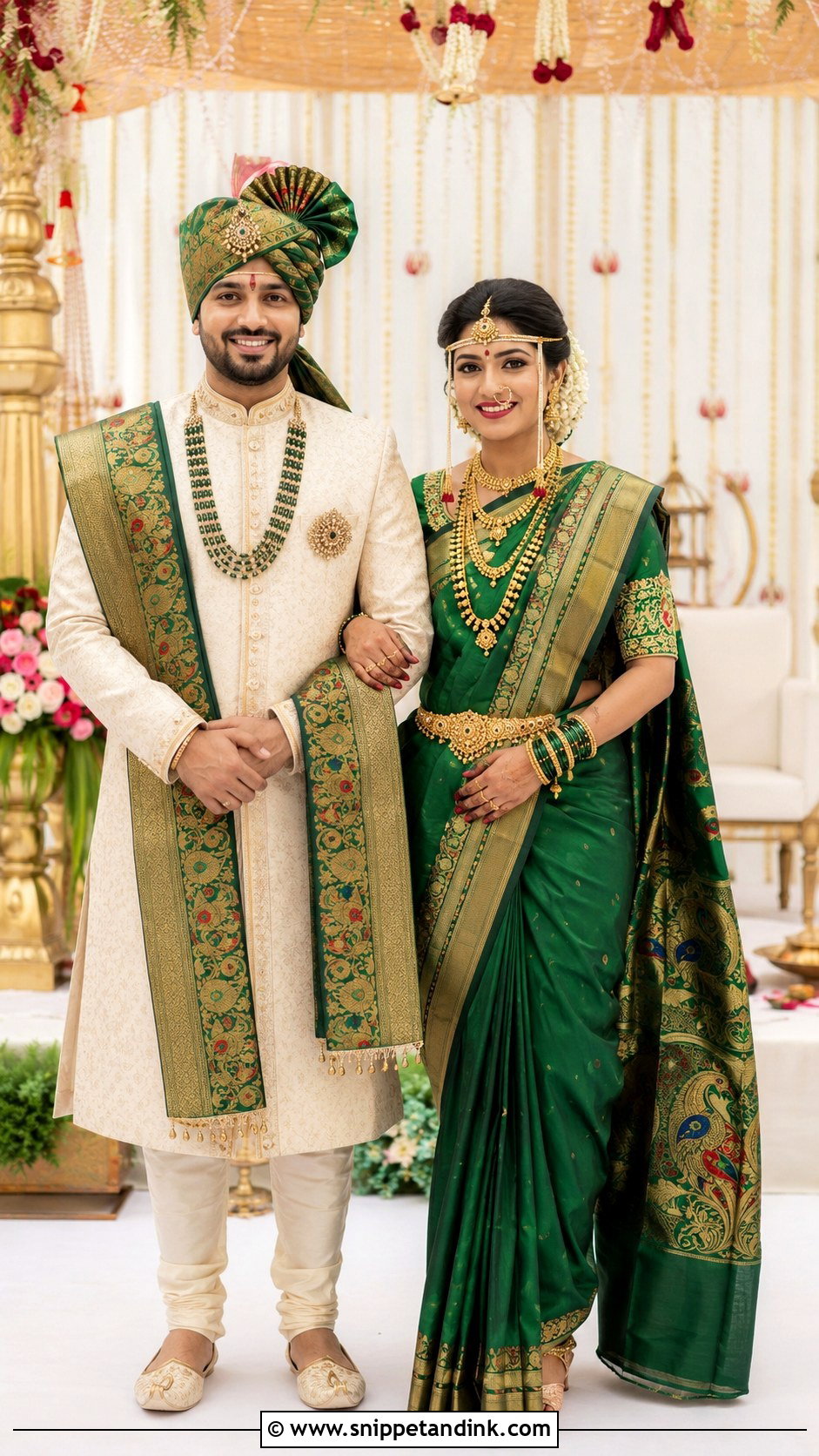
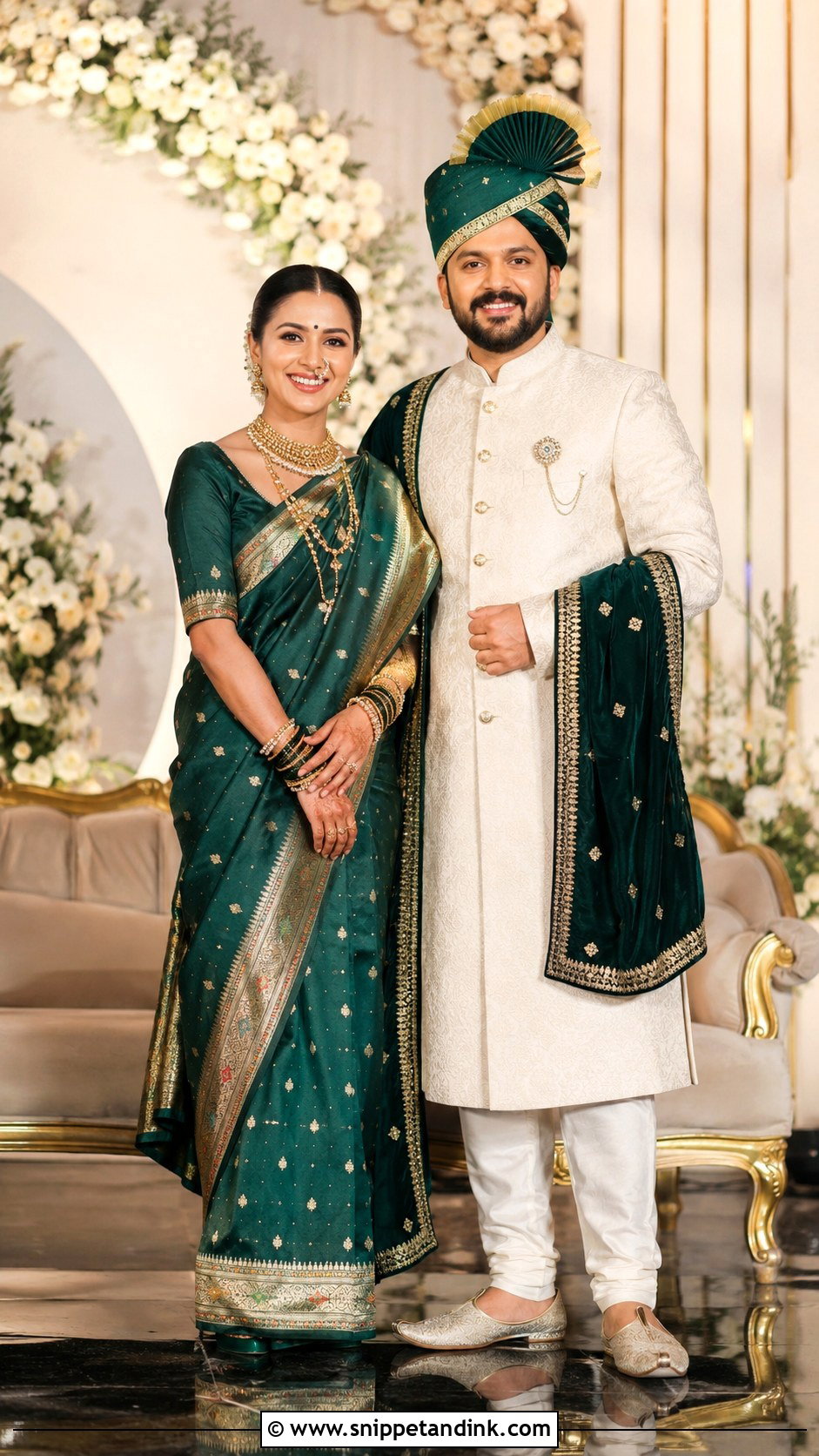
Draping a Paithani dupatta or shela over a plain sherwani is the simplest way to make a groom look Peshwai. Picture a green Nauvari bride beside a cream sherwani groom wearing a green Paithani stole. The bride wears a nath, gold necklaces, bangles, mundavalya and a floral bun; the groom adds a pheta, brooch and mojaris. A Paithani stole is heavier than a regular dupatta and slides off the shoulder, so I pin it under the brooch at one point.

15. Matching Green Nauvari And Green Pheta Couple Look
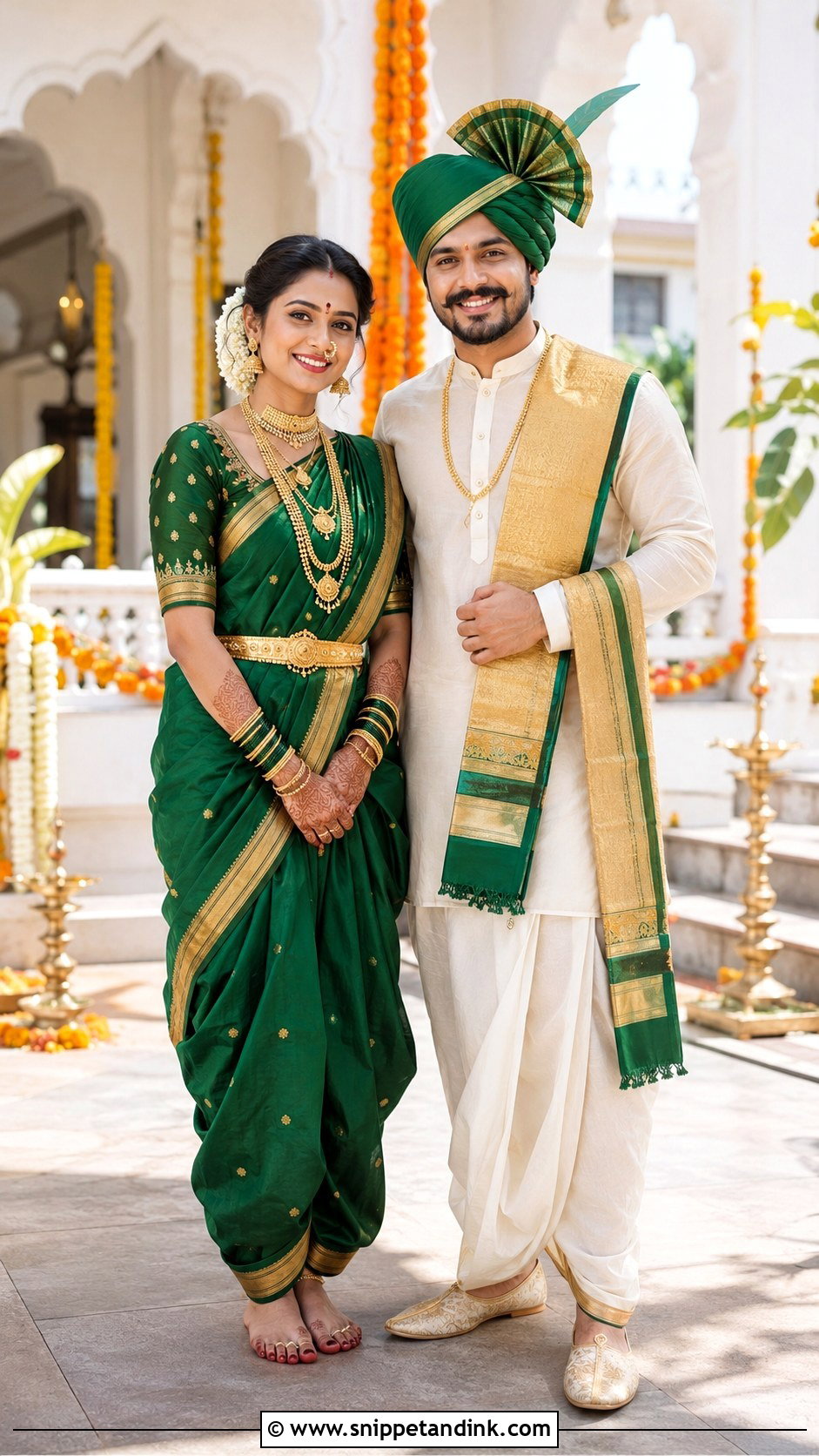
A shared colour between bride and groom makes the couple look planned. A green Nauvari for the bride and a cream dhoti kurta with a green pheta for the groom is the simplest version. She wears gold, a nath, green bangles, a waist belt and flowers; he adds a gold-bordered shela and mojaris. Matching green is harder than it sounds, since phetas and Paithanis are dyed differently, so bring the saree when buying the pheta rather than relying on a phone photo.
16. Paithani Saree And Angarkha Groom Peshwai Look
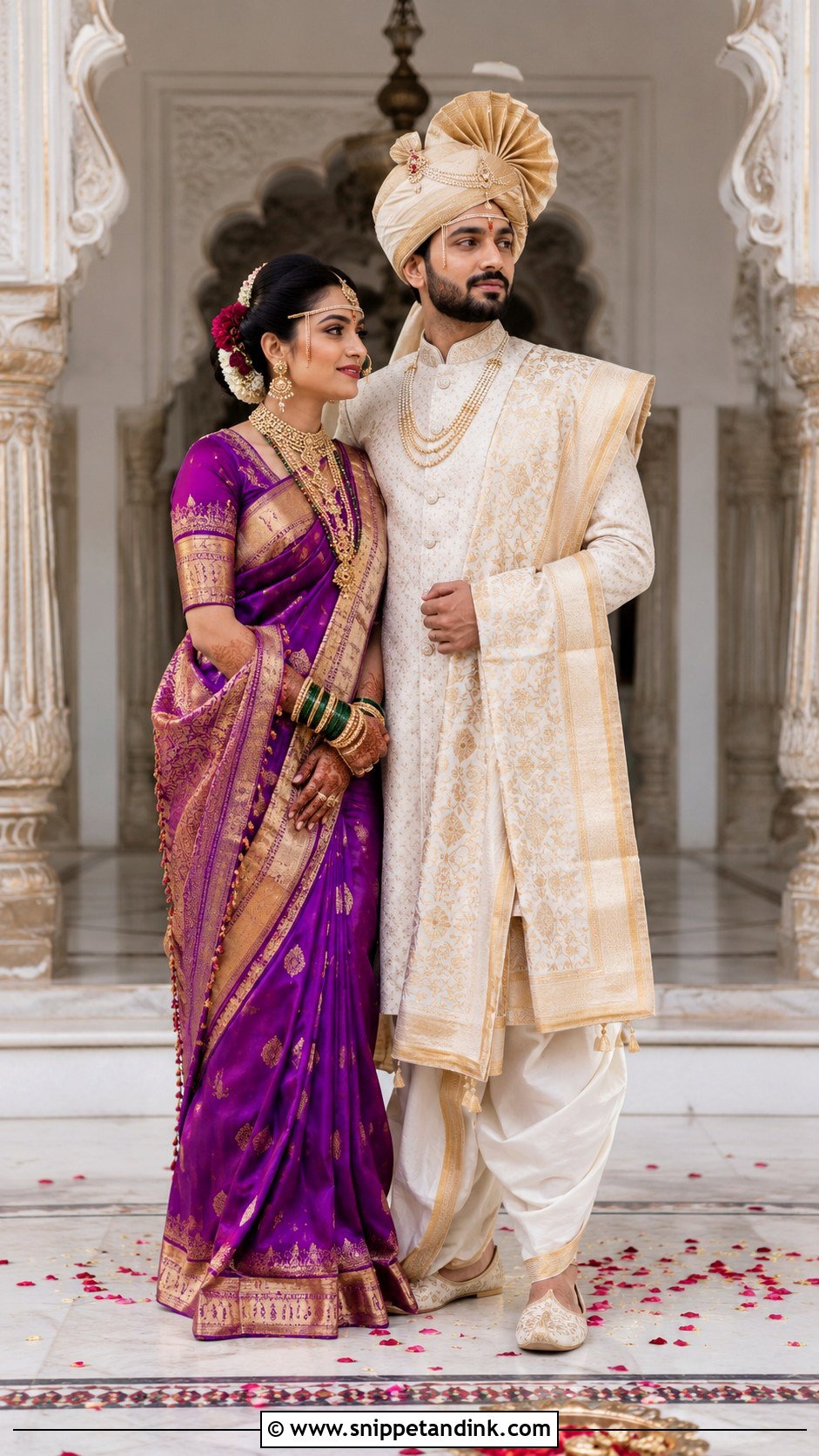
An angarkha-style kurta gives the groom a royal Maratha shape without a heavy sherwani. With a dhoti or churidar, a pheta, a gold-bordered shela and simple mojaris, he looks historical and slightly more formal than in a plain kurta. The bride in green, red, purple or pink Paithani with traditional gold and a nath completes the pair. Heritage venues, palace-style decor and classic portraits suit this one, and the angarkha’s tied front needs a hidden hook so it doesn’t loosen during the pheras.
17. Yellow Haldi Peshwai Couple Look
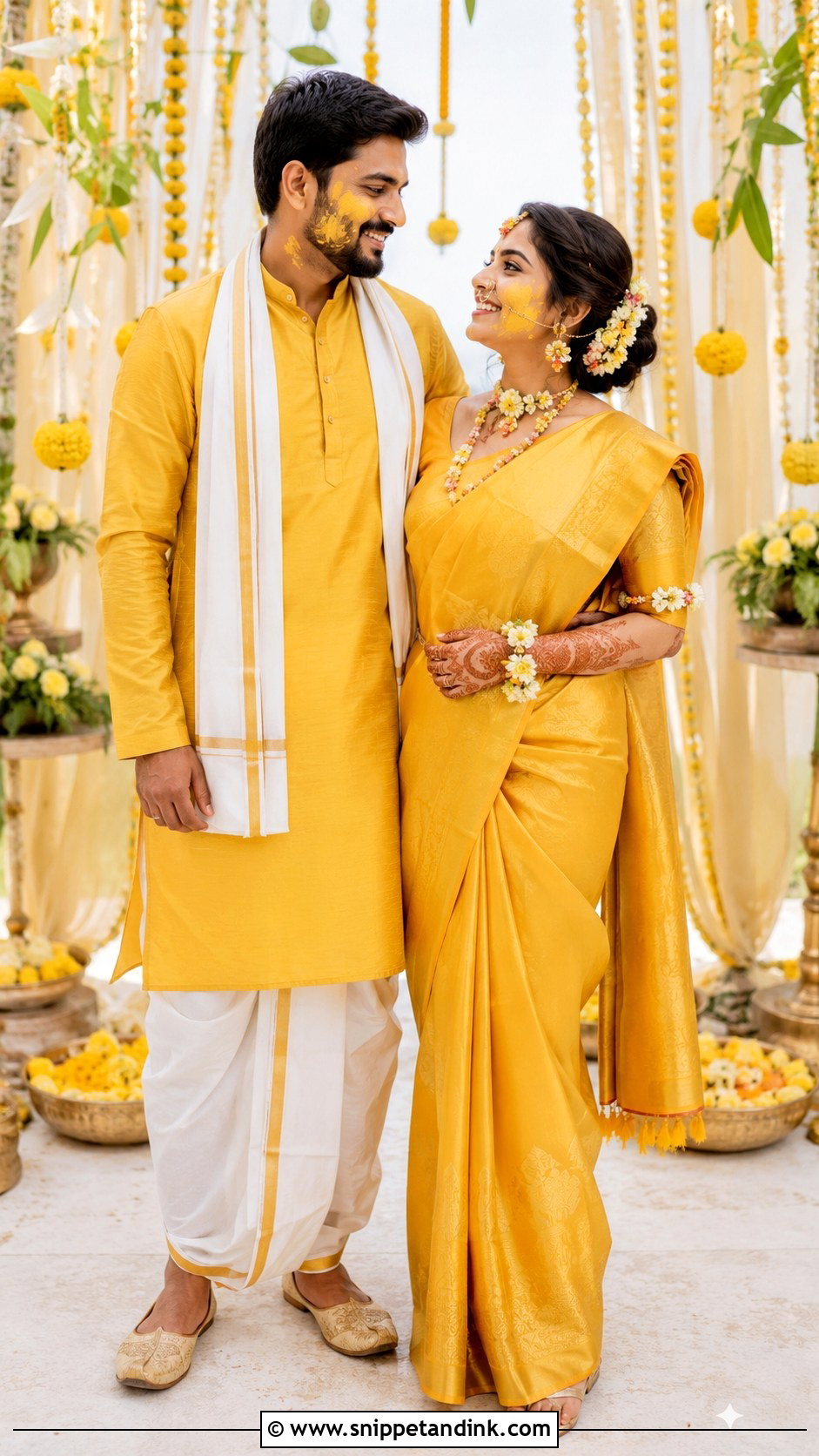
For a haldi, a yellow Peshwai couple look is joyful and simple. The bride can wear a yellow silk saree, a Paithani-inspired drape or a lighter Nauvari, with floral jewelry, minimal gold and comfortable sandals. The groom in a yellow kurta with a white dhoti or pajama and a simple stole, plus a small pheta if the ceremony is traditional, stays comfortable. Haldi stains and is often messy, so I’d never put either of them in good Paithani for it; a cotton or art silk saree is the right call.
18. Peshwai Engagement Couple Look
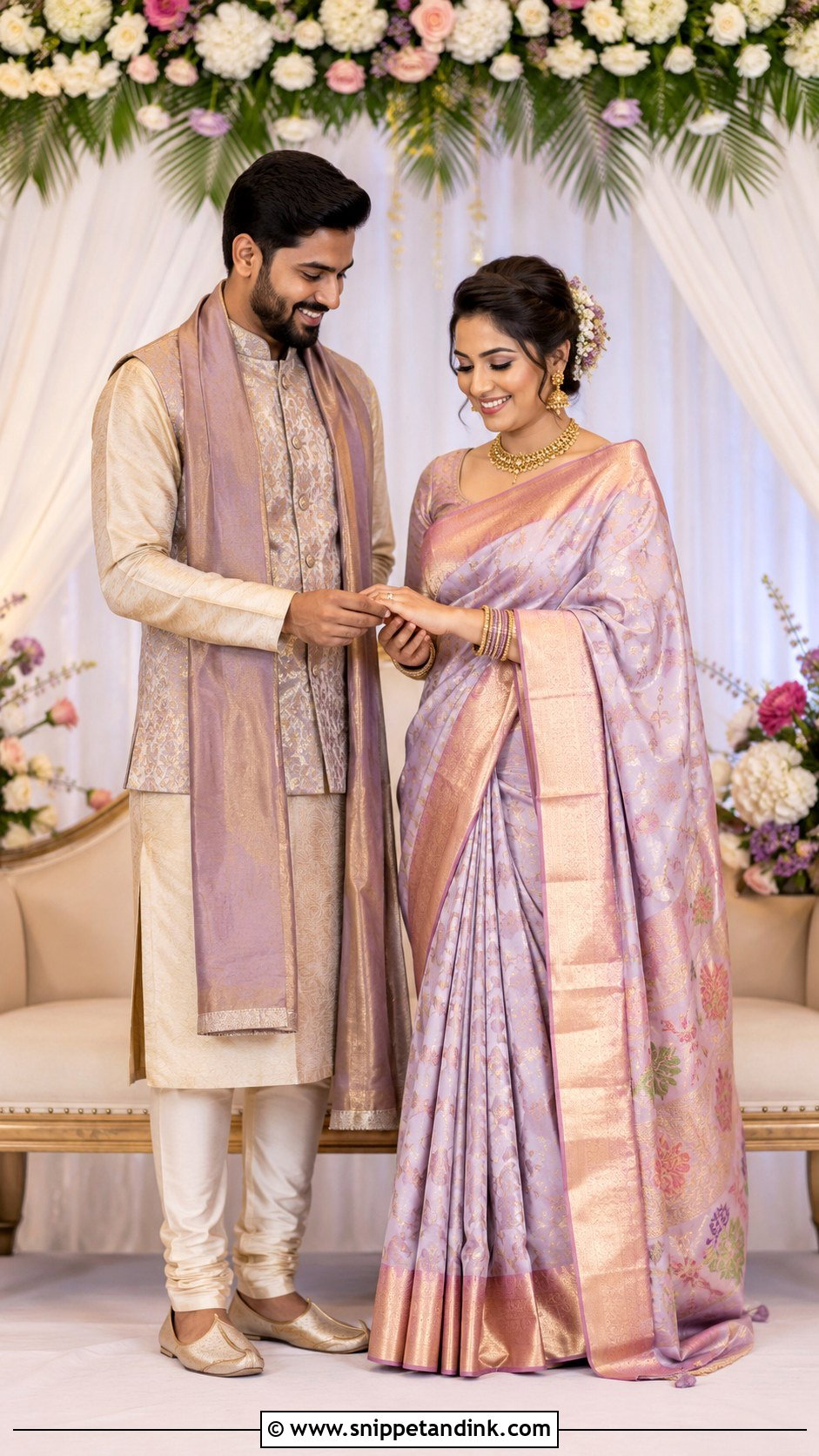
An engagement look should be lighter than the wedding. A pastel Paithani or silk saree with a traditional border, thushi, jhumkas, bangles and soft makeup suits the bride. The groom in a silk kurta with a Nehru jacket, churidar and matching stole, with a pheta added for formal photos, looks festive without going full wedding too early. It’s well suited to ring ceremonies, family portraits and cultural engagement functions.
19. Peshwai Pre Wedding Photoshoot Couple Look
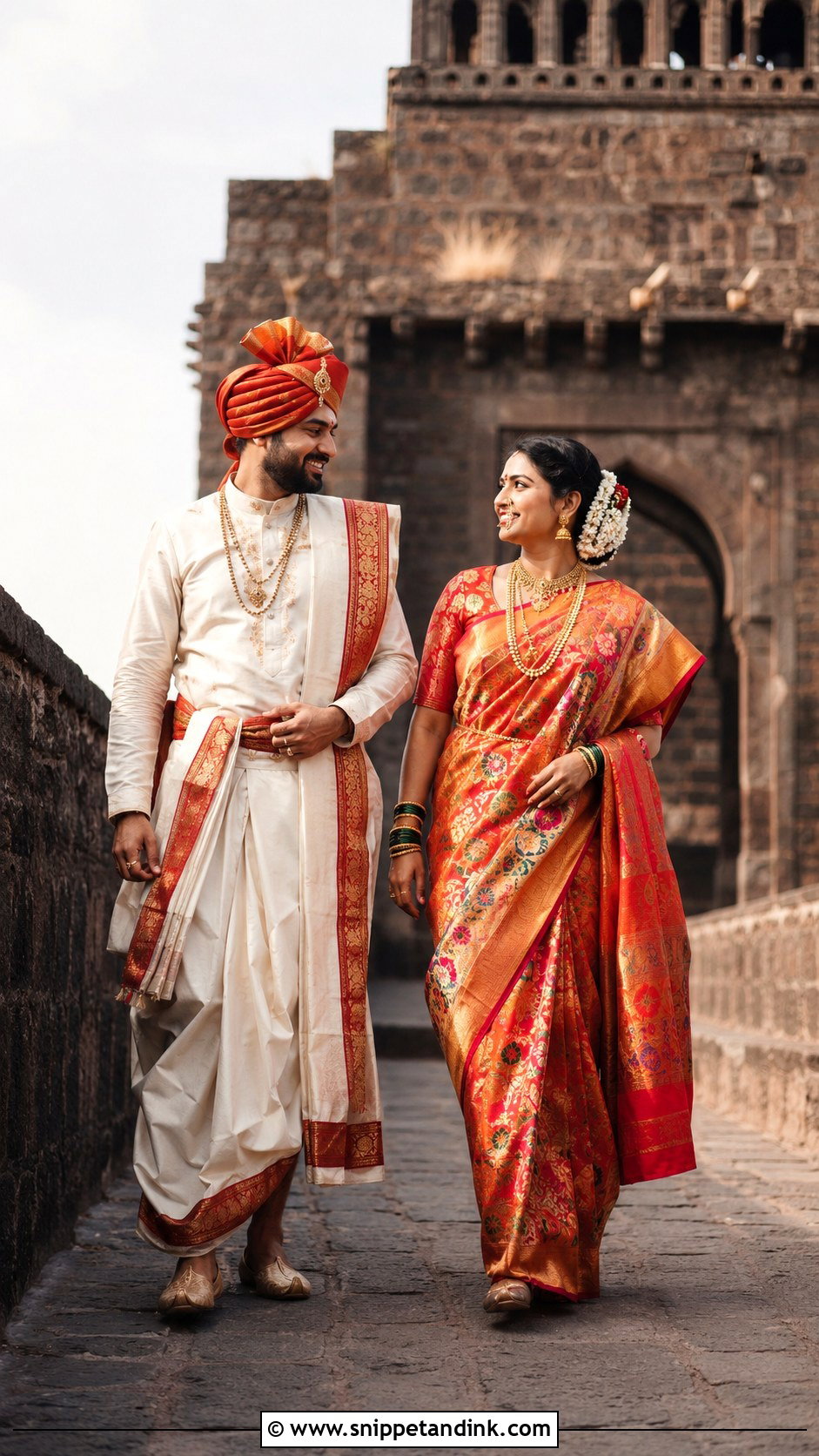
A pre-wedding shoot is where I’d go most dramatic, since the couple only has to hold the look for a few hours. A vibrant Paithani with a statement nath, layered necklaces, bangles and a flower bun for the bride, and a dhoti kurta, pheta, shela and mojaris in colours matching her border for the groom. Old forts, wada courtyards, temple settings or a clean outdoor backdrop suit it. Wearing the full outfit once before the wedding also teaches you how it moves, which makes the ceremony itself far less stressful.
20. Simple Peshwai Wedding Couple Look
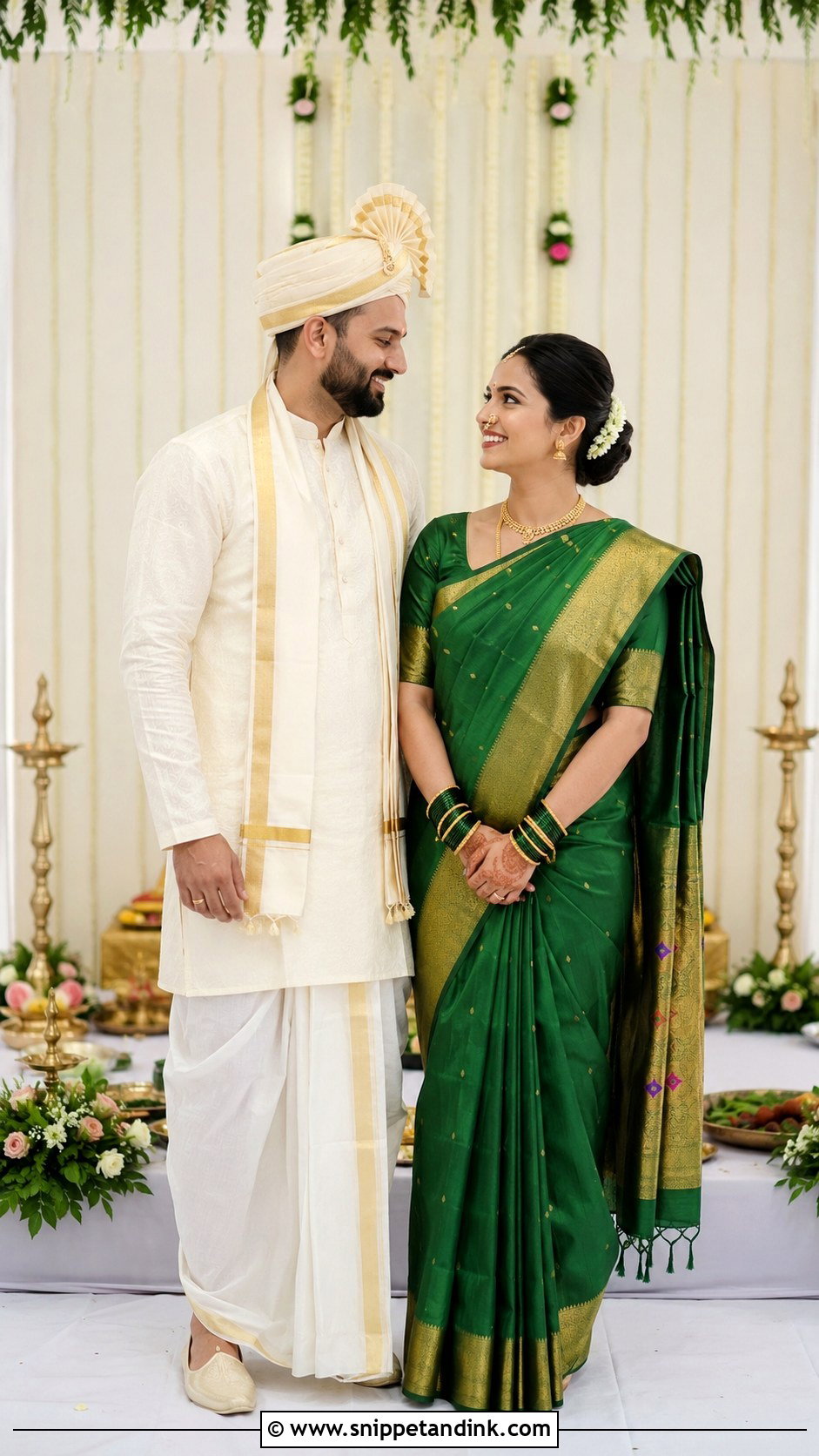
A Peshwai look doesn’t need heavy work. A classic Paithani, minimal gold, a nath, green bangles and a clean bun for the bride; a plain cream or white kurta with a dhoti, simple pheta and light shela for the groom. The drape, the silk and the jewelry carry it. Intimate weddings and home ceremonies suit this approach, and both of you stay comfortable through long rituals.
21. Royal Peshwai Wedding Couple Look
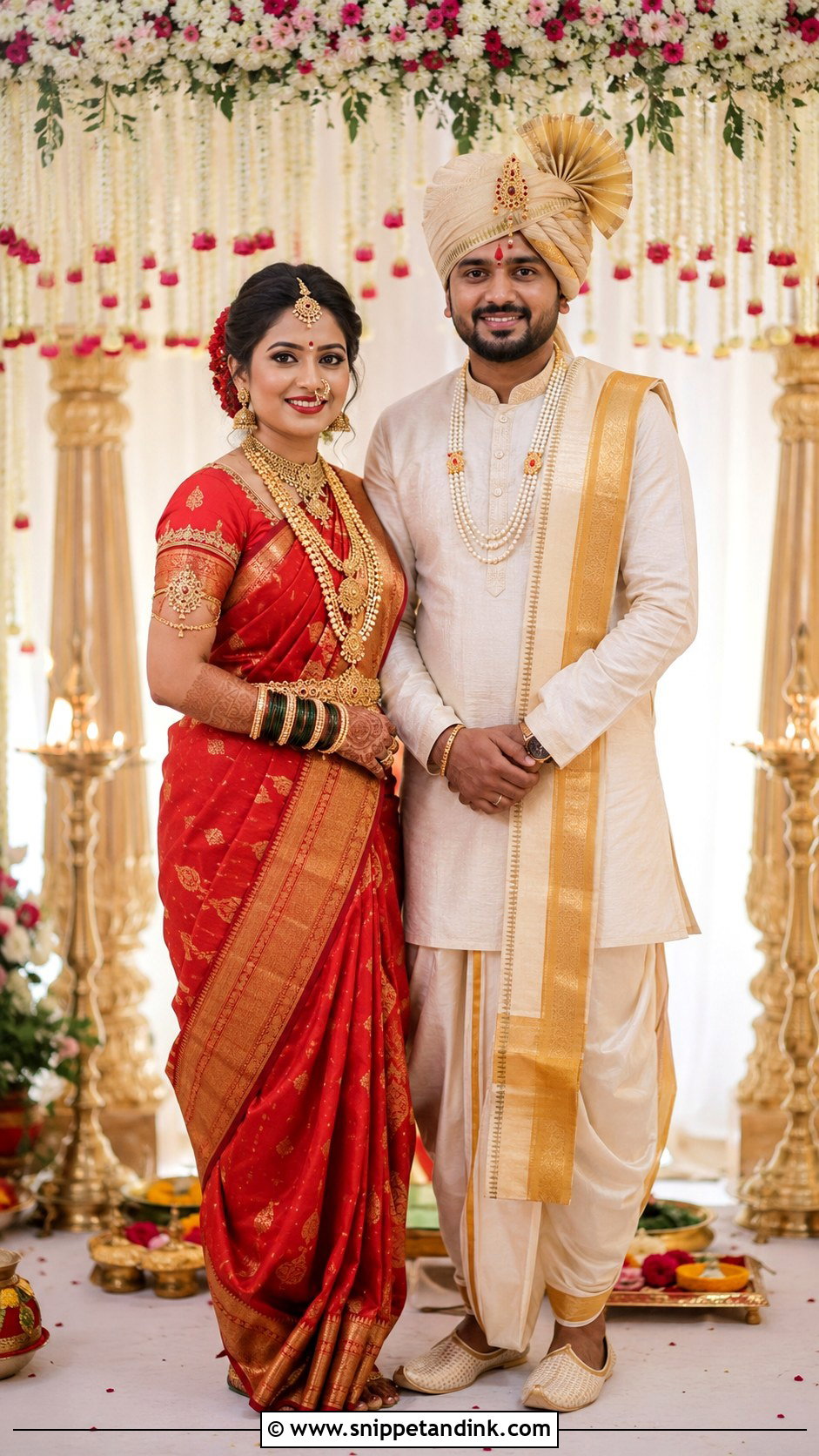
The royal version leans on deep colour and complete traditional dress. A jewel-tone Paithani Nauvari with a gold waist belt, layered necklaces, nath, bangles, mundavalya and a decorated bun for the bride; a silk angarkha or sherwani with dhoti pants, a regal pheta, shela, brooch and mojaris for the groom. Maroon, emerald, purple and gold suit it. Balance is the whole point: coordinate her saree with his headgear without making every element identical. All that gold and silk is heavy, so build breaks into the day.
22. Modern Peshwai Wedding Couple Look
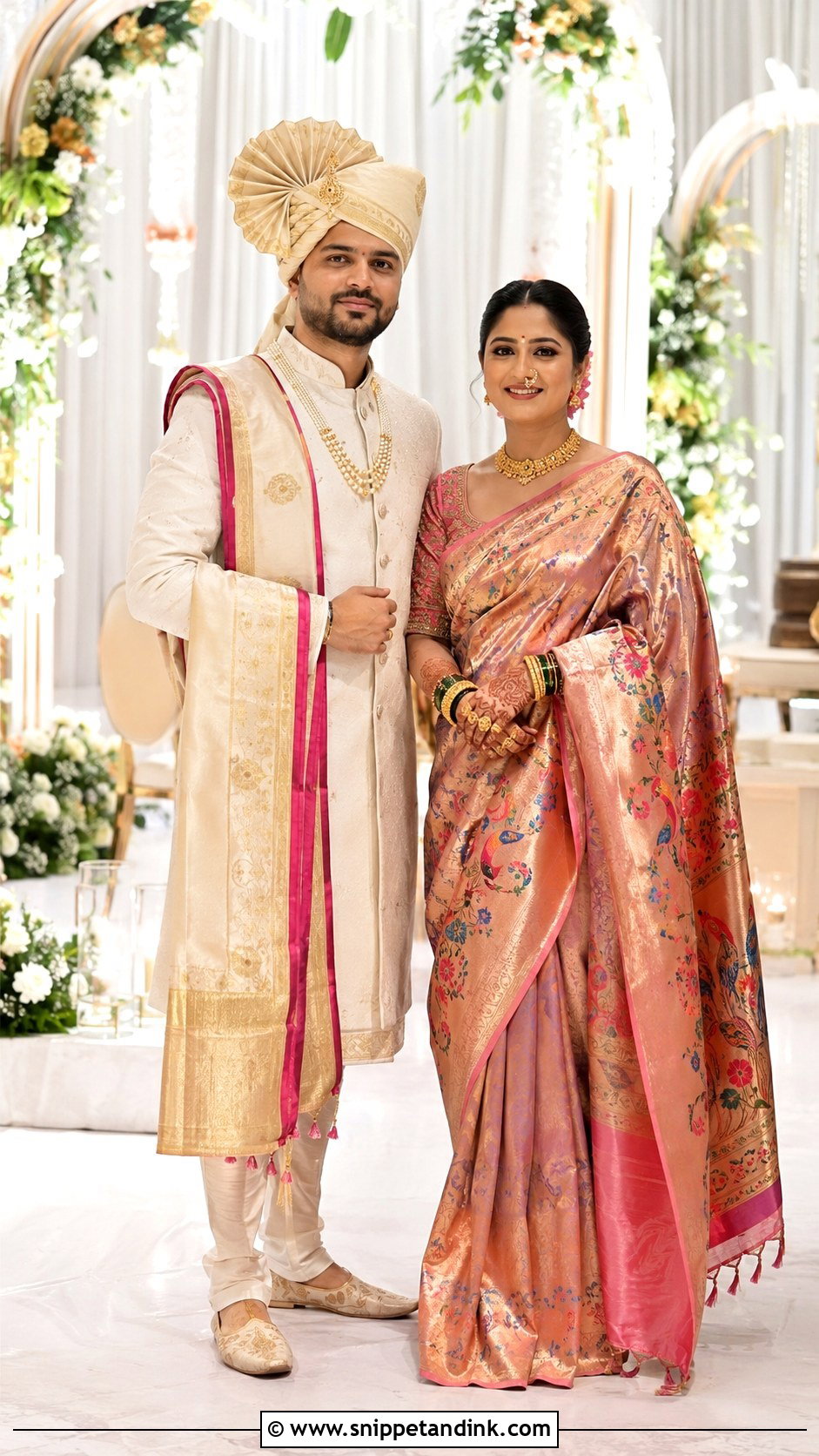
A modern Peshwai look keeps the traditional base and strips back the styling. A Paithani with a contemporary blouse, clean jewelry layering, soft glam and a sleek bun for the bride; a tailored kurta set, structured jacket, coordinated stole and neat pheta for the groom. Fit and fabric take the place of heavy accessories. It suits urban weddings and boutique venues, and it keeps the couple from looking costumed. Get the blouse cut with ease at the armhole, since a modern fitted blouse can restrict you during the ceremony’s arm movements.
23. Pastel Peshwai Wedding Couple Look
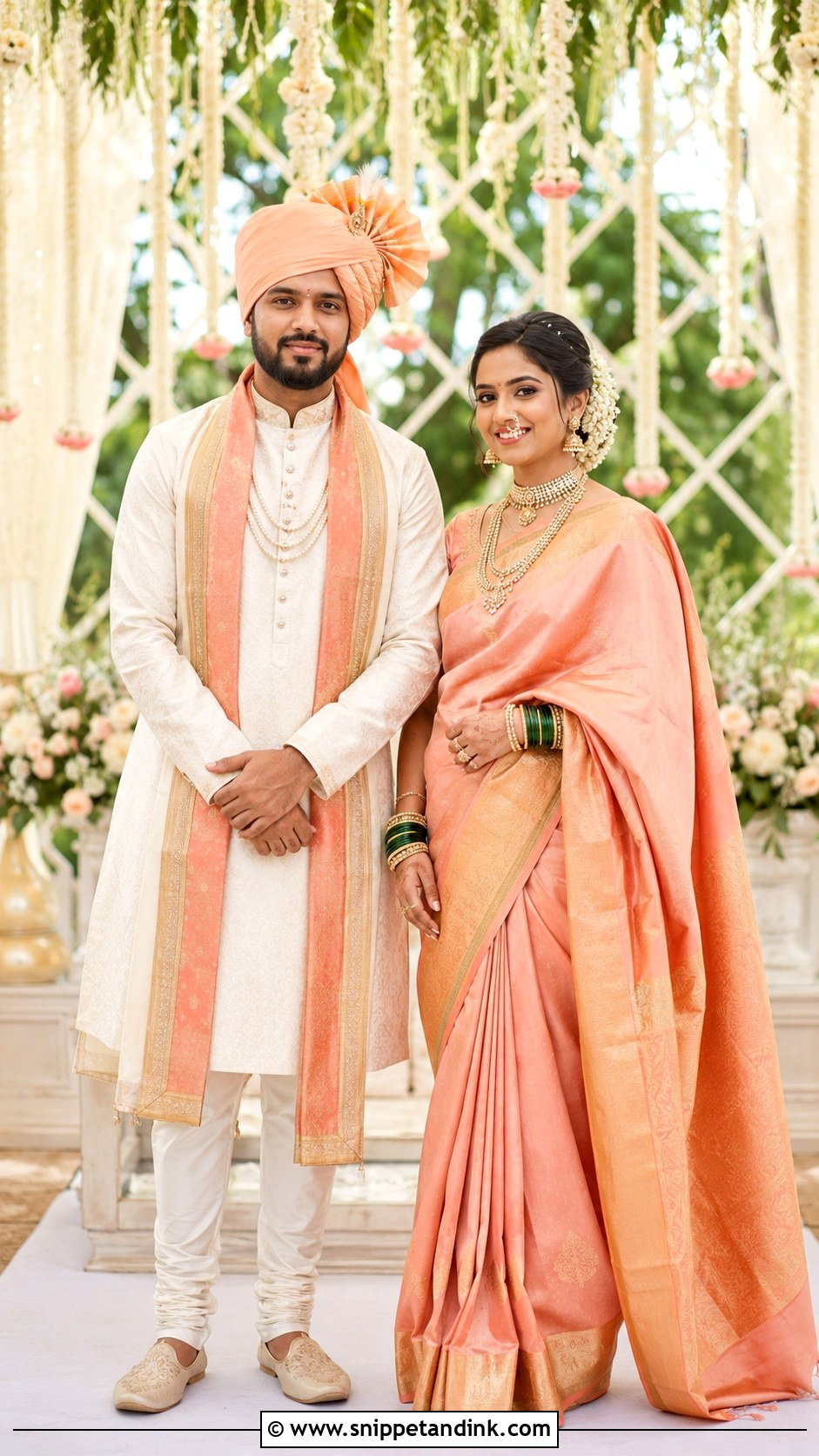
Pastel Peshwai styling suits soft decor. Pastel pink, peach, mint or lavender Paithani with a gold border, pearl-gold jewelry, a delicate nath, green or gold bangles and fresh flowers. The groom in ivory, beige or pale gold with a pastel pheta or stole matching her saree. The traditional drape and accessories keep it festive. Morning weddings, garden mandaps and intimate ceremonies are where pastels sit most naturally, since they look clean in bright, white daylight.
24. Temple Jewelry Peshwai Bride And Traditional Groom Look
Temple jewelry makes the bride’s look feel sacred and heritage-rich. A Paithani Nauvari with temple necklaces, jhumkas, armlets, a waist belt, nath, bangles and a traditional bun lets the jewelry lead. Keep the groom classic: cream dhoti kurta, gold-bordered shela, pheta and mojaris. Choose one main saree colour and repeat it subtly in his pheta or shela. Armlets slip on bare arms, so I fix them with a little skin-safe tape before she dresses.
25. Peshwai Reception Couple Look
The reception is where Peshwai styling can go sleeker. A silk Paithani, a Paithani lehenga or a gown-inspired drape with traditional jewelry and polished makeup for the bride; a tailored sherwani, silk kurta jacket set or angarkha with a coordinated stole for the groom. Navy, wine, emerald, gold, ivory and purple all suit evening light. Keep a nath, the pheta, mojaris and Paithani borders so the outfit still reads as Maharashtrian on the stage.
Paithani Changes Colour as It Moves, So Match to the Border
Many Paithanis are woven with one colour in the warp and another in the weft, which gives the silk that shifting sheen. Look at a green Paithani straight on and it may read green; turn it under light and it flashes gold or blue. This makes matching the groom’s pheta trickier than people expect.
My approach is to match the pheta or shela to the saree’s border or pallu, which is woven in a flatter, more consistent colour, rather than to the body. Always take the saree itself when shopping, not a photo, and check both pieces under daylight and under warm indoor light. If the two only match in one of those, they’ll look mismatched in half the photographs.
The same applies to jewelry and bangles. Green glass bangles come in many shades, and a bride’s bangles that clash with her saree body will be visible in every close-up of the hands during the rituals.
Let the Saree Lead and the Pheta Answer It
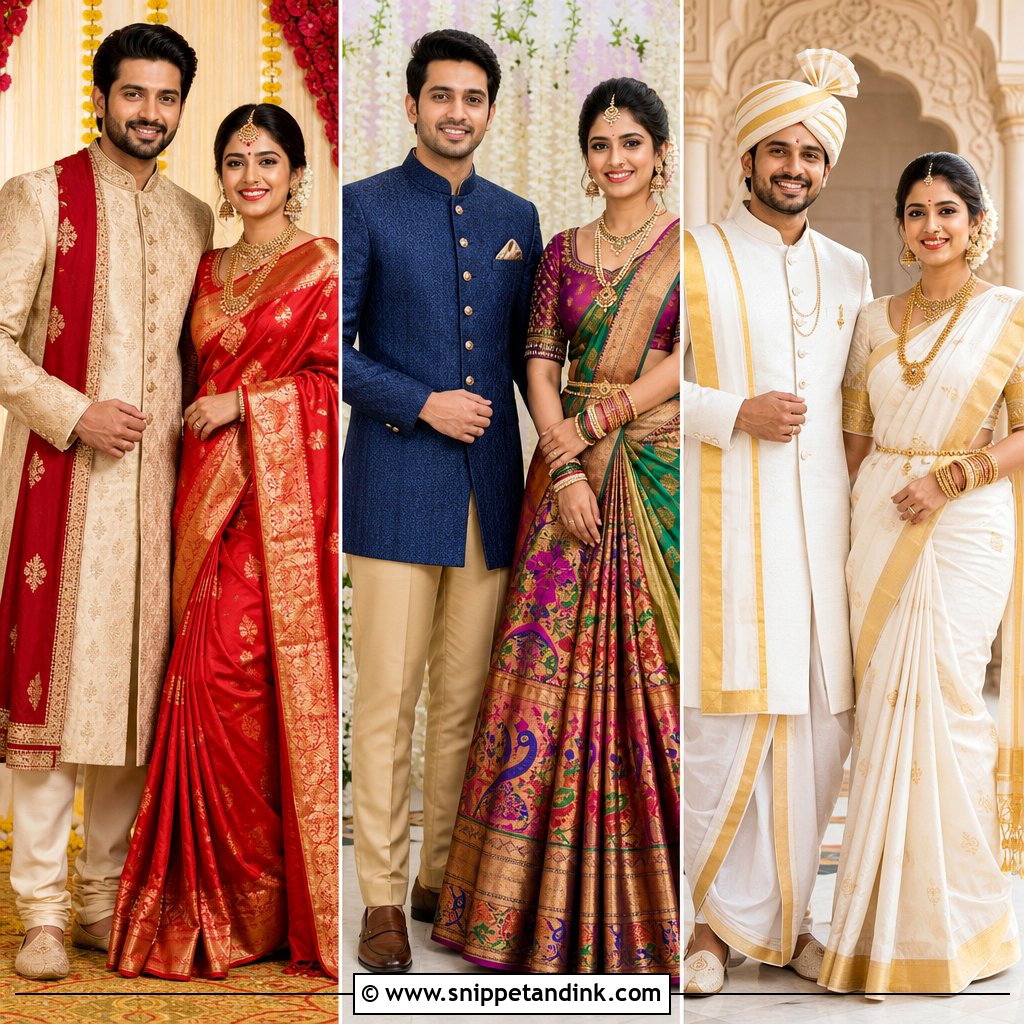
A good Peshwai couple outfit starts with the bride’s saree. Settle that first, then build the groom’s look around one shared detail: pheta, shela, stole or border colour. Keep the core elements, Paithani silk, the Nauvari drape, dhoti-kurta, nath, gold, mojaris and mundavalya, and adjust the weight and colour for the venue, season and ritual. Bold jewel tones or soft pastels, the couple should look like they belong in the same frame without wearing the same thing.
You'll Like These Ideas:




Leave a Reply