
Konkani brides come from the coast running through Goa, Maharashtra and Karnataka, and no two families dress a bride in quite the same way. Depending on community and custom, she might wear a red Kanjeevaram, a green silk saree, a traditional drape finished with an aadvarl, a Catholic sado, or something modern for the reception. What almost never changes is the gold: the nathini, tode bangles, coin necklaces, ear cuffs, armlets and the pins that hold the bun. When I dress a Konkani bride, the first conversation is never about colour. It’s about which rituals she’ll sit through, how long they run and who in the family knows the drape. The twenty looks below start from that same practical place.
Matching Each Outfit to the Ritual It Has to Survive
A Konkani wedding is several events, and each one asks something different of the clothes. Before we look at a single saree, I sit down with the family and list every ceremony, roughly how long it runs and whether the bride will be sitting on the floor, standing at a mandap, kneeling in church or dancing. That list decides more than any mood board.
- Haldi and mehndi: lightweight fabric, short sleeves and nothing precious. Turmeric stains silk permanently and henna paste smudges on anything that brushes the hands.
- The main muhurtam: this is where the heavy Kanjeevaram, aadvarl or Paithani belongs. Allow 45 minutes to an hour just for draping and pinning if a relative is tying a traditional drape.
- Church ceremony: check the parish’s expectations about covered shoulders before the blouse or gown is cut.
- Reception: if you’re changing, choose something you can get into in under 20 minutes, such as a pre-draped saree or a lehenga.
Weight matters more than most brides expect. A pure silk Kanjeevaram with a heavy zari border can be well over a kilo before the jewellery goes on, and it pulls on the shoulder pin for hours. Do one rehearsal at home in the actual saree, seated cross-legged for twenty minutes, and you’ll know whether you need a lighter weave or a pre-stitched pleat.
1. Red Kanjeevaram Konkani Bride Look
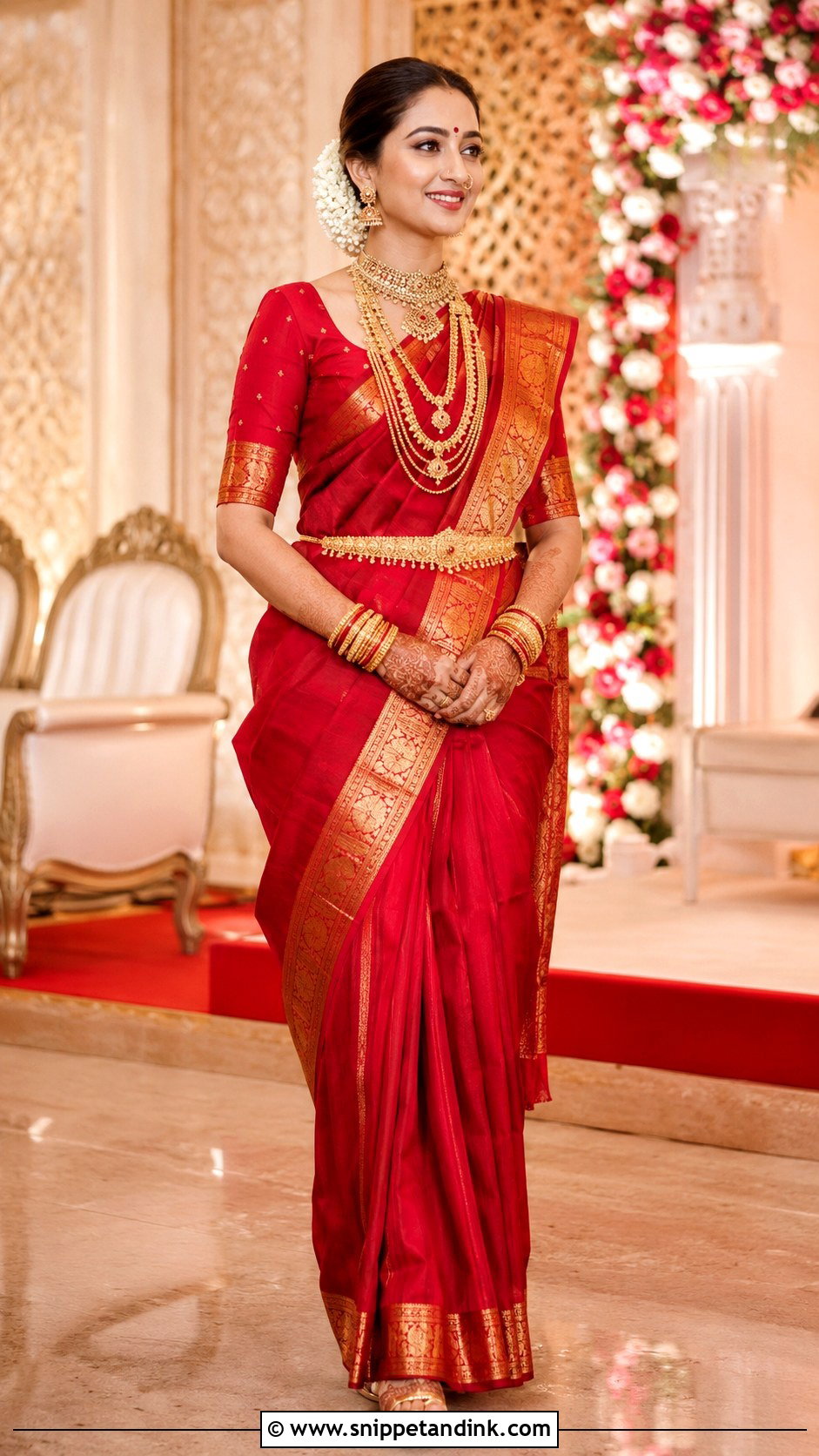
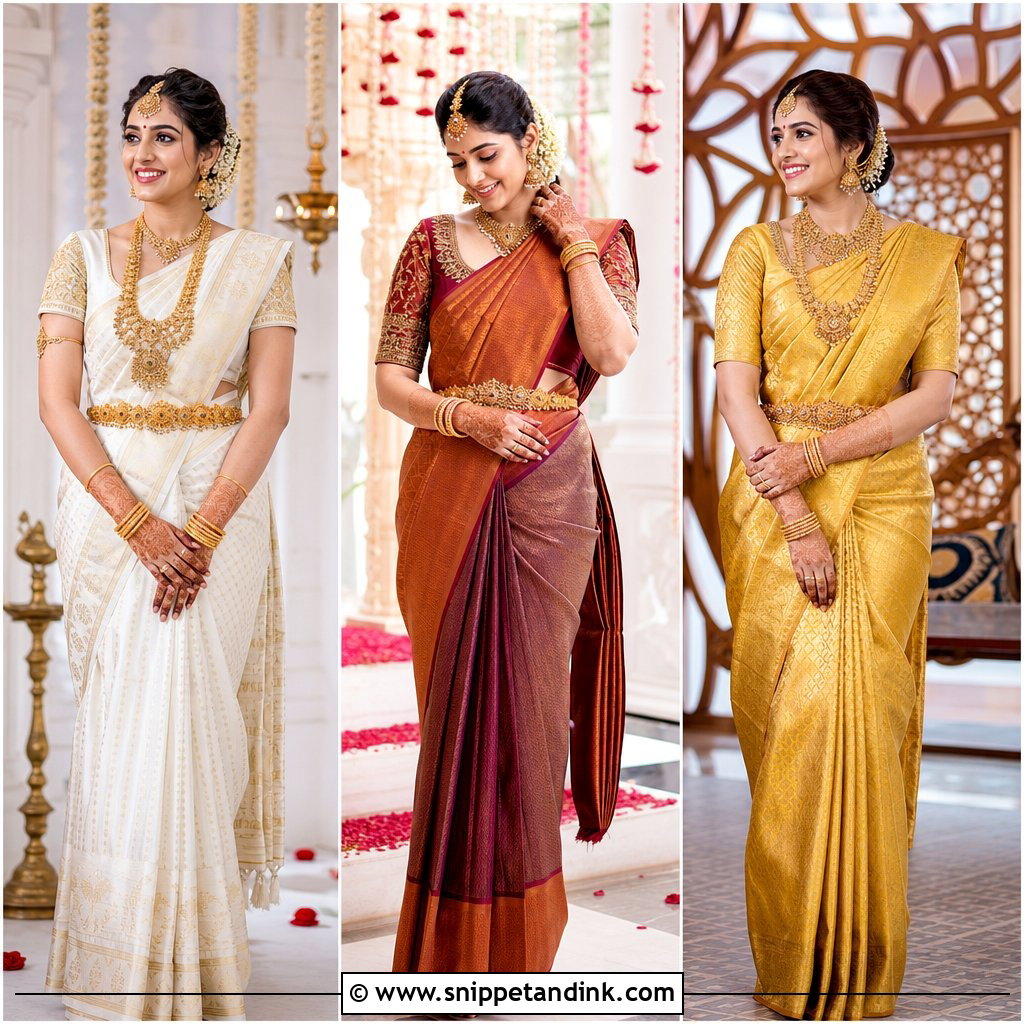
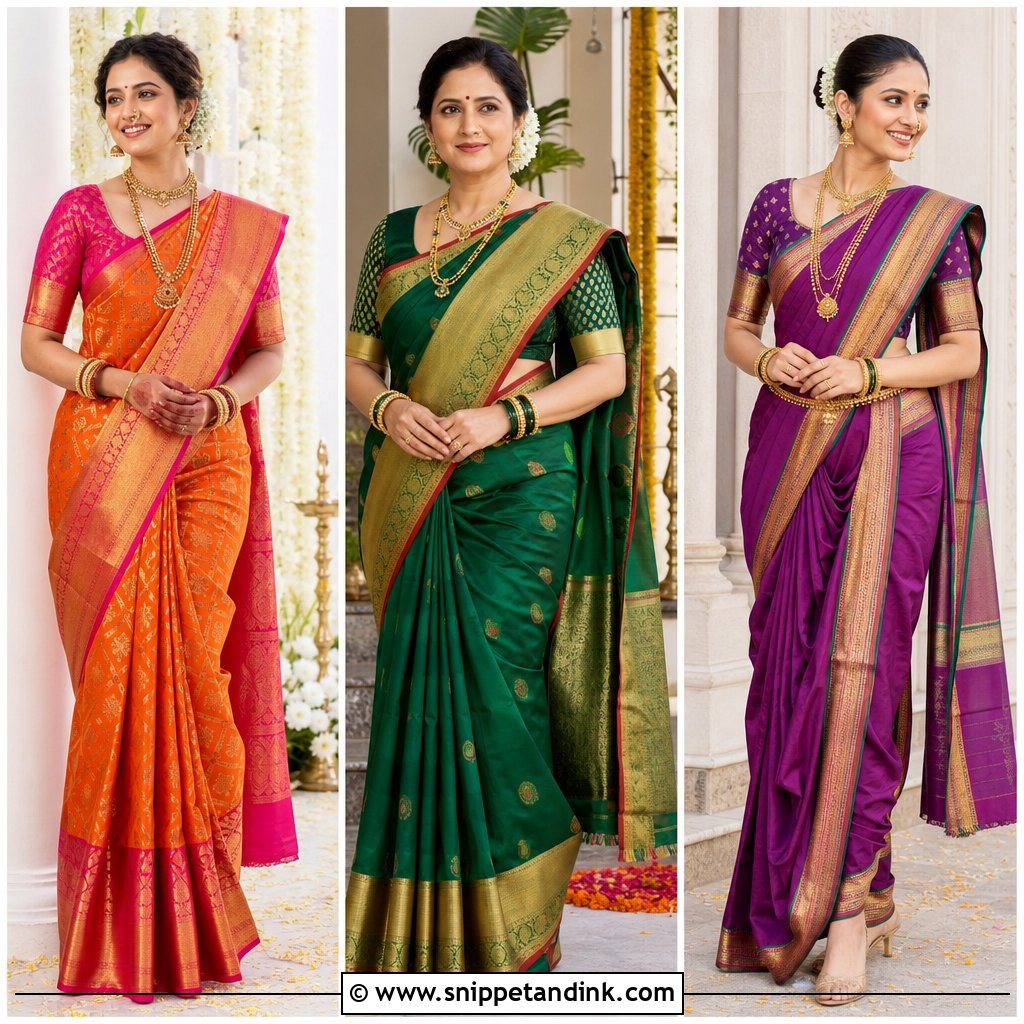
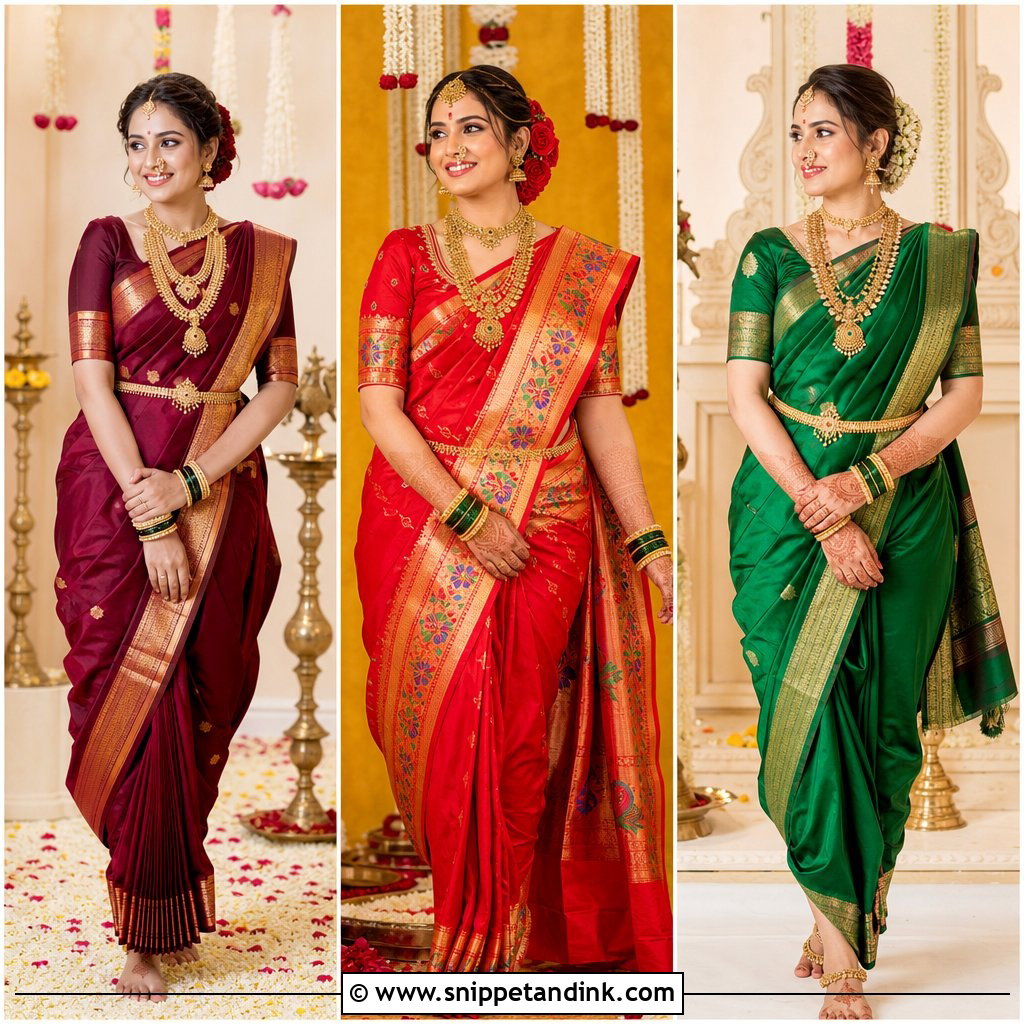
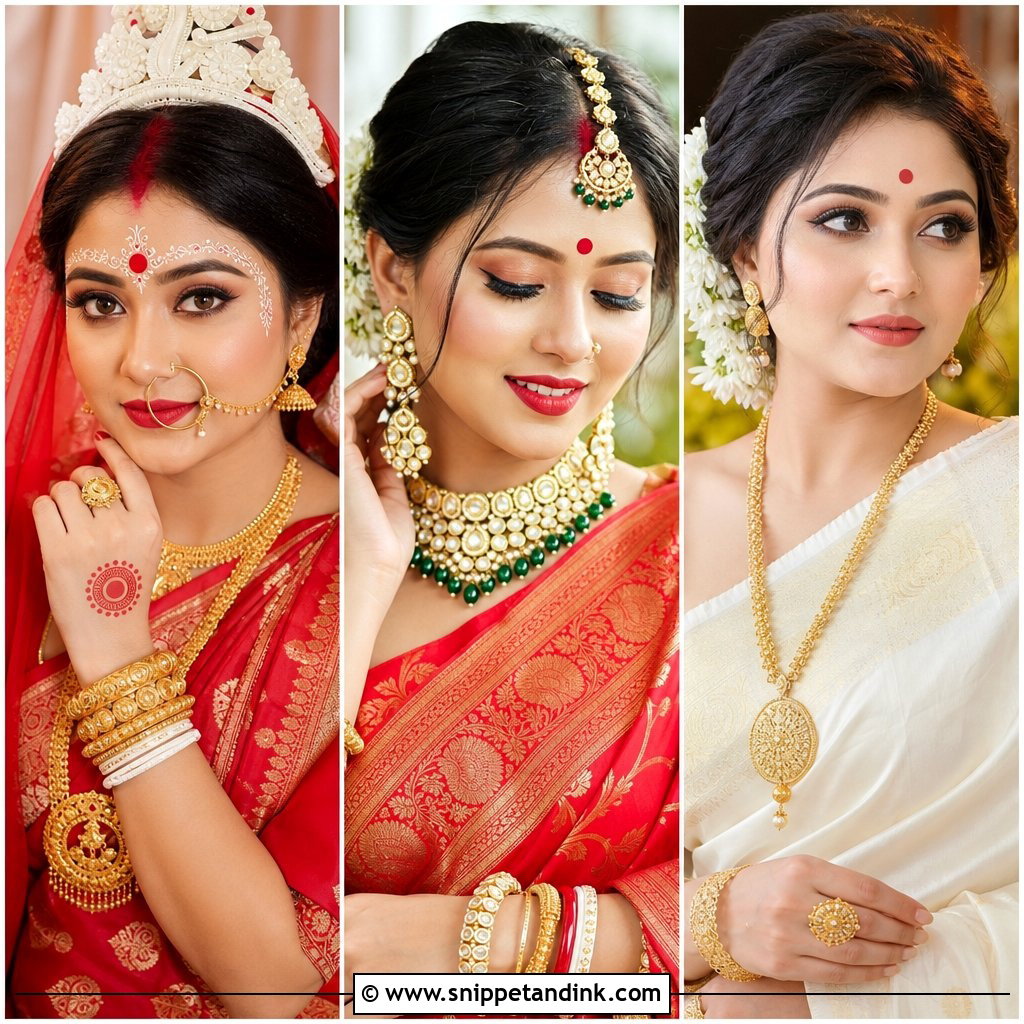
Red and gold Kanjeevaram is the look most families picture first, and for good reason. Go for vermilion or a deep crimson with a broad zari border, and keep the blouse in matching red or antique gold with elbow sleeves. A real Kanjeevaram is heavy, so I always pleat it the night before and pin the pallu at two points on the shoulder; one pin will drag once a layered necklace, choker, nathini, jhumkas, tode bangles and waist belt are added on top. Finish with a centre-parted bun wrapped in jasmine, defined eyes, a red lip and a small red bindi. Gold sandals carry the palette all the way down.
2. Green Silk Konkani Bride Look
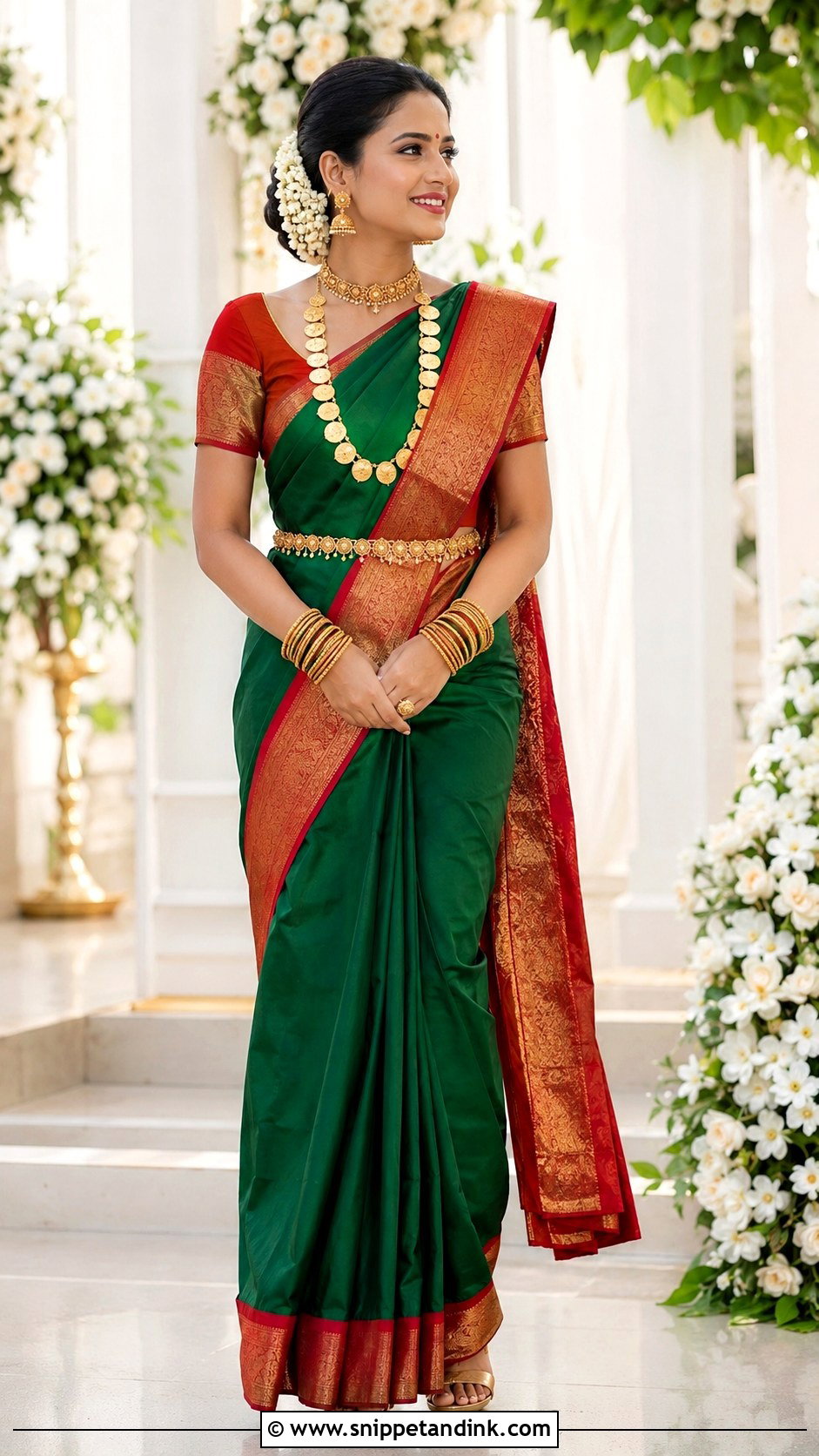
Emerald or leaf-green silk makes the gold look warmer than red does. I like a Kanjeevaram or Banarasi saree with a red border and a contrasting red blouse with zari sleeves, which keeps it festive without going all-red. Layer a coin necklace over a gold choker with temple-style earrings, stacked bangles, a delicate waist belt and an ornamental hairpiece. One thing to test in daylight: some greens turn olive next to yellow-toned skin, so hold the fabric to your face before you buy. A low braided bun with jasmine or red roses calms the brighter saree, and warm bronze eyes with a berry lip keep the face from looking washed out. Embroidered gold sandals and a small red potli finish it.
3. Maroon Saree With White Aadvarl
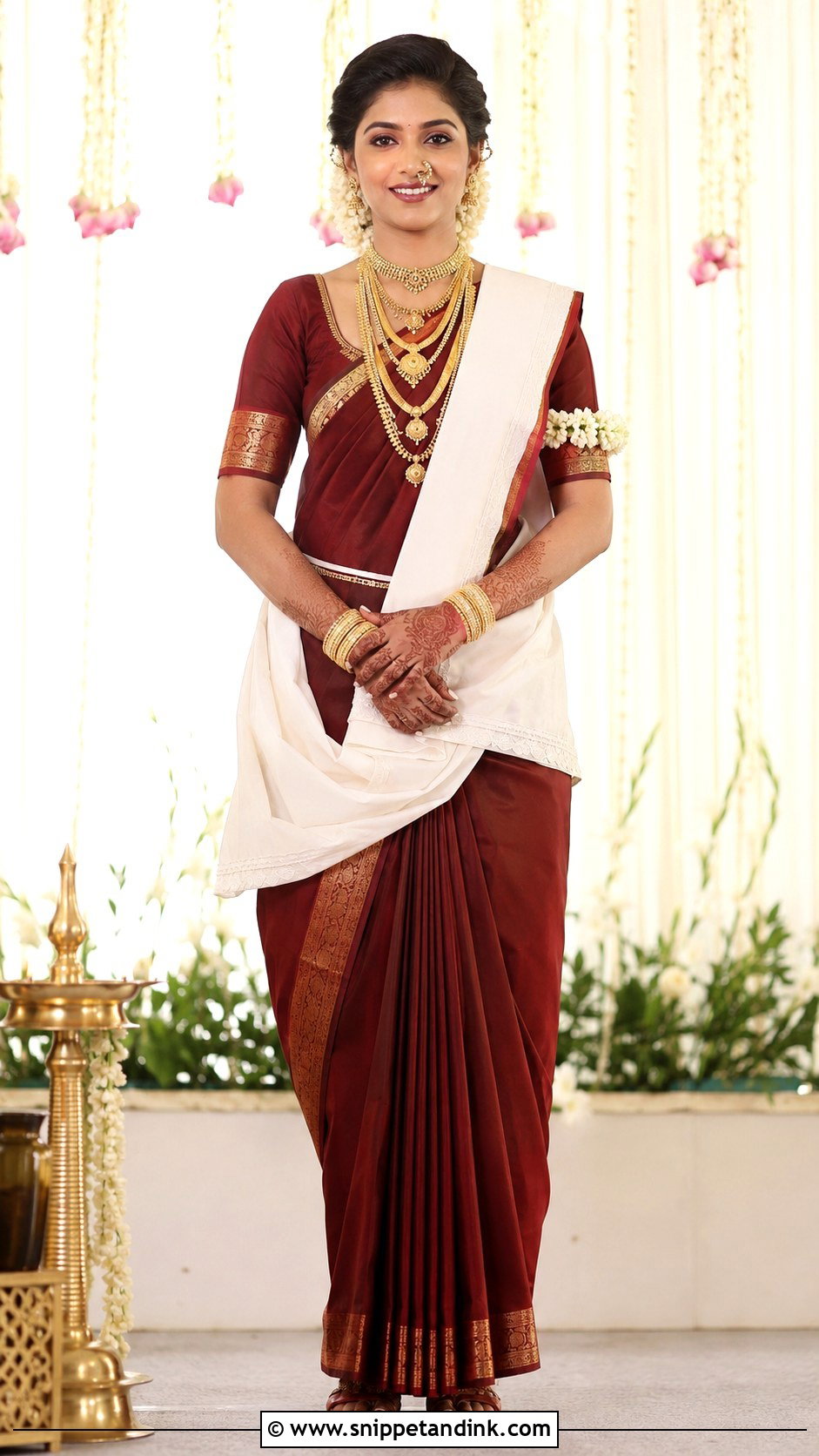
The maroon saree with a white aadvarl over the shoulder is one of the oldest Konkani Hindu bridal drapes, though the exact way it’s folded and tucked differs between communities and even between families. Ask the eldest woman in the house to show you hers before the wedding; I’ve found that’s the only reliable reference. The maroon, white and gold contrast reads clearly in dim indoor halls, which is where many of these ceremonies happen. Keep the blouse plain maroon with a thin gold edge so it doesn’t fight the aadvarl. Add a long necklace, choker, nathini, ear cuffs, bangles and a floral armlet, then a smooth bun with an ambada aati and jasmine. Leather sandals, a red bindi and kajal complete it.
4. Red Banarasi Konkani Bride Look
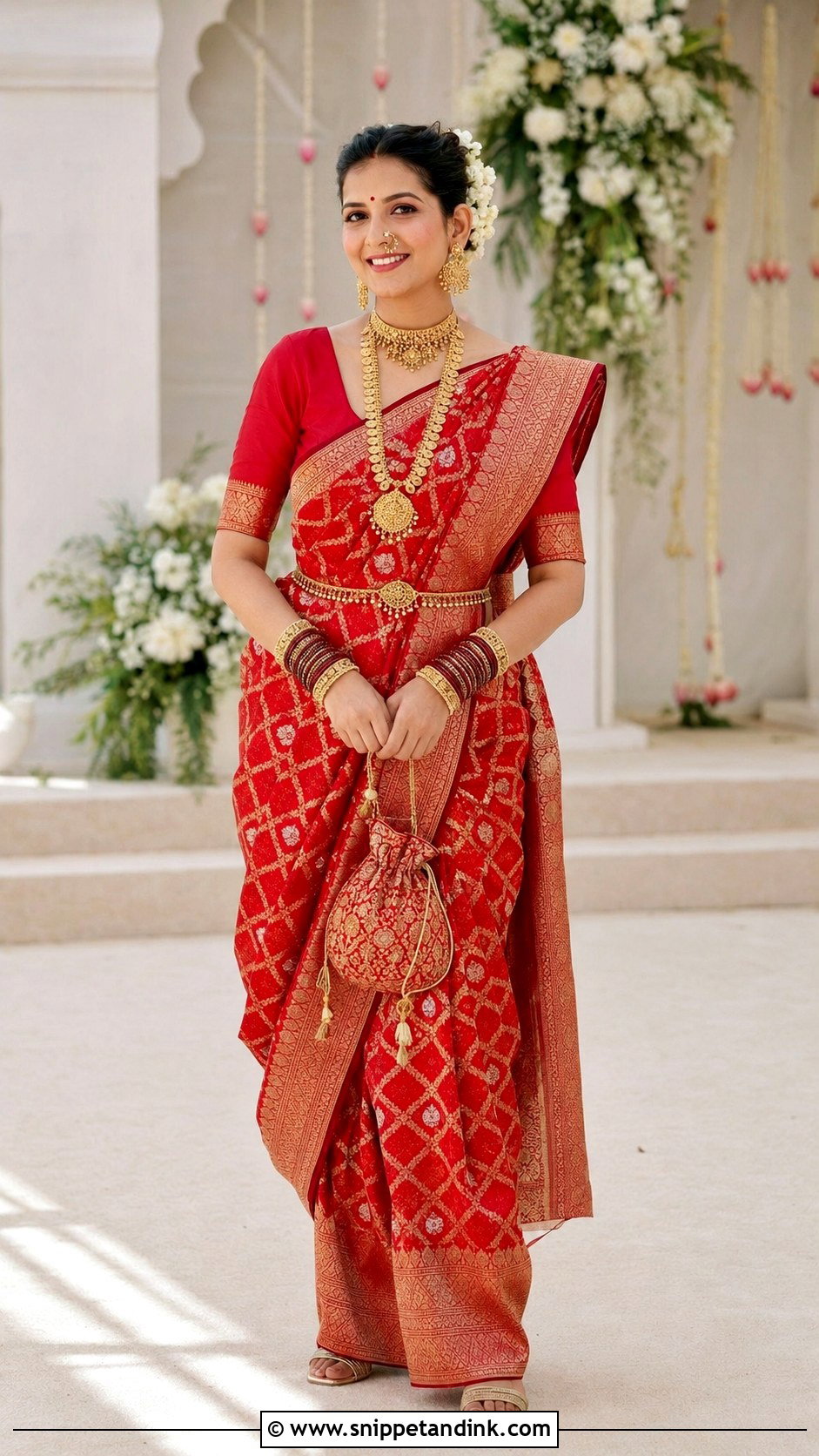
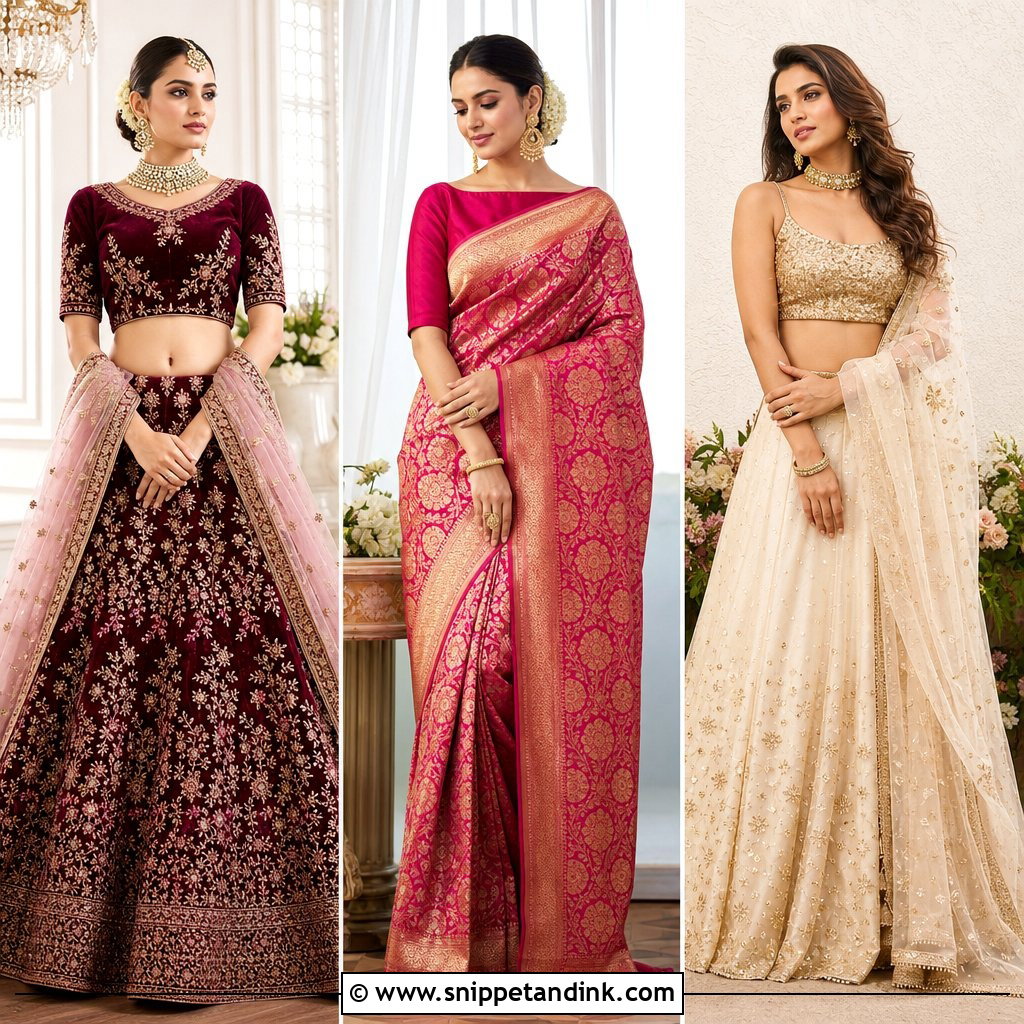
Banarasi silk is softer and drapes closer to the body than Kanjeevaram, which makes it easier to sit cross-legged in for a long muhurtam. Look for antique-gold buti work and a heavy zari pallu in a red that suits your skin; a blue-based red flatters cooler complexions, an orange-based one warmer skin. A plain silk blouse with a deep back and elbow sleeves lets the weave lead. I’d add a gold choker, a longer coin necklace, nathini, kaan-style ear ornaments, stacked bangles and a slim kamarbandh. Ask the draper for fewer, wider pleats; they hold better on Banarasi. A centre-parted bun ringed with jasmine, red makeup, a small bindi, gold block heels and a brocade potli finish the look.
5. Ivory And Red Konkani Bride Look
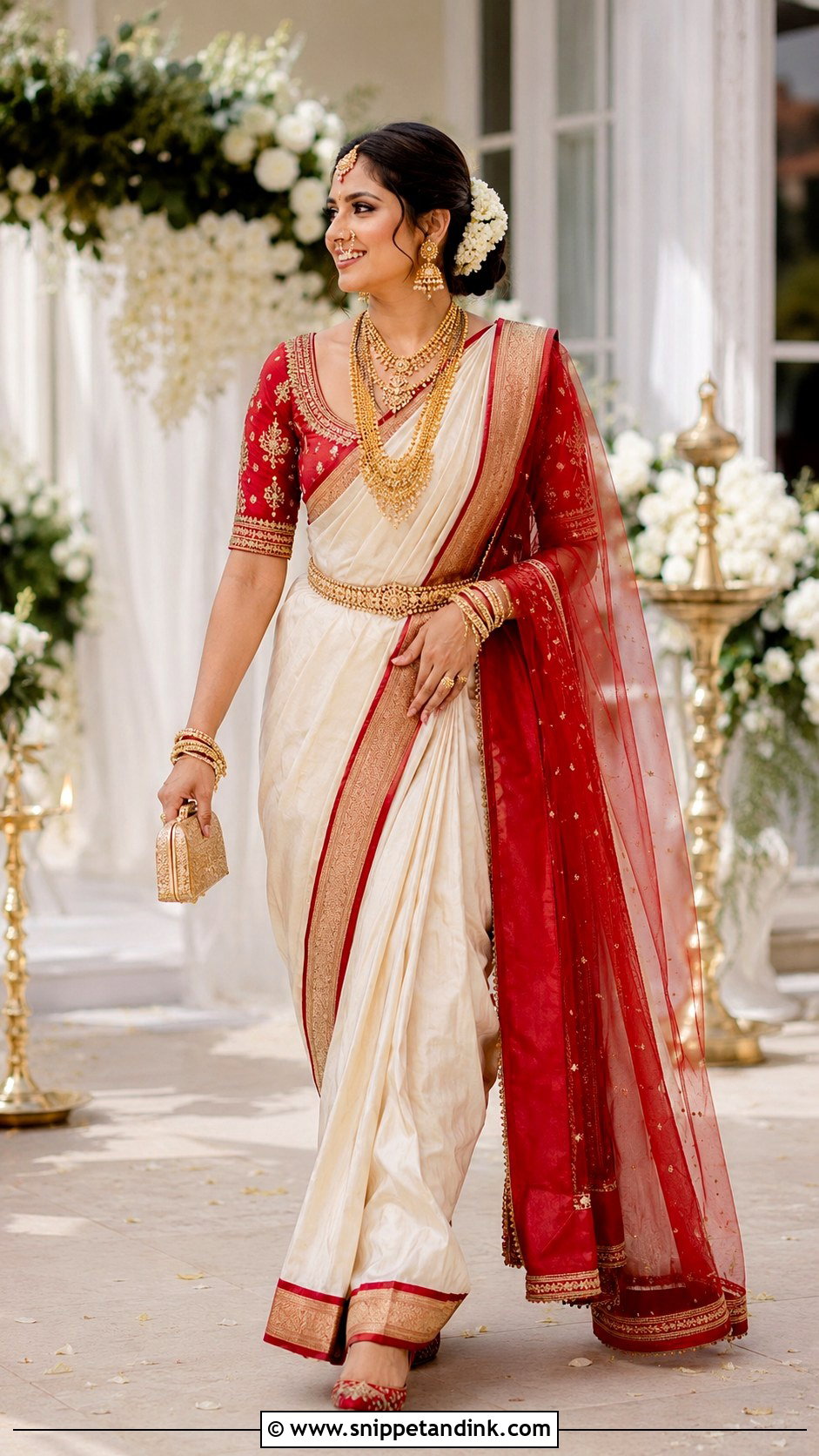
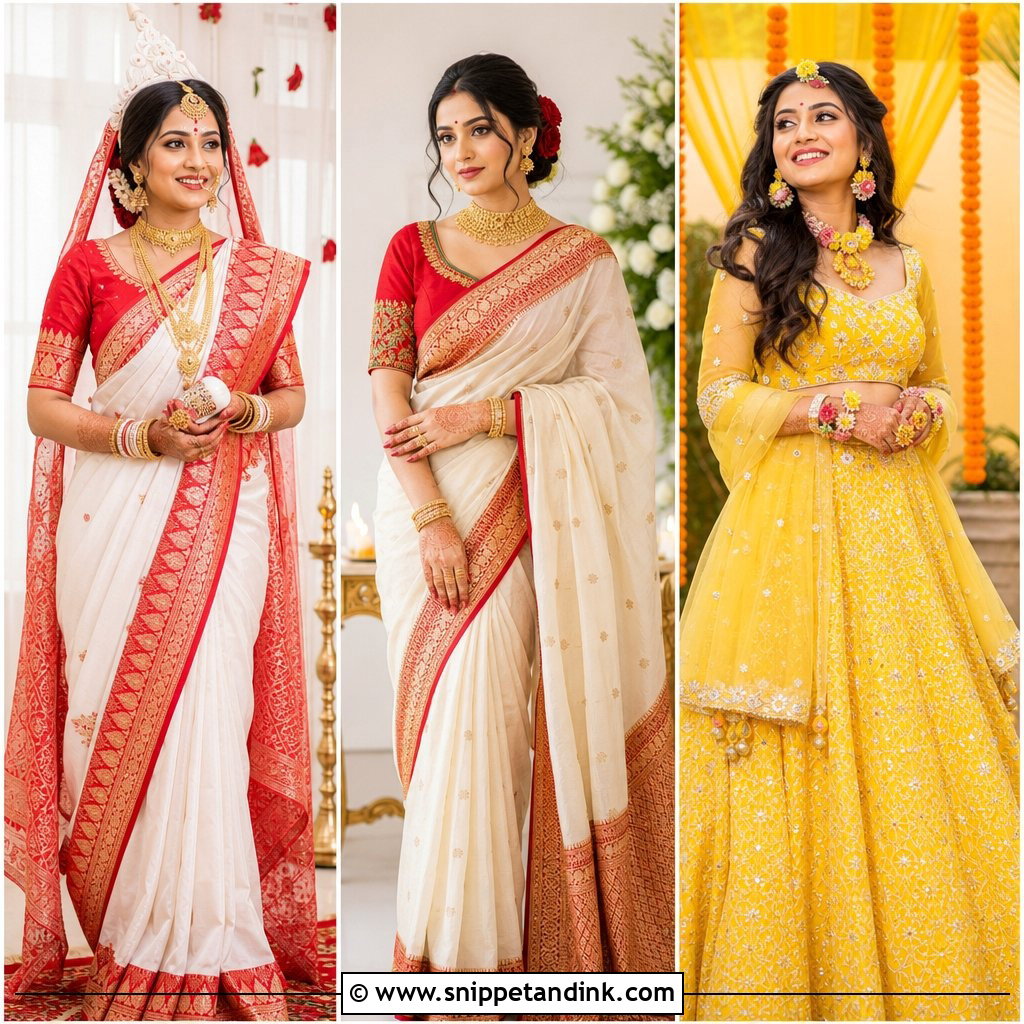
Ivory with deep red accessories softens the overall effect but still reads as bridal from across a room. Pick an ivory saree with a broad red-and-gold border and a fitted red silk blouse. A sheer red shoulder drape adds a layer without hiding the weave. The risk with ivory is that it can look flat beside heavy gold in photos, so I go generous on jewellery here: short choker, long necklace, jhumkas, nathini, bangles, waist belt and a hair ornament. Keep the bun low with white flowers so the neckline stays visible. Red lipstick, softly smoked eyes and a neat round bindi give the face enough colour. This palette shines in bright daylight ceremonies; under yellow evening lights ivory can turn creamy.
6. Yellow Silk Konkani Haldi Bride Look
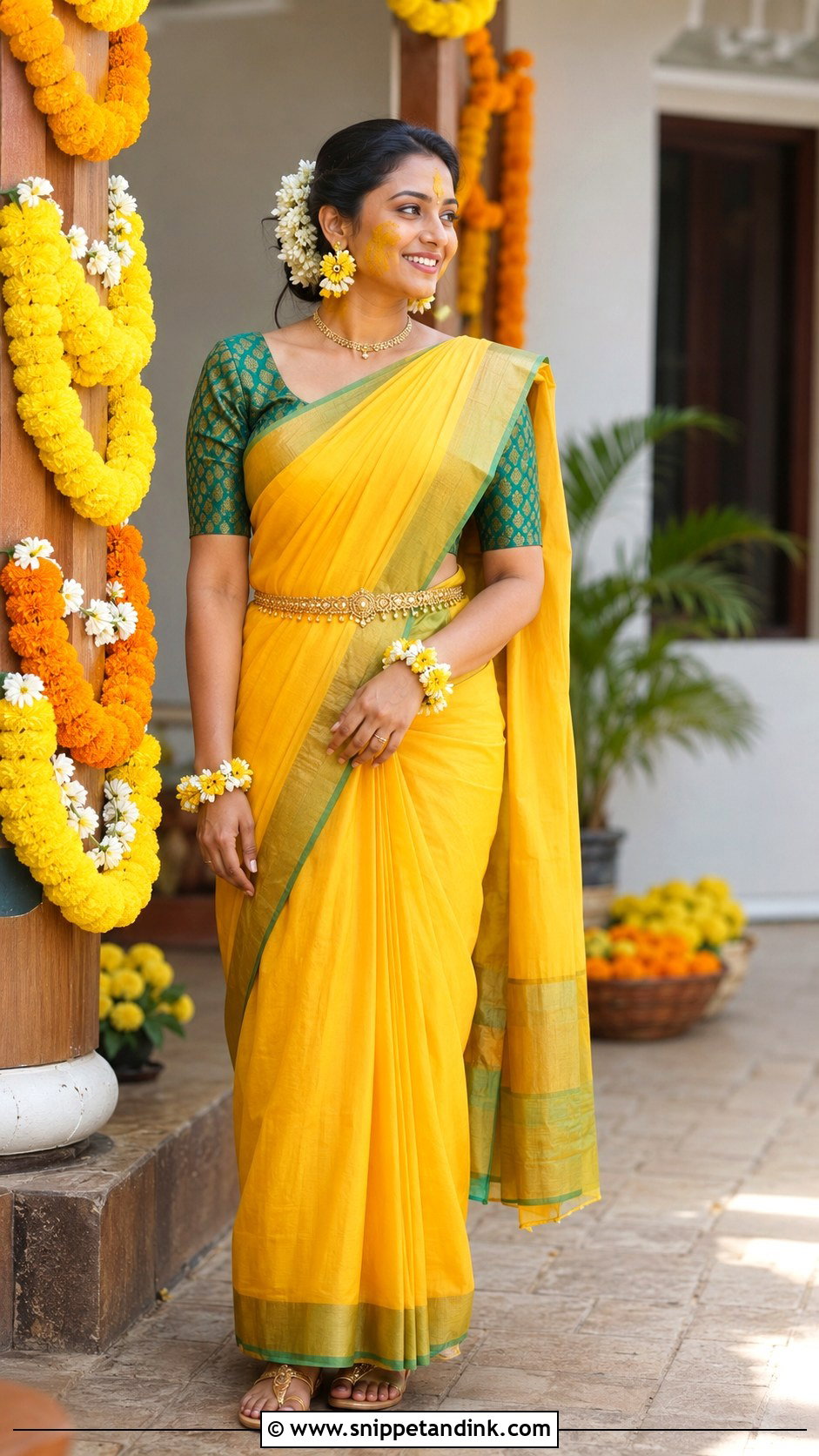
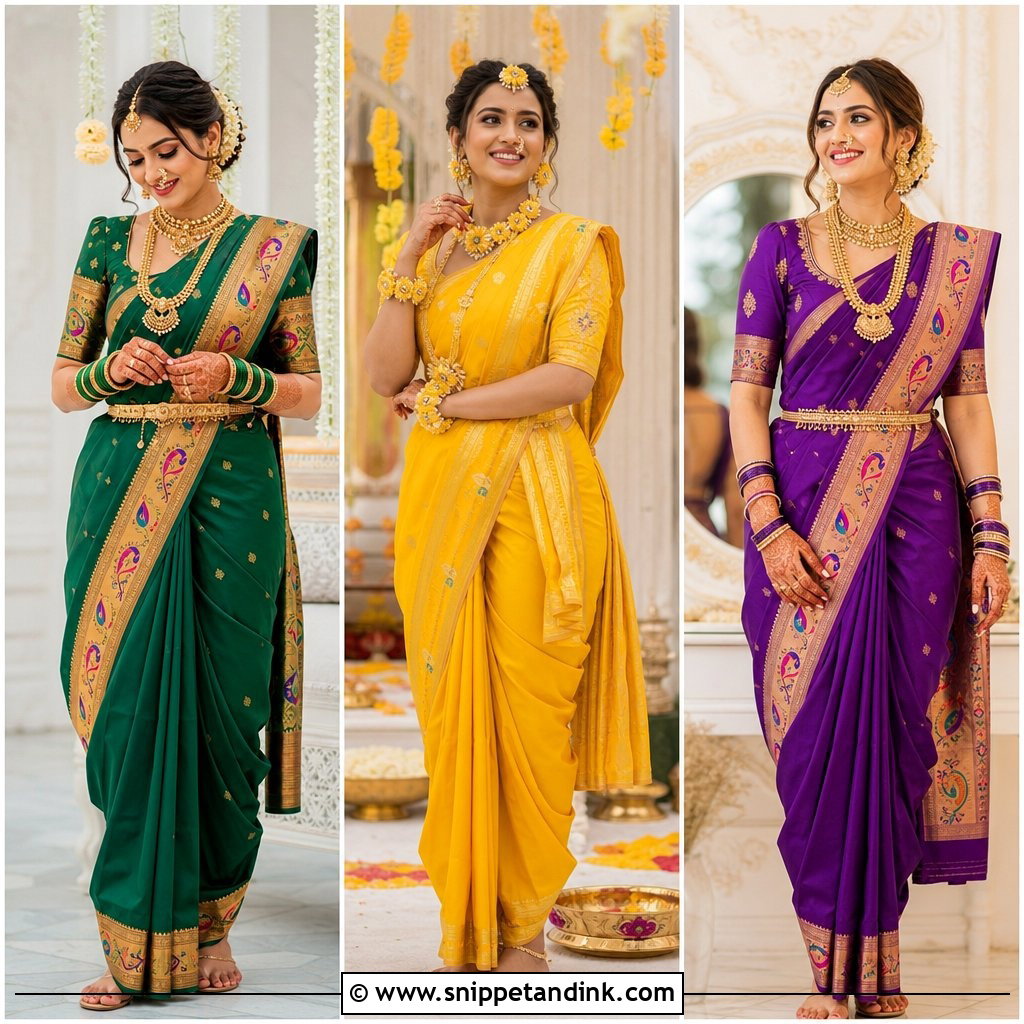
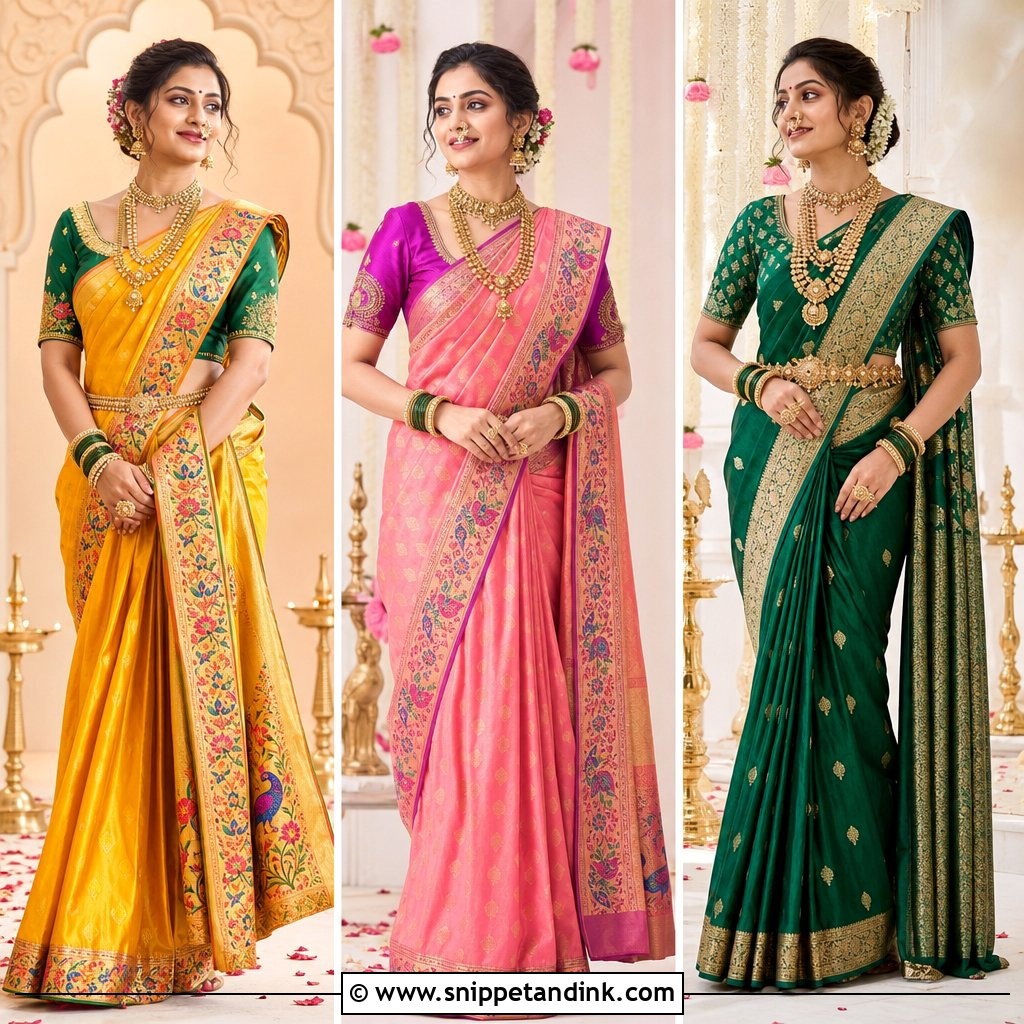
Haldi is the one event where I tell brides not to wear anything they want to keep spotless. Sunshine yellow silk suits a haldi celebration because the turmeric paste blends in rather than staining a contrast colour. Choose a lightweight saree with a green, pink or red border, a short-sleeve blouse and a simple waist belt to keep the drape in place when you’re splashed. Fresh floral jewellery, small gold earrings and thin bangles are better than real heirloom pieces near wet paste. A long braid or loose low bun with white and yellow flowers stays put. Waterproof kajal, a light base, peach blush and a tint are all the makeup this needs, plus flat gold sandals and a small floral potli.
7. Green Saree Konkani Mehndi Bride Look
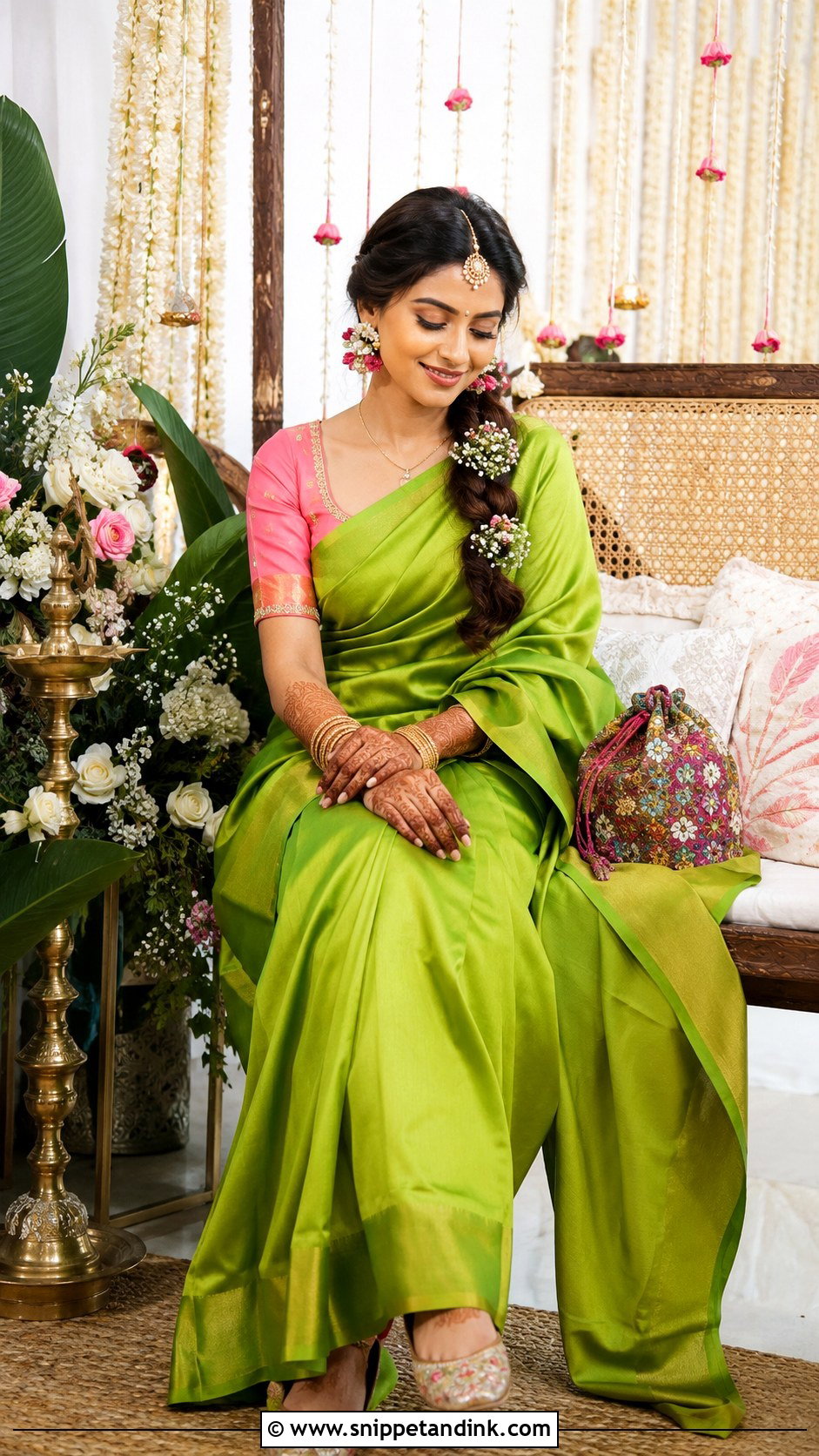
Mehndi day is about keeping your hands and arms free for hours. A light raw-silk, organza or soft Banarasi saree in parrot, bottle or emerald green is comfortable to sit in while the paste dries. Pair it with a pink or purple short-sleeve blouse so the design isn’t covered or smudged by a sleeve. Skip heavy necklaces and choose floral earrings, a small maang tikka, slim bangles you can slide on after the henna has set, and one simple necklace. A side braid threaded with tiny flowers stays out of the way. Soft pink makeup, defined eyes and a long-wearing lip stain mean you won’t need touch-ups with wet hands. Embroidered juttis and a colourful potli keep you comfortable for dancing and greeting guests.
8. Pink Silk Konkani Engagement Bride Look
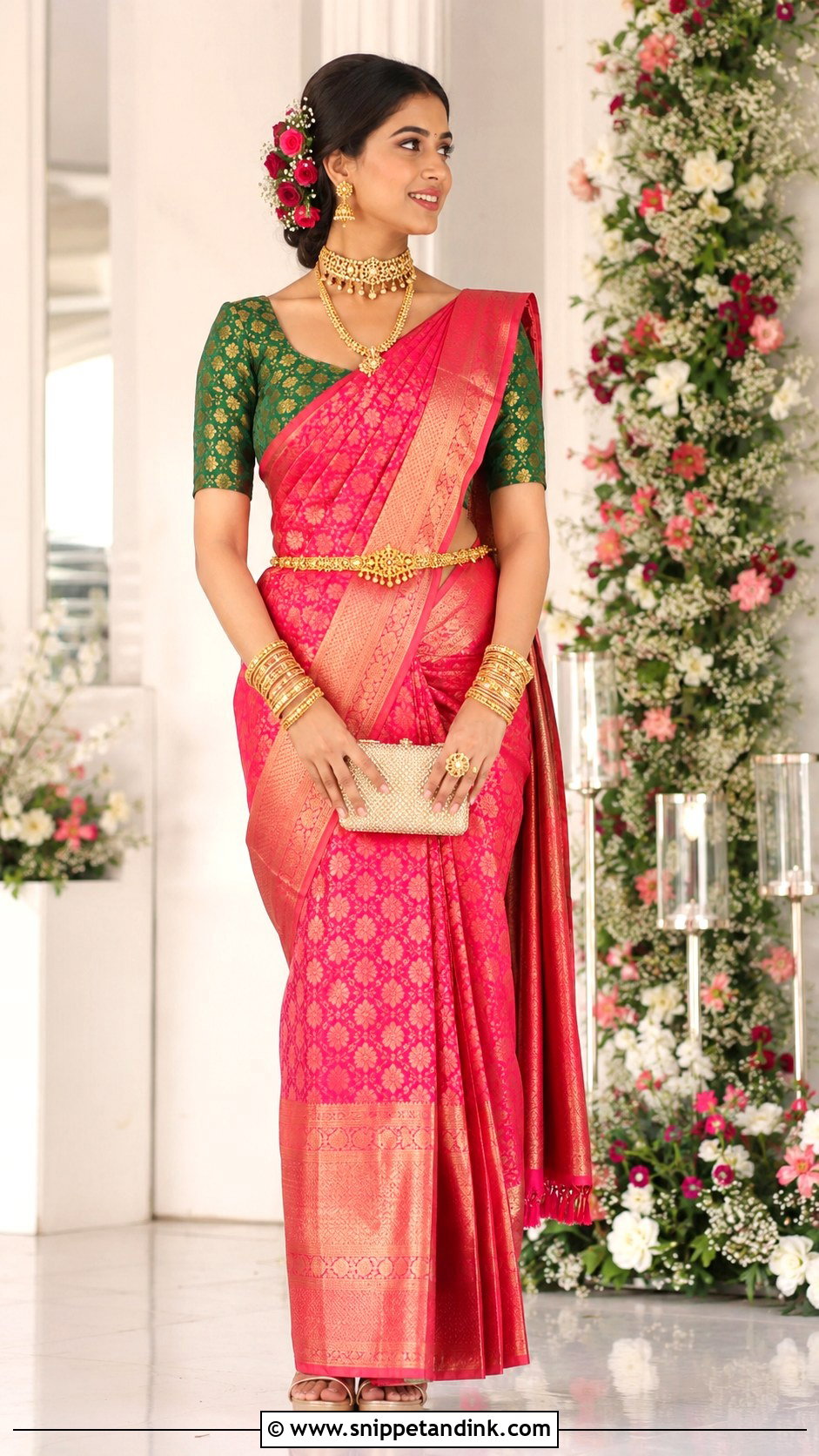
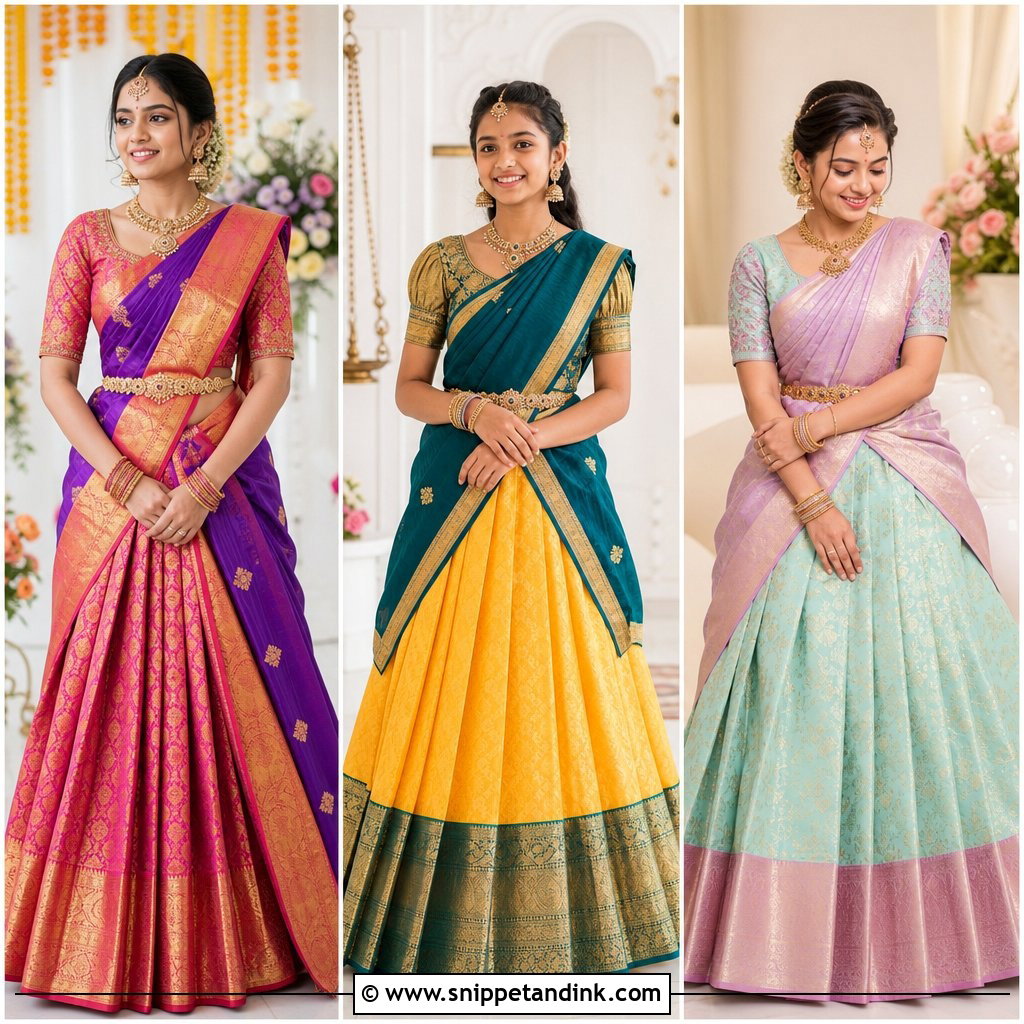
Engagement ceremonies give you more freedom than the wedding itself, and jewel-toned pink silk suits that lighter mood. Rani pink, rose or magenta with antique-gold zari pairs well with a contrasting green or wine blouse. Wear a structured choker, a medium necklace, matching earrings, bangles and a cocktail ring; the ring will be photographed up close, so make sure your nails are done. If the saree is heavily woven, a slim belt sits flatter than a wide one. Hair can go into a soft bun with roses or a sleek braid. I keep the lipstick a shade quieter than the saree so the two don’t compete. Gold platform sandals and a small beaded clutch finish it.
9. Purple Kanjeevaram Konkani Reception Look
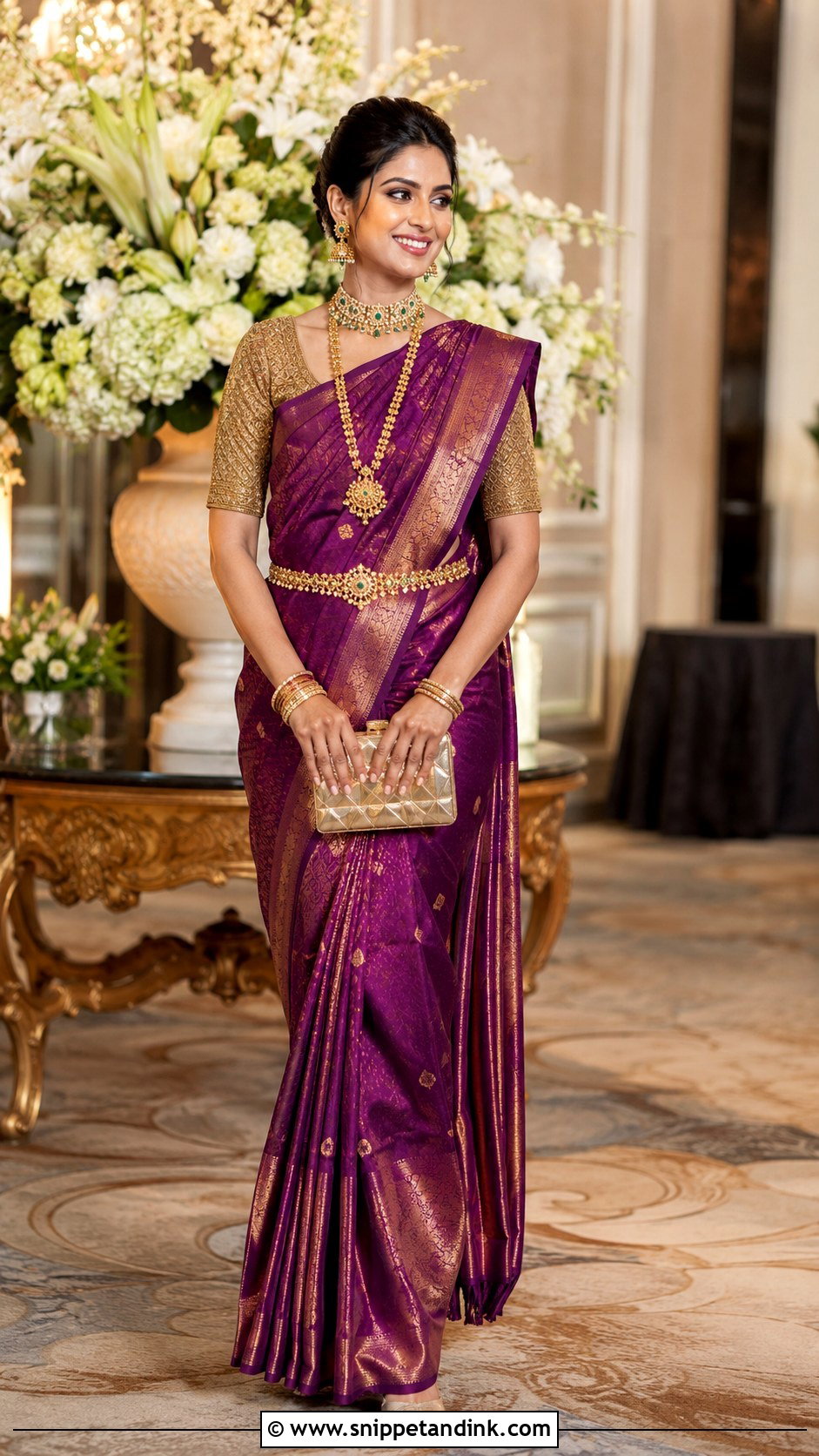
Under evening reception lights, deep purple Kanjeevaram looks almost black at the folds and glows where the zari catches the light. Aubergine, plum or royal purple with a gold border works best with an antique-gold or matching brocade blouse. Emerald accents in the necklace or earrings give the outfit contrast; I avoid adding pink stones as well, since three jewel tones start to look busy. Wear a choker, long necklace, bangles, statement earrings and a delicate waist belt. A sculpted low bun with a decorative comb keeps it formal. Bronze eyes, defined lashes, soft contour and a muted berry lip suit the colour. Finish with metallic block heels and a structured gold clutch.
10. Royal Blue Silk Konkani Reception Look
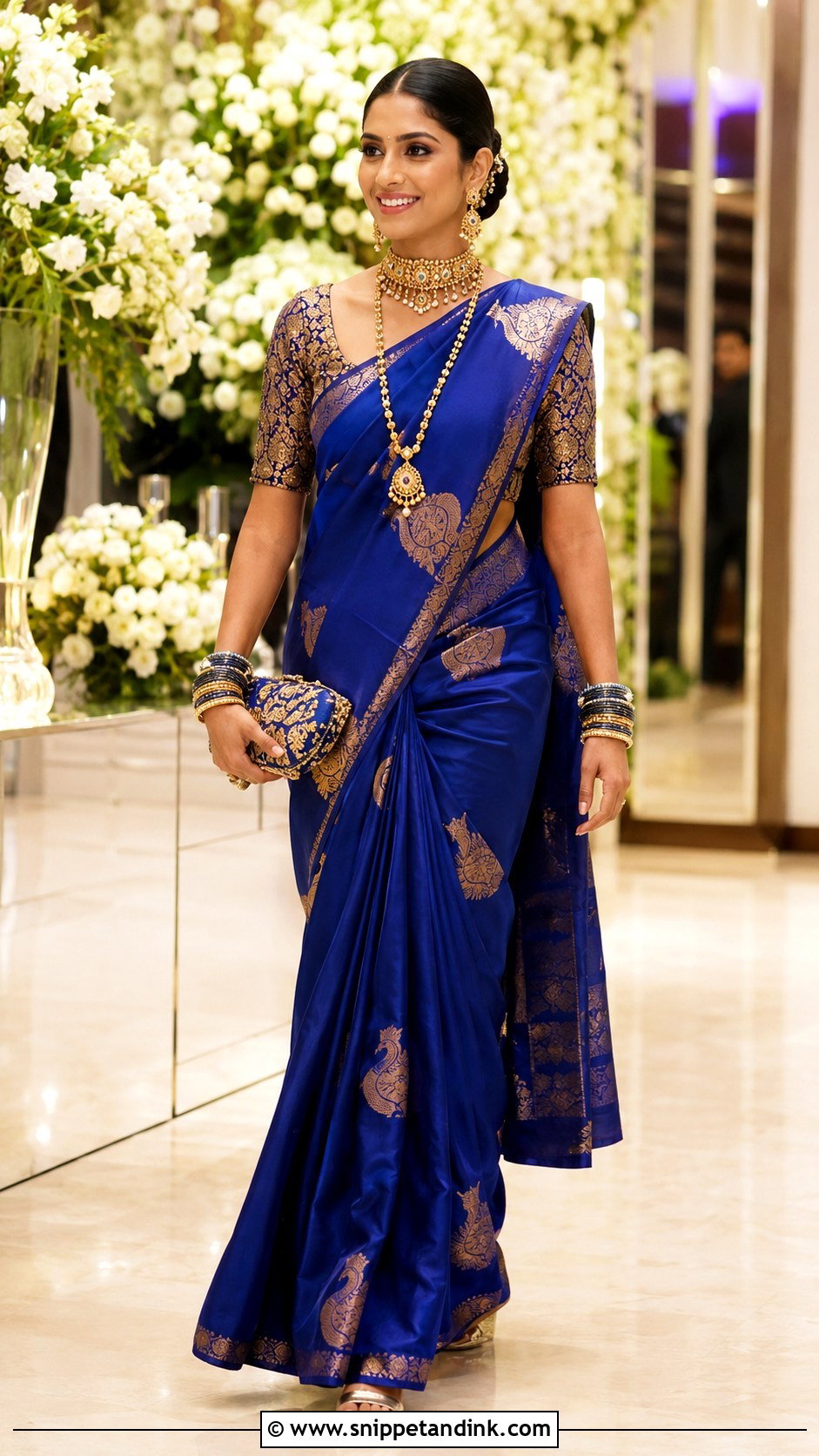
Royal blue is the colour I suggest when a bride has worn red at every earlier event and wants the reception to feel different. Choose silk with antique-gold zari, peacock motifs or a contrasting magenta border; a gold blouse, or a blue one with detailed sleeves, makes it more formal. A gemstone choker, long gold necklace, big earrings, matching bangles and a statement ring all show up well against blue. Keep the pallu clean and pinned so the blouse and jewellery stay visible. A sleek centre-parted bun or side-pinned waves both work. Bronze makeup and a deep rose lip warm up the cool fabric, and gold heels with a blue embroidered clutch tie it together.
11. Red Silk Lehenga Konkani Bride Look
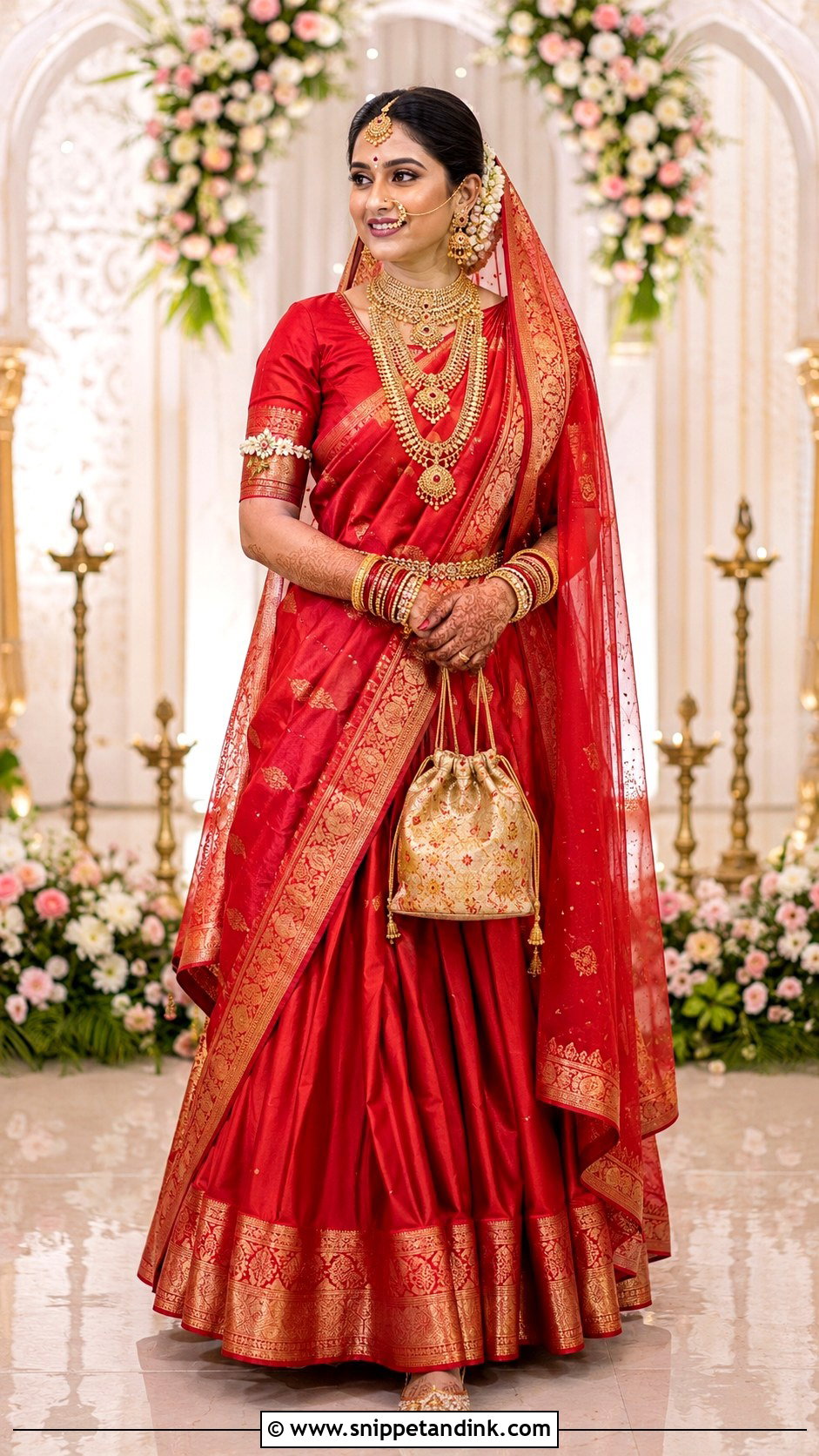
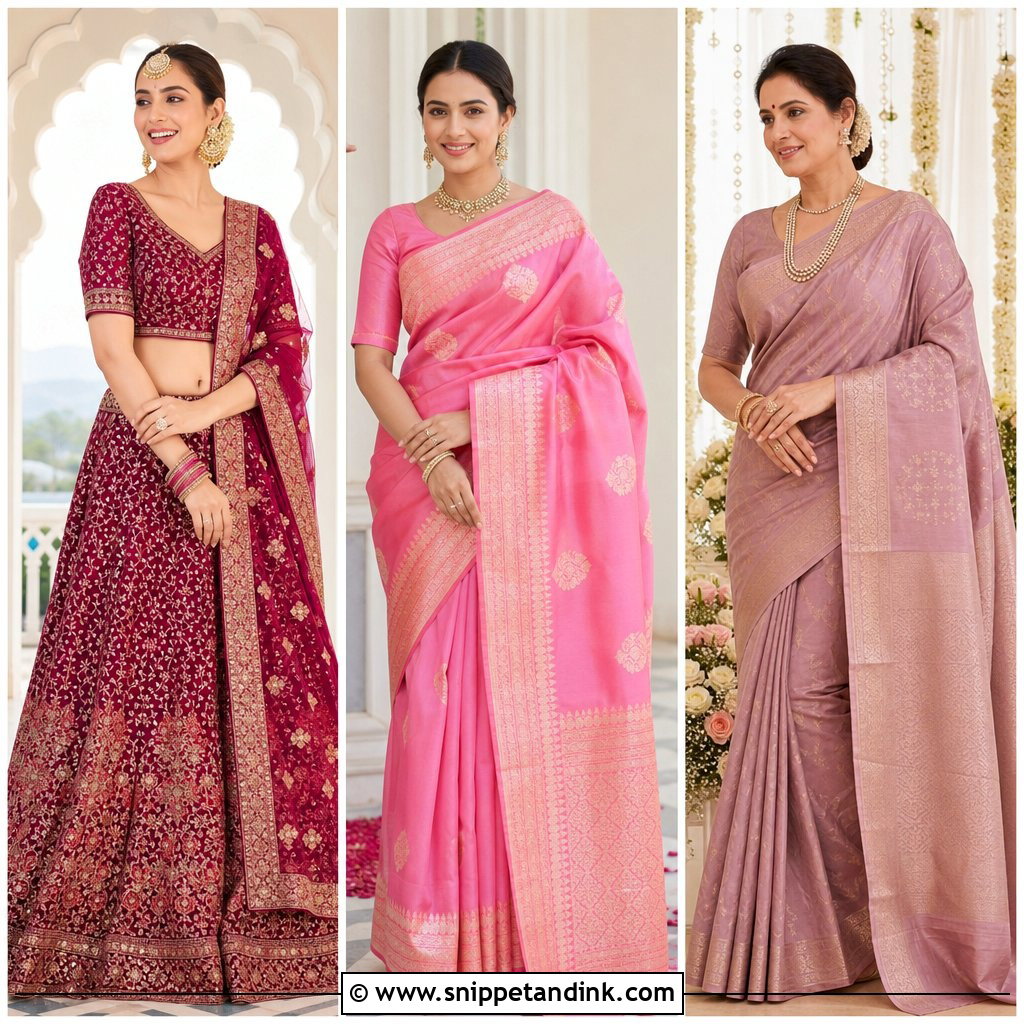
A red silk lehenga gives you the traditional colour in a silhouette that’s easier to dance in. I prefer woven gold borders over heavy surface embroidery here, because sequins and stones add weight that pulls the skirt down by the end of the night. Pair it with an elbow-sleeve blouse and a silk dupatta draped over one shoulder or lightly over the head. The Konkani character comes from the gold: nathini, traditional bangles, layered necklaces, ear cuffs and a floral armlet. A centre-parted bun with jasmine, defined eyes, red lipstick and a small bindi keep the face classic. Embroidered juttis under the long skirt and a gold potli make it practical for a ceremony, reception or multicultural wedding.
12. Paithani Saree Konkani Bride Look
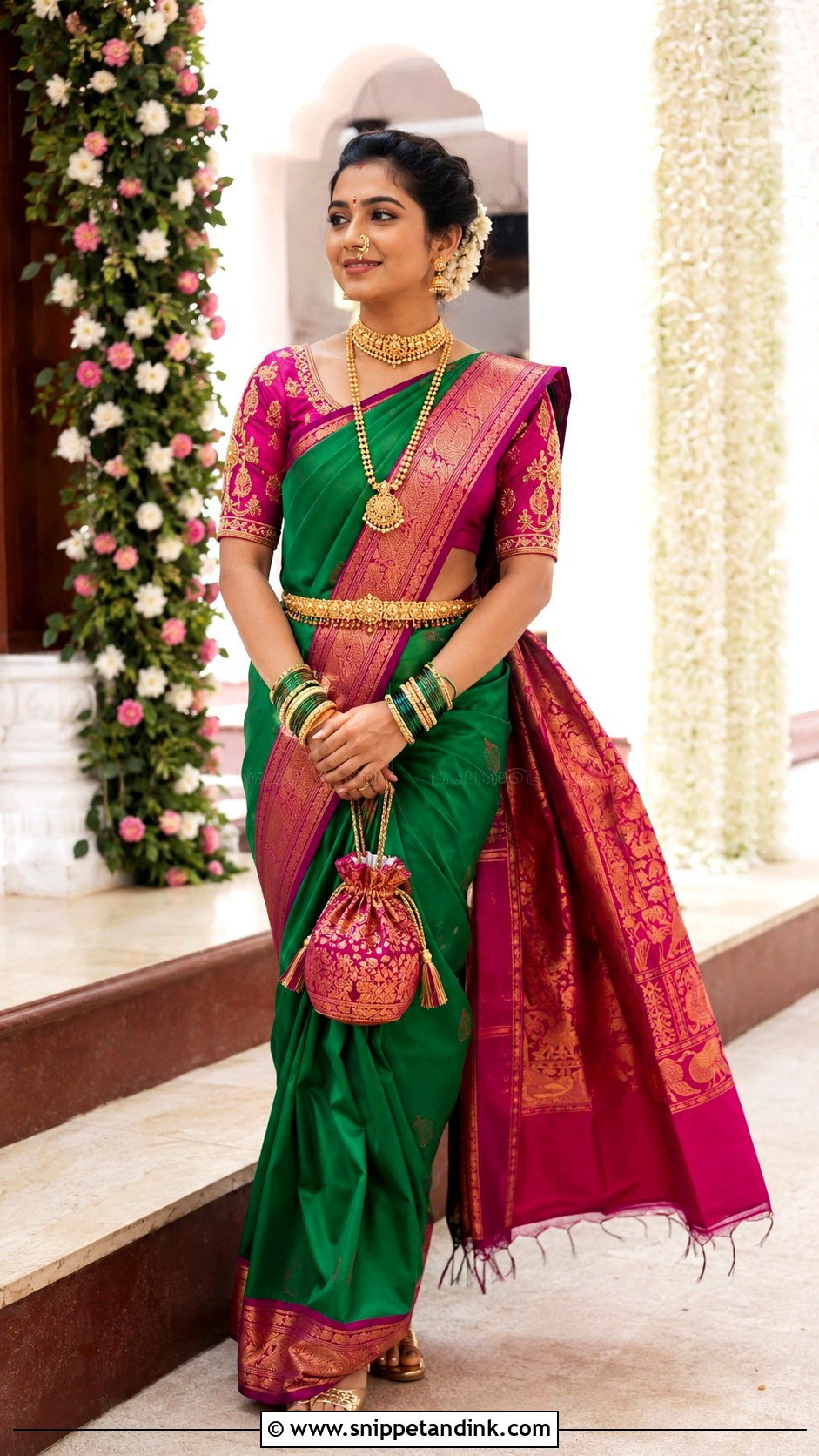
Paithani’s peacock and lotus pallu is the whole point of wearing one, so I build everything else around showing it off. In a Konkani bridal wardrobe it brings in green, magenta, purple or rust with a contrasting border. Choose a plain silk blouse in one colour pulled from the pallu. Keep the jewellery balanced: gold choker, medium necklace, nathini, earrings, green glass bangles mixed with gold and a slim waist belt. Drape the pallu open across the back rather than pleated, so the motifs are visible when you turn. A traditional bun with jasmine and one ornamental pin, a round bindi, black kajal and a berry lip complete the face, with gold sandals and a brocade potli.
13. Red Sado Konkani Catholic Bride Look
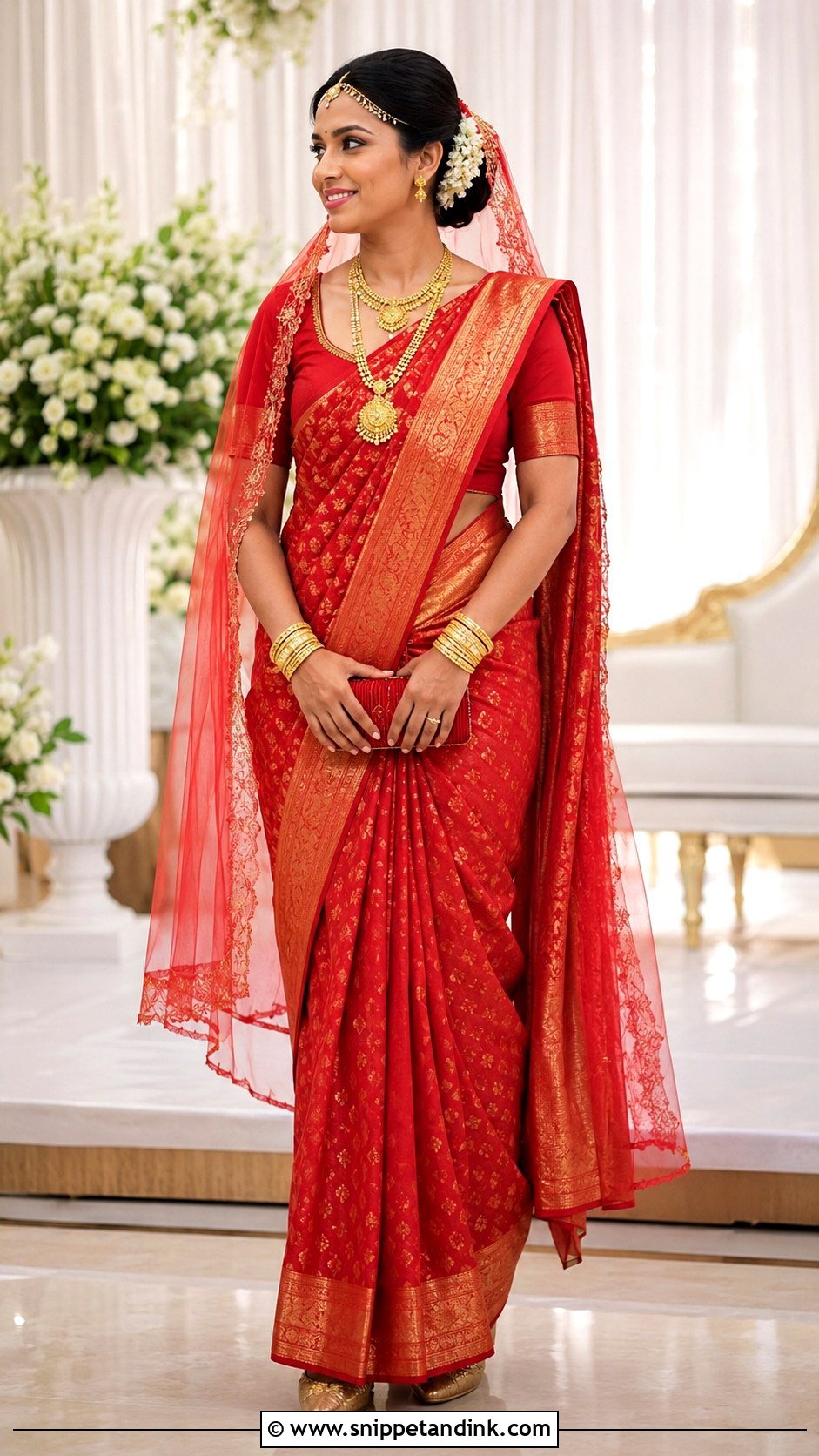
For a Konkani Catholic bride, the red sado and the bridal necklace carry real weight in Mangalorean Catholic wedding custom. It can be worn with a full-length or modest fitted blouse, depending on what the family and parish expect, so I always ask about that before the blouse is cut. Choose rich red fabric with gold detail and add a gold necklace, earrings, bangles and a delicate head ornament. A neat bun, soft white flowers and a light red veil frame the face without crowding it. Keep the makeup classic: defined eyes and a red lip. Closed-toe gold shoes are more comfortable than open sandals on church floors, and a small red clutch finishes the outfit.
14. White Gown Konkani Catholic Bride Look
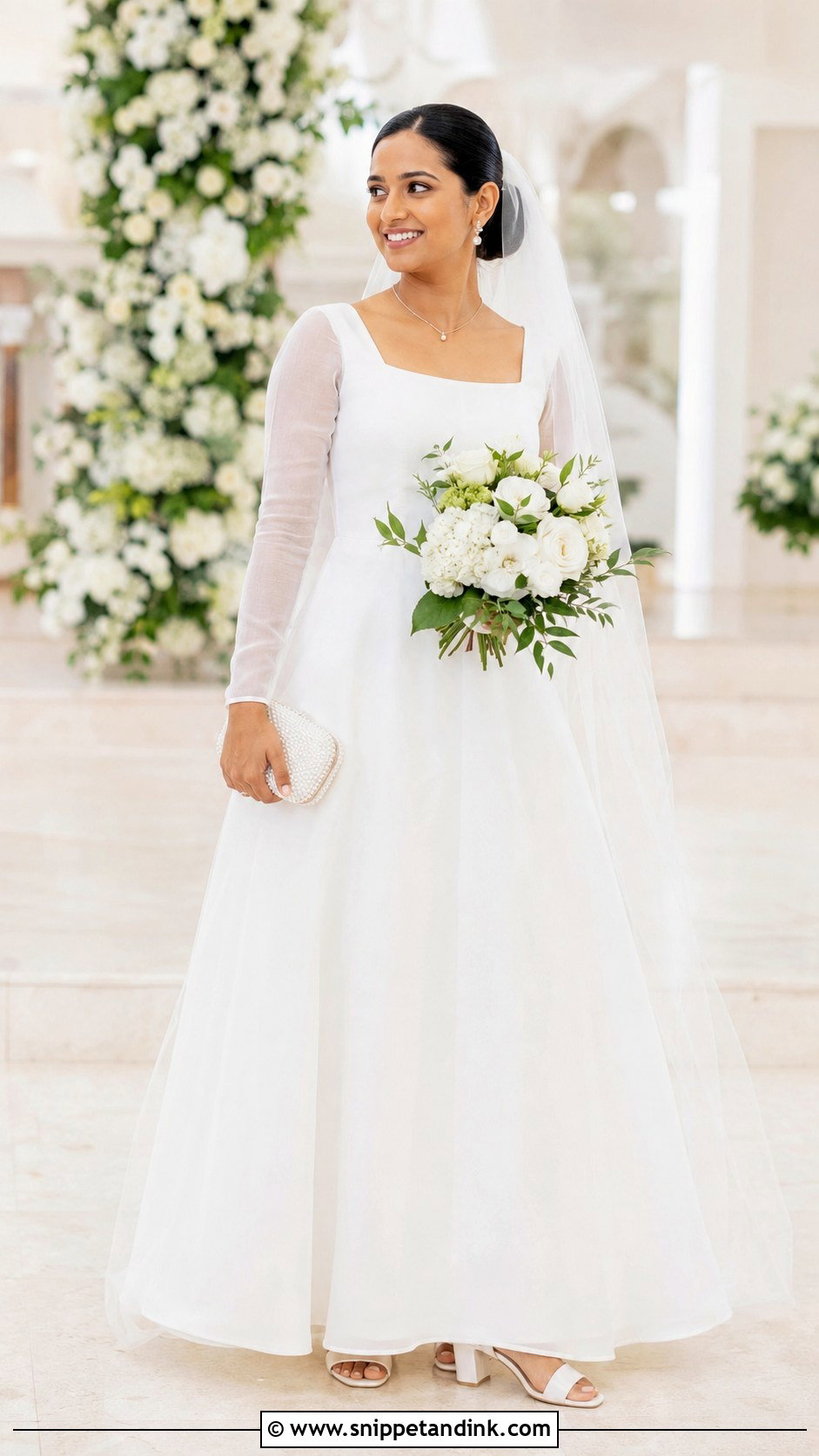
Many Mangalorean Catholic couples now choose a white gown for the church ceremony and bring in Konkani touches through jewellery or a change of outfit later. Pick an A-line, ball gown or fitted shape with sleeves you can lift your arms in, and a train short enough to manage on the church steps. Add a lightweight veil and pearl earrings, or swap in a family ornament if it sits well against the neckline. The thing I check at fittings is how the gown handles kneeling; a stiff bodice can dig in during a long Mass. A structured bouquet of white flowers and greenery suits a coastal wedding. Wear a smooth low bun, soft curls or a half-up style under the veil, natural makeup, white block heels and a small pearl clutch.
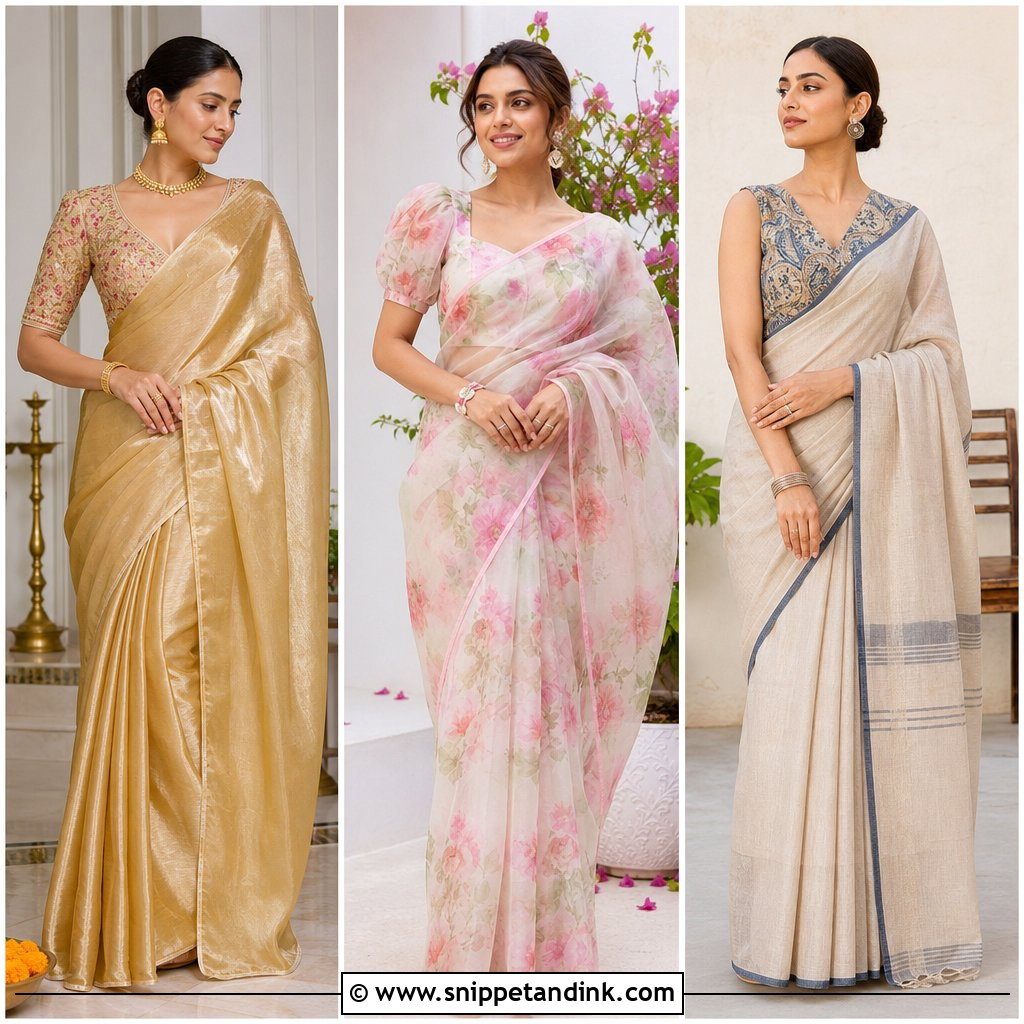
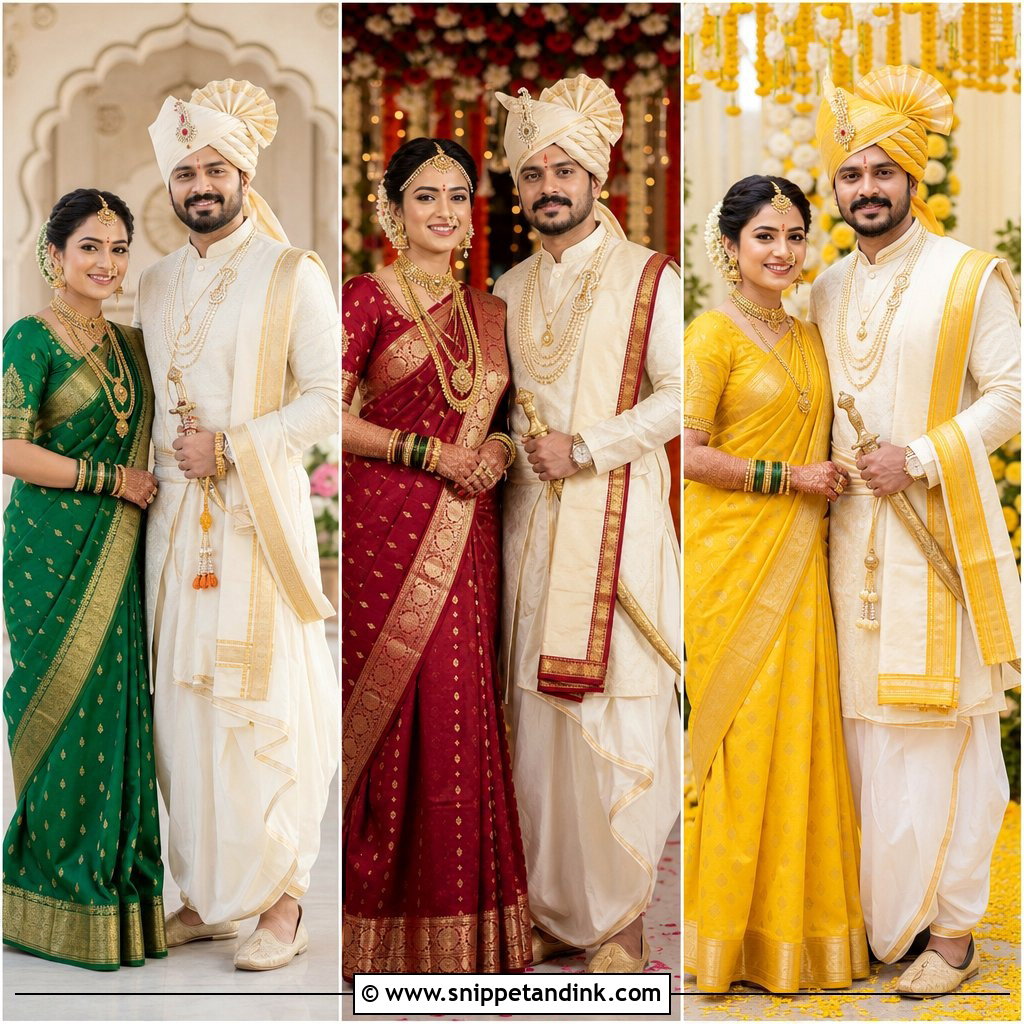
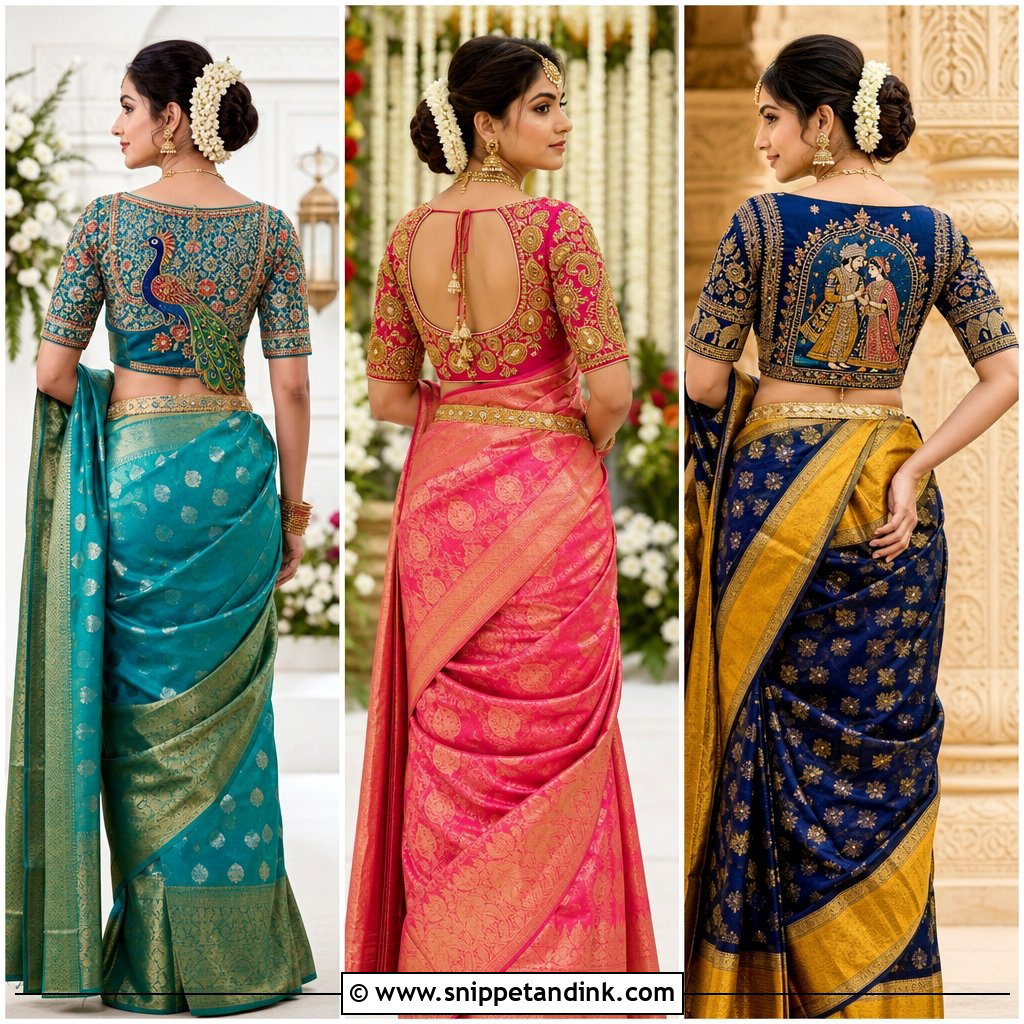
15. Kirgi Baju Konkani Bride Look
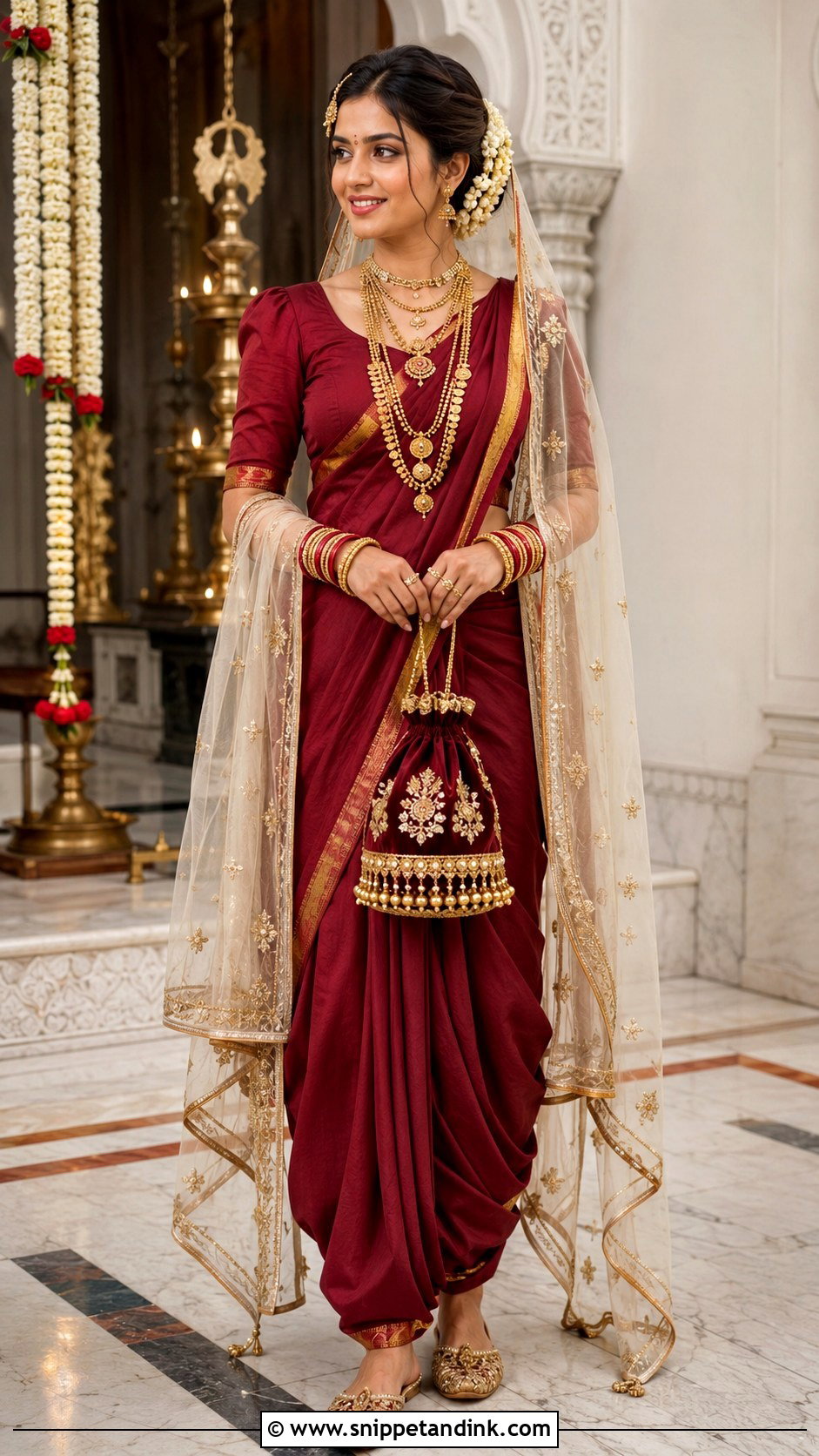
The kirgi and baju is an older form of Konkani dress: the kirgi wraps the lower body and the baju gives a covered, structured top. How it’s cut and worn varies a lot between communities, so treat any picture as a starting point rather than a template. I’d only suggest this look if someone in your family or community knows how to tie it; a local draper with experience in the style is the next best option. Red, maroon or jewel-toned fabric suits it. Add traditional gold earrings, layered necklaces, bangles and a carefully arranged veil. A centre-parted bun with flowers keeps the head neat, with subtle makeup, a small bindi if appropriate, embroidered flats and a potli in matching fabric.
16. Orange Silk Konkani Bride Look
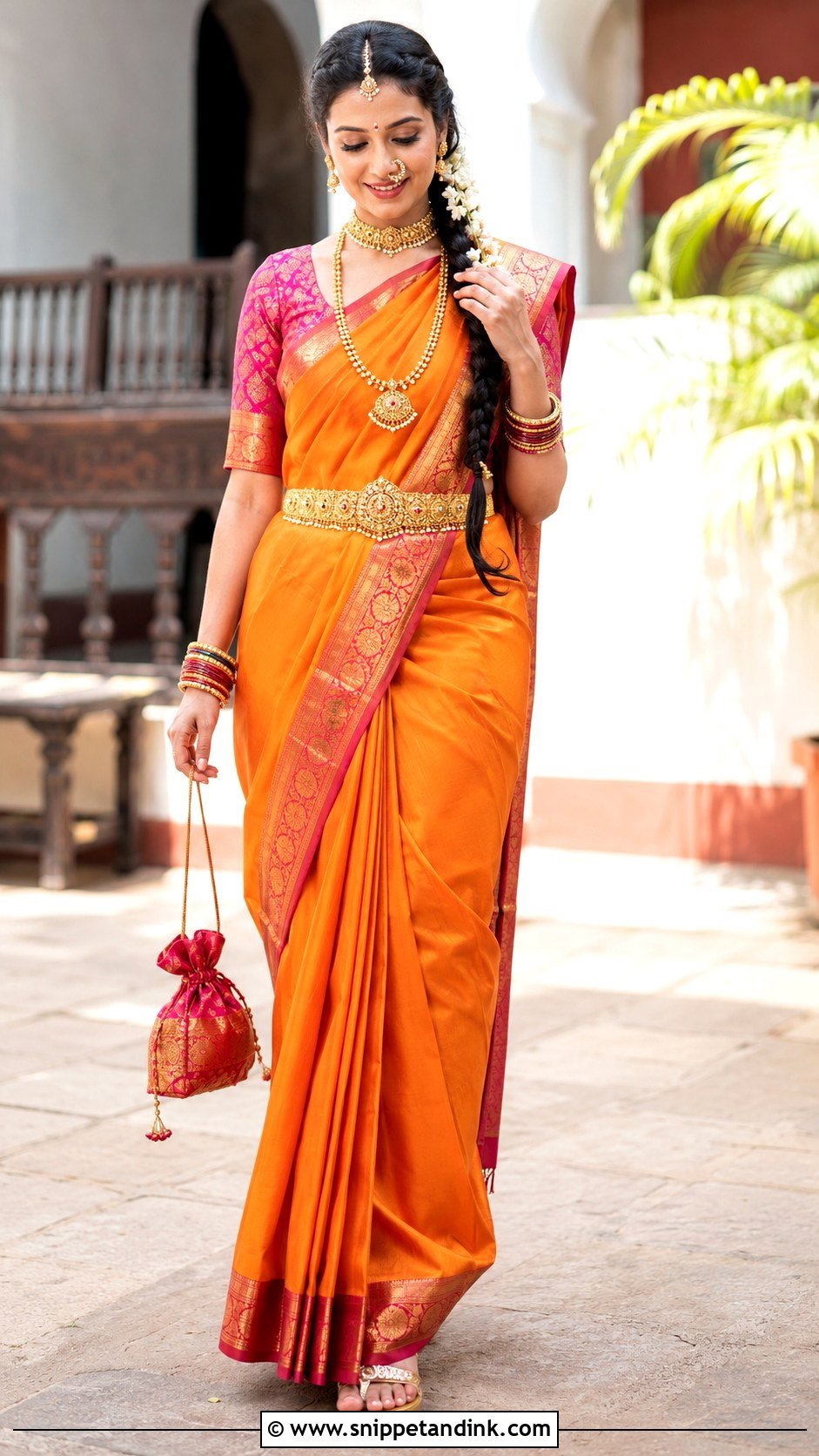
Orange is a morning colour. In early ceremony light, saffron, burnt orange or coral silk looks warm and bright, while under evening bulbs it can go muddy. Pair it with a magenta, green or gold border; a magenta blouse adds definition, an orange one keeps it calm. Style it with a gold choker, long necklace, nathini, earrings, stacked bangles and a waist belt. Only add a white aadvarl if it fits your family’s custom and drape. A long braid with gold ornaments and jasmine is a graceful change from the usual bun, and it shows off the back of the blouse. Copper eyeshadow, peach blush and a brick-red lip suit the colour, with gold wedges and a magenta silk potli.
17. Pastel Silk Konkani Bride Look
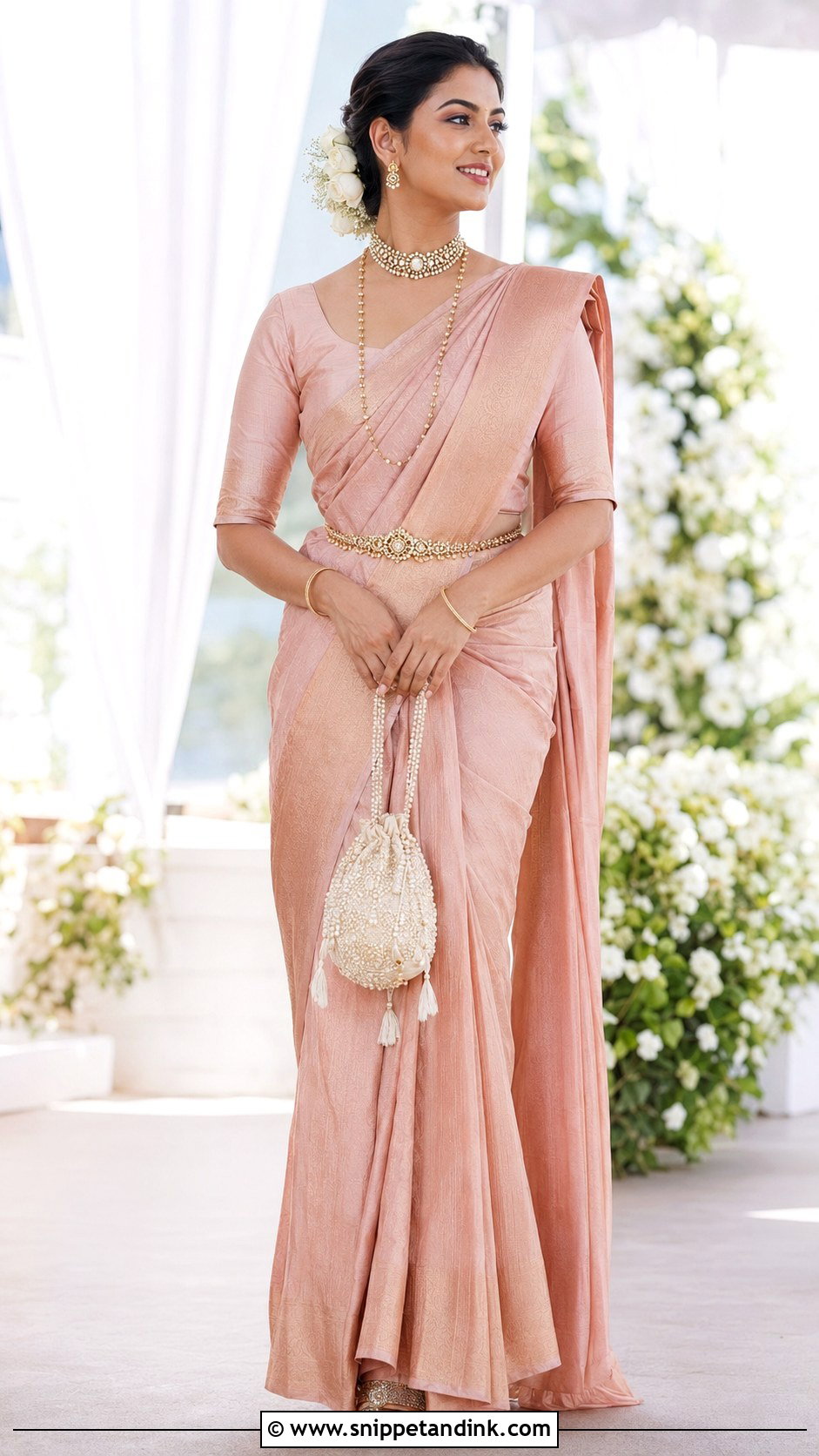
Pastels only look bridal if the fabric has real weight and the zari is substantial; a thin pastel silk can read as a guest outfit. Choose blush pink, pistachio, powder blue or lavender with detailed gold work, and a tonal blouse with elbow sleeves and a supportive neckline. A pearl-and-gold choker with a longer, finer necklace, medium earrings, slim bangles and a refined waist belt are enough. Don’t add more than one large piece; the lighter palette gets lost under heavy gold. A low textured bun with white roses gives a modern finish. Luminous makeup, softly defined eyes and a pink-nude lip, metallic sandals and a pearl potli suit an engagement, intimate ceremony or daytime reception.
18. Handloom Silk Konkani Bride Look
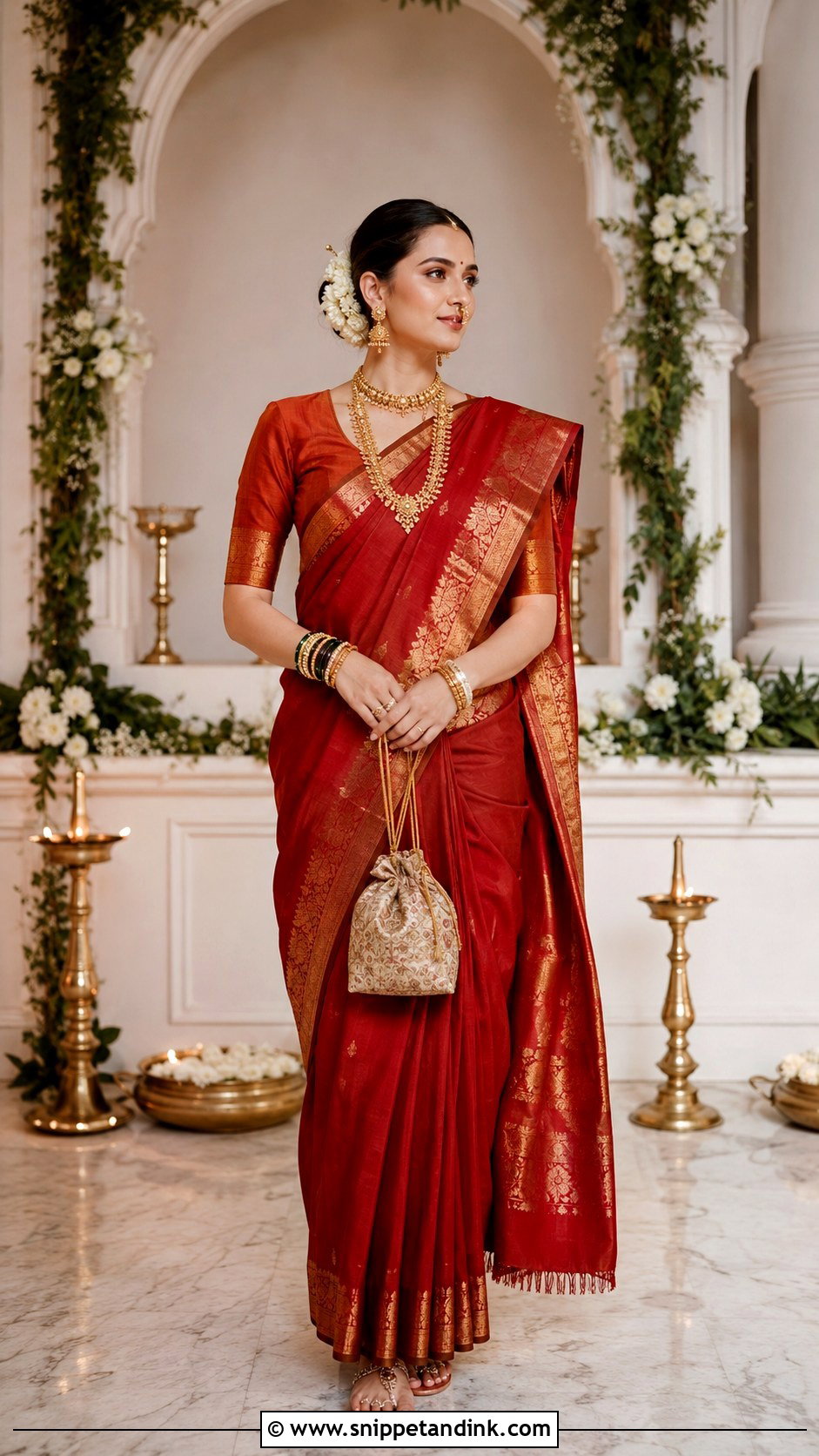
A handloom silk saree worn with heirloom jewellery is the look I find most moving to dress, because every piece has a family story behind it. Pick a red, rust, green or maroon weave with a strong border and visible texture, and keep the blouse simple in raw silk so older necklaces and bangles stand out. Mix one treasured family piece with a nathini, gold earrings and stacked bangles rather than buying a full matching set. Old gold often has worn clasps, so have a jeweller check and tighten them a few weeks ahead. A traditional bun with jasmine and an ambada aati, kajal, a red bindi, warm blush and classic lipstick finish it, with comfortable sandals and a vintage brocade potli.
19. Pre-Draped Saree Konkani Bride Look
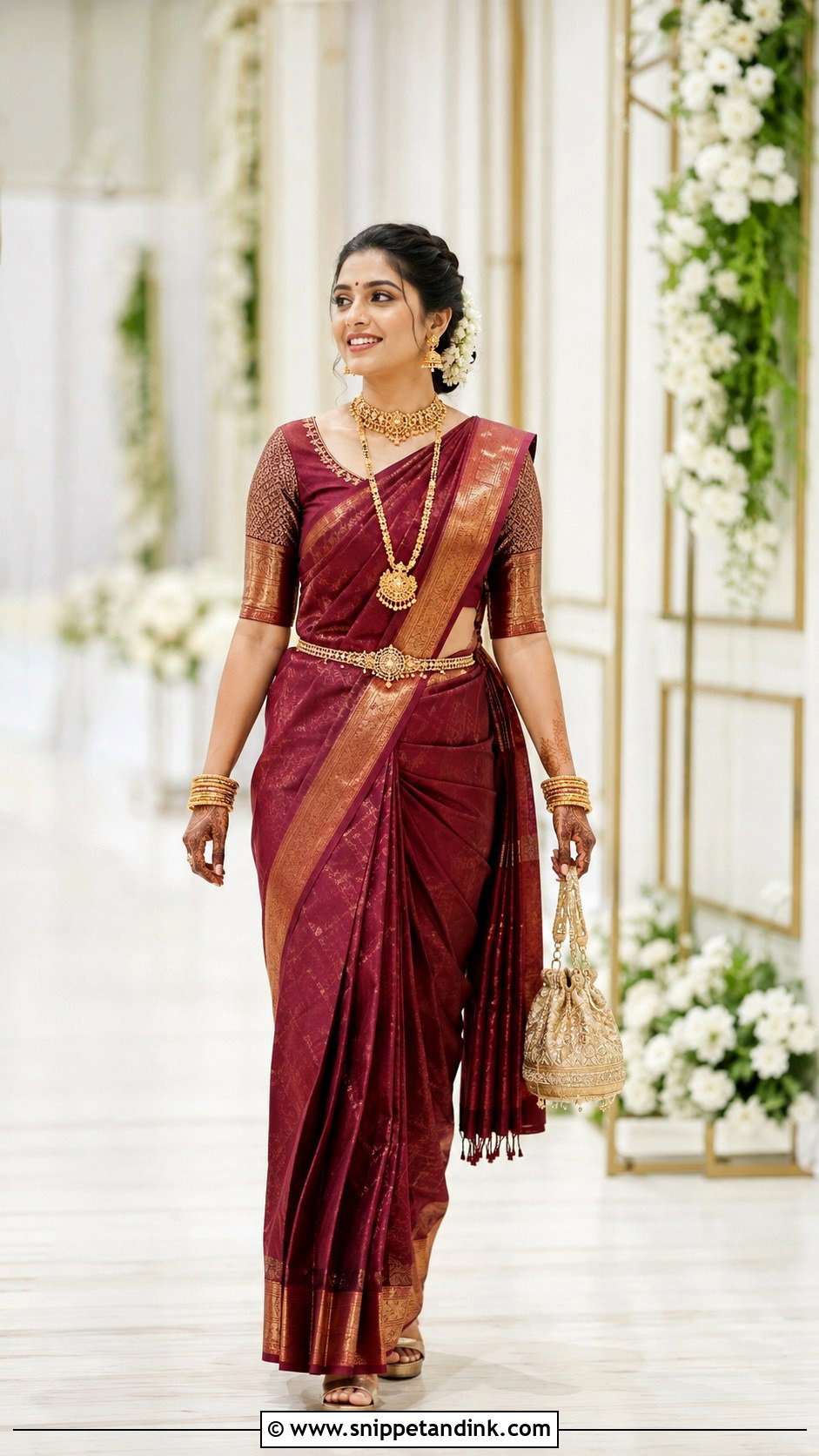
A pre-draped saree solves the biggest worry I hear from brides who’ve never worn silk for a full day: the drape slipping. Choose red, wine, green or navy with neat stitched pleats and a traditional zari border. The blouse needs elbow sleeves, a modest back and enough structure to carry heavy jewellery. Add a gold choker, long necklace, statement earrings, bangles and a slim belt placed right over the waist seam to hide it. A smooth low bun with fresh flowers keeps the modern drape tied to Konkani styling. Keep the makeup classic, wear cushioned gold heels and carry a structured potli. Check every hook and hidden fastening before you leave the room.
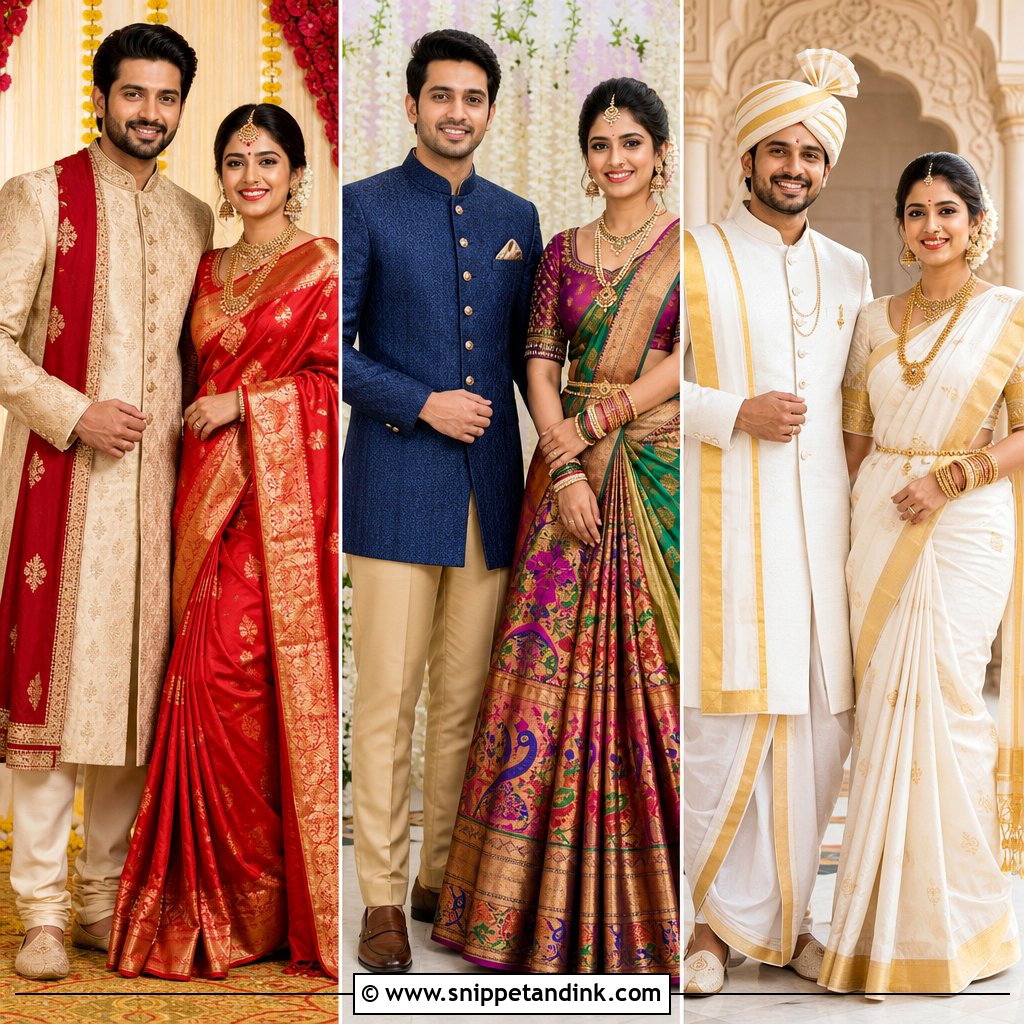
20. Silk Lehenga With Konkani Jewelry
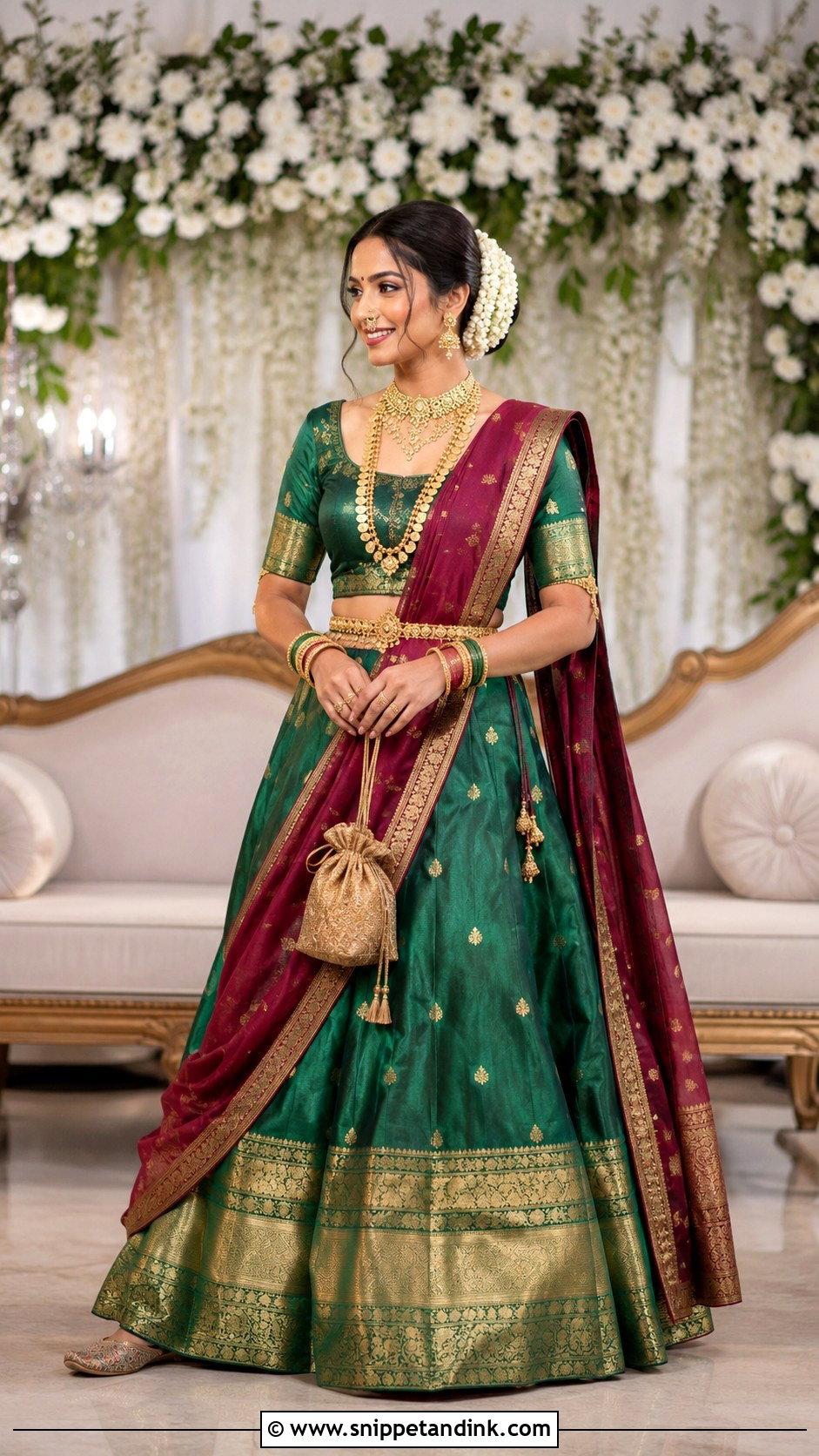
Pairing a jewel-toned silk lehenga with traditional Konkani gold is a good compromise when one side of the family wants a lehenga and the other wants recognisable Konkani jewellery. Green, maroon, purple or red with woven gold borders looks formal without feeling like a costume. Wear a fitted silk blouse and drape a contrasting dupatta over one shoulder so the necklaces stay visible. Then layer in the nathini, coin necklace, choker, ear cuffs, tode-style bangles, armlet and waist belt. A jasmine-covered bun finishes it traditionally. Defined kajal, warm cheeks, a bindi and a berry or red lip, plus embroidered flats and a small gold potli, suit a reception, sangeet or blended-culture wedding.
Gold, Jasmine and the Hot Coastal Afternoon
Coastal weddings are humid, and that changes how both the jewellery and the flowers behave. Most of my day-of fixes on Konkani brides come down to three things: a nathini that won’t stay put, jasmine that browns before the photos, and gold that feels twice as heavy by lunch.
The nathini and heavy earrings
If your nose isn’t pierced, ask the jeweller for a clip or press-fit version and wear it for an hour at the trial. Traditional nathinis are often secured with a fine chain hooked into the hair above the ear, which takes the weight off the nose. Do the same for heavy jhumkas: a sahara chain pinned into the bun stops the earlobes from stretching through a long ceremony.
Keeping the jasmine fresh
Jasmine buds open and start to brown within a few hours in heat. Order strands as tight buds, keep them wrapped in a damp cloth in the fridge, and have them pinned in last, after makeup. A second set held back by a relative for the reception or the evening photographs is worth the small extra cost.
After the wedding
Air the silk saree in shade for a day before folding, then wrap it in plain cotton or muslin, never plastic, which traps moisture and dulls zari. Refold it along new lines every few months so the creases don’t split the silk. Wipe gold pieces with a soft dry cloth and store each one separately so the filigree doesn’t catch.
Ask the Women Who Wore It Before You
The bridal outfit that feels best on the day is the one that honours your family’s customs without making you uncomfortable through hours of ritual. Before you settle on a saree, aadvarl drape, sado, gown or lehenga, talk to your mother, grandmothers and aunts about the colours, ornaments and draping customs that matter to them. They’ll often remember details no photo shows. Then book a full trial with the blouse, jewellery, hair, shoes and makeup together, and wear it for at least an hour. That’s when a pinching blouse or an earring that’s too heavy shows up, early enough to fix.
You'll Like These Ideas:





Leave a Reply