
A Marathi bride is recognisable from across a hall: the silk, the nath, the pearl mundavalya on the forehead, green glass bangles, a chandrakor bindi and a bun ringed in jasmine. The looks below cover traditional Nauvari sarees, Paithani weaves, Peshwai styling and a few modern combinations. What I balance most carefully is jewelry against weave. A heavily woven Paithani needs the necklaces kept in check, while a plainer silk can carry bolder ornaments and a contrasting shela. Each look can be adjusted for the bride’s build, the venue and her family’s customs.

Stitched or Hand-Draped Nauvari?
A traditional Nauvari is nine yards of silk draped in the kashta style, with the back pleats tucked so the saree forms a trouser-like shape. That’s why brides can sit cross-legged and step around the sacred fire in it. Draping it by hand takes skill and time, and the result is the truest line, with crisp pleats and a border that falls exactly where you want it.
Ready-stitched Nauvaris are pre-pleated and fastened with hooks or a drawstring, and they go on in a few minutes. They’re kinder for a bride who’ll change several times, or for anyone nervous about a drape coming loose. The trade-off is fit: a stitched piece made to standard sizes rarely sits as cleanly as one draped on your own body, and you can’t stitch a precious Paithani without cutting into it.
If you’re hiring a draper
- Book a practice drape with the actual saree and blouse, not a stand-in.
- Wear the kamarband and footwear during the practice; both change where the hem falls.
- Squat, sit cross-legged and walk a full circle before the draper leaves.
- Ask how many pins they use and where, so your helper can fix a loose pleat later.
1. Green Paithani Nauvari Marathi Bride Look
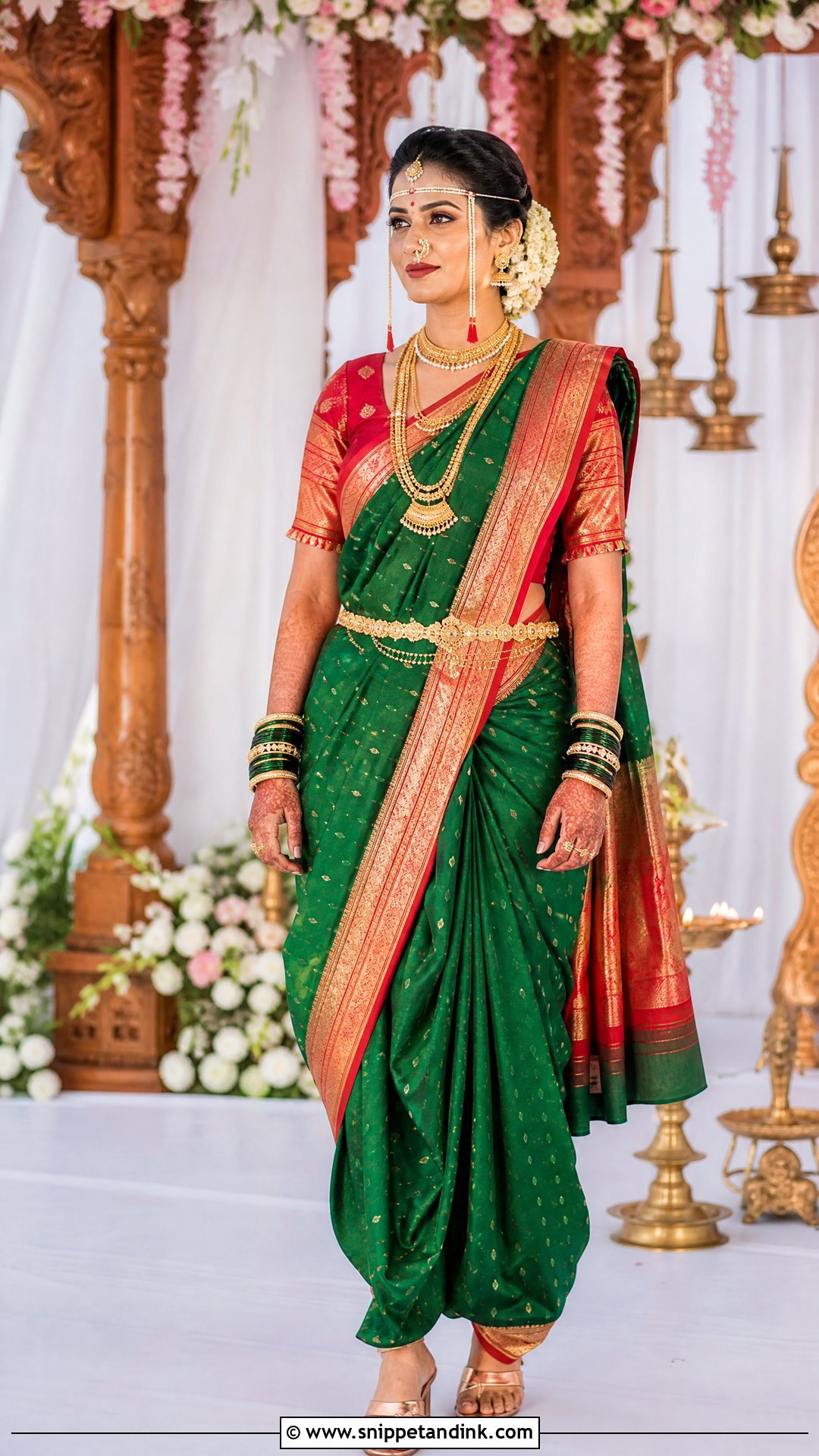
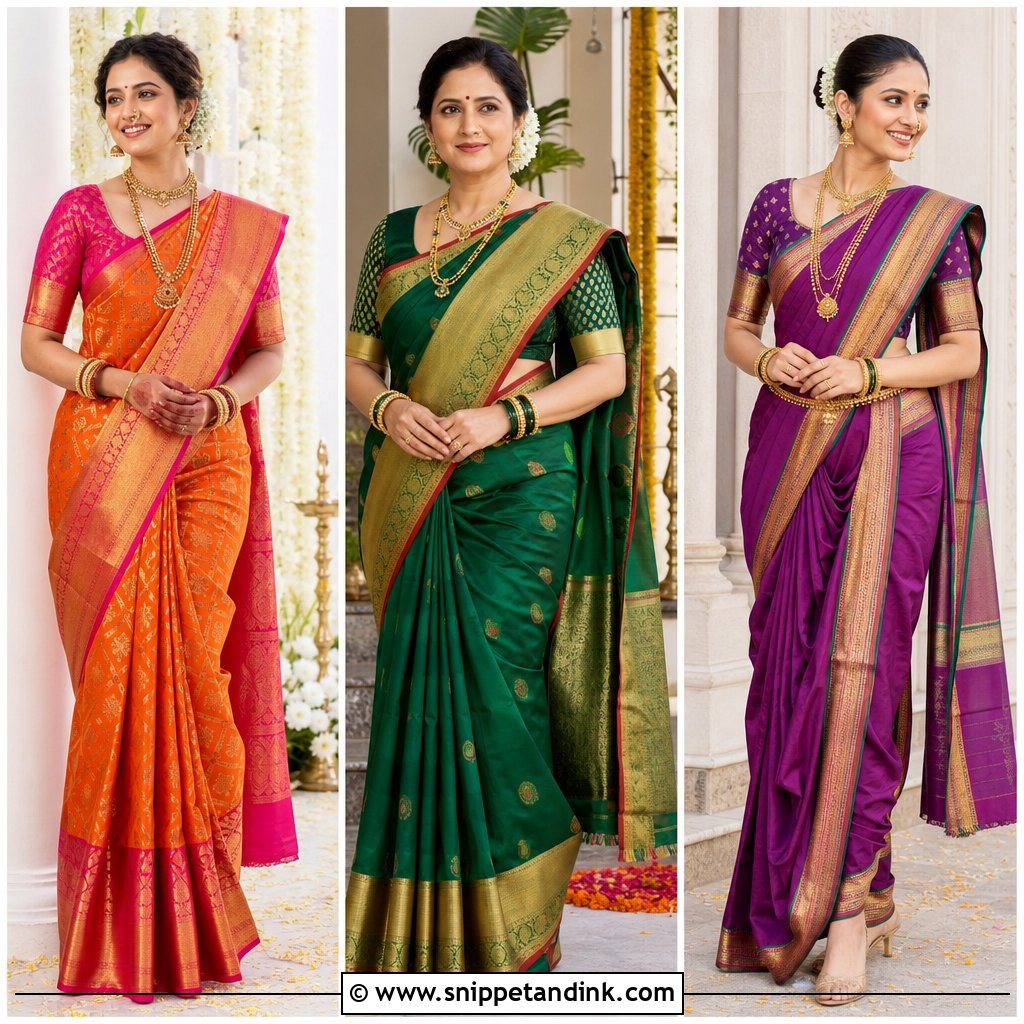
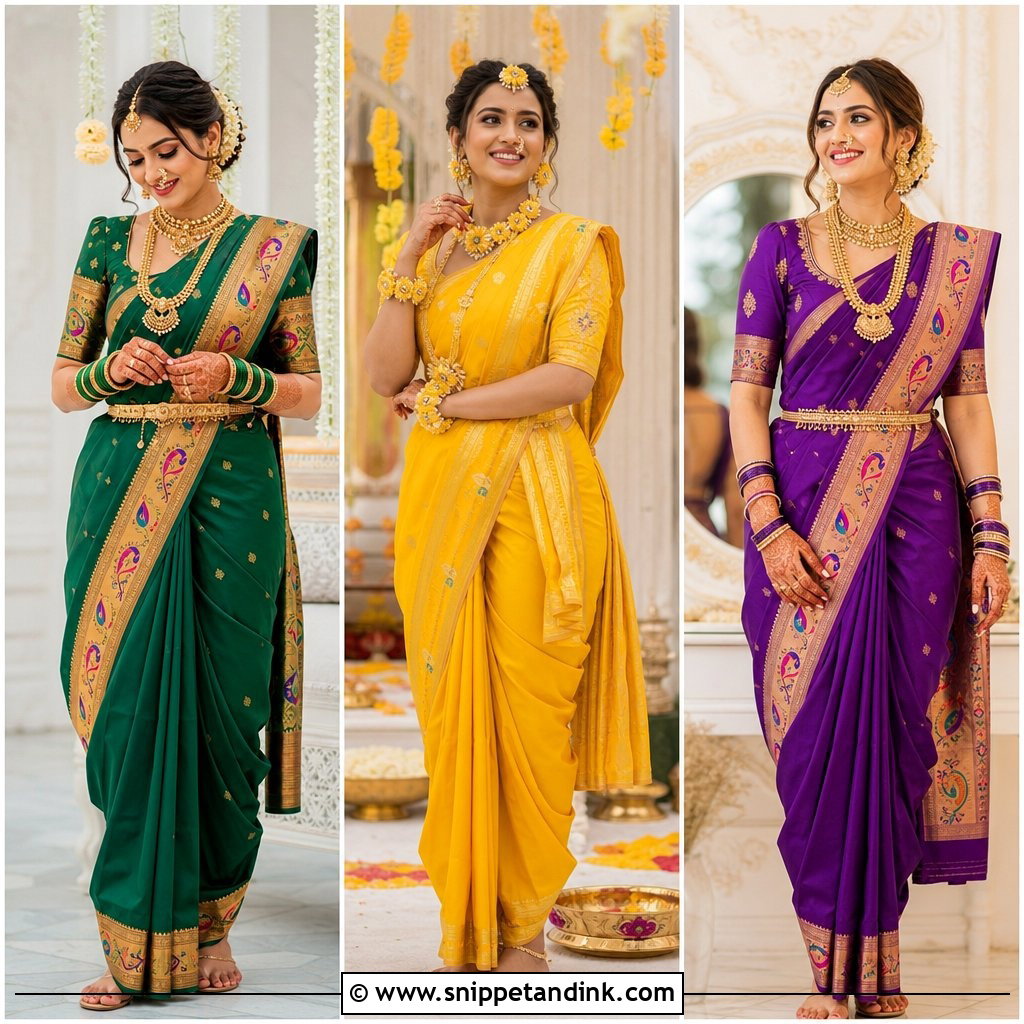
Green Paithani in a Nauvari drape is the look most Maharashtrian families picture first. Choose a deep green with a broad red or maroon border and gold peacocks, and a fitted red silk blouse for contrast. The kamarband does more than decorate: it holds the drape at the waist, so I fasten it after the pleats are set, never before. Add a pearl mundavalya, Peshwai nath, thushi, Kolhapuri saaj, gold earrings and stacked green bangles, with a neat ambada bun covered with fresh jasmine. Soft gold eyes, kajal, a chandrakor bindi and deep red lips finish it, plus metallic sandals or flats for long rituals.
2. Red Paithani Nauvari Marathi Bride Look
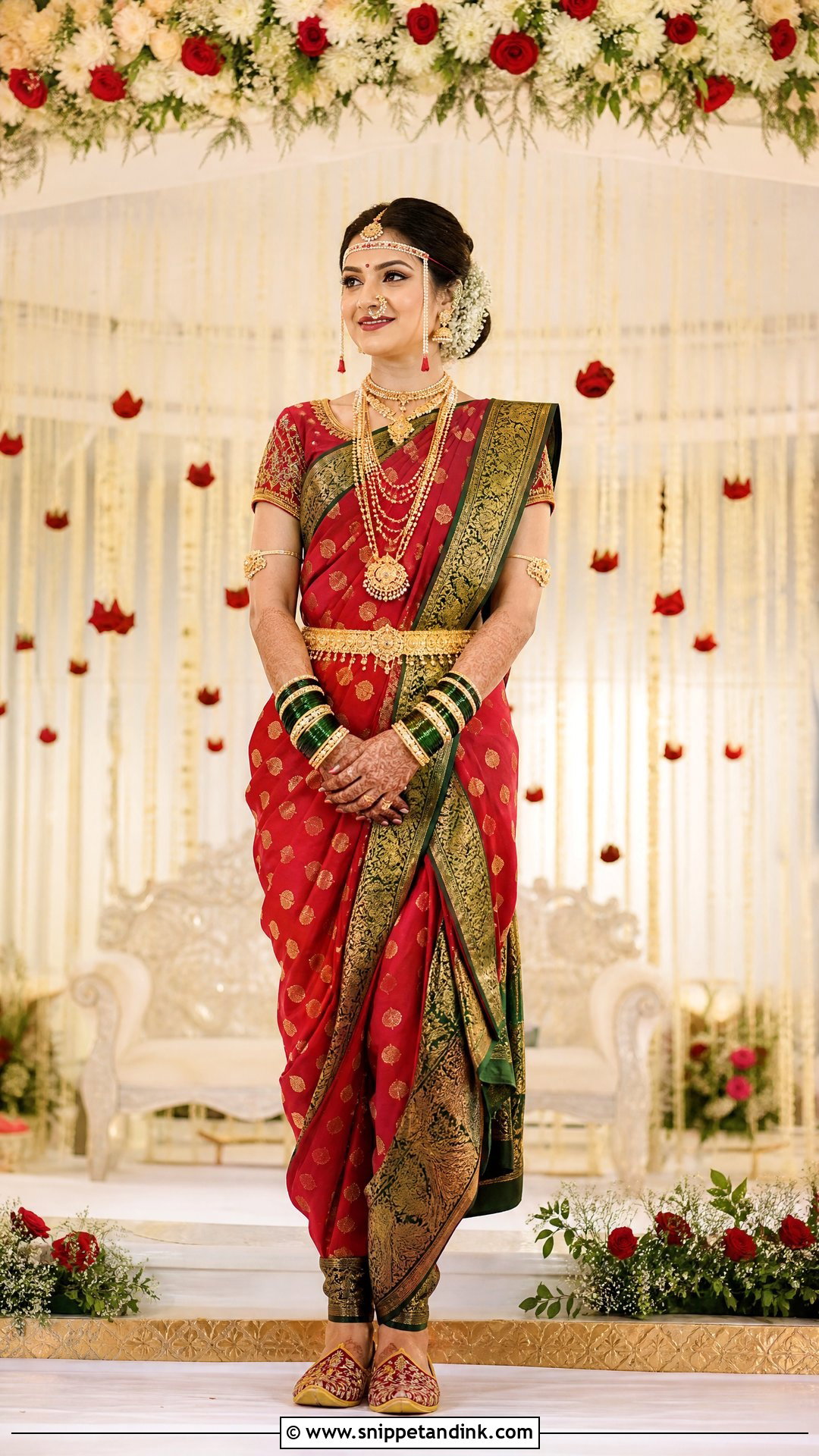
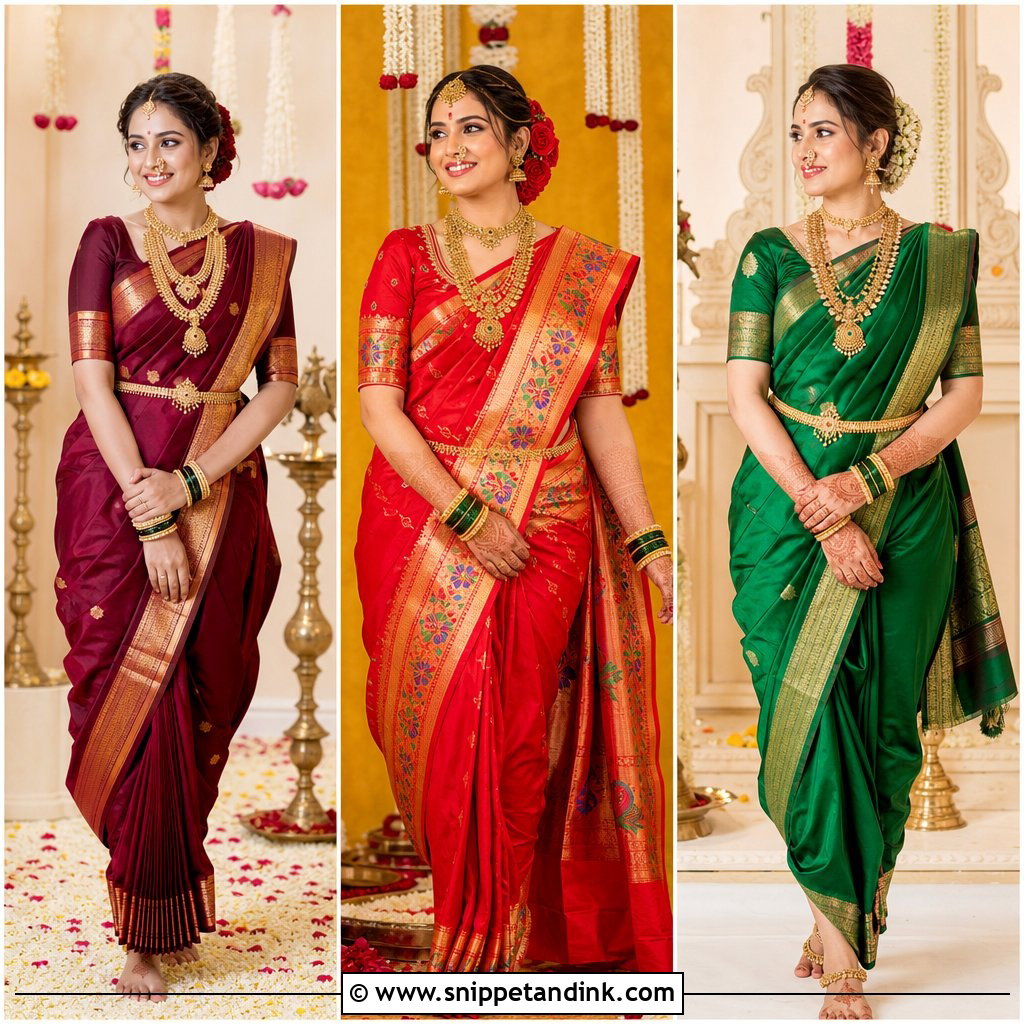
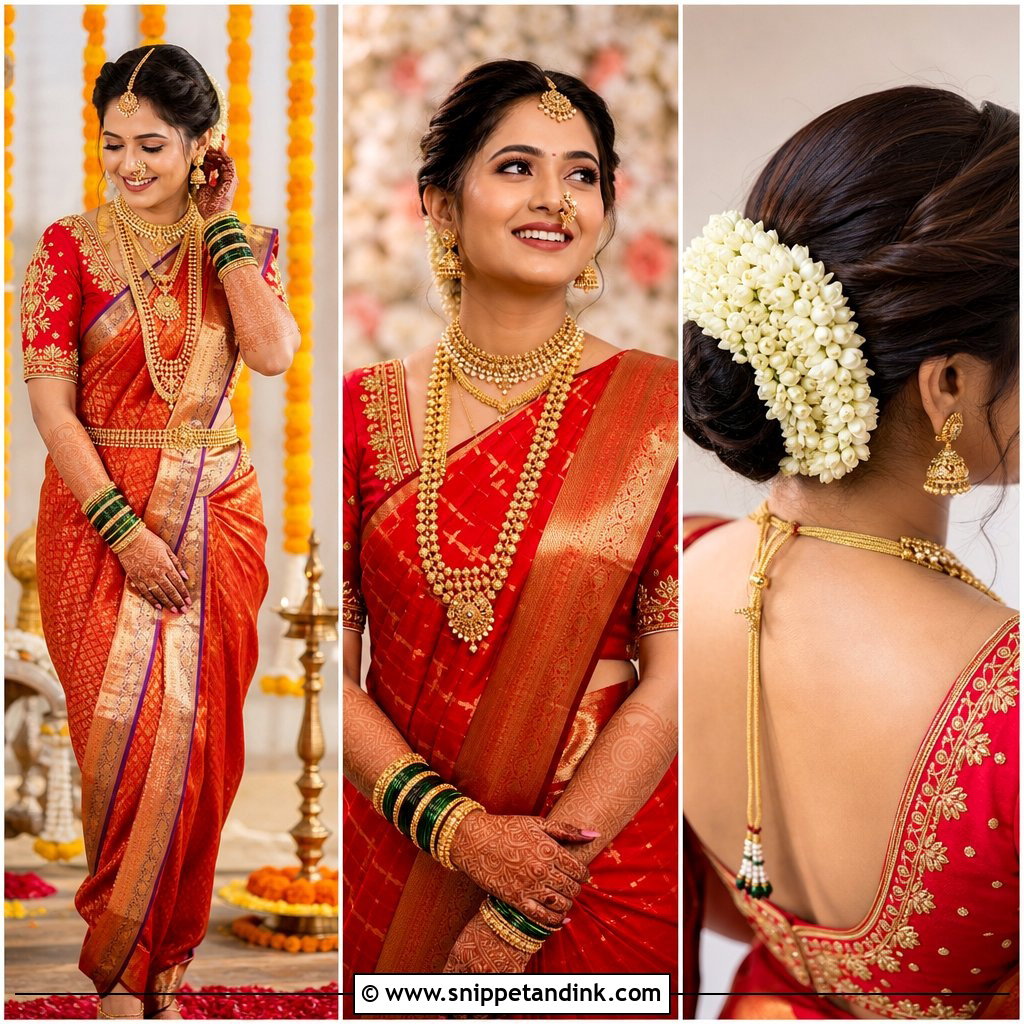
Red silk carries ceremony on its own. A red Paithani Nauvari with a green, purple or antique gold border gives the drape definition; a matching brocade blouse looks continuous, an emerald one more striking. Layer a close thushi with a longer putli haar or mohan mala, then add a statement nath, mundavalya, vaaki armlets, green bangles and a gold kamarband. The vaaki sits on the upper arm, and I size it with the blouse on, because silk sleeves add bulk. A smooth bun with white mogra and gold pins, luminous skin, kohl, a crescent bindi and red lipstick complete it.
3. Yellow Paithani Marathi Bride Look
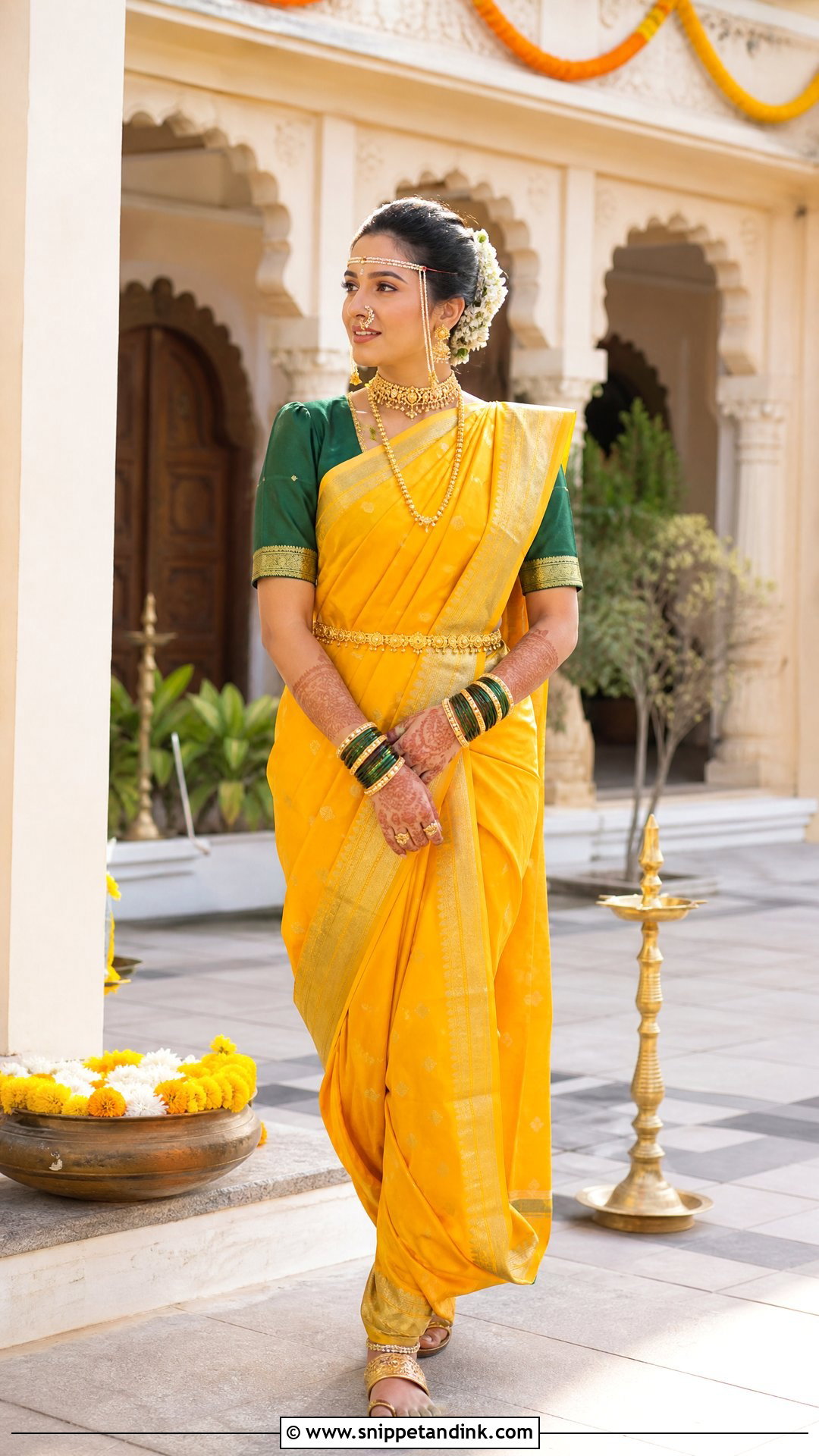
Yellow and green Paithani is a pairing with deep roots in Marathi bridal dressing, so it carries meaning as well as colour. Turmeric yellow reads warm and bright in daytime ceremonies; under evening lights it can turn a little flat. Pair the Nauvari with a dark green blouse and a zari border that outlines the pleats. Green bangles, gold patlya, a pearl mundavalya and a traditional nath give it familiar character. I’d stop at one structured choker and one longer necklace. A white jasmine bun, warm gold eyes, neat liner, coral-red lips and gold Kolhapuri sandals finish it.
4. Purple Paithani Nauvari Marathi Bride Look
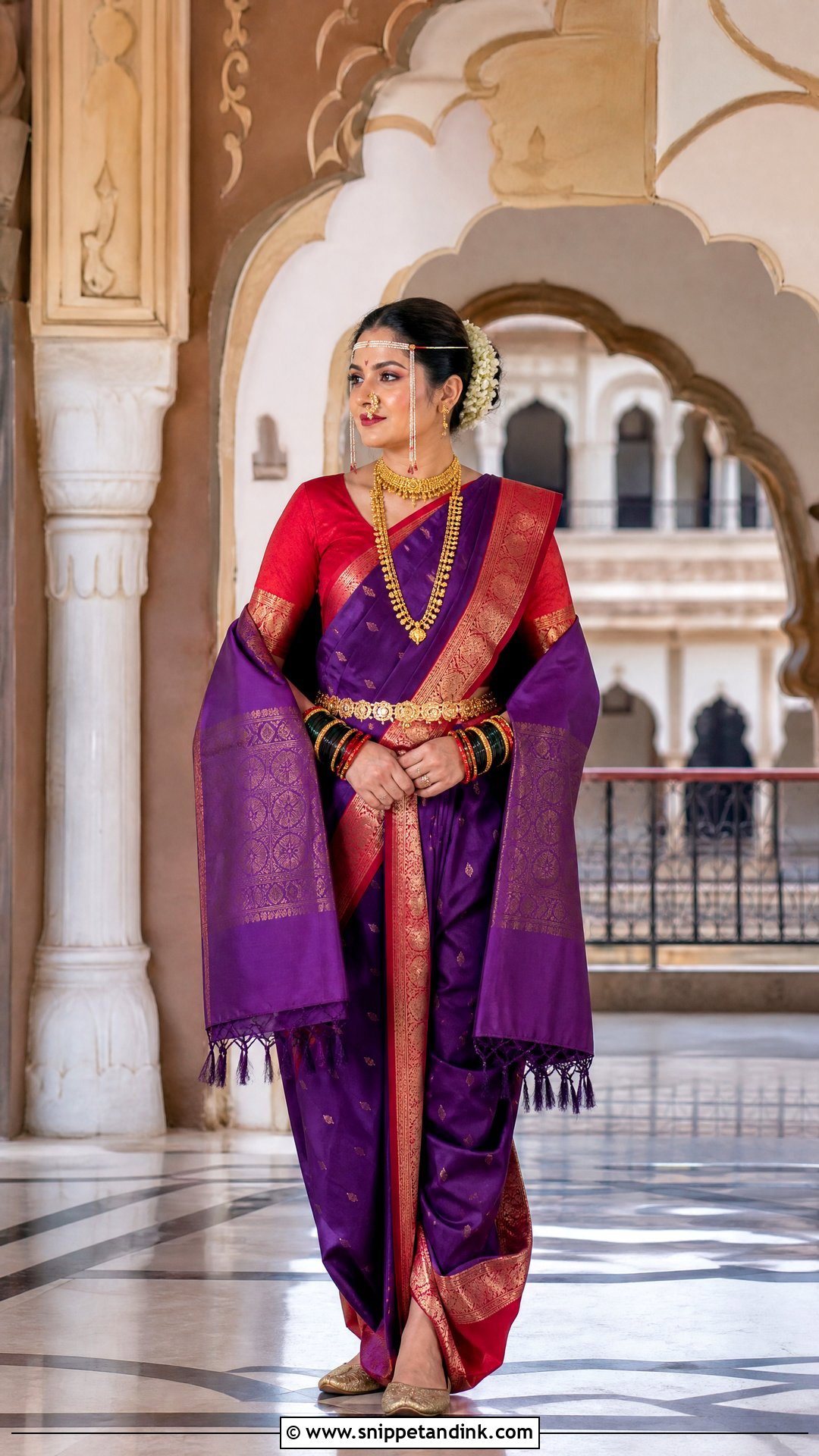
Purple Paithani silk gives royal colour without leaving tradition behind. Choose aubergine or plum with a contrasting red pallu and detailed zari, and a red elbow-sleeve blouse to frame it. A purple shela over the arms adds formality for portraits. Antique gold suits the depth of the colour better than bright yellow gold: a thushi, a layered rani haar, pearl mundavalya, nath, vaaki and kamarband. I mix red and green bangles in small groups rather than one block of colour. A center-parted jasmine bun, brown-gold eyes and berry-red lips keep it together.
5. Magenta Nauvari Marathi Bride Look
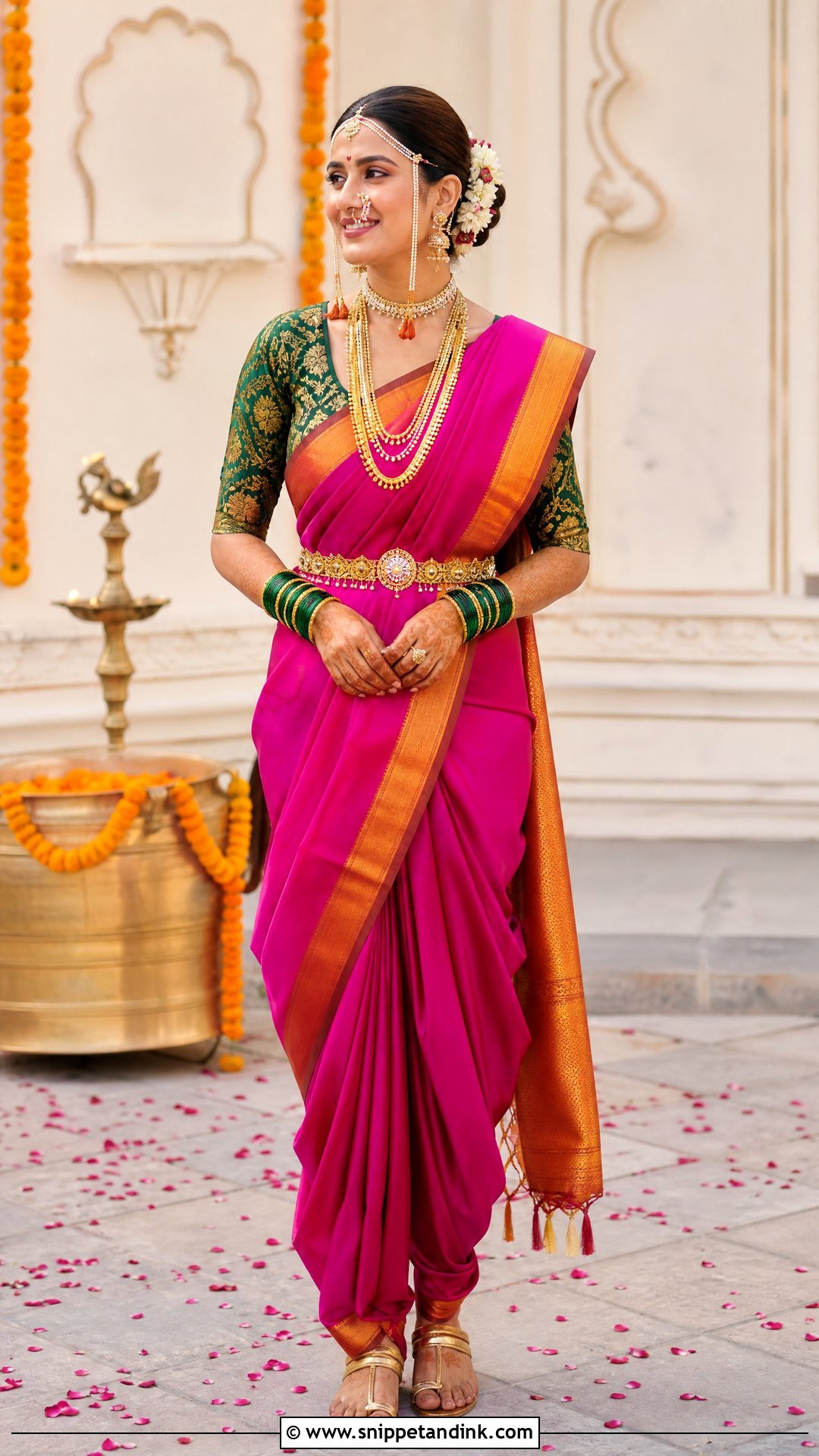
Magenta is the brightest base here, so the border has to work hard. Orange, green or gold all keep each pleat visible in photos. A mustard blouse suits a daytime ceremony; dark green brocade looks more traditional. Pearl mundavalya, a ruby-detailed nath, temple earrings, a thushi and layered gold necklaces give enough grandeur, with mostly green bangles and a few gold patlya between them. With colour this vivid, I keep the face fresh: clear skin, a sharp bindi, softly smoked eyes and a rose-red lip. A low flower bun and gold sandals complete it.
6. Orange Paithani Marathi Bride Look
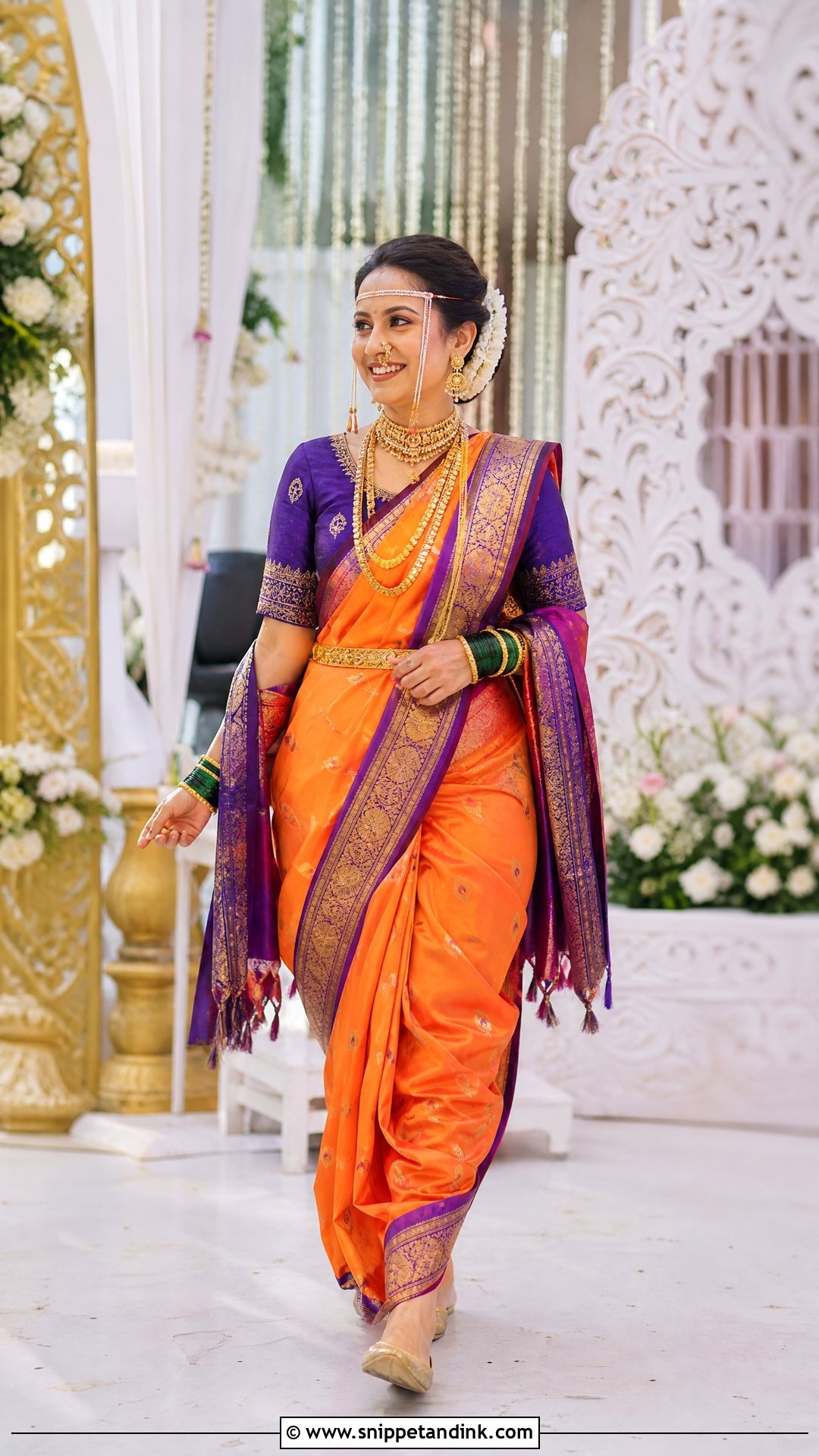
Orange Paithani glows in morning light, which suits the daytime muhurat many Marathi weddings follow. Pick saffron or burnt orange with a purple zari border and repeat the purple in the blouse or a light shela; the contrast makes it look rich without extra embellishment. A pearl mundavalya, Peshwai nath, broad thushi, long mohan mala, jhumkas and a waist belt suit it, with green bangles cooling the warm silk. A smooth ambada with a thick ring of jasmine and one hair ornament keeps the head neat. Golden eyes, vermilion lips and a small chandrakor bindi finish it.
7. White And Gold Marathi Bride Look
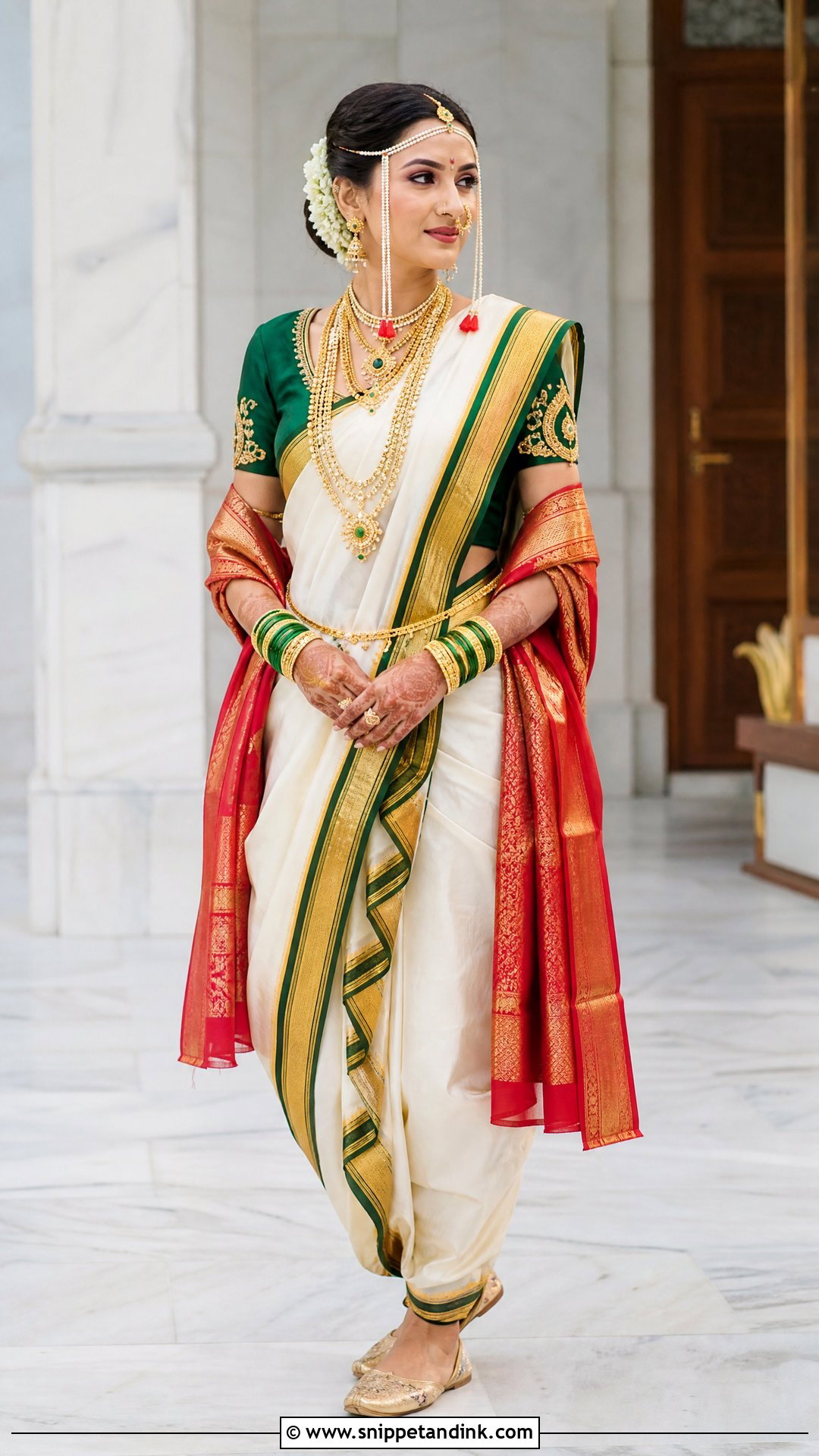
White silk with a gold border is the quietest look here, and it changes the role of the jewelry, which suddenly becomes the main decoration. Choose ivory in a Nauvari or six-yard drape with a green or red woven edge, and a jewel-toned blouse in emerald, maroon or ruby. Layer a thushi with a long necklace, then a nath, mundavalya, earrings, vaaki and green bangles. A red shela brings bridal colour back in. Some families prefer a coloured bridal saree for the ceremony itself, so I’d check with yours before settling on white. A jasmine bun, warm makeup, a red crescent bindi and gold flats finish it.
8. Black Peshwai Marathi Bride Look
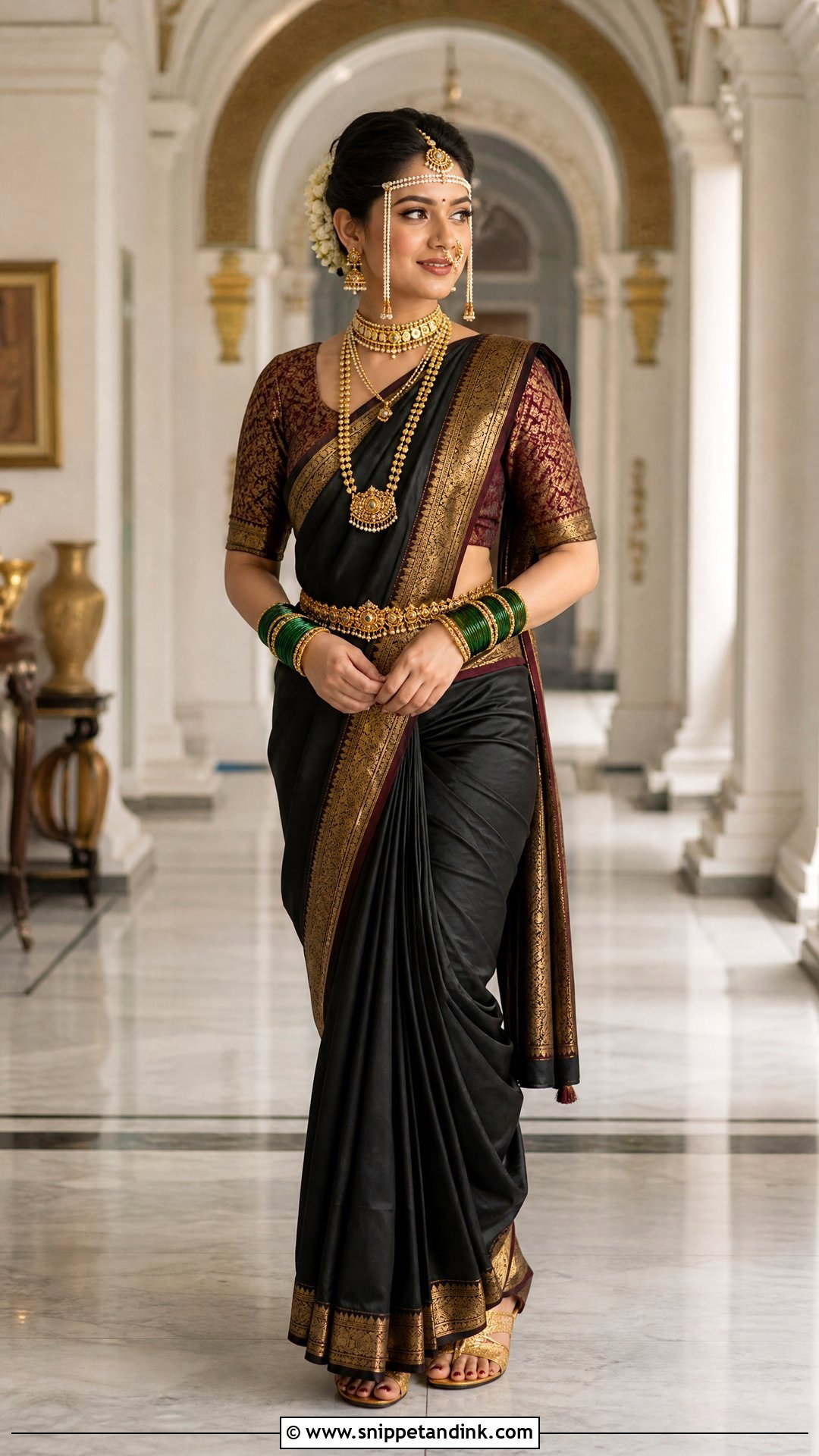
Black is usually a reception or portrait choice, or an evening ceremony where the family is comfortable with it. Choose black silk with broad antique gold borders and small woven motifs, not all-over sparkle, and a maroon or deep red brocade blouse to bring warmth to the face. Antique-finish jewelry suits it: a structured thushi, long putli haar, statement earrings, nath and kamarband. Green bangles disappear against black unless they’re spaced with gold, so I break them up. White flowers in a center-parted bun, bronze-gold eyes, kajal, deep red lips and gold sandals finish it.
9. Royal Blue Paithani Marathi Bride Look
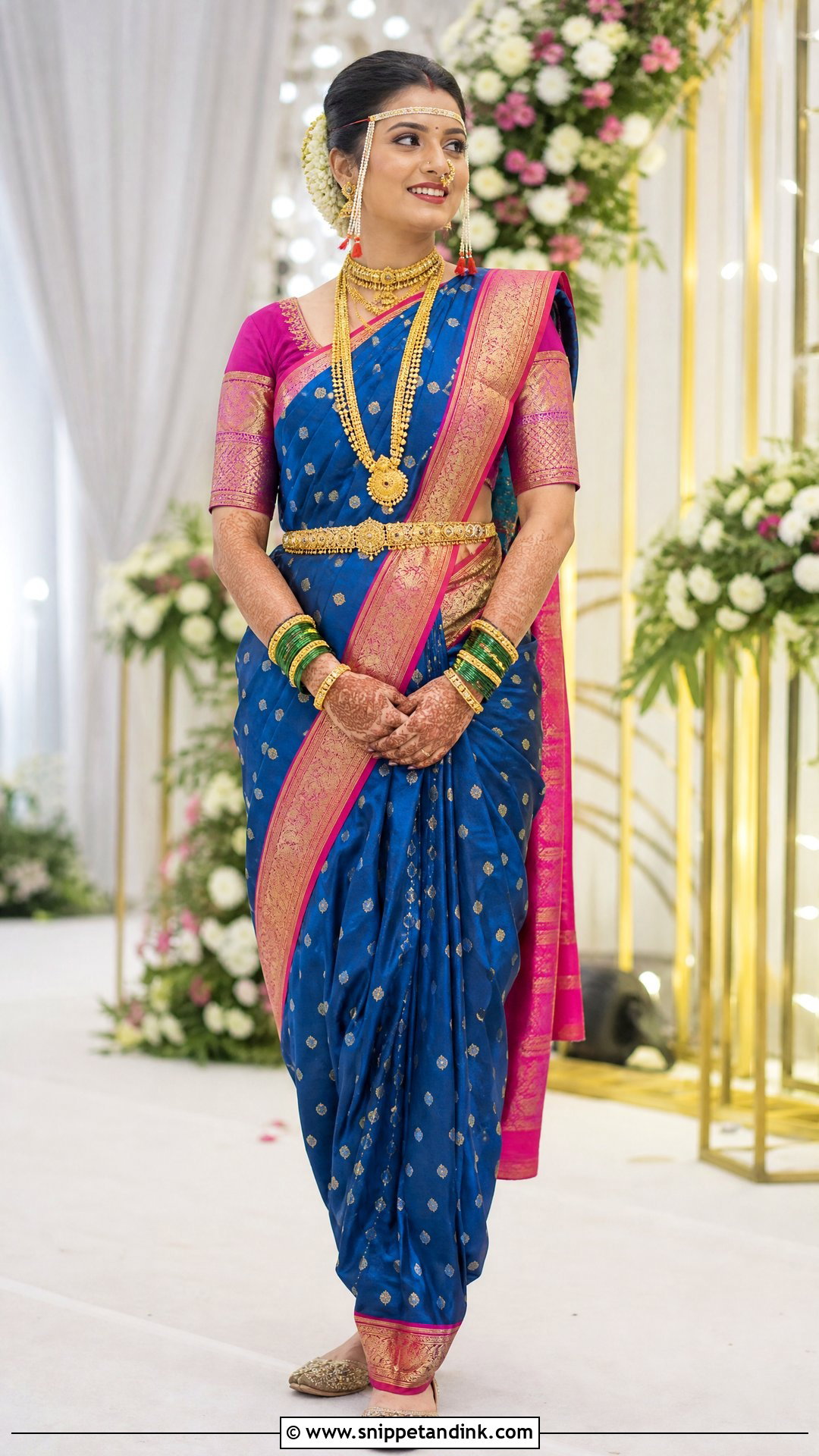
Royal blue makes gold zari stand out more clearly than almost any other base. A blue Nauvari with a magenta or purple border feels festive for an evening wedding. Match the blouse for a continuous line, or choose magenta for a traditional contrast. Let the gold follow the neckline: a thushi, one long rani haar, jhumkas, nath, mundavalya, bangles and a kamarband. A sleek bun ringed with mogra keeps the eye on the saree. Cool blue can drain warm skin, so I use warm gold eyeshadow and natural blush to balance it, with black liner and muted red lips.
10. Pink Paithani Marathi Bride Look
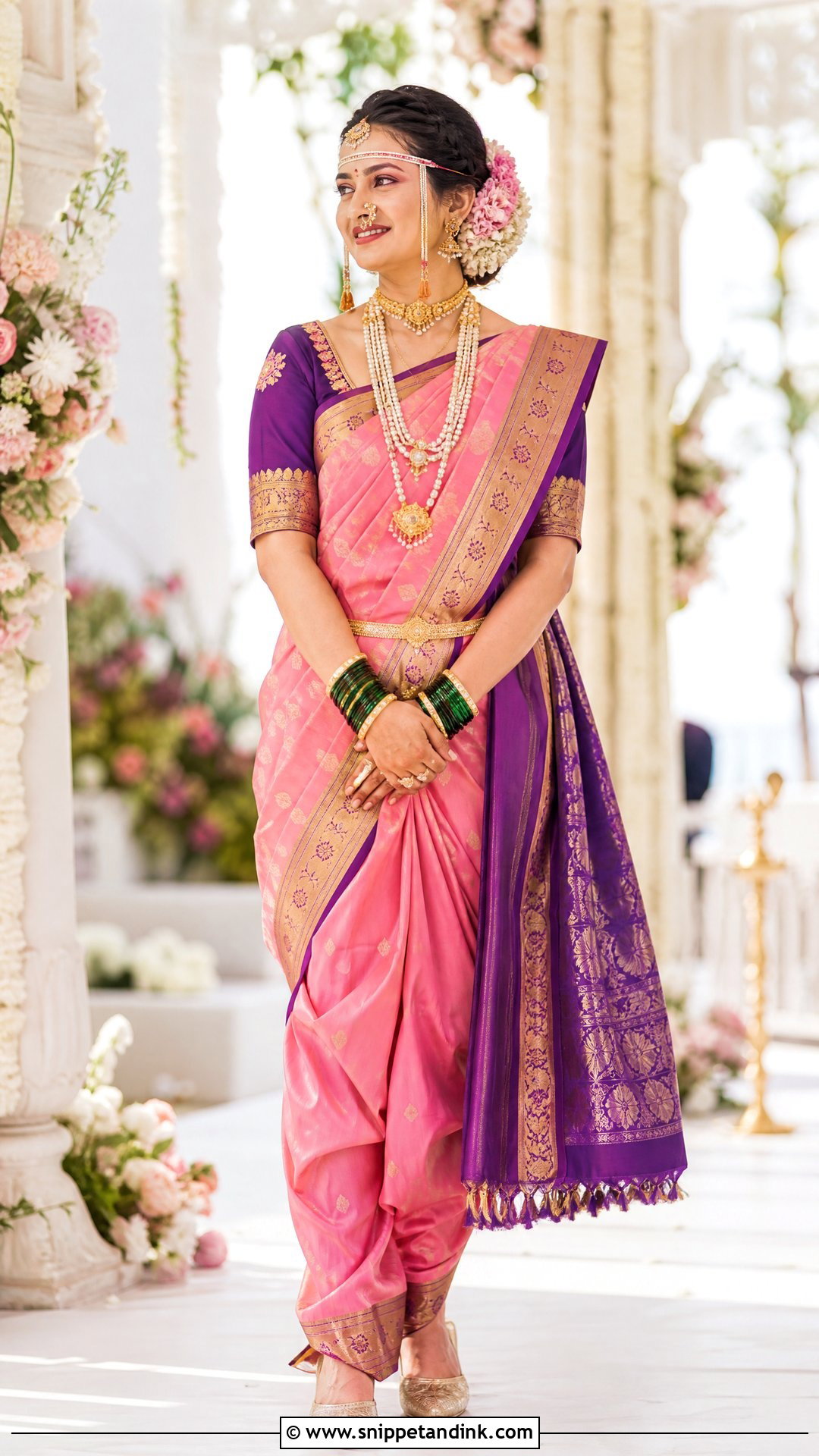
Pink Paithani is the softest option that still reads as Marathi. Blush, rose or lotus pink with a purple pallu and gold zari is classic; a purple blouse links the border and pallu, an all-pink one looks gentler. Mixing pearls into the gold keeps the palette light. A delicate mundavalya, a medium nath, thushi, long necklace, green bangles and a slim kamarband complete the detailing, with a jasmine bun tucked with a few pale pink flowers. Heavy dark makeup fights pastel silk, so I keep it to champagne-gold eyes, brown liner and a rosewood lip.
11. Emerald Green Peshwai Marathi Bride Look
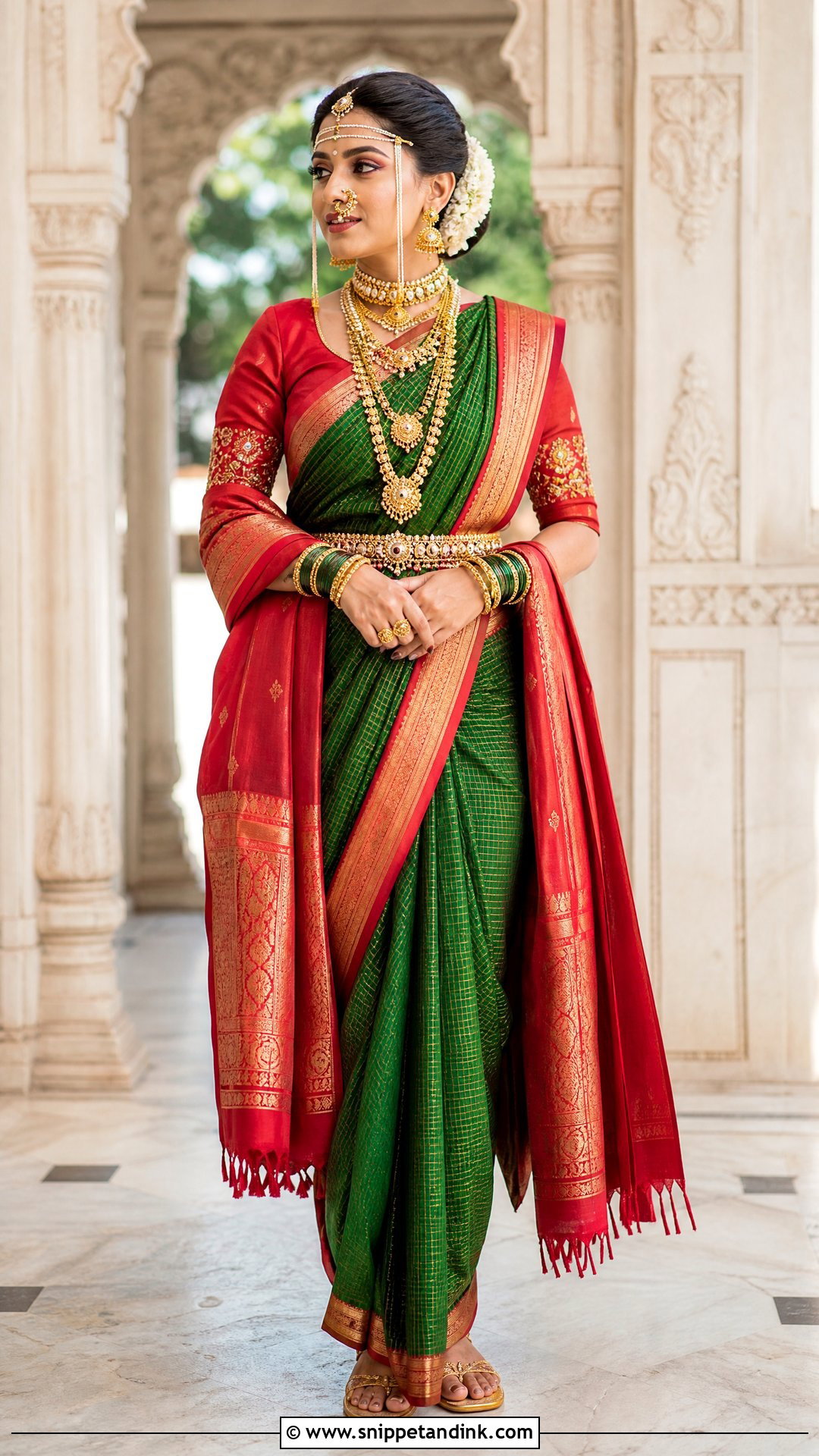
Emerald with red is a strong Peshwai pairing. Choose a structured Nauvari with an antique gold border and a deep red pallu, and a red velvet or silk blouse with elbow sleeves. A red shela behind the shoulders looks grand in portraits and comes off when you need to move. A broad thushi, layered necklaces, Peshwai nath, statement earrings, vaaki and kamarband in antique gold suit it, with green bangles split by gold patlya and a few red. A velvet blouse in a warm hall is hot, so I’d only suggest it for a cool season or an air-conditioned venue.
12. Maroon Silk Marathi Bride Look
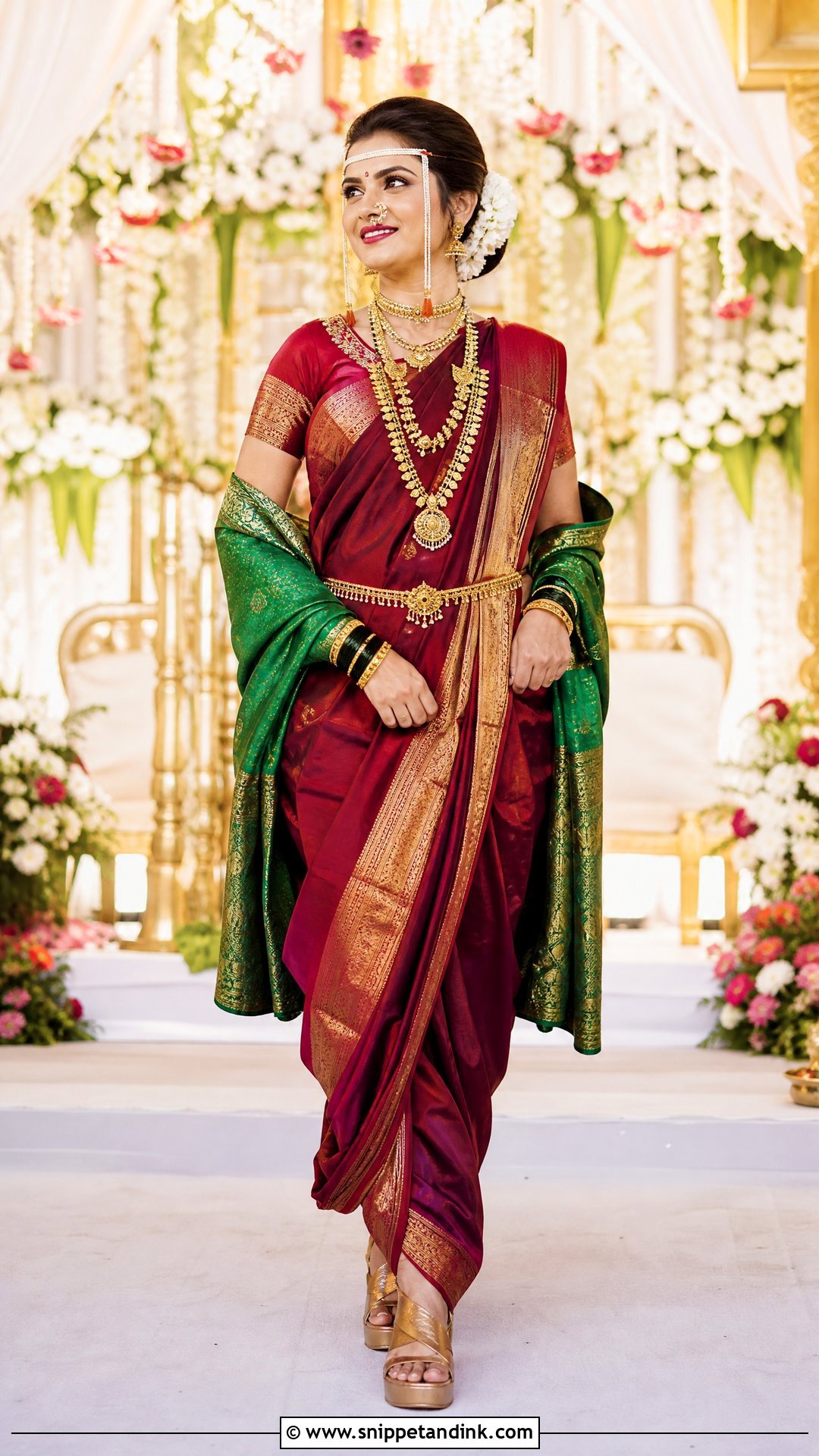
Maroon is regal without being loud. A maroon Paithani in Nauvari or six-yard drape, ideally with a broad gold and green border, and a matching blouse makes one long, unbroken line that flatters both petite and tall brides. Add a green shela for contrast at the shoulders. A thushi, Kolhapuri saaj, nath, mundavalya, jhumkas and kamarband give clear Marathi character, and green glass bangles lift the dark silk. Gold platform sandals add height, though I’d have the bride practise squatting and standing in them, since several rituals happen close to the floor.
13. Paithani Saree With Shela Marathi Bride Look
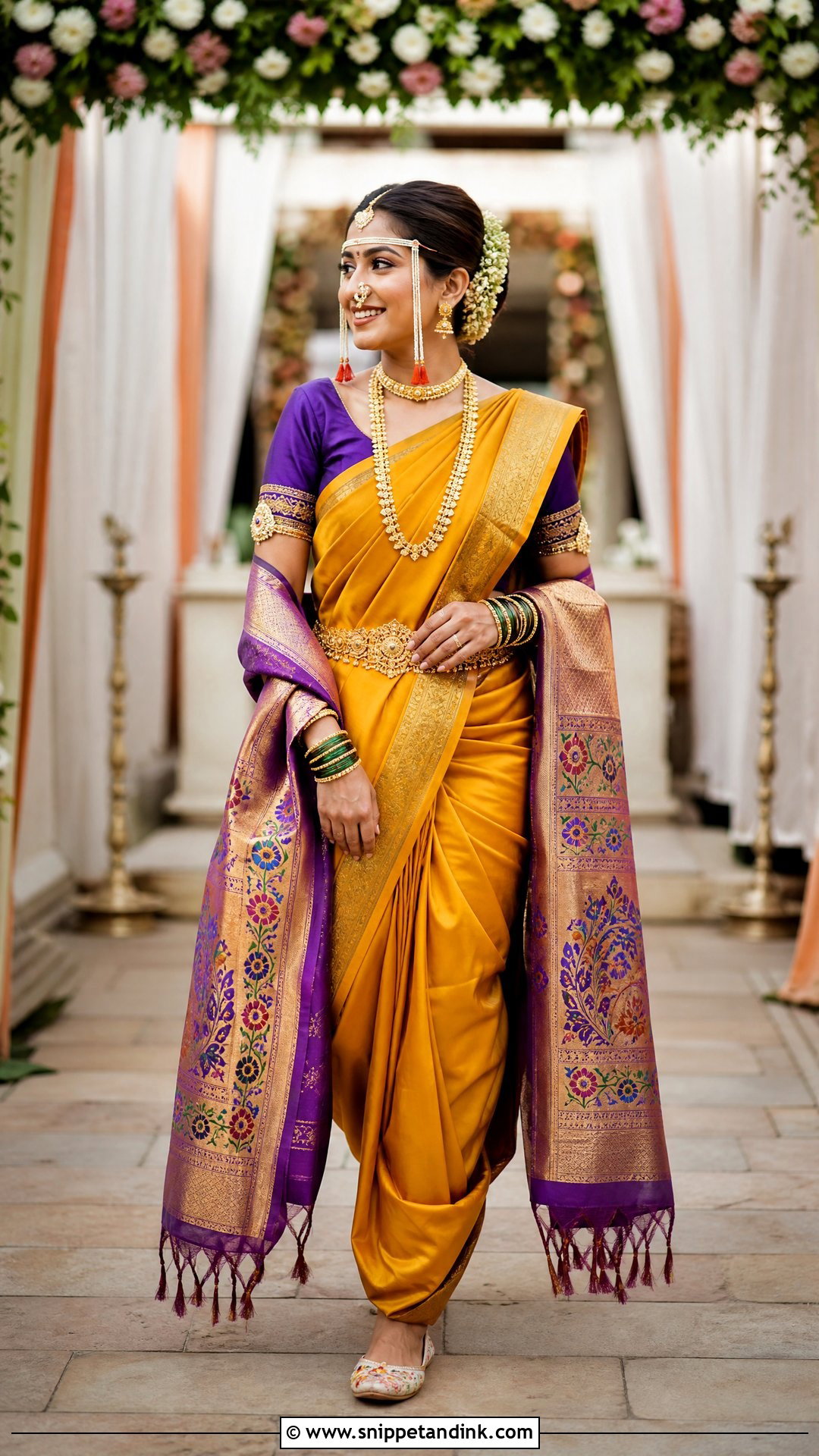
The shela is a separate silk stole, and draping it well is half of this look. Start with a green, red, mustard or purple Nauvari and a contrasting shela with a matching gold border. Over both arms suits portraits; pinned over one shoulder is steadier for the ceremony. All that extra fabric means the blouse should be fitted with no puffed sleeves. Pearl mundavalya, nath, thushi, long haar, vaaki, green bangles and a well-fitted kamarband complete it. I pin the shela to the blouse at the shoulder seam so it doesn’t slide during rituals. Flat embroidered sandals keep the layers manageable.
14. Kolhapuri Marathi Bride Look
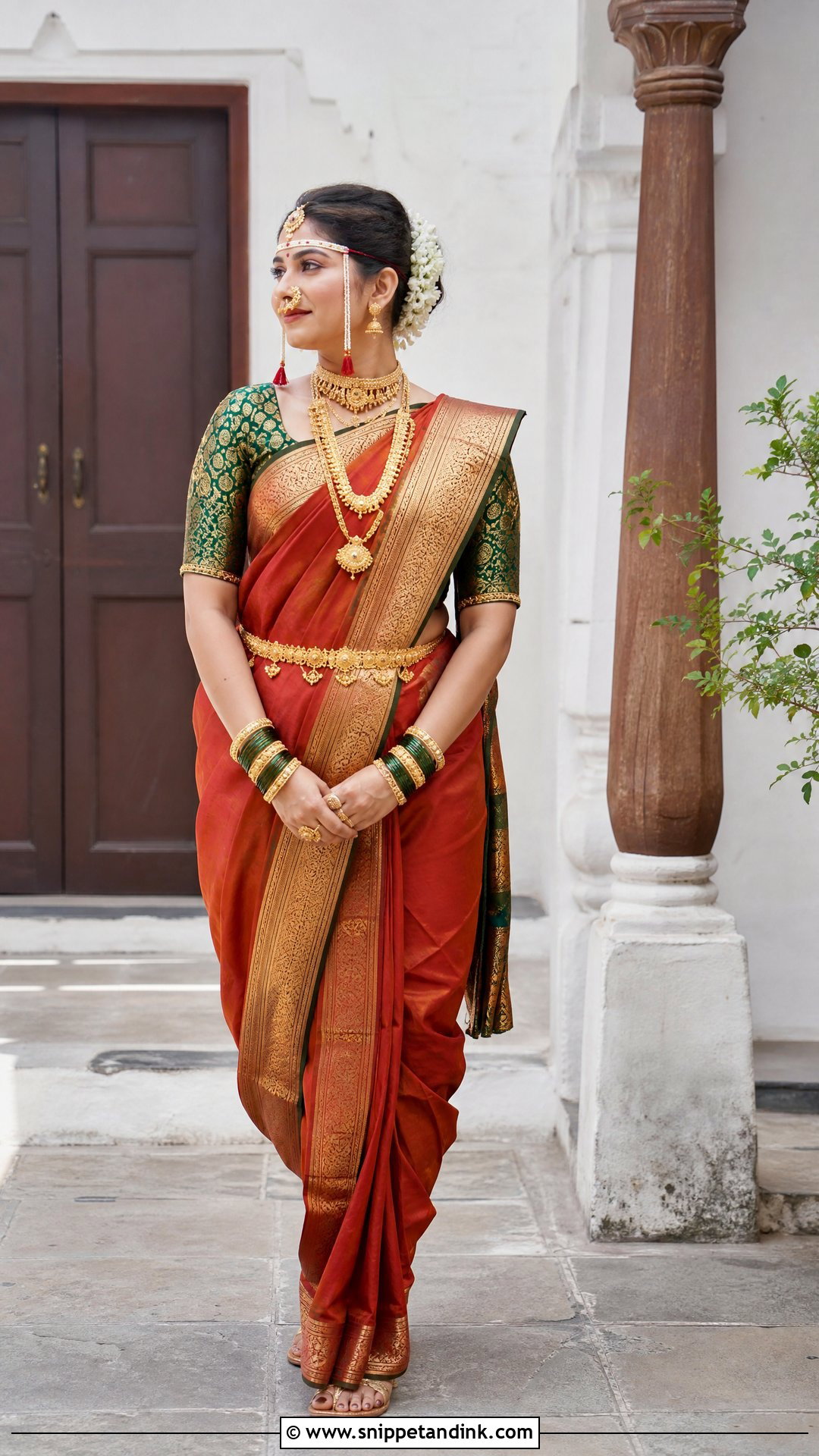
Kolhapuri styling leans on substantial jewelry and earthy colour. Rust, bottle green or deep red Paithani with a broad antique gold border works best, with a contrasting brocade blouse cut with a modest neck so the Kolhapuri saaj sits fully visible. I’d only add a thushi above the saaj if there’s genuinely room on the neck; crowding the two hides both. Traditional earrings, a bold nath, mundavalya, gold patlya, green bangles, vaaki and kamarband complete the styling, with a structured jasmine bun and metallic Kolhapuri sandals. Warm matte skin and deep vermilion lips suit the antique tones.

15. Peshwai Marathi Bride Look With Gold Jewelry
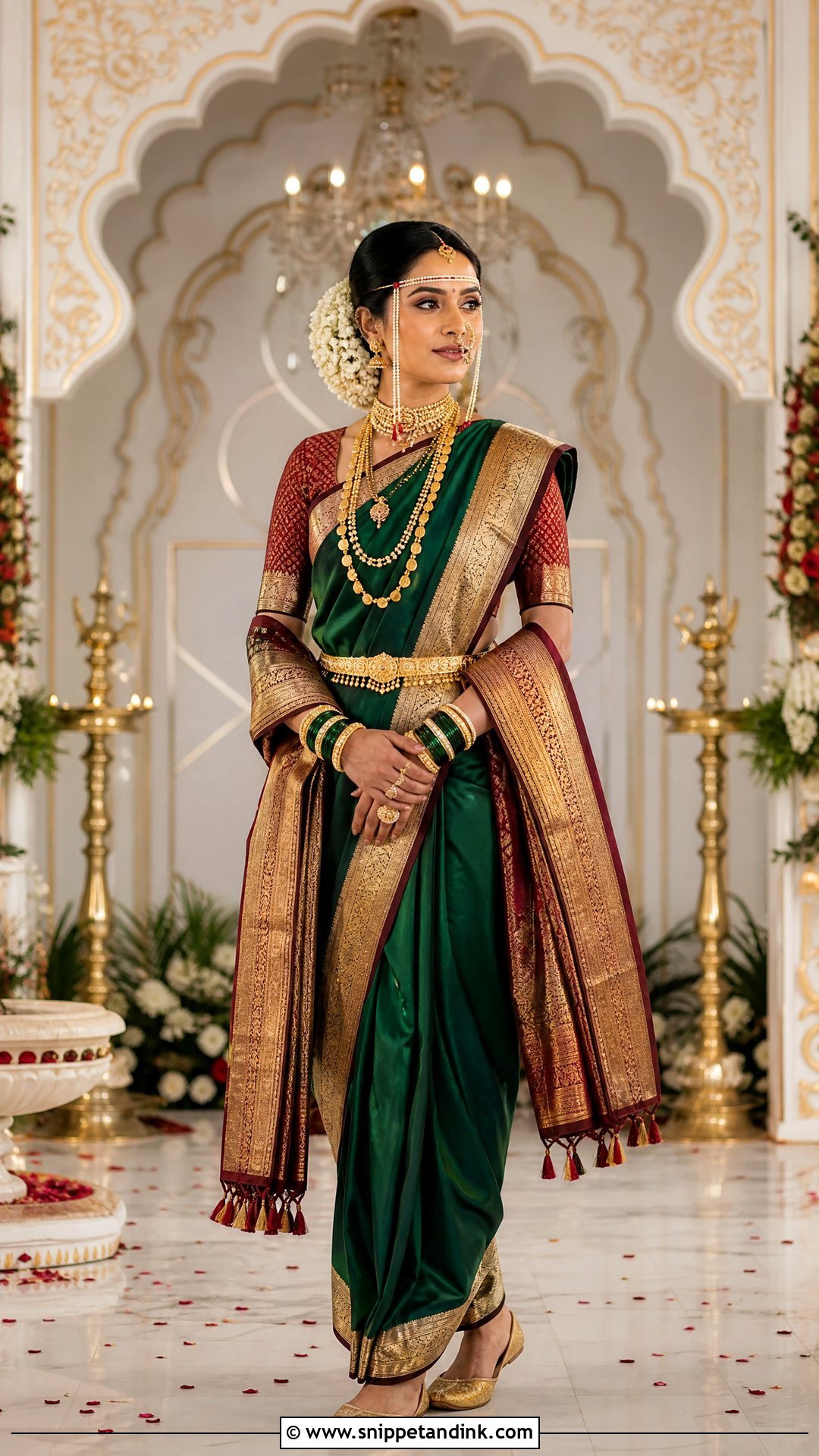
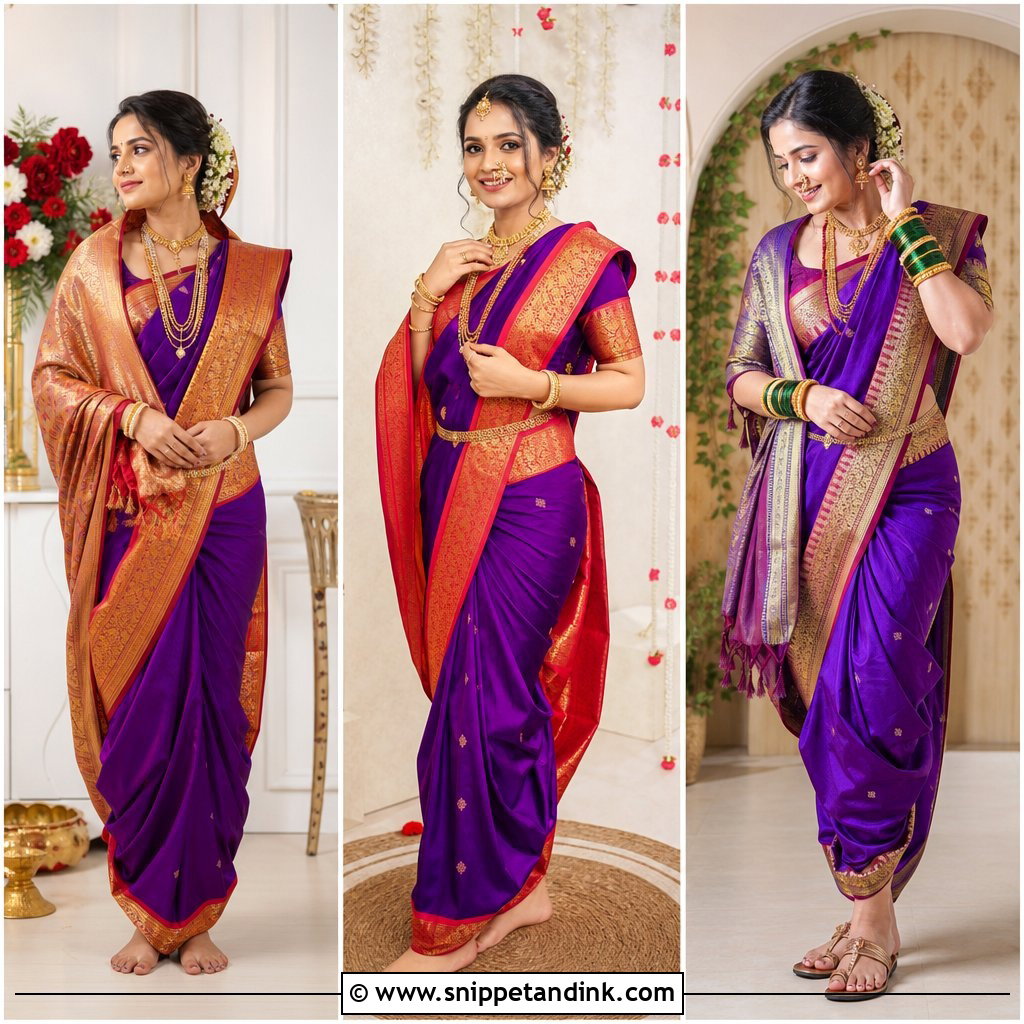
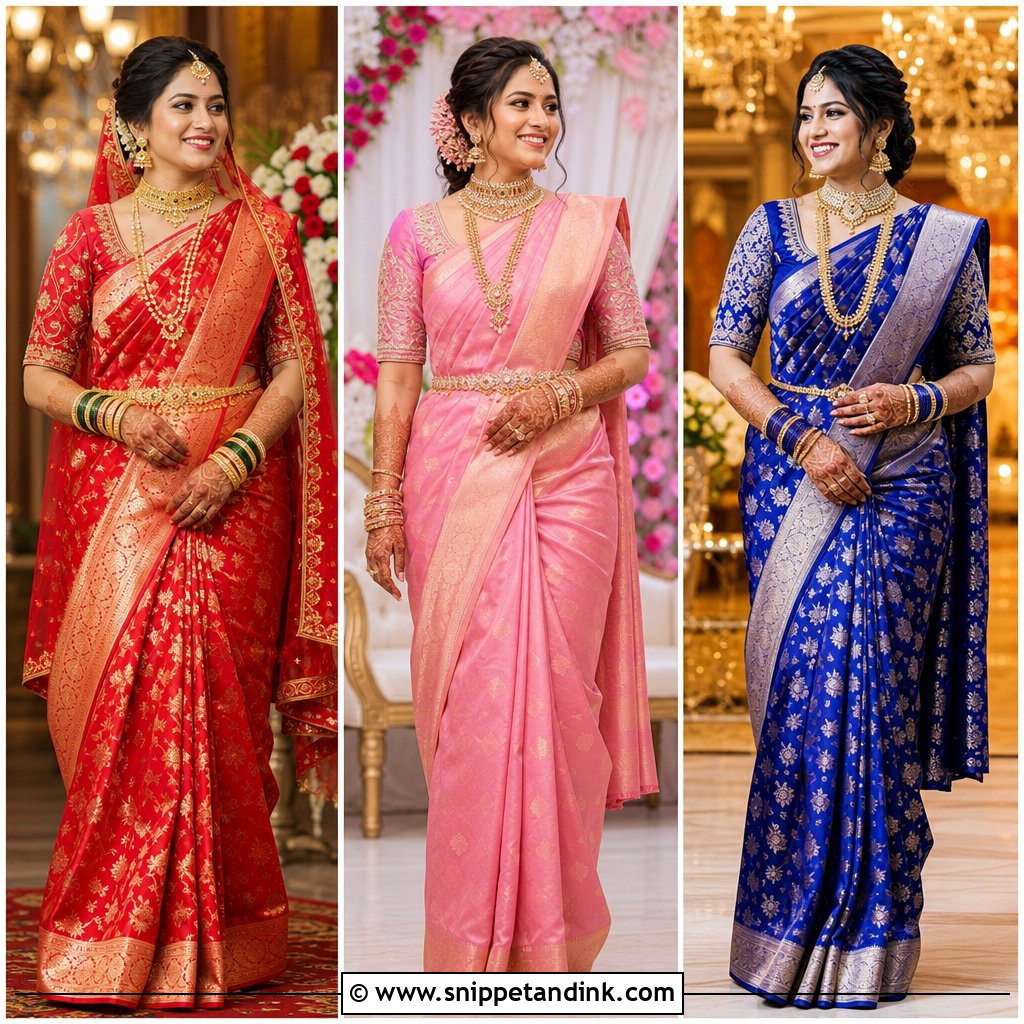
Do you want a look that holds up from every angle, including the side profile in candid photos? Start with a jewel-toned Nauvari in emerald, maroon, purple or mustard with a clear gold border and a fitted contrast blouse. A silk shela around the arms strengthens the Peshwai influence. Build the jewelry in tiers: thushi at the neck, a medium necklace below, then a longer putli haar. Keep every piece in the same gold finish, because mixed finishes look accidental up close. A Peshwai nath, mundavalya, earrings, vaaki, bangles, a kamarband, an ambada with jasmine and red lips finish it.
16. Pearl Jewelry Marathi Bride Look
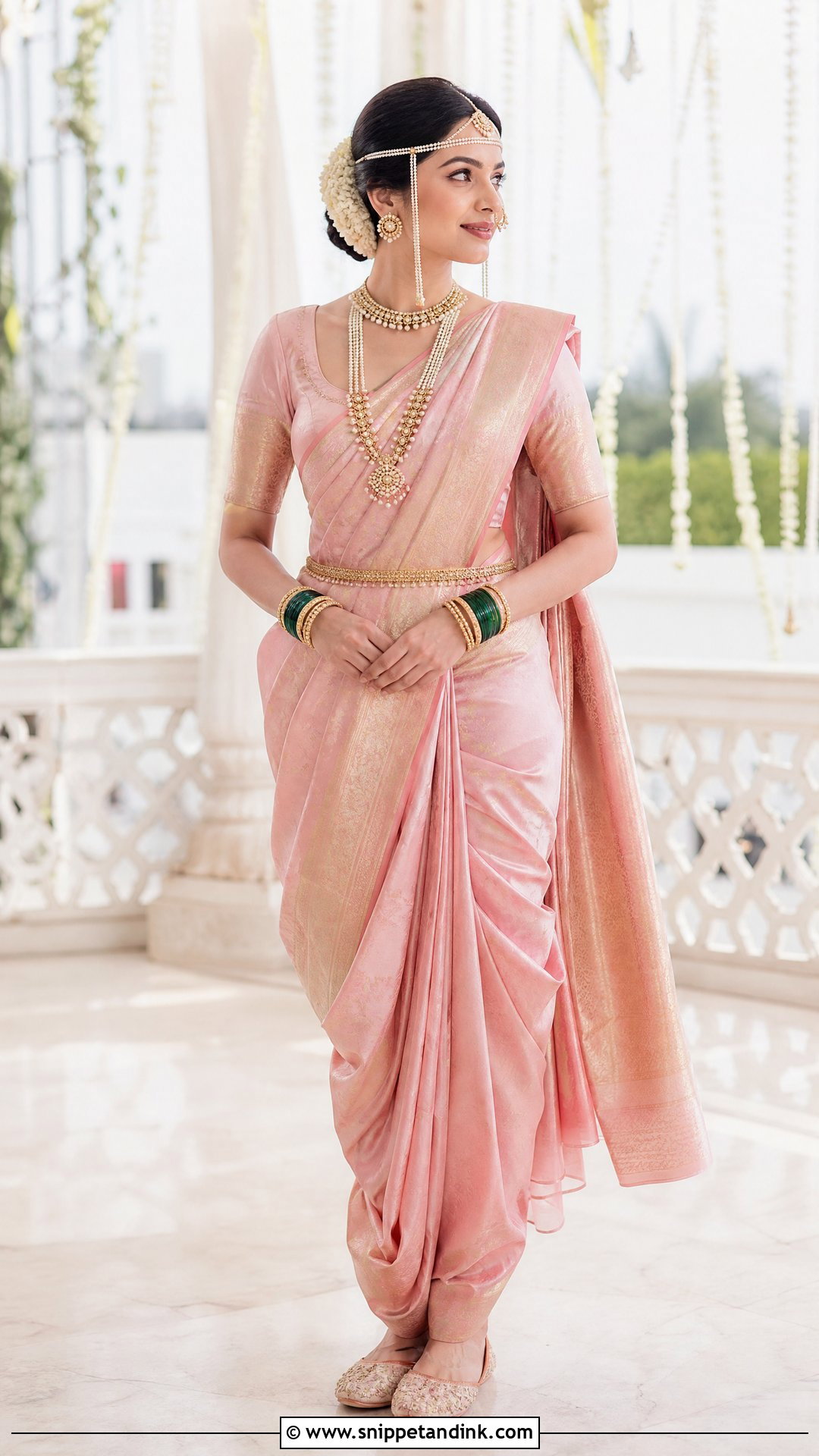
Pearls are the answer for brides who find layered gold too heavy, physically or visually. A pastel pink, ivory, pale yellow or mint Paithani with a fine gold border and a coordinated blouse sets the base. Pearl mundavalya, pearl-edged earrings, a delicate nath and necklaces that mix pearls with small gold details carry the theme. Green bangles and slim gold patlya keep tradition in, and a lightweight kamarband holds the drape comfortably. Pearls dull with perfume and hairspray, so I spray before the jewelry goes on. A low jasmine bun, peach blush and rose-red lips finish it.
17. Temple Jewelry Marathi Bride Look
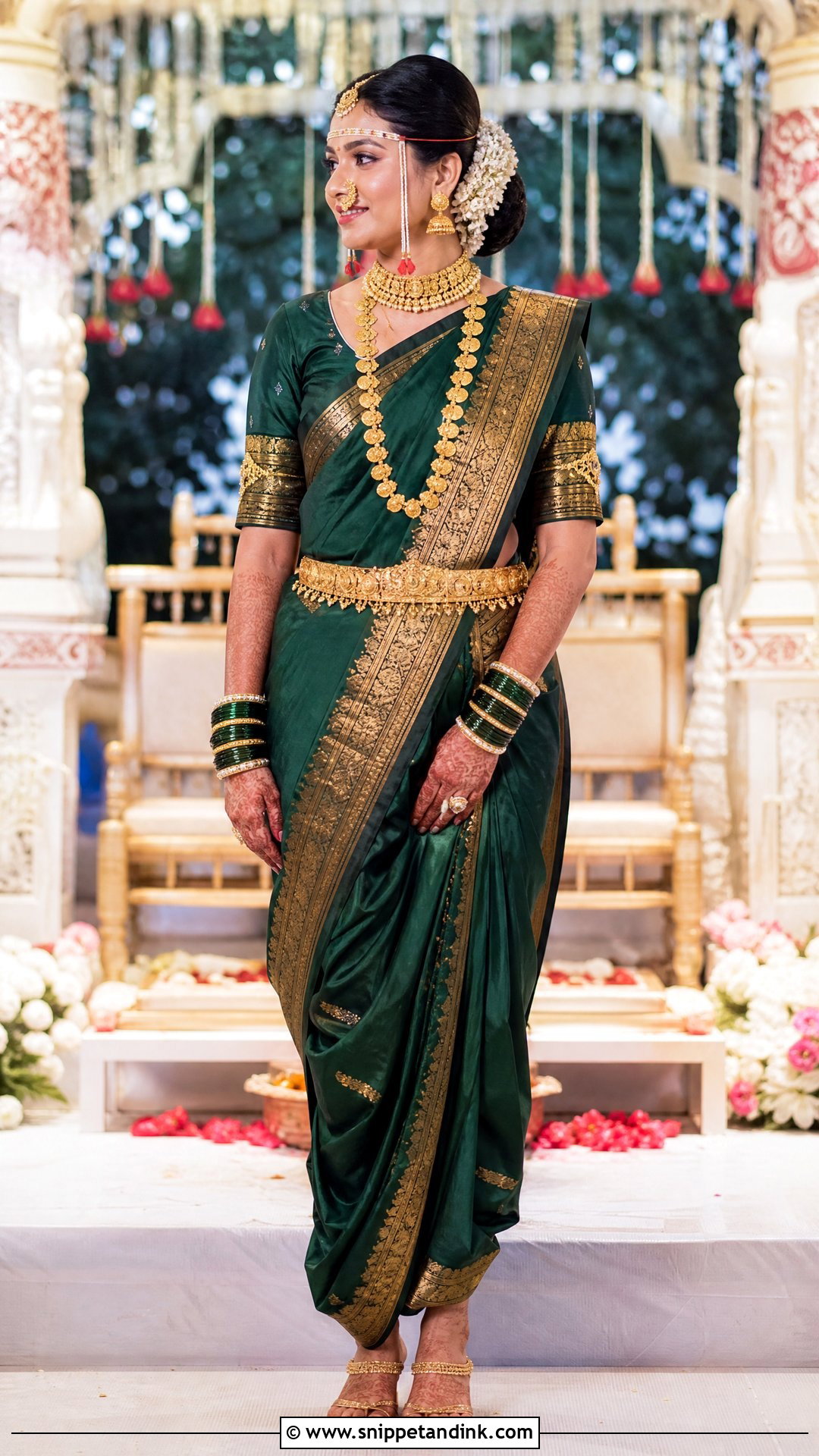
Temple jewelry is carved and sculptural, so it needs a saree with a clean border and not much else competing. Dark green, maroon or rust with antique zari works, with a matching elbow-sleeve blouse heavy enough to support the pieces. Start with a temple choker and add one longer sculpted necklace, then coordinating earrings, a nath, pearl mundavalya, armlets, green bangles and a wide kamarband. I wouldn’t add unrelated necklace designs; three motifs on one neck look like a jewelry counter. A braided bun or smooth ambada with jasmine, bronze eyes and muted crimson lips suit it.
18. Antique Gold Marathi Bride Look
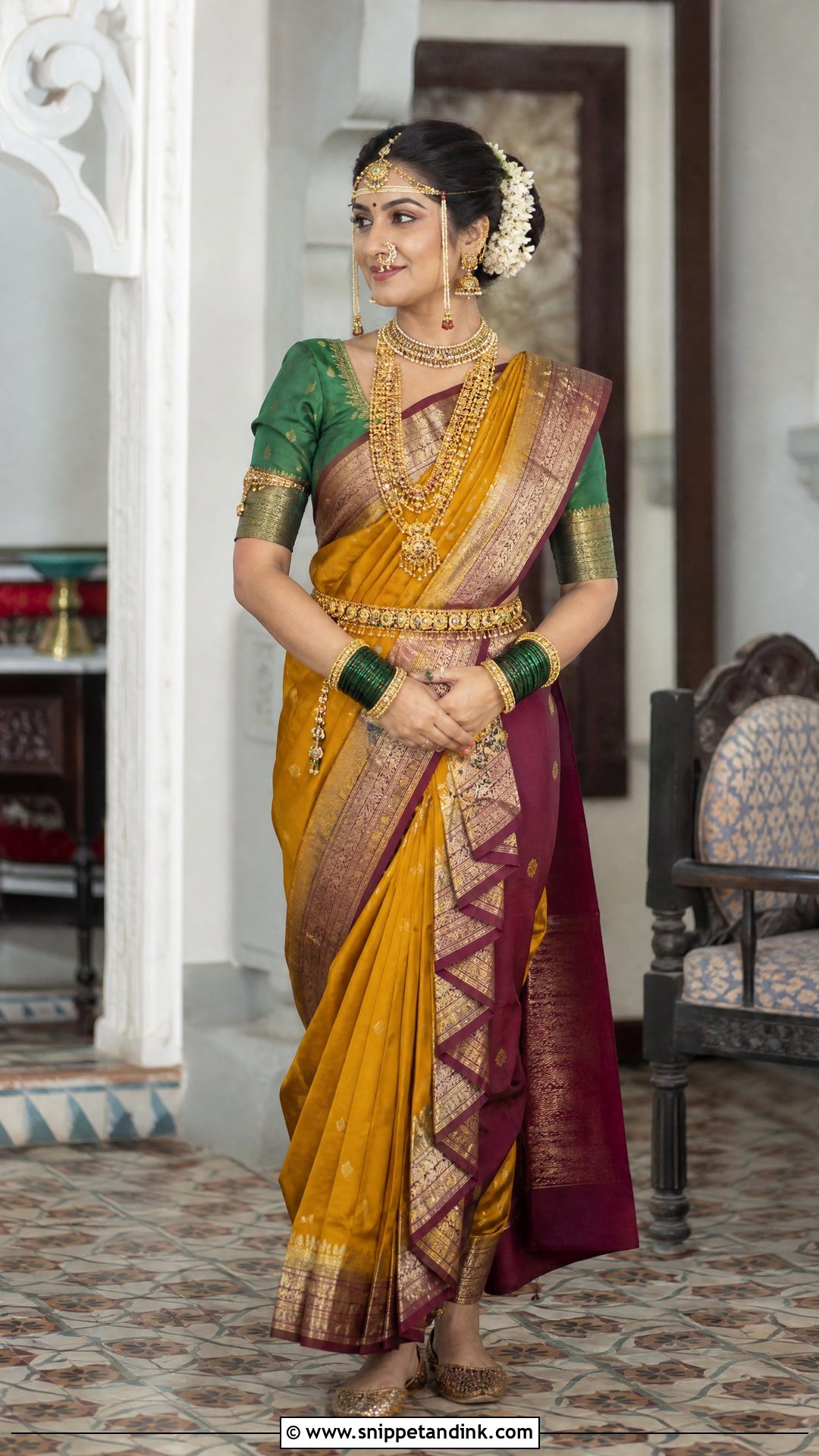
Antique gold gives a look an heirloom feel, especially with earthy Paithani. Choose mustard, olive, brick red or plum with muted zari instead of bright yellow gold, and a maroon or forest green blouse. Layer an antique thushi, putli haar and long mohan mala, then earrings, nath, mundavalya, vaaki and kamarband. Keep the bangles mostly green with antique bracelets between the stacks. A compact ambada with aged-gold ornaments suits the mood. Strong highlighter looks out of place next to matte antique metal, so I keep the base softly radiant, with copper lids and brick-red lips.
19. Minimal Marathi Bride Look
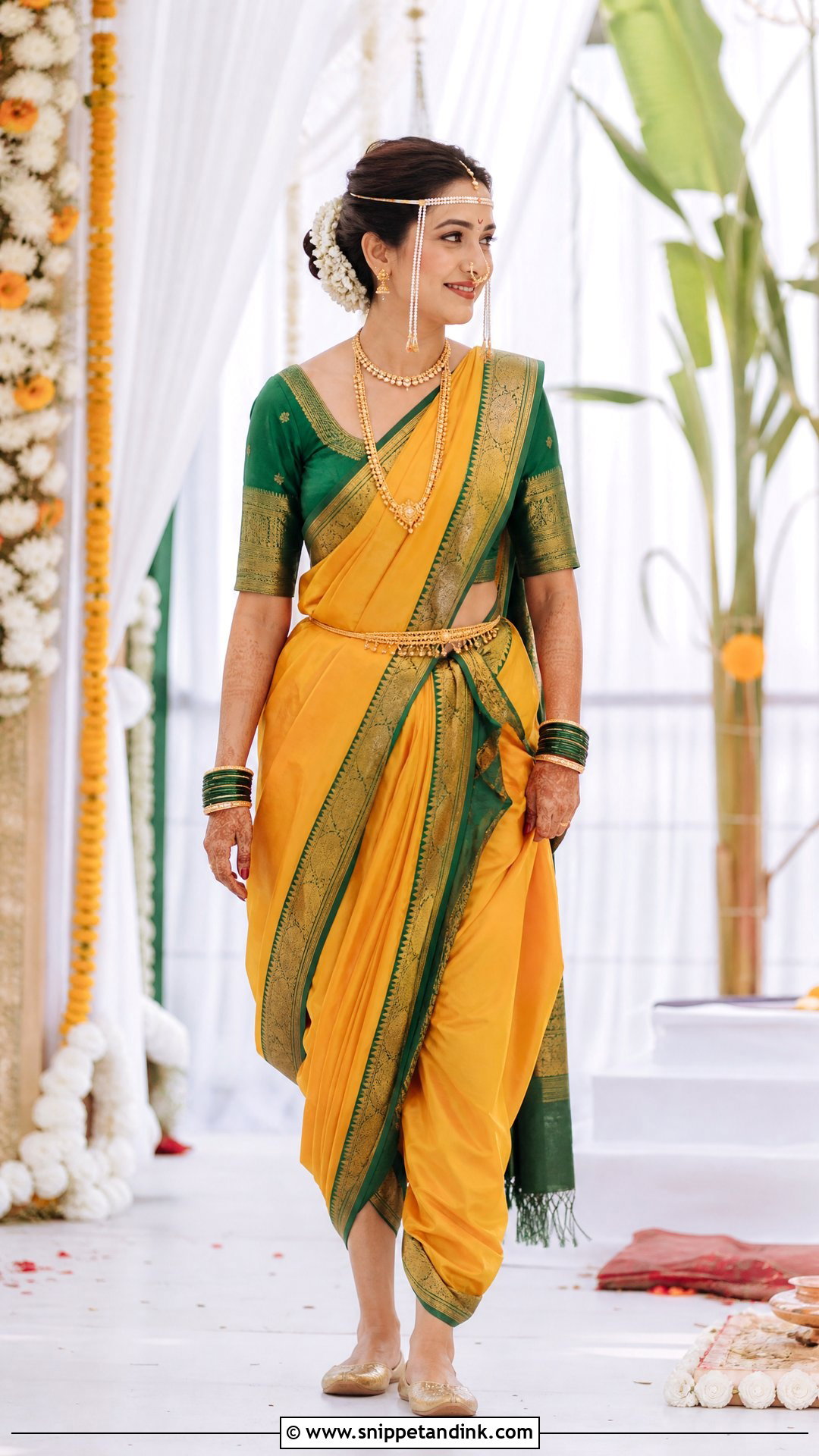
Royal doesn’t have to mean heavy. A finely woven green, yellow or red Paithani lets its border do the decorating, with a simple fitted blouse and a clean Nauvari drape. Keep the jewelry to one thushi, one medium necklace, a nath, pearl mundavalya, earrings, green bangles and a slim kamarband; the familiar pieces keep it unmistakably Marathi. A sleek low bun with one ring of jasmine suits it. I’d still keep the bindi and nath, because without them a minimal look can stop reading as bridal. Skin-like makeup, thin liner and muted red lips, with gold flats for the long ceremony.
20. Paithani Lehenga Marathi Bride Look
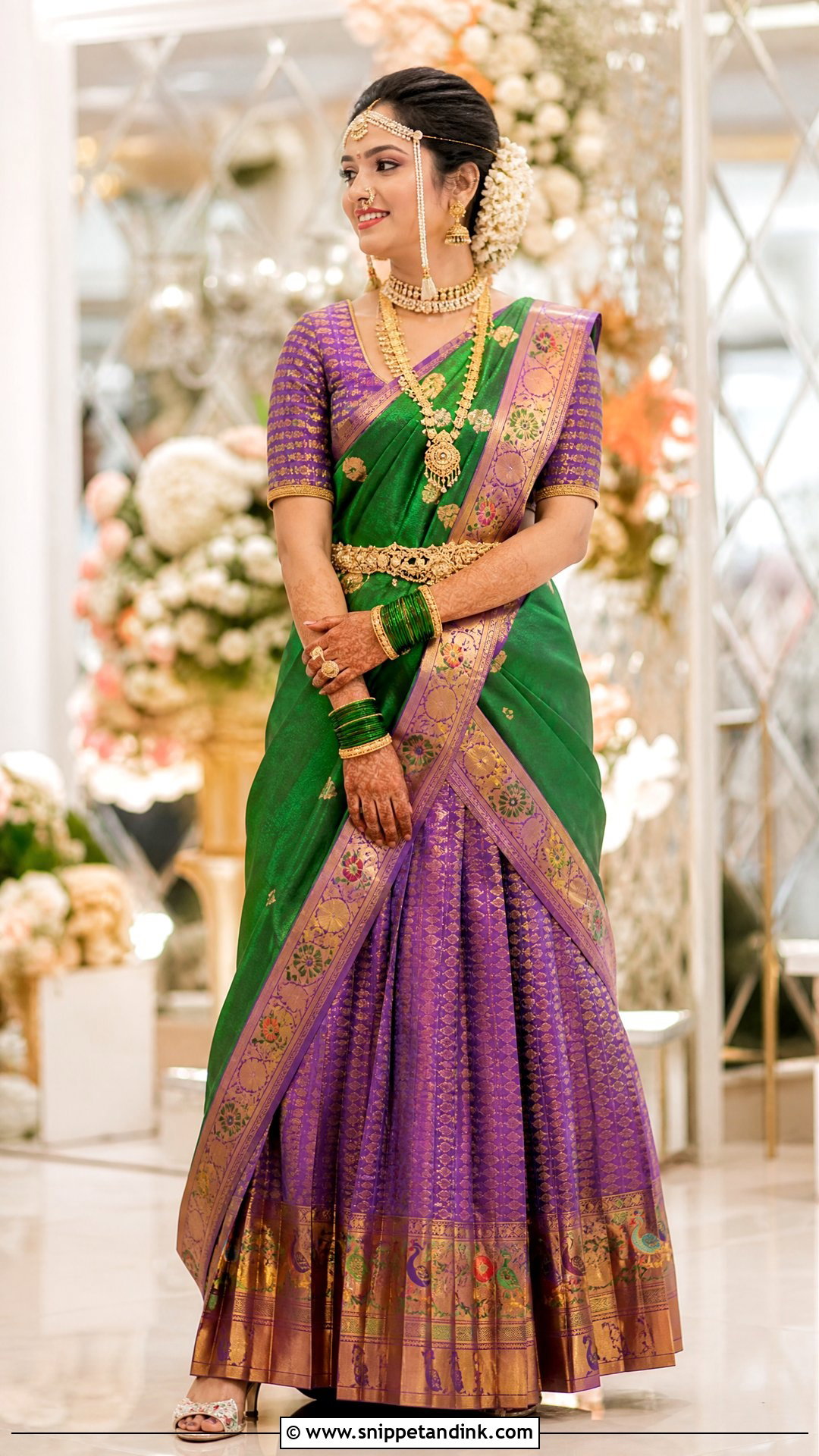
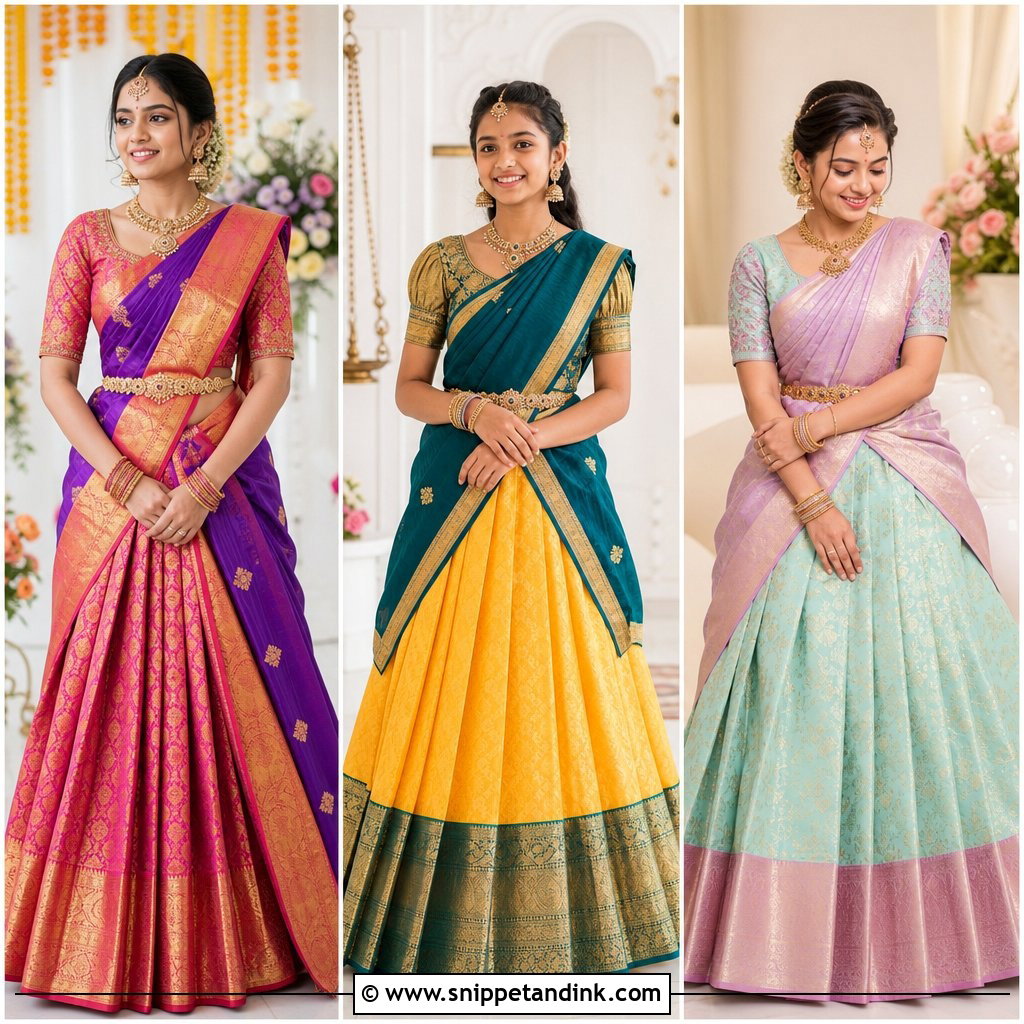
A Paithani lehenga suits a reception, an engagement or a wedding blending two traditions. Choose a full skirt in Paithani-patterned silk, a fitted brocade blouse and a coordinated dupatta draped over one shoulder and across the front, so it still echoes a saree line. A nath, pearl mundavalya, thushi, green bangles, gold earrings and a kamarband keep it Marathi; add a long necklace if the blouse neck is plain. A jasmine bun feels traditional, a neat braid easier to dance in. Real Paithani yardage is costly to cut into panels, so ask whether yours is handwoven or a printed pattern before you pay for it.
Wearing a Nath and Mundavalya Through the Ceremony
The nath is the piece brides complain about most by the afternoon. The traditional Marathi nath curves over the nostril, and its weight pulls if it’s only held at the piercing. If your nose isn’t pierced, press-on and clip styles exist, but test one for at least an hour; some pinch more as the skin warms up. A thin chain from the nath tucked into the hair takes much of the weight off, and I always ask the bride to eat and drink something with it on during the trial.
The mundavalya ties around the head with strands falling at the temples, so it has to be fixed after the bun and before any shela or pallu goes over the hair. Tie it snugly enough that it stays level when you bow your head, but loosen it if you feel it pressing; a headache halfway through the rituals is a real risk with a tight band.
Jasmine wilts in heat. Have your florist deliver the gajra as late as possible and keep a spare string in a damp cloth for the reception change.
Drape, Jewelry and Hair Tested Together
Marathi bridal dressing stays memorable when cultural details meet personal choices. Paithani silk, Nauvari draping, Peshwai touches, jewelry, flowers and makeup all have to work as one look. Green, yellow, red, purple and maroon remain the traditional anchors, while pink, ivory, blue and a Paithani lehenga offer something fresher. Before the day, wear the drape, blouse, jewelry, footwear and hair together at least once. That’s when you discover a nath that pinches or a kamarband that digs in. Grand or simple, the right choice is the one you can wear confidently through every ritual.
You'll Like These Ideas:





Leave a Reply