
Peonies are the flower I’m asked to put on cakes more than any other, and they earn it: the layered petals look full and soft without the stiffness of a rose. They suit classic white tiers as easily as colorful garden cakes, from spring ceremonies to ballroom receptions and pared-back modern parties. There are three ways to get them onto a cake. Fresh peonies work when they’re in season, sugar peonies give you any color all year, and buttercream peony piping keeps every petal edible. Each behaves differently in a warm room, and each changes how big and how heavy the flowers can be. Below are the peony cakes couples ask me for, with notes on what each one takes to make and where it can disappoint.
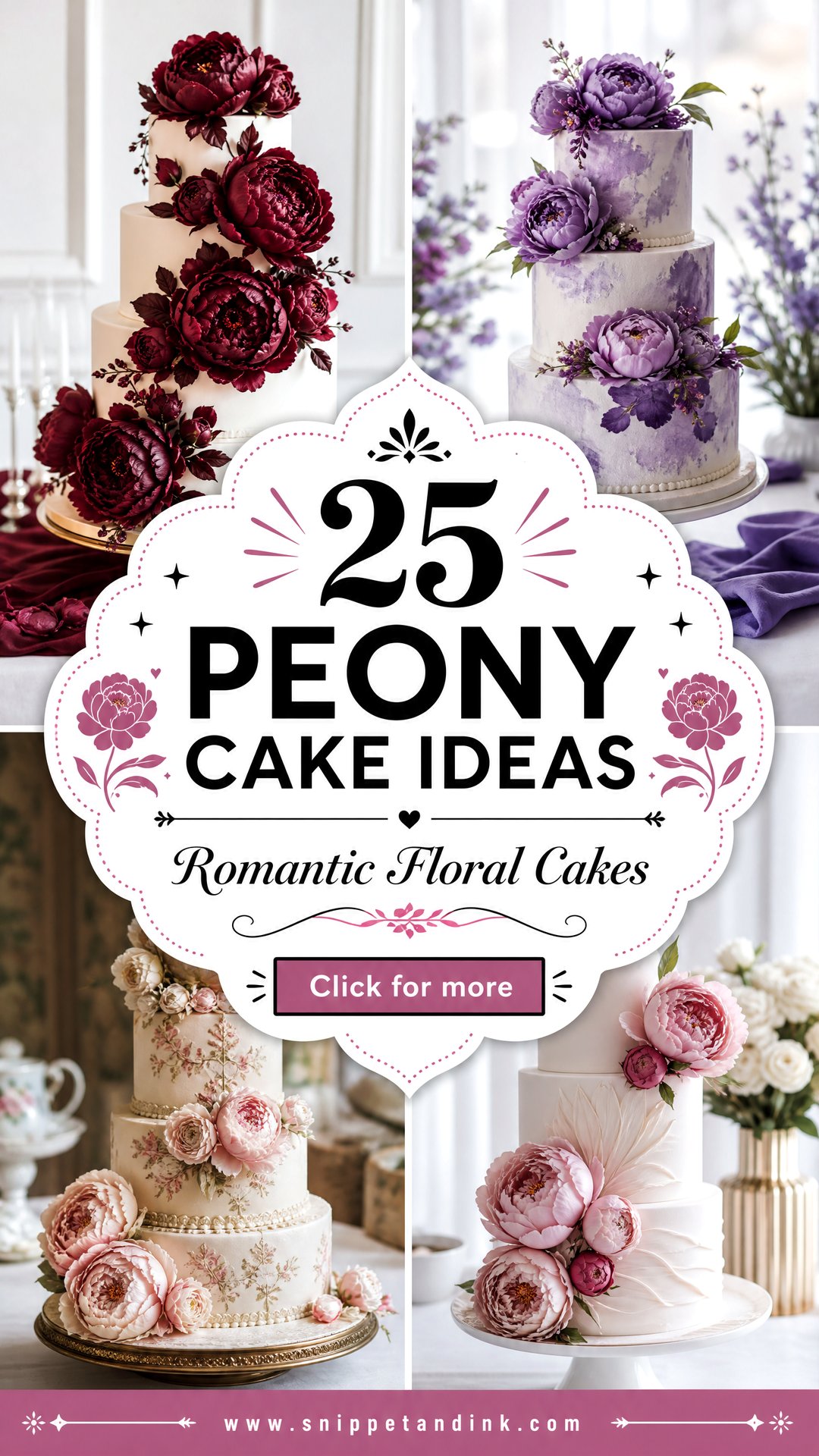
Fresh, Sugar or Piped: How Each Peony Behaves on a Cake
The type of peony decides more about your cake than the color does. It sets how far ahead it must be made, how it handles a warm room and what happens to it after the cutting.
Fresh peonies
Fresh peonies are at their most plentiful and affordable in late spring and early summer. Outside that window they’re imported, pricier and harder to guarantee in a particular color. They open fast once they’re warm, so a tight bud at ten in the morning can be fully blown by dinner. I ask florists to supply blooms at a half-open stage, with a few spares, and I add them at the venue.
Sugar peonies
Sugar peonies are made weeks ahead, so order them when you book the cake rather than closer to the date. They contain wires and aren’t meant to be eaten; they’re lifted off before slicing. Damp air softens them, so a humid outdoor reception is hard on sugar flowers too, just more slowly than on fresh ones.
Buttercream peonies
Piped peonies are fully edible and usually the least expensive, but they’re smaller and less ruffled than real ones, and they soften as soon as the room warms. If you want a big, blowsy peony look, piping won’t give you that, and sugar or fresh will.
1. White Peony Wedding Cake
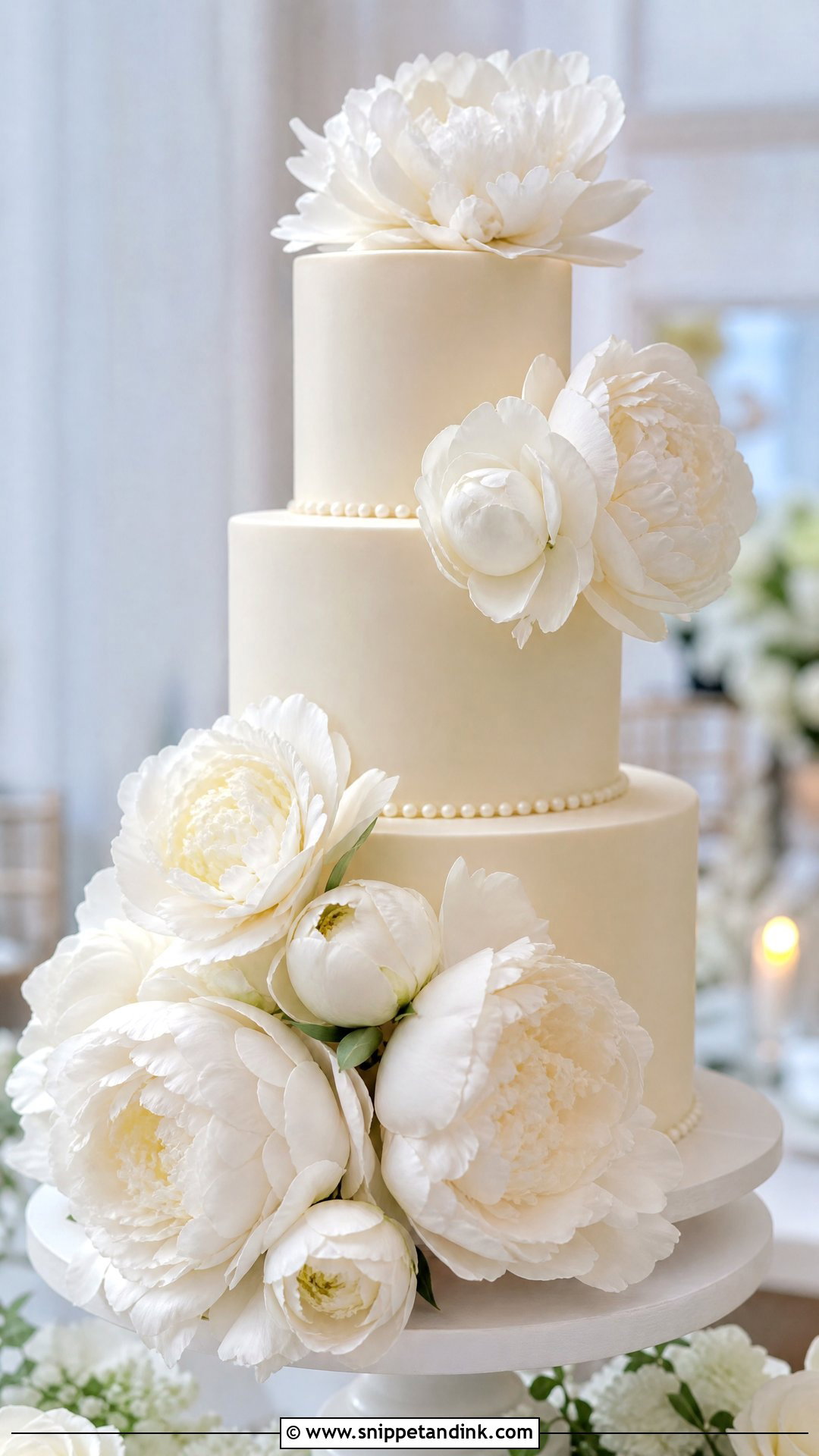
All-white peonies on ivory tiers is the cake I’d call the safest choice, because it suits almost any style of wedding. Large white sugar peonies can sit at the base, between tiers or sweep across one side. The challenge with white on white is that it can look flat, so I dust the inner petals of sugar peonies with a faint cream or green so they have shadow and depth. Pearl piping, satin ribbon or a soft buttercream texture also keeps it from looking plain. Church weddings, hotel ballrooms and black-tie receptions suit it, with vanilla bean, almond or champagne sponge inside.
2. Blush Peony Wedding Cake
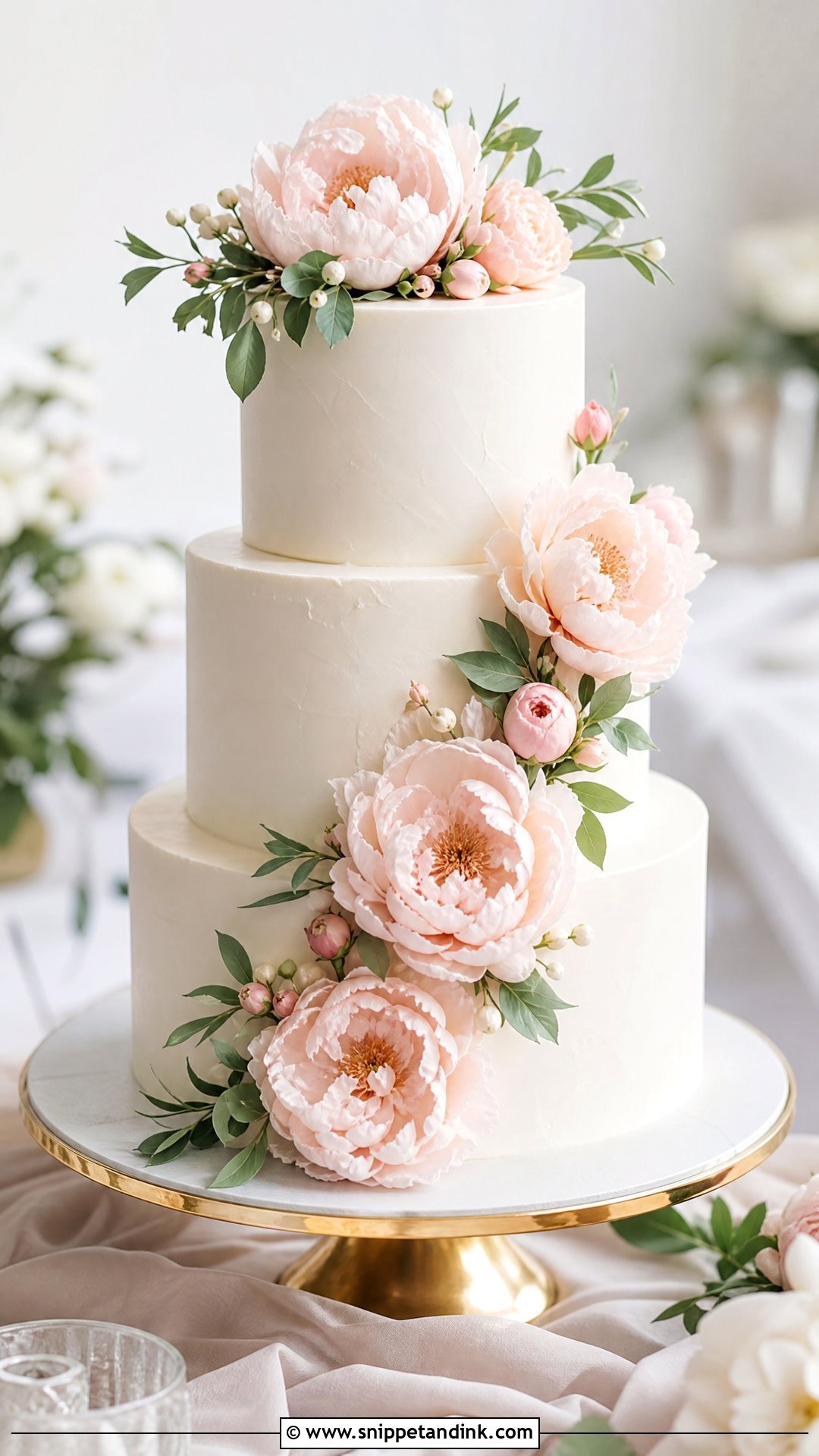
Blush adds warmth without taking over, which is why it suits palettes of soft pink, ivory, champagne or dusty rose. A three-tier cake in smooth white buttercream with blush sugar peonies is the version I make most. A diagonal sweep of flowers adds movement, while a cluster on the top tier looks more like a bouquet. Small buds and greenery are what make the arrangement look natural, since a cake covered only in open blooms looks crowded. Strawberry vanilla, raspberry almond or rosewater buttercream suit the color.
3. Pink Peony Wedding Cake
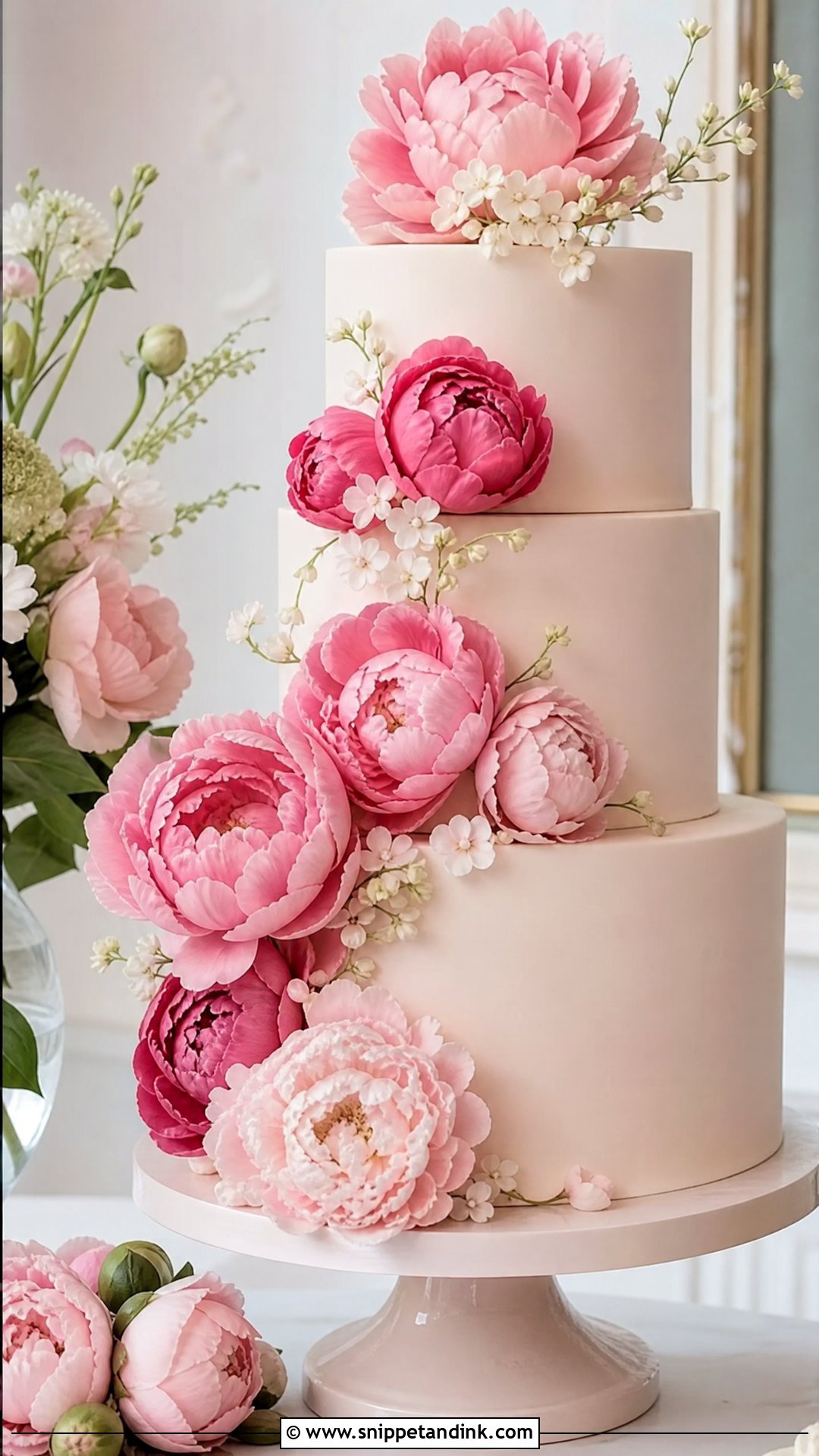
Pink peonies look best in several shades at once: pale blush, warm rose and a deeper berry. One flat pink across every flower makes the arrangement look like a block in photos, while mixing tones gives the tiers depth. A white or pale pink base lets the blooms stand out. Real pink peonies also vary in tone as they open and fade, so if you’re matching fresh flowers, I’d rather see a photo from your florist the week of the wedding than a stock picture. Spring weddings and garden venues suit it, with strawberry filling, vanilla sponge or pink champagne cake.
4. Sugar Peony Wedding Cake
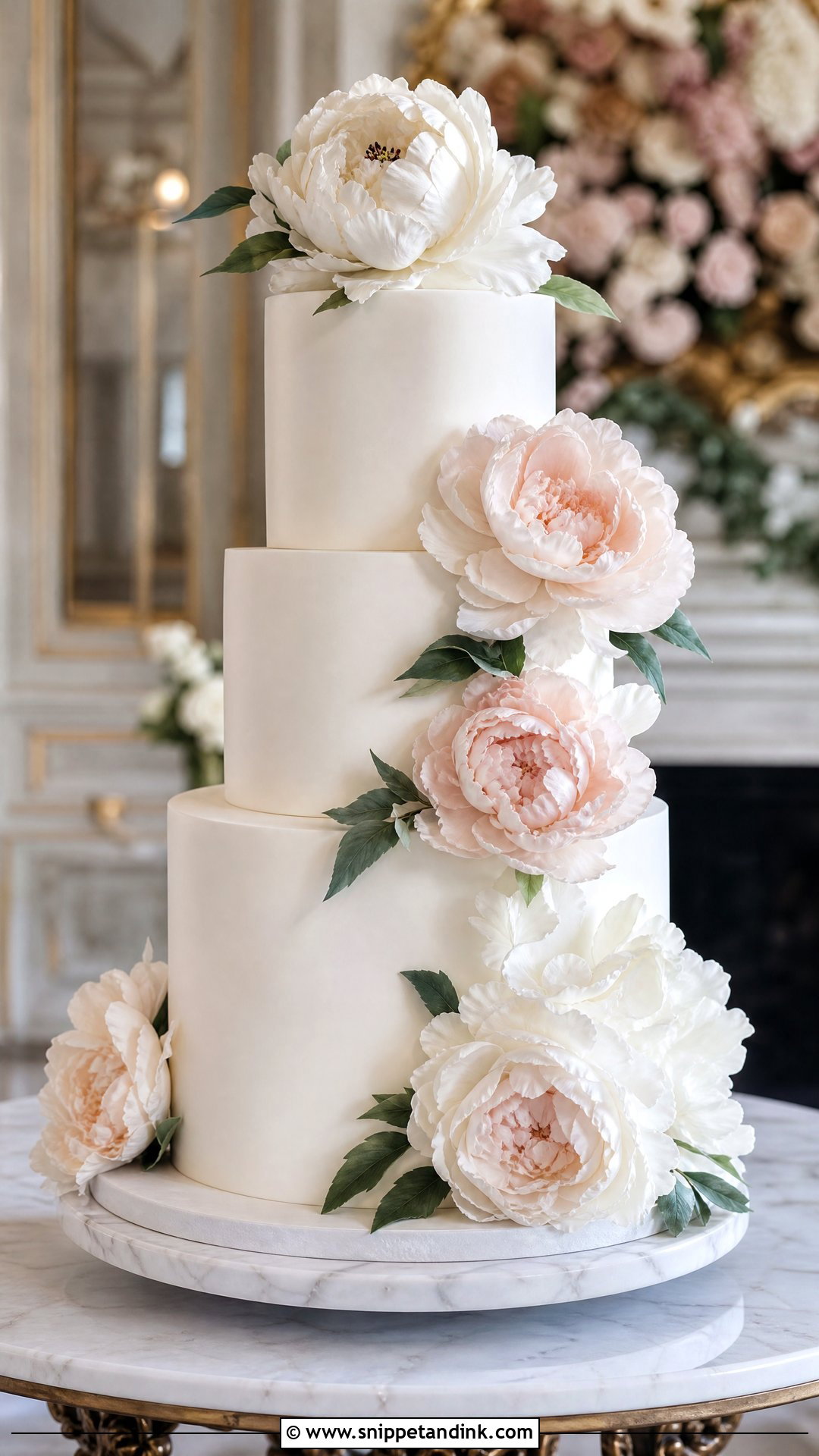
Sugar peonies last through the whole event and can be made in any color, from white and blush to coral, burgundy or something custom. That makes them the answer when real peonies are out of season or the venue is warm. They’re made from gum paste, one petal at a time, each petal wired, shaped, dried and then dusted with color, so a single large peony takes hours and needs drying time between stages. Order early. On smooth fondant they look refined, and they’re ideal for destination weddings where fresh flowers might wilt. Ask for thin petal edges and a realistic center; thick edges are what make sugar flowers look fake.
5. Fresh Peony Wedding Cake
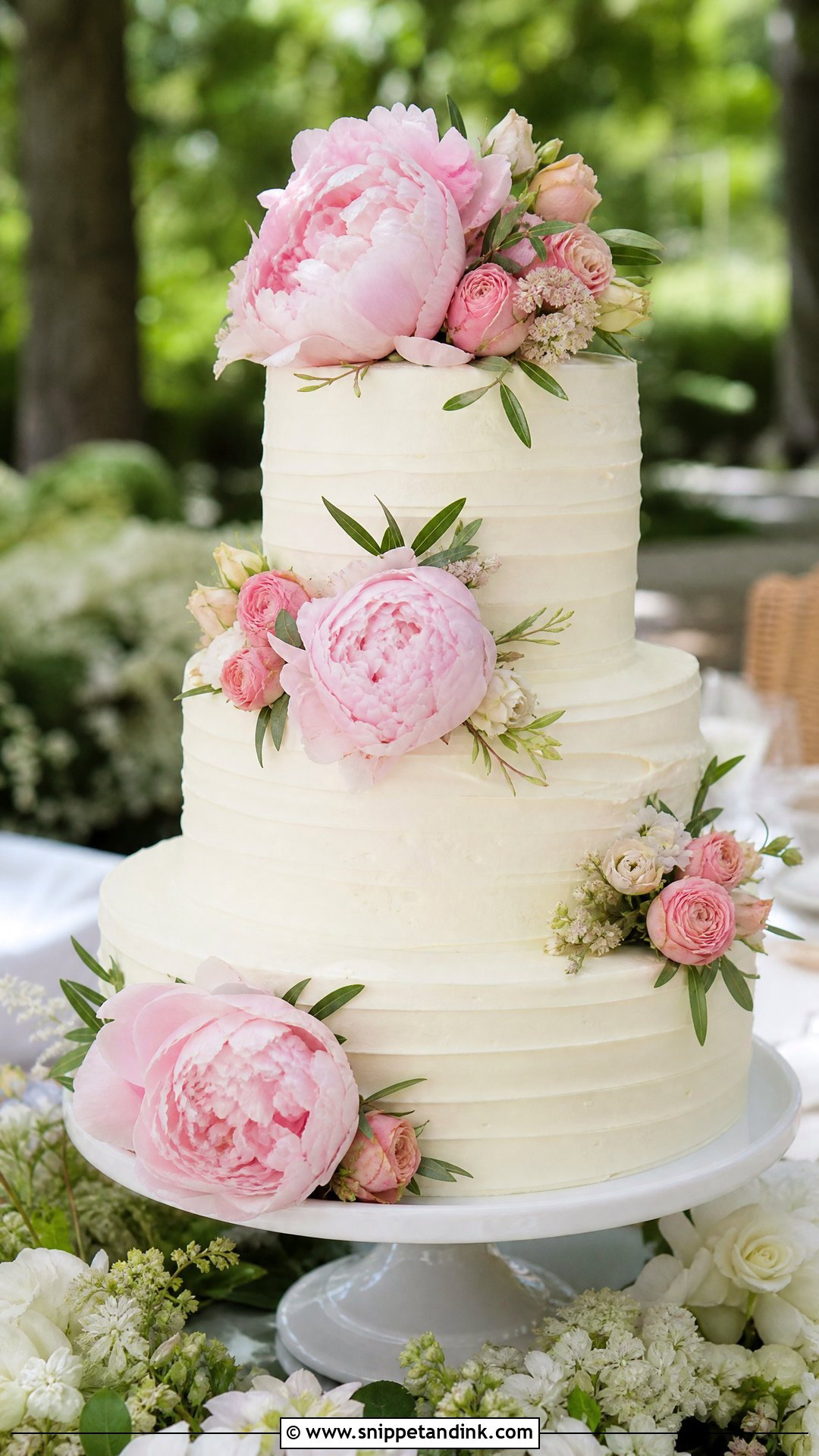
Fresh peonies tie the cake to the reception flowers, but they need planning between your florist and baker. The blooms must be food-safe, grown without pesticides if possible, with stems wrapped or set into picks, and placed as close to serving as possible. Peonies open quickly in a warm room, so I ask the florist to deliver them at the stage they’ll look best in two or three hours, not at full bloom. A semi-naked or buttercream cake with fresh peonies looks relaxed; on fondant it’s more polished. Small roses, greenery and filler flowers help the peonies settle in rather than perching on top.
6. Buttercream Peony Wedding Cake
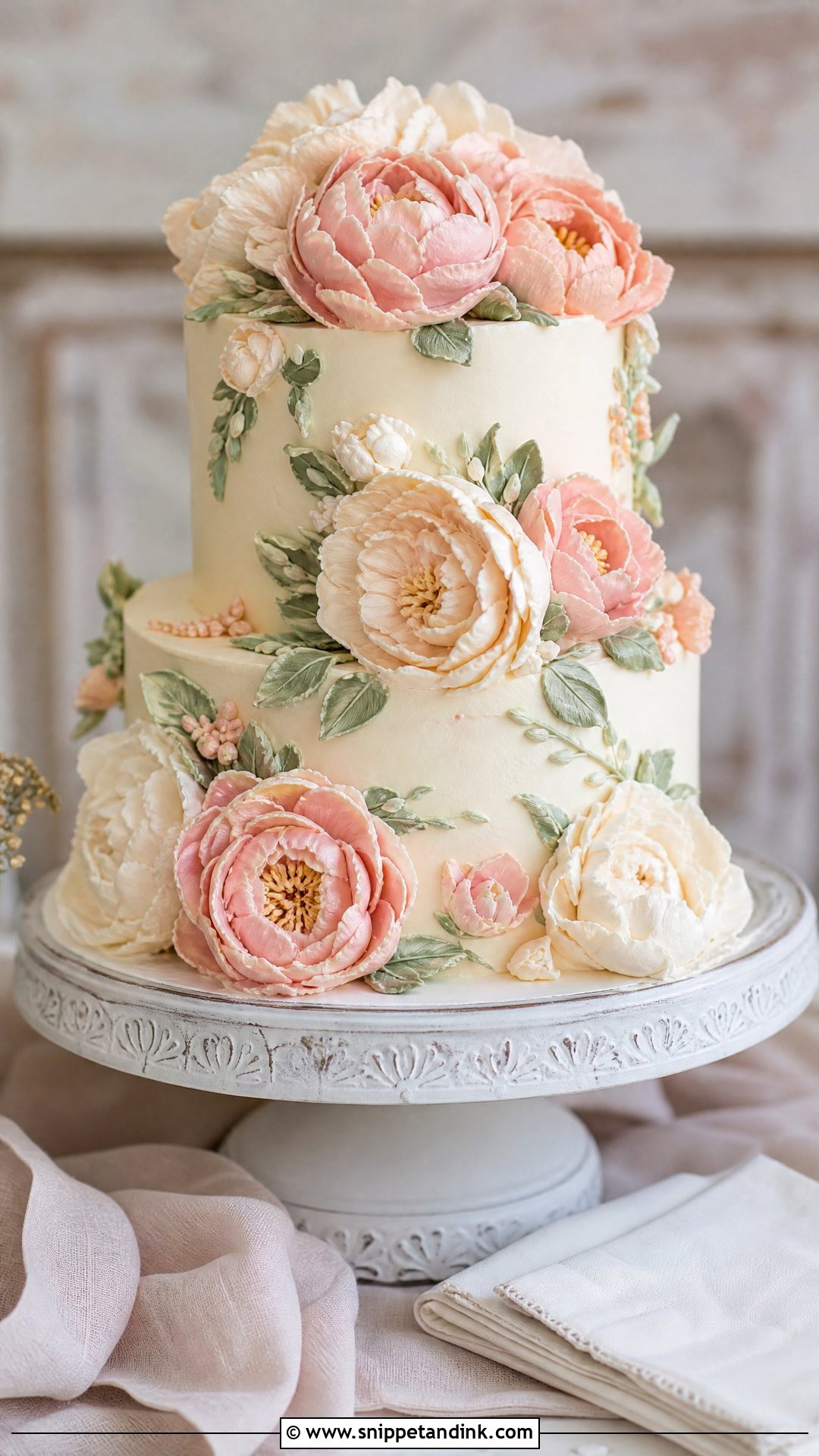
Piped buttercream peonies keep the whole cake edible and give a softer, handmade texture. I pipe them with a petal tip, either straight onto the cake or onto squares of parchment, freeze them, and lift them onto the tiers once they’re firm. Buttercream peonies are smaller and flatter than sugar or fresh ones, and they soften in heat, so they suit intimate weddings in cooler rooms better than a summer marquee. Pale pink, ivory, peach and lavender all pipe well. Vanilla, lemon or almond sponge keeps the flavor light.
7. Peony Cascade Wedding Cake
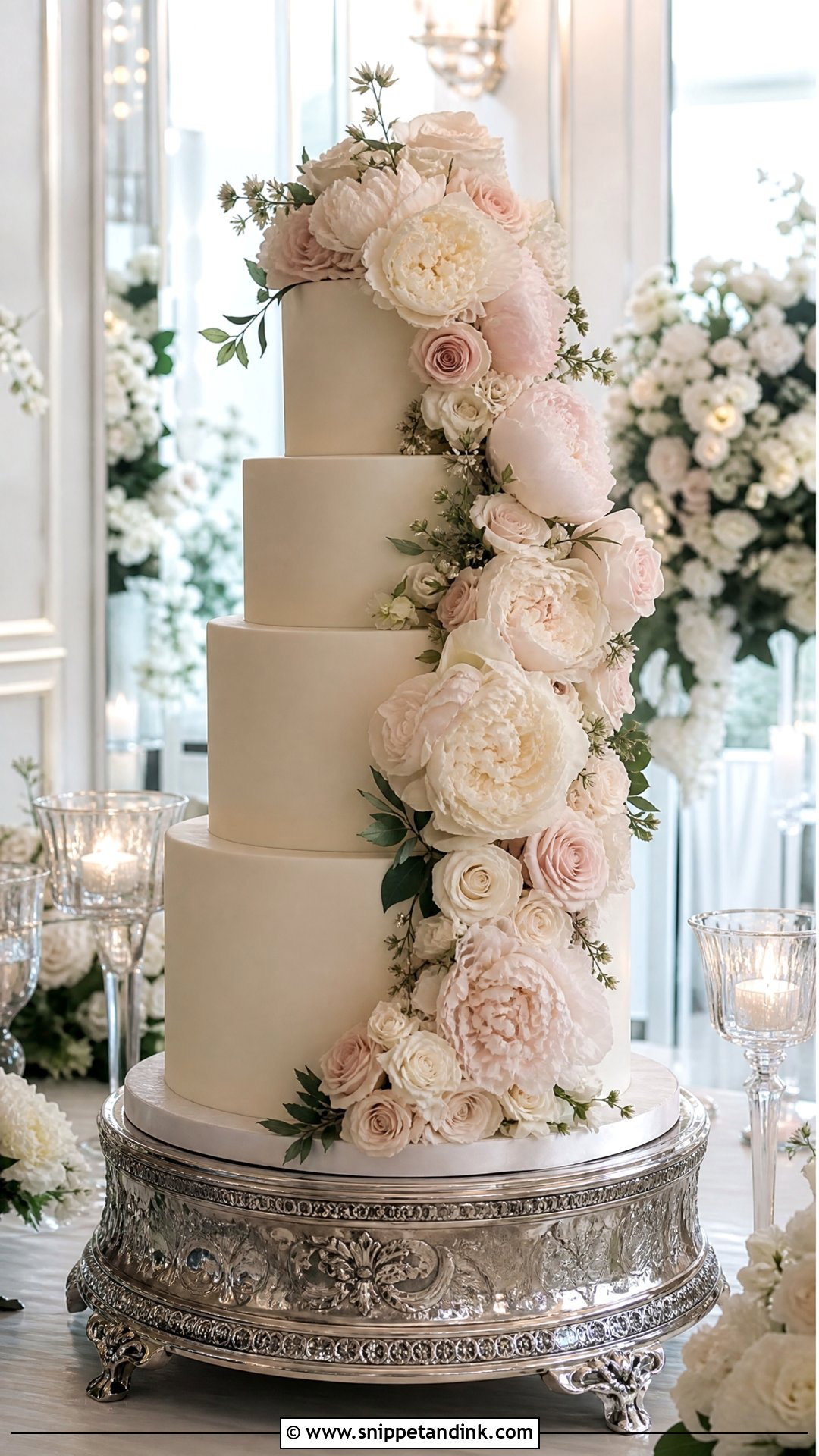
A peony cascade wedding cake runs flowers from the top tier to the bottom, which makes the cake look taller and gives it a sense of movement. It needs at least three tiers, because the flowers need room to fall. Large peonies anchor the line, with smaller buds, roses, greenery and filler blooms filling the gaps. A white buttercream or fondant base keeps the trail as the focus. Cascades are built at the venue, after the cake is stacked, so allow time for that in your setup schedule. Keep everything else on the cake simple.
8. Two Tier Peony Wedding Cake
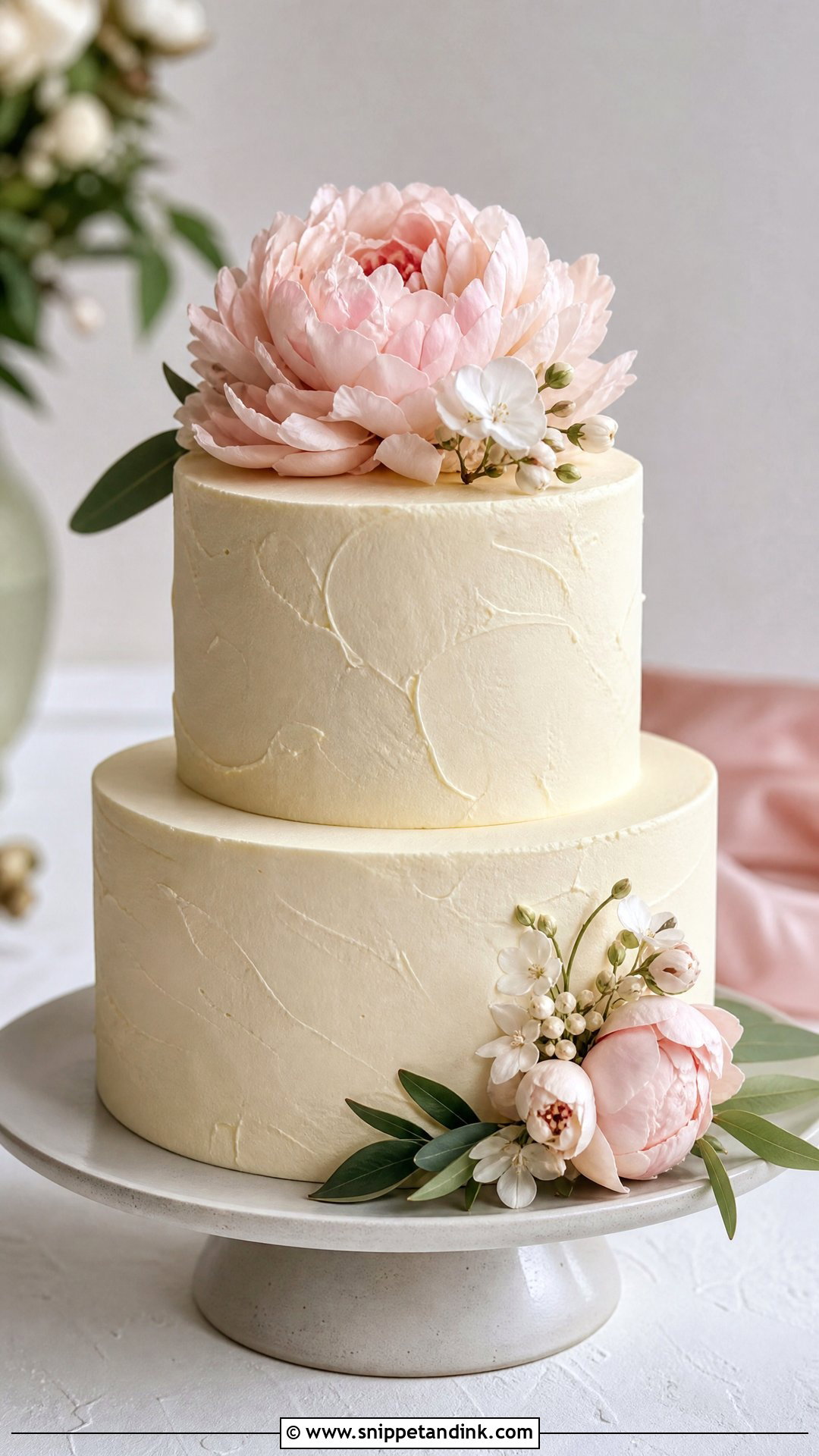
Two tiers suit smaller weddings, elopements and bridal lunches. The tricky part is scale. A fully open peony can be nearly as wide as a small top tier, so I use one large bloom on top and a small cluster at the base, with buds rather than open flowers filling in. Smooth buttercream, a subtle ribbed texture or a soft watercolor finish all work. It’s the most budget-friendly cake here, since it needs fewer flowers and fewer servings, and it still looks right on a dessert table or in a cutting photo.
9. Three Tier Peony Wedding Cake
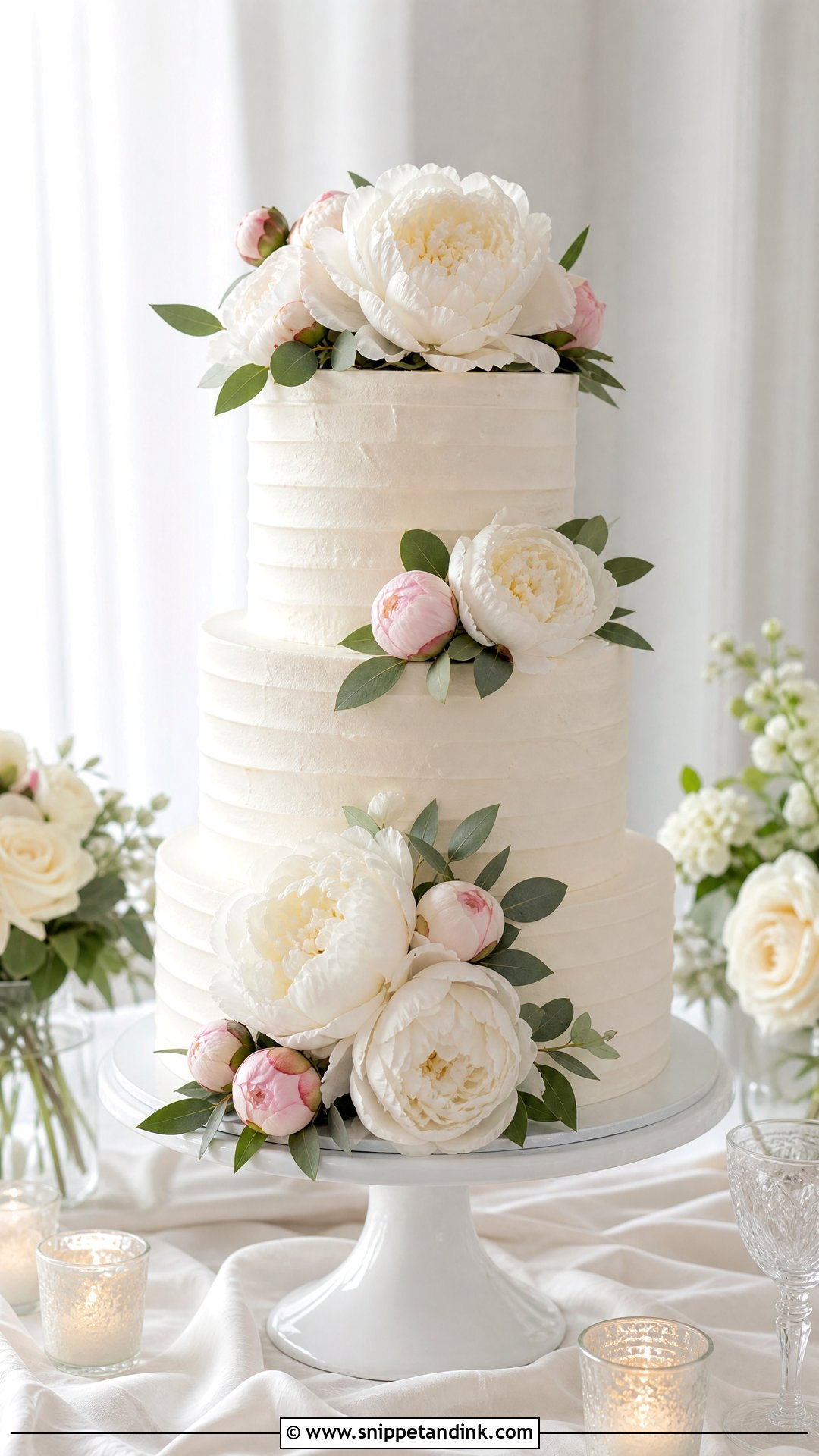
Three tiers is the classic wedding shape and suits a wide range of guest counts. It works with every type of peony: fresh, sugar, piped or a soft cascade. For balance, I place the largest cluster near the top, a smaller grouping in the middle, and a few blooms at the base, so the eye travels down the cake. White, blush and sage green are a popular trio. Each tier can have its own flavor, such as vanilla raspberry, lemon cream and almond buttercream, which also gives guests a choice.
10. Four Tier Peony Wedding Cake
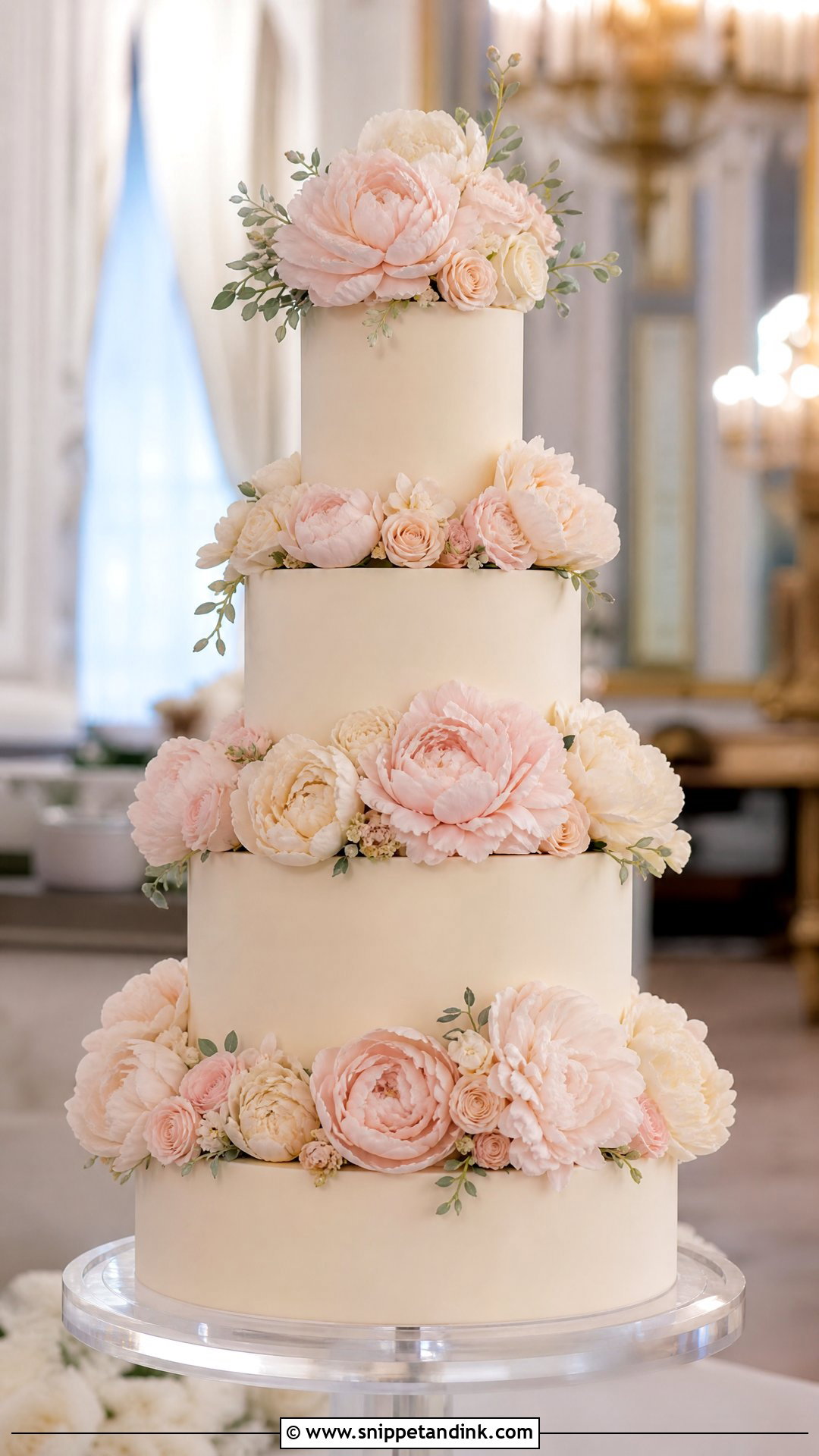
Four tiers suits larger weddings and formal receptions, and the extra height allows a full cascade or clusters around each tier. Fondant gives a crisp finish, buttercream a softer one. With this much cake, I keep to one main peony color and use smaller flowers for contrast, otherwise the cake starts to look like a florist’s display. Ivory and blush are classic, while burgundy or coral peonies add personality. A cake this tall also needs proper internal supports and dowels, and it’s usually stacked on site.
11. Naked Peony Wedding Cake
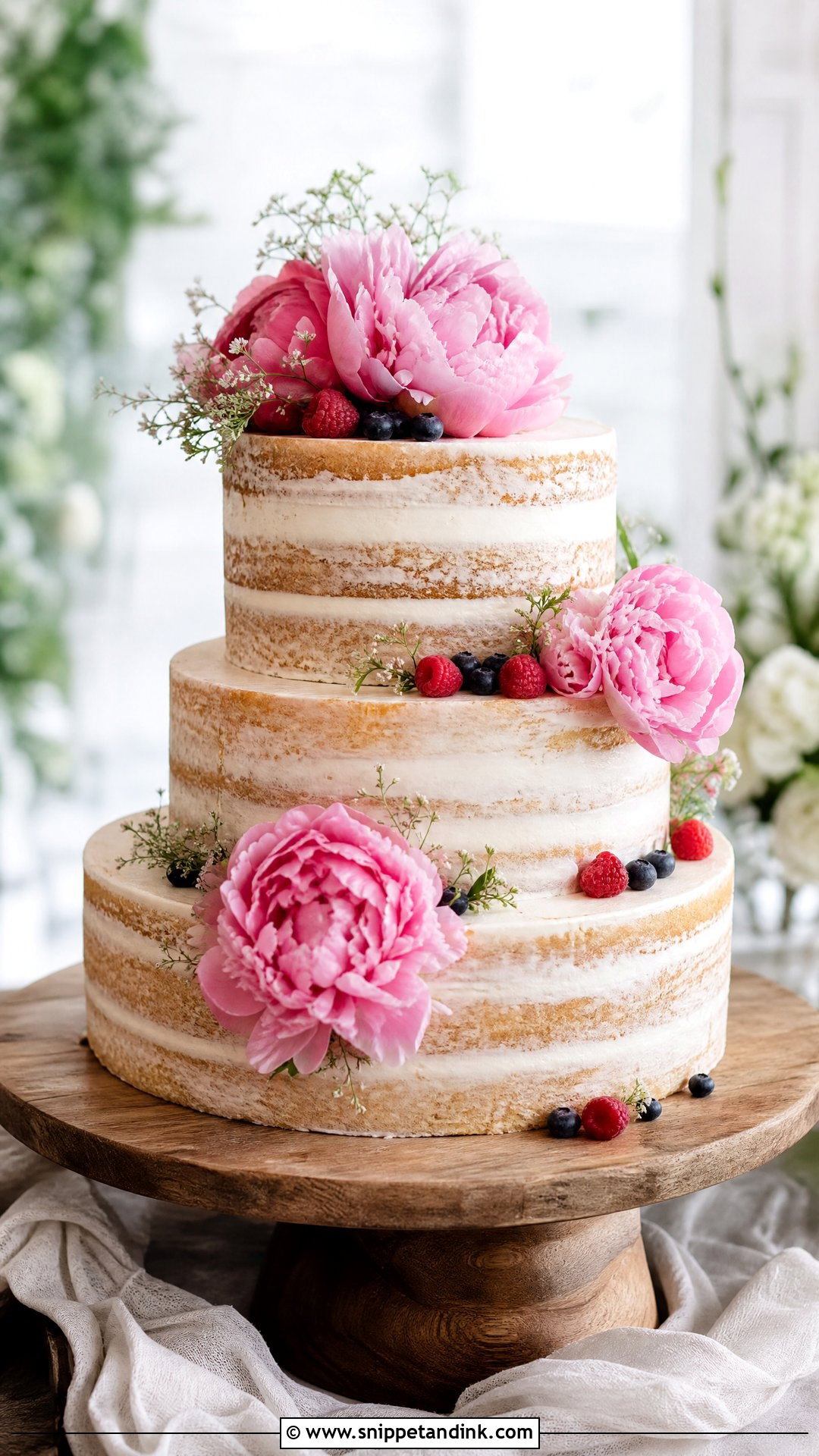
A naked peony wedding cake shows the sponge layers through a thin scrape of frosting, and full peony blooms soften its rustic edges. It suits barn weddings, garden receptions and backyard parties. Fresh peonies look natural here, though sugar peonies give more control over color. Add berries, herbs or small greenery for a seasonal touch. Because the sponge is exposed, it dries faster than a frosted cake, so I soak the layers with syrup and assemble it as close to the event as possible. Vanilla berry, lemon, carrot and almond are popular fillings. Keep the flowers loose so the cake looks gathered rather than arranged.
12. Semi Naked Peony Wedding Cake
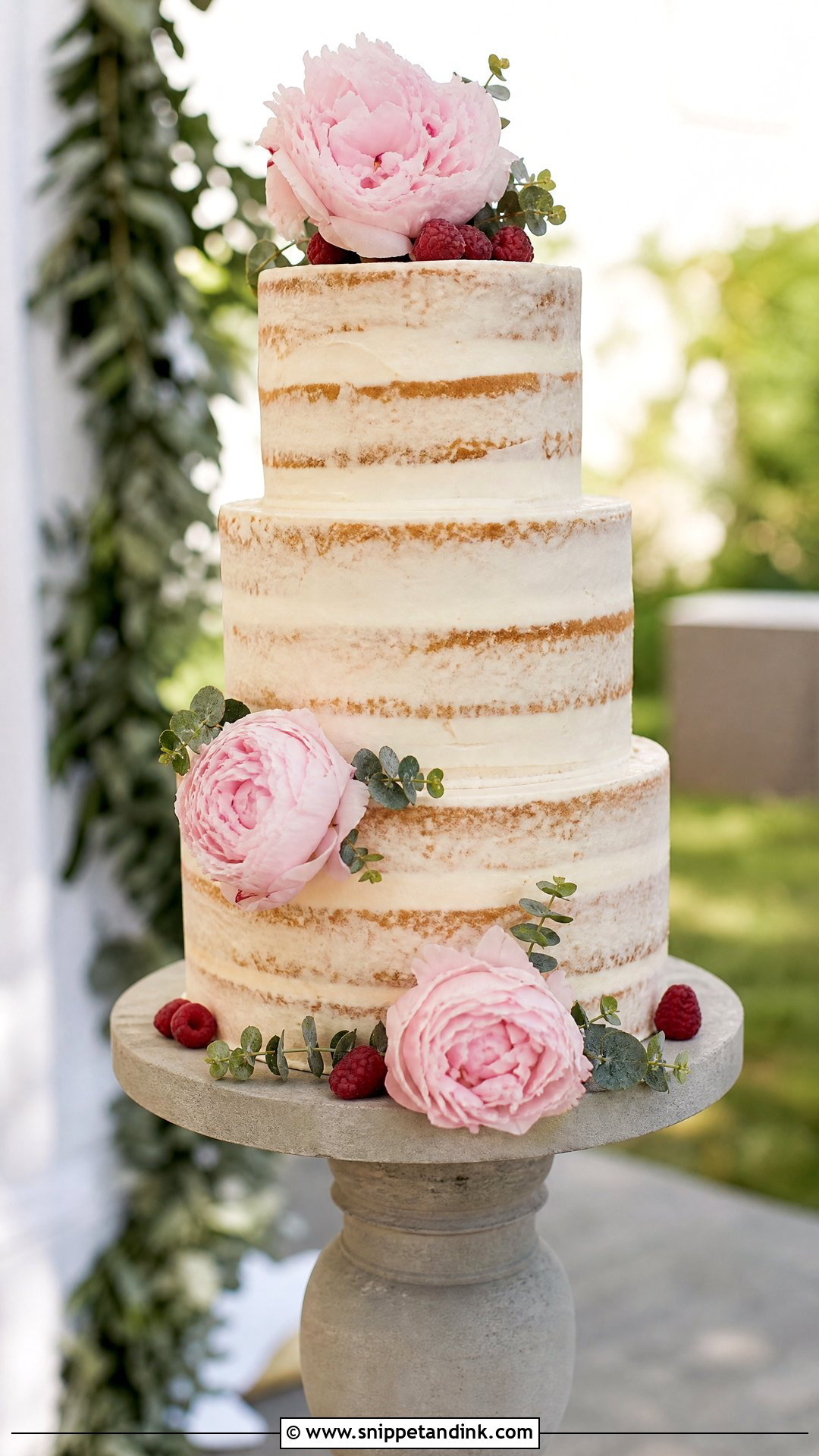
Semi-naked gives exposed layers a little more polish, with a thin coat of buttercream softening the sponge while still letting it show. Peonies can sit on top, along one side or around the base. Spring and summer weddings suit it because it feels fresh without being formal. The thin coat holds moisture better than a fully naked cake, which makes it easier to serve after a long reception. Lemon curd, raspberry filling or vanilla bean buttercream work well inside, and a wooden stand or stone pedestal finishes the outdoor look.
13. Gold Peony Wedding Cake
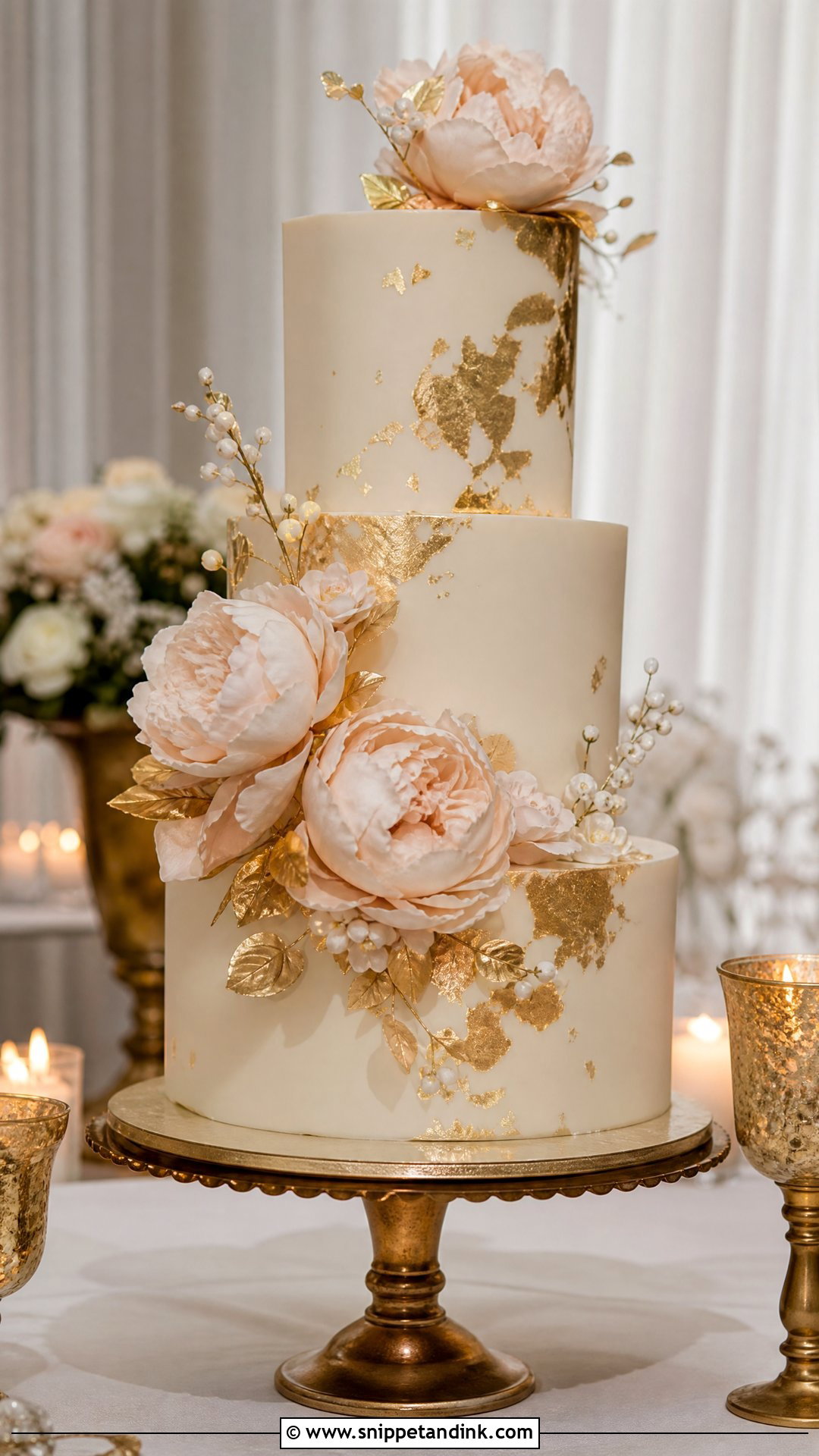
Gold can be edible leaf, painted accents, a metallic tier or thin bands around each layer, and peonies keep the shine from looking flashy. White, blush and champagne peonies sit softly against gold, while burgundy makes it moodier for an evening reception. Edible gold leaf is fragile and sticks to anything, so I apply it with a soft brush onto a slightly tacky surface and never touch it with fingers. Ballroom weddings, Art Deco venues and formal receptions suit it, with champagne, almond, vanilla or caramel cake inside.
14. Burgundy Peony Wedding Cake
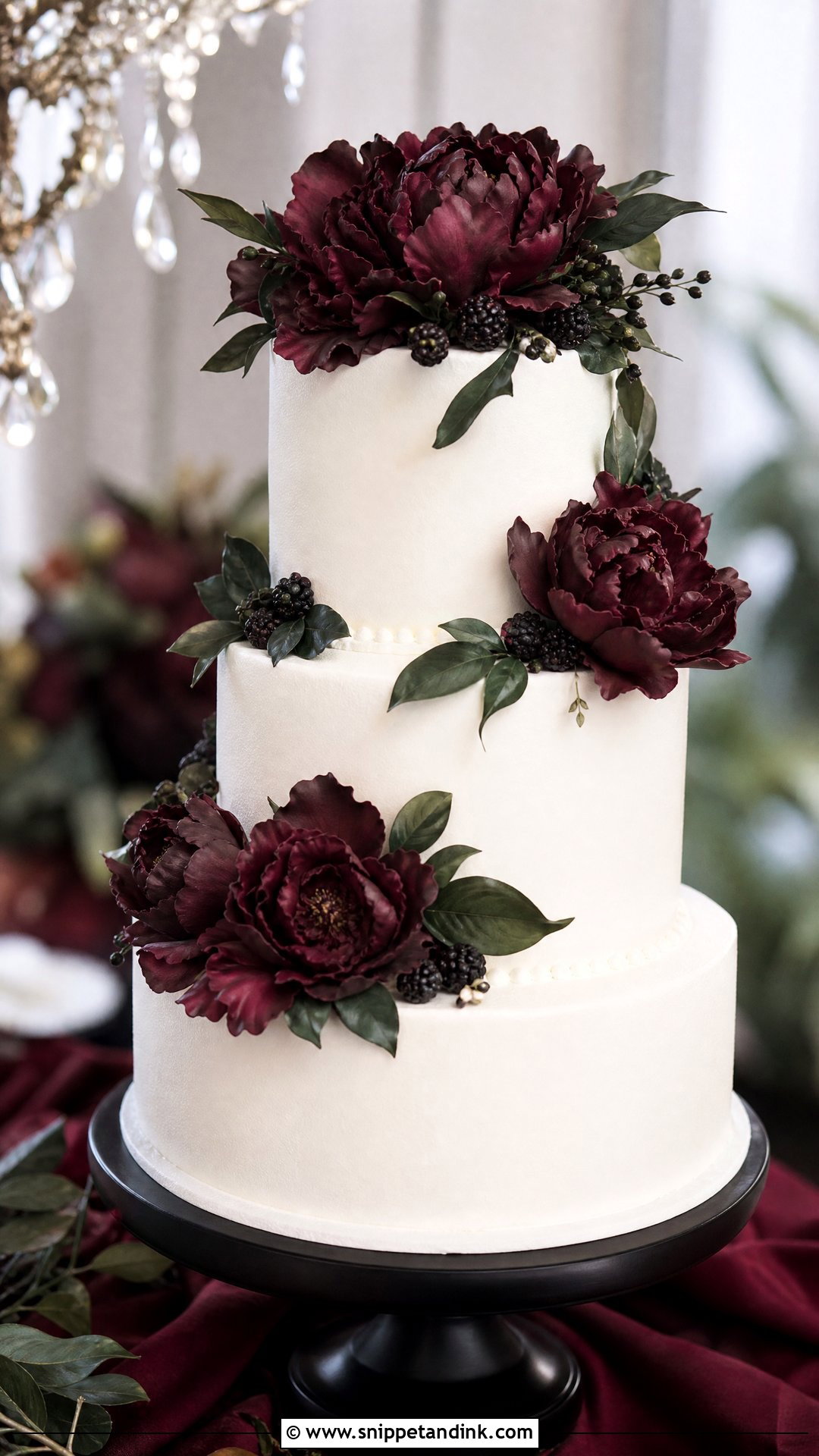
Burgundy peonies give a romantic cake depth and contrast against white, ivory, blush or even charcoal frosting. Fall weddings, evening receptions and moody palettes are where they belong. I keep the flowers large and few, because lots of small dark flowers look busy, and add gold leaf, dark berries or deep greenery only lightly. Real burgundy peonies can stain buttercream where petals touch it, another reason I usually make them in sugar. Chocolate raspberry, red velvet, vanilla blackberry or spiced almond suit the color.
15. Coral Peony Wedding Cake
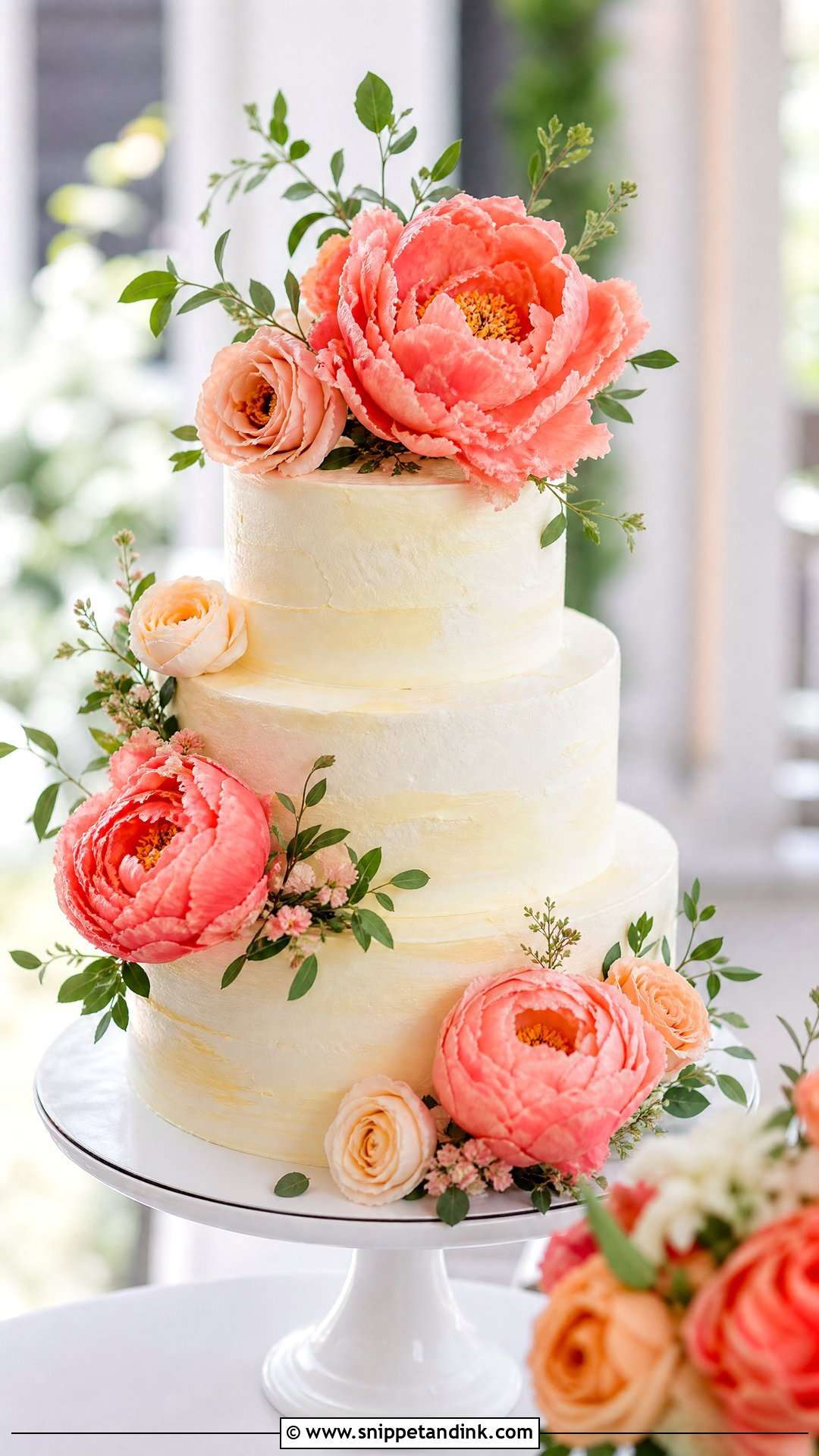
Coral peonies are bright and cheerful, suited to spring, summer, coastal and outdoor weddings. A white or soft peach buttercream base lets coral sing without clashing, and peach roses, pale pink buds and soft greenery round out a garden arrangement. One thing to know if you’re using real flowers: coral peonies fade quickly as they open, often turning softer and paler within a day, so the color on the day may be lighter than in photos. Lemon, orange blossom or vanilla passion fruit flavors match it. Go light if your palette is soft, fuller if you want a cheerful cake.
16. Blue Peony Wedding Cake
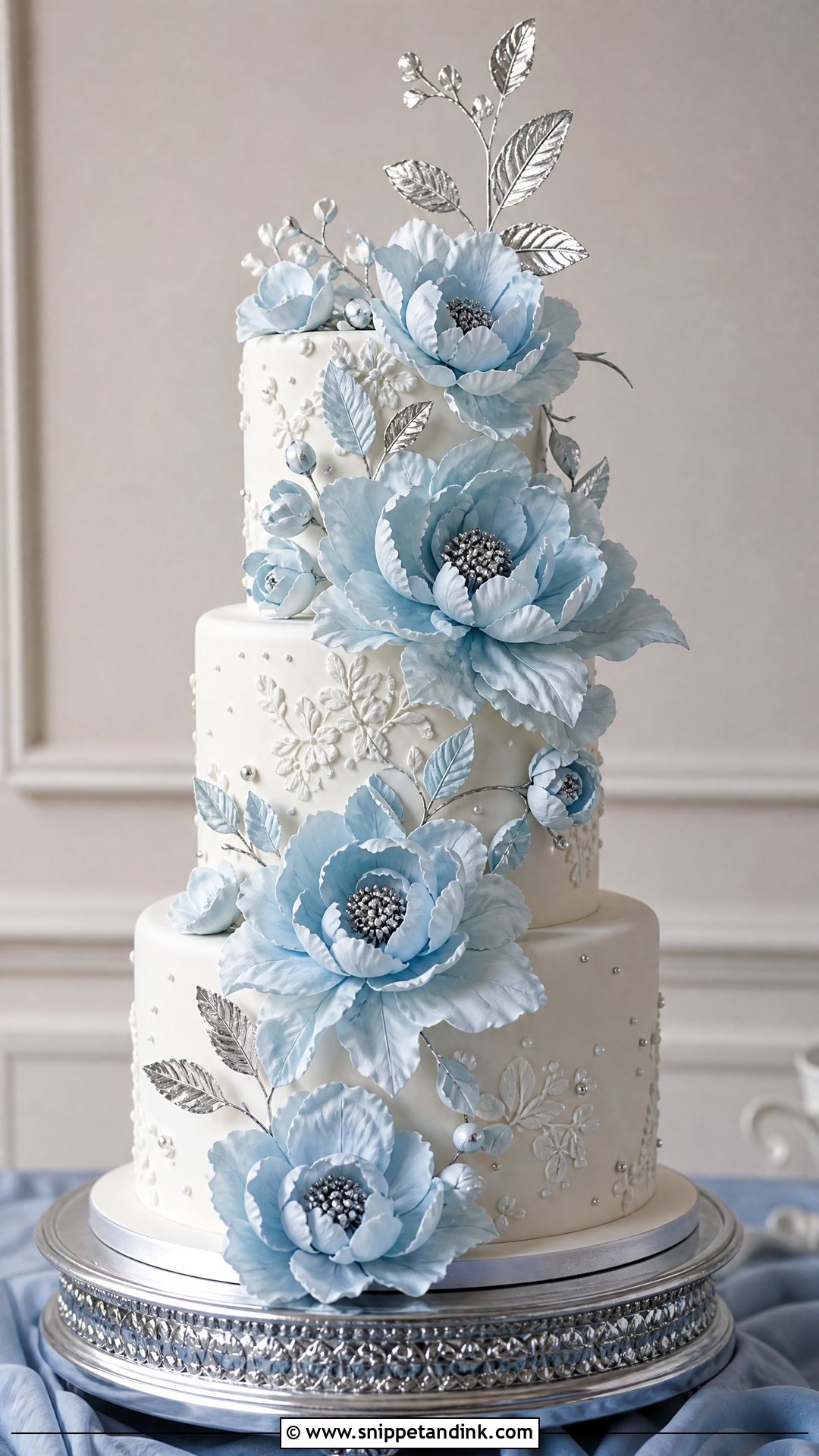
Peonies don’t grow blue, so a blue peony cake is always sugar flowers, edible color or painted detail. It suits dusty blue, navy, coastal or garden palettes. Pale blue sugar peonies on a white cake look soft and airy, and navy accents make it more formal. Blue petal dust can look flat under warm lights, so I layer a darker shade at the base of each petal for depth. Silver leaf, pearl piping or lace texture can add detail. Vanilla blueberry, lemon elderflower or almond cream flavors match the cool color.
17. Purple Peony Wedding Cake
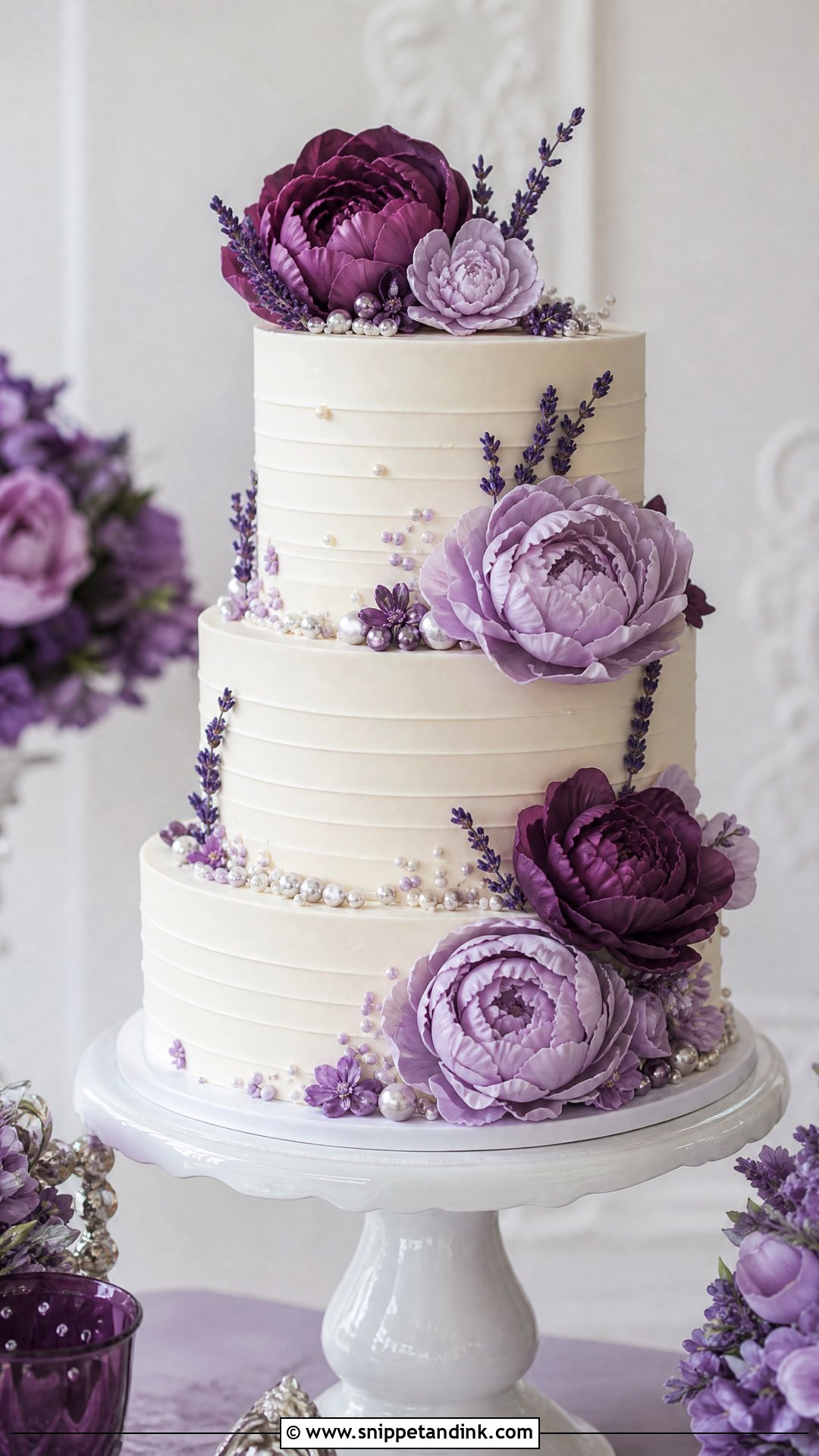
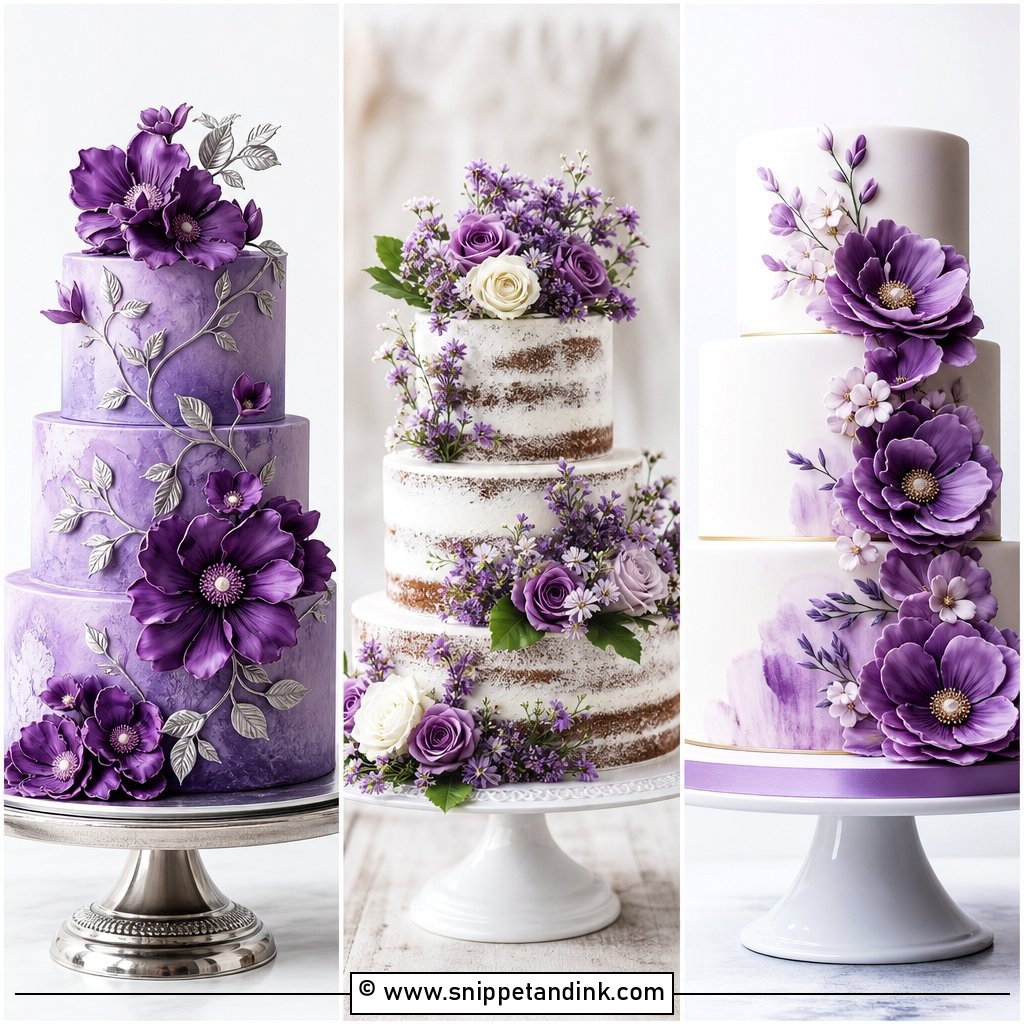
Purple peonies feel romantic and a little unexpected. Soft lavender suits spring garden weddings, while deep plum suits evening receptions. A white, ivory or pale gray cake makes the purple stand out. Purple is a tricky color in sugar and in buttercream, because it can fade toward grey or blue in strong light, so I keep the cake out of direct sun and test the shade under similar lighting. Lavender sprigs, pearl details or silver accents add texture. Lavender vanilla, blackberry cream, lemon or white chocolate raspberry go well inside.
18. Watercolor Peony Wedding Cake
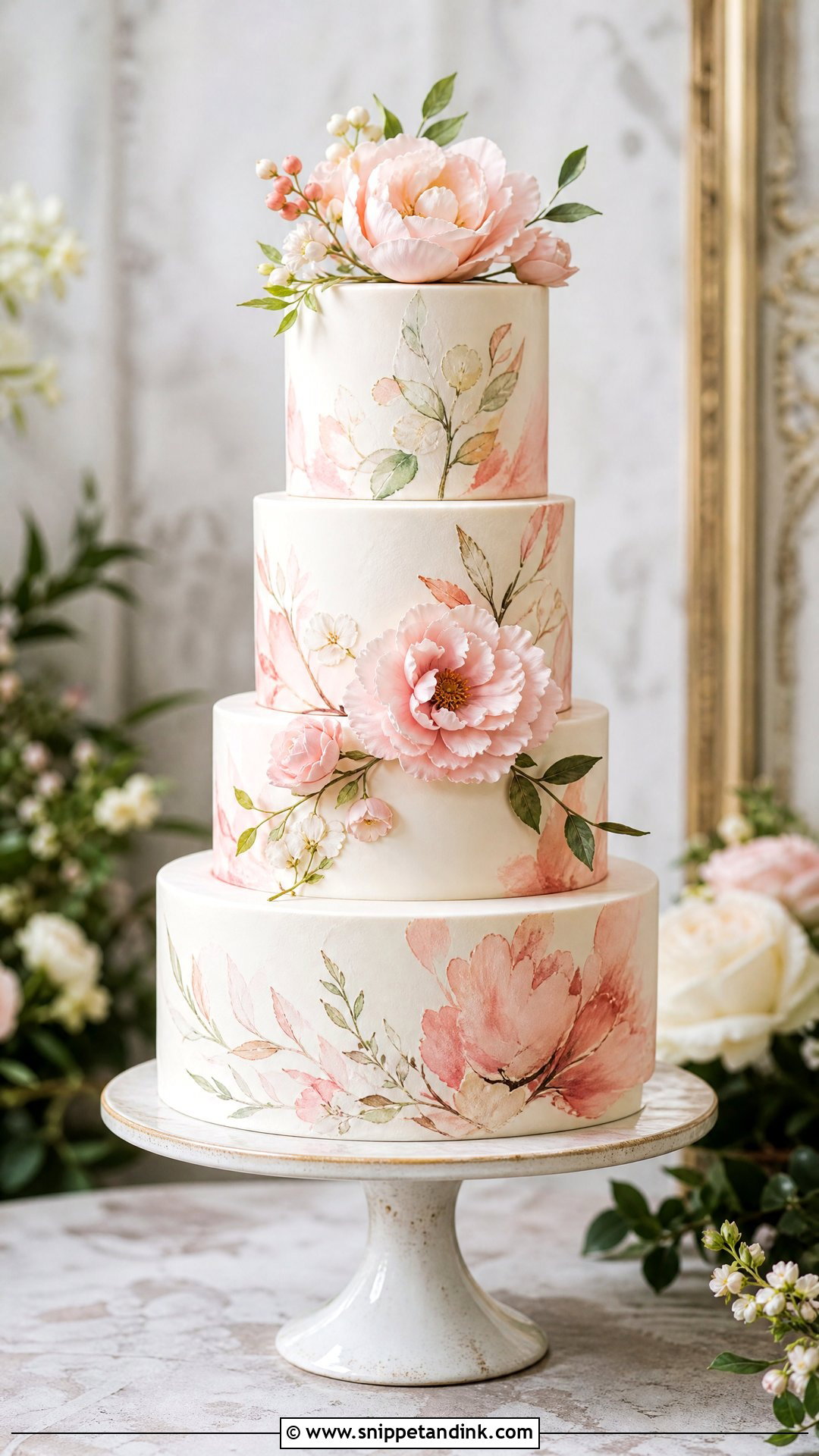
Watercolor brings painted color behind the flowers. Pale washes of blush, peach, lavender or sage go on the base, and sugar peonies sit where the color is strongest so the flowers seem to grow out of it. Creative couples and art-themed garden receptions tend to choose it. Watercolor works best soft and layered, never bright. I paint it on fondant or on chilled buttercream, which has to be firm enough not to drag under the brush. A few hand-painted leaves or faint floral outlines add detail, with vanilla bean, almond raspberry or lemon cream inside.
19. Painted Peony Wedding Cake
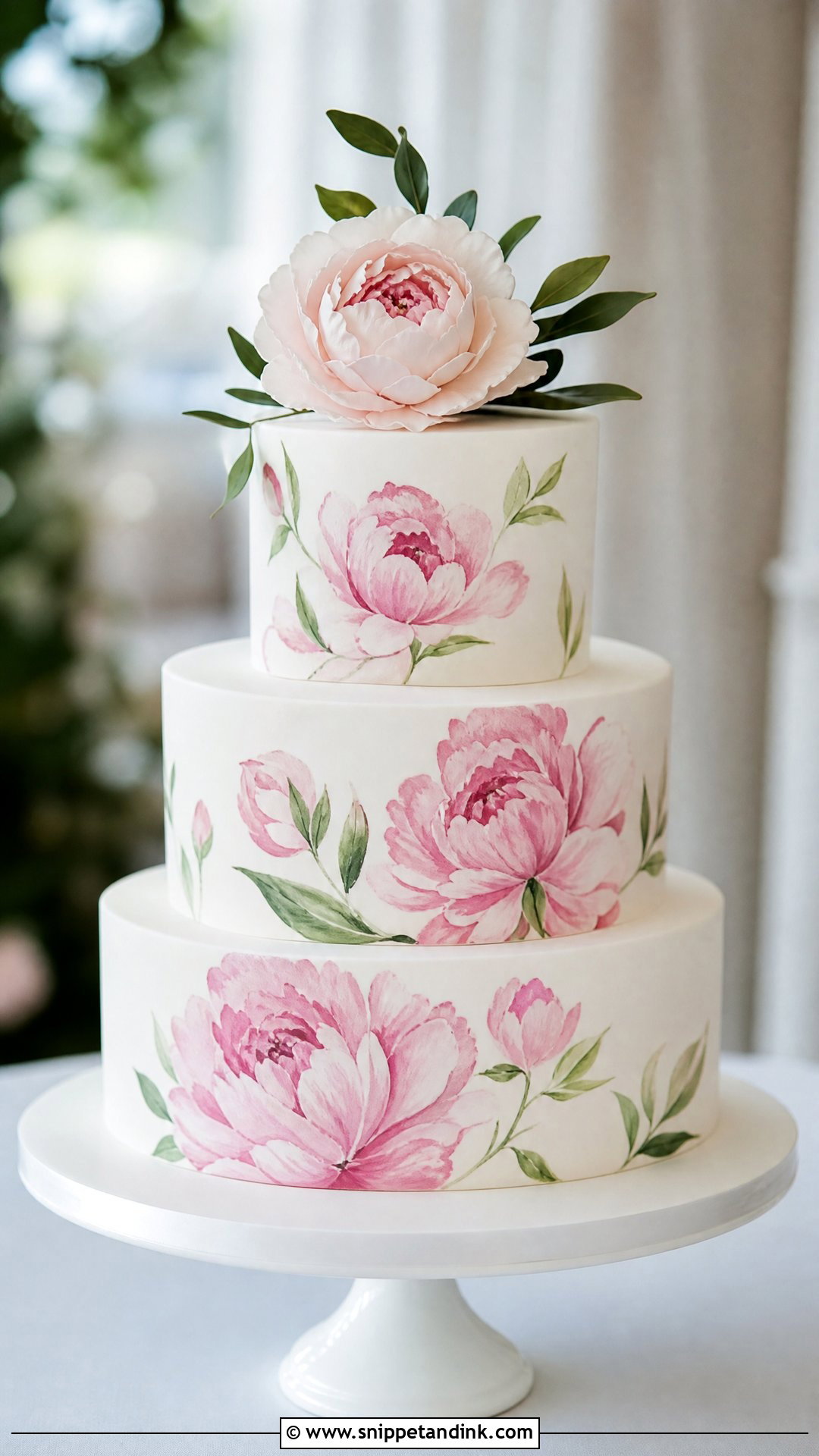
A painted peony wedding cake keeps the flowers flat, painted straight onto fondant or buttercream, so you get floral detail without adding height or weight. It suits modern weddings, gallery venues and couples who prefer an artistic look to big clusters. One or two sugar blooms alongside add dimension. White, ivory or pale blush bases show the painting best. Painting takes hours of skilled work, so it’s usually priced as custom design rather than a standard finish. Simple flavors like vanilla, lemon or almond keep the attention on the outside.


20. Vintage Peony Wedding Cake
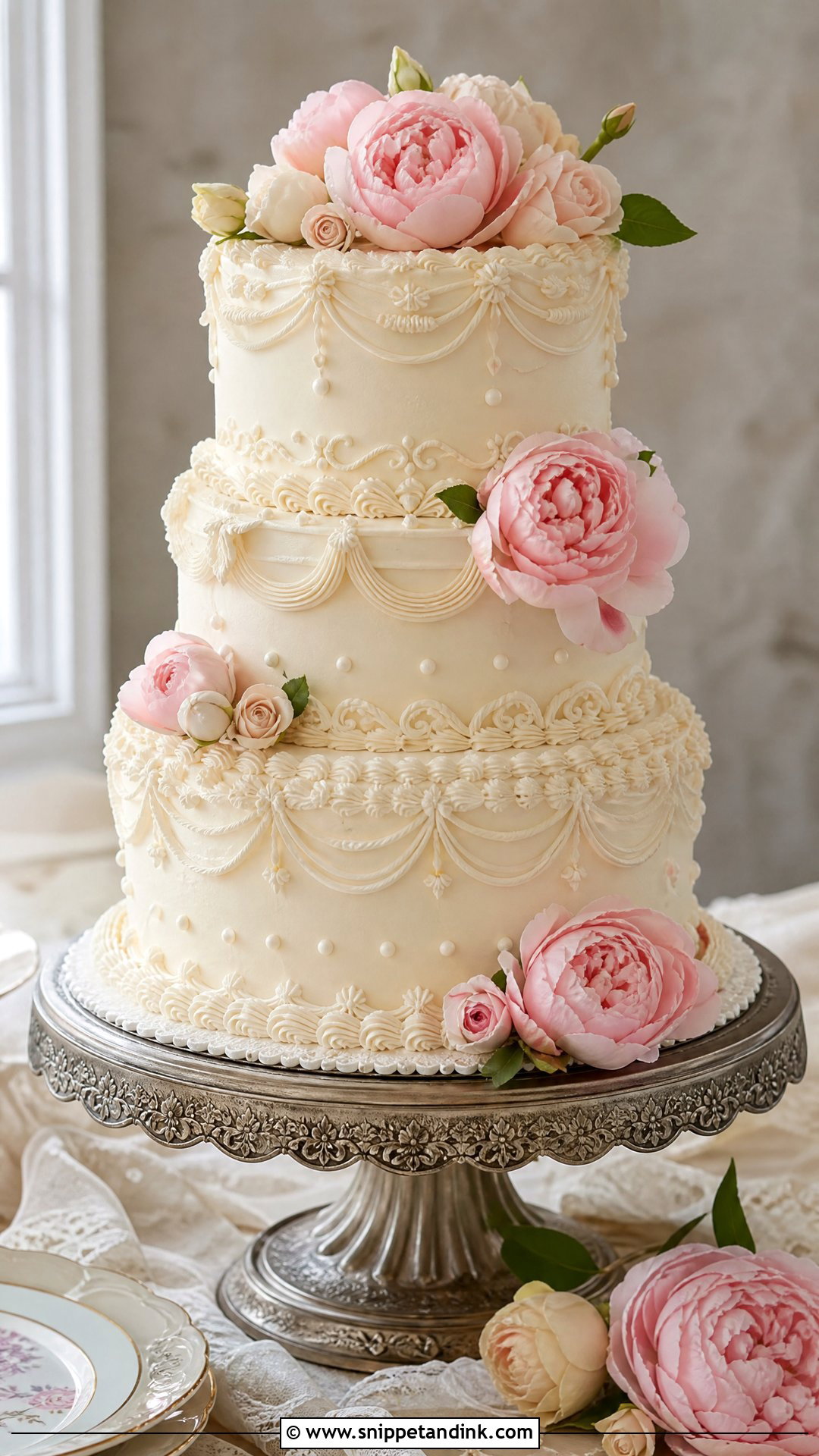
Vintage peony cakes combine soft florals with ornate piping, such as buttercream swags, shell borders and pearl dots, alongside sugar peonies in blush, ivory or dusty rose. Estate weddings, garden receptions and tea-room venues suit it. Keep the palette soft so the piping doesn’t feel heavy, and choose two or three tiers depending on your guest count. I pipe vintage borders in a stiff buttercream so the shells and swags hold their shape for hours. Vanilla almond, coconut, lemon or raspberry cream suit the nostalgic look.
21. Modern Peony Wedding Cake
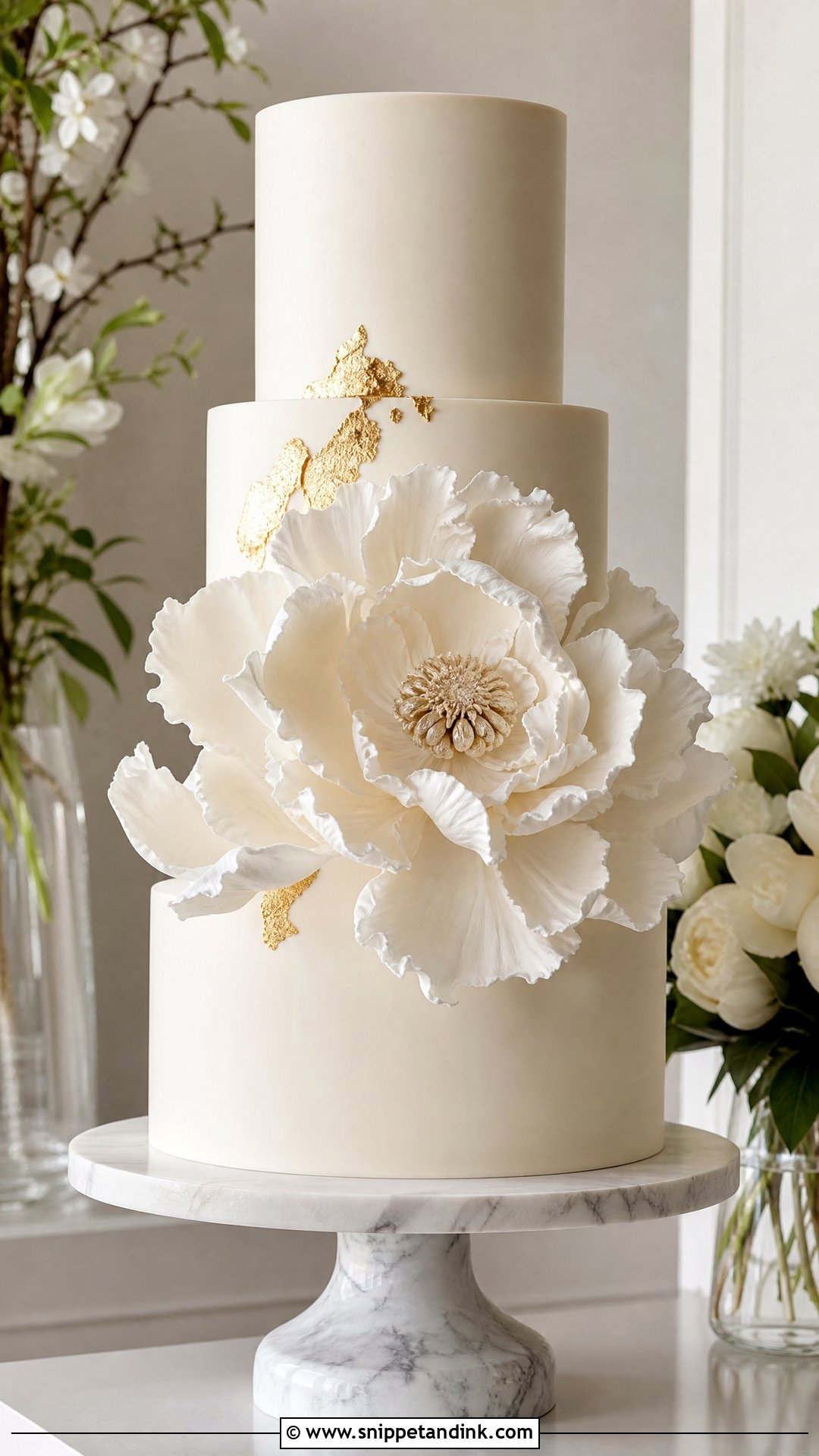
Modern peony cakes keep the shape clean and use peonies as one strong focal point: a single oversized sugar peony, a sculptural cluster or a clean vertical line on smooth tiers. White, ivory, pale gray or soft beige frosting suits a minimal setting, with sharp edges, a square tier or subtle texture for a contemporary feel. With only one flower, everything about it shows, so I make the oversized bloom with extra petal layers and very fine edges. City weddings and museum venues suit it, with champagne, vanilla bean or almond cake inside.
22. Rustic Peony Wedding Cake
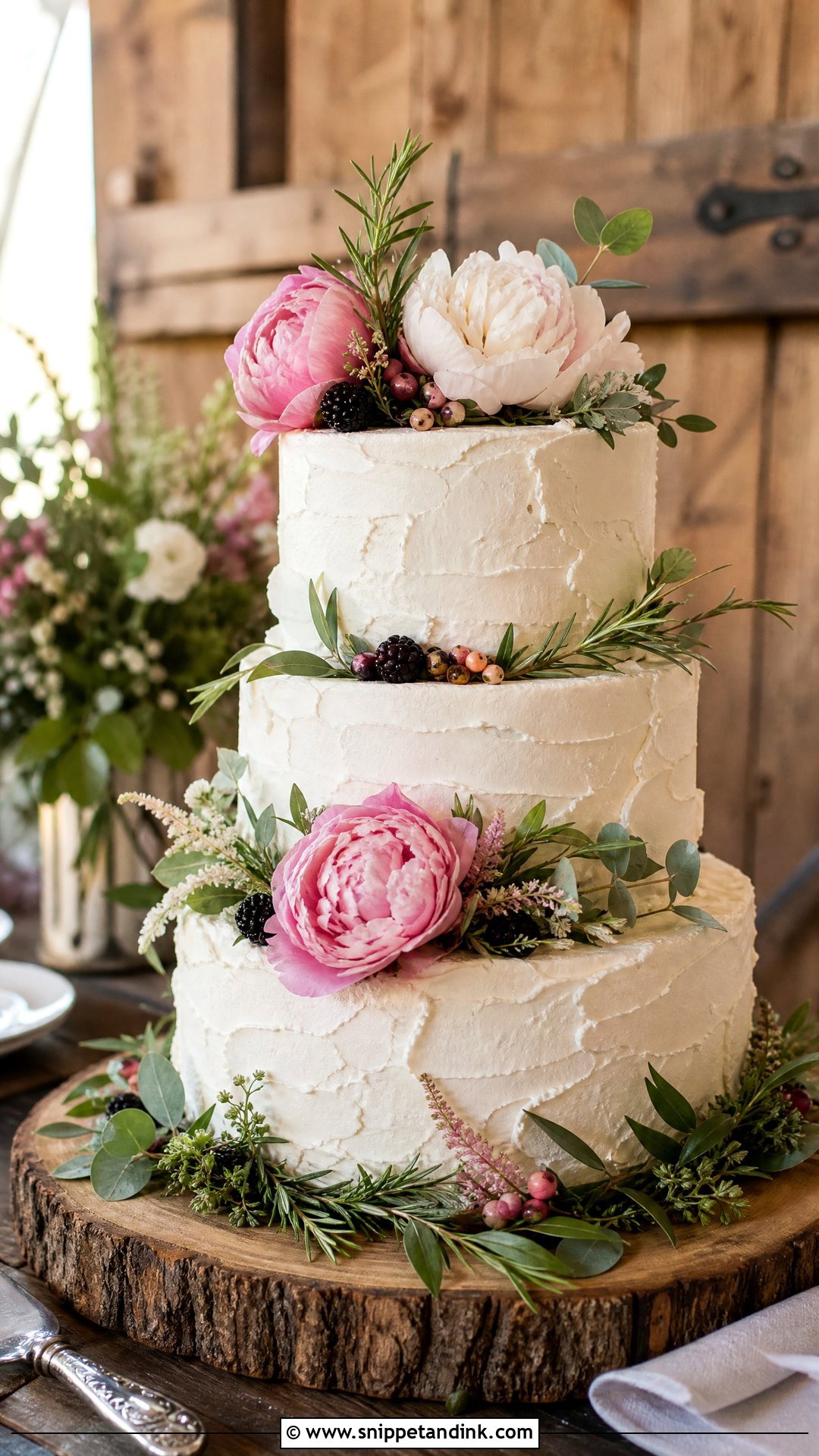
Rustic peony cakes use buttercream texture, semi-naked frosting, wood stands, greenery and soft blooms in blush, ivory or peach. The peonies keep the rustic style from looking plain. Barn weddings, vineyards, outdoor receptions and relaxed family celebrations suit it. Herbs, berries or small wildflowers can join in if they match the rest of your florals, though anything fresh should be checked as food-safe. Carrot cake, spice cake, vanilla berry or lemon cream suit the cozy feel. Keep the flowers loose so they look gathered.
23. Garden Peony Wedding Cake
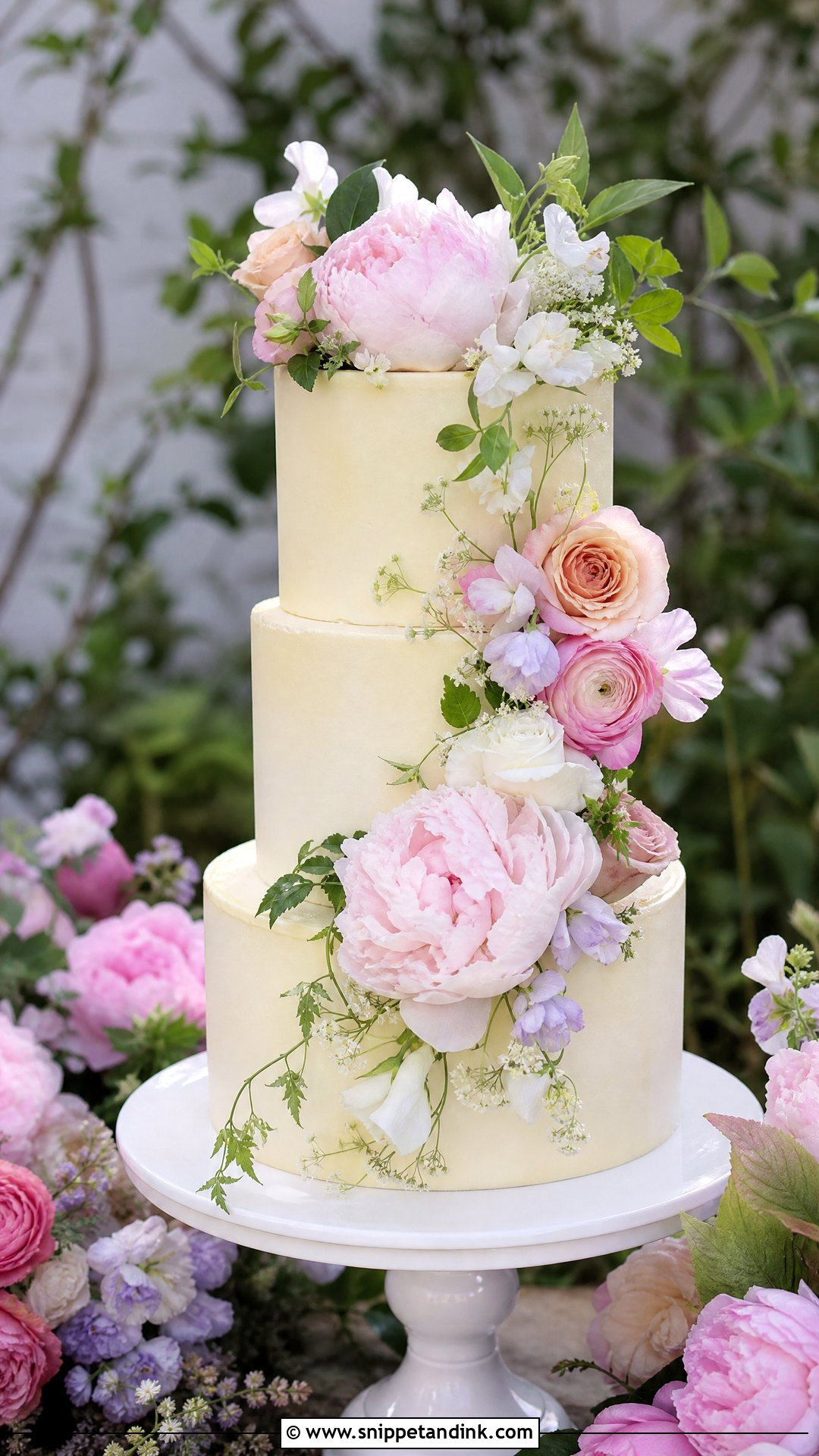
A garden peony wedding cake should look like it belongs outdoors among fresh flowers and greenery, so I mix peonies with roses, ranunculus, sweet peas or small edible blossoms for layers. An ivory, blush or pale sage base in buttercream or fondant sets the mood. The flowers can climb the tiers or cluster around the base like an arrangement. Spring and early summer are peony season, which makes this the cake where fresh peonies are easiest to source and most affordable. Lemon elderflower, strawberry vanilla, almond raspberry or honey lavender flavors suit it.
24. Pearl Peony Wedding Cake
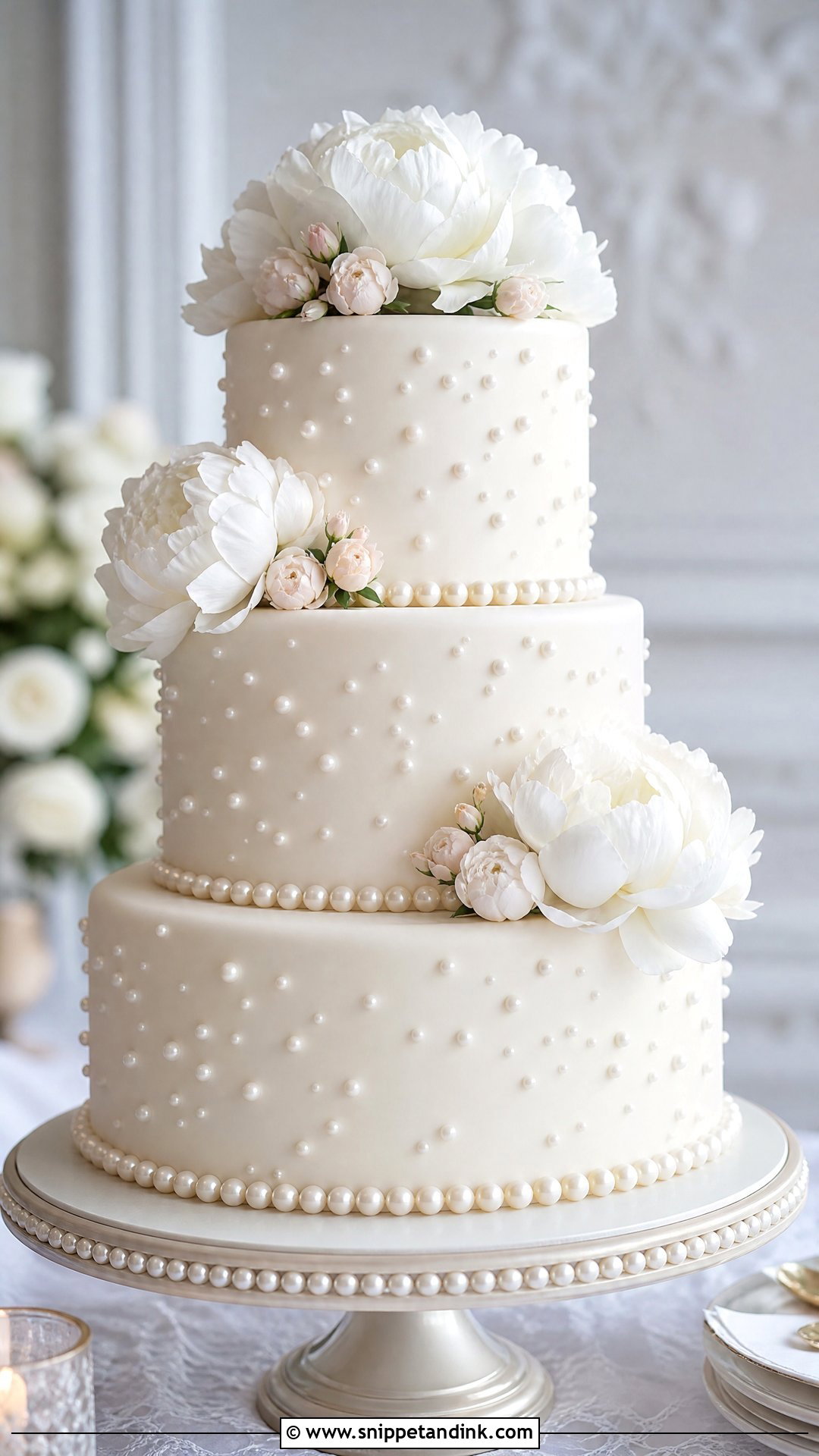
Pearls appear as piped dots, edible pearl borders, scattered accents or a pearl finish on one tier, and peonies soften the polish with their round, romantic shape. White sugar peonies feel classic; blush makes the cake warmer. It suits satin gowns, candlelit receptions and white floral arrangements. Keep the pearls neat so they don’t compete with the flowers. I place edible pearls with tweezers while the surface is still slightly tacky so they stay where they’re put. Vanilla bean, almond, champagne or coconut cake fits the look.
25. Black And White Peony Wedding Cake
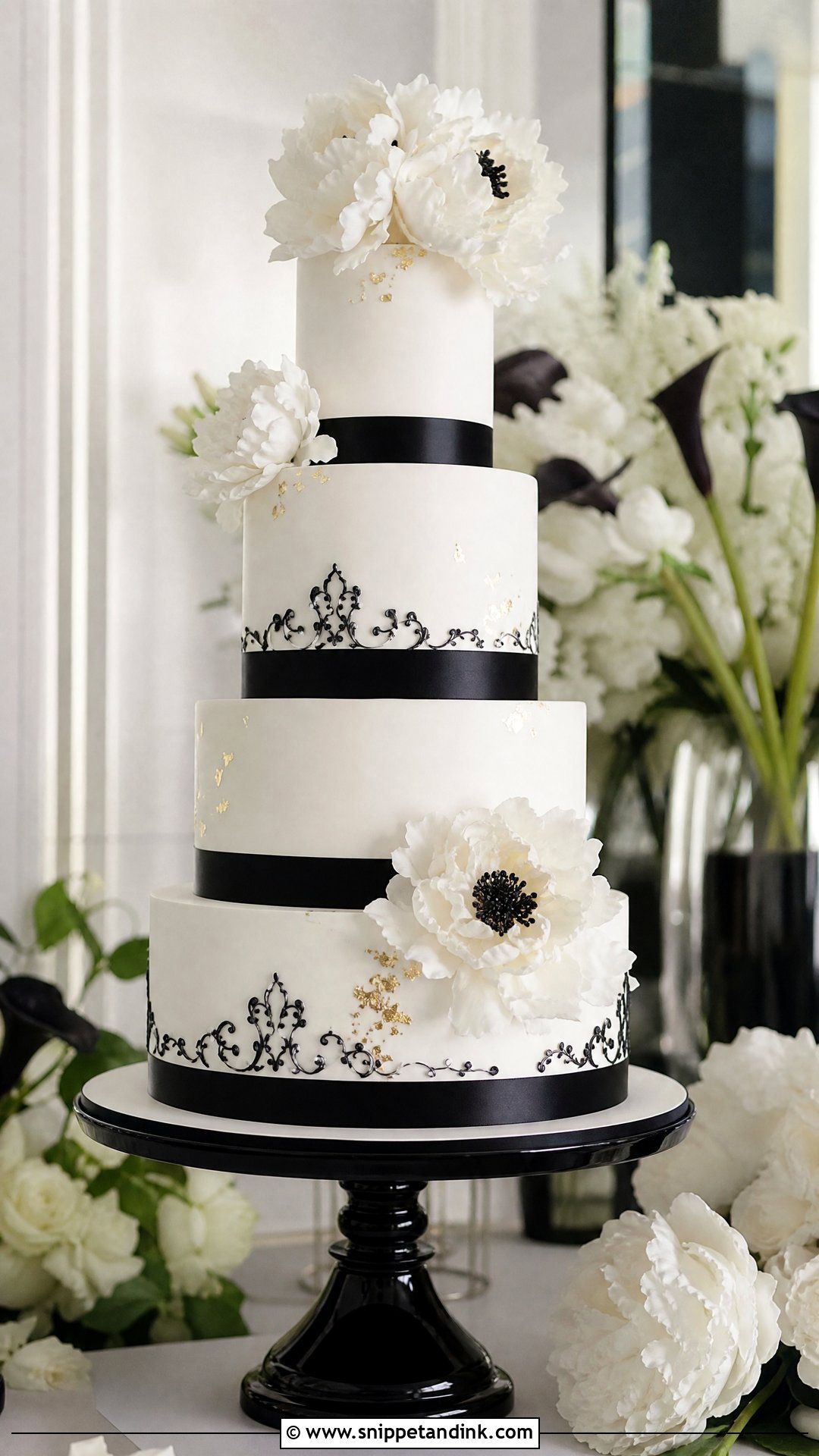
Black and white is the most fashion-led cake on the list, a white base with black ribbon, black piping, painted black florals or one dramatic black tier. White sugar peonies keep it bridal; blush peonies soften the contrast. Black icing needs a lot of color to get a true black, which can affect taste and stain teeth, so I keep black to details rather than whole tiers covered in frosting, or use black cocoa sponge. Modern ballrooms, city venues and black-tie receptions suit it, with dark chocolate, vanilla bean or raspberry cream inside.
Sizing Blooms to Tiers so the Cake Doesn’t Look Top-Heavy
Peonies are big flowers, and the most common problem I see in photos is a cake overwhelmed by them. A fully open bloom on a small top tier looks like a hat. My working rules:
- Use one large peony per cluster and build around it with half-open blooms and buds, which look more natural anyway.
- Put the biggest flowers lower on the cake, where the tiers are wider and can carry the weight.
- Group flowers in odd numbers; even pairs look staged.
- Leave some tiers bare. Frosting needs space to show, or the cake reads as a flower arrangement.
- Bring a photo of your bouquet to the tasting so the flower size on the cake echoes what you’re carrying.
Keeping a sugar peony after the wedding
Many couples keep the top sugar peony as a memento. Ask someone to lift it off before the cake goes to the kitchen, then store it in a box with tissue, away from sunlight and damp. Kept dry, sugar flowers last for years, though the colors fade if they sit in a sunny window. A small glass dome or shadow box keeps the dust off.
A Peony Cake Starts With the Calendar
Peony cakes are popular because the flower suits almost every style of wedding. A single peony can lift a minimal cake, while a full cascade turns tall tiers into the center of the room. Before you settle on a design, think about your venue, the time of year, your palette, your guest count and whether you want fresh, sugar or buttercream peonies. Ask your baker how the flowers will be secured and how the cake will hold up at the venue. Get those decisions right and the cake will look as good when it’s cut as when it’s first wheeled out.
You'll Like These Ideas:






Leave a Reply