
Most brides who ask me for something vintage are really asking for one era’s signature detail, not a full period costume. The gowns below borrow from Victorian lace, Edwardian details, Art Deco beading, Old Hollywood satin, 1950s tailoring and the looser shapes of the 1970s. Bridal collections keep coming back to drop waists, high necklines, bias-cut skirts and dramatic sleeves because those details still flatter a modern body when the fit is right. The rule I use at every appointment is to pick the one historical feature that suits your proportions and your venue, then keep everything else quiet, so the dress reads as yours rather than borrowed from a film set.
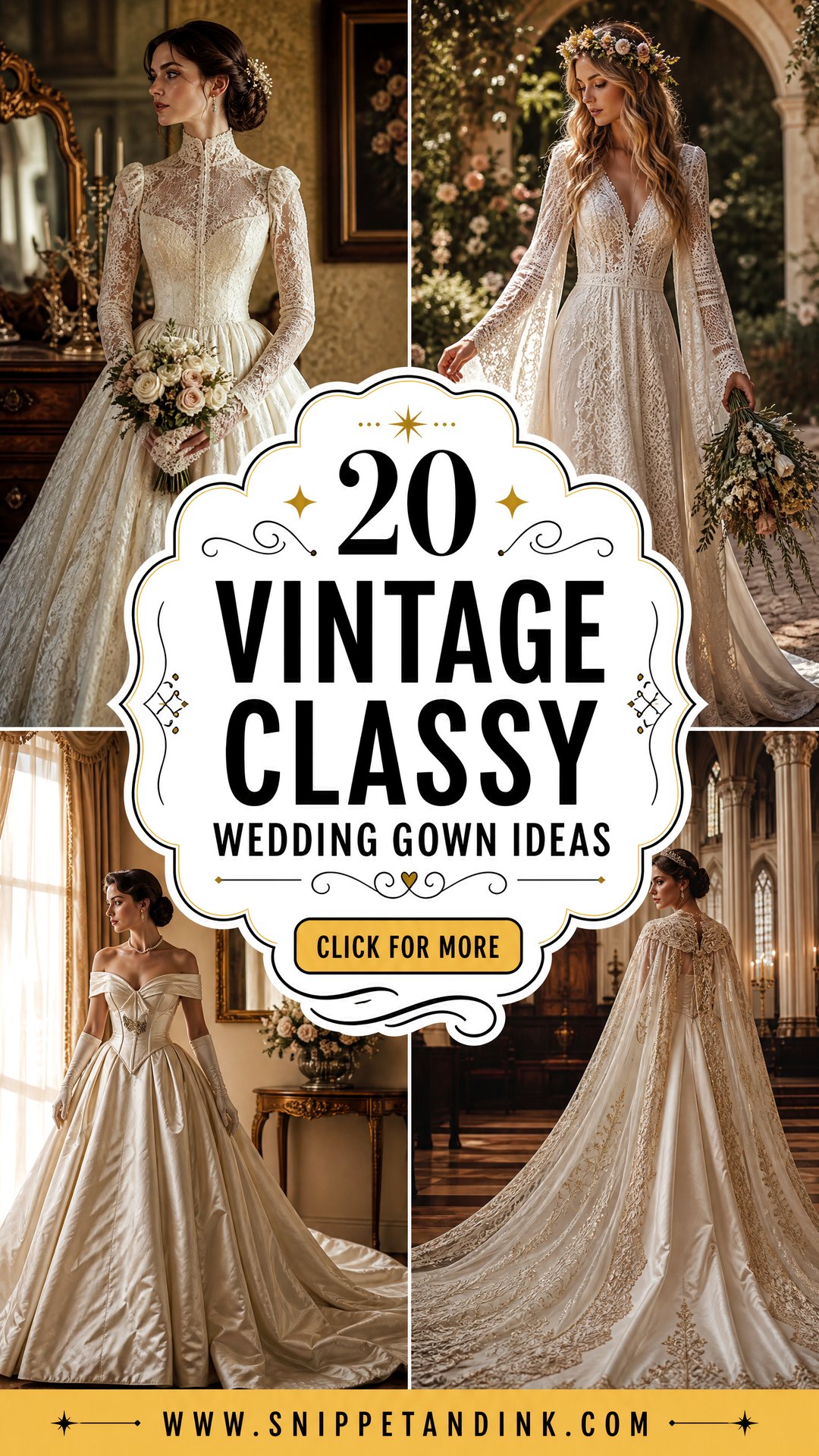
Original Vintage or a New Gown in a Period Cut?
Before you look at eras, decide whether you want a gown that is genuinely old or a new one built in a vintage style. They behave differently, and they are bought differently.
Buying a true vintage dress
Older sizing runs small, so ignore the label and work from the garment’s actual bust, waist and back-length measurements. Hold the fabric up to a window. Silk weakens with age, and satin that has started to split or lace gone brittle at the underarms rarely survives alterations. Look for yellowing along old fold lines and for earlier repairs. Most original gowns can be taken in a little; very few can be let out, because the seam allowances inside are narrow.
Ordering a new gown in a vintage style
A made-to-order bridal gown often takes several months to arrive, and alterations add two or three fittings on top, so start looking the better part of a year ahead if you can. What you gain is modern construction: built-in support, fabric that cleans easily, and a pattern adjusted to your body rather than to a figure shaped by 1950s corsetry.
1. Victorian High Neck Lace Wedding Gown
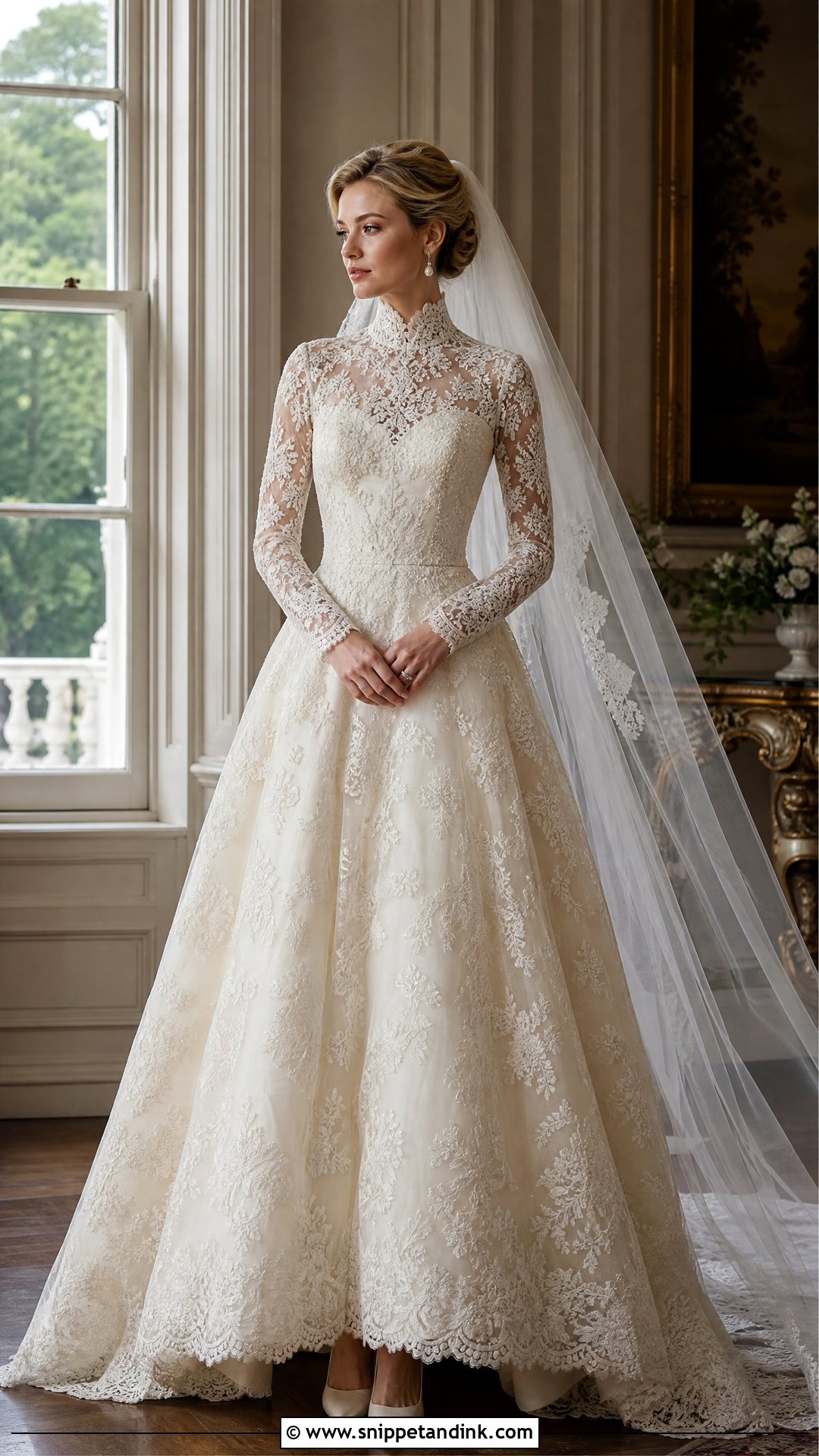
A high lace collar changes how you hold your head, so I always ask brides to sit and turn in one before committing. Look for a fitted lace bodice with a raised collar, covered buttons and long tapered sleeves over a natural waist and a full A-line skirt. Ivory or soft cream suits the antique character better than bright white, which can make old-style lace look flat. Add pearl drops, a lace-edged cathedral veil and ivory pointed pumps, and wear your hair in a low bun so the neckline stays visible. With heavy lace on the bodice, skip the necklace altogether. Petite brides do better with a narrower skirt, while a taller bride can carry a fuller train with scalloped edging. The collar should close with a finger’s width of room, or it will feel tight by the speeches.
2. Edwardian Lace Wedding Gown
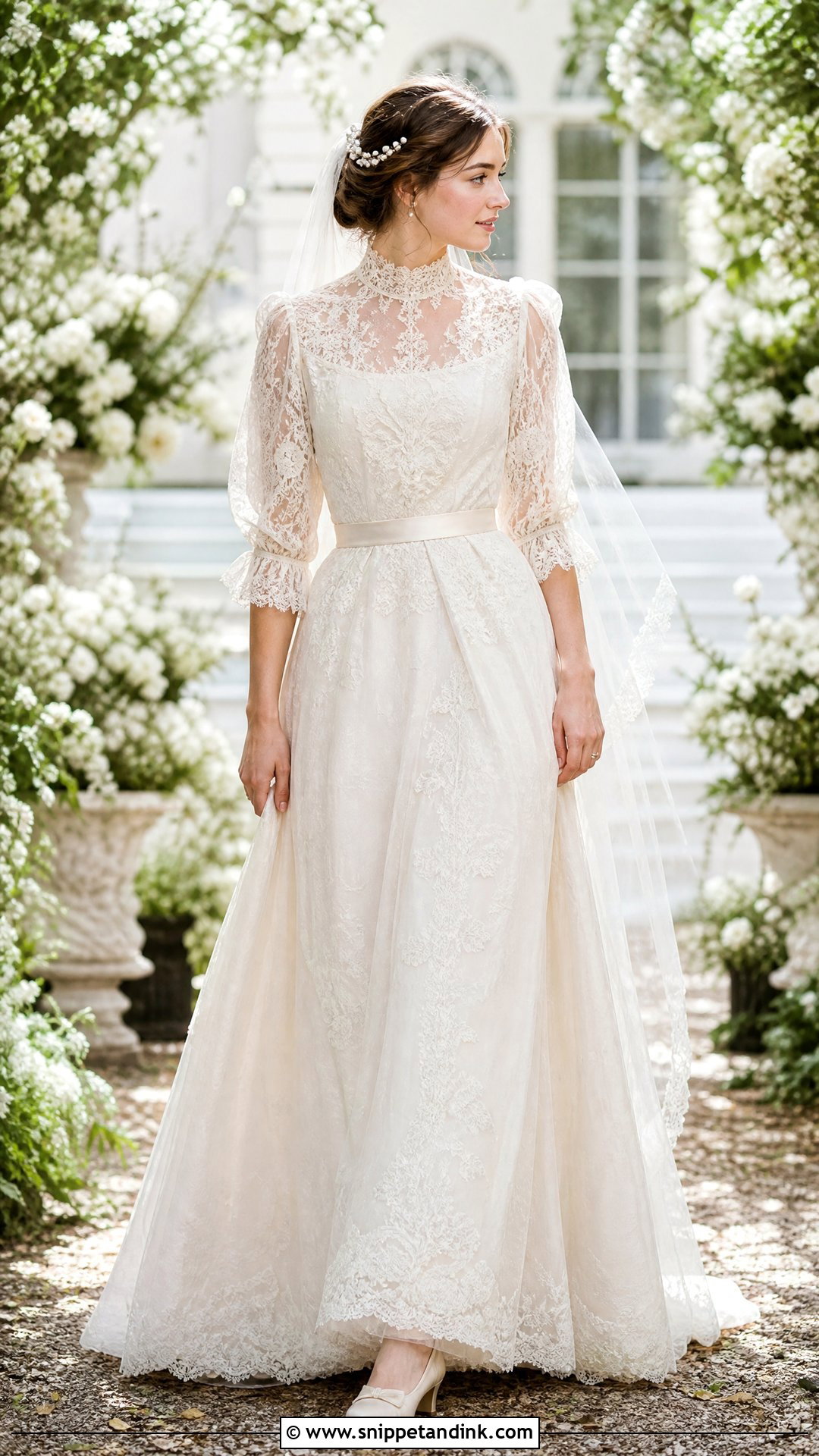
Edwardian lace is lighter than people expect, which is exactly why it suits a garden or historic-estate ceremony. Look for a lightly fitted bodice with a high illusion neckline, fine embroidery and slim or softly puffed sleeves, over a skirt with gentle volume rather than ball-gown weight. When I fit these, the illusion mesh is the part I watch: if it isn’t matched to your skin tone, it shows as a grey band in flash photos. A ribbon sash can define the waist, and a supportive lining under the lace helps if you want more structure. Finish with a fingertip veil, pearl hairpins, low satin heels and a small pale bouquet, and keep makeup fresh and rosy rather than heavily contoured.
3. 1920s Beaded Drop Waist Wedding Gown
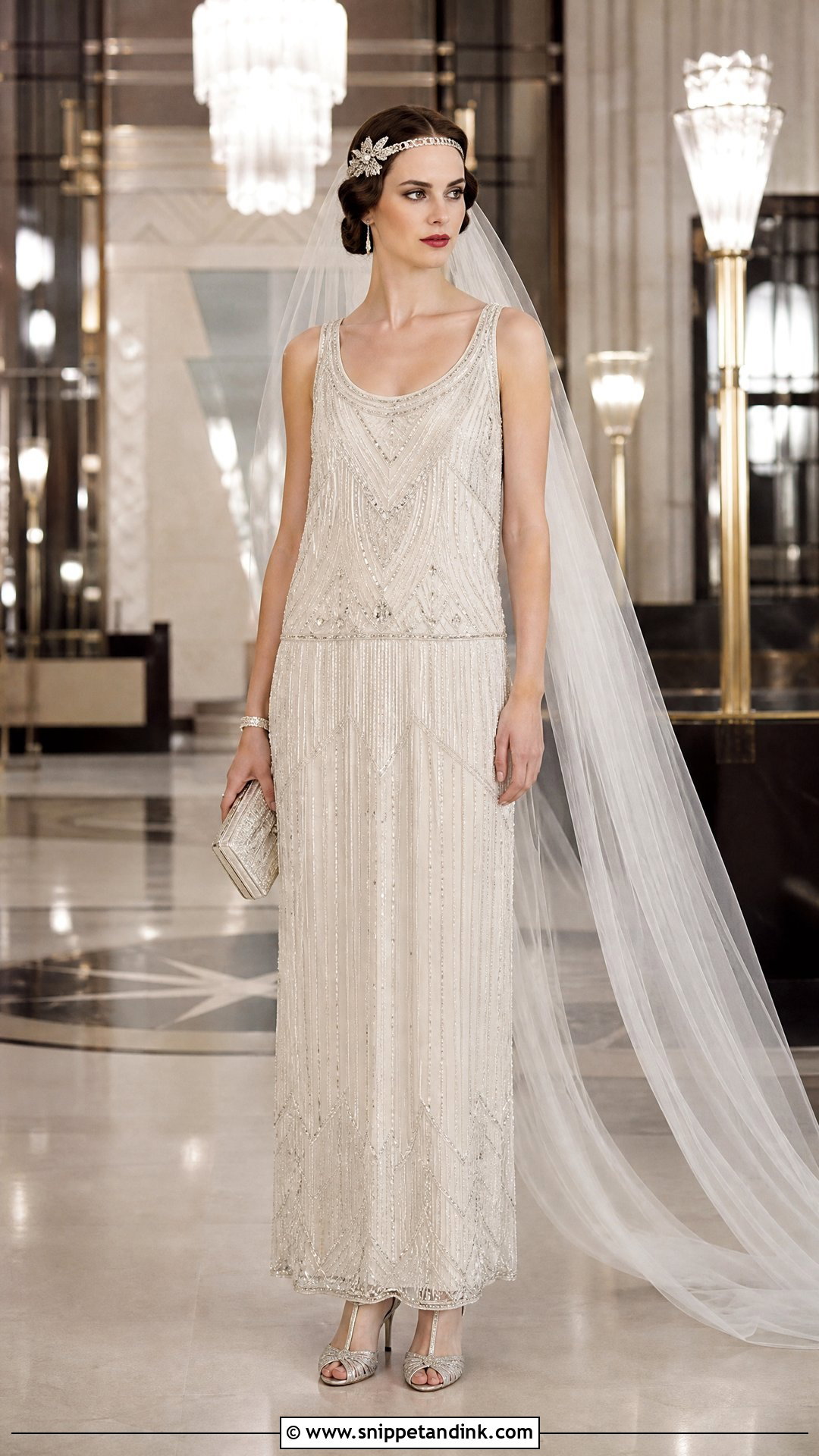
Beadwork is heavy, and on a 1920s beaded drop waist wedding gown all of that weight hangs from the shoulders, so I check the straps and shoulder seams before anything else. Choose a straight or gently fitted shape with geometric beading, a lowered waist seam and an ankle or floor-length hem; the loose cut lets the embellishment do the work. Metallic T-strap heels, a crystal headband and a simple tulle veil set near the back of the head suit it, with a small structured clutch for practicality. If you want more shape, ask for subtle shaping through the bust and hips. Crystal studs or slim drops are plenty. Anything more and the beading starts fighting your jewelry.
4. Art Deco Beaded Sheath Wedding Gown
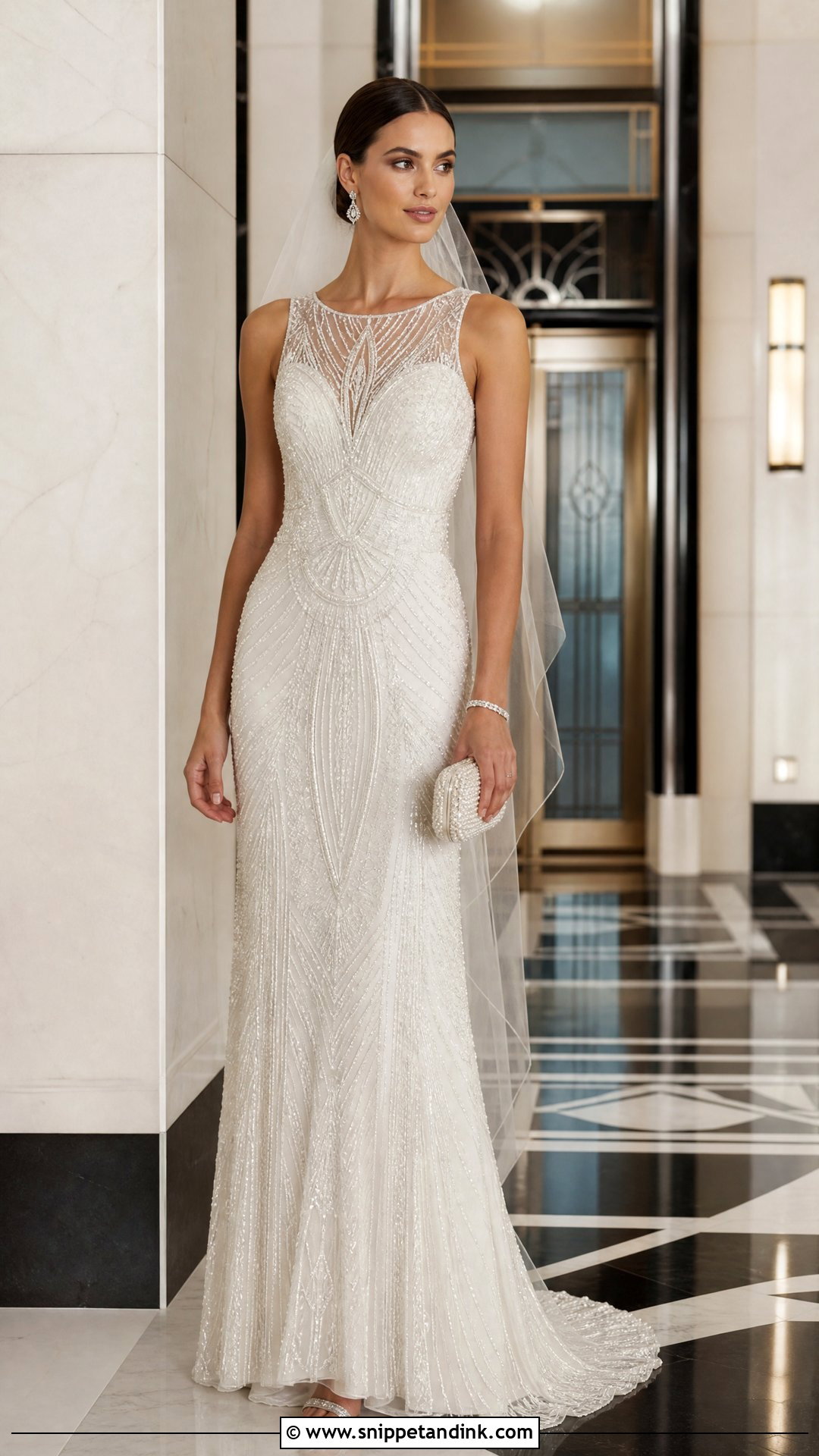
A column covered in symmetrical beading leaves nowhere to hide a poor fit, so expect your seamstress to spend real time on the side seams. Look for fan motifs, straight lines or carefully placed pearl and crystal accents, with a V-neck or illusion neckline for length and a slight flare at the hem so you can actually walk. Silver peep-toe heels, a beaded clutch and a sleek chapel veil go with it, and finger waves or a smooth low chignon carry the period without tipping into costume. Because the gown already throws light, one antique-style bracelet is enough. Ask for a nude or ivory lining; a stark white one behind beading can flatten the pattern in photographs. Evening ballrooms and hotel weddings are where this one belongs.
5. 1930s Bias Cut Satin Wedding Gown
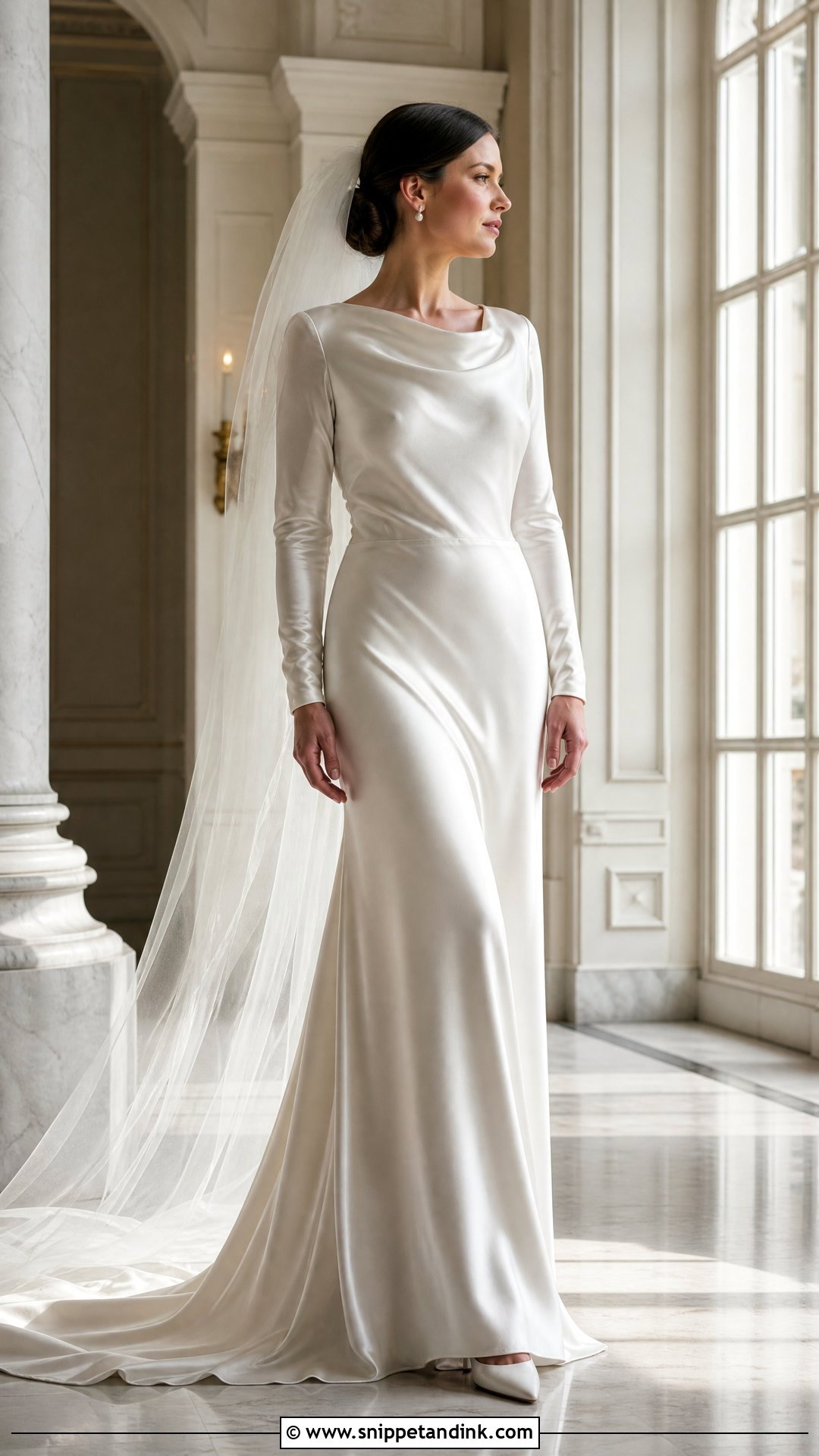
Bias-cut satin is the least forgiving fabric I fit. Cut on the diagonal, it stretches and follows every curve, which is the whole appeal of a 1930s bias cut satin wedding gown and also why alterations should go to someone who has handled bias before, since taking in a seam the ordinary way can make the hem twist. Look for a fluid floor-length line, a softly defined waist, slender straps or fitted sleeves and a small sweep train in silk satin or charmeuse. Pointed satin pumps, pearl earrings and a sheer veil falling from a low bun suit it, along with a long, narrow bouquet. A fine lace capelet adds coverage for a church. I’d steer you elsewhere if close-fitting fabric would make you self-conscious all day.
6. Old Hollywood Cowl Back Wedding Gown
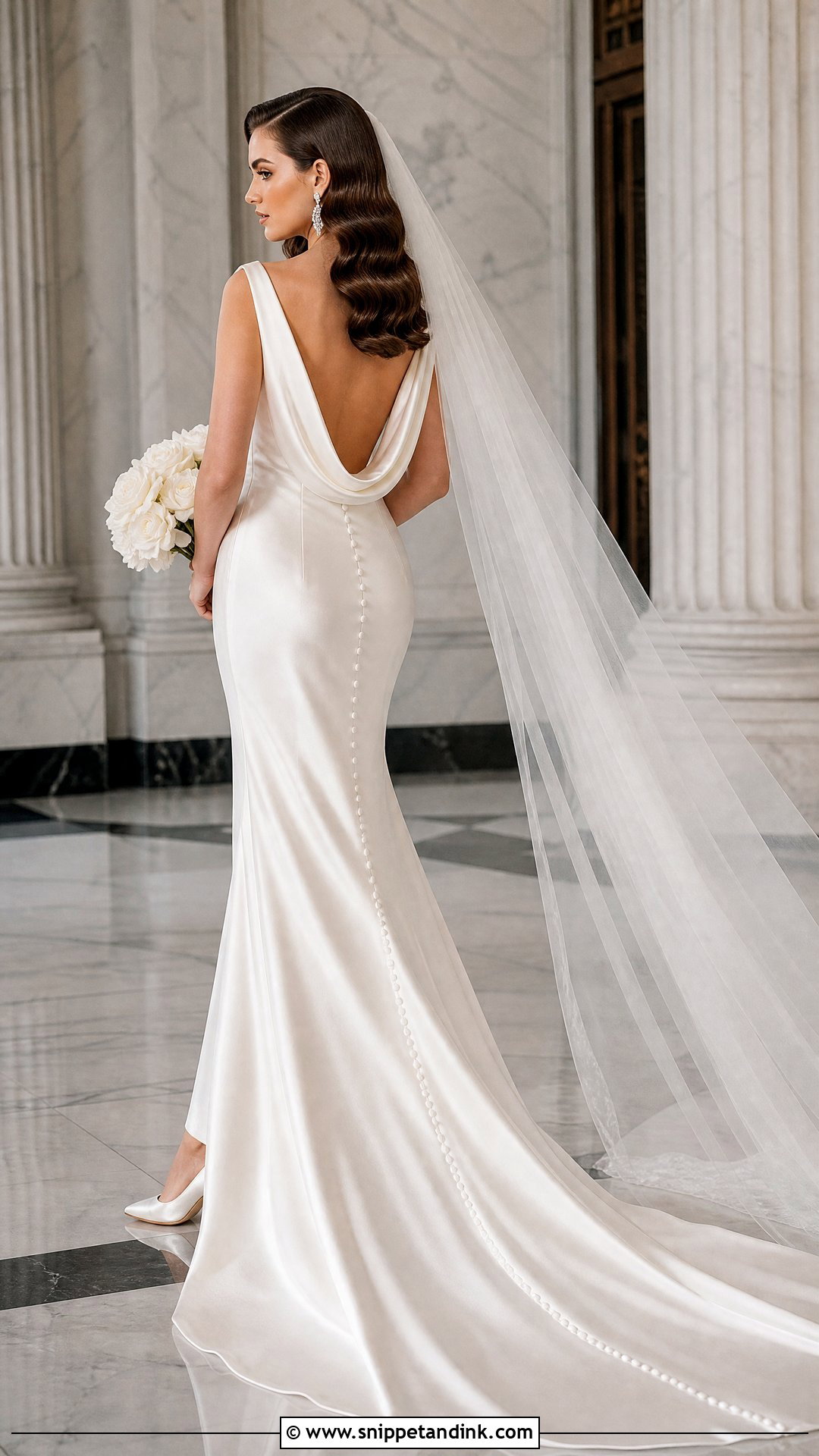
Here the moment comes when you turn toward your guests and the back falls into soft folds of satin. Choose a modest front neckline, a narrow waist and a cowl that pools without gaping when you lean forward, which I test by having the bride bend as if signing the register. A row of decorative buttons adds a classic touch. Crystal earrings, ivory pumps and a long veil attached below polished waves or a sculpted bun complete it, and a removable satin wrap helps before the ceremony. Plan your underwear early. Satin shows every edge, and a deep back rules out most bras, so you may need cups sewn into the bodice. Formal indoor rooms with strong architecture suit it best.
7. 1940s Long Sleeve Satin Wedding Gown
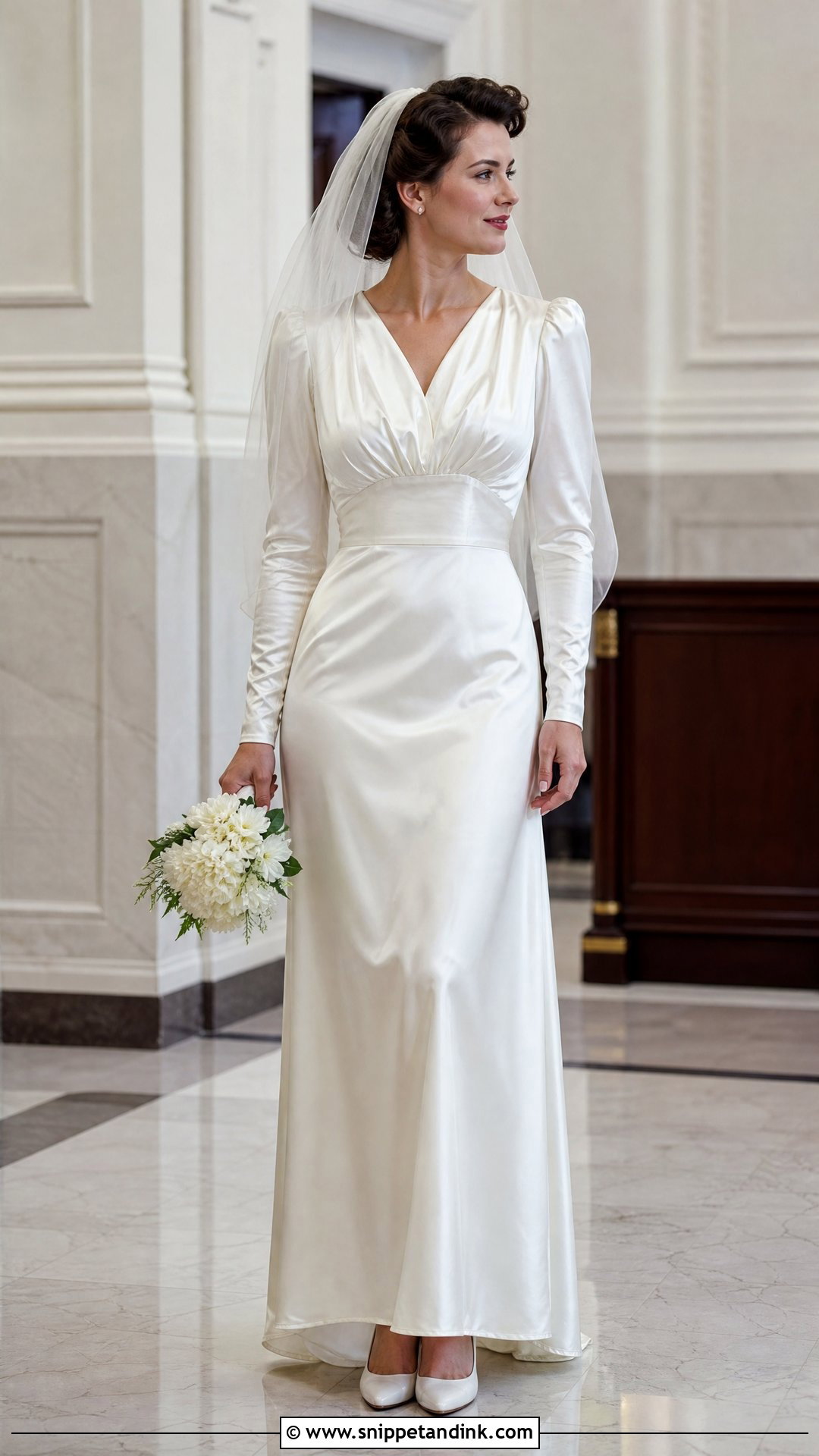
Long satin sleeves look restrained, yet they are where most fittings go wrong: a sleeve cut too narrow pulls the whole bodice up the moment you raise your arms. Look for lightly structured shoulders, a fitted waist, slim sleeves and a skirt that runs smoothly into a modest train. A V-neck or gently gathered bodice keeps the top half from looking severe. Closed-toe pumps, pearl studs, a shoulder-length veil and perhaps a vintage brooch at the waist are all it needs. For a cooler-season wedding, a tailored ivory coat for outdoor portraits feels true to the decade. At your fitting, lift your arms, hug someone and reach for a glass before you sign off.
8. 1950s Tea Length Wedding Gown
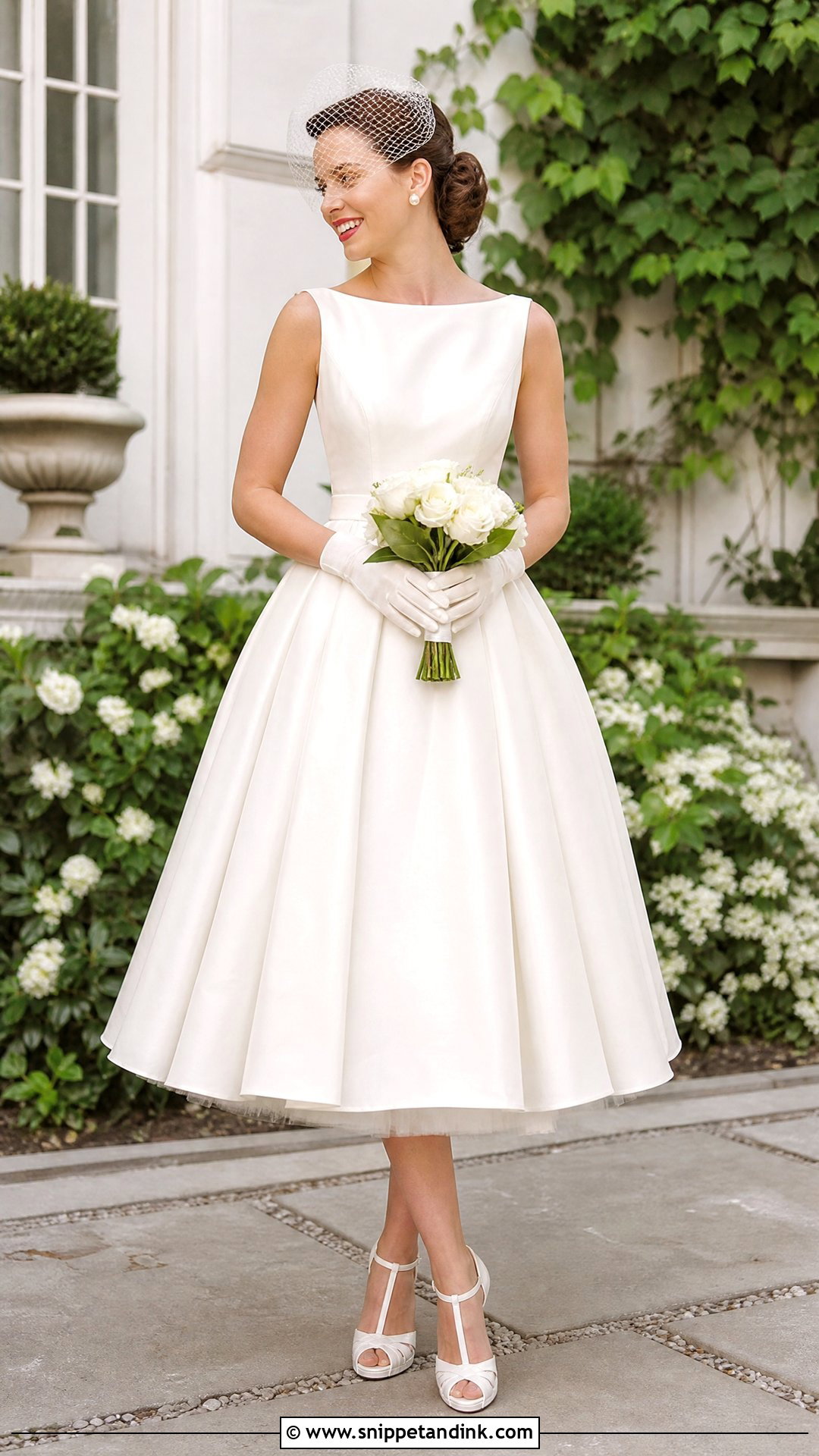
Hem placement makes or breaks a 1950s tea length wedding gown. I mark it at the narrowest point of the lower leg, usually just below the calf, because a hem that stops at the widest part shortens the whole figure. Pair a fitted bodice and a bateau, sweetheart or modest V-neckline with a full skirt. A structured petticoat gives the classic bounce; a softer underskirt reads quieter. Your shoes are on show now, so treat them as part of the outfit, then add short gloves, pearl earrings and a birdcage veil or small blusher. A slim belt brings a little contrast. It moves well at courthouse ceremonies, garden weddings and dance-heavy receptions.
9. 1950s Lace Ball Gown Wedding Gown
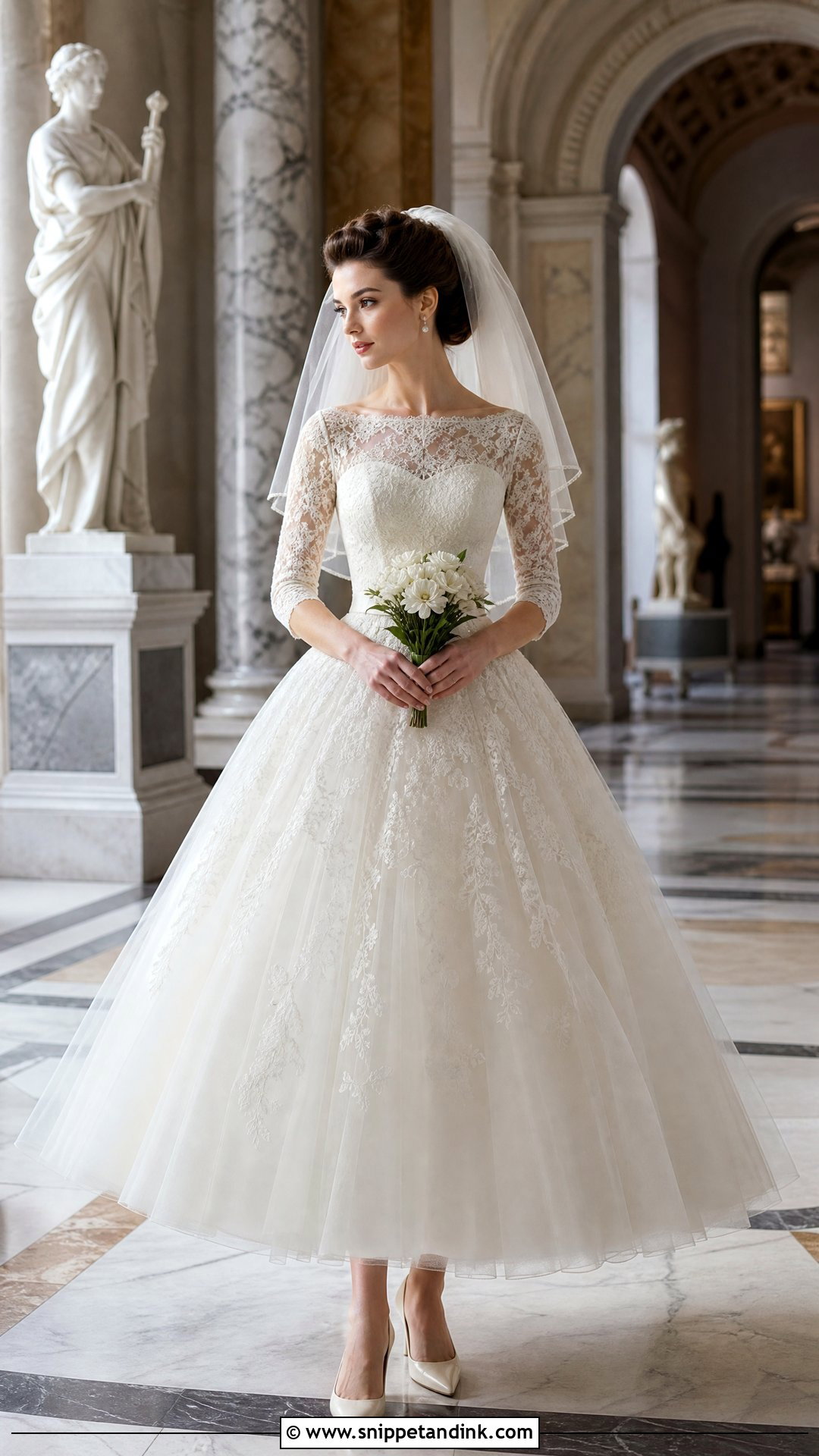
A lace ball gown carries real weight once the tulle layers go in underneath, so I always ask how far the bride will be walking and whether there are stairs. Start with a fitted lace bodice, a defined waist and a full skirt held out by lightweight tulle. A bateau neckline with three-quarter sleeves gives coverage; a V-neck lengthens. Choose lace with a consistent pattern and keep extra sparkle to a minimum. A lace-trimmed fingertip veil, pearl earrings and pointed ivory heels finish it. Shorter brides can drop a layer of tulle and keep the waist defined, which holds the shape without swallowing the frame. Ballrooms, museums and grand historic venues give the skirt the space it wants.
10. 1960s Bateau Neck A-Line Wedding Gown
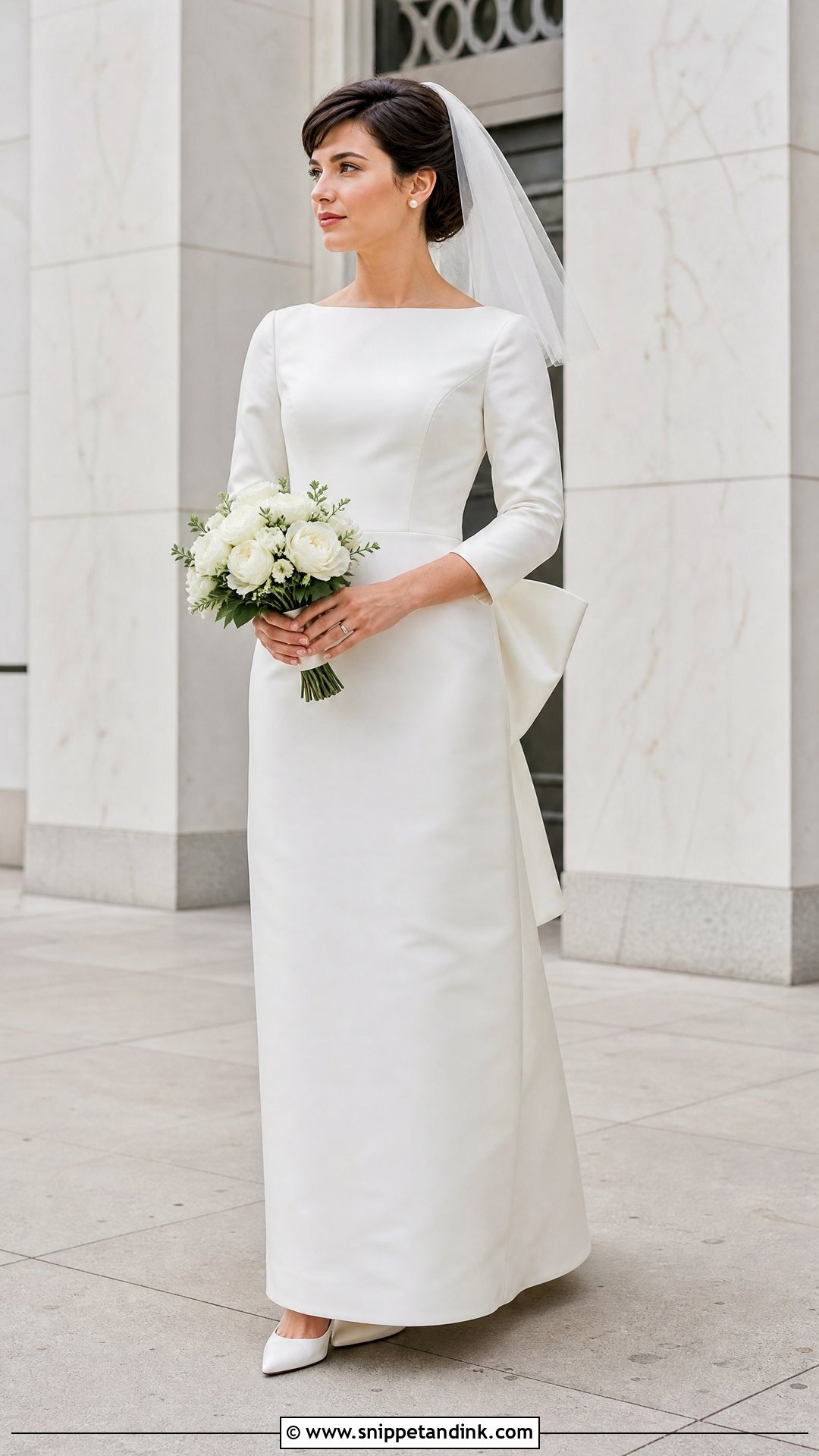
Minimal gowns are harder to fit than decorated ones, because there is no lace to disguise a pulled seam. A 1960s bateau neck A-line in smooth satin, crepe or silk needs precise work at the shoulders, waist and hem, and the wide neckline in particular has to sit flat without sliding toward the arm. Bracelet-length sleeves add coverage and keep the line clean. Pearl studs, low pointed pumps and a short structured veil or pillbox-style headpiece match the era, with a neat chignon to show off the neckline. A detachable bow at the back adds a little play. City ceremonies and pared-back receptions are its natural home.
11. 1960s Mod Short Wedding Gown
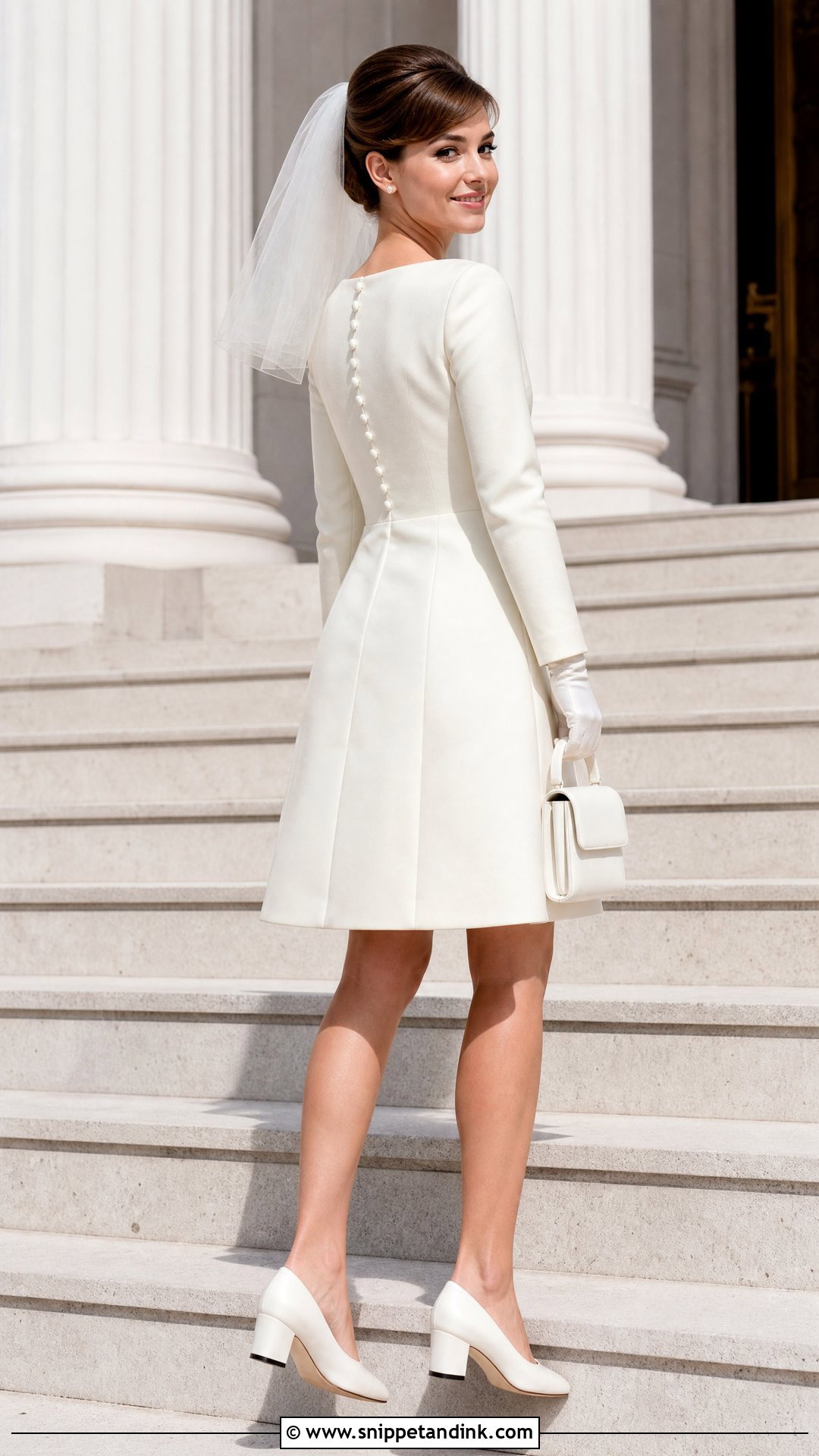
Would a short dress suit your ceremony better than a floor-length one? A 1960s mod shift or lightly fitted A-line ending at the knee gives a youthful vintage look, with a bateau neckline, long sleeves or a simple stand collar. I always have brides sit in it at the fitting, since a hem that looks right standing can ride well above the knee at the signing table. Low block-heel pumps, sheer tights if you like, pearl studs and a short, crisp veil finish the outfit, with a structured mini bag for portraits. Keep the details to covered buttons, a small bow or subtle lace panels. It’s a strong pick for a civil ceremony, and for anyone with shoes worth showing off.
12. 1970s Boho Lace Wedding Gown
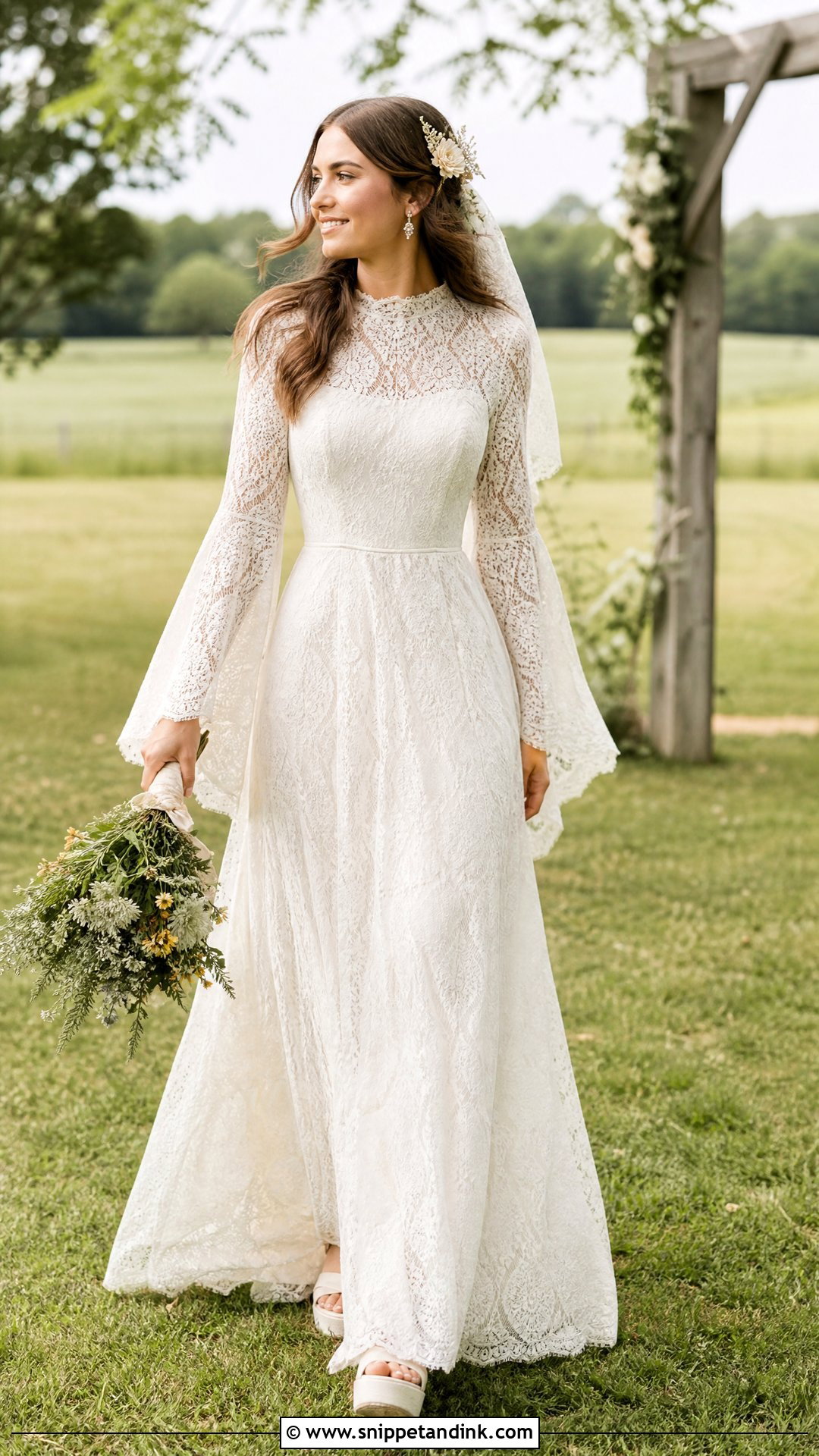
Bell sleeves are lovely until they trail through the cake, so I ask brides to picture the reception as much as the aisle. Look for a softly shaped dress with a raised or V-neckline, a fitted waist and long bell sleeves, over an A-line skirt in cotton lace, chiffon or light crepe. Ivory platform sandals, delicate drops and a simple veil secured under loose waves suit it, and a floral comb can stand in for a tiara. Line the bodice and sleeves lightly so the lace pattern still shows. Outdoors, choose a manageable train or have a bustle sewn in, because grass and gravel grab at long lace.
13. Prairie High Neck Wedding Gown
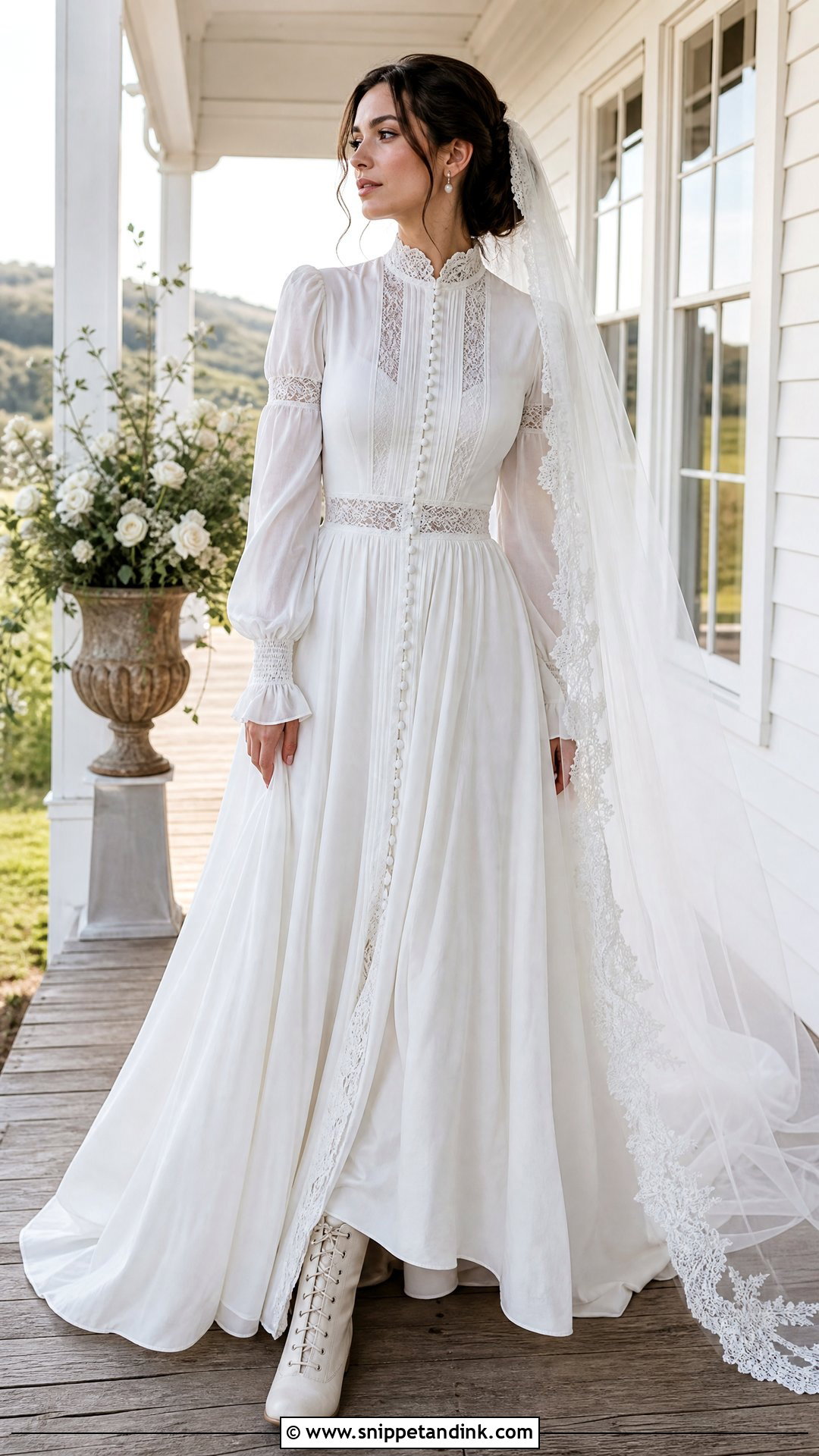
The risk with a prairie high neck wedding gown is tipping from romantic into fancy dress, and it nearly always comes from piling on trims. Pick one or two decorative elements, say lace inserts or tiny buttons, and let the fitted or gently bloused bodice and gathered long sleeves carry the rest. A defined waist and a floor-length skirt without tiers keep it polished rather than casual. Lace-up ivory boots or low heels, small pearl earrings and a chapel veil with minimal edging go well, with a low braided bun tucked under the collar. Countryside, barn and woodland venues fit it best, as long as the tailoring is sharp.
14. 1980s Puff Sleeve Ball Gown Wedding Gown
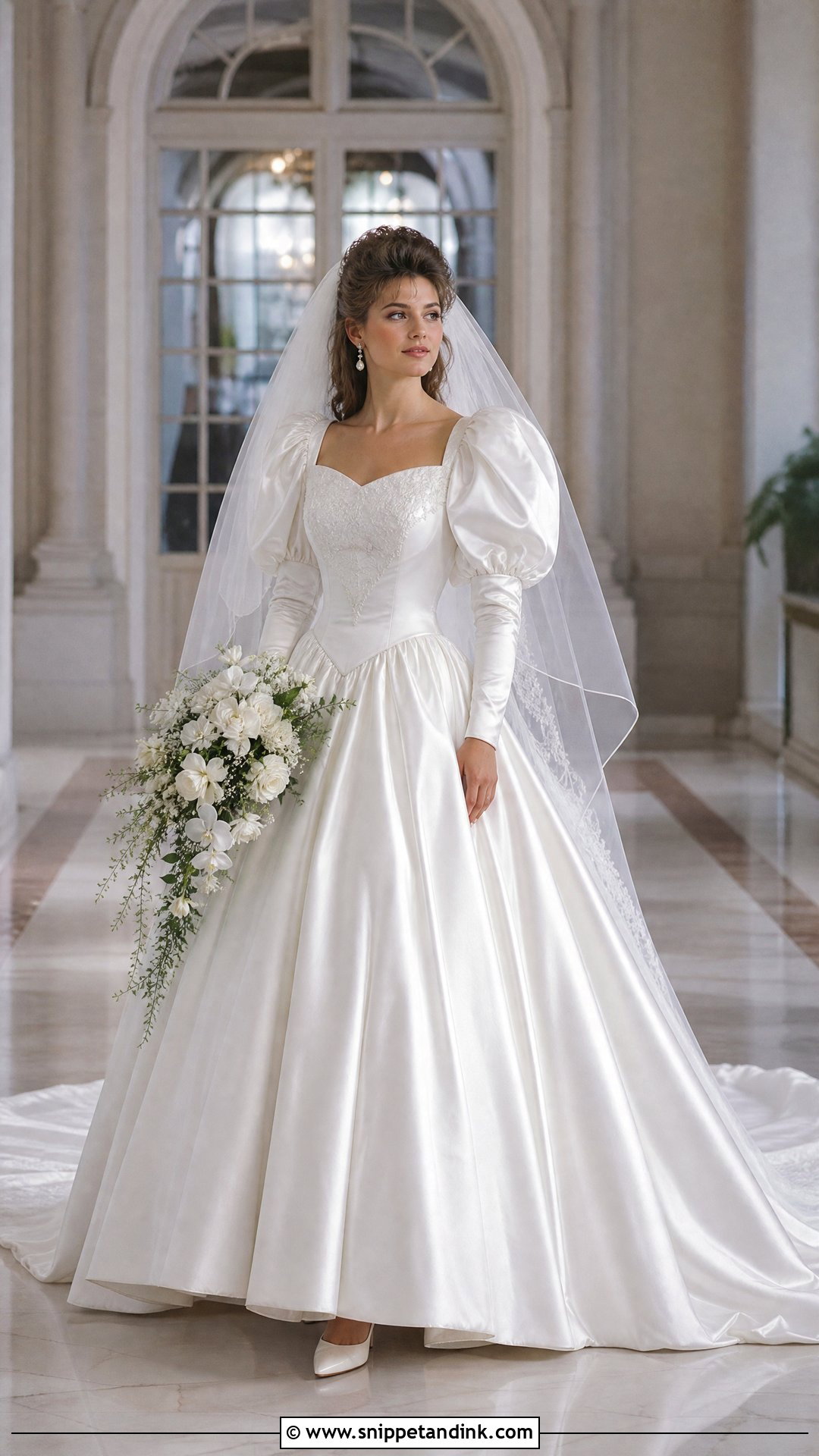
A big sleeve can look refined if everything around it is controlled. For a 1980s puff sleeve ball gown that feels inspired by the decade rather than copied from it, I look for structured shoulders that taper into fitted forearms, not volume all the way to the wrist. Pair them with a clean fitted bodice, a natural waist and a full satin skirt with a moderate train. Ask how the sleeve heads are supported, usually with stiff net or interlining, because puffed shoulders crush in a car and can come out of it looking deflated. Pearl button earrings, pointed pumps and a plain cathedral veil finish it, with smooth, low hair that leaves the shoulders alone. Large venues and formal ceremonies give it room.
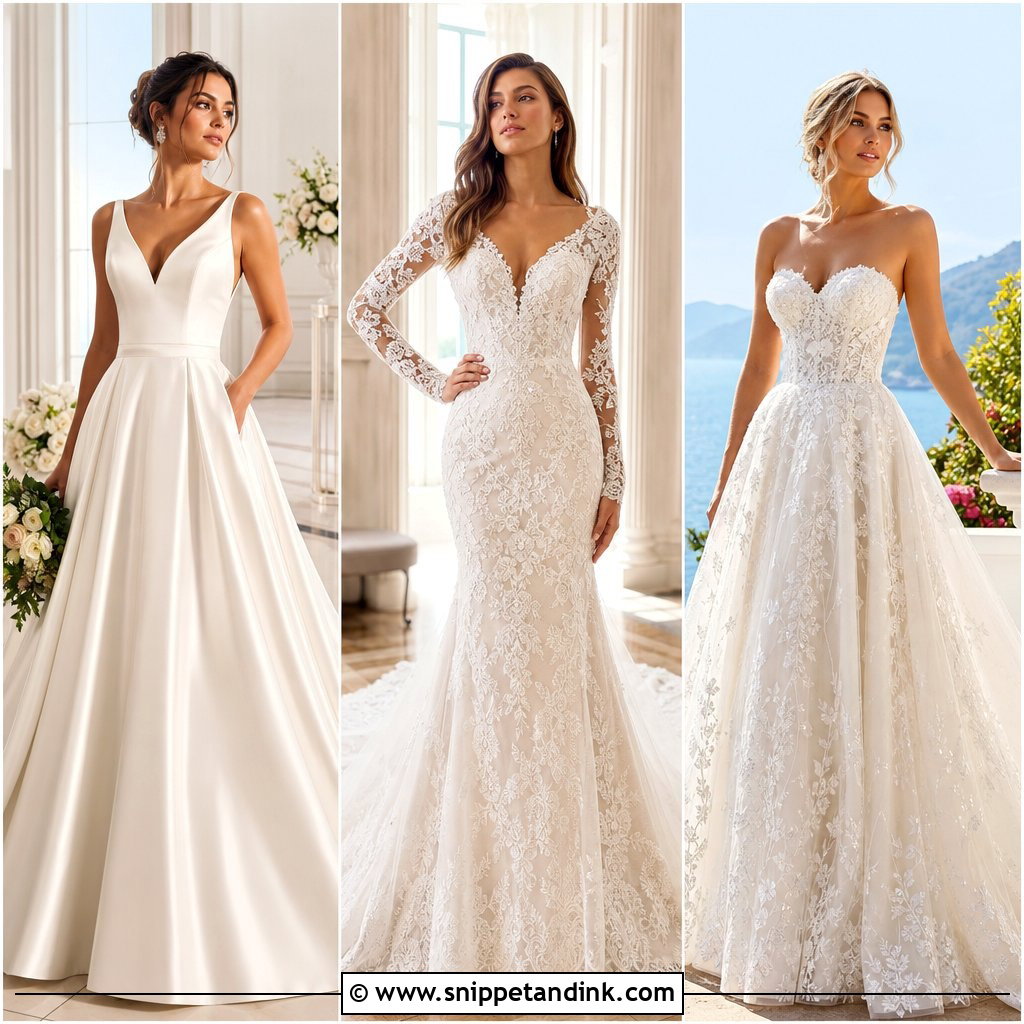

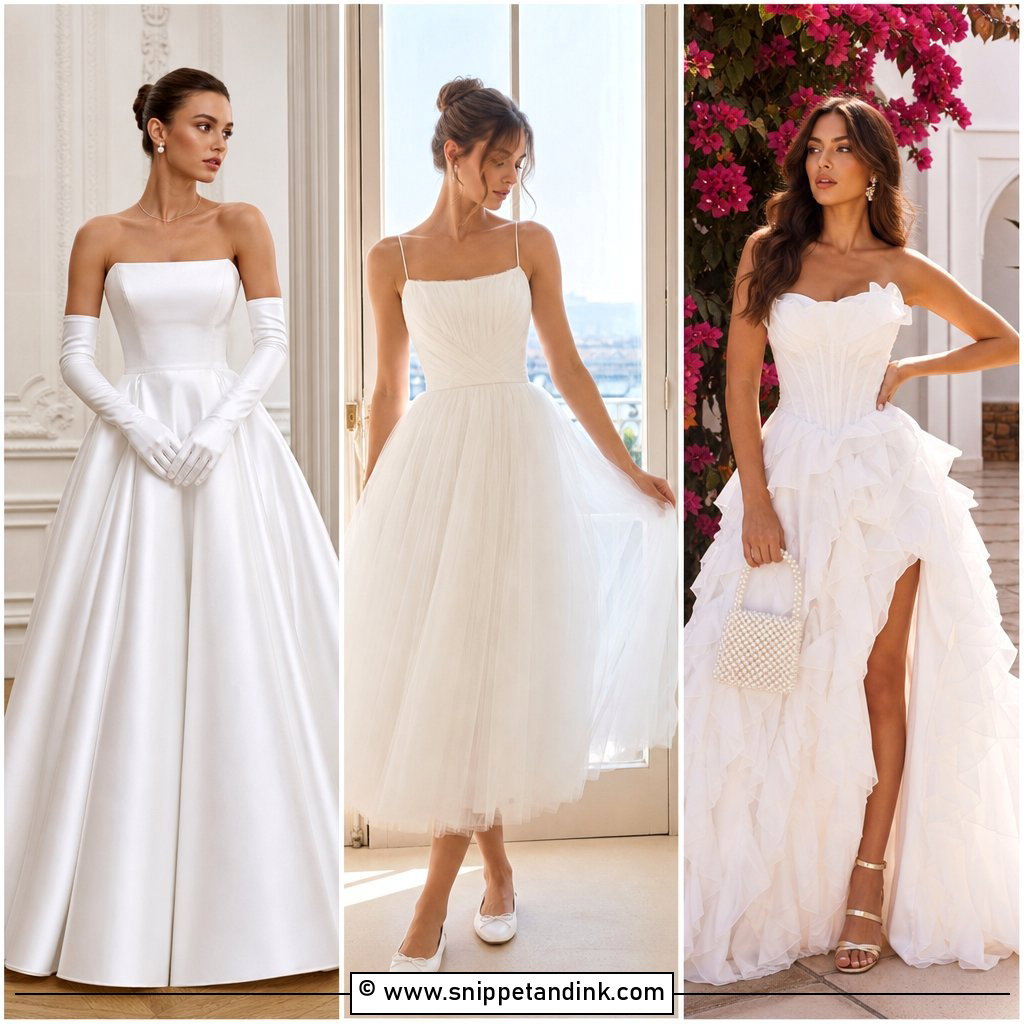
15. Chantilly Lace Heirloom Wedding Gown
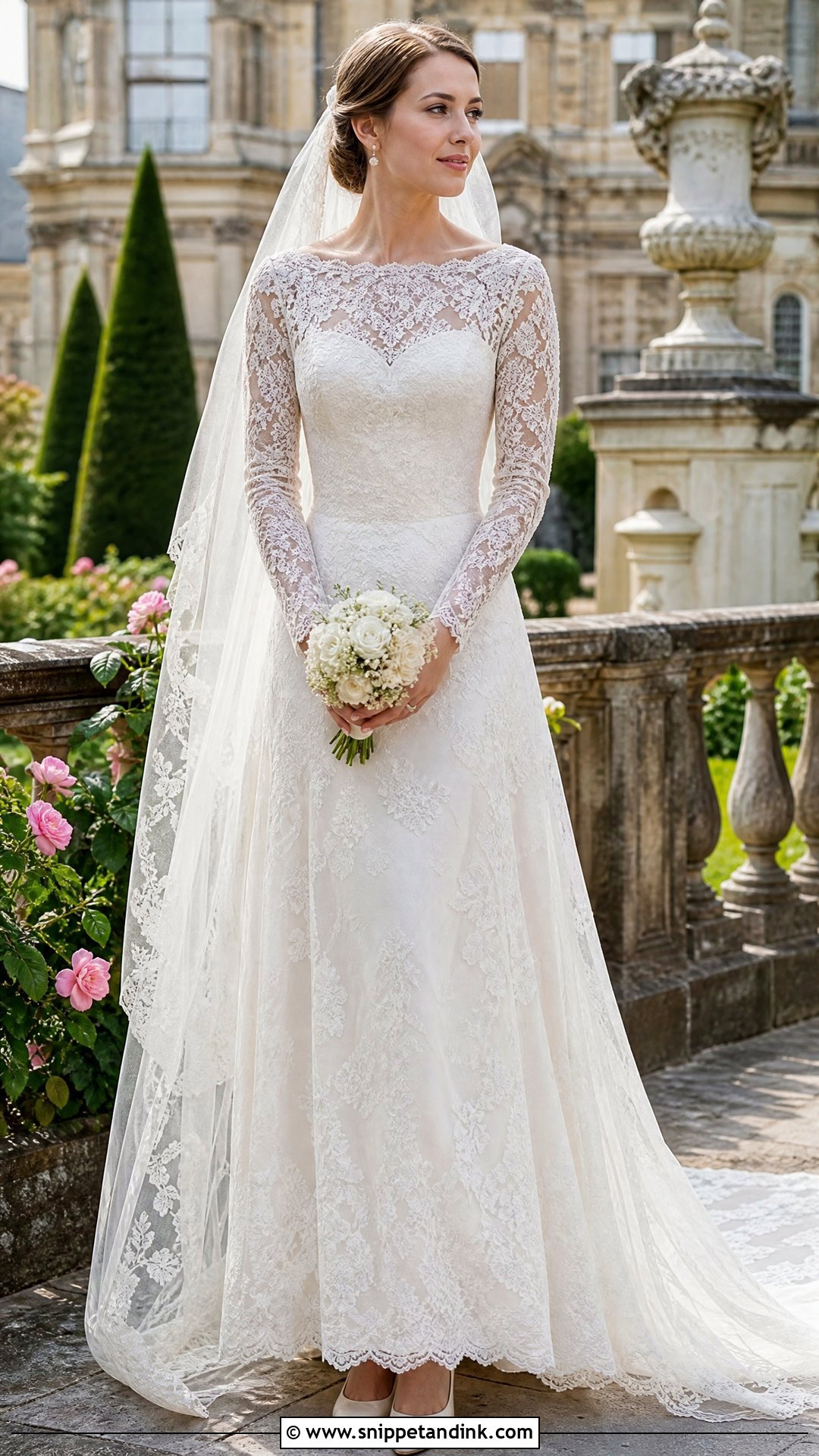
Chantilly is a fine, soft lace, and an heirloom gown in it rewards careful motif placement more than any embellishment. When I fit one, I look at where the floral motifs land at the bust and seams, because a skilled seamstress can cut around a motif and lay it over the join so the seam disappears. Choose a fitted bodice with long sheer sleeves, a modest scoop or bateau neckline and an A-line skirt over an ivory lining, with scalloped edges at the neckline, cuffs and hem. Pearl drops, satin pumps and a veil with a narrow matching lace border suit it. A family brooch can be pinned discreetly inside the lining or onto the bouquet wrap. Skip jeweled belts, since fine lace already reads busy from a distance.
16. Basque Waist Satin Wedding Gown
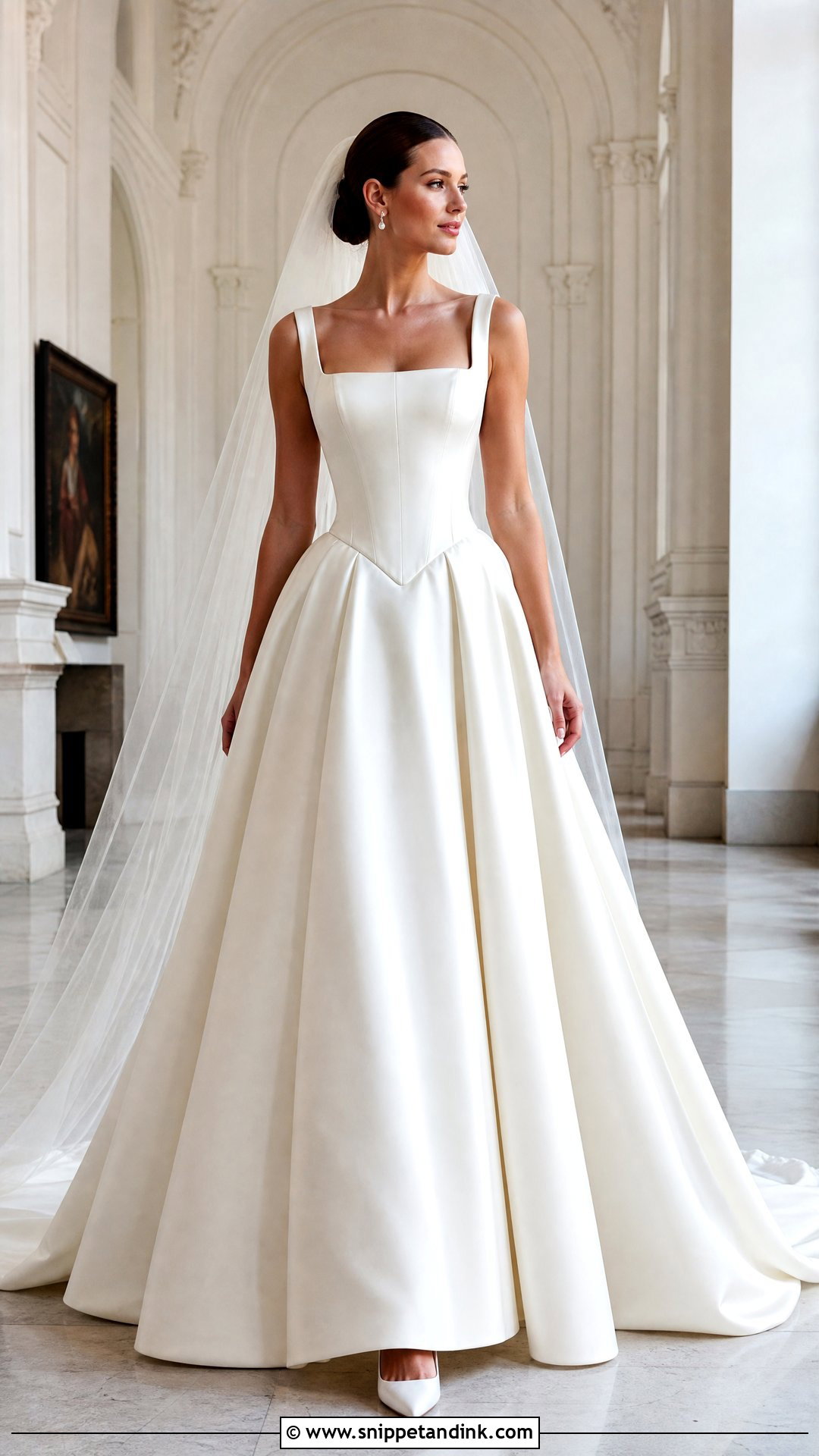
The pointed basque waist lengthens the torso, but only if the point sits where your body actually bends. Too low and it digs in every time you sit, and you’ll feel it by the first course. Choose a structured bodice with a square, scoop or off-the-shoulder neckline to balance the long center front, in smooth ivory satin that shows off the construction without heavy beadwork. A cathedral veil, pearl earrings and closed-toe satin heels go with it, along with a sleek bun or a softly waved updo. Fitted sleeves or a removable lace topper add coverage for a religious ceremony. It carries a formal ceremony with real presence.
17. Vintage Corset Brocade Wedding Gown
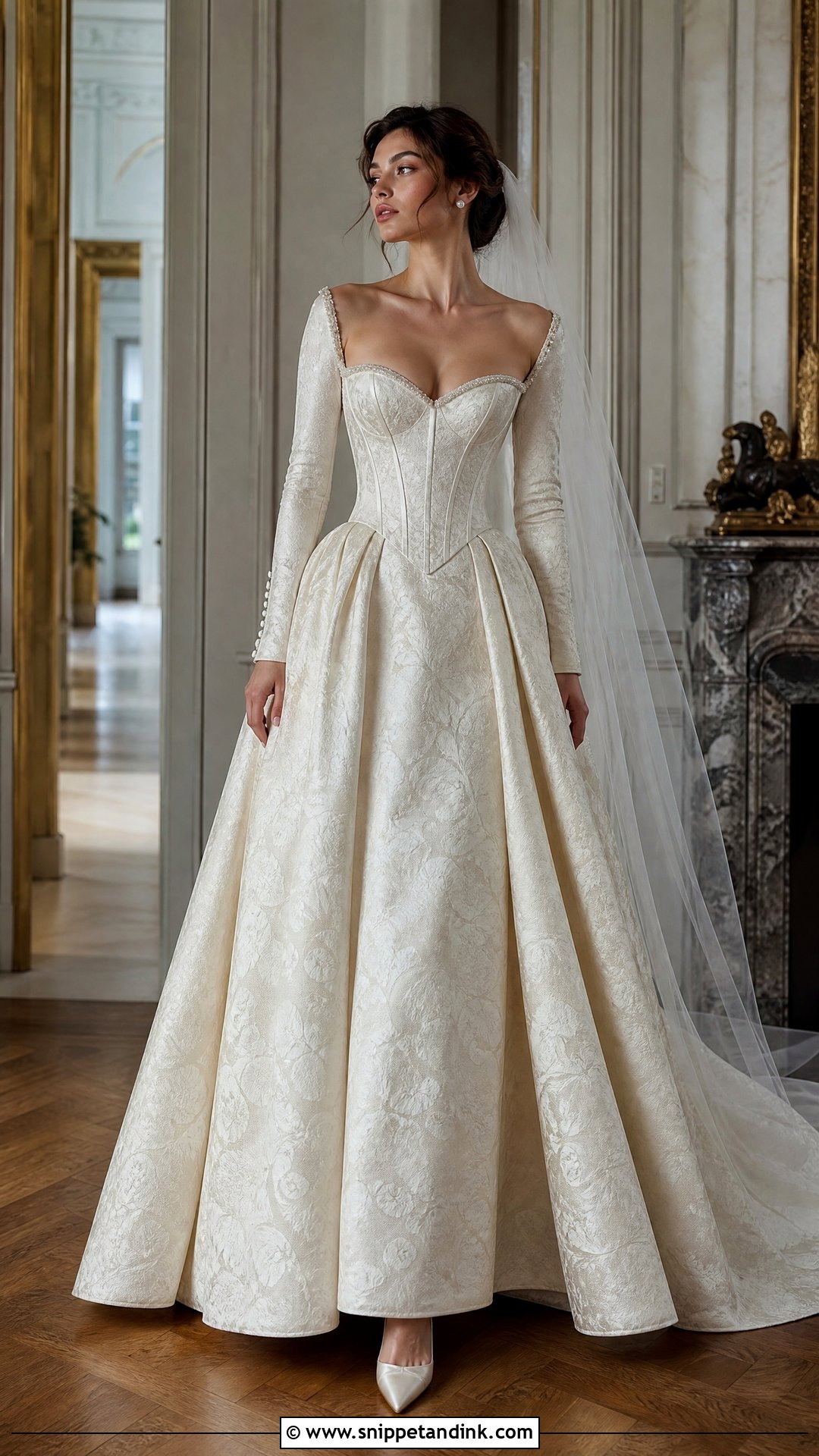
Brocade is woven, not printed, and it holds its shape, which is why it suits structured skirts and cooler-season weddings. It’s also warm to wear, so I’d hesitate to put a bride in it for an outdoor summer ceremony. Look for a supportive bodice with refined seamwork, a softly curved neckline and a full A-line or ball gown skirt in ivory or pale champagne. Avoid tight costume-style lacing; the bodice should look tailored and feel comfortable. Understated pearl studs, pointed satin shoes and a plain tulle veil let the pattern lead, and a detachable sleeve or matching bolero handles ceremony coverage.
18. Champagne Embroidered Wedding Gown
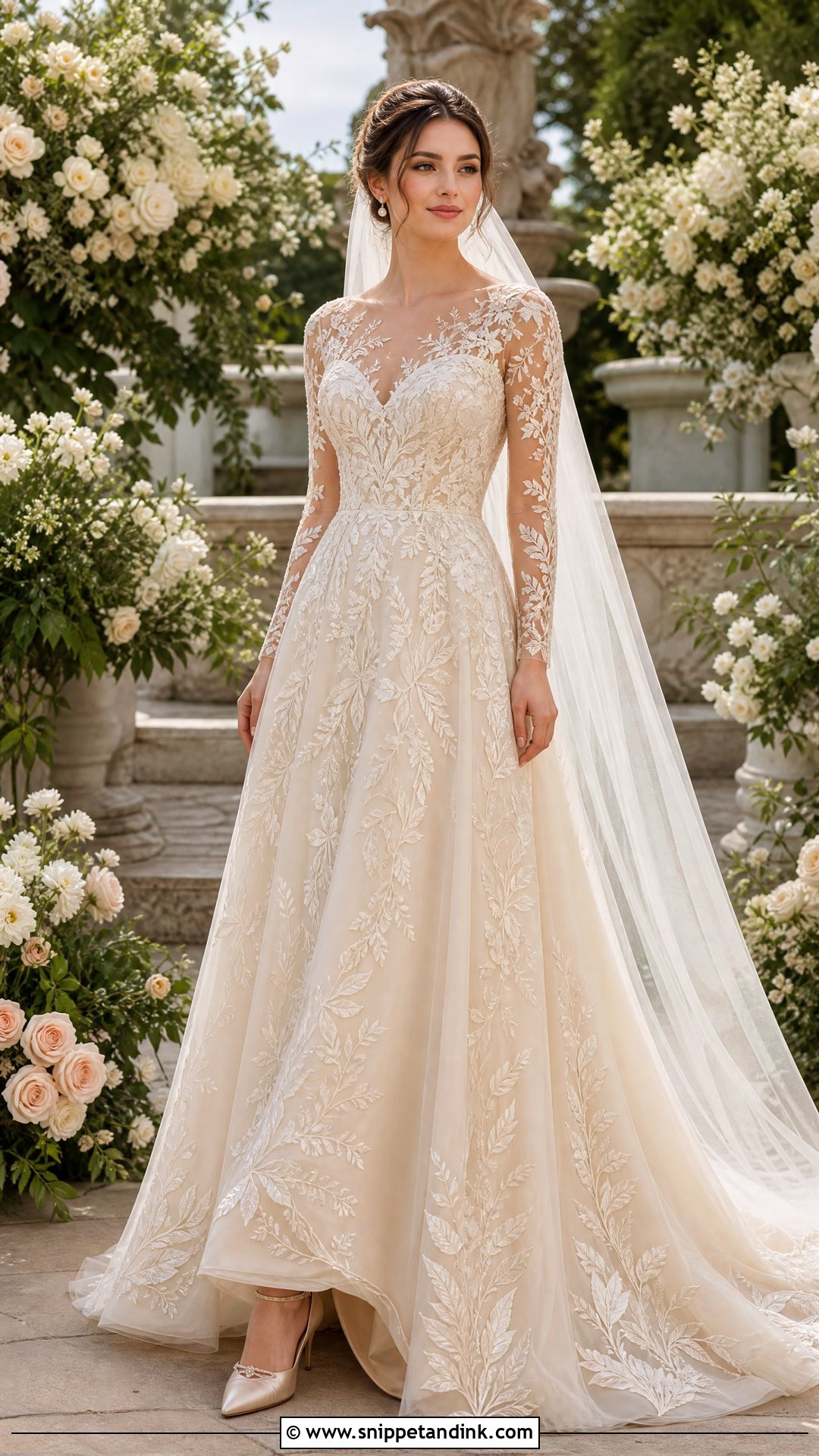
Champagne is the shade I most insist on seeing in daylight before ordering. Under warm indoor lights it can look almost gold, and outside it can read close to beige beside a pale complexion. Choose a fitted bodice, a defined waist and a flowing skirt with ivory threadwork, small pearls or subtle botanical motifs, adding a sheer neckline and long illusion sleeves if you want coverage. Champagne satin heels, pearl earrings and a light ivory veil give gentle contrast, and a bouquet in muted neutrals keeps the gown in front. Historic interiors and formal gardens flatter the warmth of the color.
19. Off Shoulder Portrait Collar Wedding Gown
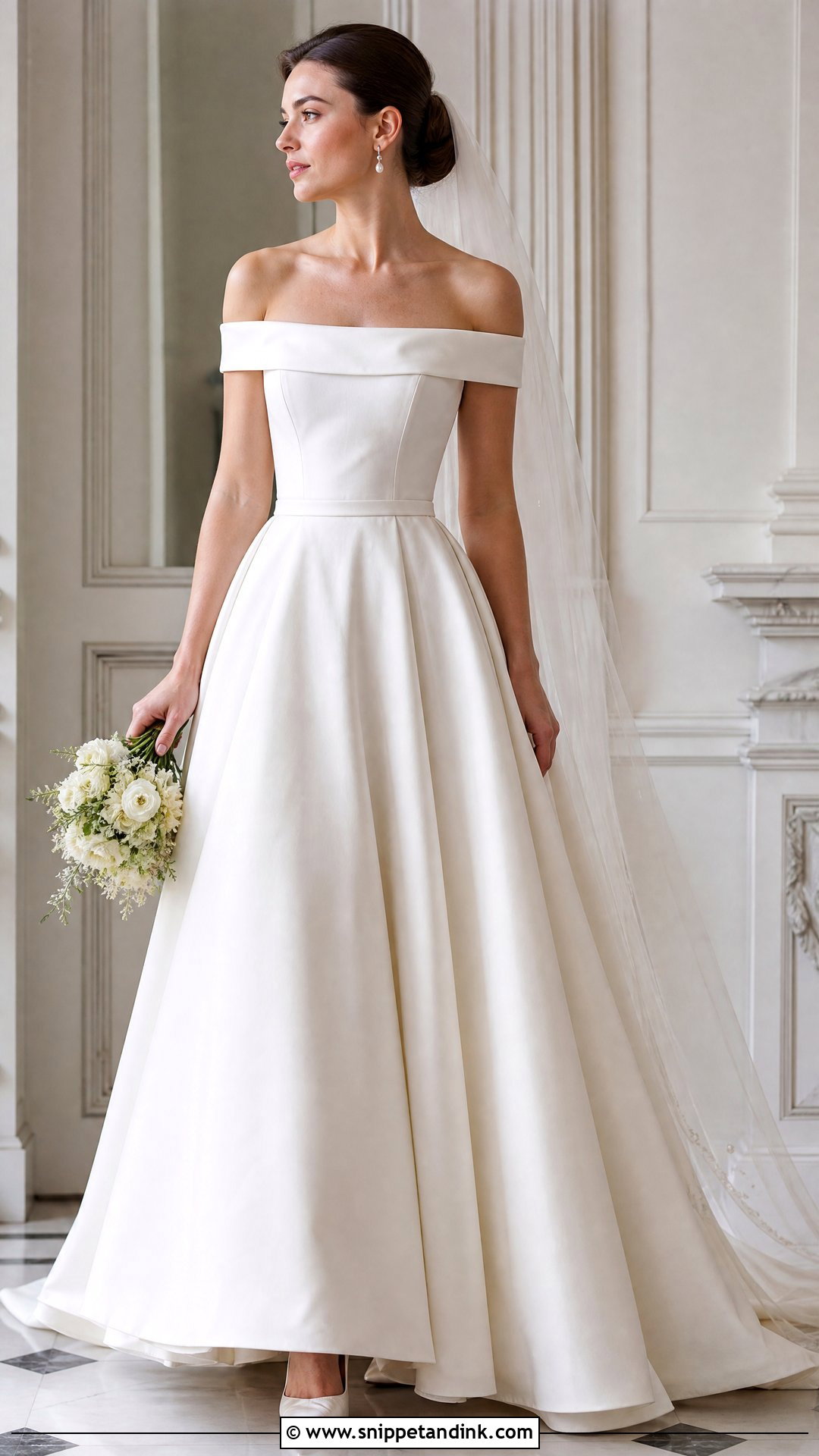
A portrait collar has to rest on the upper arms without sliding, and the only thing holding it there is the bodice underneath. That’s why I check for internal boning and a well-built corset foundation before anything else. Choose a folded satin or lace-trimmed collar, a fitted bodice and a full A-line skirt, with a natural or slightly lowered waist. Test arm movement at every fitting: many collars stop you lifting your arms above shoulder height, which matters for hugging and dancing. Pearl drops, satin pumps and a chapel veil set below a smooth updo finish it. Leave the necklace off so the open neckline stays clean.


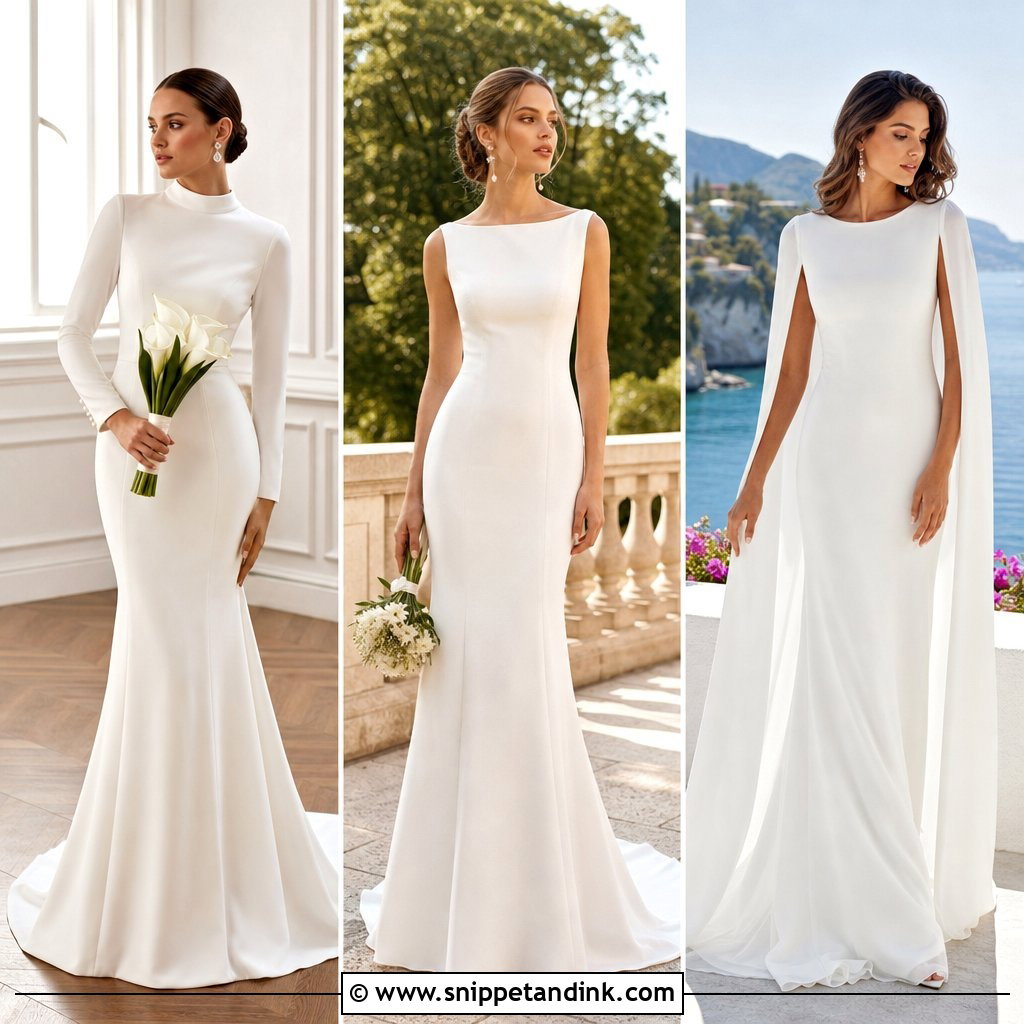

20. Vintage Wedding Gown With Cape And Cathedral Train
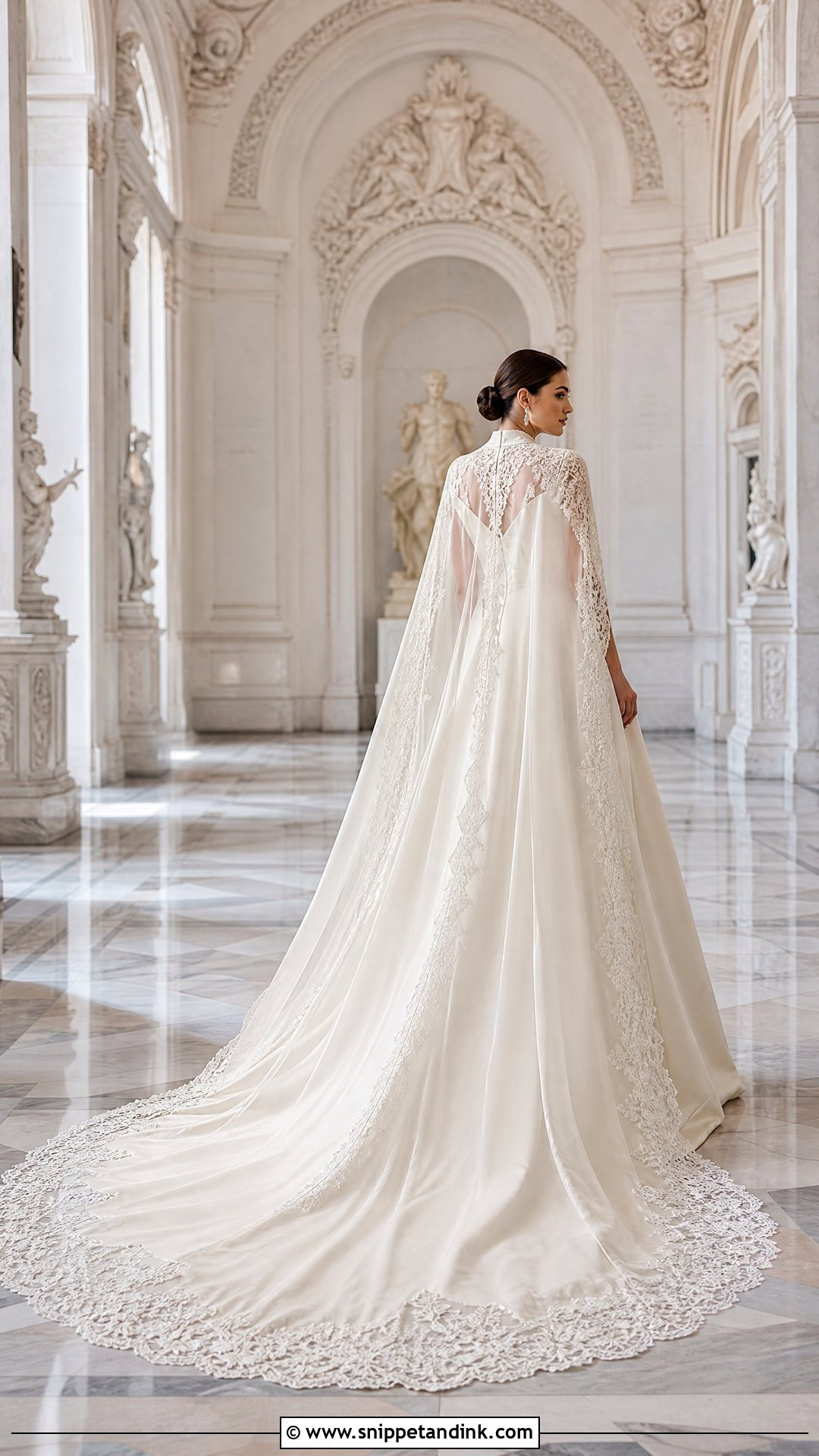
This one gets its drama from shape, not decoration. Start with a simple fitted or A-line gown in satin, crepe or fine lace, then add a removable floor-length cape fastened at the shoulders or neckline, and a cathedral train. Practise walking and turning with both before the day, because a cape and a long train together can tangle when you turn to walk back up the aisle. Understated earrings, closed-toe heels and a polished low bun are enough, and you can drop the veil entirely if the cape has a hood or lace edge. Make sure the train and cape both detach or bustle for the reception. You’ll want a spacious venue for the full length to read.
What Goes Under a Period Silhouette
Half of what makes a gown look like a particular decade is underneath it. A 1950s skirt needs a petticoat with enough net to hold the bell shape, and the wrong one either collapses by the reception or turns the dress into a lampshade. Bias satin wants the opposite: a smooth slip or shapewear close to your skin tone, since white underwear can show through ivory silk in sunlight.
- Bring your actual wedding shoes and underwear to every fitting. Heel height sets the hem, and a different bra moves the whole bodice.
- Ask early whether the bodice can take sewn-in cups. Low backs, cowls and off-shoulder collars often leave no other option.
- For drop-waist and sheath gowns, sit in your shapewear for twenty minutes at home. Anything that rolls at the waist will show through beading.
Packing Away Beadwork, Bias Satin and Old Lace
Have the gown cleaned soon after the wedding by a cleaner who regularly handles bridal work. Sugar from champagne or cake can be invisible at first and turn brown months later. Store it loosely folded in acid-free tissue inside a breathable cotton bag or archival box, never plastic, somewhere dark with a steady temperature.
Don’t leave a beaded gown on a hanger for long, because the weight drags at the shoulder seams. Bias-cut satin shouldn’t hang either; it slowly stretches and can drop longer on one side. If you’re keeping an older lace dress for a daughter or niece, refold it along new lines once a year so the creases don’t set into permanent breaks.
One Era, One Feature, and a Fitting You Can Sit Through
The vintage gowns that work best take one recognizable period detail and pair it with modern tailoring. Victorian lace, Edwardian embroidery, 1920s beading, 1930s satin, 1950s skirts and 1970s sleeves all hold up when they’re used with restraint. Start with the silhouette you can move in, then build the veil, shoes, jewelry and hair around the gown’s strongest feature. At your final fitting, wear the whole outfit and walk, sit, climb a step and raise your arms. If it passes that test, it will carry you through the day as comfortably as it carries the photographs.
You'll Like These Ideas:










Leave a Reply