
True Vintage or Vintage-Inspired? Read the Seams First
Some brides want a gown that actually lived through the 1930s or 1970s; most want a new dress that looks like it did. Both are lovely options, but a real vintage gown needs a different kind of inspection before you fall for it.
What I check on an original gown
- Hold the fabric up to a window. Thin patches, tiny splits along the grain and brittle lace show clearly against the light.
- Look under the arms and around the waist for old perspiration marks and yellowing. Light yellowing can often be treated by a specialist cleaner; brown spotting rarely disappears completely.
- Turn it inside out and look at the seam allowances. Wide allowances mean the dress can be let out a little; narrow ones mean it can only be taken in.
- Ignore the size label. Sizing has changed a lot over the decades, so measure the bust, waist and hips of the dress itself and compare them to yours.
Budget time and money for a restorer or seamstress used to old fabrics. Delicate silks and early synthetics can tear if they’re altered like a modern dress.
A vintage-inspired gown avoids all of that. You get period details on modern fabric, with today’s sizing, support built in and a dress that can be altered freely.
1. Victorian Lace Boho Wedding Dress
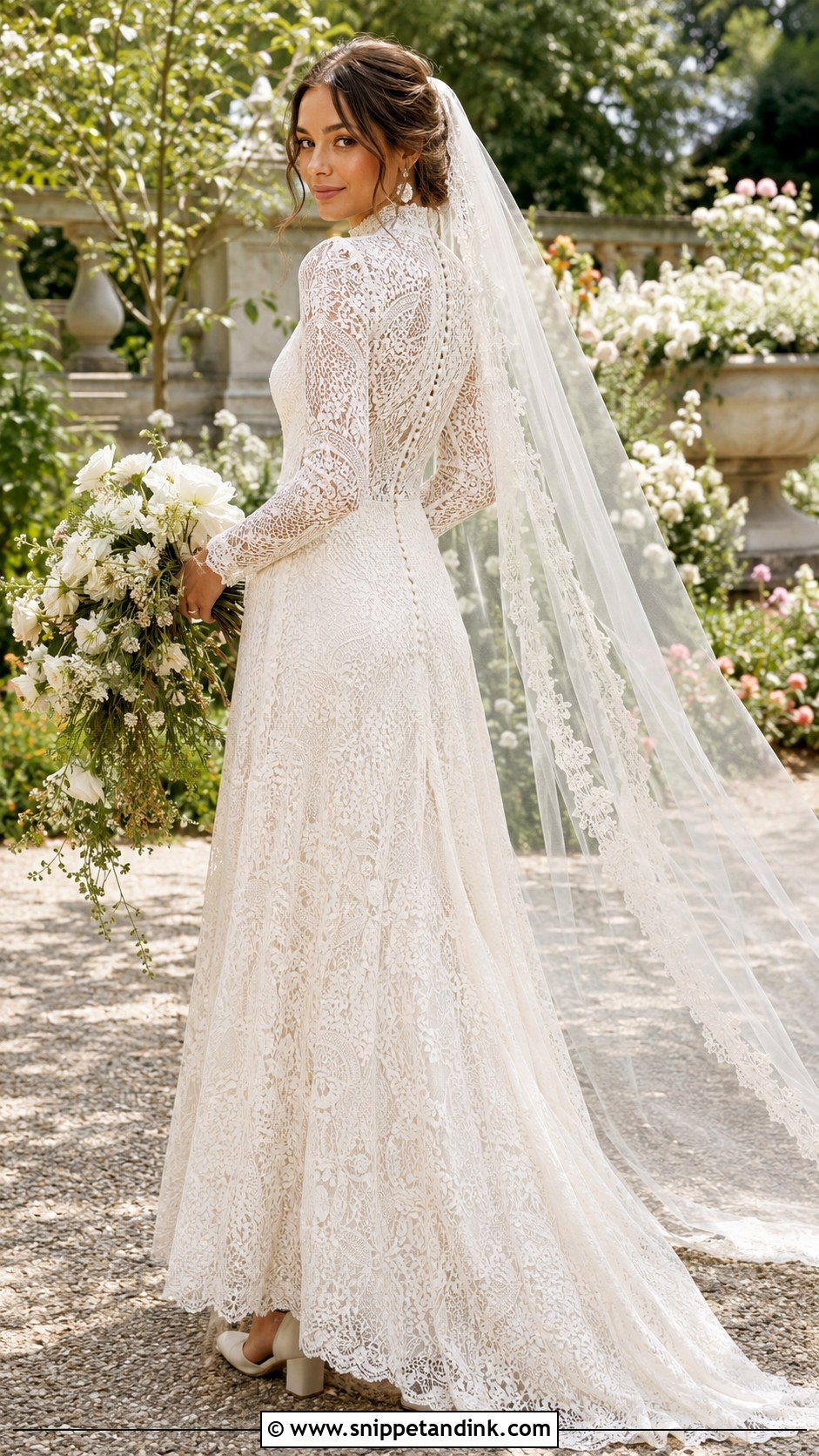
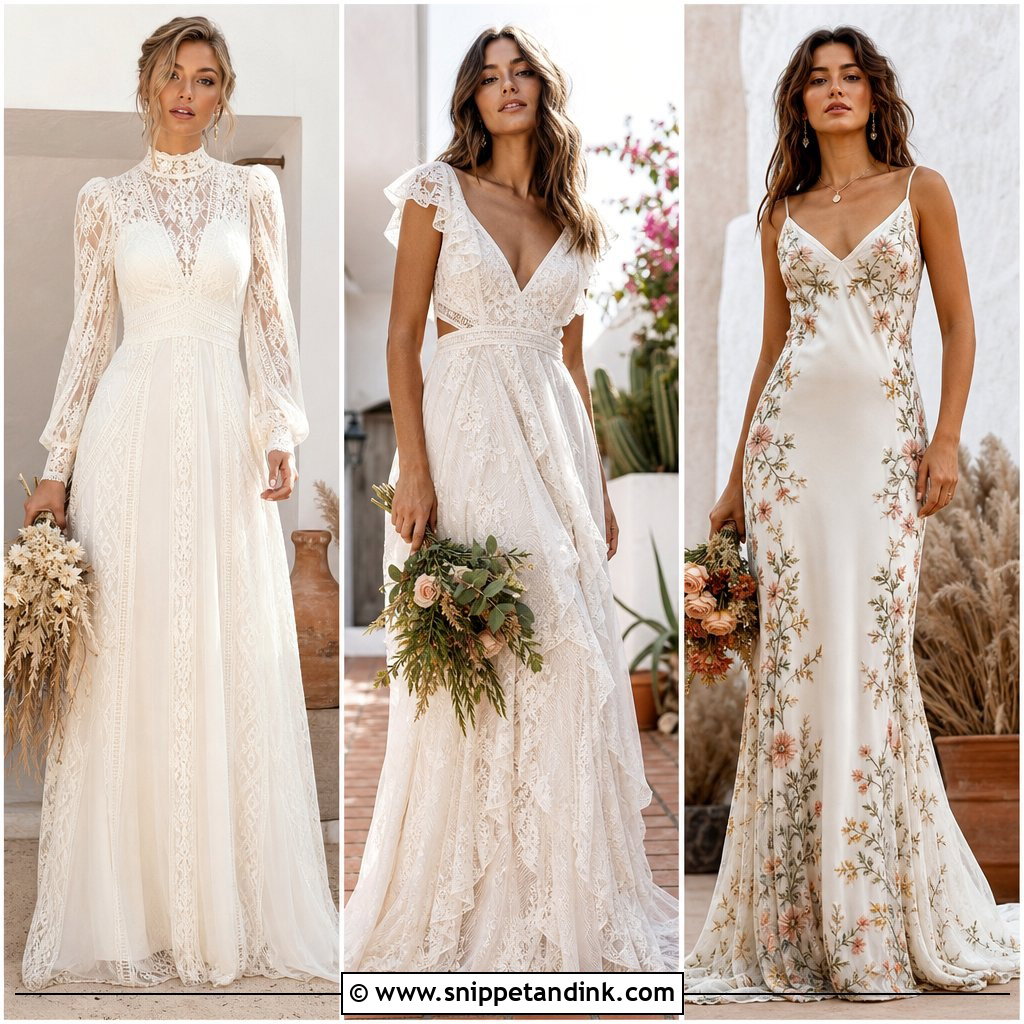
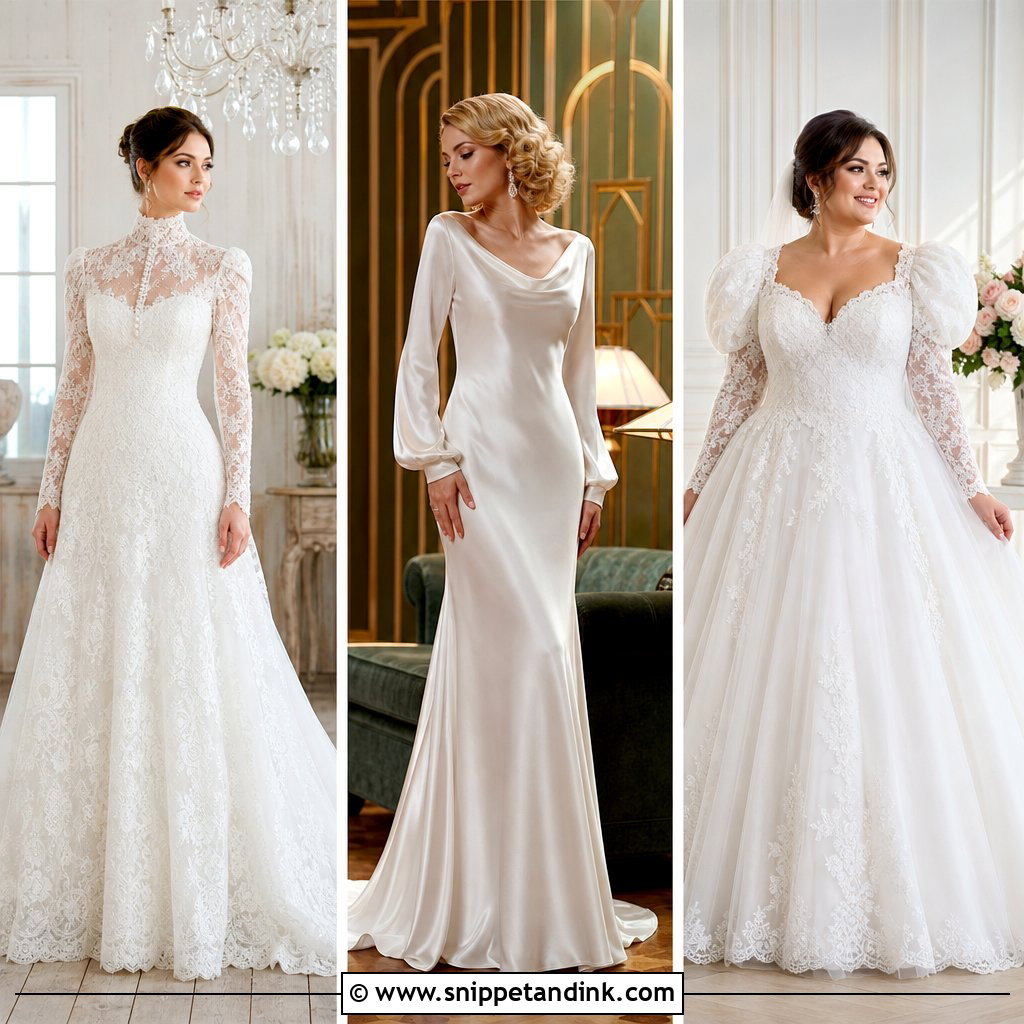
High neck, tiny buttons, fitted lace sleeves: the Victorian outline is strict, so the boho version loosens it from the waist down. An ivory A-line with a softly defined waist and a light skirt gives you the period detail on top and room to move below. The buttons are the first thing I check. A row of thirty loops down the back takes a long time to fasten, so ask whether there’s a hidden zip underneath and give whoever dresses you extra time on the morning. Pearl drops, an antique-style comb and a low textured bun. Ivory block heels for an outdoor aisle. A fingertip lace veil or plain tulle suits it better than a cathedral length, and greenery with small white flowers keeps the bouquet natural.
2. 1970s Bell Sleeve Wedding Dress
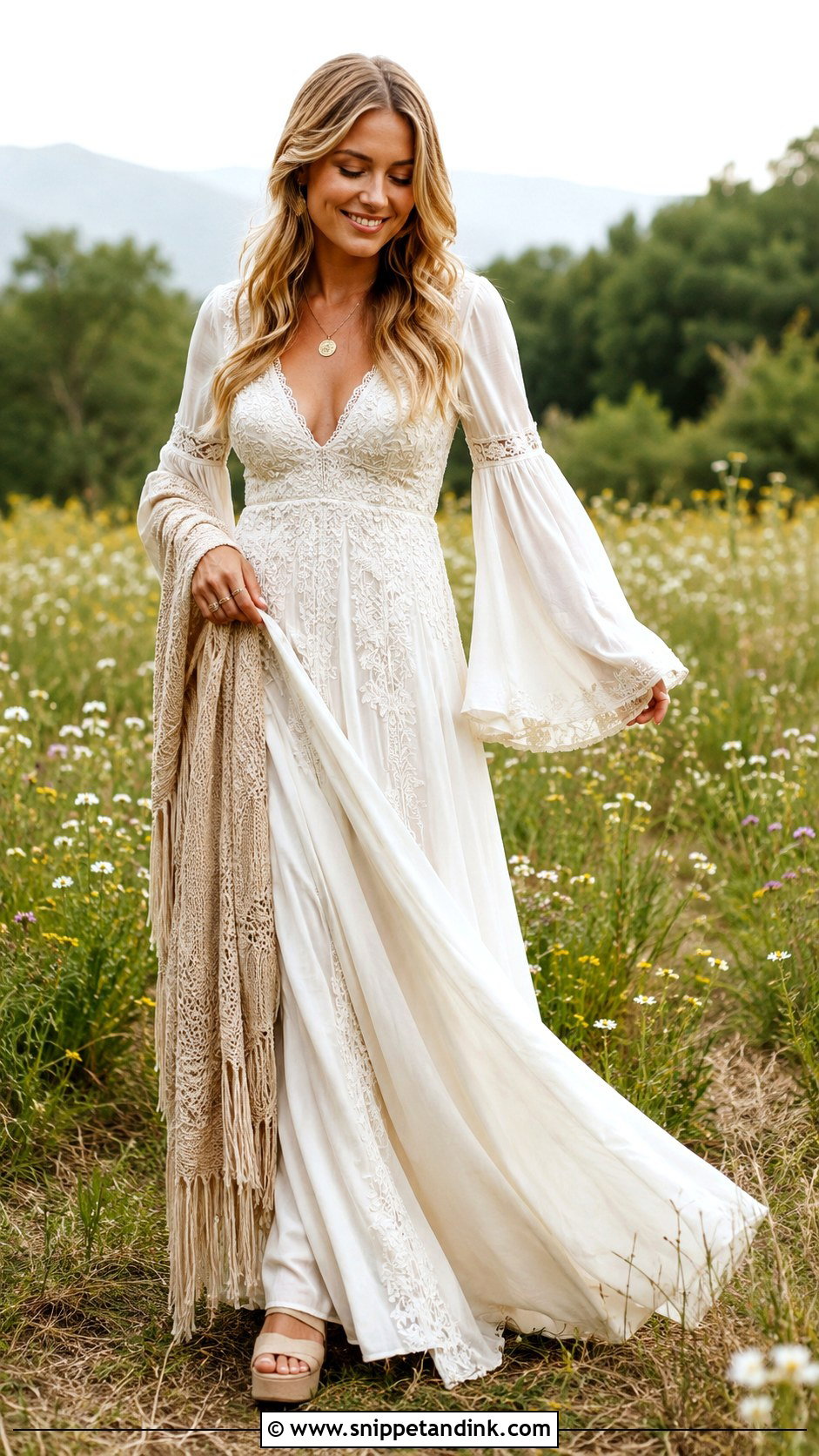
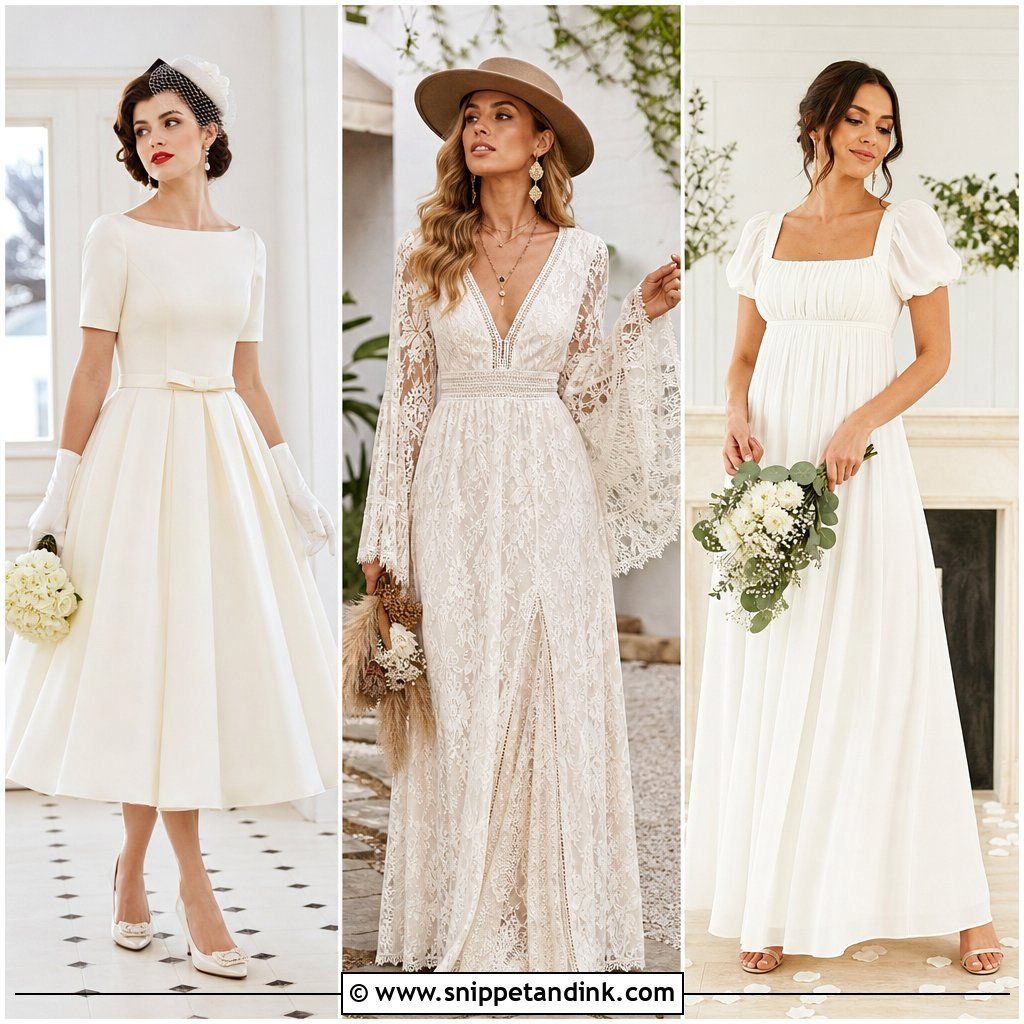
Few details date a dress as clearly as wide bell sleeves, which carry an unmistakable 1970s bohemian character. The gown under them should be simple: a V-neck bodice, a gently fitted waist and embroidered lace running down into the sleeves, with a skirt that skims and then opens so you can walk. Platform sandals or ivory leather ankle boots fit the era and are steadier than narrow heels on grass. Centre-parted waves with a small floral piece near the crown. A long pendant works only if the bodice is plain; over embroidery it just tangles. For a cool evening, a fringed wrap stays in period.
3. Edwardian High Neck Wedding Dress
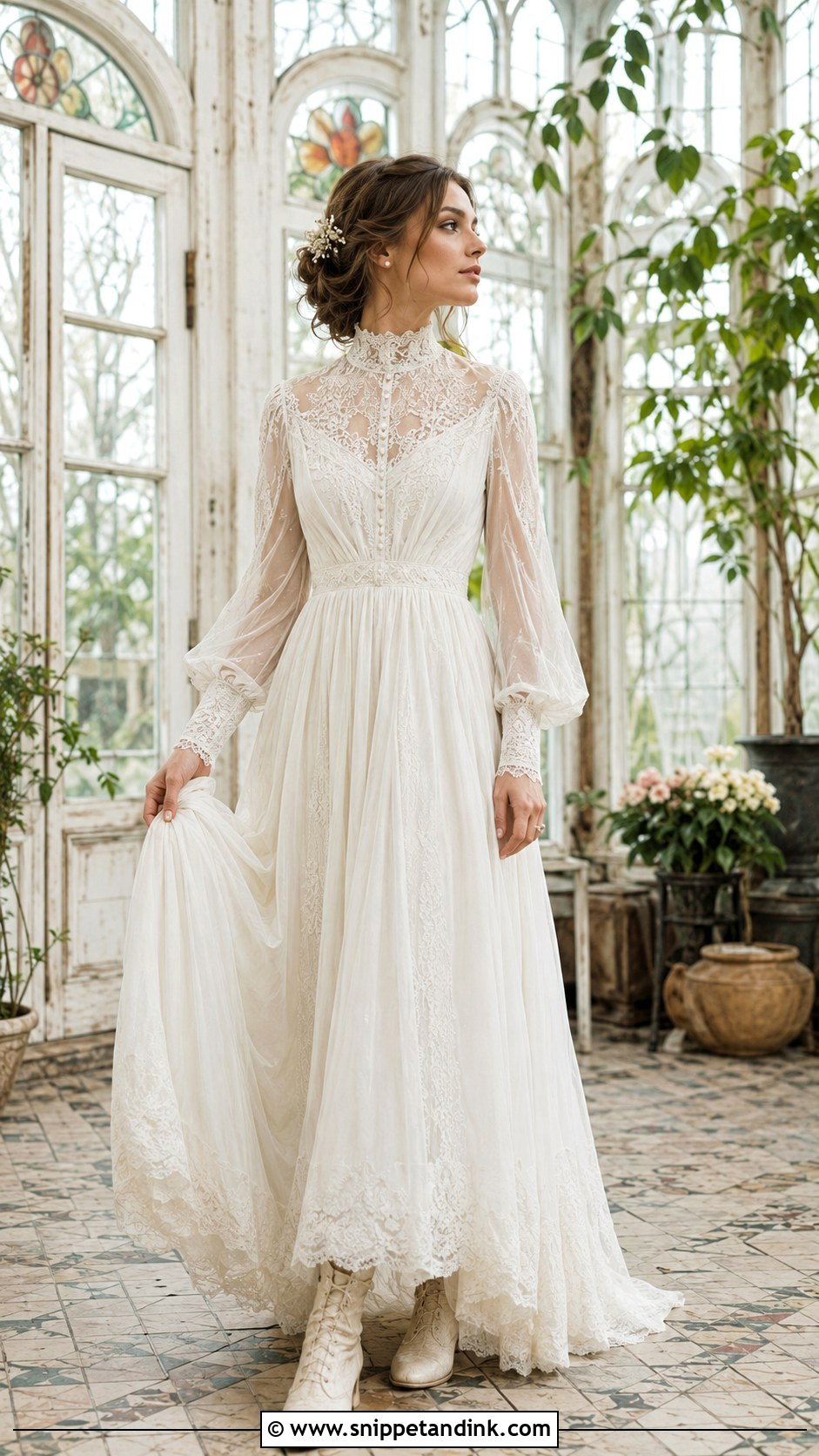
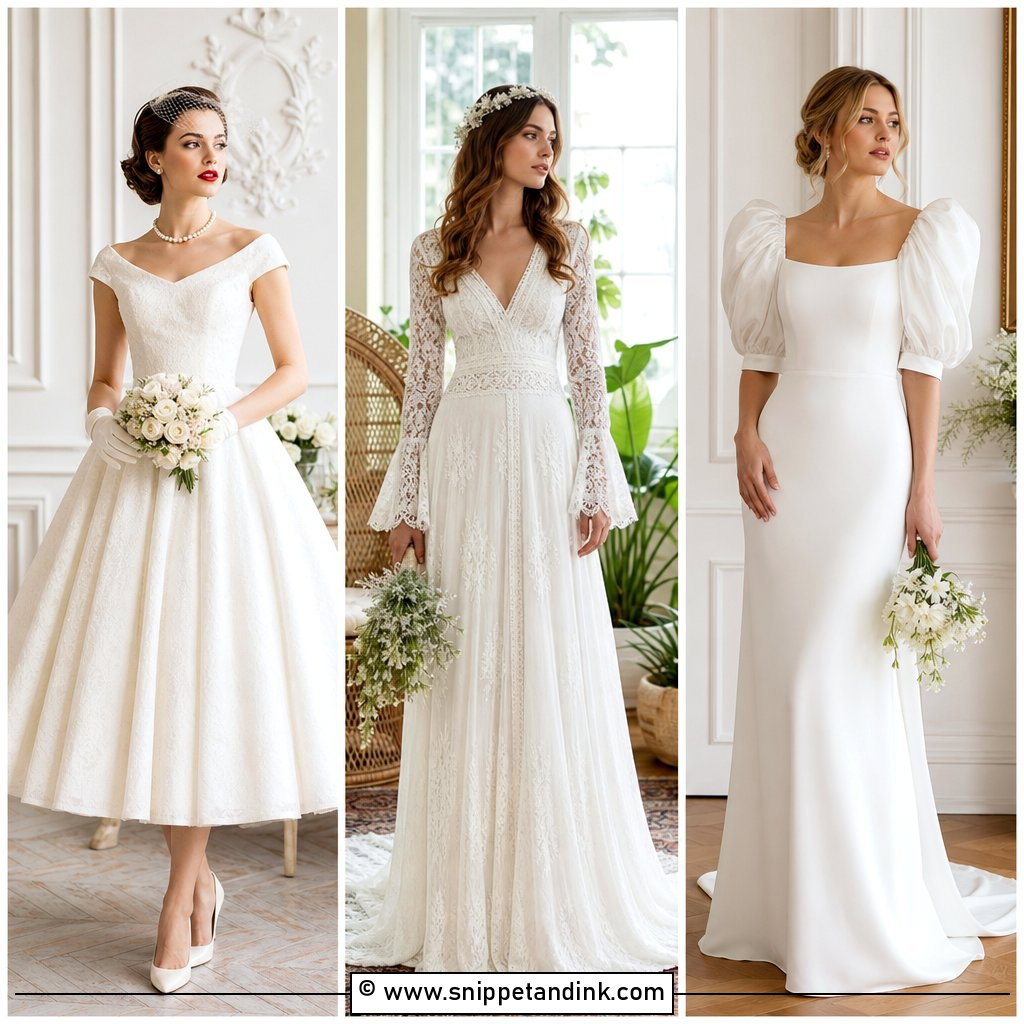
An Edwardian high neck wedding dress is softer than its Victorian cousin, and that’s why it suits boho brides. The sheer lace yoke lets skin show through, covered buttons and a defined waist keep the period shape, and bishop sleeves gathered into narrow cuffs feel lighter than fitted ones. The high collar should sit just below your jaw without pressing when you look down; check that by reading your vows from a card at the fitting. Pearl studs, a small floral comb and a loose chignon with a few face-framing strands. Low ivory heels or lace-up bridal boots. Plain tulle over an ornate bodice, lace-edged tulle over a plain one.
4. Art Deco Beaded Wedding Dress
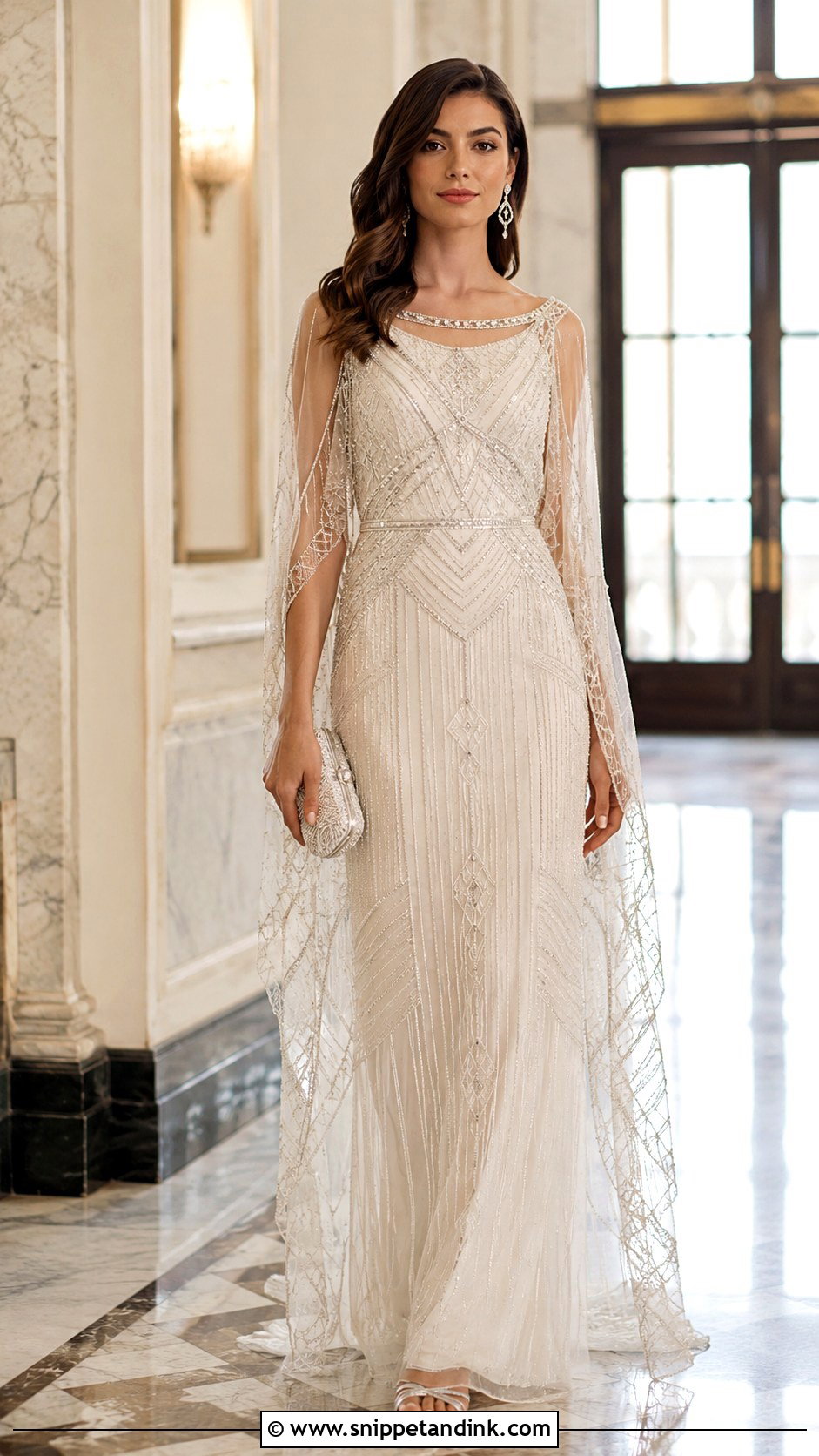
Beaded Art Deco gowns are heavier than they look. Glass beading on a fluid column can add real weight, and that weight pulls at the shoulders and stretches fine straps over a long day. When I fit one, I check the strap points and ask whether the beading is sewn onto a stable base layer. Geometric beadwork, a low back and a champagne lining give the 1920s mood; keep the cut fluid so it doesn’t feel like a costume. Metallic low heels, a beaded clutch and fine drops. Brushed waves or a relaxed low bun with a crystal comb. A sheer cape instead of a veil shows off the long line. Everything else should stay quiet.
5. 1930s Satin Slip Wedding Dress
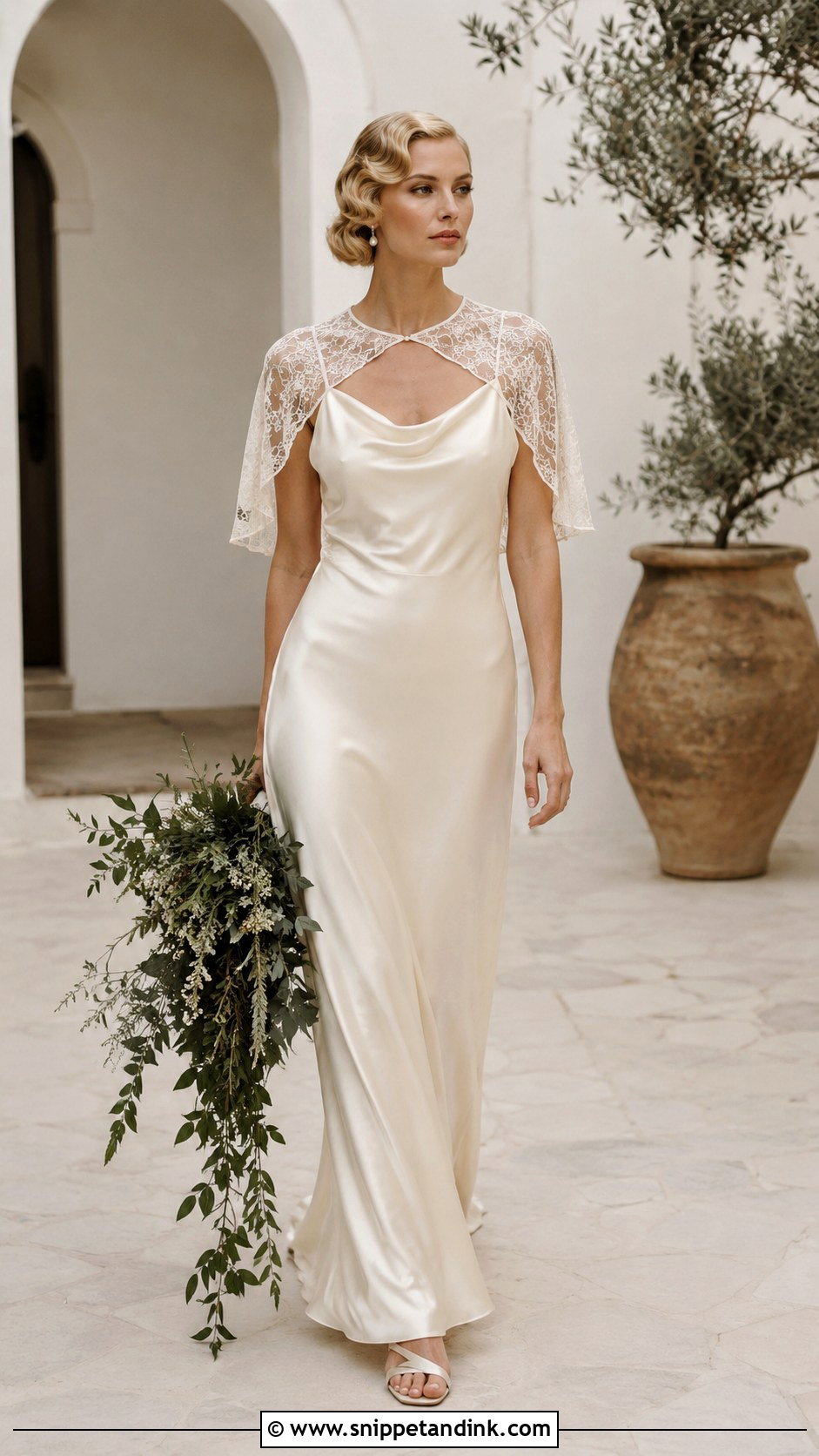
1930s brides wore satin and a bias-cut silhouette, and the look still feels modern. A cream or soft ivory slip with a cowl neck, slim straps and a skirt that falls straight over the body. A removable lace capelet brings in boho texture and covers the shoulders for the ceremony. Bias-cut satin shows everything underneath, so wear smooth, no-line underwear to every fitting, and expect the tailor to fit it close to the body rather than loose. Low satin sandals, vintage pearl earrings and a small bouquet with trailing greenery. Finger waves for polish, or tousled curls to relax it. For evenings, choose a shawl with a matte finish so the two sheens don’t clash.
6. 1940s Tea Length Wedding Dress
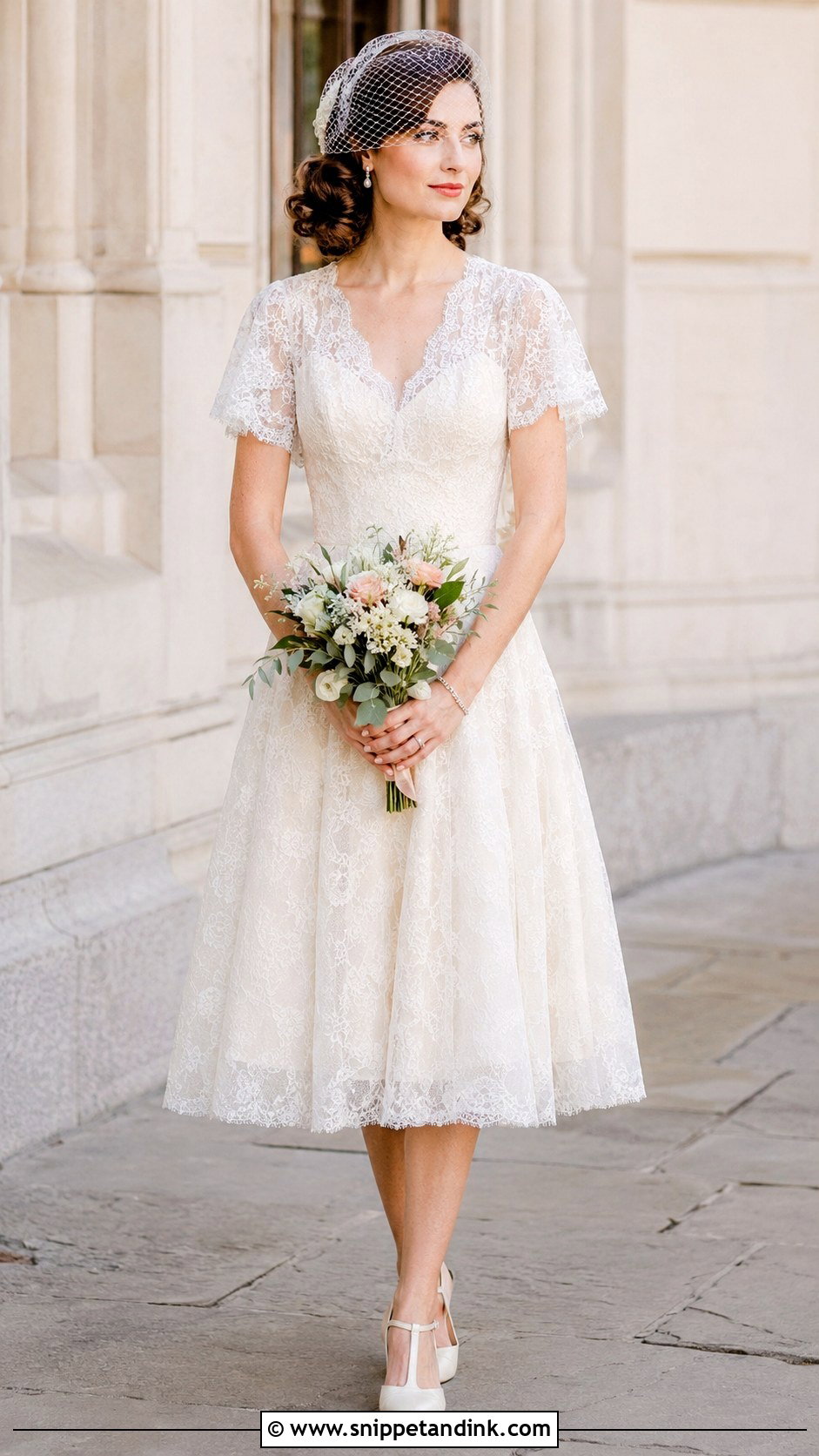
Shoes become part of the look in a 1940s tea-length dress, because the hem stops between knee and ankle. A softly tailored bodice, a modest V-neck and flutter sleeves keep it period; floral lace or dotted tulle brings the boho texture. Ivory T-strap shoes are the most authentic choice, and they stay on while dancing. A birdcage veil, pearl earrings and a small structured bouquet. Hair should be polished waves gathered loosely at the back; a sculpted 1940s roll looks great but takes a skilled stylist and a trial to get right. City ceremonies, courtyards and any reception where you plan to dance all night suit this length.
7. 1950s Lace A-Line Wedding Dress
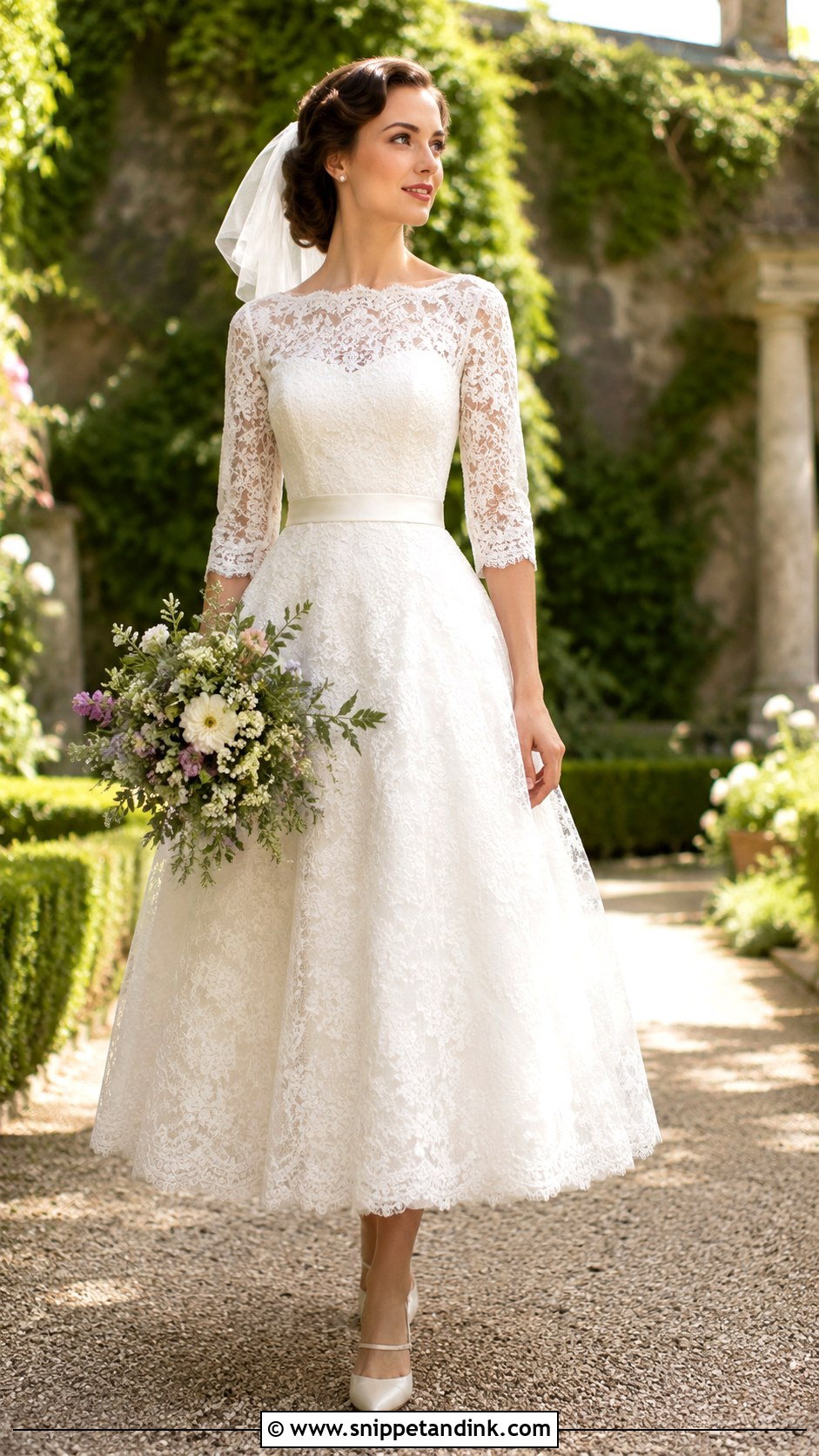
Full skirts and tiny waists are the 1950s signature, but stiff petticoats aren’t very boho. A lace A-line gown inspired by the 1950s keeps the fitted waist and flared skirt with a lightweight lining and flexible lace instead. A sweetheart or bateau neck and three-quarter sleeves give the period outline. Pointed ivory flats, slingbacks or plain pumps, depending on the venue. A short veil, pearl studs and a small floral hairpiece. If the waist needs more definition, a narrow velvet or satin ribbon helps. A loose bouquet of roses, greenery and wildflowers stops it from looking too polished.
8. 1960s Crochet Wedding Dress
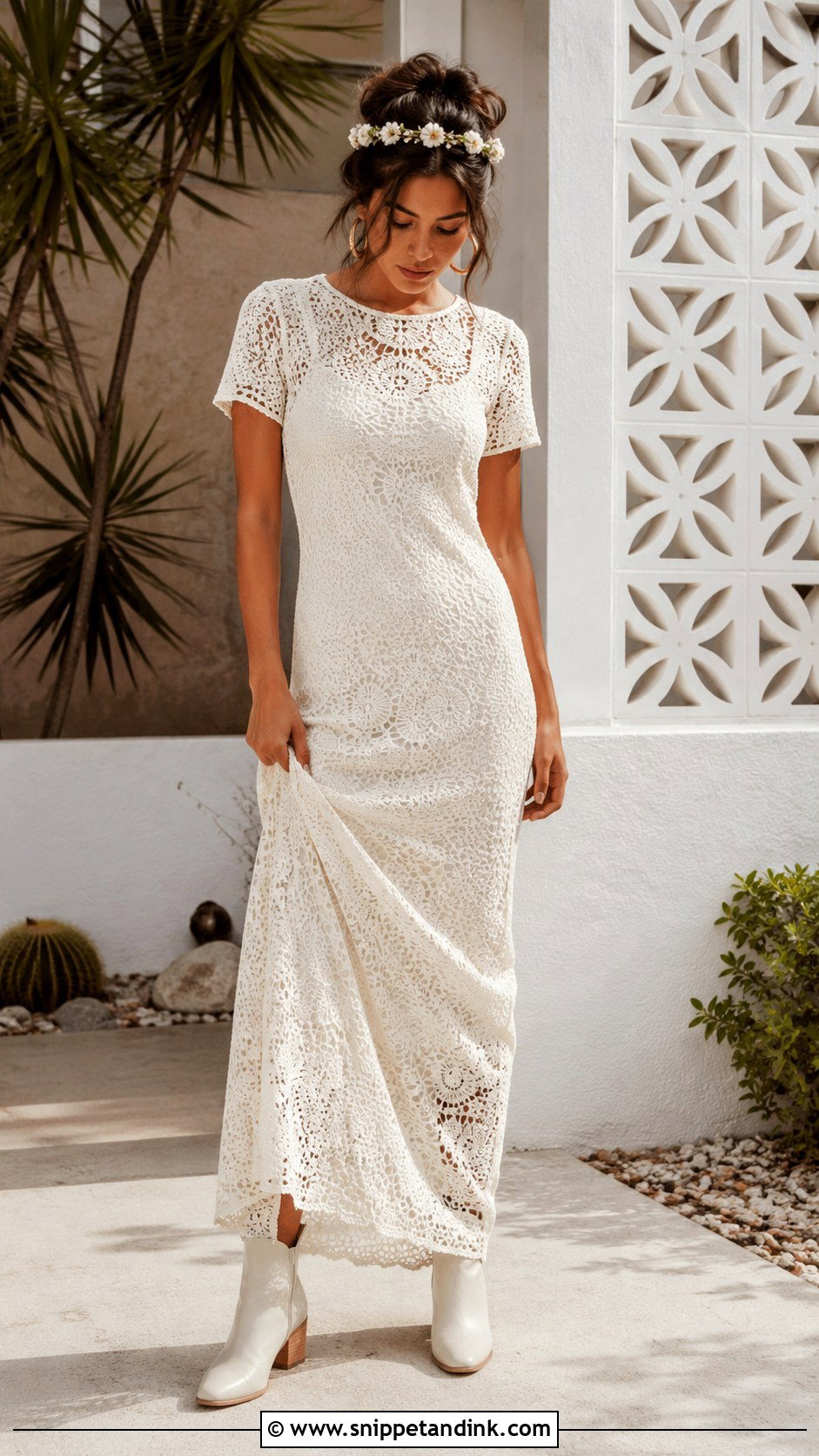
Crochet dresses from the late 1960s were often short and straight; the bridal versions now are slim A-lines and columns with a jewel neck and short sleeves. The lining is what makes or breaks crochet. A nude or warm ivory lining shows the pattern clearly, while a bright white one flattens it. Ivory leather sandals keep it clean; block-heel ankle boots push it more retro. Centre-parted waves with a simple headband or a few fresh flowers. Gold hoops, a slim bracelet or a family pendant. A long veil hides the texture, so use a floral comb or a shoulder-length tulle veil. A colourful meadow bouquet brings warmth to all that cream.
9. 1970s Prairie Wedding Dress
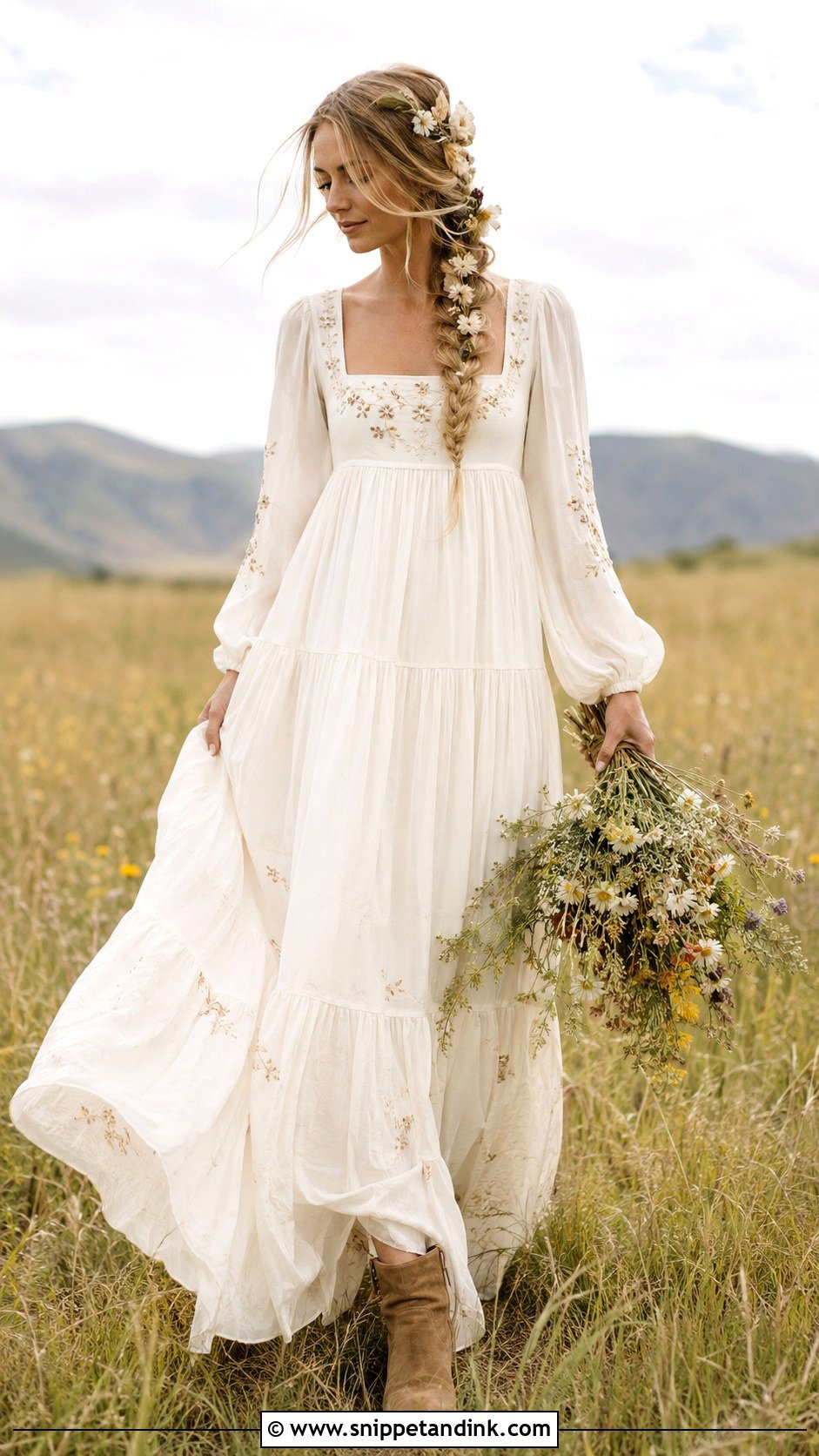
Prairie dresses carry a lot of fabric, with gathers, tiers and long sleeves all adding up, so breathability is what I check before anything else. A light lining and a cotton or cotton-blend outer keep the tiers comfortable through a warm afternoon. Look for a square or modest V neck, an empire waist and long sleeves with soft volume, with floral embroidery for the 1970s feel. Suede ankle boots, woven flats or low block-heel sandals, chosen for the ground you’re standing on. A loose braid with tiny flowers and small gold earrings. A wildflower bouquet. For cool evenings, a cropped knit or embroidered shawl that leaves the bodice on show.
10. Boho Wedding Dress With Cape Sleeves
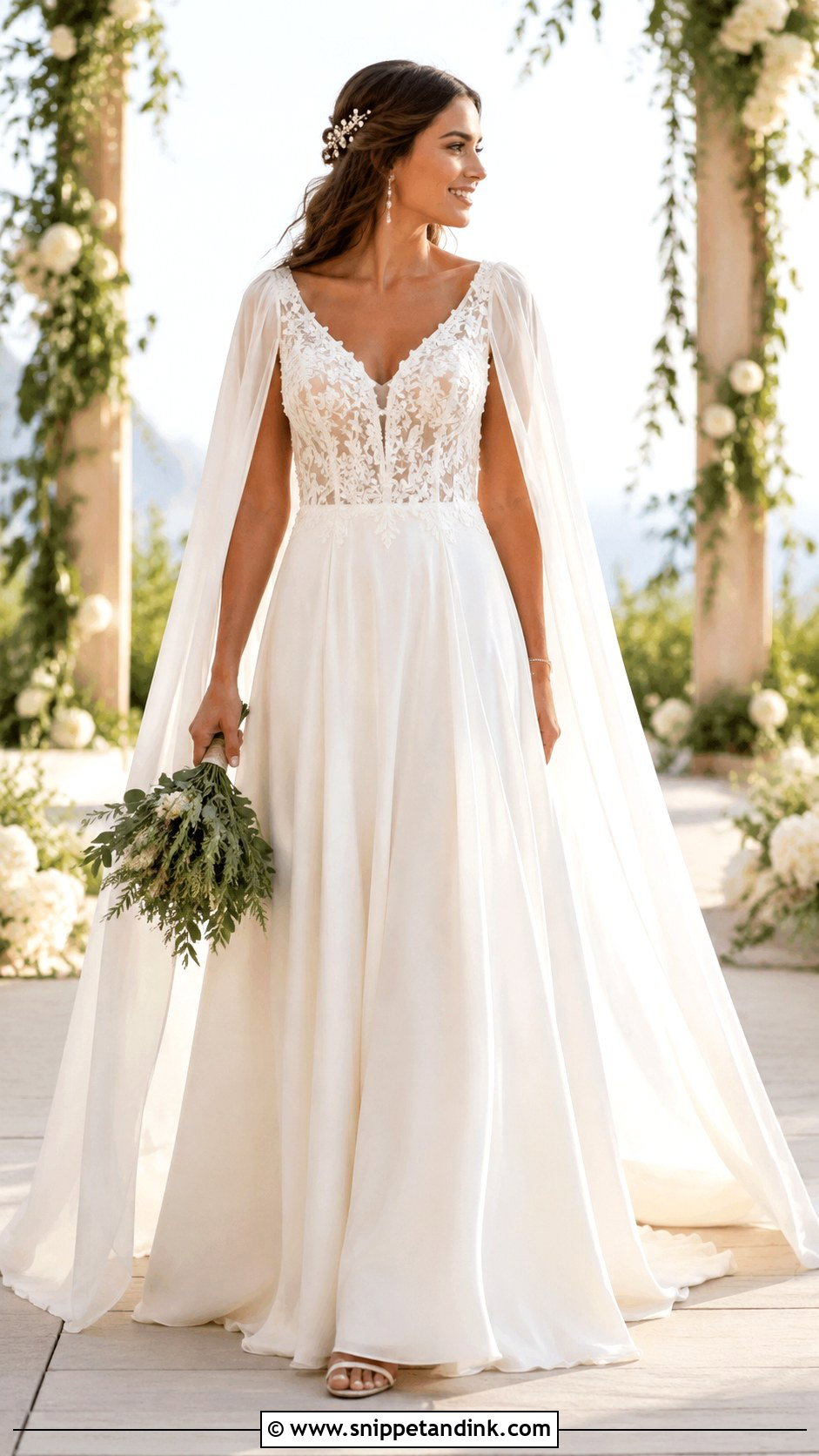
Cape sleeves fall from the shoulder and float rather than hug, which suits brides who don’t like fitted sleeves. Lace or chiffon panels frame a fitted bodice, with an A-line skirt, an open back and a few floral appliqués. The sleeves are the statement, so keep the rest simple: plain ivory sandals and small drops. A low bun or loose braid leaves the shoulders clear. Skip the veil; a cape sleeve and a veil fighting each other at the back looks messy in photos. A pearl comb or narrow floral crown works better. A slim bouquet with trailing greenery suits the movement of the cape.
11. Boho Wedding Dress With Puff Sleeves
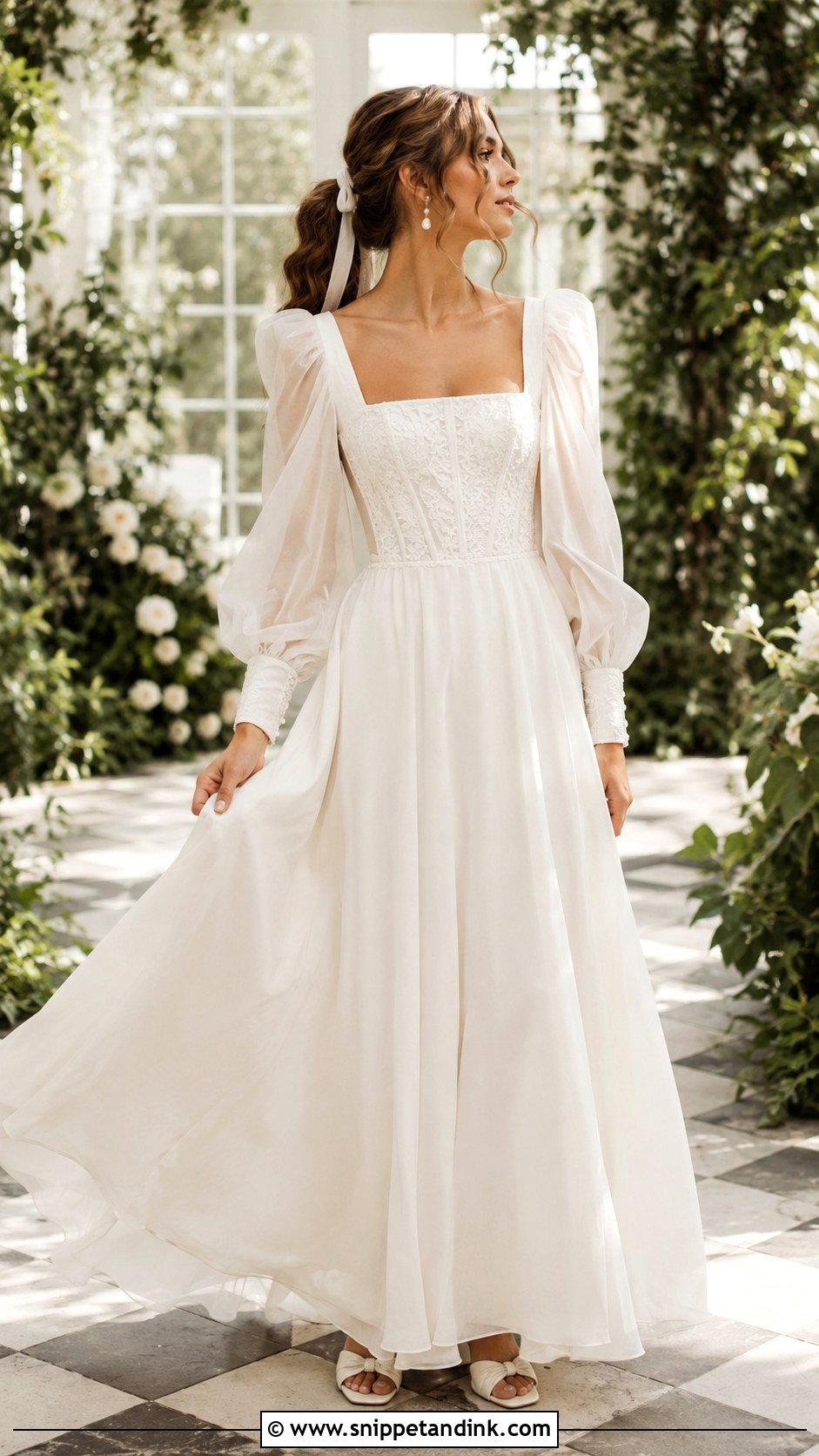
Puff sleeves need a fabric with body. Translucent organza or lace holds the shape at the shoulder all day; soft tulle starts to slump after a few hours. Gentle volume at the shoulder and a fitted cuff at the wrist is the most wearable version. A square neckline and lightly structured bodice balance the top, and a fluid A-line skirt keeps it easy. Low block heels, pearl drops and a ribbon tied around a textured ponytail or relaxed bun. If you wear a veil, set it behind the sleeves, never over them. A medium garden bouquet. Leave out big necklaces and decorated shoes so the sleeves stay the focus.
12. Off Shoulder Lace Wedding Dress
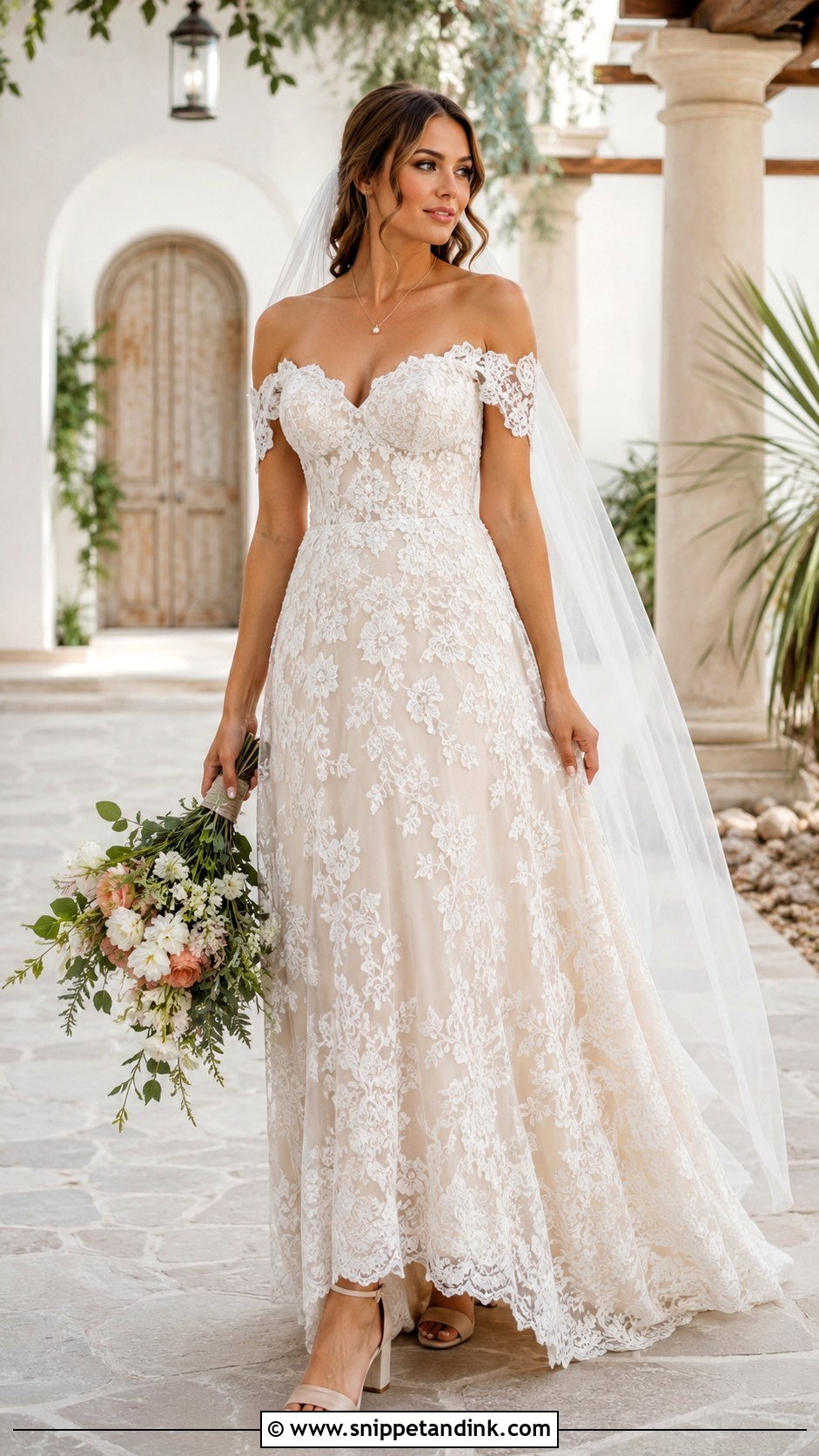
Off-shoulder lace sits on the upper arms, so the bodice underneath has to do all the holding. I always check that it’s properly boned and fitted before admiring the scalloped sleeves. Floral lace over a nude or champagne lining shows the pattern more clearly and looks older than lace over white. A flowing skirt lets you move. A fine pendant, small earrings and loose waves pushed back off the shoulders. Ivory block-heel sandals. A long plain veil contrasts with detailed lace; a floral comb is lighter. An asymmetric bouquet. Removable sleeves make the change from ceremony to dance floor much easier.
13. Boho Wedding Dress With Flutter Sleeves
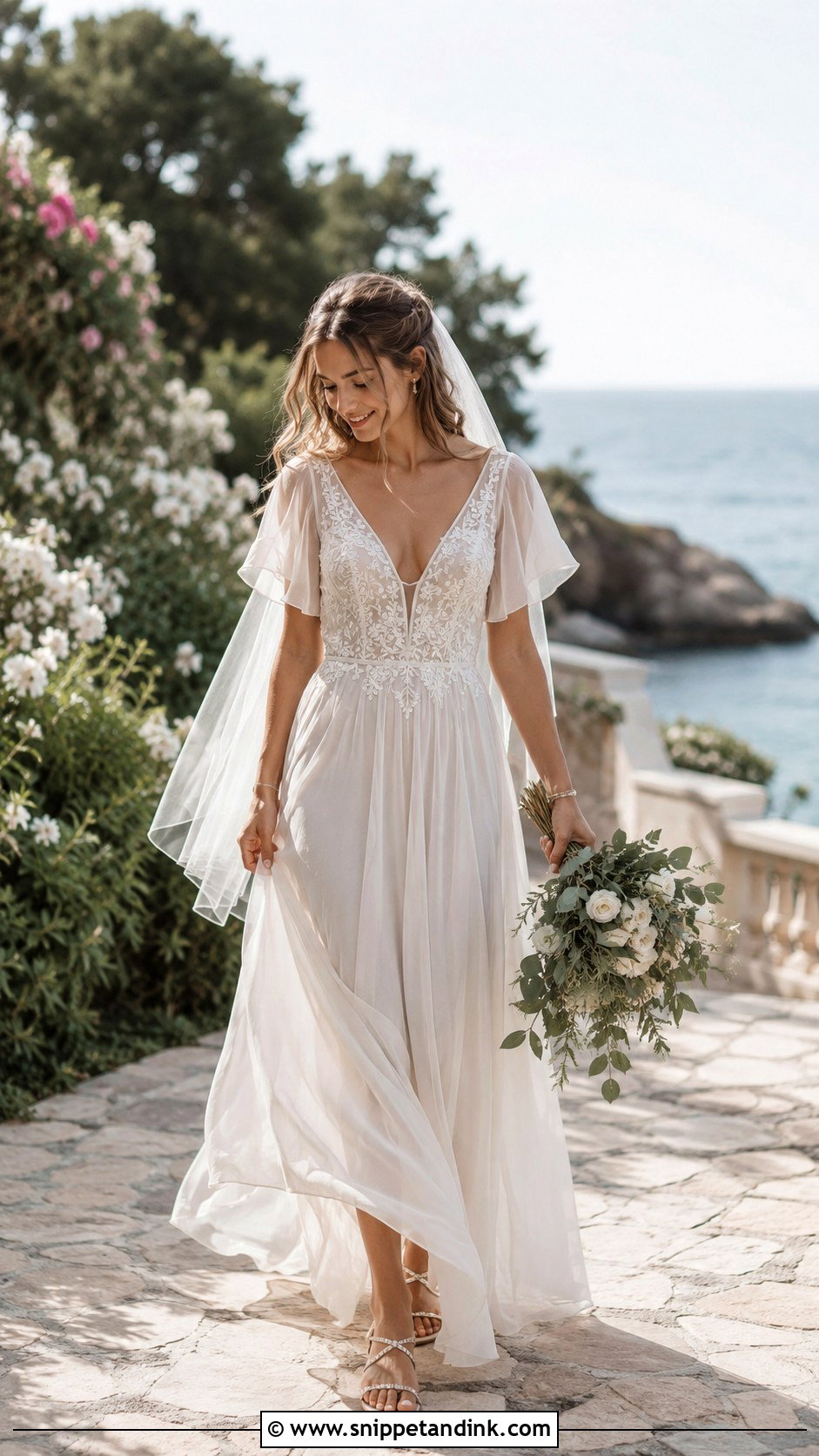
Warm weather is where flutter sleeves earn their place. Layered chiffon over the upper arm gives coverage without the heat of full lace sleeves. A chiffon or soft crepe A-line with a deep V and a defined waist is the usual shape, with a little embroidery on the bodice and a clean skirt. A deep V needs fitting with care: tape or a thin mesh panel stops it shifting when you lean forward. Metallic flat sandals, fine stacked bracelets and small floral earrings. Half-up loose waves. A narrow tulle veil or floral hair vine. Keep the bouquet’s colours restrained so it doesn’t hide the neckline and waist.
14. Backless Lace Boho Wedding Dress
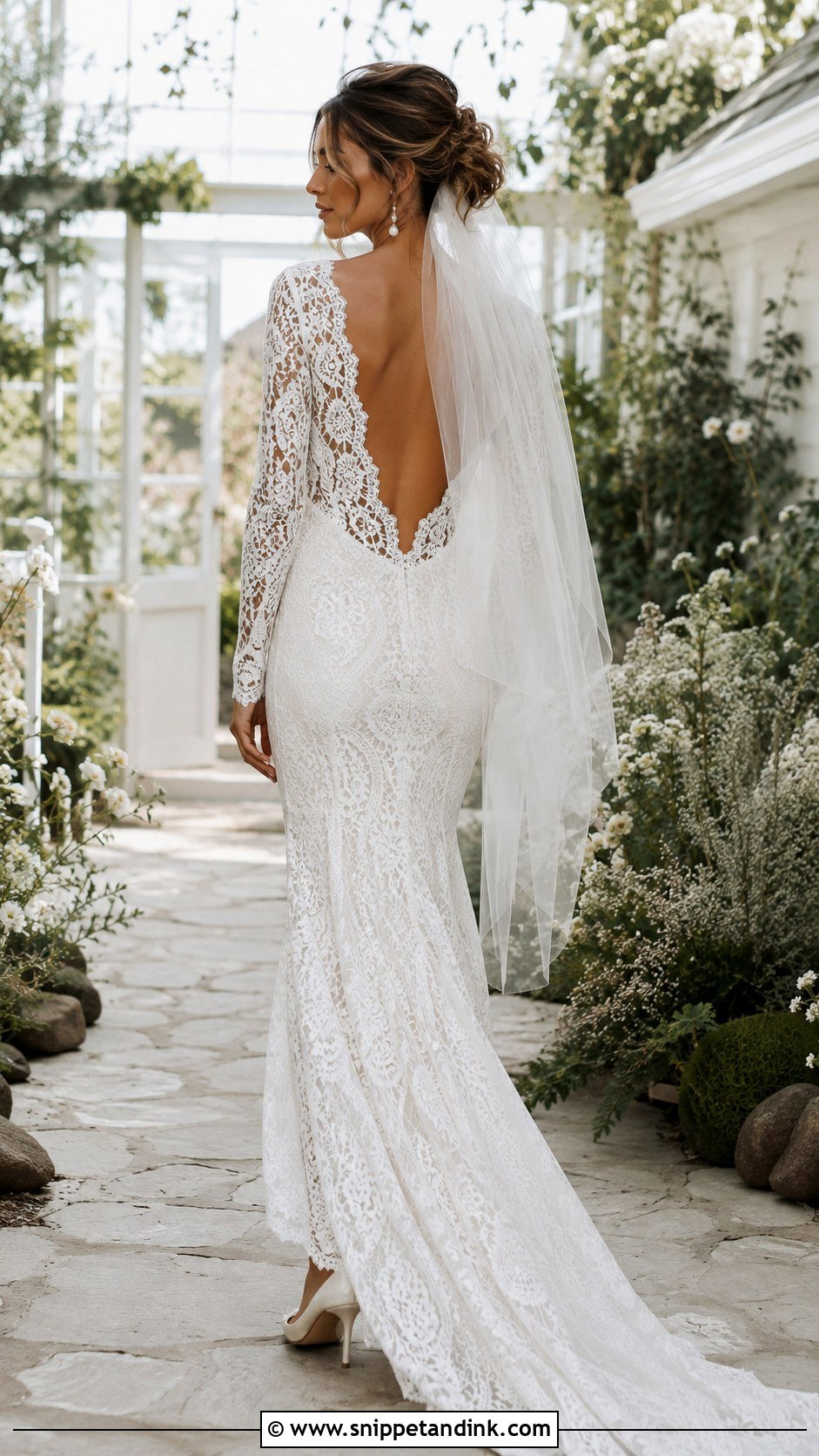
Backless with long lace sleeves sounds contradictory, but it’s a classic vintage combination: covered arms, bare back. The bodice depends on illusion panels or built-in structure to stay put, so this is not a dress to buy without trying it on and moving. Raise your arms, sit, lean forward. If the side edges lift away from the body, the fit isn’t right yet. Scalloped edges or covered buttons frame the opening, and a soft fit-and-flare skirt balances it. A loose updo or side braid shows the back. Pearl-back earrings, low ivory heels and a simple bracelet instead of a necklace. A fingertip veil frames the back for the ceremony and comes off afterward.

15. Boho Wedding Dress With Floral Embroidery
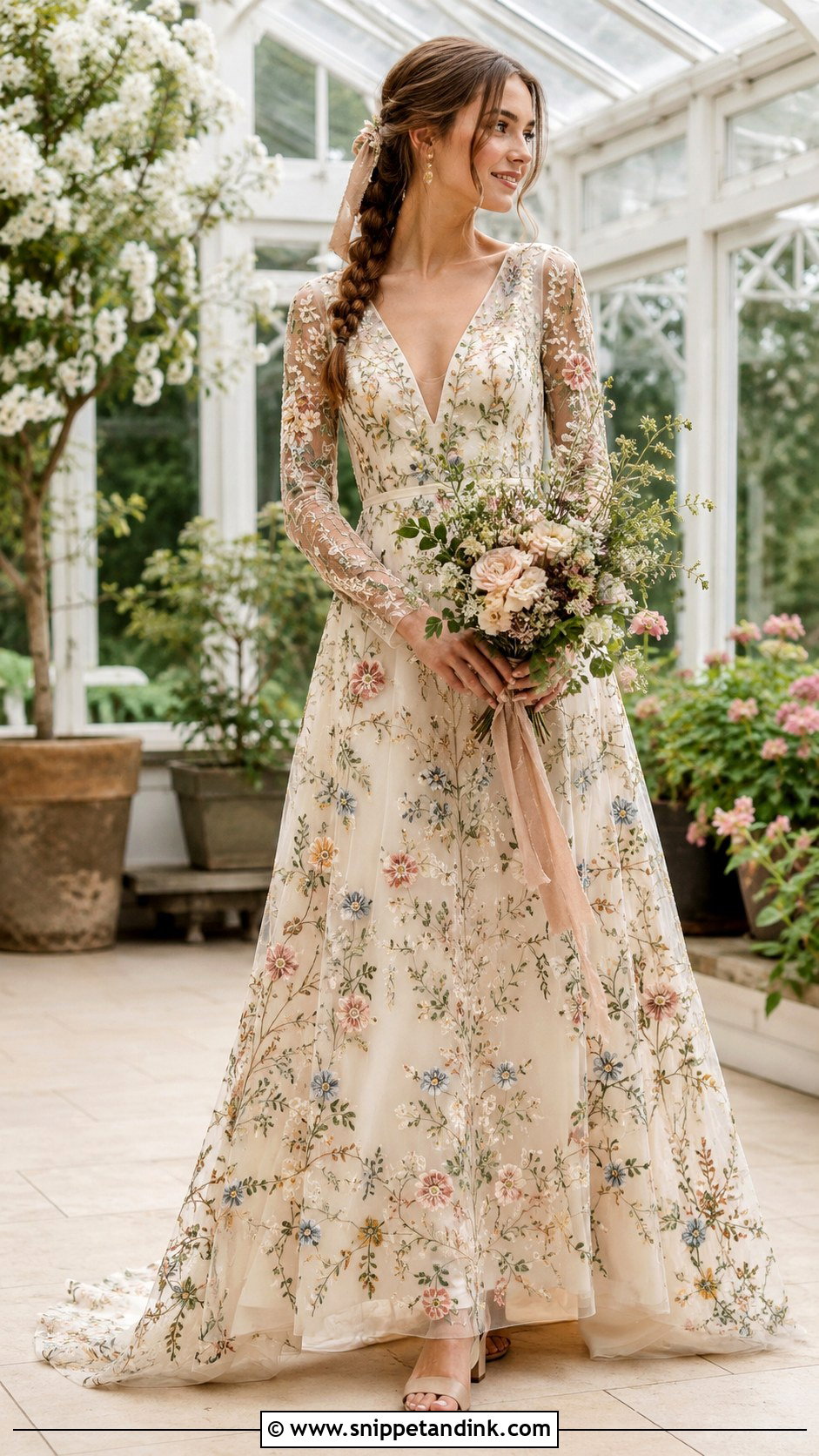
Coloured embroidery is what makes a dress look handmade and personal. Muted flowers in blush, sage, dusty blue or soft gold stitched onto a sheer overlay over ivory, on a simple A-line with a plain neckline. When you build the bouquet, don’t try to match every thread. My approach is to pick two or three colours from the embroidery and repeat only those; matching everything flattens both. Neutral block heels, small gold earrings and a thin bracelet. A loose low bun with tiny floral pins. Keep the veil plain and light, or wear an embroidered ribbon in your hair instead. Gardens and conservatories suit it best.
16. Boho Wedding Dress With Fringe
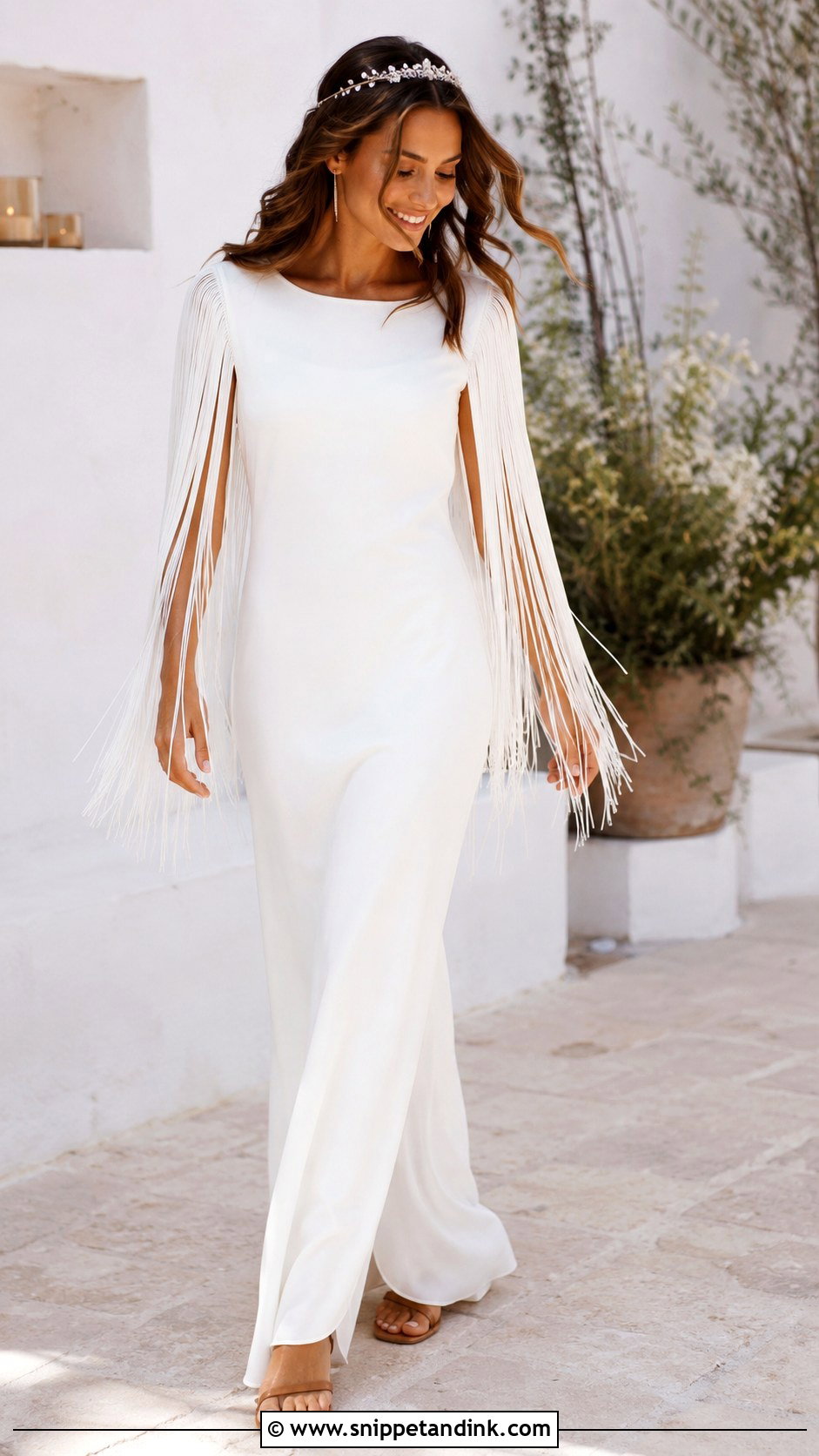
Fringe borrows from both the 1920s and the 1970s, and the length decides which one it reads as. Short fringe on a sheath feels flapper; long fringe on the sleeves or back feels like a festival in the seventies. Keep it to one area of a simple sheath or fit-and-flare dress. Walk and dance in it before the final hem, because fringe that brushes the floor gets trodden on and tangled. Smooth leather sandals, streamlined earrings and a compact bouquet that won’t catch on the trim. A low ponytail, textured waves or a relaxed updo. A clean tulle veil, crystal headband or small vintage comb instead of anything lace-edged.
17. Boho Wedding Dress With Tiered Skirt
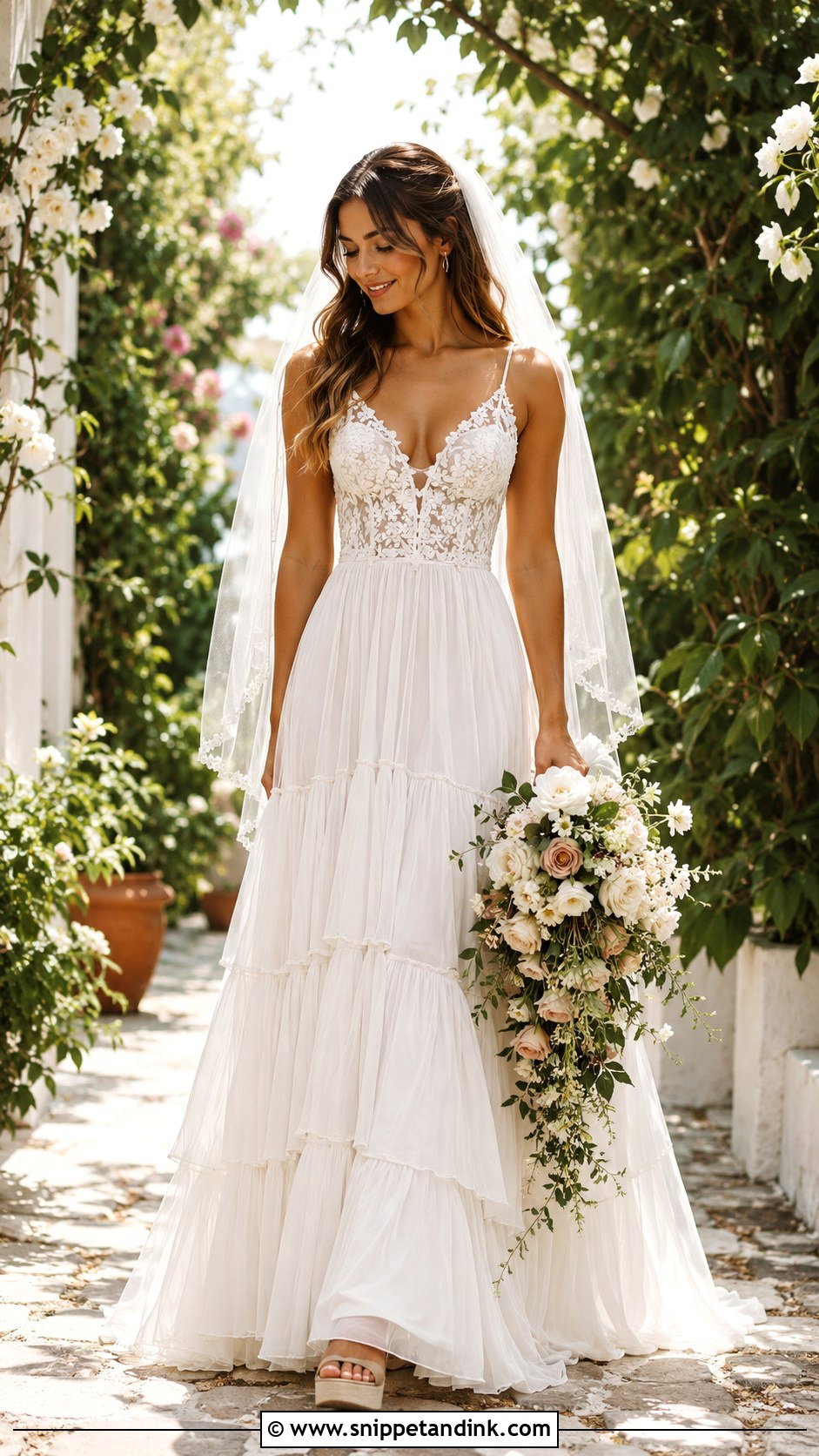
I’d choose uneven or softly gathered tiers, which look relaxed; sharp horizontal ruffles look more like a party dress. A fitted lace bodice, a lightly defined waist and chiffon or tulle tiers give movement without ballgown structure. Hem length on a tiered skirt is set by the shoes, so choose platform sandals or block heels early, especially for an outdoor ceremony where the bottom tier will brush the grass. Small hoops, a floral hair comb and loose waves. A plain fingertip veil keeps the tiers visible, and a cropped embroidered jacket adds warmth in cool weather. A modest trailing bouquet follows the skirt’s lines without adding bulk.
18. Boho Wedding Dress With Corset Bodice
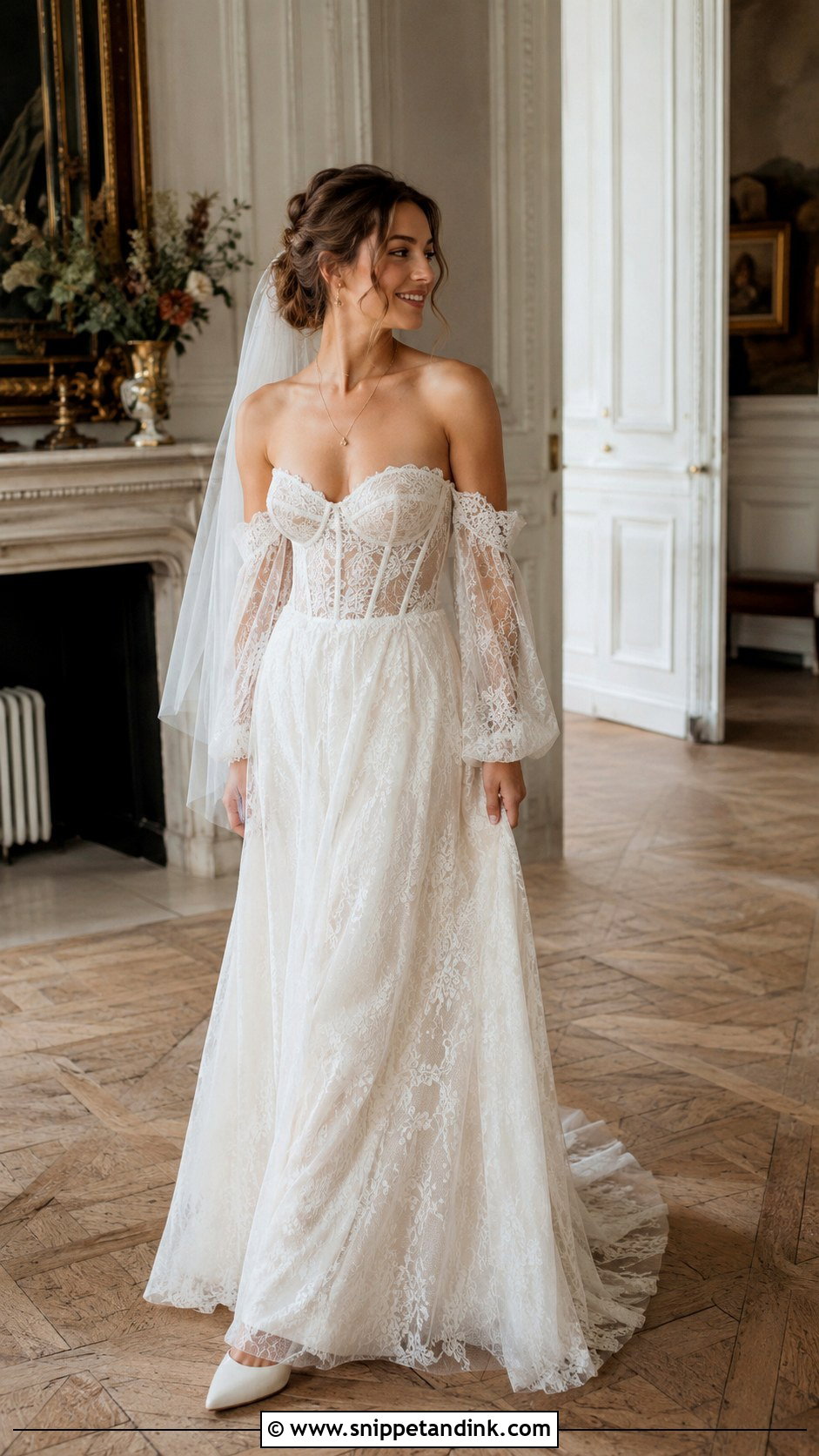
Corsets were underwear for most of history, and a boho corset bodice wears that heritage lightly: visible boning under floral lace, a gently curved neckline and a soft A-line skirt rather than rigid, crystal-heavy construction. Detachable lace sleeves give you a second look. Fitting a corset is a specialist job. It should hold you firmly at the waist without pressing on the ribs, and you should be able to sit through dinner and take a full breath. Pointed flats or block-heel pumps, delicate earrings and a fine chain. A loose updo with soft wisps. A plain veil or sheer cape with minimal trim.
19. Boho Vintage Mini Wedding Dress
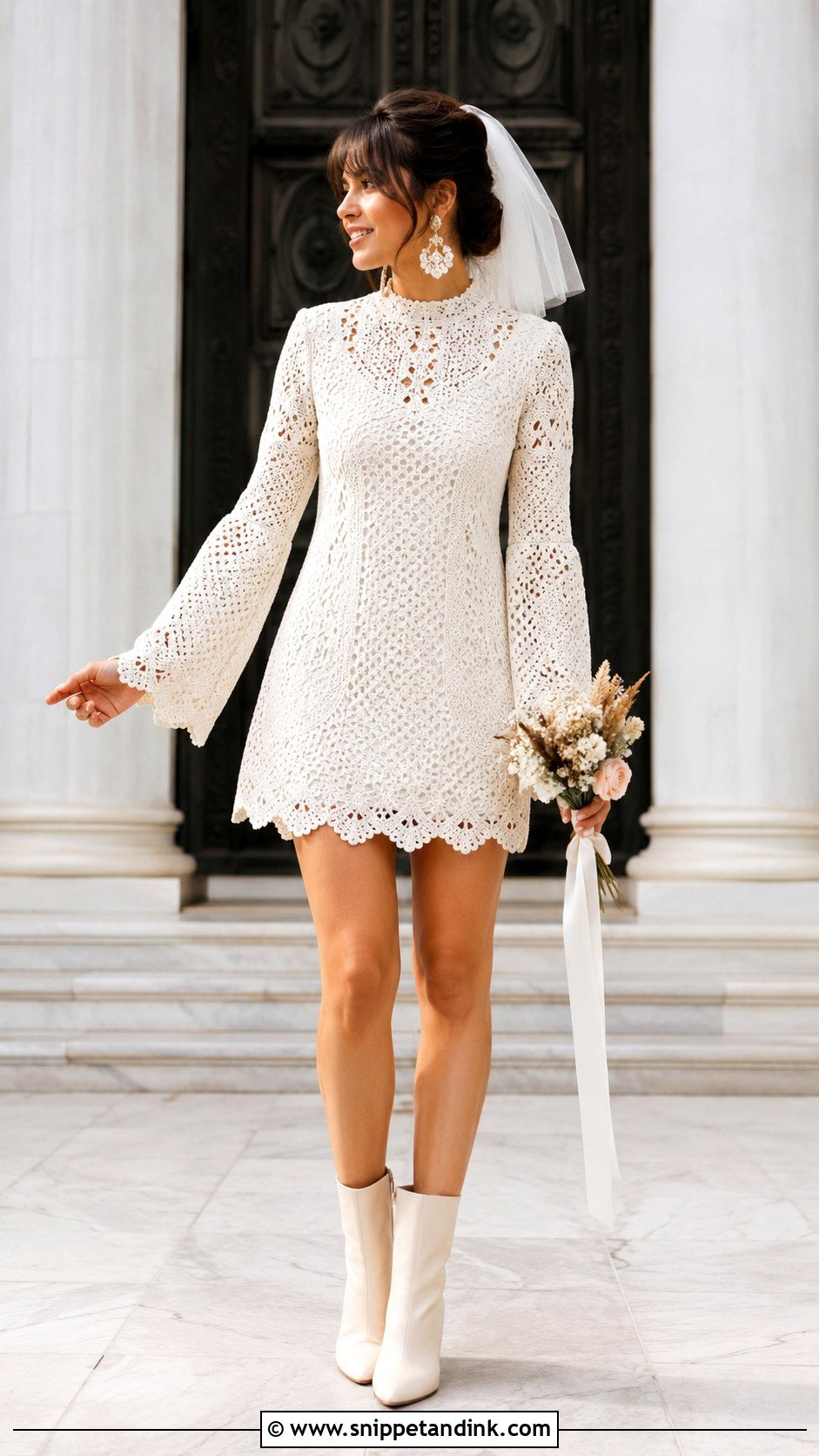
Short wedding dresses suit courthouse ceremonies, reception changes and casual outdoor parties. A 1960s-inspired shift with crochet lace, bell sleeves and a scalloped hem is the most retro version; a fitted mini with a high neck and light cape sleeves is sleeker. Ivory ankle boots, low platforms or vintage-style block heels. Statement earrings and a short veil keep it bridal. A smooth bob, a high ponytail or waves held with a headband. With a mini, check the length from the back and from a seated position in a mirror; what looks right standing can ride up when you sit. Keep the bouquet small.
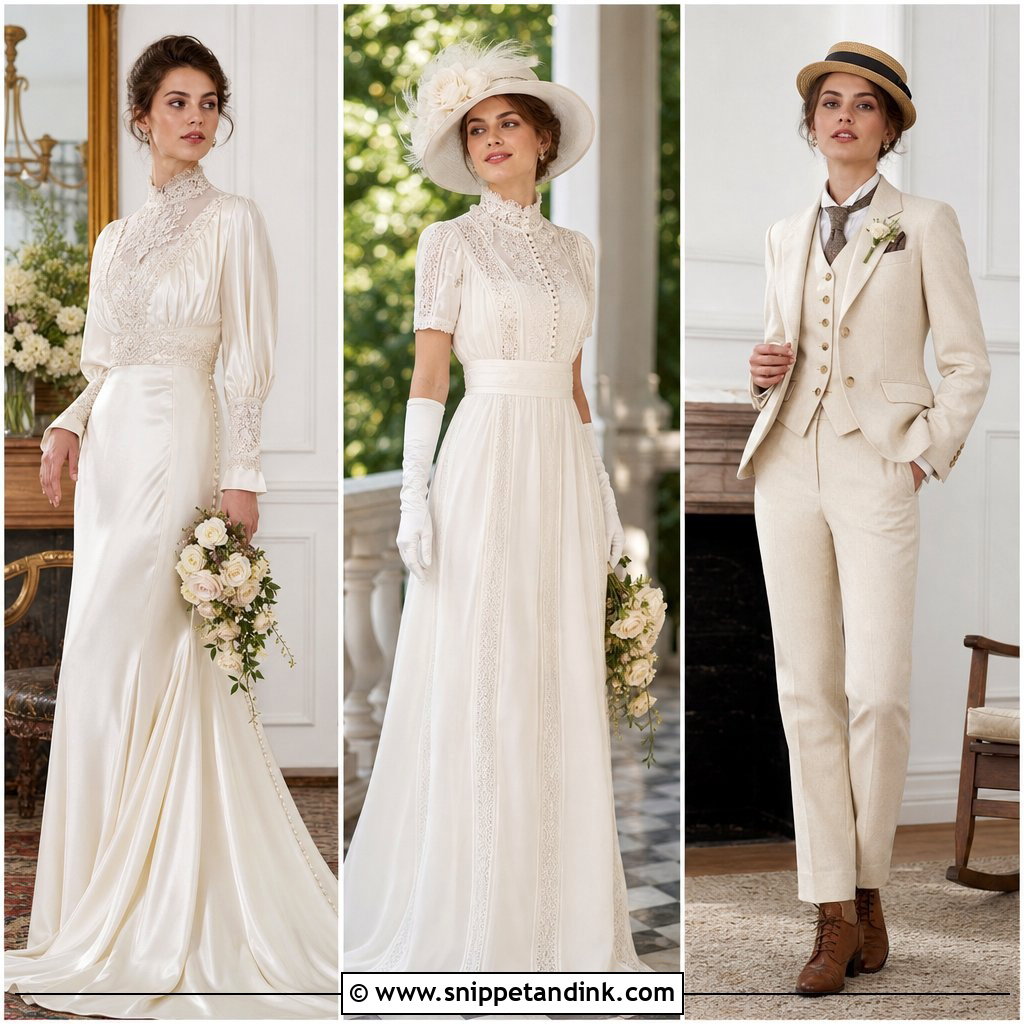
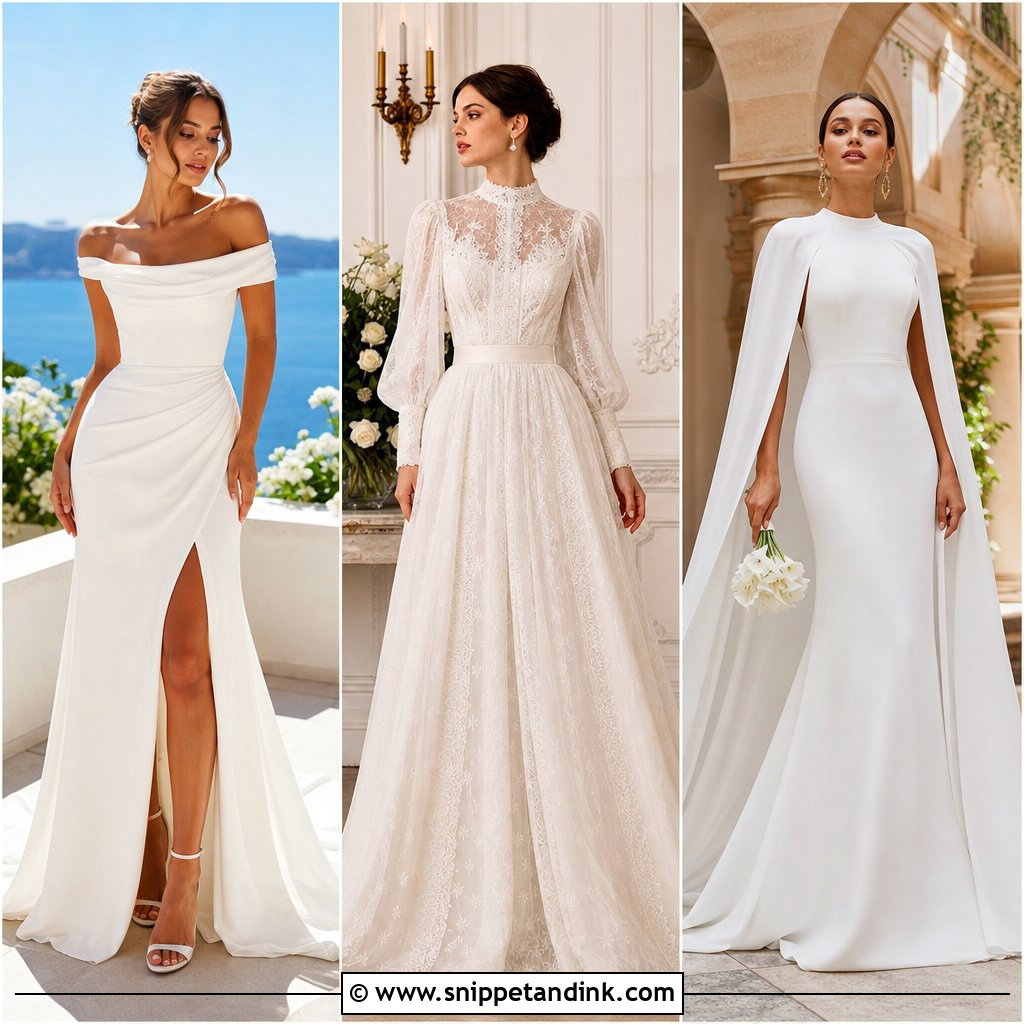

20. Boho Vintage Wedding Dress With Boots
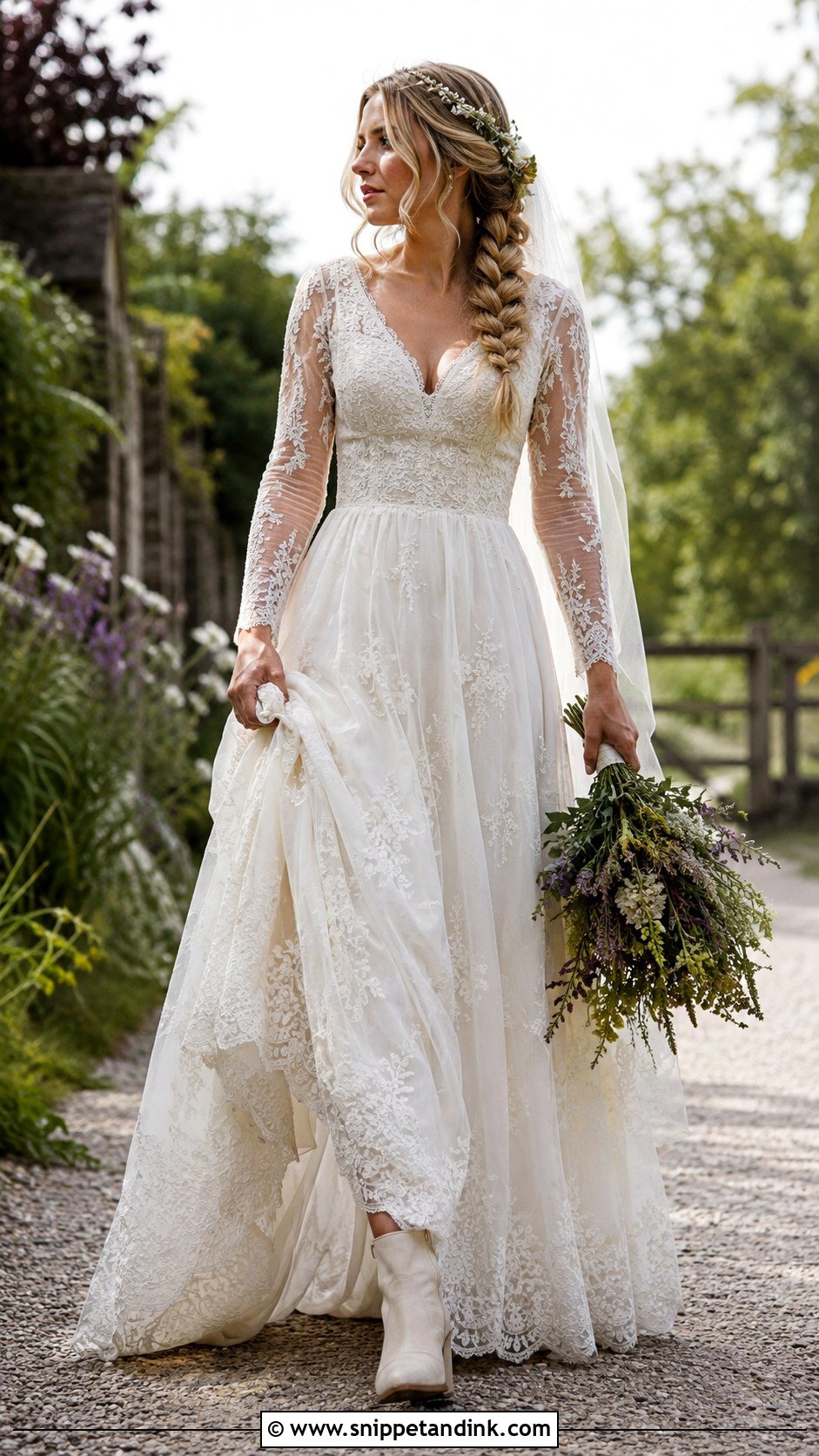
Boots change how a soft gown moves and where it should end. Start with a flowing lace or embroidered dress with long sleeves and a defined waist, cut so the boots show slightly as you walk. Ivory leather ankle boots look polished, tan suede feels rustic and embroidered western boots bring the most personality. The hem must be finished while you’re wearing the exact boots, since boot heels and toes change the length and the way the skirt falls. Break them in for a couple of weeks before the wedding. Small earrings, a fine hair vine, a light veil and a textured braid or loose waves. Seasonal flowers and greenery in the bouquet.
Hair and Makeup That Match the Decade of Your Dress
The fastest way to make a vintage gown look like fancy dress is to mix eras: a 1920s headband with 1970s sleeves, or 1950s red lips on a prairie dress. Ask your hair and makeup artist to work from the same decade as the gown, then soften everything a little so it reads boho rather than period drama.
- Victorian and Edwardian: a low, loose chignon, fresh skin and rosy cheeks; heavy eyeliner fights with high lace collars.
- 1920s and 1930s: brushed or finger waves close to the head, defined brows and a soft berry lip.
- 1940s and 1950s: rolled or brushed-out curls, a fine flick of liner and a clear red or coral lip, used lightly.
- 1960s and 1970s: centre parts, long loose waves or a gentle bouffant, with bronzed skin and soft lashes.
I’d bring a photo of the gown and one period reference picture to your trial. It helps the artist get the proportions right, and it’s easier to tone a look down than to rescue one that missed the era entirely.
Let One Decade Lead the Whole Outfit
Vintage style works when one era leads and the dress still lets you move. Victorian lace, 1970s bell sleeves, a 1930s slip or a 1960s mini can all be right; the mistake is borrowing from four decades at once. Build the outfit around one clear focal point. Choose shoes for the venue, jewellery that suits the neckline, and a veil or hair piece that leaves the dress on show. Give alterations plenty of time, especially for open backs, corset bodices and long hems. Done that way, a vintage-inspired boho gown feels personal and nostalgic without looking like a costume.
You'll Like These Ideas:








Leave a Reply