
Punjabi bridal suits have one big advantage over a lehenga: you can move in them. That is why so many brides I dress choose a suit for at least one function, and often for the Anand Karaj itself. The ideas below run from Patiala salwars and phulkari dupattas to Anarkalis, shararas, ghararas and palazzo sets, in everything from red velvet to pale mint tissue. Embroidery styles you will see again and again are zardozi, dabka, gota patti, mirror work and fine zari. My advice before you look at any of them: think about the ceremony, the season and how much weight you are happy to carry on your head for several hours, because the dupatta decides that more than the suit does.
Which Silhouette Suits Which Function
The suits below are not interchangeable, and the function you wear each one to matters as much as the color. For the Anand Karaj, you will sit cross-legged on the floor in front of the Guru Granth Sahib and then walk the four laavan, so I look for a kameez with deep slits or a flare that folds neatly when you sit, and a bottom that does not trip you on the walk. A straight suit, churidar Anarkali or a soft Patiala all handle that well. A very wide sharara can be lovely, but it pools around you on the floor and someone will need to arrange it.
Haldi, jaggo and mehndi are about dancing and getting messy. Here I steer brides toward cotton-silk, short kameez and Patiala or sharara bottoms, and away from anything ivory or heavily beaded. The sangeet and reception are where the heavier, more dramatic pieces belong: velvet, zardozi, long Anarkalis and jackets, because you are mostly standing, posing and walking short distances.
- Anand Karaj: covered head, comfortable floor sitting, nothing that drags on the laavan.
- Haldi and mehndi: washable fabric, short sleeves or none, flat shoes.
- Sangeet: room in the armholes and hems you can dance in.
- Reception: the heaviest work you are happy to carry for a few hours of standing.
1. Red Velvet Punjabi Bridal Patiala Suit
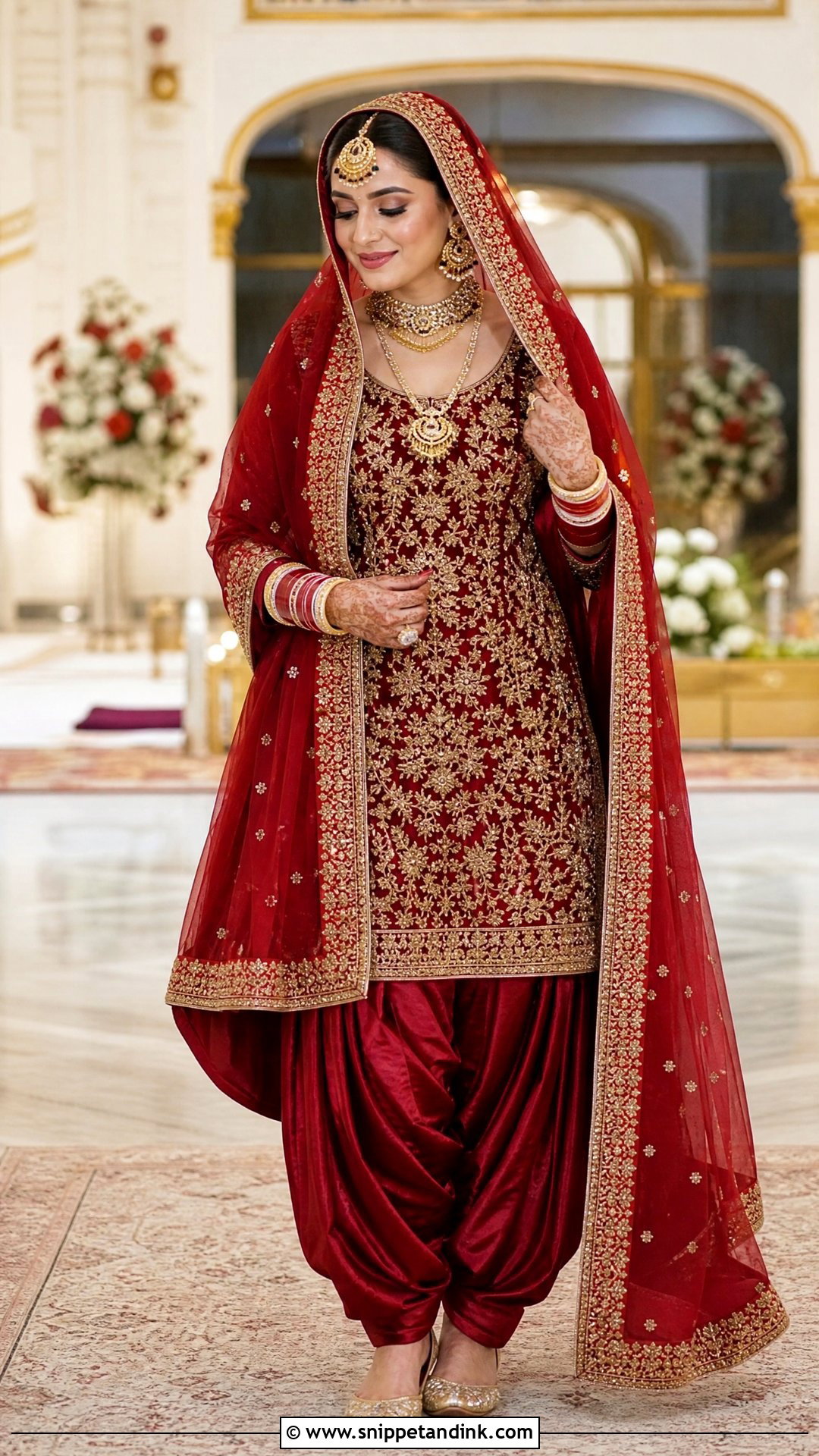
Red velvet is the suit my brides with winter dates come back to, and for good reason: it holds color under any light and looks warm in photographs taken in a cold gurdwara hall. Keep the kameez thigh-length and fitted, with antique gold zardozi, dabka and small beads. The silk Patiala salwar gives volume through its pleats, so you do not need extra layers. Velvet is heavy, though, so I ask for the dupatta in net with the embroidery concentrated in a wide border. Jewelry can be a choker plus a longer haar, earrings, a maang tikka and red bangles, with gold juttis and a sleek bun under the dupatta. It is a natural fit for a winter Anand Karaj or an evening ceremony.
2. Maroon Silk Punjabi Bridal Straight Suit
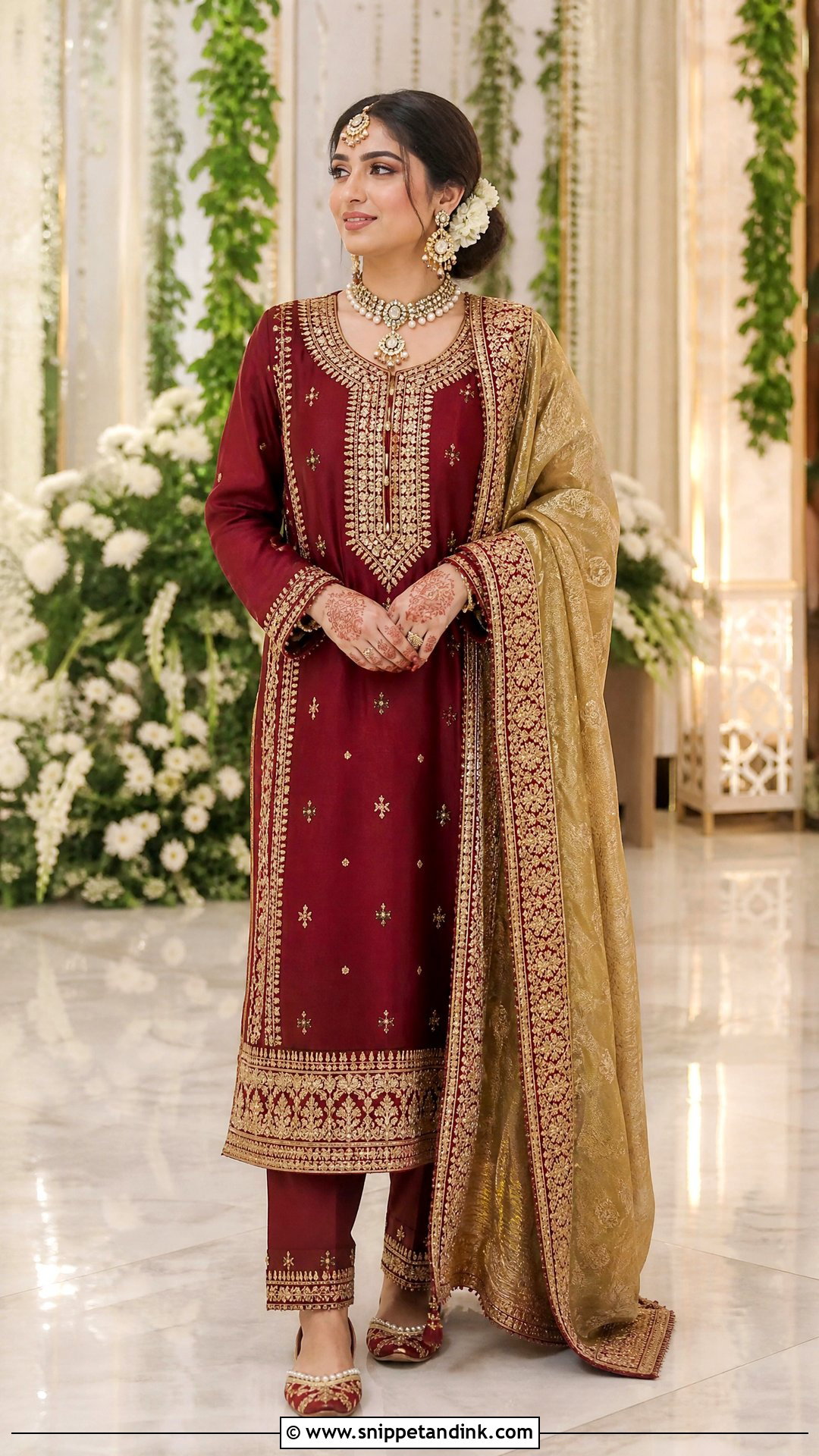
Maroon silk in a straight cut is for the bride who finds flare fussy. The long kameez with side slits does most of the talking, so I place the gold embroidery where the eye naturally travels: neckline, sleeve hems and the bottom edge. Slim pants or a lightly gathered salwar in the same silk keep the line unbroken. An antique gold dupatta lifts the dark base, especially in evening light where maroon can go almost black. Kundan earrings, a medium tikka, stacked bangles and pointed juttis finish it, and white flowers in a low bun soften the whole thing. Ask your tailor for slits that open past the knee if you will be sitting on the floor.
3. Ivory Gold Punjabi Bridal Anarkali Suit
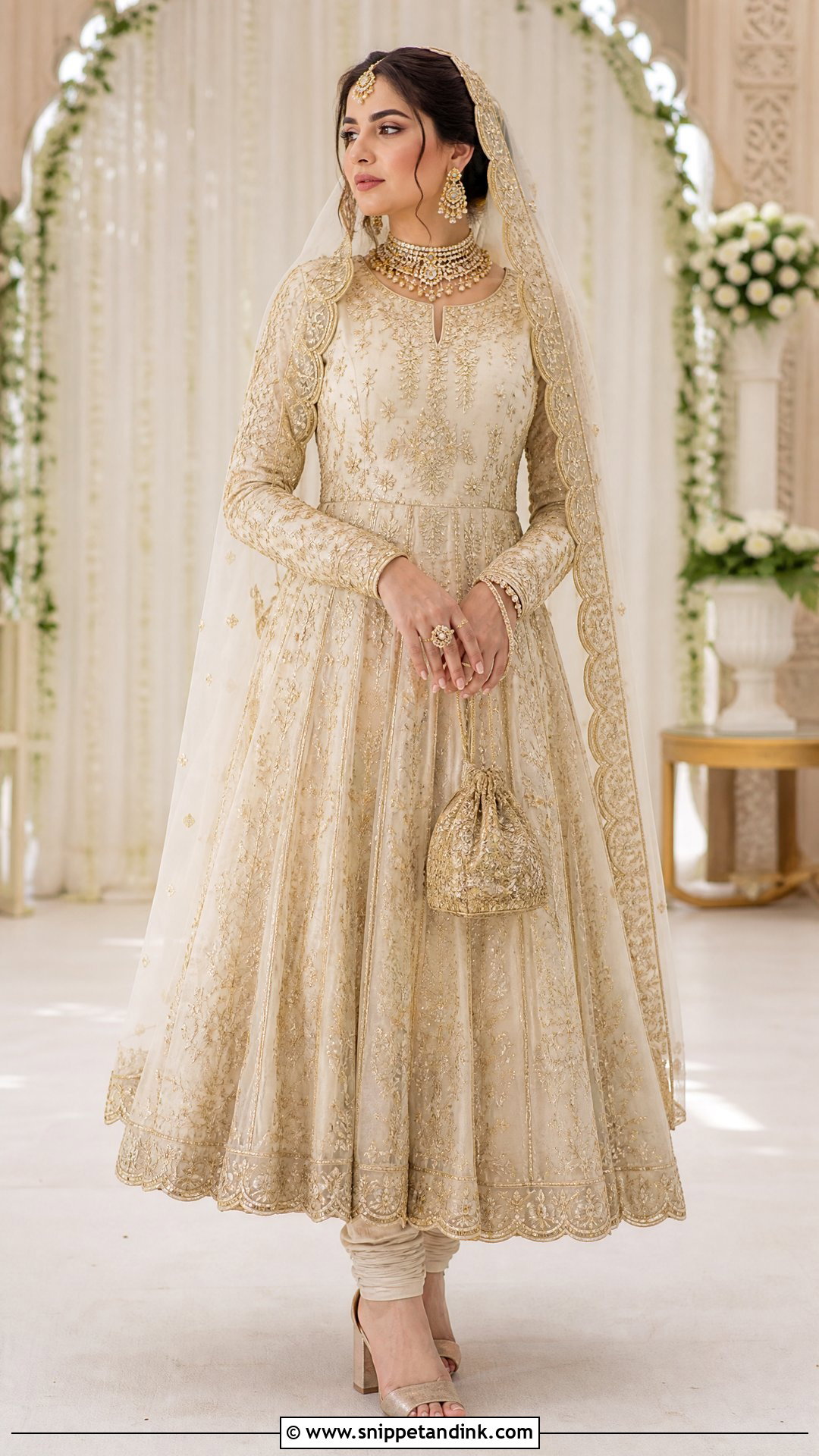
Ivory and gold can be every bit as bridal as red if the fabric has weight and the work is fine. The Anarkali needs a fitted bodice and a clearly defined waist before the panels open out; if the waist sits too low, the flare starts at the hips and you lose the shape. I like the zari, sequins and pearls to cluster thickly at the neckline and hem and thin out in between. Wear churidar underneath and drape a sheer ivory dupatta with a scalloped gold edge over the head and one shoulder. Pearl and kundan jewelry, champagne heels and a gold potli keep it light. A word of warning for daytime functions: ivory picks up turmeric and mehndi stains instantly, so keep it away from the haldi.
4. Blush Pink Punjabi Bridal Sharara Suit
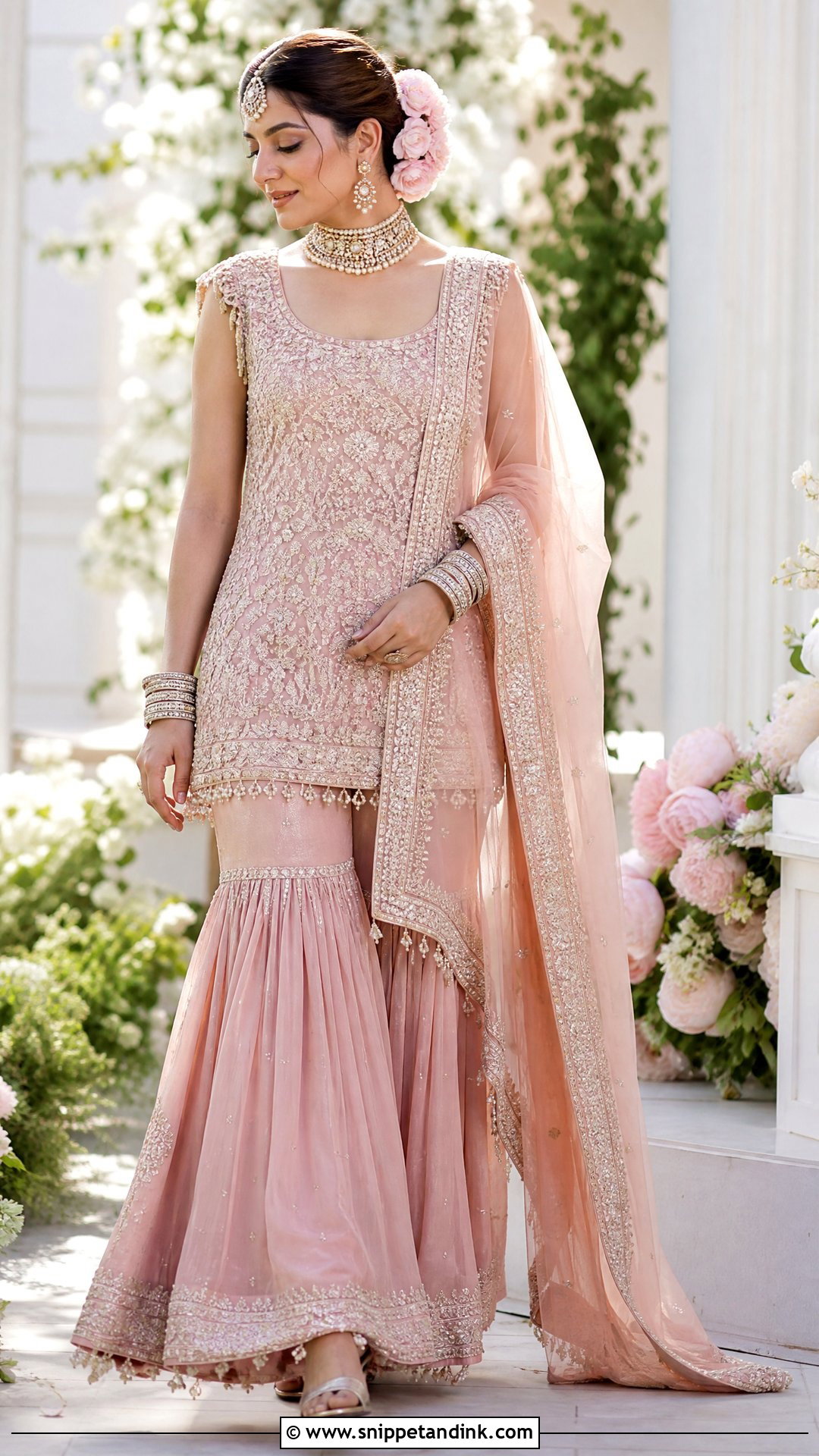
Blush pink shararas are made for the walk in. A short embroidered kameez ending at the upper thigh balances the big flare of the trousers; anything longer and the two volumes fight. Organza, silk and georgette all work, finished with pearlwork, silver thread and small floral motifs. The one fitting I always insist on for a sharara is a stair test, because the hems are wide and catch under heels. Keep the net dupatta light enough to sit on the head without dragging the bodice back, and pair it with a pearl choker, matching tikka, crystal bangles and metallic block heels. Soft curls or a low floral bun suit the color, and the set works for a daytime engagement or the ceremony itself.
5. Emerald Green Punjabi Bridal Gharara Suit
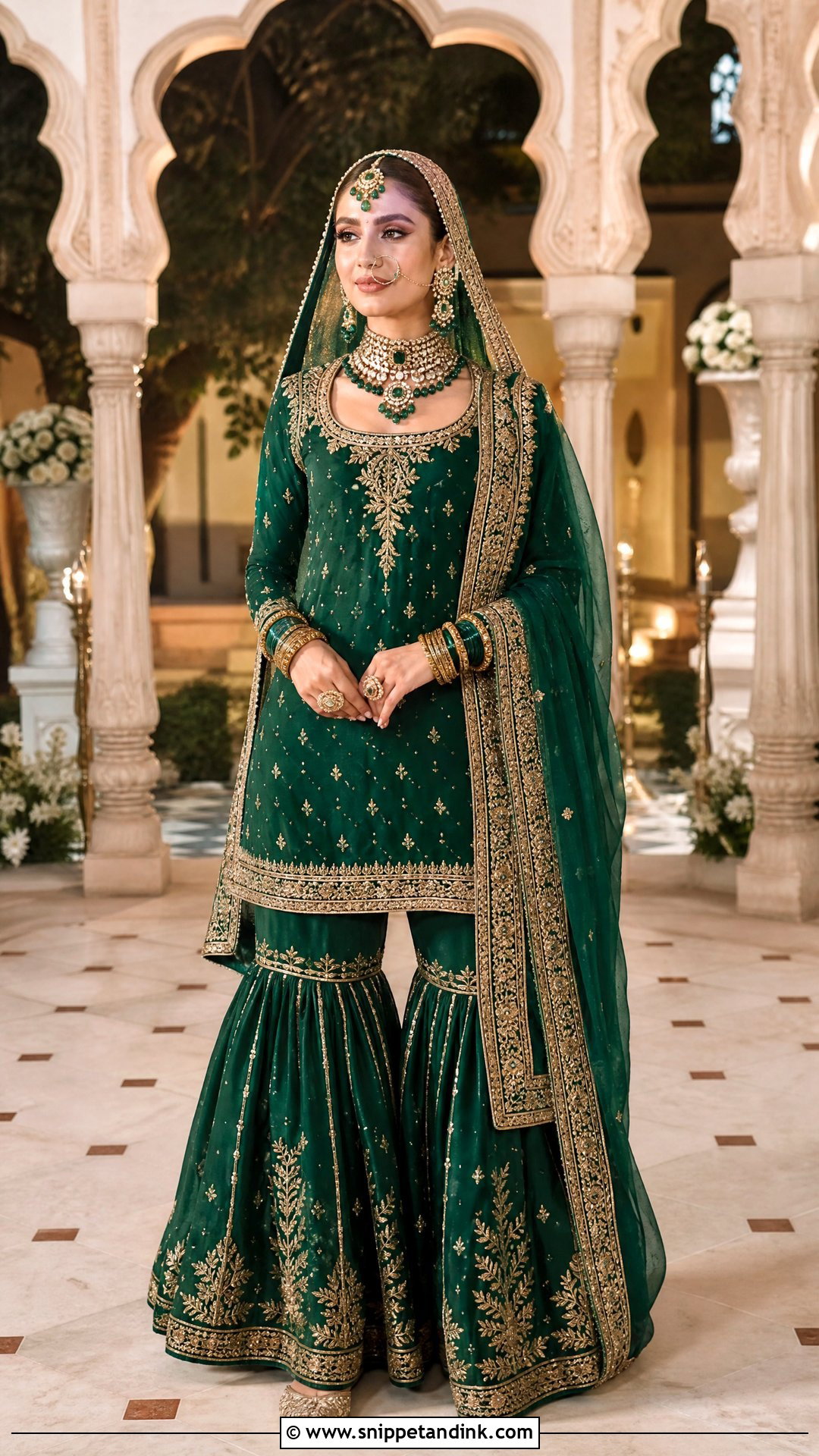
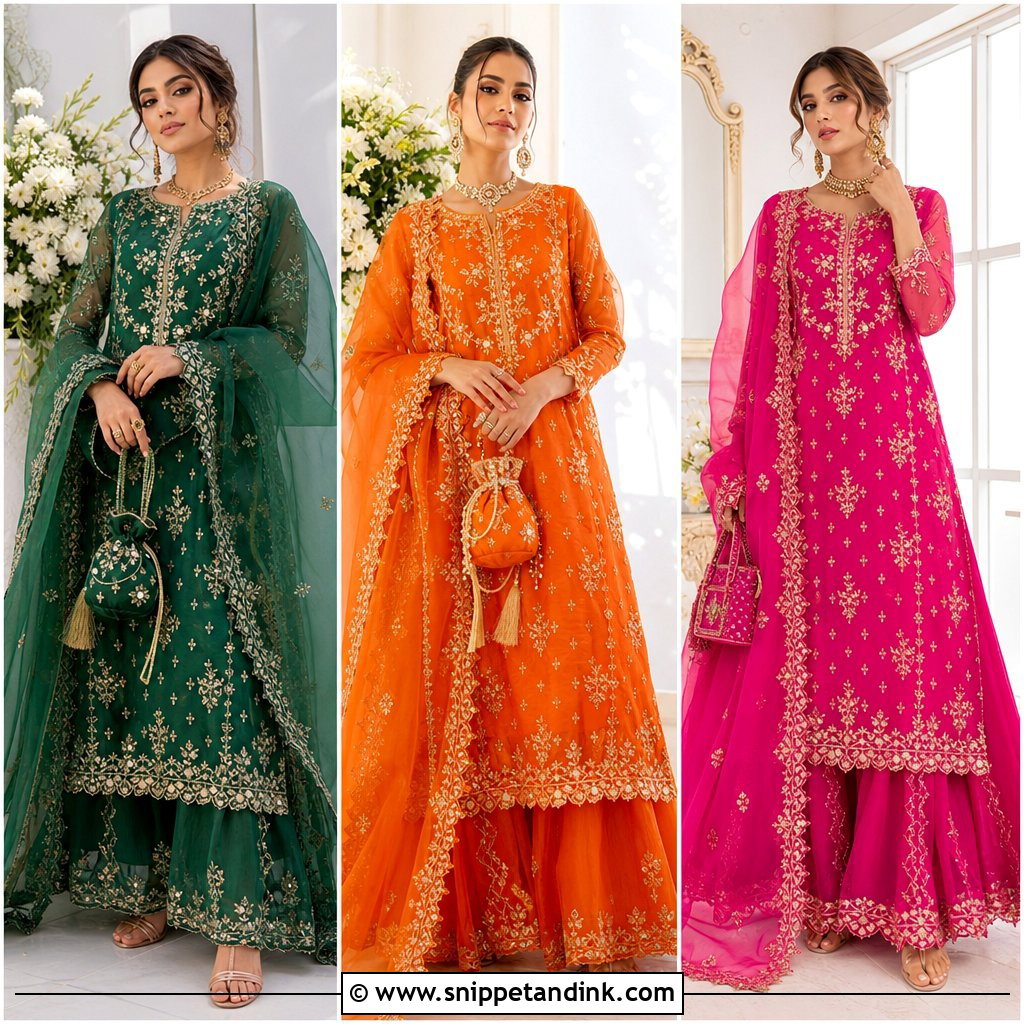
Emerald is a regal choice that photographs richly, though it is less forgiving of mixed metals than red. A gharara differs from a sharara in where the flare begins: it stays fitted to the knee, where a gathered band sits, and then opens out. Because of that, the short kameez above it should be cut neatly; a loose top over a shaped gharara looks unfinished. Gold gota patti, dabka and fine sequins stand out against the jewel green. I would keep the dupatta to green or antique gold and pick polki jewelry with green stones, a statement tikka and gold bangles. A center-parted low bun leaves room for the earrings, and the outfit sits naturally at an evening sangeet or reception.
6. Mustard Phulkari Punjabi Bridal Patiala Suit
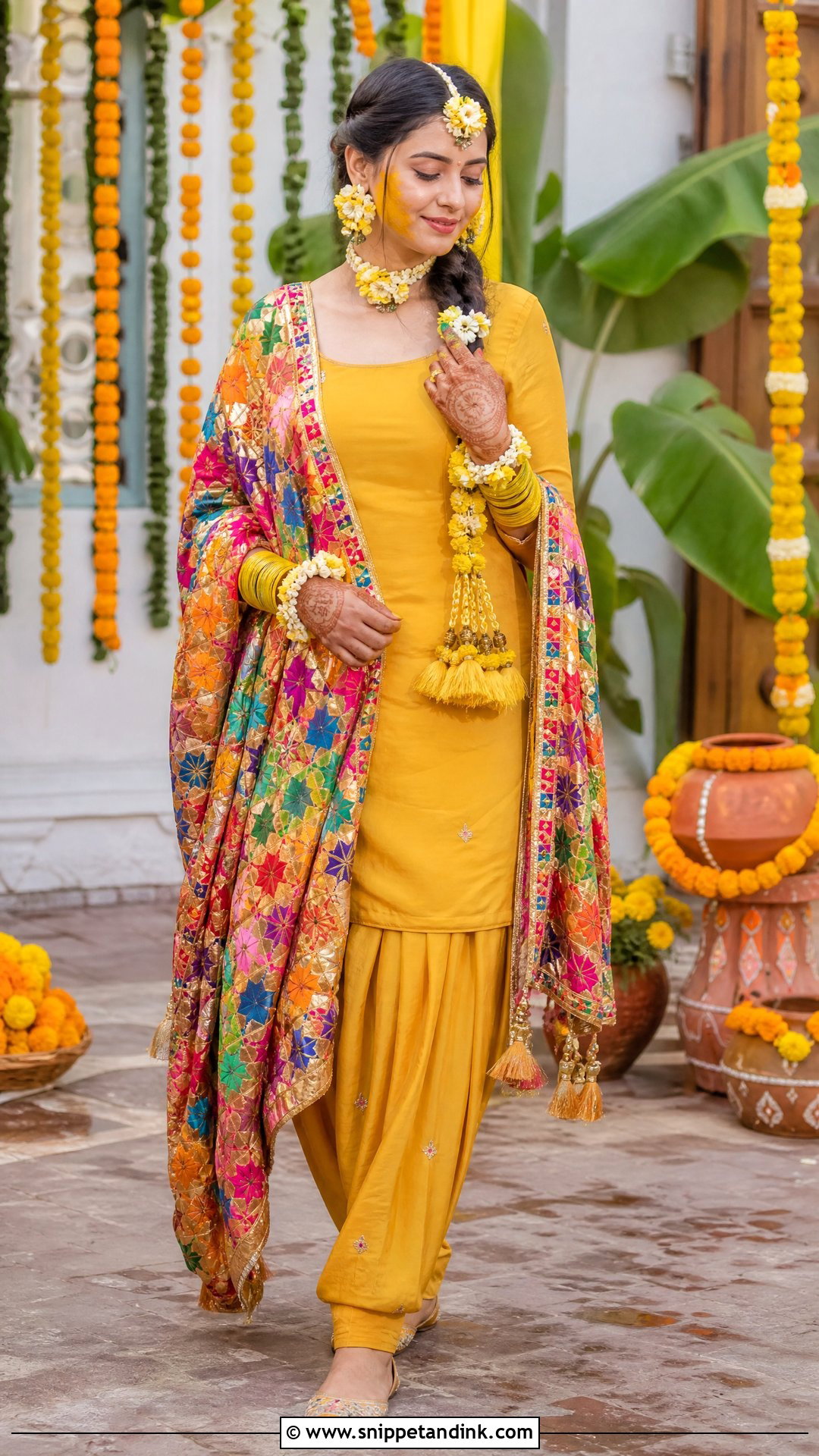
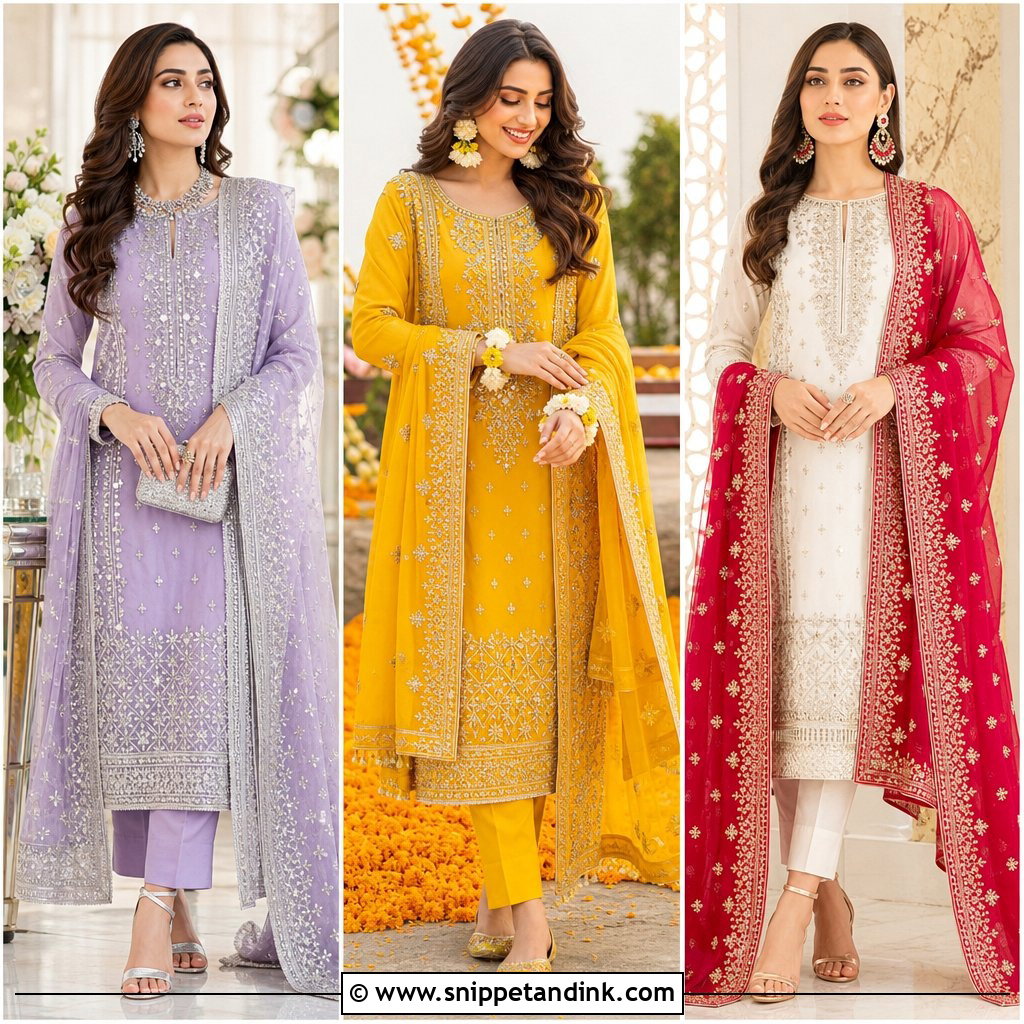
Mustard with phulkari is pure celebration, and it is one of the few outfits where I keep the kameez deliberately plain. Phulkari is dense, hand-stitched floss embroidery, and the dupatta is the whole point, so let it carry the color. The Patiala salwar can match the mustard or move into orange. Floral jewelry, glass bangles, a decorated paranda and flat juttis suit the energy of the day. A long braid shows the paranda off and stays put while you dance. Wear this to a haldi celebration, choora ceremony or daytime gathering, but choose fabrics you are happy to have turmeric on; cotton-silk washes far more kindly than pure silk.
7. Green Mirror Work Punjabi Bridal Sharara Suit
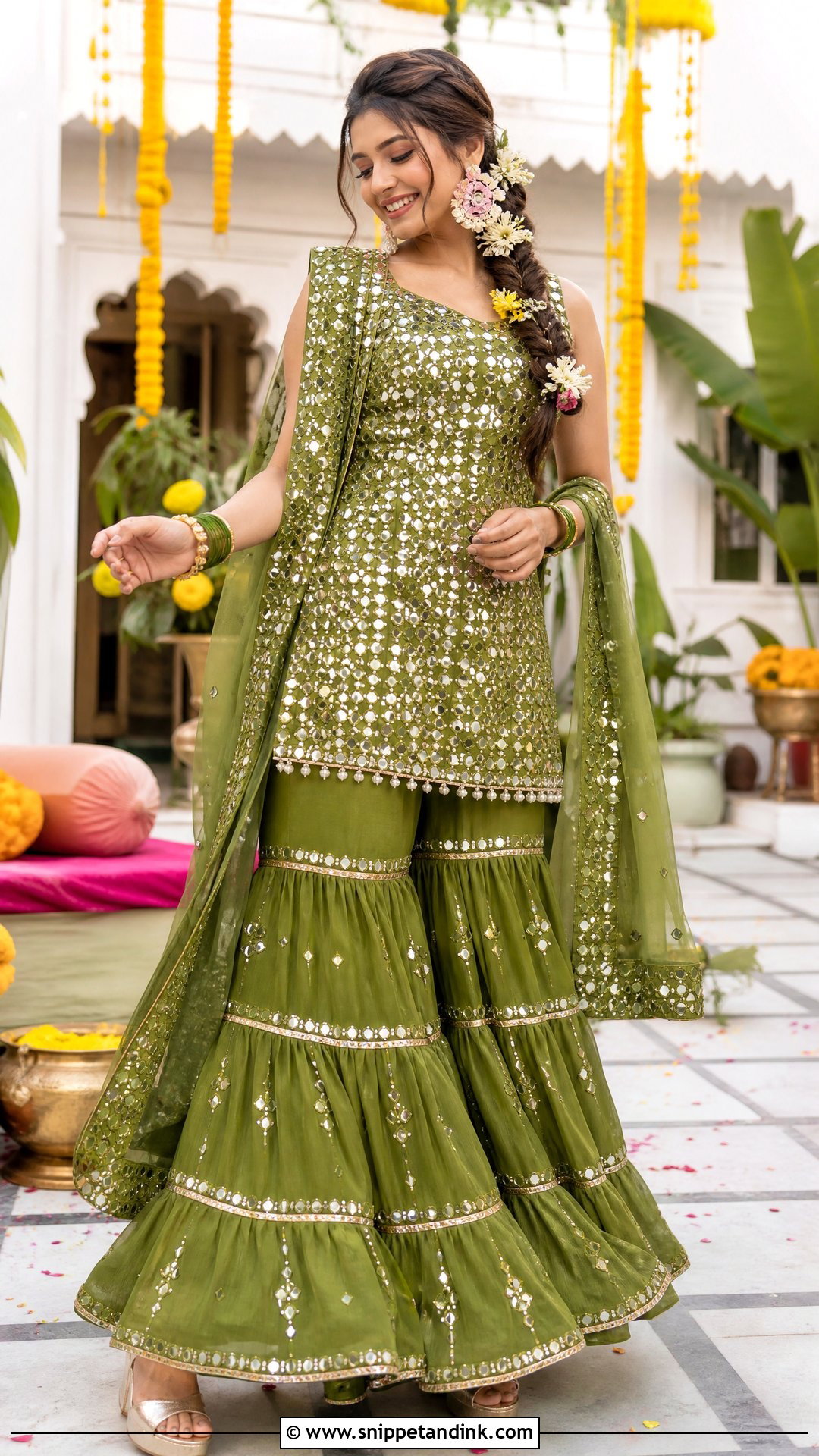
Mirror work catches every bit of light at a mehndi, which is why green mirror-work shararas are so popular for that night. The thing I look at first is spacing: mirrors set too close together make the kameez stiff and heavy, and the edges can scratch your arms through a long evening of dancing. A sleeveless or elbow-sleeve top keeps your hands clear for the henna artist. Tiered georgette in the sharara moves well without being hard to manage. If the top is heavily worked, let the sharara be simpler. A side braid with small flowers, floral earrings, green and gold bangles and metallic wedges keep you comfortable from the first song to the last.
8. Royal Blue Punjabi Bridal Floor Length Anarkali
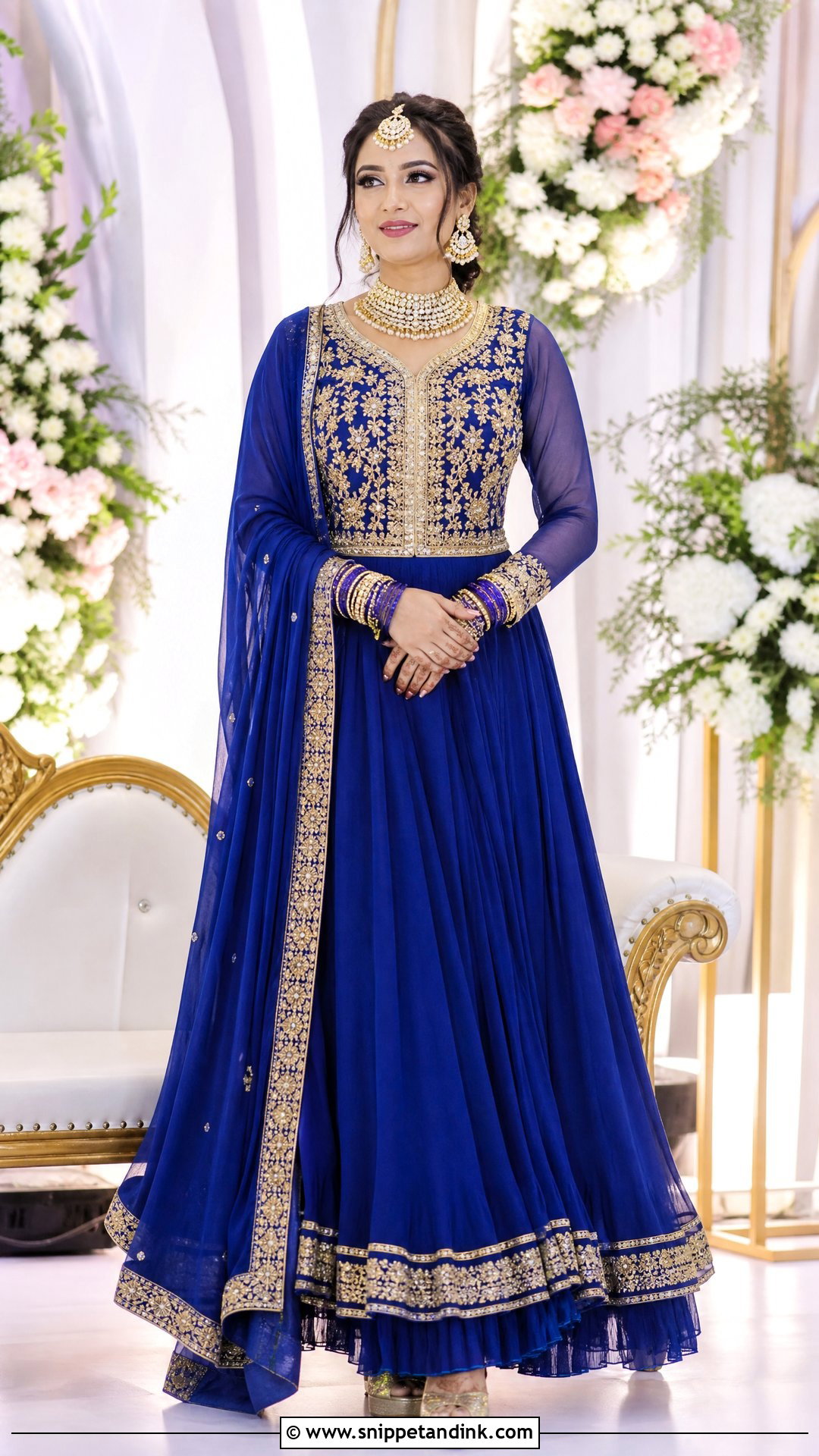
Royal blue gives a floor-length bridal Anarkali real depth, and it is a color that looks expensive even with moderate embroidery. A structured bodice and wide panels in silk or velvet-trimmed georgette swing well when you walk. I keep the antique gold work to the neckline, sleeves, waist and hem so plenty of blue shows through. Wear churidar underneath and a net dupatta with a broad gold border. Kundan jewelry, blue bangles and a statement ring finish the look, with gold platforms hidden under the flare. Floor-length Anarkalis need hemming in the exact shoes you will wear; even half an inch too long and you will be stepping on the front panel all night.
9. Rani Pink Punjabi Bridal Patiala Suit
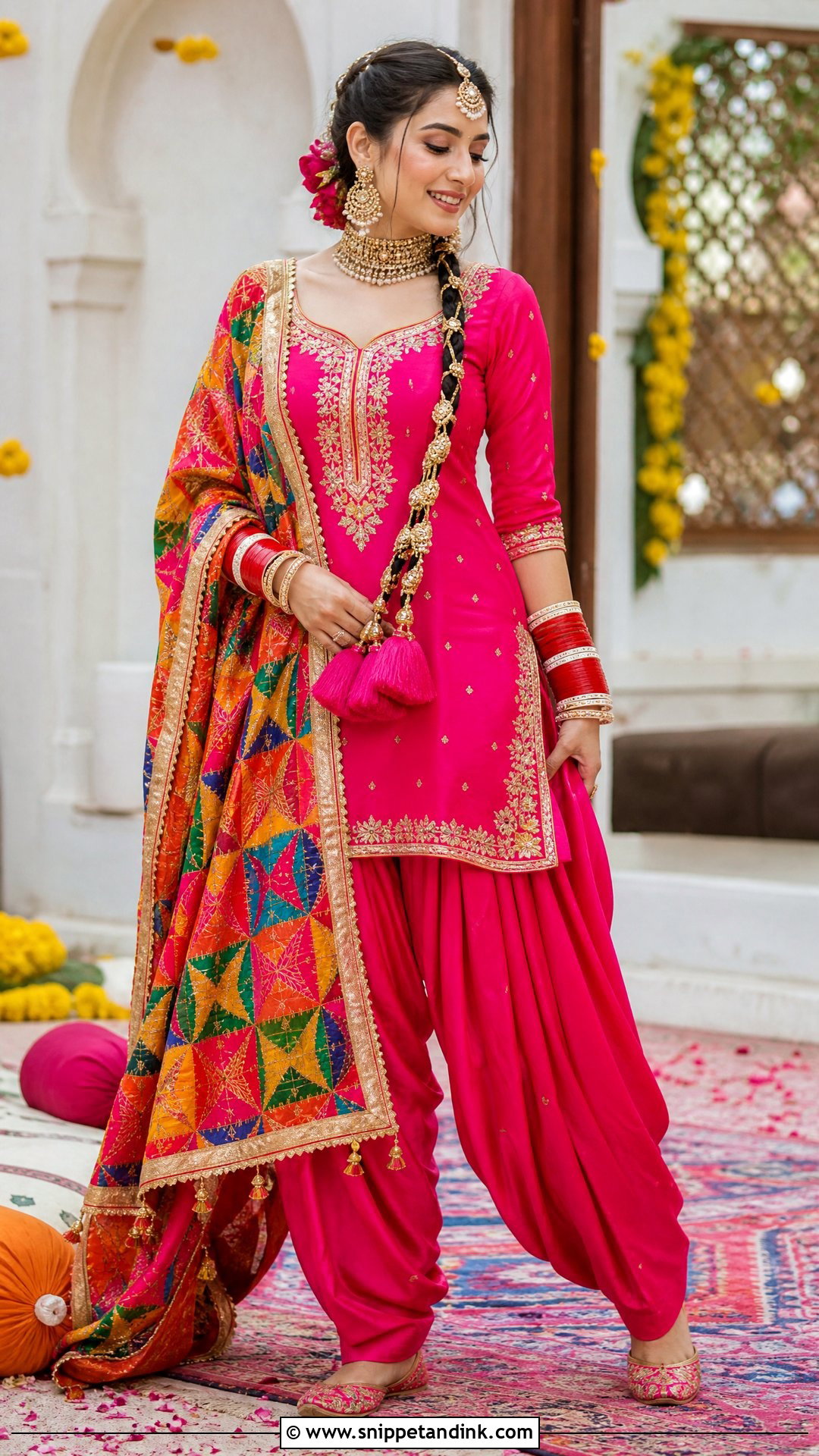
Rani pink is the shade most people picture when they think of a Punjabi bride, and it suits nearly every skin tone. A short fitted kameez over a soft silk Patiala salwar keeps the outfit lively. Silk matters here: cheaper blends will not hold the Patiala pleats, which flatten into a baggy shape within an hour. Gold embroidery, small mirrors and green thread add dimension, and a contrasting orange, red or green phulkari dupatta keeps it traditional. Jewelry can include a choker, jhumkas, a tikka, layered bangles and kaleere where the ceremony calls for them. A braid with a paranda reinforces the Punjabi feel. Wear it to a choora ceremony, jaggo, mehndi or daytime function.
10. Champagne Tissue Punjabi Bridal Palazzo Suit
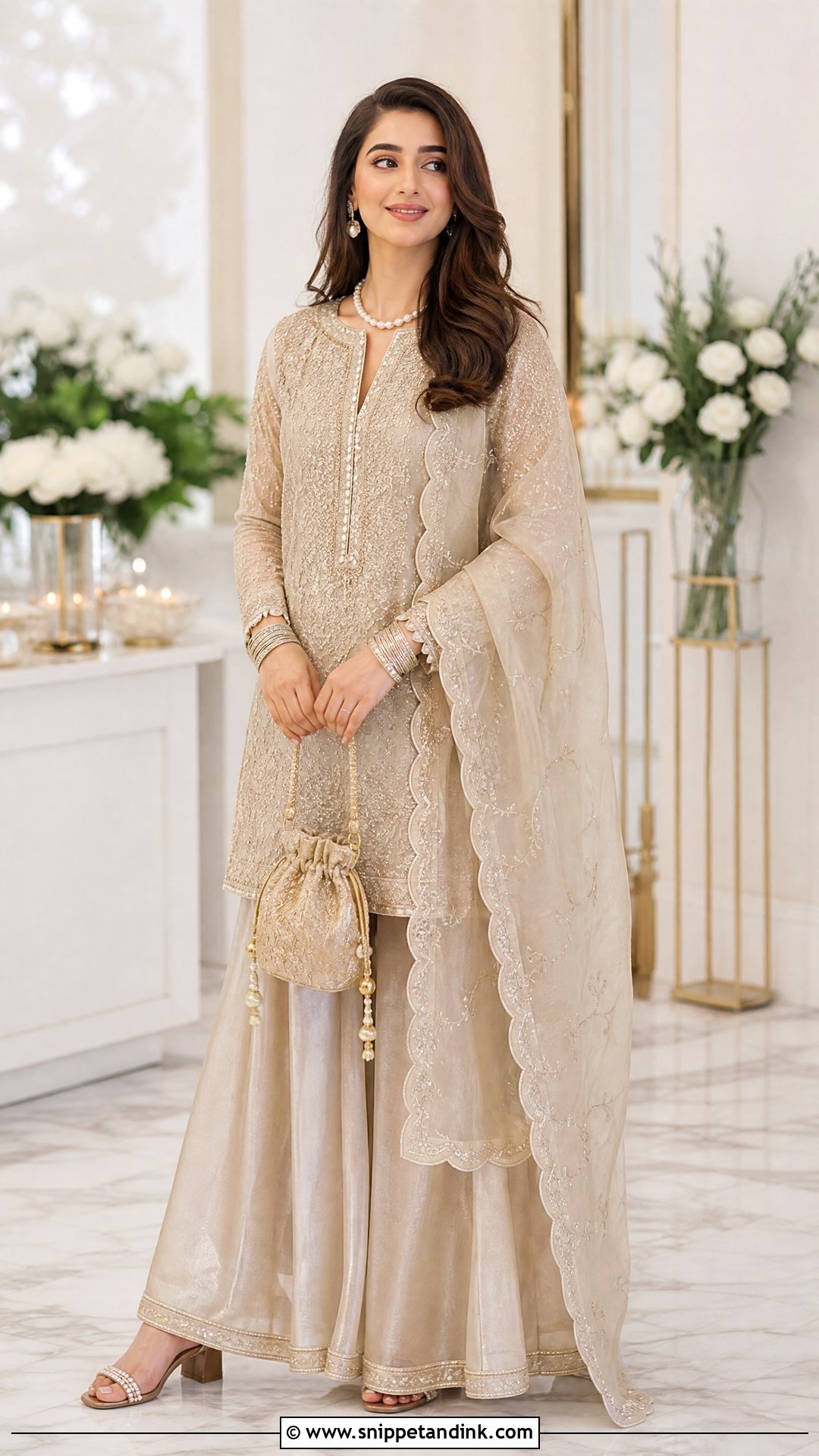
Tissue fabric has a fine metallic glint woven into it, so a champagne tissue suit shines without heavy embroidery. That is exactly what I like it for: civil ceremonies, a bridal lunch or a reception where you want to look finished but not weighed down. Keep the kameez knee-length and straight, with restrained gold and pearl work and a clean neckline. Wide palazzos let you walk and sit freely. Tissue creases sharply, so steam it on the day and do not fold it tightly in a suitcase. A sheer organza dupatta with a scalloped border softens the shine. Pearls, a slim tikka, crystal bangles, a gold potli and low block heels finish it, with a center-parted bun or brushed waves.
11. Rust Orange Brocade Punjabi Bridal Suit
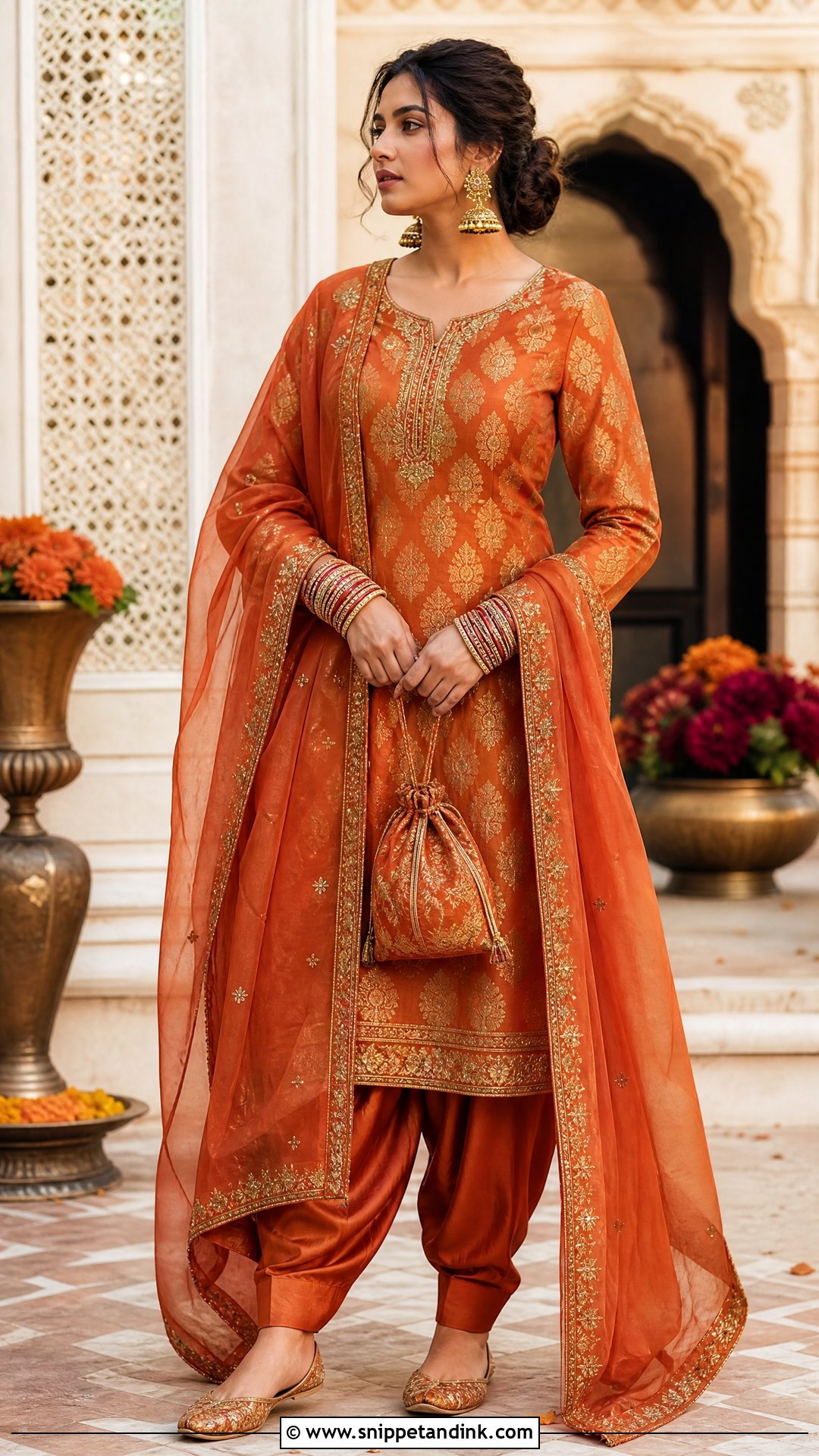
Rust orange brocade is warm and slightly unexpected. Because brocade has its pattern woven in, I let it carry the outfit and keep everything else plain: a knee-length kameez with a shaped waist and a matching silk salwar or straight trouser. Brocade is stiff, so check the armholes at your fitting; they often need letting out for comfort when you raise your arms. A lighter orange organza dupatta with an embroidered edge balances the heavier fabric. Antique gold jhumkas, a choker and stacked bangles suit the earthy color, as do brocade juttis and a small potli. A textured braid or low bun softens it. Rust is at its best at autumn weddings and heritage venues decorated with marigolds.
12. Lavender Gota Patti Punjabi Bridal Anarkali
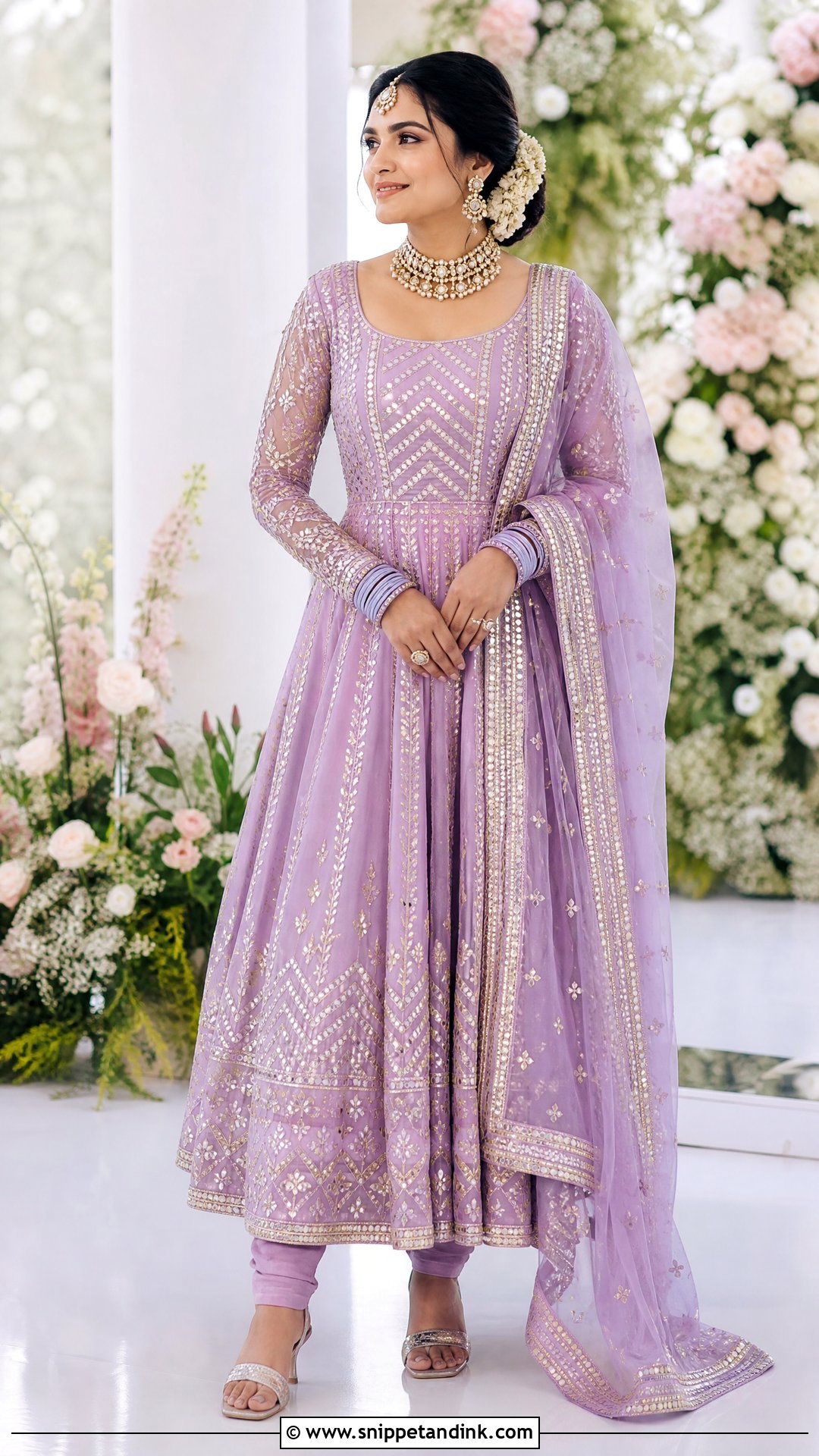
Lavender is soft but still reads festive, especially with silver or pale gold gota patti outlining the neckline, panels, sleeves and hem. Gota is woven ribbon appliqued onto the fabric, so it adds shine without the weight of zardozi, which suits a light pastel. Choose an ankle-length Anarkali with a fitted top and layered flare, matching churidar and a light net dupatta scattered with small motifs. The dupatta border is where pastels often go wrong; a heavy border pulls on the head and slides backward. Pearl and kundan jewelry, lavender bangles, a small tikka and silver heels finish it. Curled hair in a low ponytail or a floral bun works for a daytime engagement or sangeet.
13. White Phulkari Punjabi Bridal Suit
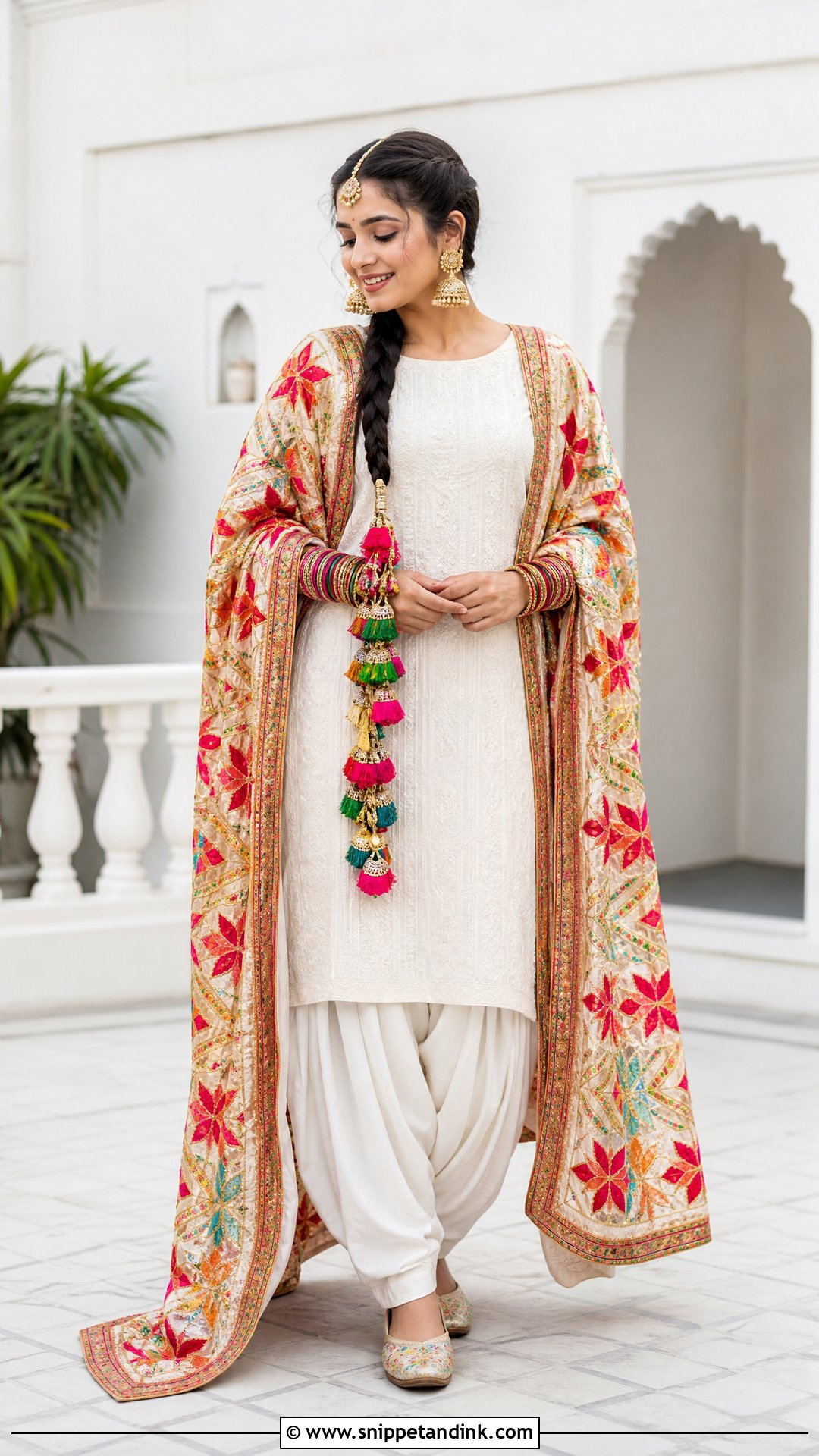
White with a phulkari dupatta is crisp and cheerful, and it lets the embroidery do the talking. Choose an ivory or bright white straight kameez with tonal work only at the neckline, cuffs and hem, and pair it with a white Patiala salwar or straight pants. The dupatta should carry the color with bold pink, orange, green and blue threadwork. I pick juttis that repeat one shade from the phulkari so the outfit ties together. A long braid with a bright paranda gives it a traditional finish. White is unforgiving with makeup and food, so carry a clean tissue and keep foundation off the neckline. It suits a daytime pre-wedding event or family gathering.
14. Plum Velvet Punjabi Bridal Gharara Suit
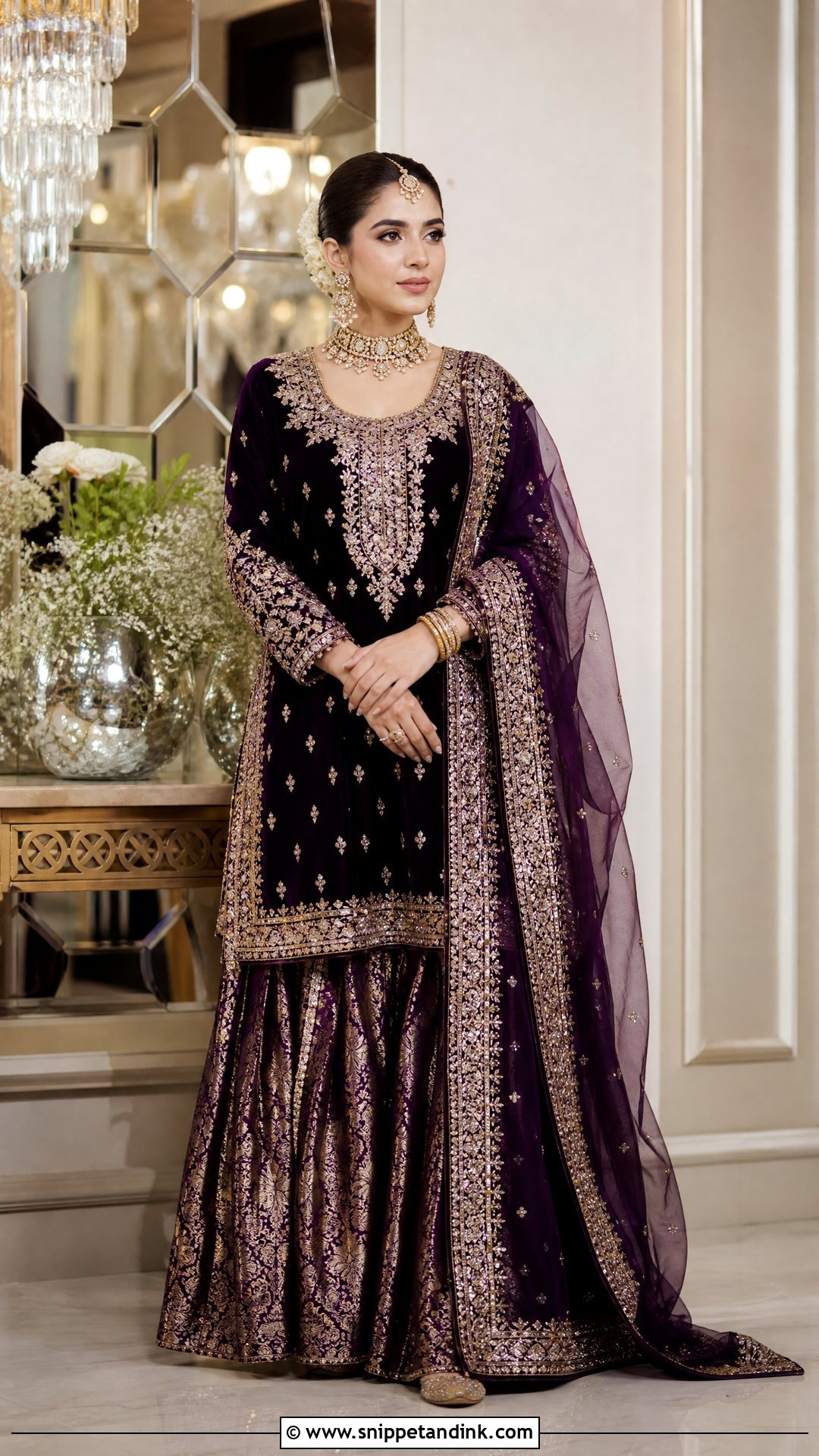
Velvet in a cold month feels right in a way silk never quite does. Deep plum pairs well with antique gold zardozi on a fitted short top. The trick with a velvet gharara is weight: all-velvet ghararas are very heavy, so I ask for velvet above the knee band and silk or brocade in the flare below. A plum net dupatta with a substantial border drapes well for the ceremony. Antique polki, gold bangles, an embroidered clutch and closed juttis suit the season. A sleek bun or controlled waves balance the dark color. Velvet crushes if you sit on it for long, so lift the back of the kameez slightly as you sit.
15. Powder Blue Organza Punjabi Bridal Suit
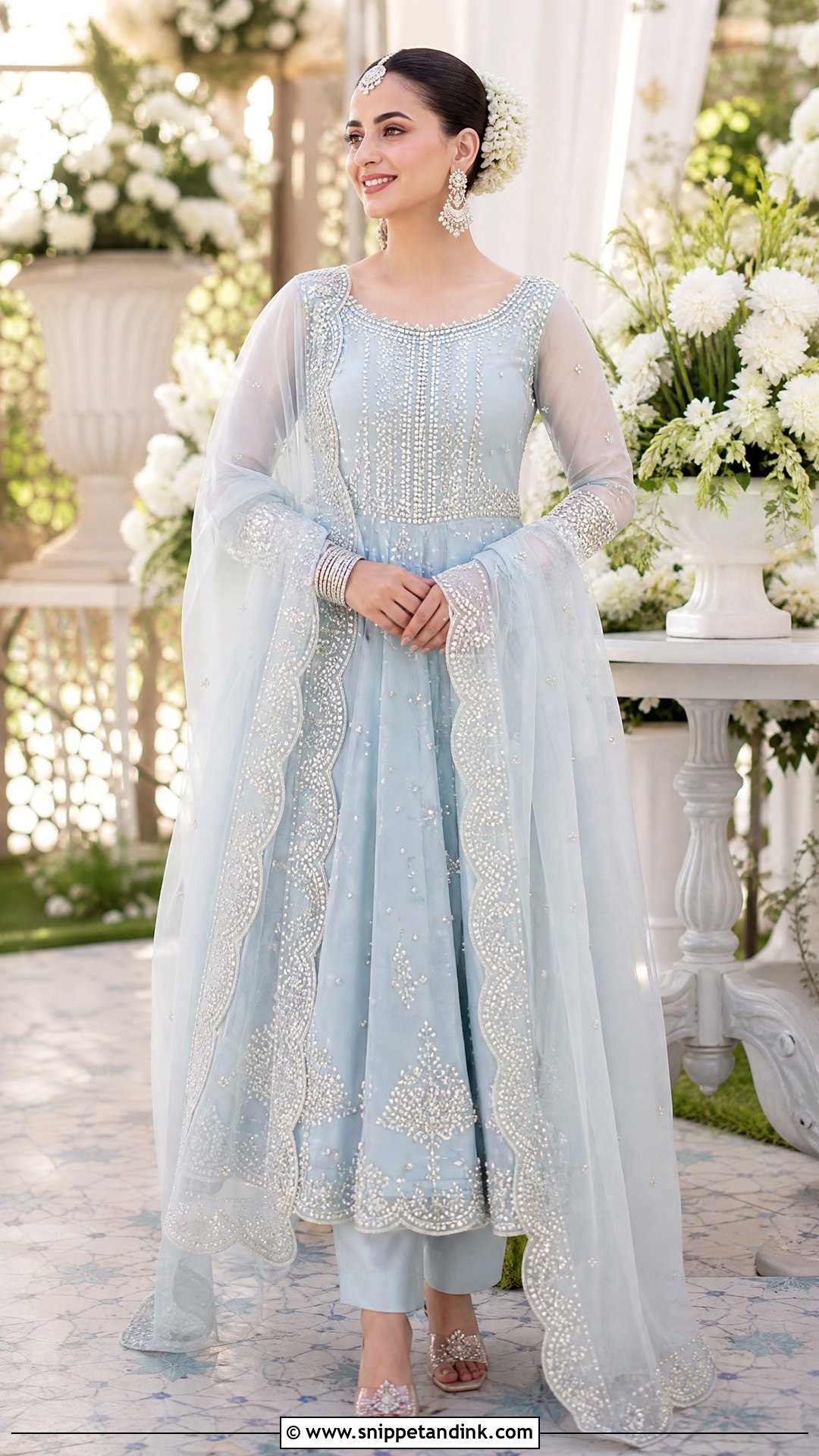
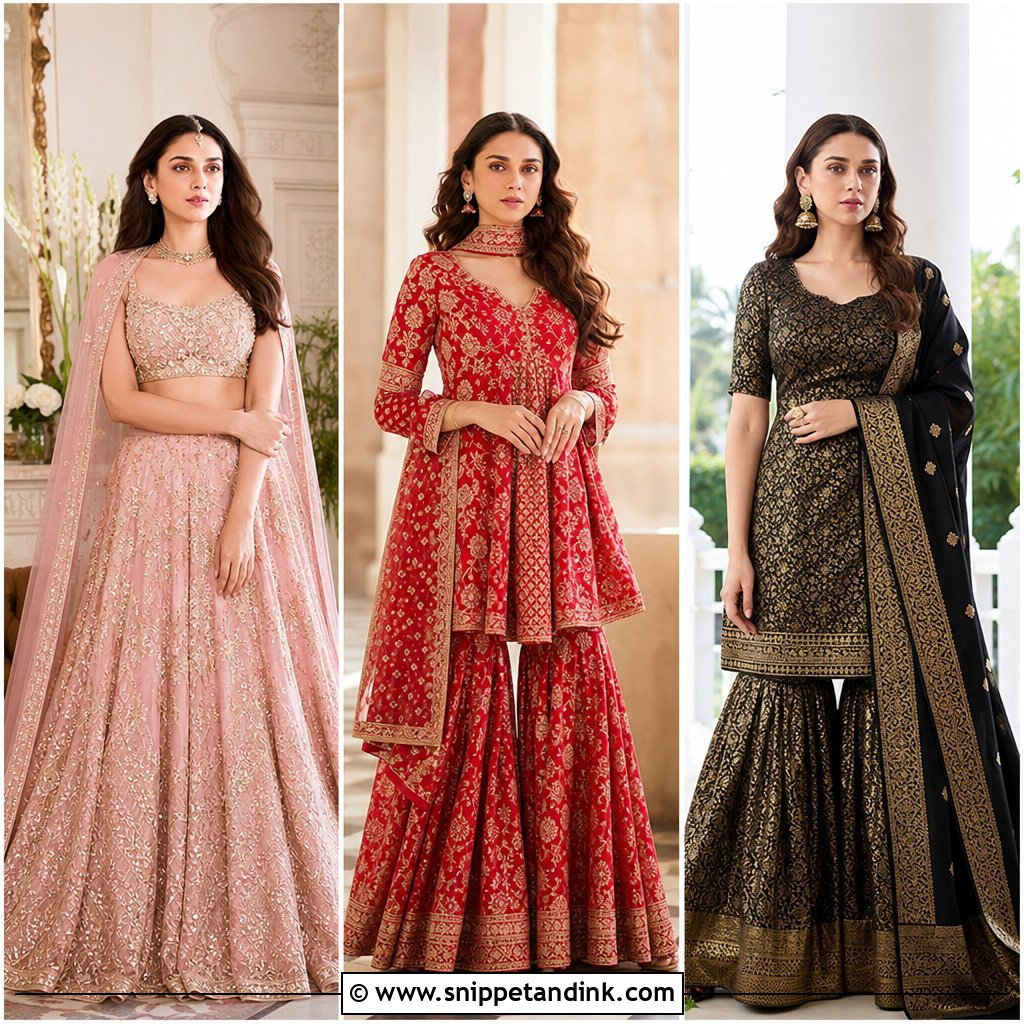
Powder blue organza is at its best in daylight, when the fine pearl and silver work catches the sun. Choose a straight or softly flared kameez with delicate floral motifs, and pair it with matching silk pants or a modest palazzo. Organza is sheer, so the lining should be a close color match; a white lining under blue organza can look grey at the seams. The transparent dupatta with scalloped edges keeps the outfit light. Pearl drops, a slim necklace, a delicate tikka, silver bangles and embellished block heels suit it; heavy jewelry would compete with the detail. A low bun with white flowers or brushed waves completes it for a spring engagement or daytime wedding.
16. Coral Jacket Punjabi Bridal Suit
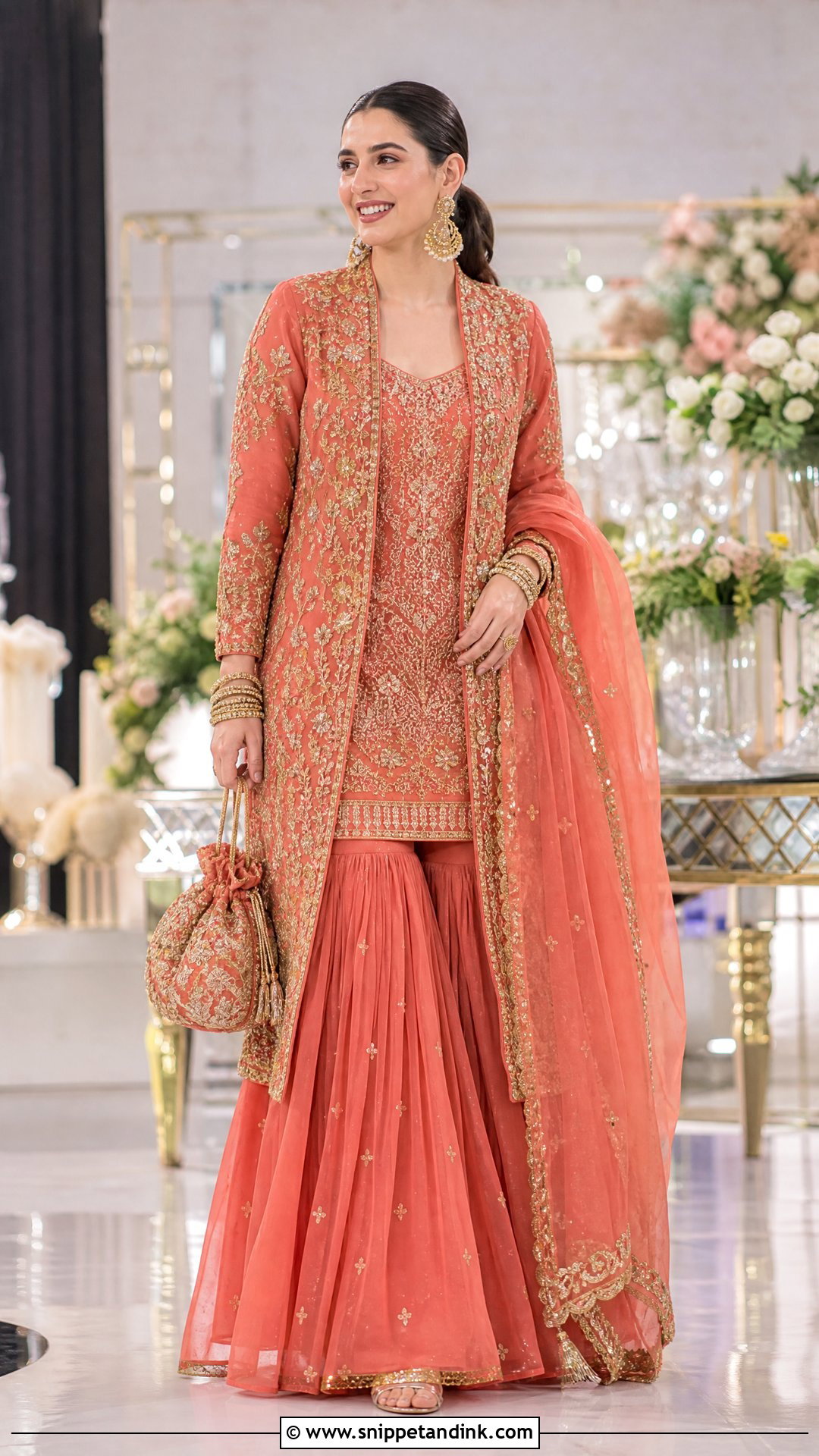
A coral jacket suit gives a modern layered shape while keeping traditional embroidery. Start with a fitted kameez and slim pants or a matching sharara, then add a long open jacket in organza, silk or light brocade. I keep the jacket embroidery to the shoulders, front edges, cuffs and hem so the outfit underneath is still visible. The dupatta becomes an accessory here, carried over one arm. Ask your tailor to stitch a discreet hook at the chest; open jackets tend to slide back off the shoulders when you dance. Gold statement earrings, layered bangles, a small tikka, a potli and metallic heels finish it, with a low ponytail or polished bun.
17. Gold Zardozi Punjabi Bridal Churidar Suit
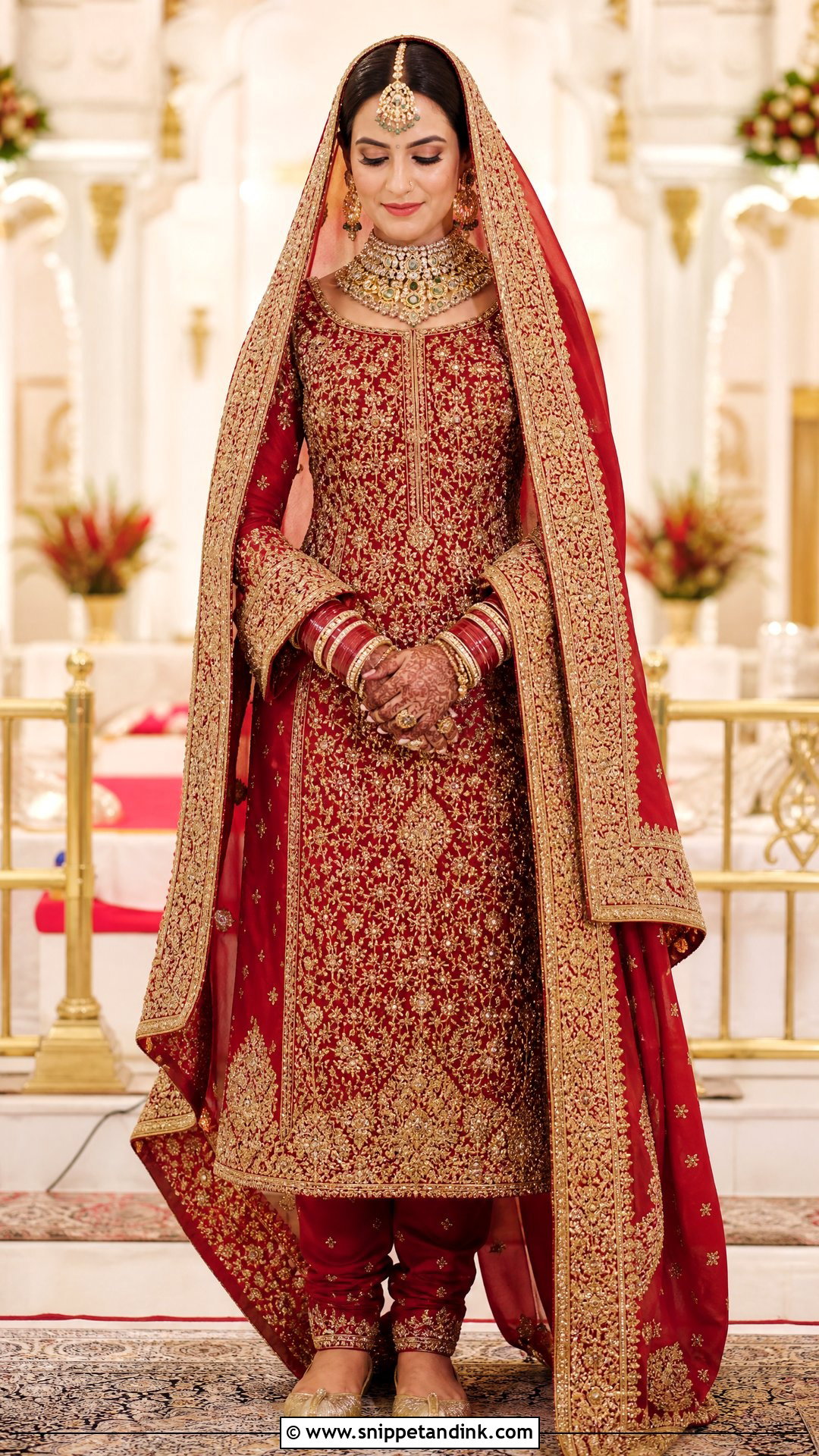
Gold zardozi turns a plain churidar suit into something formal enough for the Anand Karaj. Zardozi is metal thread couched onto the fabric, and it is heavy, so it needs a firm base: deep red, maroon, forest green or navy silk all hold it well. Concentrate the work on the bodice, cuffs and hem, and let the fitted churidar keep the lower line clean. The dupatta should have a wide zardozi border, pinned over the head or across both shoulders. Kundan jewelry, a prominent tikka, coordinated bangles and gold juttis complete it. Keep the bag small. Zardozi tarnishes in damp, so store it wrapped in soft cotton rather than plastic.
18. Teal Peplum Punjabi Bridal Sharara Suit
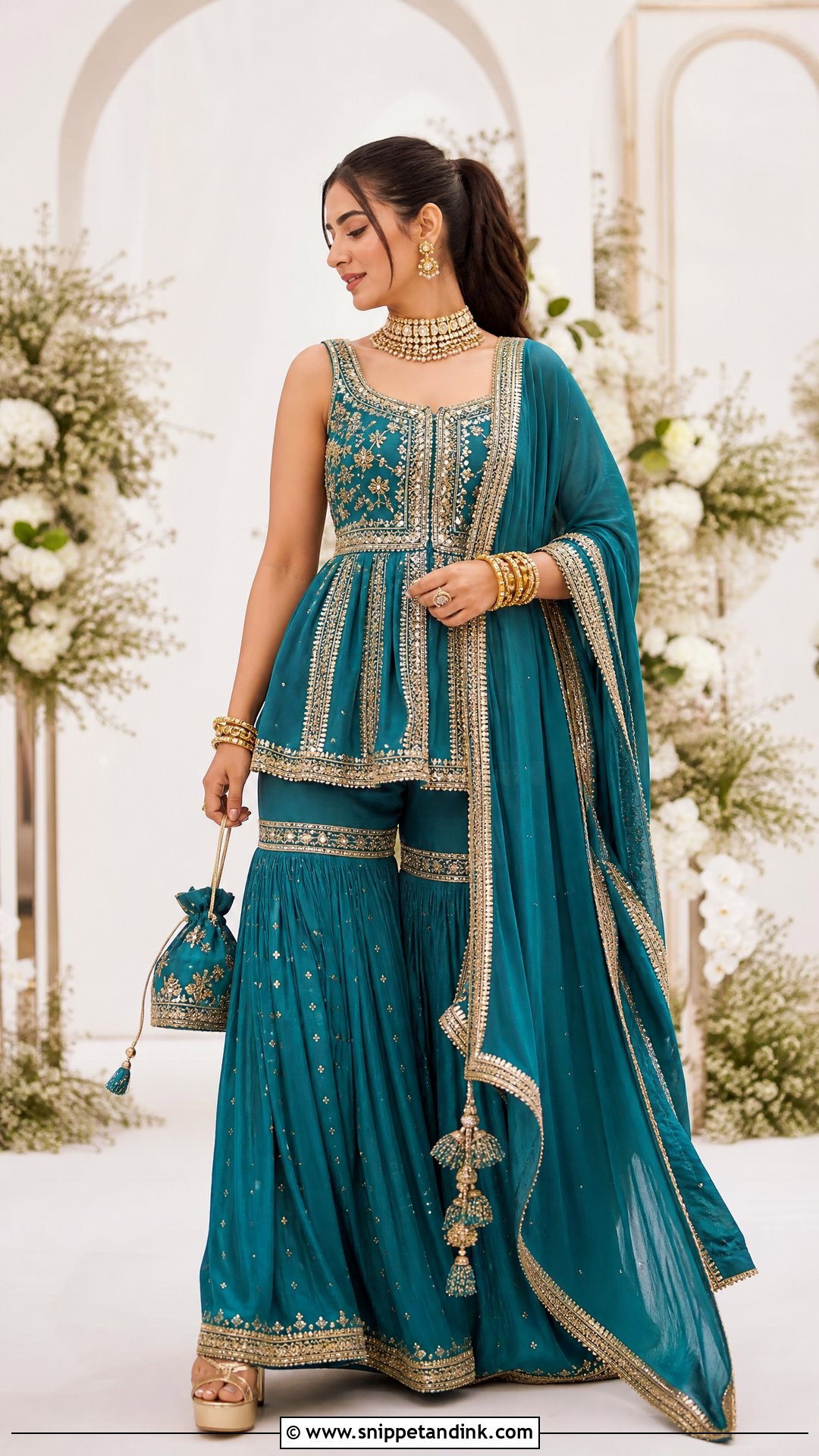
A teal peplum top gives a defined waist that suits brides who feel lost in a long kameez. The peplum should sit exactly at the natural waist and open into a short flare; sitting too low, it cuts the body in an awkward place. Pair it with a wide georgette or silk sharara with coordinated borders. Gold embroidery, sequins and subtle mirror detail can trace the neckline and peplum edge. Wear the sheer dupatta over one shoulder so the shape stays visible. A kundan choker, earrings, gold bangles, a small potli and platform heels finish it. A sleek ponytail or low bun keeps it clean. It is a strong option for a sangeet where you plan to dance.
19. Red Ivory Punjabi Bridal Ghagra Suit
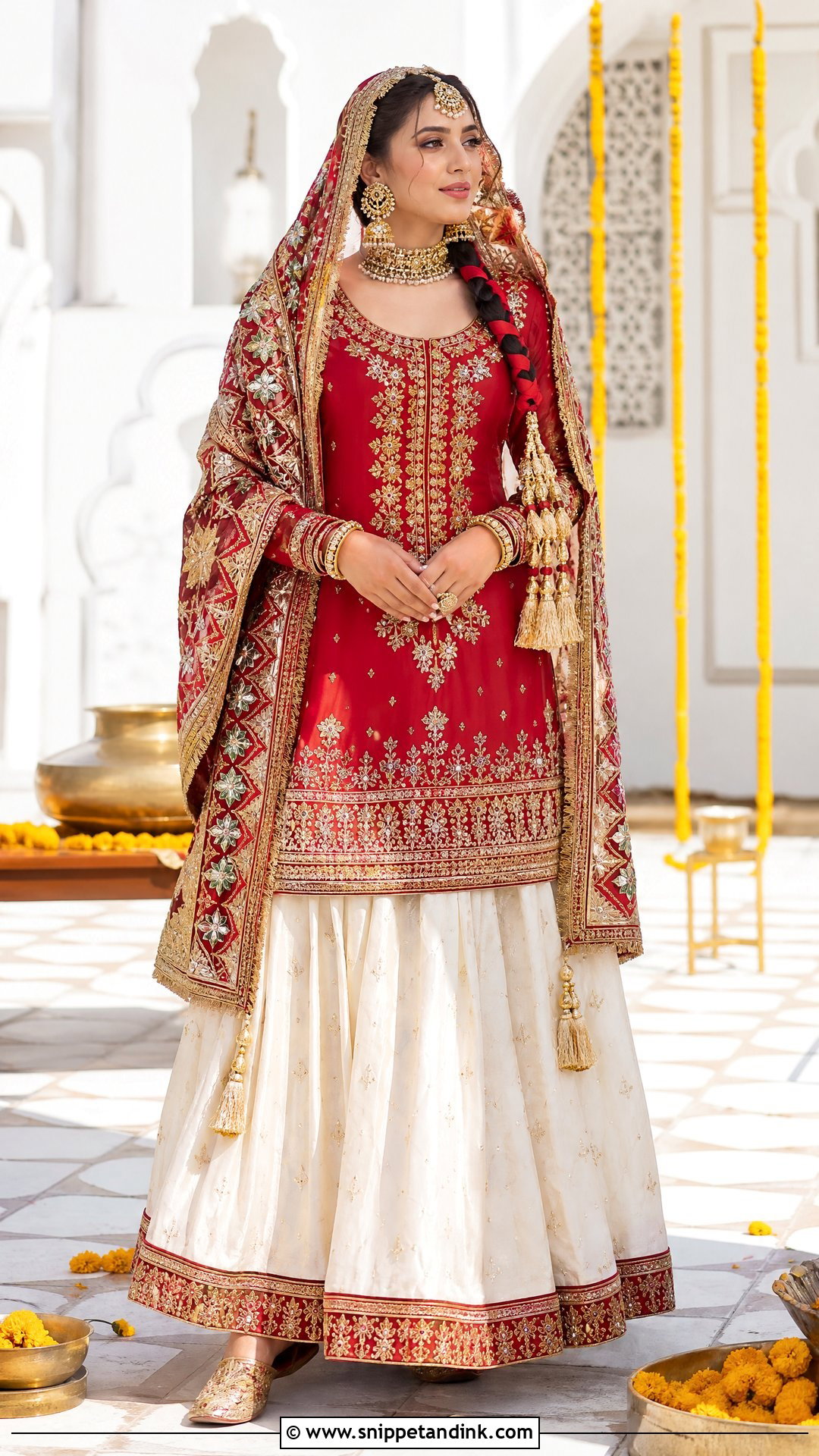
A Punjabi ghagra suit leans fully into heritage, combining a short kurti, a full skirt and a traditional dupatta. Choose an ivory silk ghagra with a wide red embroidered border and a fitted red kurti worked in gold thread. A red phulkari or embellished net dupatta brings color to the face and drapes over the head. Depending on the construction, fitted pants can go underneath for coverage. A full ghagra needs a firm, wide waistband, or the weight of the border pulls it down through the day. Complete it with a gold choker, jhumkas, a tikka, bridal bangles, juttis and a paranda for a jaggo or traditional portraits.


20. Mint Silk Punjabi Bridal Palazzo Suit
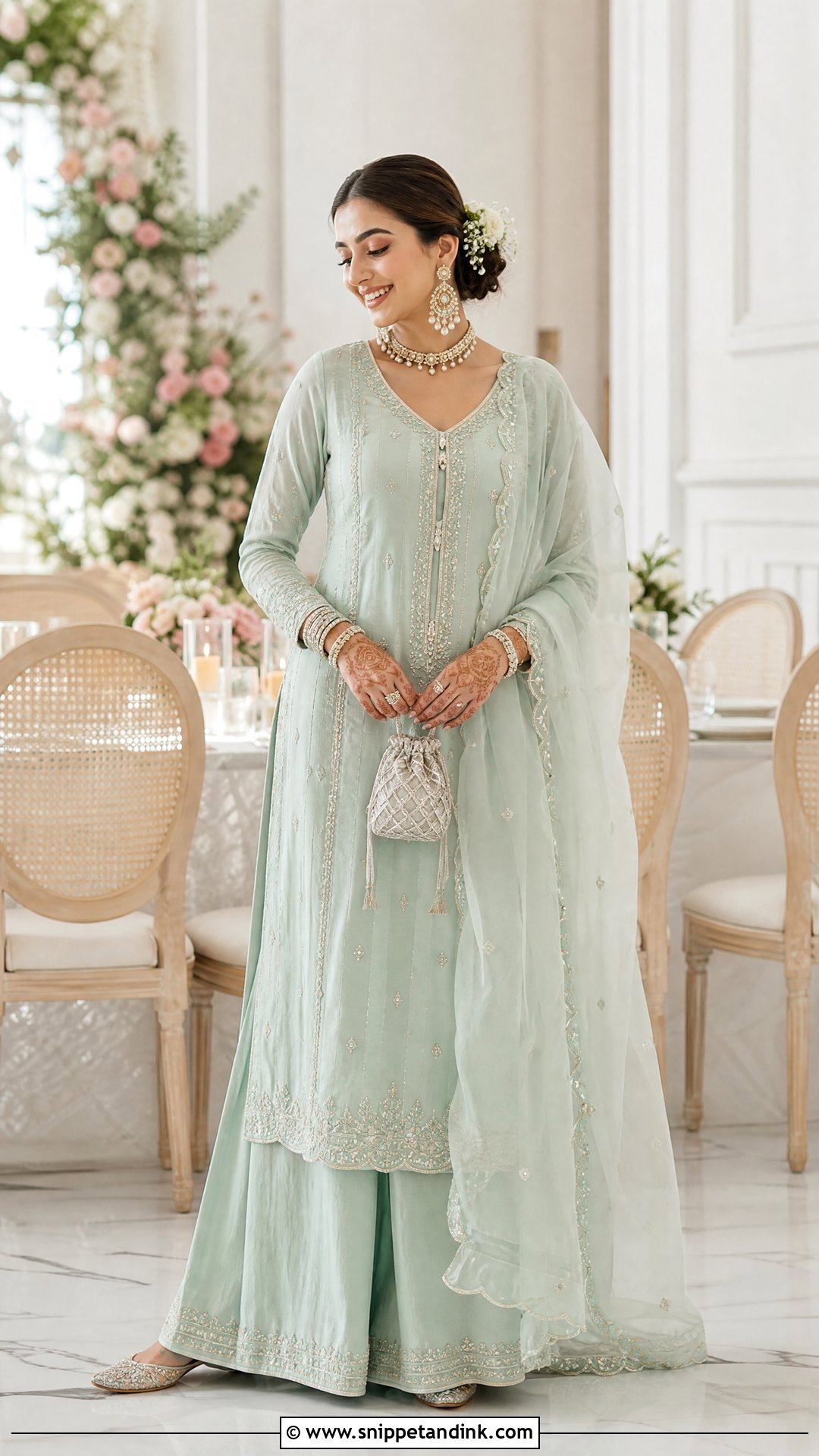
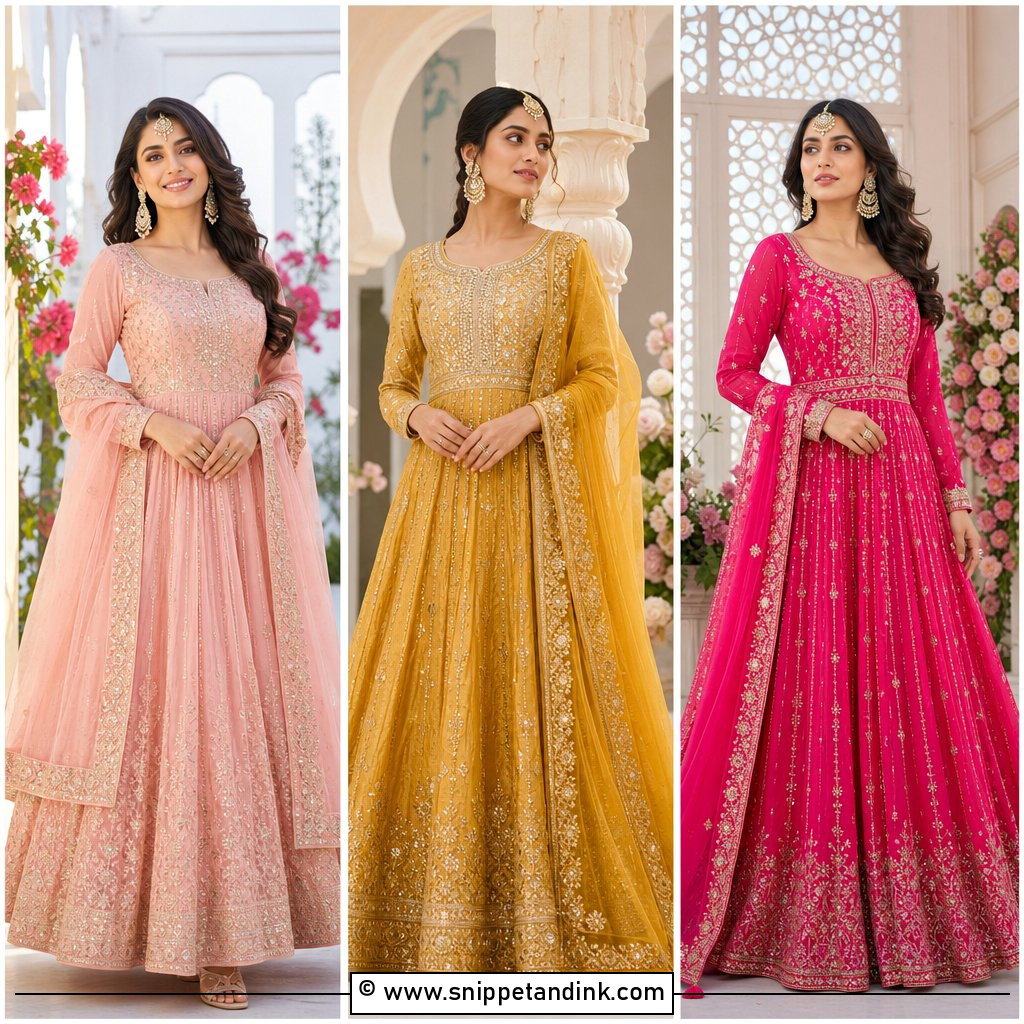
Mint silk feels calm and fresh, and it is one of the few pastels that stays clear in harsh midday light. A long straight kameez with pearl, silver and pale gold work at the neckline, side slits and cuffs keeps it elegant. Flowing palazzos add movement. A matching organza dupatta with a detailed scalloped border makes the set ceremonial rather than casual. Pearl and kundan earrings, a delicate necklace, coordinated bangles, a silver potli and low embellished heels suit it. Soft waves or a floral bun keep the mood gentle. I would choose it for a summer engagement, reception or bridal lunch, where a lighter fabric genuinely makes the day more comfortable.
Handwork Takes Months, So Plan the Tailoring Backwards
Zardozi, dabka and phulkari are slow crafts, and bridal suits with dense handwork are usually made to order. Lead times vary with the designer and the season, but I tell brides to place orders for the main ceremony outfit around four to six months ahead, and to allow at least two fittings after it arrives. Wedding season gets busy for every embroiderer, so dates around peak months fill fastest.
At the fittings, bring the exact jewelry and shoes you plan to wear. Heels change the length of a Patiala or Anarkali, and a heavy choker can sit on top of a high neckline in a way that looks crowded. Ask your tailor to leave seam allowance in the bodice; weight often changes a little in the last month, and a suit with no margin cannot be let out.
A Dupatta That Stays Put Through Four Laavan
The dupatta is where most bridal outfits come undone. A heavy embroidered border slides backward off the head as soon as you bow, and net slips over smooth hair. My routine is simple: a small bun or flat braid at the crown gives the pins something to grip, then the dupatta is secured with U-pins or bobby pins pushed through at the crown and above each ear. Clear elastic hair ties looped around the bun help too.
If you are wearing two dupattas, one over the head and one draped across the body, pin the head dupatta first and lightly, then place the second over it. Do a practice bow and a practice walk while someone watches from behind. If the border is very heavy, ask your tailor to stitch small loops underneath where the pins can catch instead of tearing through the net.
Red, Mint or Rust, the Tailoring Decides How It Wears
A suit should look like you and still let you move through a long day of rituals. Patiala suits and phulkari dupattas bring classic Punjabi character; shararas, ghararas, Anarkalis and palazzos give you different amounts of volume and formality. Traditional reds, pastels and jewel tones all have a place. Before you commit, weigh the season, the venue, how heavy the dupatta is, the height of your shoes and where the jewelry will sit. Start tailoring early and try the whole outfit together, jewelry and all. When the pieces work together, you will look polished and feel comfortable from the first ritual to the last photograph.
You'll Like These Ideas:




Leave a Reply