
Flowers on a wedding dress can mean almost anything: flat lace with a botanical pattern, thread embroidery, or petals cut from organza and stitched on so they stand away from the skirt. Each behaves differently in a fitting room, on a dance floor and in a photograph, and that’s what most inspiration pictures leave out. I’ve gathered twenty-five floral gowns below, from tea-length courthouse dresses to full 3D ball gowns, and for each one I’ve added what I’d look at before you say yes.
Flat Lace, Embroidery or 3D Petals?
The type of flower work changes comfort, weight and how the dress survives the day. I explain these three to every bride before she starts trying gowns.
Lace
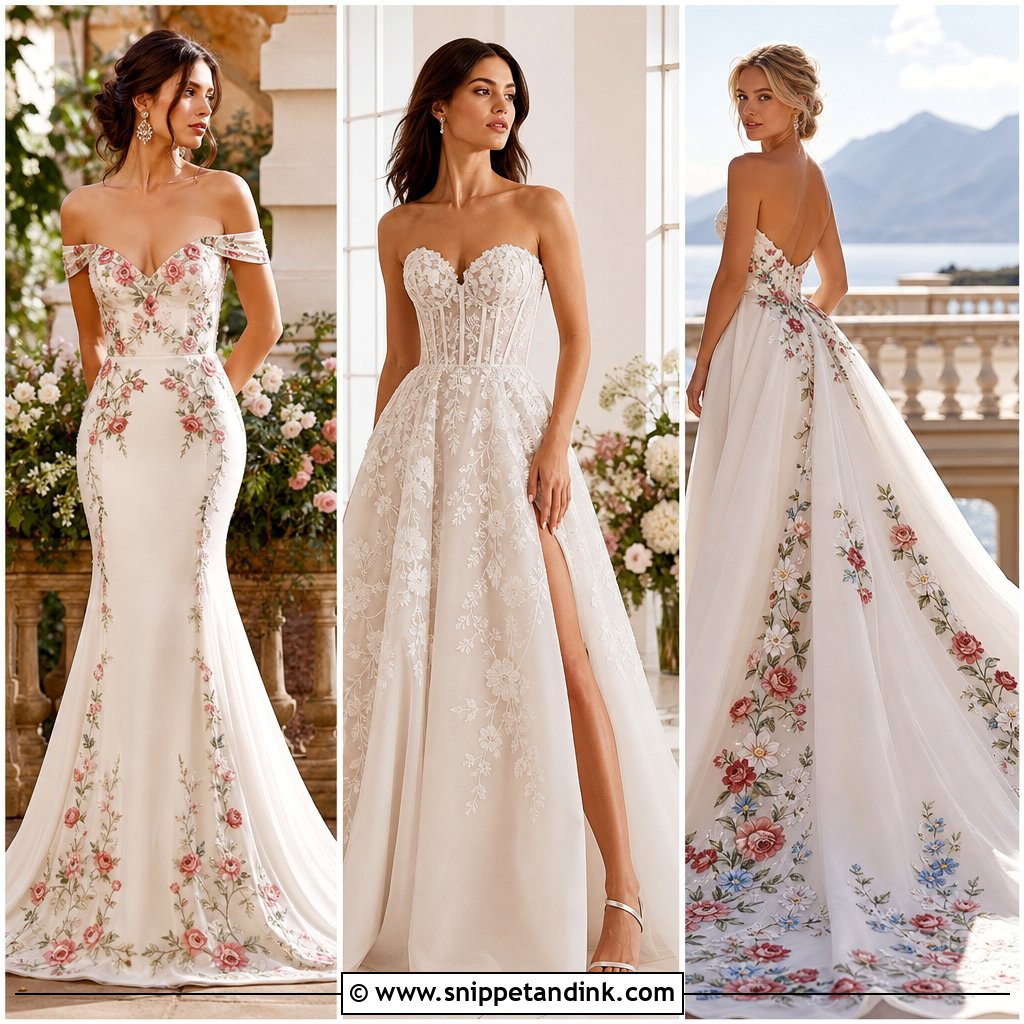
Lace is the flower pattern built into the fabric itself. It’s flexible, forgiving at fittings and the easiest to alter, because a seamstress can move motifs around. Corded lace has an outlined edge and looks crisper; Chantilly is fine and soft.
Embroidery
Embroidery is thread stitched onto tulle or organza. It’s light and lets color in, but alterations are harder because cutting through the stitching can unravel it. Ask before you buy whether the dress can be taken in where the embroidery sits.
3D petals
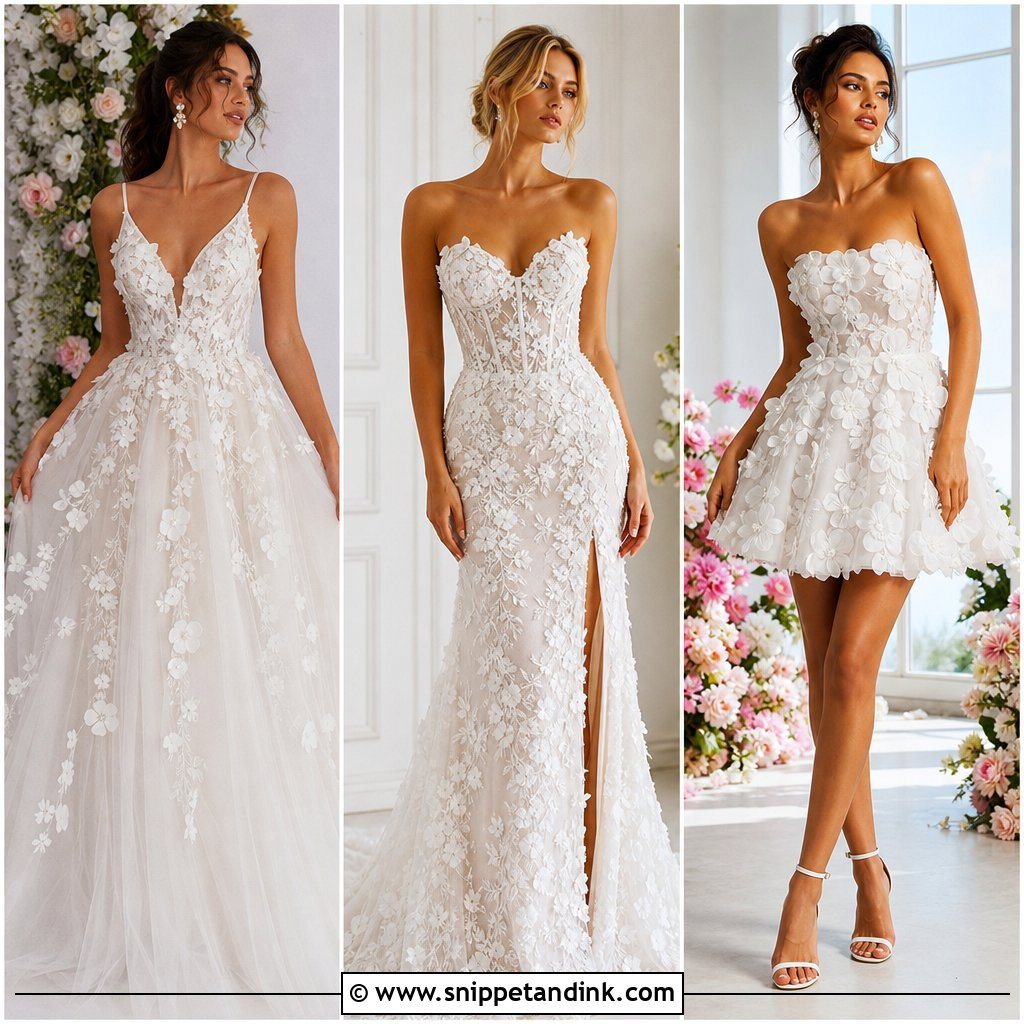
These are individual flowers cut from organza, tulle or silk and hand-tacked on. They look the most dramatic in person and add depth to photos. They also crush, snag and occasionally fall off. A couple of spare petals sewn inside the hem, along with a needle and thread, makes a quick repair possible on the day.
1. Floral Lace A Line Wedding Dress
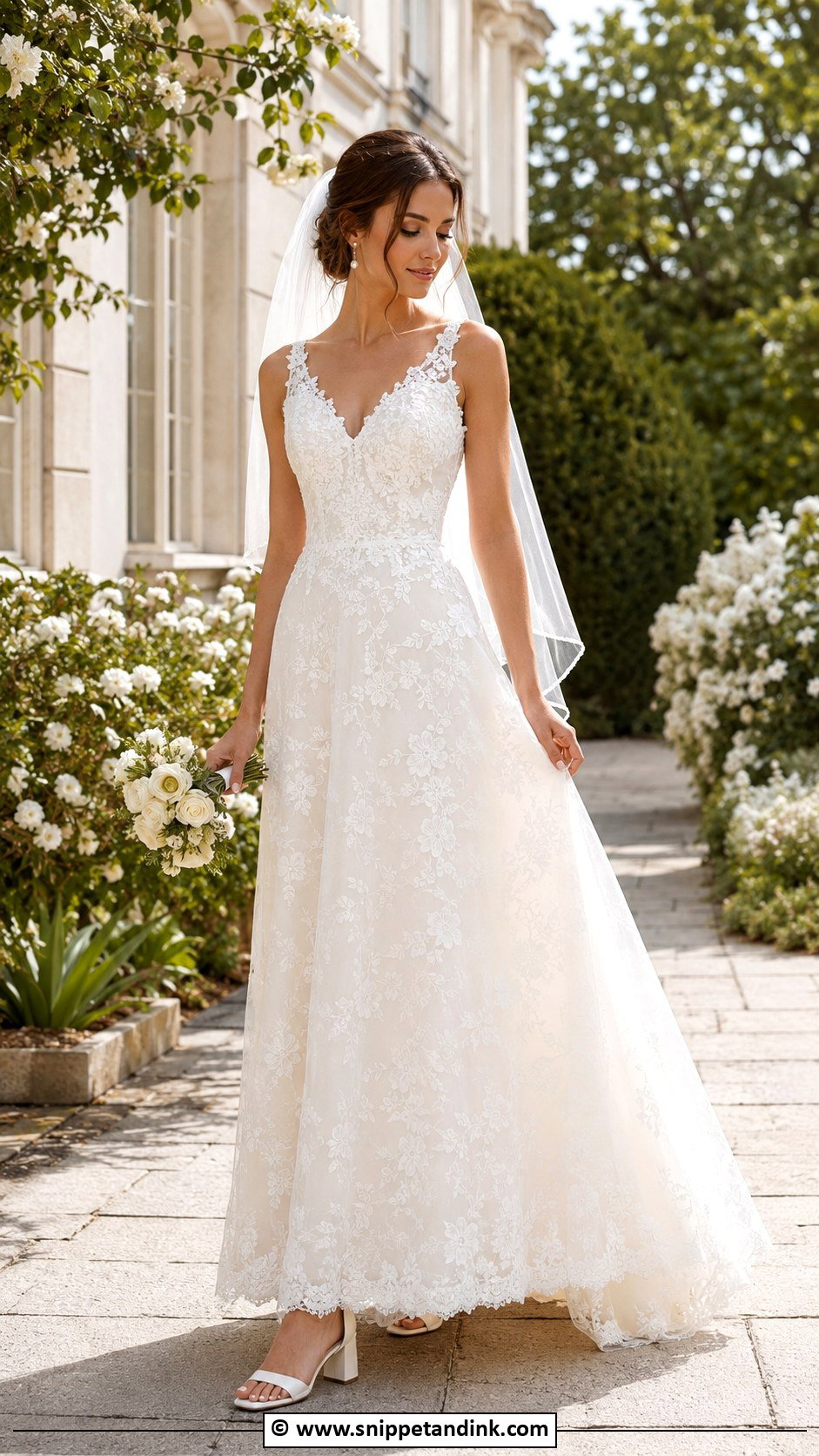
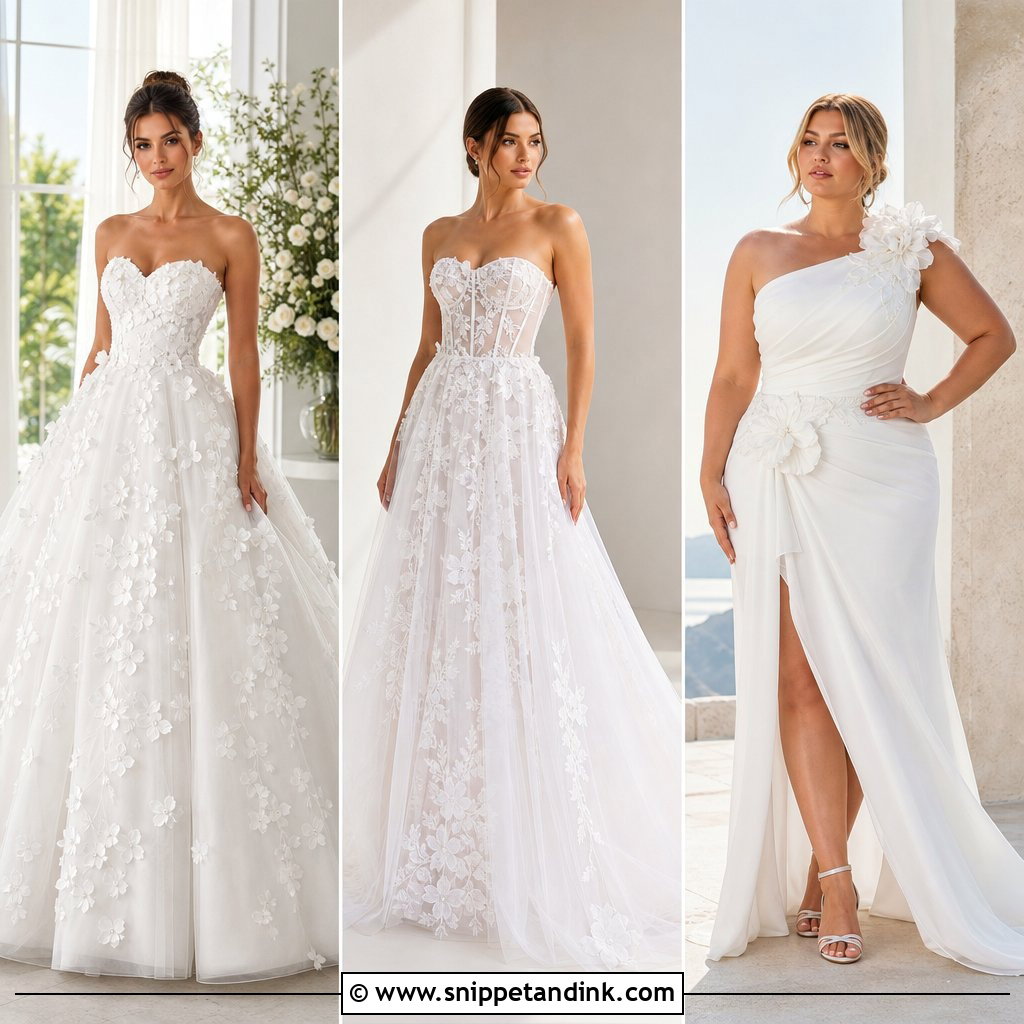
Start here if you’re unsure. A lace A-line is the floral gown I see brides settle into most comfortably, because the fitted bodice holds you in and the skirt lets you walk, sit and dance. Ivory botanical lace keeps it classic; raised appliqué adds depth. One thing to ask the shop is whether the lace is cut around its motifs at the hem and neckline. Scalloped edges that follow the flowers look far more finished than lace sliced straight across. A fingertip veil, pearl drops and ivory block heels for the lawn complete it.
2. 3D Floral Ball Gown Wedding Dress
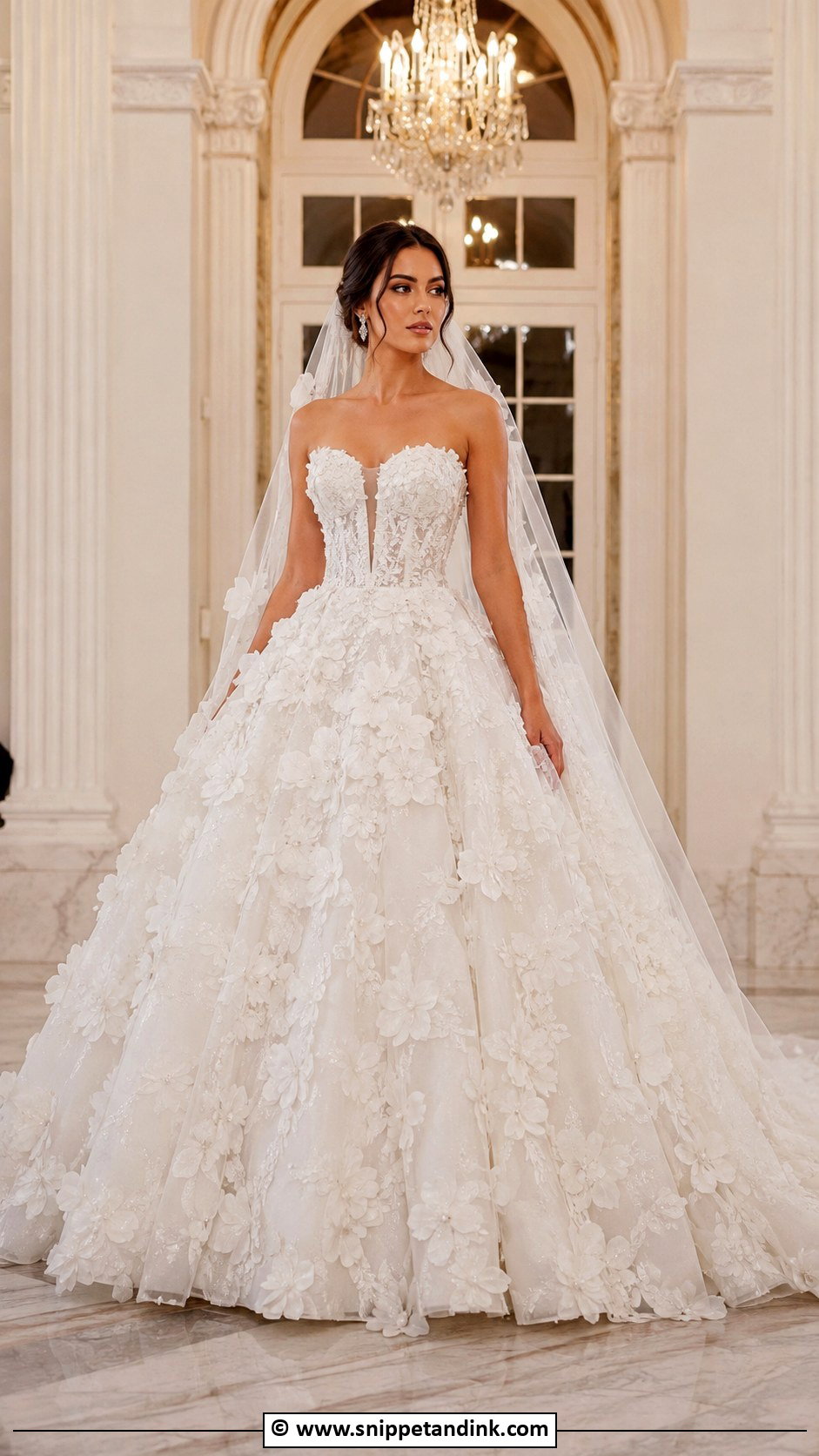
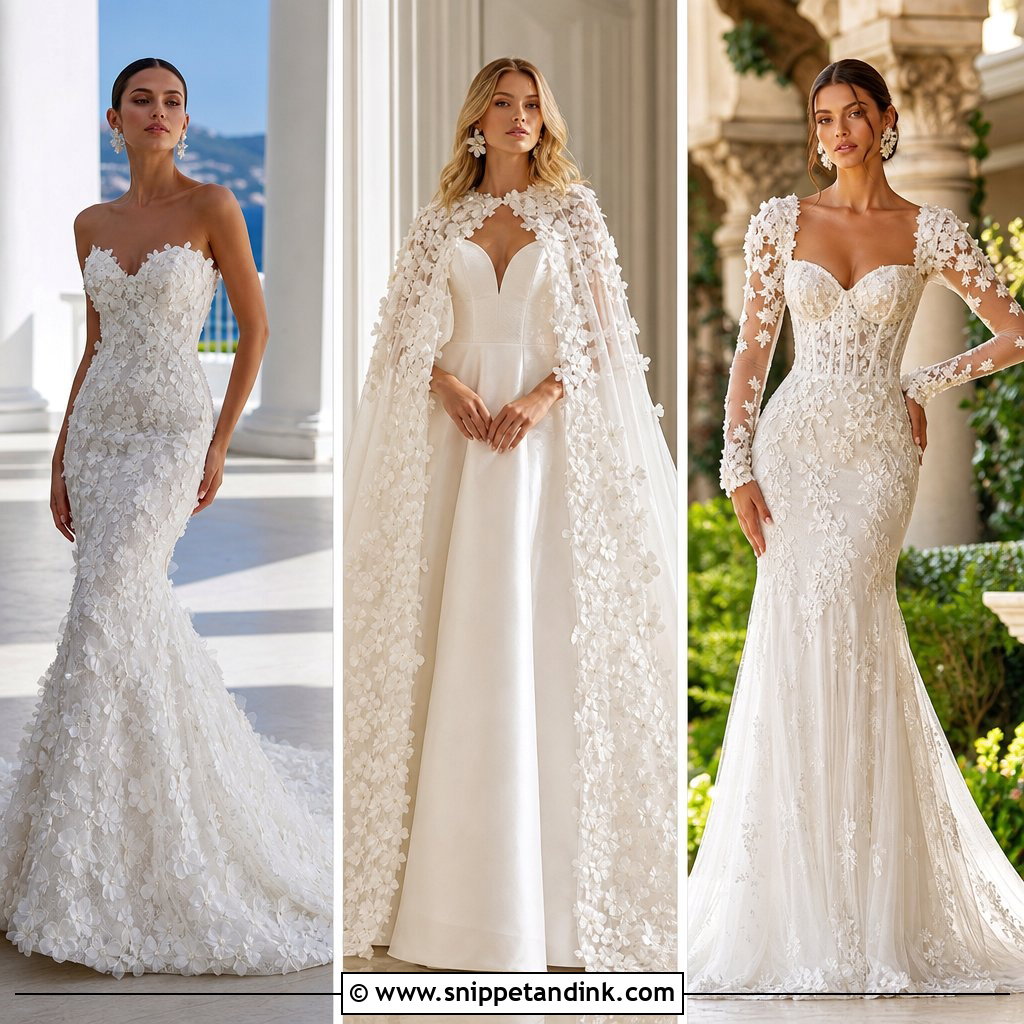
Sculpted petals on a full skirt are the most dramatic floral option, and also the most delicate. Organza and layered appliqué flowers catch light and add shadow. I keep the neckline plain, strapless, sweetheart, or square, so the texture is the only story. Be realistic about wear: 3D petals near the hips flatten where your arms brush them and where you sit, so I ask for the heaviest petals to be placed on the lower skirt and back. A sleek low bun balances the volume.
3. Floral Embroidered Tulle Wedding Dress
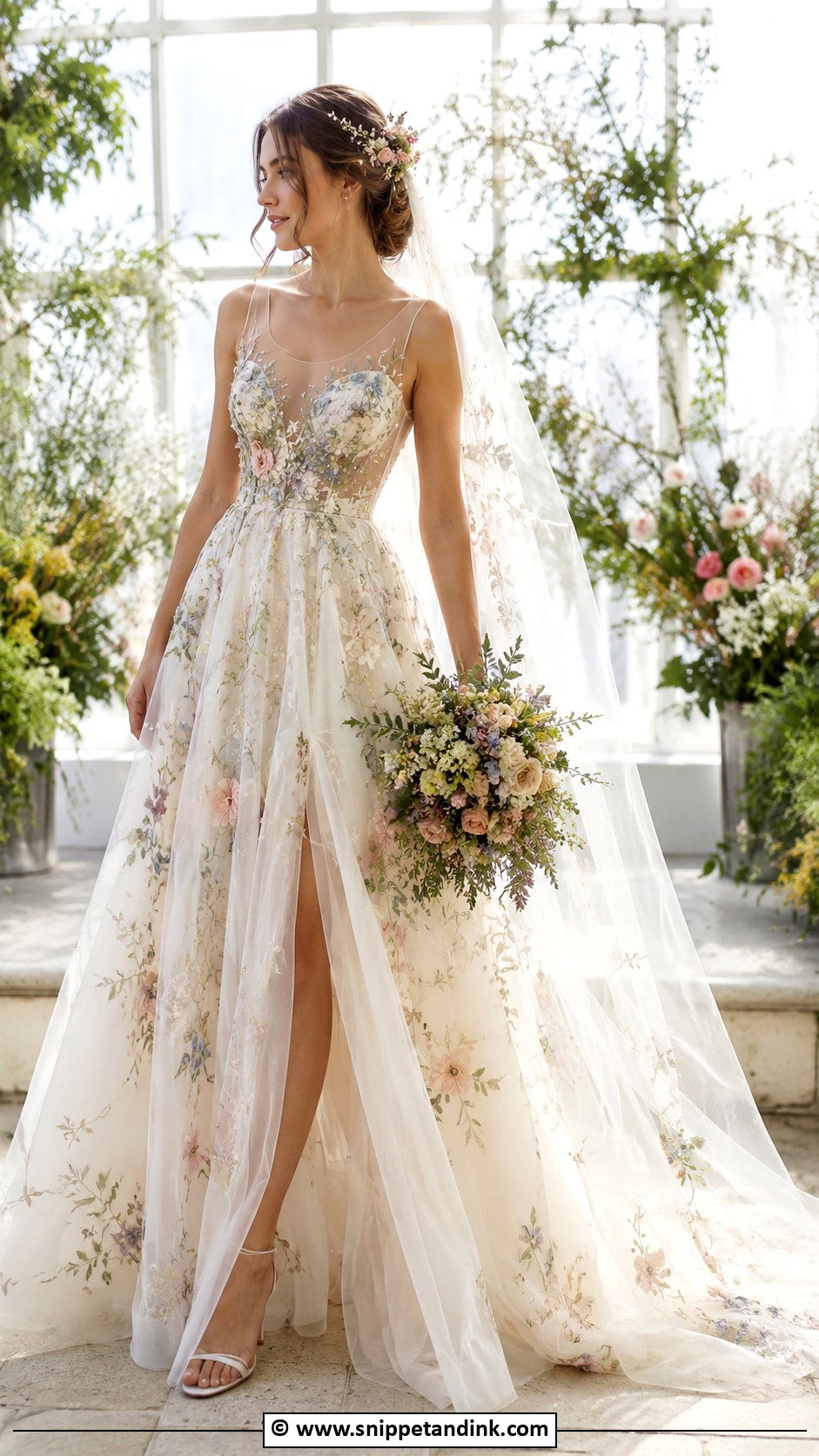
Sheer tulle with embroidered flowers floats, and the thread color decides the mood. White-on-white is quiet; blush, lavender, blue or soft green thread makes a statement. Embroidered tulle is lighter than lace, which suits summer and outdoor heat. It also snags easily on bouquet wire, rough stone and some bracelets, so I’d skip anything with prongs. Barely-there sandals and a few small floral pins in the hair keep the whole thing airy.
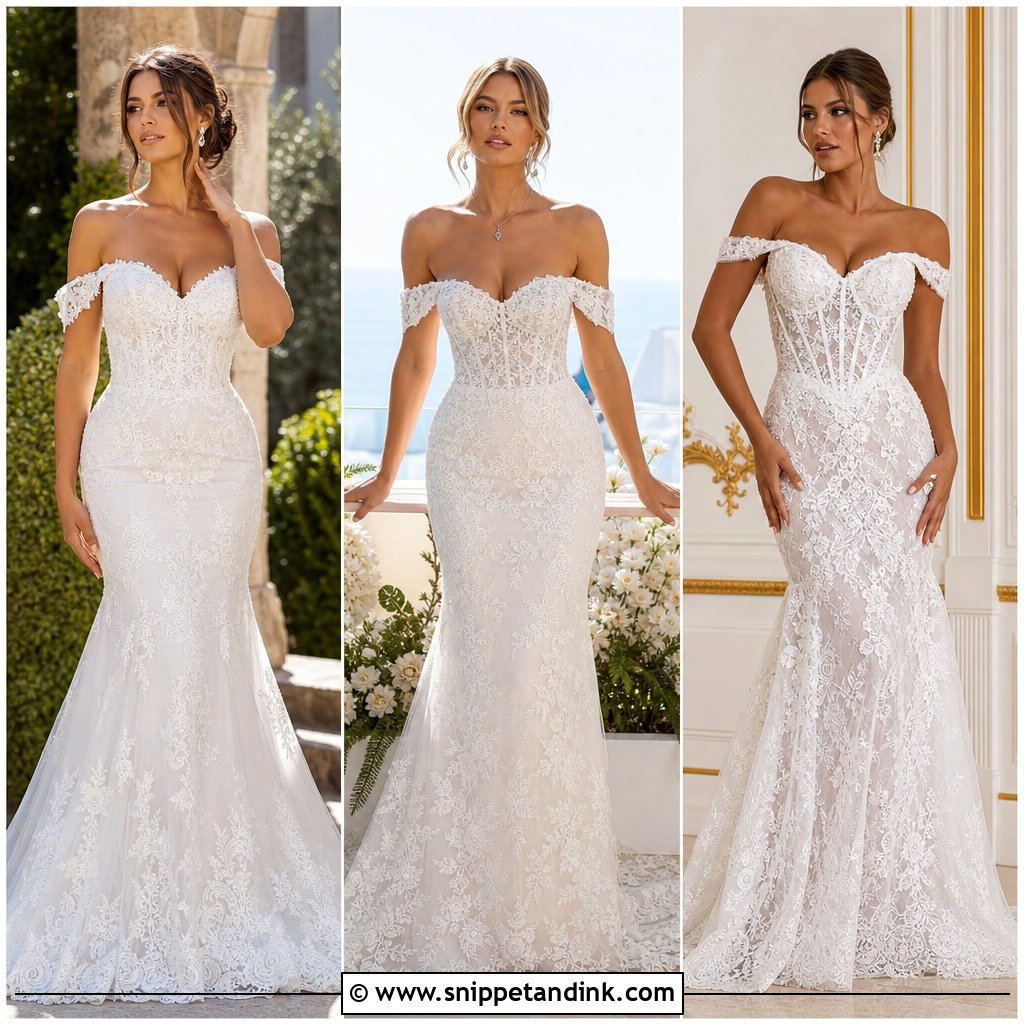
4. Floral Off Shoulder Wedding Dress
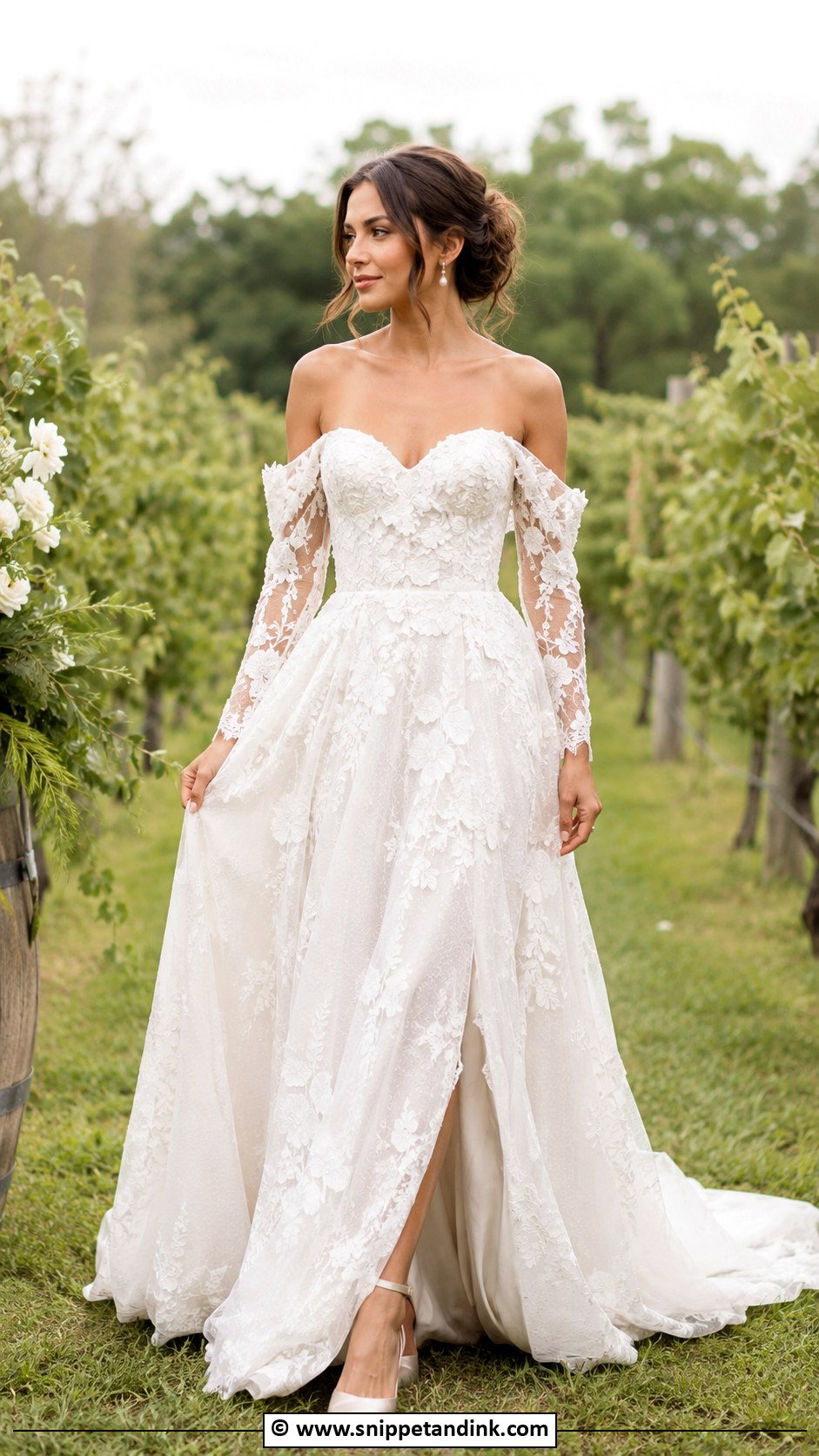
Off-the-shoulder necklines draw the eye up to the collarbones, and floral lace on the sleeves softens the line. Flowers can also run across the bodice or scatter over the skirt. Both A-line and mermaid shapes work. My fitting advice is to test the sleeves by hugging someone: off-the-shoulder lace bands should be snug enough not to slip, and lace stretches slightly over a long day, so fit them a touch firmer than feels natural. A loose updo keeps the shoulders on show.
5. Floral Long Sleeve Wedding Dress
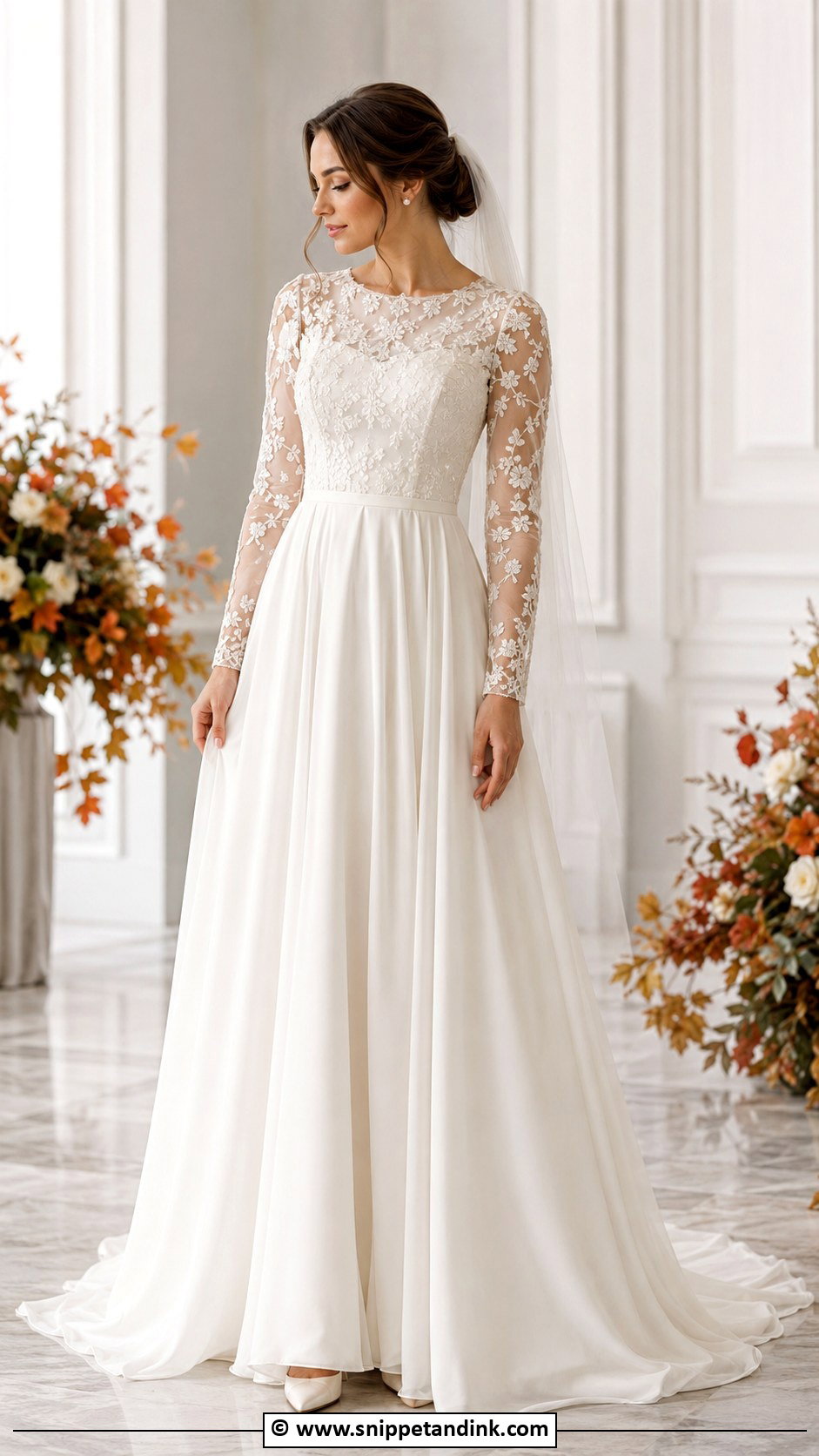
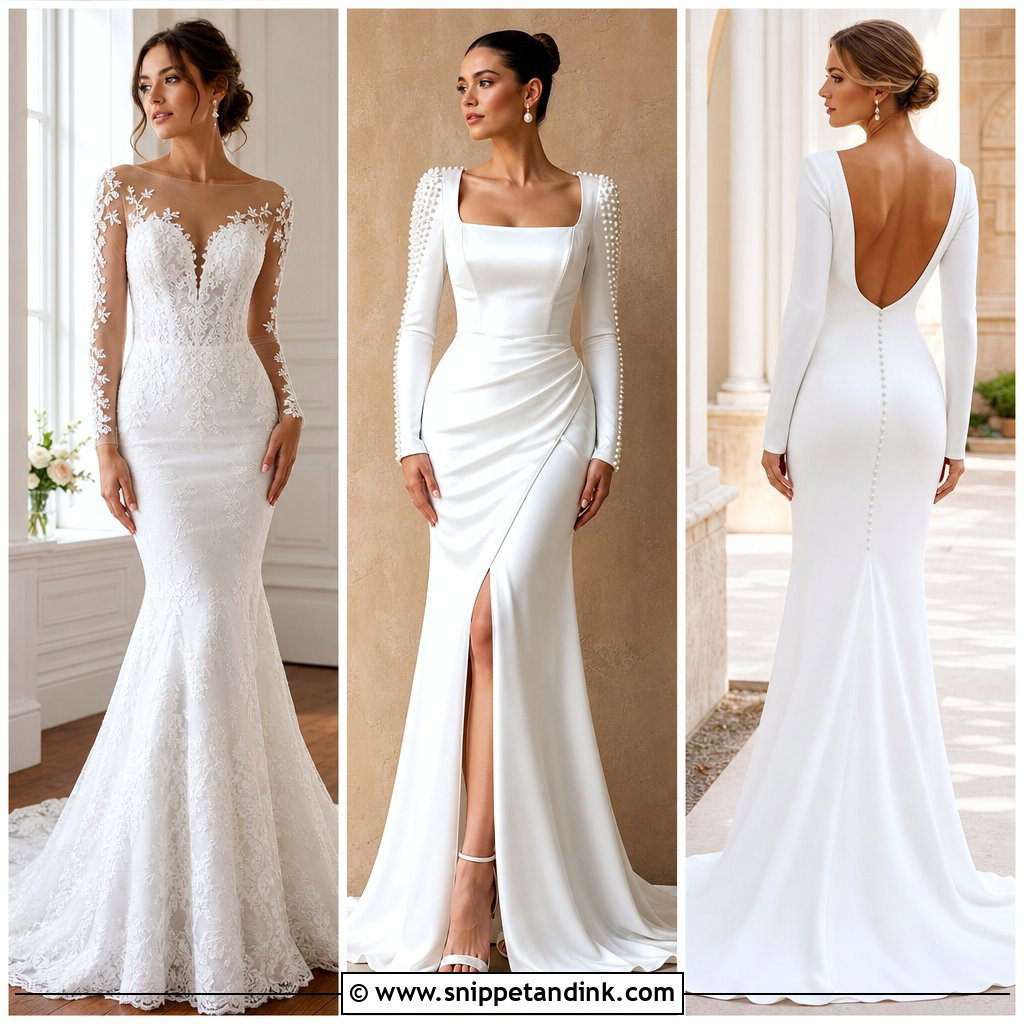
Sheer lace sleeves give coverage without weight, and the flowers read in every angle of photo. In cooler months I’d pick a denser lace or embroidered mesh over a lined bodice. The detail I check is how the lace motifs meet at the sleeve seam. A good dressmaker matches the pattern so a flower doesn’t get cut in half at the shoulder. Closed-toe pumps, pearl studs, a long veil and a low chignon suit fall and winter ceremonies.
6. Floral Strapless Wedding Dress
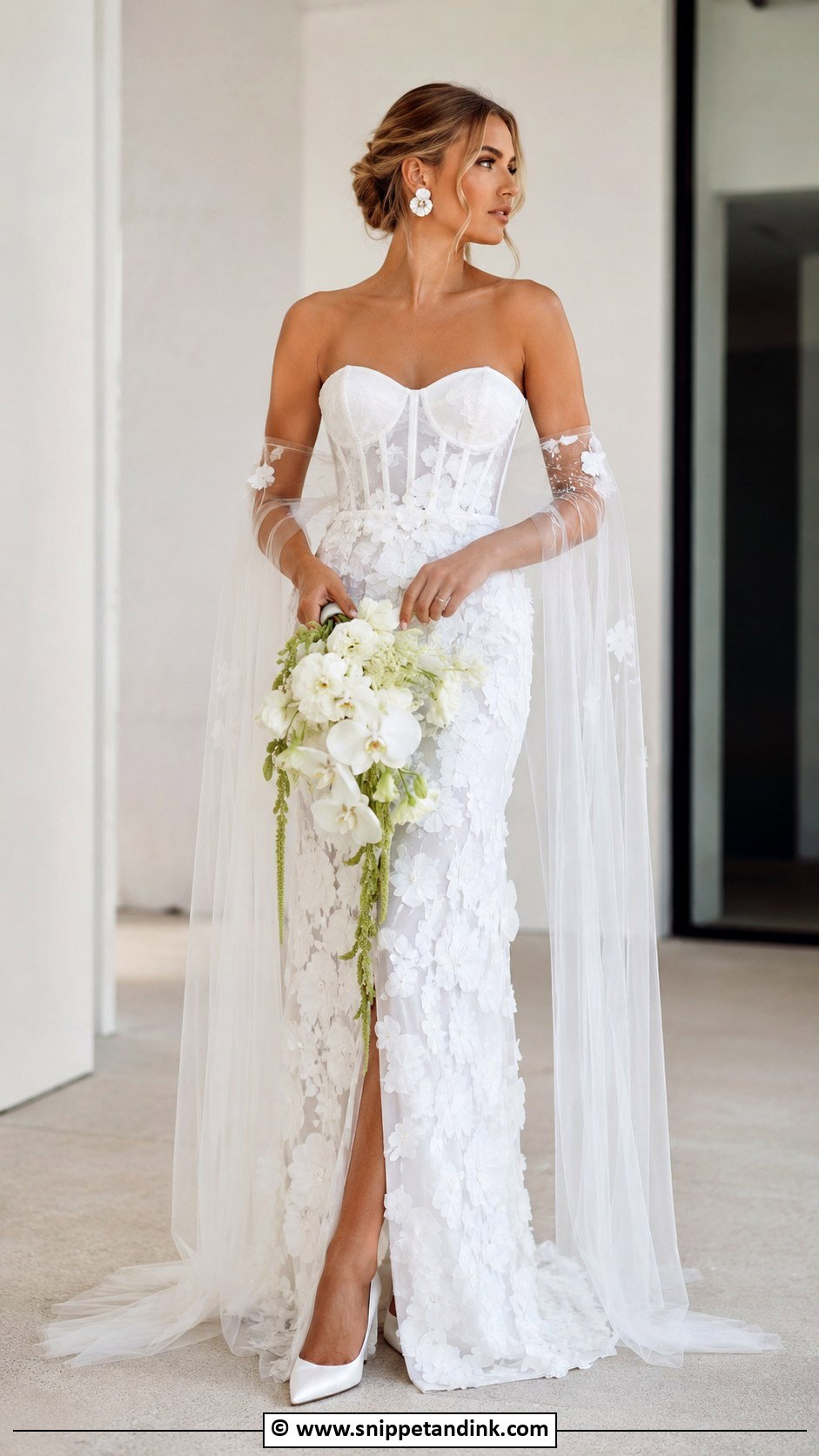
With no straps, the flowers carry the softness and the bodice does all the structural work. Choose a structured bodice with an A-line skirt, or a fitted gown with appliqué concentrated around the waist and hips. Adding a sheer detachable cape gives you coverage for the ceremony that comes off later. Strapless gowns need inner boning and a waist stay to stay up; if you find yourself tugging at the bodice in the fitting room, it’s not fitted tightly enough yet.
7. Floral Mermaid Wedding Dress
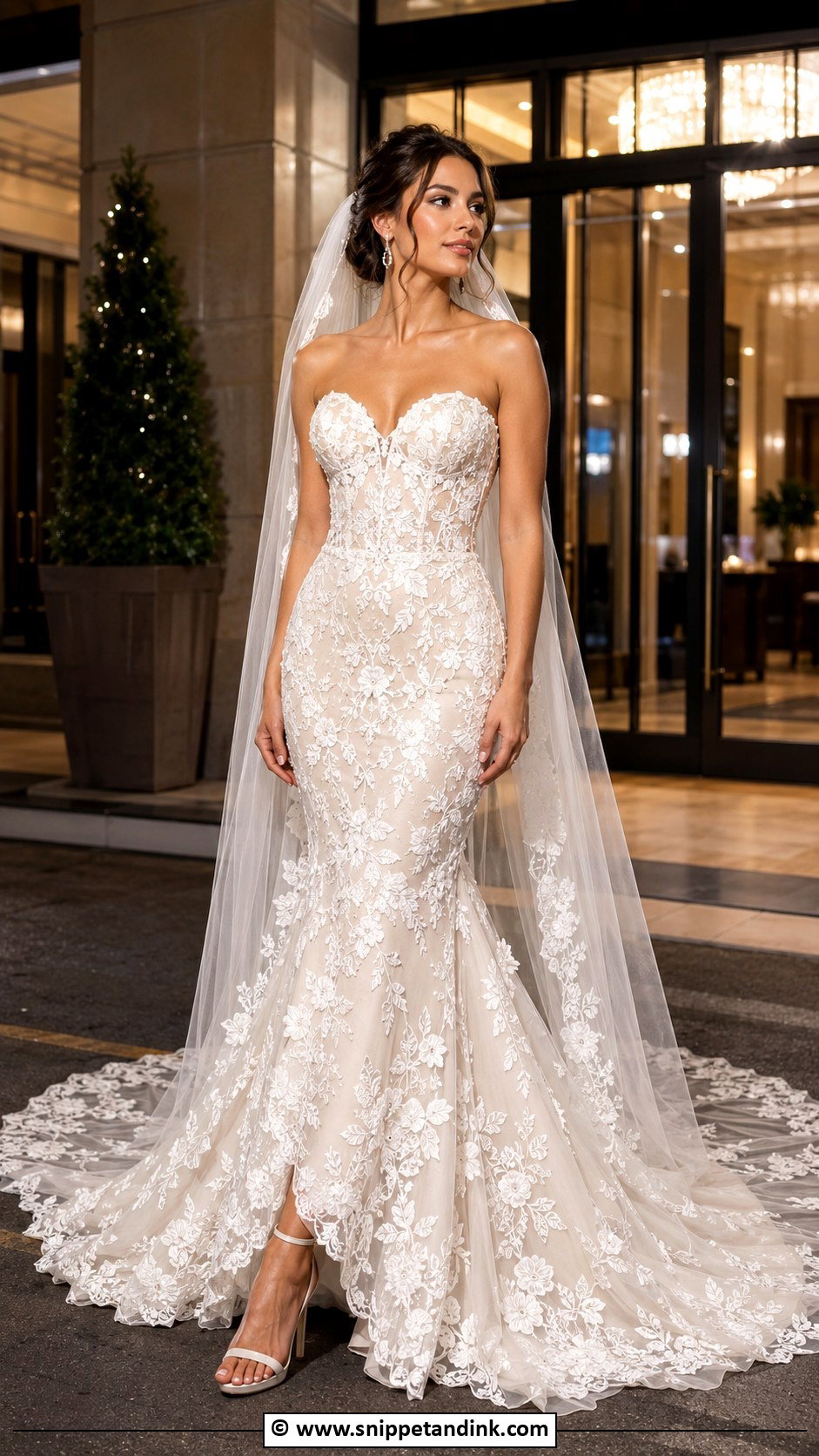
Mermaid gowns show shape, and floral lace trailing from bodice into skirt softens that hard hourglass line. Pick a sweetheart, square or illusion neckline. The fit point is the knee: if the flare starts too high, you’ll walk in tiny steps all day, so I mark the flare with the bride walking, not standing still. A long veil and a smooth bun suit a formal hotel or evening ceremony.
8. Floral Boho Wedding Dress
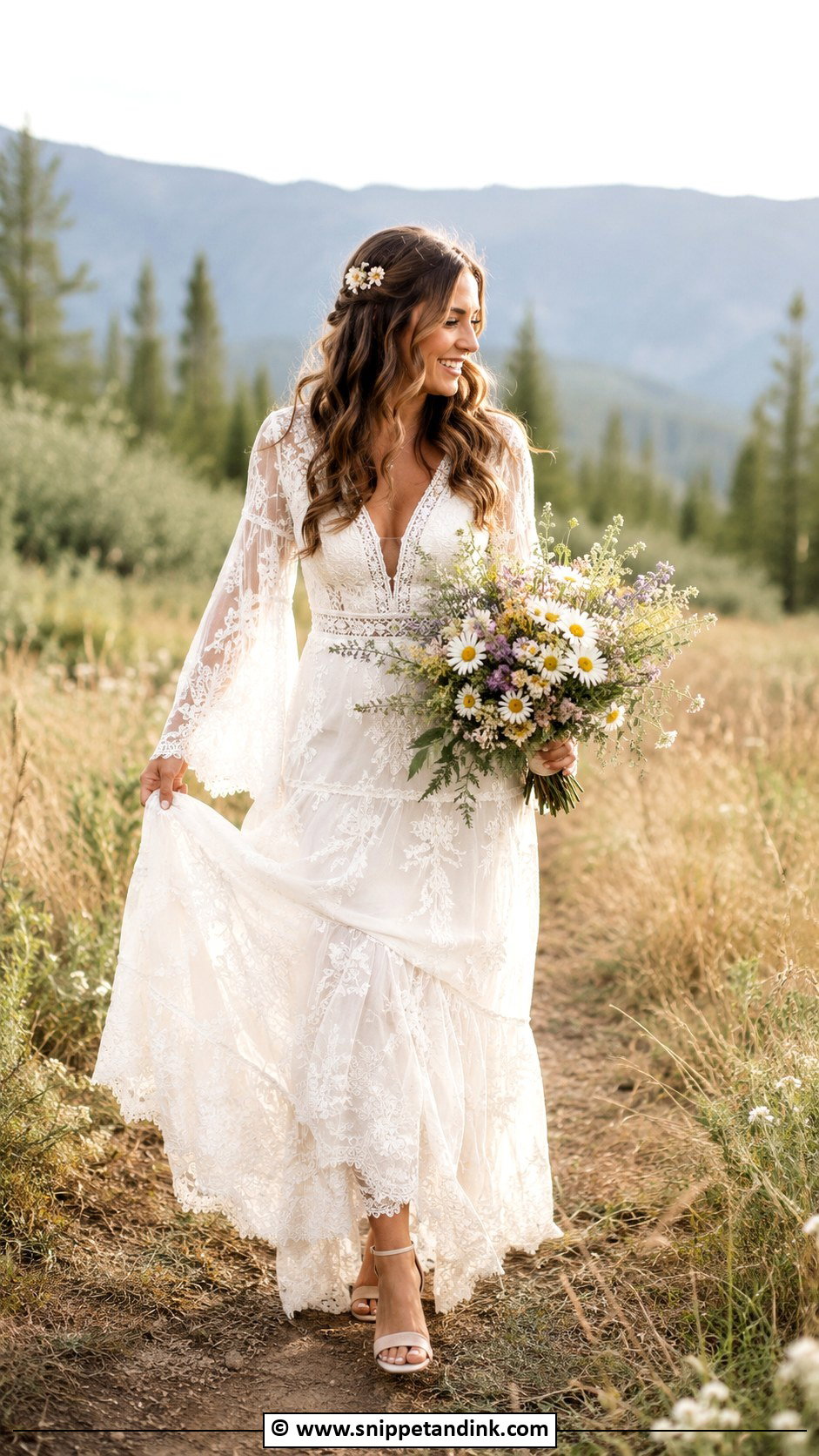
Boho floral dresses are about ease. Soft lace, flowing sleeves and light tulle that moves rather than holds a shape. A floral comb, loose waves and flat sandals or low block heels suit them, and a veil is optional. The thing I’d watch is lining. Many boho gowns are lightly lined to keep them breezy, which can turn see-through in direct sun, so check the dress outdoors before your final fitting. Wildflowers and greenery in the bouquet match the mood.
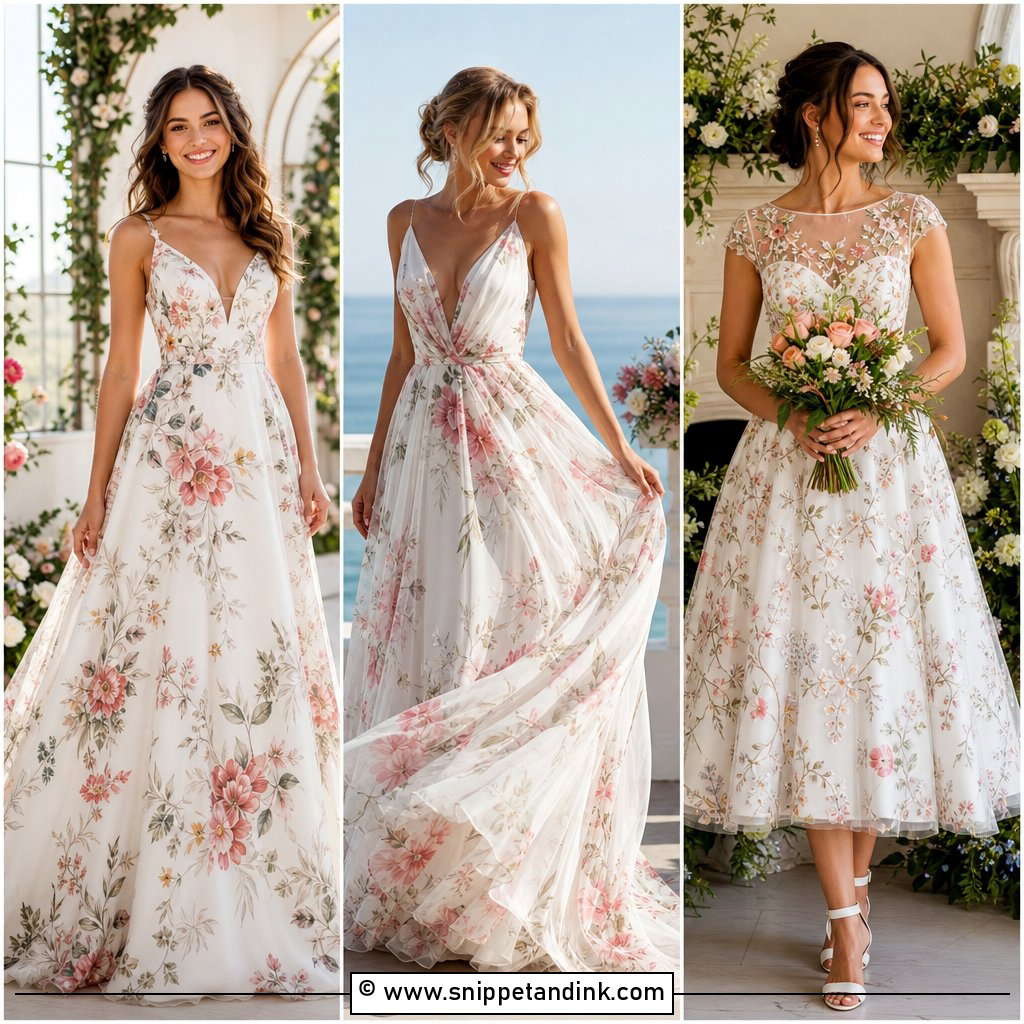
9. Floral Garden Wedding Dress
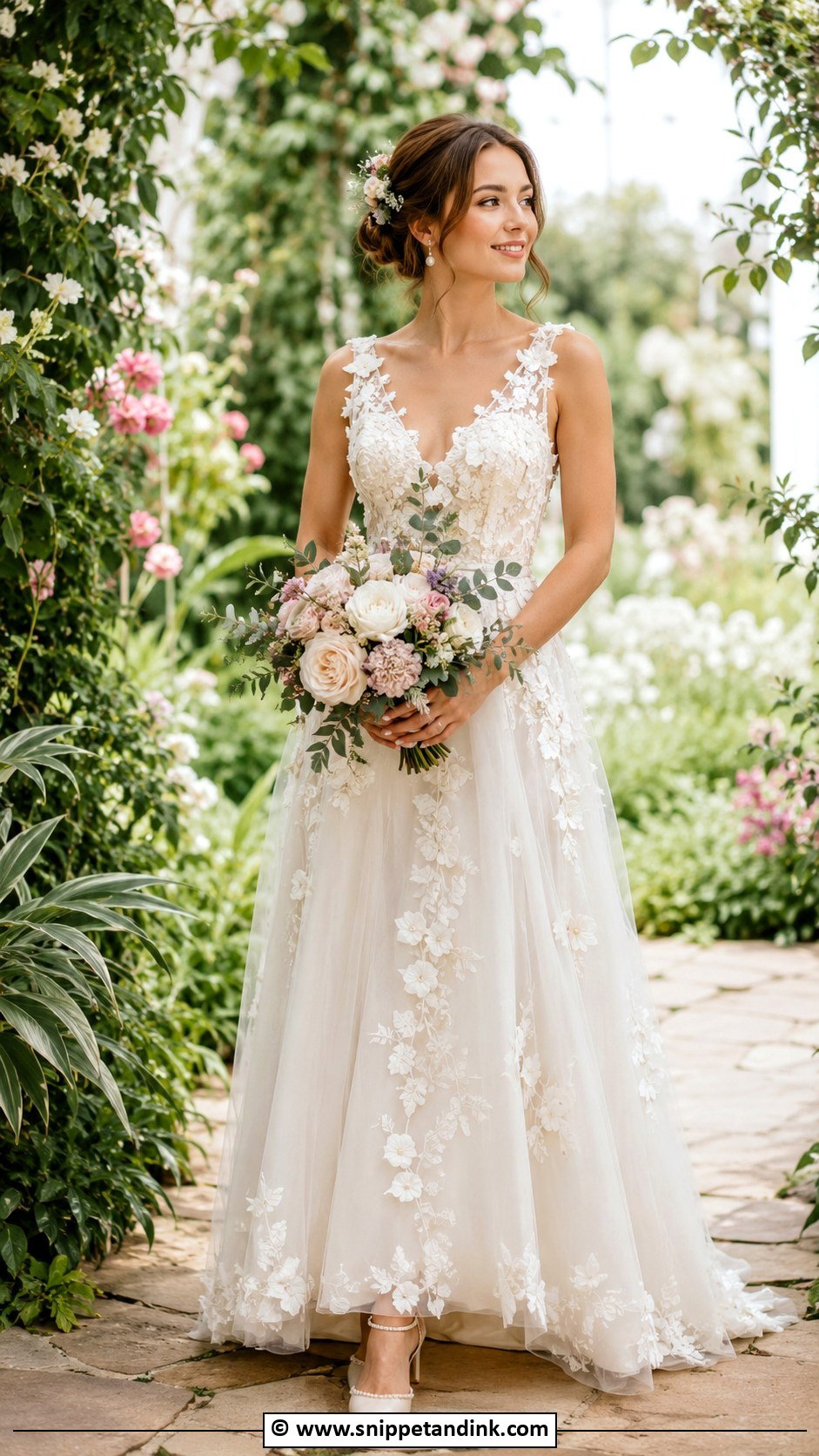
For a garden venue, echo the setting rather than compete with it. Botanical lace, floral embroidery or small 3D petals all suit, on an A-line, sheath or soft ball gown. Fabric that moves matters more outdoors. Lawns are hard on hems, so I’d plan a bustle that lifts the train off the grass for the reception and bring heels that won’t sink. Seasonal flowers in the bouquet tie the outfit to the venue.
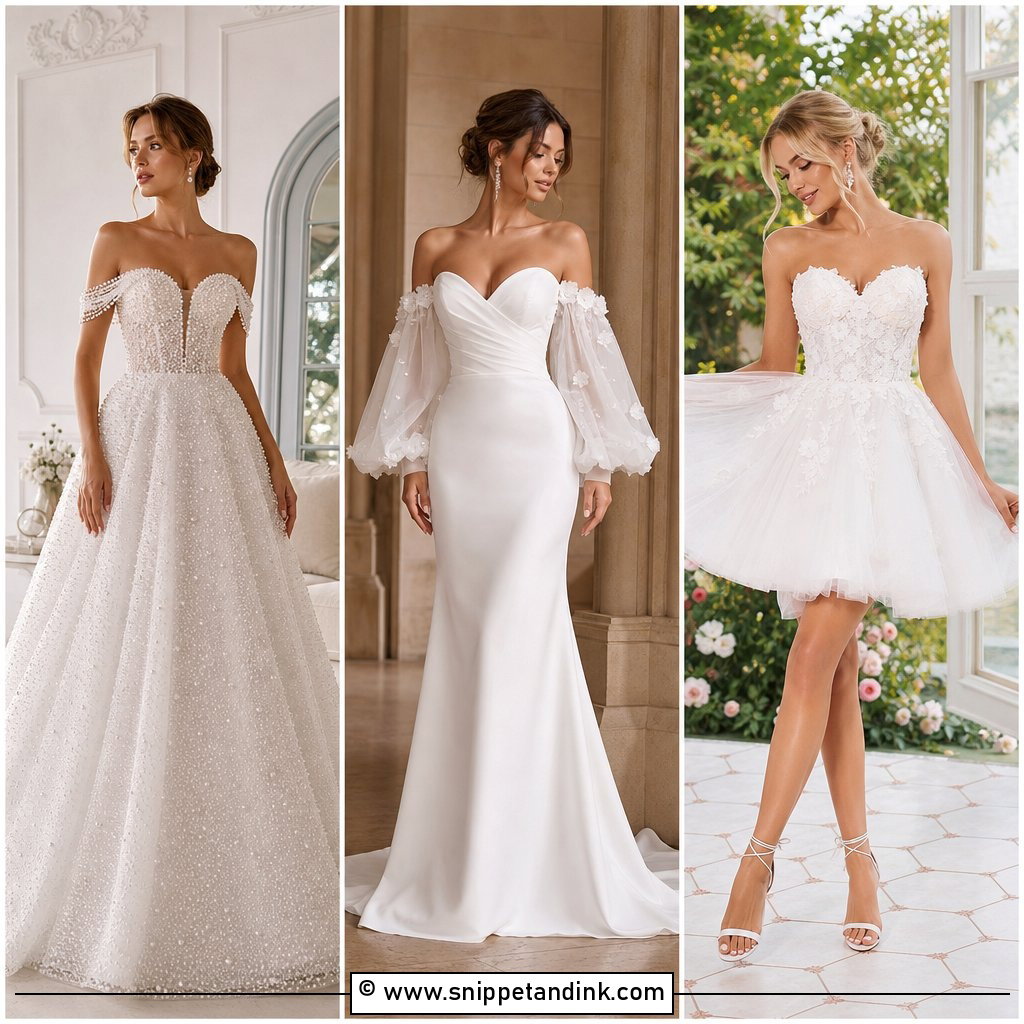
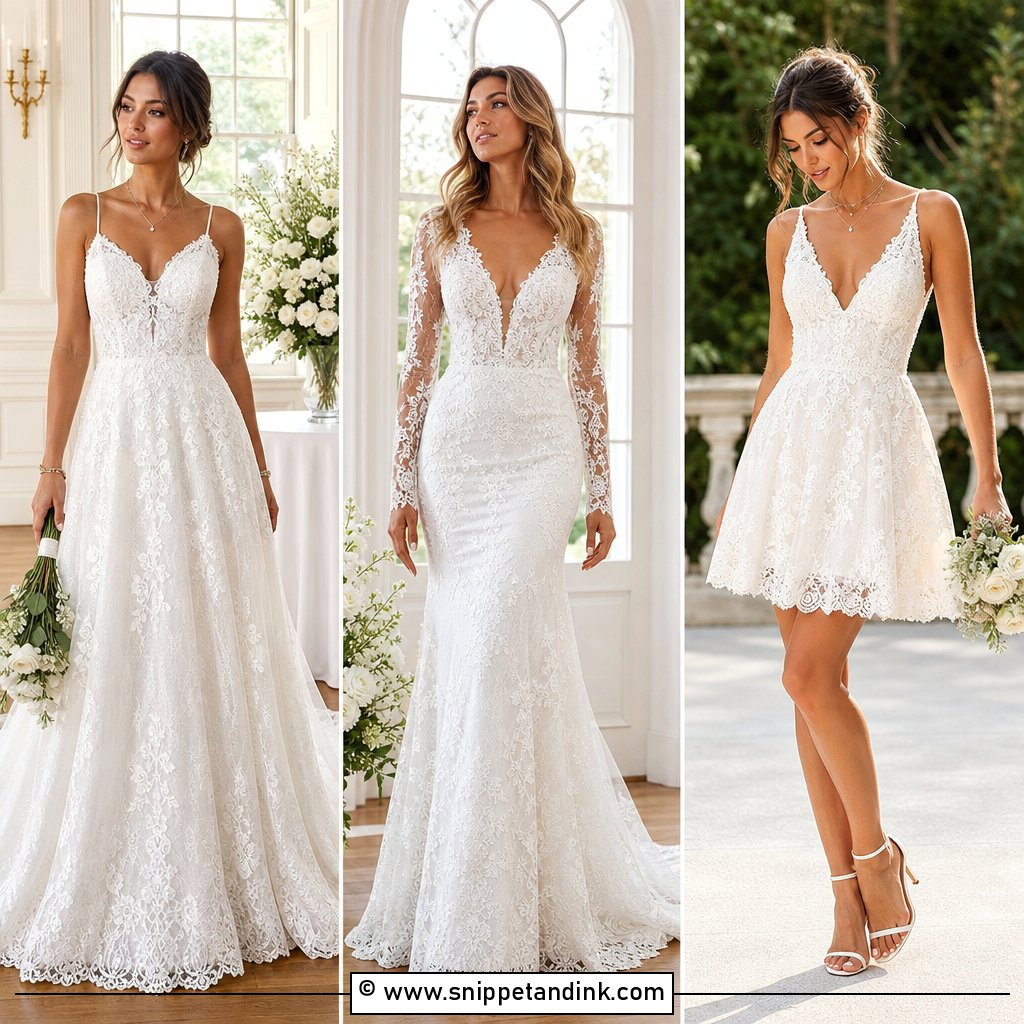
10. Floral Beach Wedding Dress
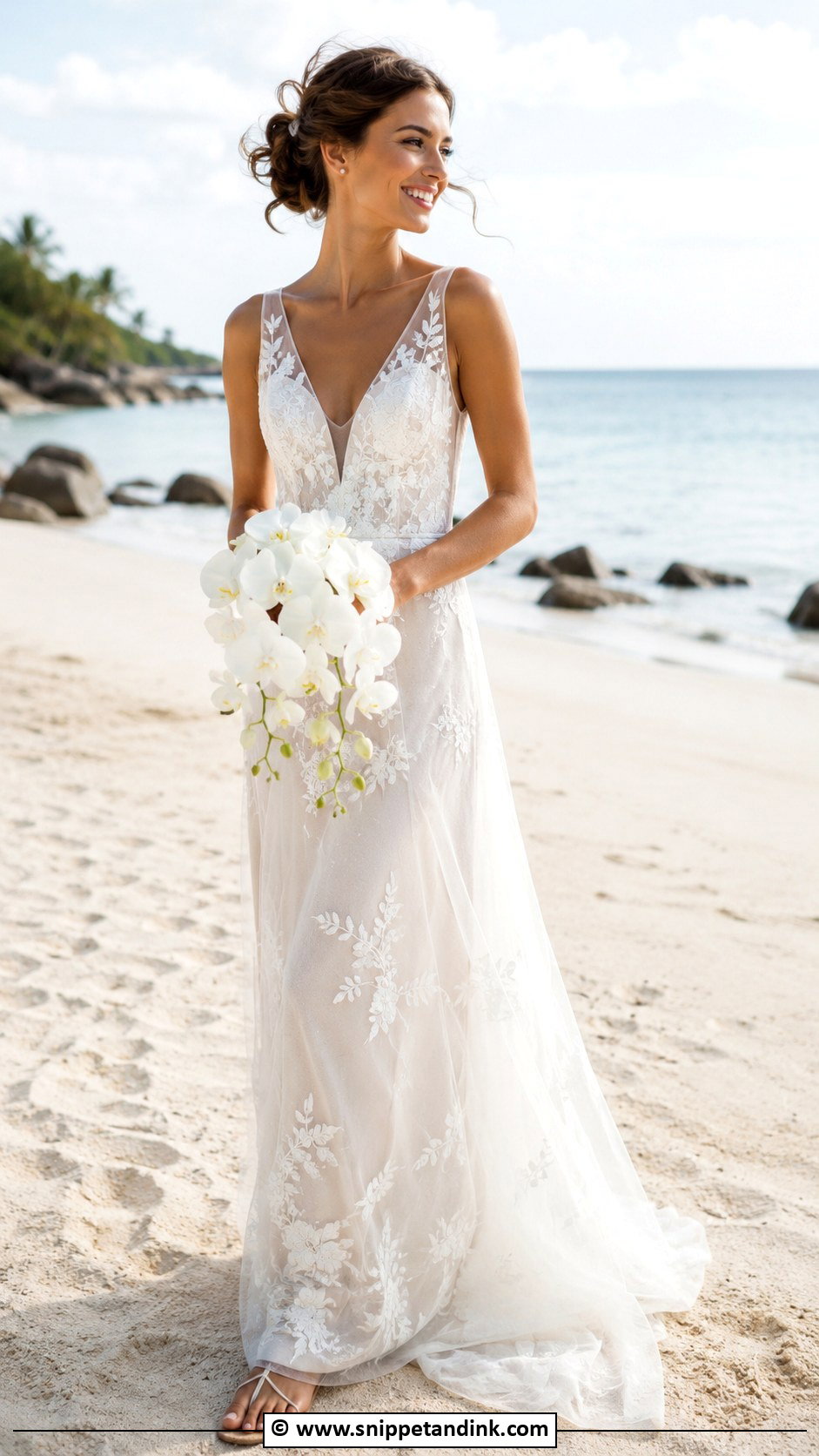
Sand is unkind to heavy gowns, so a beach dress needs chiffon, organza, soft tulle or light lace. Floral embroidery or appliqué adds bridal detail without the weight. A sheath, flowy A-line or relaxed slip shape suits the water. Wind is the other factor. A long veil and a light skirt will blow around, so keep the veil short or weighted at the hem, and expect salt air to wilt any loose curls.
11. Floral Courthouse Wedding Dress
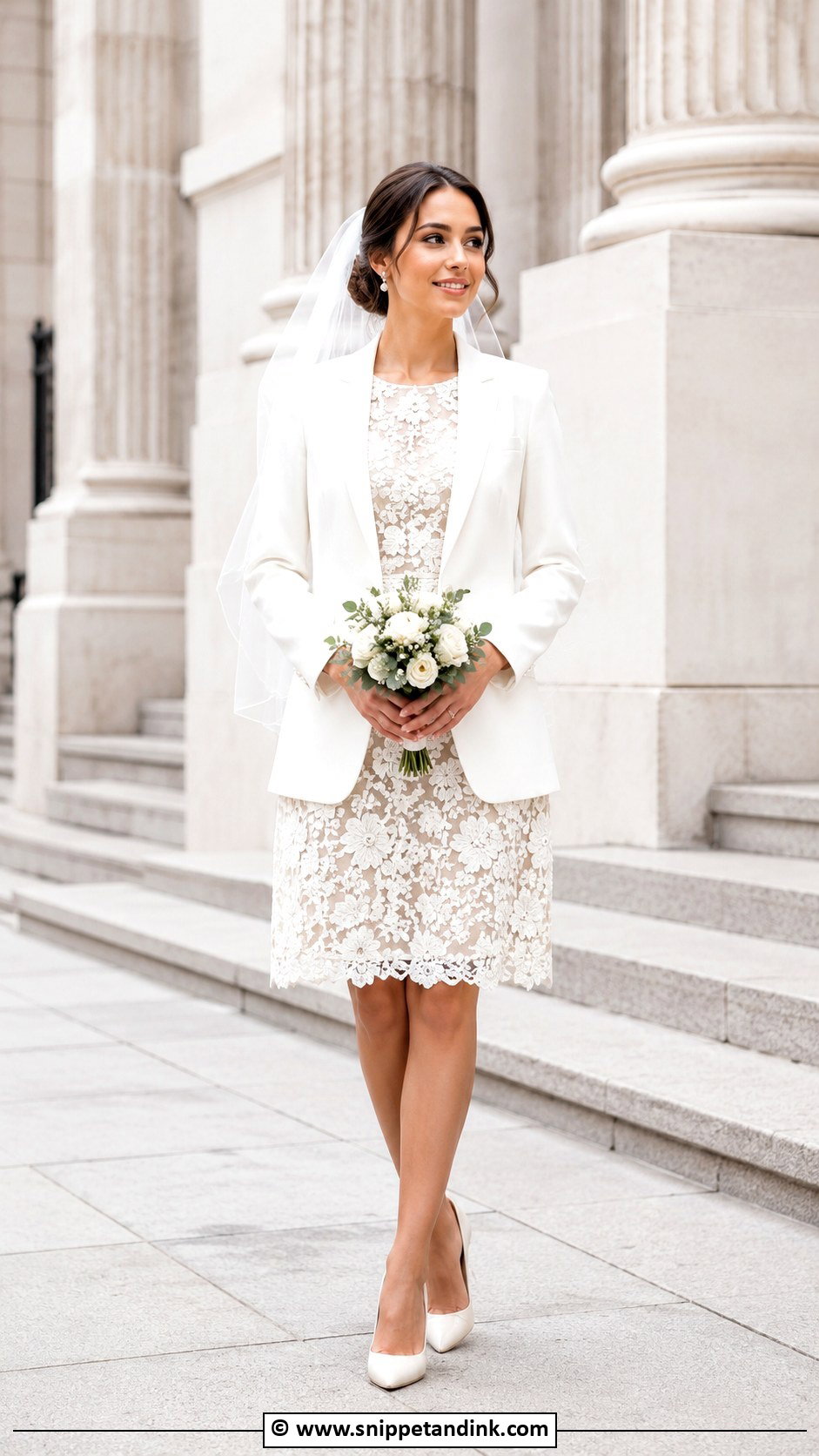
Courthouse dresses get the most wear-time scrutiny. You’re in them all day, walking between steps and lunch. A knee, tea or midi length with floral lace is bridal without being formal. Ivory pumps, a small top-handle bag, pearl earrings and a short veil keep it polished. A tailored white blazer looks sharp on arrival in cooler weather. This is the right weight for intimate civil ceremonies, and a small, structured bouquet keeps everything in scale.
12. Floral Tea Length Wedding Dress
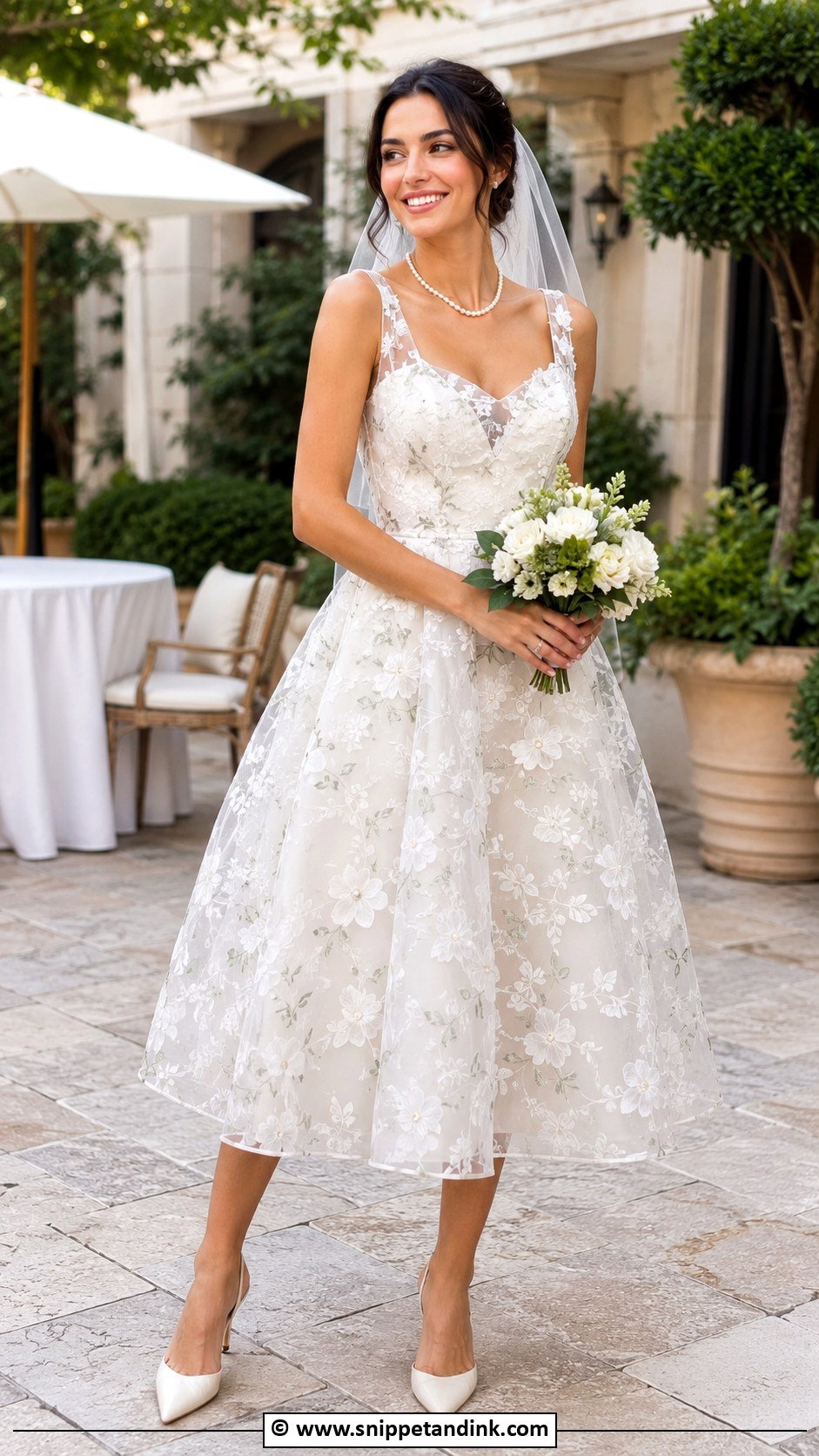
Tea length has a vintage charm and puts your shoes on show, so choose them carefully: slingbacks, satin pumps or embellished block heels. Floral lace, embroidered organza or appliqué along the skirt adds personality. A short veil and a pearl necklace finish it. Bring your actual shoes to the hem fitting. A tea-length hem should hit at the same point on the calf all the way round, and a different heel height changes that.
13. Floral Mini Wedding Dress
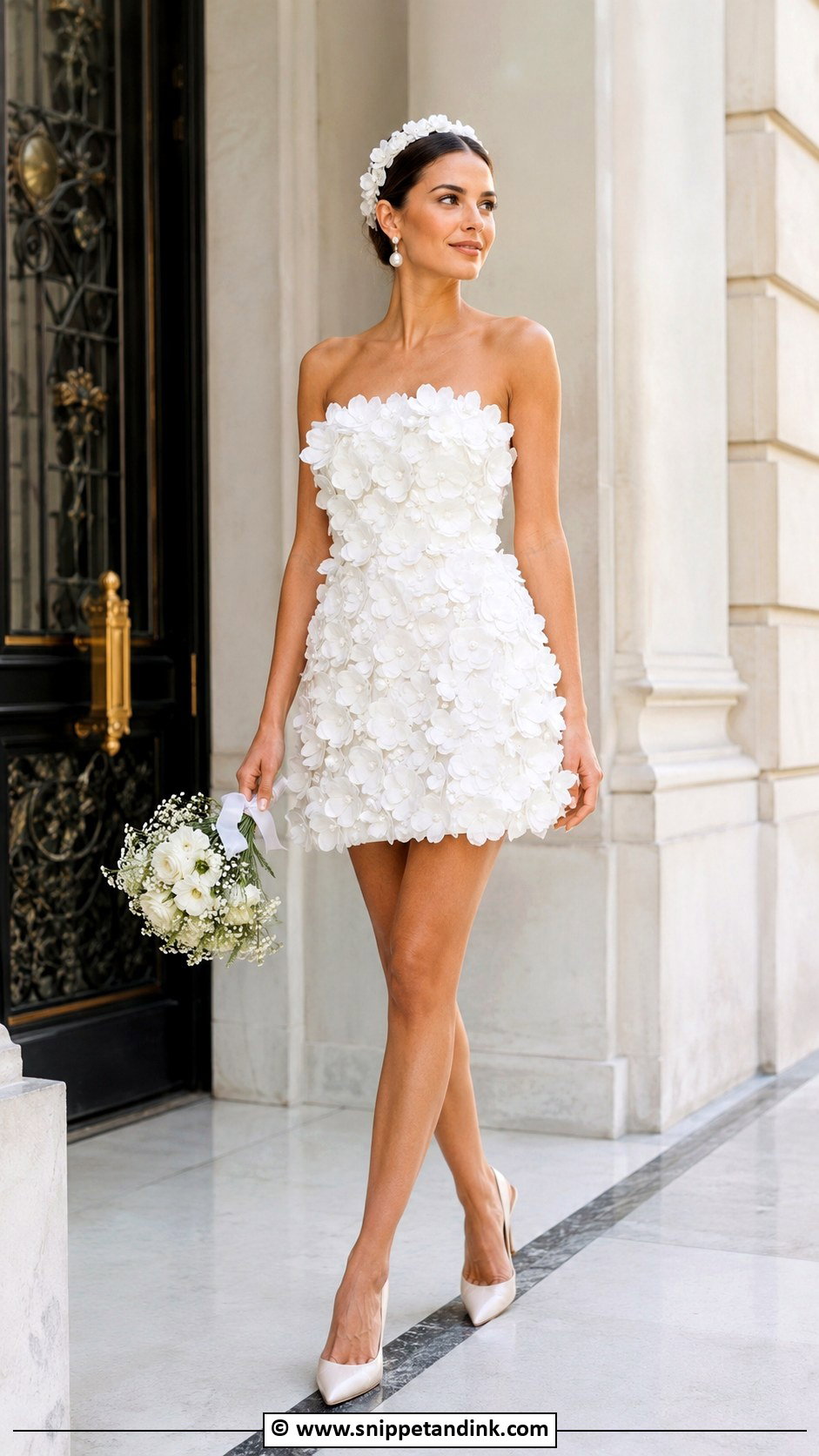
Short floral dresses feel playful, which suits a courthouse ceremony, after-party or elopement. 3D petals, floral lace or embroidered fabric on a structured shape keeps it bridal. In cooler weather, sheer tights work. Skip big bouquets; a small posy matches the scale of the dress. Sit down in it before buying. Some mini skirts with stiff petals ride up and crush the flowers when you’re seated.
14. Floral Plus Size Wedding Dress
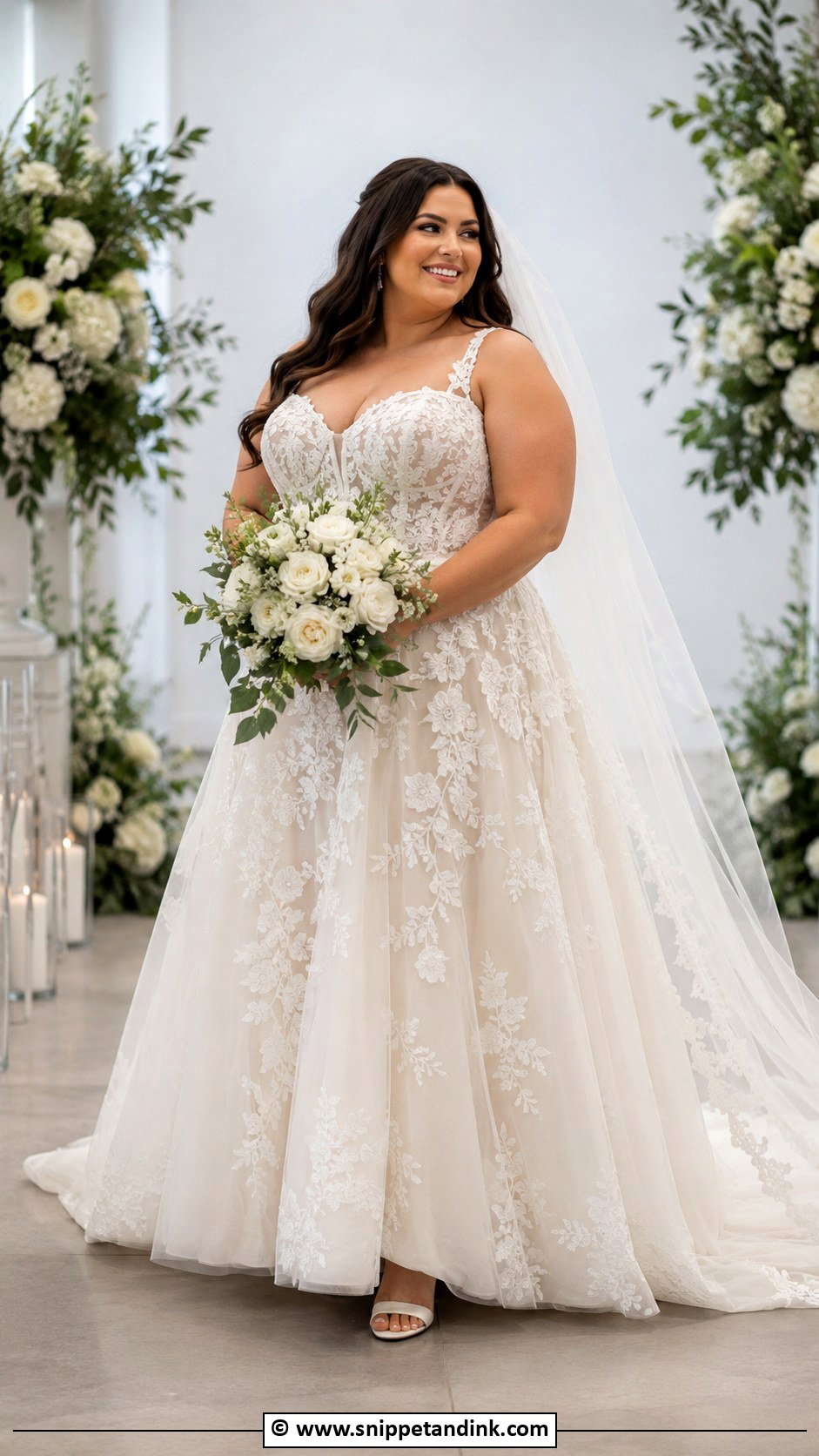
Construction matters most in a floral plus size wedding dress, because good support is what lets the flowers sit where they should. A-lines, ball gowns, fit-and-flare and corset bodices all work. Look for strong inner boning, built-in cups and straps or sleeves you’re comfortable in. Place the lace flowers where you want attention, such as the neckline or waist. The right gown lets you breathe, sit and dance without adjusting it.

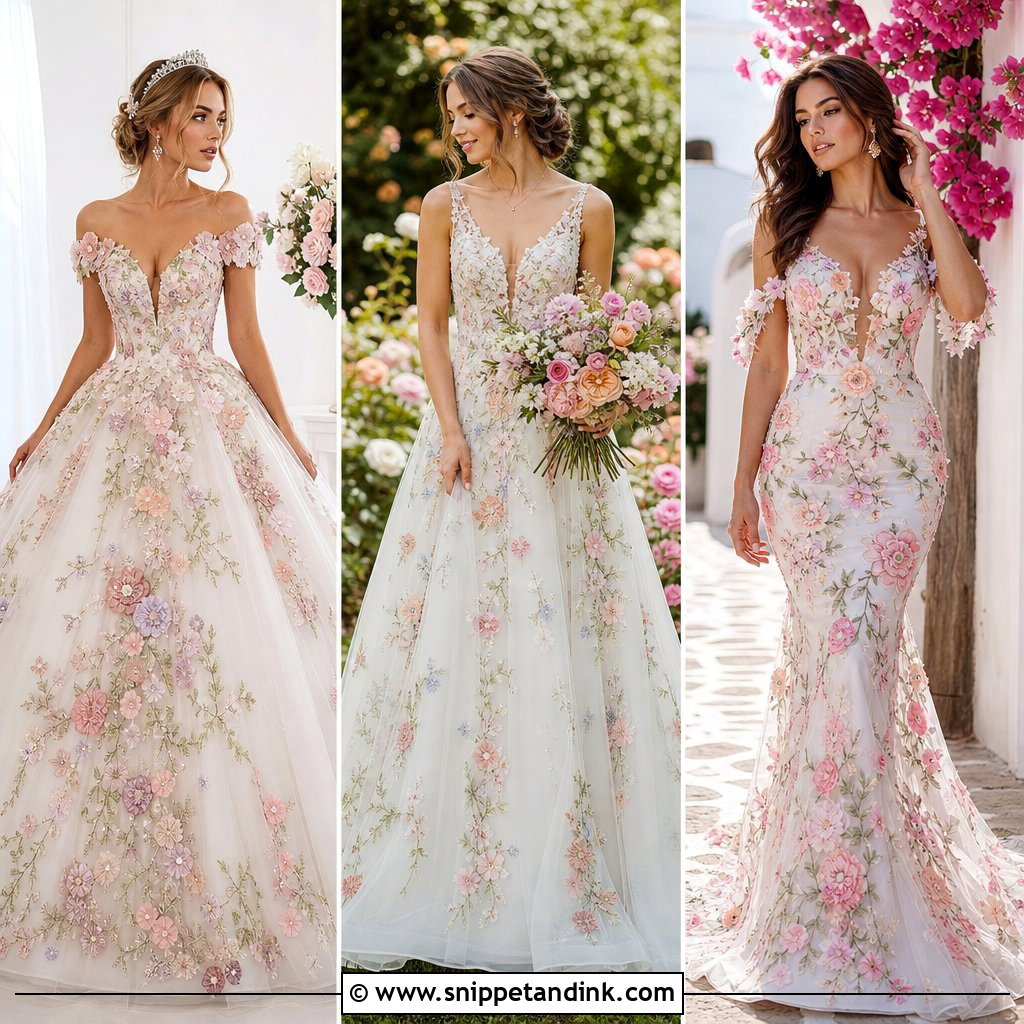
15. Floral Blush Wedding Dress
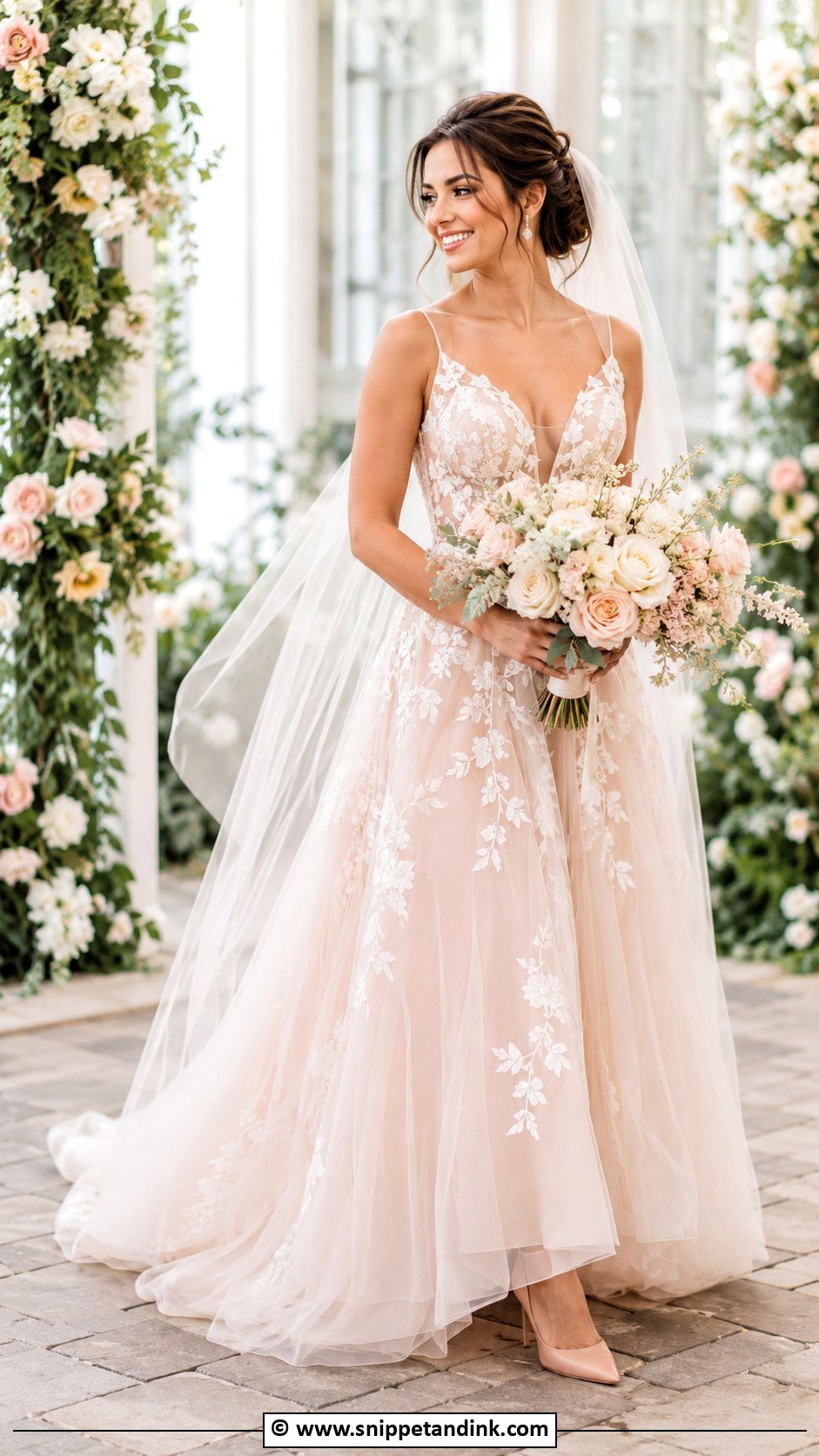
Pale pink warms most skin tones, which is why blush floral gowns photograph so kindly. Champagne, ivory, rose gold and pearl accessories suit the color. The fussy part is the veil. A stark white veil against blush looks grey, so match the veil’s undertone to the dress or choose a slightly paler blush. Nude or blush heels and a bouquet of cream and pale pink complete it.
16. Floral Blue Wedding Dress
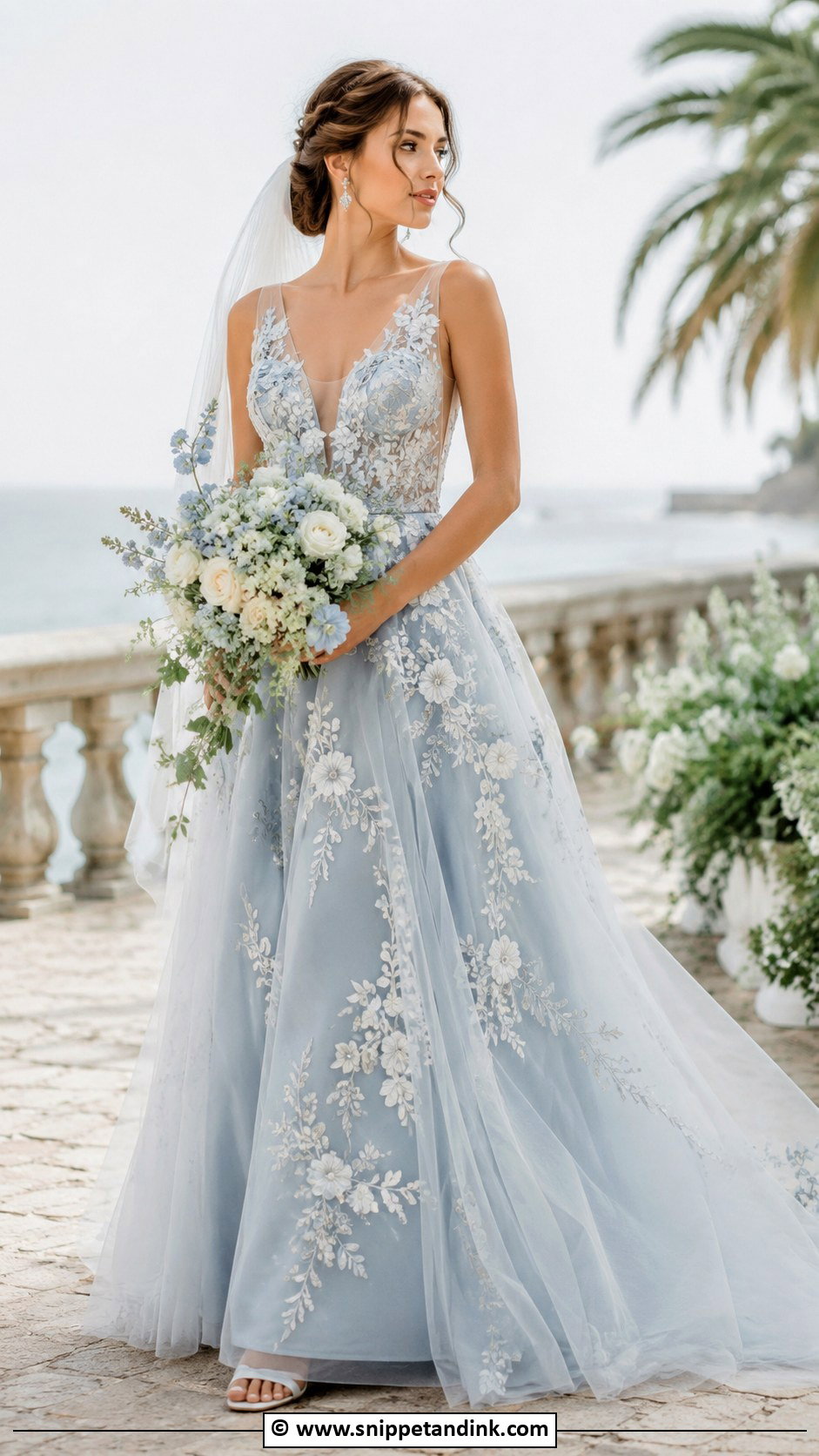
Blue floral dresses range from powder blue all over to blue embroidery on ivory. The latter reads delicate rather than bold. Blue suits garden, coastal and winter weddings. Silver jewelry flatters the cool tone better than yellow gold. I’d see a blue gown under the venue’s actual lighting if you can, because warm indoor bulbs can shift soft blue toward grey.
17. Floral Colorful Wedding Dress
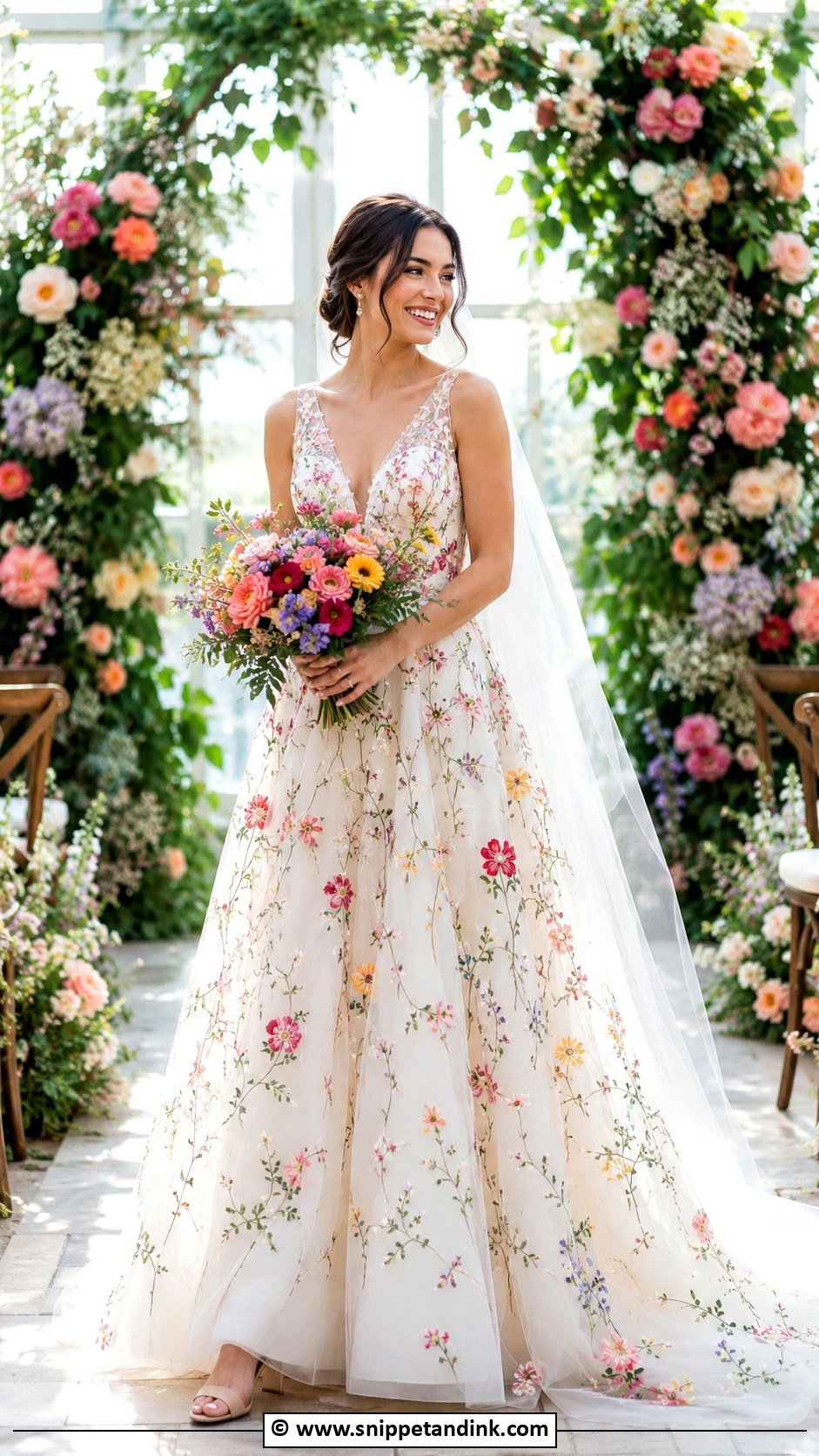
Painted florals, multicolor embroidery or bright appliqué on an ivory or pastel base make a joyful dress. With bold flowers, keep the silhouette simple: an A-line, sheath or strapless gown. Neutral heels and a plain veil let the color lead. Tell your florist about the dress early. The bouquet should complement it, not copy it, and a bouquet that matches exactly tends to disappear against the skirt in photos.
18. Floral Sheath Wedding Dress
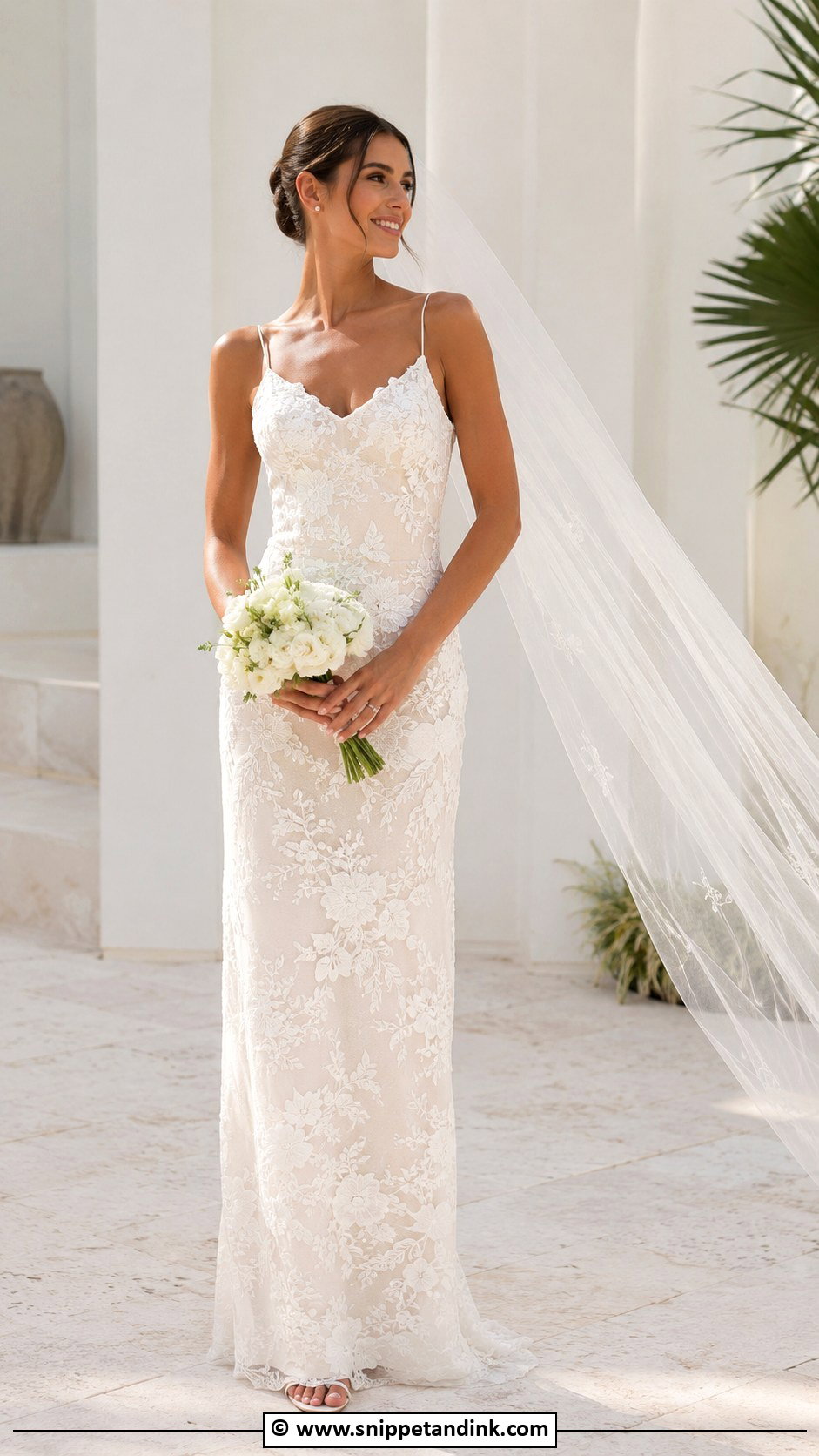
The straight line of a sheath follows the body without volume, so it suits intimate, destination and modern weddings. Floral lace or embroidery adds depth to the clean shape. A high neck feels refined; thin straps feel softer. Sheaths in lace show every line underneath, so I recommend smooth, no-show nude underwear and a slip at the fittings. Minimal sandals and a long veil add length.
19. Floral Corset Wedding Dress
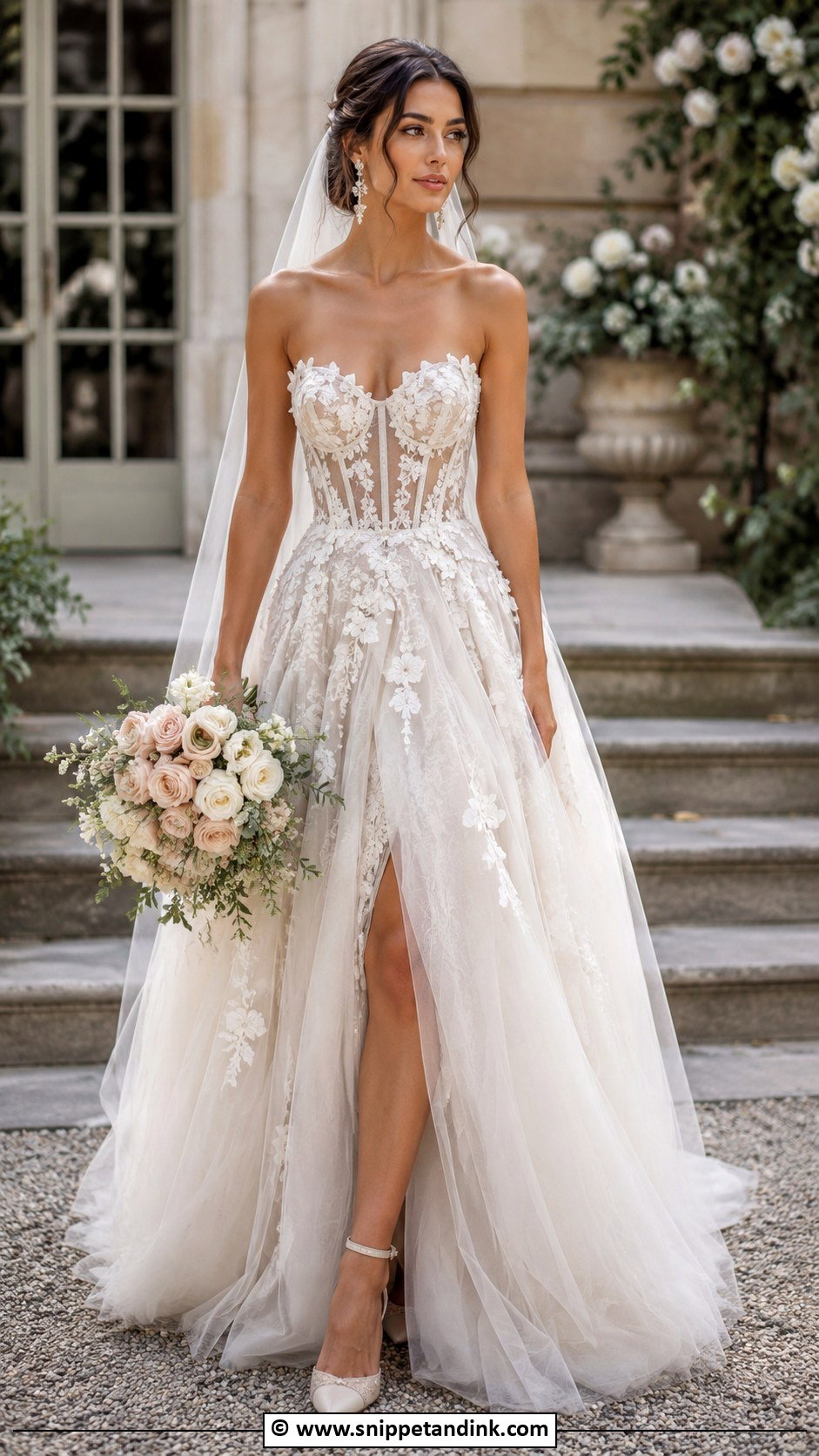
A corset shapes the waist and supports the bust, and floral lace or appliqué keeps the effect romantic. Visible boning with a tulle or organza skirt looks modern; a lined corset with delicate flowers looks classic. I always fit corsets after the bride has eaten a normal meal, because a corset laced on an empty stomach feels very different by dinner. Drop earrings and a simple veil suit it.
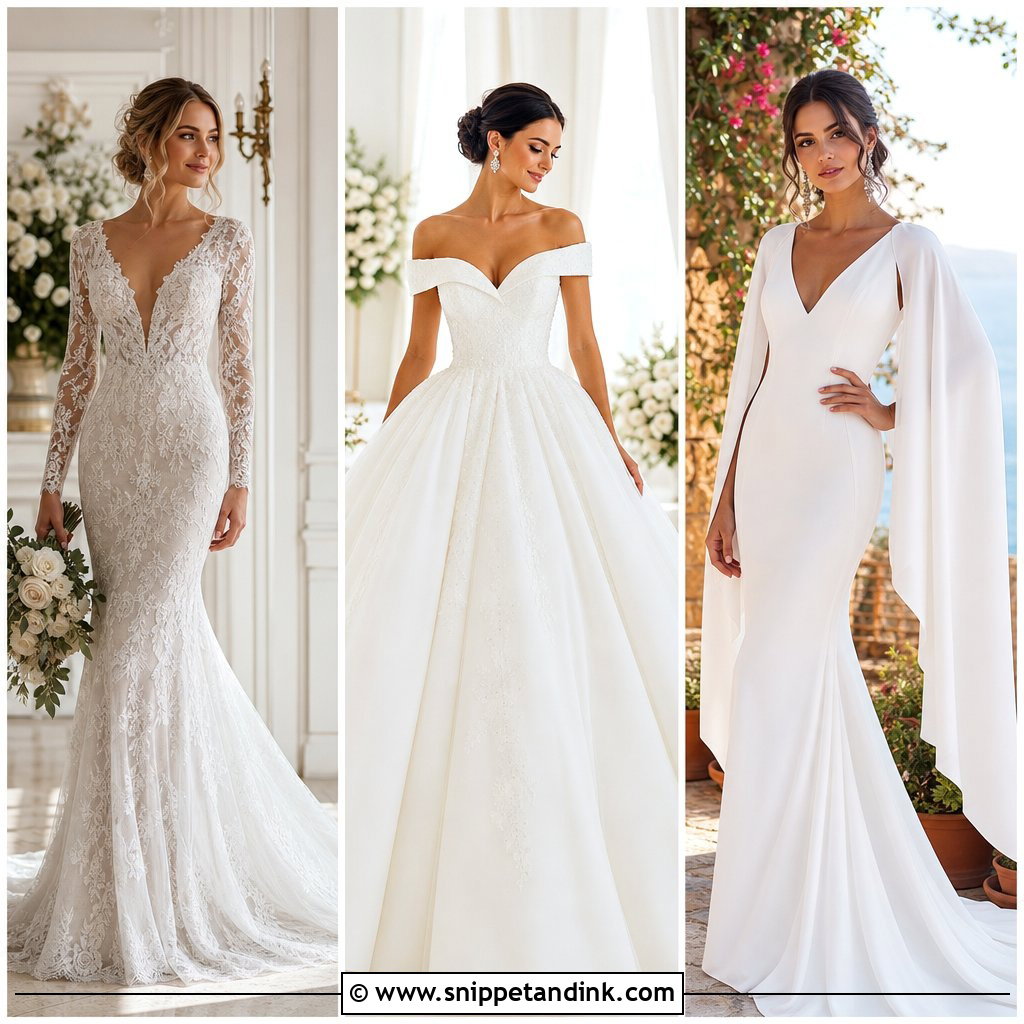

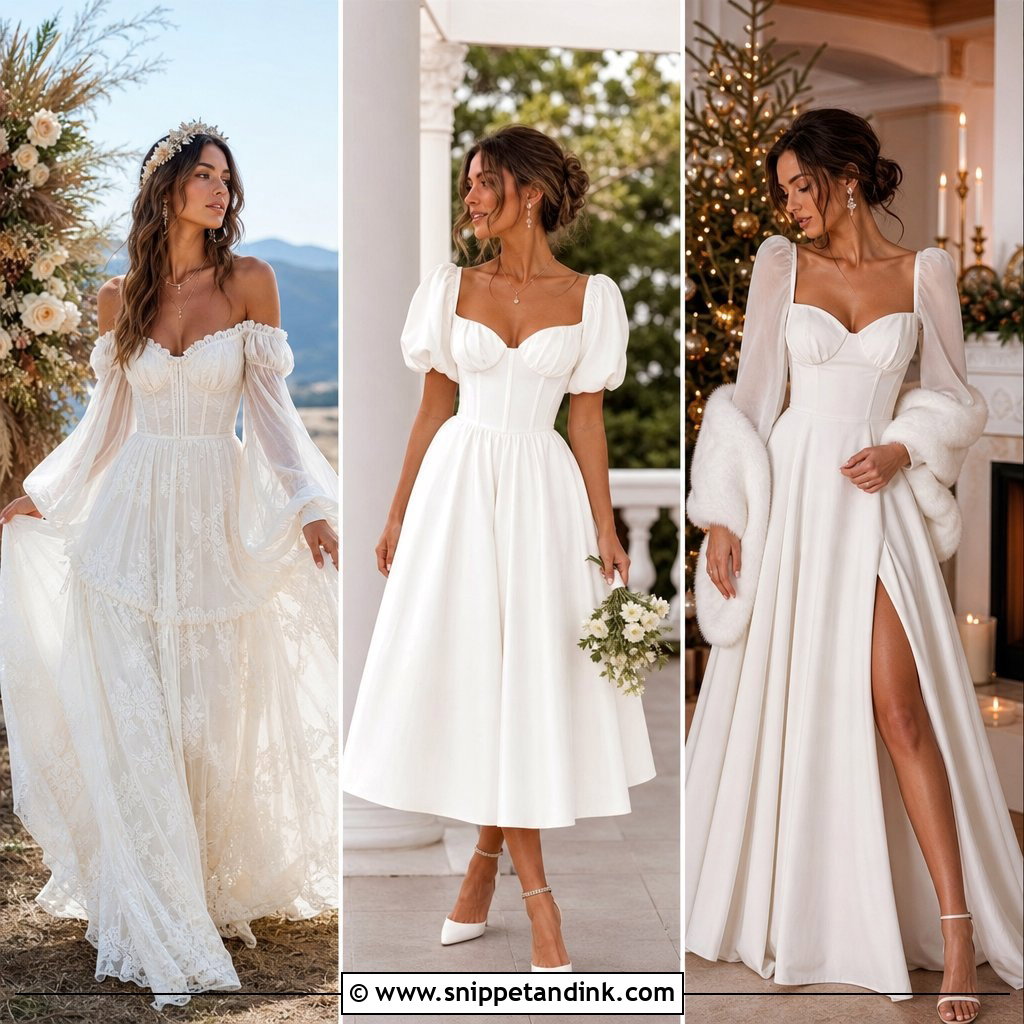
20. Floral Square Neck Wedding Dress
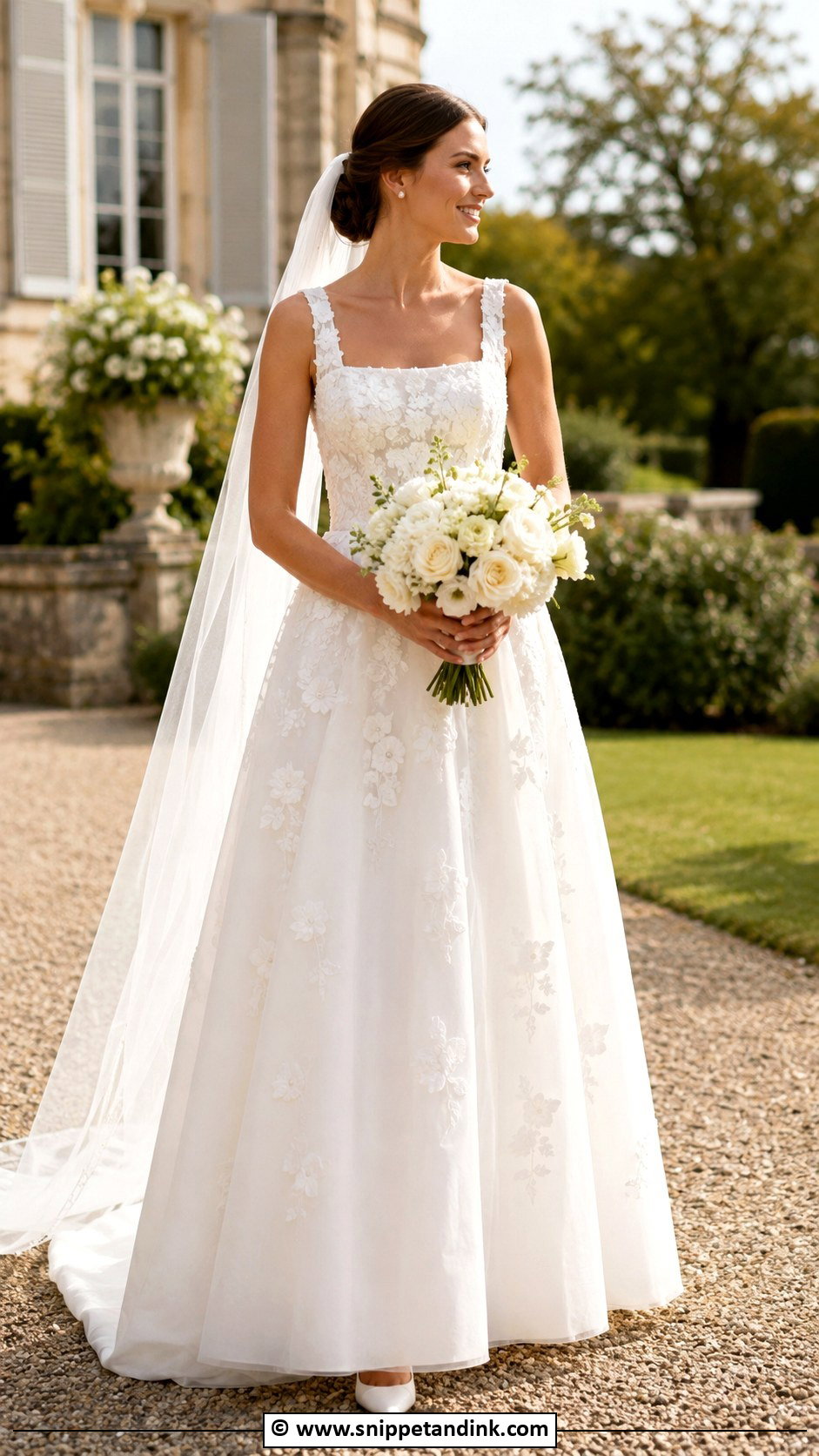
Square necks frame the collarbones and suit straps, cap sleeves or long sleeves. Floral lace over the bodice softens the straight neckline. A sleek bun, pearl studs and a narrow veil keep it refined, and the neckline usually looks best without a necklace. A square neck can gape at the corners when you lean forward, so test that at your fitting and ask for a small dart if needed.
21. Floral High Neck Wedding Dress
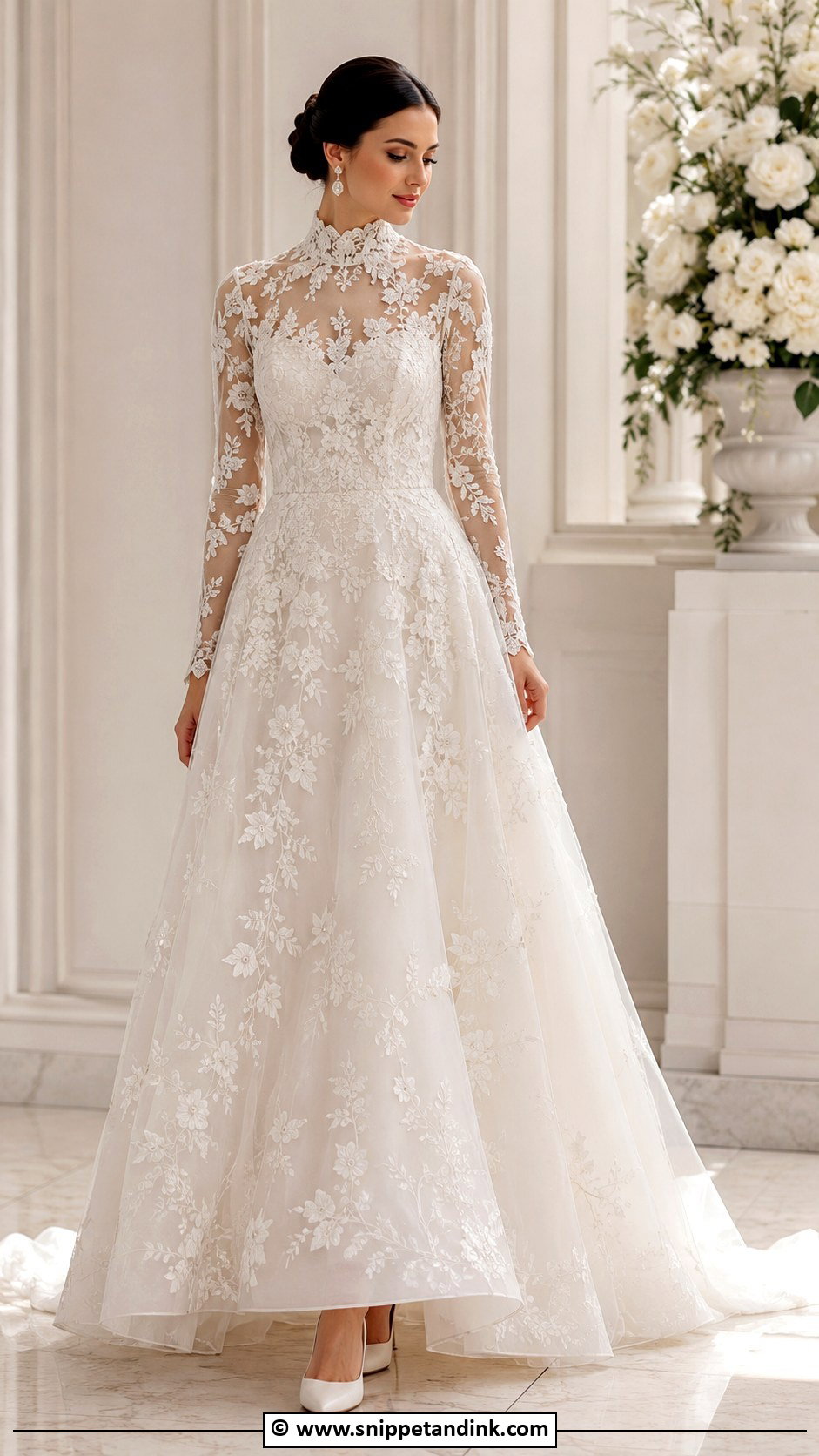
High necks give coverage, and sheer lace, embroidered flowers or illusion tulle keep them light. Long sleeves, a fitted bodice or an A-line skirt pair well. Skip necklaces and wear earrings. A low bun or polished ponytail keeps hair off the lace so the pattern shows. High necks can feel warm and restrictive, so try turning your head fully in the fitting room. If the collar pulls, it needs easing.
22. Floral Open Back Wedding Dress
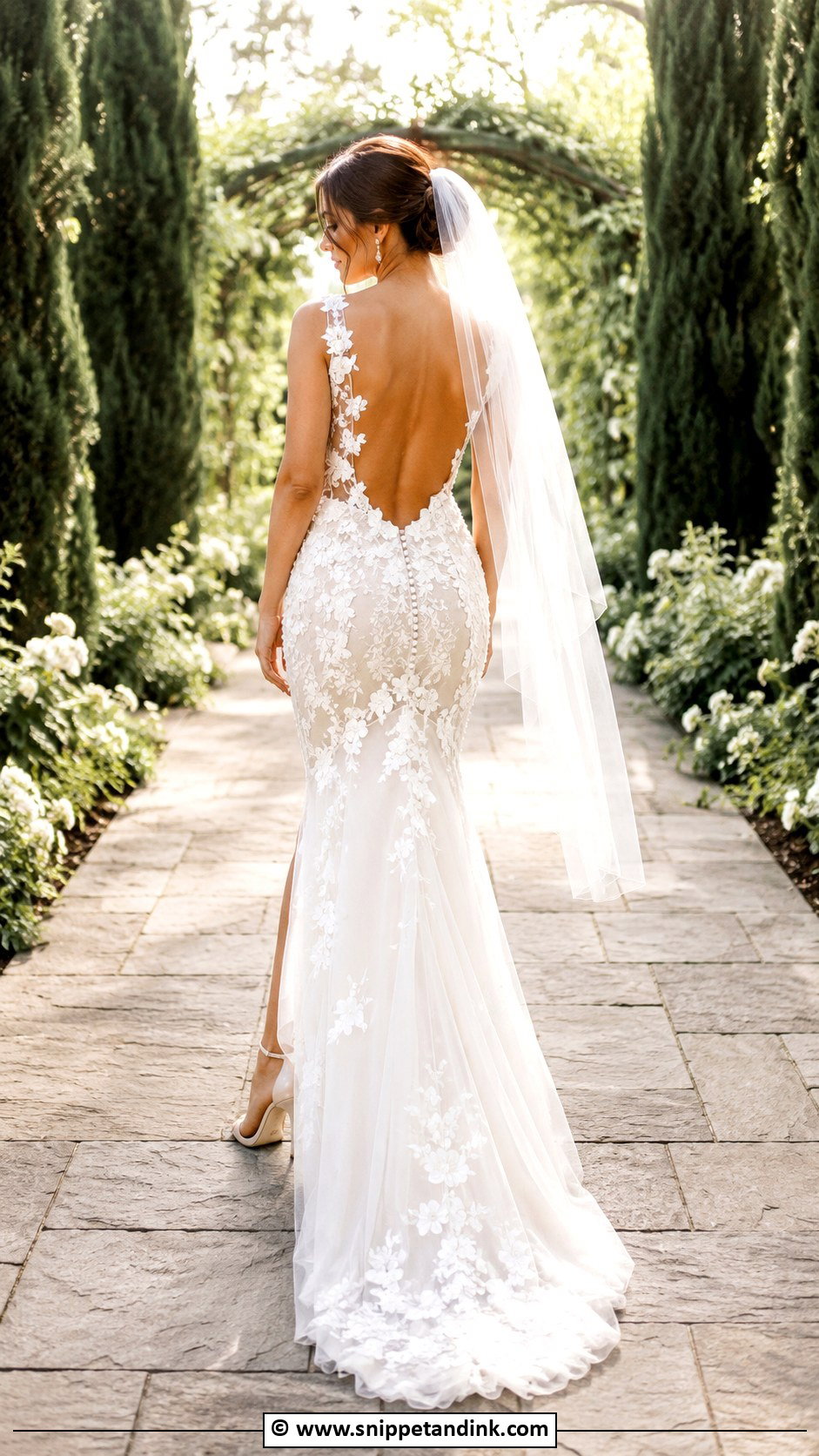
Open backs reveal skin and let floral lace frame it. Lace edging, delicate straps or appliqué trailing into the train all work. The front can stay plain. An updo shows the back. Posture shows too, so pick heels that let you stand tall. The fit concern is the lowest point of the back opening: it needs to sit above any bra band or hidden support, and a seamstress can sew cups into the bodice to solve it.
23. Floral Detachable Train Wedding Dress
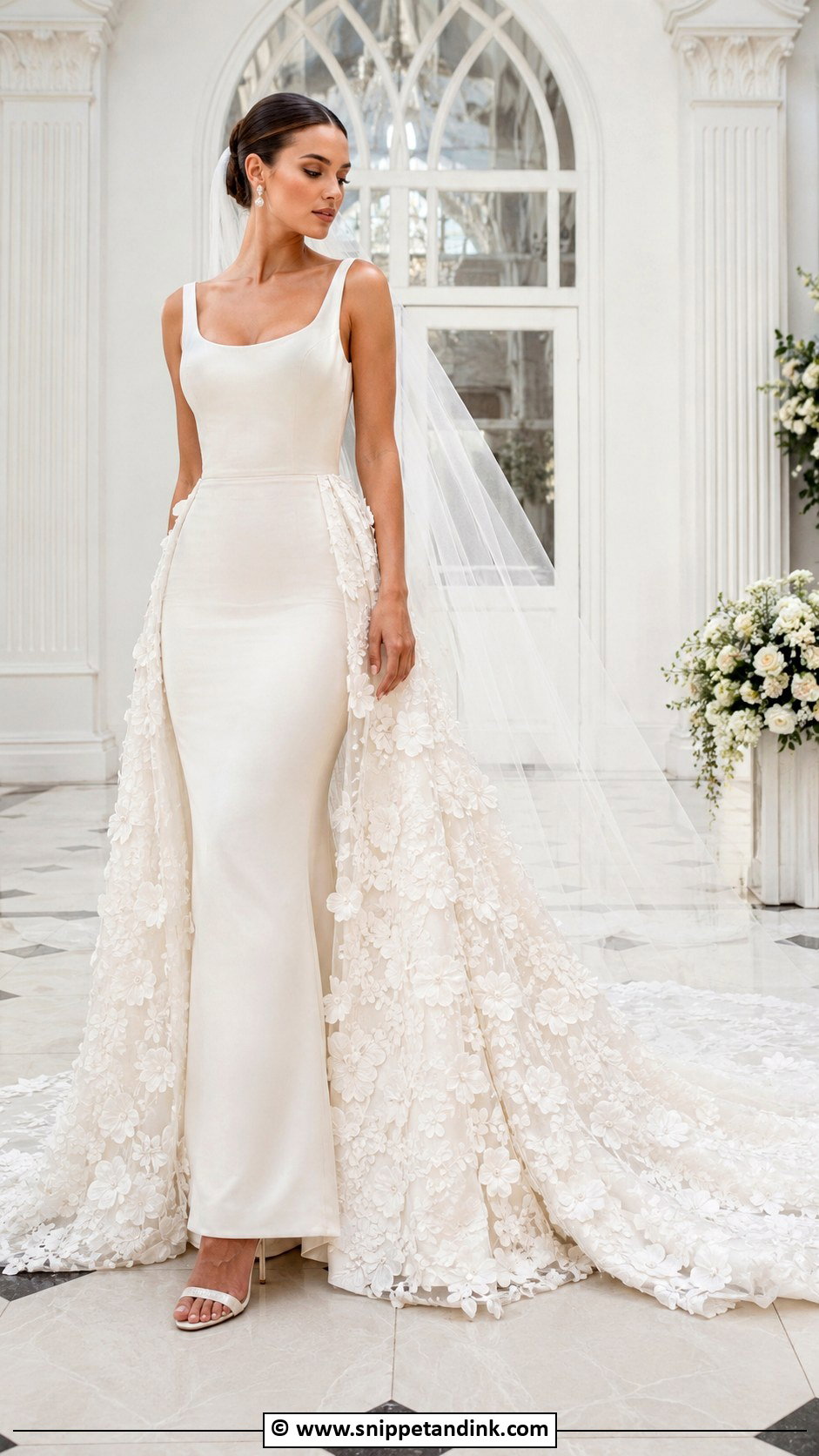
A detachable train gives you a grand ceremony look and a lighter dress for dancing. The appliqué should flow from bodice to train so the join doesn’t show. Ask how it attaches. Hooks and thread loops hold better than snaps under weight. Wear a long veil for the ceremony and switch to statement earrings or a hair clip later. It suits ballrooms and estates.
24. Floral Reception Wedding Dress
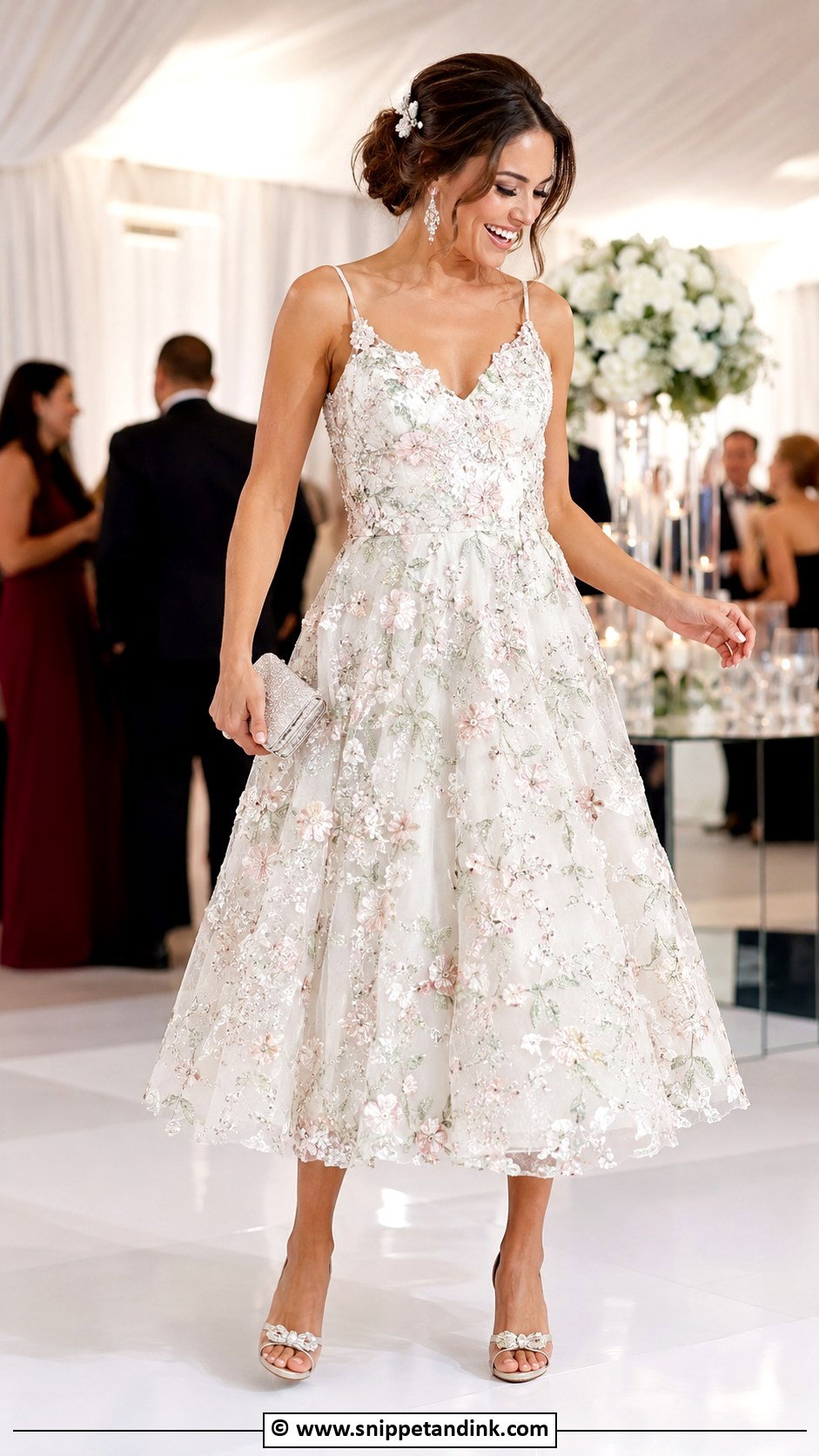
A second dress should feel easier than the ceremony gown and still look bridal. A floral mini, midi, slip dress, or a light sheath all suit dancing. Embroidered flowers, 3D petals, beaded blooms or floral jacquard keep it special. If your ceremony gown is formal, go more playful here. Change after dinner, not right before the first dance, so you aren’t rushing a zipper while everyone waits.
25. Floral Wedding Dress With Veil
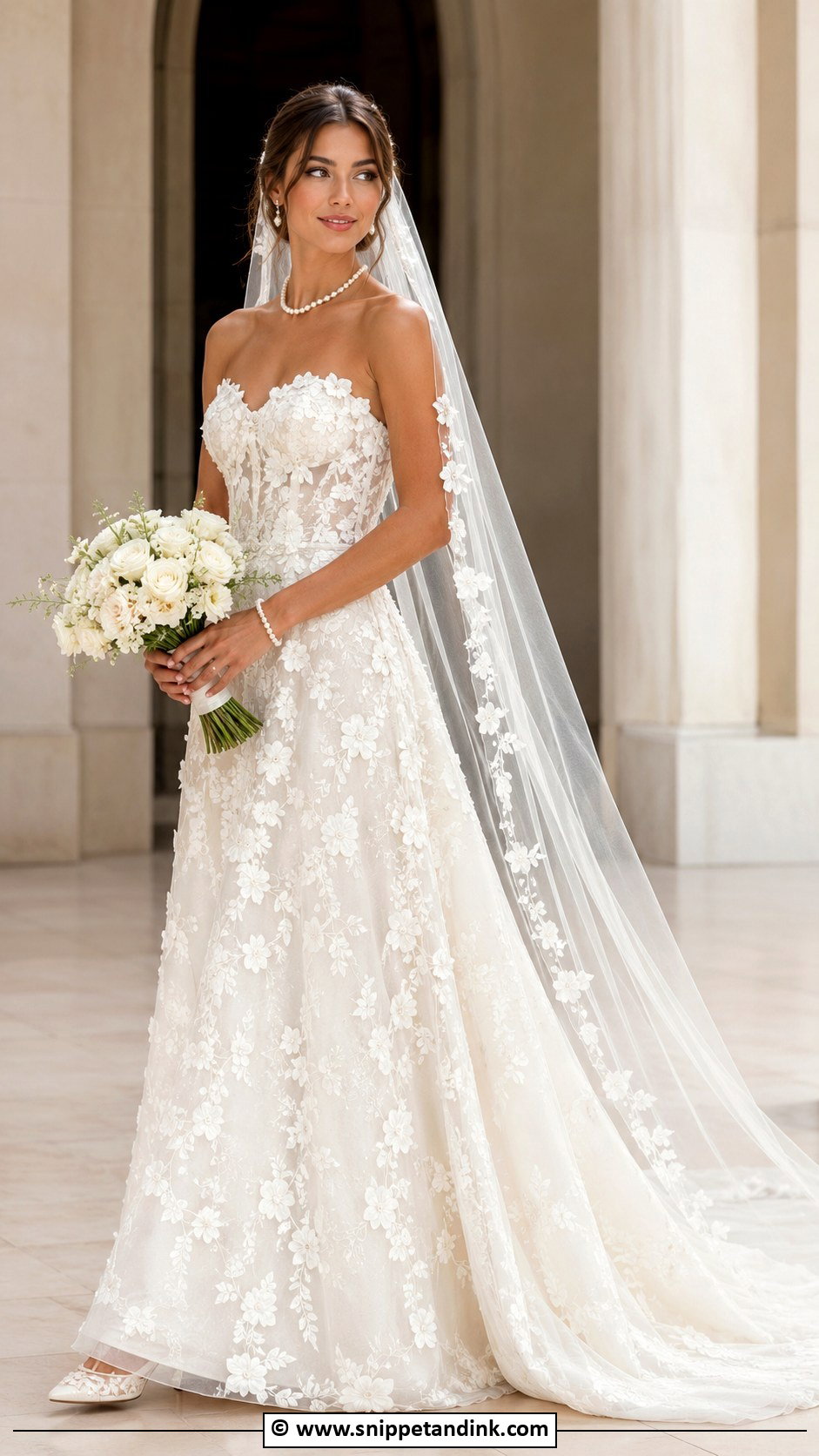
The veil should support a floral gown, not compete with it. Heavy appliqué calls for a plain veil or a thin edge. A simple dress can take a veil with embroidered flowers. Match the veil shade to the dress base: white, ivory, blush, champagne or blue. If the veil is embroidered, ask for the flowers to start below shoulder height, where they won’t clash with lace on the bodice.
Pairing a Bouquet With a Dress That Already Has Flowers
A floral gown plus a floral bouquet can turn into a pattern clash. Bring a photo of the dress, ideally a close-up of the flower work, to your florist.
- Big 3D petals on the skirt: carry a smaller, tighter bouquet so the two don’t merge.
- Fine lace or white-on-white embroidery: a looser, garden-style bouquet adds the color the dress doesn’t have.
- Colorful embroidery: pull one color from the dress for the bouquet and leave the rest green and white.
- Long trailing bouquets hide skirt detail, so skip them if the flowers are concentrated at the hips.
Watch the wiring on bouquet stems too. Exposed wire and pins catch on tulle and embroidered thread, so ask for the handle to be wrapped completely in ribbon.
One last check I make at the final fitting: hold the finished bouquet against the dress in front of a mirror at arm’s length, the way you’ll carry it down the aisle. If the bouquet covers the best part of the flower work, lower it to hip height or ask the florist for a shorter handle.
Let One Kind of Flower Lead
Floral gowns range from quiet lace to colorful embroidery, short reception dresses and full 3D skirts with trains. What makes one work is restraint around it. Choose where the flowers live on the dress, then keep the veil, jewelry, hair and bouquet a step quieter. Try your favorite in the light of your venue, sit and walk in it, and you’ll know quickly whether it suits the day you’re planning.
You'll Like These Ideas:






Leave a Reply