
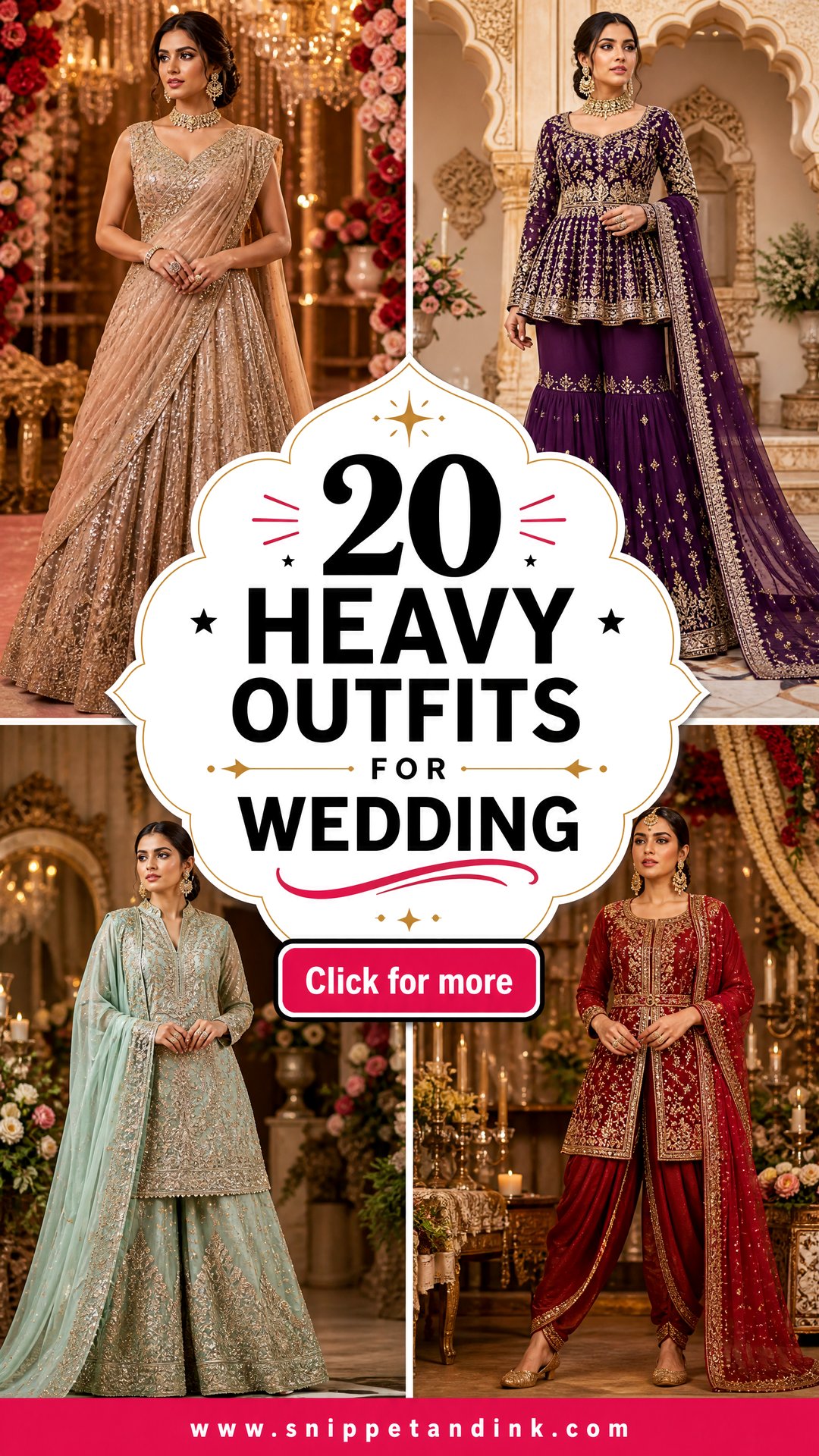
Sisters, cousins, mothers and close friends often end up wearing the heaviest outfits of their lives at a wedding, and nobody tells them how to manage it. Rich fabric and dense work look wonderful, but the outfit still has to get you through a seated ceremony, a buffet queue and a dance floor. Wedding wardrobes now go well beyond the classic lehenga: you’ll find Banarasi sarees, sharara sets, cape ensembles, Anarkalis and pre-draped pieces below. I’ve written each one the way I’d style it for a client, with notes on how the fabric behaves and who it suits. Close family can usually carry more embellishment; guests should keep clear of colours and styling that read bridal.
How Much Embroidery Suits Your Place at the Wedding
The same outfit can be right for a sister and wrong for a colleague. When I style family and guests, I scale the work to the person’s role and the function, not to their budget.
- Sisters and close cousins can wear dense work and full skirts, especially at the sangeet and reception. Just avoid the bride’s colour if she’s shared it with you.
- Mothers and aunts often look best in heavy silk sarees or Anarkalis with rich borders, where the weight is in the weave rather than in bulky skirts.
- Friends and guests can go heavy at evening functions but should stop short of a full bridal set: one statement necklace or a maang tikka, not both, plus a head dupatta.
- Daytime ceremonies usually call for lighter fabrics like organza, chikankari or cotton silk even if you’re close family. Velvet and dense zardozi belong after dark.
Colour rules vary between families and communities. Red and deep maroon are commonly kept for the bride, and some families avoid black or all-white at a wedding. If you’re unsure, ask the couple or check the invitation for each function’s dress code.
1. Heavy Velvet Lehenga for Wedding
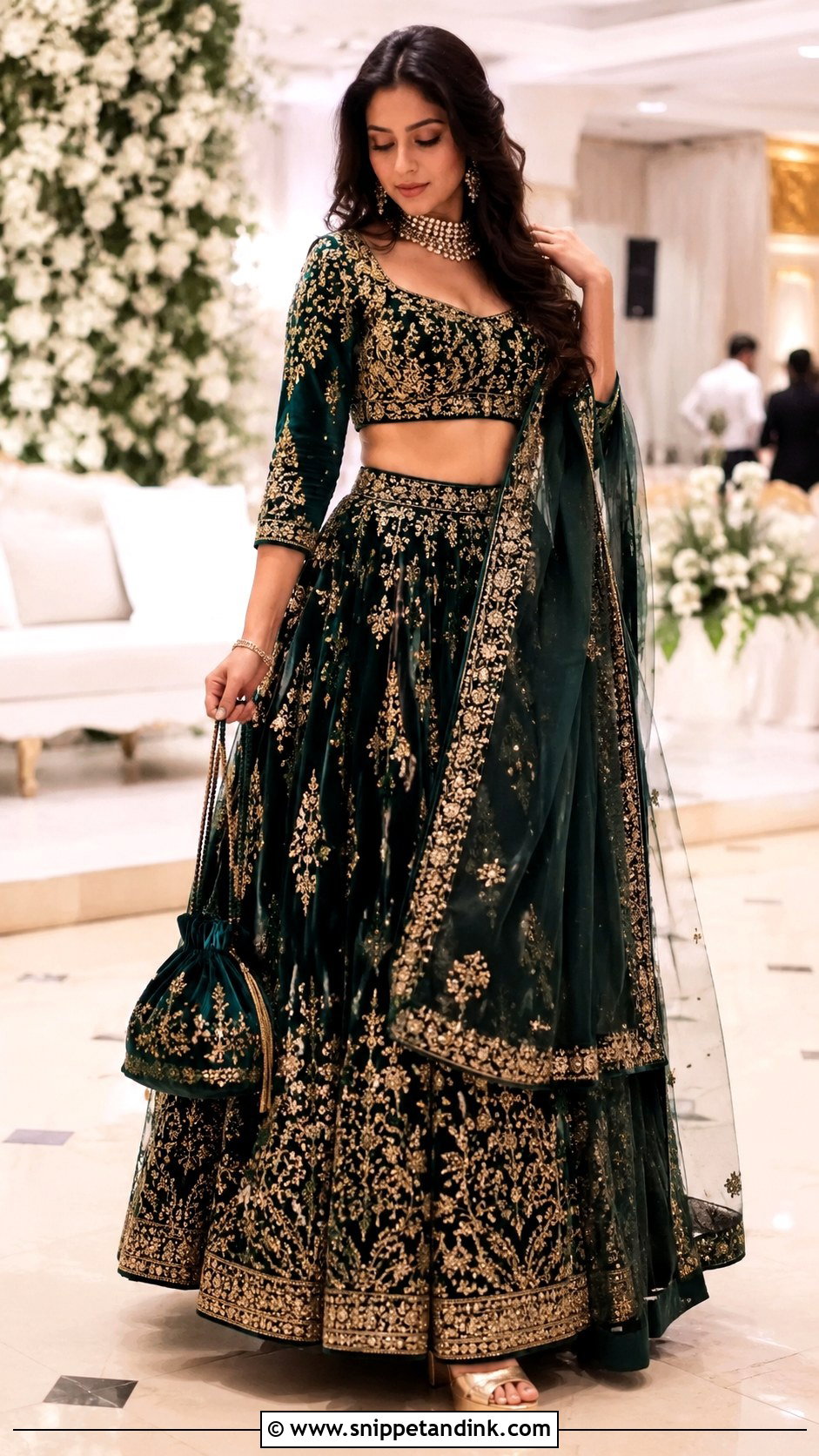
Velvet is the fabric I reach for when a family member wants to look regal at a winter evening function. Emerald, navy, burgundy or plum with antique gold zardozi is the classic pairing. Three-quarter sleeves on the blouse balance the skirt and keep you warm in a cold hall. Velvet is warm and heavy, so a sheer net dupatta with a slim border is the right partner; a velvet dupatta on top would be too much. A polki choker with matching earrings, a small potli and padded block sandals are plenty. A sleek bun keeps the line clean. I’d avoid it entirely for a summer daytime event.
2. Heavy Mirror Work Lehenga for Wedding
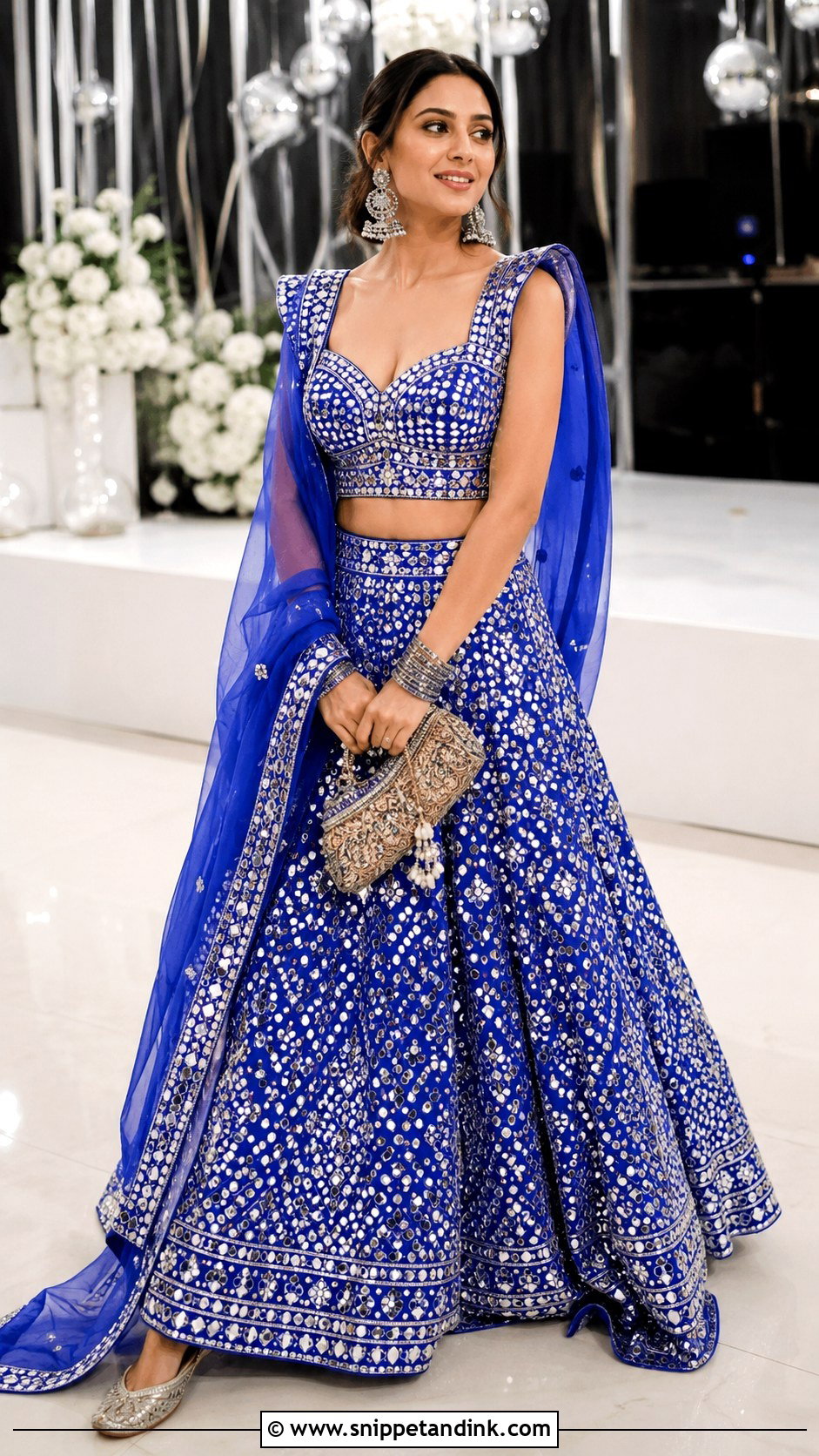
Mirror work moves when you move, which is exactly why it belongs at a sangeet. Teal, fuchsia, violet or cobalt bases make the little mirrors look brighter. Before buying, run your hand over the skirt: well-made mirror work is held by a tight ring of stitching, and if the mirrors wobble, they’ll snag on the dupatta all night. A structured matching blouse and a light dupatta pinned to one shoulder keep you free to dance. Metallic juttis, statement jhumkas, stacked bangles and a compact clutch finish it. Leave the necklace small. A braided ponytail survives a dance routine far better than open waves.
3. Heavy Banarasi Silk Saree for Wedding
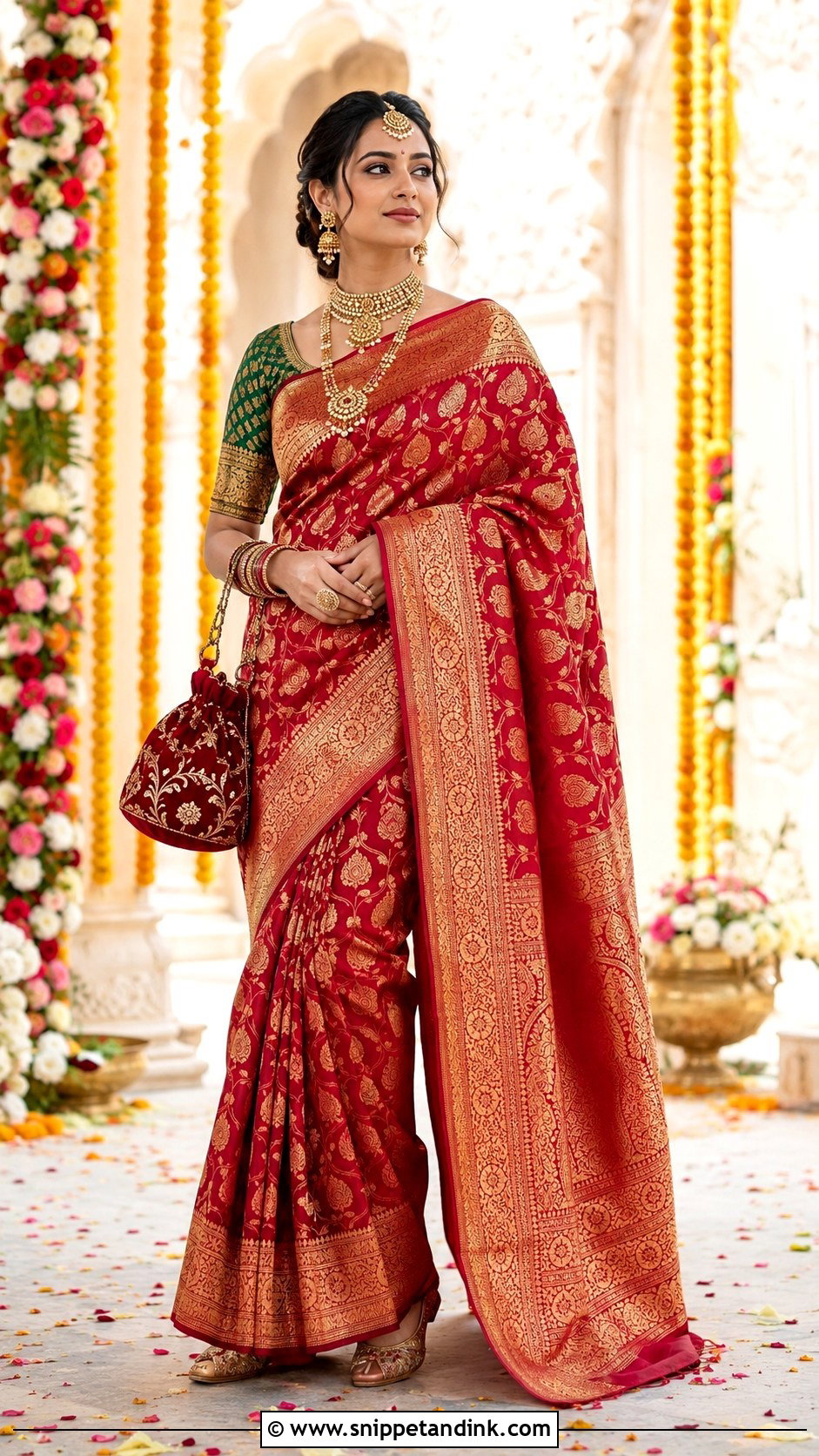
Banarasi silk has a weight and sheen nothing else matches, and for a traditional daytime ceremony it’s hard to beat. Look for gold zari motifs and a detailed woven border in a jewel tone, with a brocade blouse in a complementary colour. Real Banarasi silk is stiff when new, so I ask for the pleats to be pressed and pinned before the saree goes on, and I always recommend a firm cotton petticoat to hold the weight. Temple jewellery, a gold choker, jhumkas and matching bangles suit its traditional character. Embroidered low heels, a silk potli and fresh flowers in a neat bun complete it.
4. Heavy Sequin Saree for Wedding
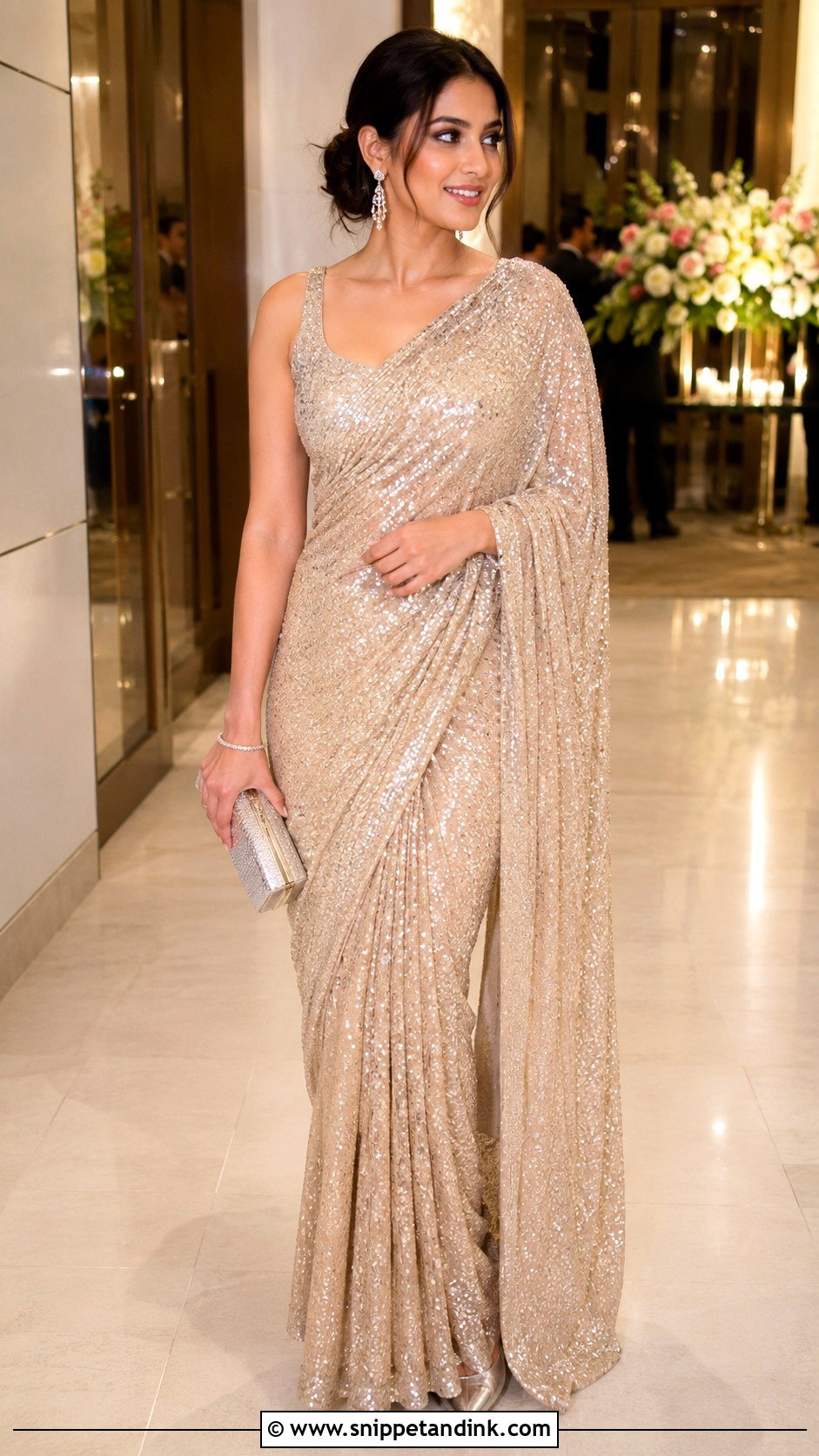
Sequins give you evening glamour without a lehenga’s bulk. Charcoal, midnight blue, champagne or dusty rose with even sequinning across the whole saree works best; patchy work looks cheap under flash. A well-fitted blouse with a clean neckline is essential, since there’s nowhere to hide a gaping edge. I’m a big believer in pre-stitched sequin sarees for anyone who doesn’t drape often, because sequinned georgette is slippery and the pleats drift. Crystal drops, a slim bracelet, pointed metallic heels and a structured clutch are enough. Smooth waves or a low ponytail keep it modern for cocktail celebrations and formal receptions.
5. Heavy Zardozi Anarkali for Wedding
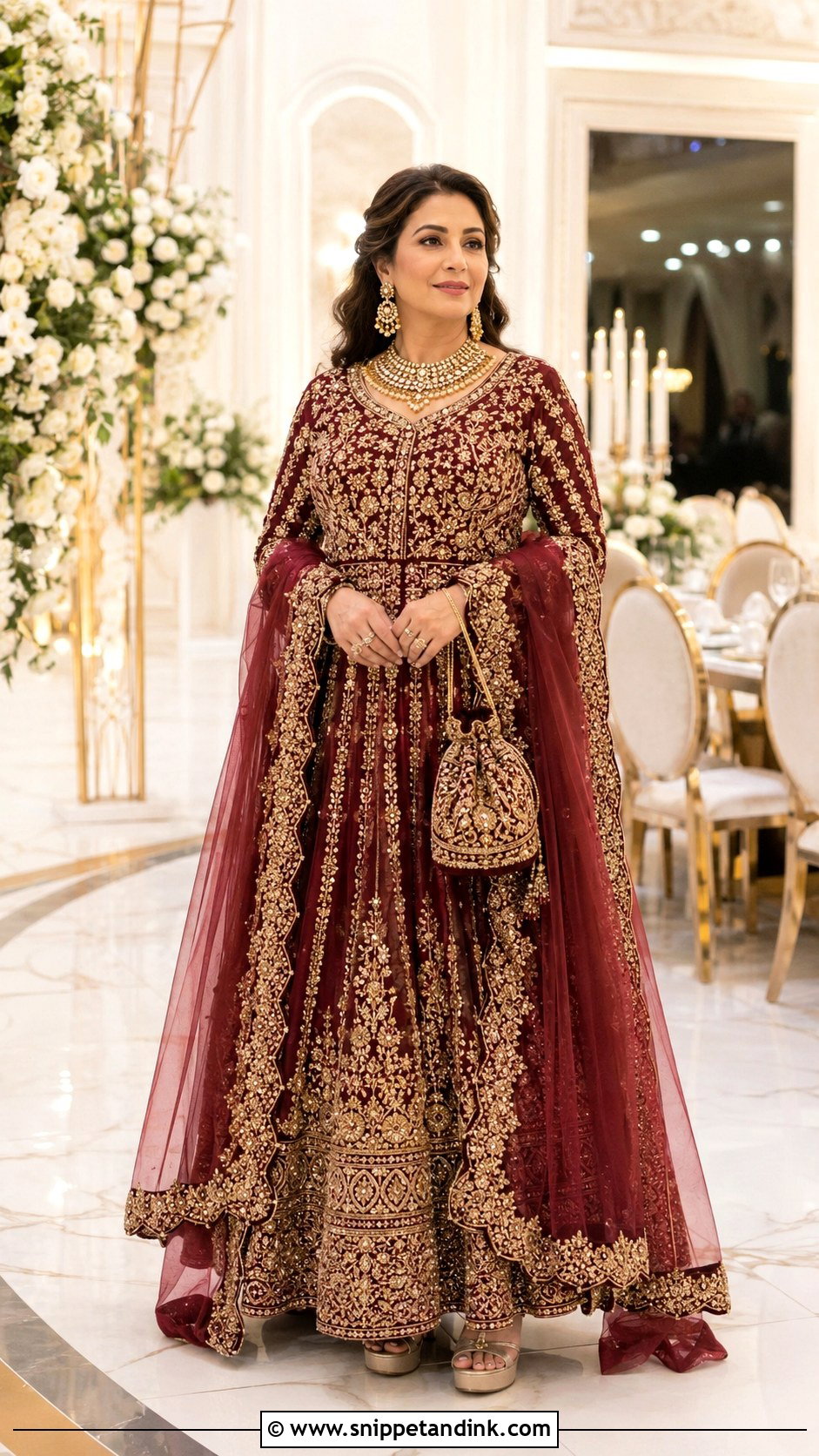
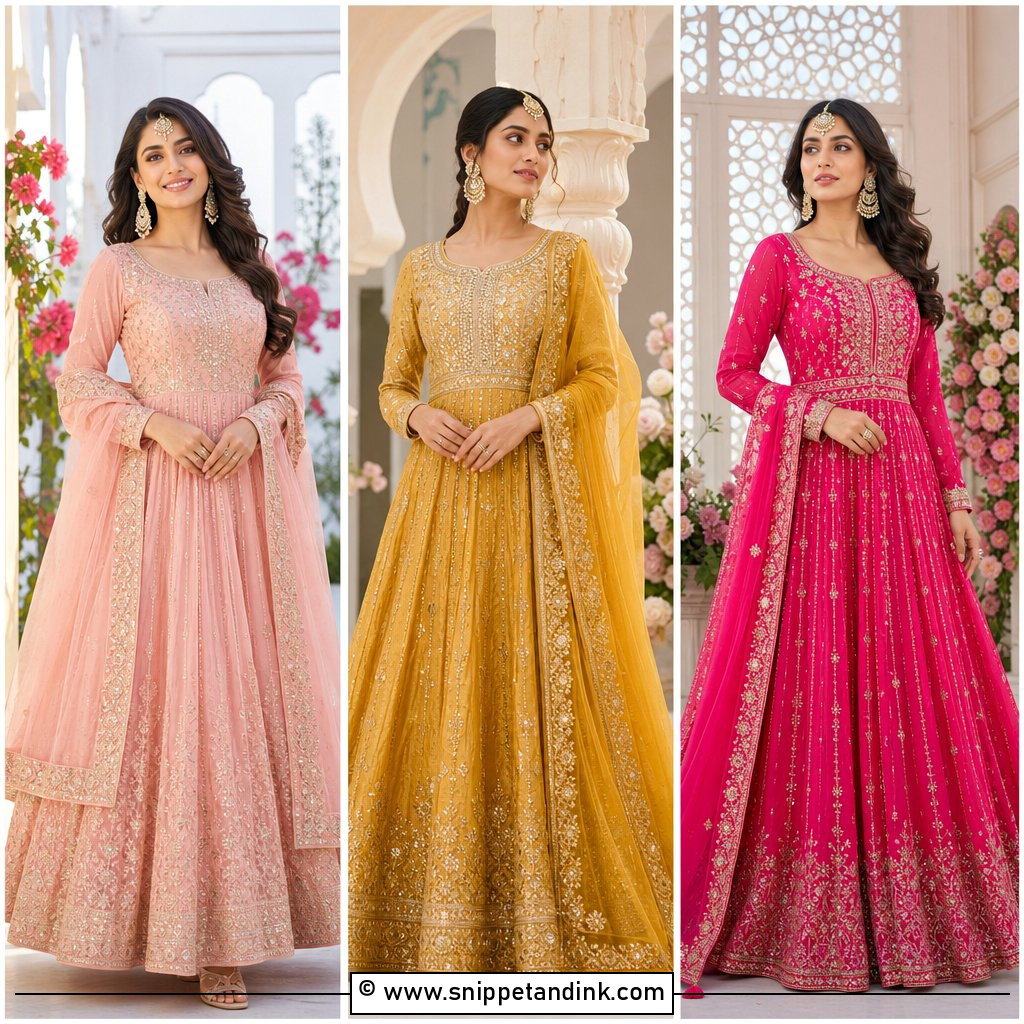
Mothers of the couple ask me for this more than anything else. A floor-length Anarkali in silk or velvet, with zardozi concentrated at the bodice, sleeves and hem, gives the grandeur of a lehenga without a separate skirt to hold up. The waist seam should sit at your natural waist and the flare should be controlled; a very wide Anarkali gets heavy at the hem and drags on stairs. Drape a sheer bordered dupatta over one shoulder. A kundan necklace, medium jhumkas, a beaded potli and platform heels you can stand in finish it. Deep green, wine, navy and maroon all hold zardozi well at night.
6. Heavy Sharara Suit for Wedding
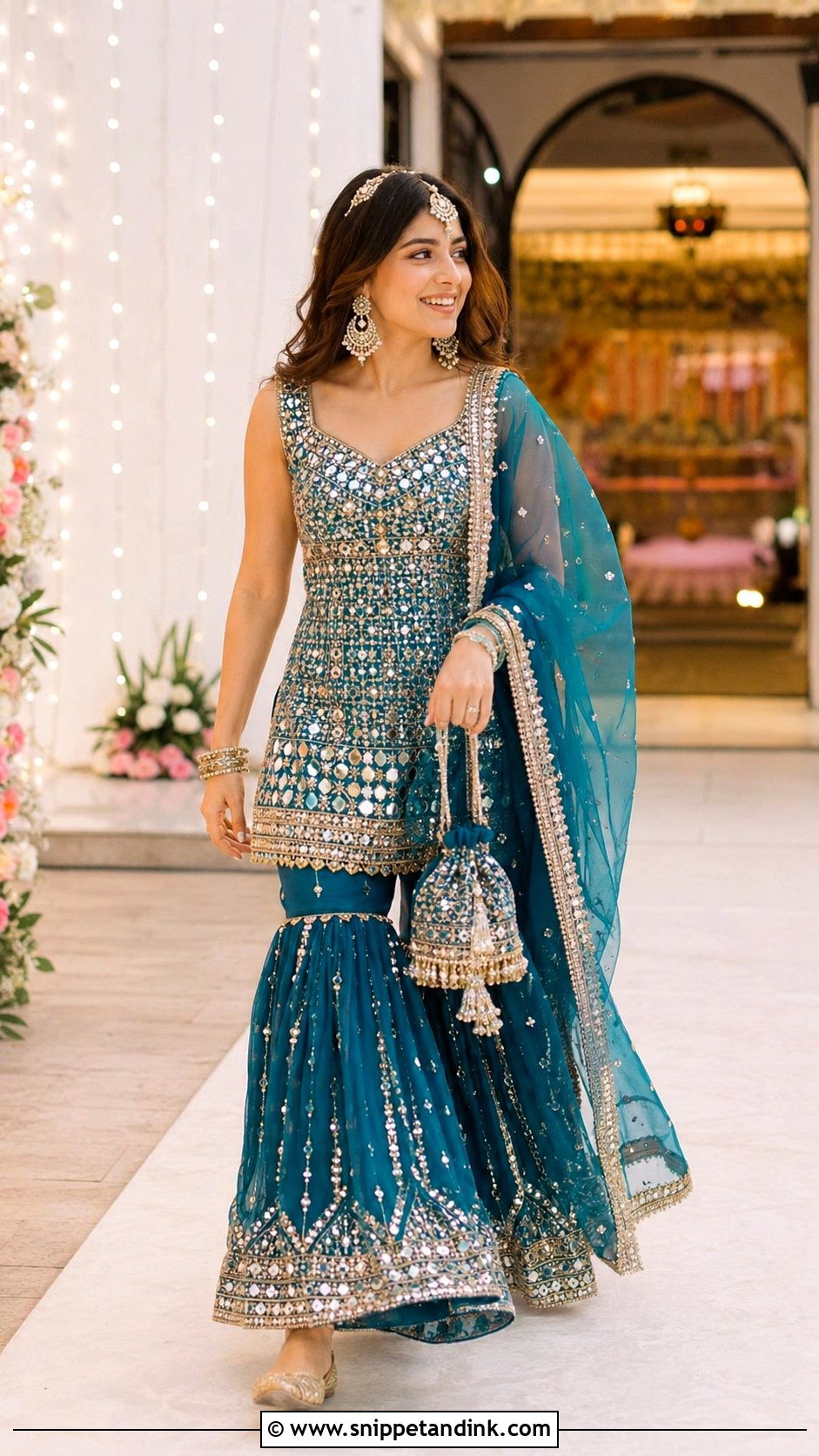
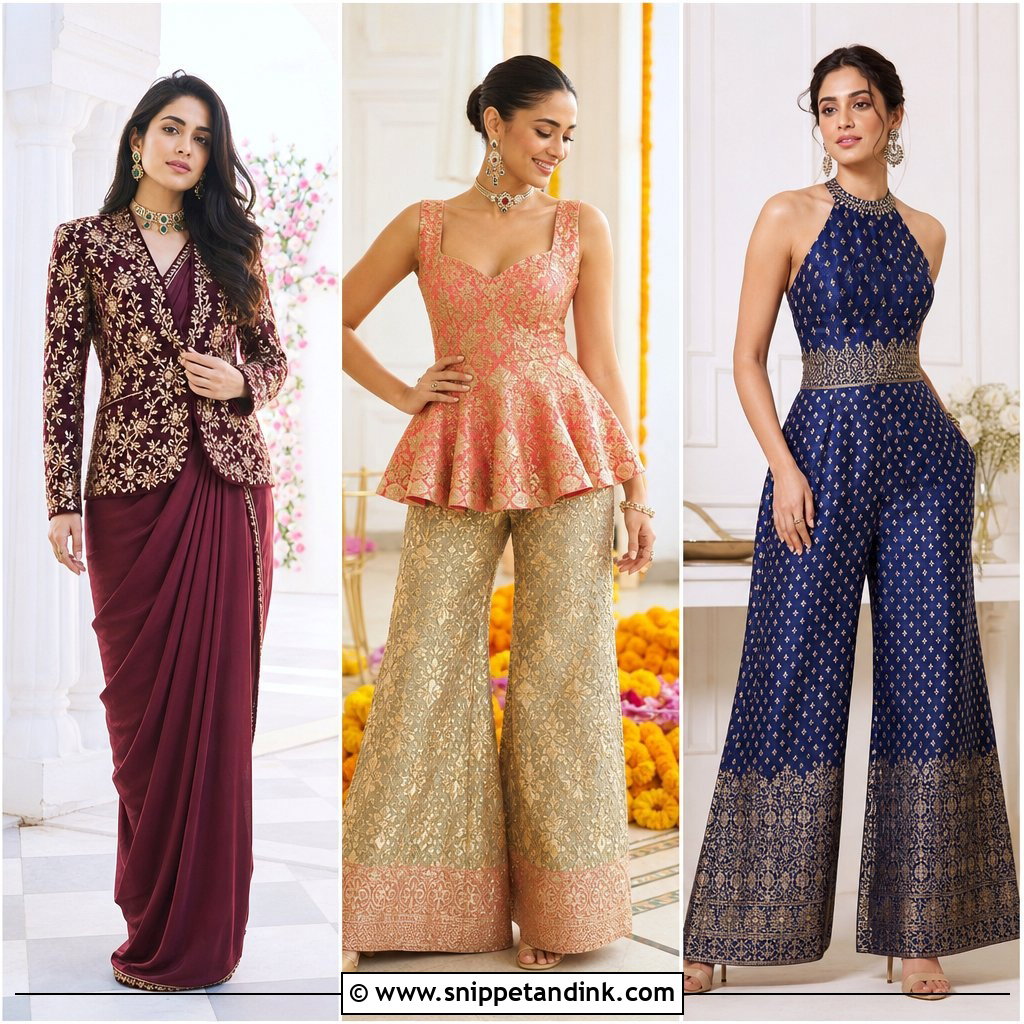
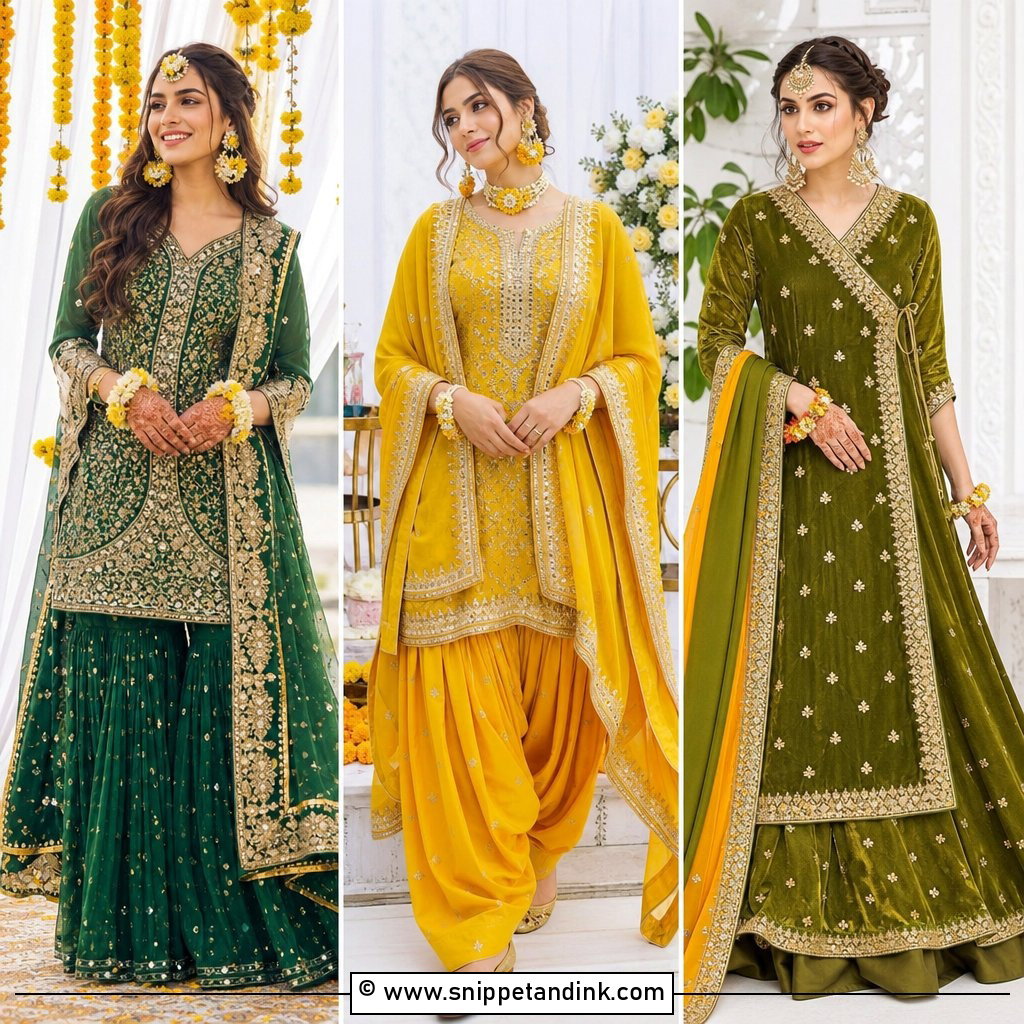
Want something that looks elaborate but lets you move? A heavy sharara set is my usual answer. A short embroidered kurta with wide flared pants in georgette, silk or brocade puts the drama in the legs, where it swings when you walk. Zari, sequins, beads or a little mirror work can decorate it, and a lightweight dupatta stops the whole thing feeling heavy. Chandelier earrings, a small maang tikka, stacked bangles and embellished juttis are enough. A wristlet keeps your hands free for the dancing. Choose jewel tones at night, brighter shades in daylight.
7. Heavy Gharara Suit for Wedding
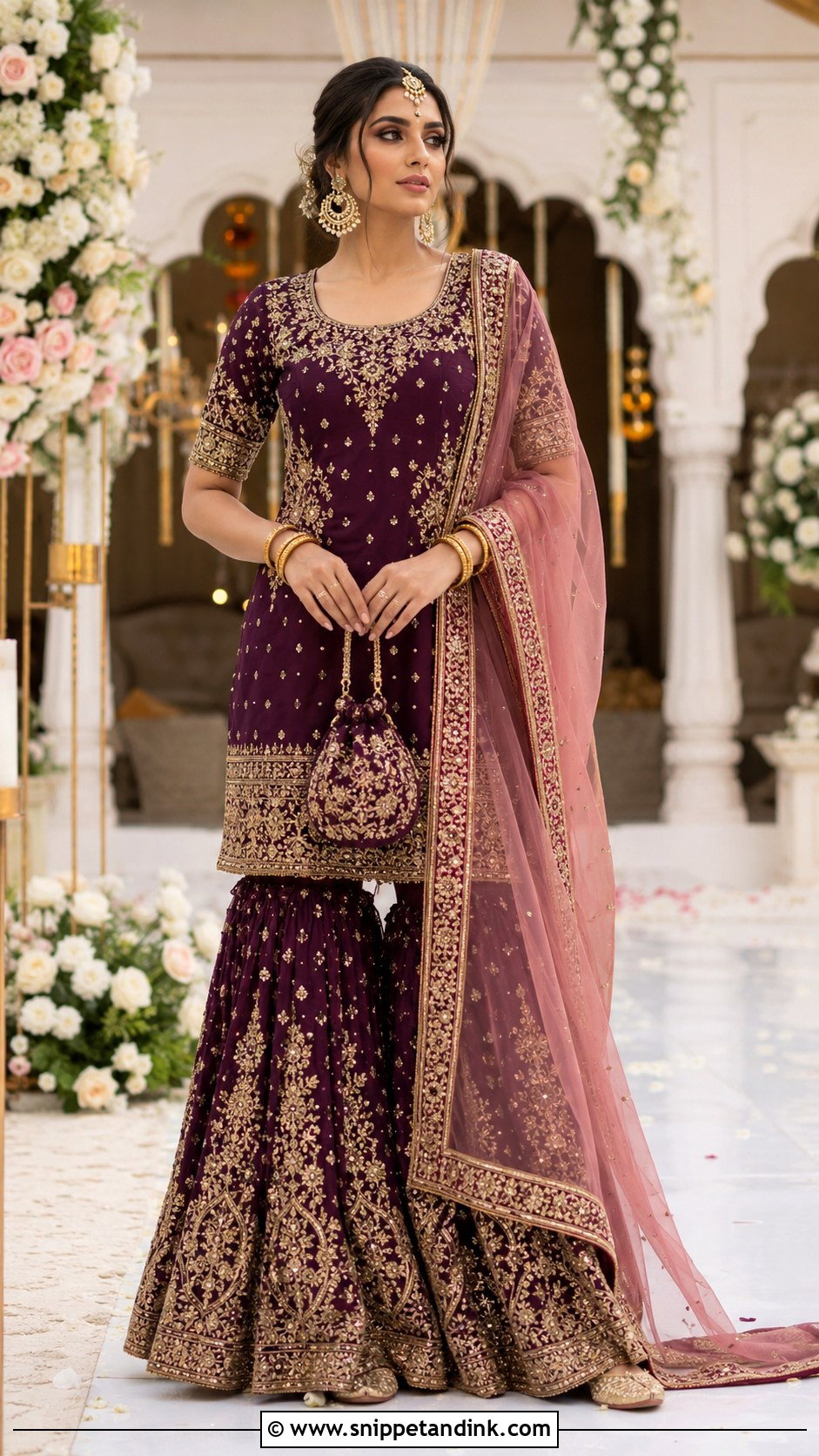
The gharara gets its shape from a fitted upper leg that bursts into a flare at the knee, usually marked with a gota band. That joint is where the tailoring matters: if it sits too low, you’ll shorten your stride without realising. A short kurti with dense gold work goes on top. I like a contrast dupatta here, deep green with muted gold, or plum with dusty pink, because it adds depth without clashing. A passa or small maang tikka, chandbalis, bangles and pointed juttis complete it. Keep the bag compact since the lower half already has plenty of volume.
8. Heavy Jacket Lehenga for Wedding
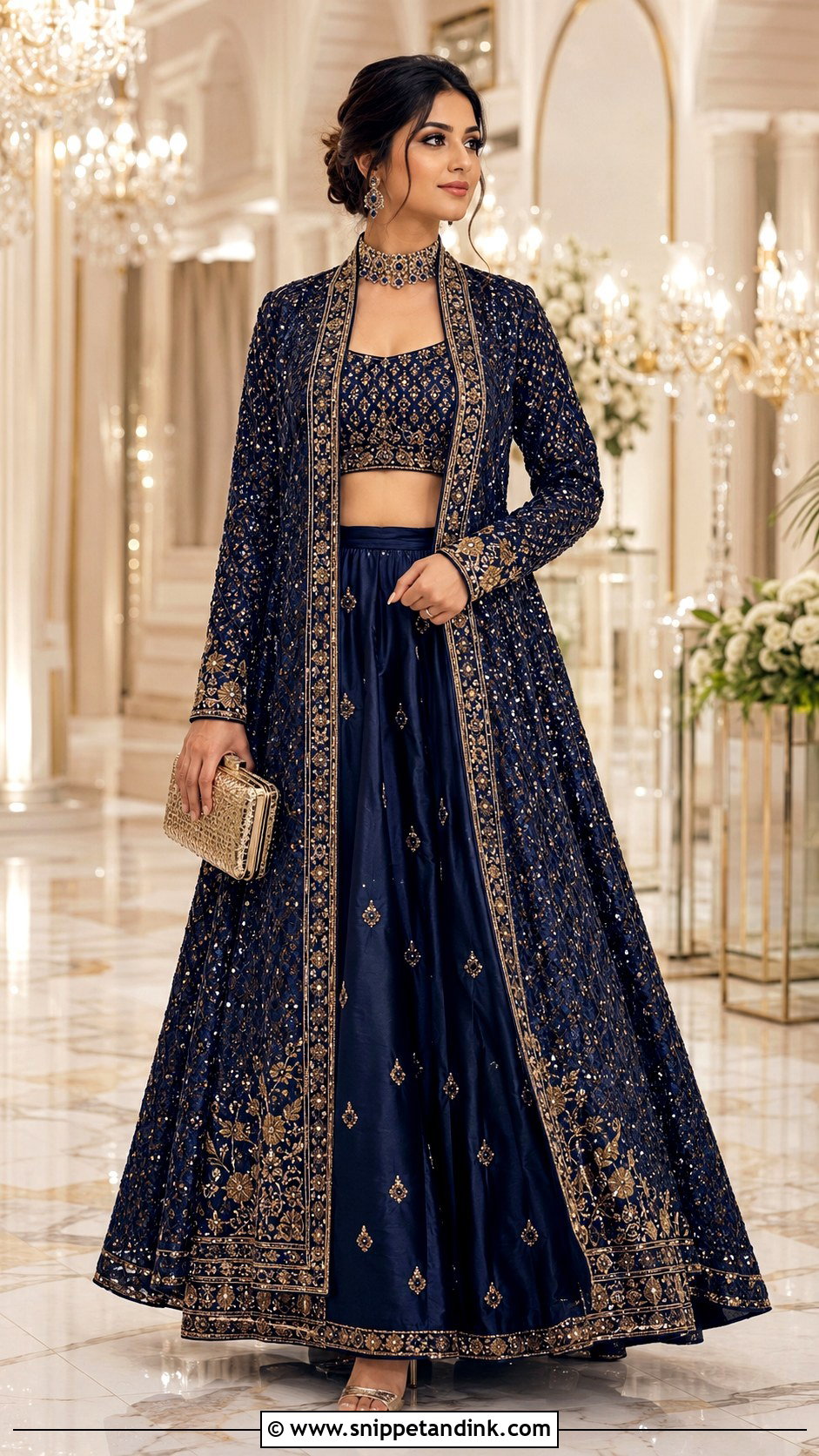
A floor-length embroidered jacket turns a lehenga into something structured and covered, which many guests prefer for a formal reception. Start with a moderately flared silk skirt and a simple blouse, then add a jacket in threadwork, sequins or zardozi. Wear it open to show the skirt, or closed so the whole thing reads as a gown. Be warned that a heavily worked jacket is warm, so it suits winter evenings and air-conditioned halls better than outdoor summer events. A choker, small earrings, a box clutch and block heels are all it needs. Monochrome navy, emerald or plum lengthens the figure.
9. Heavy Cape Lehenga for Wedding
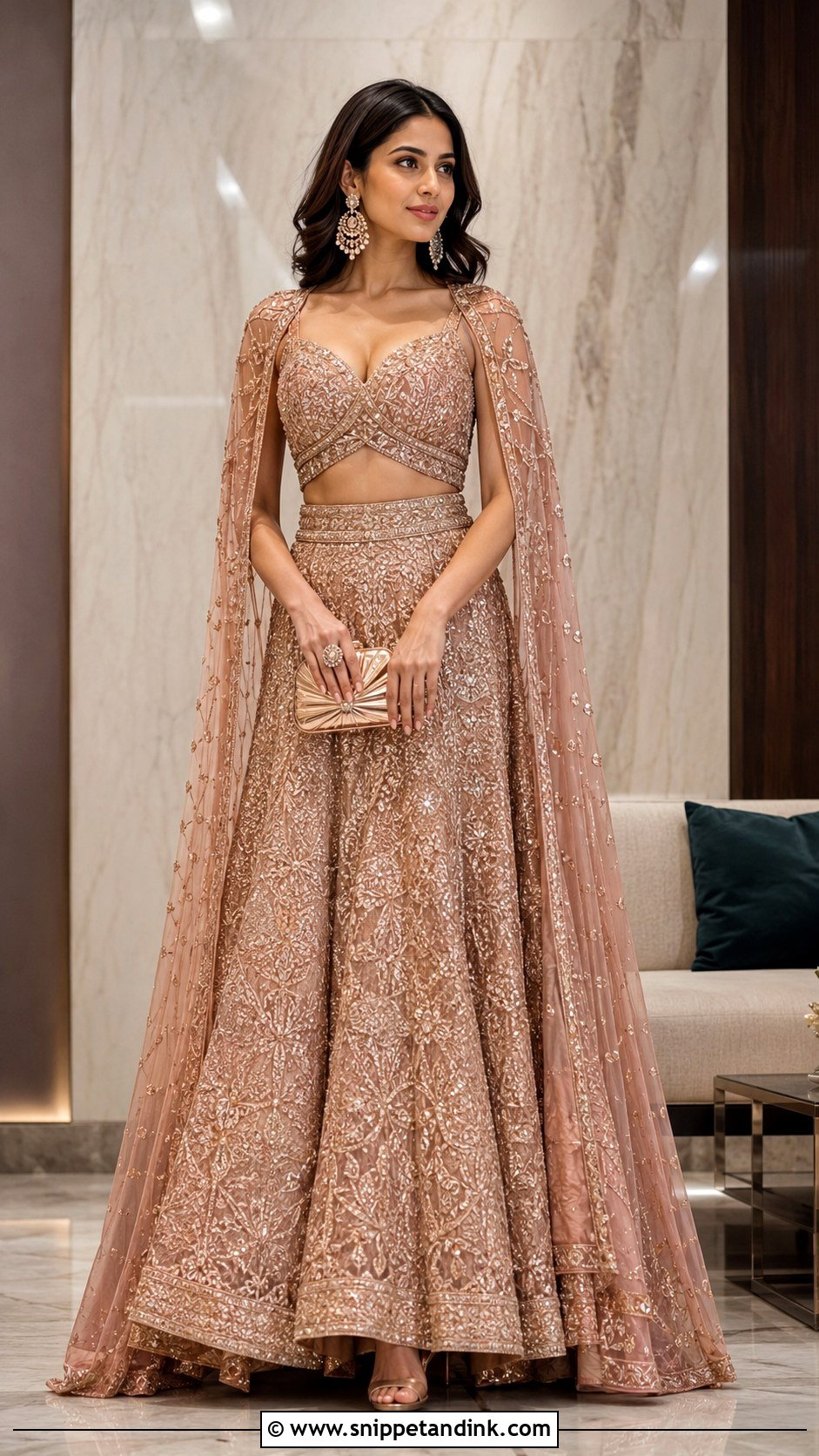
I recommend a cape lehenga to guests who simply don’t want to manage a loose dupatta all night. The sheer cape, worked in beads, sequins or appliqué, sits over a high-waisted skirt and matching blouse, and should finish below the waist without hiding the skirt’s shape. Check how it fastens: a cape stitched to the blouse at several points stays put, while one that clips at the neck slides backward. Shoulder-grazing earrings, a cocktail ring, a metallic clutch and stable heels are enough. Skip the necklace if the cape neckline is decorated. Champagne, silver-grey, deep blue and rose gold suit receptions.
10. Heavy Saree Gown for Wedding
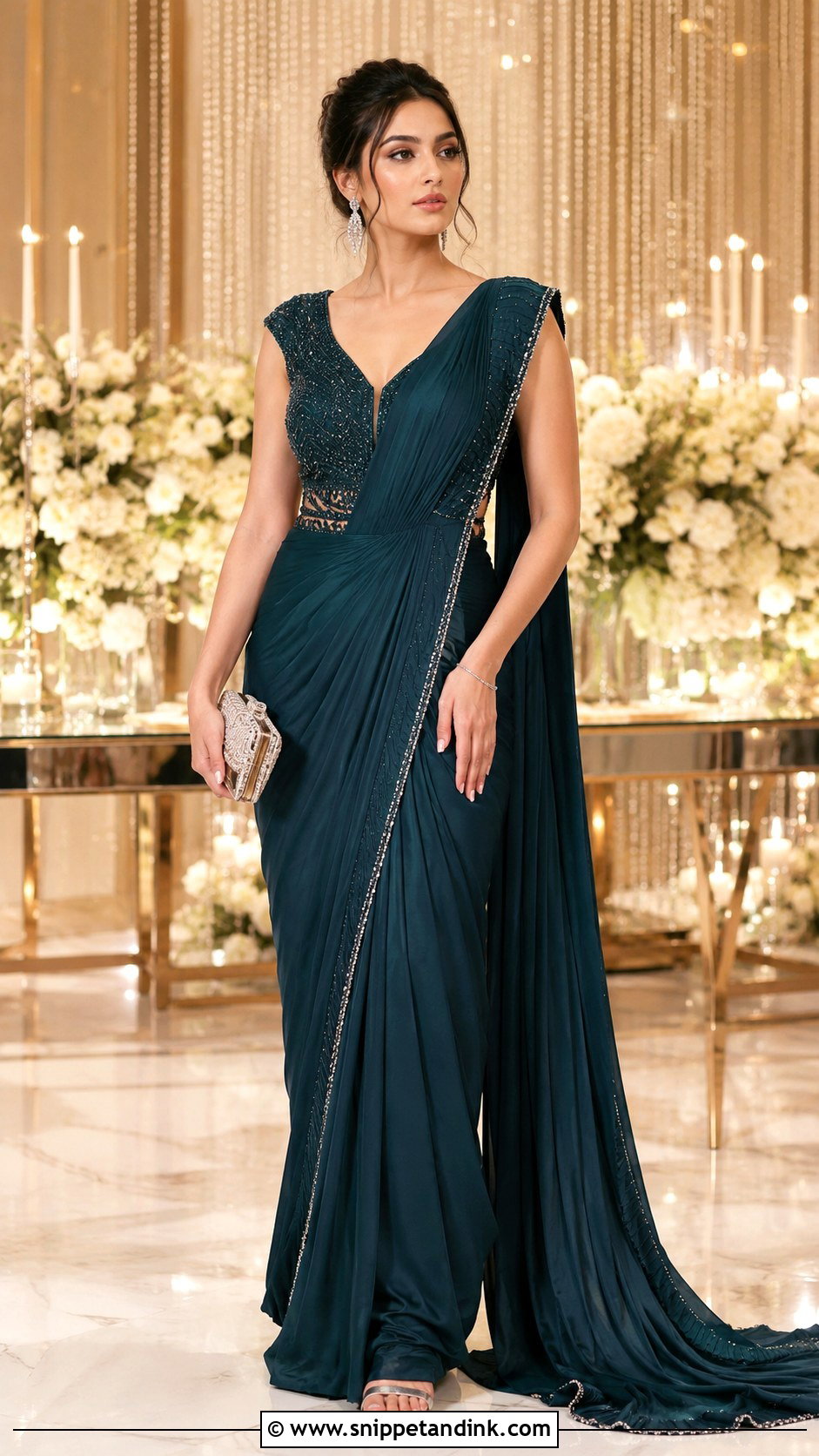
The saree gown is for people who love sarees but don’t want to spend the evening re-tucking pleats. Sewn pleats, an attached pallu and embellishment at the waist and shoulder give you the drape with dress construction underneath. Sequins, crystal beading or metallic borders supply the richness. A structured clutch, slim heels, drop earrings and one statement bracelet are plenty; the sculpted drape is the point. Go side-swept with the hair to echo the asymmetric neckline. Fit is critical at the waist, because a sewn pallu pulls the whole gown sideways if it’s too loose. Teal, wine and graphite work beautifully after dark.
11. Heavy Kanjivaram Silk Saree for Wedding
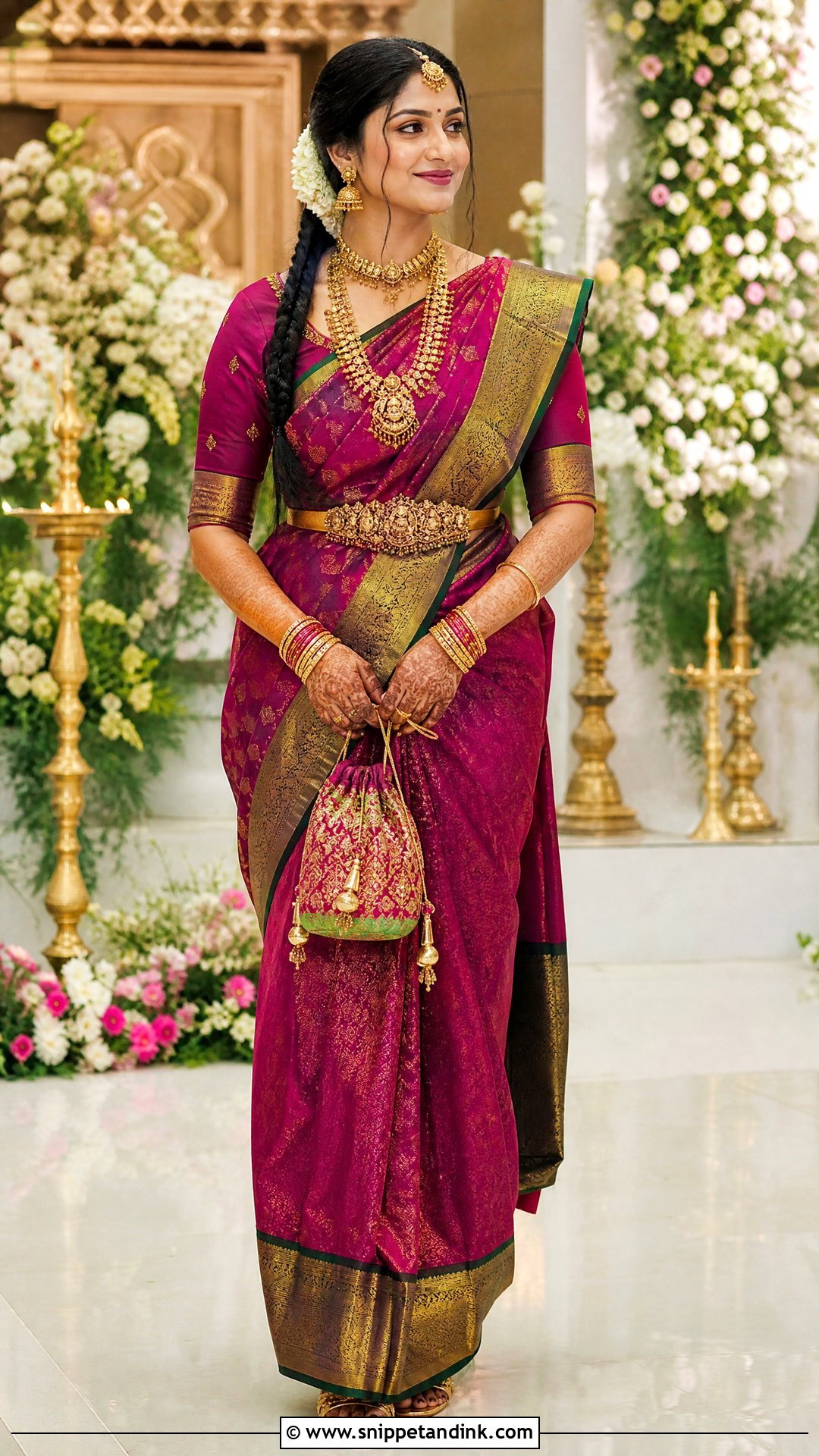
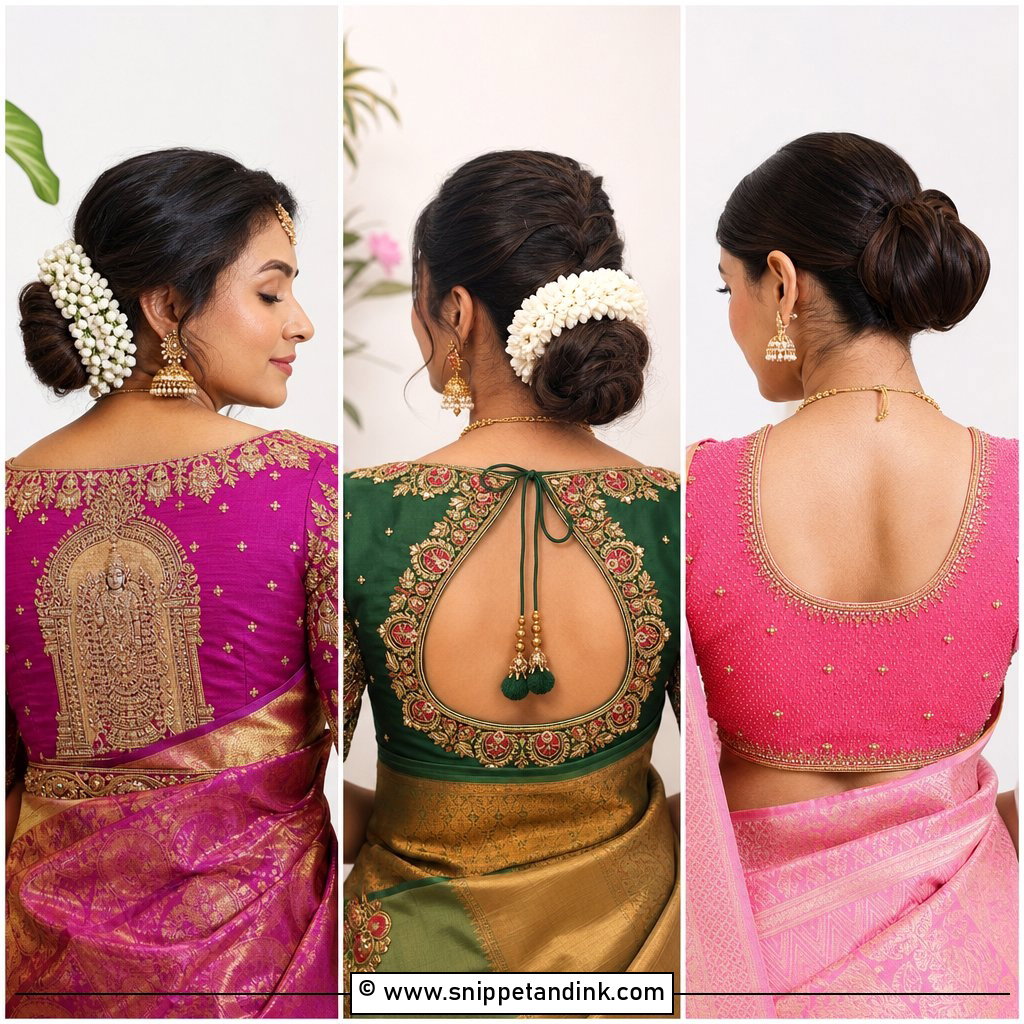
A Kanjivaram saree is heavy pure silk woven with zari, and its contrasting border is often woven separately and interlocked with the body, which is part of why good ones last for generations. Classic pairings include magenta with green, royal blue with pink, and mustard with maroon. Choose a fitted blouse that repeats one border colour, with elbow sleeves. A gold waist belt (vaddanam) defines the drape and holds the pleats. Temple jewellery, layered necklaces, jhumkas, bangles and gold sandals finish it, with a long braid or bun dressed in fresh flowers. Keep the bag small and plain.
12. Heavy Chikankari Lehenga for Wedding
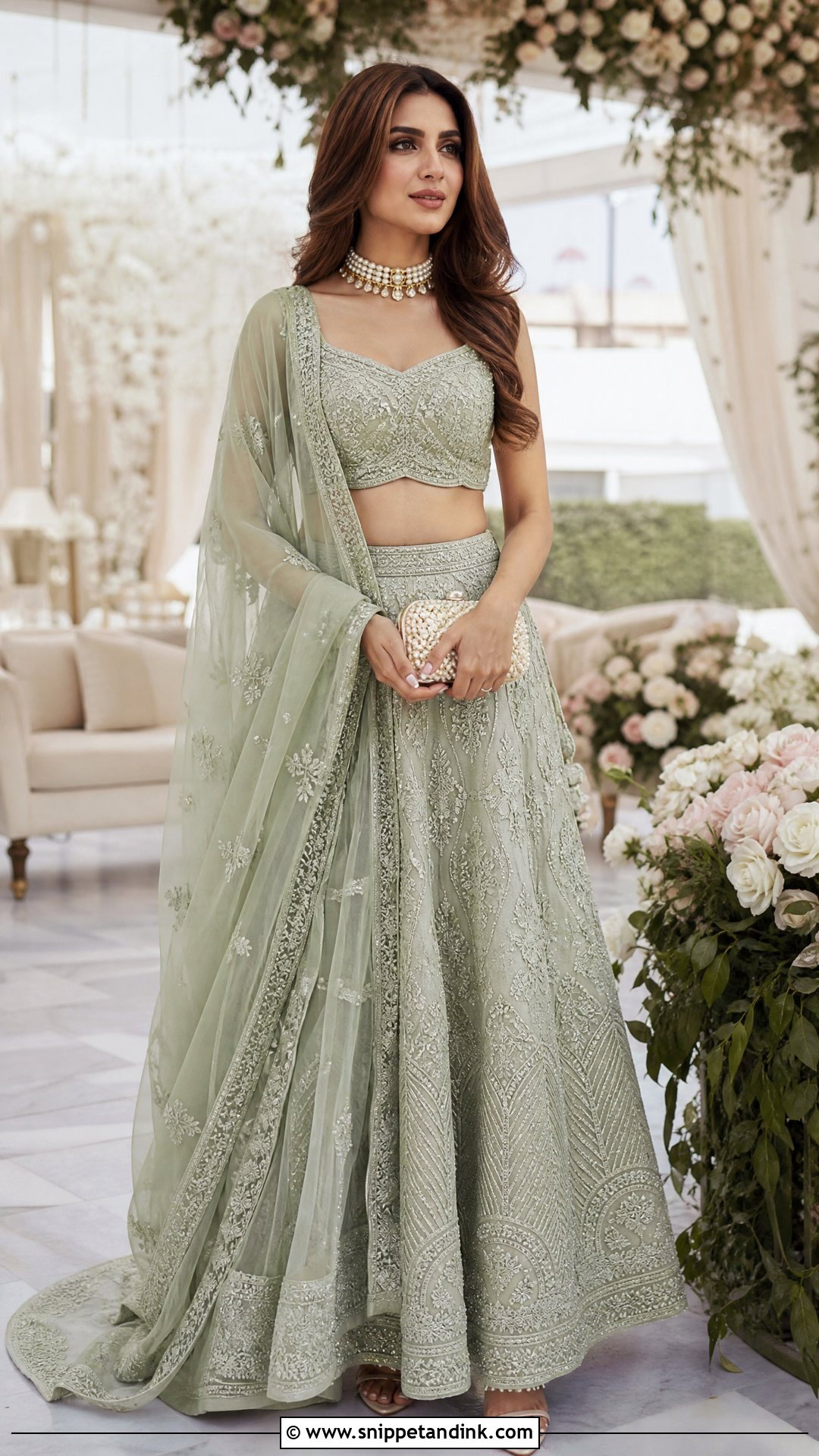
Chikankari is shadow-work hand embroidery, traditionally white on fine fabric, so it looks intricate without being loud. Ivory, blush, sage, powder blue or lavender with tonal threadwork, pearls and a little sequin or mukaish work suit a daytime wedding. A fitted blouse and sheer dupatta edged to match keep it airy. A pearl-and-kundan choker, small drops, a beaded clutch and nude heels complete it. The fabric is delicate, so I steer people away from it if they’ll be sitting on rough floor seating or carpets with hooks. Guests in ivory should add colour through jewellery, such as an emerald clutch or rose-toned earrings.
13. Heavy Peplum Sharara for Wedding
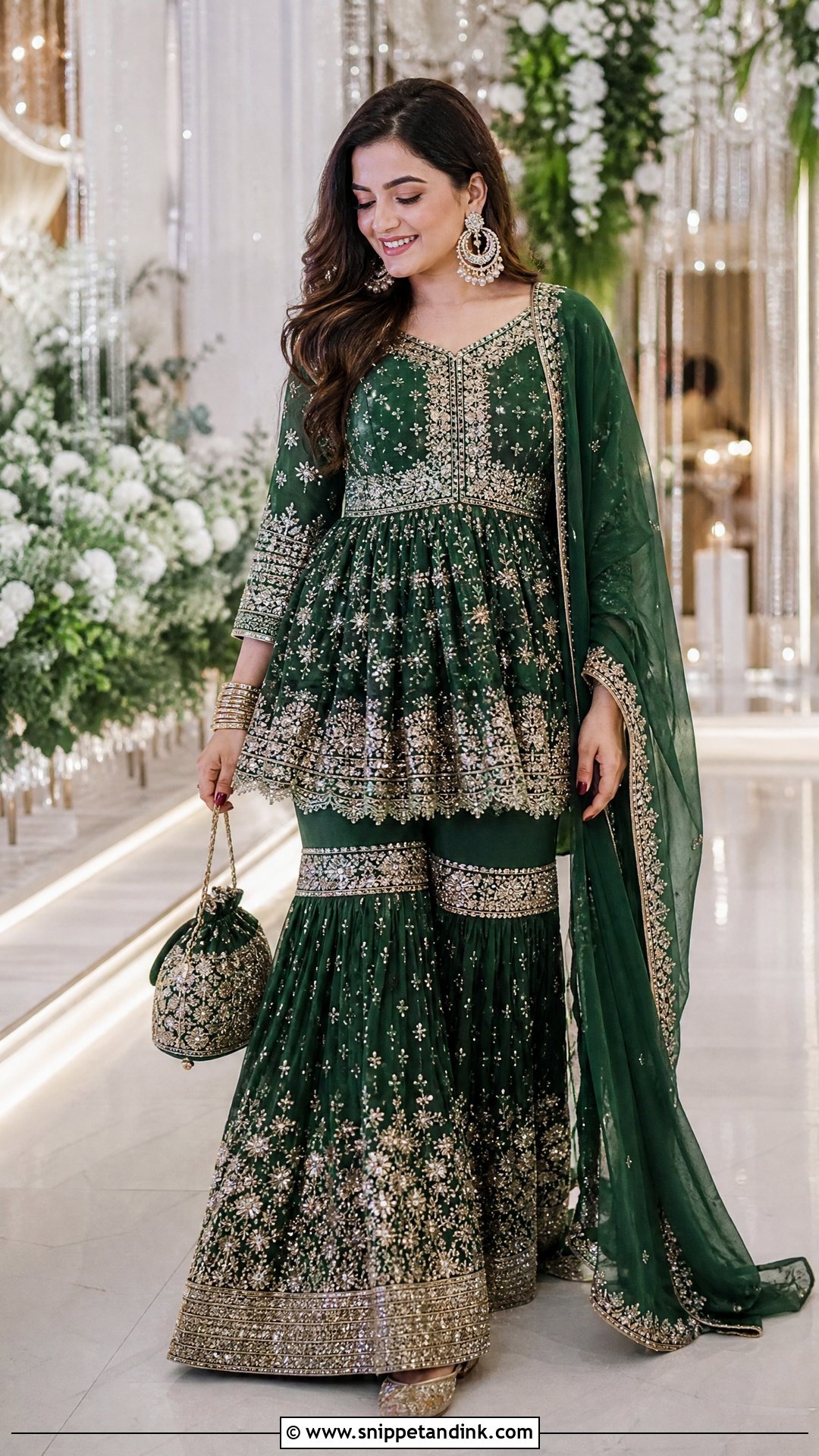
A structured peplum fixes the one problem wide sharara pants sometimes create: losing the waist. Choose silk, georgette or brocade with embroidery across the bodice and around the lower flare. A slightly longer peplum gives comfortable coverage while still looking tailored. I’d pair it with a light dupatta or one attached at the shoulder so it can’t fall during dancing. Chandbalis, stacked bangles, embroidered juttis and a small potli are enough. A high ponytail or loose braid keeps the neckline in view. Emerald, berry, peacock blue and burnt orange all look rich in evening light.
14. Heavy Palazzo Suit for Wedding
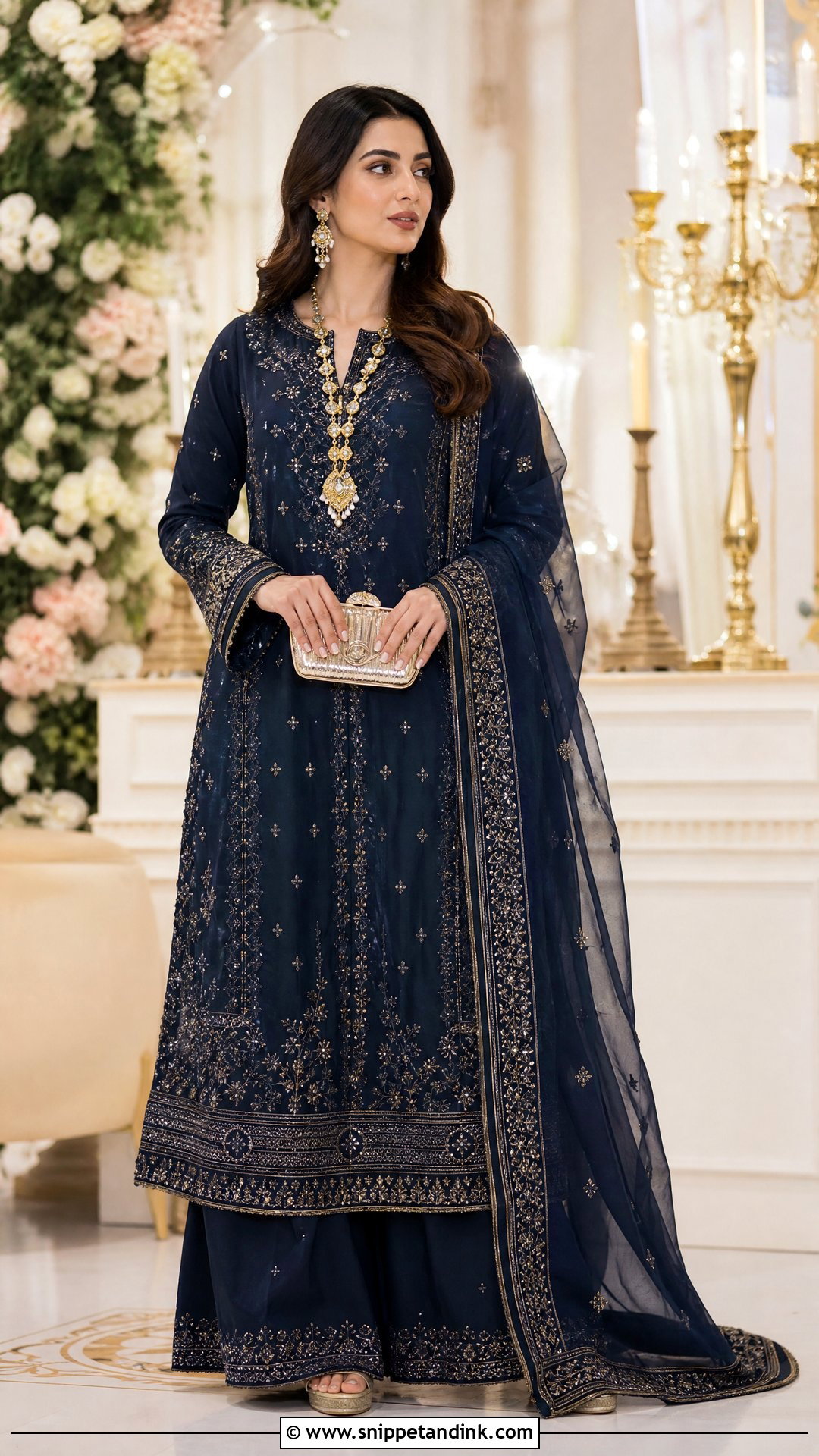
Palazzos are comfortable, which is the whole argument for this outfit. A straight or gently flared kurta does the heavy lifting with beadwork, zari or sequins at the neckline, cuffs and hem, while the pants stay a little plainer. Add an organza or net dupatta with a detailed border, a long necklace, matching earrings, a hard-case clutch and platform sandals. A smooth blowout or low bun makes it formal. Watch the palazzo length in your actual shoes; too long, and the hem frays on venue floors before the evening ends. It’s a smart choice for long seated ceremonies.


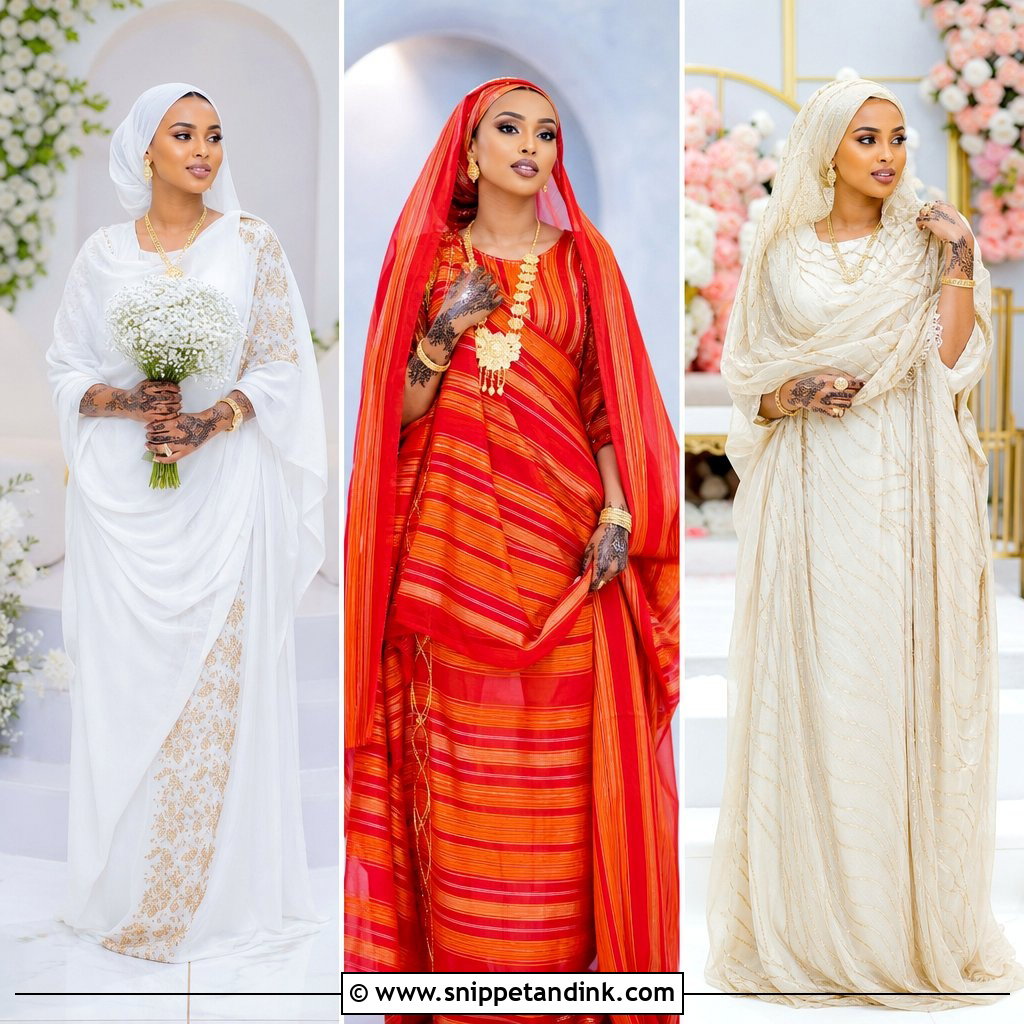
15. Heavy Draped Skirt Outfit for Wedding
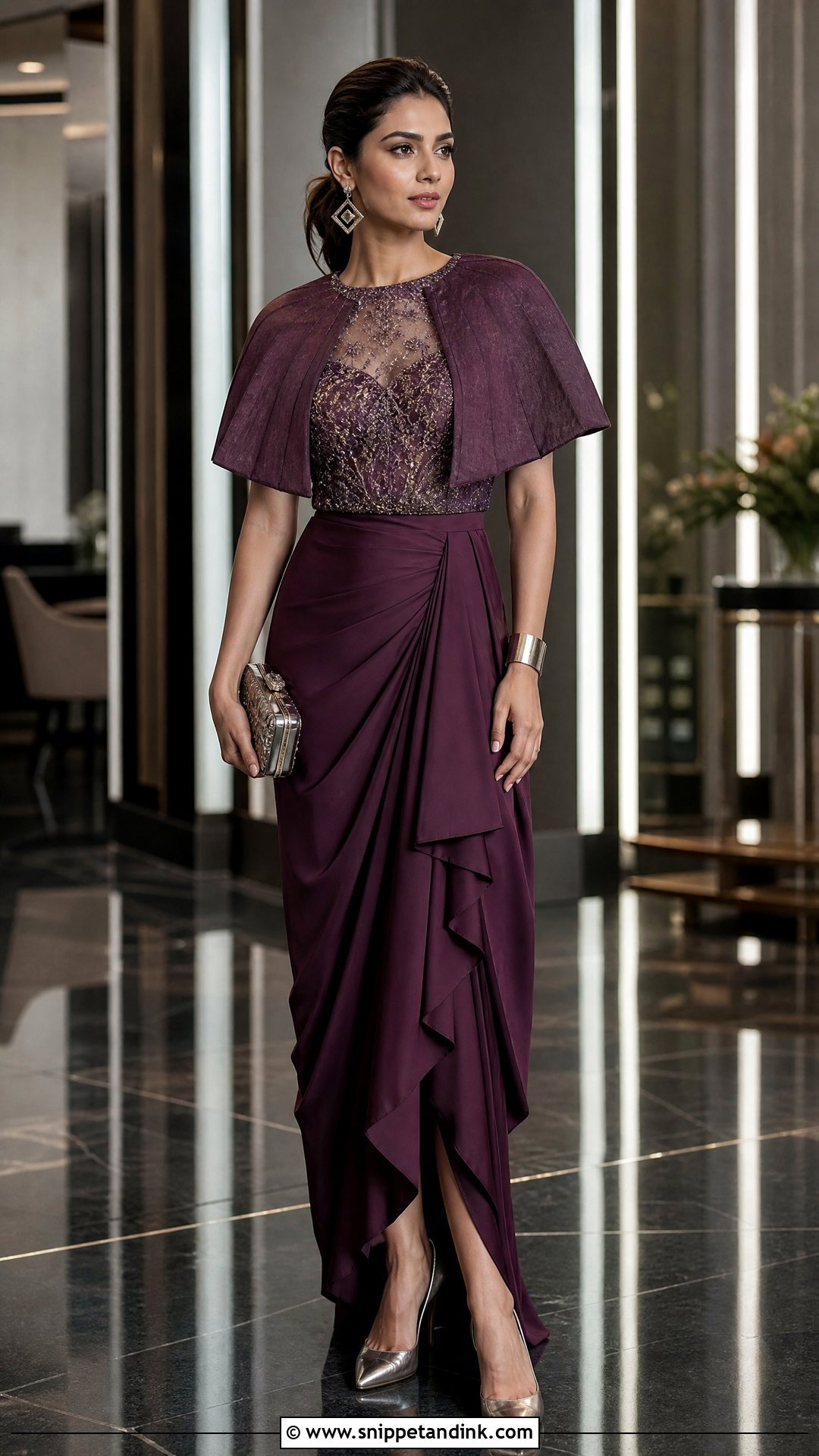
For a modern fusion look, a pre-draped skirt with an embellished blouse and a structured overlay feels fresh. The skirt can be gathered, front-pleated or asymmetric; the blouse brings the richness through sequins, crystals or embroidered panels. Top it with a short cape, shoulder drape or cropped jacket. Keep everything in one colour family, because several textures in clashing shades looks chaotic. Geometric earrings, a cuff, a compact clutch and pointed heels complete it, with a sleek ponytail. Cocktail functions and receptions suit it more than a traditional ceremony.
16. Heavy Brocade Suit for Wedding
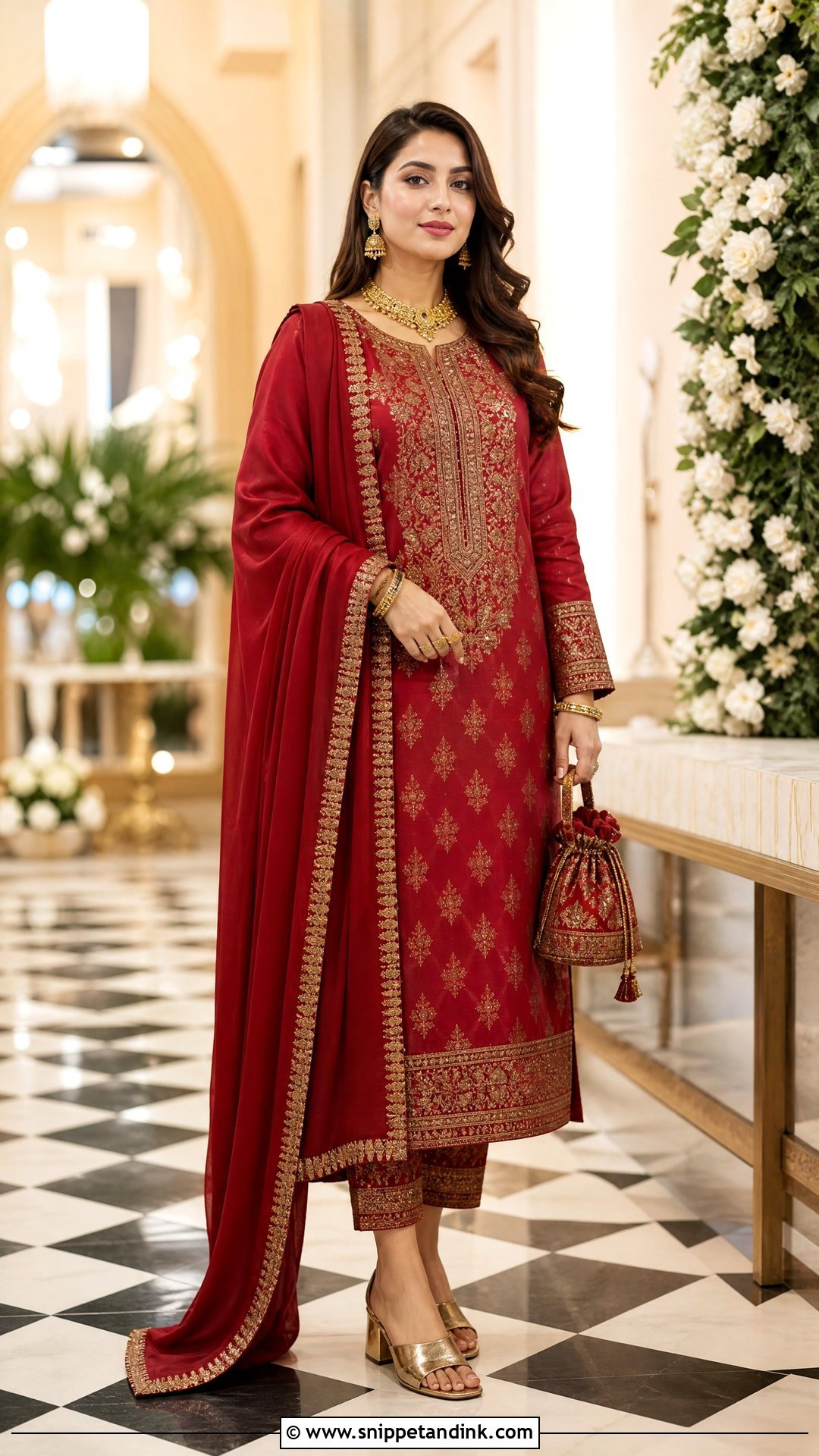
Brocade has its pattern woven in rather than embroidered on top, so even a simple straight kurta looks rich. Pair a long brocade kurta with slim or gently flared pants, and soften it with a plain silk dupatta that has a brocade border; a fully brocade dupatta is stiff and stands away from the body. Antique gold earrings, a short necklace, stacked bangles, a structured potli and low block heels finish it. Ruby, bottle green, navy and aubergine all set off gold weaving. This is the outfit I suggest to anyone who wants pieces to rewear separately afterwards.
17. Heavy Tissue Saree for Wedding
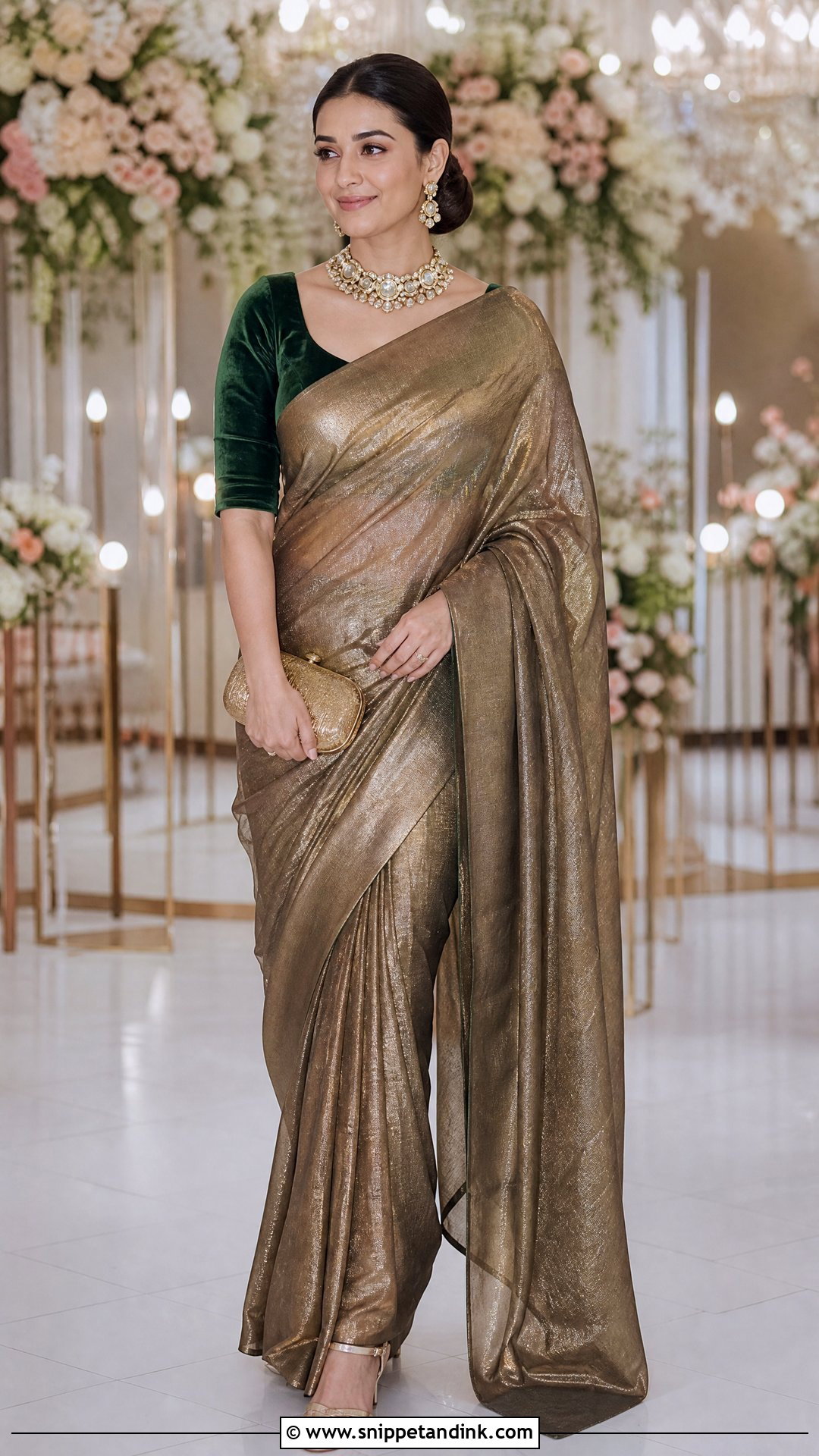
Tissue has metallic thread woven through it, so it glows without any embroidery at all. Gold, copper, silver, blush and bronze are the usual shades, paired with a contrasting velvet or brocade blouse with elbow sleeves to add structure. The fabric is crisp and holds volume, which makes the pallu puff up at the shoulder; I pleat it narrowly and pin it flat. Tissue also creases sharply, so steam it on the day rather than pressing hard. Kundan earrings, a slim choker, a metallic clutch and heeled sandals are enough. Keep the makeup soft if the saree is very reflective.
18. Heavy Embroidered Gown for Wedding
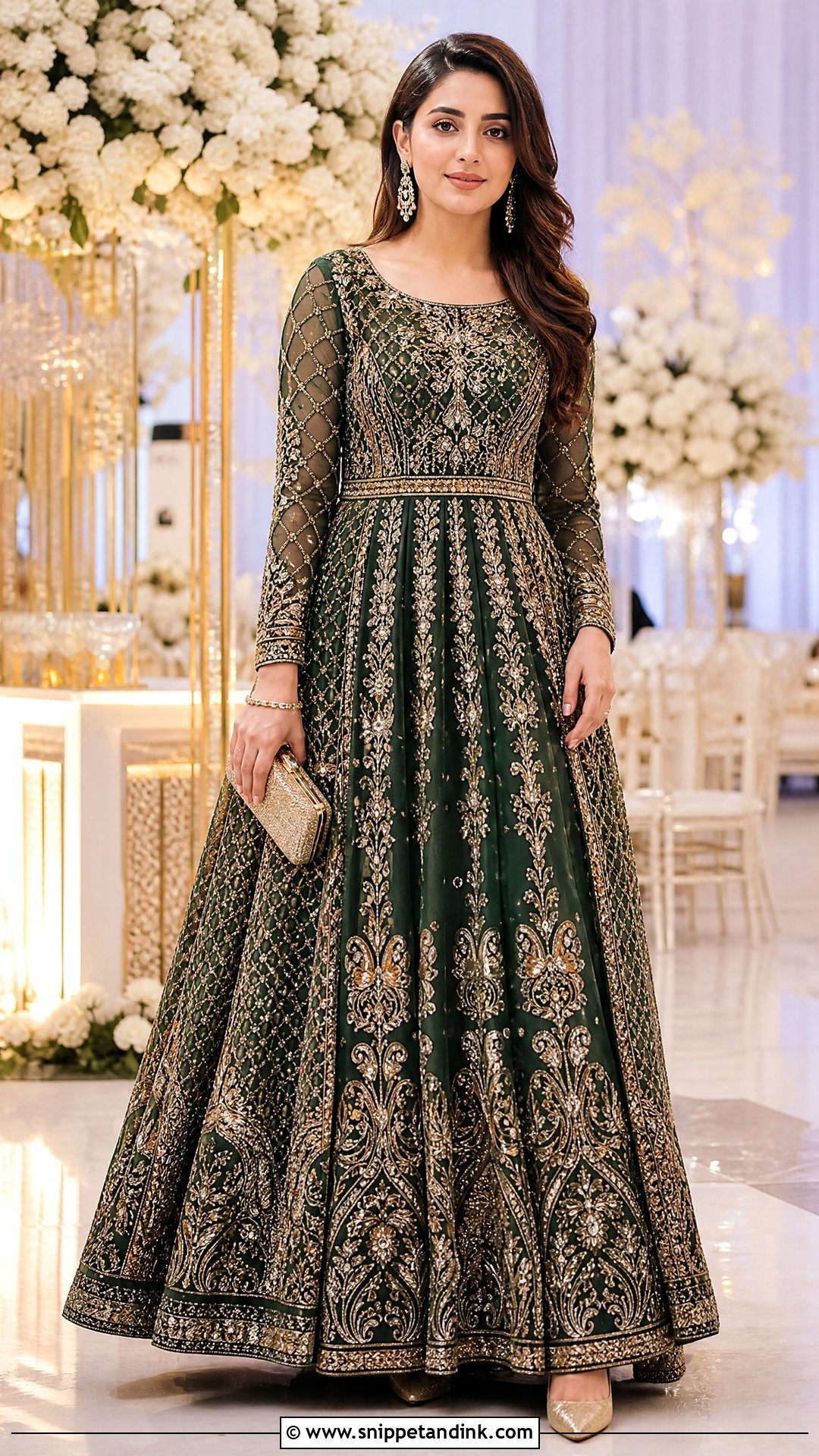
A floor-length embroidered gown suits receptions where the dress code is contemporary and nobody wants to manage a drape. Choose an A-line or gently fitted shape with beading, sequins, appliqué or metallic thread across bodice and skirt. Supportive straps or sleeves make a heavily beaded bodice far more comfortable over a long evening. Crystal earrings, a small clutch, closed-toe heels and one bracelet complete it, and a polished updo keeps it formal. Deep blue, forest green, burgundy and graphite read rich without looking bridal. Sit down in it at the fitting, since beaded gowns rarely have give at the hips.
19. Heavy Dhoti Pant Set for Wedding
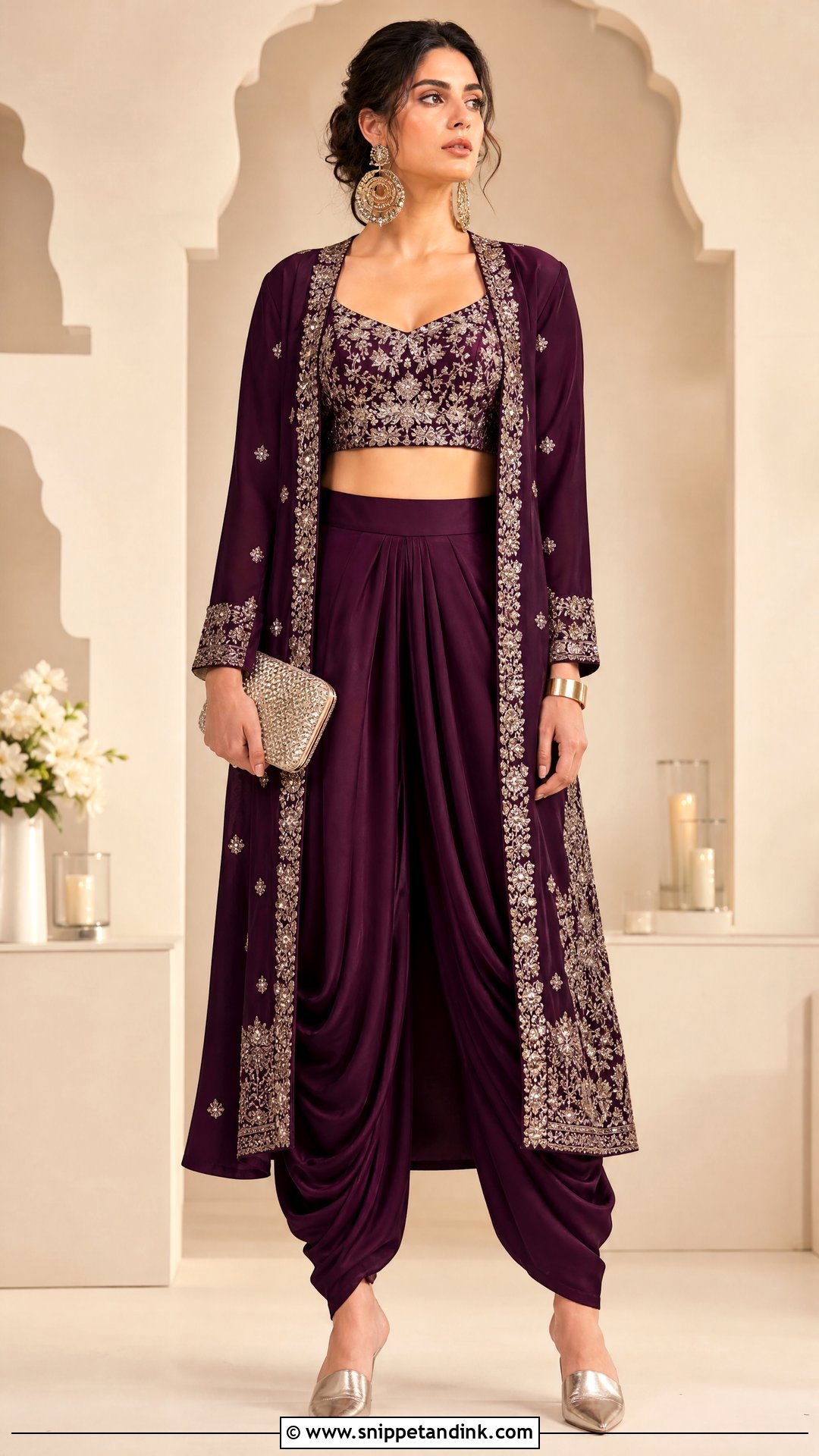
Dhoti pants make a confident Indo-Western outfit for guests bored of the usual saree or lehenga. Softly draped dhoti pants with a fitted embroidered blouse and a long jacket or shoulder drape make the full look. The silhouette is unusual, so I keep the colour to one family, plum, emerald, navy or rust, to stop it looking complicated. Sculptural earrings, a slim cuff, an embellished clutch and pointed heels or mules finish it. A high ponytail shows off the jacket. Check the dhoti hem sits clear of the floor, as the draped front can catch under a heel. Sangeets and cocktail nights suit it.
20. Heavy Organza Lehenga for Wedding
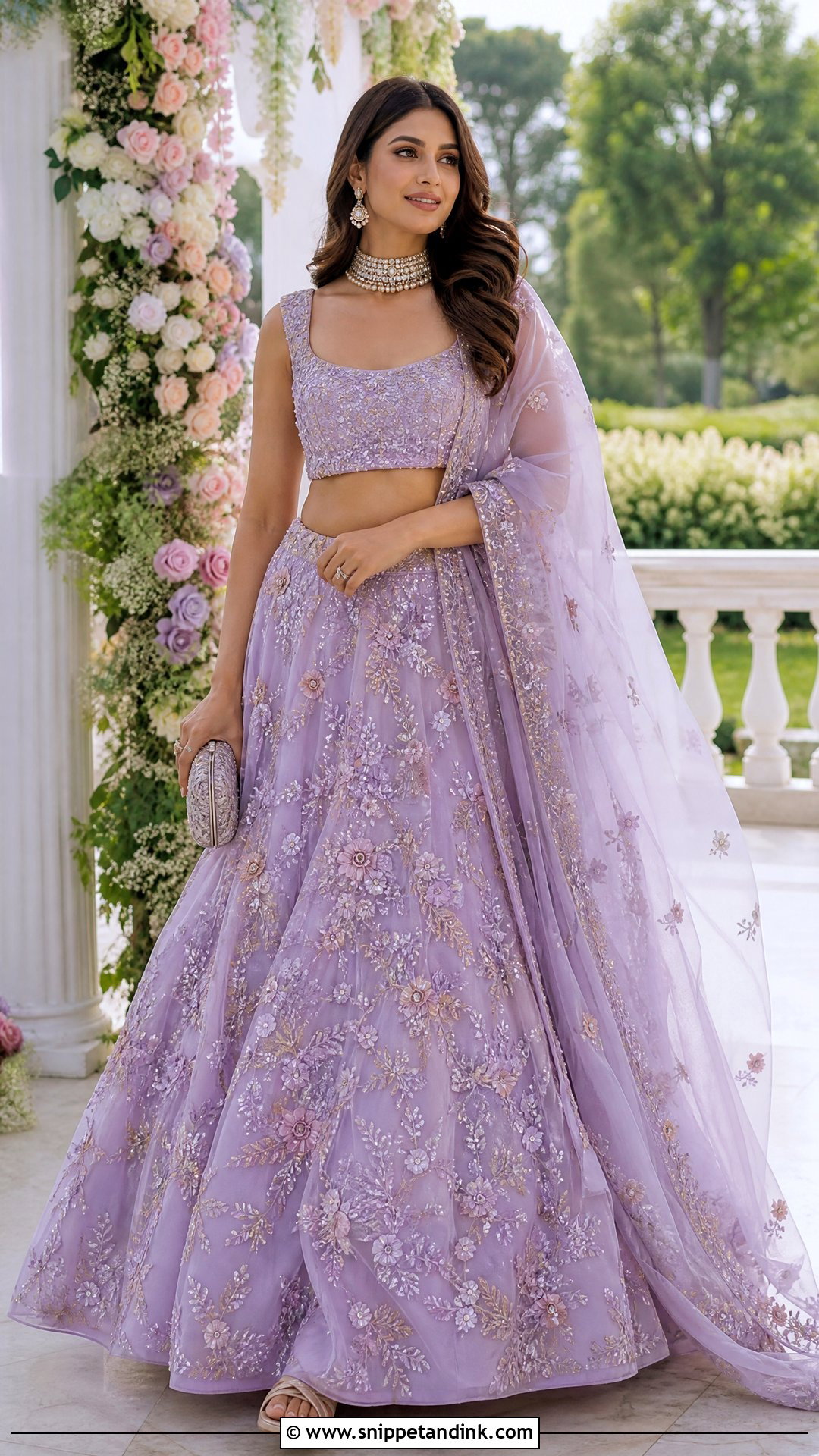
Organza gives you volume without weight, which makes it my top recommendation for summer weddings and long daytime ceremonies. Embroidered florals, sequins or an ornate border decorate the skirt, with a fitted blouse and sheer dupatta. Rose, lilac, mint, powder blue and warm beige suit daylight; deeper tones carry into evening. The one drawback is that organza crushes when you sit for long, so smooth the skirt as you stand and avoid packing it tightly. Pearl earrings, a delicate choker, an embroidered clutch and stable block heels complete it. Pin the dupatta at shoulder and wrist, since the airy fabric catches every breeze.
Getting a Heavy Outfit to the Venue in One Piece
Most damage to embellished clothing happens in transit and in hotel rooms, not on the dance floor. A little planning saves the outfit.
- Carry heavy pieces folded flat in a breathable cotton garment bag with tissue between the layers. Hanging a weighted lehenga in a car stretches the waistband.
- Steam rather than iron. If you must press zari or sequins, do it from the reverse with a cotton cloth between the iron and the fabric, on low heat.
- Pack a small kit: safety pins in two sizes, a needle threaded in your outfit colour, fashion tape and a lint roller.
- Sit on the back of the skirt in the car rather than bunching it under you; velvet and organza both mark easily.
If you’re changing between functions on the same day, lay out each outfit with its jewellery and shoes in separate bags the night before. A missing earring back or a forgotten dupatta pin causes more panic in a hurried change than almost anything else, and both are easy to prevent.
Does It Still Feel Good at Midnight?
A heavy outfit has done its job if you forget about it while you’re celebrating. Start with the silhouette that suits the function, then balance its strongest detail with sensible shoes, secure draping and jewellery that doesn’t compete. Fabric weight and construction matter as much as colour, so try the whole look, including shoes and jewellery, at home before the day. And whatever you choose, respect the couple’s dress code and leave the bridal reds and bridal styling to the bride.
You'll Like These Ideas:




Leave a Reply