
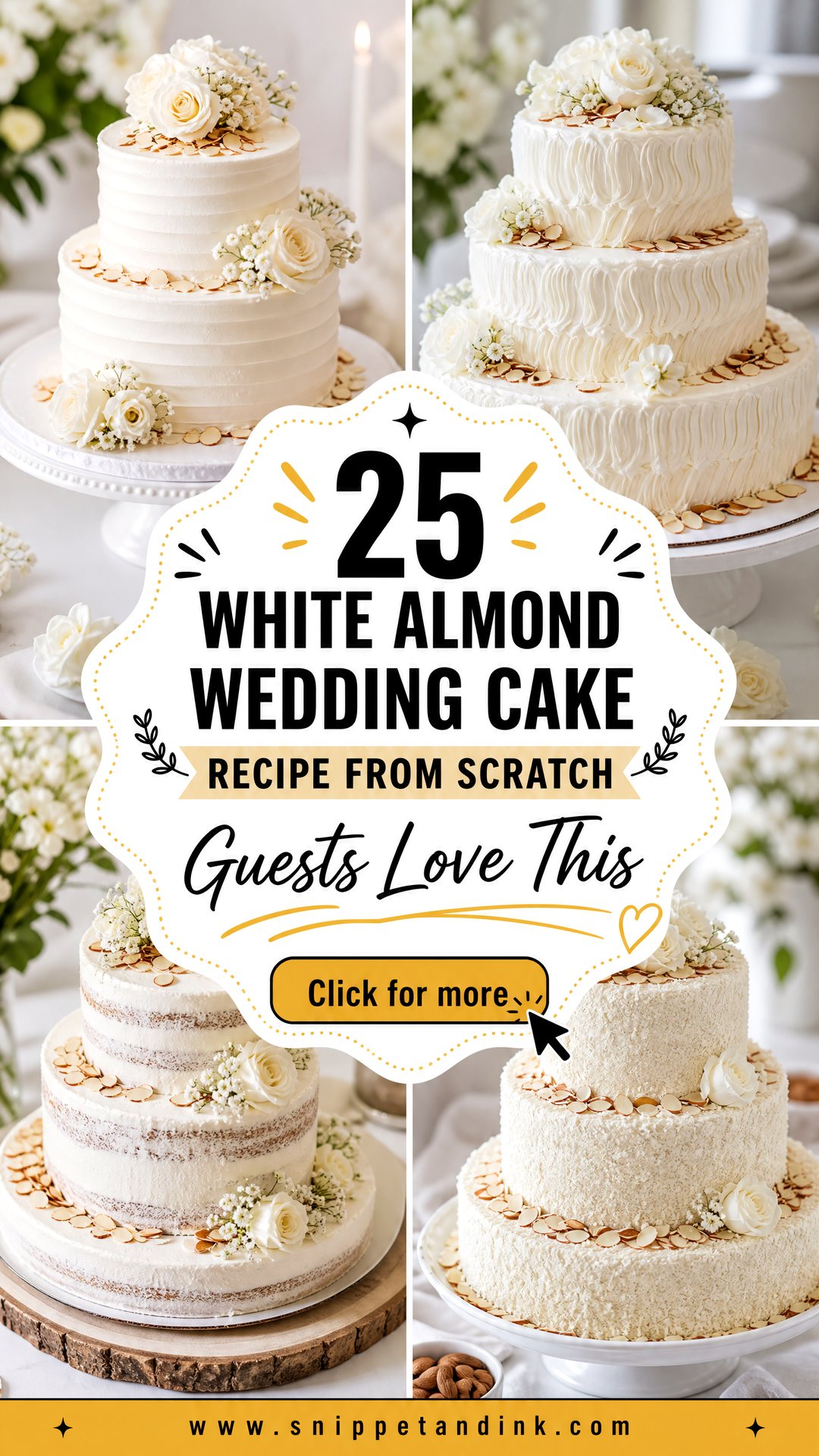
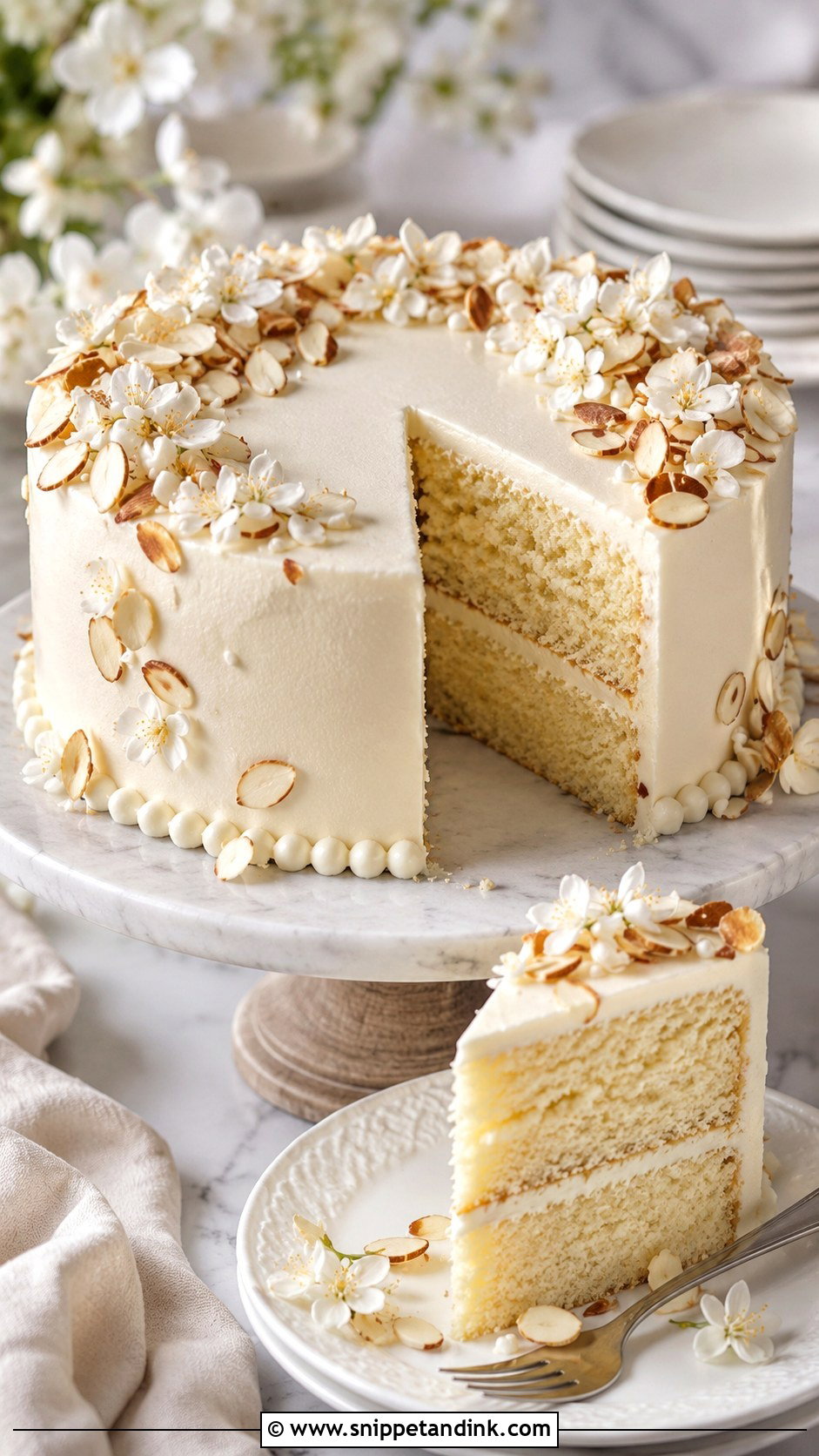
White almond is the flavor I get asked to bake more than any other, and I think it’s because nobody has to be talked into it. The crumb is pale and fine, the almond extract reads as “wedding cake” the moment a slice is cut, and it carries almost any filling without fighting it. Making it from scratch matters here because box mixes rely on emulsifiers to stay soft, while a scratch batter gets its tenderness from cake flour, egg whites and careful mixing. Below are the 25 versions I’d actually build, from a plain classic to fruit-filled tiers, each with the detail I watch for when I make it.
A Baking Schedule for White Almond Layers That Stay Moist
A from-scratch wedding cake is never baked on the day. The question is how far ahead you can go without the crumb drying out, and white almond cake, made with whites only, dries faster than a yellow cake enriched with yolks.
This is the timeline I work to for a weekend wedding:
- Up to two weeks ahead: bake the layers, cool them completely, then wrap each one twice in plastic and freeze. Freezing a properly wrapped layer locks in moisture rather than taking it away.
- Three days ahead: make the buttercream and fillings. Swiss meringue buttercream keeps well in the fridge and just needs rewhipping at room temperature.
- Two days ahead: thaw the layers in their wrap, so condensation forms on the plastic and not on the cake. Level, torte and fill them while they’re still cool, then crumb coat and chill.
- The day before: final coat, piping and stacking. Leave fresh flowers and fresh fruit until the day.
Brushing each layer with a light simple syrup before filling helps if you’re baking at the far end of that window. A little almond extract in the syrup makes the flavor carry through every bite.
Scaling One Recipe Up to Tiers
The most common home-baking mistake I see is multiplying a recipe in one giant bowl. Scratch almond batter relies on air beaten into butter and sugar, and a stand mixer can’t cream a triple batch as well as a single one. Mix in separate batches instead, sized to each tier’s pans.
Bake depth matters too. Pans over 10 inches need a baking strip around the outside and a heating core in the center, or the edges overbake while the middle is still raw. Bake two shallow layers per tier rather than one deep layer you have to split. Serving counts vary with how generously the cake is cut, so ask whoever is slicing which size they use before deciding how many tiers you need.
1. Classic White Almond Wedding Cake Recipe From Scratch
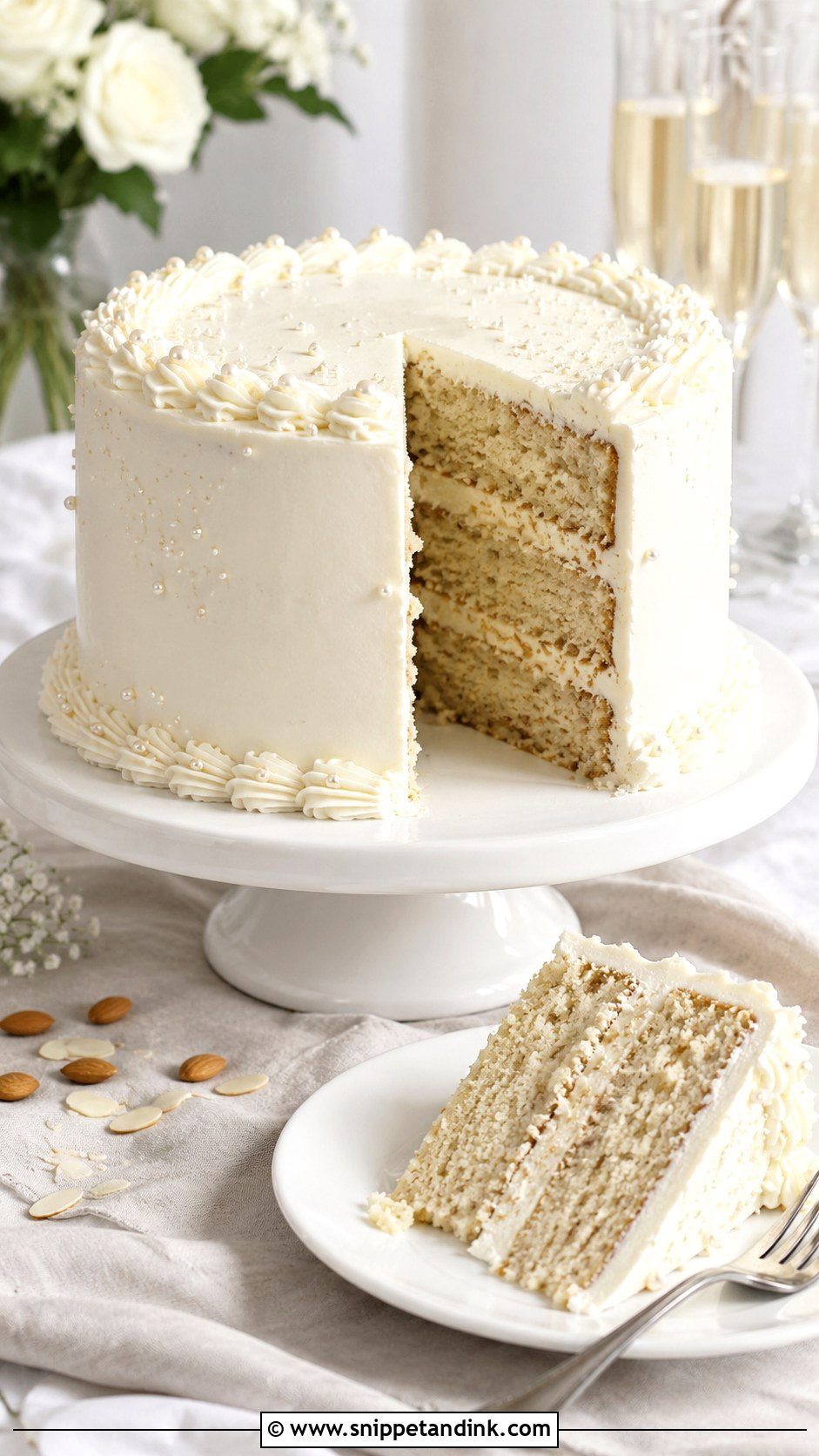
The base recipe is egg whites, cake flour, butter, sugar, milk, vanilla and almond extract. I cream the butter and sugar for a good four or five minutes, because that air is most of your lift, then alternate dry and wet additions so the batter never splits. Cold milk straight from the fridge will seize creamed butter, so everything sits out for an hour first. Pull the layers when the centers spring back and the edges have only just left the pan. This is the cake I’d hand to anyone baking their first two-tier.
2. White Almond Sour Cream Wedding Cake Recipe
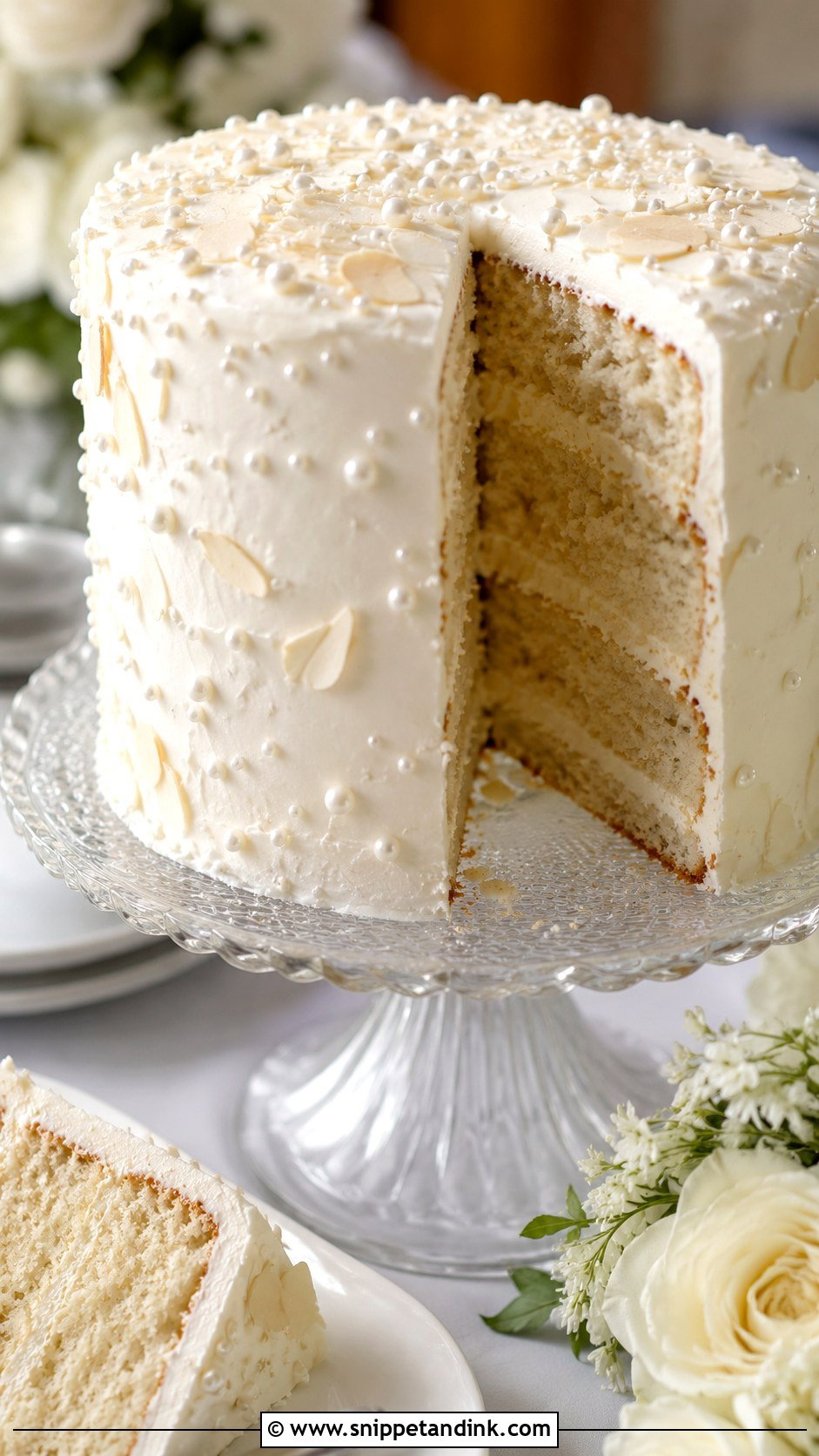
Sour cream is my quiet fix when someone tells me their almond cake always comes out dry. It makes white almond wedding cake extra moist without any tang you can taste, because the fat and acid tenderize the gluten rather than flavoring the crumb. Fold it in with the milk, and stop mixing the second the flour disappears. These layers hold up better than most to being baked, chilled overnight and decorated the next day. Raspberry is the filling I reach for with it, spread thin.
3. White Almond Wedding Cake With Buttercream Frosting
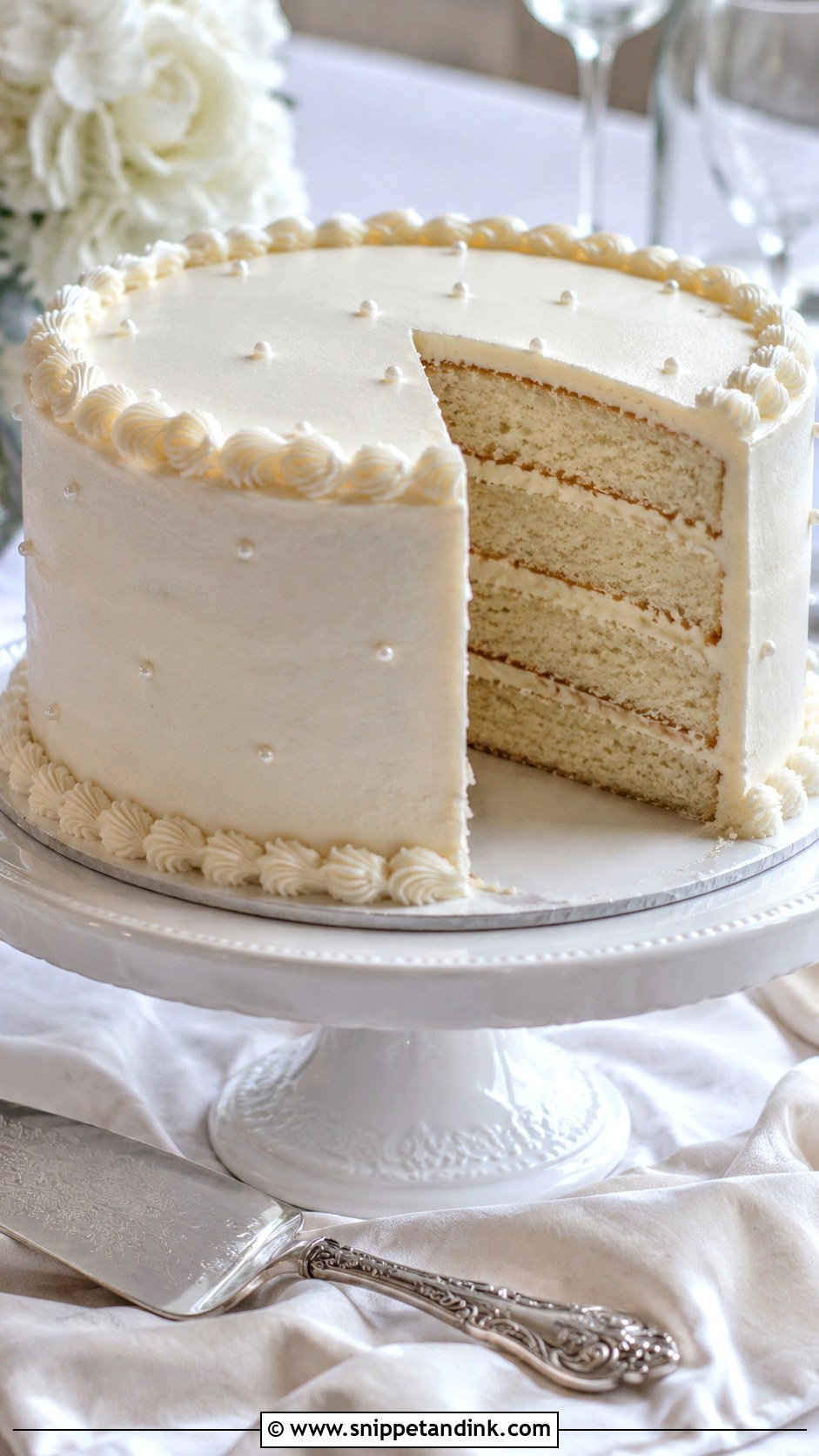
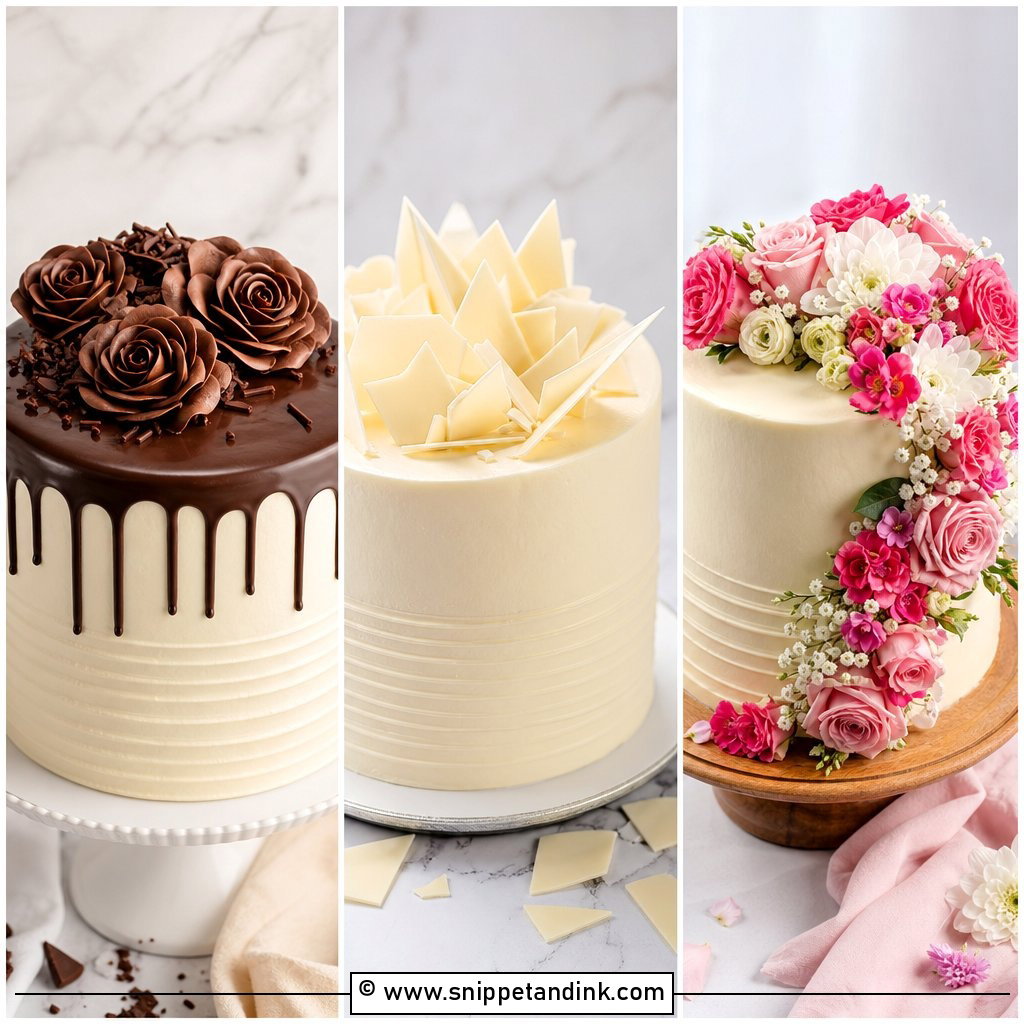
Buttercream is still the finish most couples picture. The order matters more than the recipe: cool the layers completely, fill, apply a thin crumb coat, chill until it’s firm to the touch, then put on the final coat. Skip the chill and pale almond crumbs end up freckling the outside, which shows badly on a white cake. A soft piped border hides the seam at the board.
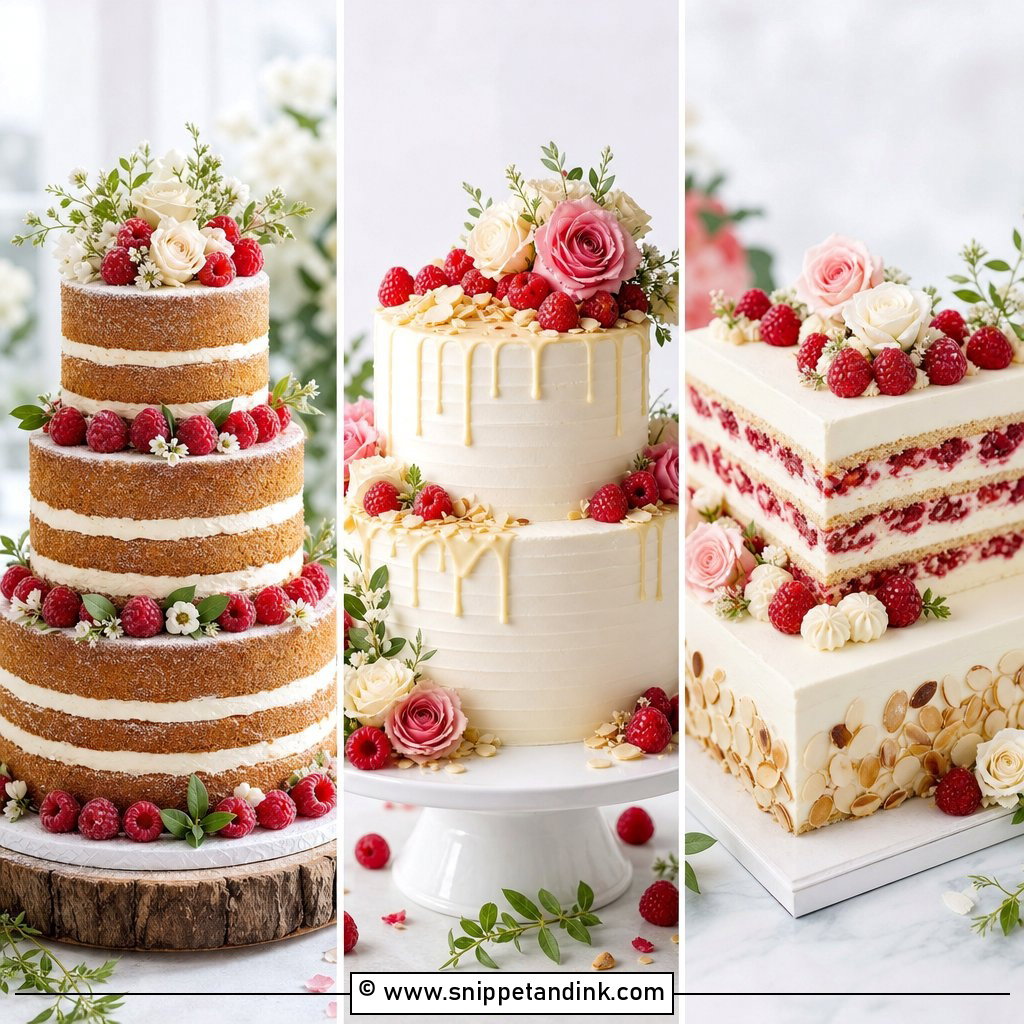
4. White Almond Wedding Cake With Raspberry Filling
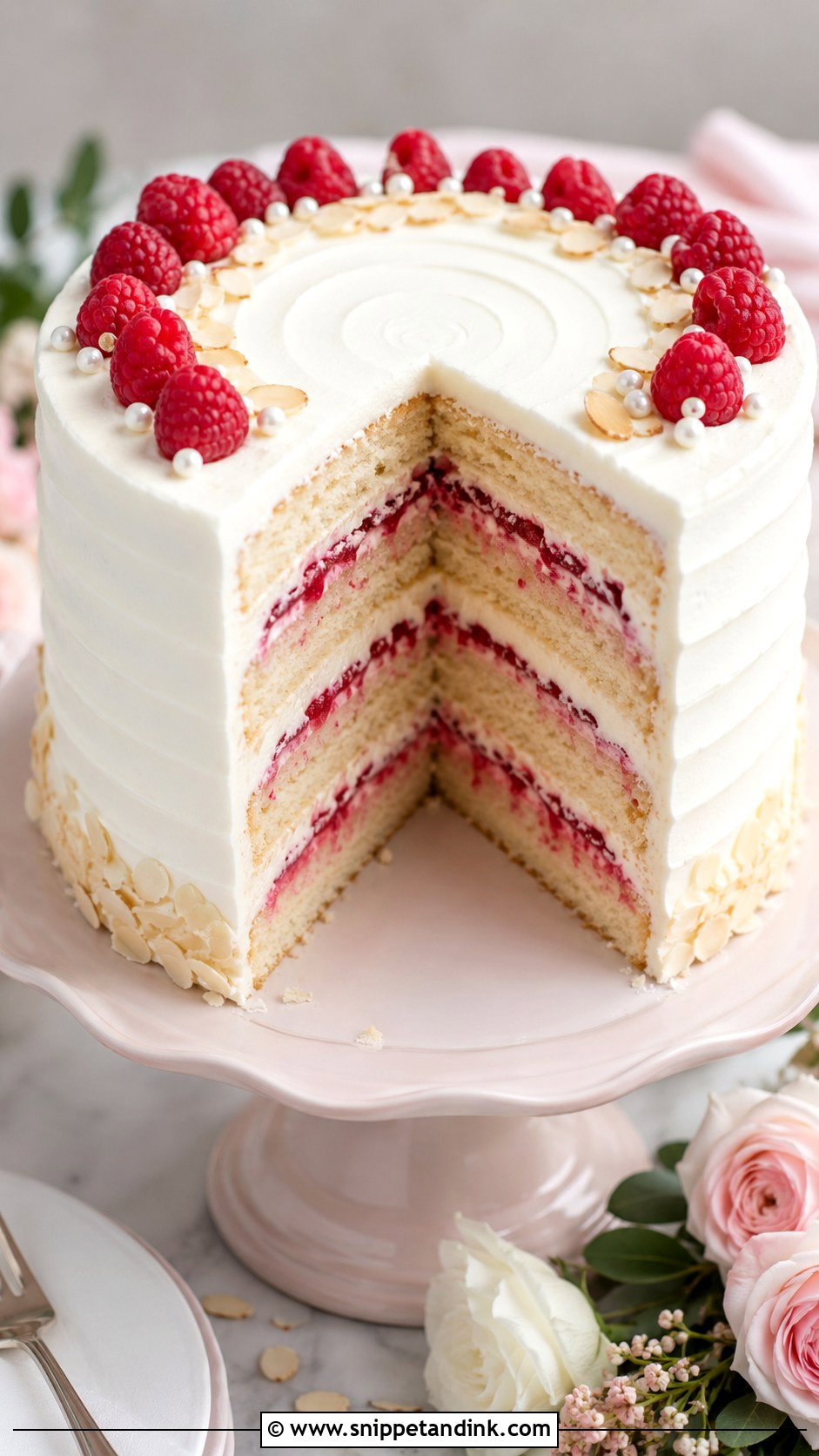
Almond and raspberry is the pairing I’d defend against anything. Fresh berries weep, so I use a cooked raspberry filling or thick seedless preserves, and I always pipe a stiff buttercream dam around the edge of each layer before the fruit goes in. Without that ring the filling creeps toward the sides and leaves a pink bulge under the frosting by the evening. Cut, it gives you a clean stripe of color against the white crumb. A few fresh raspberries on top are enough decoration.
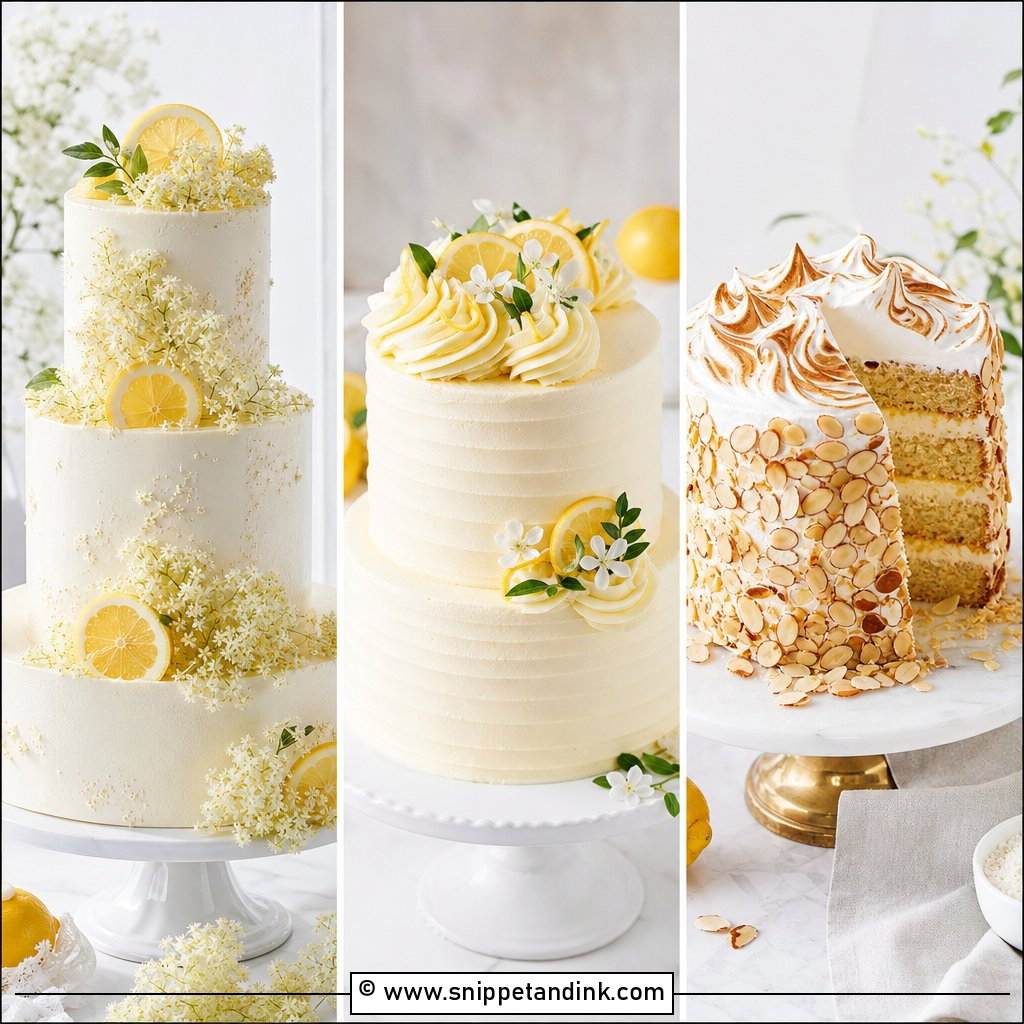
5. White Almond Wedding Cake With Lemon Curd
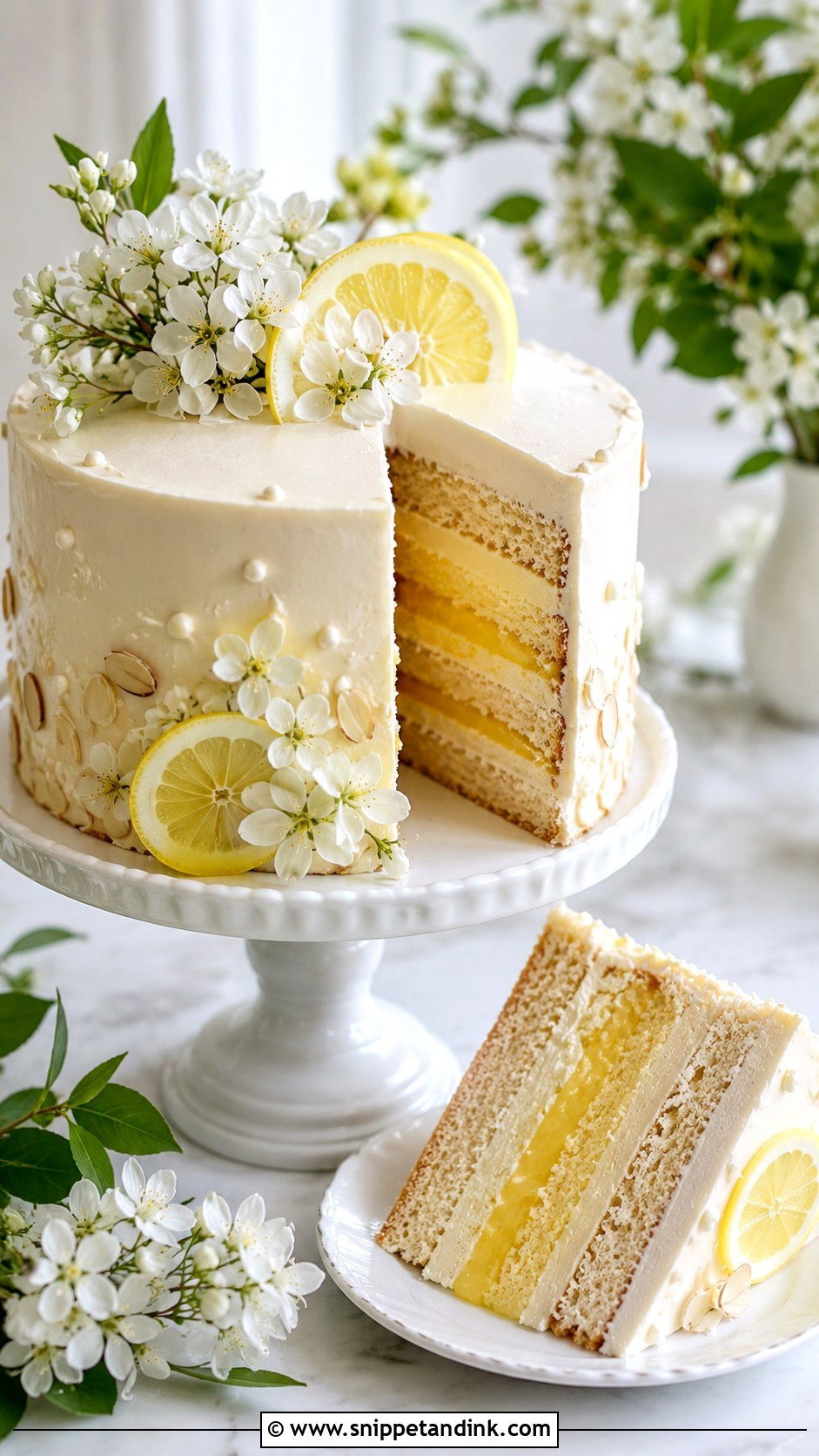
Lemon curd brings the sharpness that keeps a summer slice from feeling heavy. The curd has to be thick and fully chilled before it touches the cake; warm curd soaks into a fine almond crumb and turns the layer gummy at the center. Dam the edges just as you would for fruit. I balance it with Swiss meringue buttercream, which is less sweet than American, so the lemon stays bright instead of tasting like candy.
6. White Almond Wedding Cake With Almond Buttercream
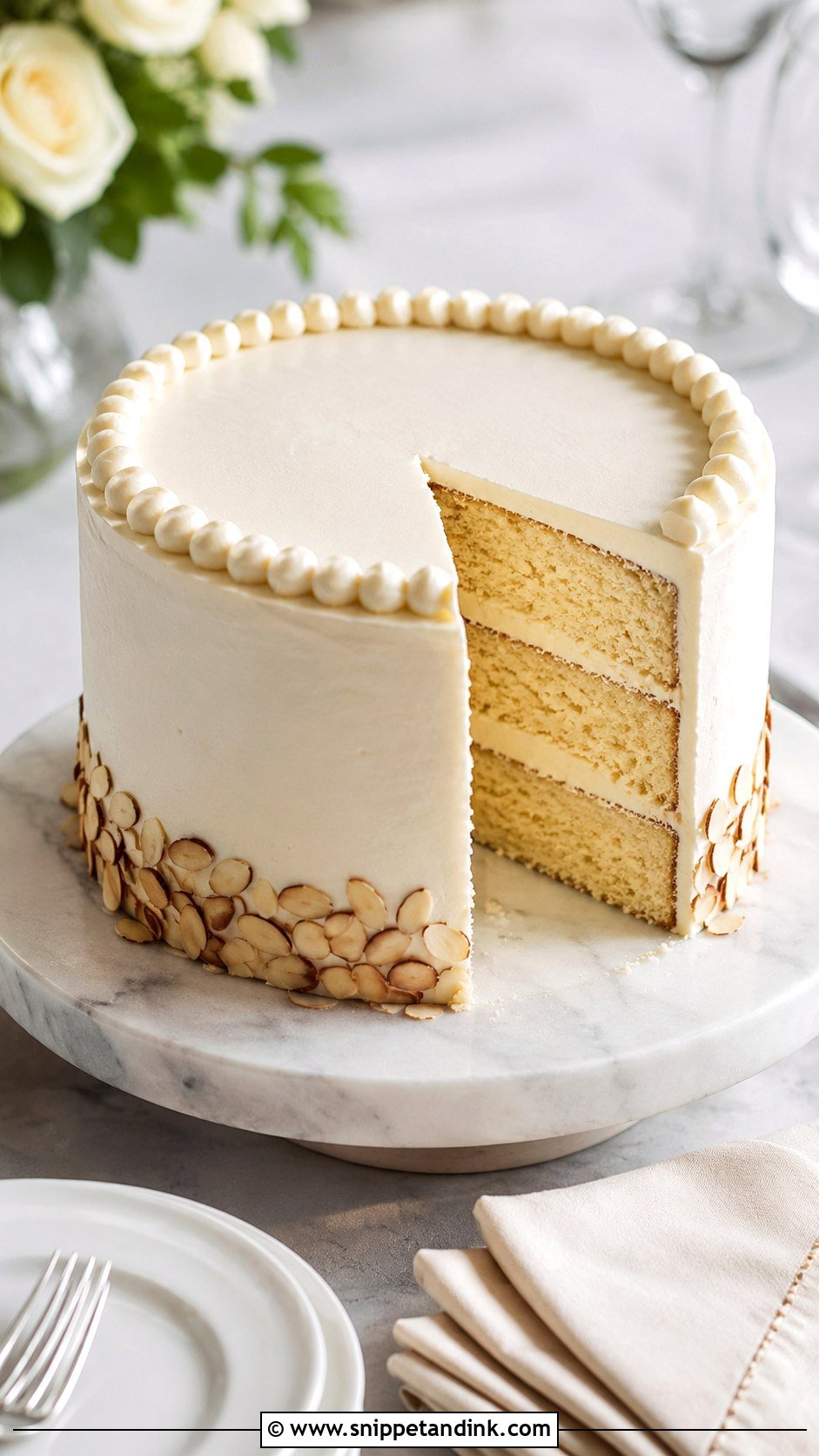
Here the almond is the whole point, so restraint matters. Extract builds fast and turns medicinal if you overdo it, and when it’s in both the cake and the frosting you need less in each than you’d think. I add it to the buttercream a few drops at a time and taste on a plain cracker. Keep the outside simple. Toasted sliced almonds pressed around the base tell guests what flavor they’re about to eat.
7. White Almond Wedding Cake With Cream Cheese Frosting
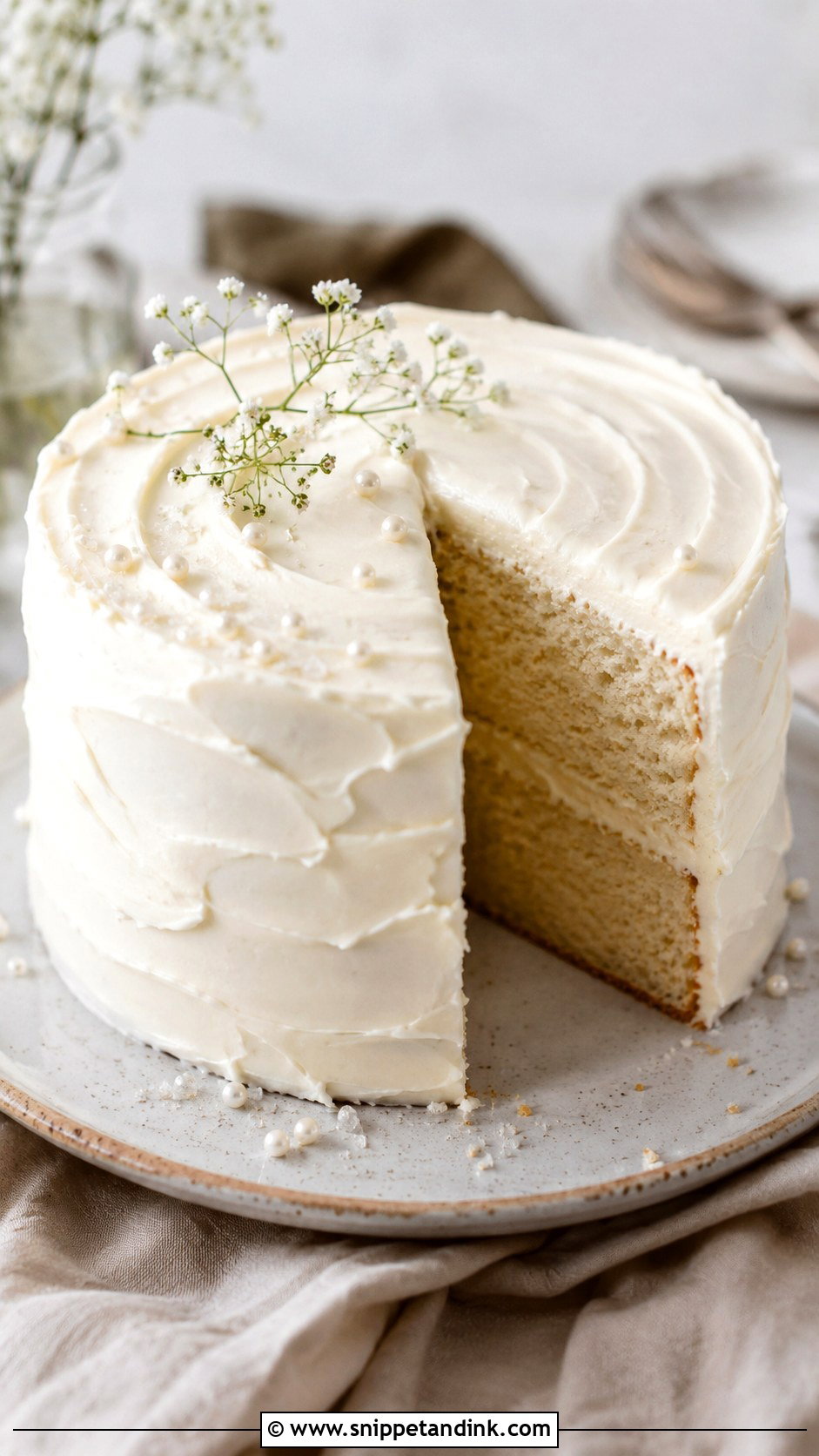
Cream cheese frosting cuts the sweetness with a little tang, but I’ll be honest about its limits: it’s softer than buttercream and doesn’t like a warm room or a tall stack. I keep it to a single tier or a small two-tier that stays refrigerated until shortly before cutting. A stable recipe uses more butter than a cupcake version and only a touch of almond extract. Expect a softer edge rather than a crisp one.
8. White Almond Wedding Cake With Swiss Meringue Buttercream
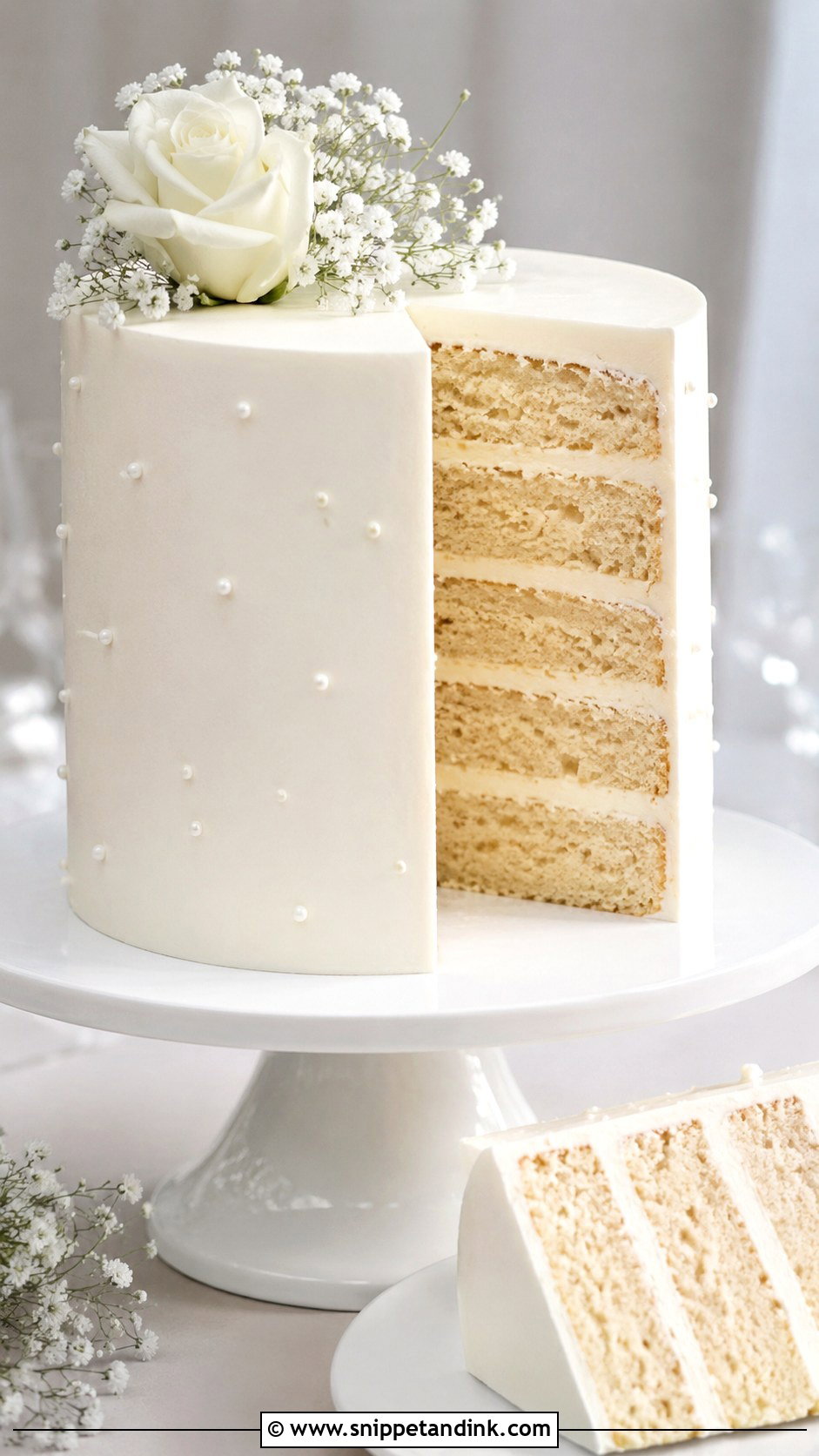
Swiss meringue buttercream is what I use on most of my almond cakes. You heat the egg whites and sugar until the sugar dissolves, whip them into a glossy meringue, then beat in butter until it comes together. If it looks curdled halfway through, keep whipping; it almost always rights itself. It spreads silky and holds a sharp top edge, and it’s less sweet, so the almond comes through. Sugar pearls or a single floral cluster are plenty.
9. White Almond Wedding Cake With Ermine Frosting
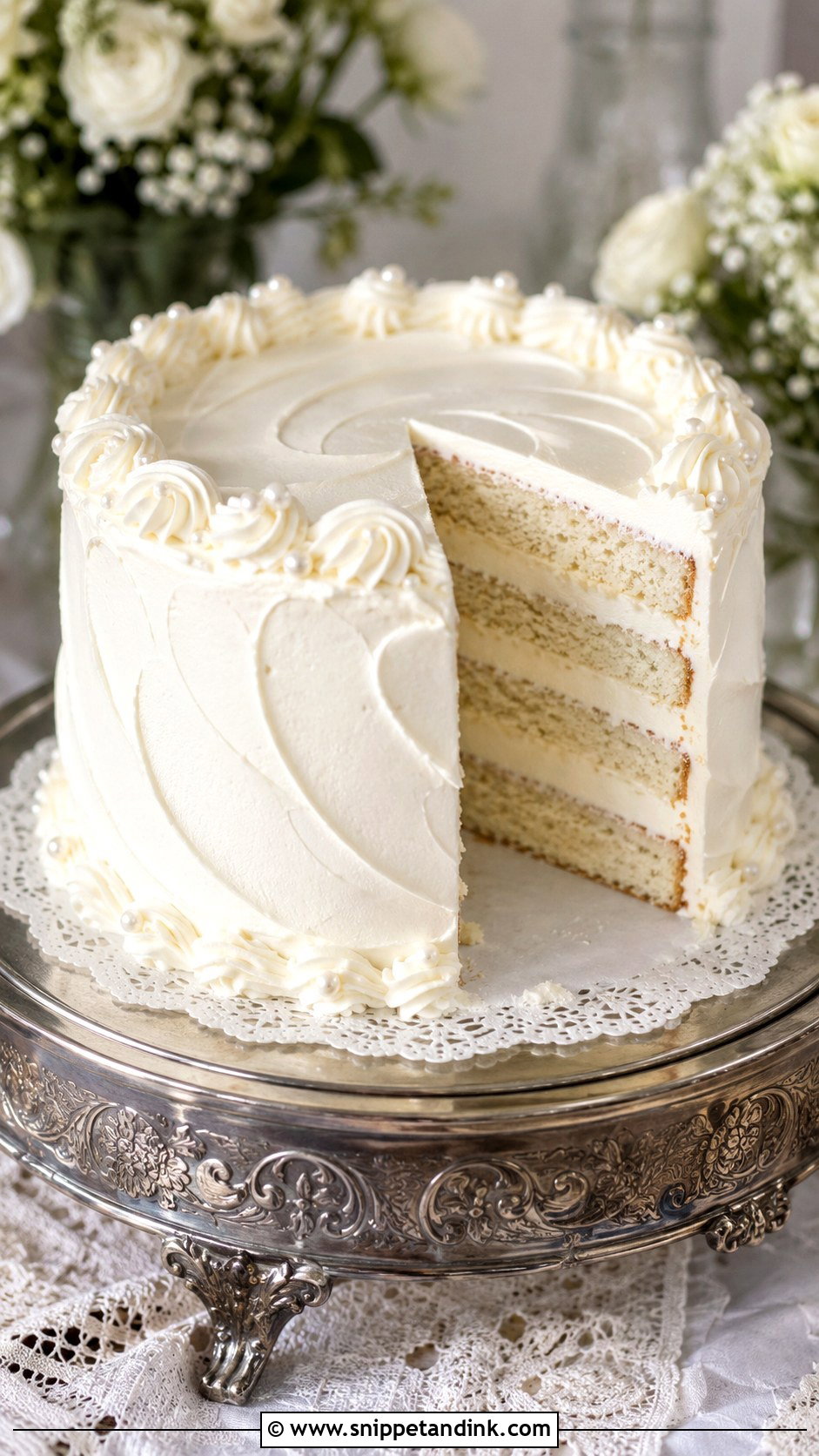
Ermine is the old cooked-flour frosting, and it deserves more use. You cook flour and milk into a thick pudding, cool it completely, then whip it into butter and sugar until it’s light. The texture sits somewhere between buttercream and whipped cream, and it lets the almond lead. The one rule: the flour base must be fully cold, or the butter melts and you get soup. Piped shells and soft swoops suit its slightly vintage feel.
10. White Almond Wedding Cake With Whipped Frosting
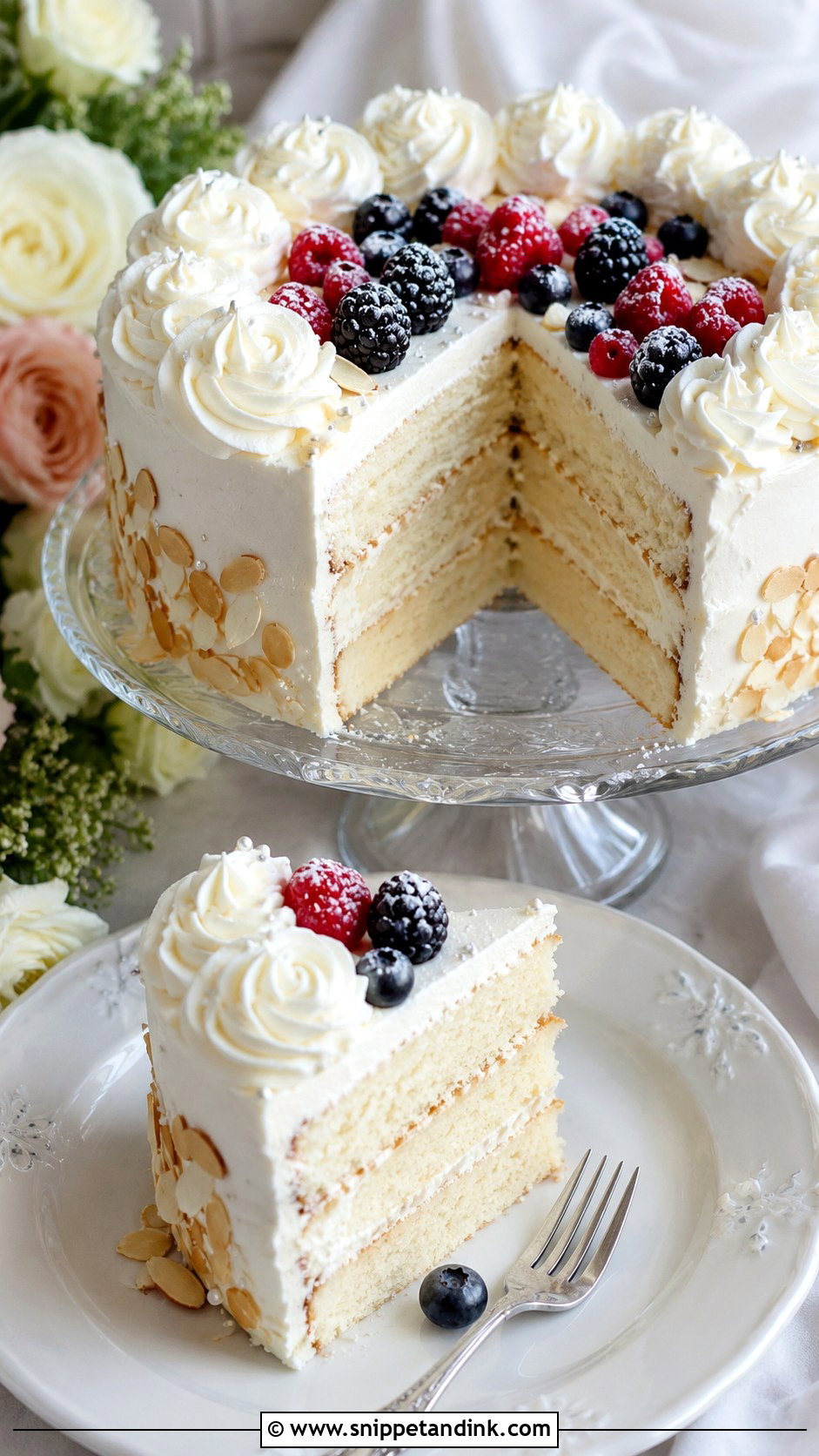
Whipped frosting is the lightest finish here, and also the most fragile. Plain whipped cream won’t hold on a wedding cake, so I stabilize it with gelatin or whip it with mascarpone. Don’t overfill the layers, because the frosting can’t brace a heavy middle. I only recommend this for an indoor reception where the cake comes out of the fridge close to serving. Rosettes and a few berries keep it fresh-looking.
11. White Almond Wedding Cake With White Chocolate Ganache
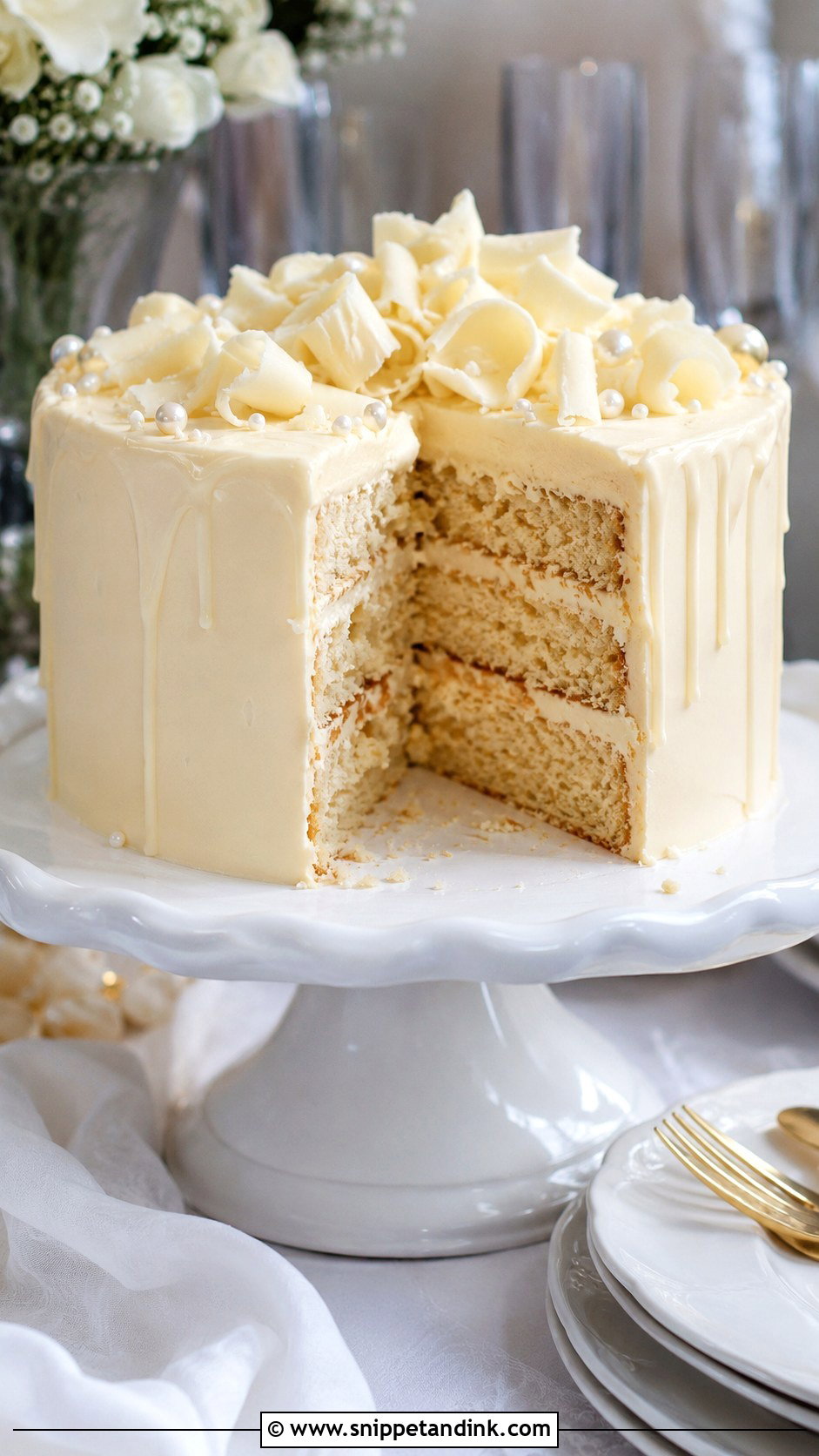
White chocolate ganache firms up as it sets, which is why I use it under fondant and as a structural shell in warm weather. It can also go between layers or run as a drip over chilled buttercream. Because white chocolate is very sweet, measure the almond extract carefully and consider a thin layer of raspberry or apricot to cut through it. For a drip, the cake must be cold and the ganache barely warm; test one drip down the back before committing to the front.
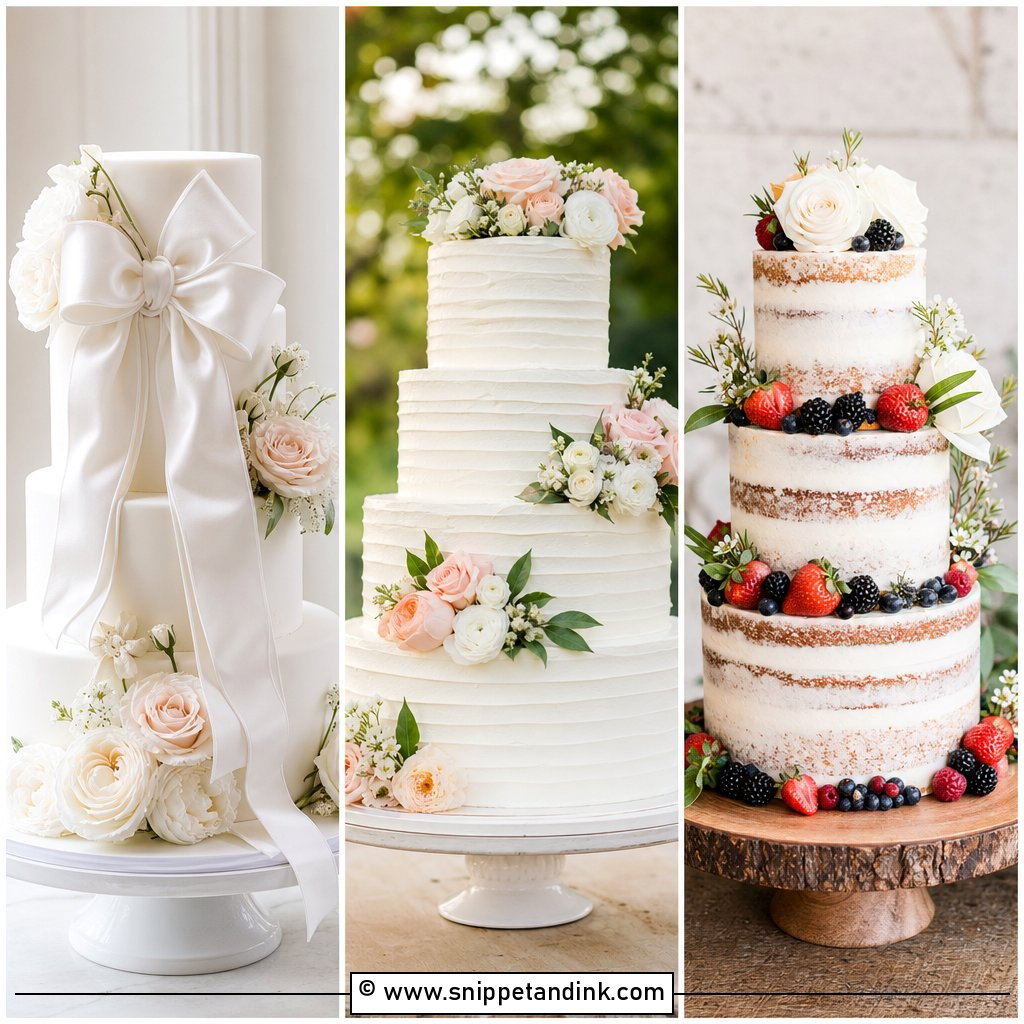
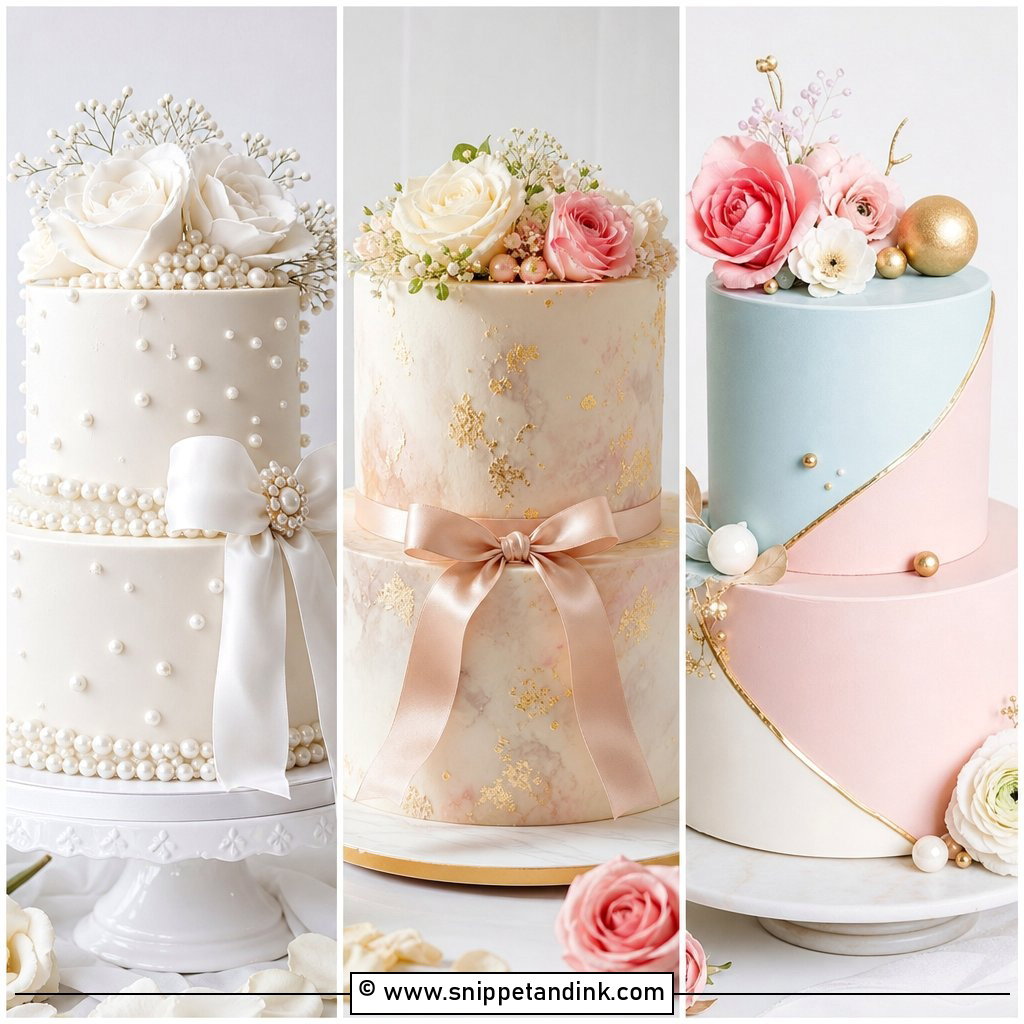
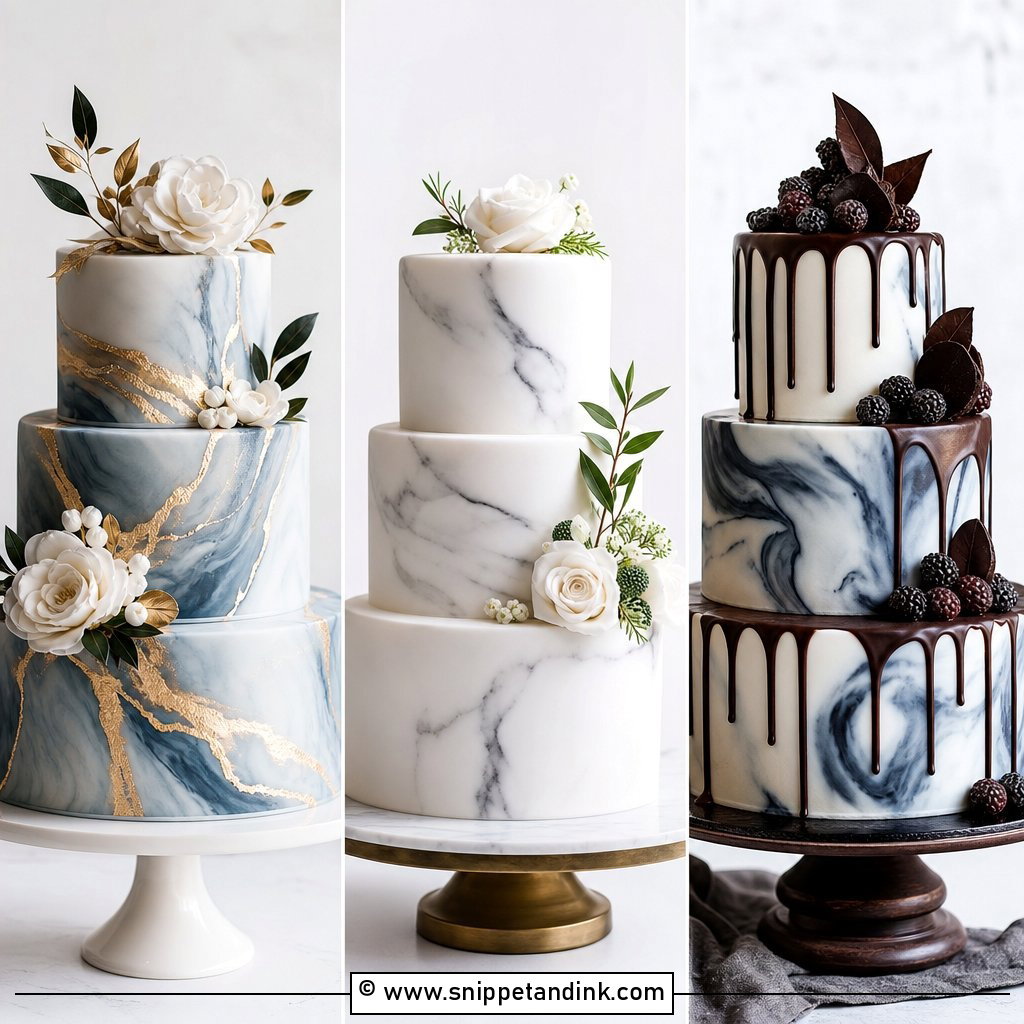
12. White Almond Wedding Cake With Fondant
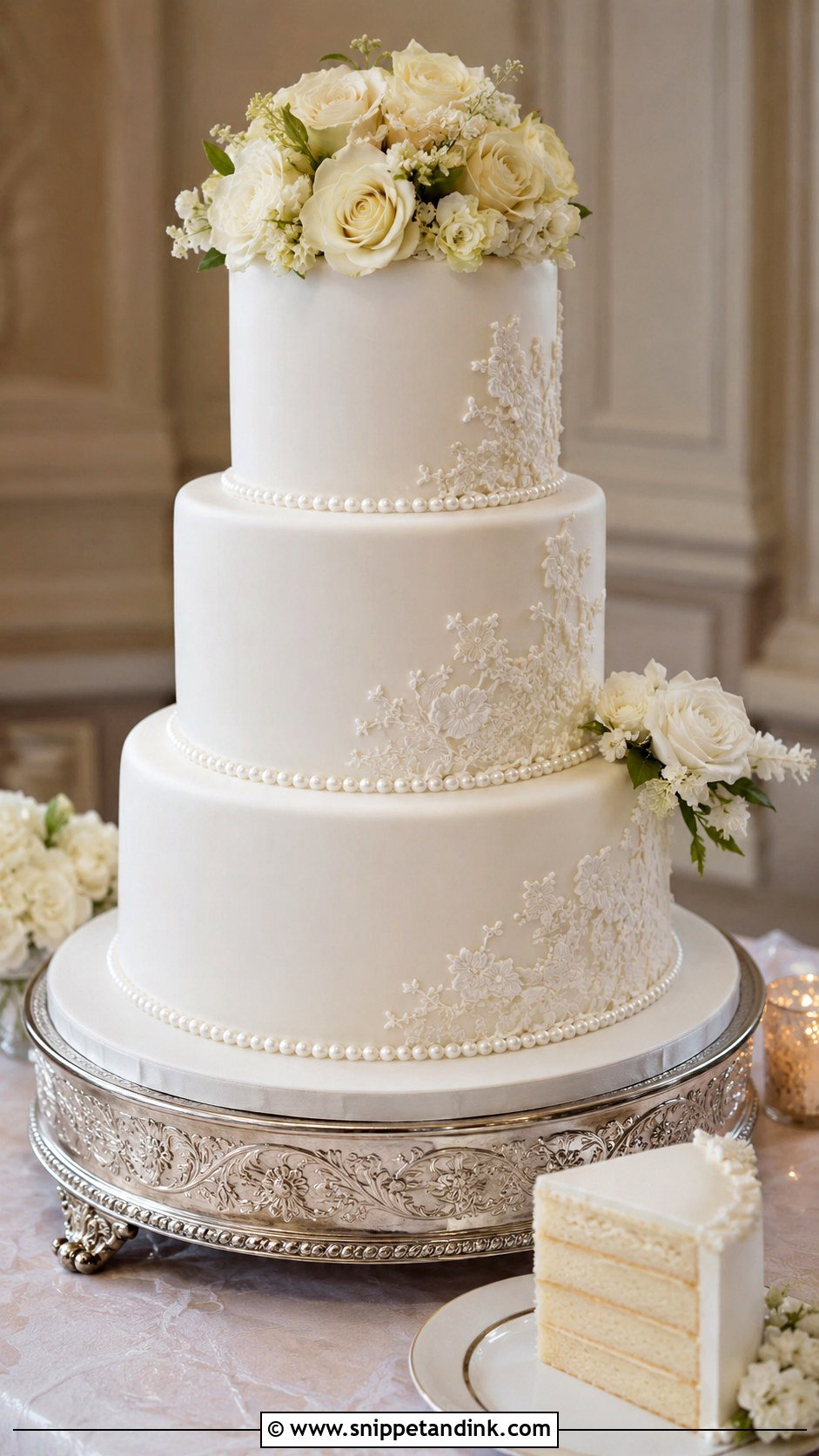
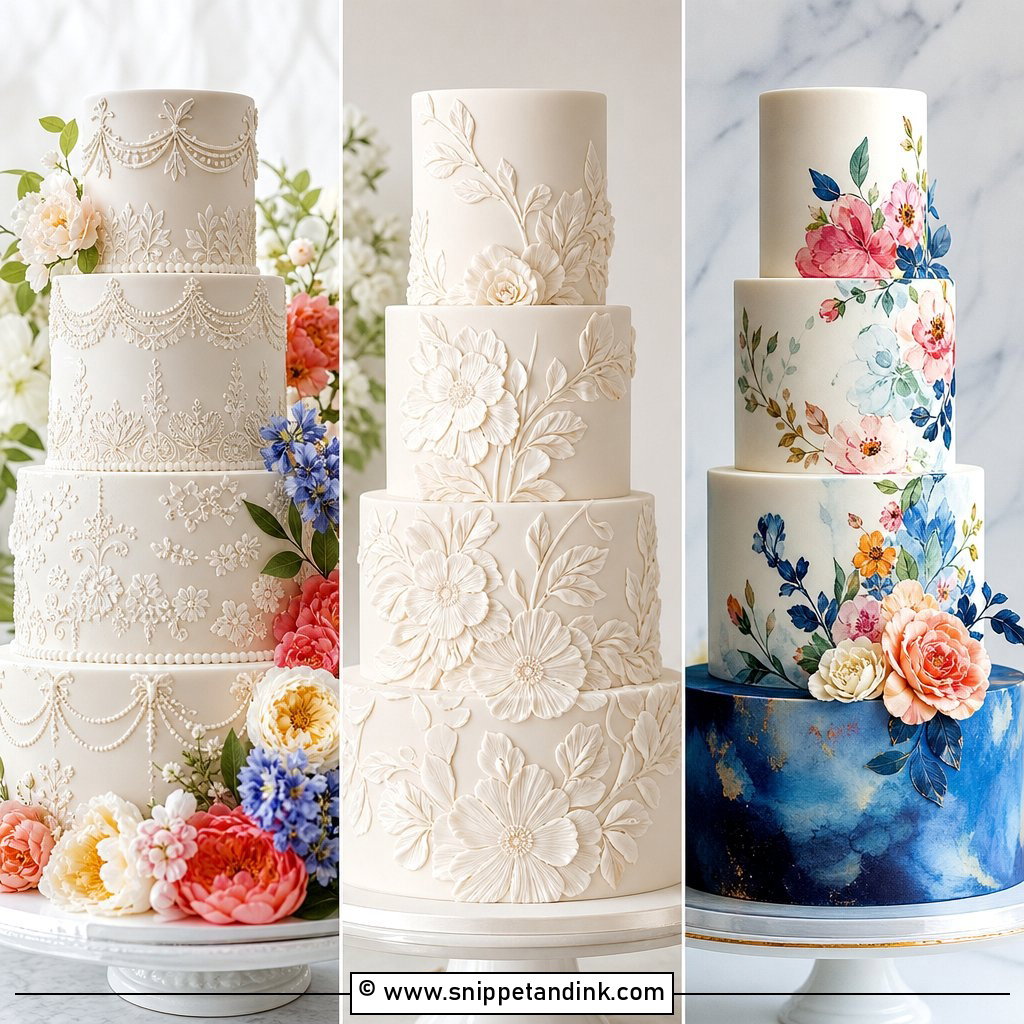
Fondant gives the smoothest, most formal surface, but it’s only as good as what’s under it. I coat the almond cake in buttercream or ganache, chill until firm, then roll the fondant evenly and smooth it down from the top. Soft frosting underneath shows every bump through the sugar. Ribbon, embossing and pearl trim all sit well on it, and the almond inside keeps the slice tasting homemade even when the outside looks very traditional.
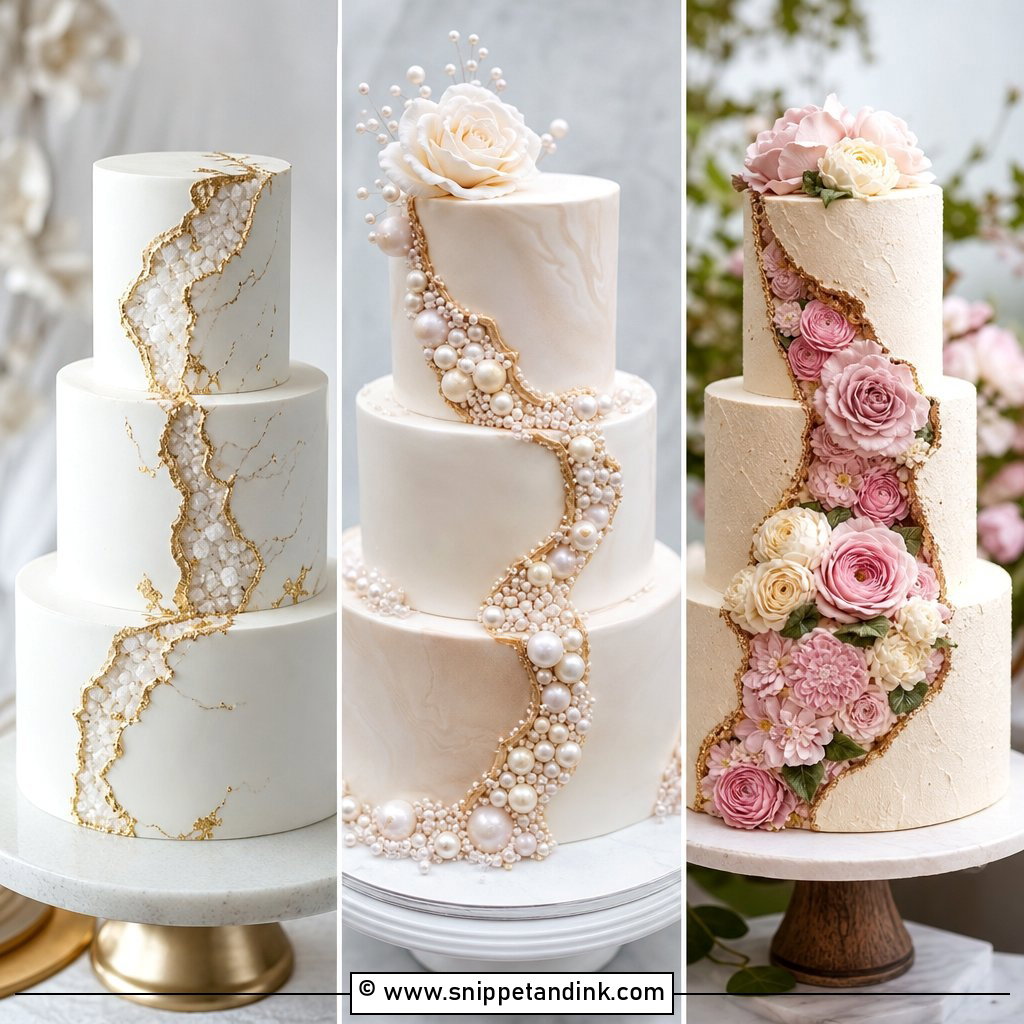
13. White Almond Wedding Cake With Fresh Flowers
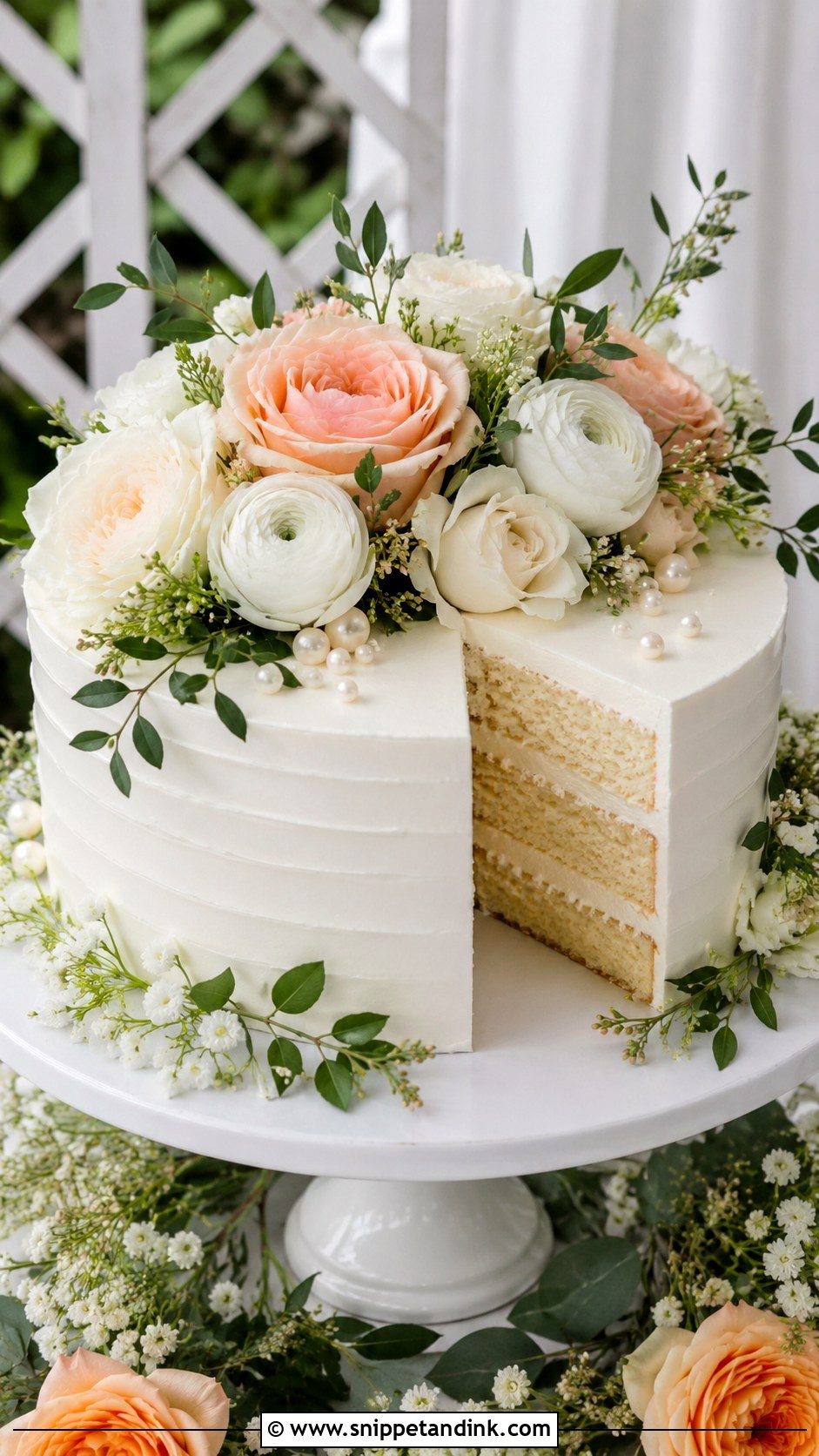
Fresh flowers do a lot for a plain white cake, but they aren’t food, and most florist stems have been treated. I wrap every stem in floral tape and set it in a food-safe pick so nothing touches the frosting directly. Roses, ranunculus and orchids are common choices; avoid anything you aren’t certain is non-toxic, such as lily of the valley. Cluster the blooms in one or two places rather than covering the tiers.
14. White Almond Wedding Cake With Pearl Piping
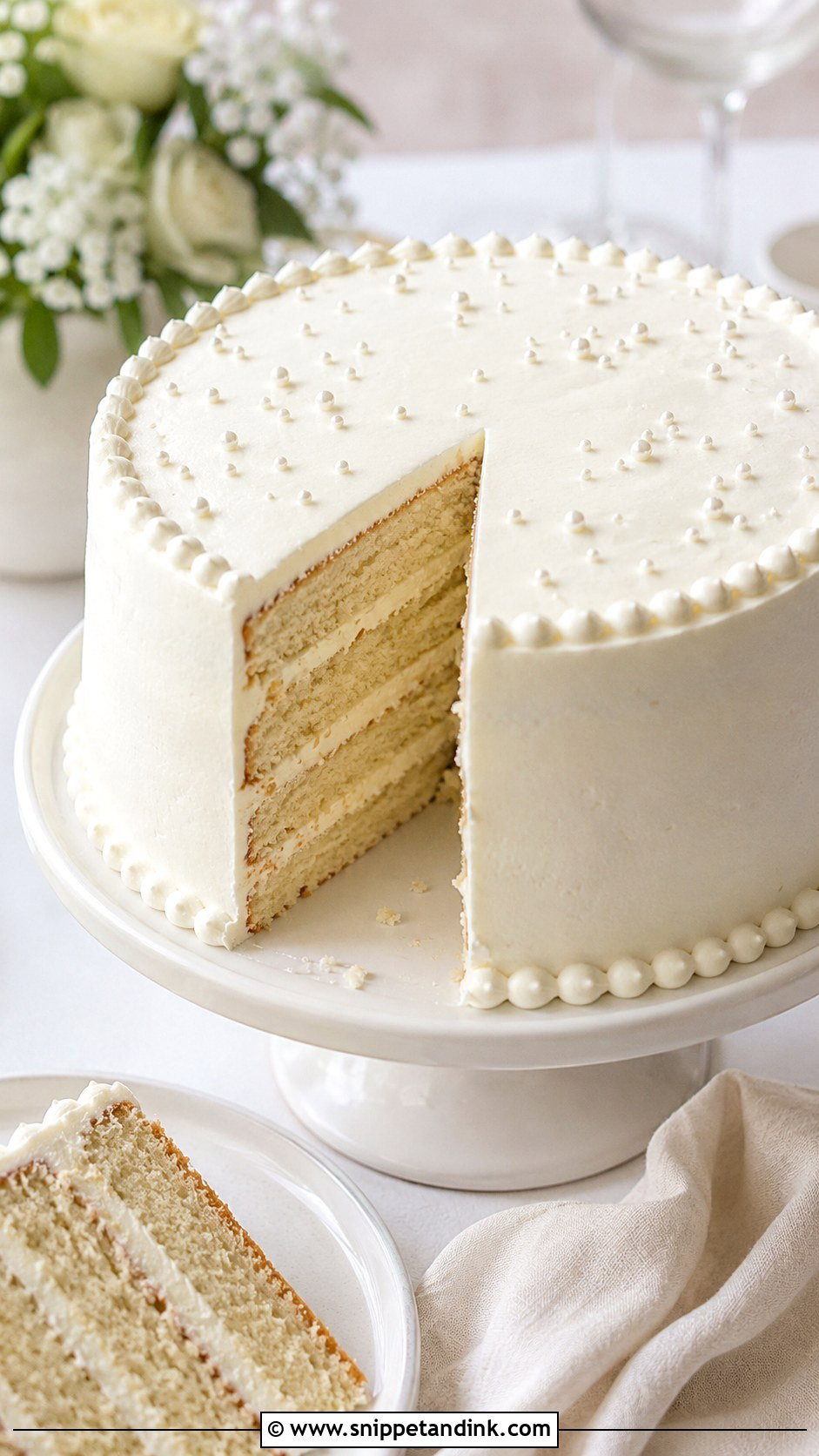
Pearl piping is a skill test disguised as a simple border. Use a small round tip, hold the bag straight up, squeeze, stop squeezing, then lift; pull away while still squeezing and you get tails instead of pearls. The buttercream needs to be firm and the cake chilled so the dots don’t slump. Run them along the base, the top edge or the tier seams. Pearl sprinkles tucked between the dots catch a little light.
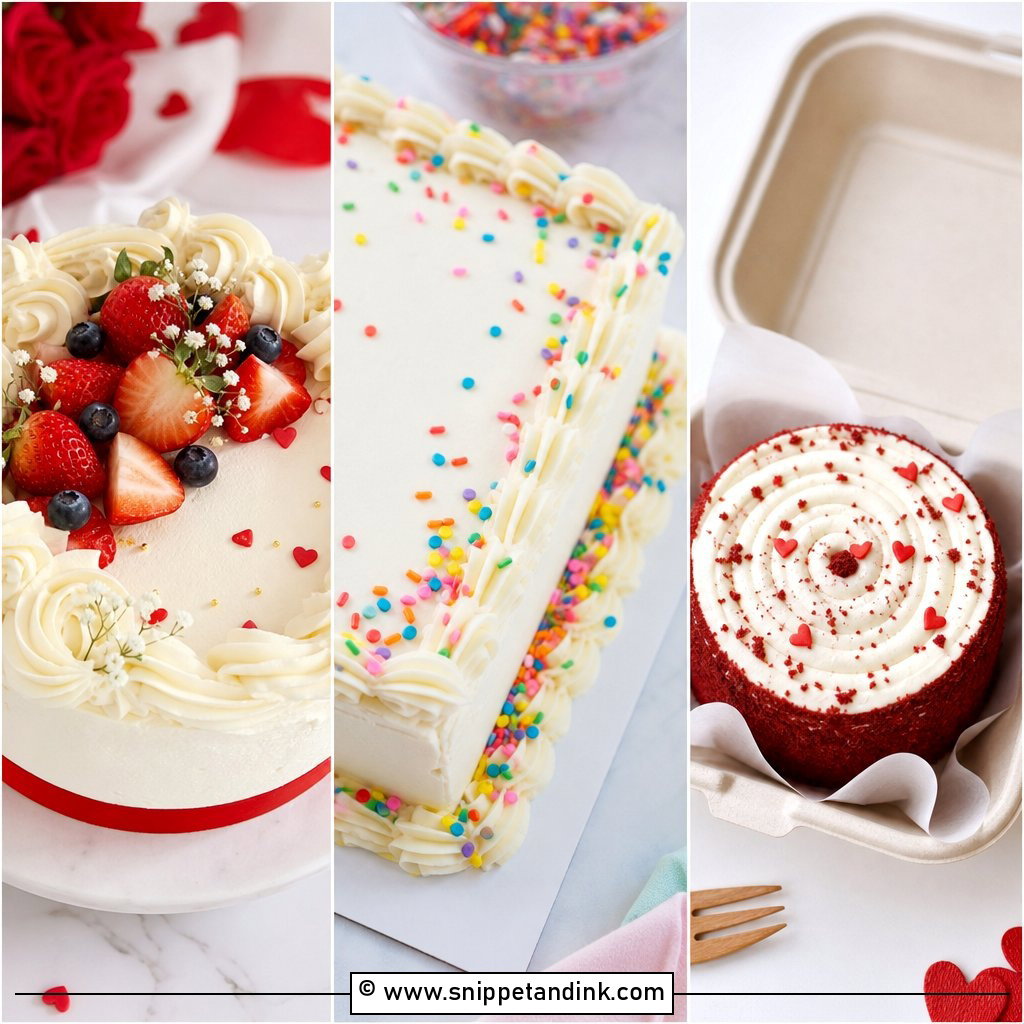
15. White Almond Wedding Cake With Lace Buttercream
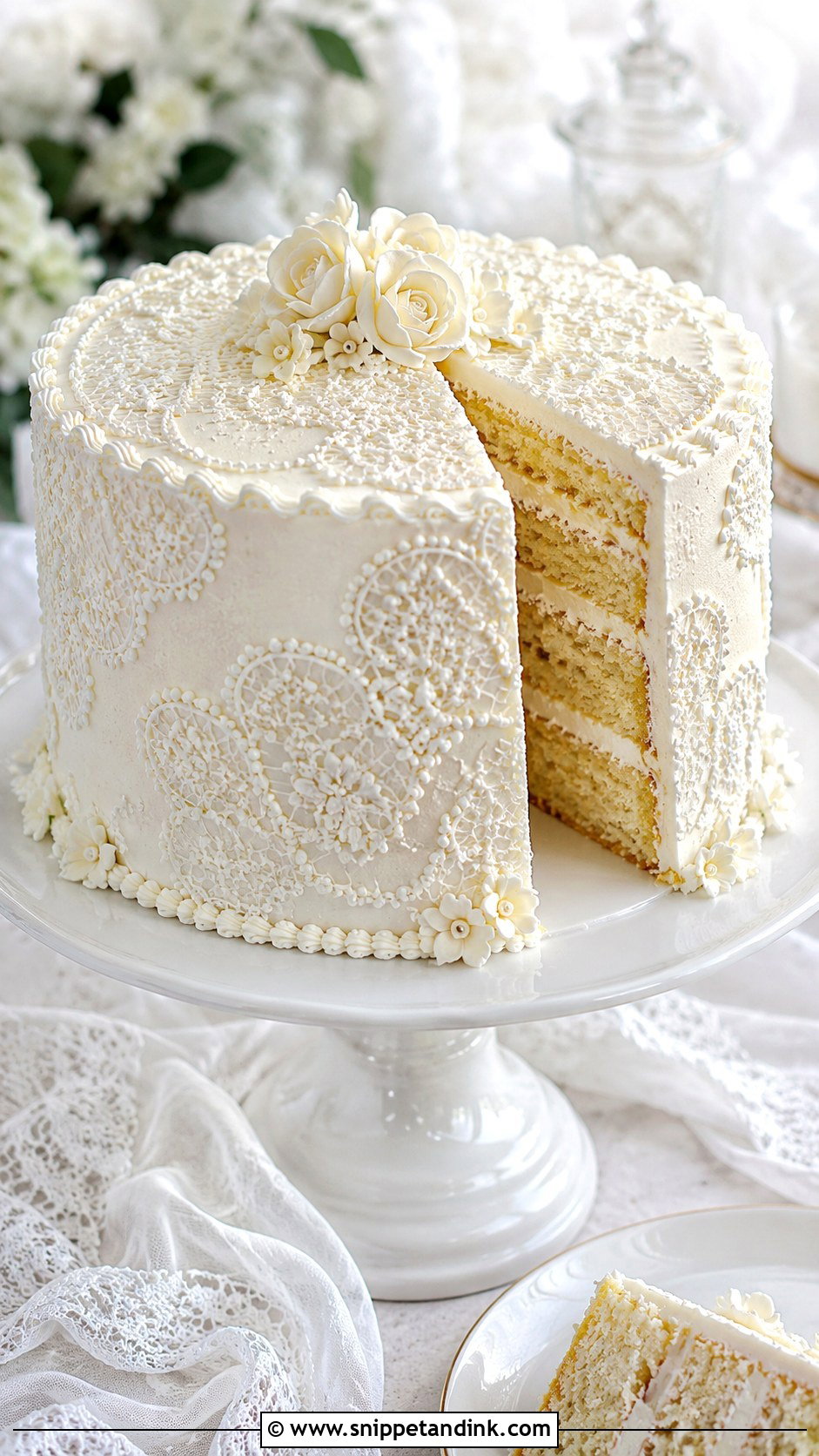
Buttercream lace looks intricate, but it’s mostly small loops, scallops and dots repeated with patience. I sketch the repeat lightly with a toothpick on the chilled cake first so the pattern doesn’t drift as I work around the tier. If you’re new to piping, keep the lace to a band rather than the whole side. Ivory and pale blush suit it far better than bright white.
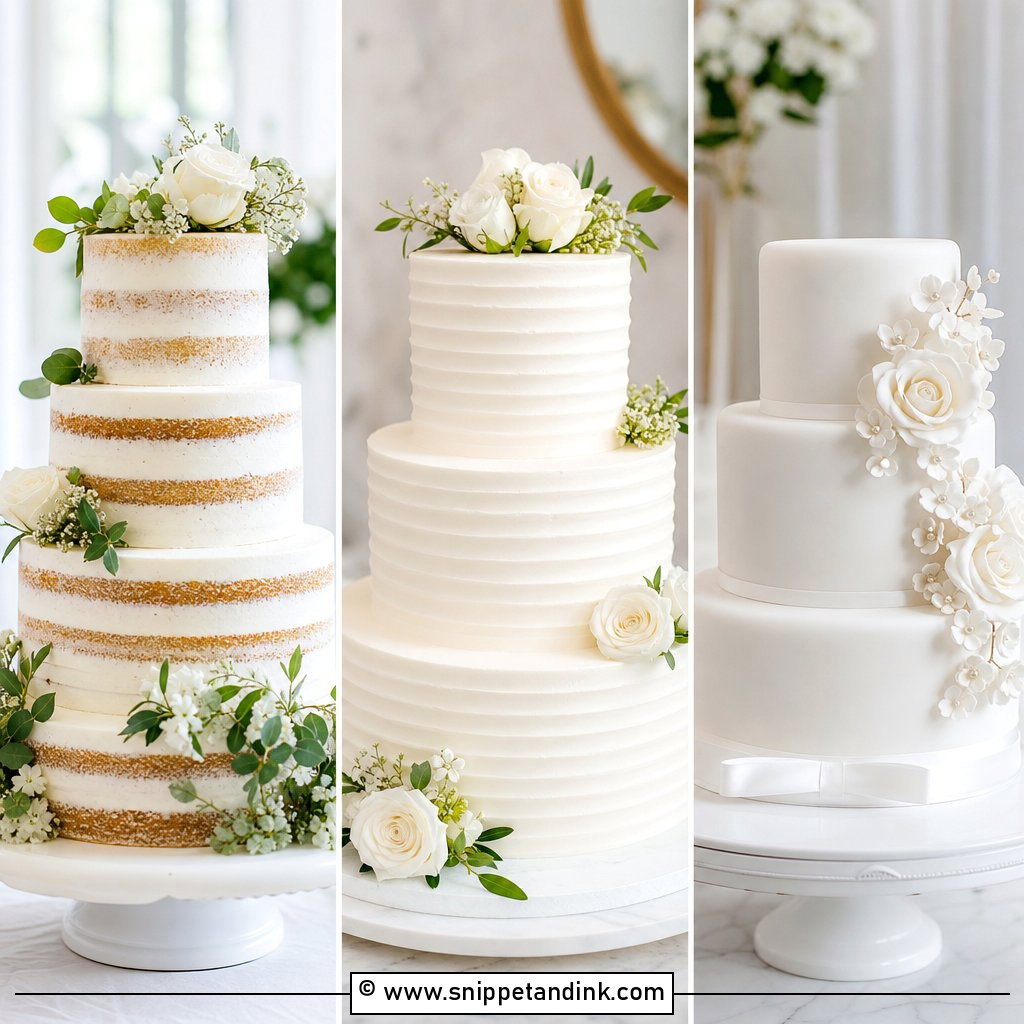
16. White Almond Wedding Cake With Naked Frosting
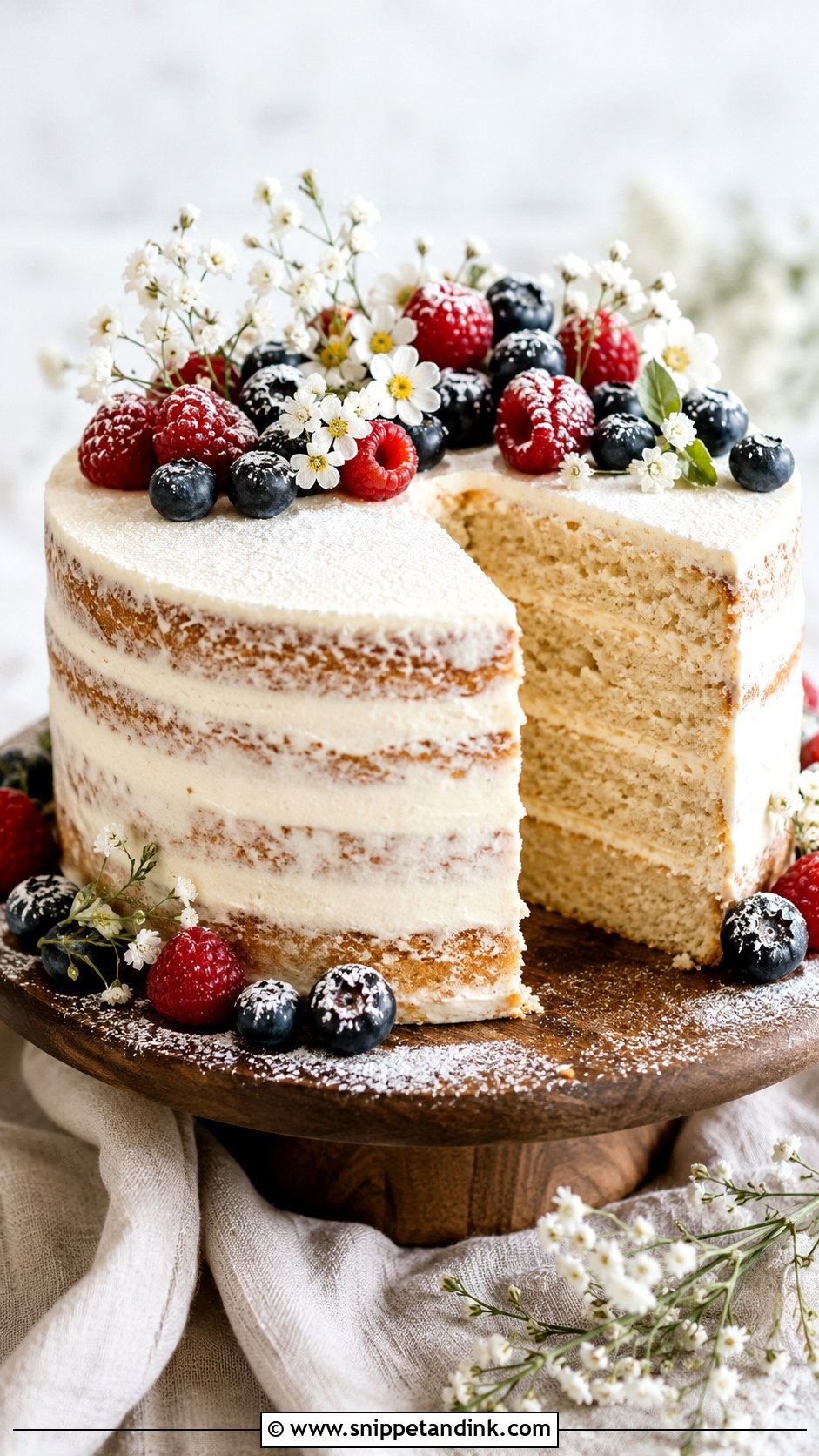
A naked cake has nothing to hide behind, so the baking has to be good. I level every layer, fill with buttercream, then spread a very thin coat on the outside and scrape most of it away until the cake shows through. Overbaked edges turn golden and show up immediately, so pull these layers a minute early. Exposed sponge also dries out faster, which means assembling close to the day. Berries and a few small flowers finish it.
17. White Almond Wedding Cake With Semi Naked Frosting
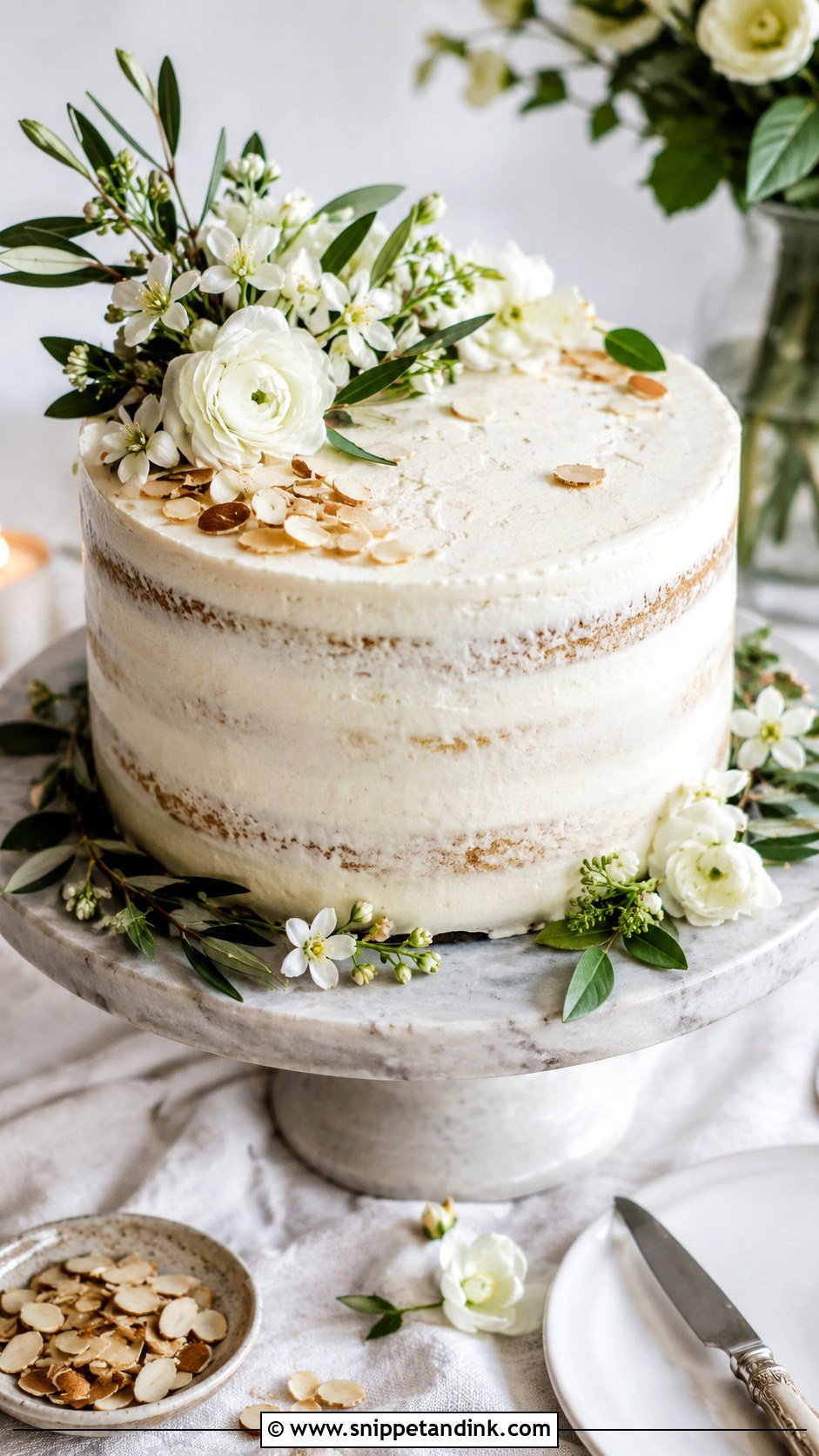
Semi naked keeps a little more frosting on than a naked cake, enough that the layers show as soft shadows. Level, evenly baked layers are what make it look intentional rather than unfinished. I apply a thin outer coat of vanilla almond buttercream and take one scrape around with a bench scraper, no more. It’s more forgiving than a perfectly smooth finish, which is why I suggest it for home bakers.
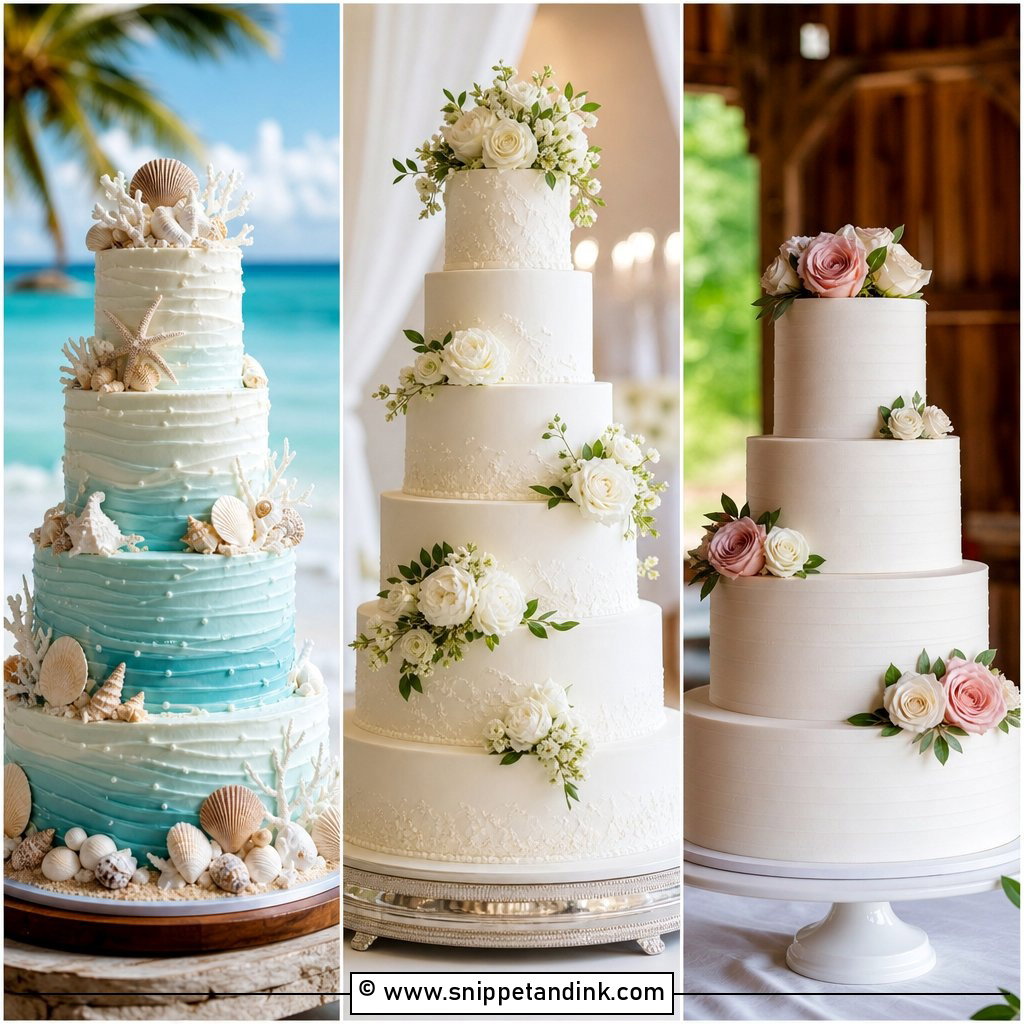
18. White Almond Wedding Cake With Three Tiers
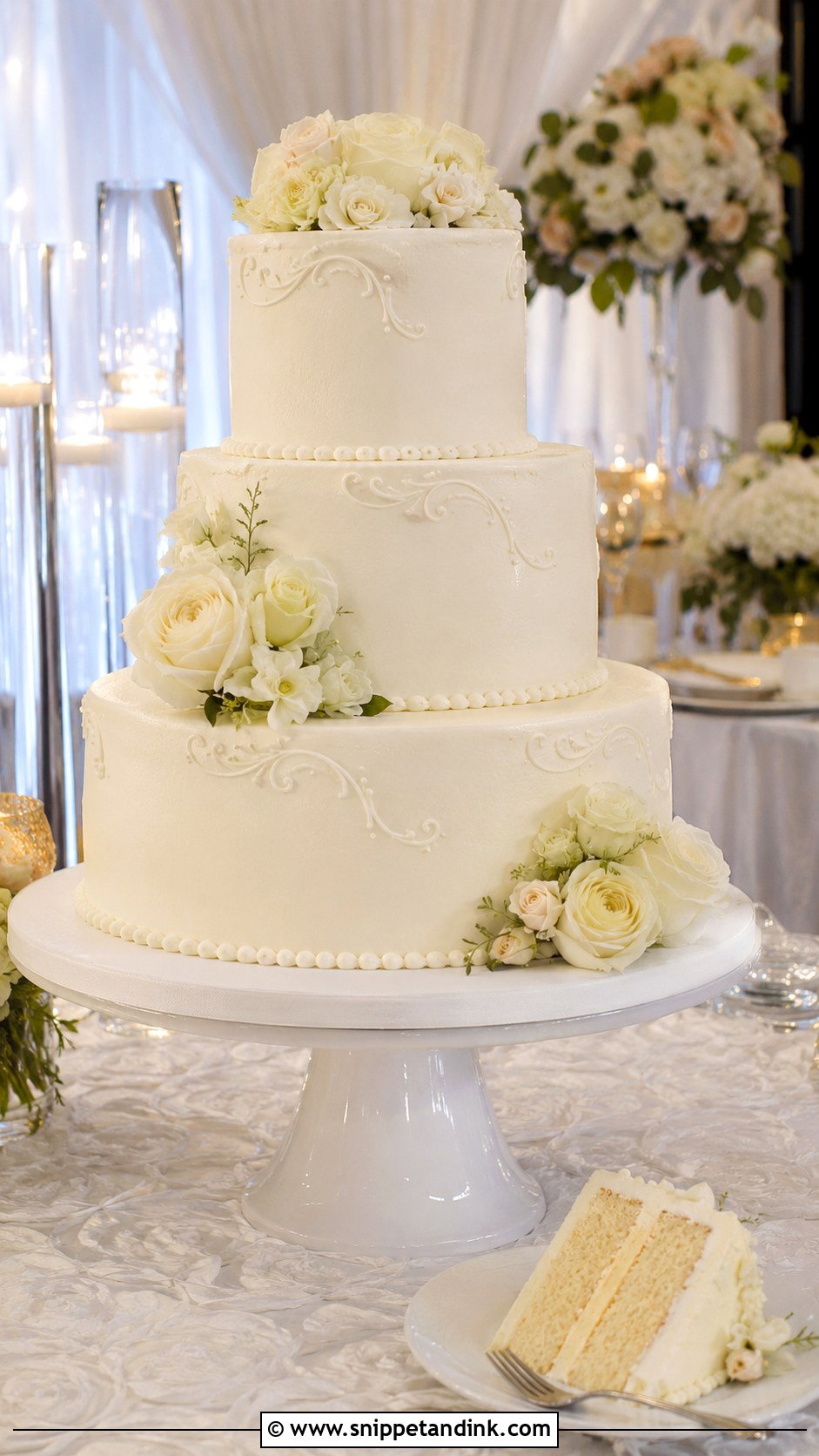
A three-tier white almond wedding cake is a structure first and a dessert second. Every tier sits on its own cake board, and the lower tiers get dowels or straws cut to exactly the height of the frosted cake, so the weight rests on the supports and not on the sponge. Chill each tier before stacking. Scratch almond cake is tender, which is wonderful to eat but means it will compress under an unsupported tier. Keep the decoration restrained so the height does the work.
19. White Almond Wedding Cake With Two Tiers
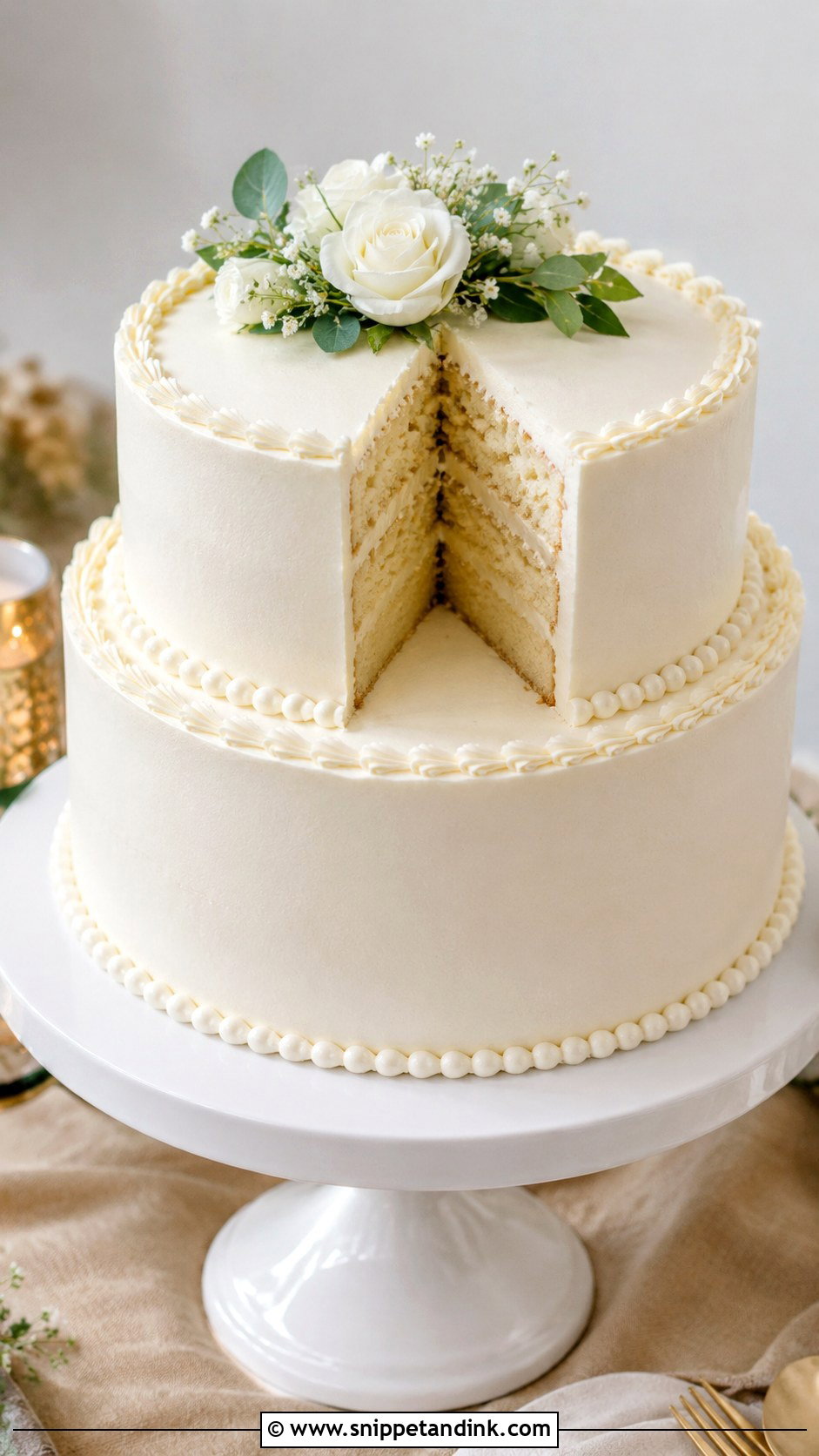
A two-tier white almond wedding cake is the size I recommend most for small and medium weddings. It’s easy to carry, easy to stack, and the bottom tier still needs supports even though it’s short. Make the top tier noticeably smaller, usually four inches narrower, so the proportions look settled. Fill both with almond buttercream, or put raspberry in one tier for guests who want fruit. A small floral topper finishes it.


20. White Almond Wedding Sheet Cake Recipe
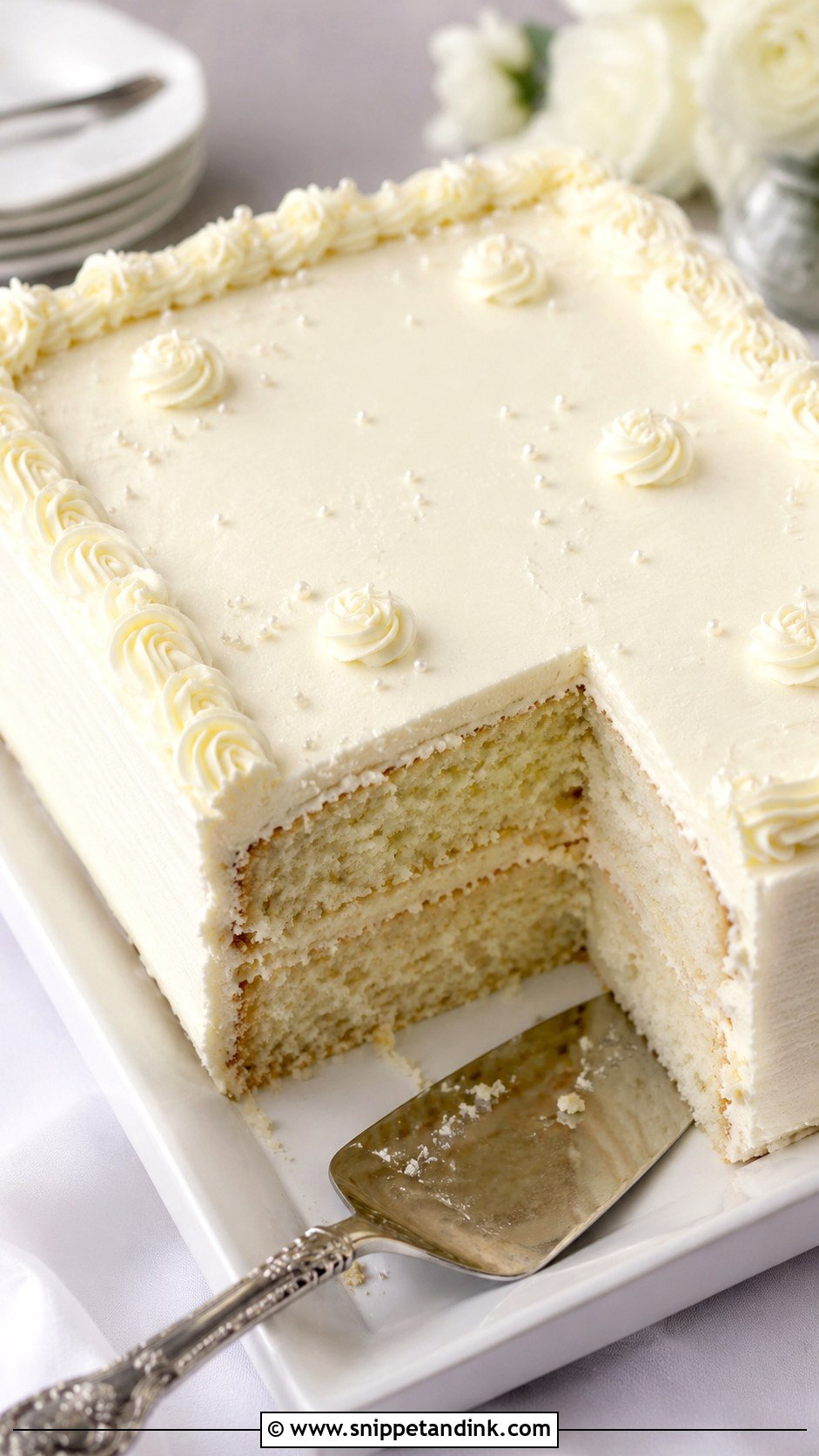
A sheet cake is the honest answer when you need a lot of servings without a lot of stacking. The same scratch batter bakes in a rectangular pan, though a large pan needs a heating core or flower nail in the middle so the center cooks before the edges dry. Pull it as soon as it’s done. Spread almond buttercream thickly over the top and pipe a border. Plenty of couples serve a small display cake and slice from a sheet cake in the kitchen.
21. White Almond Wedding Cupcake Recipe
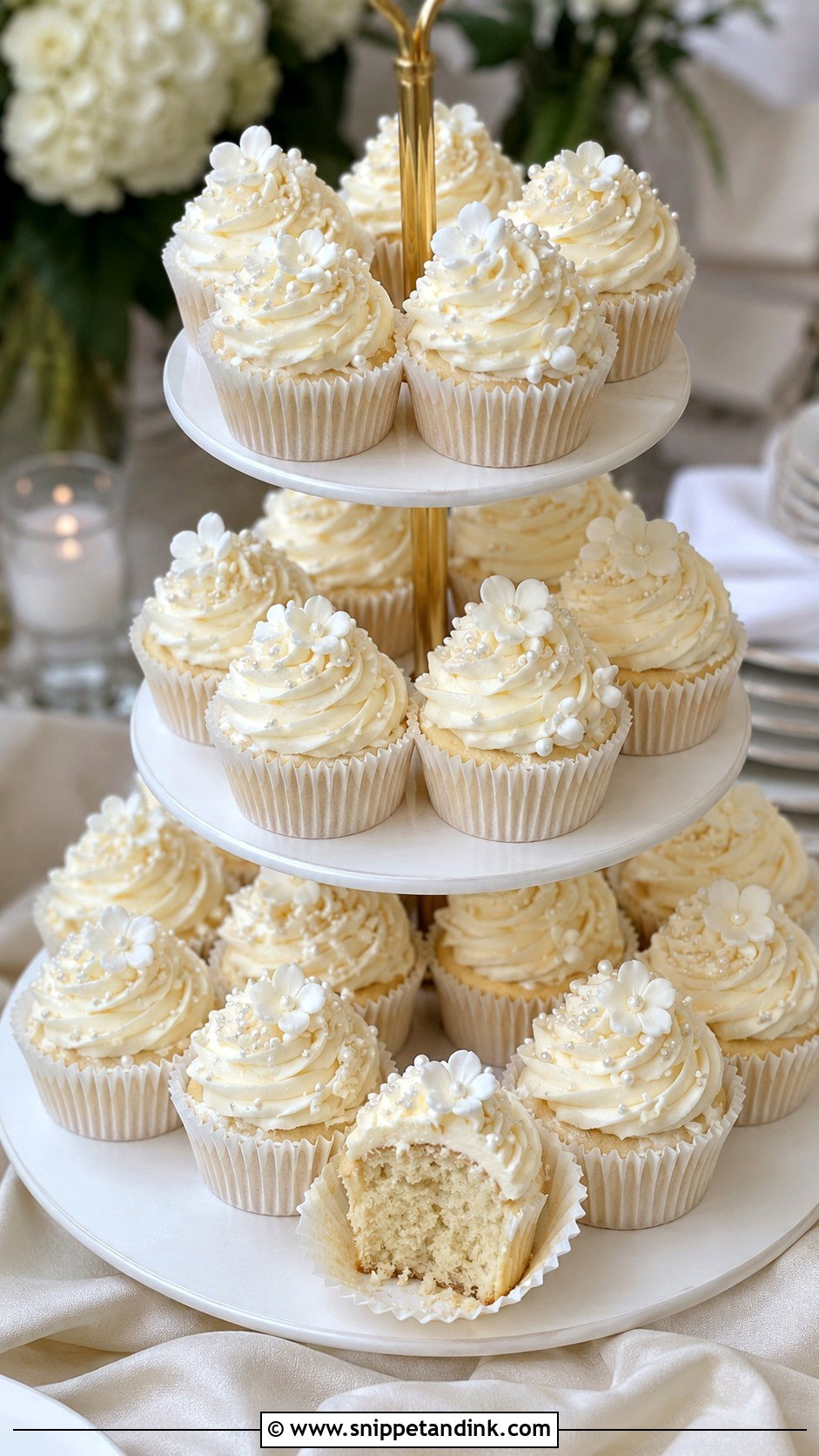
Cupcakes give every guest their own portion and skip the cutting line entirely. Use the same scratch batter and fill liners about two-thirds full so they dome gently rather than spilling over. Once they’re completely cool, pipe each one with almond buttercream or Swiss meringue buttercream. White cupcakes go stale faster than a covered cake because so much sponge is exposed under the frosting, so bake them the day before, not earlier. They suit a tiered stand next to a small cutting cake.
22. White Almond Mini Wedding Cake Recipe
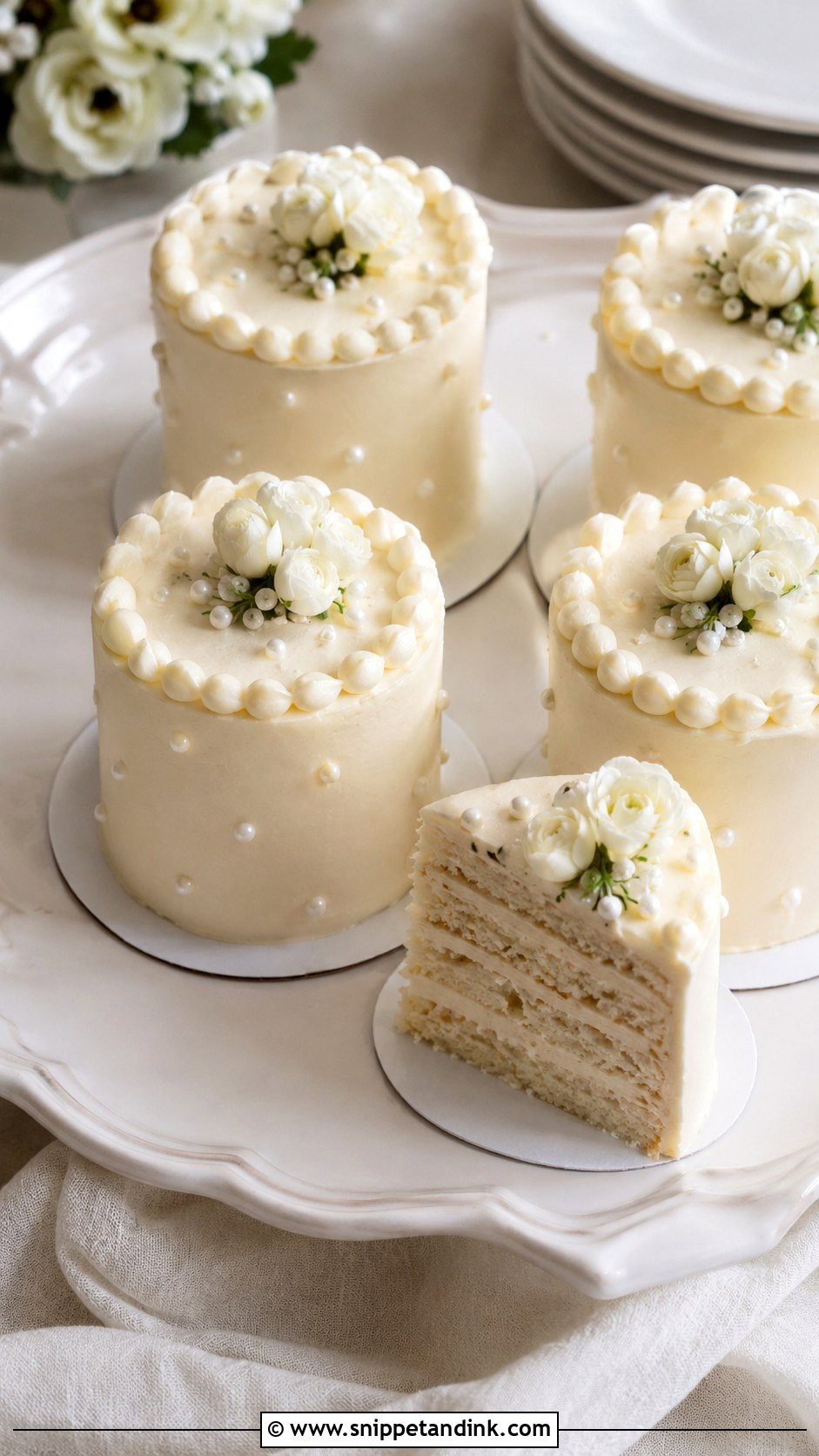
Mini cakes are the most time-consuming option on this list, and I tell people that up front. Bake a thin sheet of almond cake, cut rounds with a biscuit cutter, and stack two or three with buttercream between. Each one then needs its own crumb coat, chill and final coat, which multiplies quickly across a guest list. They’re best for a small dinner or a shower. Finish them with tiny piped dots or one sugar flower each.
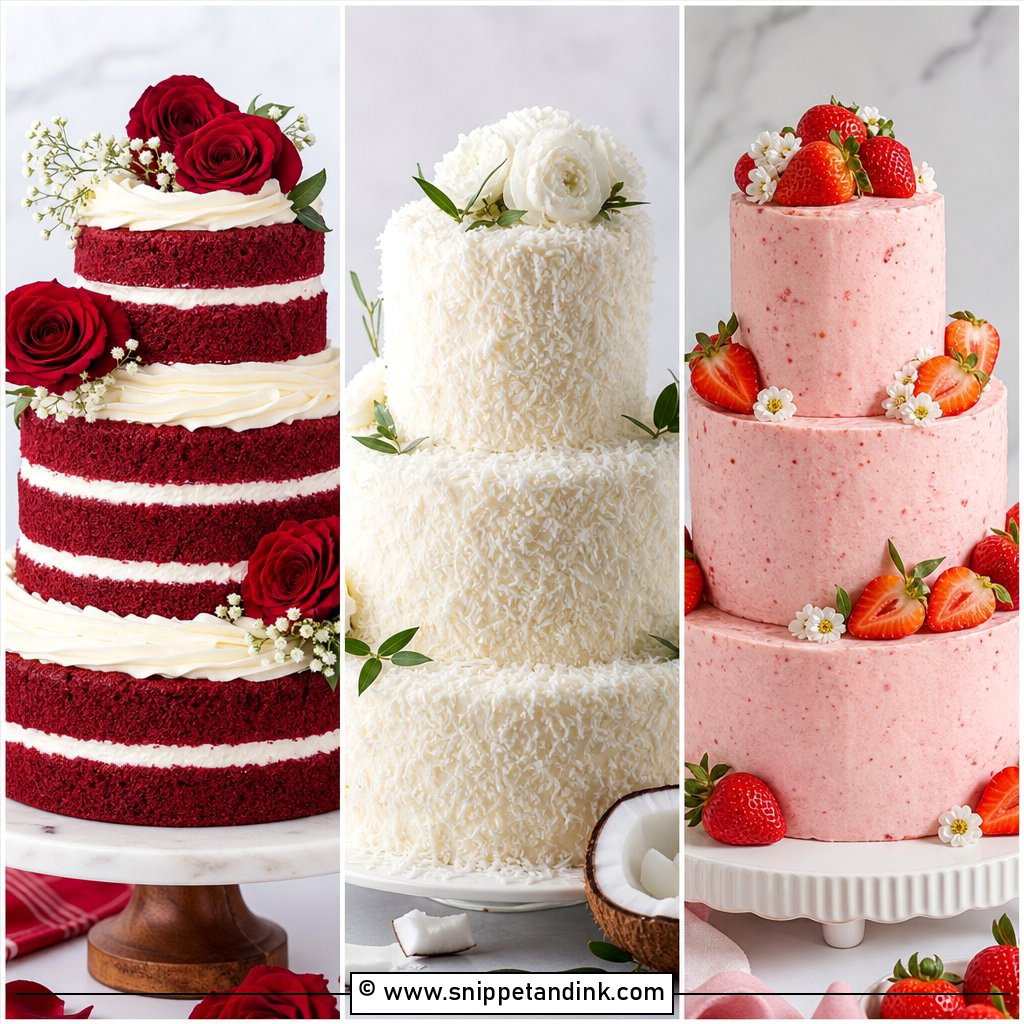
23. White Almond Wedding Cake With Strawberry Filling
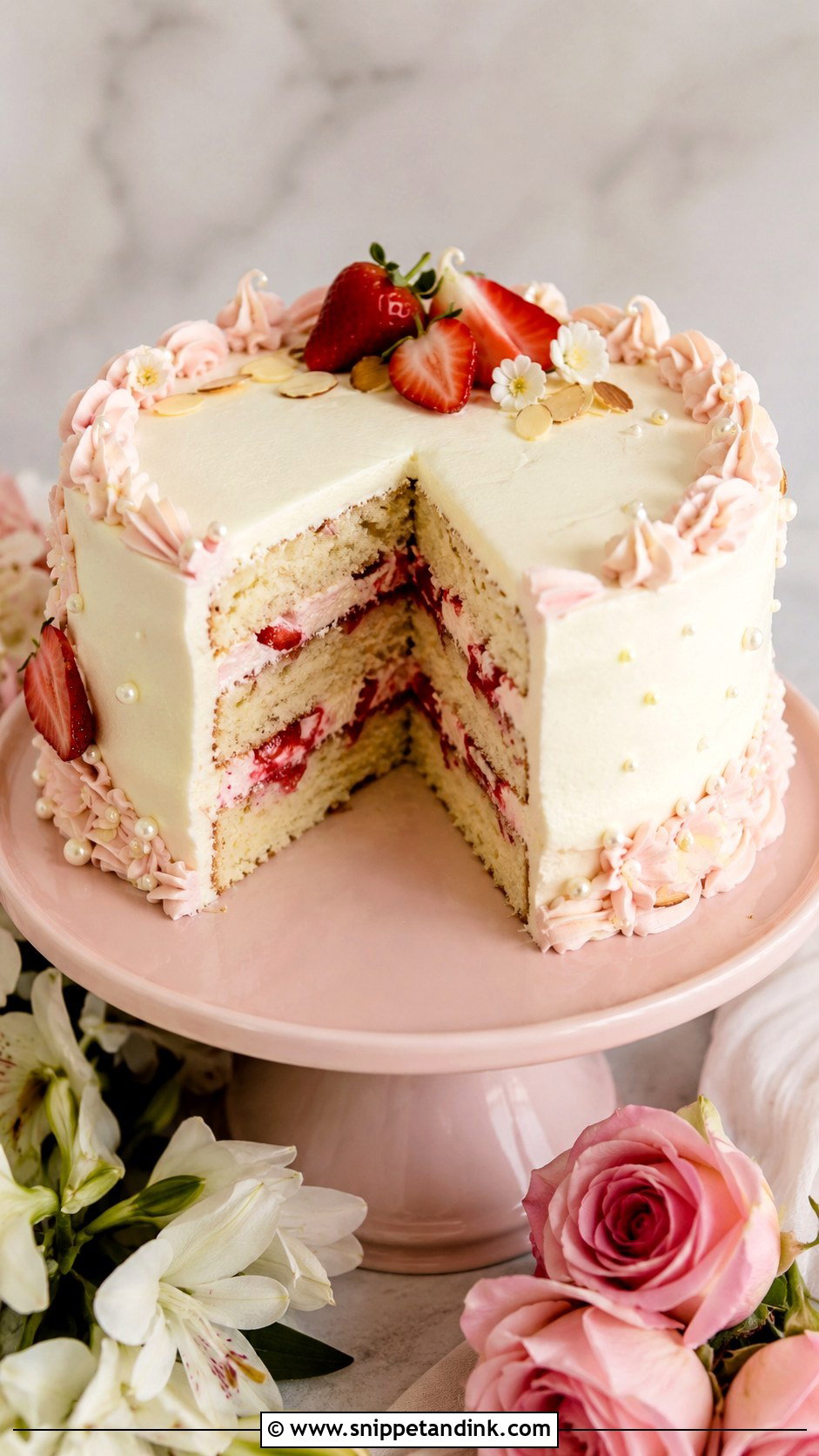
Strawberry is the filling guests recognize instantly, but fresh slices release water into the crumb overnight. I use a thick cooked strawberry filling and pipe a buttercream ring around each layer before spooning it in. Keep the filling layer thin on tall tiers, because soft fruit acts like a slip plane under weight. Pale pink piping or a few small strawberries on top hint at what’s inside.
24. White Almond Wedding Cake With Apricot Filling
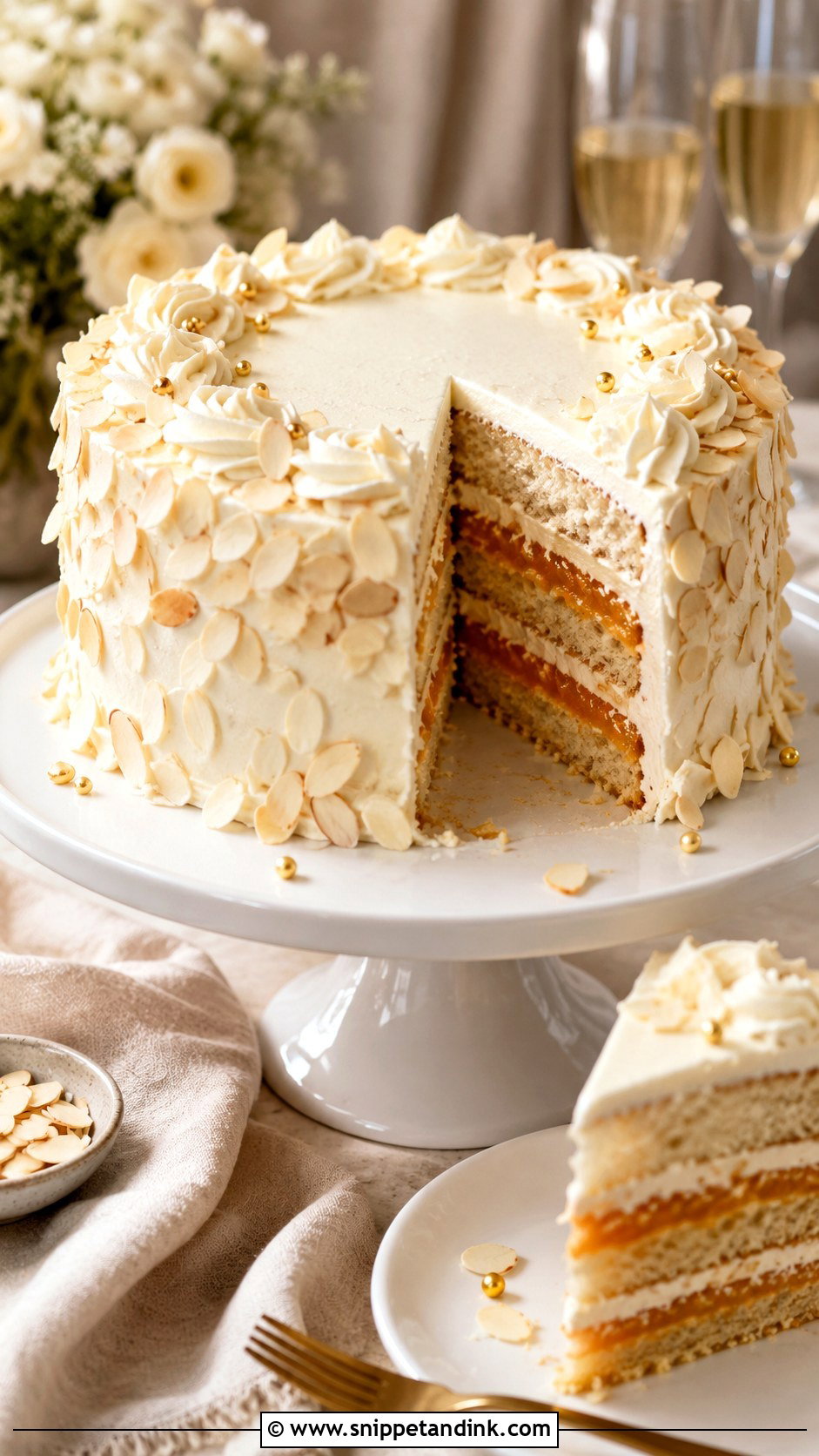
Apricot is the filling I suggest to people who find raspberry too sharp. It has a gentle tang and tastes naturally of almond, since the two are botanical relatives. Apricot preserves can be chunky, so I warm and strain them for a smooth layer, and keep it thin so the tiers don’t slide. Swiss meringue buttercream and a ring of sliced almonds at the base suit a warm, neutral palette.

25. White Almond Wedding Cake With Almond Flour
Almond flour deepens the nutty flavor and adds moisture, but it has no gluten, so it can’t carry the whole recipe. I swap out a portion of the cake flour, roughly a quarter, unless the recipe was written for more. Too much and the layers turn dense and crumble when you torte them. Keep the egg whites for a pale crumb. This is the version for people who say the classic doesn’t taste of almond enough.
Nut Allergies Are the Real Catch With This Flavor
Pure almond extract is made from bitter almond oil or apricot kernels, and some nut-allergic guests react to it. Almond flour, almond buttercream and sliced almond garnishes are a definite problem. Once almond touches the kitchen, the whole cake should be treated as containing nuts.
What I’d do in practice:
- Ask the couple to check their RSVP list for tree nut allergies before the flavor is settled, not after.
- If there are allergic guests, bake a separate small nut-free cake on clean equipment, and label it rather than relying on staff to remember.
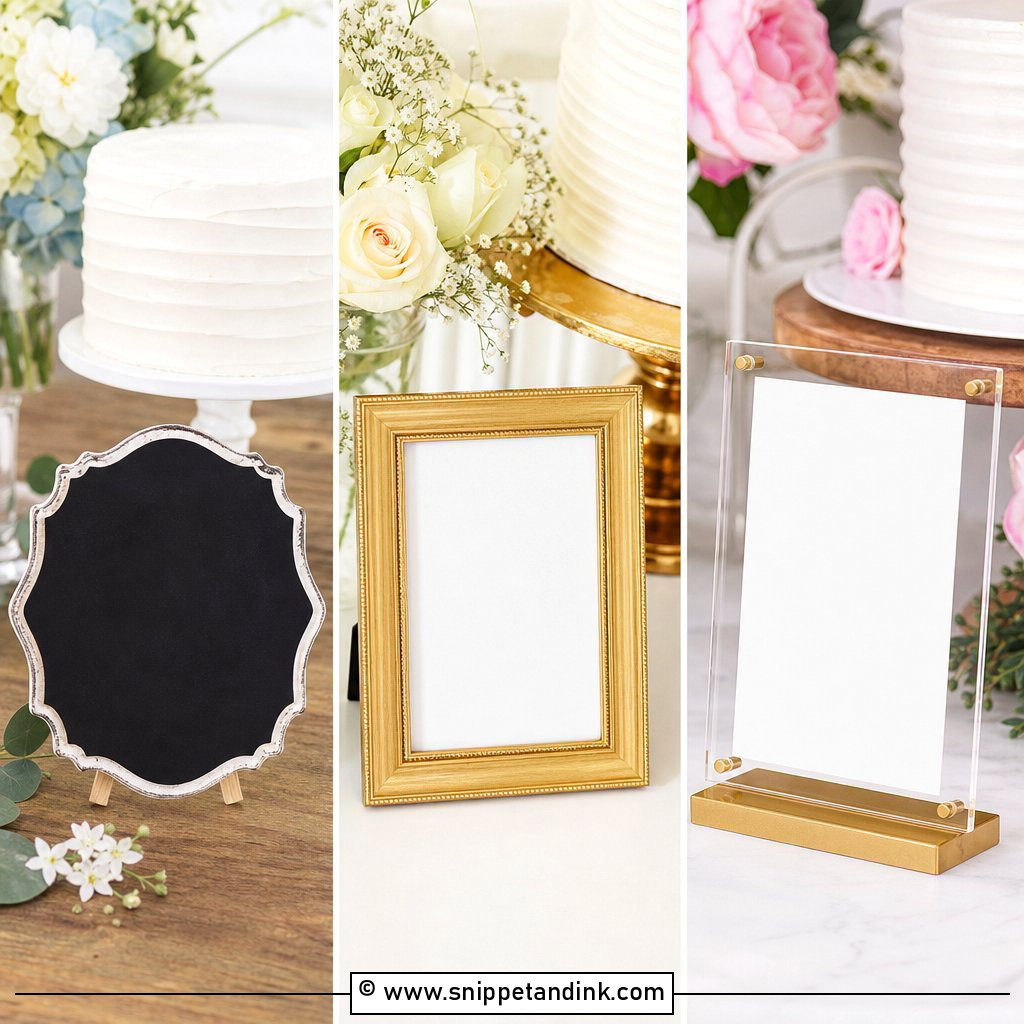
- Put a small card at the cake table that names almond, so anyone with a nut allergy can decide for themselves.
- Imitation almond extract is usually made from synthetic benzaldehyde and is often nut-free, but check the label of the specific bottle you buy.
Getting It to the Venue in One Piece
Buttercream-coated almond cake should travel cold, on a flat surface, and ideally in tiers that are stacked on site. A car floor is flatter than a seat. If the venue is warm, ask for the cake to go straight into a cool room and come out about an hour before cutting, which is enough for the buttercream to soften and the crumb to taste right.
What Makes a Scratch Almond Cake Worth the Extra Day
Most of what makes this cake good happens before decorating: room-temperature ingredients, a batter that isn’t overmixed, layers cooled completely, and fillings thick enough to stay put. Get those right and the outside can be anything from a plain sheet cake to three stacked tiers. If you’re baking it yourself, do a full test cake a few weeks out, including the filling and the frosting, and taste it a day after assembly, because that’s when guests will eat it.
You'll Like These Ideas:



Leave a Reply