
When tiers sit directly on top of one another, with no pillars or gaps, you get the shape most people picture when they hear the words wedding cake. It’s also the build I trust most, because a stacked cake is compact, stable and easy to serve. Guests see it the moment they walk into the reception, so it has to look right from across the room and hold up for hours on the table. Clean tiers, soft buttercream, florals, pearls, vintage piping and bold color are all on the list below. Whatever style you like, the decision that really matters is fitting the cake to your venue, season and guest count. Here are twenty stacked designs, with the practical notes I’d give a couple at a tasting.
Sizing the Tiers to Your Guest Count
The first thing I ask at a consultation isn’t style, it’s numbers. Tier sizes usually step down by two or three inches, and wedding slices are cut narrow, about one inch wide and two inches deep, so a cake feeds more people than you’d guess from looking at it.
As a rough guide using standard round-tier charts, a 6, 8 and 10-inch stack serves around seventy, while 6, 9 and 12 inches serves closer to a hundred. Bakers’ charts differ a little, so always confirm with yours.
- If you need more servings than the cake you love, add a plain kitchen cake rather than another tier.
- If guests will also have a dessert table, you can usually order for fewer than your full headcount.
- If you plan to save the top tier, decide early, because it then doesn’t count toward servings.
1. Classic White Stacked Wedding Cake
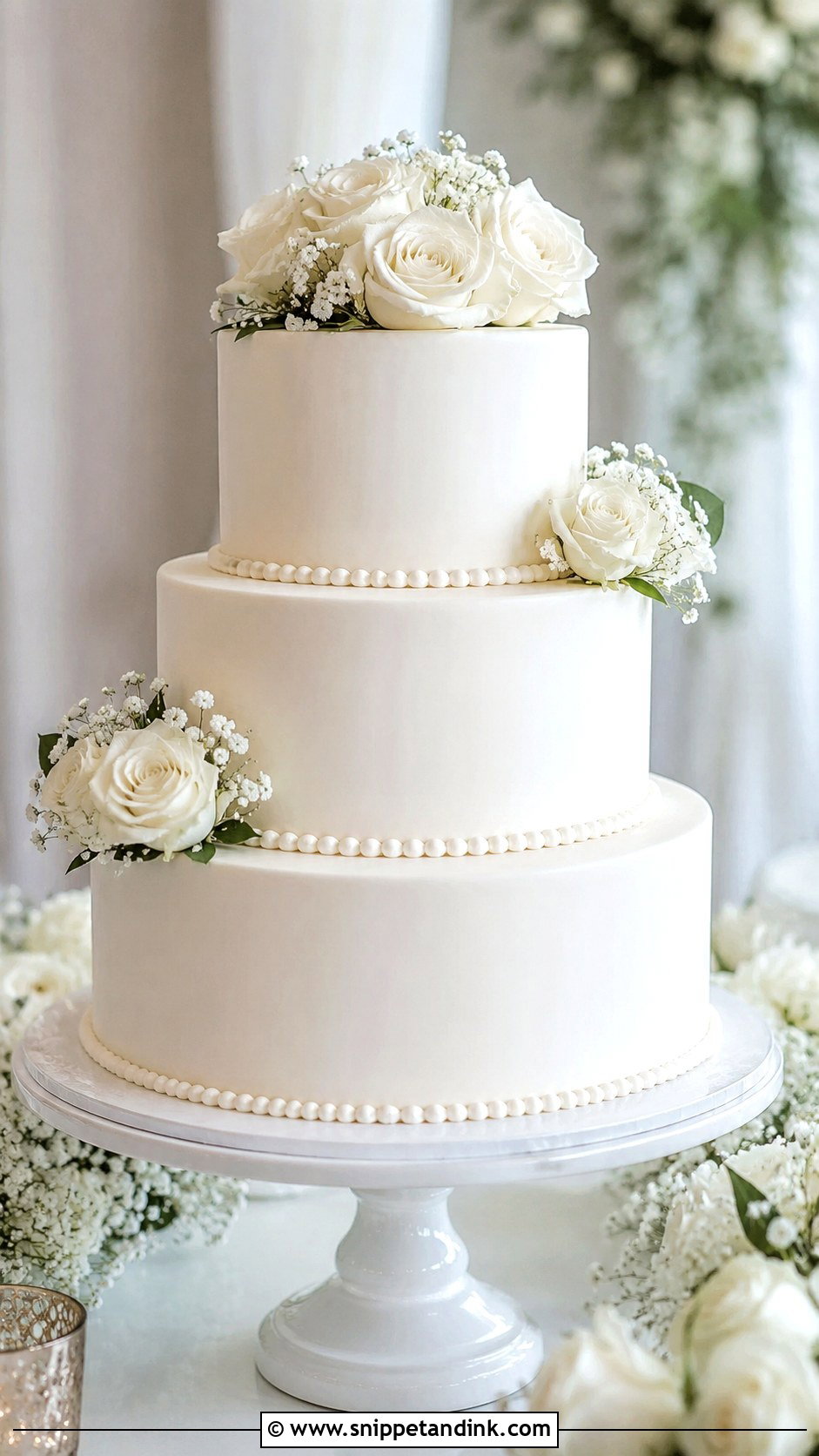
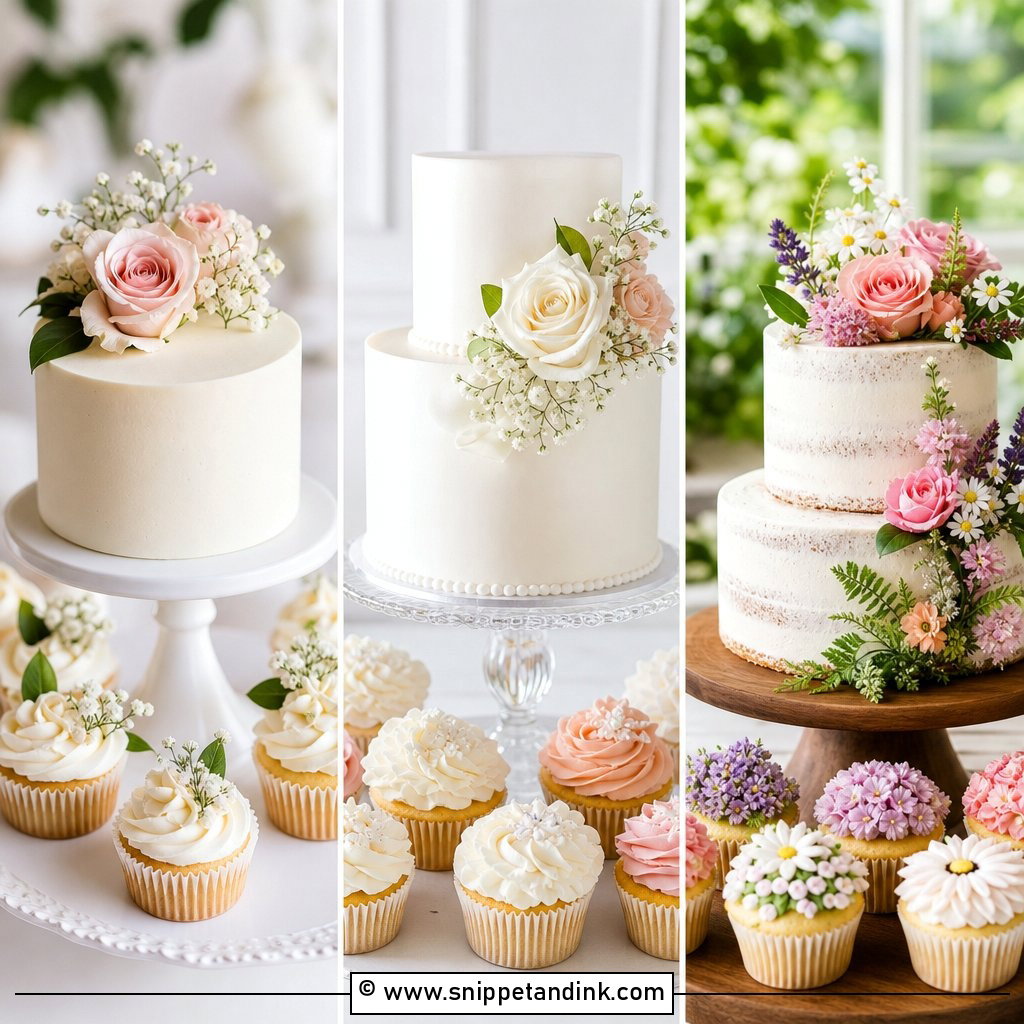
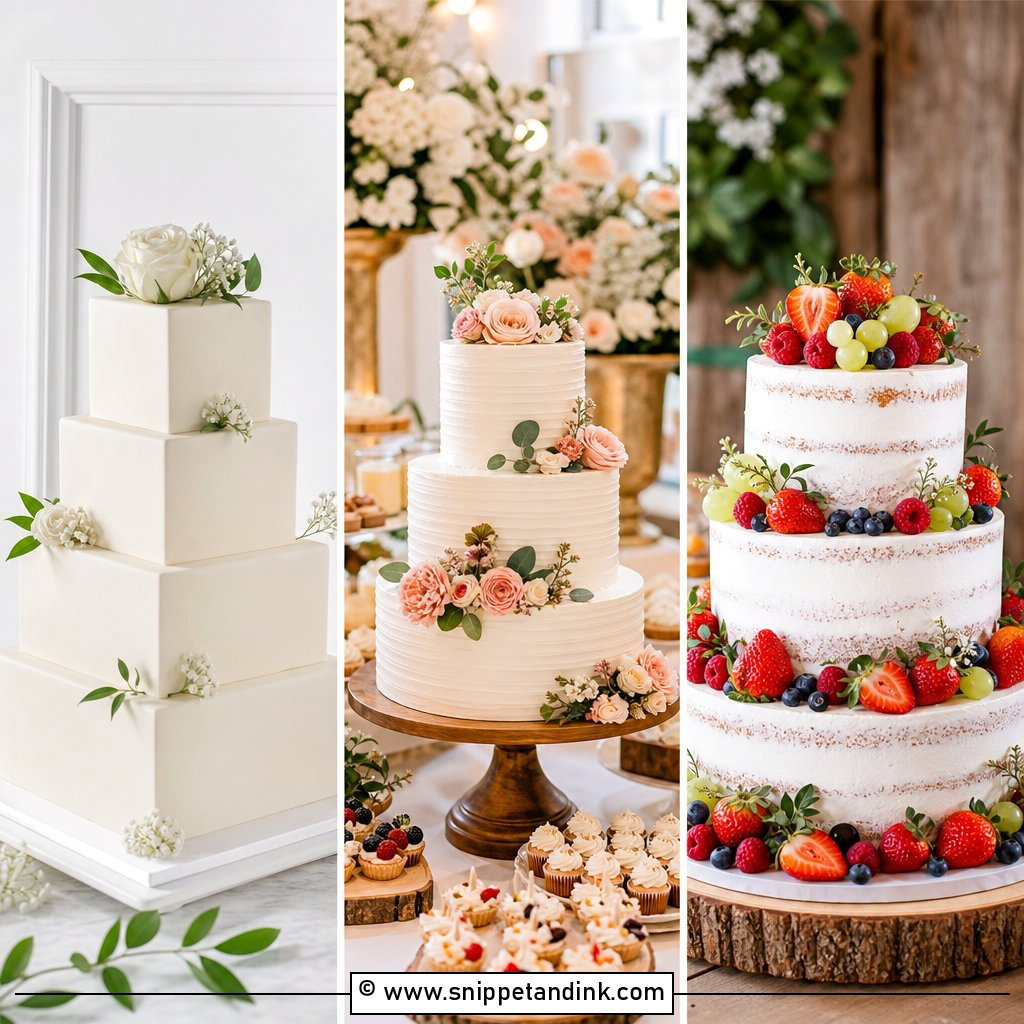
White never fights with the rest of the decor, which is why it’s still the cake I make most. Plain doesn’t have to mean flat, though. I’ll often make the tiers a little taller than standard, or add a fine pearl edge or a gentle comb texture so the light has something to catch. A floral cluster matched to the bouquet ties it to the room. Inside, vanilla almond, white chocolate raspberry or champagne sponge keeps the flavor as classic as the outside.
2. Three Tier Stacked Wedding Cake
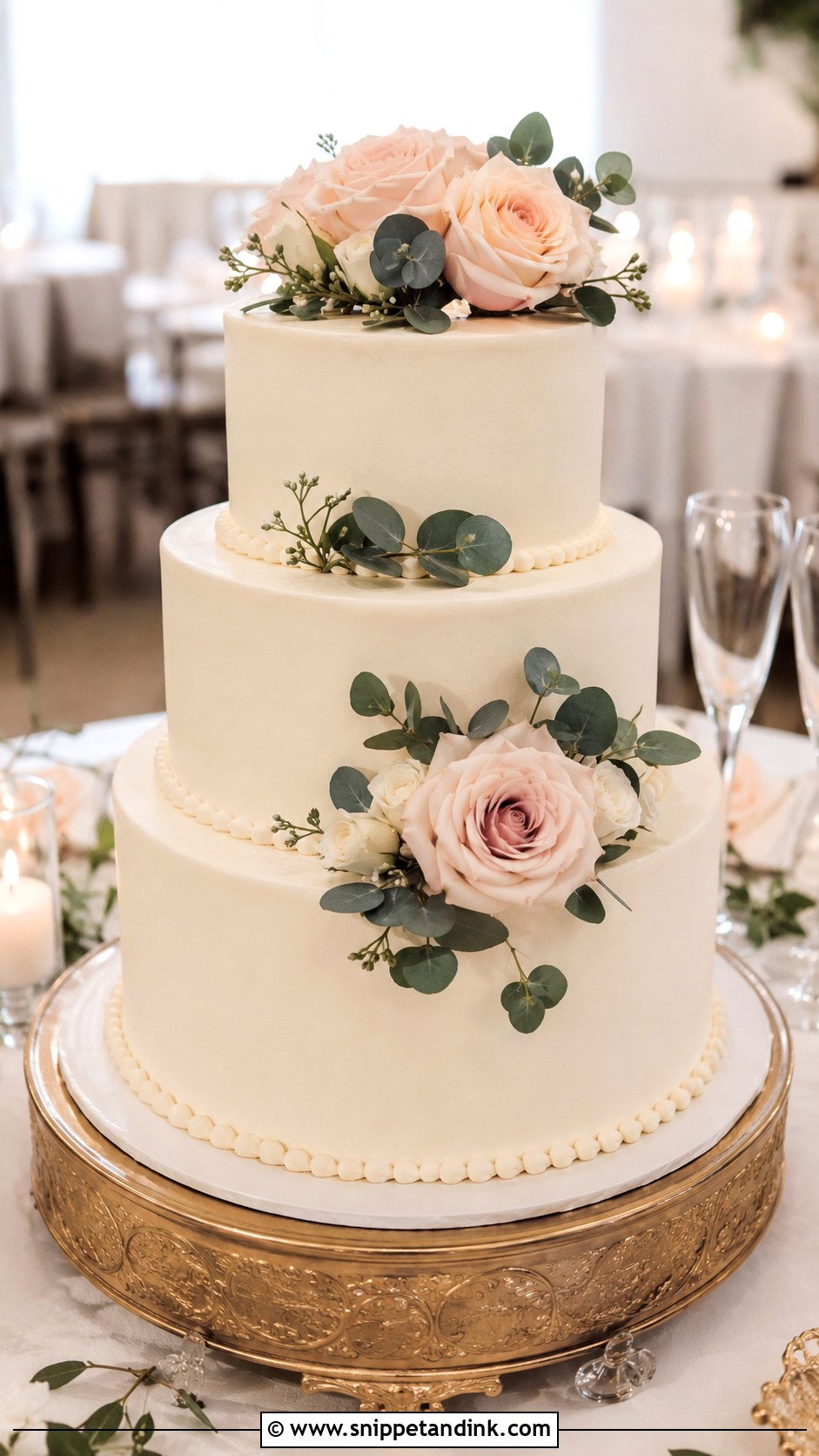
Three tiers is the size I recommend most, because it looks properly celebratory without towering over a mid-sized room. If your guest list is bigger than the cake, a plain kitchen cake in the same flavor makes up the difference at a lower cost, and nobody can tell once it’s plated. Each tier can be a different flavor, say lemon, red velvet and vanilla bean, which gives guests a choice. Smooth buttercream with fresh roses leans romantic; fondant with thin piping leans formal.
3. Two Tier Stacked Wedding Cake
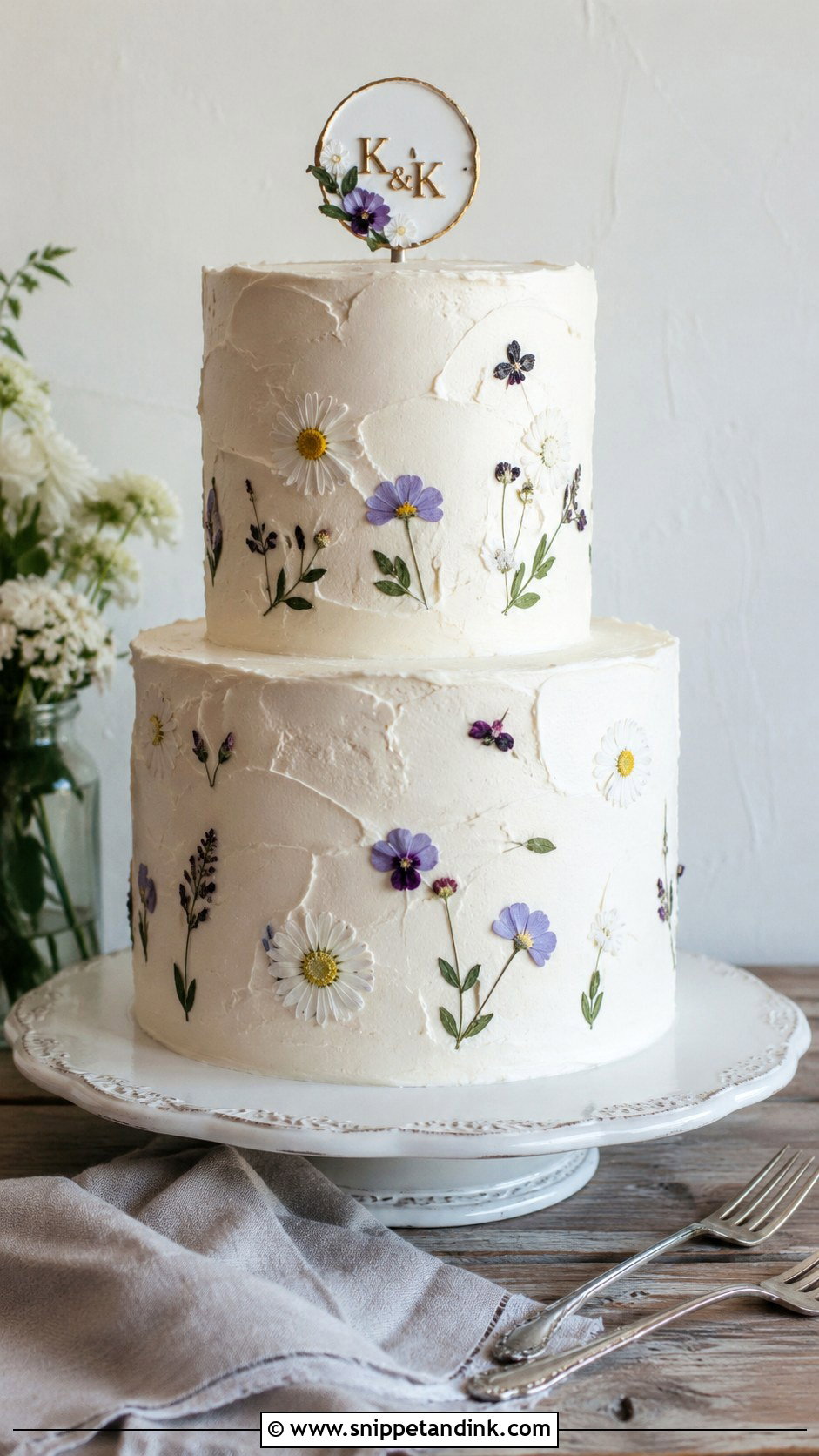
Small weddings and elopements don’t need a big cake to have a proper cutting moment. A two tier stacked wedding cake on a pedestal stand gives the height of a traditional cake at a fraction of the size. I like to make the tiers tall so it doesn’t look squat, then add one detail: a ruffled buttercream, a few pressed flowers or a small monogram topper. Vanilla with strawberry, lemon with blueberry and chocolate with salted caramel are dependable pairings at this size.
4. Tall Stacked Wedding Cake
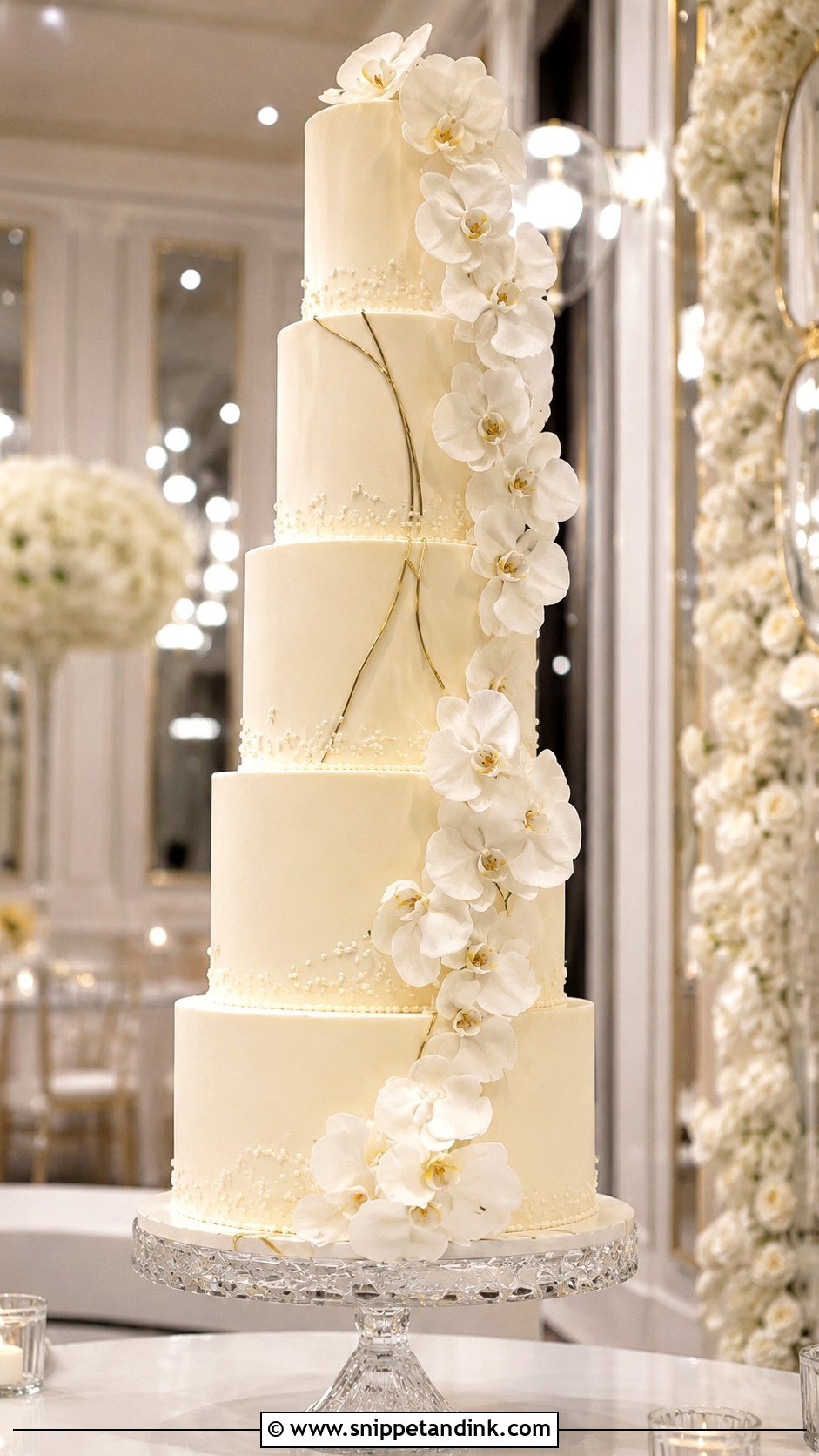
Height is the whole design here. Extra-tall tiers, often double the usual depth, make the cake slim and modern, and it suits rooms with high ceilings or big floral installations. This isn’t a style to improvise: a tall tier needs its own internal board halfway up, plus dowels, or it compresses under its own weight. Keep the decoration quiet, perhaps silk-smooth buttercream with thin gold lines, and let the proportions do the talking.
5. Square Stacked Wedding Cake
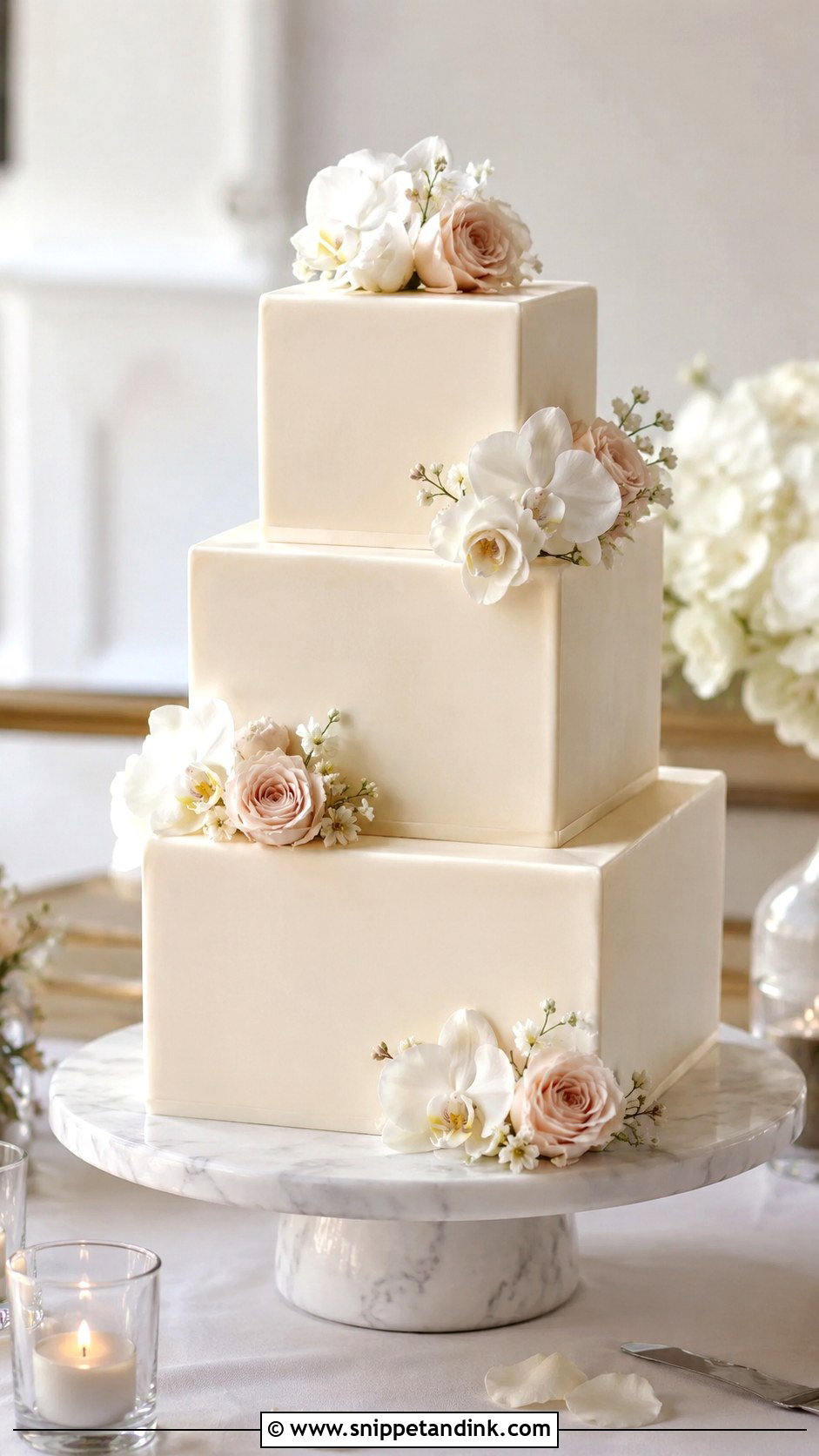
Square tiers make a stacked cake look architectural. The straight sides suit smooth fondant or very sharp buttercream edges, and floral accents look neat placed on opposite corners. Be aware that square corners are harder to finish than curves, so ask to see examples of a baker’s square work. It suits hotel ballrooms, galleries and black-tie receptions, and less expected flavors like almond, coconut or espresso match the modern shape.
6. Round Stacked Wedding Cake
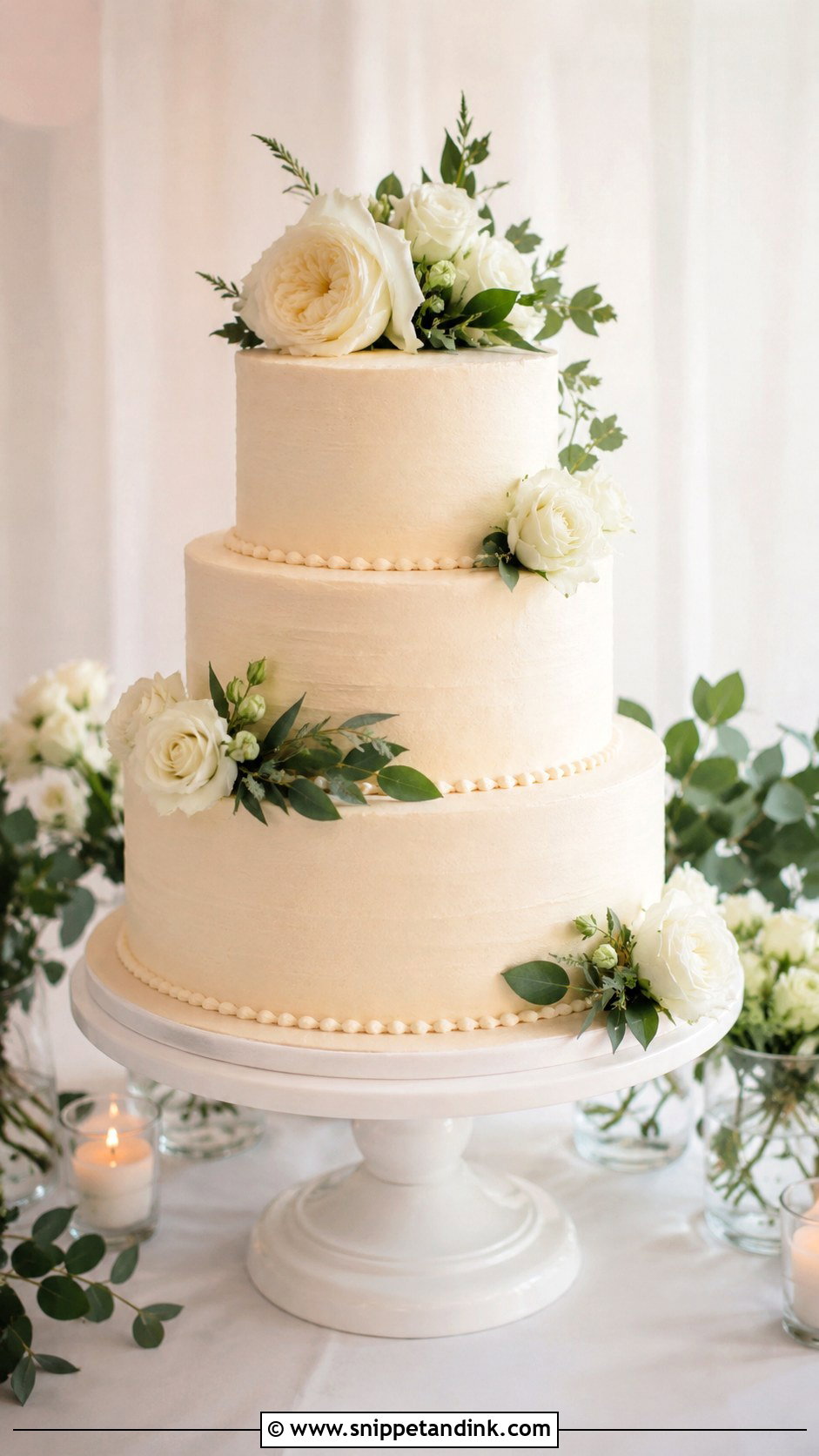
Round tiers are forgiving to decorate and to cut, which is a big part of why they’re still the default. They take any finish: textured buttercream for a rustic look, garden roses for a romantic one, smooth white for something modern. They also scale well, from a slim two-tier to a five-tier stack. For a softer look, I’d ask for ivory frosting instead of stark white, which can look slightly blue in photos.
7. Rustic Stacked Wedding Cake
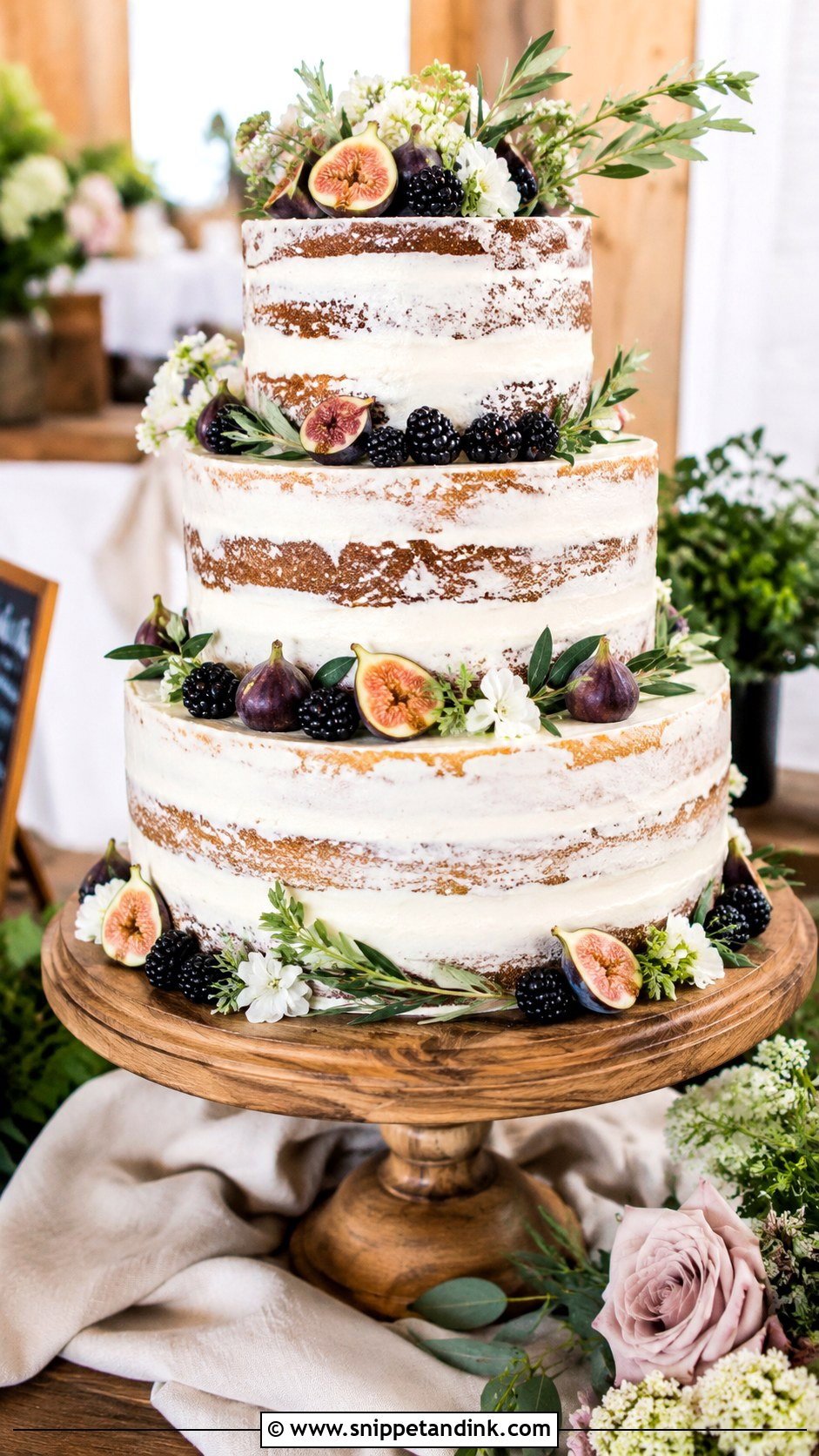
Rustic cakes should look handmade, not unfinished, and that line is thinner than people think. A semi-naked frosting lets the sponge show through, but exposed sponge dries quickly, so I finish these on the day rather than the night before. Berries, figs, greenery or small seasonal flowers suit barn and vineyard venues. Warm flavors such as carrot, spice, honey vanilla or brown butter with cream cheese frosting fit the mood, and a wooden stand keeps it grounded.
8. Modern Stacked Wedding Cake
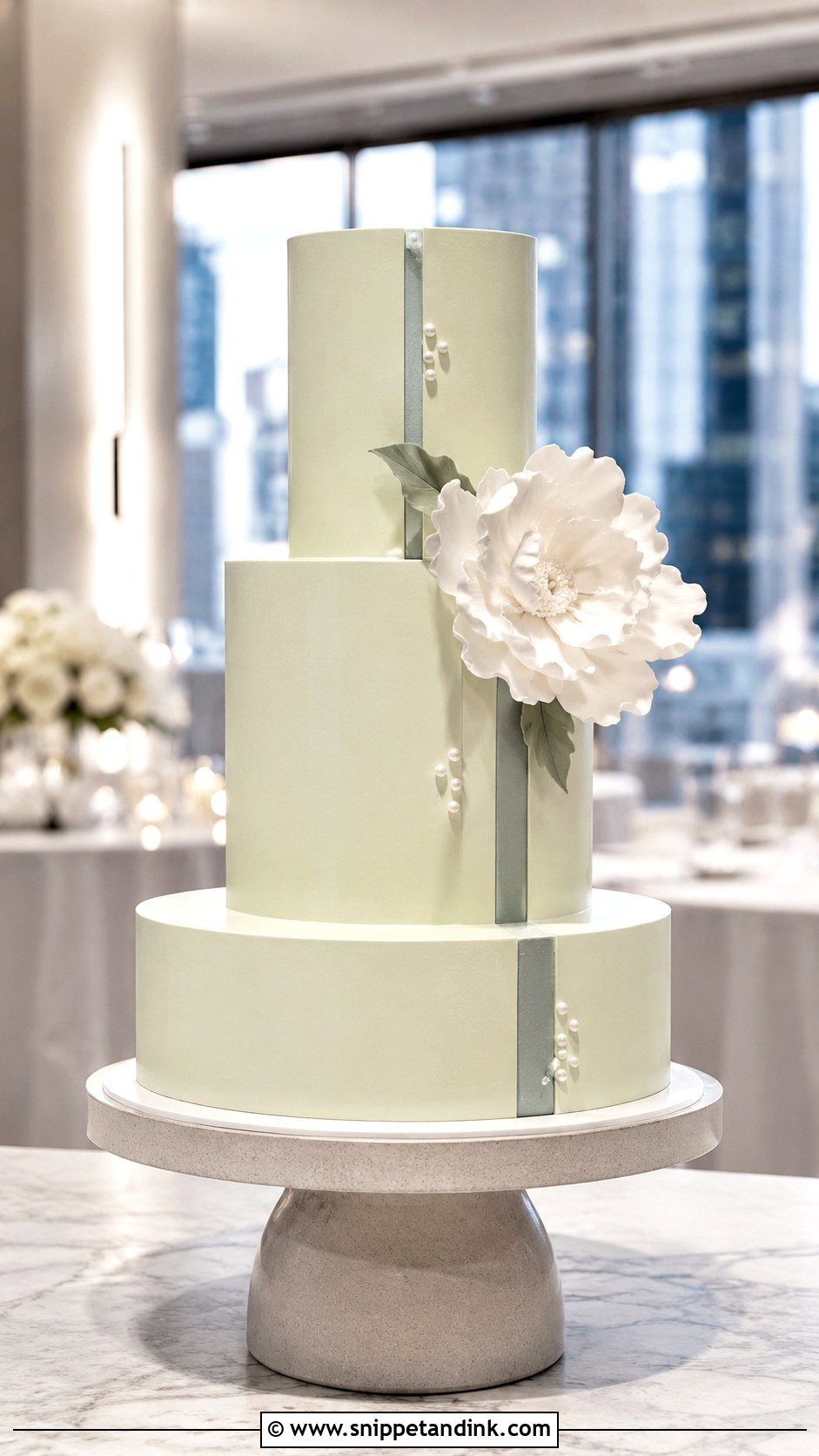
Modern stacked cakes are about editing. One sculptural sugar flower, a single stripe or an offset tier is the whole design, and everything else is smooth. Offset tiers, where each one sits slightly off-center, need careful support placement, so check that your baker has built them before. City venues and minimalist rooms suit this look. Vanilla bean, espresso, pistachio or chocolate hazelnut keeps the flavors as refined as the outside.
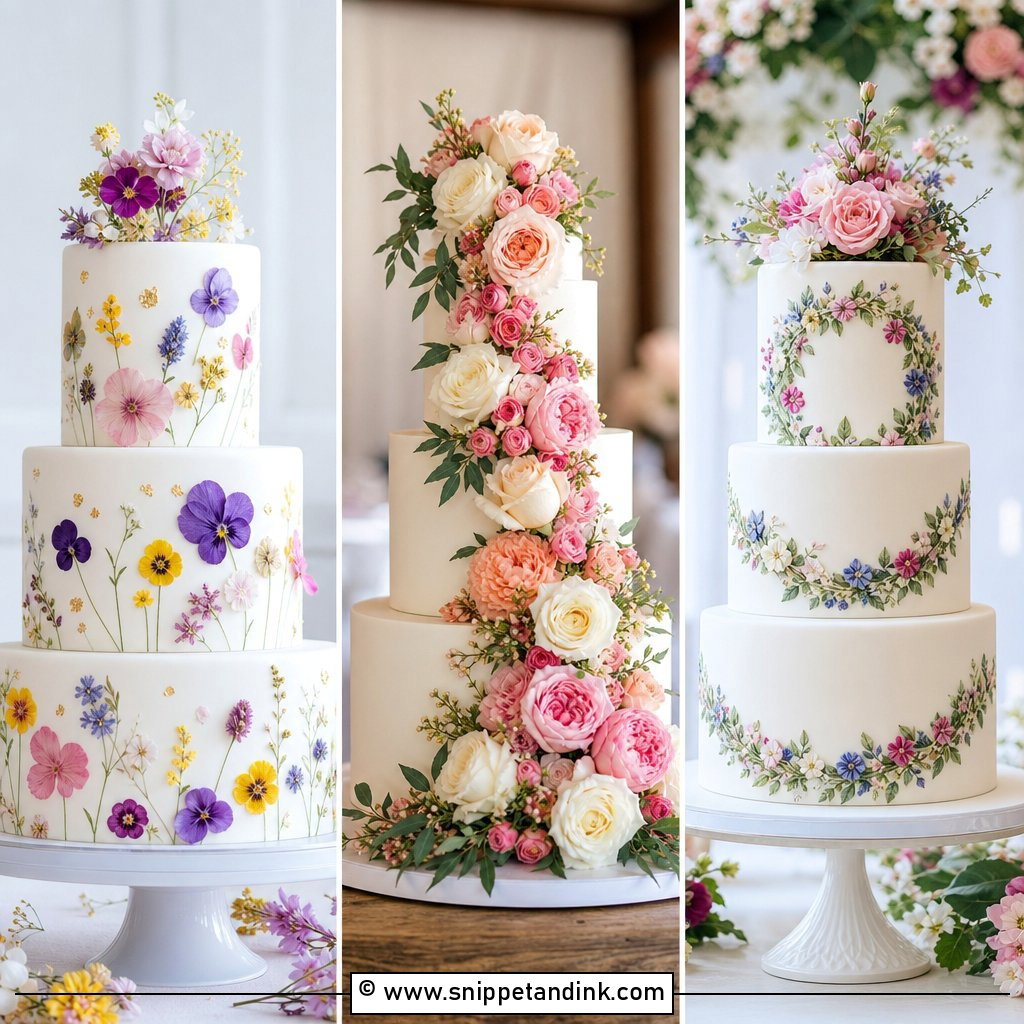
9. Floral Stacked Wedding Cake
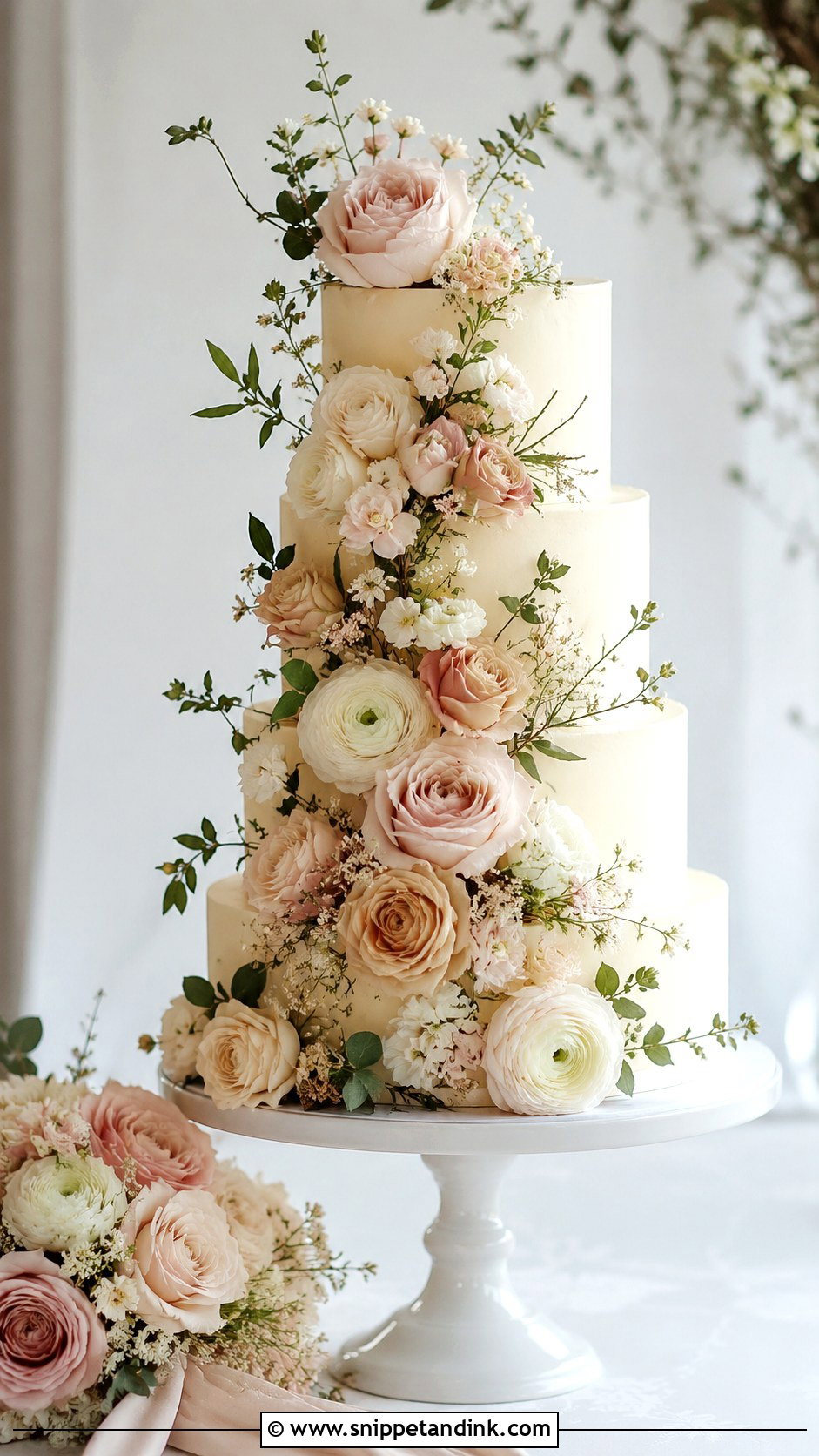
Flowers on the cake tie the dessert straight back to the bouquet. You can use fresh blooms, sugar flowers, pressed petals or piped buttercream flowers, and the choice often comes down to budget and venue rules. Sugar flowers cost more because each petal is made by hand, but they can be made weeks ahead and kept as a keepsake. Fresh flowers must be food-safe or separated from the cake with tape and picks. Vanilla rose, lemon elderflower or almond suit the look.
10. Pearl Stacked Wedding Cake
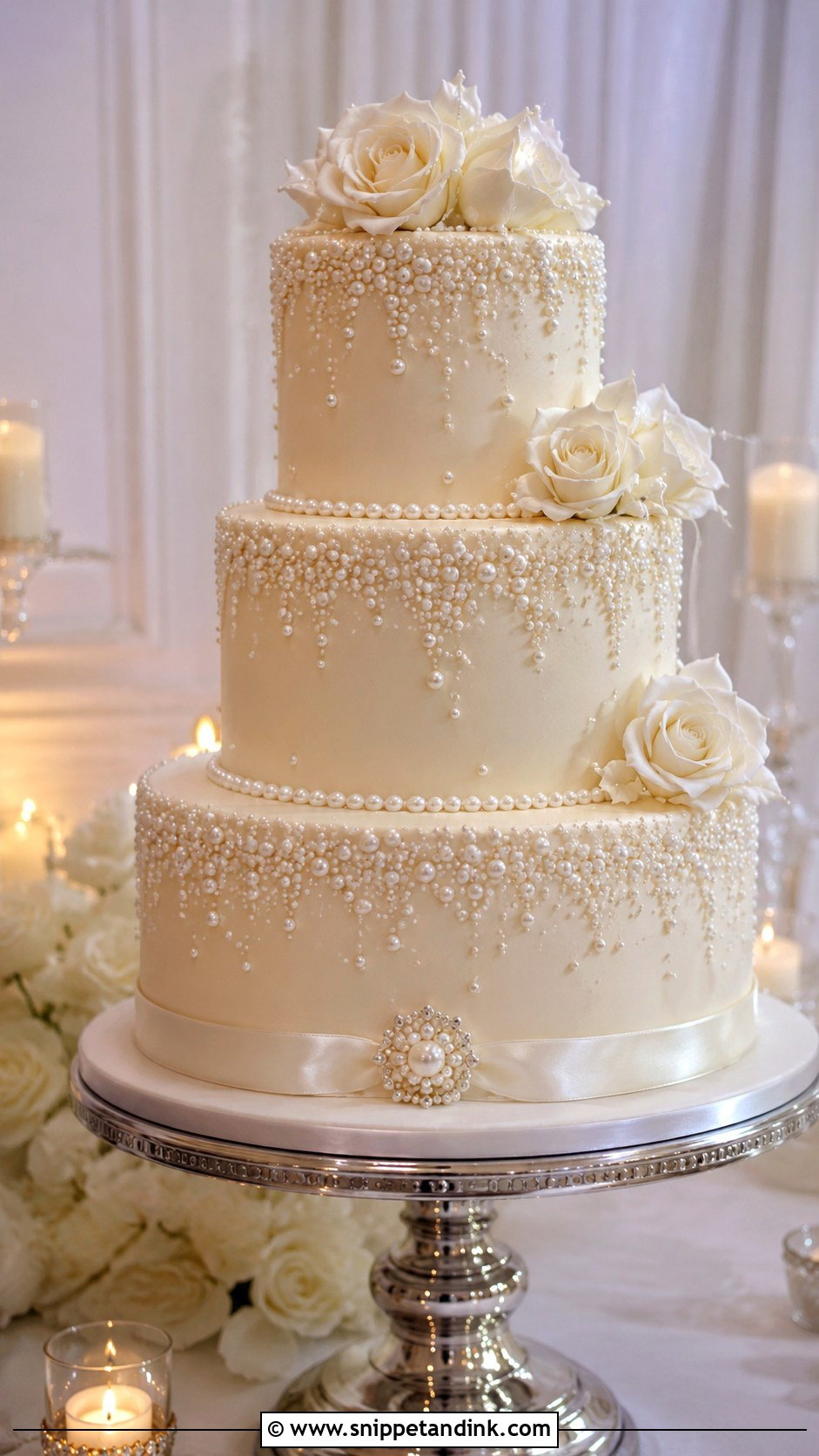
Pearls are a quiet way to add detail without crowding the tiers. They can be piped in buttercream, made from sugar, or bought as edible dragées and pressed on one by one. A single row at the base of each tier also hides the join between tiers neatly. Hard sugar pearls are worth warning your caterer about, so slices aren’t served with whole clusters on top. Champagne, almond or white chocolate flavors keep the whole cake delicate.
11. Vintage Stacked Wedding Cake
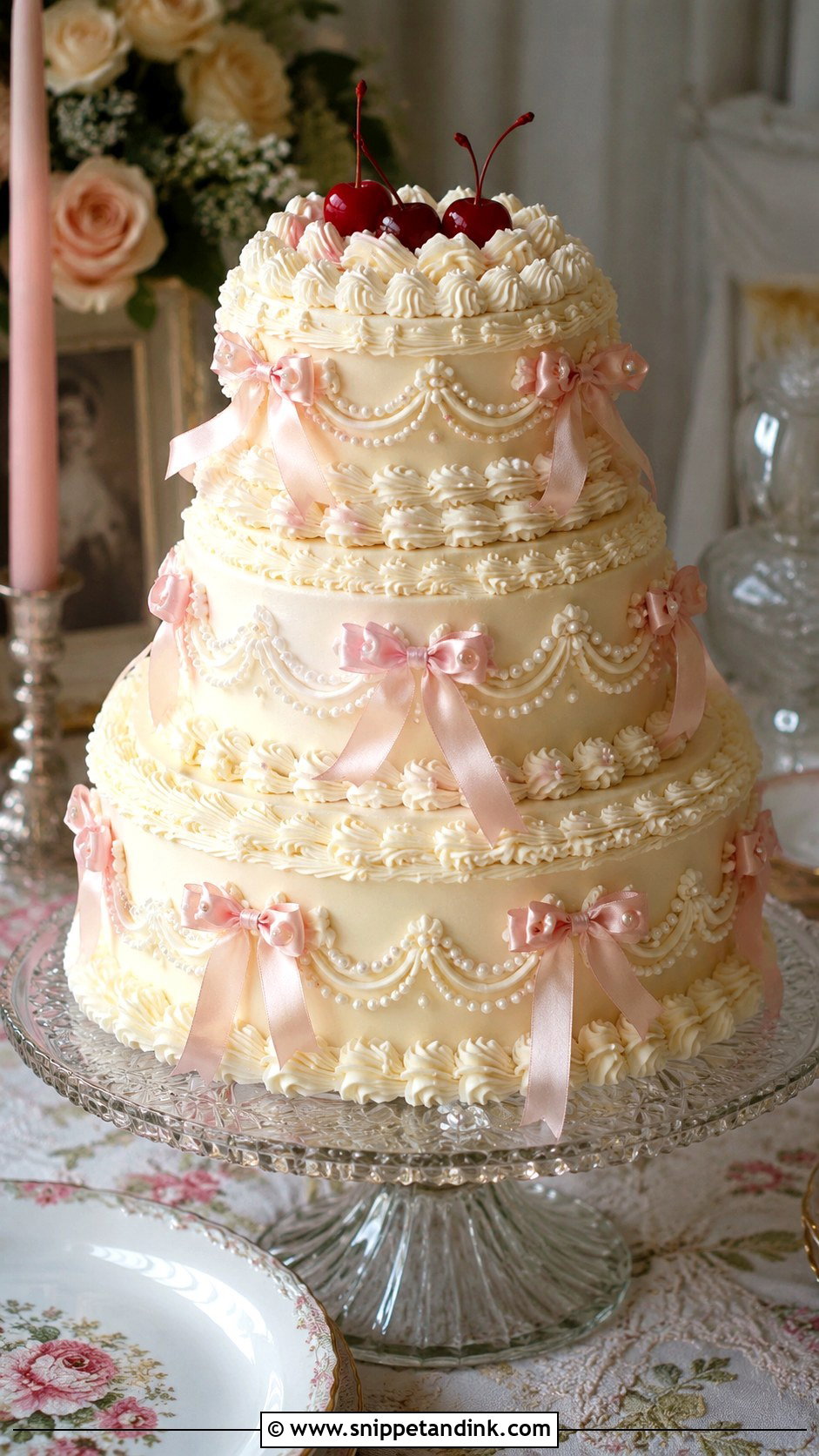
Vintage piping is having a big moment, and it’s real skill work. Shell borders, swags and Lambeth-style borders are built up in layers of buttercream, so they need a firm recipe that holds its shape. Keep the palette controlled: one soft color like blush, pale blue or butter yellow with ivory, rather than a rainbow. Cherries, bows or a small topper suit the style. Classic flavors such as vanilla, chocolate, red velvet or almond raspberry feel right with it.
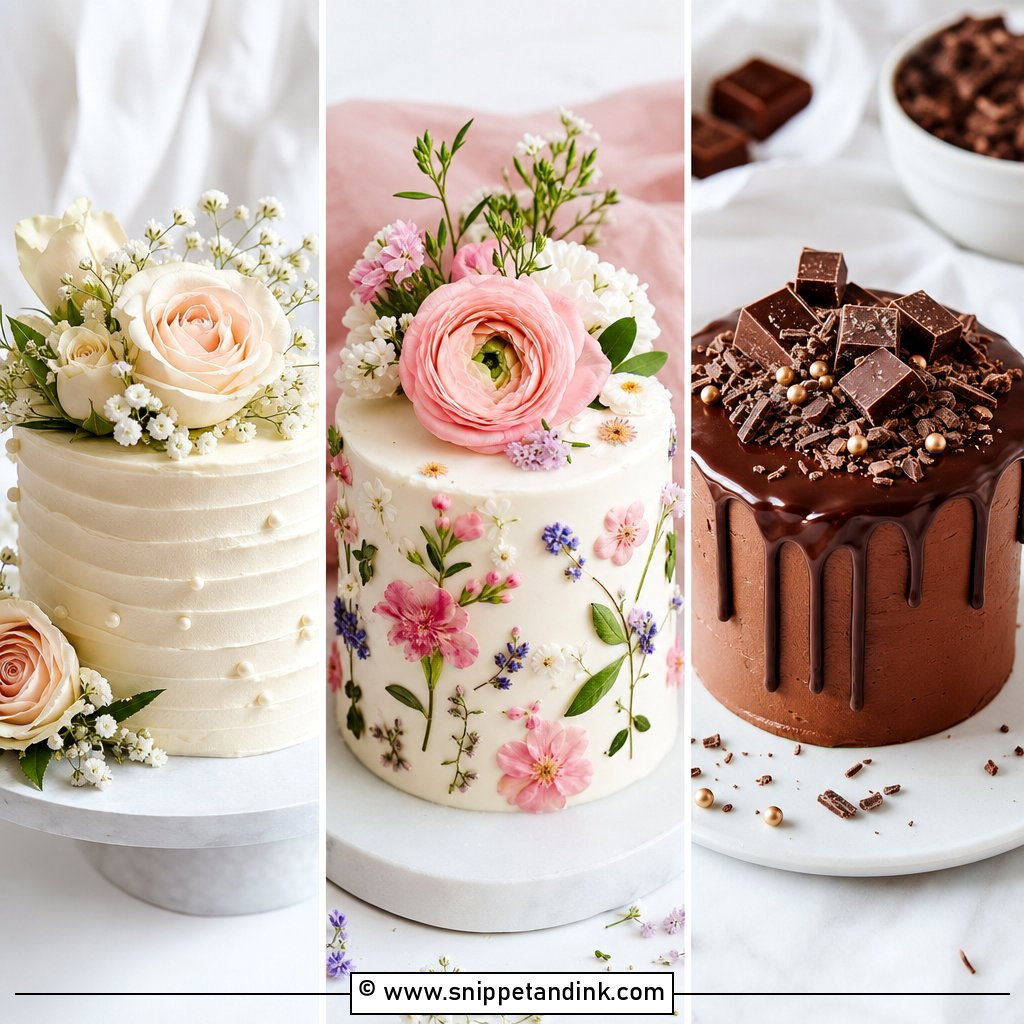
12. Buttercream Stacked Wedding Cake
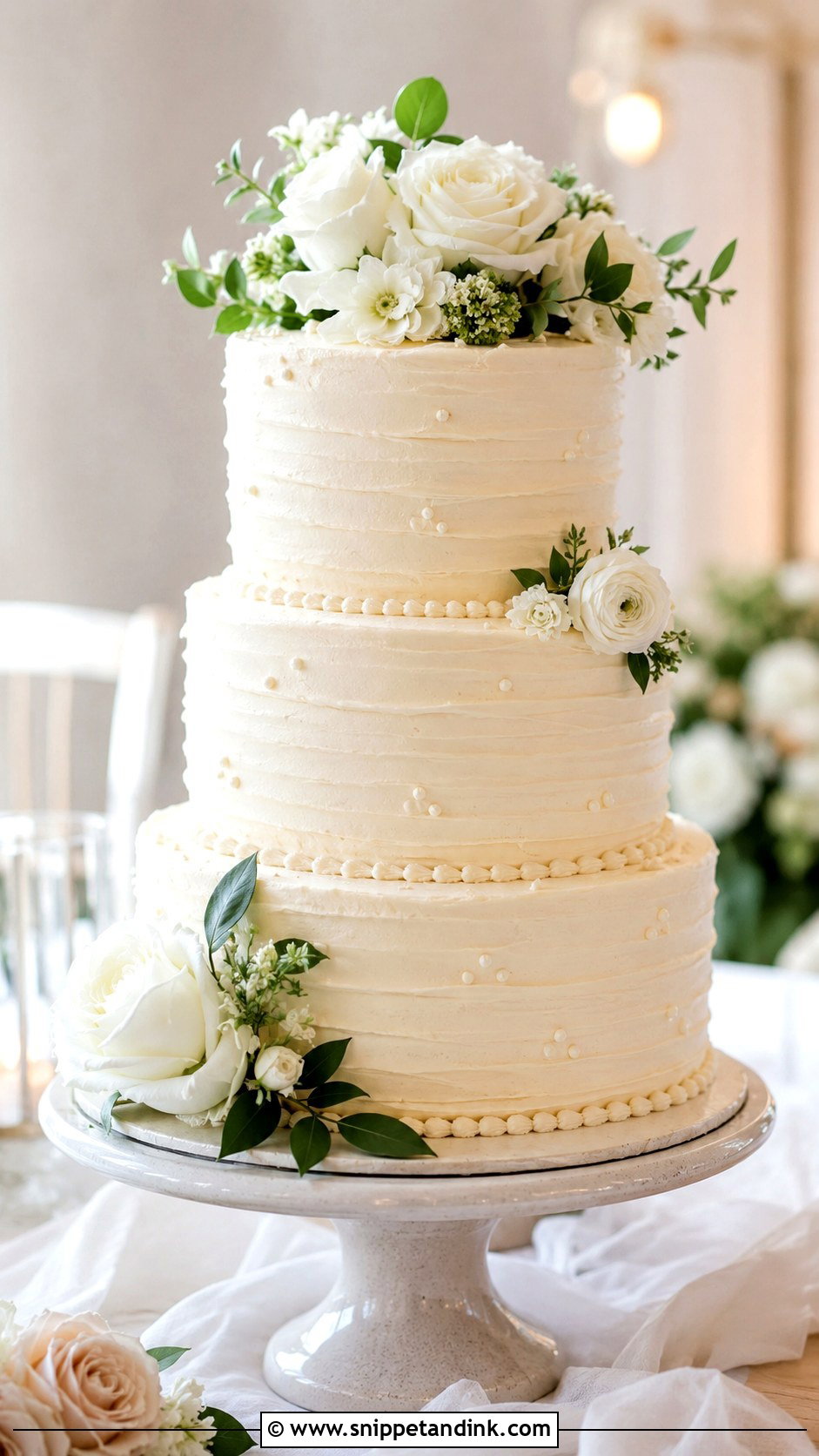
Buttercream is what most guests actually want to eat, and it’s easy to flavor: vanilla bean, citrus, mocha, strawberry or brown butter. It can be smooth and modern, textured and rustic, or piped and vintage. The catch is temperature. Buttercream softens in a warm room and slumps in direct sun, so for an outdoor or summer wedding, talk to your baker about a firmer recipe and how long the cake will sit out before it’s cut.
13. Fondant Stacked Wedding Cake
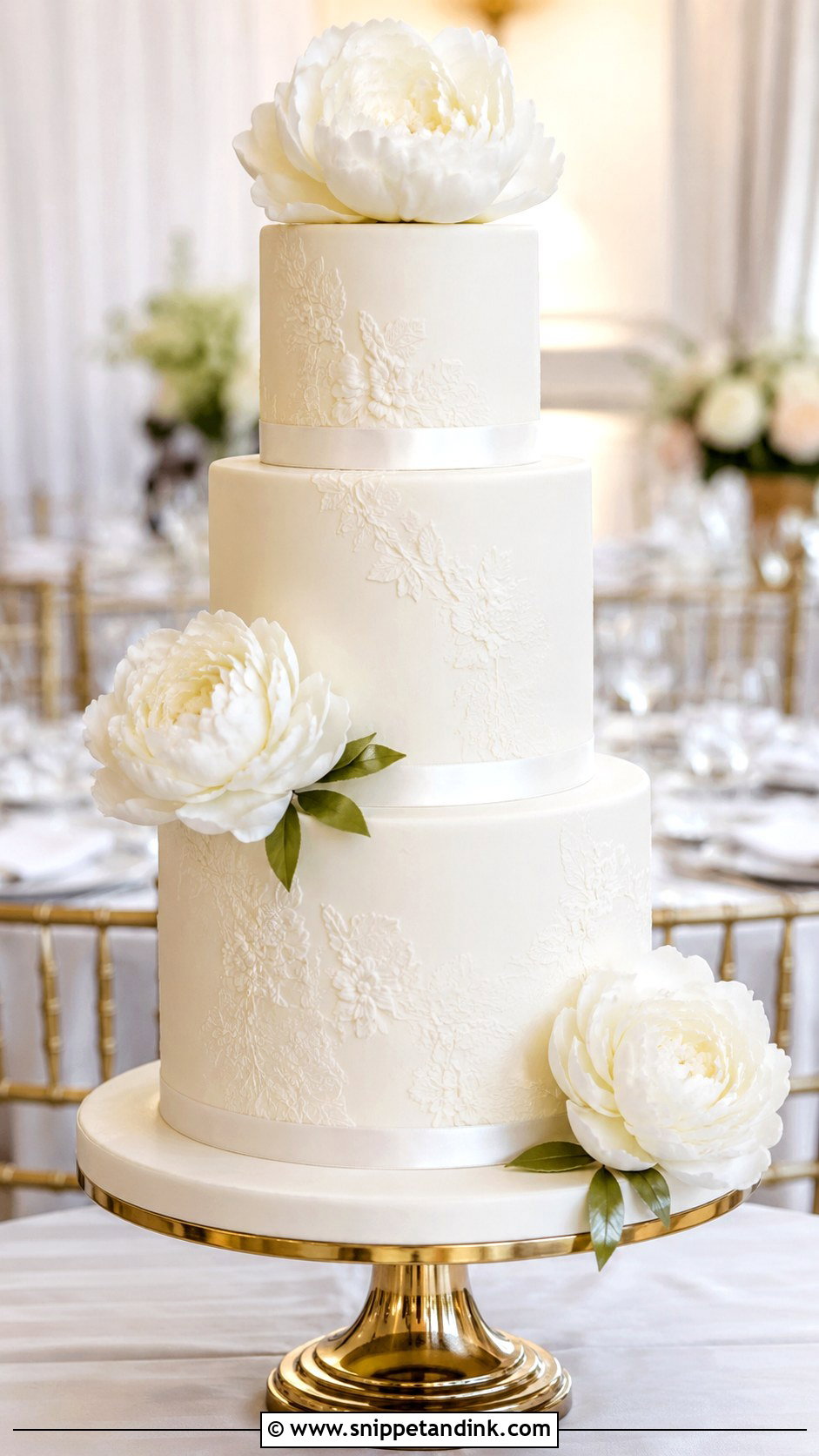
Fondant gives every tier a clean surface for painted details, embossed patterns and sculpted decorations. It also protects the cake better on a long display, which makes it practical when the cake sits out for hours before serving. Under the fondant there’s still buttercream or ganache, so flavor isn’t lost, and most guests simply peel the fondant aside. White, ivory, blush or soft gray finishes suit it, with sugar flowers or ribbon bands.
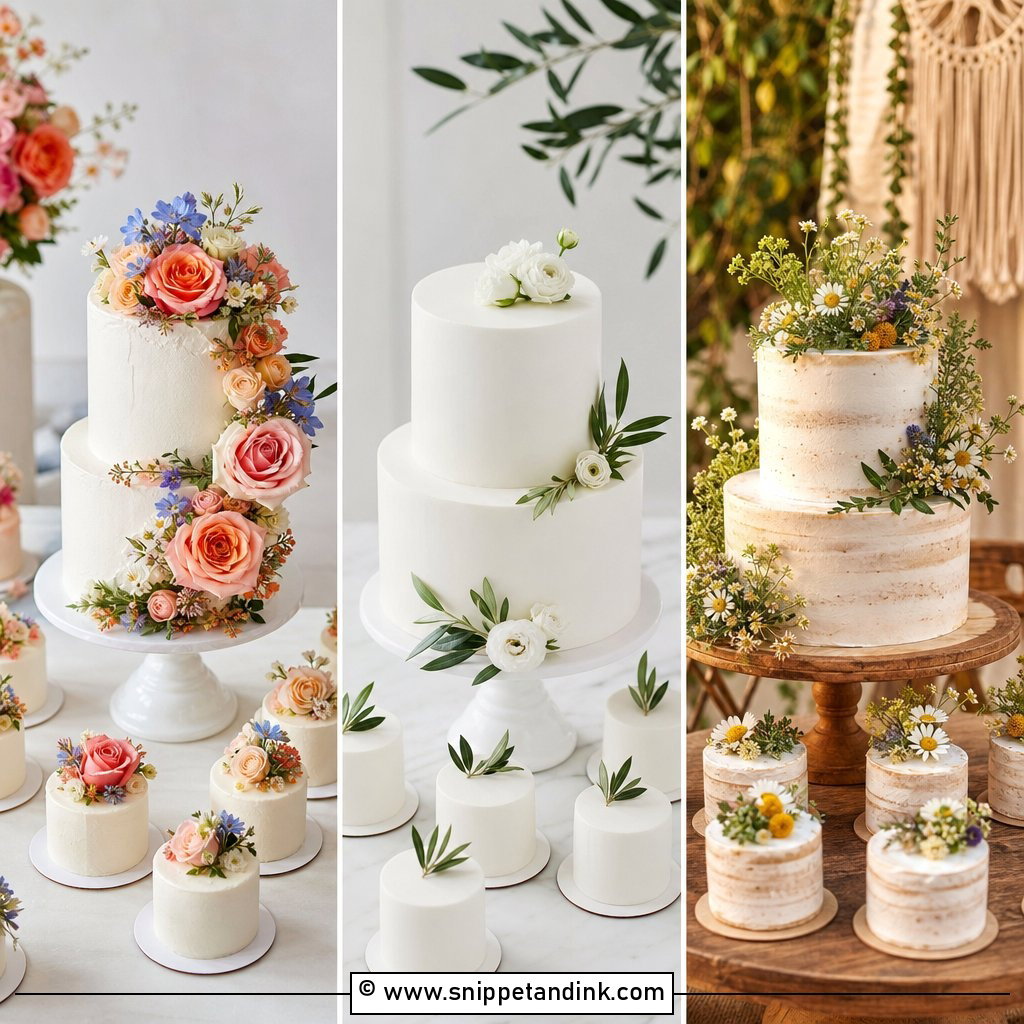
14. Stacked Wedding Cake With Fresh Flowers
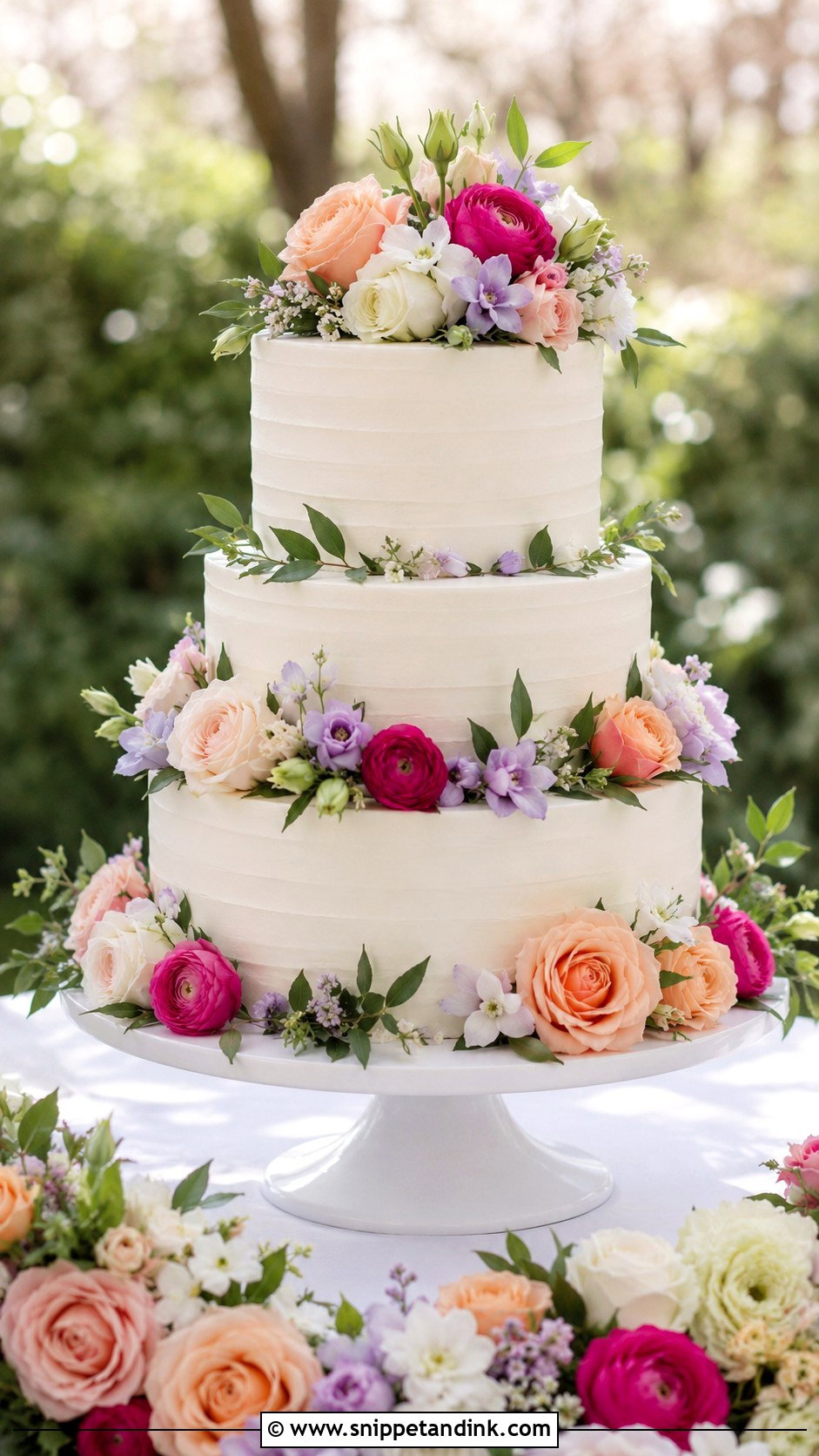
Fresh flowers look natural on a cake, but safety comes first. Roses, ranunculus, orchids, lisianthus and greenery are popular, and your baker and florist should agree which blooms are suitable near food and who will place them. I always want stems wrapped and inserted in picks, never straight into the sponge. The finish underneath can be anything from fondant to semi-naked. Choose flavors to suit the season, such as lemon for spring, berry vanilla for summer or spice for fall.

15. Stacked Wedding Cake With Gold
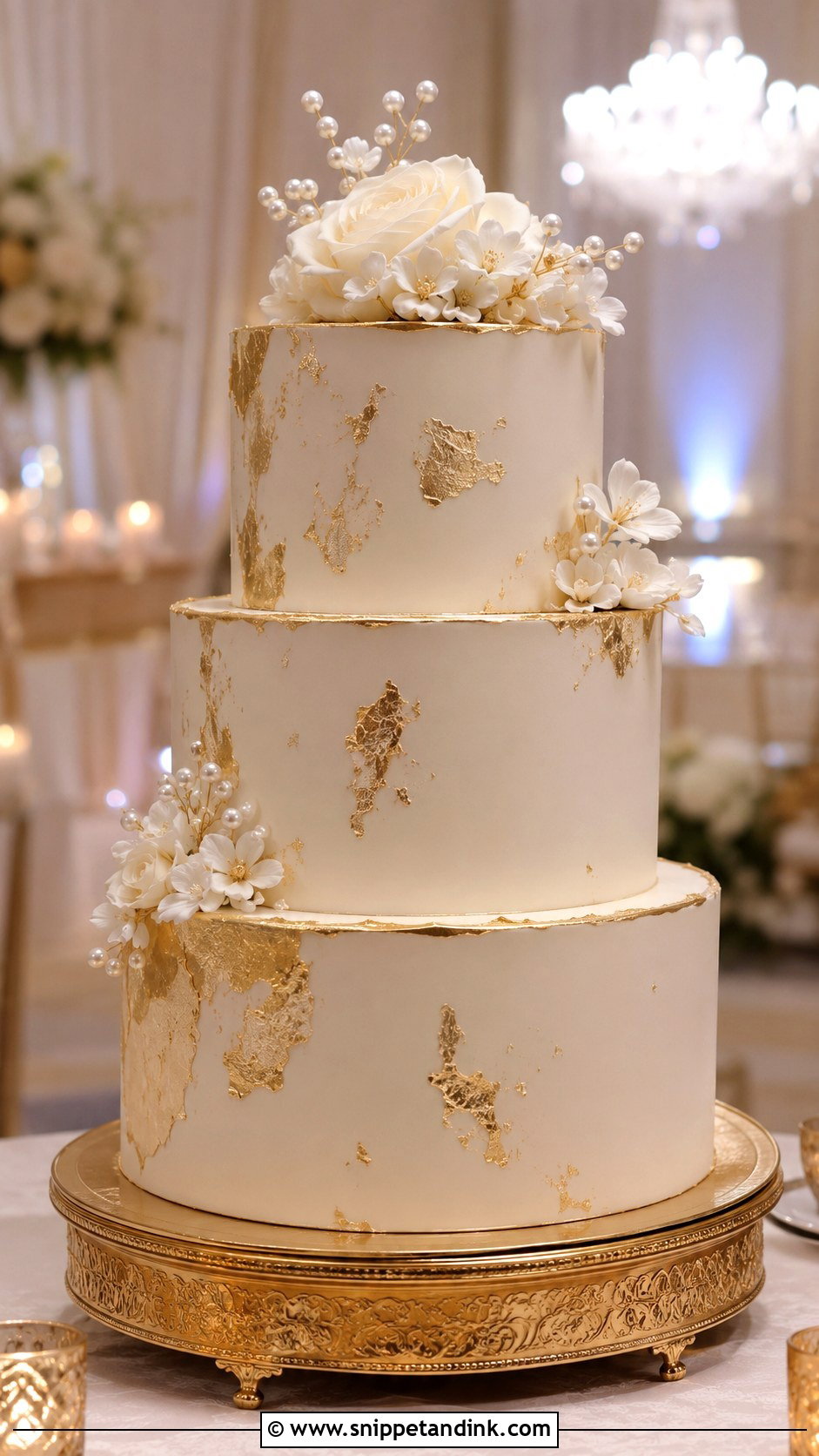
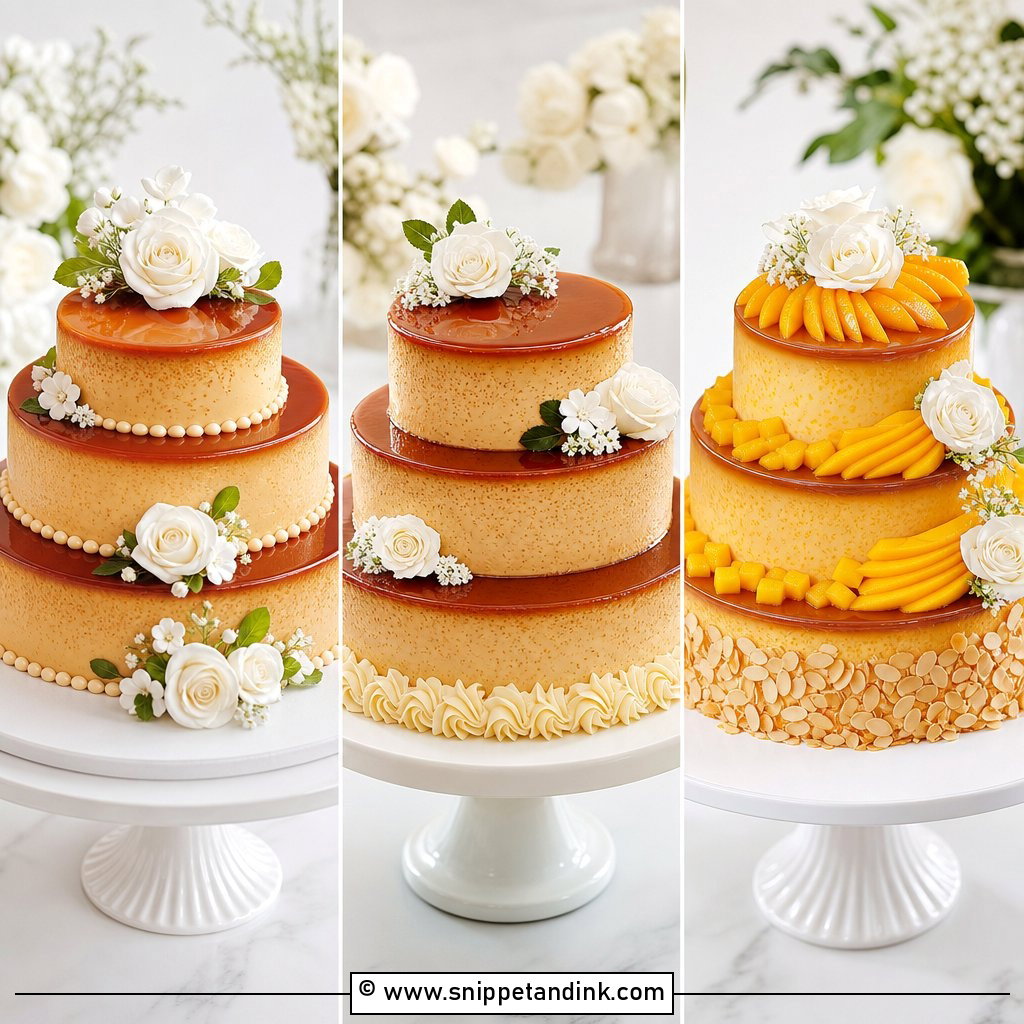
Gold dresses up simple white tiers quickly, and restraint is what keeps it elegant. Gold leaf, thin painted lines or a gilded edge look refined; full gold tiers can look harsh under reception lighting. Edible gold leaf is applied last with tweezers or a dry brush, and it settles best on fondant. Ivory, blush, sage or deep green all pair well with gold. Vanilla champagne, chocolate caramel or pistachio suit the polished look.
16. Stacked Wedding Cake With Fruit
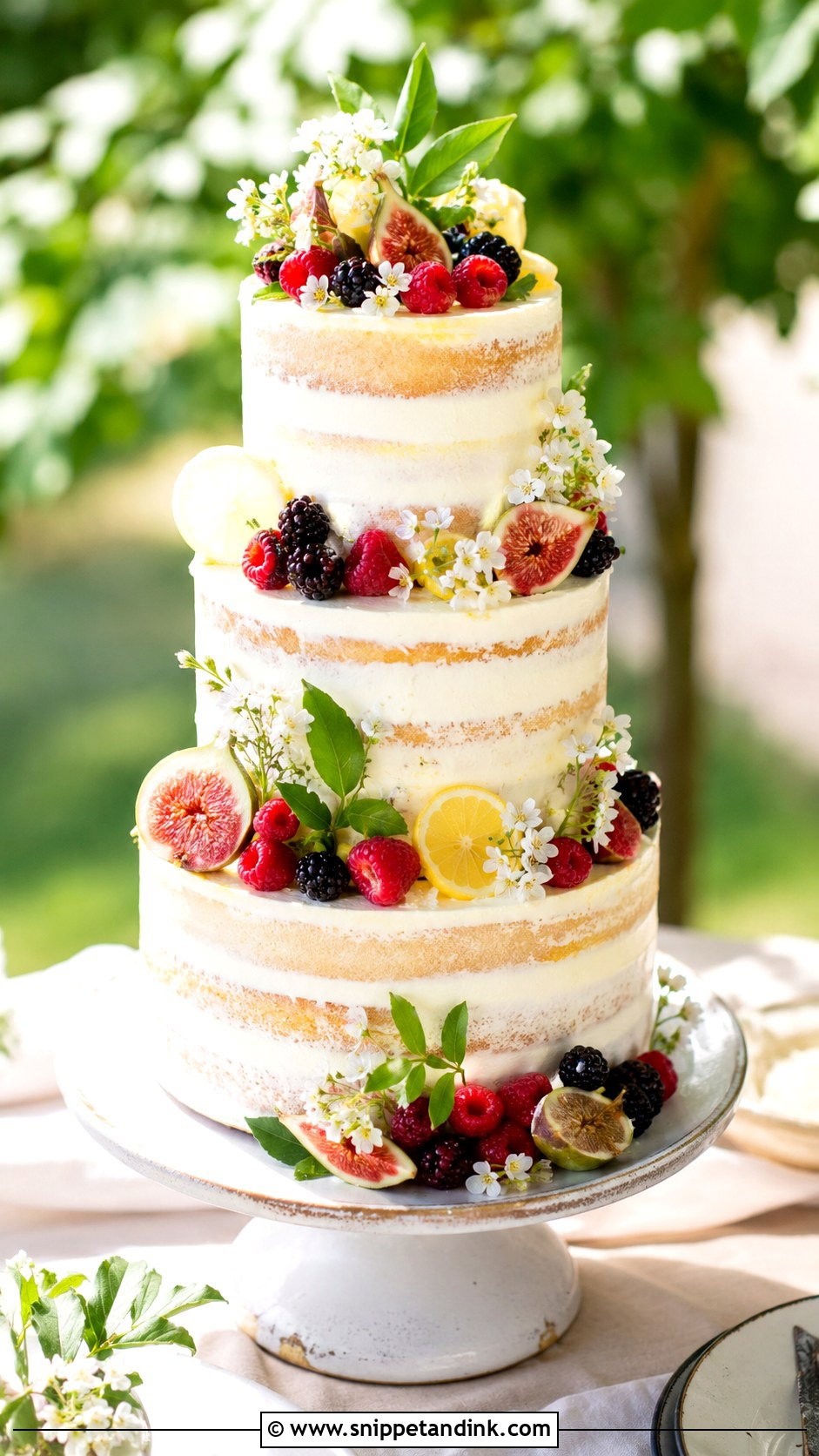
Fruit is honest decoration, since it tells guests what’s inside. A stacked wedding cake with fruit looks best with berries, figs, citrus or cherries placed neatly, not piled on. Cut fruit weeps juice onto frosting within a few hours, so I use whole berries where possible and add any cut fruit at the venue. Lemon blueberry, vanilla raspberry, orange almond and chocolate cherry all match the topping. It suits brunch, garden and summer weddings.
17. Stacked Wedding Cake With Bows
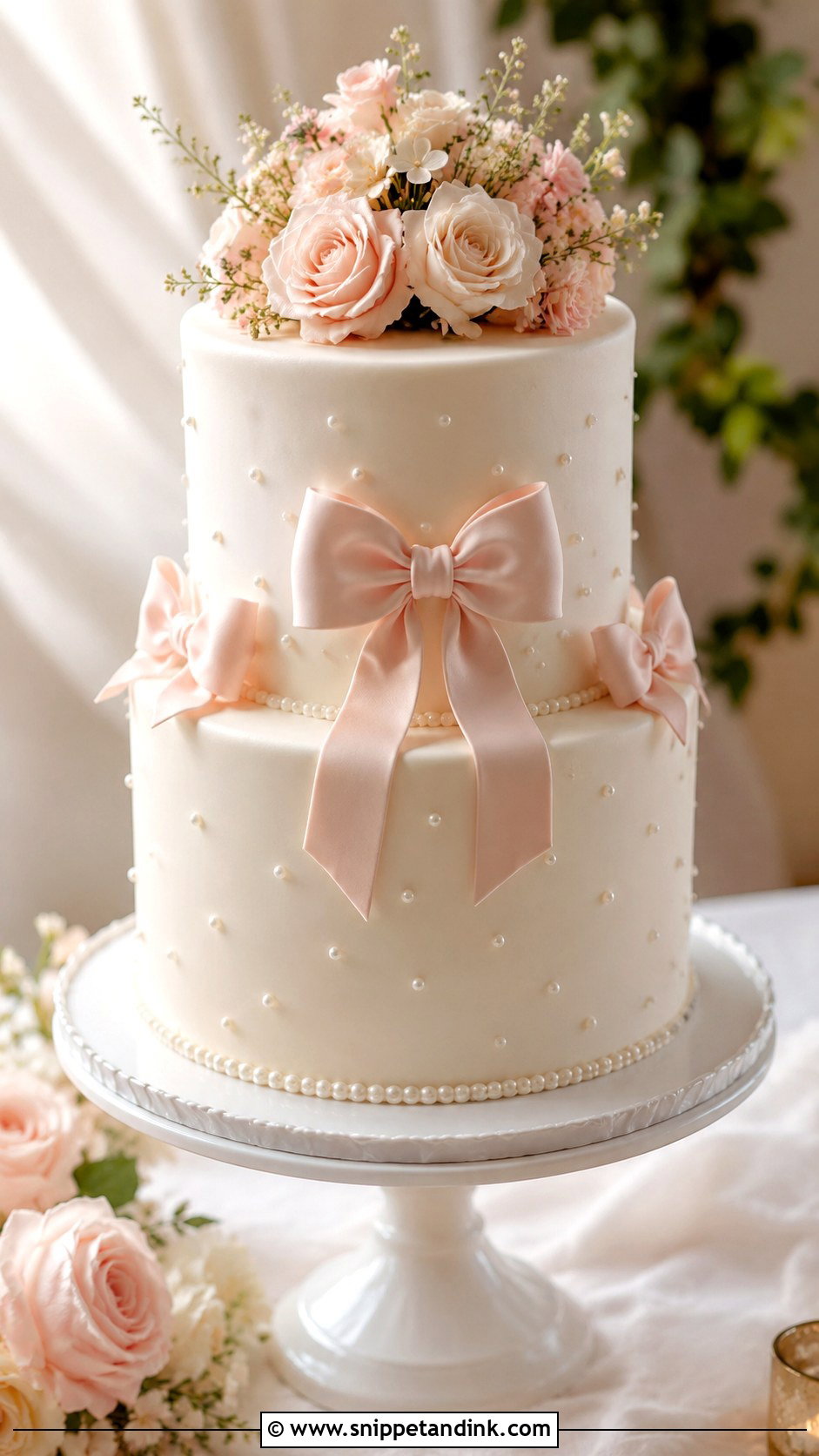
Bows have come back in a big way. They can be made from fondant, wafer paper, silk ribbon or piped buttercream; wafer paper is light and holds a crisp fold, which makes it a good choice for a large bow. One oversized bow feels modern, while small bows on each tier feel vintage. Real silk ribbon must sit on a barrier strip so grease from the frosting doesn’t stain it. Vanilla bean or strawberry champagne suits the sweet mood.
18. Minimalist Stacked Wedding Cake
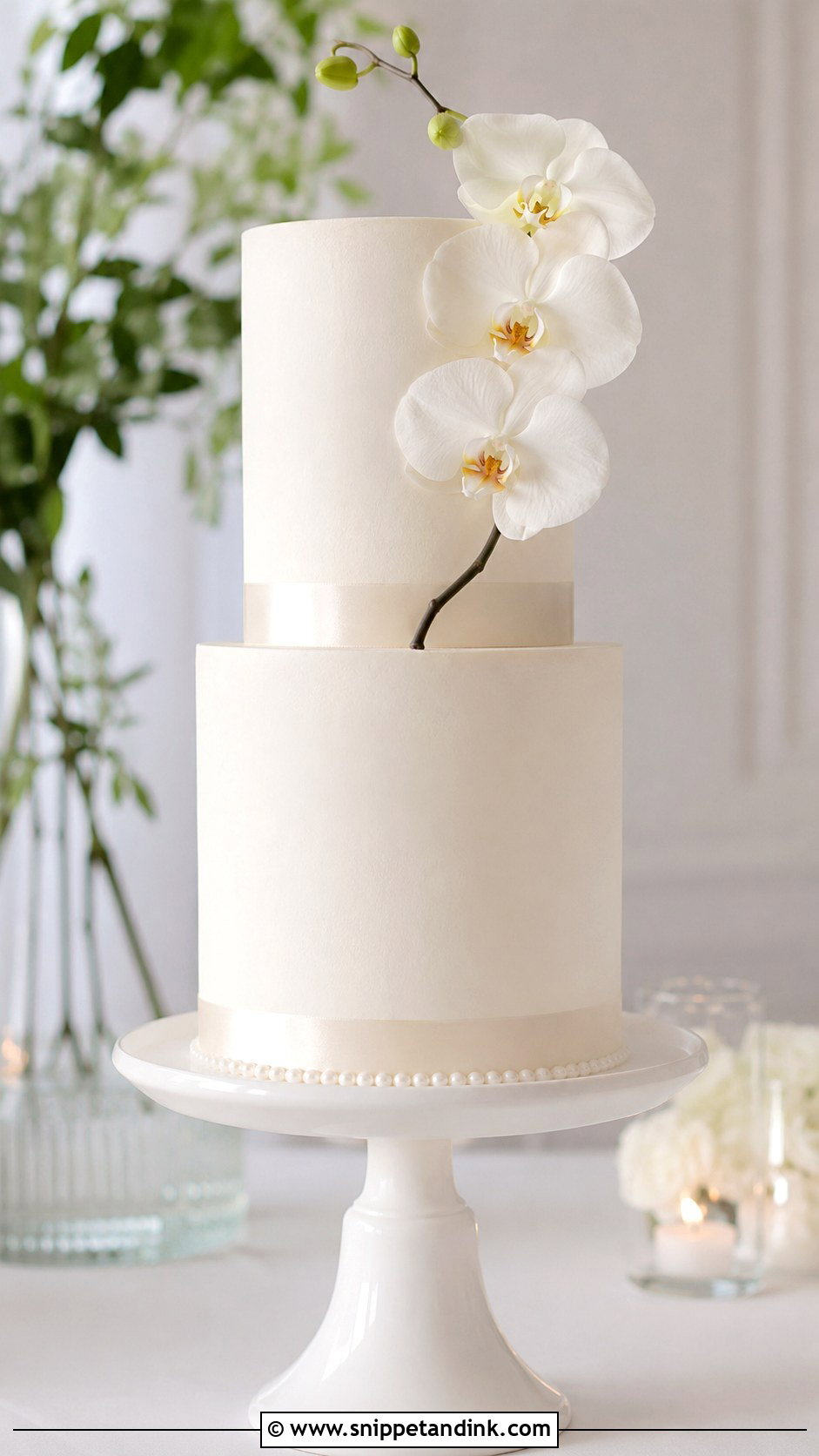
Minimal cakes rely entirely on proportion and finish, so there’s nowhere for a wobbly edge to hide. A single orchid stem, a slim ribbon or a small pearl border is enough. Courthouse weddings, lofts and restaurant receptions suit the look. The flavors can still be bold inside, such as dark chocolate espresso, lemon curd or pistachio cream. If you choose minimal, put your budget into the baker’s finishing skill rather than decoration.
19. Colorful Stacked Wedding Cake
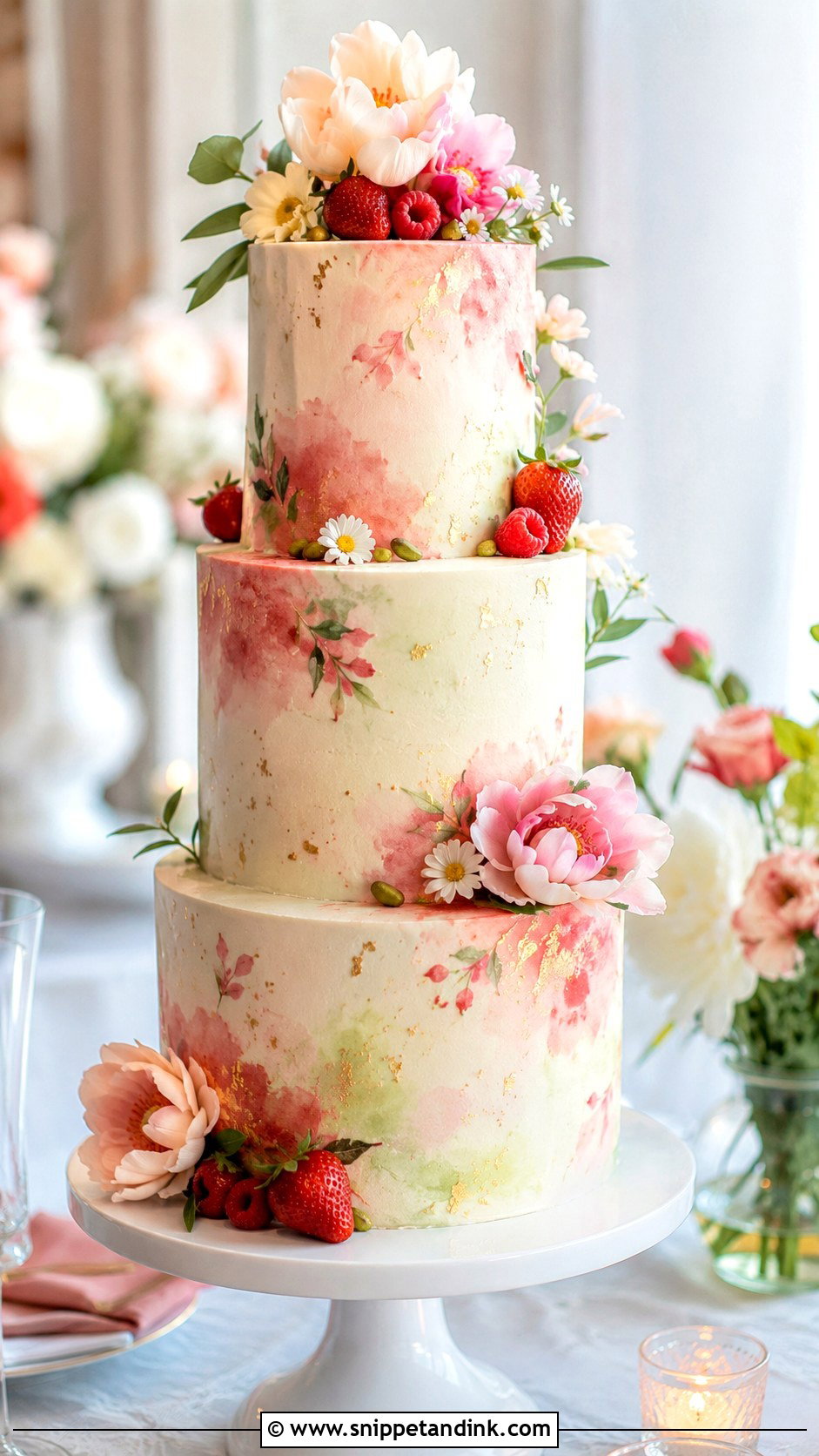
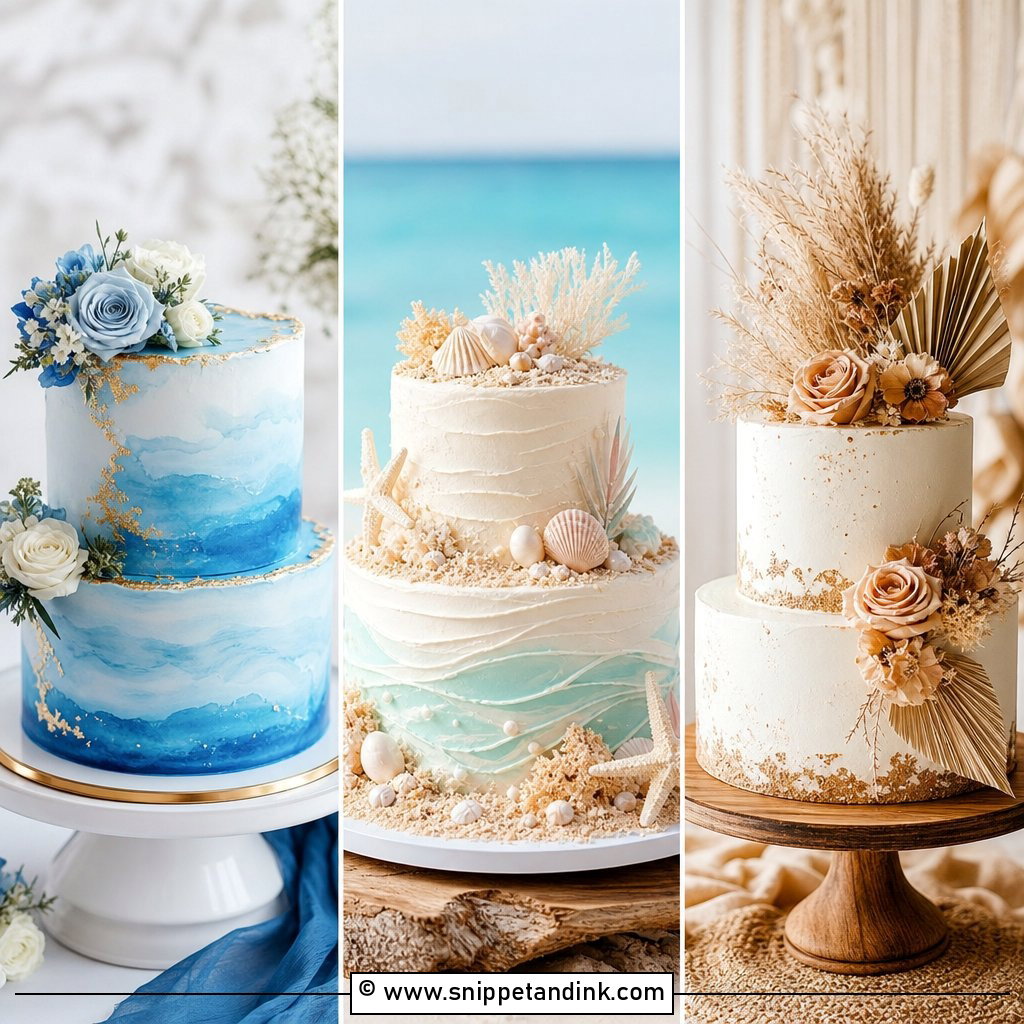
Color makes a cake feel personal. A colorful stacked wedding cake can be soft, in blush, lavender or dusty blue, or bold, in coral, emerald or terracotta. Strong colors need a lot of gel coloring, which can affect taste and stain mouths, so I often use color on one tier or in painted details rather than everywhere. Watercolor effects and ombré tiers work well. Matching the shade to the invitations or bridesmaid dresses pulls the whole day together.

20. Black And White Stacked Wedding Cake
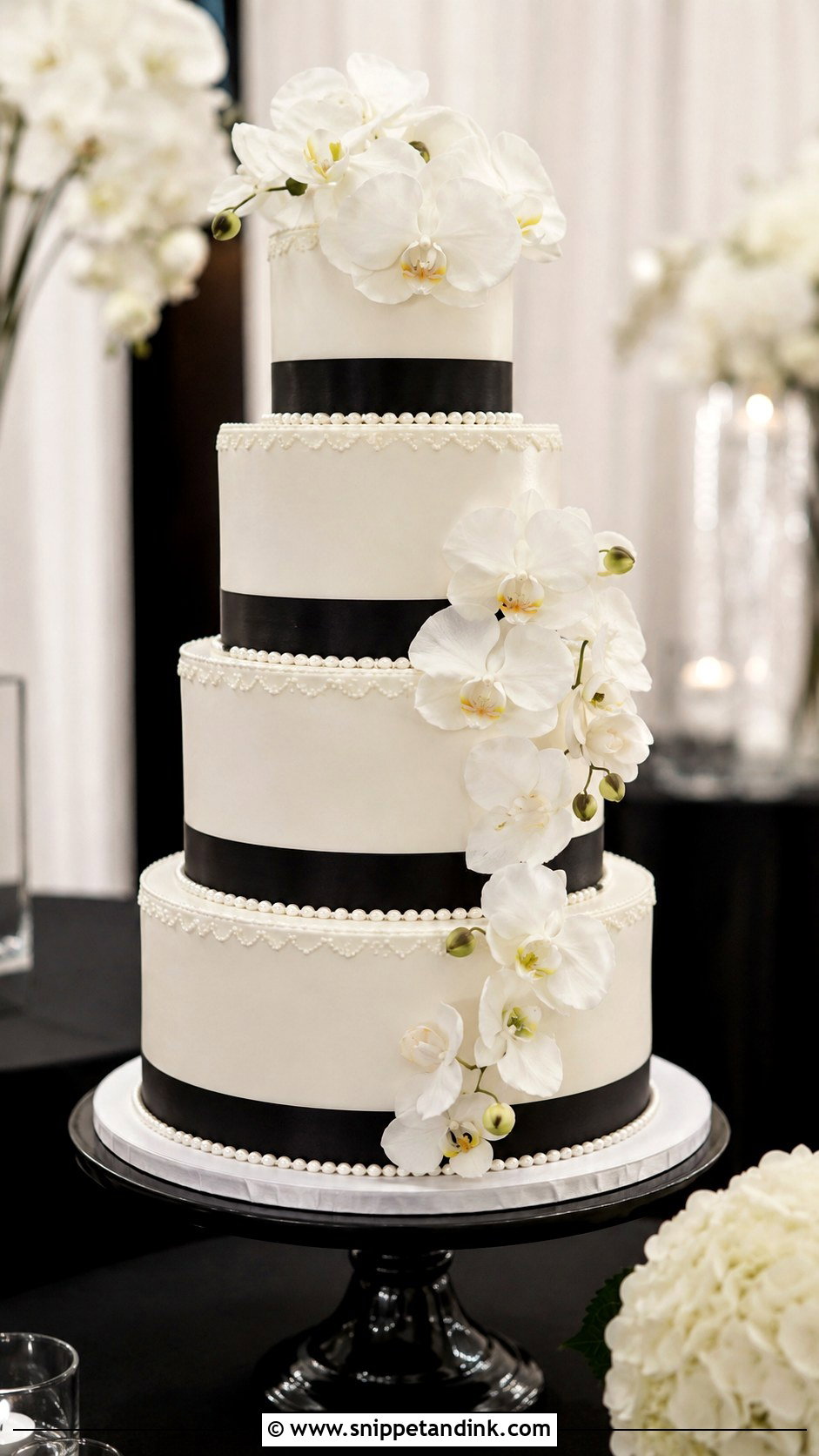
Black and white is the most dramatic stacked cake here, and it belongs at an evening or black-tie reception. White tiers with black ribbon are the gentle version; black fondant with white florals and geometric details is the bold one. Black icing tastes slightly bitter and stains teeth, so I’d use it as an accent rather than a full tier. Dark chocolate, cookies and cream or espresso cake suit the look. White orchids or pearls soften it.
Who Cuts the Cake, and How
A stacked cake hides boards and dowels inside every tier, and the person cutting it has to know that. Confirm in writing whether your caterer or venue staff will cut it, as many charge a cake-cutting fee if the cake comes from an outside baker.
The method I send with every cake
- Lift off the top tier first and set it aside, along with any flowers or toppers.
- Remove the dowels from the tier below before cutting.
- Cut a line about two inches in from the edge of the tier, then slice that outer ring into one-inch pieces.
- Repeat with a new ring until only the center remains, then move down to the next tier and its board.
Saving the top tier
If you’re keeping the top tier for your first anniversary, take off any fresh flowers, chill it uncovered until the frosting firms, then wrap it tightly in plastic wrap and foil and freeze it. Sponge cakes with buttercream freeze far better than anything with fresh fruit or cream fillings, so mention it early and your baker can fill that tier accordingly.
Start With the Room and the Guest List, Then the Frosting
Stacked cakes give height and tradition while leaving lots of room for personal style, from white buttercream to bows and bold color. The best one isn’t the prettiest photo online. It’s the one that fits your venue, your season, your guest count and your serving plan. Save the styles closest to your wedding, then talk to a skilled baker about structure, delivery and weather before you fall in love with the decoration.
You'll Like These Ideas:





Leave a Reply