
Swiss meringue is the frosting I reach for most when a couple tells me they don’t actually like sweet cake. It’s made by warming egg whites and sugar together, whipping them into meringue and then beating in soft butter, so it eats closer to a whipped butter cream than a sugary crust. It also pipes cleanly, smooths to a sharp edge and holds petals, pearls and pressed flowers without fuss. The trade-off is heat: it’s mostly butter, and it behaves like butter. Below are 25 designs I’d happily make in it, with notes on which ones hold up in a warm tent and which need a cool room.
What Makes Swiss Meringue Behave Differently From Other Frostings
The method is what gives it the texture. Egg whites and sugar are whisked over simmering water until the sugar dissolves and the mix is hot enough to be safe, then whipped to a glossy meringue. Room-temperature butter goes in a piece at a time. It often looks curdled halfway through, and then it suddenly comes together into something silky. That’s why it tastes light and less sweet: there’s far less sugar per spoonful than in a powdered-sugar buttercream.
Three things follow from that, and couples should know all three before choosing a design.
- It is naturally ivory, not paper white. The butter tints it. A tiny touch of violet gel can cancel some yellow, but if you need pure white to match a dress, ask your baker how close they can get.
- It sets firm in the fridge and turns soft as it warms. A cake straight from the cooler tastes like cold butter; one left in full sun starts to slide.
- It takes muted colors best. Pastels and dusty shades come out clean, while very dark or bright colors need a lot of gel and can taste bitter.
Is it the right frosting for your wedding?
It suits indoor receptions, air-conditioned tents and anything in spring or autumn. I’d think twice for an all-afternoon outdoor display in high summer, where a ganache layer under the buttercream, or a smaller display cake with sheet cake in the kitchen, is the safer plan.
1. Swiss Meringue Buttercream Textured Wedding Cake
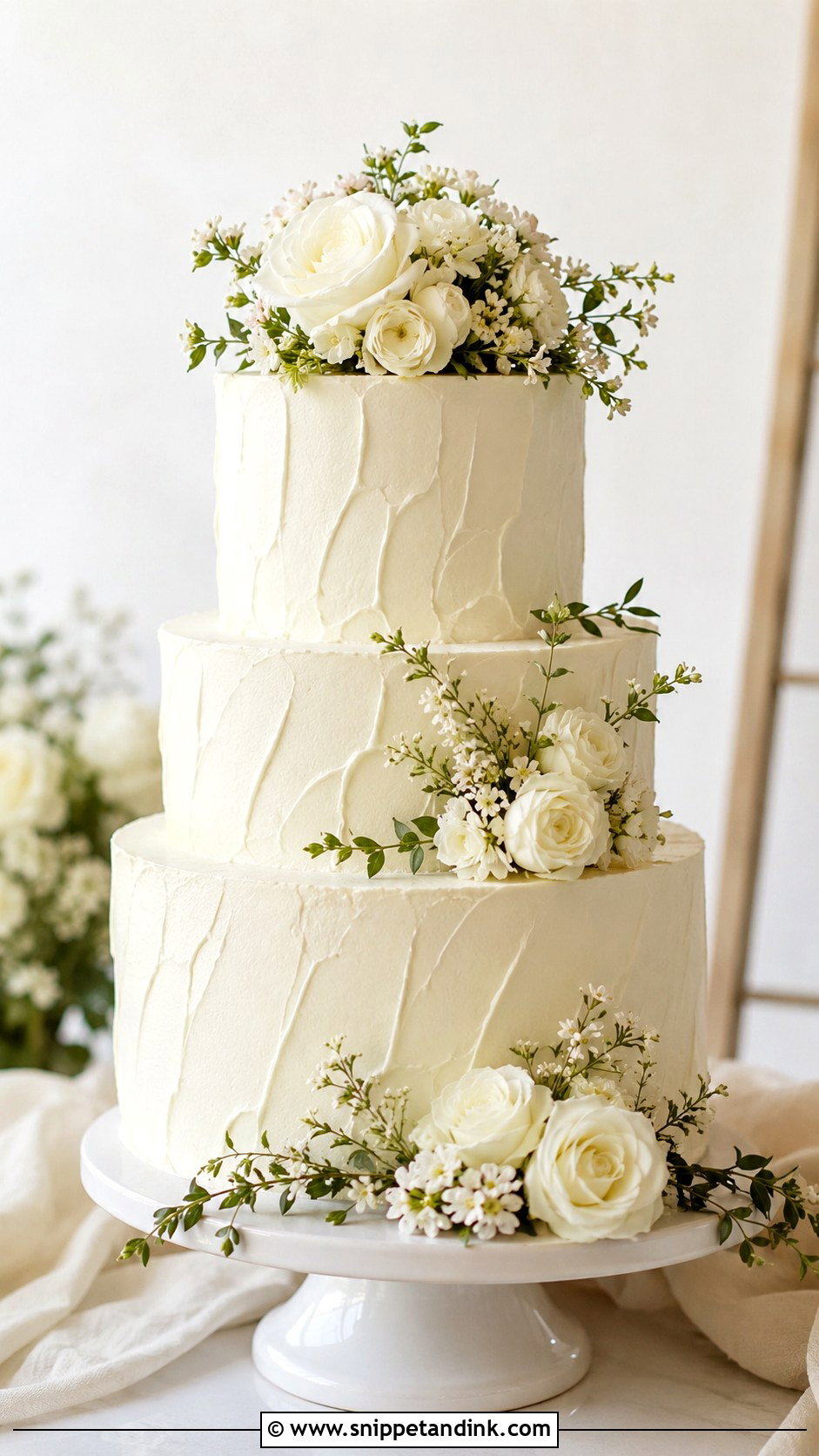
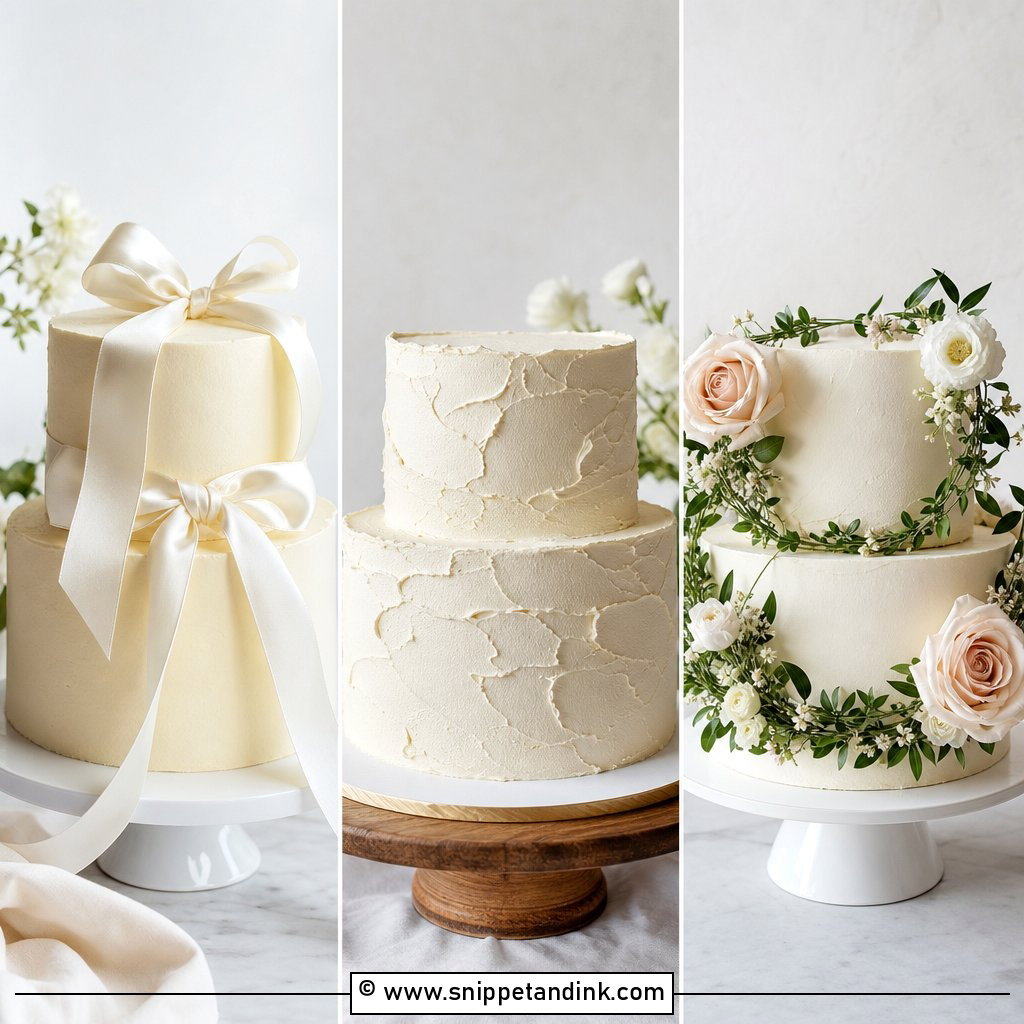
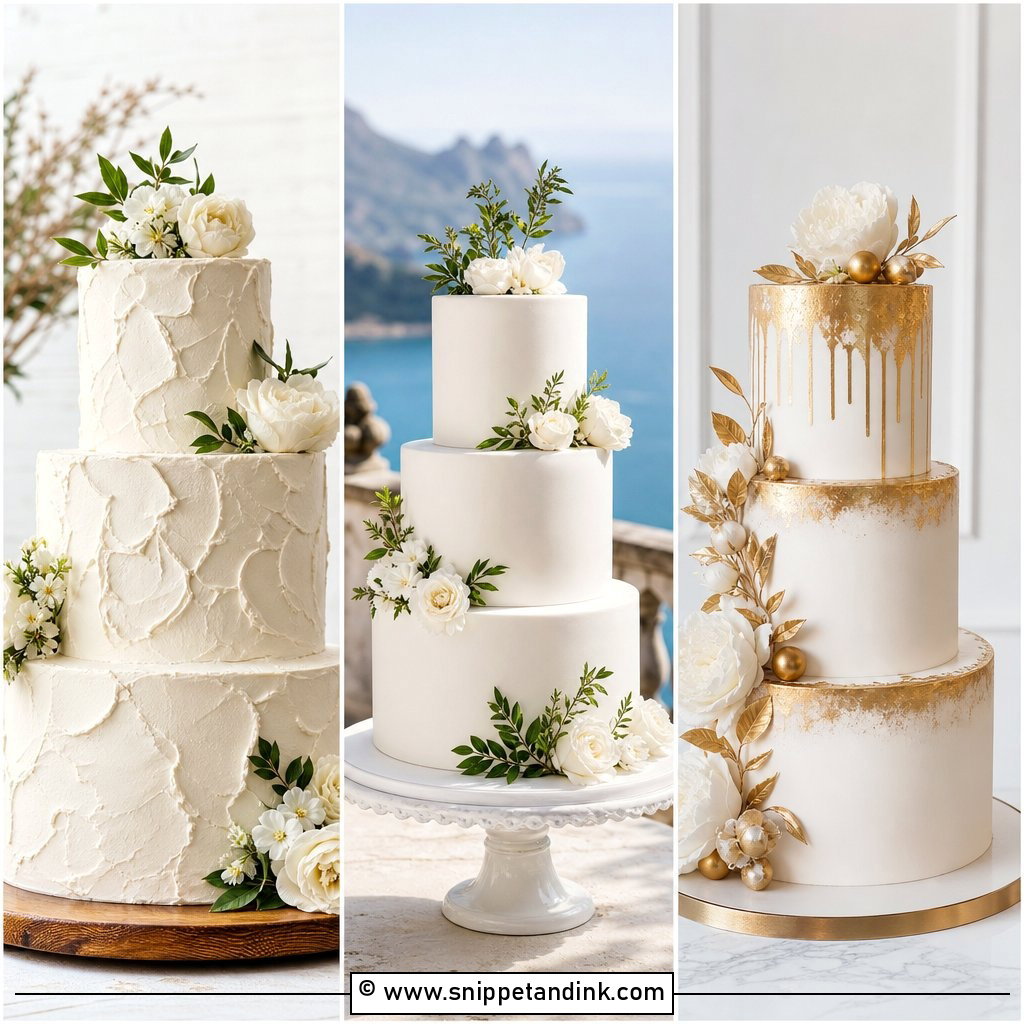
Ridged and painterly finishes are where this frosting is most relaxed. I spread the buttercream on, then drag a comb or the back of a spoon through it while it’s still soft, which gives soft ridges that catch side light. Ivory and champagne show the texture best; deep colors flatten it. A few roses or ranunculus tucked into one side are plenty. It’s also the finish I suggest for barns and outdoor venues, because a slightly softened edge on a warm afternoon just looks like part of the design.
2. Swiss Meringue Buttercream Floral Wedding Cake
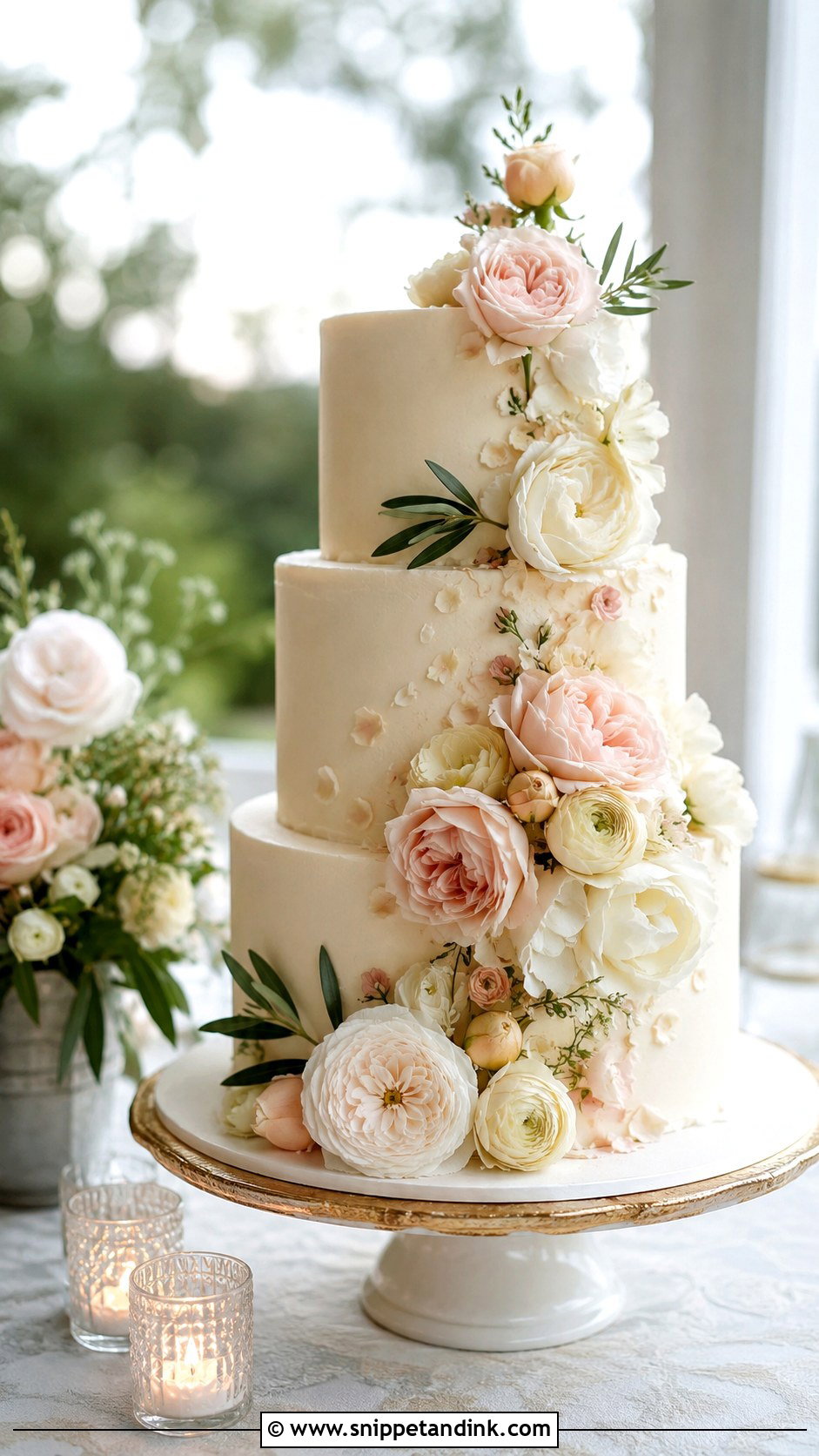
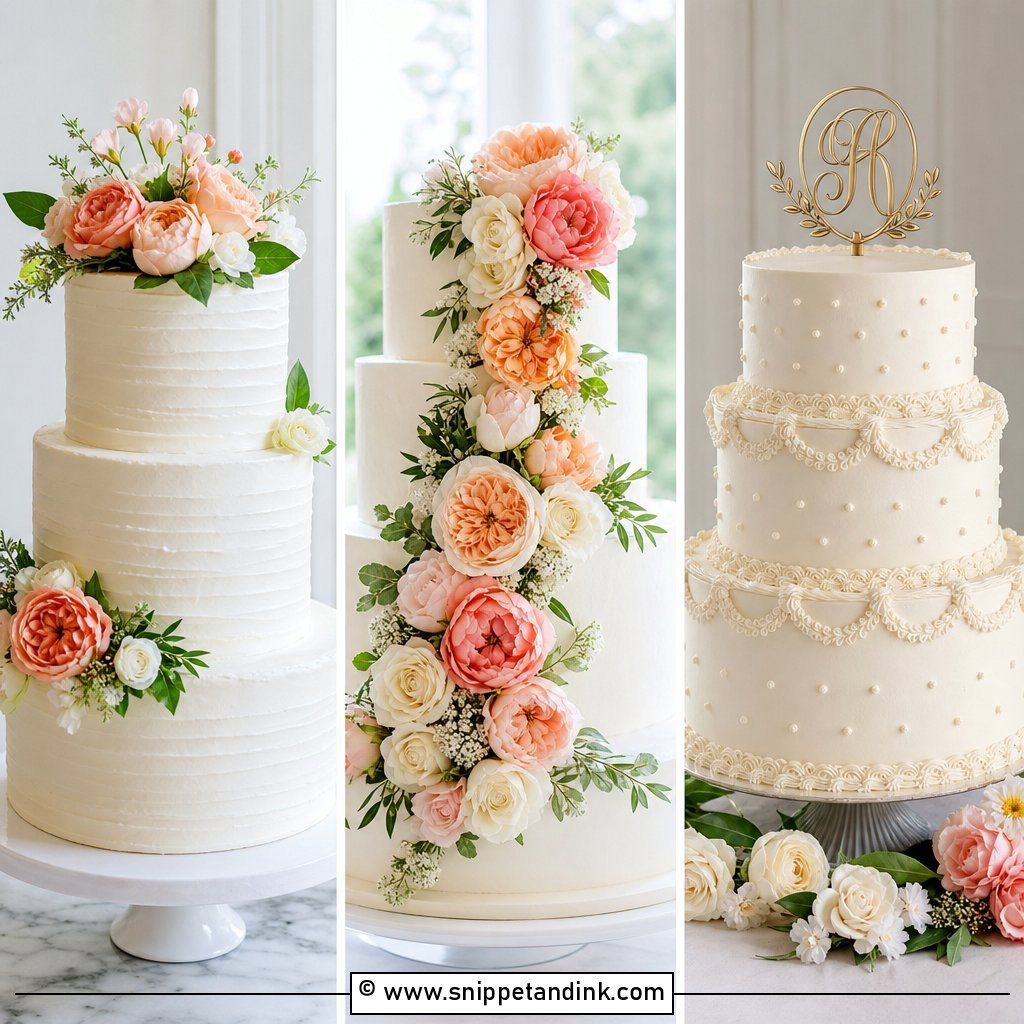
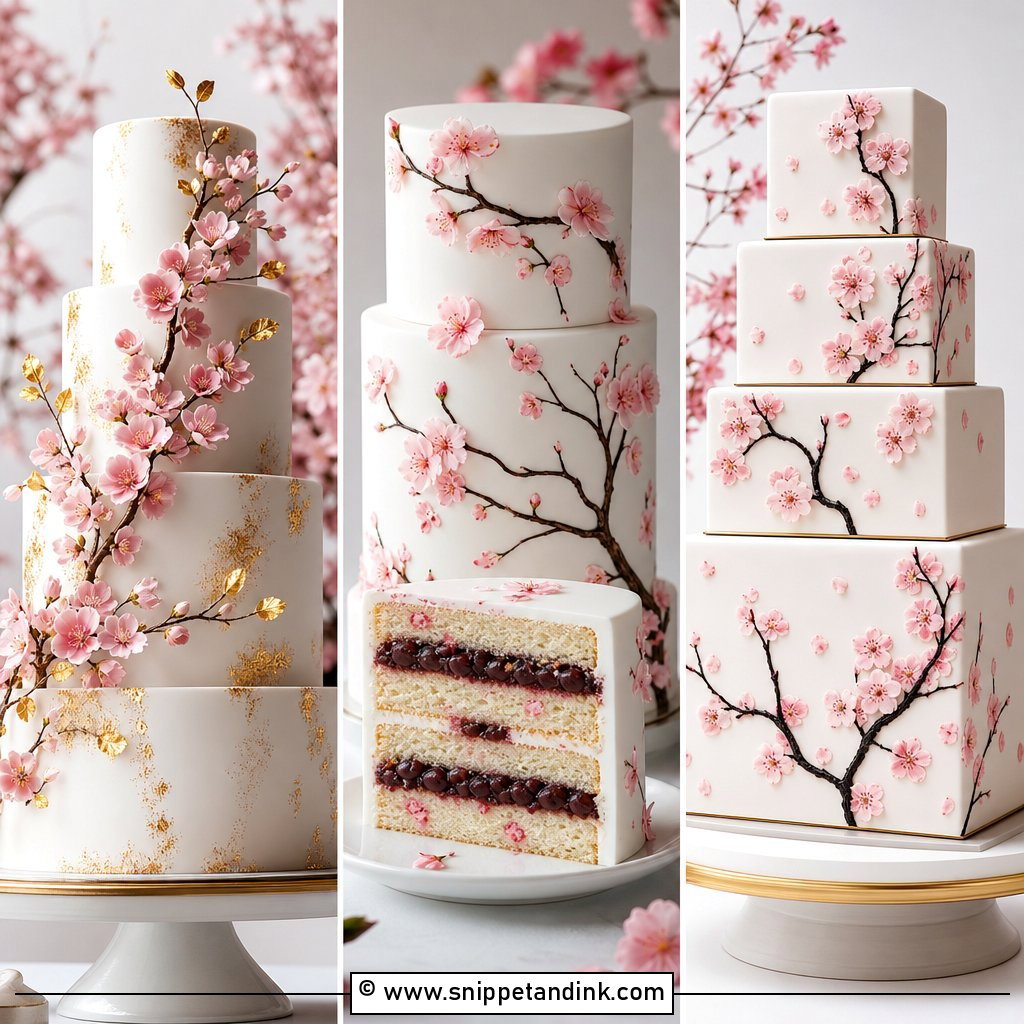
Flowers suit almost any venue and palette, which is why I’m asked for this one more than any other. Fresh stems need preparation before they touch frosting: I wrap or tape the cut ends and push them into a straw or pick so sap and florist chemicals never sit in the cake. If that worries you, buttercream or sugar flowers solve it entirely. Vanilla, lemon, almond and champagne sponges sit happily under this look. Leave gaps between clusters so the smooth frosting still shows.
3. Swiss Meringue Buttercream Lambeth Wedding Cake
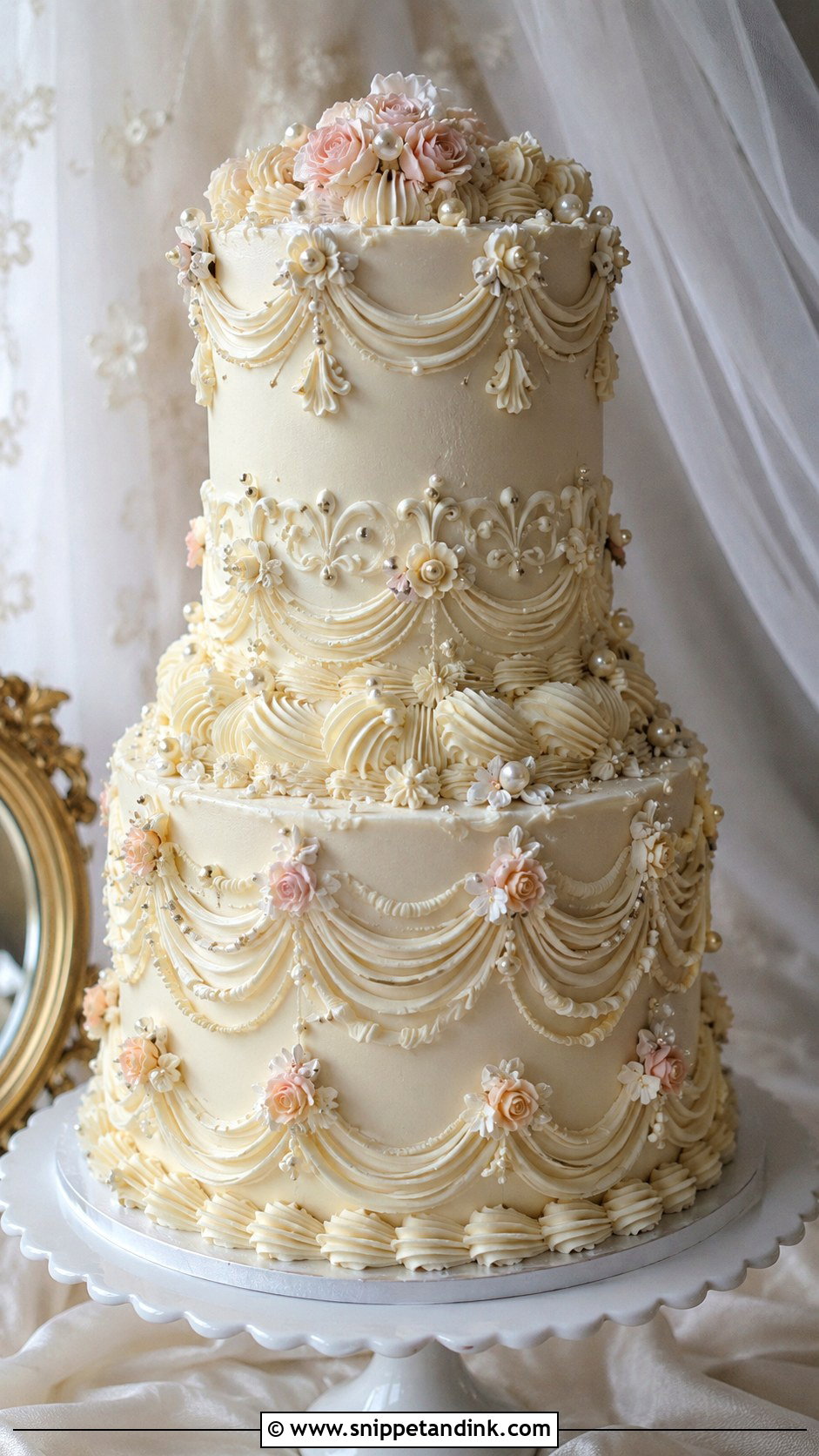
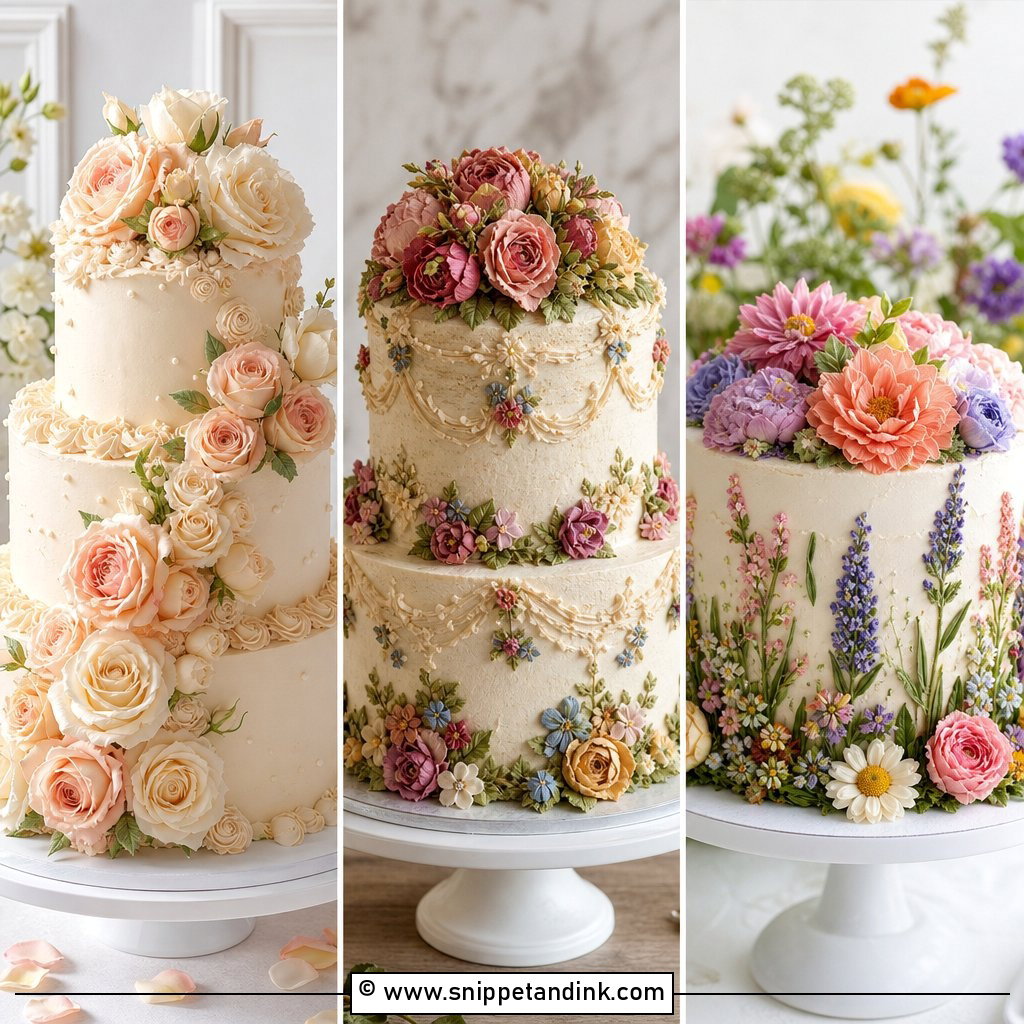
Lambeth piping is old English overpiping: shells, swags, scrolls and borders built up in layers until the cake looks like a bakery window from another century. Swiss meringue pipes it with crisp edges and tastes far lighter than the stiff royal icing the style started with. White on white is the classic version; blush, sage, butter yellow or soft blue feels more playful. One honest warning: this is slow, skilled work, so it usually costs more than a plain finish and it doesn’t love a hot room, because layered piping is the first thing to slump. Pearls, cherries or tiny bows finish a coquette or vintage garden theme.
4. Swiss Meringue Buttercream Pearl Wedding Cake
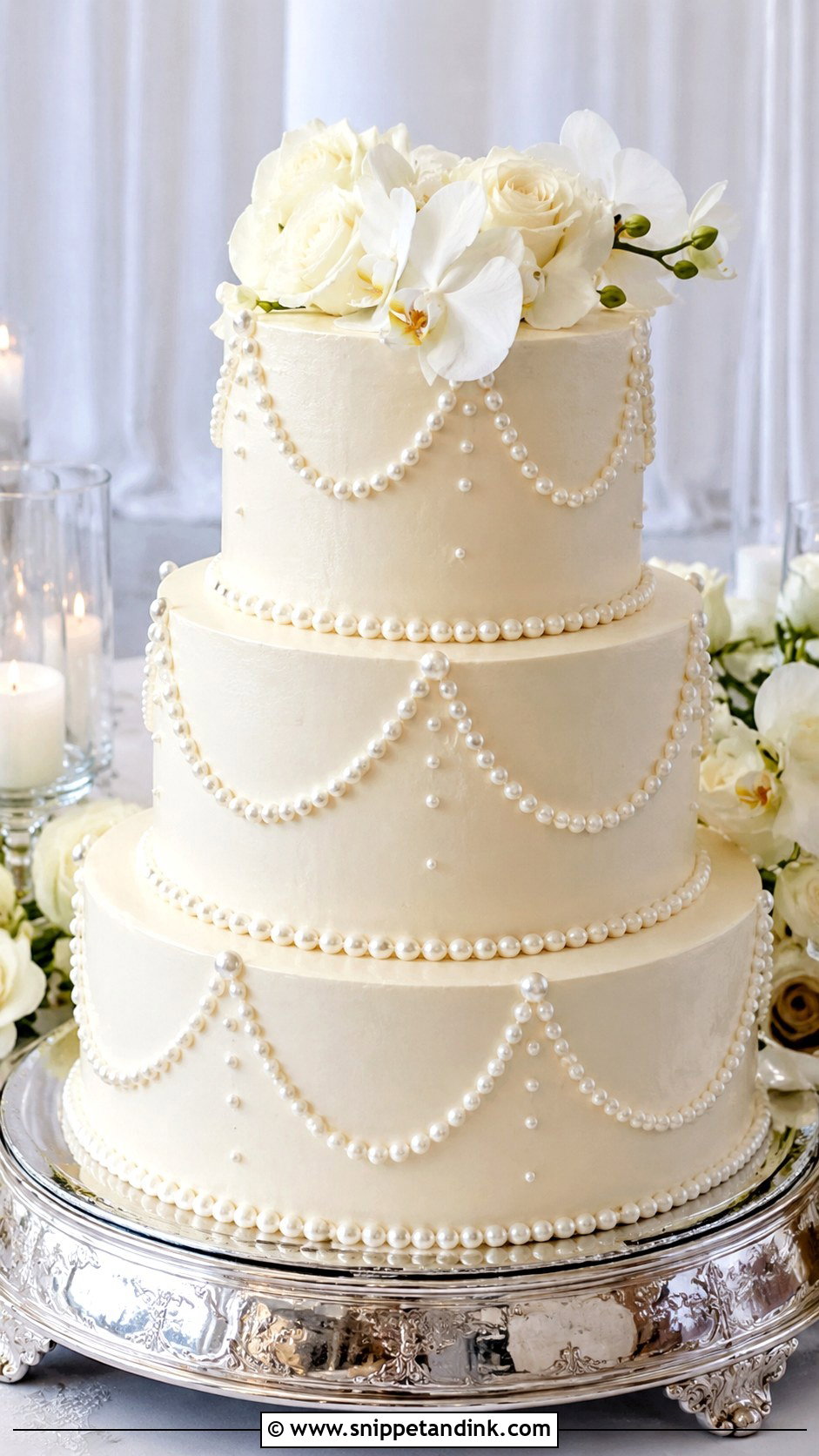
Edible pearls are a quiet way to make a cake feel formal. They can be scattered, run along a tier edge or draped in loops, and I press each one in while the frosting is freshly chilled so it sits flush instead of sliding. Ivory buttercream with white pearls reads classic; champagne pearls warm it up for candlelit rooms. Keep the tiers plain so the detail carries, and finish two or three tiers with white roses, orchids or a satin ribbon at the base. Ballrooms and church ceremonies suit it best.
5. Swiss Meringue Buttercream Ruffle Wedding Cake
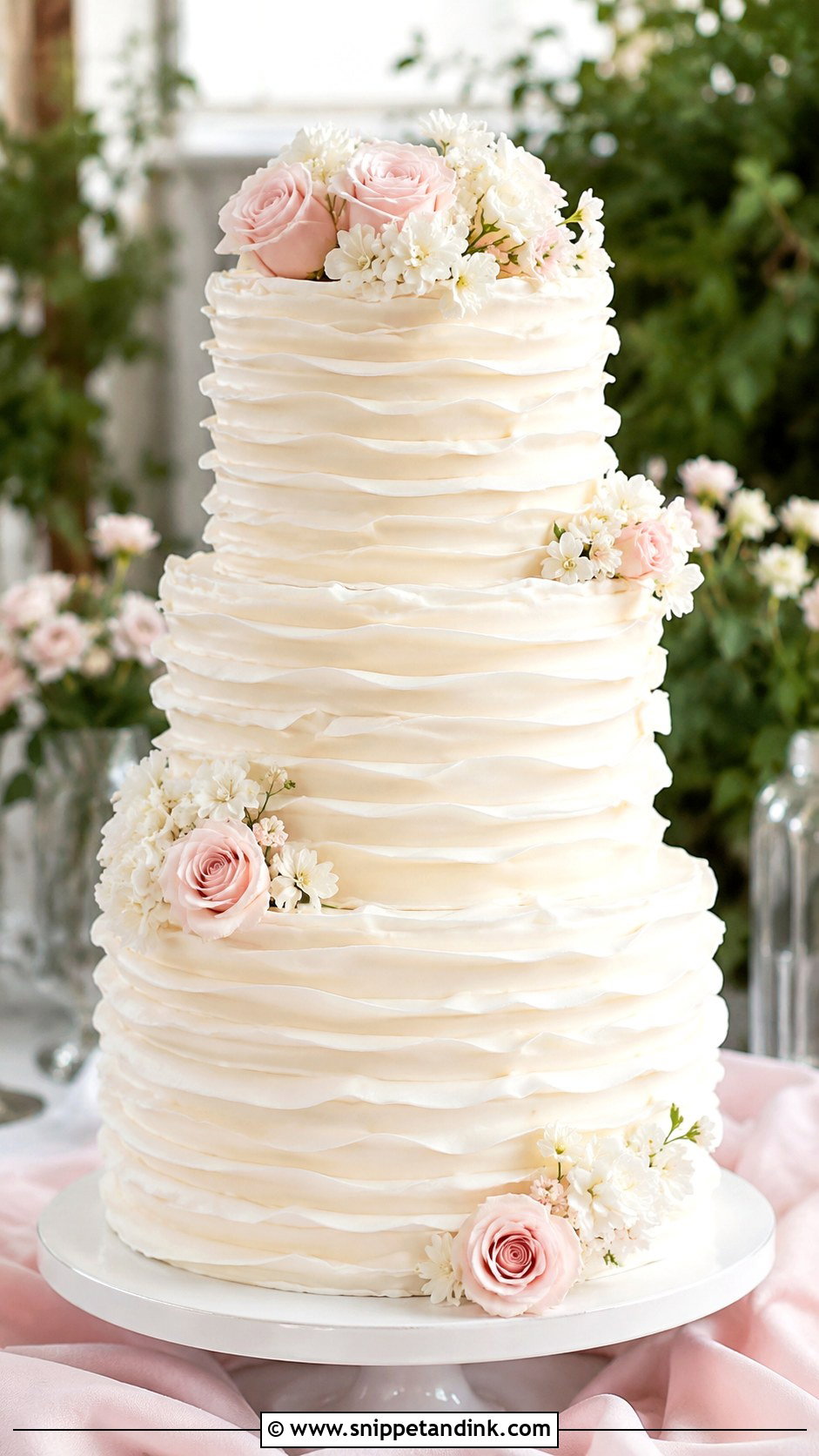
Ruffles come from a petal tip held at an angle and moved in short waves, either around the tier or straight up it. Swiss meringue makes them soft and slightly translucent at the edges, nothing like the stiff frills a sugar paste would give. White, ivory, blush and pale lavender all work. I keep the top almost bare, maybe a small cluster of flowers, since the texture is already doing the decorating. Spring and garden receptions are its natural home, but keep it indoors or shaded: thin ruffle edges soften first.
6. Swiss Meringue Buttercream Smooth Wedding Cake
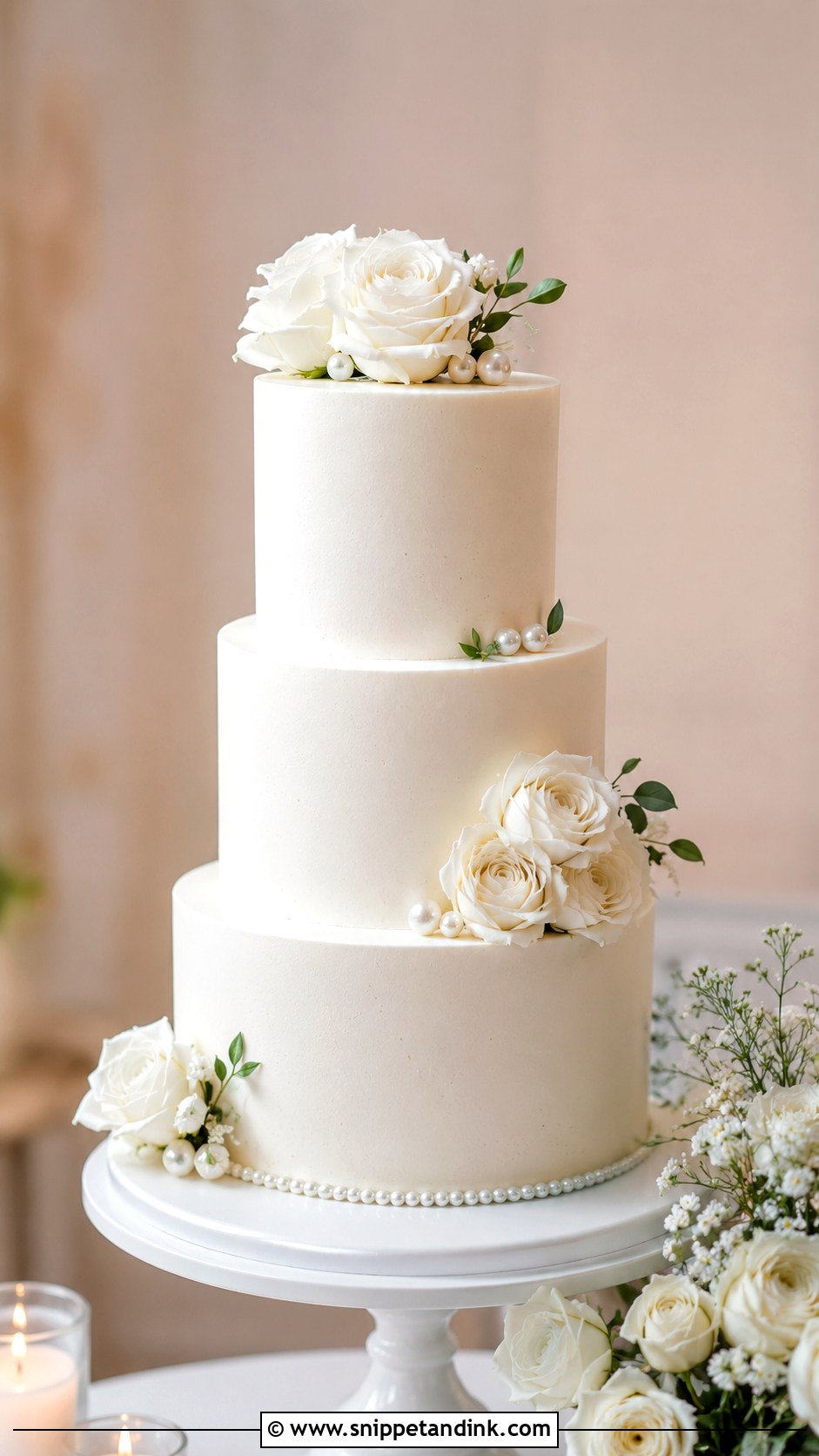
Smooth tiers with sharp top edges are the hardest finish to do well and the easiest to judge. I chill the cake between coats and finish with a hot scraper, which is what gives that clean corner. Minimal decoration means the flavor carries the cake, so this is the place for fillings like raspberry, lemon curd, vanilla bean or salted caramel. Tall tiers with almost nothing on them read modern. Add roses and a little pearl detail if your wedding leans traditional.
7. Swiss Meringue Buttercream Garden Wedding Cake
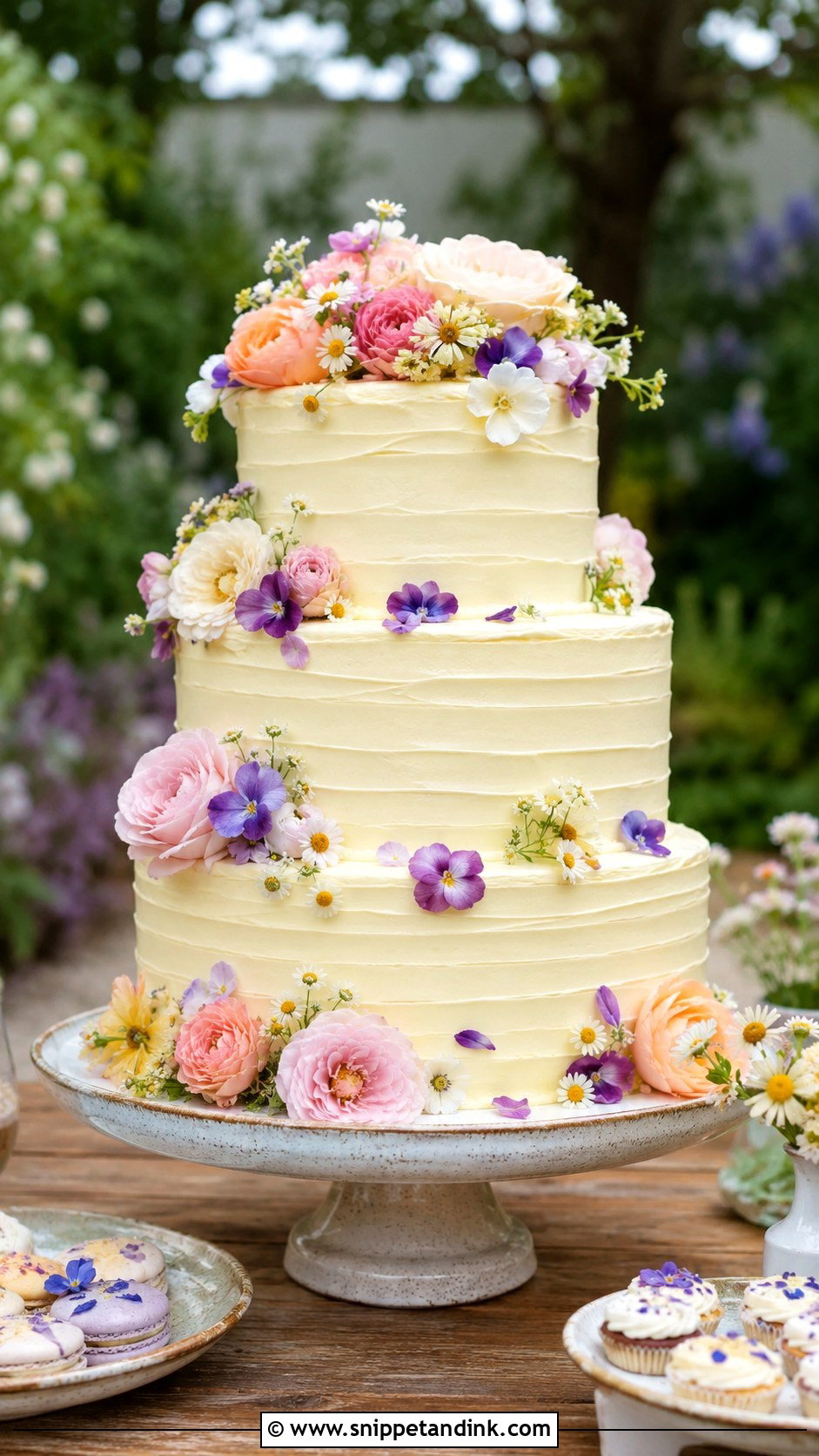
This design should look as if someone walked through the garden with a basket and set the cake down there. Loose greenery, garden roses, pansies, chamomile and lavender all work, with the frosting smooth, textured or lightly ridged. I place stems off-center and in odd numbers, because symmetry instantly makes it look like a shop display. Lemon, elderflower, vanilla and berry layers suit it. Put it on a simple ceramic stand or a wooden table and stop there.
8. Swiss Meringue Buttercream Pressed Flower Wedding Cake
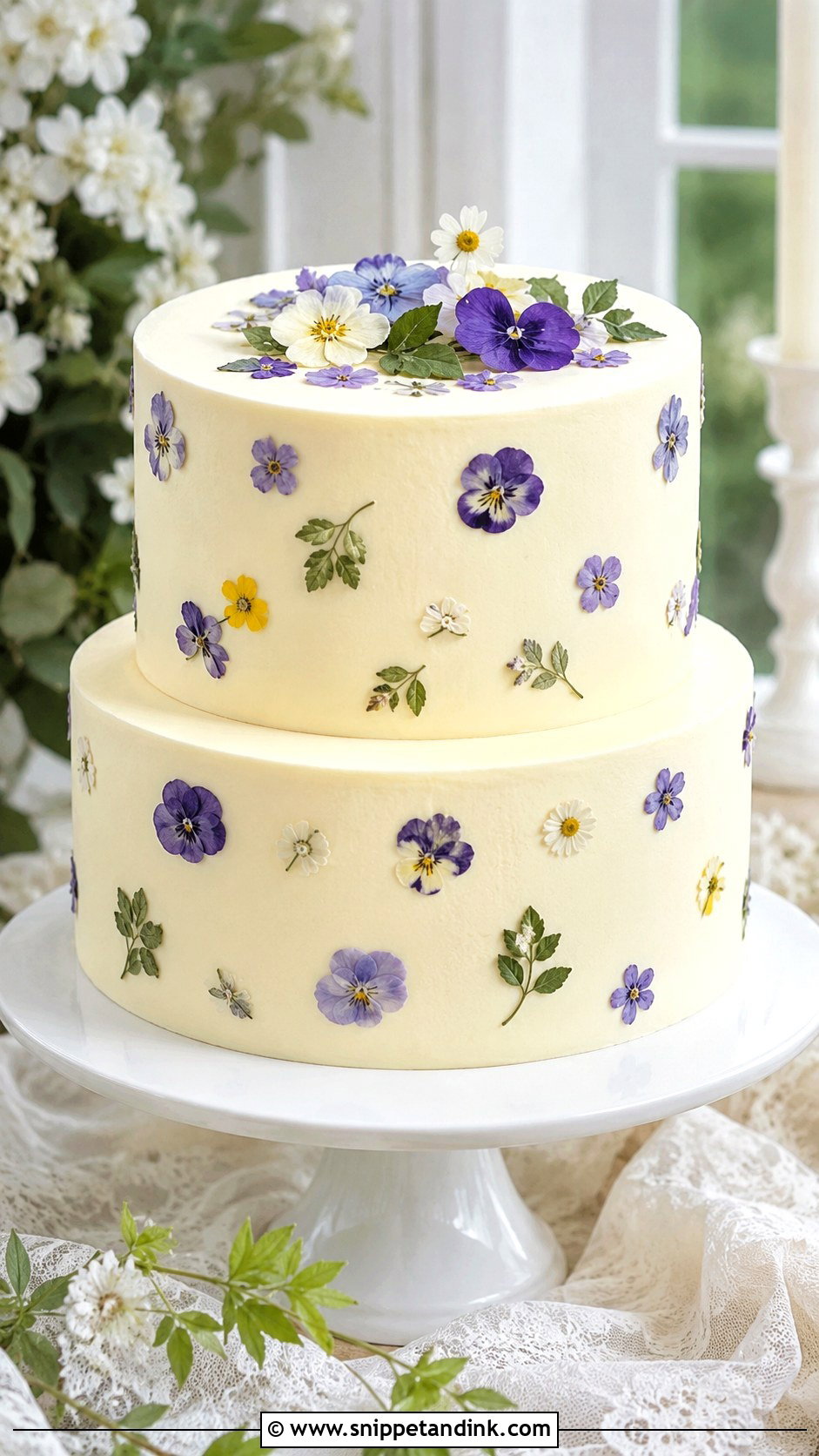
Pressed petals are laid onto the buttercream surface so the cake reads like printed fabric. They need a smooth or barely textured base and a pale frosting, since ivory or cream lets violas and cornflowers keep their color. I only use edible varieties or flowers grown for food use, never florist stock, and I ask couples to let their baker source them. Leave space between each bloom; crowded pressed flowers look like confetti stuck on. It’s an easy fit for spring, outdoor and small weddings.
9. Swiss Meringue Buttercream Palette Knife Wedding Cake
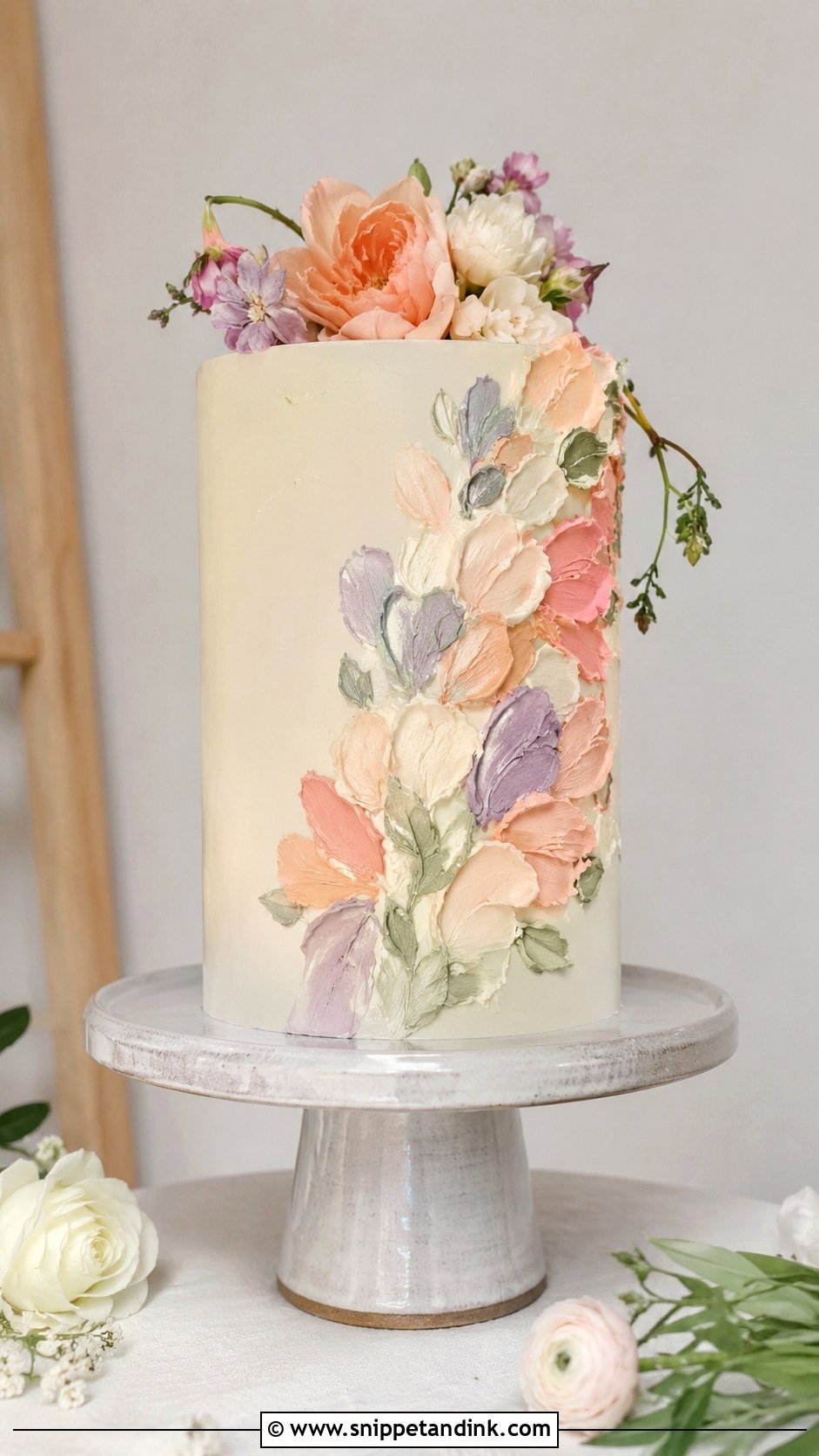
Palette knife work is closer to painting than piping. I load small amounts of tinted buttercream onto an offset knife and press it on in short strokes that read as petals or washes of color. Pastels like blush, peach, lavender, sage and pale blue are kindest, because strong colors look muddy when they blend at the stroke edges. A white base with strokes climbing one side is my favorite layout. Flowers are optional here. Watch the room temperature, though: the strokes are thin and soften quickly.
10. Swiss Meringue Buttercream Vintage Wedding Cake
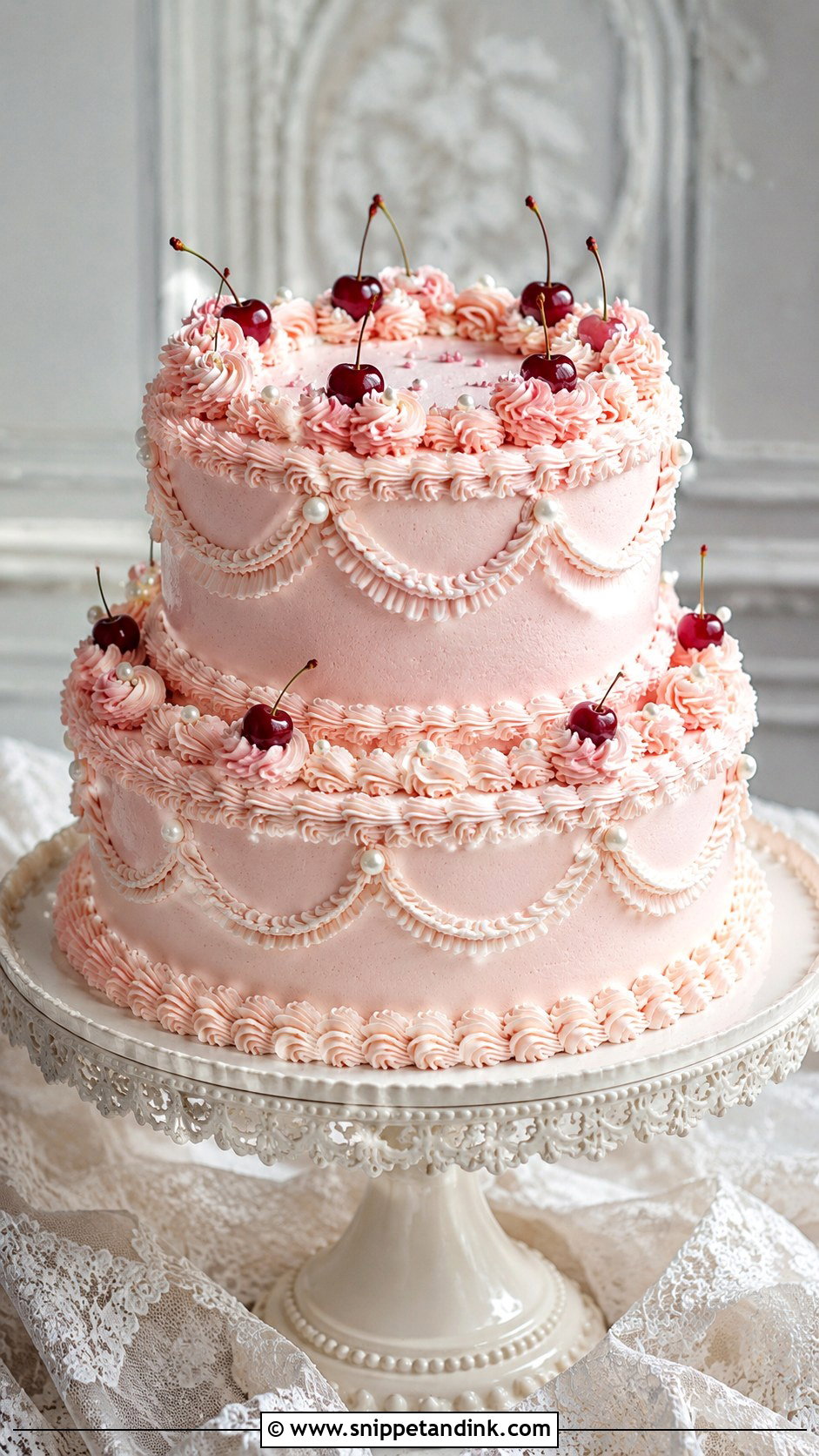
A vintage cake borrows shell borders, scalloped edges, pastel frosting and pearls from older bakery styles, but Swiss meringue keeps it from eating like the heavy cakes those styles came from. White, pink, pale yellow, mint and powder blue all look right. It suits courthouse receptions, tea-style weddings and garden venues. Piped initials, a small topper or a few cherries give it a retro finish. If the reception is outdoors in summer, ask for the piping to be kept low and simple.
11. Swiss Meringue Buttercream Two Tier Wedding Cake
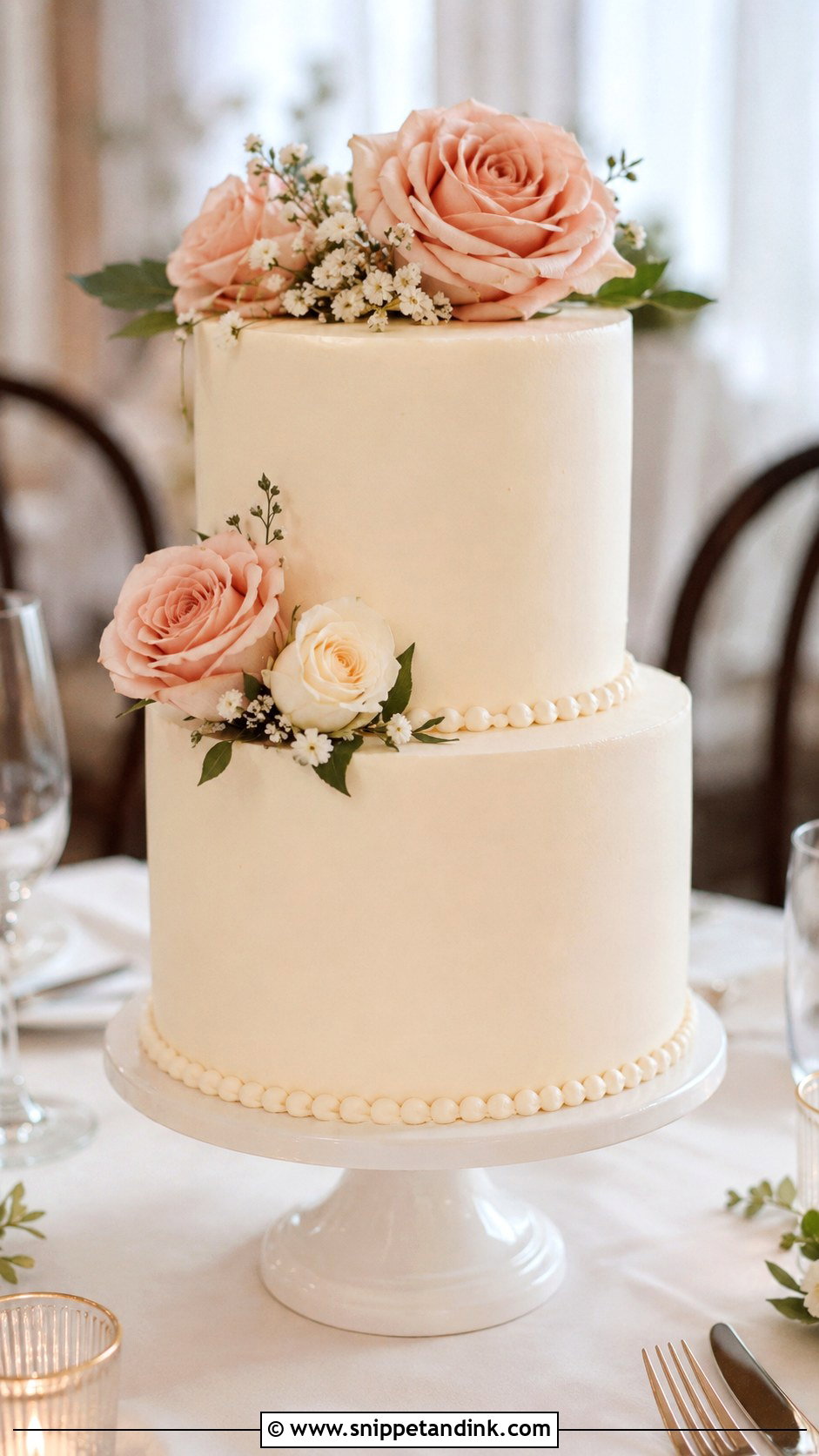
Two tiers is the size I recommend most for elopements, small weddings and couples who are also having a dessert table. You still get a real cut, without paying for cake nobody eats. I usually make the bottom tier taller than the top so the shape feels settled rather than squat. Any finish works at this size, and a plain one still looks finished because the frosting itself carries it. A floral spray, a border or a soft color wash ties it to your palette.
12. Swiss Meringue Buttercream Three Tier Wedding Cake
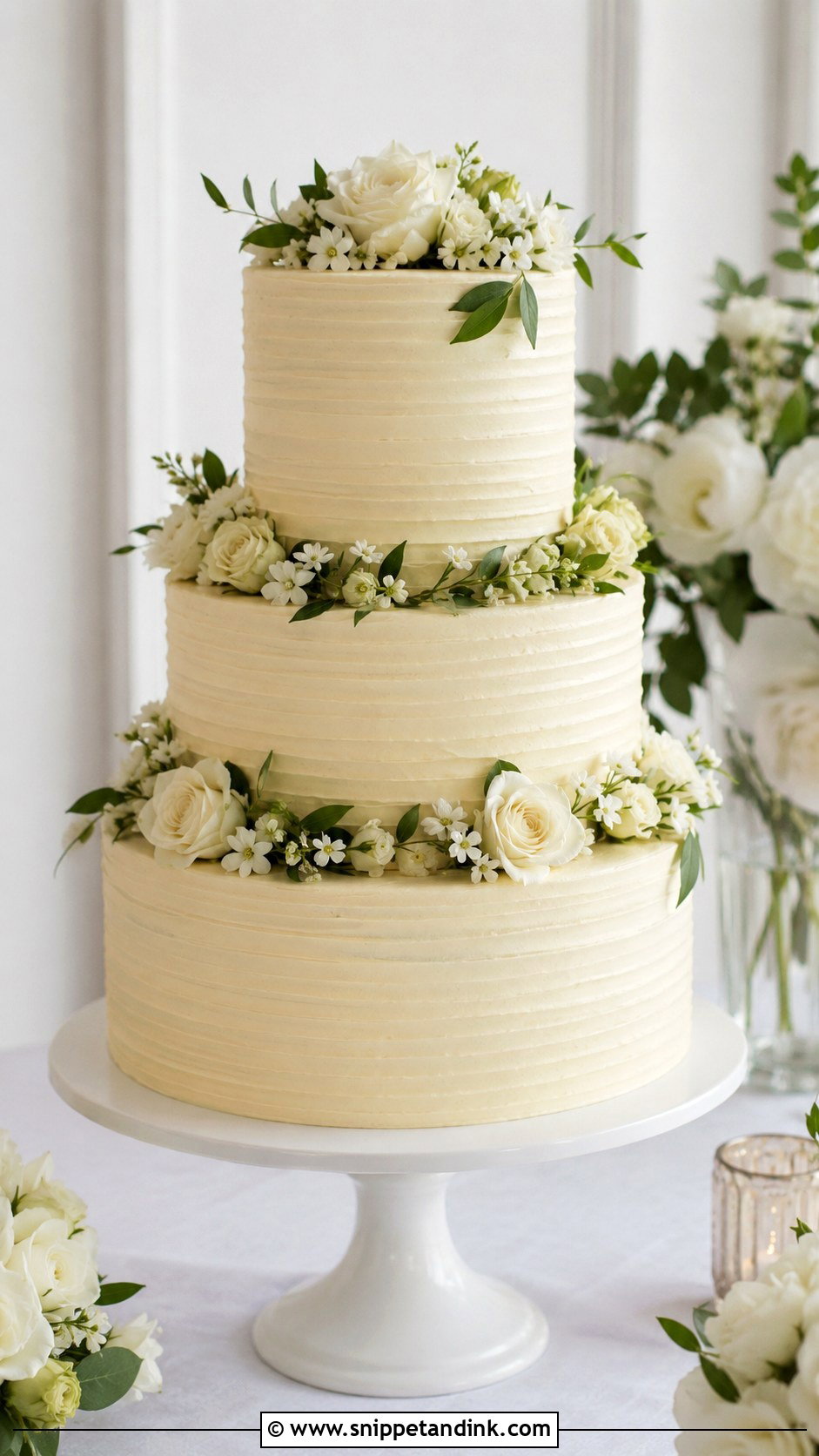
Three tiers is the classic height for a full reception and still small enough to decorate with restraint. Each tier needs internal dowels and a cake board, which is what stops the soft frosting on the lower tier from bulging under the weight above. Smooth, ridged, ruffled or piped finishes all work, with florals between tiers for romance or pearl borders for a formal room. Guests with mixed tastes are happiest when you choose different flavors for each tier, such as vanilla raspberry, lemon and chocolate caramel.
13. Swiss Meringue Buttercream Square Wedding Cake
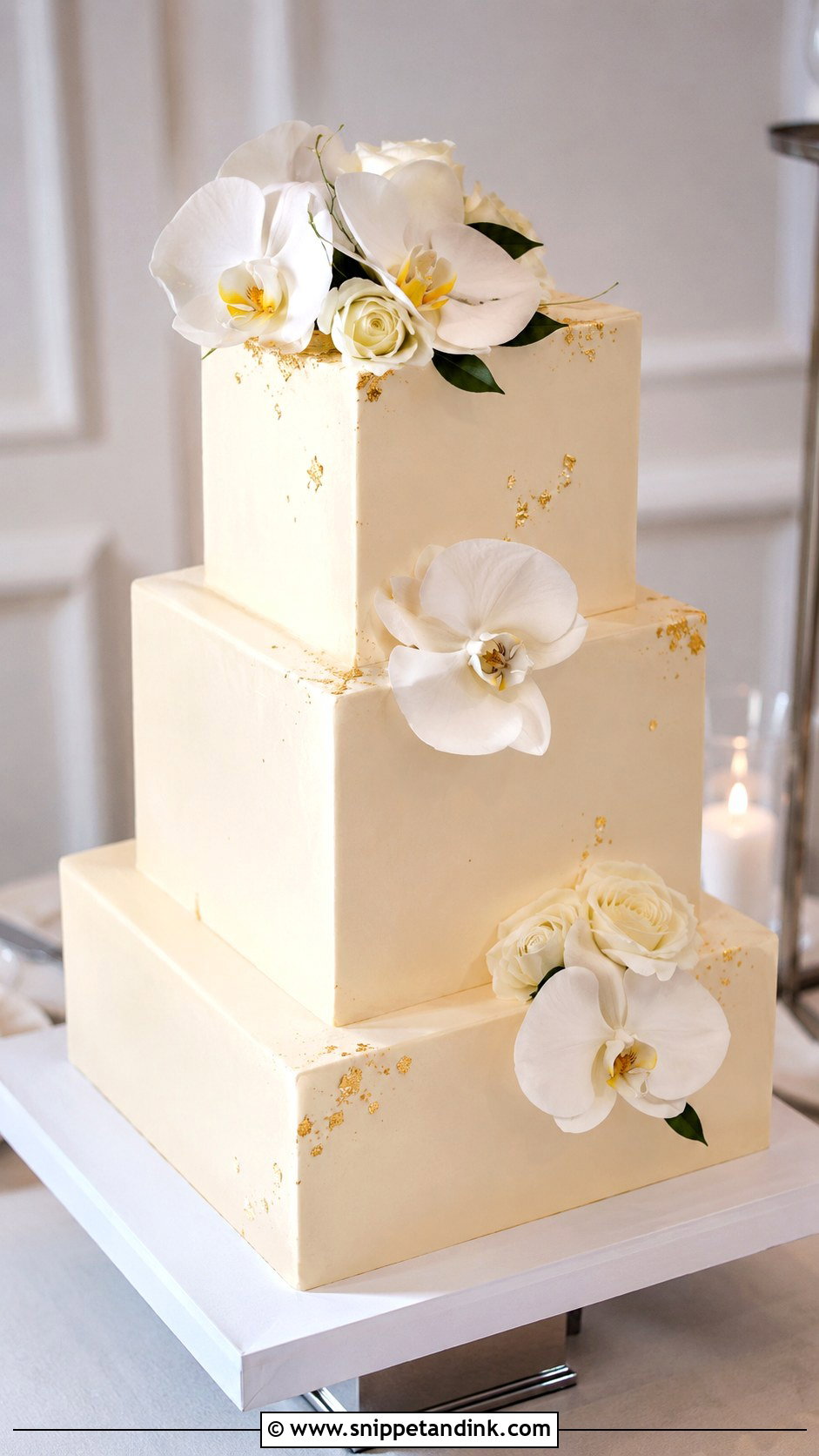
Square tiers are harder than round in this frosting. The corners are where buttercream is thinnest and softens first, so I chill longer between coats and finish each side separately. When it’s done well, the straight lines look architectural and suit city, gallery and modern hotel venues. White and ivory read sleek; taupe, blush or soft gray feel editorial. One floral corner arrangement, or a single run of orchids, is all it needs.
14. Swiss Meringue Buttercream Round Wedding Cake
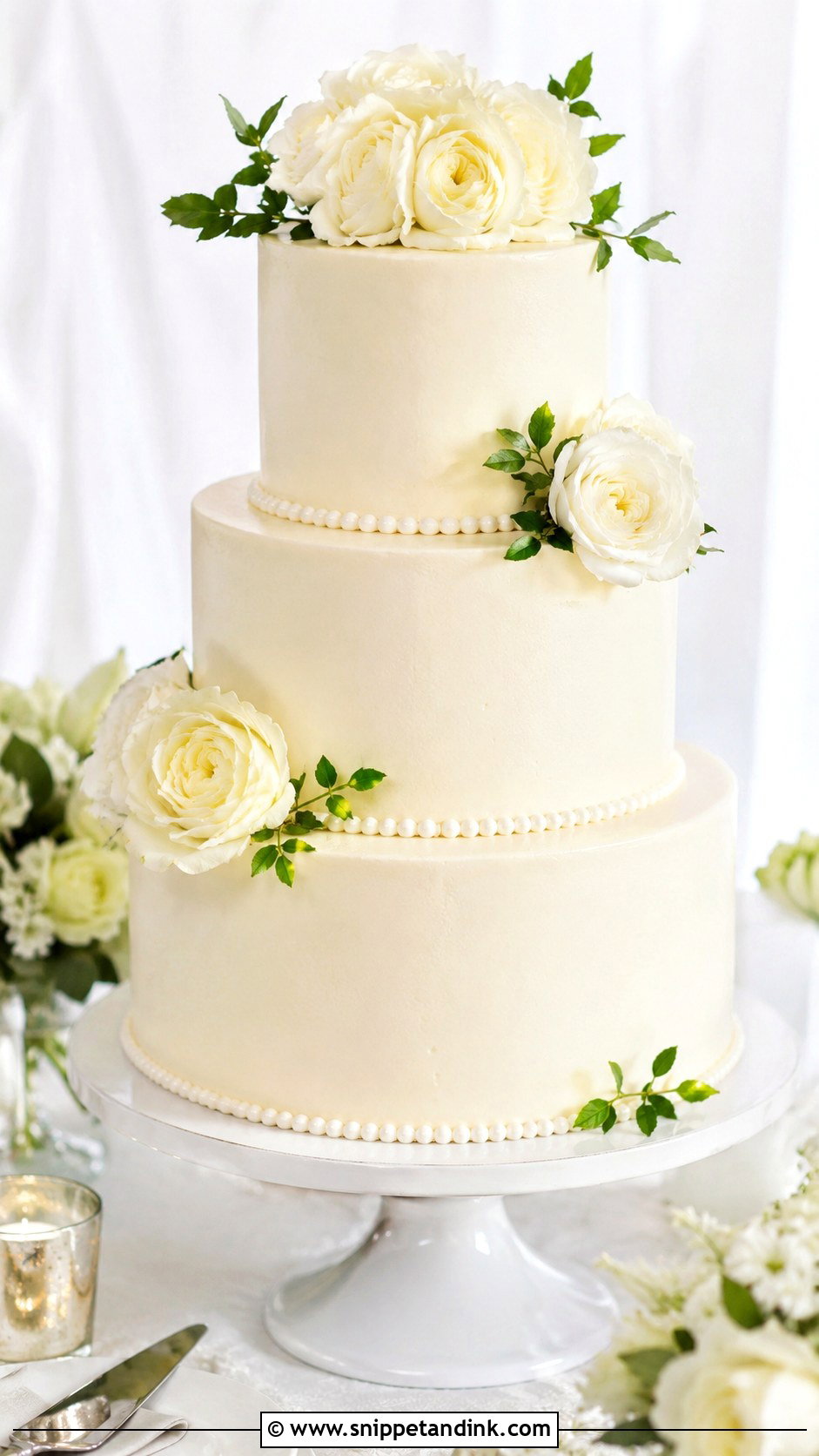
Round tiers have stayed popular because the shape forgives a lot and suits every flavor and filling. They take a cascade of flowers, a plain smooth finish or busy vintage piping equally well. White buttercream with white roses gives you the traditional version. Tall tiers with sparse flowers give you a modern one. If you can’t decide on a shape, I’d start here, since round is easier to cut neatly into even slices too.


15. Swiss Meringue Buttercream Minimalist Wedding Cake
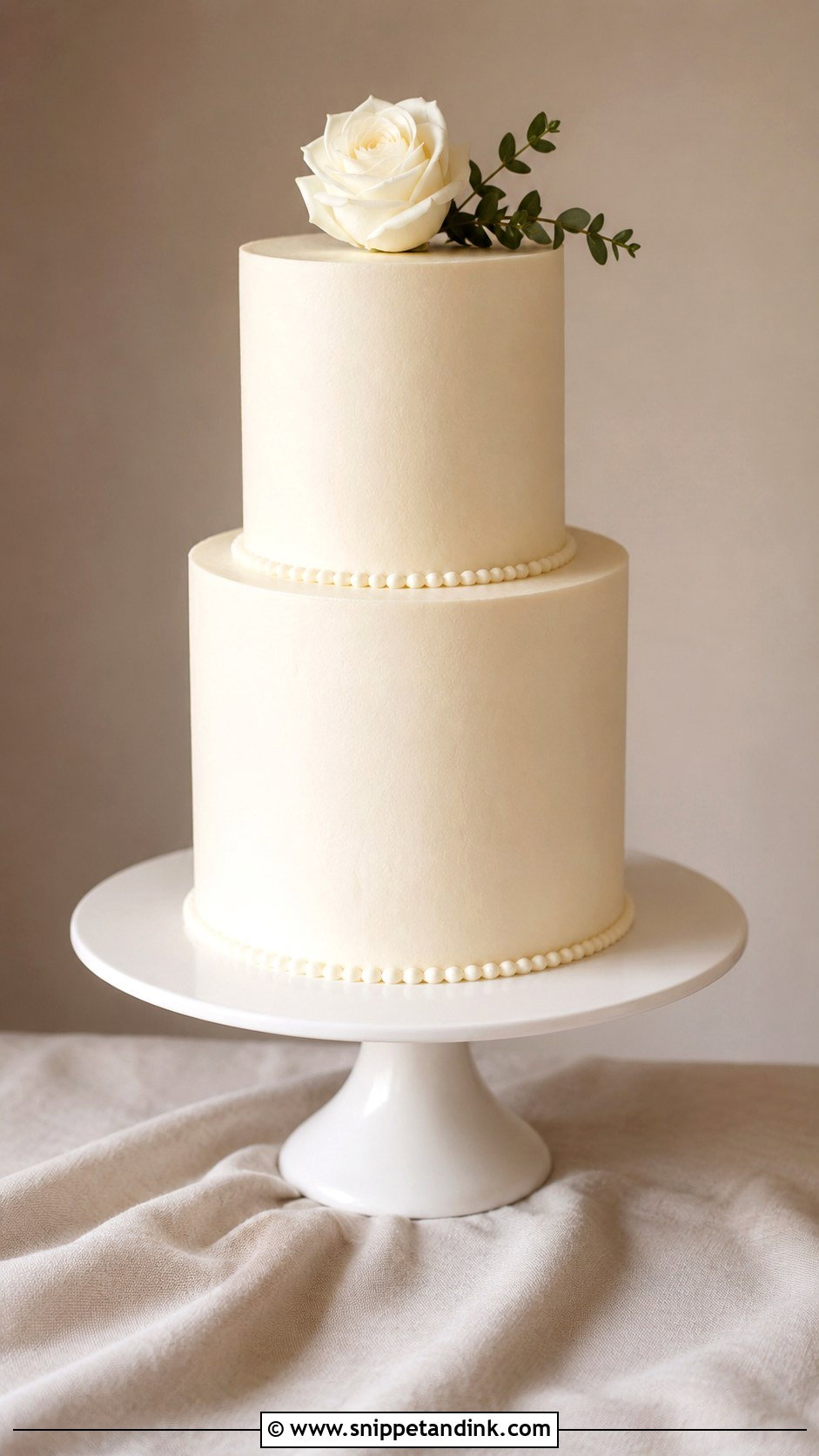
Minimalist cakes leave nowhere to hide. Without decoration, every bump, air bubble and uneven tier shows, so I’d only order this from a baker whose plain cakes you’ve seen in person or in unedited photos. When it’s right, smooth frosting, a balanced shape and one detail, a single flower or a simple piped border, is enough. White, ivory, warm beige and champagne suit it. It suits intimate receptions and couples who find most wedding cakes overdressed.
16. Swiss Meringue Buttercream Rustic Wedding Cake
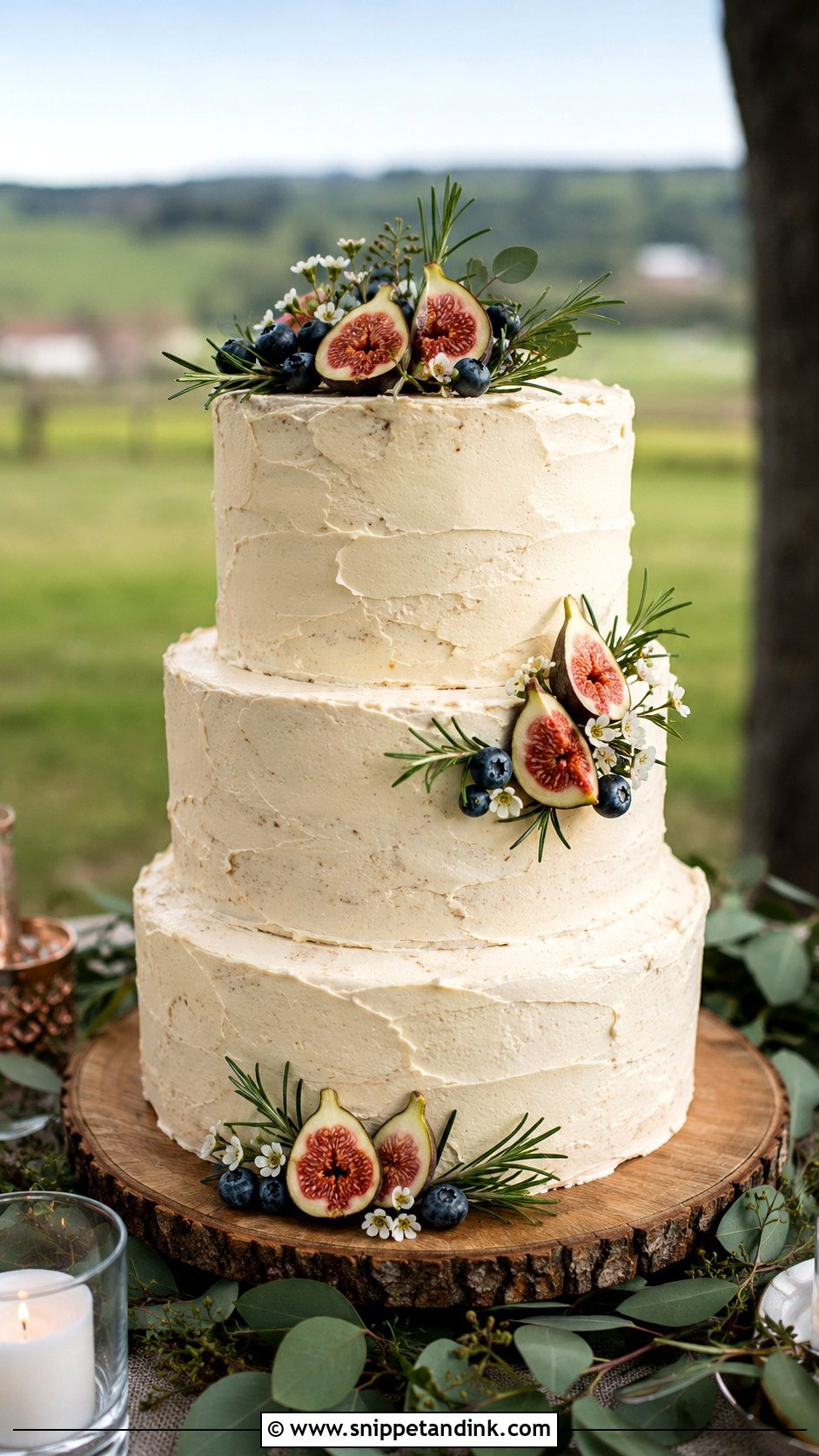
Barns, vineyards and backyards suit a cake that looks swiped on rather than polished. I apply the buttercream in semi-smooth layers or gentle ridges and let the spatula marks stay. Greenery, small flowers, figs, berries and herbs fit the setting, and a wooden stand finishes it. Ivory frosting keeps it reading as a wedding cake. Vanilla bean, carrot, spice, lemon and almond are good partners. The common mistake is going too rough; it should look relaxed, not unfinished.
17. Swiss Meringue Buttercream Beach Wedding Cake
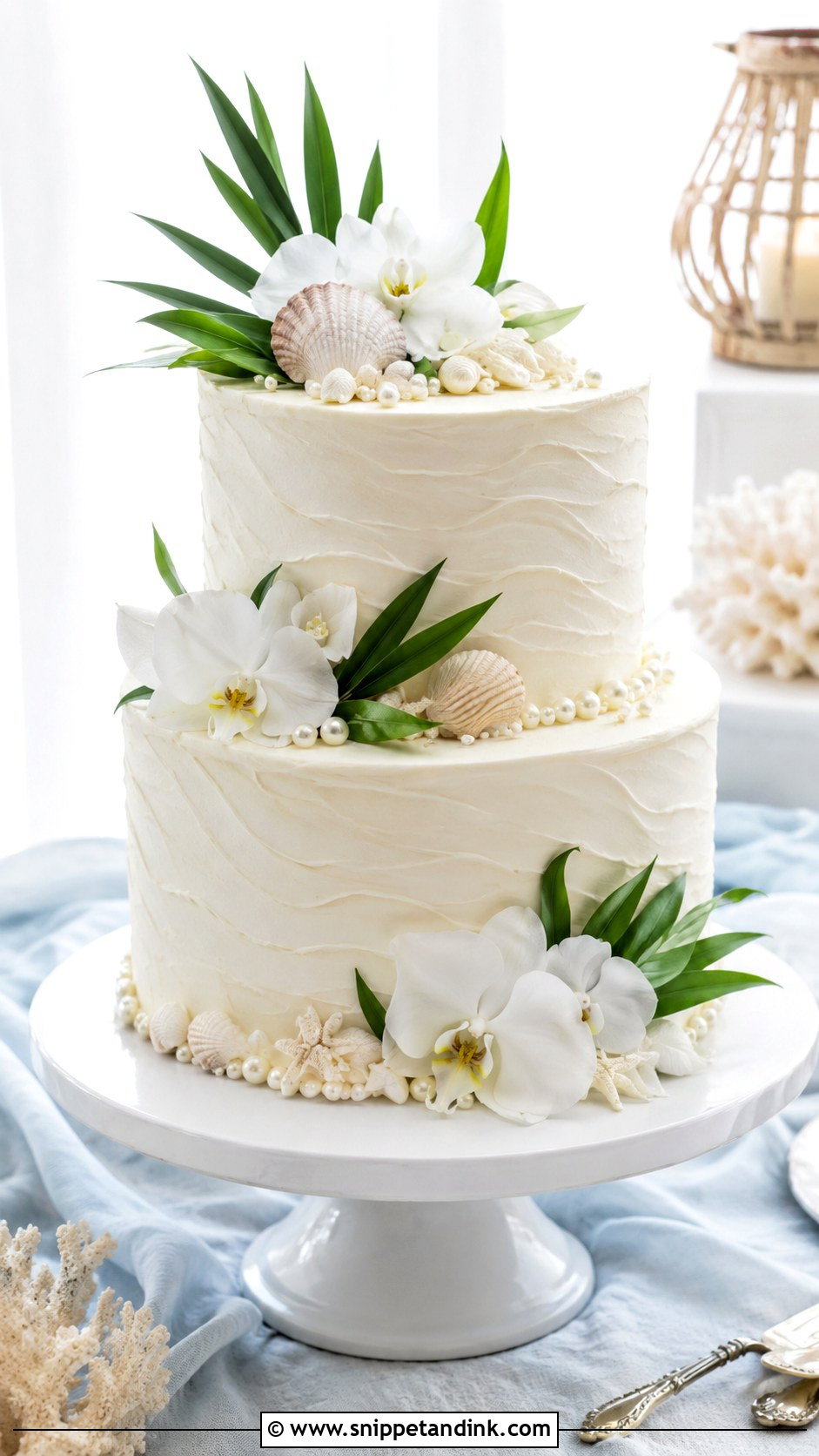
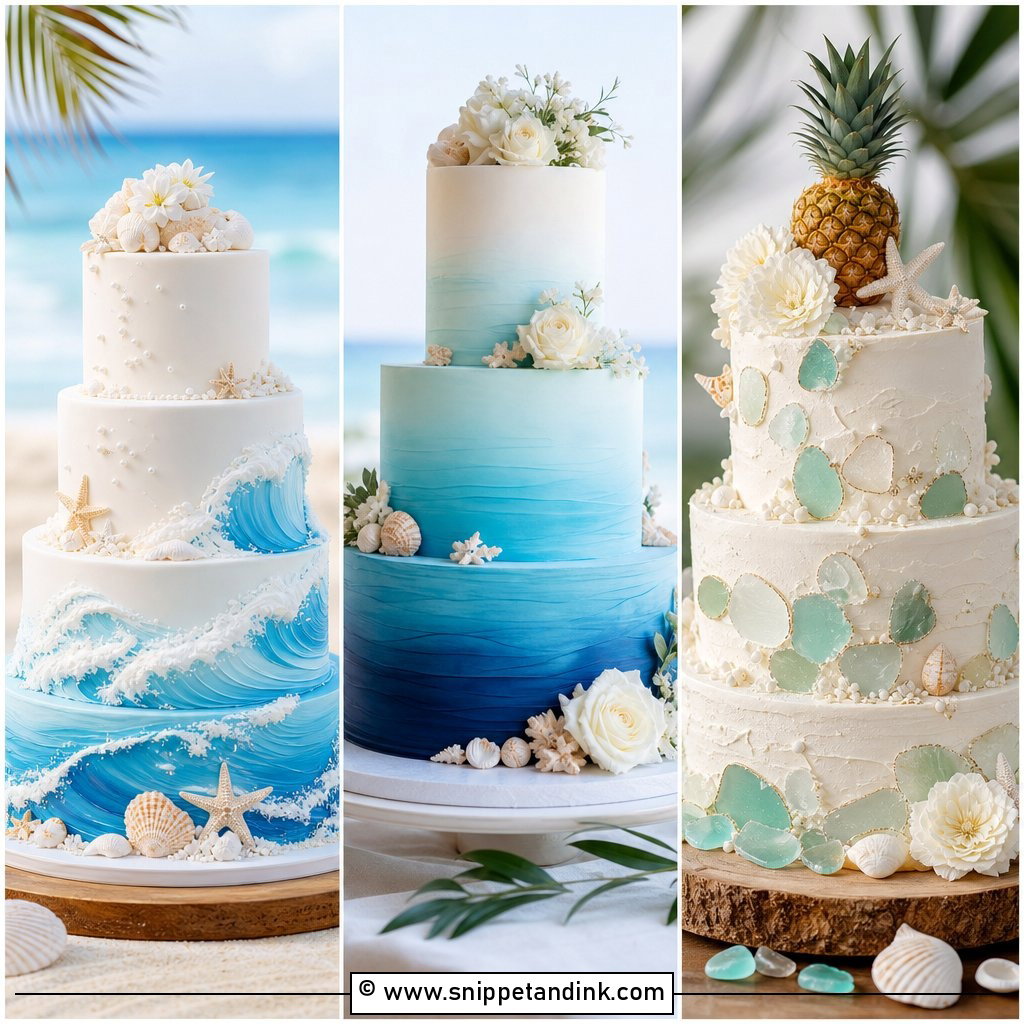
Beach venues are the hardest place to serve this frosting, so the design matters less than the plan for heat. Soft ivory, sand, pale blue and sea-glass green buttercream all suit the setting, with a smooth finish or a subtle wave texture. White orchids, edible pearls and chocolate or sugar shells keep it from looking themed. Coconut, lime, passion fruit, vanilla and mango fillings fit. I’d keep the cake inside or under real shade until the cutting and set it on a plain white stand.
18. Swiss Meringue Buttercream Boho Wedding Cake
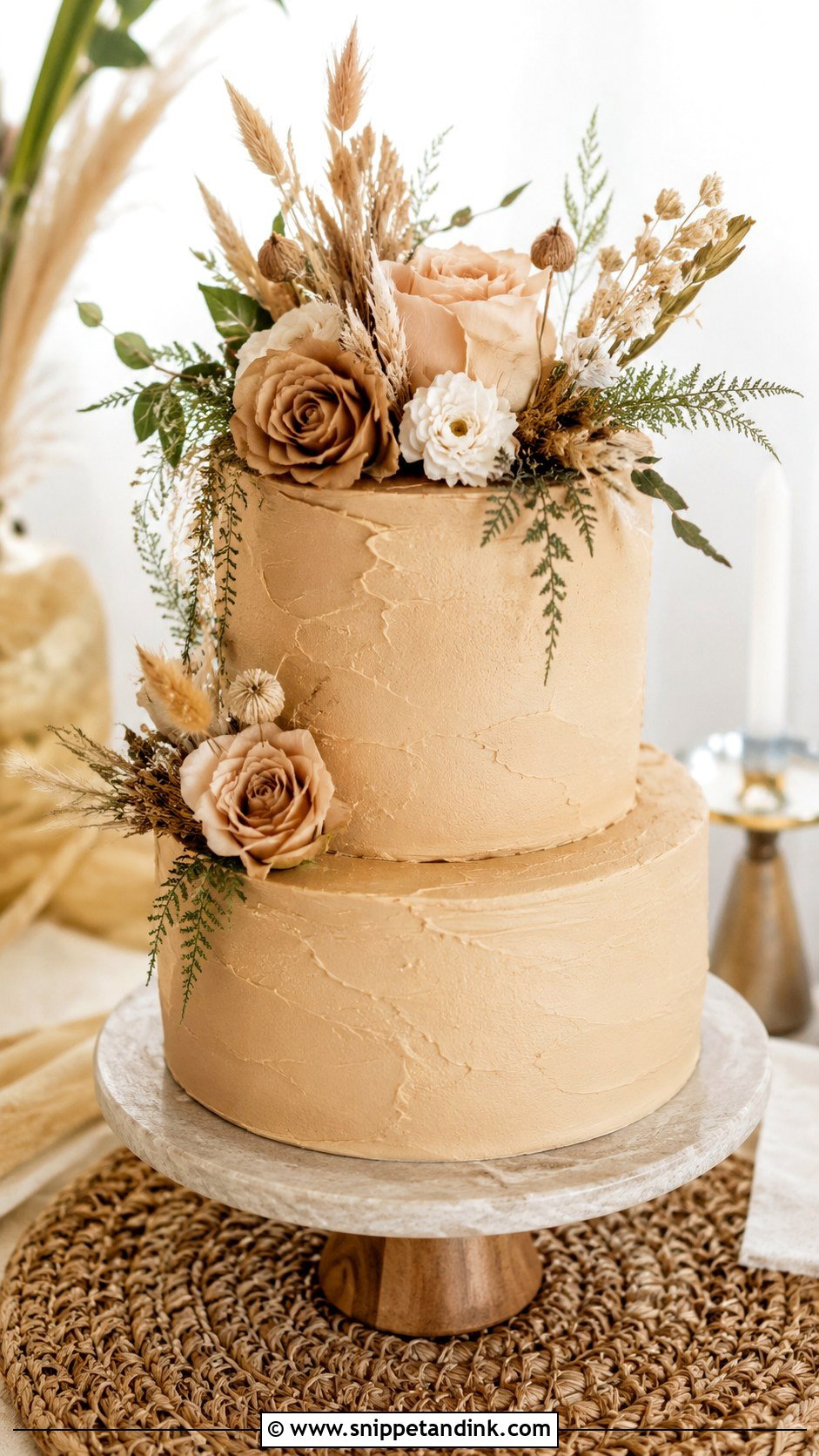
Warm white or beige buttercream with dried florals, pampas-style grasses and muted flowers gives the boho version its earthy look. The frosting can stay smooth or lightly textured. Dried stems are the part I’m careful with: most are sprayed or dyed, so I keep them on a barrier or a separate topper rather than pushed into the cake unless they’re sold as food-safe. Honey lavender, almond, vanilla chai and lemon suit the palette. Desert venues, tents and relaxed outdoor receptions all fit.
19. Swiss Meringue Buttercream Blush Wedding Cake
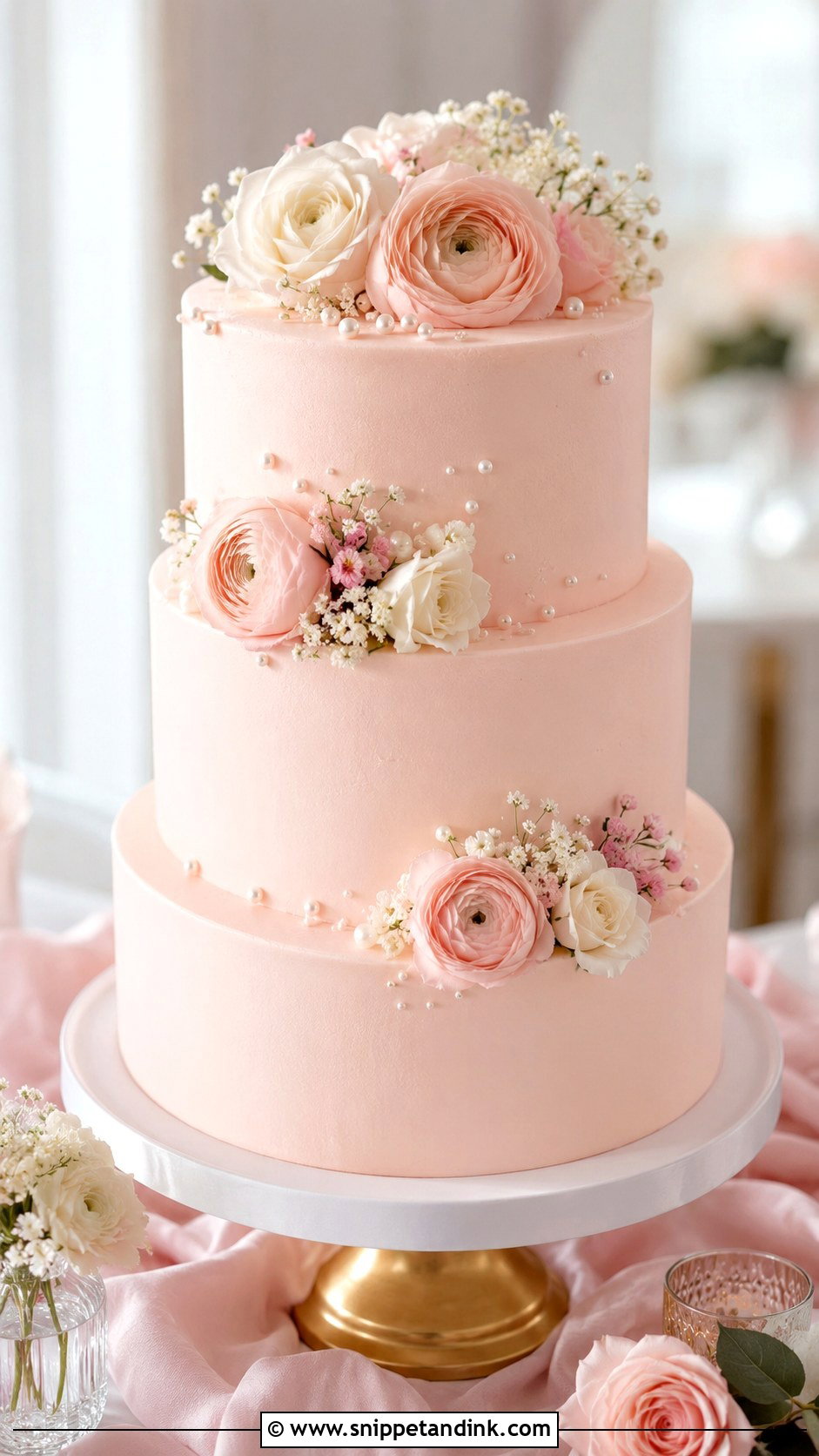
Blush is easy to get wrong in buttercream. Because the frosting starts ivory from the butter, a pink gel can drift toward peach, so I mix the shade in daylight and check it against a fabric swatch. Pale pink, dusty rose and warm blush all work, smooth for a modern cake or with piped borders for a vintage one. White roses, blush ranunculus and pearls finish it. Vanilla, strawberry, almond, raspberry and champagne sponges pair well. Keep it soft; a strong pink tends to look sugary in photos.
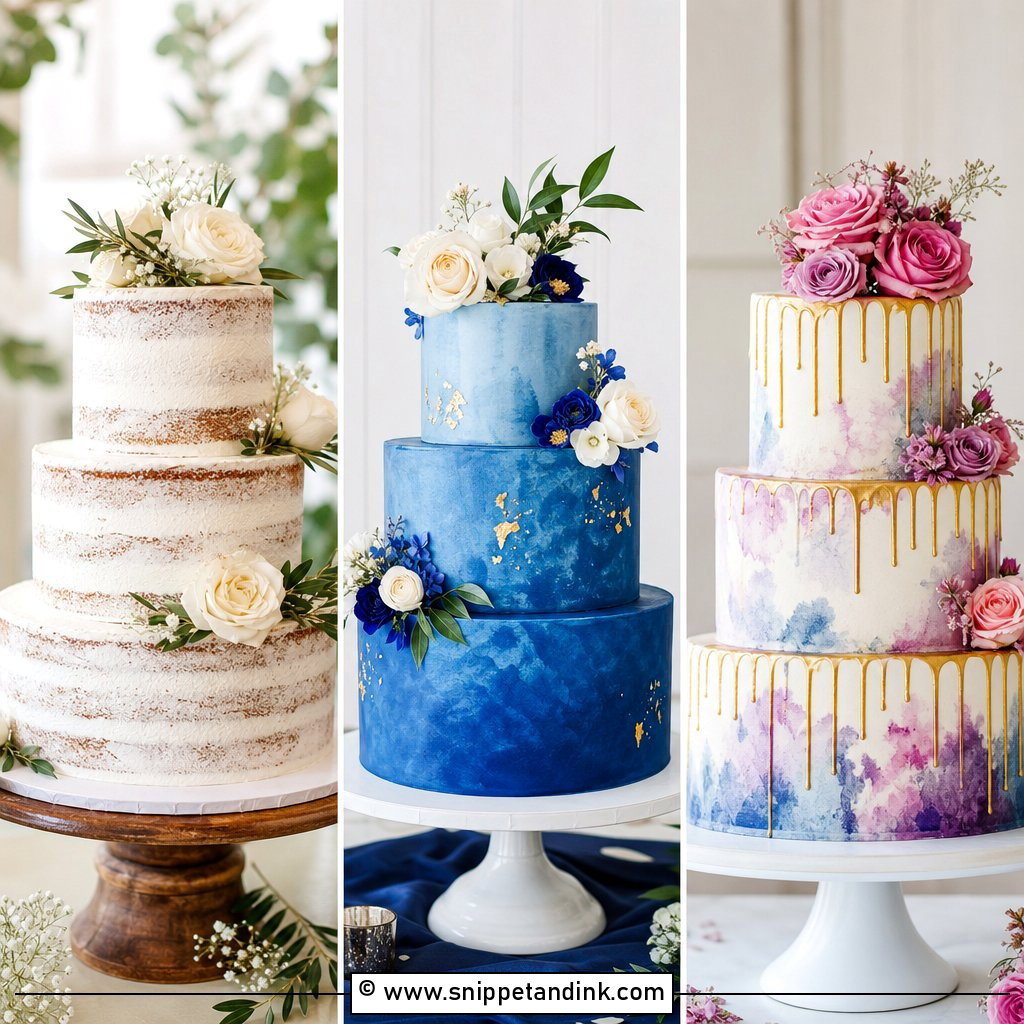

20. Swiss Meringue Buttercream Sage Green Wedding Cake
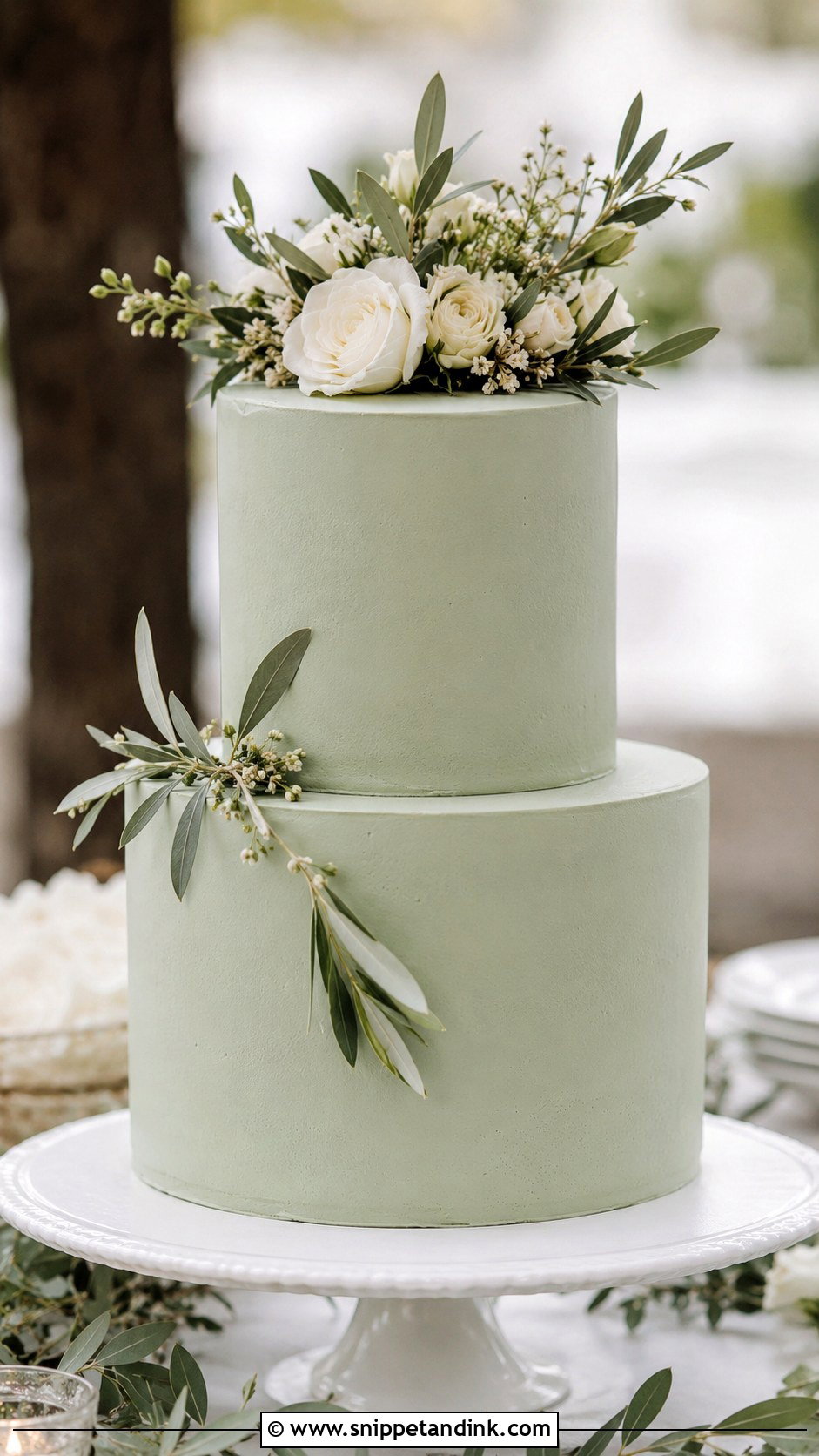
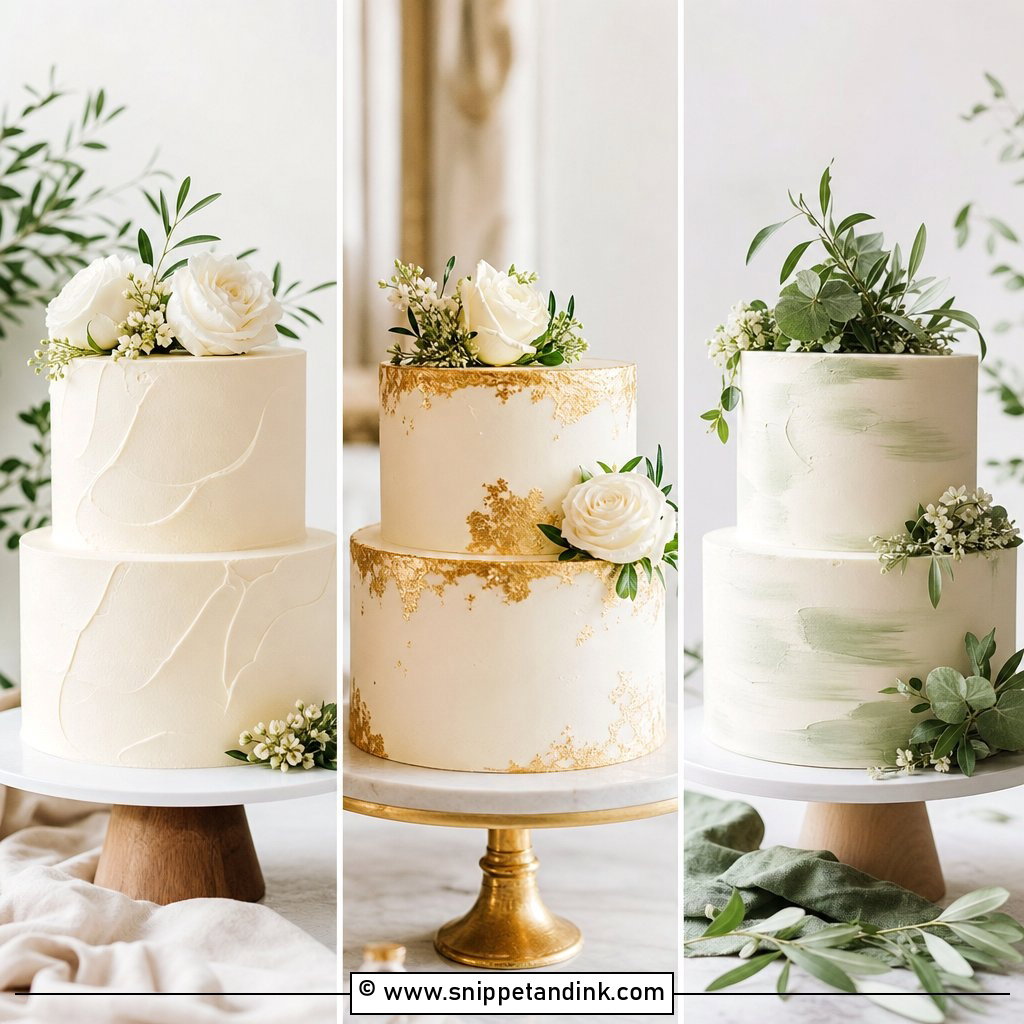
Sage gives you color without the cake looking loud. It’s a muted green that sits comfortably in garden, woodland, rustic and minimalist weddings. I tint it slightly grayer than the swatch, because the ivory base warms green as it sits. Smooth frosting looks clean; subtle ridges add texture. White flowers, cream roses, olive leaves, eucalyptus and tiny edible blossoms suit it, with lemon, pistachio, vanilla bean or almond inside. It looks best in daylight, which keeps the green from turning yellow.
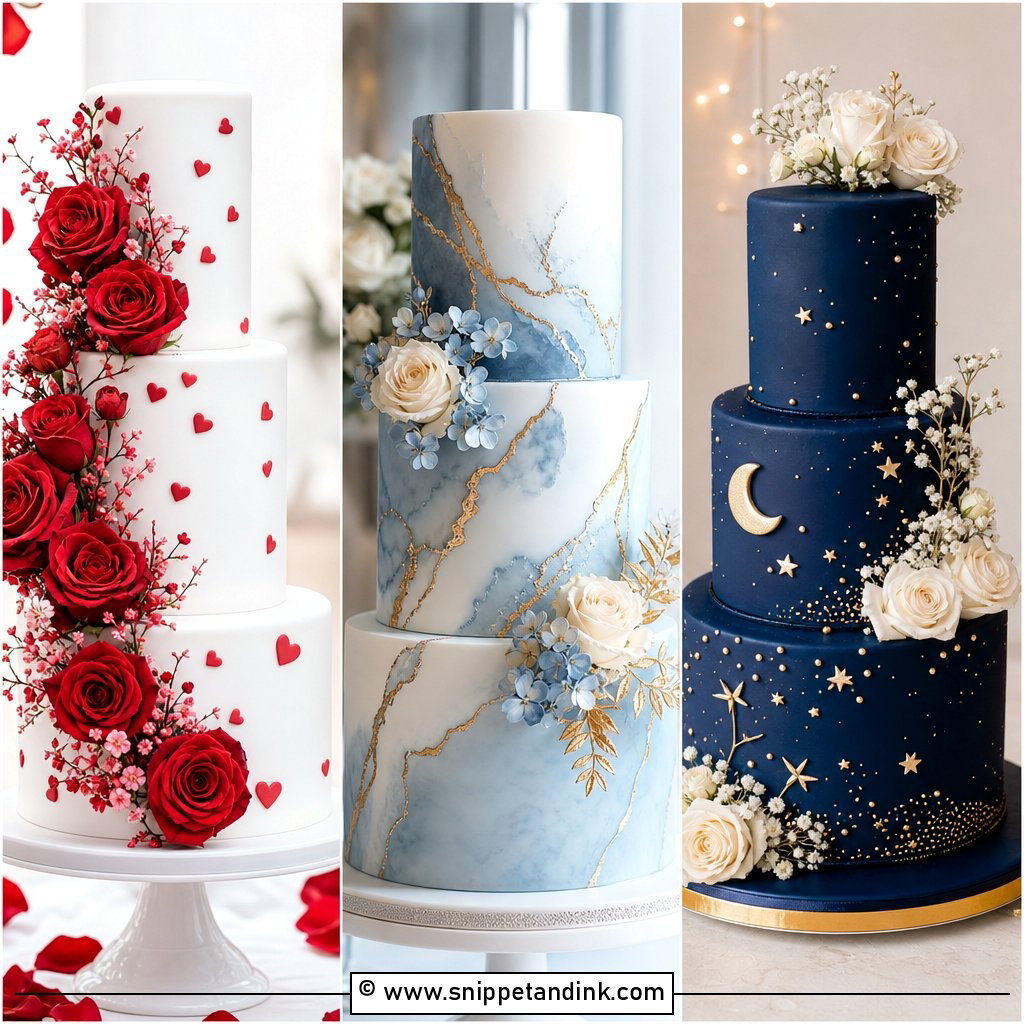
21. Swiss Meringue Buttercream Blue Wedding Cake
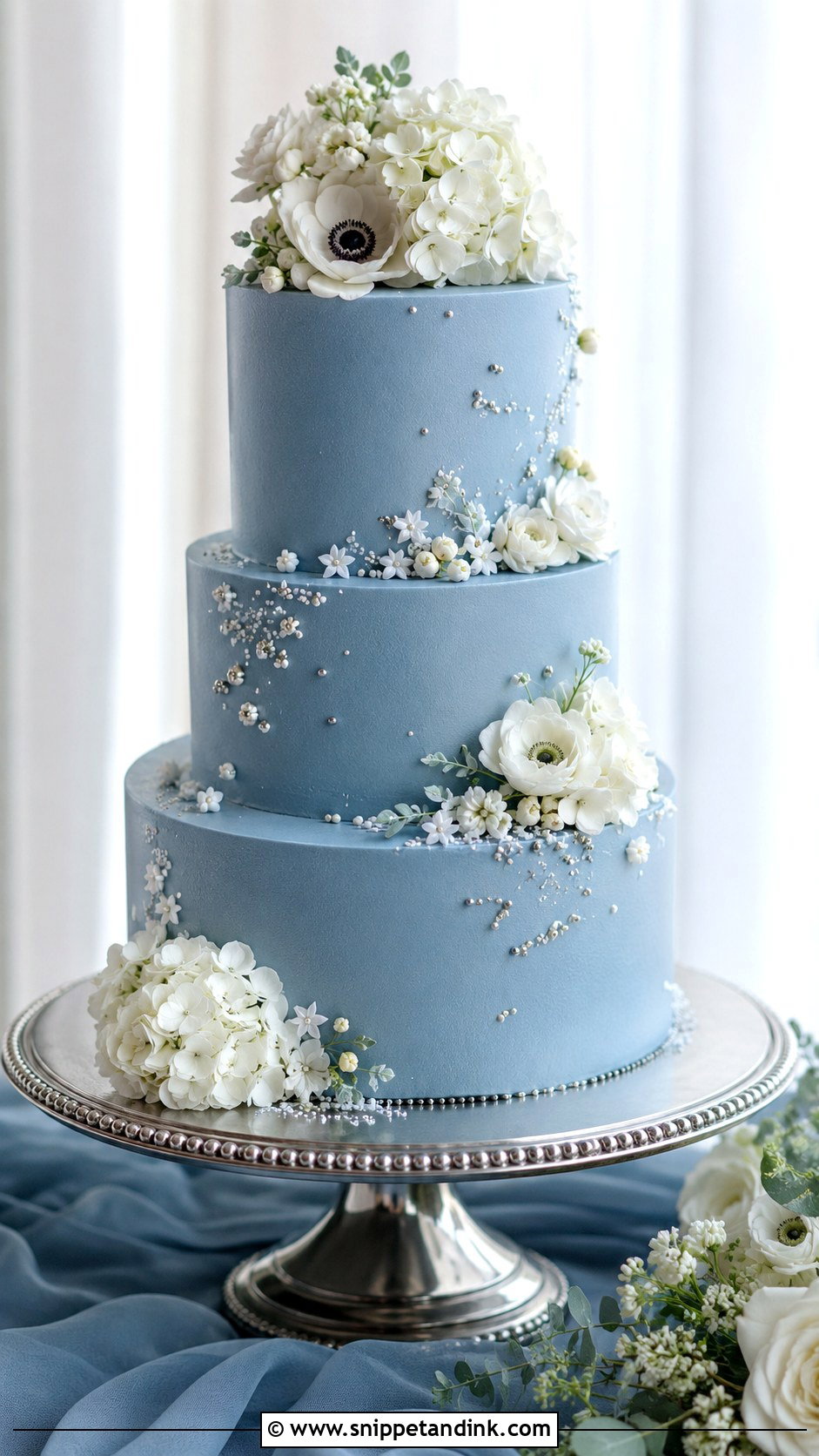
Blue changes character with the shade: pale blue is soft, dusty blue is refined and navy is dramatic. Muted tones work best in this frosting, because the butter’s yellow tint can push brighter blues toward teal. Pair it with white flowers, silver pearls, blue hydrangea accents or fine piping. Coastal weddings, cool winter palettes and formal receptions suit it. Vanilla, lemon, blueberry, almond and white chocolate fillings work well. Go easy on decoration so the color stays calm.
22. Swiss Meringue Buttercream Gold Wedding Cake
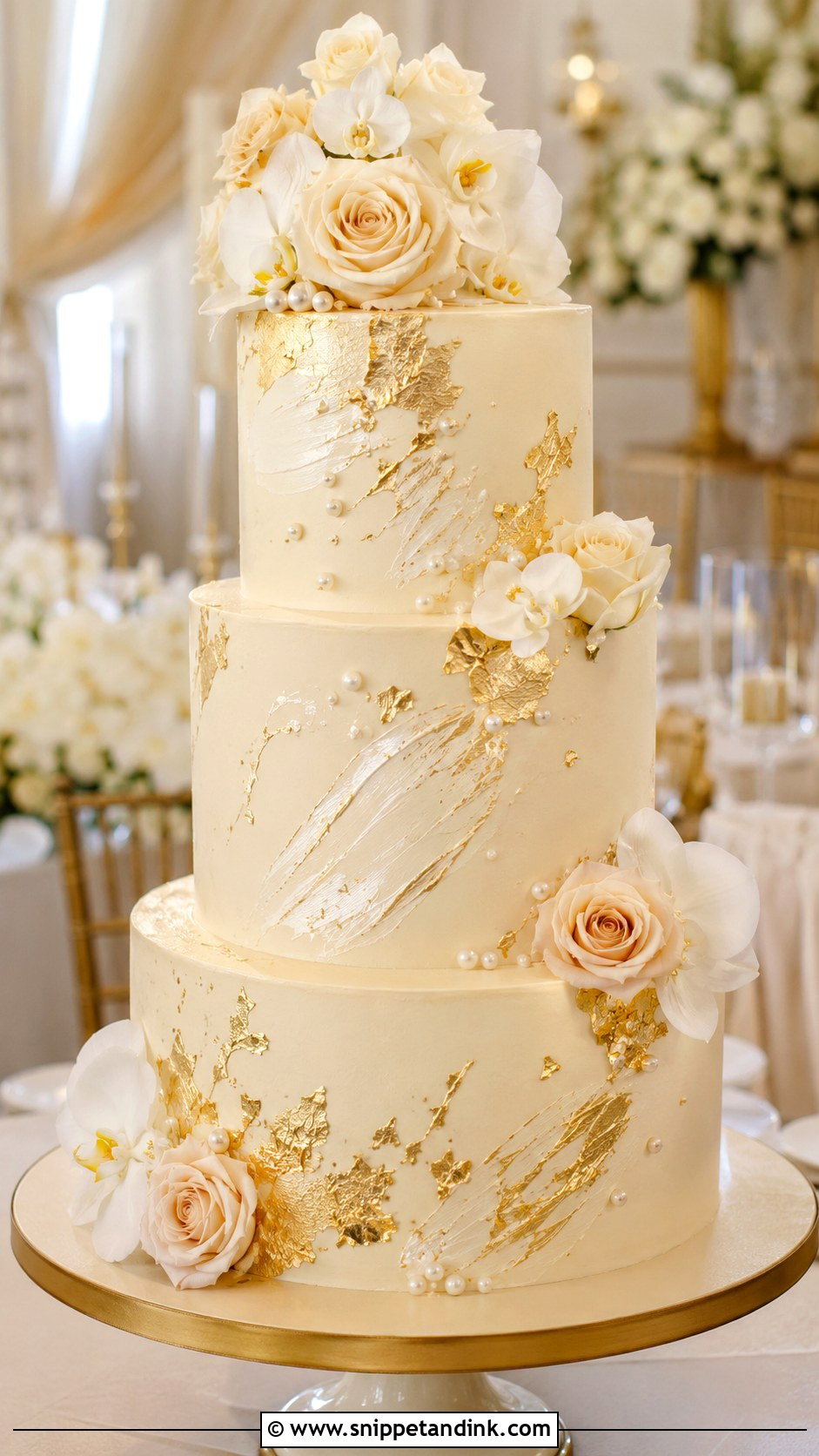
Gold doesn’t sit on soft buttercream the way it does on fondant, so I use it as an accent rather than full coverage. Edible gold leaf is pressed on after the cake is chilled; brushed gold paint goes on in strokes or along a border. Scattered leaf on ivory looks modern; painted borders look glamorous. Check that the gold is edible, not just labeled non-toxic. White roses, orchids or champagne flowers finish it, with vanilla bean, caramel, almond, chocolate or hazelnut inside.
23. Swiss Meringue Buttercream Fruit Wedding Cake
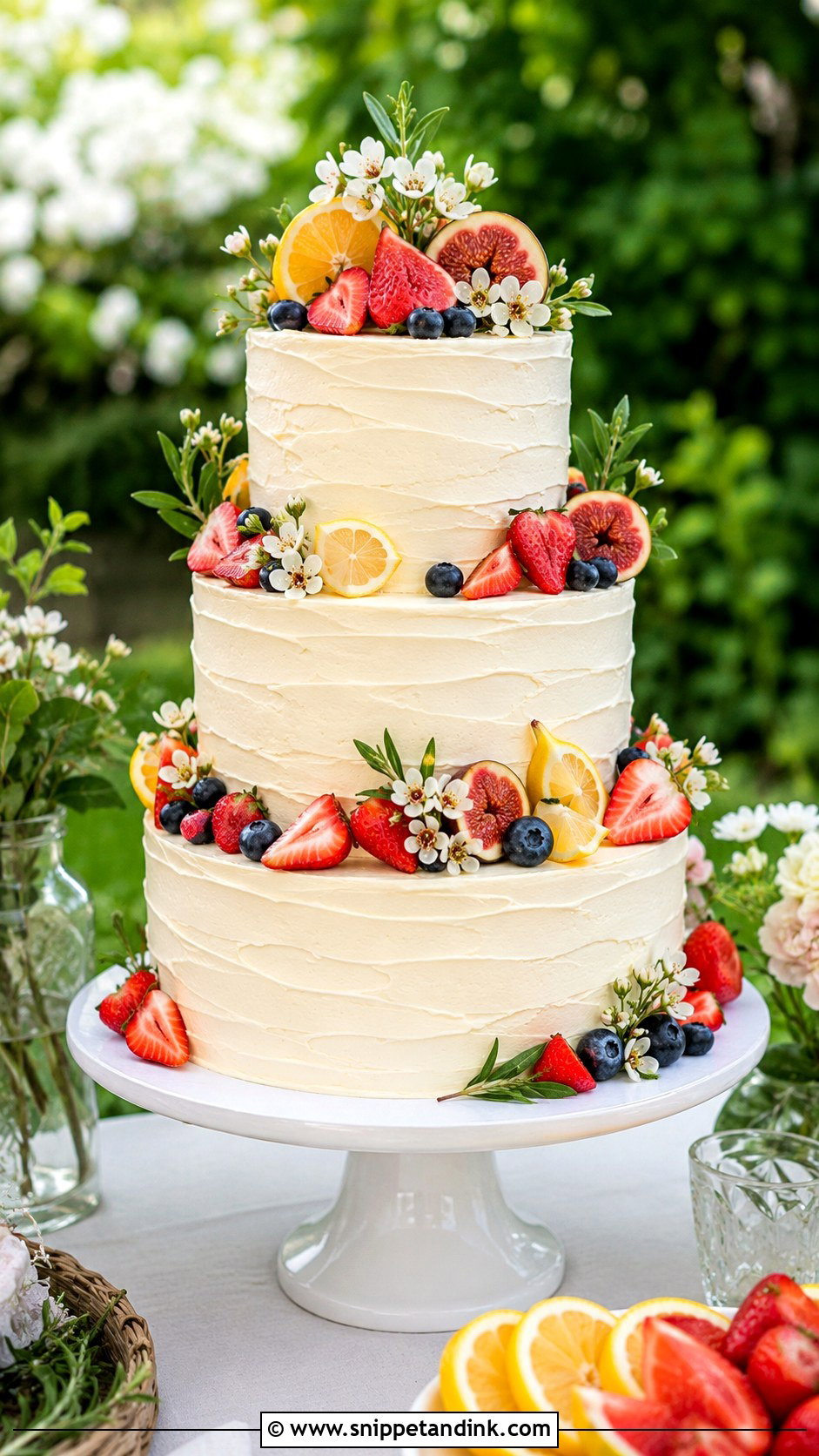
Fresh fruit is my favorite topping on this frosting because the taste matches the look. Berries, figs, citrus slices, grapes and cherries sit well on a smooth or softly textured base. I add cut fruit as late as possible, since juice weeps into buttercream within a few hours, and I keep whole berries for anything that has to sit out. Match the fruit to the filling: lemon with blueberries, vanilla with strawberries, almond with figs. A few herbs or flowers finish it. Summer weddings and farm-style receptions are its natural home.
24. Swiss Meringue Buttercream Cupcake Wedding Cake
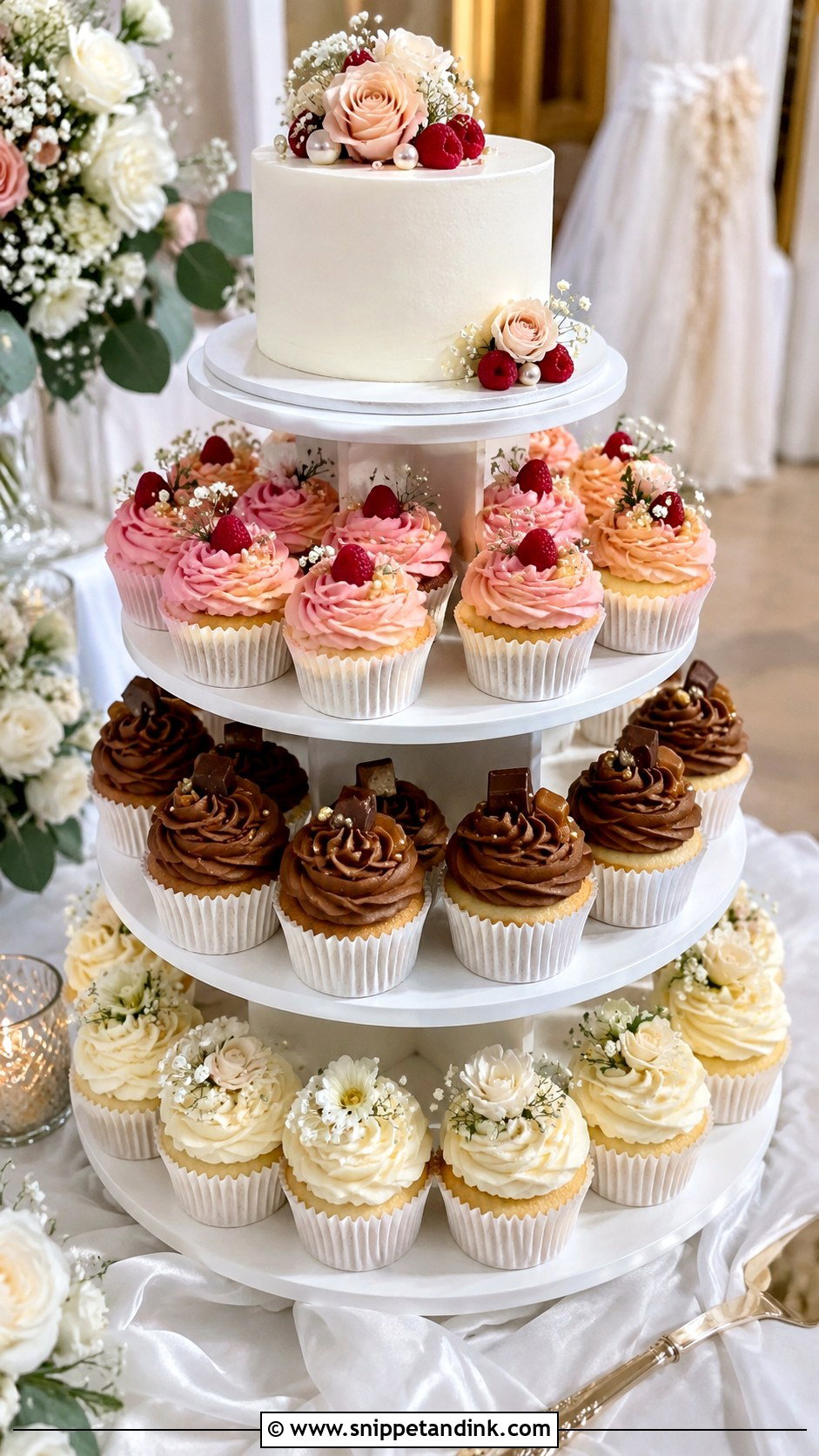
A cupcake tower solves serving: nobody needs to cut and plate, and you can offer several flavors. I usually put a small cutting cake on top with matching cupcakes stepped below. Each cupcake gets a silky swirl of Swiss meringue buttercream, finished with tiny flowers, pearls, fruit or a little piping. Vanilla raspberry, lemon, chocolate caramel, almond and strawberry make a good lineup. Tint the frosting to your palette so the display looks planned. One downside: cupcakes sit out longer than a sliced cake, so keep the stand away from windows.
25. Swiss Meringue Buttercream Dessert Table Wedding Cake
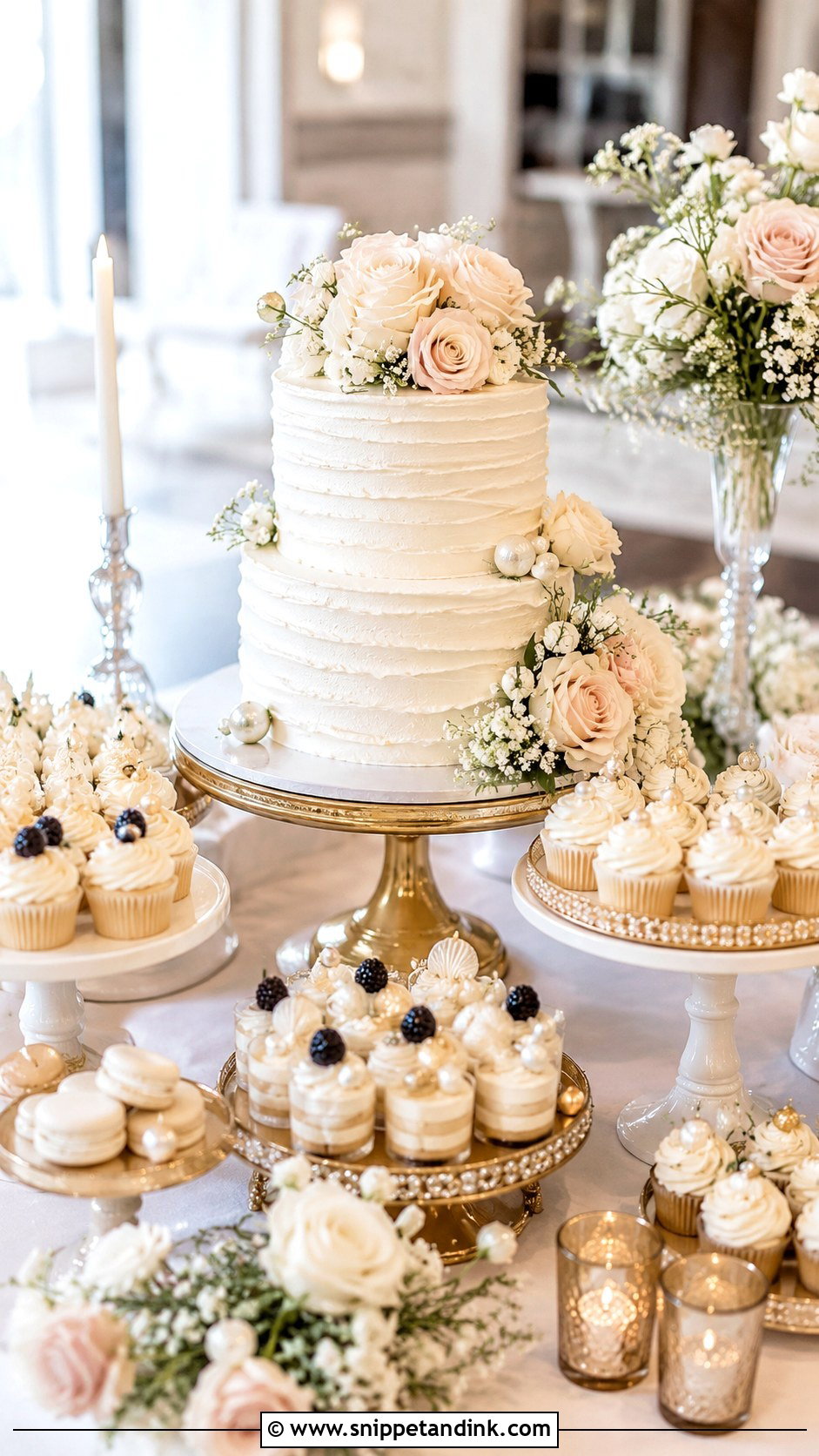
Pairing a one- or two-tier cake with a full dessert table gives you a centerpiece and lots of choice for guests. Surround it with mini cakes, cupcakes, macarons, cookies or fruit tarts, with stands at different heights so the table doesn’t look flat. A smooth or textured buttercream cake holds its own without fighting the smaller sweets. Repeat one color and one flower across the table. It’s often cheaper per guest than a large tiered cake, too.
From the Bakery Fridge to the First Slice
Most problems with this frosting happen in the hours between the bakery and the cut, not in the kitchen. Here’s how I plan that stretch.
Delivery
I deliver tiers chilled and firm, in a cooled vehicle, and stack them on site where possible. A cold cake travels well because the buttercream is almost solid. The risk comes after: a chilled cake carried into a warm, humid room can pick up condensation, so I let it sit out of direct air flow and don’t wipe the beads off.
Display
The table matters more than the stand. Keep it out of direct sun, away from windows, heaters, the dance floor lights and a buffet’s steam trays. As a rough guide, the frosting stays comfortable in a room that feels pleasant to stand in. Once guests are fanning themselves, it’s softening too.
Serving
This is the step everyone forgets. Straight from the fridge, it tastes waxy and dense. Give the cake roughly an hour or two at room temperature before cutting so the frosting turns creamy again. If your caterer is cutting it, tell them that, and ask them to wipe the knife between slices for clean edges.
A Tasting Is Where This Frosting Wins or Loses
Taste the buttercream on its own at your tasting, not just on a forkful of sponge. Good Swiss meringue should feel smooth on the tongue, never grainy, and taste of butter and vanilla rather than sugar. If it’s greasy, the butter ratio or temperature was off. I also suggest asking to see a cake that has sat out for an hour, if the baker has one, because that shows you how it looks by the time guests actually see it. Flavor pairings are worth testing too: tart fillings like lemon curd and raspberry cut through the richness better than another layer of something creamy.
Which Finish Fits Your Room, Your Season and Your Guest Count
Start with the conditions, then the look. A cool indoor room can carry fine Lambeth piping or thin palette-knife petals; a summer tent wants a ridged or rustic finish that hides a softened edge. Guest count decides the tiers: two for a small wedding or a dessert table, three for a full reception. Then bring your palette and a couple of photos to a tasting, eat the frosting at room temperature and let the baker tell you what will survive your day.
You'll Like These Ideas:






Leave a Reply