
Small, sweet cakes are the orders I enjoy most, because every detail on them gets seen up close. A cute design rarely needs more decoration; it needs fewer, better placed details: heart shapes, a row of pearls, one bow, a few pressed blooms, or old-school piping done neatly. The twenty ideas below suit anything from a courthouse lunch to a ballroom reception, and for each one I’ve added what I actually think about when I make it: how it travels, what it costs in labor, and where it tends to go wrong.
A Small Cake for a Big Guest List
Most cute designs on this list are one or two tiers, and couples fall for them before they count chairs. A six inch tier serves roughly a dozen wedding portions, and a six and eight inch pair serves around thirty five, depending on how the venue cuts. If you have ninety guests and want a little cake, you don’t need to give it up.
What I usually suggest is a small decorated display cake for the photos and the cutting, backed by plain kitchen cake in the same flavors, iced simply and sliced out of sight. Guests never know, and it costs far less than extra decorated tiers. Cupcakes or a sheet of the same sponge on the dessert table do the same job in a more visible way.
- Ask your baker how many portions each tier serves and what size slice they mean; a wedding finger slice is much smaller than a party slice.
- Decide early who cuts and plates. Some venues charge per head for it, which can change whether cupcakes make more sense.
- If you plan to keep the top tier for an anniversary, take it out of the serving count.
1. Heart Shaped Wedding Cake
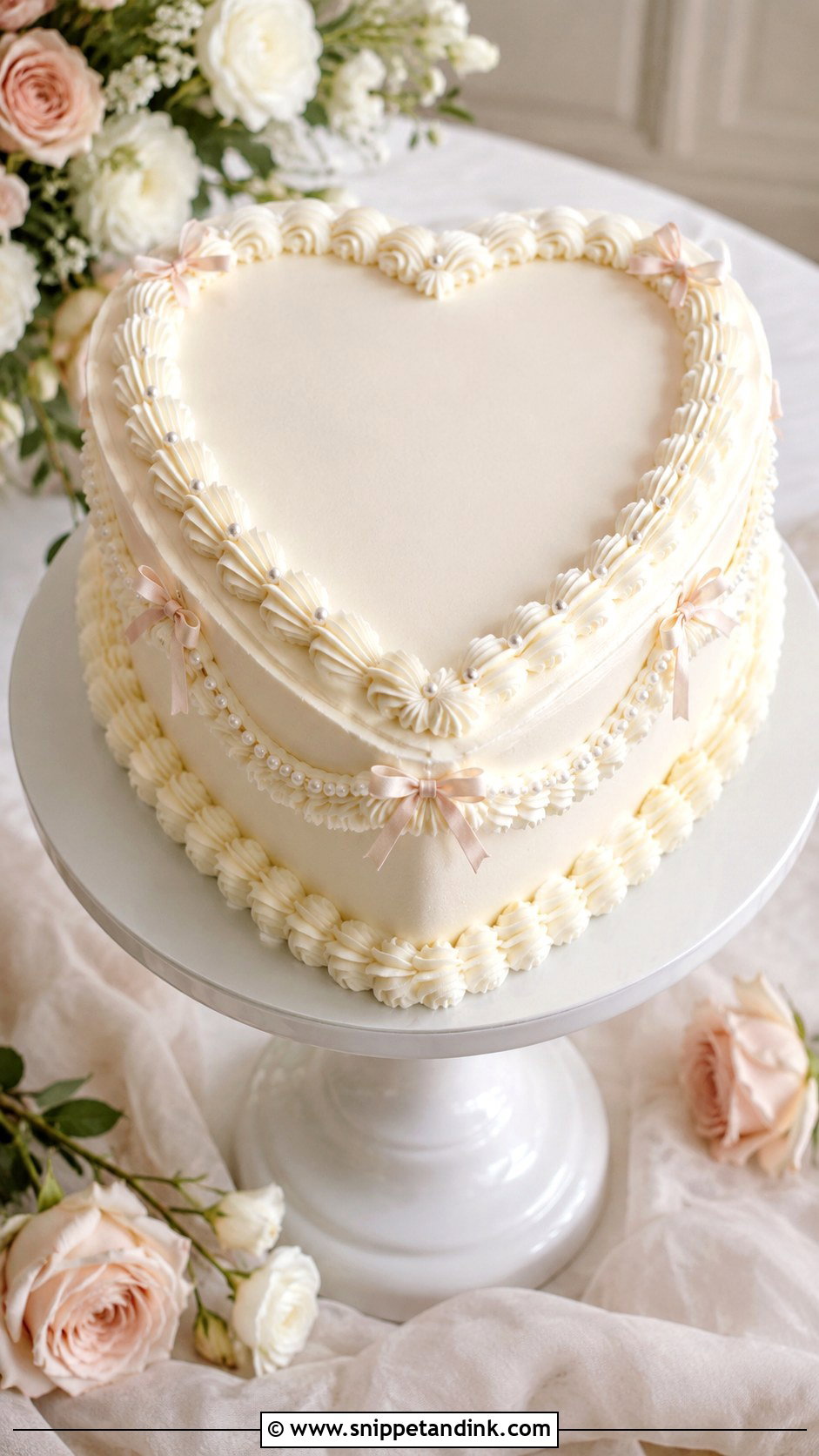
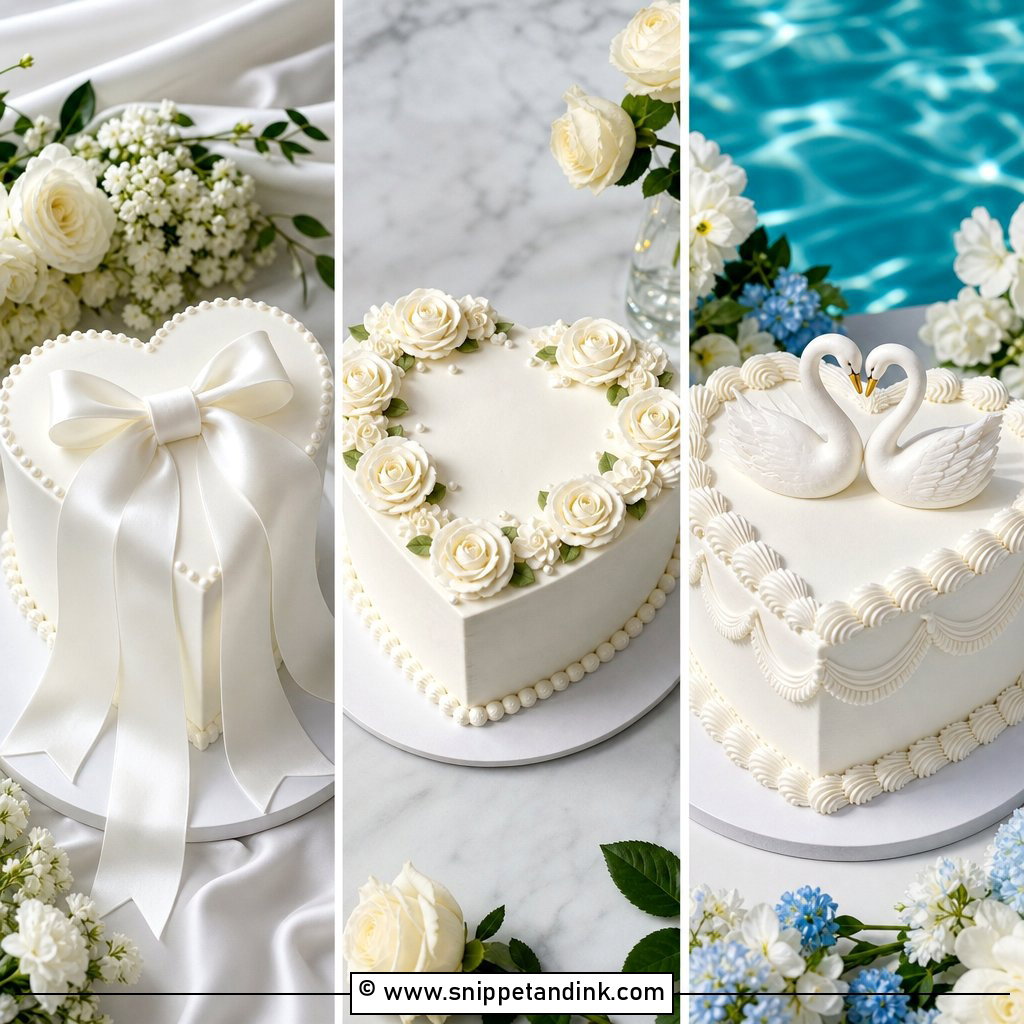
Couples often assume a heart cake needs a special tin, but I usually carve it from a square and a round sponge, which means the point and the two lobes need extra support before I ice them. Keep the decoration modest, because the outline is already doing the work: ivory buttercream, a shell border and a few sugar bows are plenty. Vanilla, almond, strawberry or red velvet all carve cleanly. Shoot it from above if you can; a heart reads as a heart from the top, and as a lumpy oval from the side.
2. Vintage Wedding Cake
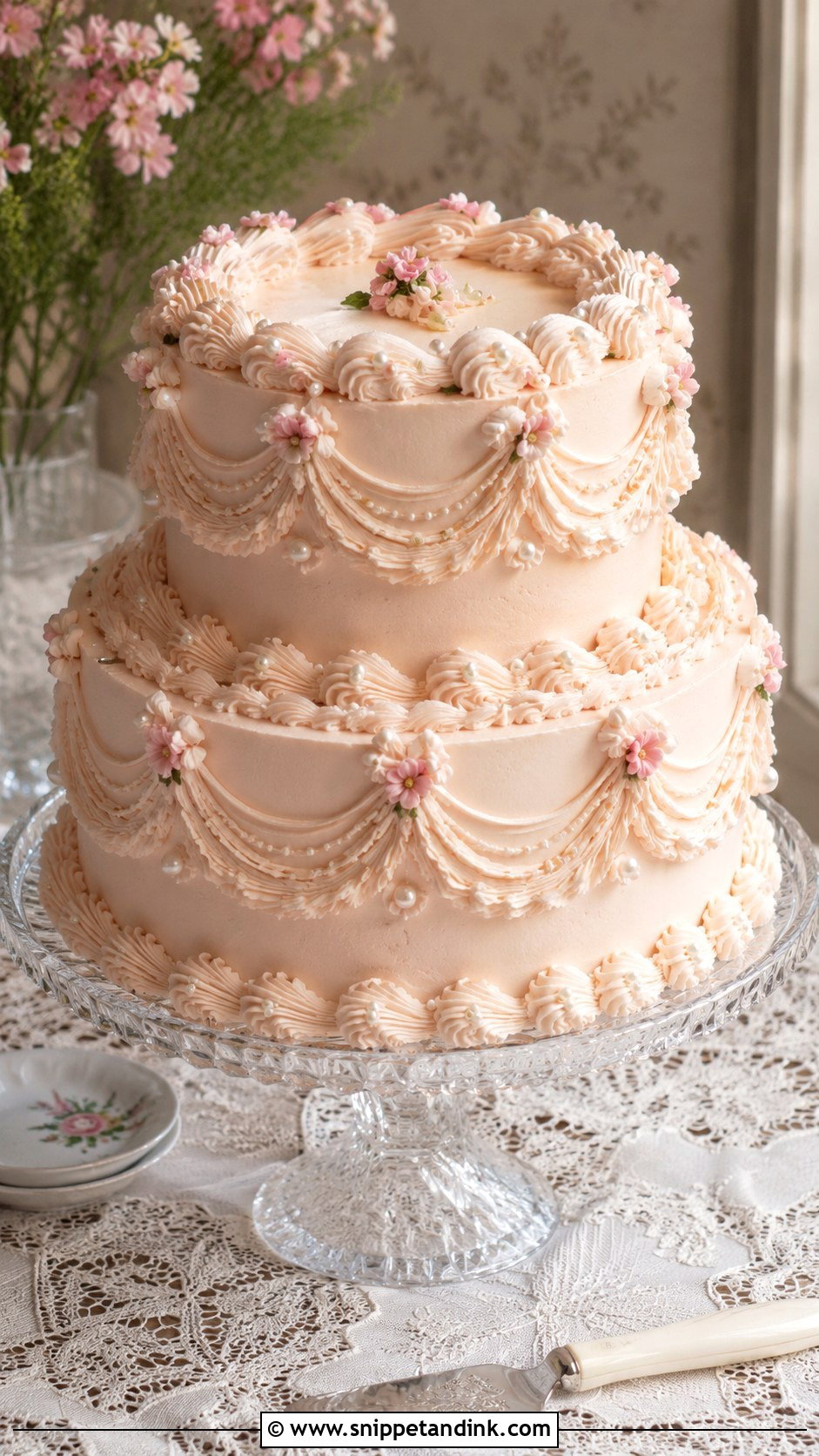
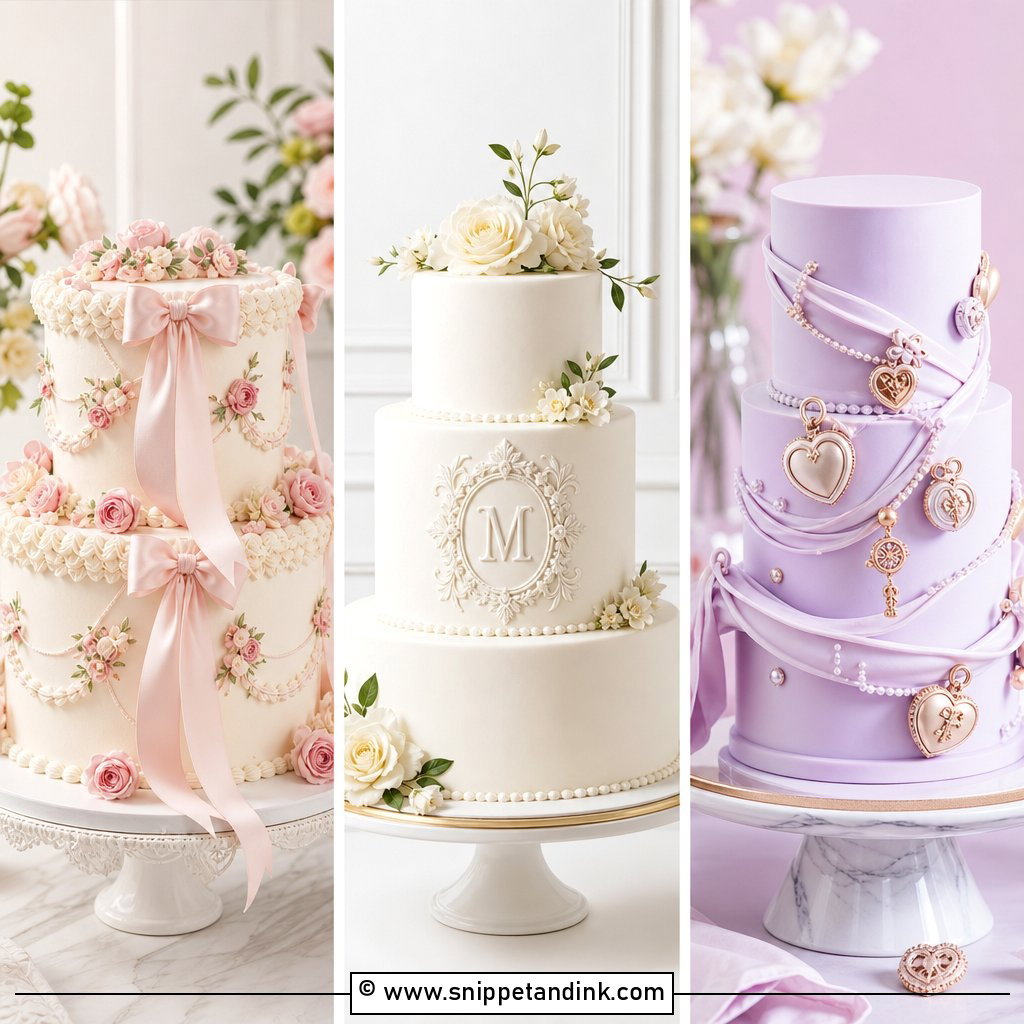
Old bakery piping, the swags, scallops and rosettes, is slow work, and that labor is where most of the price of a vintage cake sits. I keep the colors pale (ivory, blush, powder blue or champagne) because strong colors make the piping look like a children’s cake. Two tiers carry the style comfortably. A few cherries or small edible flowers on top give it a finished look, and it sits naturally beside lace dresses and heirloom details.
3. Pearl Wedding Cake
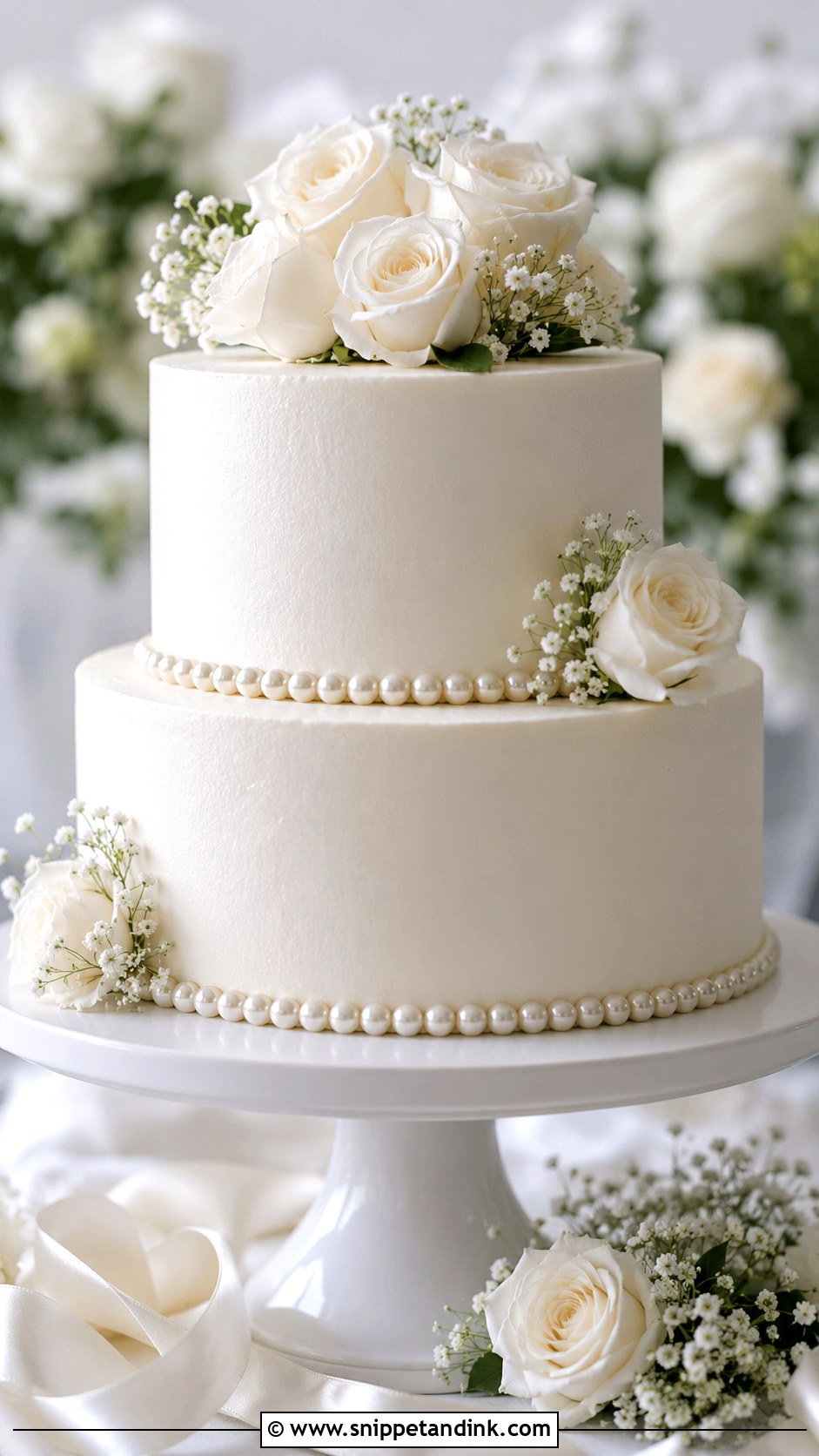
Edible pearls come in two kinds, and the difference matters. Hard sugar dragees give real shine but can crack a tooth if someone bites one whole, so I keep them small and sparse; soft fondant pearls rolled by hand are kinder to eat but look more matte. Rows around each tier read as jewelry, scattered pearls read more playful. I like matching them to pearl earrings or a beaded veil, and keeping the flavor gentle, such as vanilla bean, almond, coconut or lemon, so nothing fights the clean look.
4. Bow Wedding Cake
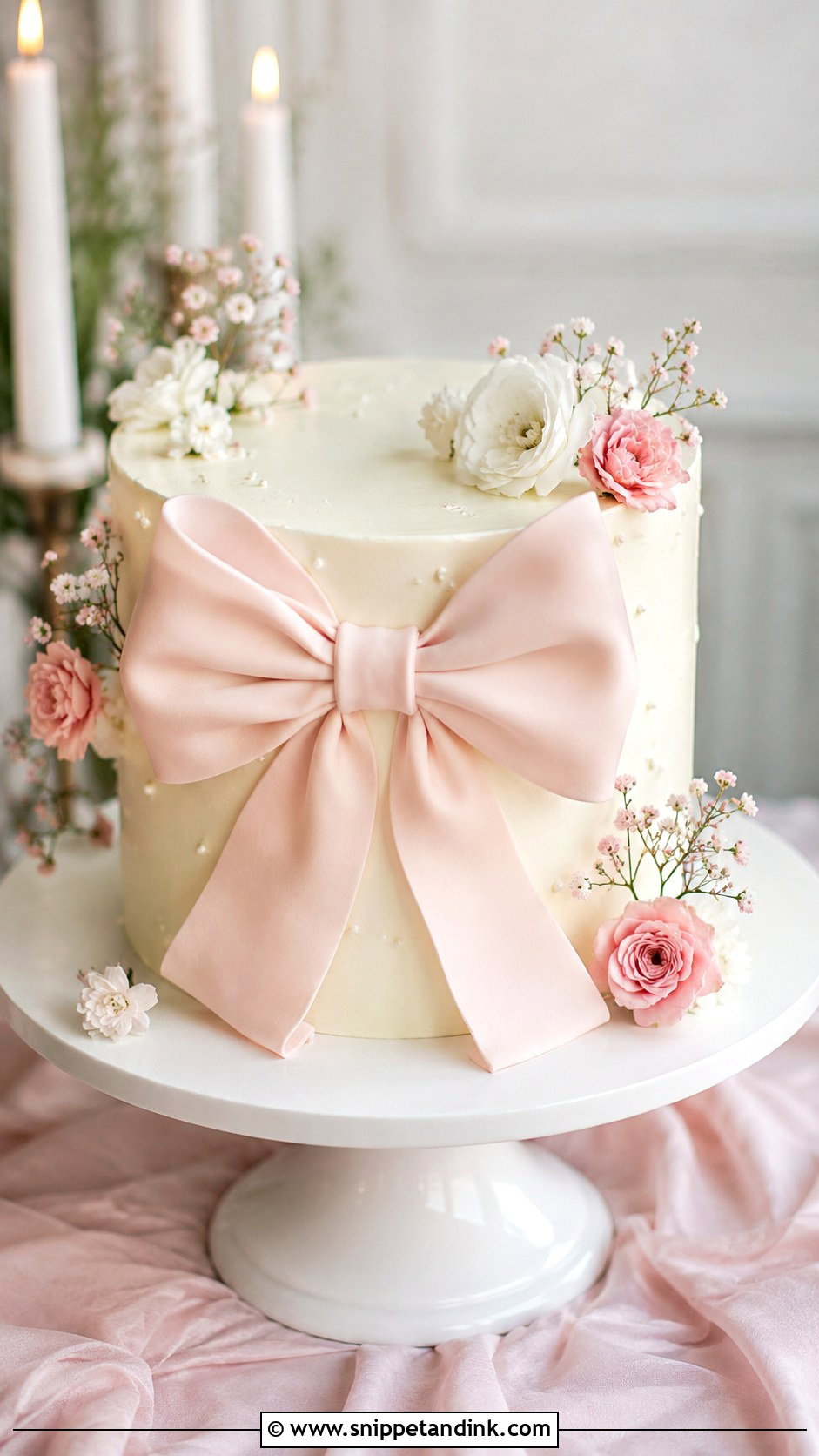
The bow is the whole design here, so I put one well made bow on a smooth tier and stop. Fondant or gumpaste bows hold their loops for hours; buttercream bows soften in a warm room, and real ribbon needs a strip of parchment or tape behind it so the grease doesn’t bleed through and stain it. Blush, ivory or pale blue tie into most palettes. Add a few pearls or a small flower so it reads as a wedding cake rather than a shower cake.
5. Floral Wedding Cake
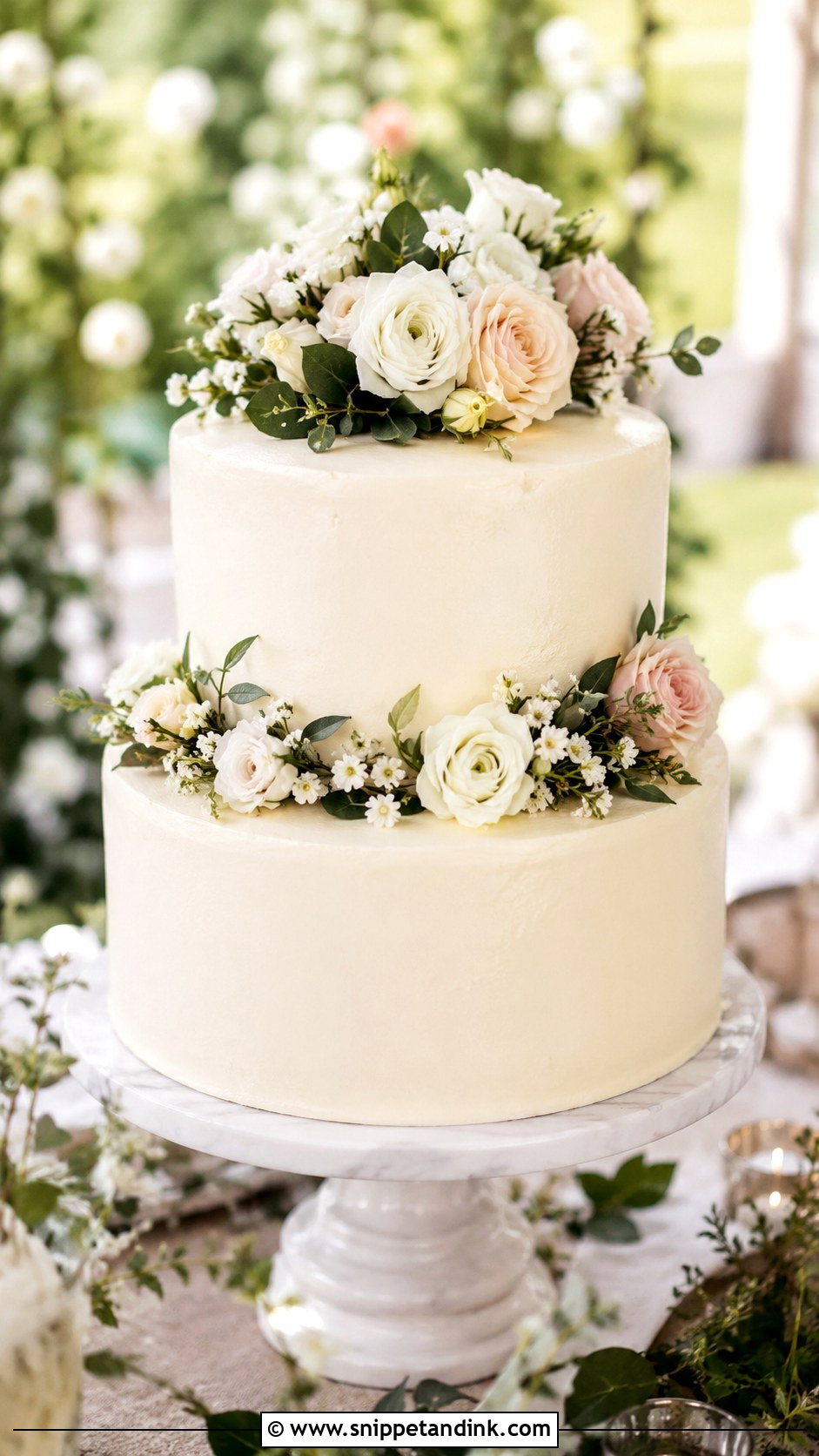
The first question I ask a florist is which flowers are going on the cake, because many common wedding blooms are not safe against food. Small blooms suit a cute design better than a big spray: spray roses, ranunculus, chamomile, sweet peas or edible pansies. I let them trail down one side or sit in tiny clusters at each tier base. Matching them to the bouquet works, as long as the florist knows they’re touching buttercream and preps them for it.
6. Mini Wedding Cake
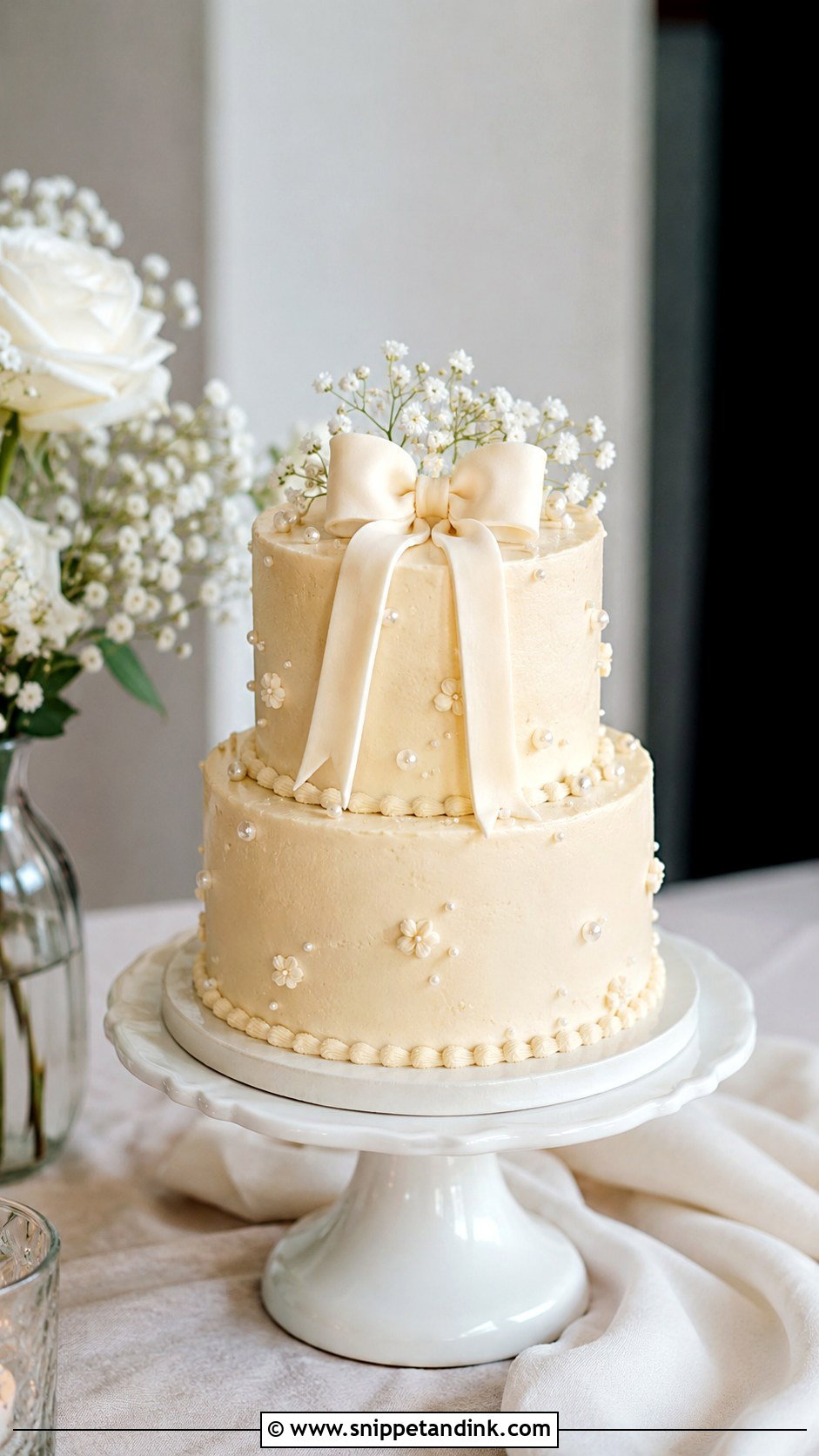
A mini cake is mostly for cutting and keeping, so it gives couples freedom to order exactly the flavor they love, even if half the room wouldn’t pick it. One or two tiers, finished like a full wedding cake, suits elopements, courthouse weddings and dinners for a dozen people. I keep the decoration in proportion: a few piped dots, one small bow or a single cluster of flowers. Anything bigger swamps a six inch tier. It sits nicely beside cupcakes, cookies or a dessert bar.
7. Two Tier Wedding Cake
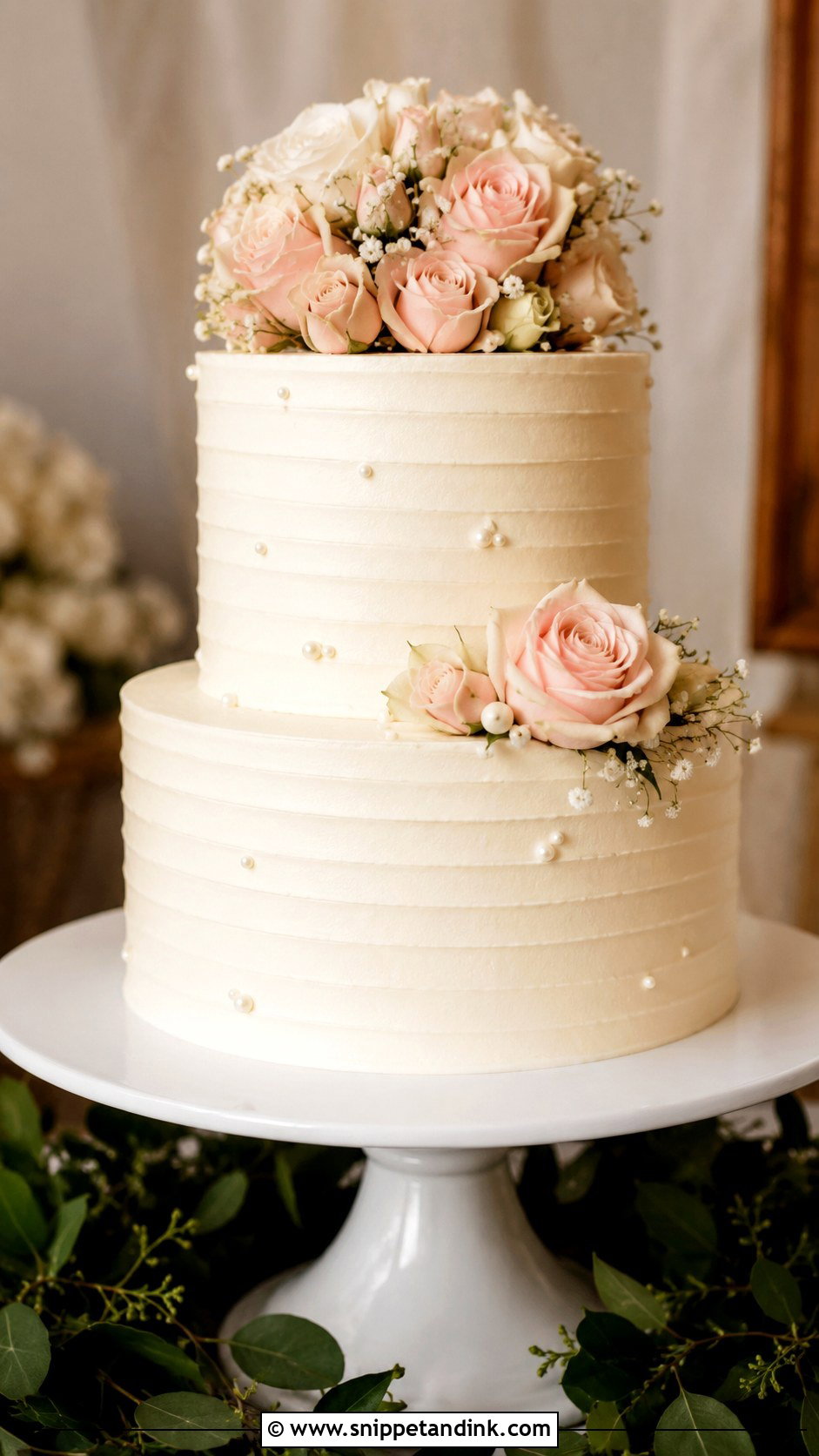
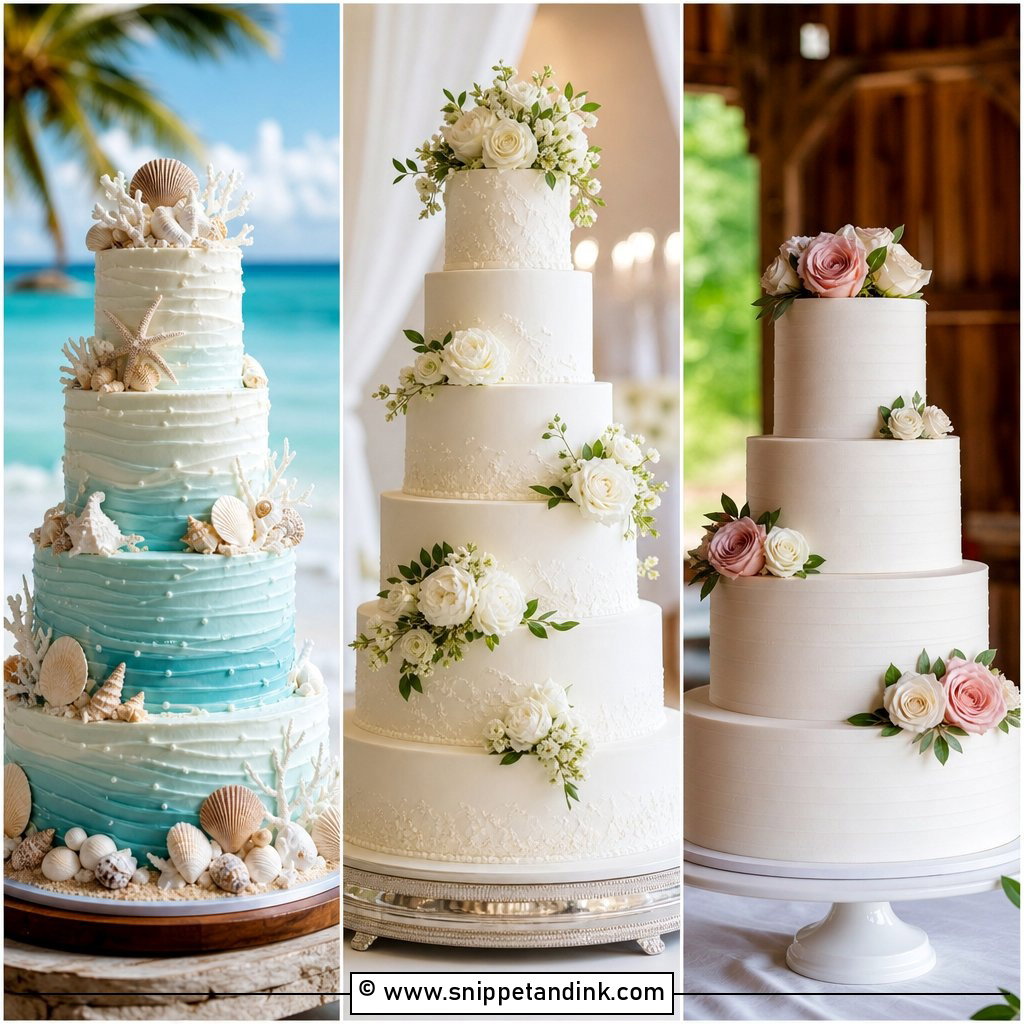
Two tiers is the size I’d point most mid-sized weddings toward. It gives you enough height to look like a wedding cake in photos, it travels with far less risk than three tiers, and it doesn’t need the same internal structure. I treat the top tier as the showpiece for flowers, a bow or a topper, and let the bottom tier carry texture or piping. Ivory with blush roses, or pale yellow sponge with lemon buttercream, will sit happily in a backyard, a garden, a beach or a banquet hall.
8. Buttercream Wedding Cake
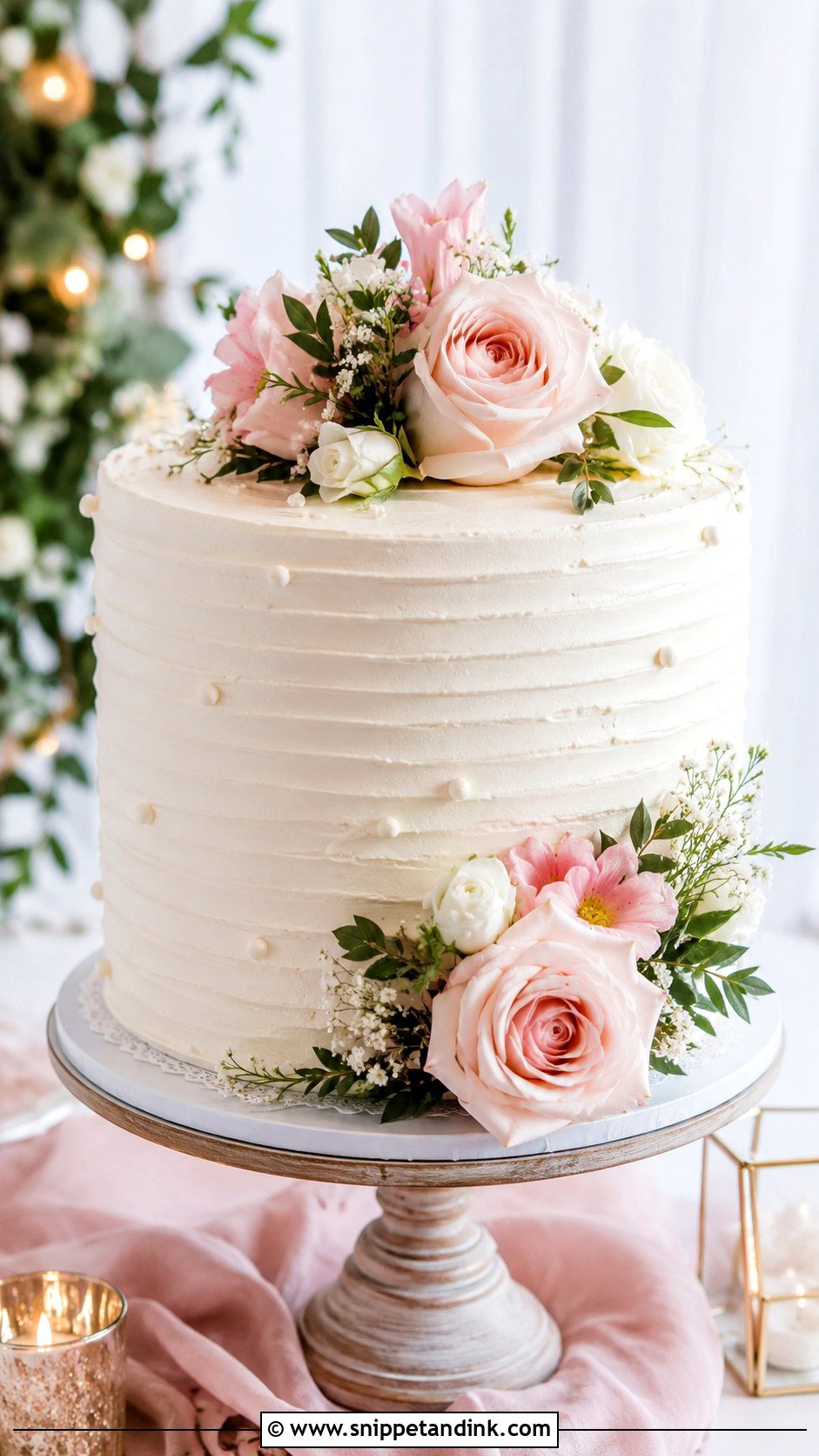
Buttercream is softer than fondant to eat and kinder to cute details like piped dots and small rosettes. The trade-off is heat: an American buttercream crusts and holds better on a warm afternoon, while Swiss meringue tastes lighter but slumps sooner if the room gets hot. A smooth finish looks modern; light ridges look relaxed. It pairs with almost any flavor, from vanilla and lemon to strawberry, almond and chocolate.
9. Garden Wedding Cake
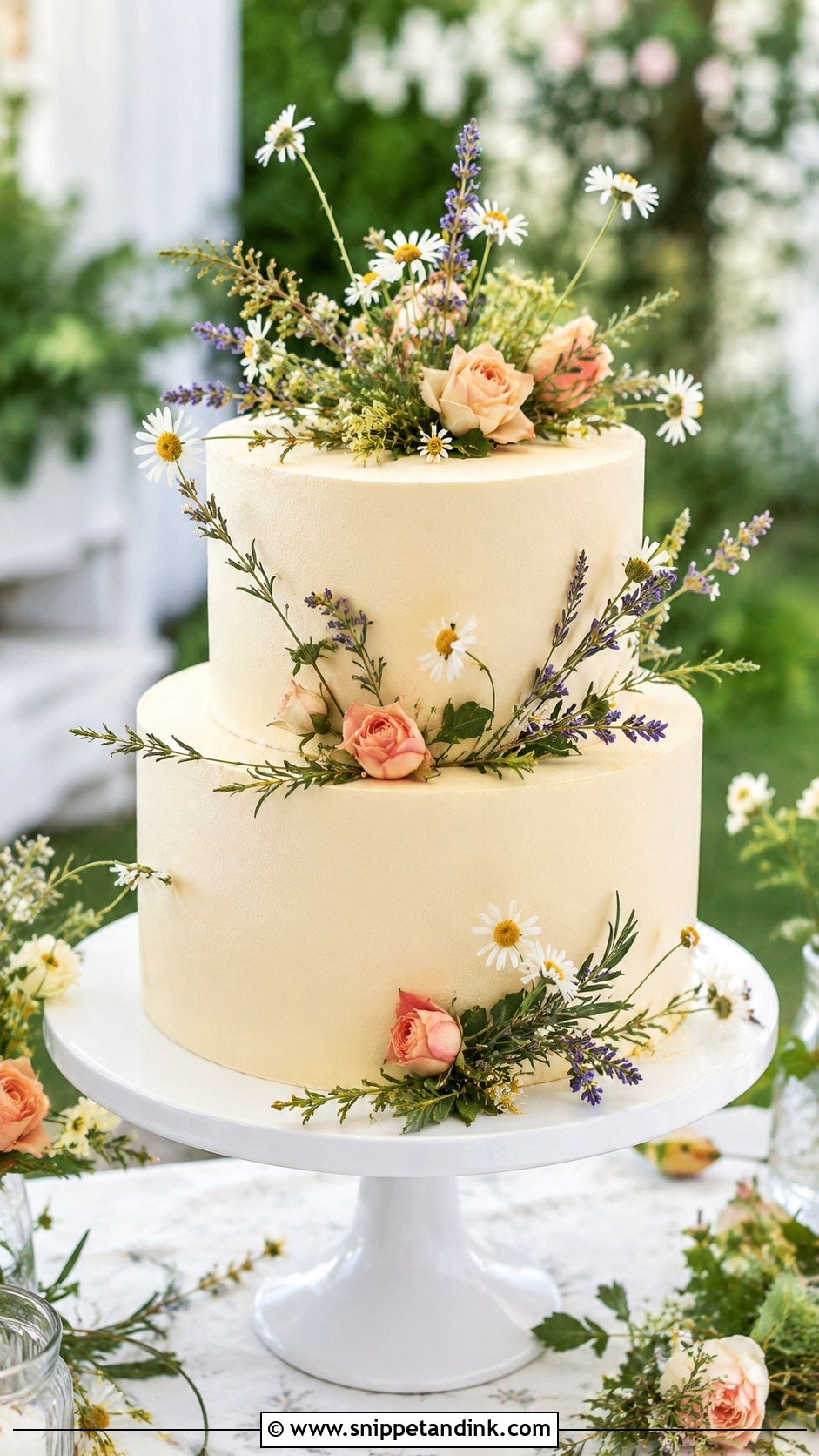
I design a garden cake around movement, so the eye wanders around the tiers instead of stopping at one heavy arrangement on top. Small clusters of lavender, chamomile, roses and tiny white flowers do that well, with a few herb sprigs for green. Lemon, honey, vanilla or elderflower sponge fits the mood. Watch where it stands, though: dappled sunlight looks romantic in photos and melts buttercream on the sunny side within the hour, so I ask for a shaded spot.
10. Pressed Flower Wedding Cake
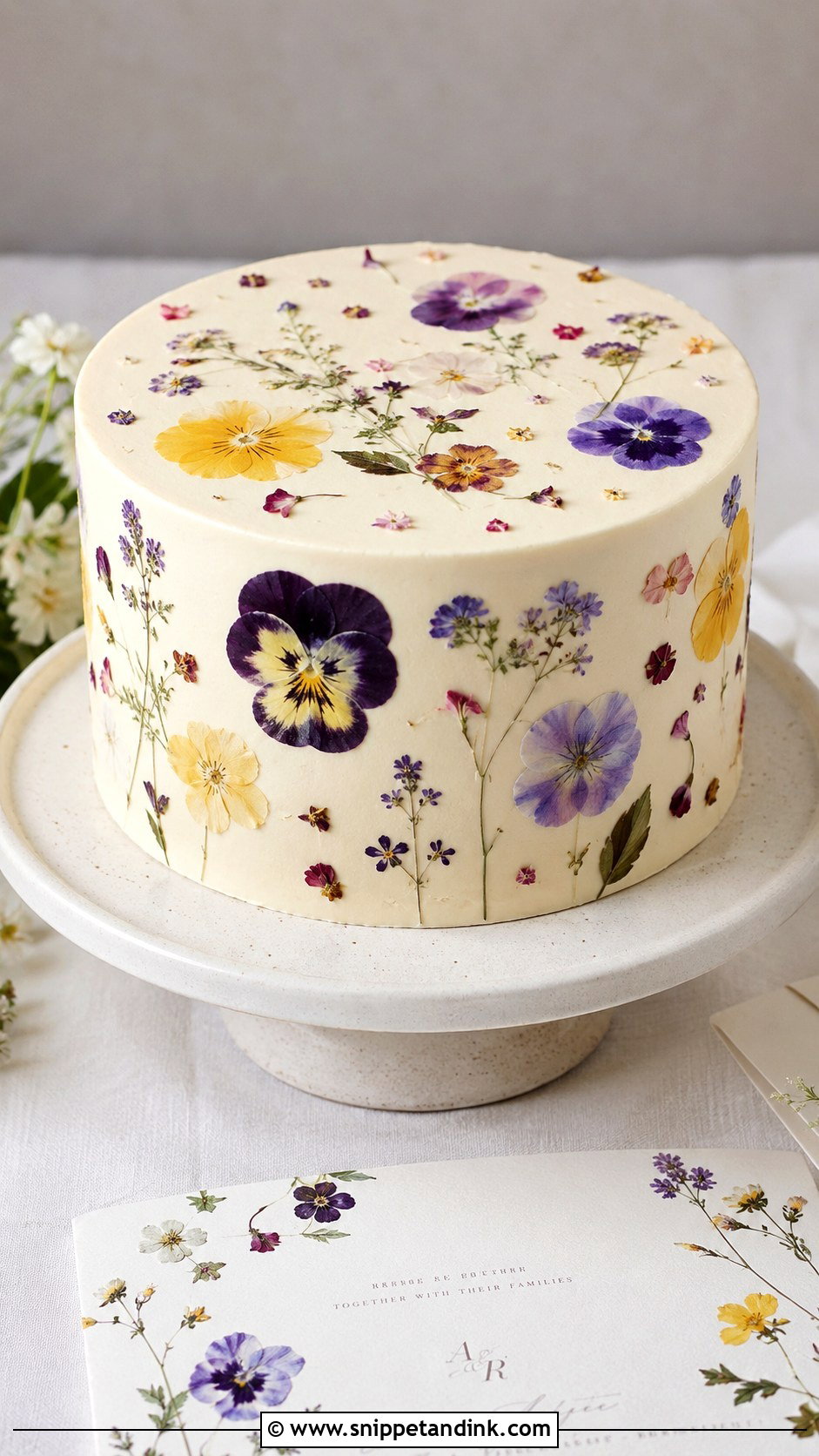
Pressed flowers need a perfectly smooth, chilled buttercream so each petal lies flat and stays put; on a bumpy finish they look like stickers. I only use flowers grown or sold as edible, since a dried bloom from a craft shop is not food. The color in pressed petals fades with light and time, so I apply them close to delivery. One or two tiers carry the look without anything else added, which suits cottage venues and spring weddings.
11. Strawberry Wedding Cake
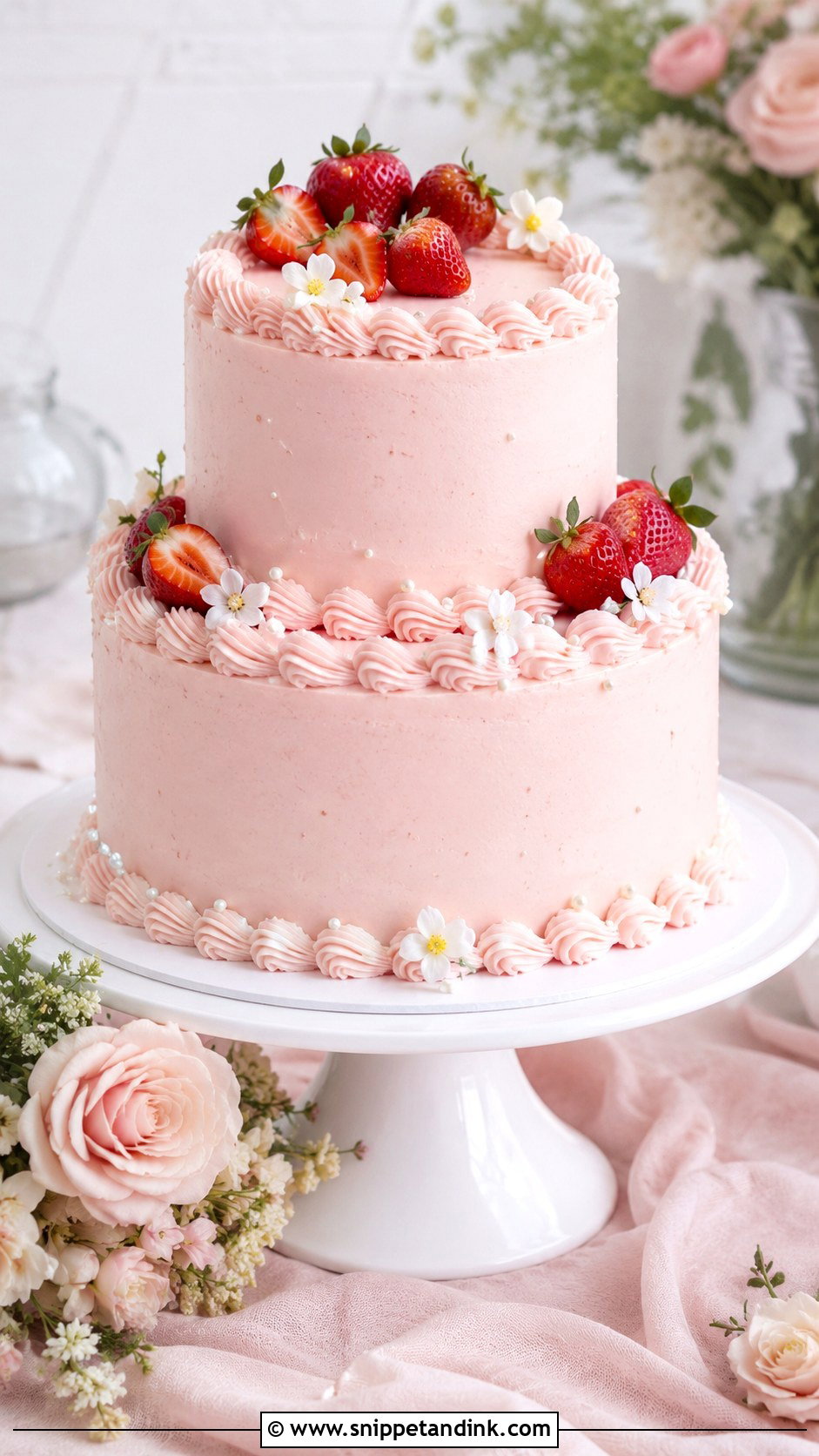
Fresh strawberries are the riskiest decoration I put on a cake, because once cut they weep juice into the frosting within a couple of hours. I place whole or halved berries as late as possible, and I brush cut faces with a thin glaze so they stay glossy. Inside, strawberry sponge, vanilla with strawberry filling or a classic white cake all work. It’s a flavor almost every guest recognizes, which helps after a long meal, and it suits brunch receptions and summer parties.
12. Lemon Wedding Cake
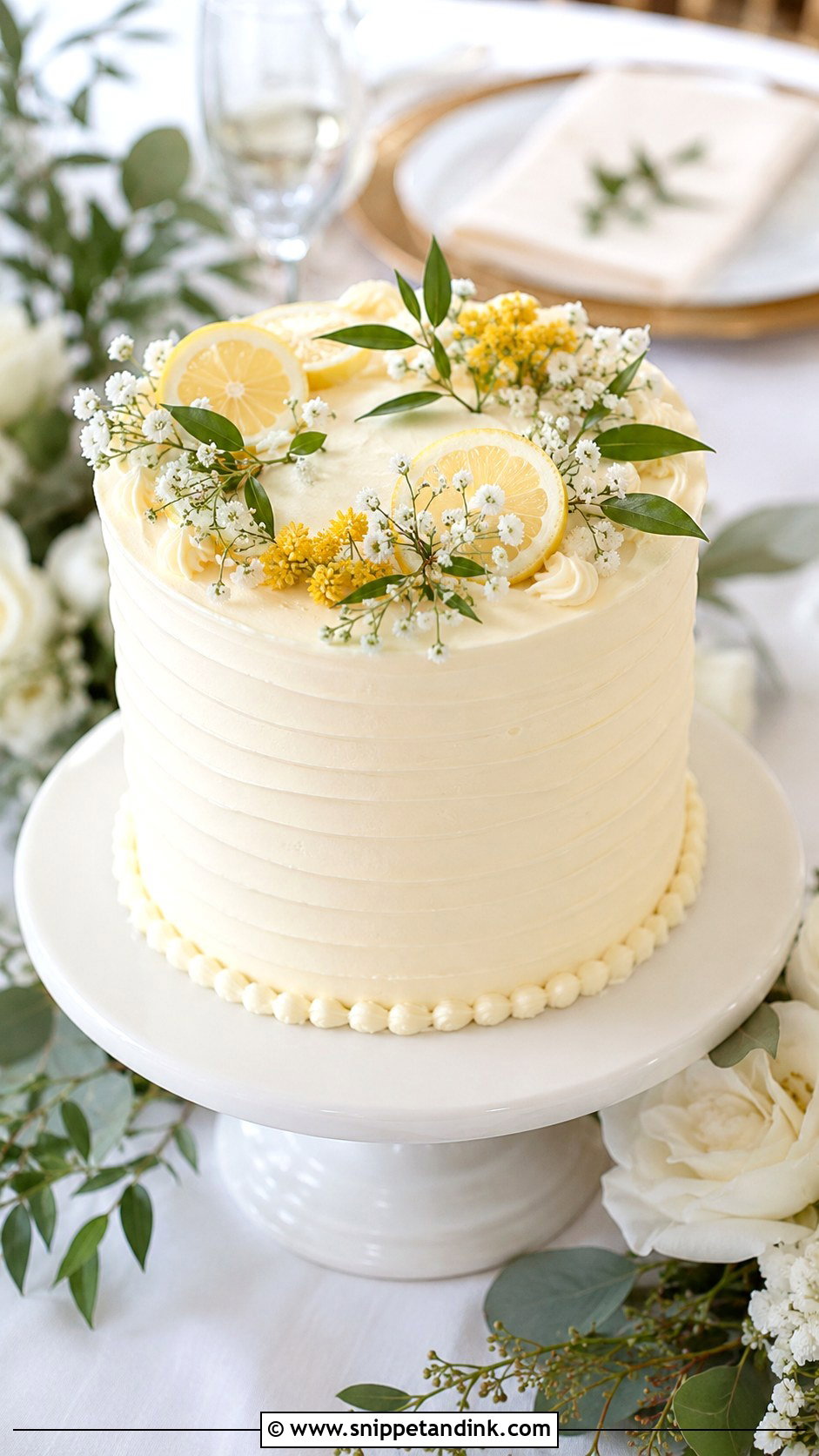
Pale yellow is a quiet color on a cake, and lemon keeps dessert light after a heavy dinner. My favorite pairing is lemon sponge with a layer of curd and vanilla buttercream; whipped cream frosting tastes lovely but needs refrigeration and won’t sit out for long. Decorate with a few thin lemon slices, white flowers or tiny yellow blooms, and stop there, because too many citrus slices make it look like a cafe cake. Daytime weddings and spring gardens suit it best.
13. Lavender Wedding Cake
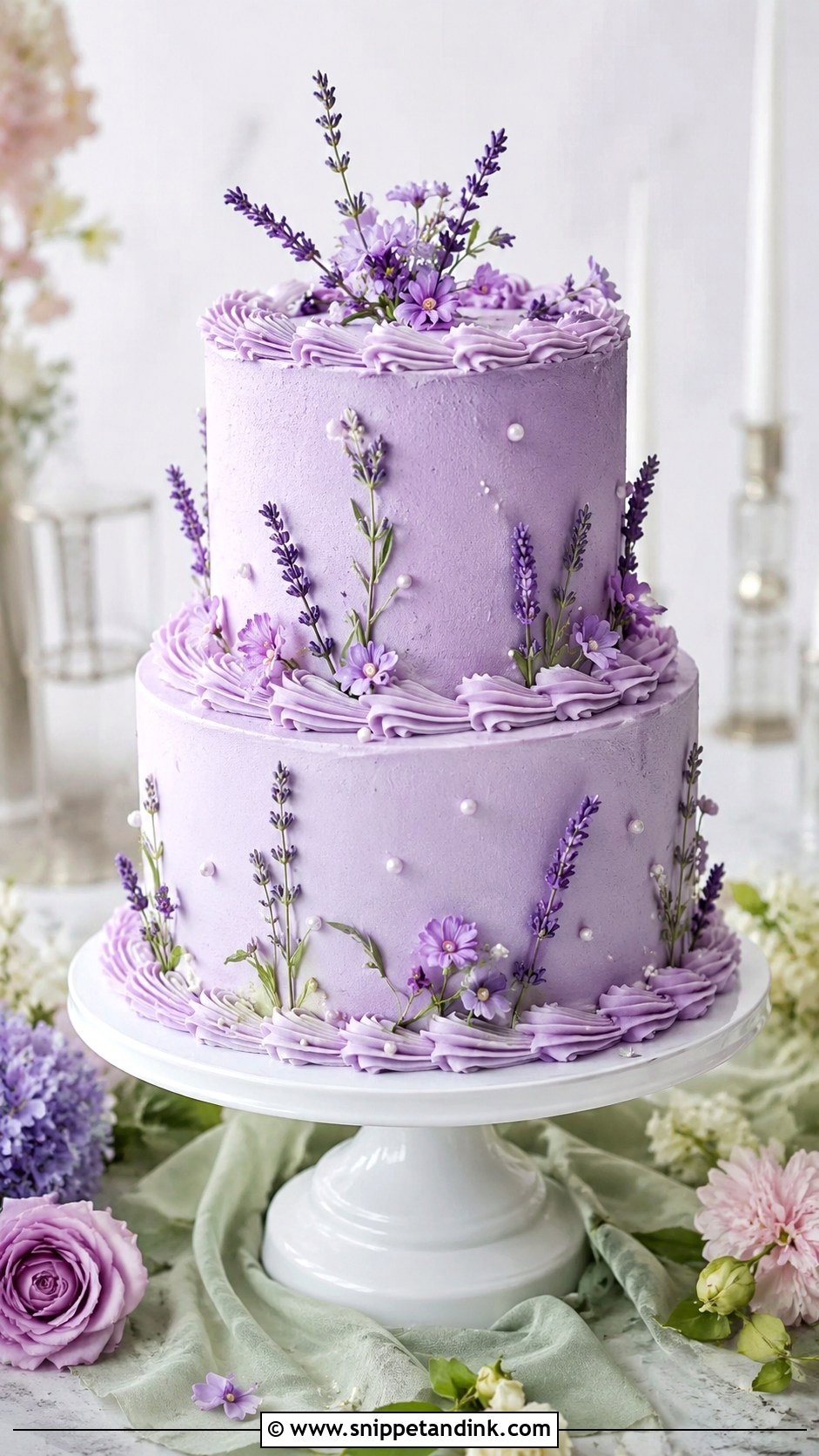
Lavender is easy to overdo. Too much culinary lavender in a sponge tastes like soap, so I steep it into the syrup or the buttercream and taste as I go; lavender honey and lemon lavender are gentler routes. Coloring lavender buttercream is another trap, as purple shifts grey or blue under some reception lighting, so I test a swatch in daylight and under warm bulbs. Smooth sides, a few small edible flowers and a light touch of sprigs suit lilac, sage or dusty blue palettes.
14. Watercolor Wedding Cake
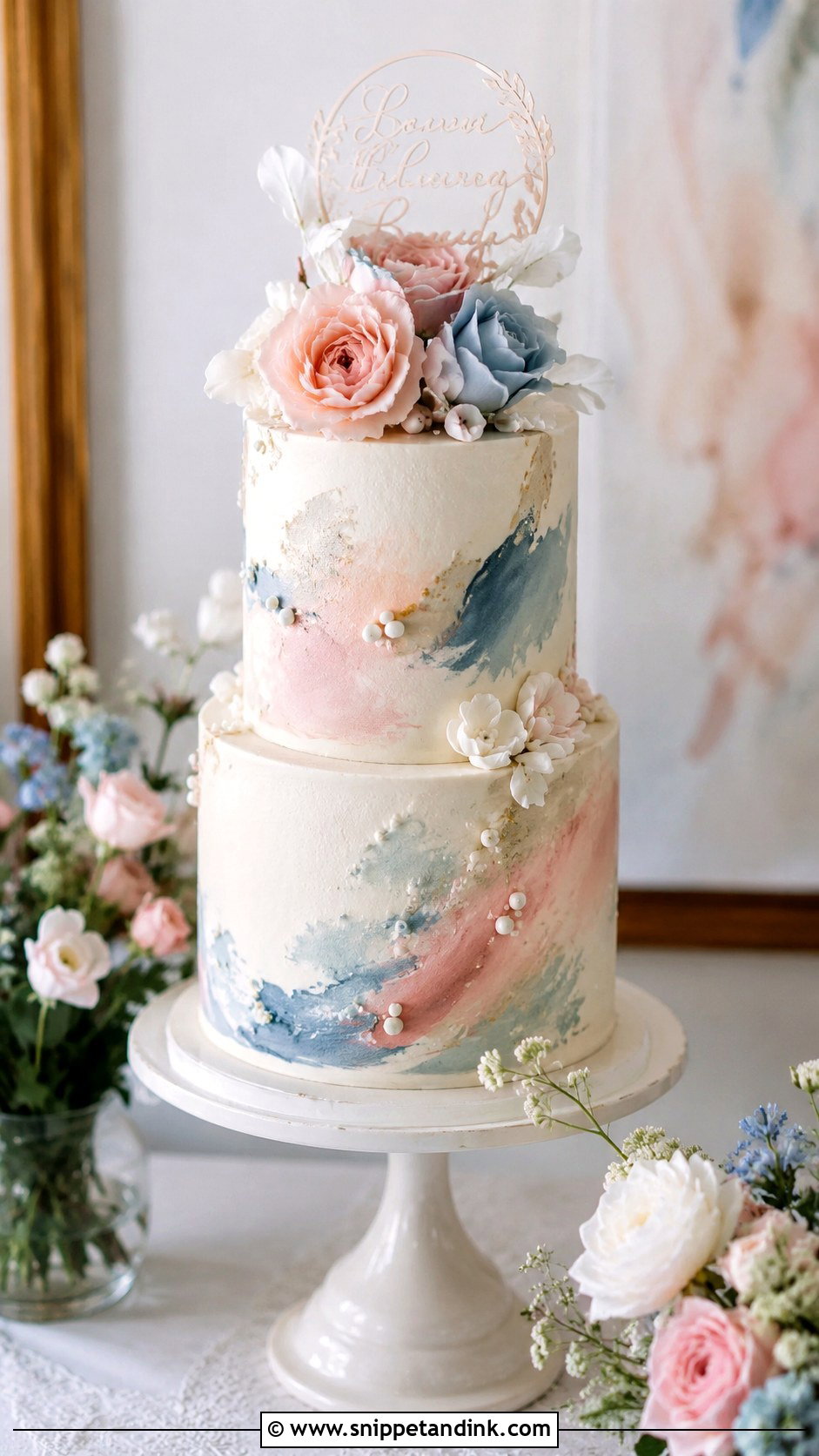
Watercolor buttercream is done by spreading two or three tints over a crumb coat and smoothing them together while cold, and I mix every shade paler than the swatch, because colors deepen as the cake sits. Pink, peach, lavender, blue and sage all blend well; strong colors turn muddy where they meet. A few sugar flowers or tiny pearls keep the focus on the color. It’s an easy cake to tie to invitations or bridesmaid dresses, on one, two or three tiers.
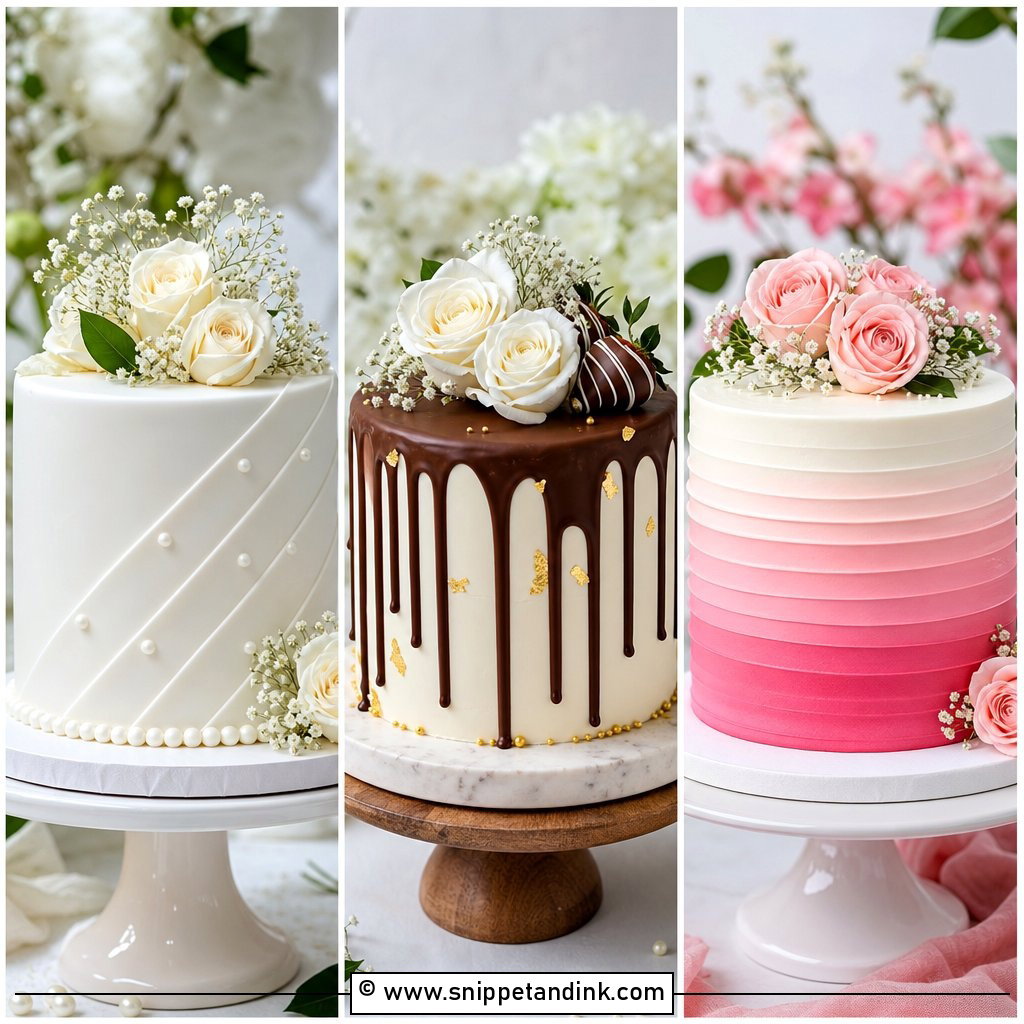

15. Ruffle Wedding Cake
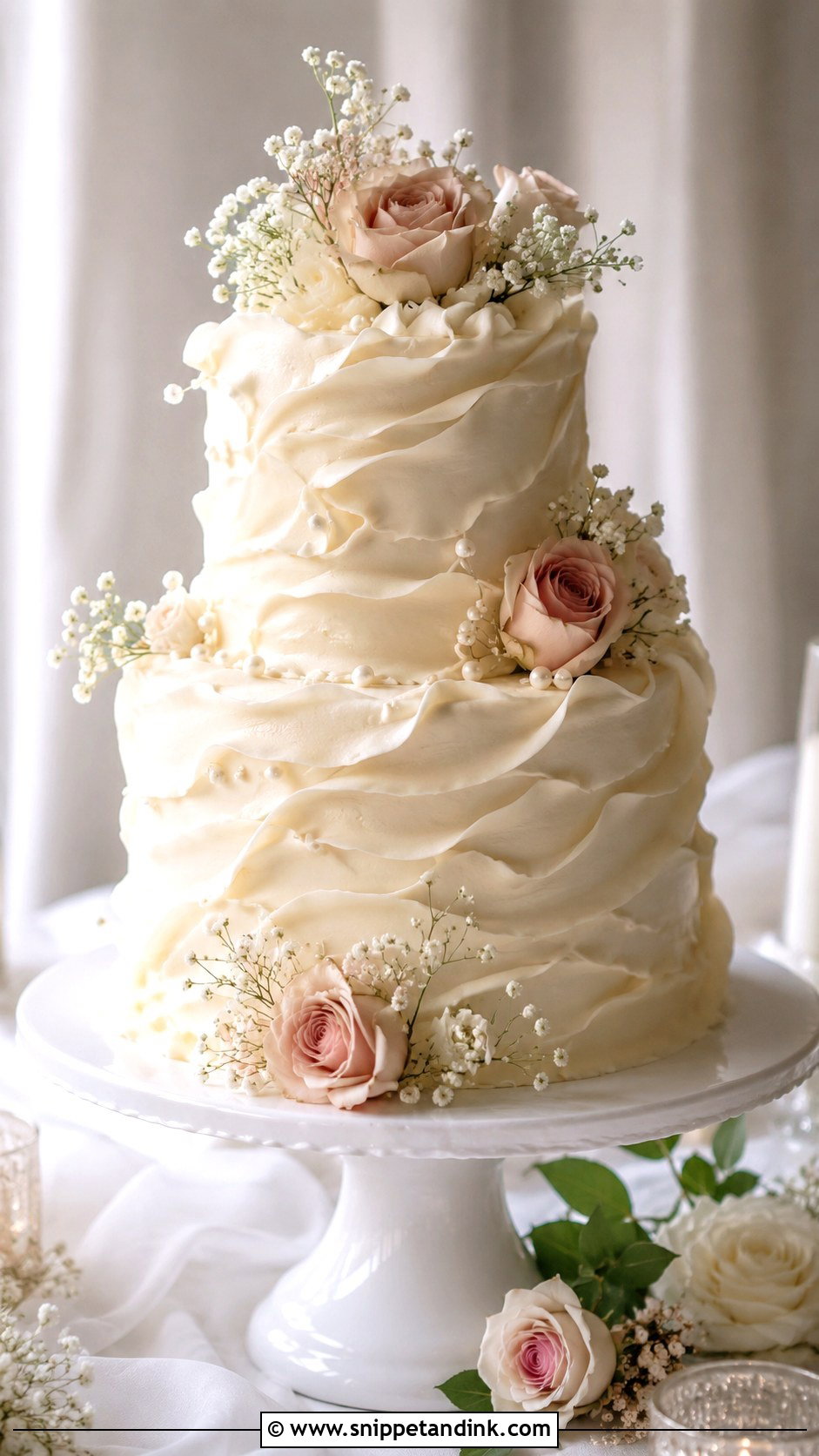
Ruffles are heavy for what they are. A whole cake covered in fondant ruffles adds real weight and hours of work, and buttercream ruffles lose their crisp edges if the room is warm. For a cute version I keep them light, on one tier or as a band, in ivory, blush or pale peach. A small floral cluster or a few pearls finishes it. It sits well with romantic gowns and soft linens, and it brings a playful touch to a formal room.
16. Naked Wedding Cake
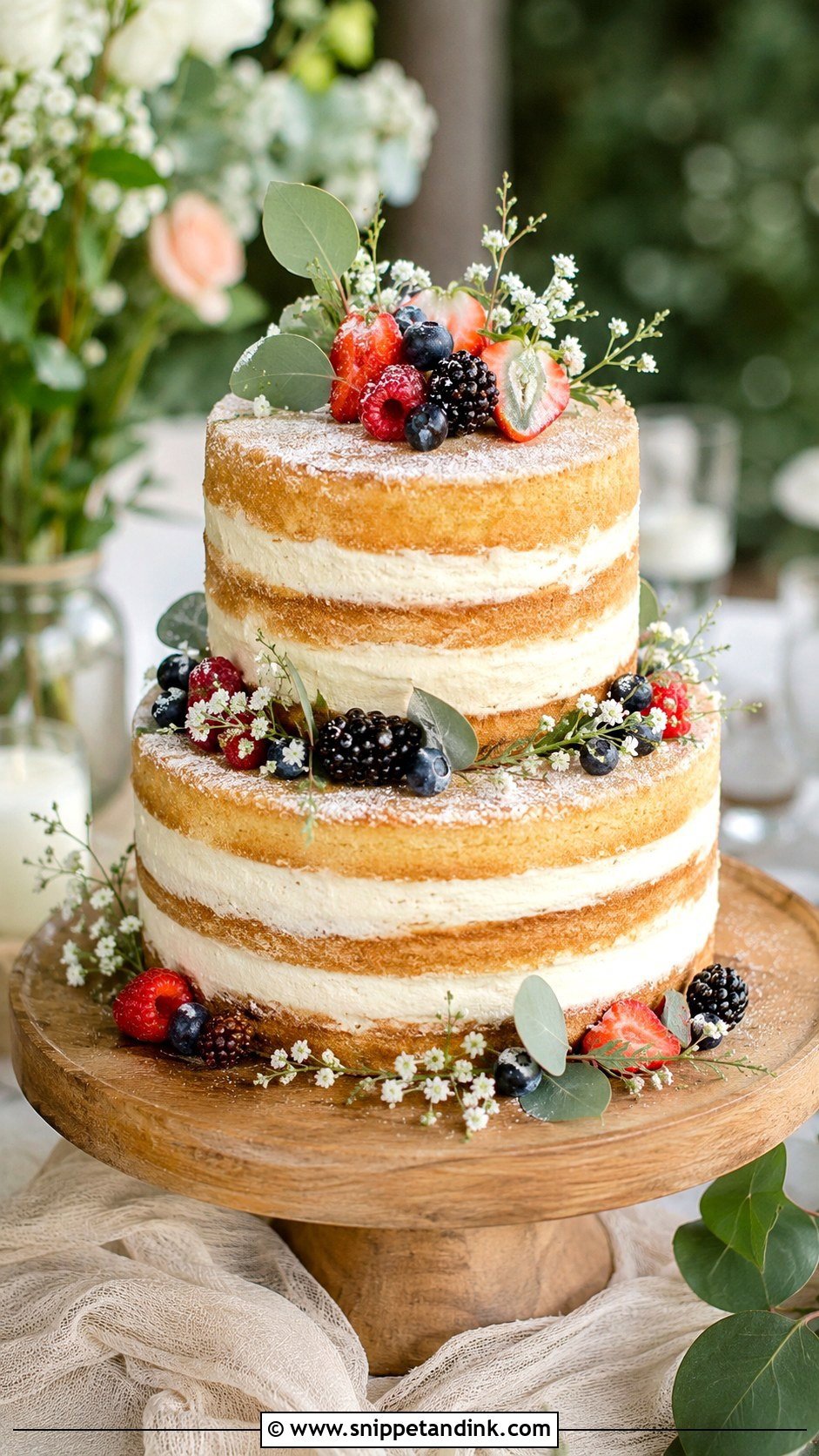
A naked wedding cake shows its layers, which means the sponge itself has to look good: even layers, straight sides and a neat filling line. The catch is drying out, since bare sponge loses moisture fast, so I bake it close to the day and keep it wrapped until delivery. Buttercream, fruit preserves or whipped filling all work between the layers. Fresh berries, small flowers and a little greenery suit barns, backyards and outdoor venues, with vanilla, carrot, lemon or berry sponge.
17. Cupcake Wedding Cake
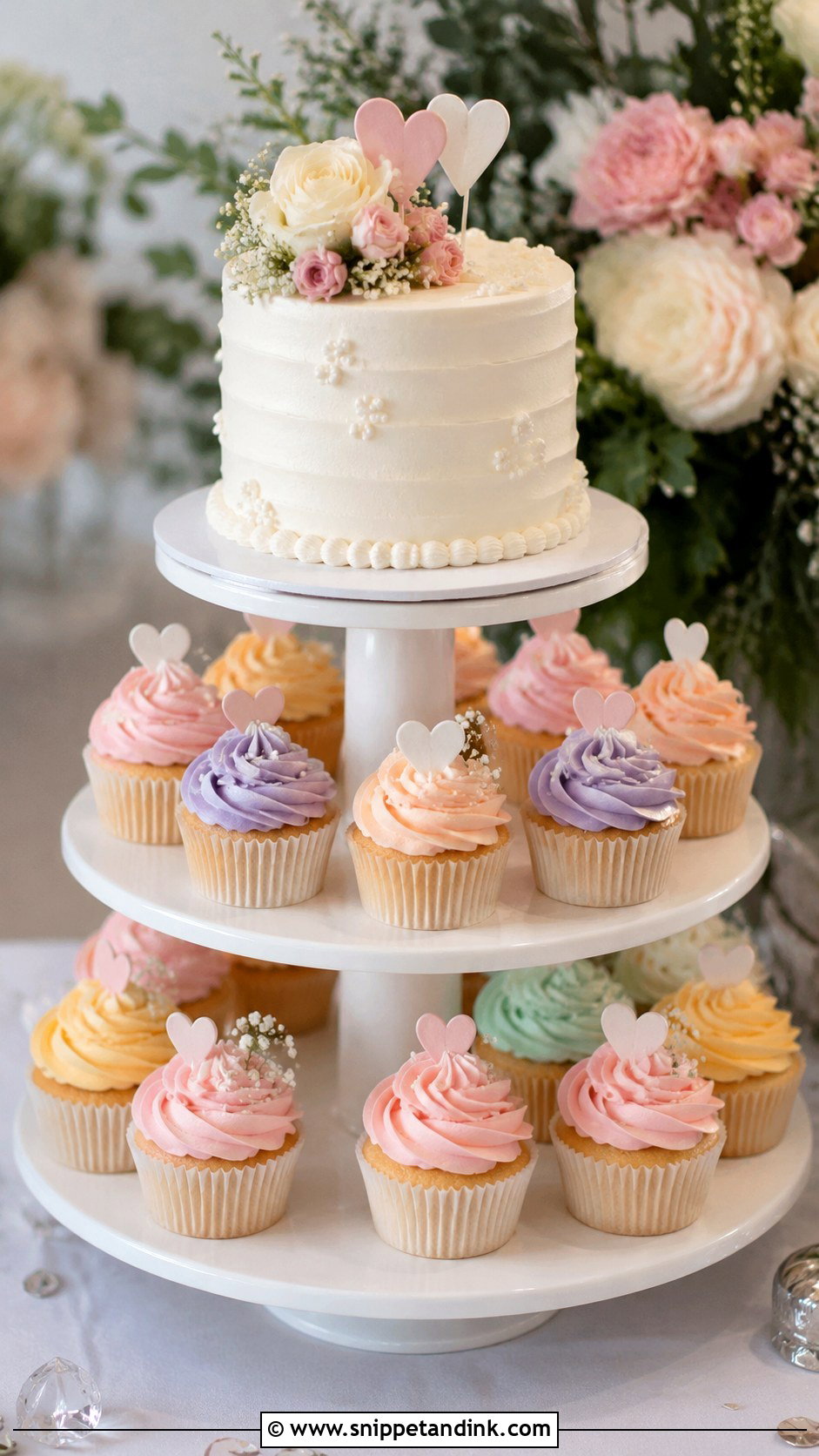
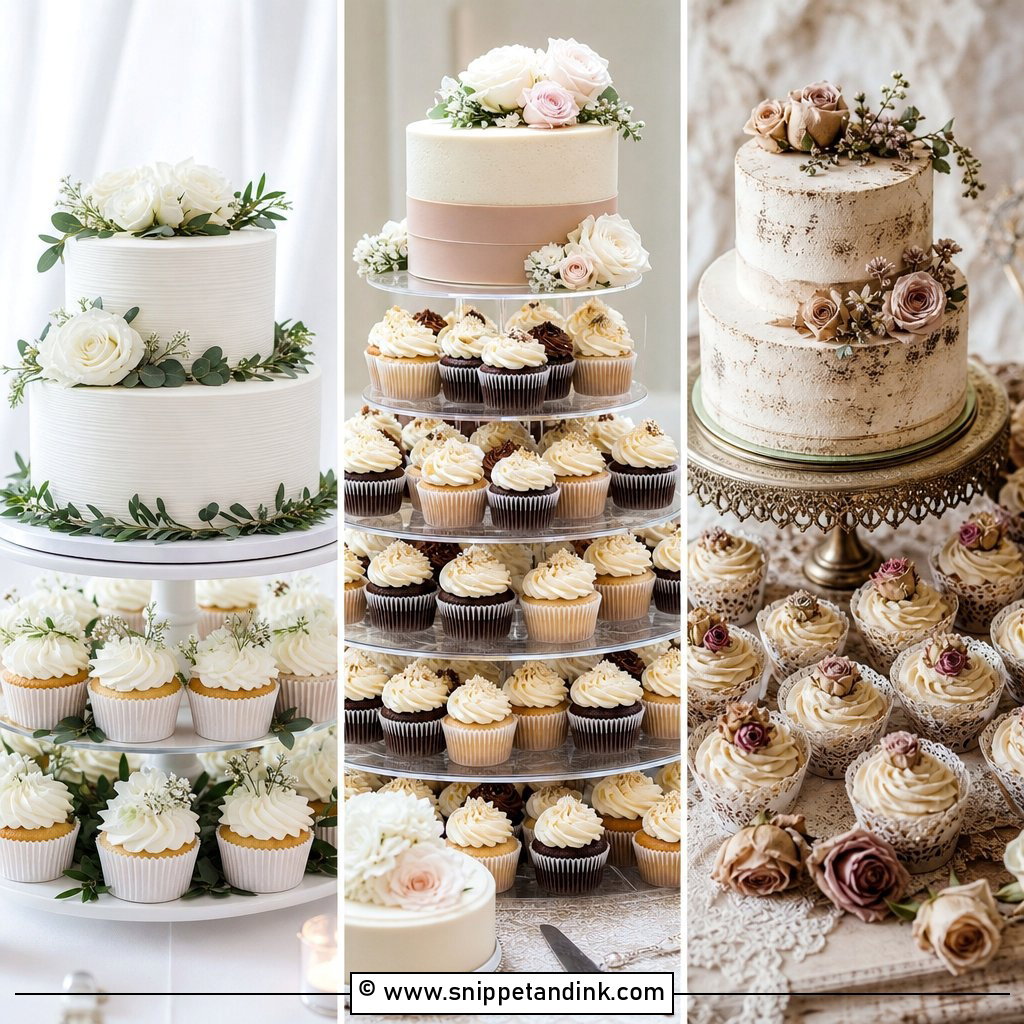
A cupcake wedding cake saves slicing and plating, which matters when the venue charges a cutting fee or has a small team. I usually put a small cutting cake on top and arrange matching cupcakes on the tiers below, tied together by frosting color, flowers or pearls. Mixing vanilla, lemon, strawberry and chocolate gives guests a choice. One warning from setup: cupcakes on an outdoor stand attract wasps quickly in summer, so I keep a few domes nearby.
18. Square Wedding Cake
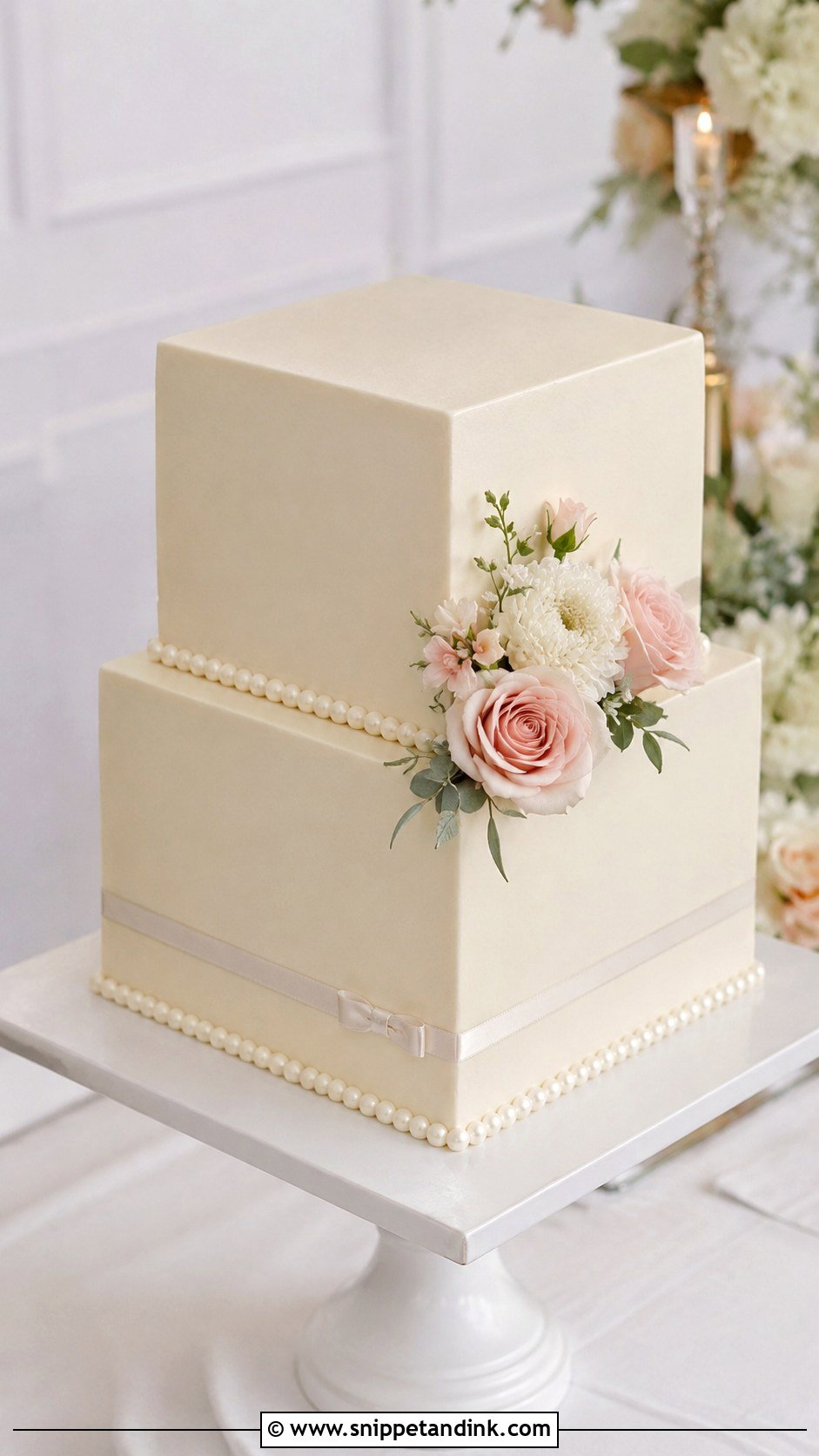
Square tiers are harder to ice than round ones; getting sharp corners in buttercream takes time, and any wobble shows on a straight edge. That precision is what makes it look modern. I soften it with ivory buttercream, a tiny pearl border and flowers gathered on one corner. Two square tiers suit rooftops and minimalist venues, and blush tones, ribbon or light piping keep it from looking severe.
19. Monogram Wedding Cake
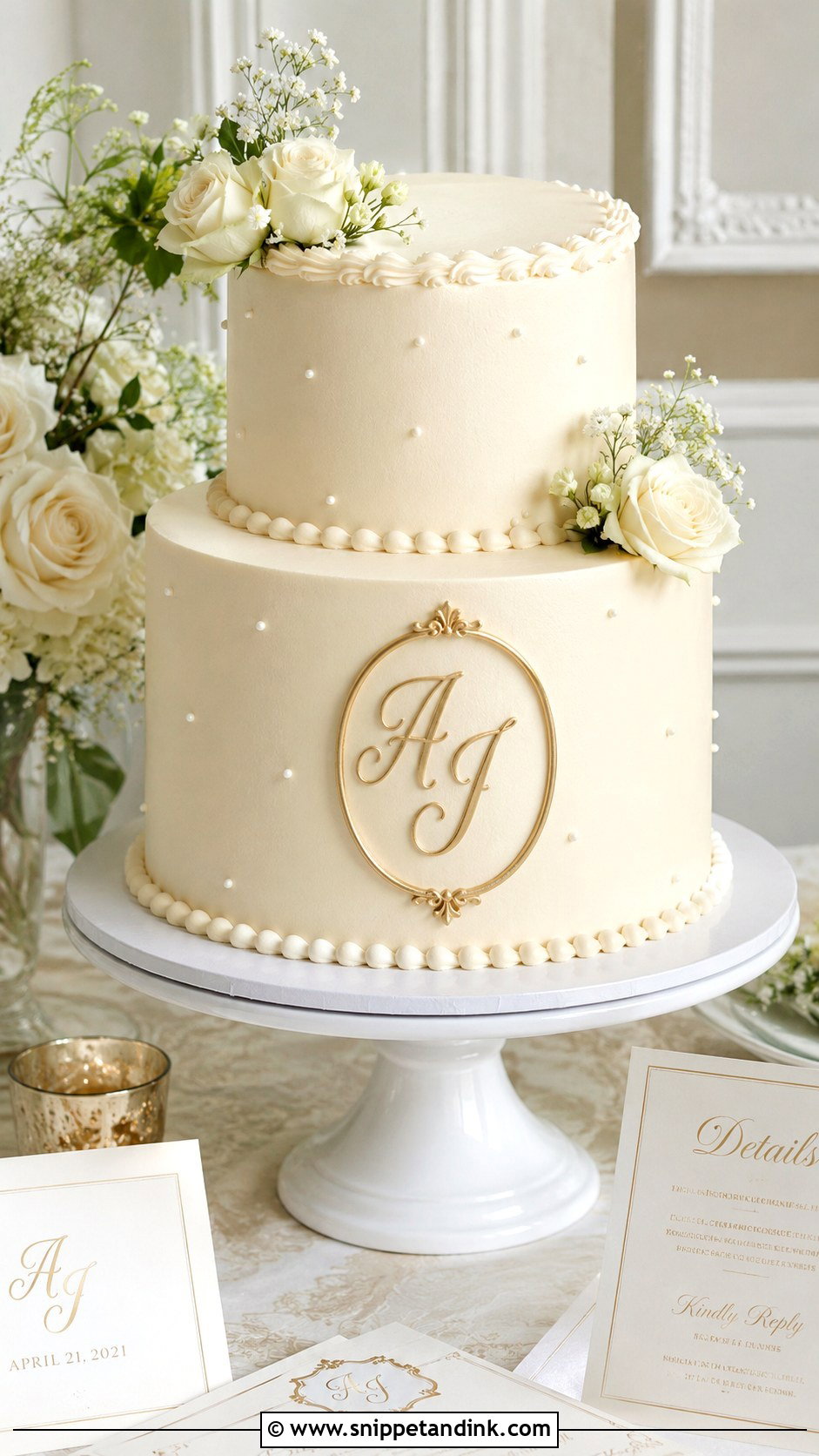
Initials are the most personal detail you can put on a cake without a topper. I pipe them in buttercream for a soft look, cut them in fondant for crisp edges, or add a small gold or acrylic monogram that the couple can keep afterward. Bring me the invitation, because matching the lettering style is what makes a monogram wedding cake look custom rather than generic. Keep the letters delicate and pair them with pearls, a few flowers or smooth buttercream.

20. Cherry Wedding Cake
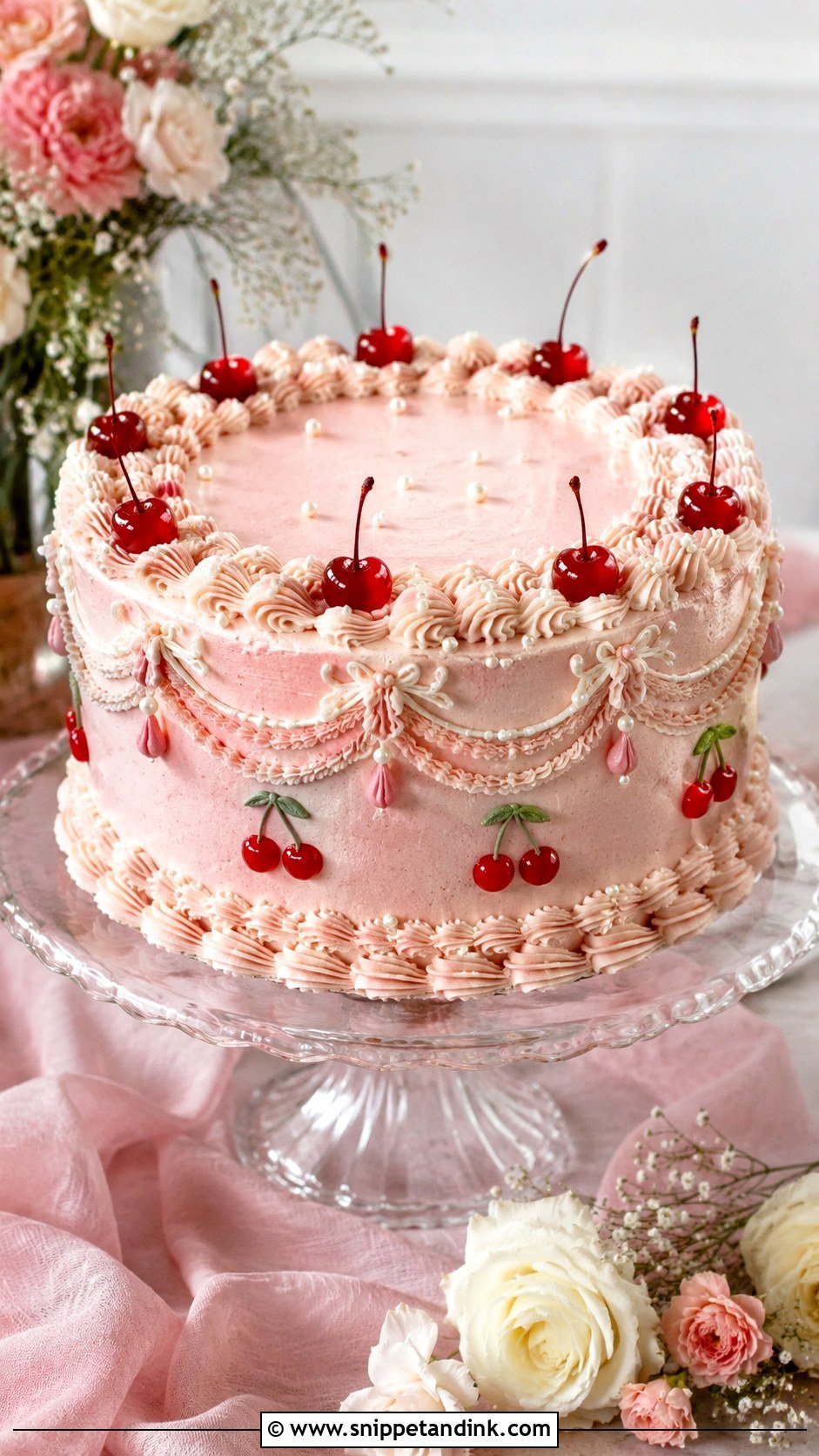
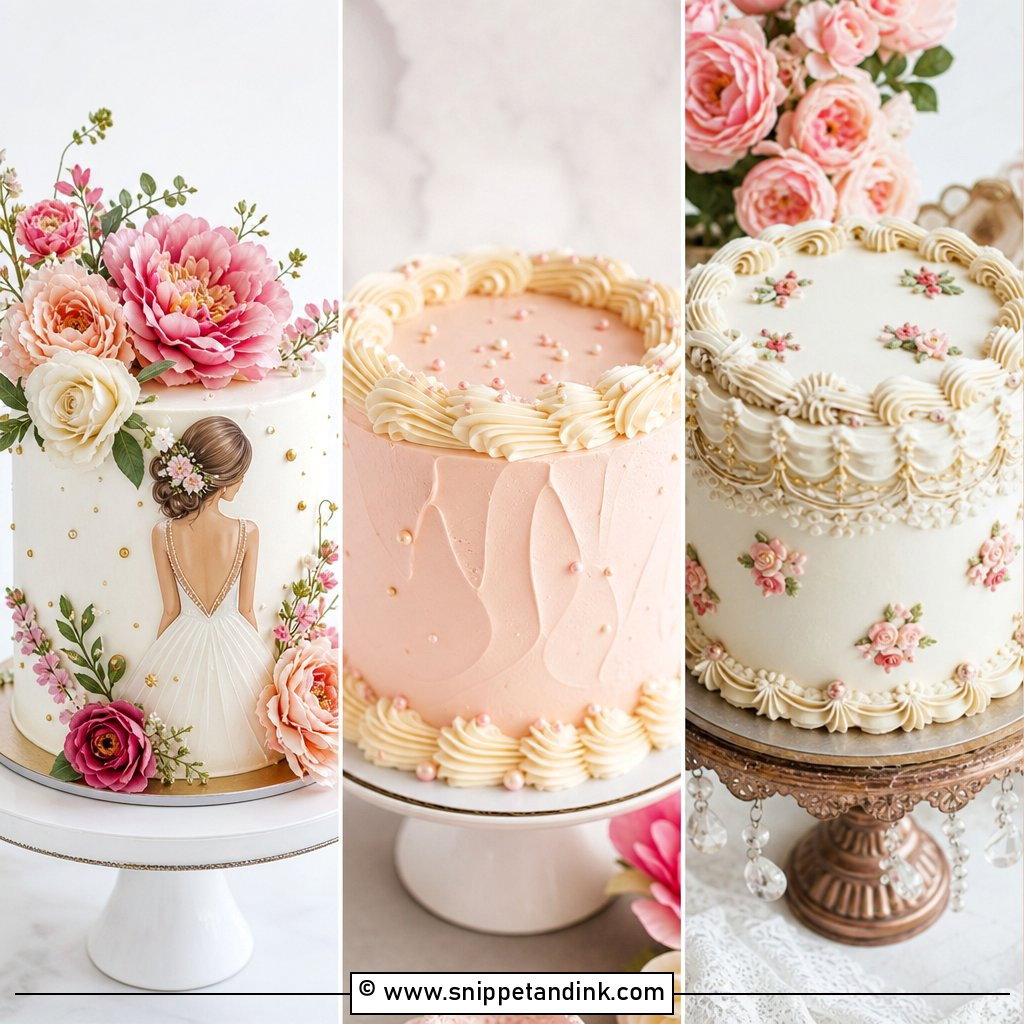
Retro cherry cakes depend on glossy fruit, so I use cherries with stems left on and dry them well; wet fruit slides on buttercream and leaves pink streaks. White or pale pink buttercream with piped borders gives the classic diner look, and a heart shape or small round tier pushes it further. Inside, vanilla cherry, almond cherry, chocolate cherry or white cake with cherry filling all hold up. It’s cheerful and a little unexpected, and photographs crisply because the red stands out against pale icing. A cherry wedding cake is the one on this list I’d pick for a couple with a sense of humor.
Which Pearls, Petals and Berries Are Safe to Eat
Cute cakes rely on tiny decorations, and tiny decorations are exactly what guests and children pop into their mouths. Before I finalize a design I go through every item on it with one question: will someone eat this?
- Metallic dragees in silver or gold are often labeled for decoration only. I use them sparingly, or switch to sugar pearls dusted with edible lustre.
- Fresh flowers that aren’t grown as edible need their stems wrapped in floral tape and set into a straw or a pick, so sap and pesticide never touch the cake. Hydrangea, lily of the valley and foxglove never go near it at all.
- Wired sugar flowers must sit in a flower pick, never pushed straight into sponge.
- Bows tied from real ribbon, toppers and acrylic monograms come off before the cake is cut. I tell the catering team which pieces those are.
Getting Little Details Through a Warm Afternoon
Small details show heat damage first. Piped dots soften, pressed petals curl, and berries start weeping before a large cake even looks tired. I ask where the cake table will stand, because a sunny window or a spot beside the band’s lights can undo a morning’s work.
Keep the cake indoors and out of direct sun, set it up as close to serving as the venue allows, and if the day is hot, choose a crusting buttercream or a fondant finish over whipped cream. A cake that comes out of a cold fridge into a humid room also sweats beads of water, so I let it come up to room temperature slowly, still boxed. Fruit and fresh flowers go on last, on site, which is the single best way to keep a cute cake looking fresh when guests finally see it.
Sweet Details That Still Suit the Room
A cute cake works when its details are few and done well. Hearts, pearls, bows, mini tiers, flowers, fruit and old-fashioned piping each bring sweetness in a different way, and a small cake can carry as much feeling as a tall one. When you meet your baker, bring the venue, the season, a photo of the dress and the bouquet, and ask how the design will cope with the room on the day. Then pick the flavor you’ll be glad to taste when you cut the first slice.
You'll Like These Ideas:




Leave a Reply