
Marble cake is two separate ideas that happen to share a name. Inside, it is vanilla and chocolate batter swirled so every slice shows its own pattern. Outside, it can be fondant or buttercream veined to look like polished stone. A wedding version needs both to work: a crumb moist enough to taste good after dinner and firm enough to carry tiers, plus a finish that suits the room. I’ve grouped the ideas below by frosting, color and filling, with notes on what each one asks of the baker, so you can use them at a tasting or in your own kitchen.
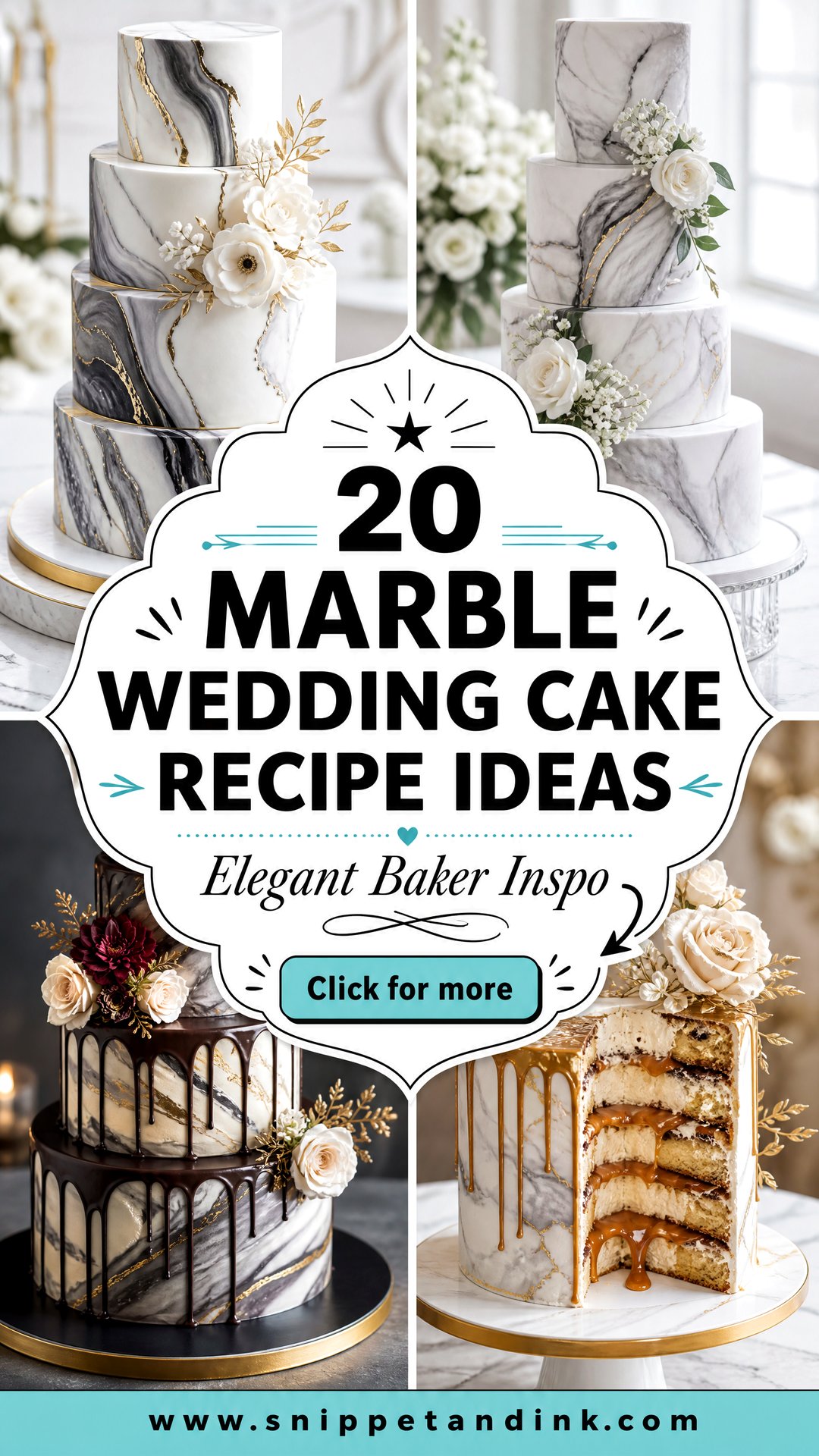
Why Does a Marble Swirl Turn Muddy in Tall Wedding Layers?
Most marble cakes fail in one of two ways. Either the swirl disappears and the crumb comes out an even tan, or the two batters bake at different speeds and the chocolate streaks sink or tunnel. Both come down to how the batter is handled.
- Match the thickness. Cocoa thickens batter, so I loosen the chocolate portion with a splash of milk or hot coffee until both batters fall from a spoon the same way.
- Layer, then swirl. Spoon the batters in alternating dollops, then run a knife through in a few slow figure eights. Three or four passes is usually enough.
- Don’t tap too hard. A gentle tap releases air bubbles; a hard bang flattens the pattern.
- Use the right pans. Deep wedding layers can dome and crack. Baking strips around the pan, or a flower nail in the center of large pans, helps them bake evenly.
If you are baking ahead, marble butter cake layers freeze well. I wrap them tightly while barely warm, freeze them, and fill and frost them partly frozen, which also makes them much easier to level and stack.
1. Classic Marble Wedding Cake
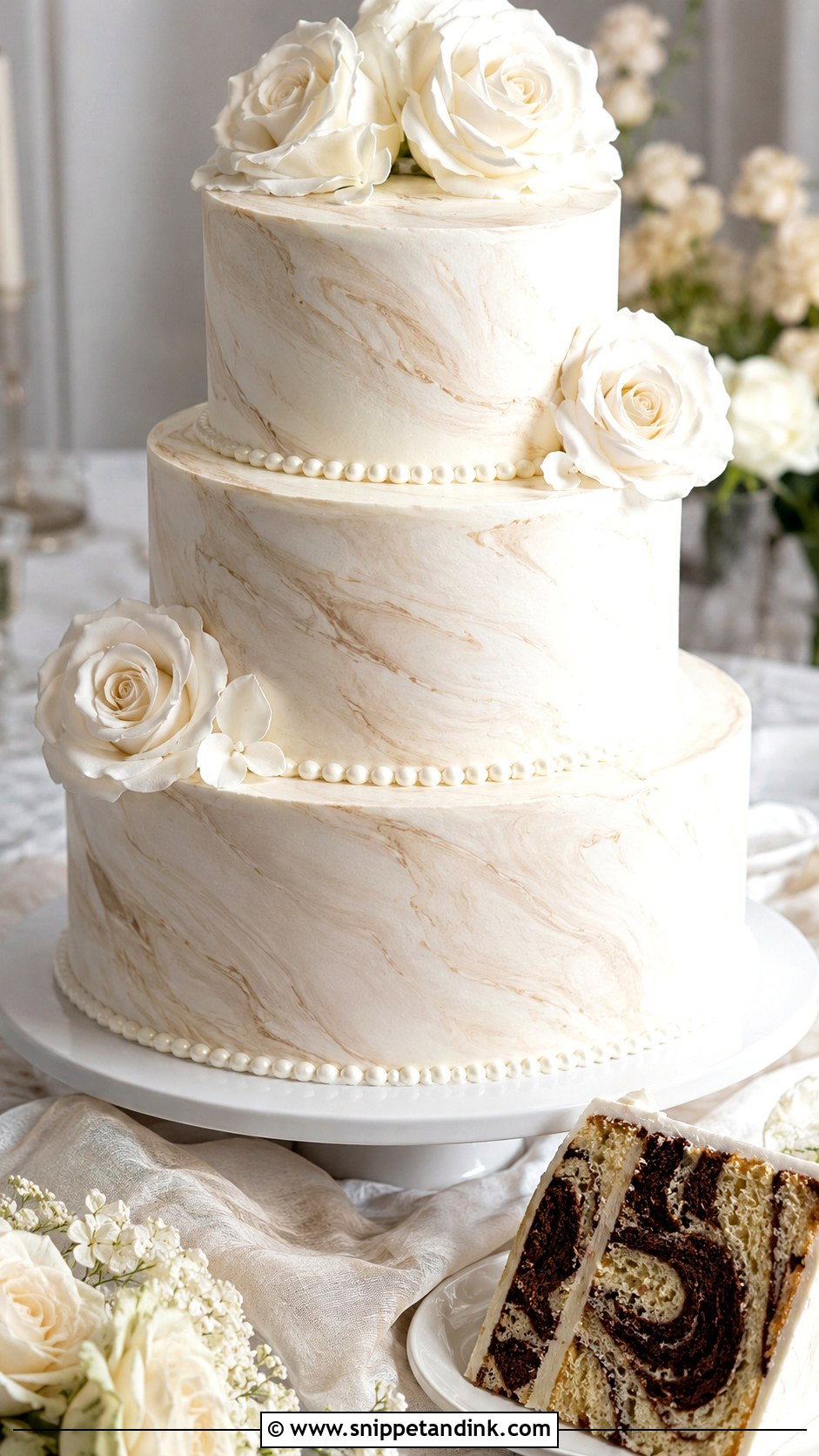
The classic version starts with a vanilla butter cake batter and a chocolate batter folded together only a few times. Over-swirl it and the pattern disappears into a muddy brown crumb. For tiers I bake the layers slightly taller than a birthday cake and use a butter cake rather than an oil sponge, because butter firms up in the fridge and stacks more cleanly. A smooth vanilla Swiss meringue buttercream suits it: silky, not too sweet, and it lets the swirl taste of something. Ivory frosting, soft piping and a few white flowers are all it needs outside.
2. Chocolate Vanilla Marble Wedding Cake
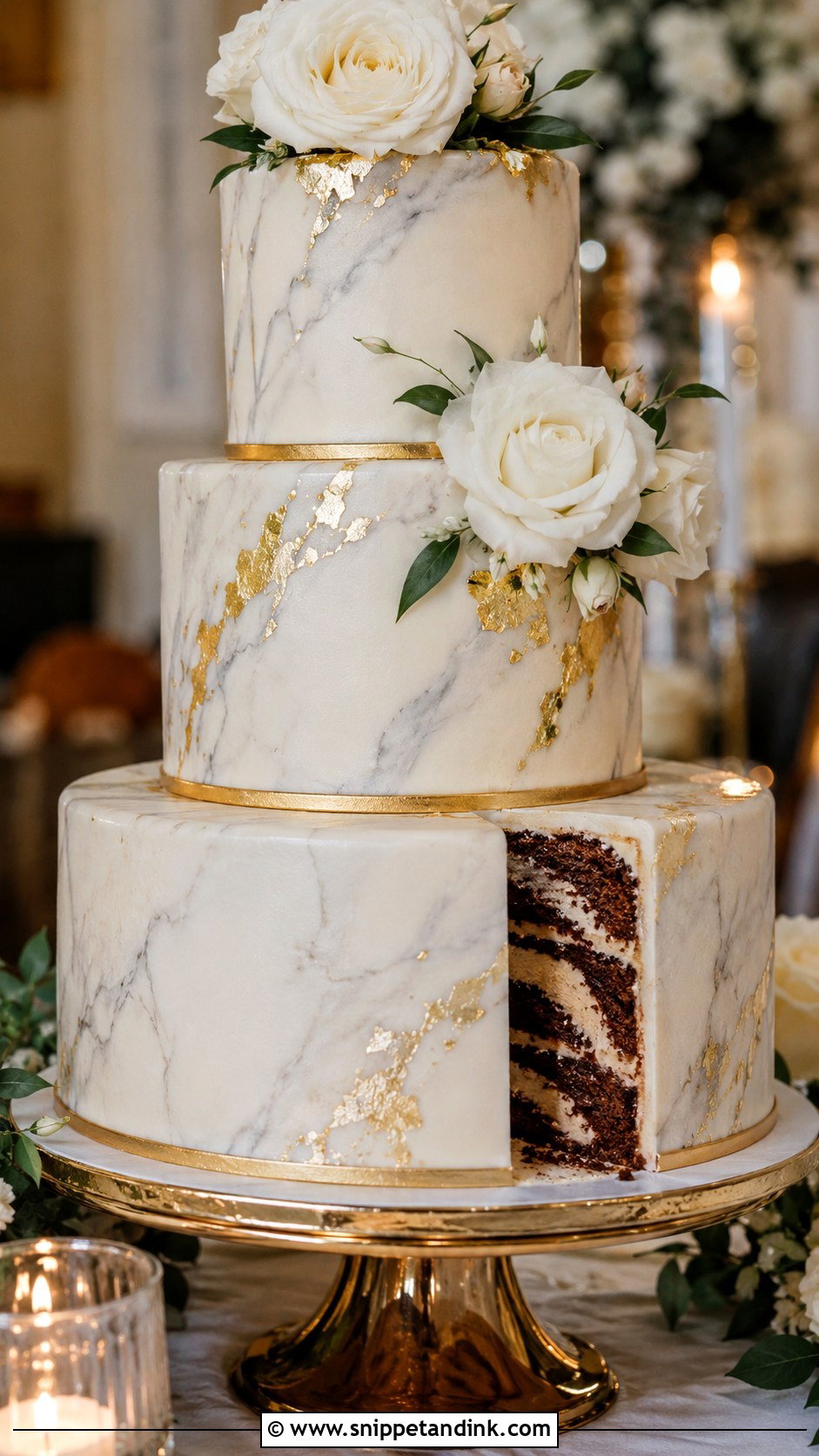
If your guest list mixes chocolate lovers and vanilla loyalists, this is the diplomatic choice. The quality of the cocoa makes a real difference here; a good Dutch-processed cocoa gives a darker swirl and a rounder flavor than natural cocoa. Real vanilla in the pale batter keeps it from tasting flat next to the chocolate. Fill with vanilla buttercream or a thin chocolate ganache. Outside, a smooth white finish with light gray veining, a touch of gold leaf and small sugar flowers makes it formal without crowding.
3. Marble Wedding Cake With Buttercream
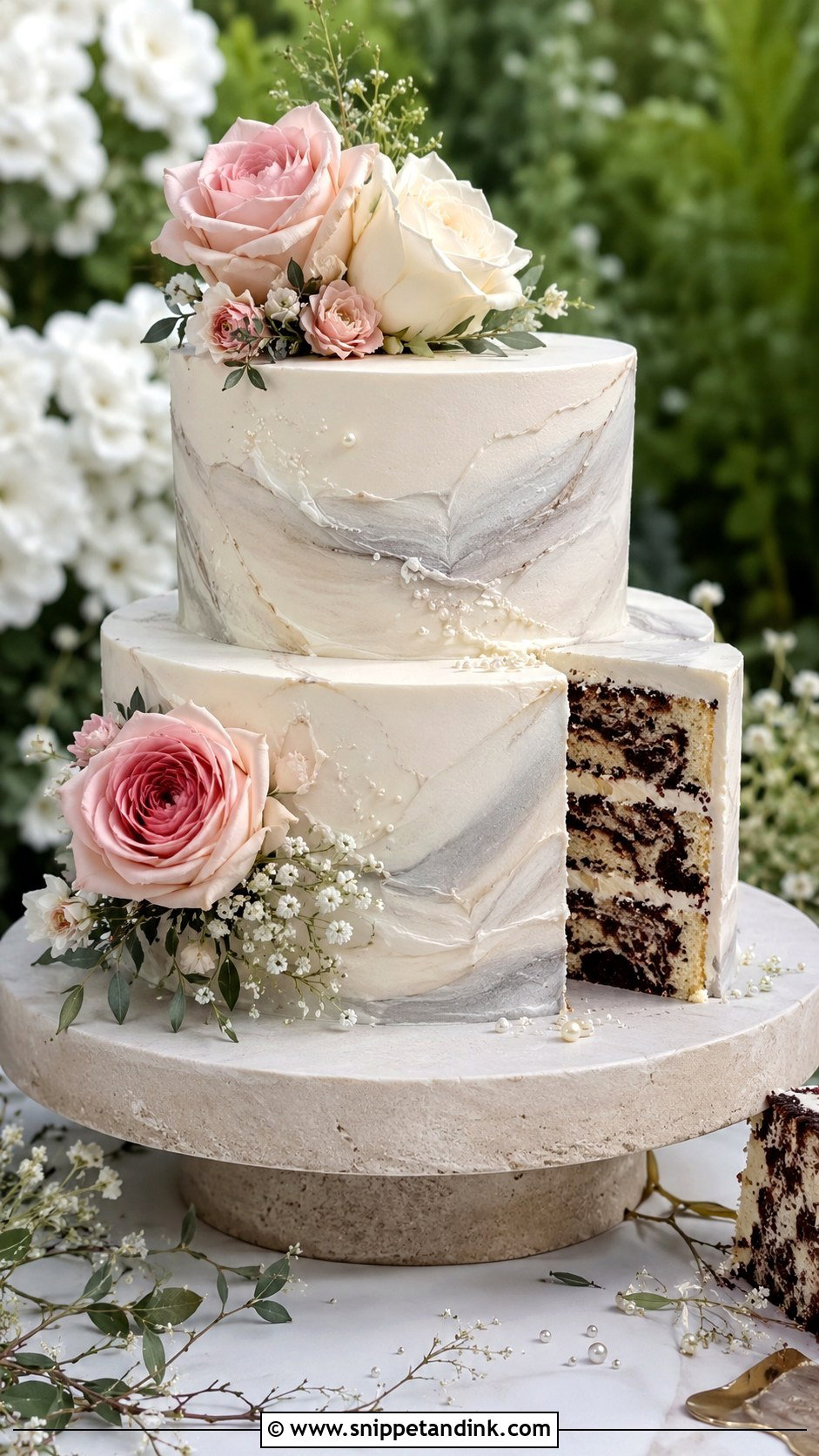
Buttercream marbling is softer and more painterly than fondant. I streak small amounts of gray, ivory and pale beige buttercream onto the final coat, then take one or two passes with a scraper. Every extra pass blends the colors further, so stop sooner than you think. Both American and Swiss meringue buttercream work; Swiss gives a smoother surface, American crusts and holds better in a warm room. Chill each tier hard before stacking. Fresh flowers, pearls or soft ruffles finish it for a garden or ballroom wedding.
4. Marble Wedding Cake With Fondant
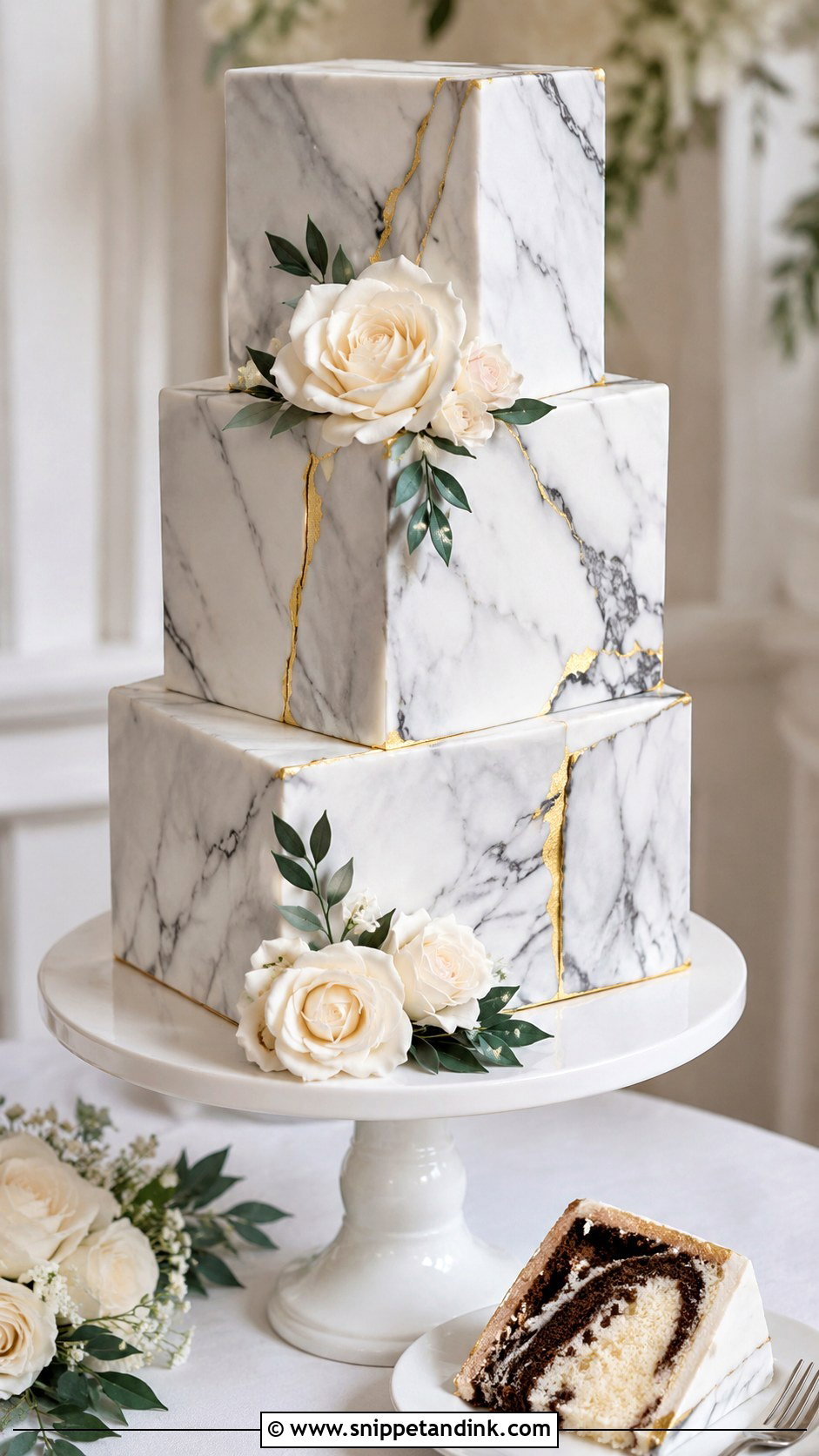
For a convincing stone look, fondant is still the strongest option. I crumb coat the marble layers in buttercream, then twist ivory, gray and taupe fondant into a loose rope, fold it once or twice and roll it out. That gives natural-looking veins. Knead too long and the pattern blurs into a single beige. Sharp edges, a gold trim at the base of each tier and a few sugar roses show it off. In a warm venue fondant also acts as a protective shell over the buttercream, which is a practical bonus.
5. White Marble Wedding Cake
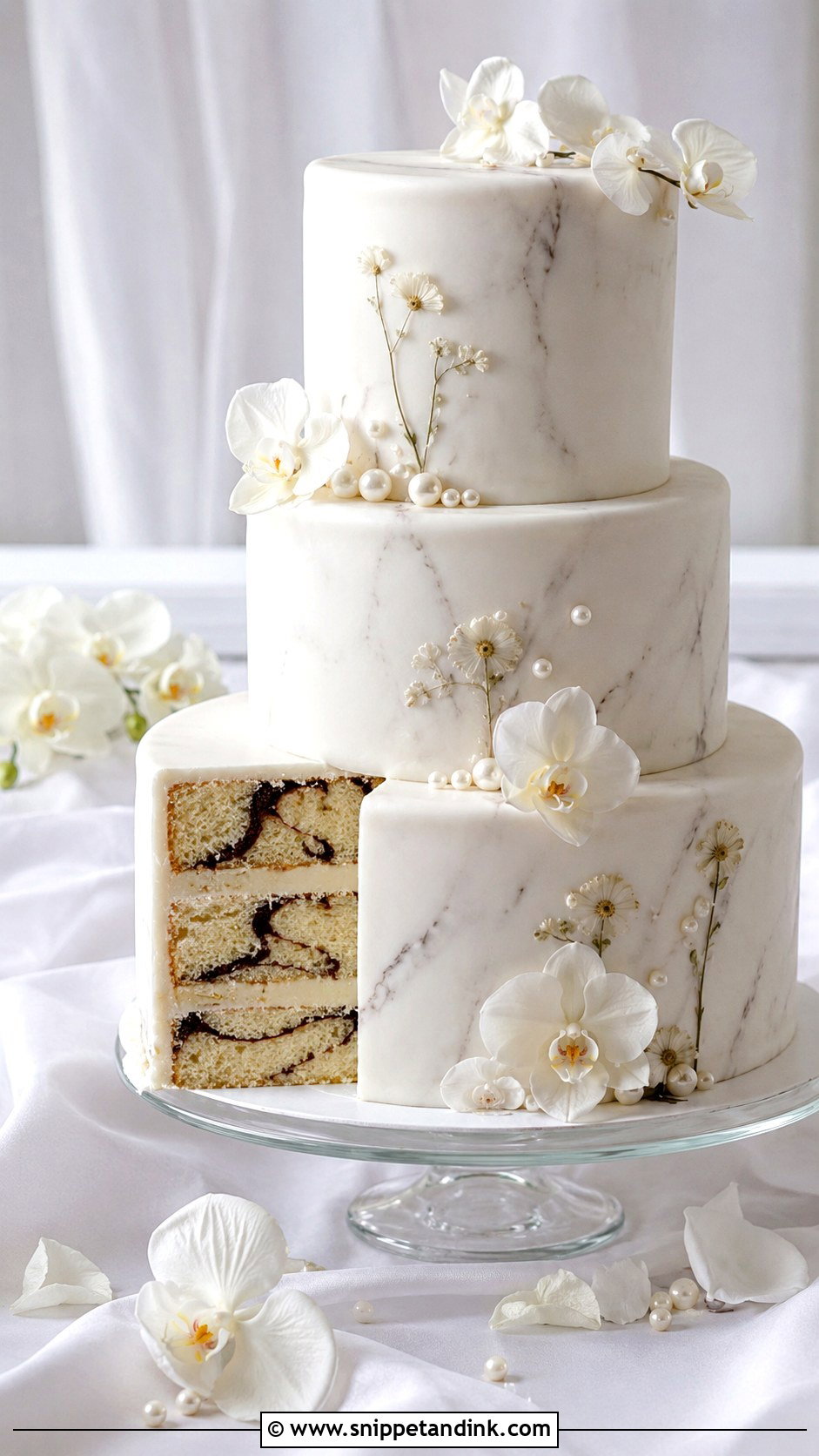
A white marble cake keeps everything pale: white fondant or buttercream with only faint gray veins. The trick is restraint. A few fine, broken lines look like real Carrara stone; thick dark veins look like cracks. Inside you can lighten the swirl with melted white chocolate and only a little cocoa, so the slice stays soft and pale too. White orchids, sugar pearls or pressed edible flowers fit the clean exterior. Under bright reception lighting the pale surface reflects light, so it reads well in photos from across the room.
6. Gray Marble Wedding Cake
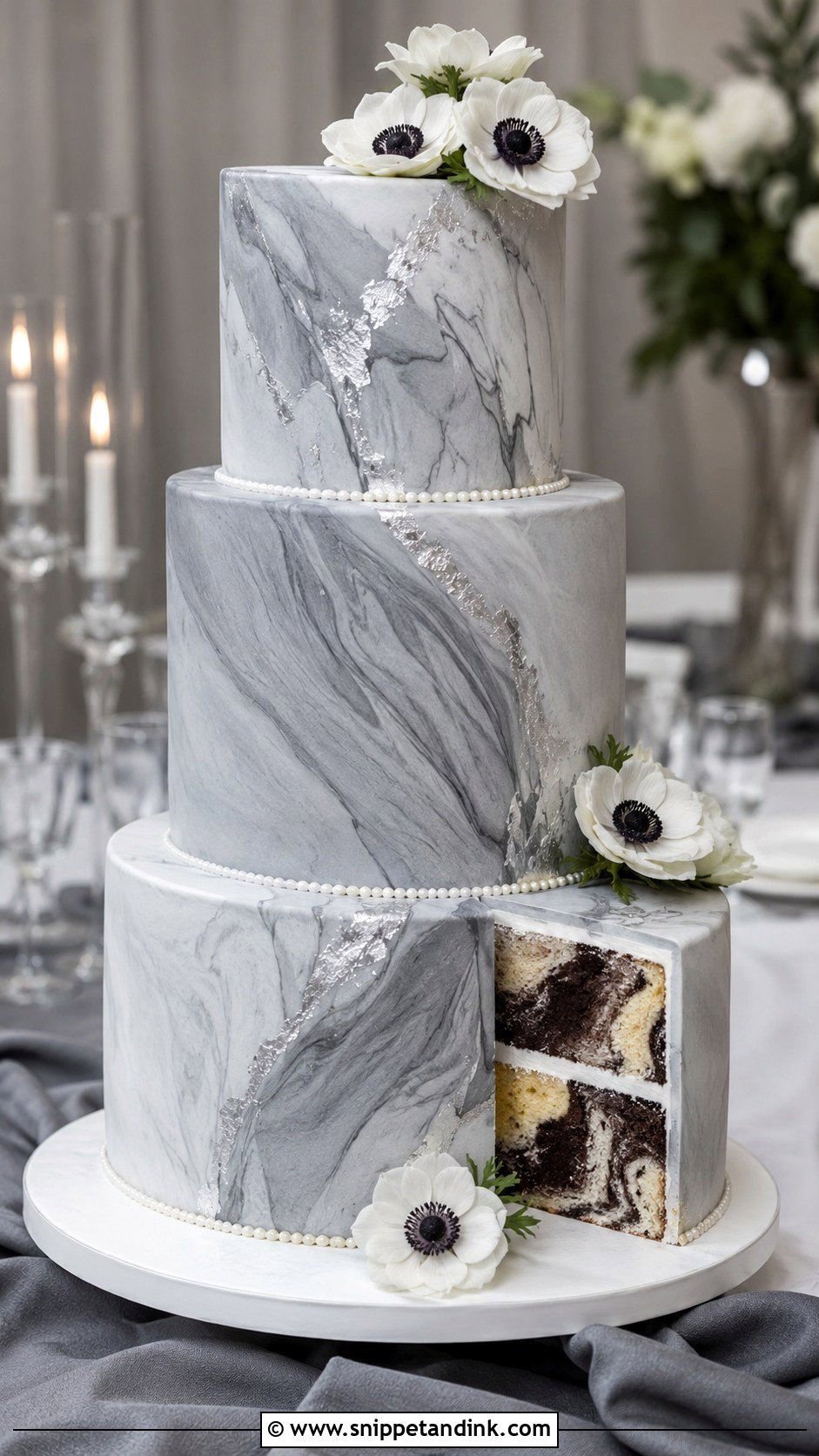
Gray marble feels architectural. I usually start from a light gray base with darker gray veining and keep metallic touches small. Gray food coloring can lean green or purple depending on the brand, so I always mix a test piece and look at it in daylight before covering a whole tier. Fill the cake with vanilla bean buttercream, chocolate mousse or whipped ganache. Ivory flowers soften it. City venues, museums and minimal receptions suit it; a fully dark gray cake rarely looks right outside a dramatic, moody wedding.
7. Gold Marble Wedding Cake
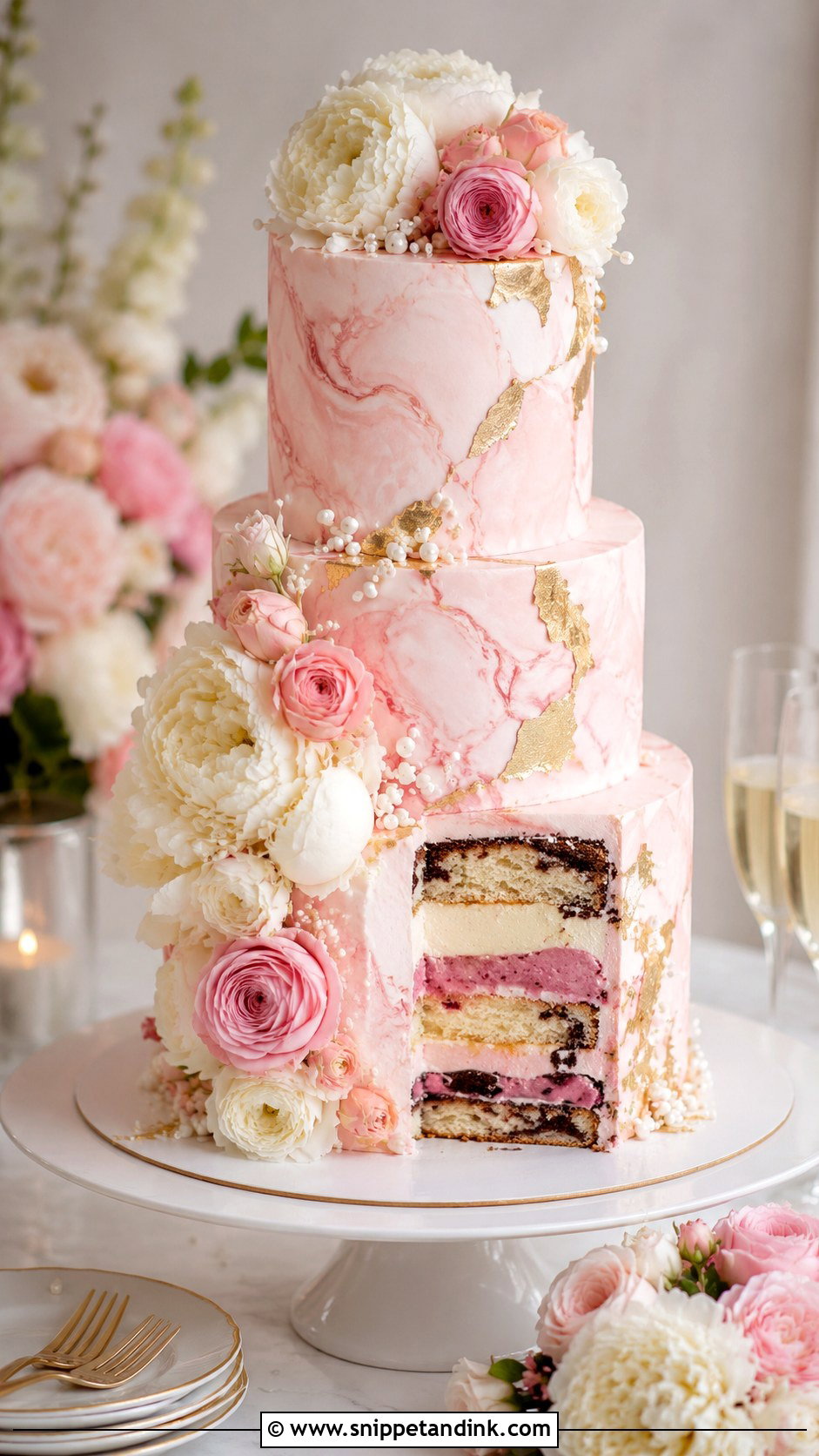
Gold works best placed with intent: a band of edible gold leaf along one side, or a fine line around each tier edge, rather than flakes scattered everywhere. I apply leaf with a dry soft brush onto fondant that is very slightly tacky, never wet, so it sticks without tearing. Underneath, a tender chocolate-vanilla marble cake with vanilla or salted caramel buttercream gives the flavor some depth. White roses, blush flowers or a simple gold ribbon at the base are enough. Formal evening receptions suit it best.
8. Black And White Marble Wedding Cake
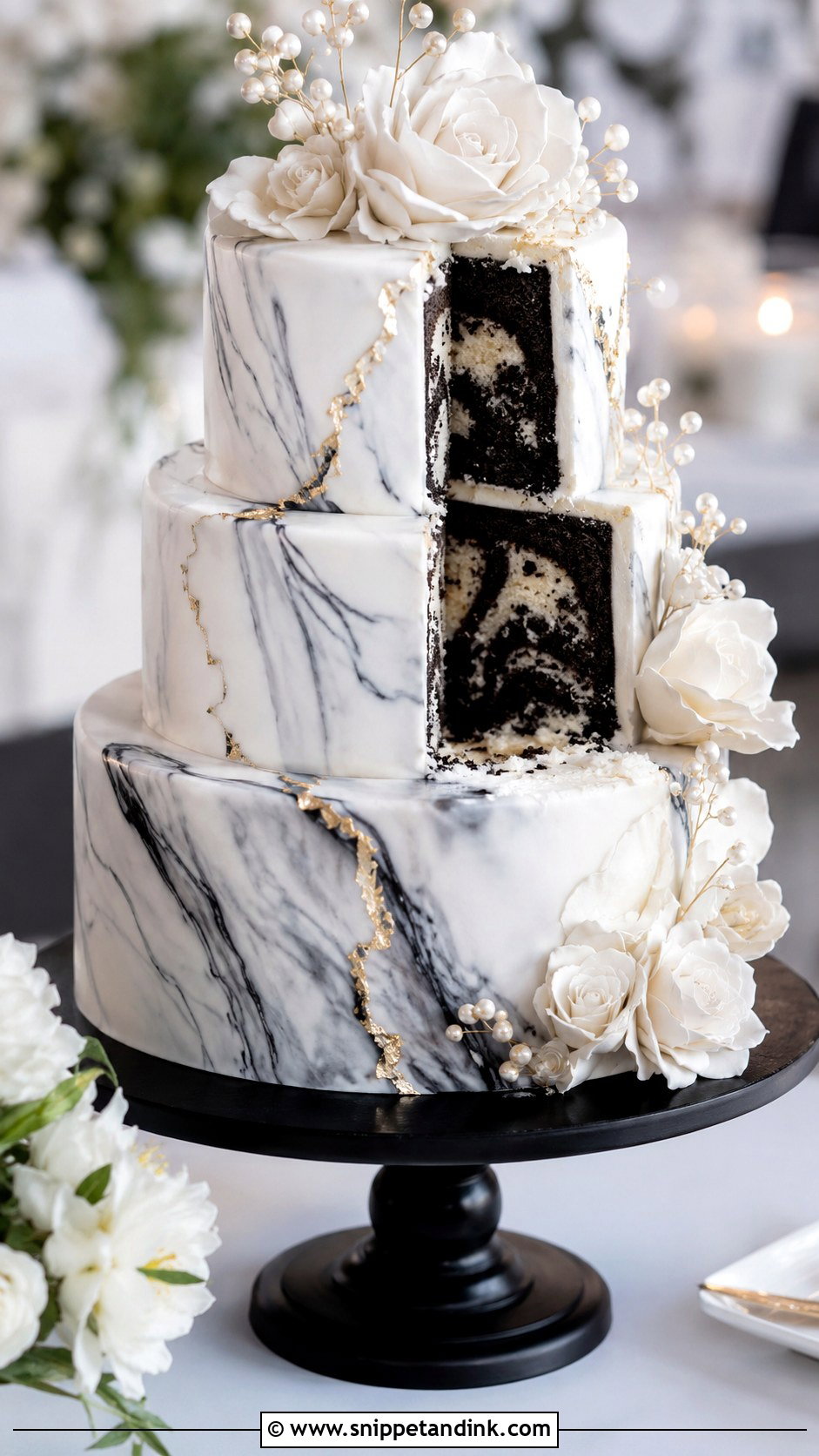
High contrast is unforgiving. A black and white exterior shows every smudge, so I keep black veining to thin lines and handle the fondant with clean, dry hands. Another way in is a solid black bottom tier with a white marble top tier, which feels balanced and less busy. Fully black fondant can also stain lips and teeth, so I’d use it as an accent, not a coating. Inside, a deep chocolate and vanilla marble gives the slices the same bold pattern. White sugar flowers, gold lines or pearls soften the effect.
9. Blue Marble Wedding Cake
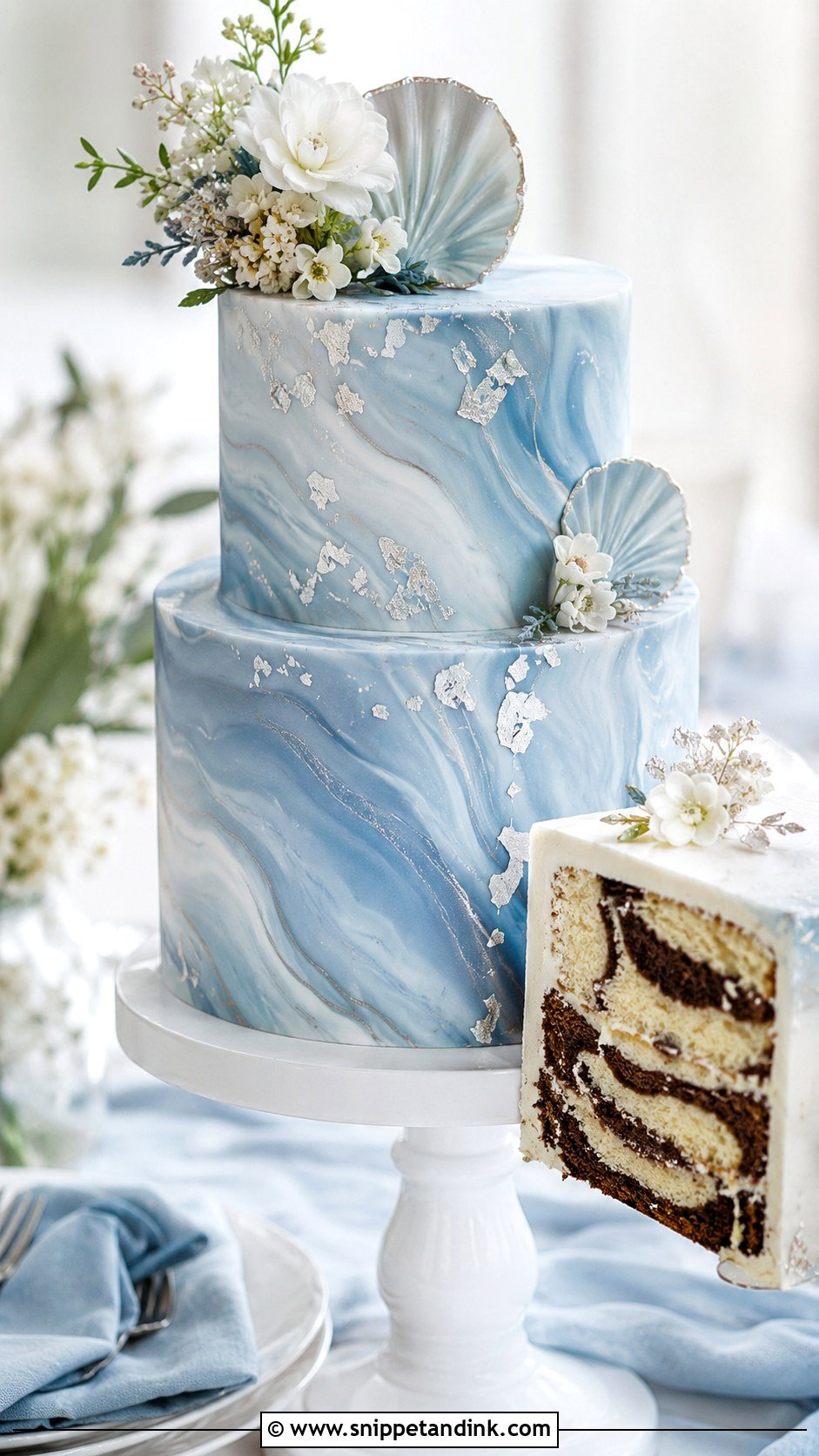
Blue marbling suits coastal, spring and outdoor weddings when it stays soft. Pale blue and dusty blue with a few gray veins look like natural stone; bright blue looks like a pool. Keep the cake itself classic with vanilla and chocolate marble layers and a vanilla or almond buttercream filling. Blue fondant can fade if the cake sits in strong sunlight, so I’d keep it out of a sunny window at the venue. White flowers, silver leaf or small shell-shaped sugar pieces finish it.
10. Pink Marble Wedding Cake
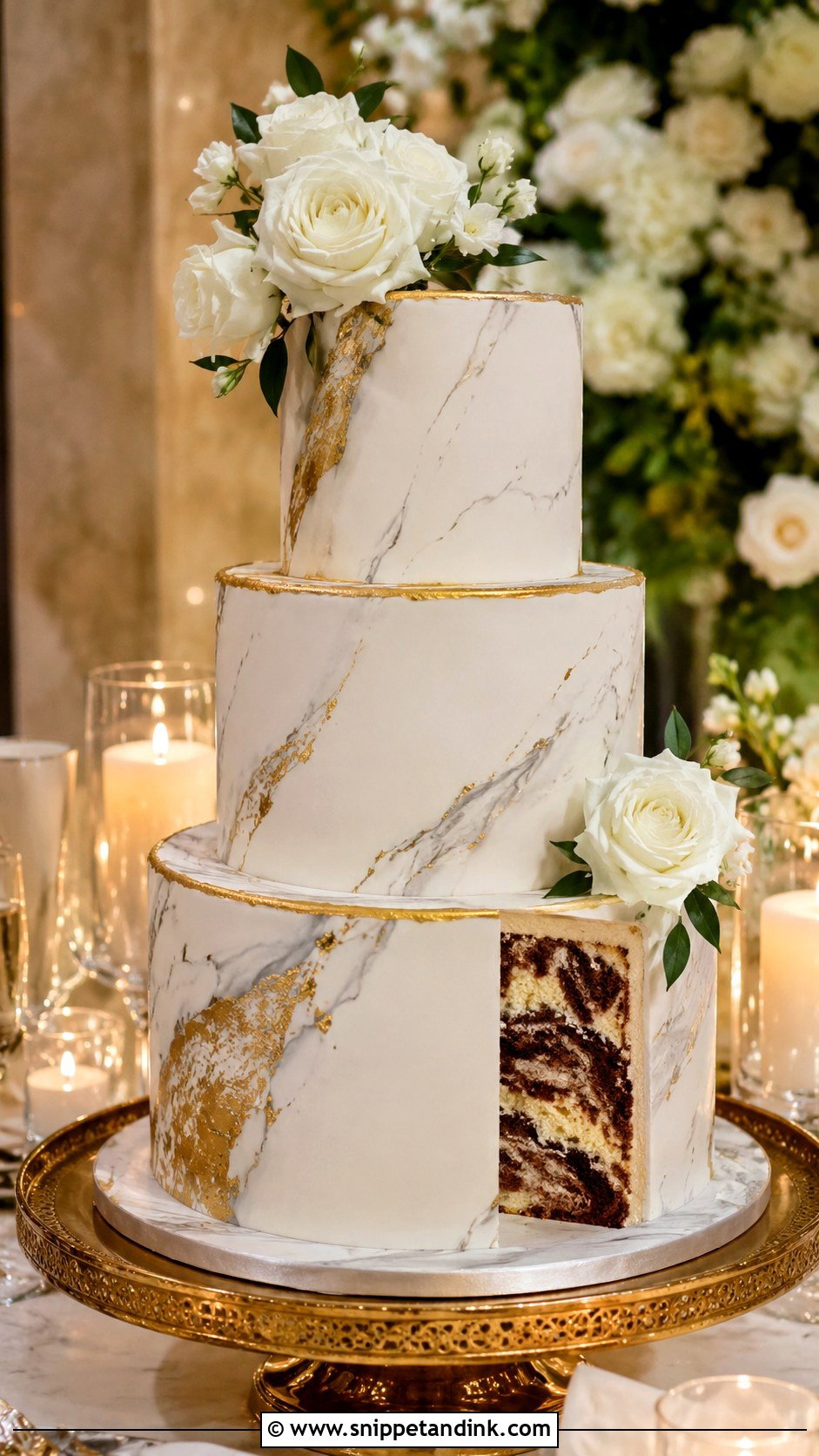
Pink marble needs to stay muted to look grown up. A pink marble wedding cake can carry vanilla and chocolate swirled layers inside with a blush buttercream or fondant marble outside. I like adding a raspberry filling, because the acidity cuts through the chocolate and keeps the slice from feeling heavy. Blush roses, ivory peonies, tiny pearls or a little gold leaf fit the color. Spring garden receptions and showers suit it.
11. Green Marble Wedding Cake
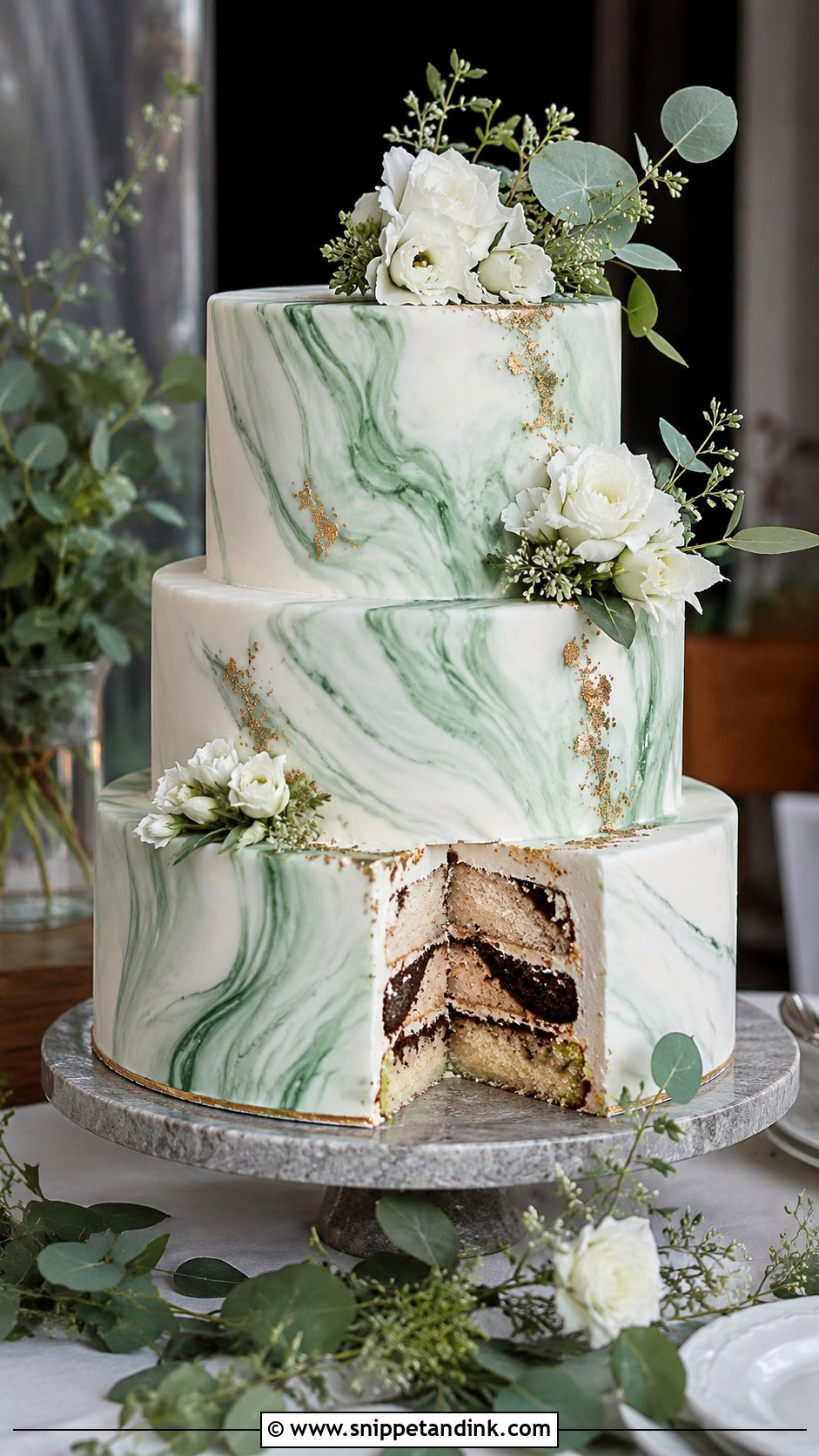
Green veining is unexpected, and the shade changes the whole mood. Sage reads soft and natural, eucalyptus a little cooler, emerald formal and dramatic. A green marble wedding cake pairs well with a pistachio or almond buttercream, which echoes the color in the slice. Fresh greenery, white flowers and small gold accents keep it balanced. If greenery touches the cake, make sure it is a food-safe variety and wrapped; not all decorative foliage is safe near food. Botanical venues and outdoor receptions suit it best.
12. Purple Marble Wedding Cake
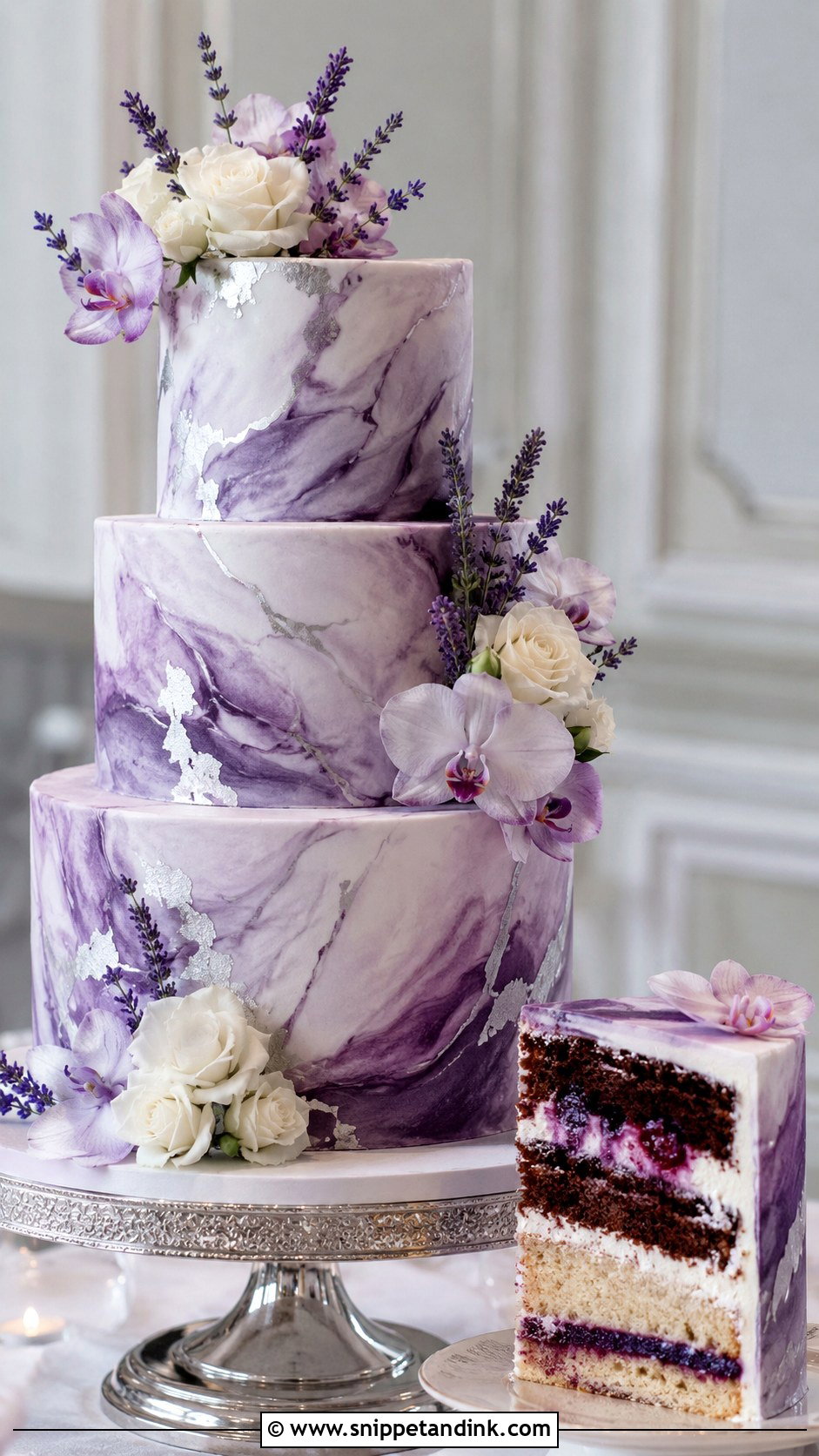
Purple marble feels rich and a little moody. A purple marble wedding cake can use classic marble layers with a vanilla bean buttercream filling, or a berry compote for depth. I swirl lavender, plum and white fondant together and keep the veins thin. Purple is the color most likely to shift in photos, sometimes toward blue, sometimes toward gray, so I check it under the same warm light the reception will have. White roses, lavender sprigs, sugar orchids or silver leaf finish it for an evening wedding.
13. Marble Wedding Cake With Fresh Flowers
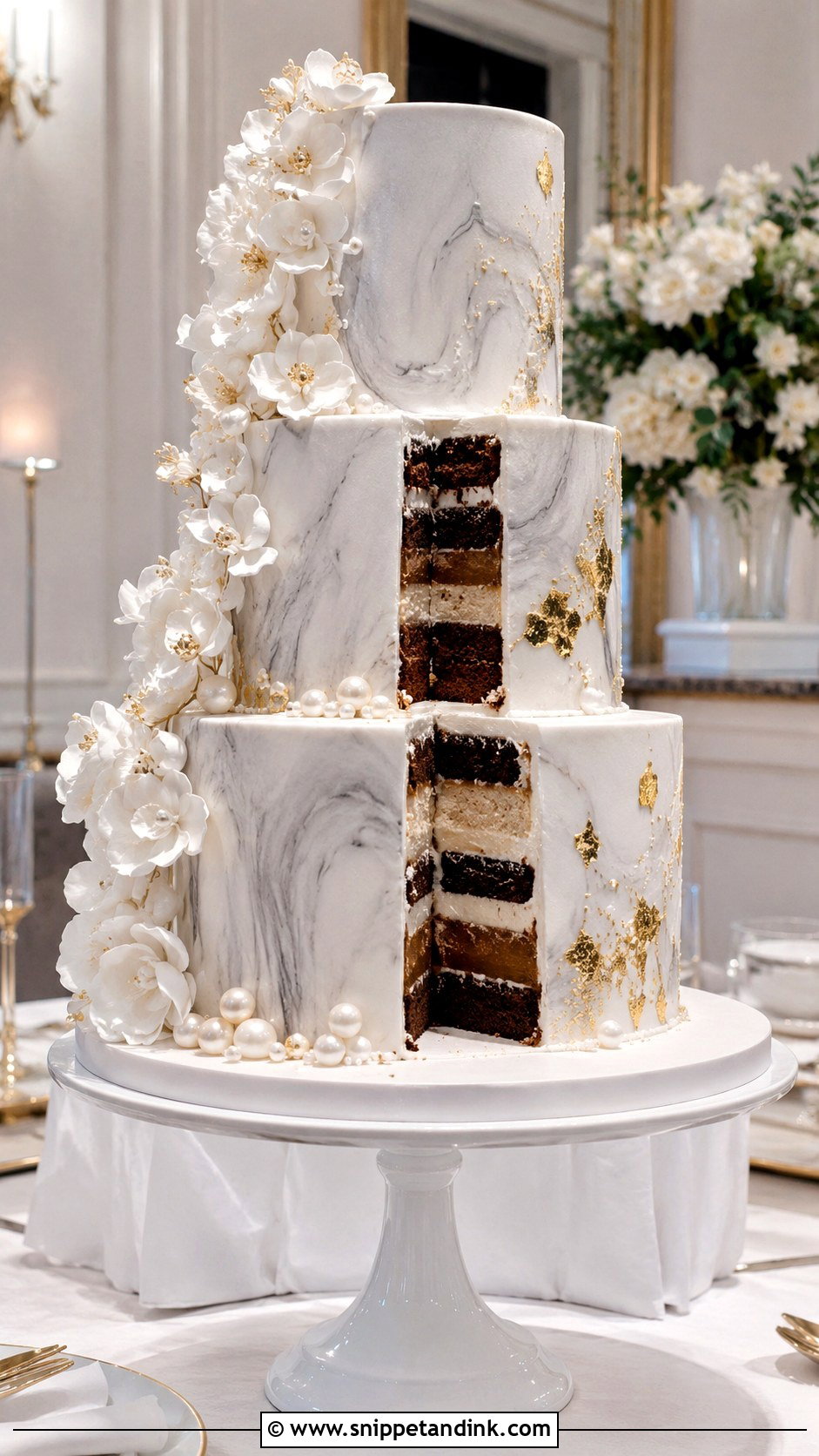
Fresh flowers soften the hard stone look, especially when the marbling is pale gray or ivory and the flowers do the talking. Roses, ranunculus, orchids and small greenery all work. Stems must be wrapped in floral tape or set into flower picks, and blooms should be pesticide free, because anything sprayed or with milky sap should not sit in frosting. Cluster the flowers instead of covering every tier. Ask your florist and baker to talk directly; it saves a lot of last-minute guessing about who supplies what.
14. Marble Wedding Cake With Sugar Flowers
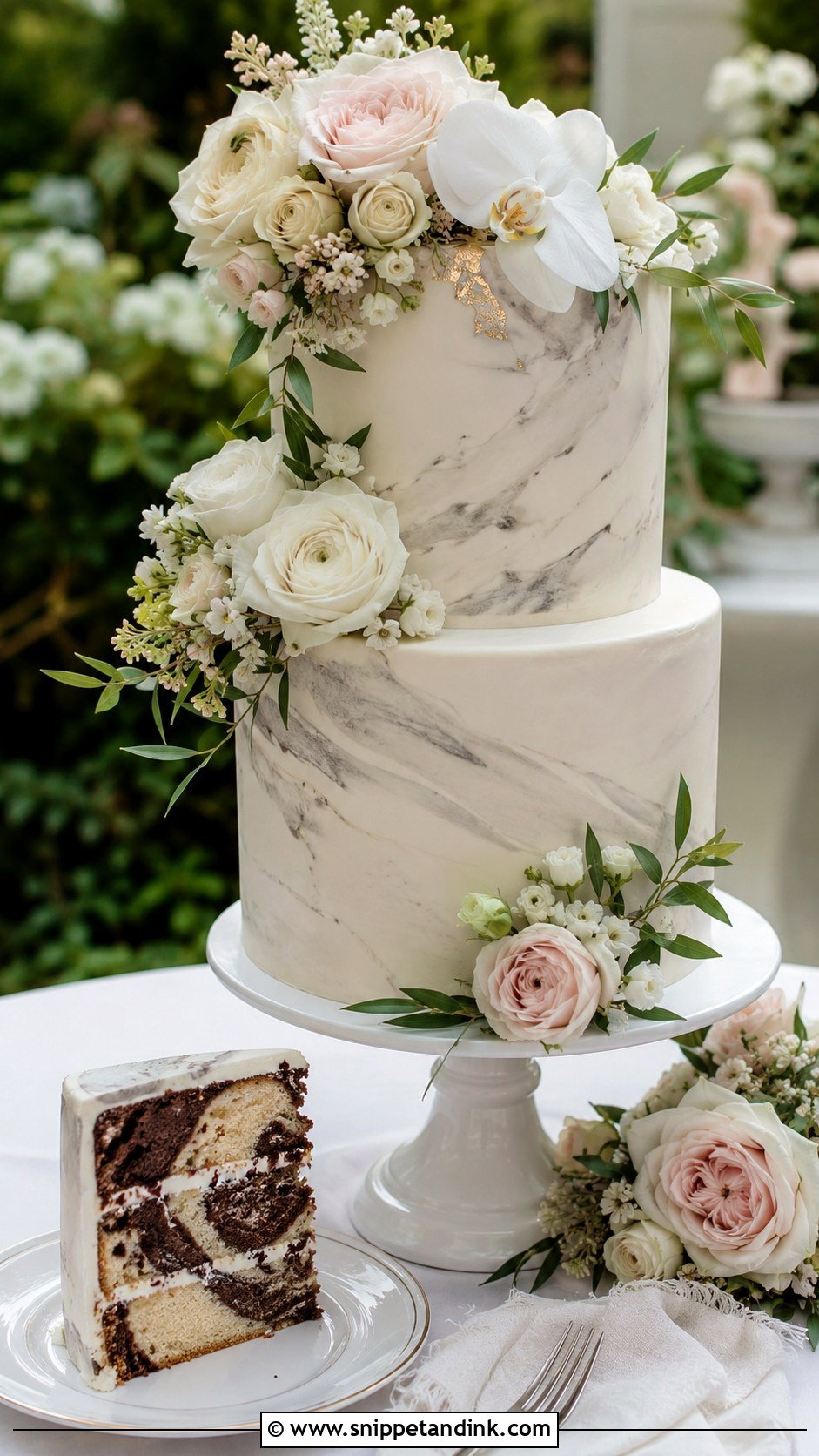
Sugar flowers give you a floral cake that will look the same at the end of the night as it did at the start. Handmade roses, peonies, orchids or small blossoms sit cleanly against a fondant marble backdrop and can be colored to match the wedding exactly. They take real time to make, often several days for large flowers, so they need to be ordered early. Underneath, moist marble layers with vanilla buttercream hold it all up. For hot weather or a long reception, they are the safer floral choice, and many couples keep one as a souvenir.


15. Marble Wedding Cake With Ganache
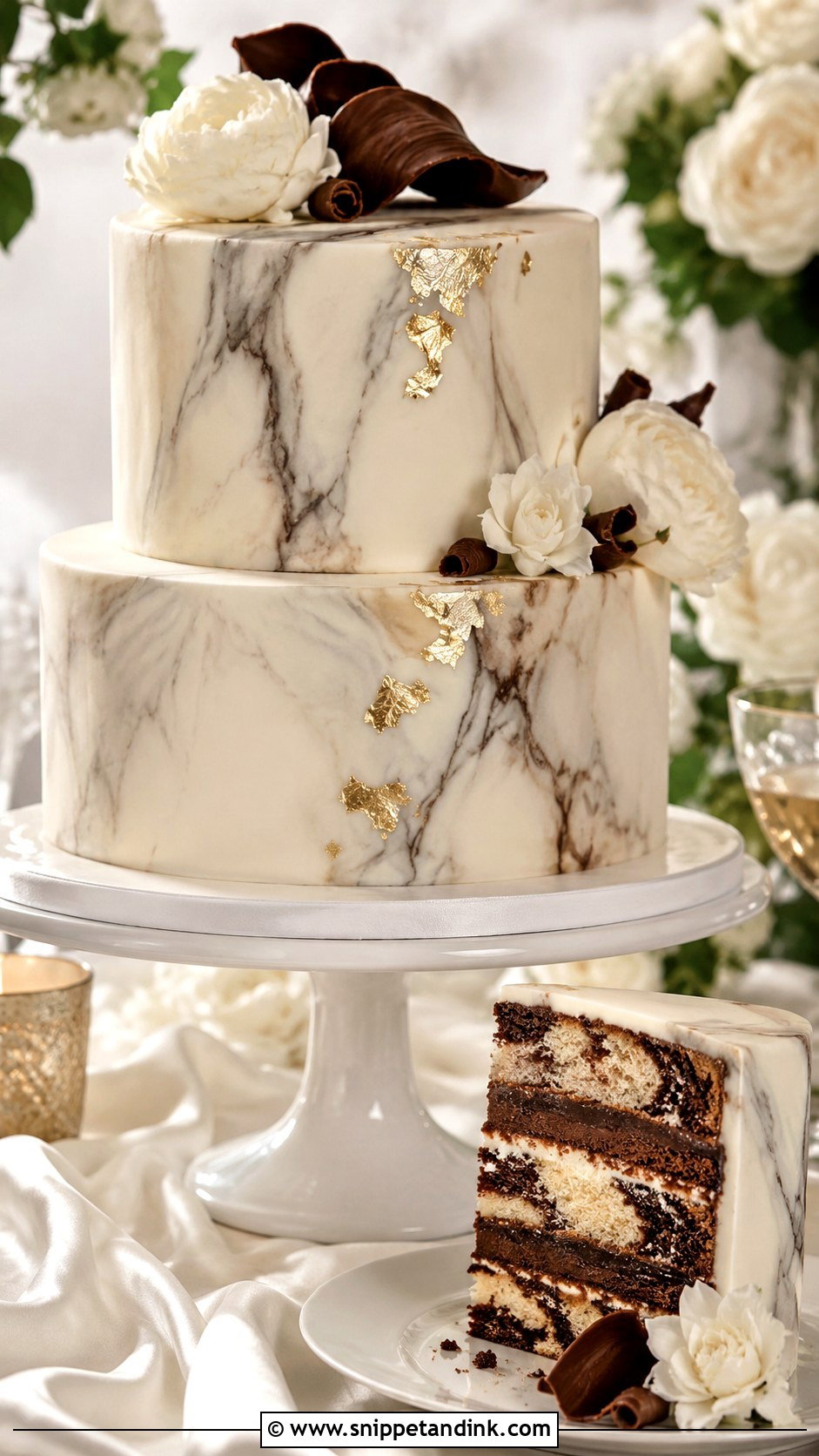
Ganache does two jobs. Between the layers it adds a deep chocolate flavor, and as an outer coat it sets firm and gives sharp edges and a sealed surface for fondant. I use a firmer ratio of chocolate to cream for coating than for filling, then let it set fully before covering. Outside, a light ivory marble finish stops the cake from looking heavy. Gold leaf, chocolate curls or a few white flowers suit it. Chocolate lovers will be happiest with this one.
16. Marble Wedding Cake With Caramel Filling
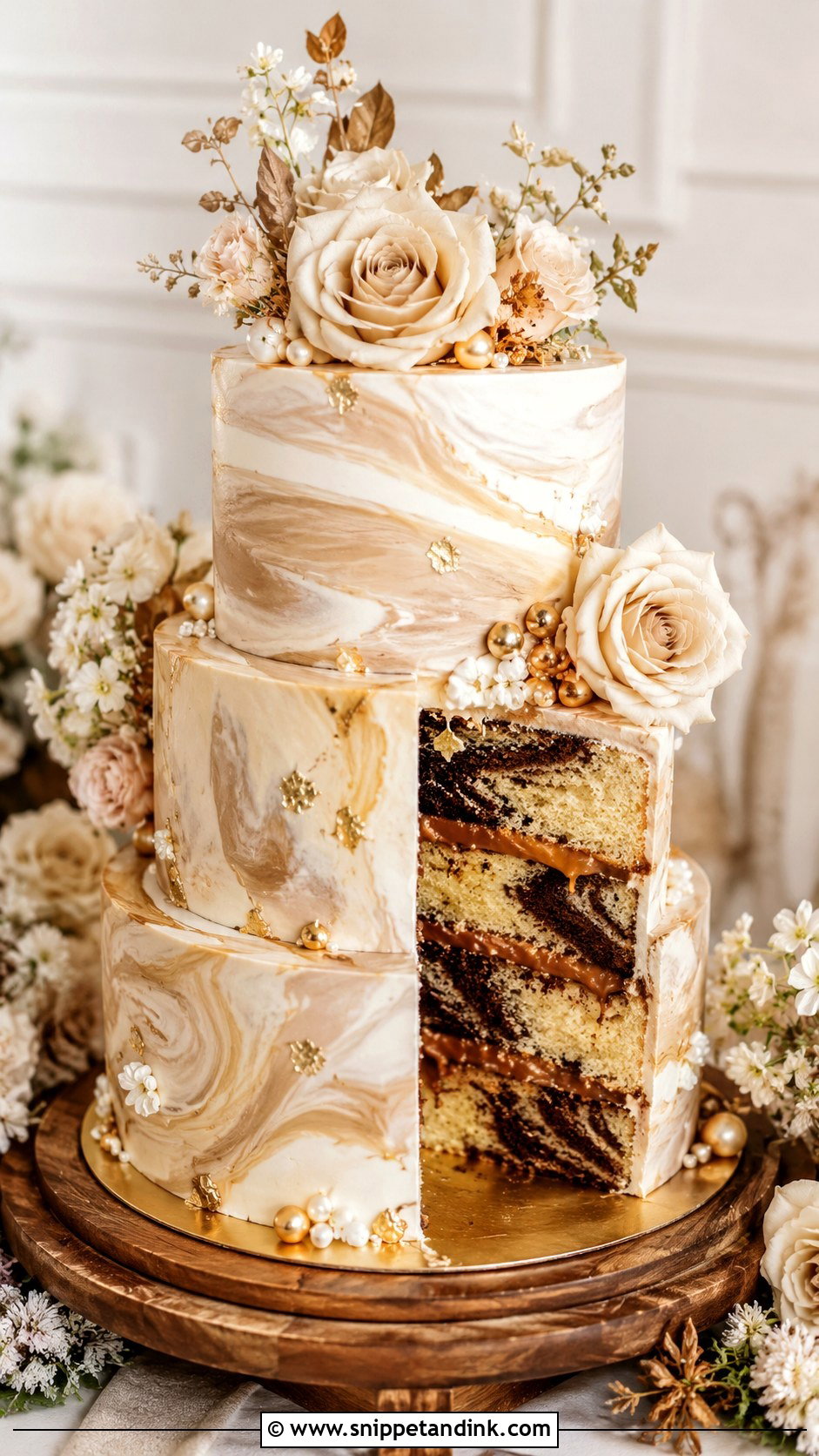
Caramel brings warmth, but it is the filling most likely to slide. I keep it thin, use a thick salted caramel rather than a pourable sauce, and pipe a firm buttercream dam around each layer before adding it. Without the dam, the weight of the tiers above pushes caramel out of the sides within hours. A buttery marble crumb and vanilla buttercream keep the sweetness in check. Outside, ivory and beige marbling with gold accents fits fall weddings and neutral palettes.
17. Marble Wedding Cake With Raspberry Filling
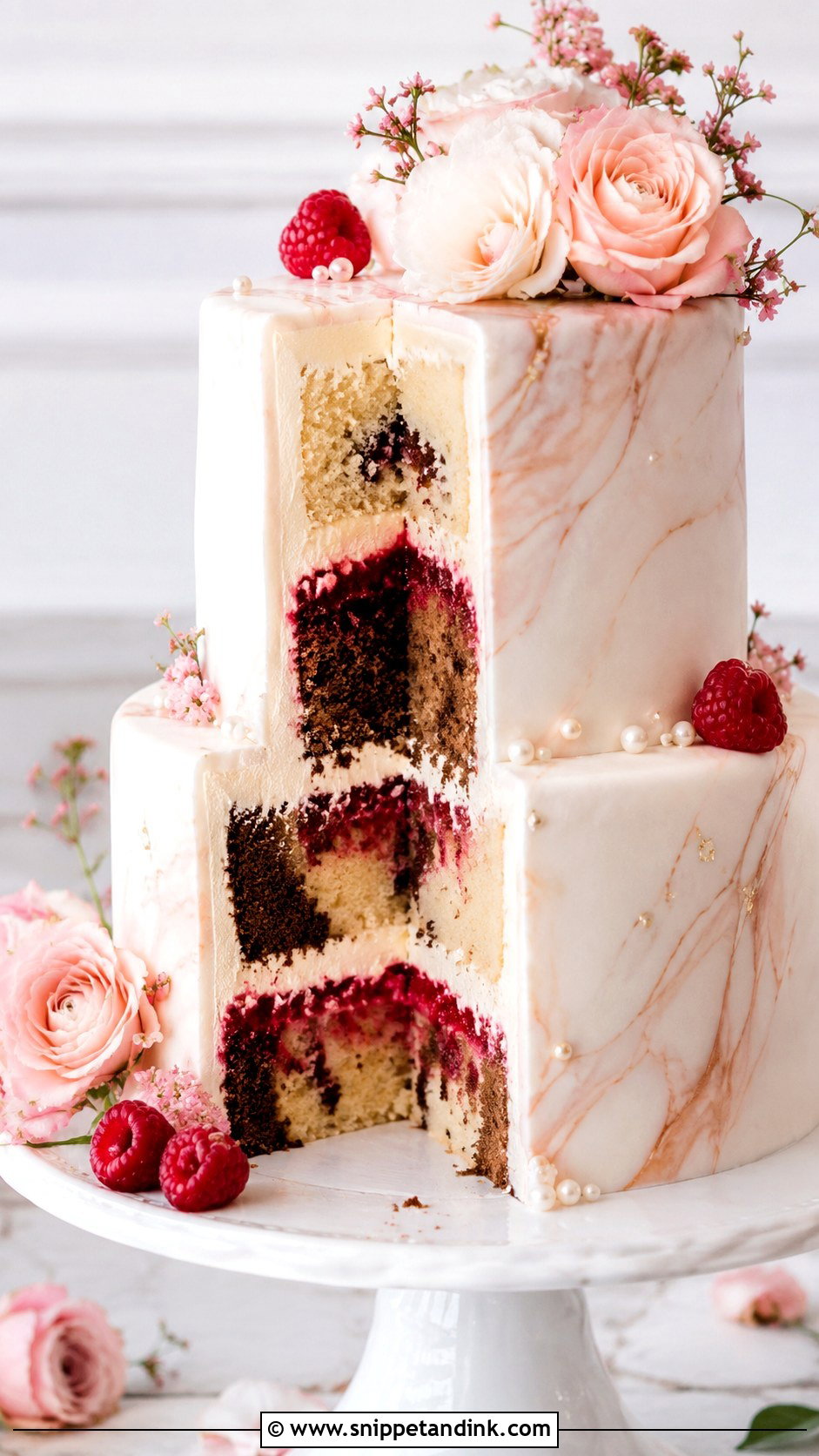
Raspberry lifts the marble flavor and makes the slice feel lighter after a big meal. Preserves, curd or a stabilized compote all work; I avoid a loose fresh fruit filling for tiers, since the juice soaks into the crumb and weakens the layers. Pair it with vanilla or white chocolate buttercream. Outside, white marble with blush veining hints at what is inside. Fresh raspberries on the cake should go on close to service, because they leak color onto pale frosting over time.
18. Marble Wedding Cake With Cream Cheese Frosting
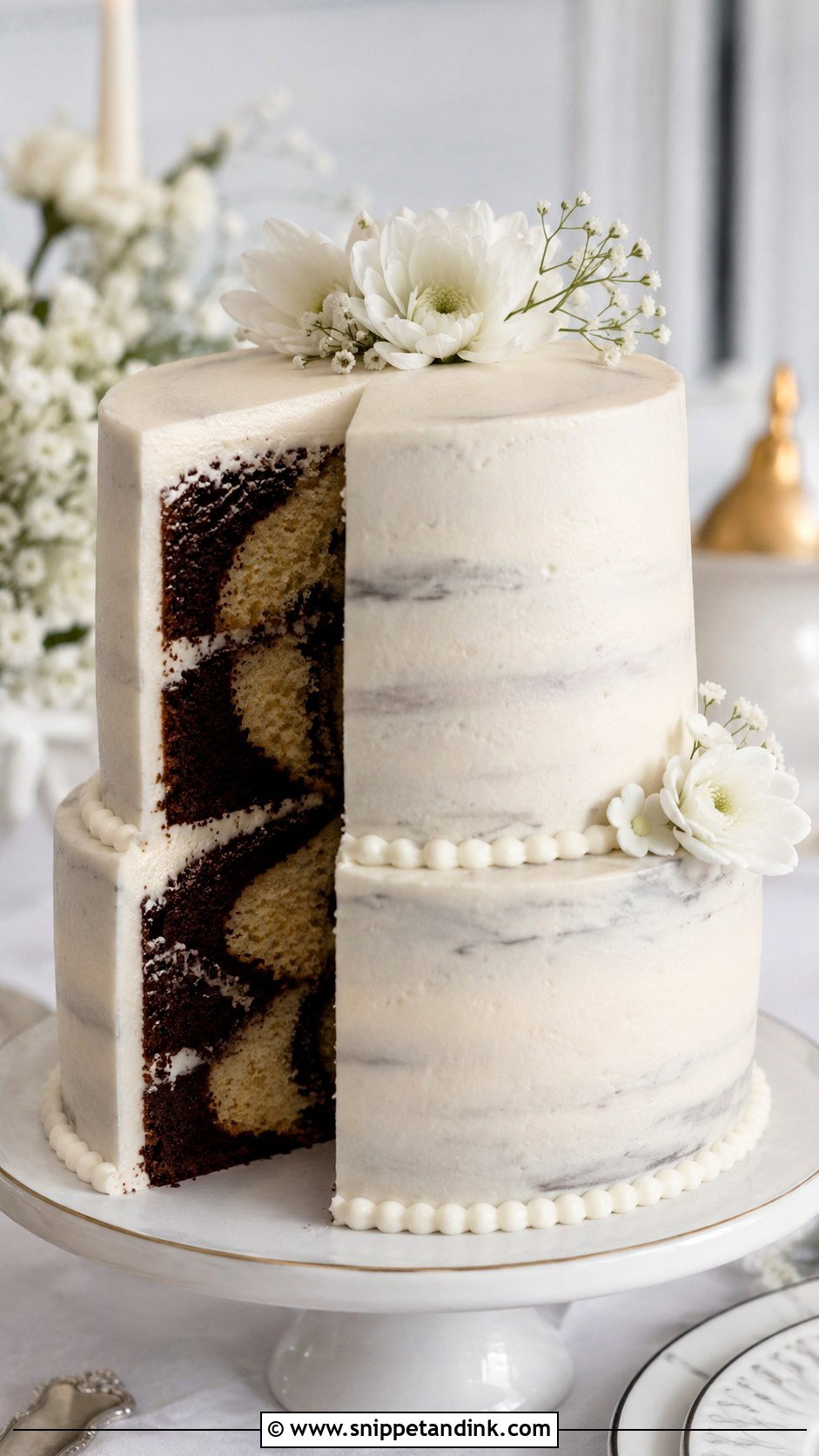
Cream cheese frosting tastes wonderful on marble cake but it is the softest frosting in this list. A wedding blend uses butter, cream cheese and powdered sugar with more butter than a cupcake frosting, so it can hold up to stacking. Even then I don’t promise sharp edges with it, and I’d steer you away from it for a hot outdoor reception, since it needs refrigeration for food safety and softens quickly. A thin chocolate ganache layer inside adds contrast. White flowers, simple piping or soft gray streaks finish it for a smaller indoor wedding.
19. Two Tier Marble Wedding Cake
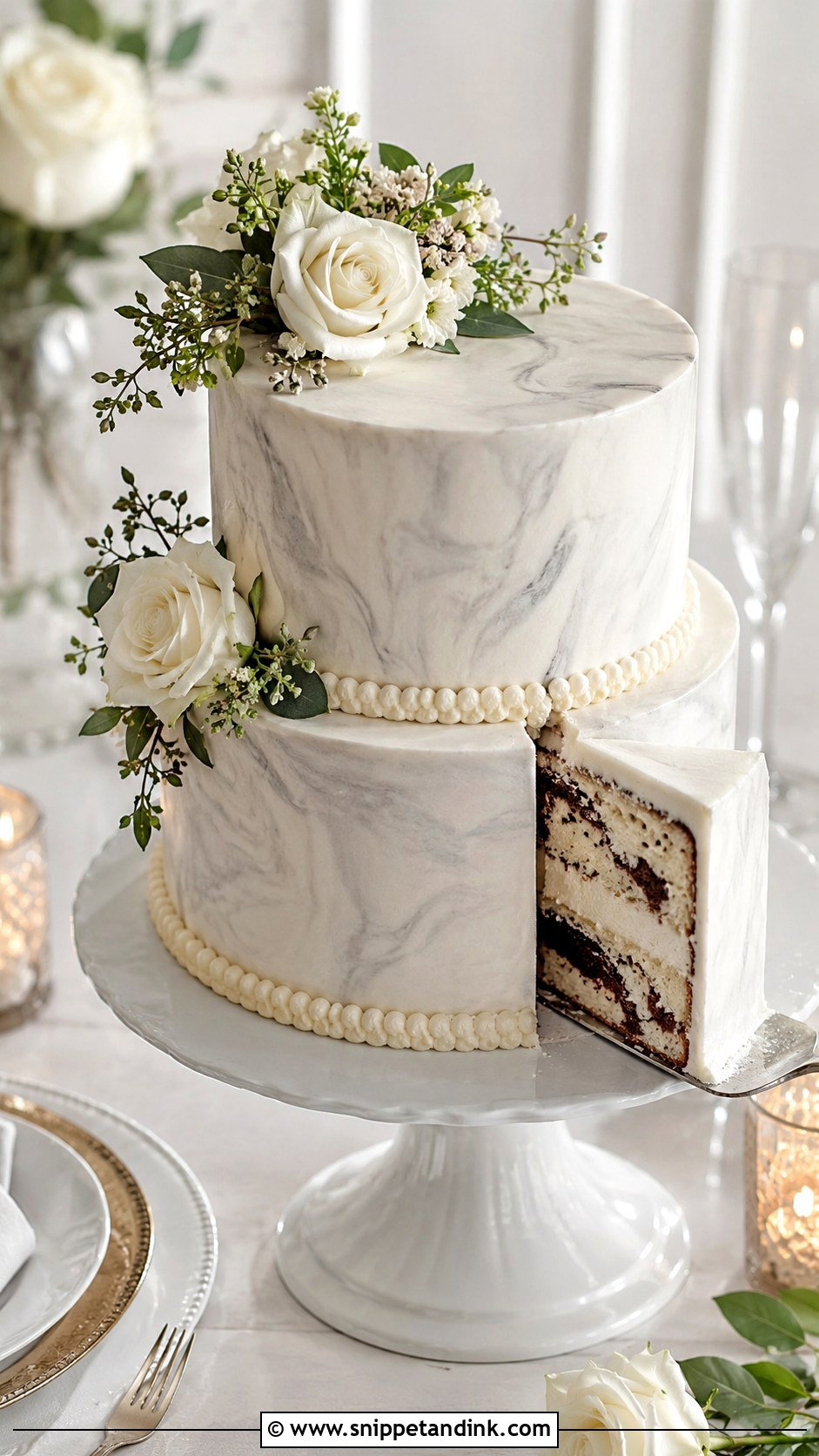
A two tier marble wedding cake gives you height without an oversized cake, and it suits elopements or dessert tables with other sweets. An eight inch bottom and six inch top is a common pairing and serves roughly thirty to forty slim wedding slices, depending on how your baker cuts. Fill with vanilla buttercream, ganache or fruit. The top tier still needs dowels in the bottom tier and its own board. Soft marbling, fresh flowers and a neat stand finish it, and it travels easily in a single box.


20. Three Tier Marble Wedding Cake
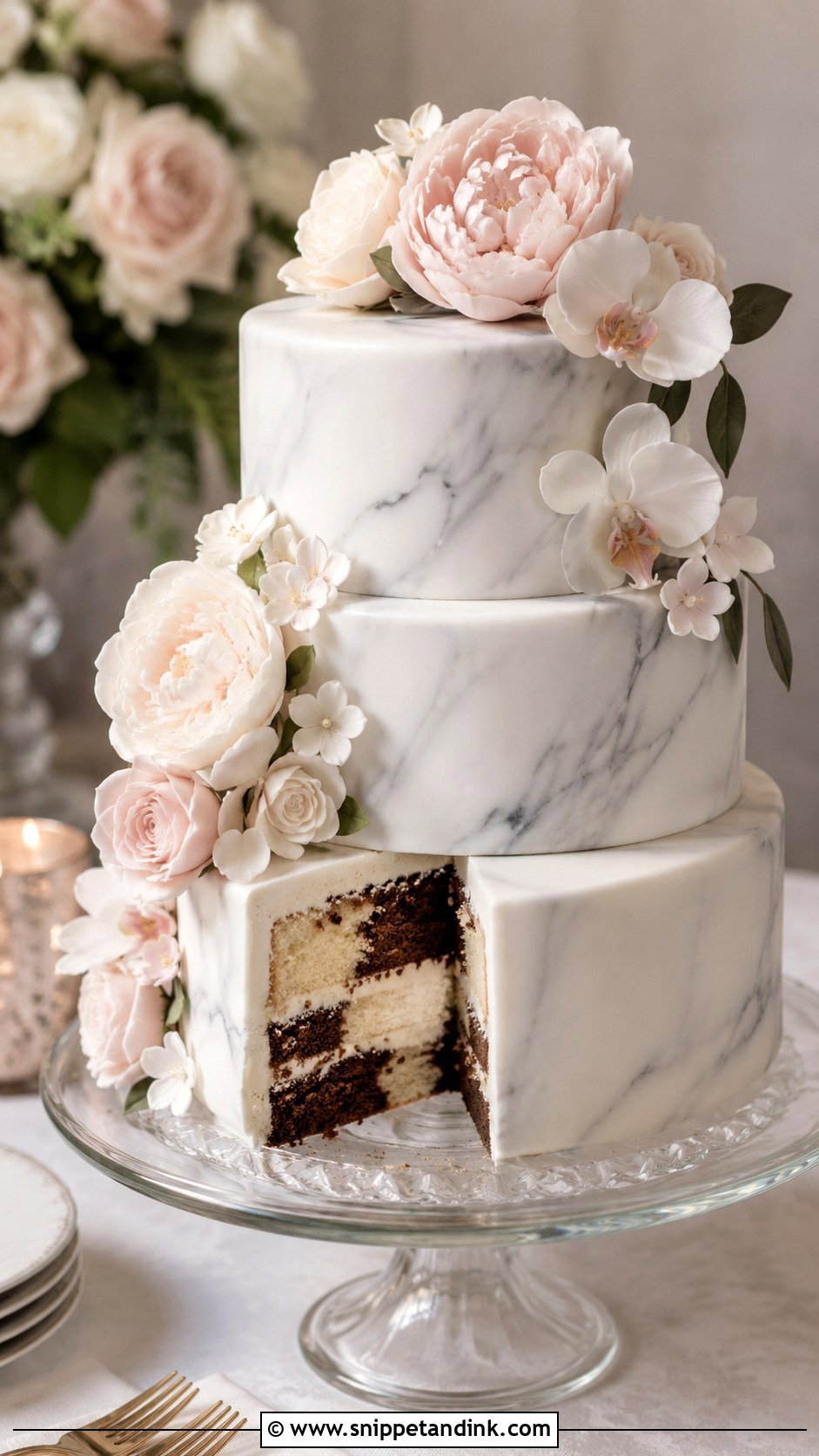
Three tiers turn marble cake into a full reception centerpiece. Each tier can share one recipe, or you can vary the fillings: raspberry in one, caramel in another, ganache in the largest. Moist marble layers have no strength of their own, so dowels and cake boards under every tier are not optional. A fondant or buttercream marble finish ties the tiers together, with flowers cascading down one side, gold leaf or pearl details. This size makes most sense for medium to large weddings where the cake actually feeds the room.
Painting Stone Veins That Look Real
Real marble has a direction. The veins run mostly one way, fork into thinner lines and fade out. When a cake looks fake, it is usually because the veins wiggle in every direction or are all the same thickness.
On fondant
Twisting colored fondant into the base gives the broad veining. For fine detail after covering, I mix gel color with a few drops of clear alcohol and draw with a fine brush, dragging the brush and lifting it so the line thins out. A dry cloth softens any line that looks too sharp. Keep a photo of real stone beside you while you work.
On buttercream
Buttercream marbling can’t be painted easily, so the pattern comes from where you place small streaks of color before the final scrape. Fewer, thinner streaks look more natural. If it blends too much, add another thin streak and scrape once more rather than starting over.
Colors that age badly
Dark gray and black gels can bleed into white fondant over a day or two, especially in humid weather, which turns crisp veins fuzzy. I paint fine veins no earlier than the day before delivery. Pinks and purples can fade in bright light, so store the finished cake in a dark, cool room until it leaves for the venue.
Swirl on the Inside, Stone on the Outside
Marble wedding cakes can go simple, bold, romantic or modern depending on the color, frosting, filling and decoration. What never changes is the foundation: a moist vanilla and chocolate swirl that holds its shape and tastes good with buttercream, ganache, caramel, fruit or cream cheese frosting. From pale white marble to black and white, every style can be adjusted for the venue and palette. Take these ideas to your tasting, ask your baker how they handle the swirl and the veining, and pick the one that feels most like your celebration.
You'll Like These Ideas:




Leave a Reply