
Most guests never see the top of a wedding cake. They see the sides: across the room during dinner, up close at the cutting and in every phone video. That’s where I spend most of my design time, on texture, piping, flowers, color and sculpted detail. Textured buttercream, vintage piping, pearls, pressed flowers, soft draping and sculptural finishes are what couples ask me about most right now, and each one behaves differently in heat, in transport and on camera. Below are 20 side finishes, with notes on what each needs from your baker and your venue.
Buttercream or Fondant? Each Finish Here Has a Preference
Before you fall for a side design, know which surface it needs. Several of these finishes only work on one medium, and that decides how the cake handles heat and how it eats.
Designs that want buttercream
Textured strokes, semi naked, ombré, shiplap and most ruffles. Buttercream tastes richer and cuts softer, but it’s the most heat-sensitive surface I work with. Ask what kind your baker uses; versions made partly with shortening hold up better in a warm room, at some cost to flavor.
Designs that want fondant
Quilting, sharp geometric panels, bas relief, draping and most painted work. Fondant gives a firm canvas and keeps the sponge from drying, though plenty of guests peel it off. A thin layer over ganache is the usual compromise.
Designs that work on either
Pearls, lace, gold leaf, bows, pleats, stripes and monograms. Expect crisper results on fondant and a softer, more handmade feel on buttercream.
One more thing on timing. I make sugar flowers weeks before a wedding so they can dry hard, and pressed flowers need days of pressing, so any design built around either has to be confirmed early.
1. Textured Buttercream Wedding Cake
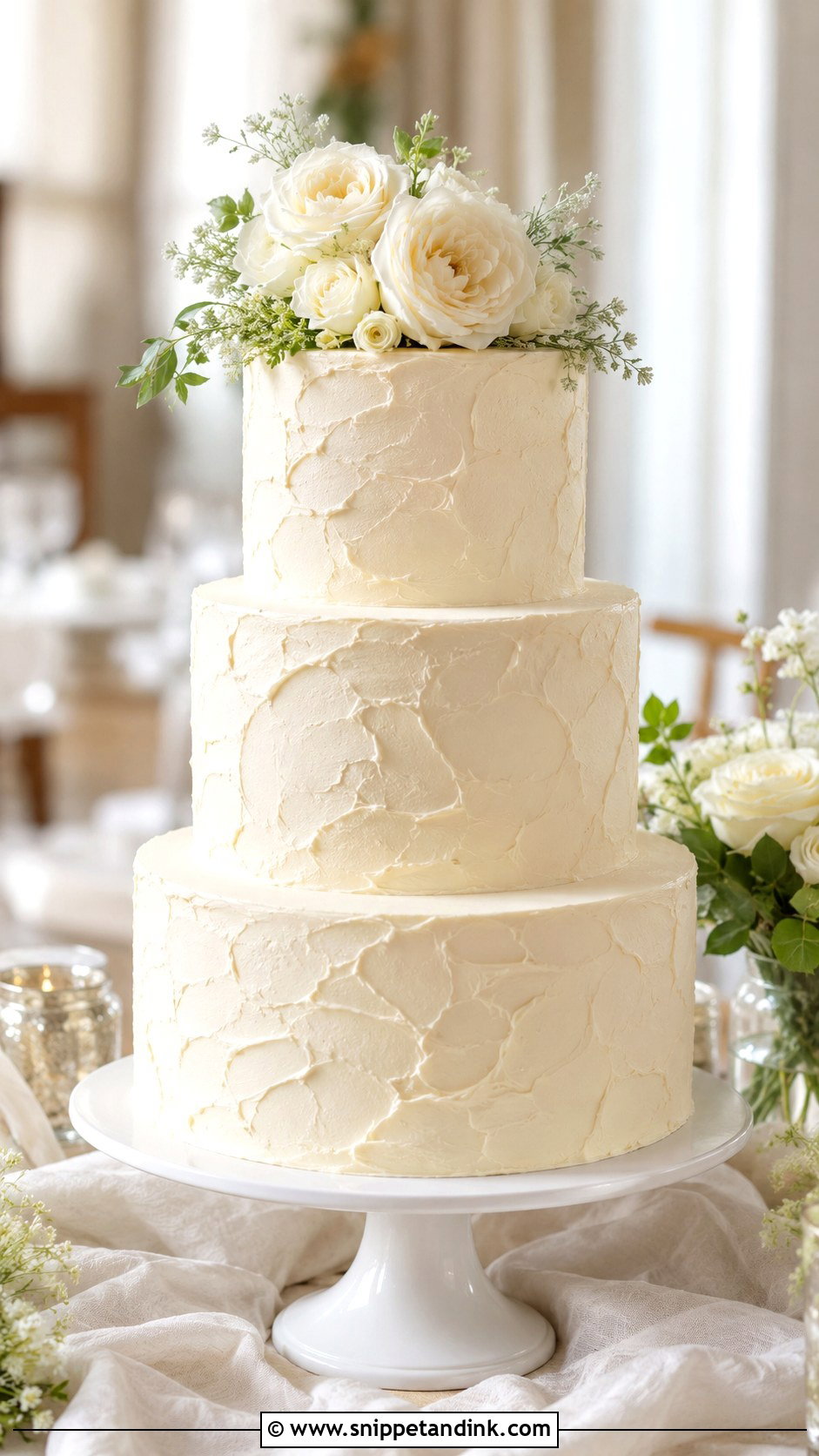
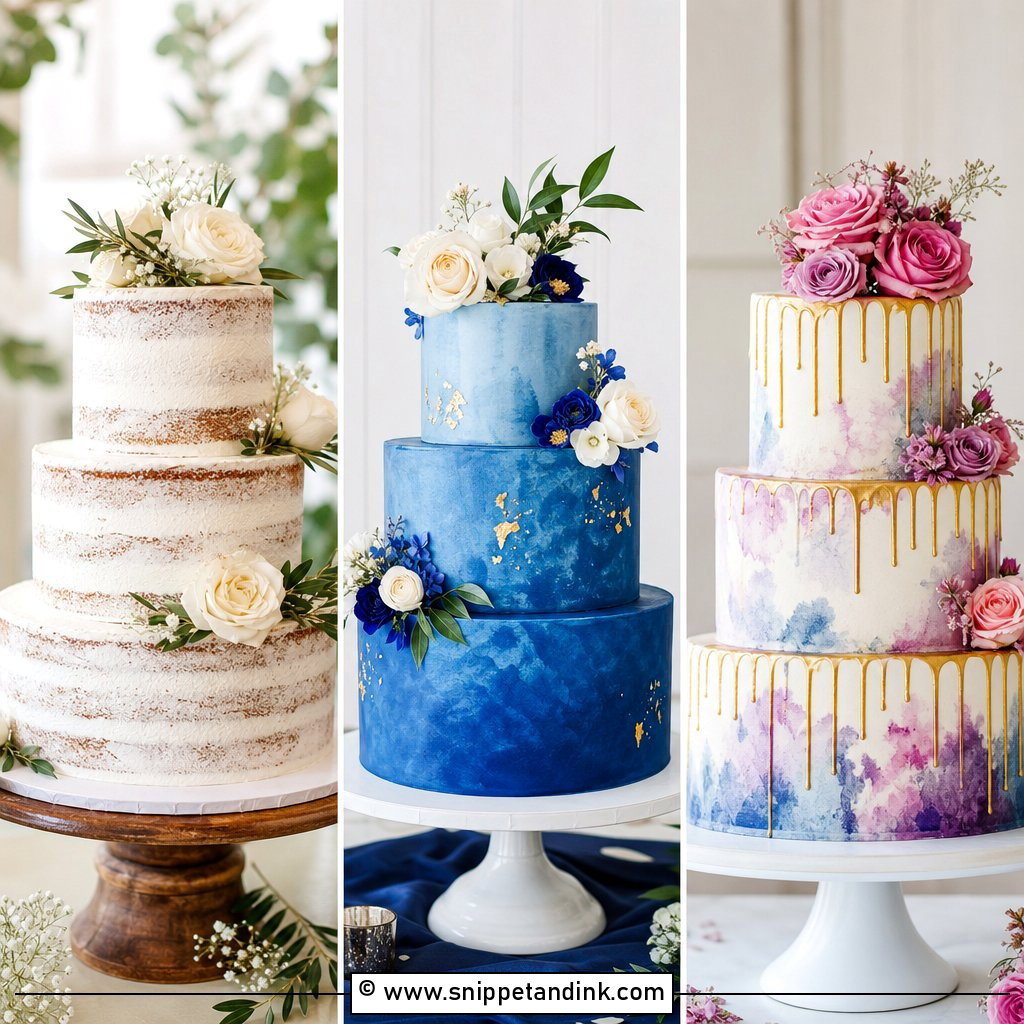
Palette-knife strokes, soft ridges or a spatula swirl give buttercream sides a handmade look, and it’s the finish I recommend most for relaxed receptions: garden, barn, intimate dinners, modern spaces. The hard part is making the texture look intentional. I set a smooth crumb coat first and chill it, so the strokes sit on a firm base instead of dragging crumbs through the color. Ivory, cream, champagne or soft white keep it classic. Keep fresh flowers to one side so the texture still shows.
2. Pearl Wedding Cake
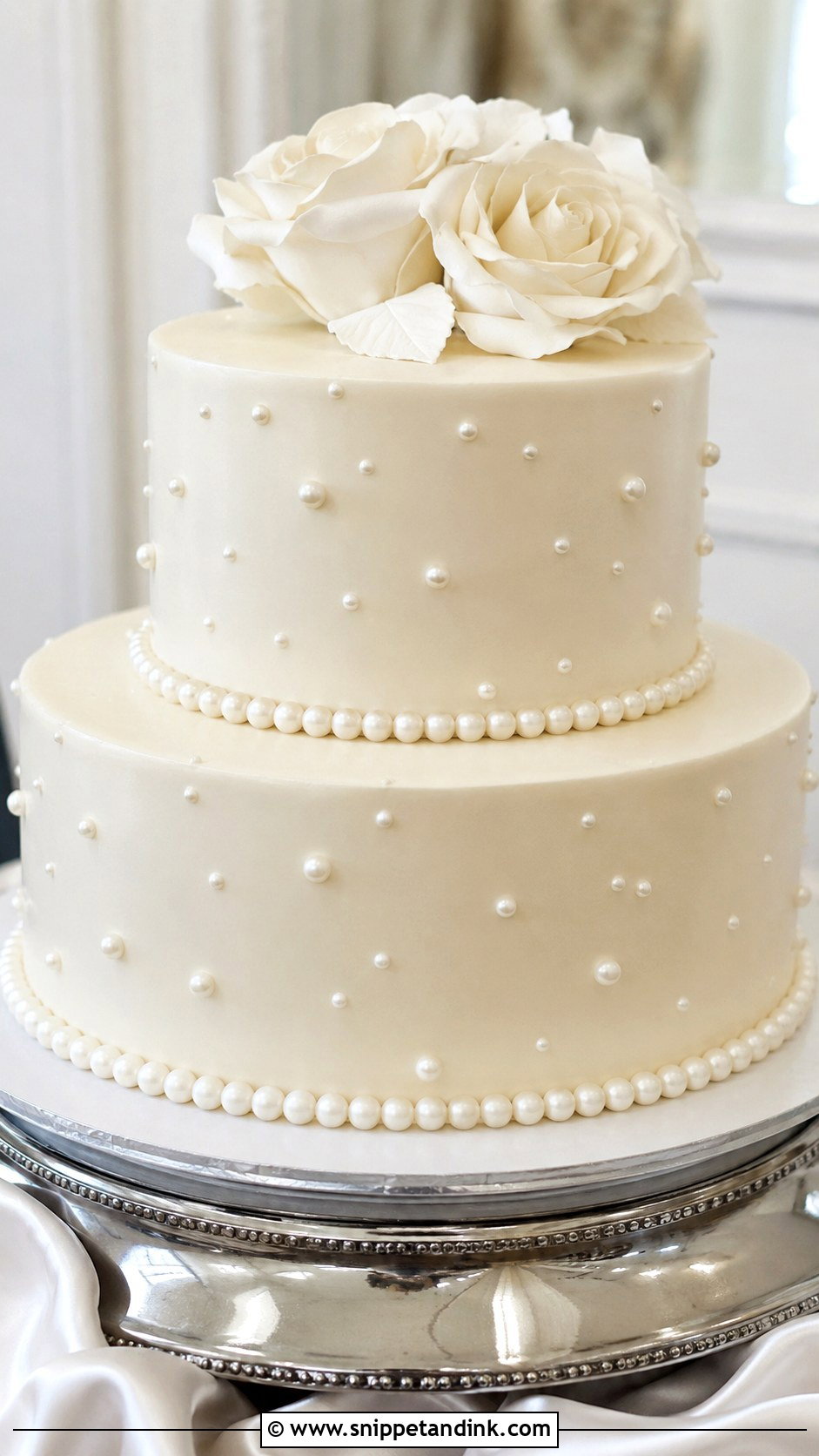
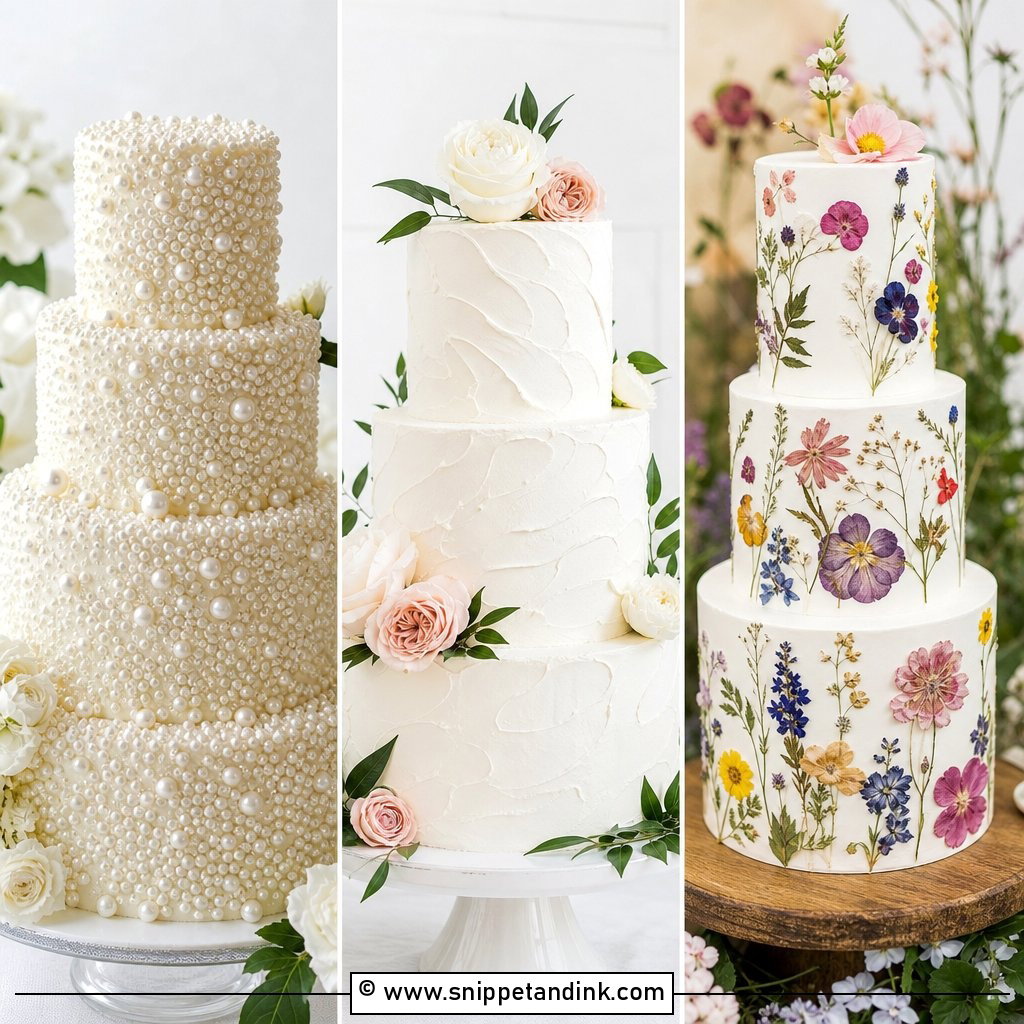
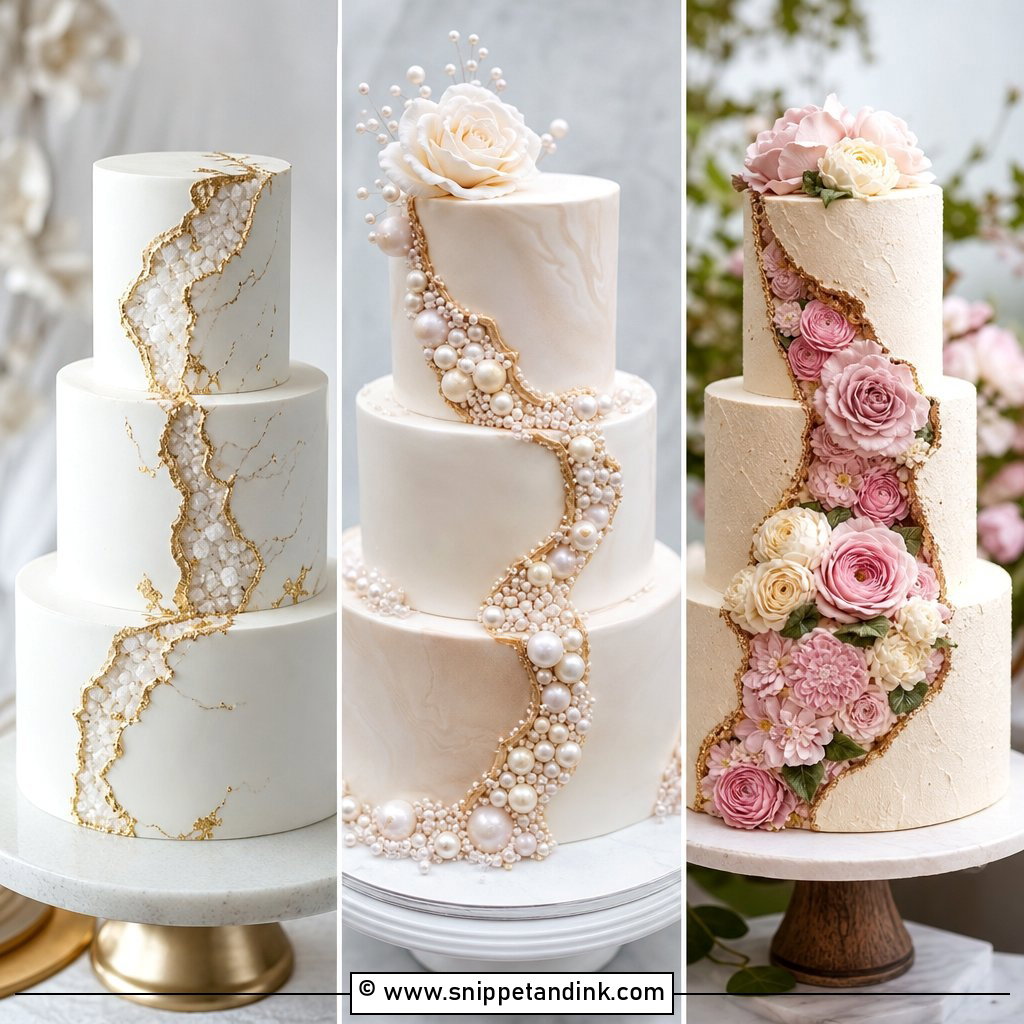
Edible pearls can be scattered, set in neat borders or clustered so they fade across each tier. On smooth buttercream or fondant they read clearly; on rough texture they disappear. I mix two or three pearl sizes for a modern feel, since one uniform size looks like a printed pattern. Ivory, blush or soft champagne suit them, with white roses, satin ribbon or a plain stand, and they echo bridal jewelry nicely. Hard sugar pearls are worth mentioning to whoever cuts and serves.
3. Lambeth Wedding Cake
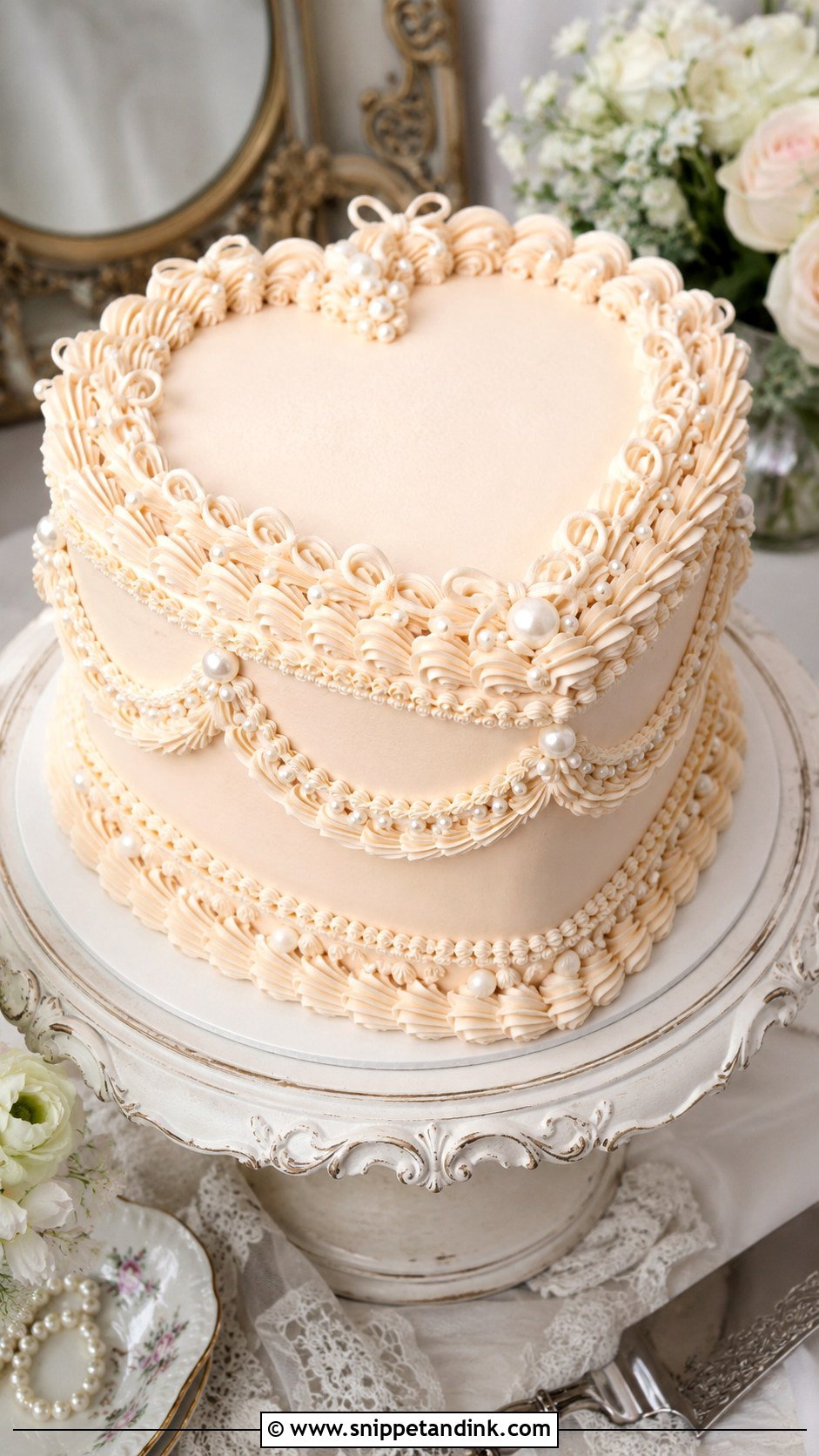
Lambeth is the most piping-heavy style here: overpiped swags, shells, scrolls, ruffles and bows built up in layers around each tier. It takes hours of hand piping, and the quote usually reflects that. All white reads romantic; blush, blue or butter yellow read playful. For a wedding I keep the layers balanced so the tiers don’t look crowded. A two-tier or heart-shaped version is the one couples bring to me most. Cherries push it retro; sugar pearls and small florals keep it bridal. The piping softens in heat, so I treat this as an indoor cake.
4. Pressed Flower Wedding Cake
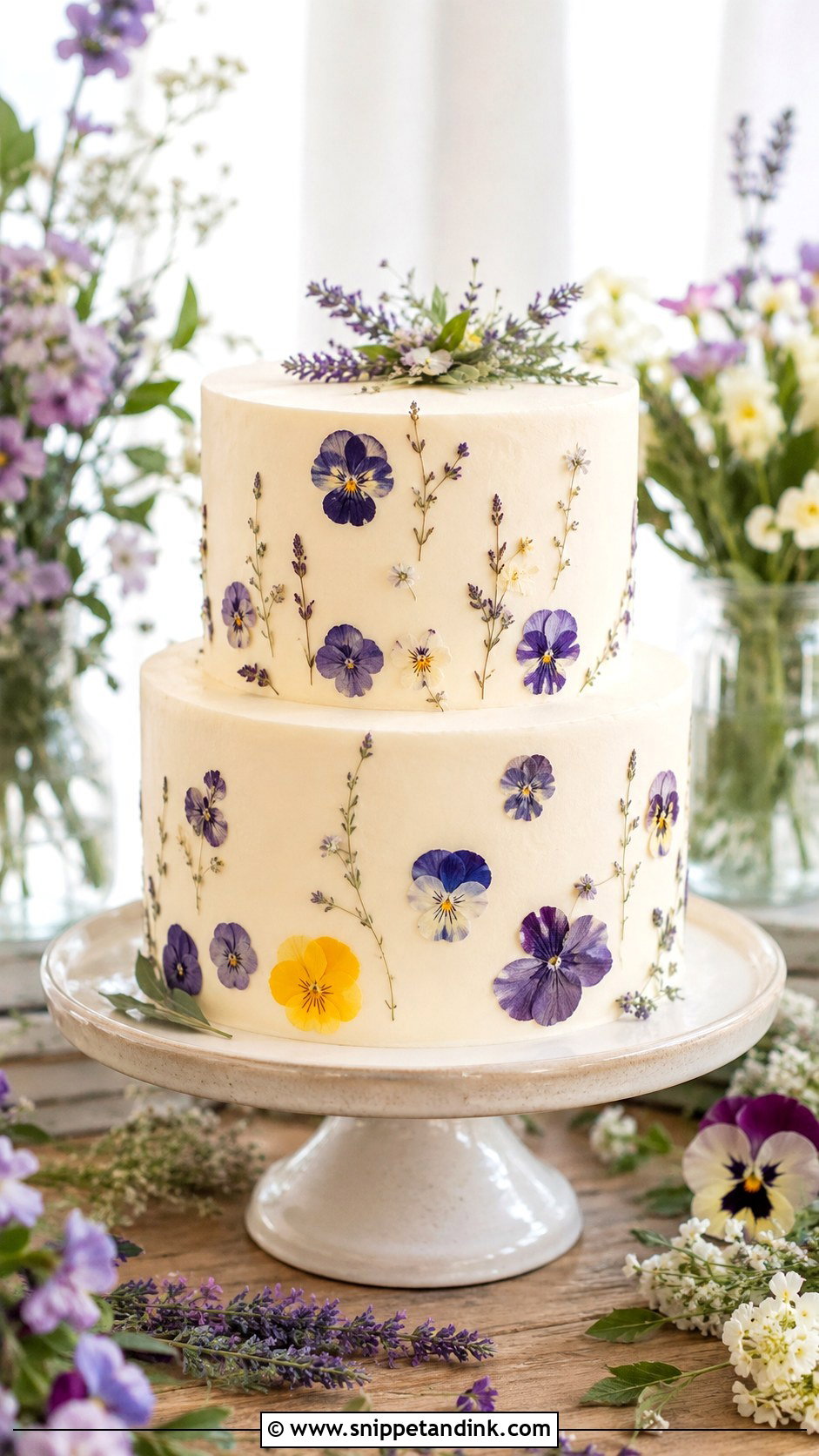
Pressed petals need a smooth buttercream base so each one lies flat. I use edible flowers grown for eating, never florist stems, in colors pulled from the bouquet: lavender, pansy, calendula or tiny rose petals. Scatter them lightly, run them in vertical trails or wrap them around the tiers as a botanical band. Pressing them flat takes days, so they have to be sourced well ahead. Spring weddings, outdoor receptions and cottage-style celebrations suit it best. Keep everything else simple.
5. Ruffle Wedding Cake
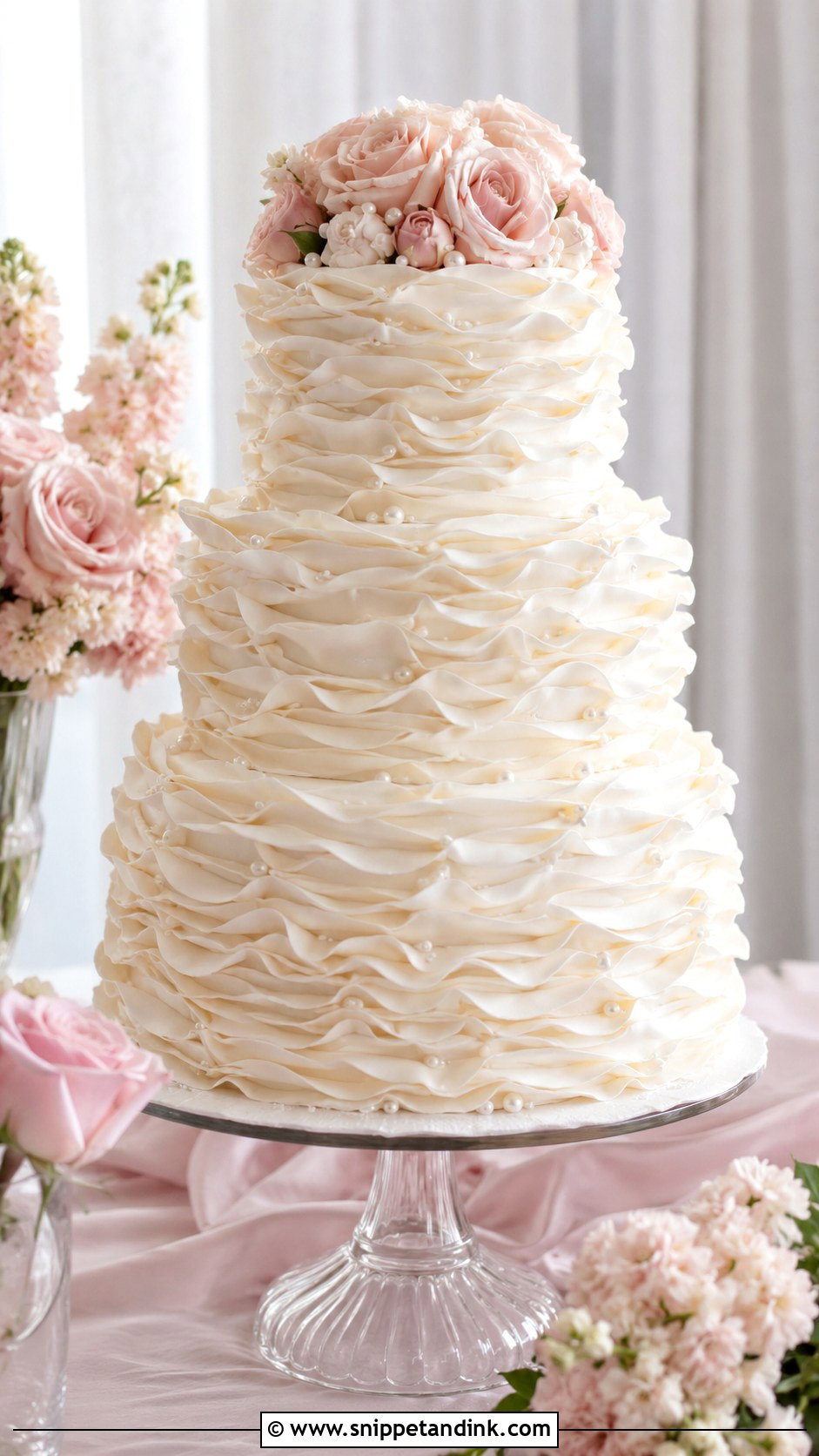
Ruffles give the sides the movement of fabric, and the medium changes the mood. Buttercream ruffles are soft and relaxed. Fondant ruffles hold crisp, sculptural edges. Wafer paper is the lightest of all, but it curls and wilts in humidity, so I’d keep it away from a summer marquee. All white suits a bridal look, or add ombré tones for depth. Neat enough to look elegant, loose enough to look airy: that’s the balance I aim for with romantic dresses and ballroom receptions.
6. Quilted Wedding Cake
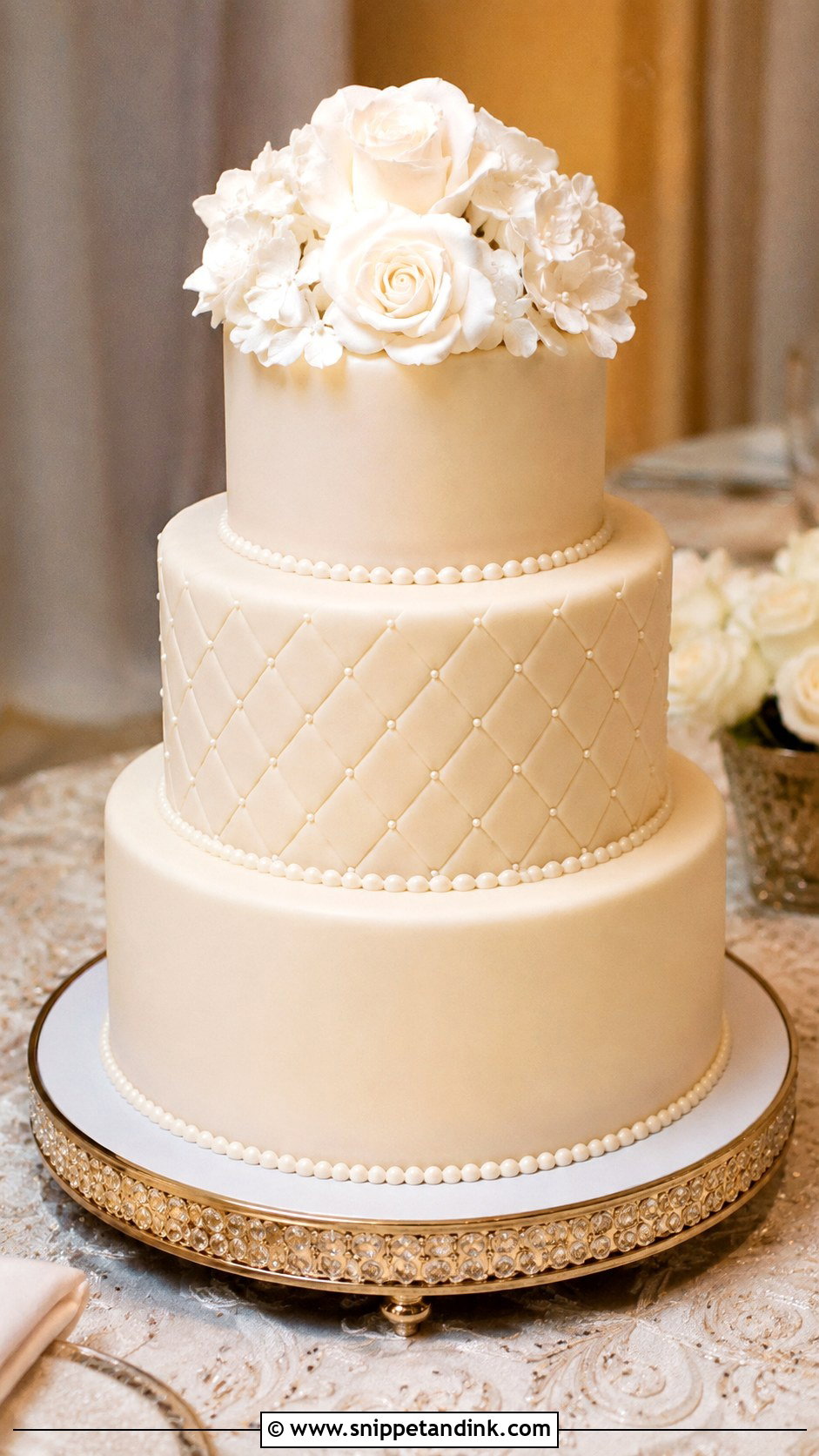
Quilting presses a diamond pattern into the sides, usually with a tiny pearl or edible bead at each crossing. I do it on fondant because the impression needs a firm, smooth surface, and it has to be marked before the fondant crusts, so it happens the day the tier is covered. Ivory, white or soft champagne look tailored. Quilt one tier, keep the others smooth, and soften the structure with sugar roses, ribbon or a small floral cluster. Hotel weddings and black-tie receptions are its natural home.
7. Lace Wedding Cake
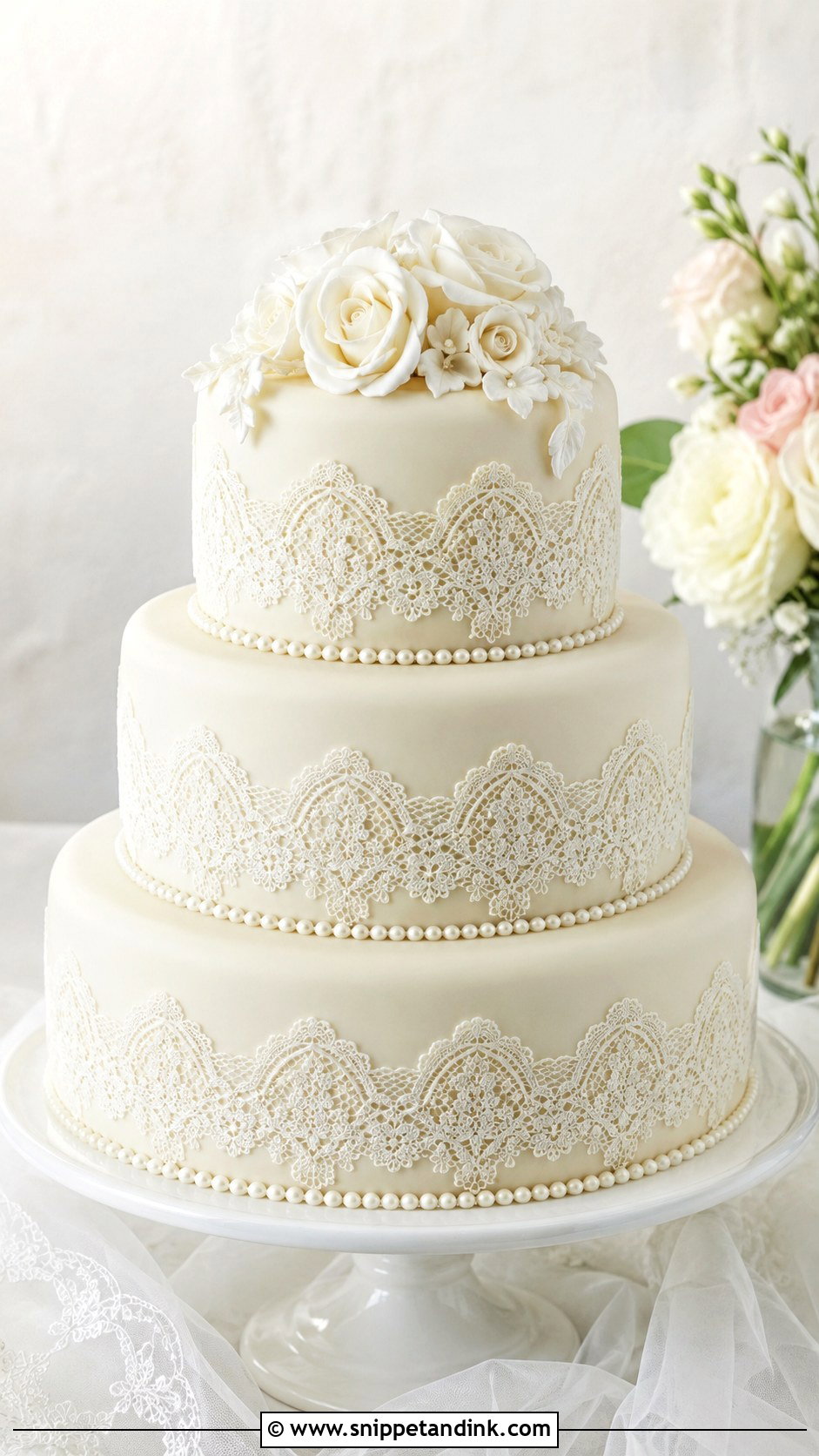
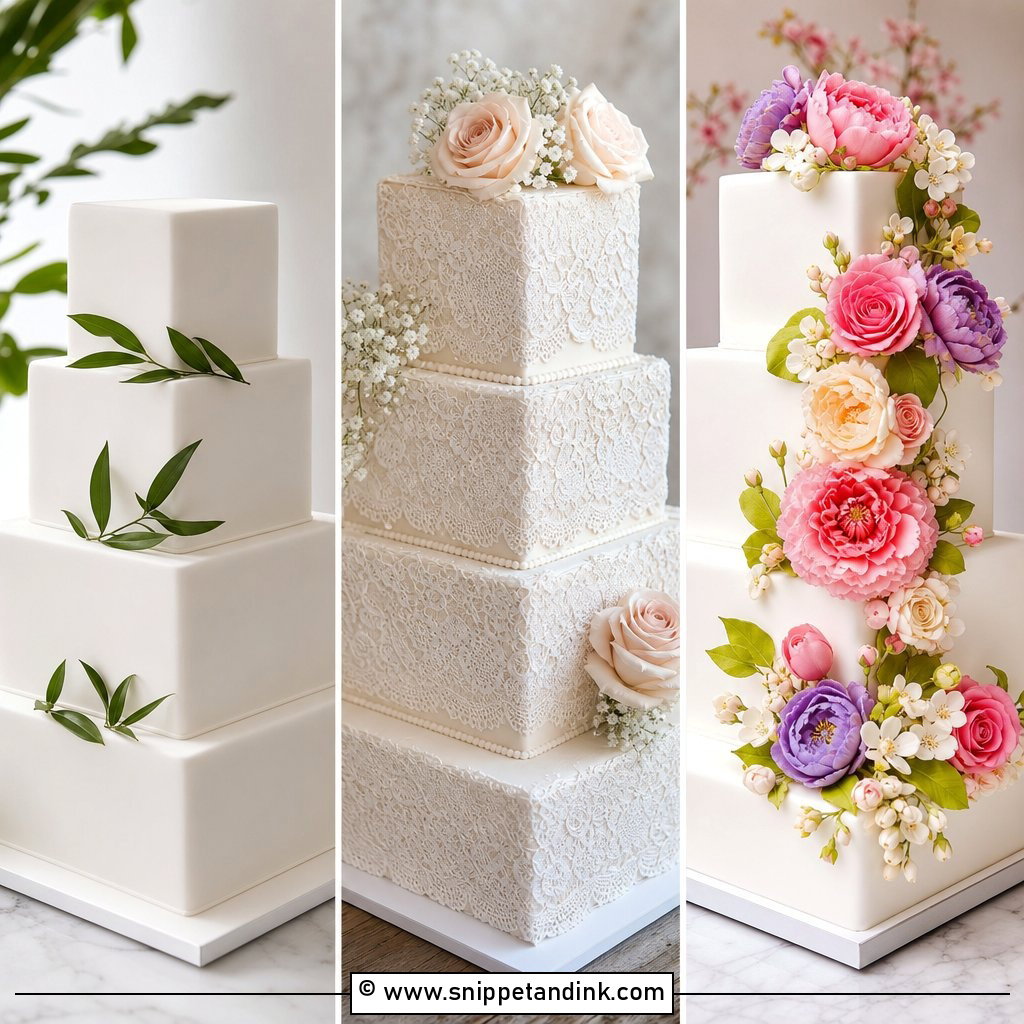
Edible lace, piped lace or raised fondant lace can echo the gown, and the best versions echo rather than copy. When a couple brings me a photo of the dress lace, I pick one motif from it rather than reproducing the whole pattern. White-on-white is classic; ivory lace over blush fondant looks vintage. A three-tier cake with one lace tier and two smooth ones stays balanced. Keep flowers minimal so the lace stays in focus. Edible lace mats behave well indoors but go limp on a humid day.
8. Floral Cascade Wedding Cake
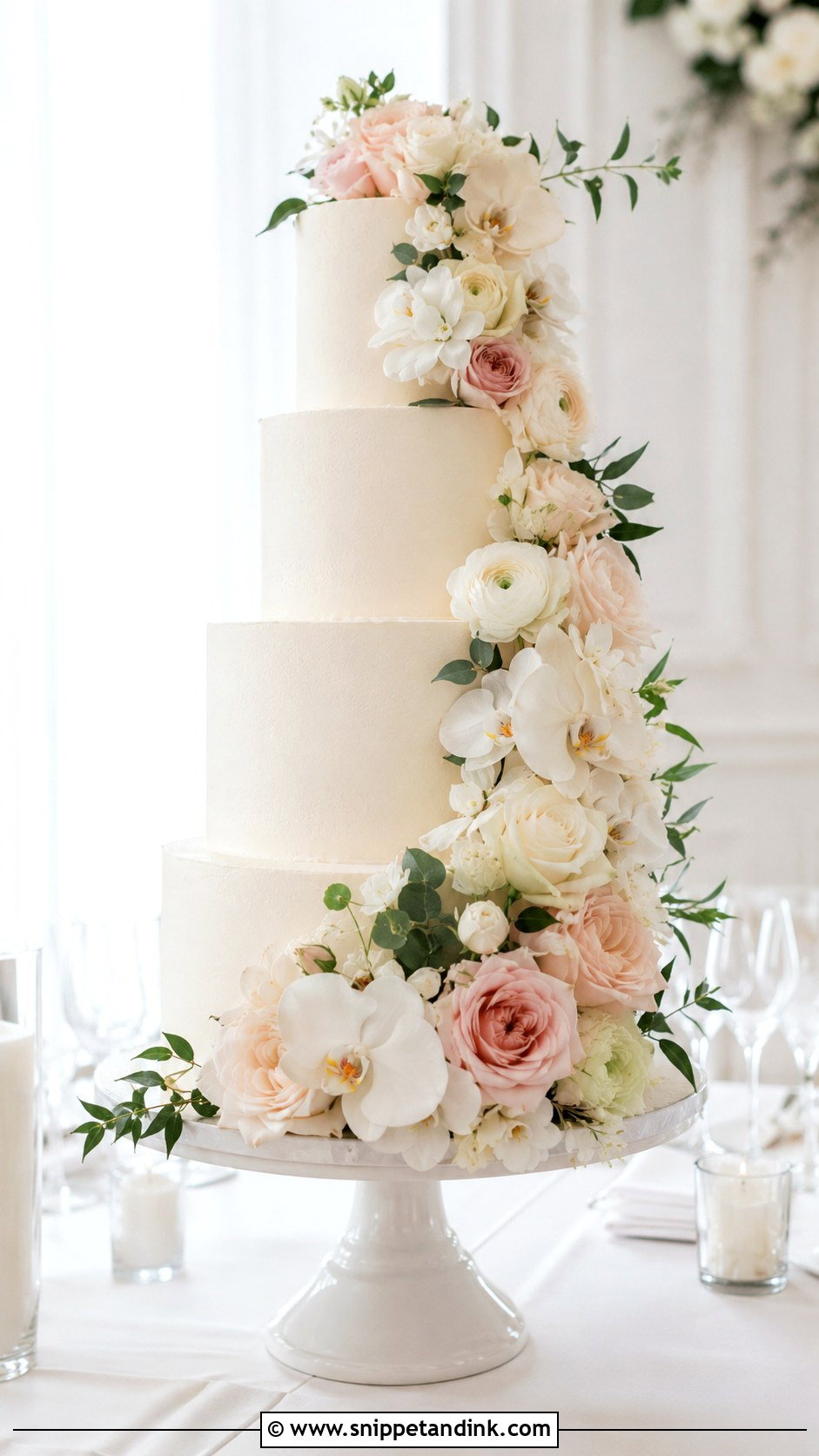
A floral cascade wedding cake pulls the eye down one side, making the tiers look taller and full of movement. Fresh flowers, sugar flowers or a mix all work. With fresh stems I wrap and seal the ends and set them into a food-safe pick, never straight into the sponge, and I leave toxic varieties out entirely. Prepared that way, roses, ranunculus, orchids and peonies are reliable. Keep the frosting smooth or lightly textured so the flowers aren’t fighting a busy background. On a pedestal stand with plain table styling, it gives you the cutting photo.
9. Side Bow Wedding Cake
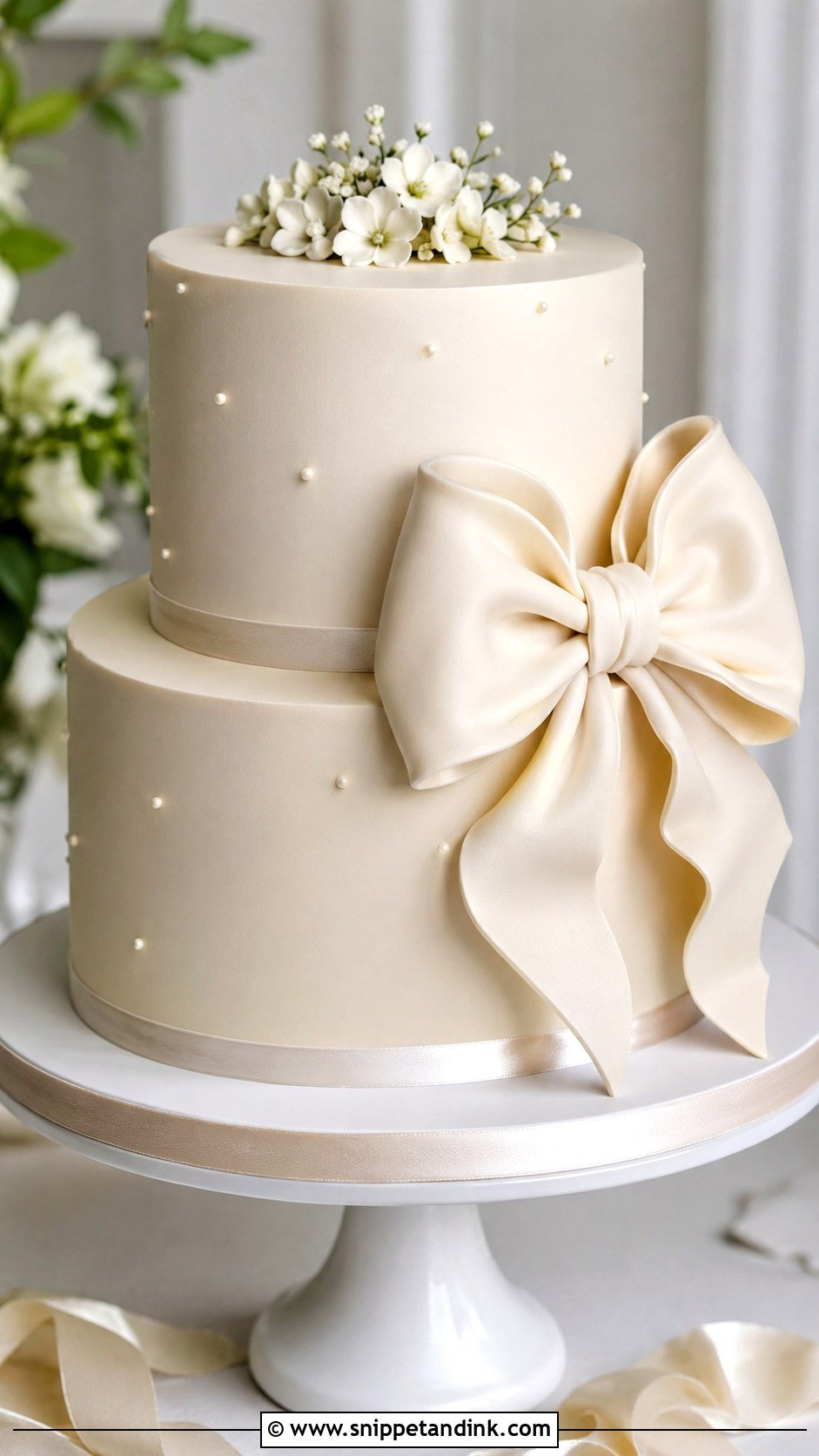
One large bow on a single tier, or small piped bows around the sides, carries the whole design without much else. Bows can be fondant, sugar paste, wafer paper or real silk ribbon backed so it never touches the cake directly. White, ivory, blush and pale blue all work, with smooth frosting and a few pearls. I shape large fondant bows days ahead so the loops dry firm; a fresh bow sags by the reception. It makes most sense when your dress, shoes or décor already carry bows.
10. Draped Fondant Wedding Cake
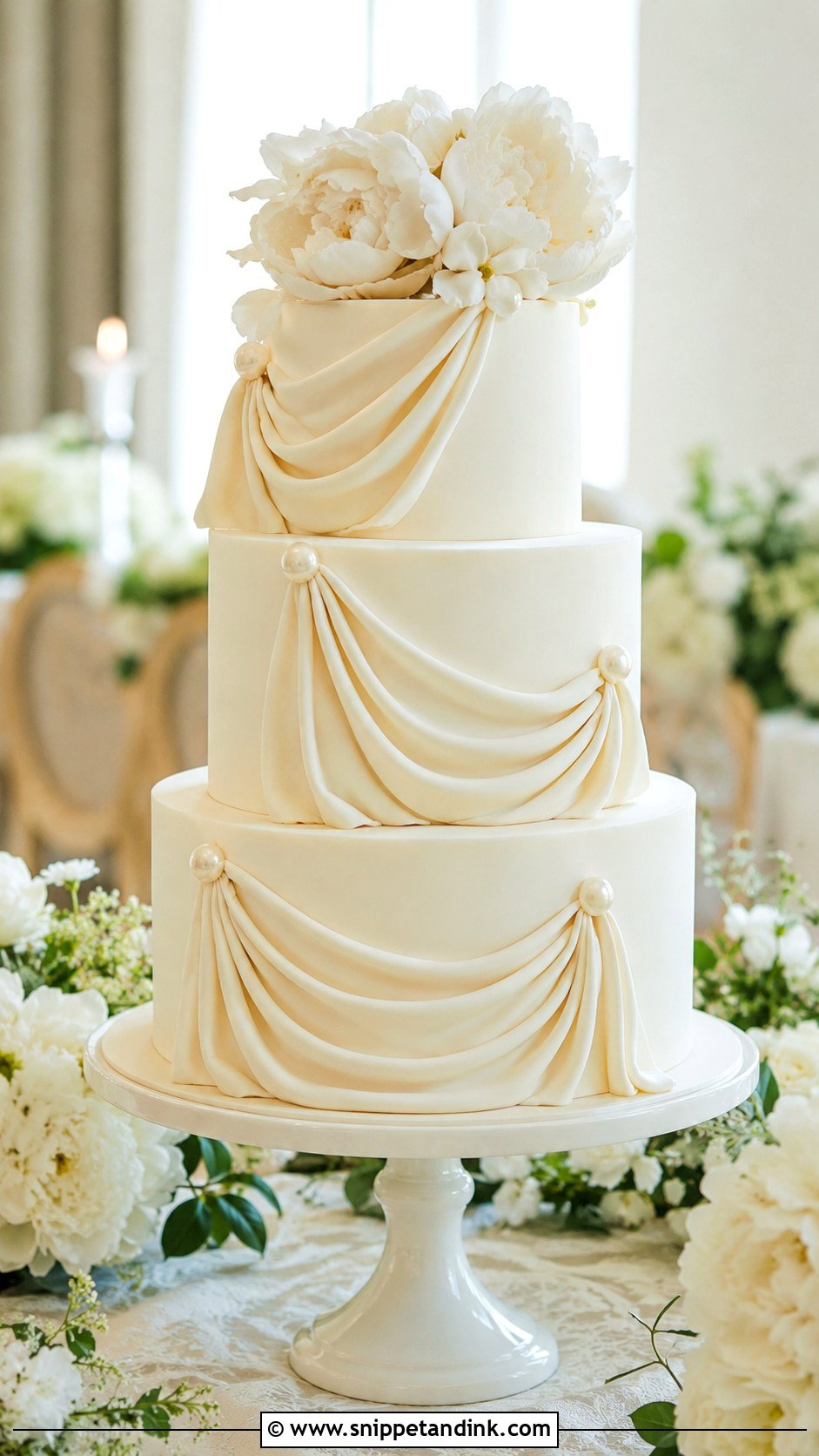
Draped fondant falls around the tiers like gathered fabric, in gentle swags, vertical folds or asymmetrical layers, and it pairs well with satin, chiffon or tulle gowns. Ivory and white are classic, but champagne or pale blush let the folds show more clearly; pure white tends to flatten the shadows in photos. I tuck a small cluster of sugar flowers where the draping gathers. The tiers underneath need clean, well-proportioned edges, because a drape exaggerates every bulge.
11. Gold Leaf Wedding Cake
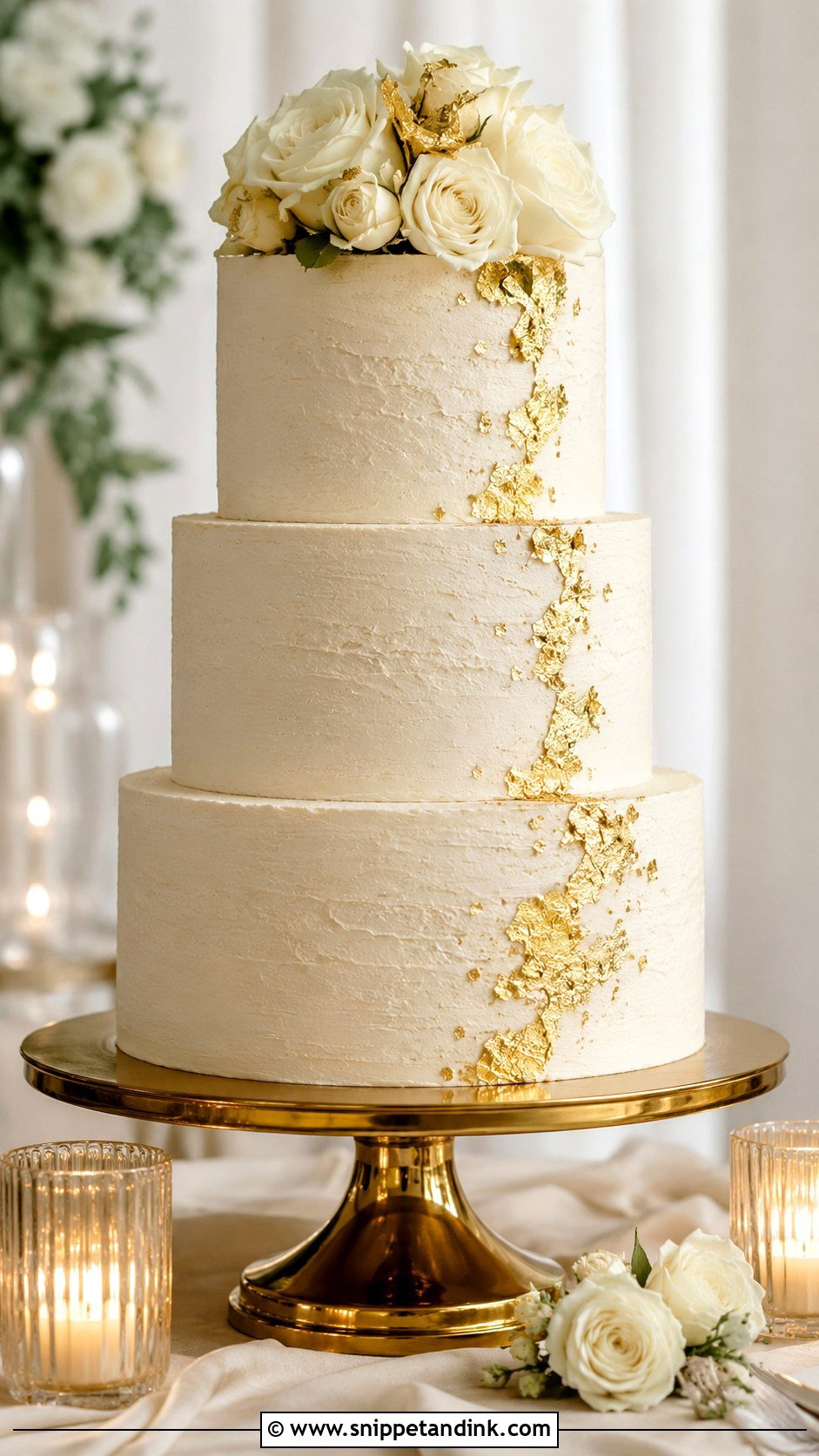
Gold leaf works by restraint. I place small pieces along textured buttercream, tier edges or one side, against ivory, white, beige or soft blush. Real edible leaf is so thin it lifts with a breath, so it goes on with a soft brush in a still room, never at the venue in a breeze. Fresh white flowers, dried accents or smooth fondant suit it. Evening receptions show it off best, since candlelight catches the edges.
12. Bas Relief Wedding Cake
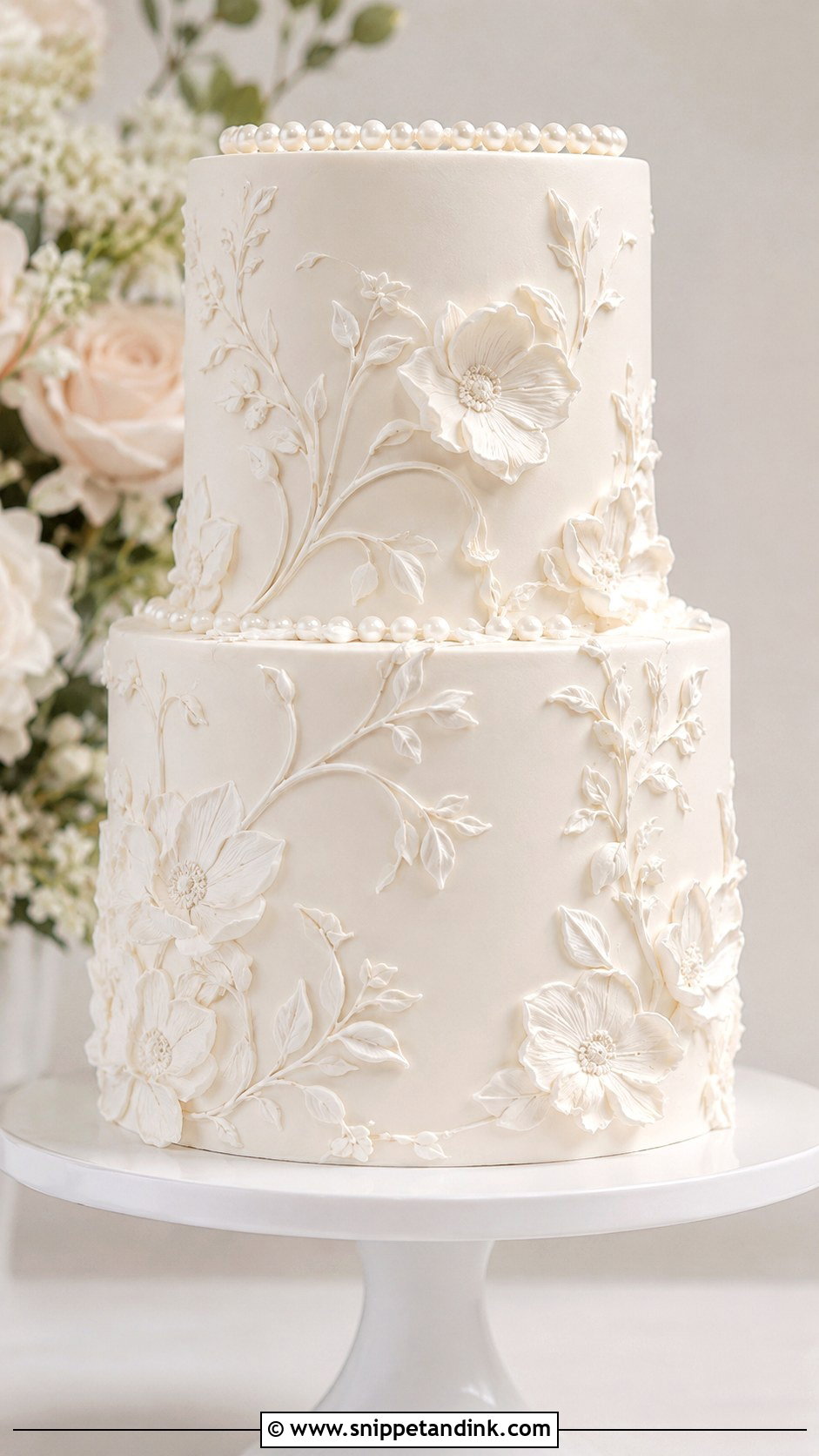
Raised details on the sides form flowers, vines, lace, leaves or architectural shapes. Because the relief is usually the same color as the cake, it reads quiet but considered, and side lighting picks out every shadow in photos. I work it on fondant or firm buttercream. Keep flowers minimal or use a simple topper so the pattern stays visible. Do ask about the cake table lighting: under flat overhead light, a tone-on-tone relief can almost vanish.
13. Pleated Wedding Cake
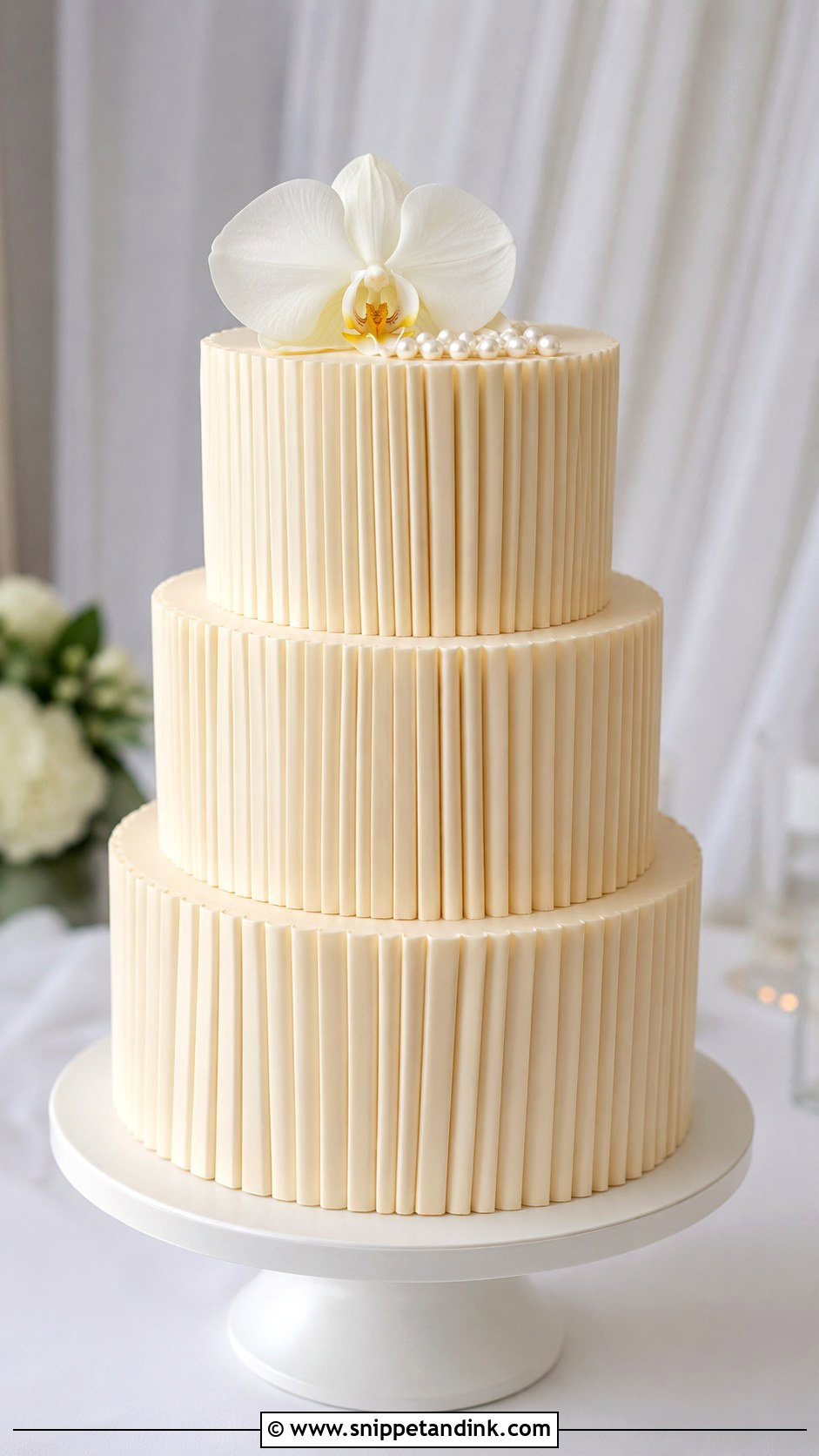
Folded fabric and modern gowns inspired this one, with vertical or angled pleats around each tier. Buttercream gives softer pleats; fondant gives sharper lines. Ivory, pearl white or warm cream suit it, with one statement flower, a small bow or a smooth top tier for balance. Modern venues and minimalist receptions fit well. It’s quietly time-consuming. Every pleat has to match its neighbor in width, and on a large bottom tier that’s a lot of identical strips.
14. Painted Wedding Cake
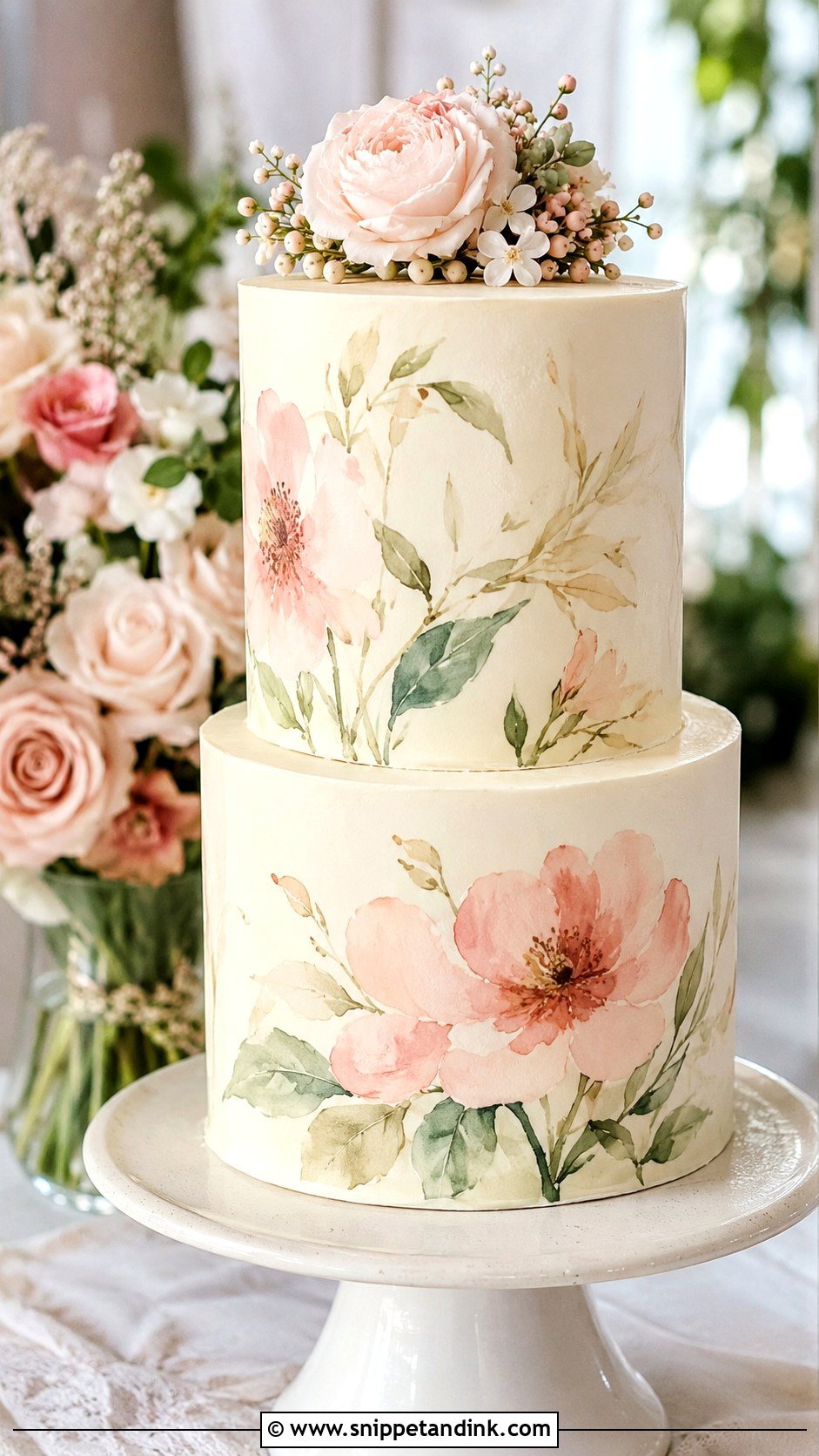
Watercolor flowers, abstract brushstrokes, greenery or washes of color turn the sides into artwork. On fondant I paint with food coloring thinned in clear alcohol, which evaporates and leaves crisp color; on buttercream I use tinted buttercream instead, and the effect is softer. Match the palette to your bouquet, invitations or linens, in blush, sage, dusty blue, lavender or peach. Keep the rest clean so the painting looks intentional. Tall tiers give a design room.
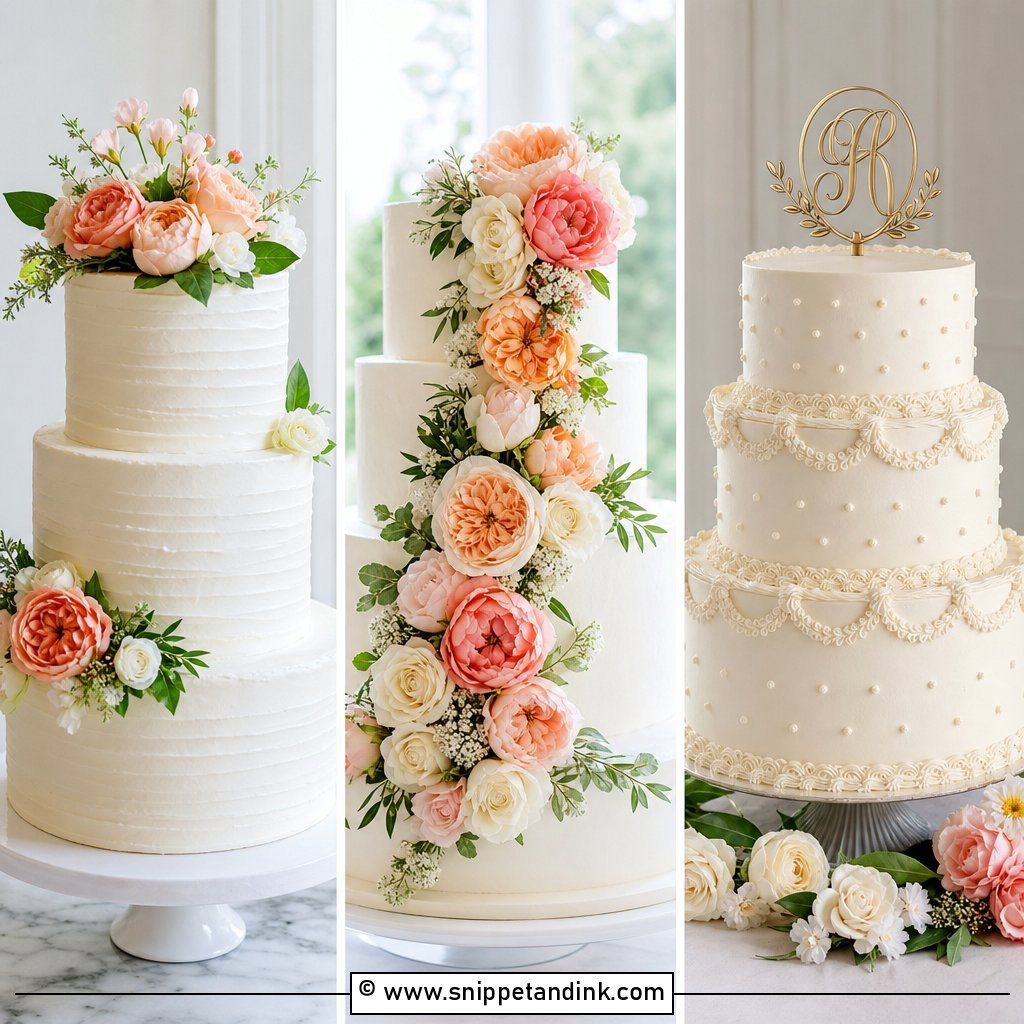


15. Ombré Wedding Cake
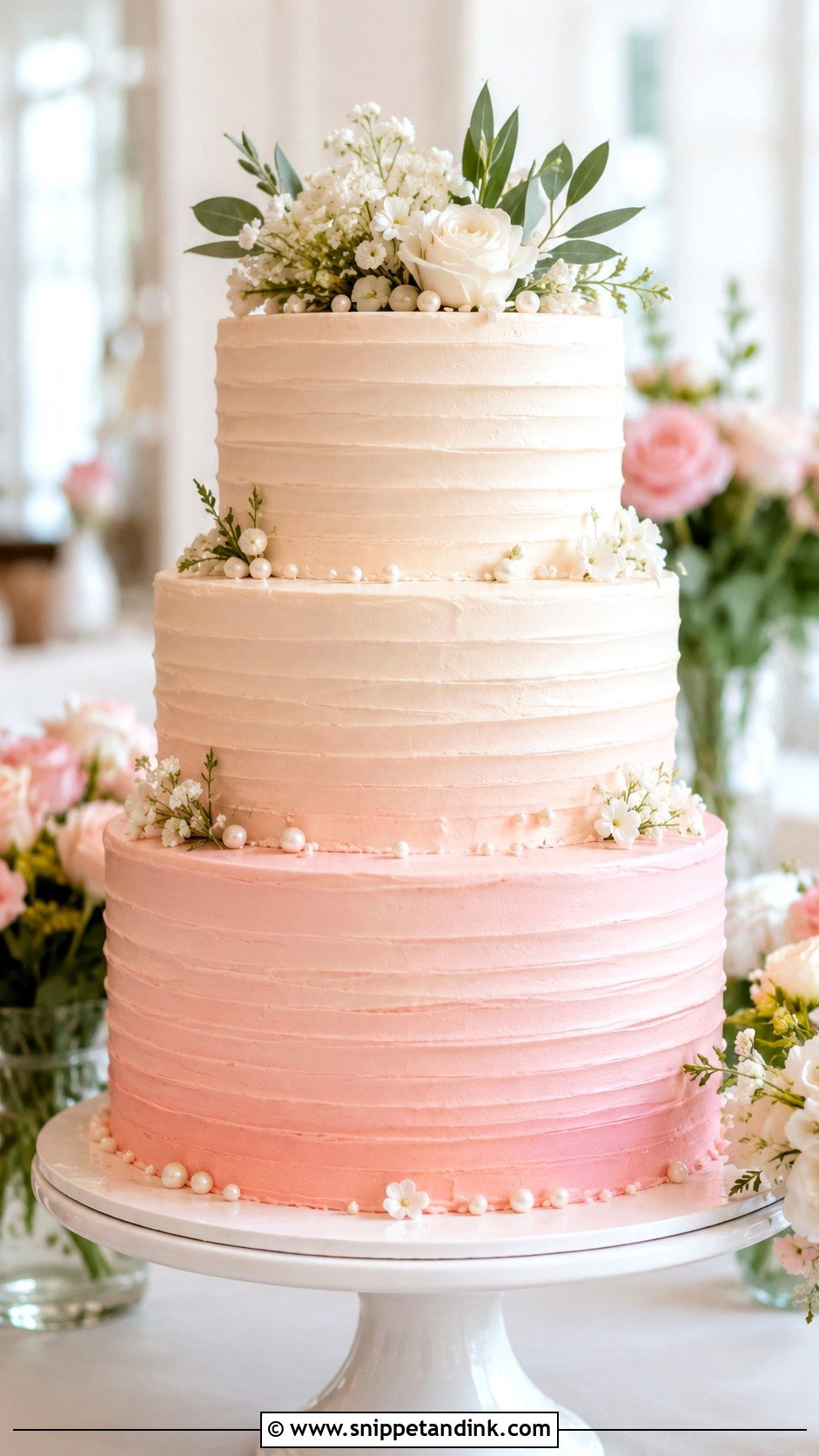
Color fades across the sides here, dark to light, blush to ivory, blue to white or champagne to cream. It brings in color while keeping the cake calm. Buttercream blends most softly. Add minimal florals, pearls or a clean topper so the fade stays the focus. Beach weddings, garden parties and receptions with a clear palette suit it. Deep shades take a lot of coloring, which can change the taste and stain teeth, so I keep the darkest band thin or at the base.
16. Semi Naked Wedding Cake
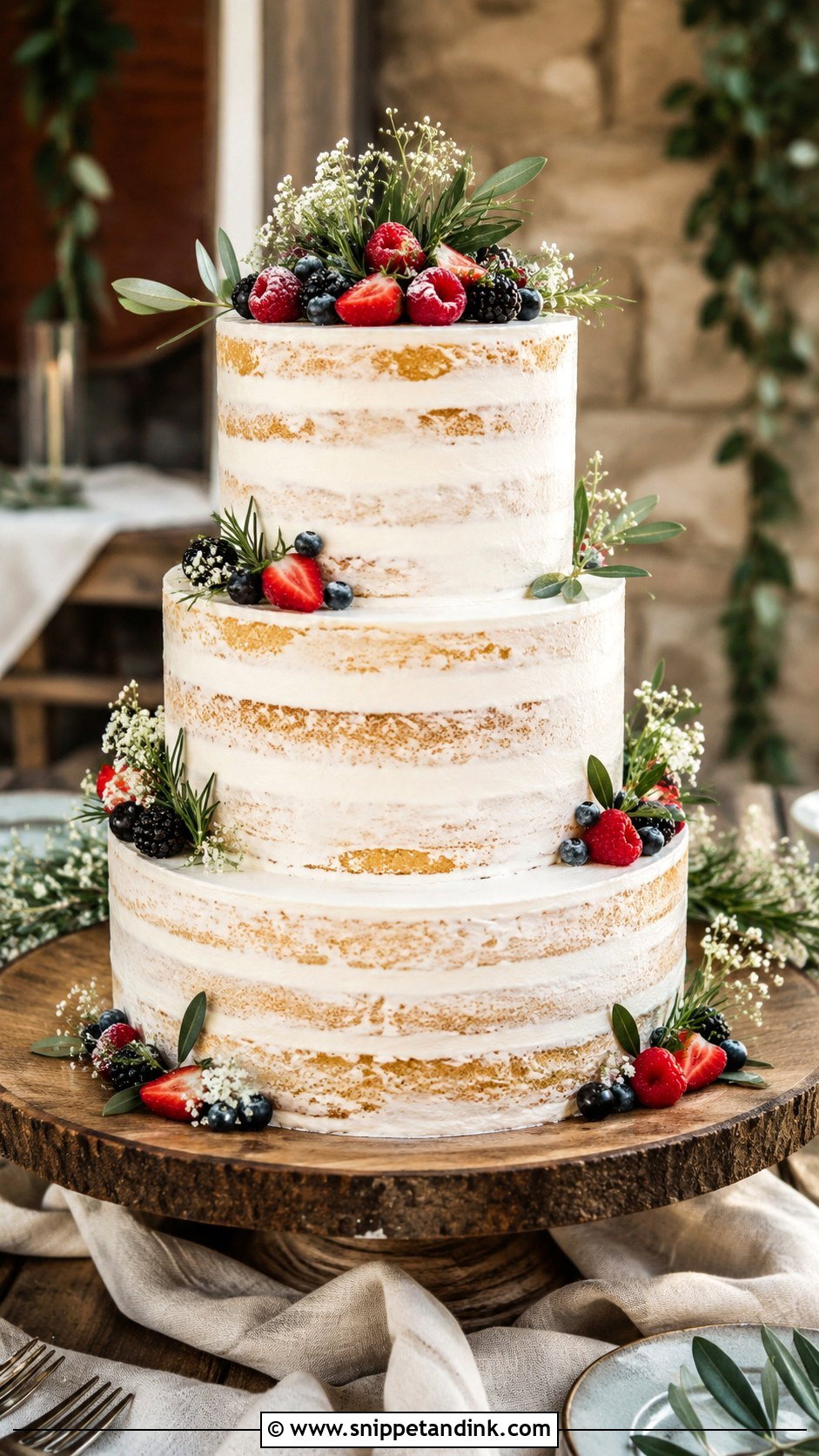
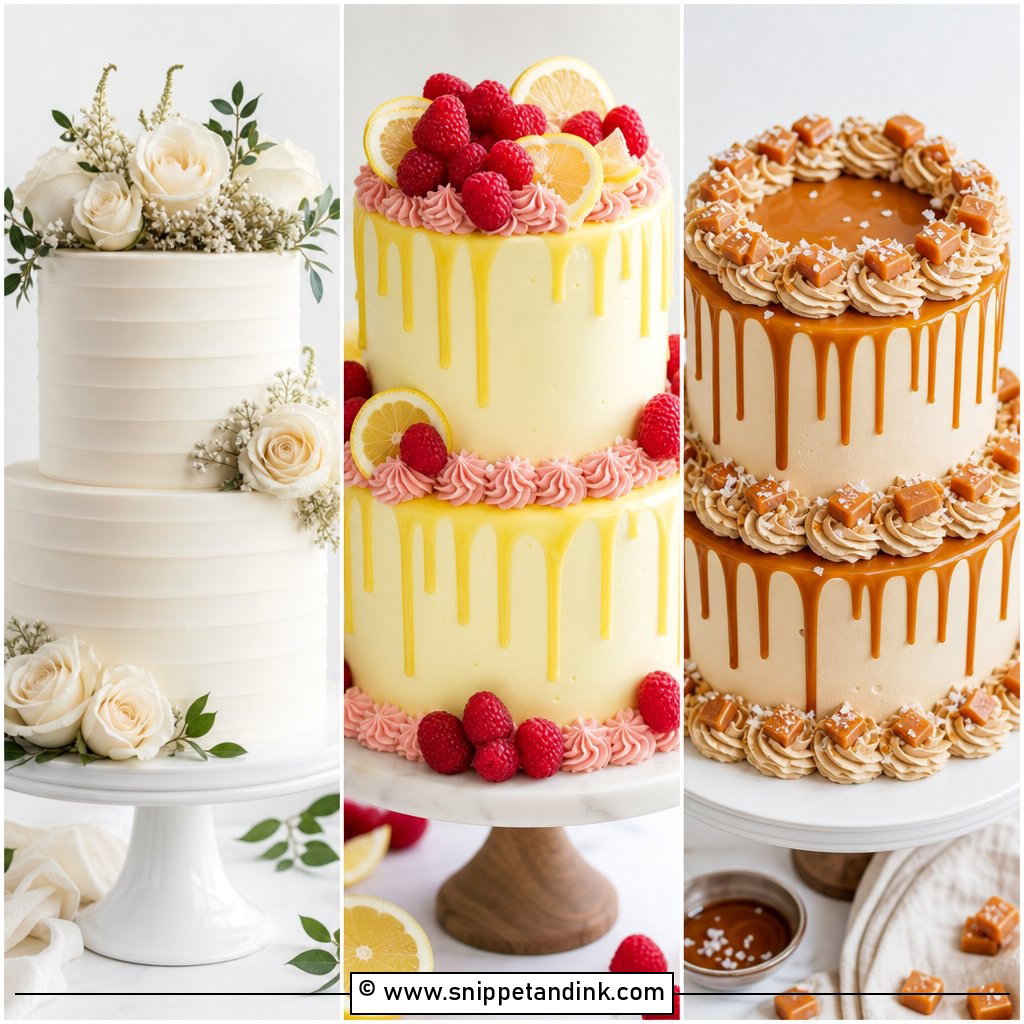
Thin frosting scraped back so the sponge shows through gives the warmest, most rustic look on the list. Vanilla, almond, lemon and spice cakes suit it because their color becomes the texture. Fresh berries, greenery, small flowers or figs decorate it by season. My caution is about drying: a thin coat protects the sponge far less once it’s out. I only recommend it for a cool room or a shaded spot, set out as late as possible, and that’s exactly the timing outdoor and barn weddings need to plan for.
17. Vertical Stripe Wedding Cake
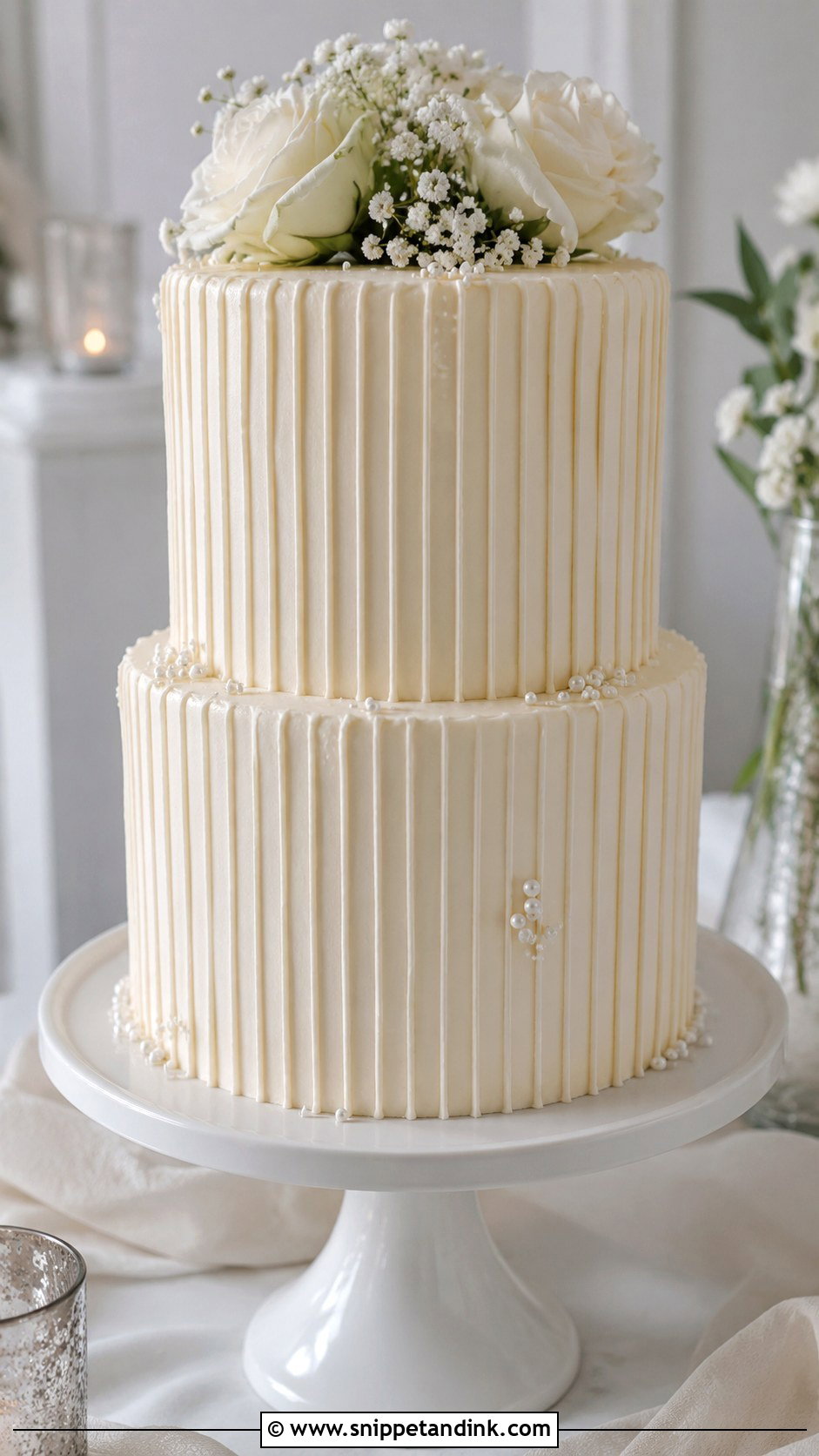
Stripes give the sides a clean rhythm, made with buttercream ridges, fondant panels, piped lines or a quiet color contrast. Thin white stripes on ivory read classic; blush or beige add warmth. Vertical lines make a short tiered cake look taller, which I lean on for smaller guest counts. A small floral cluster, pearls or a smooth top tier finish it. Uneven spacing is what gives away a rushed job, so I mark the spacing before piping a single line.
18. Shiplap Wedding Cake
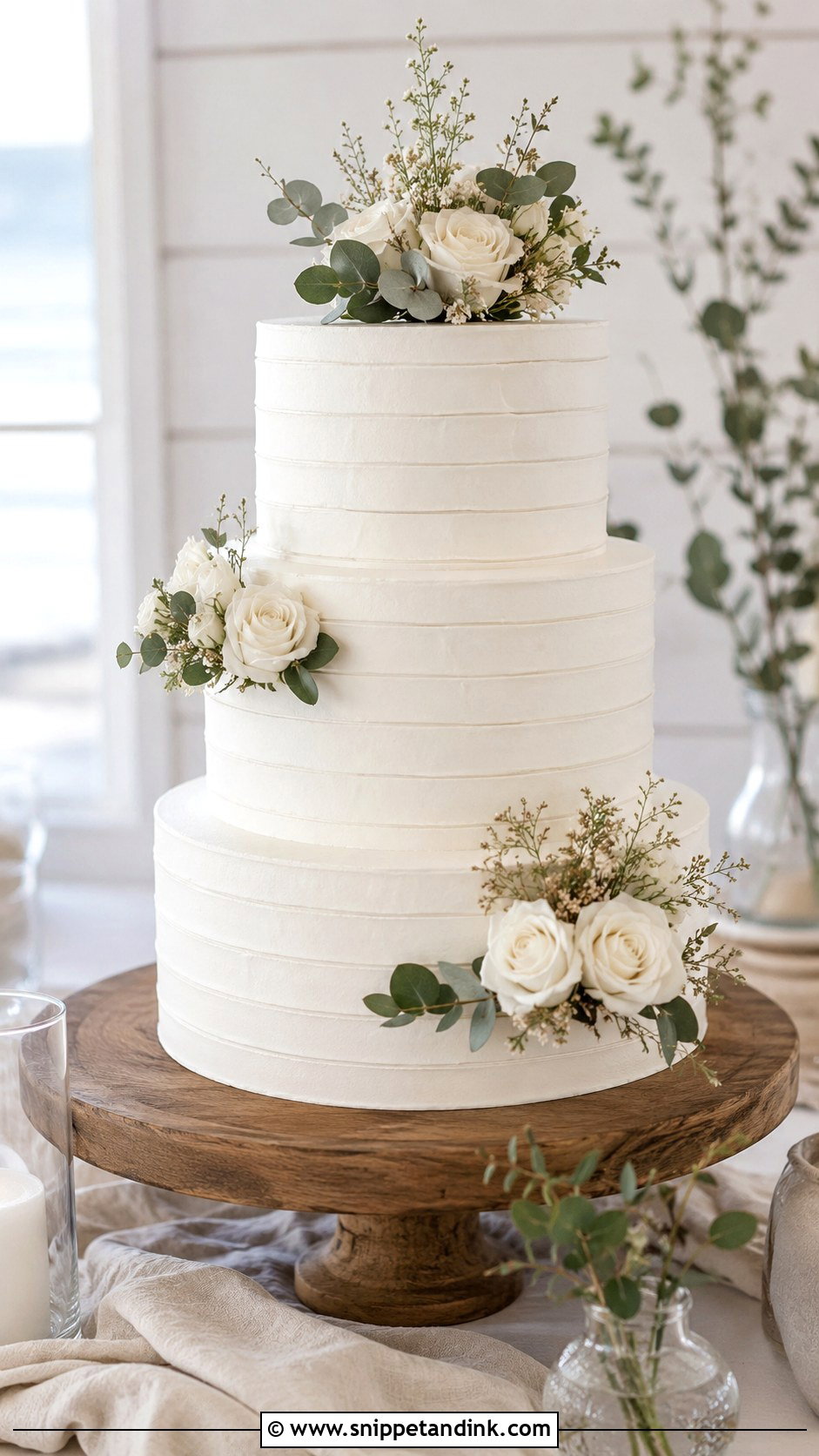
Horizontal lines like wood paneling run around each tier, soft in buttercream or sharper in fondant. White and ivory keep it bridal; beige or taupe warm it. Farmhouse, coastal, garden or rustic weddings suit it, with greenery, white flowers or small dried accents. I cut the lines with a textured scraper, and that only works if the tier is perfectly level, so this cake is really about careful stacking. It sits right between rustic and polished.
19. Geometric Wedding Cake
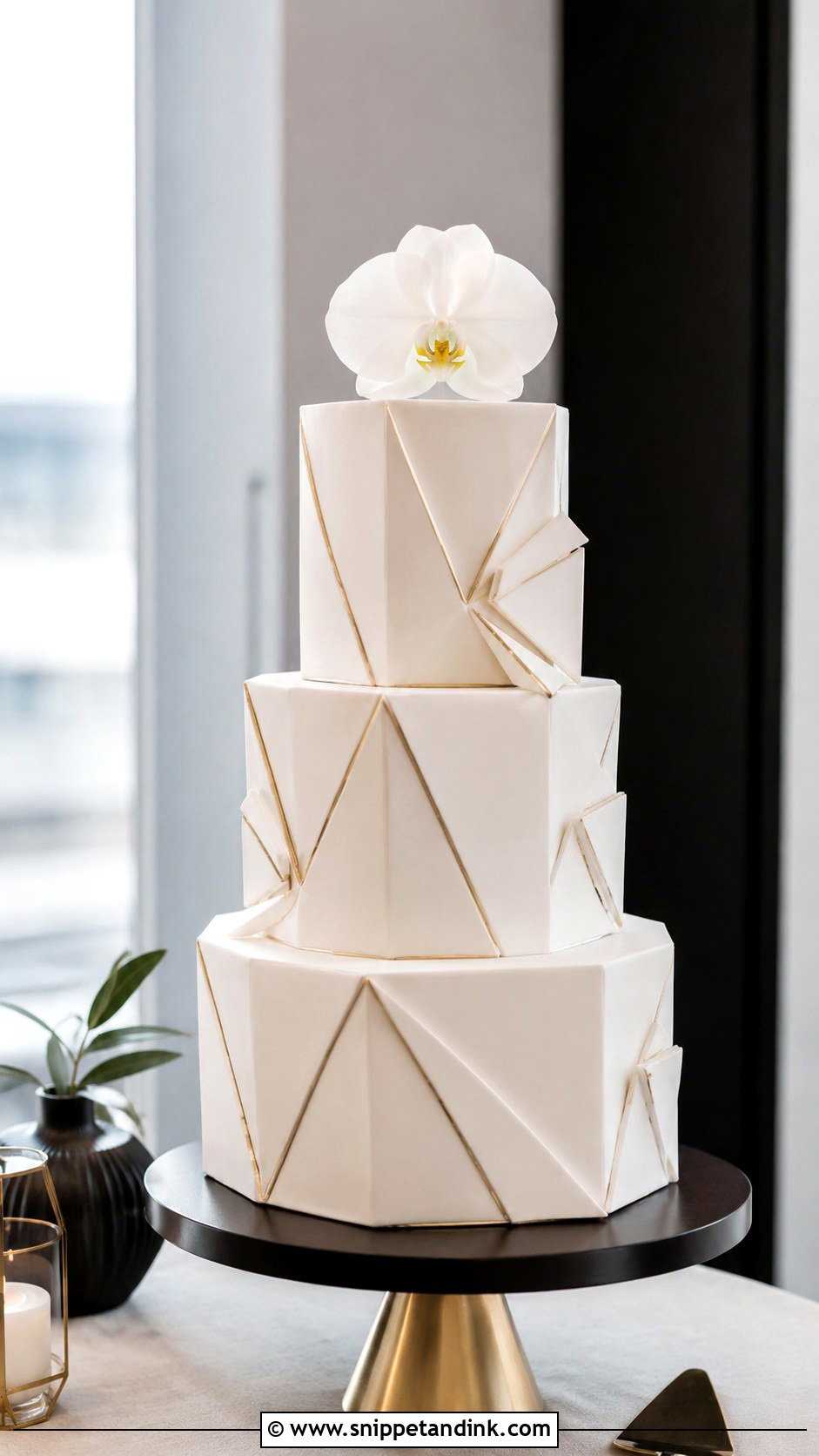
A geometric wedding cake uses angular fondant panels, raised shapes, hexagon patterns or sharp color blocking. Simple colors carry it best: white, ivory, taupe, black accents, soft metallics. One orchid, a gold edge or a single sculptural sugar flower is enough. Loft venues and city weddings fit it. Those crisp edges need fondant over a firm ganache base, because buttercream underneath softens at room temperature and blurs the angles.



20. Monogram Wedding Cake
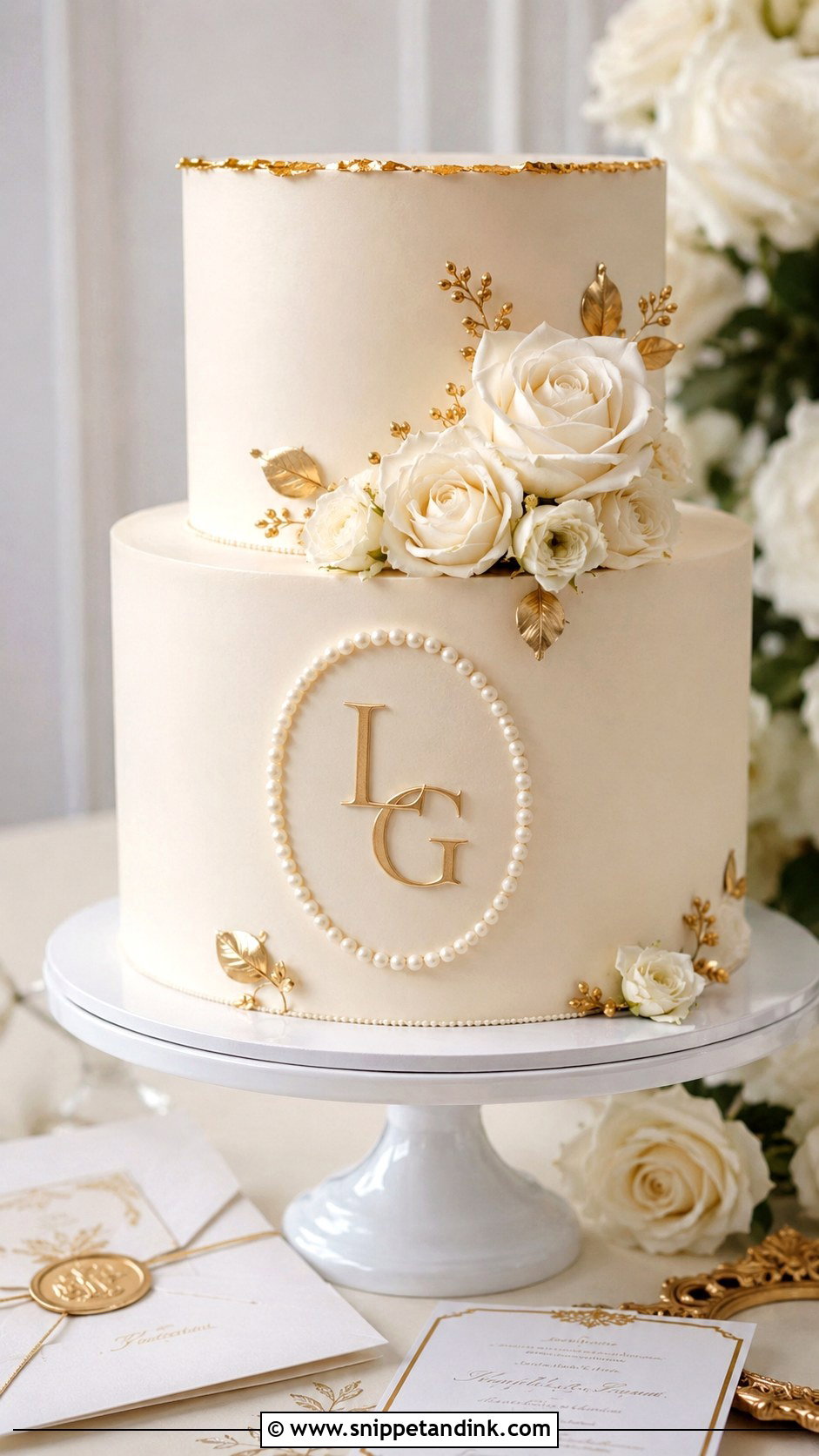
The couple’s initials can be piped, stamped, painted or built in raised fondant on the front or side of one tier. Keep the letters clean and readable: script feels romantic, simple serif letters look formal. I ask for the exact monogram file from your stationery designer so the cake matches the invitations and signage. Pearls, small flowers, lace or a thin gold frame can surround it. It personalizes the cake without covering every tier.
Heat, Condensation and the Drive to the Venue
Side decoration is the first thing to suffer once a cake leaves the kitchen. These are the risks I plan around for every reception:
- Heat. Buttercream textures soften and slump in a warm marquee or direct sun. Ask where the cake table will sit, and keep it away from windows, heaters and stage lighting.
- Condensation. A chilled fondant cake carried into a warm, humid room sweats, and the beads of water spot painted and gold-leaf finishes. Letting it come up to temperature slowly, still boxed, keeps that down.
- Transport. Tall or heavily decorated cakes travel as separate doweled tiers and get stacked at the venue. Final piping and cascades are finished on site.
- Fresh flowers. They go on at the venue as late as possible, stems sealed. Tell your florist which blooms are for the cake so they can supply unsprayed stems where possible and keep them apart.
The back nobody sees
If the cake table stands against a wall, the back is invisible all night. For labor-heavy finishes like Lambeth piping, lace or a full cascade, I’ll often suggest keeping the back plain, which can save hours of work. Just agree which side faces the room before setup, and let your photographer know.
The Side Facing the Room Matters Most
Pearls make smooth tiers romantic, stripes make them modern, Lambeth makes them vintage and pressed flowers make them feel grown in a garden. Weigh your venue, dress, flowers, season and palette, and decide how much texture you want showing in photos; some of these sit quietly, others run the room. Whatever you settle on, ask your baker to sketch the design from more than one side and talk flavors through properly. The cake still has to taste as good as it looks.
You'll Like These Ideas:





Leave a Reply