
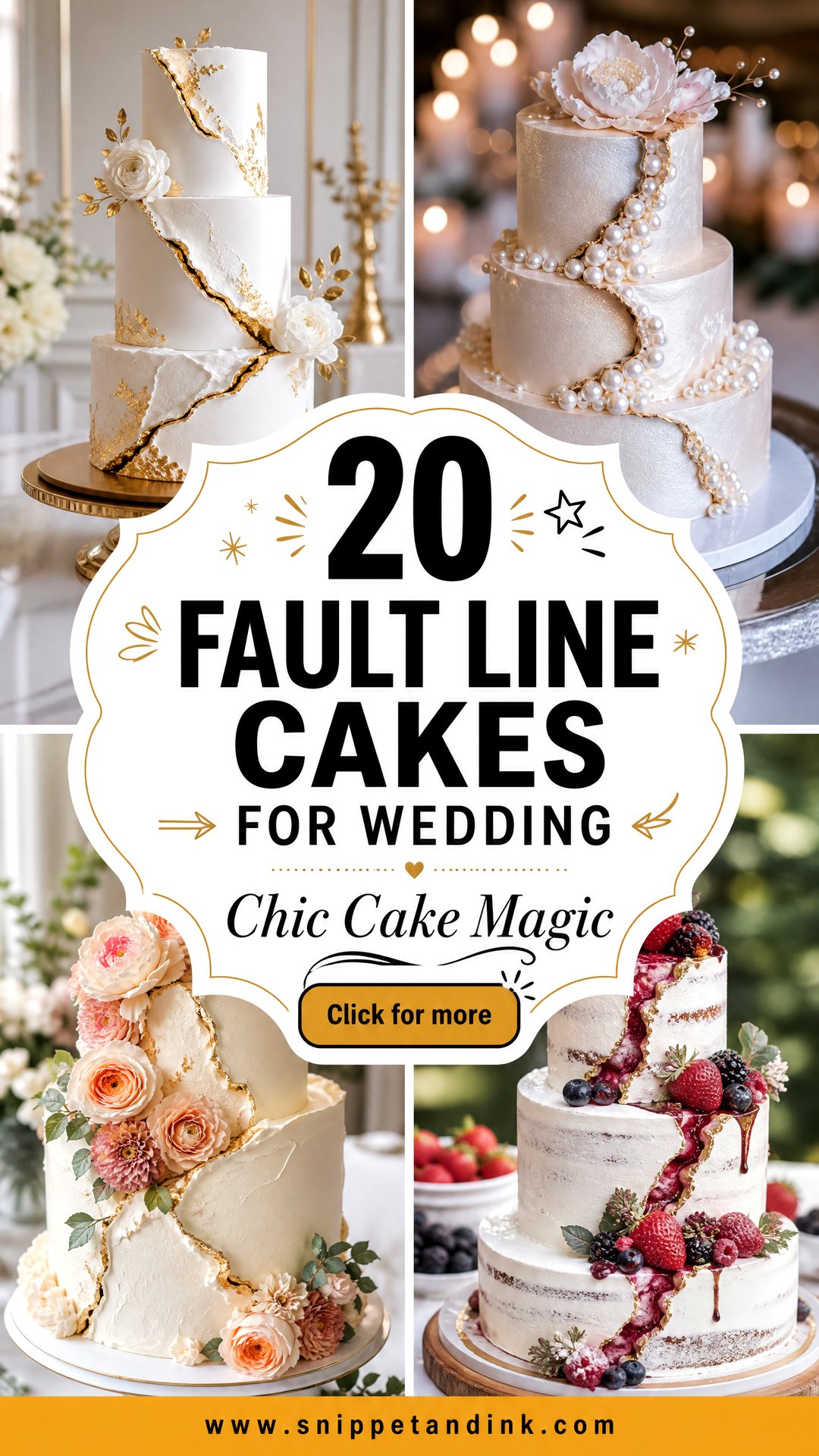
A fault line cake looks like the frosting has cracked open to show something hidden underneath: flowers, pearls, fruit, gold leaf, sugar crystals, lace texture or painted color inside the cake. The trick behind it is simple. I decorate a thin inner band first, then build a thicker collar of buttercream above and below it, so the smooth outer coat frames the reveal like a torn page. That one band can read classic, rustic, glam or garden depending on what you put in it, which is why I keep coming back to this style for couples who can’t settle on one theme. Below are twenty versions I’d happily build, with notes on what each one asks of the baker.
How a Fault Line Is Built, and What That Means for Your Order
A fault line cake is really two layers of frosting. I crumb coat the tier, then decorate a band around the middle with whatever the reveal will be: sprinkles, leaf, pearls, piped flowers. After that I pipe extra buttercream above and below the band, scrape it smooth, and leave the inner edges rough so they look torn. The finished tier ends up wider than a plain one, and it uses noticeably more buttercream.
That construction has a few practical consequences you should know before you order:
- Firm buttercream matters. A soft, whipped frosting won’t hold a crisp ledge, so I use a sturdier meringue or butter-based recipe that sets well in the fridge.
- The split adds weight to the sides. Heavy fills like rock candy or pearls need good dowelling, especially on lower tiers.
- Width is a design choice. A narrow band reads delicate; a wide one reads bold. I sketch both for couples before we start.
- Not every tier needs one. A single fault line on the middle tier often looks more considered than three stacked splits.
Bring These to Your Cake Consultation
When a couple arrives with one photo and the words fault line, I still need several answers before I can quote. Coming prepared saves a second meeting.
- Your guest count, so I know whether the display cake has to feed everyone or whether kitchen sheet cakes will make up the difference.
- A photo of the fill you love, plus a swatch or bloom from your florist if color needs to match.
- Whether everything in the crack must be edible. Fresh flowers, dried stems and non-edible pearls all change the prep.
- The venue, the time the cake will be set up and whether the cake table is indoors, in sun or near a heater.
- Who is delivering. Fault line tiers are wider and heavier, and I prefer to stack them on site.
1. White And Gold Fault Line Wedding Cake
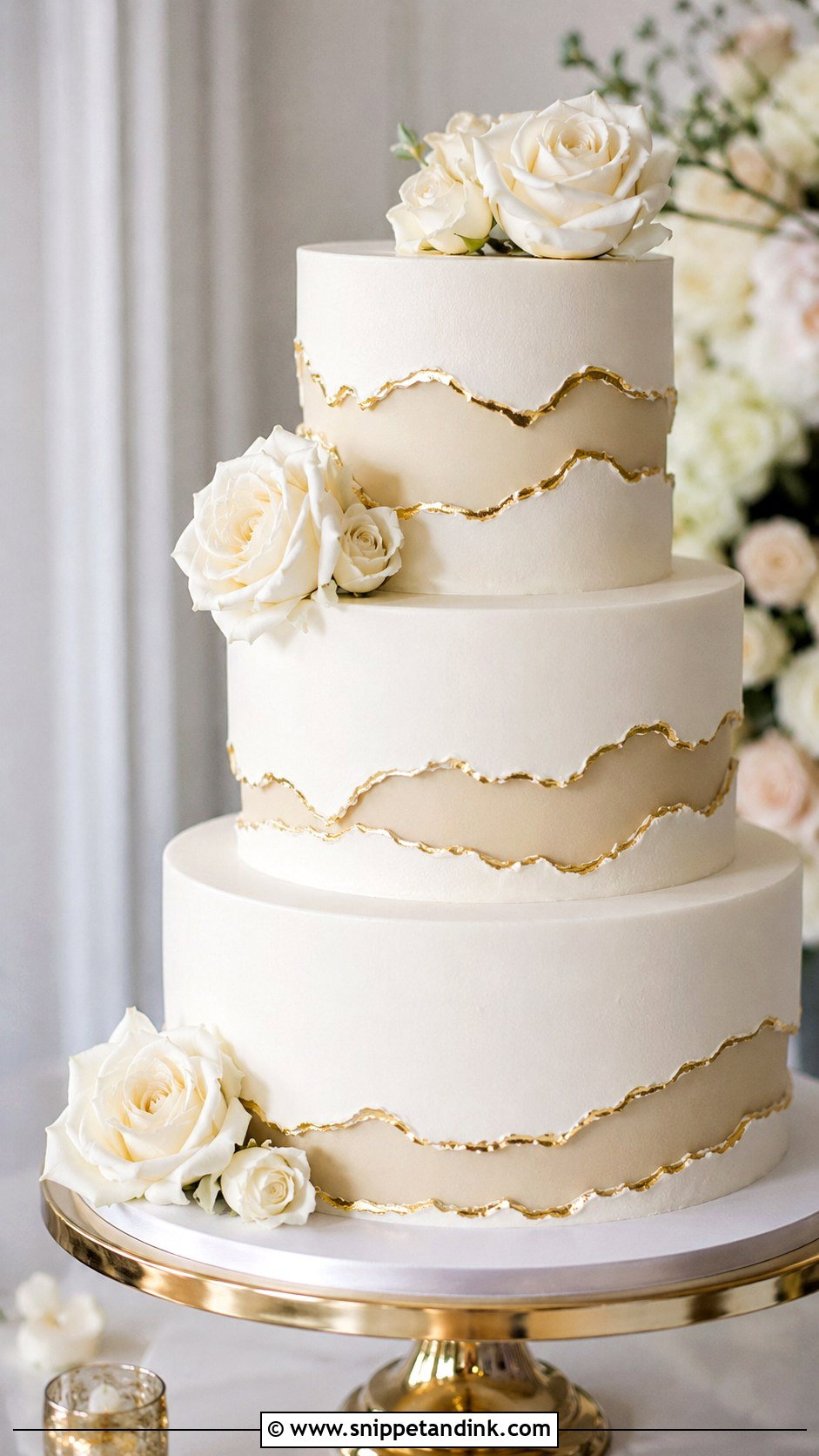
White and gold is the version I suggest when a couple is nervous about trends, because the split reads as texture rather than a gimmick. The secret is in the torn edges: I press gold leaf onto the rough lip of the upper and lower buttercream while it’s still slightly tacky, so it catches light from every side of the room. Vanilla bean, almond or a champagne sponge keep the flavor as quiet as the finish. If you want flowers, a few ivory roses on the top tier are plenty.
2. Floral Fault Line Wedding Cake
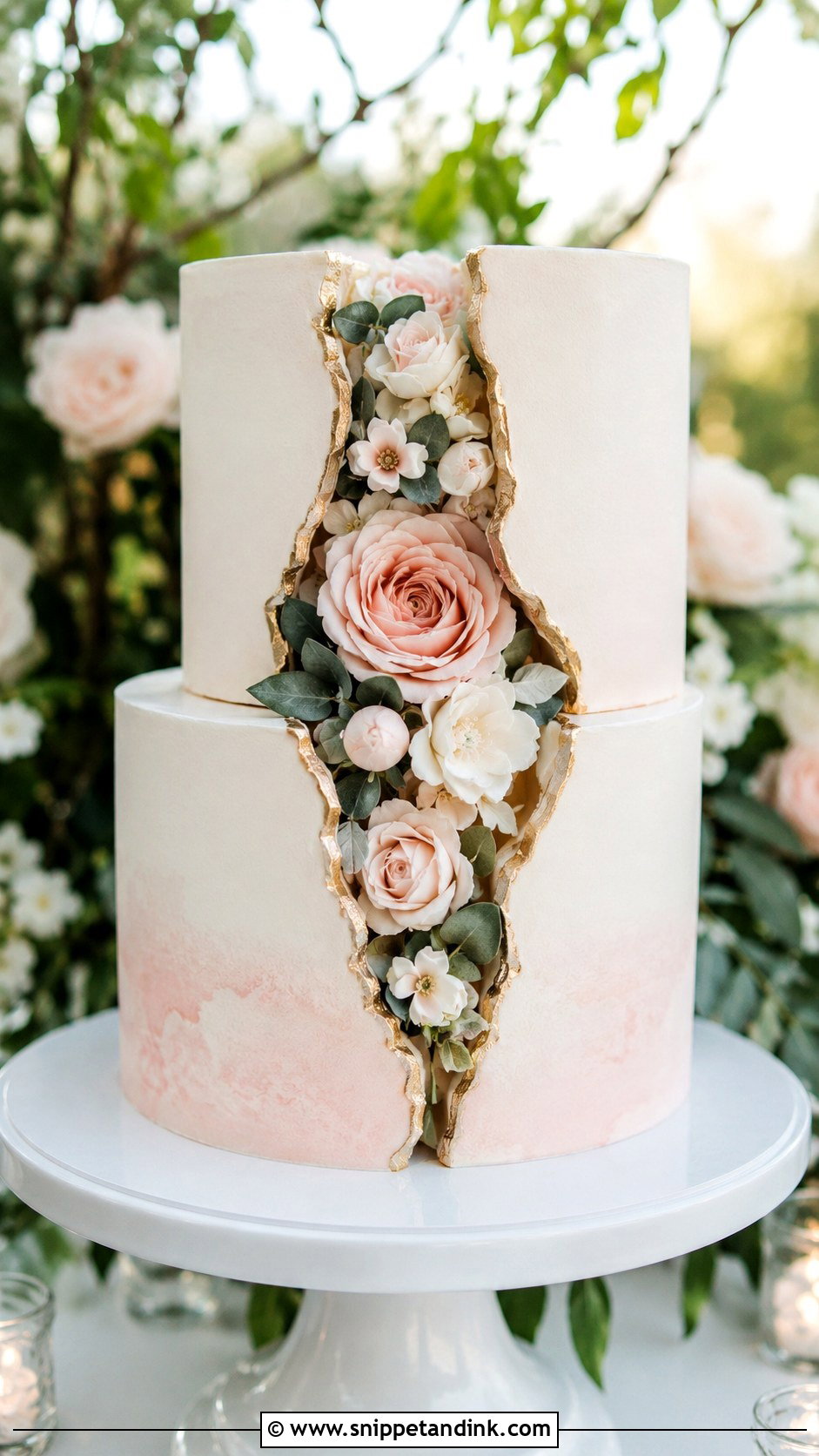
Here the flowers sit inside the split rather than on top, so they look as if they’re growing through the cake. Piped buttercream blooms and sugar flowers are the safest fill. Fresh flowers can work, but I only use stems your florist confirms are non-toxic and unsprayed, and I wrap or tape every stem so nothing touches the sponge directly. Blush, ivory and sage keep it soft. Keep the outer coat completely smooth; any texture there fights with the flower band for attention.
3. Blush Pink Fault Line Wedding Cake
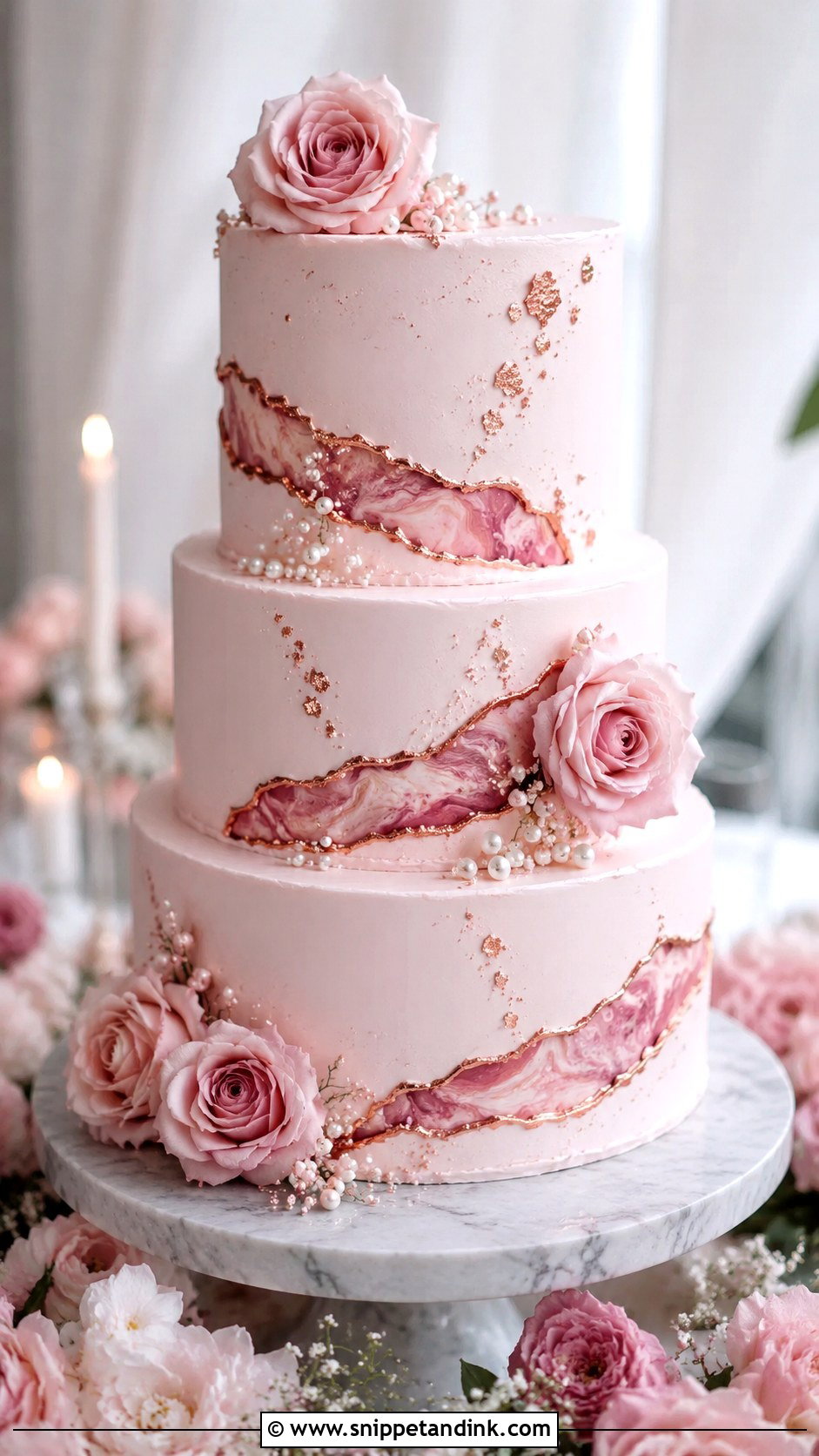
Blush flatters almost every venue, and on a fault line cake you can play with depth: pale pink outer coat with a rose-colored center, or white outside with the pink saved for the reveal. I tint blush buttercream a shade lighter than the sample you bring me, because it deepens as it sits and can turn salmon under warm reception lighting. Pearls, gold leaf or small sugar flowers fit the gap well. Raspberry, strawberry, rose or vanilla all suit it, and one statement bloom on top finishes it.
4. Pearl Fault Line Wedding Cake
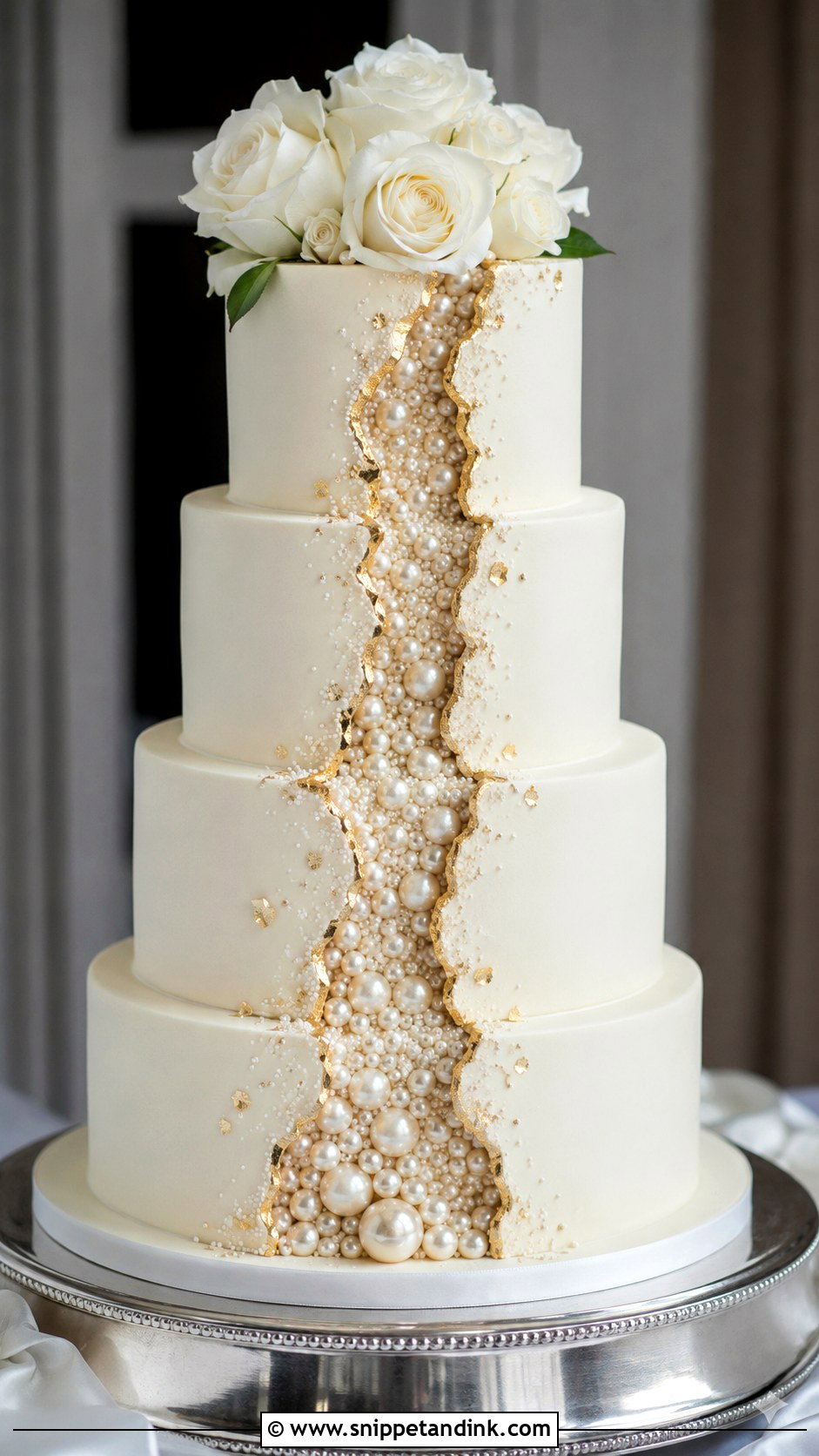
Pearls give the crack a jewelry finish, and mixing three or four sizes is what stops it looking like a row of beads. I set the larger dragées first, then fill the gaps with the tiny ones so no frosting peeks through. Ivory buttercream or white fondant keeps them crisp, and a touch of gold leaf on the rough edges is enough. One warning: hard sugar pearls are not kind to teeth, so I tell couples to let guests know or brush them aside when slicing. It pairs naturally with lace gowns and candlelit, formal rooms.
5. Geode Fault Line Wedding Cake
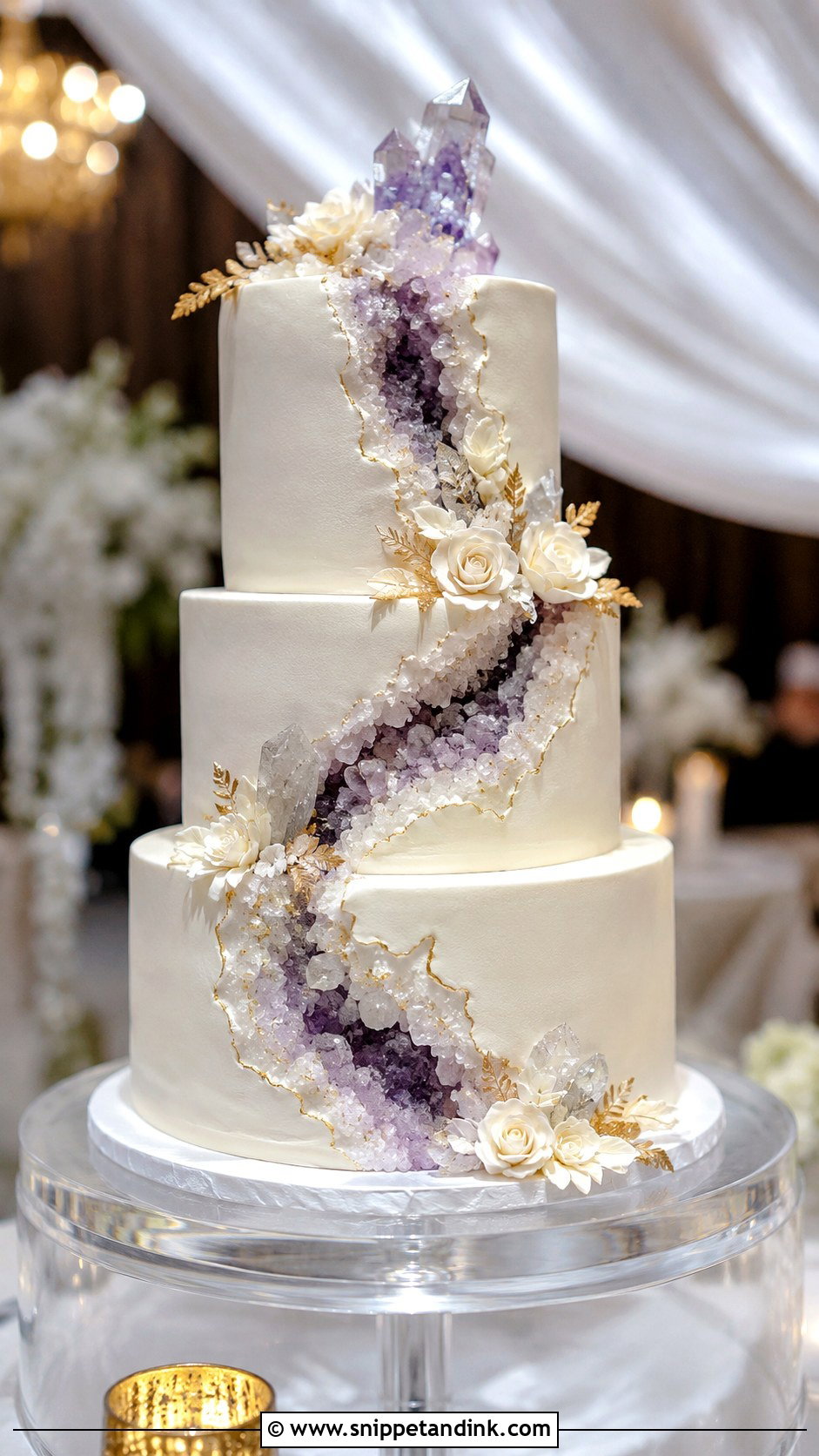
A geode center turns the split into a crystal cave. I build it with rock candy and sugar crystals, then paint the edges with edible metallic dust. Color matters more here than anywhere else: amethyst, dusty blue, grey marble and pale blush all read as stone, while brighter shades start to look like candy. Rock candy is heavy, so the tier needs firm buttercream and good internal support, and in a very humid venue the crystals can turn sticky and lose their sparkle. Leave the top almost bare and let the geode do the talking.
6. Marble Fault Line Wedding Cake
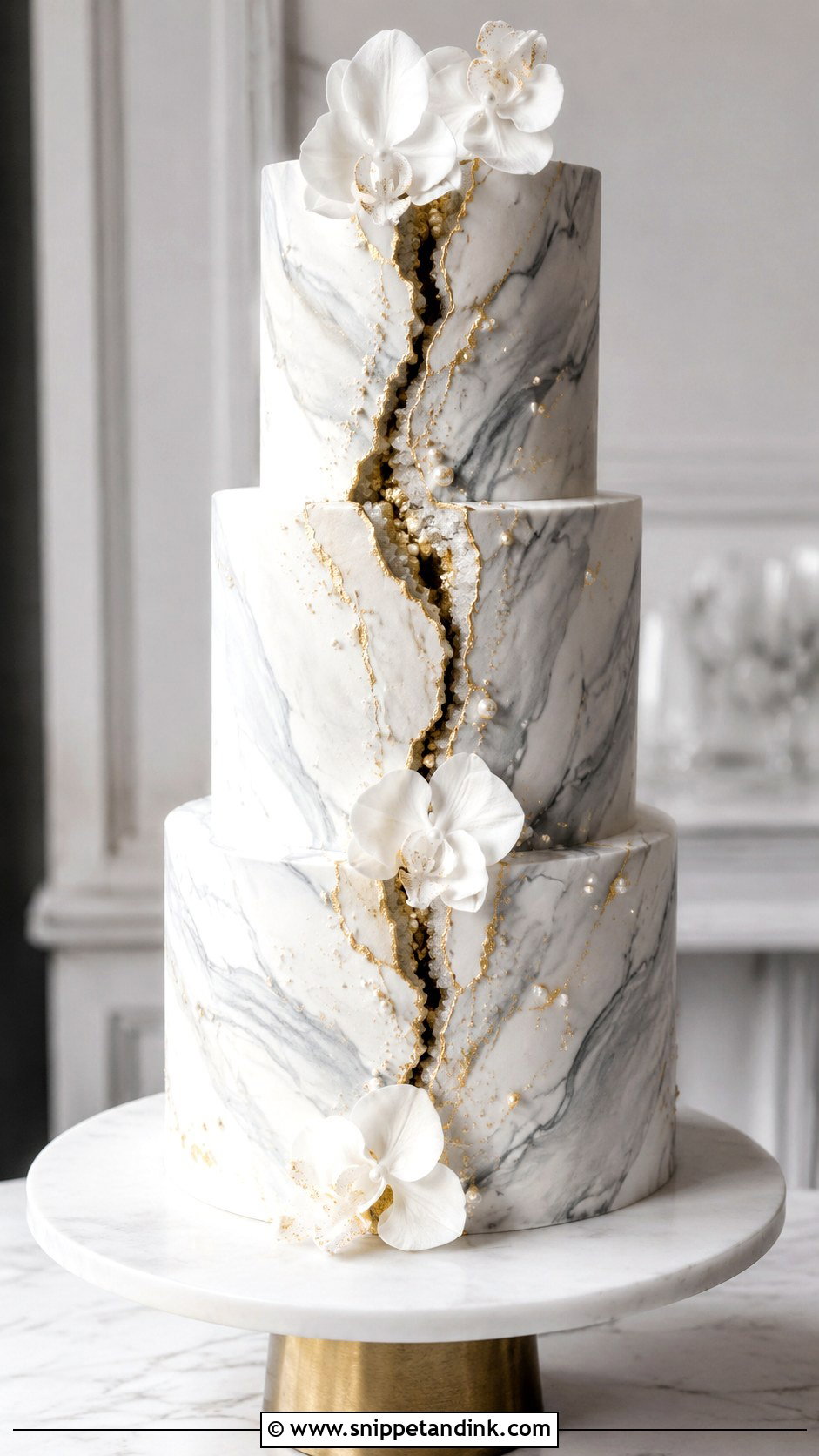
Marbled frosting gives the outside a polished stone look, and the fault line breaks it up with gold, pearls, flowers or crystals. The marble has to be done with restraint. When I swirl too much color in, the crack stops reading as intentional and the whole cake looks messy. Grey and white is the classic pairing, though blush, green or blue veining can match a colorful palette. Sharp edges on each tier help, and a small floral cluster softens the strong pattern.
7. Rose Gold Fault Line Wedding Cake
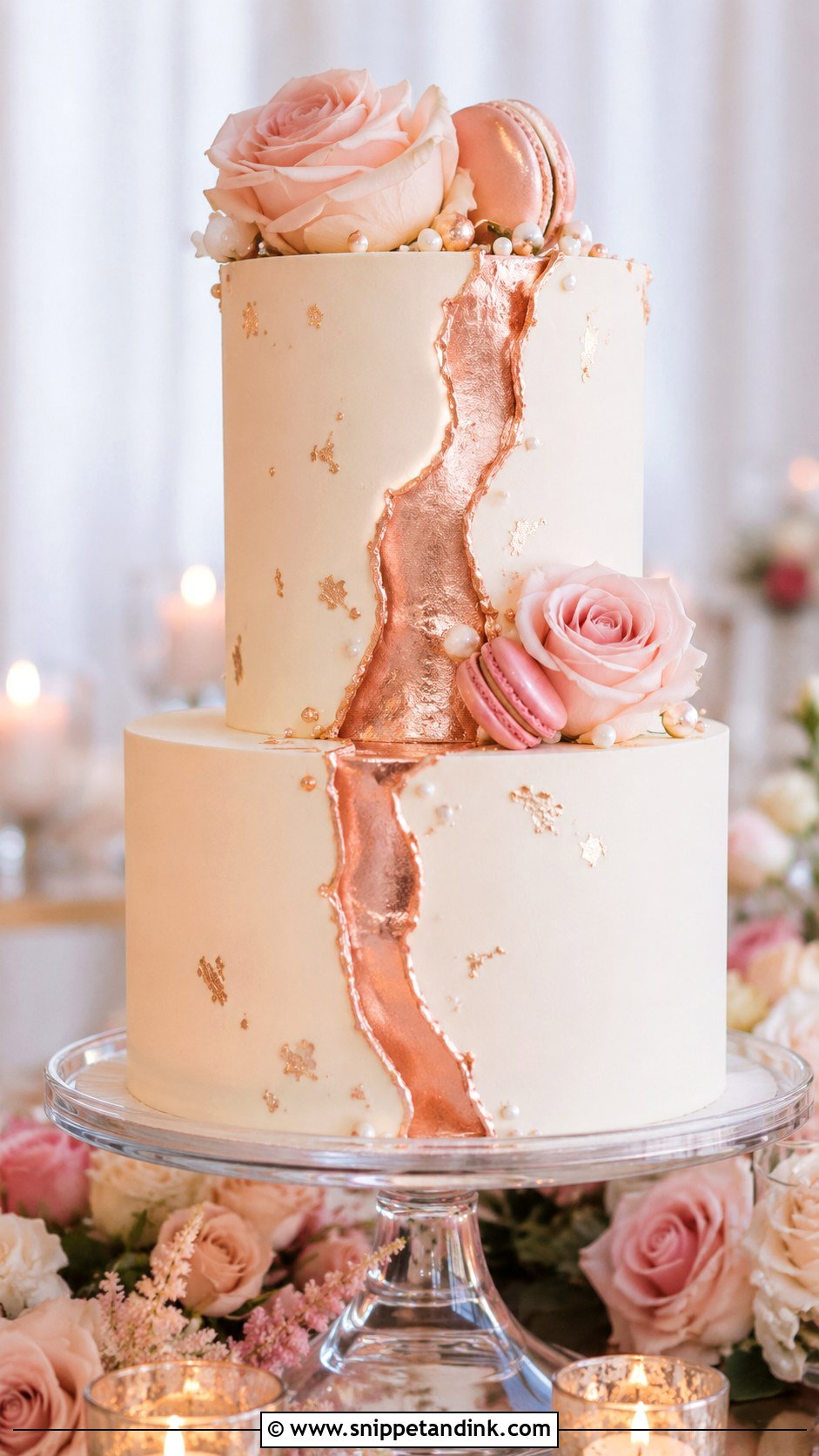
Rose gold is warmer than yellow gold and quieter than copper, which makes it easy to live with. I usually pair ivory or blush buttercream with rose gold leaf, shimmered pearls or hand-painted edges. Metallic leaf reflects whatever light is in the room, so it glows near candles and pink florals and can look flat under cool white uplighting; ask your venue what lighting the cake table will get. Vanilla bean, strawberry champagne, white chocolate raspberry and almond all suit it. Delicate roses or a few small macarons balance the shine.
8. Greenery Fault Line Wedding Cake
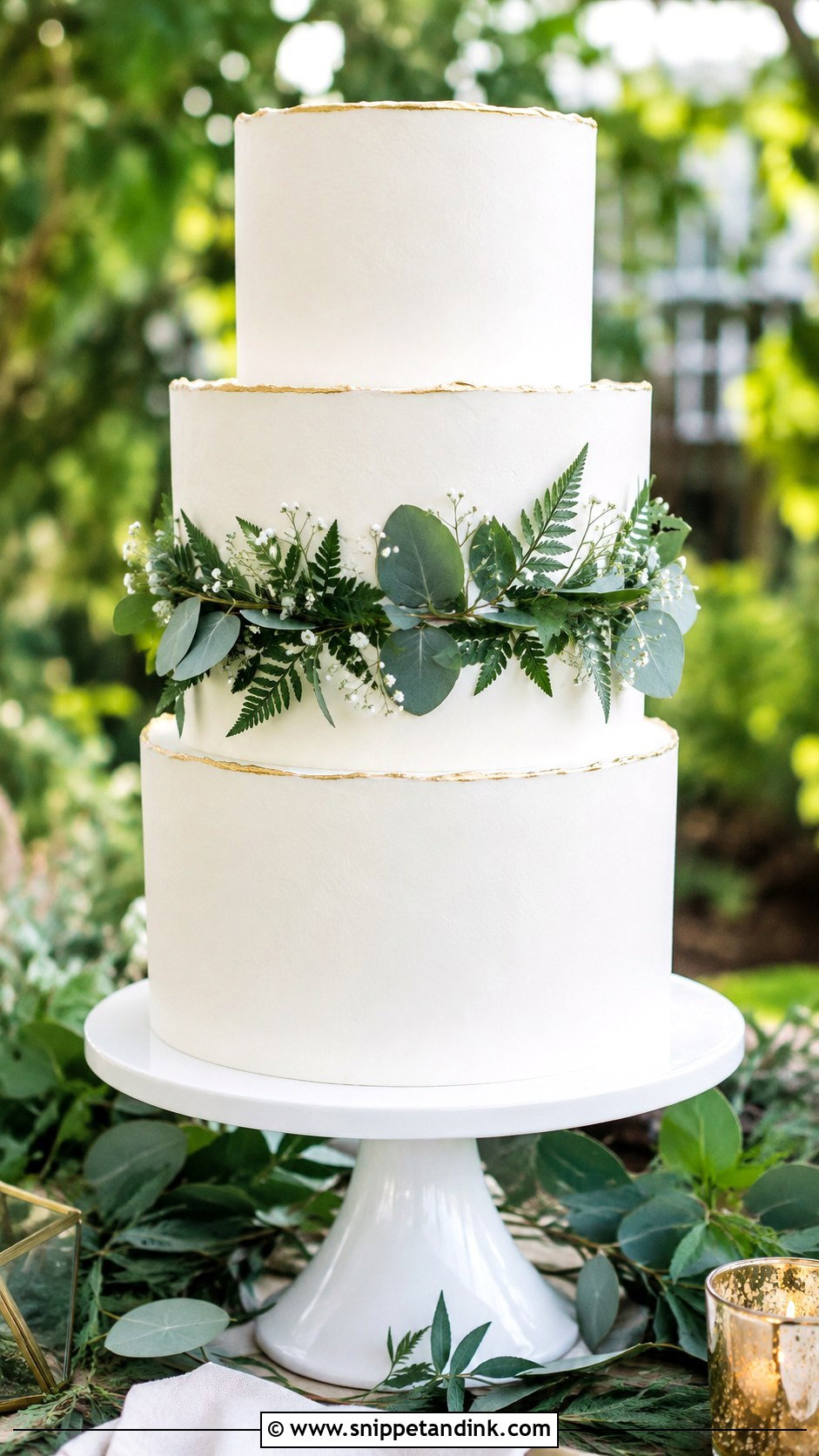
Greenery belongs in garden, woodland and minimalist weddings, and it’s one of the easiest bands to get right. I fill the center with sugar foliage, piped leaves or edible herbs, because real eucalyptus is not food-safe and shouldn’t touch frosting. White buttercream keeps it fresh, while sage, olive and fern tones add depth without needing much else. Lemon, pistachio, almond and vanilla work with the green. A few white flowers on top are optional; the leaves already give it movement.
9. Rustic Fault Line Wedding Cake
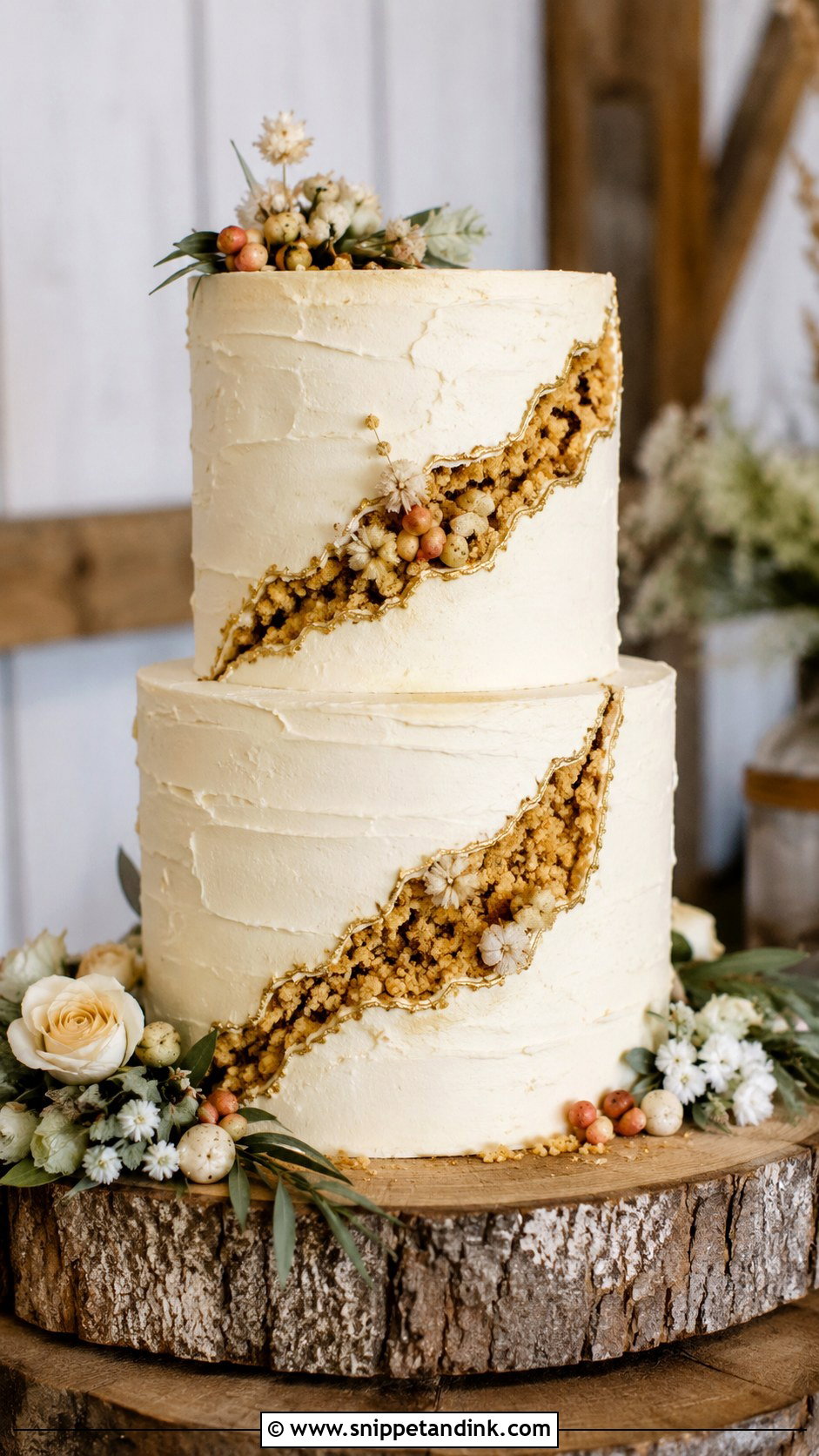
Rustic weddings forgive a little imperfection, so I finish this one with a textured, spatula-marked buttercream instead of a mirror-smooth coat. The fault line can hold dried flowers, small berries, toasted crumbs or muted greenery. Cream, taupe and soft brown keep it warm. Carrot, spice, honey vanilla and brown butter cakes all suit wooden tables and barn venues. Keep the topper loose and slightly wild; a stiff arrangement looks out of place against the hand-finished sides.
10. Boho Fault Line Wedding Cake
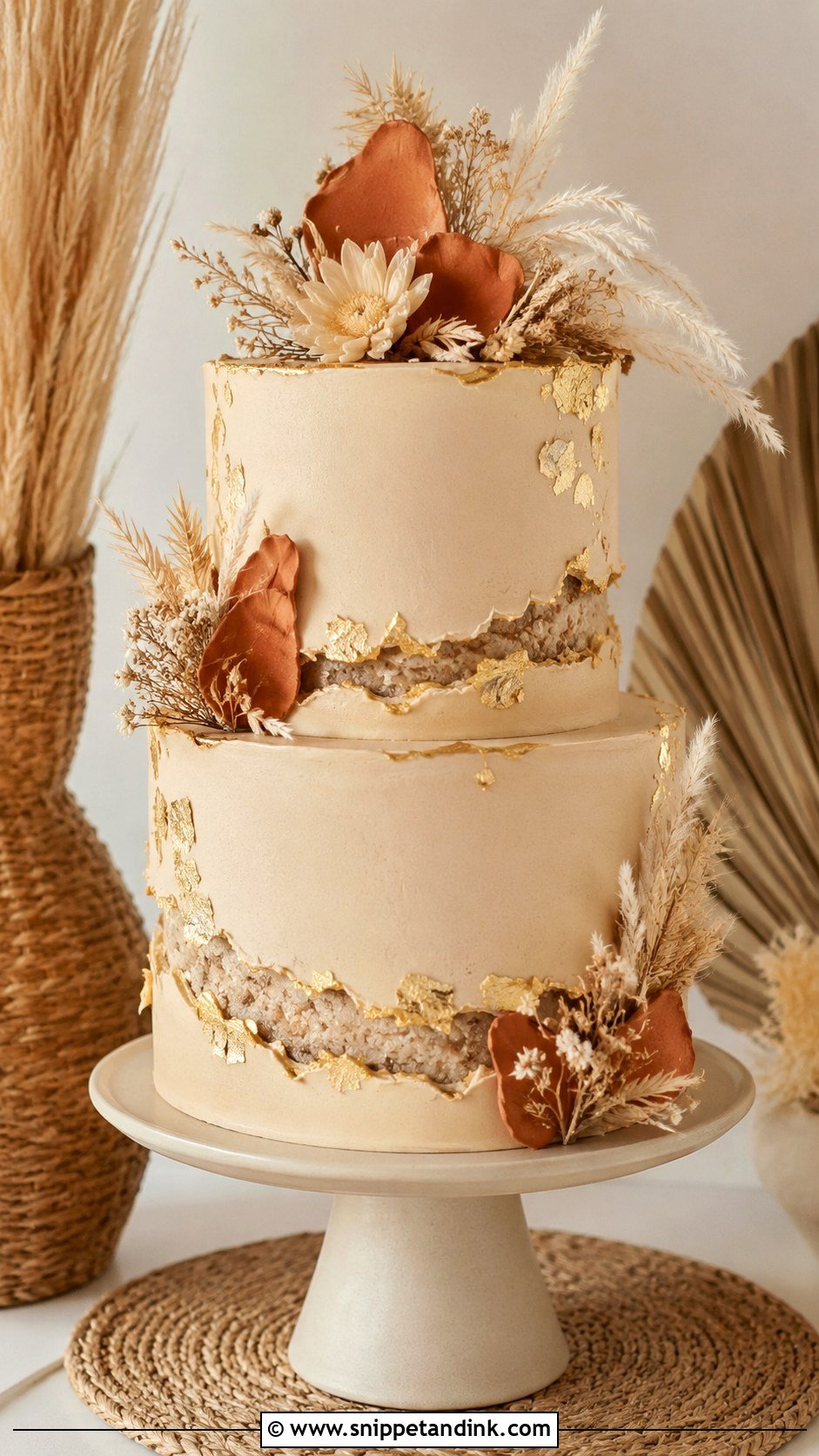
Boho cakes lean on texture: dried flowers, pampas grass, muted roses, gold leaf and a matte neutral finish. Dried stems are not edible and often shed, so I keep them on the outside and away from the cut lines, or put them in a small food-safe pick. The fault line itself can hold pressed petals or pearls. Sand, terracotta, dusty peach and beige sit well together for desert, beach and backyard weddings. Vanilla honey, coconut, chai and almond fit the mood. Let the crack look artful, and keep everything around it soft.
11. Blue Fault Line Wedding Cake
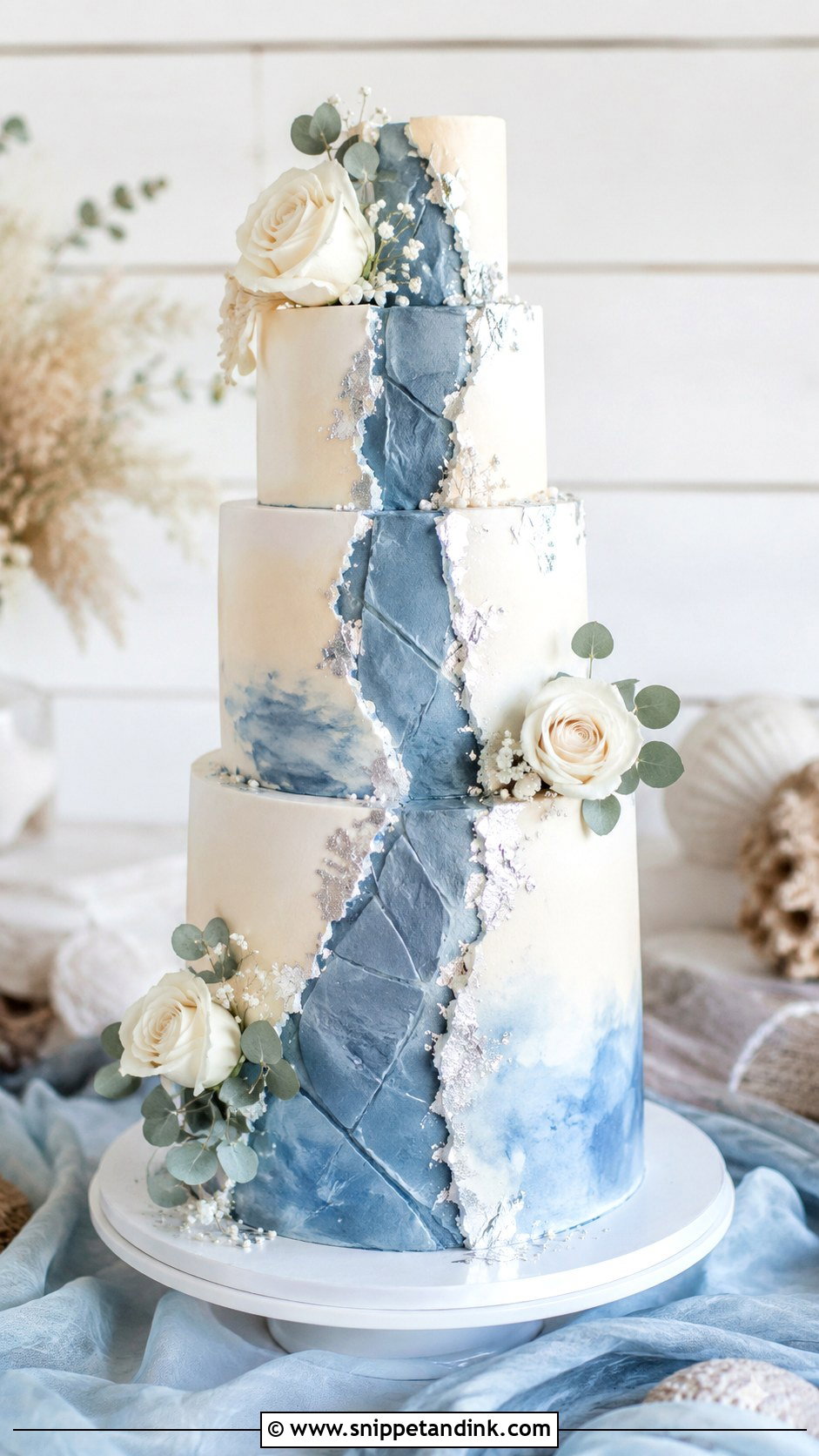
Blue reads cool and coastal, and it’s a good fit for winter palettes too. Pale blue, dusty blue, navy or a watercolor wash can go in the fault line or across the frosting. For a soft version I combine white buttercream with silver leaf, pearls and ivory flowers; for something bolder, a navy center with gold edging. Navy buttercream takes a lot of coloring and can taste bitter if it’s rushed, so I make it a day ahead and let the shade develop. Lemon blueberry, almond and white chocolate all pair well.
12. Purple Fault Line Wedding Cake
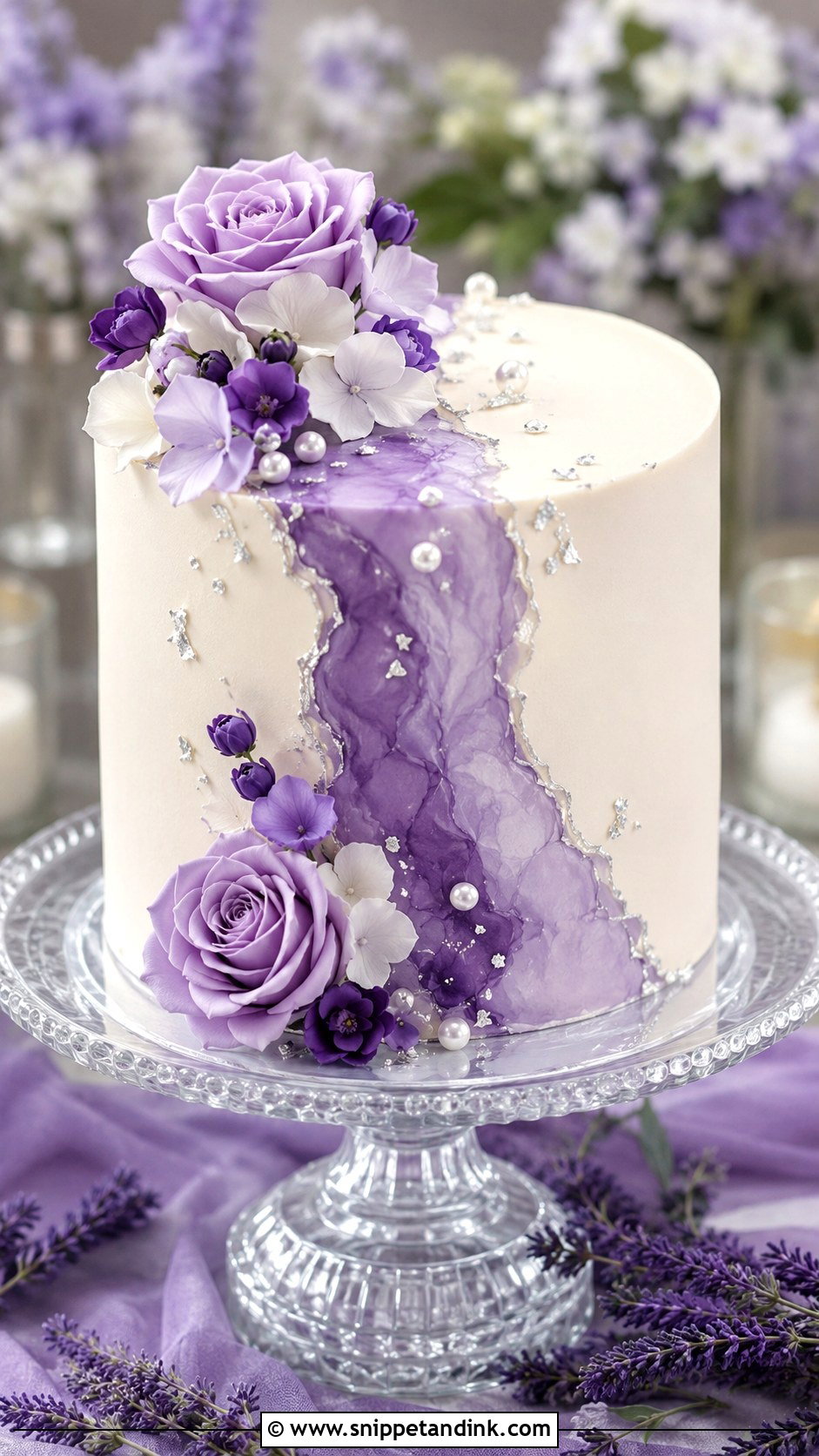
A purple fault line wedding cake changes personality with the shade: lavender and lilac for garden parties, plum and amethyst for formal evenings. Purple is the color I test most carefully, because some purple gels fade toward grey or blue under strong light and over a long day. Sugar flowers, crystals, pearls or watercolor all suit the split. White outer frosting keeps it bridal rather than heavy. Silver leaf cools it down, gold warms it up, and matching it to one flower in the bouquet ties it into the day.
13. Black And White Fault Line Wedding Cake
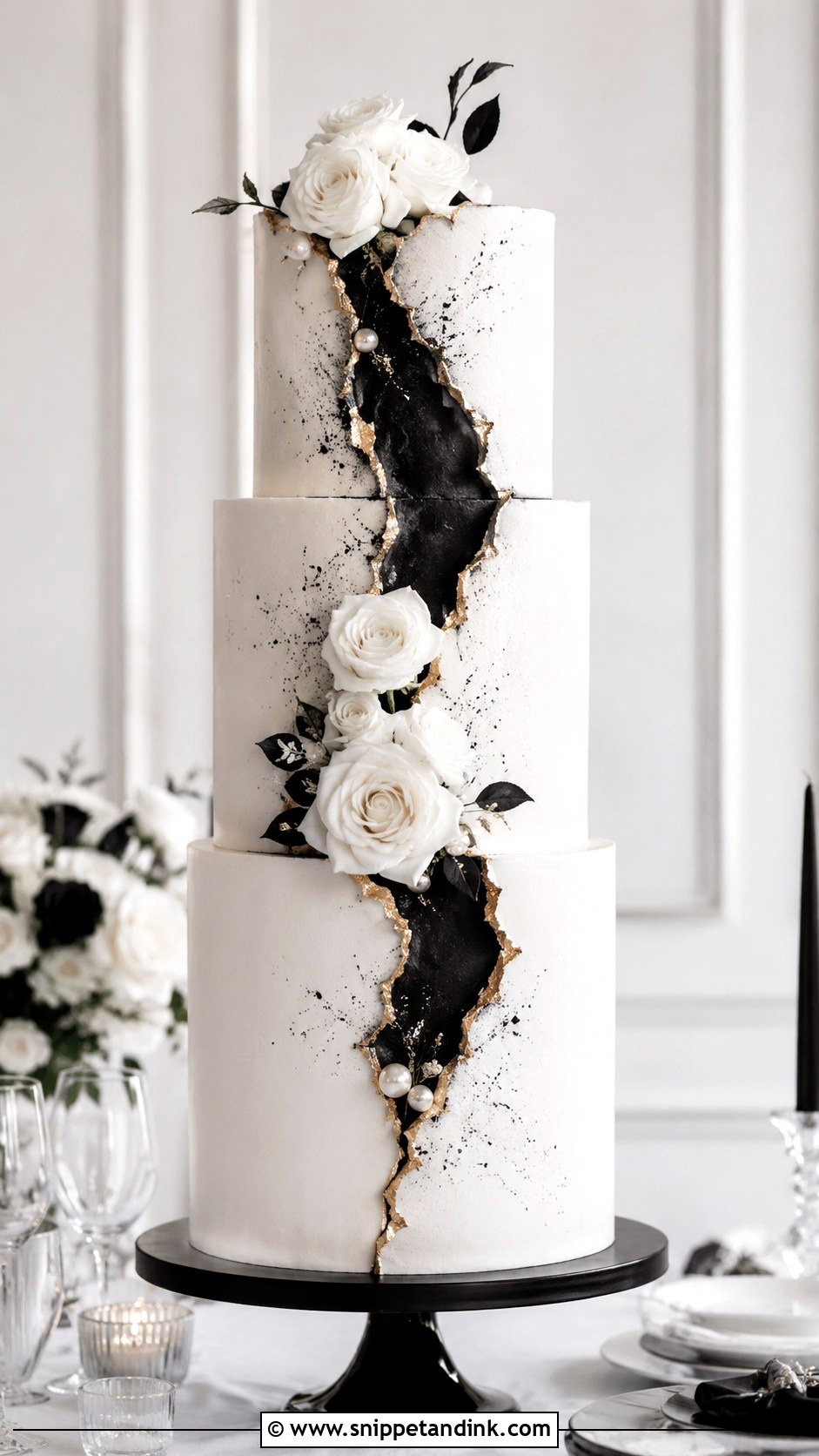
Black and white has no room to hide mistakes. The contrast makes every ragged edge visible, so I spend more time on the torn lines here than on any other design. White cake with a black fault line feels sleek; black buttercream with a white floral split feels dramatic. True black frosting needs black cocoa or heavy coloring and can stain lips and teeth, which is worth knowing before you commit. Chocolate, espresso and vanilla suit it. It belongs in a crisp, simply styled room.
14. Gold Leaf Fault Line Wedding Cake
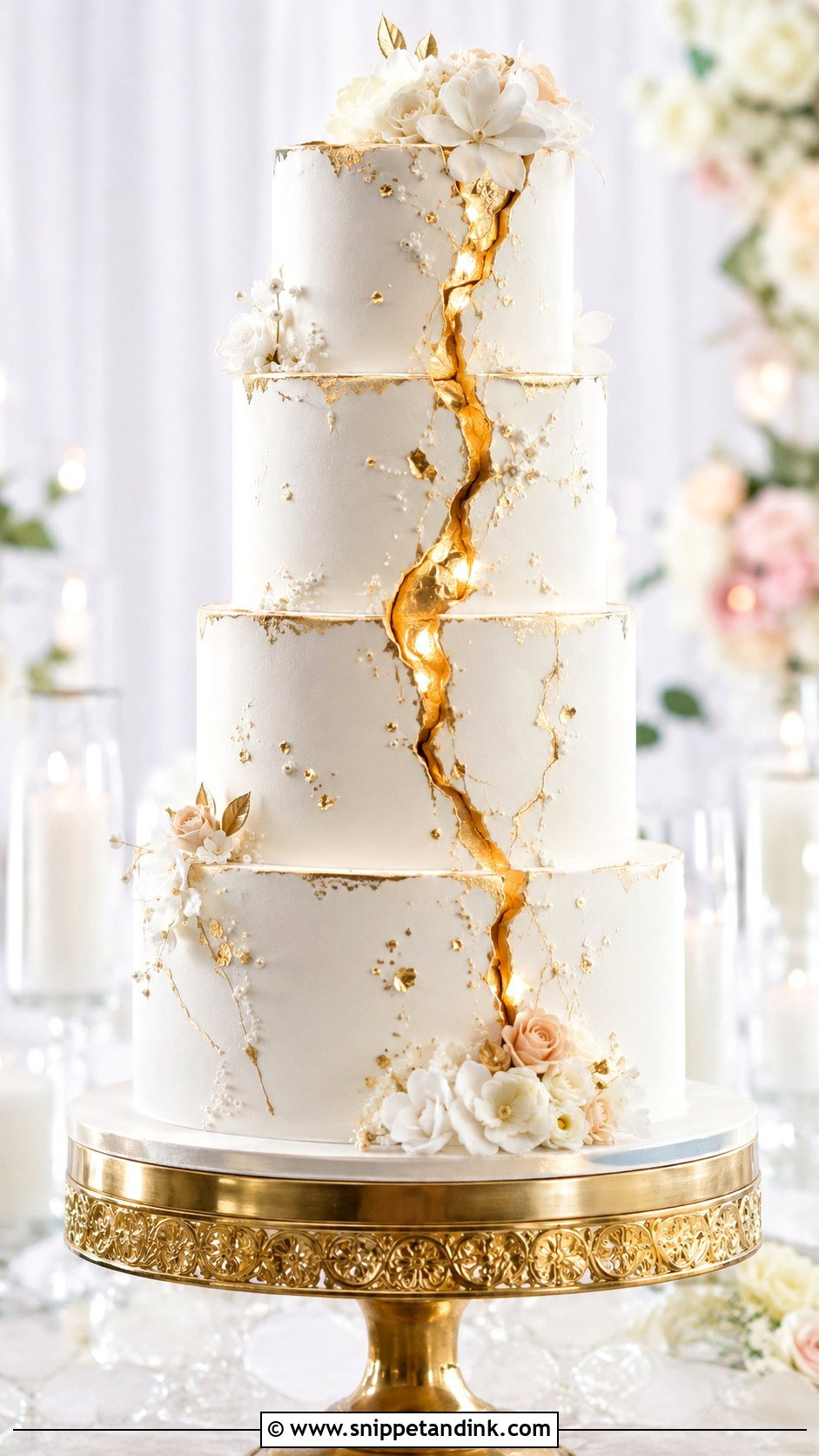
Gold leaf is all about shine, and edible leaf is thin enough that a breath can lift it. I apply loose flakes with a dry brush and transfer sheets where I want a solid metal edge, then keep the cake covered until it’s placed. The torn center can carry scattered flakes framed by ivory buttercream, with pearls or painted gold splashes if you want more. It suits a single cutting tier as easily as tall tiered wedding cakes. Champagne, caramel, almond and white chocolate flavors match the richness, and a plain stand lets the metal stand out.
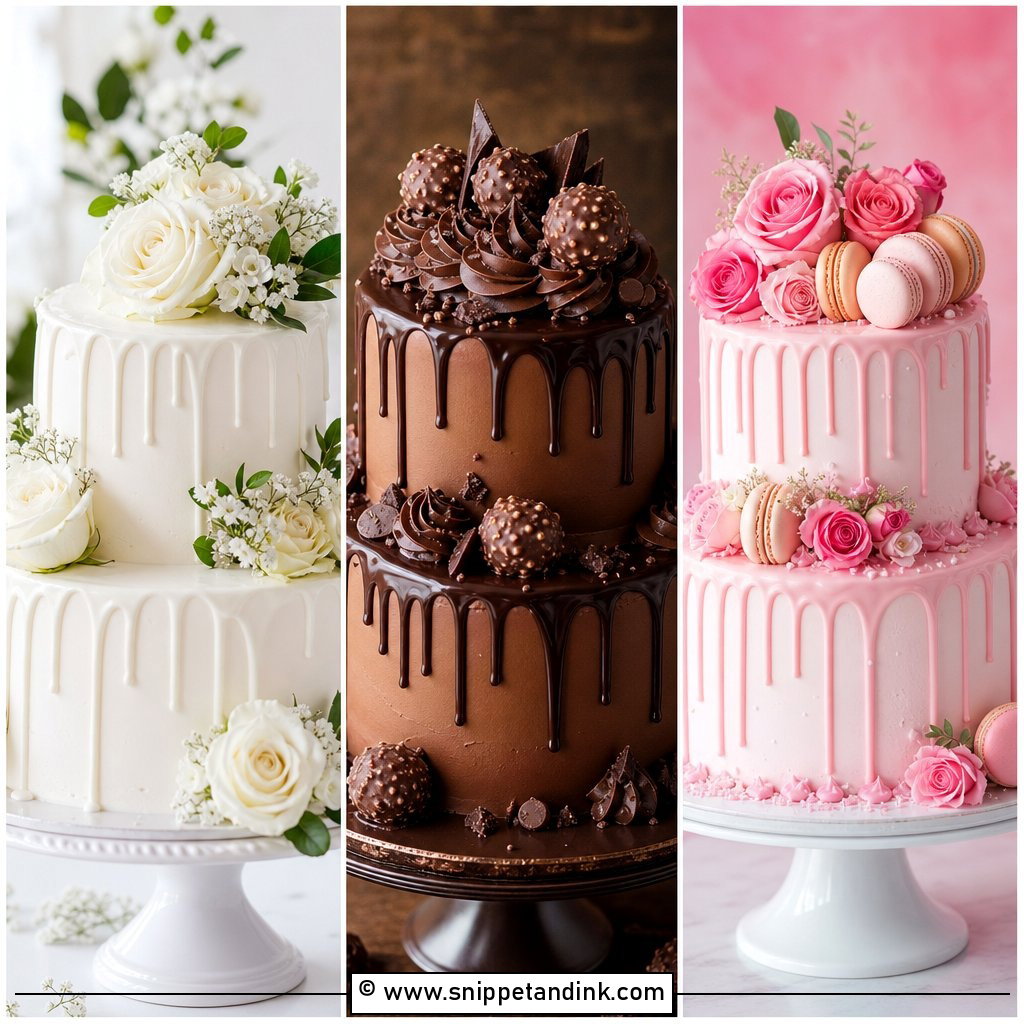

15. Pressed Flower Fault Line Wedding Cake
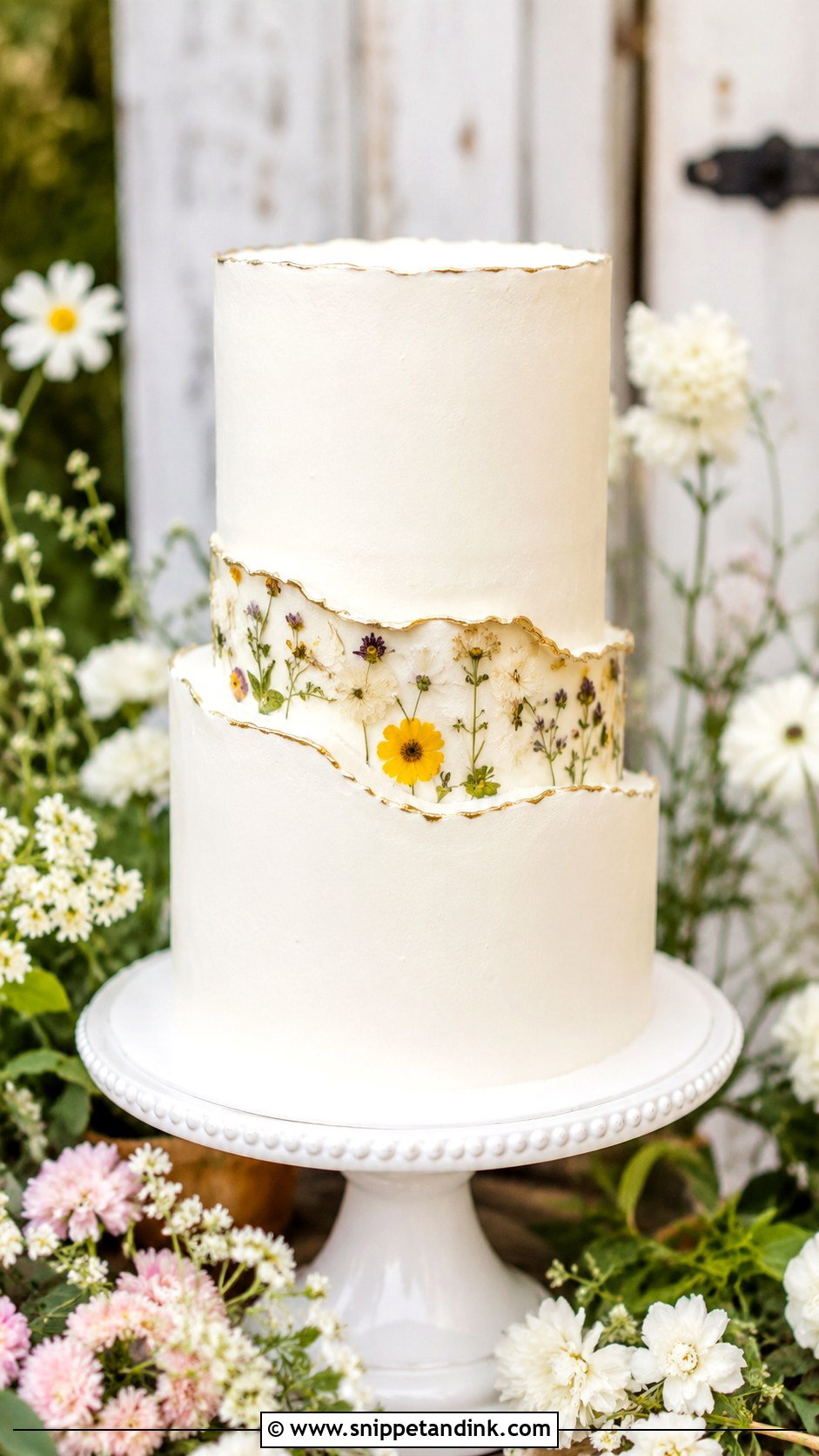
Pressed flowers lie flat against the frosting and make a delicate botanical band around the cake. They must be edible varieties pressed for food use, such as violas, pansies and cornflowers, not craft-shop blooms. Pressed petals draw moisture from buttercream, so I add them as close to delivery as I can; overnight, darker petals can bleed color into white frosting. Keep the coat white, cream or pale blush, and resist adding much on top. Lemon, honey, lavender and vanilla all match the light look.
16. Buttercream Flower Fault Line Wedding Cake
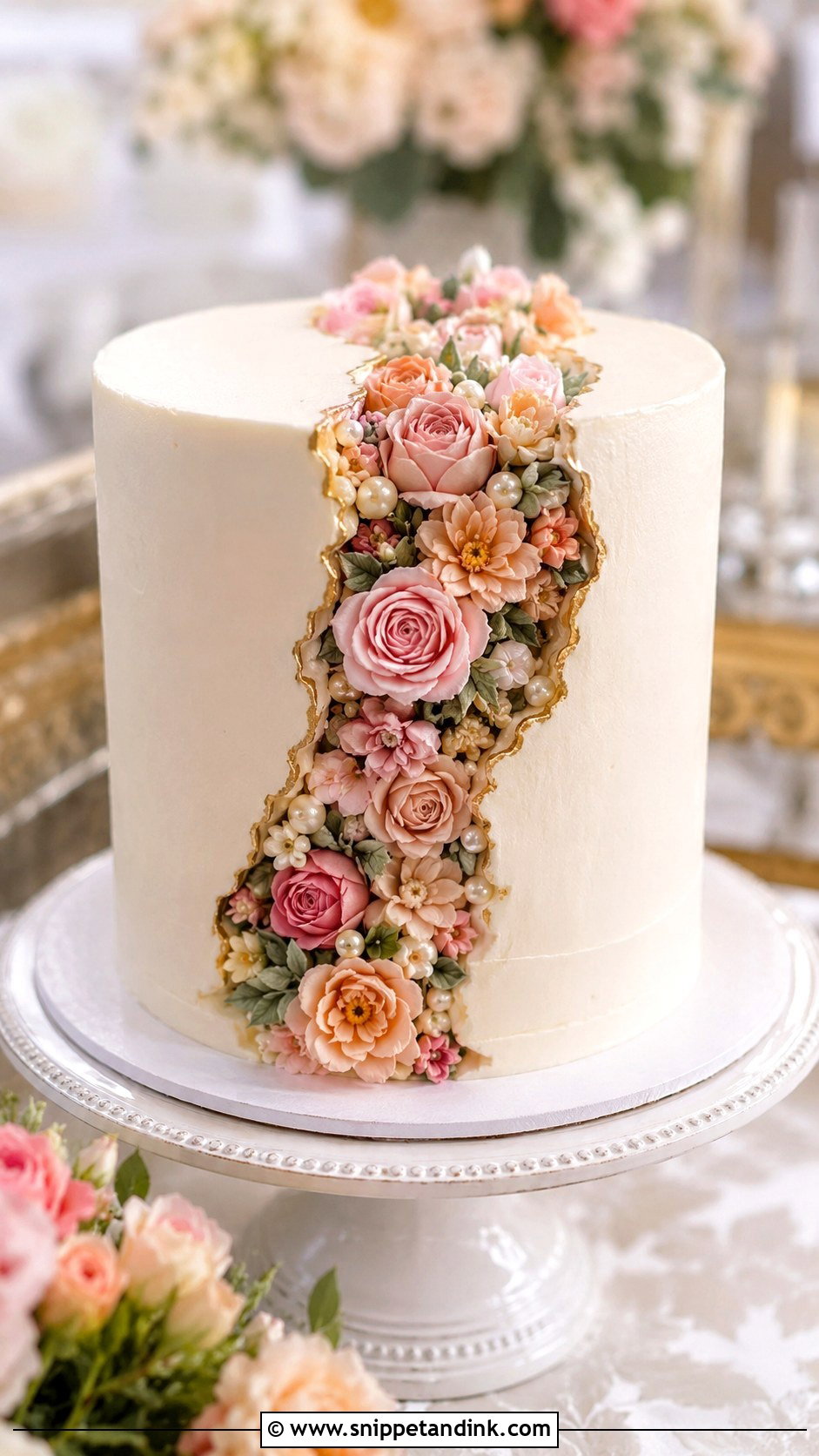
Every petal on this one is edible, which couples appreciate once they see how much fresh-flower prep the other designs need. I pipe roses, peonies and small blossoms into the center band so they appear to burst through the smooth outer coat. Buttercream flowers soften in warm rooms faster than the flat sides, so I chill the tier well before transport and keep the cake indoors. Pastels are the classic choice, though deeper tones look rich for autumn and evening weddings. Vanilla, strawberry, lemon and almond suit it.
17. Watercolor Fault Line Wedding Cake
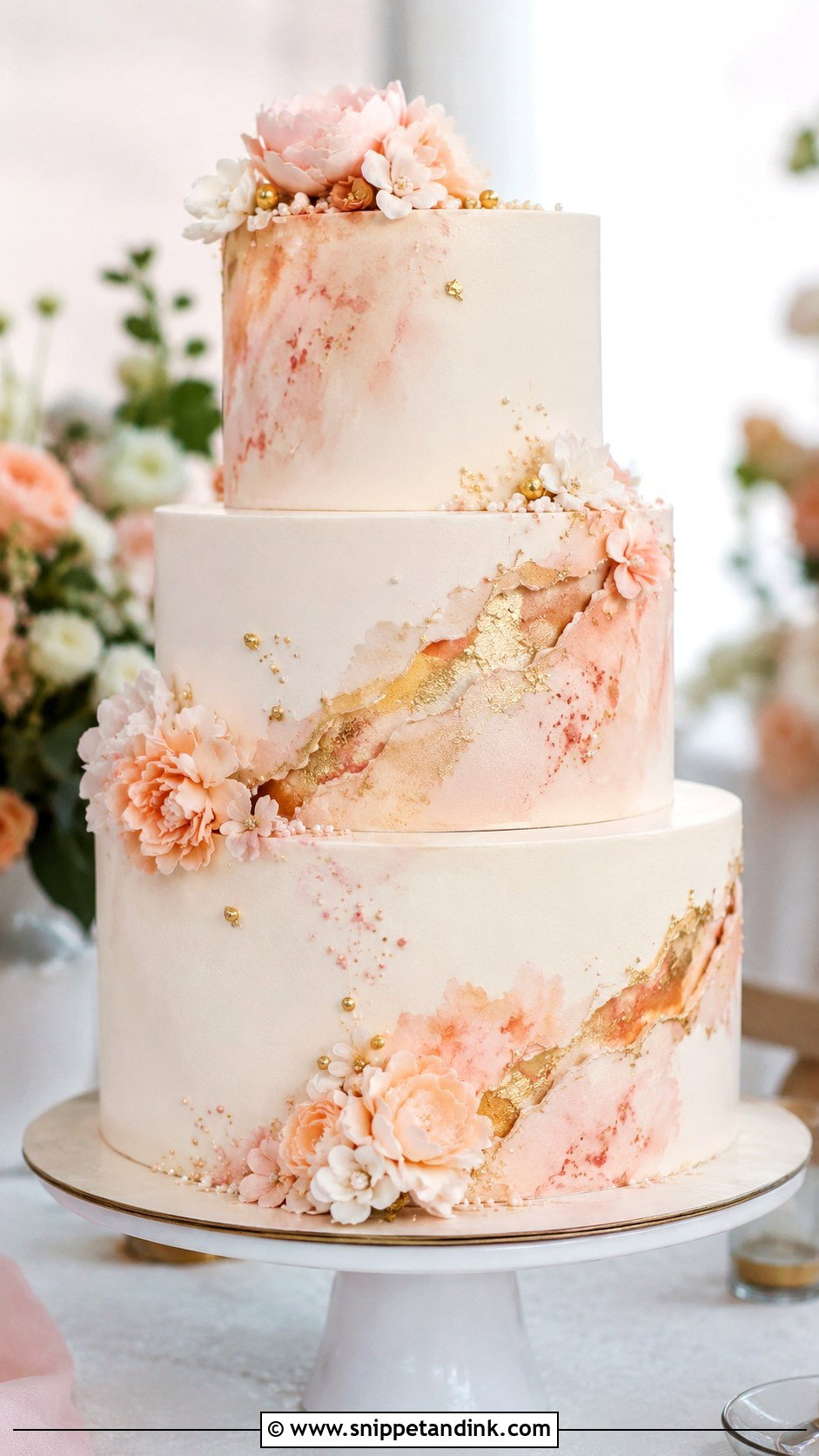
Watercolor frosting fades from one shade into another, and the split can reveal gold leaf, flowers, pearls or painted texture. I keep the torn edges of the outer coat fairly thin here. If they’re built up too thick, the soft wash of color gets lost behind heavy ridges and the cake looks top-heavy. Pale pink, peach, lavender and sage blend easily. Lemon raspberry, peach and vanilla bean match the light, painted look, and it suits art-loving couples and spring or summer receptions.
18. Macaron Fault Line Wedding Cake
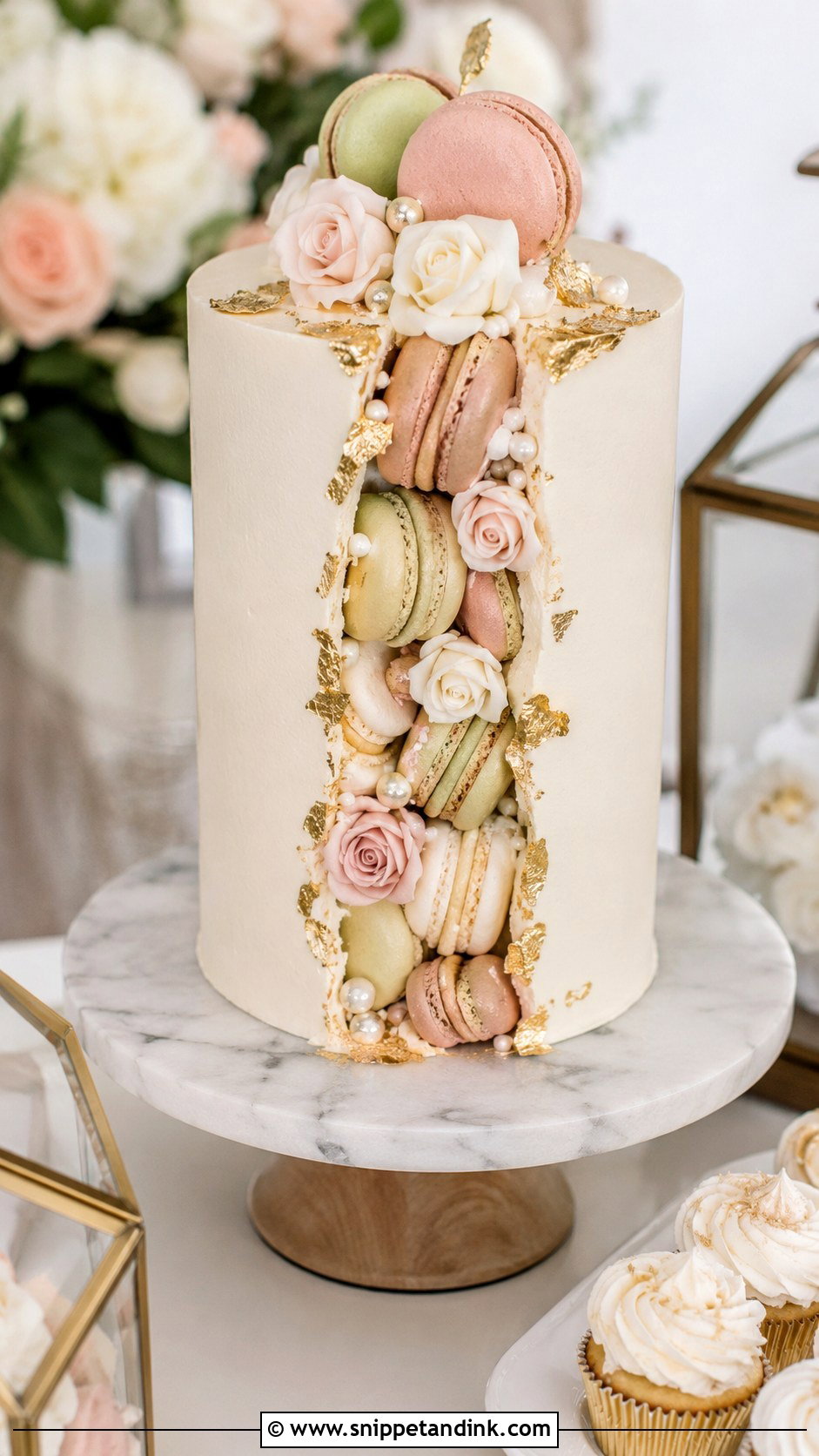
Macarons tucked into the crack make the cake feel playful without losing polish, provided the colors stay coordinated. Macarons soften quickly when they sit against moist buttercream, so I place them on the day and press them in at a slight angle to stop them sliding. Mix them with pearls, gold leaf or tiny flowers, and choose shells in blush, lavender, pistachio, ivory or pale blue against white frosting. It makes sense if macarons are already on your dessert table. Keep the top simple so the band stays the focus.
19. Berry Fault Line Wedding Cake
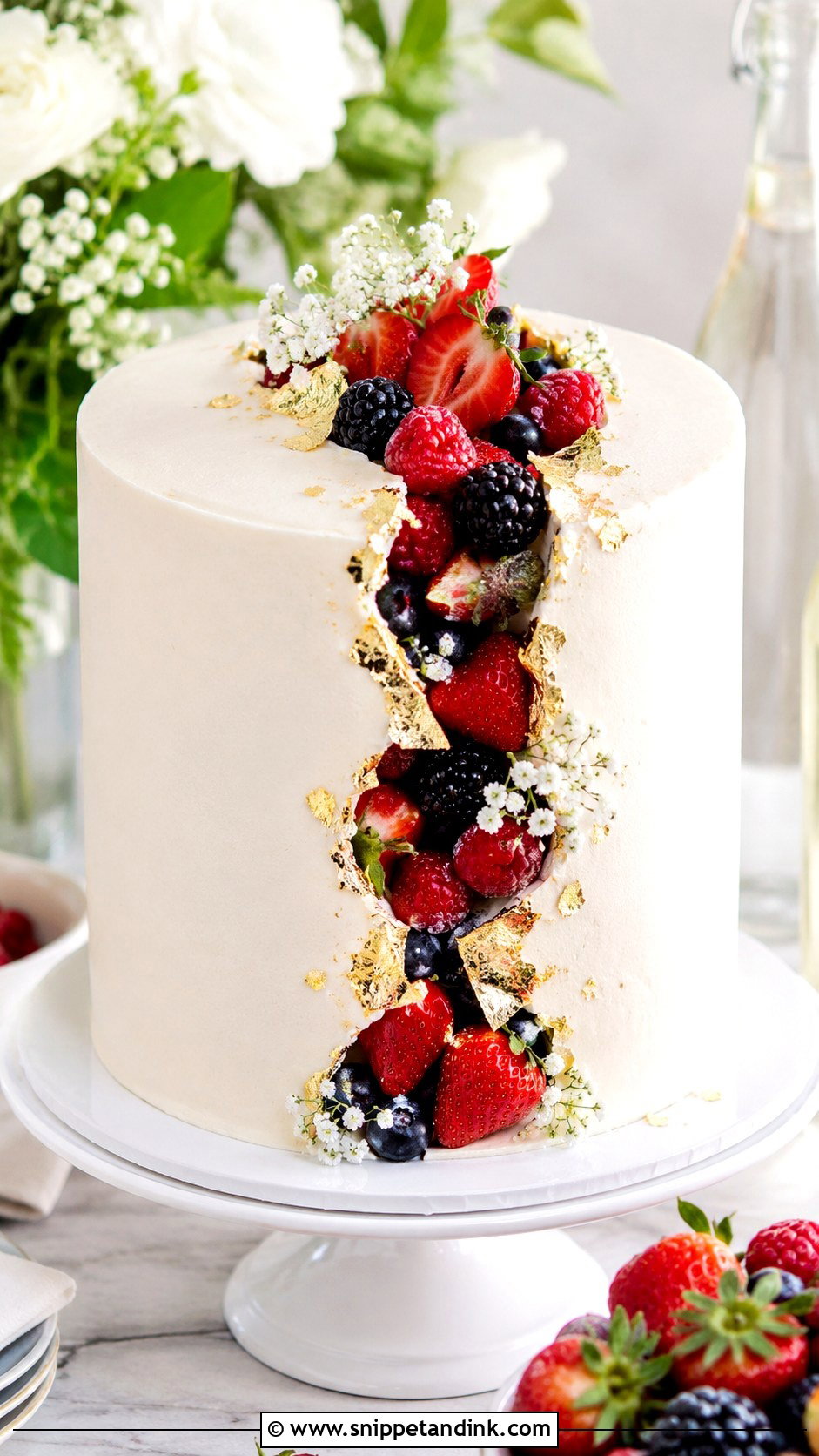
Berries bring color and a seasonal feel to spring and summer receptions. The center can hold strawberries, raspberries, blueberries, blackberries or sugared berries against smooth white buttercream. Cut fruit weeps juice and will stain frosting within a few hours, so I use whole berries, dry them thoroughly, and add them as late as possible, ideally on site. Gold leaf adds polish; fresh flowers give a garden feel. Lemon, almond, chocolate and berry-filled layers all suit it. Don’t overfill the gap; a crowded band looks like a fruit bowl.



20. Two Tier Fault Line Wedding Cake
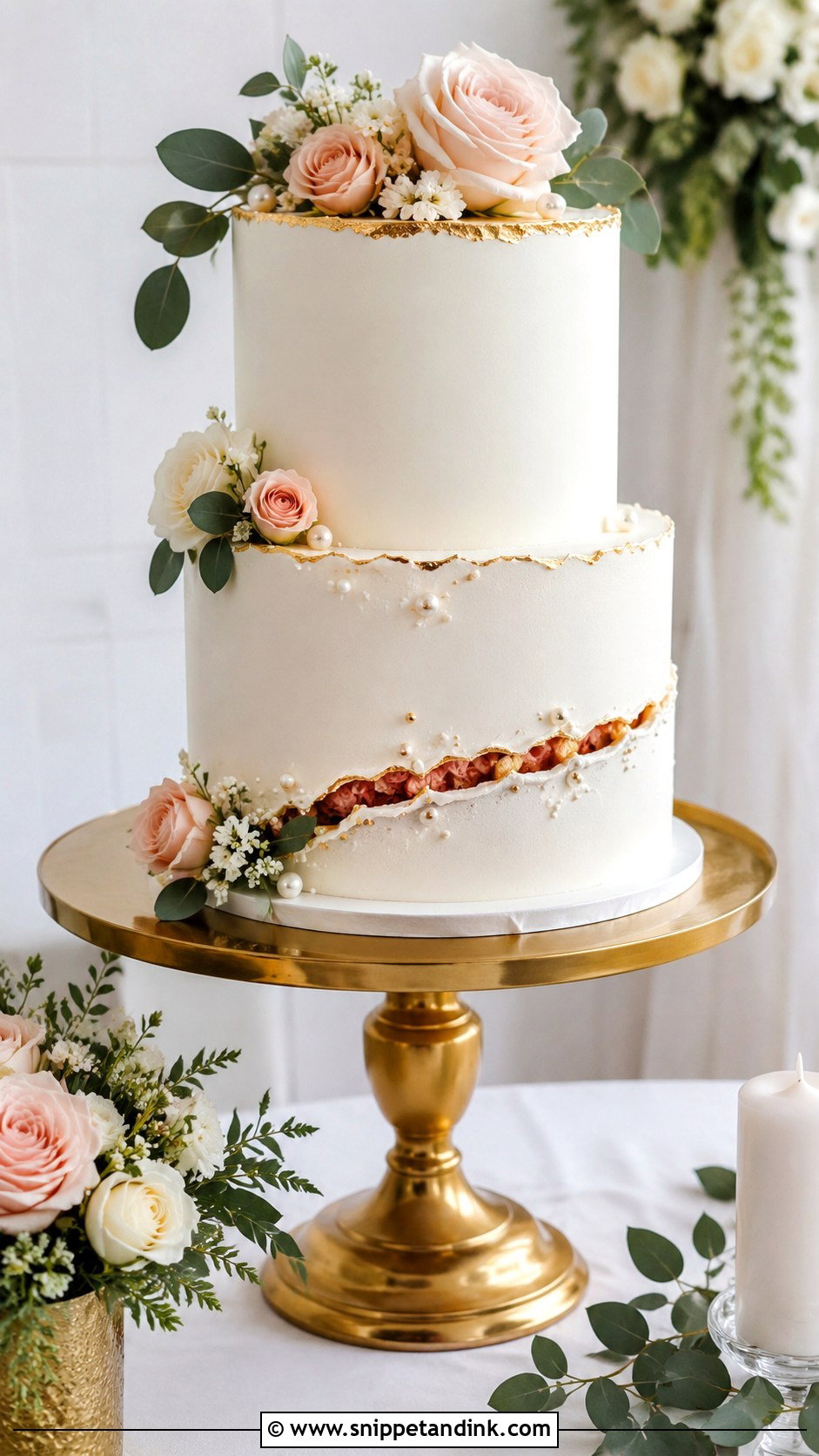
Two tiers give you the fault line effect without a towering cake, and they’re easier to transport and keep cool. You can split one tier for a clean look or wrap the line around both for more drama. White buttercream with gold edging, pearls, florals or a soft color band all suit it. I often recommend this size for intimate weddings and receptions that also have dessert tables with other sweets, since the cake doesn’t need to feed everyone. It still has enough height for a strong photo. Vanilla and raspberry, almond and cream, or lemon and blueberry are easy flavor pairings.
Heat, Humidity and the Hours Between Delivery and Cutting
Most fault line problems I see aren’t design problems. They come from the hours between my kitchen and the knife. Buttercream ledges are the first thing to sag in a warm room, and once the upper edge slumps the tear stops looking deliberate.
What softens first
In a warm room, piped flowers and the torn edges go soft before the smooth sides do. Sugar crystals and macarons go sticky in humidity. Cut fruit leaks within hours, and pressed petals can stain pale frosting overnight. That’s why I add the most fragile fills on site, not the night before.
How I protect the cake
- Deliver chilled and set up indoors, out of direct sun, away from the dance floor lights and any heater.
- Keep the cake out on display for as short a stretch as the timeline allows; outdoor summer tables are the riskiest spot of all.
- Ask the caterer to cut within a reasonable window after the first slice photos rather than leaving the cake standing all night.
- If your venue is very hot, consider fondant for the outer coat with buttercream inside; it holds its edges far better.
If something does slip on the day, a planner or caterer can usually hide a dent with a flower or two from the cake table arrangement. I always leave a few spare blooms or pearls for exactly that.
Where the Crack Sits Matters More Than What Fills It
What I love about this style is that one detail does all the design work. Fill the crack with flowers and it’s romantic; with gold leaf, glamorous; with marble, modern; with greenery, natural; with berries or watercolor, bright and seasonal. My advice is to decide first which tier carries the split and how wide it should be, because that shapes the proportions of the whole cake. Then pick the fill to suit your venue, flowers and season, and ask your baker how it will hold up in the room it’s going into.
You'll Like These Ideas:












Leave a Reply