
Two tiers is the size I build most often for weddings under about eighty guests, and it’s the one couples underestimate. It gives you real height on the cake table and room for one proper design idea, without the extra structure, delivery fuss and cost of a tall cake. It sits comfortably on a courthouse dinner table and still holds its own in a ballroom if the stand is right. The designs below follow what I’m being asked for right now: piped vintage borders, texture, soft color and cakes that say something about the couple. Read them with your guest count and the venue temperature in mind, because those two things decide more than the decoration does.
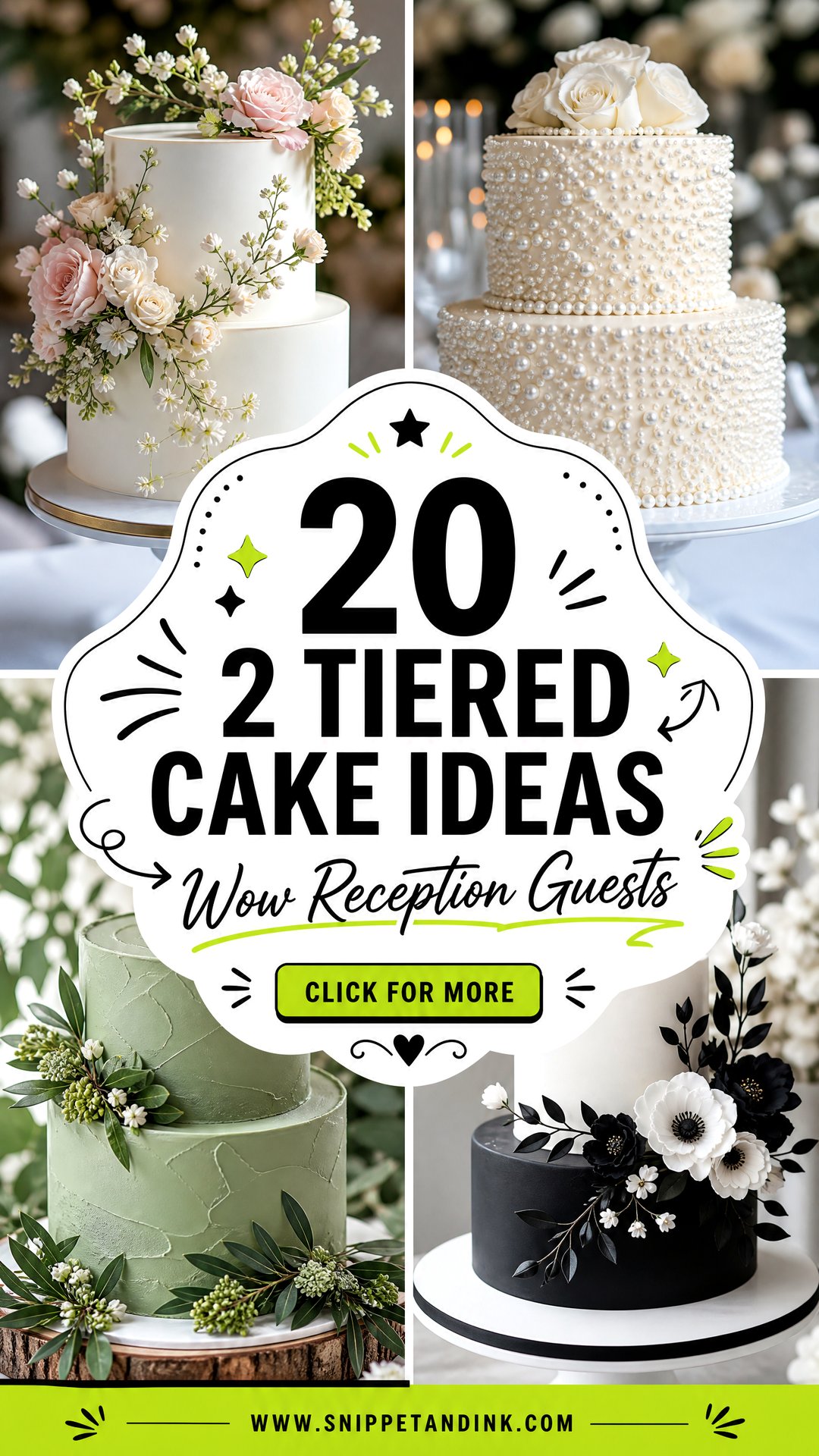
How Many Guests Two Tiers Really Feed
Before anyone falls for a design, I work out whether two tiers can feed the room. Wedding portions are cut slimmer than birthday slices, roughly one inch by two inches and about four inches tall, and that is how bakers quote servings. Approximate numbers I plan from:
- A 6 inch tier on an 8 inch tier gives about 35 wedding portions.
- A 6 on a 9 leaves a wider ledge for flowers and serves around 45.
- An 8 on a 10 lands near 60, and making each tier taller with an extra layer adds servings without widening the cake.
- Square tiers serve noticeably more than round tiers of the same width.
If your list is longer than that, you still don’t need a third tier. Ask for a plain kitchen cake in the same flavor, kept out of sight and cut alongside the display cake, so guests never notice the difference. Some couples go the other way and make one tier a decorated dummy. It works, but it saves less than you’d expect, because most of what you pay for is decorating time rather than sponge.
1. Two Tier Buttercream Wedding Cake
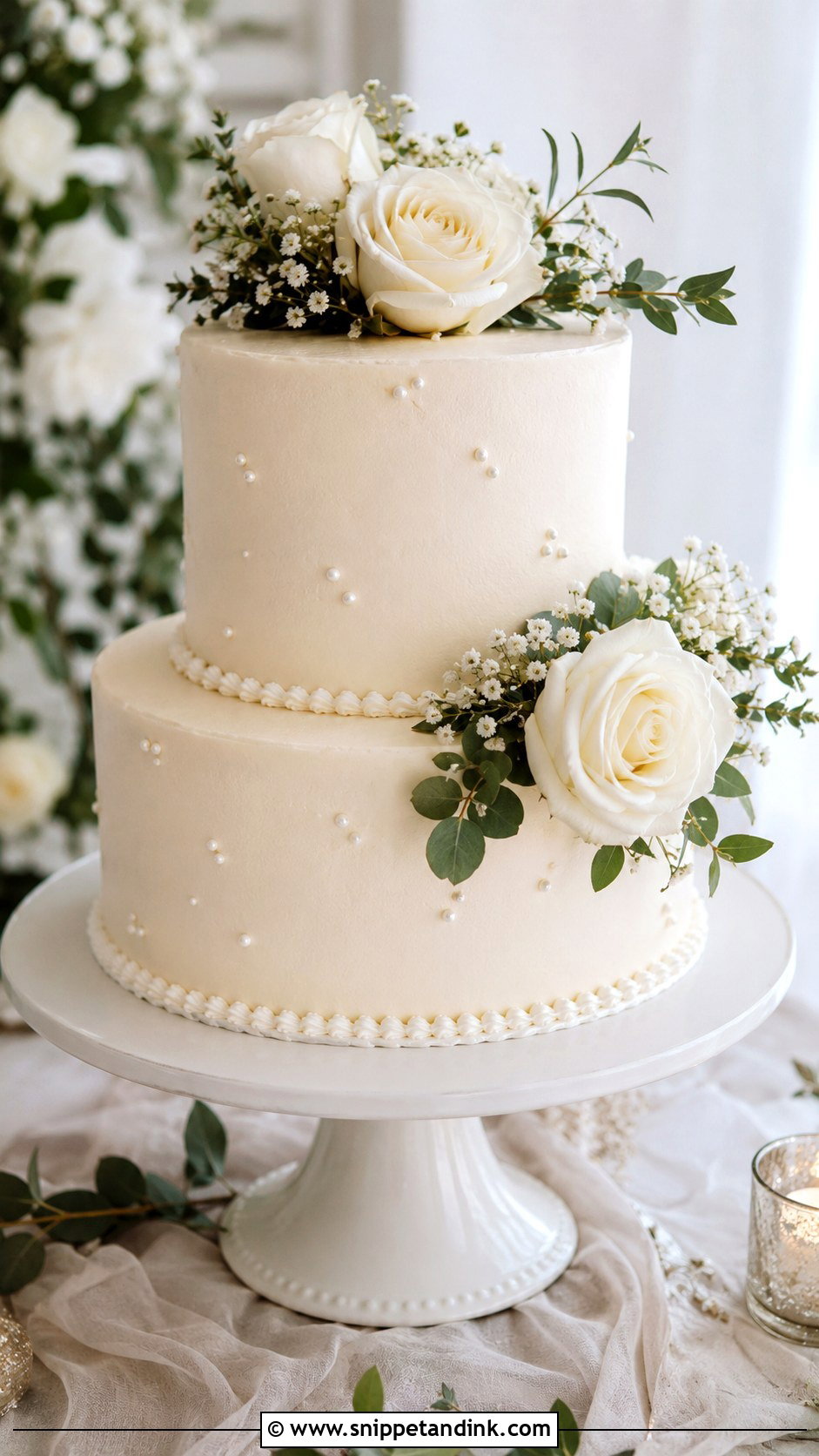
Smooth ivory buttercream is my default starting point, and most guests prefer the taste to fondant. The catch is temperature. An American buttercream crusts and holds in a warm room longer than Swiss meringue, which is silkier but softens sooner, so I pick the recipe by the venue before I pick the finish. Vanilla, almond, lemon and champagne sponges all sit well under it. In a garden I’ll add a few roses or ranunculus; in a formal room I keep it smooth and finish each base with pearls or a ribbon.
2. Two Tier Floral Wedding Cake
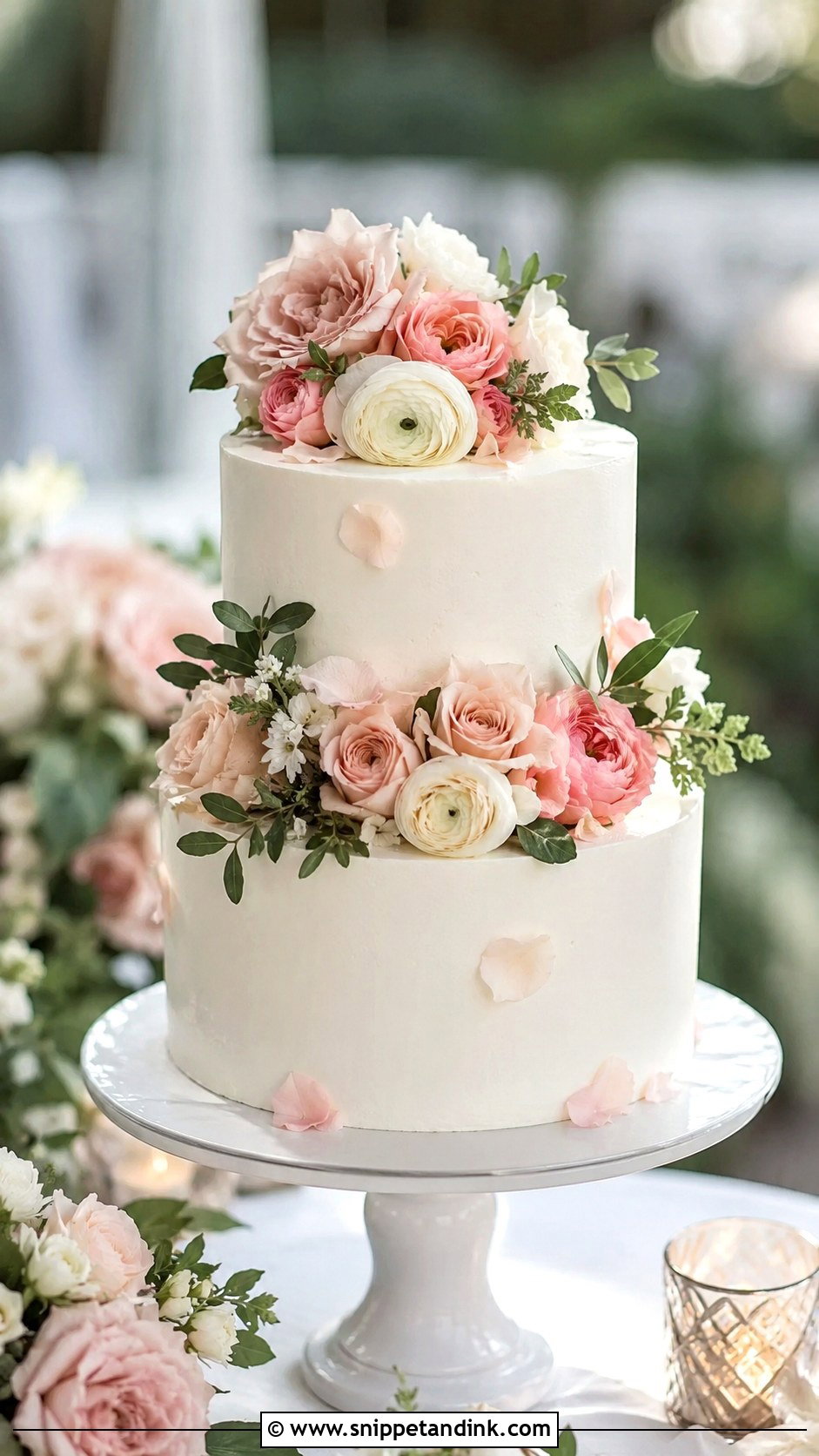
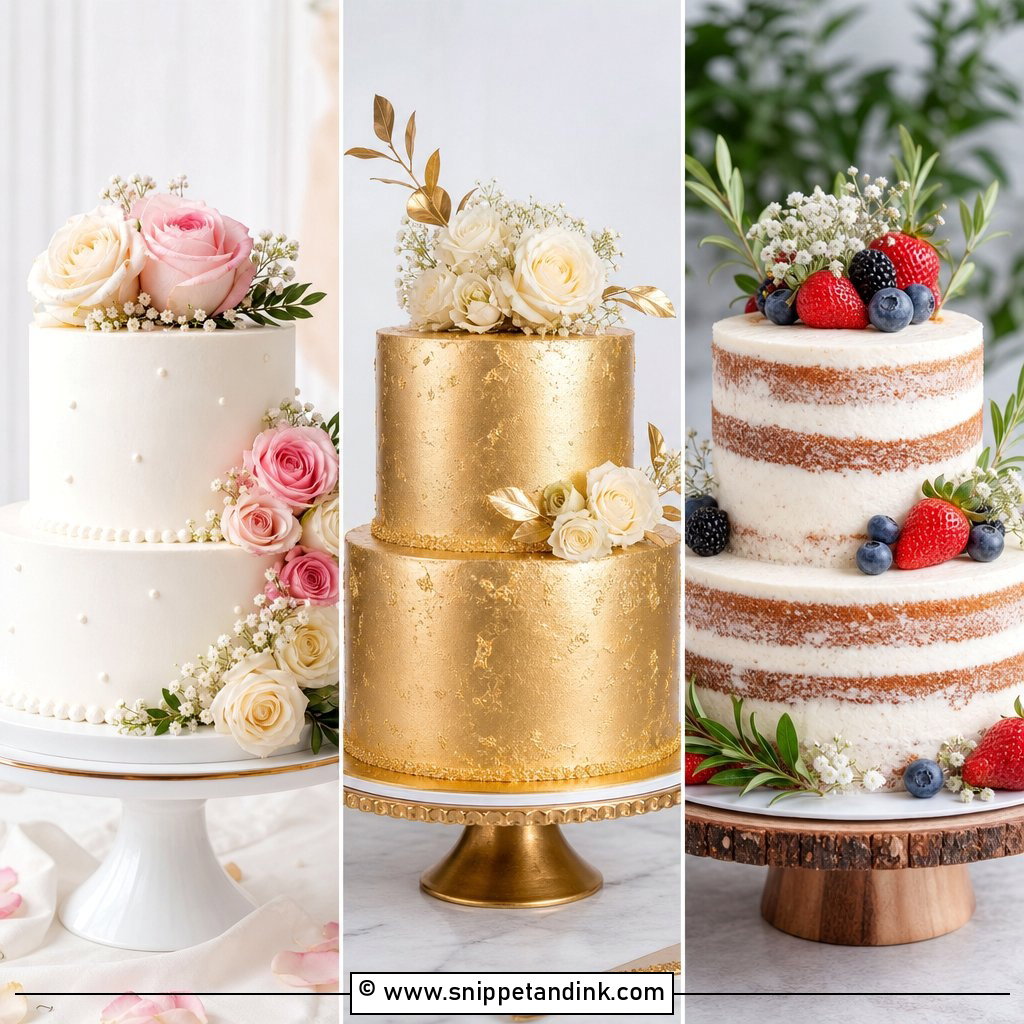
Flowers on a cake work when they’re placed, not piled. I usually plan three moments: a cluster where the tiers meet, a few blooms on top and a small accent at the base, with plain white buttercream or fondant behind them. Every fresh stem that touches the cake gets wrapped or pushed into a food-safe pick, and I won’t use toxic or heavily sprayed varieties at all, which is why many bakers prefer sugar flowers or edible blooms. I ask for the florist’s stem list early so we aren’t both guessing. Spring dates and pastel palettes suit this one most naturally.
3. Two Tier Vintage Wedding Cake
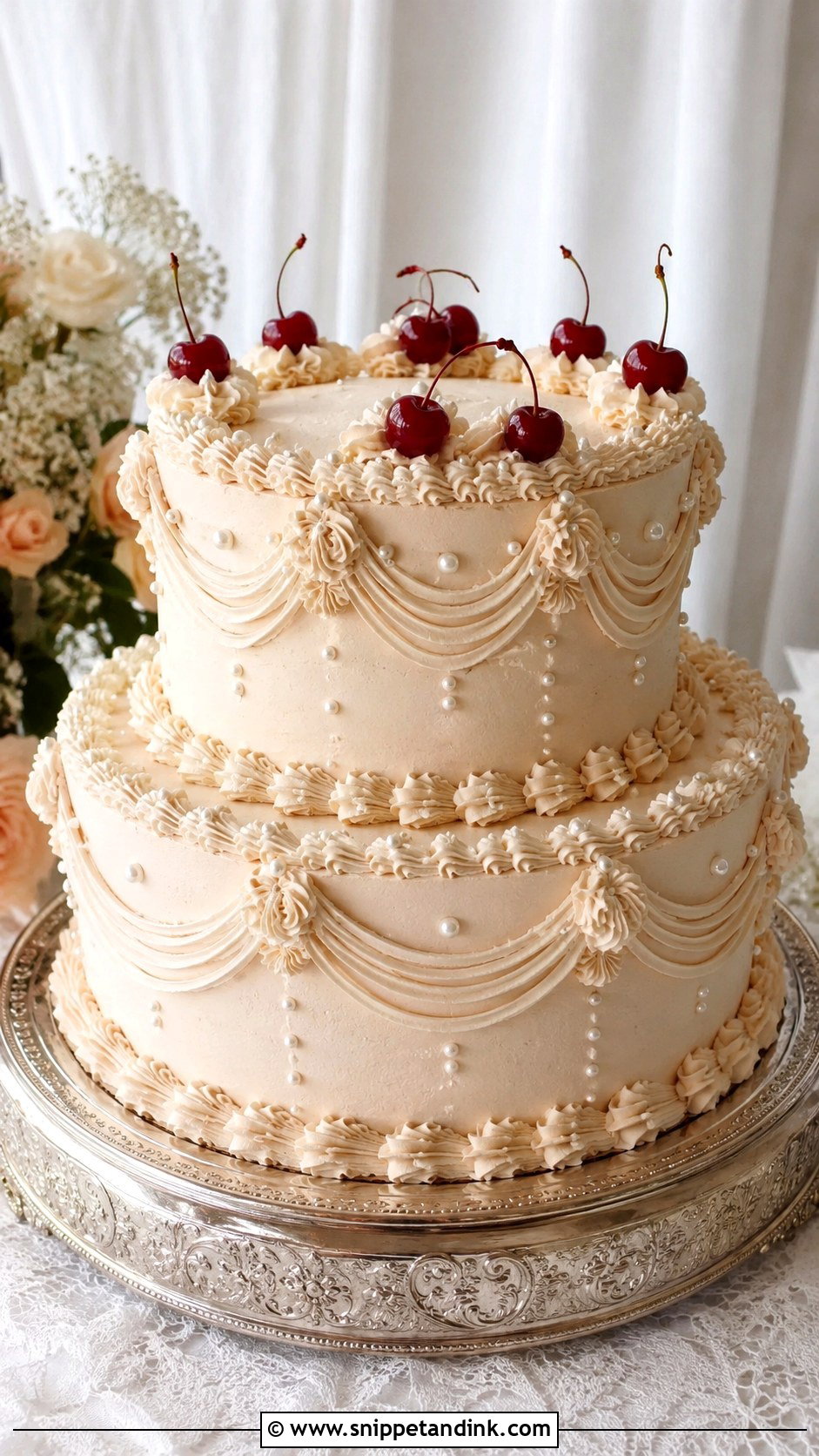
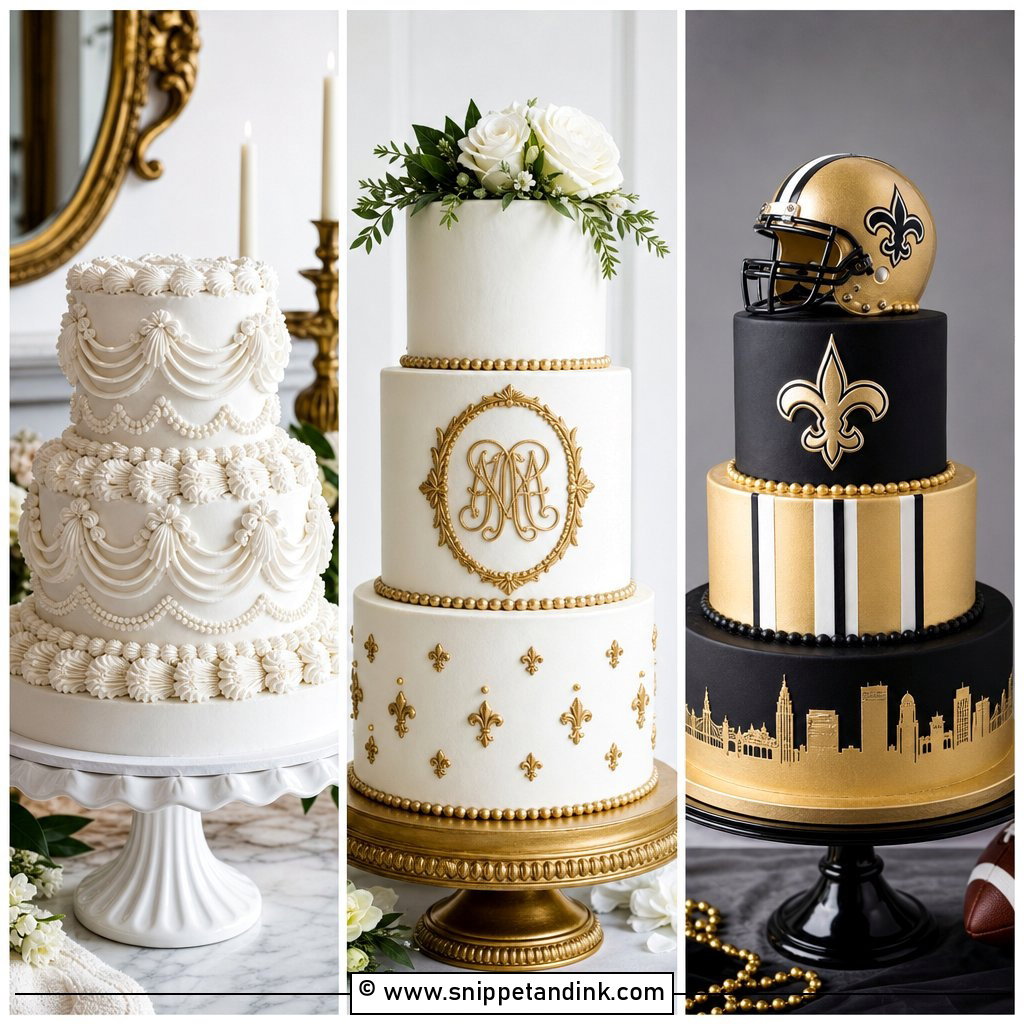
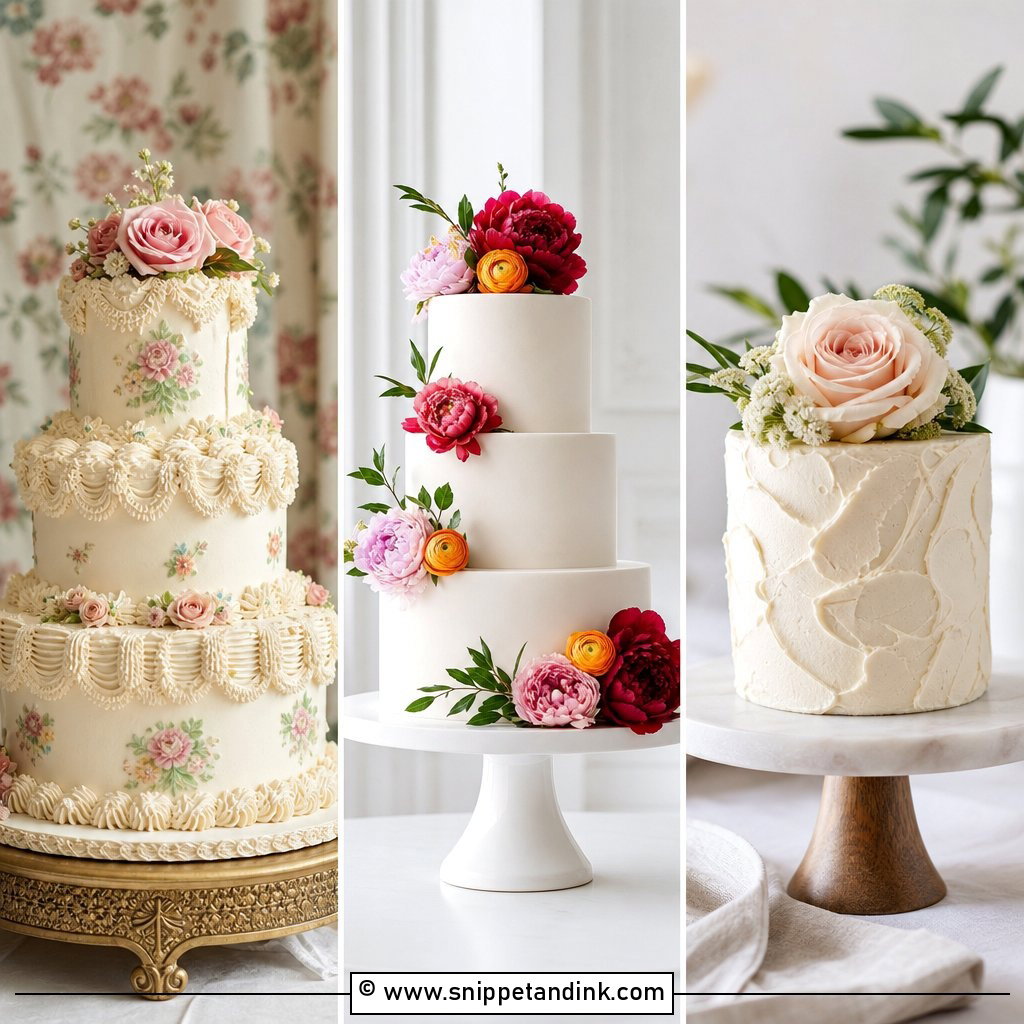
This is the style I’m piping most at the moment: shell borders, swags, tiny dots and layered overpiping. It reads as personal in a way a smooth cake doesn’t, partly because you can see the hand that made it. Heavy piping needs a stiffer buttercream, though, and stiff buttercream hates a hot tent, so a summer outdoor date may call for less detail. White, ivory, blush and pale blue are the classic bases, and deeper piping colors push it bolder. A heart-shaped top tier fits the mood, but honestly, a round two-tier cuts and serves more evenly.
4. Two Tier Pearl Wedding Cake
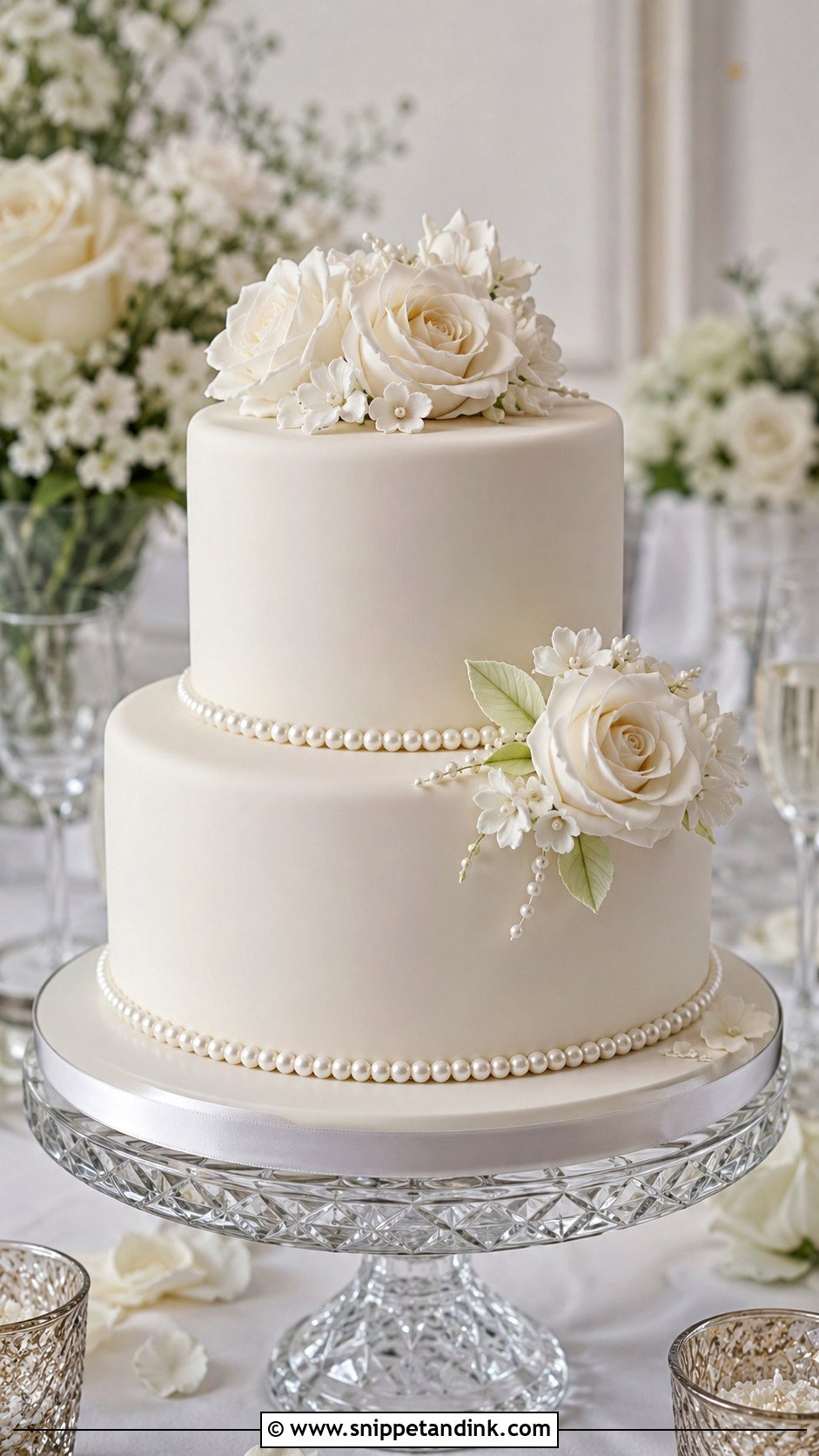
Pearls make a small cake look finished quickly. I start with smooth white or ivory, then decide on a pattern: one row at each border, a scatter, or clean vertical lines. The lines take longest, because a single crooked one shows from across the room. Sugar pearls are edible but hard on teeth, so I keep them mostly to the borders where they lift off easily. A ballroom can carry heavier coverage and a satin ribbon effect, while a small reception needs only a few pearls and some white flowers. Vanilla bean, coconut, almond and white chocolate keep the flavor as soft as the look.
5. Two Tier Rustic Wedding Cake
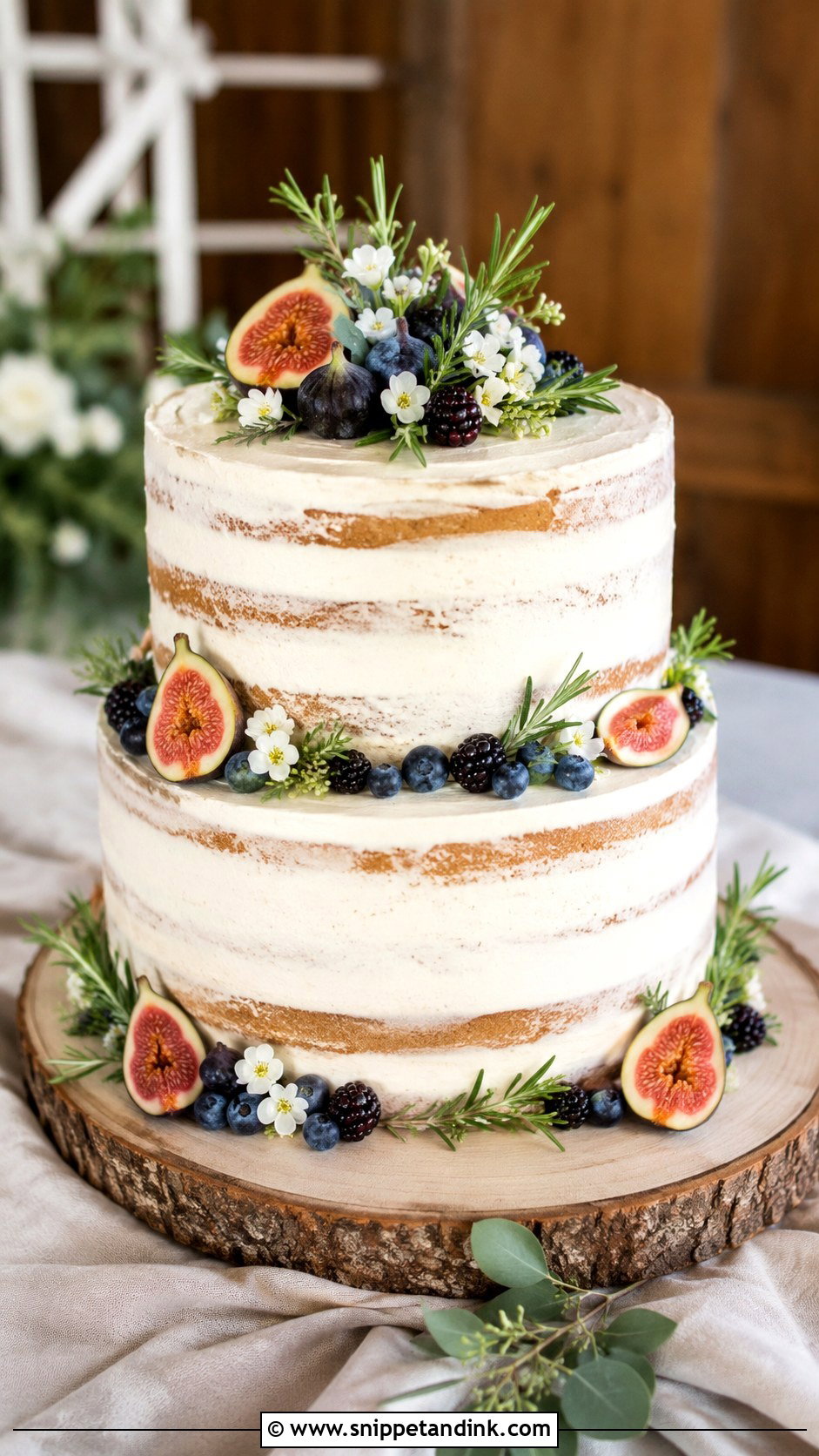
A two tier rustic wedding cake is meant to look relaxed, yet it’s harder to make than people expect. A semi-naked finish or a light scrape that lets the sponge show through depends on even pressure all the way round; a careless pass looks unfinished rather than rustic. Spiced carrot, brown butter and vanilla suit the warmth of it. I group figs, berries, herbs, pressed flowers or greenery in deliberate clusters. A wood slice stand grounds it in a barn or vineyard, but check that it’s sealed and level, because raw slices are rarely flat.
6. Two Tier Naked Wedding Cake
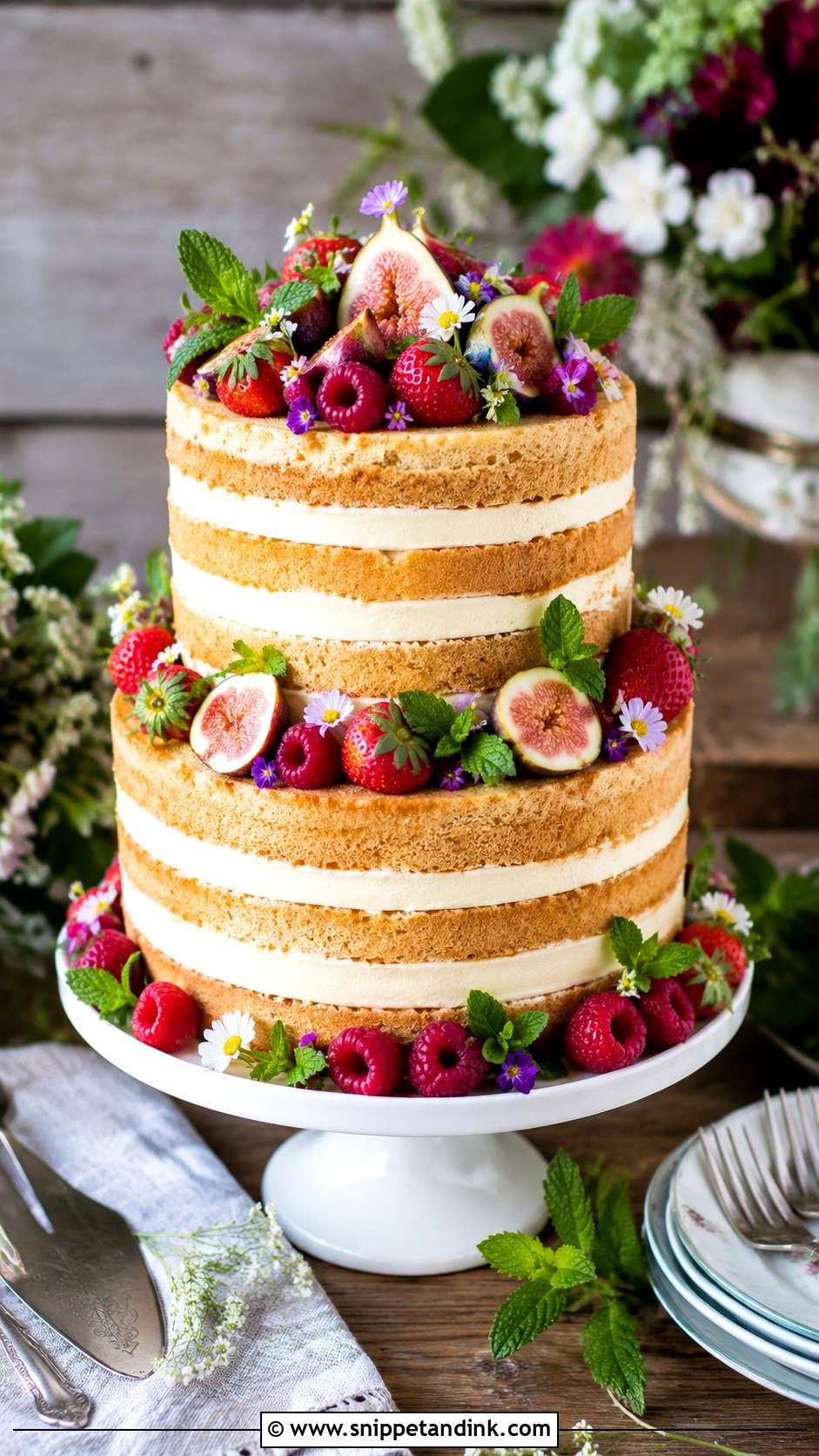
With no frosting outside, a naked cake shows every layer and every bit of filling, so uneven baking has nowhere to hide. I level each layer and pipe a buttercream dam before adding fruit filling, otherwise it bulges out the sides under the weight of the top tier. Vanilla sponge with berries, lemon with cream, or chocolate with espresso buttercream all suit the format. The honest downside is drying: exposed sponge starts going stale within a few hours, so I assemble late and keep it covered until it goes out. Keep it for a cool room or a mild day.
7. Two Tier Gold Wedding Cake
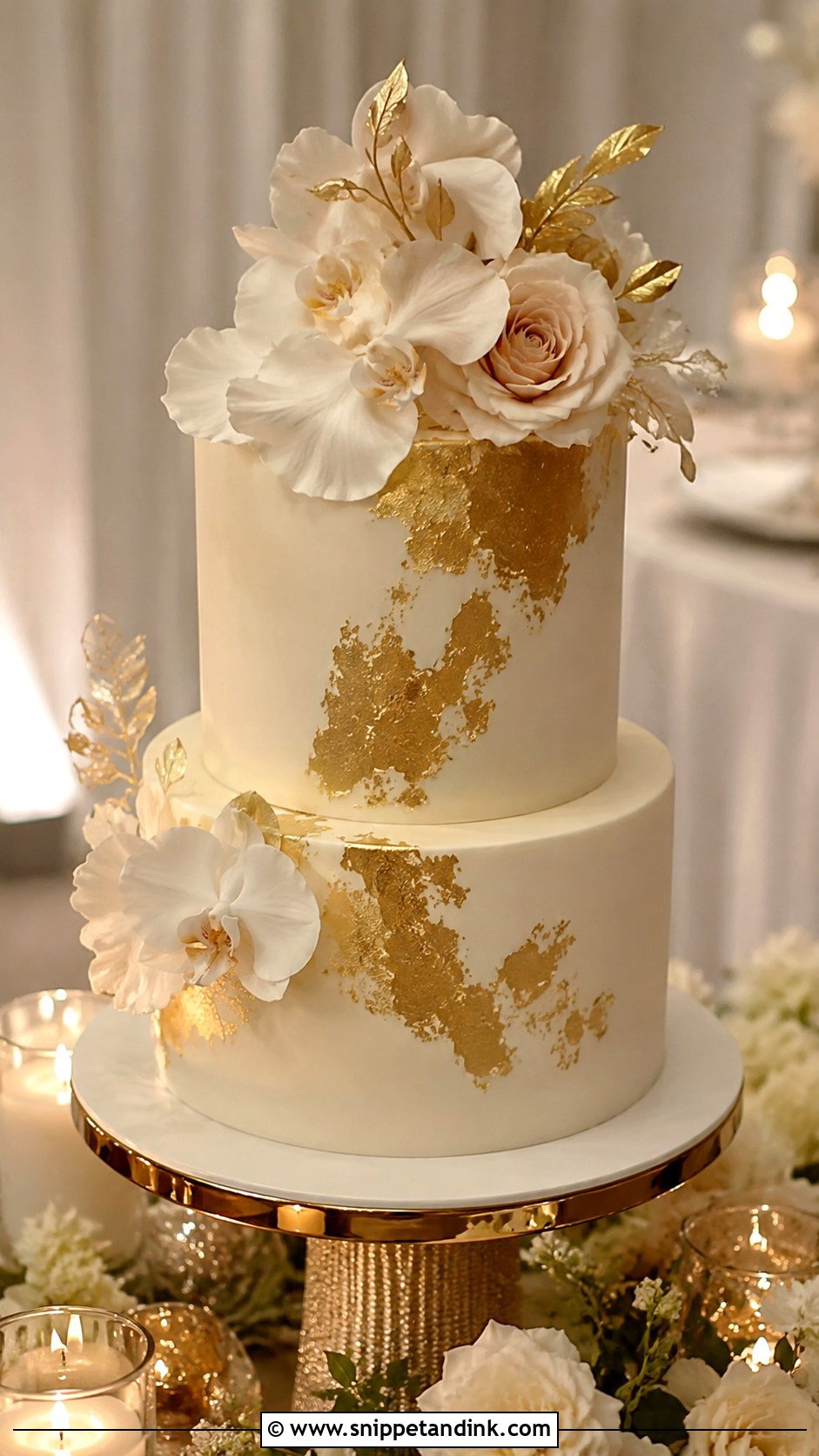
Gold is about restraint. Leaf, brushed metallic, a painted edge or one fully gold tier can each look rich, but all of them on one cake turns heavy. Gold leaf needs a smooth, slightly tacky surface to lie flat, which is why fondant or a well-chilled buttercream gives the cleanest result. I pair it with white, ivory, champagne, blush or sage, and with white roses, orchids or sculpted sugar flowers for hotels and evening receptions. One thing I check every time: some gold dusts are only labeled non-toxic, not edible, and I only use the edible kind on anything a guest will eat.
8. Two Tier Sage Green Wedding Cake
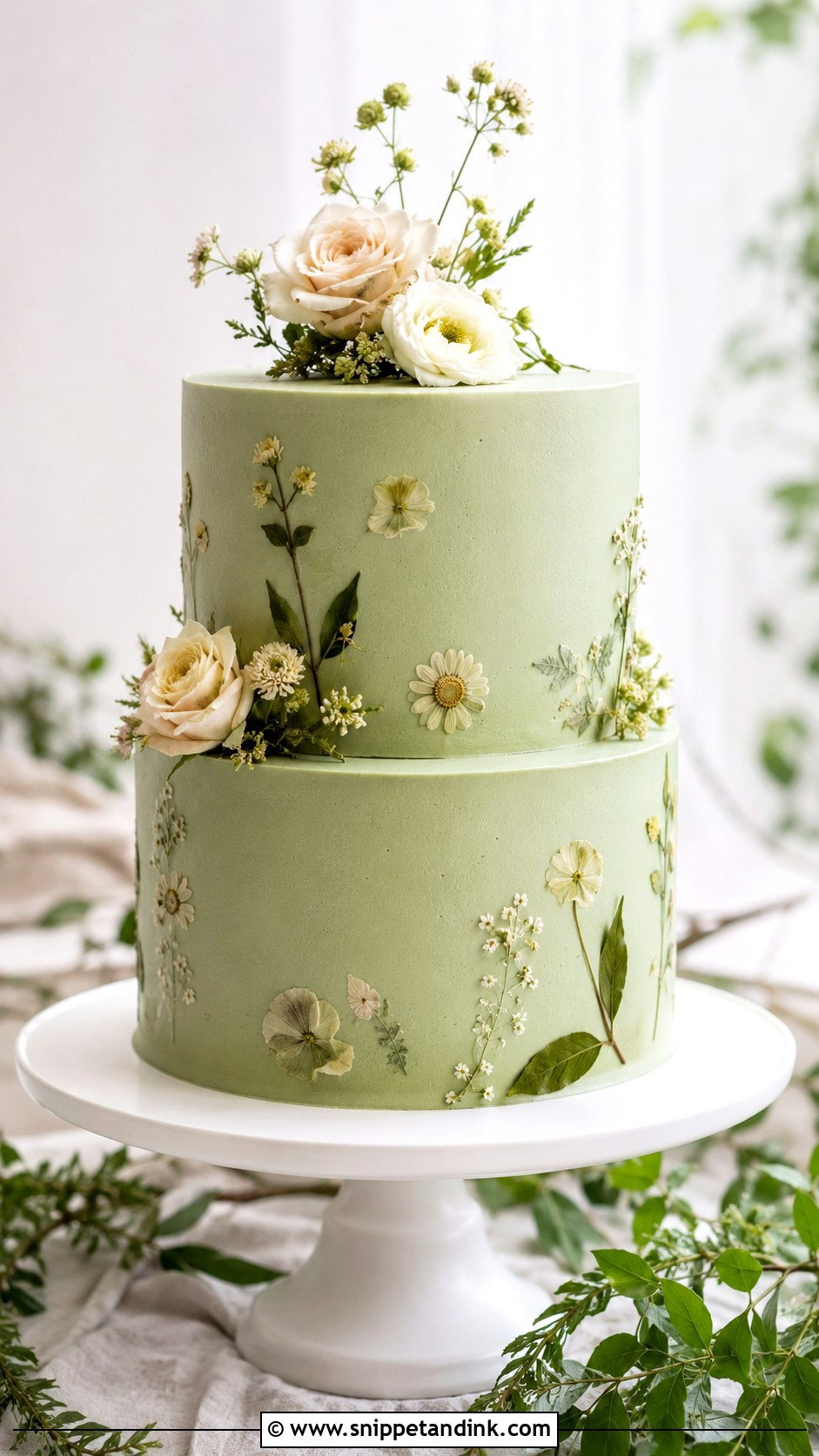
Sage is a forgiving color because it reads calm beside almost any palette. I tint it gradually, since gel color keeps developing for a few hours and a green that looks pale when mixed can look olive by the reception. Smooth tiers make it modern; piping and flowers make it romantic. Ivory, cream, beige, peach and white blooms all sit well next to it, and pistachio, vanilla or almond sponge suits the soft tone. For a garden I press edible flowers or herbs onto the sides; for a modern room, one clean floral arrangement is enough.
9. Two Tier Blue Wedding Cake
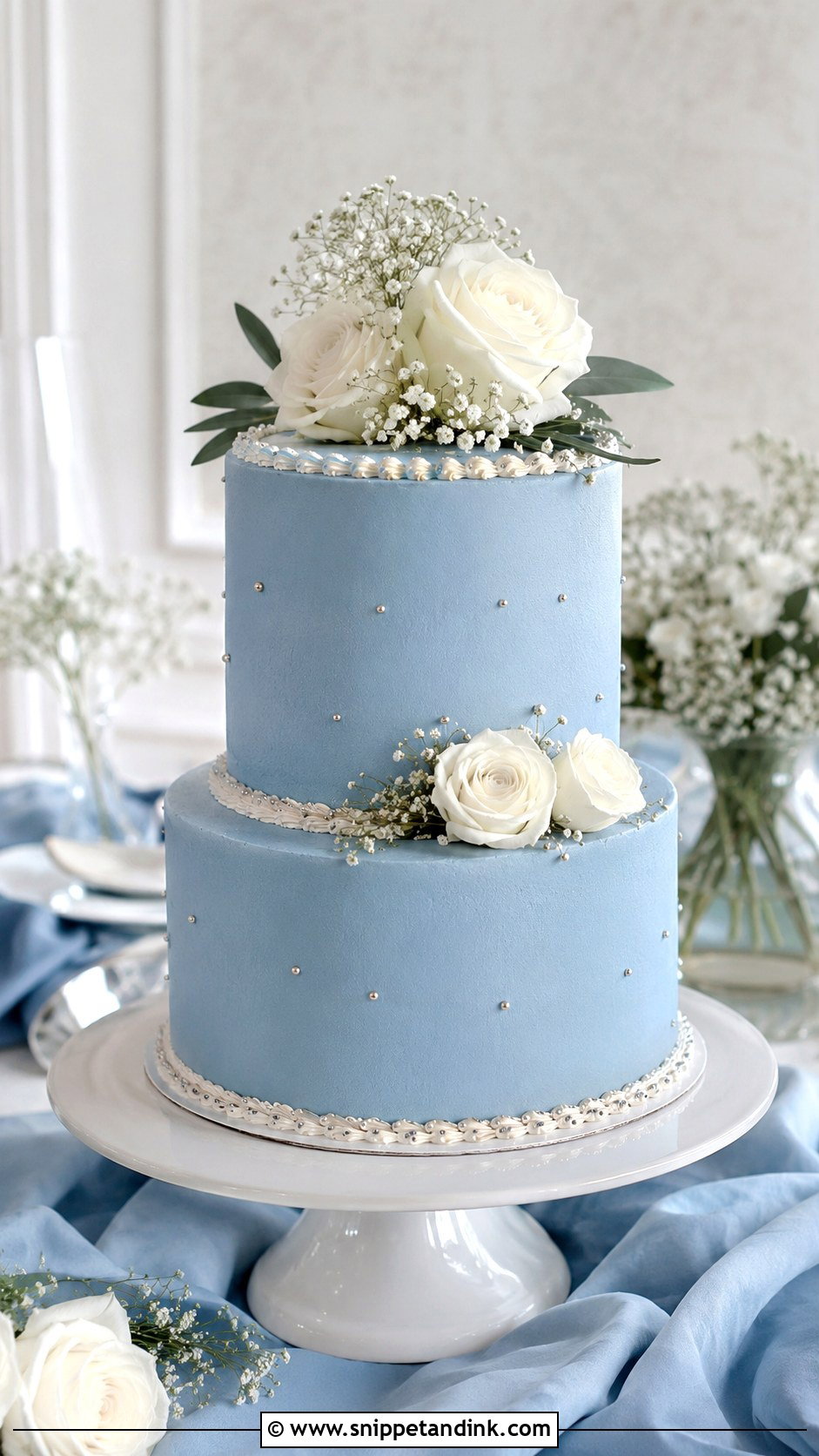
The shade sets the mood: pale blue for romantic, dusty blue for something quieter, navy for an evening wedding. Navy is the tricky one. Getting buttercream that dark takes so much gel color that it can taste bitter and stain mouths, so I usually do navy in fondant and keep the buttercream inside. Fine piping, white flowers and silver or pearl details keep any shade bridal. Lemon, vanilla, almond and blueberry fillings all pair well. By the water I’d use soft blue with white florals; in a formal room, navy fondant with gold.
10. Two Tier Black And White Wedding Cake
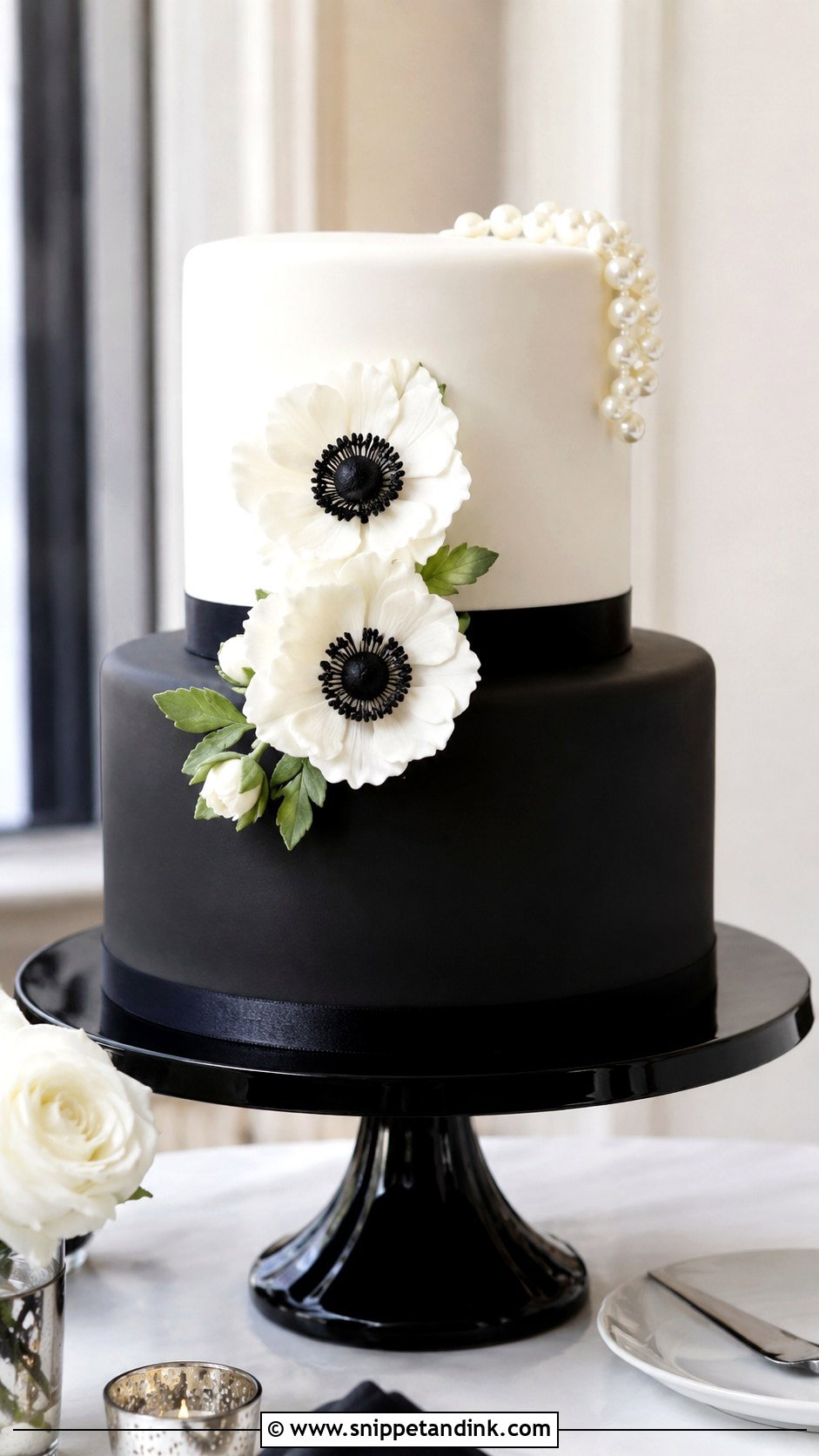
Every smudge shows when the cake is black and white, so this one lives or dies on clean execution. You can do a white cake with thin black ribbon details, black floral accents, or a black base tier under a white top. As with navy, black buttercream needs a heavy dose of color, so I make the dark parts in fondant and use buttercream only where I want a softer finish. White roses, anemones, pearls or simple piping keep it bridal. Galleries, city venues and evening receptions suit it, provided the details stay sparse.
11. Two Tier Square Wedding Cake
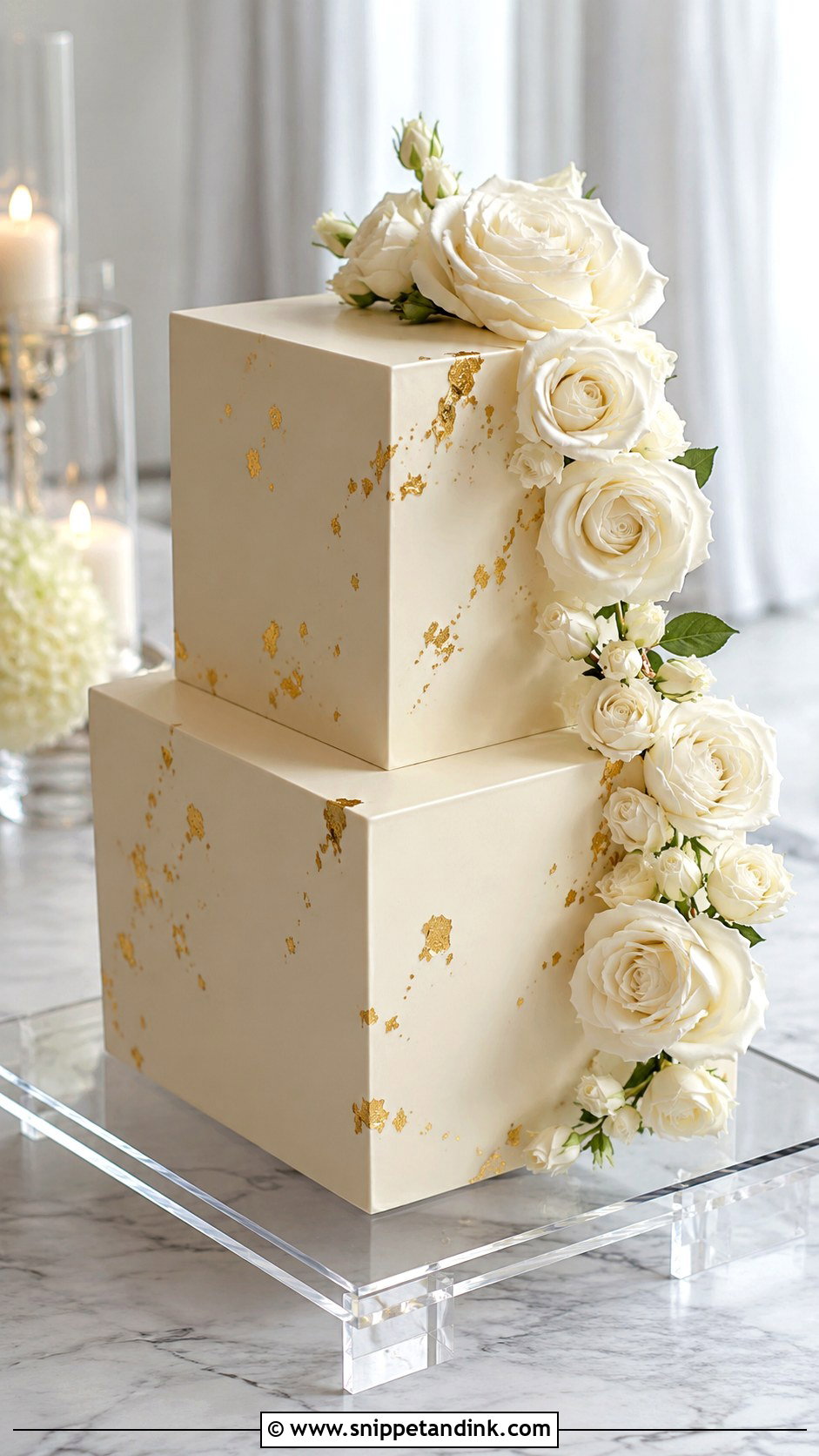
Square tiers look architectural while the two-tier stack still feels traditional. The crisp corners are the hard part. Fondant gets them most reliably; sharp buttercream corners take real skill and patient chilling, so ask to see a baker’s square buttercream work before you book. Sugar flowers, fine piping, gold leaf or a floral cascade down one corner all suit the shape. It also cuts into neat, even portions for plated service, and a square tier serves noticeably more than a round one of the same width.
12. Two Tier Heart Wedding Cake
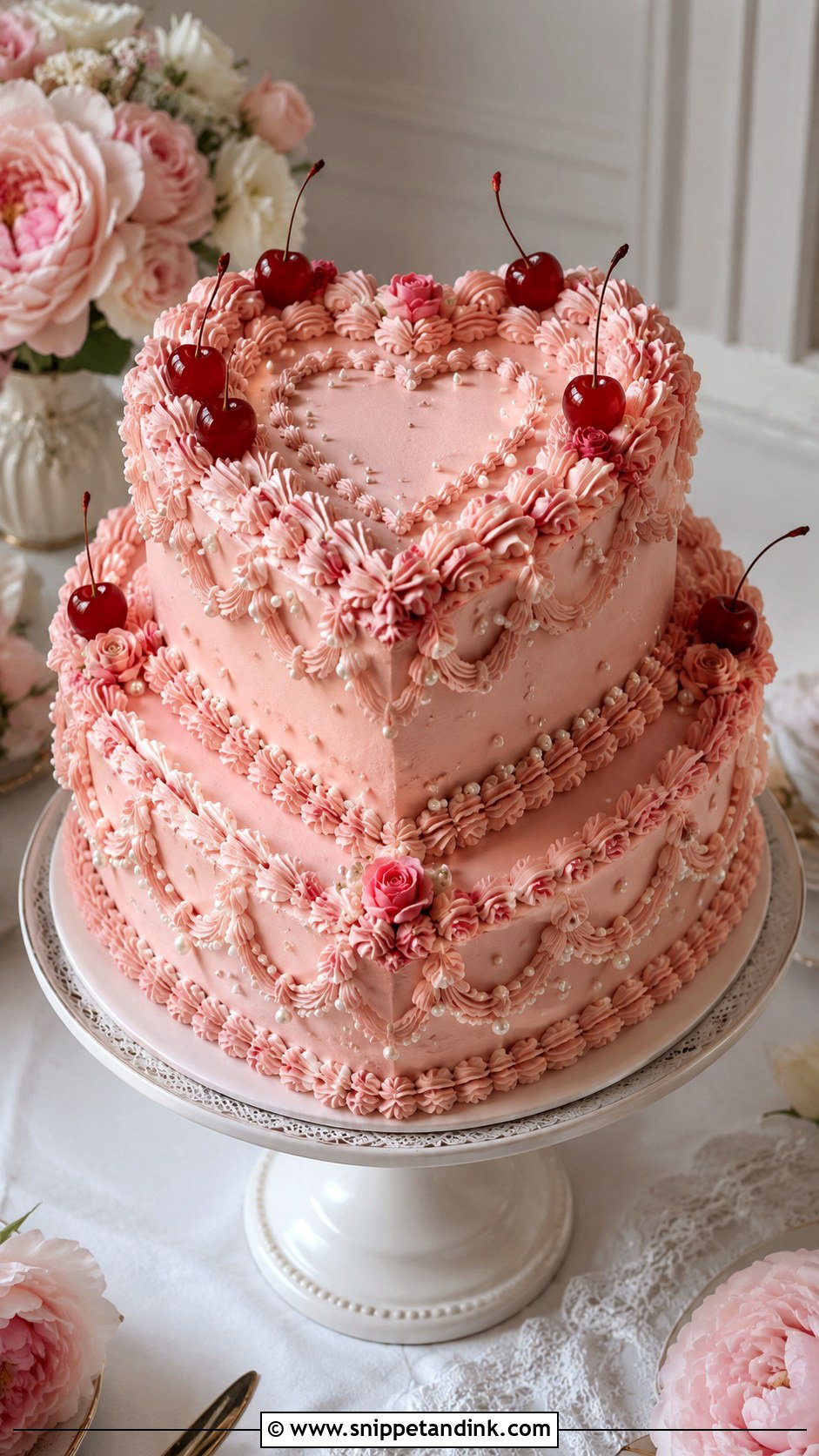
A two tier heart wedding cake gives you a statement shape without adding height. Vintage piping, pastel frosting and pearl borders suit it best. You can stack two hearts or set a heart on a round base, and I find the round base easier to support and to serve, since heart points cut into awkward wedges. Vanilla, strawberry, red velvet and almond match the romantic idea. Keep the swags, rosettes, cherries or pearls tidy so it reads polished rather than novelty.
13. Two Tier Watercolor Wedding Cake
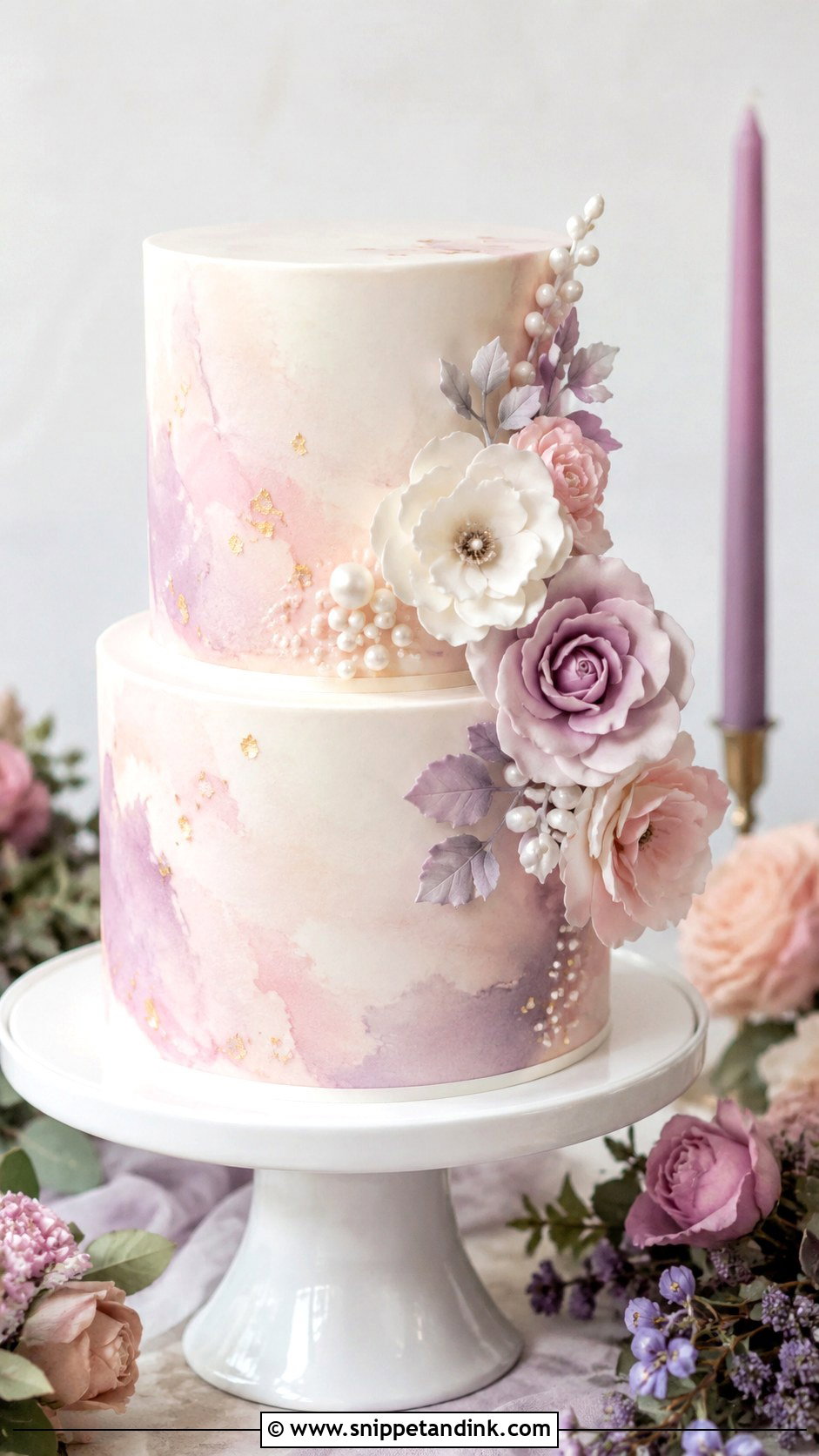
For a two tier watercolor wedding cake, the color is blended onto the surface so it looks painted rather than printed. On buttercream I build it with a scraper and several tints at once; on fondant I paint diluted gel color by hand, which gives softer, more controlled washes. Blush, lavender, peach, blue, sage or a mix from your palette all work, and a fabric swatch from the bridesmaid dresses helps me match it. A few sugar flowers or gold flecks finish it. Pale washes look refined, while brighter tones suit a bold, creative party.
14. Two Tier Ruffle Wedding Cake
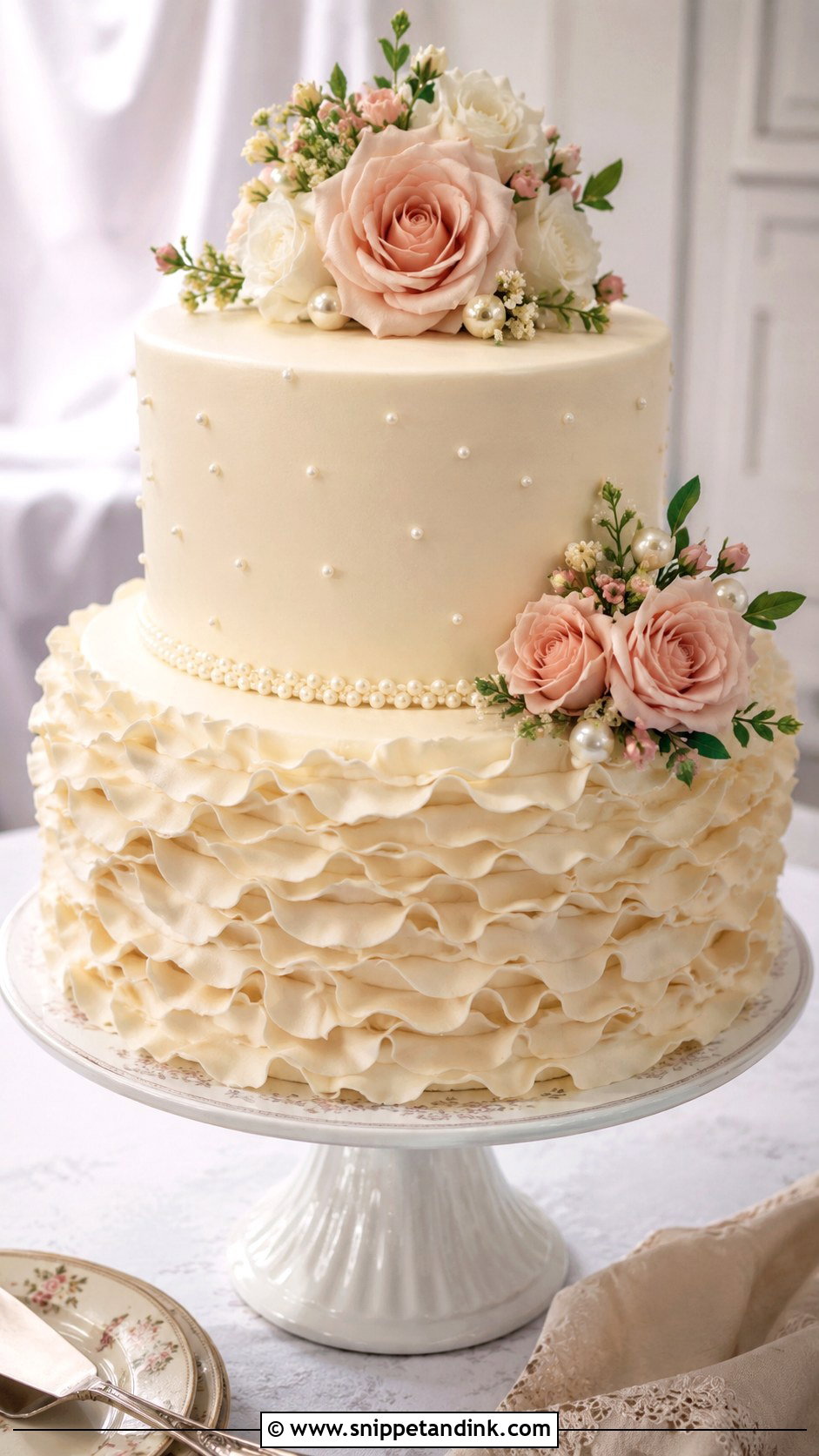
Ruffles do the decorating for you, so I rarely add much else. Most often I ruffle one tier and keep the other smooth, which gives the eye somewhere to rest. All-over ruffles can work if the color stays quiet, in ivory, blush, champagne or pale gray. Buttercream ruffles taste better but slump in heat, while fondant ruffles hold their shape longer on a warm day and are firmer to cut. Vanilla, coconut, strawberry or lemon suit it, topped with one floral cluster or left bare.
15. Two Tier Marble Wedding Cake
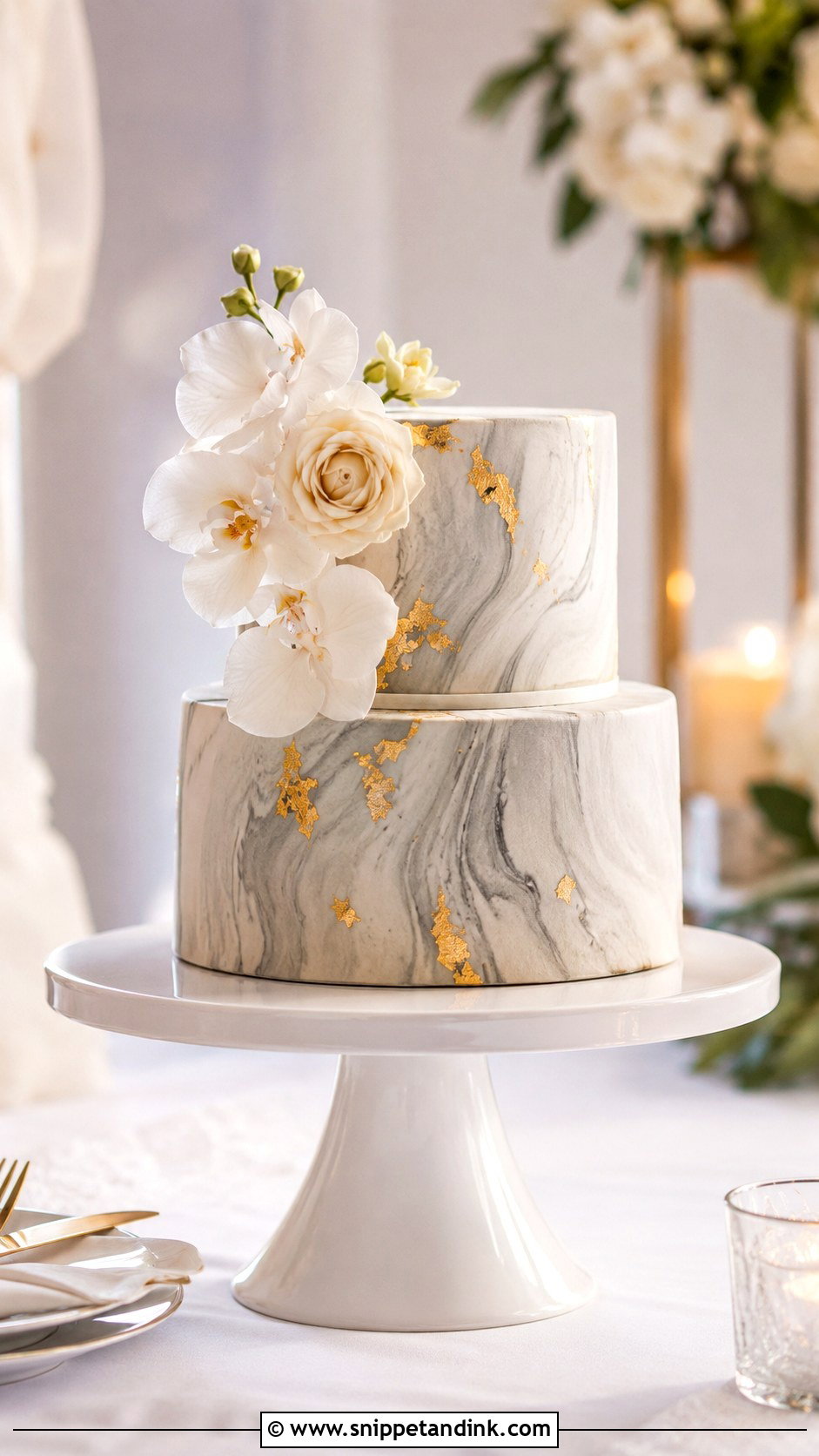
A two tier marble wedding cake brings a little drama to a modern table. Gray and white is the classic, though blush with ivory, sage with cream, or black with white all work. In fondant I only partly knead the colored veins in, so each tier gets its own pattern; buttercream marbling is done with spatula swipes and looks softer and less like stone. Gold leaf, white orchids, sugar roses or an acrylic topper finish it. It needs a plain table around it to look its best.
16. Two Tier Drip Wedding Cake
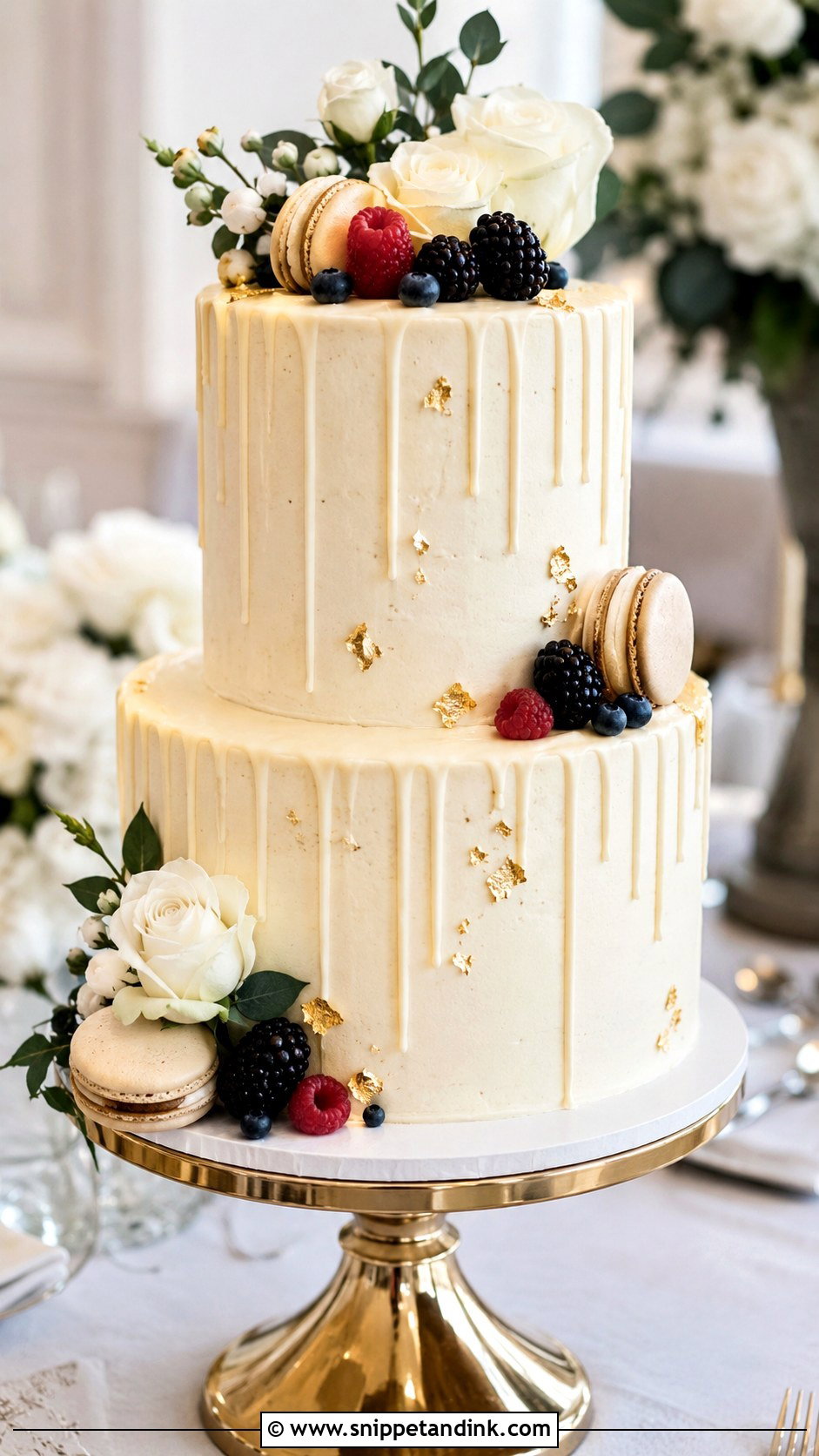
A drip only looks bridal when it’s controlled. The ganache has to meet a well-chilled cake at the right temperature: too warm and it runs onto the board, too cool and it stops in stubby blobs. I always test one drip down the back before going round. White chocolate over ivory buttercream is the softest version, caramel suits autumn flavors, and dark chocolate fits a moody evening. Macarons, flowers, berries or gold on top finish it. It’s a good middle ground if you want something less traditional that still looks finished.
17. Two Tier Fruit Wedding Cake
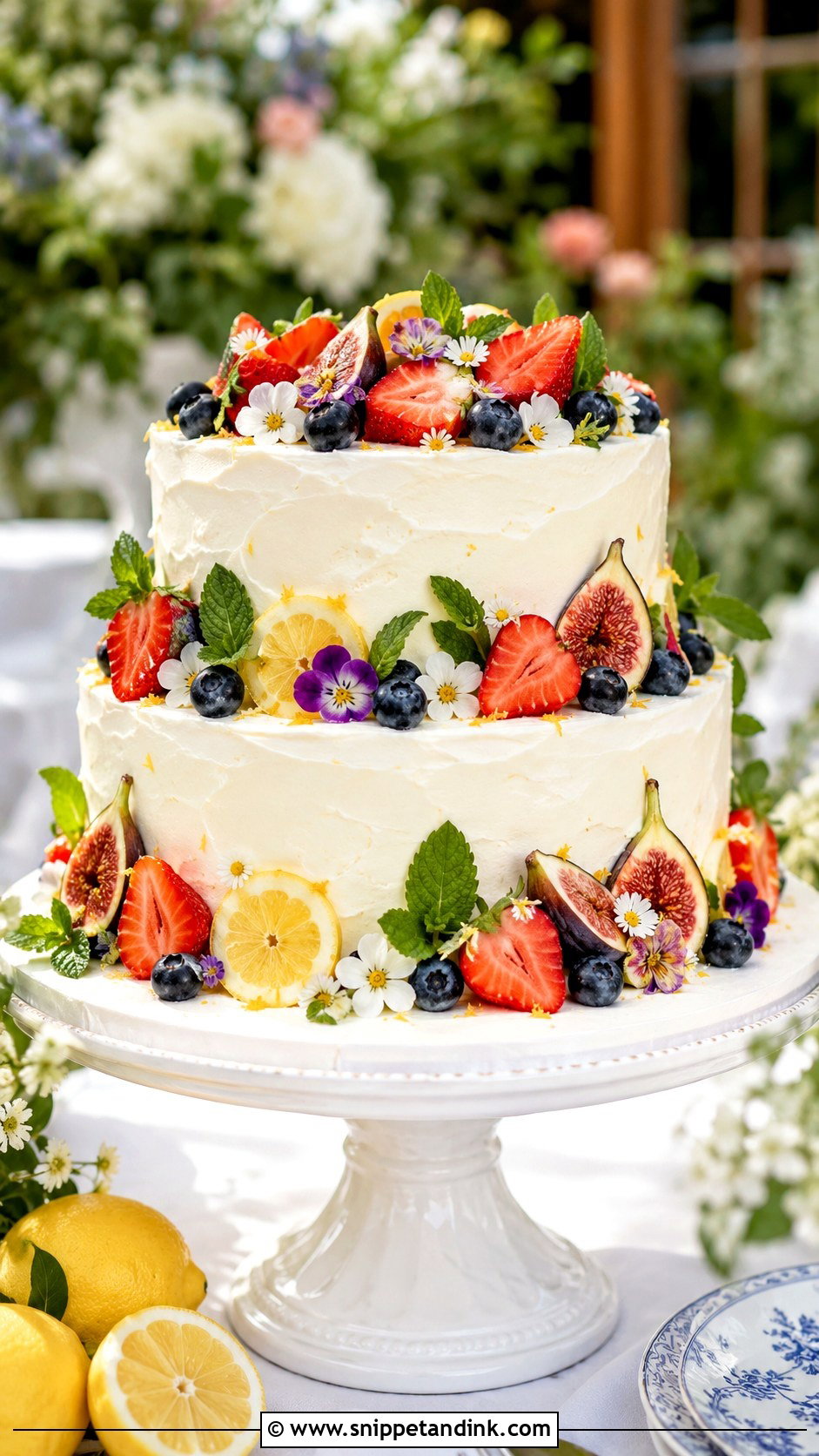
Fresh fruit makes a cake look generous, and it’s also the decoration most likely to weep. Cut strawberries and citrus release juice onto frosting within a couple of hours, so I use whole berries where I can, glaze cut fruit lightly and add it on site. Grouped in clusters, strawberries, raspberries, figs, blueberries and blackberries look styled; scattered, they look accidental. Whipped and cream cheese frostings suit fruit but need refrigeration, which matters at a summer brunch, so light vanilla buttercream is the safer choice in heat. A few mint leaves or edible flowers finish it.
18. Two Tier Boho Wedding Cake
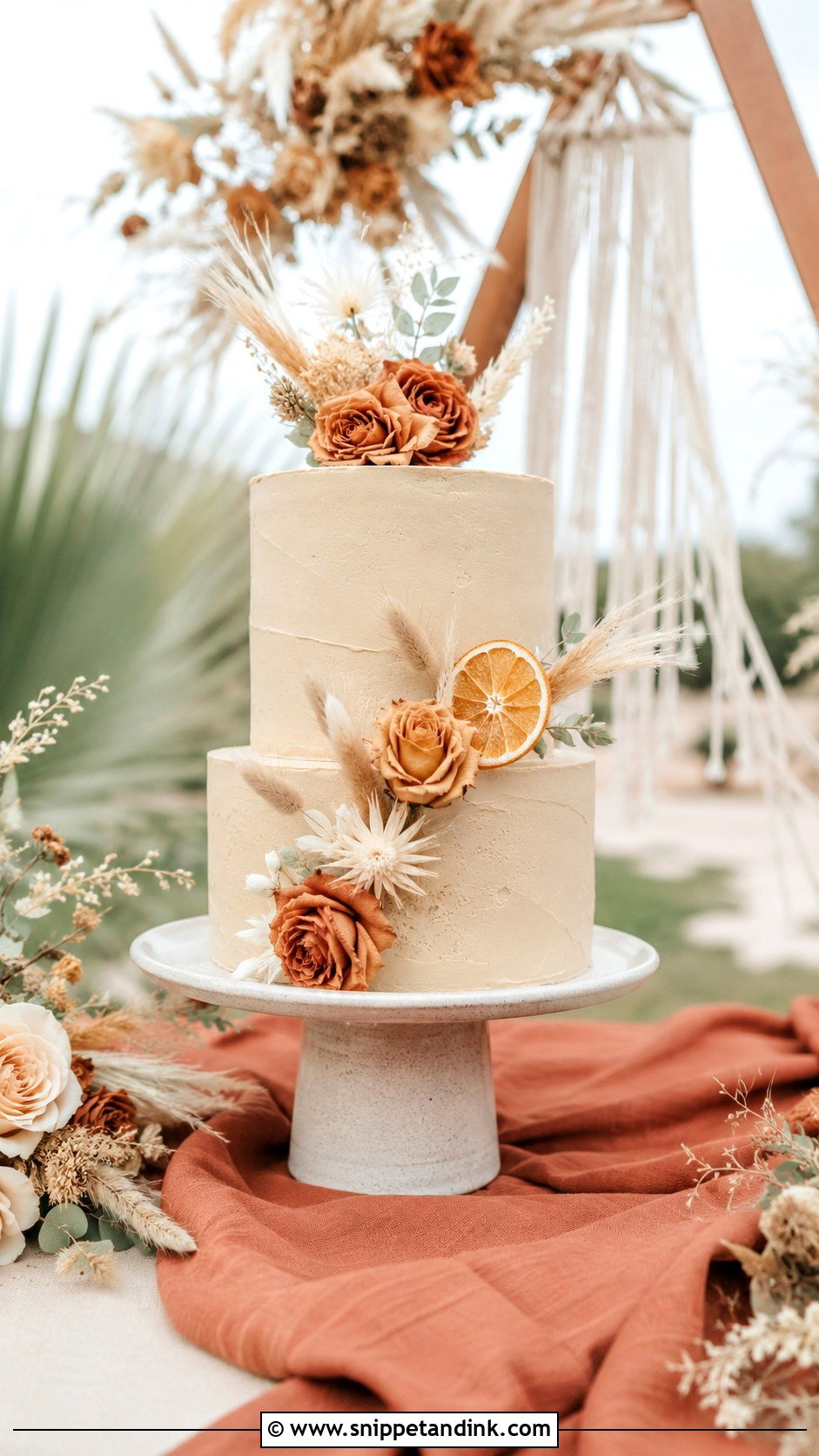
A two tier boho wedding cake leans on dried texture: pampas, bunny tails, preserved roses, small palm fans, dried orange slices. Beige, ivory, taupe, terracotta and soft blush suit it far better than brights, over a semi-smooth buttercream that looks handmade. Pampas and most dried flowers aren’t food safe and they shed, so I seal the stems or set them in picks and on the board, never straight into the sponge. Keep the arrangement uncrowded. Desert weddings, tents and rustic venues are where it feels at home.
19. Two Tier Beach Wedding Cake
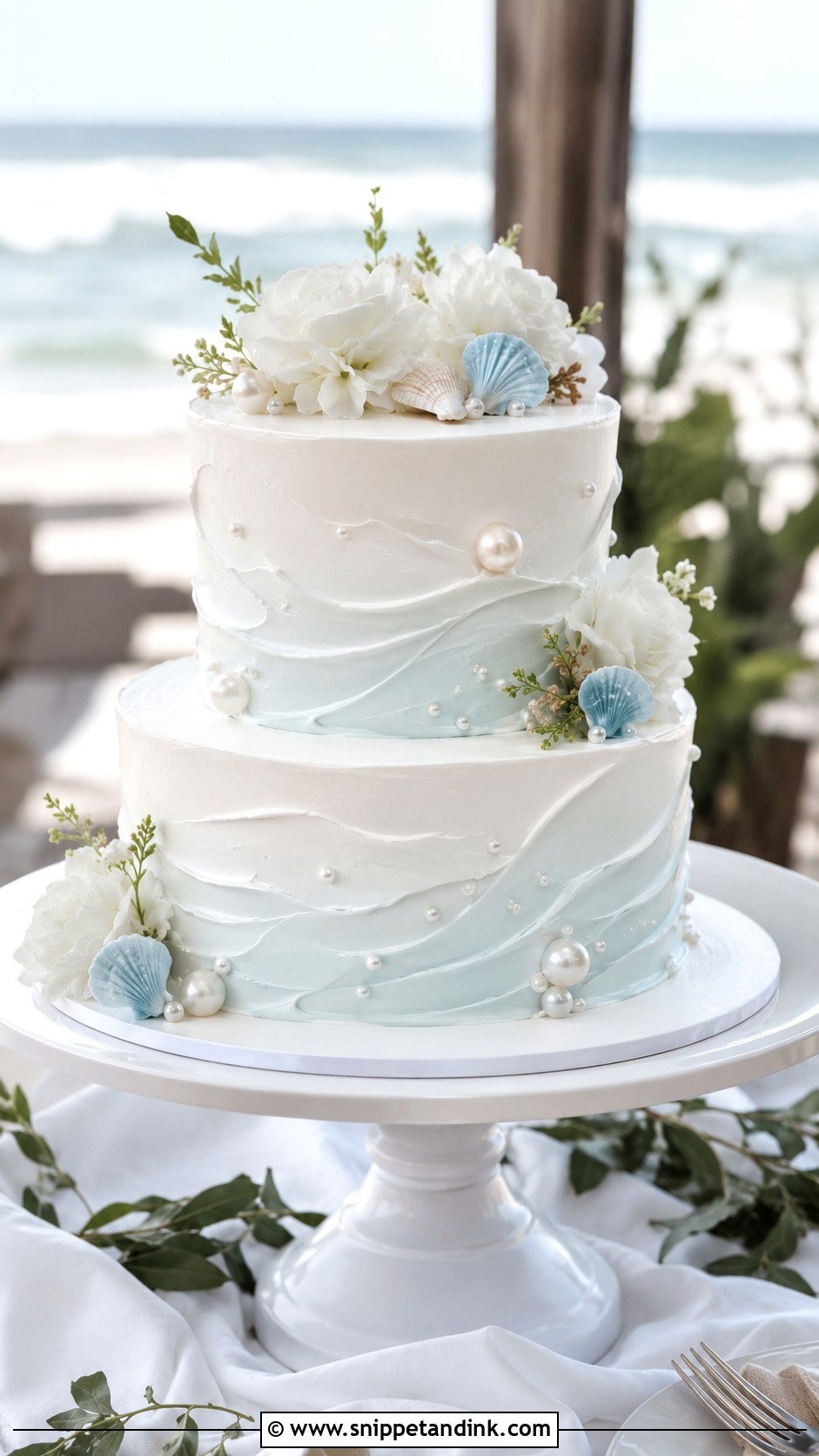
Beach cakes go wrong when they turn into a theme. I stay with soft blue, ivory, sand and pearl tones, smooth buttercream with a gentle wave texture, white flowers and at most one subtle shell detail, which must be sugar or food safe. Coconut, lemon, vanilla, passion fruit and key lime all taste right by the sea. My bigger worry at the water is sun. Buttercream on an uncovered table at midday will lean, so I ask for shade and the latest set-up time the venue allows.

20. Two Tier Minimalist Wedding Cake
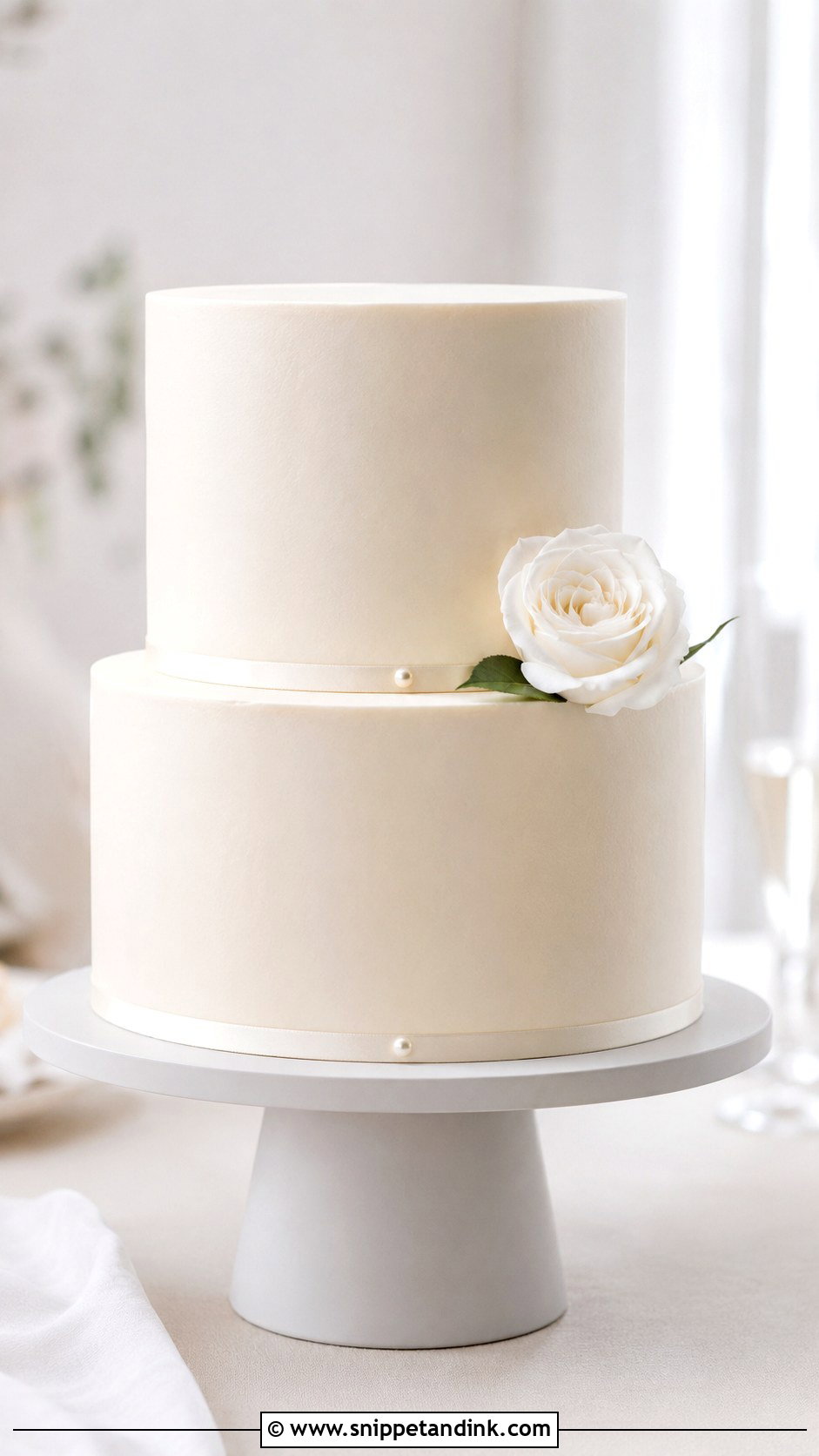
A two tier minimalist wedding cake leaves nowhere to hide, which is exactly why I enjoy making them. It rests on clean shape, smooth frosting and one strong detail: a single flower, a thin ribbon, a small pearl border or texture on one tier. Proportion matters more than people think. A 6 inch tier on an 8 inch base looks compact, while a 6 on a 9 leaves a wider ledge that reads lighter. With so little decoration, flavor carries it, so choose vanilla bean, almond, lemon or chocolate with a light filling.
Getting Two Tiers From the Bakery to the Cake Table
A short cake travels better than a tall one, but it still needs structure. I put dowels in the bottom tier and set the top tier on its own thin board, so the weight rests on the supports instead of sinking into the sponge below. Most two-tier cakes I deliver already stacked and chilled, flat on a level surface in an air-conditioned car. A warm car and one sharp corner do more damage than any distance.
Once the cake is on its table, the clock starts. Naked sponge dries, cut fruit weeps, and cream cheese or whipped frostings shouldn’t sit out for hours. I want the table away from windows with afternoon sun and away from heaters, and fresh flowers go on last, on site, stems wrapped.
What I settle with couples at the tasting
- A final guest count, or the date it will be confirmed
- Whether the cake table is indoors, and what time the cake goes out
- Who supplies the flowers, and that every stem is food safe or kept in picks
- Who brings the stand and the knife
- Whether the venue charges a cutting fee, and who actually cuts
Bakers who take weddings tend to fill popular summer Saturdays months ahead, so I’d start the conversation as soon as your venue is fixed rather than after the invitations go out.
Start With the Guest Count, Then Pick a Finish
Two tiers feed a small wedding on their own, or act as a proper cutting cake beside a dessert table at a larger one, and nearly every style here scales to that size. When couples sit down with me, I ask about the venue, its temperature, the season, the flowers and their favorite flavors before we talk decoration, because those answers rule some finishes out straight away. Once that’s settled, the right design is usually obvious. A small cake built well looks every bit as considered as a tall one.
You'll Like These Ideas:








Leave a Reply