
Wine-coloured cakes are some of the most satisfying I make, and some of the most technically demanding. A true burgundy sits between red and purple, and getting it into buttercream or sugar paste without the cake tasting of food colouring, or fading to dusty pink under the marquee lights, takes planning. Done well, it carries ivory, blush, gold, greenery and even black beautifully, and it can look rustic at a vineyard, formal in a ballroom or spare and modern in a gallery space. The designs below range from fully coloured tiers to cakes where burgundy only appears in the flowers, with notes on how each one behaves in real conditions.
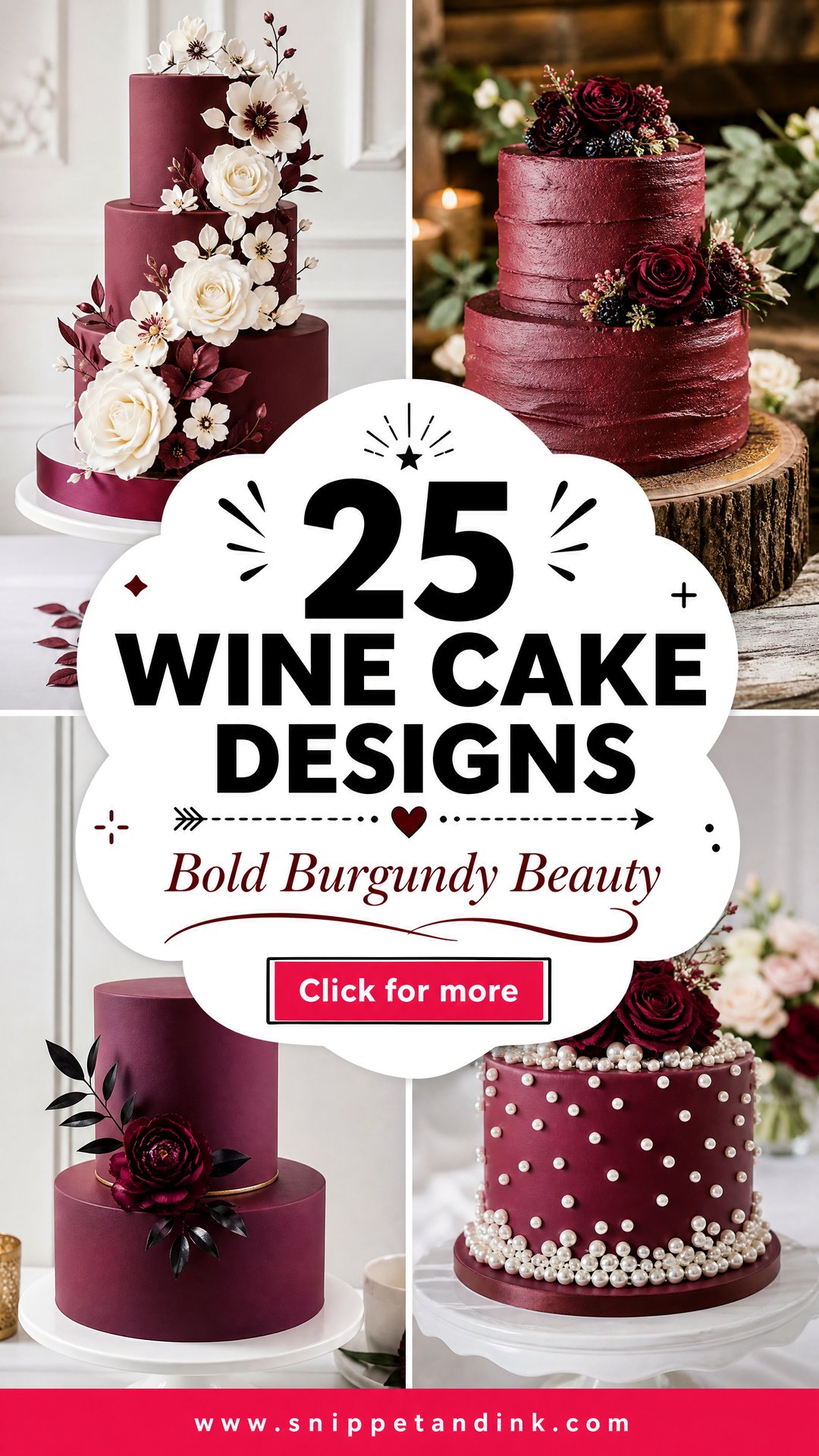
Getting a Real Wine Shade Into Buttercream
Deep reds are the hardest colours I mix. Plain white buttercream fights you all the way, and by the time it looks burgundy it can taste of colouring. If you’re ordering a fully coloured tier, these are the things worth discussing with your baker at the tasting:
- Ask how they build the colour. Starting from a chocolate or pink base, or using a concentrated gel, means much less colouring overall.
- Ask to taste the coloured icing, not just the sponge. A bitter note is easy to spot in a spoonful.
- Give them a physical reference: a fabric swatch, a ribbon or a bridesmaid dress sample. Burgundy on a phone screen can be anything from oxblood to plum.
- Expect the colour to deepen. Dark buttercream gets noticeably darker overnight, so a good baker colours a shade lighter and waits.
If the cake is mostly ivory with burgundy flowers or painted details, most of this stops being a concern. That’s often the version I’d recommend for very hot weddings or couples who are sensitive about flavour.
1. Burgundy Wedding Cake With White Flowers
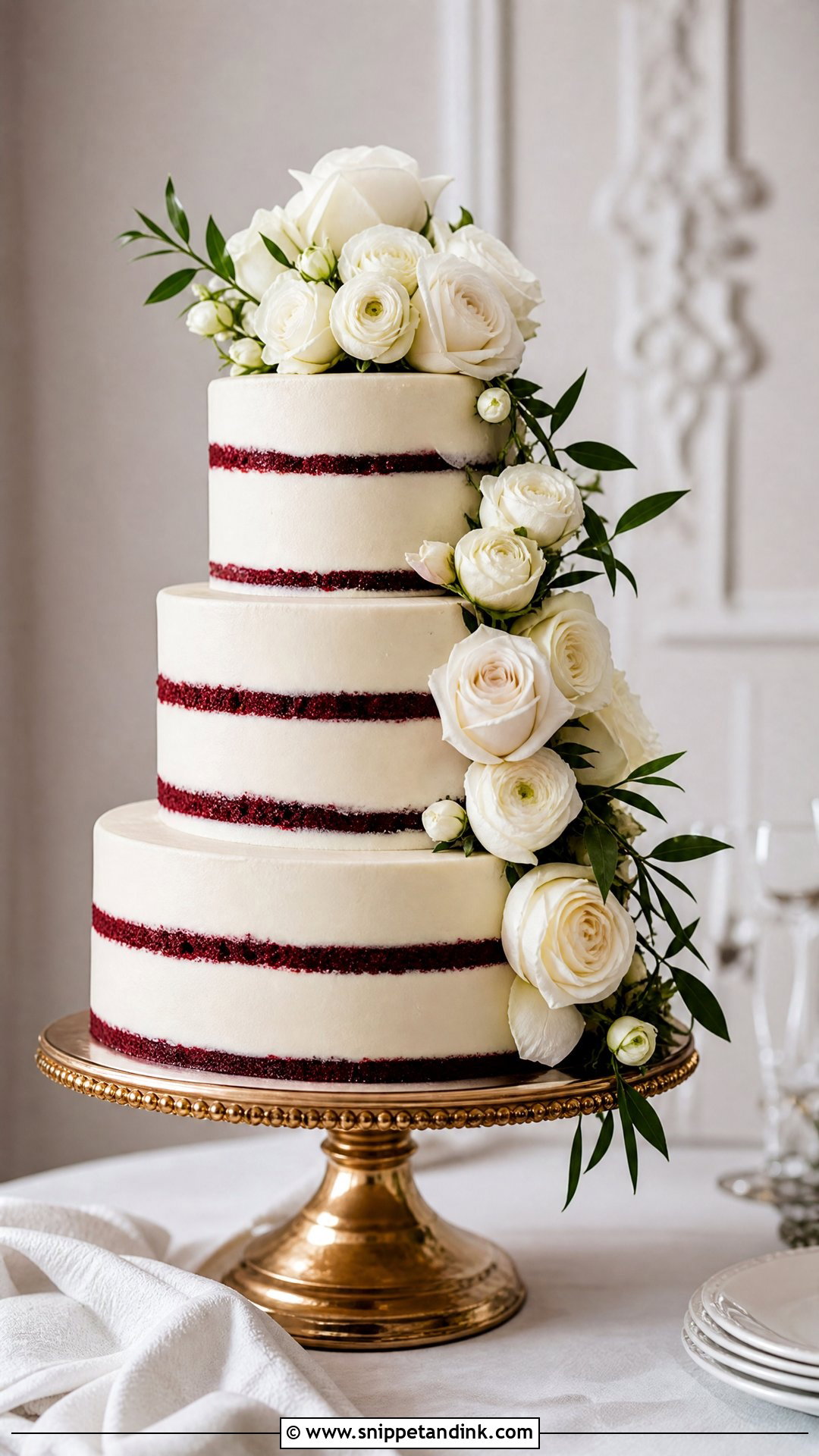
Pairing a deep tier with white blooms is the easiest way to make burgundy feel bridal. White roses, orchids, peonies or ranunculus soften the dark base, and on two or three tiers they can cascade from the top down one side. Fresh flowers never touch the cake directly in my kitchen: stems are wrapped in floral tape and set into food-safe picks, and I check every variety is non-toxic with the florist first. Keep the icing smooth for a cleaner result, or add a light texture for a garden feel.
2. Burgundy And Gold Wedding Cake
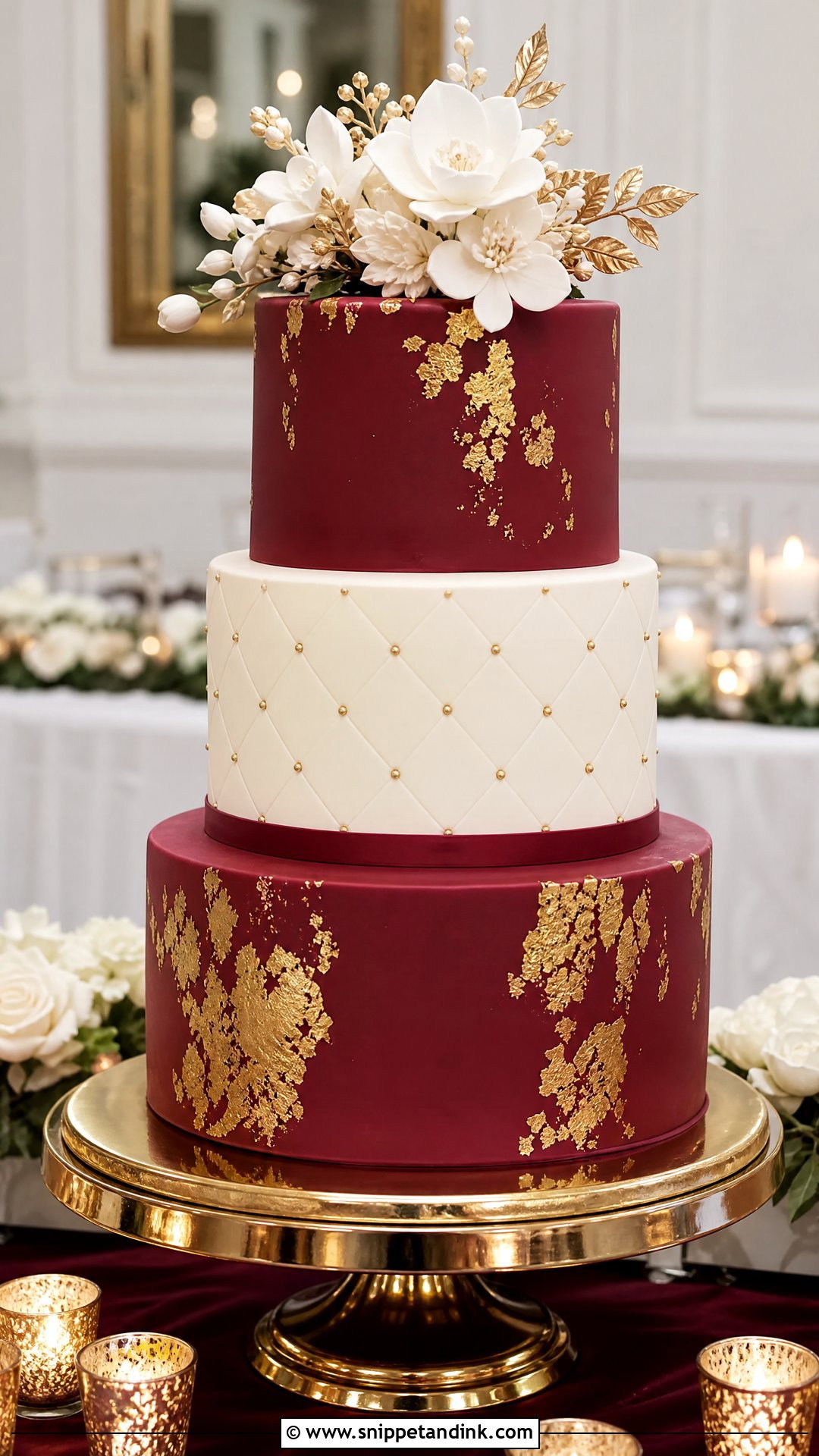
Gold works with burgundy when it’s an accent, not a coat of paint. I’d put a smooth burgundy tier between ivory ones, then scatter edible gold leaf or run a fine gold band at the base of each tier. Leaf is applied with a dry brush onto a slightly tacky surface, and it moves with the faintest draught, so it’s done last. This is an evening cake: candlelight makes the gold glow softly, whereas bright daylight can make it look flat and brassy. Fall weddings and black-tie receptions suit it best.
3. Burgundy Ombre Wedding Cake
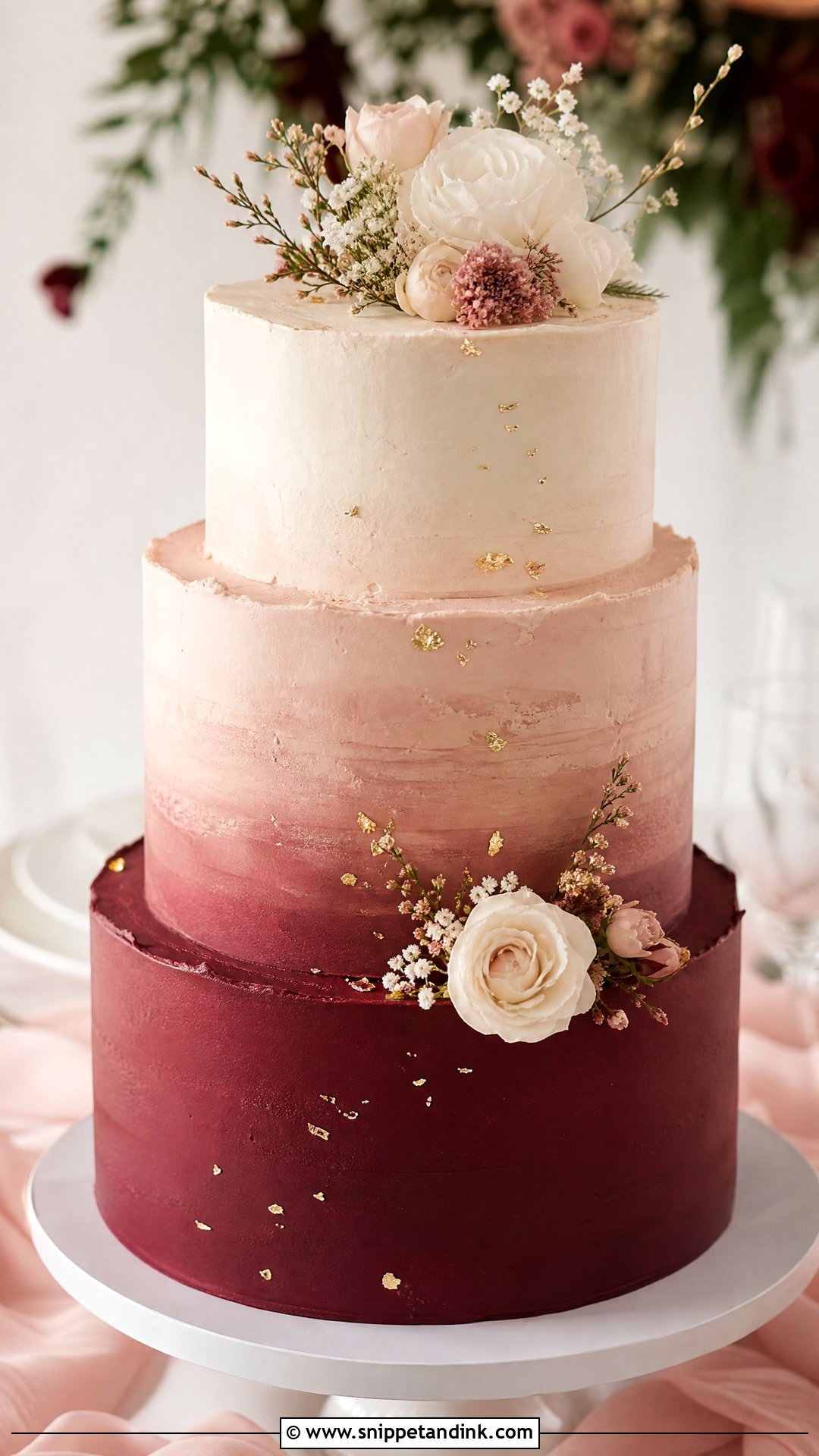
An ombre lets you bring in colour without every tier looking heavy. I fade from deep burgundy at the base to blush, mauve or ivory at the top, mixing each shade from the darkest batch so the undertones match. Buttercream is the right medium here; it blends on the side of the cake with a scraper and shows a little texture in photos. Small white flowers, dried petals or a few gold flakes are plenty. Autumn weddings and candlelit barns suit it, and it’s one of the gentler ways into this colour.
4. Burgundy Buttercream Wedding Cake
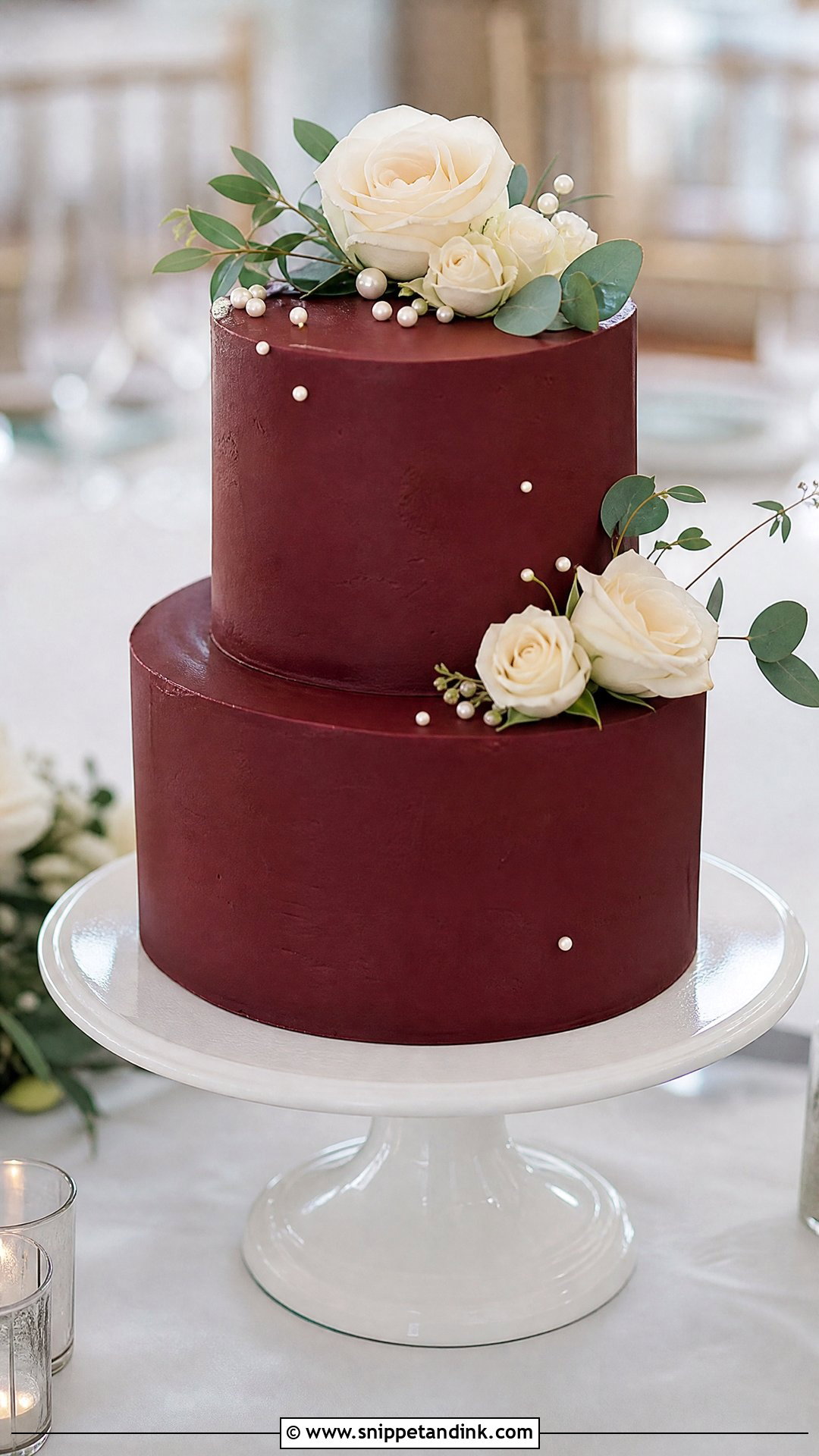
Buttercream gives burgundy a softer, warmer surface than sugar paste. Smooth suits a modern wedding; a light palette-knife texture suits rustic and garden settings. The catch is flavour: a deep red in plain buttercream needs a lot of colouring, which can taste bitter. I start from a chocolate or pink base to reduce how much I add, and I colour the day before because the shade deepens overnight. Inside, vanilla, almond or red velvet keeps guests happy. Even a single tier can look complete with good flowers and the right stand.
5. Burgundy Drip Wedding Cake
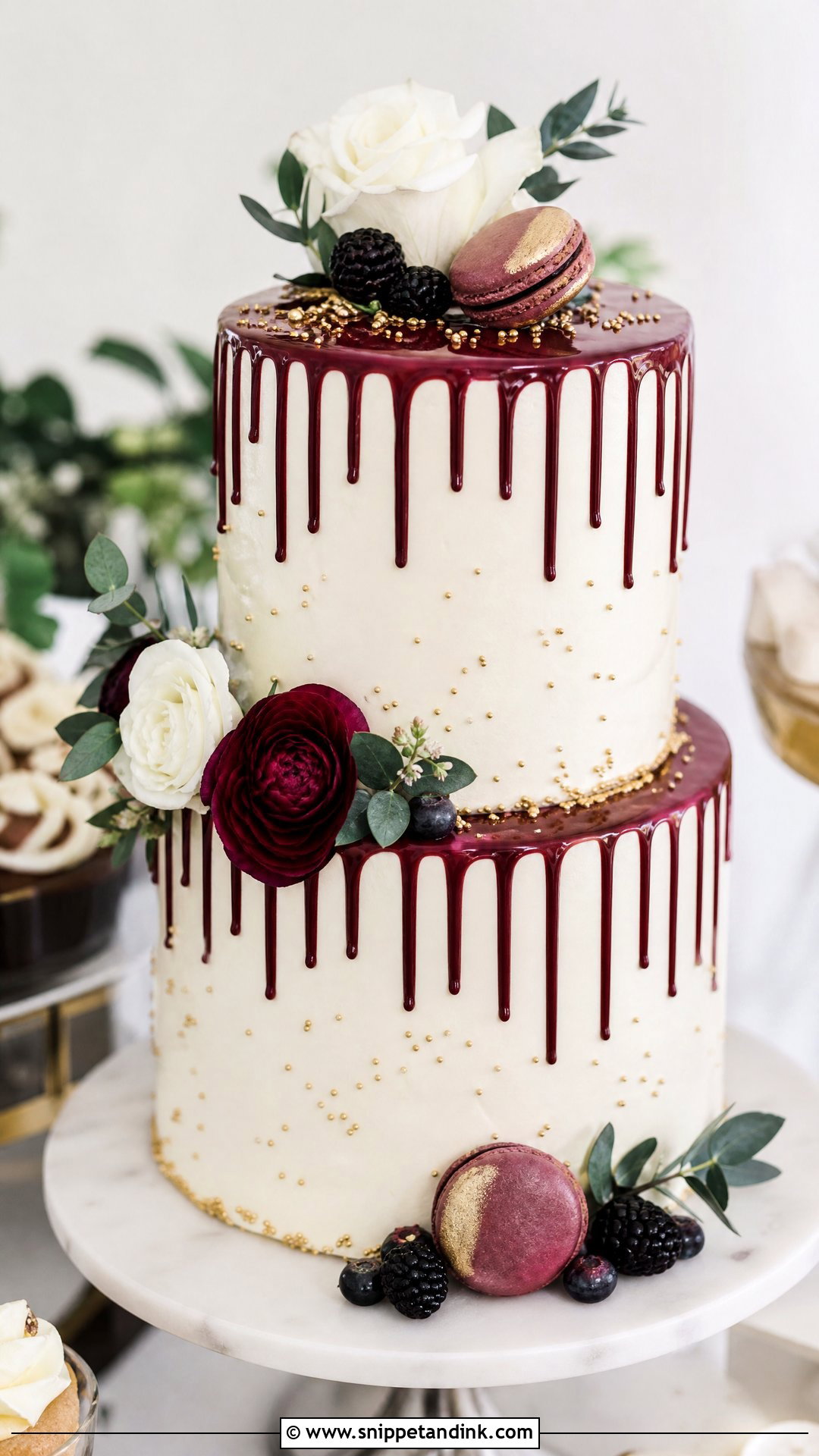
A burgundy drip wedding cake brings a modern edge to a deep colour. The drip can run burgundy over ivory, or dark chocolate over a burgundy base. Temperature is everything: ganache poured too warm runs to the board, too cool and it stops short in thick blobs, so I test a single drip on the chilled cake before going round. Tall, clean tiers make the drip part of the design. Top it with white flowers, macarons, berries or a little gold, and keep it neat for a formal table.
6. Burgundy Floral Wedding Cake
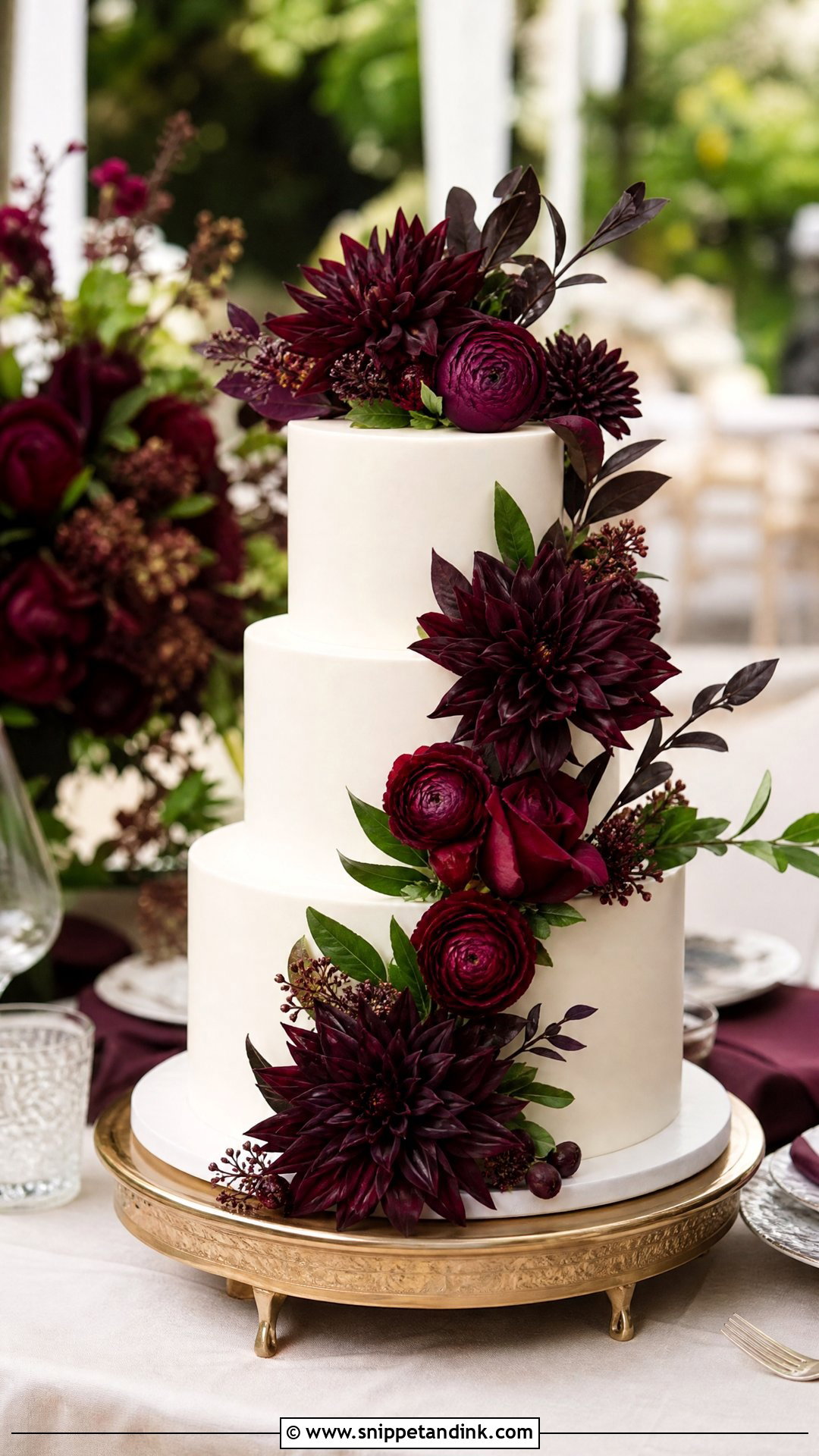
This approach puts the whole wedding palette into one centrepiece. Rather than colouring the icing, I keep the tiers ivory and bring in burgundy sugar flowers, fresh blooms or painted florals. Roses, dahlias, anemones, ranunculus and peonies all come in the right shades. Blush flowers lighten it; dark foliage makes it moodier. I place flowers along a loose diagonal down the tiers, which reads naturally in photos and leaves clean spaces for cutting.
7. Burgundy And Blush Wedding Cake
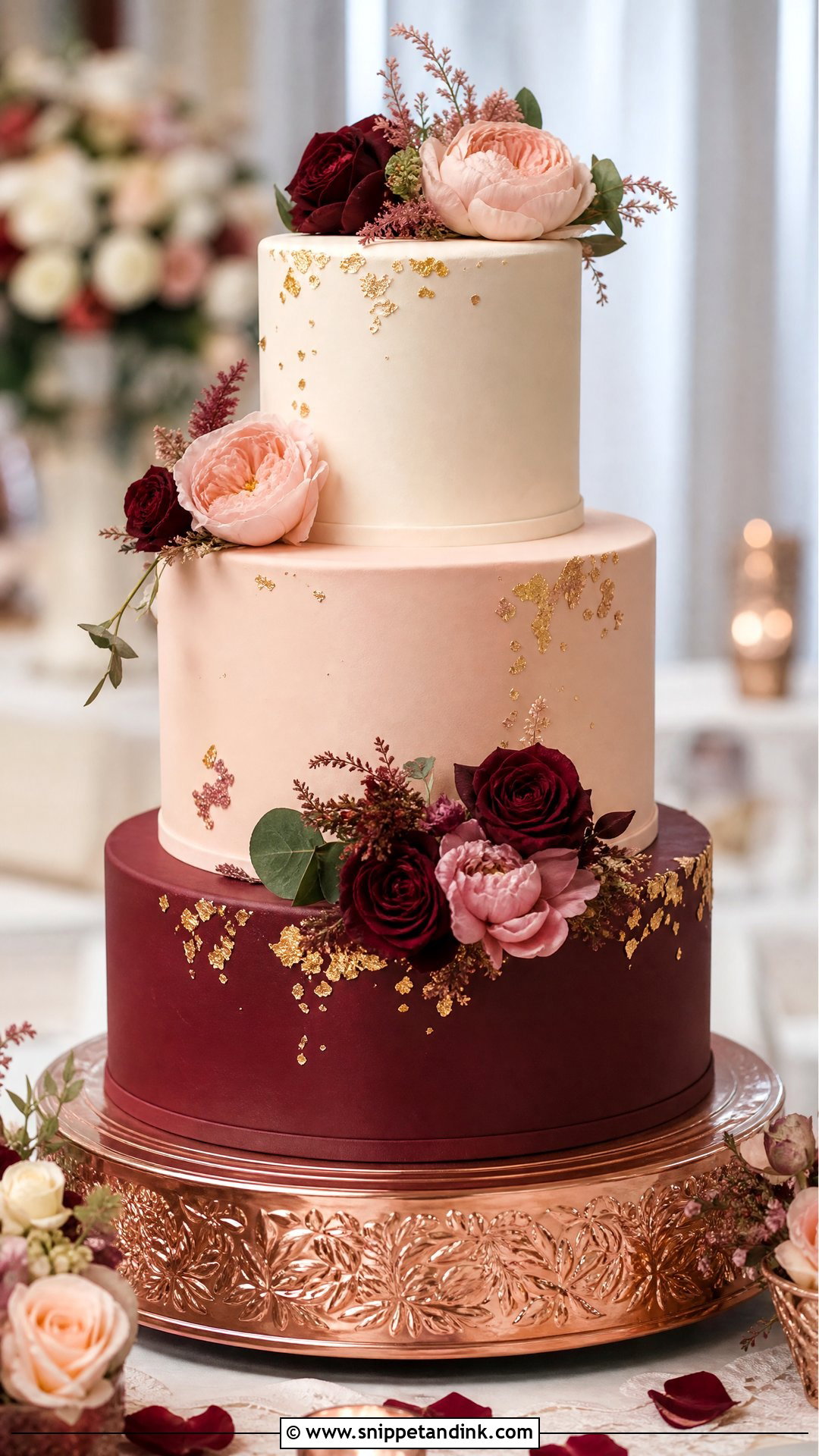
Blush stops burgundy from feeling too dark, and burgundy gives pale pink some depth. I’d try ivory tiers with blush watercolour washes, burgundy flowers and a small amount of gold, or a blush base tier with burgundy clusters at the top. The palette crosses seasons easily, from spring gardens to autumn ballrooms. Keep the finish clean so the two pinks are the story. If your bridesmaids are in either colour, bring a fabric swatch to the tasting; pinks drift warm or cool very easily.
8. Burgundy Marble Wedding Cake
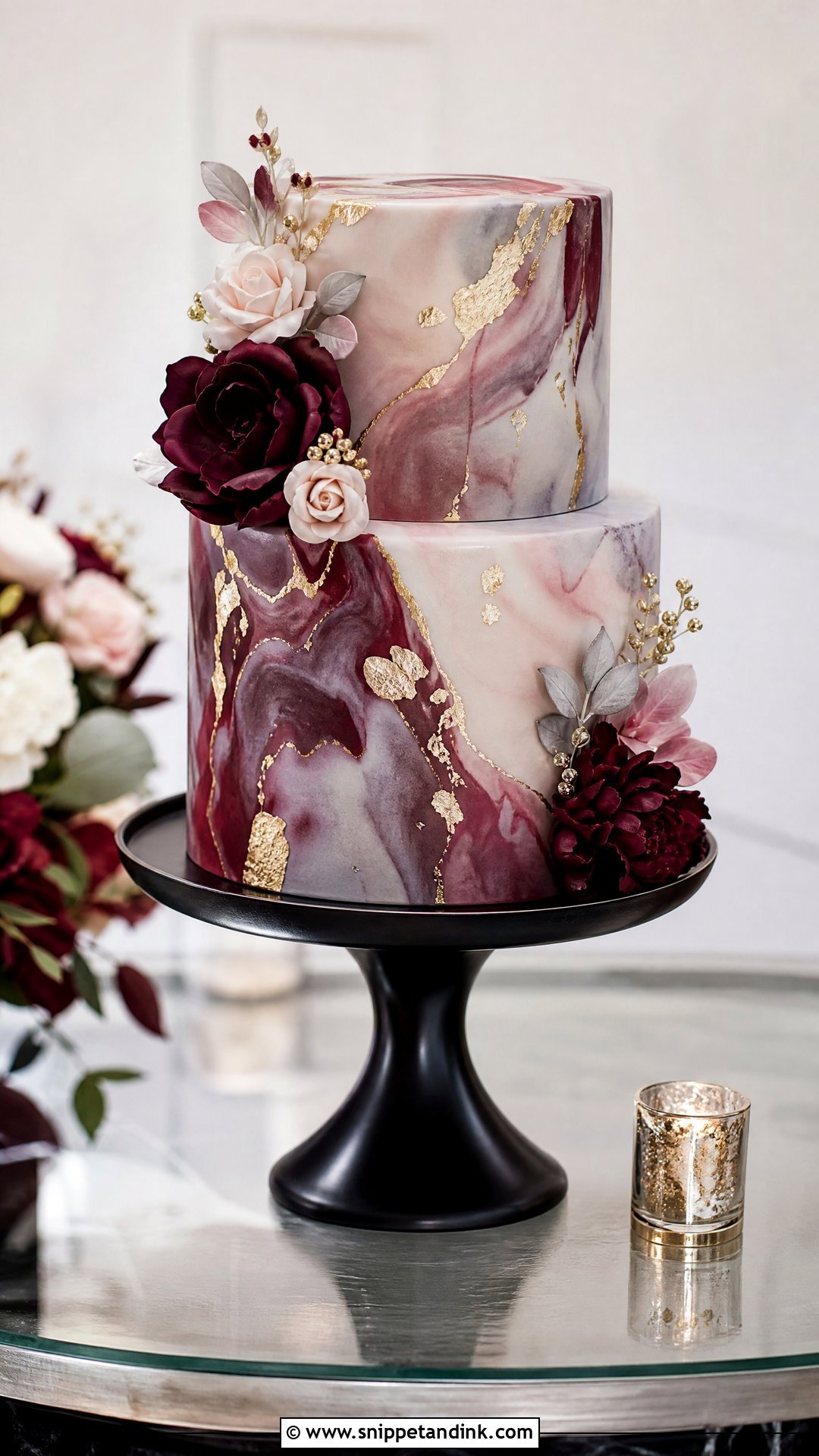
Marbled sugar paste is made by twisting burgundy, ivory, blush and grey together and rolling it only a few times, so the streaks stay defined. Every sheet comes out different, which is part of the appeal and also why I can’t promise an exact copy of a photo. Keep decoration minimal: a few sugar flowers, a little gold leaf or a slim metallic border. Contemporary venues, galleries and hotel receptions suit it well, and it feels genuinely custom.
9. Burgundy Rustic Wedding Cake
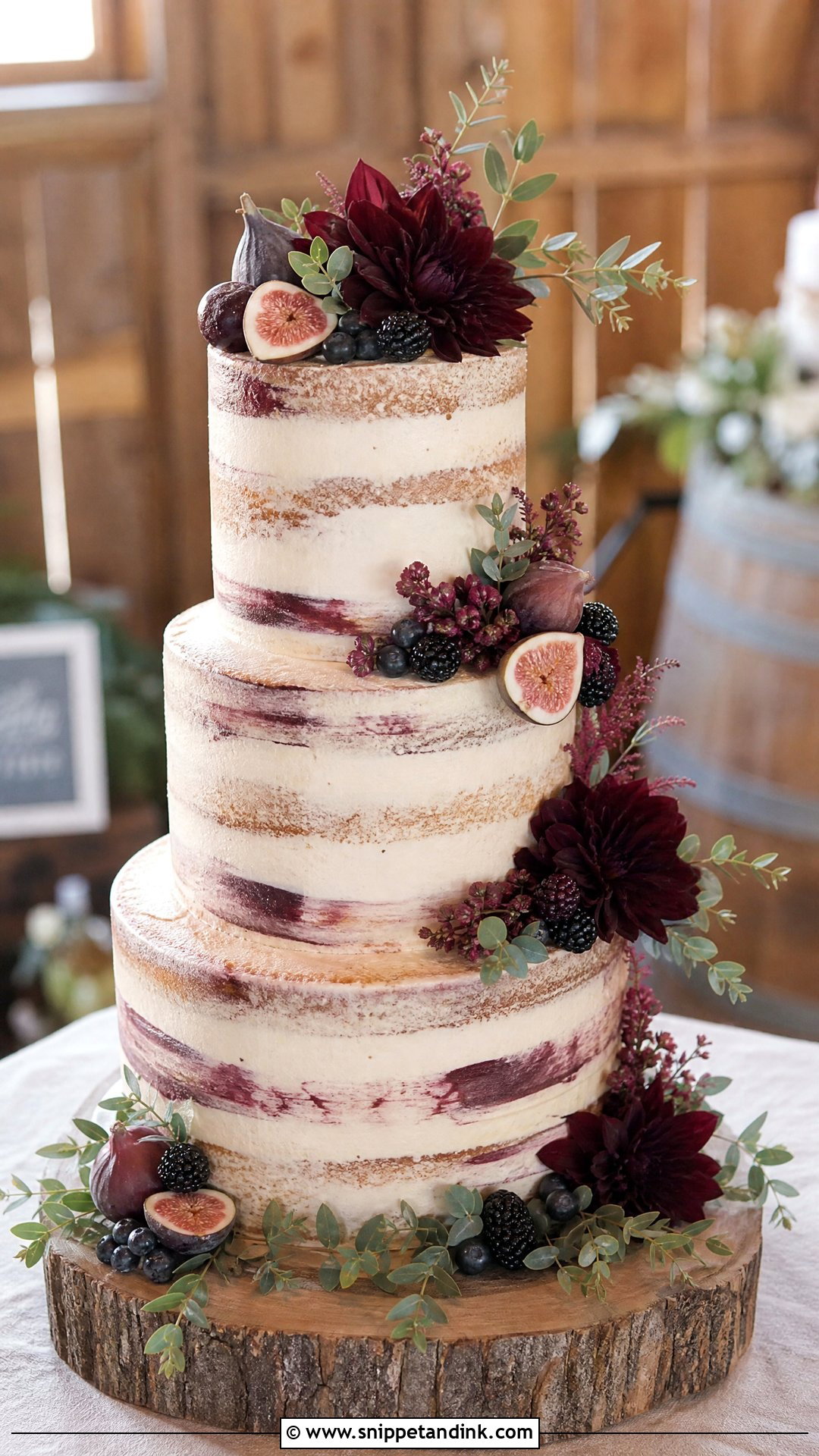
A burgundy rustic wedding cake leans on texture rather than a perfect finish: palette-knife buttercream, a semi-naked scrape or soft ridges. Burgundy flowers, figs, berries and a wooden stand do the rest, while ivory or cream icing keeps it bridal. The thing I’m careful about outdoors is fruit. Cut figs and berries weep juice onto pale buttercream within an hour or two, so I add them as late as possible, ideally at the venue. Relaxed should never mean unfinished; edges still need to be level.
10. Burgundy Naked Wedding Cake
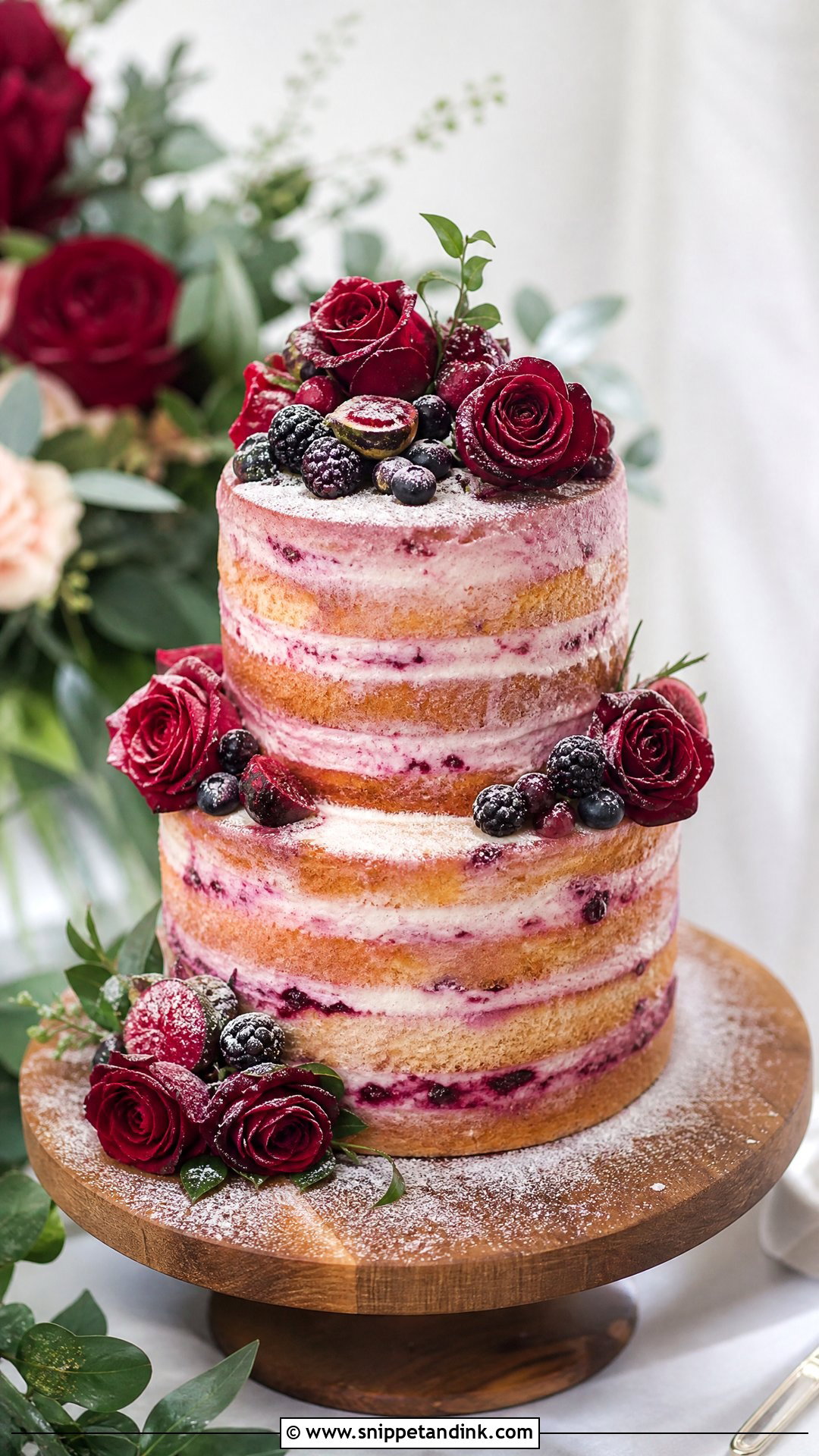
Naked cakes show their layers, so the sponge itself has to look good: even layers, even fillings and no domed tops. Burgundy flowers and berries supply the colour, and vanilla, spice, almond or chocolate sponges all work depending on the season. A very thin scrape of buttercream and a dusting of icing sugar soften the edges. The honest limit is drying: exposed sponge starts to dry out once it’s out of the fridge, so I don’t recommend a fully naked cake for a long outdoor display on a hot day.
11. Burgundy Square Wedding Cake
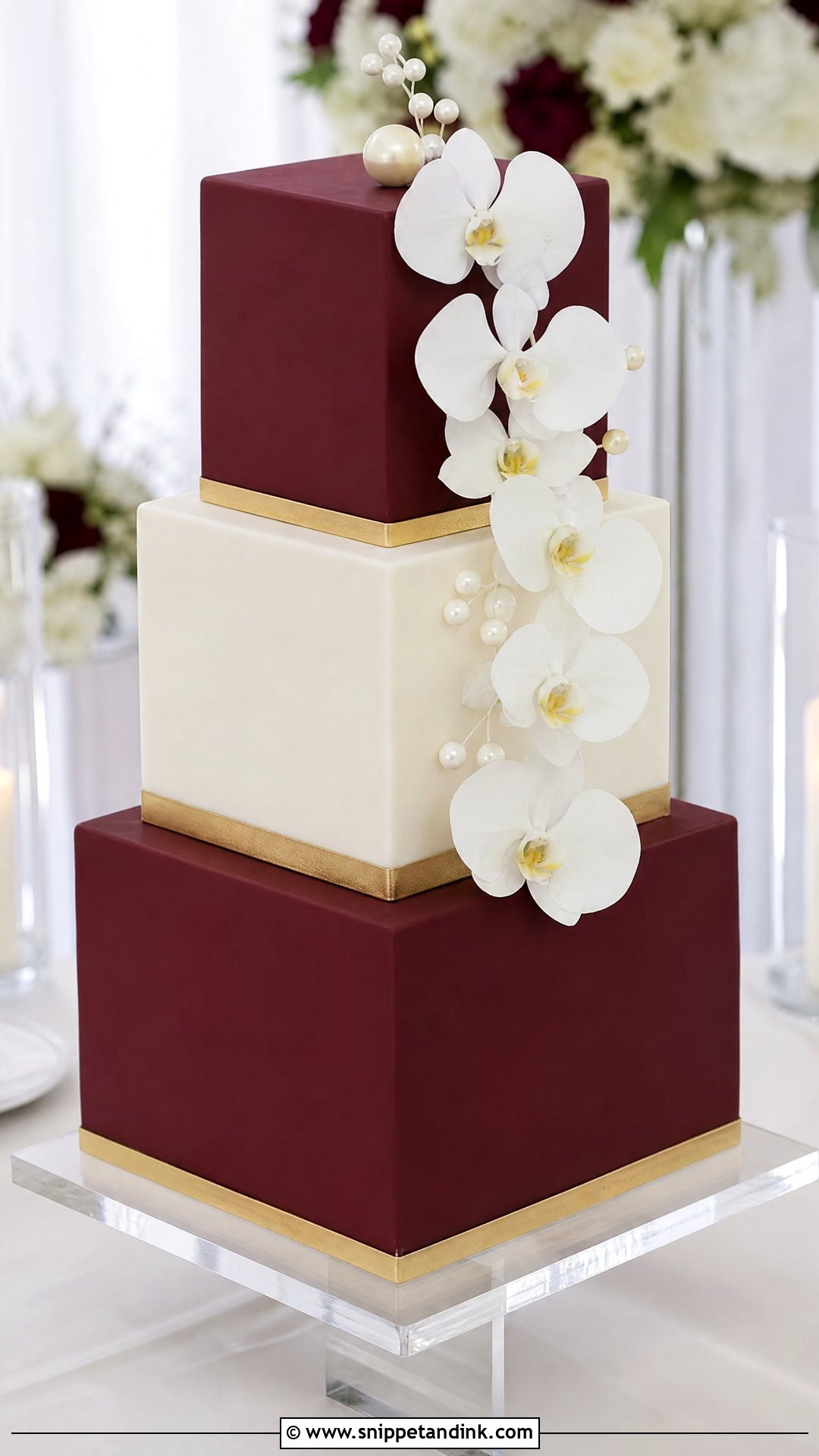
Square tiers make burgundy look architectural. They suit hotels, lofts and formal rooms with clean lines in the decor. You can cover every tier in burgundy paste or alternate burgundy with ivory, then add gold edging, white flowers or minimal piping. Sharp corners are hard to achieve on a square cake, and they’re where cracks show first, so I use a firm ganache under the paste. Bear in mind a square tier serves more than a round of the same width, which helps with budgeting.
12. Burgundy Tiered Wedding Cake
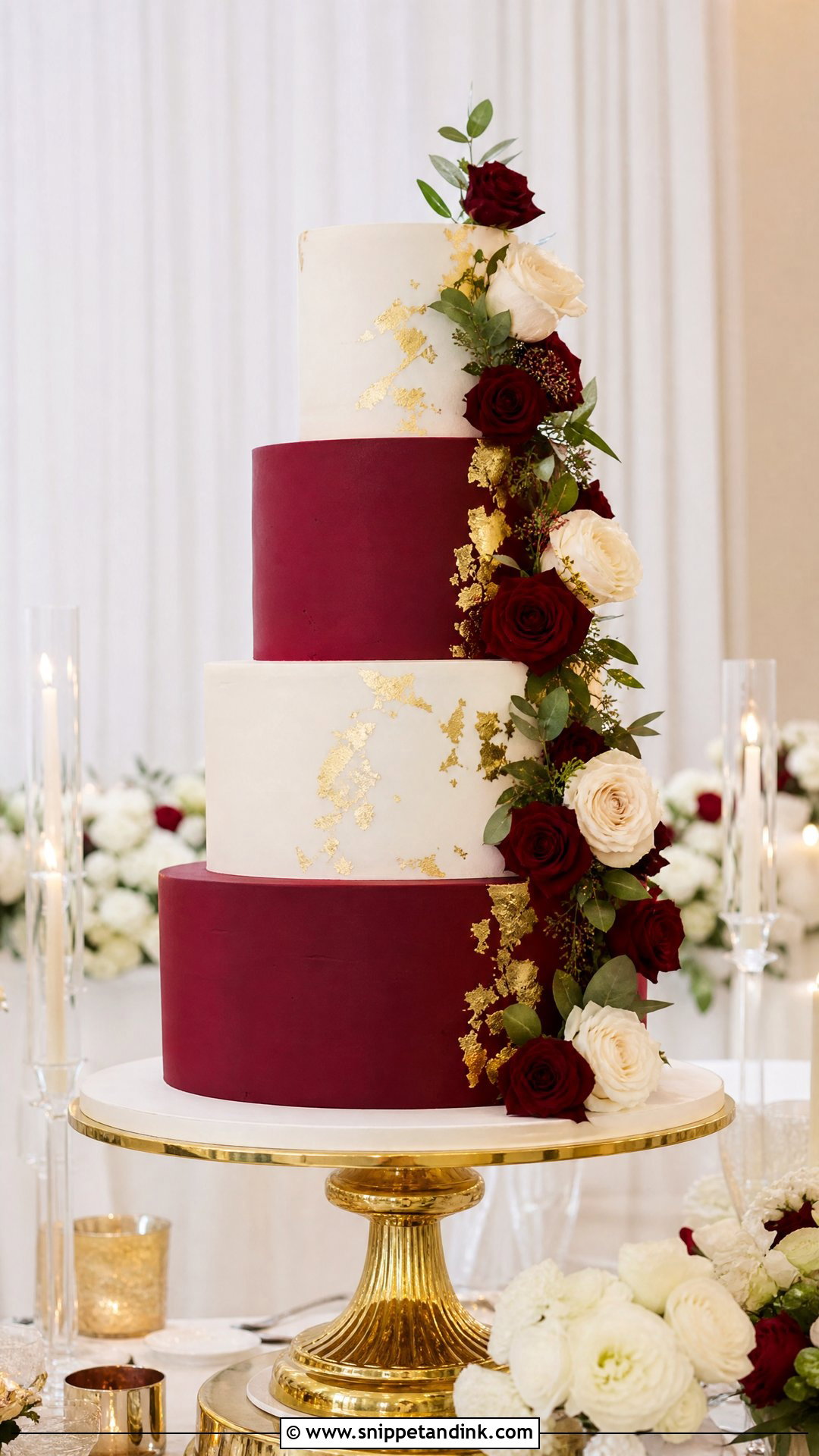
Three or four tiers give room to mix textures: one deep burgundy, one ivory, one with lace piping or gold leaf, linked by fresh flowers. Height reads well from across the room, which matters for big receptions and wide shots. Any tiered cake of this size needs dowels in every tier and a central support, and I’d always assemble it at the venue rather than drive it fully stacked. Keep the palette tight; four tiers each doing something different look crowded quickly.
13. Burgundy Fondant Wedding Cake
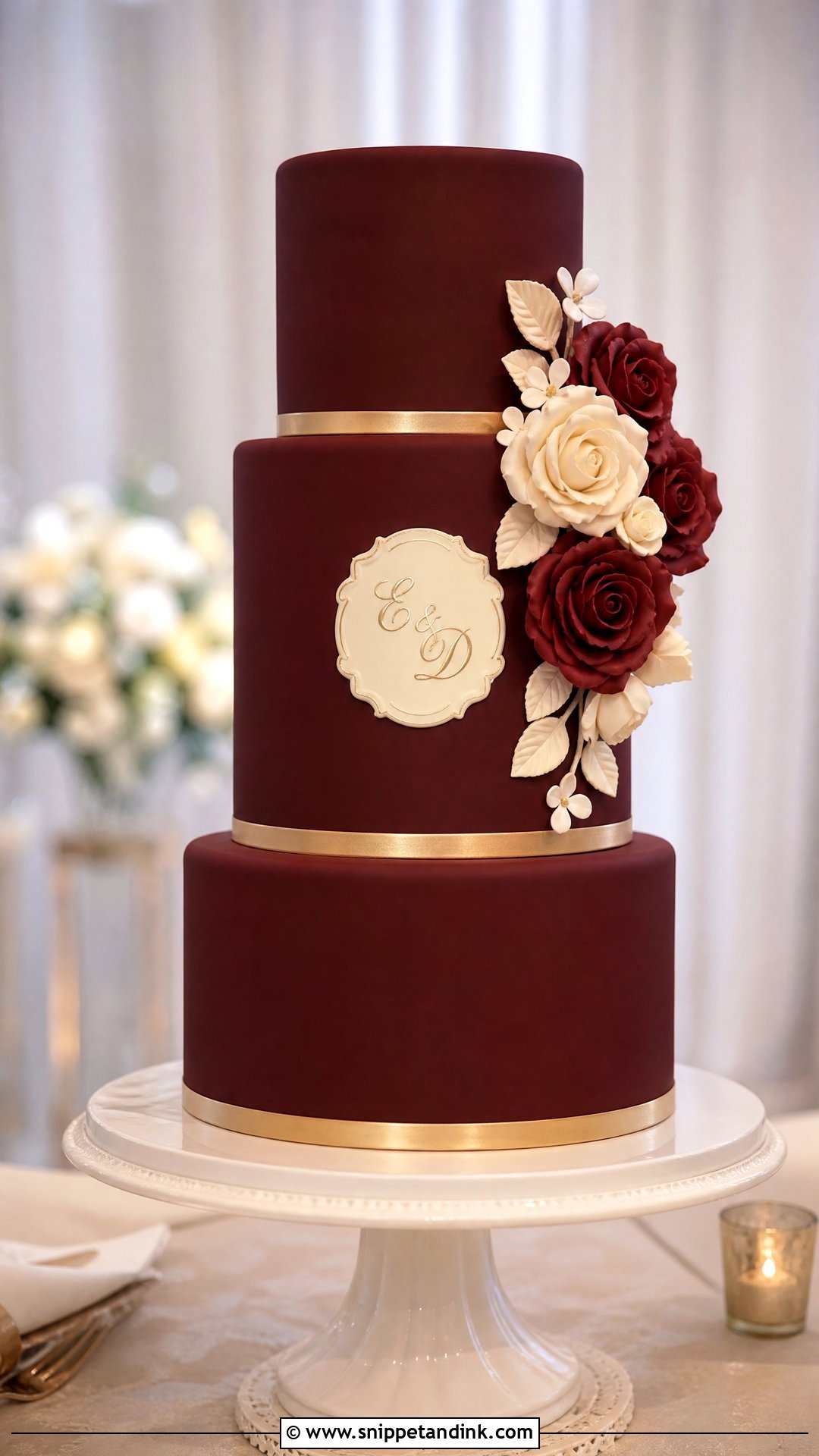
Sugar paste gives the smoothest finish and the sharpest edges, and it holds detail like monograms and lace well. A deep red paste is usually bought pre-coloured, because kneading enough colour into white paste makes it sticky and weak. Fully burgundy tiers can feel heavy, so I’d pair them with ivory flowers, gold trim or a blush accent, or keep the colour to one tier. One thing couples rarely expect: dark paste can tint lips and teeth slightly, so some guests peel it off.
14. Burgundy Watercolor Wedding Cake
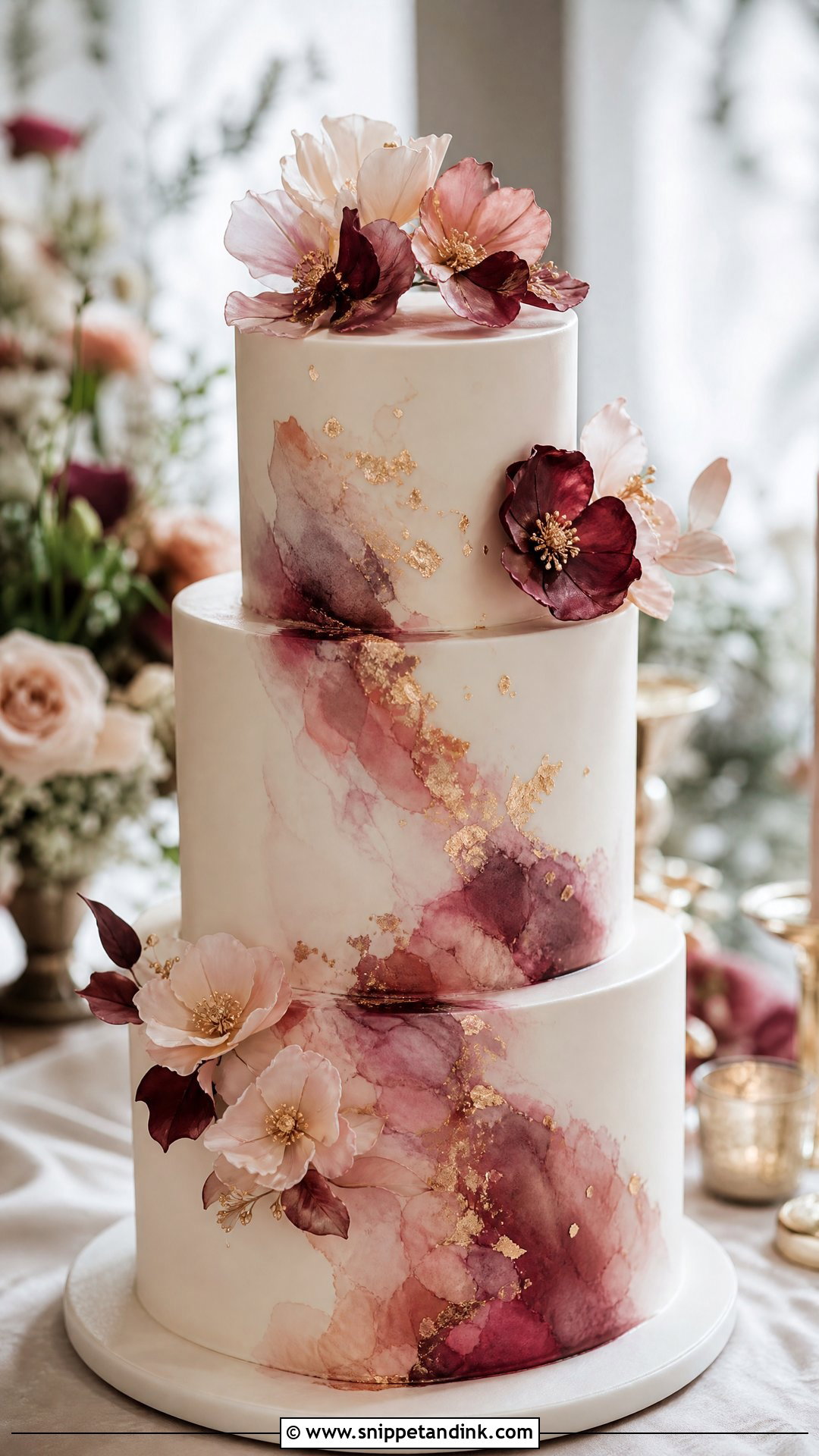
A burgundy watercolour cake has a soft, painted look made by brushing thinned colour over chilled ivory buttercream or paste in loose layers, so you get a wash rather than a block. Blush, mauve and dusty rose lighten the burgundy. It sits nicely with delicate sugar flowers, gold flecks and simple greenery. Each wash is painted by hand, so no two cakes match exactly. Garden and art-led weddings suit it, and it won’t date as quickly as some trends.
15. Burgundy Lace Wedding Cake
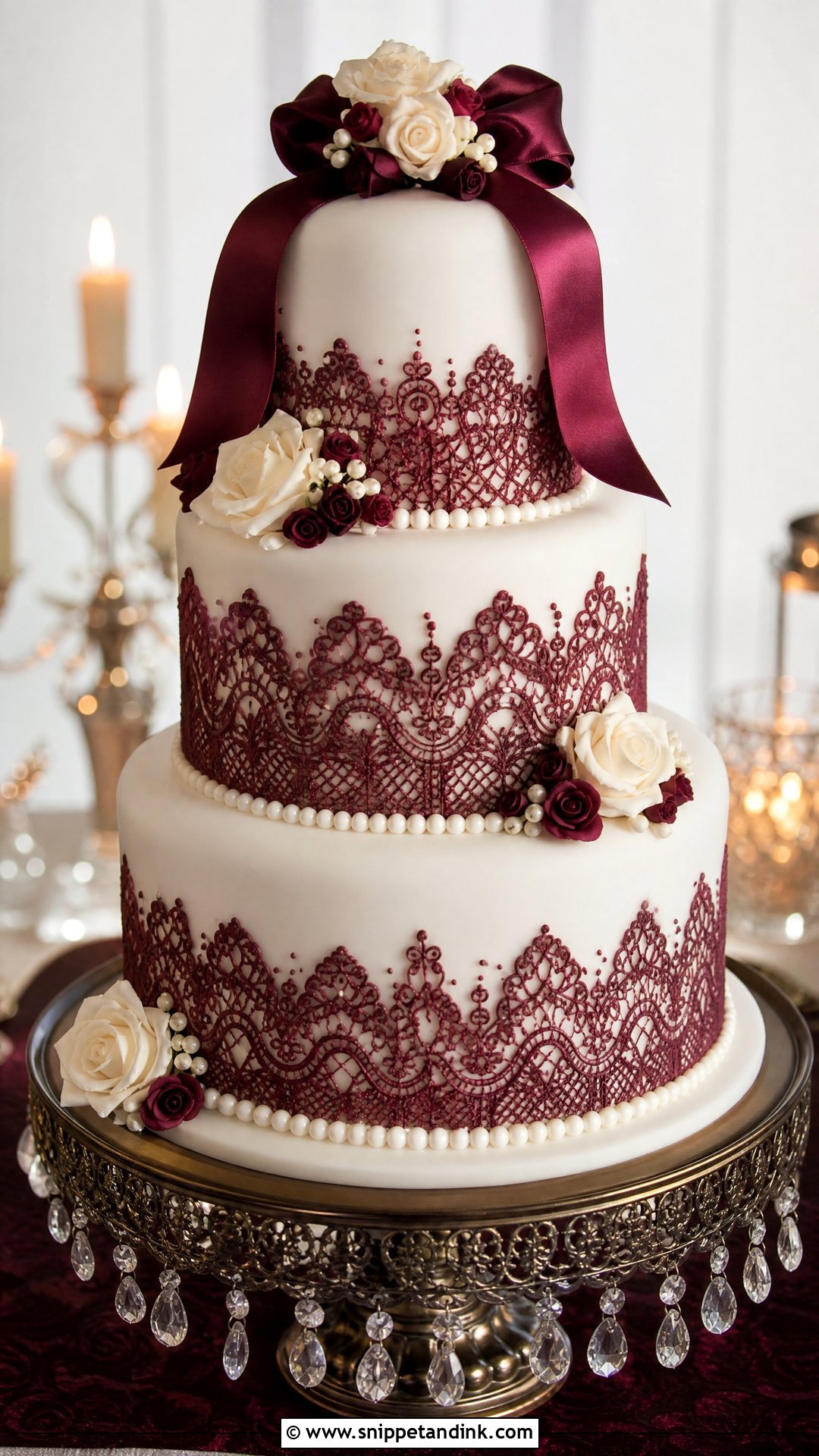
Lace brings classic bridal detail to a rich colour. It can be piped, made from edible lace sheets or cut from paste in panels. Ivory lace on a burgundy tier is softer; burgundy flowers on white lace tiers is more traditional. Vintage weddings, church receptions and formal indoor venues suit it. Edible lace sheets can go limp in humidity, so for a summer wedding I’d pipe instead. Keep everything else simple; lace is already a lot of pattern, and a few pearls or small roses are enough.
16. Burgundy Rose Wedding Cake
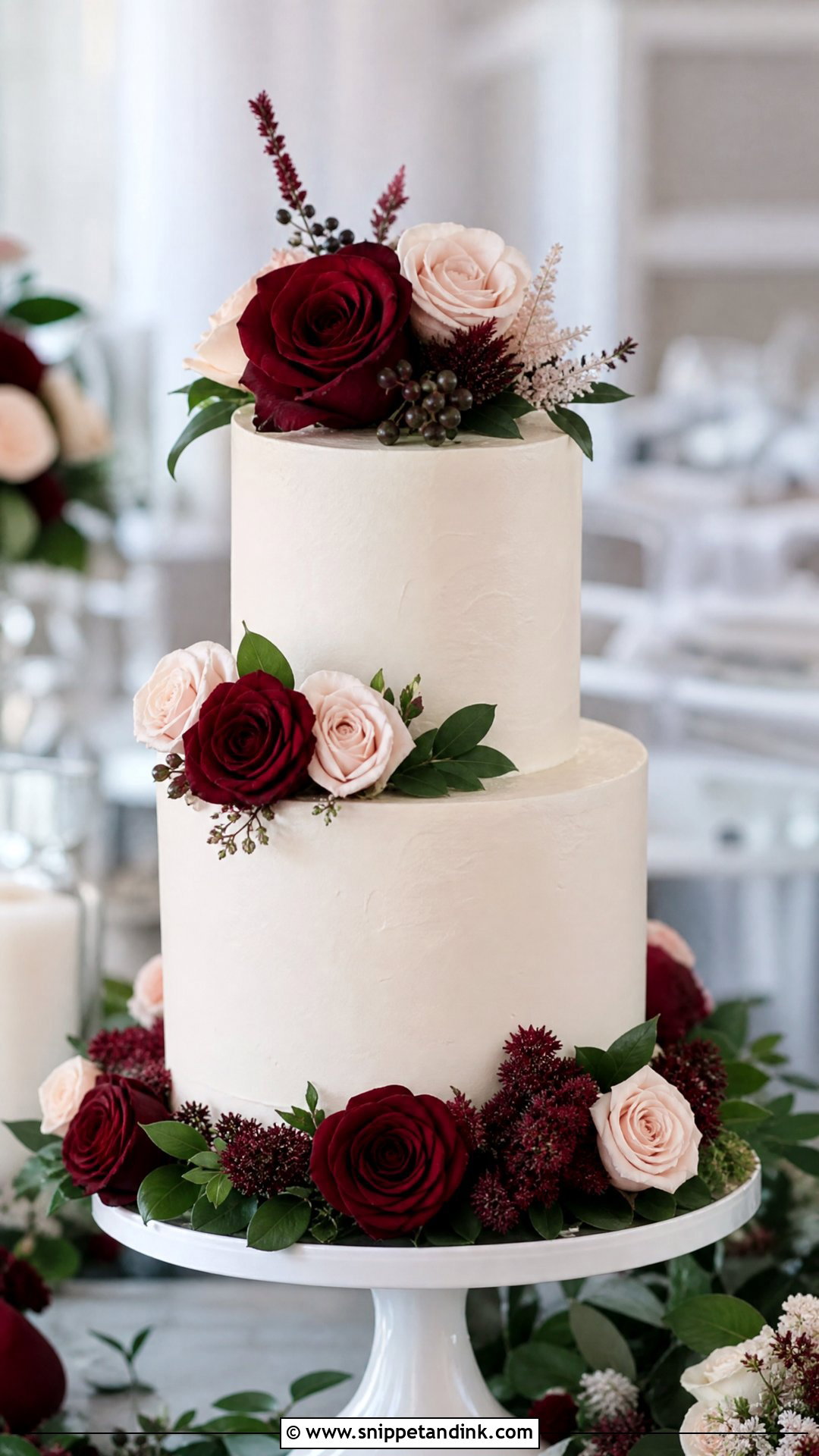
Roses are the easiest way to tie a cake to the florals. I’d use fresh burgundy roses on an ivory cake, a tier of piped buttercream rosettes or sugar roses if you want full control over colour and shape. Sugar roses also last as a keepsake, while fresh ones are cheaper and look looser. Gold accents, blush flowers and dark leaves all suit them. Let the roses frame the tiers rather than bury them; a cake hidden under flowers loses its shape in photos.
17. Burgundy Geode Wedding Cake
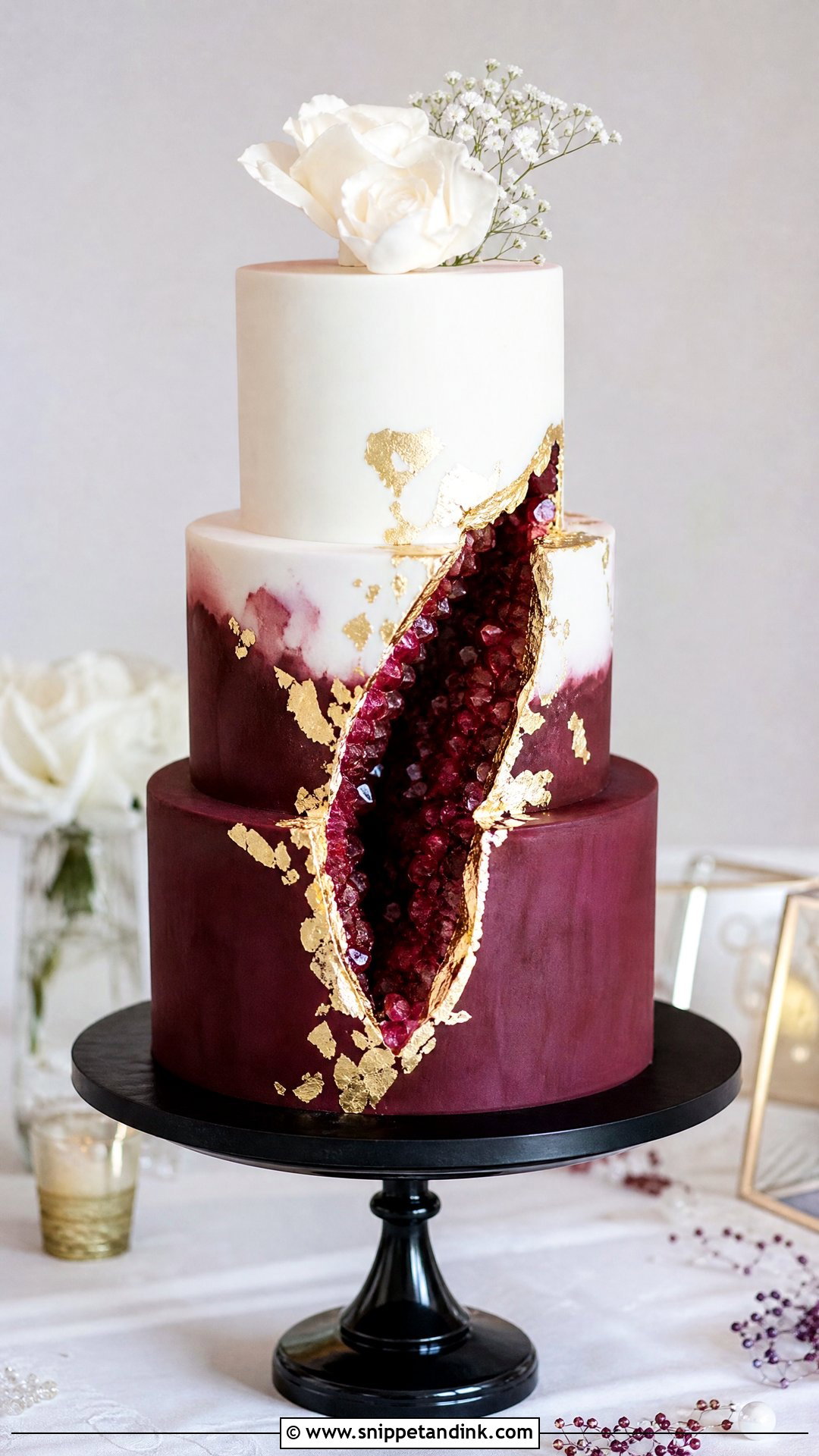
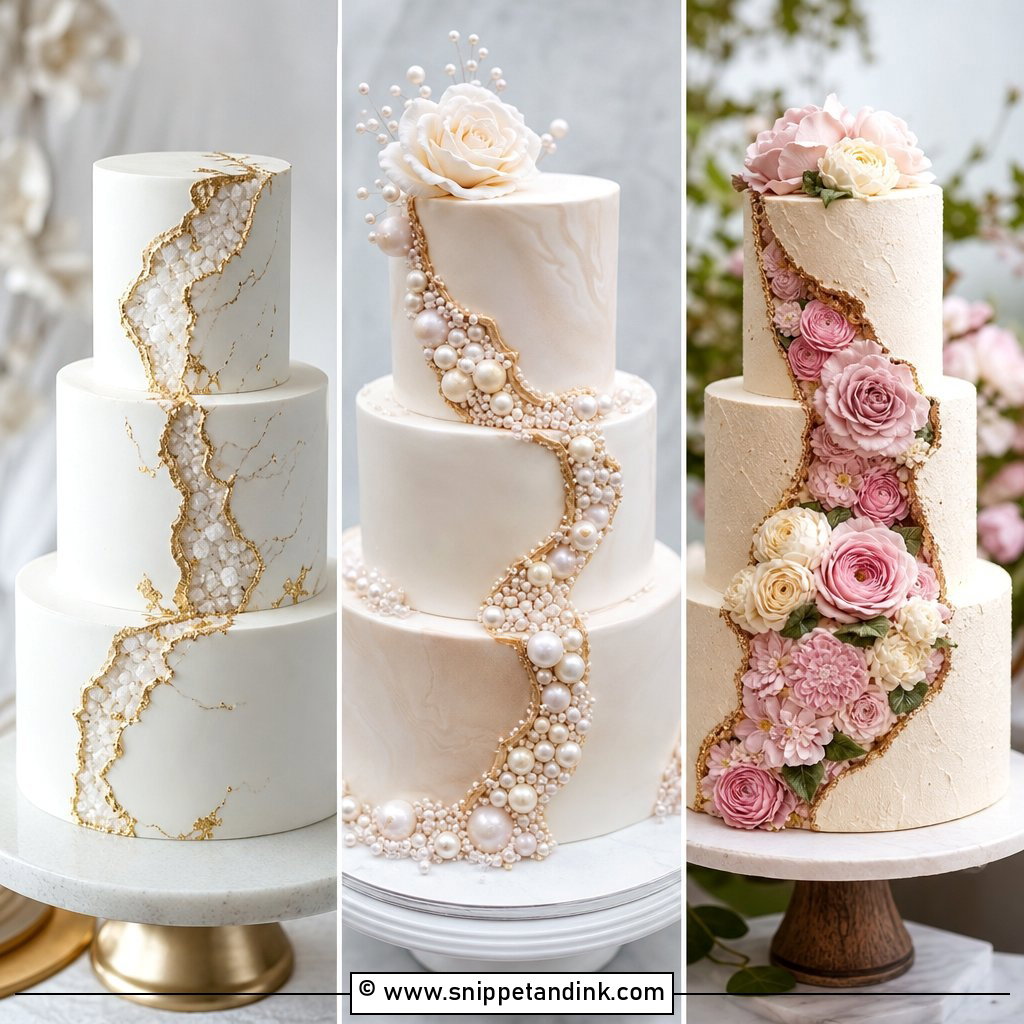
The geode is carved into the side of the tier and filled with rock candy or sugar crystals in burgundy, ruby, blush and clear. I set it against smooth ivory or burgundy paste so the texture stands out, and edge it with gold leaf so it looks deliberate. It needs height to work, so a tall two or three tier cake is best. Sugar crystals draw moisture, so in a humid room they can lose some sparkle over a long evening. It’s dramatic, and that’s the point.
18. Burgundy Black Wedding Cake
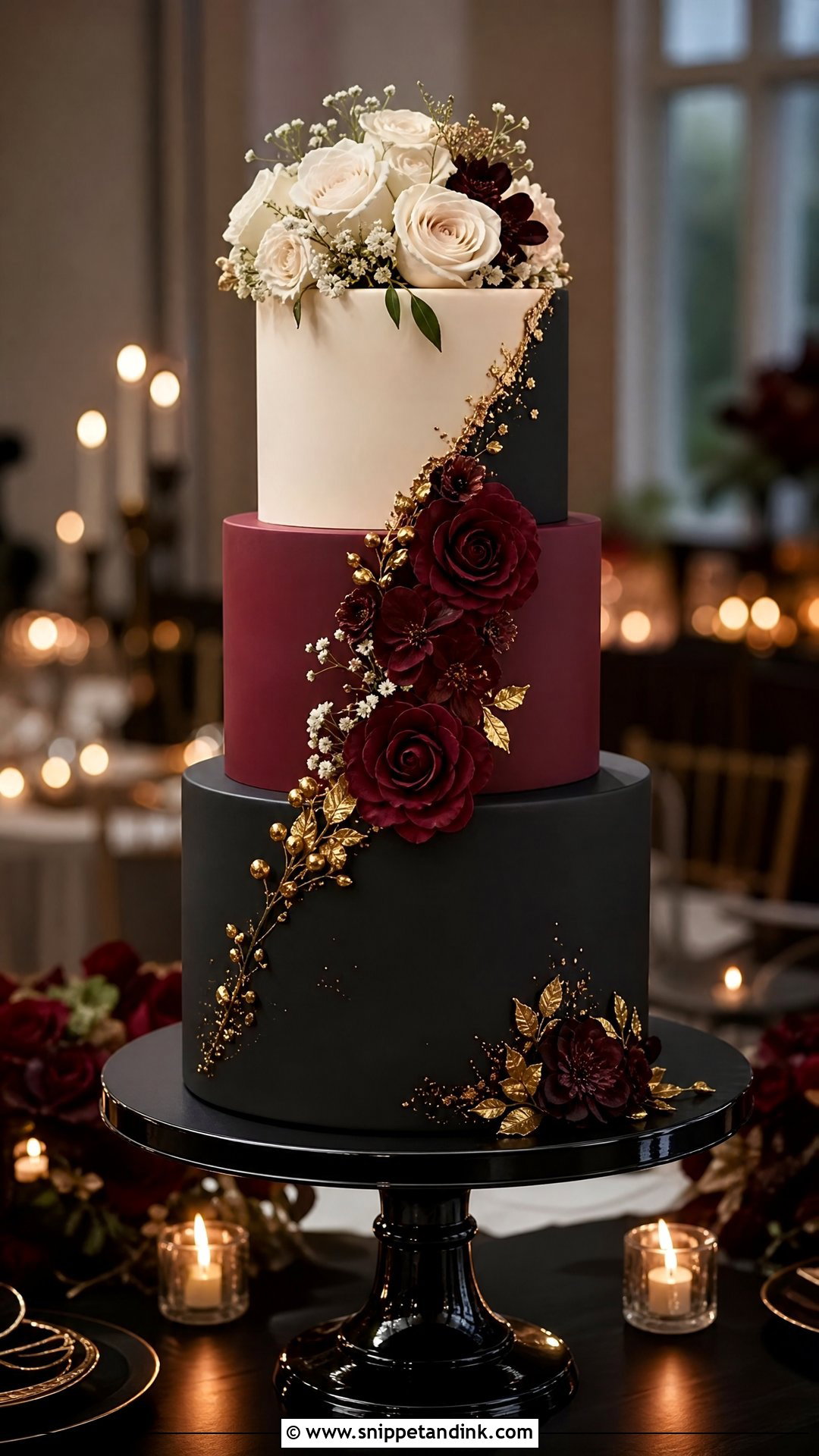
Burgundy with black is moody and formal, best for evening and winter receptions in candlelit rooms. To keep it bridal I balance the dark tones with pale flowers, gold or a white stand. A black base tier under burgundy upper tiers looks striking without feeling heavy, and black floral stencilling over burgundy paste adds detail. Black icing has the same staining problem as dark burgundy, only stronger. This one isn’t for everyone, but at the right wedding it’s the most memorable thing on the table.
19. Burgundy White Wedding Cake
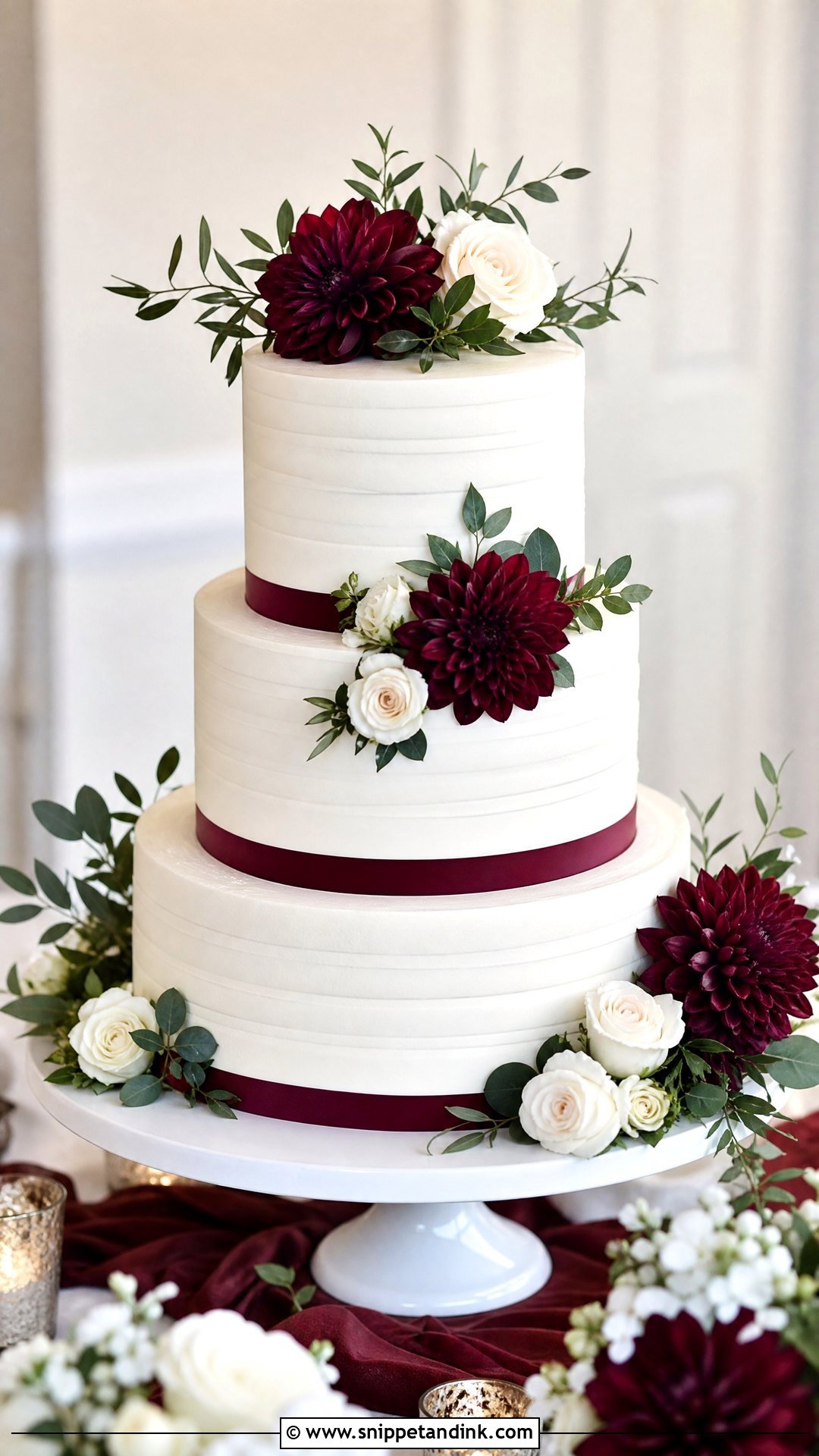
White tiers keep the cake traditional, and burgundy comes in through flowers, ribbon, painted edges, piping or one statement tier. It’s the easiest version to change with the season: white roses and burgundy dahlias in autumn, white orchids and burgundy ranunculus indoors. One practical point: if ribbon goes directly on buttercream, the fat seeps into it and leaves dark patches, so I back ribbon with a strip of acetate or use it only on paste. The contrast shows clearly in photos.





20. Burgundy Small Wedding Cake
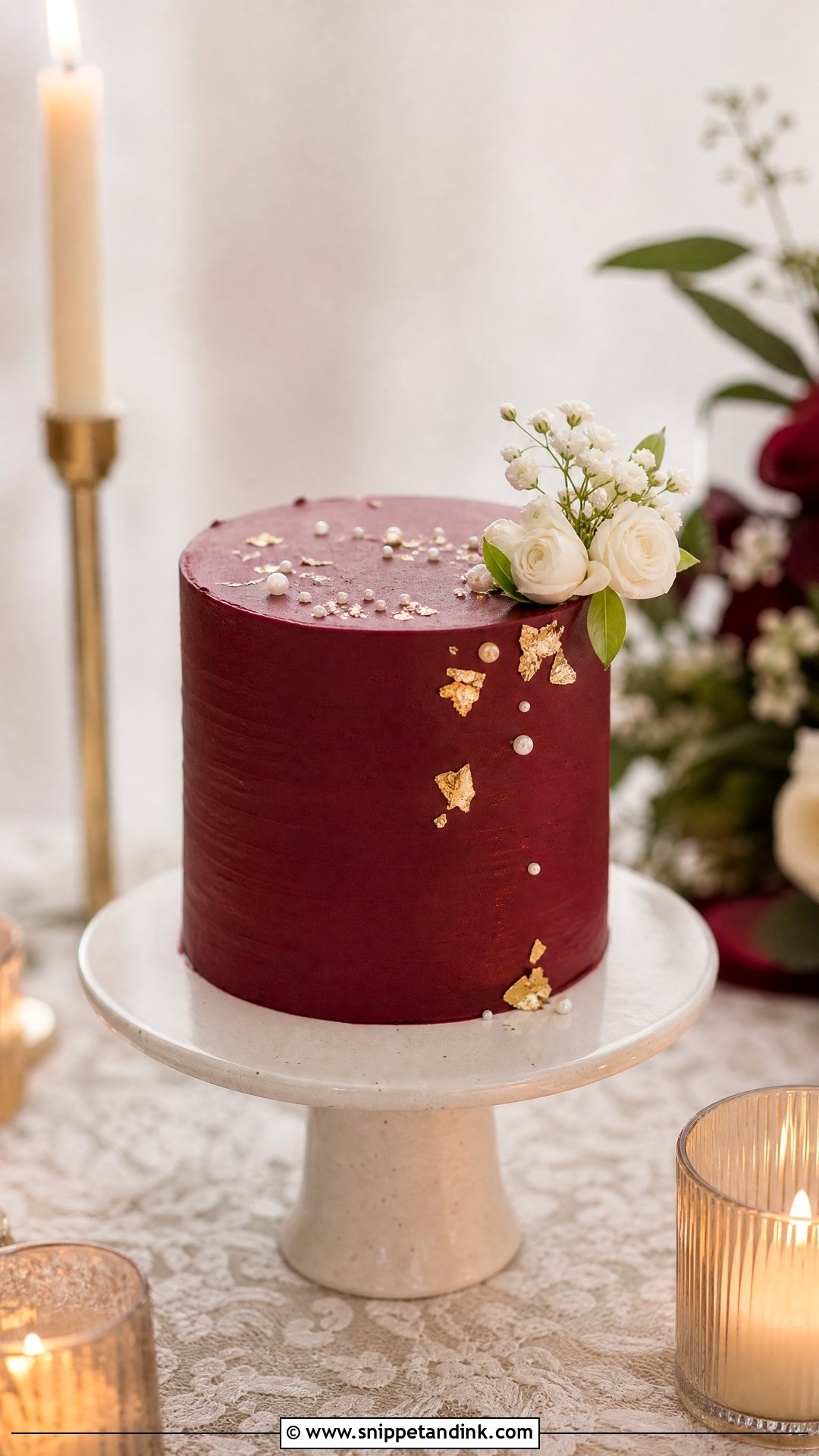
A cake doesn’t need many tiers to feel like a wedding cake. One or two tiers with smooth burgundy buttercream, a neat top border and a small cluster of white flowers is enough, and a little gold leaf or a short drip makes it more modern. Micro weddings, elopements and courthouse celebrations suit it. Give it presence with a raised stand and some candles or greenery around the base. Small cakes are also easier to keep cool and to transport, which matters for a picnic or outdoor elopement.
21. Burgundy Cupcake Wedding Cake
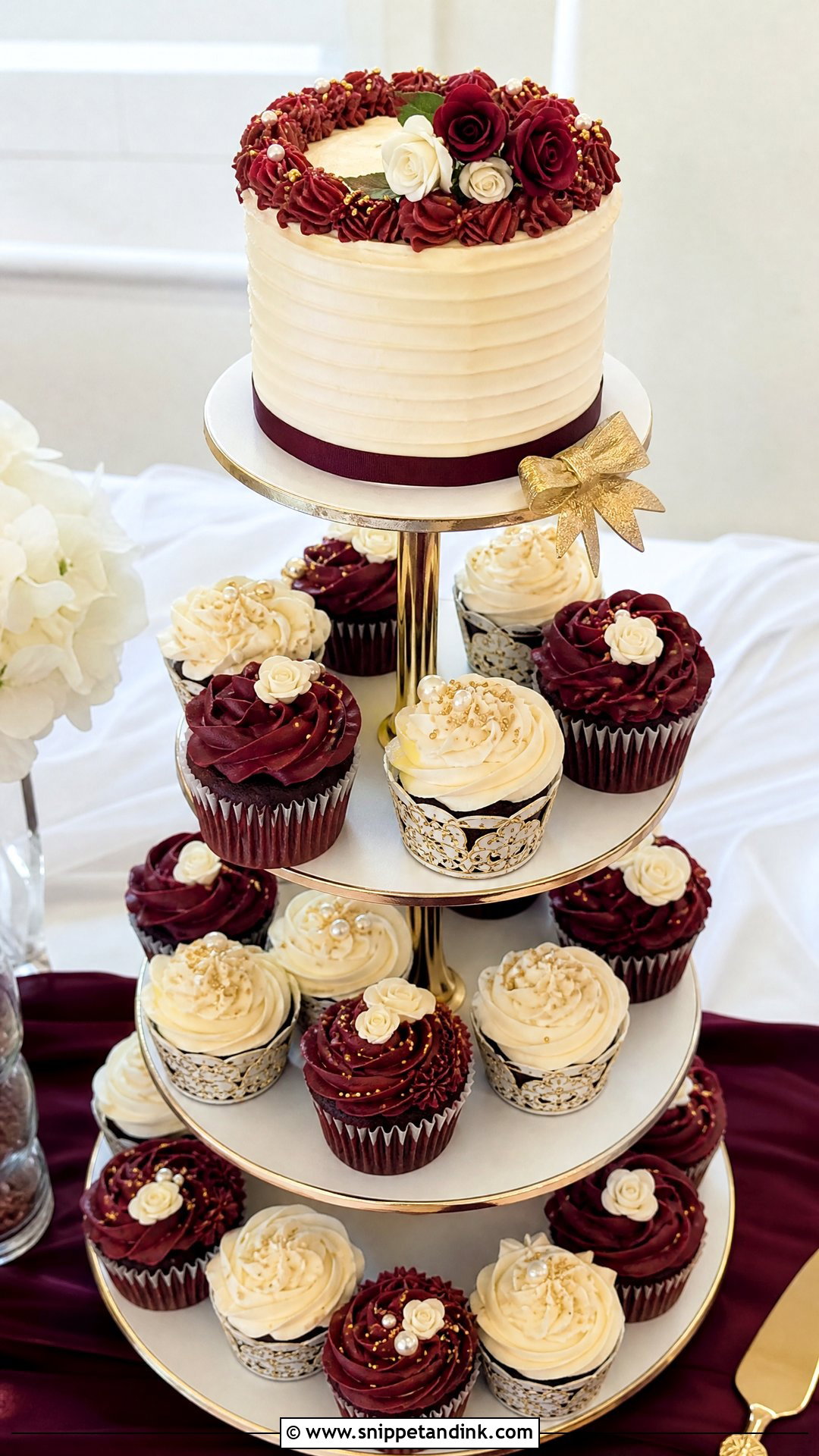
A burgundy cupcake wedding cake puts a small cutting cake on top with matching cupcakes on tiered stands below. The cupcakes can carry burgundy swirls, ivory icing with burgundy flowers or a little gold. Serving is easy because there’s nothing to cut. Dark buttercream bleeds into paper cases, so I bake in foil-lined or metallic cases, which keeps the display clean. Keep the stands simple and the colours consistent so the arrangement looks like a single cake.
22. Burgundy Ruffle Wedding Cake
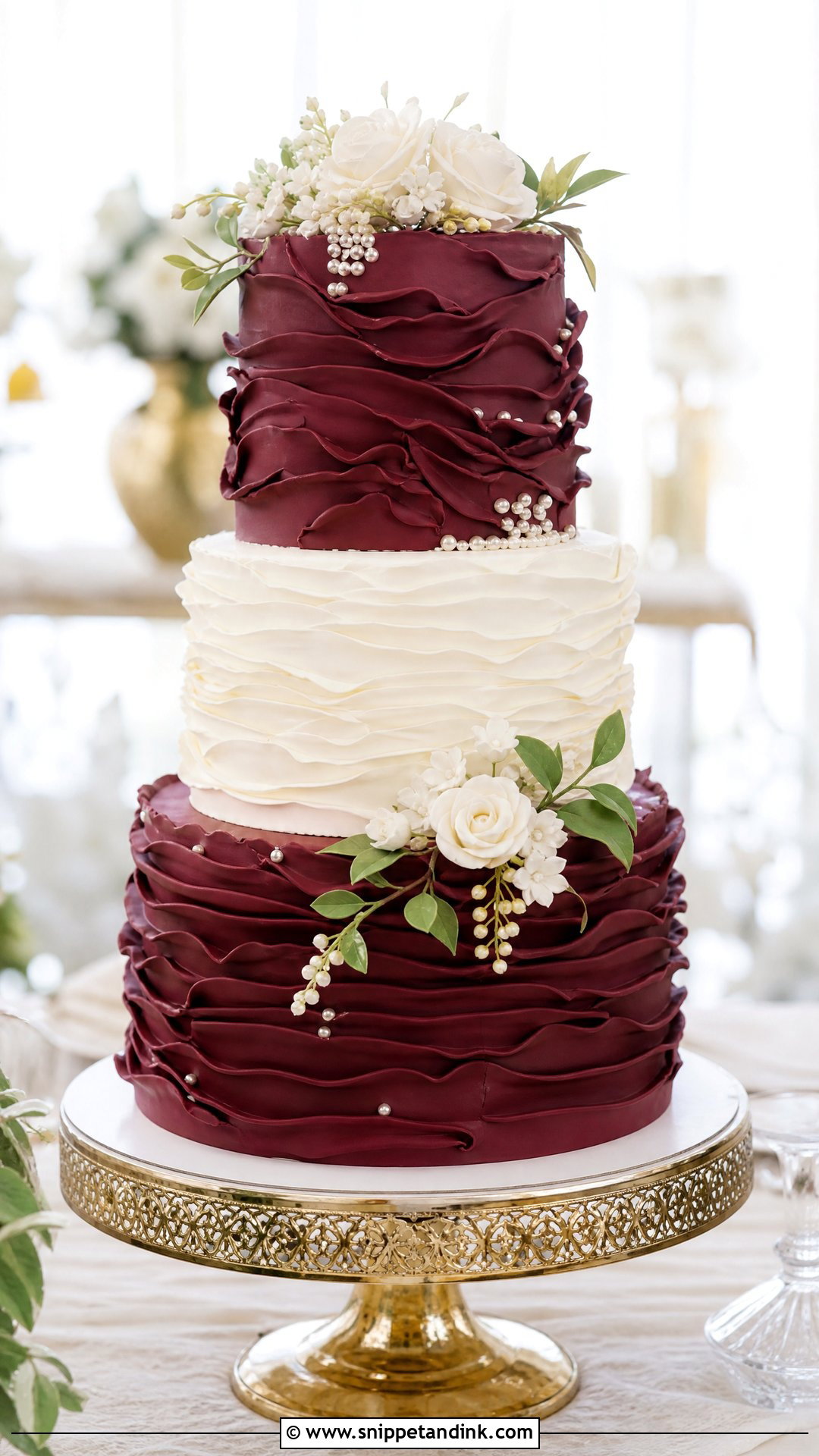
Ruffles add movement and texture. They can be piped in buttercream or frilled from paste, on one tier or the whole cake, and a full burgundy ruffle tier against smooth ivory tiers works especially well. Don’t add too many flowers; the ruffles are the decoration. Buttercream ruffles are delicate and soften in a warm room, so I’d choose paste ruffles for summer or a venue without air conditioning. Ballrooms, gardens and autumn receptions all suit it, and the shadows in the folds look rich in photos.
23. Burgundy Minimalist Wedding Cake
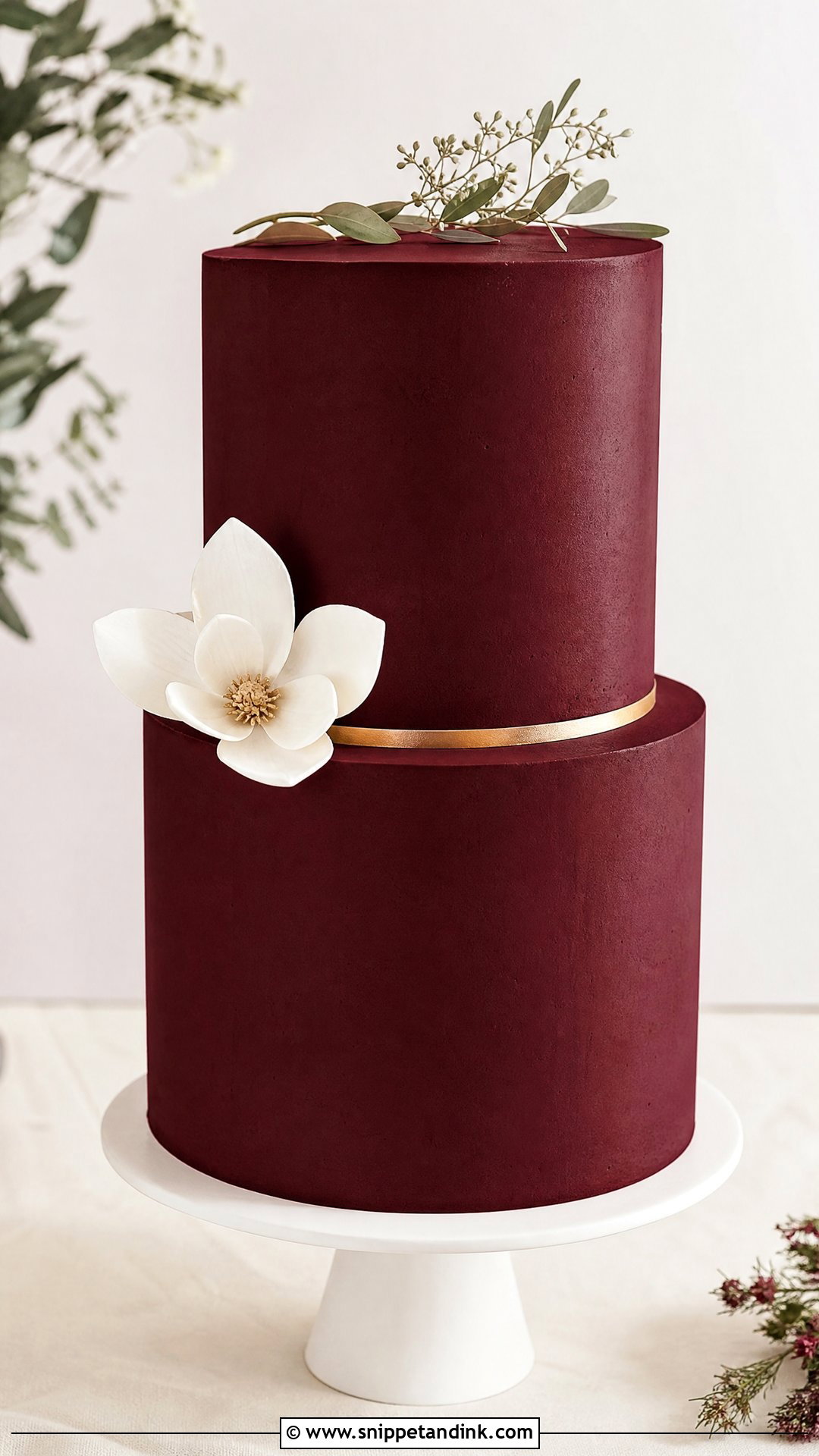
Minimal cakes have nowhere to hide. With a smooth finish, sharp edges and one strong feature, such as a single sugar flower, a thin gold band or a small sprig of greenery, the colour does the talking, and any wobble or air bubble shows. That’s why I usually build these on ganache rather than straight buttercream. A tall single tier or a sleek two tier suits the style. Modern venues and intimate weddings are the natural fit.
24. Burgundy Pearl Wedding Cake
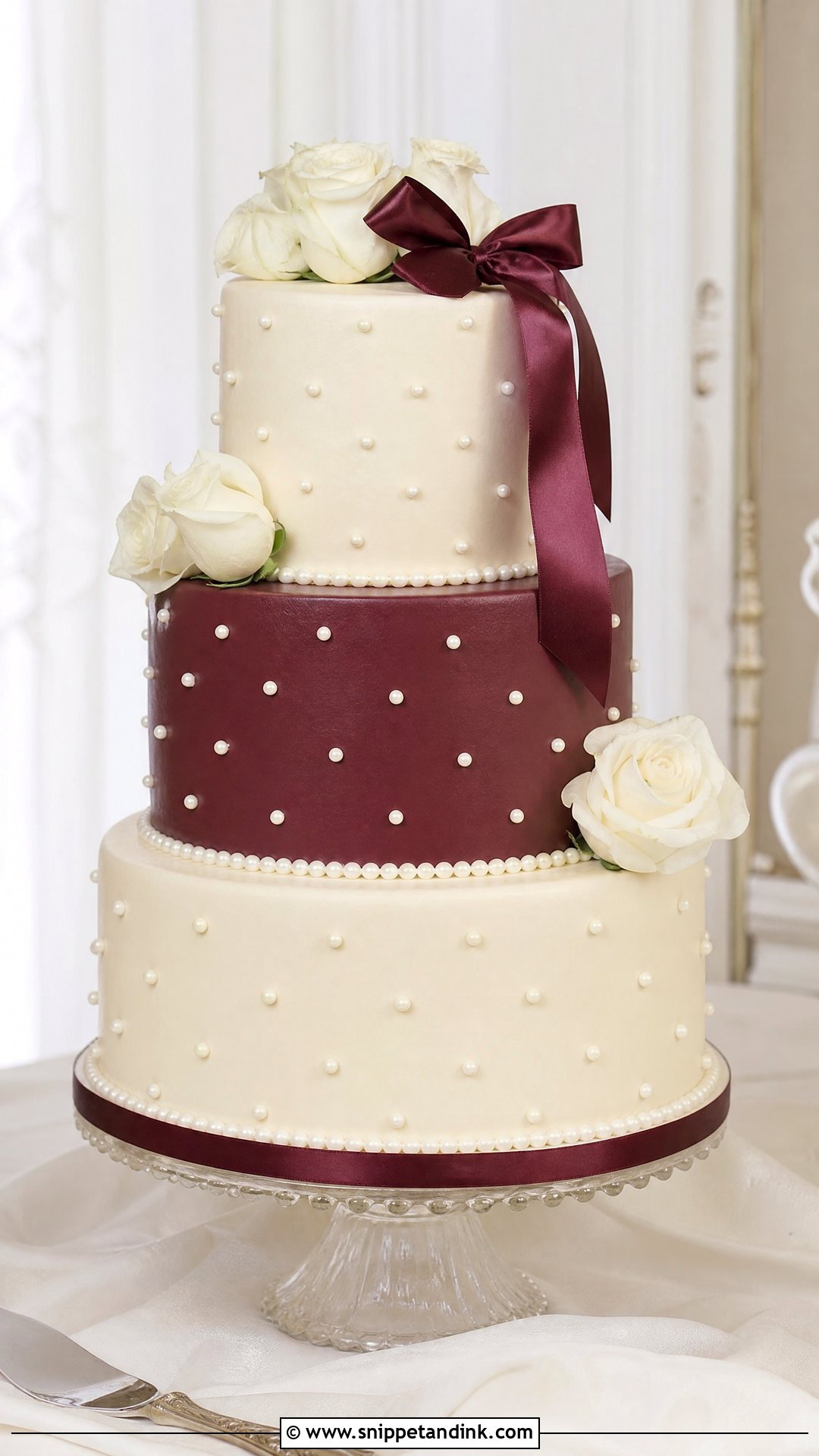
Edible pearls bring classic bridal detail to a rich colour. I scatter them lightly over burgundy buttercream or set them in neat lines on ivory tiers, alongside smooth icing, soft piping, white flowers and satin ribbon. Traditional and vintage weddings suit this best. Pearls are hard enough to crack a tooth if they’re the dense dragee kind, so I use softer sugar pearls on anything guests will bite into. Balance the placement across the tiers; a light touch looks refined, and too many look busy.


25. Burgundy Heart Wedding Cake
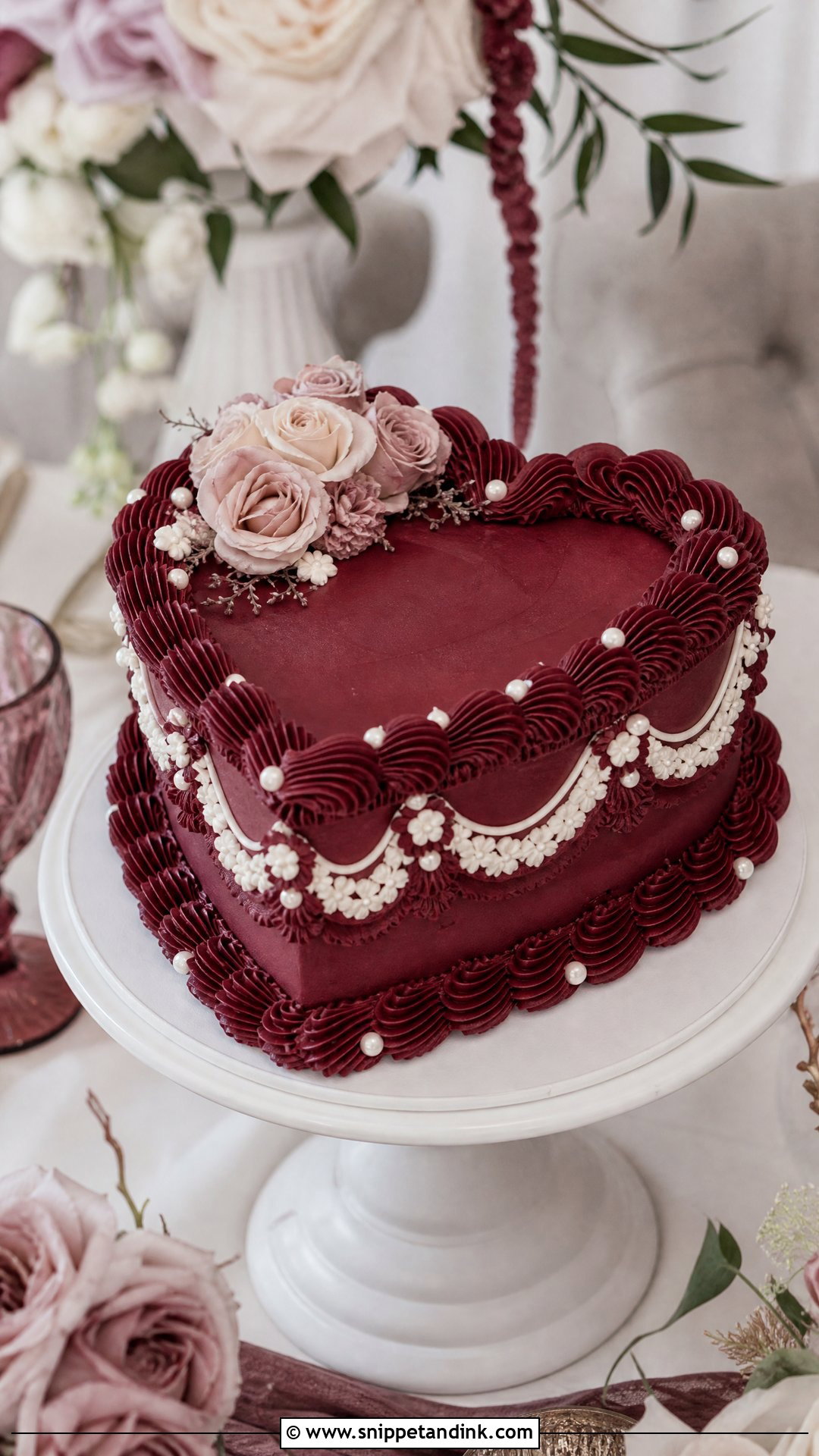
A heart-shaped tier sounds playful, but in deep burgundy it’s surprisingly grown-up. Piped borders, small pearls and white or blush flowers soften it. It suits elopements and sweetheart tables, and a heart top tier can sit on a round base if you need more portions. The point of the heart is the hardest part to finish neatly, so expect your baker to put the most time there. It’s one of the more personal shapes you can choose.
Sunlight, Stained Smiles and Bleeding Tiers
Dark cakes behave differently from white ones once they leave the kitchen. A few problems come up often enough that I plan around them from the first sketch.
Fading in daylight
Reds and purples in icing can fade if the cake sits in direct sun or under a bright window for hours. I ask the venue where the cake table will be and move it into shade if possible. A marquee with clear walls can be as harsh as an open lawn.
Colour bleeding onto ivory
When a burgundy tier sits directly on an ivory one, colour can migrate into the paler icing, especially in warm, humid rooms. A thin board and a ribbon or piped border at each joint stop the two from touching.
Transport and timing
Colour scuffs show more on a dark tier than a white one, so stacked burgundy cakes are assembled on site and touched up there. Leave your baker at least an hour of access before guests arrive, and keep the cake out of the sun until the cutting.
And on the stained smiles: a slice of a deep burgundy cake can leave a faint tint on lips. Most guests never notice, but if it bothers you, put the colour on the outside paste or flowers and keep the filling pale.
Let the Room and Lighting Decide How Much Burgundy
Burgundy is flexible: rustic with textured buttercream and berries, formal with gold leaf and smooth paste, softer with blush flowers and watercolour. Your venue, season and guest count should shape how much of it you use. A full burgundy tiered cake is a centrepiece; a white cake with burgundy flowers, trim or painted accents is the quieter route. Ask to see a colour sample at your tasting, under lighting similar to the reception, before you settle on the final shade.
You'll Like These Ideas:





Leave a Reply