
A garden wedding gives a cake designer more to borrow from than almost any other setting: the flowers already in bloom, the fruit in season, the herbs in the beds along the path. The cakes I’m proudest of for these weddings look as if they belong to that particular garden on that particular weekend. Buttercream texture, pressed petals, fresh berries, sugar flowers and soft pastel tiers all fit, some leaning vintage and some clean and modern. The catch is that a garden is also the hardest place to keep a cake looking fresh. Here are twenty ideas, with what I’d watch for on each.
Not Every Garden Flower Belongs on a Cake
Couples often assume that anything in the bouquet can go on the cake. Several of the most popular wedding flowers are toxic, and most florist flowers are grown with pesticides that were never meant to touch food. Before I agree a floral design, I check every bloom on the list.
Flowers I keep off the frosting
- Sweet pea, lily of the valley, foxglove, hydrangea and daffodil, which are toxic.
- Eucalyptus, which is popular in greenery but isn’t food-safe.
- Baby’s breath, which many bakers avoid placing directly on cake.
What makes a fresh flower safe enough
Flowers for food should be grown without pesticides and sourced for that purpose, which often means a separate order from the main florals. Stems go into floral tape, picks or straws so sap never reaches the sponge, and blooms are removed before cutting. If a flower you love isn’t safe, a sugar version or a pressed edible lookalike usually gives the same effect.
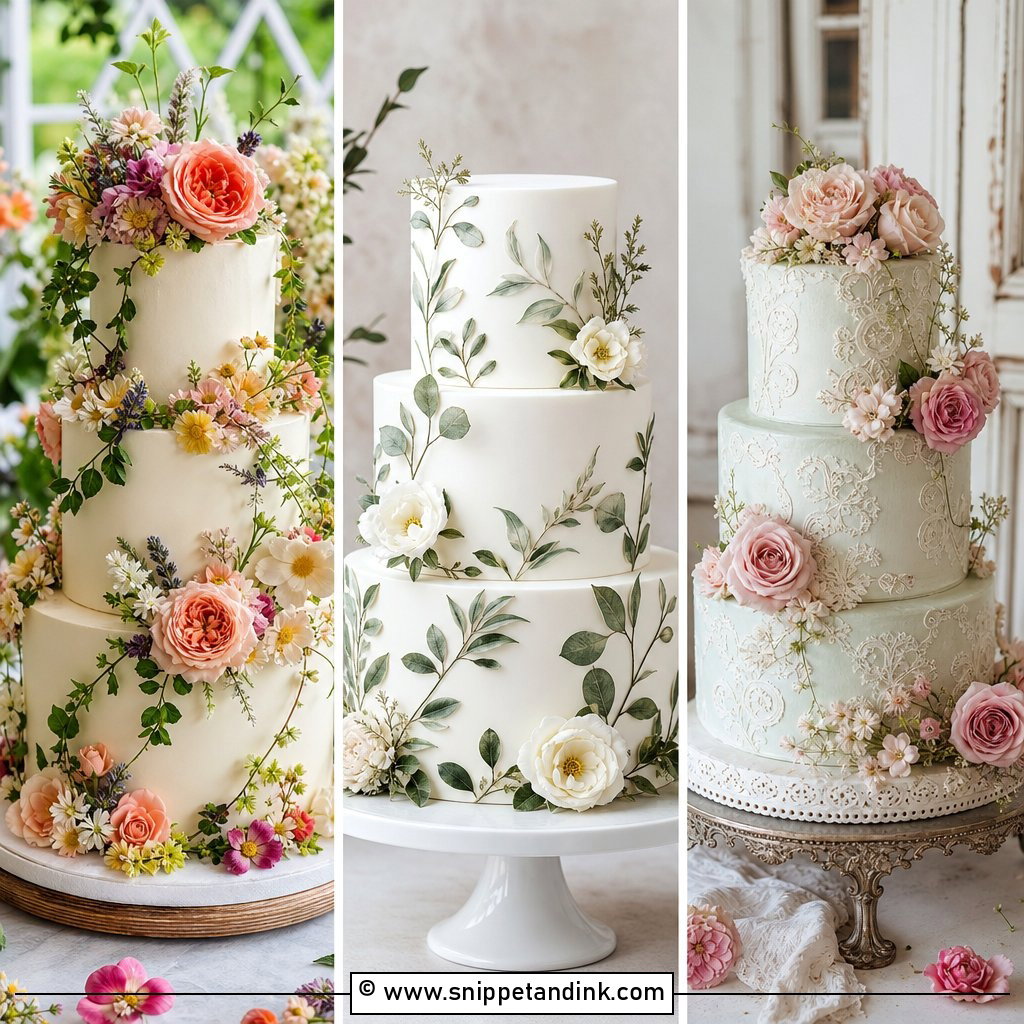
1. Garden Floral Wedding Cake
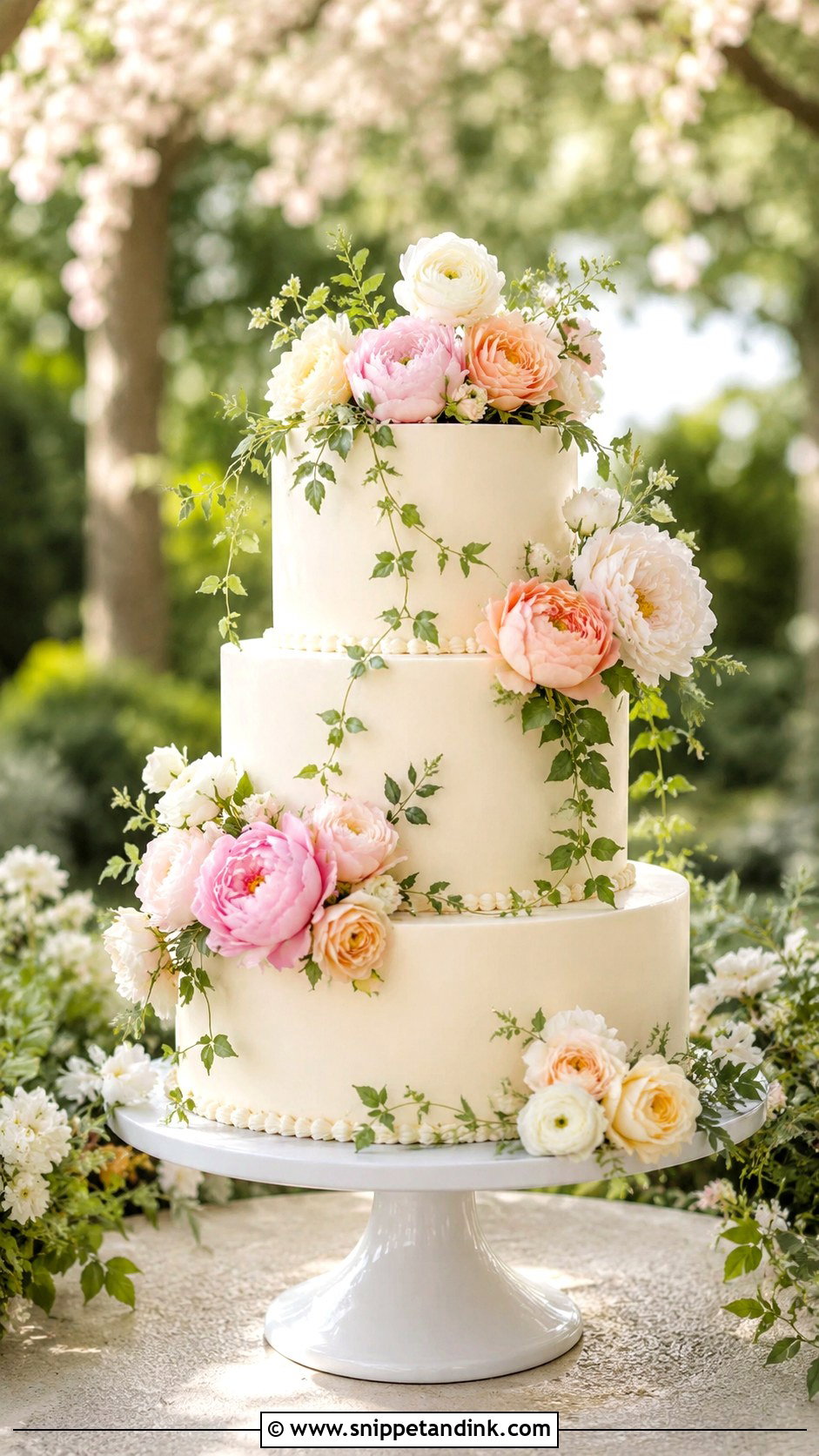
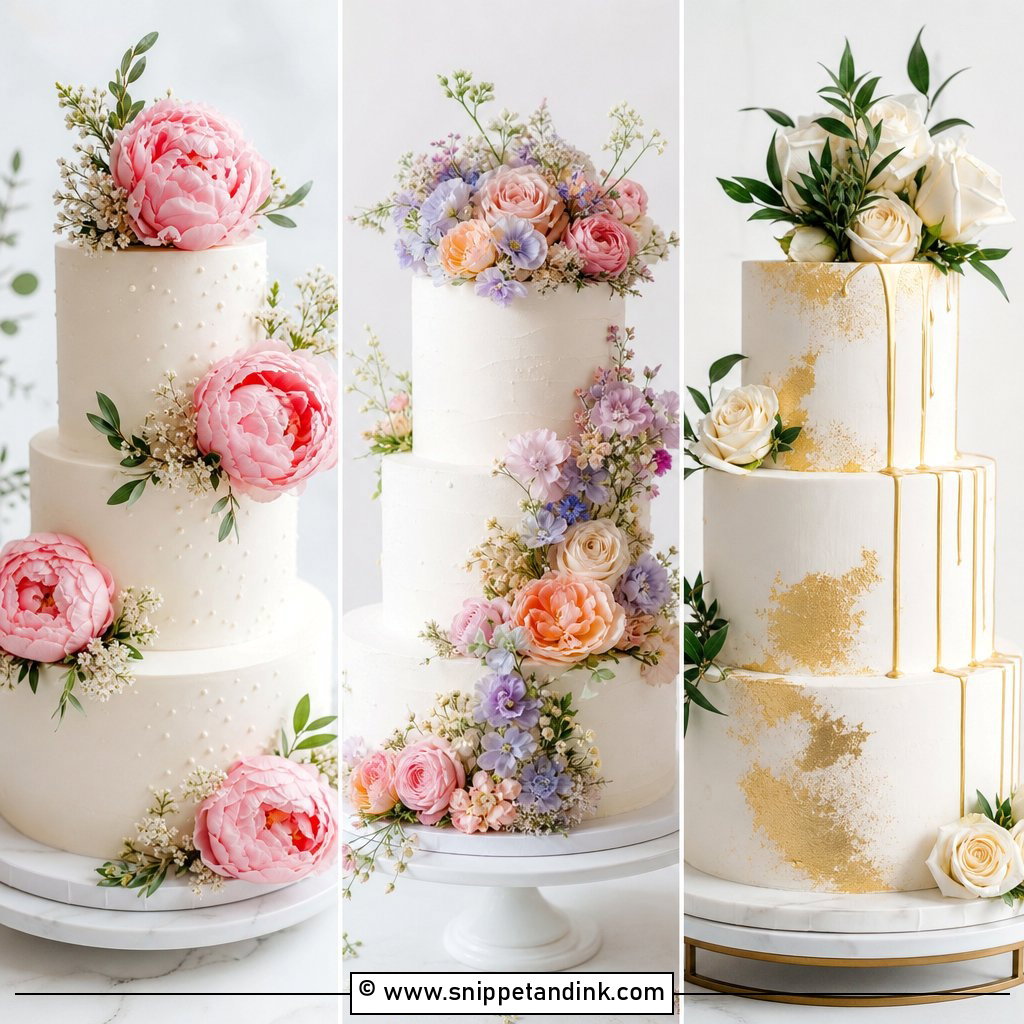
The classic garden cake is ivory frosting with fresh blooms and greenery arranged as if they’d been gathered from the ceremony space. I place them loose and slightly asymmetric, trailing a little down one side, rather than in a stiff ring. Two to four tiers depending on guest count. Roses, ranunculus and peonies are reliable, but I’d keep sweet peas off a real cake: they’re toxic, and a sugar version gives the same look safely. Smooth or lightly textured frosting keeps the flowers in charge.
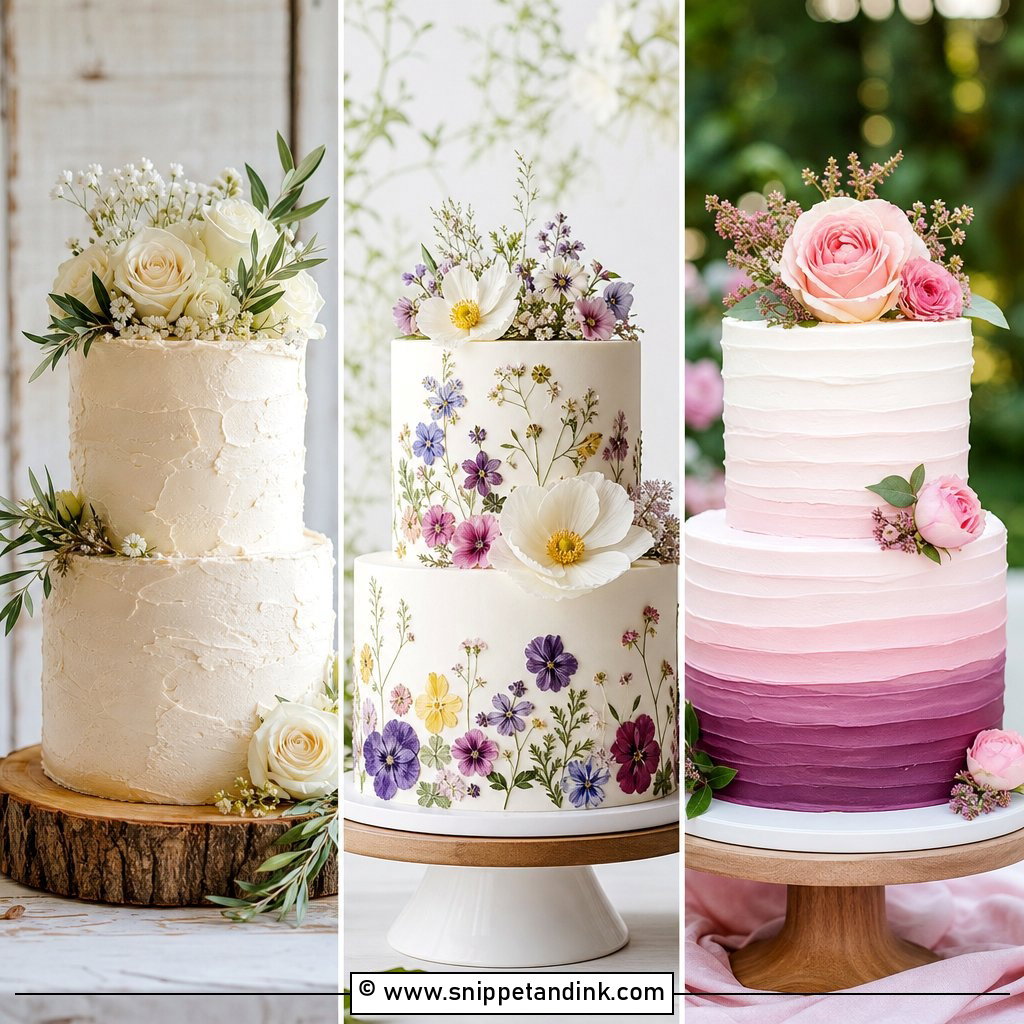
2. Pressed Flower Wedding Cake
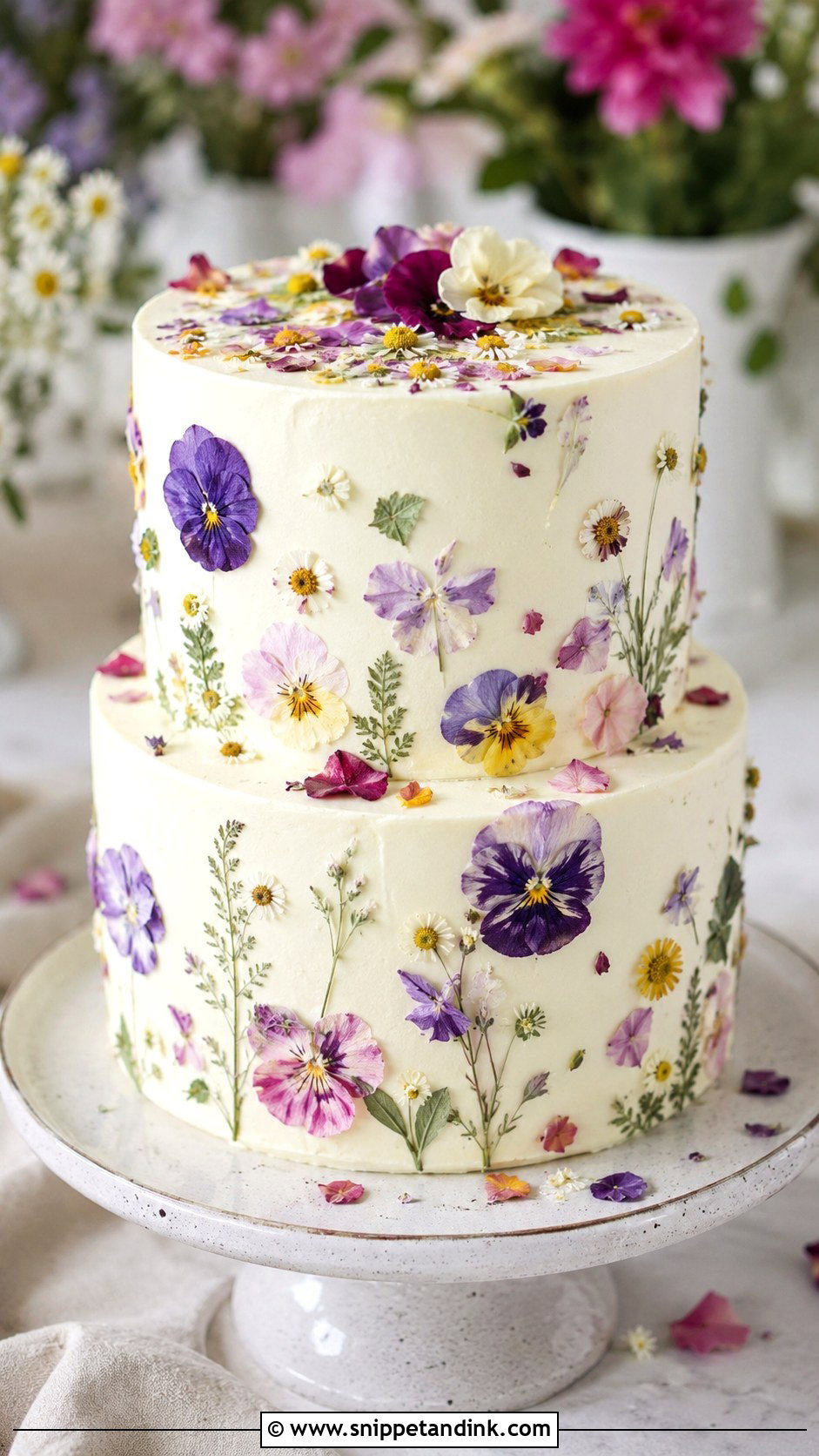
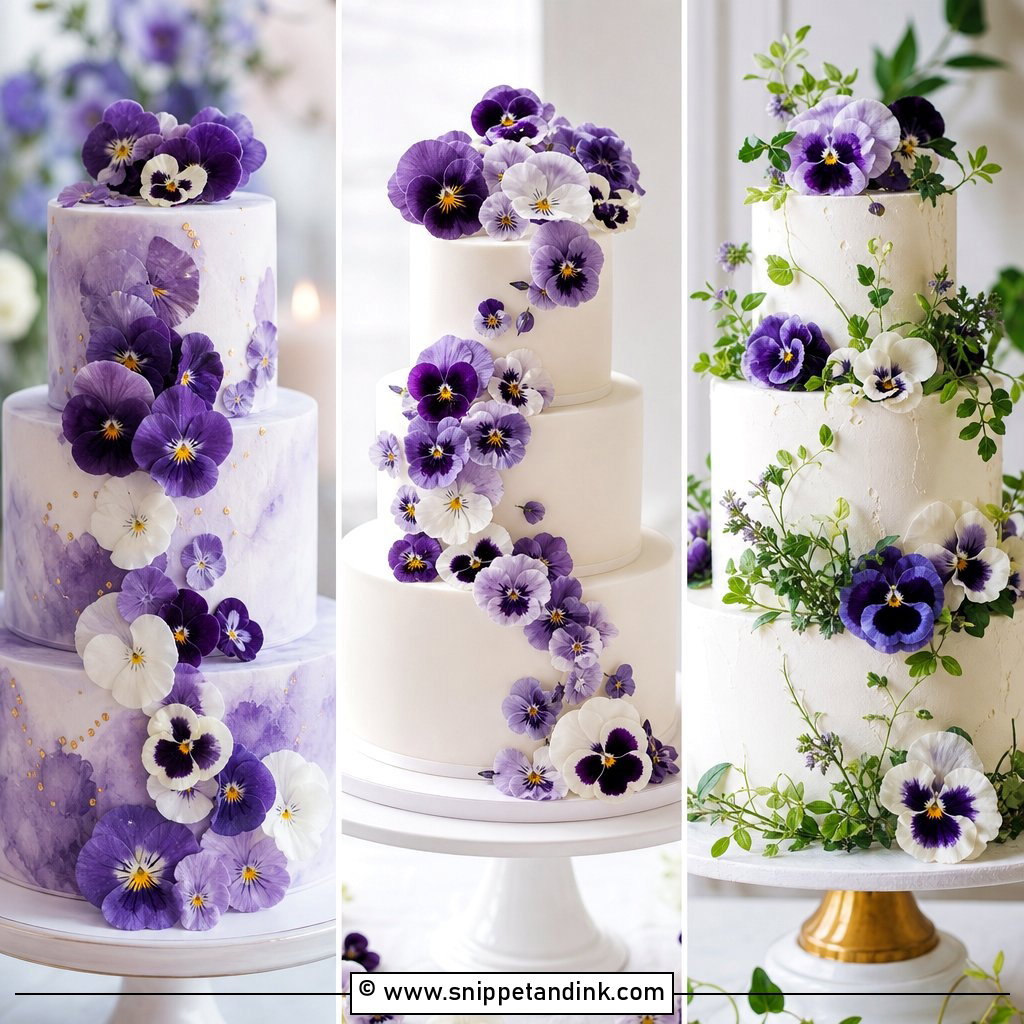
Pressed flowers are pretty in a quieter way than fresh ones. Real edible pressed flowers are laid flat against buttercream or fondant in an airy botanical pattern, and they suit spring and summer because the colour comes in small, gentle doses. Violas, pansies, cornflowers and chamomile all press well. I apply them close to delivery; on buttercream they slowly absorb moisture and darken, so a cake pressed two days ahead looks tired. Even a single small tier looks considered with this treatment.
3. Buttercream Garden Wedding Cake
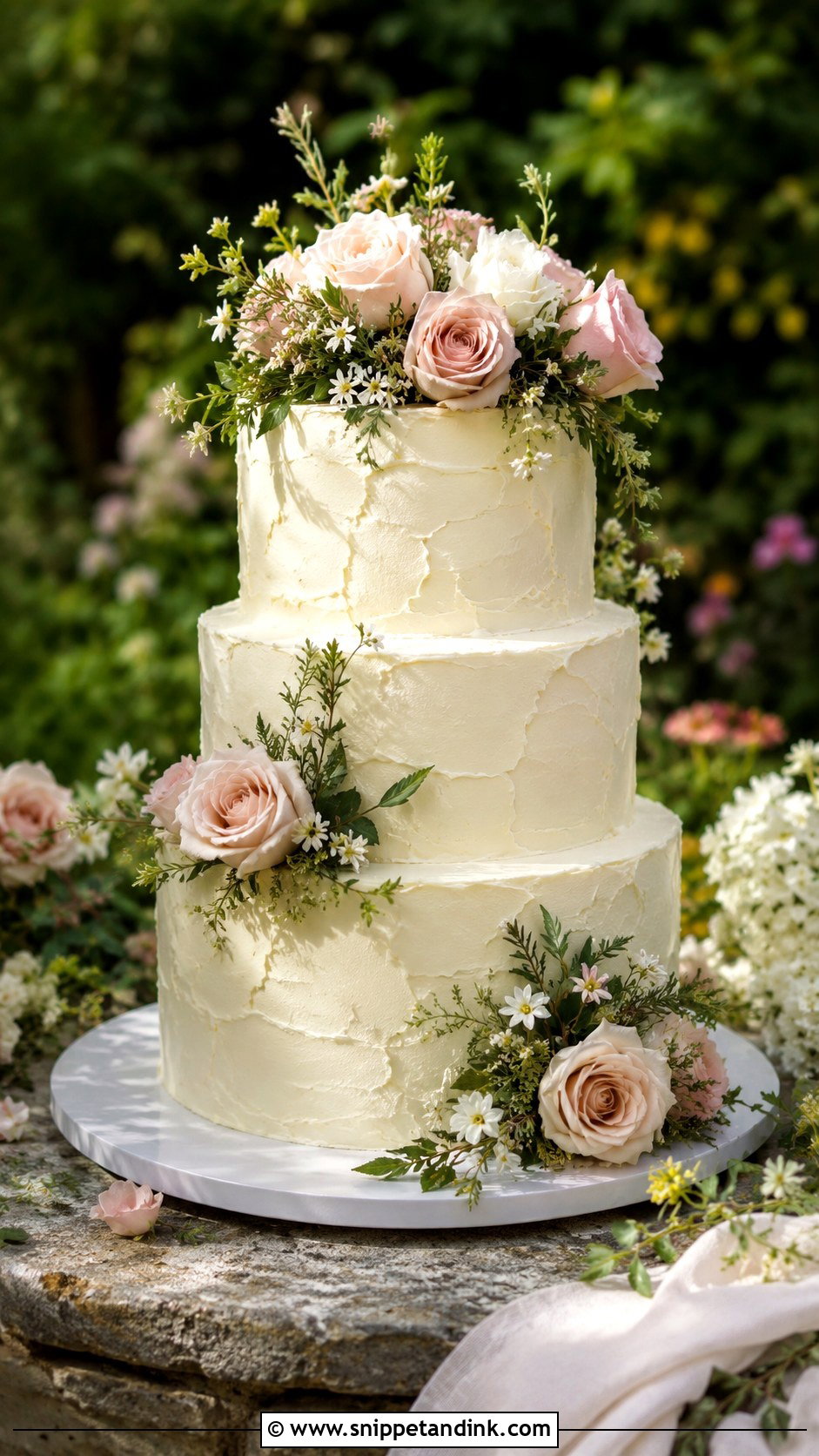
Buttercream suits a garden because it doesn’t need to look perfect. Gentle spatula marks or light ridges fit an outdoor setting better than a glassy fondant finish, and buttercream tints easily to ivory, blush, pale green or soft lavender. Fresh flowers, small herbs, berries or a few sugar blossoms finish it. Flavour can follow the garden too: vanilla bean, lemon, strawberry or lavender honey. The trade-off is heat. Buttercream softens well before a guest would call the day hot, so it needs shade and a short time on display.
4. Wildflower Wedding Cake
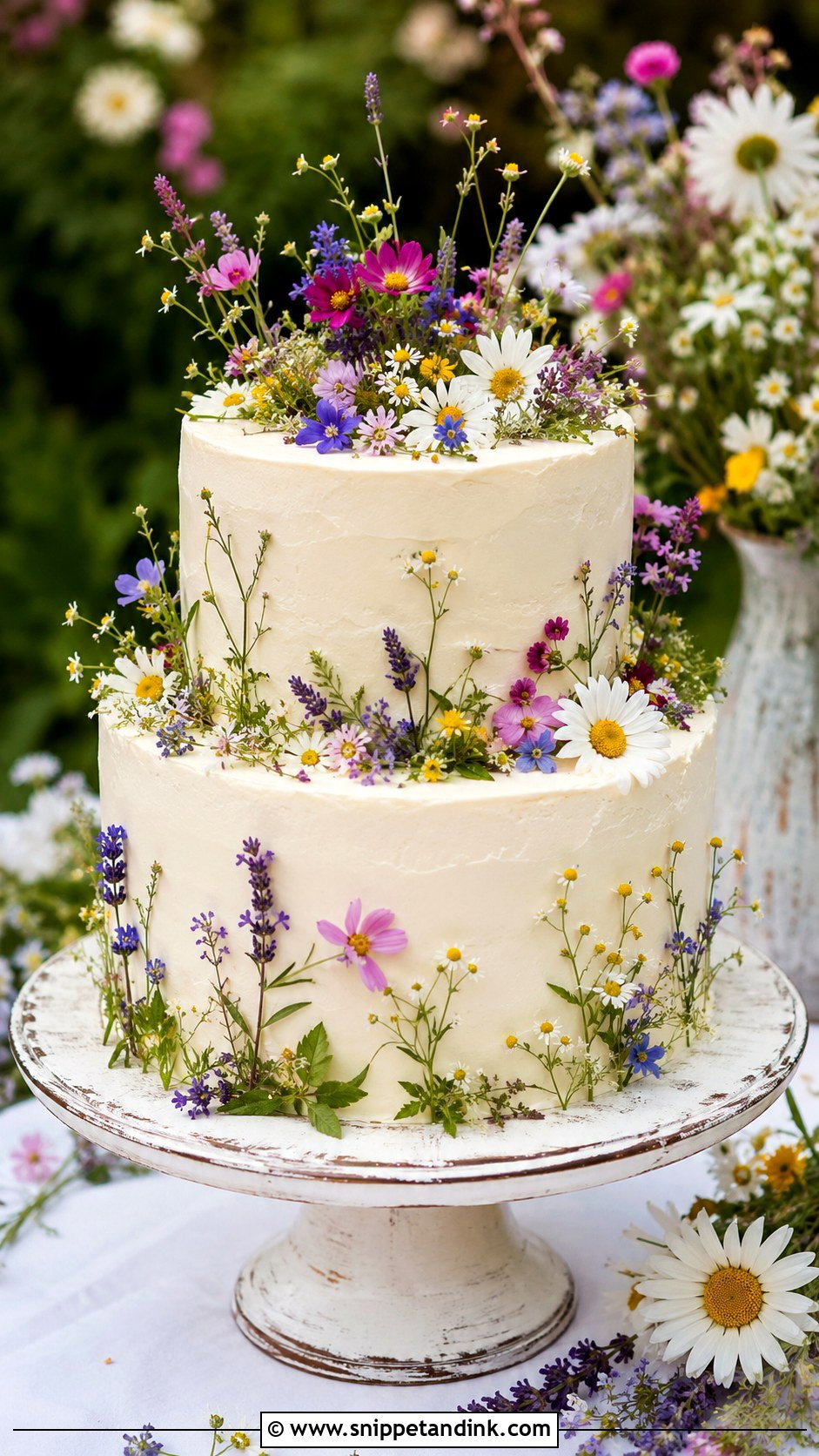
A wildflower wedding cake should look like it was decorated from a meadow path. I use small flowers in loose clusters around each tier, with no attempt at symmetry: daisies, cosmos, chamomile, lavender and tiny edible blossoms over a pale buttercream base. Many bakers avoid putting baby’s breath straight onto frosting because it isn’t considered food-safe, so I either wrap its stems or swap in chamomile for the same airy effect. It suits a backyard or tented garden party.
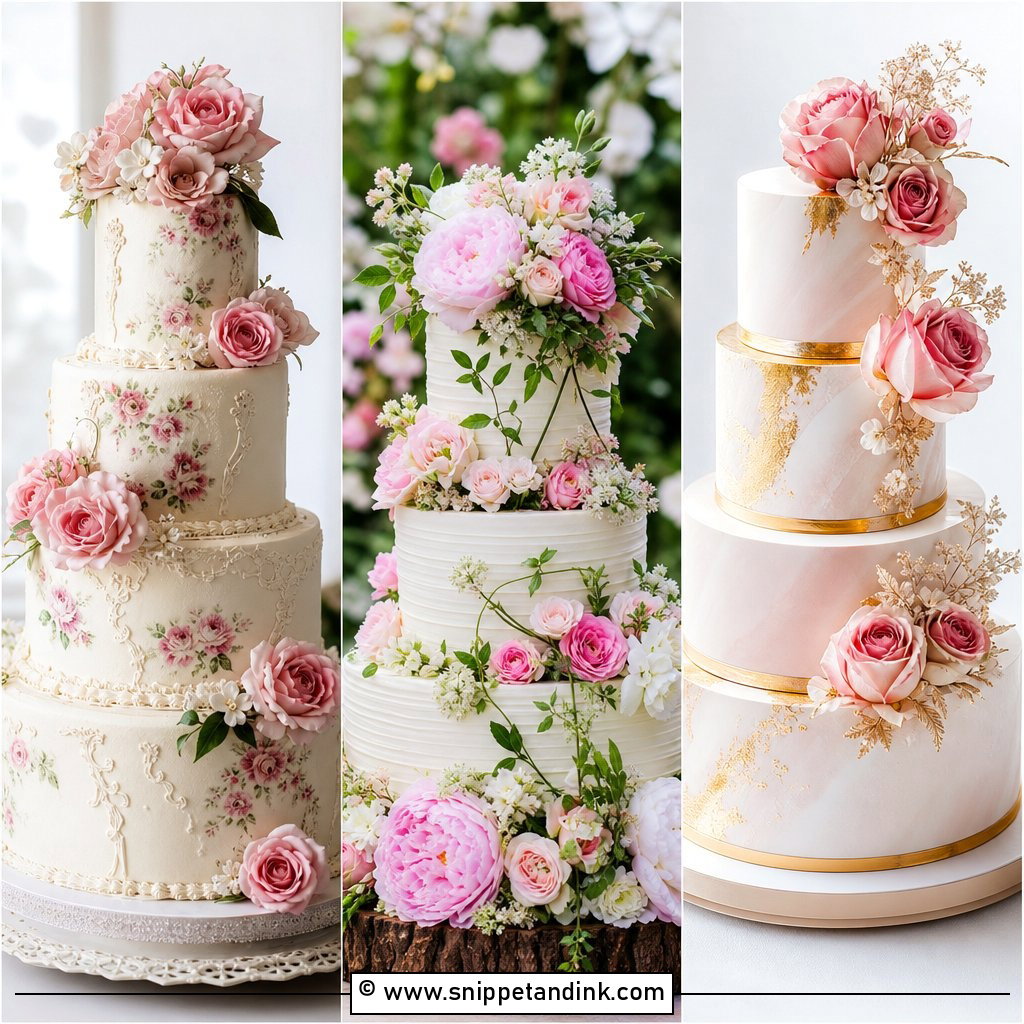
5. Rose Garden Wedding Cake
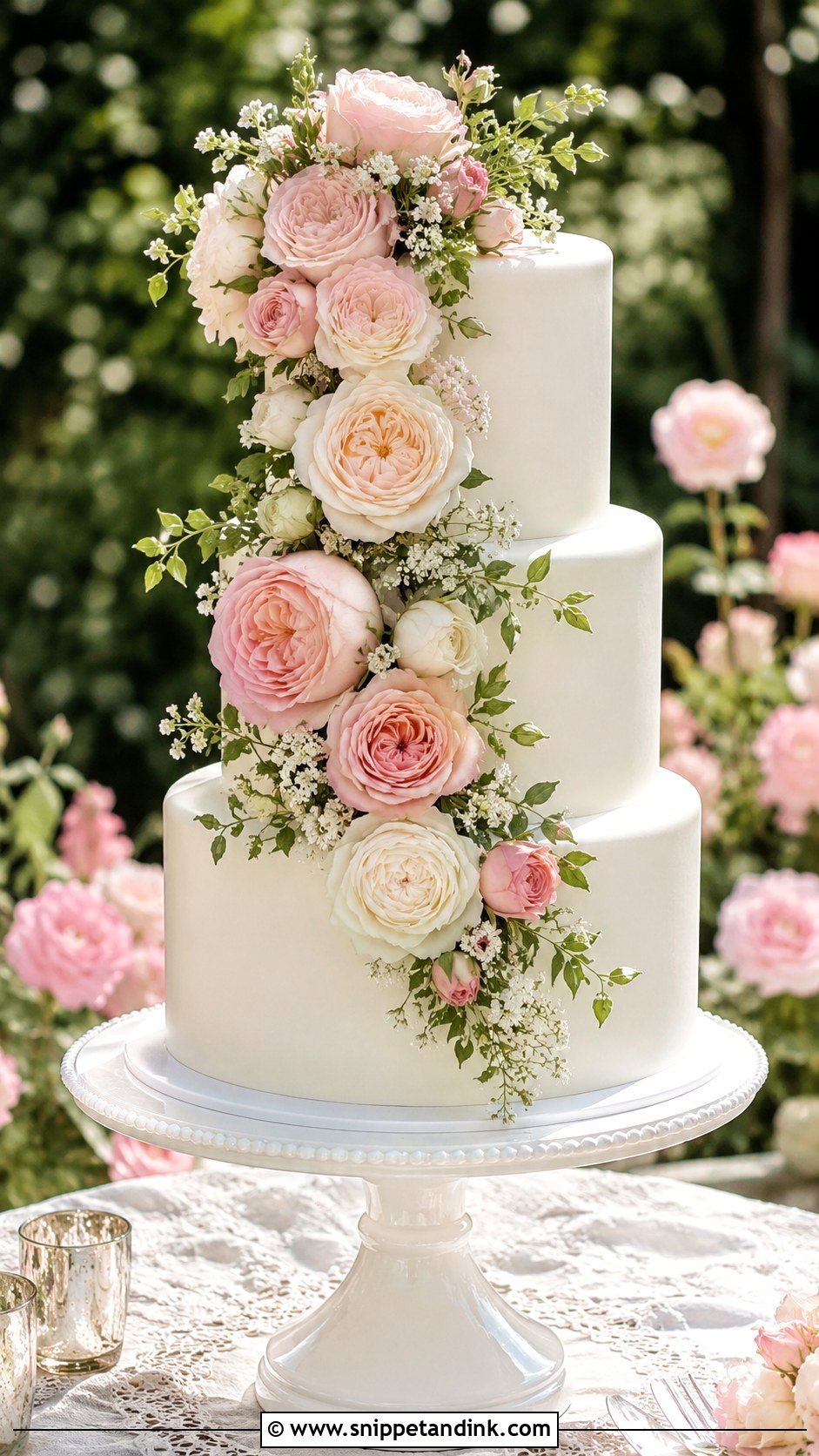
Garden roses are softer and fuller than florist roses, with more petals and a looser shape, and that’s what makes this cake feel romantic. Blush, ivory, peach or mauve make a gentle colour story. I often mix real and sugar roses: sugar ones where they touch the frosting, real ones where they can sit on a protected spot. Fresh roses should be unsprayed if they’re going near food, which usually means sourcing them separately from the main flower order. A smooth ivory base and some trailing greenery between blooms finish it.
6. Two Tier Garden Wedding Cake
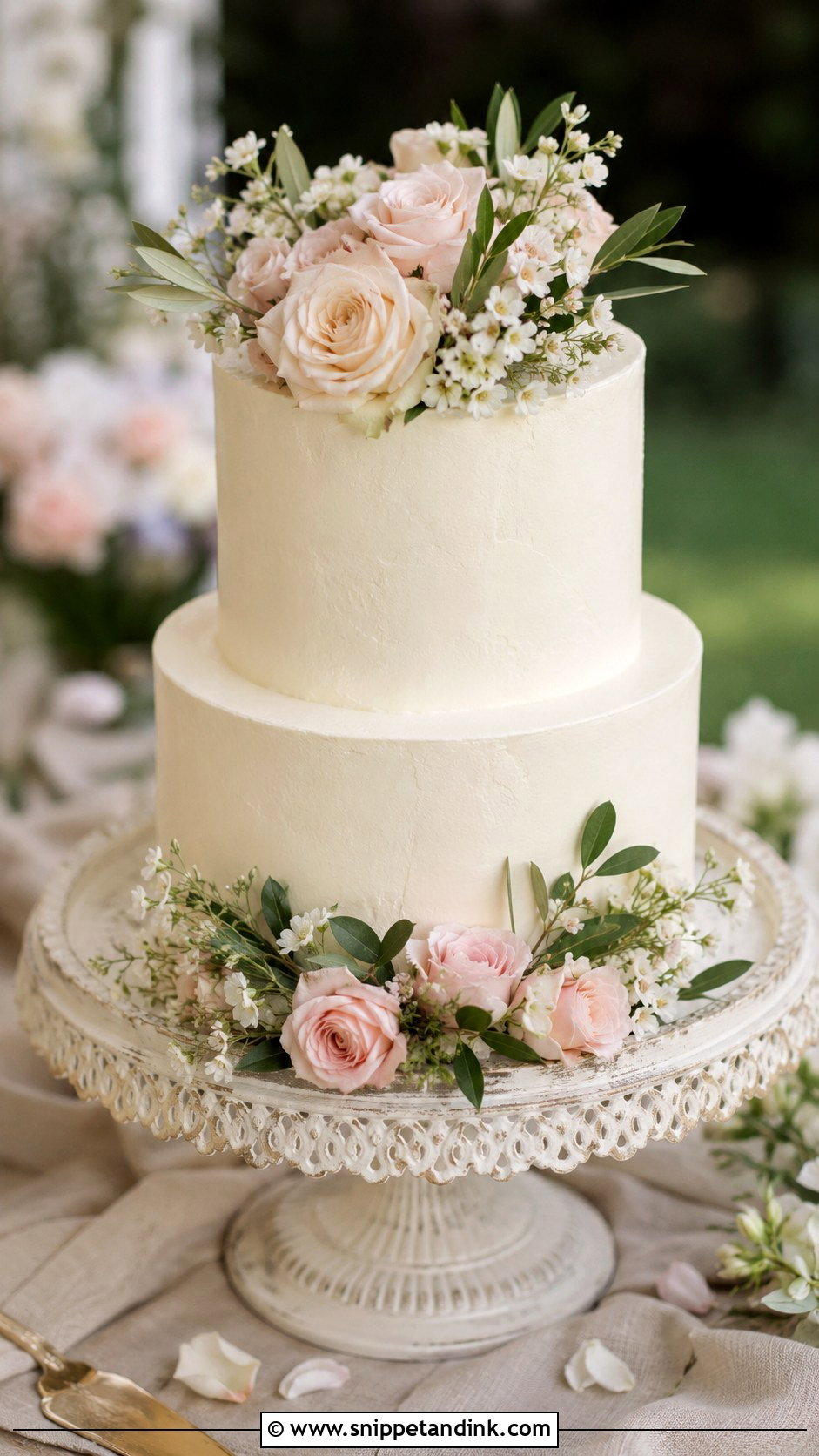
Two tiers suit a small wedding, an elopement or a brunch reception, and look like a proper wedding cake without being oversized. A taller bottom tier reads modern; two balanced tiers look classic. Decorate with fresh flowers, greenery or pressed petals, a small cluster at the base and a matching one on top. Smaller cakes are easier to keep cool and easier to move, which matters outdoors. If your guest count is larger than two tiers serve, a plain sheet cake in the kitchen makes up the difference.
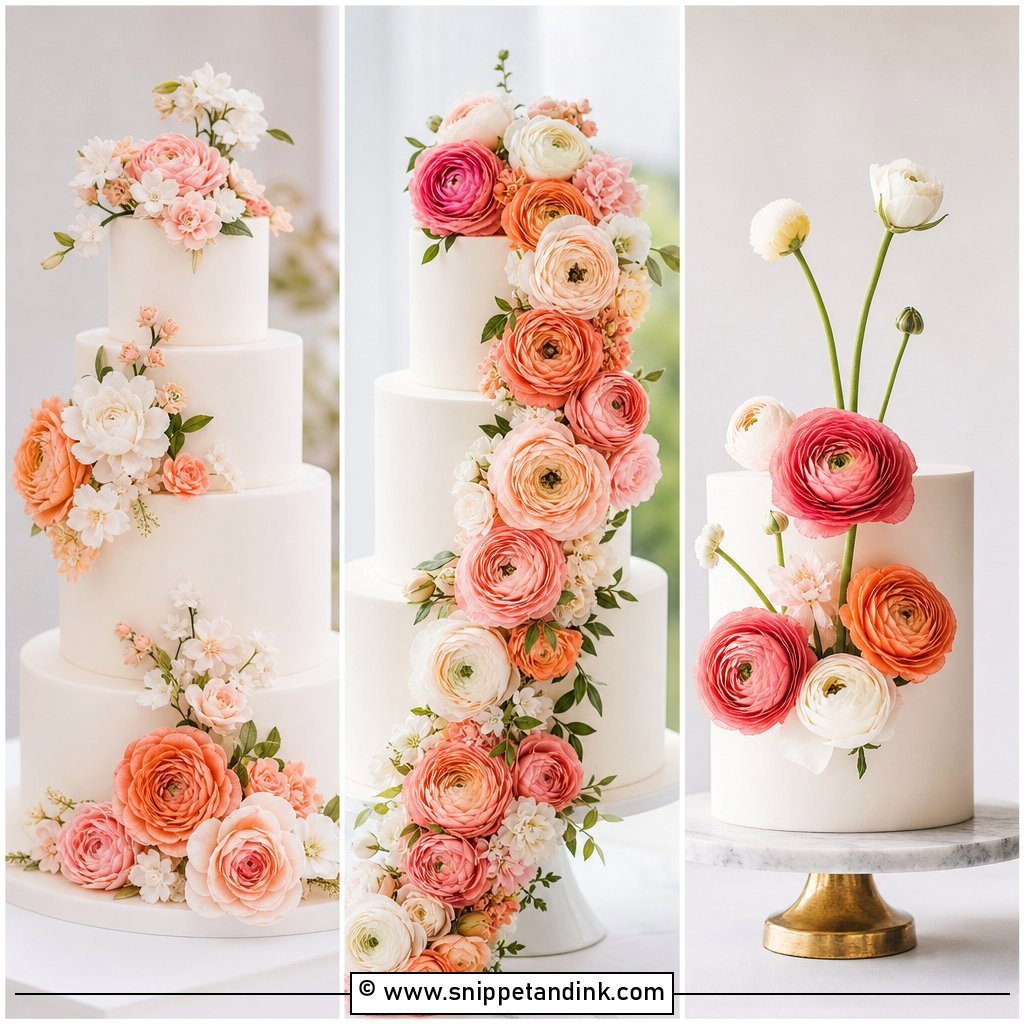
7. Three Tier Garden Wedding Cake
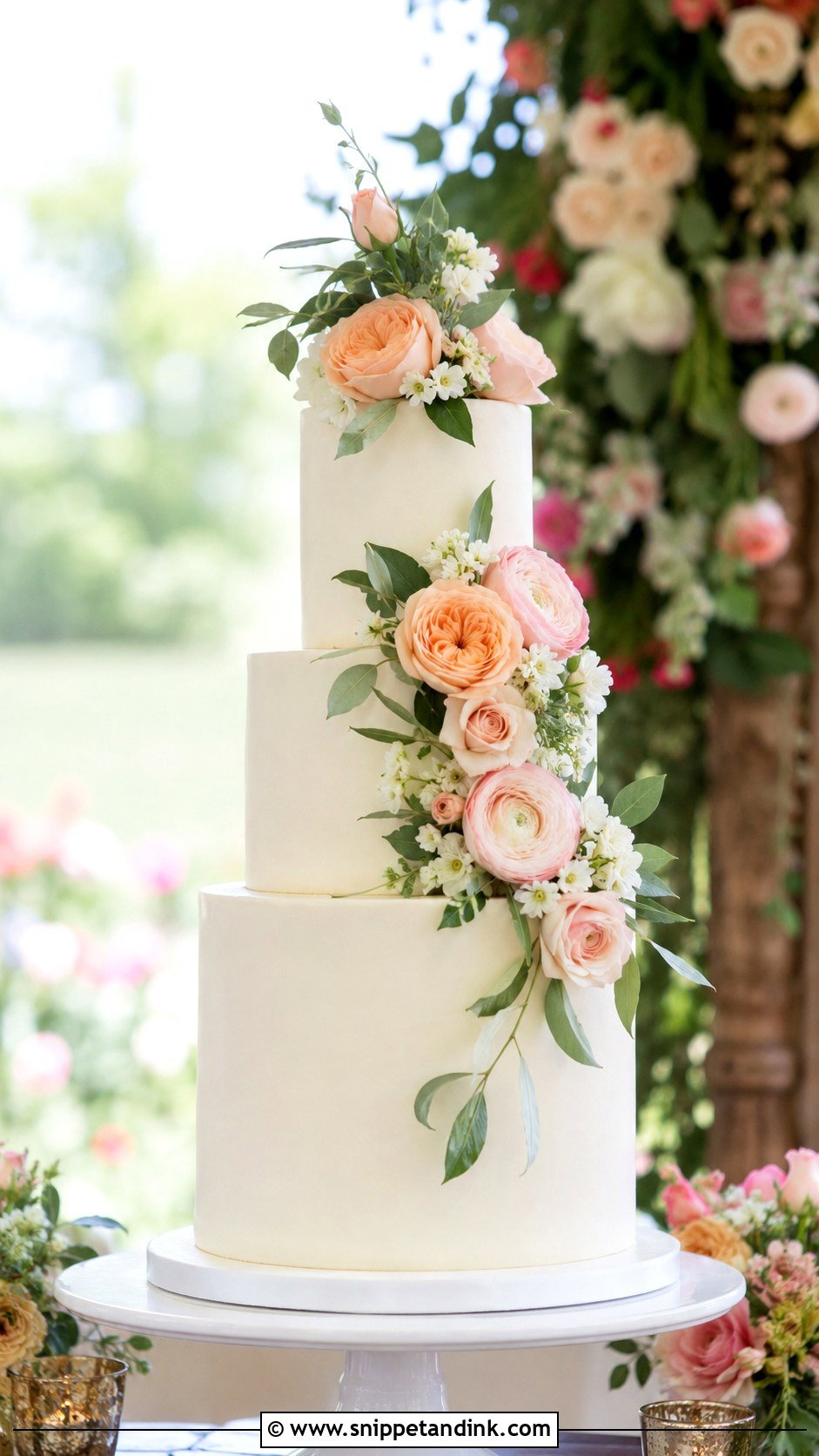
Three tiers give real height and presence on a garden dessert table. I usually keep each tier smooth and add flowers in a diagonal cascade. Another approach puts a different garden detail on each tier, such as texture, pressed flowers and fresh blooms. If you do that, keep the palette tight, ivory and sage with one blush or peach accent, or the tiers stop relating. A three-tier cake is heavy, so it needs internal dowels and a sturdy, level table; uneven lawn is its enemy.
8. Garden Wedding Cake With Fresh Flowers
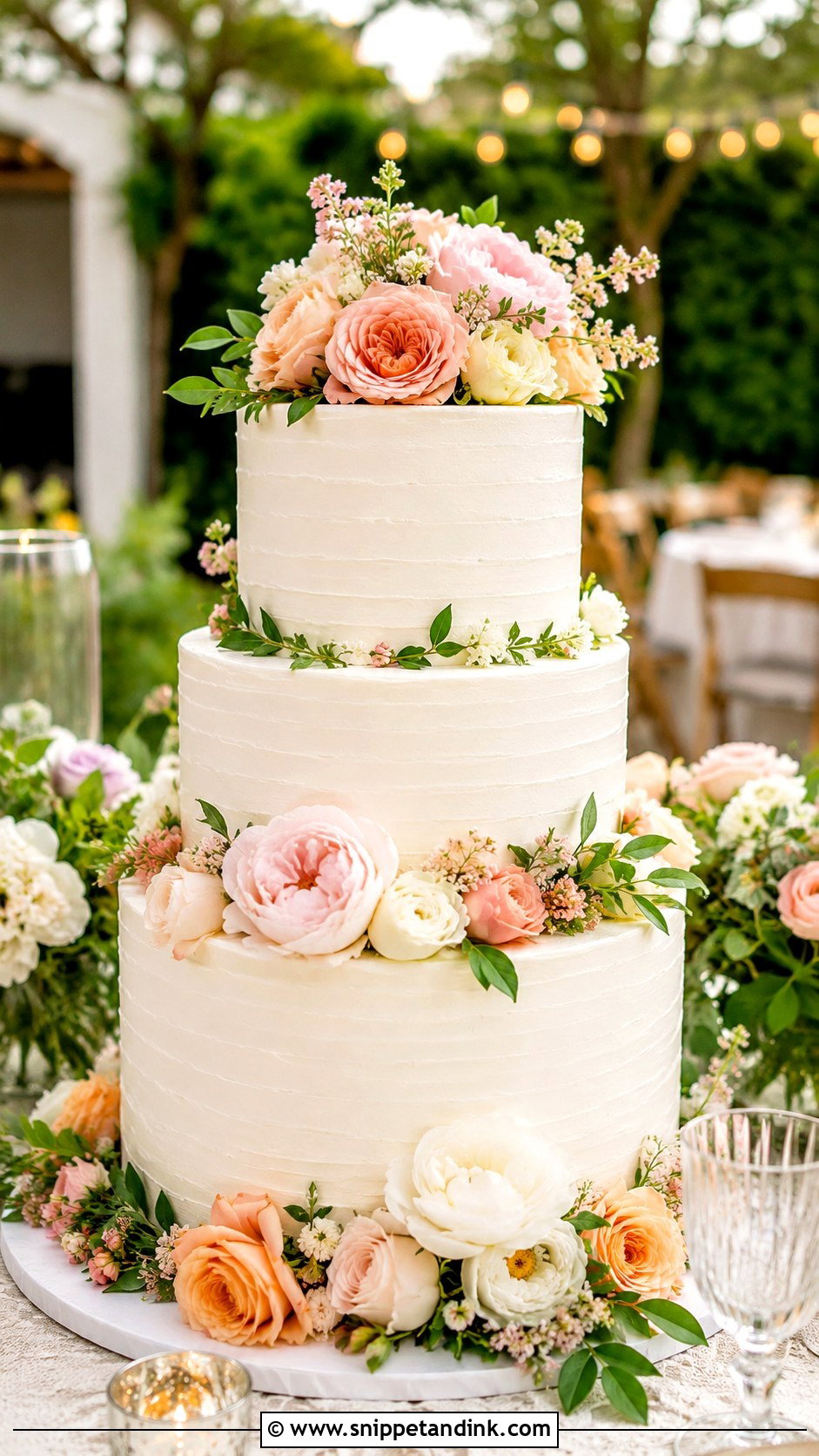
Fresh flowers on a cake need two people: the florist, who knows the flowers, and the baker, who knows the cake. The blooms should match the bouquet and be safe near food. I never push a bare stem into a cake. Stems are wrapped in floral tape or set into flower picks or straws, so no sap or water reaches the sponge. Large blooms mixed with smaller blossoms look softer. In spring that means pastel flowers, in summer fuller roses and berries.
9. Garden Wedding Cake With Sugar Flowers
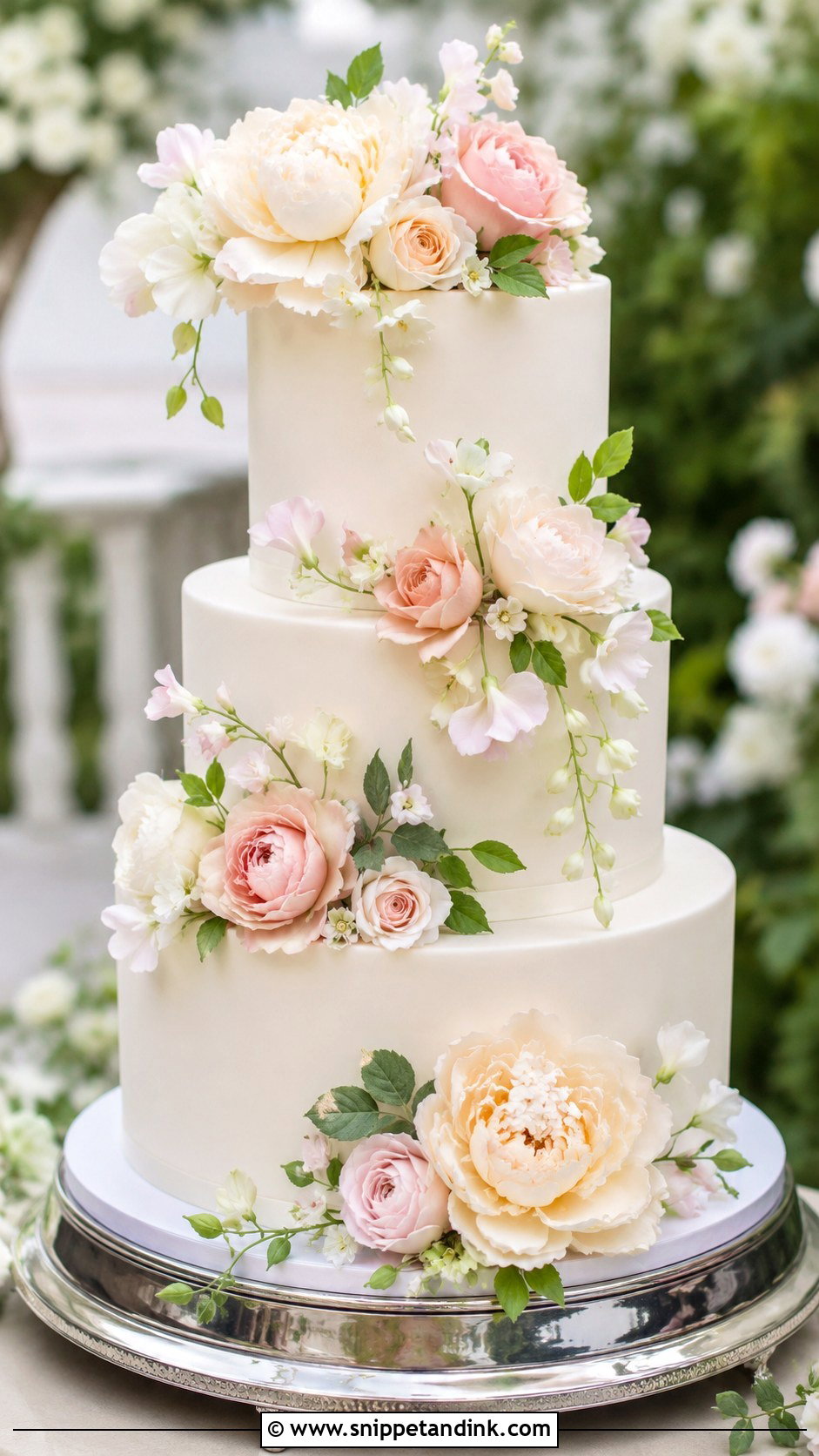
Sugar flowers are what I recommend for a long, hot outdoor reception, because they don’t wilt. Roses, peonies, sweet peas, ranunculus and tiny wildflowers can all be made in sugar, and they let you have a bloom that’s out of season on your date. They’re slow to make, petal by petal over several days, so they cost more than fresh. The upside is that you can keep them afterwards as a memento, provided they’re stored dry and out of direct light. Arrange them loosely so they read as a garden, not a display.
10. Vintage Garden Wedding Cake
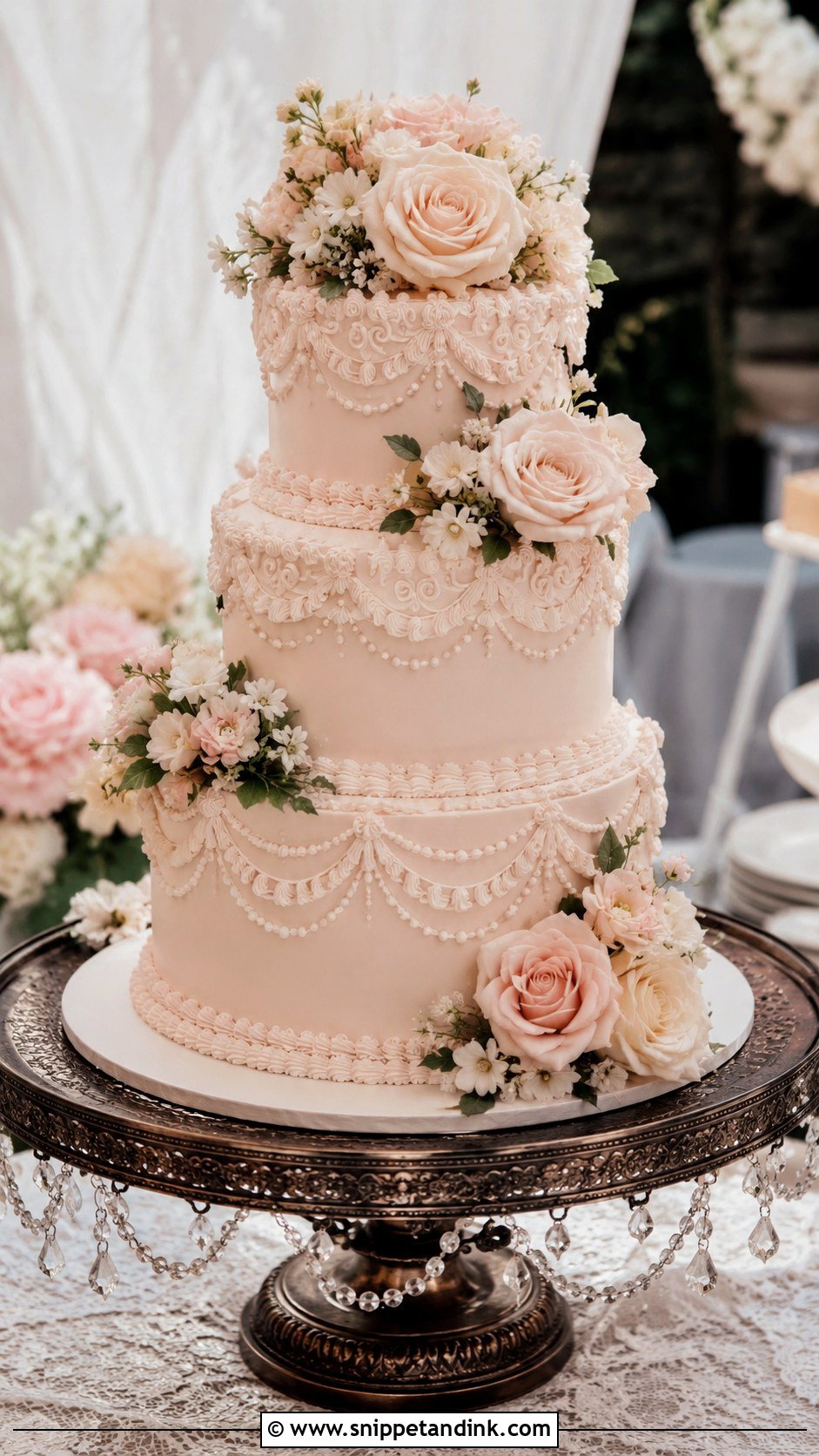
Vintage cakes bring piped borders, soft ruffles, pearl details and pastel flowers, and against a garden setting that old-fashioned texture balances the greenery well. Ivory, blush, pale yellow or soft blue frosting keeps it gentle. Fine piping is the risky part outdoors: in warm air, buttercream piping softens and loses its crisp lines first. For a summer date, I’d pipe the detail in a more stable crusting buttercream or royal icing. A vintage stand and flowers at the top and base finish it.
11. Rustic Garden Wedding Cake
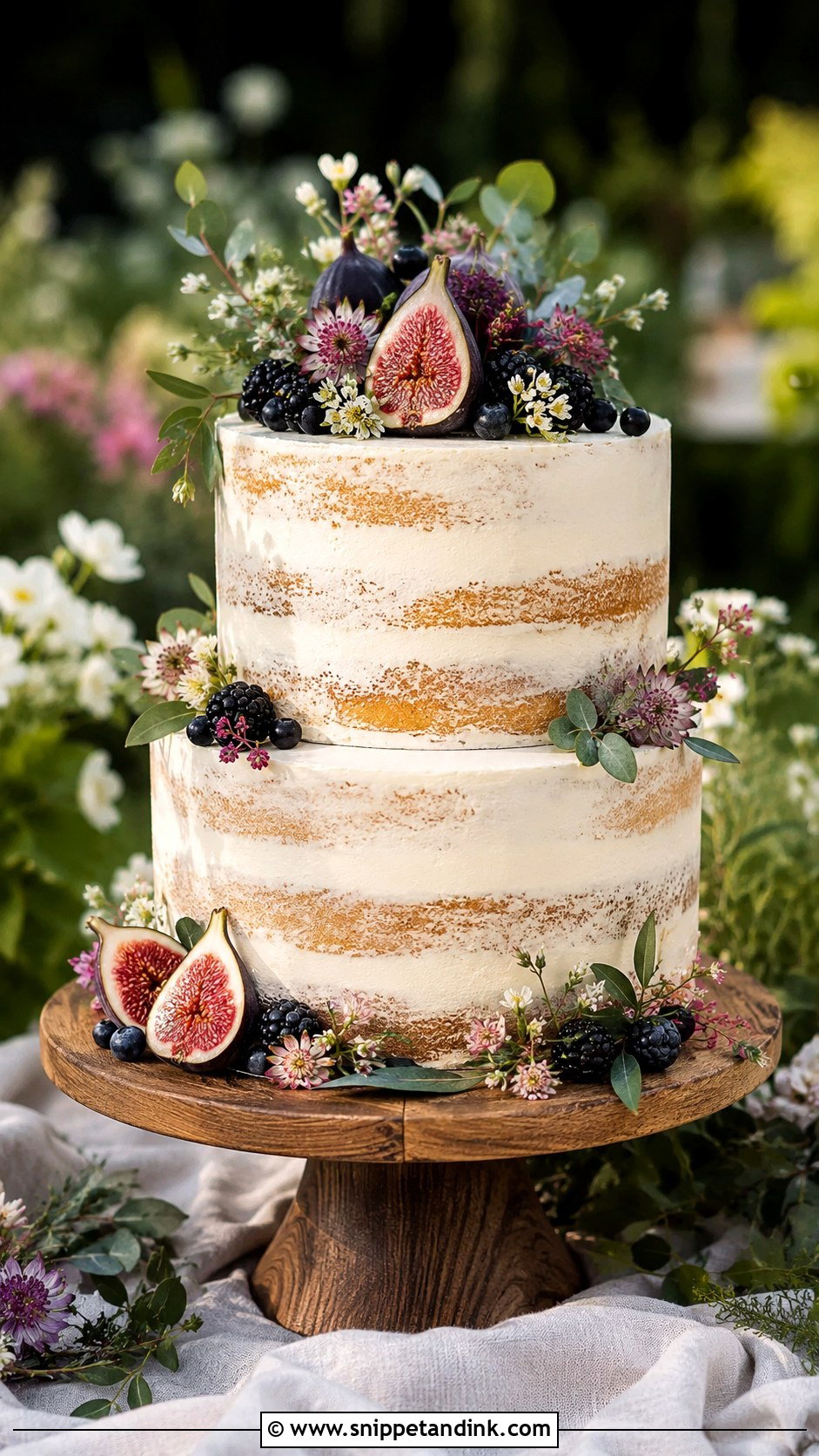
Rustic cakes suit a backyard, a barn garden or any reception with wooden tables. Semi-naked frosting, soft buttercream texture or simple ivory icing with greenery all fit, finished with small flowers, figs, berries, herbs or dried petals. A wooden cake stand grounds it. The thing to know about semi-naked cakes is that the exposed sponge dries out faster than a fully frosted one, so I finish them the day of the wedding and keep them covered until display. Candlelight and linen runners suit it.
12. Elegant Garden Wedding Cake
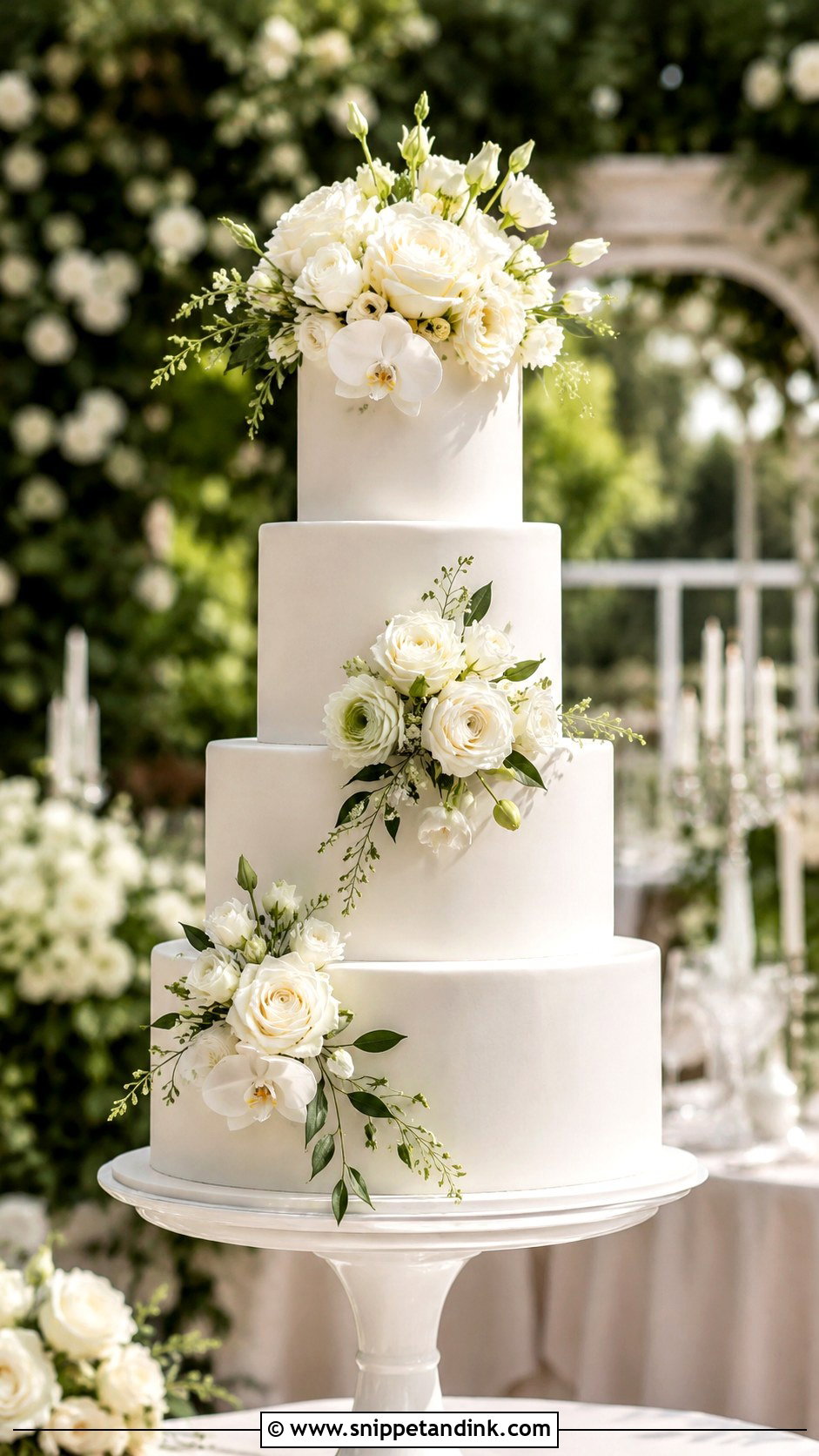
A more formal garden cake has clean tiers, refined flowers and a disciplined palette. Smooth fondant or buttercream makes the base, and white roses, orchids, ranunculus and pale greenery add the softness. Every bloom should look placed. A tall three or four-tier cake suits a formal garden venue, and fondant has a practical advantage outdoors: it protects the cake from humidity and insects better than bare buttercream. Keep the decoration focused, and the garden theme still comes through as polished.
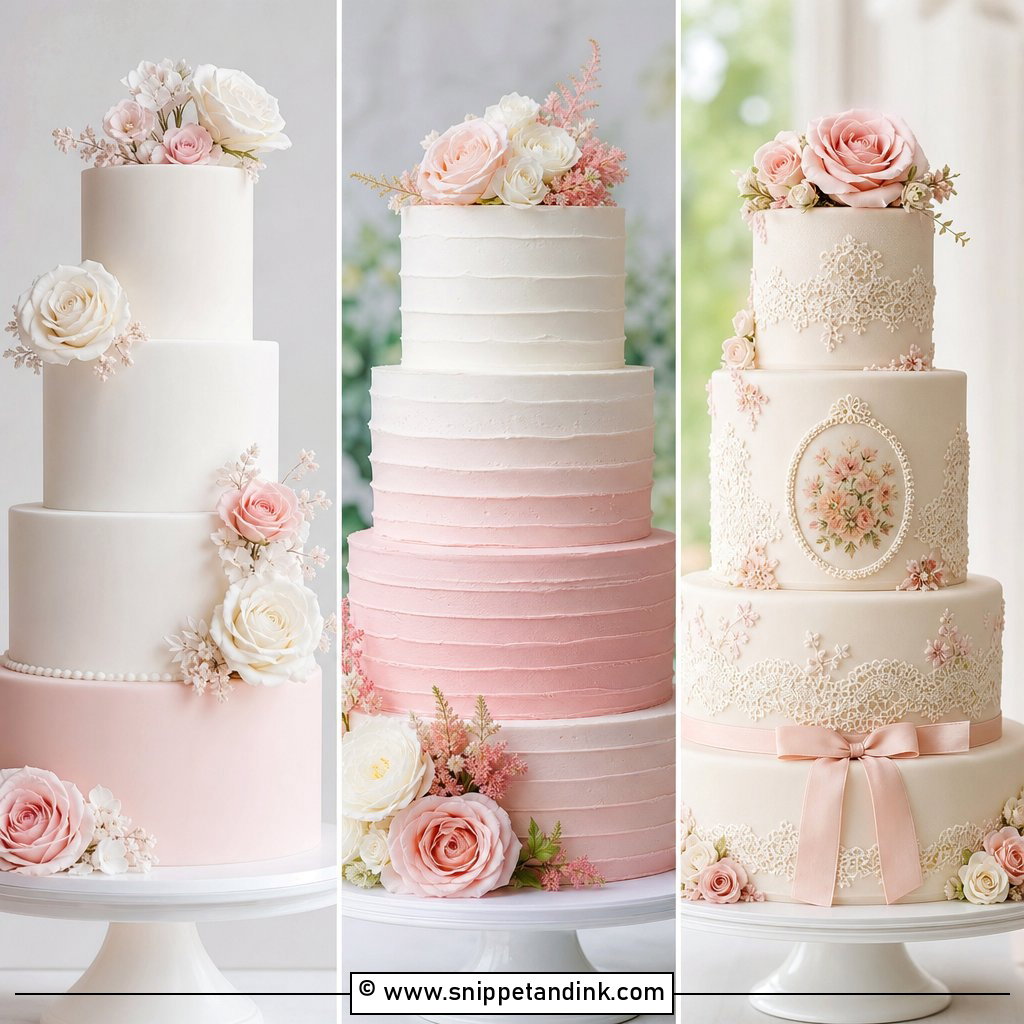
13. Blush Garden Wedding Cake
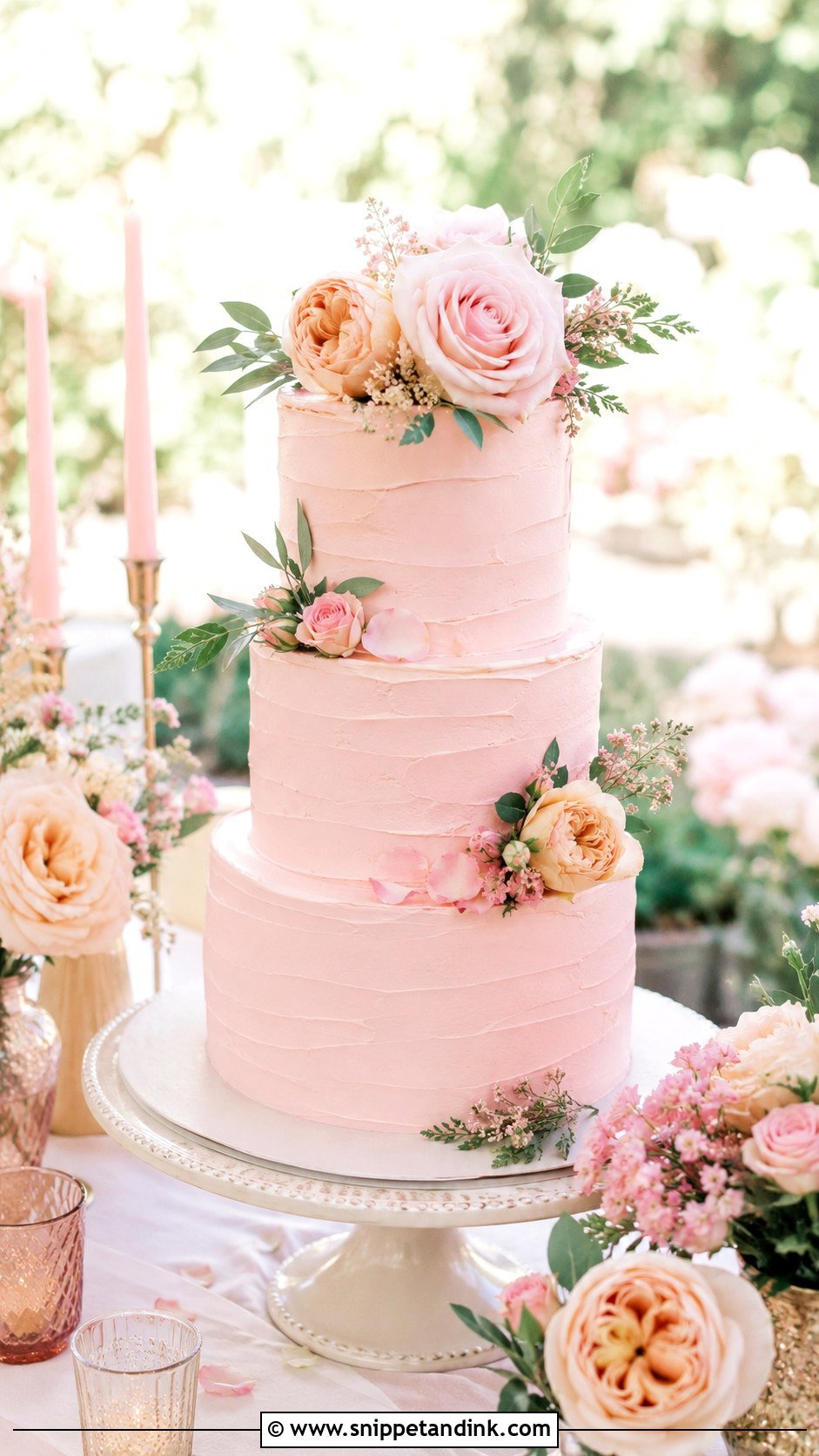
Blush pairs with many palettes. It can come from the frosting, the flowers, a ribbon or fruit. Pale pink buttercream feels dreamy; ivory with blush roses is more classic. Sage, champagne or dusty rose add depth. The mistake I see is a pink that looks soft in the bowl and loud in sunlight, so I mix it a shade paler than the client’s swatch. Muted tones and gentle floral placement keep the cake grown-up, and it suits spring gardens and pastel tented receptions.
14. Greenery Garden Wedding Cake
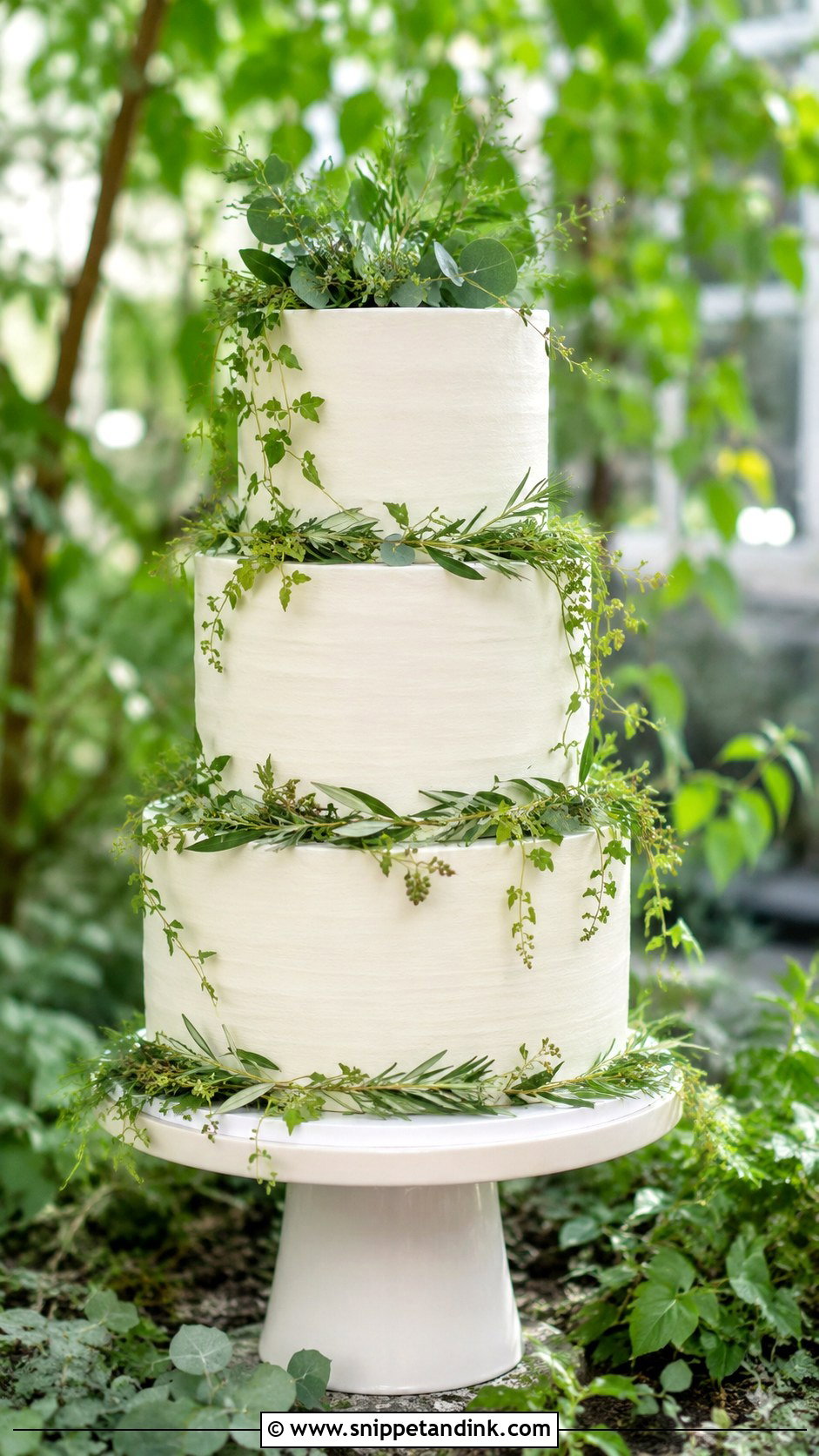
Greenery cakes use leaves, vines and herbs instead of flowers. Olive leaves, rosemary, fern and trailing vines can wrap the tiers or sit in small clusters on a white or ivory base. It’s a calm choice if your wedding flowers are already bold. Eucalyptus is the greenery couples ask for most, and it should never touch the frosting directly; it isn’t food-safe, so I wrap the stems and set it on a barrier or use rosemary and olive, which are. It suits minimalist, rustic and modern gardens.

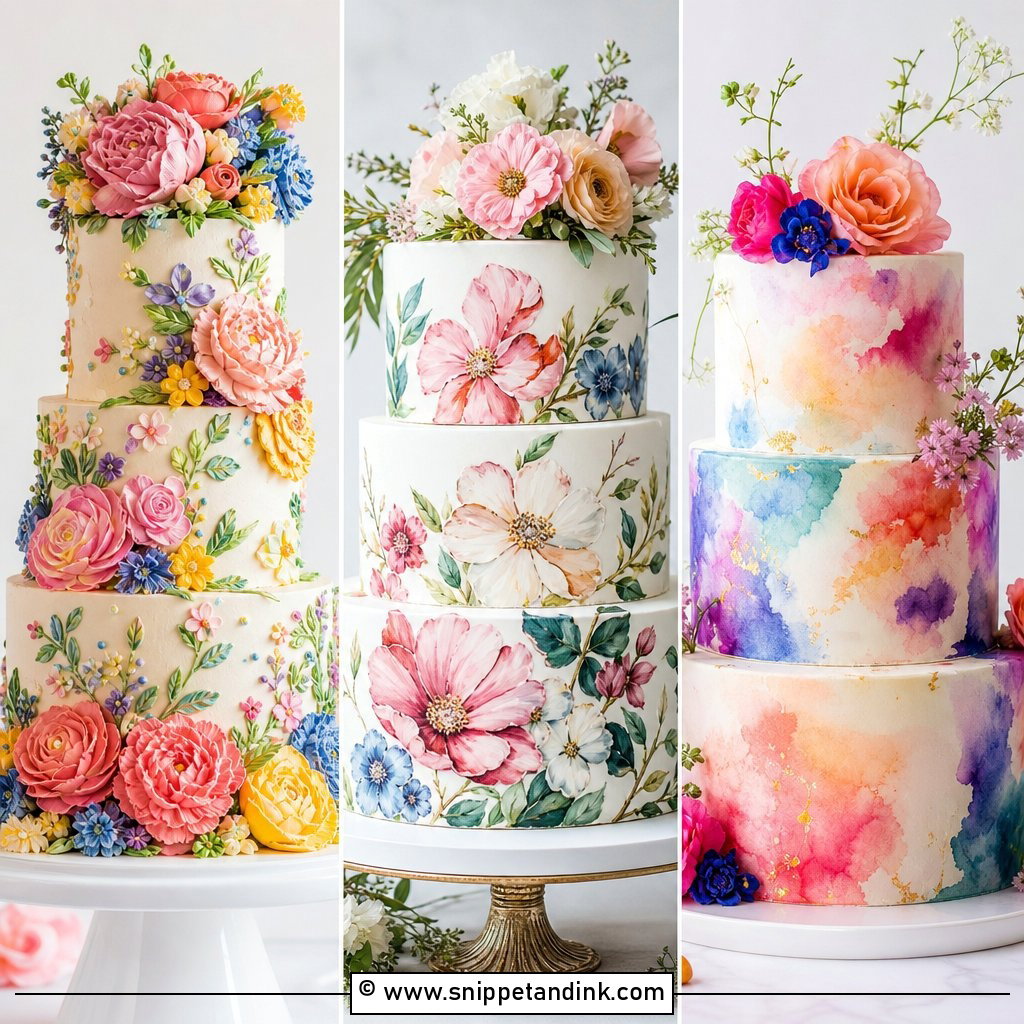
15. Lemon Garden Wedding Cake
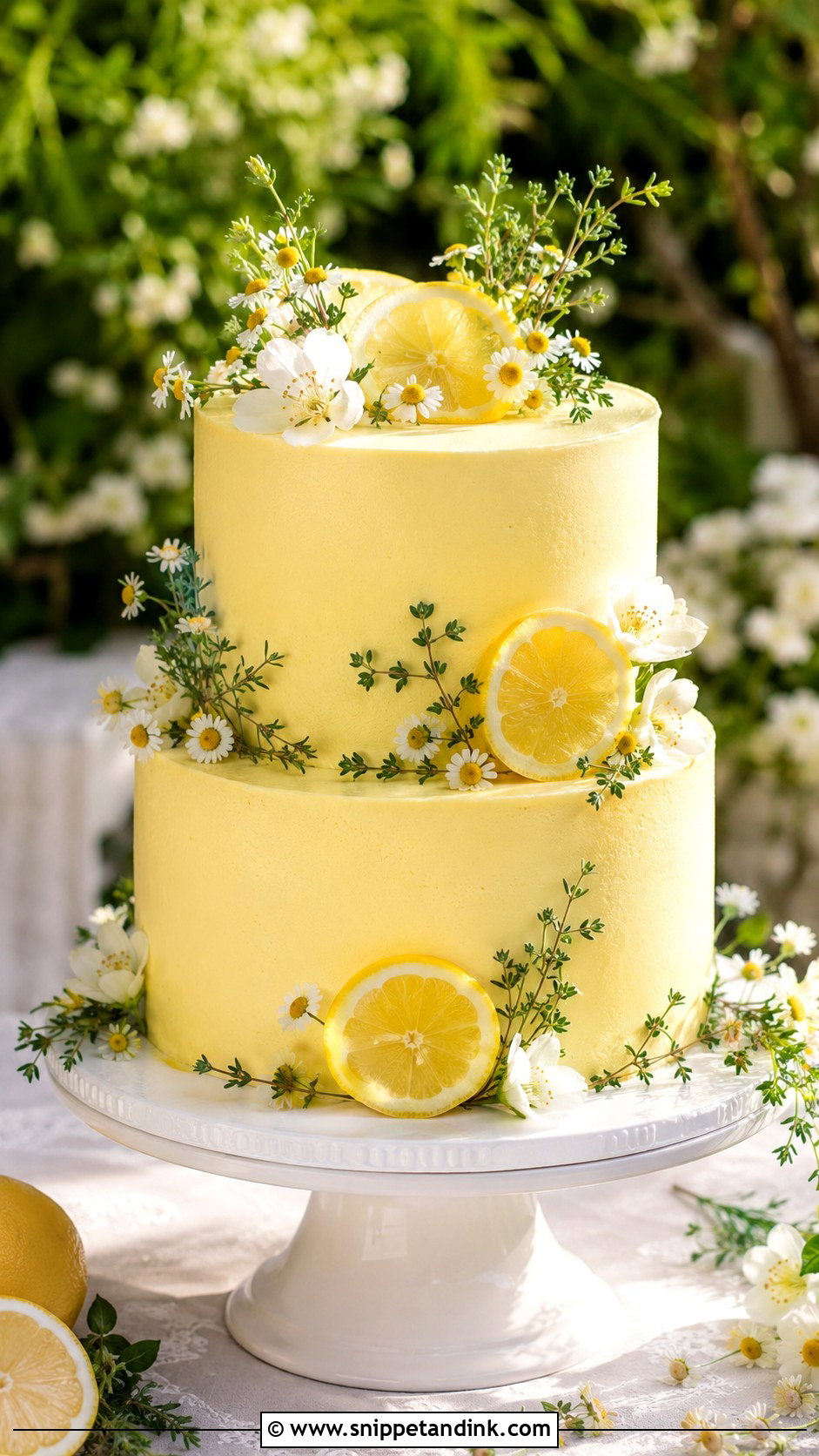
Lemon is the flavour I’d suggest most for a spring or summer garden. Pale yellow sponge, lemon curd filling and a light vanilla or lemon buttercream taste bright in the heat. Decorate with thin lemon slices, tiny white flowers, thyme, chamomile or soft greenery, in small amounts. Lemon curd is perishable, so a curd-filled cake needs to be refrigerated until close to serving and shouldn’t sit out for hours. A white stand and garden florals make it look like a wedding rather than a picnic.
16. Strawberry Garden Wedding Cake
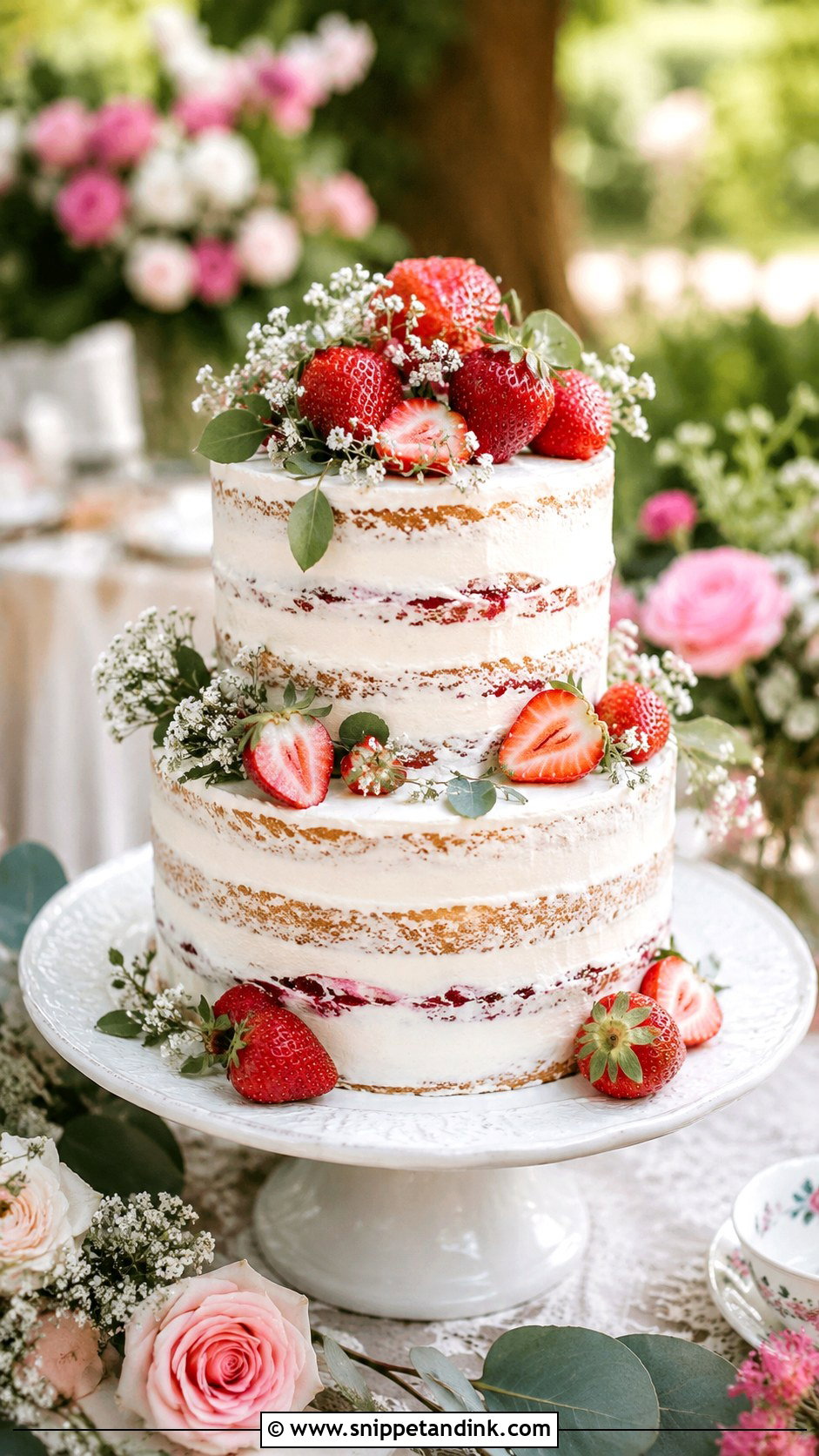
Strawberries are the most romantic fruit on a cake and the least patient. A strawberry cake can be filled with compote, fresh berries or strawberry buttercream, then decorated with whole and sliced berries, tiny blossoms and greenery over a semi-naked or ivory buttercream base. Cut strawberries weep juice within an hour or two, so I use whole ones on the outside and add them at the venue. Keep the fruit balanced, with small flowers around the berries rather than berries everywhere. Late spring and summer are when it tastes best.
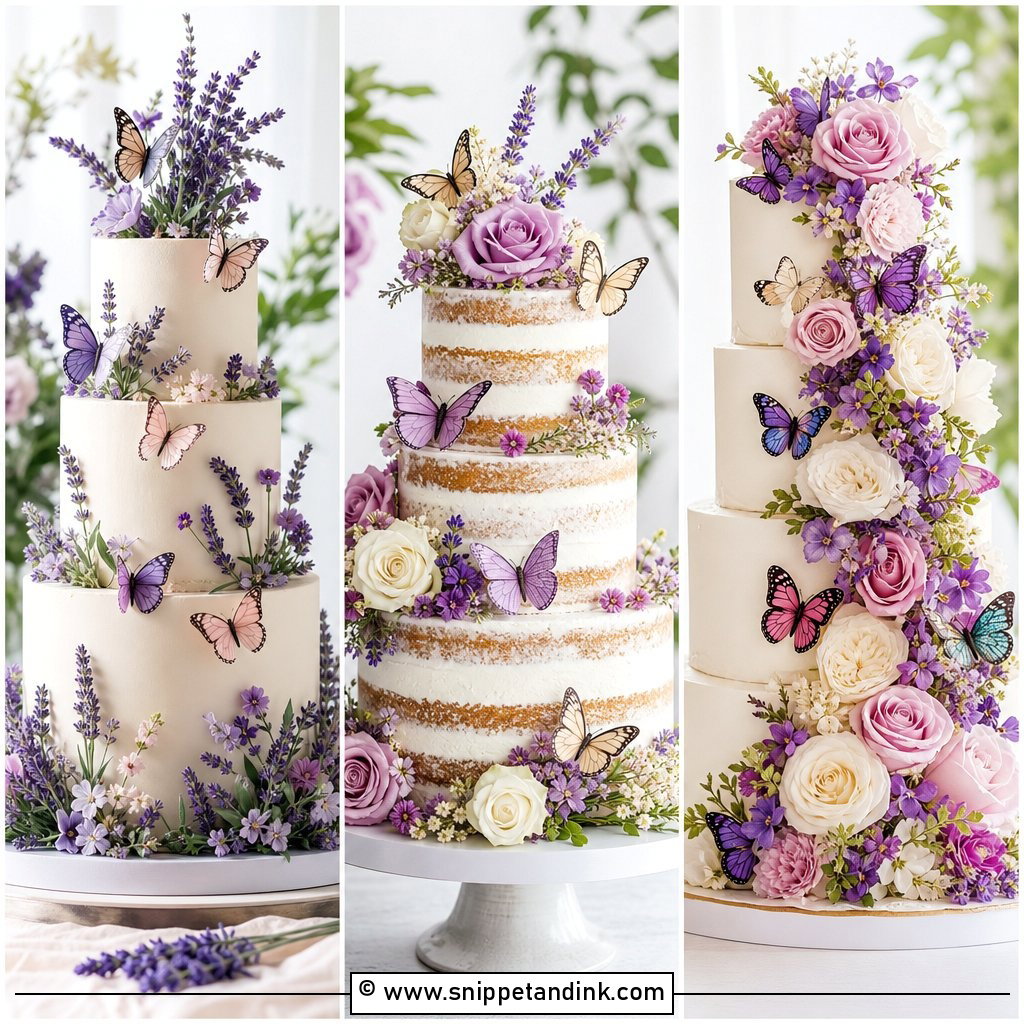
17. Lavender Garden Wedding Cake
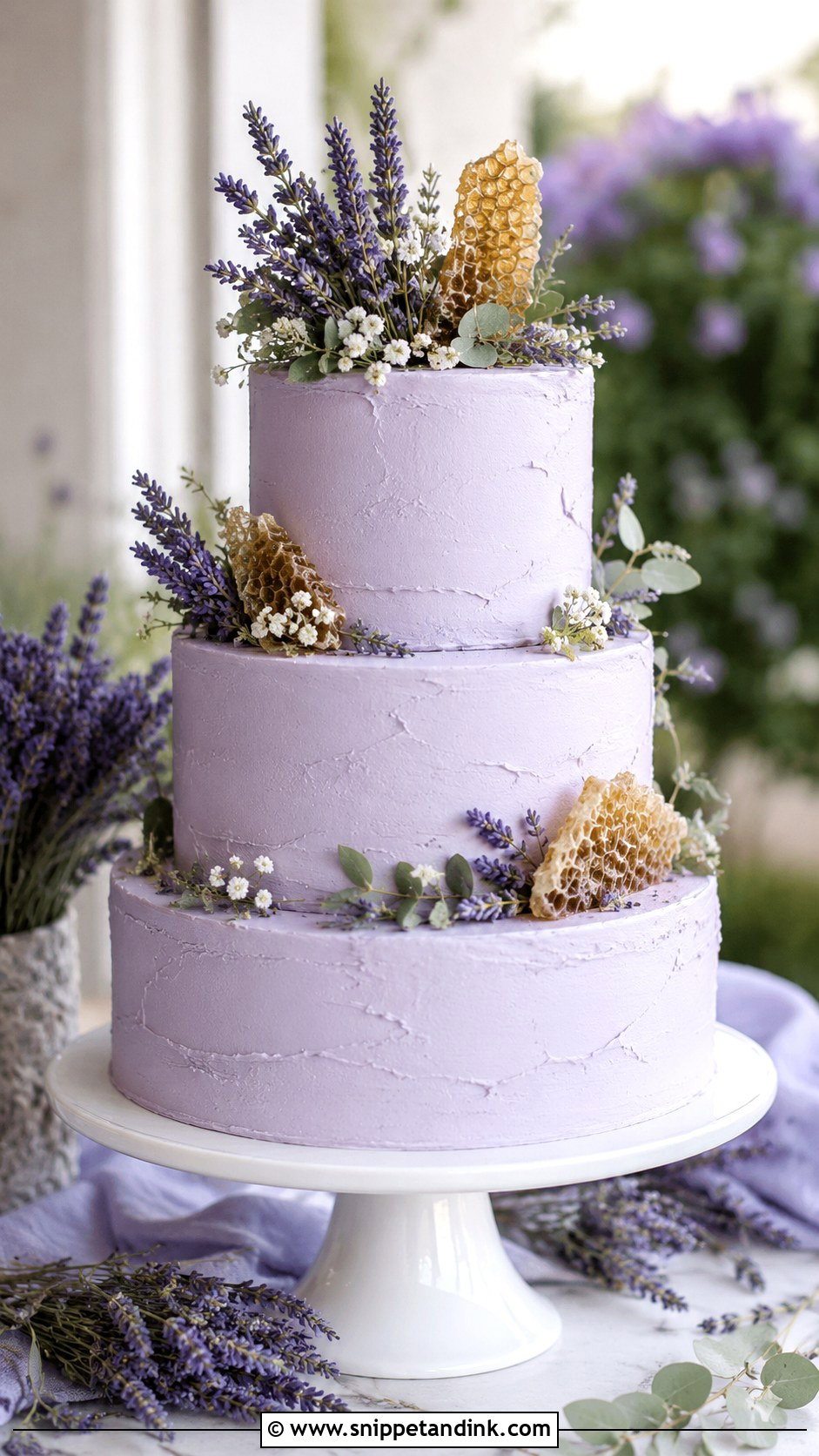
Lavender works as a flavour, a colour or both: lavender with honey, vanilla, lemon or Earl Grey inside, and pale lavender buttercream or ivory with purple accents outside. I go carefully with culinary lavender; a little gives a soft floral note and too much tastes like soap. The same goes for colour, so keep it light. Tiny white flowers, honeycomb accents and soft greenery make it look more natural. It’s a good match for a countryside venue in late spring.
18. Garden Wedding Cake With Berries
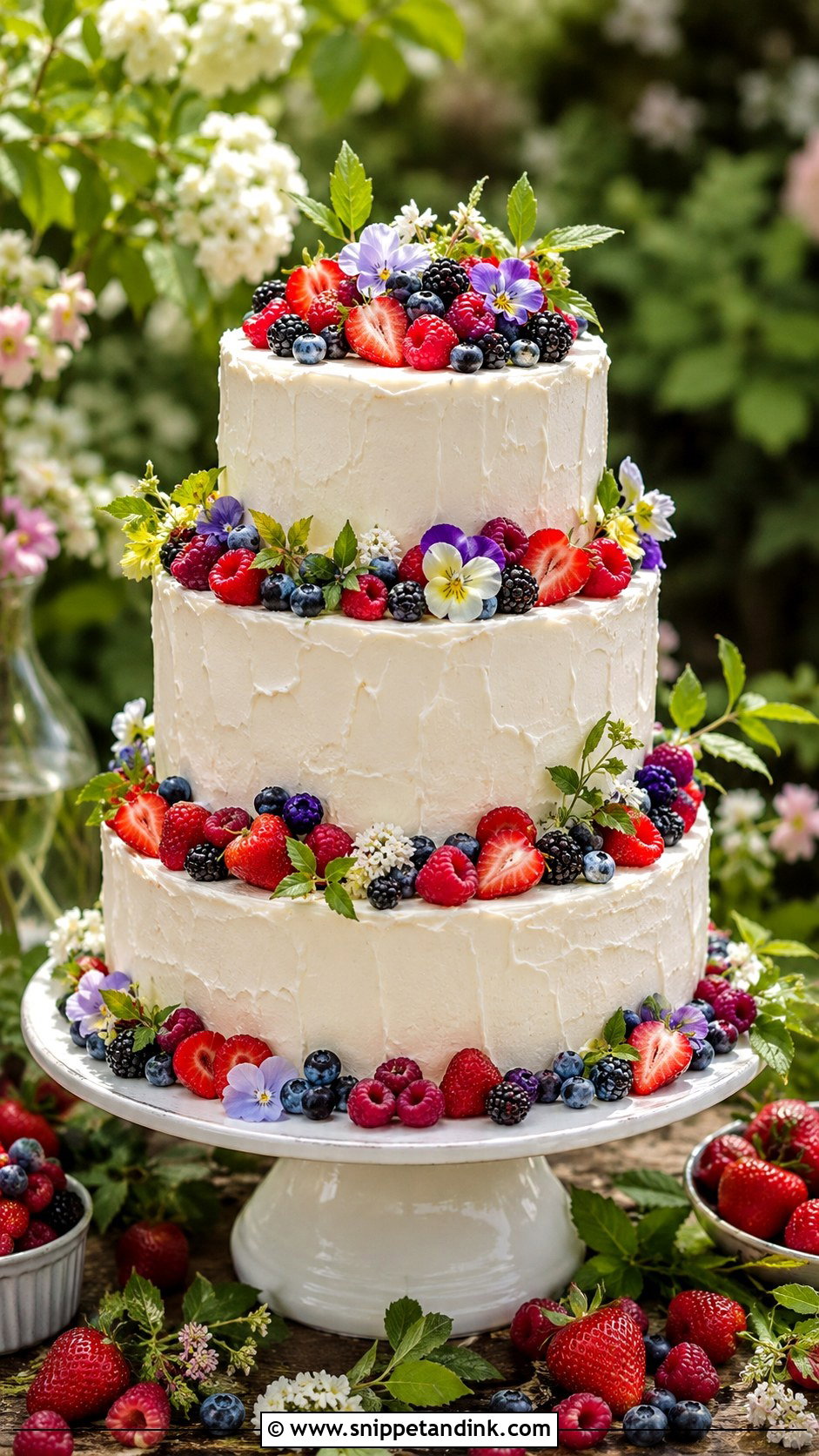
A berry cake feels just-picked. Strawberries, raspberries, blueberries, blackberries and currants arranged with flowers give the table colour, and a white or lightly textured base lets the fruit show. Berries can sit between tiers, around the base or in small clusters with edible flowers. Soft berries like raspberries bruise easily and stain the frosting if they’re pressed in, so I place them last with tweezers. Pair them with vanilla, lemon, almond or berry-filled layers for a summer reception.
19. Garden Wedding Cake With Edible Flowers
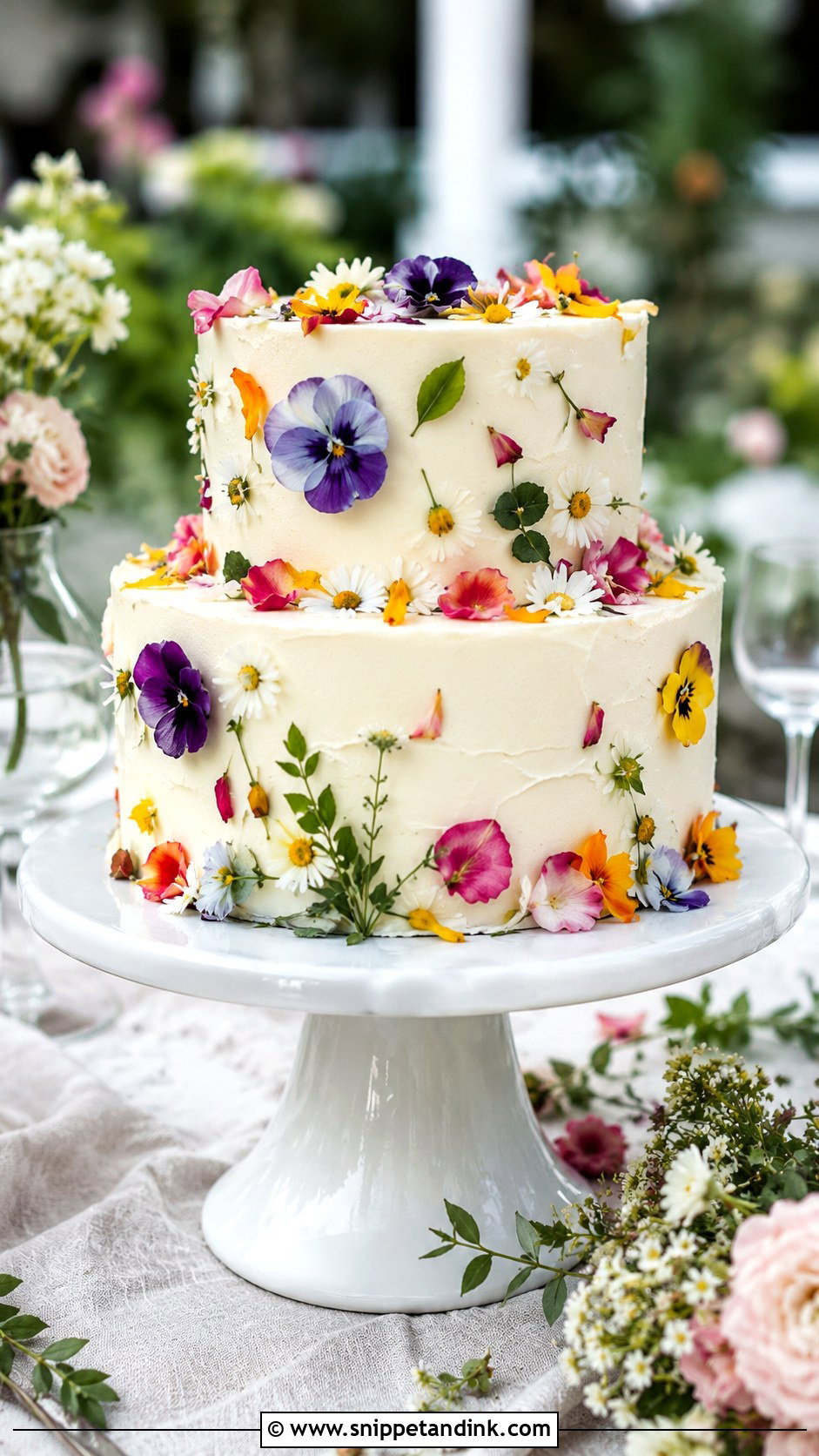
Edible flowers add colour and texture without heavy decoration. Violas, pansies, calendula, borage, chamomile and rose petals are reliable choices, but they need to be grown for eating, without pesticides, and that’s a question to put to your baker. Florist flowers are usually treated and aren’t safe. They can be pressed flat, scattered or clustered on buttercream, fondant or a single tier. An ivory or pale cream base keeps them visible. They’re delicate and wilt in a few hours, so they go on last.


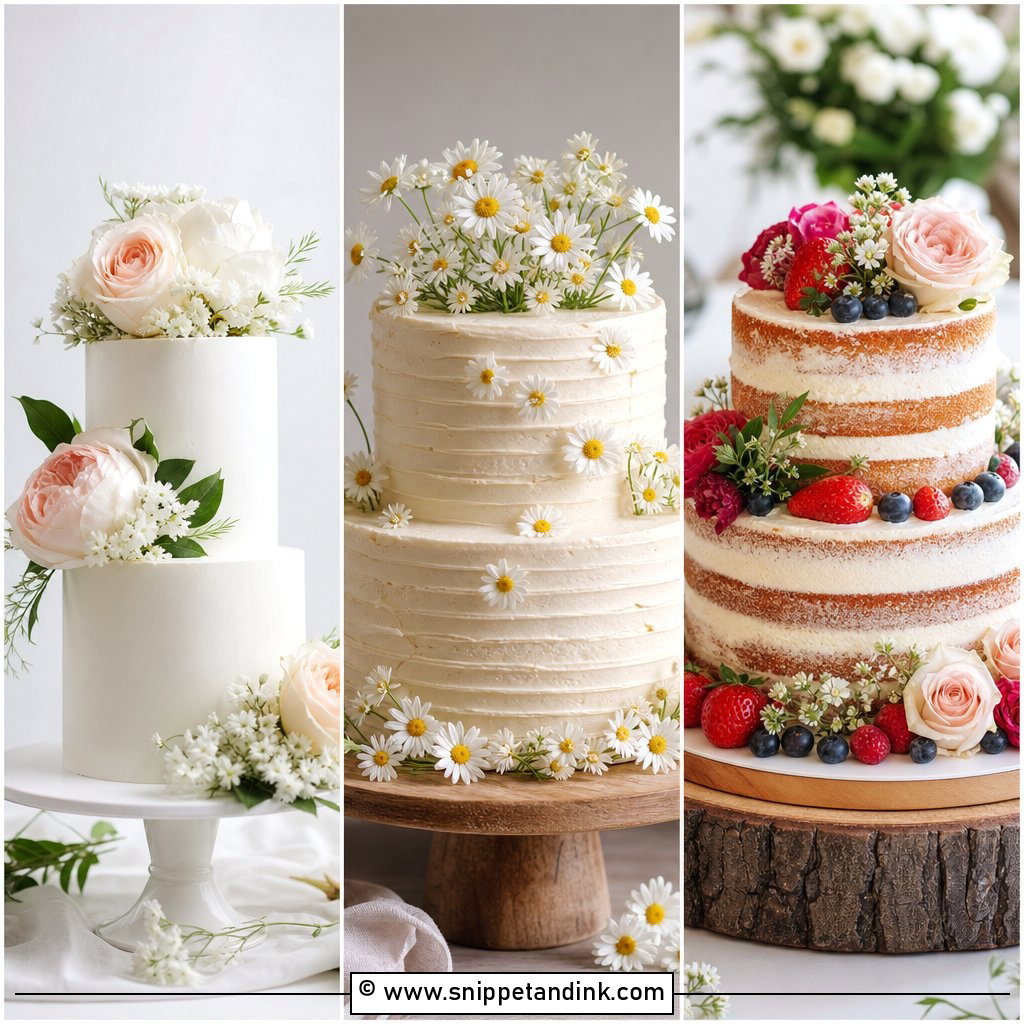
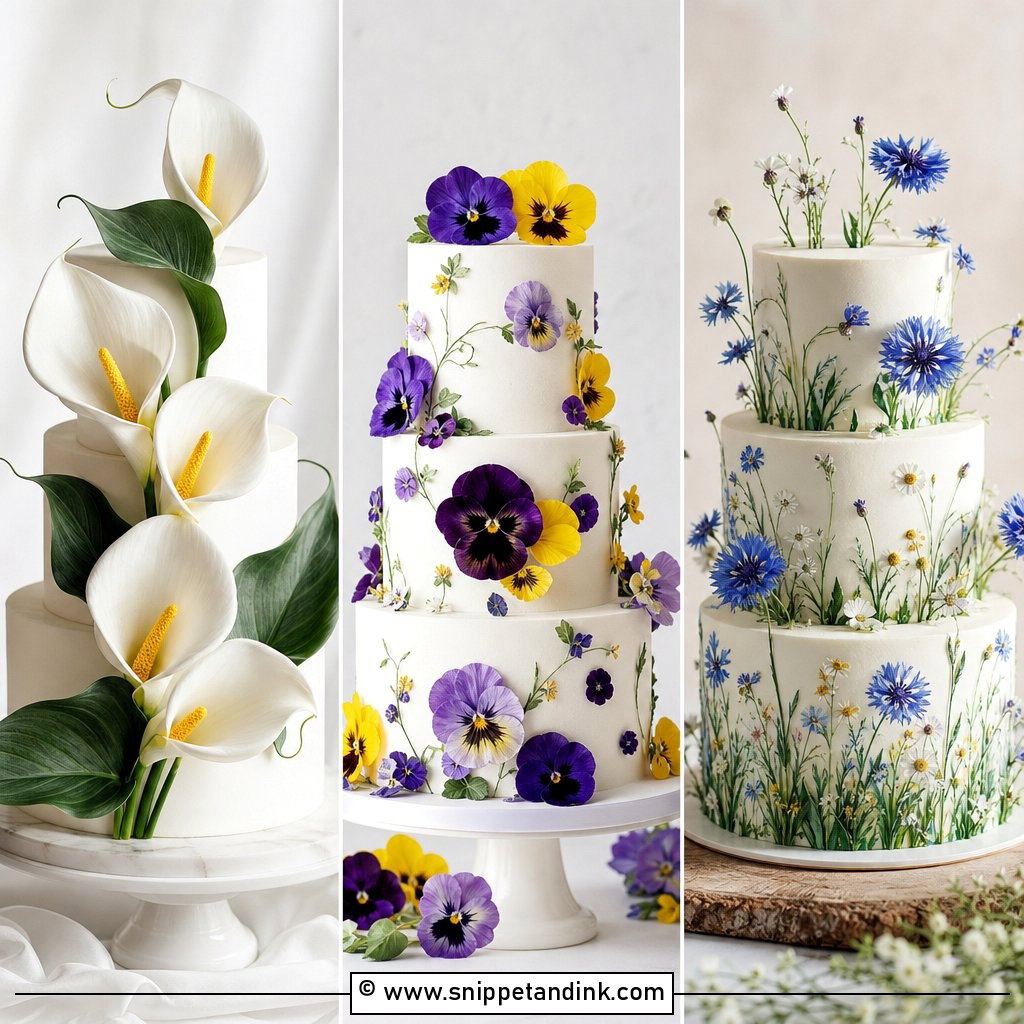
20. Garden Wedding Cake Table
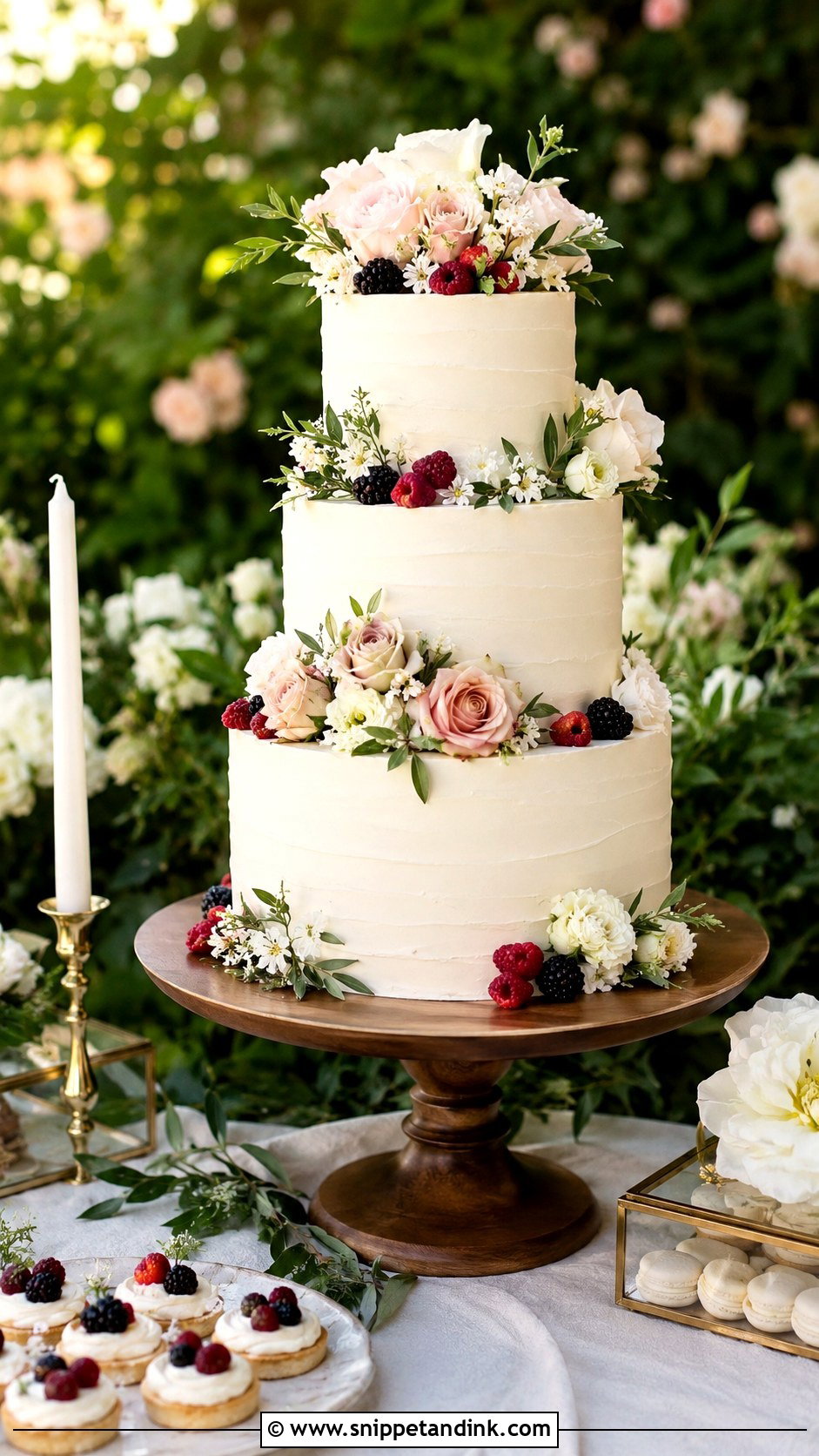
A garden wedding cake table makes the cake part of a scene. Style it with flowers, greenery, linen and matching desserts, with the cake raised on a pedestal and blooms around the base. If you want candles, keep open flames well away from the cake and its flowers. It works for a small pressed-flower cake or a tall tiered one. Keep the table balanced so the cake stays the focus, and a soft backdrop or garden arch behind it frames the photos.
An Outdoor Cake Table in July
Heat, sun, insects and uneven ground all work against a cake in a garden, and the decoration styles in this list react to them differently. Here’s how I plan for a warm-weather outdoor reception:
- Put the cake in full shade for the whole time it’s on display, and check where the shade will be at cutting time, not at setup.
- Choose a heat-tolerant finish. Ganache under fondant holds best; meringue buttercreams soften soonest; crusting buttercream sits between them.
- Keep display time short. I deliver as close to the reception as the schedule allows, and the cake can be cut soon after the entrance rather than late in the evening.
- Add fruit and fresh or edible flowers at the venue, never in the kitchen the night before.
- Ask for a cake dome or netting until the cutting if the venue has wasps or bees.
- Set the table on boards or pavers if it stands on grass, so a tall cake doesn’t lean.
If the forecast turns hot, a good baker will suggest moving the cake indoors until it’s time to cut it. That’s a smart call, not a failure of the design.
The Season Decides More Than the Mood Board
The garden cakes that work best have a clear direction: fresh flowers, pressed petals, greenery, berries, vintage piping or soft buttercream texture, rather than a little of everything. Decide the mood first, then let the shape, flavour and decoration support it. A small cake can feel just as special as a tall one with the right styling. Ask your florist and baker to talk to each other before the day, because the flowers, the season and the heat will shape your cake more than any photo you pin.
You'll Like These Ideas:



Leave a Reply