
Black is a rare caftan color: it can look regal and modest and modern all at once, depending on what you put on it. Gold thread glows against it, silver turns it cool, and colored embroidery reads twice as bright. Caftans worn today often pair the traditional details, sfifa braid, knotted buttons and a wide belt, with lighter fabrics and fewer accessories than in the past. The twenty outfits below cover weddings, henna nights, Eid and family dinners, and for each one I’ve noted what to wear with it and the fit points I check when dressing someone in a caftan.
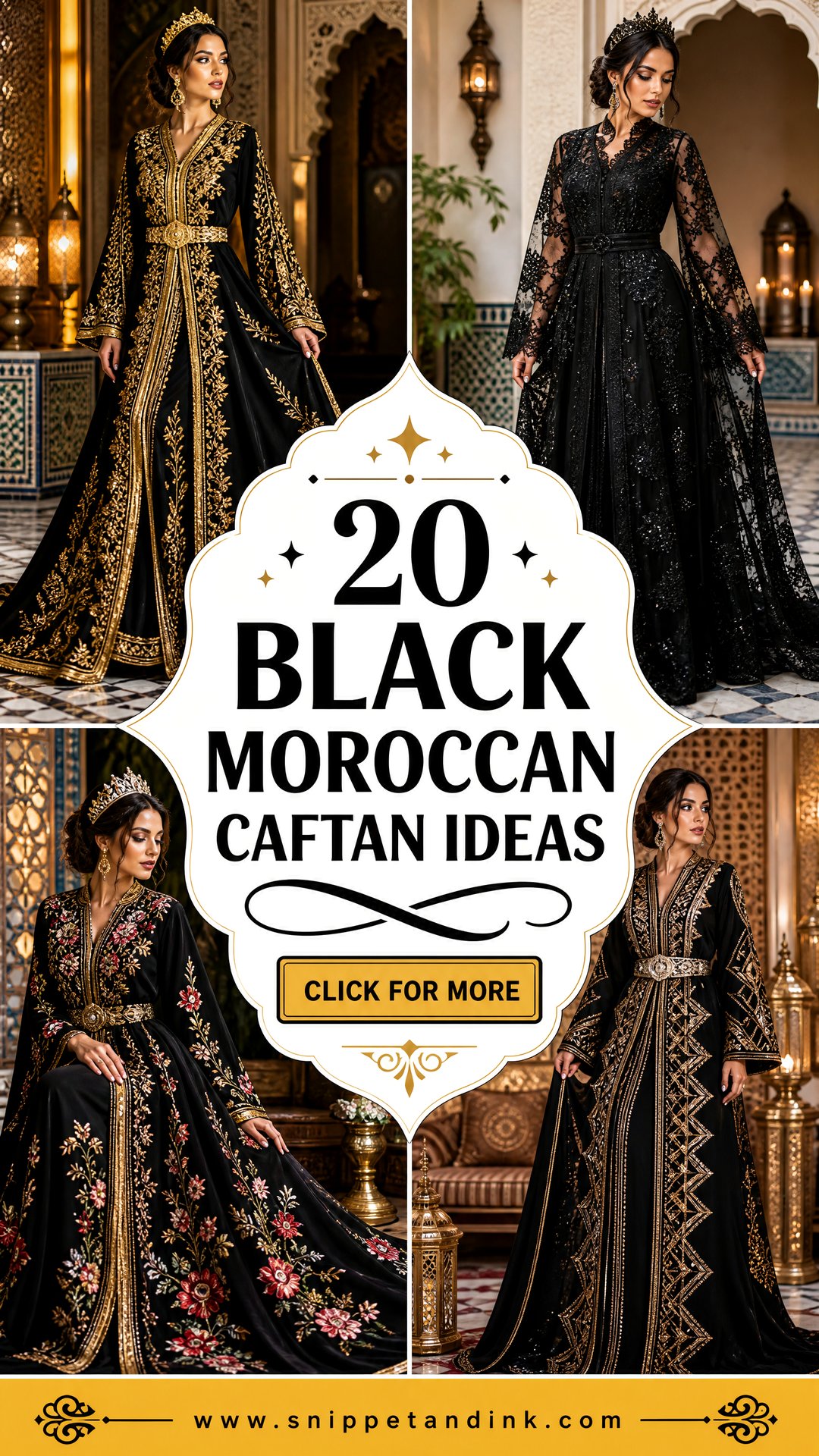
Caftan or Takchita, and Where Black Fits Into the Evening
The words get used loosely, so it helps to know what you’re asking for. A caftan is a single long robe, usually opening down the front with a row of small knotted buttons. A takchita is two layers: a plain or lightly worked underdress, with a more decorated overlayer on top, held together by a wide belt. The belt, the mdamma, is what turns either one into a formal outfit.
The trim has names too. Sfifa is the flat braided band along the front opening and cuffs, and the aakad are the little knotted buttons that go with it. On a good caftan both are handmade, and they’re where you can see the quality of the work most clearly.
At a Moroccan wedding the bride often changes several times through the night, and black tends to appear more on guests and family than as the bride’s main outfit. Some brides do choose it for one of their changes, usually paired with gold. If you’re a guest, black is a safe and respectful choice, as long as the cut and trim look clearly formal.
1. Black Moroccan Caftan With Gold Embroidery
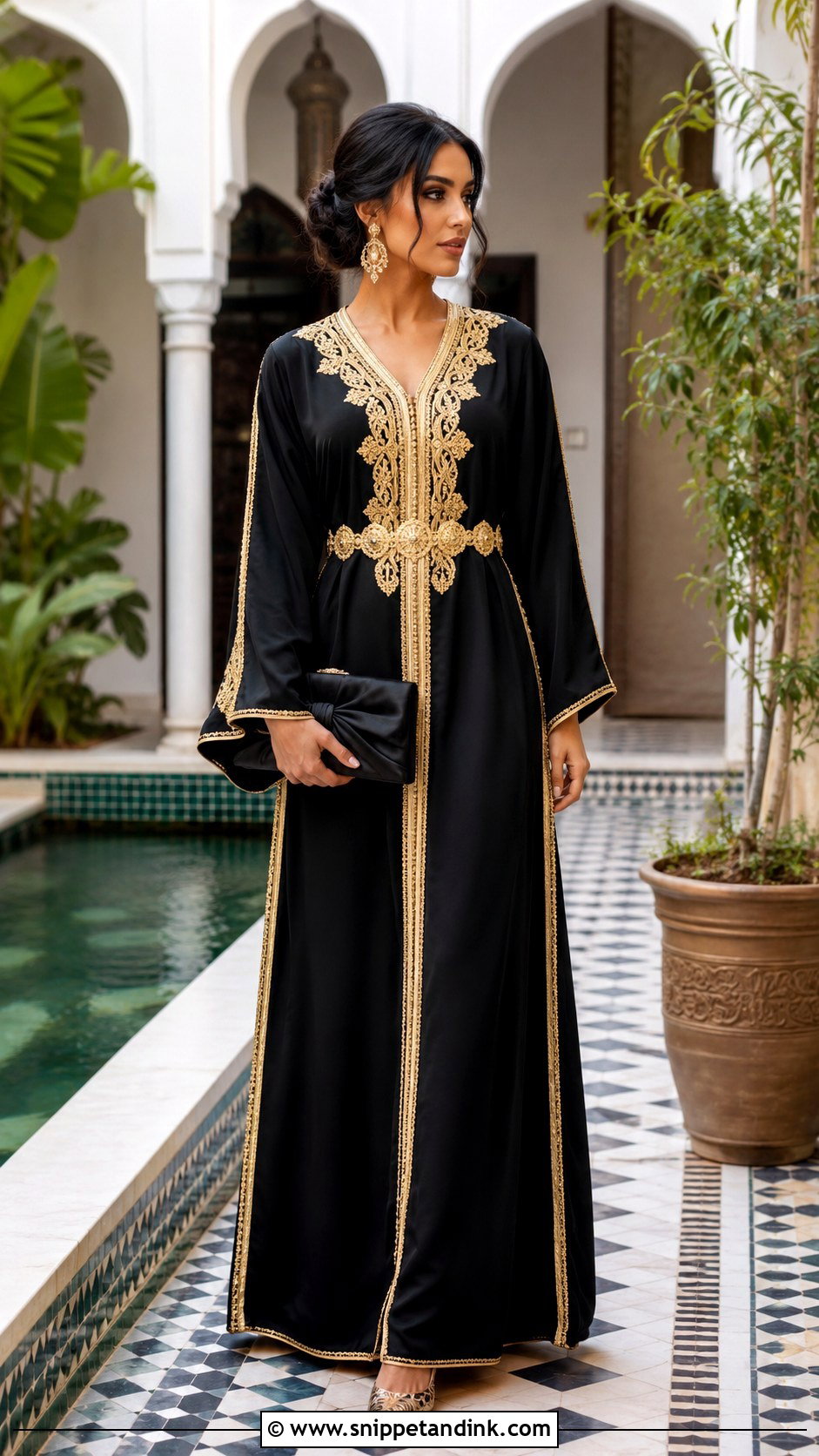
Gold on black is the classic, and it’s classic for a reason: the thread lights up under any lighting. I like the embroidery to trace the neckline, the front opening, the cuffs and the hem, which frames the body without covering it. A gold mdamma belt at the waist finishes the traditional line. Metallic pointed mules or embroidered babouches, gold drops and one ring are all you need. Real metallic thread is heavy, so check that the shoulders sit straight and the neckline isn’t dragged forward by the weight of the front trim. A smooth low bun keeps the neckline clear.
2. Black Moroccan Caftan With Silver Embroidery
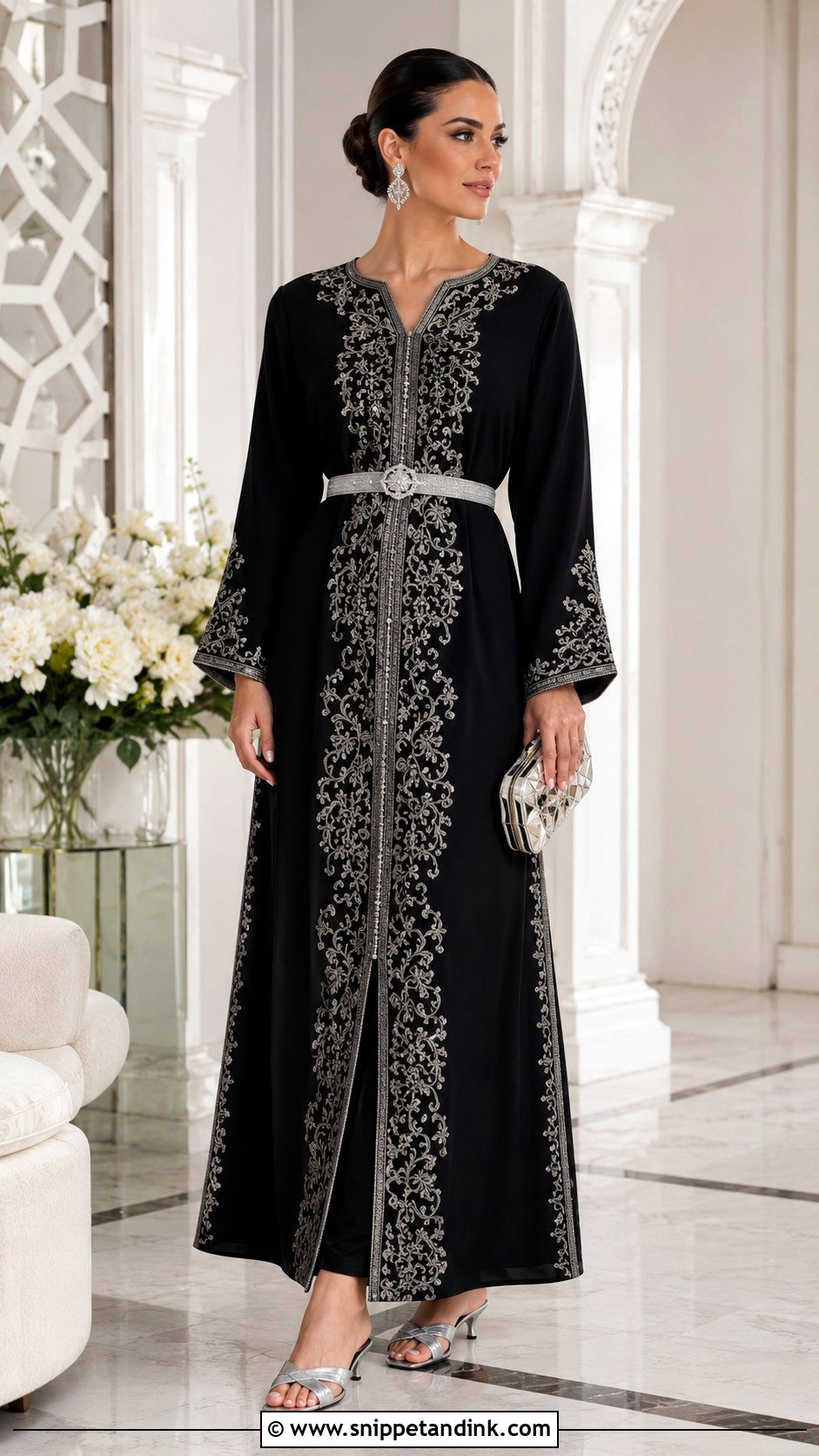
Silver gives a cooler, crisper look, and it suits anyone who doesn’t wear yellow gold well. Silver sfifa down the front, fine metallic embroidery and a line of decorative buttons are enough; add a narrow silver belt. Kitten-heel mules in silver, crystal drops and a small mirrored clutch. With a heavily worked neckline, skip the necklace. A center-parted bun looks sharp. For makeup, define the eyes softly and keep the lip neutral. Matching every silver detail with glitter on the face is too much.
3. Black Velvet Moroccan Caftan Outfit
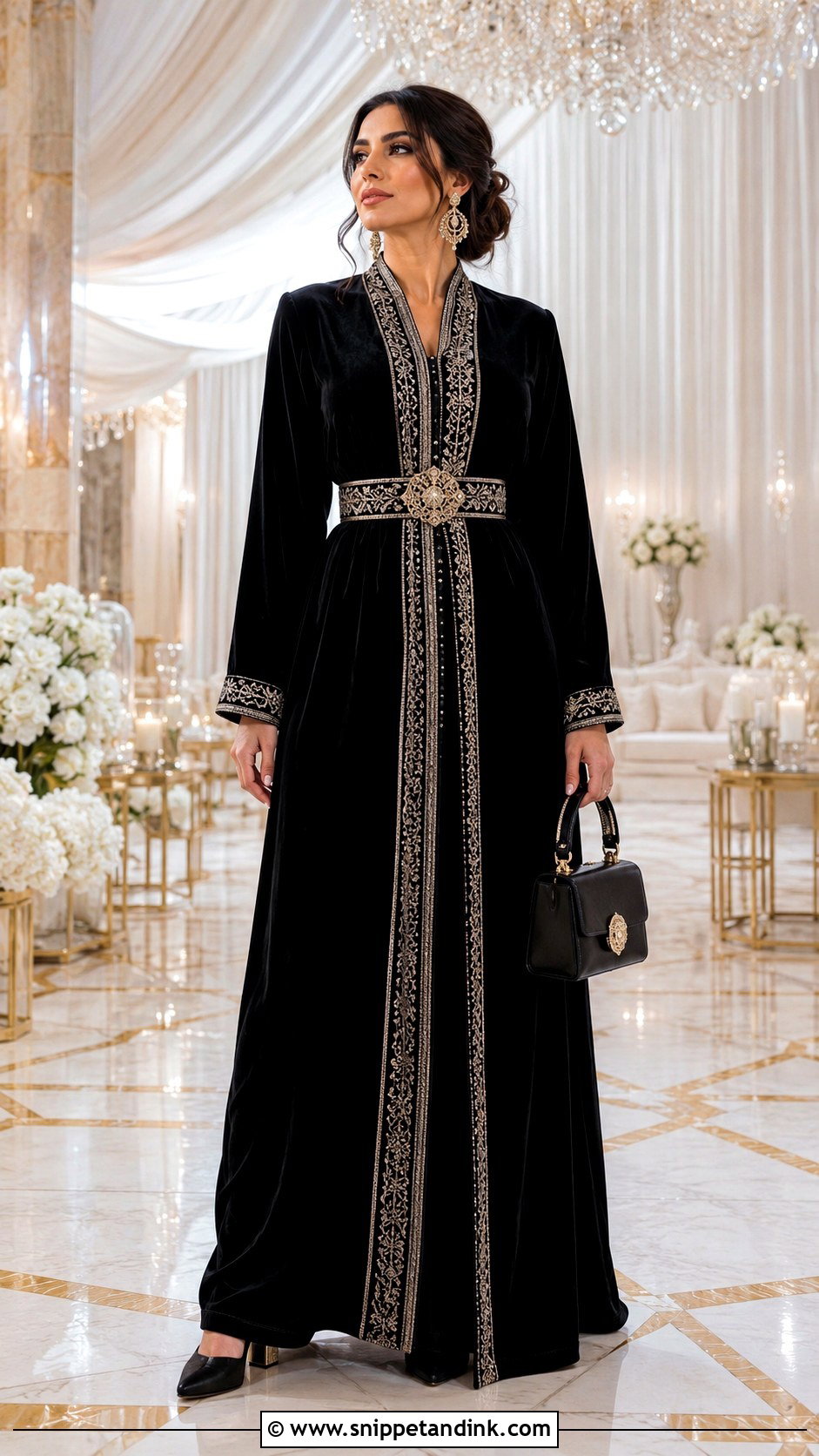
Velvet makes a caftan look formal before you’ve added a single accessory. A structured floor-skimming cut with restrained embroidery at the neck and sleeves lets the fabric be the feature. Velvet is heavy, so a sculpted belt matters here; without it the caftan hangs shapeless. Closed block heels or mules in black, gold or pewter. A small structured bag. Drop earrings, a simple bracelet and an updo. It’s warm to wear, so I save it for winter evenings indoors. Hem it to clear the floor, since velvet drags and marks.
4. Black Satin Moroccan Caftan Outfit
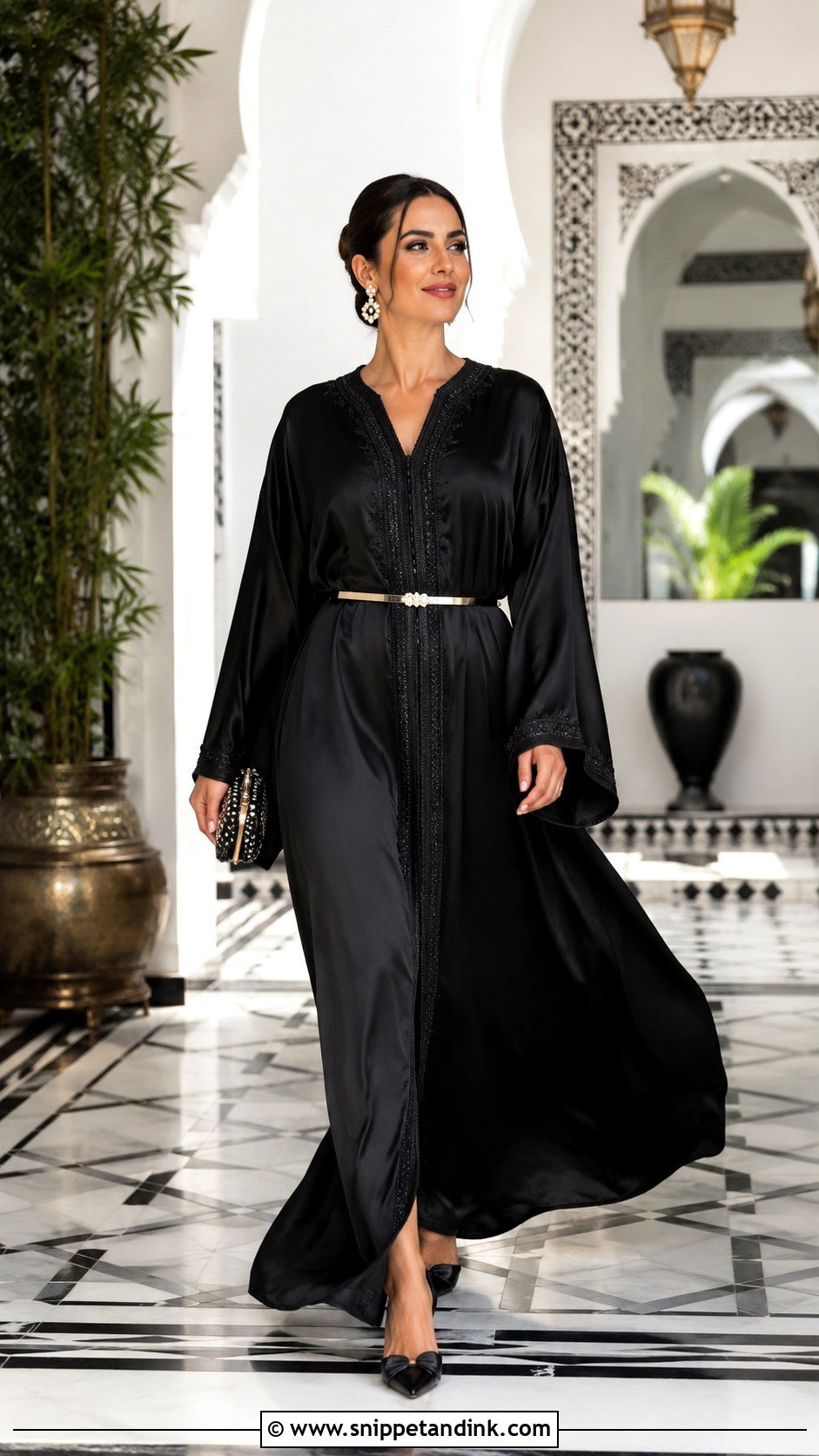
Satin moves and catches light with each step, which makes a plain caftan look rich. Keep the trim tonal and the neckline defined. A slim belt shapes the waist without stopping the drape. Satin mules and a small beaded clutch, with pearl and crystal earrings. Soft waves, a low twisted bun or a neat covered style. The fit warning with satin is real: it shows every pull line, so if it strains across the bust or hips, go up a size and have it taken in.
5. Black Moroccan Caftan With Lace Overlay
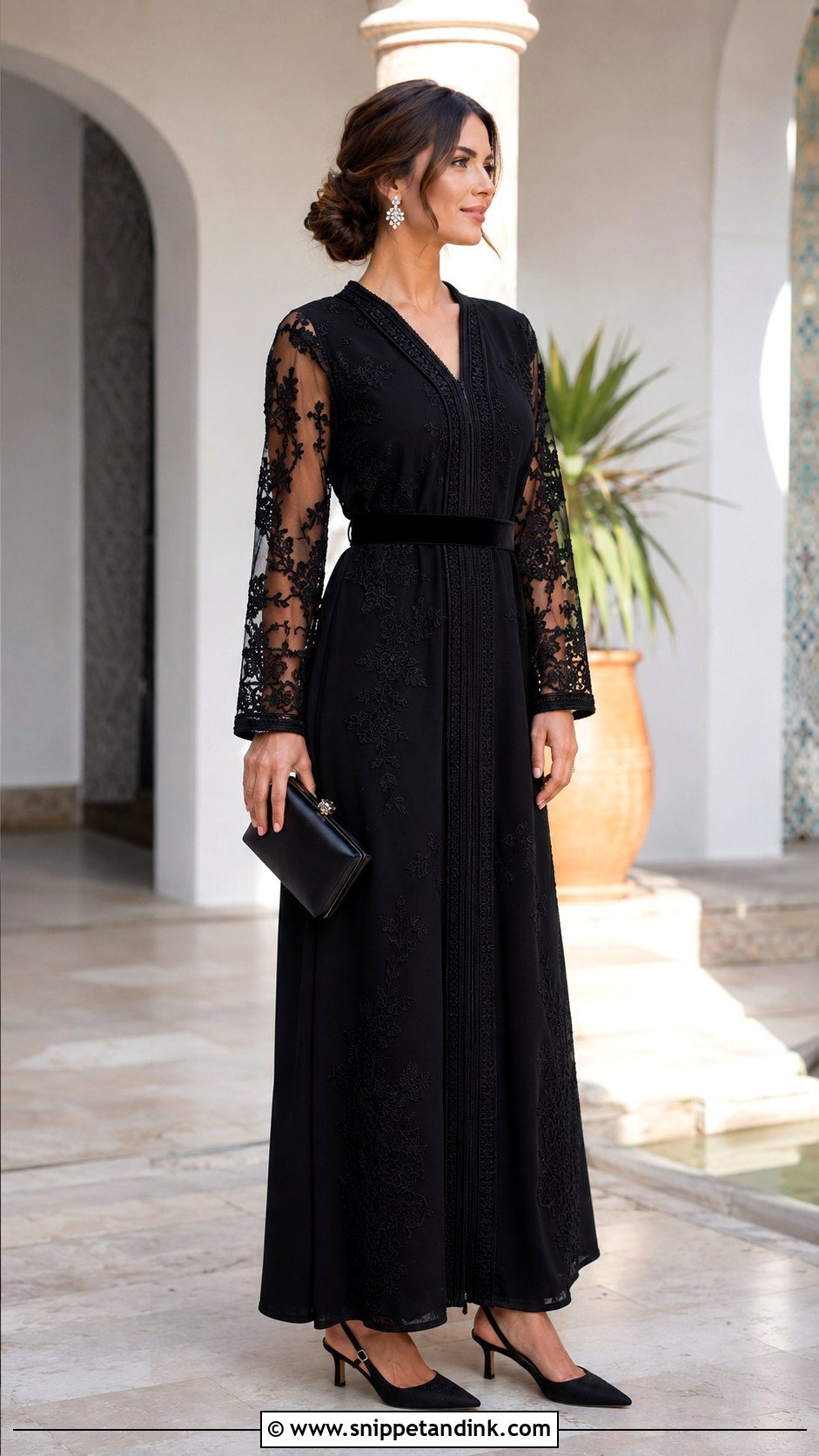
Lace softens black and adds a fine texture over the opaque base. Lace sleeves or a full sheer outer layer over a lining both work. Tonal embroidery keeps it elegant; a scatter of crystals adds a controlled sparkle. A narrow velvet belt or a slim silver mdamma. Black slingbacks, crystal earrings and a satin box clutch. A romantic low bun. Before the event, take a flash photo of yourself: camera flash can make lace linings look more sheer than they do in person, and it’s better to find out at home.
6. Black Moroccan Caftan With Crystal Beading
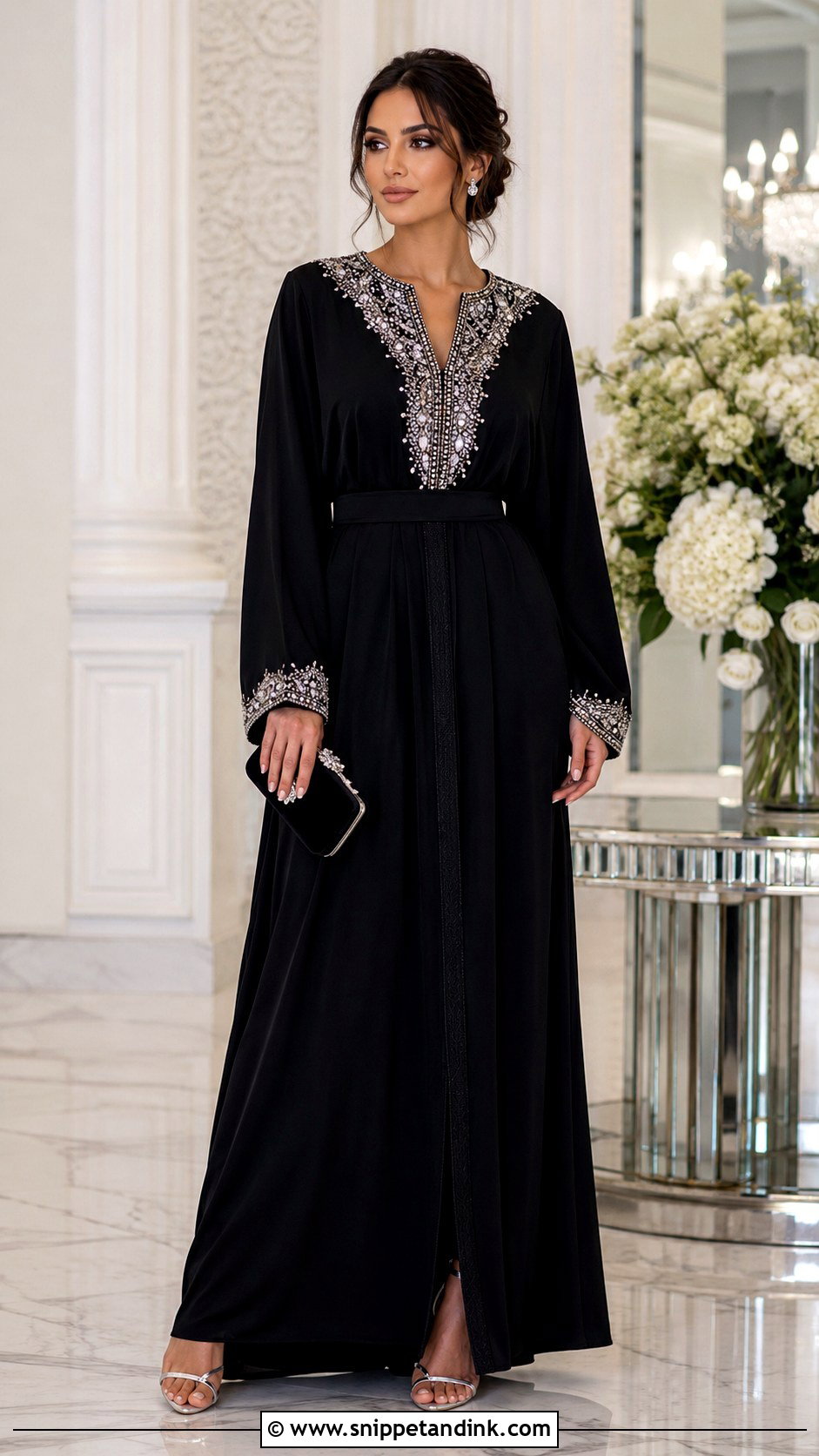
Picture tiny points of light moving across black as you walk in. That’s what concentrated crystal beading gives you, as long as it sits at the neckline, cuffs and waist rather than everywhere. Wear it with a tonal belt, silver strappy heels and a small black clutch with one crystal clasp. One sparkly piece of jewelry, not several. A smooth updo, because loose hair catches on beading at the shoulders. Heavily beaded caftans can be surprisingly heavy, so try it on for a full hour before the day and check for loose stones.
7. Black Moroccan Caftan With Pearl Details
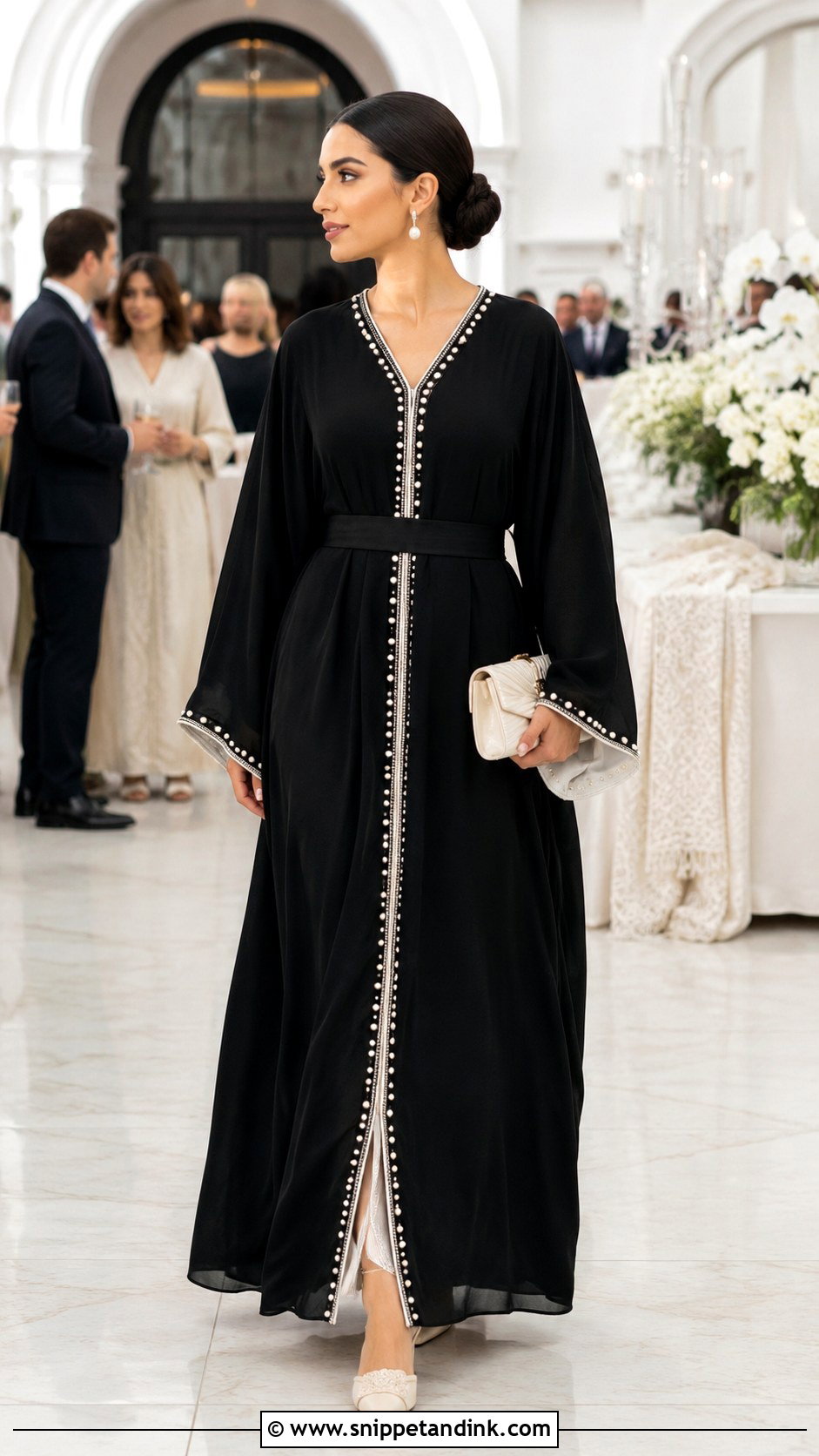
Pearls are the gentler alternative to metallic trim. Small pearls along the neckline, cuffs or front trim look refined on black. A pearl belt suits a plain caftan; with lots of decoration already, a plain black belt is better. Ivory or black mules, pearl drops and a cream clutch. Keep other jewelry minimal. A low chignon and fresh makeup suit daytime events. Check that pearls aren’t sewn where the arm rubs against the body; they pull loose there first.
8. Black Moroccan Caftan With Floral Embroidery
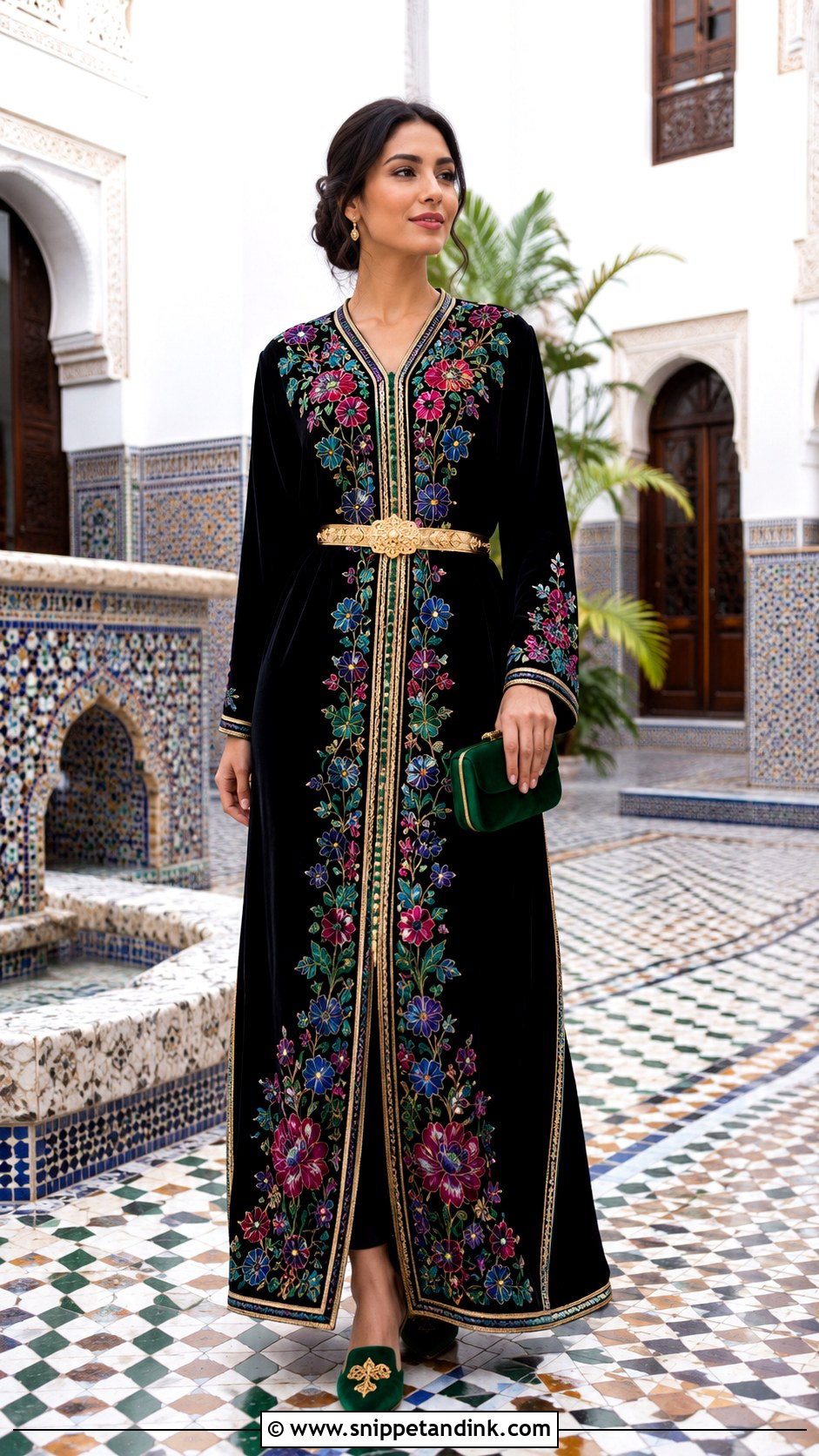
Jewel-toned flowers in emerald, ruby, sapphire and violet turn a black Moroccan caftan into a celebration outfit. I pull one minor color out of the embroidery for the accessories, emerald mules and a matching clutch if there’s green in the pattern. Gold earrings and a narrow metallic belt warm the palette. Keep the hair simple if the florals are large. A loose low bun or smooth waves. It’s festive enough for Eid and henna nights where color is welcome.
9. Black Moroccan Caftan With Geometric Embroidery
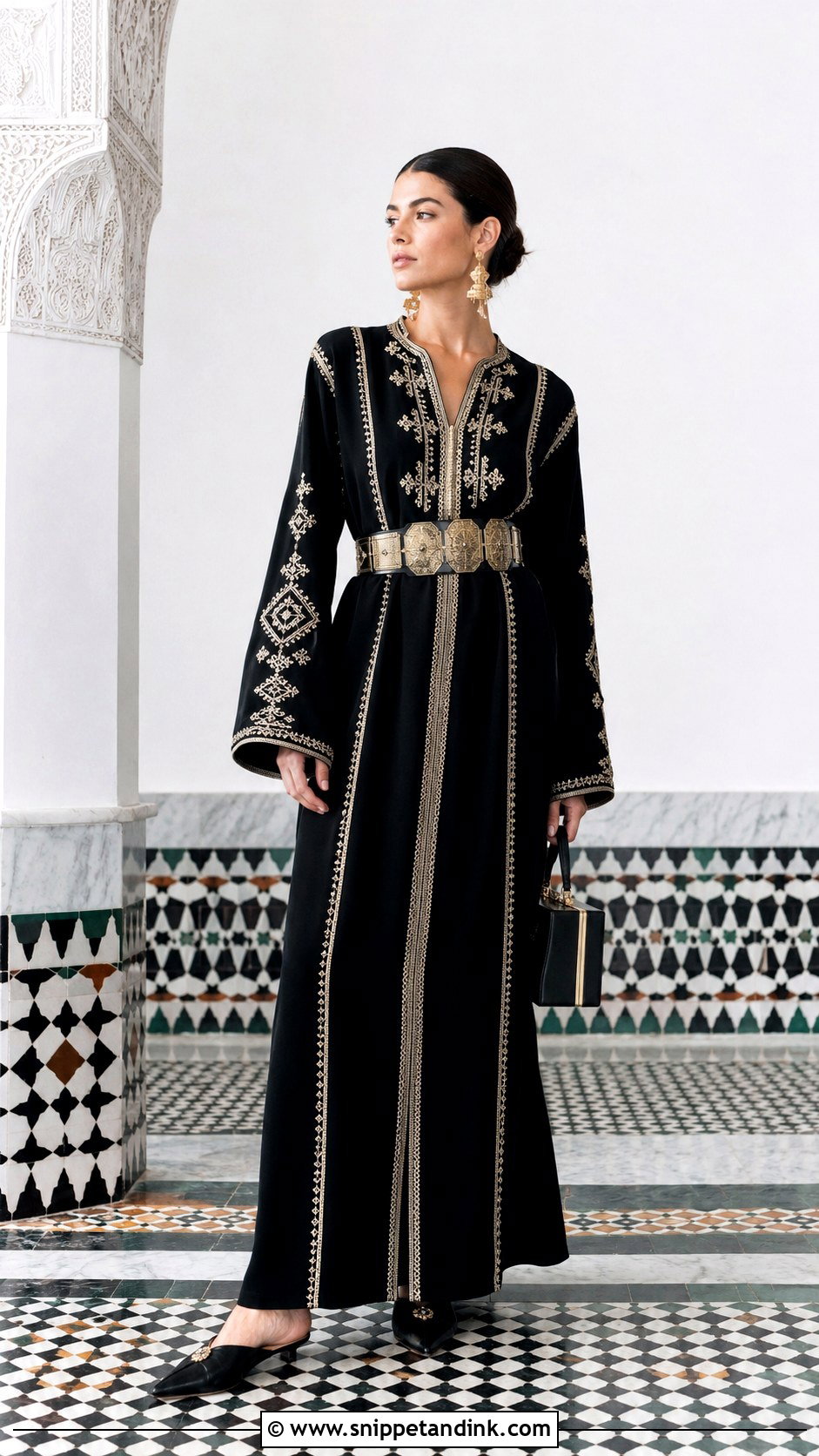
Geometric embroidery gives a loose silhouette some structure. Symmetrical borders, diamond motifs and angular bands in silver, gold, cream or one strong color look graphic on black. A structured mdamma belt repeats the clean lines. Pointed mules, architectural drop earrings and a box bag with minimal hardware. Sleek hair, in a low ponytail, bun or covered style. Avoid floral accessories, which fight with the pattern. It feels modern while still showing off the embroiderer’s skill.
10. Black Moroccan Caftan With Emerald Accents
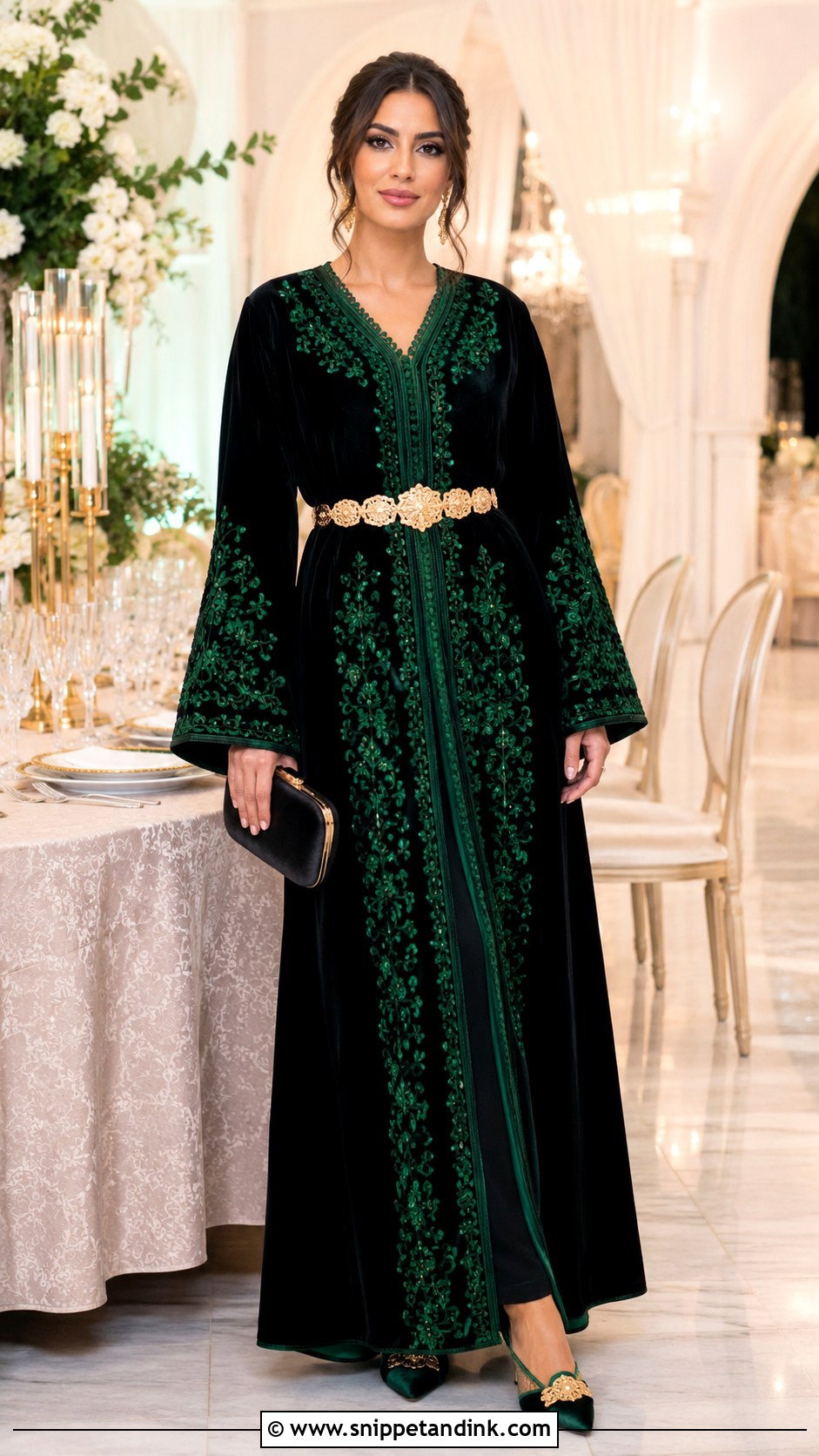
Emerald and black is a pairing I return to often, because green stays rich in low evening light where some colors go muddy. Look for green embroidery, velvet panels, beaded borders or jewel buttons. A gold belt warms the black-and-emerald combination and gives the waist a focus. Emerald velvet mules and gold drops. If the caftan is heavily embellished, use only one green accessory. A smooth bun or side-parted waves.
11. Black Moroccan Caftan With Royal Blue Accents
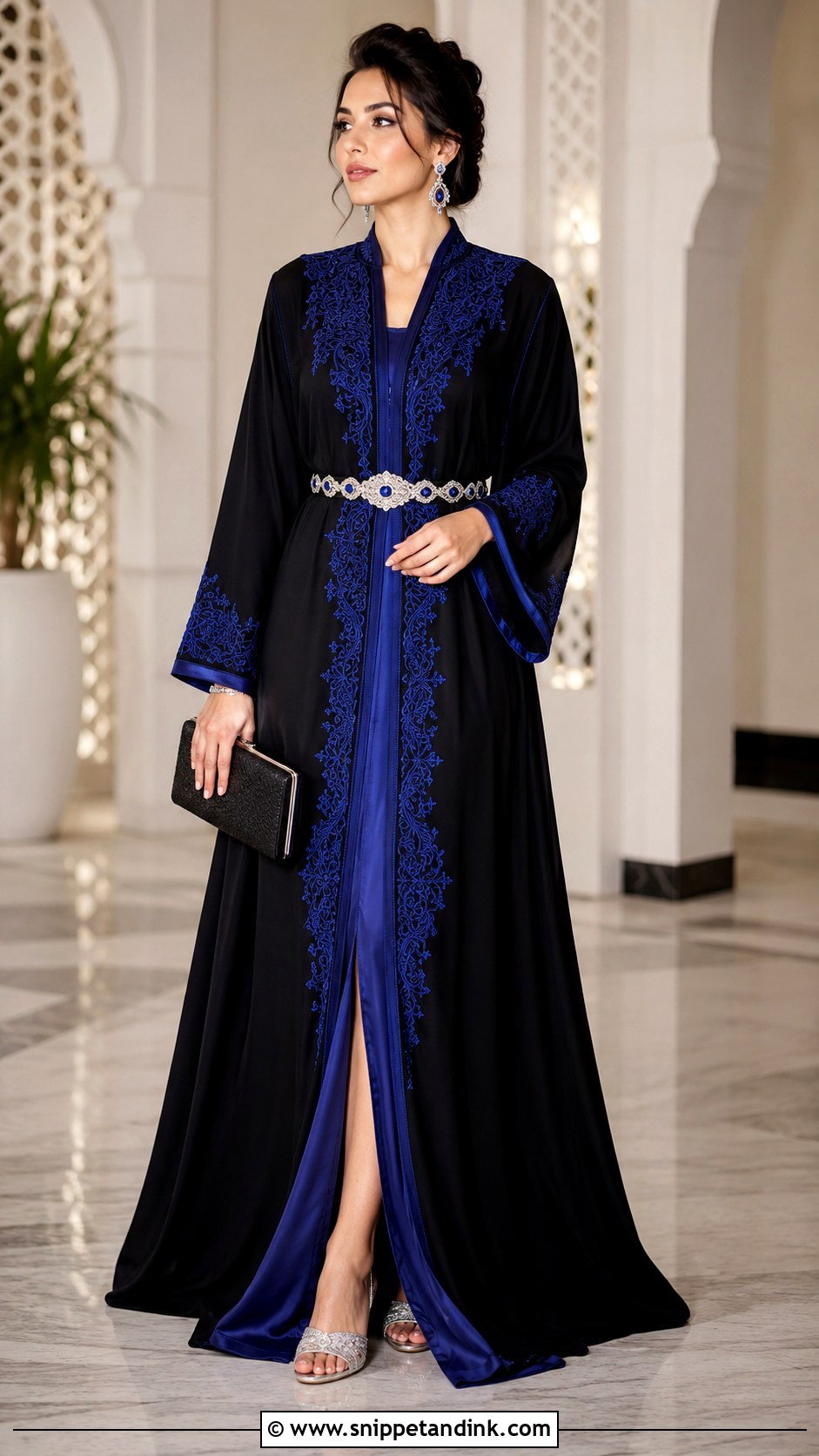
Royal blue is the coolest accent on this list. Blue embroidery along the front, sleeves and hem, or a black overlayer on a blue underdress. Silver accessories suit the palette best: silver mules, sapphire-colored earrings, and a black clutch with quiet hardware. A belt with a blue or silver centerpiece defines the waist without slicing the outfit in half. Softly lined eyes and a neutral lip. A sleek low bun or glossy waves tucked behind the ears.
12. Black Moroccan Caftan With Burgundy Accents
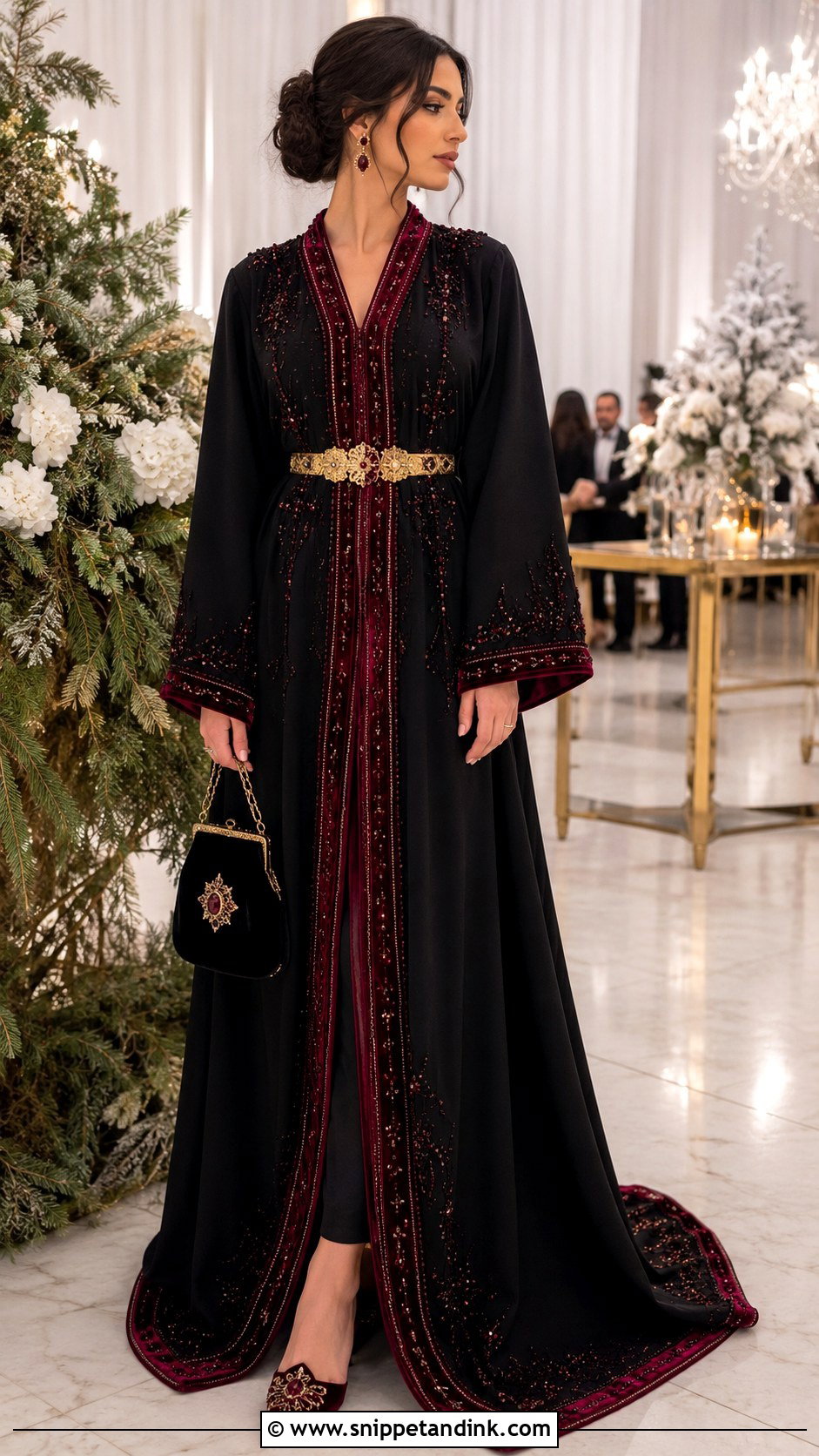
Burgundy warms black, and it’s my pick for autumn and winter weddings. Burgundy velvet borders, wine embroidery or garnet beadwork. An antique gold belt adds warmth at the center. Burgundy mules and a small velvet bag. Gold earrings with dark red stones. A low textured bun. One caution: in dim rooms, burgundy and black blend into each other. If the venue is candlelit, choose a lighter wine or a gold thread through the burgundy so the contrast survives.
13. Black Moroccan Caftan With White Embroidery
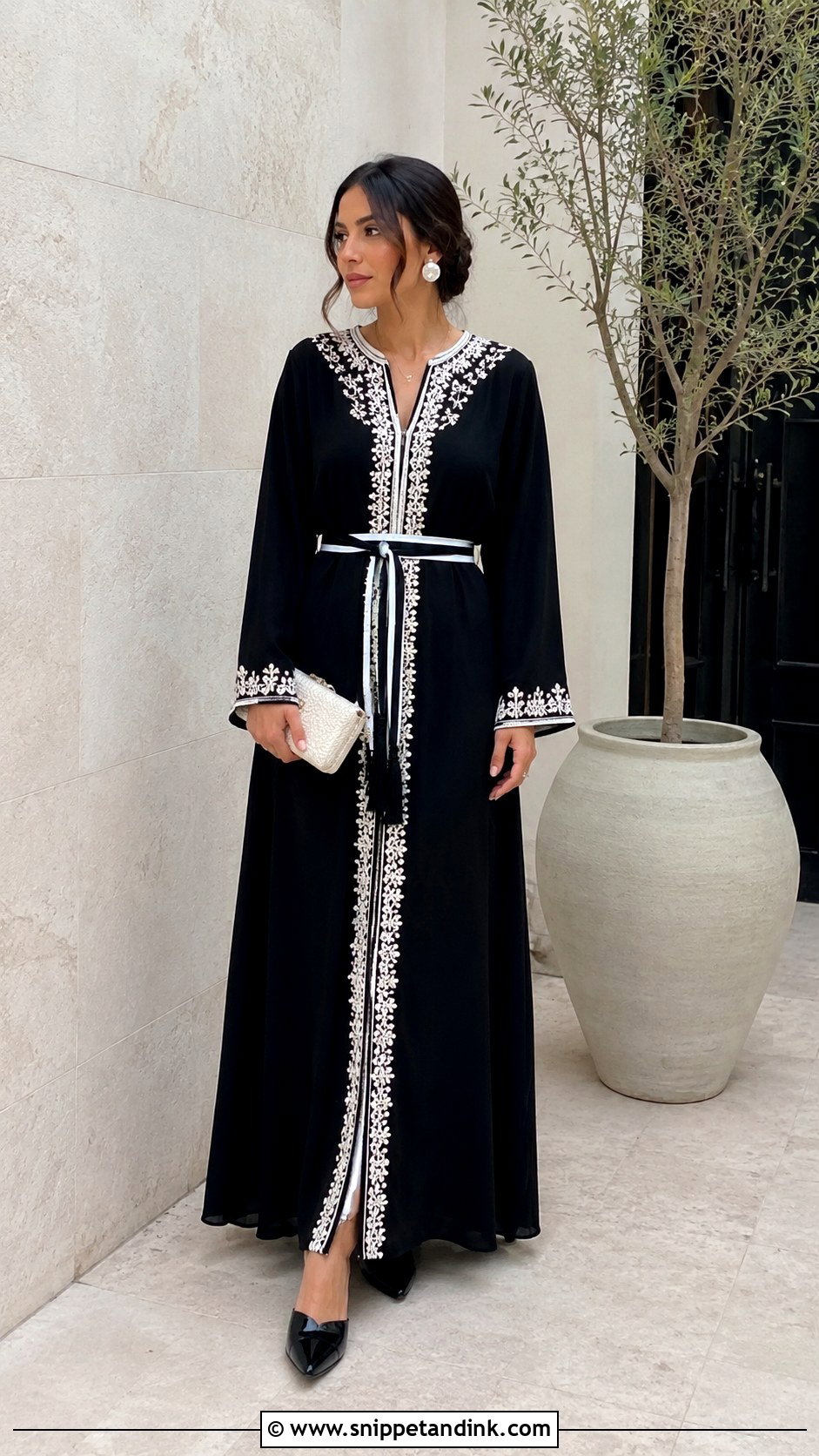
White embroidery on black gives a crisp, graphic contrast that works especially well in daylight. Neckline, cuffs and front trim in clean white. A black belt with a white embroidered center continues the theme. Black pointed mules, pearl earrings and a structured clutch in white or black. Adding several bright colors ruins the effect. A center-parted bun, neat curls or a smooth covered look. White thread shows makeup and food marks quickly, so keep a stain pen in your bag.
14. Black-On-Black Moroccan Caftan Outfit
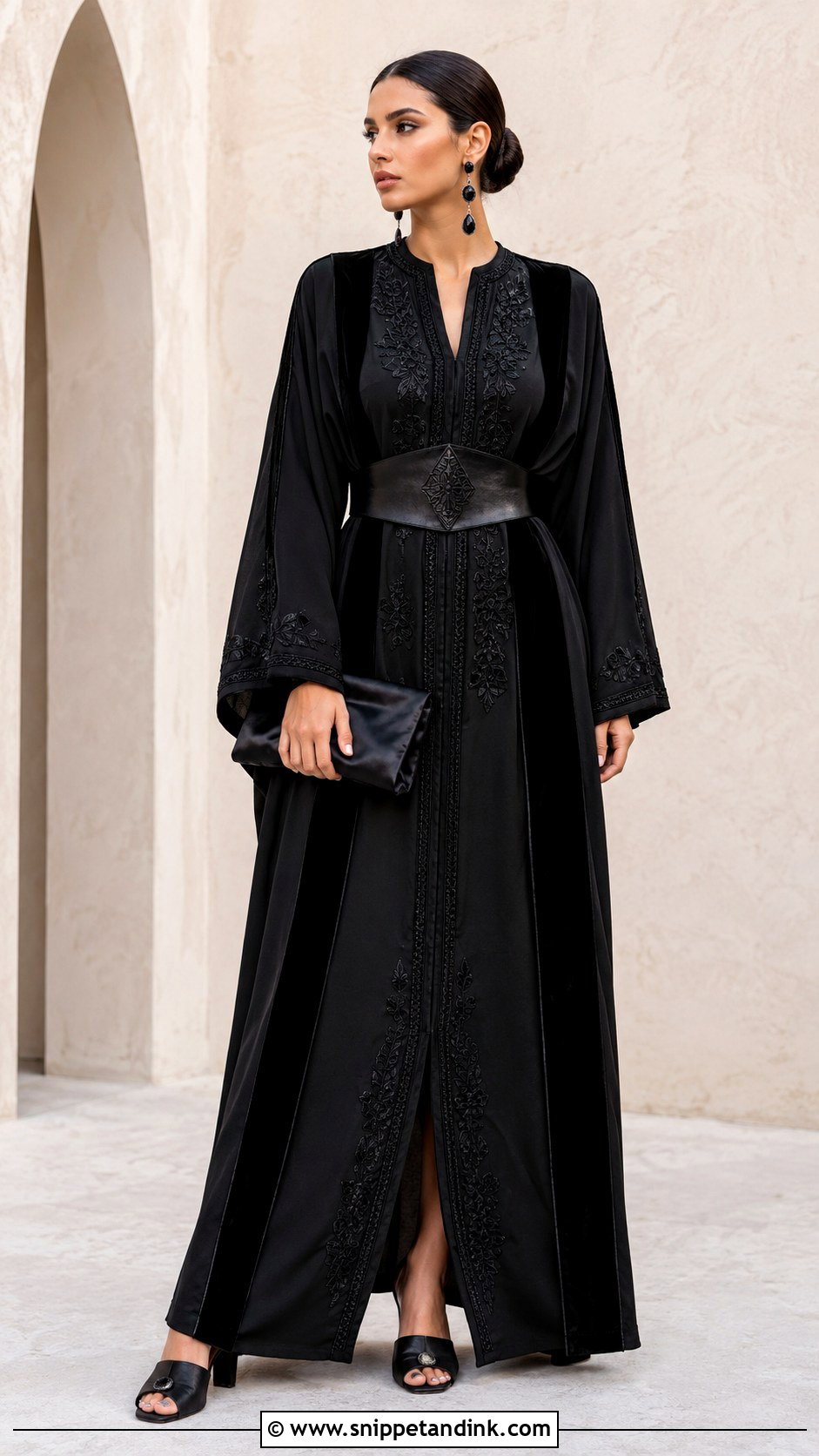
All-black caftans rely on texture instead of color. Tonal embroidery, matte sfifa, velvet panels and a little jet beading catch the light at different angles. A sculpted black belt shows off the craftsmanship. Polished black mules, a satin clutch and black-stone earrings set in silver or gold for a small metal highlight. Tonal work disappears in low light and in phone photos, so mix finishes, matte next to shine, to keep the detail visible.

15. Black Moroccan Caftan With Mdamma Belt
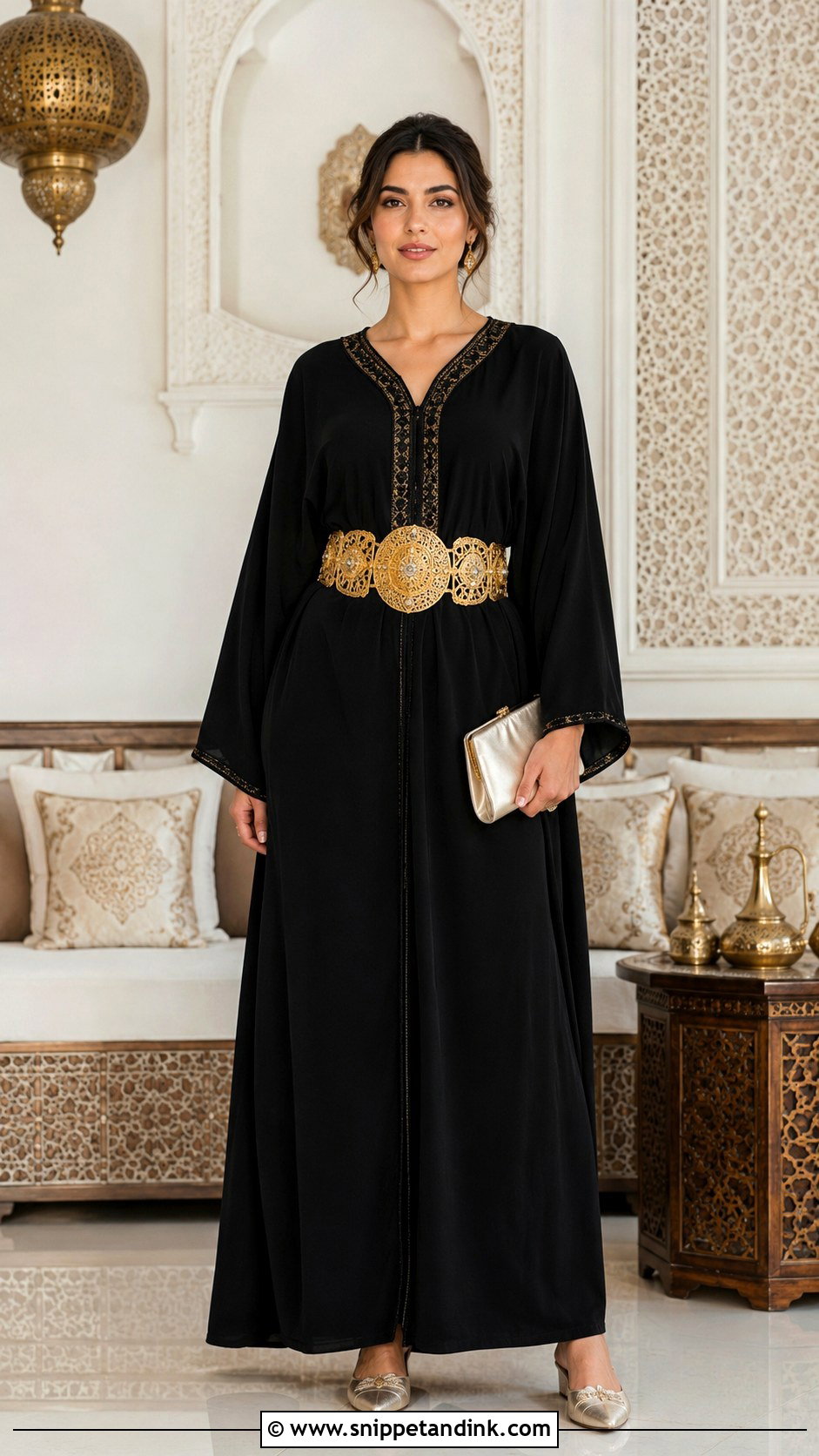
Here a statement mdamma belt becomes the center of the outfit. Start with a simple caftan with modest embroidery at the neck and cuffs, then add a wide belt in gold, silver or jewel tones at the natural waist. Keep the rest streamlined: metallic mules, small drops and a plain clutch. No heavy necklace. A smooth bun or ponytail. Wide metal belts can dig in when you sit, so sit down in it for a few minutes at home; the belt should shape the waist without pinching.
16. Black Moroccan Caftan With Layered Takchita Look
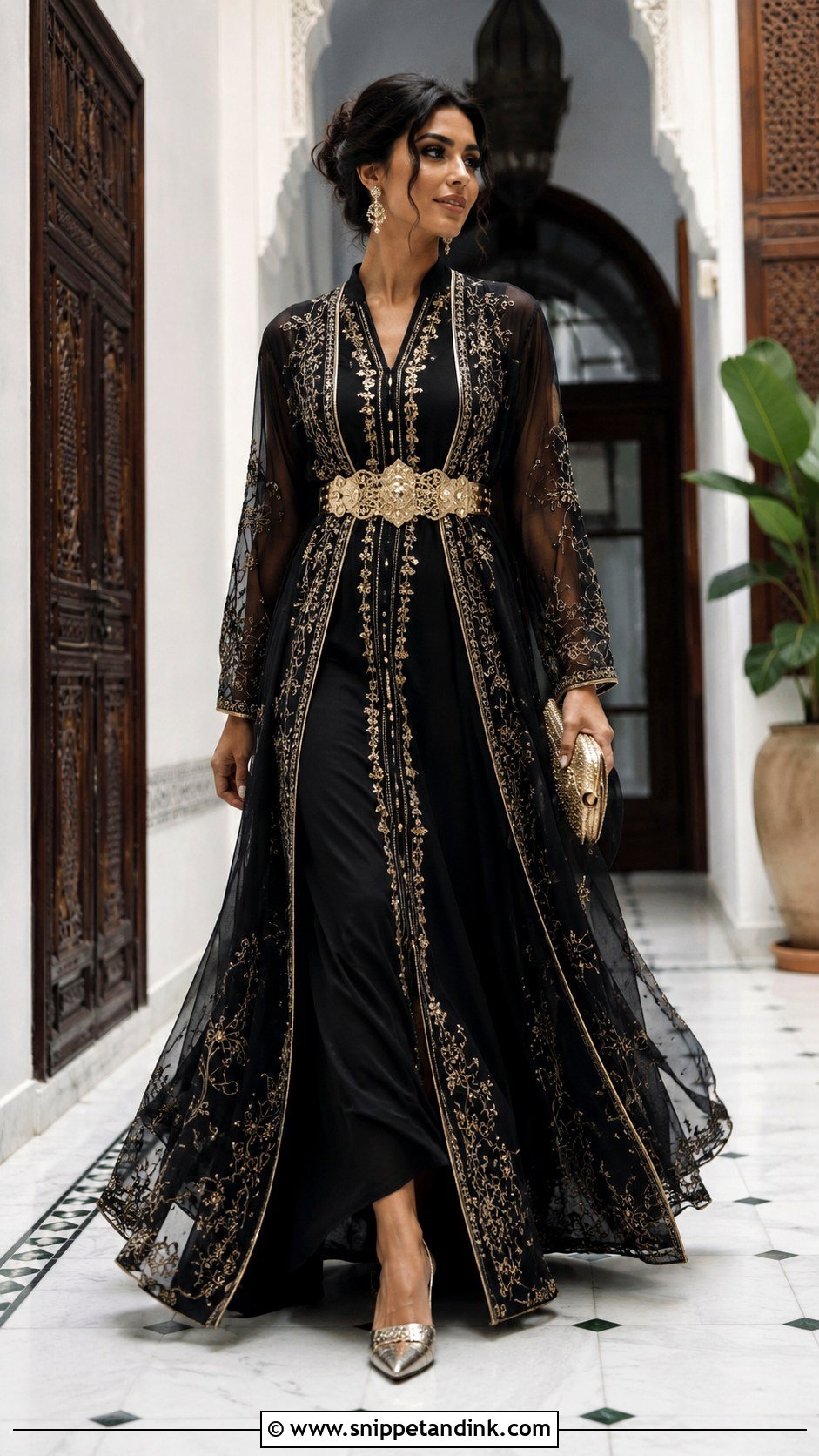
A layered takchita-inspired outfit brings ceremony to the look. The base is an opaque black underdress; the top layer is sheer chiffon, embroidered organza or fine lace. The two should differ slightly in texture so you can see the layering. A decorated mdamma belt holds them together. Closed mules, drop earrings and a small metallic clutch. If the outer layer is densely embroidered, go lighter on everything else. An updo shows the neckline. Check that both hems are adjusted to the same shoes, since uneven layers trip you.
17. Black Moroccan Caftan With Cape Sleeves
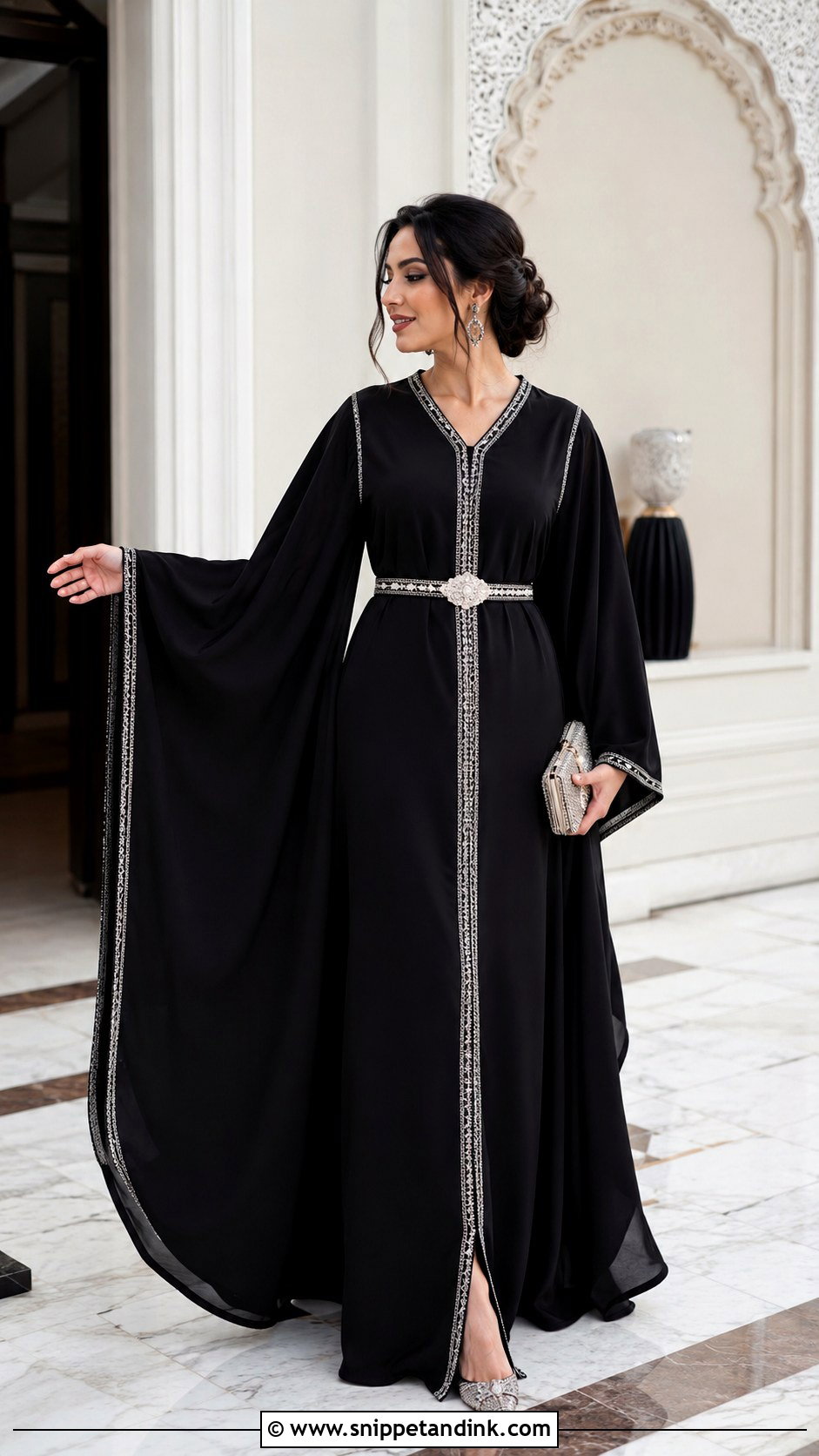
Cape sleeves give movement and a modern drama. They can open from the shoulder or fall softly down the arm. Keep the main silhouette clean so the fabric doesn’t overwhelm a small frame. A slim metallic belt and pointed mules. Statement earrings and a handheld clutch. Skip bracelets, which tangle in the sleeves. Hair up or swept back. Eating is the hidden test with this one: loose sleeves trail through plates, so practice lifting your arm and holding the sleeve back.
18. Black Chiffon Moroccan Caftan Outfit
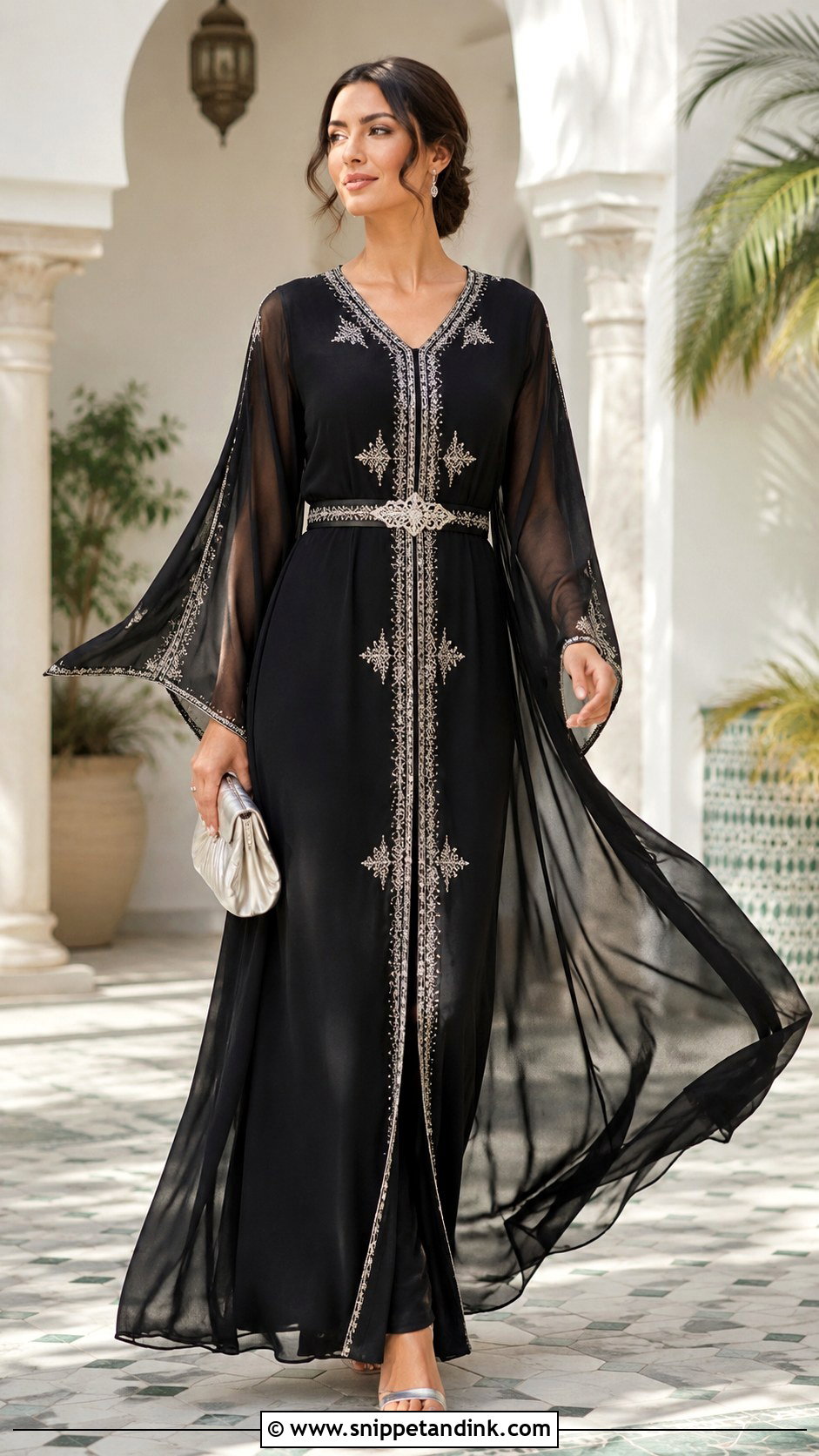
Chiffon is the summer caftan. It floats and breathes, and a fully lined version stays modest. Sheer sleeves or a softly draped outer layer with light silver, gold or tonal embroidery keeps it airy. Low metallic heels or embellished flats. Small drops, a narrow belt and a light satin clutch. Soft waves or a relaxed bun. Chiffon lifts in wind, so if you’re outside, ask your tailor to add small weights to the hem.
19. Minimal Black Moroccan Caftan Outfit
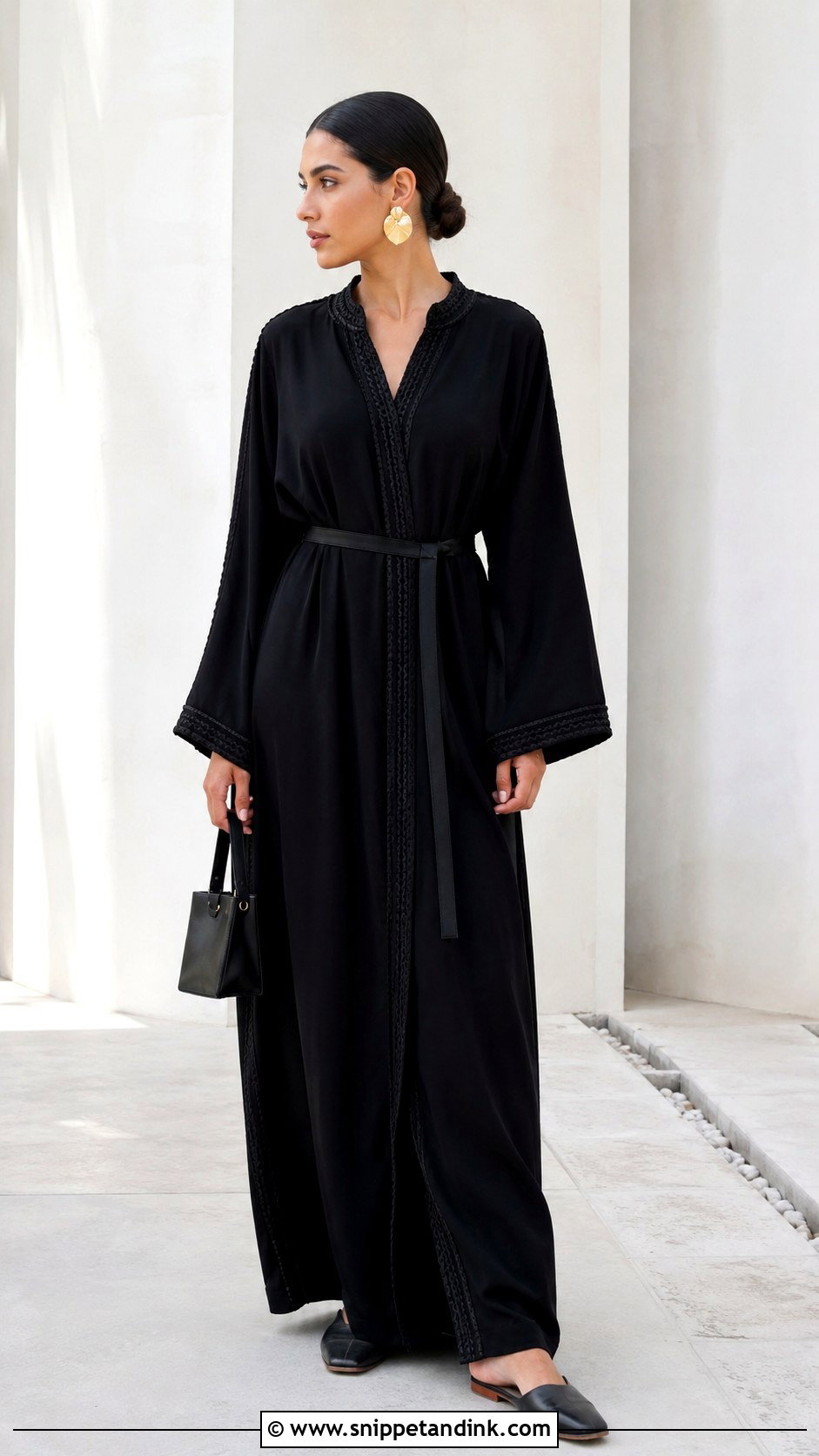
Sometimes the simplest caftan is the strongest. A fluid, well-cut caftan with clean lines and subtle black trim needs a precise fit more than decoration. Belt it with a narrow tonal belt, or leave it loose if the drape is balanced. Black leather mules, sculptural gold earrings and a small structured bag. A sleek bun, straight hair or a neatly wrapped scarf. Look closely at the hem: a floor-grazing length is what makes a plain caftan look intentional instead of everyday.

20. Plus-Size Black Moroccan Caftan Outfit
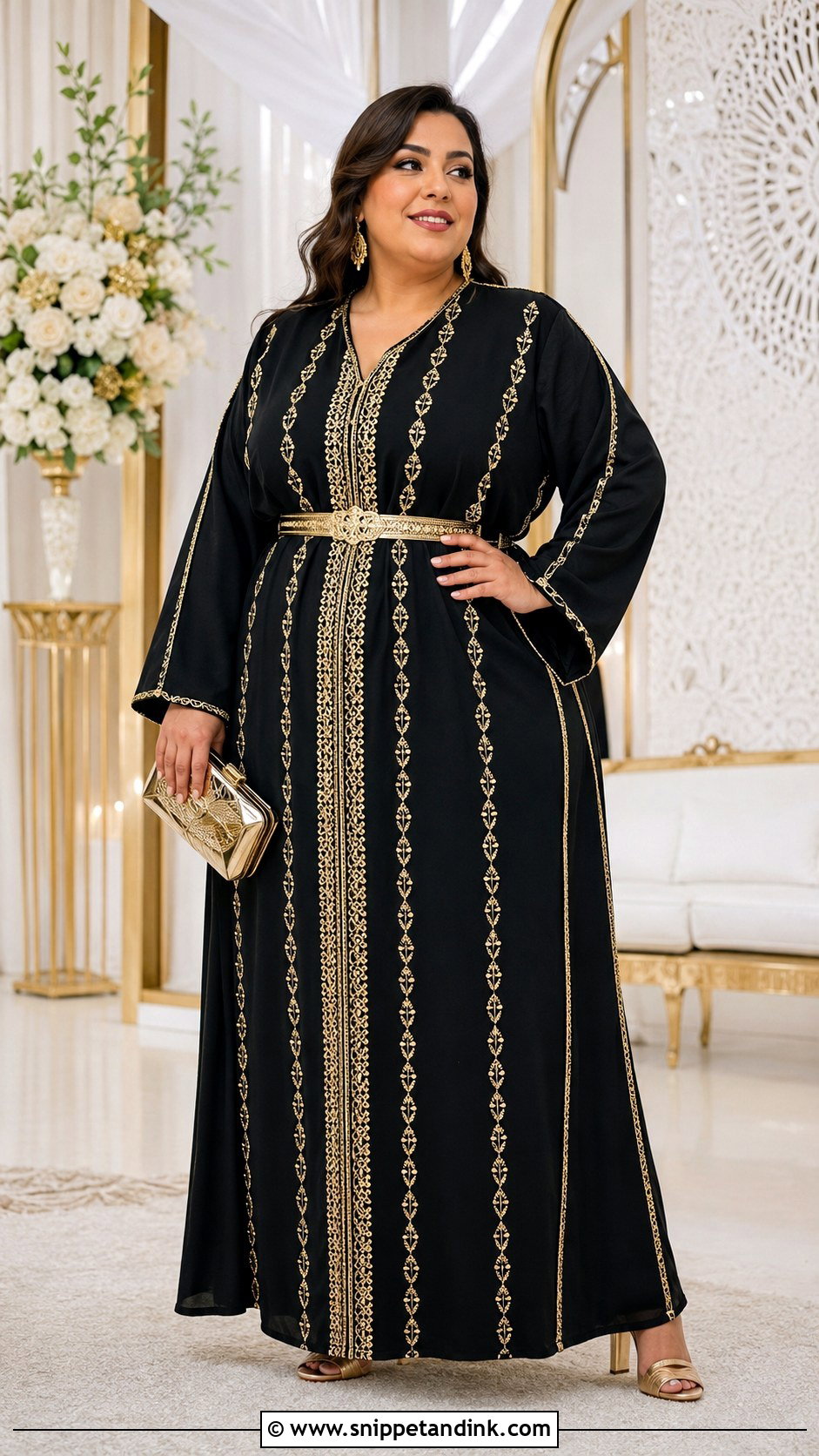
Caftan fit starts at the shoulders, and that’s doubly true on a plus-size frame. If the shoulder seam sits in the right place, the rest of the caftan falls cleanly; if it’s too wide, the whole thing looks borrowed. Look for a design that doesn’t pull across the bust or hips. Vertical embroidery down the front draws the eye down the full length. A flexible belt at the natural waist, or a touch higher if that’s more comfortable. Block-heel mules, medium drops and a clutch in proportion. A soft updo or shoulder-swept waves. Tailor the sleeve length and hem rather than trusting the size label.
Having a Caftan Made to Measure
Many caftans are still made by hand, and the embroidery and trim take time. If you’re having one made, allow several months, especially in the busy summer wedding season when workshops fill up. Bring a photo of the style, decide on the fabric first, and be clear about how much embroidery you want, since that is what drives both the time and the cost.
- Shoulders first. Ask the tailor to fit the shoulder seam before anything else; a caftan hangs from there.
- Sleeve length with your arms bent, not straight, so the cuff doesn’t ride up when you hold a plate or a glass.
- Hem with your actual shoes on, especially if you’ll switch to flats later in the night.
- Belt fitting with the caftan on, seated as well as standing.
Storing heavy embroidery
Don’t leave a heavily embroidered caftan on a hanger for months; the weight of the trim stretches the shoulders. Fold it with acid-free tissue between the layers, keep it in a cotton bag, and store it somewhere dry. Metallic thread dulls over time when exposed to damp and air, so a sealed drawer with a small sachet of silica gel nearby helps keep the gold bright.
Let the Embroidery Lead and the Accessories Follow
A black caftan works when the craftsmanship leads and the accessories follow. Gold embroidery gives the traditional richness; silver, pearls, lace, chiffon and colored accents each change the mood. Weigh the occasion, the season and how heavy the fabric is before choosing shoes, jewelry and a belt. Shoulder fit and hem length decide how comfortable you’ll be over a long night. Choose the details that feel like yours, and wear them with respect for the tradition they come from.
You'll Like These Ideas:




Leave a Reply