
Bengali brides wear one of the most recognizable bridal looks there is: the red Benarasi, the gold, the shola mukut and the sandalwood dots across the brow. Hair has to support all of it. When I style a Bengali bride, I’m planning around the mukut, a ghomta pinned over the head and a center parting that will be filled with sindoor, so the hairstyle is as much structure as decoration. The ideas below run from the flower-wrapped khopa for the main ceremony to softer waves and braids for the reception and sangeet, across different hair lengths. Save the ones you like and bring them to your trial.
Your Mukut and Ghomta Decide Where the Khopa Sits
Before I look at hairstyle photos with a Bengali bride, I ask to see her mukut and how the ghomta will be draped. The shola crown is light but wide and sits on the crown of the head, and the veil or saree end then comes over it and down the back. Those two pieces decide where the bun can go.
Placing the bun
For the main ceremony, the bun usually sits low at the nape. A high bun pushes the mukut forward and lifts the ghomta off the back of the head, so the fabric keeps slipping. A low khopa gives the drape a shelf to rest on.
Anchoring the headgear
I build a small anchor, either a flat braid or a few crossed pins, just behind where the mukut will sit, and secure the crown into that rather than into loose hair. The ghomta then gets U-pins into the bun base. Bring the actual mukut and fabric to your trial, because a stand-in of a different size tells us very little.
The parting
Keep the center parting straight and clean. During sindoor daan the vermilion goes along it, and a crooked or half-hidden parting makes that moment awkward and the photos untidy.
1. Traditional Khopa Bun With Jasmine Flowers
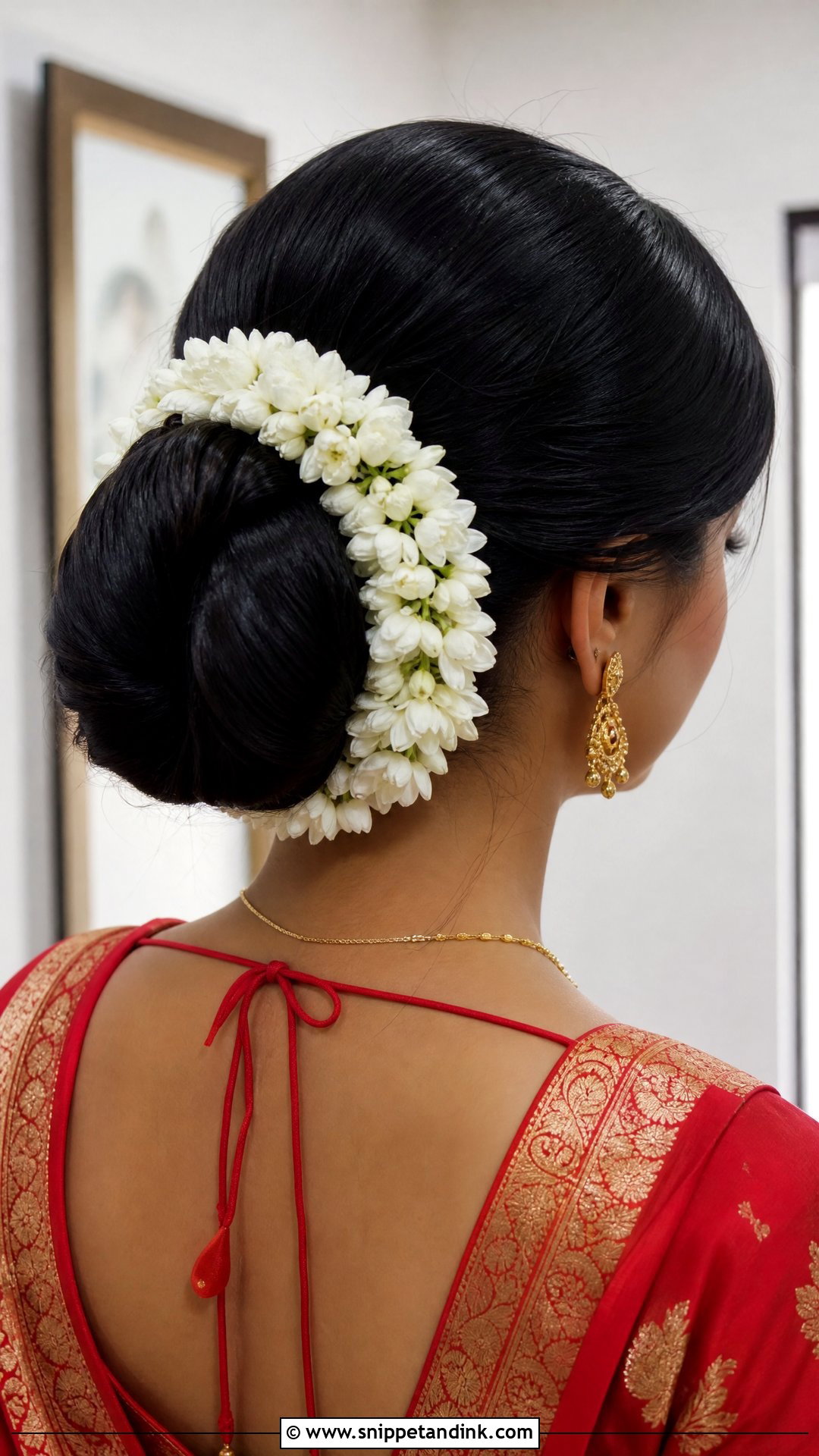
The khopa is the backbone of Bengali bridal hair: a smooth, center-parted bun sitting low at the nape, traditionally wrapped with jasmine or rajnigandha. I build it low for a reason. The mukut sits on the crown and the ghomta drapes back over it, and a low bun gives the fabric something to rest on without pushing the crown forward. White flowers against dark hair and gold look classic with a Benarasi, and the open face leaves room for the maang tikka and earrings. Long, thick hair makes the fullest khopa; shorter hair gets a bun donut or a matched extension tucked inside.
2. Floral Gajra Wrapped Low Bun
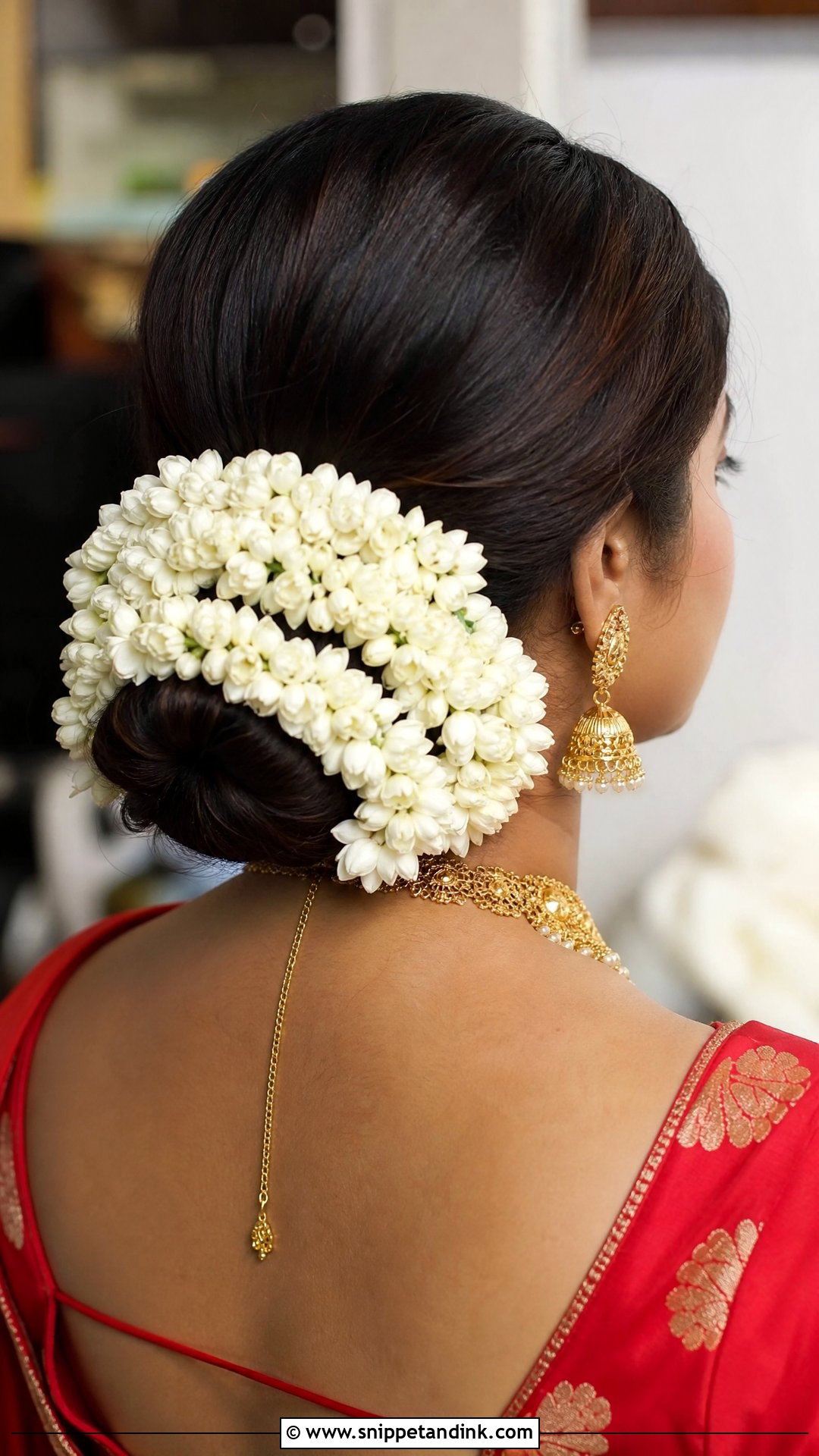
Layers of soft white gajra wrapped around a low bun make a fragrant, full halo, and the flowers add bulk, so thinner hair looks lush. I wind the strands in a spiral and pin each loop separately rather than tying the gajra tight, which crushes the buds and drags the bun sideways as the evening goes on. It sits well with chunky gold and a red Benarasi. Fresh jasmine does turn cream and then brown after several hours in heat, so for a long night I keep a second strand ready for the later photos.
3. Side-Parted Bun With Roses
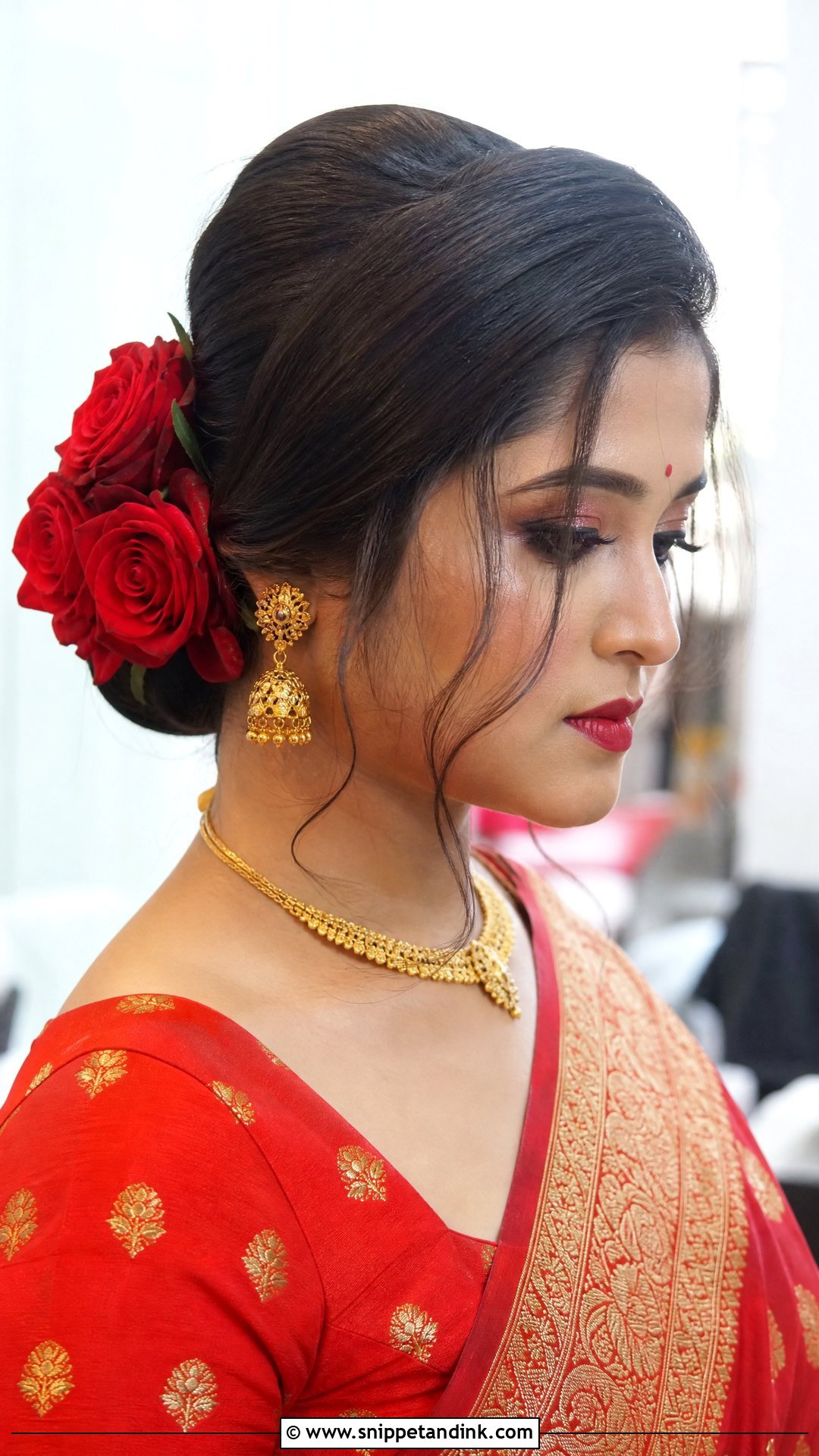
A side parting changes the face more than people expect. It softens a strong jaw and gives the look a more contemporary angle, with the hair swept into a smooth bun dressed with red roses that pick up the saree. One thing I always raise with a bride who wants a side part for the ceremony is sindoor daan, since the vermilion goes along the parting. Talk it through with your family first, or keep this look for the reception. A few loose tendrils near the face help in close-ups.
4. Braided Bun With Gold Pins
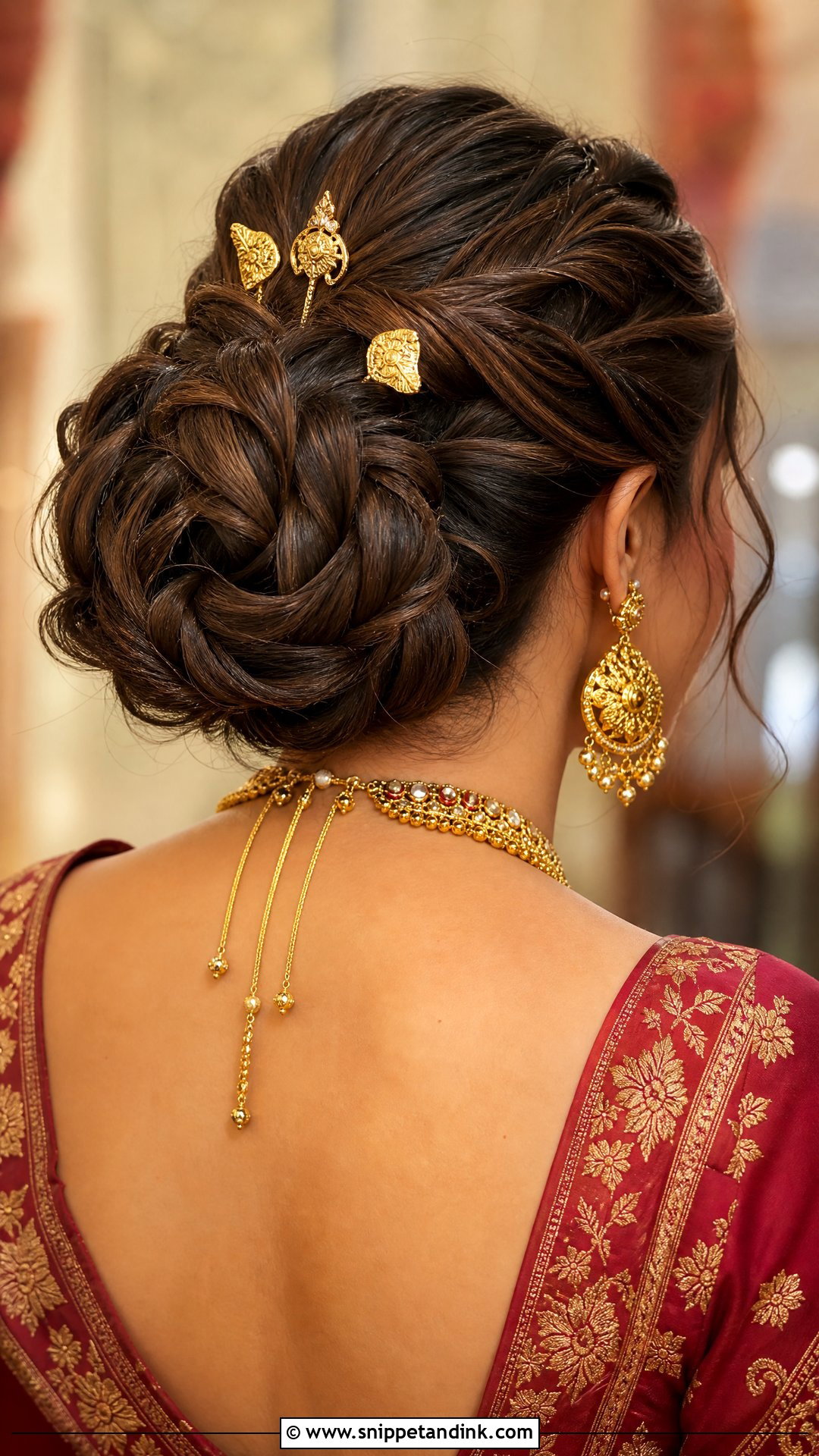
A braided bun has texture a plain bun can’t match. I start with a French or fishtail braid, wrap it into a full bun, then slide gold pins or kaanta into the braid, where the woven sections grip them far better than smooth hair would. That grip is why it lasts through long ceremonies. Long hair braids fullest, and extensions plaited into the braid make up the difference if yours is shorter. Heavy gold and a statement maang tikka sit naturally with it.
5. Messy Bun For Reception
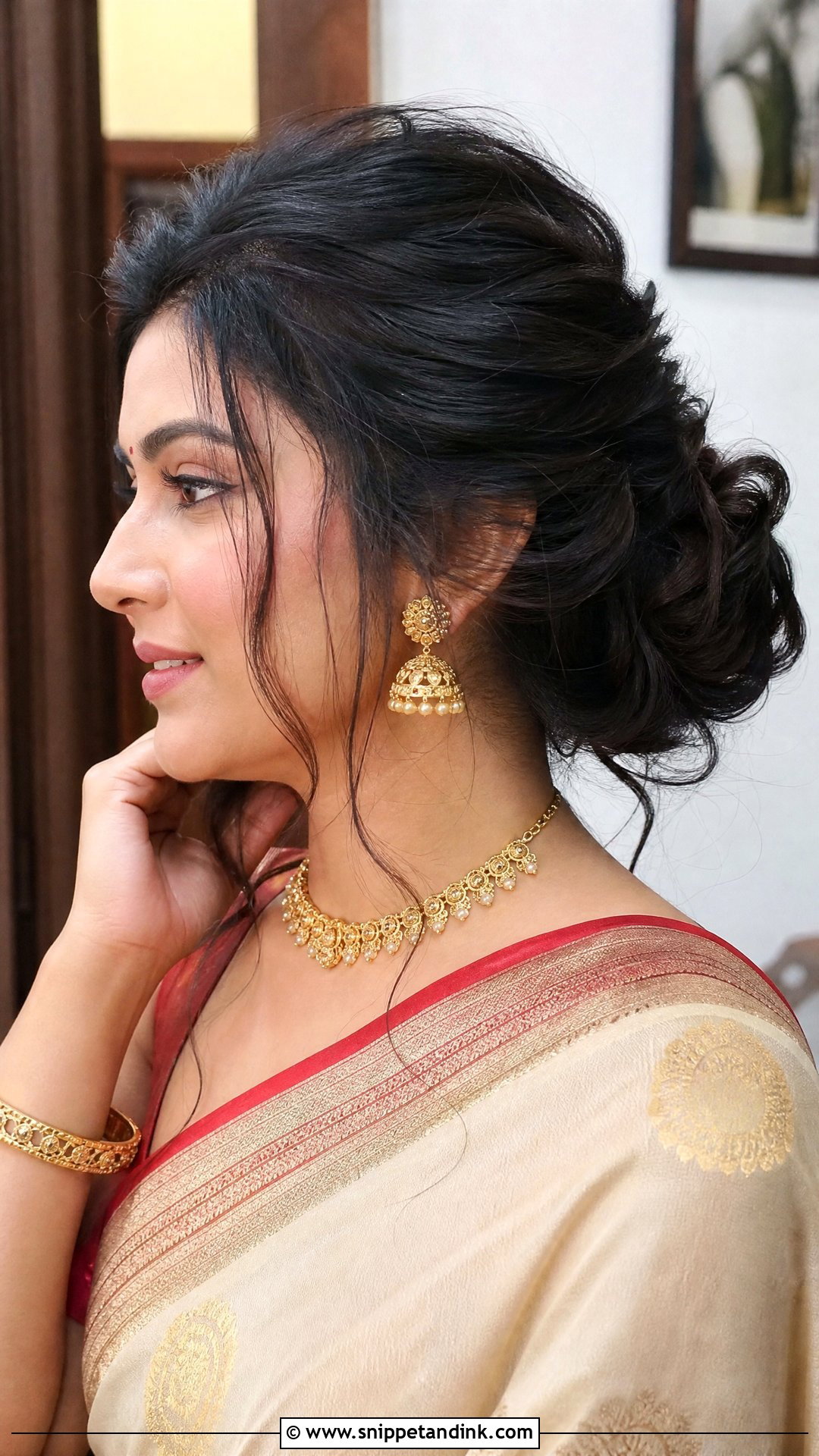
For the reception, a softer bun gives you a break from the sleek khopa. The texture comes from light teasing at the crown, loose strands near the face and pinned sections that look relaxed. It suits a saree or a lehenga, and a single rose or floral pin is enough decoration. My warning: soft does not mean loose. If your hair is fine and slippery, I still build it on an elastic base, because a reception means hours of dancing and loose pins work their way out by the end of the night.
6. Puffed Bun With Mukut Crown
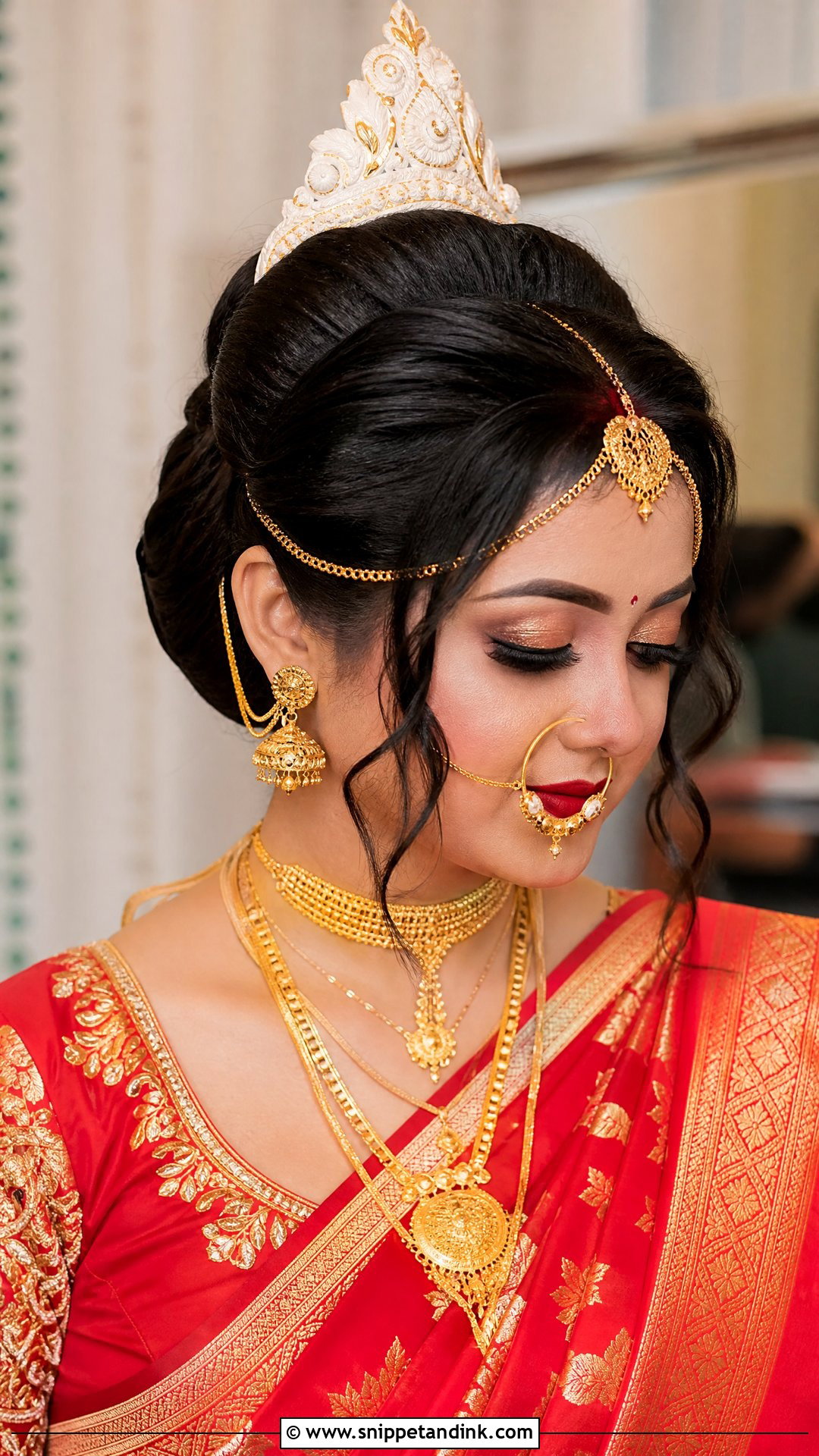
A puffed bun adds height at the crown, which balances the mukut. Without some lift there, a wide shola crown can make the head look flat behind it. I backcomb only the underside of the crown section, smooth the top layer over the puff, then gather everything into a rounded bun. Fine hair benefits most, because the puff fakes fullness. If your mukut is already tall, I keep the puff moderate, or the whole silhouette turns top-heavy. Gajra or gold pins finish the bun for the main ceremony.
7. Open Curly Hair For Reception
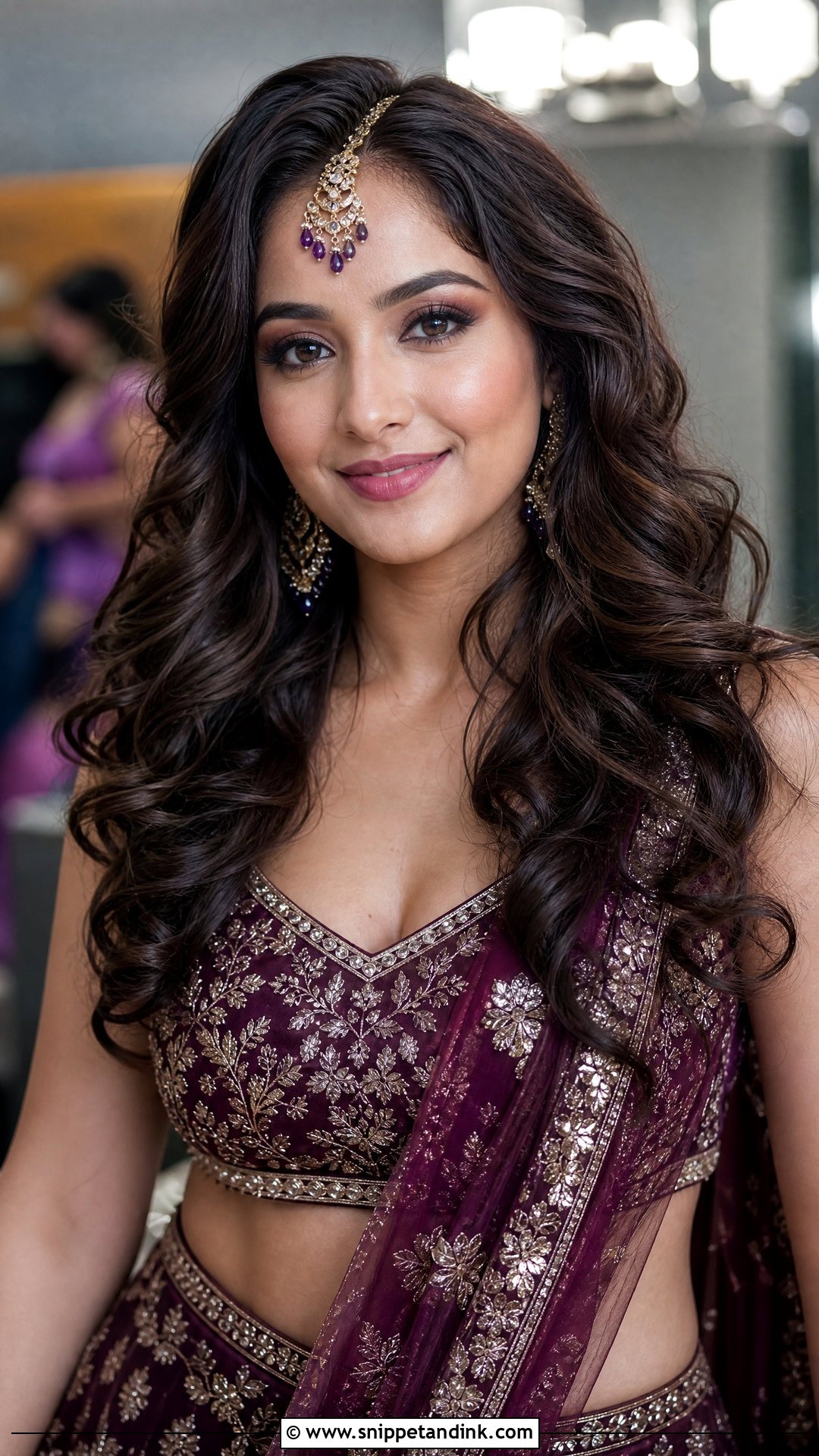
Wearing your hair down feels modern for a reception or engagement, but open hair is the style most affected by heat. Bengali weddings are often humid, and open curls can drop into loose waves within a couple of hours. I curl in smaller sections, pin each one to cool, and use a firm spray before brushing out. A small side accessory or maang tikka keeps it bridal. Medium to long hair with natural body holds it best. If the venue isn’t air-conditioned, I’d steer you toward the half-up version below.
8. Half-Up Half-Down Curls With Flowers
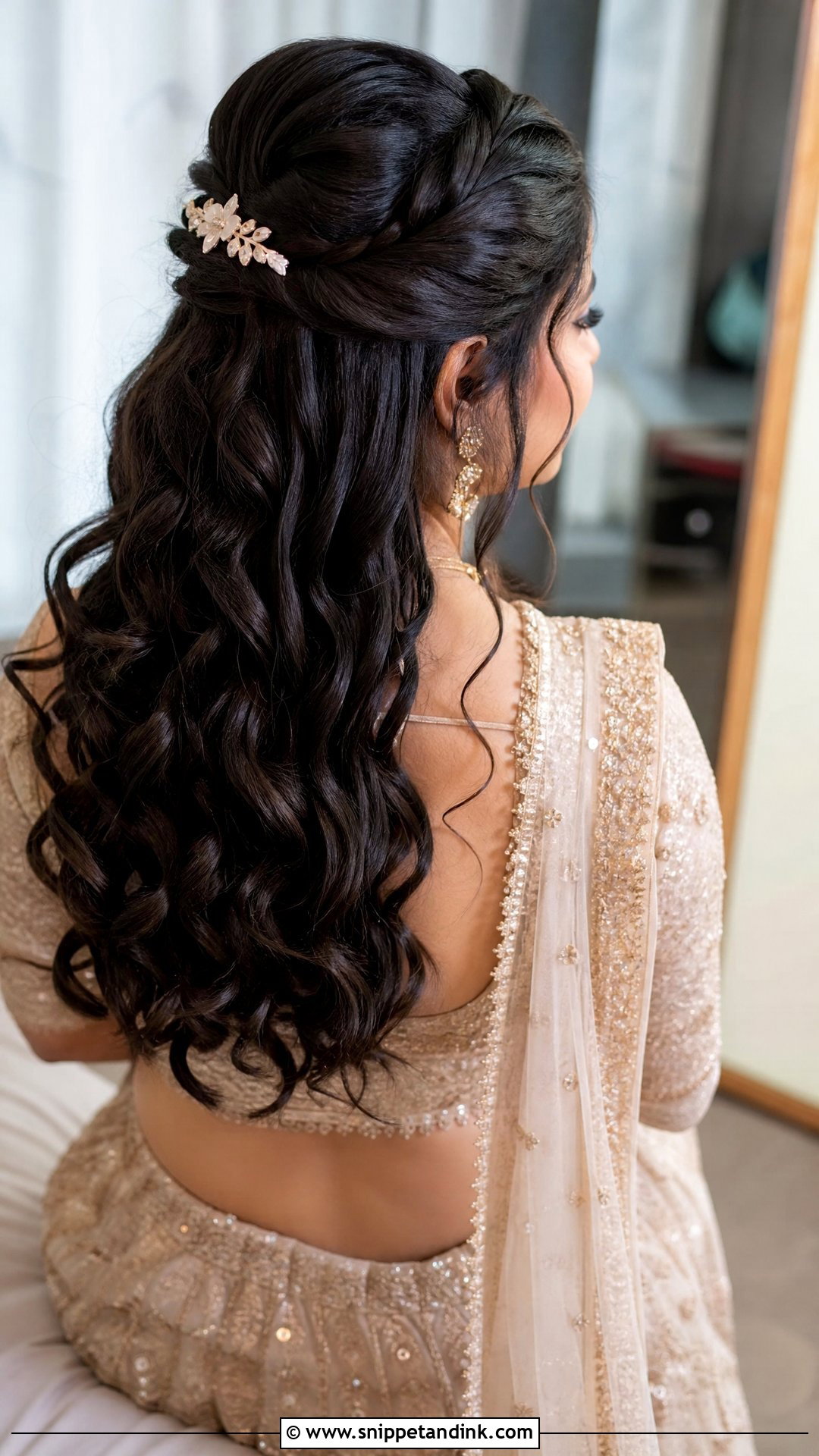
Can’t decide between open hair and a bun? Half up gives you both. The top section pins back and the rest falls in soft curls, so your face stays clear while the length still shows. A floral clip or a few small flowers at the back hide the pins. I pin the crown section onto a small hidden braid rather than relying on pins alone, because the weight of the loose curls pulls the pinned part down over the evening. It’s lighter than ceremony hair, which is why engagement and sangeet brides tend to choose it.
9. Fishtail Braid With Mogra
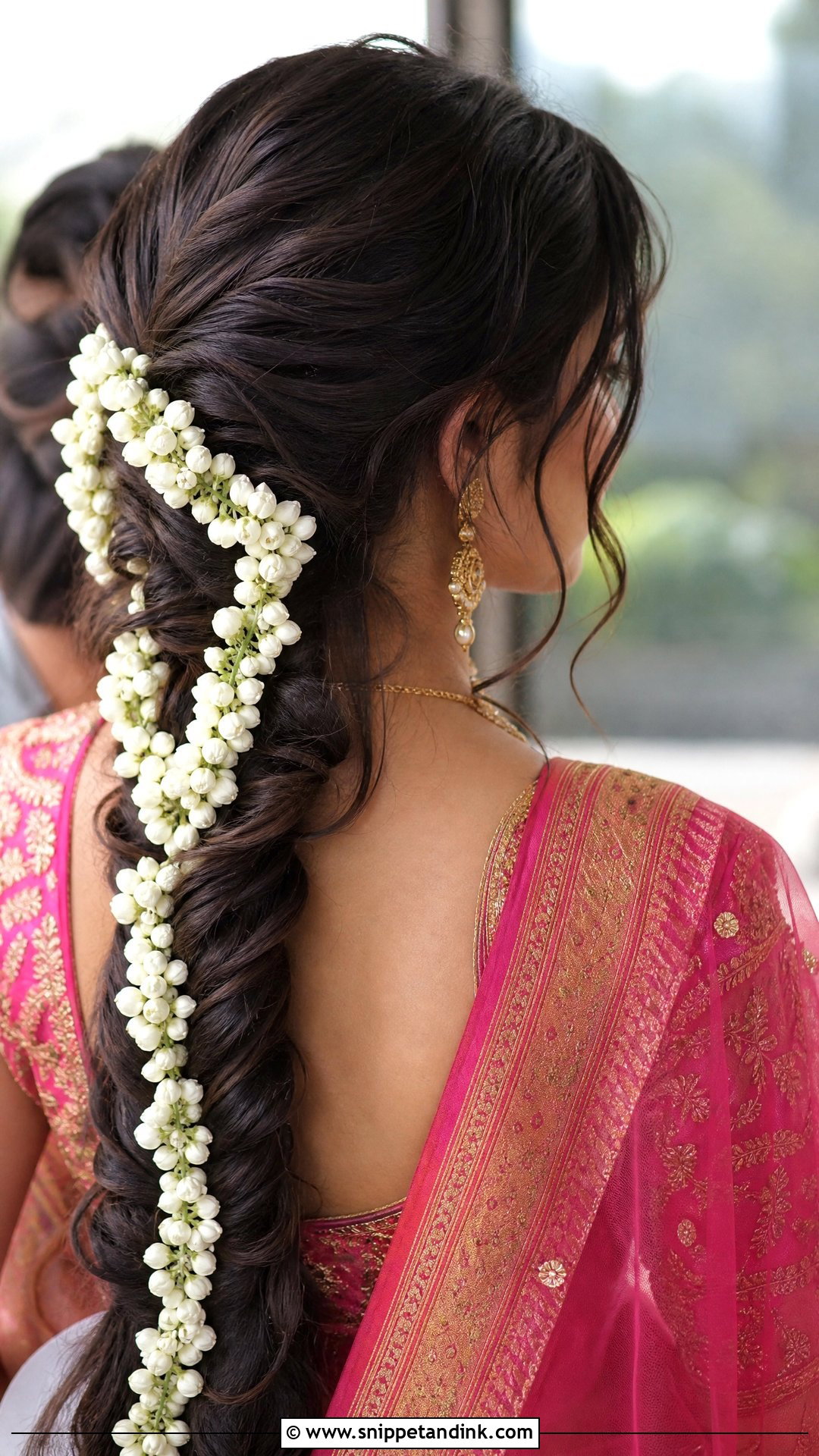
A fishtail braid looks intricate in photos because it’s built from many tiny crossed sections. I wave the hair first, braid it down the back, then wrap mogra strands around it, threading the string under a few loops so the flowers don’t slide down as you move. Long, thick hair gives the best result, and a few face-framing pieces soften it. One check before you choose it: the braid and the flowers rub against a heavily embroidered blouse back all evening, so look at your outfit first.
10. Side-Swept Waves With Maang Tikka
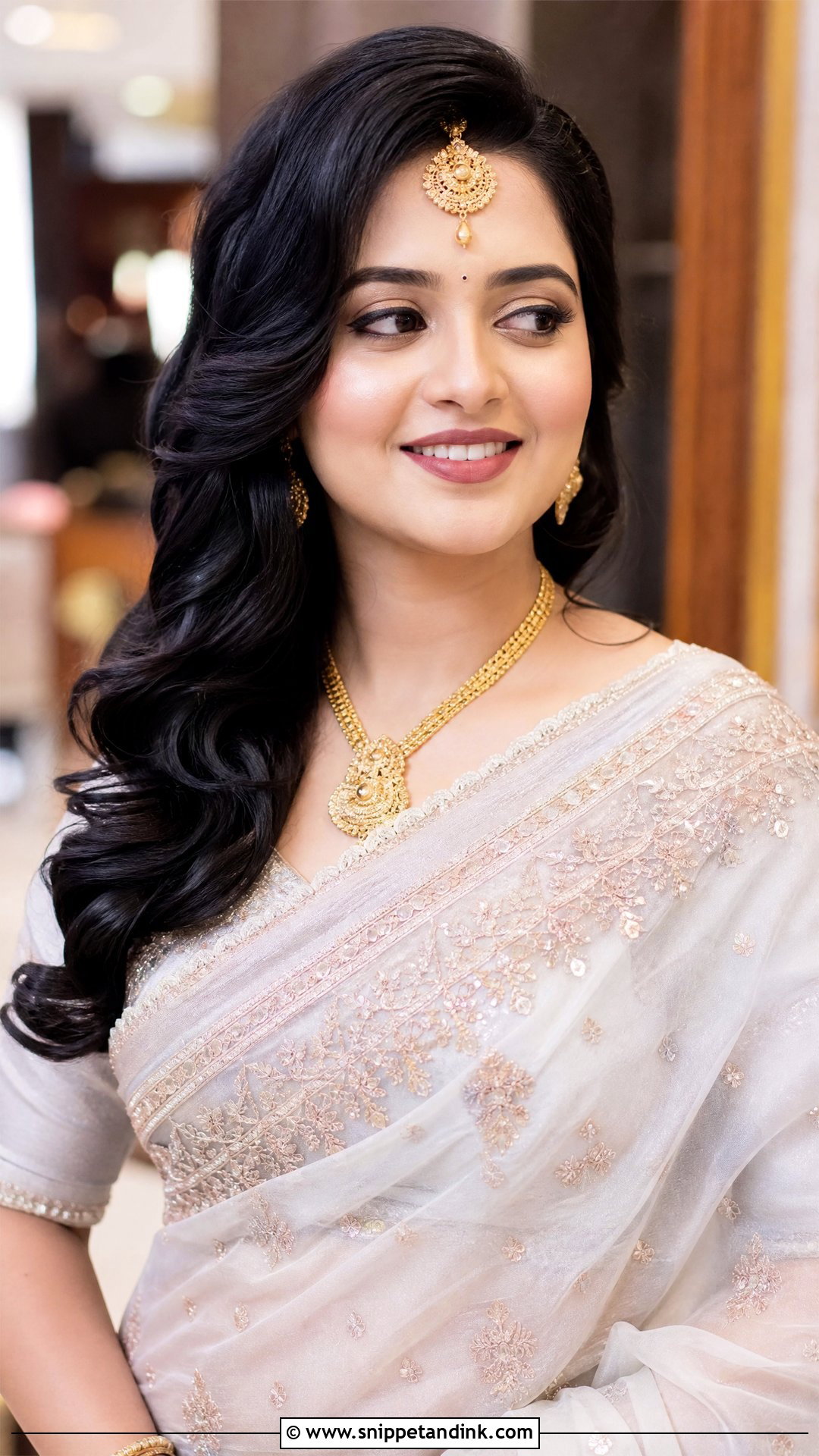
Side-swept waves bring an old-Hollywood feel to a Bengali look. Glossy waves gather over one shoulder, and a statement maang tikka keeps it traditional. The bare side shows off your earrings and neckline. It suits the reception and sangeet functions where you want something more modern. The pinned side has to be solid, so I set crossed pins behind the ear before moving the hair over. Medium to long hair drapes best, and keeping the hair away from heavy earrings stops the two from tangling.
11. French Braid Crown With Flowers
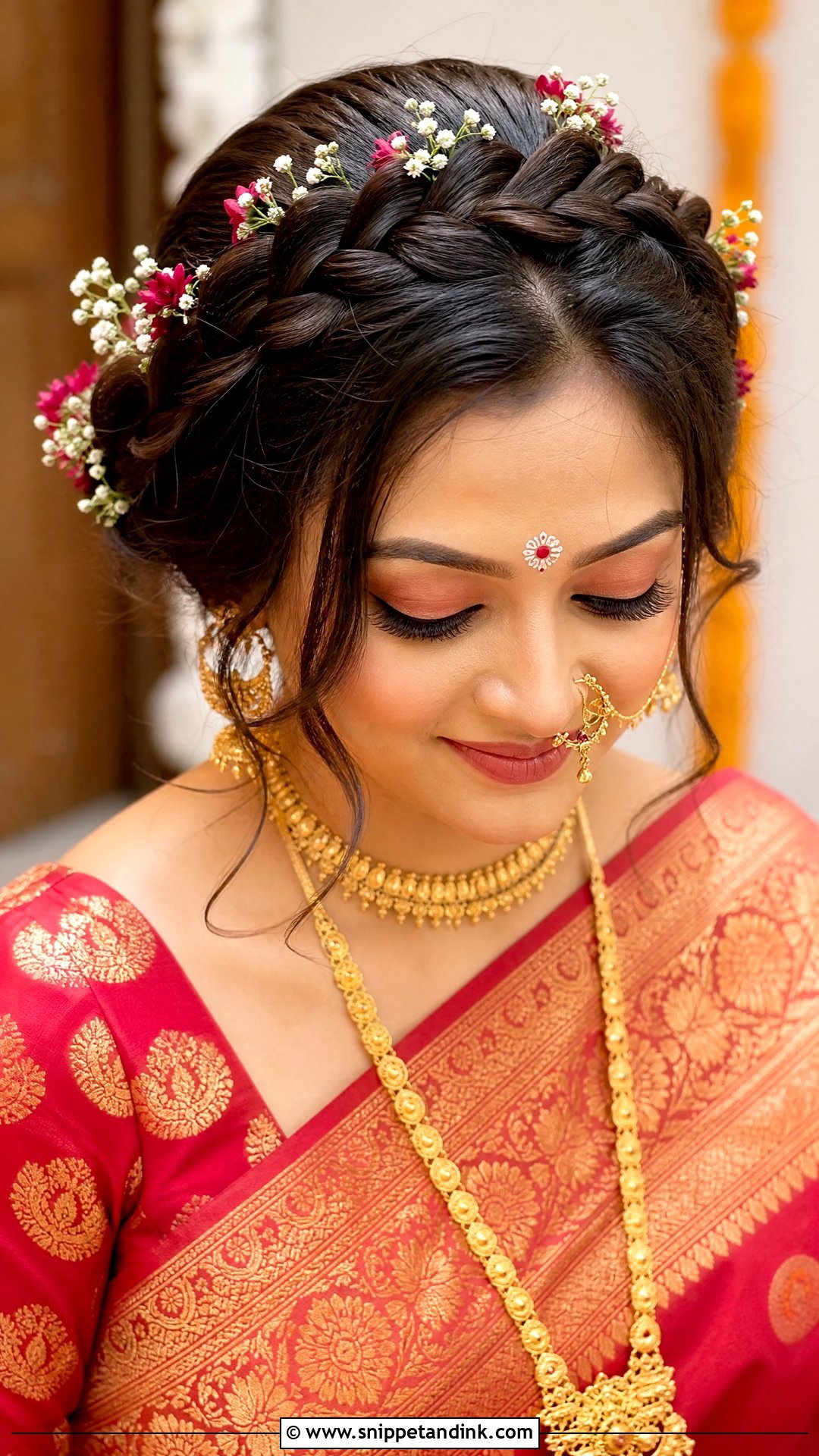
A French braid crown is braided close to the scalp and wrapped around the head, so every strand stays secure through heat and long rituals. Small flowers tucked into the braid add the bridal touch. It’s practical, but it competes for space with a mukut, so I’d save it for the gaye holud or a reception where you won’t wear the crown. Once it’s pinned, I loosen the outer edges gently so it looks full. Traditional gold and a bright saree complete it.
12. Center-Parted Sleek Bun
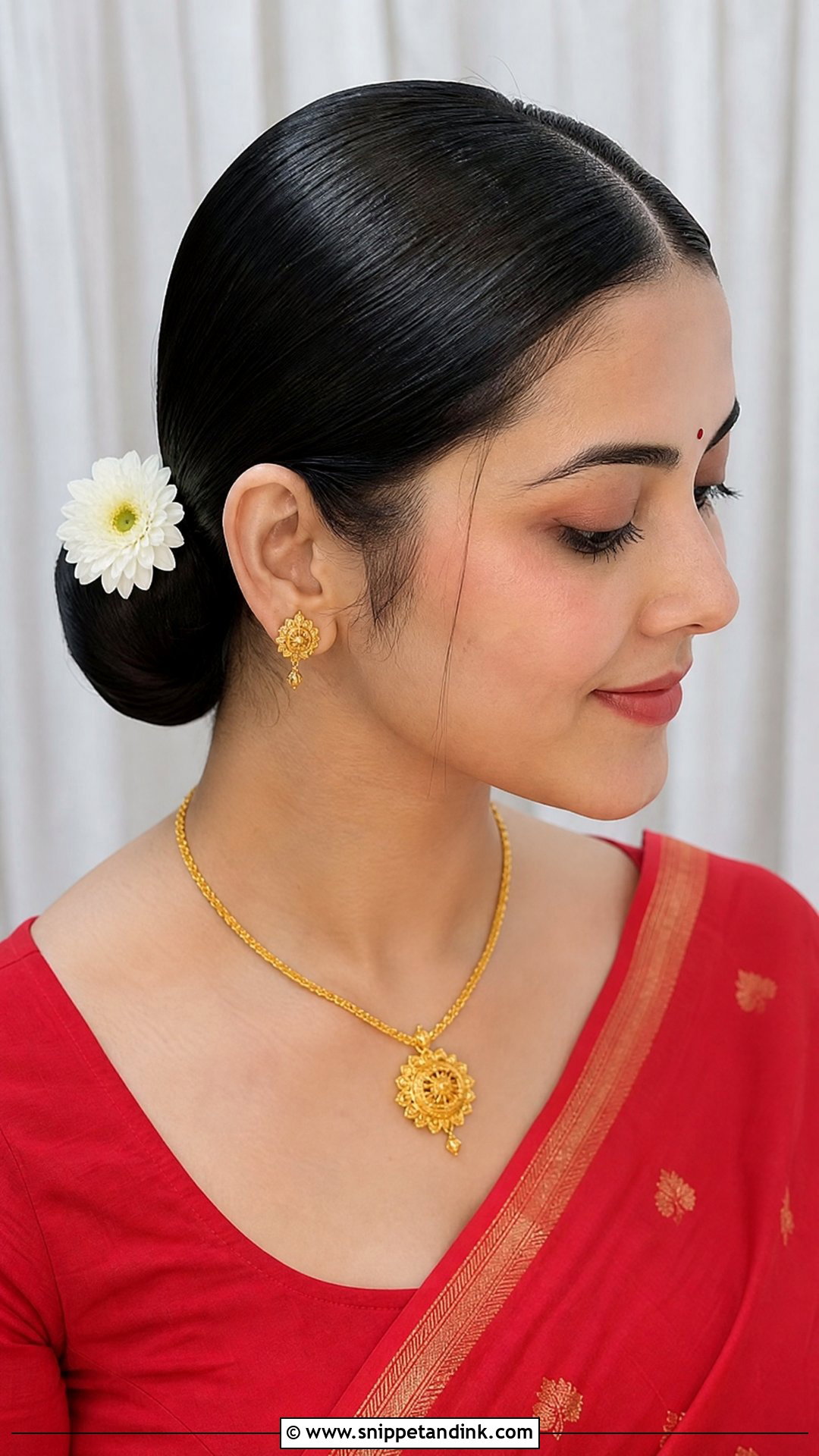
A center-parted sleek bun is the quietest style here, and that’s its strength: it lets the jewellery and the Benarasi do the talking. I smooth the hair flat with a precise middle parting, which also keeps the line clean for sindoor daan, then gather it into a low, tight bun. A thin gajra or a single flower is all it needs. It flatters oval and heart-shaped faces. On a round face, I add a little lift at the crown so the shape doesn’t look too flat.
13. Rajnigandha Wrapped Bun
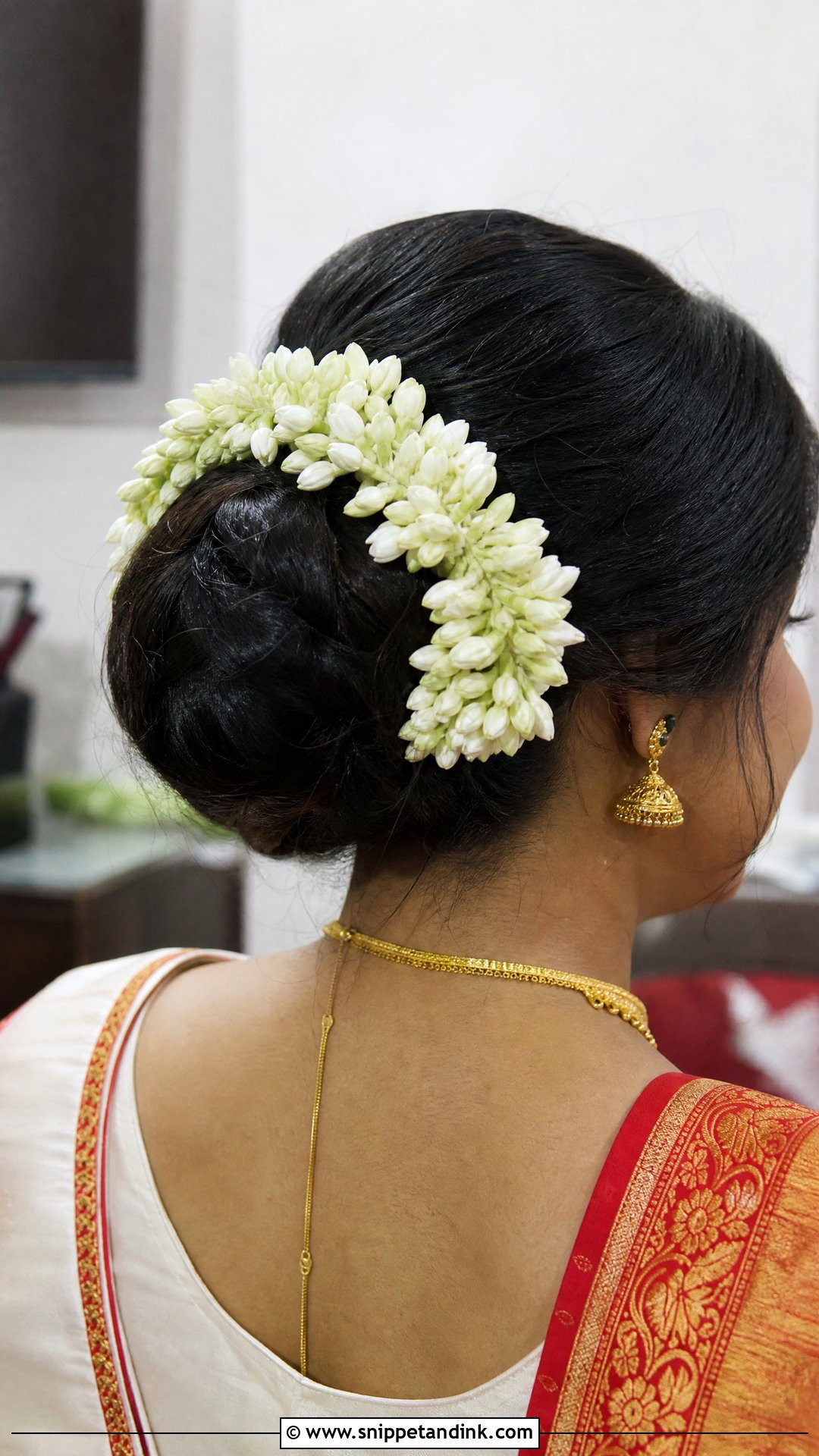
Rajnigandha, or tuberose, has long been part of Bengali weddings and is often linked with purity, and its scent carries across a room. A bun wrapped in these white blooms makes a soft halo against the red-and-white saree and adds volume at the same time. Tuberose stems are heavier than jasmine strings, so I wire small bunches and pin them into the bun section by section instead of wrapping one long garland. Gold pins or a maang tikka finish it for the main ceremony.
14. Low Bun With Veil Drape
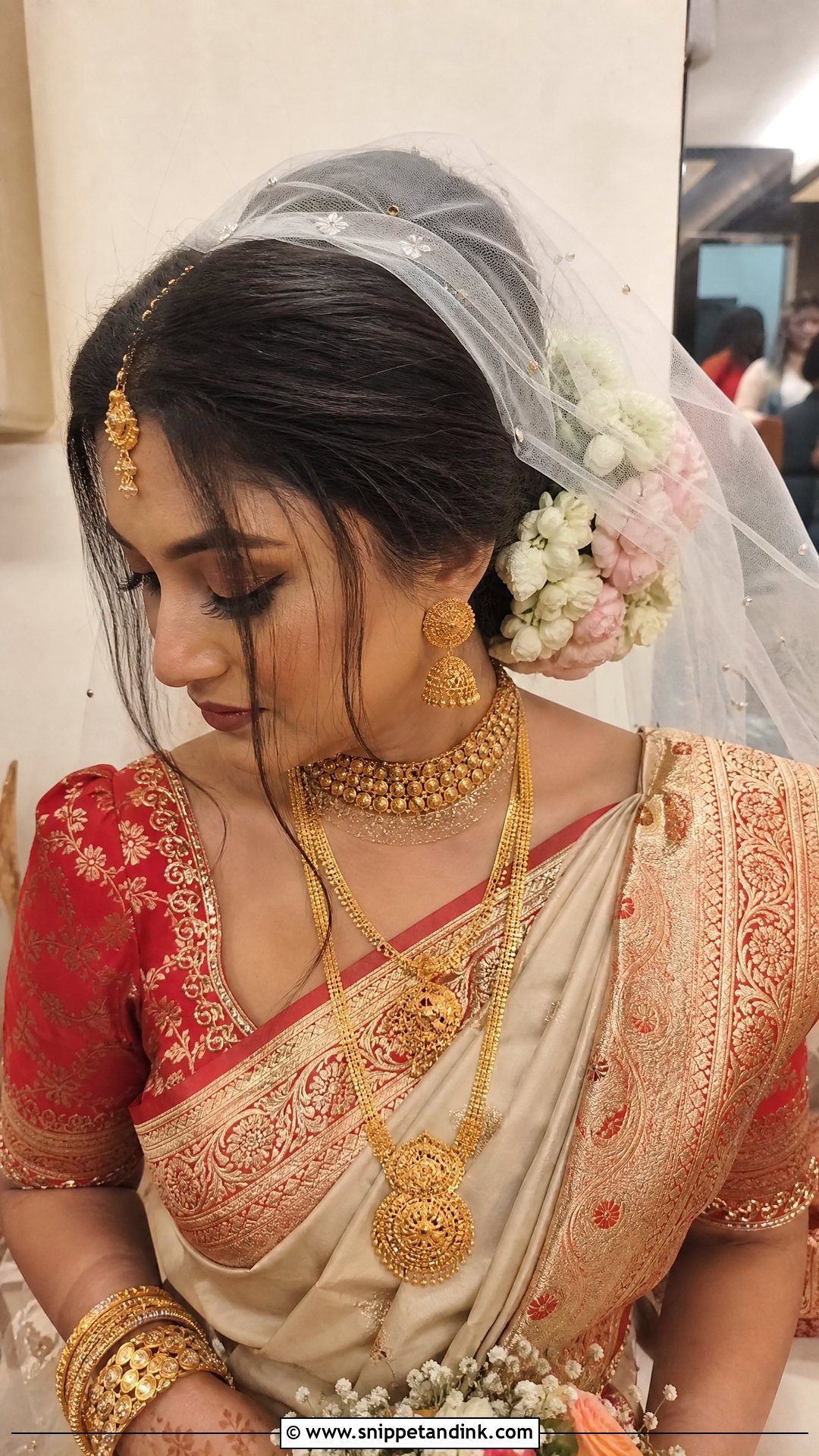
A drape over the crown frames the face, and for a Bengali bride that’s often the ghomta: the end of the Benarasi or a separate chunri pulled over the head. A neat low bun carries it best. I pin the fabric at the crown with hidden U-pins through the cloth into the bun base, so it doesn’t slide back every time you look up. Small flowers or a jeweled pin decorate the visible part of the bun, and the drape softens heavy jewellery around the face.
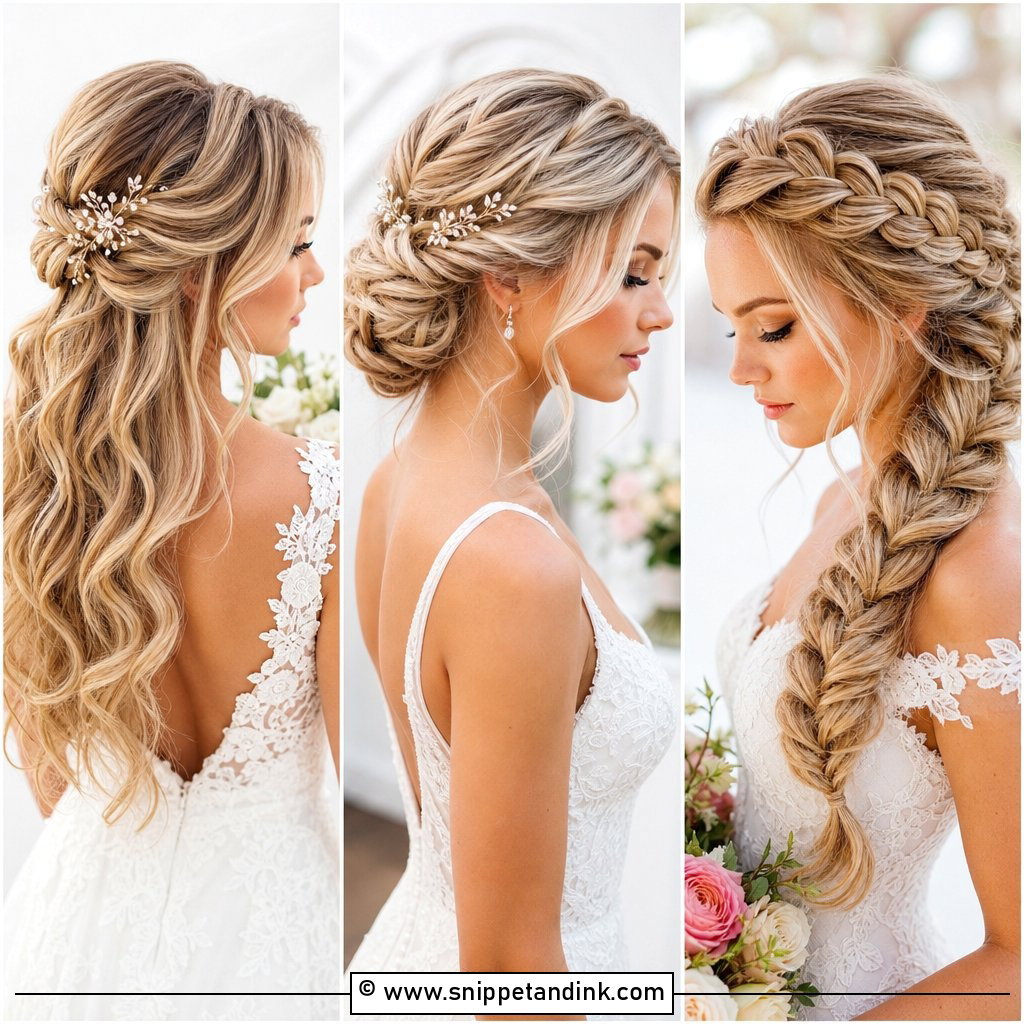
15. Donut Bun With Gajra
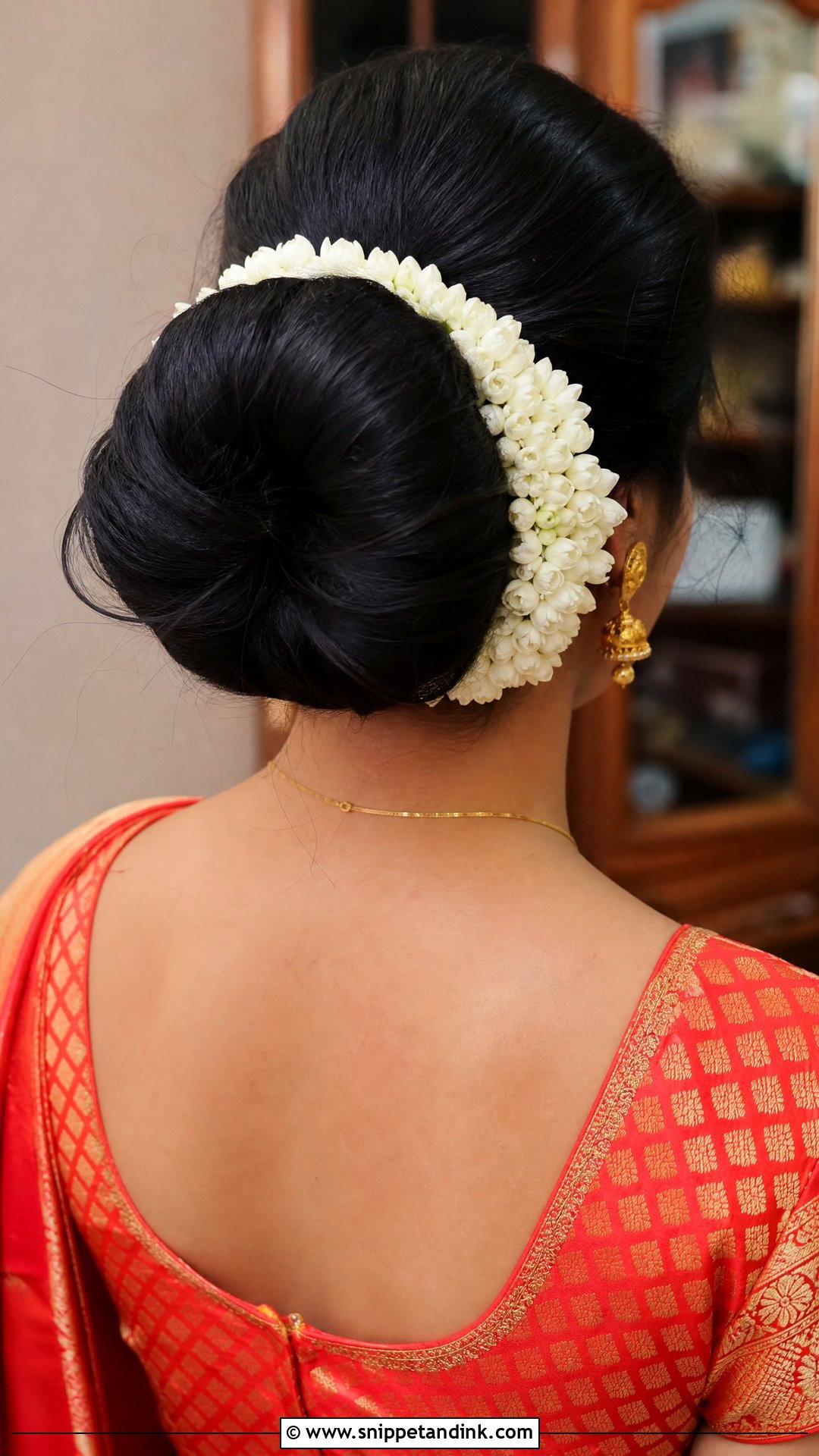
A donut bun uses a foam ring to give a perfectly round, full shape, which is why I reach for it so often on thinner hair. The hair wraps around the base for even volume, and white gajra circles the outside. Match the donut to your hair color exactly, because a lighter ring shows through gaps when the flowers shift. It stays secure for hours, and with gold jewellery and a bright Benarasi it suits the main ceremony. The shape is structured, so it reads neat rather than soft.
16. Twisted Bun With Red Roses
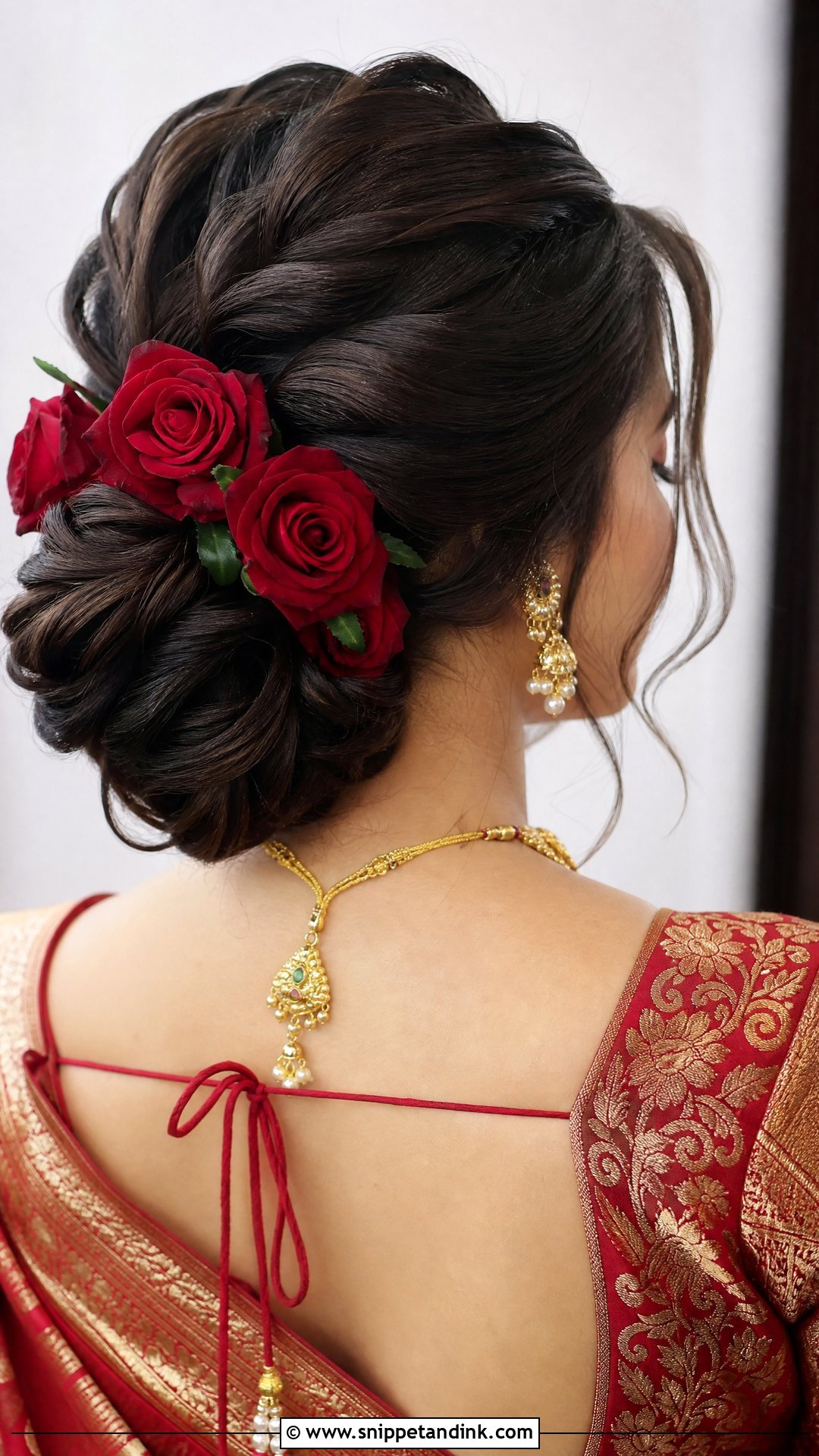
Twisted sections give a bun depth from every angle, and red roses add color that echoes the saree. I twist each section before pinning, which also locks shorter layers in place. A few loose strands soften the face. Fresh roses are heavy, so I pin them on short wired stems close to the bun instead of tucking in long stems. Pick firm, half-open buds, since fully open roses bruise and drop petals once people start hugging you. Heavy gold suits it for the wedding ceremony itself.
17. Long Braid Wrapped In Flowers
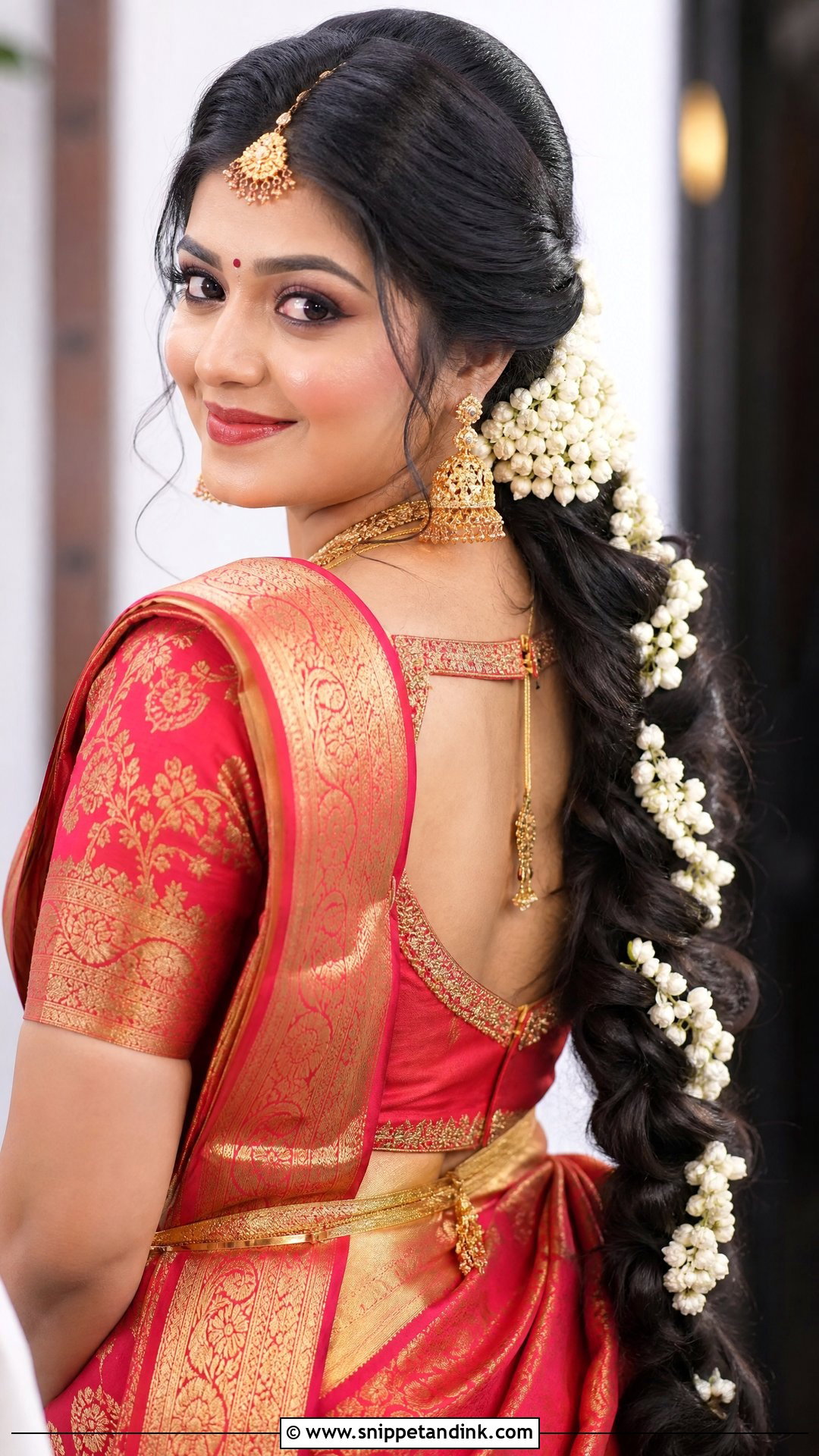
A single flower-wrapped braid shows off long hair better than any bun. I texture the hair, braid it down the back, then wrap mogra or jasmine strands around it, so the hair stays neat while the length is on full display. Pair it with a center parting and maang tikka for a classic Bengali feel. On thinner hair, a clip-in extension braided in keeps the plait thick right to the end, instead of tapering to a thin tail. Ceremonies and pre-wedding events both suit it.
18. Voluminous Bun With Maang Tikka
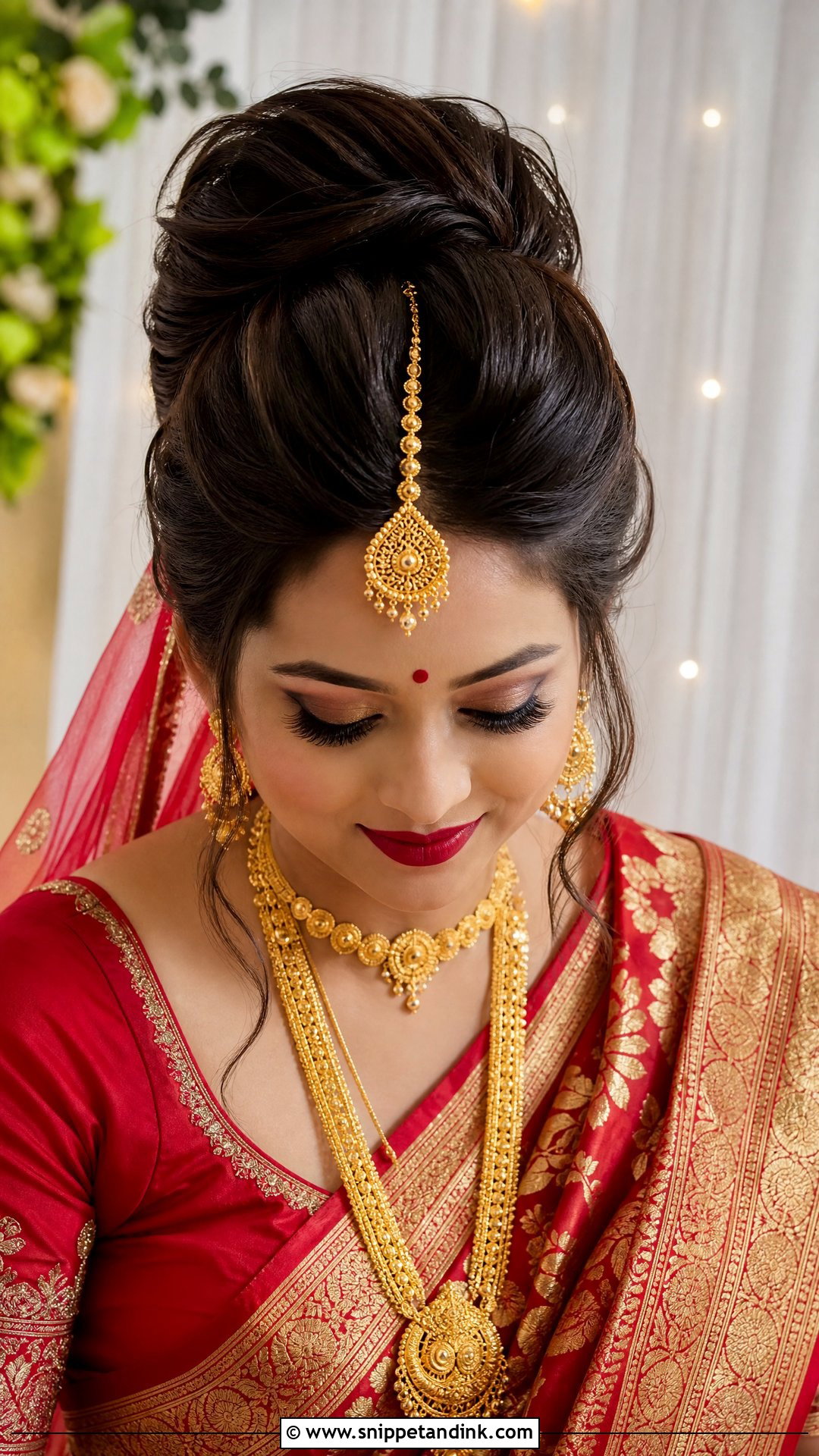
A tall, regal silhouette comes from a large, full bun built over teased hair, with a statement maang tikka resting across the parting. The volume balances heavy headgear, so the head doesn’t look small under a mukut. Fine hair gains the most. Teasing tangles badly if it’s pulled out roughly, though, so after the wedding work conditioner through before you brush. Gajra or gold pins finish the bun for the main ceremony.
19. Wavy Open Hair With Side Bun
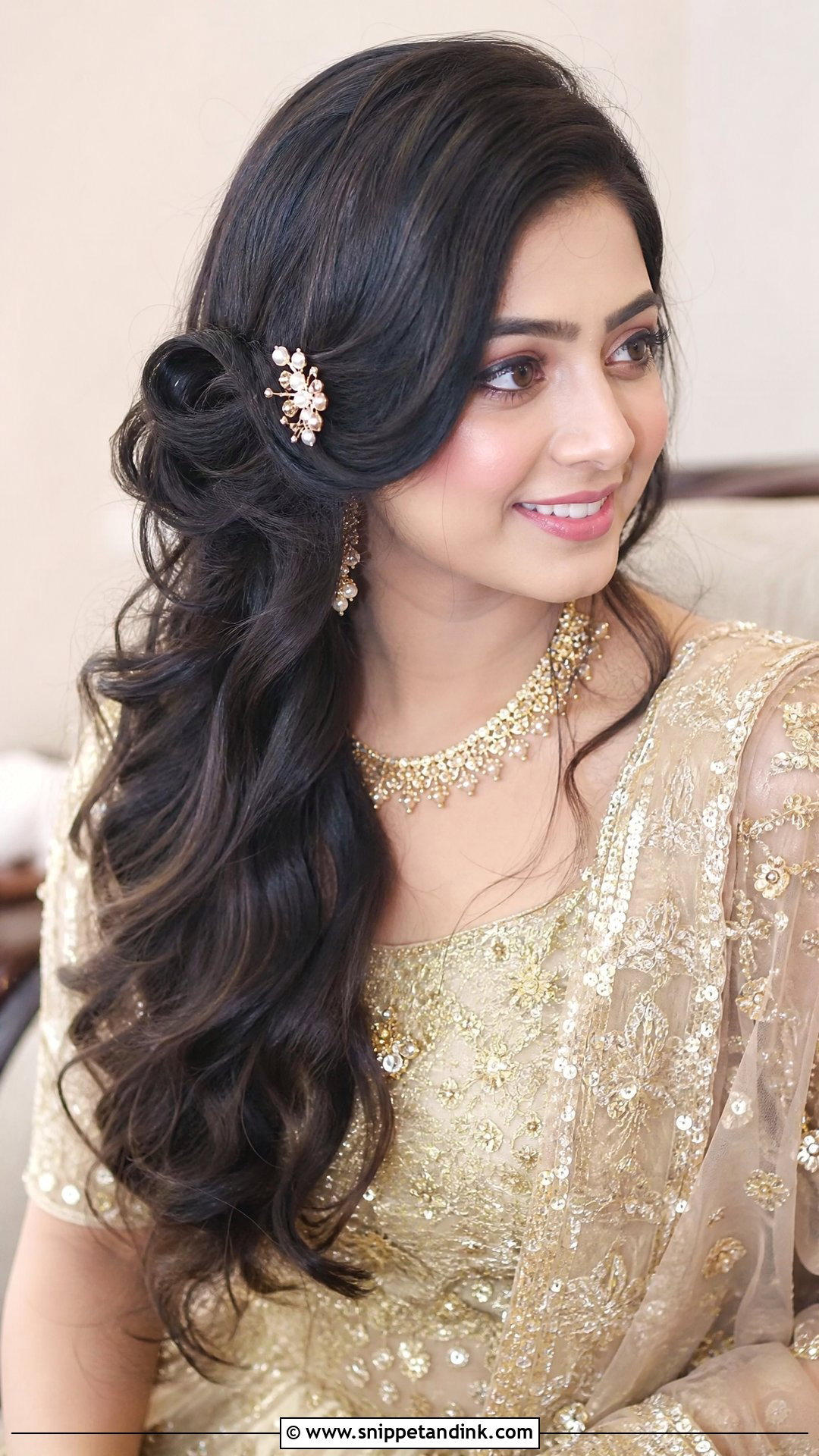
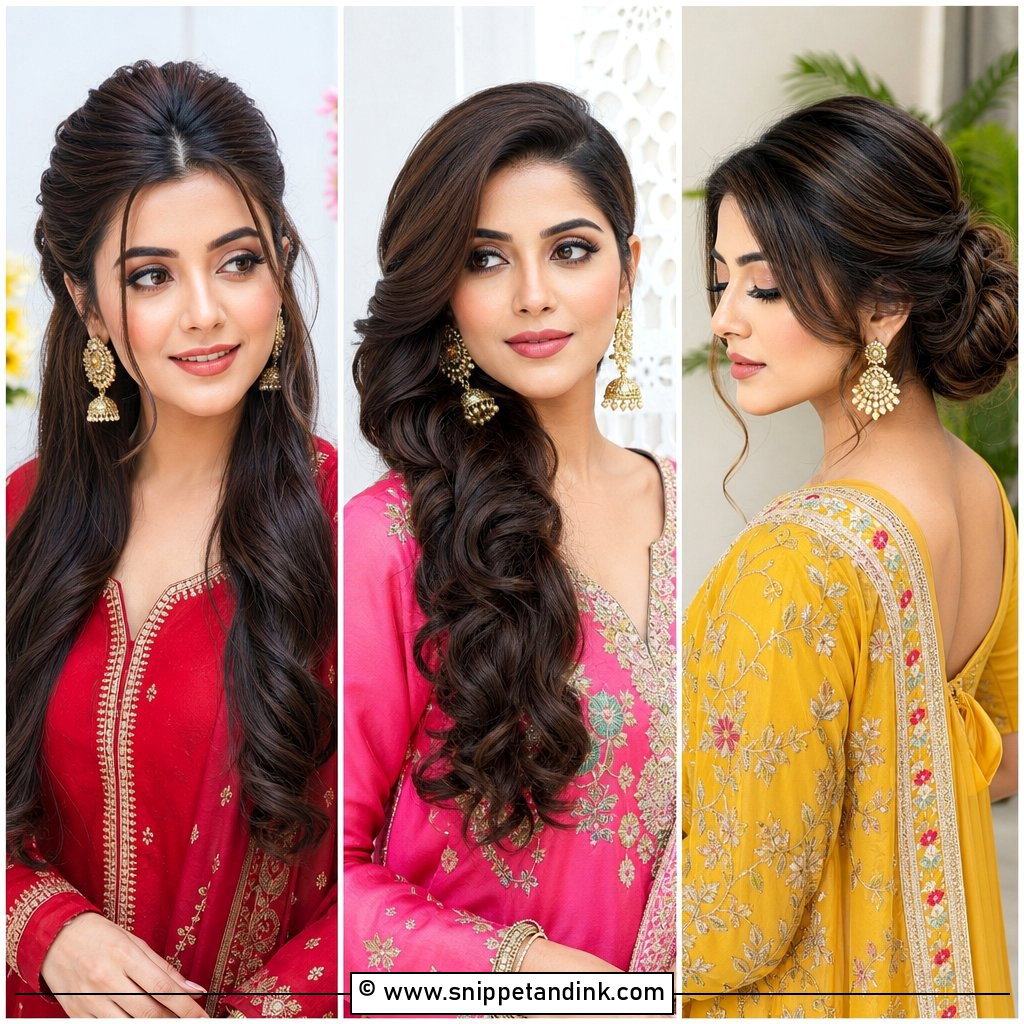
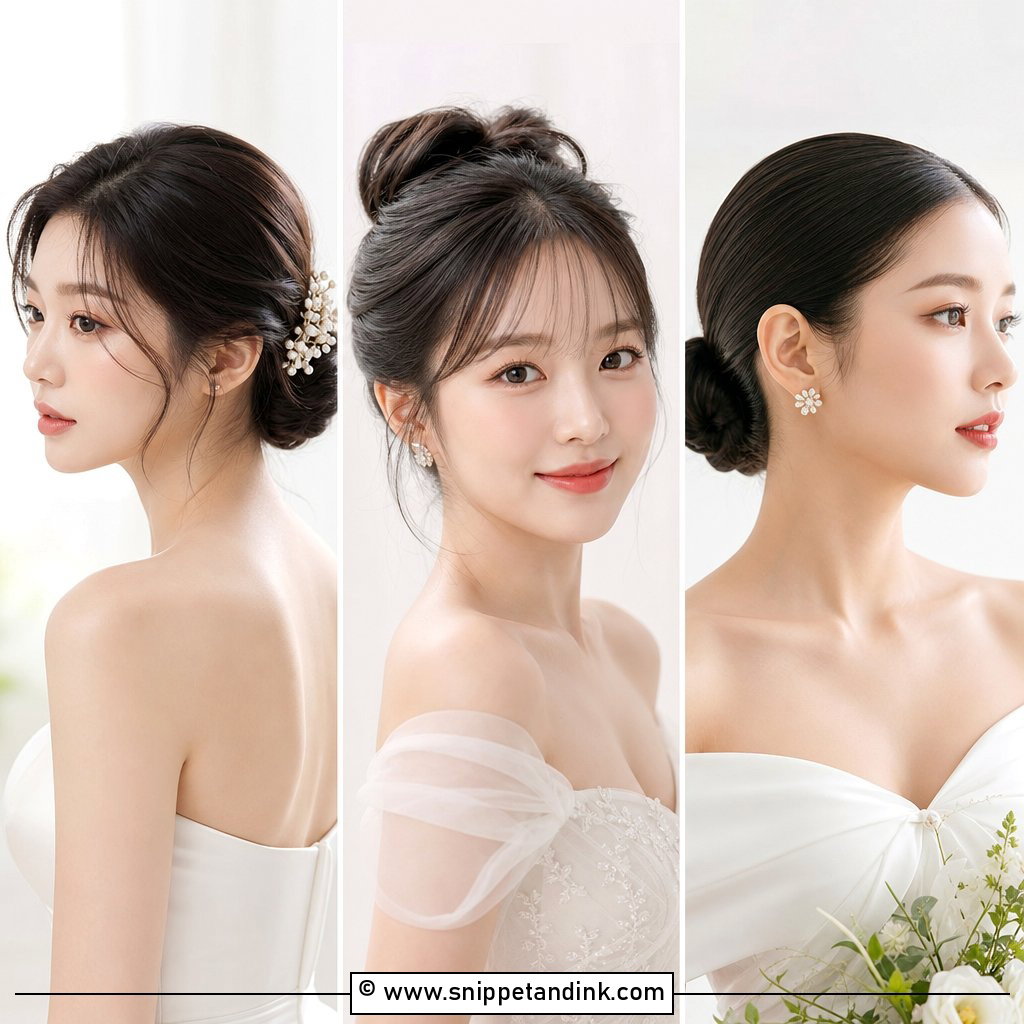
Loose waves with a small twisted bun at one side give you movement while still feeling bridal. Most of the hair flows, and the side bun gets a small flower or jeweled clip. It suits the sangeet or reception. Because the side bun is small, it needs a firm anchor, so I pin it onto a mini elastic ponytail rather than just twisting and pinning. It’s a good compromise if fully open hair feels too casual for you.
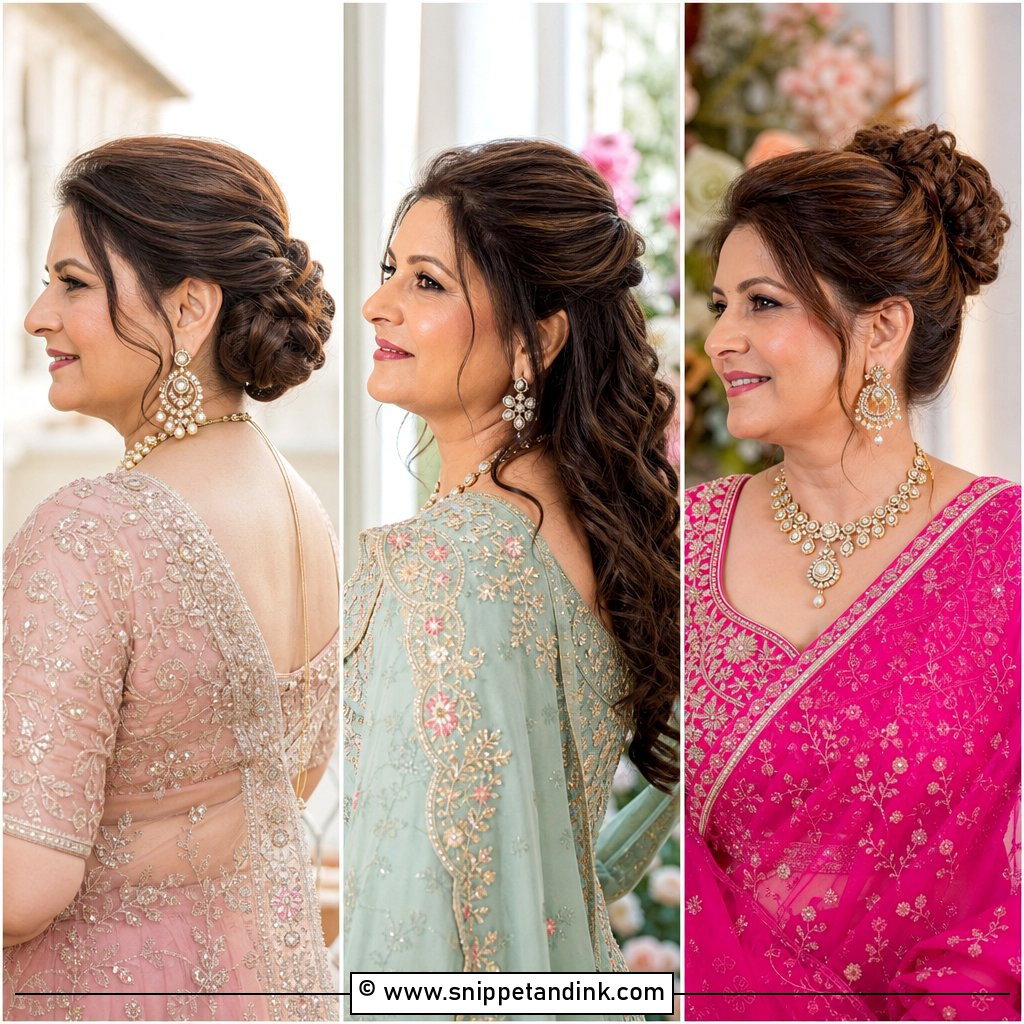
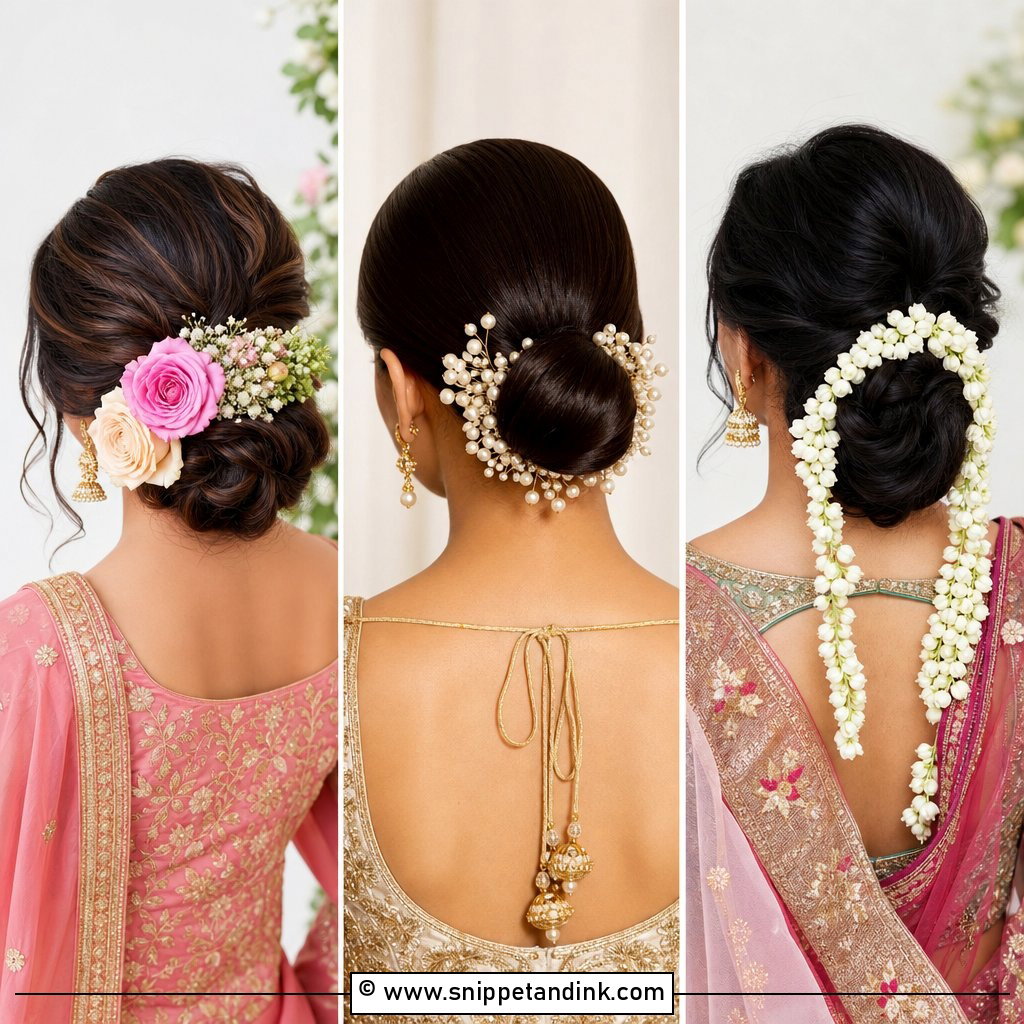
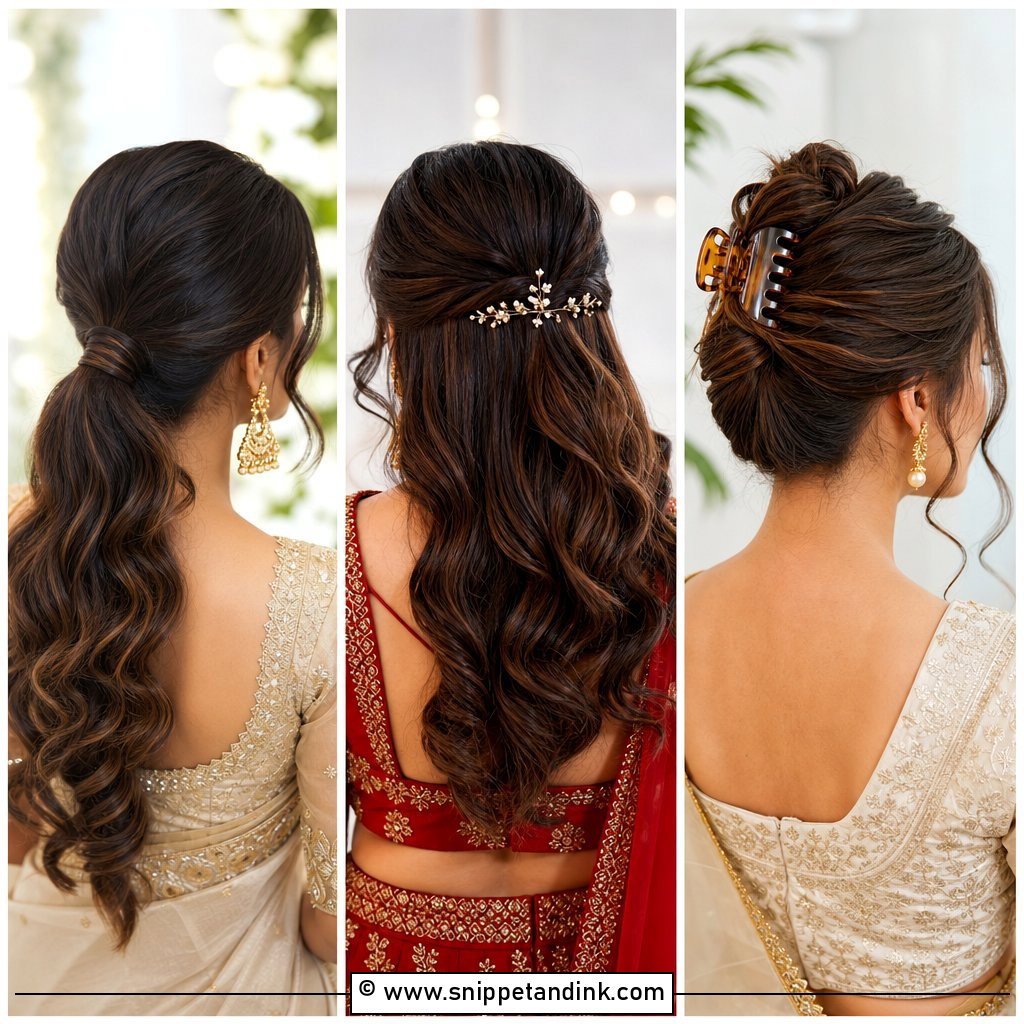
20. Textured Bun For Sangeet
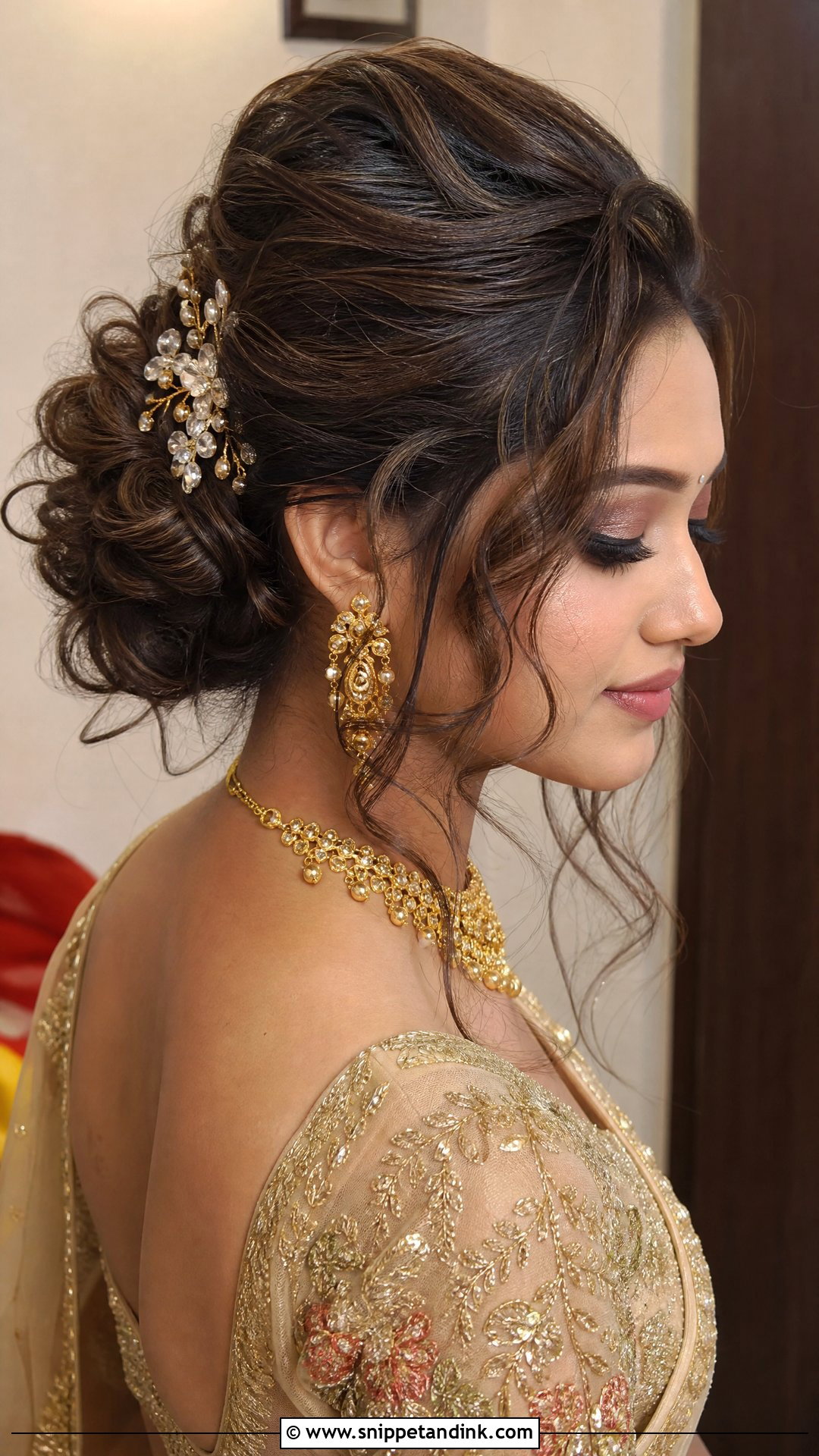
Sangeet hair has to let you dance. A textured bun starts with gentle waves and some teasing, then twists into a loose, dimensional shape with soft strands around the face, finished with a sparkly pin or a few flowers. It pairs with a lehenga or designer saree. The texture also disguises a little frizz as a crowded room warms up, which is why I like it for busy functions. Just pin the base securely so it survives hours on the dance floor.
Beli, Mogra and Rajnigandha in a Hot Wedding Hall
Fresh flowers are part of the look, and they’re also the first thing to wilt. Order gajra and tuberose from a florist who knows they’re for a bride, and collect them the evening before or that morning. Jasmine buds open over a few hours, so buds that are still slightly closed when they go into the hair look freshest by the ceremony.
- Store the strings in the fridge wrapped in a damp cotton cloth, not sealed in plastic, where they sweat and brown.
- Add flowers last, after the hairspray, since spray and leftover heat from styling tools discolor the petals.
- Pin garlands in loops instead of tying them tight, which crushes the buds and pulls on the bun.
- Keep a spare string in a cool box for the later rituals and portraits.
If strong scent gives you headaches, tell your stylist. Rajnigandha in particular is heavy, and wearing it close to your face for many hours isn’t comfortable for everyone. A smaller cluster at the back of the bun still gives the look.
From Gaye Holud to Bou Bhaat, One Head of Hair
A Bengali wedding is several days of functions, and your hair goes through all of them. At the gaye holud, turmeric paste gets everywhere, so a simple braid or bun you don’t mind washing is the sensible choice. The wedding night needs the strongest style of the week. Bou bhaat comes after that, often with tired, product-heavy hair.
Plan your washes. Wash after the turmeric, and if you can, wash again before bou bhaat instead of restyling over a day of spray and pins. Taking down a heavily pinned khopa takes time: remove every pin first, then loosen the hair with conditioner or oil before you brush, so the teased sections don’t snap.
Leave the Parting Clear for Sindoor Daan
Your hair should carry the tradition and still feel like you. The flower-wrapped khopa, soft reception curls and braids each have their place across the functions. Plan around your saree, the weight of your jewellery and how long each ceremony runs. Fresh jasmine, mogra and rajnigandha bring the fragrance people remember, while waves and softer buns suit the later events. For the main ceremony, keep the parting clean and easy to reach. Bring photos of your outfit and headgear to your stylist along with the hairstyles you’ve saved.
You'll Like These Ideas:



Leave a Reply