
An open back is the part of a gown your guests stare at for most of the ceremony, because that is the side they see while you stand at the front. I like it as a design choice since it gives a plain dress a reveal without piling on beading. The catch is that a low back is the hardest thing in bridal to fit well. The cut has to stay flat against your skin when you breathe, bend and hug, and your bust support has to come from somewhere other than a bra band. Below are thirty versions I’d actually put a bride in, with notes on fabric, support and the hair that keeps the back on show.
Where Your Support Goes When the Back Is Bare
This is the first question I ask with any low back gown, because a standard bra is out. The good news is there are several ways to build support into the dress itself, and the right one depends on your bust and how deep the back drops.
- Sewn-in cups: a seamstress stitches moulded cups into the bodice lining. This is my default, and it works well for small to medium busts.
- Boned or corseted bodice: the structure lifts and holds from the waist up, which is what larger busts usually need.
- Low-back converter or plunge bra: hooks the band down to waist level. Useful when the back stops at the waist, useless below it.
- Adhesive cups and body tape: fine for a short wear and for small busts, less reliable in heat or over a twelve-hour day.
Bring whatever you plan to wear underneath to every fitting, along with your wedding shoes. The hem and the back edge are both set against your real underwear and your real height, and changing either later means another round of alterations.
Skin and posture
An open back shows tan lines, bra strap marks and posture in a way few necklines do. Avoid strappy tops in the sun for the weeks before the wedding, and practise standing with your shoulders down and back. Slouching folds the skin at the waist and lets the back edge gape.
1. Low Back Satin Slip Wedding Dress
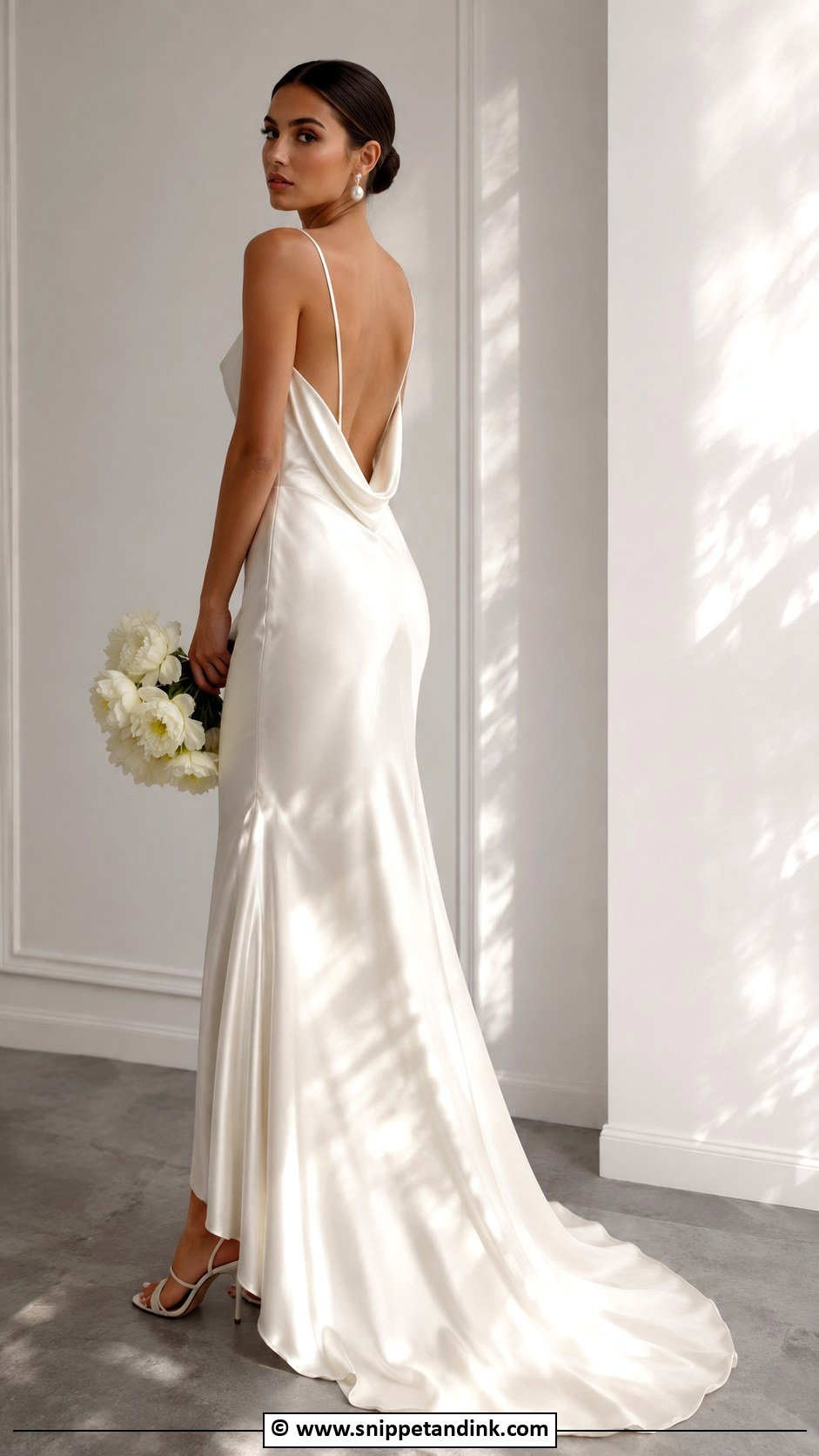
Satin slips are the gowns I see brides fall for and then panic over in the fitting room, because heavy satin shows every line underneath. Cut on the bias, it drapes close and moves with you, and a cowl or straight drop at the back keeps it clean. I always ask the seamstress about sewn-in cups at the first alteration appointment, since a strapless bra is out of the question. Pearl studs and a low bun are all it needs. A city venue or a rooftop suits the sleekness better than a field.
2. Low Back Lace Mermaid Wedding Dress
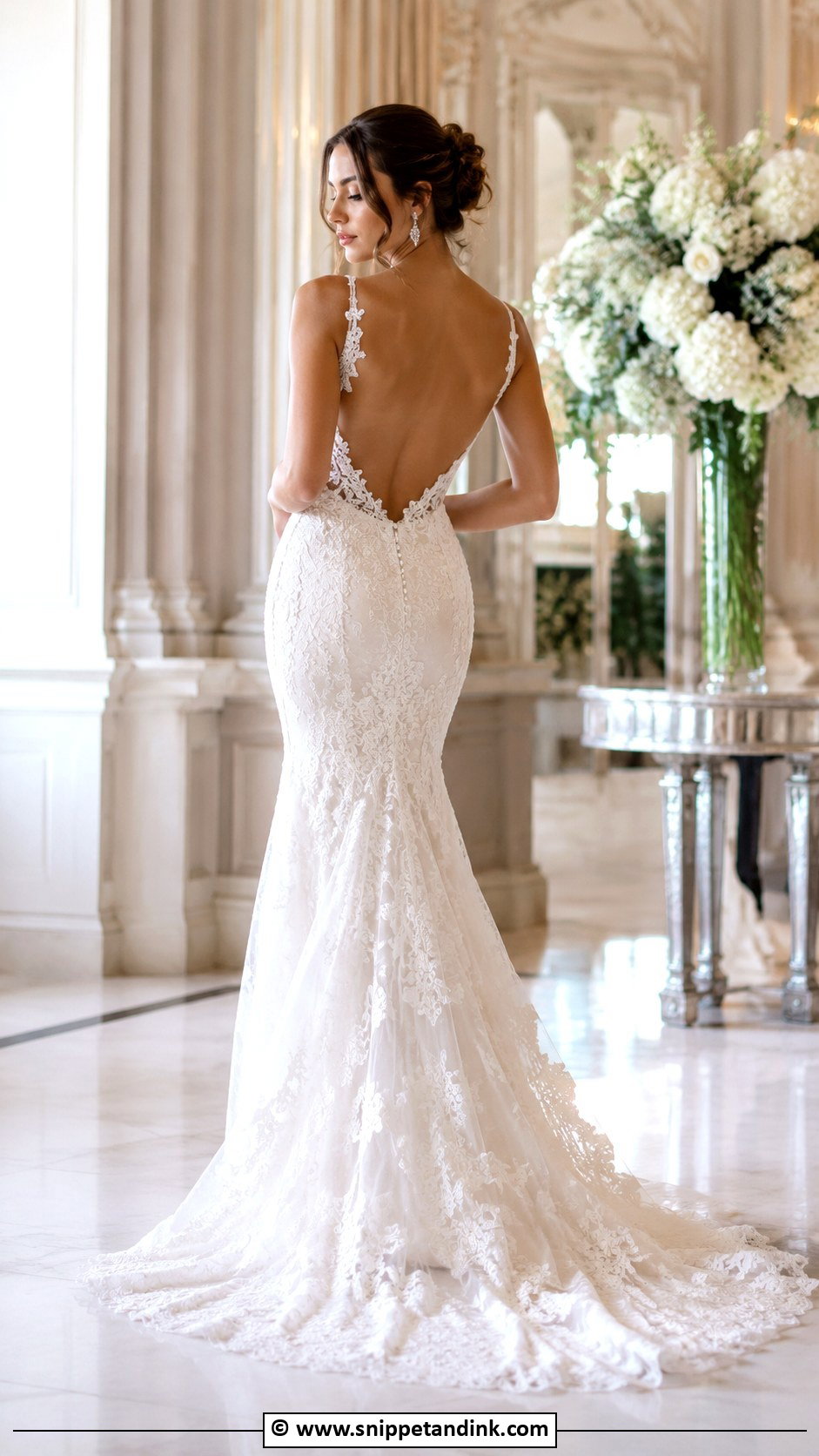
Lace mermaids hug through the hips and flare at or just below the knee, so the back cut has to hold a lot of structure. A deep V or a scoop with lace edging tends to sit flatter than a fully open back on this shape, because the lace gives the seamstress something to anchor. Sit down in it before you commit. Mermaids pull hard at the seat, and that tension travels up and lifts the back edge away from the skin. Keep the earrings small and let a fingertip veil fall just below the lace.
3. Low Back A Line Wedding Dress
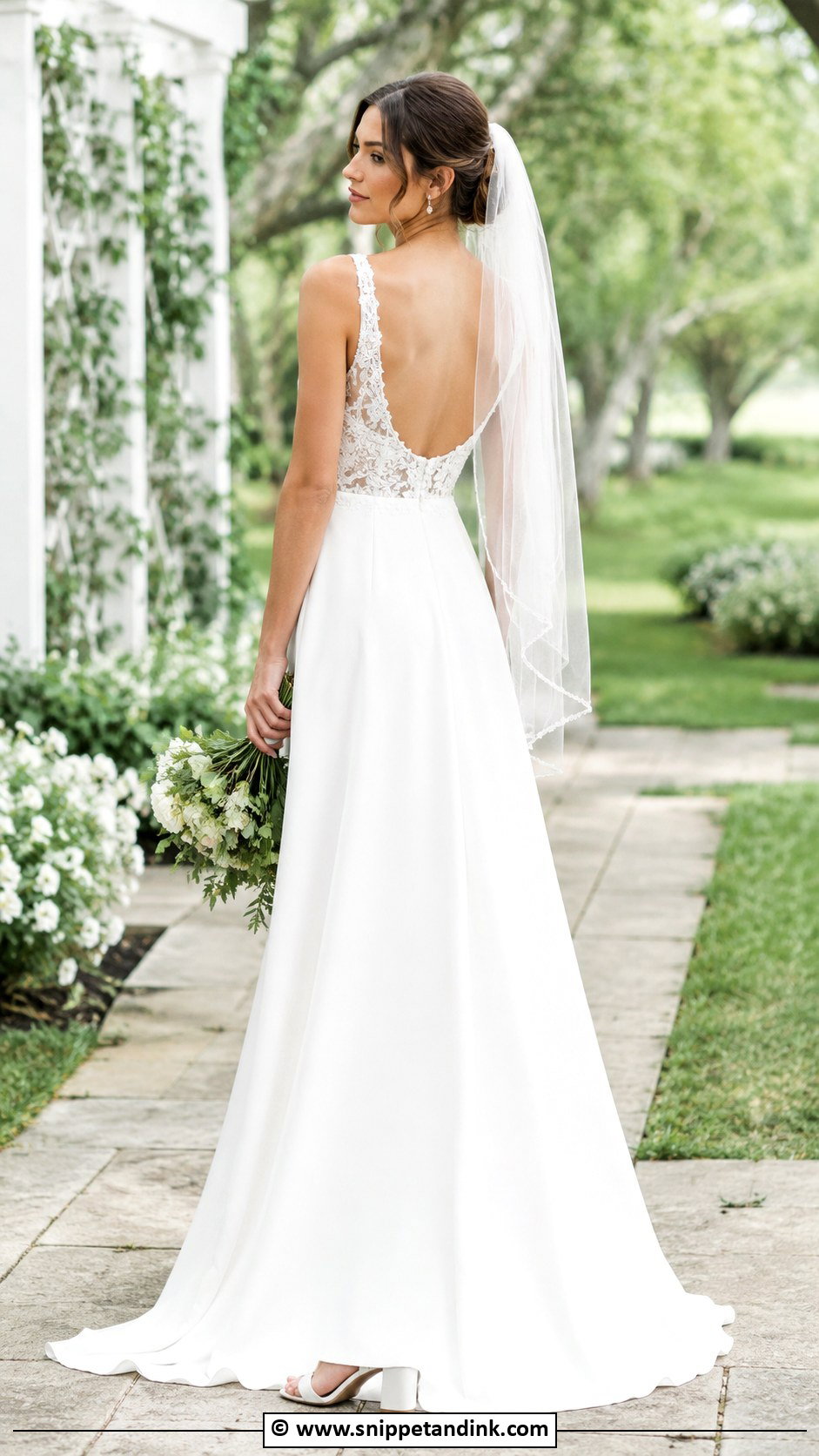
An A-line is where I start most first appointments. The bodice holds the waist, the skirt skims everything below, and you can walk, sit and dance without thinking about it. A low back adds the modern edge this classic shape sometimes lacks, and covered buttons running down a lace back are one of my favourite finishes for it. Garden and church venues suit it equally well. Soft curls pinned over one shoulder leave the back clear, and block heels help if the aisle is grass.
4. Low Back Crepe Wedding Dress
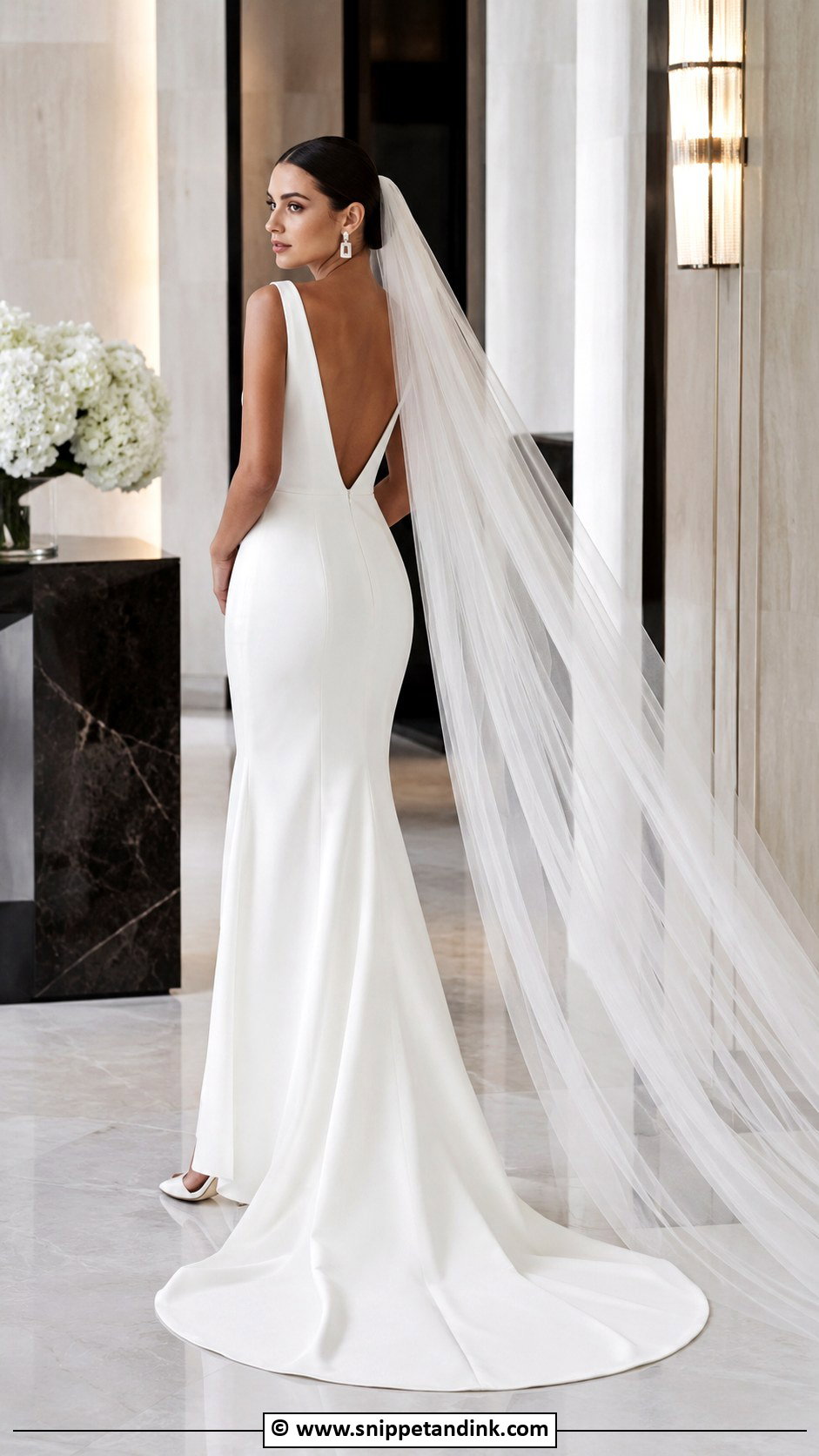
Crepe hides nothing and forgives little, which is exactly why I love it for a low back. The matte surface reads as sculpted in photos, and the back cut becomes the whole design. The fit has to be close to exact, so budget for one more fitting than you’d plan with lace. A deep V or a square back both work. Wear a long veil down the aisle and take it off for the reception so guests see the line again.
5. Low Back Ball Gown Wedding Dress
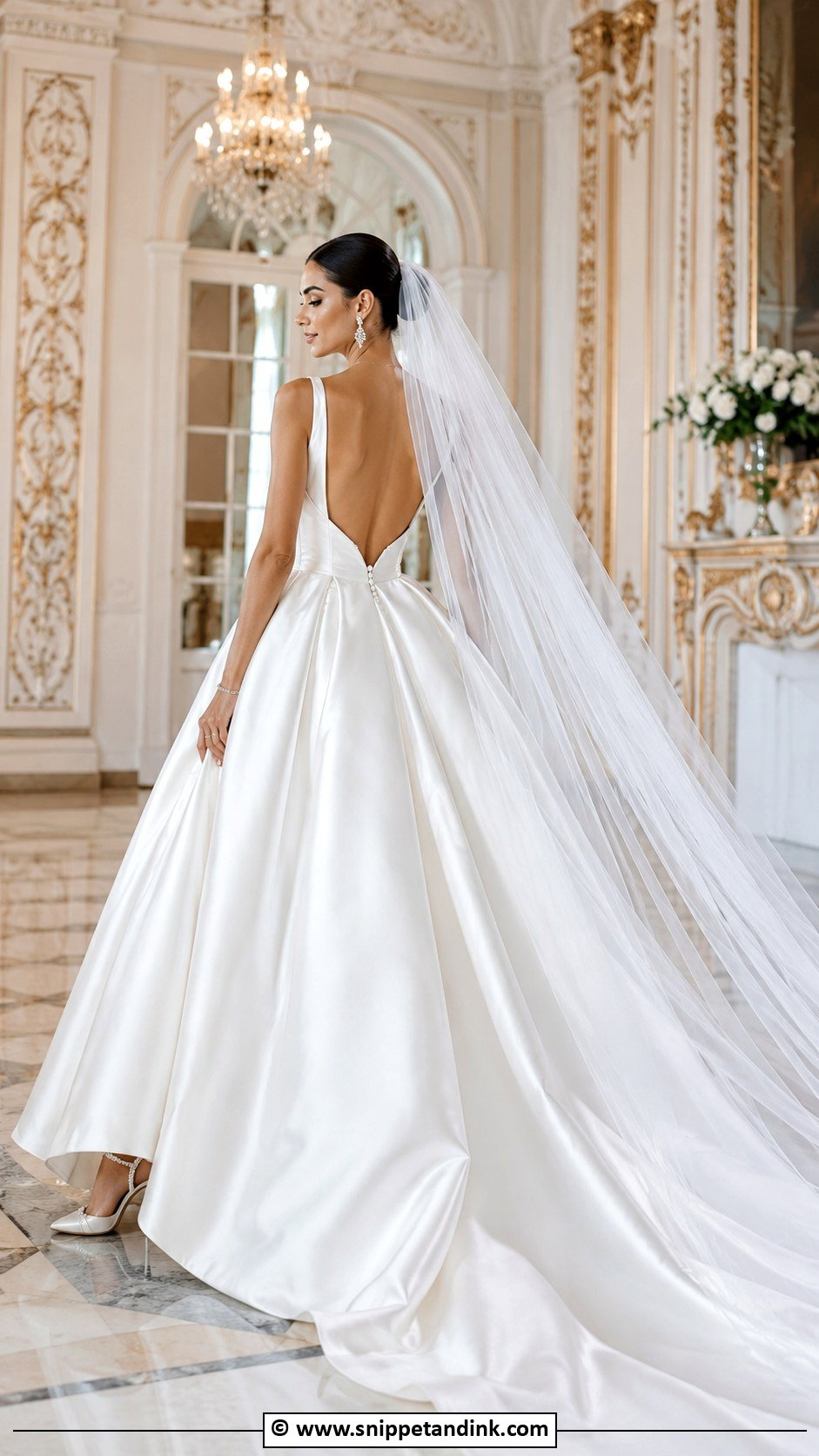
Ball gowns carry a lot of skirt weight, and that weight drags on the bodice all day. With an open back, the support has to come from boning and a waistband stay inside the gown, not from the straps. I check this by having the bride lift both arms at the fitting. If the bodice slides, it needs more structure before anything else gets touched. Once that’s sorted, a neat bun and a cathedral veil give you the grand aisle walk without the back disappearing.
6. Low Back Long Sleeve Wedding Dress
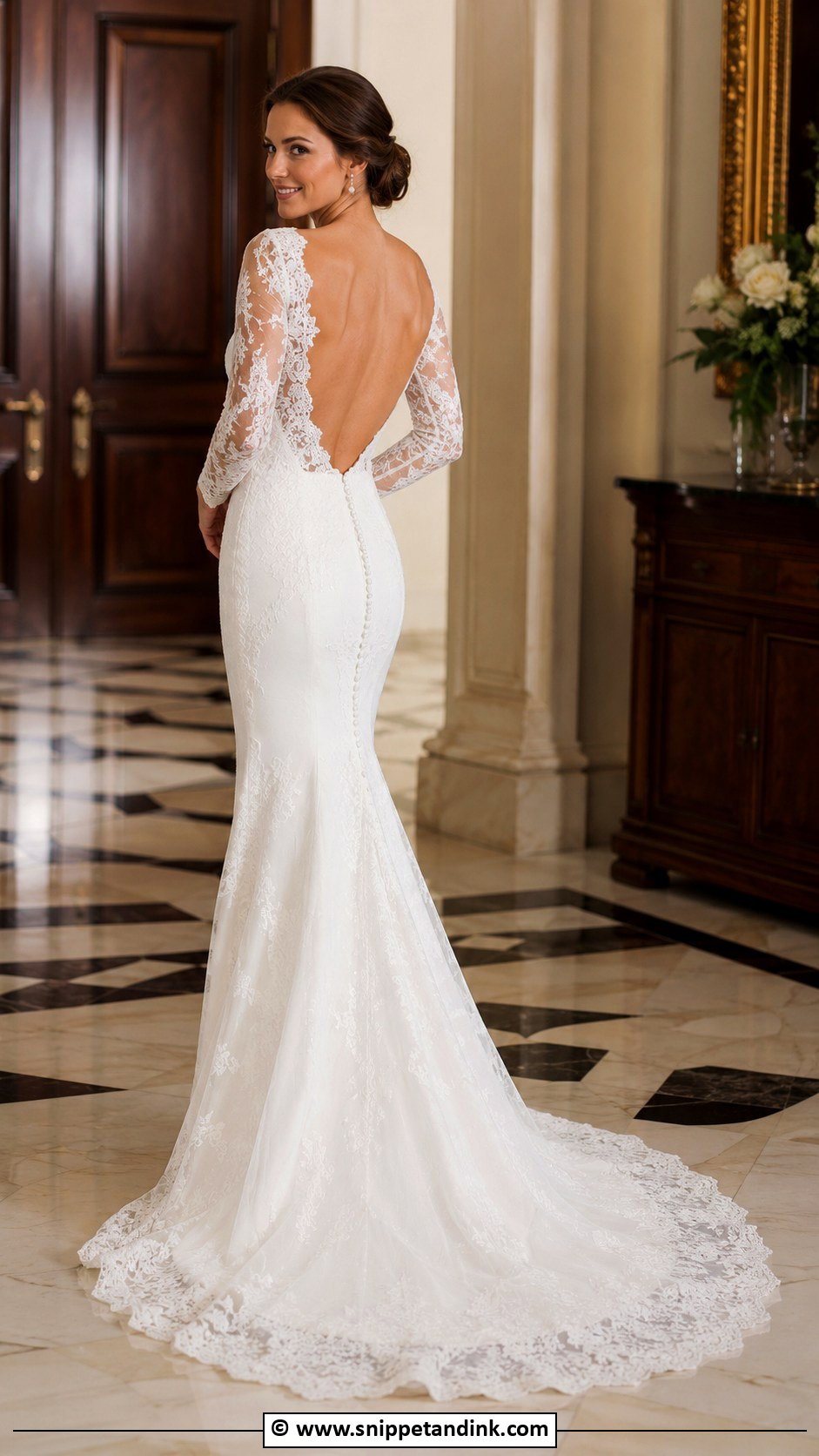
Long sleeves and a bare back are a combination I recommend for autumn and winter, when you want warmth on your arms but still want something to show. Lace sleeves feel romantic. Crepe sleeves feel sharper. The thing to test is arm movement: fitted sleeves pull across the shoulder blades when you reach forward, and that pull can drag a low back open. Sweep your hair to one side, keep the earrings small, and hug everyone at the fitting before you decide.
7. Low Back High Neck Wedding Dress
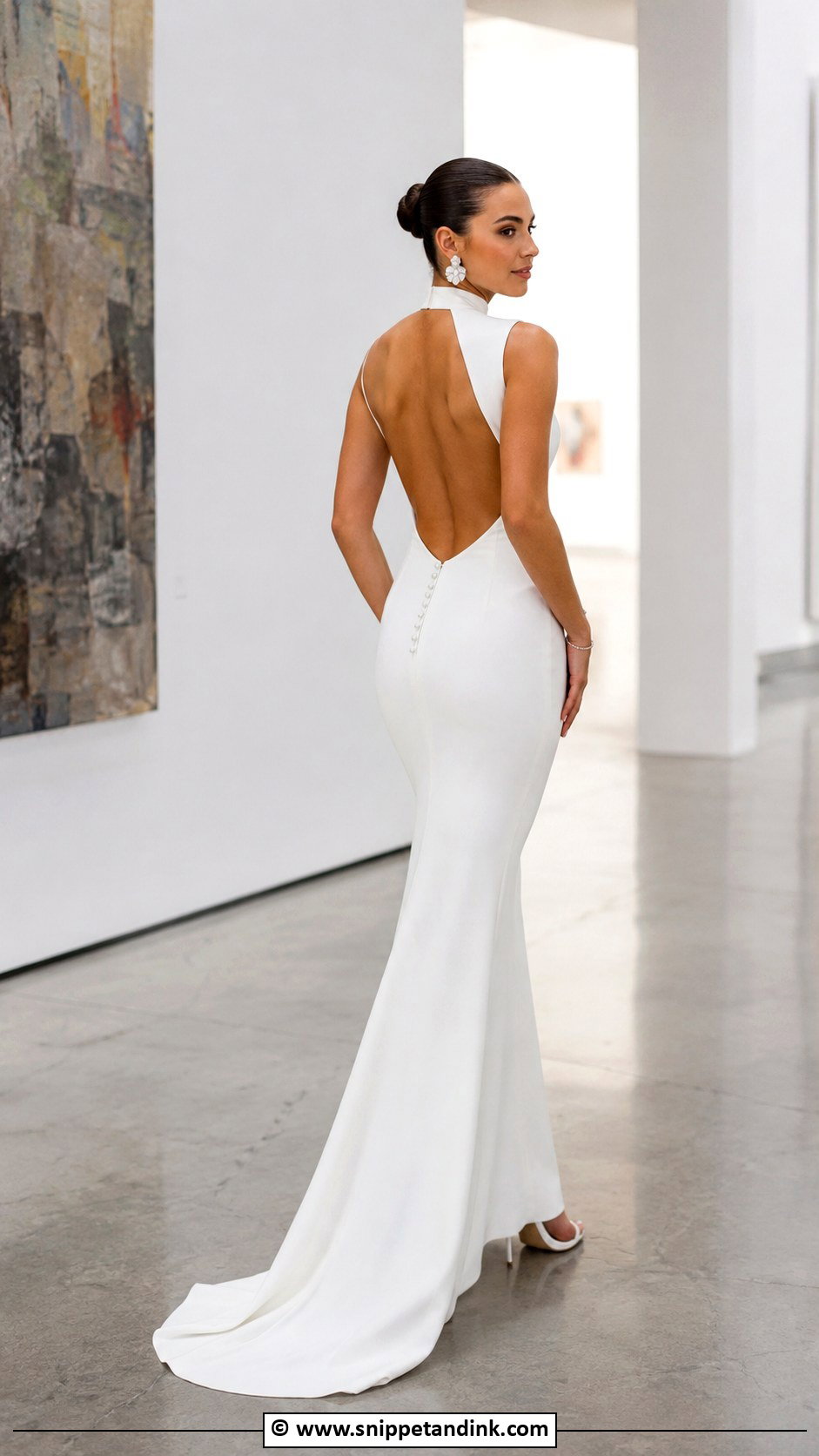
A high neck with an open back is my answer for a bride who wants a modest front and a dramatic exit. The neckline acts as the anchor point, which means the back can drop lower than it could on a strapless gown. Mikado and heavy crepe hold that shape best. Lace softens it. Because the neck is covered, skip the necklace altogether and put your hair in a smooth updo so both the collar and the back show clearly.
8. Low Back Halter Wedding Dress
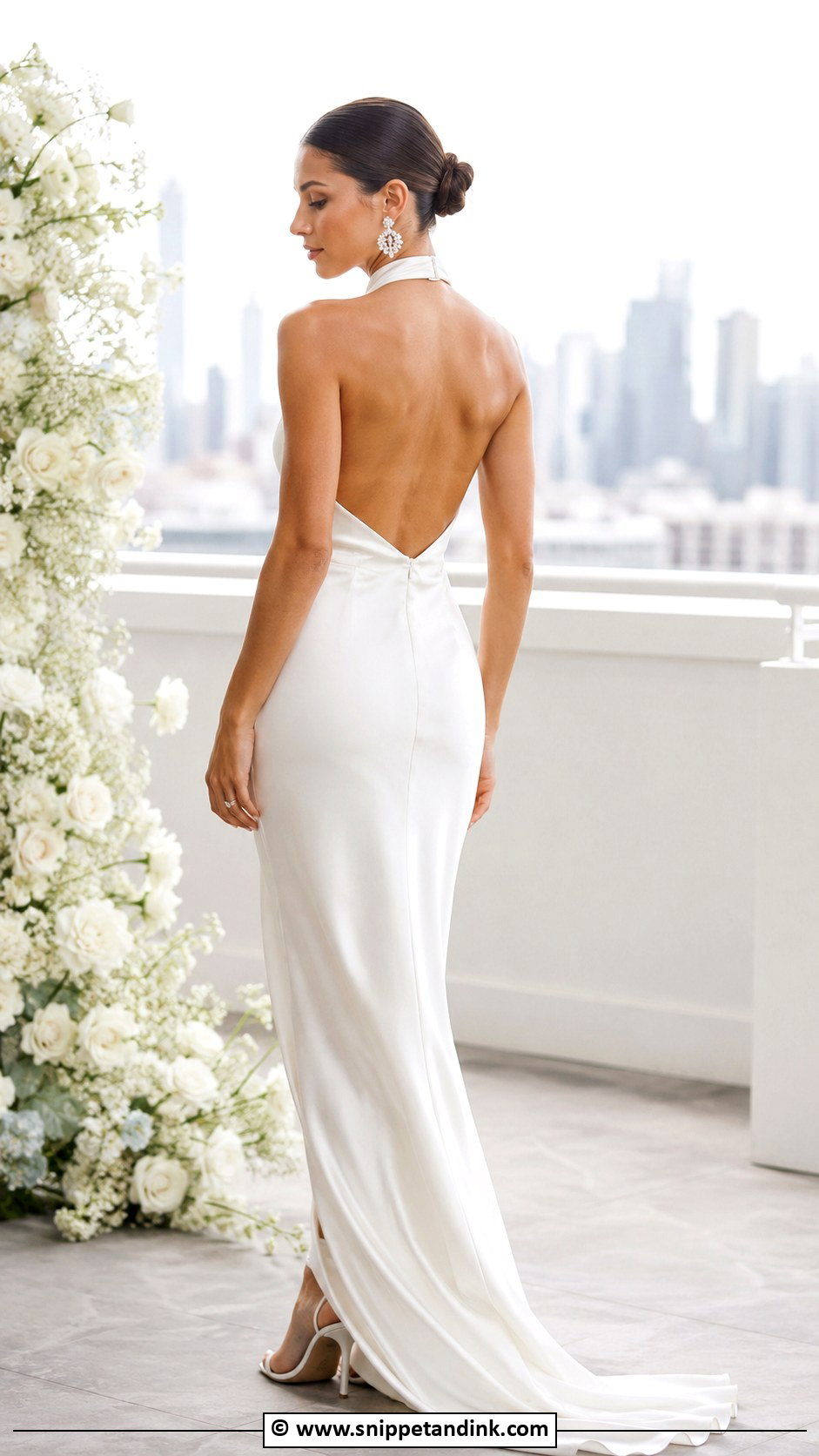
A halter ties the whole gown to your neck, and that matters more than people expect. A halter strap cut even slightly too tight can leave you with a headache by mid-afternoon. Ask for the strap to be adjusted while you sit, not while you stand. Get that right and it looks sleek in satin and relaxed in crepe, and it suits a beach or a rooftop. Skip the necklace and go for statement earrings, with a low ponytail or a smooth bun.
9. Low Back Off Shoulder Wedding Dress
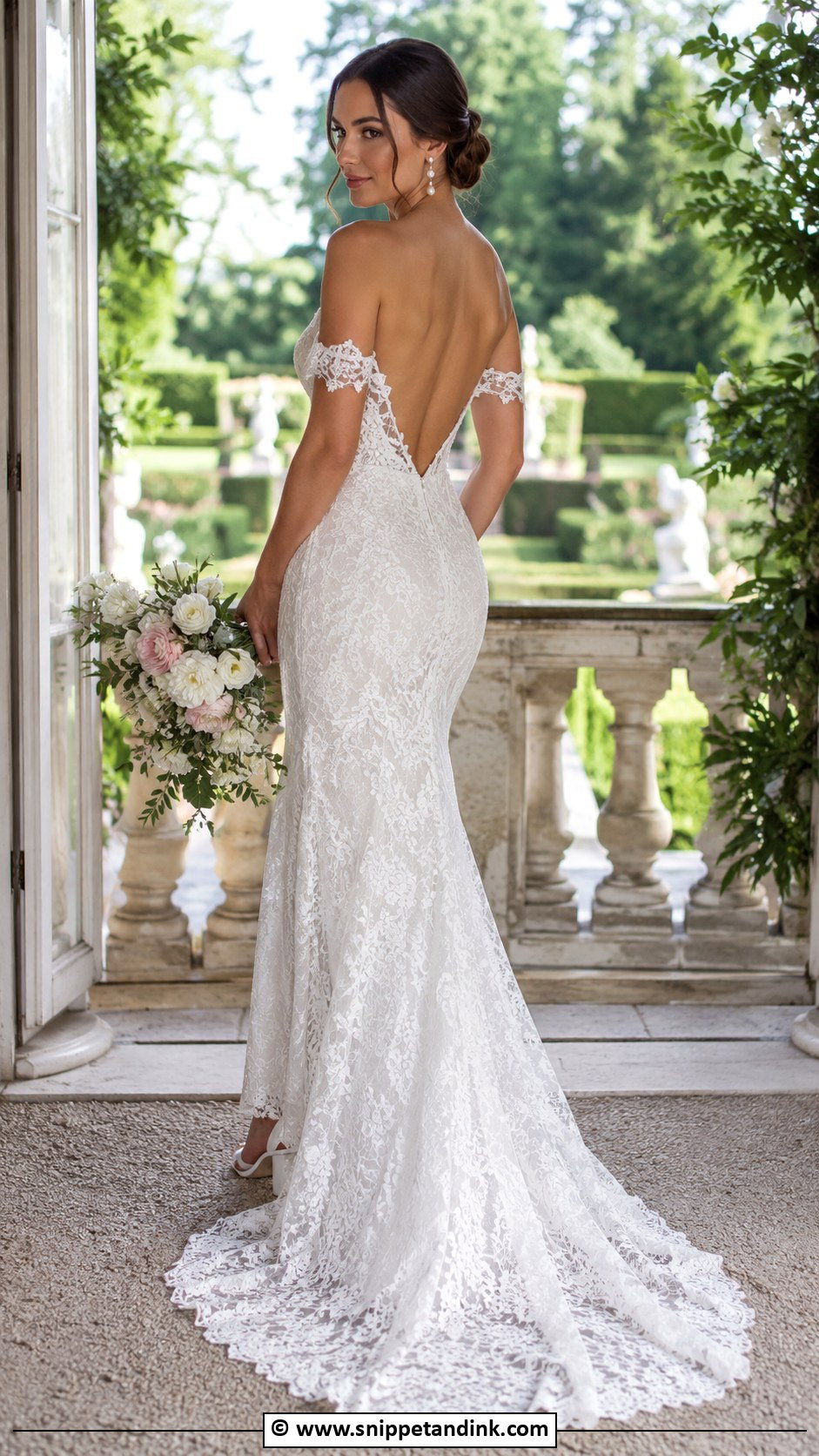
Off-shoulder sleeves need somewhere to sit, and on a low back they have nothing behind them, so the sleeves tend to creep up as you move your arms. I ask for a hidden elastic or a silicone grip strip inside the sleeve band. It’s a small alteration that saves you from tugging all night. The neckline shows the collarbones and the back finishes the line. A low chignon keeps both visible.
10. Low Back Square Neck Wedding Dress
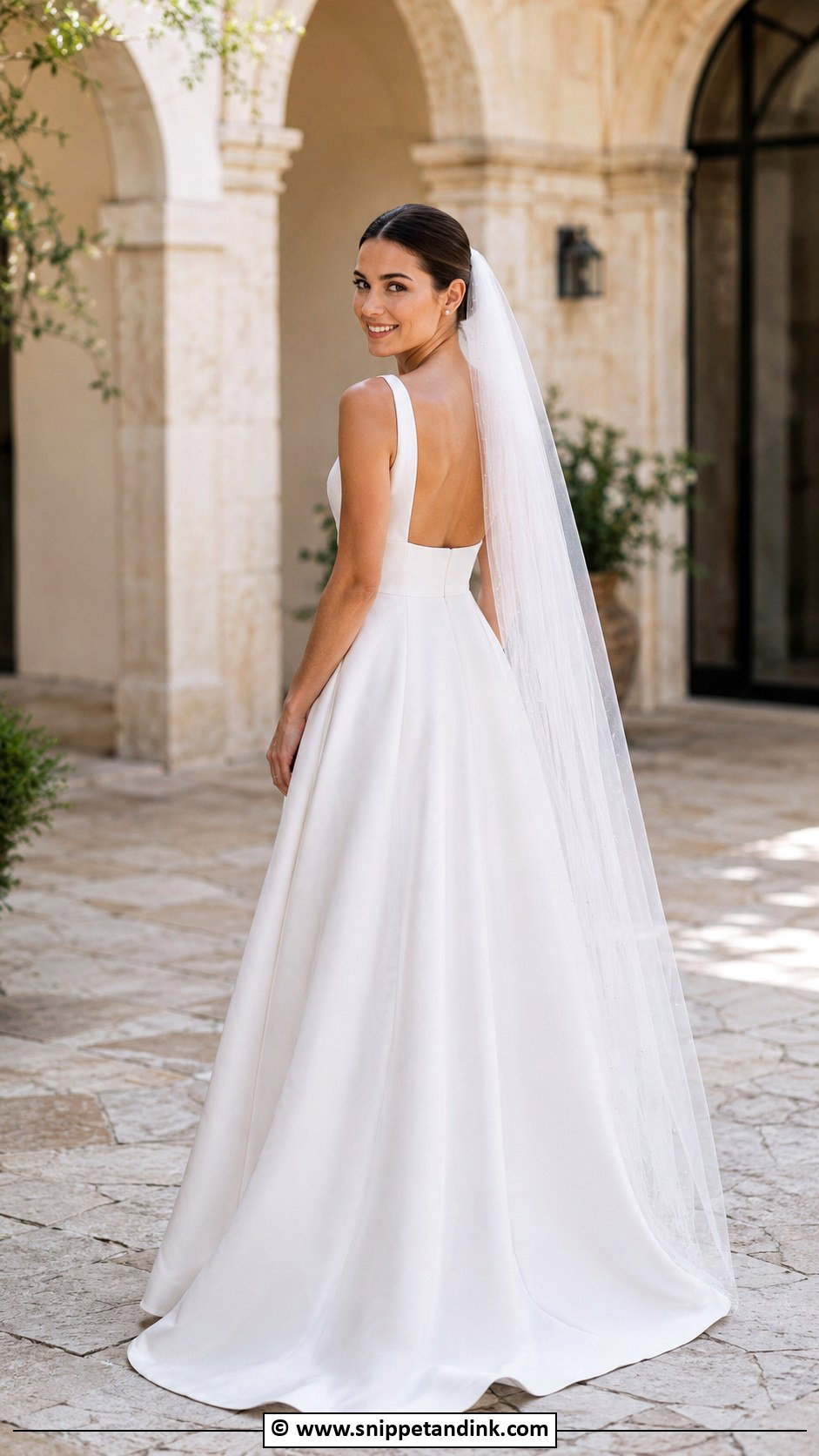
Square necks give the bust a structured frame, and a square or scoop back mirrors that in a way that looks deliberate. I find this shape flatters a wide range of body types because the straight lines balance the shoulders. Satin and mikado keep the corners crisp. Soft lace makes them wobble a little. Smooth bun, pearl studs, short veil, and you’re done.
11. Low Back V Neck Wedding Dress
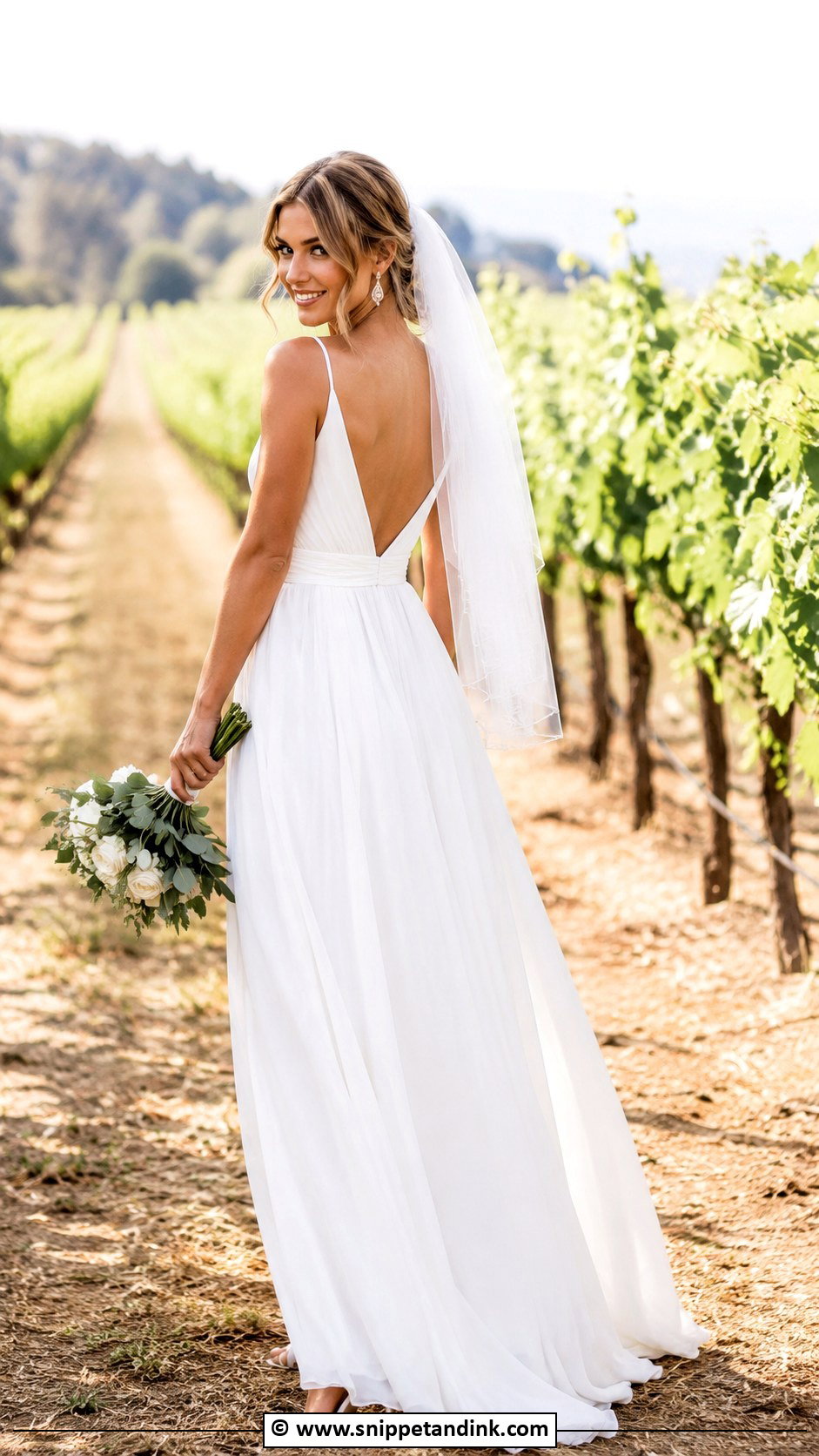
A V at the front and a V at the back is a lot of open skin, so support is the first conversation. Wider straps or a structured inner bodice keep the front from shifting when you move. Fabric changes the mood completely: chiffon reads as beachy, satin as evening, lace as classic. Leave the neck bare and attach the veil low enough that it doesn’t cover the back point.
12. Low Back Cowl Back Wedding Dress
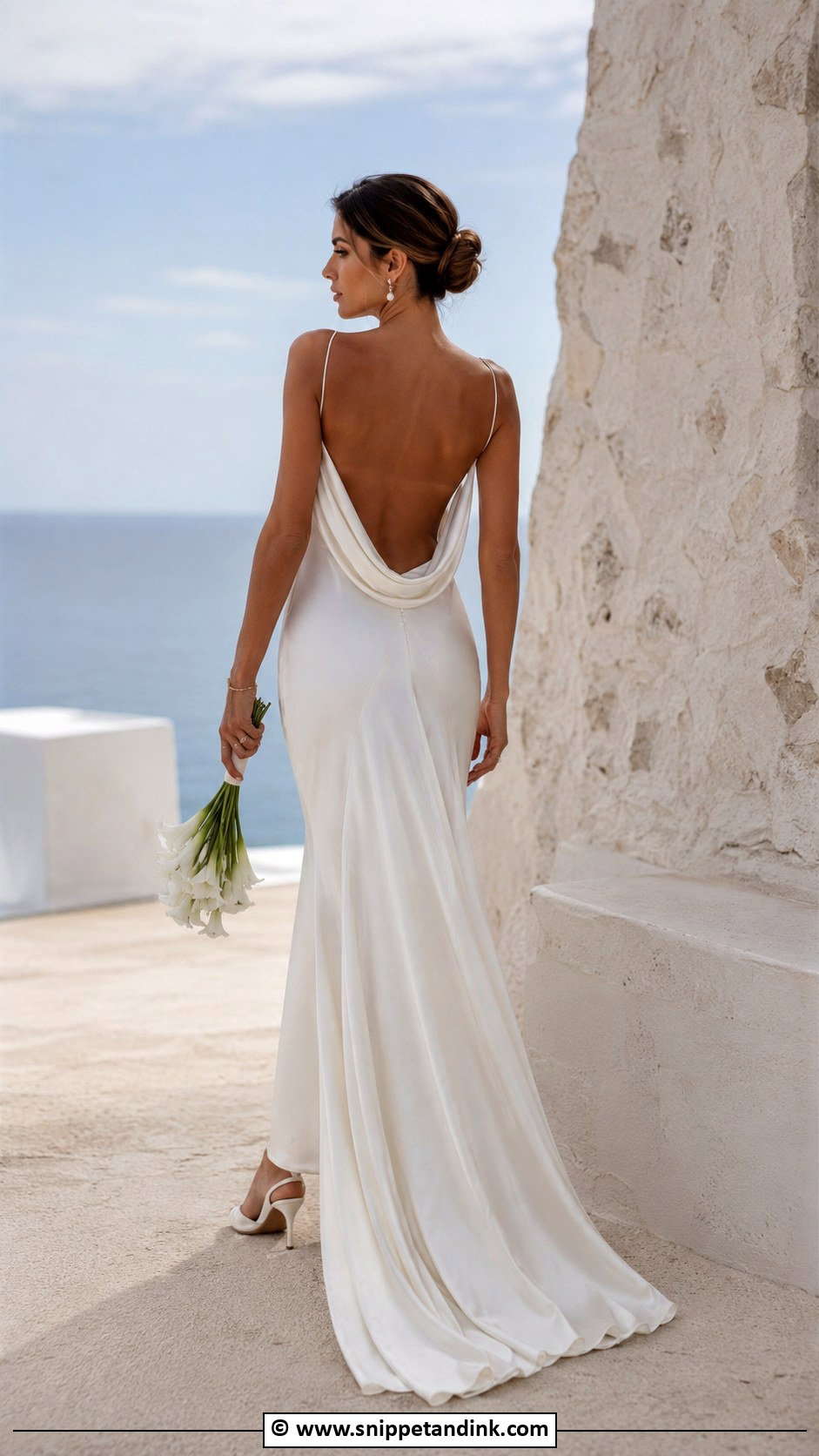
A cowl back is just bias-cut fabric folding under its own weight, so it only works in satin, silk or a fluid crepe that drapes. I check where the lowest fold lands while the bride is seated. Drape that looks soft standing can open too far when you lean back in a chair. The front can be completely plain with thin straps. Wear your hair up or tucked behind the shoulders, since loose hair hides the folds.
13. Low Back Boho Wedding Dress
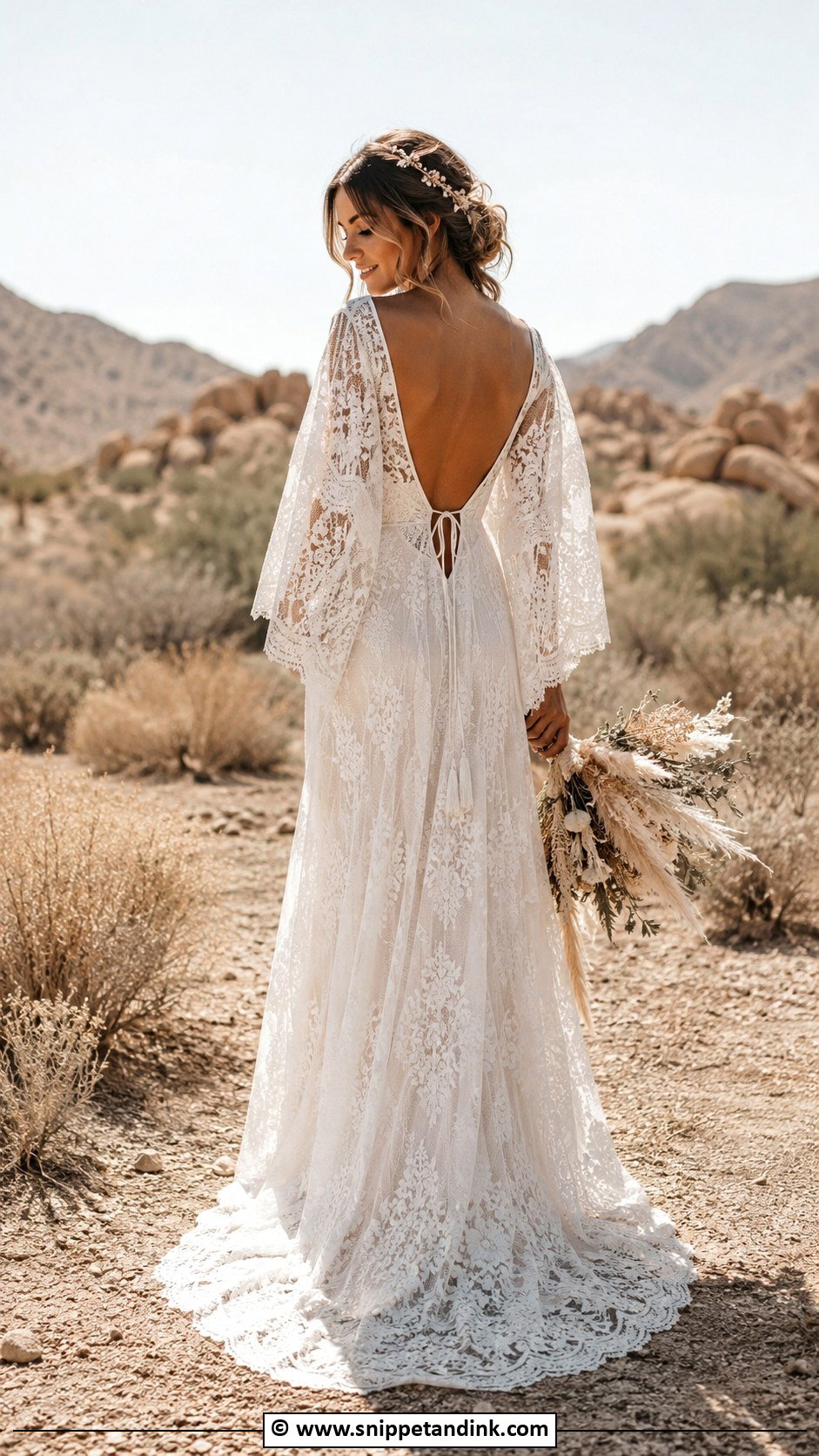
Boho gowns tend to be light and unlined, which feels lovely in summer heat but leaves very little structure to hold an open back in place. Crochet lace and loose embroidery can also stretch over a long day. I’d ask whether the back edge is stabilised with tape or a facing. Wear block heels or flat sandals if the ground is rough, and pin a loose updo with a few small hair pins rather than one heavy clip.
14. Low Back Beach Wedding Dress
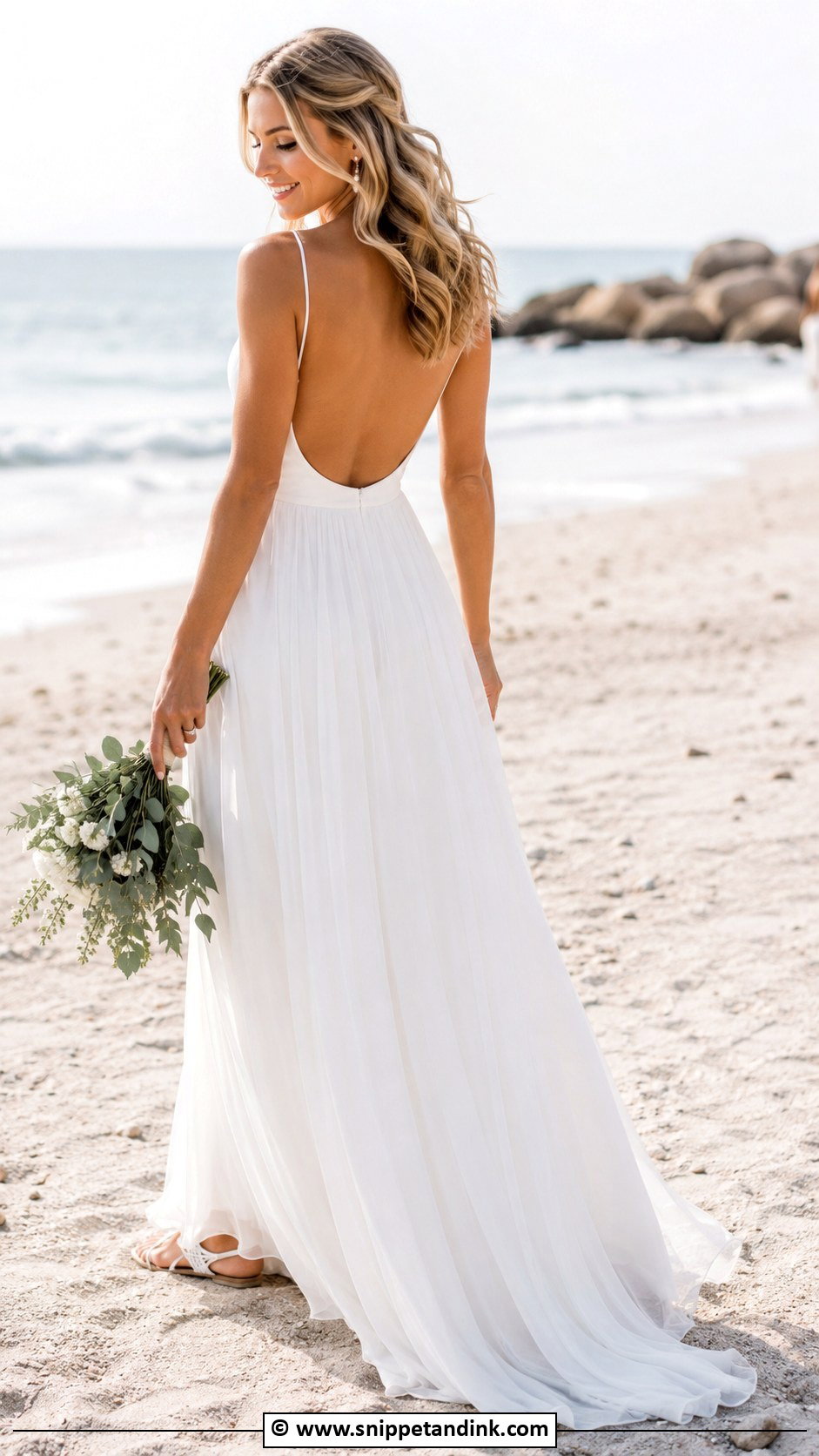
At the beach, wind is the real problem. Chiffon and soft crepe move well in a breeze without billowing. Heavy satin catches the wind and drags in sand. A scoop or V back looks right against water, and I’d choose a skirt that ends at the floor rather than one with a train. Skip the long veil if it’s gusty. Soft waves and bare sandals finish it without fuss.

15. Low Back Garden Wedding Dress
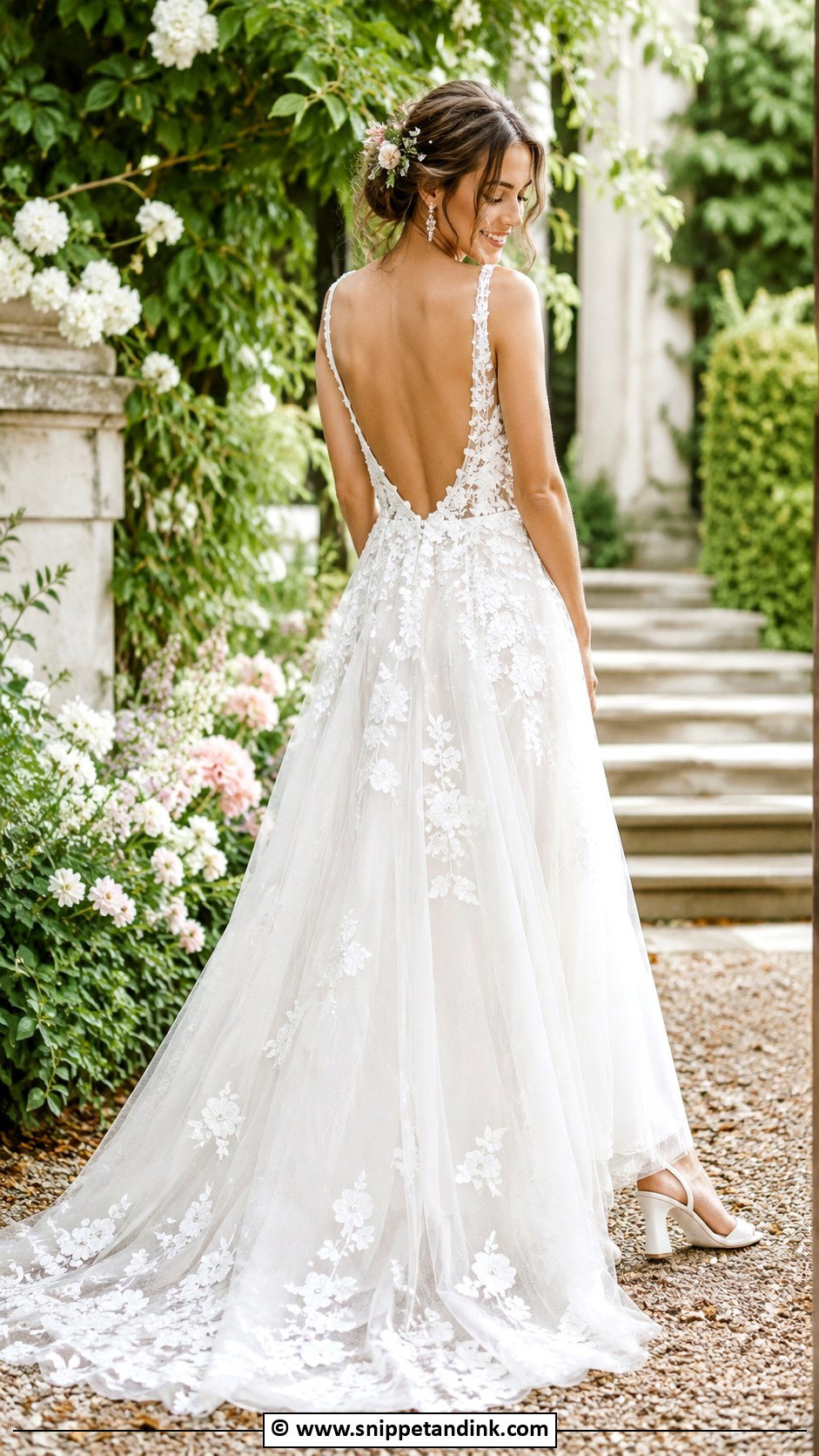
Garden light is soft and bright, and floral lace or light tulle picks it up well. An A-line or sheath moves comfortably over grass and stone paths. My practical note is footwear: stilettos sink into lawns, so get block heels or bridal flats and have the hem measured in those exact shoes. A low bun with a couple of floral pins keeps the back clear and ties you to the setting.
16. Low Back Minimalist Wedding Dress
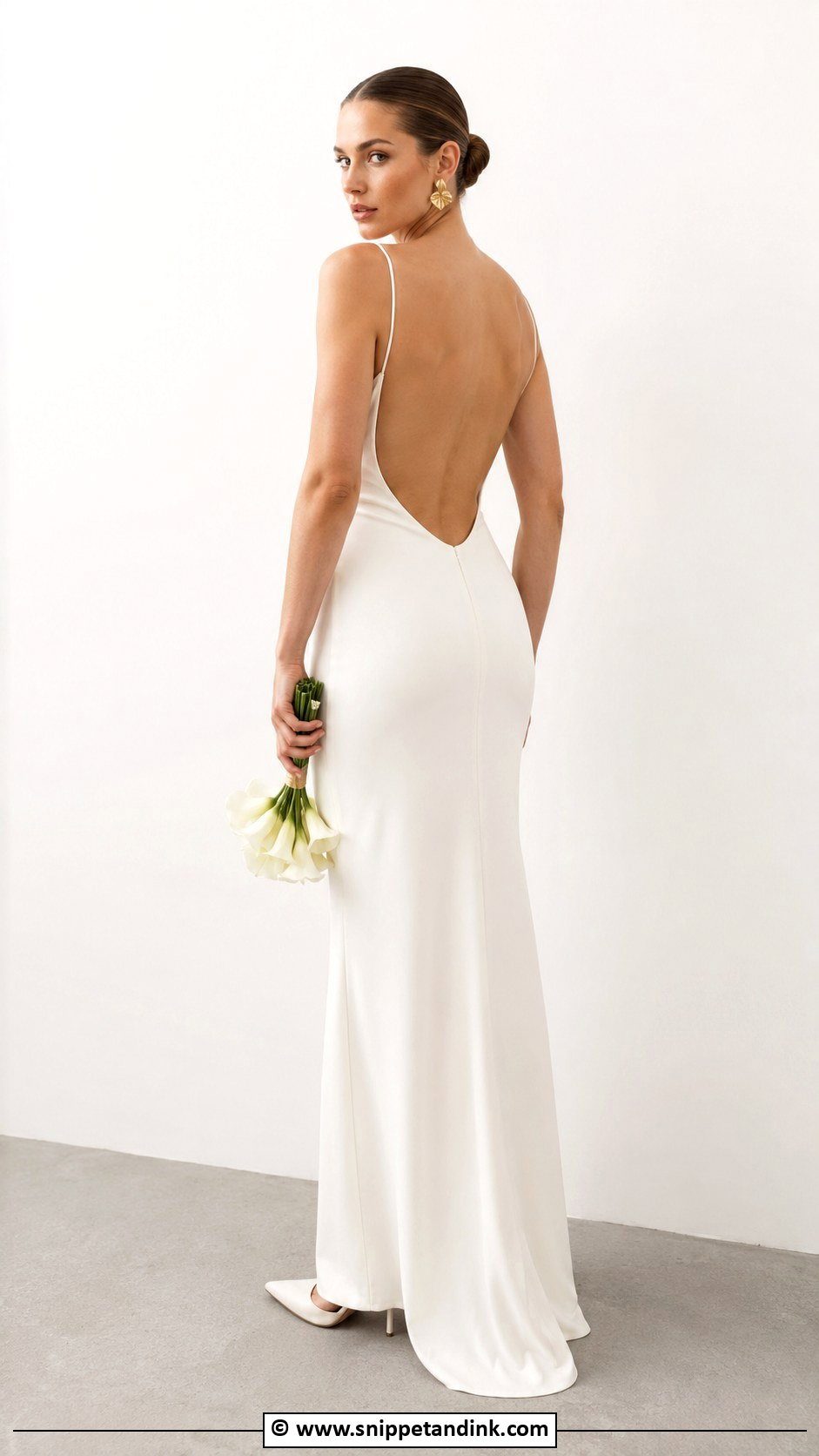
Minimal gowns put all the attention on fit, so I spend more alteration time on them than on anything beaded. Without lace or sparkle to distract, a back edge that gapes by even a few millimetres shows up in every photo. Crepe, satin and mikado are the usual fabrics. A square, scoop or deep V back carries the whole design. Sculptural earrings and a sleek hairstyle keep it feeling intentional rather than plain.
17. Low Back Plus Size Wedding Dress
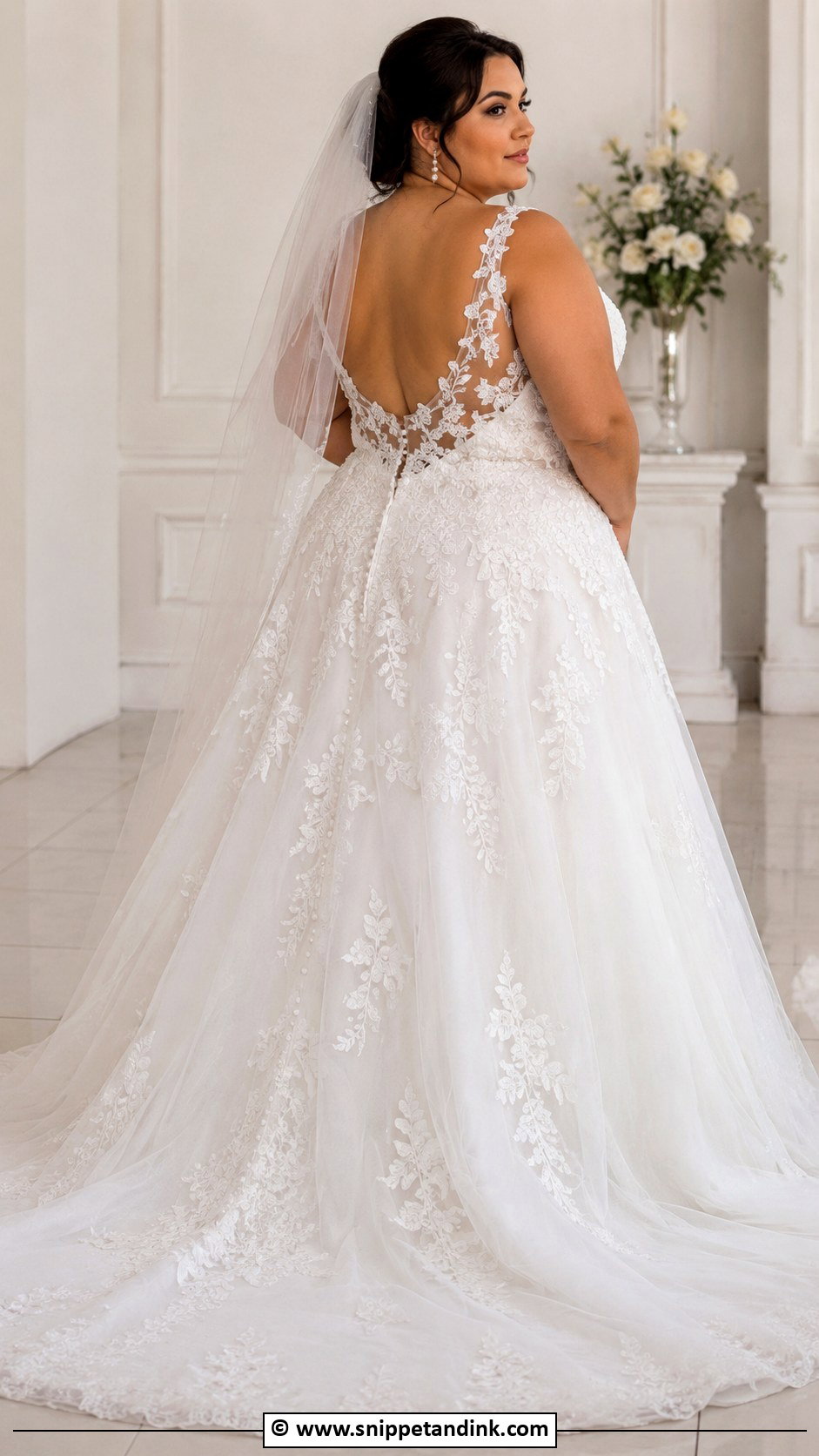
A low back plus size wedding dress works when the support is built into the gown, and I won’t fit one without it. That means a corseted or boned bodice, wider straps, sewn-in cups and often an illusion panel that gives the look of skin while holding everything in place. A-line, fit and flare and ball gown shapes define the waist and leave room to breathe. At the fitting, sit down, hug someone and dance for a minute. If you’re adjusting anything, the support isn’t finished yet.
18. Low Back Petite Wedding Dress
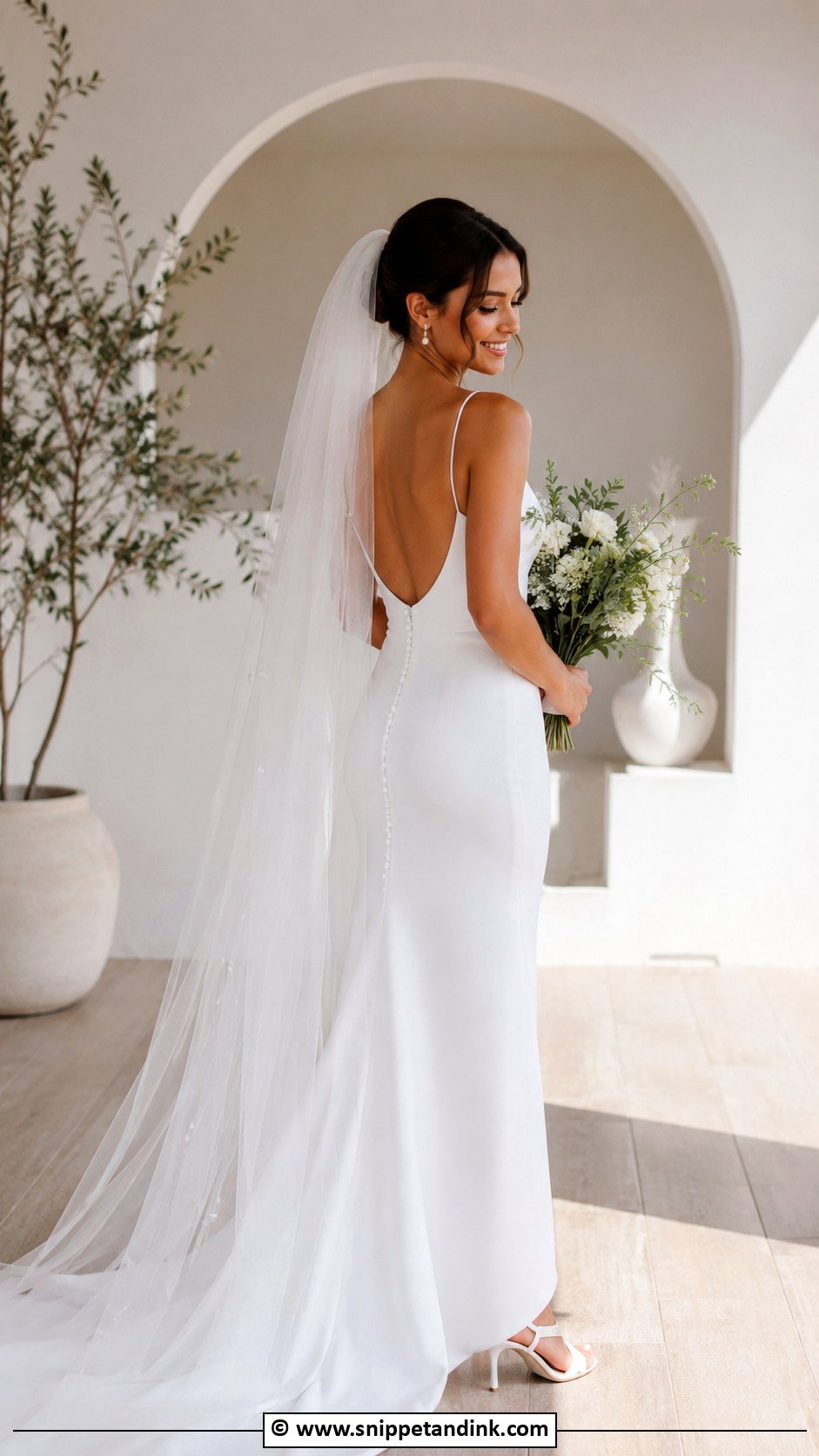
For a petite frame, the back cut has to be scaled down along with everything else. A scoop that drops to the waist on a taller bride can reach the hips on you. I’d look for a sheath or slim A-line in a light fabric, with vertical seams that draw the eye up. Keep skirt volume modest. A veil that falls a little past the hem adds length without bulk.
19. Low Back Sheath Wedding Dress
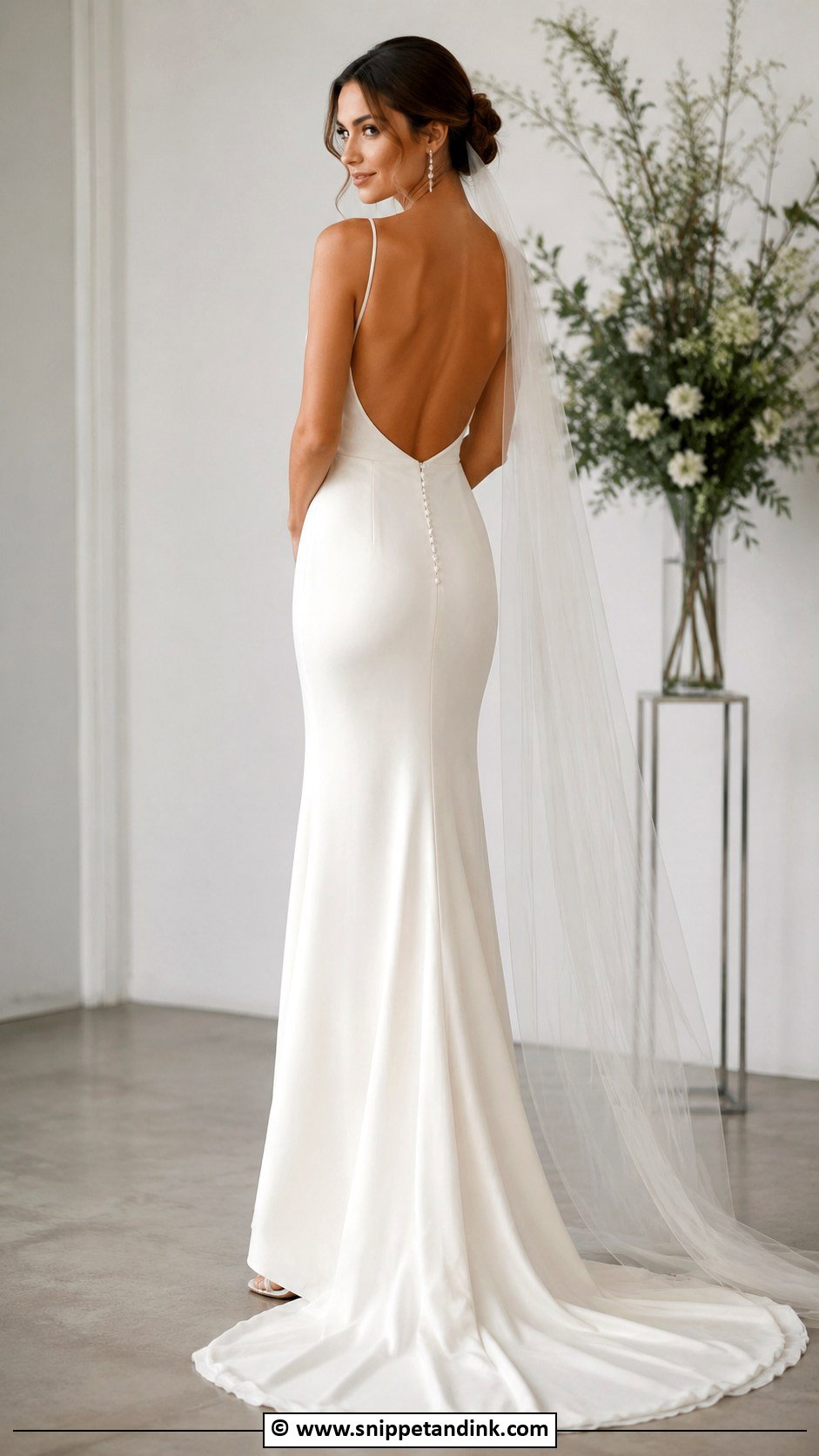
A low back sheath wedding dress follows the body in a straight line without a flare, so the back becomes the only real detail. Stretch crepe and satin drape well. Lace adds texture. The thing that goes wrong is walking: a narrow skirt needs a back slit or a short train to let you take full steps. Test the stride at the fitting. Long veils and simple heels sit nicely with it at a small venue or a courthouse.
20. Low Back Fit And Flare Wedding Dress
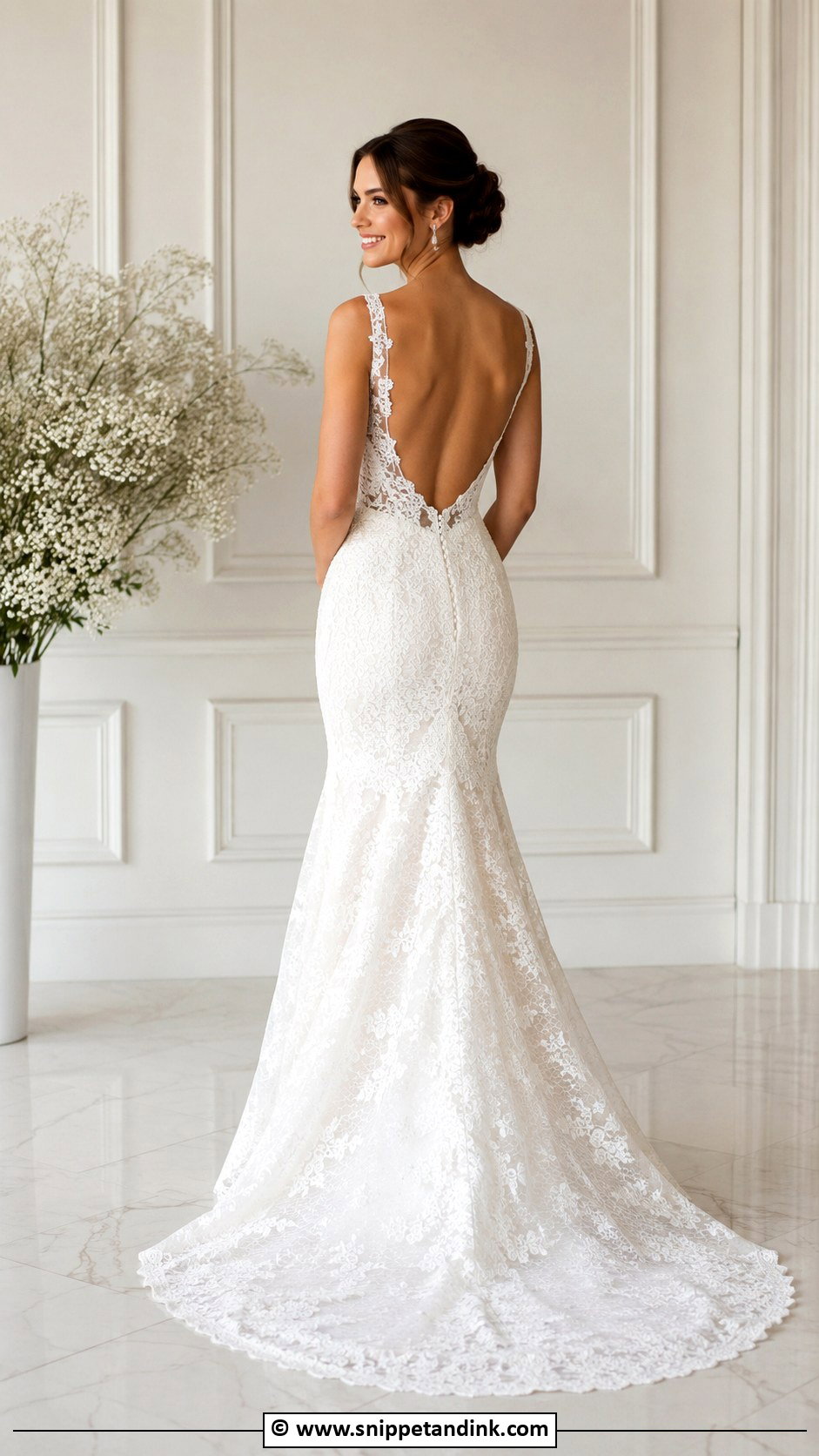
A low back fit and flare wedding dress releases the skirt at mid-thigh, which makes it far easier to sit and dance in than a mermaid. You still get the curve through the hips. The open back pairs naturally with that shape, and the veil comb should go low on the head so the fabric falls past the back edge instead of over it. Lace, crepe or beading all work here depending on how formal the evening is.
21. Low Back Tulle Wedding Dress
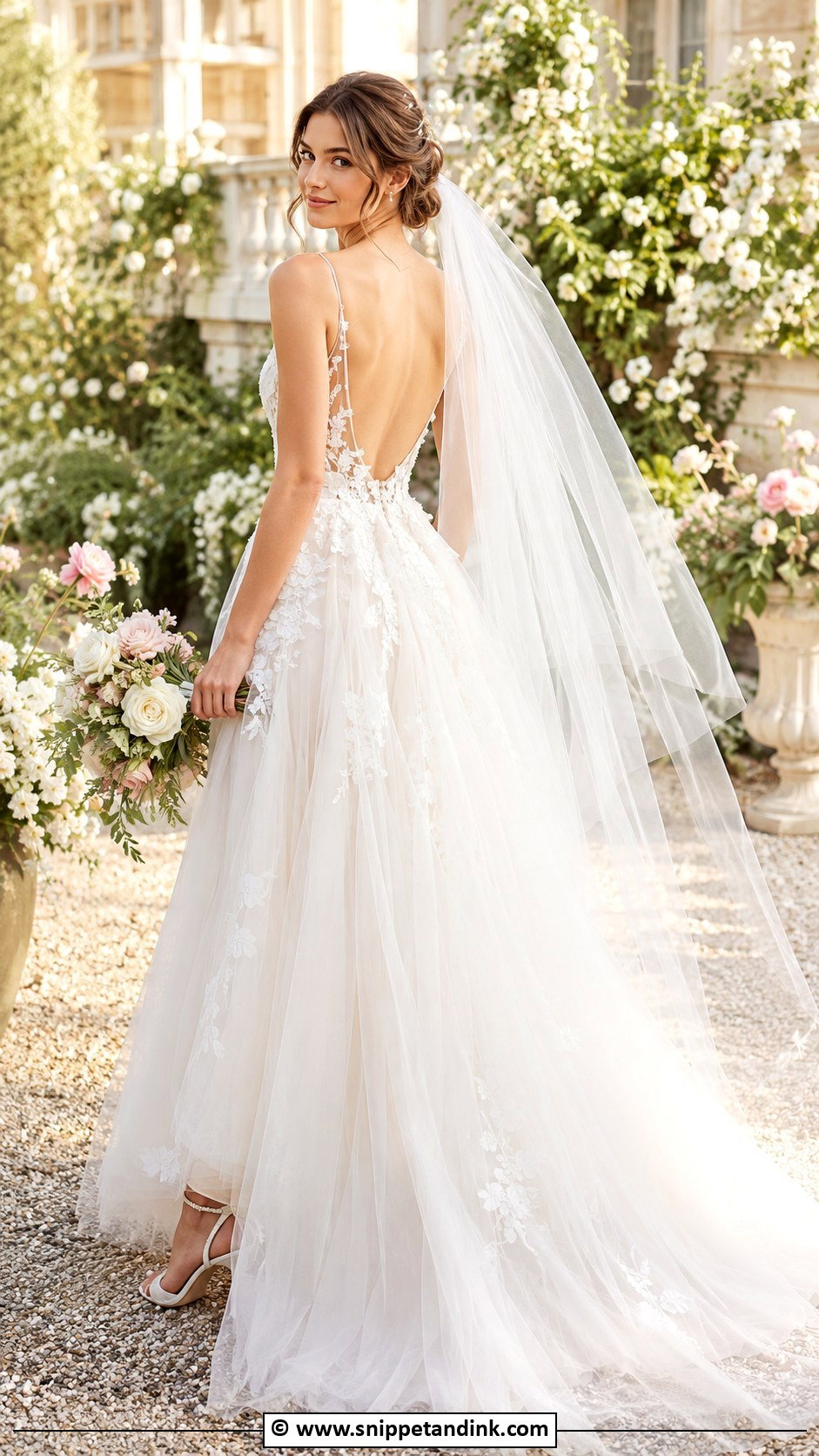
Tulle is light, but layers of it still add up, and an open back has to hold the skirt’s weight from the waistband. The other tulle problem is snagging. It catches on rough wood, brick and the hooks of other people’s jewellery. I always ask for a sturdy bustle with ribbon loops rather than tiny hooks. Floral appliqué softens it. Plain tulle looks cleaner. A soft bun and a short veil keep the mood light.
22. Low Back Beaded Wedding Dress
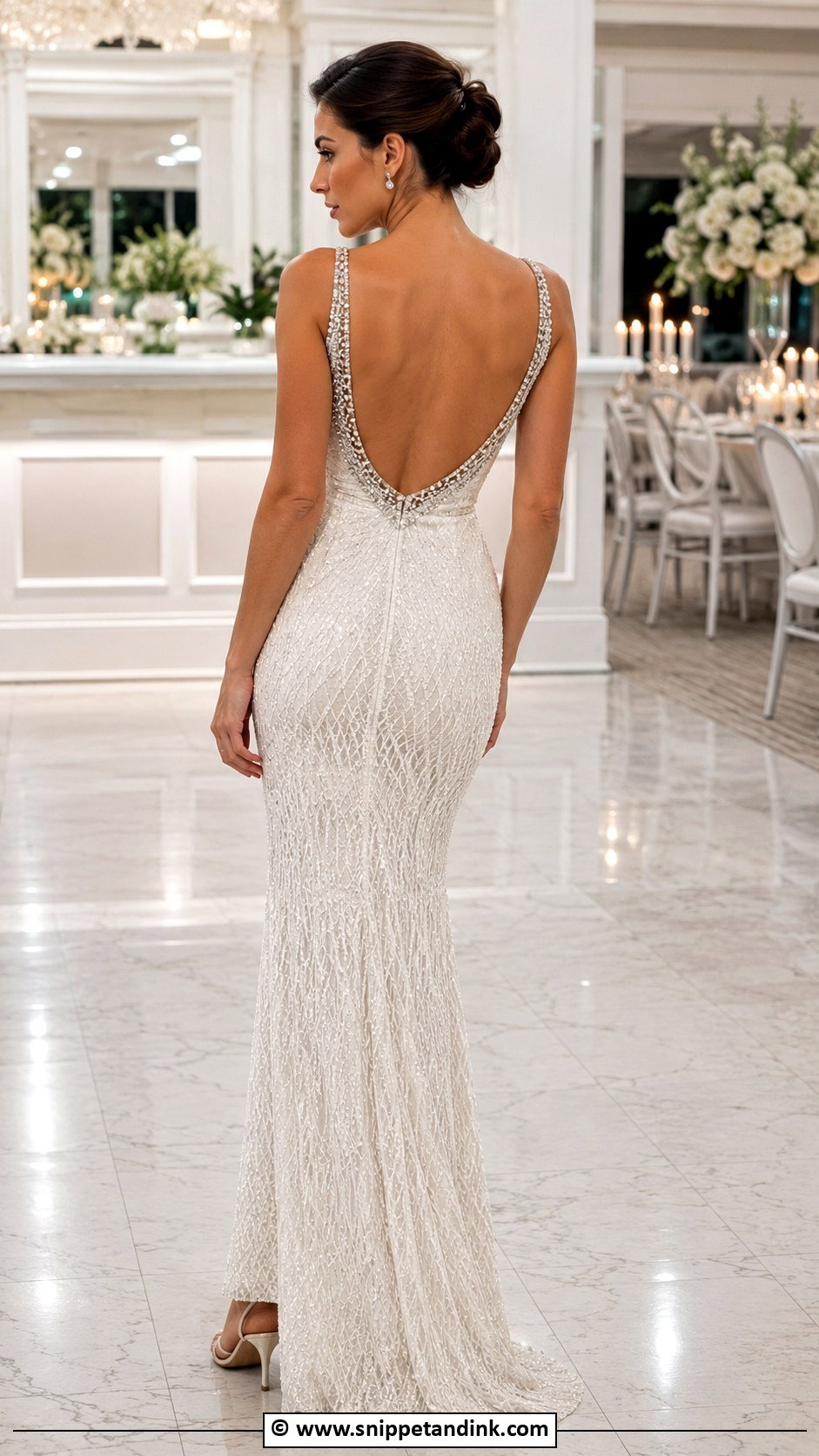
Beading adds weight, and that weight is the reason I look at where it sits before I look at the pattern. Beads concentrated along the back edge or straps pull the fabric down and outward as the day goes on. Spread across the bodice, they behave much better. A sheath or fit and flare carries beading well. Keep jewellery to small earrings, because the dress is already doing the sparkling.
23. Low Back Floral Lace Wedding Dress
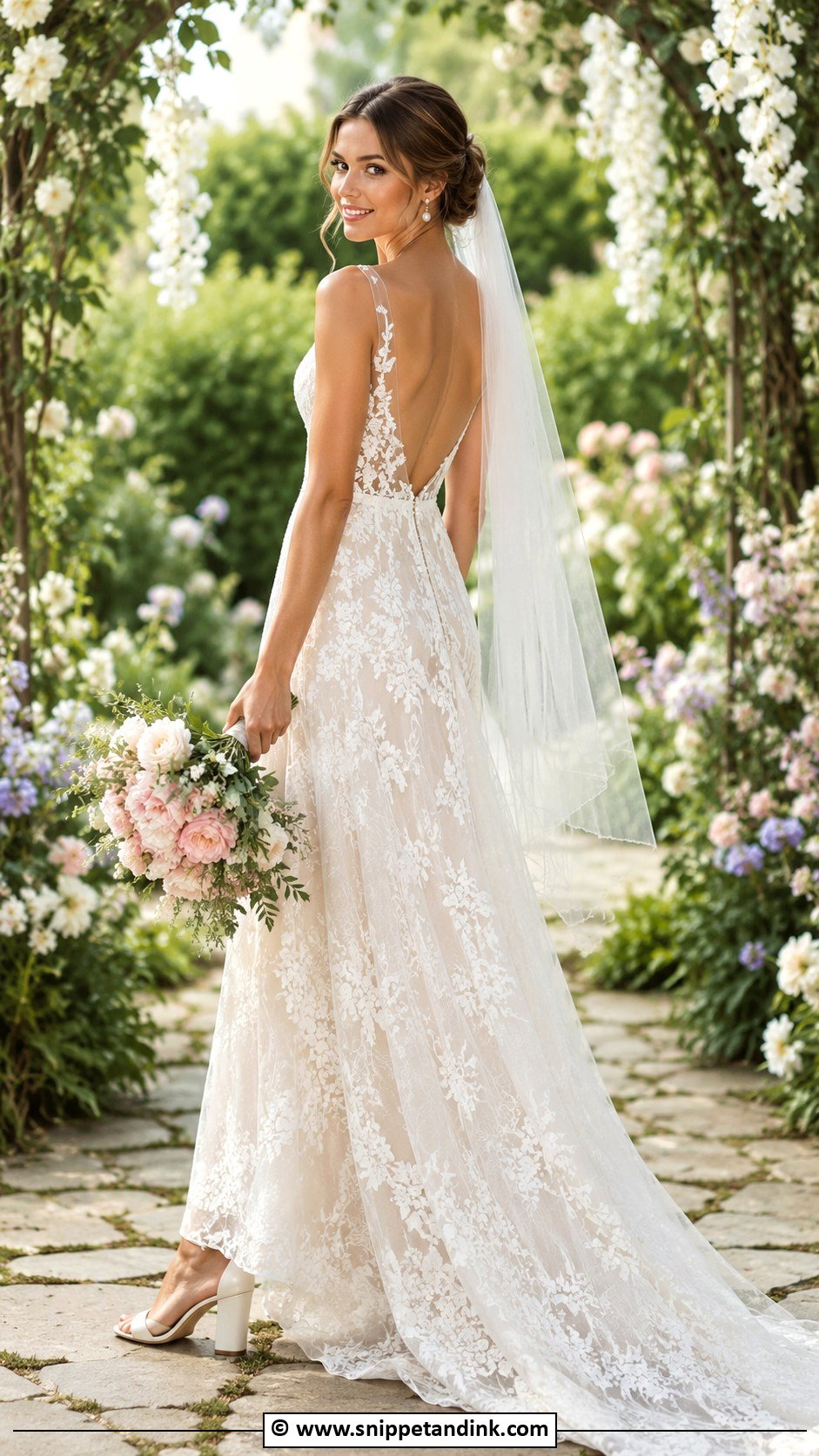
Floral lace with a low back gives you texture and some air at the same time. Heavier, three-dimensional lace has more presence and also more weight, while flat Chantilly-style lace sits closer to the skin. If you’re unsure about how much skin to show, an illusion panel underneath the lace is a good compromise. Spring and garden weddings suit this one best. Pearl earrings and a loose, natural bouquet keep it from looking fussy.
24. Low Back Illusion Wedding Dress
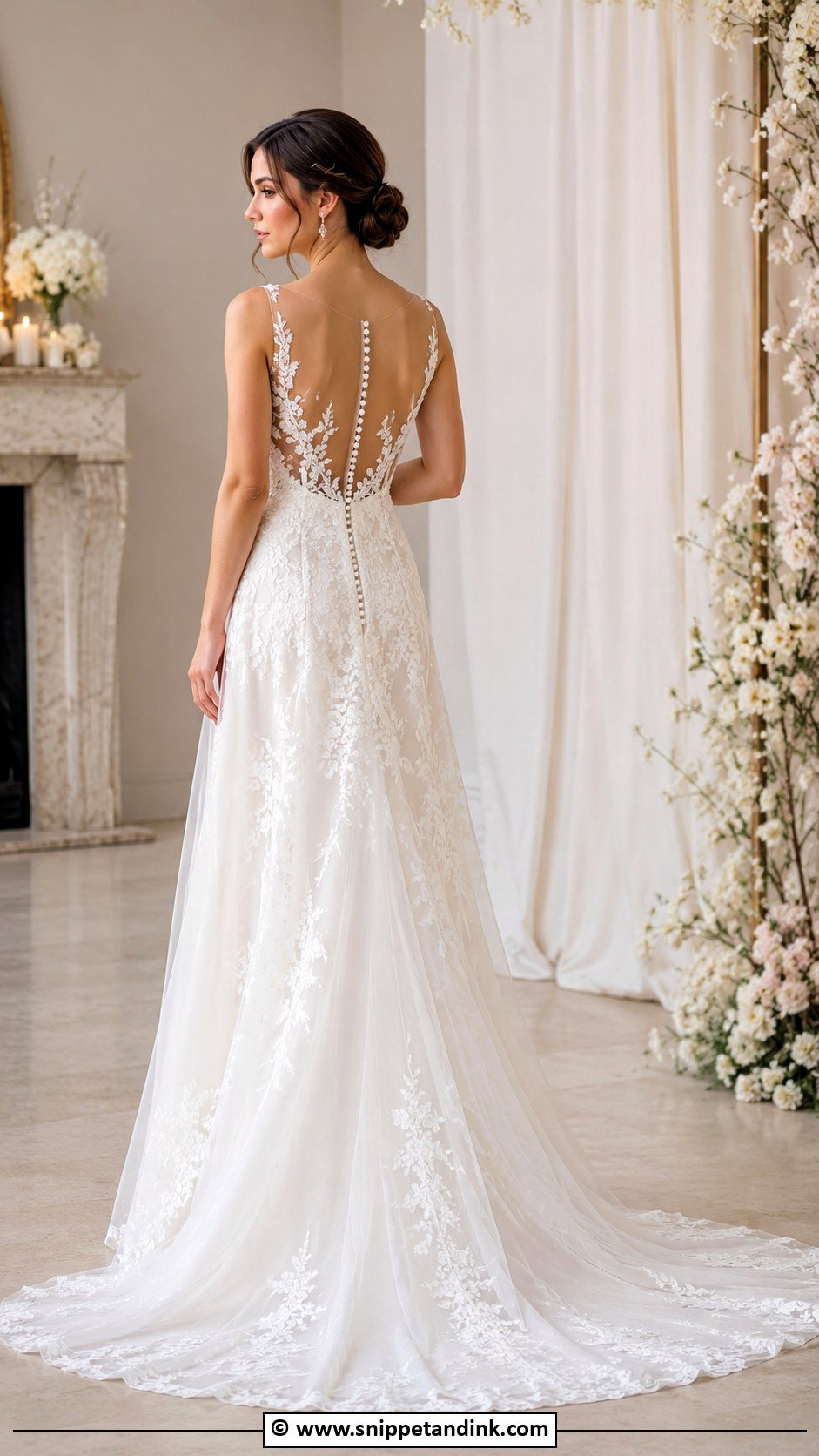
A low back illusion wedding dress gives the open-back effect with sheer fabric for extra hold and coverage, and it’s the version I suggest most to brides who are nervous about support. The mesh is what keeps the straps and bodice in place, so the back can look deeper than it really is. Ask the shop to match the mesh to your skin tone in daylight, not under the store’s lighting. Appliqué, buttons or a little beading can sit on top. An updo and a light veil leave the detail visible.
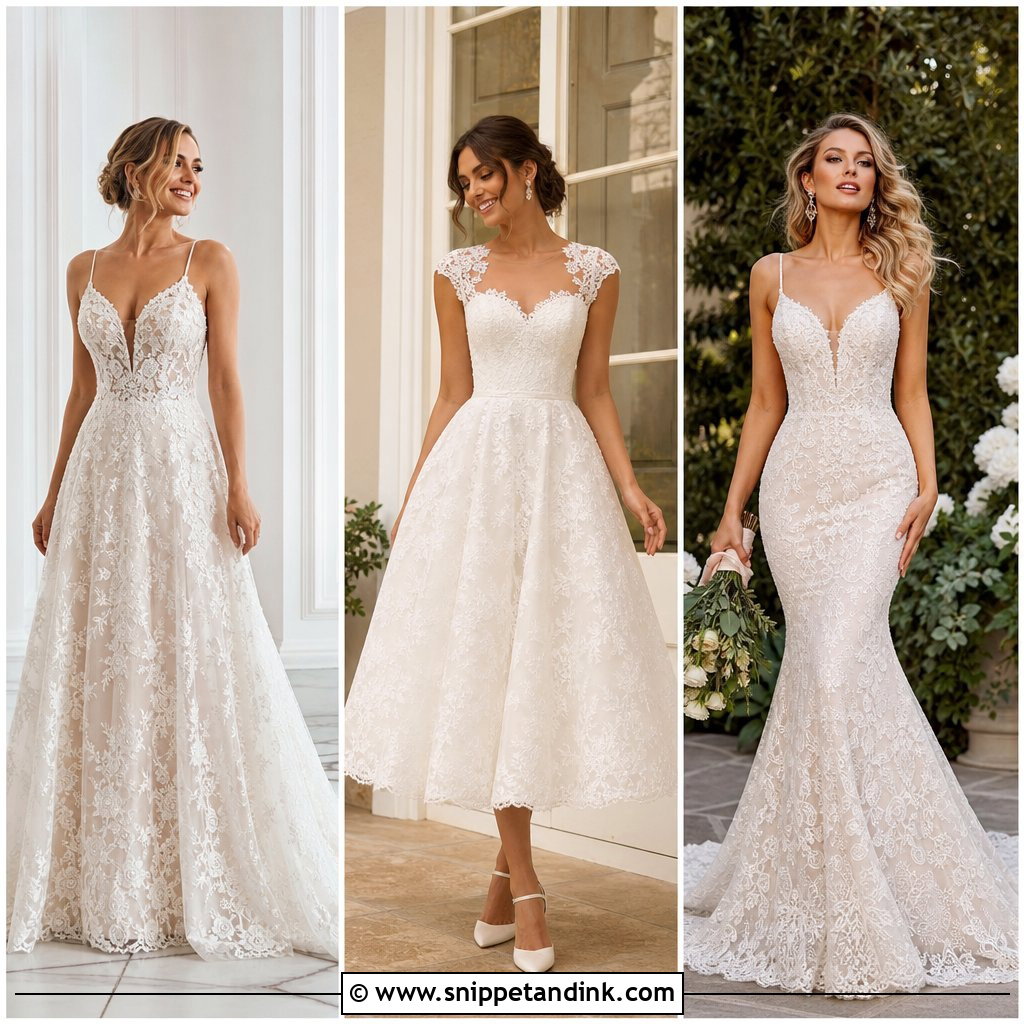
25. Low Back Corset Wedding Dress
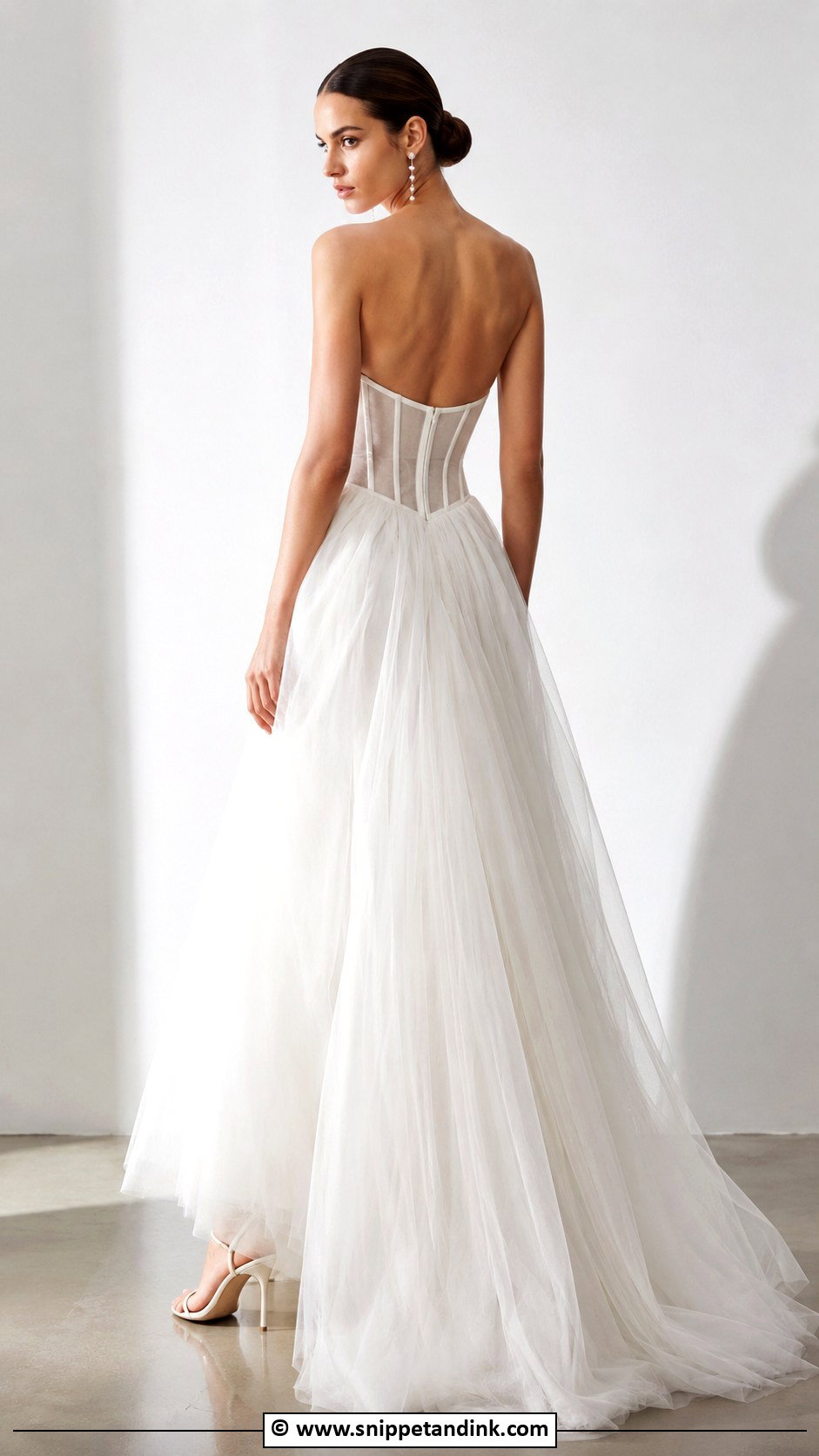
Corset backs hold the waist with boning, and the structure is what lets the back sit low without sliding. Some designs show the boning or lacing on purpose. Lace-up corsets are adjustable on the day, which helps if your weight shifts before the wedding. Have someone practise lacing it before the morning, though, because it takes longer than people expect. A low bun and drop earrings keep the bodice centre stage.
26. Low Back Back Bow Wedding Dress
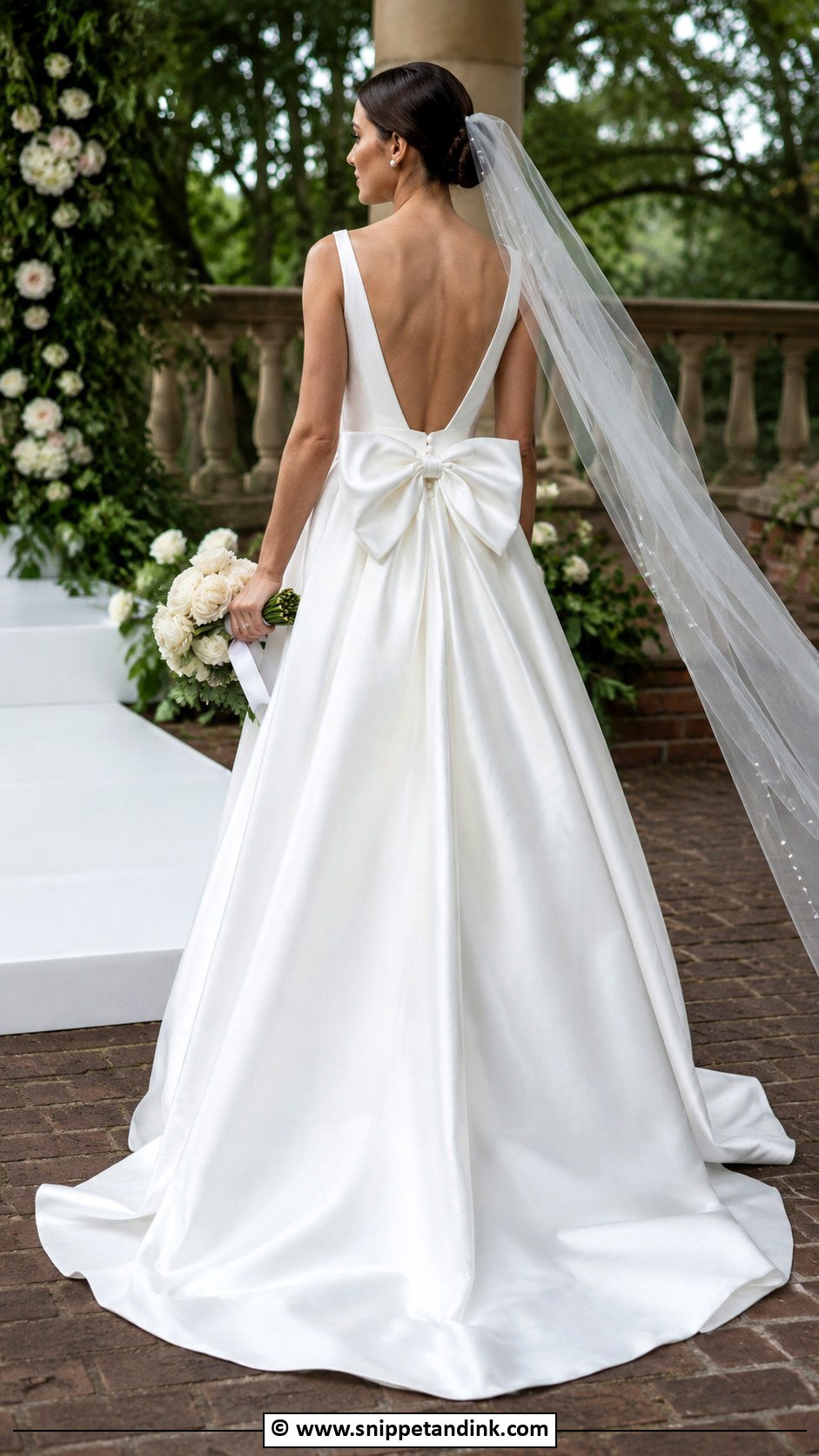
A bow is a heavy detail on a back that has nothing else on it, so placement matters. A bow at the waist sits on the gown’s structure. One placed lower or at the top of the train can drag the fabric down as you walk. Satin and mikado hold a bow’s shape. Thin fabrics let it flop. Size it to your frame, lift your hair and keep the jewellery simple.
27. Low Back Strap Wedding Dress
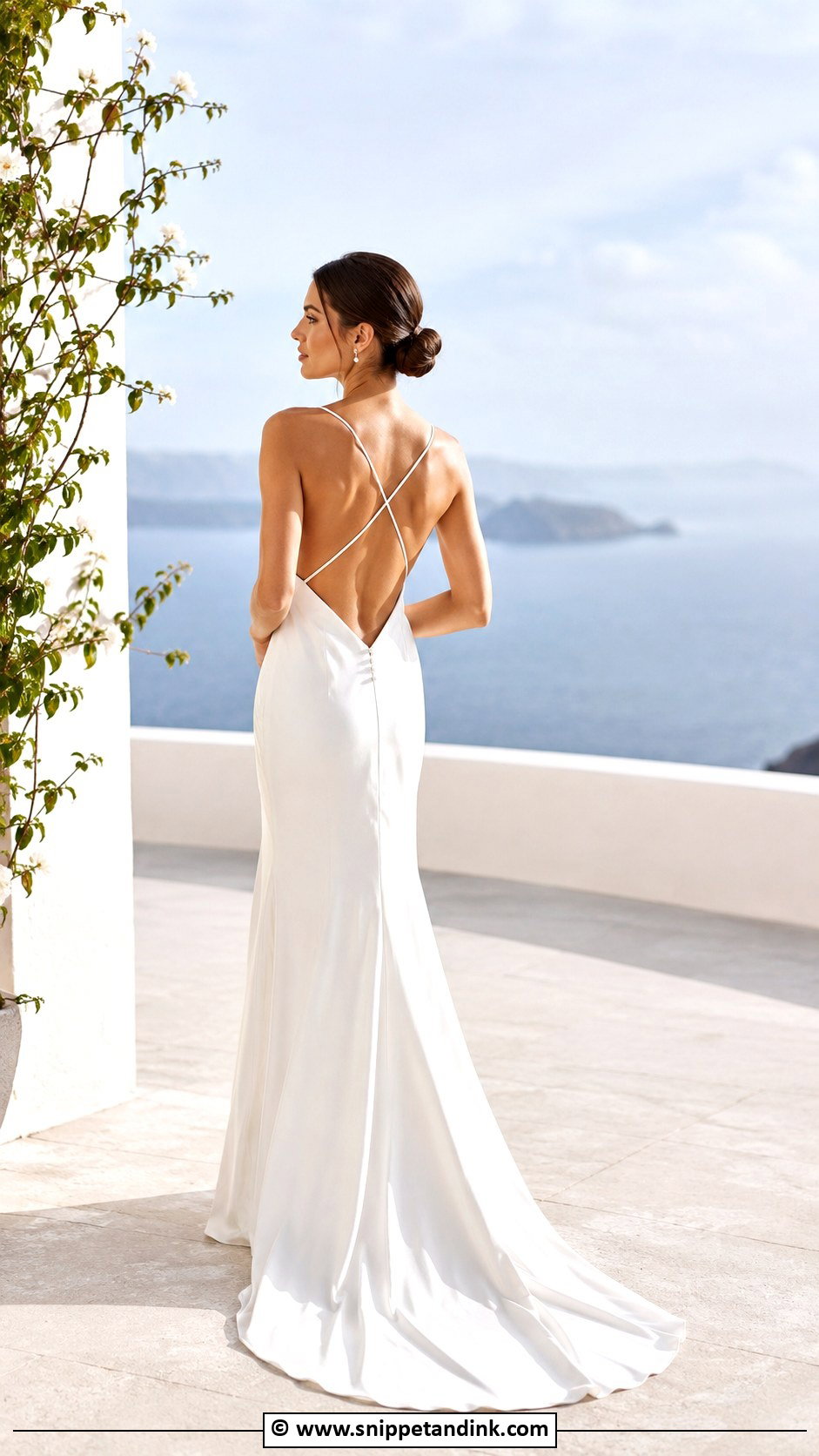
A low back strap wedding dress uses straps that cross, curve or run straight to give the bare back some lines to look at. Thin straps cut into shoulders if they’re carrying weight, so I check whether there’s a hidden bodice doing the work underneath. Satin slips, crepe sheaths and lace fit and flare gowns all handle straps well. Avoid a veil that drapes over them. A low bun and small earrings let the pattern show.
28. Low Back Vintage Wedding Dress
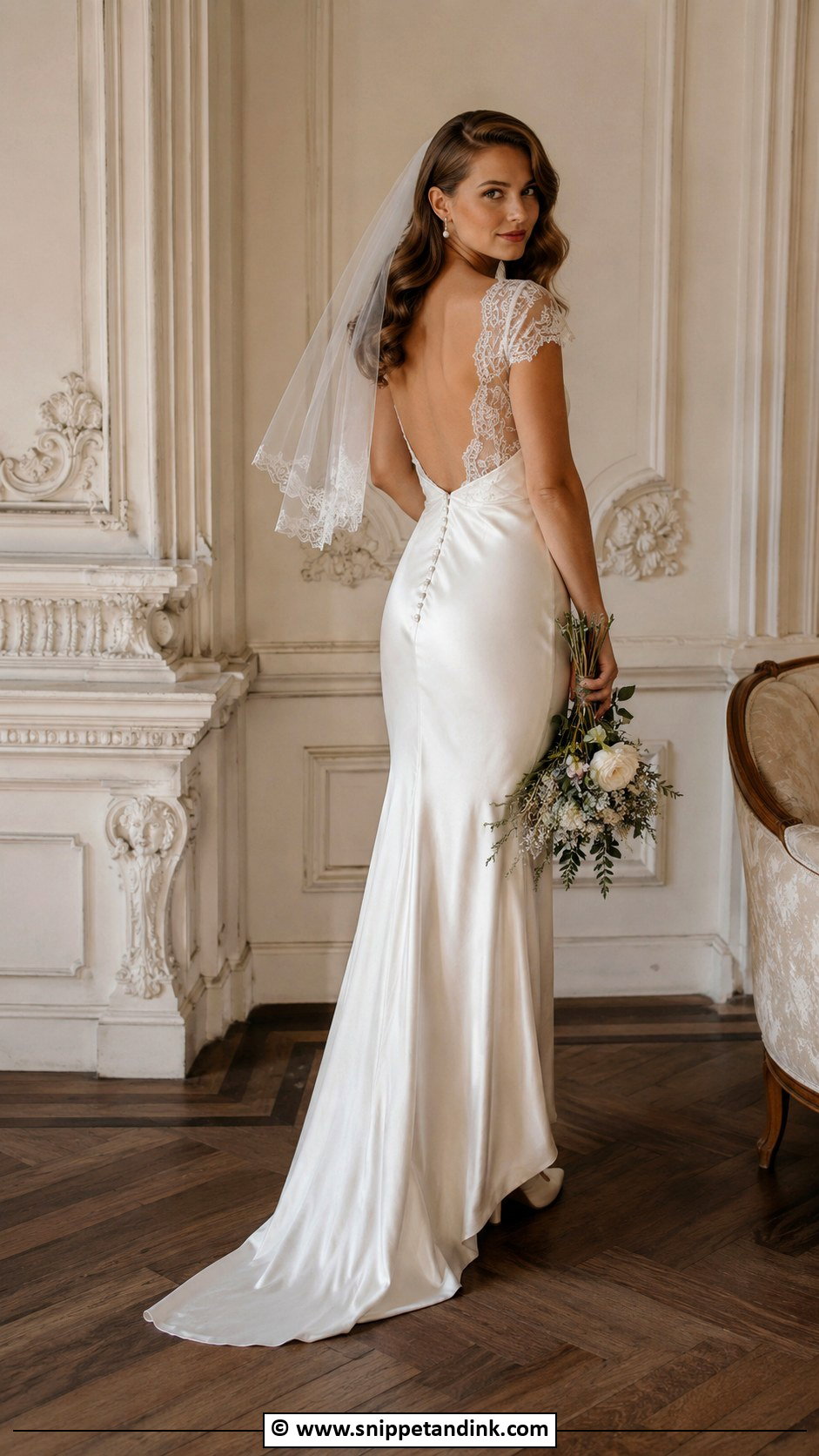
Bias-cut satin, covered buttons, cap sleeves and soft beading are the details that read as vintage, and a low back fits naturally with many of them. If you’re wearing an actual vintage gown, take it to a seamstress early. Older satin can be weak at the seams and needs reinforcing before it’ll take the strain of a full day. Soft waves and pearl earrings suit it. Keep to one or two period details so it doesn’t tip into costume.
29. Low Back Civil Wedding Dress
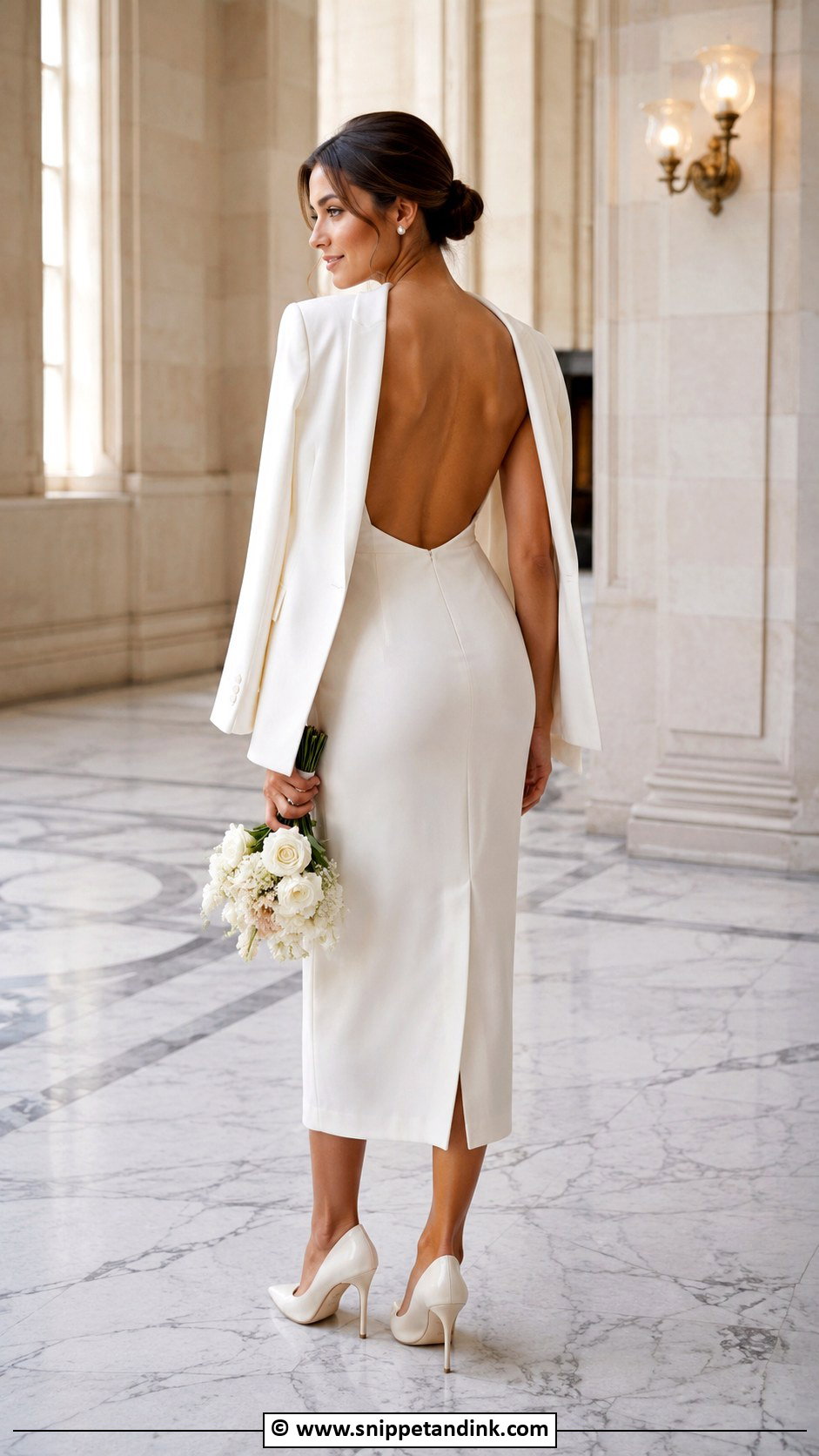
For a courthouse or city hall ceremony, I’d look at a satin midi, a crepe sheath or a simple slip with an open back, since a full train gets in the way in an office corridor. The low back is the bridal detail, so nothing else has to be. Pointed heels, pearl studs and a small bouquet are enough. A tailored blazer covers you for the registry office and comes off for the photos outside.
30. Low Back Reception Wedding Dress
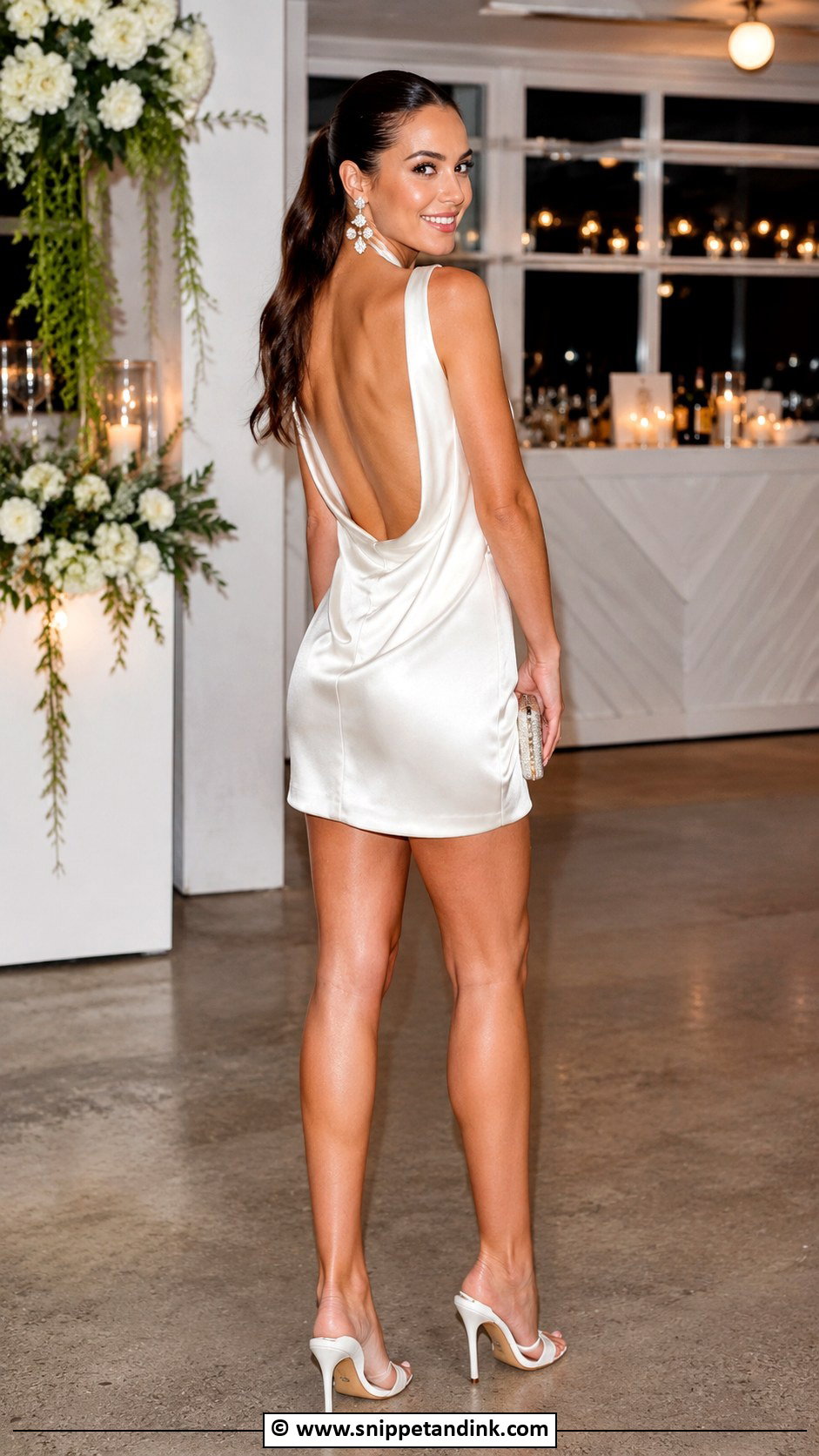
Changing for the reception is mostly about movement. A satin slip, a beaded sheath or a short dress with a deep back lets you dance and hug without managing a train. Make sure the straps are secure, since an evening of raised arms tests them harder than the ceremony did. Statement earrings or a hair accessory are where you can have fun with this one.
How Many Fittings a Low Back Really Takes
Most made-to-order gowns need several months to arrive, so I tell brides to order nine to twelve months out where they can. Alterations usually start two to three months before the wedding. A low back almost always needs one more appointment than a closed back, because the edge has to be taken in until it sits flat without cutting in.
- First fitting: overall fit, length and where the support will go.
- Second fitting: the back edge is pinned to lie flat, and the cups or boning are set.
- Final fitting, about two weeks out: check the bustle, the veil comb placement and the full range of movement.
If your weight changes in those final weeks, tell your seamstress straight away. A few pounds either way show up first at the back edge, long before the waist or hips feel different.
On the day
Pack a small kit with double-sided fashion tape, safety pins and a few spare hair pins. If a back edge starts lifting during the reception, a strip of tape along the inside holds it for the rest of the night.
Sit, Reach and Hug Before You Say Yes to the Back
An open back only works when fit, support and hair are planned together, which is why I treat it as a structural choice first and a style choice second. Satin, lace, crepe, tulle or beading can all carry a low back, as long as the gown has something inside it doing the holding. At every fitting, sit, walk, turn and lift your arms. If the back stays flat through all of that, you’ve found the right one, and the rest is just earrings.
You'll Like These Ideas:





Leave a Reply